US6136561A - Methods of preparing carboxy-terminally truncated recombinant flavivirus envelope glycoproteins employing drosophila melanogaster expression systems - Google Patents
Methods of preparing carboxy-terminally truncated recombinant flavivirus envelope glycoproteins employing drosophila melanogaster expression systems Download PDFInfo
- Publication number
- US6136561A US6136561A US08/937,195 US93719597A US6136561A US 6136561 A US6136561 A US 6136561A US 93719597 A US93719597 A US 93719597A US 6136561 A US6136561 A US 6136561A
- Authority
- US
- United States
- Prior art keywords
- protein
- gly
- leu
- thr
- domain
- Prior art date
- Legal status (The legal status is an assumption and is not a legal conclusion. Google has not performed a legal analysis and makes no representation as to the accuracy of the status listed.)
- Expired - Lifetime
Links
Images




Classifications
-
- C—CHEMISTRY; METALLURGY
- C07—ORGANIC CHEMISTRY
- C07K—PEPTIDES
- C07K14/00—Peptides having more than 20 amino acids; Gastrins; Somatostatins; Melanotropins; Derivatives thereof
- C07K14/005—Peptides having more than 20 amino acids; Gastrins; Somatostatins; Melanotropins; Derivatives thereof from viruses
-
- C—CHEMISTRY; METALLURGY
- C07—ORGANIC CHEMISTRY
- C07K—PEPTIDES
- C07K16/00—Immunoglobulins [IG], e.g. monoclonal or polyclonal antibodies
- C07K16/08—Immunoglobulins [IG], e.g. monoclonal or polyclonal antibodies against material from viruses
- C07K16/10—RNA viruses
- C07K16/116—Togaviridae (F); Matonaviridae (F); Flaviviridae (F)
-
- A—HUMAN NECESSITIES
- A61—MEDICAL OR VETERINARY SCIENCE; HYGIENE
- A61K—PREPARATIONS FOR MEDICAL, DENTAL OR TOILETRY PURPOSES
- A61K39/00—Medicinal preparations containing antigens or antibodies
-
- C—CHEMISTRY; METALLURGY
- C07—ORGANIC CHEMISTRY
- C07K—PEPTIDES
- C07K2319/00—Fusion polypeptide
-
- C—CHEMISTRY; METALLURGY
- C07—ORGANIC CHEMISTRY
- C07K—PEPTIDES
- C07K2319/00—Fusion polypeptide
- C07K2319/01—Fusion polypeptide containing a localisation/targetting motif
- C07K2319/02—Fusion polypeptide containing a localisation/targetting motif containing a signal sequence
-
- C—CHEMISTRY; METALLURGY
- C12—BIOCHEMISTRY; BEER; SPIRITS; WINE; VINEGAR; MICROBIOLOGY; ENZYMOLOGY; MUTATION OR GENETIC ENGINEERING
- C12N—MICROORGANISMS OR ENZYMES; COMPOSITIONS THEREOF; PROPAGATING, PRESERVING, OR MAINTAINING MICROORGANISMS; MUTATION OR GENETIC ENGINEERING; CULTURE MEDIA
- C12N2770/00—MICROORGANISMS OR ENZYMES; COMPOSITIONS THEREOF; PROPAGATING, PRESERVING, OR MAINTAINING MICROORGANISMS; MUTATION OR GENETIC ENGINEERING; CULTURE MEDIA ssRNA viruses positive-sense
- C12N2770/00011—Details
- C12N2770/24011—Flaviviridae
- C12N2770/24111—Flavivirus, e.g. yellow fever virus, dengue, JEV
- C12N2770/24122—New viral proteins or individual genes, new structural or functional aspects of known viral proteins or genes
-
- G—PHYSICS
- G01—MEASURING; TESTING
- G01N—INVESTIGATING OR ANALYSING MATERIALS BY DETERMINING THEIR CHEMICAL OR PHYSICAL PROPERTIES
- G01N2333/00—Assays involving biological materials from specific organisms or of a specific nature
- G01N2333/005—Assays involving biological materials from specific organisms or of a specific nature from viruses
- G01N2333/08—RNA viruses
- G01N2333/18—Togaviridae; Flaviviridae
-
- Y—GENERAL TAGGING OF NEW TECHNOLOGICAL DEVELOPMENTS; GENERAL TAGGING OF CROSS-SECTIONAL TECHNOLOGIES SPANNING OVER SEVERAL SECTIONS OF THE IPC; TECHNICAL SUBJECTS COVERED BY FORMER USPC CROSS-REFERENCE ART COLLECTIONS [XRACs] AND DIGESTS
- Y02—TECHNOLOGIES OR APPLICATIONS FOR MITIGATION OR ADAPTATION AGAINST CLIMATE CHANGE
- Y02A—TECHNOLOGIES FOR ADAPTATION TO CLIMATE CHANGE
- Y02A50/00—TECHNOLOGIES FOR ADAPTATION TO CLIMATE CHANGE in human health protection, e.g. against extreme weather
- Y02A50/30—Against vector-borne diseases, e.g. mosquito-borne, fly-borne, tick-borne or waterborne diseases whose impact is exacerbated by climate change
Definitions
- the invention relates to protection against and diagnosis of dengue fever. More specifically, the invention concerns a subunit of the dengue virus envelope protein secreted as a mature recombinantly produced protein from eucaryotic cells which is protective against dengue infection, which raises antibodies useful in passive immunization, and which is useful in diagnosis of infection by the virus.
- the dengue viruses are members of the family Flaviviridae which also includes the Japanese encephalitis (JE) virus, Tick-borne encephalitis (TBE) virus, and the is initially discovered prototype of this class, the yellow fever (YF) virus.
- the flaviviruses contain a single positive strand genomic RNA and are small enveloped viruses affecting animals, but generally transmitted to vertebrates by chronically infected mosquito or tick vectors.
- Flaviviruses are enveloped by host cell membrane and contain the three structural proteins capsid (C), membrane (M), and envelope (E). The E and M proteins are found on the surface of the virion where they are anchored in the membrane. Mature E is glycosylated, whereas M is not, although its precursor, preM, is a glycoprotein.
- Glycoprotein E the largest structural protein, contains functional domains responsible for cell surface attachment and intraendosomal fusion activities. It is also a major target of the host immune system, inducing neutralizing antibodies, protective immunity, as well as antibodies which inhibit hemagglutination.
- Dengue virus is the causative agent of dengue fever and is transmitted to man by Aedes mosquitoes, principally Aedes aegypti and Aedes albopictus.
- Classic dengue fever is an acute illness marked by fever, headache, aching muscles and joints, and rash. A fraction of cases, typically in children, results in more extreme forms of infection, i.e., dengue hemorrhagic fever (DHF) or dengue shock syndrome (DSS). Without diagnosis and prompt medical intervention, the sudden onset and rapid progress of DHF/DSS can be fatal.
- DHF dengue hemorrhagic fever
- DFS dengue shock syndrome
- Dengue is one of the most important virus groups transmitted to man by arthropods in terms of global morbidity; it has been estimated that dengue is responsible for up to 100 million illnesses annually. With the advent of modern jet travel, dengue has spread globally in the tropics and subtropics, and multiple dengue serotypes in a region are common.
- Every flavivirus genome is a single positive-stranded RNA of approximately 10,500 nucleotides containing short 5' and 3' untranslated regions, a single long open reading frame (ORF), a 5' cap, and a nonpolyadenylated 3' terminus.
- the ten gene products encoded by the single, long open reading frame are contained in a polyprotein organized in the order, C (capsid), preM/M (membrane), E (envelope), NS1 (nonstructural), NS2a, NS2b, NS3, NS4a, NS4b, and NS5 (Chambers, T. J. et al. Ann Rev Microbiol (1990) 44:649-688).
- Processing of the encoded polyprotein is initiated cotranslationally, and full maturation requires both host and viral-specific proteases.
- the sites of proteolytic cleavage in the YF virus have been determined by comparing the nucleotide sequence and the amino terminal sequences of the viral proteins.
- preM is converted to M during virus release (Wengler, G. et al. J Virol (1989) 63:2521-2526), and anchored C is processed during virus maturation (Nowak et al. Virology (1987) 156:127-137).
- Monoclonal antibodies directed against purified E of several flaviviruses DEN-2 (Henchal et al. Am J Trop Med Hyg (1985) 34:162-169, TBE (Heinz, F. X. et al. Virology (1983) 126:525-537), St. Louis encephalitis (SLE, Mathews, J. H. et al. J Immunol (1984) 132:1533-1537), Murray Valley encephalitis (MVE, Hawkes, R. A. et al. J Gen Virol (1988) 69:1105-1109), and JE (Takegami, T. et al.
- flavivirus E glycoprotein Although the primary amino acid sequence of the flavivirus E glycoprotein is variable (45-80% identity), all have twelve conserved cysteine residues, forming six disulfide bridges, and hydrophilicity profiles are nearly superimposable, suggesting that they may all have similar secondary and tertiary structures.
- glycoprotein E was divided into three antigenic domains (A, B, and C) and two transmembrane segments at its carboxy-terminus. See, for example, Mandl, C. W. et al. J Virol (1989) 63:564-571. FIG. 1, reproduced from this article, shows the locations of these domains.
- Domain A was defined as a denaturation sensitive, highly folded, and disulfide stabilized discontinuous domain composed of the amino acids from 50-125 and 200-250 containing five of the six disulfide bridges. Neutralization and hemagglutination inhibition epitopes are found within domain A, and, for dengue viruses, one of the two N-linked glycosylation sites. A conserved hydrophobic amino acid sequence within domain A has been postulated to provide fusogenic properties after low pH treatment. Amino acid sequences conserved among the flavivirus family are located within this region; thus, broadly flavivirus-cross-reactive epitopes lie within this domain.
- Domain B was identified as a continuous domain composed of amino acids 301-395 (an approximate region between amino acids 300-400 for all flaviviruses). The domain can be isolated as a single immunoreactive proteolytic fragment. It has been postulated that this domain forms part of the receptor binding site (Heinz, F. X. et al. APMIS (1993) 101:735-745), and attenuating mutations have been mapped to sequences within domain B Heinz et al. (supra).
- a variety of neutralizing antibodies have been shown to specifically map to Domain B (Heinz et al. (1983, supra)); Trirawatanapong et al., 1992; Megret et al., 1992; Lin et al., 1994). The binding of these neutralizing monoclonal antibodies is dependent on formation of a disulfide bond, and in some cases also is sensitive to detergent denaturation. Species-specific monoclonal antibodies bind this domain.
- Domain C represents a hypervariable loop between the two segments of Domain A. Its antigenicity is insensitive to denaturation or reducing agents, and contains one N-linked glycosylation site. Predominantly sub-type specific monoclonal antibodies react with this domain. No specific activity has been assigned to this domain.
- mice immunized with 79% E or a smaller product were only partially protected.
- the 59% E elicited high protection rates (>90%) comparable to 79% E-RKG and larger C-terminal truncated E polypeptides. Protection correlated with binding to HMAF.
- a cyanogen bromide-cleaved 8 kD fragment (amino acids 375-456) overlapping domain B from JE envelope protein was found to induce neutralizing antibodies in mice (Srivastava, A. K. et al. Acta Virol (1990) 34:228-238). Immunization of mice with a larger polypeptide (JE E amino acid 319 to NS1 amino acid 65) spanning the 8 kD peptide expressed in Escherichia coli as a fusion to protein A elicited neutralizing antibodies and protected mice from lethal virus challenge (Srivastava, A. K. et al. Microbiol Immunol (1991) 35:863-870). This polypeptide begins between the two cysteines within domain B, and, therefore, cannot form the stabilizing disulfide bond that earlier reports suggest is necessary for presentation of protective epitopes.
- mice Immunization of mice with synthetic peptides corresponding to amino acids within domain B, aa 356-376 from MVE (Roehrig, J. T. et al. Virology (1989) 171:49-60) or aa 352-368 from DEN-2 virus (Roehrig, J. T. et al. Virology (1990) 177:668-675), elicited low levels of neutralizing antibodies in mice, suggesting the presence in domain B of a weak linear neutralizing epitope (Roehrig, J. T. et al. 1989 and 1990, supra).
- Megret, F. et 41. Virology (1992) 187:480-491 prepared 16 overlapping fragments of DEN-2 envelope protein as trpE fusion products in E. coli for epitope mapping.
- the fusion proteins are produced intracellularly and obtained from the lysates. These products were used to map epitopes defined by a panel of 20 monoclonal antibodies.
- Six antigenic domains were described: non-neutralizing antibodies bound to peptides containing amino acids 22-58, amino acids 304-332, amino acids 60-97, and amino acids 298-397.
- the B domain of the flavivirus envelope protein contains epitopes which bind neutralizing antibodies
- problems have arisen with respect to producing recombinant polypeptides containing the B domain in a form which mimics the native protein and is thus capable of eliciting an immune response.
- the only recombinantly produced E polypeptides containing the B domain that elicited a protective immune response in mice were expressed from Vaccinia and baculovirus vectors.
- recombinantly produced proteins lack the appropriate 100-120 amino acid peptides, wherein the extensions do not interfere with the immunogenic effectiveness or secretion of the B domain.
- such extensions are minimal--i.e., not more than six additional amino acids--at either the N-terminus or the C-terminus, or distributed between these termini; preferably no more than four total additional amino acids, and most preferably no more than two.
- domain B which spans positions of about 296-395 is referred to herein as "classical” domain B.
- the additional region may confer additional functions, e.g., enhancing immunogenicity by providing a helper T cell epitope.
- the form of domain B which includes positions about 296-413 is referred to herein as DomB+T.
- the domain B of the invention includes these two specific embodiments; “classical” domain B and DomB+T, as well as those forms which span positions approximately 296 to position between position 395 and 413.
- 80% E is the N-terminal 80% of the protein from residue 1 to residue 395.
- 60% E represents the corresponding shorter sequence. These subunits are produced from vectors containing the DNA encoding the mature protein, or along with the prM fusion which results in secretion of the 80% or 60% per se.
- the B domain of the envelope protein can be successfully secreted from yeast in a form which elicits the production of neutralizing antibodies. This permits, for the first time, the production of a successful recombinantly produced subunit dengue vaccine.
- the invention provides vaccines containing as an active ingredient, a secreted recombinantly produced the dengue envelope protein or a subunit thereof.
- the vaccines are capable of eliciting the production of neutralizing antibodies against-dengue virus.
- the B domain of the envelope protein (E) is secreted from yeast by producing it in an expression vector containing the ⁇ -mating factor prepropeptide leader sequence (preproMF ⁇ L ).
- Peptide subunits representing 60% E and 80% E are secreted from Drosophila cells using the human tissue plasminogen activator secretion signal sequence for the propeptide (tPA L ) or from the homologous premembrane (prM) leader.
- the secreted products can easily be purified and prepared as a vaccine.
- the invention is directed to a vaccine for protection of a subject against infection by dengue virus.
- the vaccine contains, as active ingredient, the envelope protein of a dengue virus serotype or a subunit thereof.
- the E or subunit is secreted as a recombinantly produced protein from eucaryotic cells.
- the vaccine may further contain portions of additional dengue virus serotype E proteins similarly produced.
- the invention is directed to methods to protect subjects against infection by administering the invention vaccines, to antibodies generated in a mammalian subject administered an immunogenic amount of the vaccine; immortalized B cell lines which generate monoclonal antibodies of this type; methods to effect passive immunization by administering the antibodies of the invention; methods to detect the presence or absence of antidengue virus immunoglobulins utilizing the secreted recombinantly produced peptides of the invention and the recombinant materials important in the secretion of the B domain and methods for its production.
- FIG. 1 is a drawing reproduced from Mandl, et al. (supra) showing a model of the envelope protein of flaviviruses.
- Model of the TBE virus protein E Open circles represent hydrophilic amino acid residues (Arg, Lys, Asn, Asp, Gln, Glu, His), dotted circles show intermediate amino acid residues (Pro, Tyr, Ser, Trp, Thr, Gly), and solid s circles showed hydrophobic amino acid residuess (Ile, Val, Leu, Phe, Cys, Met, Ala). Amino acids were classified by the scale of Kyte and Doolittle (22). Position numbers are shown every 50 amino acids. Cysteine residues forming disulfide bridges are connected by solid lines.
- FIG. 1 depicts cleavage sites that liberate 1RF1 (tryp.) and 1RF3 (CNBr), respectively.
- Small arrows indicate potential cleavage sites within these fragments that are not utilized.
- Two solid lines stand for the lipid membrane that is spanned by two transmembrane regions of protein E. The polypeptide chain is folded to indicate the antigenic domains A, B, and C, which are designated by large capital letters. Arrows together with the names of neutralizing MAbs depicts the locations of the mutations identified in the respective antigenic variants of TBE virus by sequence analysis.
- a line of solid triangle indicates the almost perfectly conserved sequence with in domain A.
- a line of open triangles marks the region of a potential T-cell determinant.
- a solid diamond represents the carbohydrate side chain of TBE virus.
- the Murray Valley (MVE), St. Louis (SLE) and Japanese (JE) encephalitis viruses and DEN viruses have potential N-glycosylation sites at the homologous position.
- Yellow fever (YE) and St. Louis encephalitis viruses have such a site within domain B.
- the homologous positions of TBE virus are shown as open diamonds.
- FIG. 2 shows the partial nucleotide sequence for DEN-2 PR159 S1 mutant strain and differences from the wild-type strain reported by Hahn (1988, supra).
- DEN-2 PR159/S1 cDNA coding strand sequence for Capsid, preMembrane, Envelope, and NS1 is given (Hahn etr al. 1988). The start of genes are indicated. "*" indicates correction to published sequence. Difference in the wild-type DEN-2 PR159 sequence are indicated above the PR159/S1 sequence.
- FIG. 3 shows the partial nucleotide sequence and deduced amino acid sequence of the genome of DEN-2 PR159/S1 strain in comparison with wild-type.
- FIG. 4 shows the oligonucleotide used to mutagenize an 80% E cDNA clone to obtain the domain B coding sequence. Shown are the necleotide sequence and the corresponding translation of DEN-2 PR159/S1 E sequences between genomic nucleotides 1789 and 1848, the sequence of the oligonucleotide used in mutagenesis, and the resulting sequence and corresponding translations following mutagenesis. Dengue nucleotide sequence is uppercase, non-dengue nucleotides are longer case, inserted restriction endonuclease sites are indicated, and conserved cysteines are underlined.
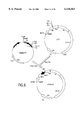
- FIG. 5 shows the construction of a cloning vector containing the nucleotide sequence encoding domain B.
- FIG. 6 shows the insertion of the domain B coding sequence into the yeast expression vector pLS5.
- FIG. 7 shows the nucleic acid and amino acid sequence of mating factor ⁇ leader, preproMF ⁇ L /domain B fusion protein.
- FIG. 8 shows the construction of an expression vector for domain B in Pichia.
- FIG. 9 shows the nucleotide and deduced amino acid sequence for the tPA L -DomB fusion protein.
- FIG. 10 shows the survival times of mice immunized with recombinant domain B and challenged with Dengue-2.
- FIG. 11 shows the construction of an expression vector for production of domain B in Drosophila melanogaster tissue cultured Schneider cells.
- FIG. 12 shows the standard curve for a DomB sandwich assay.
- the invention provides, for the first time, a subunit vaccine that can be efficiently produced recombinantly and secreted and that is effective in protecting subjects against infection with dengue virus.
- a subunit vaccine that can be efficiently produced recombinantly and secreted and that is effective in protecting subjects against infection with dengue virus.
- the present inventors have found that certain portions of the envelope protein of dengue virus type 2, such as domain B representing approximately 100 amino acids of the envelope protein extending approximately from the Gly at position 296 to the Gly at position 395, and optionally including additional E sequence through position 413 of the protein, and other portions of E, i.e., 60% E and 80% E are effectively secreted by certain convenient eucaryotic recombinant hosts, in a form that permits processing to mimic the native conformation of the protein.
- the secretion of the protein into the culture medium facilitates purification.
- this form is able, when administered, especially in the presence of adjuvant, to raise neutralizing antibodies in animals.
- this subunit represents a useful component of a vaccine for protecting subjects against dengue infection.
- B domain refers to a peptide which spans from approximately Gly 296 to Gly 395 of the DEN-2 envelope protein, and optionally including additional E sequence through position 413 of the envelope protein. These positions are approximate; for example, Mandl (1989, supra) describes the generation of a tryptic fragment containing domain B which spans the amino acids of the TBE E protein from position 301 to 396.
- the sequences described in the present application represent the envelope protein from dengue Type 2 virus (DEN-2); three additional distinct dengue serotypes have been recognized. Therefore, "Domain B” also refers to the corresponding peptide region of the envelope protein of these serotypes, and to any naturally occurring variants.
- B domain includes extended forms of the about ingredients, the subunits as produced must assume a conformation and undergo processing under conditions which, render them similar to the native envelope portion as it exists in the envelope protein of the virus.
- the recombinant production must be conducted in eucaryotic cells, preferably yeast or Drosophila cells.
- yeasts such as Kluveromyces sp Yarrowia lipolytica, and Schizosaccharomyces pombe may be used.
- Other insect cells besides the Drosophila melongaster Schneider cells illustrated below may also be employed.
- Additional appropriate eucaryotic cells include mammalian expression cells such as Chinese hamster ovary cells. Other insect cells may also be used in conjunction with baculovirus based vectors.
- the B domain or 60% E or 80% E must be produced as a correctly processed protein and secreted.
- secretion signal peptides or secretion leader pre/pro peptides such as those associated with invertase or acid phosphatase of S. cerevisiae or with glucoamylase of C. albicans or of A. niger or the bovine chymosin prepropeptide secretion leader can also be used.
- Secretion leaders in general that occur at the amino terminus of secreted proteins and function to direct the protein into the cellular secretion pathway generically can be used.
- the invention includes expression systems that are operable in eucaryotic cells and which result in the formation of envelope protein or a subunit secreted into the medium.
- useful in the invention are cells and cell cultures which contain expression systems resulting in the production and secretion of mature B domain.
- E protein or subunit is recovered from the cell culture medium, purified, and formulated into vaccines.
- Purification and vaccine formulation employ standard techniques and are matters of routine optimization. Suitable formulations are found, for example, in Remington's Pharmaceutical Sciences, latest edition, Mack Publishing Company, Easton, Pa.
- formulations will include an adjuvant, such as alum or other effective adjuvant.
- the active ingredient and the adjuvant may be coadministered in separate formulations.
- the active vaccines of the invention can be used alone or in combination with other active vaccines such as those containing attenuated forms of the virus or those containing other active subunits to the extent that they become available.
- the vaccines may contain only one subunit as an active ingredient, or additional isolated active components may be added.
- Corresponding or different subunits from one or several serotypes may be included in a particular formulation.
- the vaccines containing the subunit are administered to the subject in conventional immunization protocols involving, usually, multiple administrations of the vaccine. Administration is typically by injection, typically intramuscular or subcutaneous injection; however, other systemic modes of administration may also be employed. Although the technology is not as well developed, transmucosal and transdermal formulations are included within the scope of the invention as are effective means of oral administration. The efficacy of these formulations is a function of the development of formulation technology rather than the contribution of the present invention.
- the antibodies thus raised can themselves be used as passive vaccines.
- passive vaccine a suitable mammalian subject is immunized with the E protein or subunit of the invention and antibodies are either recovered directly as a composition from the antisera or indirectly as monoclonal antibodies from immortalized B cells of the subject.
- monoclonal antibodies the conventional techniques of Kohler & Milstein, for example, or treatment with Epstein Barr virus, are used in immortalizing peripheral blood lymphocytes or spleen cells and screening for antibodies immunoreactive with the immunogen. These antibodies may further be screened for their ability to effect plaque reduction in infected sera or cultures.
- the polyclonal antisera are generally subjected to purification techniques such as standard size separation and chromatographic techniques to obtain purified immunoglobulins.
- the recombinantly produced proteins of the invention are particularly useful affinity ligands for chromatographic purification.
- affinity ligands for chromatographic purification.
- a multiplicity of techniques is available for the purification of immunoglobulins for use in passive vaccines. If monoclonal antibodies are to be purified from small volumes of a medium ascites fluid, a protein A affinity column is particularly useful. For larger volumes, additional standard chemical techniques, such as ammonium sulfate precipitation and DEAE chromatography can be used.
- These immunoglobulins or the monoclonal antibodies generated by the immortalized B cells are then used in vaccine formulations as is understood in the art.
- the passive vaccines of the invention may be used in combination with additional antibodies or tandem administration of the antibodies of the invention and additional antibodies may be employed.
- the passive vaccine is intended for use in a species other than that of the subject in which the antibodies were prepared, it may be desirable to modify the antibodies to minimize any immunogenic response.
- These fragments can be prepared either from polyclonal antisera or from the supernatants of hybridoma cultures by treating with proteolytic enzymes and recovering the desired fragments. The fragments are readily separated by using the relevant protein of the invention as an affinity reagent.
- chimeric antibodies can be produced wherein the constant region corresponding to the species to be protected is substituted for the constant region characteristic of the species of antibody origin.
- the availability of recombinant techniques makes the production of chimeric antibodies a relatively trivial exercise. Briefly, a hybridoma or cell line producing the antibody of interest is used as a source for the genes encoding the antibody. The genes are recovered from, for example, the hybridoma using standard cloning procedures. The genes are then manipulated in vitro to remove the constant region and replace it with a constant region of a different species origin. The modified genes are then ligated into expression systems and expressed in recombinant host cells, such as CHO cells, monkey cells, yeast cells, and the like.
- variable regions can also reduce immunogenicity.
- the variable regions can be manipulated to replace the framework regions with framework regions more representative of the desired species, leaving intact the complementarily determining regions responsible for antigen specificity.
- the variable heavy chain and variable light chain regions can be linked through a peptide linker and produced as a single chain F v molecule.
- the mature recombinant E protein and subunits of the invention may be used as analytical reagents in assessing the presence or absence of antidengue antibodies in samples.
- the interest in doing this may be diagnosis of infection with dengue, monitoring response to dengue infection or may simply reside in the use of immunoassays as part of standard laboratory procedures in the study of the progress of antibody formation or in epitope mapping and the like.
- the antigen is employed in standard immunoassay formats with standard detection systems such as enzyme-based, fluorescence-based, or isotope-based detection systems.
- the antigen is used coupled to solid support or in sandwich assays, but a multiplicity of protocols is possible and standard in the art.
- the secreted protein such as 60% E, 80% E or B domain may be adsorbed onto solid support and the support then treated with a sample to be tested for the presence of antidengue antibodies. Unbound sample is removed, and any bound antibodies are detected using standard detection systems, for example, by treating the support with an antispecies antibody with respect to the species represented in the sample to be tested, the antispecies antibody coupled to a detection reagent, for example, horseradish peroxidase (HRP). The presence of the HRP conjugated antispecies antibody is then detected by supplying a suitable chromogenic substrate.
- HRP horseradish peroxidase
- the anti-subunit or antidengue antibody may be adsorbed to the solid support and detected by treating the solid support with the recombinant domain B, either directly labeled, or labeled with an additional antibody in a sandwich-type assay.
- both the mature peptides, such as domain B and 60% E or 80% E of the invention and the antibodies immunoreactive with it can be used in standard purification procedures as affinity reagents.
- purification of the subunits from recombinantly produced cultures can be effected by affinity columns using antibodies raised against these antigens.
- immunoglobulins useful in passive vaccines can be readily purified from antisera using the peptides of the invention.
- the mature domain B or other subunit of the invention may be used to detect the presence or absence of antibodies of various isotypes, including IgG and IgM isotypes. As set forth above, detection of IgM isotypes is significant since this is an index of primary infection.
- particular subunits of the dengue Type 2 envelope protein in particular 60% E, 80% E and domain B are illustrated as representative of effective subunits of the envelope protein.
- secretion can be obtained from constructions designed to express the prME subunit fusion.
- the mature N-terminus of the envelope protein is then secreted into the culture medium.
- a heterologous leader such as the human tissue plasminogen activator leader sequence, or to the homologous prM sequence
- the secreted truncated Es are expressed at high levels in Drosophila, efficiently processed, and secreted into the medium.
- the products are glycosylated and processed to an endo-H resistant form.
- the secreted form of truncated E produced cotranslationally with prM generally represents about 20-30% of the total protein in the medium.
- the secreted E products are shown to have a native conformation. Immunization of mice with crude medium from transformed cells expressing prM-truncated E induces a potent virus-neutralizing response.
- This cDNA derives from strain PR159/S1.
- This strain has a small plaque, temperature-sensitive phenotype; the complete sequence of the CDNA derived from the genomic RNA for PR159/S1 is set forth in this publication.
- FIG. 2 shows the sequence of the CDNA derived from genomic RNA of DEN-2 PR159/S1 for the Capsid, preMembrane, Envelope, and NS1 genes. Shown in bold at nucleotides 103, 1940, 1991, and 2025 are corrections to the Hahn published sequence. Differences in the S1 sequence from the wild-type sequence are noted above the wild-type sequence. There are no nucleotide differences in the Capsid and preMembrane protein-encoding portions and there are four in the E encoding portion.
- FIG. 3 shows the cDNA sequence of DEN-2 PR159/S1 for the Capsid, preMembrane, Envelope, and NS1 genes and the inferred translation of those four genes, which is part of the larger dengue polyprotein.
- the four differences between wild-type DEN-2 PR159 and the S1 strain are shown above the S1 nucleotide sequence. Also shown is the context of the codons in which the nucleotide differences occur and the encoded amino acid.
- S1 has G instead of A at position 1314, T rather than G at position 1356, and C rather than T at position 2025.
- the mutation at position 1858 a G in S1 rather than A, results in a coding change from Ile in wild-type to Val in S1. There is, therefore, a one amino acid difference in the B domain in the S1 strain as compared to wild-type. Although the amino acid substitution conferred by the mutation at 1858 is conservative, mutagenesis studies of other viral structural proteins (Coller, B. G. et al.
- the portion of the genome that encodes 80% of the envelope protein (80% E) was amplified using the Polymerase Chain Reaction, primers D2E937p and D2E2121m, and plasmid pC8 (Hahn et al. (1988, supra) as template.
- the virus serotype is first indicated (D2 for DEN-2), then the corresponding dengue gene--i.e., in this case envelope, E, is noted. Then is noted the number in the dengue cloned sequences of FIGS. 2 or 3 for the first dengue nucleotide in the 5'-3' direction of the oligonucleotide, i.e., using the numbering of Hahn et al. (1988, supra), and finally the notation shows whether the oligonucleotide primes the plus (p) or the minus (m) strand synthesis.
- the sequence in the primers corresponding to dengue cDNA are written in uppercase letters; nondengue sequence is written in lowercase letters.
- the D2E2121m primer placed two stop codons after the 395th codon of E.
- the 80% E amplified cDNA fragment was digested at the XbaI sites in the cloning adapters and cloned into the NheI site of pBR322 to obtain p29D280E.
- Double-strand sequence for 80% E was determined, which identified a single silent PCR-introduced mutation at nucleotide 2001 (AAC/Asn to AAT/Asn).
- a subclone representing domain B was obtained from the 80% E subclone by oligonucleotide-directed mutagenesis.
- stop codons and restriction endonuclease sites were inserted between domain C- and domain B-encoding sequences.
- the stop codons were positioned to terminate domain A+C translation and SalI and PvuII restriction sites were added to facilitate subcloning of domains A+C and domain B fragments, respectively, into yeast expression vectors. As shown in FIG.
- the stop codons defining the carboxy-terminus of 60% E containing domains A and C were positioned four codons upstream of the beginning of domain B, i.e., following Lys291.
- the original and altered nucleotide sequences of the mutagenized region and the corresponding amino acid translation are shown in FIG. 4.
- the cloned cDNA fragments encoding B domain and 80% E were inserted into expression vectors so as to maintain the translational frame of fusions to secretion leaders as described below.
- the sequence of the fusions were confirmed by DNA sequencing.
- the expression vector constructed to secrete classical domain B from Saccharomyces cerevisiae to include envelope protein amino acids 296-395 was constructed so that processing by the proteases normally involved in preproMF ⁇ L processing would yield a precisely processed domain B.
- One of these proteases, Kex2p the gene product of the Kex2 gene, cleaves following dibasic peptides, such as LysArg, LysLys, ArgArg, and ArgLys.
- the MF ⁇ prepropeptide (MF ⁇ L )-domain B fusion was operably linked to the constitutive promoter from the gene (TDH3) encoding glyceraldehyde phosphate dehydrogenase (GAPDH) contained in pLS5 and, alternatively, to the copper sulfate-inducible CUPI gene promoter contained in pLS6.
- TDH3 constitutive promoter from the gene (TDH3) encoding glyceraldehyde phosphate dehydrogenase (GAPDH) contained in pLS5 and, alternatively, to the copper sulfate-inducible CUPI gene promoter contained in pLS6.
- GPDH glyceraldehyde phosphate dehydrogenase
- the nucleotide and amino acid sequence of the MF ⁇ L -domain B fusion is shown in FIG. 7.
- the resulting expression vectors were transfected into spheroplasts of Saccharomyces cerevisiae strain GL43 (MATatrp1 ⁇ 1 ura3-52 proA::URA3) and transformants were selected by their ability to grow on minimal medium without tryptophan supplementation.
- S. cerevisiae strain GL43 was supplied by Smith-Kline Beecham.
- Strain GL43 pLS5-DomB and pLS6-DomB transformants were grown in small ( ⁇ 5 ml) cultures i Casamino acid-supplemented minimal medium, and proteins secreted into the culture medium and cellular proteins were analyzed by Coomassie-stained SDS-PAGE and Western blot.
- comparable levels of domain B were secreted into the medium by pLS5-DomB and pLS6-DomB transformants. About 20% of the total secreted protein was domain B as estimated by the intensity of Coomassie brilliant blue staining of protein in an SDS-PAGE polyacrylamide gel.
- composition of the medium was optimized; when S. cerevisiae containing pLS5-DomB were grown in minimal medium (SD) or Casamino acids (Difco)-supplemented. minimal medium, the yields of protein were less than when cultured in rich (YEPD) medium.
- SD minimal medium
- Difco Casamino acids
- YEPD rich medium
- the pLS5-domain B transformant was preferred since this transformant can be cultured in rich medium whereas pLS6-domain B transformants require the use of the less preferred supplemented minimal medium in order to induce with copper sulfate.
- the secreted protein was confirmed as domain B having a Glu-Ala dipeptide appendage to the N-terminus, designated herein Glu-Ala-Domain B or Glu-Ala-DomB.
- proteins secreted by a pLS5-DomB transformant were separated by SDS-PAGE and electroblotted to Immobilon P membrane (Millipore), and the amino terminal amino acid sequence was determined by microsequencing. That sequence is: H 2 N-Glu Ala Gly Met Ser Tyr Ser Met Xxx Thr Gly Lys Phe Xxx Val Val (SEQ ID NO:15).
- the persistence of the GluAla dipeptide indicates that the dipeptidyl aminopeptidase incompletely processed the domain B N-terminus following proteolysis by Kex2p.
- an S. cerevisiae GL43 pLS5-DomB transformant was cultured in minimal medium overnight and then transferred to either Casamino acid-supplemented minimal (SD) medium or rich (YEPD) medium for expression. After culturing at 30° C. for 2-3 days and feeding daily with buffered glucose to final concentrations of 0.4% glucose and 5 mM sodium phosphate (pH 6.7), the cells were pelleted by centrifugation and the medium was clarified by filtration through a 0.45 ⁇ m pore filter.
- the filtered medium was concentrated about 30-fold either by tangential flow or by centrifugal ultrafiltration using Minitan (Millipore) or Centricon (Amicon) devices, and the concentrate was exchanged into PBS azide buffer (2.7 mM KCl, 1.2 mM KH 2 PO 4 , 138 mM NaCl, 4.3 mM Na 2 HPO 4 ⁇ 7H 2 O, 0.02% azide) by diafiltration or dialysis.
- PBS azide buffer 2.7 mM KCl, 1.2 mM KH 2 PO 4 , 138 mM NaCl, 4.3 mM Na 2 HPO 4 ⁇ 7H 2 O, 0.02% azide
- the concentrated secreted proteins from approximately 500 ml of culture of GL43 pLS5-DomB grown in SD plus Casamino acids were loaded onto a 2.5 ⁇ 75 cm Biogel P100 column and domain B was eluted from the column at approximately 1 bed volume.
- Domain B was pooled based on SDS-PAGE analysis of column fractions.
- the pooled domain B fractions were brownish in color and could not be decolorized by dialysis.
- the brown colored preparation also was not immunoreactive in ELISAs. DEAE chromatography of this sample resulted in binding of the brown color and a mostly colorless flow-through containing domain B.
- the purified domain B was of high purity as assessed by silver stain on SDS-PAGE.
- the resulting Glu-Ala-DomB also gained weak reactivity with antidengue mouse polyclonal HMAF and with antidengue MAbs 3H5 and 9D12 in an ELISA format.
- the reactivities of earlier colorless preparations from smaller cultures were greater than this initial large-scale preparation.
- 96-well microtiter plates were coated with domain B by overnight incubation at 4° C. and then blocked with BSA in 50 mM tris-HCl, pH 7.0, 0.15 M NaCl, 0.05% Tween for 1 hour at room temperature. The plates were then treated with either DEN-2 HMAF or monoclonal antibody. Bound antibody was detected with alkaline phosphatase conjugated goat antimouse IgG and measured by the increase in optical density at 414 nm using the alkaline phosphatase substrate paranitrophenylphosphate.
- the domain B frequently eluted from the Biogel P100 in two equal fractions, the first with the bulk of the secreted yeast proteins and the second as 70-90% pure domain B.
- a standard culture and purification method was developed that has reproducibly yielded immunoreactive domain B expressed and secreted by S. cerevisiae GL43 pLS5-DomB.
- a primary culture is prepared by inoculating 60 ml of SD medium in a 250 ml baffled flask with a single colony of yeast strain GL43 pLS5-DomB grown on an SD plate.
- SD medium is prepared by autoclaving 0.67% Bacto yeast nitrogen base without amino acids, cooling and providing 2.0% w/v dextrose and 12 mM K 2 HPO 4 using autoclave stock solutions.
- Solid SD medium is prepared by including Bacto agar at 1.8%. The culture is grown at 30° C. for 18-24 hours with shaking at 240 rpm.
- Secondary cultures are then grown in 300 ml of SD medium supplemented with 0.2% casamino acids in 2 L baffled flasks.
- the secondary cultures are inoculated with 30 ml of the primary culture.
- the secondary cultures are incubated at 30° C. for 18-24 hours with shaking at 300 rpm.
- YEPD Large-scale tertiary cultures are then prepared by inoculating 1 L of YEPD medium in a 4 L baffled flask with 100 ml of the secondary culture.
- YEPD is prepared by autoclaving 1% yeast extract plus 2% Bactopeptone, to which sterile dextrose is added to a final concentration of 2% after cooling.
- the large-scale cultures are incubated at 30° C. for 48 hours with shaking at 300 rpm. After 24 hours, the culture is supplemented with 0.01 vol of sterile 40% w/v glucose and 0.02 vol of sterile 1 M phosphate buffer, pH 6.7.
- the cells are removed by centrifugation at 5,000 rpm at 4° C. for 5 min. in a Sorvall GS-3 rotor.
- EDTA and EGTA are added to final concentrations of 1 mM each to the cleared medium, and the resulting solution is filter sterilized using a 045 ⁇ m pore filter membrane (Millipack-20 or Opticap-50, Millipore).
- Glycerol is added to 10% v/v to the filtrate which is then concentrated 20-30 fold using tangential flow ultrafiltration (Millipore Minitan System) with two membrane cartridges (four regenerated cellulose membranes) of a 10 kD MW cutoff. The retentate is kept on ice during ultrafiltration in the coldroom at 4° C. for about 10-15 hours.
- the concentrated medium is directly used or rapidly frozen on dry ice/ethanol in 10 ml aliquots in 15 ml polypropylene or polystyrene tubes with a screw cap and stored at -70° C.
- Concentrated medium of the tertiary culture is dialyzed at 4° C. using a membrane with a 6-8 kD cutoff (Spectra/Pore-1 Membrane) against 10 mM acetate, pH 4.5 (4 ⁇ 4 liters; 2-3 hours each; 1 overnight).
- the concentrated, buffer-exchanged medium is loaded onto a 2.5 ⁇ 22 cm CM Biogel A (Biorad) column at 0.8 ml/min. at 4° C.
- the column is washed with 150-250 ml of 10 mM acetate, pH 4.5 until the optical density at 280 nm of the eluent drops to baseline.
- Domain B is then eluted with 10 mM acetate, 300 mM NaCl, pH 4.5 at 0.8 ml/min. Fractions of approximately 8 ml are collected and analyzed by SDS-PAGE (15%) and visualized by silver staining. Domain B migrates on the trailing edge of the main peak of eluted material as monitored by 280 nm.
- the domain B-containing fractions are pooled and concentrated about 11-fold by centrifugal ultrafiltration using, for example, a Centriprep-10® (brand membrane ultrafiltration system) (Amicon) and loaded onto a 5 ⁇ 60 cm Sephadex G-75® (brand polysepharose) (Superfine, Pharmacia) column at 4° C.
- the column is eluted using phosphate-buffered saline (PBS: 8 g/l NaCl, 0.2 g/l KCl, 1.44 g/l Na 2 HPO 4 , 0.24 g/l KH 2 PO 4 ) at a flow rate of 0.8 ml/min.
- PBS phosphate-buffered saline
- Nine ml fractions are collected and analyzed by SDS-PAGE as above and by indirect ELISA as above using Mab 9D12.
- the Sephadex G-75® (brand polysepharose) fractions containing pure immunoreactive domain B from 2-4 purification runs are concentrated about 50-fold by centrifugal ultrafiltration using a Centriprep-10® (brand membrane ultrafiltration system) (Amicon; final volume 2-5 ml).
- the pooled material is stored at 4° C.
- Glu-Ala-DomB purified as above typically is immunoreactive with the virus-neutralizing monoclonal antibodies 3H5 and 9D12.
- the above-described culturing and purification protocol has been performed several times with reproducible results.
- the number of cultures of the above-indicated volumes can be increased, and we have grown simultaneously up to six 1 L tertiary cultures.
- the culture medium from the multiple cultures is pooled for clarification and concentration, and domain B from the concentrate is purified in batches and pooled following verification of immunoreactivity.
- the amount of protein in the purified domain B preparations may be quantitated by total amino acid analysis using HCl hydrolysis with on-line ninhydrin reaction and optical detection. Table X presents the yield of protein in purified domain B from four cultures.
- the methylotrophic budding yeast P. pastoris was used as a host.
- the domain B coding sequence was subcloned into the expression vector pPIC9 (Invitrogen, San Diego, Calif.) which contains the alcohol oxidase (AOX1) promoter sequence from P. pastoris, the MF ⁇ prepropeptide secretion leader from S. cerevisiae, the AOX1 transcriptional termination sequence, and the HIS4 gene from S. cerevisiae as a selectable marker.
- pPIC9 Invitrogen, San Diego, Calif.
- AOX1 alcohol oxidase
- MF ⁇ prepropeptide secretion leader from S. cerevisiae
- the AOX1 transcriptional termination sequence the HIS4 gene from S. cerevisiae as a selectable marker.
- pPIC9-DomB To construct pPIC9-DomB, the domain B-encoding XhoI-SalI fragment from pLS5DomB was inserted into XhoI-digested pPIC9 as shown in FIG. 8. XhoI cuts at identical positions within the MF ⁇ L -encoding DNA of both pLS5 and pPIC9, and SalI cuts immediately following the translational stop codons following domain B-encoding sequences. After verification by DNA sequence analysis, the expression cassette, consisting of the AOX1 promoter-MF ⁇ L -domain B-AOX1 terminator, plus HIS4 was released from pPIC9-DomB by BglII digestion and the linear DNA was transformed into competent P.
- Transformants were selected for the ability to grow on medium lacking histidine (His.sup. ⁇ phenotype), and specific integration of the transforming DNA at the AOX1 locus was indicated in some transformants by slow growth on medium containing methanol (Mut s phenotype) as the sole carbon source.
- S. cerevisiae transformant and the two best P. pastoris transformants were cultured in 100 ml shake flask cultures.
- S. cerevisiae pLS5-DomB was cultured 48 hrs in YEPD medium, and 100 ml precultures of the P.
- BMGY medium 1.34% yeast nitrogen base without amino acids, 2% Bacto peptone, 0.4 ⁇ g/ml biotin, 1% glycerol, and 100 mM potassium phosphate, pH 6.8 for 24 hrs and then harvested and resuspended ni 25 ml of BMMY heterologous protein-inducing medium (the same as BMGY, except with 0.5% methanol replacing the glycerol) and cultured 48 hrs.
- BMGY medium 1.34% yeast nitrogen base without amino acids, 2% Bacto peptone, 0.4 ⁇ g/ml biotin, 1% glycerol, and 100 mM potassium phosphate, pH 6.8
- BMMY heterologous protein-inducing medium the same as BMGY, except with 0.5% methanol replacing the glycerol
- P. pastoris when transferred into the induction medium, we conclude that P. pastoris secretes slightly more than S. cerevisiae in shake flask cultures on a per volume basis. However, on a per gram cell dry weight basis, P. pastoris (0.80 gm total cell dry weight) secreted approximately 1.6-fold more domain B than S. cerevisiae (1.33 gm total cell dry weight).
- two plasmid constructs for expression in S. cerevisiae were made that include additional domain B-carboxy terminal sequence downstream of amino acid 395 with the domain B coding sequence.
- One construct, designated DomB+stem represents Gly296-Gly445 and was expressed as a fusion with the MF ⁇ L .
- This construct includes those sequences that lie between domain B and the transmembrane anchor of E.
- This region contains a potential T cell epitope (Mandl et al. J Virol (1989) 63:564-571) and additional hydrophobic sequences, a peptide from this region elicits virus-recognizing antibodies (Roehrig et al. 1922 in Vaccines 92, pp. 2777-2281), and this region may contribute to the proper folding and presentation of the domain B B-cell epitope to the immune system.
- the domain B+stem cDNA fragment was constructed in E. coli cloning vectors by combining the domain B cDNA fragment and the 3' end of a 90% E clone.
- an E gene subclone representing the amino terminal 90% of E was constructed from DEN-2 PR159/S1 cDNA plasmid pC8 of Hahn et al. (1988, supra) using the PCR.
- the 90% E polypeptide contains all of E except for the C-terminal membrane anchor comprising two transmembrane domains.
- the 90% E cDNA clone was made as follows.
- the 90% E fragment was amplified by the PCR using pC8 as template and primers D2E937p and D2E2271m.
- the sequence of D2E937p is given in Example 1.
- the sequence of D2E2271m is:
- Primer D2E2271m placed two stop codons after Gly445 of #, and the two primers positioned useful restriction enzyme sites at both ends of the fragment.
- the PCR-amplified 90% E cDNA fragment was made blunt at both ends and cloned into the SmaI site of a modified pUC13 cloning vector, yielding pVZ90E.
- Combining domain B and the 90% E 3' end made use of a unique Af1III restriction enzyme site found in most pUC-like cloning vectors and a unique Af1III site in domain B sequences. This combining was accomplished by first subcloning the 90% E fragment from pVZ90E into pBluescript to reverse the orientation of 90% E relative to the vector sequences, yielding pBS90E. Then, p29GEB24PS, containing domain B sequences in PGEM (Example 1), and pBS90E were digested with Af1III, and the vector-domain-B5' fragment and the domain-B3'-stem-vector fragment from the two digestions, respectively, were purified, ligated, and recovered in E. coli yielding pBS-Bstem.
- the PvuII-SalI domain B+stem fragment from pBS-Bstem was subcloned into the pLS5 yeast expression vector at its StuI and SalI sites, putting the MF ⁇ L and B+stem in translational frame. The sequence of the ligated junctions were verified by DNA sequence determination.
- the domain B+stem expression vector, pLS5-BStem was transformed into S. cerevisiae strain GL43. The resulting transformants grew more slowly than did transformants with pLS5-DomB containing classical DomB and the plasmid appeared to be rapidly lost during growth under nonselective conditions.
- the DomB+stem product may be toxic to the cells, and the hydrophobicity of the stem may inhibit secretion.
- DomB+T contains the downstream T cell epitope.
- the DomB proteins of the present invention include classical DomB and all or part of the amino acid sequence downstream from Gly395 to the Ala residue at position 413.
- the DomB+T cDNA fragment was amplified by the PCR from pC8 plasmid DNA using oligonucleotide primers D2E1822p and D2E2175m.
- the primer sequences are:
- the PCR product was cloned into pUC18 following KpnI and SalI digestion of the product.
- the DomB+T cDNA fragment was then released from pUC18-DomB+T by XhoI-SalI digestion and cloned into the XhoI site in pLS5 within the MF ⁇ L and Gly395 of domain B+T.
- S. cerevisiae strain GL43 secrets approximately ten-fold more domain B than domain B+T.
- the Glu-Ala-DomB peptide which had been column-purified, denatured by heating in SDS, and reduced by treatment with DTT was used to immunize Swiss Webster mice following removal of the excess SDS.
- the mice yielded high-titre antibodies that were highly immunoreactive when used to probe Western blots displaying the same antigen or DEN-2 viral envelope protein.
- the serological diagnosis for dengue infection is based on the detection of anti-dengue IgM and IgG in primary and secondary viral infection using standard Enzyme Linked Immunosorbent Assay (ELISA) techniques. Current assays are based on the ability of anti-dengue immunoglobulins to recognize semi-purified virus. Primary and secondary infections can be distinguished by the IgM:IgG ratios. (Innis et al., 1989; Kuno et al., 1991).
- Glu-Ala-domain B purified as in paragraph B of Example 3 was tested as an antigen preparation in both IgM and IgG tests.
- the antigen was coated on plates, followed by sera positive for dengue antibodies and then detection by goat antihuman antibody.
- Microtiter plates were coated overnight at 4° C. with 100 ⁇ l of a 5 ⁇ g/ml solution of domain B. After blocking with 3% normal goat serum, primary infected dengue 2 positive serum at a 1:100 dilution was added per well. The bound IgM was detected by the addition of goat anti-human IgM (Fc) conjugated to horseradish peroxidase. Under these conditions, the recombinant Glu-Ala-domain B did not provide positive results.
- Fc goat anti-human IgM
- Glu-Ala-domain B purified by the improved procedure of Example 3 is not recognized by murine polyclonal hyperimmune ascitic fluid (HMAF) to other dengue serotypes and to other flaviviruses, when assayed using a similar ELISA format.
- Flavivirus infected murine sera tested include, Japanese Encephalitis virus, Tick-Borne Encephalitis virus, Yellow Fever virus, Saint Louis Encephalitis virus, West Nile virus, three viral isolates of dengue serotype 1, two viral isolates of dengue serotype 3, and two viral isolates of dengue serotype 4.
- anti-domain B or anti-Dengue capture antibody polyclonal or monoclonal
- sample containing an unknown quantity or serotype of dengue antigen may be added and then detected by reacting with a second anti-domain B or anti-Dengue antibody, either conjugated to a signal-generating enzyme or to be detected using a appropriate signal generating system, of which there are a multitude.
- This immunoassay is useful for the quantitation of recombinantly produced envelope protein or whole virus by comparing the immunoreactivity of a known concentration of domain B with that of the unknown antigen preparation.
- the conformational sensitivity or epitope binding site of the anti-domain B capture antibody can be varied to garner additional information regarding the conformation of dengue protein in the preparation.
- TBS-T 50 mM Tris-HCl PH 7.0, 0.15 M NaCl, 0.05% Tween-20
- BSA 200 ⁇ l/well of 1% BSA in PBS for 1 hour at room temperature.
- 100 ⁇ l per well of a standard purified solution of domain B or an unknown sample was added to each well and captured by the bound monoclonal antibody.
- the domain B solution was allowed to bind the antibody for one hour at room temperature, and after three washes with TBS-T, 100 ⁇ l of Protein A affinity purified polyclonal rabbit anti-domain B serum (25 ⁇ g/Ml) diluted in PBS-T (PBS, 0.25% BSA, 0.05% Tween-20) was added to each well and allowed to bind to the bound antigen. Following three washes with TBS-T, 100 ⁇ l of alkaline phosphatase-labeled goat anti-rabbit IgG+IgM (H and L) conjugate (Caltag) diluted 1:2500 in PBS-T (previously established by titration) was added to each well.
- PBS Protein A affinity purified polyclonal rabbit anti-domain B serum
- PBS-T PBS, 0.25% BSA, 0.05% Tween-20
- Primary immunizations consisted of 50 ⁇ g of the immunogen diluted in phosphate buffered saline, with or without complete Freund's adjuvant as indicated above. Three boosts of 25 ⁇ g each were delivered at two-week intervals with no adjuvant (Groups II, IV, and VI) or Freund's incomplete adjuvant (Groups I, III, and V). Test bleeds were obtained one week after the first and second boosts, and the mice were bled out one week after the third boost.
- mice Five-6 week-old outbred ICR strain (Charles River) were used. Inoculation was intramuscularly in the rump at one site using 10 ⁇ g of antigen in 0.1 ml administered solution. Three inoculations were given to each group on days 1, 20, and 43. In one group, inoculation on day 1 incorporated complete Freunds adjuvants, on day 20 incomplete Freunds adjuvant, and that at day 43, no adjuvant. In a separate group, no adjuvant was supplied and in a third group, alum was supplied with all three inoculations. The sera were withdrawn on day 57 and the sera from each group were pooled, heat-inactivated at 56° C. for 30 minutes and tested for their ability to reduce plaques formed from VERO cells.
- DomB Suckling mice were immunized with purified DomB in Freund's, Alum, Hunter's TiterMax (Vaxcel), or no adjuvant for protection against an intracerebral injection of DEN-2 New Guinea C (NGC) strain.
- DomB administered in all adjuvants conferred comparable moderate survival against dengue virus challenges although survival was statistically significant (P ⁇ 0.5 G test) only for mice immunized with DomB and Hunter's TiterMax. The results are shown in FIG. 10.
- EID 50 50% effective immunizing dose of unconjugated and KLH-conjugated DomB. Effects of alum and Freund's adjuvants to a no-adjuvant control are compared.
- DomB was conjugated to KLH via EDC (1-ethyl-3-(3-dimethylaminopropyl) carbodiimide HCl) using the carbodiimide coupling method at a 1.5:1 DomB-to-KLH mass ratio.
- EDC 1-ethyl-3-(3-dimethylaminopropyl) carbodiimide HCl
- the amount of unconjugated and conjugated DomB used for these immunizations was normalized, relative to the amount of unconjugated DomB. This normalization was based upon the specific immunoreactivity of each preparation as assayed by indirect ELISA.
- mice were immunized with the priming does of 174, 52, or 5.2 ⁇ g (total protein) of the KLH-conjugated DomB in Freund's, alum, or no adjuvant. Additional mice were immunized with 87, 26, or 2.6 ⁇ g (total protein) of unconjugated DomB in Freund's adjuvant to allow direct comparison of conjugated and unconjugated material.
- Boosts consisting of one-half the priming dose are being given at two-week intervals.
- Test bleeds are assayed for the induction of anti-DomB antibodies by ELISA and Western blot. Final bleeds are tested for induction of a neutralizing immune response by PRNT assay as well as for the production of binding antibodies by ELISA and Western blot. The results are summarized in Table 3.
- mice Six BALB/c mice were immunized with 87 ⁇ g of unconjugated DomB or 174 ⁇ g KLH-conjugated DomB in Freund's adjuvant. Upon demonstration of a strong anti-DomB response, the mice are sacrificed and their spleen cells fused to hybridoma cells for monoclonal antibody production.
- the cloning vector p29GEB2.4PS containing the domain B-encoding nucleotide sequence was digested with PvuII and the short fragment ligated into pMttSma, which is derived from pMttbns by digesting with BglII and inserting an adapter oligonucleotide containing an Sma site.
- the duplex linker adaptor inserted has the sequence PGATCCCGG.
- pMttsma then contains a unique SmaI site at the 3' end of sequences encoding the tPA leader.
- the parent vector pMttbns SmithKline contains the Drosophila metalothionein gene (mtn), the human tissue plasminogen activator secretion signal (tPA L ) and the SV40 early polyadenylation signal.
- the resulting expression vector, pMttDomB is thus obtained as shown in FIG. 11.
- the sequence of the fusion is shown in FIG. 9.
- the resulting pMttDomB vector was transfected into Schneider S2 cells which were maintained in Schneider medium (Life Technologies, Grand Island, N.Y.) supplemented with 10% heat-inactivated FBS at 25° C. The cells were plated the day prior to transfection at 5 ⁇ 10 5 cells in 60 mm tissue culture dishes in a total volume of 4 ml Schneider medium plus 10% FBS. The Schneider cells were then cotransfected with pMttDomB and pCOHygro (a hygromycin B phosphotransferase-based selection vector obtained from SmithKline Beecham) using standard calcium phosphate transfection.
- pMttDomB and pCOHygro a hygromycin B phosphotransferase-based selection vector obtained from SmithKline Beecham
- the medium was supplemented with hygromycin at 300 ⁇ g/ml; hygromycin-resistant cells grew in 2-3 weeks. Varying levels of the cotransformed plasmids were used in the transfection procedure ranging from expression plasmid: PCOHygro, 1:1 to 100:1.
- Example 9 Using the adapted expression vector of Example 9, containing the Drosophila metalothionein gene, the human tissue plasminogen activator signal and the SV-40 early polyadenylation signal, the nucleotide sequences encoding 80% E, prM 80% E, 60% E and prM 60% E are inserted and the resulting vectors used to transform Schneider cells as described in Example 9.
- the mature truncated forms of the envelope protein are secreted into the medium, or properly processed, and are conformationally correct with respect to the corresponding native portions of the envelope protein.
Landscapes
- Chemical & Material Sciences (AREA)
- Life Sciences & Earth Sciences (AREA)
- Health & Medical Sciences (AREA)
- Organic Chemistry (AREA)
- Virology (AREA)
- Medicinal Chemistry (AREA)
- Biophysics (AREA)
- General Health & Medical Sciences (AREA)
- Genetics & Genomics (AREA)
- Biochemistry (AREA)
- Molecular Biology (AREA)
- Proteomics, Peptides & Aminoacids (AREA)
- Immunology (AREA)
- Gastroenterology & Hepatology (AREA)
- Peptides Or Proteins (AREA)
Abstract
Description
              TABLE A
______________________________________
Total protein yields in purified domain B preparations
    Lot No. Culture Volume Final Yield*
                                   Yield mg/l
______________________________________
198.76   850 ml         4 mg     4.7
  198.71 1500 ml 35 mg 23
  244.68 5750 ml 90 mg 16
  244.190 5000 ml 25 mg 5
______________________________________
 *Based on amino acid composition of total protein.
                      (SEQ ID NO:16)
              SalI
  5'-gctctagagtcga cta tta CCC GTA GAT TGC TCC G-3'
        XbaI       End End
______________________________________
Group         Immunogen      Adjuvant
______________________________________
I             Saline         Freund's
  II Saline none
  III control medium Freund's
  IV control medium none
  V DomB medium Freund's
  VI DomB medium none
______________________________________
              TABLE 1
______________________________________
Plaque Reduction Neutralization Tests of Sera from Mice
  Immunized with DomB in Concentrated, Total Secreted Yeast Proteins
                  Dilution
                   Group Trial Plaque Counts
______________________________________
PBS +         1:100    1:200
                            1:400
                                 1:4   1:8   1:16
  Freund's 1 109, 105 ˜100 ˜100
  Adjuvants 2    34, 33 38, 30 44, 44
  PBS  1:10 1:20 1:40 1:4 1:8 1:16
   1 100, 106 ˜100 ˜100
   2    29, 33 33, 40 39, 37
  Negative  1:10 1:20 1:40 1:4 1:8 1:16
  secreted 1 106, 95 ˜100 ˜100
  proteins + 2    40, 35 37, 39 39, 47
  Freund's
  Negative  1:10 1:20 1:40 1:4 1:8 1:16
  secreted 1 109, 94 ˜100 ˜100
  proteins 2    38, 42 44, 40 45, 42
  Crude  1:10 1:20 1:40 1:4 1:8 1:16
  DomB + 1 100, 92 ˜100 ˜100
  Freund's 2    37 ± 5* 35 ± 6* 39 ± 3*
  Crude  1:10 1:20 1:40 1:4 1:8 1:16
  DomB 1 105, 91 ˜100 ˜100
   2    39 ± 3* 41 ± 3* 39 ± 3*
  DEN-2  1:100 1:200 1:400 1:800 1:1600 1:3200
  HMAF 1 0, 0 0, 0 0, 0 11, 8 31, 19 81, 75
       1:250 1:1000 1:4000
   2    3, 6 12, 15 21, 21
______________________________________
 PRNT assays performed on VERO cells (Trial 1) or BHK21 C15 cells (Trial 2
 with DEN2 NGC strain. All plaque counts indicate the number of plaques
 obtained with the sera from five animals were pooled and assayed in
 duplicate, except those indicated (*) where each serum sample was
 individually assayed in duplicate and the number of plaques averaged (mea
 ± SD).
                                  TABLE 2
__________________________________________________________________________
Plaque Reduction Neutralization Tests of Sera
  from Mice Immunized with Purified DomB
                                   80%
    Dilution PRNT
  Group Trial Plaque Counts Titer.sup.-1
__________________________________________________________________________
Negative 1:10
             1:20
                 1:40
  Ascites 1 36, 40 35, 34 40, 38
  Fluid 2 39, 38 47, 45 41, 44
  DEN-2  1:100 1:200 1:400 1:800 1:1600 1:3200
  HMAF 1 0, 0 0, 0 1, 0 2, 1 8, 9 13, 14  1500
   2 0, 1 1, 0 1, 2 1, 1 7, 6 16, 17 >1600
  DomB  1:10 1:20 1:40 1:80 1:160 1:320
  no 1 36, 29 28, 36 29, 27 36, 30 40, 25 28, 31 >10
  adjuvant 2 9, 17 20, 15 22, 26 33, 26 41, 36 42, 47 ˜10
  DomB  1:10 1:20 1:40 1:80 1:160 1:30
  alum 1 8, 6 10, 9 10, 12 21, 20 32, 26 30, 28  10
   2 1, 0 5, 4 8, 7 12, 15 20, 25 27, 35  40
  DomB  1:40 1:80 1:160 1:320 1:640 1:1200
  Freund's 1 0, 0 1, 0 1, 4 9, 2 ND ND >320
   2 0, 0 3, 4 5, 5 5, 20 13, 9 23, 20 ˜640
__________________________________________________________________________
 PRNT assays performed on VERO cells with DEN2 NGC strain.
 ND = Not Determined.
                                  TABLE 3
__________________________________________________________________________
Mouse Immune Response to Unconjugated and KLH-Conjugated Purified Domain
                 Final Titer
                         Final Titer
                                Final Titer
  mouse antigen adjuvant Western.sup.c ELISA.sup.c PRNT.sub.10 .sup.c
__________________________________________________________________________
 1   saline
           none  N/T.sup.a
                         <1:100 N/T
   2   N/T <1:100 <1:10
   3   N/T <1:100 <1:10
   4 87 μg B none N/T <1:100 <1:10
   5   N/T <1:100 N/T
   6   N/T <1:100 <1:10
   7 87 μg B Freund's >1:100,000 >1:102,400 1:40
     Dblt.sup.b
   8   N/T <1:100 <1:10
   9   1:1,000,000
     Dblt >1:409,600 <1:10
  10   N/T <1:100 <1:10
  11   1:100,000 1:25,600 <1:10
     Dblt
  12 26 μg B Freund's N/T <100 <1:10
  13   1:100,000 Dblt 1:102,400 <1:10
  14   1:10,000 Dblt 1:102,400 N/T
  15   1:10,000 Dblt >1:25,600 <1:20.sup.c
  16   1:10,000 Dblt 1:409,600 <1:10
  17 2.6 μg B Freund's 1:1,000 Dblt 1:25,600 <1:10
  18   N/T <1:100 <1:46
  19   N/T <1:100 <1:48
  20   N/T <1:100 <1:24
  21   N/T <1:100 <1:10
  22 "87 μg" none N/T 1:100 <1:10
  23 KLH-B  <1:100 1:400 <1:24
  24   N/T <1:100 <1:24
  25   N/T <1:100 <1:24
  26   N/T <1:100 <1:20
  27 "26 μg" none N/T <1:100 <1:34
  28 KLH-B  N/T <1:100 <1:70
  29   N/T <1:100 <1:34
  30   N/T <1:100 N/T
  31   N/T <1:100 <1:10
  32 "2.6 μg" none N/T <1.100 N/T
  33 KLH-B  N/T <1:100 <1:10
  34   N/T <1:100 <1:10
  35   N/T <1:100 <1:10
  36   N/T <1:100 <1:10
  37 "87 μg" Freund's N/T >1:1,600 1:20
  38 KLH-B  N/T <1:100 <1:10
  39   N/T <1:100 <1:10
  40   1:1,000 >1:1,600 1:20
  41   N/T <1:100 1:10
  42 "26 μg" Freund's 1:10,000 Dblt >1:25,600 1:10
  43 KLH-B  1:10,000 Dblt >1:25,600 1:2560
  44   1:10,000 Dblt >1:25,600 1:5120
  45   N/T <1:100 <1:10
  46   N/T 1:100 <1:10
  47 "2.6 μg" Freund's N/T <1:100 <1:10
  48 KLH-B  N/T <1:100 <1:10
  49   <1:50 1:6,400 <1:10
  50   N/T <1:100 <1:10
  51   <1:50 1:25.600 <1:10
  52 "87 μg" Alum <1:100 >1:400 1:60
  53 KLH-B  N/T <1:100 <1:10
  54   <1:100 >1:1,600 1:320
  55   <1:100 >1:1,600 1:80
  56   1:1000 <1:6,400 1:640
  62 "26 μg" Alum <1:100 1:1,600 1:120
  63 KLH-B  1:1000 >1:1,600 1:120
  64   N/T <1:100 <1:10
  65   1:100 >1:1,600 1:80
  66   N/T <1:100 <1:10
  57 "2.6 μg" Alum N/T <1:100 <1:10
  58 KLH-B  N/T >1:100 <1:10
  59   N/T <1:100 <1:10
  60   N/T <1:100 <1:10
  61   N/T <1:100 <1:10
__________________________________________________________________________
 .sup.a N/T  not tested
 .sup.b Dblt  a doublet at approximately 12 kD
 .sup.c If serum was insufficient for testing at 1:10 dilution then higher
 initial dilutions were used and are indicated.
__________________________________________________________________________
# SEQUENCE LISTING
- - - - (1) GENERAL INFORMATION:
- - (iii) NUMBER OF SEQUENCES: 18
- - - - (2) INFORMATION FOR SEQ ID NO:1:
- - (i) SEQUENCE CHARACTERISTICS:
(A) LENGTH: 3381 base - #pairs
(B) TYPE: nucleic acid
(C) STRANDEDNESS: single
(D) TOPOLOGY: linear
- - (ii) MOLECULE TYPE: cDNA
- - (vi) ORIGINAL SOURCE:
(A) ORGANISM: Dengue vi - #rus
(B) STRAIN: Serotype 2 - #(Den-2)
- - (vii) IMMEDIATE SOURCE:
(B) CLONE: Den-2 PR159/ - #S1
- - (ix) FEATURE:
(A) NAME/KEY: misc.sub.-- - #feature
(B) LOCATION: group(103, - #1940, 1991, 2025)
(D) OTHER INFORMATION: - #/note= "Positions in the S1 strain
representing - # corrections to the wild type DEN-2 PR159
strain re - #ported by Hahn(Citation #1)"
/citation=- # ([1])
- - (ix) FEATURE:
(A) NAME/KEY: misc.sub.-- - #feature
(B) LOCATION: 1218
(D) OTHER INFORMATION: - #/note= "G is replaced by A for
Wild-Type - #sequence"
- - (ix) FEATURE:
(A) NAME/KEY: misc.sub.-- - #feature
(B) LOCATION: 1260
(D) OTHER INFORMATION: - #/note= "T is replaced by G for
Wild-Type - #sequence"
- - (ix) FEATURE:
(A) NAME/KEY: misc.sub.-- - #feature
(B) LOCATION: 1762
(D) OTHER INFORMATION: - #/note= "G is replaced by A for
Wild-Type - #sequence"
- - (ix) FEATURE:
(A) NAME/KEY: misc.sub.-- - #feature
(B) LOCATION: 1929
(D) OTHER INFORMATION: - #/note= "C is replaced by T for
Wild-Type - #sequence"
- - (ix) FEATURE:
(A) NAME/KEY: misc.sub.-- - #feature
(B) LOCATION: 2310
(D) OTHER INFORMATION: - #/note= "A is replaced by N for
Wild-Type - #sequence"
- - (ix) FEATURE:
(A) NAME/KEY: misc.sub.-- - #feature
(B) LOCATION: 1
(D) OTHER INFORMATION: - #/note= "Start of coding strand
sequence - #for Capsid."
- - (ix) FEATURE:
(A) NAME/KEY: misc.sub.-- - #feature
(B) LOCATION: 343
(D) OTHER INFORMATION: - #/note= "Start of coding strand
sequence - #for preMembrane"
- - (ix) FEATURE:
(A) NAME/KEY: misc.sub.-- - #feature
(B) LOCATION: 616
(D) OTHER INFORMATION: - #/note= "Start of coding strand
sequence - #for Membrane"
- - (ix) FEATURE:
(A) NAME/KEY: misc.sub.-- - #feature
(B) LOCATION: 841
(D) OTHER INFORMATION: - #/note= "Start of coding strand
sequence - #for Envelope"
- - (ix) FEATURE:
(A) NAME/KEY: misc.sub.-- - #feature
(B) LOCATION: 2326
(D) OTHER INFORMATION: - #/note= "Start of coding strand
sequence - #for NS1"
- - (x) PUBLICATION INFORMATION:
(A) AUTHORS: Hahn, Y.S.
(C) JOURNAL: Virology
(D) VOLUME: 162
(F) PAGES: 167-180
(G) DATE: 1988
- - (xi) SEQUENCE DESCRIPTION: SEQ ID NO:1:
- - ATGAATAACC AACGGAAAAA GGCGAGAAAC ACGCCTTTCA ATATGCTGAA AC -
#GCGAGAGA 60
- - AACCGCGTGT CAACTGTACA ACAGTTGACA AAGAGATTCT CACTTGGAAT GC -
#TGCAGGGA 120
- - CGAGGACCAC TAAAATTGTT CATGGCCCTG GTGGCATTCC TTCGTTTCCT AA -
#CAATCCCA 180
- - CCAACAGCAG GGATATTAAA AAGATGGGGA ACAATTAAAA AATCAAAGGC TA -
#TTAATGTT 240
- - CTGAGAGGCT TCAGGAAAGA GATTGGAAGG ATGCTGAATA TCTTAAACAG GA -
#GACGTAGA 300
- - ACTGCAGGCA TGATCATCAT GCTGATTCCA ACAGTGATGG CGTTTCATCT GA -
#CCACACGC 360
- - AACGGAGAAC CACACATGAT CGTCAGTAGA CAAGAAAAAG GGAAAAGCCT TC -
#TGTTTAAG 420
- - ACAAAGGACG GCACGAACAT GTGTACCCTC ATGGCCATGG ACCTTGGTGA GT -
#TGTGTGAA 480
- - GACACAATCA CGTATAAATG TCCCTTTCTC AAGCAGAACG AACCAGAAGA CA -
#TAGATTGT 540
- - TGGTGCAACT CCACGTCCAC ATGGGTAACT TATGGGACAT GTACCACCAC AG -
#GAGAGCAC 600
- - AGAAGAGAAA AAAGATCAGT GGCGCTTGTT CCACACGTGG GAATGGGATT GG -
#AGACACGA 660
- - ACTGAAACAT GGATGTCATC AGAAGGGGCC TGGAAACATG CCCAGAGAAT TG -
#AAACTTGG 720
- - ATTCTGAGAC ATCCAGGCTT TACCATAATG GCCGCAATCC TGGCATACAC CA -
#TAGGAACG 780
- - ACGCATTTCC AAAGAGTCCT GATATTCATC CTACTGACAG CCATCGCTCC TT -
#CAATGACA 840
- - ATGCGCTGCA TAGGAATATC AAATAGGGAC TTTGTGGAAG GAGTGTCAGG AG -
#GGAGTTGG 900
- - GTTGACATAG TTTTAGAACA TGGAAGTTGT GTGACGACGA TGGCAAAAAA TA -
#AACCAACA 960
- - CTGGACTTTG AACTGATAAA AACAGAAGCC AAACAACCCG CCACCTTAAG GA -
#AGTACTGT 1020
- - ATAGAGGCTA AACTGACCAA CACGACAACA GACTCGCGCT GCCCAACACA AG -
#GGGAACCC 1080
- - ACCCTGAATG AAGAGCAGGA CAAAAGGTTT GTCTGCAAAC ATTCCATGGT AG -
#ACAGAGGA 1140
- - TGGGGAAATG GATGTGGATT ATTTGGAAAA GGAGGCATCG TGACCTGTGC CA -
#TGTTCACA 1200
- - TGCAAAAAGA ACATGGAGGG AAAAATTGTG CAGCCAGAAA ACCTGGAATA CA -
#CTGTCGTT 1260
- - ATAACACCTC ATTCAGGGGA AGAACATGCA GTCGGAAATG ACACAGGAAA AC -
#ATGGTAAA 1320
- - GAAGTCAAGA TAACACCACA GAGCTCCATC ACAGAGGCGG AACTGACAGG CT -
#ATGGCACT 1380
- - GTTACGATGG AGTGCTCTCC AAGAACGGGC CTCGACTTCA ATGAGATGGT GT -
#TGCTGCAA 1440
- - ATGAAAGACA AAGCTTGGCT GGTGCACAGA CAATGGTTCC TAGACCTACC GT -
#TGCCATGG 1500
- - CTGCCCGGAG CAGACACACA AGGATCAAAT TGGATACAGA AAGAGACACT GG -
#TCACCTTC 1560
- - AAAAATCCCC ATGCGAAAAA ACAGGATGTT GTTGTCTTAG GATCCCAAGA GG -
#GGGCCATG 1620
- - CATACAGCAC TCACAGGGGC TACGGAAATC CAGATGTCAT CAGGAAACCT GC -
#TGTTCACA 1680
- - GGACATCTTA AGTGCAGGCT GAGAATGGAC AAATTACAAC TTAAAGGGAT GT -
#CATACTCC 1740
- - ATGTGCACAG GAAAGTTTAA AGTTGTGAAG GAAATAGCAG AAACACAACA TG -
#GAACAATA 1800
- - GTCATTAGAG TACAATATGA AGGAGACGGC TCTCCATGCA AGATCCCTTT TG -
#AGATAATG 1860
- - GATCTGGAAA AAAGACATGT TTTGGGCCGC CTGATCACAG TCAACCCAAT TG -
#TAACAGAA 1920
- - AAGGACAGCC CAGTCAACAT AGAAGCAGAA CCTCCATTCG GAGACAGCTA CA -
#TCATCATA 1980
- - GGAGTGGAAC CAGGACAATT GAAGCTGGAC TGGTTCAAGA AAGGAAGTTC CA -
#TCGGCCAA 2040
- - ATGTTTGAGA CAACAATGAG GGGAGCGAAA AGAATGGCCA TTTTGGGCGA CA -
#CAGCCTGG 2100
- - GATTTTGGAT CTCTGGGAGG AGTGTTCACA TCAATAGGAA AGGCTCTCCA CC -
#AGGTTTTT 2160
- - GGAGCAATCT ACGGGGCTGC TTTCAGTGGG GTCTCATGGA CTATGAAGAT CC -
#TCATAGGA 2220
- - GTTATCATCA CATGGATAGG AATGAACTCA CGTAGCACAT CACTGTCTGT GT -
#CACTGGTA 2280
- - TTAGTGGGAA TCGTGACACT GTACTTGGGA GTTATGGTGC AGGCCGATAG TG -
#GTTGCGTT 2340
- - GTGAGCTGGA AGAACAAAGA ACTAAAATGT GGCAGTGGAA TATTCGTCAC AG -
#ATAACGTG 2400
- - CATACATGGA CAGAACAATA CAAGTTCCAA CCAGAATCCC CTTCAAAACT GG -
#CTTCAGCC 2460
- - ATCCAGAAAG CTCATGAAGA GGGCATCTGT GGAATCCGCT CAGTAACAAG AC -
#TGGAAAAT 2520
- - CTTATGTGGA AACAAATAAC ATCAGAATTG AATCATATTC TATCAGAAAA TG -
#AAGTGAAA 2580
- - CTGACCATCA TGACAGGAGA CATCAAAGGA ATCATGCAGG TAGGAAAACG AT -
#CTCTGCGG 2640
- - CCTCAACCCA CTGAGTTGAG GTATTCATGG AAAACATGGG GTAAAGCGAA AA -
#TGCTCTCC 2700
- - ACAGAACTCC ATAATCAGAC CTTCCTCATT GATGGTCCCG AAACAGCAGA AT -
#GCCCCAAC 2760
- - ACAAACAGAG CTTGGAATTC ACTAGAAGTT GAGGACTACG GCTTTGGAGT AT -
#TCACTACC 2820
- - AATATATGGC TAAGATTGAG AGAAAAGCAG GATGCATTTT GTGACTCAAA AC -
#TCATGTCA 2880
- - GCGGCCATAA AGGACAACAG AGCCGTCCAT GCTGATATGG GTTATTGGAT AG -
#AAAGCGCA 2940
- - CTCAATGATA CATGGAAGAT AGAGAAAGCT TCTTTCATTG AAGTCAAAAG TT -
#GCCACTGG 3000
- - CCAAAGTCAC ACACTCTATG GAGTAATGGA GTGCTAGAAA GCGAGATGGT AA -
#TTCCAAAG 3060
- - AATTTCGCTG GACCAGTGTC ACAACATAAT AACAGACCAG GCTATCACAC AC -
#AAACAGCA 3120
- - GGACCTTGGC ATCTAGGCAA GCTTGAGATG GACTTTGATT TCTGCGAAGG GA -
#CTACAGTG 3180
- - GTGGTAACCG AGGACTGTGG AAACAGAGGG CCCTCTTTAA GAACAACCAC TG -
#CCTCAGGA 3240
- - AAACTCATAA CGGAATGGTG TTGTCGATCT TGCACACTAC CACCACTAAG AT -
#ACAGAGGT 3300
- - GAGGATGGAT GCTGGTACGG GATGGAAATC AGACCATTGA AAGAGAAAGA AG -
#AAAATCTG 3360
- - GTCAGTTCTC TGGTCACAGC C - # - #
3381
- - - - (2) INFORMATION FOR SEQ ID NO:2:
- - (i) SEQUENCE CHARACTERISTICS:
(A) LENGTH: 3381 base - #pairs
(B) TYPE: nucleic acid
(C) STRANDEDNESS: single
(D) TOPOLOGY: linear
- - (ii) MOLECULE TYPE: cDNA
- - (vi) ORIGINAL SOURCE:
(A) ORGANISM: Dengue vi - #rus
(B) STRAIN: Serotype 2( - #DEN-2)
- - (vii) IMMEDIATE SOURCE:
(B) CLONE: Den-2 PR159/ - #S1
- - (ix) FEATURE:
(A) NAME/KEY: CDS
(B) LOCATION: 1..3381
- - (ix) FEATURE:
(A) NAME/KEY: misc.sub.-- - #feature
(B) LOCATION: 1216..1218
(D) OTHER INFORMATION: - #/note= "GAG(coding for Glu) is
replaced - #by GAA(coding for Glu) for the wild-type
DEN-2 PR1 - #59
strain(Citat - #ion #1)"
/citation=- # ([1])
- - (ix) FEATURE:
(A) NAME/KEY: misc.sub.-- - #feature
(B) LOCATION: 1258..1260
(D) OTHER INFORMATION: - #/note= "GTG(coding for Val) is
replaced - #for GTT(coding for Val) for the wild-type
DEN-2 PR1 - #59 Strain(Citation #1)"
/citation=- # ([1])
- - (ix) FEATURE:
(A) NAME/KEY: misc.sub.-- - #feature
(B) LOCATION: 1762..1764
(D) OTHER INFORMATION: - #/note= "ATT(coding for Ile) is
replaced - #by GTT(coding for Val) for the wild-type
DEN-2 PR1 - #59 strain(citation #1)"
/citation=- # ([1])
- - (ix) FEATURE:
(A) NAME/KEY: misc.sub.-- - #feature
(B) LOCATION: 1927..1929
(D) OTHER INFORMATION: - #/note= "AGT(Coding for Ser) is
replaced - #by AGC(coding for Ser) for the wild-type
DEN-2 PR1 - #59 strain(citation #1)"
/citation=- # ([1])
- - (ix) FEATURE:
(A) NAME/KEY: misc.sub.-- - #feature
(B) LOCATION: 1
(D) OTHER INFORMATION: - #/note= "Start of coding strand
sequence - #for Capsid"
- - (ix) FEATURE:
(A) NAME/KEY: misc.sub.-- - #feature
(B) LOCATION: 343
(D) OTHER INFORMATION: - #/note= "Start of coding strand
sequence - #for preMembrane"
- - (ix) FEATURE:
(A) NAME/KEY: misc.sub.-- - #feature
(B) LOCATION: 616
(D) OTHER INFORMATION: - #/note= "Start of coding strand
sequence - #of Membrane"
- - (ix) FEATURE:
(A) NAME/KEY: misc.sub.-- - #feature
(B) LOCATION: 841
(D) OTHER INFORMATION: - #/note= "Start of coding strand
sequence - #of Envelope"
- - (ix) FEATURE:
(A) NAME/KEY: misc.sub.-- - #feature
(B) LOCATION: 2326
(D) OTHER INFORMATION: - #/note= "Start of coding strand
sequence - #for NS1"
- - (x) PUBLICATION INFORMATION:
(A) AUTHORS: Hahn, Y.S.
(C) JOURNAL: Virology
(D) VOLUME: 162
(F) PAGES: 167-180
(G) DATE: 1988
- - (xi) SEQUENCE DESCRIPTION: SEQ ID NO:2:
- - ATG AAT AAC CAA CGG AAA AAG GCG AGA AAC AC - #G CCT TTC AAT ATG CTG
48
Met Asn Asn Gln Arg Lys Lys Ala Arg Asn Th - #r Pro Phe Asn Met Leu
1 5 - # 10 - # 15
- - AAA CGC GAG AGA AAC CGC GTG TCA ACT GTA CA - #A CAG TTG ACA AAG AGA
96
Lys Arg Glu Arg Asn Arg Val Ser Thr Val Gl - #n Gln Leu Thr Lys Arg
20 - # 25 - # 30
- - TTC TCA CTT GGA ATG CTG CAG GGA CGA GGA CC - #A CTA AAA TTG TTC ATG
144
Phe Ser Leu Gly Met Leu Gln Gly Arg Gly Pr - #o Leu Lys Leu Phe Met
35 - # 40 - # 45
- - GCC CTG GTG GCA TTC CTT CGT TTC CTA ACA AT - #C CCA CCA ACA GCA GGG
192
Ala Leu Val Ala Phe Leu Arg Phe Leu Thr Il - #e Pro Pro Thr Ala Gly
50 - # 55 - # 60
- - ATA TTA AAA AGA TGG GGA ACA ATT AAA AAA TC - #A AAG GCT ATT AAT GTT
240
Ile Leu Lys Arg Trp Gly Thr Ile Lys Lys Se - #r Lys Ala Ile Asn Val
65 - # 70 - # 75 - # 80
- - CTG AGA GGC TTC AGG AAA GAG ATT GGA AGG AT - #G CTG AAT ATC TTA AAC
288
Leu Arg Gly Phe Arg Lys Glu Ile Gly Arg Me - #t Leu Asn Ile Leu Asn
85 - # 90 - # 95
- - AGG AGA CGT AGA ACT GCA GGC ATG ATC ATC AT - #G CTG ATT CCA ACA GTG
336
Arg Arg Arg Arg Thr Ala Gly Met Ile Ile Me - #t Leu Ile Pro Thr Val
100 - # 105 - # 110
- - ATG GCG TTT CAT CTG ACC ACA CGC AAC GGA GA - #A CCA CAC ATG ATC GTC
384
Met Ala Phe His Leu Thr Thr Arg Asn Gly Gl - #u Pro His Met Ile Val
115 - # 120 - # 125
- - AGT AGA CAA GAA AAA GGG AAA AGC CTT CTG TT - #T AAG ACA AAG GAC GGC
432
Ser Arg Gln Glu Lys Gly Lys Ser Leu Leu Ph - #e Lys Thr Lys Asp Gly
130 - # 135 - # 140
- - ACG AAC ATG TGT ACC CTC ATG GCC ATG GAC CT - #T GGT GAG TTG TGT GAA
480
Thr Asn Met Cys Thr Leu Met Ala Met Asp Le - #u Gly Glu Leu Cys Glu
145 1 - #50 1 - #55 1 -
#60
- - GAC ACA ATC ACG TAT AAA TGT CCC TTT CTC AA - #G CAG AAC GAA CCA
GAA 528
Asp Thr Ile Thr Tyr Lys Cys Pro Phe Leu Ly - #s Gln Asn Glu Pro Glu
165 - # 170 - # 175
- - GAC ATA GAT TGT TGG TGC AAC TCC ACG TCC AC - #A TGG GTA ACT TAT GGG
576
Asp Ile Asp Cys Trp Cys Asn Ser Thr Ser Th - #r Trp Val Thr Tyr Gly
180 - # 185 - # 190
- - ACA TGT ACC ACC ACA GGA GAG CAC AGA AGA GA - #A AAA AGA TCA GTG GCG
624
Thr Cys Thr Thr Thr Gly Glu His Arg Arg Gl - #u Lys Arg Ser Val Ala
195 - # 200 - # 205
- - CTT GTT CCA CAC GTG GGA ATG GGA TTG GAG AC - #A CGA ACT GAA ACA TGG
672
Leu Val Pro His Val Gly Met Gly Leu Glu Th - #r Arg Thr Glu Thr Trp
210 - # 215 - # 220
- - ATG TCA TCA GAA GGG GCC TGG AAA CAT GCC CA - #G AGA ATT GAA ACT TGG
720
Met Ser Ser Glu Gly Ala Trp Lys His Ala Gl - #n Arg Ile Glu Thr Trp
225 2 - #30 2 - #35 2 -
#40
- - ATT CTG AGA CAT CCA GGC TTT ACC ATA ATG GC - #C GCA ATC CTG GCA
TAC 768
Ile Leu Arg His Pro Gly Phe Thr Ile Met Al - #a Ala Ile Leu Ala Tyr
245 - # 250 - # 255
- - ACC ATA GGA ACG ACG CAT TTC CAA AGA GTC CT - #G ATA TTC ATC CTA CTG
816
Thr Ile Gly Thr Thr His Phe Gln Arg Val Le - #u Ile Phe Ile Leu Leu
260 - # 265 - # 270
- - ACA GCC ATC GCT CCT TCA ATG ACA ATG CGC TG - #C ATA GGA ATA TCA AAT
864
Thr Ala Ile Ala Pro Ser Met Thr Met Arg Cy - #s Ile Gly Ile Ser Asn
275 - # 280 - # 285
- - AGG GAC TTT GTG GAA GGA GTG TCA GGA GGG AG - #T TGG GTT GAC ATA GTT
912
Arg Asp Phe Val Glu Gly Val Ser Gly Gly Se - #r Trp Val Asp Ile Val
290 - # 295 - # 300
- - TTA GAA CAT GGA AGT TGT GTG ACG ACG ATG GC - #A AAA AAT AAA CCA ACA
960
Leu Glu His Gly Ser Cys Val Thr Thr Met Al - #a Lys Asn Lys Pro Thr
305 3 - #10 3 - #15 3 -
#20
- - CTG GAC TTT GAA CTG ATA AAA ACA GAA GCC AA - #A CAA CCC GCC ACC
TTA 1008
Leu Asp Phe Glu Leu Ile Lys Thr Glu Ala Ly - #s Gln Pro Ala Thr Leu
325 - # 330 - # 335
- - AGG AAG TAC TGT ATA GAG GCT AAA CTG ACC AA - #C ACG ACA ACA GAC TCG
1056
Arg Lys Tyr Cys Ile Glu Ala Lys Leu Thr As - #n Thr Thr Thr Asp Ser
340 - # 345 - # 350
- - CGC TGC CCA ACA CAA GGG GAA CCC ACC CTG AA - #T GAA GAG CAG GAC AAA
1104
Arg Cys Pro Thr Gln Gly Glu Pro Thr Leu As - #n Glu Glu Gln Asp Lys
355 - # 360 - # 365
- - AGG TTT GTC TGC AAA CAT TCC ATG GTA GAC AG - #A GGA TGG GGA AAT GGA
1152
Arg Phe Val Cys Lys His Ser Met Val Asp Ar - #g Gly Trp Gly Asn Gly
370 - # 375 - # 380
- - TGT GGA TTA TTT GGA AAA GGA GGC ATC GTG AC - #C TGT GCC ATG TTC ACA
1200
Cys Gly Leu Phe Gly Lys Gly Gly Ile Val Th - #r Cys Ala Met Phe Thr
385 3 - #90 3 - #95 4 -
#00
- - TGC AAA AAG AAC ATG GAG GGA AAA ATT GTG CA - #G CCA GAA AAC CTG
GAA 1248
Cys Lys Lys Asn Met Glu Gly Lys Ile Val Gl - #n Pro Glu Asn Leu Glu
405 - # 410 - # 415
- - TAC ACT GTC GTT ATA ACA CCT CAT TCA GGG GA - #A GAA CAT GCA GTC GGA
1296
Tyr Thr Val Val Ile Thr Pro His Ser Gly Gl - #u Glu His Ala Val Gly
420 - # 425 - # 430
- - AAT GAC ACA GGA AAA CAT GGT AAA GAA GTC AA - #G ATA ACA CCA CAG AGC
1344
Asn Asp Thr Gly Lys His Gly Lys Glu Val Ly - #s Ile Thr Pro Gln Ser
435 - # 440 - # 445
- - TCC ATC ACA GAG GCG GAA CTG ACA GGC TAT GG - #C ACT GTT ACG ATG GAG
1392
Ser Ile Thr Glu Ala Glu Leu Thr Gly Tyr Gl - #y Thr Val Thr Met Glu
450 - # 455 - # 460
- - TGC TCT CCA AGA ACG GGC CTC GAC TTC AAT GA - #G ATG GTG TTG CTG CAA
1440
Cys Ser Pro Arg Thr Gly Leu Asp Phe Asn Gl - #u Met Val Leu Leu Gln
465 4 - #70 4 - #75 4 -
#80
- - ATG AAA GAC AAA GCT TGG CTG GTG CAC AGA CA - #A TGG TTC CTA GAC
CTA 1488
Met Lys Asp Lys Ala Trp Leu Val His Arg Gl - #n Trp Phe Leu Asp Leu
485 - # 490 - # 495
- - CCG TTG CCA TGG CTG CCC GGA GCA GAC ACA CA - #A GGA TCA AAT TGG ATA
1536
Pro Leu Pro Trp Leu Pro Gly Ala Asp Thr Gl - #n Gly Ser Asn Trp Ile
500 - # 505 - # 510
- - CAG AAA GAG ACA CTG GTC ACC TTC AAA AAT CC - #C CAT GCG AAA AAA CAG
1584
Gln Lys Glu Thr Leu Val Thr Phe Lys Asn Pr - #o His Ala Lys Lys Gln
515 - # 520 - # 525
- - GAT GTT GTT GTC TTA GGA TCC CAA GAG GGG GC - #C ATG CAT ACA GCA CTC
1632
Asp Val Val Val Leu Gly Ser Gln Glu Gly Al - #a Met His Thr Ala Leu
530 - # 535 - # 540
- - ACA GGG GCT ACG GAA ATC CAG ATG TCA TCA GG - #A AAC CTG CTG TTC ACA
1680
Thr Gly Ala Thr Glu Ile Gln Met Ser Ser Gl - #y Asn Leu Leu Phe Thr
545 5 - #50 5 - #55 5 -
#60
- - GGA CAT CTT AAG TGC AGG CTG AGA ATG GAC AA - #A TTA CAA CTT AAA
GGG 1728
Gly His Leu Lys Cys Arg Leu Arg Met Asp Ly - #s Leu Gln Leu Lys Gly
565 - # 570 - # 575
- - ATG TCA TAC TCC ATG TGC ACA GGA AAG TTT AA - #A GTT GTG AAG GAA ATA
1776
Met Ser Tyr Ser Met Cys Thr Gly Lys Phe Ly - #s Val Val Lys Glu Ile
580 - # 585 - # 590
- - GCA GAA ACA CAA CAT GGA ACA ATA GTC ATT AG - #A GTA CAA TAT GAA GGA
1824
Ala Glu Thr Gln His Gly Thr Ile Val Ile Ar - #g Val Gln Tyr Glu Gly
595 - # 600 - # 605
- - GAC GGC TCT CCA TGC AAG ATC CCT TTT GAG AT - #A ATG GAT CTG GAA AAA
1872
Asp Gly Ser Pro Cys Lys Ile Pro Phe Glu Il - #e Met Asp Leu Glu Lys
610 - # 615 - # 620
- - AGA CAT GTT TTG GGC CGC CTG ATC ACA GTC AA - #C CCA ATT GTA ACA GAA
1920
Arg His Val Leu Gly Arg Leu Ile Thr Val As - #n Pro Ile Val Thr Glu
625 6 - #30 6 - #35 6 -
#40
- - AAG GAC AGC CCA GTC AAC ATA GAA GCA GAA CC - #T CCA TTC GGA GAC
AGC 1968
Lys Asp Ser Pro Val Asn Ile Glu Ala Glu Pr - #o Pro Phe Gly Asp Ser
645 - # 650 - # 655
- - TAC ATC ATC ATA GGA GTG GAA CCA GGA CAA TT - #G AAG CTG GAC TGG TTC
2016
Tyr Ile Ile Ile Gly Val Glu Pro Gly Gln Le - #u Lys Leu Asp Trp Phe
660 - # 665 - # 670
- - AAG AAA GGA AGT TCC ATC GGC CAA ATG TTT GA - #G ACA ACA ATG AGG GGA
2064
Lys Lys Gly Ser Ser Ile Gly Gln Met Phe Gl - #u Thr Thr Met Arg Gly
675 - # 680 - # 685
- - GCG AAA AGA ATG GCC ATT TTG GGC GAC ACA GC - #C TGG GAT TTT GGA TCT
2112
Ala Lys Arg Met Ala Ile Leu Gly Asp Thr Al - #a Trp Asp Phe Gly Ser
690 - # 695 - # 700
- - CTG GGA GGA GTG TTC ACA TCA ATA GGA AAG GC - #T CTC CAC CAG GTT TTT
2160
Leu Gly Gly Val Phe Thr Ser Ile Gly Lys Al - #a Leu His Gln Val Phe
705 7 - #10 7 - #15 7 -
#20
- - GGA GCA ATC TAC GGG GCT GCT TTC AGT GGG GT - #C TCA TGG ACT ATG
AAG 2208
Gly Ala Ile Tyr Gly Ala Ala Phe Ser Gly Va - #l Ser Trp Thr Met Lys
725 - # 730 - # 735
- - ATC CTC ATA GGA GTT ATC ATC ACA TGG ATA GG - #A ATG AAC TCA CGT AGC
2256
Ile Leu Ile Gly Val Ile Ile Thr Trp Ile Gl - #y Met Asn Ser Arg Ser
740 - # 745 - # 750
- - ACA TCA CTG TCT GTG TCA CTG GTA TTA GTG GG - #A ATC GTG ACA CTG TAC
2304
Thr Ser Leu Ser Val Ser Leu Val Leu Val Gl - #y Ile Val Thr Leu Tyr
755 - # 760 - # 765
- - TTG GGA GTT ATG GTG CAG GCC GAT AGT GGT TG - #C GTT GTG AGC TGG AAG
2352
Leu Gly Val Met Val Gln Ala Asp Ser Gly Cy - #s Val Val Ser Trp Lys
770 - # 775 - # 780
- - AAC AAA GAA CTA AAA TGT GGC AGT GGA ATA TT - #C GTC ACA GAT AAC GTG
2400
Asn Lys Glu Leu Lys Cys Gly Ser Gly Ile Ph - #e Val Thr Asp Asn Val
785 7 - #90 7 - #95 8 -
#00
- - CAT ACA TGG ACA GAA CAA TAC AAG TTC CAA CC - #A GAA TCC CCT TCA
AAA 2448
His Thr Trp Thr Glu Gln Tyr Lys Phe Gln Pr - #o Glu Ser Pro Ser Lys
805 - # 810 - # 815
- - CTG GCT TCA GCC ATC CAG AAA GCT CAT GAA GA - #G GGC ATC TGT GGA ATC
2496
Leu Ala Ser Ala Ile Gln Lys Ala His Glu Gl - #u Gly Ile Cys Gly Ile
820 - # 825 - # 830
- - CGC TCA GTA ACA AGA CTG GAA AAT CTT ATG TG - #G AAA CAA ATA ACA TCA
2544
Arg Ser Val Thr Arg Leu Glu Asn Leu Met Tr - #p Lys Gln Ile Thr Ser
835 - # 840 - # 845
- - GAA TTG AAT CAT ATT CTA TCA GAA AAT GAA GT - #G AAA CTG ACC ATC ATG
2592
Glu Leu Asn His Ile Leu Ser Glu Asn Glu Va - #l Lys Leu Thr Ile Met
850 - # 855 - # 860
- - ACA GGA GAC ATC AAA GGA ATC ATG CAG GTA GG - #A AAA CGA TCT CTG CGG
2640
Thr Gly Asp Ile Lys Gly Ile Met Gln Val Gl - #y Lys Arg Ser Leu Arg
865 8 - #70 8 - #75 8 -
#80
- - CCT CAA CCC ACT GAG TTG AGG TAT TCA TGG AA - #A ACA TGG GGT AAA
GCG 2688
Pro Gln Pro Thr Glu Leu Arg Tyr Ser Trp Ly - #s Thr Trp Gly Lys Ala
885 - # 890 - # 895
- - AAA ATG CTC TCC ACA GAA CTC CAT AAT CAG AC - #C TTC CTC ATT GAT GGT
2736
Lys Met Leu Ser Thr Glu Leu His Asn Gln Th - #r Phe Leu Ile Asp Gly
900 - # 905 - # 910
- - CCC GAA ACA GCA GAA TGC CCC AAC ACA AAC AG - #A GCT TGG AAT TCA CTA
2784
Pro Glu Thr Ala Glu Cys Pro Asn Thr Asn Ar - #g Ala Trp Asn Ser Leu
915 - # 920 - # 925
- - GAA GTT GAG GAC TAC GGC TTT GGA GTA TTC AC - #T ACC AAT ATA TGG CTA
2832
Glu Val Glu Asp Tyr Gly Phe Gly Val Phe Th - #r Thr Asn Ile Trp Leu
930 - # 935 - # 940
- - AGA TTG AGA GAA AAG CAG GAT GCA TTT TGT GA - #C TCA AAA CTC ATG TCA
2880
Arg Leu Arg Glu Lys Gln Asp Ala Phe Cys As - #p Ser Lys Leu Met Ser
945 9 - #50 9 - #55 9 -
#60
- - GCG GCC ATA AAG GAC AAC AGA GCC GTC CAT GC - #T GAT ATG GGT TAT
TGG 2928
Ala Ala Ile Lys Asp Asn Arg Ala Val His Al - #a Asp Met Gly Tyr Trp
965 - # 970 - # 975
- - ATA GAA AGC GCA CTC AAT GAT ACA TGG AAG AT - #A GAG AAA GCT TCT TTC
2976
Ile Glu Ser Ala Leu Asn Asp Thr Trp Lys Il - #e Glu Lys Ala Ser Phe
980 - # 985 - # 990
- - ATT GAA GTC AAA AGT TGC CAC TGG CCA AAG TC - #A CAC ACT CTA TGG AGT
3024
Ile Glu Val Lys Ser Cys His Trp Pro Lys Se - #r His Thr Leu Trp Ser
995 - # 1000 - # 1005
- - AAT GGA GTG CTA GAA AGC GAG ATG GTA ATT CC - #A AAG AAT TTC GCT GGA
3072
Asn Gly Val Leu Glu Ser Glu Met Val Ile Pr - #o Lys Asn Phe Ala Gly
1010 - # 1015 - # 1020
- - CCA GTG TCA CAA CAT AAT AAC AGA CCA GGC TA - #T CAC ACA CAA ACA GCA
3120
Pro Val Ser Gln His Asn Asn Arg Pro Gly Ty - #r His Thr Gln Thr Ala
1025 1030 - # 1035 - # 1040
- - GGA CCT TGG CAT CTA GGC AAG CTT GAG ATG GA - #C TTT GAT TTC TGC GAA
3168
Gly Pro Trp His Leu Gly Lys Leu Glu Met As - #p Phe Asp Phe Cys Glu
1045 - # 1050 - # 1055
- - GGG ACT ACA GTG GTG GTA ACC GAG GAC TGT GG - #A AAC AGA GGG CCC TCT
3216
Gly Thr Thr Val Val Val Thr Glu Asp Cys Gl - #y Asn Arg Gly Pro Ser
1060 - # 1065 - # 1070
- - TTA AGA ACA ACC ACT GCC TCA GGA AAA CTC AT - #A ACG GAA TGG TGT TGT
3264
Leu Arg Thr Thr Thr Ala Ser Gly Lys Leu Il - #e Thr Glu Trp Cys Cys
1075 - # 1080 - # 1085
- - CGA TCT TGC ACA CTA CCA CCA CTA AGA TAC AG - #A GGT GAG GAT GGA TGC
3312
Arg Ser Cys Thr Leu Pro Pro Leu Arg Tyr Ar - #g Gly Glu Asp Gly Cys
1090 - # 1095 - # 1100
- - TGG TAC GGG ATG GAA ATC AGA CCA TTG AAA GA - #G AAA GAA GAA AAT CTG
3360
Trp Tyr Gly Met Glu Ile Arg Pro Leu Lys Gl - #u Lys Glu Glu Asn Leu
1105 1110 - # 1115 - # 1120
- - GTC AGT TCT CTG GTC ACA GCC - # - #
3381
Val Ser Ser Leu Val Thr Ala
1125
- - - - (2) INFORMATION FOR SEQ ID NO:3:
- - (i) SEQUENCE CHARACTERISTICS:
(A) LENGTH: 1127 amino - #acids
(B) TYPE: amino acid
(D) TOPOLOGY: linear
- - (ii) MOLECULE TYPE: protein
- - (xi) SEQUENCE DESCRIPTION: SEQ ID NO:3:
- - Met Asn Asn Gln Arg Lys Lys Ala Arg Asn Th - #r Pro Phe Asn Met Leu
1 5 - # 10 - # 15
- - Lys Arg Glu Arg Asn Arg Val Ser Thr Val Gl - #n Gln Leu Thr Lys Arg
20 - # 25 - # 30
- - Phe Ser Leu Gly Met Leu Gln Gly Arg Gly Pr - #o Leu Lys Leu Phe Met
35 - # 40 - # 45
- - Ala Leu Val Ala Phe Leu Arg Phe Leu Thr Il - #e Pro Pro Thr Ala Gly
50 - # 55 - # 60
- - Ile Leu Lys Arg Trp Gly Thr Ile Lys Lys Se - #r Lys Ala Ile Asn Val
65 - # 70 - # 75 - # 80
- - Leu Arg Gly Phe Arg Lys Glu Ile Gly Arg Me - #t Leu Asn Ile Leu Asn
85 - # 90 - # 95
- - Arg Arg Arg Arg Thr Ala Gly Met Ile Ile Me - #t Leu Ile Pro Thr Val
100 - # 105 - # 110
- - Met Ala Phe His Leu Thr Thr Arg Asn Gly Gl - #u Pro His Met Ile Val
115 - # 120 - # 125
- - Ser Arg Gln Glu Lys Gly Lys Ser Leu Leu Ph - #e Lys Thr Lys Asp Gly
130 - # 135 - # 140
- - Thr Asn Met Cys Thr Leu Met Ala Met Asp Le - #u Gly Glu Leu Cys Glu
145 1 - #50 1 - #55 1 -
#60
- - Asp Thr Ile Thr Tyr Lys Cys Pro Phe Leu Ly - #s Gln Asn Glu Pro
Glu
165 - # 170 - # 175
- - Asp Ile Asp Cys Trp Cys Asn Ser Thr Ser Th - #r Trp Val Thr Tyr Gly
180 - # 185 - # 190
- - Thr Cys Thr Thr Thr Gly Glu His Arg Arg Gl - #u Lys Arg Ser Val Ala
195 - # 200 - # 205
- - Leu Val Pro His Val Gly Met Gly Leu Glu Th - #r Arg Thr Glu Thr Trp
210 - # 215 - # 220
- - Met Ser Ser Glu Gly Ala Trp Lys His Ala Gl - #n Arg Ile Glu Thr Trp
225 2 - #30 2 - #35 2 -
#40
- - Ile Leu Arg His Pro Gly Phe Thr Ile Met Al - #a Ala Ile Leu Ala
Tyr
245 - # 250 - # 255
- - Thr Ile Gly Thr Thr His Phe Gln Arg Val Le - #u Ile Phe Ile Leu Leu
260 - # 265 - # 270
- - Thr Ala Ile Ala Pro Ser Met Thr Met Arg Cy - #s Ile Gly Ile Ser Asn
275 - # 280 - # 285
- - Arg Asp Phe Val Glu Gly Val Ser Gly Gly Se - #r Trp Val Asp Ile Val
290 - # 295 - # 300
- - Leu Glu His Gly Ser Cys Val Thr Thr Met Al - #a Lys Asn Lys Pro Thr
305 3 - #10 3 - #15 3 -
#20
- - Leu Asp Phe Glu Leu Ile Lys Thr Glu Ala Ly - #s Gln Pro Ala Thr
Leu
325 - # 330 - # 335
- - Arg Lys Tyr Cys Ile Glu Ala Lys Leu Thr As - #n Thr Thr Thr Asp Ser
340 - # 345 - # 350
- - Arg Cys Pro Thr Gln Gly Glu Pro Thr Leu As - #n Glu Glu Gln Asp Lys
355 - # 360 - # 365
- - Arg Phe Val Cys Lys His Ser Met Val Asp Ar - #g Gly Trp Gly Asn Gly
370 - # 375 - # 380
- - Cys Gly Leu Phe Gly Lys Gly Gly Ile Val Th - #r Cys Ala Met Phe Thr
385 3 - #90 3 - #95 4 -
#00
- - Cys Lys Lys Asn Met Glu Gly Lys Ile Val Gl - #n Pro Glu Asn Leu
Glu
405 - # 410 - # 415
- - Tyr Thr Val Val Ile Thr Pro His Ser Gly Gl - #u Glu His Ala Val Gly
420 - # 425 - # 430
- - Asn Asp Thr Gly Lys His Gly Lys Glu Val Ly - #s Ile Thr Pro Gln Ser
435 - # 440 - # 445
- - Ser Ile Thr Glu Ala Glu Leu Thr Gly Tyr Gl - #y Thr Val Thr Met Glu
450 - # 455 - # 460
- - Cys Ser Pro Arg Thr Gly Leu Asp Phe Asn Gl - #u Met Val Leu Leu Gln
465 4 - #70 4 - #75 4 -
#80
- - Met Lys Asp Lys Ala Trp Leu Val His Arg Gl - #n Trp Phe Leu Asp
Leu
485 - # 490 - # 495
- - Pro Leu Pro Trp Leu Pro Gly Ala Asp Thr Gl - #n Gly Ser Asn Trp Ile
500 - # 505 - # 510
- - Gln Lys Glu Thr Leu Val Thr Phe Lys Asn Pr - #o His Ala Lys Lys Gln
515 - # 520 - # 525
- - Asp Val Val Val Leu Gly Ser Gln Glu Gly Al - #a Met His Thr Ala Leu
530 - # 535 - # 540
- - Thr Gly Ala Thr Glu Ile Gln Met Ser Ser Gl - #y Asn Leu Leu Phe Thr
545 5 - #50 5 - #55 5 -
#60
- - Gly His Leu Lys Cys Arg Leu Arg Met Asp Ly - #s Leu Gln Leu Lys
Gly
565 - # 570 - # 575
- - Met Ser Tyr Ser Met Cys Thr Gly Lys Phe Ly - #s Val Val Lys Glu Ile
580 - # 585 - # 590
- - Ala Glu Thr Gln His Gly Thr Ile Val Ile Ar - #g Val Gln Tyr Glu Gly
595 - # 600 - # 605
- - Asp Gly Ser Pro Cys Lys Ile Pro Phe Glu Il - #e Met Asp Leu Glu Lys
610 - # 615 - # 620
- - Arg His Val Leu Gly Arg Leu Ile Thr Val As - #n Pro Ile Val Thr Glu
625 6 - #30 6 - #35 6 -
#40
- - Lys Asp Ser Pro Val Asn Ile Glu Ala Glu Pr - #o Pro Phe Gly Asp
Ser
645 - # 650 - # 655
- - Tyr Ile Ile Ile Gly Val Glu Pro Gly Gln Le - #u Lys Leu Asp Trp Phe
660 - # 665 - # 670
- - Lys Lys Gly Ser Ser Ile Gly Gln Met Phe Gl - #u Thr Thr Met Arg Gly
675 - # 680 - # 685
- - Ala Lys Arg Met Ala Ile Leu Gly Asp Thr Al - #a Trp Asp Phe Gly Ser
690 - # 695 - # 700
- - Leu Gly Gly Val Phe Thr Ser Ile Gly Lys Al - #a Leu His Gln Val Phe
705 7 - #10 7 - #15 7 -
#20
- - Gly Ala Ile Tyr Gly Ala Ala Phe Ser Gly Va - #l Ser Trp Thr Met
Lys
725 - # 730 - # 735
- - Ile Leu Ile Gly Val Ile Ile Thr Trp Ile Gl - #y Met Asn Ser Arg Ser
740 - # 745 - # 750
- - Thr Ser Leu Ser Val Ser Leu Val Leu Val Gl - #y Ile Val Thr Leu Tyr
755 - # 760 - # 765
- - Leu Gly Val Met Val Gln Ala Asp Ser Gly Cy - #s Val Val Ser Trp Lys
770 - # 775 - # 780
- - Asn Lys Glu Leu Lys Cys Gly Ser Gly Ile Ph - #e Val Thr Asp Asn Val
785 7 - #90 7 - #95 8 -
#00
- - His Thr Trp Thr Glu Gln Tyr Lys Phe Gln Pr - #o Glu Ser Pro Ser
Lys
805 - # 810 - # 815
- - Leu Ala Ser Ala Ile Gln Lys Ala His Glu Gl - #u Gly Ile Cys Gly Ile
820 - # 825 - # 830
- - Arg Ser Val Thr Arg Leu Glu Asn Leu Met Tr - #p Lys Gln Ile Thr Ser
835 - # 840 - # 845
- - Glu Leu Asn His Ile Leu Ser Glu Asn Glu Va - #l Lys Leu Thr Ile Met
850 - # 855 - # 860
- - Thr Gly Asp Ile Lys Gly Ile Met Gln Val Gl - #y Lys Arg Ser Leu Arg
865 8 - #70 8 - #75 8 -
#80
- - Pro Gln Pro Thr Glu Leu Arg Tyr Ser Trp Ly - #s Thr Trp Gly Lys
Ala
885 - # 890 - # 895
- - Lys Met Leu Ser Thr Glu Leu His Asn Gln Th - #r Phe Leu Ile Asp Gly
900 - # 905 - # 910
- - Pro Glu Thr Ala Glu Cys Pro Asn Thr Asn Ar - #g Ala Trp Asn Ser Leu
915 - # 920 - # 925
- - Glu Val Glu Asp Tyr Gly Phe Gly Val Phe Th - #r Thr Asn Ile Trp Leu
930 - # 935 - # 940
- - Arg Leu Arg Glu Lys Gln Asp Ala Phe Cys As - #p Ser Lys Leu Met Ser
945 9 - #50 9 - #55 9 -
#60
- - Ala Ala Ile Lys Asp Asn Arg Ala Val His Al - #a Asp Met Gly Tyr
Trp
965 - # 970 - # 975
- - Ile Glu Ser Ala Leu Asn Asp Thr Trp Lys Il - #e Glu Lys Ala Ser Phe
980 - # 985 - # 990
- - Ile Glu Val Lys Ser Cys His Trp Pro Lys Se - #r His Thr Leu Trp Ser
995 - # 1000 - # 1005
- - Asn Gly Val Leu Glu Ser Glu Met Val Ile Pr - #o Lys Asn Phe Ala Gly
1010 - # 1015 - # 1020
- - Pro Val Ser Gln His Asn Asn Arg Pro Gly Ty - #r His Thr Gln Thr Ala
1025 1030 - # 1035 - # 1040
- - Gly Pro Trp His Leu Gly Lys Leu Glu Met As - #p Phe Asp Phe Cys Glu
1045 - # 1050 - # 1055
- - Gly Thr Thr Val Val Val Thr Glu Asp Cys Gl - #y Asn Arg Gly Pro Ser
1060 - # 1065 - # 1070
- - Leu Arg Thr Thr Thr Ala Ser Gly Lys Leu Il - #e Thr Glu Trp Cys Cys
1075 - # 1080 - # 1085
- - Arg Ser Cys Thr Leu Pro Pro Leu Arg Tyr Ar - #g Gly Glu Asp Gly Cys
1090 - # 1095 - # 1100
- - Trp Tyr Gly Met Glu Ile Arg Pro Leu Lys Gl - #u Lys Glu Glu Asn Leu
1105 1110 - # 1115 - # 1120
- - Val Ser Ser Leu Val Thr Ala
1125
- - - - (2) INFORMATION FOR SEQ ID NO:4:
- - (i) SEQUENCE CHARACTERISTICS:
(A) LENGTH: 47 base - #pairs
(B) TYPE: nucleic acid
(C) STRANDEDNESS: single
(D) TOPOLOGY: linear
- - (xi) SEQUENCE DESCRIPTION: SEQ ID NO:4:
- - GGAGTATGAC ATCCCAGCTG TCGACTATCA TTTGTCCATT CTCAGCC - #
47
- - - - (2) INFORMATION FOR SEQ ID NO:5:
- - (i) SEQUENCE CHARACTERISTICS:
(A) LENGTH: 63 base - #pairs
(B) TYPE: nucleic acid
(C) STRANDEDNESS: single
(D) TOPOLOGY: linear
- - (ix) FEATURE:
(A) NAME/KEY: CDS
(B) LOCATION: 1..27
- - (ix) FEATURE:
(A) NAME/KEY: CDS
(B) LOCATION: 37..63
- - (ix) FEATURE:
(A) NAME/KEY: misc.sub.-- - #feature
(B) LOCATION: 1..22
(D) OTHER INFORMATION: - #/note= "Residues 1693 to 1714 of
SEQ ID - #NO:1"
- - (ix) FEATURE:
(A) NAME/KEY: misc.sub.-- - #feature
(B) LOCATION: 37..63
(D) OTHER INFORMATION: - #/note= "Residues 1726 to 1848 of
SEQ ID - #NO:1"
- - (xi) SEQUENCE DESCRIPTION: SEQ ID NO:5:
- - TGC AGG CTG AGA ATG GAC AAA TGA TAG TCGACAGCT - # GGG ATG TCA TAC
48
Cys Arg Leu Arg Met Asp Lys * * - # Gly Met Ser Tyr
1130 - # 1135 - # 1
- - TCC ATG TGC ACA GGA - # - #
- # 63
Ser Met Cys Thr Gly
5
- - - - (2) INFORMATION FOR SEQ ID NO:6:
- - (i) SEQUENCE CHARACTERISTICS:
(A) LENGTH: 7 amino - #acids
(B) TYPE: amino acid
(D) TOPOLOGY: linear
- - (ii) MOLECULE TYPE: protein
- - (xi) SEQUENCE DESCRIPTION: SEQ ID NO:6:
- - Cys Arg Leu Arg Met Asp Lys
1 5
- - - - (2) INFORMATION FOR SEQ ID NO:7:
- - (i) SEQUENCE CHARACTERISTICS:
(A) LENGTH: 9 amino - #acids
(B) TYPE: amino acid
(D) TOPOLOGY: linear
- - (ii) MOLECULE TYPE: protein
- - (xi) SEQUENCE DESCRIPTION: SEQ ID NO:7:
- - Gly Met Ser Tyr Ser Met Cys Thr Gly
1 5
- - - - (2) INFORMATION FOR SEQ ID NO:8:
- - (i) SEQUENCE CHARACTERISTICS:
(A) LENGTH: 564 base - #pairs
(B) TYPE: nucleic acid
(C) STRANDEDNESS: single
(D) TOPOLOGY: linear
- - (vi) ORIGINAL SOURCE:
(A) ORGANISM: Saccharomyce - #s cerevisiae
- - (ix) FEATURE:
(A) NAME/KEY: CDS
(B) LOCATION: 1..564
- - (xi) SEQUENCE DESCRIPTION: SEQ ID NO:8:
- - ATGAGATTTC CTTCAATTTT TACTGCAGTT TTATTCGCAG CATCCTCCGC AT -
#TAGCTGCT 60
- - CCAGTCAACA CTACAACAGA AGATGAAACG GCACAAATTC CGGCTGAAGC TG -
#TCATCGGT 120
- - TACTCAGATT TAGAAGGGGA TTTCGATGTT GCTGTTTTGC CATTTTCCAA CA -
#GCACAAAT 180
- - AACGGGTTAT TGTTTATAAA TACTACTATT GCCAGCATTG CTGCTAAAGA AG -
#AAGGGGTA 240
- - TCTCTCGAGA AAAGGGAGGC TGGGATGTCA TACTCCATGT GCACAGGAAA GT -
#TTAAAGTT 300
- - GTGAAGGAAA TAGCAGAAAC ACAACATGGA ACAATAGTCA TTAGAGTACA AT -
#ATGAAGGA 360
- - GACGGCTCTC CATGCAAGAT CCCTTTTGAG ATAATGGATC TGGAAAAAAG AC -
#ATGTTTTG 420
- - GGCCGCCTGA TCACAGTCAA TCCAATTGTA ACAGAAAAGG ACAGCCCAGT CA -
#ACATAGAA 480
- - GCAGAACCTC CATTCGGAGA CAGCTACATC ATCATAGGAG TGGAACCAGG AC -
#AATTGAAG 540
- - CTGGACTGGT TCAAGAAAGG ATAA - # - #
564
- - - - (2) INFORMATION FOR SEQ ID NO:9:
- - (i) SEQUENCE CHARACTERISTICS:
(A) LENGTH: 187 amino - #acids
(B) TYPE: amino acid
(C) STRANDEDNESS: single
(D) TOPOLOGY: linear
- - (ii) MOLECULE TYPE: peptide
- - (ix) FEATURE:
(A) NAME/KEY: Cleavage-sit - #e
#20) (B) LOCATION: (19
(D) OTHER INFORMATION: - #/note= "Signalase cleavage"
- - (ix) FEATURE:
(A) NAME/KEY: Cleavage-sit - #e
#86) (B) LOCATION: (85
(D) OTHER INFORMATION: - #/note= "Kex2p cleavage"
- - (ix) FEATURE:
(A) NAME/KEY: Peptide
(B) LOCATION: 1..19
(D) OTHER INFORMATION: - #/note= "MF-alpha secretion signal
peptide"
- - (ix) FEATURE:
(A) NAME/KEY: Peptide
(B) LOCATION: 20..85
(D) OTHER INFORMATION: - #/note= "MF-alpha propeptide"
- - (ix) FEATURE:
(A) NAME/KEY: Domain
(B) LOCATION: 86..187
(D) OTHER INFORMATION: - #/note= "Domain B"
- - (xi) SEQUENCE DESCRIPTION: SEQ ID NO:9:
- - Met Arg Phe Pro Ser Ile Phe Thr Ala Val Le - #u Phe Ala Ala Ser Ser
1 5 - # 10 - # 15
- - Ala Leu Ala Ala Pro Val Asn Thr Thr Thr Gl - #u Asp Glu Thr Ala Gln
20 - # 25 - # 30
- - Ile Pro Ala Glu Ala Val Ile Gly Tyr Ser As - #p Leu Glu Gly Asp Phe
35 - # 40 - # 45
- - Asp Val Ala Val Leu Pro Phe Ser Asn Ser Th - #r Asn Asn Gly Leu Leu
50 - # 55 - # 60
- - Phe Ile Asn Thr Thr Ile Ala Ser Ile Ala Al - #a Lys Glu Glu Gly Val
65 - #70 - #75 - #80
- - Ser Leu Glu Lys Arg Glu Ala Gly Met Ser Ty - #r Ser Met Cys Thr Gly
85 - # 90 - # 95
- - Lys Phe Lys Val Val Lys Glu Ile Ala Glu Th - #r Gln His Gly Thr Ile
100 - # 105 - # 110
- - Val Ile Arg Val Gln Tyr Glu Gly Asp Gly Se - #r Pro Cys Lys Ile Pro
115 - # 120 - # 125
- - Phe Glu Ile Met Asp Leu Glu Lys Arg His Va - #l Leu Gly Arg Leu Ile
130 - # 135 - # 140
- - Thr Val Asn Pro Ile Val Thr Glu Lys Asp Se - #r Pro Val Asn Ile Glu
145 1 - #50 1 - #55 1 -
#60
- - Ala Glu Pro Pro Phe Gly Asp Ser Tyr Ile Il - #e Ile Gly Val Glu
Pro
165 - # 170 - # 175
- - Gly Gln Leu Lys Leu Asp Trp Phe Lys Lys Gl - #y
180 - # 185
- - - - (2) INFORMATION FOR SEQ ID NO:10:
- - (i) SEQUENCE CHARACTERISTICS:
(A) LENGTH: 417 base - #pairs
(B) TYPE: nucleic acid
(C) STRANDEDNESS: double
(D) TOPOLOGY: linear
- - (ii) MOLECULE TYPE: DNA (genomic)
- - (vi) ORIGINAL SOURCE:
(A) ORGANISM: Drosophila
- - (vii) IMMEDIATE SOURCE:
(B) CLONE: p29GEB2.4PS
- - (ix) FEATURE:
(A) NAME/KEY: sig.sub.-- - #peptide
(B) LOCATION: 1..60
(D) OTHER INFORMATION: - #/note= "1 tPA Secretion Signal"
- - (ix) FEATURE:
(A) NAME/KEY: mat.sub.-- - #peptide
(B) LOCATION: 94..417
(D) OTHER INFORMATION: - #/note= "1 RGARSP-domB"
- - (ix) FEATURE:
(A) NAME/KEY: misc.sub.-- - #feature
(B) LOCATION: 112
(D) OTHER INFORMATION: - #/note= "Beginning of Domain B
region"
- - (ix) FEATURE:
(A) NAME/KEY: misc.sub.-- - #feature
(B) LOCATION: 61..93
(D) OTHER INFORMATION: - #/note= "1 tPA Propeptide"
- - (ix) FEATURE:
(A) NAME/KEY: CDS
(B) LOCATION: 1..417
- - (xi) SEQUENCE DESCRIPTION: SEQ ID NO:10:
- - ATG GAT GCA ATG AAG AGA GGG CTC TGC TGT GT - #G CTG CTG CTG TGT GGA
48
Met Asp Ala Met Lys Arg Gly Leu Cys Cys Va - #l Leu Leu Leu Cys Gly
31 -30 - # -25 - # -20
- - GCA GTC TTC GTT TCG CCC AGC CAG GAA ATC CA - #T GCC CGA TTC AGA AGA
96
Ala Val Phe Val Ser Pro Ser Gln Glu Ile Hi - #s Ala Arg Phe Arg Arg
15 - - #10 - #-5 - # 1
- - GGA GCC AGA TCC CCT GGG ATG TCA TAC TCC AT - #G TGC ACA GGA AAG TTT
144
Gly Ala Arg Ser Pro Gly Met Ser Tyr Ser Me - #t Cys Thr Gly Lys Phe
5 - # 10 - # 15
- - AAA ATT GTG AAG GAA ATA GCA GAA ACA CAA CA - #T GGA ACA ATA GTC ATT
192
Lys Ile Val Lys Glu Ile Ala Glu Thr Gln Hi - #s Gly Thr Ile Val Ile
20 - # 25 - # 30
- - AGA GTA CAA TAT GAA GGA GAC GGC TCT CCA TG - #C AAG ATC CCT TTT GAG
240
Arg Val Gln Tyr Glu Gly Asp Gly Ser Pro Cy - #s Lys Ile Pro Phe Glu
35 - # 40 - # 45
- - ATA ATG GAT CTG GAA AAA AGA CAT GTT TTG GG - #C CGC CTG ATC ACA GTC
288
Ile Met Asp Leu Glu Lys Arg His Val Leu Gl - #y Arg Leu Ile Thr Val
50 - # 55 - # 60 - # 65
- - AAC CCA ATT GTA ACA GAA AAG GAC AGT CCA GT - #C AAC ATA GAA GCA GAA
336
Asn Pro Ile Val Thr Glu Lys Asp Ser Pro Va - #l Asn Ile Glu Ala Glu
70 - # 75 - # 80
- - CCT CCA TTC GGA GAC AGC TAC ATC ATC ATA GG - #A GTG GAA CCA GGA CAA
384
Pro Pro Phe Gly Asp Ser Tyr Ile Ile Ile Gl - #y Val Glu Pro Gly Gln
85 - # 90 - # 95
- - TTG AAG CTG GAC TGG TTC AAG AAA GGA TAA TA - #G -
# 417
Leu Lys Leu Asp Trp Phe Lys Lys Gly * - # *
100 - # 105
- - - - (2) INFORMATION FOR SEQ ID NO:11:
- - (i) SEQUENCE CHARACTERISTICS:
(A) LENGTH: 137 amino - #acids
(B) TYPE: amino acid
(D) TOPOLOGY: linear
- - (ii) MOLECULE TYPE: protein
- - (xi) SEQUENCE DESCRIPTION: SEQ ID NO:11:
- - Met Asp Ala Met Lys Arg Gly Leu Cys Cys Va - #l Leu Leu Leu Cys
Gly
31 -30 - # -25 - # -20
- - Ala Val Phe Val Ser Pro Ser Gln Glu Ile Hi - #s Ala Arg Phe Arg
Arg
15 - - #10 - #-5 - # 1
- - Gly Ala Arg Ser Pro Gly Met Ser Tyr Ser Me - #t Cys Thr Gly Lys Phe
5 - # 10 - # 15
- - Lys Ile Val Lys Glu Ile Ala Glu Thr Gln Hi - #s Gly Thr Ile Val Ile
20 - # 25 - # 30
- - Arg Val Gln Tyr Glu Gly Asp Gly Ser Pro Cy - #s Lys Ile Pro Phe Glu
35 - # 40 - # 45
- - Ile Met Asp Leu Glu Lys Arg His Val Leu Gl - #y Arg Leu Ile Thr Val
50 - # 55 - # 60 - # 65
- - Asn Pro Ile Val Thr Glu Lys Asp Ser Pro Va - #l Asn Ile Glu Ala Glu
70 - # 75 - # 80
- - Pro Pro Phe Gly Asp Ser Tyr Ile Ile Ile Gl - #y Val Glu Pro Gly Gln
85 - # 90 - # 95
- - Leu Lys Leu Asp Trp Phe Lys Lys Gly
100 - # 105
- - - - (2) INFORMATION FOR SEQ ID NO:12:
- - (i) SEQUENCE CHARACTERISTICS:
(A) LENGTH: 417 base - #pairs
(B) TYPE: nucleic acid
(C) STRANDEDNESS: double
(D) TOPOLOGY: linear
- - (vi) ORIGINAL SOURCE:
(A) ORGANISM: Drosophila
- - (xi) SEQUENCE DESCRIPTION: SEQ ID NO:12:
- - CTATTATCCT TTCTTGAACC AGTCCAGCTT CAATTGTCCT GGTTCCACTC CT -
#ATGATGAT 60
- - GTAGCTGTCT CCGAATGGAG GTTCTGCTTC TATGTTGACT GGACTGTCCT TT -
#TCTGTTAC 120
- - AATTGGGTTG ACTGTGATCA GGCGGCCCAA AACATGTCTT TTTTCCAGAT CC -
#ATTATCTC 180
- - AAAAGGGATC TTGCATGGAG AGCCGTCTCC TTCATATTGT ACTCTAATGA CT -
#ATTGTTCC 240
- - ATGTTGTGTT TCTGCTATTT CCTTCACAAT TTTAAACTTT CCTGTGCACA TG -
#GAGTATGA 300
- - CATCCCAGGG GATCTGGCTC CTCTTCTGAA TCGGGCATGG ATTTCCTGGC TG -
#GGCGAAAC 360
- - GAAGACTGCT CCACACAGCA GCAGCACACA GCAGAGCCCT CTCTTCATTG CA - #TCCAT
417
- - - - (2) INFORMATION FOR SEQ ID NO:13:
- - (i) SEQUENCE CHARACTERISTICS:
(A) LENGTH: 46 base - #pairs
(B) TYPE: nucleic acid
(C) STRANDEDNESS: single
(D) TOPOLOGY: linear
- - (vi) ORIGINAL SOURCE:
(A) ORGANISM: Dengue vi - #rus
- - (ix) FEATURE:
(A) NAME/KEY: misc.sub.-- - #feature
(B) LOCATION: 27..46
(D) OTHER INFORMATION: - #/note= "Residues 841 to 860 of SEQ
ID NO:1"
- - (xi) SEQUENCE DESCRIPTION: SEQ ID NO:13:
- - CTTCTAGATC TCGAGTACCC GGGACCATGC GCTGCATAGG AATATC - #
46
- - - - (2) INFORMATION FOR SEQ ID NO:14:
- - (i) SEQUENCE CHARACTERISTICS:
(A) LENGTH: 35 base - #pairs
(B) TYPE: nucleic acid
(C) STRANDEDNESS: single
(D) TOPOLOGY: linear
- - (ix) FEATURE:
(A) NAME/KEY: misc.sub.-- - #feature
(B) LOCATION: 20..35
(D) OTHER INFORMATION: - #/note= "Complementary DNA to
nucleotides - #2010-2025 of SEQ ID NO:1."
- - (xi) SEQUENCE DESCRIPTION: SEQ ID NO:14:
- - GCTCTAGAGT CGACTATTAT CCTTTCTTGA ACCAG - # -
# 35
- - - - (2) INFORMATION FOR SEQ ID NO:15:
- - (i) SEQUENCE CHARACTERISTICS:
(A) LENGTH: 16 amino - #acids
(B) TYPE: amino acid
(C) STRANDEDNESS: single
(D) TOPOLOGY: linear
- - (xi) SEQUENCE DESCRIPTION: SEQ ID NO:15:
- - Glu Ala Gly Met Ser Tyr Ser Met Xaa Thr Gl - #y Lys Phe Xaa Val Val
1 5 - # 10 - # 15
- - - - (2) INFORMATION FOR SEQ ID NO:16:
- - (i) SEQUENCE CHARACTERISTICS:
(A) LENGTH: 35 base - #pairs
(B) TYPE: nucleic acid
(C) STRANDEDNESS: single
(D) TOPOLOGY: linear
- - (ix) FEATURE:
(A) NAME/KEY: misc.sub.-- - #feature
(B) LOCATION: 20..35
(D) OTHER INFORMATION: - #/note= "Complementary DNA to
nucleotides - #2160-2175 of SEQ ID NO:1."
- - (xi) SEQUENCE DESCRIPTION: SEQ ID NO:16:
- - GCTCTAGAGT CGACTATTAC CCGTAGATTG CTCCG - # -
# 35
- - - - (2) INFORMATION FOR SEQ ID NO:17:
- - (i) SEQUENCE CHARACTERISTICS:
(A) LENGTH: 50 base - #pairs
(B) TYPE: nucleic acid
(C) STRANDEDNESS: single
(D) TOPOLOGY: linear
- - (xi) SEQUENCE DESCRIPTION: SEQ ID NO:17:
- - CTAGCGGTAC CCTCGAGAAA AGGGAGGCCG GGATGTCATA CTCCATGTGC - #
50
- - - - (2) INFORMATION FOR SEQ ID NO:18:
- - (i) SEQUENCE CHARACTERISTICS:
(A) LENGTH: 42 base - #pairs
(B) TYPE: nucleic acid
(C) STRANDEDNESS: single
(D) TOPOLOGY: linear
- - (ix) FEATURE:
(A) NAME/KEY: misc.sub.-- - #feature
(B) LOCATION: 25..42
(D) OTHER INFORMATION: - #/note= "Corresponding DNA to
nucleotides - #2062-2079 of SEQ ID NO:1."
- - (xi) SEQUENCE DESCRIPTION: SEQ ID NO:18:
- - CGTGTGTCGA CGCGGCCGCT ATTAGGCCAT TCTTTTCGCT CC - #
- # 42
__________________________________________________________________________
Claims (14)
Priority Applications (1)
| Application Number | Priority Date | Filing Date | Title |
|---|---|---|---|
| US08/937,195 US6136561A (en) | 1995-05-24 | 1997-09-25 | Methods of preparing carboxy-terminally truncated recombinant flavivirus envelope glycoproteins employing drosophila melanogaster expression systems |
Applications Claiming Priority (3)
| Application Number | Priority Date | Filing Date | Title |
|---|---|---|---|
| US44873495A | 1995-05-24 | 1995-05-24 | |
| US48880795A | 1995-06-07 | 1995-06-07 | |
| US08/937,195 US6136561A (en) | 1995-05-24 | 1997-09-25 | Methods of preparing carboxy-terminally truncated recombinant flavivirus envelope glycoproteins employing drosophila melanogaster expression systems |
Related Parent Applications (1)
| Application Number | Title | Priority Date | Filing Date |
|---|---|---|---|
| US48880795A Continuation | 1995-05-24 | 1995-06-07 |
Publications (1)
| Publication Number | Publication Date |
|---|---|
| US6136561A true US6136561A (en) | 2000-10-24 |
Family
ID=27035460
Family Applications (1)
| Application Number | Title | Priority Date | Filing Date |
|---|---|---|---|
| US08/937,195 Expired - Lifetime US6136561A (en) | 1995-05-24 | 1997-09-25 | Methods of preparing carboxy-terminally truncated recombinant flavivirus envelope glycoproteins employing drosophila melanogaster expression systems |
Country Status (1)
| Country | Link |
|---|---|
| US (1) | US6136561A (en) |
Cited By (21)
| Publication number | Priority date | Publication date | Assignee | Title |
|---|---|---|---|---|
| US6432411B1 (en) * | 1999-07-13 | 2002-08-13 | Hawaii Biotechnology Group | Recombinant envelope vaccine against flavivirus infection |
| US20030022849A1 (en) * | 1998-06-04 | 2003-01-30 | Chang Gwong-Jen J. | Nucleic acid vaccines for prevention of flavivirus infection |
| US20030044773A1 (en) * | 2001-06-01 | 2003-03-06 | Harold Kleanthous | Chimeric flavivirus vectors |
| US20030148261A1 (en) * | 2001-03-12 | 2003-08-07 | Erol Fikrig | Compositions and methods comprising West Nile virus polypeptides |
| US6673895B2 (en) * | 2000-06-16 | 2004-01-06 | Institut Pasteur | Pro-apoptotic fragments of the dengue virus envelope glycoproteins |
| US20040009469A1 (en) * | 2002-02-26 | 2004-01-15 | Maxygen, Inc. Patent Department | Novel flavivirus antigens |
| WO2004045529A3 (en) * | 2002-11-15 | 2004-08-26 | Acambis Inc | West nile virus vaccine |
| US20040213808A1 (en) * | 2002-12-11 | 2004-10-28 | Michael Lieberman | Recombinant vaccine against flavivirus infection |
| US20040223979A1 (en) * | 1997-02-28 | 2004-11-11 | Chambers Thomas J. | Chimeric flavivirus vaccines |
| US20040259224A1 (en) * | 2002-05-31 | 2004-12-23 | Farshad Guirakhoo | Tetravalent Dengue vaccines |
| US20050002968A1 (en) * | 2002-01-15 | 2005-01-06 | Monath Thomas P. | Flavivirus vaccines |
| US20050287170A1 (en) * | 2002-12-11 | 2005-12-29 | Hawaii Biotech, Inc. | Subunit vaccine against West Nile viral infection |
| US20070082011A1 (en) * | 2005-10-07 | 2007-04-12 | Hawaii Biotech, Inc. | Recombinant proteins from filoviruses and their use |
| US7417136B1 (en) | 1998-06-04 | 2008-08-26 | The United States Of America As Represented By The Secretary, Department Of Health And Human Services, Centers For Disease Control And Prevention | Nucleic acid vaccines for prevention of flavivirus infection |
| US20080274142A1 (en) * | 2002-01-15 | 2008-11-06 | Monath Thomas P | Chimeric flaviviruses |
| US20100105151A1 (en) * | 2003-04-22 | 2010-04-29 | Children's Medical Center Corporation | Novel Druggable Regions in the Dengue Virus Envelope Glycoprotein and Methods of Using the Same |
| US20100279400A1 (en) * | 2002-10-31 | 2010-11-04 | Wong Susan J | Diagnostic test for west nile virus |
| WO2010141084A2 (en) | 2009-05-31 | 2010-12-09 | Hawaii Biotech, Inc. | Recombinant subunit west nile virus vaccine for protections of human subjects |
| US20110081646A1 (en) * | 2009-08-31 | 2011-04-07 | Gen-Probe Incorporated | Dengue virus assay |
| US9198964B2 (en) | 2010-10-29 | 2015-12-01 | Merck Sharp & Dohme Corp. | Recombinant subunit dengue virus vaccine |
| CN110437319A (en) * | 2019-06-19 | 2019-11-12 | 佛山科学技术学院 | A kit for detection of Alongshan virus VP2 protein and its antibody indirect ELISA |
Citations (4)
| Publication number | Priority date | Publication date | Assignee | Title |
|---|---|---|---|---|
| WO1992002548A1 (en) * | 1990-08-10 | 1992-02-20 | Institut Pasteur | Recombinant baculovirus expressing proteins e and ns1 of flaviviridae viruses and flaviviridae-related viruses |
| WO1992003545A1 (en) * | 1990-08-15 | 1992-03-05 | Virogenetics Corporation | Flavivirus recombinant poxvirus vaccine |
| US5494671A (en) * | 1990-08-27 | 1996-02-27 | The United States Of America As Represented By The Department Of Health And Human Services | C-terminally truncated dengue and Japanese encephalitis virus envelope proteins |
| US5514375A (en) * | 1990-08-15 | 1996-05-07 | Virogenetics Corporation | Flavivirus recombinant poxvirus vaccine |
-
1997
- 1997-09-25 US US08/937,195 patent/US6136561A/en not_active Expired - Lifetime
Patent Citations (4)
| Publication number | Priority date | Publication date | Assignee | Title |
|---|---|---|---|---|
| WO1992002548A1 (en) * | 1990-08-10 | 1992-02-20 | Institut Pasteur | Recombinant baculovirus expressing proteins e and ns1 of flaviviridae viruses and flaviviridae-related viruses |
| WO1992003545A1 (en) * | 1990-08-15 | 1992-03-05 | Virogenetics Corporation | Flavivirus recombinant poxvirus vaccine |
| US5514375A (en) * | 1990-08-15 | 1996-05-07 | Virogenetics Corporation | Flavivirus recombinant poxvirus vaccine |
| US5494671A (en) * | 1990-08-27 | 1996-02-27 | The United States Of America As Represented By The Department Of Health And Human Services | C-terminally truncated dengue and Japanese encephalitis virus envelope proteins |
Non-Patent Citations (42)
| Title |
|---|
| Brandt, E.E., "Development of Dengue and Japanese Encephilitis Vaccines," J. Infect Disease (1990) 162:577-583. |
| Brandt, E.E., Development of Dengue and Japanese Encephilitis Vaccines, J. Infect Disease (1990) 162:577 583. * |
| Chambers, T.J. et al., "Flavivirus Genome Organization, Expression and Replication," Annual Rev Microbiol (1990) 44:649-688. |
| Chambers, T.J. et al., Flavivirus Genome Organization, Expression and Replication, Annual Rev Microbiol (1990) 44:649 688. * |
| Culp et al., 1991, "Regulated Expression Allows High Level Production and Secretion of HIV-1 gp120 Envelope Glycoprotein in Drsophila Schneider Cells," Bio/Technology 9:173-177. |
| Culp et al., 1991, Regulated Expression Allows High Level Production and Secretion of HIV 1 gp120 Envelope Glycoprotein in Drsophila Schneider Cells, Bio/Technology 9:173 177. * |
| Delenda et al 1994 Arch Virol vol. 139:197 207. * |
| Delenda et al 1994 Arch Virol vol. 139:197-207. |
| Hahn, Y.S. et al., "Nucleotide Sequence of Dengue 2 RNA and Comparison of the Encoded Proteins with Those of Other Flaviviruses," Virology (1988) 162:167-180. |
| Hahn, Y.S. et al., Nucleotide Sequence of Dengue 2 RNA and Comparison of the Encoded Proteins with Those of Other Flaviviruses, Virology (1988) 162:167 180. * |
| Halstead, S.B., "Pathogenesis of Dengue: Challenges to Molecular Biology," Science (1988) 239:476-481. |
| Halstead, S.B., Pathogenesis of Dengue: Challenges to Molecular Biology, Science (1988) 239:476 481. * |
| Henchal, E.A. and Putnak, J.R., "The Dengue Viruses," Clin Microbiol Rev. (1990) 3:376-396. |
| Henchal, E.A. and Putnak, J.R., The Dengue Viruses, Clin Microbiol Rev. (1990) 3:376 396. * |
| Jan, L., et al., "Increased Immunogenicity and Protective Efficacy in Outbread and Inbread Mice by Strategic Carboxyl-Terminal Truncation of Japanese Encephalitis Virus Envelope Glycoprotein," Am. J. Trop. Med. Hyg., 48(3), (1993) pp. 412-423. |
| Jan, L., et al., Increased Immunogenicity and Protective Efficacy in Outbread and Inbread Mice by Strategic Carboxyl Terminal Truncation of Japanese Encephalitis Virus Envelope Glycoprotein, Am. J. Trop. Med. Hyg., 48(3), (1993) pp. 412 423. * |
| Leclerc et al 1993 Mol Immunology vol. 30 No. 7:613 625. * |
| Leclerc et al 1993 Mol Immunology vol. 30 No. 7:613-625. |
| Mandl, C.W. et al., "Antigenic Structure of the Flavivirus Envelope Protein E at the Molecular Level, Using Tick-Borne Encephalitis Virus as a Model," Virology (1989) 63:564-571. |
| Mandl, C.W. et al., Antigenic Structure of the Flavivirus Envelope Protein E at the Molecular Level, Using Tick Borne Encephalitis Virus as a Model, Virology (1989) 63:564 571. * |
| Mason, P.W. et al., "The antigenic structure of dengue type 1 virus envelope and NS1 proteins expressed in Escherichia coli," J. Gen Virol (1990) 71:2107-2114. |
| Mason, P.W. et al., The antigenic structure of dengue type 1 virus envelope and NS1 proteins expressed in Escherichia coli, J. Gen Virol (1990) 71:2107 2114. * |
| Mason, P.W., "Molecular Characterization of a Neutralizing Domain of the Japanese Encephilitis Virus Structural Glycoprotein," J. Gen Virol (1989) 70:2037-2048. |
| Mason, P.W., Molecular Characterization of a Neutralizing Domain of the Japanese Encephilitis Virus Structural Glycoprotein, J. Gen Virol (1989) 70:2037 2048. * |
| Megret, F. et al., "Use of Recombinant Fusion Proteins and Monoclonal Antibodies to Define Linear and Discontinuous Antigenic Sites on the Dengue Virus Envelope Glycoprotein," Virology (1992) 187:480-491. |
| Megret, F. et al., Use of Recombinant Fusion Proteins and Monoclonal Antibodies to Define Linear and Discontinuous Antigenic Sites on the Dengue Virus Envelope Glycoprotein, Virology (1992) 187:480 491. * |
| Men, R. et al., "Carboxy-Terminally Truncated Dengue Virus Envelope Glycoproteins Expressed on the Cell Surface and Secreted Extracellularly Exhibit Increased Immunogenicity in Mice," J. Virol (1991) 65:1400-1407. |
| Men, R. et al., Carboxy Terminally Truncated Dengue Virus Envelope Glycoproteins Expressed on the Cell Surface and Secreted Extracellularly Exhibit Increased Immunogenicity in Mice, J. Virol (1991) 65:1400 1407. * |
| Nowak, T. and Wengler, G., "Analysis of Disulfides Present in the Membrane Proteins of the West Nile Flavivirus," Virology (1987) 156:127-137. |
| Nowak, T. and Wengler, G., Analysis of Disulfides Present in the Membrane Proteins of the West Nile Flavivirus, Virology (1987) 156:127 137. * |
| Putnak, R.A., "Progress in the Development of Recombinant Vaccines Against Dengue and Other Arthopod-borne Flaviviruses," Modern Vaccinology, E. Kurstak, ed. New York: Plenum Medical, 1994, chapter 11, 231-252. |
| Putnak, R.A., Progress in the Development of Recombinant Vaccines Against Dengue and Other Arthopod borne Flaviviruses, Modern Vaccinology, E. Kurstak, ed. New York: Plenum Medical, 1994, chapter 11, 231 252. * |
| Roehrig et al., "Mapping of Biologically Active Helper T-cell Epitopes on the Flavivirus Envelope Glycoprotein," Vaccines 92, Cold Spring Harbor Laboratory Press, 1992, p. 277-281. |
| Roehrig et al., Mapping of Biologically Active Helper T cell Epitopes on the Flavivirus Envelope Glycoprotein, Vaccines 92, Cold Spring Harbor Laboratory Press, 1992, p. 277 281. * |
| Srivastava, A.K. et al., "Immunogenicity of Peptides Cleaved by Cyanogen Bromide from Japanese Encephalitis Virus Envelope Glycoprotein E," Acta Virol (1990) 34:228-238. |
| Srivastava, A.K. et al., "Japanese Encephalitis Virus Fusion Protein with Protein A Expressed in Escherichia coli Confers Protective Immunity in Mice," Microbiol Immunol (1991) 35:863-870. |
| Srivastava, A.K. et al., Immunogenicity of Peptides Cleaved by Cyanogen Bromide from Japanese Encephalitis Virus Envelope Glycoprotein E, Acta Virol (1990) 34:228 238. * |
| Srivastava, A.K. et al., Japanese Encephalitis Virus Fusion Protein with Protein A Expressed in Escherichia coli Confers Protective Immunity in Mice, Microbiol Immunol (1991) 35:863 870. * |
| Trirawatanapong, T. et al., "Mapping of a region of dengue virus type-2 glycoprotein required for binding by a neutralizng monoclonal antibody," Gene (1992) 116:139-150. |
| Trirawatanapong, T. et al., Mapping of a region of dengue virus type 2 glycoprotein required for binding by a neutralizng monoclonal antibody, Gene (1992) 116:139 150. * |
| Winkler, G. et al., "Characterization of a Disulphide Bridge-stabilized Antigenic Domain of Tick-borne Encephalitis Virus Structural Glycoprotein," J. Gen Virol (1987) 68:2239-2244. |
| Winkler, G. et al., Characterization of a Disulphide Bridge stabilized Antigenic Domain of Tick borne Encephalitis Virus Structural Glycoprotein, J. Gen Virol (1987) 68:2239 2244. * |
Cited By (66)
| Publication number | Priority date | Publication date | Assignee | Title |
|---|---|---|---|---|
| US20040223979A1 (en) * | 1997-02-28 | 2004-11-11 | Chambers Thomas J. | Chimeric flavivirus vaccines |
| US20100278773A1 (en) * | 1997-02-28 | 2010-11-04 | Chambers Thomas J | Chimeric flavivirus vaccines |
| US20070166329A1 (en) * | 1998-06-04 | 2007-07-19 | The Govt. Of The Usa As Represented By The Secretary Of The Dept. Of Health & Human Services, | Methods for preventing flavivirus infection |
| US20080241186A1 (en) * | 1998-06-04 | 2008-10-02 | The Government of the United States of America as Represented by the Secretary, Centers for | Nucleic acid vaccines for prevention of flavivirus infection |
| US7521177B2 (en) | 1998-06-04 | 2009-04-21 | The United States Of America As Represented By The Department Of Health And Human Services | Flavivirus detection methods employing recombinant antigens comprising a Japanese encephalitis (JEV) signal sequence |
| US7632510B2 (en) | 1998-06-04 | 2009-12-15 | The United States Of America As Represented By The Department Of Health And Human Services, Centers For Disease Control And Prevention | Methods of inducing flavivirus immune responses through the administration of recombinant flaviviruses comprising an engineered japanese encephalitis virus signal sequence |
| US20100003273A1 (en) * | 1998-06-04 | 2010-01-07 | The Government of the United States of America, as represented by the Secretary of the | Nucleic acid vaccines for prevention of flavivirus infection |
| US20100040643A1 (en) * | 1998-06-04 | 2010-02-18 | The Govt. of the U.S.A. as represented by the Secretary, Dept. of Health & Human Services | Flavivirus immunogens and methods of use |
| US8728488B2 (en) | 1998-06-04 | 2014-05-20 | The United States Of America, As Represented By The Secretary, Department Of Health And Human Services, Centers For Disease Control And Prevention | Methods of inducing an immune response in a host by administering flavivirus immunogens comprising extracellular viral particles composed of the premembrane (prM) and envelope (E) antigens |
| US7417136B1 (en) | 1998-06-04 | 2008-08-26 | The United States Of America As Represented By The Secretary, Department Of Health And Human Services, Centers For Disease Control And Prevention | Nucleic acid vaccines for prevention of flavivirus infection |
| US8232379B2 (en) * | 1998-06-04 | 2012-07-31 | The United States of America, as represented by the Secretary of the Department of Health and Human Services, Centers for Disease Control and Prevention | Nucleic acids encoding chimeric flavivirus immunogens comprising the Japanese encephalitis virus (JEV) prM signal sequence |
| US7662394B2 (en) * | 1998-06-04 | 2010-02-16 | The United States Of America As Represented By The Department Of Health And Human Services | Nucleic acids encoding chimeric Flavivirus immunogens comprising the Japanese encephalitis virus (JEV) PRM signal sequence |
| US8221768B2 (en) * | 1998-06-04 | 2012-07-17 | The United States Of America As Represented By The Secretary Of The Department Of Health And Human Services, Centers For Disease Control And Prevention | Chimeric flavivirus immunogens comprising the Japanese encephalitis virus (JEV) prM signal sequence |
| US20030022849A1 (en) * | 1998-06-04 | 2003-01-30 | Chang Gwong-Jen J. | Nucleic acid vaccines for prevention of flavivirus infection |
| US20050163804A1 (en) * | 1998-06-04 | 2005-07-28 | Chang Gwong-Jen J. | Nucleic acid vaccines for prevention of flavivirus infection |
| US8105609B2 (en) | 1998-06-04 | 2012-01-31 | The United States Of America As Represented By The Secretary Of The Department Of Health And Human Services, Centers For Disease Control And Prevention | Flavivirus immunogens comprising extracellular viral particles composed of the premembrane (prM) and envelope (E) antigens |
| US20070166701A1 (en) * | 1998-06-04 | 2007-07-19 | The Govt. of the USA as Represented by the Secretary of the Dept. of Health Human Services, | Methods for detecting flavivirus infection |
| US7227011B2 (en) * | 1998-06-04 | 2007-06-05 | United States Of America As Represented By The Secretary Of The Department Of Health And Human Services, Centers For Disease Control And Prevention | Nucleic acid vaccines for prevention of flavivirus infection |
| US6432411B1 (en) * | 1999-07-13 | 2002-08-13 | Hawaii Biotechnology Group | Recombinant envelope vaccine against flavivirus infection |
| US6673895B2 (en) * | 2000-06-16 | 2004-01-06 | Institut Pasteur | Pro-apoptotic fragments of the dengue virus envelope glycoproteins |
| US20040049016A1 (en) * | 2000-06-16 | 2004-03-11 | Institut Pasteur | Pro-apoptotic fragments of the dengue virus envelope glycoproteins |
| US20030148261A1 (en) * | 2001-03-12 | 2003-08-07 | Erol Fikrig | Compositions and methods comprising West Nile virus polypeptides |
| US20030044773A1 (en) * | 2001-06-01 | 2003-03-06 | Harold Kleanthous | Chimeric flavivirus vectors |
| US20110014229A1 (en) * | 2001-06-01 | 2011-01-20 | Sanofi Pasteur Biologics Co. | Chimeric flavivirus vectors |
| US7569383B2 (en) | 2001-06-01 | 2009-08-04 | Acambis Inc. | Chimeric flavivirus vectors |
| US20090191240A1 (en) * | 2002-01-15 | 2009-07-30 | Monath Thomas P | Flavivirus Vaccines |
| US20050002968A1 (en) * | 2002-01-15 | 2005-01-06 | Monath Thomas P. | Flavivirus vaccines |
| US20080274142A1 (en) * | 2002-01-15 | 2008-11-06 | Monath Thomas P | Chimeric flaviviruses |
| US7459160B2 (en) | 2002-01-15 | 2008-12-02 | Acambis Inc. | Chimeric flaviviruses |
| US10172929B2 (en) | 2002-01-15 | 2019-01-08 | Sanofi Pasteur Biologics, Llc | Flavivirus vaccines |
| US8852914B2 (en) | 2002-01-15 | 2014-10-07 | Sanofi Pasteur Biologics, Llc | Flavivirus vaccines |
| US8158131B2 (en) | 2002-02-26 | 2012-04-17 | Altravax, Inc. | Recombinant dengue virus antigens comprising the C15 signal peptide, full-length PRM protein, and full-length E protein |
| US8715694B2 (en) | 2002-02-26 | 2014-05-06 | Altravax, Inc. | Recombinant dengue virus antigen comprising the capsid protein leader sequence, full-length prM protein, and full-length E protein |
| US20040009469A1 (en) * | 2002-02-26 | 2004-01-15 | Maxygen, Inc. Patent Department | Novel flavivirus antigens |
| US7476390B2 (en) | 2002-02-26 | 2009-01-13 | Maxygen, Inc. | Flavivirus antigens |
| US9186397B2 (en) | 2002-02-26 | 2015-11-17 | Altravax, Inc. | Recombinant dengue virus antigen comprising the capsid protein leader sequence, full-length prM protein, and full-length E protein |
| US20090181044A1 (en) * | 2002-02-26 | 2009-07-16 | Maxygen, Inc. | Novel Flavivirus antigens |
| CN1909922B (en) * | 2002-02-26 | 2013-08-21 | 阿尔特拉瓦克斯股份有限公司 | Novel flavivirus antigens |
| US8168772B2 (en) | 2002-02-26 | 2012-05-01 | Altravax, Inc. | Nucleic acids encoding novel chimeric C15/prM/E dengue virus immunogens prepared by DNA shuffling |
| WO2003102166A3 (en) * | 2002-02-26 | 2006-02-02 | Doris Apt | Novel flavivirus antigens |
| SG165155A1 (en) * | 2002-02-26 | 2010-10-28 | Maxygen Inc | Novel flavivirus antigens |
| US20100158938A1 (en) * | 2002-05-31 | 2010-06-24 | Farshad Guirakhoo | Tetravalent Dengue Vaccines |
| US20040259224A1 (en) * | 2002-05-31 | 2004-12-23 | Farshad Guirakhoo | Tetravalent Dengue vaccines |
| US20100279400A1 (en) * | 2002-10-31 | 2010-11-04 | Wong Susan J | Diagnostic test for west nile virus |
| US8088391B2 (en) | 2002-11-15 | 2012-01-03 | Sanofi Pasteur Biologics Co. | West nile virus vaccine |
| US7507415B2 (en) | 2002-11-15 | 2009-03-24 | Acambis Inc. | West nile virus vaccine |
| JP2006506092A (en) * | 2002-11-15 | 2006-02-23 | アカンビス インコーポレーティッド | West Nile virus vaccine |
| US20050053624A1 (en) * | 2002-11-15 | 2005-03-10 | Juan Arroyo | West nile virus vaccine |
| US20070275015A9 (en) * | 2002-11-15 | 2007-11-29 | Juan Arroyo | West nile virus vaccine |
| KR101150584B1 (en) | 2002-11-15 | 2012-06-27 | 사노피 파스테르 바이오로직스 씨오 | West nile virus vaccine |
| WO2004045529A3 (en) * | 2002-11-15 | 2004-08-26 | Acambis Inc | West nile virus vaccine |
| US20100086564A1 (en) * | 2002-11-15 | 2010-04-08 | Sanofi Pasteur Biologics Co. | West Nile Virus Vaccine |
| US20040213808A1 (en) * | 2002-12-11 | 2004-10-28 | Michael Lieberman | Recombinant vaccine against flavivirus infection |
| US20050287170A1 (en) * | 2002-12-11 | 2005-12-29 | Hawaii Biotech, Inc. | Subunit vaccine against West Nile viral infection |
| WO2004052293A3 (en) * | 2002-12-11 | 2005-02-24 | Hawaii Biotech Inc | Recombinant vaccine against flavivirus infection |
| US20100105151A1 (en) * | 2003-04-22 | 2010-04-29 | Children's Medical Center Corporation | Novel Druggable Regions in the Dengue Virus Envelope Glycoprotein and Methods of Using the Same |
| US8673552B2 (en) * | 2003-04-22 | 2014-03-18 | Children's Medical Center Corporation | Druggable regions in the dengue virus envelope glycoprotein and methods of using the same |
| US20070082011A1 (en) * | 2005-10-07 | 2007-04-12 | Hawaii Biotech, Inc. | Recombinant proteins from filoviruses and their use |
| US7947286B2 (en) * | 2005-10-07 | 2011-05-24 | Panthera Biopharma Llc | Drosophila cell lines producing recombinant secretable filovirus surface glycoproteins lacking the membrane spanning domain |
| WO2010141084A2 (en) | 2009-05-31 | 2010-12-09 | Hawaii Biotech, Inc. | Recombinant subunit west nile virus vaccine for protections of human subjects |
| US10039820B2 (en) | 2009-05-31 | 2018-08-07 | Hawaii Biotech, Inc. | West nile virus vaccine comprising WN-80E recombinant subunit protein |
| US8999675B2 (en) | 2009-08-31 | 2015-04-07 | Gen-Probe Incorporated | Dengue virus assay |
| US20110081646A1 (en) * | 2009-08-31 | 2011-04-07 | Gen-Probe Incorporated | Dengue virus assay |
| US9198964B2 (en) | 2010-10-29 | 2015-12-01 | Merck Sharp & Dohme Corp. | Recombinant subunit dengue virus vaccine |
| CN110437319A (en) * | 2019-06-19 | 2019-11-12 | 佛山科学技术学院 | A kit for detection of Alongshan virus VP2 protein and its antibody indirect ELISA |
| CN110437319B (en) * | 2019-06-19 | 2022-06-24 | 佛山科学技术学院 | Alongshan virus VP2 protein and antibody indirect ELISA detection kit thereof |
Similar Documents
| Publication | Publication Date | Title |
|---|---|---|
| US6165477A (en) | Subunit immonogenic composition against dengue infection | |
| Megret et al. | Use of recombinant fusion proteins and monoclonal antibodies to define linear and discontinuous antigenic sites on the dengue virus envelope glycoprotein | |
| US5389528A (en) | Hepatitis δ diagnostics and vaccines | |
| US8105609B2 (en) | Flavivirus immunogens comprising extracellular viral particles composed of the premembrane (prM) and envelope (E) antigens | |
| Pensiero et al. | The Hantaan virus M-segment glycoproteins G1 and G2 can be expressed independently | |
| Gavrilov et al. | Effects of glycosylation on antigenicity and immunogenicity of classical swine fever virus envelope proteins | |
| AU8392798A (en) | Methods and compositions for impairing multiplication of hiv-1 | |
| Staropoli et al. | Affinity-purified dengue-2 virus envelope glycoprotein induces neutralizing antibodies and protective immunity in mice | |
| JP2004222729A (en) | Purified hepatitis C virus envelope protein for diagnostic and therapeutic use | |
| KR20010022452A (en) | Recombinant dimeric envelope vaccine against flaviviral infection | |
| US6074865A (en) | Recombinant dengue virus DNA fragment | |
| Sakamoto et al. | Studies on the structures and antigenic properties of rabies virus glycoprotein analogues produced in yeast cells | |
| NZ240558A (en) | Recombinant feline coronavirus s proteins useful in diagnosis and vaccination against feline peritonitis virus disease | |
| JPH11506328A (en) | Diagnosis of positive-strand RNA viruses using isolated, unprocessed polypeptides and vaccination against positive-strand RNA viruses | |
| KR20040076869A (en) | Purified hepatitis c virus envelope proteins for diagnostic and therapeutic use | |
| Heinz et al. | Monoclonal antibodies to the structural glycoprotein of tick-borne encephalitis virus | |
| US6682909B2 (en) | Immunogenic composition of hepatitis C and methods of use thereof | |
| US6010700A (en) | Polypeptides p57 or p9.5 of Borna disease virus and their use for diagnosis and immunization | |
| US7204989B1 (en) | HEV antigenic peptide and methods | |
| US20050069865A1 (en) | Synthetic hcv envelope proteins and their use for vaccination | |
| Babas et al. | Specificity of antipeptide antibodies produced against V2 and V3 regions of the external envelope of human immunodeficiency virus type 2 | |
| KR20020089371A (en) | Purified hepatitis c virus envelope proteins for diagnostic and therapeutic use | |
| US7425335B2 (en) | Chimeric T helper-B cell peptide vaccine for Japanese encephalitis virus | |
| US20050089839A1 (en) | Assay | |
| Martínez et al. | Humoral immune response against a hepatitis C Virus Envelope E2 variant expressed in Escherichia coli |
Legal Events
| Date | Code | Title | Description |
|---|---|---|---|
| STCF | Information on status: patent grant |
Free format text: PATENTED CASE |
|
| AS | Assignment |
Owner name: UNITED STATES GOVERNMENT SECRETARY OF THE ARMY, TH Free format text: CONFIRMATORY LICENSE;ASSIGNOR:HAWAII BIOTECHNOLOGY GROUP INC.;REEL/FRAME:011917/0867 Effective date: 20000613 |
|
| AS | Assignment |
Owner name: HAWAII BIOTECH, INC., HAWAII Free format text: CHANGE OF NAME;ASSIGNOR:HAWAII BIOTECHNOLOGY GROUP, INC.;REEL/FRAME:014546/0853 Effective date: 20011221 |
|
| FPAY | Fee payment |
Year of fee payment: 4 |
|
| FPAY | Fee payment |
Year of fee payment: 8 |
|
| AS | Assignment |
Owner name: MERCK SHARP & DOHME CORP., NEW JERSEY Free format text: ASSIGNMENT OF ASSIGNORS INTEREST;ASSIGNOR:HAWAII BIOTECH, INC.;REEL/FRAME:024892/0390 Effective date: 20100820 |
|
| FEPP | Fee payment procedure |
Free format text: PAT HOLDER NO LONGER CLAIMS SMALL ENTITY STATUS, ENTITY STATUS SET TO UNDISCOUNTED (ORIGINAL EVENT CODE: STOL); ENTITY STATUS OF PATENT OWNER: LARGE ENTITY |
|
| REFU | Refund |
Free format text: REFUND - PAYMENT OF MAINTENANCE FEE, 12TH YR, SMALL ENTITY (ORIGINAL EVENT CODE: R2553); ENTITY STATUS OF PATENT OWNER: LARGE ENTITY |
|
| FPAY | Fee payment |
Year of fee payment: 12 |
|
| FPAY | Fee payment |
Year of fee payment: 12 |
|
| SULP | Surcharge for late payment |
Year of fee payment: 11 |