US6090567A - Homogeneous immunoassays using mutant glucose-6-phosphate dehydrogenases - Google Patents
Homogeneous immunoassays using mutant glucose-6-phosphate dehydrogenases Download PDFInfo
- Publication number
- US6090567A US6090567A US08/445,464 US44546495A US6090567A US 6090567 A US6090567 A US 6090567A US 44546495 A US44546495 A US 44546495A US 6090567 A US6090567 A US 6090567A
- Authority
- US
- United States
- Prior art keywords
- g6pdh
- amino acid
- analyte
- seq
- mutant
- Prior art date
- Legal status (The legal status is an assumption and is not a legal conclusion. Google has not performed a legal analysis and makes no representation as to the accuracy of the status listed.)
- Expired - Lifetime
Links
Images




Classifications
-
- C—CHEMISTRY; METALLURGY
- C12—BIOCHEMISTRY; BEER; SPIRITS; WINE; VINEGAR; MICROBIOLOGY; ENZYMOLOGY; MUTATION OR GENETIC ENGINEERING
- C12N—MICROORGANISMS OR ENZYMES; COMPOSITIONS THEREOF; PROPAGATING, PRESERVING, OR MAINTAINING MICROORGANISMS; MUTATION OR GENETIC ENGINEERING; CULTURE MEDIA
- C12N9/00—Enzymes; Proenzymes; Compositions thereof; Processes for preparing, activating, inhibiting, separating or purifying enzymes
- C12N9/0004—Oxidoreductases (1.)
- C12N9/0006—Oxidoreductases (1.) acting on CH-OH groups as donors (1.1)
-
- C—CHEMISTRY; METALLURGY
- C12—BIOCHEMISTRY; BEER; SPIRITS; WINE; VINEGAR; MICROBIOLOGY; ENZYMOLOGY; MUTATION OR GENETIC ENGINEERING
- C12Q—MEASURING OR TESTING PROCESSES INVOLVING ENZYMES, NUCLEIC ACIDS OR MICROORGANISMS; COMPOSITIONS OR TEST PAPERS THEREFOR; PROCESSES OF PREPARING SUCH COMPOSITIONS; CONDITION-RESPONSIVE CONTROL IN MICROBIOLOGICAL OR ENZYMOLOGICAL PROCESSES
- C12Q1/00—Measuring or testing processes involving enzymes, nucleic acids or microorganisms; Compositions therefor; Processes of preparing such compositions
- C12Q1/26—Measuring or testing processes involving enzymes, nucleic acids or microorganisms; Compositions therefor; Processes of preparing such compositions involving oxidoreductase
- C12Q1/28—Measuring or testing processes involving enzymes, nucleic acids or microorganisms; Compositions therefor; Processes of preparing such compositions involving oxidoreductase involving peroxidase
-
- G—PHYSICS
- G01—MEASURING; TESTING
- G01N—INVESTIGATING OR ANALYSING MATERIALS BY DETERMINING THEIR CHEMICAL OR PHYSICAL PROPERTIES
- G01N33/00—Investigating or analysing materials by specific methods not covered by groups G01N1/00 - G01N31/00
- G01N33/48—Biological material, e.g. blood, urine; Haemocytometers
- G01N33/50—Chemical analysis of biological material, e.g. blood, urine; Testing involving biospecific ligand binding methods; Immunological testing
- G01N33/53—Immunoassay; Biospecific binding assay; Materials therefor
- G01N33/531—Production of immunochemical test materials
- G01N33/532—Production of labelled immunochemicals
- G01N33/535—Production of labelled immunochemicals with enzyme label or co-enzymes, co-factors, enzyme inhibitors or enzyme substrates
-
- G—PHYSICS
- G01—MEASURING; TESTING
- G01N—INVESTIGATING OR ANALYSING MATERIALS BY DETERMINING THEIR CHEMICAL OR PHYSICAL PROPERTIES
- G01N33/00—Investigating or analysing materials by specific methods not covered by groups G01N1/00 - G01N31/00
- G01N33/48—Biological material, e.g. blood, urine; Haemocytometers
- G01N33/50—Chemical analysis of biological material, e.g. blood, urine; Testing involving biospecific ligand binding methods; Immunological testing
- G01N33/53—Immunoassay; Biospecific binding assay; Materials therefor
- G01N33/569—Immunoassay; Biospecific binding assay; Materials therefor for microorganisms, e.g. protozoa, bacteria, viruses
- G01N33/56911—Bacteria
-
- G—PHYSICS
- G01—MEASURING; TESTING
- G01N—INVESTIGATING OR ANALYSING MATERIALS BY DETERMINING THEIR CHEMICAL OR PHYSICAL PROPERTIES
- G01N33/00—Investigating or analysing materials by specific methods not covered by groups G01N1/00 - G01N31/00
- G01N33/48—Biological material, e.g. blood, urine; Haemocytometers
- G01N33/50—Chemical analysis of biological material, e.g. blood, urine; Testing involving biospecific ligand binding methods; Immunological testing
- G01N33/58—Chemical analysis of biological material, e.g. blood, urine; Testing involving biospecific ligand binding methods; Immunological testing involving labelled substances
- G01N33/581—Chemical analysis of biological material, e.g. blood, urine; Testing involving biospecific ligand binding methods; Immunological testing involving labelled substances with enzyme label (including co-enzymes, co-factors, enzyme inhibitors or substrates)
-
- G—PHYSICS
- G01—MEASURING; TESTING
- G01N—INVESTIGATING OR ANALYSING MATERIALS BY DETERMINING THEIR CHEMICAL OR PHYSICAL PROPERTIES
- G01N33/00—Investigating or analysing materials by specific methods not covered by groups G01N1/00 - G01N31/00
- G01N33/48—Biological material, e.g. blood, urine; Haemocytometers
- G01N33/50—Chemical analysis of biological material, e.g. blood, urine; Testing involving biospecific ligand binding methods; Immunological testing
- G01N33/74—Chemical analysis of biological material, e.g. blood, urine; Testing involving biospecific ligand binding methods; Immunological testing involving hormones or other non-cytokine intercellular protein regulatory factors such as growth factors, including receptors to hormones and growth factors
- G01N33/78—Thyroid gland hormones, e.g. T3, T4, TBH, TBG or their receptors
-
- G—PHYSICS
- G01—MEASURING; TESTING
- G01N—INVESTIGATING OR ANALYSING MATERIALS BY DETERMINING THEIR CHEMICAL OR PHYSICAL PROPERTIES
- G01N33/00—Investigating or analysing materials by specific methods not covered by groups G01N1/00 - G01N31/00
- G01N33/48—Biological material, e.g. blood, urine; Haemocytometers
- G01N33/50—Chemical analysis of biological material, e.g. blood, urine; Testing involving biospecific ligand binding methods; Immunological testing
- G01N33/94—Chemical analysis of biological material, e.g. blood, urine; Testing involving biospecific ligand binding methods; Immunological testing involving narcotics or drugs or pharmaceuticals, neurotransmitters or associated receptors
-
- G—PHYSICS
- G01—MEASURING; TESTING
- G01N—INVESTIGATING OR ANALYSING MATERIALS BY DETERMINING THEIR CHEMICAL OR PHYSICAL PROPERTIES
- G01N2333/00—Assays involving biological materials from specific organisms or of a specific nature
- G01N2333/90—Enzymes; Proenzymes
- G01N2333/902—Oxidoreductases (1.)
- G01N2333/904—Oxidoreductases (1.) acting on CHOH groups as donors, e.g. glucose oxidase, lactate dehydrogenase (1.1)
Definitions
- the present invention relates to homogeneous immunoassays for analytes and compositions of matter that are useful in conducting such immunoassays.
- Homogeneous immunoassays have the advantage of not requiring separation steps. Such assays, however, are limited by the difficulty of selecting antibodies which will modulate the activity of a label that is normally bound to the antibodies or an analog of the analyte.
- the present invention relates to methods for immunoassay of analytes employing mutant glucose-6-phosphate dehydrogenase (G6PDH) enzymes as labels.
- the invention relates to the use of conjugates of an analyte and a mutant NAD + dependent G6PDH of bacterial origin differing from any precursor G6PDH by the deletion, substitution, or insertion, or any combination thereof of at least one amino acid per subunit.
- the invention also involves the construction of several mutations in a precursor glucose-6-phosphate dehydrogenase (G6PDH) enzymes.
- the mutations involve deletion or substitution of one or more lysine residues, or introduction of one or more cysteine residues by insertion of cysteine to a precursor G6PDH or substitution of precursor G6PDH amino acid residues with cysteine.
- the present invention also relates to conjugates of the subject enzymes and specific binding pair members, cell lines producing the subject enzymes, DNA sequences encoding the subject enzymes, and plasmids containing DNA encoding the subject enzymes and designed to allow a host cell to produce the subject enzymes.
- the information is said to be useful in the search for an internal complementary sequence that functions as a cis-acting antisense RNA by forming a long-range secondary structure that sequesters the ribosome binding site.
- Yoshida, R. A., and E. T. Maggio Antienzyme Homogeneous Competitive Binding Assay; U.S. Pat. No. 4,233,401, Nov. 11, 1980 (filed Jul. 14, 1977); discloses a protein binding assay for a member of an immunological pair whereby an enzyme-ligand conjugate is employed in combination with an enzyme inhibitor that can be an antibody.
- One aspect of the present invention relates to methods for homogeneous immunoassay of an analyte in a sample suspected of containing the analyte.
- the methods comprise the steps of: (1) combining in a liquid medium: (a) the sample to be assayed, (b) a conjugate of (i) an analyte analog and (ii) a mutant NAD + dependent G6PDH differing from any precursor G6PDH by the deletion, substitution, or insertion or any combination thereof of at least one amino acid per subunit, (c) a receptor for the analyte, and (d) substrates for the G6PDH; (2) determining the enzymatic activity of the G6PDH in the medium; and (3) comparing the enzymatic activity to the enzymatic activity observed with a sample containing the analyte.
- Another aspect of the present invention relates to methods for determining the amount of a specific binding pair (sbp) member in a sample suspected of containing the sbp member.
- the methods comprise the steps of: (a) combining in an assay medium: (1) the sample, (2) a conjugate of an enzyme and an analog of the sbp member, wherein the enzyme is a mutant bacterial glucose-6-phosphate dehydrogenase (G6PDH) having at least two amino acid mutations per subunit as compared to precursor G6PDH, and (3) an sbp partner of the sbp member capable of binding the conjugate, and (b) determining the activity of the enzyme.
- G6PDH mutant bacterial glucose-6-phosphate dehydrogenase
- Another aspect of the present invention relates to methods for determining the presence or amount of an analyte in a sample suspected of containing the analyte.
- the methods comprise the steps of: a) combining in an assay medium: 1) the sample, 2) a conjugate of an analyte analog and an enzyme, wherein the enzyme is a mutant glucose-6-phosphate dehydrogenase (G6PDH) derived from an organism selected from the group consisting of Leuconostoc mesenteroides, Leuconostoc citreum, Leuconostoc lactis, and Leuconostoc dextranicus wherein the G6PDH has at least one amino acid mutation per subunit as compared to precursor G6PDH wherein at least one of the mutations comprises the introduction of a cysteine residue proximate to an epitope recognized by an inhibitory anti-G6PDH antibody capable of simultaneously binding to two of the subunits within the same G6PDH molecule, 3) an antibody capable
- the assay to be improved includes the steps of: a) bringing together in an aqueous medium: 1) the sample, 2) enzyme-bound-ligand, and 3) receptor capable of binding to the ligand and the enzyme-bound-ligand, wherein the receptor is at a concentration sufficient to substantially change the enzymatic activity of the enzyme-bound-ligand in the absence of the ligand; b) determining the enzymatic activity of the enzyme-bound-ligand in the medium; and the improvement comprises employing as the enzyme a mutant glucose-6-phosphate dehydrogenase (G6PDH) having at least two amino acid mutations as compared to a precursor G6PDH.
- G6PDH glucose-6-phosphate dehydrogenase
- compositions comprising a specific binding pair member conjugated to a mutant NAD + dependent bacterial glucose-6-phosphate dehydrogenase (G6PDH) having at least one amino acid mutation per subunit as compared to precursor G6PDH.
- G6PDH NAD + dependent bacterial glucose-6-phosphate dehydrogenase
- G6PDH glucose-6-phosphate dehydrogenase
- G6PDH glucose-6-phosphate dehydrogenase
- the mutant DNA sequence being derived from a precursor glucose-6-phosphate dehydrogenase by the deletion, insertion or substitution of one or more amino acids in the precursor glucose-6-phosphate dehydrogenase.
- the G6PDH is an NAD + dependent bacterial G6PDH, more preferably the mutant DNA sequence is derived from a precursor glucose-6-phosphate dehydrogenase by the deletion, insertion or substitution of two or more amino acids in the precursor glucose-6-phosphate dehydrogenase.
- G6PDH glucose-6-phosphate dehydrogenase
- Another aspect of the present invention relates to mutant DNA sequences encoding such glucose-6-phosphate dehydrogenase (G6PDH) enzymes.
- G6PDH glucose-6-phosphate dehydrogenase
- These mutant DNA sequences are derived from a precursor DNA sequence which encodes a naturally-occurring or recombinant precursor enzyme.
- the mutant DNA sequences are derived by modifying the precursor DNA sequence to encode the substitution, deletion or insertion of at least one amino acid residue encoded by the precursor DNA sequence.
- These recombinant DNA sequences encode glucose-6-phosphate dehydrogenase mutant enzymes having a novel amino acid sequence.
- the invention relates to expression vectors containing such mutant glucose-6-phosphate dehydrogenase DNA sequences as well as host cells transformed with such vectors which are capable or producing such mutant enzymes.
- the assay reagents include an analyte-label conjugate.
- the improvement comprises employing as the label mutant NAD + dependent glucose-6-phosphate dehydrogenase (G6PDH) enzymes having at least one mutation per subunit as compared to precursor G6PDH wherein the mutations are proximate to an epitopic site recognized by an anti-G6PDH antibody capable of inhibiting the activity of the precursor G6PDH.
- G6PDH NAD + dependent glucose-6-phosphate dehydrogenase
- kits for conducting an assay for the determination of a specific binding pair (sbp) member comprise in packaged combination an sbp partner of the sbp member and a composition which comprises the sbp member or an analog of the sbp member conjugated to a mutant NAD + dependent bacterial glucose-6-phosphate dehydrogenase (G6PDH) having at least one amino acid mutation per subunit as compared to precursor G6PDH.
- G6PDH NAD + dependent bacterial glucose-6-phosphate dehydrogenase
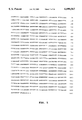
- FIG. 1 is the DNA sequence of the gene encoding G6PDH from L. mesenteroides strain ATCC 12291 (SEQ ID NO:1).
- FIG. 2 is the amino acid sequence of the G6PDH from L. mesenteroides strain ATCC 12291 (SEQ ID NO:2).
- FIG. 3 is the DNA sequence of the gene encoding G6PDH from L. citreum strain NCIMB 3351 (SEQ ID NO:3).
- FIG. 4 is the amino acid sequence of the G6PDH from L. citreum strain NCIMB 3351 (SEQ ID NO:4).
- FIG. 5 is the DNA sequence of the gene encoding G6PDH from L. lactis strain NCDO 546 (SEQ ID NO:5).
- FIG. 6 is the amino acid sequence of the G6PDH from L. lactis strain NCDO 546 (SEQ ID NO:6).
- FIG. 7 is the DNA sequence of the gene encoding G6PDH from L. dextranicus strain ATCC 19255 (SEQ ID NO:7).
- FIG. 8 is the amino acid sequence of the G6PDH from L. dextranicus strain ATCC 19255 (SEQ ID NO:8).
- FIG. 9 is plasmid pJS12.
- FIG. 10 is vector pDR540.
- FIG. 11 is plasmid pJS14.
- FIG. 12 is plasmid pKK233-2
- the present invention relates to methods for immunoassay of analytes employing mutant glucose-6-phosphate dehydrogenase (G6PDH) enzymes as labels.
- the invention relates to the use of conjugates of an analog of an analyte to be determined and a mutant NAD + dependent G6PDH differing from any precursor G6PDH by the deletion, substitution, or insertion, or any combination thereof of at least one amino acid per subunit.
- the invention also involves the construction of multiple mutations in precursor glucose-6-phosphate dehydrogenase (G6PDH) genes.
- the mutations involve deletion or substitution of one or more lysine residues, or introduction of one or more cysteine residues by insertion of cysteine to precursor G6PDH or substitution of precursor G6PDH amino acid residues with cysteine.
- the present invention also relates to conjugates of the subject enzymes and specific binding pair members, cell lines producing the subject enzymes, DNA and amino acid sequences encoding the subject enzymes, and plasmids (vectors) containing DNA encoding the subject enzymes and designed to allow a host cell to produce the subject enzymes.
- Analyte *** The compound or composition to be measured, the material of interest.
- the analyte is a member of a specific binding pair (sbp) and may be a ligand, which is mono- or polyvalent, usually antigenic or haptenic, and is a single compound or plurality of compounds which share at least one common epitopic or determinant site.
- the polyvalent ligand analytes will normally be poly(amino acids), i.e., polypeptides and proteins, polysaccharides, nucleic acids, and combinations thereof.
- the polyepitopic ligand analytes employed in the subject invention will have a molecular weight of at least about 5,000, more usually at least about 10,000.
- the poly(amino acid) category the poly(amino acids) of interest will generally be from about 5,000 to 5,000,000 molecular weight, more usually from about 20,000 to 1,000,000 molecular weight; among the hormones of interest, the molecular weights will usually range from about 5,000 to 60,000 molecular weight.
- proteins may be considered as to the family of proteins having similar structural features, proteins having particular biological functions, proteins related to specific microorganisms, particularly disease causing microorganisms, etc.
- the monoepitopic ligand analytes will generally be from about 100 to 5,000 molecular weight, more usually from 125 to 2,000 molecular weight.
- the analytes of interest include drugs, metabolites, pesticides, pollutants, and the like. Included among drugs of interest are the alkaloids.
- alkaloids include morphine alkaloids, which includes morphine, codeine, heroin, dextroamphetamine, their derivatives and metabolites; cocaine alkaloids, which include cocaine and benzoyl ecgonine, their derivatives and metabolites, ergot alkaloids, which include the diethylamide of lysergic acid; steroid alkaloids; iminazoyl alkaloids; quinazoline alkaloids, isoquinoline alkaloids; quinoline alkaloids, which include quinine and quinidine; diterpene alkaloids, their derivatives and metabolites.
- morphine alkaloids which includes morphine, codeine, heroin, dextroamphetamine, their derivatives and metabolites
- cocaine alkaloids which include cocaine and benzoyl ecgonine, their derivatives and metabolites
- ergot alkaloids which include the diethylamide of lysergic acid
- steroid alkaloids iminazoyl
- the next group of drugs includes steroids, which includes the estrogens, estogens, androgens, andrenocortical steroids, bile acids, cardiotonic glycosides and aglycones, which includes digoxin and digoxigenin, saponins and sapogenins, their derivatives and metabolites. Also included are the steroid mimetic substances, such as diethylstilbestrol.
- lactams having from 5 to 6 annular members, which include the barbiturates, e.g. phenobarbital and secobarbital, diphenylhydantoin, primidone, ethosuximide, and their metabolites.
- the next group of drugs is aminoalkylbenzenes, with alkyl of from 2 to 3 carbon atoms, which includes the amphetamines, catecholamines, which includes ephedrine, L-dopa, epinephrine, narceine, papaverine, and their metabolites.
- the next group of drugs is benzheterocyclics which include oxazepam, chlorpromazine, tegretol, imipramine, their derivatives and metabolites, the heterocyclic rings being azepines, diazepines and phenothiazines.
- the next group of drugs is purines, which includes theophylline, caffeine, their metabolites and derivatives.
- the next group of drugs includes those derived from marijuana, which includes cannabinol and tetrahydrocannabinol.
- the next group of drugs includes the vitamins such as A, B, e.g. B 12 , C, D, E and K, folic acid, thiamine.
- prostaglandins which differ by the degree and sites of hydroxylation and unsaturation.
- antibiotics which include penicillin, chloromycetin, actinomycetin, tetracycline, terramycin, the metabolites and derivatives.
- the next group of drugs is the nucleosides and nucleotides, which include ATP, FMN, adenosine, guanosine, thymidine, and cytidine with their appropriate sugar and phosphate substituents.
- the next group of drugs is miscellaneous individual drugs which include methadone, meprobamate, serotonin, meperidine, amitriptyline, nortriptyline, cotinine, lidocaine, procainamide, n-acetylprocainamide, propranolol, griseofulvin, valproic acid, butyrophenones, antihistamines, anticholinergic drugs, such as atropine, their metabolites and derivatives.
- Metabolites related to diseased states include spermine, galactose, phenylpyruvic acid, and porphyrin Type 1.
- the next group of drugs is aminoglycosides, such as gentamicin, kanamycin, tobramycin, and amikacin.
- pesticides of interest are polyhalogenated biphenyls, phosphate esters, thiophosphates, carbamates, polyhalogenated sulfenamides, their metabolites and derivatives.
- hormones such as progesterone, testosterone, thyroid hormones, and so forth.
- the molecular weights will generally range from 10,000 to 2 ⁇ 10 8 , more usually from 10,000 to 10 6 .
- the molecular weights will generally vary from about 160,000 to about 10 6 .
- Enzymes will normally range from about 10,000 to 1,000,000 in molecular weight.
- Natural receptors vary widely, generally being at least about 25,000 molecular weight and may be 10 6 or higher molecular weight, including such materials as avidin, DNA, RNA, thyroxine binding globulin, thyroxine binding prealbumin, transcortin, etc.
- a particularly preferred group of analytes are drugs including, by way of example and not limitation, drugs selected from the group consisting of digoxin, vancomycin, thyroxine, cyclosporin, folate, rapamycin, vitamin B12, mycophenolate, FK506 and tetrahydrocannabinol.
- sample Suspected of Containing Analyte Any sample which is reasonably suspected of containing analyte can be analyzed by the method of the present invention. Such samples can include human, animal or man-made samples. The sample can be prepared in any convenient medium which does not interfere with the assay. Typically, the sample is an aqueous solution or a natural fluid, preferably, urine, whole blood, serum, plasma, cerebral-spinal fluid, or saliva more preferably, serum.
- a member of a specific binding pair is one of two different molecules, having an area on the surface or in a cavity which specifically binds to and is thereby defined as complementary with a particular spatial and polar organization of the other molecule.
- the members of the specific binding pair are referred to as ligand and receptor (antiligand), sbp member and sbp partner, or the like.
- ligand and receptor antiligand
- sbp member and sbp partner or the like.
- These will usually be members of an immunological pair such as antigen-antibody, although other specific binding pairs, such as biotin-avidin, hormones-hormone receptors, nucleic acid duplexes, IgG-protein A, DNA-DNA, DNA-RNA, and the like, are not immunological pairs but are specific binding pairs.
- Ligand Any organic compound for which a receptor naturally exists or can be prepared.
- the analyte is a ligand and the present invention provides methods for determining the concentration of the analyte which is a ligand.
- a receptor is any compound or composition capable of recognizing a particular spatial and polar organization of a molecule. These organized areas of a molecule are referred to as epitopic or determinant sites. Illustrative naturally occurring receptors include: antibodies, enzymes, Fab fragments, poly(nucleic acids), complement component Clq, thyroxine binding globulin, lectins, protein A, and the like. Receptors are also referred to as antiligands.
- Ligand, analyte or sbp member analog *** A modified ligand or ligand surrogate, modified analyte or analyte surrogate, or modified sbp member or sbp member surrogate which can compete with the analogous ligand, analyte or sbp member for a receptor, antiligand, sbp partner, or the like, the modification providing means to join a ligand analog, analyte analog, or sbp member analog to another molecule.
- the ligand analog, analyte analog, or sbp member analog will usually differ from the ligand, analyte, or sbp member by more than replacement of a hydrogen with a bond which links the ligand analog, analyte analog, or sbp member analog to a hub or label, but need not.
- the term ligand surrogate, analyte surrogate, or sbp member surrogate refers to a compound having the capability of specifically binding a receptor complementary to the ligand, analyte or sbp member.
- the ligand surrogate, analyte surrogate, or sbp member surrogate can bind to the receptor in a manner similar to the ligand, analyte, or sbp member.
- the surrogate could be, for example, an antibody directed against the idiotype of an antibody to the ligand or analyte.
- a linking group is a portion of a structure which connects 2 or more substructures.
- a linking group has at least 1 uninterrupted chain of atoms extending between the substructures.
- the atoms of a linking group are themselves connected by chemical bonds.
- the number of atoms in a linking group is determined by counting the atoms other than hydrogen.
- a conjugate is a molecule comprised of two or more substructures bound together, optionally through a linking group, to form a single structure.
- the binding can be made either by a direct connection (e.g. a chemical bond) between the subunits or by use of a linking group.
- a conjugate is a G6PDH enzyme attached to a hapten, sbp member or analyte analog.
- Conjugation is any process wherein two subunits are linked together to form a conjugate.
- the conjugation process can be comprised of any number of steps.
- Haptens are capable of binding specifically to corresponding antibodies, but usually do not themselves act as immunogens for preparation of the antibodies.
- Antibodies which recognize a hapten can be prepared against compounds comprised of the hapten linked to an immunogenic carrier. Haptens are a subset of ligands.
- the signal producing system is utilized in assays for analytes and may have one or more components, at least one component being a mutant G6PDH of the invention.
- the signal producing system generates a signal that relates to the presence or amount of analyte in a sample.
- the signal producing system includes all of the reagents required to produce a measurable signal.
- the signal-producing system includes at least one enzyme and at least one substrate, and may include two or more enzymes and a plurality of substrates, and may include a combination of enzymes, where the substrate of one enzyme is the product of the other enzyme; provided throughout that at least one enzyme of the signal producing system is a mutant G6PDH of the invention.
- the mutant G6PDH is conjugated to an sbp member analogous to the analyte.
- the label is normally bound to an sbp member complementary to the analyte.
- Other components of the signal producing system can include substrates, enhancers, activators, chemiluminescent compounds, cofactors, inhibitors, scavengers, metal ions, specific binding substances required for binding of signal generating substances, coenzymes, substances that react with enzymic products, other enzymes and catalysts, and the like.
- the signal producing system provides a signal detectable by external means, normally by measurement of electromagnetic radiation, desirably by visual examination.
- the signal producing system includes a chromophoric substrate and mutant G6PDH enzyme of the invention, where chromophoric substrates are enzymatically converted to dyes which absorb light in the ultraviolet or visible region, phosphors or fluorescers.
- buffers will normally be present in the assay medium, as well as stabilizers for the assay medium and the assay components.
- additional proteins may be included, such as albumins, or surfactants, particularly non-ionic surfactants, binding enhancers, e.g., polyalkylene glycols, or the like.
- Sensitivity *** Is used in the sense of detection limit, i.e., the smallest amount of an analyte giving a signal that is distinguishable from the signal obtained in the absence of analyte.
- Substantial Change in Enzyme Activity *** A change in activity of an enzyme sufficient to allow detection of an analyte when the enzyme is used as a label in an assay for the analyte.
- the enzyme's activity is reduced 10-100% preferably 20-99%, more preferably 30-95%.
- Inhibitory Antibody *** An antibody capable of inhibiting the activity of an enzyme or an enzyme-ligand conjugate upon binding an epitope present on the enzyme. Such antibodies are distinguished from anti-ligand antibodies capable of inhibiting the enzyme activity of enzyme-ligand conjugates upon binding to the ligand.
- Expression Vector A DNA construct containing a DNA sequence which is operably linked to a suitable control sequence capable of effecting the expression of said DNA in a suitable host.
- control sequences may include a promoter to effect transcription, an optional operator sequence to control such transcription, a sequence encoding suitable mRNA ribosome-binding sites, and sequences which control termination of transcription and translation.
- the vector may be a plasmid, a phage particle, or simply a potential genomic insert.
- G6PDH Recombinant or Mutant G6PDH *** G6PDH in which the DNA sequence encoding the naturally occurring G6PDH is modified to produce a mutant DNA sequence which encodes the substitution, insertion or deletion of one or more amino acids in the G6PDH sequence.
- G6PDH *** A naturally occurring G6PDH or a recombinant G6PDH.
- an bacterial or fungal G6PDH Preferably an bacterial or fungal G6PDH, more preferably a bacterial G6PDH.
- Particularly preferred G6PDHs are bacterial NAD + dependent G6PDHs.
- Precursor G6PDH *** A naturally occurring G6PDH enzyme as well as a recombinant G6PDH enzyme having a sequence substantially identical to a naturally occurring G6PDH.
- the amino acid sequence of a G6PDH mutant is derived from the precursor G6PDH amino acid sequence by the substitution or deletion of one or more amino acids of the precursor amino acid sequence or the insertion of one or more amino acids into the precursor amino acid sequence. Such modification is of the precursor DNA sequence which encodes the amino acid sequence of the precursor G6PDH rather than manipulation of the precursor G6PDH enzyme per se.
- Host Strains or Cells *** Generally procaryotic or eucaryotic hosts and include any transformable microorganism in which the expression of G6PDH can be achieved.
- Homogeneous enzyme immunoassays depend on the availability of enzyme-sbp member conjugates whose enzyme activity can be strongly modulated on binding of the sbp partner.
- the present invention provides methods, enzymes, enzyme-sbp member conjugates, reagents and kits of reagents for conducting assays that are useful in immunoassays, especially homogeneous immunoassays.
- One aspect of the present invention relates to methods for homogeneous immunoassay of an analyte in a sample suspected of containing the analyte.
- the methods comprise the steps of: (1) combining in a liquid medium: (a) the sample to be assayed, (b) a conjugate of the analyte or an analyte analog with a mutant NAD + dependent G6PDH differing from any precursor G6PDH by the deletion, substitution, or insertion or any combination thereof of at least one amino acid per subunit, (c) a receptor for the analyte, and (d) substrates for the G6PDH; (2) determining the enzymatic activity of the G6PDH in the medium; and (3) comparing the activity to the enzymatic activity observed with a sample containing the analyte.
- the present invention includes a mutant G6PDH differing from any precursor G6PDH by the deletion, substitution, or insertion or any combination thereof of at least one amino acid per subunit as well as a conjugate of such a mutant G6PDH and an analog of the analyte or a receptor for the analyte.
- the mutations are selected to improve the properties of G6PDH conjugate.
- the improvement involves the performance of the G6PDH as a detectable label in binding assays, particularly, immunoassays.
- the immunoassay to be improved is a homogeneous immunoassay wherein the G6PDH is conjugated to a specific binding pair (sbp) member and the improvement comprises an increase in stability or modulation of enzyme activity upon binding of the sbp partner or a higher activity of the enzyme conjugate relative to precursor enzyme.
- sbp specific binding pair
- the DNA encoding any NAD + utilizing G6PDH is suitable for performing the mutations of the present invention.
- the encoded enzyme may be capable of using both NADP+and NAD + such as L. mesenteroides, A. suboxydans, P. aeruginosa, Pseudomonas W6, H. eutropha H-16, Hydrogenomonas facilis, Arthrobacter 7C, A. beijerickii, T. ferrooxidans, B. licheniformis, P. denitrificans, C. crescentus, L. lactis, and R. spheroides.
- the encoded enzyme may be capable of using NAD + as a preferred cofactor such as P. fluorescens and one of the G6PDHs from P. multivorans, or may be NAD + specific such as one of the G6PDHs from A. xylinum.
- G6PDH glucose-6-phosphate dehydrogenases
- NAD + NAD + or NADP +
- Glucose-6-phosphate dehydrogenases from L. mesenteroides are used in current EMIT homogeneous immunoassays (EMIT is a Trademark of Syva Company, Palo Alto, Calif., U.S.A.).
- G6PDH Two preferred genera of bacteria from which to select DNA encoding G6PDH are Leuconostoc and Zymomonas. Within these genera L. mesenteroides, L. citreum, L. lactis, L. dextranicum, and Z. mobilis are preferred, L. mesenteroides, L. citreum, L. lactis being particularly preferred. Because G6PDH from Leuconostoc does not contain cysteine residues, it is preferred for mutation strategies wherein one or more cysteine residues are introduced.
- Table 1 describes exemplary strains of a variety of Leuconostoc species. Such strains are purely exemplary and do not limit the selection of DNA suitable for use within the context of the present invention to that of any particular genus, species or strain. Among the most preferred strains from which to select DNA encoding G6PDH are Leuconostoc mesenteroides strain ATCC 12291, Leuconostoc citreum strain NCIMB 3351, Leuconostoc lactis strain NCDO 546, and Leuconostoc dextranicum strain ATCC 19255.
- FIG. 5 SEQ ID NO:5
- FIG. 6 SEQ ID NO:6
- FIG. 7 SEQ ID NO: 7
- amino acid sequence for the corresponding G6PDH is provided as FIG. 8 (SEQ ID NO:8).
- Exemplary mutations are described below. These are exemplary approaches and in no way limit the scope of the present invention. For example, mutations, other than those set forth below, could provide increased stability, modulability or specific activity of the mutant G6PDH as compared to the precursor G6PDH by inserting, deleting, or substituting amino acids at sites affecting such properties.
- the immunoassay to be improved by the present invention is one wherein the label enzyme (G6PDH), is conjugated to a specific binding pair (sbp) member.
- the enzymatic activity of such a conjugate is modulated, usually inhibited, by binding of an sbp partner to the conjugate.
- G6PDH-sbp member conjugates are generally formed by covalently binding or conjugating an sbp member to a G6PDH through a linker to a reactive amino acid such as tyrosine, lysine, cysteine, histidine and the like.
- the resulting conjugate mixture usually has reduced activity and may have limited ability to be modulated by anti-hapten antibody because binding of the sbp member to different groups on the enzyme can result in deactivation, destabilization, reduced modulability, or no affect depending on the particular group or set of groups that becomes bound.
- one mutation scheme for improving the performance of G6PDH as a label in homogeneous immunoassays provides enzymes that form conjugates having higher enzymatic activity when the sbp member is not bound to its sbp partner and having a greater reduction in enzymatic activity when the sbp member is bound to its sbp partner relative to the corresponding properties of a precursor enzyme conjugated to a like number of sbp members.
- Exemplary of such a scheme is the elimination of lysine residues that, when conjugated to sbp members, contribute little to the modulability by an sbp partner.
- lysines can be eliminated by deleting them from the protein sequence or, preferably, by substituting them with other amino acids that have no detrimental effect on the protein stability.
- the replacement amino acids are any amino acids that do not substantially, adversely affect the activity or stability of the enzyme and preferably an amino acid that preserves the charge of the enzyme such as arginine or histidine.
- the mutations of this scheme involve deletion or substitution of one, preferably two, more preferably at least four lysine amino acid residues per subunit.
- the mutations preferably further involve substitution of the lysines by a different amino acid residue.
- Lysines to be deleted or substituted can be selected in any manner. For example, they can be replaced one at a time, examining the enzyme activity of the conjugate with and without sbp partner, to determine suitable mutants. Preferably, if it is known which lysines upon conjugation produce inactive conjugates or do not contribute to modulation, then these lysines are candidates for deletion or substitution. Lysines of this type can be identified, for example, by systematically deleting lysines that react during conjugation of a precursor enzyme where these lysines can be identified for example by sequencing tryptic digestion fragments of the conjugate to determine which amino acids are linked to sbp members.
- mutant G6PDH enzymes having such mutations are those mutant G6PDH enzymes having lysines deleted or substitution in one or more amino acid residue positions selected from the group consisting of positions 5, 19, 31, 32, 37, 55, 63, 96, 105, 128, 131, 148, 204, 208, 252, 259, 265, 273, 282, 298, 311, 338, 343, 352, 376, 382, 386, 408, 409, 441, 454, 461, 472, and 484 in G6PDH from L. mesenteroides strain ATCC 12291, preferably from positions 5, 19, 37, 128, 131, 204, 252, 265, 282, 338, 343, 454, 461, and 472.
- At least two lysines are deleted or substituted, more preferably at least 4, most preferably 6 or more lysines are deleted or substituted wherein at least 1 and preferably at least 4 of the lysines substituted are selected from the above group of positions.
- mutant G6PDH enzymes having such mutations are those mutant G6PDH enzymes having lysines deleted or substituted from one or more positions selected from the group consisting of positions 5, 19, 31, 32, 55, 69, 96, 105, 128, 131, 148, 162, 204, 208, 252, 259, 265, 273, 282, 298, 311, 338, 343, 352, 376, 382, 386, 408, 441, 454, 461, 472, and 484 in G6PDH from L. citreum strain NCIMB 3351, preferably from positions 5, 19, 69, 128, 131, 204, 252, 265, 282, 338, 343, 454, 461, and 472.
- At least two lysines are deleted or substituted, more preferably at least 4, most preferably 6 or more lysines are deleted or substituted wherein at least 1 and preferably at least 4 of the lysines substituted are selected from the above group of positions.
- G6PDH enzymes having such mutations are those mutant G6PDH enzymes having lysines deleted or substituted from one or more positions selected from the group consisting of positions 5, 19, 31, 32, 55, 69, 96, 105, 128, 131, 148, 159, 204, 208, 252, 259, 265, 273, 282, 298, 311, 338, 343, 352, 382, 386, 408, 441, 454, 461, 472, and 484 in G6PDH from L. lactis strain NCDO 546, preferably from positions 5, 19, 128, 131, 204, 252, 265, 282, 338, 343, 454, 461, and 472.
- At least two lysines are deleted or substituted, more preferably at least 4, most preferably 6 or more lysines are deleted or substituted wherein at least 1 and preferably at least 4 of the lysines substituted are selected from the above group of positions.
- G6PDH enzymes having such mutations are those mutant G6PDH enzymes having lysines deleted or substituted from one or more positions selected from the group consisting of positions 5, 19, 31, 32, 55, 63, 96, 128, 131, 148, 204, 208, 252, 259, 265, 273, 282, 298, 311, 338, 343, 352, 376, 382, 386, 408, 409, 441, 454, 461, 472, and 484 in G6PDH from L. dextranicum strain ATCC 19255, preferably from positions 5, 19, 128, 131, 204, 252, 265, 282, 338, 343, 454, 461, and 472.
- At least two lysines are deleted or substituted, more preferably at least 4, most preferably 6 or more lysines are deleted or substituted wherein at least 1 and preferably at least 4 of the lysines substituted are selected from the above group of positions.
- any precursor G6PDH having a high degree of homology with the exemplary strains listed above is a candidate for the above exemplary mutations.
- Such homology is not a requirement of the first mutation strategy.
- homology is one method of identifying candidate strains.
- the degree of homology may be 50-80%, preferably 80-85%, more preferably >85%.
- Exemplary functional groups to which an sbp member may be bound include by way of example and not limitation, hydroxyl, carboxyl, amino, sulfhydryl, and the like.
- Exemplary of such functional groups to which an sbp member may be bound are the hydroxy group of tyrosine, serine, and threonine; the carboxy group of aspartic acid and glutamic acid; the amine group of lysine; and the sulfhydryl group of cysteine.
- Another exemplary mutation scheme of the present invention results in improving the inhibitability of enzyme-sbp member conjugates by providing one or more sbp member attachment sites at locations on the enzyme not otherwise having such attachment sites.
- Providing attachment sites can involve adding one or more new residues (having such a functional group) to a protein sequence or substituting one or more existing residues (not having such a functional group) with new residues (having such a functional group).
- cysteine residues can be provided (by insertion or substitution) that allow sbp members to be bound (through free sulfhydryl of the new cysteine residues) to sites on the enzyme not otherwise available.
- the number of cysteine residues introduced depends on the nature of the assay to be performed. Generally, a small number of cysteines at sites selected to allow for the formation of conjugates that are inhibitable upon binding of the sbp member is preferred. Accordingly, the mutations of this scheme preferably involve introduction of cysteine residues, usually up to 8 cysteines, per subunit, preferably up to 4 cysteines and most preferably, a single cysteine residue per subunit.
- One class of preferred mutant G6PDH enzymes are those mutant G6PDH enzymes having at least one cysteine residue introduced between amino acids 35 and 70, preferably, 45 and 60, more preferably, 45 and 57 in G6PDH from Leuconostoc mesenteroides strain ATCC 12291, Leuconostoc citreum strain NCIMB 3351, Leuconostoc lactis strain NCDO 546, or Leuconostoc dextranicum strain ATCC 19255 wherein the cysteine preferably replaces one of these amino acids, but need not.
- Table 2 lists exemplary cysteine introductions consistent with this mutation scheme. Such mutations are purely exemplary and do not limit suitable mutations within the context of the present invention.
- Another exemplary mutation scheme involves inhibitory epitopic sites (IES) present on a given enzyme.
- IES inhibitory epitopic sites
- Suitable inhibitory epitopic sites as well as methods for using such sites in assays is contained in Skold, C., D. R. Gould, and E. F. Ullman (Methods for modulating ligand-receptor interactions and their application; U.S. Pat. No. 4,727,022, Feb. 23, 1988; filed Mar. 14, 1984) which is incorporated in its entirety herein by reference, particularly, column 1, lines 40-59, and column 2, lines 26-38.
- An IES is a site on an enzyme that binds an inhibitory antibody (IA) such that, when the IA is bound, the activity of the enzyme is substantially reduced but, when the IA is not bound, the enzyme is active.
- IA inhibitory antibody
- an enzyme having an IES is modified to provide sbp member attachment sites at one or more locations proximate to the IES so that when an sbp partner of the sbp member is bound to the enzyme-sbp member conjugate, the inhibitory antibodies will be inhibited from binding to the IES.
- an immunoassay is available which utilizes the enzyme conjugate; an sbp partner, usually an antibody capable of binding both the analyte and the conjugate; an inhibitory anti-G6PDH antibody; the G6PDH substrates glucose-6-phosphate (G6P) and NAD + or analogs thereof; and ancillary reagents.
- the activity of the enzyme conjugate is substantially inhibited in the presence of analyte (an sbp member), and active in the absence of analyte.
- analyte an sbp member
- enzyme-sbp member conjugate for binding to the sbp partner (an antibody capable of binding analyte)
- Inhibitory antibody also competes with sbp partner for binding to the enzyme sbp conjugate. Because binding of the sbp partner to the conjugate does not substantially inhibit the enzyme activity, the enzyme is active when the sbp partner binds. However, when the sbp partner is bound to analyte it cannot compete with the inhibitory antibody for binding to the conjugate, and the enzyme activity is reduced.
- An IES can be naturally present on a precursor enzyme or can be created by modification of a precursor enzyme.
- a site for specific attachment of a ligand proximate to an IES will frequently not be available on a precursor enzyme but may be introduced by a mutation.
- G6PDH's are typically comprised of at least 2 identical subunits, a given G6PDH may have one or more pairs of identical inhibitory epitopic sites.
- Certain antibodies are capable of binding simultaneously to each member of such a pair. In such a case the inhibitory antibody may be able to bridge the subunits when bound to the inhibitory epitopic sites.
- Inhibitory monoclonal antibodies can be obtained by the process discussed by Milstein and Kohler and reported in Nature 1975, 256, 495-7. The details of this process are well known and will not be repeated here. However, basically it involves injecting a host, usually a mouse or other suitable animal, with an immunogen.
- the immunogen is the enzyme against which inhibitory antibodies are to be prepared.
- fragments of the enzyme or synthetic poly(peptides) mimicking the IES of the enzyme may also be used as the immunogen.
- Such enzyme fragment or synthetic poly(peptide) immunogens may incorporate one of the immunogenic carriers common in the art. Cells are then taken from the spleen of the animal.
- the host may be unsensitized spleen cells, which are sensitized to the immunogen in vitro.
- the resulting cells are fused with myeloma cells.
- the result is a hybrid cell, referred to as a "hybridoma" that can be cultured in vitro.
- the population of hybridomas is screened and manipulated so as to isolate individual clones, each of which secretes a single antibody to the antigen.
- the IES can be located in a variety of ways, For example, epitope mapping such as described by Geysen, H. M., S. J. Rodda, T. J. Manson, G. Tribbick, and P. G. Schoofs (1987; Strategies for epitope analysis using peptide synthesis; J. Immunol. Methods 102:259-274) can be performed. Alternatively, the binding of IAs to various differing strains of G6PDH, such as described below, with known amino acid sequences can be determined. By comparing amino acid sequences among the binders and non-binders of the particular IA a number of possible binding sites can usually be determined.
- the exact site can subsequently be determined either by mutagenizing a binding enzyme to incorporate a non-binding amino acid sequence in a region suspected of being an IES and subsequently checking whether IA binding has been prevented or by splicing regions of a binding enzyme into a non-binding enzyme and determining whether an IES has been created.
- an sbp member attachment site can be added by introducing an amino acid residue proximate to the IES having a side chain bearing a functional group capable of reacting to form an enzyme-sbp member conjugate.
- the side chain will have a sulfhydryl group or a disulfide but side chains having other groups such as amino, imidazole and indole and hydroxyl can be used.
- the amino acid that is introduced will replace an amino acid that is normally found in the precursor enzyme.
- the location of the new sbp member attachment site is selected so that, when sbp partner is bound to an enzyme-sbp member conjugate, an inhibitory antibody is substantially incapable of binding the conjugate.
- the new sbp member attachment site is also located so that the inhibitory antibody is capable of binding and inhibiting the conjugate when sbp partner is absent.
- the new sbp member attachment site is preferably proximate to the IES. It may be characterized as proximate in 3-dimensional space or proximate along the amino acid sequence of the enzyme. If the attachment site is characterized as proximate in a spacial sense, it is usually within about 35 ⁇ of an amino acid residue of the IES, preferably within about 30 to 3 ⁇ , most preferably, 15 to 3 ⁇ . If the attachment site is characterized as proximate in a sequence sense, it is preferably within about 10 amino acid residues of an amino acid residue of the IES, more preferably, within about 6 to 1, most preferably, 4 to 1.
- a mutation of this scheme is any mutation proximate to an epitopic site which is recognized by an anti-G6PDH antibody capable of inhibiting the activity of the precursor G6PDH.
- the antibody may but need not be capable of simultaneously binding to two of the subunits within the same G6PDH molecule.
- One preferred mutation is the introduction (or insertion) of at least one cysteine residue per subunit.
- Representative precursor G6PDH enzymes suitable for introducing such mutations include L. mesenteroides strain ATCC 12291, L. lactis strain NCDO 546 and L. dextranicus strain ATCC 19255.
- Four or more cysteine residues can be introduced by insertion or substitution between amino acids 45 and 60, and preferably, no more than 2, more preferably, a single cysteine can be introduced.
- a single cysteine is introduced by substitution of the naturally present amino acid at position 51-56, most preferably position 52.
- the mutant G6PDH conjugates of the present invention can be utilized in an assay of an analyte in a sample suspected of containing analyte.
- the assay comprises the steps of contacting the sample with antibodies capable of binding the analyte and an enzyme conjugate of the analyte and measuring the activity of the enzyme which relates to the amount of analyte in the sample.
- the improvement provided in this aspect of the invention is the utilization of the mutant G6PDH conjugates of the invention.
- the enzyme activity is determined by adding glucose-6-phosphate and NAD + or NADP + , usually NAD + to the assay medium and detecting either the disappearance of one of these substrates or the appearance of NADH, NADPH or D-glucono- ⁇ -lactone-6-phosphate.
- an assay for the determination of analyte in an optionally pretreated sample suspected of containing analyte the sample is contacted with antibodies for analyte inhibitory antibodies for G6PDH and a mutant G6PDH-analyte conjugate of the invention recognized by the antibodies for the analyte and the inhibitory antibodies for G6PDH.
- the method further includes measuring the enzyme activity in relation to the amount of analyte present in the sample.
- Analyte or analyte analog is conjugated, optionally through a linking group that will usually be less than about 50, preferably less than 20, more preferably less than about 6 atoms other than hydrogen having a chain of usually not more than about 35, preferably less than 15, more preferably less than 4 atoms in length, to a mutant G6PDH of the invention may be employed as the G6PDH conjugate.
- compositions of the invention have special application to homogeneous immunoassays for analytes exemplified by enzyme multiplied immunoassay techniques (e.g. see U.S. Pat. No. 3,817,837), and enzyme protection immunoassays (e.g. see U.S. Pat. No. 4,233,401) other homogeneous enzyme immunoassays are discussed in "Enzyme-Immunoassay” by Edward T. Maggio, CRC Press Incorporated, Boca Raton, Fla., 1980.
- Assays using inhibitory antibodies as described above are described in the above incorporated U.S. Pat. No. 4,727,022, in particular, column 5, line 16, to column 6, line 51, are incorporated herein by reference.
- the disclosures of the above patents not otherwise incorporated are incorporated herein by reference in their entirety as to the description of the particular assay methods mentioned.
- the assay is preferably homogeneous and will normally be carried out in an aqueous buffered medium at a moderate pH, generally that which provides optimum assay sensitivity.
- the aqueous medium may be solely water or may include from 0 to 40 volume percent of a cosolvent.
- the pH for the medium will usually be in the range of about 4 to 11, more usually in the range of about 5 to 10, and preferably in the range of about 6.5 to 9.5.
- the pH will usually be a compromise between optimum binding of the binding members of any specific binding pairs and the pH optimum for other reagents of the assay such as members of the signal producing system.
- buffers may be used to achieve the desired pH and maintain the pH during the determination.
- Illustrative buffers include borate, phosphate, carbonate, tris, barbital and the like.
- the particular buffer employed is not critical to this invention, but in an individual assay one or another buffer may be preferred.
- Moderate temperatures are normally employed for carrying out the assay and usually constant temperatures during the period of the measurement, particularly for rate determinations.
- Incubation temperatures will normally range from about 5° to 45° C., more usually from about 15° to 40° C.
- Temperatures during measurements will generally range from about 10° to 50°, more usually from about 15° to 40° C.
- the concentration of analyte that may be assayed will generally vary from about 10 -5 to 10 -13 M, more usually from about 10 -6 to 10 -8 M. Considerations such as whether the assay is qualitative, semiquantitative or quantitative (relative to the amount of analyte present in the sample), the particular detection technique and the concentration of the analyte will normally determine the concentrations of the various reagents.
- concentrations of the various reagents in the assay medium will generally be determined by the concentration range of interest of analyte, the final concentration of each of the reagents will normally be determined empirically to optimize the sensitivity of the assay over the range. That is, a variation in concentration of analyte which is of significance should provide an accurately measurable signal difference.
- the order of addition may be varied widely, there will be certain preferences depending on the nature of the assay.
- the simplest order of addition is to add all the materials simultaneously and determine the effect that the assay medium has on the signal.
- the reagents are combined sequentially.
- an incubation step is involved subsequent to each addition, generally ranging from about 10 seconds to 6 hours, more usually from about 30 seconds to 1 hour.
- the signal is determined.
- the signal is related to the amount of analyte in the sample tested.
- a sample suspected of containing analyte is combined in an aqueous medium either simultaneously or sequentially with an antibody and a mutant G6PDH-analyte analog conjugate of the present invention.
- substrates for the mutant G6PDH such as glucose-6-phosphate and NAD + , NADP + or a derivative thereof are added which result in the formation of a chromogenic or fluorogenic product upon enzyme catalyzed reaction.
- the analyte in the sample and the mutant G6PDH-analyte analog conjugate compete for sites on the antibody.
- the enzyme activity in the medium is then determined, usually by spectrophotometric means, and is compared to the enzyme activity determined when a calibrator or reference sample is tested in which a known amount of analyte is present.
- the calibrator or reference sample is tested in a manner substantially the same as the sample suspected of containing analyte.
- the standard samples will typically contain differing, but known, concentrations of the analyte to be determined.
- concentration ranges present in the standard samples will span the range of suspected analyte concentrations in the unknown samples.
- compositions comprising a specific binding pair member conjugated to a mutant NAD + dependent bacterial glucose-6-phosphate dehydrogenase (G6PDH) having at least one amino acid mutation per subunit as compared to precursor G6PDH.
- G6PDH NAD + dependent bacterial glucose-6-phosphate dehydrogenase
- Analyte or analyte analog conjugated, optionally through a linking group of less than about 50, preferably less than 20, more preferably less than about 6 atoms other than hydrogen having a chain of usually not more than about 35, preferably less than 15, more preferably less than 4 atoms in length, to a mutant G6PDH of the invention may be employed as the conjugate.
- ENZ is a mutant bacterial glucose-6-phosphate dehydrogenase (G6PDH) having at least one cysteine residue per subunit
- L is a bond to the sulfur atom of the cysteine or a linking group having a chain of 1 to 20 atoms bonded to the sulfur atom of the cysteine
- sbp is a specific binding pair member
- n is a number from 1 to 8.
- L is a bond or linking group having a chain of less than 15 atoms, more preferably, L is a linking group having a chain of less than 4 atoms.
- Conjugates of the invention are prepared by linking a hapten to a mutant G6PDH.
- a functional group suitable for linking the hapten is not available a linking group will be introduced that contains a suitable functional group.
- the linking group may comprise a chain of atoms of 0 to 50 usually less than 15, more usually less than 6 in length. The length of the linking group will normally be determined empirically so as to provide G6PDH conjugates that have high modulation of activity by antibodies, low loss of activity upon conjugation, and high stability.
- the functional groups suitable for attaching the hapten to the enzyme will usually be an activated ester or alkylating agent when the amino acid(s) that are to be conjugated on the G6PDH have amino or hydroxyl groups and will usually be alkylating agents or desulfurizes when the amino acid(s) that are to be conjugated on the G6PDH are cysteine.
- a large number of suitable functional groups are available for attaching to aminos and alcohols such as activated esters including imidic esters, sulfonic esters and phosphate esters, activated nitrites, aldehydes, ketones, alkylating agents and the like.
- the product is then optionally purified as may be required.
- the purification and characterization of poly(amino acid)-hapten conjugates has been described in detail Maggio, et. al; "enzyme-immunoassay” (CRC Press, Boca Raton, Fla., 1980), Chapter 4, pages 86-88 of which are incorporated herein by reference.
- the conjugate is a mutant G6PDH-hapten conjugate
- the purification can be by dialysis against aqueous/organic and aqueous solutions such as water/DMF or water, or by gel filtration chromatography on supports such as Sephadex, and the like.
- the conjugation can involve binding of a hapten to a free thio group present on an amino acid side chain of the enzyme (e.g. cysteine).
- a hapten to a free thio group present on an amino acid side chain of the enzyme (e.g. cysteine).
- Such conjugation involves alkylation of the thio sulfur atom by treatment with an electrophilic compound such as an ⁇ , ⁇ -unsaturated amide, ketone, ester, or the like, or an alkylating agent such as a reactive halide or sulfonate or the like or reaction with an active disulfide such as a 2-nitro-4-carboxyphenyl disulfide.
- an electrophilic compound such as an ⁇ , ⁇ -unsaturated amide, ketone, ester, or the like
- an alkylating agent such as a reactive halide or sulfonate or the like or reaction with an active disulfide such as a 2-nitro-4-carbox
- Conjugation reactions with G6PDH can be affected by a number of factors. These include, but are not confined to, pH, temperature, buffer, ionic strength, substances which may protect the enzyme active site, amount and type of cosolvent, reaction time, and activation chemistry. For each enzyme-hapten combination, appropriate manipulation of these variables can lead to conjugates which are improved in one or more of the following properties: 1) reduced deactivation for a given amount of inhibition; 2) larger standard curve; 3) improved assay precision; 4) enhanced thermal stability. Keeping in mind that these variables are not independent, the following observations can be made. A range of pH values from 5.0 to 9.5 can usually be used for conjugation reactions. These reactions are generally carried out at 0-40° C., preferably 4-20° C.
- a number of buffers and salts can be used for such reactions. These include Tris, bicarbonate, phosphate, pyrophosphate, EDTA, KCl, NaCl, and many others.
- the active site may be protected by substrates (i.e. G6P), cofactors (NAD + , NADH, NADP + , NADPH) and cofactor analogs (thio-NAD + ,thio-NADH,thio-NADP + , or thio-NADPH), and compounds which react reversibly with lysine (i.e. pyridoxal) to reduce deactivation of the enzyme during conjugation.
- substrates i.e. G6P
- cofactors NAD + , NADH, NADP + , NADPH
- compounds which react reversibly with lysine i.e. pyridoxal
- Cosolvents which may enhance hapten solubility include, but are not limited to, dimethylformamide, carbitol, dimethyl sulfoxide, 1-Methyl-2-pyrrolidinone, and 1,3-Dimethyl-3,4,5,6-tetrahydro 2(1H)-pyrimidinone. These may be useful as 1-30% of the reaction volume. Reactions can vary from 15 minutes to many days, depending on the activation chemistry.
- Carboxylic compounds may be activated to form esters with N-Hydroxysuccinimide or its sulfo-analog, or to mixed anhydrides through reaction with carbitol chloroformate or t-butylchloroformate, or may be coupled directly using carbodiimides such as EDAC.
- the hapten should contain a good leaving group such as I, Br or tosyl; alternatively, the hapten can contain a thiol, preferably activated with 2,2' dithiodipyridine or DTNB.
- Another method of conjugation described in Rowley, G. L., D. Leung, and P. Singh (U.S. Pat. No.
- the assay reagents include an analyte-label conjugate; and the improvement comprises employing as the label mutant glucose-6-phosphate dehydrogenase (G6PDH) enzymes having at least one mutation per subunit as compared to precursor G6PDH wherein the mutations are proximate to an epitopic site recognized by an anti-G6PDH antibody capable of inhibiting the activity of the precursor G6PDH.
- G6PDH glucose-6-phosphate dehydrogenase
- the label conjugate reagent is comprised of the conjugate and an aqueous medium, the pH medium being optimized to balance, among any other considerations, the activity and stability of the label conjugate.
- the present invention relates to aqueous mutant G6PDH-sbp member conjugate reagents wherein the pH is 6-10, preferably 7-9, more preferably 7.5-8.5.
- kits for conducting an assay for the determination of a specific binding pair (sbp) member comprise in packaged combination an sbp partner of the sbp member and a composition which comprises the sbp member or an analog of the sbp member conjugated to a mutant NAD + dependent bacterial glucose-6-phosphate dehydrogenase (G6PDH) having at least one amino acid mutation per subunit as compared to precursor G6PDH. Additionally the kits may contain an inhibitory anti-G6PDH antibody.
- G6PDH NAD + dependent bacterial glucose-6-phosphate dehydrogenase
- Surface active additives including bulking agents such as BLG or PEG; defoamers and surfactants such as tween-20, plurafac A38, triton X-100, pluronic 25R2, RSA, BSA, Mod-u-cyte, sol-u-pro, or the like; and other materials commonly used in the art can be added to improve solubility and reduce nonspecific binding of reagents and analyte to surfaces.
- Anti-microbial agents such as azide thimerosal gentamicin and the like can be added to assay reagents in order to extend the storage life of the reagents.
- the present invention relates to assay reagents containing anti-microbial agents.
- the reagents can be provided in packaged combination, in the same or separate containers, so that the ratio of the reagents provides for substantial optimization of the method and assay.
- the reagents may each be in separate containers or various reagents can be combined in one or more containers depending on the cross-reactivity and stability of the reagents.
- the kit may comprise as one or more reagents antibodies capable of binding analyte or inhibitory antibodies capable of inhibiting a G6PDH-analyte analog conjugate of the invention.
- the kit may also include the conjugates of the invention.
- the kit can further include other packaged reagents for conducting an assay including members of the signal producing system, ancillary reagents, and so forth.
- buffers will normally be present in the assay medium, as well as stabilizers for the assay medium and the assay components.
- additional proteins may be included, such as albumins, or surfactants, particularly non-ionic surfactants, binding enhancers, e.g., polyalkylene glycols, or the like.
- G6PDH glucose-6-phosphate dehydrogenase
- G6PDH glucose-6-phosphate dehydrogenase
- the mutant DNA sequence being derived from a precursor glucose-6-phosphate dehydrogenase by the deletion, insertion or substitution of one or more amino acids in the precursor glucose-6-phosphate dehydrogenase.
- the G6PDH is an NAD + dependent bacterial G6PDH, more preferably the mutant DNA sequence is derived from a precursor glucose-6-phosphate dehydrogenase by the deletion, insertion or substitution of two or more amino acids in the precursor glucose-6-phosphate dehydrogenase.
- G6PDH glucose-6-phosphate dehydrogenase
- G6PDHs glucose-6-phosphate dehydrogenases
- G6PDH conjugates it is first necessary to obtain genomic DNA that codes for the production of G6PDH from suitable Leuconostoc organisms. These DNAs can be cloned in E. coli cloning vectors. Colonies containing recombinant cloning vectors harboring the gene for G6PDH may be screened for by colony or plaque hybridization using labeled probes specific for the gene. Alternatively, the gene encoding G6PDH can be isolated by means of the polymerase chain reaction (PCR) using appropriate oligodeoxynucleotide primers. Suitable oligodeoxynucleotide probes and primers can be readily synthesized based on the nucleotide sequences of the G6PDH genes described below.
- PCR polymerase chain reaction
- the basic molecular biological techniques employed in accomplishing features of this invention such as DNA and plasmid isolation, restriction enzyme digestion, DNA ligation, purification and characterization of DNAs by polyacrylamide and agarose gel electrophoresis, labeling and hybridization of DNAs, Southern blotting, maintenance and growth of bacterial strains, and other general techniques are all well know in the literature.
- the general techniques of molecular biology are described in "Molecular Cloning A Laboratory Manual” by Sambrook, J., Fritsch, E. F., and Maniatis, T. published by Cold Spring Harbor Laboratory Press, 2nd edition, 1989, or "A Practical Guide to Molecular Cloning” by Bernard Perbal published by John Wiley & Sons, New York, 1984. Specific methods for obtaining the gene for G6PDH and expressing and purifying the protein are described below.
- Another aspect of the present invention relates to mutant DNA sequences encoding such glucose-6-phosphate dehydrogenases (G6PDH) enzymes.
- G6PDH glucose-6-phosphate dehydrogenases
- These mutant DNA sequences are derived from a precursor DNA sequence which encodes a naturally-occurring or recombinant precursor enzyme.
- the mutant DNA sequences are derived by modifying the precursor DNA sequence to encode the substitution, deletion or insertion of at least one amino acid residue encoded by the precursor DNA sequence.
- These recombinant DNA sequences encode glucose-6-phosphate dehydrogenase mutant enzymes having a novel amino acid sequence.
- the invention relates to expression vectors containing such mutant glucose-6-phosphate dehydrogenase DNA sequences as well as host cells transformed with such vectors which are capable or producing such mutant enzymes.
- Another aspect of the present invention relates to engineered DNA sequences characterized by a nucleotide sequence encoding a glucose-6-phosphate dehydrogenase (G6PDH) enzyme produced by an organism for expression in a unicellular host, wherein the G6PDH has at least two amino acid mutations as compared to precursor G6PDH of the organism.
- G6PDH glucose-6-phosphate dehydrogenase
- the invention relates to expression vectors containing such mutant glucose-6-phosphate dehydrogenase DNA sequences as well as host cells transformed with such vectors which are capable or producing such mutant enzymes.
- Another aspect of the present invention relates to plasmids characterized by containing an engineered native DNA sequence encoding a glucose-6-phosphate dehydrogenase (G6PDH) enzyme for expression in a unicellular host, wherein the G6PDH has at least two amino acid mutations as compared to precursor G6PDH of the organism.
- G6PDH glucose-6-phosphate dehydrogenase
- Another aspect of the present invention relates to transformed unicellular hosts characterized by the presence of a plasmid with an engineered DNA sequence encoding a glucose-6-phosphate dehydrogenase (G6PDH) enzyme wherein the G6PDH has at least two amino acid mutations as compared to precursor G6PDH of the organism.
- G6PDH glucose-6-phosphate dehydrogenase
- an expression vector will include a selectable, with an intracellular expression system from a strong, inducible promoter.
- a vector having its own ribosome binding site is preferred, rather than engineering the G6PDH gene.
- An example of such a plasmid, shown in FIG. 9, is pJS12 based on the vector pDR540, shown in FIG. 10, an ampicillin-selectable plasmid having a tac promoter and a Bam HI cloning site.
- the first two bases of the Bam HI site (GAATTC) complete the sequence of the second rbs (AGGA) following the promoter.
- the 5' end of a PCR fragment containing the gene can be designed so that the ATG is spaced 4 bases away from the end of the Bam HI site.
- FIG. 11 Another example of a useful plasmid, shown in FIG. 11, is pJS14 based on pKK233-2, shown in FIG. 12.
- This expression vector has several improvements as compared to pJS12 based on pDR540. It carries an Nco I site (CCATGG), the ATG of which corresponds to the properly positioned start codon of the expressed protein. This start codon site eliminates the need to properly space the rbs and ATG sites.
- the vector also contains a transcriptional terminator sequence following the multiple cloning site, which reduces or eliminates run-on transcription from a plasmid.
- the resulting cells are tested for expression of desired G6PDH and absence of expression of native G6PDH. This is most readily done by enzymatic assay for activity of the recombinant G6PDH in the presence of NAD + .
- western blots are performed on cell extracts using polyclonal antibodies that recognize the desired G6PDH but do not recognize other related but undesirable enzymes such as any native enzyme produced by the host cell without the plasmid.
- a subunit of G6PDH from L. mesenteroides appears as a protein of approximately 54 kDa (on a denaturing polyacrylamide gel) and cross-reacts with the antibodies.
- This protein is present in cells containing the expression plasmid, but is absent in extracts of cells without the plasmid. Levels of the specific G6PDH protein generally increases when the cultures are incubated in the presence of isopropylthio- ⁇ -galactoside (IPTG), demonstrating that protein production is inducible.
- IPTG isopropylthio- ⁇ -galactoside
- Genomic DNA was prepared from Leuconostoc organisms by the method of Murphy, N. B., McConnell, D. J., and Schwarz, T. F. R. J. Bact. 169(1), 334-339 (1987). Specific instructions for bacterial growth and DNA isolation are given on pages 334 and 335.
- the probe TG46 (5' AGG-TAG-TGG-TCA-ATA-CGG-AAT-AGT-TGG-TTA-TCA-TCA-AAT-GCG-TTT-T 3' SEQ ID NO:9) can be used in Southern blotting experiments to identify restriction fragments containing the G6PDH gene. Specifically, in the cloning of G6PDH from the National Collection of Industrial and Marine Bacteria, Aberdeen, Scotland (NCIMB) 3351 (Leuconostoc citreum), Southern blot hybridization of NCIMB 3351 genomic DNA with the 46 base pair (bp) TG46 probe showed strongly hybridizing 2.7 kilo base pair (kb) Kpn I and 2.5 kb Hind III fragments.
- Kpn I and Hind III digested NCIMB 3351 genomic DNA was size fractionated by agarose gel electrophoresis and libraries in the plasmid pUC18 were prepared in E. coli JM101. Colony hybridization with TG46 resulted in the isolation of clones containing overlapping Kpn I and Hind III fragments. In addition to the complete coding region for G6PDH, these clones contained approximately 1.7 kb of 5' flanking (Kon I clones) and approximately 1.1 kb 3' flanking sequences (Hind III clones). Approximately 0.8 kb downstream of the gene was a unique Mlu I site.
- the 2.5 kb Hind III fragment containing all but the first 20 codons of the gene, was cloned between the unique Hind III and NcoI sites of pKK233-2 (Pharmacia Molecular Biologicals, Piscataway, N.J.) along with a synthetic DNA duplex which spanned pKK233-2's unique Nco I and Hind III sites and encoded the first 20 amino acids of NCIMB 3351 G6PDH as derived from the DNA sequence of the cloned Kpn I fragment.
- the synthetic linker sequences were: 5'-C-ATG-GTT-GCA-GAA-ATC-AAA-ACA-TTA-GTT-ACT-TTT-TTT-GGT-GGA-ACT-GGT-GAT-TTA-GCA-AAG-CGT-A-3 ' SEQ ID NO:10 and, 5' AG-CTT-ACG-CTT-TGC-TAA-ATC-ACC-AGT-TCC-ACC-AAA-AAA-AGT-AAC-TAA-TGT-TTT-GAT-TTC-TGC-AAC 3' SEQ ID NO:11.
- the resulting plasmid was transformed into JM101 or HB101 and expressed the wild type G6PDH from Leuconostoc citreum (NCIMB 3351). It was called 3351/pKK233-2.
- G6PDH from American Type Culture Collection (ATCC) 12291 was cloned by polymerase chain reaction amplification of the gene from genomic DNA and direct ligation of the restricted amplification product into an expression vector.
- the polymerase chain reaction (PCR) is described by Saiki, R. K., Scharf, S., Faloone, F., Mullis, K. B., Horn, G. T., Erlich, H. A., and Arnheim, N. in Science 230, 1350-1354 (1985) and in U.S. Pat. No. 4,683,202.
- the use of this technology in DNA cloning is described in U.S. Pat. No. 4,800,159.
- thermostable DNA polymerase in this process is described in U.S. Pat. No. 4,889,818. Methods for accomplishing PCR are further described in "The Polymerase Chain Reaction" by Erlich, H. A., Gibbs, R., and Kazazian, Jr., H. H. eds. published by the Cold Spring Harbor Laboratory Press (1989), especially pages 1-31. In the specific G6PDH cloning described here, two oligos were designed for the PCR reaction to create the entire G6PDH coding region from amplification of ATCC 12291 genomic DNA.
- the 5' PCR oligo 5-T-TTT-TGG-GAT-CCA-TCC-ATG-GTT-TCA-GAA-ATC-AAG-ACG-TTA-GTA-ACT-TTC-TTT-GG-3' SEQ ID NO:12 provides an internal Bam HI site, an internal Nco I site (which includes the ATG of the initiation codon) and sequence hybridizing to the first 38 bases of the coding region.
- the 3' PCR oligo, 5' T-TTT-TTC-TAG-ATT-AAG-TTA-ACC-TTT-AAA-CAC-CCA-AGC-ATC-ACC-ATT-GGC-AGC-CAA-TAA-TTT-ATC-GGA-TG 3' SEQ ID NO:3 provided the coding sequence for the last 17 amino acids of the protein, a stop codon, and an internal Xba I site.
- ATCC 12291 genomic DNA was used as a template to amplify the desired fragment in 30 cycles, using 94° C. denaturation, 42° C. hybridization, and 72° C. synthesis.
- Tag polymerase was purchased from Perkin-Elmer Cetus (Norwalk, Conn.) and used in conjunction with the Perkin-Elmer Cetus, DNA Thermal Cycler 480.
- the expression vector, pKK233-2 (Pharmacia Molecular Biologicals, Piscataway, N.J.) was prepared by cleaving it at the Hind III site, filling in the overhanging ends with Klenow fragment and ligating in a phosphorylated Xba I linker (d(pCTCTAGAG) and d(pGCTCTAGAG) purchased from New England Biolabs, Beverly, Mass.).
- the order of restriction enzyme sites, from the trc promoter, was then Nco I, Pst I and Xba I.
- DNA sequencing was accomplished using a Sequenase Kit (United States Biochemical Corp., Cleveland, Ohio.) according to the instructions provided by the manufacturer and the above references.
- sequencing primers located within the cloning vector In addition to sequencing primers located within the cloning vector, other oligodeoxynucleotides useful as DNA sequencing primers for G6PDH from ATCC 12291 are described in Table 3.
- the DNA sequence of the G6PDH gene derived from Leuconostoc mesenteroides (ATCC 12291) is shown in FIG. 1 .
- the DNA sequence of the G6PDH gene derived from Leuconostoc citreum (NCIMB 3351) and its flanking DNA is shown in FIG. 3. Additional DNA sequencing and hybridization primers may be readily deduced from the sequences.
- the amino acid sequence of the G6PDH gene could be deduced from the genetic code.
- the amino acid sequence of the G6PDH enzyme from Leuconostoc mesenteroides (ATCC 12291) is shown in FIG. 2.
- the amino acid sequence of the G6PDH enzyme from Leuconostoc citreum (NCIMB 3351) is shown in FIG. 4.
- Amino terminal and tryptic fragment amino acid sequencing of authentic G6PDH enzyme isolated from these strains showed that the correct and complete genes had been isolated by the genomic and PCR cloning.
- recombinant proteins expressed in E. coli have an additional methionine residue at the amino terminus of the protein. The presence or absence of an amino terminal methionine had no significant detrimental effect on the specific activity or conjugation properties of the proteins described in this invention.
- These internal primers contain wild type sequence except for the mutation and in some cases also a modified restriction site in the vicinity of the mutation. This latter feature allows detection of recombinant genes carrying the desired mutation after the ligation and transformation processes. Two separate amplification reactions consisting of either one of the flanking primers together with the mutant primer facing it on the other strand were carried out and the presence and quantity of the correct fragment was tested by electrophoresis.
- PCR reactions were performed in a buffer containing 10 mM Tris-HCl, pH 8.3, 2 mM MgCl 2 , 50 mM KCl, 50 ⁇ M of each of the four normal deoxyribonucleoside triphosphates and 2.5 units of Amplitaq DNA polymerase (Perkin-Elmer Cetus, Norwalk, Conn.). Primers were generally approximately 1 ⁇ M in concentration. Cycling was as follows: 1 min at 94° C. followed by 30 cycles of 30 sec at 94° C., 30 sec at 50° C. and 1 min at 72° C. followed by 1 cycle of 30 sec at 94° C., 30 sec at 50° C. and 4 min at 72° C. after which reactions were stored at 4° C.
- K21R 3351/um30 single-stranded template was used for the following K19R mutagenesis to create the double mutant.
- K21R and K19R oligodeoxynucleotides were used as an aid in isolating the desired mutant from a mixed mutant and wild type population.
- the plaque-purified, sequence verified clone was re-digested with Mlu I and Bam HI and the 2.4 kb fragment reintroduced into a suitably digested pKK233-2 vector.
- the introduced or destroyed restriction sites, described above, were used to screen for the mutant 3351/pKK233-2.
- K19R/K282R was obtained in the following manner.
- K19R/pKK233-2 was digested with Nhe I and Kpn I.
- the large fragment (less approximately 0.65 kb) was isolated.
- K282R/pKK233-2 was digested with Nhe I and Kpn I, the approximately 0.65 kb fragment (containing K282R and the Sst I site) isolated. These two fragments were ligated and transformed into E. coli JM101. Plasmids from the resulting transformants were prepared and screened for K282R's Sst I site, indicating the presence of the double mutation.
- K454R/K472R was obtained in the following manner.
- K472R/pKK233-2 was digested with Nco I and Bam HI.
- the large fragment (less approximately 0.3 kb pKK233-2 Bam HI-Nco I and approximately 1.4 kb Nco I-Nco I fragments) isolated.
- K454R/pKK233-2 was digested with Kpn I and Nco I, the approximately 0.33 kb fragment (containing K454R and its linked Xba I and Pst I sites) isolated.
- Wild type 3351/pKK233-2 was digested with Bam HI and Kpn I and the approximately 1.4 kb fragment isolated. These three fragments were ligated and transformed into E. coli JM101. The resulting transformants screened for K454R's Xba I site.
- a quadruple mutant called "4X” or "quad" was constructed from the two double mutants above in the following manner.
- K19R/K282R/pKK233-2 was digested with Mlu I and Kpn I, the large fragmented (less approximately 1.2 kb) isolated.
- K454R/K472R/pKK233-2 was digested with Mlu I and Kpn I, the approximately 1.2 kb fragment (containing K454R, K472R, Pst I, Xba I and Apa I sites) isolated. These two fragments were ligated and transformed into E. coli JM101. The resulting transformants were screened for K472R's Apa I site. The resulting "quad” mutant was then K19R/K282R/K454R/K472R.
- Tables 4 and 5 above describe a number of individual and some multiple mutations that can be made in precursor G6PDH. These mutations may also be made in the quad mutant so as to result in G6PDHs with higher numbers of mutations.
- K128R can be introduced into the quad to result in a mutant G6PDH that is K19R/K128R/K282R/K454R/K472R. This mutant is called the "pent” or 5X”.
- K15R and K461R can be introduced into the quad so as to result in K5R/K19R/K282R/K454R/K461R/K472R. This mutant is called the "hex" or "6X”.
- K128R can be added to the hex to result in a mutant that is K5R/K19R/K128R/K282R/K454R/K461R/K472R. This mutant is called the "sept” or "7X”. Additionally, K128R/K13lR can be introduced into the hex to result in a mutant G6PDH that is K5R/K19R/K128R/K131R/K282R/K454R/K461R/K472R. This mutant is called the "oct" or "8X", and so on.
- lysine to arginine mutations at any two or more naturally occurring lysines are desirable and within the scope of this invention with the exception of positions 21 and 182 (in ATCC 12291 and NCIMB 3351). Mutational substitution of arginine at these latter two positions typically result in lowered specific activity and poor immunoassay performance. In all cases, subsequent DNA sequencing of the G6PDH gene was used to verify the position and nature of all single and multiple mutants.
- the quinidine analog O-carboxypentylcupreidine was activated by reaction with 1 equivalent of N-hydroxysuccinimide (NHS) and 1.1 equivalent of 1-ethyl-3-(3-dimethylaminopropyl)-carbodiimide (EDAC) in dimethylformamide (DMF). The activation reaction was stirred for 72 hours at 4° C. The concentration of the carboxypentylcupreidine was 0.16 M.
- a solution containing 0.5 mg of "8X" G6PDH show with 2 mg glucose-6-phosphate disodium salt and 4 mg of NADH in 100 ⁇ l of 0.1 M sodium bicarbonate buffer was prepared. To this was slowly added 25 ⁇ l of DMF while stirring on ice. A total of 7.5 ⁇ l of the activated carboxypentylcupreidine was then added in several aliquots and allowed to react for 1 hour/addition in order to reach the desired endpoint of >70% maximum inhibition.
- the enzyme was monitored in accordance with the assay described below for determining % deactivation.
- the % inhibition was determined by adding an excess of anti-quinidine antibody and assaying the enzyme activity according to the method described below.
- the conjugate was worked up by chromatography over Bio-Gel P6-DG (Bio Rad) (6 ml column), employing 0.1 M sodium bicarbonate buffer (pH 8.1) as eluant, collecting 200 ⁇ l fractions. These fractions were pooled to give a total volume of 1.2 ml.
- Samples from the conjugation reaction were diluted into a buffer containing 0.2 M Tris-Cl and 0.1% bovine serum albumin (BSA) at pH 8.0 prior to assay. Dilutions were made such that the rate in the assay described was between 500 and 1000 m ⁇ A/min.
- the added assay buffer contained 0.055 M Tris-Cl, 0.5% NaCl, and 0.01% v/v Triton X-100 at a pH of 8.1.
- the substrate solution contained 0.007 M G6P and 0.0028 M NAD + at pH 5.5.
- a Gilford Stasar III microsample spectrophotometer is employed with a Thermocuvette with a flow cell.
- the protocol employed for carrying out an assay is as adapted from U.S. Pat. No. 4,238,389, example 7, column 8.
- a 50 ⁇ l aliquot of substrate solution is drawn up into a diluter and dispensed with 250 ⁇ l of assay buffer into a 2 ml Croan cup, followed by a 50 ⁇ l aliquot of assay buffer (or anti-quinidine antibody solution containing an excess of antibody in cases where % inhibition in being determined) with 250 ⁇ l of the assay buffer.
- a 50 ⁇ l aliquot of enzyme solution and 250 ⁇ l of assay buffer are then added to the Croan cup.
- the entire sample is aspirated into the flow cell. After 15 seconds, a first reading is taken, followed by a second reading, after a 45 second interval from aspiration.
- the results in terms of deactivation and inhibition are reported in Table 6.
- DIHPPA 3', 5'-diiodo-4'-hydroxy-3-phenylpropionic acid
- conjugates were diluted and used in an immunoassay for thyroxine as described below.
- the conjugates made from variant G6PDH's showed larger standard curves over the range of thyroxine concentrations tested (See Table 8). Larger standard curves often give more reproducible and precise results in immunoassays.
- Antibody Diluent 0.009 M NAD + , 0.0011 M PEG 6000, 0.0095 M Glucose-6-phosphate, monosodium, 0.00026 M ANS (8-Analino-1-naphthalene-sulfonic acid), 0.0165 M Tris, 0.1 M NaCl, 0.000038 M Plurafac A39, 0.0013 M EDTA, 0.0000067 M BGG (Bovine gamma globulin), 0.098 M Mannitol, 0.000049 M Thimerosal, 0.053% gentamicin, 0.012% Dow Corning AF silicone, at pH 6.0.
- Conjugate Diluent 0.0189 M glucose-6-phosphate, monosodium, 0.00018 M PEG 6000, 0.073 M Tris, 0.0634 M barbital, sodium, 0.00009 M BSA, 0.0234 M NaCl, 0.053% gentamicin, 0.012% Dow Corning AF silicone, 0.000049 M Thimerosal, 0.0027 M EDTA, at pH 8.0.
- the conjugate was diluted to give an appropriate rate (180-190 m ⁇ A/min) in the absence of antibody using the protocol described below.
- Antibody dilution was optimized to give the largest standard curve in that assay. Calibrators were made by diluting thyroxine into thyroxine-free human serum at concentrations of 0, 2, 4, 8, 12, and 20 ⁇ g/dL.
- Step 1) 4 ⁇ l sample +55 ⁇ l water are combined in the instrument cuvette with 150 ⁇ l of anti-thyroxine solution
- Step 2) 75 ⁇ l of conjugate solution +20 ⁇ l of water are added to the cuvette
- Step 3 The enzymatic rate (change in absorbance at 340 nm) is measured for 125 seconds
- 3-ketodigoxigenin 0-carboxymethyl oxime was activated by reaction with 1 equivalent of N-hydroxysuccinimide and 1.3 equivalent of dicyclohexylcarbodiimide in tetrahydrofuran (digoxigenin concentration was 0.043 M).
- the activation reaction was stirred for 24 hours at room temperature, then filtered through glass wool, dried, and stored at -20° C. under anhydrous conditions.
- the crude activated ester was worked up by chromatography over silica gel in 1:1 dichloromethane:acetonitrile. The resultant material was dried under a stream of Ar gas and stored at -20° C. under anhydrous conditions. Before use, a 1 mg sample of the activated ester was dissolved in 179 ⁇ l of anhydrous DMF to give a 0.01 M solution.
- conjugates were used in an immunoassay for digoxin as described below.
- the conjugates made from ariant G6PDH's showed larger standard curves than did those made from wild type enzyme over the range of digoxin concentrations tested (See Table 10). Larger standard curves often give more reproducible and precise results in immunoassays.
- conjugates were used in a formulation in which the first reagent contained detergent in a low pH buffer for pretreatment of patient samples.
- This reagent also contained substrates: 0.0101 M NAD + , 0.0175 M Glucose-6-phosphate, monosodium, 0.176 M NaCl, 0.025 M Glycylglycine, 5.0% Sucrose, 0.025% Proclin 300, 1.6% Triton X-100, 0.004% Silicone, at pH 2.35.
- Rabbit anti-digoxin antibodies were encapsulated in liposomes as described below.
- the solution used for dilution of conjugates and liposomes is 0.3 M Tris, 0.1% RSA (Rabbit Serum Albumin), 0.025% EDTA, 0.7 mg/L Pepstatin A, 10 TIU/L Aprotinin, 0.025% Proclin 300, 0.002% Silicone, at pH 8.25.
- the conjugate was diluted to give an appropriate rate (100 m ⁇ A/min) in the absence of antibody using the protocol described below.
- the dilution of antibody-containing liposomes was optimized to give the largest standard curve using the digoxin samples described next. Samples consisted of human serum with digoxin added to concentrations of 0, 0.5, 1, 2, 3, and 4 ng/ml.
- Liposomes containing antibodies were prepared in the following way. Antibodies from rabbit serum were purified by ammonium sulfate precipitation (0.18 g/ml), reconstitution in 0.1 M Tris, 0.1% EDTA, pH 8.0, and dialysis against 0.1 M Tris, 0.1% EDTA, pH 8.0. Final protein concentration was 19 mg/ml.
- 1-Palmitoyl-2-Oleyl Phoshatidylcholine (POPC), 1-Palmitoyl-2-Oleyl Phoshatidylglycerol (POPG), and cholesterol (Avanti Polar Lipids) were combined in a ratio of 76:4:20 (w/w) for a total of 1.8 g.
- lipids were dissolved in 13.68 ml chloroform. Using a 60° water bath to speed evaporation, the chloroform was evaporated under a stream of nitrogen gas to leave a thin film of lipids on the inside of the flask. 36 ml of tert-butanol was then added and the lipids redissolved at 60°. The lipid/tert-butanol solution was divided into aliquots containing 300 mg lipid in 6 ml volume. These aliquots were then frozen, lyophilized, and sealed under vacuum. To 300 mg of dried lipids was added 1.5 ml of antibody solution containing 28.5 mg protein.
- This solution was agitated on a vortex mixer for 15 minutes, then allowed to stand at room temperature for 30 minutes to fully hydrate the lipids.
- This suspension was then extruded ("The Extruder", Lipex Biomembranes Inc.) 3 times through stacked polycarbonate filters (pore sizes 1.0, 0.4, and 0.2 ⁇ m) using 400 psi of pressure (nitrogen gas).
- One ml of 0.1 M Tris buffer (pH 8.0) was added, and the extrusion was repeated 4 more times.
- the sample was then subjected to gel filtration on a Sephacryl 1000 column, and fractions were tested for both cholesterol (using Cholesterol/HP reagents from Boehringer Mannheim according to manufacturers protocol on the COBAS MIRA) and for the ability to inhibit enzymatic rate in the assay system described below. Those fractions containing liposomes were pooled and used in subsequent assays.
- Step 1) 36 ⁇ l sample +20 ⁇ l water are combined in the instrument cuvette with 150 ⁇ l of pretreatment/substrate solution
- Step 2) 75 ⁇ l of conjugate/liposome solution +20 ⁇ l of water are added to the cuvette
- Step 3 The enzymatic rate (change in absorbance at 340 nm) is measured for 350 seconds
- conjugates were also subjected to thermal stress (30° C. for up to 44 days) to determine their stability. At selected intervals the enzyme activity was measured in assays as described above. The percentage of enzymatic activity remaining at each time point is shown in Table 11, from which it can be seen that the conjugates made from variant enzymes were more stable than those made from the wild type enzyme. This enhanced stability may be correlated with the decreased deactivation observed during the conjugation reaction as shown by a comparison of Tables 9 and 11.
- a bromoacetyl derivative of 3-ketodigoxigenin O-carboxymethyl oxime was prepared as described in U.S. Pat. No. 4,727,022 (Example 4, columns 9 and 10). This material was stored either dry or as a 0.037 M solution in anhydrous DMF.
- conjugates were used in combination with two kinds of antibodies to generate an immunoassay system.
- One set of antibodies were the anti-G6PDH monoclonal antibodies described in U.S. Pat. No. 4,727,022, especially antibody V1A1.
- the other antibodies used were monoclonal antidigoxin antibodies.
- the conjugates were diluted into buffer containing 100 mM Tris-Cl, pH 7.8 at concentrations which would result in rates of 80-110 m ⁇ A/min (in the absence of antibodies) in the assay described below. All antibodies were also diluted into this buffer. For this experiment approximately a 25-fold molar excess of anti-G6PDH and approximately 1 molar equivalent of anti-digoxin Ab (relative to conjugate) were used.
- a 0.05 M solution of glucose-6-phosphate was prepared in 0.5% NaCl, and the pH adjusted to 7.0 with NaOH.
- a 0.053 M solution of NAD + was prepared in 0.5% NaCl, and the pH adjusted to 5.9 with NaOH.
- Human serum samples containing 0, 0.5, 1, 2, 3, and 4 ng/ml of digoxin were used to generate standard curves.
- Step 1) 12 ⁇ l sample +38 ⁇ l water are combined in the instrument cuvette with 100 ⁇ l of anti-digoxin mAb
- Step 2 35 ⁇ l of conjugate solution +50 ⁇ l of G6P solution (diluent 1) are added to the cuvette
- Step 3) 35 ⁇ l of anti-G6PDH solution +50 ⁇ l of NAD + (diluent 2) solution are added to the cuvette
- Step 4) The enzymatic rate (change in absorbance at 340 nm) is measured for 125 seconds
Landscapes
- Health & Medical Sciences (AREA)
- Life Sciences & Earth Sciences (AREA)
- Engineering & Computer Science (AREA)
- Chemical & Material Sciences (AREA)
- Immunology (AREA)
- Molecular Biology (AREA)
- Biomedical Technology (AREA)
- Urology & Nephrology (AREA)
- Hematology (AREA)
- Biotechnology (AREA)
- Microbiology (AREA)
- Biochemistry (AREA)
- General Health & Medical Sciences (AREA)
- Physics & Mathematics (AREA)
- Medicinal Chemistry (AREA)
- Analytical Chemistry (AREA)
- Cell Biology (AREA)
- Pathology (AREA)
- General Physics & Mathematics (AREA)
- Food Science & Technology (AREA)
- Organic Chemistry (AREA)
- Wood Science & Technology (AREA)
- Zoology (AREA)
- Bioinformatics & Cheminformatics (AREA)
- Genetics & Genomics (AREA)
- Proteomics, Peptides & Aminoacids (AREA)
- General Engineering & Computer Science (AREA)
- Endocrinology (AREA)
- Biophysics (AREA)
- Tropical Medicine & Parasitology (AREA)
- Virology (AREA)
- Pharmacology & Pharmacy (AREA)
- Enzymes And Modification Thereof (AREA)
- Measuring Or Testing Involving Enzymes Or Micro-Organisms (AREA)
Abstract
Description
                                  TABLE 1
__________________________________________________________________________
Organisms from the American Type Culture Collection (ATCC).sup.1
Leuconostoc amelibiosum: ATCC 10882, and ATCC 13146.
Leuconostoc carnosum: ATCC 49367.
Leuconostoc citreum: ATCC 49370.
Leuconostoc gelidum: ATCC 49366.
Leuconostoc lactis: ATCC 15520, and ATCC 19256.
Leuconostoc mesenteroides subsp. cremoris: ATCC 19254.
Leuconostoc mesenteroides subsp. dextranicum: ATCC 8086,
ATCC 17071, ATCC 17072, and ATCC 19255.
Leuconostoc mesenteroides subsp. mesenteroides: ATCC 8293,
ATCC 9135, ATCC 10830, ATCC 10830a, ATCC 10877, ATCC 10878,
ATCC 10879, ATCC 10880, ATCC 10883, ATCC 11449, ATCC 12291,
ATCC 14430, ATCC 14935, ATCC 23386, ATCC 27258.
Leuconostoc oenos: ATCC 23277, ATCC 23278, ATCC 23279, ATCC
27307, ATCC 27308, ATCC 27309, ATCC 27310, ATCC 27311, ATCC
39401, and ATCC 39402.
Leuconostoc paramesenteroides: ATCC 33313.
Leuconostoc pseudomesenteroies: ATCC 49371.
Leuconostoc sp.: ATCC 21435, ATCC 21436, and ATCC 21437.
Organism from the National Collections of Industrial and
Marine Bacteria (NCIMB).sup.2
Leuconostoc carnosum: NCIMB 12898.
Leuconostoc citreum: NCIMB 3351.
Leuconostoc gelidum: NCIMB 12897.
Leuconostoc mesenteroides subsp. cremoris AL: NCIMB 12008.
Leuconostoc mesenteroides subsp. dextranicum AL: NCIMB
2706, NCIMB 3355, NCIMB 3356, NCIMB 3740, NCIMB 8199, NCIMB
8723, NCIMB 9312, NCIMB 9313, and NCIMB 12007.
Leuconostoc mesenteroides subsp. mesenteroides AL: NCIMB
3352, NCIMB 3354, NCIMB 3739, NCIMB 6109, NCIMB 6992, NCIMB
8013, NCIMB 8015, NCIMB 8023, NCIMB 8029, NCIMB 8172, NCIMB
8590, NCIMB 8710, NCIMB 8724, NCIMB 9260, NCIMB 9314, NCIMB
9315, NCIMB 9316, NCIMB 9319, and NCIMB 10488.
Leuconostoc oenos AL: NCIMB 11648.
Leuconostoc pseudomesenteroides: NCIMB 8699.
__________________________________________________________________________
 .sup.1 Data format and abbreviations as in American Type Culture
 Collection, Catalogue of Bacteria and Phages, Eighteenth edition, 1992,
 American Type Culture Collection, 12301 Parklawn Drive, Rockville,
 Maryland 208521776.
 .sup.2 Data format and abbreviations as in The National Collections of
 Industrial and Marine Bacteria Limited, Catalogue of Strains, 1990, NCIMB
 Ltd., 23 St., Machar Drive, Aberdeen, Scotland, U.K. AB2 1RY.
              TABLE 2
______________________________________
Cysteine Introduction Mutations
______________________________________
Leuconostoc mesenteroides ATCC 12291
        Ala-45-Cys
        Arg-46-Cys
        Gln-47-Cys
        Ala-48-Cys
        Leu-49-Cys
        Asn-50-Cys
        Asp-51-Cys
        Asp-52-Cys
        Glu-53-Cys
        Phe-54-Cys
        Lys-55-Cys
        Gln-56-Cys
        Leu-57-Cys
        Val-58-Cys
        Arg-59-Cys
        Asp-60-Cys
        Lys-128-Cys
        Lys-182-Cys
Leuconostoc citreum NCIMB 3351
        Lys-21-Cys
        Ala-45-Cys
        Arg-46-Cys
        Gln-47-Cys
        Asp-48-Cys
        Leu-49-Cys
        Thr-50-Cys
        Asp-51-Cys
        Ala-52-Cys
        Glu-53-Cys
        Phe-54-Cys
        Lys-55-Cys
        Gln-56-Cys
        Leu-57-Cys
        Val-58-Cys
        Arg-59-Cys
        Glu-60-Cys
        Asp-48-Ala, and Ala-52-Cys
Leuconostoc lactis NCDO 546
        Ala-45-Cys
        Arg-46-Cys
        Gln-47-Cys
        Asp-48-Cys
        Leu-49-Cys
        Thr-50-Cys
        Glu-51-Cys
        Asp-52-Cys
        Glu-53-Cys
        Phe-54-Cys
        Lys-55-Cys
        Gln-56-Cys
        Leu-57-Cys
        Val-58-Cys
        Arg-59-Cys
        Asp-60-Cys
Leuconostoc dextranicus ATCC 19255
        Ala-45-Cys
        Arg-46-Cys
        Gln-47-Cys
        Asp-48-Cys
        Leu-49-Cys
        Thr-50-Cys
        Glu-51-Cys
        Asp-52-Cys
        Glu-53-Cys
        Phe-54-Cys
        Lys-55-Cys
        Gln-56-Cys
        Leu-57-Cys
        Val-58-Cys
        Arg-59-Cys
        Asp-60-Cys
______________________________________
ENZ-(-L-sbp).sub.n
                                  TABLE 3
__________________________________________________________________________
DNA Sequencing Primers for G6PDH from ATCC 12291.
                   5' start
                              Name Sequence.sup.a position.sup.b Orientati
                              on.sup.c
__________________________________________________________________________
271
   GAA-CGC-CTC-AGC-TTG-TGC
                   273  SEQ ID NO:14
                              -
272
   GAC-ACA-GCC-GGT-GCA-TTG
                   730  SEQ ID NO:15
                              +
273
   GCT-AGT-AGG-CCT-TCT-GAC
                   458  SEQ ID NO:16
                              -
274
   GTG-GTG-CTT-TAT-CTG-CGG
                   1417 SEQ ID NO:17
                              -
281
   CGT-CAG-ATA-CAG-TCC-ACC-C
                   1264 SEQ ID NO:18
                              -
282
   CCG-CAG-ATA-AAG-CAC-CAC
                   1400 SEQ ID NO:19
                              +
283
   CAC-GTT-CTT-CGA-CAC-CCA
                   718  SEQ ID NO:20
                              -
285
   GCG-CTT-ACC-TGA-ACG-GAC
                   1065 SEQ ID NO:21
                              -
287
   GCA-CCA-TAT-TGT-GCA-CGA-AC
                   920  SEQ ID NO:22
                              -
288
   CCT-TCA-TCG-CCG-GCG-AAG-T
                   989  SEQ ID NO:23
                              +
294
   CCA-AAG-GGT-GCT-ATC-GAA
                   1171 SEQ ID NO:24
                              +
295
   GAC-ACA-GCT-GCC-GAA-CTC
                   511  SEQ ID NO:25
                              +
296
   GAC-GTA-ACA-GAT-GCT-GCT
                   301  SEQ ID NO:26
                              +
297
   GGT-GGC-ACT-GGT-GAC-TTG
                   82   SEQ ID NO:27
                              +
300
   GAA-AAC-TGA-TGG-GTA-AAG-C
                   129  SEQ ID NO:28
                              -
301
   TCA-GTT-GCG-CCA-CGT-TTC
                   397  SEQ ID NO:29
                              +
302
   CGC-AGC-CTT-TAA-TGC-TTT-G
                   846  SEQ ID NO:30
                              +
303
   GCT-GAC-TGG-AAT-GGC-GTT
                   1339 SEQ ID NO:31
                              +
364
   ACG-CCA-GAA-CCA-TAC-GAA
                   1279 SEQ ID NO:32
                              +
__________________________________________________________________________
 a. DNA sequences are written 5'to 3
 b. Numbering refers to FIG. 1.
 c. Oligodeoxynucleotides reading 5' to 3' directly into amino acid
 sequence such as shown FIG. 2 are designated +; oligodeoxynucleotides
 complimentary to the nucleotide sequence in FIG. 1 are designated - in
 orientation.
                                  TABLE 4
__________________________________________________________________________
Mutagenic oligodeoxynucleotides for M13 site-
specific mutagenesis of G6PDH genes.
Mutant
    Strain Sequence.sup.a   Oligo No.
__________________________________________________________________________
K343R
    ATCC 12291
           CTT-AGC-TGC-TCG-TCA-GAC-ACG
                            487 SEQ ID NO: 33
           GGT-TGA-TAT-CGT-CTT-TAA-
                            526 SEQ ID NO: 34
           GGC-TGG-TAC-CTT-TAA-CTT-TG
K338R
    ATCC 12291
           GTC-CCA-TTC-TAC-GTA-CGT-
                            488 SEQ ID NO: 35
           TCA-GGT-CGT-CGC-TTA-GCT-G
K282R
    ATCC 12291
           GAA-GTT-AAC-CGT-TAC-TTT-
                            508 SEQ ID NO: 36
           GTT-AGA-GCT-CAA-TAT-GGT-G
K461R
    ATCC 12291
           AAG-CAC-CAC-TCG-AGA-CTT-
                            509 SEQ ID NO: 37
           ACC-GTT-CGG-GCT-CAA
K472R
    ATCC 12291
           GCA-TCC-GAT-CGT-TTA-TTG-
                            511 SEQ ID NO: 38
           GCT-G
K5R NCIMB 3351
           GTT-CGA-GAA-ATC-CGT-ACA-
                            534 SEQ ID NO: 39
           CTA-GTT-ACT-TT
K454R
    ATCC 12291
           CGT-TTA-TAC-TGC-AGA-TCG-
                            537 SEQ ID NO: 40
           TGC-ACC-ACT-TG
K182C
    ATCC 12291
           CTA-CGT-GGG-TTG-CGA-
                            569 SEQ ID NO: 41
           AAT-GGT-TC
K182C
    NCIMB 3351
           GAT-CAT-TAC-CTG-GGT-
                            570 SEQ ID NO: 42
           TGC-GAA-ATG-GTC-C
L180C
    ATCC 12291
           CTA-TTC-CGT-ATT-GAC-CAC
                            514 SEQ ID NO: 43
           TAC-TGT-GGT-AAG-GAA-ATG-
           GTT-CAA-AAC-ATT-GCT-GCC-C
K252R
    NCIMB 3351
           CTT-GCT-ATG-GAA-CGT-
                            630 SED ID NO: 44
           CCA-GAT-TCA
K252C
    NCIMB 3351
           CTT-GCT-ATG-GAA-TGC-CCA-
                            632 SEQ ID NO: 45
           GAT-TCA
A52K
    NCIMB 3351
           ATT-TGA-CTG-ATA-AGG-AAT-
                            660 SEQ ID NO: 46
           TCA-AGC-A
K128R
    NCIMB 3351
           CTG-TGG-CAC-CGC-GGT-TCT-
                            662 SEQ ID NO: 47
           TTG-GGA-CAA-TTG-CAC-GTT-
           ATC-TCA-AG
K128R/
    NCIMB 3351
           GAC-AAT-TGC-ACG-TTA-TCT-
                            663 SEQ ID NO: 48
K131R      CCG-TTC-AGA-GGG-T
K77R
    NCIMB 3351
           TGA-AAA-GTG-TTC-GAT-GAA-
                            540 SEQ ID NO: 49
           TGC-CTC-GGC
K37C
    ATCC 12291
           TAT-AAA-AAA-GGA-TAT-CTG-
                            678 SEQ ID NO: 50
           CAA-TGC-CAT-TTT-GCC-ATT
A2C NCIMB 3351
           GAC-CAT-GGT-TTG-CGA-AAT-
                            738 SEQ ID NO: 51
           CAA-AAC-ATT-AG
__________________________________________________________________________
 .sup.a Sequences are written 5' to 3'.
                                  TABLE 5
__________________________________________________________________________
Mutagenic oligodeoxynucleotides for PCR Site-
specific mutagenesis of G6PDH genes
Mutant
    Strain Sequence.sup.a   Oligo No.
__________________________________________________________________________
K128R
    ATCC 12291
           AGC-TAG-TAG-GCC-TTC-TGA-
                            451 SEQ ID NO: 52
           CTT-AAG-ATA-ACG-GGC-AAT-
           TGT-ACC
K131R
    ATCC 12291
           AGC-TAG-TAG-GCC-TTC-TGA-
                            452 SEQ ID NO: 53
           ACG-AAG-ATA-TTT-GGC
K252R
    ATCC 12291
           GAA-TGA-TTC-TGG-ACG-TTC-
                            469 SEQ ID NO: 54
           CAT-CGC-TAA
K252R      TTA-GCG-ATG-GAA-CGT-CCA-
                            470 SEQ ID NO: 55
           GAA-TCA-TTC
K148R
    ATCC 12291
           GAG-GTA-CCG-AAA-GGA-CGT-
                            471 SEQ ID NO: 56
           TCA-ATC
K148R      GAT-TGA-ACG-TCC-TTT-CGG-
                            472 SEQ ID NO: 57
           TCA-CTC
K259R
    ATCC 12291
           TCA-TTC-ACT-GAC-CGT-GAT-
                            477 SEQ ID NO: 58
           ATC-CGT-GCC
K259R      GGC-ACG-GAT-ATC-ACG-GTC-
                            478 SEQ ID NO: 59
           AGT-GAA-TGA
K265R
    ATCC 12291
           ATT-CGT-GCC-GCG-CGC-AAC-
                            479 SEQ ID NO: 60
           GCA-GCC-TTT
K265R      AAA-GGC-TGC-GTT-GCG-CGC-
                            480 SEQ ID NO: 61
           GGC-ACG-AAT
K128R
    NCIMB 3351
           ACT-ATC-AGC-TAG-CAA-ACC-
                            491 SEQ ID NO: 62
           CTC-TGA-CTT-GAG-ATA-ACG-
           TGC-AAT-TGT
K131R
    NCIMB 3351
           ACT-ATC-AGC-TAG-CAA-ACC-
                            492 SEQ ID NO: 63
           CTC-TGA-ACT-GAG-ATA-TTT
K282R
    NCIMB 3351
           GCC-GAA-GTC-AAC-CGT-TAT-
                            493 SEQ ID NO: 64
           TTC-GTC-CGT
K338R
    NCIMB 3351
           GAT-ATC-GAC-ACG-TGT-TTG-
                            494 SEQ ID NO: 65
           TTT-AGC-AGC-TAA-ACG-ACG
           GCC-TGA-ACG
K343R
    NCIMB 3351
           GAT-ATC-GAC-ACG-TGT-TTG-
                            495 SEQ ID NO: 66
           ACG-AGC-AGC-TAA-ACG
K352R
    NCIMB 3351
           AAA-CAA-ACA-CGT-GTC-GAT-
                            496 SEQ ID NO: 67
           ATC-GTC-TTC-CGT-GCT-GGT-
           ACC
K454R
    NCIMB 3351
           ATT-TCA-GCT-GTC-TAC-ACT-
                            497 SEQ ID NO: 68
           GCT-GAT-CGT-GCA-CCA-CTT
K461R
    NCIMB 3351
           TGC-TTC-AGG-TCC-CAT-GGA-
                            498 SEQ ID NO: 69
           ACC-TGA-ACG-GTA-TGT-TTC
K5R NCIMB 3351
           ACT-AAC-TAA-TGT-ACG-GAT-
                            500 SEQ ID NO: 70
           ATC-TGC-AAC
K5R        GTT-GCA-GAT-ATC-CGT-ACA-
                            501 SEQ ID NO: 71
           TTA-GTT-ACT
K182R
    NCIMB 3351
           CCG-AAG-AGC-TCC-AAC-GTG
                            502 SEQ ID NO: 72
           ACT-TAG-AA
K182R      TTC-TAA-GTC-ACG-TTG-GAG-
                            503 SEQ ID NO: 73
           CTC-TTC-GG
A77E
    NCIMB 3351
           TGA-AAA-GTG-TTC-GAT-GAA-
                            540 SEQ ID NO: 74
           TGC-CTC-GGC
A77E       GCC-GAG-GCA-TTC-ATC-GAA-
                            542 SEQ ID NO: 75
           CAC-TTT-TCA
A52D
    NCIMB 3351
           GAT-TTG-ACT-GAT-GAT-GAG-
                            541 SEQ ID NO: 76
           TTC-AAG-CAA
A52D       TTG-CTT-GAA-CTC-ATC-ATC-
                            543 SEQ ID NO: 77
           AGT-CAA-ATC
A155D/
    NCIMB 3351
           TAA-GTC-GTT-TTG-GAG-CTC-
                            544 SEQ ID NO: 78
K162R      TTC-GGC-AGT-GTC-GTA-TGA
A155D/     TCA-TAC-GAC-ACT-GCC-GAA-
                            545 SEQ ID NO: 79
K162R      GAG-CTC-CAA-AAC-GAC-TTA
A63K
    NCIMB 3351
           GTT-CGT-GAA-TCA-ATC-AAG-
                            546 SEQ ID NO: 80
           GAC-TTT-ACT-GAA-G
A63K       CTT-CAG-TAA-AGT-CCT-TAA-
                            547 SEQ ID NO: 81
           TTA-ATT-CAC-GAA-C
A52C
    NCIMB 3351
           CAG-CGT-TTG-ACT-GAT-TGT-
                            606 SEQ ID NO: 82
           GAG-TTC-AAG-CAA
A52C       TGC-TTG-AAC-TCA-CAA-TCA-
                            607 SEQ ID NO: 83
           GTC-AAA-TC
D48A/
    NCIMB 3351
           ACA-GCA-CGT-CAG-GCT-TTG-
                            608 SEQ ID NO: 84
A52C       ACT-GAT-TGT-GAC-TTC-AAG-
           CAA
D48A/      TGC-TTG-AAC-TCA-CAA-TCA-
                            609 SEQ ID NO: 85
A52C
    GTC-AAA-GCC-TGA-CGT-GC
Q47A/
    ATCC 12291
           GGA-ACG-GCC-CGT-GCA-TGC-
                            652 SEQ ID NO: 86
A48C       CTC-AAT-GA
Q47A/      TCA-TTG-AGG-CAT-GCA-CGG-
                            653 SEQ ID NO: 87
A48C       GCC-GTT-CC
D52C
    ATCC 12291
           CAA-TGA-TTG-CAG-GTT-CAA-
                            654 SEQ ID NO: 88
           ACA-A
D52C       TTG-TTT-GAA-CTC-GCA-ATC-
                            655 SEQ ID NO: 89
           ATT-G
K55C
    ATCC 12291
           GAT-GAC-GAG-TTC-TGC-CAA-
                            658 SEQ ID NO: 90
           TTG-GTT-CG
K55C       CGA-ACC-AAT-TGG-CAG-AAC-
                            659 SEQ ID NO: 91
           TCG-TCA-TC
Q56C
    ATCC 12291
           GAT-GAC-GAG-TTC-AAA-TGC-
                            670 SEQ ID NO: 92
           TTG-GTT-CAT-G
Q56C       CAC-GAA-CCA-AGC-ATT-TGA-
                            671 SEQ ID NO: 93
           ACT-CGT-CAT-C
E53C
    ATCC 12291
           CAA-TGA-TGA-CTG-CTT-CAA-
                            672 SEQ ID NO: 94
           ACA
E53C       TGT-TTG-AAG-CAG-TCA-TCA-
                            673 SEQ ID NO: 95
           TTG
Q47C
    ATCC 12291
           GGA-ACG-GCC-CGT-TGC-GCC-
                            674 SEQ ID NO: 96
           CTC-AAT-GAT-GAC-GAG-TTC
Q47C       GAA-CTC-GTC-ATC-ATT-GAG-
                            675 SEQ ID NO: 97
           GGC-GCA-ACG-GGC-CGT-TCC
L49C
    ATCC 12291
           GGA-ACG-GCC-CGT-CAA-GCC-
                            676 SEQ ID NO: 98
           TGC-AAT-GAT-GAC-GAG-TTC
L49C       GAA-CTC-GTC-ATC-ATT-GGA-
                            677 SEQ ID NO: 99
           GGC-TTG-ACG-GGC-CGT-TCC
R46C
    ATCC 12291
           GGA-ACG-GCC-TGC-CAA-GCC-
                            698 SEQ ID NO: 100
           CTC-AAT-GAT-GAC-GAG-TTC
R46C       GAA-CTC-GTC-ATC-ATT-GAG-
                            699 SEQ ID NO: 101
           GGC-TTG-GCA-GGC-CGT-TCC
N50C
    ATCC 12291
           CAA-GCC-CTC-TGC-GAT-GAC-
                            700 SEQ ID NO: 102
           GAG-TTC-AAA-CA
N50C       TGT-TTG-AAC-TCG-TCA-TCG-
                            701 SEQ ID NO: 103
           CAG-AGG-GCT-TG
D51C
    ATCC 12291
           CAA-GCC-CTC-AAT-TGC-GAC-
                            705 SEQ ID NO: 104
           GAG-TTC-AAA-CA
D51C       TGT-TTG-AAC-TCG-TCG-CAA-
                            706 SEQ ID NO: 105
           TTG-AGG-GCT-TG
F54C
    ATCC 12291
           GAT-GAC-GAA-TGC-AAA-CAA-
                            707 SEQ ID NO: 106
           TTG-GTT-CGT-G
F54C       CAC-GAA-CCA-ATT-GTT-TGC-
                            708 SEQ ID NO: 107
           ATT-CGT-CAT-C
K128C
    ATCC 12291
           ACA-ATT-GCC-TGC-TAT-CTT-
                            709 SEQ ID NO: 108
           AAG-TCA-GAA-GGT-CTA-CT
K128C      AGT-AGA-CCT-TCT-GAC-TTA-
                            710 SEQ ID NO: 109
           AGA-TAG-CAG-GCA-ATT-GT
K131C
    ATCC 12291
           GCC-AAA-TAT-CTT-TGC-TCA-
                            711 SEQ ID NO: 110
           GAA-GGT-CTA-CTA-GCT-G
K131C      CAG-CTA-GTA-GAC-CTT-CTG-
                            712 SEQ ID NO: 111
           AGC-AAA-GAT-ATT-TGG-C
L57C
    ATCC 12291
           GAT-GAC-GAG-TTC-AAA-CAA-
                            752 SEQ ID NO: 112
           TGC-GTT-CGT-G
L57C       GAC-GAA-CGC-ATT-GTT-TGA-
                            753 SEQ ID NO: 113
           ACT-CGT-CAT-C
V58C
    ATCC 12291
           GAT-GAC-GAG-TTC-AAA-CAA-
                            755 SEQ ID NO: 114
           TTG-TGC-CGT-G
V58C       CAC-GGC-ACA-ATT-GTT-TGA-
                            755 SEQ ID NO: 115
           ACT-CGT-CAT-C
R59C
    ATCC 12291
           GAC-GAG-TTC-AAA-CAA-TTG-
                            756 SEQ ID NO: 116
           GTT-TGC-GAT-TCA
R59C       TGA-ATC-GAC-AAC-CAA-TTG-
                            757 SEQ ID NO: 117
           TTT-GAA-CTC-GTC
D60C
    ATCC 12291
           GAC-GAG-TTC-AAA-CAA-TTG-
                            758 SEQ ID NO: 118
           GTT-CGT-TGC-TCA-ATT
D60C       AAT-TGA-GCA-ACG-AAC-CAA-
                            759 SEQ ID NO: 119
           TTG-TTT-GAA-CTC-GTC
__________________________________________________________________________
 .sup.a Sequences are written 5' to 3'.
                       K21R
                       ***
K21R:
    5'-TGA-AGG-ATA-AAG-TCG-ACG-CTT-TGC-T-3'
                            SEQ ID NO:120
                   |     |
                destroyed Hind III
                      |      |
                 introduced Sal I
                       R21K    K19R
                       ***     ***
K19R:
    5'-TGA-AGG-ATA-AAG-CTT-ACG-ACG-TGC-TAA-ATC-A-
                                   SEQ ID NO: 121
                   |     |
                 reintroduced Hind III
                      |      |
                      destroyed Sal I
                       *   * *             ***
K282R:
    5'-GGC-ACC-ATA-CTG-AGC-TCT-GAC-GAA-ATA-ACG-GTT-GAC-TTC-G-3'
                                   SEQ ID NO: 122
                     |      |              K282R
                     introduced Sst I
                      *   *       ***     *
K454R:
    5'-CTT-GTA-TGT-TTC-TAG-AGG-TGC-ACG-ATC-TGC-AGT-GTA-GA-3'
                                   SEQ ID NO: 123
                    |      |       K454R |
     |
                introduced Xba I
                                    introduced Pst I
                       ***                     *
K472R:
    5'-TTC-GGC-TAA-CAG-ACG-GTC-AGA-TGC-TTC-AGG-GCC-CAT-GGA-AC-3'
                                   SEQ ID NO: 124
                      K472R                 |      |
                                     introduced Apa I
              TABLE 6
______________________________________
QUINIDINE CONJUGATION RESULTS
Sample  Total Hapten (μl)
                       % Deactivation
                                  % Inhib.
______________________________________
1       --
2       5              15         56
3       7.5            30         71
______________________________________
              TABLE 7
______________________________________
DIHPPA CONJUGATION RESULTS
            Total       Final %   Final %
Enzyme      Hapten (μl)
                        Deactivation
                                  Inhib.
______________________________________
wild type 3351
            11          64        73
[USB]
3351-K5R    11          63        72
3351-K19R   11          47        75
            13          68        77
3351-K454,472R
            11          60        73
3351-K19,282,
            13          71        75
454,472R (4X)
______________________________________
TABLE 8
______________________________________
STANDARD CURVES FOR THYROXINE ASSAYS
RATES (mΔA/min)
Sample (μg/dl K19,282
Thyroxine)
precursor K5R K19R# 1
K454,472R
454,472R
______________________________________
0 143.3 137.2 135.8 136.1 126.9
2 147.0 141.3 139.8 141.4 131.0
4 151.5 144.9 144.9 145.7 136.7
8 159.0 153.1 154.5 154.3 147.2
12 164.6 161.2 160.5 161.2 154.3
20 174.6 174.1 173.8 173.3 167.7
Total mod.
31.3 36.9 38.0 37.2 40.8
______________________________________
              TABLE 9
______________________________________
DIGOXIN CONJUGATION RESULTS
            Total         Final % Final %
Enzyme      Hapten (μl)
                          Deact.  Inhib.
______________________________________
wild type 3351
            9             40      53
3351-K282R  9             21      53
3351-K454R  9             28      54
3351-K454,472R
            8             30      56
3351-K19,282,
            9             26      56
454,472R (4X)
______________________________________
              TABLE 10
______________________________________
DIGOXIN STANDARD CURVES
Sample (ng/dl                     K454, K19,282,
digoxin) precursor K282R   K454R  472R  454,472R
______________________________________
0        65.0      64.9    64.4   59.3  58.7
0.5      66.1      66.1    65.6   60.7  59.8
1.0      67.5      67.5    66.9   61.8  60.9
2.0      69.7      69.8    69.7   64.3  63.5
3.0      71.7      72.5    71.9   66.8  65.3
4.0      73.4      74.6    74.3   69.2  67.6
Mod.      8.3       9.7     9.9    9.9   8.9
______________________________________
TABLE 11 ______________________________________ DIGOXIN CONJUGATE STABILITY Percent Activity Remaining ______________________________________STUDY 1Conjugate Day 1 6 13 22 26 44 ______________________________________ Wild-type 100 86 78 71 68 58 K282R 100 92 85 78 75 65 K454R 100 90 83 76 73 63 ______________________________________ STUDY 2Conjugate Day 1 7 18 ______________________________________ Wild-type 100 85 75 K454,472R 100 91 81 K19,282,454,472R 100 92 83 ______________________________________
              TABLE 12
______________________________________
DIGOXIN ASSAYS WITH CYSTEINE-LINKED DRUG ANALOG
            Rates (mΔA/min)
Digoxin concentration
in sample     D52C        E53C   Q56C
______________________________________
0             42.1        39.7   56.6
0.5 ng/ml     38.6        36.3   53.1
1 ng/ml       35.6        32.9   49.1
2 ng/ml       29.7        27.9   44.8
3 ng/ml       25.6        22.2   39.8
4 ng/ml       23.5        19.3   36.7
Total modulation
              18.6        20.4   19.9
______________________________________
__________________________________________________________________________
# SEQUENCE LISTING
- (1) GENERAL INFORMATION:
- (iii) NUMBER OF SEQUENCES: 124
- (2) INFORMATION FOR SEQ ID NO:1:
- (i) SEQUENCE CHARACTERISTICS:
#pairs (A) LENGTH: 1506 base
(B) TYPE: nucleic acid
(C) STRANDEDNESS: single
(D) TOPOLOGY: linear
- (ii) MOLECULE TYPE: DNA (genomic)
- (iii) HYPOTHETICAL: NO
- (iv) ANTI-SENSE: NO
- (xi) SEQUENCE DESCRIPTION: SEQ ID NO:1:
- GCGCTATAAT GAAAAGTGAA TTTAACTAAA AATAAGGGGT ACATCATGGT TT - #CAGAAATC
60
- AAGACGTTAG TAACTTTCTT TGGTGGCACT GGTGACTTGG CCAAGCGTAA GC - #TTTACCCA
120
- TCAGTTTTCA ATCTTTATAA AAAAGGCTAC TTGCAAAAGC ATTTTGCCAT TG - #TTGGAACG
180
- GCCCGTCAAG CCCTCAATGA TGACGAATTC AAACAATTGG TTCGTGATTC AA - #TTAAAGAT
240
- TTCACTGACG ATCAAGCACA AGCTGAGGCG TTCATCGAAC ATTTCTCATA CC - #GTGCACAC
300
- GACGTAACAG ATGCTGCTTC ATACGCTGTT TTAAAAGAGG CGATTGAAGA AG - #CTGCCGAC
360
- AAATTTGATA TCGATGGCAA CCGCATTTTC TATATGTCAG TTGCGCCACG TT - #TCTTTGGT
420
- ACAATTGCCA AATATCTTAA GTCAGAAGGC CTACTAGCTG ACACTGGTTA CA - #ACCGTTTG
480
- ATGATTGAAA AGCCTTTCGG TACATCATAT GACACAGCTG CCGAACTCCA AA - #ATGACTTG
540
- GAAAACGCAT TTGATGATAA CCAACTATTC CGTATTGACC ACTACCTTGG TA - #AGGAAATG
600
- GTTCAAAACA TTGCTGCCCT TCGCTTTGGT AACCCAATTT TCGATGCTGC TT - #GGAACAAG
660
- GATTACATCA AGAACGTTCA AGTAACATTG TCAGAAGTCT TGGGTGTCGA AG - #AACGTGCC
720
- GGCTACTATG ACACAGCCGG TGCATTGCTC GACATGATTC AAAACCACAC CA - #TGCAAATT
780
- GTTGGTTGGT TAGCCATGGA AAAACCAGAA TCATTCACTG ACAAAGACAT TC - #GTGCCGCT
840
- AAAAACGCAG CCTTTAATGC TTTGAAGATC TATGATGAAG CAGAAGTTAA CA - #AATACTTT
900
- GTTCGTGCAC AATATGGTGC CGGTGATTCA GCTGACTTCA AGCCATACCT TG - #AAGAATTA
960
- GACGTACCTG CTGATTCTAA AAACAATACC TTCATCGCCG GCGAATTGCA AT - #TTGATTTG
1020
- CCACGTTGGG AGGGTGTCCC ATTCTATGTC CGTTCAGGTA AGCGCTTAGC TG - #CTAAACAG
1080
- ACACGGGTTG ATATCGTCTT TAAGGCTGGC ACGTTTAACT TTGGTTCAGA AC - #AAGAAGCA
1140
- CAAGAAGCTG TCTTGTCAAT TATCATTGAT CCAAAGGGTG CTATCGAATT GA - #AGTTGAAC
1200
- GCTAAGTCAG TTGAAGATGC TTTCAACACA CGTACAATTG ACTTAGGTTG GA - #CTGTATCT
1260
- GACGAAGATA AGAAGAACAC GCCAGAACCA TACGAACGTA TGATTCACGA CA - #CTATGAAT
1320
- GGTGATGGCT CTAACTTCGC TGACTGGAAT GGCGTTTCAA TCGCTTGGAA GT - #TCGTTGAT
1380
- GCTATTTCAG CCGTTTATAC CGCAGATAAA GCACCACTTG AAACTTACAA GT - #CGGGCTCA
1440
- ATGGGTCCTG AAGCATCCGA TAAATTATTG GCTGCCAATG GTGATGCTTG GG - #TGTTTAAA
1500
# 1506
- (2) INFORMATION FOR SEQ ID NO:2:
- (i) SEQUENCE CHARACTERISTICS:
#acids (A) LENGTH: 485 amino
(B) TYPE: amino acid
(C) STRANDEDNESS: single
(D) TOPOLOGY: linear
- (ii) MOLECULE TYPE: protein
- (iii) HYPOTHETICAL: NO
- (iv) ANTI-SENSE: NO
- (xi) SEQUENCE DESCRIPTION: SEQ ID NO:2:
- Val Ser Glu Ile Lys Thr Leu Val Thr Phe Ph - #e Gly Gly Thr Gly Asp
# 15
- Leu Ala Lys Arg Lys Leu Tyr Pro Ser Val Ph - #e Asn Leu Tyr Lys Lys
# 30
- Gly Tyr Leu Gln Lys His Phe Ala Ile Val Gl - #y Thr Ala Arg Gln Ala
# 45
- Leu Asn Asp Asp Glu Phe Lys Gln Leu Val Ar - #g Asp Ser Ile Lys Asp
# 60
- Phe Thr Asp Asp Gln Ala Gln Ala Glu Ala Ph - #e Ile Glu His Phe Ser
#80
- Tyr Arg Ala His Asp Val Thr Asp Ala Ala Se - #r Tyr Ala Val Leu Lys
# 95
- Glu Ala Ile Glu Glu Ala Ala Asp Lys Phe As - #p Ile Asp Gly Asn Arg
# 110
- Ile Phe Tyr Met Ser Val Ala Pro Arg Phe Ph - #e Gly Thr Ile Ala Lys
# 125
- Tyr Leu Lys Ser Glu Gly Leu Leu Ala Asp Th - #r Gly Tyr Asn Arg Leu
# 140
- Met Ile Glu Lys Pro Phe Gly Thr Ser Tyr As - #p Thr Ala Ala Glu Leu
145 1 - #50 1 - #55 1 -
#60
- Gln Asn Asp Leu Glu Asn Ala Phe Asp Asp As - #n Gln Leu Phe Arg Ile
# 175
- Asp His Tyr Leu Gly Lys Glu Met Val Gln As - #n Ile Ala Ala Leu Arg
# 190
- Phe Gly Asn Pro Ile Phe Asp Ala Ala Trp As - #n Lys Asp Tyr Ile Lys
# 205
- Asn Val Gln Val Thr Leu Ser Glu Val Leu Gl - #y Val Glu Glu Arg Ala
# 220
- Gly Tyr Tyr Asp Thr Ala Gly Ala Leu Leu As - #p Met Ile Gln Asn His
225 2 - #30 2 - #35 2 -
#40
- Thr Met Gln Ile Val Gly Trp Leu Ala Met Gl - #u Lys Pro Glu Ser Phe
# 255
- Thr Asp Lys Asp Ile Arg Ala Ala Lys Asn Al - #a Ala Phe Asn Ala Leu
# 270
- Lys Ile Tyr Asp Glu Ala Glu Val Asn Lys Ty - #r Phe Val Arg Ala Gln
# 285
- Tyr Gly Ala Gly Asp Ser Ala Asp Phe Lys Pr - #o Tyr Leu Glu Glu Leu
# 300
- Asp Val Pro Ala Asp Ser Lys Asn Asn Thr Ph - #e Ile Ala Gly Glu Leu
305 3 - #10 3 - #15 3 -
#20
- Gln Phe Asp Leu Pro Arg Trp Glu Gly Val Pr - #o Phe Tyr Val Arg Ser
# 335
- Gly Lys Arg Leu Ala Ala Lys Gln Thr Arg Va - #l Asp Ile Val Phe Lys
# 350
- Ala Gly Thr Phe Asn Phe Gly Ser Glu Gln Gl - #u Ala Gln Glu Ala Val
# 365
- Leu Ser Ile Ile Ile Asp Pro Lys Gly Ala Il - #e Glu Leu Lys Leu Asn
# 380
- Ala Lys Ser Val Glu Asp Ala Phe Asn Thr Ar - #g Thr Ile Asp Leu Gly
385 3 - #90 3 - #95 4 -
#00
- Trp Thr Val Ser Asp Glu Asp Lys Lys Asn Th - #r Pro Glu Pro Tyr Glu
# 415
- Arg Met Ile His Asp Thr Met Asn Gly Asp Gl - #y Ser Asn Phe Ala Asp
# 430
- Trp Asn Gly Val Ser Ile Ala Trp Lys Phe Va - #l Asp Ala Ile Ser Ala
# 445
- Val Tyr Thr Ala Asp Lys Ala Pro Leu Glu Th - #r Tyr Lys Ser Gly Ser
# 460
- Met Gly Pro Glu Ala Ser Asp Lys Leu Leu Al - #a Ala Asn Gly Asp Ala
465 4 - #70 4 - #75 4 -
#80
- Trp Val Phe Lys Gly
485
- (2) INFORMATION FOR SEQ ID NO:3:
- (i) SEQUENCE CHARACTERISTICS:
#pairs (A) LENGTH: 1571 base
(B) TYPE: nucleic acid
(C) STRANDEDNESS: single
(D) TOPOLOGY: linear
- (ii) MOLECULE TYPE: DNA (genomic)
- (iii) HYPOTHETICAL: NO
- (iv) ANTI-SENSE: NO
- (xi) SEQUENCE DESCRIPTION: SEQ ID NO:3:
- AATCCGTTTG TGAAAATAGG TACTTTTTAA ATGATTTTGC GTTATAATGG TA - #AATGAATT
60
- TAATTATAGT ATTAAGGGGA ACATCATGGT TGCAGAAATC AAAACATTAG TT - #ACTTTTTT
120
- TGGTGGAACT GGTGATTTAG CAAAGCGTAA GCTTTATCCT TCAGTTTTTA AC - #CTTTACAA
180
- GAAAGGTTAC TTACAAGAAC ATTTTGCCAT TGTTGGTACA GCACGTCAGG AT - #TTGACTGA
240
- TGCTGAATTC AAGCAATTGG TTCGCGAATC AATCGCTGAC TTTACTGAAG AT - #AAAGCCCA
300
- AGCCGAGGCC TTCATCGCAC ACTTTTCATA CCGTGCACAT GATGTAACCG AT - #GCAGCTTC
360
- ATACAACATC TTAAAACAAG CAATTGAAGA AGCAGCCGAA AAGTTCGATA TT - #CAAGGTAA
420
- TCGTATTTTC TACATGTCTG TGGCACCACG ATTCTTTGGG ACAATTGCAA AA - #TATCTCAA
480
- GTCAGAGGGT TTGCTAGCTG ATAGTGGTTA CAACCGTTTG ATGATTGAAA AG - #CCTTTTGG
540
- TACATCATAC GCCACTGCCG AAGAGCTACA AAAAGACTTA GAAAACGCTT TT - #GACGATAA
600
- TCAATTATTC CGTATTGATC ATTATCTTGG TAAAGAAATG GTCCAAAATA TT - #GCTGCCCT
660
- TCGTTTTGGT AACCCCATCT TTGATGCCGC TTGGAACAAA GATTACATTA AA - #AACGTCCA
720
- AGTTACTTTG TCTGAAGTGC TTGGTGTTGA AGAACGTGCC GGTTATTACG AT - #ACAGCCGG
780
- TGCATTATTA GATATGATTC AAAACCACAC TATGCAAATT GTTGGTTGGC TT - #GCTATGGA
840
- AAAGCCAGAT TCATTTACTG ATAAGGATAT CCGTGCGGCT AAGAATGCGG CT - #TTTAATGC
900
- TCTTAAAATT TATGATGAAG CCGAAGTCAA CAAGTATTTC GTCCGTGCAC AG - #TATGGTGC
960
- CGGAGACACT GCTGATTTCA AGCCATATCT TGAAGAAATG GACGTACCCG CT - #GACTCAAA
1020
- GAACAATACA TTCATCGCTG GTGAATTACA GTTTGATTTG CCACGTTGGG AA - #GGTGTGCC
1080
- ATTCTACGTG CGTTCAGGCA AGCGTTTAGC TGCTAAACAA ACACGTGTCG AT - #ATCGTCTT
1140
- CAAGGCTGGT ACCTTTGCCT TTGGTTCTGA ACAAGAAGCG CAAGAAGCTG TG - #TTATCAAT
1200
- TTTGATTGAT CCTAAGGGTG GTATCGAATT CAAGATTAAT TCAAAGTCAG TT - #GAAGATGC
1260
- TTTCAATACA CGTATGATTA ATCTTGATTG GTCAATTTCT GATGAAGATA AG - #CAAAATAC
1320
- ACCTGAGCCA TACGAACGTA TGATTCACGA CACAATGAAT GGTGACGGAT CA - #AACTTCGC
1380
- TGACTGGAAC GGTGTTGCTA TTGCTTGGAA GTTTGTGGAT GCTATTTCAG CT - #GTCTACAC
1440
- TGCTGATAAA GCACCACTTG AAACATACAA GTCAGGTTCC ATGGGACCTG AA - #GCATCTGA
1500
- CAAGCTGTTA GCCGAAAACG GTGACGCTTG GGTATTTAAG GGTTAATAAA AT - #AAAAAAAG
1560
# 1571
- (2) INFORMATION FOR SEQ ID NO:4:
- (i) SEQUENCE CHARACTERISTICS:
#acids (A) LENGTH: 485 amino
(B) TYPE: amino acid
(C) STRANDEDNESS: single
(D) TOPOLOGY: linear
- (ii) MOLECULE TYPE: protein
- (iii) HYPOTHETICAL: NO
- (iv) ANTI-SENSE: NO
- (xi) SEQUENCE DESCRIPTION: SEQ ID NO:4:
- Val Ala Glu Ile Lys Thr Leu Val Thr Phe Ph - #e Gly Gly Thr Gly Asp
# 15
- Leu Ala Lys Arg Lys Leu Tyr Pro Ser Val Ph - #e Asn Leu Tyr Lys Lys
# 30
- Gly Tyr Leu Gln Glu His Phe Ala Ile Val Gl - #y Thr Ala Arg Gln Asp
# 45
- Leu Thr Asp Ala Glu Phe Lys Gln Leu Val Ar - #g Glu Ser Ile Ala Asp
# 60
- Phe Thr Glu Asp Lys Ala Gln Ala Glu Ala Ph - #e Ile Ala His Phe Ser
#80
- Tyr Arg Ala His Asp Val Thr Asp Ala Ala Se - #r Tyr Asn Ile Leu Lys
# 95
- Gln Ala Ile Glu Glu Ala Ala Glu Lys Phe As - #p Ile Gln Gly Asn Arg
# 110
- Ile Phe Tyr Met Ser Val Ala Pro Arg Phe Ph - #e Gly Thr Ile Ala Lys
# 125
- Tyr Leu Lys Ser Glu Gly Leu Leu Ala Asp Se - #r Gly Tyr Asn Arg Leu
# 140
- Met Ile Glu Lys Pro Phe Gly Thr Ser Tyr Al - #a Thr Ala Glu Glu Leu
145 1 - #50 1 - #55 1 -
#60
- Gln Lys Asp Leu Glu Asn Ala Phe Asp Asp As - #n Gln Leu Phe Arg Ile
# 175
- Asp His Tyr Leu Gly Lys Glu Met Val Gln As - #n Ile Ala Ala Leu Arg
# 190
- Phe Gly Asn Pro Ile Phe Asp Ala Ala Trp As - #n Lys Asp Tyr Ile Lys
# 205
- Asn Val Gln Val Thr Leu Ser Glu Val Leu Gl - #y Val Glu Glu Arg Ala
# 220
- Gly Tyr Tyr Asp Thr Ala Gly Ala Leu Leu As - #p Met Ile Gln Asn His
225 2 - #30 2 - #35 2 -
#40
- Thr Met Gln Ile Val Gly Trp Leu Ala Met Gl - #u Lys Pro Asp Ser Phe
# 255
- Thr Asp Lys Asp Ile Arg Ala Ala Lys Asn Al - #a Ala Phe Asn Ala Leu
# 270
- Lys Ile Tyr Asp Glu Ala Glu Val Asn Lys Ty - #r Phe Val Arg Ala Gln
# 285
- Tyr Gly Ala Gly Asp Thr Ala Asp Phe Lys Pr - #o Tyr Leu Glu Glu Met
# 300
- Asp Val Pro Ala Asp Ser Lys Asn Asn Thr Ph - #e Ile Ala Gly Glu Leu
305 3 - #10 3 - #15 3 -
#20
- Gln Phe Asp Leu Pro Arg Trp Glu Gly Val Pr - #o Phe Tyr Val Arg Ser
# 335
- Gly Lys Arg Leu Ala Ala Lys Gln Thr Arg Va - #l Asp Ile Val Phe Lys
# 350
- Ala Gly Thr Phe Ala Phe Gly Ser Glu Gln Gl - #u Ala Gln Glu Ala Val
# 365
- Leu Ser Ile Leu Ile Asp Pro Lys Gly Gly Il - #e Glu Phe Lys Ile Asn
# 380
- Ser Lys Ser Val Glu Asp Ala Phe Asn Thr Ar - #g Met Ile Asn Leu Asp
385 3 - #90 3 - #95 4 -
#00
- Trp Ser Ile Ser Asp Glu Asp Lys Gln Asn Th - #r Pro Glu Pro Tyr Glu
# 415
- Arg Met Ile His Asp Thr Met Asn Gly Asp Gl - #y Ser Asn Phe Ala Asp
# 430
- Trp Asn Gly Val Ala Ile Ala Trp Lys Phe Va - #l Asp Ala Ile Ser Ala
# 445
- Val Tyr Thr Ala Asp Lys Ala Pro Leu Glu Th - #r Tyr Lys Ser Gly Ser
# 460
- Met Gly Pro Glu Ala Ser Asp Lys Leu Leu Al - #a Glu Asn Gly Asp Ala
465 4 - #70 4 - #75 4 -
#80
- Trp Val Phe Lys Gly
485
- (2) INFORMATION FOR SEQ ID NO:5:
- (i) SEQUENCE CHARACTERISTICS:
#pairs (A) LENGTH: 1461 base
(B) TYPE: nucleic acid
(C) STRANDEDNESS: single
(D) TOPOLOGY: linear
- (ii) MOLECULE TYPE: DNA (genomic)
- (iii) HYPOTHETICAL: NO
- (iv) ANTI-SENSE: NO
- (xi) SEQUENCE DESCRIPTION: SEQ ID NO:5:
- ATGGTTGCAG AAATCAAGAC GTTAGTCACA TTTTTCGGTG CTACTGGTGA TT - #TGGCAAAG
60
- CGTAAGCTTT ACCCATCAGT TTTTAACCTC TTCAAGAAAG GTTATTTGCA AG - #AACATTTC
120
- GCCATTGTTG GAACAGCCCG TCAAGACTTG ACTGAAGATG AATTCAAGCA AC - #TTGTGCGA
180
- GACTCANNNN NNNNNNNNNN NNNNNNNNNN NNNCAAGCCG AAGCATTCAT TG - #AACACTTC
240
- TCATATCGTG CCCATGACGT TACGGATGCA GCGTCATACA GCGTTTTGAA GT - #CAGCAATC
300
- GAAGAAGCTT CTGACAAGTT TGGCATTGAT GGTAACCGTA TCTTCTATAT GT - #CTGTTGCT
360
- CCACGTTTCT TTGGGACGAT TGCAAAGTAT TTGAAGTCAG AAGGTTTGTT GG - #CCACAACT
420
- GGTTACAACC GTTTGATGAT CGAAAAGCCA TTTGGGACAT CATACGAAAC AG - #CTGAAAAG
480
- TTGCAAAACG AATTGGAAAA CGCCTTTGAT GATGACCAAT TGTTCCGTAT TG - #ACCACTAC
540
- CTTGGTAAGG AAATGGTCCA AAATATTGCG GCTTTGCGTT TTGGTAACCC AA - #TCTTTGAT
600
- GCAGCCTGGA ACAAGGACTA CATCAAGAAC GTGCAAGTGA CATTGTCAGA AG - #TCTTGGGT
660
- GTTGAAGAAC GTGCCGGTTA CTATGATACA GCCGGTGCTT TGCTCGACAT GA - #TTCAAAAC
720
- CACACGATGC AAATCGTCGG TTGGTTGGCC ATGGAAAAAC CTGACTCATT CA - #CTGACAAG
780
- GATATCCGTG CCGCTAAGAA CGCTGCCTTC AACGCTTTGA AGATTTACAA CG - #AAGAAGAA
840
- GTTAACAAGT ACTTCGTTCG TGGCCAATAT GCAGGTGGTG ATTCTGCTGA AT - #TCAAGCCA
900
- TATCTTGAAG AAATGGACGT ACCTGCTGAC TCAAAGAACA ACACGTACAT CG - #CTGGTGAA
960
- TTGCAATTTG ATTTGCCACG TTGGGAAGGT GTGCCATTCT ACGTGCGTTC AG - #GTAAGCGC
1020
- CTAGCTGCTA AGCAAACACG TATTGATATC NNNNNNNNNN NNNNNNNNNN NN - #NNNNNNNN
1080
- NNNNNNNNNG AAGCCCAAGA AGCTATCTTG TCAATTTTGG TTGATCCAAC AG - #GTGGTATC
1140
- GAATTCAAGA TCAATTCAAA GTCAGTTGAA NNNNNNNNNN NNNNNCGTCT CA - #TCGGCCTT
1200
- GATTGGCAAG TGTCAGAAGA AGACAAGCTT AACACACCTG AACCATACGA AC - #GTATGATT
1260
- CATGACACGA TGAACGGTGA TGGTTCAAAC TTCGCCGATT GGAACGGTGT TG - #CCATTGCT
1320
- TGGAAGTTCG TTGATGCGAT TTCAGCTGTT TACACCGCTG ATAAGGCACC AC - #TTGAAACT
1380
- TACAAGTCTG GTTCAATGGG ACCAGCCGCA GCTGACAAGT TGTTGGCAAA TA - #ACGGTGAT
1440
# 1461TA A
- (2) INFORMATION FOR SEQ ID NO:6:
- (i) SEQUENCE CHARACTERISTICS:
#acids (A) LENGTH: 485 amino
(B) TYPE: amino acid
(C) STRANDEDNESS: single
(D) TOPOLOGY: linear
- (ii) MOLECULE TYPE: protein
- (iii) HYPOTHETICAL: NO
- (iv) ANTI-SENSE: NO
- (xi) SEQUENCE DESCRIPTION: SEQ ID NO:6:
- Val Ala Glu Ile Lys Thr Leu Val Thr Phe Ph - #e Gly Ala Thr Gly Asp
# 15
- Leu Ala Lys Arg Lys Leu Tyr Pro Ser Val Ph - #e Asn Leu Phe Lys Lys
# 30
- Gly Tyr Leu Gln Glu His Phe Ala Ile Val Gl - #y Thr Ala Arg Gln Asp
# 45
- Leu Thr Glu Asp Glu Phe Lys Gln Leu Val Ar - #g Asp Ser Ile Ala Asp
# 60
- Ala Ala Asp Asp Lys Ala Gln Ala Glu Ala Ph - #e Ile Glu His Phe Ser
#80
- Tyr Arg Ala His Asp Val Thr Asp Ala Ala Se - #r Tyr Ser Val Leu Lys
# 95
- Ser Ala Ile Glu Glu Ala Ser Asp Lys Phe Gl - #y Ile Asp Gly Asn Arg
# 110
- Ile Phe Tyr Met Ser Val Ala Pro Arg Phe Ph - #e Gly Thr Ile Ala Lys
# 125
- Tyr Leu Lys Ser Glu Gly Leu Leu Ala Thr Th - #r Gly Tyr Asn Arg Leu
# 140
- Met Ile Glu Lys Pro Phe Gly Thr Ser Tyr Gl - #u Thr Ala Glu Lys Leu
145 1 - #50 1 - #55 1 -
#60
- Gln Asn Glu Leu Glu Asn Ala Phe Asp Asp As - #p Gln Leu Phe Arg Ile
# 175
- Asp His Tyr Leu Gly Lys Glu Met Val Gln As - #n Ile Ala Ala Leu Arg
# 190
- Phe Gly Asn Pro Ile Phe Asp Ala Ala Trp As - #n Lys Asp Tyr Ile Lys
# 205
- Asn Val Gln Val Thr Leu Ser Glu Val Leu Gl - #y Val Glu Glu Arg Ala
# 220
- Gly Tyr Tyr Asp Thr Ala Gly Ala Leu Leu As - #p Met Ile Gln Asn His
225 2 - #30 2 - #35 2 -
#40
- Thr Met Gln Ile Val Gly Trp Leu Ala Met Gl - #u Lys Pro Asp Ser Phe
# 255
- Thr Asp Lys Asp Ile Arg Ala Ala Lys Asn Al - #a Ala Phe Asn Ala Leu
# 270
- Lys Ile Tyr Asn Glu Glu Glu Val Asn Lys Ty - #r Phe Val Arg Gly Gln
# 285
- Tyr Ala Gly Gly Asp Ser Ala Glu Phe Lys Pr - #o Tyr Leu Glu Glu Met
# 300
- Asp Val Pro Ala Asp Ser Lys Asn Asn Thr Ty - #r Ile Ala Gly Glu Leu
305 3 - #10 3 - #15 3 -
#20
- Gln Phe Asp Leu Pro Arg Trp Glu Gly Val Pr - #o Phe Tyr Val Arg Ser
# 335
- Gly Lys Arg Leu Ala Ala Lys Gln Thr Arg Il - #e Asp Ile Val Phe Lys
# 350
- Ala Gly Thr Phe Gln Phe Gly Ala Ala Gln Gl - #u Ala Gln Glu Ala Ile
# 365
- Leu Ser Ile Leu Val Asp Pro Thr Gly Gly Il - #e Glu Phe Lys Ile Asn
# 380
- Ser Lys Ser Val Glu Asp Asp Phe Asn Thr Ar - #g Leu Ile Gly Leu Asp
385 3 - #90 3 - #95 4 -
#00
- Trp Gln Val Ser Glu Glu Asp Lys Leu Asn Th - #r Pro Glu Pro Tyr Glu
# 415
- Arg Met Ile His Asp Thr Met Asn Gly Asp Gl - #y Ser Asn Phe Ala Asp
# 430
- Trp Asn Gly Val Ala Ile Ala Trp Lys Phe Va - #l Asp Ala Ile Ser Ala
# 445
- Val Tyr Thr Ala Asp Lys Ala Pro Leu Glu Th - #r Tyr Lys Ser Gly Ser
# 460
- Met Gly Pro Ala Ala Ala Asp Lys Leu Leu Al - #a Asn Asn Gly Asp Ala
465 4 - #70 4 - #75 4 -
#80
- Trp Val Phe Lys Gly
485
- (2) INFORMATION FOR SEQ ID NO:7:
- (i) SEQUENCE CHARACTERISTICS:
#pairs (A) LENGTH: 1696 base
(B) TYPE: nucleic acid
(C) STRANDEDNESS: single
(D) TOPOLOGY: linear
- (ii) MOLECULE TYPE: DNA (genomic)
- (iii) HYPOTHETICAL: NO
- (iv) ANTI-SENSE: NO
- (xi) SEQUENCE DESCRIPTION: SEQ ID NO:7:
- TCTAGTCATT TAATCAATTT TTGACTTGTT CAACGCTTAA TATGTTTGTG AA - #TCCCGTAC
60
- TTTTCCAGAC CTTTTTGCGT TATAATGGAG AGTGAATTTA ATTATAATAT AA - #GGGGAACA
120
- TCATGGTTTC AGAAATCAAA ACGTTGGTAA CTTTCTTTGG CGGAACTGGT GA - #TTTAGCAA
180
- AGCGTAAGCT TTACCCATCA GTTTTCAACC TCTACAAAAA AGGATACTTA CA - #AGAACACT
240
- TTGCCATTGT TGGGACAGCA CGTCAACAAT TAAGTGATGA CGAGTTTAAG CA - #ATTGGTTC
300
- GTGATTCAAT TAAAGACTTT ACTGAAGATC AAGCACAAGC CGAAGCGTTT AT - #TGCGCATT
360
- TTTCTTACCG TGCGCACGAT GTCACAGATG CCGCTTCTTA TGGTATCTTG AA - #GTCAGCGA
420
- TCGAAGAAGC AGCAACCAAA TTTGACATTG ATGGCAATCG TATTTTCTAT AT - #GTCAGTTG
480
- CCCCTCGTTT CTTCGGTACA ATCGCTAAAT ATTTGAAATC AGAAGGTTTG CT - #AGCTGAGA
540
- CTGGCTACAA TCGTTTGATG ATTGAAAAGC CTTTTGGTAC ATCATACGCC AC - #CGCAGAAG
600
- AATTGCAAAG TGATTTGGAA AATGCATTTG ATGATGACCA ACTGTTCCGT AT - #TGACCACT
660
- ATCTTGGAAA AGAAATGGTA CAAAATATTG CAGCATTACG TTTTGGTAAC CC - #AATCTTTG
720
- ATGCCGCTTG GAATAAGGAC TATATCAAAA ACGTACAAGT AACTTTGGCT GA - #AGTTCTAG
780
- GTGTTGAAGA GCGTGCTGGT TACTACGATA CCACTGGCGC CCTTTTGGAT AT - #GATTCAAA
840
- ACCACACAAT GCAAATTGTT GGTTGGTTAG CAATGGAAAA ACCTGAATCA TT - #CAATGATA
900
- AGGATATCCG TGCAGCTAAA AACGCCGCCT TCAATGCATT AAAGATTTAT AA - #CGAAGAAG
960
- AAGTGAATAA GTACTTCGTT CGTGCACAAT ATGGTGCTGG TGATACAGCT GA - #TTACAAGC
1020
- CATATTTGGA AGAAGCAGAT GTCCCTGCTG ACTCAAAGAA CAACACATTC AT - #TGCTGGTG
1080
- AATTGCAGTT CGATTTGCCA CGTTGGGAAG GTGTTCCTTT CTATGTTCGT TC - #AGGTAAGC
1140
- GTTTGGCTGC CAAGCAAACA CGTGTTGATA TTGTATTTAA GGCTGGCACA TT - #CAACTTTG
1200
- GTTCAGAACA AGAAGCACAA GAATCAGTAC TCTCAATCAT CATTGATCCA AA - #GGGTGCTA
1260
- TTGAATTGAA GCTTAACGCT AAGTCAGTTG AAGATGCCTT CAACACCCGC AC - #AATCAACT
1320
- TGGATTGGGC AGTATCTGAT GAAGACAAGA AGAACACACC AGAACCATAC GA - #ACGTATGA
1380
- TTCACGATAC AATGAATGGT GACGGATCAA ACTTTGCTGA TTGGAACGGT GT - #ATCAATTG
1440
- CTTGGAAGTT TGTTGACGCA ATTACTGCCG TTTACGATGC AGATAAAGCA CC - #ATTGGAGA
1500
- CATATAAGTC AGGTTCAATG GGTCCTGAAG CATCAGACAA GCTATTAGCT GA - #AAATGGCG
1560
- ATGCTTGGGT ATTTAAAGGA TAAGCACATT TAAAAAGACC ATCAAACAAA TC - #TTTGTTTG
1620
- ACGGTCTTTT TATATTGTCT GATTTAAGAT GCGTTTGGTT TCACGGAAAA CG - #GCTGACAA
1680
# 1696
- (2) INFORMATION FOR SEQ ID NO:8:
- (i) SEQUENCE CHARACTERISTICS:
#acids (A) LENGTH: 486 amino
(B) TYPE: amino acid
(C) STRANDEDNESS: single
(D) TOPOLOGY: linear
- (ii) MOLECULE TYPE: protein
- (iii) HYPOTHETICAL: NO
- (iv) ANTI-SENSE: NO
- (xi) SEQUENCE DESCRIPTION: SEQ ID NO:8:
- Met Val Ser Glu Ile Lys Thr Leu Val Thr Ph - #e Phe Gly Gly Thr Gly
# 15
- Asp Leu Ala Lys Arg Lys Leu Tyr Pro Ser Va - #l Phe Asn Leu Tyr Lys
# 30
- Lys Gly Tyr Leu Gln Glu His Phe Ala Ile Va - #l Gly Thr Ala Arg Gln
# 45
- Gln Leu Ser Asp Asp Glu Phe Lys Gln Leu Va - #l Arg Asp Ser Ile Lys
# 60
- Asp Phe Thr Glu Asp Gln Ala Gln Ala Glu Al - #a Phe Ile Ala His Phe
#80
- Ser Tyr Arg Ala His Asp Val Thr Asp Ala Al - #a Ser Tyr Gly Ile Leu
# 95
- Lys Ser Ala Ile Glu Glu Ala Ala Thr Lys Ph - #e Asp Ile Asp Gly Asn
# 110
- Arg Ile Phe Tyr Met Ser Val Ala Pro Arg Ph - #e Phe Gly Thr Ile Ala
# 125
- Lys Tyr Leu Lys Ser Glu Gly Leu Leu Ala Gl - #u Thr Gly Tyr Asn Arg
# 140
- Leu Met Ile Glu Lys Pro Phe Gly Thr Ser Ty - #r Ala Thr Ala Glu Glu
145 1 - #50 1 - #55 1 -
#60
- Leu Gln Ser Asp Leu Glu Asn Ala Phe Asp As - #p Asp Gln Leu Phe Arg
# 175
- Ile Asp His Tyr Leu Gly Lys Glu Met Val Gl - #n Asn Ile Ala Ala Leu
# 190
- Arg Phe Gly Asn Pro Ile Phe Asp Ala Ala Tr - #p Asn Lys Asp Tyr Ile
# 205
- Lys Asn Val Gln Val Thr Leu Ala Glu Val Le - #u Gly Val Glu Glu Arg
# 220
- Ala Gly Tyr Tyr Asp Thr Thr Gly Ala Leu Le - #u Asp Met Ile Gln Asn
225 2 - #30 2 - #35 2 -
#40
- His Thr Met Gln Ile Val Gly Trp Leu Ala Me - #t Glu Lys Pro Glu Ser
# 255
- Phe Asn Asp Lys Asp Ile Arg Ala Ala Lys As - #n Ala Ala Phe Asn Ala
# 270
- Leu Lys Ile Tyr Asn Glu Glu Glu Val Asn Ly - #s Tyr Phe Val Arg Ala
# 285
- Gln Tyr Gly Ala Gly Asp Thr Ala Asp Tyr Ly - #s Pro Tyr Leu Glu Glu
# 300
- Ala Asp Val Pro Ala Asp Ser Lys Asn Asn Th - #r Phe Ile Ala Gly Glu
305 3 - #10 3 - #15 3 -
#20
- Leu Gln Phe Asp Leu Pro Arg Trp Glu Gly Va - #l Pro Phe Tyr Val Arg
# 335
- Ser Gly Lys Arg Leu Ala Ala Lys Gln Thr Ar - #g Val Asp Ile Val Phe
# 350
- Lys Ala Gly Thr Phe Asn Phe Gly Ser Glu Gl - #n Glu Ala Gln Glu Ser
# 365
- Val Leu Ser Ile Ile Ile Asp Pro Lys Gly Al - #a Ile Glu Leu Lys Leu
# 380
- Asn Ala Lys Ser Val Glu Asp Ala Phe Asn Th - #r Arg Thr Ile Asn Leu
385 3 - #90 3 - #95 4 -
#00
- Asp Trp Ala Val Ser Asp Glu Asp Lys Lys As - #n Thr Pro Glu Pro Tyr
# 415
- Glu Arg Met Ile His Asp Thr Met Asn Gly As - #p Gly Ser Asn Phe Ala
# 430
- Asp Trp Asn Gly Val Ser Ile Ala Trp Lys Ph - #e Val Asp Ala Ile Thr
# 445
- Ala Val Tyr Asp Ala Asp Lys Ala Pro Leu Gl - #u Thr Tyr Lys Ser Gly
# 460
- Ser Met Gly Pro Glu Ala Ser Asp Lys Leu Le - #u Ala Glu Asn Gly Asp
465 4 - #70 4 - #75 4 -
#80
- Ala Trp Val Phe Lys Gly
485
- (2) INFORMATION FOR SEQ ID NO:9:
- (i) SEQUENCE CHARACTERISTICS:
#pairs (A) LENGTH: 46 base
(B) TYPE: nucleic acid
(C) STRANDEDNESS: single
(D) TOPOLOGY: linear
- (ii) MOLECULE TYPE: DNA (genomic)
- (iii) HYPOTHETICAL: NO
- (iv) ANTI-SENSE: NO
- (xi) SEQUENCE DESCRIPTION: SEQ ID NO:9:
# 46GAA TAGTTGGTTA TCATCAAATG CGTTTT
- (2) INFORMATION FOR SEQ ID NO:10:
- (i) SEQUENCE CHARACTERISTICS:
#pairs (A) LENGTH: 65 base
(B) TYPE: nucleic acid
(C) STRANDEDNESS: single
(D) TOPOLOGY: linear
- (ii) MOLECULE TYPE: DNA (genomic)
- (iii) HYPOTHETICAL: NO
- (iv) ANTI-SENSE: NO
- (xi) SEQUENCE DESCRIPTION: SEQ ID NO:10:
- CATGGTTGCA GAAATCAAAA CATTAGTTAC TTTTTTTGGT GGAACTGGTG AT - #TTAGCAAA
60
# 65
- (2) INFORMATION FOR SEQ ID NO:11:
- (i) SEQUENCE CHARACTERISTICS:
#pairs (A) LENGTH: 65 base
(B) TYPE: nucleic acid
(C) STRANDEDNESS: single
(D) TOPOLOGY: linear
- (ii) MOLECULE TYPE: DNA (genomic)
- (iii) HYPOTHETICAL: NO
- (iv) ANTI-SENSE: NO
- (xi) SEQUENCE DESCRIPTION: SEQ ID NO:11:
- AGCTTACGCT TTGCTAAATC ACCAGTTCCA CCAAAAAAAG TAACTAATGT TT - #TGATTTCT
60
# 65
- (2) INFORMATION FOR SEQ ID NO:12:
- (i) SEQUENCE CHARACTERISTICS:
#pairs (A) LENGTH: 54 base
(B) TYPE: nucleic acid
(C) STRANDEDNESS: single
(D) TOPOLOGY: linear
- (ii) MOLECULE TYPE: DNA (genomic)
- (iii) HYPOTHETICAL: NO
- (iv) ANTI-SENSE: NO
- (xi) SEQUENCE DESCRIPTION: SEQ ID NO:12:
- TTTTTGGGAT CCATCCATGG TTTCAGAAAT CAAGACGTTA GTAACTTTCT TT - #GG
54
- (2) INFORMATION FOR SEQ ID NO:13:
- (i) SEQUENCE CHARACTERISTICS:
#pairs (A) LENGTH: 69 base
(B) TYPE: nucleic acid
(C) STRANDEDNESS: single
(D) TOPOLOGY: linear
- (ii) MOLECULE TYPE: DNA (genomic)
- (iii) HYPOTHETICAL: NO
- (iv) ANTI-SENSE: NO
- (xi) SEQUENCE DESCRIPTION: SEQ ID NO:13:
- TTTTTTCTAG ATTAAGTTAA CCTTTAAACA CCCAAGCATC ACCATTGGCA GC - #CAATAATT
60
# 69
- (2) INFORMATION FOR SEQ ID NO:14:
- (i) SEQUENCE CHARACTERISTICS:
#pairs (A) LENGTH: 18 base
(B) TYPE: nucleic acid
(C) STRANDEDNESS: single
(D) TOPOLOGY: linear
- (ii) MOLECULE TYPE: DNA (genomic)
- (iii) HYPOTHETICAL: NO
- (iv) ANTI-SENSE: NO
- (xi) SEQUENCE DESCRIPTION: SEQ ID NO:14:
# 18 GC
- (2) INFORMATION FOR SEQ ID NO:15:
- (i) SEQUENCE CHARACTERISTICS:
#pairs (A) LENGTH: 18 base
(B) TYPE: nucleic acid
(C) STRANDEDNESS: single
(D) TOPOLOGY: linear
- (ii) MOLECULE TYPE: DNA (genomic)
- (iii) HYPOTHETICAL: NO
- (iv) ANTI-SENSE: NO
- (xi) SEQUENCE DESCRIPTION: SEQ ID NO:15:
# 18 TG
- (2) INFORMATION FOR SEQ ID NO:16:
- (i) SEQUENCE CHARACTERISTICS:
#pairs (A) LENGTH: 18 base
(B) TYPE: nucleic acid
(C) STRANDEDNESS: single
(D) TOPOLOGY: linear
- (ii) MOLECULE TYPE: DNA (genomic)
- (iii) HYPOTHETICAL: NO
- (iv) ANTI-SENSE: NO
- (xi) SEQUENCE DESCRIPTION: SEQ ID NO:16:
# 18 AC
- (2) INFORMATION FOR SEQ ID NO:17:
- (i) SEQUENCE CHARACTERISTICS:
#pairs (A) LENGTH: 18 base
(B) TYPE: nucleic acid
(C) STRANDEDNESS: single
(D) TOPOLOGY: linear
- (ii) MOLECULE TYPE: DNA (genomic)
- (iii) HYPOTHETICAL: NO
- (iv) ANTI-SENSE: NO
- (xi) SEQUENCE DESCRIPTION: SEQ ID NO:17:
# 18 GG
- (2) INFORMATION FOR SEQ ID NO:18:
- (i) SEQUENCE CHARACTERISTICS:
#pairs (A) LENGTH: 19 base
(B) TYPE: nucleic acid
(C) STRANDEDNESS: single
(D) TOPOLOGY: linear
- (ii) MOLECULE TYPE: DNA (genomic)
- (iii) HYPOTHETICAL: NO
- (iv) ANTI-SENSE: NO
- (xi) SEQUENCE DESCRIPTION: SEQ ID NO:18:
# 19 ACC
- (2) INFORMATION FOR SEQ ID NO:19:
- (i) SEQUENCE CHARACTERISTICS:
#pairs (A) LENGTH: 18 base
(B) TYPE: nucleic acid
(C) STRANDEDNESS: single
(D) TOPOLOGY: linear
- (ii) MOLECULE TYPE: DNA (genomic)
- (iii) HYPOTHETICAL: NO
- (iv) ANTI-SENSE: NO
- (xi) SEQUENCE DESCRIPTION: SEQ ID NO:19:
# 18 AC
- (2) INFORMATION FOR SEQ ID NO:20:
- (i) SEQUENCE CHARACTERISTICS:
#pairs (A) LENGTH: 18 base
(B) TYPE: nucleic acid
(C) STRANDEDNESS: single
(D) TOPOLOGY: linear
- (ii) MOLECULE TYPE: DNA (genomic)
- (iii) HYPOTHETICAL: NO
- (iv) ANTI-SENSE: NO
- (xi) SEQUENCE DESCRIPTION: SEQ ID NO:20:
# 18 CA
- (2) INFORMATION FOR SEQ ID NO:21:
- (i) SEQUENCE CHARACTERISTICS:
#pairs (A) LENGTH: 18 base
(B) TYPE: nucleic acid
(C) STRANDEDNESS: single
(D) TOPOLOGY: linear
- (ii) MOLECULE TYPE: DNA (genomic)
- (iii) HYPOTHETICAL: NO
- (iv) ANTI-SENSE: NO
- (xi) SEQUENCE DESCRIPTION: SEQ ID NO:21:
# 18 AC
- (2) INFORMATION FOR SEQ ID NO:22:
- (i) SEQUENCE CHARACTERISTICS:
#pairs (A) LENGTH: 20 base
(B) TYPE: nucleic acid
(C) STRANDEDNESS: single
(D) TOPOLOGY: linear
- (ii) MOLECULE TYPE: DNA (genomic)
- (iii) HYPOTHETICAL: NO
- (iv) ANTI-SENSE: NO
- (xi) SEQUENCE DESCRIPTION: SEQ ID NO:22:
# 20 GAAC
- (2) INFORMATION FOR SEQ ID NO:23:
- (i) SEQUENCE CHARACTERISTICS:
#pairs (A) LENGTH: 19 base
(B) TYPE: nucleic acid
(C) STRANDEDNESS: single
(D) TOPOLOGY: linear
- (ii) MOLECULE TYPE: DNA (genomic)
- (iii) HYPOTHETICAL: NO
- (iv) ANTI-SENSE: NO
- (xi) SEQUENCE DESCRIPTION: SEQ ID NO:23:
# 19 ATT
- (2) INFORMATION FOR SEQ ID NO:24:
- (i) SEQUENCE CHARACTERISTICS:
#pairs (A) LENGTH: 18 base
(B) TYPE: nucleic acid
(C) STRANDEDNESS: single
(D) TOPOLOGY: linear
- (ii) MOLECULE TYPE: DNA (genomic)
- (iii) HYPOTHETICAL: NO
- (iv) ANTI-SENSE: NO
- (xi) SEQUENCE DESCRIPTION: SEQ ID NO:24:
# 18 AA
- (2) INFORMATION FOR SEQ ID NO:25:
- (i) SEQUENCE CHARACTERISTICS:
#pairs (A) LENGTH: 18 base
(B) TYPE: nucleic acid
(C) STRANDEDNESS: single
(D) TOPOLOGY: linear
- (ii) MOLECULE TYPE: DNA (genomic)
- (iii) HYPOTHETICAL: NO
- (iv) ANTI-SENSE: NO
- (xi) SEQUENCE DESCRIPTION: SEQ ID NO:25:
# 18 TC
- (2) INFORMATION FOR SEQ ID NO:26:
- (i) SEQUENCE CHARACTERISTICS:
#pairs (A) LENGTH: 18 base
(B) TYPE: nucleic acid
(C) STRANDEDNESS: single
(D) TOPOLOGY: linear
- (ii) MOLECULE TYPE: DNA (genomic)
- (iii) HYPOTHETICAL: NO
- (iv) ANTI-SENSE: NO
- (xi) SEQUENCE DESCRIPTION: SEQ ID NO:26:
# 18 CT
- (2) INFORMATION FOR SEQ ID NO:27:
- (i) SEQUENCE CHARACTERISTICS:
#pairs (A) LENGTH: 18 base
(B) TYPE: nucleic acid
(C) STRANDEDNESS: single
(D) TOPOLOGY: linear
- (ii) MOLECULE TYPE: DNA (genomic)
- (iii) HYPOTHETICAL: NO
- (iv) ANTI-SENSE: NO
- (xi) SEQUENCE DESCRIPTION: SEQ ID NO:27:
# 18 TG
- (2) INFORMATION FOR SEQ ID NO:28:
- (i) SEQUENCE CHARACTERISTICS:
#pairs (A) LENGTH: 19 base
(B) TYPE: nucleic acid
(C) STRANDEDNESS: single
(D) TOPOLOGY: linear
- (ii) MOLECULE TYPE: DNA (genomic)
- (iii) HYPOTHETICAL: NO
- (iv) ANTI-SENSE: NO
- (xi) SEQUENCE DESCRIPTION: SEQ ID NO:28:
# 19 AGC
- (2) INFORMATION FOR SEQ ID NO:29:
- (i) SEQUENCE CHARACTERISTICS:
#pairs (A) LENGTH: 18 base
(B) TYPE: nucleic acid
(C) STRANDEDNESS: single
(D) TOPOLOGY: linear
- (ii) MOLECULE TYPE: DNA (genomic)
- (iii) HYPOTHETICAL: NO
- (iv) ANTI-SENSE: NO
- (xi) SEQUENCE DESCRIPTION: SEQ ID NO:29:
# 18 TC
- (2) INFORMATION FOR SEQ ID NO:30:
- (i) SEQUENCE CHARACTERISTICS:
#pairs (A) LENGTH: 19 base
(B) TYPE: nucleic acid
(C) STRANDEDNESS: single
(D) TOPOLOGY: linear
- (ii) MOLECULE TYPE: DNA (genomic)
- (iii) HYPOTHETICAL: NO
- (iv) ANTI-SENSE: NO
- (xi) SEQUENCE DESCRIPTION: SEQ ID NO:30:
# 19 TTG
- (2) INFORMATION FOR SEQ ID NO:31:
- (i) SEQUENCE CHARACTERISTICS:
#pairs (A) LENGTH: 18 base
(B) TYPE: nucleic acid
(C) STRANDEDNESS: single
(D) TOPOLOGY: linear
- (ii) MOLECULE TYPE: DNA (genomic)
- (iii) HYPOTHETICAL: NO
- (iv) ANTI-SENSE: NO
- (xi) SEQUENCE DESCRIPTION: SEQ ID NO:31:
# 18 TT
- (2) INFORMATION FOR SEQ ID NO:32:
- (i) SEQUENCE CHARACTERISTICS:
#pairs (A) LENGTH: 18 base
(B) TYPE: nucleic acid
(C) STRANDEDNESS: single
(D) TOPOLOGY: linear
- (ii) MOLECULE TYPE: DNA (genomic)
- (iii) HYPOTHETICAL: NO
- (iv) ANTI-SENSE: NO
- (xi) SEQUENCE DESCRIPTION: SEQ ID NO:32:
# 18 AA
- (2) INFORMATION FOR SEQ ID NO:33:
- (i) SEQUENCE CHARACTERISTICS:
#pairs (A) LENGTH: 21 base
(B) TYPE: nucleic acid
(C) STRANDEDNESS: single
(D) TOPOLOGY: linear
- (ii) MOLECULE TYPE: DNA (genomic)
- (iii) HYPOTHETICAL: NO
- (iv) ANTI-SENSE: NO
- (xi) SEQUENCE DESCRIPTION: SEQ ID NO:33:
#21 ACAC G
- (2) INFORMATION FOR SEQ ID NO:34:
- (i) SEQUENCE CHARACTERISTICS:
#pairs (A) LENGTH: 38 base
(B) TYPE: nucleic acid
(C) STRANDEDNESS: single
(D) TOPOLOGY: linear
- (ii) MOLECULE TYPE: DNA (genomic)
- (iii) HYPOTHETICAL: NO
- (iv) ANTI-SENSE: NO
- (xi) SEQUENCE DESCRIPTION: SEQ ID NO:34:
# 38 AAGG CTGGTACCTT TAACTTTG
- (2) INFORMATION FOR SEQ ID NO:35:
- (i) SEQUENCE CHARACTERISTICS:
#pairs (A) LENGTH: 37 base
(B) TYPE: nucleic acid
(C) STRANDEDNESS: single
(D) TOPOLOGY: linear
- (ii) MOLECULE TYPE: DNA (genomic)
- (iii) HYPOTHETICAL: NO
- (iv) ANTI-SENSE: NO
- (xi) SEQUENCE DESCRIPTION: SEQ ID NO:35:
# 37 GTTC AGGTCGTCGC TTAGCTG
- (2) INFORMATION FOR SEQ ID NO:36:
- (i) SEQUENCE CHARACTERISTICS:
#pairs (A) LENGTH: 37 base
(B) TYPE: nucleic acid
(C) STRANDEDNESS: single
(D) TOPOLOGY: linear
- (ii) MOLECULE TYPE: DNA (genomic)
- (iii) HYPOTHETICAL: NO
- (iv) ANTI-SENSE: NO
- (xi) SEQUENCE DESCRIPTION: SEQ ID NO:36:
# 37 TTGT TAGAGCTCAA TATGGTG
- (2) INFORMATION FOR SEQ ID NO:37:
- (i) SEQUENCE CHARACTERISTICS:
#pairs (A) LENGTH: 33 base
(B) TYPE: nucleic acid
(C) STRANDEDNESS: single
(D) TOPOLOGY: linear
- (ii) MOLECULE TYPE: DNA (genomic)
- (iii) HYPOTHETICAL: NO
- (iv) ANTI-SENSE: NO
- (xi) SEQUENCE DESCRIPTION: SEQ ID NO:37:
# 33 TTAC CGTTCGGGCT CAA
- (2) INFORMATION FOR SEQ ID NO:38:
- (i) SEQUENCE CHARACTERISTICS:
#pairs (A) LENGTH: 22 base
(B) TYPE: nucleic acid
(C) STRANDEDNESS: single
(D) TOPOLOGY: linear
- (ii) MOLECULE TYPE: DNA (genomic)
- (iii) HYPOTHETICAL: NO
- (iv) ANTI-SENSE: NO
- (xi) SEQUENCE DESCRIPTION: SEQ ID NO:38:
# 22GGC TG
- (2) INFORMATION FOR SEQ ID NO:39:
- (i) SEQUENCE CHARACTERISTICS:
#pairs (A) LENGTH: 29 base
(B) TYPE: nucleic acid
(C) STRANDEDNESS: single
(D) TOPOLOGY: linear
- (ii) MOLECULE TYPE: DNA (genomic)
- (iii) HYPOTHETICAL: NO
- (iv) ANTI-SENSE: NO
- (xi) SEQUENCE DESCRIPTION: SEQ ID NO:39:
# 29 CACT AGTTACTTT
- (2) INFORMATION FOR SEQ ID NO:40:
- (i) SEQUENCE CHARACTERISTICS:
#pairs (A) LENGTH: 29 base
(B) TYPE: nucleic acid
(C) STRANDEDNESS: single
(D) TOPOLOGY: linear
- (ii) MOLECULE TYPE: DNA (genomic)
- (iii) HYPOTHETICAL: NO
- (iv) ANTI-SENSE: NO
- (xi) SEQUENCE DESCRIPTION: SEQ ID NO:40:
# 29 CGTG CACCACTTG
- (2) INFORMATION FOR SEQ ID NO:41:
- (i) SEQUENCE CHARACTERISTICS:
#pairs (A) LENGTH: 23 base
(B) TYPE: nucleic acid
(C) STRANDEDNESS: single
(D) TOPOLOGY: linear
- (ii) MOLECULE TYPE: DNA (genomic)
- (iii) HYPOTHETICAL: NO
- (iv) ANTI-SENSE: NO
- (xi) SEQUENCE DESCRIPTION: SEQ ID NO:41:
# 23ATGG TTC
- (2) INFORMATION FOR SEQ ID NO:42:
- (i) SEQUENCE CHARACTERISTICS:
#pairs (A) LENGTH: 28 base
(B) TYPE: nucleic acid
(C) STRANDEDNESS: single
(D) TOPOLOGY: linear
- (ii) MOLECULE TYPE: DNA (genomic)
- (iii) HYPOTHETICAL: NO
- (iv) ANTI-SENSE: NO
- (xi) SEQUENCE DESCRIPTION: SEQ ID NO:42:
# 28 GCGA AATGGTCC
- (2) INFORMATION FOR SEQ ID NO:43:
- (i) SEQUENCE CHARACTERISTICS:
#pairs (A) LENGTH: 55 base
(B) TYPE: nucleic acid
(C) STRANDEDNESS: single
(D) TOPOLOGY: linear
- (ii) MOLECULE TYPE: DNA (genomic)
- (iii) HYPOTHETICAL: NO
- (iv) ANTI-SENSE: NO
- (xi) SEQUENCE DESCRIPTION: SEQ ID NO:43:
- CTATTCCGTA TTGACCACTA CTGTGGTAAG GAAATGGTTC AAAACATTGC TG - #CCC
55
- (2) INFORMATION FOR SEQ ID NO:44:
- (i) SEQUENCE CHARACTERISTICS:
#pairs (A) LENGTH: 24 base
(B) TYPE: nucleic acid
(C) STRANDEDNESS: single
(D) TOPOLOGY: linear
- (ii) MOLECULE TYPE: DNA (genomic)
- (iii) HYPOTHETICAL: NO
- (iv) ANTI-SENSE: NO
- (xi) SEQUENCE DESCRIPTION: SEQ ID NO:44:
# 24CAGA TTCA
- (2) INFORMATION FOR SEQ ID NO:45:
- (i) SEQUENCE CHARACTERISTICS:
#pairs (A) LENGTH: 24 base
(B) TYPE: nucleic acid
(C) STRANDEDNESS: single
(D) TOPOLOGY: linear
- (ii) MOLECULE TYPE: DNA (genomic)
- (iii) HYPOTHETICAL: NO
- (iv) ANTI-SENSE: NO
- (xi) SEQUENCE DESCRIPTION: SEQ ID NO:45:
# 24CAGA TTCA
- (2) INFORMATION FOR SEQ ID NO:46:
- (i) SEQUENCE CHARACTERISTICS:
#pairs (A) LENGTH: 25 base
(B) TYPE: nucleic acid
(C) STRANDEDNESS: single
(D) TOPOLOGY: linear
- (ii) MOLECULE TYPE: DNA (genomic)
- (iii) HYPOTHETICAL: NO
- (iv) ANTI-SENSE: NO
- (xi) SEQUENCE DESCRIPTION: SEQ ID NO:46:
# 25 ATTC AAGCA
- (2) INFORMATION FOR SEQ ID NO:47:
- (i) SEQUENCE CHARACTERISTICS:
#pairs (A) LENGTH: 44 base
(B) TYPE: nucleic acid
(C) STRANDEDNESS: single
(D) TOPOLOGY: linear
- (ii) MOLECULE TYPE: DNA (genomic)
- (iii) HYPOTHETICAL: NO
- (iv) ANTI-SENSE: NO
- (xi) SEQUENCE DESCRIPTION: SEQ ID NO:47:
# 44 CTTT GGGACAATTG CACGTTATCT CAAG
- (2) INFORMATION FOR SEQ ID NO:48:
- (i) SEQUENCE CHARACTERISTICS:
#pairs (A) LENGTH: 31 base
(B) TYPE: nucleic acid
(C) STRANDEDNESS: single
(D) TOPOLOGY: linear
- (ii) MOLECULE TYPE: DNA (genomic)
- (iii) HYPOTHETICAL: NO
- (iv) ANTI-SENSE: NO
- (xi) SEQUENCE DESCRIPTION: SEQ ID NO:48:
# 31 CTCC GTTCAGAGGG T
- (2) INFORMATION FOR SEQ ID NO:49:
- (i) SEQUENCE CHARACTERISTICS:
#pairs (A) LENGTH: 27 base
(B) TYPE: nucleic acid
(C) STRANDEDNESS: single
(D) TOPOLOGY: linear
- (ii) MOLECULE TYPE: DNA (genomic)
- (iii) HYPOTHETICAL: NO
- (iv) ANTI-SENSE: NO
- (xi) SEQUENCE DESCRIPTION: SEQ ID NO:49:
# 27 AATG CCTCGGC
- (2) INFORMATION FOR SEQ ID NO:50:
- (i) SEQUENCE CHARACTERISTICS:
#pairs (A) LENGTH: 36 base
(B) TYPE: nucleic acid
(C) STRANDEDNESS: single
(D) TOPOLOGY: linear
- (ii) MOLECULE TYPE: DNA (genomic)
- (iii) HYPOTHETICAL: NO
- (iv) ANTI-SENSE: NO
- (xi) SEQUENCE DESCRIPTION: SEQ ID NO:50:
# 36 TGCA ATGCCATTTT GCCATT
- (2) INFORMATION FOR SEQ ID NO:51:
- (i) SEQUENCE CHARACTERISTICS:
#pairs (A) LENGTH: 29 base
(B) TYPE: nucleic acid
(C) STRANDEDNESS: single
(D) TOPOLOGY: linear
- (ii) MOLECULE TYPE: DNA (genomic)
- (iii) HYPOTHETICAL: NO
- (iv) ANTI-SENSE: NO
- (xi) SEQUENCE DESCRIPTION: SEQ ID NO:51:
# 29 ATCA AAACATTAG
- (2) INFORMATION FOR SEQ ID NO:52:
- (i) SEQUENCE CHARACTERISTICS:
#pairs (A) LENGTH: 42 base
(B) TYPE: nucleic acid
(C) STRANDEDNESS: single
(D) TOPOLOGY: linear
- (ii) MOLECULE TYPE: DNA (genomic)
- (iii) HYPOTHETICAL: NO
- (iv) ANTI-SENSE: NO
- (xi) SEQUENCE DESCRIPTION: SEQ ID NO:52:
# 42 GACT TAAGATAACG GGCAATTGTA CC
- (2) INFORMATION FOR SEQ ID NO:53:
- (i) SEQUENCE CHARACTERISTICS:
#pairs (A) LENGTH: 33 base
(B) TYPE: nucleic acid
(C) STRANDEDNESS: single
(D) TOPOLOGY: linear
- (ii) MOLECULE TYPE: DNA (genomic)
- (iii) HYPOTHETICAL: NO
- (iv) ANTI-SENSE: NO
- (xi) SEQUENCE DESCRIPTION: SEQ ID NO:53:
# 33 GAAC GAAGATATTT GGC
- (2) INFORMATION FOR SEQ ID NO:54:
- (i) SEQUENCE CHARACTERISTICS:
#pairs (A) LENGTH: 27 base
(B) TYPE: nucleic acid
(C) STRANDEDNESS: single
(D) TOPOLOGY: linear
- (ii) MOLECULE TYPE: DNA (genomic)
- (iii) HYPOTHETICAL: NO
- (iv) ANTI-SENSE: NO
- (xi) SEQUENCE DESCRIPTION: SEQ ID NO:54:
# 27 TCCA TCGCTAA
- (2) INFORMATION FOR SEQ ID NO:55:
- (i) SEQUENCE CHARACTERISTICS:
#pairs (A) LENGTH: 27 base
(B) TYPE: nucleic acid
(C) STRANDEDNESS: single
(D) TOPOLOGY: linear
- (ii) MOLECULE TYPE: DNA (genomic)
- (iii) HYPOTHETICAL: NO
- (iv) ANTI-SENSE: NO
- (xi) SEQUENCE DESCRIPTION: SEQ ID NO:55:
# 27 CAGA ATCATTC
- (2) INFORMATION FOR SEQ ID NO:56:
- (i) SEQUENCE CHARACTERISTICS:
#pairs (A) LENGTH: 24 base
(B) TYPE: nucleic acid
(C) STRANDEDNESS: single
(D) TOPOLOGY: linear
- (ii) MOLECULE TYPE: DNA (genomic)
- (iii) HYPOTHETICAL: NO
- (iv) ANTI-SENSE: NO
- (xi) SEQUENCE DESCRIPTION: SEQ ID NO:56:
# 24GTTC AATC
- (2) INFORMATION FOR SEQ ID NO:57:
- (i) SEQUENCE CHARACTERISTICS:
#pairs (A) LENGTH: 24 base
(B) TYPE: nucleic acid
(C) STRANDEDNESS: single
(D) TOPOLOGY: linear
- (ii) MOLECULE TYPE: DNA (genomic)
- (iii) HYPOTHETICAL: NO
- (iv) ANTI-SENSE: NO
- (xi) SEQUENCE DESCRIPTION: SEQ ID NO:57:
# 24GGTA CCTC
- (2) INFORMATION FOR SEQ ID NO:58:
- (i) SEQUENCE CHARACTERISTICS:
#pairs (A) LENGTH: 27 base
(B) TYPE: nucleic acid
(C) STRANDEDNESS: single
(D) TOPOLOGY: linear
- (ii) MOLECULE TYPE: DNA (genomic)
- (iii) HYPOTHETICAL: NO
- (iv) ANTI-SENSE: NO
- (xi) SEQUENCE DESCRIPTION: SEQ ID NO:58:
# 27 ATAT CCGTGCC
- (2) INFORMATION FOR SEQ ID NO:59:
- (i) SEQUENCE CHARACTERISTICS:
#pairs (A) LENGTH: 27 base
(B) TYPE: nucleic acid
(C) STRANDEDNESS: single
(D) TOPOLOGY: linear
- (ii) MOLECULE TYPE: DNA (genomic)
- (iii) HYPOTHETICAL: NO
- (iv) ANTI-SENSE: NO
- (xi) SEQUENCE DESCRIPTION: SEQ ID NO:59:
# 27 TCAG TGAATGA
- (2) INFORMATION FOR SEQ ID NO:60:
- (i) SEQUENCE CHARACTERISTICS:
#pairs (A) LENGTH: 27 base
(B) TYPE: nucleic acid
(C) STRANDEDNESS: single
(D) TOPOLOGY: linear
- (ii) MOLECULE TYPE: DNA (genomic)
- (iii) HYPOTHETICAL: NO
- (iv) ANTI-SENSE: NO
- (xi) SEQUENCE DESCRIPTION: SEQ ID NO:60:
# 27 ACGC AGCCTTT
- (2) INFORMATION FOR SEQ ID NO:61:
- (i) SEQUENCE CHARACTERISTICS:
#pairs (A) LENGTH: 27 base
(B) TYPE: nucleic acid
(C) STRANDEDNESS: single
(D) TOPOLOGY: linear
- (ii) MOLECULE TYPE: DNA (genomic)
- (iii) HYPOTHETICAL: NO
- (iv) ANTI-SENSE: NO
- (xi) SEQUENCE DESCRIPTION: SEQ ID NO:61:
# 27 GCGG CACGAAT
- (2) INFORMATION FOR SEQ ID NO:62:
- (i) SEQUENCE CHARACTERISTICS:
#pairs (A) LENGTH: 45 base
(B) TYPE: nucleic acid
(C) STRANDEDNESS: single
(D) TOPOLOGY: linear
- (ii) MOLECULE TYPE: DNA (genomic)
- (iii) HYPOTHETICAL: NO
- (iv) ANTI-SENSE: NO
- (xi) SEQUENCE DESCRIPTION: SEQ ID NO:62:
#45 CCCT CTGACTTGAG ATAACGTGCA ATTGT
- (2) INFORMATION FOR SEQ ID NO:63:
- (i) SEQUENCE CHARACTERISTICS:
#pairs (A) LENGTH: 36 base
(B) TYPE: nucleic acid
(C) STRANDEDNESS: single
(D) TOPOLOGY: linear
- (ii) MOLECULE TYPE: DNA (genomic)
- (iii) HYPOTHETICAL: NO
- (iv) ANTI-SENSE: NO
- (xi) SEQUENCE DESCRIPTION: SEQ ID NO:63:
# 36 CCCT CTGAACTGAG ATATTT
- (2) INFORMATION FOR SEQ ID NO:64:
- (i) SEQUENCE CHARACTERISTICS:
#pairs (A) LENGTH: 27 base
(B) TYPE: nucleic acid
(C) STRANDEDNESS: single
(D) TOPOLOGY: linear
- (ii) MOLECULE TYPE: DNA (genomic)
- (iii) HYPOTHETICAL: NO
- (iv) ANTI-SENSE: NO
- (xi) SEQUENCE DESCRIPTION: SEQ ID NO:64:
# 27 ATTT CGTCCGT
- (2) INFORMATION FOR SEQ ID NO:65:
- (i) SEQUENCE CHARACTERISTICS:
#pairs (A) LENGTH: 45 base
(B) TYPE: nucleic acid
(C) STRANDEDNESS: single
(D) TOPOLOGY: linear
- (ii) MOLECULE TYPE: DNA (genomic)
- (iii) HYPOTHETICAL: NO
- (iv) ANTI-SENSE: NO
- (xi) SEQUENCE DESCRIPTION: SEQ ID NO:65:
#45 TGTT TAGCAGCTAA ACGACGGCCT GAACG
- (2) INFORMATION FOR SEQ ID NO:66:
- (i) SEQUENCE CHARACTERISTICS:
#pairs (A) LENGTH: 33 base
(B) TYPE: nucleic acid
(C) STRANDEDNESS: single
(D) TOPOLOGY: linear
- (ii) MOLECULE TYPE: DNA (genomic)
- (iii) HYPOTHETICAL: NO
- (iv) ANTI-SENSE: NO
- (xi) SEQUENCE DESCRIPTION: SEQ ID NO:66:
# 33 TGAC GAGCAGCTAA ACG
- (2) INFORMATION FOR SEQ ID NO:67:
- (i) SEQUENCE CHARACTERISTICS:
#pairs (A) LENGTH: 39 base
(B) TYPE: nucleic acid
(C) STRANDEDNESS: single
(D) TOPOLOGY: linear
- (ii) MOLECULE TYPE: DNA (genomic)
- (iii) HYPOTHETICAL: NO
- (iv) ANTI-SENSE: NO
- (xi) SEQUENCE DESCRIPTION: SEQ ID NO:67:
# 39 ATAT CGTCTTCCGT GCTGGTACC
- (2) INFORMATION FOR SEQ ID NO:68:
- (i) SEQUENCE CHARACTERISTICS:
#pairs (A) LENGTH: 36 base
(B) TYPE: nucleic acid
(C) STRANDEDNESS: single
(D) TOPOLOGY: linear
- (ii) MOLECULE TYPE: DNA (genomic)
- (iii) HYPOTHETICAL: NO
- (iv) ANTI-SENSE: NO
- (xi) SEQUENCE DESCRIPTION: SEQ ID NO:68:
# 36 CTGC TGATCGTGCA CCACTT
- (2) INFORMATION FOR SEQ ID NO:69:
- (i) SEQUENCE CHARACTERISTICS:
#pairs (A) LENGTH: 36 base
(B) TYPE: nucleic acid
(C) STRANDEDNESS: single
(D) TOPOLOGY: linear
- (ii) MOLECULE TYPE: DNA (genomic)
- (iii) HYPOTHETICAL: NO
- (iv) ANTI-SENSE: NO
- (xi) SEQUENCE DESCRIPTION: SEQ ID NO:69:
# 36 GAAC CTGAACGGTA TGTTTC
- (2) INFORMATION FOR SEQ ID NO:70:
- (i) SEQUENCE CHARACTERISTICS:
#pairs (A) LENGTH: 27 base
(B) TYPE: nucleic acid
(C) STRANDEDNESS: single
(D) TOPOLOGY: linear
- (ii) MOLECULE TYPE: DNA (genomic)
- (iii) HYPOTHETICAL: NO
- (iv) ANTI-SENSE: NO
- (xi) SEQUENCE DESCRIPTION: SEQ ID NO:70:
# 27 ATAT CTGCAAC
- (2) INFORMATION FOR SEQ ID NO:71:
- (i) SEQUENCE CHARACTERISTICS:
#pairs (A) LENGTH: 27 base
(B) TYPE: nucleic acid
(C) STRANDEDNESS: single
(D) TOPOLOGY: linear
- (ii) MOLECULE TYPE: DNA (genomic)
- (iii) HYPOTHETICAL: NO
- (iv) ANTI-SENSE: NO
- (xi) SEQUENCE DESCRIPTION: SEQ ID NO:71:
# 27 CATT AGTTACT
- (2) INFORMATION FOR SEQ ID NO:72:
- (i) SEQUENCE CHARACTERISTICS:
#pairs (A) LENGTH: 26 base
(B) TYPE: nucleic acid
(C) STRANDEDNESS: single
(D) TOPOLOGY: linear
- (ii) MOLECULE TYPE: DNA (genomic)
- (iii) HYPOTHETICAL: NO
- (iv) ANTI-SENSE: NO
- (xi) SEQUENCE DESCRIPTION: SEQ ID NO:72:
# 26 TGAC TTAGAA
- (2) INFORMATION FOR SEQ ID NO:73:
- (i) SEQUENCE CHARACTERISTICS:
#pairs (A) LENGTH: 26 base
(B) TYPE: nucleic acid
(C) STRANDEDNESS: single
(D) TOPOLOGY: linear
- (ii) MOLECULE TYPE: DNA (genomic)
- (iii) HYPOTHETICAL: NO
- (iv) ANTI-SENSE: NO
- (xi) SEQUENCE DESCRIPTION: SEQ ID NO:73:
# 26 AGCT CTTCGG
- (2) INFORMATION FOR SEQ ID NO:74:
- (i) SEQUENCE CHARACTERISTICS:
#pairs (A) LENGTH: 27 base
(B) TYPE: nucleic acid
(C) STRANDEDNESS: single
(D) TOPOLOGY: linear
- (ii) MOLECULE TYPE: DNA (genomic)
- (iii) HYPOTHETICAL: NO
- (iv) ANTI-SENSE: NO
- (xi) SEQUENCE DESCRIPTION: SEQ ID NO:74:
# 27 AATG CCTCGGC
- (2) INFORMATION FOR SEQ ID NO:75:
- (i) SEQUENCE CHARACTERISTICS:
#pairs (A) LENGTH: 27 base
(B) TYPE: nucleic acid
(C) STRANDEDNESS: single
(D) TOPOLOGY: linear
- (ii) MOLECULE TYPE: DNA (genomic)
- (iii) HYPOTHETICAL: NO
- (iv) ANTI-SENSE: NO
- (xi) SEQUENCE DESCRIPTION: SEQ ID NO:75:
# 27 AACA CTTTTCA
- (2) INFORMATION FOR SEQ ID NO:76:
- (i) SEQUENCE CHARACTERISTICS:
#pairs (A) LENGTH: 27 base
(B) TYPE: nucleic acid
(C) STRANDEDNESS: single
(D) TOPOLOGY: linear
- (ii) MOLECULE TYPE: DNA (genomic)
- (iii) HYPOTHETICAL: NO
- (iv) ANTI-SENSE: NO
- (xi) SEQUENCE DESCRIPTION: SEQ ID NO:76:
# 27 AGTT CAAGCAA
- (2) INFORMATION FOR SEQ ID NO:77:
- (i) SEQUENCE CHARACTERISTICS:
#pairs (A) LENGTH: 27 base
(B) TYPE: nucleic acid
(C) STRANDEDNESS: single
(D) TOPOLOGY: linear
- (ii) MOLECULE TYPE: DNA (genomic)
- (iii) HYPOTHETICAL: NO
- (iv) ANTI-SENSE: NO
- (xi) SEQUENCE DESCRIPTION: SEQ ID NO:77:
# 27 TCAG TCAAATC
- (2) INFORMATION FOR SEQ ID NO:78:
- (i) SEQUENCE CHARACTERISTICS:
#pairs (A) LENGTH: 36 base
(B) TYPE: nucleic acid
(C) STRANDEDNESS: single
(D) TOPOLOGY: linear
- (ii) MOLECULE TYPE: DNA (genomic)
- (iii) HYPOTHETICAL: NO
- (iv) ANTI-SENSE: NO
- (xi) SEQUENCE DESCRIPTION: SEQ ID NO:78:
# 36 TCTT CGGCAGTGTC GTATGA
- (2) INFORMATION FOR SEQ ID NO:79:
- (i) SEQUENCE CHARACTERISTICS:
#pairs (A) LENGTH: 36 base
(B) TYPE: nucleic acid
(C) STRANDEDNESS: single
(D) TOPOLOGY: linear
- (ii) MOLECULE TYPE: DNA (genomic)
- (iii) HYPOTHETICAL: NO
- (iv) ANTI-SENSE: NO
- (xi) SEQUENCE DESCRIPTION: SEQ ID NO:79:
# 36 AAGA GCTCCAAAAC GACTTA
- (2) INFORMATION FOR SEQ ID NO:80:
- (i) SEQUENCE CHARACTERISTICS:
#pairs (A) LENGTH: 31 base
(B) TYPE: nucleic acid
(C) STRANDEDNESS: single
(D) TOPOLOGY: linear
- (ii) MOLECULE TYPE: DNA (genomic)
- (iii) HYPOTHETICAL: NO
- (iv) ANTI-SENSE: NO
- (xi) SEQUENCE DESCRIPTION: SEQ ID NO:80:
# 31 AGGA CTTTACTGAA G
- (2) INFORMATION FOR SEQ ID NO:81:
- (i) SEQUENCE CHARACTERISTICS:
#pairs (A) LENGTH: 31 base
(B) TYPE: nucleic acid
(C) STRANDEDNESS: single
(D) TOPOLOGY: linear
- (ii) MOLECULE TYPE: DNA (genomic)
- (iii) HYPOTHETICAL: NO
- (iv) ANTI-SENSE: NO
- (xi) SEQUENCE DESCRIPTION: SEQ ID NO:81:
# 31 AATT AATTCACGAA C
- (2) INFORMATION FOR SEQ ID NO:82:
- (i) SEQUENCE CHARACTERISTICS:
#pairs (A) LENGTH: 30 base
(B) TYPE: nucleic acid
(C) STRANDEDNESS: single
(D) TOPOLOGY: linear
- (ii) MOLECULE TYPE: DNA (genomic)
- (iii) HYPOTHETICAL: NO
- (iv) ANTI-SENSE: NO
- (xi) SEQUENCE DESCRIPTION: SEQ ID NO:82:
# 30 GTGA GTTCAAGCAA
- (2) INFORMATION FOR SEQ ID NO:83:
- (i) SEQUENCE CHARACTERISTICS:
#pairs (A) LENGTH: 26 base
(B) TYPE: nucleic acid
(C) STRANDEDNESS: single
(D) TOPOLOGY: linear
- (ii) MOLECULE TYPE: DNA (genomic)
- (iii) HYPOTHETICAL: NO
- (iv) ANTI-SENSE: NO
- (xi) SEQUENCE DESCRIPTION: SEQ ID NO:83:
# 26 CAGT CAAATC
- (2) INFORMATION FOR SEQ ID NO:84:
- (i) SEQUENCE CHARACTERISTICS:
#pairs (A) LENGTH: 39 base
(B) TYPE: nucleic acid
(C) STRANDEDNESS: single
(D) TOPOLOGY: linear
- (ii) MOLECULE TYPE: DNA (genomic)
- (iii) HYPOTHETICAL: NO
- (iv) ANTI-SENSE: NO
- (xi) SEQUENCE DESCRIPTION: SEQ ID NO:84:
# 39 TGAC TGATTGTGAC TTCAAGCAA
- (2) INFORMATION FOR SEQ ID NO:85:
- (i) SEQUENCE CHARACTERISTICS:
#pairs (A) LENGTH: 35 base
(B) TYPE: nucleic acid
(C) STRANDEDNESS: single
(D) TOPOLOGY: linear
- (ii) MOLECULE TYPE: DNA (genomic)
- (iii) HYPOTHETICAL: NO
- (iv) ANTI-SENSE: NO
- (xi) SEQUENCE DESCRIPTION: SEQ ID NO:85:
# 35 CAGT CAAAGCCTGA CGTGC
- (2) INFORMATION FOR SEQ ID NO:86:
- (i) SEQUENCE CHARACTERISTICS:
#pairs (A) LENGTH: 26 base
(B) TYPE: nucleic acid
(C) STRANDEDNESS: single
(D) TOPOLOGY: linear
- (ii) MOLECULE TYPE: DNA (genomic)
- (iii) HYPOTHETICAL: NO
- (iv) ANTI-SENSE: NO
- (xi) SEQUENCE DESCRIPTION: SEQ ID NO:86:
# 26 GCCT CAATGA
- (2) INFORMATION FOR SEQ ID NO:87:
- (i) SEQUENCE CHARACTERISTICS:
#pairs (A) LENGTH: 26 base
(B) TYPE: nucleic acid
(C) STRANDEDNESS: single
(D) TOPOLOGY: linear
- (ii) MOLECULE TYPE: DNA (genomic)
- (iii) HYPOTHETICAL: NO
- (iv) ANTI-SENSE: NO
- (xi) SEQUENCE DESCRIPTION: SEQ ID NO:87:
# 26 GGGC CGTTCC
- (2) INFORMATION FOR SEQ ID NO:88:
- (i) SEQUENCE CHARACTERISTICS:
#pairs (A) LENGTH: 22 base
(B) TYPE: nucleic acid
(C) STRANDEDNESS: single
(D) TOPOLOGY: linear
- (ii) MOLECULE TYPE: DNA (genomic)
- (iii) HYPOTHETICAL: NO
- (iv) ANTI-SENSE: NO
- (xi) SEQUENCE DESCRIPTION: SEQ ID NO:88:
# 22AAC AA
- (2) INFORMATION FOR SEQ ID NO:89:
- (i) SEQUENCE CHARACTERISTICS:
#pairs (A) LENGTH: 22 base
(B) TYPE: nucleic acid
(C) STRANDEDNESS: single
(D) TOPOLOGY: linear
- (ii) MOLECULE TYPE: DNA (genomic)
- (iii) HYPOTHETICAL: NO
- (iv) ANTI-SENSE: NO
- (xi) SEQUENCE DESCRIPTION: SEQ ID NO:89:
# 22CAT TG
- (2) INFORMATION FOR SEQ ID NO:90:
- (i) SEQUENCE CHARACTERISTICS:
#pairs (A) LENGTH: 26 base
(B) TYPE: nucleic acid
(C) STRANDEDNESS: single
(D) TOPOLOGY: linear
- (ii) MOLECULE TYPE: DNA (genomic)
- (iii) HYPOTHETICAL: NO
- (iv) ANTI-SENSE: NO
- (xi) SEQUENCE DESCRIPTION: SEQ ID NO:90:
# 26 AATT GGTTCG
- (2) INFORMATION FOR SEQ ID NO:91:
- (i) SEQUENCE CHARACTERISTICS:
#pairs (A) LENGTH: 26 base
(B) TYPE: nucleic acid
(C) STRANDEDNESS: single
(D) TOPOLOGY: linear
- (ii) MOLECULE TYPE: DNA (genomic)
- (iii) HYPOTHETICAL: NO
- (iv) ANTI-SENSE: NO
- (xi) SEQUENCE DESCRIPTION: SEQ ID NO:91:
# 26 ACTC GTCATC
- (2) INFORMATION FOR SEQ ID NO:92:
- (i) SEQUENCE CHARACTERISTICS:
#pairs (A) LENGTH: 28 base
(B) TYPE: nucleic acid
(C) STRANDEDNESS: single
(D) TOPOLOGY: linear
- (ii) MOLECULE TYPE: DNA (genomic)
- (iii) HYPOTHETICAL: NO
- (iv) ANTI-SENSE: NO
- (xi) SEQUENCE DESCRIPTION: SEQ ID NO:92:
# 28 GCTT GGTTCATG
- (2) INFORMATION FOR SEQ ID NO:93:
- (i) SEQUENCE CHARACTERISTICS:
#pairs (A) LENGTH: 28 base
(B) TYPE: nucleic acid
(C) STRANDEDNESS: single
(D) TOPOLOGY: linear
- (ii) MOLECULE TYPE: DNA (genomic)
- (iii) HYPOTHETICAL: NO
- (iv) ANTI-SENSE: NO
- (xi) SEQUENCE DESCRIPTION: SEQ ID NO:93:
# 28 GAAC TCGTCATC
- (2) INFORMATION FOR SEQ ID NO:94:
- (i) SEQUENCE CHARACTERISTICS:
#pairs (A) LENGTH: 21 base
(B) TYPE: nucleic acid
(C) STRANDEDNESS: single
(D) TOPOLOGY: linear
- (ii) MOLECULE TYPE: DNA (genomic)
- (iii) HYPOTHETICAL: NO
- (iv) ANTI-SENSE: NO
- (xi) SEQUENCE DESCRIPTION: SEQ ID NO:94:
#21 AAAC A
- (2) INFORMATION FOR SEQ ID NO:95:
- (i) SEQUENCE CHARACTERISTICS:
#pairs (A) LENGTH: 21 base
(B) TYPE: nucleic acid
(C) STRANDEDNESS: single
(D) TOPOLOGY: linear
- (ii) MOLECULE TYPE: DNA (genomic)
- (iii) HYPOTHETICAL: NO
- (iv) ANTI-SENSE: NO
- (xi) SEQUENCE DESCRIPTION: SEQ ID NO:95:
#21 CATT G
- (2) INFORMATION FOR SEQ ID NO:96:
- (i) SEQUENCE CHARACTERISTICS:
#pairs (A) LENGTH: 36 base
(B) TYPE: nucleic acid
(C) STRANDEDNESS: single
(D) TOPOLOGY: linear
- (ii) MOLECULE TYPE: DNA (genomic)
- (iii) HYPOTHETICAL: NO
- (iv) ANTI-SENSE: NO
- (xi) SEQUENCE DESCRIPTION: SEQ ID NO:96:
# 36 CCCT CAATGATGAC GAGTTC
- (2) INFORMATION FOR SEQ ID NO:97:
- (i) SEQUENCE CHARACTERISTICS:
#pairs (A) LENGTH: 36 base
(B) TYPE: nucleic acid
(C) STRANDEDNESS: single
(D) TOPOLOGY: linear
- (ii) MOLECULE TYPE: DNA (genomic)
- (iii) HYPOTHETICAL: NO
- (iv) ANTI-SENSE: NO
- (xi) SEQUENCE DESCRIPTION: SEQ ID NO:97:
# 36 AGGG CGCAACGGGC CGTTCC
- (2) INFORMATION FOR SEQ ID NO:98:
- (i) SEQUENCE CHARACTERISTICS:
#pairs (A) LENGTH: 36 base
(B) TYPE: nucleic acid
(C) STRANDEDNESS: single
(D) TOPOLOGY: linear
- (ii) MOLECULE TYPE: DNA (genomic)
- (iii) HYPOTHETICAL: NO
- (iv) ANTI-SENSE: NO
- (xi) SEQUENCE DESCRIPTION: SEQ ID NO:98:
# 36 CCTG CAATGATGAC GAGTTC
- (2) INFORMATION FOR SEQ ID NO:99:
- (i) SEQUENCE CHARACTERISTICS:
#pairs (A) LENGTH: 36 base
(B) TYPE: nucleic acid
(C) STRANDEDNESS: single
(D) TOPOLOGY: linear
- (ii) MOLECULE TYPE: DNA (genomic)
- (iii) HYPOTHETICAL: NO
- (iv) ANTI-SENSE: NO
- (xi) SEQUENCE DESCRIPTION: SEQ ID NO:99:
# 36 GAGG CTTGACGGGC CGTTCC
- (2) INFORMATION FOR SEQ ID NO:100:
- (i) SEQUENCE CHARACTERISTICS:
#pairs (A) LENGTH: 36 base
(B) TYPE: nucleic acid
(C) STRANDEDNESS: single
(D) TOPOLOGY: linear
- (ii) MOLECULE TYPE: DNA (genomic)
- (iii) HYPOTHETICAL: NO
- (iv) ANTI-SENSE: NO
- (xi) SEQUENCE DESCRIPTION: SEQ ID NO:100:
# 36 CCCT CAATGATGAC GAGTTC
- (2) INFORMATION FOR SEQ ID NO:101:
- (i) SEQUENCE CHARACTERISTICS:
#pairs (A) LENGTH: 36 base
(B) TYPE: nucleic acid
(C) STRANDEDNESS: single
(D) TOPOLOGY: linear
- (ii) MOLECULE TYPE: DNA (genomic)
- (iii) HYPOTHETICAL: NO
- (iv) ANTI-SENSE: NO
- (xi) SEQUENCE DESCRIPTION: SEQ ID NO:101:
# 36 AGGG CTTGGCAGGC CGTTCC
- (2) INFORMATION FOR SEQ ID NO:102:
- (i) SEQUENCE CHARACTERISTICS:
#pairs (A) LENGTH: 29 base
(B) TYPE: nucleic acid
(C) STRANDEDNESS: single
(D) TOPOLOGY: linear
- (ii) MOLECULE TYPE: DNA (genomic)
- (iii) HYPOTHETICAL: NO
- (iv) ANTI-SENSE: NO
- (xi) SEQUENCE DESCRIPTION: SEQ ID NO:102:
# 29 ACGA GTTCAAACA
- (2) INFORMATION FOR SEQ ID NO:103:
- (i) SEQUENCE CHARACTERISTICS:
#pairs (A) LENGTH: 29 base
(B) TYPE: nucleic acid
(C) STRANDEDNESS: single
(D) TOPOLOGY: linear
- (ii) MOLECULE TYPE: DNA (genomic)
- (iii) HYPOTHETICAL: NO
- (iv) ANTI-SENSE: NO
- (xi) SEQUENCE DESCRIPTION: SEQ ID NO:103:
# 29 CGCA GAGGGCTTG
- (2) INFORMATION FOR SEQ ID NO:104:
- (i) SEQUENCE CHARACTERISTICS:
#pairs (A) LENGTH: 29 base
(B) TYPE: nucleic acid
(C) STRANDEDNESS: single
(D) TOPOLOGY: linear
- (ii) MOLECULE TYPE: DNA (genomic)
- (iii) HYPOTHETICAL: NO
- (iv) ANTI-SENSE: NO
- (xi) SEQUENCE DESCRIPTION: SEQ ID NO:104:
# 29 ACGA GTTCAAACA
- (2) INFORMATION FOR SEQ ID NO:105:
- (i) SEQUENCE CHARACTERISTICS:
#pairs (A) LENGTH: 29 base
(B) TYPE: nucleic acid
(C) STRANDEDNESS: single
(D) TOPOLOGY: linear
- (ii) MOLECULE TYPE: DNA (genomic)
- (iii) HYPOTHETICAL: NO
- (iv) ANTI-SENSE: NO
- (xi) SEQUENCE DESCRIPTION: SEQ ID NO:105:
# 29 AATT GAGGGCTTG
- (2) INFORMATION FOR SEQ ID NO:106:
- (i) SEQUENCE CHARACTERISTICS:
#pairs (A) LENGTH: 28 base
(B) TYPE: nucleic acid
(C) STRANDEDNESS: single
(D) TOPOLOGY: linear
- (ii) MOLECULE TYPE: DNA (genomic)
- (iii) HYPOTHETICAL: NO
- (iv) ANTI-SENSE: NO
- (xi) SEQUENCE DESCRIPTION: SEQ ID NO:106:
# 28 AATT GGTTCGTG
- (2) INFORMATION FOR SEQ ID NO:107:
- (i) SEQUENCE CHARACTERISTICS:
#pairs (A) LENGTH: 28 base
(B) TYPE: nucleic acid
(C) STRANDEDNESS: single
(D) TOPOLOGY: linear
- (ii) MOLECULE TYPE: DNA (genomic)
- (iii) HYPOTHETICAL: NO
- (iv) ANTI-SENSE: NO
- (xi) SEQUENCE DESCRIPTION: SEQ ID NO:107:
# 28 GCAT TCGTCATC
- (2) INFORMATION FOR SEQ ID NO:108:
- (i) SEQUENCE CHARACTERISTICS:
#pairs (A) LENGTH: 35 base
(B) TYPE: nucleic acid
(C) STRANDEDNESS: single
(D) TOPOLOGY: linear
- (ii) MOLECULE TYPE: DNA (genomic)
- (iii) HYPOTHETICAL: NO
- (iv) ANTI-SENSE: NO
- (xi) SEQUENCE DESCRIPTION: SEQ ID NO:108:
# 35 TTAA GTCAGAAGGT CTACT
- (2) INFORMATION FOR SEQ ID NO:109:
- (i) SEQUENCE CHARACTERISTICS:
#pairs (A) LENGTH: 35 base
(B) TYPE: nucleic acid
(C) STRANDEDNESS: single
(D) TOPOLOGY: linear
- (ii) MOLECULE TYPE: DNA (genomic)
- (iii) HYPOTHETICAL: NO
- (iv) ANTI-SENSE: NO
- (xi) SEQUENCE DESCRIPTION: SEQ ID NO:109:
# 35 TAAG ATAGCAGGCA ATTGT
- (2) INFORMATION FOR SEQ ID NO:110:
- (i) SEQUENCE CHARACTERISTICS:
#pairs (A) LENGTH: 34 base
(B) TYPE: nucleic acid
(C) STRANDEDNESS: single
(D) TOPOLOGY: linear
- (ii) MOLECULE TYPE: DNA (genomic)
- (iii) HYPOTHETICAL: NO
- (iv) ANTI-SENSE: NO
- (xi) SEQUENCE DESCRIPTION: SEQ ID NO:110:
# 34 CAGA AGGTCTACTA GCTG
- (2) INFORMATION FOR SEQ ID NO:111:
- (i) SEQUENCE CHARACTERISTICS:
#pairs (A) LENGTH: 34 base
(B) TYPE: nucleic acid
(C) STRANDEDNESS: single
(D) TOPOLOGY: linear
- (ii) MOLECULE TYPE: DNA (genomic)
- (iii) HYPOTHETICAL: NO
- (iv) ANTI-SENSE: NO
- (xi) SEQUENCE DESCRIPTION: SEQ ID NO:111:
# 34 TGAG CAAAGATATT TGGC
- (2) INFORMATION FOR SEQ ID NO:112:
- (i) SEQUENCE CHARACTERISTICS:
#pairs (A) LENGTH: 28 base
(B) TYPE: nucleic acid
(C) STRANDEDNESS: single
(D) TOPOLOGY: linear
- (ii) MOLECULE TYPE: DNA (genomic)
- (iii) HYPOTHETICAL: NO
- (iv) ANTI-SENSE: NO
- (xi) SEQUENCE DESCRIPTION: SEQ ID NO:112:
# 28 AATG CGTTCGTG
- (2) INFORMATION FOR SEQ ID NO:113:
- (i) SEQUENCE CHARACTERISTICS:
#pairs (A) LENGTH: 28 base
(B) TYPE: nucleic acid
(C) STRANDEDNESS: single
(D) TOPOLOGY: linear
- (ii) MOLECULE TYPE: DNA (genomic)
- (iii) HYPOTHETICAL: NO
- (iv) ANTI-SENSE: NO
- (xi) SEQUENCE DESCRIPTION: SEQ ID NO:113:
# 28 GAAC TCGTCATC
- (2) INFORMATION FOR SEQ ID NO:114:
- (i) SEQUENCE CHARACTERISTICS:
#pairs (A) LENGTH: 28 base
(B) TYPE: nucleic acid
(C) STRANDEDNESS: single
(D) TOPOLOGY: linear
- (ii) MOLECULE TYPE: DNA (genomic)
- (iii) HYPOTHETICAL: NO
- (iv) ANTI-SENSE: NO
- (xi) SEQUENCE DESCRIPTION: SEQ ID NO:114:
# 28 AATT GTGCCGTG
- (2) INFORMATION FOR SEQ ID NO:115:
- (i) SEQUENCE CHARACTERISTICS:
#pairs (A) LENGTH: 28 base
(B) TYPE: nucleic acid
(C) STRANDEDNESS: single
(D) TOPOLOGY: linear
- (ii) MOLECULE TYPE: DNA (genomic)
- (iii) HYPOTHETICAL: NO
- (iv) ANTI-SENSE: NO
- (xi) SEQUENCE DESCRIPTION: SEQ ID NO:115:
# 28 GAAC TCGTCATC
- (2) INFORMATION FOR SEQ ID NO:116:
- (i) SEQUENCE CHARACTERISTICS:
#pairs (A) LENGTH: 30 base
(B) TYPE: nucleic acid
(C) STRANDEDNESS: single
(D) TOPOLOGY: linear
- (ii) MOLECULE TYPE: DNA (genomic)
- (iii) HYPOTHETICAL: NO
- (iv) ANTI-SENSE: NO
- (xi) SEQUENCE DESCRIPTION: SEQ ID NO:116:
# 30 TGGT TTGCGATTCA
- (2) INFORMATION FOR SEQ ID NO:117:
- (i) SEQUENCE CHARACTERISTICS:
#pairs (A) LENGTH: 30 base
(B) TYPE: nucleic acid
(C) STRANDEDNESS: single
(D) TOPOLOGY: linear
- (ii) MOLECULE TYPE: DNA (genomic)
- (iii) HYPOTHETICAL: NO
- (iv) ANTI-SENSE: NO
- (xi) SEQUENCE DESCRIPTION: SEQ ID NO:117:
# 30 TGTT TGAACTCGTC
- (2) INFORMATION FOR SEQ ID NO:118:
- (i) SEQUENCE CHARACTERISTICS:
#pairs (A) LENGTH: 33 base
(B) TYPE: nucleic acid
(C) STRANDEDNESS: single
(D) TOPOLOGY: linear
- (ii) MOLECULE TYPE: DNA (genomic)
- (iii) HYPOTHETICAL: NO
- (iv) ANTI-SENSE: NO
- (xi) SEQUENCE DESCRIPTION: SEQ ID NO:118:
# 33 TGGT TCGTTGCTCA ATT
- (2) INFORMATION FOR SEQ ID NO:119:
- (i) SEQUENCE CHARACTERISTICS:
#pairs (A) LENGTH: 33 base
(B) TYPE: nucleic acid
(C) STRANDEDNESS: single
(D) TOPOLOGY: linear
- (ii) MOLECULE TYPE: DNA (genomic)
- (iii) HYPOTHETICAL: NO
- (iv) ANTI-SENSE: NO
- (xi) SEQUENCE DESCRIPTION: SEQ ID NO:119:
# 33 AATT GTTTGAACTC GTC
- (2) INFORMATION FOR SEQ ID NO:120:
- (i) SEQUENCE CHARACTERISTICS:
#pairs (A) LENGTH: 25 base
(B) TYPE: nucleic acid
(C) STRANDEDNESS: single
(D) TOPOLOGY: linear
- (ii) MOLECULE TYPE: DNA (genomic)
- (iii) HYPOTHETICAL: NO
- (iv) ANTI-SENSE: NO
- (xi) SEQUENCE DESCRIPTION: SEQ ID NO:120:
# 25 CGCT TTGCT
- (2) INFORMATION FOR SEQ ID NO:121:
- (i) SEQUENCE CHARACTERISTICS:
#pairs (A) LENGTH: 31 base
(B) TYPE: nucleic acid
(C) STRANDEDNESS: single
(D) TOPOLOGY: linear
- (ii) MOLECULE TYPE: DNA (genomic)
- (iii) HYPOTHETICAL: NO
- (iv) ANTI-SENSE: NO
- (xi) SEQUENCE DESCRIPTION: SEQ ID NO:121:
# 31 CGAC GTGCTAAATC A
- (2) INFORMATION FOR SEQ ID NO:122:
- (i) SEQUENCE CHARACTERISTICS:
#pairs (A) LENGTH: 40 base
(B) TYPE: nucleic acid
(C) STRANDEDNESS: single
(D) TOPOLOGY: linear
- (ii) MOLECULE TYPE: DNA (genomic)
- (iii) HYPOTHETICAL: NO
- (iv) ANTI-SENSE: NO
- (xi) SEQUENCE DESCRIPTION: SEQ ID NO:122:
# 40 CTGA CGAAATAACG GTTGACTTCG
- (2) INFORMATION FOR SEQ ID NO:123:
- (i) SEQUENCE CHARACTERISTICS:
#pairs (A) LENGTH: 38 base
(B) TYPE: nucleic acid
(C) STRANDEDNESS: single
(D) TOPOLOGY: linear
- (ii) MOLECULE TYPE: DNA (genomic)
- (iii) HYPOTHETICAL: NO
- (iv) ANTI-SENSE: NO
- (xi) SEQUENCE DESCRIPTION: SEQ ID NO:123:
# 38 GGTG CACGATCTGC AGTGTAGA
- (2) INFORMATION FOR SEQ ID NO:124:
- (i) SEQUENCE CHARACTERISTICS:
#pairs (A) LENGTH: 41 base
(B) TYPE: nucleic acid
(C) STRANDEDNESS: single
(D) TOPOLOGY: linear
- (ii) MOLECULE TYPE: DNA (genomic)
- (iii) HYPOTHETICAL: NO
- (iv) ANTI-SENSE: NO
- (xi) SEQUENCE DESCRIPTION: SEQ ID NO:124:
# 41 TCAG ATGCTTCAGG GCCCATGGAA C
__________________________________________________________________________
Claims (51)
Priority Applications (1)
| Application Number | Priority Date | Filing Date | Title |
|---|---|---|---|
| US08/445,464 US6090567A (en) | 1993-04-08 | 1995-05-22 | Homogeneous immunoassays using mutant glucose-6-phosphate dehydrogenases |
Applications Claiming Priority (2)
| Application Number | Priority Date | Filing Date | Title |
|---|---|---|---|
| US08/044,857 US6455288B1 (en) | 1993-04-08 | 1993-04-08 | Homogeneous immunoassays using mutant glucose-6-phosphate dehydrogenases |
| US08/445,464 US6090567A (en) | 1993-04-08 | 1995-05-22 | Homogeneous immunoassays using mutant glucose-6-phosphate dehydrogenases |
Related Parent Applications (1)
| Application Number | Title | Priority Date | Filing Date |
|---|---|---|---|
| US08/044,857 Division US6455288B1 (en) | 1993-04-08 | 1993-04-08 | Homogeneous immunoassays using mutant glucose-6-phosphate dehydrogenases |
Publications (1)
| Publication Number | Publication Date |
|---|---|
| US6090567A true US6090567A (en) | 2000-07-18 |
Family
ID=21934701
Family Applications (3)
| Application Number | Title | Priority Date | Filing Date |
|---|---|---|---|
| US08/044,857 Expired - Lifetime US6455288B1 (en) | 1993-04-08 | 1993-04-08 | Homogeneous immunoassays using mutant glucose-6-phosphate dehydrogenases |
| US08/445,463 Expired - Lifetime US6033890A (en) | 1993-04-08 | 1995-05-22 | Homogeneous immunoassays using mutant glucose-6-phosphate dehydrogenases |
| US08/445,464 Expired - Lifetime US6090567A (en) | 1993-04-08 | 1995-05-22 | Homogeneous immunoassays using mutant glucose-6-phosphate dehydrogenases |
Family Applications Before (2)
| Application Number | Title | Priority Date | Filing Date |
|---|---|---|---|
| US08/044,857 Expired - Lifetime US6455288B1 (en) | 1993-04-08 | 1993-04-08 | Homogeneous immunoassays using mutant glucose-6-phosphate dehydrogenases |
| US08/445,463 Expired - Lifetime US6033890A (en) | 1993-04-08 | 1995-05-22 | Homogeneous immunoassays using mutant glucose-6-phosphate dehydrogenases |
Country Status (8)
| Country | Link |
|---|---|
| US (3) | US6455288B1 (en) |
| EP (1) | EP0710360B1 (en) |
| JP (1) | JP4223546B2 (en) |
| AT (1) | ATE186598T1 (en) |
| CA (1) | CA2160115A1 (en) |
| DE (1) | DE69421617T2 (en) |
| ES (1) | ES2139087T3 (en) |
| WO (1) | WO1994024559A2 (en) |
Cited By (23)
| Publication number | Priority date | Publication date | Assignee | Title |
|---|---|---|---|---|
| US20030224373A1 (en) * | 2002-06-04 | 2003-12-04 | Lin-Zhi International Inc. | Homogeneous enzyme immunoassay for simultaneous detection of multiple analytes |
| US20050130225A1 (en) * | 2003-12-15 | 2005-06-16 | Zheng Yi F. | Ecstasy haptens and immunogens |
| US20050130244A1 (en) * | 2003-12-15 | 2005-06-16 | Zheng Yi F. | Assay for entactogens |
| US20050130243A1 (en) * | 2003-12-15 | 2005-06-16 | Zheng Yi F. | Assay for entactogens |
| US20050208603A1 (en) * | 2004-03-22 | 2005-09-22 | Zheng Yi F | Assays for amphetamine and methamphetamine using stereospecific reagents |
| US20050208604A1 (en) * | 2004-03-22 | 2005-09-22 | Zheng Yi F | Assays for amphetamine and methamphetamine |
| US20060046273A1 (en) * | 2004-08-27 | 2006-03-02 | Lin-Zhi International Inc. | Homogeneous enzyme immunoassay for oral fluid |
| WO2006116727A2 (en) | 2005-04-27 | 2006-11-02 | Dade Rehring Inc. | Compositions and methods for detection of sirolimus |
| WO2009079374A1 (en) | 2007-12-14 | 2009-06-25 | Siemens Healthcare Diagnostics Inc. | Methods for detection of hydrophobic drugs |
| US20110008464A1 (en) * | 2009-07-10 | 2011-01-13 | Scott Iii Linzy O | Methods and compositions for treating thyroid-related medical conditions with reduced folates |
| WO2011163340A1 (en) | 2010-06-25 | 2011-12-29 | Siemens Healthcare Diagnostics Inc. | Reduction in false results in assay measurements |
| WO2013169689A1 (en) | 2012-05-07 | 2013-11-14 | Siemens Healthcare Diagnostics Inc. | Determination of total analyte concentration |
| WO2014088987A1 (en) | 2012-12-04 | 2014-06-12 | Siemens Healthcare Diagnostics Inc. | Compounds and methods for determination of fkbp-binding immunosuppressant drugs |
| WO2014126861A1 (en) | 2013-02-13 | 2014-08-21 | Ark Diagnostics, Inc. | Posaconazole immunoassays |
| WO2015094852A2 (en) | 2013-12-17 | 2015-06-25 | Siemens Healthcare Diagnostics Inc. | Preparation of multi-hapten mutant g6pdh conjugates and their use for detection of multiple analytes |
| US9958464B2 (en) | 2015-03-03 | 2018-05-01 | Ark Diagnostics, Inc. | Pregabalin immunoassays |
| US10188722B2 (en) | 2008-09-18 | 2019-01-29 | Aviex Technologies Llc | Live bacterial vaccines resistant to carbon dioxide (CO2), acidic pH and/or osmolarity for viral infection prophylaxis or treatment |
| US10351830B2 (en) | 2014-12-17 | 2019-07-16 | Siemens Healthcare Diagnostics Inc. | Conjugates for assays for oxycodone and oxymorphone |
| US10717787B1 (en) | 2019-04-03 | 2020-07-21 | Ark Diagnostics, Inc. | Antibodies to symmetrically dimethylated arginine analytes and use thereof |
| US11129906B1 (en) | 2016-12-07 | 2021-09-28 | David Gordon Bermudes | Chimeric protein toxins for expression by therapeutic bacteria |
| US11180535B1 (en) | 2016-12-07 | 2021-11-23 | David Gordon Bermudes | Saccharide binding, tumor penetration, and cytotoxic antitumor chimeric peptides from therapeutic bacteria |
| EP4036572A1 (en) | 2007-08-06 | 2022-08-03 | Siemens Healthcare Diagnostics Inc. | Methods for detection of immunosuppressant drugs |
| US12378536B1 (en) | 2015-05-11 | 2025-08-05 | David Bermudes | Chimeric protein toxins for expression by therapeutic bacteria |
Families Citing this family (24)
| Publication number | Priority date | Publication date | Assignee | Title |
|---|---|---|---|---|
| US5741715A (en) * | 1995-05-30 | 1998-04-21 | Roche Diagnostic Systems, Inc. | Quinidine immunoassay and reagents |
| EP0983509B1 (en) | 1997-05-14 | 2005-08-17 | Biosite Diagnostics Inc. | Rapid evaluation of the ratio of biological molecules |
| US6306616B1 (en) | 1998-03-27 | 2001-10-23 | Microgenics Corporation | Adsorption type confirmatory assays |
| RU2153674C2 (en) * | 1998-07-28 | 2000-07-27 | Красноярская государственная медицинская академия | Method for predicting postoperative complications occurrence as generalized purulent surgical infection |
| JP2002065283A (en) * | 2000-06-12 | 2002-03-05 | Wako Pure Chem Ind Ltd | Hybrid enzyme and its use |
| US7279340B2 (en) * | 2004-04-07 | 2007-10-09 | Dade Behring Inc. | Synthesis and application of procainamide analogs for use in an immunoassay |
| US8507280B2 (en) * | 2006-08-18 | 2013-08-13 | Ortho-Clinical Diagnostics, Inc. | Method of normalizing surface tension of a sample fluid |
| WO2008103319A2 (en) | 2007-02-16 | 2008-08-28 | Ark Diagnostics, Inc. | Compounds and methods for use in detecting gabapentin |
| US20090226900A1 (en) * | 2008-03-05 | 2009-09-10 | Helicos Biosciences Corporation | Methods for Reducing Contaminants in Nucleic Acid Sequencing by Synthesis |
| WO2010048423A1 (en) | 2008-10-24 | 2010-04-29 | Ark Diagnostics, Inc. | Levetiracetam immunoassays |
| US8771964B2 (en) | 2012-02-02 | 2014-07-08 | Siemens Healthcare Diagnostics Inc. | Compositions and methods for detection of methadone metabolite |
| WO2014113717A1 (en) | 2013-01-18 | 2014-07-24 | Ark Diagnostics, Inc. | Voriconazole immunoassays |
| SMT201900526T1 (en) | 2013-09-05 | 2019-11-13 | Idexx Lab Inc | Methods for detecting renal disease |
| WO2015067302A1 (en) | 2013-11-05 | 2015-05-14 | Ecole Polytechnique Federale De Lausanne (Epfl) | Sensor molecules and uses thereof |
| BR112017017719A2 (en) | 2015-02-20 | 2018-04-10 | Idexx Lab Inc | homogeneous immunoassay with antecedent signal compensation |
| US11422136B2 (en) | 2017-10-19 | 2022-08-23 | Idexx Laboratories, Inc. | Detection of symmetrical dimethylarginine |
| CN110174363A (en) * | 2019-01-09 | 2019-08-27 | 北京九强生物技术股份有限公司 | Glucose-6-phosphate dehydrogenase mutant and its purposes in preparation detection reagent |
| CN111999500B (en) * | 2019-04-19 | 2023-04-18 | 北京九强生物技术股份有限公司 | Carbamazepine detection kit |
| CN110054620B (en) * | 2019-04-19 | 2021-01-26 | 北京九强生物技术股份有限公司 | Phenobarbital derivative and application thereof in immunoassay |
| CN115684613B (en) * | 2019-07-04 | 2026-03-31 | 北京九强生物技术股份有限公司 | Valproic acid test kit |
| US20210048436A1 (en) | 2019-08-15 | 2021-02-18 | Psychemedics Corporation | Homogeneous enzyme immunoassay for keratinized structures |
| JP7634544B2 (en) * | 2020-01-07 | 2025-02-21 | 北京九▲強▼生物技▲術▼股▲フン▼有限公司 | Glucose-6-phosphate dehydrogenase mutants and their use in the preparation of detection reagents - Patents.com |
| EP4662205A1 (en) | 2023-02-10 | 2025-12-17 | Siemens Healthcare Diagnostics, Inc. | Derivatives, immunogens, and antibodies and use of the same in detection of ecstasy-class compounds |
| WO2026030017A1 (en) * | 2024-07-30 | 2026-02-05 | Siemens Healthcare Diagnostics Inc. | Nitazene analogs and conjugates and methods of production and use thereof |
Citations (11)
| Publication number | Priority date | Publication date | Assignee | Title |
|---|---|---|---|---|
| US3817837A (en) * | 1971-05-14 | 1974-06-18 | Syva Corp | Enzyme amplification assay |
| US3935074A (en) * | 1973-12-17 | 1976-01-27 | Syva Company | Antibody steric hindrance immunoassay with two antibodies |
| US4233401A (en) * | 1977-07-14 | 1980-11-11 | Syva Company | Antienzyme homogeneous competitive binding assay |
| EP0154276A2 (en) * | 1984-03-09 | 1985-09-11 | Miles Italiana SpA | Specific binding assay employing anti-G6PDH as label |
| US4727022A (en) * | 1984-03-14 | 1988-02-23 | Syntex (U.S.A.) Inc. | Methods for modulating ligand-receptor interactions and their application |
| US4783400A (en) * | 1985-02-08 | 1988-11-08 | Cooper Lipotech | Homogeneous enzyme immunoassay system and method |
| CA2045838A1 (en) * | 1990-07-30 | 1992-01-31 | Michael Jarsch | Cloning and overexpression of glucose-6-phosphate dehydrogenase from leuconostoc dextranicus |
| WO1992007078A1 (en) * | 1990-10-12 | 1992-04-30 | Syracuse University | Cloned leuconostoc mesenteroides glucose-6-phosphate dehydrogenase genes and method of making same |
| US5114853A (en) * | 1988-09-22 | 1992-05-19 | Amano Pharmaceutical Co., Ltd. | Recombinant dna, transformant containing said dna, and process for preparing heat-stable glucose dehydrogenase by use of said transformant |
| US5126256A (en) * | 1987-04-08 | 1992-06-30 | Merck Patent Gesellschaft Mit Beschrankter Haftung | Process for the preparation of glucose dehydrogenase from bacillus megaterium |
| US5298411A (en) * | 1990-09-25 | 1994-03-29 | Toyo Boseki Kabushiki Kaisha | Glucose dehydrogenase from pseudomonas |
Family Cites Families (1)
| Publication number | Priority date | Publication date | Assignee | Title |
|---|---|---|---|---|
| ES2148144T3 (en) | 1990-11-20 | 2000-10-16 | Dade Behring Marburg Gmbh | PROCEDURE FOR THE STABILIZATION OF ENZYME CONJUGATES. |
-
1993
- 1993-04-08 US US08/044,857 patent/US6455288B1/en not_active Expired - Lifetime
-
1994
- 1994-04-07 WO PCT/US1994/003437 patent/WO1994024559A2/en not_active Ceased
- 1994-04-07 DE DE69421617T patent/DE69421617T2/en not_active Expired - Lifetime
- 1994-04-07 AT AT94923147T patent/ATE186598T1/en active
- 1994-04-07 CA CA002160115A patent/CA2160115A1/en not_active Abandoned
- 1994-04-07 JP JP52322794A patent/JP4223546B2/en not_active Expired - Lifetime
- 1994-04-07 EP EP94923147A patent/EP0710360B1/en not_active Expired - Lifetime
- 1994-04-07 ES ES94923147T patent/ES2139087T3/en not_active Expired - Lifetime
-
1995
- 1995-05-22 US US08/445,463 patent/US6033890A/en not_active Expired - Lifetime
- 1995-05-22 US US08/445,464 patent/US6090567A/en not_active Expired - Lifetime
Patent Citations (14)
| Publication number | Priority date | Publication date | Assignee | Title |
|---|---|---|---|---|
| US3817837A (en) * | 1971-05-14 | 1974-06-18 | Syva Corp | Enzyme amplification assay |
| US3935074A (en) * | 1973-12-17 | 1976-01-27 | Syva Company | Antibody steric hindrance immunoassay with two antibodies |
| US4233401A (en) * | 1977-07-14 | 1980-11-11 | Syva Company | Antienzyme homogeneous competitive binding assay |
| EP0154276A2 (en) * | 1984-03-09 | 1985-09-11 | Miles Italiana SpA | Specific binding assay employing anti-G6PDH as label |
| US4686181A (en) * | 1984-03-09 | 1987-08-11 | Miles Laboratories, Inc. | Specific binding assay employing anti-G6PDH as label |
| US4727022A (en) * | 1984-03-14 | 1988-02-23 | Syntex (U.S.A.) Inc. | Methods for modulating ligand-receptor interactions and their application |
| US4783400A (en) * | 1985-02-08 | 1988-11-08 | Cooper Lipotech | Homogeneous enzyme immunoassay system and method |
| US5126256A (en) * | 1987-04-08 | 1992-06-30 | Merck Patent Gesellschaft Mit Beschrankter Haftung | Process for the preparation of glucose dehydrogenase from bacillus megaterium |
| US5114853A (en) * | 1988-09-22 | 1992-05-19 | Amano Pharmaceutical Co., Ltd. | Recombinant dna, transformant containing said dna, and process for preparing heat-stable glucose dehydrogenase by use of said transformant |
| CA2045838A1 (en) * | 1990-07-30 | 1992-01-31 | Michael Jarsch | Cloning and overexpression of glucose-6-phosphate dehydrogenase from leuconostoc dextranicus |
| EP0469523A2 (en) * | 1990-07-30 | 1992-02-05 | Roche Diagnostics GmbH | Cloning and overexpression of glucose-6-phosphate dehydrogenase of Leuconostoc dextranicus |
| US5298411A (en) * | 1990-09-25 | 1994-03-29 | Toyo Boseki Kabushiki Kaisha | Glucose dehydrogenase from pseudomonas |
| WO1992007078A1 (en) * | 1990-10-12 | 1992-04-30 | Syracuse University | Cloned leuconostoc mesenteroides glucose-6-phosphate dehydrogenase genes and method of making same |
| US5244796A (en) * | 1990-10-12 | 1993-09-14 | Syracuse University | Cloned leuconostoc mesenteroides glucose-6-phosphate dehydrogenase genes and method of making glucose-6-phospate dehydrogenase |
Non-Patent Citations (42)
| Title |
|---|
| Adams, et al., The Journal of Biological Chemistry, (May 10, 1983) vol. 258:9, pp. 5867 5868, Crystallization and preliminary X ray data for glucose 6 phosphate dehydrogenase from Leuconostoc mesenteroides . * |
| Adams, et al., The Journal of Biological Chemistry, (May 10, 1983) vol. 258:9, pp. 5867-5868, "Crystallization and preliminary X-ray data for glucose-6-phosphate dehydrogenase from Leuconostoc mesenteroides". |
| Barnell, et al., Journal of Bacteriology, (Dec. 1990) vol. 172:12, pp. 7227 7240, Sequence and genetic organization of a Zymomonas mobilis gene cluster that encodes several enzymes of glucose metabolism . * |
| Barnell, et al., Journal of Bacteriology, (Dec. 1990) vol. 172:12, pp. 7227-7240, "Sequence and genetic organization of a Zymomonas mobilis gene cluster that encodes several enzymes of glucose metabolism". |
| Bhadbhade, et al., FEBS Lett, (Jan. 1987) vol. 211:2, pp. 243 246, Sequence identity between a lysine containing peptide from Leuconostoc mesenteroides glucose 6 phosphate dehydrogenase and an active site peptide from human erythrocyte glucose 6 phosphate dehydrogenase . * |
| Bhadbhade, et al., FEBS Lett, (Jan. 1987) vol. 211:2, pp. 243-246, "Sequence identity between a lysine-containing peptide from Leuconostoc mesenteroides glucose-6-phosphate dehydrogenase and an active site peptide from human erythrocyte glucose-6-phosphate dehydrogenase". |
| Gasser, et al., International Journal of Systematic Bacteriology, (Jan. 1977) vol. 27, pp. 6 8, Immunological relationships of glucose 6 phosphate dehydrogenase of Leuconostoc mesenteroides NCDO 768 ( ATCC 12291) . * |
| Gasser, et al., International Journal of Systematic Bacteriology, (Jan. 1977) vol. 27, pp. 6-8, "Immunological relationships of glucose-6-phosphate dehydrogenase of Leuconostoc mesenteroides NCDO 768 (=ATCC 12291)". |
| Haghighi, et al., Biochemistry, (1982) vol. 21:25, pp. 6415 6420, Glucose 6 phosphate dehydrogenase from Leuconostoc mesenteroides . * |
| Haghighi, et al., Biochemistry, (1982) vol. 21:25, pp. 6415-6420, "Glucose-6-phosphate dehydrogenase from Leuconostoc mesenteroides". |
| Heilmann, et al., Eur. Journal Biochemistry, (1988) vol. 174, pp. 485 490, Identification and isolation of glucose dehydrogenase genes of Bacillus megaterium M1286 and their expression in Escherichia coli . * |
| Heilmann, et al., Eur. Journal Biochemistry, (1988) vol. 174, pp. 485-490, "Identification and isolation of glucose dehydrogenase genes of Bacillus megaterium M1286 and their expression in Escherichia coli". |
| Hey, et al., Biochem. Journal, (1983) vol. 209, pp. 363 371 Tandem dye ligand chromatography and biospecific elution applied to the purification of glucose 6 phosphate dehydrogenase from Leuconostoc mesenteroides . * |
| Hey, et al., Biochem. Journal, (1983) vol. 209, pp. 363-371 Tandem dye-ligand chromatography and biospecific elution applied to the purification of glucose-6-phosphate dehydrogenase from Leuconostoc mesenteroides. |
| Hontebeyrie, et al., Int. Journal Systematic Bacteriology, (Jan. 1975) vol. 25:1, pp. 1 6, Comparative immunological relationships of two distinct sets of isofunctional dehydrogenases in the genus Leuconostoc . * |
| Hontebeyrie, et al., Int. Journal Systematic Bacteriology, (Jan. 1975) vol. 25:1, pp. 1-6, "Comparative immunological relationships of two distinct sets of isofunctional dehydrogenases in the genus Leuconostoc". |
| Ishaque, et al., Biochemical and Biophysical Research Communications, (1974) vol. 59:3, pp. 894 901, On the absence of cysteine in glucose 6 phosphate dehydrogenase from Leuconostoc mesenteroides . * |
| Ishaque, et al., Biochemical and Biophysical Research Communications, (1974) vol. 59:3, pp. 894-901, "On the absence of cysteine in glucose-6-phosphate dehydrogenase from Leuconostoc mesenteroides". |
| Jeffery, et al., Biochemical and Biophysical Research Communications, (May 15, 1989) vol. 160:3, pp. 1290 1295, Glucose 6 phosphate dehydrogenase: characterization of a reactive lysine residue in the Pichia jadinii enzyme reveals a limited structural variation in a functionally significant segment . * |
| Jeffery, et al., Biochemical and Biophysical Research Communications, (May 15, 1989) vol. 160:3, pp. 1290-1295, "Glucose-6-phosphate dehydrogenase: characterization of a reactive lysine residue in the Pichia jadinii enzyme reveals a limited structural variation in a functionally significant segment". |
| Jeffery, et al., Biochemistry, (1985) vol. 24, pp. 666 671, Glucose 6 phosphate dehydrogenase from Saccharomyces cerevisiae : characterization of a reactive lysine residue labeled with acetylsalicylic acid. * |
| Jeffery, et al., Biochemistry, (1985) vol. 24, pp. 666-671, Glucose-6-phosphate dehydrogenase from Saccharomyces cerevisiae: characterization of a reactive lysine residue labeled with acetylsalicylic acid. |
| Kurlandsky, SB et al, Arch. of Biochem & Biophysics, vol. 264, No. 1, Jul., pp. 93 102, 1988. * |
| Kurlandsky, SB et al, Arch. of Biochem & Biophysics, vol. 264, No. 1, Jul., pp. 93-102, 1988. |
| Lee et al, Protein Science, Mar. 1992, 1(3)p. 329 334. * |
| Lee et al, Protein Science, Mar. 1992, 1(3)p. 329-334. |
| Lee, et al., Journal of Biological Chemistry, (Jul. 15, 1991) vol. 266:20, pp. 13028 13034, Cloning of the gene and amino acid sequence for glucose 6 phosphate dehydrogenase from Leuconostoc mesenteroides . * |
| Lee, et al., Journal of Biological Chemistry, (Jul. 15, 1991) vol. 266:20, pp. 13028-13034, "Cloning of the gene and amino acid sequence for glucose-6-phosphate dehydrogenase from Leuconostoc mesenteroides". |
| Lee, et al., Protein Science, (1992) vol. 1, pp. 329 334, Lysine 21 of Leuconostoc mesenteroides glucose 6 phosphate dehydrogenase participates in substrate binding through charge charge interaction . * |
| Lee, et al., Protein Science, (1992) vol. 1, pp. 329-334, "Lysine-21 of Leuconostoc mesenteroides glucose 6-phosphate dehydrogenase participates in substrate binding through charge-charge interaction". |
| Levy, H.R., Advances in enzymology, (1979) vol. 48, pp. 97 192, Glucose 6 phosphate dehydrogenases . * |
| Levy, H.R., Advances in enzymology, (1979) vol. 48, pp. 97-192, "Glucose-6-phosphate dehydrogenases". |
| Milhausen, M et al, Eur. J. Biochem. vol. 50, pp. 453 461, 1975. * |
| Milhausen, M et al, Eur. J. Biochem. vol. 50, pp. 453-461, 1975. |
| Murphy, et al., Journal of Bacteriology, (Jan. 1987) vol. 169:1, pp. 334 339, Expression of the gene for NAD dependent glucose 6 phosphate dehydrogenase from Leuconostoc mesenteroides cloned in Escherichia coli K 12 . * |
| Murphy, et al., Journal of Bacteriology, (Jan. 1987) vol. 169:1, pp. 334-339, "Expression of the gene for NAD+ -dependent glucose-6-phosphate dehydrogenase from Leuconostoc mesenteroides cloned in Escherichia coli K-12". |
| Olive, et al., Biochemistry, (Mar. 1967) vol. 6:3, pp. 730 736, The preparation and some properties of crystalline glucose 6 phosphate dehydrogenase from Leuconostoc mesenteroides . * |
| Olive, et al., Biochemistry, (Mar. 1967) vol. 6:3, pp. 730-736, "The preparation and some properties of crystalline glucose 6-phosphate dehydrogenase from Leuconostoc mesenteroides". |
| Rowley, et al., Journal of Bacteriology, (Feb. 1991) vol. 173:3, pp. 968 977 Molecular characterization of the Escherichia coli K 12 zwf gene encoding glucose 6 phosphate dehydrogenase . * |
| Rowley, et al., Journal of Bacteriology, (Feb. 1991) vol. 173:3, pp. 968-977 "Molecular characterization of the Escherichia coli K-12 zwf gene encoding glucose-6-phosphate dehydrogenase". |
| Skold, et al., Journal of Immunology, (May 15, 1987) vol. 138, pp. 3408 3414 Monoclonal antibodies to glucose 6 phosphate dehydrogenase (G6PDH) form cyclic 1:1 complexes with G6PDH and act as regulatory subunits . * |
| Skold, et al., Journal of Immunology, (May 15, 1987) vol. 138, pp. 3408-3414 "Monoclonal antibodies to glucose-6-phosphate dehydrogenase (G6PDH) form cyclic 1:1 complexes with G6PDH and act as regulatory subunits". |
Cited By (44)
| Publication number | Priority date | Publication date | Assignee | Title |
|---|---|---|---|---|
| US7560239B2 (en) * | 2002-06-04 | 2009-07-14 | Lin-Zhi International Inc. | Homogeneous enzyme immunoassay for simultaneous detection of multiple analytes |
| US20030224373A1 (en) * | 2002-06-04 | 2003-12-04 | Lin-Zhi International Inc. | Homogeneous enzyme immunoassay for simultaneous detection of multiple analytes |
| US20050130225A1 (en) * | 2003-12-15 | 2005-06-16 | Zheng Yi F. | Ecstasy haptens and immunogens |
| US20050130244A1 (en) * | 2003-12-15 | 2005-06-16 | Zheng Yi F. | Assay for entactogens |
| US20050130243A1 (en) * | 2003-12-15 | 2005-06-16 | Zheng Yi F. | Assay for entactogens |
| US6991911B2 (en) | 2003-12-15 | 2006-01-31 | Dade Behring Inc. | Assay for entactogens |
| US7022492B2 (en) | 2003-12-15 | 2006-04-04 | Dade Behring Inc. | Ecstasy haptens and immunogens |
| US20050208603A1 (en) * | 2004-03-22 | 2005-09-22 | Zheng Yi F | Assays for amphetamine and methamphetamine using stereospecific reagents |
| US20050208604A1 (en) * | 2004-03-22 | 2005-09-22 | Zheng Yi F | Assays for amphetamine and methamphetamine |
| US7037669B2 (en) | 2004-03-22 | 2006-05-02 | Dade Behring Inc. | Assays for amphetamine and methamphetamine using stereospecific reagents |
| US7115383B2 (en) | 2004-03-22 | 2006-10-03 | Dade Behring Inc. | Assays for amphetamine and methamphetamine |
| WO2006026601A3 (en) * | 2004-08-27 | 2007-01-11 | Lin Zhi International Inc | Homogeneous enzyme immunoassay for oral fluid |
| US20060046273A1 (en) * | 2004-08-27 | 2006-03-02 | Lin-Zhi International Inc. | Homogeneous enzyme immunoassay for oral fluid |
| WO2006116727A2 (en) | 2005-04-27 | 2006-11-02 | Dade Rehring Inc. | Compositions and methods for detection of sirolimus |
| EP4036572A1 (en) | 2007-08-06 | 2022-08-03 | Siemens Healthcare Diagnostics Inc. | Methods for detection of immunosuppressant drugs |
| WO2009079374A1 (en) | 2007-12-14 | 2009-06-25 | Siemens Healthcare Diagnostics Inc. | Methods for detection of hydrophobic drugs |
| US10188722B2 (en) | 2008-09-18 | 2019-01-29 | Aviex Technologies Llc | Live bacterial vaccines resistant to carbon dioxide (CO2), acidic pH and/or osmolarity for viral infection prophylaxis or treatment |
| US8575171B2 (en) | 2009-07-10 | 2013-11-05 | Linzy O. Scott, III | Methods and compositions for treating thyroid-related medical conditions with reduced folates |
| US8343974B2 (en) | 2009-07-10 | 2013-01-01 | Scott Iii Linzy O | Methods and compositions for treating thyroid-related medical conditions with reduced folates |
| US9248130B2 (en) | 2009-07-10 | 2016-02-02 | Linzy O. Scott, III | Methods and compositions for treating thyroid-related medical conditions with reduced folates |
| US20110008464A1 (en) * | 2009-07-10 | 2011-01-13 | Scott Iii Linzy O | Methods and compositions for treating thyroid-related medical conditions with reduced folates |
| WO2011163340A1 (en) | 2010-06-25 | 2011-12-29 | Siemens Healthcare Diagnostics Inc. | Reduction in false results in assay measurements |
| WO2013169689A1 (en) | 2012-05-07 | 2013-11-14 | Siemens Healthcare Diagnostics Inc. | Determination of total analyte concentration |
| WO2014088987A1 (en) | 2012-12-04 | 2014-06-12 | Siemens Healthcare Diagnostics Inc. | Compounds and methods for determination of fkbp-binding immunosuppressant drugs |
| WO2014126861A1 (en) | 2013-02-13 | 2014-08-21 | Ark Diagnostics, Inc. | Posaconazole immunoassays |
| WO2015094852A2 (en) | 2013-12-17 | 2015-06-25 | Siemens Healthcare Diagnostics Inc. | Preparation of multi-hapten mutant g6pdh conjugates and their use for detection of multiple analytes |
| US10450555B2 (en) | 2013-12-17 | 2019-10-22 | Siemens Healthcare Diagnostics Inc. | Preparation of multi-hapten mutant G6PDH conjugates and their use for detection of multiple analytes |
| US10351830B2 (en) | 2014-12-17 | 2019-07-16 | Siemens Healthcare Diagnostics Inc. | Conjugates for assays for oxycodone and oxymorphone |
| US10690687B2 (en) | 2015-03-03 | 2020-06-23 | Ark Diagnostics, Inc. | Pregabalin immunoassays |
| EP4707308A2 (en) | 2015-03-03 | 2026-03-11 | ARK Diagnostics, Inc. | Pregabalin immunoassays |
| EP3761036A1 (en) | 2015-03-03 | 2021-01-06 | ARK Diagnostics, Inc. | Pregabalin immunoassays |
| US11703514B2 (en) | 2015-03-03 | 2023-07-18 | Ark Diagnostics, Inc. | Pregabalin immunoassays |
| US9958464B2 (en) | 2015-03-03 | 2018-05-01 | Ark Diagnostics, Inc. | Pregabalin immunoassays |
| US12378536B1 (en) | 2015-05-11 | 2025-08-05 | David Bermudes | Chimeric protein toxins for expression by therapeutic bacteria |
| US11180535B1 (en) | 2016-12-07 | 2021-11-23 | David Gordon Bermudes | Saccharide binding, tumor penetration, and cytotoxic antitumor chimeric peptides from therapeutic bacteria |
| US11129906B1 (en) | 2016-12-07 | 2021-09-28 | David Gordon Bermudes | Chimeric protein toxins for expression by therapeutic bacteria |
| US10745492B1 (en) | 2019-04-03 | 2020-08-18 | Ark Diagnostics, Inc. | Antibodies to symmetrically dimethylated arginine analytes and use thereof |
| US11384158B2 (en) | 2019-04-03 | 2022-07-12 | Ark Diagnostics, Inc. | Antibodies to symmetrically dimethylated arginine analytes and use thereof |
| US11149093B2 (en) | 2019-04-03 | 2021-10-19 | Ark Diagnostics, Inc. | Antibodies to symmetrically dimethylated arginine analytes and use thereof |
| US11459403B2 (en) | 2019-04-03 | 2022-10-04 | Ark Diagnostics, Inc. | Antibodies to symmetrically dimethylated arginine analytes and use thereof |
| US11136412B2 (en) | 2019-04-03 | 2021-10-05 | Ark Diagnostics, Inc. | Antibodies to symmetrically dimethylated arginine analytes and use thereof |
| US10919982B2 (en) | 2019-04-03 | 2021-02-16 | Ark Diagnostics, Inc. | Antibodies to symmetrically dimethylated arginine analytes and use thereof |
| US12391767B2 (en) | 2019-04-03 | 2025-08-19 | Ark Diagnostics, Inc. | Antibodies to symmetrically dimethylated arginine analytes and use thereof |
| US10717787B1 (en) | 2019-04-03 | 2020-07-21 | Ark Diagnostics, Inc. | Antibodies to symmetrically dimethylated arginine analytes and use thereof |
Also Published As
| Publication number | Publication date |
|---|---|
| US6033890A (en) | 2000-03-07 |
| JP4223546B2 (en) | 2009-02-12 |
| DE69421617T2 (en) | 2000-03-02 |
| WO1994024559A2 (en) | 1994-10-27 |
| DE69421617D1 (en) | 1999-12-16 |
| EP0710360A1 (en) | 1996-05-08 |
| US6455288B1 (en) | 2002-09-24 |
| ES2139087T3 (en) | 2000-02-01 |
| WO1994024559A3 (en) | 1995-01-26 |
| JPH08510638A (en) | 1996-11-12 |
| ATE186598T1 (en) | 1999-11-15 |
| CA2160115A1 (en) | 1994-10-27 |
| EP0710360B1 (en) | 1999-11-10 |
Similar Documents
| Publication | Publication Date | Title |
|---|---|---|
| US6033890A (en) | Homogeneous immunoassays using mutant glucose-6-phosphate dehydrogenases | |
| CN1612937B (en) | Enzymatic cycling assay for homocysteine and cystathionine | |
| EP2369015B1 (en) | Assay for localised detection of analytes | |
| JP2538766B2 (en) | Enzyme Donor Polypeptide | |
| EP0163220B1 (en) | Nucleic acid hybridization assay employing detectable anti-hybrid antibodies | |
| JP7065781B2 (en) | Detection of anti-p53 antibody | |
| JP3039566B2 (en) | Muteins of β-galactosidase fragments with increased activity | |
| Valero et al. | Optimizing Enzymatic Cycling Assays: Spectrophotometric Determination of Low Levels of Pyruvate andL-Lactate | |
| Cox et al. | Sensitive amplified immunoenzymometric assays (IEMA) for human insulin and intact proinsulin | |
| US6664073B1 (en) | Enzymatic cycling assays for homocysteine and cystathionine | |
| EP0497613A1 (en) | Determination of high molecular weight analytes | |
| JP2000023684A (en) | Methods for complementation assays of protein binding enzymes | |
| EP1384083B1 (en) | Transcobalamin ii assay method | |
| US20030170764A1 (en) | Rapid, immunochemical process for measuring thiopurine methyltransferase | |
| US7442774B2 (en) | INGAP displacement assays | |
| Maeda et al. | Chemiluminescent assay of various enzyme activites and its application to enzyme immunoassays | |
| Térouanne et al. | Bioluminescent assays using glucose-6-phosphate dehydrogenase: Application to biotin and streptavidin detection | |
| Witkowski et al. | Preparation of Biotinylated. beta.-Galactosidase Conjugates for Competitive Binding Assays by Posttranslational Modification of Recombinant Proteins | |
| JP2010110290A (en) | New complex, and method for producing the same | |
| JP3658820B2 (en) | Method for detecting ligand in sample and reagent therefor | |
| Laios | Development of novel hybridization assays and immunoassays based on bioluminescence. | |
| Germino et al. | [24] Screening for protein-protein interactions | |
| JPH0970288A (en) | Novel alkaline phosphatase | |
| Tannous et al. | Heterobifunctional linker between antibodies and reporter genes for immunoassay development | |
| CN119899820A (en) | DHX8 fusion protein and preparation method thereof |
Legal Events
| Date | Code | Title | Description |
|---|---|---|---|
| AS | Assignment |
Owner name: BEHRING DIAGNOSTICS GMBH, GERMANY Free format text: ASSIGNMENT OF ASSIGNORS INTEREST;ASSIGNOR:BEHRINGWERKE AKTIENGESELLSCHAFT;REEL/FRAME:009168/0310 Effective date: 19970721 Owner name: BEHRING DIAGNOSTICS GMBH, GERMANY Free format text: ASSIGNMENT OF ASSIGNORS INTEREST;ASSIGNOR:BEHRINGWERKE AKTIENGESELLSCHAFT;REEL/FRAME:009507/0015 Effective date: 19970721 Owner name: BEHRING DIAGNOSTICS GMBH,GERMANY Free format text: ASSIGNMENT OF ASSIGNORS INTEREST;ASSIGNOR:BEHRINGWERKE AKTIENGESELLSCHAFT;REEL/FRAME:009168/0310 Effective date: 19970721 |
|
| AS | Assignment |
Owner name: DADE BEHRING MARBURG GMBH, GERMANY Free format text: CHANGE OF NAME;ASSIGNOR:BEHRING DIAGNOSTICS GMBH;REEL/FRAME:009178/0174 Effective date: 19980217 |
|
| AS | Assignment |
Owner name: BEHRINGWERKE AG, GERMANY Free format text: ASSIGNMENT OF ASSIGNORS INTEREST;ASSIGNORS:SYVA COMPANY;SYNTEX (USA) INC.;REEL/FRAME:009472/0001;SIGNING DATES FROM 19950728 TO 19970929 |
|
| AS | Assignment |
Owner name: BEHRING DIAGNOSTICS GMBH, GERMANY Free format text: ASSIGNMENT OF ASSIGNORS INTEREST;ASSIGNOR:BEHRINGWERKE AKTIENGESELLSCHAFT;REEL/FRAME:010121/0451 Effective date: 19970721 Owner name: DADE BEHRING MARBURG GMBH, GERMANY Free format text: CHANGE OF NAME;ASSIGNOR:BEHRING DIAGNOSTICS GMBH;REEL/FRAME:010121/0426 Effective date: 19980217 |
|
| STCF | Information on status: patent grant |
Free format text: PATENTED CASE |
|
| FEPP | Fee payment procedure |
Free format text: PAYOR NUMBER ASSIGNED (ORIGINAL EVENT CODE: ASPN); ENTITY STATUS OF PATENT OWNER: LARGE ENTITY |
|
| FPAY | Fee payment |
Year of fee payment: 4 |
|
| FPAY | Fee payment |
Year of fee payment: 8 |
|
| REMI | Maintenance fee reminder mailed | ||
| AS | Assignment |
Owner name: SIEMENS HEALTHCARE DIAGNOSTICS PRODUCTS GMBH,GERMA Free format text: CHANGE OF NAME;ASSIGNOR:DADE BEHRING MARBURG GMBH;REEL/FRAME:024563/0503 Effective date: 20080325 |
|
| FPAY | Fee payment |
Year of fee payment: 12 |