US6034219A - Human macrophage antigen - Google Patents
Human macrophage antigen Download PDFInfo
- Publication number
- US6034219A US6034219A US09/113,789 US11378998A US6034219A US 6034219 A US6034219 A US 6034219A US 11378998 A US11378998 A US 11378998A US 6034219 A US6034219 A US 6034219A
- Authority
- US
- United States
- Prior art keywords
- tmah
- leu
- ser
- sequence
- glu
- Prior art date
- Legal status (The legal status is an assumption and is not a legal conclusion. Google has not performed a legal analysis and makes no representation as to the accuracy of the status listed.)
- Expired - Fee Related
Links
- 210000002540 macrophage Anatomy 0.000 title abstract description 36
- 239000000427 antigen Substances 0.000 title abstract description 17
- 108091007433 antigens Proteins 0.000 title abstract description 17
- 102000036639 antigens Human genes 0.000 title abstract description 17
- 108090000765 processed proteins & peptides Proteins 0.000 claims description 44
- 239000012634 fragment Substances 0.000 claims description 28
- 150000001413 amino acids Chemical group 0.000 claims description 26
- 102000004196 processed proteins & peptides Human genes 0.000 claims description 23
- 229920001184 polypeptide Polymers 0.000 claims description 19
- 239000000203 mixture Substances 0.000 claims description 14
- 125000000539 amino acid group Chemical group 0.000 claims description 8
- 239000000546 pharmaceutical excipient Substances 0.000 claims description 5
- AGPKZVBTJJNPAG-WHFBIAKZSA-N L-isoleucine Chemical compound CC[C@H](C)[C@H](N)C(O)=O AGPKZVBTJJNPAG-WHFBIAKZSA-N 0.000 claims description 3
- MTCFGRXMJLQNBG-UHFFFAOYSA-N Serine Natural products OCC(N)C(O)=O MTCFGRXMJLQNBG-UHFFFAOYSA-N 0.000 claims description 3
- 229960000310 isoleucine Drugs 0.000 claims description 3
- AGPKZVBTJJNPAG-UHFFFAOYSA-N isoleucine Natural products CCC(C)C(N)C(O)=O AGPKZVBTJJNPAG-UHFFFAOYSA-N 0.000 claims description 3
- WGTYBPLFGIVFAS-UHFFFAOYSA-M tetramethylammonium hydroxide Chemical compound [OH-].C[N+](C)(C)C WGTYBPLFGIVFAS-UHFFFAOYSA-M 0.000 abstract description 377
- 210000004027 cell Anatomy 0.000 abstract description 78
- 230000014509 gene expression Effects 0.000 abstract description 63
- 108091028043 Nucleic acid sequence Proteins 0.000 abstract description 37
- 150000007523 nucleic acids Chemical group 0.000 abstract description 33
- 201000010099 disease Diseases 0.000 abstract description 25
- 208000037265 diseases, disorders, signs and symptoms Diseases 0.000 abstract description 25
- 102000040430 polynucleotide Human genes 0.000 abstract description 24
- 108091033319 polynucleotide Proteins 0.000 abstract description 24
- 239000002157 polynucleotide Substances 0.000 abstract description 24
- 239000013604 expression vector Substances 0.000 abstract description 20
- 238000003556 assay Methods 0.000 abstract description 19
- 239000008194 pharmaceutical composition Substances 0.000 abstract description 18
- -1 antibodies Substances 0.000 abstract description 17
- 238000011282 treatment Methods 0.000 abstract description 12
- 239000003112 inhibitor Substances 0.000 abstract description 8
- 239000000556 agonist Substances 0.000 abstract description 4
- 239000005557 antagonist Substances 0.000 abstract description 3
- 238000000034 method Methods 0.000 description 85
- 108090000623 proteins and genes Proteins 0.000 description 80
- 239000002773 nucleotide Substances 0.000 description 51
- 125000003729 nucleotide group Chemical group 0.000 description 51
- 102000004169 proteins and genes Human genes 0.000 description 37
- 235000018102 proteins Nutrition 0.000 description 35
- 239000013598 vector Substances 0.000 description 34
- 125000003275 alpha amino acid group Chemical group 0.000 description 30
- 235000001014 amino acid Nutrition 0.000 description 28
- 239000000523 sample Substances 0.000 description 26
- 108020004414 DNA Proteins 0.000 description 25
- 229940024606 amino acid Drugs 0.000 description 25
- 238000009396 hybridization Methods 0.000 description 25
- 238000003752 polymerase chain reaction Methods 0.000 description 24
- 239000002299 complementary DNA Substances 0.000 description 21
- 239000013615 primer Substances 0.000 description 20
- 108091032973 (ribonucleotides)n+m Proteins 0.000 description 19
- 108091034117 Oligonucleotide Proteins 0.000 description 17
- 150000001875 compounds Chemical class 0.000 description 17
- 238000004519 manufacturing process Methods 0.000 description 16
- 210000001519 tissue Anatomy 0.000 description 16
- 230000000692 anti-sense effect Effects 0.000 description 15
- 102000039446 nucleic acids Human genes 0.000 description 15
- 108020004707 nucleic acids Proteins 0.000 description 15
- 102100021569 Apoptosis regulator Bcl-2 Human genes 0.000 description 13
- 101000971171 Homo sapiens Apoptosis regulator Bcl-2 Proteins 0.000 description 13
- 230000027455 binding Effects 0.000 description 13
- 239000012528 membrane Substances 0.000 description 13
- LFQSCWFLJHTTHZ-UHFFFAOYSA-N Ethanol Chemical compound CCO LFQSCWFLJHTTHZ-UHFFFAOYSA-N 0.000 description 12
- WHUUTDBJXJRKMK-UHFFFAOYSA-N Glutamic acid Natural products OC(=O)C(N)CCC(O)=O WHUUTDBJXJRKMK-UHFFFAOYSA-N 0.000 description 12
- KDXKERNSBIXSRK-UHFFFAOYSA-N Lysine Natural products NCCCCC(N)C(O)=O KDXKERNSBIXSRK-UHFFFAOYSA-N 0.000 description 12
- JLCPHMBAVCMARE-UHFFFAOYSA-N [3-[[3-[[3-[[3-[[3-[[3-[[3-[[3-[[3-[[3-[[3-[[5-(2-amino-6-oxo-1H-purin-9-yl)-3-[[3-[[3-[[3-[[3-[[3-[[5-(2-amino-6-oxo-1H-purin-9-yl)-3-[[5-(2-amino-6-oxo-1H-purin-9-yl)-3-hydroxyoxolan-2-yl]methoxy-hydroxyphosphoryl]oxyoxolan-2-yl]methoxy-hydroxyphosphoryl]oxy-5-(5-methyl-2,4-dioxopyrimidin-1-yl)oxolan-2-yl]methoxy-hydroxyphosphoryl]oxy-5-(6-aminopurin-9-yl)oxolan-2-yl]methoxy-hydroxyphosphoryl]oxy-5-(6-aminopurin-9-yl)oxolan-2-yl]methoxy-hydroxyphosphoryl]oxy-5-(6-aminopurin-9-yl)oxolan-2-yl]methoxy-hydroxyphosphoryl]oxy-5-(6-aminopurin-9-yl)oxolan-2-yl]methoxy-hydroxyphosphoryl]oxyoxolan-2-yl]methoxy-hydroxyphosphoryl]oxy-5-(5-methyl-2,4-dioxopyrimidin-1-yl)oxolan-2-yl]methoxy-hydroxyphosphoryl]oxy-5-(4-amino-2-oxopyrimidin-1-yl)oxolan-2-yl]methoxy-hydroxyphosphoryl]oxy-5-(5-methyl-2,4-dioxopyrimidin-1-yl)oxolan-2-yl]methoxy-hydroxyphosphoryl]oxy-5-(5-methyl-2,4-dioxopyrimidin-1-yl)oxolan-2-yl]methoxy-hydroxyphosphoryl]oxy-5-(6-aminopurin-9-yl)oxolan-2-yl]methoxy-hydroxyphosphoryl]oxy-5-(6-aminopurin-9-yl)oxolan-2-yl]methoxy-hydroxyphosphoryl]oxy-5-(4-amino-2-oxopyrimidin-1-yl)oxolan-2-yl]methoxy-hydroxyphosphoryl]oxy-5-(4-amino-2-oxopyrimidin-1-yl)oxolan-2-yl]methoxy-hydroxyphosphoryl]oxy-5-(4-amino-2-oxopyrimidin-1-yl)oxolan-2-yl]methoxy-hydroxyphosphoryl]oxy-5-(6-aminopurin-9-yl)oxolan-2-yl]methoxy-hydroxyphosphoryl]oxy-5-(4-amino-2-oxopyrimidin-1-yl)oxolan-2-yl]methyl [5-(6-aminopurin-9-yl)-2-(hydroxymethyl)oxolan-3-yl] hydrogen phosphate Polymers Cc1cn(C2CC(OP(O)(=O)OCC3OC(CC3OP(O)(=O)OCC3OC(CC3O)n3cnc4c3nc(N)[nH]c4=O)n3cnc4c3nc(N)[nH]c4=O)C(COP(O)(=O)OC3CC(OC3COP(O)(=O)OC3CC(OC3COP(O)(=O)OC3CC(OC3COP(O)(=O)OC3CC(OC3COP(O)(=O)OC3CC(OC3COP(O)(=O)OC3CC(OC3COP(O)(=O)OC3CC(OC3COP(O)(=O)OC3CC(OC3COP(O)(=O)OC3CC(OC3COP(O)(=O)OC3CC(OC3COP(O)(=O)OC3CC(OC3COP(O)(=O)OC3CC(OC3COP(O)(=O)OC3CC(OC3COP(O)(=O)OC3CC(OC3COP(O)(=O)OC3CC(OC3COP(O)(=O)OC3CC(OC3COP(O)(=O)OC3CC(OC3CO)n3cnc4c(N)ncnc34)n3ccc(N)nc3=O)n3cnc4c(N)ncnc34)n3ccc(N)nc3=O)n3ccc(N)nc3=O)n3ccc(N)nc3=O)n3cnc4c(N)ncnc34)n3cnc4c(N)ncnc34)n3cc(C)c(=O)[nH]c3=O)n3cc(C)c(=O)[nH]c3=O)n3ccc(N)nc3=O)n3cc(C)c(=O)[nH]c3=O)n3cnc4c3nc(N)[nH]c4=O)n3cnc4c(N)ncnc34)n3cnc4c(N)ncnc34)n3cnc4c(N)ncnc34)n3cnc4c(N)ncnc34)O2)c(=O)[nH]c1=O JLCPHMBAVCMARE-UHFFFAOYSA-N 0.000 description 11
- 230000002068 genetic effect Effects 0.000 description 11
- 239000002253 acid Substances 0.000 description 10
- 238000003776 cleavage reaction Methods 0.000 description 10
- 230000000694 effects Effects 0.000 description 10
- 230000006870 function Effects 0.000 description 10
- 108020001507 fusion proteins Proteins 0.000 description 10
- 102000037865 fusion proteins Human genes 0.000 description 10
- 238000000746 purification Methods 0.000 description 10
- 230000007017 scission Effects 0.000 description 10
- 230000001225 therapeutic effect Effects 0.000 description 10
- 206010028980 Neoplasm Diseases 0.000 description 9
- 241000700605 Viruses Species 0.000 description 9
- 150000007513 acids Chemical class 0.000 description 9
- 238000004458 analytical method Methods 0.000 description 9
- 239000002523 lectin Substances 0.000 description 9
- 239000013612 plasmid Substances 0.000 description 9
- 241000196324 Embryophyta Species 0.000 description 8
- 108010087924 alanylproline Proteins 0.000 description 8
- 230000003321 amplification Effects 0.000 description 8
- 230000001580 bacterial effect Effects 0.000 description 8
- 230000015572 biosynthetic process Effects 0.000 description 8
- 230000002759 chromosomal effect Effects 0.000 description 8
- 238000010367 cloning Methods 0.000 description 8
- 238000003745 diagnosis Methods 0.000 description 8
- 238000003780 insertion Methods 0.000 description 8
- 230000037431 insertion Effects 0.000 description 8
- 239000003550 marker Substances 0.000 description 8
- 230000004048 modification Effects 0.000 description 8
- 238000012986 modification Methods 0.000 description 8
- 238000003199 nucleic acid amplification method Methods 0.000 description 8
- 239000000243 solution Substances 0.000 description 8
- 238000013518 transcription Methods 0.000 description 8
- 230000035897 transcription Effects 0.000 description 8
- 230000014616 translation Effects 0.000 description 8
- 238000013519 translation Methods 0.000 description 8
- 102000003930 C-Type Lectins Human genes 0.000 description 7
- 108090000342 C-Type Lectins Proteins 0.000 description 7
- 108090000994 Catalytic RNA Proteins 0.000 description 7
- 102000053642 Catalytic RNA Human genes 0.000 description 7
- 108020004635 Complementary DNA Proteins 0.000 description 7
- 102000004856 Lectins Human genes 0.000 description 7
- 108090001090 Lectins Proteins 0.000 description 7
- 239000000872 buffer Substances 0.000 description 7
- 238000005516 engineering process Methods 0.000 description 7
- 238000000338 in vitro Methods 0.000 description 7
- 238000002360 preparation method Methods 0.000 description 7
- 230000001105 regulatory effect Effects 0.000 description 7
- 108091092562 ribozyme Proteins 0.000 description 7
- 238000012163 sequencing technique Methods 0.000 description 7
- 239000000126 substance Substances 0.000 description 7
- 206010003594 Ataxia telangiectasia Diseases 0.000 description 6
- 108091026890 Coding region Proteins 0.000 description 6
- 238000002965 ELISA Methods 0.000 description 6
- 238000007792 addition Methods 0.000 description 6
- KOSRFJWDECSPRO-UHFFFAOYSA-N alpha-L-glutamyl-L-glutamic acid Natural products OC(=O)CCC(N)C(=O)NC(CCC(O)=O)C(O)=O KOSRFJWDECSPRO-UHFFFAOYSA-N 0.000 description 6
- 238000006243 chemical reaction Methods 0.000 description 6
- 239000003795 chemical substances by application Substances 0.000 description 6
- 230000000295 complement effect Effects 0.000 description 6
- 238000010276 construction Methods 0.000 description 6
- 238000012217 deletion Methods 0.000 description 6
- 230000037430 deletion Effects 0.000 description 6
- 239000003937 drug carrier Substances 0.000 description 6
- 239000003623 enhancer Substances 0.000 description 6
- 239000000499 gel Substances 0.000 description 6
- 108010055341 glutamyl-glutamic acid Proteins 0.000 description 6
- 230000006698 induction Effects 0.000 description 6
- 230000001939 inductive effect Effects 0.000 description 6
- 108020004999 messenger RNA Proteins 0.000 description 6
- 230000008569 process Effects 0.000 description 6
- 238000006467 substitution reaction Methods 0.000 description 6
- 239000000725 suspension Substances 0.000 description 6
- 238000003786 synthesis reaction Methods 0.000 description 6
- 238000011144 upstream manufacturing Methods 0.000 description 6
- 108700028369 Alleles Proteins 0.000 description 5
- 108020004705 Codon Proteins 0.000 description 5
- 102000004190 Enzymes Human genes 0.000 description 5
- 108090000790 Enzymes Proteins 0.000 description 5
- 241001465754 Metazoa Species 0.000 description 5
- 241000699666 Mus <mouse, genus> Species 0.000 description 5
- 108010038807 Oligopeptides Proteins 0.000 description 5
- 102000015636 Oligopeptides Human genes 0.000 description 5
- 241000283973 Oryctolagus cuniculus Species 0.000 description 5
- 206010052779 Transplant rejections Diseases 0.000 description 5
- 239000002585 base Substances 0.000 description 5
- 201000011510 cancer Diseases 0.000 description 5
- 230000008859 change Effects 0.000 description 5
- 210000000349 chromosome Anatomy 0.000 description 5
- 238000001514 detection method Methods 0.000 description 5
- 229940088598 enzyme Drugs 0.000 description 5
- 238000009472 formulation Methods 0.000 description 5
- 238000003018 immunoassay Methods 0.000 description 5
- 238000001727 in vivo Methods 0.000 description 5
- 238000002372 labelling Methods 0.000 description 5
- 108010034529 leucyl-lysine Proteins 0.000 description 5
- 238000013507 mapping Methods 0.000 description 5
- 230000036961 partial effect Effects 0.000 description 5
- 238000012545 processing Methods 0.000 description 5
- 238000011160 research Methods 0.000 description 5
- 230000004044 response Effects 0.000 description 5
- 238000012360 testing method Methods 0.000 description 5
- 230000003612 virological effect Effects 0.000 description 5
- MTCFGRXMJLQNBG-REOHCLBHSA-N (2S)-2-Amino-3-hydroxypropansäure Chemical compound OC[C@H](N)C(O)=O MTCFGRXMJLQNBG-REOHCLBHSA-N 0.000 description 4
- 102100026189 Beta-galactosidase Human genes 0.000 description 4
- 201000009030 Carcinoma Diseases 0.000 description 4
- 108090000626 DNA-directed RNA polymerases Proteins 0.000 description 4
- 102000004163 DNA-directed RNA polymerases Human genes 0.000 description 4
- 241000588724 Escherichia coli Species 0.000 description 4
- DHMQDGOQFOQNFH-UHFFFAOYSA-N Glycine Chemical compound NCC(O)=O DHMQDGOQFOQNFH-UHFFFAOYSA-N 0.000 description 4
- 101001056180 Homo sapiens Induced myeloid leukemia cell differentiation protein Mcl-1 Proteins 0.000 description 4
- 102100026539 Induced myeloid leukemia cell differentiation protein Mcl-1 Human genes 0.000 description 4
- 206010025323 Lymphomas Diseases 0.000 description 4
- 108091093037 Peptide nucleic acid Proteins 0.000 description 4
- 240000004808 Saccharomyces cerevisiae Species 0.000 description 4
- 235000014680 Saccharomyces cerevisiae Nutrition 0.000 description 4
- 108091081024 Start codon Proteins 0.000 description 4
- 239000002671 adjuvant Substances 0.000 description 4
- 108010005233 alanylglutamic acid Proteins 0.000 description 4
- 108010044940 alanylglutamine Proteins 0.000 description 4
- 230000006907 apoptotic process Effects 0.000 description 4
- 108010069205 aspartyl-phenylalanine Proteins 0.000 description 4
- 108010005774 beta-Galactosidase Proteins 0.000 description 4
- 230000004071 biological effect Effects 0.000 description 4
- 239000002775 capsule Substances 0.000 description 4
- 238000004113 cell culture Methods 0.000 description 4
- 230000001086 cytosolic effect Effects 0.000 description 4
- 239000008298 dragée Substances 0.000 description 4
- 238000007877 drug screening Methods 0.000 description 4
- 239000012530 fluid Substances 0.000 description 4
- 230000013595 glycosylation Effects 0.000 description 4
- 238000006206 glycosylation reaction Methods 0.000 description 4
- VPZXBVLAVMBEQI-UHFFFAOYSA-N glycyl-DL-alpha-alanine Natural products OC(=O)C(C)NC(=O)CN VPZXBVLAVMBEQI-UHFFFAOYSA-N 0.000 description 4
- 108010050848 glycylleucine Proteins 0.000 description 4
- UYTPUPDQBNUYGX-UHFFFAOYSA-N guanine Chemical compound O=C1NC(N)=NC2=C1N=CN2 UYTPUPDQBNUYGX-UHFFFAOYSA-N 0.000 description 4
- 238000002347 injection Methods 0.000 description 4
- 239000007924 injection Substances 0.000 description 4
- 108010027338 isoleucylcysteine Proteins 0.000 description 4
- 239000003446 ligand Substances 0.000 description 4
- 239000007788 liquid Substances 0.000 description 4
- 230000007246 mechanism Effects 0.000 description 4
- 244000052769 pathogen Species 0.000 description 4
- 230000026731 phosphorylation Effects 0.000 description 4
- 238000006366 phosphorylation reaction Methods 0.000 description 4
- 239000004033 plastic Substances 0.000 description 4
- 229920003023 plastic Polymers 0.000 description 4
- 238000003127 radioimmunoassay Methods 0.000 description 4
- 239000011347 resin Substances 0.000 description 4
- 229920005989 resin Polymers 0.000 description 4
- 238000012216 screening Methods 0.000 description 4
- 239000007790 solid phase Substances 0.000 description 4
- 239000000758 substrate Substances 0.000 description 4
- 230000004083 survival effect Effects 0.000 description 4
- 208000030507 AIDS Diseases 0.000 description 3
- MFFOYNGMOYFPBD-DCAQKATOSA-N Asn-Arg-Leu Chemical compound [H]N[C@@H](CC(N)=O)C(=O)N[C@@H](CCCNC(N)=N)C(=O)N[C@@H](CC(C)C)C(O)=O MFFOYNGMOYFPBD-DCAQKATOSA-N 0.000 description 3
- HFPXZWPUVFVNLL-GUBZILKMSA-N Asn-Leu-Gln Chemical compound [H]N[C@@H](CC(N)=O)C(=O)N[C@@H](CC(C)C)C(=O)N[C@@H](CCC(N)=O)C(O)=O HFPXZWPUVFVNLL-GUBZILKMSA-N 0.000 description 3
- SNYCNNPOFYBCEK-ZLUOBGJFSA-N Asn-Ser-Ser Chemical compound [H]N[C@@H](CC(N)=O)C(=O)N[C@@H](CO)C(=O)N[C@@H](CO)C(O)=O SNYCNNPOFYBCEK-ZLUOBGJFSA-N 0.000 description 3
- FBPFZTCFMRRESA-FSIIMWSLSA-N D-Glucitol Natural products OC[C@H](O)[C@H](O)[C@@H](O)[C@H](O)CO FBPFZTCFMRRESA-FSIIMWSLSA-N 0.000 description 3
- FBPFZTCFMRRESA-JGWLITMVSA-N D-glucitol Chemical compound OC[C@H](O)[C@@H](O)[C@H](O)[C@H](O)CO FBPFZTCFMRRESA-JGWLITMVSA-N 0.000 description 3
- 108010013369 Enteropeptidase Proteins 0.000 description 3
- 102100029727 Enteropeptidase Human genes 0.000 description 3
- 108010010803 Gelatin Proteins 0.000 description 3
- NKCZYEDZTKOFBG-GUBZILKMSA-N Gln-Gln-Arg Chemical compound [H]N[C@@H](CCC(N)=O)C(=O)N[C@@H](CCC(N)=O)C(=O)N[C@@H](CCCNC(N)=N)C(O)=O NKCZYEDZTKOFBG-GUBZILKMSA-N 0.000 description 3
- KDXKFBSNIJYNNR-YVNDNENWSA-N Gln-Glu-Ile Chemical compound [H]N[C@@H](CCC(N)=O)C(=O)N[C@@H](CCC(O)=O)C(=O)N[C@@H]([C@@H](C)CC)C(O)=O KDXKFBSNIJYNNR-YVNDNENWSA-N 0.000 description 3
- 108010070675 Glutathione transferase Proteins 0.000 description 3
- PEDCQBHIVMGVHV-UHFFFAOYSA-N Glycerine Chemical compound OCC(O)CO PEDCQBHIVMGVHV-UHFFFAOYSA-N 0.000 description 3
- 102100029100 Hematopoietic prostaglandin D synthase Human genes 0.000 description 3
- 241000238631 Hexapoda Species 0.000 description 3
- QSLKWWDKIXMWJV-SRVKXCTJSA-N His-Cys-Lys Chemical compound C1=C(NC=N1)C[C@@H](C(=O)N[C@@H](CS)C(=O)N[C@@H](CCCCN)C(=O)O)N QSLKWWDKIXMWJV-SRVKXCTJSA-N 0.000 description 3
- 101000971513 Homo sapiens Natural killer cells antigen CD94 Proteins 0.000 description 3
- 241000701044 Human gammaherpesvirus 4 Species 0.000 description 3
- 108060003951 Immunoglobulin Proteins 0.000 description 3
- 102000001706 Immunoglobulin Fab Fragments Human genes 0.000 description 3
- 108010054477 Immunoglobulin Fab Fragments Proteins 0.000 description 3
- 108010065920 Insulin Lispro Proteins 0.000 description 3
- PMGDADKJMCOXHX-UHFFFAOYSA-N L-Arginyl-L-glutamin-acetat Natural products NC(=N)NCCCC(N)C(=O)NC(CCC(N)=O)C(O)=O PMGDADKJMCOXHX-UHFFFAOYSA-N 0.000 description 3
- 241000880493 Leptailurus serval Species 0.000 description 3
- CCQLQKZTXZBXTN-NHCYSSNCSA-N Leu-Gly-Ile Chemical compound [H]N[C@@H](CC(C)C)C(=O)NCC(=O)N[C@@H]([C@@H](C)CC)C(O)=O CCQLQKZTXZBXTN-NHCYSSNCSA-N 0.000 description 3
- LUTDBHBIHHREDC-IHRRRGAJSA-N Lys-Pro-Lys Chemical compound NCCCC[C@H](N)C(=O)N1CCC[C@H]1C(=O)N[C@@H](CCCCN)C(O)=O LUTDBHBIHHREDC-IHRRRGAJSA-N 0.000 description 3
- DIBZLYZXTSVGLN-CIUDSAMLSA-N Lys-Ser-Ser Chemical compound [H]N[C@@H](CCCCN)C(=O)N[C@@H](CO)C(=O)N[C@@H](CO)C(O)=O DIBZLYZXTSVGLN-CIUDSAMLSA-N 0.000 description 3
- 241000699670 Mus sp. Species 0.000 description 3
- 102100021462 Natural killer cells antigen CD94 Human genes 0.000 description 3
- 238000012408 PCR amplification Methods 0.000 description 3
- 101710182846 Polyhedrin Proteins 0.000 description 3
- VOZIBWWZSBIXQN-SRVKXCTJSA-N Pro-Glu-Lys Chemical compound NCCCC[C@H](NC(=O)[C@H](CCC(O)=O)NC(=O)[C@@H]1CCCN1)C(O)=O VOZIBWWZSBIXQN-SRVKXCTJSA-N 0.000 description 3
- 108010076504 Protein Sorting Signals Proteins 0.000 description 3
- VMLONWHIORGALA-SRVKXCTJSA-N Ser-Leu-Leu Chemical compound CC(C)C[C@@H](C([O-])=O)NC(=O)[C@H](CC(C)C)NC(=O)[C@@H]([NH3+])CO VMLONWHIORGALA-SRVKXCTJSA-N 0.000 description 3
- 241000723873 Tobacco mosaic virus Species 0.000 description 3
- KIMOCKLJBXHFIN-YLVFBTJISA-N Trp-Ile-Gly Chemical compound C1=CC=C2C(C[C@H](N)C(=O)N[C@@H]([C@@H](C)CC)C(=O)NCC(O)=O)=CNC2=C1 KIMOCKLJBXHFIN-YLVFBTJISA-N 0.000 description 3
- 108060008682 Tumor Necrosis Factor Proteins 0.000 description 3
- 102000000852 Tumor Necrosis Factor-alpha Human genes 0.000 description 3
- HGJRMXOWUWVUOA-GVXVVHGQSA-N Val-Leu-Gln Chemical compound CC(C)C[C@@H](C(=O)N[C@@H](CCC(=O)N)C(=O)O)NC(=O)[C@H](C(C)C)N HGJRMXOWUWVUOA-GVXVVHGQSA-N 0.000 description 3
- 239000004480 active ingredient Substances 0.000 description 3
- 230000004075 alteration Effects 0.000 description 3
- 238000010171 animal model Methods 0.000 description 3
- 239000002246 antineoplastic agent Substances 0.000 description 3
- 239000000074 antisense oligonucleotide Substances 0.000 description 3
- 238000012230 antisense oligonucleotides Methods 0.000 description 3
- 108010008355 arginyl-glutamine Proteins 0.000 description 3
- 108010062796 arginyllysine Proteins 0.000 description 3
- 210000003719 b-lymphocyte Anatomy 0.000 description 3
- 210000004369 blood Anatomy 0.000 description 3
- 239000008280 blood Substances 0.000 description 3
- 210000001124 body fluid Anatomy 0.000 description 3
- 239000010839 body fluid Substances 0.000 description 3
- 150000001720 carbohydrates Chemical class 0.000 description 3
- 235000014633 carbohydrates Nutrition 0.000 description 3
- 238000000576 coating method Methods 0.000 description 3
- 238000012875 competitive assay Methods 0.000 description 3
- 230000009918 complex formation Effects 0.000 description 3
- 230000000875 corresponding effect Effects 0.000 description 3
- 230000008878 coupling Effects 0.000 description 3
- 238000010168 coupling process Methods 0.000 description 3
- 238000005859 coupling reaction Methods 0.000 description 3
- 238000010790 dilution Methods 0.000 description 3
- 239000012895 dilution Substances 0.000 description 3
- LOKCTEFSRHRXRJ-UHFFFAOYSA-I dipotassium trisodium dihydrogen phosphate hydrogen phosphate dichloride Chemical compound P(=O)(O)(O)[O-].[K+].P(=O)(O)([O-])[O-].[Na+].[Na+].[Cl-].[K+].[Cl-].[Na+] LOKCTEFSRHRXRJ-UHFFFAOYSA-I 0.000 description 3
- 239000003814 drug Substances 0.000 description 3
- 239000000975 dye Substances 0.000 description 3
- 239000000284 extract Substances 0.000 description 3
- 239000008273 gelatin Substances 0.000 description 3
- 229920000159 gelatin Polymers 0.000 description 3
- 235000019322 gelatine Nutrition 0.000 description 3
- 235000011852 gelatine desserts Nutrition 0.000 description 3
- 102000018358 immunoglobulin Human genes 0.000 description 3
- 238000011534 incubation Methods 0.000 description 3
- 108010045069 keyhole-limpet hemocyanin Proteins 0.000 description 3
- 108010073472 leucyl-prolyl-proline Proteins 0.000 description 3
- 108010003700 lysyl aspartic acid Proteins 0.000 description 3
- 108010064235 lysylglycine Proteins 0.000 description 3
- 239000002609 medium Substances 0.000 description 3
- 230000035772 mutation Effects 0.000 description 3
- 230000003472 neutralizing effect Effects 0.000 description 3
- 230000001717 pathogenic effect Effects 0.000 description 3
- 238000010647 peptide synthesis reaction Methods 0.000 description 3
- 239000002953 phosphate buffered saline Substances 0.000 description 3
- 108010031719 prolyl-serine Proteins 0.000 description 3
- 239000011541 reaction mixture Substances 0.000 description 3
- 238000011084 recovery Methods 0.000 description 3
- 150000003839 salts Chemical class 0.000 description 3
- 230000028327 secretion Effects 0.000 description 3
- 230000035945 sensitivity Effects 0.000 description 3
- 238000002864 sequence alignment Methods 0.000 description 3
- 210000002966 serum Anatomy 0.000 description 3
- 239000007787 solid Substances 0.000 description 3
- 239000002904 solvent Substances 0.000 description 3
- 239000000600 sorbitol Substances 0.000 description 3
- 241000894007 species Species 0.000 description 3
- 239000003381 stabilizer Substances 0.000 description 3
- 238000002560 therapeutic procedure Methods 0.000 description 3
- 108010072986 threonyl-seryl-lysine Proteins 0.000 description 3
- 230000009466 transformation Effects 0.000 description 3
- 241000701161 unidentified adenovirus Species 0.000 description 3
- XLYOFNOQVPJJNP-UHFFFAOYSA-N water Substances O XLYOFNOQVPJJNP-UHFFFAOYSA-N 0.000 description 3
- YBJHBAHKTGYVGT-ZKWXMUAHSA-N (+)-Biotin Chemical compound N1C(=O)N[C@@H]2[C@H](CCCCC(=O)O)SC[C@@H]21 YBJHBAHKTGYVGT-ZKWXMUAHSA-N 0.000 description 2
- MZOFCQQQCNRIBI-VMXHOPILSA-N (3s)-4-[[(2s)-1-[[(2s)-1-[[(1s)-1-carboxy-2-hydroxyethyl]amino]-4-methyl-1-oxopentan-2-yl]amino]-5-(diaminomethylideneamino)-1-oxopentan-2-yl]amino]-3-[[2-[[(2s)-2,6-diaminohexanoyl]amino]acetyl]amino]-4-oxobutanoic acid Chemical compound OC[C@@H](C(O)=O)NC(=O)[C@H](CC(C)C)NC(=O)[C@H](CCCN=C(N)N)NC(=O)[C@H](CC(O)=O)NC(=O)CNC(=O)[C@@H](N)CCCCN MZOFCQQQCNRIBI-VMXHOPILSA-N 0.000 description 2
- 229920001817 Agar Polymers 0.000 description 2
- 229920000936 Agarose Polymers 0.000 description 2
- HXNNRBHASOSVPG-GUBZILKMSA-N Ala-Glu-Leu Chemical compound [H]N[C@@H](C)C(=O)N[C@@H](CCC(O)=O)C(=O)N[C@@H](CC(C)C)C(O)=O HXNNRBHASOSVPG-GUBZILKMSA-N 0.000 description 2
- 208000024827 Alzheimer disease Diseases 0.000 description 2
- 108020000948 Antisense Oligonucleotides Proteins 0.000 description 2
- 108020005544 Antisense RNA Proteins 0.000 description 2
- NABSCJGZKWSNHX-RCWTZXSCSA-N Arg-Arg-Thr Chemical compound NC(N)=NCCC[C@@H](C(=O)N[C@@H]([C@H](O)C)C(O)=O)NC(=O)[C@@H](N)CCCN=C(N)N NABSCJGZKWSNHX-RCWTZXSCSA-N 0.000 description 2
- QISZHYWZHJRDAO-CIUDSAMLSA-N Asn-Asp-Lys Chemical compound C(CCN)C[C@@H](C(=O)O)NC(=O)[C@H](CC(=O)O)NC(=O)[C@H](CC(=O)N)N QISZHYWZHJRDAO-CIUDSAMLSA-N 0.000 description 2
- HYQYLOSCICEYTR-YUMQZZPRSA-N Asn-Gly-Leu Chemical compound [H]N[C@@H](CC(N)=O)C(=O)NCC(=O)N[C@@H](CC(C)C)C(O)=O HYQYLOSCICEYTR-YUMQZZPRSA-N 0.000 description 2
- JLNFZLNDHONLND-GARJFASQSA-N Asn-Leu-Pro Chemical compound CC(C)C[C@@H](C(=O)N1CCC[C@@H]1C(=O)O)NC(=O)[C@H](CC(=O)N)N JLNFZLNDHONLND-GARJFASQSA-N 0.000 description 2
- ZELQAFZSJOBEQS-ACZMJKKPSA-N Asp-Asn-Glu Chemical compound [H]N[C@@H](CC(O)=O)C(=O)N[C@@H](CC(N)=O)C(=O)N[C@@H](CCC(O)=O)C(O)=O ZELQAFZSJOBEQS-ACZMJKKPSA-N 0.000 description 2
- 241000201370 Autographa californica nucleopolyhedrovirus Species 0.000 description 2
- OYPRJOBELJOOCE-UHFFFAOYSA-N Calcium Chemical compound [Ca] OYPRJOBELJOOCE-UHFFFAOYSA-N 0.000 description 2
- 241000283707 Capra Species 0.000 description 2
- 108700010070 Codon Usage Proteins 0.000 description 2
- FBPFZTCFMRRESA-KVTDHHQDSA-N D-Mannitol Chemical compound OC[C@@H](O)[C@@H](O)[C@H](O)[C@H](O)CO FBPFZTCFMRRESA-KVTDHHQDSA-N 0.000 description 2
- 108010017826 DNA Polymerase I Proteins 0.000 description 2
- 102000004594 DNA Polymerase I Human genes 0.000 description 2
- 238000001712 DNA sequencing Methods 0.000 description 2
- 108010042407 Endonucleases Proteins 0.000 description 2
- 102000004533 Endonucleases Human genes 0.000 description 2
- 108010074860 Factor Xa Proteins 0.000 description 2
- 229920001917 Ficoll Polymers 0.000 description 2
- ORYMMTRPKVTGSJ-XVKPBYJWSA-N Gln-Gly-Val Chemical compound CC(C)[C@@H](C(O)=O)NC(=O)CNC(=O)[C@@H](N)CCC(N)=O ORYMMTRPKVTGSJ-XVKPBYJWSA-N 0.000 description 2
- QYPKJXSMLMREKF-BPUTZDHNSA-N Glu-Glu-Trp Chemical compound C1=CC=C2C(=C1)C(=CN2)C[C@@H](C(=O)O)NC(=O)[C@H](CCC(=O)O)NC(=O)[C@H](CCC(=O)O)N QYPKJXSMLMREKF-BPUTZDHNSA-N 0.000 description 2
- IDEODOAVGCMUQV-GUBZILKMSA-N Glu-Ser-Leu Chemical compound [H]N[C@@H](CCC(O)=O)C(=O)N[C@@H](CO)C(=O)N[C@@H](CC(C)C)C(O)=O IDEODOAVGCMUQV-GUBZILKMSA-N 0.000 description 2
- GMTXWRIDLGTVFC-IUCAKERBSA-N Gly-Lys-Glu Chemical compound [H]NCC(=O)N[C@@H](CCCCN)C(=O)N[C@@H](CCC(O)=O)C(O)=O GMTXWRIDLGTVFC-IUCAKERBSA-N 0.000 description 2
- WCORRBXVISTKQL-WHFBIAKZSA-N Gly-Ser-Ser Chemical compound NCC(=O)N[C@@H](CO)C(=O)N[C@@H](CO)C(O)=O WCORRBXVISTKQL-WHFBIAKZSA-N 0.000 description 2
- 239000004471 Glycine Substances 0.000 description 2
- 108090000288 Glycoproteins Proteins 0.000 description 2
- 102000003886 Glycoproteins Human genes 0.000 description 2
- 108010017213 Granulocyte-Macrophage Colony-Stimulating Factor Proteins 0.000 description 2
- 102000004457 Granulocyte-Macrophage Colony-Stimulating Factor Human genes 0.000 description 2
- WYWBYSPRCFADBM-GARJFASQSA-N His-Cys-Pro Chemical compound C1C[C@@H](N(C1)C(=O)[C@H](CS)NC(=O)[C@H](CC2=CN=CN2)N)C(=O)O WYWBYSPRCFADBM-GARJFASQSA-N 0.000 description 2
- 241000282412 Homo Species 0.000 description 2
- 206010021143 Hypoxia Diseases 0.000 description 2
- RMNMUUCYTMLWNA-ZPFDUUQYSA-N Ile-Lys-Asp Chemical compound CC[C@H](C)[C@@H](C(=O)N[C@@H](CCCCN)C(=O)N[C@@H](CC(=O)O)C(=O)O)N RMNMUUCYTMLWNA-ZPFDUUQYSA-N 0.000 description 2
- ZGKVPOSSTGHJAF-HJPIBITLSA-N Ile-Tyr-Ser Chemical compound CC[C@H](C)[C@@H](C(=O)N[C@@H](CC1=CC=C(C=C1)O)C(=O)N[C@@H](CO)C(=O)O)N ZGKVPOSSTGHJAF-HJPIBITLSA-N 0.000 description 2
- 208000026350 Inborn Genetic disease Diseases 0.000 description 2
- SIKJAQJRHWYJAI-UHFFFAOYSA-N Indole Chemical compound C1=CC=C2NC=CC2=C1 SIKJAQJRHWYJAI-UHFFFAOYSA-N 0.000 description 2
- 206010061218 Inflammation Diseases 0.000 description 2
- 102000015696 Interleukins Human genes 0.000 description 2
- 108010063738 Interleukins Proteins 0.000 description 2
- 108091092195 Intron Proteins 0.000 description 2
- 208000032382 Ischaemic stroke Diseases 0.000 description 2
- ROHFNLRQFUQHCH-YFKPBYRVSA-N L-leucine Chemical compound CC(C)C[C@H](N)C(O)=O ROHFNLRQFUQHCH-YFKPBYRVSA-N 0.000 description 2
- QIVBCDIJIAJPQS-VIFPVBQESA-N L-tryptophane Chemical compound C1=CC=C2C(C[C@H](N)C(O)=O)=CNC2=C1 QIVBCDIJIAJPQS-VIFPVBQESA-N 0.000 description 2
- OUYCCCASQSFEME-QMMMGPOBSA-N L-tyrosine Chemical compound OC(=O)[C@@H](N)CC1=CC=C(O)C=C1 OUYCCCASQSFEME-QMMMGPOBSA-N 0.000 description 2
- GUBGYTABKSRVRQ-QKKXKWKRSA-N Lactose Natural products OC[C@H]1O[C@@H](O[C@H]2[C@H](O)[C@@H](O)C(O)O[C@@H]2CO)[C@H](O)[C@@H](O)[C@H]1O GUBGYTABKSRVRQ-QKKXKWKRSA-N 0.000 description 2
- BQSLGJHIAGOZCD-CIUDSAMLSA-N Leu-Ala-Ser Chemical compound CC(C)C[C@H](N)C(=O)N[C@@H](C)C(=O)N[C@@H](CO)C(O)=O BQSLGJHIAGOZCD-CIUDSAMLSA-N 0.000 description 2
- BAJIJEGGUYXZGC-CIUDSAMLSA-N Leu-Asn-Cys Chemical compound CC(C)C[C@@H](C(=O)N[C@@H](CC(=O)N)C(=O)N[C@@H](CS)C(=O)O)N BAJIJEGGUYXZGC-CIUDSAMLSA-N 0.000 description 2
- JKSIBWITFMQTOA-XUXIUFHCSA-N Leu-Ile-Val Chemical compound [H]N[C@@H](CC(C)C)C(=O)N[C@@H]([C@@H](C)CC)C(=O)N[C@@H](C(C)C)C(O)=O JKSIBWITFMQTOA-XUXIUFHCSA-N 0.000 description 2
- VCHVSKNMTXWIIP-SRVKXCTJSA-N Leu-Lys-Ser Chemical compound [H]N[C@@H](CC(C)C)C(=O)N[C@@H](CCCCN)C(=O)N[C@@H](CO)C(O)=O VCHVSKNMTXWIIP-SRVKXCTJSA-N 0.000 description 2
- SBANPBVRHYIMRR-UHFFFAOYSA-N Leu-Ser-Pro Natural products CC(C)CC(N)C(=O)NC(CO)C(=O)N1CCCC1C(O)=O SBANPBVRHYIMRR-UHFFFAOYSA-N 0.000 description 2
- ROHFNLRQFUQHCH-UHFFFAOYSA-N Leucine Natural products CC(C)CC(N)C(O)=O ROHFNLRQFUQHCH-UHFFFAOYSA-N 0.000 description 2
- DGWXCIORNLWGGG-CIUDSAMLSA-N Lys-Asn-Ser Chemical compound [H]N[C@@H](CCCCN)C(=O)N[C@@H](CC(N)=O)C(=O)N[C@@H](CO)C(O)=O DGWXCIORNLWGGG-CIUDSAMLSA-N 0.000 description 2
- GRADYHMSAUIKPS-DCAQKATOSA-N Lys-Glu-Gln Chemical compound [H]N[C@@H](CCCCN)C(=O)N[C@@H](CCC(O)=O)C(=O)N[C@@H](CCC(N)=O)C(O)=O GRADYHMSAUIKPS-DCAQKATOSA-N 0.000 description 2
- FGMHXLULNHTPID-KKUMJFAQSA-N Lys-His-Lys Chemical compound NCCCC[C@H](N)C(=O)N[C@H](C(=O)N[C@@H](CCCCN)C(O)=O)CC1=CN=CN1 FGMHXLULNHTPID-KKUMJFAQSA-N 0.000 description 2
- HKXSZKJMDBHOTG-CIUDSAMLSA-N Lys-Ser-Ala Chemical compound OC(=O)[C@H](C)NC(=O)[C@H](CO)NC(=O)[C@@H](N)CCCCN HKXSZKJMDBHOTG-CIUDSAMLSA-N 0.000 description 2
- 239000004472 Lysine Substances 0.000 description 2
- 229930195725 Mannitol Natural products 0.000 description 2
- 102000018697 Membrane Proteins Human genes 0.000 description 2
- 108010052285 Membrane Proteins Proteins 0.000 description 2
- WXHHTBVYQOSYSL-FXQIFTODSA-N Met-Ala-Ser Chemical compound CSCC[C@H](N)C(=O)N[C@@H](C)C(=O)N[C@@H](CO)C(O)=O WXHHTBVYQOSYSL-FXQIFTODSA-N 0.000 description 2
- 241001529936 Murinae Species 0.000 description 2
- LLGTYVHITPVGKR-RYUDHWBXSA-N Phe-Gln-Gly Chemical compound [H]N[C@@H](CC1=CC=CC=C1)C(=O)N[C@@H](CCC(N)=O)C(=O)NCC(O)=O LLGTYVHITPVGKR-RYUDHWBXSA-N 0.000 description 2
- ISWSIDIOOBJBQZ-UHFFFAOYSA-N Phenol Chemical compound OC1=CC=CC=C1 ISWSIDIOOBJBQZ-UHFFFAOYSA-N 0.000 description 2
- 239000002202 Polyethylene glycol Substances 0.000 description 2
- 108010021757 Polynucleotide 5'-Hydroxyl-Kinase Proteins 0.000 description 2
- 102000008422 Polynucleotide 5'-hydroxyl-kinase Human genes 0.000 description 2
- CGBYDGAJHSOGFQ-LPEHRKFASA-N Pro-Ala-Pro Chemical compound C[C@@H](C(=O)N1CCC[C@@H]1C(=O)O)NC(=O)[C@@H]2CCCN2 CGBYDGAJHSOGFQ-LPEHRKFASA-N 0.000 description 2
- HOJUNFDJDAPVBI-BZSNNMDCSA-N Pro-Trp-Val Chemical compound CC(C)[C@@H](C(=O)O)NC(=O)[C@H](CC1=CNC2=CC=CC=C21)NC(=O)[C@@H]3CCCN3 HOJUNFDJDAPVBI-BZSNNMDCSA-N 0.000 description 2
- 108020004518 RNA Probes Proteins 0.000 description 2
- 239000003391 RNA probe Substances 0.000 description 2
- 241000700159 Rattus Species 0.000 description 2
- 108020004511 Recombinant DNA Proteins 0.000 description 2
- 102000007056 Recombinant Fusion Proteins Human genes 0.000 description 2
- 108010008281 Recombinant Fusion Proteins Proteins 0.000 description 2
- 108010003581 Ribulose-bisphosphate carboxylase Proteins 0.000 description 2
- 241000714474 Rous sarcoma virus Species 0.000 description 2
- 238000012300 Sequence Analysis Methods 0.000 description 2
- OHKLFYXEOGGGCK-ZLUOBGJFSA-N Ser-Asp-Asn Chemical compound [H]N[C@@H](CO)C(=O)N[C@@H](CC(O)=O)C(=O)N[C@@H](CC(N)=O)C(O)=O OHKLFYXEOGGGCK-ZLUOBGJFSA-N 0.000 description 2
- IOVBCLGAJJXOHK-SRVKXCTJSA-N Ser-His-His Chemical compound C([C@H](NC(=O)[C@H](CO)N)C(=O)N[C@@H](CC=1NC=NC=1)C(O)=O)C1=CN=CN1 IOVBCLGAJJXOHK-SRVKXCTJSA-N 0.000 description 2
- FAPWRFPIFSIZLT-UHFFFAOYSA-M Sodium chloride Chemical compound [Na+].[Cl-] FAPWRFPIFSIZLT-UHFFFAOYSA-M 0.000 description 2
- 241000256251 Spodoptera frugiperda Species 0.000 description 2
- 229920002472 Starch Polymers 0.000 description 2
- 208000005718 Stomach Neoplasms Diseases 0.000 description 2
- 229930006000 Sucrose Natural products 0.000 description 2
- CZMRCDWAGMRECN-UGDNZRGBSA-N Sucrose Chemical compound O[C@H]1[C@H](O)[C@@H](CO)O[C@@]1(CO)O[C@@H]1[C@H](O)[C@@H](O)[C@H](O)[C@@H](CO)O1 CZMRCDWAGMRECN-UGDNZRGBSA-N 0.000 description 2
- LXXCHJKHJYRMIY-FQPOAREZSA-N Thr-Tyr-Ala Chemical compound [H]N[C@@H]([C@@H](C)O)C(=O)N[C@@H](CC1=CC=C(O)C=C1)C(=O)N[C@@H](C)C(O)=O LXXCHJKHJYRMIY-FQPOAREZSA-N 0.000 description 2
- 108091036066 Three prime untranslated region Proteins 0.000 description 2
- GWEVSGVZZGPLCZ-UHFFFAOYSA-N Titan oxide Chemical compound O=[Ti]=O GWEVSGVZZGPLCZ-UHFFFAOYSA-N 0.000 description 2
- 241000255985 Trichoplusia Species 0.000 description 2
- QIVBCDIJIAJPQS-UHFFFAOYSA-N Tryptophan Natural products C1=CC=C2C(CC(N)C(O)=O)=CNC2=C1 QIVBCDIJIAJPQS-UHFFFAOYSA-N 0.000 description 2
- SOAUMCDLIUGXJJ-SRVKXCTJSA-N Tyr-Ser-Asn Chemical compound [H]N[C@@H](CC1=CC=C(O)C=C1)C(=O)N[C@@H](CO)C(=O)N[C@@H](CC(N)=O)C(O)=O SOAUMCDLIUGXJJ-SRVKXCTJSA-N 0.000 description 2
- XSQUKJJJFZCRTK-UHFFFAOYSA-N Urea Chemical compound NC(N)=O XSQUKJJJFZCRTK-UHFFFAOYSA-N 0.000 description 2
- DRTQHJPVMGBUCF-XVFCMESISA-N Uridine Chemical compound O[C@@H]1[C@H](O)[C@@H](CO)O[C@H]1N1C(=O)NC(=O)C=C1 DRTQHJPVMGBUCF-XVFCMESISA-N 0.000 description 2
- JZWZACGUZVCQPS-RNJOBUHISA-N Val-Ile-Pro Chemical compound CC[C@H](C)[C@@H](C(=O)N1CCC[C@@H]1C(=O)O)NC(=O)[C@H](C(C)C)N JZWZACGUZVCQPS-RNJOBUHISA-N 0.000 description 2
- JVGDAEKKZKKZFO-RCWTZXSCSA-N Val-Val-Thr Chemical compound C[C@H]([C@@H](C(=O)O)NC(=O)[C@H](C(C)C)NC(=O)[C@H](C(C)C)N)O JVGDAEKKZKKZFO-RCWTZXSCSA-N 0.000 description 2
- 230000002159 abnormal effect Effects 0.000 description 2
- DPXJVFZANSGRMM-UHFFFAOYSA-N acetic acid;2,3,4,5,6-pentahydroxyhexanal;sodium Chemical compound [Na].CC(O)=O.OCC(O)C(O)C(O)C(O)C=O DPXJVFZANSGRMM-UHFFFAOYSA-N 0.000 description 2
- 239000008272 agar Substances 0.000 description 2
- 239000011543 agarose gel Substances 0.000 description 2
- 108010069020 alanyl-prolyl-glycine Proteins 0.000 description 2
- 125000003277 amino group Chemical group 0.000 description 2
- 239000003242 anti bacterial agent Substances 0.000 description 2
- 229940088710 antibiotic agent Drugs 0.000 description 2
- 230000000890 antigenic effect Effects 0.000 description 2
- 229940041181 antineoplastic drug Drugs 0.000 description 2
- 238000003782 apoptosis assay Methods 0.000 description 2
- 238000013459 approach Methods 0.000 description 2
- 239000007864 aqueous solution Substances 0.000 description 2
- 206010003246 arthritis Diseases 0.000 description 2
- 210000001106 artificial yeast chromosome Anatomy 0.000 description 2
- 108010077245 asparaginyl-proline Proteins 0.000 description 2
- 108010040443 aspartyl-aspartic acid Proteins 0.000 description 2
- 230000033228 biological regulation Effects 0.000 description 2
- 210000001185 bone marrow Anatomy 0.000 description 2
- 239000007975 buffered saline Substances 0.000 description 2
- AIYUHDOJVYHVIT-UHFFFAOYSA-M caesium chloride Chemical compound [Cl-].[Cs+] AIYUHDOJVYHVIT-UHFFFAOYSA-M 0.000 description 2
- 239000011575 calcium Substances 0.000 description 2
- 229910052791 calcium Inorganic materials 0.000 description 2
- 238000005251 capillar electrophoresis Methods 0.000 description 2
- 239000001768 carboxy methyl cellulose Substances 0.000 description 2
- 230000001413 cellular effect Effects 0.000 description 2
- 230000002490 cerebral effect Effects 0.000 description 2
- 239000003153 chemical reaction reagent Substances 0.000 description 2
- 210000001612 chondrocyte Anatomy 0.000 description 2
- 239000003184 complementary RNA Substances 0.000 description 2
- YPHMISFOHDHNIV-FSZOTQKASA-N cycloheximide Chemical compound C1[C@@H](C)C[C@H](C)C(=O)[C@@H]1[C@H](O)CC1CC(=O)NC(=O)C1 YPHMISFOHDHNIV-FSZOTQKASA-N 0.000 description 2
- 108010016616 cysteinylglycine Proteins 0.000 description 2
- 230000006378 damage Effects 0.000 description 2
- 230000007547 defect Effects 0.000 description 2
- 230000001419 dependent effect Effects 0.000 description 2
- 235000021186 dishes Nutrition 0.000 description 2
- 238000001962 electrophoresis Methods 0.000 description 2
- 230000002616 endonucleolytic effect Effects 0.000 description 2
- 230000002255 enzymatic effect Effects 0.000 description 2
- 229940011871 estrogen Drugs 0.000 description 2
- 239000000262 estrogen Substances 0.000 description 2
- 239000010685 fatty oil Substances 0.000 description 2
- 239000000945 filler Substances 0.000 description 2
- 238000002509 fluorescent in situ hybridization Methods 0.000 description 2
- 206010017758 gastric cancer Diseases 0.000 description 2
- 208000016361 genetic disease Diseases 0.000 description 2
- 108010078144 glutaminyl-glycine Proteins 0.000 description 2
- 108010042598 glutamyl-aspartyl-glycine Proteins 0.000 description 2
- RWSXRVCMGQZWBV-WDSKDSINSA-N glutathione Chemical compound OC(=O)[C@@H](N)CCC(=O)N[C@@H](CS)C(=O)NCC(O)=O RWSXRVCMGQZWBV-WDSKDSINSA-N 0.000 description 2
- 108010089804 glycyl-threonine Proteins 0.000 description 2
- 108010015792 glycyllysine Proteins 0.000 description 2
- 108010037850 glycylvaline Proteins 0.000 description 2
- HNDVDQJCIGZPNO-UHFFFAOYSA-N histidine Natural products OC(=O)C(N)CC1=CN=CN1 HNDVDQJCIGZPNO-UHFFFAOYSA-N 0.000 description 2
- 125000000487 histidyl group Chemical group [H]N([H])C(C(=O)O*)C([H])([H])C1=C([H])N([H])C([H])=N1 0.000 description 2
- 108010085325 histidylproline Proteins 0.000 description 2
- 210000003917 human chromosome Anatomy 0.000 description 2
- 210000004408 hybridoma Anatomy 0.000 description 2
- 230000007954 hypoxia Effects 0.000 description 2
- 230000001900 immune effect Effects 0.000 description 2
- 230000028993 immune response Effects 0.000 description 2
- 230000002163 immunogen Effects 0.000 description 2
- 238000007901 in situ hybridization Methods 0.000 description 2
- 230000004054 inflammatory process Effects 0.000 description 2
- 230000005764 inhibitory process Effects 0.000 description 2
- 230000003993 interaction Effects 0.000 description 2
- 230000002452 interceptive effect Effects 0.000 description 2
- 230000003834 intracellular effect Effects 0.000 description 2
- 239000008101 lactose Substances 0.000 description 2
- 230000003902 lesion Effects 0.000 description 2
- 108010091871 leucylmethionine Proteins 0.000 description 2
- 108010012058 leucyltyrosine Proteins 0.000 description 2
- 239000002502 liposome Substances 0.000 description 2
- 230000007774 longterm Effects 0.000 description 2
- 210000004072 lung Anatomy 0.000 description 2
- 206010025135 lupus erythematosus Diseases 0.000 description 2
- 210000004698 lymphocyte Anatomy 0.000 description 2
- 108010009298 lysylglutamic acid Proteins 0.000 description 2
- 108010054155 lysyllysine Proteins 0.000 description 2
- HQKMJHAJHXVSDF-UHFFFAOYSA-L magnesium stearate Chemical compound [Mg+2].CCCCCCCCCCCCCCCCCC([O-])=O.CCCCCCCCCCCCCCCCCC([O-])=O HQKMJHAJHXVSDF-UHFFFAOYSA-L 0.000 description 2
- 239000000594 mannitol Substances 0.000 description 2
- 235000010355 mannitol Nutrition 0.000 description 2
- 239000011159 matrix material Substances 0.000 description 2
- 230000001404 mediated effect Effects 0.000 description 2
- MIKKOBKEXMRYFQ-WZTVWXICSA-N meglumine amidotrizoate Chemical compound C[NH2+]C[C@H](O)[C@@H](O)[C@H](O)[C@H](O)CO.CC(=O)NC1=C(I)C(NC(C)=O)=C(I)C(C([O-])=O)=C1I MIKKOBKEXMRYFQ-WZTVWXICSA-N 0.000 description 2
- 201000001441 melanoma Diseases 0.000 description 2
- 229910052751 metal Inorganic materials 0.000 description 2
- 239000002184 metal Substances 0.000 description 2
- 238000002156 mixing Methods 0.000 description 2
- 238000001823 molecular biology technique Methods 0.000 description 2
- 238000010369 molecular cloning Methods 0.000 description 2
- 210000001989 nasopharynx Anatomy 0.000 description 2
- 210000002569 neuron Anatomy 0.000 description 2
- 210000004940 nucleus Anatomy 0.000 description 2
- 239000002245 particle Substances 0.000 description 2
- 210000003819 peripheral blood mononuclear cell Anatomy 0.000 description 2
- 239000000825 pharmaceutical preparation Substances 0.000 description 2
- 229920001223 polyethylene glycol Polymers 0.000 description 2
- 150000004804 polysaccharides Polymers 0.000 description 2
- 235000013855 polyvinylpyrrolidone Nutrition 0.000 description 2
- 239000001267 polyvinylpyrrolidone Substances 0.000 description 2
- 229920000036 polyvinylpyrrolidone Polymers 0.000 description 2
- 230000001323 posttranslational effect Effects 0.000 description 2
- 230000002265 prevention Effects 0.000 description 2
- 208000016800 primary central nervous system lymphoma Diseases 0.000 description 2
- 230000005522 programmed cell death Effects 0.000 description 2
- 108010070643 prolylglutamic acid Proteins 0.000 description 2
- 210000002307 prostate Anatomy 0.000 description 2
- 230000006798 recombination Effects 0.000 description 2
- 230000010076 replication Effects 0.000 description 2
- 108091008146 restriction endonucleases Proteins 0.000 description 2
- 238000012552 review Methods 0.000 description 2
- 108010038196 saccharide-binding proteins Proteins 0.000 description 2
- 108010071207 serylmethionine Proteins 0.000 description 2
- 230000035939 shock Effects 0.000 description 2
- 238000002741 site-directed mutagenesis Methods 0.000 description 2
- 235000019812 sodium carboxymethyl cellulose Nutrition 0.000 description 2
- 229920001027 sodium carboxymethylcellulose Polymers 0.000 description 2
- 239000011780 sodium chloride Substances 0.000 description 2
- 230000009870 specific binding Effects 0.000 description 2
- 238000010186 staining Methods 0.000 description 2
- 235000019698 starch Nutrition 0.000 description 2
- 201000011549 stomach cancer Diseases 0.000 description 2
- 239000005720 sucrose Substances 0.000 description 2
- 235000000346 sugar Nutrition 0.000 description 2
- 239000000454 talc Substances 0.000 description 2
- 229910052623 talc Inorganic materials 0.000 description 2
- RWQNBRDOKXIBIV-UHFFFAOYSA-N thymine Chemical compound CC1=CNC(=O)NC1=O RWQNBRDOKXIBIV-UHFFFAOYSA-N 0.000 description 2
- 230000000699 topical effect Effects 0.000 description 2
- 231100000419 toxicity Toxicity 0.000 description 2
- 230000001988 toxicity Effects 0.000 description 2
- 230000002103 transcriptional effect Effects 0.000 description 2
- 238000001890 transfection Methods 0.000 description 2
- 108010080629 tryptophan-leucine Proteins 0.000 description 2
- 210000004881 tumor cell Anatomy 0.000 description 2
- OUYCCCASQSFEME-UHFFFAOYSA-N tyrosine Natural products OC(=O)C(N)CC1=CC=C(O)C=C1 OUYCCCASQSFEME-UHFFFAOYSA-N 0.000 description 2
- 241001515965 unidentified phage Species 0.000 description 2
- LLXVXPPXELIDGQ-UHFFFAOYSA-N (2,5-dioxopyrrolidin-1-yl) 3-(2,5-dioxopyrrol-1-yl)benzoate Chemical compound C=1C=CC(N2C(C=CC2=O)=O)=CC=1C(=O)ON1C(=O)CCC1=O LLXVXPPXELIDGQ-UHFFFAOYSA-N 0.000 description 1
- KYRUKRFVOACELK-UHFFFAOYSA-N (2,5-dioxopyrrolidin-1-yl) 3-(4-hydroxyphenyl)propanoate Chemical compound C1=CC(O)=CC=C1CCC(=O)ON1C(=O)CCC1=O KYRUKRFVOACELK-UHFFFAOYSA-N 0.000 description 1
- LNAZSHAWQACDHT-XIYTZBAFSA-N (2r,3r,4s,5r,6s)-4,5-dimethoxy-2-(methoxymethyl)-3-[(2s,3r,4s,5r,6r)-3,4,5-trimethoxy-6-(methoxymethyl)oxan-2-yl]oxy-6-[(2r,3r,4s,5r,6r)-4,5,6-trimethoxy-2-(methoxymethyl)oxan-3-yl]oxyoxane Chemical compound CO[C@@H]1[C@@H](OC)[C@H](OC)[C@@H](COC)O[C@H]1O[C@H]1[C@H](OC)[C@@H](OC)[C@H](O[C@H]2[C@@H]([C@@H](OC)[C@H](OC)O[C@@H]2COC)OC)O[C@@H]1COC LNAZSHAWQACDHT-XIYTZBAFSA-N 0.000 description 1
- ASWBNKHCZGQVJV-UHFFFAOYSA-N (3-hexadecanoyloxy-2-hydroxypropyl) 2-(trimethylazaniumyl)ethyl phosphate Chemical compound CCCCCCCCCCCCCCCC(=O)OCC(O)COP([O-])(=O)OCC[N+](C)(C)C ASWBNKHCZGQVJV-UHFFFAOYSA-N 0.000 description 1
- 102000040650 (ribonucleotides)n+m Human genes 0.000 description 1
- UHDGCWIWMRVCDJ-UHFFFAOYSA-N 1-beta-D-Xylofuranosyl-NH-Cytosine Natural products O=C1N=C(N)C=CN1C1C(O)C(O)C(CO)O1 UHDGCWIWMRVCDJ-UHFFFAOYSA-N 0.000 description 1
- IXPNQXFRVYWDDI-UHFFFAOYSA-N 1-methyl-2,4-dioxo-1,3-diazinane-5-carboximidamide Chemical compound CN1CC(C(N)=N)C(=O)NC1=O IXPNQXFRVYWDDI-UHFFFAOYSA-N 0.000 description 1
- UFBJCMHMOXMLKC-UHFFFAOYSA-N 2,4-dinitrophenol Chemical compound OC1=CC=C([N+]([O-])=O)C=C1[N+]([O-])=O UFBJCMHMOXMLKC-UHFFFAOYSA-N 0.000 description 1
- OPIFSICVWOWJMJ-AEOCFKNESA-N 5-bromo-4-chloro-3-indolyl beta-D-galactoside Chemical compound O[C@@H]1[C@@H](O)[C@@H](O)[C@@H](CO)O[C@H]1OC1=CNC2=CC=C(Br)C(Cl)=C12 OPIFSICVWOWJMJ-AEOCFKNESA-N 0.000 description 1
- 101150008391 A1 gene Proteins 0.000 description 1
- ZKHQWZAMYRWXGA-KQYNXXCUSA-J ATP(4-) Chemical compound C1=NC=2C(N)=NC=NC=2N1[C@@H]1O[C@H](COP([O-])(=O)OP([O-])(=O)OP([O-])([O-])=O)[C@@H](O)[C@H]1O ZKHQWZAMYRWXGA-KQYNXXCUSA-J 0.000 description 1
- 244000215068 Acacia senegal Species 0.000 description 1
- 229930024421 Adenine Natural products 0.000 description 1
- GFFGJBXGBJISGV-UHFFFAOYSA-N Adenine Chemical compound NC1=NC=NC2=C1N=CN2 GFFGJBXGBJISGV-UHFFFAOYSA-N 0.000 description 1
- 102100029457 Adenine phosphoribosyltransferase Human genes 0.000 description 1
- 108010024223 Adenine phosphoribosyltransferase Proteins 0.000 description 1
- 208000003200 Adenoma Diseases 0.000 description 1
- ZKHQWZAMYRWXGA-UHFFFAOYSA-N Adenosine triphosphate Natural products C1=NC=2C(N)=NC=NC=2N1C1OC(COP(O)(=O)OP(O)(=O)OP(O)(O)=O)C(O)C1O ZKHQWZAMYRWXGA-UHFFFAOYSA-N 0.000 description 1
- FJVAQLJNTSUQPY-CIUDSAMLSA-N Ala-Ala-Lys Chemical compound C[C@H](N)C(=O)N[C@@H](C)C(=O)N[C@H](C(O)=O)CCCCN FJVAQLJNTSUQPY-CIUDSAMLSA-N 0.000 description 1
- CXRCVCURMBFFOL-FXQIFTODSA-N Ala-Ala-Pro Chemical compound C[C@H](N)C(=O)N[C@@H](C)C(=O)N1CCC[C@H]1C(O)=O CXRCVCURMBFFOL-FXQIFTODSA-N 0.000 description 1
- YYSWCHMLFJLLBJ-ZLUOBGJFSA-N Ala-Ala-Ser Chemical compound C[C@H](N)C(=O)N[C@@H](C)C(=O)N[C@@H](CO)C(O)=O YYSWCHMLFJLLBJ-ZLUOBGJFSA-N 0.000 description 1
- XCVRVWZTXPCYJT-BIIVOSGPSA-N Ala-Asn-Pro Chemical compound C[C@@H](C(=O)N[C@@H](CC(=O)N)C(=O)N1CCC[C@@H]1C(=O)O)N XCVRVWZTXPCYJT-BIIVOSGPSA-N 0.000 description 1
- NJIFPLAJSVUQOZ-JBDRJPRFSA-N Ala-Cys-Ile Chemical compound CC[C@H](C)[C@@H](C(=O)O)NC(=O)[C@H](CS)NC(=O)[C@H](C)N NJIFPLAJSVUQOZ-JBDRJPRFSA-N 0.000 description 1
- WGDNWOMKBUXFHR-BQBZGAKWSA-N Ala-Gly-Arg Chemical compound C[C@H](N)C(=O)NCC(=O)N[C@H](C(O)=O)CCCN=C(N)N WGDNWOMKBUXFHR-BQBZGAKWSA-N 0.000 description 1
- MPLOSMWGDNJSEV-WHFBIAKZSA-N Ala-Gly-Asp Chemical compound [H]N[C@@H](C)C(=O)NCC(=O)N[C@@H](CC(O)=O)C(O)=O MPLOSMWGDNJSEV-WHFBIAKZSA-N 0.000 description 1
- LBYMZCVBOKYZNS-CIUDSAMLSA-N Ala-Leu-Asp Chemical compound [H]N[C@@H](C)C(=O)N[C@@H](CC(C)C)C(=O)N[C@@H](CC(O)=O)C(O)=O LBYMZCVBOKYZNS-CIUDSAMLSA-N 0.000 description 1
- SOBIAADAMRHGKH-CIUDSAMLSA-N Ala-Leu-Ser Chemical compound [H]N[C@@H](C)C(=O)N[C@@H](CC(C)C)C(=O)N[C@@H](CO)C(O)=O SOBIAADAMRHGKH-CIUDSAMLSA-N 0.000 description 1
- BFMIRJBURUXDRG-DLOVCJGASA-N Ala-Phe-Asp Chemical compound OC(=O)C[C@@H](C(O)=O)NC(=O)[C@@H](NC(=O)[C@@H](N)C)CC1=CC=CC=C1 BFMIRJBURUXDRG-DLOVCJGASA-N 0.000 description 1
- IPZQNYYAYVRKKK-FXQIFTODSA-N Ala-Pro-Ala Chemical compound C[C@H](N)C(=O)N1CCC[C@H]1C(=O)N[C@@H](C)C(O)=O IPZQNYYAYVRKKK-FXQIFTODSA-N 0.000 description 1
- IETUUAHKCHOQHP-KZVJFYERSA-N Ala-Thr-Val Chemical compound CC(C)[C@H](NC(=O)[C@@H](NC(=O)[C@H](C)N)[C@@H](C)O)C(O)=O IETUUAHKCHOQHP-KZVJFYERSA-N 0.000 description 1
- 108010025188 Alcohol oxidase Proteins 0.000 description 1
- 102000002260 Alkaline Phosphatase Human genes 0.000 description 1
- 108020004774 Alkaline Phosphatase Proteins 0.000 description 1
- GUBGYTABKSRVRQ-XLOQQCSPSA-N Alpha-Lactose Chemical compound O[C@@H]1[C@@H](O)[C@@H](O)[C@@H](CO)O[C@H]1O[C@@H]1[C@@H](CO)O[C@H](O)[C@H](O)[C@H]1O GUBGYTABKSRVRQ-XLOQQCSPSA-N 0.000 description 1
- 108091093088 Amplicon Proteins 0.000 description 1
- 108020004491 Antisense DNA Proteins 0.000 description 1
- JTKLCCFLSLCCST-SZMVWBNQSA-N Arg-Arg-Trp Chemical compound C1=CC=C2C(C[C@H](NC(=O)[C@H](CCCN=C(N)N)NC(=O)[C@H](CCCN=C(N)N)N)C(O)=O)=CNC2=C1 JTKLCCFLSLCCST-SZMVWBNQSA-N 0.000 description 1
- QPOARHANPULOTM-GMOBBJLQSA-N Arg-Asn-Ile Chemical compound CC[C@H](C)[C@@H](C(=O)O)NC(=O)[C@H](CC(=O)N)NC(=O)[C@H](CCCN=C(N)N)N QPOARHANPULOTM-GMOBBJLQSA-N 0.000 description 1
- SNBHMYQRNCJSOJ-CIUDSAMLSA-N Arg-Gln-Asn Chemical compound [H]N[C@@H](CCCNC(N)=N)C(=O)N[C@@H](CCC(N)=O)C(=O)N[C@@H](CC(N)=O)C(O)=O SNBHMYQRNCJSOJ-CIUDSAMLSA-N 0.000 description 1
- OHYQKYUTLIPFOX-ZPFDUUQYSA-N Arg-Glu-Ile Chemical compound [H]N[C@@H](CCCNC(N)=N)C(=O)N[C@@H](CCC(O)=O)C(=O)N[C@@H]([C@@H](C)CC)C(O)=O OHYQKYUTLIPFOX-ZPFDUUQYSA-N 0.000 description 1
- NKBQZKVMKJJDLX-SRVKXCTJSA-N Arg-Glu-Leu Chemical compound [H]N[C@@H](CCCNC(N)=N)C(=O)N[C@@H](CCC(O)=O)C(=O)N[C@@H](CC(C)C)C(O)=O NKBQZKVMKJJDLX-SRVKXCTJSA-N 0.000 description 1
- DJAIOAKQIOGULM-DCAQKATOSA-N Arg-Glu-Met Chemical compound [H]N[C@@H](CCCNC(N)=N)C(=O)N[C@@H](CCC(O)=O)C(=O)N[C@@H](CCSC)C(O)=O DJAIOAKQIOGULM-DCAQKATOSA-N 0.000 description 1
- QEHMMRSQJMOYNO-DCAQKATOSA-N Arg-His-Asn Chemical compound C1=C(NC=N1)C[C@@H](C(=O)N[C@@H](CC(=O)N)C(=O)O)NC(=O)[C@H](CCCN=C(N)N)N QEHMMRSQJMOYNO-DCAQKATOSA-N 0.000 description 1
- JTZUZBADHGISJD-SRVKXCTJSA-N Arg-His-Glu Chemical compound [H]N[C@@H](CCCNC(N)=N)C(=O)N[C@@H](CC1=CNC=N1)C(=O)N[C@@H](CCC(O)=O)C(O)=O JTZUZBADHGISJD-SRVKXCTJSA-N 0.000 description 1
- NVCIXQYNWYTLDO-IHRRRGAJSA-N Arg-His-Leu Chemical compound CC(C)C[C@@H](C(=O)O)NC(=O)[C@H](CC1=CN=CN1)NC(=O)[C@H](CCCN=C(N)N)N NVCIXQYNWYTLDO-IHRRRGAJSA-N 0.000 description 1
- FFEUXEAKYRCACT-PEDHHIEDSA-N Arg-Ile-Ile Chemical compound CC[C@H](C)[C@H](NC(=O)[C@@H](NC(=O)[C@@H](N)CCCNC(N)=N)[C@@H](C)CC)C(O)=O FFEUXEAKYRCACT-PEDHHIEDSA-N 0.000 description 1
- INOIAEUXVVNJKA-XGEHTFHBSA-N Arg-Thr-Ser Chemical compound [H]N[C@@H](CCCNC(N)=N)C(=O)N[C@@H]([C@@H](C)O)C(=O)N[C@@H](CO)C(O)=O INOIAEUXVVNJKA-XGEHTFHBSA-N 0.000 description 1
- KEZVOBAKAXHMOF-GUBZILKMSA-N Arg-Val-Ala Chemical compound OC(=O)[C@H](C)NC(=O)[C@H](C(C)C)NC(=O)[C@@H](N)CCCN=C(N)N KEZVOBAKAXHMOF-GUBZILKMSA-N 0.000 description 1
- 239000004475 Arginine Substances 0.000 description 1
- APHUDFFMXFYRKP-CIUDSAMLSA-N Asn-Asn-Lys Chemical compound C(CCN)C[C@@H](C(=O)O)NC(=O)[C@H](CC(=O)N)NC(=O)[C@H](CC(=O)N)N APHUDFFMXFYRKP-CIUDSAMLSA-N 0.000 description 1
- KXFCBAHYSLJCCY-ZLUOBGJFSA-N Asn-Asn-Ser Chemical compound [H]N[C@@H](CC(N)=O)C(=O)N[C@@H](CC(N)=O)C(=O)N[C@@H](CO)C(O)=O KXFCBAHYSLJCCY-ZLUOBGJFSA-N 0.000 description 1
- ZMWDUIIACVLIHK-GHCJXIJMSA-N Asn-Cys-Ile Chemical compound CC[C@H](C)[C@@H](C(=O)O)NC(=O)[C@H](CS)NC(=O)[C@H](CC(=O)N)N ZMWDUIIACVLIHK-GHCJXIJMSA-N 0.000 description 1
- CZIXHXIJJZLYRJ-SRVKXCTJSA-N Asn-Cys-Tyr Chemical compound NC(=O)C[C@H](N)C(=O)N[C@@H](CS)C(=O)N[C@H](C(O)=O)CC1=CC=C(O)C=C1 CZIXHXIJJZLYRJ-SRVKXCTJSA-N 0.000 description 1
- PLVAAIPKSGUXDV-WHFBIAKZSA-N Asn-Gly-Cys Chemical compound C([C@@H](C(=O)NCC(=O)N[C@@H](CS)C(=O)O)N)C(=O)N PLVAAIPKSGUXDV-WHFBIAKZSA-N 0.000 description 1
- FTCGGKNCJZOPNB-WHFBIAKZSA-N Asn-Gly-Ser Chemical compound NC(=O)C[C@H](N)C(=O)NCC(=O)N[C@@H](CO)C(O)=O FTCGGKNCJZOPNB-WHFBIAKZSA-N 0.000 description 1
- RAQMSGVCGSJKCL-FOHZUACHSA-N Asn-Gly-Thr Chemical compound C[C@@H](O)[C@@H](C(O)=O)NC(=O)CNC(=O)[C@@H](N)CC(N)=O RAQMSGVCGSJKCL-FOHZUACHSA-N 0.000 description 1
- NKLRWRRVYGQNIH-GHCJXIJMSA-N Asn-Ile-Ala Chemical compound [H]N[C@@H](CC(N)=O)C(=O)N[C@@H]([C@@H](C)CC)C(=O)N[C@@H](C)C(O)=O NKLRWRRVYGQNIH-GHCJXIJMSA-N 0.000 description 1
- ORJQQZIXTOYGGH-SRVKXCTJSA-N Asn-Lys-Leu Chemical compound [H]N[C@@H](CC(N)=O)C(=O)N[C@@H](CCCCN)C(=O)N[C@@H](CC(C)C)C(O)=O ORJQQZIXTOYGGH-SRVKXCTJSA-N 0.000 description 1
- JTXVXGXTRXMOFJ-FXQIFTODSA-N Asn-Pro-Asn Chemical compound NC(=O)C[C@H](N)C(=O)N1CCC[C@H]1C(=O)N[C@@H](CC(N)=O)C(O)=O JTXVXGXTRXMOFJ-FXQIFTODSA-N 0.000 description 1
- PUUPMDXIHCOPJU-HJGDQZAQSA-N Asn-Thr-Lys Chemical compound C[C@H]([C@@H](C(=O)N[C@@H](CCCCN)C(=O)O)NC(=O)[C@H](CC(=O)N)N)O PUUPMDXIHCOPJU-HJGDQZAQSA-N 0.000 description 1
- NECWUSYTYSIFNC-DLOVCJGASA-N Asp-Ala-Phe Chemical compound OC(=O)C[C@H](N)C(=O)N[C@@H](C)C(=O)N[C@H](C(O)=O)CC1=CC=CC=C1 NECWUSYTYSIFNC-DLOVCJGASA-N 0.000 description 1
- NYLBGYLHBDFRHL-VEVYYDQMSA-N Asp-Arg-Thr Chemical compound [H]N[C@@H](CC(O)=O)C(=O)N[C@@H](CCCNC(N)=N)C(=O)N[C@@H]([C@@H](C)O)C(O)=O NYLBGYLHBDFRHL-VEVYYDQMSA-N 0.000 description 1
- APYNREQHZOGYHV-ACZMJKKPSA-N Asp-Cys-Gln Chemical compound C(CC(=O)N)[C@@H](C(=O)O)NC(=O)[C@H](CS)NC(=O)[C@H](CC(=O)O)N APYNREQHZOGYHV-ACZMJKKPSA-N 0.000 description 1
- PDECQIHABNQRHN-GUBZILKMSA-N Asp-Glu-Leu Chemical compound CC(C)C[C@@H](C(O)=O)NC(=O)[C@H](CCC(O)=O)NC(=O)[C@@H](N)CC(O)=O PDECQIHABNQRHN-GUBZILKMSA-N 0.000 description 1
- WSGVTKZFVJSJOG-RCOVLWMOSA-N Asp-Gly-Val Chemical compound [H]N[C@@H](CC(O)=O)C(=O)NCC(=O)N[C@@H](C(C)C)C(O)=O WSGVTKZFVJSJOG-RCOVLWMOSA-N 0.000 description 1
- XWSIYTYNLKCLJB-CIUDSAMLSA-N Asp-Lys-Asn Chemical compound [H]N[C@@H](CC(O)=O)C(=O)N[C@@H](CCCCN)C(=O)N[C@@H](CC(N)=O)C(O)=O XWSIYTYNLKCLJB-CIUDSAMLSA-N 0.000 description 1
- RPUYTJJZXQBWDT-SRVKXCTJSA-N Asp-Phe-Ser Chemical compound C1=CC=C(C=C1)C[C@@H](C(=O)N[C@@H](CO)C(=O)O)NC(=O)[C@H](CC(=O)O)N RPUYTJJZXQBWDT-SRVKXCTJSA-N 0.000 description 1
- USNJAPJZSGTTPX-XVSYOHENSA-N Asp-Phe-Thr Chemical compound [H]N[C@@H](CC(O)=O)C(=O)N[C@@H](CC1=CC=CC=C1)C(=O)N[C@@H]([C@@H](C)O)C(O)=O USNJAPJZSGTTPX-XVSYOHENSA-N 0.000 description 1
- CUQDCPXNZPDYFQ-ZLUOBGJFSA-N Asp-Ser-Asp Chemical compound [H]N[C@@H](CC(O)=O)C(=O)N[C@@H](CO)C(=O)N[C@@H](CC(O)=O)C(O)=O CUQDCPXNZPDYFQ-ZLUOBGJFSA-N 0.000 description 1
- HTSSXFASOUSJQG-IHPCNDPISA-N Asp-Tyr-Trp Chemical compound [H]N[C@@H](CC(O)=O)C(=O)N[C@@H](CC1=CC=C(O)C=C1)C(=O)N[C@@H](CC1=CNC2=C1C=CC=C2)C(O)=O HTSSXFASOUSJQG-IHPCNDPISA-N 0.000 description 1
- DCXYFEDJOCDNAF-UHFFFAOYSA-N Asparagine Natural products OC(=O)C(N)CC(N)=O DCXYFEDJOCDNAF-UHFFFAOYSA-N 0.000 description 1
- 241000416162 Astragalus gummifer Species 0.000 description 1
- 108090001008 Avidin Proteins 0.000 description 1
- 208000004736 B-Cell Leukemia Diseases 0.000 description 1
- 208000003950 B-cell lymphoma Diseases 0.000 description 1
- 108090000879 BCL2-related protein A1 Proteins 0.000 description 1
- 241000894006 Bacteria Species 0.000 description 1
- 102100026596 Bcl-2-like protein 1 Human genes 0.000 description 1
- 102100021334 Bcl-2-related protein A1 Human genes 0.000 description 1
- 102100021277 Beta-secretase 2 Human genes 0.000 description 1
- 101710150190 Beta-secretase 2 Proteins 0.000 description 1
- 108010006654 Bleomycin Proteins 0.000 description 1
- 241000283690 Bos taurus Species 0.000 description 1
- 206010006187 Breast cancer Diseases 0.000 description 1
- 208000026310 Breast neoplasm Diseases 0.000 description 1
- 101100315624 Caenorhabditis elegans tyr-1 gene Proteins 0.000 description 1
- 241000282472 Canis lupus familiaris Species 0.000 description 1
- 101710132601 Capsid protein Proteins 0.000 description 1
- 241000701489 Cauliflower mosaic virus Species 0.000 description 1
- 206010057248 Cell death Diseases 0.000 description 1
- 239000005496 Chlorsulfuron Substances 0.000 description 1
- 101710094648 Coat protein Proteins 0.000 description 1
- 206010009900 Colitis ulcerative Diseases 0.000 description 1
- 102000008186 Collagen Human genes 0.000 description 1
- 108010035532 Collagen Proteins 0.000 description 1
- 208000035984 Colonic Polyps Diseases 0.000 description 1
- 241000186216 Corynebacterium Species 0.000 description 1
- 208000011231 Crohn disease Diseases 0.000 description 1
- RWAZRMXTVSIVJR-YUMQZZPRSA-N Cys-Gly-His Chemical compound [H]N[C@@H](CS)C(=O)NCC(=O)N[C@@H](CC1=CNC=N1)C(O)=O RWAZRMXTVSIVJR-YUMQZZPRSA-N 0.000 description 1
- SRIRHERUAMYIOQ-CIUDSAMLSA-N Cys-Leu-Ser Chemical compound [H]N[C@@H](CS)C(=O)N[C@@H](CC(C)C)C(=O)N[C@@H](CO)C(O)=O SRIRHERUAMYIOQ-CIUDSAMLSA-N 0.000 description 1
- MBRWOKXNHTUJMB-CIUDSAMLSA-N Cys-Pro-Glu Chemical compound [H]N[C@@H](CS)C(=O)N1CCC[C@H]1C(=O)N[C@@H](CCC(O)=O)C(O)=O MBRWOKXNHTUJMB-CIUDSAMLSA-N 0.000 description 1
- 102000005927 Cysteine Proteases Human genes 0.000 description 1
- 108010005843 Cysteine Proteases Proteins 0.000 description 1
- UHDGCWIWMRVCDJ-PSQAKQOGSA-N Cytidine Natural products O=C1N=C(N)C=CN1[C@@H]1[C@@H](O)[C@@H](O)[C@H](CO)O1 UHDGCWIWMRVCDJ-PSQAKQOGSA-N 0.000 description 1
- 102000004127 Cytokines Human genes 0.000 description 1
- 108090000695 Cytokines Proteins 0.000 description 1
- IGXWBGJHJZYPQS-SSDOTTSWSA-N D-Luciferin Chemical compound OC(=O)[C@H]1CSC(C=2SC3=CC=C(O)C=C3N=2)=N1 IGXWBGJHJZYPQS-SSDOTTSWSA-N 0.000 description 1
- WQZGKKKJIJFFOK-QTVWNMPRSA-N D-mannopyranose Chemical compound OC[C@H]1OC(O)[C@@H](O)[C@@H](O)[C@@H]1O WQZGKKKJIJFFOK-QTVWNMPRSA-N 0.000 description 1
- 101150074155 DHFR gene Proteins 0.000 description 1
- 102000053602 DNA Human genes 0.000 description 1
- 102000012410 DNA Ligases Human genes 0.000 description 1
- 108010061982 DNA Ligases Proteins 0.000 description 1
- 239000003155 DNA primer Substances 0.000 description 1
- 239000003298 DNA probe Substances 0.000 description 1
- 108010014303 DNA-directed DNA polymerase Proteins 0.000 description 1
- 102000016928 DNA-directed DNA polymerase Human genes 0.000 description 1
- CYCGRDQQIOGCKX-UHFFFAOYSA-N Dehydro-luciferin Natural products OC(=O)C1=CSC(C=2SC3=CC(O)=CC=C3N=2)=N1 CYCGRDQQIOGCKX-UHFFFAOYSA-N 0.000 description 1
- 108010054576 Deoxyribonuclease EcoRI Proteins 0.000 description 1
- 229920002307 Dextran Polymers 0.000 description 1
- 238000009007 Diagnostic Kit Methods 0.000 description 1
- BWGNESOTFCXPMA-UHFFFAOYSA-N Dihydrogen disulfide Chemical compound SS BWGNESOTFCXPMA-UHFFFAOYSA-N 0.000 description 1
- 206010059866 Drug resistance Diseases 0.000 description 1
- KCXVZYZYPLLWCC-UHFFFAOYSA-N EDTA Chemical compound OC(=O)CN(CC(O)=O)CCN(CC(O)=O)CC(O)=O KCXVZYZYPLLWCC-UHFFFAOYSA-N 0.000 description 1
- LVGKNOAMLMIIKO-UHFFFAOYSA-N Elaidinsaeure-aethylester Natural products CCCCCCCCC=CCCCCCCCC(=O)OCC LVGKNOAMLMIIKO-UHFFFAOYSA-N 0.000 description 1
- 244000148064 Enicostema verticillatum Species 0.000 description 1
- YQYJSBFKSSDGFO-UHFFFAOYSA-N Epihygromycin Natural products OC1C(O)C(C(=O)C)OC1OC(C(=C1)O)=CC=C1C=C(C)C(=O)NC1C(O)C(O)C2OCOC2C1O YQYJSBFKSSDGFO-UHFFFAOYSA-N 0.000 description 1
- 241000283073 Equus caballus Species 0.000 description 1
- 241001524679 Escherichia virus M13 Species 0.000 description 1
- 108060002716 Exonuclease Proteins 0.000 description 1
- BJGNCJDXODQBOB-UHFFFAOYSA-N Fivefly Luciferin Natural products OC(=O)C1CSC(C=2SC3=CC(O)=CC=C3N=2)=N1 BJGNCJDXODQBOB-UHFFFAOYSA-N 0.000 description 1
- 241000287828 Gallus gallus Species 0.000 description 1
- 206010017943 Gastrointestinal conditions Diseases 0.000 description 1
- 108700028146 Genetic Enhancer Elements Proteins 0.000 description 1
- PGPJSRSLQNXBDT-YUMQZZPRSA-N Gln-Arg-Gly Chemical compound [H]N[C@@H](CCC(N)=O)C(=O)N[C@@H](CCCNC(N)=N)C(=O)NCC(O)=O PGPJSRSLQNXBDT-YUMQZZPRSA-N 0.000 description 1
- INFBPLSHYFALDE-ACZMJKKPSA-N Gln-Asn-Ala Chemical compound [H]N[C@@H](CCC(N)=O)C(=O)N[C@@H](CC(N)=O)C(=O)N[C@@H](C)C(O)=O INFBPLSHYFALDE-ACZMJKKPSA-N 0.000 description 1
- GMGKDVVBSVVKCT-NUMRIWBASA-N Gln-Asn-Thr Chemical compound [H]N[C@@H](CCC(N)=O)C(=O)N[C@@H](CC(N)=O)C(=O)N[C@@H]([C@@H](C)O)C(O)=O GMGKDVVBSVVKCT-NUMRIWBASA-N 0.000 description 1
- ALUBSZXSNSPDQV-WDSKDSINSA-N Gln-Cys-Gly Chemical compound NC(=O)CC[C@H](N)C(=O)N[C@@H](CS)C(=O)NCC(O)=O ALUBSZXSNSPDQV-WDSKDSINSA-N 0.000 description 1
- CGVWDTRDPLOMHZ-FXQIFTODSA-N Gln-Glu-Asp Chemical compound [H]N[C@@H](CCC(N)=O)C(=O)N[C@@H](CCC(O)=O)C(=O)N[C@@H](CC(O)=O)C(O)=O CGVWDTRDPLOMHZ-FXQIFTODSA-N 0.000 description 1
- KHNJVFYHIKLUPD-SRVKXCTJSA-N Gln-Leu-Met Chemical compound CC(C)C[C@@H](C(=O)N[C@@H](CCSC)C(=O)O)NC(=O)[C@H](CCC(=O)N)N KHNJVFYHIKLUPD-SRVKXCTJSA-N 0.000 description 1
- ZEEPYMXTJWIMSN-GUBZILKMSA-N Gln-Lys-Ser Chemical compound NCCCC[C@@H](C(=O)N[C@@H](CO)C(O)=O)NC(=O)[C@@H](N)CCC(N)=O ZEEPYMXTJWIMSN-GUBZILKMSA-N 0.000 description 1
- FQCILXROGNOZON-YUMQZZPRSA-N Gln-Pro-Gly Chemical compound NC(=O)CC[C@H](N)C(=O)N1CCC[C@H]1C(=O)NCC(O)=O FQCILXROGNOZON-YUMQZZPRSA-N 0.000 description 1
- NYCVMJGIJYQWDO-CIUDSAMLSA-N Gln-Ser-Arg Chemical compound [H]N[C@@H](CCC(N)=O)C(=O)N[C@@H](CO)C(=O)N[C@@H](CCCNC(N)=N)C(O)=O NYCVMJGIJYQWDO-CIUDSAMLSA-N 0.000 description 1
- HPBKQFJXDUVNQV-FHWLQOOXSA-N Gln-Tyr-Tyr Chemical compound C1=CC(=CC=C1C[C@@H](C(=O)N[C@@H](CC2=CC=C(C=C2)O)C(=O)O)NC(=O)[C@H](CCC(=O)N)N)O HPBKQFJXDUVNQV-FHWLQOOXSA-N 0.000 description 1
- ATRHMOJQJWPVBQ-DRZSPHRISA-N Glu-Ala-Phe Chemical compound [H]N[C@@H](CCC(O)=O)C(=O)N[C@@H](C)C(=O)N[C@@H](CC1=CC=CC=C1)C(O)=O ATRHMOJQJWPVBQ-DRZSPHRISA-N 0.000 description 1
- NKLRYVLERDYDBI-FXQIFTODSA-N Glu-Glu-Asp Chemical compound OC(=O)CC[C@H](N)C(=O)N[C@@H](CCC(O)=O)C(=O)N[C@@H](CC(O)=O)C(O)=O NKLRYVLERDYDBI-FXQIFTODSA-N 0.000 description 1
- MUSGDMDGNGXULI-DCAQKATOSA-N Glu-Glu-Leu Chemical compound CC(C)C[C@@H](C(O)=O)NC(=O)[C@H](CCC(O)=O)NC(=O)[C@@H](N)CCC(O)=O MUSGDMDGNGXULI-DCAQKATOSA-N 0.000 description 1
- WDTAKCUOIKHCTB-NKIYYHGXSA-N Glu-His-Thr Chemical compound C[C@H]([C@@H](C(=O)O)NC(=O)[C@H](CC1=CN=CN1)NC(=O)[C@H](CCC(=O)O)N)O WDTAKCUOIKHCTB-NKIYYHGXSA-N 0.000 description 1
- ITBHUUMCJJQUSC-LAEOZQHASA-N Glu-Ile-Gly Chemical compound [H]N[C@@H](CCC(O)=O)C(=O)N[C@@H]([C@@H](C)CC)C(=O)NCC(O)=O ITBHUUMCJJQUSC-LAEOZQHASA-N 0.000 description 1
- DNPCBMNFQVTHMA-DCAQKATOSA-N Glu-Leu-Gln Chemical compound [H]N[C@@H](CCC(O)=O)C(=O)N[C@@H](CC(C)C)C(=O)N[C@@H](CCC(N)=O)C(O)=O DNPCBMNFQVTHMA-DCAQKATOSA-N 0.000 description 1
- BCYGDJXHAGZNPQ-DCAQKATOSA-N Glu-Lys-Glu Chemical compound OC(=O)CC[C@H](N)C(=O)N[C@@H](CCCCN)C(=O)N[C@@H](CCC(O)=O)C(O)=O BCYGDJXHAGZNPQ-DCAQKATOSA-N 0.000 description 1
- SOEPMWQCTJITPZ-SRVKXCTJSA-N Glu-Met-Lys Chemical compound CSCC[C@@H](C(=O)N[C@@H](CCCCN)C(=O)O)NC(=O)[C@H](CCC(=O)O)N SOEPMWQCTJITPZ-SRVKXCTJSA-N 0.000 description 1
- JZJGEKDPWVJOLD-QEWYBTABSA-N Glu-Phe-Ile Chemical compound [H]N[C@@H](CCC(O)=O)C(=O)N[C@@H](CC1=CC=CC=C1)C(=O)N[C@@H]([C@@H](C)CC)C(O)=O JZJGEKDPWVJOLD-QEWYBTABSA-N 0.000 description 1
- ZIYGTCDTJJCDDP-JYJNAYRXSA-N Glu-Phe-Lys Chemical compound C1=CC=C(C=C1)C[C@@H](C(=O)N[C@@H](CCCCN)C(=O)O)NC(=O)[C@H](CCC(=O)O)N ZIYGTCDTJJCDDP-JYJNAYRXSA-N 0.000 description 1
- BFEZQZKEPRKKHV-SRVKXCTJSA-N Glu-Pro-Lys Chemical compound C1C[C@H](N(C1)C(=O)[C@H](CCC(=O)O)N)C(=O)N[C@@H](CCCCN)C(=O)O BFEZQZKEPRKKHV-SRVKXCTJSA-N 0.000 description 1
- WIKMTDVSCUJIPJ-CIUDSAMLSA-N Glu-Ser-Arg Chemical compound OC(=O)CC[C@H](N)C(=O)N[C@@H](CO)C(=O)N[C@H](C(O)=O)CCCN=C(N)N WIKMTDVSCUJIPJ-CIUDSAMLSA-N 0.000 description 1
- QOXDAWODGSIDDI-GUBZILKMSA-N Glu-Ser-Lys Chemical compound C(CCN)C[C@@H](C(=O)O)NC(=O)[C@H](CO)NC(=O)[C@H](CCC(=O)O)N QOXDAWODGSIDDI-GUBZILKMSA-N 0.000 description 1
- JVZLZVJTIXVIHK-SXNHZJKMSA-N Glu-Trp-Ile Chemical compound CC[C@H](C)[C@@H](C(=O)O)NC(=O)[C@H](CC1=CNC2=CC=CC=C21)NC(=O)[C@H](CCC(=O)O)N JVZLZVJTIXVIHK-SXNHZJKMSA-N 0.000 description 1
- LZEUDRYSAZAJIO-AUTRQRHGSA-N Glu-Val-Glu Chemical compound [H]N[C@@H](CCC(O)=O)C(=O)N[C@@H](C(C)C)C(=O)N[C@@H](CCC(O)=O)C(O)=O LZEUDRYSAZAJIO-AUTRQRHGSA-N 0.000 description 1
- VIPDPMHGICREIS-GVXVVHGQSA-N Glu-Val-Leu Chemical compound [H]N[C@@H](CCC(O)=O)C(=O)N[C@@H](C(C)C)C(=O)N[C@@H](CC(C)C)C(O)=O VIPDPMHGICREIS-GVXVVHGQSA-N 0.000 description 1
- WGYHAAXZWPEBDQ-IFFSRLJSSA-N Glu-Val-Thr Chemical compound [H]N[C@@H](CCC(O)=O)C(=O)N[C@@H](C(C)C)C(=O)N[C@@H]([C@@H](C)O)C(O)=O WGYHAAXZWPEBDQ-IFFSRLJSSA-N 0.000 description 1
- WQZGKKKJIJFFOK-GASJEMHNSA-N Glucose Natural products OC[C@H]1OC(O)[C@H](O)[C@@H](O)[C@@H]1O WQZGKKKJIJFFOK-GASJEMHNSA-N 0.000 description 1
- 102000053187 Glucuronidase Human genes 0.000 description 1
- 108010060309 Glucuronidase Proteins 0.000 description 1
- 108010024636 Glutathione Proteins 0.000 description 1
- PYTZFYUXZZHOAD-WHFBIAKZSA-N Gly-Ala-Ala Chemical compound OC(=O)[C@H](C)NC(=O)[C@H](C)NC(=O)CN PYTZFYUXZZHOAD-WHFBIAKZSA-N 0.000 description 1
- OCQUNKSFDYDXBG-QXEWZRGKSA-N Gly-Arg-Ile Chemical compound CC[C@H](C)[C@@H](C(O)=O)NC(=O)[C@@H](NC(=O)CN)CCCN=C(N)N OCQUNKSFDYDXBG-QXEWZRGKSA-N 0.000 description 1
- VUUOMYFPWDYETE-WDSKDSINSA-N Gly-Gln-Cys Chemical compound C(CC(=O)N)[C@@H](C(=O)N[C@@H](CS)C(=O)O)NC(=O)CN VUUOMYFPWDYETE-WDSKDSINSA-N 0.000 description 1
- ZQIMMEYPEXIYBB-IUCAKERBSA-N Gly-Glu-Lys Chemical compound NCCCC[C@@H](C(O)=O)NC(=O)[C@H](CCC(O)=O)NC(=O)CN ZQIMMEYPEXIYBB-IUCAKERBSA-N 0.000 description 1
- UESJMAMHDLEHGM-NHCYSSNCSA-N Gly-Ile-Leu Chemical compound NCC(=O)N[C@@H]([C@@H](C)CC)C(=O)N[C@@H](CC(C)C)C(O)=O UESJMAMHDLEHGM-NHCYSSNCSA-N 0.000 description 1
- DBUNZBWUWCIELX-JHEQGTHGSA-N Gly-Thr-Glu Chemical compound [H]NCC(=O)N[C@@H]([C@@H](C)O)C(=O)N[C@@H](CCC(O)=O)C(O)=O DBUNZBWUWCIELX-JHEQGTHGSA-N 0.000 description 1
- FOKISINOENBSDM-WLTAIBSBSA-N Gly-Thr-Tyr Chemical compound [H]NCC(=O)N[C@@H]([C@@H](C)O)C(=O)N[C@@H](CC1=CC=C(O)C=C1)C(O)=O FOKISINOENBSDM-WLTAIBSBSA-N 0.000 description 1
- KOYUSMBPJOVSOO-XEGUGMAKSA-N Gly-Tyr-Ile Chemical compound [H]NCC(=O)N[C@@H](CC1=CC=C(O)C=C1)C(=O)N[C@@H]([C@@H](C)CC)C(O)=O KOYUSMBPJOVSOO-XEGUGMAKSA-N 0.000 description 1
- 102100021181 Golgi phosphoprotein 3 Human genes 0.000 description 1
- 229920000084 Gum arabic Polymers 0.000 description 1
- JBCLFWXMTIKCCB-UHFFFAOYSA-N H-Gly-Phe-OH Natural products NCC(=O)NC(C(O)=O)CC1=CC=CC=C1 JBCLFWXMTIKCCB-UHFFFAOYSA-N 0.000 description 1
- HTTJABKRGRZYRN-UHFFFAOYSA-N Heparin Chemical compound OC1C(NC(=O)C)C(O)OC(COS(O)(=O)=O)C1OC1C(OS(O)(=O)=O)C(O)C(OC2C(C(OS(O)(=O)=O)C(OC3C(C(O)C(O)C(O3)C(O)=O)OS(O)(=O)=O)C(CO)O2)NS(O)(=O)=O)C(C(O)=O)O1 HTTJABKRGRZYRN-UHFFFAOYSA-N 0.000 description 1
- HVCRQRQPIIRNLY-IUCAKERBSA-N His-Gln-Gly Chemical compound C1=C(NC=N1)C[C@@H](C(=O)N[C@@H](CCC(=O)N)C(=O)NCC(=O)O)N HVCRQRQPIIRNLY-IUCAKERBSA-N 0.000 description 1
- HQKADFMLECZIQJ-HVTMNAMFSA-N His-Glu-Ile Chemical compound CC[C@H](C)[C@@H](C(=O)O)NC(=O)[C@H](CCC(=O)O)NC(=O)[C@H](CC1=CN=CN1)N HQKADFMLECZIQJ-HVTMNAMFSA-N 0.000 description 1
- JBSLJUPMTYLLFH-MELADBBJSA-N His-His-Pro Chemical compound C1C[C@@H](N(C1)C(=O)[C@H](CC2=CN=CN2)NC(=O)[C@H](CC3=CN=CN3)N)C(=O)O JBSLJUPMTYLLFH-MELADBBJSA-N 0.000 description 1
- LJUIEESLIAZSFR-SRVKXCTJSA-N His-Leu-Cys Chemical compound CC(C)C[C@@H](C(=O)N[C@@H](CS)C(=O)O)NC(=O)[C@H](CC1=CN=CN1)N LJUIEESLIAZSFR-SRVKXCTJSA-N 0.000 description 1
- QEYUCKCWTMIERU-SRVKXCTJSA-N His-Lys-Asp Chemical compound C1=C(NC=N1)C[C@@H](C(=O)N[C@@H](CCCCN)C(=O)N[C@@H](CC(=O)O)C(=O)O)N QEYUCKCWTMIERU-SRVKXCTJSA-N 0.000 description 1
- UXSATKFPUVZVDK-KKUMJFAQSA-N His-Lys-Leu Chemical compound CC(C)C[C@@H](C(=O)O)NC(=O)[C@H](CCCCN)NC(=O)[C@H](CC1=CN=CN1)N UXSATKFPUVZVDK-KKUMJFAQSA-N 0.000 description 1
- UPJODPVSKKWGDQ-KLHWPWHYSA-N His-Thr-Pro Chemical compound C[C@H]([C@@H](C(=O)N1CCC[C@@H]1C(=O)O)NC(=O)[C@H](CC2=CN=CN2)N)O UPJODPVSKKWGDQ-KLHWPWHYSA-N 0.000 description 1
- RNVUQLOKVIPNEM-BZSNNMDCSA-N His-Tyr-Lys Chemical compound C1=CC(=CC=C1C[C@@H](C(=O)N[C@@H](CCCCN)C(=O)O)NC(=O)[C@H](CC2=CN=CN2)N)O RNVUQLOKVIPNEM-BZSNNMDCSA-N 0.000 description 1
- SYPULFZAGBBIOM-GVXVVHGQSA-N His-Val-Glu Chemical compound CC(C)[C@@H](C(=O)N[C@@H](CCC(=O)O)C(=O)O)NC(=O)[C@H](CC1=CN=CN1)N SYPULFZAGBBIOM-GVXVVHGQSA-N 0.000 description 1
- UFHFLCQGNIYNRP-UHFFFAOYSA-N Hydrogen Chemical compound [H][H] UFHFLCQGNIYNRP-UHFFFAOYSA-N 0.000 description 1
- XQFRJNBWHJMXHO-RRKCRQDMSA-N IDUR Chemical compound C1[C@H](O)[C@@H](CO)O[C@H]1N1C(=O)NC(=O)C(I)=C1 XQFRJNBWHJMXHO-RRKCRQDMSA-N 0.000 description 1
- BOTVMTSMOUSDRW-GMOBBJLQSA-N Ile-Arg-Asn Chemical compound CC[C@H](C)[C@H](N)C(=O)N[C@@H](CCCN=C(N)N)C(=O)N[C@@H](CC(N)=O)C(O)=O BOTVMTSMOUSDRW-GMOBBJLQSA-N 0.000 description 1
- QYOGJYIRKACXEP-SLBDDTMCSA-N Ile-Asn-Trp Chemical compound CC[C@H](C)[C@@H](C(=O)N[C@@H](CC(=O)N)C(=O)N[C@@H](CC1=CNC2=CC=CC=C21)C(=O)O)N QYOGJYIRKACXEP-SLBDDTMCSA-N 0.000 description 1
- QSPLUJGYOPZINY-ZPFDUUQYSA-N Ile-Asp-Lys Chemical compound CC[C@H](C)[C@@H](C(=O)N[C@@H](CC(=O)O)C(=O)N[C@@H](CCCCN)C(=O)O)N QSPLUJGYOPZINY-ZPFDUUQYSA-N 0.000 description 1
- LDRALPZEVHVXEK-KBIXCLLPSA-N Ile-Cys-Glu Chemical compound CC[C@H](C)[C@@H](C(=O)N[C@@H](CS)C(=O)N[C@@H](CCC(=O)O)C(=O)O)N LDRALPZEVHVXEK-KBIXCLLPSA-N 0.000 description 1
- FZWVCYCYWCLQDH-NHCYSSNCSA-N Ile-Leu-Gly Chemical compound CC[C@H](C)[C@@H](C(=O)N[C@@H](CC(C)C)C(=O)NCC(=O)O)N FZWVCYCYWCLQDH-NHCYSSNCSA-N 0.000 description 1
- PMMMQRVUMVURGJ-XUXIUFHCSA-N Ile-Leu-Pro Chemical compound CC[C@H](C)[C@H](N)C(=O)N[C@@H](CC(C)C)C(=O)N1CCC[C@H]1C(O)=O PMMMQRVUMVURGJ-XUXIUFHCSA-N 0.000 description 1
- AKOYRLRUFBZOSP-BJDJZHNGSA-N Ile-Lys-Ser Chemical compound CC[C@H](C)[C@@H](C(=O)N[C@@H](CCCCN)C(=O)N[C@@H](CO)C(=O)O)N AKOYRLRUFBZOSP-BJDJZHNGSA-N 0.000 description 1
- HQEPKOFULQTSFV-JURCDPSOSA-N Ile-Phe-Ala Chemical compound CC[C@H](C)[C@@H](C(=O)N[C@@H](CC1=CC=CC=C1)C(=O)N[C@@H](C)C(=O)O)N HQEPKOFULQTSFV-JURCDPSOSA-N 0.000 description 1
- ZLFNNVATRMCAKN-ZKWXMUAHSA-N Ile-Ser-Gly Chemical compound CC[C@H](C)[C@@H](C(=O)N[C@@H](CO)C(=O)NCC(=O)O)N ZLFNNVATRMCAKN-ZKWXMUAHSA-N 0.000 description 1
- JNLSTRPWUXOORL-MMWGEVLESA-N Ile-Ser-Pro Chemical compound CC[C@H](C)[C@@H](C(=O)N[C@@H](CO)C(=O)N1CCC[C@@H]1C(=O)O)N JNLSTRPWUXOORL-MMWGEVLESA-N 0.000 description 1
- DGTOKVBDZXJHNZ-WZLNRYEVSA-N Ile-Thr-Tyr Chemical compound CC[C@H](C)[C@@H](C(=O)N[C@@H]([C@@H](C)O)C(=O)N[C@@H](CC1=CC=C(C=C1)O)C(=O)O)N DGTOKVBDZXJHNZ-WZLNRYEVSA-N 0.000 description 1
- RWHRUZORDWZESH-ZQINRCPSSA-N Ile-Trp-Glu Chemical compound CC[C@H](C)[C@@H](C(=O)N[C@@H](CC1=CNC2=CC=CC=C21)C(=O)N[C@@H](CCC(=O)O)C(=O)O)N RWHRUZORDWZESH-ZQINRCPSSA-N 0.000 description 1
- 108700002232 Immediate-Early Genes Proteins 0.000 description 1
- 108010021625 Immunoglobulin Fragments Proteins 0.000 description 1
- 102000008394 Immunoglobulin Fragments Human genes 0.000 description 1
- 108020005350 Initiator Codon Proteins 0.000 description 1
- 229930010555 Inosine Natural products 0.000 description 1
- UGQMRVRMYYASKQ-KQYNXXCUSA-N Inosine Chemical compound O[C@@H]1[C@H](O)[C@@H](CO)O[C@H]1N1C2=NC=NC(O)=C2N=C1 UGQMRVRMYYASKQ-KQYNXXCUSA-N 0.000 description 1
- 102100034343 Integrase Human genes 0.000 description 1
- 108010002386 Interleukin-3 Proteins 0.000 description 1
- 108090001005 Interleukin-6 Proteins 0.000 description 1
- PWWVAXIEGOYWEE-UHFFFAOYSA-N Isophenergan Chemical compound C1=CC=C2N(CC(C)N(C)C)C3=CC=CC=C3SC2=C1 PWWVAXIEGOYWEE-UHFFFAOYSA-N 0.000 description 1
- 241000588747 Klebsiella pneumoniae Species 0.000 description 1
- HGCNKOLVKRAVHD-UHFFFAOYSA-N L-Met-L-Phe Natural products CSCCC(N)C(=O)NC(C(O)=O)CC1=CC=CC=C1 HGCNKOLVKRAVHD-UHFFFAOYSA-N 0.000 description 1
- QNAYBMKLOCPYGJ-REOHCLBHSA-N L-alanine Chemical compound C[C@H](N)C(O)=O QNAYBMKLOCPYGJ-REOHCLBHSA-N 0.000 description 1
- SITWEMZOJNKJCH-UHFFFAOYSA-N L-alanine-L-arginine Natural products CC(N)C(=O)NC(C(O)=O)CCCNC(N)=N SITWEMZOJNKJCH-UHFFFAOYSA-N 0.000 description 1
- DCXYFEDJOCDNAF-REOHCLBHSA-N L-asparagine Chemical compound OC(=O)[C@@H](N)CC(N)=O DCXYFEDJOCDNAF-REOHCLBHSA-N 0.000 description 1
- CKLJMWTZIZZHCS-REOHCLBHSA-N L-aspartic acid Chemical compound OC(=O)[C@@H](N)CC(O)=O CKLJMWTZIZZHCS-REOHCLBHSA-N 0.000 description 1
- WHUUTDBJXJRKMK-VKHMYHEASA-N L-glutamic acid Chemical compound OC(=O)[C@@H](N)CCC(O)=O WHUUTDBJXJRKMK-VKHMYHEASA-N 0.000 description 1
- ZDXPYRJPNDTMRX-VKHMYHEASA-N L-glutamine Chemical compound OC(=O)[C@@H](N)CCC(N)=O ZDXPYRJPNDTMRX-VKHMYHEASA-N 0.000 description 1
- RCFDOSNHHZGBOY-UHFFFAOYSA-N L-isoleucyl-L-alanine Natural products CCC(C)C(N)C(=O)NC(C)C(O)=O RCFDOSNHHZGBOY-UHFFFAOYSA-N 0.000 description 1
- SENJXOPIZNYLHU-UHFFFAOYSA-N L-leucyl-L-arginine Natural products CC(C)CC(N)C(=O)NC(C(O)=O)CCCN=C(N)N SENJXOPIZNYLHU-UHFFFAOYSA-N 0.000 description 1
- KFKWRHQBZQICHA-STQMWFEESA-N L-leucyl-L-phenylalanine Natural products CC(C)C[C@H](N)C(=O)N[C@H](C(O)=O)CC1=CC=CC=C1 KFKWRHQBZQICHA-STQMWFEESA-N 0.000 description 1
- FBOZXECLQNJBKD-ZDUSSCGKSA-N L-methotrexate Chemical compound C=1N=C2N=C(N)N=C(N)C2=NC=1CN(C)C1=CC=C(C(=O)N[C@@H](CCC(O)=O)C(O)=O)C=C1 FBOZXECLQNJBKD-ZDUSSCGKSA-N 0.000 description 1
- COLNVLDHVKWLRT-QMMMGPOBSA-N L-phenylalanine Chemical compound OC(=O)[C@@H](N)CC1=CC=CC=C1 COLNVLDHVKWLRT-QMMMGPOBSA-N 0.000 description 1
- AYFVYJQAPQTCCC-GBXIJSLDSA-N L-threonine Chemical compound C[C@@H](O)[C@H](N)C(O)=O AYFVYJQAPQTCCC-GBXIJSLDSA-N 0.000 description 1
- KZSNJWFQEVHDMF-BYPYZUCNSA-N L-valine Chemical compound CC(C)[C@H](N)C(O)=O KZSNJWFQEVHDMF-BYPYZUCNSA-N 0.000 description 1
- LZDNBBYBDGBADK-UHFFFAOYSA-N L-valyl-L-tryptophan Natural products C1=CC=C2C(CC(NC(=O)C(N)C(C)C)C(O)=O)=CNC2=C1 LZDNBBYBDGBADK-UHFFFAOYSA-N 0.000 description 1
- 101710192602 Latent membrane protein 1 Proteins 0.000 description 1
- CQQGCWPXDHTTNF-GUBZILKMSA-N Leu-Ala-Glu Chemical compound CC(C)C[C@H](N)C(=O)N[C@@H](C)C(=O)N[C@H](C(O)=O)CCC(O)=O CQQGCWPXDHTTNF-GUBZILKMSA-N 0.000 description 1
- XBBKIIGCUMBKCO-JXUBOQSCSA-N Leu-Ala-Thr Chemical compound [H]N[C@@H](CC(C)C)C(=O)N[C@@H](C)C(=O)N[C@@H]([C@@H](C)O)C(O)=O XBBKIIGCUMBKCO-JXUBOQSCSA-N 0.000 description 1
- ILJREDZFPHTUIE-GUBZILKMSA-N Leu-Asp-Glu Chemical compound [H]N[C@@H](CC(C)C)C(=O)N[C@@H](CC(O)=O)C(=O)N[C@@H](CCC(O)=O)C(O)=O ILJREDZFPHTUIE-GUBZILKMSA-N 0.000 description 1
- FQZPTCNSNPWHLJ-AVGNSLFASA-N Leu-Gln-Lys Chemical compound CC(C)C[C@H](N)C(=O)N[C@@H](CCC(N)=O)C(=O)N[C@@H](CCCCN)C(O)=O FQZPTCNSNPWHLJ-AVGNSLFASA-N 0.000 description 1
- KGCLIYGPQXUNLO-IUCAKERBSA-N Leu-Gly-Glu Chemical compound CC(C)C[C@H](N)C(=O)NCC(=O)N[C@H](C(O)=O)CCC(O)=O KGCLIYGPQXUNLO-IUCAKERBSA-N 0.000 description 1
- APFJUBGRZGMQFF-QWRGUYRKSA-N Leu-Gly-Lys Chemical compound CC(C)C[C@H](N)C(=O)NCC(=O)N[C@H](C(O)=O)CCCCN APFJUBGRZGMQFF-QWRGUYRKSA-N 0.000 description 1
- CSFVADKICPDRRF-KKUMJFAQSA-N Leu-His-Leu Chemical compound CC(C)C[C@H]([NH3+])C(=O)N[C@H](C(=O)N[C@@H](CC(C)C)C([O-])=O)CC1=CN=CN1 CSFVADKICPDRRF-KKUMJFAQSA-N 0.000 description 1
- QJXHMYMRGDOHRU-NHCYSSNCSA-N Leu-Ile-Gly Chemical compound [H]N[C@@H](CC(C)C)C(=O)N[C@@H]([C@@H](C)CC)C(=O)NCC(O)=O QJXHMYMRGDOHRU-NHCYSSNCSA-N 0.000 description 1
- OMHLATXVNQSALM-FQUUOJAGSA-N Leu-Ile-Pro Chemical compound CC[C@H](C)[C@@H](C(=O)N1CCC[C@@H]1C(=O)O)NC(=O)[C@H](CC(C)C)N OMHLATXVNQSALM-FQUUOJAGSA-N 0.000 description 1
- RXGLHDWAZQECBI-SRVKXCTJSA-N Leu-Leu-Ser Chemical compound CC(C)C[C@H](N)C(=O)N[C@@H](CC(C)C)C(=O)N[C@@H](CO)C(O)=O RXGLHDWAZQECBI-SRVKXCTJSA-N 0.000 description 1
- FKQPWMZLIIATBA-AJNGGQMLSA-N Leu-Lys-Ile Chemical compound [H]N[C@@H](CC(C)C)C(=O)N[C@@H](CCCCN)C(=O)N[C@@H]([C@@H](C)CC)C(O)=O FKQPWMZLIIATBA-AJNGGQMLSA-N 0.000 description 1
- KPYAOIVPJKPIOU-KKUMJFAQSA-N Leu-Lys-Lys Chemical compound CC(C)C[C@H](N)C(=O)N[C@@H](CCCCN)C(=O)N[C@@H](CCCCN)C(O)=O KPYAOIVPJKPIOU-KKUMJFAQSA-N 0.000 description 1
- OVZLLFONXILPDZ-VOAKCMCISA-N Leu-Lys-Thr Chemical compound [H]N[C@@H](CC(C)C)C(=O)N[C@@H](CCCCN)C(=O)N[C@@H]([C@@H](C)O)C(O)=O OVZLLFONXILPDZ-VOAKCMCISA-N 0.000 description 1
- CPONGMJGVIAWEH-DCAQKATOSA-N Leu-Met-Ala Chemical compound CSCC[C@H](NC(=O)[C@@H](N)CC(C)C)C(=O)N[C@@H](C)C(O)=O CPONGMJGVIAWEH-DCAQKATOSA-N 0.000 description 1
- DRWMRVFCKKXHCH-BZSNNMDCSA-N Leu-Phe-Leu Chemical compound CC(C)C[C@H]([NH3+])C(=O)N[C@H](C(=O)N[C@@H](CC(C)C)C([O-])=O)CC1=CC=CC=C1 DRWMRVFCKKXHCH-BZSNNMDCSA-N 0.000 description 1
- UHNQRAFSEBGZFZ-YESZJQIVSA-N Leu-Phe-Pro Chemical compound CC(C)C[C@@H](C(=O)N[C@@H](CC1=CC=CC=C1)C(=O)N2CCC[C@@H]2C(=O)O)N UHNQRAFSEBGZFZ-YESZJQIVSA-N 0.000 description 1
- XWEVVRRSIOBJOO-SRVKXCTJSA-N Leu-Pro-Gln Chemical compound [H]N[C@@H](CC(C)C)C(=O)N1CCC[C@H]1C(=O)N[C@@H](CCC(N)=O)C(O)=O XWEVVRRSIOBJOO-SRVKXCTJSA-N 0.000 description 1
- AKVBOOKXVAMKSS-GUBZILKMSA-N Leu-Ser-Gln Chemical compound [H]N[C@@H](CC(C)C)C(=O)N[C@@H](CO)C(=O)N[C@@H](CCC(N)=O)C(O)=O AKVBOOKXVAMKSS-GUBZILKMSA-N 0.000 description 1
- ADJWHHZETYAAAX-SRVKXCTJSA-N Leu-Ser-His Chemical compound CC(C)C[C@@H](C(=O)N[C@@H](CO)C(=O)N[C@@H](CC1=CN=CN1)C(=O)O)N ADJWHHZETYAAAX-SRVKXCTJSA-N 0.000 description 1
- MVHXGBZUJLWZOH-BJDJZHNGSA-N Leu-Ser-Ile Chemical compound [H]N[C@@H](CC(C)C)C(=O)N[C@@H](CO)C(=O)N[C@@H]([C@@H](C)CC)C(O)=O MVHXGBZUJLWZOH-BJDJZHNGSA-N 0.000 description 1
- XOWMDXHFSBCAKQ-SRVKXCTJSA-N Leu-Ser-Leu Chemical compound CC(C)C[C@H](N)C(=O)N[C@@H](CO)C(=O)N[C@H](C(O)=O)CC(C)C XOWMDXHFSBCAKQ-SRVKXCTJSA-N 0.000 description 1
- SQUFDMCWMFOEBA-KKUMJFAQSA-N Leu-Ser-Tyr Chemical compound CC(C)C[C@H](N)C(=O)N[C@@H](CO)C(=O)N[C@H](C(O)=O)CC1=CC=C(O)C=C1 SQUFDMCWMFOEBA-KKUMJFAQSA-N 0.000 description 1
- ZJZNLRVCZWUONM-JXUBOQSCSA-N Leu-Thr-Ala Chemical compound CC(C)C[C@H](N)C(=O)N[C@@H]([C@@H](C)O)C(=O)N[C@@H](C)C(O)=O ZJZNLRVCZWUONM-JXUBOQSCSA-N 0.000 description 1
- WGAZVKFCPHXZLO-SZMVWBNQSA-N Leu-Trp-Glu Chemical compound CC(C)C[C@@H](C(=O)N[C@@H](CC1=CNC2=CC=CC=C21)C(=O)N[C@@H](CCC(=O)O)C(=O)O)N WGAZVKFCPHXZLO-SZMVWBNQSA-N 0.000 description 1
- 108060001084 Luciferase Proteins 0.000 description 1
- 239000005089 Luciferase Substances 0.000 description 1
- DDWFXDSYGUXRAY-UHFFFAOYSA-N Luciferin Natural products CCc1c(C)c(CC2NC(=O)C(=C2C=C)C)[nH]c1Cc3[nH]c4C(=C5/NC(CC(=O)O)C(C)C5CC(=O)O)CC(=O)c4c3C DDWFXDSYGUXRAY-UHFFFAOYSA-N 0.000 description 1
- CKSXSQUVEYCDIW-AVGNSLFASA-N Lys-Arg-Met Chemical compound CSCC[C@@H](C(=O)O)NC(=O)[C@H](CCCN=C(N)N)NC(=O)[C@H](CCCCN)N CKSXSQUVEYCDIW-AVGNSLFASA-N 0.000 description 1
- NRQRKMYZONPCTM-CIUDSAMLSA-N Lys-Asp-Ser Chemical compound [H]N[C@@H](CCCCN)C(=O)N[C@@H](CC(O)=O)C(=O)N[C@@H](CO)C(O)=O NRQRKMYZONPCTM-CIUDSAMLSA-N 0.000 description 1
- NDORZBUHCOJQDO-GVXVVHGQSA-N Lys-Gln-Val Chemical compound [H]N[C@@H](CCCCN)C(=O)N[C@@H](CCC(N)=O)C(=O)N[C@@H](C(C)C)C(O)=O NDORZBUHCOJQDO-GVXVVHGQSA-N 0.000 description 1
- DRCILAJNUJKAHC-SRVKXCTJSA-N Lys-Glu-Arg Chemical compound [H]N[C@@H](CCCCN)C(=O)N[C@@H](CCC(O)=O)C(=O)N[C@@H](CCCNC(N)=N)C(O)=O DRCILAJNUJKAHC-SRVKXCTJSA-N 0.000 description 1
- VEGLGAOVLFODGC-GUBZILKMSA-N Lys-Glu-Ser Chemical compound [H]N[C@@H](CCCCN)C(=O)N[C@@H](CCC(O)=O)C(=O)N[C@@H](CO)C(O)=O VEGLGAOVLFODGC-GUBZILKMSA-N 0.000 description 1
- IZJGPPIGYTVXLB-FQUUOJAGSA-N Lys-Ile-Pro Chemical compound CC[C@H](C)[C@@H](C(=O)N1CCC[C@@H]1C(=O)O)NC(=O)[C@H](CCCCN)N IZJGPPIGYTVXLB-FQUUOJAGSA-N 0.000 description 1
- NCZIQZYZPUPMKY-PPCPHDFISA-N Lys-Ile-Thr Chemical compound [H]N[C@@H](CCCCN)C(=O)N[C@@H]([C@@H](C)CC)C(=O)N[C@@H]([C@@H](C)O)C(O)=O NCZIQZYZPUPMKY-PPCPHDFISA-N 0.000 description 1
- PINHPJWGVBKQII-SRVKXCTJSA-N Lys-Leu-Cys Chemical compound CC(C)C[C@@H](C(=O)N[C@@H](CS)C(=O)O)NC(=O)[C@H](CCCCN)N PINHPJWGVBKQII-SRVKXCTJSA-N 0.000 description 1
- YXPJCVNIDDKGOE-MELADBBJSA-N Lys-Lys-Pro Chemical compound C1C[C@@H](N(C1)C(=O)[C@H](CCCCN)NC(=O)[C@H](CCCCN)N)C(=O)O YXPJCVNIDDKGOE-MELADBBJSA-N 0.000 description 1
- LNMKRJJLEFASGA-BZSNNMDCSA-N Lys-Phe-Leu Chemical compound [H]N[C@@H](CCCCN)C(=O)N[C@@H](CC1=CC=CC=C1)C(=O)N[C@@H](CC(C)C)C(O)=O LNMKRJJLEFASGA-BZSNNMDCSA-N 0.000 description 1
- SBQDRNOLGSYHQA-YUMQZZPRSA-N Lys-Ser-Gly Chemical compound [H]N[C@@H](CCCCN)C(=O)N[C@@H](CO)C(=O)NCC(O)=O SBQDRNOLGSYHQA-YUMQZZPRSA-N 0.000 description 1
- IOQWIOPSKJOEKI-SRVKXCTJSA-N Lys-Ser-Leu Chemical compound [H]N[C@@H](CCCCN)C(=O)N[C@@H](CO)C(=O)N[C@@H](CC(C)C)C(O)=O IOQWIOPSKJOEKI-SRVKXCTJSA-N 0.000 description 1
- 101710125418 Major capsid protein Proteins 0.000 description 1
- 102000001698 Mannose-Binding Lectins Human genes 0.000 description 1
- 108010068997 Mannose-Binding Lectins Proteins 0.000 description 1
- DCHHUGLTVLJYKA-FXQIFTODSA-N Met-Asn-Ala Chemical compound CSCC[C@H](N)C(=O)N[C@@H](CC(N)=O)C(=O)N[C@@H](C)C(O)=O DCHHUGLTVLJYKA-FXQIFTODSA-N 0.000 description 1
- NHDMNXBBSGVYGP-PYJNHQTQSA-N Met-His-Ile Chemical compound CSCC[C@H](N)C(=O)N[C@H](C(=O)N[C@@H]([C@@H](C)CC)C(O)=O)CC1=CN=CN1 NHDMNXBBSGVYGP-PYJNHQTQSA-N 0.000 description 1
- UROWNMBTQGGTHB-DCAQKATOSA-N Met-Leu-Asp Chemical compound CSCC[C@H](N)C(=O)N[C@@H](CC(C)C)C(=O)N[C@@H](CC(O)=O)C(O)=O UROWNMBTQGGTHB-DCAQKATOSA-N 0.000 description 1
- CHDYFPCQVUOJEB-ULQDDVLXSA-N Met-Leu-Phe Chemical compound CSCC[C@H](N)C(=O)N[C@@H](CC(C)C)C(=O)N[C@H](C(O)=O)CC1=CC=CC=C1 CHDYFPCQVUOJEB-ULQDDVLXSA-N 0.000 description 1
- MIXPUVSPPOWTCR-FXQIFTODSA-N Met-Ser-Ser Chemical compound [H]N[C@@H](CCSC)C(=O)N[C@@H](CO)C(=O)N[C@@H](CO)C(O)=O MIXPUVSPPOWTCR-FXQIFTODSA-N 0.000 description 1
- YJNDFEWPGLNLNH-IHRRRGAJSA-N Met-Tyr-Cys Chemical compound CSCC[C@H](N)C(=O)N[C@H](C(=O)N[C@@H](CS)C(O)=O)CC1=CC=C(O)C=C1 YJNDFEWPGLNLNH-IHRRRGAJSA-N 0.000 description 1
- 101100261636 Methanothermobacter marburgensis (strain ATCC BAA-927 / DSM 2133 / JCM 14651 / NBRC 100331 / OCM 82 / Marburg) trpB2 gene Proteins 0.000 description 1
- 206010027626 Milia Diseases 0.000 description 1
- 102000018656 Mitogen Receptors Human genes 0.000 description 1
- 108010052006 Mitogen Receptors Proteins 0.000 description 1
- 241000204795 Muraena helena Species 0.000 description 1
- 101000894930 Mus musculus Bcl-2-related protein A1 Proteins 0.000 description 1
- WUGMRIBZSVSJNP-UHFFFAOYSA-N N-L-alanyl-L-tryptophan Natural products C1=CC=C2C(CC(NC(=O)C(N)C)C(O)=O)=CNC2=C1 WUGMRIBZSVSJNP-UHFFFAOYSA-N 0.000 description 1
- YBAFDPFAUTYYRW-UHFFFAOYSA-N N-L-alpha-glutamyl-L-leucine Natural products CC(C)CC(C(O)=O)NC(=O)C(N)CCC(O)=O YBAFDPFAUTYYRW-UHFFFAOYSA-N 0.000 description 1
- SITLTJHOQZFJGG-UHFFFAOYSA-N N-L-alpha-glutamyl-L-valine Natural products CC(C)C(C(O)=O)NC(=O)C(N)CCC(O)=O SITLTJHOQZFJGG-UHFFFAOYSA-N 0.000 description 1
- OVRNDRQMDRJTHS-KEWYIRBNSA-N N-acetyl-D-galactosamine Chemical compound CC(=O)N[C@H]1C(O)O[C@H](CO)[C@H](O)[C@@H]1O OVRNDRQMDRJTHS-KEWYIRBNSA-N 0.000 description 1
- MBLBDJOUHNCFQT-UHFFFAOYSA-N N-acetyl-D-galactosamine Natural products CC(=O)NC(C=O)C(O)C(O)C(O)CO MBLBDJOUHNCFQT-UHFFFAOYSA-N 0.000 description 1
- XMBSYZWANAQXEV-UHFFFAOYSA-N N-alpha-L-glutamyl-L-phenylalanine Natural products OC(=O)CCC(N)C(=O)NC(C(O)=O)CC1=CC=CC=C1 XMBSYZWANAQXEV-UHFFFAOYSA-N 0.000 description 1
- KZNQNBZMBZJQJO-UHFFFAOYSA-N N-glycyl-L-proline Natural products NCC(=O)N1CCCC1C(O)=O KZNQNBZMBZJQJO-UHFFFAOYSA-N 0.000 description 1
- AJHCSUXXECOXOY-UHFFFAOYSA-N N-glycyl-L-tryptophan Natural products C1=CC=C2C(CC(NC(=O)CN)C(O)=O)=CNC2=C1 AJHCSUXXECOXOY-UHFFFAOYSA-N 0.000 description 1
- 108010079364 N-glycylalanine Proteins 0.000 description 1
- 108010066427 N-valyltryptophan Proteins 0.000 description 1
- BQVUABVGYYSDCJ-UHFFFAOYSA-N Nalpha-L-Leucyl-L-tryptophan Natural products C1=CC=C2C(CC(NC(=O)C(N)CC(C)C)C(O)=O)=CNC2=C1 BQVUABVGYYSDCJ-UHFFFAOYSA-N 0.000 description 1
- 229930193140 Neomycin Natural products 0.000 description 1
- 101100342977 Neurospora crassa (strain ATCC 24698 / 74-OR23-1A / CBS 708.71 / DSM 1257 / FGSC 987) leu-1 gene Proteins 0.000 description 1
- 101710163270 Nuclease Proteins 0.000 description 1
- 108091005461 Nucleic proteins Proteins 0.000 description 1
- 108700020497 Nucleopolyhedrovirus polyhedrin Proteins 0.000 description 1
- 101710141454 Nucleoprotein Proteins 0.000 description 1
- 239000004677 Nylon Substances 0.000 description 1
- 108700020796 Oncogene Proteins 0.000 description 1
- 108700026244 Open Reading Frames Proteins 0.000 description 1
- 240000007594 Oryza sativa Species 0.000 description 1
- 235000007164 Oryza sativa Nutrition 0.000 description 1
- 238000009004 PCR Kit Methods 0.000 description 1
- 238000002944 PCR assay Methods 0.000 description 1
- 102000057297 Pepsin A Human genes 0.000 description 1
- 108090000284 Pepsin A Proteins 0.000 description 1
- 108091005804 Peptidases Proteins 0.000 description 1
- 108010067902 Peptide Library Proteins 0.000 description 1
- MRNRMSDVVSKPGM-AVGNSLFASA-N Phe-Asn-Gln Chemical compound [H]N[C@@H](CC1=CC=CC=C1)C(=O)N[C@@H](CC(N)=O)C(=O)N[C@@H](CCC(N)=O)C(O)=O MRNRMSDVVSKPGM-AVGNSLFASA-N 0.000 description 1
- UMKYAYXCMYYNHI-AVGNSLFASA-N Phe-Gln-Asn Chemical compound C1=CC=C(C=C1)C[C@@H](C(=O)N[C@@H](CCC(=O)N)C(=O)N[C@@H](CC(=O)N)C(=O)O)N UMKYAYXCMYYNHI-AVGNSLFASA-N 0.000 description 1
- MFQXSDWKUXTOPZ-DZKIICNBSA-N Phe-Gln-Val Chemical compound CC(C)[C@@H](C(=O)O)NC(=O)[C@H](CCC(=O)N)NC(=O)[C@H](CC1=CC=CC=C1)N MFQXSDWKUXTOPZ-DZKIICNBSA-N 0.000 description 1
- OYQBFWWQSVIHBN-FHWLQOOXSA-N Phe-Glu-Phe Chemical compound [H]N[C@@H](CC1=CC=CC=C1)C(=O)N[C@@H](CCC(O)=O)C(=O)N[C@@H](CC1=CC=CC=C1)C(O)=O OYQBFWWQSVIHBN-FHWLQOOXSA-N 0.000 description 1
- CSDMCMITJLKBAH-SOUVJXGZSA-N Phe-Glu-Pro Chemical compound C1C[C@@H](N(C1)C(=O)[C@H](CCC(=O)O)NC(=O)[C@H](CC2=CC=CC=C2)N)C(=O)O CSDMCMITJLKBAH-SOUVJXGZSA-N 0.000 description 1
- BFYHIHGIHGROAT-HTUGSXCWSA-N Phe-Glu-Thr Chemical compound [H]N[C@@H](CC1=CC=CC=C1)C(=O)N[C@@H](CCC(O)=O)C(=O)N[C@@H]([C@@H](C)O)C(O)=O BFYHIHGIHGROAT-HTUGSXCWSA-N 0.000 description 1
- XZQYIJALMGEUJD-OEAJRASXSA-N Phe-Lys-Thr Chemical compound [H]N[C@@H](CC1=CC=CC=C1)C(=O)N[C@@H](CCCCN)C(=O)N[C@@H]([C@@H](C)O)C(O)=O XZQYIJALMGEUJD-OEAJRASXSA-N 0.000 description 1
- QARPMYDMYVLFMW-KKUMJFAQSA-N Phe-Pro-Glu Chemical compound C([C@H](N)C(=O)N1[C@@H](CCC1)C(=O)N[C@@H](CCC(O)=O)C(O)=O)C1=CC=CC=C1 QARPMYDMYVLFMW-KKUMJFAQSA-N 0.000 description 1
- MRWOVVNKSXXLRP-IHPCNDPISA-N Phe-Ser-Trp Chemical compound [H]N[C@@H](CC1=CC=CC=C1)C(=O)N[C@@H](CO)C(=O)N[C@@H](CC1=CNC2=C1C=CC=C2)C(O)=O MRWOVVNKSXXLRP-IHPCNDPISA-N 0.000 description 1
- GMWNQSGWWGKTSF-LFSVMHDDSA-N Phe-Thr-Ala Chemical compound [H]N[C@@H](CC1=CC=CC=C1)C(=O)N[C@@H]([C@@H](C)O)C(=O)N[C@@H](C)C(O)=O GMWNQSGWWGKTSF-LFSVMHDDSA-N 0.000 description 1
- SHUFSZDAIPLZLF-BEAPCOKYSA-N Phe-Thr-Pro Chemical compound C[C@H]([C@@H](C(=O)N1CCC[C@@H]1C(=O)O)NC(=O)[C@H](CC2=CC=CC=C2)N)O SHUFSZDAIPLZLF-BEAPCOKYSA-N 0.000 description 1
- 102000004861 Phosphoric Diester Hydrolases Human genes 0.000 description 1
- 108090001050 Phosphoric Diester Hydrolases Proteins 0.000 description 1
- 101100124346 Photorhabdus laumondii subsp. laumondii (strain DSM 15139 / CIP 105565 / TT01) hisCD gene Proteins 0.000 description 1
- 241000276498 Pollachius virens Species 0.000 description 1
- 208000037062 Polyps Diseases 0.000 description 1
- AJLVKXCNXIJHDV-CIUDSAMLSA-N Pro-Ala-Gln Chemical compound [H]N1CCC[C@H]1C(=O)N[C@@H](C)C(=O)N[C@@H](CCC(N)=O)C(O)=O AJLVKXCNXIJHDV-CIUDSAMLSA-N 0.000 description 1
- IFMDQWDAJUMMJC-DCAQKATOSA-N Pro-Ala-Leu Chemical compound [H]N1CCC[C@H]1C(=O)N[C@@H](C)C(=O)N[C@@H](CC(C)C)C(O)=O IFMDQWDAJUMMJC-DCAQKATOSA-N 0.000 description 1
- KPDRZQUWJKTMBP-DCAQKATOSA-N Pro-Asp-Leu Chemical compound CC(C)C[C@@H](C(=O)O)NC(=O)[C@H](CC(=O)O)NC(=O)[C@@H]1CCCN1 KPDRZQUWJKTMBP-DCAQKATOSA-N 0.000 description 1
- TUYWCHPXKQTISF-LPEHRKFASA-N Pro-Cys-Pro Chemical compound C1C[C@H](NC1)C(=O)N[C@@H](CS)C(=O)N2CCC[C@@H]2C(=O)O TUYWCHPXKQTISF-LPEHRKFASA-N 0.000 description 1
- VZKBJNBZMZHKRC-XUXIUFHCSA-N Pro-Ile-Leu Chemical compound [H]N1CCC[C@H]1C(=O)N[C@@H]([C@@H](C)CC)C(=O)N[C@@H](CC(C)C)C(O)=O VZKBJNBZMZHKRC-XUXIUFHCSA-N 0.000 description 1
- GURGCNUWVSDYTP-SRVKXCTJSA-N Pro-Leu-Gln Chemical compound [H]N1CCC[C@H]1C(=O)N[C@@H](CC(C)C)C(=O)N[C@@H](CCC(N)=O)C(O)=O GURGCNUWVSDYTP-SRVKXCTJSA-N 0.000 description 1
- MHHQQZIFLWFZGR-DCAQKATOSA-N Pro-Lys-Ser Chemical compound [H]N1CCC[C@H]1C(=O)N[C@@H](CCCCN)C(=O)N[C@@H](CO)C(O)=O MHHQQZIFLWFZGR-DCAQKATOSA-N 0.000 description 1
- LEIKGVHQTKHOLM-IUCAKERBSA-N Pro-Pro-Gly Chemical compound OC(=O)CNC(=O)[C@@H]1CCCN1C(=O)[C@H]1NCCC1 LEIKGVHQTKHOLM-IUCAKERBSA-N 0.000 description 1
- BJCXXMGGPHRSHV-GUBZILKMSA-N Pro-Ser-Met Chemical compound CSCC[C@@H](C(=O)O)NC(=O)[C@H](CO)NC(=O)[C@@H]1CCCN1 BJCXXMGGPHRSHV-GUBZILKMSA-N 0.000 description 1
- KIDXAAQVMNLJFQ-KZVJFYERSA-N Pro-Thr-Ala Chemical compound C[C@@H](O)[C@H](NC(=O)[C@@H]1CCCN1)C(=O)N[C@@H](C)C(O)=O KIDXAAQVMNLJFQ-KZVJFYERSA-N 0.000 description 1
- 101710083689 Probable capsid protein Proteins 0.000 description 1
- 239000004365 Protease Substances 0.000 description 1
- 108010029485 Protein Isoforms Proteins 0.000 description 1
- 102000001708 Protein Isoforms Human genes 0.000 description 1
- 229940123573 Protein synthesis inhibitor Drugs 0.000 description 1
- 108700020978 Proto-Oncogene Proteins 0.000 description 1
- 102000052575 Proto-Oncogene Human genes 0.000 description 1
- 108010065868 RNA polymerase SP6 Proteins 0.000 description 1
- 108010092799 RNA-directed DNA polymerase Proteins 0.000 description 1
- 108700005075 Regulator Genes Proteins 0.000 description 1
- 102100037486 Reverse transcriptase/ribonuclease H Human genes 0.000 description 1
- 102000006382 Ribonucleases Human genes 0.000 description 1
- 108010083644 Ribonucleases Proteins 0.000 description 1
- 108091028664 Ribonucleotide Proteins 0.000 description 1
- 239000012506 Sephacryl® Substances 0.000 description 1
- 229920005654 Sephadex Polymers 0.000 description 1
- 239000012507 Sephadex™ Substances 0.000 description 1
- 229920002684 Sepharose Polymers 0.000 description 1
- BRKHVZNDAOMAHX-BIIVOSGPSA-N Ser-Ala-Pro Chemical compound C[C@@H](C(=O)N1CCC[C@@H]1C(=O)O)NC(=O)[C@H](CO)N BRKHVZNDAOMAHX-BIIVOSGPSA-N 0.000 description 1
- IDCKUIWEIZYVSO-WFBYXXMGSA-N Ser-Ala-Trp Chemical compound C1=CC=C2C(C[C@H](NC(=O)[C@@H](NC(=O)[C@@H](N)CO)C)C(O)=O)=CNC2=C1 IDCKUIWEIZYVSO-WFBYXXMGSA-N 0.000 description 1
- VGNYHOBZJKWRGI-CIUDSAMLSA-N Ser-Asn-Lys Chemical compound NCCCC[C@@H](C(O)=O)NC(=O)[C@H](CC(N)=O)NC(=O)[C@@H](N)CO VGNYHOBZJKWRGI-CIUDSAMLSA-N 0.000 description 1
- MESDJCNHLZBMEP-ZLUOBGJFSA-N Ser-Asp-Asp Chemical compound [H]N[C@@H](CO)C(=O)N[C@@H](CC(O)=O)C(=O)N[C@@H](CC(O)=O)C(O)=O MESDJCNHLZBMEP-ZLUOBGJFSA-N 0.000 description 1
- TUYBIWUZWJUZDD-ACZMJKKPSA-N Ser-Cys-Gln Chemical compound OC[C@H](N)C(=O)N[C@@H](CS)C(=O)N[C@H](C(O)=O)CCC(N)=O TUYBIWUZWJUZDD-ACZMJKKPSA-N 0.000 description 1
- WTPKKLMBNBCCNL-ACZMJKKPSA-N Ser-Cys-Glu Chemical compound C(CC(=O)O)[C@@H](C(=O)O)NC(=O)[C@H](CS)NC(=O)[C@H](CO)N WTPKKLMBNBCCNL-ACZMJKKPSA-N 0.000 description 1
- LALNXSXEYFUUDD-GUBZILKMSA-N Ser-Glu-Leu Chemical compound [H]N[C@@H](CO)C(=O)N[C@@H](CCC(O)=O)C(=O)N[C@@H](CC(C)C)C(O)=O LALNXSXEYFUUDD-GUBZILKMSA-N 0.000 description 1
- ZUDXUJSYCCNZQJ-DCAQKATOSA-N Ser-His-Val Chemical compound CC(C)[C@@H](C(=O)O)NC(=O)[C@H](CC1=CN=CN1)NC(=O)[C@H](CO)N ZUDXUJSYCCNZQJ-DCAQKATOSA-N 0.000 description 1
- BKZYBLLIBOBOOW-GHCJXIJMSA-N Ser-Ile-Asp Chemical compound [H]N[C@@H](CO)C(=O)N[C@@H]([C@@H](C)CC)C(=O)N[C@@H](CC(O)=O)C(O)=O BKZYBLLIBOBOOW-GHCJXIJMSA-N 0.000 description 1
- DJACUBDEDBZKLQ-KBIXCLLPSA-N Ser-Ile-Glu Chemical compound [H]N[C@@H](CO)C(=O)N[C@@H]([C@@H](C)CC)C(=O)N[C@@H](CCC(O)=O)C(O)=O DJACUBDEDBZKLQ-KBIXCLLPSA-N 0.000 description 1
- HBTCFCHYALPXME-HTFCKZLJSA-N Ser-Ile-Ile Chemical compound [H]N[C@@H](CO)C(=O)N[C@@H]([C@@H](C)CC)C(=O)N[C@@H]([C@@H](C)CC)C(O)=O HBTCFCHYALPXME-HTFCKZLJSA-N 0.000 description 1
- JIPVNVNKXJLFJF-BJDJZHNGSA-N Ser-Ile-Lys Chemical compound CC[C@H](C)[C@@H](C(=O)N[C@@H](CCCCN)C(=O)O)NC(=O)[C@H](CO)N JIPVNVNKXJLFJF-BJDJZHNGSA-N 0.000 description 1
- FUMGHWDRRFCKEP-CIUDSAMLSA-N Ser-Leu-Ala Chemical compound [H]N[C@@H](CO)C(=O)N[C@@H](CC(C)C)C(=O)N[C@@H](C)C(O)=O FUMGHWDRRFCKEP-CIUDSAMLSA-N 0.000 description 1
- JLKWJWPDXPKKHI-FXQIFTODSA-N Ser-Pro-Asn Chemical compound C1C[C@H](N(C1)C(=O)[C@H](CO)N)C(=O)N[C@@H](CC(=O)N)C(=O)O JLKWJWPDXPKKHI-FXQIFTODSA-N 0.000 description 1
- FKYWFUYPVKLJLP-DCAQKATOSA-N Ser-Pro-Leu Chemical compound CC(C)C[C@@H](C(O)=O)NC(=O)[C@@H]1CCCN1C(=O)[C@@H](N)CO FKYWFUYPVKLJLP-DCAQKATOSA-N 0.000 description 1
- CKDXFSPMIDSMGV-GUBZILKMSA-N Ser-Pro-Val Chemical compound [H]N[C@@H](CO)C(=O)N1CCC[C@H]1C(=O)N[C@@H](C(C)C)C(O)=O CKDXFSPMIDSMGV-GUBZILKMSA-N 0.000 description 1
- FZXOPYUEQGDGMS-ACZMJKKPSA-N Ser-Ser-Gln Chemical compound [H]N[C@@H](CO)C(=O)N[C@@H](CO)C(=O)N[C@@H](CCC(N)=O)C(O)=O FZXOPYUEQGDGMS-ACZMJKKPSA-N 0.000 description 1
- GYDFRTRSSXOZCR-ACZMJKKPSA-N Ser-Ser-Glu Chemical compound OC[C@H](N)C(=O)N[C@@H](CO)C(=O)N[C@H](C(O)=O)CCC(O)=O GYDFRTRSSXOZCR-ACZMJKKPSA-N 0.000 description 1
- ILZAUMFXKSIUEF-SRVKXCTJSA-N Ser-Ser-Phe Chemical compound OC[C@H](N)C(=O)N[C@@H](CO)C(=O)N[C@H](C(O)=O)CC1=CC=CC=C1 ILZAUMFXKSIUEF-SRVKXCTJSA-N 0.000 description 1
- DKGRNFUXVTYRAS-UBHSHLNASA-N Ser-Ser-Trp Chemical compound [H]N[C@@H](CO)C(=O)N[C@@H](CO)C(=O)N[C@@H](CC1=CNC2=C1C=CC=C2)C(O)=O DKGRNFUXVTYRAS-UBHSHLNASA-N 0.000 description 1
- RXUOAOOZIWABBW-XGEHTFHBSA-N Ser-Thr-Arg Chemical compound OC[C@H](N)C(=O)N[C@@H]([C@H](O)C)C(=O)N[C@H](C(O)=O)CCCN=C(N)N RXUOAOOZIWABBW-XGEHTFHBSA-N 0.000 description 1
- 241000700584 Simplexvirus Species 0.000 description 1
- DBMJMQXJHONAFJ-UHFFFAOYSA-M Sodium laurylsulphate Chemical compound [Na+].CCCCCCCCCCCCOS([O-])(=O)=O DBMJMQXJHONAFJ-UHFFFAOYSA-M 0.000 description 1
- 229920002125 Sokalan® Polymers 0.000 description 1
- 244000061456 Solanum tuberosum Species 0.000 description 1
- 235000002595 Solanum tuberosum Nutrition 0.000 description 1
- 208000006011 Stroke Diseases 0.000 description 1
- 241000282887 Suidae Species 0.000 description 1
- 108700005078 Synthetic Genes Proteins 0.000 description 1
- 206010042971 T-cell lymphoma Diseases 0.000 description 1
- 210000001744 T-lymphocyte Anatomy 0.000 description 1
- 101710137500 T7 RNA polymerase Proteins 0.000 description 1
- 108010006785 Taq Polymerase Proteins 0.000 description 1
- ZMZDMBWJUHKJPS-UHFFFAOYSA-M Thiocyanate anion Chemical compound [S-]C#N ZMZDMBWJUHKJPS-UHFFFAOYSA-M 0.000 description 1
- 102000002933 Thioredoxin Human genes 0.000 description 1
- WFUAUEQXPVNAEF-ZJDVBMNYSA-N Thr-Arg-Thr Chemical compound C[C@@H](O)[C@H](N)C(=O)N[C@H](C(=O)N[C@@H]([C@@H](C)O)C(O)=O)CCCN=C(N)N WFUAUEQXPVNAEF-ZJDVBMNYSA-N 0.000 description 1
- LAFLAXHTDVNVEL-WDCWCFNPSA-N Thr-Gln-Lys Chemical compound C[C@H]([C@@H](C(=O)N[C@@H](CCC(=O)N)C(=O)N[C@@H](CCCCN)C(=O)O)N)O LAFLAXHTDVNVEL-WDCWCFNPSA-N 0.000 description 1
- JQAWYCUUFIMTHE-WLTAIBSBSA-N Thr-Gly-Tyr Chemical compound [H]N[C@@H]([C@@H](C)O)C(=O)NCC(=O)N[C@@H](CC1=CC=C(O)C=C1)C(O)=O JQAWYCUUFIMTHE-WLTAIBSBSA-N 0.000 description 1
- RFKVQLIXNVEOMB-WEDXCCLWSA-N Thr-Leu-Gly Chemical compound C[C@H]([C@@H](C(=O)N[C@@H](CC(C)C)C(=O)NCC(=O)O)N)O RFKVQLIXNVEOMB-WEDXCCLWSA-N 0.000 description 1
- ISLDRLHVPXABBC-IEGACIPQSA-N Thr-Leu-Trp Chemical compound [H]N[C@@H]([C@@H](C)O)C(=O)N[C@@H](CC(C)C)C(=O)N[C@@H](CC1=CNC2=C1C=CC=C2)C(O)=O ISLDRLHVPXABBC-IEGACIPQSA-N 0.000 description 1
- SPVHQURZJCUDQC-VOAKCMCISA-N Thr-Lys-Leu Chemical compound [H]N[C@@H]([C@@H](C)O)C(=O)N[C@@H](CCCCN)C(=O)N[C@@H](CC(C)C)C(O)=O SPVHQURZJCUDQC-VOAKCMCISA-N 0.000 description 1
- PCMDGXKXVMBIFP-VEVYYDQMSA-N Thr-Met-Asn Chemical compound [H]N[C@@H]([C@@H](C)O)C(=O)N[C@@H](CCSC)C(=O)N[C@@H](CC(N)=O)C(O)=O PCMDGXKXVMBIFP-VEVYYDQMSA-N 0.000 description 1
- WNQJTLATMXYSEL-OEAJRASXSA-N Thr-Phe-Leu Chemical compound [H]N[C@@H]([C@@H](C)O)C(=O)N[C@@H](CC1=CC=CC=C1)C(=O)N[C@@H](CC(C)C)C(O)=O WNQJTLATMXYSEL-OEAJRASXSA-N 0.000 description 1
- ABWNZPOIUJMNKT-IXOXFDKPSA-N Thr-Phe-Ser Chemical compound [H]N[C@@H]([C@@H](C)O)C(=O)N[C@@H](CC1=CC=CC=C1)C(=O)N[C@@H](CO)C(O)=O ABWNZPOIUJMNKT-IXOXFDKPSA-N 0.000 description 1
- IQPWNQRRAJHOKV-KATARQTJSA-N Thr-Ser-Lys Chemical compound C[C@@H](O)[C@H](N)C(=O)N[C@@H](CO)C(=O)N[C@H](C(O)=O)CCCCN IQPWNQRRAJHOKV-KATARQTJSA-N 0.000 description 1
- BBPCSGKKPJUYRB-UVOCVTCTSA-N Thr-Thr-Leu Chemical compound [H]N[C@@H]([C@@H](C)O)C(=O)N[C@@H]([C@@H](C)O)C(=O)N[C@@H](CC(C)C)C(O)=O BBPCSGKKPJUYRB-UVOCVTCTSA-N 0.000 description 1
- VYVBSMCZNHOZGD-RCWTZXSCSA-N Thr-Val-Val Chemical compound [H]N[C@@H]([C@@H](C)O)C(=O)N[C@@H](C(C)C)C(=O)N[C@@H](C(C)C)C(O)=O VYVBSMCZNHOZGD-RCWTZXSCSA-N 0.000 description 1
- AYFVYJQAPQTCCC-UHFFFAOYSA-N Threonine Natural products CC(O)C(N)C(O)=O AYFVYJQAPQTCCC-UHFFFAOYSA-N 0.000 description 1
- 239000004473 Threonine Substances 0.000 description 1
- 108090000190 Thrombin Proteins 0.000 description 1
- 102000006601 Thymidine Kinase Human genes 0.000 description 1
- 108020004440 Thymidine kinase Proteins 0.000 description 1
- 229920001615 Tragacanth Polymers 0.000 description 1
- 108700009124 Transcription Initiation Site Proteins 0.000 description 1
- 108091023040 Transcription factor Proteins 0.000 description 1
- 102000040945 Transcription factor Human genes 0.000 description 1
- 235000021307 Triticum Nutrition 0.000 description 1
- 244000098338 Triticum aestivum Species 0.000 description 1
- VIWQOOBRKCGSDK-RYQLBKOJSA-N Trp-Arg-Pro Chemical compound C1C[C@@H](N(C1)C(=O)[C@H](CCCN=C(N)N)NC(=O)[C@H](CC2=CNC3=CC=CC=C32)N)C(=O)O VIWQOOBRKCGSDK-RYQLBKOJSA-N 0.000 description 1
- DVIIYMVCSUQOJG-QEJZJMRPSA-N Trp-Glu-Asp Chemical compound [H]N[C@@H](CC1=CNC2=C1C=CC=C2)C(=O)N[C@@H](CCC(O)=O)C(=O)N[C@@H](CC(O)=O)C(O)=O DVIIYMVCSUQOJG-QEJZJMRPSA-N 0.000 description 1
- CZWIHKFGHICAJX-BPUTZDHNSA-N Trp-Glu-Glu Chemical compound C1=CC=C2C(C[C@H](N)C(=O)N[C@@H](CCC(O)=O)C(=O)N[C@@H](CCC(O)=O)C(O)=O)=CNC2=C1 CZWIHKFGHICAJX-BPUTZDHNSA-N 0.000 description 1
- OCCYDHCUKXRPSJ-SXNHZJKMSA-N Trp-Ile-Gln Chemical compound [H]N[C@@H](CC1=CNC2=C1C=CC=C2)C(=O)N[C@@H]([C@@H](C)CC)C(=O)N[C@@H](CCC(N)=O)C(O)=O OCCYDHCUKXRPSJ-SXNHZJKMSA-N 0.000 description 1
- BURPTJBFWIOHEY-UWJYBYFXSA-N Tyr-Ala-Asp Chemical compound OC(=O)C[C@@H](C(O)=O)NC(=O)[C@H](C)NC(=O)[C@@H](N)CC1=CC=C(O)C=C1 BURPTJBFWIOHEY-UWJYBYFXSA-N 0.000 description 1
- SEFNTZYRPGBDCY-IHRRRGAJSA-N Tyr-Arg-Cys Chemical compound C1=CC(=CC=C1C[C@@H](C(=O)N[C@@H](CCCN=C(N)N)C(=O)N[C@@H](CS)C(=O)O)N)O SEFNTZYRPGBDCY-IHRRRGAJSA-N 0.000 description 1
- AKXBNSZMYAOGLS-STQMWFEESA-N Tyr-Arg-Gly Chemical compound NC(N)=NCCC[C@@H](C(=O)NCC(O)=O)NC(=O)[C@@H](N)CC1=CC=C(O)C=C1 AKXBNSZMYAOGLS-STQMWFEESA-N 0.000 description 1
- NQJDICVXXIMMMB-XDTLVQLUSA-N Tyr-Glu-Ala Chemical compound [H]N[C@@H](CC1=CC=C(O)C=C1)C(=O)N[C@@H](CCC(O)=O)C(=O)N[C@@H](C)C(O)=O NQJDICVXXIMMMB-XDTLVQLUSA-N 0.000 description 1
- OSMTVLSRTQDWHJ-JBACZVJFSA-N Tyr-Glu-Trp Chemical compound C([C@H](N)C(=O)N[C@@H](CCC(O)=O)C(=O)N[C@@H](CC=1C2=CC=CC=C2NC=1)C(O)=O)C1=CC=C(O)C=C1 OSMTVLSRTQDWHJ-JBACZVJFSA-N 0.000 description 1
- JJNXZIPLIXIGBX-HJPIBITLSA-N Tyr-Ile-Cys Chemical compound CC[C@H](C)[C@@H](C(=O)N[C@@H](CS)C(=O)O)NC(=O)[C@H](CC1=CC=C(C=C1)O)N JJNXZIPLIXIGBX-HJPIBITLSA-N 0.000 description 1
- GGXUDPQWAWRINY-XEGUGMAKSA-N Tyr-Ile-Gly Chemical compound OC(=O)CNC(=O)[C@H]([C@@H](C)CC)NC(=O)[C@@H](N)CC1=CC=C(O)C=C1 GGXUDPQWAWRINY-XEGUGMAKSA-N 0.000 description 1
- MVFQLSPDMMFCMW-KKUMJFAQSA-N Tyr-Leu-Asn Chemical compound [H]N[C@@H](CC1=CC=C(O)C=C1)C(=O)N[C@@H](CC(C)C)C(=O)N[C@@H](CC(N)=O)C(O)=O MVFQLSPDMMFCMW-KKUMJFAQSA-N 0.000 description 1
- BSCBBPKDVOZICB-KKUMJFAQSA-N Tyr-Leu-Asp Chemical compound [H]N[C@@H](CC1=CC=C(O)C=C1)C(=O)N[C@@H](CC(C)C)C(=O)N[C@@H](CC(O)=O)C(O)=O BSCBBPKDVOZICB-KKUMJFAQSA-N 0.000 description 1
- AVFGBGGRZOKSFS-KJEVXHAQSA-N Tyr-Met-Thr Chemical compound C[C@H]([C@@H](C(=O)O)NC(=O)[C@H](CCSC)NC(=O)[C@H](CC1=CC=C(C=C1)O)N)O AVFGBGGRZOKSFS-KJEVXHAQSA-N 0.000 description 1
- 201000006704 Ulcerative Colitis Diseases 0.000 description 1
- 241000700618 Vaccinia virus Species 0.000 description 1
- JFAWZADYPRMRCO-UBHSHLNASA-N Val-Ala-Phe Chemical compound CC(C)[C@H](N)C(=O)N[C@@H](C)C(=O)N[C@H](C(O)=O)CC1=CC=CC=C1 JFAWZADYPRMRCO-UBHSHLNASA-N 0.000 description 1
- UDLYXGYWTVOIKU-QXEWZRGKSA-N Val-Asn-Arg Chemical compound CC(C)[C@@H](C(=O)N[C@@H](CC(=O)N)C(=O)N[C@@H](CCCN=C(N)N)C(=O)O)N UDLYXGYWTVOIKU-QXEWZRGKSA-N 0.000 description 1
- CGGVNFJRZJUVAE-BYULHYEWSA-N Val-Asp-Asn Chemical compound CC(C)[C@@H](C(=O)N[C@@H](CC(=O)O)C(=O)N[C@@H](CC(=O)N)C(=O)O)N CGGVNFJRZJUVAE-BYULHYEWSA-N 0.000 description 1
- ZEVNVXYRZRIRCH-GVXVVHGQSA-N Val-Gln-Lys Chemical compound CC(C)[C@@H](C(=O)N[C@@H](CCC(=O)N)C(=O)N[C@@H](CCCCN)C(=O)O)N ZEVNVXYRZRIRCH-GVXVVHGQSA-N 0.000 description 1
- NYTKXWLZSNRILS-IFFSRLJSSA-N Val-Gln-Thr Chemical compound C[C@H]([C@@H](C(=O)O)NC(=O)[C@H](CCC(=O)N)NC(=O)[C@H](C(C)C)N)O NYTKXWLZSNRILS-IFFSRLJSSA-N 0.000 description 1
- VVZDBPBZHLQPPB-XVKPBYJWSA-N Val-Glu-Gly Chemical compound CC(C)[C@H](N)C(=O)N[C@@H](CCC(O)=O)C(=O)NCC(O)=O VVZDBPBZHLQPPB-XVKPBYJWSA-N 0.000 description 1
- ROLGIBMFNMZANA-GVXVVHGQSA-N Val-Glu-Leu Chemical compound CC(C)C[C@@H](C(=O)O)NC(=O)[C@H](CCC(=O)O)NC(=O)[C@H](C(C)C)N ROLGIBMFNMZANA-GVXVVHGQSA-N 0.000 description 1
- KDKLLPMFFGYQJD-CYDGBPFRSA-N Val-Ile-Arg Chemical compound CC[C@H](C)[C@@H](C(=O)N[C@@H](CCCN=C(N)N)C(=O)O)NC(=O)[C@H](C(C)C)N KDKLLPMFFGYQJD-CYDGBPFRSA-N 0.000 description 1
- OTJMMKPMLUNTQT-AVGNSLFASA-N Val-Leu-Arg Chemical compound CC(C)C[C@@H](C(=O)N[C@@H](CCCN=C(N)N)C(=O)O)NC(=O)[C@H](C(C)C)N OTJMMKPMLUNTQT-AVGNSLFASA-N 0.000 description 1
- XTDDIVQWDXMRJL-IHRRRGAJSA-N Val-Leu-His Chemical compound CC(C)C[C@@H](C(=O)N[C@@H](CC1=CN=CN1)C(=O)O)NC(=O)[C@H](C(C)C)N XTDDIVQWDXMRJL-IHRRRGAJSA-N 0.000 description 1
- BZOSBRIDWSSTFN-AVGNSLFASA-N Val-Leu-Met Chemical compound CC(C)C[C@@H](C(=O)N[C@@H](CCSC)C(=O)O)NC(=O)[C@H](C(C)C)N BZOSBRIDWSSTFN-AVGNSLFASA-N 0.000 description 1
- IOETTZIEIBVWBZ-GUBZILKMSA-N Val-Met-Cys Chemical compound CC(C)[C@@H](C(=O)N[C@@H](CCSC)C(=O)N[C@@H](CS)C(=O)O)N IOETTZIEIBVWBZ-GUBZILKMSA-N 0.000 description 1
- XBJKAZATRJBDCU-GUBZILKMSA-N Val-Pro-Ala Chemical compound CC(C)[C@H](N)C(=O)N1CCC[C@H]1C(=O)N[C@@H](C)C(O)=O XBJKAZATRJBDCU-GUBZILKMSA-N 0.000 description 1
- SSKKGOWRPNIVDW-AVGNSLFASA-N Val-Val-His Chemical compound CC(C)[C@@H](C(=O)N[C@@H](C(C)C)C(=O)N[C@@H](CC1=CN=CN1)C(=O)O)N SSKKGOWRPNIVDW-AVGNSLFASA-N 0.000 description 1
- KZSNJWFQEVHDMF-UHFFFAOYSA-N Valine Natural products CC(C)C(N)C(O)=O KZSNJWFQEVHDMF-UHFFFAOYSA-N 0.000 description 1
- IXKSXJFAGXLQOQ-XISFHERQSA-N WHWLQLKPGQPMY Chemical compound C([C@@H](C(=O)N[C@@H](CC=1C2=CC=CC=C2NC=1)C(=O)N[C@@H](CC(C)C)C(=O)N[C@@H](CCC(N)=O)C(=O)N[C@@H](CC(C)C)C(=O)N1CCC[C@H]1C(=O)NCC(=O)N[C@@H](CCC(N)=O)C(=O)N[C@@H](CC(O)=O)C(=O)N1CCC[C@H]1C(=O)N[C@@H](CCSC)C(=O)N[C@@H](CC=1C=CC(O)=CC=1)C(O)=O)NC(=O)[C@@H](N)CC=1C2=CC=CC=C2NC=1)C1=CNC=N1 IXKSXJFAGXLQOQ-XISFHERQSA-N 0.000 description 1
- 240000008042 Zea mays Species 0.000 description 1
- 235000005824 Zea mays ssp. parviglumis Nutrition 0.000 description 1
- 235000002017 Zea mays subsp mays Nutrition 0.000 description 1
- 238000002835 absorbance Methods 0.000 description 1
- 235000010489 acacia gum Nutrition 0.000 description 1
- 239000000205 acacia gum Substances 0.000 description 1
- 230000021736 acetylation Effects 0.000 description 1
- 238000006640 acetylation reaction Methods 0.000 description 1
- 108020002494 acetyltransferase Proteins 0.000 description 1
- 102000005421 acetyltransferase Human genes 0.000 description 1
- 230000009471 action Effects 0.000 description 1
- 230000004913 activation Effects 0.000 description 1
- 239000013543 active substance Substances 0.000 description 1
- 125000002252 acyl group Chemical group 0.000 description 1
- 230000010933 acylation Effects 0.000 description 1
- 238000005917 acylation reaction Methods 0.000 description 1
- 229960000643 adenine Drugs 0.000 description 1
- 208000009956 adenocarcinoma Diseases 0.000 description 1
- 238000001261 affinity purification Methods 0.000 description 1
- 235000010419 agar Nutrition 0.000 description 1
- 238000011256 aggressive treatment Methods 0.000 description 1
- 235000004279 alanine Nutrition 0.000 description 1
- 108010011559 alanylphenylalanine Proteins 0.000 description 1
- 235000010443 alginic acid Nutrition 0.000 description 1
- 239000000783 alginic acid Substances 0.000 description 1
- 229920000615 alginic acid Polymers 0.000 description 1
- 229960001126 alginic acid Drugs 0.000 description 1
- 150000004781 alginic acids Chemical class 0.000 description 1
- 125000000217 alkyl group Chemical group 0.000 description 1
- WNROFYMDJYEPJX-UHFFFAOYSA-K aluminium hydroxide Chemical compound [OH-].[OH-].[OH-].[Al+3] WNROFYMDJYEPJX-UHFFFAOYSA-K 0.000 description 1
- 229940126575 aminoglycoside Drugs 0.000 description 1
- 210000004102 animal cell Anatomy 0.000 description 1
- 239000004410 anthocyanin Substances 0.000 description 1
- 229930002877 anthocyanin Natural products 0.000 description 1
- 235000010208 anthocyanin Nutrition 0.000 description 1
- 150000004636 anthocyanins Chemical class 0.000 description 1
- 230000000340 anti-metabolite Effects 0.000 description 1
- 230000002788 anti-peptide Effects 0.000 description 1
- 229940100197 antimetabolite Drugs 0.000 description 1
- 239000002256 antimetabolite Substances 0.000 description 1
- 239000003816 antisense DNA Substances 0.000 description 1
- ODKSFYDXXFIFQN-UHFFFAOYSA-N arginine Natural products OC(=O)C(N)CCCNC(N)=N ODKSFYDXXFIFQN-UHFFFAOYSA-N 0.000 description 1
- 108010057412 arginyl-glycyl-aspartyl-phenylalanine Proteins 0.000 description 1
- 108010068380 arginylarginine Proteins 0.000 description 1
- 108010060035 arginylproline Proteins 0.000 description 1
- 210000004436 artificial bacterial chromosome Anatomy 0.000 description 1
- 210000004507 artificial chromosome Anatomy 0.000 description 1
- 239000000823 artificial membrane Substances 0.000 description 1
- 235000009582 asparagine Nutrition 0.000 description 1
- 229960001230 asparagine Drugs 0.000 description 1
- 235000003704 aspartic acid Nutrition 0.000 description 1
- 108010093581 aspartyl-proline Proteins 0.000 description 1
- 108010092854 aspartyllysine Proteins 0.000 description 1
- 208000006673 asthma Diseases 0.000 description 1
- 230000001363 autoimmune Effects 0.000 description 1
- 244000052616 bacterial pathogen Species 0.000 description 1
- 108010058966 bacteriophage T7 induced DNA polymerase Proteins 0.000 description 1
- 230000004888 barrier function Effects 0.000 description 1
- 238000002869 basic local alignment search tool Methods 0.000 description 1
- 108700041737 bcl-2 Genes Proteins 0.000 description 1
- 102000055102 bcl-2-Associated X Human genes 0.000 description 1
- 108700000711 bcl-X Proteins 0.000 description 1
- 102000055104 bcl-X Human genes 0.000 description 1
- 239000011324 bead Substances 0.000 description 1
- WQZGKKKJIJFFOK-VFUOTHLCSA-N beta-D-glucose Chemical compound OC[C@H]1O[C@@H](O)[C@H](O)[C@@H](O)[C@@H]1O WQZGKKKJIJFFOK-VFUOTHLCSA-N 0.000 description 1
- DRTQHJPVMGBUCF-PSQAKQOGSA-N beta-L-uridine Natural products O[C@H]1[C@@H](O)[C@H](CO)O[C@@H]1N1C(=O)NC(=O)C=C1 DRTQHJPVMGBUCF-PSQAKQOGSA-N 0.000 description 1
- OQFSQFPPLPISGP-UHFFFAOYSA-N beta-carboxyaspartic acid Natural products OC(=O)C(N)C(C(O)=O)C(O)=O OQFSQFPPLPISGP-UHFFFAOYSA-N 0.000 description 1
- 239000011230 binding agent Substances 0.000 description 1
- 238000004166 bioassay Methods 0.000 description 1
- 230000003115 biocidal effect Effects 0.000 description 1
- 238000001574 biopsy Methods 0.000 description 1
- 229960002685 biotin Drugs 0.000 description 1
- 235000020958 biotin Nutrition 0.000 description 1
- 239000011616 biotin Substances 0.000 description 1
- 229960001561 bleomycin Drugs 0.000 description 1
- OYVAGSVQBOHSSS-UAPAGMARSA-O bleomycin A2 Chemical compound N([C@H](C(=O)N[C@H](C)[C@@H](O)[C@H](C)C(=O)N[C@@H]([C@H](O)C)C(=O)NCCC=1SC=C(N=1)C=1SC=C(N=1)C(=O)NCCC[S+](C)C)[C@@H](O[C@H]1[C@H]([C@@H](O)[C@H](O)[C@H](CO)O1)O[C@@H]1[C@H]([C@@H](OC(N)=O)[C@H](O)[C@@H](CO)O1)O)C=1N=CNC=1)C(=O)C1=NC([C@H](CC(N)=O)NC[C@H](N)C(N)=O)=NC(N)=C1C OYVAGSVQBOHSSS-UAPAGMARSA-O 0.000 description 1
- 230000000903 blocking effect Effects 0.000 description 1
- 210000000481 breast Anatomy 0.000 description 1
- 239000004202 carbamide Substances 0.000 description 1
- 230000021523 carboxylation Effects 0.000 description 1
- 238000006473 carboxylation reaction Methods 0.000 description 1
- 230000000747 cardiac effect Effects 0.000 description 1
- 239000000969 carrier Substances 0.000 description 1
- 230000015556 catabolic process Effects 0.000 description 1
- 230000003197 catalytic effect Effects 0.000 description 1
- 230000030833 cell death Effects 0.000 description 1
- 230000022534 cell killing Effects 0.000 description 1
- 230000003833 cell viability Effects 0.000 description 1
- 229920002678 cellulose Polymers 0.000 description 1
- 239000001913 cellulose Substances 0.000 description 1
- 238000005119 centrifugation Methods 0.000 description 1
- 238000012512 characterization method Methods 0.000 description 1
- 238000007385 chemical modification Methods 0.000 description 1
- 229940044683 chemotherapy drug Drugs 0.000 description 1
- 235000013330 chicken meat Nutrition 0.000 description 1
- VJYIFXVZLXQVHO-UHFFFAOYSA-N chlorsulfuron Chemical compound COC1=NC(C)=NC(NC(=O)NS(=O)(=O)C=2C(=CC=CC=2)Cl)=N1 VJYIFXVZLXQVHO-UHFFFAOYSA-N 0.000 description 1
- 238000004587 chromatography analysis Methods 0.000 description 1
- 238000003200 chromosome mapping Methods 0.000 description 1
- 230000001684 chronic effect Effects 0.000 description 1
- 239000013599 cloning vector Substances 0.000 description 1
- 239000011248 coating agent Substances 0.000 description 1
- 229920001436 collagen Polymers 0.000 description 1
- 210000001072 colon Anatomy 0.000 description 1
- 238000004891 communication Methods 0.000 description 1
- 230000009137 competitive binding Effects 0.000 description 1
- 230000002860 competitive effect Effects 0.000 description 1
- 238000004590 computer program Methods 0.000 description 1
- 230000021615 conjugation Effects 0.000 description 1
- 239000013068 control sample Substances 0.000 description 1
- 235000005822 corn Nutrition 0.000 description 1
- 230000002596 correlated effect Effects 0.000 description 1
- 125000000151 cysteine group Chemical class N[C@@H](CS)C(=O)* 0.000 description 1
- UHDGCWIWMRVCDJ-ZAKLUEHWSA-N cytidine Chemical compound O=C1N=C(N)C=CN1[C@H]1[C@H](O)[C@@H](O)[C@H](CO)O1 UHDGCWIWMRVCDJ-ZAKLUEHWSA-N 0.000 description 1
- 230000009089 cytolysis Effects 0.000 description 1
- 231100000135 cytotoxicity Toxicity 0.000 description 1
- 230000003013 cytotoxicity Effects 0.000 description 1
- 230000003247 decreasing effect Effects 0.000 description 1
- 230000007850 degeneration Effects 0.000 description 1
- 230000003412 degenerative effect Effects 0.000 description 1
- 238000006731 degradation reaction Methods 0.000 description 1
- 238000004925 denaturation Methods 0.000 description 1
- 230000036425 denaturation Effects 0.000 description 1
- 238000013461 design Methods 0.000 description 1
- 239000003599 detergent Substances 0.000 description 1
- 238000011161 development Methods 0.000 description 1
- 230000018109 developmental process Effects 0.000 description 1
- 239000008121 dextrose Substances 0.000 description 1
- 235000005911 diet Nutrition 0.000 description 1
- 230000037213 diet Effects 0.000 description 1
- 235000014113 dietary fatty acids Nutrition 0.000 description 1
- 230000004069 differentiation Effects 0.000 description 1
- 230000029087 digestion Effects 0.000 description 1
- 239000000539 dimer Substances 0.000 description 1
- 238000006471 dimerization reaction Methods 0.000 description 1
- 239000012153 distilled water Substances 0.000 description 1
- 238000009826 distribution Methods 0.000 description 1
- 239000002552 dosage form Substances 0.000 description 1
- 229940079593 drug Drugs 0.000 description 1
- 239000000890 drug combination Substances 0.000 description 1
- 238000007878 drug screening assay Methods 0.000 description 1
- 238000010828 elution Methods 0.000 description 1
- 230000001804 emulsifying effect Effects 0.000 description 1
- 239000000839 emulsion Substances 0.000 description 1
- 239000002158 endotoxin Substances 0.000 description 1
- 230000002708 enhancing effect Effects 0.000 description 1
- 238000001976 enzyme digestion Methods 0.000 description 1
- 238000012869 ethanol precipitation Methods 0.000 description 1
- LVGKNOAMLMIIKO-QXMHVHEDSA-N ethyl oleate Chemical compound CCCCCCCC\C=C/CCCCCCCC(=O)OCC LVGKNOAMLMIIKO-QXMHVHEDSA-N 0.000 description 1
- 229940093471 ethyl oleate Drugs 0.000 description 1
- 210000003527 eukaryotic cell Anatomy 0.000 description 1
- 102000013165 exonuclease Human genes 0.000 description 1
- 238000002474 experimental method Methods 0.000 description 1
- 238000000605 extraction Methods 0.000 description 1
- 229930195729 fatty acid Natural products 0.000 description 1
- 239000000194 fatty acid Substances 0.000 description 1
- 230000001605 fetal effect Effects 0.000 description 1
- 230000009969 flowable effect Effects 0.000 description 1
- 239000007850 fluorescent dye Substances 0.000 description 1
- 201000003444 follicular lymphoma Diseases 0.000 description 1
- 230000037406 food intake Effects 0.000 description 1
- 239000012458 free base Substances 0.000 description 1
- 230000004927 fusion Effects 0.000 description 1
- 108010063718 gamma-glutamylaspartic acid Proteins 0.000 description 1
- 235000013922 glutamic acid Nutrition 0.000 description 1
- 239000004220 glutamic acid Substances 0.000 description 1
- ZDXPYRJPNDTMRX-UHFFFAOYSA-N glutamine Natural products OC(=O)C(N)CCC(N)=O ZDXPYRJPNDTMRX-UHFFFAOYSA-N 0.000 description 1
- 108010079547 glutamylmethionine Proteins 0.000 description 1
- 229960003180 glutathione Drugs 0.000 description 1
- 150000004676 glycans Polymers 0.000 description 1
- XBGGUPMXALFZOT-UHFFFAOYSA-N glycyl-L-tyrosine hemihydrate Natural products NCC(=O)NC(C(O)=O)CC1=CC=C(O)C=C1 XBGGUPMXALFZOT-UHFFFAOYSA-N 0.000 description 1
- 108010082286 glycyl-seryl-alanine Proteins 0.000 description 1
- 108010084389 glycyltryptophan Proteins 0.000 description 1
- 108010087823 glycyltyrosine Proteins 0.000 description 1
- 239000008187 granular material Substances 0.000 description 1
- 238000000227 grinding Methods 0.000 description 1
- 230000012010 growth Effects 0.000 description 1
- 239000001963 growth medium Substances 0.000 description 1
- ZJYYHGLJYGJLLN-UHFFFAOYSA-N guanidinium thiocyanate Chemical compound SC#N.NC(N)=N ZJYYHGLJYGJLLN-UHFFFAOYSA-N 0.000 description 1
- 230000036541 health Effects 0.000 description 1
- 210000003958 hematopoietic stem cell Anatomy 0.000 description 1
- 229960002897 heparin Drugs 0.000 description 1
- 229920000669 heparin Polymers 0.000 description 1
- 230000002363 herbicidal effect Effects 0.000 description 1
- 239000004009 herbicide Substances 0.000 description 1
- 238000013537 high throughput screening Methods 0.000 description 1
- 101150113423 hisD gene Proteins 0.000 description 1
- 108010025306 histidylleucine Proteins 0.000 description 1
- 239000005556 hormone Substances 0.000 description 1
- 229940088597 hormone Drugs 0.000 description 1
- 210000000688 human artificial chromosome Anatomy 0.000 description 1
- 229910052739 hydrogen Inorganic materials 0.000 description 1
- 239000001257 hydrogen Substances 0.000 description 1
- 230000002209 hydrophobic effect Effects 0.000 description 1
- 239000001866 hydroxypropyl methyl cellulose Substances 0.000 description 1
- 235000010979 hydroxypropyl methyl cellulose Nutrition 0.000 description 1
- 229920003088 hydroxypropyl methyl cellulose Polymers 0.000 description 1
- UFVKGYZPFZQRLF-UHFFFAOYSA-N hydroxypropyl methyl cellulose Chemical compound OC1C(O)C(OC)OC(CO)C1OC1C(O)C(O)C(OC2C(C(O)C(OC3C(C(O)C(O)C(CO)O3)O)C(CO)O2)O)C(CO)O1 UFVKGYZPFZQRLF-UHFFFAOYSA-N 0.000 description 1
- 206010020718 hyperplasia Diseases 0.000 description 1
- 230000002390 hyperplastic effect Effects 0.000 description 1
- 210000000987 immune system Anatomy 0.000 description 1
- 208000026278 immune system disease Diseases 0.000 description 1
- 230000005847 immunogenicity Effects 0.000 description 1
- 229940072221 immunoglobulins Drugs 0.000 description 1
- PZOUSPYUWWUPPK-UHFFFAOYSA-N indole Natural products CC1=CC=CC2=C1C=CN2 PZOUSPYUWWUPPK-UHFFFAOYSA-N 0.000 description 1
- RKJUIXBNRJVNHR-UHFFFAOYSA-N indolenine Natural products C1=CC=C2CC=NC2=C1 RKJUIXBNRJVNHR-UHFFFAOYSA-N 0.000 description 1
- 230000006882 induction of apoptosis Effects 0.000 description 1
- 230000008595 infiltration Effects 0.000 description 1
- 238000001764 infiltration Methods 0.000 description 1
- 230000004968 inflammatory condition Effects 0.000 description 1
- 230000002757 inflammatory effect Effects 0.000 description 1
- 230000000977 initiatory effect Effects 0.000 description 1
- 229910052500 inorganic mineral Inorganic materials 0.000 description 1
- 229960003786 inosine Drugs 0.000 description 1
- 230000010354 integration Effects 0.000 description 1
- 210000000936 intestine Anatomy 0.000 description 1
- 238000001361 intraarterial administration Methods 0.000 description 1
- 238000007918 intramuscular administration Methods 0.000 description 1
- 238000007912 intraperitoneal administration Methods 0.000 description 1
- 238000007913 intrathecal administration Methods 0.000 description 1
- 238000001990 intravenous administration Methods 0.000 description 1
- 238000007914 intraventricular administration Methods 0.000 description 1
- 238000007852 inverse PCR Methods 0.000 description 1
- 238000011835 investigation Methods 0.000 description 1
- 108010078274 isoleucylvaline Proteins 0.000 description 1
- FZWBNHMXJMCXLU-BLAUPYHCSA-N isomaltotriose Chemical compound O[C@@H]1[C@@H](O)[C@H](O)[C@@H](CO)O[C@@H]1OC[C@@H]1[C@@H](O)[C@H](O)[C@@H](O)[C@@H](OC[C@@H](O)[C@@H](O)[C@H](O)[C@@H](O)C=O)O1 FZWBNHMXJMCXLU-BLAUPYHCSA-N 0.000 description 1
- BPHPUYQFMNQIOC-NXRLNHOXSA-N isopropyl beta-D-thiogalactopyranoside Chemical compound CC(C)S[C@@H]1O[C@H](CO)[C@H](O)[C@H](O)[C@H]1O BPHPUYQFMNQIOC-NXRLNHOXSA-N 0.000 description 1
- 238000005304 joining Methods 0.000 description 1
- 238000011005 laboratory method Methods 0.000 description 1
- 101150066555 lacZ gene Proteins 0.000 description 1
- 239000004922 lacquer Substances 0.000 description 1
- 239000004816 latex Substances 0.000 description 1
- 229920000126 latex Polymers 0.000 description 1
- 231100000518 lethal Toxicity 0.000 description 1
- 230000001665 lethal effect Effects 0.000 description 1
- 108010083708 leucyl-aspartyl-valine Proteins 0.000 description 1
- 108010044056 leucyl-phenylalanine Proteins 0.000 description 1
- 108010000761 leucylarginine Proteins 0.000 description 1
- 230000000670 limiting effect Effects 0.000 description 1
- 230000029226 lipidation Effects 0.000 description 1
- 229920006008 lipopolysaccharide Polymers 0.000 description 1
- 229940057995 liquid paraffin Drugs 0.000 description 1
- 210000004185 liver Anatomy 0.000 description 1
- 238000011068 loading method Methods 0.000 description 1
- 238000002865 local sequence alignment Methods 0.000 description 1
- 239000000314 lubricant Substances 0.000 description 1
- 239000008176 lyophilized powder Substances 0.000 description 1
- 239000006166 lysate Substances 0.000 description 1
- 235000019359 magnesium stearate Nutrition 0.000 description 1
- 239000006249 magnetic particle Substances 0.000 description 1
- 210000004962 mammalian cell Anatomy 0.000 description 1
- 238000007726 management method Methods 0.000 description 1
- 201000006512 mast cell neoplasm Diseases 0.000 description 1
- 208000006971 mastocytoma Diseases 0.000 description 1
- 238000005259 measurement Methods 0.000 description 1
- 238000002844 melting Methods 0.000 description 1
- 230000008018 melting Effects 0.000 description 1
- 150000002739 metals Chemical class 0.000 description 1
- 229960000485 methotrexate Drugs 0.000 description 1
- 229920000609 methyl cellulose Polymers 0.000 description 1
- 239000001923 methylcellulose Substances 0.000 description 1
- 235000010981 methylcellulose Nutrition 0.000 description 1
- 244000005700 microbiome Species 0.000 description 1
- 238000000386 microscopy Methods 0.000 description 1
- 230000003278 mimic effect Effects 0.000 description 1
- 239000011707 mineral Substances 0.000 description 1
- 239000007758 minimum essential medium Substances 0.000 description 1
- ZAHQPTJLOCWVPG-UHFFFAOYSA-N mitoxantrone dihydrochloride Chemical compound Cl.Cl.O=C1C2=C(O)C=CC(O)=C2C(=O)C2=C1C(NCCNCCO)=CC=C2NCCNCCO ZAHQPTJLOCWVPG-UHFFFAOYSA-N 0.000 description 1
- 238000000329 molecular dynamics simulation Methods 0.000 description 1
- 238000012544 monitoring process Methods 0.000 description 1
- 230000000869 mutational effect Effects 0.000 description 1
- 206010028417 myasthenia gravis Diseases 0.000 description 1
- 210000000066 myeloid cell Anatomy 0.000 description 1
- 229960004927 neomycin Drugs 0.000 description 1
- 210000005170 neoplastic cell Anatomy 0.000 description 1
- 230000009826 neoplastic cell growth Effects 0.000 description 1
- 230000007823 neuropathy Effects 0.000 description 1
- 201000001119 neuropathy Diseases 0.000 description 1
- 210000000440 neutrophil Anatomy 0.000 description 1
- 231100000956 nontoxicity Toxicity 0.000 description 1
- 230000031787 nutrient reservoir activity Effects 0.000 description 1
- 229920001778 nylon Polymers 0.000 description 1
- 239000003921 oil Substances 0.000 description 1
- 235000019198 oils Nutrition 0.000 description 1
- 238000011275 oncology therapy Methods 0.000 description 1
- 210000000056 organ Anatomy 0.000 description 1
- 239000003960 organic solvent Substances 0.000 description 1
- 239000003791 organic solvent mixture Substances 0.000 description 1
- 230000008212 organismal development Effects 0.000 description 1
- 230000003349 osteoarthritic effect Effects 0.000 description 1
- 201000008482 osteoarthritis Diseases 0.000 description 1
- 230000002018 overexpression Effects 0.000 description 1
- 238000007911 parenteral administration Methods 0.000 description 1
- 230000008506 pathogenesis Effects 0.000 description 1
- 229940111202 pepsin Drugs 0.000 description 1
- 210000005259 peripheral blood Anatomy 0.000 description 1
- 239000011886 peripheral blood Substances 0.000 description 1
- 239000012071 phase Substances 0.000 description 1
- COLNVLDHVKWLRT-UHFFFAOYSA-N phenylalanine Natural products OC(=O)C(N)CC1=CC=CC=C1 COLNVLDHVKWLRT-UHFFFAOYSA-N 0.000 description 1
- 108010084572 phenylalanyl-valine Proteins 0.000 description 1
- 108010012581 phenylalanylglutamate Proteins 0.000 description 1
- 150000008300 phosphoramidites Chemical class 0.000 description 1
- 239000000049 pigment Substances 0.000 description 1
- 239000006187 pill Substances 0.000 description 1
- 229920001983 poloxamer Polymers 0.000 description 1
- 229920000447 polyanionic polymer Polymers 0.000 description 1
- 229920000642 polymer Polymers 0.000 description 1
- 229920005862 polyol Polymers 0.000 description 1
- 150000003077 polyols Chemical class 0.000 description 1
- 229920001282 polysaccharide Polymers 0.000 description 1
- 239000005017 polysaccharide Substances 0.000 description 1
- 230000002028 premature Effects 0.000 description 1
- 238000002953 preparative HPLC Methods 0.000 description 1
- 125000002924 primary amino group Chemical group [H]N([H])* 0.000 description 1
- 230000037452 priming Effects 0.000 description 1
- 230000000750 progressive effect Effects 0.000 description 1
- 210000001236 prokaryotic cell Anatomy 0.000 description 1
- 235000013930 proline Nutrition 0.000 description 1
- 125000001500 prolyl group Chemical class [H]N1C([H])(C(=O)[*])C([H])([H])C([H])([H])C1([H])[H] 0.000 description 1
- 108010014614 prolyl-glycyl-proline Proteins 0.000 description 1
- 230000001737 promoting effect Effects 0.000 description 1
- 230000001915 proofreading effect Effects 0.000 description 1
- 230000000644 propagated effect Effects 0.000 description 1
- 210000004777 protein coat Anatomy 0.000 description 1
- 238000001742 protein purification Methods 0.000 description 1
- 239000000007 protein synthesis inhibitor Substances 0.000 description 1
- 238000011002 quantification Methods 0.000 description 1
- 238000004445 quantitative analysis Methods 0.000 description 1
- 238000000163 radioactive labelling Methods 0.000 description 1
- 102000005962 receptors Human genes 0.000 description 1
- 108020003175 receptors Proteins 0.000 description 1
- 238000005215 recombination Methods 0.000 description 1
- 230000001172 regenerating effect Effects 0.000 description 1
- 230000022532 regulation of transcription, DNA-dependent Effects 0.000 description 1
- 230000003362 replicative effect Effects 0.000 description 1
- 125000006853 reporter group Chemical group 0.000 description 1
- 230000000717 retained effect Effects 0.000 description 1
- 239000002336 ribonucleotide Substances 0.000 description 1
- 125000002652 ribonucleotide group Chemical group 0.000 description 1
- 210000003705 ribosome Anatomy 0.000 description 1
- 235000009566 rice Nutrition 0.000 description 1
- 238000007790 scraping Methods 0.000 description 1
- 238000010845 search algorithm Methods 0.000 description 1
- 239000006152 selective media Substances 0.000 description 1
- 238000000926 separation method Methods 0.000 description 1
- 230000000405 serological effect Effects 0.000 description 1
- 108010048818 seryl-histidine Proteins 0.000 description 1
- 108010026333 seryl-proline Proteins 0.000 description 1
- 239000008159 sesame oil Substances 0.000 description 1
- 235000011803 sesame oil Nutrition 0.000 description 1
- 230000019491 signal transduction Effects 0.000 description 1
- 238000004513 sizing Methods 0.000 description 1
- 239000002002 slurry Substances 0.000 description 1
- 210000000813 small intestine Anatomy 0.000 description 1
- 150000003384 small molecules Chemical class 0.000 description 1
- 235000010413 sodium alginate Nutrition 0.000 description 1
- 239000000661 sodium alginate Substances 0.000 description 1
- 229940005550 sodium alginate Drugs 0.000 description 1
- 239000001509 sodium citrate Substances 0.000 description 1
- NLJMYIDDQXHKNR-UHFFFAOYSA-K sodium citrate Chemical compound O.O.[Na+].[Na+].[Na+].[O-]C(=O)CC(O)(CC([O-])=O)C([O-])=O NLJMYIDDQXHKNR-UHFFFAOYSA-K 0.000 description 1
- 239000007901 soft capsule Substances 0.000 description 1
- 239000012439 solid excipient Substances 0.000 description 1
- 238000001179 sorption measurement Methods 0.000 description 1
- 210000000952 spleen Anatomy 0.000 description 1
- 230000000087 stabilizing effect Effects 0.000 description 1
- 230000010473 stable expression Effects 0.000 description 1
- 238000010561 standard procedure Methods 0.000 description 1
- 239000008107 starch Substances 0.000 description 1
- 210000000130 stem cell Anatomy 0.000 description 1
- 238000003860 storage Methods 0.000 description 1
- 238000007920 subcutaneous administration Methods 0.000 description 1
- 150000008163 sugars Chemical class 0.000 description 1
- 208000024891 symptom Diseases 0.000 description 1
- 208000011580 syndromic disease Diseases 0.000 description 1
- 230000002194 synthesizing effect Effects 0.000 description 1
- 239000006188 syrup Substances 0.000 description 1
- 235000020357 syrup Nutrition 0.000 description 1
- 230000009885 systemic effect Effects 0.000 description 1
- 239000003826 tablet Substances 0.000 description 1
- 235000012222 talc Nutrition 0.000 description 1
- 230000008685 targeting Effects 0.000 description 1
- 229940124597 therapeutic agent Drugs 0.000 description 1
- 231100001274 therapeutic index Toxicity 0.000 description 1
- RYYWUUFWQRZTIU-UHFFFAOYSA-K thiophosphate Chemical compound [O-]P([O-])([O-])=S RYYWUUFWQRZTIU-UHFFFAOYSA-K 0.000 description 1
- 108060008226 thioredoxin Proteins 0.000 description 1
- 229940094937 thioredoxin Drugs 0.000 description 1
- 229960004072 thrombin Drugs 0.000 description 1
- 229940113082 thymine Drugs 0.000 description 1
- 210000001541 thymus gland Anatomy 0.000 description 1
- 238000012090 tissue culture technique Methods 0.000 description 1
- 239000010936 titanium Substances 0.000 description 1
- 239000004408 titanium dioxide Substances 0.000 description 1
- 231100000331 toxic Toxicity 0.000 description 1
- 230000002588 toxic effect Effects 0.000 description 1
- 235000010487 tragacanth Nutrition 0.000 description 1
- 239000000196 tragacanth Substances 0.000 description 1
- 229940116362 tragacanth Drugs 0.000 description 1
- 230000001052 transient effect Effects 0.000 description 1
- 230000010474 transient expression Effects 0.000 description 1
- 230000005945 translocation Effects 0.000 description 1
- 108091005703 transmembrane proteins Proteins 0.000 description 1
- 102000035160 transmembrane proteins Human genes 0.000 description 1
- 150000003626 triacylglycerols Chemical class 0.000 description 1
- 101150081616 trpB gene Proteins 0.000 description 1
- 101150111232 trpB-1 gene Proteins 0.000 description 1
- 108010038745 tryptophylglycine Proteins 0.000 description 1
- 201000008827 tuberculosis Diseases 0.000 description 1
- 125000001493 tyrosinyl group Chemical group [H]OC1=C([H])C([H])=C(C([H])=C1[H])C([H])([H])C([H])(N([H])[H])C(*)=O 0.000 description 1
- 108010029599 tyrosyl-glutamyl-tryptophan Proteins 0.000 description 1
- 108010051110 tyrosyl-lysine Proteins 0.000 description 1
- 241000701447 unidentified baculovirus Species 0.000 description 1
- 241001529453 unidentified herpesvirus Species 0.000 description 1
- 241001430294 unidentified retrovirus Species 0.000 description 1
- DRTQHJPVMGBUCF-UHFFFAOYSA-N uracil arabinoside Natural products OC1C(O)C(CO)OC1N1C(=O)NC(=O)C=C1 DRTQHJPVMGBUCF-UHFFFAOYSA-N 0.000 description 1
- 229940045145 uridine Drugs 0.000 description 1
- 239000004474 valine Substances 0.000 description 1
- 239000003981 vehicle Substances 0.000 description 1
- OGWKCGZFUXNPDA-XQKSVPLYSA-N vincristine Chemical compound C([N@]1C[C@@H](C[C@]2(C(=O)OC)C=3C(=CC4=C([C@]56[C@H]([C@@]([C@H](OC(C)=O)[C@]7(CC)C=CCN([C@H]67)CC5)(O)C(=O)OC)N4C=O)C=3)OC)C[C@@](C1)(O)CC)CC1=C2NC2=CC=CC=C12 OGWKCGZFUXNPDA-XQKSVPLYSA-N 0.000 description 1
- 229960004528 vincristine Drugs 0.000 description 1
- OGWKCGZFUXNPDA-UHFFFAOYSA-N vincristine Natural products C1C(CC)(O)CC(CC2(C(=O)OC)C=3C(=CC4=C(C56C(C(C(OC(C)=O)C7(CC)C=CCN(C67)CC5)(O)C(=O)OC)N4C=O)C=3)OC)CN1CCC1=C2NC2=CC=CC=C12 OGWKCGZFUXNPDA-UHFFFAOYSA-N 0.000 description 1
- 238000005406 washing Methods 0.000 description 1
- QAOHCFGKCWTBGC-QHOAOGIMSA-N wybutosine Chemical compound C1=NC=2C(=O)N3C(CC[C@H](NC(=O)OC)C(=O)OC)=C(C)N=C3N(C)C=2N1[C@@H]1O[C@H](CO)[C@@H](O)[C@H]1O QAOHCFGKCWTBGC-QHOAOGIMSA-N 0.000 description 1
- QAOHCFGKCWTBGC-UHFFFAOYSA-N wybutosine Natural products C1=NC=2C(=O)N3C(CCC(NC(=O)OC)C(=O)OC)=C(C)N=C3N(C)C=2N1C1OC(CO)C(O)C1O QAOHCFGKCWTBGC-UHFFFAOYSA-N 0.000 description 1
Images
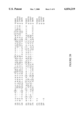

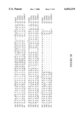
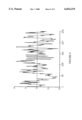
Classifications
-
- C—CHEMISTRY; METALLURGY
- C07—ORGANIC CHEMISTRY
- C07K—PEPTIDES
- C07K14/00—Peptides having more than 20 amino acids; Gastrins; Somatostatins; Melanotropins; Derivatives thereof
- C07K14/435—Peptides having more than 20 amino acids; Gastrins; Somatostatins; Melanotropins; Derivatives thereof from animals; from humans
- C07K14/705—Receptors; Cell surface antigens; Cell surface determinants
- C07K14/7056—Lectin superfamily, e.g. CD23, CD72
-
- A—HUMAN NECESSITIES
- A61—MEDICAL OR VETERINARY SCIENCE; HYGIENE
- A61P—SPECIFIC THERAPEUTIC ACTIVITY OF CHEMICAL COMPOUNDS OR MEDICINAL PREPARATIONS
- A61P37/00—Drugs for immunological or allergic disorders
-
- A—HUMAN NECESSITIES
- A61—MEDICAL OR VETERINARY SCIENCE; HYGIENE
- A61K—PREPARATIONS FOR MEDICAL, DENTAL OR TOILETRY PURPOSES
- A61K38/00—Medicinal preparations containing peptides
Definitions
- the present invention relates to nucleic acid and amino acid sequences of a novel human macrophage antigen which shares the features characterizing hemopoietic-specific early response proteins and calcium dependent lectins and to the use of these sequences in the diagnosis, study, prevention and treatment of disease.
- the mouse hemopoietic-specific early response protein, A1 has been studied by Lin et al (1993; J Immunol 151:1979-88) who first reported on its relationship to Bcl-2 (B-cell leukemia/lymphoma 2)and Mcl-1.
- A1 belongs to a gene family that has been characterized in humans, mice and chickens (Craig RW (1995) Semin Cancer Biol 6:35-43) and includes Bfl-1, Bcl-2, Bcl-x, Bcl-xL, bax, and mcl-1.
- A1, Bcl-2 and related genes regulate cell viability; in some cases, preventing toxicity to antibiotics and anticancer drugs (Minn A J et al (1995) Blood 86:1903-1910), and in others, governing the apoptosis necessary for tissue differentiation and organismal development.
- the exact mechanism by which A1, Bcl-2 and related genes promote cell survival is not known; however, they may function through the inhibition of cysteine proteases.
- the coding region of the murine A1 (Lin et al, supra) consists of 648 nucleotides which encode 216 amino acids.
- the open reading frame (T 474 ) and the 3' untranslated region (T 715 ) each contain a TACAAA motif which is found in many immediate early genes and may be essential for induction.
- the deduced protein has a predicted molecular weight of 20,024, an isoelectric point of 5.05, and a potential glycosylation site at N 128 .
- the absence of a secretion signal led Lin et al (supra) to suggest that A1 might be an intracellular rather than a secreted protein.
- A1 has been detected in bone marrow, spleen and thymus and is induced by GM-CSF (granulocyte-macrophage colony stimulating factor) in several hematopoietic cell lineages, including T-helper lymphocytes, macrophages and neutrophils, and in myeloid cell lines induced to differentiate by IL-3.
- GM-CSF granulocyte-macrophage colony stimulating factor
- A1 is induced in a macrophage tumor cell line by lipopolysaccharide.
- the protein synthesis inhibitor cycloheximide works as an agonist to induce the long-term expression of A1, a feature previously reported for other early response genes (Lin, supra). Neither serum nor the cytokines, interleukin (IL)-1 alpha or IL-6, induce A1 expression.
- Calcium dependent or C-type lectin receptors are widely expressed in cells of the immune system. Their characteristic features include: 1) a cytosolic amino terminus containing at least one potential tyrosine phosphorylation site which may be involved in signal transduction and several prolines which may prevent steric interference between the cytosolic and membrane spanning domains, 2) a short, approximately 20, hydrophobic amino acid transmembrane domain, and 3) a series of cysteine residues which appear to function as an extracellular carbohydrate recognition domain (Speiss M (1990) Biochem 29:10009-18). When the extracellular carbohydrate binding domain is separated from the membrane spanning domain by protease activity, it maintains both its structural and functional integrity. As described below, macrophage C-type lectin receptors perform a variety of functions in the recognition and destruction of foreign cells.
- A1 family gene expression Alterations or aberrations in A1 family gene expression are known to result in premature cell death or in cancer.
- the best known gene in this family, Bcl-2 is a proto-oncogene associated with human follicular lymphoma (Tsujimoto Y and Croce CM (1986) Proc Nat Acad Sci 83:5214), malignant melanomas, and solid tumors such as carcinomas of the lung, prostate and nasopharynx (Cerroni L (1995) Am J Dermatopathol 17:7-11).
- Epstein-Barr virus EBV
- the virus's latent membrane protein 1 has been reported to transactivate the Bcl-2 gene and in one study, both genes were expressed in 10 out of 11 cases of AIDS-related primary brain lymphoma. Expression of Bcl-2 is far less common in systemic lymphomas and cutaneous B or T cell lymphomas (Garatti S A et al (1995) Recent Results Cancer Res 139:249-261).
- Estrogen also increases Bcl-2 expression promoting chemotherapeutic drug resistance in an estrogen-responsive human breast cancer cell line (Teizeira C et al (1995) Cancer Res 55: 3902-3907).
- Bcl-2 is normally expressed in the epithelial regenerative compartment or the basal crypts of the colon and small intestine. Overexpression of Bcl-2 was not seen in inflammatory gastrointestinal conditions such as ulcerative colitis, Crohn's disease, or hamartomatous polyps; but it was common in hyperplastic colonic polyps and in the majority of dysplastic lesions, adenomas and adenocarcinomas.
- Bfl-1 (Choi S S et al (1995) Oncogene 11: 1693-98) isolated from human fetal liver and highly expressed in bone marrow have shown a correlation between expression of Bfl-1 and stomach cancer. The studies suggest that Bfl-1 may promote the survival of stomach cancer cells by preventing apoptosis. Expression of Bcl-XL dramatically reduces cytotoxicity to antibiotics and chemotherapeutics such as bleomycin, cysplatin, hygromycin, and vincristine, (Minn, supra; Newcomb E W (1995) Leuk Lymphoma 17: 211-221).
- Unique C type lectin receptors may direct the macrophages to abnormal or diseased cells where they specifically interact with surface antigens.
- Klebsiella pneumoniae serotypes displaying certain surface mannose polysaccharide sequences bind to and are subsequently internalized and destroyed by macrophages (Athamna A et al (1991) Infect Immun 59: 1673-1682).
- the Tn Ag of a well-known human carcinoma-associated epitope (Suzki N et al (1996) J Immunol 156: 128-135) is recognized by a human macrophage C-type lectin. Binding of macrophages to mastocytoma cells occurs through the Gal/GalNAc-specific macrophage lectin and activates the tumor cell killing mechanism (Oda S et al (1989) J Biochem 105: 1040-1043).
- Some diseases are due to defects in the recognition of what is foreign as mediated via the macrophage lectin receptor, and some conditions such as graft and transplant rejection and pathogen colonization of host macrophages derive from normal, yet undesirable, functioning of macrophages.
- some conditions such as graft and transplant rejection and pathogen colonization of host macrophages derive from normal, yet undesirable, functioning of macrophages.
- graft and transplant rejection and pathogen colonization of host macrophages derive from normal, yet undesirable, functioning of macrophages.
- lectin served as a possible mediator of macrophage infiltration (Russel M E et al (1994) J Clin Invest 94: 722-730).
- Macrophage antigens/lectins clearly play an important role in the recognition and destruction of foreign and diseased cells.
- the selective modulation of the expression and specificity of a novel human macrophage antigen may allow the successful management of diseases related to macrophage function, allowing natural cytolysis via specific targeting to infected host cells or tumors or preventing graft rejection and pathogen colonization.
- the present invention discloses a novel human macrophage antigen, hereinafter referred to as TMAH and characterized as having structural homology to both-mammalian A1 and the C-type lectins. Accordingly, the invention features a substantially purified TMAH, as shown in the amino acid sequence of SEQ ID NO:1. This sequence has a distinctive A 42 -A 61 transmembrane motif and an extracellular domain, from residue S 62 to residue I 272 , which appears to bind to molecules such as lectins, carbohydrates or glycoproteins.
- polynucleotides which encode TMAH.
- the polynucleotide is the nucleotide sequence of SEQ ID NO:2.
- the invention features polynucleotide sequences that hybridize under stringent conditions to SEQ ID NO:2.
- the invention further relates to the nucleic acid sequence encoding TMAH, oligonucleotides, peptide nucleic acids (PNA), fragments, portions or antisense molecules thereof.
- the invention also provides for the use of antisense molecules to disrupt the expression of the genomic sequence encoding TMAH particularly in tissues involved in the development of lymphomas or carcinomas.
- the present invention relates, in part, to the inclusion of the nucleic acid sequence encoding TMAH in an expression vector which can be used to transform host cells or organisms.
- the present invention also relates to a method for producing TMAH or a fragment thereof, antibodies which bind specifically to TMAH, and a pharmaceutical composition comprising a substantially purified fragment of TMAH in conjunction with a suitable pharmaceutical carrier.
- FIG. 2 shows the amino acid sequence alignments among human macrophage antigen (SEQ ID NO:1), mouse A1 (GI 239274; SEQ ID NO:3), human bcl-2 ⁇ (GI 179367; SEQ ID NO:4), and human mcl-1 (GI 34678; SEQ ID NO: 5) produced using the multisequence alignment program of DNAStarTM software (DNAStar Inc, Madison Wis.
- FIG. 3 shows the amino acid sequence alignments among human macrophage antigen (SEQ ID NO:1), Type II integral membrane proteins (GI 35061, SEQ ID NO:6; GI 35059,SEQ ID NO:7; and GI35057, SEQ ID NO:8) and CD94 (GI 1098617, SEQ ID NO:9).
- FIG. 4 shows the hydrophobicity plot for human macrophage antigen, SEQ ID NO:1, generated using MacDNAsis software; the X axis reflects amino acid position, and the negative Y axis, hydrophobicity.
- Nucleic acid sequence refers to an oligonucleotide, nucleotide or polynucleotide, and fragments or portions thereof, and to DNA or RNA of genomic or synthetic origin which may be single- or double-stranded, and represent the sense or antisense strand.
- amino acid sequence refers to peptide or protein sequence.
- Protein nucleic acid refers to a molecule which comprises an oligomer to which an amino acid residue, such as lysine, and an amino group have been added. These small molecules, also designated anti-gene agents, stop transcript elongation by binding to their complementary (template) strand of nucleic acid (Nielsen P E et al (1993) Anticancer Drug Des 8:53-63).
- An "insertion” or “addition” is that change in a nucleotide or amino acid sequence which has resulted in the addition of one or more nucleotides or amino acid residues, respectively, as compared to the naturally occurring LRRP.
- substitution results from the replacement of one or more nucleotides or amino acids by different nucleotides or amino acids, respectively.
- LRRP refers to the amino acid sequence of substantially purified LRRP obtained from any species, particularly mammalian, including bovine, ovine, porcine, murine, equine, and preferably human, from any source whether natural, synthetic, semi-synthetic or recombinant.
- biologically active refers to a LRRP having structural, regulatory or biochemical functions of a naturally occurring LRRP.
- immunologically-active defines the capability of the natural, recombinant or synthetic LRRP, or any oligopeptide thereof, to induce a specific immune response in appropriate animals or cells and to bind with specific antibodies.
- nucleic acid derivative refers to the chemical modification of a nucleic acid encoding LRRP or the encoded LRRP. Illustrative of such modifications would be replacement of hydrogen by an alkyl, acyl, or amino group. A nucleic acid derivative would encode a polypeptide which retains essential biological characteristics of natural LRRP.
- substantially purified refers to molecules, either nucleic or amino acid sequences, that are removed from their natural environment, isolated or separated, and are at least 60% fRee, preferably 75% free, and most preferably 90% free from other components with which they are naturally associated.
- hybridization shall include "any process by which a strand of nucleic acid joins with a complementary strand through base pairing" (Coombs J (1994) Dictionary of Biotechnology, Stockton Press, New York N.Y.). Amplification is defined as the production of additional copies of a nucleic acid sequence and is generally carried out using polymerase chain reaction technologies well known in the art (Dieffenbach C W and G S Dveksler (1995) PCR Primer, a Laboratory Manual, Cold Spring Harbor Press, Plainview N.Y.).
- Stringency typically occurs in a range from about Tm-5° C. (5° C. below the Tm of the probe)to about 20° C. to 25° C. below Tm. As will be understood by those of skill in the art, a stringency hybridization can be used to identify or detect identical polynucleotide sequences or to identify or detect similar or related polynucleotide sequences.
- the present invention relates to a novel human macrophage antigen initially identified as Incyte Clone 513418 (SEQ ID NO:2), using a computer-generated search for amino acid sequence alignments.
- the invention also relates to the use of the disclosed nucleic acid and amino acid sequences in the study, diagnosis, prevention and treatment of diseases associated with expression of these sequences.
- the human macrophage antigen encoding nucleotide sequence was identified among the partial cDNAs from a macrophage library (MPHGNOT03), the naturally occurring expression is not necessarily limited to macrophages.
- the present invention also encompasses human macrophage antigen variants.
- a preferred variant is one having at least 80% amino acid sequence similarity to the TMAH of SEQ ID NO:1, a more preferred variant is one having at least 90% sequence similarity to SEQ ID NO:1, and a most preferred variant is one having at least 95% sequence similarity to SEQ ID NO:1.
- the nucleic acid sequence, SEQ ID NO:2; disclosed herein encodes the amino acid sequence, SEQ ID NO:1, for the novel human macrophage antigen, designated he rein as TMAH.
- the present invention is based, in part, on the amino acid homology among TMAH, mouse A1 (GI 239274;), human bcl-2 ⁇ (GI 179367;), and human mcl-1 (GI 34678;) as shown in FIG. 2, and among TMAH, the Type II integral membrane proteins (GI 35061, SEQ ID NO:6; GI 35059,SEQ ID NO:7; and GI35057, SEQ ID NO:8) and CD94 (GI 1098617, SEQ ID NO:9) as shown in FIG. 3.
- TMAH has 20% amino acid sequence identity to each of these groups and is a transmembrane protein with an isoelectric point of 8.79.
- the homology which TMAH shares with the other A1 family members is spread over the length of the amino acid sequence and includes conserved residues at F 27 , P 35 , R 119 , W 139 , F 146 , and W 214 (FIG. 2).
- 23 serine and nine tyrosine residues are located in either the cytoplasmic or the extracellular portion of TMAH and present potential sites for phosphorylation.
- TMAH transmembrane spanning residues of TMAH, from R 40 to A 61 inclusive, closely matches that of CD94 (Chang C et al (1995) Eur J Immunol 25: 2433-2437).
- the extracellular carbohydrate binding domain of TMAH contains the disulfide forming residues C 130 , C 133 , C 144 , C 161 , C 227 , C 240 and C 248 (FIG. 3).
- TMAH is 272 amino acids long, has a potential cytoplasmic phosphorylation site at Y 7 , and has seven potential glycosylation sites, N 14 , N 80 , N 88 , N 98 , N 105 , N 165 , and N 210 (FIG. 2).
- TMAH The nucleic acid and deduced amino acid sequences of TMAH are shown in FIGS. 1A and 1B.
- any nucleic acid sequence which encodes TMAH can be used to generate recombinant molecules which express TMAH.
- a partial sequence encoding TMAH was first isolated as Incyte Clone 513418 from a macrophage cDNA library (MPHGNOT03).
- TMAH-encoding nucleotide sequences some bearing minimal homology to the nucleotide sequences of any known and naturally occurring gene may be produced.
- the invention contemplates each and every possible variation of nucleotide sequence that could be made by selecting combinations based on possible codon choices. These combinations are made in accordance with the standard triplet genetic code as applied to the nucleotide sequence encoding naturally occurring TMAH, and all such variations are to be considered as being specifically disclosed.
- nucleotide sequences which encode TMAH and its variants are preferably capable of hybridizing to the nucleotide sequence of the naturally occurring sequence under appropriately selected conditions of stringency, it may be advantageous to produce nucleotide sequences encoding TMAH or its derivatives possessing a substantially different codon usage. Codons may be selected to increase the rate at which expression of the peptide occurs in a particular prokaryotic or eukaryotic expression host in accordance with the frequency with which particular codons are utilized by the host.
- RNA transcripts having more desirable properties such as a greater half-life, than transcripts produced from the naturally occurring sequence.
- polynucleotide sequences that are capable of hybridizing to the nucleotide sequence of FIGS. 1A and 1B under various conditions of stringency.
- Hybridization conditions are based on the melting temperature (Tm) of the nucleic acid binding complex or probe, as taught in Berger and Kimmel (1987, Guide to Molecular Cloning Techniques, Methods in Enzymology, Vol 152, Academic Press, San Diego Calif.) incorporated herein by reference, and may be used at a defined "stringency”.
- Altered nucleic acid sequences encoding TMAH which may be used in accordance with the invention include deletions, insertions or substitutions of different nucleotides resulting in a polynucleotide that encodes the same or a functionally equivalent TMAH.
- the protein may also show deletions, insertions or substitutions of amino acid residues which produce a silent change and result in a functionally equivalent TMAH. Deliberate amino acid substitutions may be made on the basis of similarity in polarity, charge, solubility, hydrophobicity, hydrophilicity, and/or the amphipathic nature of the residues as long as the biological activity of TMAH is retained.
- negatively charged amino acids include aspartic acid and glutamic acid; positively charged amino acids include lysine and arginine; and amino acids with uncharged polar head groups having similar hydrophilicity values include leucine, isoleucine, valine; glycine, alanine; asparagine, glutamine; serine, threonine phenylalanine, and tyrosine.
- alleles encoding TMAH include alleles encoding TMAH.
- an "allele” or “allelic sequence” is an alternative form of the nucleic acid sequence encoding TMAH. Alleles result from a mutation, ie, a change in the nucleic acid sequence, and generally produce altered mRNAs or polypeptides whose structure or function may or may not be altered. Any given gene may have none, one or many allelic forms. Common mutational changes which give rise to alleles are generally ascribed to natural deletions, additions or substitutions of amino acids. Each of these types of changes may occur alone, or in combination with the others, one or more times in a given sequence.
- Methods for DNA sequencing are well known in the art and employ such enzymes as the Klenow fragment of DNA polymerase I, Sequenase® (US Biochemical Corp, Cleveland Ohio)), Taq polymerase (Perkin Elmer, Norwalk Conn.), thermostable T7 polymerase (Amersham, Chicago Ill.), or combinations of recombinant polymerases and proofreading exonucleases such as the ELONGASE Amplification System marketed by Gibco BRL (Gaithersburg Md.).
- the process is automated with machines such as the Hamilton Micro Lab 2200 (Hamilton, Reno Nev.), Peltier Thermal Cycler (PTC200; MJ Research, Watertown Mass.) and the ABI 377 DNA sequencers (Perkin Elmer).
- the polynucleotide sequence encoding TMAH may be extended utilizing partial nucleotide sequence and various methods known in the art to detect upstream sequences such as promoters and regulatory elements.
- Gobinda et al (1993; PCR Methods Applic 2:318-22) disclose "restriction-site" polymerase chain reaction (PCR) as a direct method which uses universal primers to retrieve unknown sequence adjacent to a known locus.
- genomic DNA is amplified in the presence of primer to a linker sequence and a primer specific to the known region.
- the amplified sequences are subjected to a second round of PCR with the same linker primer and another specific primer internal to the first one.
- Products of each round of PCR are transcribed with an appropriate RNA polymerase and sequenced using reverse transcriptase.
- Inverse PCR can be used to amplify or extend sequences using divergent primers based on a known region (Triglia T et al (1988) Nucleic Acids Res 16:8186).
- the primers may be designed using OLIGO® 4.06 Primer Analysis Software (1992; National Biosciences Inc, Madison Minn.), or another appropriate program, to be 22-30 nucleotides in length, to have a GC content of 50% or more, and to anneal to the target sequence at temperatures about 68 °-72 ° C.
- the method uses several restriction enzymes to generate a suitable fragment in the known region of a gene. The fragment is then circularized by intramolecular ligation and used as a PCR template.
- Capture PCR (Lagerstrom M et al (1991) PCR Methods Applic 1:111-19) is a method for PCR amplification of DNA fragments adjacent to a known sequence in human and yeast artificial chromosome DNA. Capture PCR also requires multiple restriction enzyme digestions and ligations to place an engineered double-stranded sequence into an unknown portion of the DNA molecule before PCR.
- PCR Parker J D et al (1991) Nucleic Acids Res 19:3055-60
- PCR nested primers
- PromoterFinderTM Click-through primers
- PromoterFinder libraries can be used to walk in genomic DNA. This process avoids the need to screen libraries and is useful in finding intron/exon junctions.
- Preferred libraries for screening for full length cDNAs are ones that have been size-selected to include larger cDNAs.
- random primed libraries are preferred in that they will contain more sequences which contain the 5' and upstream regions of genes.
- a randomly primed library may be particularly useful if an oligo d(T) library does not yield a full-length cDNA.
- Genomic libraries are useful for extension into the 5' nontranslated regulatory region.
- Capillary electrophoresis may be used to analyze either the size or confirm the nucleotide sequence in sequencing or PCR products.
- Systems for rapid sequencing are available from Perkin Elmer, Beckman Instruments (Fullerton Calif.), and other companies.
- Capillary sequencing may employ flowable polymers for electrophoretic separation, four different fluorescent dyes (one for each nucleotide) which are laser activated, and detection of the emitted wavelengths by a charge coupled devise camera.
- Output/light intensity is converted to electrical signal using appropriate software (eg. GenotyperTM and Sequence NavigatorTM from Perkin Elmer) and the entire process from loading of samples to computer analysis and electronic data display is computer controlled.
- Capillary electrophoresis is particularly suited to the sequencing of small pieces of DNA which might be present in limited amounts in a particular sample.
- the reproducible sequencing of up to 350 bp of M13 phage DNA in 30 min has been reported (Ruiz-Martinez M C et al (1993) Anal Chem 65:2851-8).
- polynucleotide sequences which encode TMAH, fragments of the polypeptide, fusion proteins or functional equivalents thereof may be used in recombinant DNA molecules that direct the expression of TMAH in appropriate host cells. Due to the inherent degeneracy of the genetic code, other DNA sequences which encode substantially the same or a functionally equivalent amino acid sequence, may be used to clone and express TMAH. As will be understood by those of skill in the art, it may be advantageous to produce TMAH-encoding nucleotide sequences possessing non-naturally occurring codons.
- Codons preferred by a particular prokaryotic or eukaryotic host can be selected, for example, to increase the rate of TMAH expression or to produce recombinant RNA transcripts having desirable properties, such as a longer half-life, than transcripts produced from naturally occurring sequence.
- nucleotide sequences of the present invention can be engineered in order to alter a TMAH-encoding sequence for a variety of reasons, including but not limited to, alterations which modify the cloning, processing and/or expression of the gene product.
- mutations may be introduced using techniques which are well known in the art, eg, site-directed mutagenesis to insert new restriction sites, to alter glycosylation patterns, to change codon preference, to produce splice variants, etc.
- a natural, modified or recombinant TMAH-encoding sequence may be ligated to a heterologous sequence to encode a fusion protein.
- a heterologous sequence For example, for screening of peptide libraries for inhibitors of TMAH activity, it may be useful to encode a chimeric TMAH protein that is recognized by a commercially available antibody.
- a fusion protein may also be engineered to contain a cleavage site located between a TMAH and the heterologous protein sequence, so that the TMAH may be cleaved and substantially purified away from the heterologous moiety.
- the sequence encoding TMAH may be synthesized, whole or in part, using chemical methods well known in the art (see Caruthers M H et al (1980) Nuc Acids Res Symp Ser 215-23, Horn T et al(1980) Nuc Acids Res Symp Ser 225-32, etc).
- the protein itself could be produced using chemical methods to synthesize a TMAH amino acid sequence, whole or in part.
- peptide synthesis can be performed using various solid-phase techniques (Roberge J Y et al (1995) Science 269:202-204) and automated synthesis may be achieved, for example, using the ABI 431A Peptide Synthesizer (Perkin Elmer) in accordance with the instructions provided by the manufacturer.
- the newly synthesized peptide can be substantially purified by preparative high performance liquid chromatography (eg, Creighton (1983) Proteins, Structures and Molecular Principles, WH Freeman and Co, New York N.Y.).
- the composition of the synthetic peptides may be confirmed by amino acid analysis or sequencing (eg, the Edman degradation procedure; Creighton, supra). Additionally the amino acid sequence of TMAH, or any part thereof, may be altered during direct synthesis and/or combined using chemical methods with sequences from other proteins, or any part thereof, to produce a variant polypeptide.
- TMAH TMAH
- an appropriate expression vector ie, a vector which contains the necessary elements for the transcription and translation of the inserted coding sequence.
- a variety of expression vector/host systems may be utilized to contain and express a TMAH-encoding sequence. These include but are not limited to microorganisms such as bacteria transformed with recombinant bacteriophage, plasmid or cosmid DNA expression vectors; yeast transformed with yeast expression vectors; insect cell systems infected with virus expression vectors (eg, baculovirus); plant cell systems transfected with virus expression vectors (eg, cauliflower mosaic virus, CaMV; tobacco mosaic virus, TMV) or transformed with bacterial expression vectors (eg, Ti or pBR322 plasmid); or animal cell systems.
- microorganisms such as bacteria transformed with recombinant bacteriophage, plasmid or cosmid DNA expression vectors; yeast transformed with yeast expression vectors; insect cell systems infected with virus expression vectors (eg, baculovirus); plant cell systems transfected with virus expression vectors (eg, cauliflower mosaic virus, CaMV; tobacco mosaic virus, TMV) or transformed with bacterial expression vector
- control elements or “regulatory sequences” of these systems vary in their strength and specificities and are those nontranslated regions of the vector, enhancers, promoters, and 3' untranslated regions, which interact with host cellular proteins to carry out transcription-and translation.
- any number of suitable transcription and translation elements including constitutive and inducible promoters, may be used.
- inducible promoters such as the hybrid lacZ promoter of the Bluescript® phagemid (Stratagene, LaJolla Calif.) or pSport1 (Gibco BRL) and ptrp-lac hybrids and the like may be used.
- the baculovirus polyhedrin promoter may be used in insect cells. Promoters or enhancers derived from the genomes of plant cells (eg, heat shock, RUBISCO; and storage protein genes) or from plant viruses (eg, viral promoters or leader sequences) may be cloned into the vector. In mammalian cell systems, promoters from the mammalian genes or from mammalian viruses are most appropriate. If it is necessary to generate a cell line that contains multiple copies of the sequence encoding TMAH, vectors based on SV40 or EBV may be used with an appropriate selectable marker.
- Promoters or enhancers derived from the genomes of plant cells eg, heat shock, RUBISCO; and storage protein genes
- plant viruses eg, viral promoters or leader sequences
- a number of expression vectors may be selected depending upon the use intended for TMAH. For example, when large quantities of TMAH are needed for the induction of antibodies, vectors which direct high level expression of fusion proteins that are readily purified may be desirable.
- Such vectors include, but are not limited to, the multifunctional E. coli cloning and expression vectors such as Bluescript® (Stratagene), in which the sequence encoding TMAH may be ligated into the vector in frame with sequences for the amino-terminal Met and the subsequent 7 residues of ⁇ -galactosidase so that a hybrid protein is produced; pIN vectors (Van Heeke & Schuster (1989) J Biol Chem 264:5503-5509); and the like.
- pGEX vectors may also be used to express foreign polypeptides as fusion proteins with glutathione S-transferase (GST).
- GST glutathione S-transferase
- fusion proteins are soluble and can easily be purified from lysed cells by adsorption to glutathione-agarose beads followed by elution in the presence of free glutathione.
- Proteins made in such systems are designed to include heparin, thrombin or factor XA protease cleavage sites so that the cloned polypeptide of interest can be released from the GST moiety at will.
- yeast Saccharomyces cerevisiae
- a number of vectors containing constitutive or inducible promoters such as alpha factor, alcohol oxidase and PGH may be used.
- constitutive or inducible promoters such as alpha factor, alcohol oxidase and PGH.
- TMAH may be driven by any of a number of promoters.
- viral promoters such as the 35S and 19S promoters of CaMV (Brisson et al (1984) Nature 310:511-514) may be used alone or in combination with the omega leader sequence from TMV (Takamatsu et al (1987) EMBO J 3:1311).
- plant promoters such as the small subunit of RUBISCO (Coruzzi et al (1984) EMBO J 3:1671-1680; Broglie et al (1984) Science 224:838-843); or heat shock promoters (Winter J and Sinibaldi R M (1991) Results Probl Cell Differ 17:85-105) may be used. These constructs can be introduced into plant cells by direct DNA transformation or pathogen-mediated transfection.
- TMAH is an insect system.
- Autographa californica nuclear polyhedrosis virus (AcNPV) is used as a vector to express foreign genes in Spodoptera frugiperda cells or in Trichoplusia larvae.
- the sequence encoding TMAH may be cloned into a nonessential region of the virus, such as the polyhedrin gene, and placed under control of the polyhedrin promoter. Successful insertion of the sequence encoding TMAH will render the polyhedrin gene inactive and produce recombinant virus lacking coat protein coat.
- the recombinant viruses are then used to infect S. frugiperda cells or Trichoplusia larvae in which TMAH is expressed (Smith et al (1983) J Virol 46:584; Engelhard E K et al (1994) Proc Nat Acad Sci 91:3224-7).
- a number of viral-based expression systems may be utilized.
- a sequence encoding TMAH may be ligated into an adenovirus transcription/translation complex consisting of the late promoter and tripartite leader sequence. Insertion in a nonessential E1 or E3 region of the viral genome will result in a viable virus capable of expressing in infected host cells (Logan and Shenk (1984) Proc Natl Acad Sci 81:3655-59).
- transcription enhancers such as the rous sarcoma virus (RSV) enhancer, may be used to increase expression in mammalian host cells.
- RSV rous sarcoma virus
- Specific initiation signals may also be required for efficient translation of a sequence encoding TMAH. These signals include the ATG initiation codon and adjacent sequences. In cases where the sequence encoding TMAH, its initiation codon and upstream sequences are inserted into the most appropriate expression vector, no additional translational control signals may be needed. However, in cases where only coding sequence, or a portion thereof, is inserted, exogenous transcriptional control signals including the ATG initiation codon must be provided. Furthermore, the initiation codon must be in the correct reading frame to ensure transcription of the entire insert. Exogenous transcriptional elements and initiation codons can be of various origins, both natural and synthetic.
- Enhancers appropriate to the cell system in use (Scharf D et al (1994) Results Probl Cell Differ 20:125-62; Bittner et al (1987) Methods in Enzymol 153:516-544).
- a host cell strain may be chosen for its ability to modulate the expression of the inserted sequences or to process the expressed protein in the desired fashion.
- modifications of the polypeptide include, but are not limited to, acetylation, carboxylation, glycosylation, phosphorylation, lipidation and acylation.
- Post-translational processing which cleaves a "prepro" form of the protein may also be important for correct insertion, folding and/or function.
- Different host cells such as CHO, HeLa, MDCK, 293, WI38, etc have specific cellular machinery and characteristic mechanisms for such post-translational activities and may be chosen to ensure the correct modification and processing of the introduced, foreign protein.
- cell lines which stably express TMAH may be transformed using expression vectors which contain viral origins of replication or endogenous expression elements and a selectable marker gene. Following the introduction of the vector, cells may be allowed to grow for 1-2 days in an enriched media before they are switched to selective media.
- the purpose of the selectable marker is to confer resistance to selection, and its presence allows growth and recovery of cells which successfully express the introduced sequences. Resistant clumps of stably transformed cells can be proliferated using tissue culture techniques appropriate to the cell type.
- any number of selection systems may be used to recover transformed cell lines. These include, but are not limited to, the herpes simplex virus thymidine kinase (Wigler M et al (1977) Cell 11:223-32) and adenine phosphoribosyltransferase (Lowy I et al (1980) Cell 22:817-23) genes which can be employed in tk- or aprt-cells, respectively.
- antimetabolite, antibiotic or herbicide resistance can be used as the basis for selection; for example, dhfr which confers resistance to methotrexate (Wigler M et al (1980) Proc Natl Acad Sci 77:3567-70); npt, which confers resistance to the aminoglycosides neomycin and G-418 (Colbere-Garapin F et al (1981) J Mol Biol 150:1-14) and als or pat, which confer resistance to chlorsulfuron and phosphinotricin acetyltransferase, respectively (Murry, supra).
- marker gene expression suggests that the gene of interest is also present, its presence and expression should be confirmed.
- a marker gene can be placed in tandem with the sequence encoding TMAH under the control of a single promoter. Expression of the marker gene in response to induction or selection usually indicates expression of the tandem sequence as well.
- host cells which contain the coding sequence for TMAH and express TMAH may be identified by a variety of procedures known to those of skill in the art. These procedures include, but are not limited to, DNA--DNA or DNA-RNA hybridization and protein bioassay or immunoassay techniques which include membrane, solution, or chip based technologies for the detection and/or quantification of the nucleic acid or protein.
- the presence of the polynucleotide sequence encoding TMAH can be detected by DNA--DNA or DNA-RNA hybridization or amplification using probes, portions or fragments of the sequence encoding TMAH.
- Nucleic acid amplification based assays involve the use of oligonucleotides or oligomers based on the nucleic acid sequence to detect transformants containing DNA or RNA encoding TMAH.
- oligonucleotides or “oligomers” refer to a nucleic acid sequence of at least about 10 nucleotides and as many as about 60 nucleotides, preferably about 15 to 30 nucleotides, and more preferably about 20-25 nucleotides which can be used as a probe or amplimer.
- Means for producing labeled hybridization or PCR probes for detecting related sequences include oligolabeling, nick translation, end-labeling or PCR amplification using a labeled nucleotide.
- the TMAH-encoding sequence, or any portion of it may be cloned into a vector for the production of an mRNA probe.
- Such vectors are known in the art, are commercially available, and may be used to synthesize RNA probes in vitro by addition of an appropriate RNA polymerase such as T7, T3 or SP6 and labeled nucleotides.
- reporter molecules or labels include those radionuclides, enzymes, fluorescent, chemiluminescent, or chromogenic agents as well as substrates, cofactors, inhibitors, magnetic particles and the like.
- Patents teaching the use of such labels include U.S. Pat. Nos. 3,817,837; 3,850,752; 3,939,350; 3,996,345; 4,277,437; 4,275,149 and 4,366,241.
- recombinant immunoglobulins may be produced as shown in U.S. Pat. No. 4,816,567 incorporated herein by reference.
- Host cells transformed with a nucleotide sequence encoding TMAH may be cultured under conditions suitable for the expression and recovery of the encoded protein from cell culture.
- the protein produced by a recombinant cell may be secreted or contained intracellularly depending on the sequence and/or the vector used.
- expression vectors containing TMAH-encoding sequence can be designed with signal sequences which direct secretion of TMAH through a prokaryotic or eukaryotic cell membrane.
- TMAH may also be expressed as a recombinant protein with one or more additional polypeptide domains added to facilitate protein purification.
- purification facilitating domains include, but are not limited to, metal chelating peptides such as histidine-tryptophan modules that allow purification on immobilized metals, protein A domains that allow purification on immobilized immunoglobulin, and the domain utilized in the FLAGS extension/affinity purification system (Immunex Corp, Seattle Wash.).
- the inclusion of a cleavable linker sequences such as Factor XA or enterokinase (Invitrogen, San Diego Calif.) between the purification domain and TMAH is useful to facilitate purification.
- One such expression vector provides for expression of a fusion protein comprising the sequence encoding TMAH and nucleic acid sequence encoding 6 histidine residues followed by thioredoxin and an enterokinase cleavage site.
- the histidine residues facilitate purification while the enterokinase cleavage site provides a means for purifying TMAH from the fusion protein.
- fragments of TMAH may be produced by direct peptide synthesis using solid-phase techniques (cf Stewart et al (1969) Solid-Phase Peptide Synthesis, WH Freeman Co, San Francisco;
- the rationale for use of the nucleotide and peptide sequences disclosed herein is based on the chemical and structural homology among the novel human macrophage antigen and the A1 (GI 293273; Lin et al. (1993) J Immunol 151:1979-88) and C-type lectin receptor (GI 350597, GI 35059, GI35061; Houchins J P et al (1991) J Exp Med 173:1017-20) gene families. Furthermore, since expression of the A1 family genes is usually associated with cells of hematopoeitic origin, it appears that variants of these genes will be found in similar cells or tissues where they will carry similar functions.
- TMAH TMAH-derived neurotrophic factor
- members of the A1 gene family suggests that enhancing the expression of TMAH would promote cell survival.
- providing TMAH to joint chondrocytes may result in decreased apoptosis and slow the progressive degeneration associated with the onset of osteoarthritis.
- inducing the expression of TMAH may serve to slow other immune or senescent responses such as the rescue of neurons from programmed cell death due to hypoxia or cerebral ischemic stroke.
- the expression of TMAH may promote cell survival in cases of immune or senescent diseases including, but are not limited to, AIDS, Alzheimer's disease, arthritis, graft and transplant rejection, lupus erythematosis, and myasthenia gravis.
- cells could be transfected with antisense sequences of the gene encoding TMAH or provided with inhibitors of TMAH.
- diseases include cancers such as lymphoma, malignant melanomas, and carcinomas of the breast, intestine, lung, nasopharynx, and prostate.
- TMAH-specific antibodies are useful for the diagnosis and treatment of conditions and diseases associated with expression of TMAH.
- Such antibodies include, but are not limited to, polyclonal, monoclonal, chimeric, single chain, Fab fragments and fragments produced by a Fab expression library.
- Neutralizing antibodies, ie, those which inhibit dimer formation, are especially preferred for diagnostics and therapeutics.
- TMAH for antibody induction does not require biological activity; however, the protein fragment, or oligopeptide must be antigenic.
- Peptides used to induce specific antibodies may have an amino acid sequence consisting of at least five amino acids, preferably at least 10 amino acids. Preferably, they should mimic a portion of the amino acid sequence of the natural protein and may contain the entire amino acid sequence of a small, naturally occurring molecule. Short stretches of TMAH amino acids may be fused with those of another protein such as keyhole limpet hemocyanin and antibody produced against the chimeric molecule. Procedures well known in the art can be used for the production of antibodies to TMAH.
- TMAH TMAH
- various adjuvants may be used to increase immunological response.
- adjuvants include but are not limited to Freund's, mineral gels such as aluminum hydroxide, and surface active substances such as lysolecithin, pluronic polyols, polyanions, peptides, oil emulsions, keyhole limpet hemocyanin, and dinitrophenol.
- BCG Bacilli Calmette-Guerin
- Corynebacterium parvum are potentially useful human adjuvants.
- Monoclonal antibodies to TMAH may be prepared using any technique which provides for the production of antibody molecules by continuous cell lines in culture. These include but are not limited to the hybridoma technique originally described by Koehler and Milstein (1975 Nature 256:495-497), the human B-cell hybridoma technique (Kosbor et al (1983) Immunol Today 4:72; Cote et al (1983) Proc Natl Acad Sci 80:2026-2030) and the EBV-hybridoma technique (Cole et al (1985) Monoclonal Antibodies and Cancer Therapy, Alan R Liss Inc, New York N.Y., pp 77-96).
- Antibodies may also be produced by inducing in vivo production in the lymphocyte population or by screening recombinant immunoglobulin libraries or panels of highly specific binding reagents as disclosed in Orlandi et al (1989, Proc Natl Acad Sci 86: 3833-3837), and Winter G and Milstein C (1991; Nature 349:293-299).
- Antibody fragments which contain specific binding sites for TMAH may also be generated.
- such fragments include, but are not limited to, the F(ab')2 fragments which can be produced by pepsin digestion of the antibody molecule and the Fab fragments which can be generated by reducing the disulfide bridges of the F(ab')2 fragments.
- Fab expression libraries may be constructed to allow rapid and easy identification of monoclonal Fab fragments with the desired specificity (Huse W D et al (1989) Science 256:1275-1281).
- TMAH antibodies are useful for the diagnosis of conditions or diseases characterized by expression of TMAH or in assays to monitor patients being treated with TMAH, its fragments, agonists or inhibitors. Diagnostic assays for TMAH include methods utilizing the antibody and a label to detect TMAH in human body fluids or extracts of cells or tissues.
- the polypeptides and antibodies of the present invention may be used with or without modification. Frequently, the polypeptides and antibodies will be labeled by joining them, either covalently or noncovalently, with a reporter molecule. A wide variety of reporter molecules are known, several of which were described above.
- TMAH expression In order to provide a basis for diagnosis, normal or standard values for TMAH expression must be established. This is accomplished by combining body fluids or cell extracts taken from normal subjects, either animal or human, with antibody to TMAH under conditions suitable for complex formation which are well known in the art. The amount of standard complex formation may be quantified by comparing various artificial membranes containing known quantities of TMAH with both control and disease samples from biopsied tissues. Then, standard values obtained from normal samples may be compared with values obtained from samples from subjects potentially affected by disease. Deviation between standard and subject values establishes the presence of disease state.
- TMAH TMAH
- its catalytic or immunogenic fragments or oligopeptides thereof can be used for screening therapeutic compounds in any of a variety of drug screening techniques.
- the fragment employed in such a test may be free in solution, affixed to a solid support, borne on a cell surface, or located intracellularly.
- the formation of binding complexes, between TMAH and the agent being tested, may be measured.
- This invention also contemplates the use of competitive drug screening assays in which neutralizing antibodies capable of binding TMAH specifically compete with a test compound for binding TMAH. In this manner, the antibodies can be used to detect the presence of any peptide which shares one or more antigenic determinants with TMAH.
- a polynucleotide sequence encoding TMAH or any part thereof may be used for diagnostic and/or therapeutic purposes.
- the sequence encoding TMAH of this invention may be used to detect and quantitate gene expression in biopsied tissues in which expression of TMAH may be implicated.
- the diagnostic assay is useful to distinguish between absence, presence, and excess expression of TMAH and to monitor regulation of TMAH levels during therapeutic intervention. Included in the scope of the invention are oligonucleotide sequences, antisense RNA and DNA molecules, and PNAs.
- Another aspect of the subject invention is to provide for hybridization or PCR probes which are capable of detecting polynucleotide sequences, including genomic sequences, encoding TMAH or closely related molecules.
- the specificity of the probe whether it is made from a highly specific region, eg, 10 unique nucleotides in the 5' regulatory region, or a less specific region, eg, especially in the 3' region, and the stringency of the hybridization or amplification (maximal, high, intermediate or low) will determine whether the probe identifies only naturally occurring TMAH, alleles or related sequences.
- Probes may also be used for the detection of related sequences and should preferably contain at least 50% of the nucleotides from any of these TMAH-encoding sequences.
- the hybridization probes of the subject invention may be derived from the nucleotide sequence of SEQ ID NO:2 or from genomic sequence including promoter, enhancer elements and introns of the naturally occurring sequence encoding TMAH.
- Hybridization probes may be labeled by a variety of reporter groups, including radionuclides such as 32P or 35S, or enzymatic labels such as alkaline phosphatase coupled to the probe via avidin/biotin coupling systems, and the like.
- RNA polymerase as T7 or SP6 RNA polymerase and the appropriate radioactively labeled nucleotides.
- Polynucleotide sequences encoding TMAH may be used for the diagnosis of conditions or diseases with which the expression of TMAH is associated.
- polynucleotide sequences encoding TMAH may be used in hybridization or PCR assays of fluids or tissues from biopsies to detect TMAH expression.
- the form of such qualitative or quantitative methods may include Southern or northern analysis, dot blot or other membrane-based technologies; PCR technologies; dip stick, pin, chip and ELISA technologies. All of these techniques are well known in the art and are the basis of many commercially available diagnostic kits.
- the TMAH-encoding nucleotide sequences disclosed herein provide the basis for assays-that detect activation or induction associated with inflammation or disease.
- the nucleotide sequence may be labeled by methods known in the art and added to a fluid or tissue sample from a patient under conditions suitable for the formation of hybridization complexes. After an incubation period, the sample is washed with a compatible fluid which optionally contains a dye (or other label requiring a developer) if the nucleotide has been labeled with an enzyme. After the compatible fluid is rinsed off, the dye is quantitated and compared with a standard.
- the nucleotide sequence has hybridized with nucleotide sequences in the sample, and the presence of elevated levels of nucleotide sequences encoding TMAH in the sample indicates the presence of the associated inflammation and/or disease.
- Such assays may also be used to evaluate the efficacy of a particular therapeutic treatment regime in animal studies, in clinical trials, or in monitoring the treatment of an individual patient.
- a normal or standard profile for TMAH expression must be established. This is accomplished by combining body fluids or cell extracts taken from normal subjects, either animal or human, with TMAH, or a portion thereof, under conditions suitable for hybridization or amplification. Standard hybridization may be quantified by comparing the values obtained for normal subjects with a dilution series of TMAH run in the same experiment where a known amount of substantially purified TMAH is used. Standard values obtained from normal samples may be compared with values obtained from samples from patients affected by TMAH-associated diseases. Deviation between standard and subject values establishes the presence of disease.
- a therapeutic agent is administered and a treatment profile is generated.
- Such assays may be repeated on a regular basis to evaluate whether the values in the profile progress toward or return to the normal or standard pattern.
- Successive treatment profiles may be used to show the efficacy of treatment over a period of several days or several months.
- PCR may be used as described in U.S. Pat. Nos. 4,683,195 and 4,965,188 provides additional uses for oligonucleotides based upon the sequence encoding TMAH.
- oligomers are generally chemically synthesized, but they may be generated enzymatically or produced from a recombinant source.
- Oligomers generally comprise two nucleotide sequences, one with sense orientation (5' ⁇ 3') and one with antisense (3' ⁇ 5'), employed under optimized conditions for identification of a specific gene or condition. The same two oligomers, nested sets of oligomers, or even a degenerate pool of oligomers may be employed under less stringent conditions for detection and/or quantitation of closely related DNA or RNA sequences.
- methods which may be used to quantitate the expression of a particular molecule include radiolabeling (Melby P C et al 1993 J Immunol Methods 159:235-44) or biotinylating (Duplaa C et al 1993 Anal Biochem 229-36) nucleotides, coamplification of a control nucleic acid, and standard curves onto which the experimental results are interpolated. Quantitation of multiple samples may be speeded up by running the assay in an ELISA format where the oligomer of interest is presented in various dilutions and a spectrophotometric or colorimetric response gives rapid quantitation. A definitive diagnosis of this type may allow health professionals to begin aggressive treatment and prevent further worsening of the condition.
- nucleotide sequences disclosed herein may be used in molecular biology techniques that have not yet been developed, provided the new techniques rely on properties of nucleotide sequences that are currently known such as the triplet genetic code, specific base pair interactions, and the like.
- polynucleotide encoding TMAH disclosed herein may be useful in the treatment of genetic or immune system disorders such as asthma, arthritis, etc and inflammatory conditions.
- Expression vectors derived from retroviruses, adenovirus, herpes or vaccinia viruses, or from various bacterial plasmids may be used for delivery of nucleotide sequences to the targeted organ, tissue or cell population. Methods which are well known to those skilled in the art can be used to construct recombinant vectors which will express antisense of the sequence encoding TMAH. See, for example, the techniques described in Sambrook et al (supra) and Ausubel et al (supra).
- the polynucleotides comprising full length cDNA sequence and/or its regulatory elements enable researchers to use the sequence encoding TMAH as an investigative tool in sense (Youssoufian H and H F Lodish 1993 Mol Cell Biol 13:98-104) or antisense (Eguchi et al (1991) Annu Rev Biochem 60:631-652) regulation of gene function.
- sense or antisense oligomers, or larger fragments can be designed from various locations along the coding or control regions.
- TMAH can be turned off by transfecting a cell or tissue with expression vectors which express high levels of a desired TMAH fragment. Such constructs can flood cells with untranslatable sense or antisense sequences. Even in the absence of integration into the DNA, such vectors may continue to transcribe RNA molecules until all copies are disabled by endogenous nucleases. Transient expression may last for a month or more with a non-replicating vector (Mettler I, personal communication) and even longer if appropriate replication elements are part of the vector system.
- Methodtler I personal communication
- antisense molecules DNA, RNA or PNA, to the control regions of the sequence encoding TMAH, ie, the promoters, enhancers, and introns. Oligonucleotides derived from the transcription initiation site, eg, between -10 and +10 regions of the leader sequence, are preferred.
- the antisense molecules may also be designed to block translation of mRNA by preventing the transcript from binding to ribosomes. Similarly, inhibition can be achieved using "triple helix" base-pairing methodology. Triple helix pairing compromises the ability of the double helix to open sufficiently for the binding of polymerases, transcription factors, or regulatory molecules. Recent therapeutic advances using triplex DNA were reviewed by Gee J E et al (In: Huber BE and BI Carr (1994) Molecular and Immunologic Approaches, Futura Publishing Co, Mt Kisco N.Y.).
- Ribozymes are enzymatic RNA molecules capable of catalyzing the specific cleavage of RNA.
- the mechanism of ribozyme action involves sequence-specific hybridization of the ribozyme molecule to complementary target RNA, followed by endonucleolytic cleavage.
- engineered hammerhead motif ribozyme molecules that can specifically and efficiently catalyze endonucleolytic cleavage of the sequence encoding TMAH.
- ribozyme cleavage sites within any potential RNA target are initially identified by scanning the target molecule for ribozyme cleavage sites which include the following sequences, GUA, GUU and GUC. Once identified, short RNA sequences of between 15 and 20 ribonucleotides corresponding to the region of the target gene containing the cleavage site may be evaluated for secondary structural features which may render the oligonucleotide inoperable. The suitability of candidate targets may also be evaluated by testing accessibility to hybridization with complementary oligonucleotides using ribonuclease protection assays.
- Antisense molecules and ribozymes of the invention may be prepared by any method known in the art for the synthesis of RNA molecules. These include techniques for chemically synthesizing oligonucleotides such as solid phase phosphoramidite chemical synthesis. Alternatively, RNA molecules may be generated by in vitro and in vivo transcription of DNA sequences encoding TMAH. Such DNA sequences may be incorporated into a wide variety of vectors with suitable RNA polymerase promoters such as T7 or SP6. Alternatively, antisense cDNA constructs that synthesize antisense RNA constitutively or inducibly can be introduced into cell lines, cells or tissues.
- RNA molecules may be modified to increase intracellular stability and half-life. Possible modifications include, but are not limited to, the addition of flanking sequences at the 5' and/or 3' ends of the molecule or the use of phosphorothioate or 2' O-methyl rather than phosphodiesterase linkages within the backbone of the molecule.
- Methods for introducing vectors into cells or tissues include those methods discussed infra and which are equally suitable for in vivo, in vitro and ex vivo therapy.
- vectors are introduced into stem cells taken from the patient and clonally propagated for autologous transplant back into that same patient is presented in U.S. Pat. Nos. 5,399,493 and 5,437,994, disclosed herein by reference. Delivery by transfection and by liposome are quite well known in the art.
- nucleotide sequences encoding TMAH disclosed herein may be used in molecular biology techniques that have not yet been developed, provided the new techniques rely on properties of nucleotide sequences that are currently known, including but not limited to such properties as the triplet genetic code and specific base pair interactions.
- the nucleic acid sequence encoding TMAH can also be used to generate hybridization probes for mapping the naturally occurring genomic sequence.
- the sequence may be mapped to a particular chromosome or to a specific region of the chromosome using well known techniques. These include in situ hybridization to chromosomal spreads, flow-sorted chromosomal preparations, or artificial chromosome constructions such as yeast artificial chromosomes, bacterial artificial chromosomes, bacterial P1 constructions or single chromosome cDNA libraries as reviewed in Price C M (1993; Blood Rev 7:127-34) and Trask B J (1991; Trends Genet 7:149-54).
- telangiectasia AT
- any sequences mapping to that area may represent associated or regulatory genes for further investigation.
- the nucleotide sequence of the subject invention may also be used to detect differences in the chromosomal location due to translocation, inversion, etc. among normal, carrier or affected individuals.
- the present invention relates to pharmaceutical compositions which may comprise nucleotides, proteins, antibodies, agonists, antagonists, or inhibitors, alone or in combination with at least one other agent, such as stabilizing compound, which may be administered in any sterile, biocompatible pharmaceutical carrier, including, but not limited to, saline, buffered saline, dextrose, and water. Any of these molecules can be administered to a patient alone, or in combination with other agents, drugs or hormones, in pharmaceutical compositions where it is mixed with excipient(s) or pharmaceutically acceptable carriers.
- the pharmaceutically acceptable carrier is pharmaceutically inert.
- compositions are accomplished orally or parenterally.
- Methods of parenteral delivery include topical, intra-arterial (directly to the tumor), intramuscular, subcutaneous, intramedullary, intrathecal, intraventricular, intravenous, intraperitoneal, or intranasal administration.
- these pharmaceutical compositions may contain suitable pharmaceutically acceptable carriers comprising excipients and auxiliaries which facilitate processing of the active compounds into preparations which can be used pharmaceutically. Further details on techniques for formulation and administration may be found in the latest edition of "Remington's Pharmaceutical Sciences” (Maack Publishing Co, Easton Pa.).
- compositions for oral administration can be formulated using pharmaceutically acceptable carriers well known in the art in dosages suitable for oral administration.
- Such carriers enable the pharmaceutical compositions to be formulated as tablets, pills, dragees, capsules, liquids, gels, syrups, slurries, suspensions and the like, for ingestion by the patient.
- compositions for oral use can be obtained through combination of active compounds with solid excipient, optionally grinding a resulting mixture, and processing the mixture of granules, after adding suitable auxiliaries, if desired, to obtain tablets or dragee cores.
- Suitable excipients are carbohydrate or protein fillers such as sugars, including lactose, sucrose, mannitol, or sorbitol; starch from corn, wheat, rice, potato, or other plants; cellulose such as methyl cellulose, hydroxypropylmethyl-cellulose, or sodium carboxymethylcellulose; and gums including arabic and tragacanth; and proteins such as gelatin and collagen.
- disintegrating or solubilizing agents may be added, such as the cross-linked polyvinyl pyrrolidone, agar, alginic acid, or a salt thereof, such as sodium alginate.
- Dragee cores are provided with suitable coatings such as concentrated sugar solutions, which may also contain gum arabic, talc, polyvinylpyrrolidone, carbopol gel, polyethylene glycol, and/or titanium dioxide, lacquer solutions, and suitable organic solvents or solvent mixtures.
- Dyestuffs or pigments may be added to the tablets or dragee coatings for product identification or to characterize the quantity of active compound, ie, dosage.
- Push-fit capsules made of gelatin, as well as soft, sealed capsules made of gelatin and a coating such as glycerol or sorbitol.
- Push-fit capsules can contain active ingredients mixed with a filler or binders such as lactose or starches, lubricants such as talc or magnesium stearate, and, optionally, stabilizers.
- the active compounds may be dissolved or suspended in suitable liquids, such as fatty oils, liquid paraffin, or liquid polyethylene glycol with or without stabilizers.
- compositions for parenteral administration include aqueous solutions of active compounds.
- the pharmaceutical compositions of the invention may be formulated in aqueous solutions, preferably in physiologically compatible buffers such as Hanks's solution, Ringer's solution, or physiologically buffered saline.
- Aqueous injection suspensions may contain substances which increase the viscosity of the suspension, such as sodium carboxymethyl cellulose, sorbitol, or dextran.
- suspensions of the active compounds may be prepared as appropriate oily injection suspensions.
- Suitable lipophilic solvents or vehicles include fatty oils such as sesame oil, or synthetic fatty acid esters, such as ethyl oleate or triglycerides, or liposomes.
- the suspension may also contain suitable stabilizers or agents which increase the solubility of the compounds to allow for the preparation of highly concentrated solutions.
- penetrants appropriate to the particular barrier to be permeated are used in the formulation.
- penetrants are generally known in the art.
- compositions of the present invention may be manufactured in a manner that known in the art, eg, by means of conventional mixing, dissolving, granulating, dragee-making, levigating, emulsifying, encapsulating, entrapping or lyophilizing processes.
- the pharmaceutical composition may be provided as a salt and can be formed with many acids, including but not limited to hydrochloric, sulfuric, acetic, lactic, tartaric, malic, succinic, etc. Salts tend to be more soluble in aqueous or other protonic solvents that are the corresponding free base forms.
- the preferred preparation may be a lyophilized powder in 1 mM-50 mM histidine, 0.1%-2% sucrose, 2%-7% mannitol at a pH range of 4.5 to 5.5 that is combined with buffer prior to use.
- compositions comprising a compound of the invention formulated in a acceptable carrier
- they can be placed in an appropriate container and labeled for treatment of an indicated condition.
- labeling would include amount, frequency and method of administration.
- compositions suitable for use in the present invention include compositions wherein the active ingredients are contained in an effective amount to achieve the intended purpose.
- the determination of an effective dose is well within the capability of those skilled in the art.
- the therapeutically effective dose can be estimated initially either in cell culture assays, eg, of neoplastic cells, or in animal models, usually mice, rabbits, dogs, or pigs.
- the animal model is also used to achieve a desirable concentration range and route of administration. Such information can then be used to determine useful doses and routes for administration in humans.
- a therapeutically effective dose refers to that amount of protein or its antibodies, antagonists, or inhibitors which ameliorate the symptoms or condition.
- Therapeutic efficacy and toxicity of such compounds can be determined by standard pharmaceutical procedures in cell cultures or experimental animals, eg, ED50 (the dose therapeutically effective in 50% of the population) and LD50 (the dose lethal to 50% of the population). The dose ratio between therapeutic and toxic effects is the therapeutic index, and it can be expressed as the ratio, LD50/ED50. Pharmaceutical compositions which exhibit large therapeutic indices are preferred. The data obtained from cell culture assays and animal studies is used in formulating a range of dosage for human use. The dosage of such compounds lies preferably within a range of circulating concentrations that include the ED50 with little or no toxicity. The dosage varies within this range depending upon the dosage form employed, sensitivity of the patient, and the route of administration.
- the exact dosage is chosen by the individual physician in view of the patient to be treated. Dosage and administration are adjusted to provide sufficient levels of the active moiety or to maintain the desired effect. Additional factors which may be taken into account include the severity of the disease state, eg, tumor size and location; age, weight and gender of the patient; diet, time and frequency of administration, drug combination(s), reaction sensitivities, and tolerance/response to therapy. Long acting pharmaceutical compositions might be administered every 3 to 4 days, every week, or once every two weeks depending on half-life and clearance rate of the particular formulation.
- Normal dosage amounts may vary from 0.1 to 100,000 micrograms, up to a total dose of about 1 g, depending upon the route of administration.
- Guidance as to particular dosages and methods of delivery is provided in the literature. See U.S. Pat. Nos. 4,657,760; 5,206,344; or 5,225,212.
- Those skilled in the art will employ different formulations for nucleotides than for proteins or their inhibitors.
- delivery of polynucleotides or polypeptides will-be specific to particular cells, conditions, locations, etc.
- a therapeutically effective dose of TMAH fragment consisting of amino acid residues S 62 to I 272 can be delivered in a suitable formulation to act as a biological sponge against microbes or to deliver another therapeutic molecule to cancerous cells or tissues.
- peripheral blood sample was obtained from a normal 24 year old male Caucasian.
- Human peripheral blood mononuclear cells were separated from heparinized venous blood after centrifugation through Ficoll/Hypaque.
- the Ficoll/Hypaque buffy coat which contains peripheral blood mononuclear cells was put into sterile Petri dishes and cultured for between 3 to 5 days in Dulbecco's minimum essential medium (DME) supplemented with 10% human serum. After the incubation period, macrophages mostly adhered to the plastic surface, whereas most other cell types, B cells and T cells, remained in solution.
- DME Dulbecco's minimum essential medium
- the DME supplemented with 10% human serum was decanted from the wells and washed with phosphate buffered saline (PBS). Macrophages were released from plastic surface by gently scraping the Petri dishes in PBS/1 mM EDTA. Macrophages were lysed immediately in buffer containing guanidinium isothiocyanate.
- PBS phosphate buffered saline
- RNA Lysates were then loaded on a 5.7 M CsCl cushion and ultracentrifuged in a SW28 swinging bucket rotor for 18 hours at 25,000 rpm at ambient temperature.
- Total RNA was then ethanol precipitated, washed in 70% ethanol and resuspended in distilled water and DNAse for 15 minutes at 37° C.
- the RNA was acid phenol extracted and ethanol precipitated.
- the polyadenylated RNA was isolated using OligotexTM resin with spherical latex particles (QIAGEN Inc., Chatsworth Calif.) and quantitated and frozen at -80° C.
- the isolated poly A+ mRNA was sent to Stratagene (La Jolla, Calif.) for custom cDNA library construction.
- Stratagene prepared the cDNA library using oligo d(T) priming where the primer also contains a Not1 site for directional cloning. Synthetic adapter oligonucleotides were ligated onto the cDNA molecules enabling them to be inserted into the Uni-ZAPTM vector system (Stratagene) followed by sizing of the cDNA on a Sephacryl S1000 column. This allowed high efficiency unidirectional (sense orientation) lambda library construction and the convenience of a plasmid system with blue/white color selection to detect clones with cDNA insertions.
- the quality of the cDNA library was screened using DNA probes, and then, the pBluescript® phagemid (Stratagene) was excised.
- This phagemid allows the use of a plasmid system for easy insert characterization, sequencing, site-directed mutagenesis, the creation of unidirectional deletions and expression of fusion polypeptides.
- the custom-constructed library phage particles were infected into E. coli host strain XL1-Blue® (Stratagene). The high transformation efficiency of this bacterial strain increases the probability that the cDNA library contains rare, under-represented clones.
- Alternative unidirectional vectors include, but are not limited to, pcDNAI (Invitrogen, San Diego Calif.) and pSHlox-1 (Novagen, Madison Wis.).
- the cDNAs were sequenced by the method of Sanger F and AR Coulson (1975; J Mol Biol 94:441f), using a Hamilton Micro Lab 2200 (Hamilton, Reno Nev.) in combination with four Peltier Thermal Cyclers (PTC200 from MJ Research, Watertown Mass.) and Applied Biosystems 377 or 373 DNA Sequencing Systems, and the reading frame was determined.
- Each cDNA was compared to sequences in GenBank using a search algorithm developed by Applied Biosystems and incorporated into the INHERIT-670 Sequence Analysis System. In this algorithm, Pattern Specification Language (TRW Inc, Los Angeles Calif.) was used to determine regions of homology. The three parameters that determine how the sequence comparisons run were window size, window offset, and error tolerance. Using a combination of these three parameters, the DNA database was searched for sequences containing regions of homology to the query sequence, and the appropriate sequences were scored with an initial value. Subsequently, these homologous regions were examined using dot matrix homology plots to distinguish regions of homology from chance matches. Smith-Waterman alignments were used to display the results of the homology search.
- Pattern Specification Language TRW Inc, Los Angeles Calif.
- Peptide and protein sequence homologies were ascertained using the INHERITTM 670 Sequence Analysis System in a way similar to that used in DNA sequence homologies. Pattern Specification Language and parameter windows were used to search protein databases for sequences containing regions of homology which were scored with an initial value. Dot-matrix homology plots were examined to distinguish regions of significant homology from chance matches.
- BLAST which stands for Basic Local Alignment Search Tool (Altschul S F (1993) J Mol Evol 36:290-300; Altschul, S F et al (1990) J Mol Biol 215:403-10), was used to search for local sequence alignments.
- BLAST produces alignments of both nucleotide and amino acid sequences to determine sequence similarity. Because of the local nature of the alignments, BLAST is especially useful in determining exact matches or in identifying homologs. BLAST is useful for matches which do not contain gaps.
- the fundamental unit of BLAST algorithm output is the High-scoring Segment Pair (HSP).
- An HSP consists of two sequence fragments of arbitrary but equal lengths whose alignment is locally maximal and for which the alignment score meets or exceeds a threshold or cutoff score set by the user.
- the BLAST approach is to look for HSPs between a query sequence and a database sequence, to evaluate the statistical significance of any matches found, and to report only those matches which satisfy the user-selected threshold of significance.
- the parameter E establishes the statistically significant threshold for reporting database sequence matches. E is interpreted as the upper bound of the expected frequency of chance occurrence of an HSP (or set of HSPs) within the context of the entire database search. Any database sequence whose match satisfies E is reported in the program output.
- Northern analysis is a laboratory technique used to detect the presence of a transcript of a gene and involves the hybridization of a labeled nucleotide sequence to a membrane on which RNAs from a particular cell type or tissue have been bound (Sambrook et al. supra).
- Analogous computer techniques using BLAST are used to search for identical or related molecules in nucleotide databases such as GenBank or the LIFESEQTM database (Incyte, Palo Alto Calif.). This analysis is much faster than multiple, membrane-based hybridizations.
- the sensitivity of the computer search can be modified to determine whether any particular match is categorized as exact or homologous.
- the basis of the search is the product score which is defined as: ##EQU1## and it takes into account both the degree of similarity between two sequences and the length of the sequence match. For example, with a product score of 40, the match will be exact within a 1-2% error; and at 70, the match will be exact. Homologous molecules are usually identified by selecting those which show product scores between 15 and 40, although lower scores may identify related molecules.
- the nucleic acid sequence of SEQ ID NO:2 is used to design oligonucleotide primers for extending a partial nucleotide sequence to full length or for obtaining 5' sequence from genomic libraries.
- One primer is synthesized to initiate extension in the antisense direction (XLR) and the other is synthesized to extend sequence in the sense direction (XLF).
- Primers allow the extension of the know sequence "outward" generating amplicons containing new, unknown nucleotide sequence for the region of interest (U.S. patent application Ser. No. 08/487,112, filed Jun. 7, 1995, specifically incorporated by reference).
- the initial primers are designed from the cDNA using OLIGO® 4.06 Primer Analysis Software (National Biosciences), or another appropriate program, to be 22-30 nucleotides in length, to have a GC content of 50% or more, and to anneal to the target sequence at temperatures about 68°-72° C. Any stretch of nucleotides which would result in hairpin structures and primer-primer dimerizations is avoided.
- the original, selected cDNA libraries, or a human genomic library are used to extend the sequence; the latter is most useful to obtain 5' upstream regions. If more extension is necessary or desired, additional sets of primers are designed to further extend the known region.
- PCR is performed using the Peltier Thermal Cycler (PTC200; MJ Research, Watertown Mass.) and the following parameters:
- a 5-10 ⁇ l aliquot of the reaction mixture is analyzed by electrophoresis on a low concentration (about 0.6-0.8%) agarose mini-gel to determine which reactions were successful in extending the sequence. Bands thought to contain the largest products were selected and cut out of the gel. Further purification involves using a commercial gel extraction method such as QIAQuickTM (QIAGEN Inc). After recovery of the DNA, Klenow enzyme was used to trim single-stranded, nucleotide overhangs creating blunt ends which facilitate religation and cloning.
- the products are redissolved in 13 ⁇ l of ligation buffer, 1 ⁇ l T4-DNA ligase (15 units) and 1 ⁇ l T4 polynucleotide kinase are added, and the mixture is incubated at room temperature for 2-3 hours or overnight at 16° C.
- Competent E. coli cells (in 40 ⁇ l of appropriate media) are transformed with 3 ⁇ l of ligation mixture and cultured in 80 ⁇ l of SOC medium (Sambrook J et al, supra). After incubation for one hour at 37° C., the whole transformation mixture is plated on Luria Bertani (LB)-agar (Sambrook J et al, supra) containing 2 ⁇ Carb.
- PCR amplification For PCR amplification, 18 ⁇ l of concentrated PCR reaction mix (3.3 ⁇ ) containing 4 units of rTth DNA polymerase, a vector primer and one or both of the gene specific primers used for the extension reaction are added to each well. Amplification is performed using the following conditions:
- Hybridization probes derived from SEQ ID NO:2 are employed to screen cDNAs, genomic DNAs or mRNAs. Although the labeling of oligonucleotides, consisting of about 20 base-pairs, is specifically described, essentially the same procedure is used with larger cDNA fragments. Oligonucleotides are designed using state-of-the-art software such as OLIGO 4.06 (National Biosciences), labeled by combining 50 pmol of each oligomer and 250 mCi of [ ⁇ - 32 P] adenosine triphosphate (Amersham, Chicago Ill.) and T4 polynucleotide kinase (DuPont NEN®, Boston Mass.).
- the labeled oligonucleotides are substantially purified with Sephadex G-25 super fine resin column (Pharmacia). A portion containing 10 7 counts per minute of each of the sense and antisense oligonucleotides is used in a typical membrane based hybridization analysis of human genomic DNA digested with one of the following endonucleases (Ase I, Bgl II, Eco RI, Pst I; Xba 1, or Pvu II; DuPont NEN®).
- the DNA from each digest is fractionated on a 0.7 percent agarose gel and transferred to nylon membranes (Nytran Plus, Schleicher & Schuell, Durham N.H.). Hybridization is carried out for 16 hours at 40° C. To remove nonspecific signals, blots are sequentially washed at room temperature under increasingly stringent conditions up to 0.1 ⁇ saline sodium citrate and 0.5% sodium dodecyl sulfate. After XOMAT ARTM film (Kodak, Rochester N.Y.) is exposed to the blots in a Phosphoimager cassette (Molecular Dynamics, Sunnyvale Calif.) for several hours, hybridization patterns are compared visually.
- TMAH The sequence encoding TMAH, or any part thereof, is used to inhibit in vivo or in vitro expression of naturally occurring sequence. Although use of antisense oligonucleotides, comprising about 20 base-pairs, is specifically described, essentially the same procedure is used with larger cDNA fragments.
- An oligonucleotide complementary to the coding sequence of TMAH as shown in FIGS. 1A and 1B is used to inhibit expression of naturally occurring sequence.
- the complementary oligonucleotide is designed from the most unique 5' sequence as shown in FIGS. 1A and 1B and used either to inhibit transcription by preventing promoter binding to the upstream nontranslated sequence or translation of an TMAH-encoding transcript by preventing the ribosome from binding.
- an effective antisense oligonucleotide includes any 15-20 nucleotides spanning the region which translates into the signal or early coding sequence of the polypeptide as shown in FIGS. 1A and 1B.
- TMAH is accomplished by subcloning the cDNAs into appropriate vectors and transfecting the vectors into host cells.
- the cloning vector, pSport previously used for the generation of the cDNA library is used to express TMAH in E. coli. Upstream of the cloning site, this vector contains a promoter for ⁇ -galactosidase, followed by sequence containing the amino-terminal Met and the subsequent 7 residues of ⁇ -galactosidase. Immediately following these eight residues is a bacteriophage promoter useful for transcription and a linker containing a number of unique restriction sites.
- TMAH activity can be assayed in BHK cells seeded on a microscope slide and transiently transfected with the following plasmids: one which contains the nucleic acid sequence encoding TMAH and one which contains tandemly arranged coding sequences for tumor necrosis factor alpha (TNF- ⁇ ; which causes apoptosis) and B-galactosidase.
- TNF- ⁇ tumor necrosis factor alpha
- B-galactosidase B-galactosidase activity.
- Phase or interference contrast microscopy is used to examine the slides.
- Cells expressing only the plasmid with TNF- ⁇ display shrunken nuclei, intense blue staining and membrane blebbling.
- Cells expressing both plasmids show nearly normal nuclei, intense blue staining, and nearly normal membranes, no blebbling. This techniques was adapted from Stanger BZ (1995; Cell 81:513-523.
- C-type lectin receptor activity may be assayed by first labeling the polypeptide with 125 I Bolton-Hunter reagent (Bolton A E and Hunter W M (1973) Biochem J 133: 529).
- Candidate ligands including lectins, polysaccharides, glycoproteins
- TMAH membrane fragments containing the labeled TMAH.
- the plates are washed, assayed and quantitated spectrophotometrically for ligand:TMAH complex. Data obtained using different concentrations of the candidate ligands are used to calculate the number, distribution, and association of TMAH with the candidate ligands.
- TMAH substantially purified using PAGE electrophoresis (Sambrook, supra) is used to immunize rabbits and to produce antibodies using standard protocols.
- the amino acid sequence translated from TMAH is analyzed using DNAStar software (DNAStar Inc) to determine regions of high immunogenicity and a corresponding oligopolypeptide is synthesized and used to raise antibodies by means known to those of skill in the art.
- Analysis to select appropriate epitopes, such as those near the C-terminus or in hydrophilic regions is described by Ausubel F M et al (supra).
- the oligopeptides are 15 residues in length, synthesized using an Applied Biosystems Peptide Synthesizer Model 431A using fmoc-chemistry, and coupled to keyhole limpet hemocyanin (KLH, Sigma) by reaction with M-maleimidobenzoyl-N-hydroxysuccinimide ester (MBS; Ausubel F M et al, supra).
- MFS M-maleimidobenzoyl-N-hydroxysuccinimide ester
- Rabbits are immunized with the oligopeptide-KLH complex in complete Freund's adjuvant.
- the resulting antisera are tested for antipeptide activity, for example, by binding the peptide to plastic, blocking with 1% BSA, reacting with rabbit antisera, washing, and reacting with radioiodinated, goat anti-rabbit IgG.
- Naturally occurring or recombinant TMAH is substantially purified by immunoaffinity chromatography using antibodies specific for TMAH.
- An immunoaffinity column is constructed by covalently coupling TMAH antibody to an activated chromatographic resin such as CnBr-activated Sepharose (Pharmacia Biotech). After the coupling, the resin is blocked and washed according to the manufacturer's instructions.
- Membrane fractions from cells expressing TMAH are prepared by methods well known in the art. Alternatively, a recombinant TMAH fragment containing an appropriate signal sequence may be secreted in useful quantitiy into the medium in which transfected cells are grown.
- a TMAH-containing preparation is passed over the immunoaffinity column, and the column is washed under conditions that allow the preferential absorbance of TMAH (eg, high ionic strength buffers in the presence of detergent).
- TMAH eg, high ionic strength buffers in the presence of detergent.
- the column is eluted under conditions that disrupt antibody/TMAH binding (eg, a buffer of pH 2-3 or a high concentration of a chaotrope such as urea or thiocyanate ion), and TMAH is collected.
Landscapes
- Health & Medical Sciences (AREA)
- Chemical & Material Sciences (AREA)
- Life Sciences & Earth Sciences (AREA)
- Organic Chemistry (AREA)
- Medicinal Chemistry (AREA)
- General Health & Medical Sciences (AREA)
- Immunology (AREA)
- Biophysics (AREA)
- Molecular Biology (AREA)
- Proteomics, Peptides & Aminoacids (AREA)
- Genetics & Genomics (AREA)
- Biochemistry (AREA)
- Gastroenterology & Hepatology (AREA)
- Zoology (AREA)
- Toxicology (AREA)
- Cell Biology (AREA)
- Pharmacology & Pharmacy (AREA)
- Nuclear Medicine, Radiotherapy & Molecular Imaging (AREA)
- Bioinformatics & Cheminformatics (AREA)
- Animal Behavior & Ethology (AREA)
- Chemical Kinetics & Catalysis (AREA)
- Engineering & Computer Science (AREA)
- Public Health (AREA)
- General Chemical & Material Sciences (AREA)
- Veterinary Medicine (AREA)
- Micro-Organisms Or Cultivation Processes Thereof (AREA)
- Peptides Or Proteins (AREA)
- Preparation Of Compounds By Using Micro-Organisms (AREA)
- Pharmaceuticals Containing Other Organic And Inorganic Compounds (AREA)
- Medicines That Contain Protein Lipid Enzymes And Other Medicines (AREA)
- Medicines Containing Antibodies Or Antigens For Use As Internal Diagnostic Agents (AREA)
Abstract
The present invention provides a polynucleotide which identifies and encodes a novel human macrophage antigen (TMAH). The invention provides for genetically engineered expression vectors and host cells comprising the nucleic acid sequence encoding TMAH. The invention also provides for the use of substantially purified TMAH and its agonists, antibodies, antagonists or inhibitors in pharmaceutical compositions for treatment of diseases associated with expression of TMAH. The invention also describes diagnostic assays which utilize the polynucleotide to hybridize with the genomic sequence or transcripts encoding TMAH and anti-TMAH antibodies which specifically bind to TMAH.
Description
This application is a divisional application of U.S. application Ser. No. 08/690,095, filed Jul. 31, 1996 now U.S. Pat. No. 5,792,648.
The present invention relates to nucleic acid and amino acid sequences of a novel human macrophage antigen which shares the features characterizing hemopoietic-specific early response proteins and calcium dependent lectins and to the use of these sequences in the diagnosis, study, prevention and treatment of disease.
The mouse hemopoietic-specific early response protein, A1, has been studied by Lin et al (1993; J Immunol 151:1979-88) who first reported on its relationship to Bcl-2 (B-cell leukemia/lymphoma 2)and Mcl-1. A1 belongs to a gene family that has been characterized in humans, mice and chickens (Craig RW (1995) Semin Cancer Biol 6:35-43) and includes Bfl-1, Bcl-2, Bcl-x, Bcl-xL, bax, and mcl-1. These genes regulate cell viability; in some cases, preventing toxicity to antibiotics and anticancer drugs (Minn A J et al (1995) Blood 86:1903-1910), and in others, governing the apoptosis necessary for tissue differentiation and organismal development. The exact mechanism by which A1, Bcl-2 and related genes promote cell survival is not known; however, they may function through the inhibition of cysteine proteases.
The coding region of the murine A1 (Lin et al, supra) consists of 648 nucleotides which encode 216 amino acids. The open reading frame (T474) and the 3' untranslated region (T715) each contain a TACAAA motif which is found in many immediate early genes and may be essential for induction. The deduced protein has a predicted molecular weight of 20,024, an isoelectric point of 5.05, and a potential glycosylation site at N128. The absence of a secretion signal led Lin et al (supra) to suggest that A1 might be an intracellular rather than a secreted protein.
Expression of A1 has been detected in bone marrow, spleen and thymus and is induced by GM-CSF (granulocyte-macrophage colony stimulating factor) in several hematopoietic cell lineages, including T-helper lymphocytes, macrophages and neutrophils, and in myeloid cell lines induced to differentiate by IL-3. A1 is induced in a macrophage tumor cell line by lipopolysaccharide. The protein synthesis inhibitor cycloheximide works as an agonist to induce the long-term expression of A1, a feature previously reported for other early response genes (Lin, supra). Neither serum nor the cytokines, interleukin (IL)-1 alpha or IL-6, induce A1 expression.
Calcium dependent or C-type lectin receptors are widely expressed in cells of the immune system. Their characteristic features include: 1) a cytosolic amino terminus containing at least one potential tyrosine phosphorylation site which may be involved in signal transduction and several prolines which may prevent steric interference between the cytosolic and membrane spanning domains, 2) a short, approximately 20, hydrophobic amino acid transmembrane domain, and 3) a series of cysteine residues which appear to function as an extracellular carbohydrate recognition domain (Speiss M (1990) Biochem 29:10009-18). When the extracellular carbohydrate binding domain is separated from the membrane spanning domain by protease activity, it maintains both its structural and functional integrity. As described below, macrophage C-type lectin receptors perform a variety of functions in the recognition and destruction of foreign cells.
Diseases or Activities Associated with A1 or C-lectin Family Genes
Alterations or aberrations in A1 family gene expression are known to result in premature cell death or in cancer. The best known gene in this family, Bcl-2, is a proto-oncogene associated with human follicular lymphoma (Tsujimoto Y and Croce CM (1986) Proc Nat Acad Sci 83:5214), malignant melanomas, and solid tumors such as carcinomas of the lung, prostate and nasopharynx (Cerroni L (1995) Am J Dermatopathol 17:7-11). In patients with AIDS, there is also a high correlation between Epstein-Barr virus (EBV) and primary brain lymphomas. The virus's latent membrane protein 1 has been reported to transactivate the Bcl-2 gene and in one study, both genes were expressed in 10 out of 11 cases of AIDS-related primary brain lymphoma. Expression of Bcl-2 is far less common in systemic lymphomas and cutaneous B or T cell lymphomas (Garatti S A et al (1995) Recent Results Cancer Res 139:249-261).
Estrogen also increases Bcl-2 expression promoting chemotherapeutic drug resistance in an estrogen-responsive human breast cancer cell line (Teizeira C et al (1995) Cancer Res 55: 3902-3907). Bcl-2 is normally expressed in the epithelial regenerative compartment or the basal crypts of the colon and small intestine. Overexpression of Bcl-2 was not seen in inflammatory gastrointestinal conditions such as ulcerative colitis, Crohn's disease, or hamartomatous polyps; but it was common in hyperplastic colonic polyps and in the majority of dysplastic lesions, adenomas and adenocarcinomas. The presence of excess Bcl-2 in tissue surrounding the lesions suggests that the neoplasias arose from tissue in which earlier conversion to abnormal Bcl-2 expression occurred (Bronner M P et al (1995) Am J Pathol 146: 20-26).
Some of the other A1 family genes are now being characterized. Clinical studies on the gene, Bfl-1 (Choi S S et al (1995) Oncogene 11: 1693-98) isolated from human fetal liver and highly expressed in bone marrow have shown a correlation between expression of Bfl-1 and stomach cancer. The studies suggest that Bfl-1 may promote the survival of stomach cancer cells by preventing apoptosis. Expression of Bcl-XL dramatically reduces cytotoxicity to antibiotics and chemotherapeutics such as bleomycin, cysplatin, hygromycin, and vincristine, (Minn, supra; Newcomb E W (1995) Leuk Lymphoma 17: 211-221).
Silvestris F et al (1995; Ann Ital Med Int 10: 7-13) showed that A1 family genes are involved in autoimmune conditions such as lupus erythematosus and degenerative neuropathies such as Alzheimer's disease; and Erlacher et al (1995; J Rheumatol 22: 926-931) reported on the increased expression of Bcl-2 in chondrocytes adjacent to osteoarthritic defects. Other studies suggest that inducing the expression of A1 family genes may serve to rescue neurons from programmed cell death due to hypoxia (Shimizu et al (1995) Nature 374:811-816) or cerebral ischemic stroke (Linnik M D et al (1995; Stroke 26:1670-74).
Unique C type lectin receptors may direct the macrophages to abnormal or diseased cells where they specifically interact with surface antigens. For example, Klebsiella pneumoniae serotypes displaying certain surface mannose polysaccharide sequences bind to and are subsequently internalized and destroyed by macrophages (Athamna A et al (1991) Infect Immun 59: 1673-1682). Similarly, the Tn Ag of a well-known human carcinoma-associated epitope (Suzki N et al (1996) J Immunol 156: 128-135) is recognized by a human macrophage C-type lectin. Binding of macrophages to mastocytoma cells occurs through the Gal/GalNAc-specific macrophage lectin and activates the tumor cell killing mechanism (Oda S et al (1989) J Biochem 105: 1040-1043).
Some diseases are due to defects in the recognition of what is foreign as mediated via the macrophage lectin receptor, and some conditions such as graft and transplant rejection and pathogen colonization of host macrophages derive from normal, yet undesirable, functioning of macrophages. For example, in rat cardiac allografts, expression of macrophage cell-surface lectins were linked to chronic rejection. In this case the lectin served as a possible mediator of macrophage infiltration (Russel M E et al (1994) J Clin Invest 94: 722-730). Also, the attachment of such pathogens as Mycobacteria tuberculosis via mannose-specific lectin receptors expressed on the macrophages (Goswami S et al (1994) FEBS Lett 355: 183-186) is the preliminary step in pathogenesis.
Macrophage antigens/lectins clearly play an important role in the recognition and destruction of foreign and diseased cells. The selective modulation of the expression and specificity of a novel human macrophage antigen may allow the successful management of diseases related to macrophage function, allowing natural cytolysis via specific targeting to infected host cells or tumors or preventing graft rejection and pathogen colonization.
The present invention discloses a novel human macrophage antigen, hereinafter referred to as TMAH and characterized as having structural homology to both-mammalian A1 and the C-type lectins. Accordingly, the invention features a substantially purified TMAH, as shown in the amino acid sequence of SEQ ID NO:1. This sequence has a distinctive A42 -A61 transmembrane motif and an extracellular domain, from residue S62 to residue I272, which appears to bind to molecules such as lectins, carbohydrates or glycoproteins.
One aspect of the invention features isolated and substantially purified polynucleotides which encode TMAH. In a particular aspect, the polynucleotide is the nucleotide sequence of SEQ ID NO:2. In addition, the invention features polynucleotide sequences that hybridize under stringent conditions to SEQ ID NO:2.
The invention further relates to the nucleic acid sequence encoding TMAH, oligonucleotides, peptide nucleic acids (PNA), fragments, portions or antisense molecules thereof. The invention also provides for the use of antisense molecules to disrupt the expression of the genomic sequence encoding TMAH particularly in tissues involved in the development of lymphomas or carcinomas. The present invention relates, in part, to the inclusion of the nucleic acid sequence encoding TMAH in an expression vector which can be used to transform host cells or organisms.
The present invention also relates to a method for producing TMAH or a fragment thereof, antibodies which bind specifically to TMAH, and a pharmaceutical composition comprising a substantially purified fragment of TMAH in conjunction with a suitable pharmaceutical carrier.
FIGS. 1A and 1B show the amino acid sequence (SEQ ID NO:1) and nucleic acid sequence (SEQ ID NO:2) of the human macrophage antigen produced using MacDNAsis™ software (Hitachi Software Engineering Co Ltd).
FIG. 2 shows the amino acid sequence alignments among human macrophage antigen (SEQ ID NO:1), mouse A1 (GI 239274; SEQ ID NO:3), human bcl-2 α (GI 179367; SEQ ID NO:4), and human mcl-1 (GI 34678; SEQ ID NO: 5) produced using the multisequence alignment program of DNAStar™ software (DNAStar Inc, Madison Wis.
FIG. 3 shows the amino acid sequence alignments among human macrophage antigen (SEQ ID NO:1), Type II integral membrane proteins (GI 35061, SEQ ID NO:6; GI 35059,SEQ ID NO:7; and GI35057, SEQ ID NO:8) and CD94 (GI 1098617, SEQ ID NO:9).
FIG. 4 shows the hydrophobicity plot for human macrophage antigen, SEQ ID NO:1, generated using MacDNAsis software; the X axis reflects amino acid position, and the negative Y axis, hydrophobicity.
Definitions
Definitions
"Nucleic acid sequence" as used herein refers to an oligonucleotide, nucleotide or polynucleotide, and fragments or portions thereof, and to DNA or RNA of genomic or synthetic origin which may be single- or double-stranded, and represent the sense or antisense strand. Similarly, amino acid sequence as used herein refers to peptide or protein sequence.
"Peptide nucleic acid" as used herein refers to a molecule which comprises an oligomer to which an amino acid residue, such as lysine, and an amino group have been added. These small molecules, also designated anti-gene agents, stop transcript elongation by binding to their complementary (template) strand of nucleic acid (Nielsen P E et al (1993) Anticancer Drug Des 8:53-63).
A "deletion" is defined as a change in either nucleotide or amino acid sequence in which one or more nucleotides or amino acid residues, respectively, are absent.
An "insertion" or "addition" is that change in a nucleotide or amino acid sequence which has resulted in the addition of one or more nucleotides or amino acid residues, respectively, as compared to the naturally occurring LRRP.
A "substitution" results from the replacement of one or more nucleotides or amino acids by different nucleotides or amino acids, respectively.
As used herein, LRRP refers to the amino acid sequence of substantially purified LRRP obtained from any species, particularly mammalian, including bovine, ovine, porcine, murine, equine, and preferably human, from any source whether natural, synthetic, semi-synthetic or recombinant.
A "variant" of LRRP is defined as an amino acid sequence that is different by one or more amino acid substitutions. The variant may have "conservative" changes, wherein a substituted amino acid has similar structural or chemical properties, eg, replacement of leucine with isoleucine. More rarely, a variant may have "nonconservative" changes, eg, replacement of a glycine with a tryptophan. Similar minor variations may also include amino acid deletions or insertions, or both. Guidance in determining which and how many amino acid residues may be substituted, inserted or deleted without abolishing biological or immunological activity may be found using computer programs well known in the art, for example, DNAStar software.
The term "biologically active" refers to a LRRP having structural, regulatory or biochemical functions of a naturally occurring LRRP. Likewise, "immunologically-active" defines the capability of the natural, recombinant or synthetic LRRP, or any oligopeptide thereof, to induce a specific immune response in appropriate animals or cells and to bind with specific antibodies.
The term "derivative" as used herein refers to the chemical modification of a nucleic acid encoding LRRP or the encoded LRRP. Illustrative of such modifications would be replacement of hydrogen by an alkyl, acyl, or amino group. A nucleic acid derivative would encode a polypeptide which retains essential biological characteristics of natural LRRP.
As used herein, the term "substantially purified" refers to molecules, either nucleic or amino acid sequences, that are removed from their natural environment, isolated or separated, and are at least 60% fRee, preferably 75% free, and most preferably 90% free from other components with which they are naturally associated.
The term "hybridization" as used herein shall include "any process by which a strand of nucleic acid joins with a complementary strand through base pairing" (Coombs J (1994) Dictionary of Biotechnology, Stockton Press, New York N.Y.). Amplification is defined as the production of additional copies of a nucleic acid sequence and is generally carried out using polymerase chain reaction technologies well known in the art (Dieffenbach C W and G S Dveksler (1995) PCR Primer, a Laboratory Manual, Cold Spring Harbor Press, Plainview N.Y.).
"Stringency" typically occurs in a range from about Tm-5° C. (5° C. below the Tm of the probe)to about 20° C. to 25° C. below Tm. As will be understood by those of skill in the art, a stringency hybridization can be used to identify or detect identical polynucleotide sequences or to identify or detect similar or related polynucleotide sequences.
Description
The present invention relates to a novel human macrophage antigen initially identified as Incyte Clone 513418 (SEQ ID NO:2), using a computer-generated search for amino acid sequence alignments. The invention also relates to the use of the disclosed nucleic acid and amino acid sequences in the study, diagnosis, prevention and treatment of diseases associated with expression of these sequences. Although the human macrophage antigen encoding nucleotide sequence was identified among the partial cDNAs from a macrophage library (MPHGNOT03), the naturally occurring expression is not necessarily limited to macrophages.
The present invention also encompasses human macrophage antigen variants. A preferred variant is one having at least 80% amino acid sequence similarity to the TMAH of SEQ ID NO:1, a more preferred variant is one having at least 90% sequence similarity to SEQ ID NO:1, and a most preferred variant is one having at least 95% sequence similarity to SEQ ID NO:1.
The nucleic acid sequence, SEQ ID NO:2; disclosed herein encodes the amino acid sequence, SEQ ID NO:1, for the novel human macrophage antigen, designated he rein as TMAH. The present invention is based, in part, on the amino acid homology among TMAH, mouse A1 (GI 239274;), human bcl-2 α (GI 179367;), and human mcl-1 (GI 34678;) as shown in FIG. 2, and among TMAH, the Type II integral membrane proteins (GI 35061, SEQ ID NO:6; GI 35059,SEQ ID NO:7; and GI35057, SEQ ID NO:8) and CD94 (GI 1098617, SEQ ID NO:9) as shown in FIG. 3. TMAH has 20% amino acid sequence identity to each of these groups and is a transmembrane protein with an isoelectric point of 8.79. The homology which TMAH shares with the other A1 family members is spread over the length of the amino acid sequence and includes conserved residues at F27, P35, R119, W139, F146, and W214 (FIG. 2). In addition, 23 serine and nine tyrosine residues are located in either the cytoplasmic or the extracellular portion of TMAH and present potential sites for phosphorylation. The transmembrane spanning residues of TMAH, from R40 to A61 inclusive, closely matches that of CD94 (Chang C et al (1995) Eur J Immunol 25: 2433-2437). The extracellular carbohydrate binding domain of TMAH contains the disulfide forming residues C130, C133, C144, C161, C227, C240 and C248 (FIG. 3). TMAH is 272 amino acids long, has a potential cytoplasmic phosphorylation site at Y7, and has seven potential glycosylation sites, N14, N80, N88, N98, N105, N165, and N210 (FIG. 2).
The TMAH Coding Sequences
The nucleic acid and deduced amino acid sequences of TMAH are shown in FIGS. 1A and 1B. In accordance with the invention, any nucleic acid sequence which encodes TMAH can be used to generate recombinant molecules which express TMAH. In a specific embodiment described herein, a partial sequence encoding TMAH was first isolated as Incyte Clone 513418 from a macrophage cDNA library (MPHGNOT03).
It will be appreciated by those skilled in the art that as a result of the degeneracy of the genetic code, a multitude of TMAH-encoding nucleotide sequences, some bearing minimal homology to the nucleotide sequences of any known and naturally occurring gene may be produced. The invention contemplates each and every possible variation of nucleotide sequence that could be made by selecting combinations based on possible codon choices. These combinations are made in accordance with the standard triplet genetic code as applied to the nucleotide sequence encoding naturally occurring TMAH, and all such variations are to be considered as being specifically disclosed.
Although nucleotide sequences which encode TMAH and its variants are preferably capable of hybridizing to the nucleotide sequence of the naturally occurring sequence under appropriately selected conditions of stringency, it may be advantageous to produce nucleotide sequences encoding TMAH or its derivatives possessing a substantially different codon usage. Codons may be selected to increase the rate at which expression of the peptide occurs in a particular prokaryotic or eukaryotic expression host in accordance with the frequency with which particular codons are utilized by the host. Other reasons for substantially altering the nucleotide sequence encoding TMAH and its derivatives without altering the encoded amino acid sequences include the production of RNA transcripts having more desirable properties, such as a greater half-life, than transcripts produced from the naturally occurring sequence.
It is now possible to produce a DNA sequence, or portions thereof, encoding TMAH and its derivatives entirely by synthetic chemistry, after which the synthetic gene may be inserted into any of the many available DNA vectors and cell systems using reagents that are well known in the art at the time of the filing of this application. Moreover, synthetic chemistry may be used to introduce mutations into a sequence encoding TMAH or any portion thereof.
Also included within the scope of the present invention are polynucleotide sequences that are capable of hybridizing to the nucleotide sequence of FIGS. 1A and 1B under various conditions of stringency. Hybridization conditions are based on the melting temperature (Tm) of the nucleic acid binding complex or probe, as taught in Berger and Kimmel (1987, Guide to Molecular Cloning Techniques, Methods in Enzymology, Vol 152, Academic Press, San Diego Calif.) incorporated herein by reference, and may be used at a defined "stringency".
Altered nucleic acid sequences encoding TMAH which may be used in accordance with the invention include deletions, insertions or substitutions of different nucleotides resulting in a polynucleotide that encodes the same or a functionally equivalent TMAH. The protein may also show deletions, insertions or substitutions of amino acid residues which produce a silent change and result in a functionally equivalent TMAH. Deliberate amino acid substitutions may be made on the basis of similarity in polarity, charge, solubility, hydrophobicity, hydrophilicity, and/or the amphipathic nature of the residues as long as the biological activity of TMAH is retained. For example, negatively charged amino acids include aspartic acid and glutamic acid; positively charged amino acids include lysine and arginine; and amino acids with uncharged polar head groups having similar hydrophilicity values include leucine, isoleucine, valine; glycine, alanine; asparagine, glutamine; serine, threonine phenylalanine, and tyrosine.
Included within the scope of the present invention are alleles encoding TMAH. As used herein, an "allele" or "allelic sequence" is an alternative form of the nucleic acid sequence encoding TMAH. Alleles result from a mutation, ie, a change in the nucleic acid sequence, and generally produce altered mRNAs or polypeptides whose structure or function may or may not be altered. Any given gene may have none, one or many allelic forms. Common mutational changes which give rise to alleles are generally ascribed to natural deletions, additions or substitutions of amino acids. Each of these types of changes may occur alone, or in combination with the others, one or more times in a given sequence.
Methods for DNA sequencing are well known in the art and employ such enzymes as the Klenow fragment of DNA polymerase I, Sequenase® (US Biochemical Corp, Cleveland Ohio)), Taq polymerase (Perkin Elmer, Norwalk Conn.), thermostable T7 polymerase (Amersham, Chicago Ill.), or combinations of recombinant polymerases and proofreading exonucleases such as the ELONGASE Amplification System marketed by Gibco BRL (Gaithersburg Md.). Preferably, the process is automated with machines such as the Hamilton Micro Lab 2200 (Hamilton, Reno Nev.), Peltier Thermal Cycler (PTC200; MJ Research, Watertown Mass.) and the ABI 377 DNA sequencers (Perkin Elmer).
Extending the Polynucleotide Sequence
The polynucleotide sequence encoding TMAH may be extended utilizing partial nucleotide sequence and various methods known in the art to detect upstream sequences such as promoters and regulatory elements. Gobinda et al (1993; PCR Methods Applic 2:318-22) disclose "restriction-site" polymerase chain reaction (PCR) as a direct method which uses universal primers to retrieve unknown sequence adjacent to a known locus. First, genomic DNA is amplified in the presence of primer to a linker sequence and a primer specific to the known region. The amplified sequences are subjected to a second round of PCR with the same linker primer and another specific primer internal to the first one. Products of each round of PCR are transcribed with an appropriate RNA polymerase and sequenced using reverse transcriptase.
Inverse PCR can be used to amplify or extend sequences using divergent primers based on a known region (Triglia T et al (1988) Nucleic Acids Res 16:8186). The primers may be designed using OLIGO® 4.06 Primer Analysis Software (1992; National Biosciences Inc, Plymouth Minn.), or another appropriate program, to be 22-30 nucleotides in length, to have a GC content of 50% or more, and to anneal to the target sequence at temperatures about 68°-72 ° C. The method uses several restriction enzymes to generate a suitable fragment in the known region of a gene. The fragment is then circularized by intramolecular ligation and used as a PCR template.
Capture PCR (Lagerstrom M et al (1991) PCR Methods Applic 1:111-19) is a method for PCR amplification of DNA fragments adjacent to a known sequence in human and yeast artificial chromosome DNA. Capture PCR also requires multiple restriction enzyme digestions and ligations to place an engineered double-stranded sequence into an unknown portion of the DNA molecule before PCR.
Another method which may be used to retrieve unknown sequence is walking PCR (Parker J D et al (1991) Nucleic Acids Res 19:3055-60), a method for targeted gene walking. Alternatively, PCR, nested primers, PromoterFinder™ (Clontech, Palo Alto Calif.) and PromoterFinder libraries can be used to walk in genomic DNA. This process avoids the need to screen libraries and is useful in finding intron/exon junctions.
Preferred libraries for screening for full length cDNAs are ones that have been size-selected to include larger cDNAs. Also, random primed libraries are preferred in that they will contain more sequences which contain the 5' and upstream regions of genes. A randomly primed library may be particularly useful if an oligo d(T) library does not yield a full-length cDNA. Genomic libraries are useful for extension into the 5' nontranslated regulatory region.
Capillary electrophoresis may be used to analyze either the size or confirm the nucleotide sequence in sequencing or PCR products. Systems for rapid sequencing are available from Perkin Elmer, Beckman Instruments (Fullerton Calif.), and other companies. Capillary sequencing may employ flowable polymers for electrophoretic separation, four different fluorescent dyes (one for each nucleotide) which are laser activated, and detection of the emitted wavelengths by a charge coupled devise camera. Output/light intensity is converted to electrical signal using appropriate software (eg. Genotyper™ and Sequence Navigator™ from Perkin Elmer) and the entire process from loading of samples to computer analysis and electronic data display is computer controlled. Capillary electrophoresis is particularly suited to the sequencing of small pieces of DNA which might be present in limited amounts in a particular sample. The reproducible sequencing of up to 350 bp of M13 phage DNA in 30 min has been reported (Ruiz-Martinez M C et al (1993) Anal Chem 65:2851-8).
Expression of the Nucleotide Sequence
In accordance with the present invention, polynucleotide sequences which encode TMAH, fragments of the polypeptide, fusion proteins or functional equivalents thereof may be used in recombinant DNA molecules that direct the expression of TMAH in appropriate host cells. Due to the inherent degeneracy of the genetic code, other DNA sequences which encode substantially the same or a functionally equivalent amino acid sequence, may be used to clone and express TMAH. As will be understood by those of skill in the art, it may be advantageous to produce TMAH-encoding nucleotide sequences possessing non-naturally occurring codons. Codons preferred by a particular prokaryotic or eukaryotic host (Murray E et al (1989) Nuc Acids Res 17:477-508) can be selected, for example, to increase the rate of TMAH expression or to produce recombinant RNA transcripts having desirable properties, such as a longer half-life, than transcripts produced from naturally occurring sequence.
The nucleotide sequences of the present invention can be engineered in order to alter a TMAH-encoding sequence for a variety of reasons, including but not limited to, alterations which modify the cloning, processing and/or expression of the gene product. For example, mutations may be introduced using techniques which are well known in the art, eg, site-directed mutagenesis to insert new restriction sites, to alter glycosylation patterns, to change codon preference, to produce splice variants, etc.
In another embodiment of the invention, a natural, modified or recombinant TMAH-encoding sequence may be ligated to a heterologous sequence to encode a fusion protein. For example, for screening of peptide libraries for inhibitors of TMAH activity, it may be useful to encode a chimeric TMAH protein that is recognized by a commercially available antibody. A fusion protein may also be engineered to contain a cleavage site located between a TMAH and the heterologous protein sequence, so that the TMAH may be cleaved and substantially purified away from the heterologous moiety.
In an alternate embodiment of the invention, the sequence encoding TMAH may be synthesized, whole or in part, using chemical methods well known in the art (see Caruthers M H et al (1980) Nuc Acids Res Symp Ser 215-23, Horn T et al(1980) Nuc Acids Res Symp Ser 225-32, etc). Alternatively, the protein itself could be produced using chemical methods to synthesize a TMAH amino acid sequence, whole or in part. For example, peptide synthesis can be performed using various solid-phase techniques (Roberge J Y et al (1995) Science 269:202-204) and automated synthesis may be achieved, for example, using the ABI 431A Peptide Synthesizer (Perkin Elmer) in accordance with the instructions provided by the manufacturer.
The newly synthesized peptide can be substantially purified by preparative high performance liquid chromatography (eg, Creighton (1983) Proteins, Structures and Molecular Principles, WH Freeman and Co, New York N.Y.). The composition of the synthetic peptides may be confirmed by amino acid analysis or sequencing (eg, the Edman degradation procedure; Creighton, supra). Additionally the amino acid sequence of TMAH, or any part thereof, may be altered during direct synthesis and/or combined using chemical methods with sequences from other proteins, or any part thereof, to produce a variant polypeptide.
Expression Systems
In order to express a biologically active TMAH, the nucleotide sequence encoding TMAH or its functional equivalent, is inserted into an appropriate expression vector, ie, a vector which contains the necessary elements for the transcription and translation of the inserted coding sequence.
Methods which are well known to those skilled in the art can be used to construct expression vectors containing a TMAH-encoding sequence and appropriate transcriptional or translational controls. These methods include in vitro recombinant DNA techniques, synthetic techniques and in vivo recombination or genetic recombination. Such techniques are described in Sambrook et al (1989) Molecular Cloning, A Laboratory Manual, Cold Spring Harbor Press, Plainview N.Y. and Ausubel F M et al (1989) Current Protocols in Molecular Biology, John Wiley & Sons, New York N.Y.
A variety of expression vector/host systems may be utilized to contain and express a TMAH-encoding sequence. These include but are not limited to microorganisms such as bacteria transformed with recombinant bacteriophage, plasmid or cosmid DNA expression vectors; yeast transformed with yeast expression vectors; insect cell systems infected with virus expression vectors (eg, baculovirus); plant cell systems transfected with virus expression vectors (eg, cauliflower mosaic virus, CaMV; tobacco mosaic virus, TMV) or transformed with bacterial expression vectors (eg, Ti or pBR322 plasmid); or animal cell systems.
The "control elements" or "regulatory sequences" of these systems vary in their strength and specificities and are those nontranslated regions of the vector, enhancers, promoters, and 3' untranslated regions, which interact with host cellular proteins to carry out transcription-and translation. Depending on the vector system and host utilized, any number of suitable transcription and translation elements, including constitutive and inducible promoters, may be used. For example, when cloning in bacterial systems, inducible promoters such as the hybrid lacZ promoter of the Bluescript® phagemid (Stratagene, LaJolla Calif.) or pSport1 (Gibco BRL) and ptrp-lac hybrids and the like may be used. The baculovirus polyhedrin promoter may be used in insect cells. Promoters or enhancers derived from the genomes of plant cells (eg, heat shock, RUBISCO; and storage protein genes) or from plant viruses (eg, viral promoters or leader sequences) may be cloned into the vector. In mammalian cell systems, promoters from the mammalian genes or from mammalian viruses are most appropriate. If it is necessary to generate a cell line that contains multiple copies of the sequence encoding TMAH, vectors based on SV40 or EBV may be used with an appropriate selectable marker.
In bacterial systems, a number of expression vectors may be selected depending upon the use intended for TMAH. For example, when large quantities of TMAH are needed for the induction of antibodies, vectors which direct high level expression of fusion proteins that are readily purified may be desirable. Such vectors include, but are not limited to, the multifunctional E. coli cloning and expression vectors such as Bluescript® (Stratagene), in which the sequence encoding TMAH may be ligated into the vector in frame with sequences for the amino-terminal Met and the subsequent 7 residues of β-galactosidase so that a hybrid protein is produced; pIN vectors (Van Heeke & Schuster (1989) J Biol Chem 264:5503-5509); and the like. pGEX vectors (Promega, Madison Wis.) may also be used to express foreign polypeptides as fusion proteins with glutathione S-transferase (GST). In general, such fusion proteins are soluble and can easily be purified from lysed cells by adsorption to glutathione-agarose beads followed by elution in the presence of free glutathione. Proteins made in such systems are designed to include heparin, thrombin or factor XA protease cleavage sites so that the cloned polypeptide of interest can be released from the GST moiety at will.
In the yeast, Saccharomyces cerevisiae, a number of vectors containing constitutive or inducible promoters such as alpha factor, alcohol oxidase and PGH may be used. For reviews, see Ausubel et al (supra) and Grant et al (1987) Methods in Enzymology 153:516-544.
In cases where plant expression vectors are used, the expression of a sequence encoding TMAH may be driven by any of a number of promoters. For example, viral promoters such as the 35S and 19S promoters of CaMV (Brisson et al (1984) Nature 310:511-514) may be used alone or in combination with the omega leader sequence from TMV (Takamatsu et al (1987) EMBO J 6:307-311). Alternatively, plant promoters such as the small subunit of RUBISCO (Coruzzi et al (1984) EMBO J 3:1671-1680; Broglie et al (1984) Science 224:838-843); or heat shock promoters (Winter J and Sinibaldi R M (1991) Results Probl Cell Differ 17:85-105) may be used. These constructs can be introduced into plant cells by direct DNA transformation or pathogen-mediated transfection. For reviews of such techniques, see Hobbs S or Murry L E in McGraw Hill Yearbook of Science and Technology (1992) McGraw Hill New York N.Y., pp 191-196 or Weissbach and Weissbach (1988) Methods for Plant Molecular Biology, Academic Press, New York N.Y., pp 421-463.
An alternative expression system which could be used to express TMAH is an insect system. In one such system, Autographa californica nuclear polyhedrosis virus (AcNPV) is used as a vector to express foreign genes in Spodoptera frugiperda cells or in Trichoplusia larvae. The sequence encoding TMAH may be cloned into a nonessential region of the virus, such as the polyhedrin gene, and placed under control of the polyhedrin promoter. Successful insertion of the sequence encoding TMAH will render the polyhedrin gene inactive and produce recombinant virus lacking coat protein coat. The recombinant viruses are then used to infect S. frugiperda cells or Trichoplusia larvae in which TMAH is expressed (Smith et al (1983) J Virol 46:584; Engelhard E K et al (1994) Proc Nat Acad Sci 91:3224-7).
In mammalian host cells, a number of viral-based expression systems may be utilized. In cases where an adenovirus is used as an expression vector, a sequence encoding TMAH may be ligated into an adenovirus transcription/translation complex consisting of the late promoter and tripartite leader sequence. Insertion in a nonessential E1 or E3 region of the viral genome will result in a viable virus capable of expressing in infected host cells (Logan and Shenk (1984) Proc Natl Acad Sci 81:3655-59). In addition, transcription enhancers, such as the rous sarcoma virus (RSV) enhancer, may be used to increase expression in mammalian host cells.
Specific initiation signals may also be required for efficient translation of a sequence encoding TMAH. These signals include the ATG initiation codon and adjacent sequences. In cases where the sequence encoding TMAH, its initiation codon and upstream sequences are inserted into the most appropriate expression vector, no additional translational control signals may be needed. However, in cases where only coding sequence, or a portion thereof, is inserted, exogenous transcriptional control signals including the ATG initiation codon must be provided. Furthermore, the initiation codon must be in the correct reading frame to ensure transcription of the entire insert. Exogenous transcriptional elements and initiation codons can be of various origins, both natural and synthetic. The efficiency of expression may be enhanced by the inclusion of enhancers appropriate to the cell system in use (Scharf D et al (1994) Results Probl Cell Differ 20:125-62; Bittner et al (1987) Methods in Enzymol 153:516-544).
In addition, a host cell strain may be chosen for its ability to modulate the expression of the inserted sequences or to process the expressed protein in the desired fashion. Such modifications of the polypeptide include, but are not limited to, acetylation, carboxylation, glycosylation, phosphorylation, lipidation and acylation. Post-translational processing which cleaves a "prepro" form of the protein may also be important for correct insertion, folding and/or function. Different host cells such as CHO, HeLa, MDCK, 293, WI38, etc have specific cellular machinery and characteristic mechanisms for such post-translational activities and may be chosen to ensure the correct modification and processing of the introduced, foreign protein.
For long-term, high-yield production of recombinant proteins, stable expression is preferred. For example, cell lines which stably express TMAH may be transformed using expression vectors which contain viral origins of replication or endogenous expression elements and a selectable marker gene. Following the introduction of the vector, cells may be allowed to grow for 1-2 days in an enriched media before they are switched to selective media. The purpose of the selectable marker is to confer resistance to selection, and its presence allows growth and recovery of cells which successfully express the introduced sequences. Resistant clumps of stably transformed cells can be proliferated using tissue culture techniques appropriate to the cell type.
Any number of selection systems may be used to recover transformed cell lines. These include, but are not limited to, the herpes simplex virus thymidine kinase (Wigler M et al (1977) Cell 11:223-32) and adenine phosphoribosyltransferase (Lowy I et al (1980) Cell 22:817-23) genes which can be employed in tk- or aprt-cells, respectively. Also, antimetabolite, antibiotic or herbicide resistance can be used as the basis for selection; for example, dhfr which confers resistance to methotrexate (Wigler M et al (1980) Proc Natl Acad Sci 77:3567-70); npt, which confers resistance to the aminoglycosides neomycin and G-418 (Colbere-Garapin F et al (1981) J Mol Biol 150:1-14) and als or pat, which confer resistance to chlorsulfuron and phosphinotricin acetyltransferase, respectively (Murry, supra). Additional selectable genes have been described, for example, trpB, which allows cells to utilize indole in place of tryptophan, or hisD, which allows cells to utilize histinol in place of histidine (Hartman S C and R C Mulligan (1988) Proc Natl Acad Sci 85:8047-51). Recently, the use of visible markers has gained popularity with such markers as anthocyanins, β glucuronidase and its substrate, GUS, and luciferase and its substrate, luciferin, being widely used not only to identify transformants, but also to quantify the amount of transient or stable protein expression attributable to a specific vector system (Rhodes C A et al (1995) Methods Mol Biol 55:121-131).
Identification of Transformants Containing the Polynucleotide Sequence
Although the presence/absence of marker gene expression suggests that the gene of interest is also present, its presence and expression should be confirmed. For example, if the sequence encoding TMAH is inserted within a marker gene sequence, recombinant cells containing the sequence encoding TMAH can be identified by the absence of marker gene function. Alternatively, a marker gene can be placed in tandem with the sequence encoding TMAH under the control of a single promoter. Expression of the marker gene in response to induction or selection usually indicates expression of the tandem sequence as well.
Alternatively, host cells which contain the coding sequence for TMAH and express TMAH may be identified by a variety of procedures known to those of skill in the art. These procedures include, but are not limited to, DNA--DNA or DNA-RNA hybridization and protein bioassay or immunoassay techniques which include membrane, solution, or chip based technologies for the detection and/or quantification of the nucleic acid or protein.
The presence of the polynucleotide sequence encoding TMAH can be detected by DNA--DNA or DNA-RNA hybridization or amplification using probes, portions or fragments of the sequence encoding TMAH. Nucleic acid amplification based assays involve the use of oligonucleotides or oligomers based on the nucleic acid sequence to detect transformants containing DNA or RNA encoding TMAH. As used herein "oligonucleotides" or "oligomers" refer to a nucleic acid sequence of at least about 10 nucleotides and as many as about 60 nucleotides, preferably about 15 to 30 nucleotides, and more preferably about 20-25 nucleotides which can be used as a probe or amplimer.
A variety of protocols for detecting and measuring the expression of TMAH, using either polyclonal or monoclonal antibodies specific for the protein are known in the art. Examples include enzyme-linked immunosorbent assay (ELISA), radioimmunoassay (RIA) and fluorescent activated cell sorting (FACS). A two-site, monoclonal-based immunoassay utilizing monoclonal antibodies reactive to two non-interfering epitopes on TMAH is preferred, but a competitive binding assay may be employed. These and other assays are described, among other places, in Hampton R et al (1990, Serological Methods, a Laboratory Manual, APS Press, St Paul Minn.) and Maddox D E et al (1983, J Exp Med 158:1211).
A wide variety of labels and conjugation techniques are known by those skilled in the art and can be used in various nucleic acid and amino acid assays. Means for producing labeled hybridization or PCR probes for detecting related sequences include oligolabeling, nick translation, end-labeling or PCR amplification using a labeled nucleotide. Alternatively, the TMAH-encoding sequence, or any portion of it, may be cloned into a vector for the production of an mRNA probe. Such vectors are known in the art, are commercially available, and may be used to synthesize RNA probes in vitro by addition of an appropriate RNA polymerase such as T7, T3 or SP6 and labeled nucleotides.
A number of companies such as Pharmacia Biotech (Piscataway N.J.), Promega (Madison Wis.), and US Biochemical Corp (Cleveland Ohio) supply commercial kits and protocols for these procedures. Suitable reporter molecules or labels include those radionuclides, enzymes, fluorescent, chemiluminescent, or chromogenic agents as well as substrates, cofactors, inhibitors, magnetic particles and the like. Patents teaching the use of such labels include U.S. Pat. Nos. 3,817,837; 3,850,752; 3,939,350; 3,996,345; 4,277,437; 4,275,149 and 4,366,241. Also, recombinant immunoglobulins may be produced as shown in U.S. Pat. No. 4,816,567 incorporated herein by reference.
Purification of TMAH
Host cells transformed with a nucleotide sequence encoding TMAH may be cultured under conditions suitable for the expression and recovery of the encoded protein from cell culture. The protein produced by a recombinant cell may be secreted or contained intracellularly depending on the sequence and/or the vector used. As will be understood by those of skill in the art, expression vectors containing TMAH-encoding sequence can be designed with signal sequences which direct secretion of TMAH through a prokaryotic or eukaryotic cell membrane. Other recombinant constructions may join the sequence encoding TMAH to nucleotide sequence encoding a polypeptide domain which will facilitate purification of soluble proteins (Kroll D J et al (1993) DNA Cell Biol 12:441-53; cf discussion of vectors infra containing fusion proteins).
TMAH may also be expressed as a recombinant protein with one or more additional polypeptide domains added to facilitate protein purification. Such purification facilitating domains include, but are not limited to, metal chelating peptides such as histidine-tryptophan modules that allow purification on immobilized metals, protein A domains that allow purification on immobilized immunoglobulin, and the domain utilized in the FLAGS extension/affinity purification system (Immunex Corp, Seattle Wash.). The inclusion of a cleavable linker sequences such as Factor XA or enterokinase (Invitrogen, San Diego Calif.) between the purification domain and TMAH is useful to facilitate purification. One such expression vector provides for expression of a fusion protein comprising the sequence encoding TMAH and nucleic acid sequence encoding 6 histidine residues followed by thioredoxin and an enterokinase cleavage site. The histidine residues facilitate purification while the enterokinase cleavage site provides a means for purifying TMAH from the fusion protein.
In addition to recombinant production, fragments of TMAH may be produced by direct peptide synthesis using solid-phase techniques (cf Stewart et al (1969) Solid-Phase Peptide Synthesis, WH Freeman Co, San Francisco;
Merrifield J (1963) J Am Chem Soc 85:2149-2154). In vitro protein syntheses may be performed using manual techniques or by automation. Automated synthesis may be achieved, for example, using Applied Biosystems 431A Peptide Synthesizer (Perkin Elmer, Foster City Calif.) in accordance with the instructions provided by the manufacturer. Various fragments of TMAH may be chemically synthesized separately and combined using chemical methods to produce the full length molecule.
Uses of TMAH
The rationale for use of the nucleotide and peptide sequences disclosed herein is based on the chemical and structural homology among the novel human macrophage antigen and the A1 (GI 293273; Lin et al. (1993) J Immunol 151:1979-88) and C-type lectin receptor (GI 350597, GI 35059, GI35061; Houchins J P et al (1991) J Exp Med 173:1017-20) gene families. Furthermore, since expression of the A1 family genes is usually associated with cells of hematopoeitic origin, it appears that variants of these genes will be found in similar cells or tissues where they will carry similar functions.
The similarity of TMAH to members of the A1 gene family suggests that enhancing the expression of TMAH would promote cell survival. For example, providing TMAH to joint chondrocytes may result in decreased apoptosis and slow the progressive degeneration associated with the onset of osteoarthritis. Similarly, inducing the expression of TMAH may serve to slow other immune or senescent responses such as the rescue of neurons from programmed cell death due to hypoxia or cerebral ischemic stroke. Thus the expression of TMAH may promote cell survival in cases of immune or senescent diseases including, but are not limited to, AIDS, Alzheimer's disease, arthritis, graft and transplant rejection, lupus erythematosis, and myasthenia gravis.
In those situations where the induction of apoptosis is desirable, cells could be transfected with antisense sequences of the gene encoding TMAH or provided with inhibitors of TMAH. Such diseases include cancers such as lymphoma, malignant melanomas, and carcinomas of the breast, intestine, lung, nasopharynx, and prostate.
TMAH Antibodies
TMAH-specific antibodies are useful for the diagnosis and treatment of conditions and diseases associated with expression of TMAH. Such antibodies include, but are not limited to, polyclonal, monoclonal, chimeric, single chain, Fab fragments and fragments produced by a Fab expression library. Neutralizing antibodies, ie, those which inhibit dimer formation, are especially preferred for diagnostics and therapeutics.
TMAH for antibody induction does not require biological activity; however, the protein fragment, or oligopeptide must be antigenic. Peptides used to induce specific antibodies may have an amino acid sequence consisting of at least five amino acids, preferably at least 10 amino acids. Preferably, they should mimic a portion of the amino acid sequence of the natural protein and may contain the entire amino acid sequence of a small, naturally occurring molecule. Short stretches of TMAH amino acids may be fused with those of another protein such as keyhole limpet hemocyanin and antibody produced against the chimeric molecule. Procedures well known in the art can be used for the production of antibodies to TMAH.
For the production of antibodies, various hosts including goats, rabbits, rats, mice, etc may be immunized by injection with TMAH or any portion, fragment or oligopeptide which retains immunogenic properties. Depending on the host species, various adjuvants may be used to increase immunological response. Such adjuvants include but are not limited to Freund's, mineral gels such as aluminum hydroxide, and surface active substances such as lysolecithin, pluronic polyols, polyanions, peptides, oil emulsions, keyhole limpet hemocyanin, and dinitrophenol. BCG (bacilli Calmette-Guerin) and Corynebacterium parvum are potentially useful human adjuvants.
Monoclonal antibodies to TMAH may be prepared using any technique which provides for the production of antibody molecules by continuous cell lines in culture. These include but are not limited to the hybridoma technique originally described by Koehler and Milstein (1975 Nature 256:495-497), the human B-cell hybridoma technique (Kosbor et al (1983) Immunol Today 4:72; Cote et al (1983) Proc Natl Acad Sci 80:2026-2030) and the EBV-hybridoma technique (Cole et al (1985) Monoclonal Antibodies and Cancer Therapy, Alan R Liss Inc, New York N.Y., pp 77-96).
In addition, techniques developed for the production of "chimeric antibodies", the splicing of mouse antibody genes to human antibody genes to obtain a molecule with appropriate antigen specificity and biological activity can be used (Morrison et al (1984) Proc Natl Acad Sci 81:6851-6855; Neuberger et al (1984) Nature 312:604-608; Takeda et al (1985) Nature 314:452-454). Alternatively, techniques described for the production of single chain antibodies (U.S. Pat. No. 4,946,778) can be adapted to produce TMAH-specific single chain antibodies.
Antibodies may also be produced by inducing in vivo production in the lymphocyte population or by screening recombinant immunoglobulin libraries or panels of highly specific binding reagents as disclosed in Orlandi et al (1989, Proc Natl Acad Sci 86: 3833-3837), and Winter G and Milstein C (1991; Nature 349:293-299).
Antibody fragments which contain specific binding sites for TMAH may also be generated. For example, such fragments include, but are not limited to, the F(ab')2 fragments which can be produced by pepsin digestion of the antibody molecule and the Fab fragments which can be generated by reducing the disulfide bridges of the F(ab')2 fragments. Alternatively, Fab expression libraries may be constructed to allow rapid and easy identification of monoclonal Fab fragments with the desired specificity (Huse W D et al (1989) Science 256:1275-1281).
A variety of protocols for competitive binding or immunoradiometric assays using either polyclonal or monoclonal antibodies with established specificities are well known in the art. Such immunoassays typically involve the formation of complexes between TMAH and its specific antibody and the measurement of complex formation. A two-site, monoclonal-based immunoassay utilizing monoclonal antibodies reactive to two noninterfering epitopes on a specific TMAH protein is preferred, but a competitive binding assay may also be employed. These assays are described in Maddox D E et al (1983, J Exp Med 158:1211).
Diagnostic Assays Using TMAH Specific Antibodies
Particular TMAH antibodies are useful for the diagnosis of conditions or diseases characterized by expression of TMAH or in assays to monitor patients being treated with TMAH, its fragments, agonists or inhibitors. Diagnostic assays for TMAH include methods utilizing the antibody and a label to detect TMAH in human body fluids or extracts of cells or tissues. The polypeptides and antibodies of the present invention may be used with or without modification. Frequently, the polypeptides and antibodies will be labeled by joining them, either covalently or noncovalently, with a reporter molecule. A wide variety of reporter molecules are known, several of which were described above.
A variety of protocols for measuring TMAH, using either polyclonal or monoclonal antibodies specific for the respective protein are known in the art. Examples include enzyme-linked immunosorbent assay (ELISA), radioimmunoassay (RIA) and fluorescent activated cell sorting (FACS). A two-site, monoclonal-based immunoassay utilizing monoclonal antibodies reactive to two non-interfering epitopes on TMAH is preferred, but a competitive binding assay may be employed. These assays are described, among other places, in Maddox, D E et al (1983, J Exp Med 158:1211).
In order to provide a basis for diagnosis, normal or standard values for TMAH expression must be established. This is accomplished by combining body fluids or cell extracts taken from normal subjects, either animal or human, with antibody to TMAH under conditions suitable for complex formation which are well known in the art. The amount of standard complex formation may be quantified by comparing various artificial membranes containing known quantities of TMAH with both control and disease samples from biopsied tissues. Then, standard values obtained from normal samples may be compared with values obtained from samples from subjects potentially affected by disease. Deviation between standard and subject values establishes the presence of disease state.
Drug Screening
TMAH, its catalytic or immunogenic fragments or oligopeptides thereof, can be used for screening therapeutic compounds in any of a variety of drug screening techniques. The fragment employed in such a test may be free in solution, affixed to a solid support, borne on a cell surface, or located intracellularly. The formation of binding complexes, between TMAH and the agent being tested, may be measured.
Another technique for drug screening which may be used for high throughput screening of compounds having suitable binding affinity to the TMAH is described in detail in "Determination of Amino Acid Sequence Antigenicity" by Geysen H N, WO Application 84/03564, published on Sep. 13, 1984, and incorporated herein by reference. In summary, large numbers of different small peptide test compounds are synthesized on a solid substrate, such as plastic pins or some other surface. The peptide test compounds are reacted with fragments of TMAH and washed. Bound TMAH is then detected by methods well known in the art. Substantially purified TMAH can also be coated directly onto plates for use in the aforementioned drug screening techniques. Alternatively, non-neutralizing antibodies can be used to capture the peptide and immobilize it on a solid support.
This invention also contemplates the use of competitive drug screening assays in which neutralizing antibodies capable of binding TMAH specifically compete with a test compound for binding TMAH. In this manner, the antibodies can be used to detect the presence of any peptide which shares one or more antigenic determinants with TMAH.
Uses of the Polynucleotide Encoding TMAH
A polynucleotide sequence encoding TMAH or any part thereof may be used for diagnostic and/or therapeutic purposes. For diagnostic purposes, the sequence encoding TMAH of this invention may be used to detect and quantitate gene expression in biopsied tissues in which expression of TMAH may be implicated. The diagnostic assay is useful to distinguish between absence, presence, and excess expression of TMAH and to monitor regulation of TMAH levels during therapeutic intervention. Included in the scope of the invention are oligonucleotide sequences, antisense RNA and DNA molecules, and PNAs.
Another aspect of the subject invention is to provide for hybridization or PCR probes which are capable of detecting polynucleotide sequences, including genomic sequences, encoding TMAH or closely related molecules. The specificity of the probe, whether it is made from a highly specific region, eg, 10 unique nucleotides in the 5' regulatory region, or a less specific region, eg, especially in the 3' region, and the stringency of the hybridization or amplification (maximal, high, intermediate or low) will determine whether the probe identifies only naturally occurring TMAH, alleles or related sequences.
Probes may also be used for the detection of related sequences and should preferably contain at least 50% of the nucleotides from any of these TMAH-encoding sequences. The hybridization probes of the subject invention may be derived from the nucleotide sequence of SEQ ID NO:2 or from genomic sequence including promoter, enhancer elements and introns of the naturally occurring sequence encoding TMAH. Hybridization probes may be labeled by a variety of reporter groups, including radionuclides such as 32P or 35S, or enzymatic labels such as alkaline phosphatase coupled to the probe via avidin/biotin coupling systems, and the like.
Other means for producing specific hybridization probes for DNAs include the cloning of nucleic acid sequences encoding TMAH or TMAH derivatives into vectors for the production of mRNA probes. Such vectors are known in the art and are commercially available and may be used to synthesize RNA probes in vitro by means of the addition of the appropriate RNA polymerase as T7 or SP6 RNA polymerase and the appropriate radioactively labeled nucleotides.
Diagnostic Use
Polynucleotide sequences encoding TMAH may be used for the diagnosis of conditions or diseases with which the expression of TMAH is associated. For example, polynucleotide sequences encoding TMAH may be used in hybridization or PCR assays of fluids or tissues from biopsies to detect TMAH expression. The form of such qualitative or quantitative methods may include Southern or northern analysis, dot blot or other membrane-based technologies; PCR technologies; dip stick, pin, chip and ELISA technologies. All of these techniques are well known in the art and are the basis of many commercially available diagnostic kits.
The TMAH-encoding nucleotide sequences disclosed herein provide the basis for assays-that detect activation or induction associated with inflammation or disease. The nucleotide sequence may be labeled by methods known in the art and added to a fluid or tissue sample from a patient under conditions suitable for the formation of hybridization complexes. After an incubation period, the sample is washed with a compatible fluid which optionally contains a dye (or other label requiring a developer) if the nucleotide has been labeled with an enzyme. After the compatible fluid is rinsed off, the dye is quantitated and compared with a standard. If the amount of dye in the biopsied or extracted sample is significantly elevated over that of a comparable control sample, the nucleotide sequence has hybridized with nucleotide sequences in the sample, and the presence of elevated levels of nucleotide sequences encoding TMAH in the sample indicates the presence of the associated inflammation and/or disease.
Such assays may also be used to evaluate the efficacy of a particular therapeutic treatment regime in animal studies, in clinical trials, or in monitoring the treatment of an individual patient. In order to provide a basis for the diagnosis of disease, a normal or standard profile for TMAH expression must be established. This is accomplished by combining body fluids or cell extracts taken from normal subjects, either animal or human, with TMAH, or a portion thereof, under conditions suitable for hybridization or amplification. Standard hybridization may be quantified by comparing the values obtained for normal subjects with a dilution series of TMAH run in the same experiment where a known amount of substantially purified TMAH is used. Standard values obtained from normal samples may be compared with values obtained from samples from patients affected by TMAH-associated diseases. Deviation between standard and subject values establishes the presence of disease.
Once disease is established, a therapeutic agent is administered and a treatment profile is generated. Such assays may be repeated on a regular basis to evaluate whether the values in the profile progress toward or return to the normal or standard pattern. Successive treatment profiles may be used to show the efficacy of treatment over a period of several days or several months.
PCR, may be used as described in U.S. Pat. Nos. 4,683,195 and 4,965,188 provides additional uses for oligonucleotides based upon the sequence encoding TMAH. Such oligomers are generally chemically synthesized, but they may be generated enzymatically or produced from a recombinant source. Oligomers generally comprise two nucleotide sequences, one with sense orientation (5'→3') and one with antisense (3'←5'), employed under optimized conditions for identification of a specific gene or condition. The same two oligomers, nested sets of oligomers, or even a degenerate pool of oligomers may be employed under less stringent conditions for detection and/or quantitation of closely related DNA or RNA sequences.
Additionally, methods which may be used to quantitate the expression of a particular molecule include radiolabeling (Melby P C et al 1993 J Immunol Methods 159:235-44) or biotinylating (Duplaa C et al 1993 Anal Biochem 229-36) nucleotides, coamplification of a control nucleic acid, and standard curves onto which the experimental results are interpolated. Quantitation of multiple samples may be speeded up by running the assay in an ELISA format where the oligomer of interest is presented in various dilutions and a spectrophotometric or colorimetric response gives rapid quantitation. A definitive diagnosis of this type may allow health professionals to begin aggressive treatment and prevent further worsening of the condition. Similarly, further assays can be used to monitor the progress of a patient during treatment. Furthermore, the nucleotide sequences disclosed herein may be used in molecular biology techniques that have not yet been developed, provided the new techniques rely on properties of nucleotide sequences that are currently known such as the triplet genetic code, specific base pair interactions, and the like.
Therapeutic Use
Based upon its homology to A1 family members and its expression profile, the polynucleotide encoding TMAH disclosed herein may be useful in the treatment of genetic or immune system disorders such as asthma, arthritis, etc and inflammatory conditions.
Expression vectors derived from retroviruses, adenovirus, herpes or vaccinia viruses, or from various bacterial plasmids, may be used for delivery of nucleotide sequences to the targeted organ, tissue or cell population. Methods which are well known to those skilled in the art can be used to construct recombinant vectors which will express antisense of the sequence encoding TMAH. See, for example, the techniques described in Sambrook et al (supra) and Ausubel et al (supra).
The polynucleotides comprising full length cDNA sequence and/or its regulatory elements enable researchers to use the sequence encoding TMAH as an investigative tool in sense (Youssoufian H and H F Lodish 1993 Mol Cell Biol 13:98-104) or antisense (Eguchi et al (1991) Annu Rev Biochem 60:631-652) regulation of gene function. Such technology is now well known in the art, and sense or antisense oligomers, or larger fragments, can be designed from various locations along the coding or control regions.
Genes encoding TMAH can be turned off by transfecting a cell or tissue with expression vectors which express high levels of a desired TMAH fragment. Such constructs can flood cells with untranslatable sense or antisense sequences. Even in the absence of integration into the DNA, such vectors may continue to transcribe RNA molecules until all copies are disabled by endogenous nucleases. Transient expression may last for a month or more with a non-replicating vector (Mettler I, personal communication) and even longer if appropriate replication elements are part of the vector system.
As mentioned above, modifications of gene expression can be obtained by designing antisense molecules, DNA, RNA or PNA, to the control regions of the sequence encoding TMAH, ie, the promoters, enhancers, and introns. Oligonucleotides derived from the transcription initiation site, eg, between -10 and +10 regions of the leader sequence, are preferred. The antisense molecules may also be designed to block translation of mRNA by preventing the transcript from binding to ribosomes. Similarly, inhibition can be achieved using "triple helix" base-pairing methodology. Triple helix pairing compromises the ability of the double helix to open sufficiently for the binding of polymerases, transcription factors, or regulatory molecules. Recent therapeutic advances using triplex DNA were reviewed by Gee J E et al (In: Huber BE and BI Carr (1994) Molecular and Immunologic Approaches, Futura Publishing Co, Mt Kisco N.Y.).
Ribozymes are enzymatic RNA molecules capable of catalyzing the specific cleavage of RNA. The mechanism of ribozyme action involves sequence-specific hybridization of the ribozyme molecule to complementary target RNA, followed by endonucleolytic cleavage. Within the scope of the invention are engineered hammerhead motif ribozyme molecules that can specifically and efficiently catalyze endonucleolytic cleavage of the sequence encoding TMAH.
Specific ribozyme cleavage sites within any potential RNA target are initially identified by scanning the target molecule for ribozyme cleavage sites which include the following sequences, GUA, GUU and GUC. Once identified, short RNA sequences of between 15 and 20 ribonucleotides corresponding to the region of the target gene containing the cleavage site may be evaluated for secondary structural features which may render the oligonucleotide inoperable. The suitability of candidate targets may also be evaluated by testing accessibility to hybridization with complementary oligonucleotides using ribonuclease protection assays.
Antisense molecules and ribozymes of the invention may be prepared by any method known in the art for the synthesis of RNA molecules. These include techniques for chemically synthesizing oligonucleotides such as solid phase phosphoramidite chemical synthesis. Alternatively, RNA molecules may be generated by in vitro and in vivo transcription of DNA sequences encoding TMAH. Such DNA sequences may be incorporated into a wide variety of vectors with suitable RNA polymerase promoters such as T7 or SP6. Alternatively, antisense cDNA constructs that synthesize antisense RNA constitutively or inducibly can be introduced into cell lines, cells or tissues.
RNA molecules may be modified to increase intracellular stability and half-life. Possible modifications include, but are not limited to, the addition of flanking sequences at the 5' and/or 3' ends of the molecule or the use of phosphorothioate or 2' O-methyl rather than phosphodiesterase linkages within the backbone of the molecule. This concept is inherent in the production of PNAs and can be extended in all of these molecules by the inclusion of nontraditional bases such as inosine, queosine and wybutosine as well as acetyl-, methyl-, thio- and similarly modified forms of adenine, cytidine, guanine, thymine, and uridine which are not as easily recognized by endogenous endonucleases.
Methods for introducing vectors into cells or tissues include those methods discussed infra and which are equally suitable for in vivo, in vitro and ex vivo therapy. For ex vivo therapy, vectors are introduced into stem cells taken from the patient and clonally propagated for autologous transplant back into that same patient is presented in U.S. Pat. Nos. 5,399,493 and 5,437,994, disclosed herein by reference. Delivery by transfection and by liposome are quite well known in the art.
Furthermore, the nucleotide sequences encoding TMAH disclosed herein may be used in molecular biology techniques that have not yet been developed, provided the new techniques rely on properties of nucleotide sequences that are currently known, including but not limited to such properties as the triplet genetic code and specific base pair interactions.
Detection and Mapping of Related Polynucleotide Sequences
The nucleic acid sequence encoding TMAH can also be used to generate hybridization probes for mapping the naturally occurring genomic sequence. The sequence may be mapped to a particular chromosome or to a specific region of the chromosome using well known techniques. These include in situ hybridization to chromosomal spreads, flow-sorted chromosomal preparations, or artificial chromosome constructions such as yeast artificial chromosomes, bacterial artificial chromosomes, bacterial P1 constructions or single chromosome cDNA libraries as reviewed in Price C M (1993; Blood Rev 7:127-34) and Trask B J (1991; Trends Genet 7:149-54).
The technique of fluorescent in situ hybridization of chromosome spreads has been described, among other places, in Verma et al (1988) Human Chromosomes: A Manual of Basic Techniques, Pergamon Press, New York N.Y. Fluorescent in situ hybridization of chromosomal preparations and other physical chromosome mapping techniques may be correlated with additional genetic map data. Examples of genetic map data can be found in the 1994 Genome Issue of Science (265:1981f). Correlation between the location of a the sequence encoding TMAH on a physical chromosomal map and a specific disease (or predisposition to a specific disease) may help delimit the region of DNA associated with that genetic disease. The nucleotide sequences of the subject invention may be used to detect differences in gene sequences between normal, carrier or affected individuals.
In situ hybridization of chromosomal preparations and physical mapping techniques such as linkage analysis using established chromosomal markers are invaluable in extending genetic maps. A recent example of an STS based map of the human genome was recently published by the Whitehead-MIT Center for Genomic Research (Hudson T J et al (1995) Science 270:1945-1954). Often the placement of a gene on the chromosome of another mammalian species such as mouse (Whitehead Institute/MIT Center for Genome Research, Genetic Map of the Mouse, Database Release 10, Apr. 28, 1995) may reveal associated markers even if the number or arm of a particular human chromosome is not known. New sequences can be assigned to chromosomal arms, or parts thereof, by physical mapping. This provides valuable information to investigators searching for disease genes using positional cloning or other gene discovery techniques. Once a disease or syndrome, such as ataxia telangiectasia (AT), has been crudely localized by genetic linkage to a particular genomic region, for example, AT to 11q22-23 (Gatti et al (1988) Nature 336:577-580), any sequences mapping to that area may represent associated or regulatory genes for further investigation. The nucleotide sequence of the subject invention may also be used to detect differences in the chromosomal location due to translocation, inversion, etc. among normal, carrier or affected individuals.
Pharmaceutical Compositions
The present invention relates to pharmaceutical compositions which may comprise nucleotides, proteins, antibodies, agonists, antagonists, or inhibitors, alone or in combination with at least one other agent, such as stabilizing compound, which may be administered in any sterile, biocompatible pharmaceutical carrier, including, but not limited to, saline, buffered saline, dextrose, and water. Any of these molecules can be administered to a patient alone, or in combination with other agents, drugs or hormones, in pharmaceutical compositions where it is mixed with excipient(s) or pharmaceutically acceptable carriers. In one embodiment of the present invention, the pharmaceutically acceptable carrier is pharmaceutically inert.
Administration of Pharmaceutical Compositions
Administration of pharmaceutical compositions is accomplished orally or parenterally. Methods of parenteral delivery include topical, intra-arterial (directly to the tumor), intramuscular, subcutaneous, intramedullary, intrathecal, intraventricular, intravenous, intraperitoneal, or intranasal administration. In addition to the active ingredients, these pharmaceutical compositions may contain suitable pharmaceutically acceptable carriers comprising excipients and auxiliaries which facilitate processing of the active compounds into preparations which can be used pharmaceutically. Further details on techniques for formulation and administration may be found in the latest edition of "Remington's Pharmaceutical Sciences" (Maack Publishing Co, Easton Pa.).
Pharmaceutical compositions for oral administration can be formulated using pharmaceutically acceptable carriers well known in the art in dosages suitable for oral administration. Such carriers enable the pharmaceutical compositions to be formulated as tablets, pills, dragees, capsules, liquids, gels, syrups, slurries, suspensions and the like, for ingestion by the patient.
Pharmaceutical preparations for oral use can be obtained through combination of active compounds with solid excipient, optionally grinding a resulting mixture, and processing the mixture of granules, after adding suitable auxiliaries, if desired, to obtain tablets or dragee cores. Suitable excipients are carbohydrate or protein fillers such as sugars, including lactose, sucrose, mannitol, or sorbitol; starch from corn, wheat, rice, potato, or other plants; cellulose such as methyl cellulose, hydroxypropylmethyl-cellulose, or sodium carboxymethylcellulose; and gums including arabic and tragacanth; and proteins such as gelatin and collagen. If desired, disintegrating or solubilizing agents may be added, such as the cross-linked polyvinyl pyrrolidone, agar, alginic acid, or a salt thereof, such as sodium alginate.
Dragee cores are provided with suitable coatings such as concentrated sugar solutions, which may also contain gum arabic, talc, polyvinylpyrrolidone, carbopol gel, polyethylene glycol, and/or titanium dioxide, lacquer solutions, and suitable organic solvents or solvent mixtures. Dyestuffs or pigments may be added to the tablets or dragee coatings for product identification or to characterize the quantity of active compound, ie, dosage.
Pharmaceutical preparations which can be used orally include push-fit capsules made of gelatin, as well as soft, sealed capsules made of gelatin and a coating such as glycerol or sorbitol. Push-fit capsules can contain active ingredients mixed with a filler or binders such as lactose or starches, lubricants such as talc or magnesium stearate, and, optionally, stabilizers. In soft capsules, the active compounds may be dissolved or suspended in suitable liquids, such as fatty oils, liquid paraffin, or liquid polyethylene glycol with or without stabilizers.
Pharmaceutical formulations for parenteral administration include aqueous solutions of active compounds. For injection, the pharmaceutical compositions of the invention may be formulated in aqueous solutions, preferably in physiologically compatible buffers such as Hanks's solution, Ringer's solution, or physiologically buffered saline. Aqueous injection suspensions may contain substances which increase the viscosity of the suspension, such as sodium carboxymethyl cellulose, sorbitol, or dextran. Additionally, suspensions of the active compounds may be prepared as appropriate oily injection suspensions. Suitable lipophilic solvents or vehicles include fatty oils such as sesame oil, or synthetic fatty acid esters, such as ethyl oleate or triglycerides, or liposomes. Optionally, the suspension may also contain suitable stabilizers or agents which increase the solubility of the compounds to allow for the preparation of highly concentrated solutions.
For topical or nasal administration, penetrants appropriate to the particular barrier to be permeated are used in the formulation. Such penetrants are generally known in the art.
Manufacture and Storage
The pharmaceutical compositions of the present invention may be manufactured in a manner that known in the art, eg, by means of conventional mixing, dissolving, granulating, dragee-making, levigating, emulsifying, encapsulating, entrapping or lyophilizing processes.
The pharmaceutical composition may be provided as a salt and can be formed with many acids, including but not limited to hydrochloric, sulfuric, acetic, lactic, tartaric, malic, succinic, etc. Salts tend to be more soluble in aqueous or other protonic solvents that are the corresponding free base forms. In other cases, the preferred preparation may be a lyophilized powder in 1 mM-50 mM histidine, 0.1%-2% sucrose, 2%-7% mannitol at a pH range of 4.5 to 5.5 that is combined with buffer prior to use.
After pharmaceutical compositions comprising a compound of the invention formulated in a acceptable carrier have been prepared, they can be placed in an appropriate container and labeled for treatment of an indicated condition. For administration of TMAH, such labeling would include amount, frequency and method of administration.
Therapeutically Effective Dose
Pharmaceutical compositions suitable for use in the present invention include compositions wherein the active ingredients are contained in an effective amount to achieve the intended purpose. The determination of an effective dose is well within the capability of those skilled in the art.
For any compound, the therapeutically effective dose can be estimated initially either in cell culture assays, eg, of neoplastic cells, or in animal models, usually mice, rabbits, dogs, or pigs. The animal model is also used to achieve a desirable concentration range and route of administration. Such information can then be used to determine useful doses and routes for administration in humans.
A therapeutically effective dose refers to that amount of protein or its antibodies, antagonists, or inhibitors which ameliorate the symptoms or condition. Therapeutic efficacy and toxicity of such compounds can be determined by standard pharmaceutical procedures in cell cultures or experimental animals, eg, ED50 (the dose therapeutically effective in 50% of the population) and LD50 (the dose lethal to 50% of the population). The dose ratio between therapeutic and toxic effects is the therapeutic index, and it can be expressed as the ratio, LD50/ED50. Pharmaceutical compositions which exhibit large therapeutic indices are preferred. The data obtained from cell culture assays and animal studies is used in formulating a range of dosage for human use. The dosage of such compounds lies preferably within a range of circulating concentrations that include the ED50 with little or no toxicity. The dosage varies within this range depending upon the dosage form employed, sensitivity of the patient, and the route of administration.
The exact dosage is chosen by the individual physician in view of the patient to be treated. Dosage and administration are adjusted to provide sufficient levels of the active moiety or to maintain the desired effect. Additional factors which may be taken into account include the severity of the disease state, eg, tumor size and location; age, weight and gender of the patient; diet, time and frequency of administration, drug combination(s), reaction sensitivities, and tolerance/response to therapy. Long acting pharmaceutical compositions might be administered every 3 to 4 days, every week, or once every two weeks depending on half-life and clearance rate of the particular formulation.
Normal dosage amounts may vary from 0.1 to 100,000 micrograms, up to a total dose of about 1 g, depending upon the route of administration. Guidance as to particular dosages and methods of delivery is provided in the literature. See U.S. Pat. Nos. 4,657,760; 5,206,344; or 5,225,212. Those skilled in the art will employ different formulations for nucleotides than for proteins or their inhibitors. Similarly, delivery of polynucleotides or polypeptides will-be specific to particular cells, conditions, locations, etc.
It is contemplated, for example, that a therapeutically effective dose of TMAH fragment consisting of amino acid residues S62 to I272 can be delivered in a suitable formulation to act as a biological sponge against microbes or to deliver another therapeutic molecule to cancerous cells or tissues.
The examples below are provided to illustrate the subject invention and are not included for the purpose of limiting the invention.
I cDNA Library Construction
The peripheral blood sample was obtained from a normal 24 year old male Caucasian. Human peripheral blood mononuclear cells were separated from heparinized venous blood after centrifugation through Ficoll/Hypaque. The Ficoll/Hypaque buffy coat which contains peripheral blood mononuclear cells was put into sterile Petri dishes and cultured for between 3 to 5 days in Dulbecco's minimum essential medium (DME) supplemented with 10% human serum. After the incubation period, macrophages mostly adhered to the plastic surface, whereas most other cell types, B cells and T cells, remained in solution. The DME supplemented with 10% human serum was decanted from the wells and washed with phosphate buffered saline (PBS). Macrophages were released from plastic surface by gently scraping the Petri dishes in PBS/1 mM EDTA. Macrophages were lysed immediately in buffer containing guanidinium isothiocyanate.
Lysates were then loaded on a 5.7 M CsCl cushion and ultracentrifuged in a SW28 swinging bucket rotor for 18 hours at 25,000 rpm at ambient temperature. Total RNA was then ethanol precipitated, washed in 70% ethanol and resuspended in distilled water and DNAse for 15 minutes at 37° C. The RNA was acid phenol extracted and ethanol precipitated. After being washed in 70% ethanol, the polyadenylated RNA was isolated using Oligotex™ resin with spherical latex particles (QIAGEN Inc., Chatsworth Calif.) and quantitated and frozen at -80° C. The isolated poly A+ mRNA was sent to Stratagene (La Jolla, Calif.) for custom cDNA library construction.
Stratagene prepared the cDNA library using oligo d(T) priming where the primer also contains a Not1 site for directional cloning. Synthetic adapter oligonucleotides were ligated onto the cDNA molecules enabling them to be inserted into the Uni-ZAP™ vector system (Stratagene) followed by sizing of the cDNA on a Sephacryl S1000 column. This allowed high efficiency unidirectional (sense orientation) lambda library construction and the convenience of a plasmid system with blue/white color selection to detect clones with cDNA insertions.
The quality of the cDNA library was screened using DNA probes, and then, the pBluescript® phagemid (Stratagene) was excised. This phagemid allows the use of a plasmid system for easy insert characterization, sequencing, site-directed mutagenesis, the creation of unidirectional deletions and expression of fusion polypeptides. Subsequently, the custom-constructed library phage particles were infected into E. coli host strain XL1-Blue® (Stratagene). The high transformation efficiency of this bacterial strain increases the probability that the cDNA library contains rare, under-represented clones. Alternative unidirectional vectors include, but are not limited to, pcDNAI (Invitrogen, San Diego Calif.) and pSHlox-1 (Novagen, Madison Wis.).
The cDNAs were sequenced by the method of Sanger F and AR Coulson (1975; J Mol Biol 94:441f), using a Hamilton Micro Lab 2200 (Hamilton, Reno Nev.) in combination with four Peltier Thermal Cyclers (PTC200 from MJ Research, Watertown Mass.) and Applied Biosystems 377 or 373 DNA Sequencing Systems, and the reading frame was determined.
III Homology Searching of cDNA Clones and Their Deduced Proteins
Each cDNA was compared to sequences in GenBank using a search algorithm developed by Applied Biosystems and incorporated into the INHERIT-670 Sequence Analysis System. In this algorithm, Pattern Specification Language (TRW Inc, Los Angeles Calif.) was used to determine regions of homology. The three parameters that determine how the sequence comparisons run were window size, window offset, and error tolerance. Using a combination of these three parameters, the DNA database was searched for sequences containing regions of homology to the query sequence, and the appropriate sequences were scored with an initial value. Subsequently, these homologous regions were examined using dot matrix homology plots to distinguish regions of homology from chance matches. Smith-Waterman alignments were used to display the results of the homology search.
Peptide and protein sequence homologies were ascertained using the INHERIT™ 670 Sequence Analysis System in a way similar to that used in DNA sequence homologies. Pattern Specification Language and parameter windows were used to search protein databases for sequences containing regions of homology which were scored with an initial value. Dot-matrix homology plots were examined to distinguish regions of significant homology from chance matches.
BLAST, which stands for Basic Local Alignment Search Tool (Altschul S F (1993) J Mol Evol 36:290-300; Altschul, S F et al (1990) J Mol Biol 215:403-10), was used to search for local sequence alignments. BLAST produces alignments of both nucleotide and amino acid sequences to determine sequence similarity. Because of the local nature of the alignments, BLAST is especially useful in determining exact matches or in identifying homologs. BLAST is useful for matches which do not contain gaps. The fundamental unit of BLAST algorithm output is the High-scoring Segment Pair (HSP).
An HSP consists of two sequence fragments of arbitrary but equal lengths whose alignment is locally maximal and for which the alignment score meets or exceeds a threshold or cutoff score set by the user. The BLAST approach is to look for HSPs between a query sequence and a database sequence, to evaluate the statistical significance of any matches found, and to report only those matches which satisfy the user-selected threshold of significance. The parameter E establishes the statistically significant threshold for reporting database sequence matches. E is interpreted as the upper bound of the expected frequency of chance occurrence of an HSP (or set of HSPs) within the context of the entire database search. Any database sequence whose match satisfies E is reported in the program output.
IV Northern Analysis
Northern analysis is a laboratory technique used to detect the presence of a transcript of a gene and involves the hybridization of a labeled nucleotide sequence to a membrane on which RNAs from a particular cell type or tissue have been bound (Sambrook et al. supra).
Analogous computer techniques using BLAST (Altschul S F 1993 and 1990, supra) are used to search for identical or related molecules in nucleotide databases such as GenBank or the LIFESEQ™ database (Incyte, Palo Alto Calif.). This analysis is much faster than multiple, membrane-based hybridizations. In addition, the sensitivity of the computer search can be modified to determine whether any particular match is categorized as exact or homologous.
The basis of the search is the product score which is defined as: ##EQU1## and it takes into account both the degree of similarity between two sequences and the length of the sequence match. For example, with a product score of 40, the match will be exact within a 1-2% error; and at 70, the match will be exact. Homologous molecules are usually identified by selecting those which show product scores between 15 and 40, although lower scores may identify related molecules.
V Extension of the Sequence Encoding TMAH
The nucleic acid sequence of SEQ ID NO:2 is used to design oligonucleotide primers for extending a partial nucleotide sequence to full length or for obtaining 5' sequence from genomic libraries. One primer is synthesized to initiate extension in the antisense direction (XLR) and the other is synthesized to extend sequence in the sense direction (XLF). Primers allow the extension of the know sequence "outward" generating amplicons containing new, unknown nucleotide sequence for the region of interest (U.S. patent application Ser. No. 08/487,112, filed Jun. 7, 1995, specifically incorporated by reference). The initial primers are designed from the cDNA using OLIGO® 4.06 Primer Analysis Software (National Biosciences), or another appropriate program, to be 22-30 nucleotides in length, to have a GC content of 50% or more, and to anneal to the target sequence at temperatures about 68°-72° C. Any stretch of nucleotides which would result in hairpin structures and primer-primer dimerizations is avoided.
The original, selected cDNA libraries, or a human genomic library are used to extend the sequence; the latter is most useful to obtain 5' upstream regions. If more extension is necessary or desired, additional sets of primers are designed to further extend the known region.
By following the instructions for the XL-PCR kit (Perkin Elmer) and thoroughly mixing the enzyme and reaction mix, high fidelity amplification is obtained. Beginning with 40 pmol of each primer and the recommended concentrations of all other components of the kit, PCR is performed using the Peltier Thermal Cycler (PTC200; MJ Research, Watertown Mass.) and the following parameters:
______________________________________
Step 1       94° C. for 1 min (initial denaturation)
              Step 2 65° C. for 1 min
  Step 3 68° C. for 6 min
  Step 4 94° C. for 15 sec
  Step 5 65° C. for 1 min
  Step 6 68° C. for 7 min
  Step 7 Repeat step 4-6 for 15 additional cycles
  Step 8 94° C. for 15 sec
  Step 9 65° C. for 1 min
  Step 10 68° C. for 7:15 min
  Step 11 Repeat step 8-10 for 12 cycles
  Step 12 72° C. for 8 min
  Step 13 4° C. (and holding)
______________________________________
A 5-10 μl aliquot of the reaction mixture is analyzed by electrophoresis on a low concentration (about 0.6-0.8%) agarose mini-gel to determine which reactions were successful in extending the sequence. Bands thought to contain the largest products were selected and cut out of the gel. Further purification involves using a commercial gel extraction method such as QIAQuick™ (QIAGEN Inc). After recovery of the DNA, Klenow enzyme was used to trim single-stranded, nucleotide overhangs creating blunt ends which facilitate religation and cloning.
After ethanol precipitation, the products are redissolved in 13 μl of ligation buffer, 1 μl T4-DNA ligase (15 units) and 1 μl T4 polynucleotide kinase are added, and the mixture is incubated at room temperature for 2-3 hours or overnight at 16° C. Competent E. coli cells (in 40 μl of appropriate media) are transformed with 3 μl of ligation mixture and cultured in 80 μl of SOC medium (Sambrook J et al, supra). After incubation for one hour at 37° C., the whole transformation mixture is plated on Luria Bertani (LB)-agar (Sambrook J et al, supra) containing 2×Carb. The following day, several colonies are randomly picked from each plate and cultured in 150 μl of liquid LB/2×Carb medium placed in an individual well of an appropriate, commercially-available, sterile 96-well microtiter plate. The following day, 5 μl of each overnight culture is transferred into a non-sterile 96-well plate and after dilution 1:10 with water, 5 μl of each sample is transferred into a PCR array.
For PCR amplification, 18 μl of concentrated PCR reaction mix (3.3×) containing 4 units of rTth DNA polymerase, a vector primer and one or both of the gene specific primers used for the extension reaction are added to each well. Amplification is performed using the following conditions:
______________________________________
Step 1     94° C. for 60 sec
  Step 2 94° C. for 20 sec
  Step 3 55° C. for 30 sec
  Step 4 72° C. for 90 sec
  Step 5 Repeat steps 2-4 for an additional 29 cycles
  Step 6 72° C. for 180 sec
  Step 7 4° C. (and holding)
______________________________________
Aliquots of the PCR reactions are run on agarose gels together with molecular weight markers. The sizes of the PCR products are compared to the original partial cDNAs, and appropriate clones are selected, ligated into plasmid and sequenced.
VI Labeling and Use of Hybridization Probes
Hybridization probes derived from SEQ ID NO:2 are employed to screen cDNAs, genomic DNAs or mRNAs. Although the labeling of oligonucleotides, consisting of about 20 base-pairs, is specifically described, essentially the same procedure is used with larger cDNA fragments. Oligonucleotides are designed using state-of-the-art software such as OLIGO 4.06 (National Biosciences), labeled by combining 50 pmol of each oligomer and 250 mCi of [γ-32 P] adenosine triphosphate (Amersham, Chicago Ill.) and T4 polynucleotide kinase (DuPont NEN®, Boston Mass.). The labeled oligonucleotides are substantially purified with Sephadex G-25 super fine resin column (Pharmacia). A portion containing 107 counts per minute of each of the sense and antisense oligonucleotides is used in a typical membrane based hybridization analysis of human genomic DNA digested with one of the following endonucleases (Ase I, Bgl II, Eco RI, Pst I; Xba 1, or Pvu II; DuPont NEN®).
The DNA from each digest is fractionated on a 0.7 percent agarose gel and transferred to nylon membranes (Nytran Plus, Schleicher & Schuell, Durham N.H.). Hybridization is carried out for 16 hours at 40° C. To remove nonspecific signals, blots are sequentially washed at room temperature under increasingly stringent conditions up to 0.1×saline sodium citrate and 0.5% sodium dodecyl sulfate. After XOMAT AR™ film (Kodak, Rochester N.Y.) is exposed to the blots in a Phosphoimager cassette (Molecular Dynamics, Sunnyvale Calif.) for several hours, hybridization patterns are compared visually.
VII Antisense Molecules
The sequence encoding TMAH, or any part thereof, is used to inhibit in vivo or in vitro expression of naturally occurring sequence. Although use of antisense oligonucleotides, comprising about 20 base-pairs, is specifically described, essentially the same procedure is used with larger cDNA fragments. An oligonucleotide complementary to the coding sequence of TMAH as shown in FIGS. 1A and 1B is used to inhibit expression of naturally occurring sequence. The complementary oligonucleotide is designed from the most unique 5' sequence as shown in FIGS. 1A and 1B and used either to inhibit transcription by preventing promoter binding to the upstream nontranslated sequence or translation of an TMAH-encoding transcript by preventing the ribosome from binding. Using an appropriate portion of the leader and 5' sequence of SEQ ID NO:2, an effective antisense oligonucleotide includes any 15-20 nucleotides spanning the region which translates into the signal or early coding sequence of the polypeptide as shown in FIGS. 1A and 1B.
VIII Expression of TMAH
Expression of the TMAH is accomplished by subcloning the cDNAs into appropriate vectors and transfecting the vectors into host cells. In this case, the cloning vector, pSport, previously used for the generation of the cDNA library is used to express TMAH in E. coli. Upstream of the cloning site, this vector contains a promoter for β-galactosidase, followed by sequence containing the amino-terminal Met and the subsequent 7 residues of β-galactosidase. Immediately following these eight residues is a bacteriophage promoter useful for transcription and a linker containing a number of unique restriction sites.
Induction of an isolated, transfected bacterial strain with IPTG using standard methods produces a fusion protein which consists of the first seven residues of β-galactosidase, about 5 to 15 residues of linker, and the full length TMAH. The signal sequence directs the secretion of TMAH into the bacterial growth media which can be used directly in the following assay for activity.
IX TMAH Activity
TMAH activity can be assayed in BHK cells seeded on a microscope slide and transiently transfected with the following plasmids: one which contains the nucleic acid sequence encoding TMAH and one which contains tandemly arranged coding sequences for tumor necrosis factor alpha (TNF-α; which causes apoptosis) and B-galactosidase. The cells are fixed after twelve hours and incubated in a buffer containing X-gal to visualize B-galactosidase activity. Phase or interference contrast microscopy is used to examine the slides. Cells expressing only the plasmid with TNF-α display shrunken nuclei, intense blue staining and membrane blebbling. Cells expressing both plasmids show nearly normal nuclei, intense blue staining, and nearly normal membranes, no blebbling. This techniques was adapted from Stanger BZ (1995; Cell 81:513-523.
In the alternative, C-type lectin receptor activity may be assayed by first labeling the polypeptide with 125 I Bolton-Hunter reagent (Bolton A E and Hunter W M (1973) Biochem J 133: 529). Candidate ligands (including lectins, polysaccharides, glycoproteins) previously arrayed in the wells of a 96 well plate are incubated with membrane fragments containing the labeled TMAH. The plates are washed, assayed and quantitated spectrophotometrically for ligand:TMAH complex. Data obtained using different concentrations of the candidate ligands are used to calculate the number, distribution, and association of TMAH with the candidate ligands.
X Production of TMAH Specific Antibodies
TMAH substantially purified using PAGE electrophoresis (Sambrook, supra) is used to immunize rabbits and to produce antibodies using standard protocols. The amino acid sequence translated from TMAH is analyzed using DNAStar software (DNAStar Inc) to determine regions of high immunogenicity and a corresponding oligopolypeptide is synthesized and used to raise antibodies by means known to those of skill in the art. Analysis to select appropriate epitopes, such as those near the C-terminus or in hydrophilic regions (shown in FIGS. 4 and 5) is described by Ausubel F M et al (supra).
Typically, the oligopeptides are 15 residues in length, synthesized using an Applied Biosystems Peptide Synthesizer Model 431A using fmoc-chemistry, and coupled to keyhole limpet hemocyanin (KLH, Sigma) by reaction with M-maleimidobenzoyl-N-hydroxysuccinimide ester (MBS; Ausubel F M et al, supra). Rabbits are immunized with the oligopeptide-KLH complex in complete Freund's adjuvant. The resulting antisera are tested for antipeptide activity, for example, by binding the peptide to plastic, blocking with 1% BSA, reacting with rabbit antisera, washing, and reacting with radioiodinated, goat anti-rabbit IgG.
XI Purification of Naturally Occurring TMAH Using Specific Antibodies
Naturally occurring or recombinant TMAH is substantially purified by immunoaffinity chromatography using antibodies specific for TMAH. An immunoaffinity column is constructed by covalently coupling TMAH antibody to an activated chromatographic resin such as CnBr-activated Sepharose (Pharmacia Biotech). After the coupling, the resin is blocked and washed according to the manufacturer's instructions.
Membrane fractions from cells expressing TMAH are prepared by methods well known in the art. Alternatively, a recombinant TMAH fragment containing an appropriate signal sequence may be secreted in useful quantitiy into the medium in which transfected cells are grown.
A TMAH-containing preparation is passed over the immunoaffinity column, and the column is washed under conditions that allow the preferential absorbance of TMAH (eg, high ionic strength buffers in the presence of detergent). The column is eluted under conditions that disrupt antibody/TMAH binding (eg, a buffer of pH 2-3 or a high concentration of a chaotrope such as urea or thiocyanate ion), and TMAH is collected.
All publications and patents mentioned in the above specification are herein incorporated by reference. Various modifications and variations of the described method and system of the invention will be apparent to those skilled in the art without departing from the scope and spirit of the invention. Although the invention has been described in connection with specific preferred embodiments, it should be understood that the invention as claimed should not be unduly limited to such specific embodiments. Indeed, various modifications of the described modes for carrying out the invention which are obvious to those skilled in molecular biology or related fields are intended to be within the scope of the following claims.
__________________________________________________________________________
# SEQUENCE LISTING
- - - - (1) GENERAL INFORMATION:
- - (iii) NUMBER OF SEQUENCES: 9
- - - - (2) INFORMATION FOR SEQ ID NO:1:
- - (i) SEQUENCE CHARACTERISTICS:
(A) LENGTH: 272 amino - #acids
(B) TYPE: amino acid
(C) STRANDEDNESS: single
(D) TOPOLOGY: linear
- - (ii) MOLECULE TYPE: peptide
- - (vii) IMMEDIATE SOURCE:
(A) LIBRARY: MPHGNOT03
(B) CLONE: 513418
- - (xi) SEQUENCE DESCRIPTION: SEQ ID NO:1:
- - Met Ser Glu Glu Val Thr Tyr Ala Asp Leu Gl - #n Phe Gln Asn Ser
Ser
1 5 - # 10 - # 15
- - Glu Met Glu Lys Ile Pro Glu Ile Gly Lys Ph - #e Gly Glu Lys Ala Pro
20 - # 25 - # 30
- - Pro Ala Pro Ser His Val Trp Arg Pro Ala Al - #a Leu Phe Leu Thr Leu
35 - # 40 - # 45
- - Leu Cys Leu Leu Leu Leu Ile Gly Leu Gly Va - #l Leu Ala Ser Met Phe
50 - # 55 - # 60
- - His Val Thr Leu Lys Ile Glu Met Lys Lys Me - #t Asn Lys Leu Gln Asn
65 - #70 - #75 - #80
- - Ile Ser Glu Glu Leu Gln Arg Asn Ile Ser Le - #u Gln Leu Met Ser Asn
85 - # 90 - # 95
- - Met Asn Ile Ser Asn Lys Ile Arg Asn Leu Se - #r Thr Thr Leu Gln Thr
100 - # 105 - # 110
- - Ile Ala Thr Lys Leu Cys Arg Glu Leu Tyr Se - #r Lys Glu Gln Glu His
115 - # 120 - # 125
- - Lys Cys Lys Pro Cys Pro Arg Arg Trp Ile Tr - #p His Lys Asp Ser Cys
130 - # 135 - # 140
- - Tyr Phe Leu Ser Asp Asp Val Gln Thr Trp Gl - #n Glu Ser Lys Met Ala
145 1 - #50 1 - #55 1 -
#60
- - Cys Ala Ala Gln Asn Ala Ser Leu Leu Lys Il - #e Asn Asn Lys Asn
Ala
165 - # 170 - # 175
- - Leu Glu Phe Ile Lys Ser Gln Ser Arg Ser Ty - #r Asp Tyr Trp Leu Gly
180 - # 185 - # 190
- - Leu Ser Pro Glu Glu Asp Ser Thr Arg Gly Me - #t Arg Val Asp Asn Ile
195 - # 200 - # 205
- - Ile Asn Ser Ser Ala Trp Val Ile Arg Asn Al - #a Pro Asp Leu Asn Asn
210 - # 215 - # 220
- - Met Tyr Cys Gly Tyr Ile Asn Arg Leu Tyr Va - #l Gln Tyr Tyr His Cys
225 2 - #30 2 - #35 2 -
#40
- - Thr Tyr Lys Lys Arg Met Ile Cys Glu Lys Me - #t Ala Asn Pro Val
Gln
245 - # 250 - # 255
- - Leu Val Leu His Ile Leu Gly Arg His Glu Al - #a Ser Ile Lys Tyr Ile
260 - # 265 - # 270
- - - - (2) INFORMATION FOR SEQ ID NO:2:
- - (i) SEQUENCE CHARACTERISTICS:
(A) LENGTH: 970 base - #pairs
(B) TYPE: nucleic acid
(C) STRANDEDNESS: single
(D) TOPOLOGY: linear
- - (ii) MOLECULE TYPE: cDNA
- - (vii) IMMEDIATE SOURCE:
(A) LIBRARY: MPHGNOT03
(B) CLONE: 513418
- - (xi) SEQUENCE DESCRIPTION: SEQ ID NO:2:
- - GAAGTGTAAA CTTGTAAGCT TAAGCTTCCG TTTATAAACA GAAGTTTAAA AT -
#TATAGGTC 60
- - CTGTTTAACA TTCAGCTCTG TTAACTCACT CATCTTTTTG TGTTTTTACA CT -
#TTGTCAAG 120
- - ATTTCTTTAC ATATTCATCA ATGTCTGAAG AAGTTACTTA TGCAGATCTT CA -
#ATTCCAGA 180
- - ACTCCAGTGA GATGGAAAAA ATCCCAGAAA TTGGCAAATT TGGGGAAAAA GC -
#ACCTCCAG 240
- - CTCCCTCTCA TGTATGGCGT CCAGCAGCCT TGTTTCTGAC TCTTCTGTGC CT -
#TCTGTTGC 300
- - TCATTGGATT GGGAGTCTTG GCAAGCATGT TTCATGTAAC TTTGAAGATA GA -
#AATGAAAA 360
- - AAATGAACAA ACTACAAAAC ATCAGTGAAG AGCTCCAGAG AAATATTTCT CT -
#ACAACTGA 420
- - TGAGTAACAT GAATATCTCC AACAAGATCA GGAACCTCTC CACCACACTG CA -
#AACAATAG 480
- - CCACCAAATT ATGTCGTGAG CTATATAGCA AAGAACAAGA GCACAAATGT AA -
#GCCTTGTC 540
- - CAAGGAGATG GATTTGGCAT AAGGACAGCT GTTATTTCCT AAGTGATGAT GT -
#CCAAACAT 600
- - GGCAGGAGAG TAAAATGGCC TGTGCTGCTC AGAATGCCAG CCTGTTGAAG AT -
#AAACAACA 660
- - AAAATGCATT GGAATTTATA AAATCCCAGA GTAGATCATA TGACTATTGG CT -
#GGGATTAT 720
- - CTCCTGAAGA AGATTCCACT CGTGGTATGA GAGTGGATAA TATAATCAAC TC -
#CTCTGCCT 780
- - GGGTTATAAG AAACGCACCT GACTTAAATA ACATGTATTG TGGATATATA AA -
#TAGACTAT 840
- - ATGTTCAATA TTATCACTGC ACTTATAAAA AAAGAATGAT ATGTGAGAAG AT -
#GGCCAATC 900
- - CAGTGCAGTT GGTTCTACAT ATTTTAGGGA GGCATGAGGC ATCAATCAAA TA -
#CATTTAAG 960
- - GAGTGTAGGG - # - #
- # 970
- - - - (2) INFORMATION FOR SEQ ID NO:3:
- - (i) SEQUENCE CHARACTERISTICS:
(A) LENGTH: 172 amino - #acids
(B) TYPE: amino acid
(C) STRANDEDNESS: single
(D) TOPOLOGY: linear
- - (ii) MOLECULE TYPE: peptide
- - (vii) IMMEDIATE SOURCE:
(A) LIBRARY: GenBank
(B) CLONE: 293274
- - (xi) SEQUENCE DESCRIPTION: SEQ ID NO:3:
- - Met Ala Glu Ser Glu Leu Met His Ile His Se - #r Leu Ala Glu His Tyr
1 5 - # 10 - # 15
- - Leu Gln Tyr Val Leu Gln Val Pro Ala Phe Gl - #u Ser Ala Pro Ser Gln
20 - # 25 - # 30
- - Ala Cys Arg Val Leu Gln Arg Val Ala Phe Se - #r Val Gln Lys Glu Val
35 - # 40 - # 45
- - Glu Lys Asn Leu Lys Ser Tyr Leu Asp Asp Ph - #e His Val Glu Ser Ile
50 - # 55 - # 60
- - Asp Thr Ala Arg Ile Ile Phe Asn Gln Val Me - #t Glu Lys Glu Phe Glu
65 - #70 - #75 - #80
- - Asp Gly Ile Ile Asn Trp Gly Arg Ile Val Th - #r Ile Phe Ala Phe Gly
85 - # 90 - # 95
- - Gly Val Leu Leu Lys Lys Leu Pro Gln Glu Gl - #n Ile Ala Leu Asp Val
100 - # 105 - # 110
- - Cys Ala Tyr Lys Gln Val Ser Ser Phe Val Al - #a Glu Phe Ile Met Asn
115 - # 120 - # 125
- - Asn Thr Gly Glu Trp Ile Arg Gln Asn Gly Gl - #y Trp Glu Asp Gly Phe
130 - # 135 - # 140
- - Ile Lys Lys Phe Glu Pro Lys Ser Gly Trp Le - #u Thr Phe Leu Gln Met
145 1 - #50 1 - #55 1 -
#60
- - Thr Gly Gln Ile Trp Glu Met Leu Phe Leu Le - #u Lys
165 - # 170
- - - - (2) INFORMATION FOR SEQ ID NO:4:
- - (i) SEQUENCE CHARACTERISTICS:
(A) LENGTH: 239 amino - #acids
(B) TYPE: amino acid
(C) STRANDEDNESS: single
(D) TOPOLOGY: linear
- - (ii) MOLECULE TYPE: peptide
- - (vii) IMMEDIATE SOURCE:
(A) LIBRARY: GenBank
(B) CLONE: 179367
- - (xi) SEQUENCE DESCRIPTION: SEQ ID NO:4:
- - Met Ala His Ala Gly Arg Thr Gly Tyr Asp As - #n Arg Glu Ile Val
Met
1 5 - # 10 - # 15
- - Lys Tyr Ile His Tyr Lys Leu Ser Gln Arg Gl - #y Tyr Glu Trp Asp Ala
20 - # 25 - # 30
- - Gly Asp Val Gly Ala Ala Pro Pro Gly Ala Al - #a Pro Ala Pro Gly Ile
35 - # 40 - # 45
- - Phe Ser Ser Gln Pro Gly His Thr Pro His Pr - #o Ala Ala Ser Arg Asp
50 - # 55 - # 60
- - Pro Val Ala Arg Thr Ser Pro Leu Gln Thr Pr - #o Ala Ala Pro Gly Ala
65 - #70 - #75 - #80
- - Ala Ala Gly Pro Ala Leu Ser Pro Val Pro Pr - #o Val Val His Leu Ala
85 - # 90 - # 95
- - Leu Arg Gln Ala Gly Asp Asp Phe Ser Arg Ar - #g Tyr Arg Gly Asp Phe
100 - # 105 - # 110
- - Ala Glu Met Ser Ser Gln Leu His Leu Thr Pr - #o Phe Thr Ala Arg Gly
115 - # 120 - # 125
- - Arg Phe Ala Thr Val Val Glu Glu Leu Phe Ar - #g Asp Gly Val Asn Trp
130 - # 135 - # 140
- - Gly Arg Ile Val Ala Phe Phe Glu Phe Gly Gl - #y Val Met Cys Val Glu
145 1 - #50 1 - #55 1 -
#60
- - Ser Val Asn Arg Glu Met Ser Pro Leu Val As - #p Asn Ile Ala Leu
Trp
165 - # 170 - # 175
- - Met Thr Glu Tyr Leu Asn Arg His Leu His Th - #r Trp Ile Gln Asp Asn
180 - # 185 - # 190
- - Gly Gly Trp Asp Ala Phe Val Glu Leu Tyr Gl - #y Pro Ser Met Arg Pro
195 - # 200 - # 205
- - Leu Phe Asp Phe Ser Trp Leu Ser Leu Lys Th - #r Leu Leu Ser Leu Ala
210 - # 215 - # 220
- - Leu Val Gly Ala Cys Ile Thr Leu Gly Ala Ty - #r Leu Ser His Lys
225 2 - #30 2 - #35
- - - - (2) INFORMATION FOR SEQ ID NO:5:
- - (i) SEQUENCE CHARACTERISTICS:
(A) LENGTH: 197 amino - #acids
(B) TYPE: amino acid
(C) STRANDEDNESS: single
(D) TOPOLOGY: linear
- - (ii) MOLECULE TYPE: peptide
- - (vii) IMMEDIATE SOURCE:
(A) LIBRARY: GenBank
(B) CLONE: 34678
- - (xi) SEQUENCE DESCRIPTION: SEQ ID NO:5:
- - Met Ala Pro Lys Lys Pro Glu Pro Lys Lys Gl - #u Ala Ala Lys Pro Met
1 5 - # 10 - # 15
- - Asn Val Lys Met Leu Asp Phe Glu Thr Phe Le - #u Pro Ile Leu Ala Pro
20 - # 25 - # 30
- - Ala Pro Ala Pro Ala Pro Ala Pro Ala Pro Al - #a Pro Ala Gln His Ile
35 - # 40 - # 45
- - Ser Arg Asn Lys Glu Gln Gly Thr Tyr Glu As - #p Phe Pro Glu Ala Pro
50 - # 55 - # 60
- - Lys Glu Pro Ala Phe Asp Pro Lys Ser Val Ly - #s Val Glu Gly Leu Arg
65 - #70 - #75 - #80
- - Val Phe Asp Lys Glu Ser Asn Gly Thr Val Il - #e Asp Phe Thr Ala Asp
85 - # 90 - # 95
- - Gln Ile Glu Glu Phe Lys Glu Ala Phe Met Gl - #y Ala Glu Leu Arg His
100 - # 105 - # 110
- - Val Leu Ala Thr Leu Gly Glu Lys Ser Leu Ph - #e Asp Arg Thr Pro Thr
115 - # 120 - # 125
- - Gly Glu Met Lys Ile Thr Tyr Met Thr Glu Al - #a Glu Val Glu Gln Leu
130 - # 135 - # 140
- - Leu Ala Gly Gln Glu Asp Gly Gln Cys Gly As - #p Val Leu Arg Ala Leu
145 1 - #50 1 - #55 1 -
#60
- - Gly Gln Asn Pro Thr Ala Asn Gly Cys Ile As - #n Tyr Glu Ala Phe
Val
165 - # 170 - # 175
- - Lys His Ile Met Asn Ala Glu Val Leu Arg Va - #l Leu Gly Lys Pro Lys
180 - # 185 - # 190
- - Pro Glu Glu Ser Gly
195
- - - - (2) INFORMATION FOR SEQ ID NO:6:
- - (i) SEQUENCE CHARACTERISTICS:
(A) LENGTH: 231 amino - #acids
(B) TYPE: amino acid
(C) STRANDEDNESS: single
(D) TOPOLOGY: linear
- - (ii) MOLECULE TYPE: peptide
- - (vii) IMMEDIATE SOURCE:
(A) LIBRARY: GenBank
(B) CLONE: 35061
- - (xi) SEQUENCE DESCRIPTION: SEQ ID NO:6:
- - Met Ser Lys Gln Arg Gly Thr Phe Ser Glu Va - #l Ser Leu Ala Gln Asp
1 5 - # 10 - # 15
- - Pro Lys Arg Gln Gln Arg Lys Pro Lys Gly As - #n Lys Ser Ser Ile Ser
20 - # 25 - # 30
- - Gly Thr Glu Gln Glu Ile Phe Gln Val Glu Le - #u Asn Leu Gln Asn Pro
35 - # 40 - # 45
- - Ser Leu Asn His Gln Gly Ile Asp Lys Ile Ty - #r Asp Cys Gln Gly Leu
50 - # 55 - # 60
- - Leu Pro Pro Pro Glu Lys Leu Thr Ala Glu Va - #l Leu Gly Ile Ile Cys
65 - #70 - #75 - #80
- - Ile Val Leu Met Ala Thr Val Leu Lys Thr Il - #e Val Leu Ile Pro Phe
85 - # 90 - # 95
- - Leu Glu Gln Asn Asn Ser Ser Pro Asn Thr Ar - #g Thr Gln Lys Ala Arg
100 - # 105 - # 110
- - His Cys Gly His Cys Pro Glu Glu Trp Ile Th - #r Tyr Ser Asn Ser Cys
115 - # 120 - # 125
- - Tyr Tyr Ile Gly Lys Glu Arg Arg Thr Trp Gl - #u Glu Ser Leu Leu Ala
130 - # 135 - # 140
- - Cys Thr Ser Lys Asn Ser Ser Leu Leu Ser Il - #e Asp Asn Glu Glu Glu
145 1 - #50 1 - #55 1 -
#60
- - Ile Lys Phe Leu Ala Ser Ile Leu Pro Ser Se - #r Trp Ile Gly Val
Phe
165 - # 170 - # 175
- - Arg Asn Ser Ser His His Pro Trp Val Thr Il - #e Asn Gly Leu Ala Phe
180 - # 185 - # 190
- - Lys His Lys Ile Lys Asp Ser Asp Asn Ala Gl - #u Leu Asn Cys Ala Val
195 - # 200 - # 205
- - Leu Gln Val Asn Arg Leu Lys Ser Ala Gln Cy - #s Gly Ser Ser Met Ile
210 - # 215 - # 220
- - Tyr His Cys Lys His Lys Leu
225 2 - #30
- - - - (2) INFORMATION FOR SEQ ID NO:7:
- - (i) SEQUENCE CHARACTERISTICS:
(A) LENGTH: 215 amino - #acids
(B) TYPE: amino acid
(C) STRANDEDNESS: single
(D) TOPOLOGY: linear
- - (ii) MOLECULE TYPE: peptide
- - (vii) IMMEDIATE SOURCE:
(A) LIBRARY: GenBank
(B) CLONE: 35059
- - (xi) SEQUENCE DESCRIPTION: SEQ ID NO:7:
- - Met Asp Asn Gln Gly Val Ile Tyr Ser Asp Le - #u Asn Leu Pro Pro Asn
1 5 - # 10 - # 15
- - Pro Lys Arg Gln Gln Arg Lys Pro Lys Gly As - #n Lys Ser Ser Ile Leu
20 - # 25 - # 30
- - Ala Thr Glu Gln Glu Ile Thr Tyr Ala Glu Le - #u Asn Leu Gln Lys Ala
35 - # 40 - # 45
- - Ser Gln Asp Phe Gln Gly Asn Asp Lys Thr Ty - #r His Cys Lys Asp Leu
50 - # 55 - # 60
- - Pro Ser Ala Pro Glu Lys Leu Ile Val Gly Il - #e Leu Gly Ile Ile Cys
65 - #70 - #75 - #80
- - Leu Ile Leu Met Ala Ser Val Val Thr Ile Va - #l Val Ile Pro Ser Arg
85 - # 90 - # 95
- - His Cys Gly His Cys Pro Glu Glu Trp Ile Th - #r Tyr Ser Asn Ser Cys
100 - # 105 - # 110
- - Tyr Tyr Ile Gly Lys Glu Arg Arg Thr Trp Gl - #u Glu Ser Leu Leu Ala
115 - # 120 - # 125
- - Cys Thr Ser Lys Asn Ser Ser Leu Leu Ser Il - #e Asp Asn Glu Glu Glu
130 - # 135 - # 140
- - Met Lys Phe Leu Ser Ile Ile Ser Pro Ser Se - #r Trp Ile Gly Val Phe
145 1 - #50 1 - #55 1 -
#60
- - Arg Asn Ser Ser His His Pro Trp Val Thr Me - #t Asn Gly Leu Ala
Phe
165 - # 170 - # 175
- - Lys His Glu Ile Lys Asp Ser Asp Asn Ala Gl - #u Leu Asn Cys Ala Val
180 - # 185 - # 190
- - Leu Gln Val Asn Arg Leu Lys Ser Ala Gln Cy - #s Gly Ser Ser Ile Ile
195 - # 200 - # 205
- - Tyr His Cys Lys His Lys Leu
210 - # 215
- - - - (2) INFORMATION FOR SEQ ID NO:8:
- - (i) SEQUENCE CHARACTERISTICS:
(A) LENGTH: 233 amino - #acids
(B) TYPE: amino acid
(C) STRANDEDNESS: single
(D) TOPOLOGY: linear
- - (ii) MOLECULE TYPE: peptide
- - (vii) IMMEDIATE SOURCE:
(A) LIBRARY: GenBank
(B) CLONE: 35057
- - (xi) SEQUENCE DESCRIPTION: SEQ ID NO:8:
- - Met Asp Asn Gln Gly Val Ile Tyr Ser Asp Le - #u Asn Leu Pro Pro Asn
1 5 - # 10 - # 15
- - Pro Lys Arg Gln Gln Arg Lys Pro Lys Gly As - #n Lys Ser Ser Ile Leu
20 - # 25 - # 30
- - Ala Thr Glu Gln Glu Ile Thr Tyr Ala Glu Le - #u Asn Leu Gln Lys Ala
35 - # 40 - # 45
- - Ser Gln Asp Phe Gln Gly Asn Asp Lys Thr Ty - #r His Cys Lys Asp Leu
50 - # 55 - # 60
- - Pro Ser Ala Pro Glu Lys Leu Ile Val Gly Il - #e Leu Gly Ile Ile Cys
65 - #70 - #75 - #80
- - Leu Ile Leu Met Ala Ser Val Val Thr Ile Va - #l Val Ile Pro Ser Thr
85 - # 90 - # 95
- - Leu Ile Gln Arg His Asn Asn Ser Ser Leu As - #n Thr Arg Thr Gln Lys
100 - # 105 - # 110
- - Ala Arg His Cys Gly His Cys Pro Glu Glu Tr - #p Ile Thr Tyr Ser Asn
115 - # 120 - # 125
- - Ser Cys Tyr Tyr Ile Gly Lys Glu Arg Arg Th - #r Trp Glu Glu Ser Leu
130 - # 135 - # 140
- - Leu Ala Cys Thr Ser Lys Asn Ser Ser Leu Le - #u Ser Ile Asp Asn Glu
145 1 - #50 1 - #55 1 -
#60
- - Glu Glu Met Lys Phe Leu Ser Ile Ile Ser Pr - #o Ser Ser Trp Ile
Gly
165 - # 170 - # 175
- - Val Phe Arg Asn Ser Ser His His Pro Trp Va - #l Thr Met Asn Gly Leu
180 - # 185 - # 190
- - Ala Phe Lys His Glu Ile Lys Asp Ser Asp As - #n Ala Glu Leu Asn Cys
195 - # 200 - # 205
- - Ala Val Leu Gln Val Asn Arg Leu Lys Ser Al - #a Gln Cys Gly Ser Ser
210 - # 215 - # 220
- - Ile Ile Tyr His Cys Lys His Lys Leu
225 2 - #30
- - - - (2) INFORMATION FOR SEQ ID NO:9:
- - (i) SEQUENCE CHARACTERISTICS:
(A) LENGTH: 179 amino - #acids
(B) TYPE: amino acid
(C) STRANDEDNESS: single
(D) TOPOLOGY: linear
- - (ii) MOLECULE TYPE: peptide
- - (vii) IMMEDIATE SOURCE:
(A) LIBRARY: GenBank
(B) CLONE: 1098617
- - (xi) SEQUENCE DESCRIPTION: SEQ ID NO:9:
- - Met Ala Val Phe Lys Thr Thr Leu Trp Arg Le - #u Ile Ser Gly Thr Leu
1 5 - # 10 - # 15
- - Gly Ile Ile Cys Leu Ser Leu Met Ala Thr Le - #u Gly Ile Leu Leu Lys
20 - # 25 - # 30
- - Asn Ser Phe Thr Lys Leu Ser Ile Glu Pro Al - #a Phe Thr Pro Gly Pro
35 - # 40 - # 45
- - Asn Ile Glu Leu Gln Lys Asp Ser Asp Cys Cy - #s Ser Cys Gln Glu Lys
50 - # 55 - # 60
- - Trp Val Gly Tyr Arg Cys Asn Cys Tyr Phe Il - #e Ser Ser Glu Gln Lys
65 - #70 - #75 - #80
- - Thr Trp Asn Glu Ser Arg His Leu Cys Ala Se - #r Gln Lys Ser Ser Leu
85 - # 90 - # 95
- - Leu Gln Leu Gln Asn Thr Asp Glu Leu Asp Ph - #e Met Ser Ser Ser Gln
100 - # 105 - # 110
- - Gln Phe Tyr Trp Ile Gly Leu Ser Tyr Ser Gl - #u Glu His Thr Ala Trp
115 - # 120 - # 125
- - Leu Trp Glu Asn Gly Ser Ala Leu Ser Gln Ty - #r Leu Phe Pro Ser Phe
130 - # 135 - # 140
- - Glu Thr Phe Asn Thr Lys Asn Cys Ile Ala Ty - #r Asn Pro Asn Gly Asn
145 1 - #50 1 - #55 1 -
#60
- - Ala Leu Asp Glu Ser Cys Glu Asp Lys Asn Ar - #g Tyr Ile Cys Lys
Gln
165 - # 170 - # 175
- - Gln Leu Ile
__________________________________________________________________________
Claims (5)
1. A substantially purified polypeptide comprising the amino acid sequence of SEQ ID NO:1.
2. A composition comprising the polypeptide of claim 1 and a pharmaceutically acceptable excipient.
3. A substantially purified fragment of the polypeptide of claim 1 comprising the amino acid sequence of SEQ ID NO:1 from about amino acid residue 62, serine, to amino acid residue 272, isoleucine.
4. A composition comprising the purified fragment of claim 3 and a pharmaceutically acceptable excipient.
5. A purified antibody which binds specifically to the polypeptide of claim 1.
Priority Applications (1)
| Application Number | Priority Date | Filing Date | Title |
|---|---|---|---|
| US09/113,789 US6034219A (en) | 1996-07-31 | 1998-07-10 | Human macrophage antigen |
Applications Claiming Priority (2)
| Application Number | Priority Date | Filing Date | Title |
|---|---|---|---|
| US08/690,095 US5792648A (en) | 1996-07-31 | 1996-07-31 | Human macrophage antigen |
| US09/113,789 US6034219A (en) | 1996-07-31 | 1998-07-10 | Human macrophage antigen |
Related Parent Applications (1)
| Application Number | Title | Priority Date | Filing Date |
|---|---|---|---|
| US08/690,095 Division US5792648A (en) | 1996-07-31 | 1996-07-31 | Human macrophage antigen |
Publications (1)
| Publication Number | Publication Date |
|---|---|
| US6034219A true US6034219A (en) | 2000-03-07 |
Family
ID=24771064
Family Applications (2)
| Application Number | Title | Priority Date | Filing Date |
|---|---|---|---|
| US08/690,095 Expired - Fee Related US5792648A (en) | 1996-07-31 | 1996-07-31 | Human macrophage antigen |
| US09/113,789 Expired - Fee Related US6034219A (en) | 1996-07-31 | 1998-07-10 | Human macrophage antigen |
Family Applications Before (1)
| Application Number | Title | Priority Date | Filing Date |
|---|---|---|---|
| US08/690,095 Expired - Fee Related US5792648A (en) | 1996-07-31 | 1996-07-31 | Human macrophage antigen |
Country Status (6)
| Country | Link |
|---|---|
| US (2) | US5792648A (en) |
| EP (1) | EP0939812A2 (en) |
| JP (1) | JP2000517170A (en) |
| AU (1) | AU3813497A (en) |
| CA (1) | CA2261575A1 (en) |
| WO (1) | WO1998004585A2 (en) |
Cited By (2)
| Publication number | Priority date | Publication date | Assignee | Title |
|---|---|---|---|---|
| US20060171929A1 (en) * | 2005-01-31 | 2006-08-03 | The University Of Washington | Regulation of dendritic cell functions by the DCAL-2 receptor |
| US10568947B2 (en) | 2014-07-21 | 2020-02-25 | Novartis Ag | Treatment of cancer using a CLL-1 chimeric antigen receptor |
Families Citing this family (3)
| Publication number | Priority date | Publication date | Assignee | Title |
|---|---|---|---|---|
| AU9600398A (en) * | 1997-10-02 | 1999-04-27 | Genetics Institute Inc. | Secreted proteins and polynucleotides encoding them |
| US5945308A (en) * | 1998-04-03 | 1999-08-31 | Incyte Pharmaceuticals, Inc. | Human oxidized LDL receptor |
| US20060247420A1 (en) * | 2002-09-04 | 2006-11-02 | George Coukos | Immune cell recptor ligand and immune cell receptor |
Citations (2)
| Publication number | Priority date | Publication date | Assignee | Title |
|---|---|---|---|---|
| WO1995027734A1 (en) * | 1994-04-08 | 1995-10-19 | Yeda Research And Development Co. Ltd. | A dna molecule encoding a mast cell function-associated antigen (mafa) |
| EP0795605A1 (en) * | 1994-11-30 | 1997-09-17 | Nippon Chemiphar Co., Ltd. | Denatured low-density lipoprotein receptor |
-
1996
- 1996-07-31 US US08/690,095 patent/US5792648A/en not_active Expired - Fee Related
-
1997
- 1997-07-22 CA CA002261575A patent/CA2261575A1/en not_active Abandoned
- 1997-07-22 JP JP10508999A patent/JP2000517170A/en active Pending
- 1997-07-22 WO PCT/US1997/013077 patent/WO1998004585A2/en not_active Ceased
- 1997-07-22 AU AU38134/97A patent/AU3813497A/en not_active Abandoned
- 1997-07-22 EP EP97935115A patent/EP0939812A2/en not_active Withdrawn
-
1998
- 1998-07-10 US US09/113,789 patent/US6034219A/en not_active Expired - Fee Related
Patent Citations (2)
| Publication number | Priority date | Publication date | Assignee | Title |
|---|---|---|---|---|
| WO1995027734A1 (en) * | 1994-04-08 | 1995-10-19 | Yeda Research And Development Co. Ltd. | A dna molecule encoding a mast cell function-associated antigen (mafa) |
| EP0795605A1 (en) * | 1994-11-30 | 1997-09-17 | Nippon Chemiphar Co., Ltd. | Denatured low-density lipoprotein receptor |
Non-Patent Citations (48)
| Title |
|---|
| Athamna, A., et al., "Lectinophagocytosis of Encapsulated Klebsiella pneumoniae Mediated by Surface Lectins of Guinea Pig Alveolar Macrophages and Human Monocyte-Derived Macrophages" Infect. Immun. 59:1673-1682 (1991). |
| Athamna, A., et al., Lectinophagocytosis of Encapsulated Klebsiella pneumoniae Mediated by Surface Lectins of Guinea Pig Alveolar Macrophages and Human Monocyte Derived Macrophages Infect. Immun. 59:1673 1682 (1991). * |
| Bronner, M.P., et al., "The bcl-2 Proto-Oncogene and the Gastrointestinal Epithelial Tumor Progression Model" Amer. J. Path., 146:20-26 (1995). |
| Bronner, M.P., et al., The bcl 2 Proto Oncogene and the Gastrointestinal Epithelial Tumor Progression Model Amer. J. Path. , 146:20 26 (1995). * |
| Cerroni, L., et al., "bcl-2 Protein Expression in Cutaneous Malignant Melanoma and Benign Melanocytic Nevi" Amer. J. Dermat., 17:7-11 (1995). |
| Cerroni, L., et al., bcl 2 Protein Expression in Cutaneous Malignant Melanoma and Benign Melanocytic Nevi Amer. J. Dermat. , 17:7 11 (1995). * |
| Chang, C., et al., "Molecular characterization of human CD94: a type II membrane glycoprotein related to the C-type lectin superfamily" Eur. J. Immunol., 25:2433-2437 (1995). |
| Chang, C., et al., Molecular characterization of human CD94: a type II membrane glycoprotein related to the C type lectin superfamily Eur. J. Immunol. , 25:2433 2437 (1995). * |
| Choi, S.S., et al., "A novel Bel-2 related gene, Bfl-1, is overexpressed in stomach cancer and preferentially expressed in bone marrow" Oncogene, 11:1693-1698 (1995). |
| Choi, S.S., et al., A novel Bel 2 related gene, Bfl 1, is overexpressed in stomach cancer and preferentially expressed in bone marrow Oncogene , 11:1693 1698 (1995). * |
| Craig, R.W., "The BCL-2 gene family" Cancer Biology, 6:35-43 (1995). |
| Craig, R.W., The BCL 2 gene family Cancer Biology , 6:35 43 (1995). * |
| Erlacher, L., et al., "Differential Expression of the Protooncogene bcl-2 in Normal and Osteoarthritic Human Articular Cartilage" J. Rheum., 22:926-31 (1995). |
| Erlacher, L., et al., Differential Expression of the Protooncogene bcl 2 in Normal and Osteoarthritic Human Articular Cartilage J. Rheum. , 22:926 31 (1995). * |
| Garatti, S.A., et al., "bcl-1, bcl-2, p53, c-myc, and lyt-10 Analysis in Cutaneous Lymphomas" Cancer Res., 139:249-261 (1995). |
| Garatti, S.A., et al., bcl 1, bcl 2, p53, c myc, and lyt 10 Analysis in Cutaneous Lymphomas Cancer Res. , 139:249 261 (1995). * |
| Goswami, S., et al., "Mycotin: a lectin involved in the adherence of Mycobacteria to macrophages" FEBS Lett., 355:183-186 (1994). |
| Goswami, S., et al., Mycotin: a lectin involved in the adherence of Mycobacteria to macrophages FEBS Lett ., 355:183 186 (1994). * |
| Houchins, J.P., et al., "DNA Sequence Analysis of NKG2, a Family of Related cDNA Clones Encoding Type II Integral Membrane Proteins on Human Natural Killer Cells" J. Exp. Med., 173:1017-1020 (1991). |
| Houchins, J.P., et al., DNA Sequence Analysis of NKG2, a Family of Related cDNA Clones Encoding Type II Integral Membrane Proteins on Human Natural Killer Cells J. Exp. Med. , 173:1017 1020 (1991). * |
| Kroll, J.S., et al., "Copper-Zinc Superoxide Dismutase of Haemophilus influenzae and H. Parainfluenzae" J. Bacter., 173:7449-7457 (1991). |
| Kroll, J.S., et al., Copper Zinc Superoxide Dismutase of Haemophilus influenzae and H. Parainfluenzae J. Bacter. , 173:7449 7457 (1991). * |
| Lin, E.Y., et al., "Characterization of A1, a Novel Hemopoietic-Specific Early-Response Gene with Sequence Similarity to bcl-21 " J. Immunol., 151:1979-1988 (1993). |
| Lin, E.Y., et al., Characterization of A1, a Novel Hemopoietic Specific Early Response Gene with Sequence Similarity to bcl 2 1 J. Immunol. , 151:1979 1988 (1993). * |
| Linnik, M.D., et al., "Expression of bcl-2 From a Defective Herpes Simplex Virus-1 Vector Limits Neuronal Death in Focal Cerebral Ischemia" Stroke, 26:1670-1675 (1995). |
| Linnik, M.D., et al., Expression of bcl 2 From a Defective Herpes Simplex Virus 1 Vector Limits Neuronal Death in Focal Cerebral Ischemia Stroke , 26:1670 1675 (1995). * |
| Minn, A.J., "Expression of Bcl-xL Can Confer a Multidrug Resistance Phenotype" Blood, 86:1903-1910 (1995). |
| Minn, A.J., Expression of Bcl x L Can Confer a Multidrug Resistance Phenotype Blood , 86:1903 1910 (1995). * |
| Newcomb, E.W., "P53 Gene Mutations in Lymphoid Diseases and Their Possible Relevance to Drug Resistance" Leuk. and Lymph., 17:211-221 (1995). |
| Newcomb, E.W., P53 Gene Mutations in Lymphoid Diseases and Their Possible Relevance to Drug Resistance Leuk. and Lymph. , 17:211 221 (1995). * |
| Oda, S., et al., "Binding of Activated Macrophages to Tumor Cells through a Macrophage Lectin and Its Role in Macrophage Tumoricidal Activity" J. Biochem., 105:1040-1043 (1989). |
| Oda, S., et al., Binding of Activated Macrophages to Tumor Cells through a Macrophage Lectin and Its Role in Macrophage Tumoricidal Activity J. Biochem. , 105:1040 1043 (1989). * |
| Russell, M.E., et al., "Identification and Upregulation of Galactose/N-acetylgalactosamine Macrophage Lectin in Rat Cardiac Allografts with Arteriosclerosis" J. Clin. Invest., 94:722-730 (1994). |
| Russell, M.E., et al., Identification and Upregulation of Galactose/N acetylgalactosamine Macrophage Lectin in Rat Cardiac Allografts with Arteriosclerosis J. Clin. Invest. , 94:722 730 (1994). * |
| Shimizu, S., et al., "Prevention of hypoxia-induced cell death by Bcl-2 and Bcl-xL" Nature, 374:811-816 (1995). |
| Shimizu, S., et al., Prevention of hypoxia induced cell death by Bcl 2 and Bcl xL Nature , 374:811 816 (1995). * |
| Silvestris, F., et al., "Apoptosi, o morte cellulare programmata: meccanismi regolartori e fisiopatologia" Ann. Ital. Med. Int., 10:7-13 (1995). |
| Silvestris, F., et al., Apoptosi, o morte cellulare programmata: meccanismi regolartori e fisiopatologia Ann. Ital. Med. Int. , 10:7 13 (1995). * |
| Spiess, M., "The Asialoglycoprotein Receptor: A Model of Endocytic Transport Receptors," Biochem. 29:10009-10018 (1990). |
| Spiess, M., The Asialoglycoprotein Receptor: A Model of Endocytic Transport Receptors, Biochem . 29:10009 10018 (1990). * |
| Suzuki, N., et al., "Molecular Cloning and Expression of cDNA Encoding Human Macrophage C-Type Lectin" J. Immunol. 156:128-135 (1996). |
| Suzuki, N., et al., Molecular Cloning and Expression of cDNA Encoding Human Macrophage C Type Lectin J. Immunol . 156:128 135 (1996). * |
| Teixeira, C., et al., "Estrogen Promotes Chemotherapeutic Drug Resistance by a Mechanism Involving Bcl-2 Proto-Oncogene Expression in Human Breast Cancer Cells" Cancer Res., 55:3902-3907 (1995). |
| Teixeira, C., et al., Estrogen Promotes Chemotherapeutic Drug Resistance by a Mechanism Involving Bcl 2 Proto Oncogene Expression in Human Breast Cancer Cells Cancer Res. , 55:3902 3907 (1995). * |
| Tsujimoto, Y., et al., "Analysis of the structure, transcripts, and protein products of bcl-2, the gene involved in human follicular lymphoma" Proc. Natl. Acad. Sci., 83:5214-5218 (1986). |
| Tsujimoto, Y., et al., Analysis of the structure, transcripts, and protein products of bcl 2, the gene involved in human follicular lymphoma Proc. Natl. Acad. Sci. , 83:5214 5218 (1986). * |
| Zimmerman, K., et al., "Heterogenic mRNAs with an Identical Protein-coding Region of the Human Embryonic Myosin Alkali Light Chain in Skeletal Muscle Cells" J. Mol. Biol., 211:505-513 (1990). |
| Zimmerman, K., et al., Heterogenic mRNAs with an Identical Protein coding Region of the Human Embryonic Myosin Alkali Light Chain in Skeletal Muscle Cells J. Mol. Biol. , 211:505 513 (1990). * |
Cited By (3)
| Publication number | Priority date | Publication date | Assignee | Title |
|---|---|---|---|---|
| US20060171929A1 (en) * | 2005-01-31 | 2006-08-03 | The University Of Washington | Regulation of dendritic cell functions by the DCAL-2 receptor |
| US20090208488A1 (en) * | 2005-01-31 | 2009-08-20 | The University Of Washington | Regulation of dendritic cell functions by the DCAL-2 receptor |
| US10568947B2 (en) | 2014-07-21 | 2020-02-25 | Novartis Ag | Treatment of cancer using a CLL-1 chimeric antigen receptor |
Also Published As
| Publication number | Publication date |
|---|---|
| AU3813497A (en) | 1998-02-20 |
| JP2000517170A (en) | 2000-12-26 |
| WO1998004585A3 (en) | 1998-03-12 |
| US5792648A (en) | 1998-08-11 |
| CA2261575A1 (en) | 1998-02-05 |
| WO1998004585A2 (en) | 1998-02-05 |
| EP0939812A2 (en) | 1999-09-08 |
Similar Documents
| Publication | Publication Date | Title |
|---|---|---|
| US5856136A (en) | Human stem cell antigens | |
| US6020179A (en) | Nucleic acids encoding human tyrosine phosphatases | |
| US6020478A (en) | Human tumor-associated antigen | |
| WO1997048802A1 (en) | HUMAN cAMP-DEPENDENT PROTEIN KINASE INHIBITOR HOMOLOG | |
| US5858708A (en) | Polynucleotides encoding two novel human neuroendocrine-specific proteins | |
| US6087125A (en) | Polynucleotide encoding a novel human nm23-like protein | |
| US5780235A (en) | Human voltage-dependent anion channel | |
| US5712115A (en) | Human cell death-associated protein | |
| US5871964A (en) | Human C-type lectin | |
| US6001632A (en) | Human protein disulfide isomerase | |
| US6034219A (en) | Human macrophage antigen | |
| US5916556A (en) | Human MRNA editing enzyme | |
| CA2288599A1 (en) | Tumor-associated antigen | |
| US5945505A (en) | Human phospholemman-like protein | |
| US5969104A (en) | Human C-type lectin | |
| US6080841A (en) | Human induced tumor protein | |
| US6018028A (en) | Human proteasome subunit proteins | |
| US6043343A (en) | Tumor proteins | |
| US5935812A (en) | Human GTP binding protein gamma-3 | |
| US5994112A (en) | Human protein tyrosine kinase | |
| US5977338A (en) | Probes and detection method for a human interferon-inducible protein | |
| US5843714A (en) | DNA encoding a novel human proteolipid | |
| US20030036510A1 (en) | Novel human cell division cycle proteins | |
| US20020164704A1 (en) | Novel human monocyte chemotactic proprotein | |
| WO1998004692A2 (en) | Human neuronatin |
Legal Events
| Date | Code | Title | Description |
|---|---|---|---|
| FEPP | Fee payment procedure |
Free format text: PAYOR NUMBER ASSIGNED (ORIGINAL EVENT CODE: ASPN); ENTITY STATUS OF PATENT OWNER: LARGE ENTITY Free format text: PAYER NUMBER DE-ASSIGNED (ORIGINAL EVENT CODE: RMPN); ENTITY STATUS OF PATENT OWNER: LARGE ENTITY |
|
| FPAY | Fee payment |
Year of fee payment: 4 |
|
| REMI | Maintenance fee reminder mailed | ||
| LAPS | Lapse for failure to pay maintenance fees | ||
| STCH | Information on status: patent discontinuation |
Free format text: PATENT EXPIRED DUE TO NONPAYMENT OF MAINTENANCE FEES UNDER 37 CFR 1.362 |
|
| FP | Lapsed due to failure to pay maintenance fee |
Effective date: 20080307 |