US6034158A - Emulsified poly(oxyalkylenated) colorants for wax compositions - Google Patents
Emulsified poly(oxyalkylenated) colorants for wax compositions Download PDFInfo
- Publication number
- US6034158A US6034158A US09/281,051 US28105199A US6034158A US 6034158 A US6034158 A US 6034158A US 28105199 A US28105199 A US 28105199A US 6034158 A US6034158 A US 6034158A
- Authority
- US
- United States
- Prior art keywords
- wax
- group
- colorant
- composition
- mixtures
- Prior art date
- Legal status (The legal status is an assumption and is not a legal conclusion. Google has not performed a legal analysis and makes no representation as to the accuracy of the status listed.)
- Expired - Lifetime
Links
- 239000003086 colorant Substances 0.000 title claims abstract description 94
- 239000000203 mixture Substances 0.000 title claims description 82
- ZORQXIQZAOLNGE-UHFFFAOYSA-N 1,1-difluorocyclohexane Chemical class FC1(F)CCCCC1 ZORQXIQZAOLNGE-UHFFFAOYSA-N 0.000 claims abstract description 27
- 239000001593 sorbitan monooleate Substances 0.000 claims abstract description 27
- 235000011069 sorbitan monooleate Nutrition 0.000 claims abstract description 27
- 229940035049 sorbitan monooleate Drugs 0.000 claims abstract description 27
- -1 poly(oxyalkylene) Polymers 0.000 claims abstract description 21
- 150000002028 dodecanols Chemical class 0.000 claims abstract description 17
- 239000001993 wax Substances 0.000 claims description 95
- 239000004094 surface-active agent Substances 0.000 claims description 20
- 239000000470 constituent Substances 0.000 claims description 19
- 238000009472 formulation Methods 0.000 claims description 17
- 239000000839 emulsion Substances 0.000 claims description 15
- 125000005529 alkyleneoxy group Chemical group 0.000 claims description 12
- 239000012188 paraffin wax Substances 0.000 claims description 12
- 229910002092 carbon dioxide Inorganic materials 0.000 claims description 10
- 229910052760 oxygen Inorganic materials 0.000 claims description 10
- 229910052717 sulfur Inorganic materials 0.000 claims description 10
- 125000000664 diazo group Chemical group [N-]=[N+]=[*] 0.000 claims description 9
- 238000000034 method Methods 0.000 claims description 8
- AAAQKTZKLRYKHR-UHFFFAOYSA-N triphenylmethane Chemical compound C1=CC=CC=C1C(C=1C=CC=CC=1)C1=CC=CC=C1 AAAQKTZKLRYKHR-UHFFFAOYSA-N 0.000 claims description 8
- 125000000751 azo group Chemical group [*]N=N[*] 0.000 claims description 7
- 125000005647 linker group Chemical group 0.000 claims description 6
- 125000001434 methanylylidene group Chemical group [H]C#[*] 0.000 claims description 6
- 229910052757 nitrogen Inorganic materials 0.000 claims description 6
- FZWLAAWBMGSTSO-UHFFFAOYSA-N Thiazole Chemical compound C1=CSC=N1 FZWLAAWBMGSTSO-UHFFFAOYSA-N 0.000 claims description 5
- PYKYMHQGRFAEBM-UHFFFAOYSA-N anthraquinone Natural products CCC(=O)c1c(O)c2C(=O)C3C(C=CC=C3O)C(=O)c2cc1CC(=O)OC PYKYMHQGRFAEBM-UHFFFAOYSA-N 0.000 claims description 5
- 150000004056 anthraquinones Chemical class 0.000 claims description 5
- 125000004432 carbon atom Chemical group C* 0.000 claims description 5
- 238000004040 coloring Methods 0.000 claims description 5
- GPQBDKNDNFUFJO-UHFFFAOYSA-N 2-nitro-1-nitrosoacridine Chemical compound C1=CC=CC2=CC3=C(N=O)C([N+](=O)[O-])=CC=C3N=C21 GPQBDKNDNFUFJO-UHFFFAOYSA-N 0.000 claims description 4
- BCHZICNRHXRCHY-UHFFFAOYSA-N 2h-oxazine Chemical compound N1OC=CC=C1 BCHZICNRHXRCHY-UHFFFAOYSA-N 0.000 claims description 4
- QZHXKQKKEBXYRG-UHFFFAOYSA-N 4-n-(4-aminophenyl)benzene-1,4-diamine Chemical compound C1=CC(N)=CC=C1NC1=CC=C(N)C=C1 QZHXKQKKEBXYRG-UHFFFAOYSA-N 0.000 claims description 4
- IAYPIBMASNFSPL-UHFFFAOYSA-N Ethylene oxide Chemical group C1CO1 IAYPIBMASNFSPL-UHFFFAOYSA-N 0.000 claims description 4
- CZZYITDELCSZES-UHFFFAOYSA-N diphenylmethane Chemical compound C=1C=CC=CC=1CC1=CC=CC=C1 CZZYITDELCSZES-UHFFFAOYSA-N 0.000 claims description 4
- DSEKYWAQQVUQTP-XEWMWGOFSA-N (2r,4r,4as,6as,6as,6br,8ar,12ar,14as,14bs)-2-hydroxy-4,4a,6a,6b,8a,11,11,14a-octamethyl-2,4,5,6,6a,7,8,9,10,12,12a,13,14,14b-tetradecahydro-1h-picen-3-one Chemical compound C([C@H]1[C@]2(C)CC[C@@]34C)C(C)(C)CC[C@]1(C)CC[C@]2(C)[C@H]4CC[C@@]1(C)[C@H]3C[C@@H](O)C(=O)[C@@H]1C DSEKYWAQQVUQTP-XEWMWGOFSA-N 0.000 claims description 3
- 235000004431 Linum usitatissimum Nutrition 0.000 claims description 3
- 240000000111 Saccharum officinarum Species 0.000 claims description 3
- 235000007201 Saccharum officinarum Nutrition 0.000 claims description 3
- 239000012164 animal wax Substances 0.000 claims description 3
- 235000013871 bee wax Nutrition 0.000 claims description 3
- 239000012166 beeswax Substances 0.000 claims description 3
- 239000012174 chinese wax Substances 0.000 claims description 3
- 239000012184 mineral wax Substances 0.000 claims description 3
- 239000012178 vegetable wax Substances 0.000 claims description 3
- ALNUOSXDMYFQNQ-UHFFFAOYSA-N 2-nitro-1,3-thiazole Chemical compound [O-][N+](=O)C1=NC=CS1 ALNUOSXDMYFQNQ-UHFFFAOYSA-N 0.000 claims 3
- 241000208202 Linaceae Species 0.000 claims 2
- 239000004204 candelilla wax Substances 0.000 claims 2
- 235000013868 candelilla wax Nutrition 0.000 claims 2
- 229940073532 candelilla wax Drugs 0.000 claims 2
- 239000004203 carnauba wax Substances 0.000 claims 2
- 235000013869 carnauba wax Nutrition 0.000 claims 2
- IUJAMGNYPWYUPM-UHFFFAOYSA-N hentriacontane Chemical compound CCCCCCCCCCCCCCCCCCCCCCCCCCCCCCC IUJAMGNYPWYUPM-UHFFFAOYSA-N 0.000 claims 2
- 239000004200 microcrystalline wax Substances 0.000 claims 2
- 235000019808 microcrystalline wax Nutrition 0.000 claims 2
- 239000012170 montan wax Substances 0.000 claims 2
- 238000004519 manufacturing process Methods 0.000 claims 1
- 239000006185 dispersion Substances 0.000 abstract description 22
- 239000000049 pigment Substances 0.000 abstract description 2
- JNYAEWCLZODPBN-JGWLITMVSA-N (2r,3r,4s)-2-[(1r)-1,2-dihydroxyethyl]oxolane-3,4-diol Chemical compound OC[C@@H](O)[C@H]1OC[C@H](O)[C@H]1O JNYAEWCLZODPBN-JGWLITMVSA-N 0.000 description 10
- 239000012456 homogeneous solution Substances 0.000 description 7
- 238000002844 melting Methods 0.000 description 7
- 230000008018 melting Effects 0.000 description 7
- 238000003756 stirring Methods 0.000 description 7
- 239000004147 Sorbitan trioleate Substances 0.000 description 4
- PRXRUNOAOLTIEF-ADSICKODSA-N Sorbitan trioleate Chemical compound CCCCCCCC\C=C/CCCCCCCC(=O)OC[C@@H](OC(=O)CCCCCCC\C=C/CCCCCCCC)[C@H]1OC[C@H](O)[C@H]1OC(=O)CCCCCCC\C=C/CCCCCCCC PRXRUNOAOLTIEF-ADSICKODSA-N 0.000 description 4
- 239000003995 emulsifying agent Substances 0.000 description 4
- 239000002245 particle Substances 0.000 description 4
- 235000019337 sorbitan trioleate Nutrition 0.000 description 4
- 229960000391 sorbitan trioleate Drugs 0.000 description 4
- 239000000126 substance Substances 0.000 description 4
- XZIIFPSPUDAGJM-UHFFFAOYSA-N 6-chloro-2-n,2-n-diethylpyrimidine-2,4-diamine Chemical compound CCN(CC)C1=NC(N)=CC(Cl)=N1 XZIIFPSPUDAGJM-UHFFFAOYSA-N 0.000 description 3
- GOOHAUXETOMSMM-UHFFFAOYSA-N Propylene oxide Chemical compound CC1CO1 GOOHAUXETOMSMM-UHFFFAOYSA-N 0.000 description 3
- 150000001875 compounds Chemical class 0.000 description 3
- 239000007788 liquid Substances 0.000 description 3
- 229940035044 sorbitan monolaurate Drugs 0.000 description 3
- IJGRMHOSHXDMSA-UHFFFAOYSA-N Atomic nitrogen Chemical compound N#N IJGRMHOSHXDMSA-UHFFFAOYSA-N 0.000 description 2
- NWGKJDSIEKMTRX-AAZCQSIUSA-N Sorbitan monooleate Chemical compound CCCCCCCC\C=C/CCCCCCCC(=O)OC[C@@H](O)[C@H]1OC[C@H](O)[C@H]1O NWGKJDSIEKMTRX-AAZCQSIUSA-N 0.000 description 2
- 230000007812 deficiency Effects 0.000 description 2
- LQZZUXJYWNFBMV-UHFFFAOYSA-N dodecan-1-ol Chemical compound CCCCCCCCCCCCO LQZZUXJYWNFBMV-UHFFFAOYSA-N 0.000 description 2
- 235000019239 indanthrene blue RS Nutrition 0.000 description 2
- UHOKSCJSTAHBSO-UHFFFAOYSA-N indanthrone blue Chemical compound C1=CC=C2C(=O)C3=CC=C4NC5=C6C(=O)C7=CC=CC=C7C(=O)C6=CC=C5NC4=C3C(=O)C2=C1 UHOKSCJSTAHBSO-UHFFFAOYSA-N 0.000 description 2
- DRAWQKGUORNASA-UHFFFAOYSA-N (2-hydroxy-3-octadec-9-enoyloxypropyl) octadec-9-enoate Chemical compound CCCCCCCCC=CCCCCCCCC(=O)OCC(O)COC(=O)CCCCCCCC=CCCCCCCCC DRAWQKGUORNASA-UHFFFAOYSA-N 0.000 description 1
- 239000000263 2,3-dihydroxypropyl (Z)-octadec-9-enoate Substances 0.000 description 1
- RZRNAYUHWVFMIP-GDCKJWNLSA-N 3-oleoyl-sn-glycerol Chemical compound CCCCCCCC\C=C/CCCCCCCC(=O)OC[C@H](O)CO RZRNAYUHWVFMIP-GDCKJWNLSA-N 0.000 description 1
- HQULYFAKUZDRPB-UHFFFAOYSA-N 6-bromo-2-[4-(trifluoromethoxy)phenoxy]-1,3-benzothiazole Chemical compound BrC1=CC2=C(N=C(S2)OC2=CC=C(C=C2)OC(F)(F)F)C=C1 HQULYFAKUZDRPB-UHFFFAOYSA-N 0.000 description 1
- 235000010919 Copernicia prunifera Nutrition 0.000 description 1
- 244000180278 Copernicia prunifera Species 0.000 description 1
- LFQSCWFLJHTTHZ-UHFFFAOYSA-N Ethanol Chemical compound CCO LFQSCWFLJHTTHZ-UHFFFAOYSA-N 0.000 description 1
- 241001553290 Euphorbia antisyphilitica Species 0.000 description 1
- 240000006240 Linum usitatissimum Species 0.000 description 1
- 239000004698 Polyethylene Substances 0.000 description 1
- 229920005830 Polyurethane Foam Polymers 0.000 description 1
- 235000021355 Stearic acid Nutrition 0.000 description 1
- PDWCVHGVTVOSIE-UHFFFAOYSA-N [nitro(diphenyl)methyl]benzene Chemical compound C=1C=CC=CC=1C(C=1C=CC=CC=1)([N+](=O)[O-])C1=CC=CC=C1 PDWCVHGVTVOSIE-UHFFFAOYSA-N 0.000 description 1
- 125000003158 alcohol group Chemical group 0.000 description 1
- 125000000217 alkyl group Chemical group 0.000 description 1
- 125000002947 alkylene group Chemical group 0.000 description 1
- 230000009286 beneficial effect Effects 0.000 description 1
- 230000000052 comparative effect Effects 0.000 description 1
- 230000002939 deleterious effect Effects 0.000 description 1
- 230000000694 effects Effects 0.000 description 1
- 229930195733 hydrocarbon Natural products 0.000 description 1
- 150000002430 hydrocarbons Chemical class 0.000 description 1
- 238000005259 measurement Methods 0.000 description 1
- 238000012986 modification Methods 0.000 description 1
- 230000004048 modification Effects 0.000 description 1
- RZRNAYUHWVFMIP-UHFFFAOYSA-N monoelaidin Natural products CCCCCCCCC=CCCCCCCCC(=O)OCC(O)CO RZRNAYUHWVFMIP-UHFFFAOYSA-N 0.000 description 1
- 239000000178 monomer Substances 0.000 description 1
- QIQXTHQIDYTFRH-UHFFFAOYSA-N octadecanoic acid Chemical compound CCCCCCCCCCCCCCCCCC(O)=O QIQXTHQIDYTFRH-UHFFFAOYSA-N 0.000 description 1
- OQCDKBAXFALNLD-UHFFFAOYSA-N octadecanoic acid Natural products CCCCCCCC(C)CCCCCCCCC(O)=O OQCDKBAXFALNLD-UHFFFAOYSA-N 0.000 description 1
- 239000004014 plasticizer Substances 0.000 description 1
- 229920000728 polyester Polymers 0.000 description 1
- 229920000573 polyethylene Polymers 0.000 description 1
- 239000011496 polyurethane foam Substances 0.000 description 1
- 229920006395 saturated elastomer Polymers 0.000 description 1
- 239000007787 solid Substances 0.000 description 1
- 241000894007 species Species 0.000 description 1
- 238000010186 staining Methods 0.000 description 1
- 239000008117 stearic acid Substances 0.000 description 1
- 239000000758 substrate Substances 0.000 description 1
- 239000004753 textile Substances 0.000 description 1
- 229920005992 thermoplastic resin Polymers 0.000 description 1
- XLYOFNOQVPJJNP-UHFFFAOYSA-N water Substances O XLYOFNOQVPJJNP-UHFFFAOYSA-N 0.000 description 1
Images



Classifications
-
- C—CHEMISTRY; METALLURGY
- C08—ORGANIC MACROMOLECULAR COMPOUNDS; THEIR PREPARATION OR CHEMICAL WORKING-UP; COMPOSITIONS BASED THEREON
- C08K—Use of inorganic or non-macromolecular organic substances as compounding ingredients
- C08K5/00—Use of organic ingredients
- C08K5/0008—Organic ingredients according to more than one of the "one dot" groups of C08K5/01 - C08K5/59
- C08K5/0041—Optical brightening agents, organic pigments
-
- C—CHEMISTRY; METALLURGY
- C08—ORGANIC MACROMOLECULAR COMPOUNDS; THEIR PREPARATION OR CHEMICAL WORKING-UP; COMPOSITIONS BASED THEREON
- C08L—COMPOSITIONS OF MACROMOLECULAR COMPOUNDS
- C08L91/00—Compositions of oils, fats or waxes; Compositions of derivatives thereof
- C08L91/06—Waxes
-
- C—CHEMISTRY; METALLURGY
- C08—ORGANIC MACROMOLECULAR COMPOUNDS; THEIR PREPARATION OR CHEMICAL WORKING-UP; COMPOSITIONS BASED THEREON
- C08L—COMPOSITIONS OF MACROMOLECULAR COMPOUNDS
- C08L91/00—Compositions of oils, fats or waxes; Compositions of derivatives thereof
- C08L91/06—Waxes
- C08L91/08—Mineral waxes
Definitions
- This invention relates to a dispersion of polymeric colorants having poly(oxyalkylene) moieties mixed with unsubstituted sorbitan monooleate alone or ethoxylated dodecanol admixed with unsubstituted sorbitan monooleate.
- Such colorant dispersions are easy to handle and are effectively introduced into wax media, thereby providing significant improvements over other dyestuffs, pigments, and colorants.
- Poly(oxyalkylene) polymeric colorants have been utilized to permanently color myriad substrates, including thermoplastic resins, such as U.S. Pat. No. 4,284,729, to Cross et al., U.S. Pat. No. 4,507,407, to Kluger et al., and U.S. Pat. No. 4,751,254, to Kluger et al.; polyurethane foams, such as U.S. Pat. No. 4,846,846, to Rekers et al.; aqueous and non-aqueous liquids, such as U.S. Pat. No. 4,871,371, to Harris; and have been used as fugitive tints for textiles and threads, such as U.S. Pat. No. 4,167,510, to Brendle.
- Such colorants provide effective and stable colorations to such surfaces, are easily handled, and exhibit low degrees of staining due to their high solubility in water.
- an object of the invention is to provide a polyoxyalkylenated colorant composition which effectively, thoroughly, and homogeneously colors waxes. Another object of the invention is to provide an easily handled emulsified polyoxyalkylenated colorant composition for introduction within wax formulations. Additionally, it is an object of this invention to provide an emulsified polyoxyalkylenated wax colorant composition which performs at the optimum coloring level within such media. Furthermore, it is a further object of the invention to provide a method for effectively, thoroughly, and homogeneously coloring wax formulations.
- the present invention is a colored wax composition
- a colored wax composition comprising
- R is an organic chromophore
- A is a linking moiety in said chromophore selected from the group consisting of N, O, S, or CO 2 ;
- Alkyleneoxy constituent contains from 2 to 4 carbon atoms
- n is an integer of from 2 to about 100;
- n 1 when A is O, S, or CO 2 , and m is 2 when A is N;
- x is an integer of from 1 to about 5;
- a surfactant selected from the group consisting of unsubstituted sorbitan monooleate and an admixture of unsubstituted sorbitan monooleate and ethoxylated dodecanol.
- R is an organic chromophore
- A is a linking moiety in said chromophore selected from the group consisting of N, O, S, or CO 2 ;
- Alkyleneoxy constituent contains from 2 to 4 carbon atoms
- n is an integer of from 2 to about 100;
- n 1 when A is O, S, or CO 2 , and m is 2 when A is N;
- x is an integer of from 1 to about 5;
- a surfactant formulation selected from the group consisting of unsubstituted sorbitan monooleate and sorbitan monooleate admixed with ethoxylated dodecanol;
- the colorants are generally the same as those disclosed within the prior patents listed above.
- the organic chromophore (R) is, more specifically, one or more of the following types of compounds: azo, diazo, disazo, trisazo, diphenylmethane, triphenylmethane, xanthane, nitro, nitroso, acridine, methine, indamine, thiazole, oxazine, or anthraquinone.
- R is one or more of nitro, triphenylmethane, methine, or thiazole based compounds.
- Group A is present on group R and is utilized to attach the polyoxyalkylene constituent to the organic chromophore.
- the polyoxyalkylene group is generally a combination of ethylene oxide and propylene oxide monomers.
- propylene oxide is present in the major amount, and most preferably the entire polyoxyalkylene constituent is propylene oxide.
- the preferred number of moles of polyoxyalkylene constituent per alcohol (i.e., hydrogen-capped) chain is from 2 to 15 (n would therefore preferably be from 4 to 30), more preferably from 4 to 10 (n would most preferably be from 8 to 20).
- two such polyoxyalkylene alcohol chains are present on each polymeric colorant compound (x, above, is preferably 2).
- the colorants utilized within the present invention are generally liquid at ambient conditions of temperature and pressure. However, if they are not liquid under such conditions they are still generally dispersable within the specific emulsifiers and thus, ultimately within the wax formulations in order to produce the inventive colored wax compositions.
- Particularly preferred colorants include the following:
- wax is intended to encompass any wax or wax-like substance in which the utilized polyoxyalkylenated polymeric colorants alone are substantially insoluble.
- Waxes are generally defined as saturated fatty (high molecular weight) hydrocarbons. More specific types of such waxes include mineral waxes, such as paraffin, montan, ozokerite, microcrystalline, earth, and the like; animal waxes, such as beeswax, waspwax, Chinesewax (insectwax), and the like; vegetable waxes, such as carnauba, sugarcane wax, candelilla, flax wax, and the like; and
- Wax compositions can be molded into different articles such as candles and crayons (with the addition of sufficient amounts of suitable plasticizers, such as stearic acid), ear plugs, and the like.
- the specific surfactants have proven to be the only emulsifiers which provide the necessary degree of dispersability (and thus solubility) for the polyoxyalkylenated polymeric colorants within the target wax formulations. It has thus been realized that unsubstituted sorbitan monooleate (that is, there are no extra moieties present on the surfactant, such as alkoxylates, alkyls, alkylenes, and any other groups), available from Imperial Chemical Industries under the tradename Span 80®, performs, as the sole emulsifying agent, at a level well above any other type of individual surfactant.
- the emulsifier is present in amounts of from about 50 to about 99 parts (out of one hundred) of the entire colorant emulsion (thus the colorant is present in amounts of from about 1 to about 50 parts).
- the surfactant is present in amounts from about 70 to about 95 parts per hundred, more preferably from about 80 to about 92, and most preferably from about 81 to about 91.
- the sorbitan monooleate is present in major amounts.
- the sorbitan monooleate is present in amounts from about 51 to about 98 parts per hundred (of the total colorant composition) while the ethoxylated dodecanol is present in amounts from about 1 to about 49 parts; more preferably the sorbitan is present in amounts from about 74 to about 90 parts and the dodecanol from about 1 to about 18 parts.
- the colorant is present in amounts from about 3 to about 19 parts per hundred.
- the colorant dispersion is generally added in an amount of from about 0.01 to about 0.5% by weight of the target wax formulation. With greater proportions of colorant emulsion being added, the resultant wax composition (or article) obtains a deeper shade of color.
- Example 1 in Table 1 3.8 parts of the undiluted colorant of Example 1 in Table 1, above, was mixed with 16.0 parts of ethoxylated dodecanol (available from Milliken Chemical as SynfacTM DG) and 80.2 parts of sorbitan monooleate (available from Imperial Chemical as Span 80®). The resulting mixture was a viscous, blue-colored, homogeneous solution.
- ethoxylated dodecanol available from Milliken Chemical as SynfacTM DG
- sorbitan monooleate available from Imperial Chemical as Span 80®
- Example 2 3.5 parts of the undiluted colorant of the colorant in Example 1, above, was mixed with 11.5 parts of ethoxylated dodecanol and 85.0 parts of sorbitan monooleate. The resulting mixture was a viscous, blue-colored, homogeneous solution.
- a colorant or blend of colorants was added to molten wax and stirred (while the solution remained in a molten state) until the wax solution became an homogeneously colored formulation. This was allowed to cool and form a colored solid.
- EXAMPLE 7 The dispersion of EXAMPLE 7 was introduced into a molten paraffin wax formulation (melting point 130-150° F.) in an amount of about 2.1% by weight. Upon stirring, the composition became a thorough homogeneous medium blue shade. The composition was then poured into a candle mold and allowed to cool. The resultant candle exhibited excellent colorations.
- the dispersion of EXAMPLE 8 was introduced into a molten paraffin wax formulation (melting point 130-150° F.) in an amount of about 2.3% by weight. Upon stirring, the composition became a thorough homogeneous medium blue shade. The composition was then poured into a candle mold and allowed to cool. The resultant candle exhibited excellent colorations.
- the dispersion of EXAMPLE 9 was introduced into a molten paraffin wax formulation(melting point 130-150° F.) in an amount of about 0.9% by weight. Upon stirring, the composition became a thorough homogeneous medium red shade. The composition was then poured into a candle mold and allowed to cool. The resultant candle exhibited excellent colorations.
- the dispersion of EXAMPLE 10 was introduced into a molten paraffin wax formulation(melting point 130-150° F.) in an amount of about 1.0% by weight. Upon stirring, the composition became a thorough homogeneous medium red shade. The composition was then poured into a candle mold and allowed to cool. The resultant candle exhibited excellent colorations.
- the dispersion of EXAMPLE 11 was introduced into a molten paraffin wax formulation(melting point 130-150° F.) in an amount of about 0.5% by weight. Upon stirring, the composition became a thorough homogeneous medium yellow shade. The composition was then poured into a candle mold and allowed to cool. The resultant candle exhibited excellent colorations.
- the dispersion of EXAMPLE 12 was introduced into a molten paraffin wax formulation(melting point 130-150° F.) in an amount of about 0.8% by weight. Upon stirring, the composition became a thorough homogeneous medium yellow shade. The composition was then poured into a candle mold and allowed to cool. The resultant candle exhibited excellent colorations.
- the dispersion of EXAMPLE 13 was introduced into a molten paraffin wax formulation(melting point 130-150° F.) in an amount of about 1.0% by weight. Upon stirring, the composition became a thorough homogeneous medium yellow shade. The composition was then poured into a candle mold and allowed to cool. The resultant candle exhibited excellent colorations.
- Emulsions comprising the same colorants as in the present invention but utilizing different but similar surfactants (in structure) to those within the present invention were then tested. Their performance as colorants were measured at two different times. First, the resultant emulsion as added to the wax within the mixing vessel was viewed. Second, the resultant molded wax article was viewed. Both measurements were made empirically since the exhibited coloring deficiencies were clear. The following table indicates the surfactants present and the measured deficiencies viewed.
Landscapes
- Chemical & Material Sciences (AREA)
- Health & Medical Sciences (AREA)
- Chemical Kinetics & Catalysis (AREA)
- Medicinal Chemistry (AREA)
- Polymers & Plastics (AREA)
- Organic Chemistry (AREA)
- Oil, Petroleum & Natural Gas (AREA)
- Compositions Of Macromolecular Compounds (AREA)
- Processes Of Treating Macromolecular Substances (AREA)
Abstract
This invention relates to a dispersions of polymeric colorants having poly(oxyalkylene) moieties mixed with unsubstituted sorbitan monooleate alone or ethoxylated dodecanol admixed with unsubstituted sorbitan monooleate. Such colorant dispersions are easy to handle and are effectively introduced into wax media, thereby providing significant improvements over other dyestuffs, pigments, and colorants.
Description
This application is a continuation-in-part of co-pending application of U.S. patent application Ser. No. 09/110,722, now abandoned, filed on Jul. 7, 1998, of Michael O. Hunt et al. for Emulsified Poly(oxyalkylenated) Colorants for Wax Compositions. This application is incorporated herein by reference.
This invention relates to a dispersion of polymeric colorants having poly(oxyalkylene) moieties mixed with unsubstituted sorbitan monooleate alone or ethoxylated dodecanol admixed with unsubstituted sorbitan monooleate. Such colorant dispersions are easy to handle and are effectively introduced into wax media, thereby providing significant improvements over other dyestuffs, pigments, and colorants.
Poly(oxyalkylene) polymeric colorants have been utilized to permanently color myriad substrates, including thermoplastic resins, such as U.S. Pat. No. 4,284,729, to Cross et al., U.S. Pat. No. 4,507,407, to Kluger et al., and U.S. Pat. No. 4,751,254, to Kluger et al.; polyurethane foams, such as U.S. Pat. No. 4,846,846, to Rekers et al.; aqueous and non-aqueous liquids, such as U.S. Pat. No. 4,871,371, to Harris; and have been used as fugitive tints for textiles and threads, such as U.S. Pat. No. 4,167,510, to Brendle. Such colorants provide effective and stable colorations to such surfaces, are easily handled, and exhibit low degrees of staining due to their high solubility in water.
It has proven very difficult, however, to incorporate such beneficially performing colorants into wax compositions, particularly within candles, crayons, and other similar large-scale wax articles. Such colorants alone do not thoroughly disperse within waxes and therefore produce displeasing, non-homogeneous color effects. Nowhere within the prior art is there a teaching or fair suggestion as to how such problems can be remedied. As a result, there still exists a need for providing the benefits of polyoxyalkylenated polymeric colorants within wax compositions.
Therefore, an object of the invention is to provide a polyoxyalkylenated colorant composition which effectively, thoroughly, and homogeneously colors waxes. Another object of the invention is to provide an easily handled emulsified polyoxyalkylenated colorant composition for introduction within wax formulations. Additionally, it is an object of this invention to provide an emulsified polyoxyalkylenated wax colorant composition which performs at the optimum coloring level within such media. Furthermore, it is a further object of the invention to provide a method for effectively, thoroughly, and homogeneously coloring wax formulations.
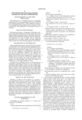
Accordingly, the present invention is a colored wax composition comprising
a wax;
a polyoxyalkylenated colorant defined by the Formula (I)
R{A-[(alkyleneoxy constituent).sub.n H].sub.m }.sub.x (I)
wherein
R is an organic chromophore;
A is a linking moiety in said chromophore selected from the group consisting of N, O, S, or CO2 ;
Alkyleneoxy constituent contains from 2 to 4 carbon atoms;
n is an integer of from 2 to about 100;
m is 1 when A is O, S, or CO2, and m is 2 when A is N;
x is an integer of from 1 to about 5; and
a surfactant selected from the group consisting of unsubstituted sorbitan monooleate and an admixture of unsubstituted sorbitan monooleate and ethoxylated dodecanol.
Additionally, a method for coloring a wax composition is provided comprising the sequential steps of
(a) providing a solution of molten wax;
(b) providing a colorant emulsion comprising
a colorant defined by Formula (I)
R{A[-alkyleneoxy constituent).sub.n H].sub.m}.sub.x (I)
wherein
R is an organic chromophore;
A is a linking moiety in said chromophore selected from the group consisting of N, O, S, or CO2 ;
Alkyleneoxy constituent contains from 2 to 4 carbon atoms;
n is an integer of from 2 to about 100;
m is 1 when A is O, S, or CO2, and m is 2 when A is N;
x is an integer of from 1 to about 5; and
a surfactant formulation selected from the group consisting of unsubstituted sorbitan monooleate and sorbitan monooleate admixed with ethoxylated dodecanol;
(c) introducing said emulsion into said molten wax solution to produce a colored wax composition;
(d) pouring said colored wax composition into a mold; and
(e) allowing sufficient time for said colored wax composition to cool within said mold.
The colorants are generally the same as those disclosed within the prior patents listed above. The organic chromophore (R) is, more specifically, one or more of the following types of compounds: azo, diazo, disazo, trisazo, diphenylmethane, triphenylmethane, xanthane, nitro, nitroso, acridine, methine, indamine, thiazole, oxazine, or anthraquinone. Preferably, R is one or more of nitro, triphenylmethane, methine, or thiazole based compounds. Group A is present on group R and is utilized to attach the polyoxyalkylene constituent to the organic chromophore. Nitrogen is the preferred linking moiety. The polyoxyalkylene group is generally a combination of ethylene oxide and propylene oxide monomers. Preferably propylene oxide is present in the major amount, and most preferably the entire polyoxyalkylene constituent is propylene oxide. The preferred number of moles of polyoxyalkylene constituent per alcohol (i.e., hydrogen-capped) chain is from 2 to 15 (n would therefore preferably be from 4 to 30), more preferably from 4 to 10 (n would most preferably be from 8 to 20). Also, preferably two such polyoxyalkylene alcohol chains are present on each polymeric colorant compound (x, above, is preferably 2). The colorants utilized within the present invention are generally liquid at ambient conditions of temperature and pressure. However, if they are not liquid under such conditions they are still generally dispersable within the specific emulsifiers and thus, ultimately within the wax formulations in order to produce the inventive colored wax compositions.
Particularly preferred colorants, and thus merely examples of the polyoxyalkylene polymeric colorant of this invention, include the following:
              TABLE 1
______________________________________
Preferred Poly(oxyalkylenated) Colorants
  Ex. #   Chromophore  Moles EO
                               Moles PO
                                       Group A
______________________________________
1     Triphenylmethane
                   10        10      N
  2          Anthraquinone         4         2         N
  3          Benzothiazole         8        10        N
  4          Methine               7        15        N
  5          Thiazo               10       14        N
  6          Bisazo               16       20        N
______________________________________
The term wax is intended to encompass any wax or wax-like substance in which the utilized polyoxyalkylenated polymeric colorants alone are substantially insoluble. Waxes are generally defined as saturated fatty (high molecular weight) hydrocarbons. More specific types of such waxes include mineral waxes, such as paraffin, montan, ozokerite, microcrystalline, earth, and the like; animal waxes, such as beeswax, waspwax, Chinesewax (insectwax), and the like; vegetable waxes, such as carnauba, sugarcane wax, candelilla, flax wax, and the like; and
synthetic waxes, such as Fischer-Tropsch wax, polyethylene wax, and the like. Wax compositions can be molded into different articles such as candles and crayons (with the addition of sufficient amounts of suitable plasticizers, such as stearic acid), ear plugs, and the like.
The specific surfactants have proven to be the only emulsifiers which provide the necessary degree of dispersability (and thus solubility) for the polyoxyalkylenated polymeric colorants within the target wax formulations. It has thus been realized that unsubstituted sorbitan monooleate (that is, there are no extra moieties present on the surfactant, such as alkoxylates, alkyls, alkylenes, and any other groups), available from Imperial Chemical Industries under the tradename Span 80®, performs, as the sole emulsifying agent, at a level well above any other type of individual surfactant. Furthermore, this unsubstituted species in combination with ethoxylated dodecanol (4 EO), such as the surfactant sold under the tradename Synfac™ DG, available from Milliken & Company, provides the same beneficial level of performance as the sorbitan monooleate alone. Preferably, the emulsifier is present in amounts of from about 50 to about 99 parts (out of one hundred) of the entire colorant emulsion (thus the colorant is present in amounts of from about 1 to about 50 parts). Preferably, the surfactant is present in amounts from about 70 to about 95 parts per hundred, more preferably from about 80 to about 92, and most preferably from about 81 to about 91. Within the two surfactant formulation, generally the sorbitan monooleate is present in major amounts. Preferably the sorbitan monooleate is present in amounts from about 51 to about 98 parts per hundred (of the total colorant composition) while the ethoxylated dodecanol is present in amounts from about 1 to about 49 parts; more preferably the sorbitan is present in amounts from about 74 to about 90 parts and the dodecanol from about 1 to about 18 parts. Furthermore, the colorant is present in amounts from about 3 to about 19 parts per hundred.
The colorant dispersion (emulsion) is generally added in an amount of from about 0.01 to about 0.5% by weight of the target wax formulation. With greater proportions of colorant emulsion being added, the resultant wax composition (or article) obtains a deeper shade of color.
Examples of particularly preferred dispersions and colored wax compositions within the scope of the present invention are set forth below.
3.8 parts of the undiluted colorant of Example 1 in Table 1, above, was mixed with 16.0 parts of ethoxylated dodecanol (available from Milliken Chemical as Synfac™ DG) and 80.2 parts of sorbitan monooleate (available from Imperial Chemical as Span 80®). The resulting mixture was a viscous, blue-colored, homogeneous solution.
3.5 parts of the undiluted colorant of the colorant in Example 1, above, was mixed with 11.5 parts of ethoxylated dodecanol and 85.0 parts of sorbitan monooleate. The resulting mixture was a viscous, blue-colored, homogeneous solution.
10.5 parts of the undiluted polyoxyalkylenated polymeric colorant of Example 3, above, was mixed with 14.9 parts of ethoxylated dodecanol and 74.6 parts of sorbitan monooleate. The resulting mixture was a viscous, red-colored, homogeneous solution.
9.0 parts of the undiluted colorant of Example 3, above, was mixed with 18.0 parts of ethoxylated dodecanol and 73.0 parts of sorbitan monooleate. The resulting mixture was a viscous, red-colored, homogeneous solution.
18.9 parts of the undiluted polyoxyalkylenated polymeric colorant of Example 4, above, was mixed with 81.1 parts of sorbitan monooleate. The resulting mixture was a viscous, yellow-colored, homogeneous solution.
12.0 parts of the undiluted colorant of Example 4, above, was mixed with 1.0 part of ethoxylated dodecanol and 87.0 parts of sorbitan monooleate. The resulting mixture was a viscous, yellow-colored, homogeneous solution.
9.0 parts of the undiluted polyoxyalkylenated polymeric colorant of Example 6,5, above, was mixed with 1.0 part of ethoxylated dodecanol and 76.0 parts of sorbitan monooleate. The resulting mixture was a viscous, violet-colored, homogeneous solution.
Generally, a colorant (or blend of colorants) was added to molten wax and stirred (while the solution remained in a molten state) until the wax solution became an homogeneously colored formulation. This was allowed to cool and form a colored solid.
The dispersion of EXAMPLE 7 was introduced into a molten paraffin wax formulation (melting point 130-150° F.) in an amount of about 2.1% by weight. Upon stirring, the composition became a thorough homogeneous medium blue shade. The composition was then poured into a candle mold and allowed to cool. The resultant candle exhibited excellent colorations.
The dispersion of EXAMPLE 8 was introduced into a molten paraffin wax formulation (melting point 130-150° F.) in an amount of about 2.3% by weight. Upon stirring, the composition became a thorough homogeneous medium blue shade. The composition was then poured into a candle mold and allowed to cool. The resultant candle exhibited excellent colorations.
The dispersion of EXAMPLE 9 was introduced into a molten paraffin wax formulation(melting point 130-150° F.) in an amount of about 0.9% by weight. Upon stirring, the composition became a thorough homogeneous medium red shade. The composition was then poured into a candle mold and allowed to cool. The resultant candle exhibited excellent colorations.
The dispersion of EXAMPLE 10 was introduced into a molten paraffin wax formulation(melting point 130-150° F.) in an amount of about 1.0% by weight. Upon stirring, the composition became a thorough homogeneous medium red shade. The composition was then poured into a candle mold and allowed to cool. The resultant candle exhibited excellent colorations.
The dispersion of EXAMPLE 11 was introduced into a molten paraffin wax formulation(melting point 130-150° F.) in an amount of about 0.5% by weight. Upon stirring, the composition became a thorough homogeneous medium yellow shade. The composition was then poured into a candle mold and allowed to cool. The resultant candle exhibited excellent colorations.
The dispersion of EXAMPLE 12 was introduced into a molten paraffin wax formulation(melting point 130-150° F.) in an amount of about 0.8% by weight. Upon stirring, the composition became a thorough homogeneous medium yellow shade. The composition was then poured into a candle mold and allowed to cool. The resultant candle exhibited excellent colorations.
The dispersion of EXAMPLE 13 was introduced into a molten paraffin wax formulation(melting point 130-150° F.) in an amount of about 1.0% by weight. Upon stirring, the composition became a thorough homogeneous medium yellow shade. The composition was then poured into a candle mold and allowed to cool. The resultant candle exhibited excellent colorations.
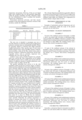
Emulsions comprising the same colorants as in the present invention but utilizing different but similar surfactants (in structure) to those within the present invention were then tested. Their performance as colorants were measured at two different times. First, the resultant emulsion as added to the wax within the mixing vessel was viewed. Second, the resultant molded wax article was viewed. Both measurements were made empirically since the exhibited coloring deficiencies were clear. The following table indicates the surfactants present and the measured deficiencies viewed. The same method for preparing the emulsion (3.8 parts of colorant, 16.0 parts of Synfac™ DG surfactant, and 80.2 parts of other surfactant, all added in an amount of about 2.1% by weight of the wax) as well as producing a molded wax article were followed as for the inventive examples, above.
                                  TABLE 2
__________________________________________________________________________
  Colora           Performance Results
Ex.
  (from above)
        Surfactant (description)
                   Mixing Vessel
                            Molded Wax Article
__________________________________________________________________________
21
  Example 1
        Ethoxylated Sorbitan
                   Residual wax
                            Majority of colorant
                        Monooleate (5EO)          had large colorant
                            present at the bottom
                                                  droplets             of
                            the article
  22   Example 3        Ethoxylated Sorbitan      Residual wax
                            Majority of colorant
                        Monooleate (5EO)          had large colorant
                            present at the bottom
                                                  droplets             of
                            the article
  23   Example 4        Ethoxylated Sorbitan      Residual wax
                            Majority of colorant
                        Monooleate (5EO)          had large colorant
                            present at the bottom
                                                  droplets             of
                            the article
  24   Example 5        Ethoxylated Sorbitan      Residual wax
                            Majority of colorant
                        Monooleate (5EO)          had large colorant
                            present at the bottom
                                                  droplets             of
                            the article
  25   Example 1        Sorbitan Trioleate        Residual wax
                            Very low color
                                                  contained small
                            levels; indicates
                                                  colorant particles
                            poor dispersion
  26   Example 3        Sorbitan Trioleate        Residual wax
                            Very low color
                                                  contained small
                            levels; indicates
                                                  colorant particles
                            poor dispersion
  27   Example 4        Sorbitan Trioleate        Residual wax
                            Very low color
                                                  contained small
                            levels; indicates
                                                  colorant particles
                            poor dispersion
  28   Example 5        Sorbitan Trioleate        Residual wax
                            Very low color
                                                  contained small
                            levels; indicates
                                                  colorant particles
                            poor dispersion
  29   Example 1        Sorbitan Monolaurate      Residual wax
                            Majority of colorant
                                                  contained colorant   at
                            bottom of
                                                  droplets
                            article
  30   Example 3        Sorbitan Monolaurate      Residual wax
                            Majority of colorant
                                                  contained colorant   at
                            bottom of
                                                  droplets
                            article
  31   Example 4        Sorbitan Monolaurate      Residual wax
                            Majority of colorant
                                                  contained colorant   at
                            bottom of
                                                  droplets
                            article
  32   Example 1        Sorbitan Hexaoleate       Residual wax
                            Very low color
                                                  contained a large
                            levels; majority
                                                  amount of colorant   of
                            colorant at
                                                  droplets
                            bottom of artic1e
  33   Example 3        Sorbitan Hexaoleate       Residual wax
                            Very low color
                                                  contained a large
                            levels; majority
                                                  amount of colorant   of
                            colorant at
                                                  droplets
                            bottom of article
  34   Example 4        Sorbitan Hexaoleate       Residual wax
                            Very low color
                                                  contained a large
                            levels; majority
                                                  amount of colorant   of
                            colorant at
                                                  droplets
                            bottom of article
  35   Example 5        Sorbitan Hexaoleate       Residual wax
                            Very low color
                                                  contained a large
                            levels; majority
                                                  amount of colorant   of
                            colorant at
                                                  droplets
                            bottom of article
__________________________________________________________________________
Clearly, the performance of substituted sorbitan monooleate and/or sorbitan polyester surfactants exhibited deleterious effects on the colorability and dispersability of the poloxyalkylene polymeric colorant emulsions within waxes.
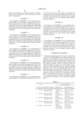
Lastly, a non-sorbitan ester surfactant was tested alone, without an ethoxylated dodecanol present, for its dispersability of the polyoxyalkylene colorants and subsequent colorability within waes. 17 parts per hundred of colorant used in combination with 83 parts of glyceryl monooleate/dioleate. The results are tabulated as follows:
              TABLE 3
______________________________________
     Colorant  Performance Results
Ex.  (from above)
               Mixing Vessel    Molded Article
______________________________________
36   Example 1 Residual wax contained small
                                Poor dispersion with
                       colorant droplets              majority of
                                colorant
                                                      at bottom of
                                article
  37   Example 3       Residual wax contained small   Poor dispersion
                                with
                       colorant droplets              majority of
                                colorant
                                                      at bottom of
                                article
  38   Example 4       Residual wax contained small   Poor dispersion
                                with
                       colorant droplets              majority of
                                colorant
                                                      at bottom of
                                article
  39   Example 5       Residual wax contained small   Poor dispersion
                                with
                       colorant droplets              majority of
                                colorant
                                                       at bottom of
                                article
______________________________________
Again, clearly the sorbitan monooleate alone provides superior performance than with a non-sorbitan ester surfactant.
Having described the invention in detail it is obvious that one skilled in the art will be able to make variations and modifications thereto without departing from the scope of the present invention. Accordingly, the scope of the present invention should be determined only by the claims appended hereto.
Claims (18)
1. A colored wax composition comprising
a wax;
a polyoxyalkylenated colorant defined by the Formula (I)
R {A-[(alkyleneoxy constituent).sub.n H].sub.m }.sub.x (I) wherein
R is an organic chromophore;
A is a linking moiety in said chromophore selected from the group consisting of N, O, S, or CO2 ;
Alkyleneoxy constituent contains from 2 to 4 carbon atoms;
n is an integer of from 2 to about 100;
m is 1 when A is O, S, or CO2, and m is 2 when A is N;
x is an integer of from 1 to about 5; and
a surfactant selected from the group consisting of unsubstituted sorbitan monooleate and an admixture of unsubstituted sorbitan monooleate and ethoxylated dodecanol.
2. The wax composition in claim 1 wherein
said wax is selected from the group consisting of mineral waxes, animal waxes, vegetable waxes, synthetic waxes, and any mixtures thereof.
3. The wax composition in claim 2 wherein
said wax is selected from the group consisting of paraffin wax, montan wax, ozokerite wax, microcrystalline wax, earth wax, beeswax, waspwax, Chinesewax (insectwax), carnauba wax, sugarcane wax, candelilla wax, flax wax, Fischer-Tropsch wax, and any mixtures thereof.
4. The wax composition in claim 3 wherein
said wax is paraffin wax.
5. The wax composition in claim 1 wherein
R is selected from the group consisting of azo, diazo, disazo, trisazo, diphenylmethane, triphenylmethane, xanthane, nitro, nitroso, acridine, methine, indamine, thiazole, oxazine, anthraquinone, and any mixtures thereof;
Alkyleneoxy constituent comprises a mixture of ethyleneoxy and propyleneoxy groups;
n is from about 4 to about 30; and
x is 2.
6. The wax composition in claim 5 wherein
R is selected from the group consisting of azo, triphenylmethane, nitro, thiazole, and any mixtures thereof;
Alkyleneoxy constituent comprises from about 0 to about 50% ethyleneoxy groups and from about 50 to about 100% propyleneoxy groups; and
n is from about 8 to about 20.
7. The wax composition in claim 6 wherein
Alkyleneoxy constituent comprises from about 0 to about 40% ethyleneoxy groups and from about 60 to about 100% propyleneoxy groups.
8. The wax composition in claim 7 wherein Alkyleneoxy constituent comprises 100% propyleneoxy groups.
9. A method for producing a colored wax composition comprising the sequential steps of
(a) providing a solution of molten wax;
(b) providing a colorant emulsion comprising
a colorant defined by Formula (I)
R{A[-alkyleneoxy constituent).sub.n H].sub.m }.sub.x (I) wherein
R is an organic chromophore;
A is a linking moiety in said chromophore selected from the group consisting of N, O, S, or CO2 ;
Alkyleneoxy constituent contains from 2 to 4 carbon atoms;
n is an integer of from 2 to about 100;
m is 1 when A is O, S, or CO2, and m is 2when A is N;
x is an integer of from 1 to about 5; and
a surfactant formulation selected from the group consisting of unsubstituted sorbitan monooleate and sorbitan monooleate admixed with ethoxylated dodecanol;
(c) introducing said emulsion into said molten wax solution to produce a colored wax composition;
(d) optionally pouring said colored wax composition into a mold; and
(e) optionally allowing sufficient time for said colored wax composition to cool within said mold.
10. The method of claim 9 wherein
said wax is selected from the group consisting of mineral waxes, animal waxes, vegetable waxes, synthetic waxes, and any mixtures thereof.
11. The method of claim 10 wherein
said wax is selected from the group consisting of paraffin wax, montan wax, ozokerite wax, microcrystalline wax, earth wax, beeswax, waspwax, Chinesewax (insectwax), carnauba wax, sugarcane wax, candelilla wax, flax wax, Fischer-Tropsch wax, and any mixtures thereof.
12. The method of claim 11 wherein
said wax is paraffin wax.
13. The method of claim 9 wherein
R is selected from the group consisting of azo, diazo, disazo, trisazo, diphenylmethane, triphenylmethane, xanthane, nitro, nitroso, acridine, methine, indamine, thiazole, oxazine, anthraquinone, and any mixtures thereof; and
Alkyleneoxy constituent comprises a mixture of ethyleneoxy and propyleneoxy groups.
14. The method of claim 13 wherein
R is selected from the group consisting of azo, triphenylmethane, nitro, thiazole, and any mixtures thereof.
15. A colorant emulsion for coloring waxes comprising
a colorant defined by Formula (I)
R{A[-alkyleneoxy constituent).sub.n H].sub.m }.sub.x (I) wherein
R is an organic chromophore;
A is a linking moiety in said chromophore selected from the group consisting of N, O, S, or CO2 ;
Alkyleneoxy constituent contains from 2 to 4 carbon atoms;
n is an integer of from 2 to about 100;
m is 1 when A is O, S, or CO2, and m is 0 when A is N;
x is an integer of from 1 to about 5; and
a surfactant formulation selected from the group consisting of unsubstituted sorbitan monooleate and sorbitan monooleate admixed with ethoxylated dodecanol.
16. The colorant emulsion of claim 15 wherein
R is selected from the group consisting of azo, diazo, disazo, trisazo, diphenylmethane, triphenylmethane, xanthane, nitro, nitroso, acridine, methine, indamine, thiazole, oxazine, anthraquinone, and any mixtures thereof; and
Alkyleneoxy constituent comprises a mixture of ethyleneoxy and propyleneoxy groups.
17. The colorant emulsion of claim 16 wherein
R is selected from the group consisting of azo, triphenylmethane, nitro, thiazole, and any mixtures thereof.
18. The colorant emulsion of claim 17 wherein
said colorant is present in an amount of from about 3 to about 19 parts per hundred;
said unsubstituted monooleate surfactant is present in an amount of from about 74 to about 90 parts per hundred; and
said ethoxylated dodecanol is present in an amount of from about 0 to about 18 parts per hundred.
Priority Applications (1)
| Application Number | Priority Date | Filing Date | Title |
|---|---|---|---|
| US09/281,051 US6034158A (en) | 1998-07-07 | 1999-03-30 | Emulsified poly(oxyalkylenated) colorants for wax compositions |
Applications Claiming Priority (2)
| Application Number | Priority Date | Filing Date | Title |
|---|---|---|---|
| US11072298A | 1998-07-07 | 1998-07-07 | |
| US09/281,051 US6034158A (en) | 1998-07-07 | 1999-03-30 | Emulsified poly(oxyalkylenated) colorants for wax compositions |
Related Parent Applications (1)
| Application Number | Title | Priority Date | Filing Date |
|---|---|---|---|
| US11072298A Continuation-In-Part | 1998-07-07 | 1998-07-07 |
Publications (1)
| Publication Number | Publication Date |
|---|---|
| US6034158A true US6034158A (en) | 2000-03-07 |
Family
ID=22334564
Family Applications (1)
| Application Number | Title | Priority Date | Filing Date |
|---|---|---|---|
| US09/281,051 Expired - Lifetime US6034158A (en) | 1998-07-07 | 1999-03-30 | Emulsified poly(oxyalkylenated) colorants for wax compositions |
Country Status (1)
| Country | Link |
|---|---|
| US (1) | US6034158A (en) |
Cited By (2)
| Publication number | Priority date | Publication date | Assignee | Title |
|---|---|---|---|---|
| US20050124727A1 (en) * | 2003-12-05 | 2005-06-09 | Huber Gregory T. | Polymeric colored dispersants and colorant dispersions containing same |
| CN108587193A (en) * | 2018-04-16 | 2018-09-28 | 江南大学 | A kind of pair of distributed compound wax emulsion and preparation method thereof |
Citations (6)
| Publication number | Priority date | Publication date | Assignee | Title |
|---|---|---|---|---|
| US4167510A (en) * | 1976-09-07 | 1979-09-11 | Milliken Research Corporation | Ester capped alkyleneoxy fugitive tints and method for producing same |
| US4284729A (en) * | 1980-03-31 | 1981-08-18 | Milliken Research Corporation | Process for coloring thermosetting resins |
| US4507407A (en) * | 1984-06-25 | 1985-03-26 | Milliken Research Corporation | Process for in situ coloration of thermosetting resins |
| US4751254A (en) * | 1987-01-20 | 1988-06-14 | Milliken Research Corporation | Process for in situ coloration of thermosetting resins |
| US4846846A (en) * | 1988-06-20 | 1989-07-11 | Milliken Research Corporation | Process for preparing polyurethane resins colored with anthraquinone colorants and products produced thereby |
| US4871371A (en) * | 1988-10-24 | 1989-10-03 | Milliken Research Corporation | Tint compositions useful for providing coloration to aqueous and non-aqueous liquids |
-
1999
- 1999-03-30 US US09/281,051 patent/US6034158A/en not_active Expired - Lifetime
Patent Citations (6)
| Publication number | Priority date | Publication date | Assignee | Title |
|---|---|---|---|---|
| US4167510A (en) * | 1976-09-07 | 1979-09-11 | Milliken Research Corporation | Ester capped alkyleneoxy fugitive tints and method for producing same |
| US4284729A (en) * | 1980-03-31 | 1981-08-18 | Milliken Research Corporation | Process for coloring thermosetting resins |
| US4507407A (en) * | 1984-06-25 | 1985-03-26 | Milliken Research Corporation | Process for in situ coloration of thermosetting resins |
| US4751254A (en) * | 1987-01-20 | 1988-06-14 | Milliken Research Corporation | Process for in situ coloration of thermosetting resins |
| US4846846A (en) * | 1988-06-20 | 1989-07-11 | Milliken Research Corporation | Process for preparing polyurethane resins colored with anthraquinone colorants and products produced thereby |
| US4871371A (en) * | 1988-10-24 | 1989-10-03 | Milliken Research Corporation | Tint compositions useful for providing coloration to aqueous and non-aqueous liquids |
Cited By (3)
| Publication number | Priority date | Publication date | Assignee | Title |
|---|---|---|---|---|
| US20050124727A1 (en) * | 2003-12-05 | 2005-06-09 | Huber Gregory T. | Polymeric colored dispersants and colorant dispersions containing same |
| US7576146B2 (en) | 2003-12-05 | 2009-08-18 | Sun Chemical Corporation | Polymeric colored dispersants and colorant dispersions containing same |
| CN108587193A (en) * | 2018-04-16 | 2018-09-28 | 江南大学 | A kind of pair of distributed compound wax emulsion and preparation method thereof |
Similar Documents
| Publication | Publication Date | Title |
|---|---|---|
| US6106597A (en) | Wax compositions comprising fatty ester poly(oxyalkylenated) colorants | |
| WO2000036032A1 (en) | Wax compositions comprising alkenyl succinic anhydride-capped poly(oxyalkylenated) colorants | |
| DK2183328T3 (en) | Aqueous pigment preparations with non-ionic additives based on allyl and vinyl ethers | |
| US7905955B2 (en) | Aqueous pigment preparations | |
| US5973064A (en) | Colored polyester thermoplastic materials comprised of poly(oxyalkylenated) compounds as colorants and specific surfactants as diluents | |
| CN101400749B (en) | Water-based pigment preparation | |
| CN101674878B (en) | Water-based pigment preparations | |
| ES2315915T3 (en) | WATERPROOF PREPARATIONS OF PIGMENTS BASED ON OLIGOESTERS, THEIR ELABORATION AND USE. | |
| CA2000563C (en) | Tint compositions useful for providing coloration to aqueous and non-aqueous liquids | |
| CA1107878A (en) | Dispersion of particulates in polar organic solvents | |
| JPH11512127A (en) | Colorant composition for paint products | |
| KR20100065281A (en) | Aqueous pigment preparations having nonionic additives on the basis of allyl ether and vinyl ether | |
| KR20110044867A (en) | Dry Pigment Formulations Including Non-ionic Additives | |
| CA2329337A1 (en) | Dispersion of pigments | |
| EP1332183B1 (en) | Phthalic acid imides as synergists for improving the properties of aqueous pigment preparations | |
| JPH02200475A (en) | Printing method and printed support | |
| US6287348B1 (en) | Colorants made from reactive dyes and fatty amines | |
| US5634971A (en) | Process for dispersing pigments with polyoxyalkylated ethers | |
| KR960011060B1 (en) | Low Dust or Dust Free Dye Formulation | |
| EP0471214B1 (en) | Dispersing agents for coloring compositions | |
| SU899612A1 (en) | Ink for flexographic or intaglo printing on cellophane | |
| CN107474583A (en) | A kind of water-based metal Complex dyes and application thereof | |
| CA1150875A (en) | Pigment flushing | |
| CN115551961A (en) | Water-soluble coloring composition comprising an alcohol alkoxylate having 40 to 160 ethoxy units derived from a primary alcohol having a chain length of 20 to 30 carbon atoms | |
| CN111004524A (en) | Disperse dye composition, disperse dye, and preparation method and application thereof |
Legal Events
| Date | Code | Title | Description |
|---|---|---|---|
| STCF | Information on status: patent grant |
Free format text: PATENTED CASE |
|
| FPAY | Fee payment |
Year of fee payment: 4 |
|
| FPAY | Fee payment |
Year of fee payment: 8 |
|
| REMI | Maintenance fee reminder mailed | ||
| FPAY | Fee payment |
Year of fee payment: 12 |