US6033636A - Method of recovering uranium and transuranic elements from spent nuclear fuel - Google Patents

Method of recovering uranium and transuranic elements from spent nuclear fuel Download PDF

Info

Publication number
US6033636A
US6033636A US09/048,342 US4834298A US6033636A US 6033636 A US6033636 A US 6033636A US 4834298 A US4834298 A US 4834298A US 6033636 A US6033636 A US 6033636A
Authority
US
United States
Prior art keywords
uranium
uranyl nitrate
transuranic elements
nuclear fuel
solution
Prior art date
Legal status (The legal status is an assumption and is not a legal conclusion. Google has not performed a legal analysis and makes no representation as to the accuracy of the status listed.)
Expired - Fee Related
Application number
US09/048,342
Inventor
Akio Todokoro
Yoshiyuki Kihara
Takashi Okada
Current Assignee (The listed assignees may be inaccurate. Google has not performed a legal analysis and makes no representation or warranty as to the accuracy of the list.)
Doryokuro Kakunenryo Kaihatsu Jigyodan
Japan Atomic Energy Agency
Original Assignee
Japan Nuclear Cycle Development Institute
Priority date (The priority date is an assumption and is not a legal conclusion. Google has not performed a legal analysis and makes no representation as to the accuracy of the date listed.)
Filing date
Publication date
Application filed by Japan Nuclear Cycle Development Institute filed Critical Japan Nuclear Cycle Development Institute
Assigned to DORYOKURO KAKUNENRYO KAIHATSU JIGYODAN reassignment DORYOKURO KAKUNENRYO KAIHATSU JIGYODAN ASSIGNMENT OF ASSIGNORS INTEREST (SEE DOCUMENT FOR DETAILS). Assignors: KIHARA, YOSHIYUKI, OKADA, TAKASHI, TODOKORO, AKIO
Assigned to JAPAN NUCLEAR CYCLE DEVELOPMENT INSTITUTE reassignment JAPAN NUCLEAR CYCLE DEVELOPMENT INSTITUTE CHANGE OF NAME (SEE DOCUMENT FOR DETAILS). Assignors: JIGYODAN, KAIHATSU, KAKUNENRYO, DORYOKURO
Application granted granted Critical
Publication of US6033636A publication Critical patent/US6033636A/en
Anticipated expiration legal-status Critical
Expired - Fee Related legal-status Critical Current

Links

Images

Classifications

    • CCHEMISTRY; METALLURGY
    • C25ELECTROLYTIC OR ELECTROPHORETIC PROCESSES; APPARATUS THEREFOR
    • C25BELECTROLYTIC OR ELECTROPHORETIC PROCESSES FOR THE PRODUCTION OF COMPOUNDS OR NON-METALS; APPARATUS THEREFOR
    • C25B1/00Electrolytic production of inorganic compounds or non-metals
    • CCHEMISTRY; METALLURGY
    • C01INORGANIC CHEMISTRY
    • C01GCOMPOUNDS CONTAINING METALS NOT COVERED BY SUBCLASSES C01D OR C01F
    • C01G56/00Compounds of transuranic elements
    • GPHYSICS
    • G21NUCLEAR PHYSICS; NUCLEAR ENGINEERING
    • G21CNUCLEAR REACTORS
    • G21C19/00Arrangements for treating, for handling, or for facilitating the handling of, fuel or other materials which are used within the reactor, e.g. within its pressure vessel
    • G21C19/42Reprocessing of irradiated fuel
    • G21C19/44Reprocessing of irradiated fuel of irradiated solid fuel
    • G21C19/46Aqueous processes, e.g. by using organic extraction means, including the regeneration of these means
    • YGENERAL TAGGING OF NEW TECHNOLOGICAL DEVELOPMENTS; GENERAL TAGGING OF CROSS-SECTIONAL TECHNOLOGIES SPANNING OVER SEVERAL SECTIONS OF THE IPC; TECHNICAL SUBJECTS COVERED BY FORMER USPC CROSS-REFERENCE ART COLLECTIONS [XRACs] AND DIGESTS
    • Y02TECHNOLOGIES OR APPLICATIONS FOR MITIGATION OR ADAPTATION AGAINST CLIMATE CHANGE
    • Y02EREDUCTION OF GREENHOUSE GAS [GHG] EMISSIONS, RELATED TO ENERGY GENERATION, TRANSMISSION OR DISTRIBUTION
    • Y02E30/00Energy generation of nuclear origin
    • Y02E30/30Nuclear fission reactors
    • YGENERAL TAGGING OF NEW TECHNOLOGICAL DEVELOPMENTS; GENERAL TAGGING OF CROSS-SECTIONAL TECHNOLOGIES SPANNING OVER SEVERAL SECTIONS OF THE IPC; TECHNICAL SUBJECTS COVERED BY FORMER USPC CROSS-REFERENCE ART COLLECTIONS [XRACs] AND DIGESTS
    • Y02TECHNOLOGIES OR APPLICATIONS FOR MITIGATION OR ADAPTATION AGAINST CLIMATE CHANGE
    • Y02WCLIMATE CHANGE MITIGATION TECHNOLOGIES RELATED TO WASTEWATER TREATMENT OR WASTE MANAGEMENT
    • Y02W30/00Technologies for solid waste management
    • Y02W30/50Reuse, recycling or recovery technologies

Definitions

  • This invention relates to a method of recovering uranium and transuranic elements from spent nuclear fuel, and in particular to a method for recovering uranium and transuranic elements wherein the uranium and transuranic elements are oxidized to a valency at which they can be deposited, and a solid/liquid separation from other elements performed so that the uranium and transuranic elements are recovered.
  • one method considered for disposing of high level radioactive waste is that of stratum disposal wherein uranium and transuranic elements such as neptunium (Np) or americium (Am) in spent nuclear fuel are subjected to glass caking so as to contain the radioactivity (radioactive substances).
  • stratum disposal millions of years are needed to reduce the hazard posed by uranium and transuranic elements to that of natural uranium. On this account, a strong desire has recently emerged to recover and re-use these uranium and transuranic elements without discharging them as nuclear waste.
  • the uranium and transuranic element Np changes its valence to IV, V and VI in a complex way, so a variety of valence adjusting chemical reagents had to be used to separate Np by the solvent extraction method, and recover it.
  • this solvent extraction method there were a large number of separation and recovery steps and the process was complicated.
  • tributyl phosphoric acid (TBP) which is used in the aforesaid solvent extraction method to dissolve spent nuclear fuel, is decomposed by nitric acid and radioactive rays or heat of radioactive decay. This led to a risk of decreased extraction efficiency or to generating of materials that could start a fire.
  • waste was generated in each separation and recovery step, so the amount of waste generated increased.
  • Am is stable in nitric acid solution at a valency of III, and cannot therefore be extracted with TBP.
  • a phosphoric acid double ligand extractant such as CMPO
  • U uranium
  • Pu plutonium
  • the method of recovering uranium and transuranic elements from spent nuclear fuel according to this invention has the following characteristics.
  • the uranyl nitrate and nitrates of uranium and transuranic elements recovered by coprecipitation are redissolved in nitric acid and the mixed solution obtained is cooled, whereupon only uranyl nitrate is deposited.
  • the uranyl nitrate is filtered off and redissolved in nitric acid, the uranyl nitrate solution thus obtained is adjusted, the mother liquor resulting from the coprecipitation step of (1) is combined with this uranyl nitrate solution and the mixed solution thus obtained is electrolytically oxidized.
  • the mixed solution is cooled, and residual nitrates of uranium and transuranic elements are coprecipitated with uranyl nitrate from the mixed solution.
  • nitrates of uranium and transuranic elements remaining in the mother liquor can be precipitated and recovered together with the uranyl nitrate.
  • the risk associated with processing and disposal of uranium and transuranic elements is reduced to acceptable levels.
  • the solution obtained by mixing uranyl nitrate solution with the mother liquor was electrolytically oxidized, but the invention is not limited to this arrangement. Instead, uranium and transuranic elements in the mother liquor may first be oxidized by electrolytic oxidation, the aforesaid uranyl nitrate solution then dripped in, and the mixed solution cooled to precipitate the nitrates of uranium and transuranic elements together with uranyl nitrate.
  • step (1) when spent nuclear fuel is dissolved in nitric acid, or when the mother liquor resulting from the coprecipitation of step (1) is mixed with the aforesaid uranyl nitrate solution, an oxidation catalyst is added, electrolytic oxidation is performed and the nitrates of uranium and transuranic elements are coprecipitated and recovered together with uranyl nitrate.
  • the uranium and transuranic elements are oxidized to an atomic valence at which their nitrates can be precipitated while the spent nuclear fuel is dissolving in the nitric acid. Due to this, the process of recovering the uranium and transuranic elements can be further shortened.
  • the oxidation catalyst in the method of recovering uranium and transuranic elements described in the aforesaid (3) is at least one element chosen from among cerium (Ce), silver (Ag) and cobalt (Co).
  • Ce(III) is oxidized to Ce(IV) by electrolytic oxidation.
  • This oxidized Ce (IV) oxidizes Np, Pu and Am in the solution to valence VI while itself being reduced to Ce(III).
  • Ag(I), Co(II) are themselves oxidized by electrolytic oxidation and the oxidized Ag, Co oxidize almost all of the Np.
  • Ce and Ag are contained in nuclear fission products (FP) in the spent nuclear fuel, and they function as oxidation catalysts causing uranium and transuranic elements to crystallize even if they are not added to the solution from an external source.
  • the uranium and transuranic elements are uranium (U), neptunium (Np), plutonium (Pu) and americium (Am).
  • Np, Pu and Am can now be used as nuclear fuel, e.g. for fast breeder reactors such as "Monju”, and generation of high-level radioactive waste can be reduced as a result.
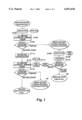
  • FIG. 1 is a flowchart showing a method for recovering uranium and transuranic elements from spent nuclear fuel according to this invention.
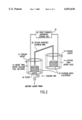
  • FIG. 2 shows, in schematic form, a typical electrolytic oxidation test container used for recovery of uranium and transuranic elements from spent nuclear fuel according to this invention.
  • FIG. 3 shows the solubility of uranyl nitrate (literature value).
  • Spent nuclear fuel contains uranium (U), neptunium (Np), plutonium (Pu), americium (Am), cerium (Ce), and other nuclear fission products (referred to hereafter as "FP"). Nearly all of this spent nuclear fuel is U.
  • nitric acid 2-4 N
  • S electrolytic oxidation container
  • This solution contains uranium (U) which has a valency of VI; neptunium (Np) which is transuranic element having a valency of IV, V, or VI; plutonium (Pu) which is a transuranic element having a valency of IV; americium (Am) having an atomic valence of III; and FP such as cerium (Ce).
  • Ce(III) in this solution is oxidized to Ce(IV) by electrolytic oxidation (S102).
  • This oxidized Ce (IV) oxidizes Np, Pu, and Am in the solution to valency VI, and is itself reduced to Ce(III).
  • Ce functions as an oxidation catalyst due to continuous electrolytic oxidation (S102).
  • Np, Pu, Am are converted to Np, Pu, Am nitrates wherein the metal has a valence of VI, which have a low solubility as in the case of U nitrate and are coprecipitated and recovered together with U nitrate.
  • Ce in spent nuclear fuel was used as the oxidation catalyst, but additional Ce may be added during electrolytic oxidation.
  • As the oxidation catalyst silver (Ag) and cobalt (Co) may be used as a substitute for Ce. Ag, Co are themselves oxidized due to electrolytic oxidation as in the case of Ce, and the oxidized Ag(II), Co(III) oxidize almost all the Np, Pu, Am in the solution to valency VI. Ag is also contained in FP as in the case of Ce.
  • the electrolytic oxidation container is then cooled so as to cool the solution, nitrates comprising uranyl nitrate, neptunyl nitrate, plutonyl nitrate and americyl nitrate are deposited, and this mixed deposit (UO 2 (NO 3 ) 2 , NpO 2 (NO 3 ) 2 , PuO 2 (NO 3 ) 2 , AmO 2 (NO 3 ) 2 ) is separated (S104). In this way, U, Np, Pu, Am are coprecipitated and recovered together.
  • the cooling temperature preferably lies within a range of -20° C. to -40° C.
  • electrolytic oxidation was performed after dissolving the spent nuclear fuel in nitric acid and subsequently cooling, but the invention is not limited to this arrangement.
  • the spent nuclear fuel may be dissolved in nitric acid while performing electrolytic oxidation and simultaneously cooling the solution.
  • the procedure up to the crystallization and separation step may be performed continuously while the oxides are converted to nitrates, and the whole process of recovering uranium and transuranic elements can be shortened.
  • the nitrate of Ce does not separate.
  • the mother liquor from crystallization (S104) comprises FP containing Ce, and small residual amounts of U, Np, Pu and Am. To further separate and recover this U, Np, Pu, Am which remains behind in the mother liquor, the mother liquor is first heated and concentrated (S114).
  • dilute nitric acid e.g. 1-2 N
  • S106 dilute nitric acid
  • Np is reduced to valency IV
  • V Pu is reduced to valency IV
  • Am is reduced to valency III.
  • S108 dilute nitric acid solution
  • only a part of the U is deposited as uranyl nitrate, and crystallizes and separates from a mixed solution containing U, Np, Pu, and Am (S110).
  • nitric acid e.g. 1-2N
  • S112 nitric acid
  • This nitric acid solution is added to the heated and concentrated mother liquor so as to prepare a mixed solution.
  • Ce exists in the mother liquor, so Ce also exists in the mixed solution.
  • This Ce acts as an oxidation catalyst in the aforementioned electrolytic oxidation of the mixed solution. oxidizing the remaining U, Np, Pu, and Am to an atomic valency of VI.
  • Deposition of the residual uranyl nitrate, neptunyl nitrate, plutonyl nitrate and americyl nitrate is then promoted by cooling with uranyl nitrate as a scavenger (coprecipitation) (S116).
  • amixed solution was prepared by adding the nitrate solution prepared in S112 to the mother liquor and subjecting this mixed solution to electrolytic oxidation, however the invention is not limited to this arrangement. Instead, the mother liquor may be subjected to electrolytic oxidation using the oxidation catalysts in the mother liquor so as to oxidize residual U, Np, Pu, Am in the mother liquor to an atomic valence of VI, the aforesaid nitrate solution containing uranyl nitrate dripped in, and the solution then cooled to promote deposition of residual uranyl nitrate, neptunyl nitrate, plutonyl nitrate, and americyl nitrate using the uranyl nitrate added later as a scavenger.
  • the mixed deposit [UO 2 (NO 3 ) 2 , NpO 2 (NO 3 ) 2 , PuO 2 (NO 3 ) 2 , AmO 2 (NO 3 ) 2 ] is thereby crystallized and separated from high level radioactive effluent containing FP such as Ce (S118).
  • a mixed solution 30 and mixed deposit 40 are denitrated and oxidized in the next process so as to produce nuclear fuel which is recycled.
  • an anode tank 10 is filled with a spent nuclear fuel solution made up by dissolving nuclear fuel in nitric acid (2-4 N).
  • a cooling jacket 12 is fixed on the outer wall of the anode tank 10, and a cooling gas is blown into the jacket 12 so that the temperature of the anode tank 10 is maintained at -20° C. to -40° C.
  • a cathode tank 14 on the other hand contains nitric acid of sufficient concentration to pass an electric current.
  • Platinum mesh electrodes 18 are arranged respectively in the anode tank 10 and cathode tank 14, the two platinum mesh electrodes 18 being electrically connected to a DC fixed current generator 22. Teflon-sheathed platinum wires 20 capable of carrying an electric current are also immersed in the solutions in the anode tank 10 and cathode tank 14.
  • a filter 24 is installed on the base of the anode tank 10.
  • uranium and uranium and transuranic elements are oxidized to an atomic valence of VI, and the uranyl nitrate, neptunyl nitrate, plutonyl nitrate and americyl nitrate which deposit on cooling are separated by crystallization on the filter 24.
  • the mother liquor is transferred to a subsequent heating/concentration step via a mother liquor drain.
  • nitrates of these elements are oxidized by electrolytic oxidation to an atomic valence (i.e. VI) at which they have low solubility in the nitrate solution, using, for example, Ce in FP as an oxidation catalyst.
  • electrolytic oxidation the solution is cooled so that the nitrates of uranium and transuranic elements selectively crystallize.
  • Use of a solvent to recover the transuranic element is therefore not required as it was in the prior art. This does not generate any waste solvent so the method is environment-friendly. Moreover, it is unnecessary to perform solvent extractions using plural solvents as in the conventional method, so the recovery of uranium and transuranic elements is simplified.
  • Spent nuclear fuel having the composition [U:96%, Np:0.075%, Pu:0.91%, Am:0.014%, Ce:02.5%, Ag:0.004% and other FP (wt%), PWR fuel, average output 30MW/Mg, cooling 150 days] and 3N nitric acid were introduced in an anode tank 10 of an electrolytic oxidation tank shown in FIG. 2, a current of 0.5A (anode current density 82.4mA/cm 2 ) was passed, and the spent nuclear fuel dissolved in the nitric acid at room temperature.
  • a Ce catalyst and Ag catalyst were added, and after adjusting the nitric acid concentration of the solution to effectively 2N, electrolytic oxidation was performed for 1 hour at room temperature by passing a DC current of 0.5A at 7V between platinum electrodes.
  • a cooling gas was introduced into a cooling jacket 12 during electrolysis, and the anode tank 10 was cooled to -20° C.
  • the Ce(III) and Ag(I) in the nitric acid solution were then oxidized respectively to Ce(IV) and Ag(II), and the Ce(IV) and Ag(II) oxidized U, Np, Pu, and Am to valence VI causing U, Np, Pu, and Am (all valence VI) nitrates to crystallize out in the anode tank 10.
  • the crystal yields were uranyl nitrate 70-80%, neptunyl nitrate 70-80%, plutonyl nitrate 40-50% and americyl nitrate 40-50%.
  • electrolytic oxidation was performed after adding uranyl nitrate to the mother liquor.
  • the concentrated mother liquor can first be subjected to electrolytic oxidation using the Ce and Ag already present in the mother liquor as oxidation catalysts. After the residual U, Np, Pu, and Am in the mother liquor are oxidized to valence VI, the aforesaid nitrate solution containing uranyl nitrate is dripped in, and the solution cooled.
  • the residual uranyl nitrate, neptunyl nitrate, plutonyl nitrate, and americyl nitrate then crystallize out due to the scavenger action of the added uranyl nitrate.
  • the crystal yields when the crystals were filtered off from high level radioactive effluent were uranyl nitrate 91-96%, neptunyl nitrate 91-96%, plutonyl nitrate 64-75%, and americyl nitrate 64-75%.
  • the high level radioactive effluent was concentrated and adjusted to a nitric acid concentration of 6N. Ce or a similar electrolysis catalyst was added to the concentrated effluent, and the effluent subjected to electrolytic oxidation whereupon the residual uranyl nitrate in the effluent crystallized and was recovered.

Landscapes

  • Chemical & Material Sciences (AREA)
  • Engineering & Computer Science (AREA)
  • Organic Chemistry (AREA)
  • Physics & Mathematics (AREA)
  • Inorganic Chemistry (AREA)
  • General Engineering & Computer Science (AREA)
  • High Energy & Nuclear Physics (AREA)
  • Plasma & Fusion (AREA)
  • Chemical Kinetics & Catalysis (AREA)
  • Electrochemistry (AREA)
  • Materials Engineering (AREA)
  • Metallurgy (AREA)
  • Inorganic Compounds Of Heavy Metals (AREA)
  • Manufacture And Refinement Of Metals (AREA)

Abstract

The steps for recovering uranium and transuranic elements are simplified, and the generation of waste solvent and waste materials is suppressed. Spent nuclear fuel is dissolved in nitric acid (S100) and the resulting solution is subjected to electrolytic oxidation so that U, Np, Pu, Am is oxidized to VI using Ce as oxidation catalyst. The solution is cooled, and nitrates of valence VI thereby deposit as crystals and are separated from the mother liquor (S104). The mother liquor is heated and concentrated (S114). The mixed crystalline deposit is dissolved in nitric acid (S106), uranyl nitrate is deposited alone by cooling (S108), and the crystals are separated from the U, Np, Pu, Am mixed solution (S110). The uranyl nitrate is dissolved in nitric acid (S112), and the heated and concentrated mother liquor is added to it to prepare another mixed solution. This mixed solution is then subjected to electrolytic oxidation to oxidize the remaining U, Np, Pu, Am to valence VI, and the solution is cooled so that U, Np, Pu, Am are coprecipitated with uranyl nitrate as crystals, and can be separated from high level radioactive effluent (S118).

Description

BACKGROUND OF THE INVENTION
This invention relates to a method of recovering uranium and transuranic elements from spent nuclear fuel, and in particular to a method for recovering uranium and transuranic elements wherein the uranium and transuranic elements are oxidized to a valency at which they can be deposited, and a solid/liquid separation from other elements performed so that the uranium and transuranic elements are recovered.
DESCRIPTION OF THE RELATED ART
In nuclear fuel reprocessing, one method considered for disposing of high level radioactive waste is that of stratum disposal wherein uranium and transuranic elements such as neptunium (Np) or americium (Am) in spent nuclear fuel are subjected to glass caking so as to contain the radioactivity (radioactive substances). However in stratum disposal, millions of years are needed to reduce the hazard posed by uranium and transuranic elements to that of natural uranium. On this account, a strong desire has recently emerged to recover and re-use these uranium and transuranic elements without discharging them as nuclear waste.
Moreover the uranium and transuranic element Np for example changes its valence to IV, V and VI in a complex way, so a variety of valence adjusting chemical reagents had to be used to separate Np by the solvent extraction method, and recover it. In this solvent extraction method, there were a large number of separation and recovery steps and the process was complicated. For example, tributyl phosphoric acid (TBP) which is used in the aforesaid solvent extraction method to dissolve spent nuclear fuel, is decomposed by nitric acid and radioactive rays or heat of radioactive decay. This led to a risk of decreased extraction efficiency or to generating of materials that could start a fire. There was also a problem in that waste was generated in each separation and recovery step, so the amount of waste generated increased.
Am is stable in nitric acid solution at a valency of III, and cannot therefore be extracted with TBP. There is another method where Am is extracted from the mother liquor of spent nuclear fuel by a phosphoric acid double ligand extractant (such as CMPO) after having recovered uranium (U) and plutonium (Pu) using TBP, but the recovery of Am was complex, and as in the case of Np, there was also a problem in that waste fluid, waste solvent and waste materials increased.
SUMMARY OF THE INVENTION
It is therefore an object of this invention, which was conceived in view of the above problems, to simplify the recovery of uranium and transuranic elements and provide a method of recovering uranium and transuranic elements from spent nuclear fuel that suppresses generation of waste fluid, waste solvent and waste materials.
In order to solve these problems, the method of recovering uranium and transuranic elements from spent nuclear fuel according to this invention has the following characteristics.
(1) In a method to recover uranium and transuranic elements which can be used as nuclear fuel from spent nuclear fuel, spent nuclear fuel is dissolved in nitric acid and the solution obtained is subjected to electrolytic oxidation. After electrolytic oxidation, the solution is cooled and nitrates of uranium and transuranic elements are coprecipitated and recovered together with uranyl nitrate from the solution. Since the uranium and transuranic elements are oxidized by an oxidation catalyst to a valency at which their nitrates deposit, and after cooling are coprecipitated with uranyl nitrate, a solvent for recovering the uranium and transuranic elements such as was used in the prior art is no longer needed. Moreover as waste solvent is not generated, this method of recovery can be considered environment-friendly. Further, there is no need to perform plural solvent extractions as in the prior art, so the recovery of uranium and transuranic elements is simplified.
(2) In the above method (1) for recovering uranium and transuranic elements from spent nuclear fuel, the uranyl nitrate and nitrates of uranium and transuranic elements recovered by coprecipitation are redissolved in nitric acid and the mixed solution obtained is cooled, whereupon only uranyl nitrate is deposited. The uranyl nitrate is filtered off and redissolved in nitric acid, the uranyl nitrate solution thus obtained is adjusted, the mother liquor resulting from the coprecipitation step of (1) is combined with this uranyl nitrate solution and the mixed solution thus obtained is electrolytically oxidized.
After electrolytic oxidation the mixed solution is cooled, and residual nitrates of uranium and transuranic elements are coprecipitated with uranyl nitrate from the mixed solution.
By combining the mother liquor after coprecipitation of the aforesaid step (1) with the solution of uranyl nitrate which was deposited and filtered off, nitrates of uranium and transuranic elements remaining in the mother liquor can be precipitated and recovered together with the uranyl nitrate. As no uranium and transuranic elements are discharged in high level radioactive waste, the risk associated with processing and disposal of uranium and transuranic elements (including that of stratum disposal) is reduced to acceptable levels.
In the aforesaid recovery method (2), the solution obtained by mixing uranyl nitrate solution with the mother liquor was electrolytically oxidized, but the invention is not limited to this arrangement. Instead, uranium and transuranic elements in the mother liquor may first be oxidized by electrolytic oxidation, the aforesaid uranyl nitrate solution then dripped in, and the mixed solution cooled to precipitate the nitrates of uranium and transuranic elements together with uranyl nitrate.
(3) In the method of recovering uranium and transuranic elements described in (1) or (2), when spent nuclear fuel is dissolved in nitric acid, or when the mother liquor resulting from the coprecipitation of step (1) is mixed with the aforesaid uranyl nitrate solution, an oxidation catalyst is added, electrolytic oxidation is performed and the nitrates of uranium and transuranic elements are coprecipitated and recovered together with uranyl nitrate.
When the spent nuclear fuel and oxidation catalyst are added to nitric acid and electrolytic oxidation is performed, the uranium and transuranic elements are oxidized to an atomic valence at which their nitrates can be precipitated while the spent nuclear fuel is dissolving in the nitric acid. Due to this, the process of recovering the uranium and transuranic elements can be further shortened.
(4) The oxidation catalyst in the method of recovering uranium and transuranic elements described in the aforesaid (3) is at least one element chosen from among cerium (Ce), silver (Ag) and cobalt (Co).
For example, Ce(III) is oxidized to Ce(IV) by electrolytic oxidation. This oxidized Ce (IV) oxidizes Np, Pu and Am in the solution to valence VI while itself being reduced to Ce(III). Similarly, Ag(I), Co(II) are themselves oxidized by electrolytic oxidation and the oxidized Ag, Co oxidize almost all of the Np. Pu and Am in the solution to valence VI. In particular Ce and Ag are contained in nuclear fission products (FP) in the spent nuclear fuel, and they function as oxidation catalysts causing uranium and transuranic elements to crystallize even if they are not added to the solution from an external source.
(5) In the method of recovering uranium and transuranic elements of (1) to (3) hereabove, the uranium and transuranic elements are uranium (U), neptunium (Np), plutonium (Pu) and americium (Am).
According to prior art techniques, it was very difficult to process and dispose of Np and Am as high level radioactive waste. Using this invention, Np, Pu and Am can now be used as nuclear fuel, e.g. for fast breeder reactors such as "Monju", and generation of high-level radioactive waste can be reduced as a result.
BRIEF DESCRIPTION OF THE DRAWINGS
FIG. 1 is a flowchart showing a method for recovering uranium and transuranic elements from spent nuclear fuel according to this invention.
FIG. 2 shows, in schematic form, a typical electrolytic oxidation test container used for recovery of uranium and transuranic elements from spent nuclear fuel according to this invention.
FIG. 3 shows the solubility of uranyl nitrate (literature value).
DESCRIPTION OF THE PRESENT INVENTION
A preferred embodiment of this invention will now be described.
The method of recovering uranium and transuranic elements from spent nuclear fuel according to this embodiment will be explained referring to FIG. 1.
Spent nuclear fuel contains uranium (U), neptunium (Np), plutonium (Pu), americium (Am), cerium (Ce), and other nuclear fission products (referred to hereafter as "FP"). Nearly all of this spent nuclear fuel is U.
The aforesaid spent nuclear fuel is dissolved in nitric acid (2-4 N) at room temperature in an electrolytic oxidation container described hereafter (step 100, hereafter steps will be referred to by "S") so as to give a solution. This solution contains uranium (U) which has a valency of VI; neptunium (Np) which is transuranic element having a valency of IV, V, or VI; plutonium (Pu) which is a transuranic element having a valency of IV; americium (Am) having an atomic valence of III; and FP such as cerium (Ce).
The Ce(III) in this solution is oxidized to Ce(IV) by electrolytic oxidation (S102). This oxidized Ce (IV) oxidizes Np, Pu, and Am in the solution to valency VI, and is itself reduced to Ce(III). Ce functions as an oxidation catalyst due to continuous electrolytic oxidation (S102).
As a result, Np, Pu, Am are converted to Np, Pu, Am nitrates wherein the metal has a valence of VI, which have a low solubility as in the case of U nitrate and are coprecipitated and recovered together with U nitrate.
In this embodiment, Ce in spent nuclear fuel was used as the oxidation catalyst, but additional Ce may be added during electrolytic oxidation. As the oxidation catalyst, silver (Ag) and cobalt (Co) may be used as a substitute for Ce. Ag, Co are themselves oxidized due to electrolytic oxidation as in the case of Ce, and the oxidized Ag(II), Co(III) oxidize almost all the Np, Pu, Am in the solution to valency VI. Ag is also contained in FP as in the case of Ce.
The electrolytic oxidation container is then cooled so as to cool the solution, nitrates comprising uranyl nitrate, neptunyl nitrate, plutonyl nitrate and americyl nitrate are deposited, and this mixed deposit (UO2 (NO3)2, NpO2 (NO3)2, PuO2 (NO3)2, AmO2 (NO3)2) is separated (S104). In this way, U, Np, Pu, Am are coprecipitated and recovered together. The cooling temperature preferably lies within a range of -20° C. to -40° C.
According to this embodiment, electrolytic oxidation was performed after dissolving the spent nuclear fuel in nitric acid and subsequently cooling, but the invention is not limited to this arrangement. Alternatively, for example, the spent nuclear fuel may be dissolved in nitric acid while performing electrolytic oxidation and simultaneously cooling the solution. In such a case, the procedure up to the crystallization and separation step (coprecipitation and recovery step) may be performed continuously while the oxides are converted to nitrates, and the whole process of recovering uranium and transuranic elements can be shortened. Also, at the aforesaid cooling temperature, the nitrate of Ce does not separate.
The mother liquor from crystallization (S104) comprises FP containing Ce, and small residual amounts of U, Np, Pu and Am. To further separate and recover this U, Np, Pu, Am which remains behind in the mother liquor, the mother liquor is first heated and concentrated (S114).
The mixed deposit which was crystallized and separated in S104 is then dissolved in dilute nitric acid (e.g. 1-2 N)(S106). In dilute nitric acid, Np is reduced to valency IV, V, Pu is reduced to valency IV, and Am is reduced to valency III. When the dilute nitric acid solution (S108) is cooled, only a part of the U is deposited as uranyl nitrate, and crystallizes and separates from a mixed solution containing U, Np, Pu, and Am (S110).
The uranyl nitrate which separated is dissolved in nitric acid (e.g. 1-2N) (S112), giving a nitric acid solution. This nitric acid solution is added to the heated and concentrated mother liquor so as to prepare a mixed solution. In addition to residual U, Np, Pu, and Am, Ce exists in the mother liquor, so Ce also exists in the mixed solution. This Ce acts as an oxidation catalyst in the aforementioned electrolytic oxidation of the mixed solution. oxidizing the remaining U, Np, Pu, and Am to an atomic valency of VI. Deposition of the residual uranyl nitrate, neptunyl nitrate, plutonyl nitrate and americyl nitrate is then promoted by cooling with uranyl nitrate as a scavenger (coprecipitation) (S116).
In the aforesaid S116, amixed solution was prepared by adding the nitrate solution prepared in S112 to the mother liquor and subjecting this mixed solution to electrolytic oxidation, however the invention is not limited to this arrangement. Instead, the mother liquor may be subjected to electrolytic oxidation using the oxidation catalysts in the mother liquor so as to oxidize residual U, Np, Pu, Am in the mother liquor to an atomic valence of VI, the aforesaid nitrate solution containing uranyl nitrate dripped in, and the solution then cooled to promote deposition of residual uranyl nitrate, neptunyl nitrate, plutonyl nitrate, and americyl nitrate using the uranyl nitrate added later as a scavenger.
The mixed deposit [UO2 (NO3)2, NpO2 (NO3)2, PuO2 (NO3)2, AmO2 (NO3)2 ] is thereby crystallized and separated from high level radioactive effluent containing FP such as Ce (S118).
A mixed solution 30 and mixed deposit 40 are denitrated and oxidized in the next process so as to produce nuclear fuel which is recycled.
Next, the electrolytic oxidation container used in the method of recovering uranium and transuranic elements from spent nuclear fuel according to this embodiment will be described using FIG. 2.
As shown in FIG. 2, an anode tank 10 is filled with a spent nuclear fuel solution made up by dissolving nuclear fuel in nitric acid (2-4 N). A cooling jacket 12 is fixed on the outer wall of the anode tank 10, and a cooling gas is blown into the jacket 12 so that the temperature of the anode tank 10 is maintained at -20° C. to -40° C. A cathode tank 14 on the other hand contains nitric acid of sufficient concentration to pass an electric current.
Platinum mesh electrodes 18 are arranged respectively in the anode tank 10 and cathode tank 14, the two platinum mesh electrodes 18 being electrically connected to a DC fixed current generator 22. Teflon-sheathed platinum wires 20 capable of carrying an electric current are also immersed in the solutions in the anode tank 10 and cathode tank 14.
A filter 24 is installed on the base of the anode tank 10. Using the electrolytic oxidation test container shown in FIG. 2, uranium and uranium and transuranic elements are oxidized to an atomic valence of VI, and the uranyl nitrate, neptunyl nitrate, plutonyl nitrate and americyl nitrate which deposit on cooling are separated by crystallization on the filter 24. The mother liquor is transferred to a subsequent heating/concentration step via a mother liquor drain.
According to the method of recovering uranium and transuranic elements from spent fuel according to this embodiment therefore, nitrates of these elements are oxidized by electrolytic oxidation to an atomic valence (i.e. VI) at which they have low solubility in the nitrate solution, using, for example, Ce in FP as an oxidation catalyst. After, or at the same time as, electrolytic oxidation, the solution is cooled so that the nitrates of uranium and transuranic elements selectively crystallize. Use of a solvent to recover the transuranic element is therefore not required as it was in the prior art. This does not generate any waste solvent so the method is environment-friendly. Moreover, it is unnecessary to perform solvent extractions using plural solvents as in the conventional method, so the recovery of uranium and transuranic elements is simplified.
DESCRIPTION OF THE ACTUAL EXAMPLES
This invention will now be described in detail with reference to specific embodiments.
Spent nuclear fuel having the composition [U:96%, Np:0.075%, Pu:0.91%, Am:0.014%, Ce:02.5%, Ag:0.004% and other FP (wt%), PWR fuel, average output 30MW/Mg, cooling 150 days] and 3N nitric acid were introduced in an anode tank 10 of an electrolytic oxidation tank shown in FIG. 2, a current of 0.5A (anode current density 82.4mA/cm2) was passed, and the spent nuclear fuel dissolved in the nitric acid at room temperature.
A Ce catalyst and Ag catalyst were added, and after adjusting the nitric acid concentration of the solution to effectively 2N, electrolytic oxidation was performed for 1 hour at room temperature by passing a DC current of 0.5A at 7V between platinum electrodes. A cooling gas was introduced into a cooling jacket 12 during electrolysis, and the anode tank 10 was cooled to -20° C. The Ce(III) and Ag(I) in the nitric acid solution were then oxidized respectively to Ce(IV) and Ag(II), and the Ce(IV) and Ag(II) oxidized U, Np, Pu, and Am to valence VI causing U, Np, Pu, and Am (all valence VI) nitrates to crystallize out in the anode tank 10.
Next, the current between the platinum electrodes was stopped, a mother liquor drain was opened, and the crystals of U, Np, Pu, Am (all valence VI) nitrates were filtered off from the mother liquor on a filter. The crystals were then rinsed with nitric acid which had been cooled to -20° C.
The crystal yields were uranyl nitrate 70-80%, neptunyl nitrate 70-80%, plutonyl nitrate 40-50% and americyl nitrate 40-50%.
Next, the crystals were dissolved in 2N nitric acid, and the solution was again cooled to -40° C. This caused uranyl nitrate to crystallize, and it was separated from the mixed solution of Np, Pu, Am nitrates.
Next, the aforesaid mother liquor was heated and concentrated, the uranyl nitrate obtained hereabove was added, and the strength of the nitrate solution was adjusted to 2N. Electrolytic oxidation was performed under the same conditions as those described hereabove, whereupon Np, Pu, Am ions (all valence VI) crystallized as nitrates together with the uranyl nitrate which had been added as a scavenger. This recrystallized mixture was then filtered off from the remaining high level radioactive effluent.
According to this embodiment, electrolytic oxidation was performed after adding uranyl nitrate to the mother liquor. Alternatively however, the concentrated mother liquor can first be subjected to electrolytic oxidation using the Ce and Ag already present in the mother liquor as oxidation catalysts. After the residual U, Np, Pu, and Am in the mother liquor are oxidized to valence VI, the aforesaid nitrate solution containing uranyl nitrate is dripped in, and the solution cooled. The residual uranyl nitrate, neptunyl nitrate, plutonyl nitrate, and americyl nitrate then crystallize out due to the scavenger action of the added uranyl nitrate.
The crystal yields when the crystals were filtered off from high level radioactive effluent were uranyl nitrate 91-96%, neptunyl nitrate 91-96%, plutonyl nitrate 64-75%, and americyl nitrate 64-75%.
The high level radioactive effluent was concentrated and adjusted to a nitric acid concentration of 6N. Ce or a similar electrolysis catalyst was added to the concentrated effluent, and the effluent subjected to electrolytic oxidation whereupon the residual uranyl nitrate in the effluent crystallized and was recovered.
Finally therefore, effectively no U, Np, Pu, or Am ions remained in the effluent, and almost all the uranium and transuranic elements were recovered by the aforesaid procedure.
According to FIG. 3, it is seen that the solubility of uranyl nitrate in the nitrate solution is lower and the crystal yield is higher for a higher concentration of nitric acid. However when Am(III) is oxidized to Am(VI) during electrolytic oxidation, the amount of oxidation is 65% for an acid concentration of 1N, 50% for an acid concentration of 2N, and oxidation does not occur at all at an acid concentration of 3N. In this embodiment, therefore, the nitric acid concentration during electrolysis was set at 2N.
Hence in the method of separating uranium and transuranic elements from spent nuclear fuel according to this invention, since a solvent is not used unlike the case of the prior art, the number of steps involved is reduced, and the generation of effluent and waste solvent are suppressed. The amount of Pu, Np, and Am present in high level radioactive effluent becomes almost zero, the amount of waste products is reduced, and disposal management is made easier. Also, although it is already possible to recycle U, Pu as nuclear fuel for conventional light water reactors, this invention permits recycling of also Np, Am as nuclear fuel for fast breeder reactors (e.g. "Monju").
Claims (19)

What is claimed:
1. A method for recovering, from spent nuclear fuel, uranium and transuranic elements which can be used as nuclear fuel, comprising the steps of:
dissolving said spent nuclear fuel in nitric acid to form a solution;
subjecting the solution to electrolytic oxidation;
cooling said solution after subjecting said solution to electrolytic oxidation; and
coprecipitating nitrates of uranium and transuranic elements and uranyl nitrate from the cooled solution.
2. A method for recovering, from spent nuclear fuel, uranium and transuranic elements which can be used as nuclear fuel as defined in claim 1, further comprising the steps of:
redissolving said coprecipitated uranyl nitrate and nitrates of uranium and transuranic elements in nitric acid;
cooling a first mixed solution obtained by the step of redissolving, selectively precipitating said uranyl nitrate, and filtering said uranyl nitrate;
redissolving the filtered uranyl nitrate in nitric acid so as to prepare a uranyl nitrate solution;
mixing a mother liquor resulting from the step of coprecipitating with said uranyl nitrate solution so as to form a second mixed solution;
subjecting the second mixed solution to electrolytic oxidation; and
cooling said second mixed solution after electrolytic oxidation, and coprecipitating said nitrates of uranium and transuranic elements and said uranyl nitrate from said second mixed solution.
3. A method for recovering uranium and transuranic elements as defined in claim 1, wherein when dissolving said spent nuclear fuel in nitric acid,
an oxidation catalyst is added;
electrolytic oxidation is performed; and
said nitrates of uranium and transuranic elements and said uranyl nitrate are coprecipitated.
4. A method for recovering uranium and transuranic elements as defined in claim 2, wherein when dissolving said spent nuclear fuel in nitric acid and mixing the mother liquor resulting from the step of coprecipitating with said uranyl nitrate solution,
an oxidation catalyst is added, electrolytic oxidation is performed; and
said nitrates of uranium and transuranic elements and said uranyl nitrate are coprecipitated.
5. A method for recovering uranium and transuranic elements from spent nuclear fuel as defined in claim 3, wherein said oxidation catalyst is at least one element selected from the group consisting of cerium, silver, and cobalt.
6. A method for recovering uranium and transuranic elements from spent nuclear fuel as defined in claim 4, wherein said oxidation catalyst is at least one element selected from the group consisting of cerium, silver, and cobalt.
7. A method for recovering uranium and transuranic elements from spent nuclear fuel as defined in claim 1, wherein said uranium and transuranic elements are uranium, neptunium, plutonium, and americium.
8. A method for recovering uranium and transuranic elements from spent nuclear fuel as defined in claim 2, wherein said uranium and transuranic elements are uranium, neptunium, plutonium, and americium.
9. A method for recovering uranium and transuranic elements from spent nuclear fuel as defined in claim 3, wherein said uranium and transuranic elements are uranium, neptunium, plutonium, and americium.
10. A method for recovering uranium and transuranic elements from spent nuclear fuel as defined in claim 4, wherein said uranium and transuranic elements are uranium, neptunium, plutonium, and americium.
11. A method for recovering, from spent nuclear fuel, uranium and transuranic elements which can be used as nuclear fuel, comprising the steps of:
adding said spent nuclear fuel to nitric acid to form a solution while simultaneously performing electrolytic oxidation on the solution;
cooling the solution while the electrolytic oxidation is being performed; and
coprecipitating nitrates of uranium and transuranic elements and uranyl nitrate from the cooled solution.
12. A method for recovering, from spent nuclear fuel, uranium and transuranic elements which can be used as nuclear fuel as defined in claim 11, further comprising the steps of:
redissolving the coprecipitated nitrates of uranium and transuranic elements and uranyl nitrate in nitric acid;
cooling the mixed solution obtained during the step of redissolving, selectively precipitating said uranyl nitrate, and filtering said uranyl nitrate;
redissolving the filtered uranyl nitrate in nitric acid so as to prepare a uranyl nitrate solution;
mixing a mother liquor resulting from the step of coprecipitating with said uranyl nitrate solution to obtain a mixed solution;
subjecting said mixed solution to electrolytic oxidation;
cooling said mixed solution after electrolytic oxidation, and coprecipitating said nitrates of uranium and transuranic elements and said uranyl nitrate from said mixed solution.
13. A method for recovering uranium and transuranic elements as defined in claim 11, wherein when dissolving said spent nuclear fuel in nitric acid,
an oxidation catalyst is added;
electrolytic oxidation is performed; and
said nitrates of uranium and transuranic elements and said uranyl nitrate are coprecipitated.
14. A method for recovering uranium and transuranic elements as defined in claim 12, wherein when dissolving said spent nuclear fuel in nitric acid and mixing the mother liquor resulting from the step of coprecipitating with said uranyl nitrate solution,
an oxidation catalyst is added, electrolytic oxidation is performed, and
said nitrates of uranium and transuranic elements and said uranyl nitrate are coprecipitated.
15. A method for recovering uranium and transuranic elements from spent nuclear fuel as defined in claim 13, wherein said oxidation catalyst is at least one element selected from the group consisting of cerium, silver, and cobalt.
16. A method for recovering uranium and transuranic elements from spent nuclear fuel as defined in claim 14, wherein said oxidation catalyst is at least one element selected from the group consisting of cerium, silver, and cobalt.
17. A method for recovering uranium and transuranic elements from spent nuclear fuel as defined in claim 11, wherein said uranium and transuranic elements are uranium, neptunium, plutonium, and americium.
18. A method for recovering, from spent nuclear fuel, uranium and transuranic elements which can be used as nuclear fuel as defined in claim 1, further comprising the steps of:
redissolving the coprecipitated nitrates of uranium and transuranic elements and the uranyl nitrate in nitric acid;
cooling a first mixed solution obtained by the step of redissolving, selectively precipitating said uranyl nitrate, and filtering said uranyl nitrate;
redissolving the filtered uranyl nitrate in nitric acid so as to prepare a uranyl nitrate solution;
subjecting a first mother liquor resulting from the step of coprecipitating to electrolytic oxidation; and
mixing said uranyl nitrate solution with a second mother liquor obtained after electrolytic oxidation to obtain a second mixed solution, cooling the second mixed solution obtained, and coprecipitating said nitrates of uranium and transuranic elements and said uranyl nitrate from said second mixed solution.
19. A method for recovering, from spent nuclear fuel, uranium and transuranic elements which can be used as nuclear fuel as defined in claim 11, further comprising the steps of:
redissolving the coprecipitated nitrates of uranium and transuranic elements and the uranyl nitrate in nitric acid;
cooling a first mixed solution obtained by the step of redissolving, selectively precipitating said uranyl nitrate, and filtering said uranyl nitrate;
redissolving the filtered uranyl nitrate in nitric acid so as to prepare a uranyl nitrate solution;
subjecting a first mother liquor resulting from the step of coprecipitating to electrolytic oxidation;
mixing said uranyl nitrate solution with a second mother liquor obtained after electrolytic oxidation to obtain a second mixed solution, cooling the second mixed solution, and coprecipitating said nitrates of uranium and transuranic elements with uranyl nitrate from said second mixed solution.
US09/048,342 1997-04-04 1998-03-26 Method of recovering uranium and transuranic elements from spent nuclear fuel Expired - Fee Related US6033636A (en)

Applications Claiming Priority (2)

Application Number Priority Date Filing Date Title
JP9-086463 1997-04-04
JP8646397A JP2948166B2 (en) 1997-04-04 1997-04-04 Recovery method of transuranium element from spent nuclear fuel

Publications (1)

Publication Number Publication Date
US6033636A true US6033636A (en) 2000-03-07

Family

ID=13887658

Family Applications (1)

Application Number Title Priority Date Filing Date
US09/048,342 Expired - Fee Related US6033636A (en) 1997-04-04 1998-03-26 Method of recovering uranium and transuranic elements from spent nuclear fuel

Country Status (4)

Country Link
US (1) US6033636A (en)
JP (1) JP2948166B2 (en)
FR (1) FR2761804B1 (en)
GB (1) GB2323854B (en)

Cited By (13)

* Cited by examiner, † Cited by third party
Publication number Priority date Publication date Assignee Title
US20030133860A1 (en) * 2002-01-17 2003-07-17 Kimihiko Yano Process for reprocessing spent nuclear fuels by utilizing phenomenon of cocrystallization
US20110250108A1 (en) * 2010-04-09 2011-10-13 Ut-Battelle, Llc Advanced dry head-end reprocessing of light water reactor spent nuclear fuel
WO2011149537A3 (en) * 2010-05-25 2012-01-19 Searete Llc Liquid fuel nuclear fission reactor
CN101593566B (en) * 2008-05-30 2012-08-29 株式会社东芝 Spent fuel reprocessing method
US9183953B2 (en) 2010-05-25 2015-11-10 Terrapower, Llc Liquid fuel nuclear fission reactor
US9767933B2 (en) 2010-05-25 2017-09-19 Terrapower, Llc Liquid fuel nuclear fission reactor
US9793023B2 (en) 2013-09-26 2017-10-17 Los Alamos National Security, Llc Recovery of uranium from an irradiated solid target after removal of molybdenum-99 produced from the irradiated target
US9799414B2 (en) 2010-09-03 2017-10-24 Atomic Energy Of Canada Limited Nuclear fuel bundle containing thorium and nuclear reactor comprising same
US9842664B2 (en) 2013-09-26 2017-12-12 Los Alamos National Security, Llc Recovering and recycling uranium used for production of molybdenum-99
US10141078B2 (en) 2010-05-25 2018-11-27 Terrapower, Llc Liquid fuel nuclear fission reactor fuel pin
US10176898B2 (en) 2010-11-15 2019-01-08 Atomic Energy Of Canada Limited Nuclear fuel containing a neutron absorber
CN112071444A (en) * 2020-08-07 2020-12-11 中国科学院上海应用物理研究所 Uranium dioxide single crystal/nano diamond composite fuel and preparation method thereof
US10950356B2 (en) 2010-11-15 2021-03-16 Atomic Energy Of Canada Limited Nuclear fuel containing recycled and depleted uranium, and nuclear fuel bundle and nuclear reactor comprising same

Families Citing this family (3)

* Cited by examiner, † Cited by third party
Publication number Priority date Publication date Assignee Title
JP2000144274A (en) * 1998-11-19 2000-05-26 Toshiba Corp Method and apparatus for electrolytic treatment of zirconium waste
RU2295167C1 (en) * 2005-08-01 2007-03-10 Федеральное государственное унитарное предприятие "Сибирский химический комбинат" Method for recovering irradiated nuclear fuel
RU2456244C2 (en) * 2010-08-30 2012-07-20 Федеральное государственное унитарное предприятие "Производственное объединение "Маяк" Method of processing spent fibre-glass aerosol filters

Citations (18)

* Cited by examiner, † Cited by third party
Publication number Priority date Publication date Assignee Title
US3243256A (en) * 1962-06-06 1966-03-29 Commissariat Energie Atomique Processes for the dissolution of uranium in nitric acid
US3672848A (en) * 1967-12-19 1972-06-27 Atomic Energy Authority Uk Processing of irradiated nuclear fuels
GB1368526A (en) * 1971-11-15 1974-09-25 Ford Motor Co Fuel injection pump assembly
GB1378409A (en) * 1971-07-28 1974-12-27 Hahn Meitner Kernforsch Electrolytic process for the separation of plutonium
US3932225A (en) * 1971-11-03 1976-01-13 Hahn-Meitner-Institut Fur Kernforschung Berlin Gmbh Process for separately recovering uranium, transuranium elements, and fission products of uranium from atomic reactor fuel
GB2000189A (en) * 1977-06-01 1979-01-04 Nat Res Dev Electrolytic recovery of uranium oxides
GB2029451A (en) * 1978-08-31 1980-03-19 Alkem Gmbh Electrolytic working-up of ammonium nitrate solution
US4333912A (en) * 1979-04-30 1982-06-08 United Kingdom Atomic Energy Authority Method for dissolving plutonium-containing nuclear fuels
US4358426A (en) * 1980-12-17 1982-11-09 The United States Of America As Represented By The United States Department Of Energy Method for cleaning solution used in nuclear fuel reprocessing
US4439279A (en) * 1979-07-18 1984-03-27 Alkem Gmbh Method for electrochemical oxidizing to the Pu (VI)
JPS60205398A (en) * 1984-03-05 1985-10-16 ケルンフオルシユングスツエントルム・カールスルーエ・ゲゼルシヤフト・ミツト・ベシユレンクテル・ハフツング Batch type pure purifying method of uranium or plutonium recovered in reprocessing process of spent nuclear fuel and/or parent substance
US4609533A (en) * 1982-07-02 1986-09-02 Kernforschungszentrum Karlsruhe Gmbh Process for selective separation of plutonium from uranium and other metals
US4686019A (en) * 1982-03-11 1987-08-11 Exxon Research And Engineering Company Dissolution of PuO2 or NpO2 using electrolytically regenerated reagents
US4839149A (en) * 1987-08-14 1989-06-13 Commissariat A L'energie Atomique Ammonium plutonate uranate, its preparation process and its use for producing the mixed oxide (U,Pu)O2
GB2217732A (en) * 1988-04-19 1989-11-01 Wiederaufarbeitung Von Kernbre Apparatus for the electrochemical treatment of radioactive product solutions
JPH04140698A (en) * 1990-10-01 1992-05-14 Power Reactor & Nuclear Fuel Dev Corp Separation of uranium and plutonium from uranium-plutonium mixed solution
EP0599509A1 (en) * 1992-11-16 1994-06-01 Westinghouse Electric Corporation Uranium carbonate extraction process
GB2298952A (en) * 1995-03-15 1996-09-18 Commissariat Energie Atomique Process for the oxidation of Am(III) to Am(VI) usable for separating americium from spent nuclear fuel reprocessing solutions

Family Cites Families (1)

* Cited by examiner, † Cited by third party
Publication number Priority date Publication date Assignee Title
US3762848A (en) * 1971-07-06 1973-10-02 Astron Dental Corp Equipment for molding dentures

Patent Citations (18)

* Cited by examiner, † Cited by third party
Publication number Priority date Publication date Assignee Title
US3243256A (en) * 1962-06-06 1966-03-29 Commissariat Energie Atomique Processes for the dissolution of uranium in nitric acid
US3672848A (en) * 1967-12-19 1972-06-27 Atomic Energy Authority Uk Processing of irradiated nuclear fuels
GB1378409A (en) * 1971-07-28 1974-12-27 Hahn Meitner Kernforsch Electrolytic process for the separation of plutonium
US3932225A (en) * 1971-11-03 1976-01-13 Hahn-Meitner-Institut Fur Kernforschung Berlin Gmbh Process for separately recovering uranium, transuranium elements, and fission products of uranium from atomic reactor fuel
GB1368526A (en) * 1971-11-15 1974-09-25 Ford Motor Co Fuel injection pump assembly
GB2000189A (en) * 1977-06-01 1979-01-04 Nat Res Dev Electrolytic recovery of uranium oxides
GB2029451A (en) * 1978-08-31 1980-03-19 Alkem Gmbh Electrolytic working-up of ammonium nitrate solution
US4333912A (en) * 1979-04-30 1982-06-08 United Kingdom Atomic Energy Authority Method for dissolving plutonium-containing nuclear fuels
US4439279A (en) * 1979-07-18 1984-03-27 Alkem Gmbh Method for electrochemical oxidizing to the Pu (VI)
US4358426A (en) * 1980-12-17 1982-11-09 The United States Of America As Represented By The United States Department Of Energy Method for cleaning solution used in nuclear fuel reprocessing
US4686019A (en) * 1982-03-11 1987-08-11 Exxon Research And Engineering Company Dissolution of PuO2 or NpO2 using electrolytically regenerated reagents
US4609533A (en) * 1982-07-02 1986-09-02 Kernforschungszentrum Karlsruhe Gmbh Process for selective separation of plutonium from uranium and other metals
JPS60205398A (en) * 1984-03-05 1985-10-16 ケルンフオルシユングスツエントルム・カールスルーエ・ゲゼルシヤフト・ミツト・ベシユレンクテル・ハフツング Batch type pure purifying method of uranium or plutonium recovered in reprocessing process of spent nuclear fuel and/or parent substance
US4839149A (en) * 1987-08-14 1989-06-13 Commissariat A L'energie Atomique Ammonium plutonate uranate, its preparation process and its use for producing the mixed oxide (U,Pu)O2
GB2217732A (en) * 1988-04-19 1989-11-01 Wiederaufarbeitung Von Kernbre Apparatus for the electrochemical treatment of radioactive product solutions
JPH04140698A (en) * 1990-10-01 1992-05-14 Power Reactor & Nuclear Fuel Dev Corp Separation of uranium and plutonium from uranium-plutonium mixed solution
EP0599509A1 (en) * 1992-11-16 1994-06-01 Westinghouse Electric Corporation Uranium carbonate extraction process
GB2298952A (en) * 1995-03-15 1996-09-18 Commissariat Energie Atomique Process for the oxidation of Am(III) to Am(VI) usable for separating americium from spent nuclear fuel reprocessing solutions

Cited By (21)

* Cited by examiner, † Cited by third party
Publication number Priority date Publication date Assignee Title
EP1329906A3 (en) * 2002-01-17 2005-01-12 Japan Nuclear Cycle Development Institute Process for reprocessing spent nuclear fuels by utilizing phenomenon of cocrystallization
US7011798B2 (en) 2002-01-17 2006-03-14 Japan Nuclear Cycle Development Institute Process for reprocessing spent nuclear fuels by utilizing phenomenon of cocrystallization
US20030133860A1 (en) * 2002-01-17 2003-07-17 Kimihiko Yano Process for reprocessing spent nuclear fuels by utilizing phenomenon of cocrystallization
CN101593566B (en) * 2008-05-30 2012-08-29 株式会社东芝 Spent fuel reprocessing method
US8574523B2 (en) * 2010-04-09 2013-11-05 Ut-Battelle, Llc Advanced dry head-end reprocessing of light water reactor spent nuclear fuel
US20110250108A1 (en) * 2010-04-09 2011-10-13 Ut-Battelle, Llc Advanced dry head-end reprocessing of light water reactor spent nuclear fuel
US8747790B2 (en) 2010-04-09 2014-06-10 Ut-Battelle, Llc Advanced dry head-end reprocessing of light water reactor spent nuclear fuel
US9183953B2 (en) 2010-05-25 2015-11-10 Terrapower, Llc Liquid fuel nuclear fission reactor
KR20130114598A (en) * 2010-05-25 2013-10-17 시리트 엘엘씨 Liquid fuel nuclear fission reactor
KR20130080449A (en) * 2010-05-25 2013-07-12 시리트 엘엘씨 Liquid fuel nuclear fission reactor
WO2011149537A3 (en) * 2010-05-25 2012-01-19 Searete Llc Liquid fuel nuclear fission reactor
EP2577677A4 (en) * 2010-05-25 2016-11-30 Terrapower Llc LIQUID FUEL NUCLEAR FISSION REACTOR
US9767933B2 (en) 2010-05-25 2017-09-19 Terrapower, Llc Liquid fuel nuclear fission reactor
US10141078B2 (en) 2010-05-25 2018-11-27 Terrapower, Llc Liquid fuel nuclear fission reactor fuel pin
US9799414B2 (en) 2010-09-03 2017-10-24 Atomic Energy Of Canada Limited Nuclear fuel bundle containing thorium and nuclear reactor comprising same
US10176898B2 (en) 2010-11-15 2019-01-08 Atomic Energy Of Canada Limited Nuclear fuel containing a neutron absorber
US10950356B2 (en) 2010-11-15 2021-03-16 Atomic Energy Of Canada Limited Nuclear fuel containing recycled and depleted uranium, and nuclear fuel bundle and nuclear reactor comprising same
US9842664B2 (en) 2013-09-26 2017-12-12 Los Alamos National Security, Llc Recovering and recycling uranium used for production of molybdenum-99
US9793023B2 (en) 2013-09-26 2017-10-17 Los Alamos National Security, Llc Recovery of uranium from an irradiated solid target after removal of molybdenum-99 produced from the irradiated target
CN112071444A (en) * 2020-08-07 2020-12-11 中国科学院上海应用物理研究所 Uranium dioxide single crystal/nano diamond composite fuel and preparation method thereof
CN112071444B (en) * 2020-08-07 2023-10-27 中国科学院上海应用物理研究所 A uranium dioxide single crystal/nano-diamond composite fuel and its preparation method

Also Published As

Publication number Publication date
GB9806813D0 (en) 1998-05-27
FR2761804B1 (en) 1999-08-06
FR2761804A1 (en) 1998-10-09
JPH10282293A (en) 1998-10-23
GB2323854B (en) 2001-09-05
GB2323854A (en) 1998-10-07
JP2948166B2 (en) 1999-09-13

Similar Documents

Publication Publication Date Title
US6033636A (en) Method of recovering uranium and transuranic elements from spent nuclear fuel
Laidler et al. Development of pyroprocessing technology
Delpech et al. Reactor physic and reprocessing scheme for innovative molten salt reactor system
US3891741A (en) Recovery of fission products from acidic waste solutions thereof
US4749518A (en) Extraction of cesium and strontium from nuclear waste
US3393981A (en) Method of decomposing a nuclear fuel in a fused salt system by using nitric oxide
US4059671A (en) Method for increasing the lifetime of an extraction medium used for reprocessing spent nuclear fuel and/or breeder materials
US4659551A (en) Process for separation of neptunium from an organic phase in the recovery of irradiated fuel and/or fertile materials
EP0089185A2 (en) Dissolution of Pu02 or Np02 using electrolytically regenerated reagents
US5041193A (en) Acitnide recovery
US4686019A (en) Dissolution of PuO2 or NpO2 using electrolytically regenerated reagents
US4297174A (en) Pyroelectrochemical process for reprocessing irradiated nuclear fuels
Laidler et al. Development of IFR pyroprocessing technology
GB2118759A (en) Process for the recovery of plutonium from aqueous nitric solutions
US3030176A (en) Uranium separation process
US4092397A (en) Pyrochemical separation of plutonium from irradiated nuclear fuels, by thermal decomposition in molten nitrates
US3853979A (en) Method for removing rare earths from spent molten metallic fluoride salt mixtures
Wilson et al. Potential advantages and drawbacks of the thorium fuel cycle in relation to current practice: a BNFL view
US3110555A (en) Separation of protactinium from molten salt reactor fuel compositions
WO2011144937A1 (en) Novel reprocessing method
US3473897A (en) Method for separating uranium and protactinium from spent molten fluoride salt mixtures containing rare earth fission products
WO2001033575A2 (en) Process for recycling irradiated fuel
JPH04202019A (en) Reprocessing of spent nuclear fuel
US4756853A (en) Process for the conversion into usable condition of actinide ions contained in the solid residue of a sulfate reprocessing process for organic, actinide-containing radioactive solid waste
Roberts REPROCESSING OF THORIUM bFUEU

Legal Events

Date Code Title Description
AS Assignment

Owner name: DORYOKURO KAKUNENRYO KAIHATSU JIGYODAN, JAPAN

Free format text: ASSIGNMENT OF ASSIGNORS INTEREST;ASSIGNORS:TODOKORO, AKIO;KIHARA, YOSHIYUKI;OKADA, TAKASHI;REEL/FRAME:009255/0775

Effective date: 19980319

AS Assignment

Owner name: JAPAN NUCLEAR CYCLE DEVELOPMENT INSTITUTE, JAPAN

Free format text: CHANGE OF NAME;ASSIGNORS:KAKUNENRYO, DORYOKURO;JIGYODAN, KAIHATSU;REEL/FRAME:009808/0886

Effective date: 19990224

FPAY Fee payment

Year of fee payment: 4

REMI Maintenance fee reminder mailed
LAPS Lapse for failure to pay maintenance fees
STCH Information on status: patent discontinuation

Free format text: PATENT EXPIRED DUE TO NONPAYMENT OF MAINTENANCE FEES UNDER 37 CFR 1.362

FP Expired due to failure to pay maintenance fee

Effective date: 20080307