US5994535A - Water soluble texaphyrin metal complex preparation - Google Patents
Water soluble texaphyrin metal complex preparation Download PDFInfo
- Publication number
- US5994535A US5994535A US09/031,239 US3123998A US5994535A US 5994535 A US5994535 A US 5994535A US 3123998 A US3123998 A US 3123998A US 5994535 A US5994535 A US 5994535A
- Authority
- US
- United States
- Prior art keywords
- texaphyrin
- metal
- chem
- methanol
- complex
- Prior art date
- Legal status (The legal status is an assumption and is not a legal conclusion. Google has not performed a legal analysis and makes no representation as to the accuracy of the status listed.)
- Expired - Lifetime
Links
- 0 *C(CCOc(cc(*)c(N*)c1)c1OCCC(*)=O)=O Chemical compound *C(CCOc(cc(*)c(N*)c1)c1OCCC(*)=O)=O 0.000 description 2
- FDAQUTWYMNUOPO-UHFFFAOYSA-N CCc1c(CC2NC(C=O)=C(C)C2CCCN=O)[nH]c(Cc2c(CCCO)c(C)c(C=O)[nH]2)c1CC Chemical compound CCc1c(CC2NC(C=O)=C(C)C2CCCN=O)[nH]c(Cc2c(CCCO)c(C)c(C=O)[nH]2)c1CC FDAQUTWYMNUOPO-UHFFFAOYSA-N 0.000 description 1
- LENZDBCJOHFCAS-UHFFFAOYSA-N NC(CO)(CO)CO Chemical compound NC(CO)(CO)CO LENZDBCJOHFCAS-UHFFFAOYSA-N 0.000 description 1
- KYNYSXMEECJFKW-UHFFFAOYSA-N OCC(CO)(CO)N=[IH] Chemical compound OCC(CO)(CO)N=[IH] KYNYSXMEECJFKW-UHFFFAOYSA-N 0.000 description 1
Images




Classifications
-
- A—HUMAN NECESSITIES
- A61—MEDICAL OR VETERINARY SCIENCE; HYGIENE
- A61K—PREPARATIONS FOR MEDICAL, DENTAL OR TOILETRY PURPOSES
- A61K51/00—Preparations containing radioactive substances for use in therapy or testing in vivo
- A61K51/02—Preparations containing radioactive substances for use in therapy or testing in vivo characterised by the carrier, i.e. characterised by the agent or material covalently linked or complexing the radioactive nucleus
- A61K51/04—Organic compounds
- A61K51/0474—Organic compounds complexes or complex-forming compounds, i.e. wherein a radioactive metal (e.g. 111In3+) is complexed or chelated by, e.g. a N2S2, N3S, NS3, N4 chelating group
- A61K51/0485—Porphyrins, texaphyrins wherein the nitrogen atoms forming the central ring system complex the radioactive metal
-
- A—HUMAN NECESSITIES
- A61—MEDICAL OR VETERINARY SCIENCE; HYGIENE
- A61K—PREPARATIONS FOR MEDICAL, DENTAL OR TOILETRY PURPOSES
- A61K41/00—Medicinal preparations obtained by treating materials with wave energy or particle radiation ; Therapies using these preparations
- A61K41/0038—Radiosensitizing, i.e. administration of pharmaceutical agents that enhance the effect of radiotherapy
-
- A—HUMAN NECESSITIES
- A61—MEDICAL OR VETERINARY SCIENCE; HYGIENE
- A61K—PREPARATIONS FOR MEDICAL, DENTAL OR TOILETRY PURPOSES
- A61K41/00—Medicinal preparations obtained by treating materials with wave energy or particle radiation ; Therapies using these preparations
- A61K41/0057—Photodynamic therapy with a photosensitizer, i.e. agent able to produce reactive oxygen species upon exposure to light or radiation, e.g. UV or visible light; photocleavage of nucleic acids with an agent
- A61K41/0076—PDT with expanded (metallo)porphyrins, i.e. having more than 20 ring atoms, e.g. texaphyrins, sapphyrins, hexaphyrins, pentaphyrins, porphocyanines
-
- A—HUMAN NECESSITIES
- A61—MEDICAL OR VETERINARY SCIENCE; HYGIENE
- A61K—PREPARATIONS FOR MEDICAL, DENTAL OR TOILETRY PURPOSES
- A61K41/00—Medicinal preparations obtained by treating materials with wave energy or particle radiation ; Therapies using these preparations
- A61K41/10—Inactivation or decontamination of a medicinal preparation prior to administration to an animal or a person
-
- A—HUMAN NECESSITIES
- A61—MEDICAL OR VETERINARY SCIENCE; HYGIENE
- A61K—PREPARATIONS FOR MEDICAL, DENTAL OR TOILETRY PURPOSES
- A61K47/00—Medicinal preparations characterised by the non-active ingredients used, e.g. carriers or inert additives; Targeting or modifying agents chemically bound to the active ingredient
- A61K47/50—Medicinal preparations characterised by the non-active ingredients used, e.g. carriers or inert additives; Targeting or modifying agents chemically bound to the active ingredient the non-active ingredient being chemically bound to the active ingredient, e.g. polymer-drug conjugates
- A61K47/51—Medicinal preparations characterised by the non-active ingredients used, e.g. carriers or inert additives; Targeting or modifying agents chemically bound to the active ingredient the non-active ingredient being chemically bound to the active ingredient, e.g. polymer-drug conjugates the non-active ingredient being a modifying agent
- A61K47/54—Medicinal preparations characterised by the non-active ingredients used, e.g. carriers or inert additives; Targeting or modifying agents chemically bound to the active ingredient the non-active ingredient being chemically bound to the active ingredient, e.g. polymer-drug conjugates the non-active ingredient being a modifying agent the modifying agent being an organic compound
- A61K47/545—Heterocyclic compounds
- A61K47/546—Porphyrines; Porphyrine with an expanded ring system, e.g. texaphyrine
-
- A—HUMAN NECESSITIES
- A61—MEDICAL OR VETERINARY SCIENCE; HYGIENE
- A61K—PREPARATIONS FOR MEDICAL, DENTAL OR TOILETRY PURPOSES
- A61K49/00—Preparations for testing in vivo
- A61K49/001—Preparation for luminescence or biological staining
- A61K49/0013—Luminescence
- A61K49/0017—Fluorescence in vivo
- A61K49/0019—Fluorescence in vivo characterised by the fluorescent group, e.g. oligomeric, polymeric or dendritic molecules
- A61K49/0021—Fluorescence in vivo characterised by the fluorescent group, e.g. oligomeric, polymeric or dendritic molecules the fluorescent group being a small organic molecule
-
- A—HUMAN NECESSITIES
- A61—MEDICAL OR VETERINARY SCIENCE; HYGIENE
- A61K—PREPARATIONS FOR MEDICAL, DENTAL OR TOILETRY PURPOSES
- A61K49/00—Preparations for testing in vivo
- A61K49/001—Preparation for luminescence or biological staining
- A61K49/0013—Luminescence
- A61K49/0017—Fluorescence in vivo
- A61K49/0019—Fluorescence in vivo characterised by the fluorescent group, e.g. oligomeric, polymeric or dendritic molecules
- A61K49/0021—Fluorescence in vivo characterised by the fluorescent group, e.g. oligomeric, polymeric or dendritic molecules the fluorescent group being a small organic molecule
- A61K49/0036—Porphyrins
-
- A—HUMAN NECESSITIES
- A61—MEDICAL OR VETERINARY SCIENCE; HYGIENE
- A61K—PREPARATIONS FOR MEDICAL, DENTAL OR TOILETRY PURPOSES
- A61K49/00—Preparations for testing in vivo
- A61K49/001—Preparation for luminescence or biological staining
- A61K49/0013—Luminescence
- A61K49/0017—Fluorescence in vivo
- A61K49/005—Fluorescence in vivo characterised by the carrier molecule carrying the fluorescent agent
- A61K49/0058—Antibodies
-
- A—HUMAN NECESSITIES
- A61—MEDICAL OR VETERINARY SCIENCE; HYGIENE
- A61K—PREPARATIONS FOR MEDICAL, DENTAL OR TOILETRY PURPOSES
- A61K49/00—Preparations for testing in vivo
- A61K49/04—X-ray contrast preparations
-
- A—HUMAN NECESSITIES
- A61—MEDICAL OR VETERINARY SCIENCE; HYGIENE
- A61K—PREPARATIONS FOR MEDICAL, DENTAL OR TOILETRY PURPOSES
- A61K49/00—Preparations for testing in vivo
- A61K49/06—Nuclear magnetic resonance [NMR] contrast preparations; Magnetic resonance imaging [MRI] contrast preparations
- A61K49/08—Nuclear magnetic resonance [NMR] contrast preparations; Magnetic resonance imaging [MRI] contrast preparations characterised by the carrier
- A61K49/10—Organic compounds
- A61K49/101—Organic compounds the carrier being a complex-forming compound able to form MRI-active complexes with paramagnetic metals
- A61K49/106—Organic compounds the carrier being a complex-forming compound able to form MRI-active complexes with paramagnetic metals the complex-forming compound being cyclic, e.g. DOTA
-
- A—HUMAN NECESSITIES
- A61—MEDICAL OR VETERINARY SCIENCE; HYGIENE
- A61K—PREPARATIONS FOR MEDICAL, DENTAL OR TOILETRY PURPOSES
- A61K51/00—Preparations containing radioactive substances for use in therapy or testing in vivo
- A61K51/02—Preparations containing radioactive substances for use in therapy or testing in vivo characterised by the carrier, i.e. characterised by the agent or material covalently linked or complexing the radioactive nucleus
- A61K51/04—Organic compounds
- A61K51/08—Peptides, e.g. proteins, carriers being peptides, polyamino acids, proteins
- A61K51/10—Antibodies or immunoglobulins; Fragments thereof, the carrier being an antibody, an immunoglobulin or a fragment thereof, e.g. a camelised human single domain antibody or the Fc fragment of an antibody
- A61K51/1093—Antibodies or immunoglobulins; Fragments thereof, the carrier being an antibody, an immunoglobulin or a fragment thereof, e.g. a camelised human single domain antibody or the Fc fragment of an antibody conjugates with carriers being antibodies
-
- A—HUMAN NECESSITIES
- A61—MEDICAL OR VETERINARY SCIENCE; HYGIENE
- A61L—METHODS OR APPARATUS FOR STERILISING MATERIALS OR OBJECTS IN GENERAL; DISINFECTION, STERILISATION OR DEODORISATION OF AIR; CHEMICAL ASPECTS OF BANDAGES, DRESSINGS, ABSORBENT PADS OR SURGICAL ARTICLES; MATERIALS FOR BANDAGES, DRESSINGS, ABSORBENT PADS OR SURGICAL ARTICLES
- A61L2/00—Disinfection or sterilisation of materials or objects, in general; Accessories therefor
- A61L2/02—Disinfection or sterilisation of materials or objects, in general; Accessories therefor using physical processes
-
- A—HUMAN NECESSITIES
- A61—MEDICAL OR VETERINARY SCIENCE; HYGIENE
- A61P—SPECIFIC THERAPEUTIC ACTIVITY OF CHEMICAL COMPOUNDS OR MEDICINAL PREPARATIONS
- A61P35/00—Antineoplastic agents
-
- A—HUMAN NECESSITIES
- A61—MEDICAL OR VETERINARY SCIENCE; HYGIENE
- A61P—SPECIFIC THERAPEUTIC ACTIVITY OF CHEMICAL COMPOUNDS OR MEDICINAL PREPARATIONS
- A61P43/00—Drugs for specific purposes, not provided for in groups A61P1/00-A61P41/00
-
- C—CHEMISTRY; METALLURGY
- C07—ORGANIC CHEMISTRY
- C07D—HETEROCYCLIC COMPOUNDS
- C07D487/00—Heterocyclic compounds containing nitrogen atoms as the only ring hetero atoms in the condensed system, not provided for by groups C07D451/00 - C07D477/00
- C07D487/22—Heterocyclic compounds containing nitrogen atoms as the only ring hetero atoms in the condensed system, not provided for by groups C07D451/00 - C07D477/00 in which the condensed system contains four or more hetero rings
-
- C—CHEMISTRY; METALLURGY
- C07—ORGANIC CHEMISTRY
- C07H—SUGARS; DERIVATIVES THEREOF; NUCLEOSIDES; NUCLEOTIDES; NUCLEIC ACIDS
- C07H17/00—Compounds containing heterocyclic radicals directly attached to hetero atoms of saccharide radicals
- C07H17/02—Heterocyclic radicals containing only nitrogen as ring hetero atoms
-
- C—CHEMISTRY; METALLURGY
- C07—ORGANIC CHEMISTRY
- C07H—SUGARS; DERIVATIVES THEREOF; NUCLEOSIDES; NUCLEOTIDES; NUCLEIC ACIDS
- C07H21/00—Compounds containing two or more mononucleotide units having separate phosphate or polyphosphate groups linked by saccharide radicals of nucleoside groups, e.g. nucleic acids
-
- A—HUMAN NECESSITIES
- A61—MEDICAL OR VETERINARY SCIENCE; HYGIENE
- A61L—METHODS OR APPARATUS FOR STERILISING MATERIALS OR OBJECTS IN GENERAL; DISINFECTION, STERILISATION OR DEODORISATION OF AIR; CHEMICAL ASPECTS OF BANDAGES, DRESSINGS, ABSORBENT PADS OR SURGICAL ARTICLES; MATERIALS FOR BANDAGES, DRESSINGS, ABSORBENT PADS OR SURGICAL ARTICLES
- A61L2103/00—Materials or objects being the target of disinfection or sterilisation
- A61L2103/05—Living organisms or biological materials
Definitions
- porphyrins and related tetrapyrrole macrocycles are among the most versatile of tetradentate ligands 1 . Attempts to stabilize higher coordination geometries with larger porphyrin-like aromatic macrocycles have met with little success. 2-13 Only the uranyl complex of "superphthalocyanine” has been isolated and characterized structurally, 2 although several other large porphyrin-like aromatic macrocycles, including the "sapphyrins", 3 ,6 "oxosapphyrins", 6 ,7 “platyrins”, 8 "pentaphyrin", 9 and "[26]porphyrin", 10 have been prepared in their metal free forms.
- porphyrin-like systems are of interest for several reasons: They could serve as aromatic analogues of the better studied porphyrins 2-10 or serve as biomimetic models for these or other naturally occurring pyrrole-containing systems. 36 ,13a
- large pyrrole containing systems offer possibilities as novel metal binding macrocycles. 2 ,4,5,13b,35,14
- suitably designed systems could act as versatile ligands capable of binding larger metal cations and/or stabilizing higher coordination geometries 2 than those routinely accommodated within the normally tetradentate ca. 2.0 ⁇ radius porphyrin core.
- the resulting complexes could have important application in the area of heavy metal chelation therapy, serve as contrast agents for magnetic resonance imaging (MRI) applications, act as vehicles for radioimmunological labeling work, or serve as new systems for extending the range and scope of coordination chemistry. 14 ,39
- the free-base (metal-free) and/or diamagnetic metal-containing materials could serve as useful photosensitizers for photodynamic therapeutic applications.
- Gadolinium(III) complexes derived from strongly binding anionic ligands such as diethylenetriamine pentaacetic acid (DTPA), 40-42 1,4,7,10-tetraazacyclododecane N,N',N",N"'-tetraacetic acid (DOTA), 40 ,43,44 and 1,10-diaza-4,7,13,16-tetraoxacyclooctadecane-N,N'-diacetic acid (dacda), 40 ,45 are among the most promising of the paramagnetic contrast agents currently being developed for use in magnetic resonance imaging (MRI).
- MRI magnetic resonance imaging
- the water-soluble porphyrin derivatives such as tetrakis(4-sulfonatophenyl)porphyrin (TPPS) cannot accommodate completely the large gadolinium(III) cation 47 within the relatively small porphyrin binding core (r ⁇ 2.0 ⁇ 48 ), and, as a consequence, gadolinium porphyrin complexes are invariably hydrolytically unstable. 33 ,34,46,49,50 Larger porphyrin-like ligands may offer a means of circumventing this problem. 51-59
- PDT photodynamic therapy
- a photosensitizing dye which localizes at, or near, the tumor site, and when irradiated in the presence of oxygen serves to produce cytotoxic materials, such as singlet oxygen (O 2 ( 1 ⁇ g )) from benign precursors (e.g. (O 2 ( 3 ⁇ g -)).
- cytotoxic materials such as singlet oxygen (O 2 ( 1 ⁇ g )
- benign precursors e.g. (O 2 ( 3 ⁇ g -)
- dimagnetic porphyrins and their derivatives are the dyes of choice for PDT. It has been known for decades thatporphyrins, such as hematoporphyrin, localize selectively in rapidly growing tissues including sarcomas and carcinomas.
- HPD hematoporphyrin derivative
- 61-64 , 66-80 is an incompletely characterized mixture of monomeric and oligomeric porphyrins.
- 81-86 The oligomeric species, which are believed to have the best tumor-localizing ability, 82 ,85 are marketed under the trade name Photofrin II® (PII) and are currently undergoing phase III clinical trials for obstructed endobronchial tumors and superficial bladder tumors.
- PII Photofrin II®
- the mechanism of action is thought to be the photoproduction of singlet oxygen (O 2 ( 1 ⁇ g )), although involvement of superoxide anion or hydroxyl and/or porphyrin-based radicals cannot be entirely ruled out.
- 87-92 Promising as HPD is, it and other available photosensitizers (e.g., the phthalocyanines and naphthalocyanines) suffer from serious disadvantages.
- porphyrin derivatives While porphyrin derivatives have high triplet yields and long triplet lifetimes (and consequently transfer excitation energy efficiently to triplet oxygen), 101b ,g their absorption in the Q-band region parallels that of heme-containing tissues. Phthalocyanines and naphthalocyanines absorb in a more convenient spectral range but have significantly lower triplet yields; 102 moreover, they tend to be quite insoluble in polar protic solvents, and are difficult to functionalize. Thus the development of more effective photochemotherapeutic agents requires the synthesis of compounds which absorb in the spectral region where living tissues are relatively transparent (i.e., 700-1000 nm), 99d have high triplet quantum yields, and are minimally toxic.
- the present inventors have recently reported 103 (see Example 1) the synthesis of a new class of aromatic porphyrin-like macrocycles, the tripyrroledimethine-derived "texaphyrins", which absorb strongly in the tissue-transparent 730-770 nm range.
- the photophysical properties of metallotexaphyrins parallel those of the corresponding metalloporphyrins and the diamagnetic complexes sensitize the production of 1 O 2 in high quantum yield.
- AIDS Acquired immunodeficiency syndrome
- 60 is a fatal human disease which has now reached pandemic proportions.
- sexual relations and needle-sharing are the dominant mechanisms for the spread of AIDS.
- 60 Since the testing of blood supplies began, the percentage of AIDS infections due to blood transfusions has dropped considerably.
- 60 104-107
- an absolutely fail-proof means must be developed to insure that all stored blood samples are free of the AIDS virus (and ideally all other blood-borne pathogens).
- Serologic tests for HIV-1 are insufficient to detect all infected blood samples, in particular, those derived from donors who have contracted the disease but not yet produced detectable antibodies.
- the present invention involves a major breakthrough in the area of ligand design and synthesis. It involves the synthesis of the first rationally designed aromatic pentadentate macrocyclic ligand, the tripyrroledimethine-derived "expanded porphyrin" 1 B .
- This compound to which the trivial name "texaphyrin” has been assigned, is capable of existing in both its free-base form and of supporting the formation of hydrolytically stable 1:1 complexes with a variety of metal cations, such as Cd 2+ , Hg 2+ , In 3+ , Y 3+ , Nd 3+ , Eu 3+ , Sm 3+ , La 3+ , Lu 3+ , Gd 3+ , and other cations of the lanthanide series that are too large to be accommodated in a stable fashion within the 20% smaller tetradentate binding core of the well-studied porphyrins.
- metal cations such as Cd 2+ , Hg 2+ , In 3+ , Y 3+ , Nd 3+ , Eu 3+ , Sm 3+ , La 3+ , Lu 3+ , Gd 3+ , and other cations of the lanthanide series that are too large to be accommodated in a stable fashion within the 20% smaller
- texaphyrin derivatives described in this continuation-in-part application are extensions of the structure 29 D in FIG. 27 of the parent application Ser. No. 771,393.
- texaphyrin we mean a compound with the central ring system depicted in structure 1A.
- the present invention involves hydroxyl derivatives of texaphyrin, a novel tripyrrole dimethine-derived "expanded porphyrin", the synthesis of such compounds and their uses.
- the desirable properties of hydroxylated derivatives of texaphyrin are:
- the reduced sp 3 form of the texaphyrin molecule has the structure 1 A shown in FIG. 1.
- an aromatic structure 1 B is formed and upon incorporation of a metal salt, such as CdCl 2 , the chelate 1 C or its analogue incorporating other di- or trivalent cations, is formed.
- a metal salt such as CdCl 2
- the chelate 1 C or its analogue incorporating other di- or trivalent cations is formed.
- the synthetic scheme for the basic texaphyrin molecule is described in FIG. 2.
- These molecules are the subject of previous patent applications Ser. Nos. 771,393 and 539,975.
- the derivatives disclosed in this invention have substituents on the benzene ring portion of the molecule referred to as B or the tripyrrole portion of the molecule referred to as T.
- the number following the B or T indicates the number of hydroxyl groups that have been incorporated into that portion of the molecule.
- the present invention relates to water soluble compounds retaining lipophilicity and having the structure: ##STR1## wherein M is H, a divalent or a trivalent metal cation; wherein N is an integer between -20 and +2; and wherein the substituents R 1 , R 2 , R 3 , R 4 , and R 5 are independently hydrogen, [H]; hydroxyl, [OH]; alkyl groups attached via a carbon or oxygen; hydroxyalkyl groups attached via a carbon or oxygen; these may be C n H 2n+1 ) O y or OC n H.sub.(2n+l)O y ; where at least one of the subtituents R 1 , R 2 , R 3 , R 4 , and R 5 has at least one hydroxy substituent; where the molecular weight of any one of R 1 , R 2 , R 3 , R 4 , or R 5 is less than or equal to about 1000 daltons; where n is a positive integer or zero;
- oxyhydroxyalkyl groups (containing independently hydroxy substituents or ether branches) attached via a carbon or oxygen; these may be C.sub.(n-x) H.sub.[(2n+1)-2x] O x O y or OC.sub.(n-x) H.sub.[(2n+1)-2x] O x O y ; where n is a positive integer or zero, x is zero or a positive integer less than or equal to n, and y is zero or a positive integer less than or equal to [(2n+1)-2x];
- oxyhydroxyalkyl groups (containing independently substituents on the hydroxyls of the oxyhydroxyalkyl compounds described above or carboxyl derivatives) attached via a carbon or oxygen; these may be C n H.sub.[(2n+1)-q] O y R a q , OC n H.sub.[(2n+1)-q] O y R a q or (CH 2 ) n CO 2 R a ; where n is a positive integer or zero, y is zero or a positive integer less than [(2n+1)-q], q is zero or a positive integer less than or equal to 2n+1, R a is independently H, alkyl, hydroxyalkyl, saccharide, C.sub.(m-w) H.sub.[(2m+1)-2w] O w O z , O 2 CC.sub.(m-w) H.sub.[(2m+1)-2w] O w O z or N(R)OCC.sub
- carboxyamidealkyl groups (containing independently hydroxyl groups, or secondary or tertiary amide linkages) attached via a carbon or oxygen; these may be (CH 2 ) n CONHR a , O(CH 2 ) n CONHR a , (CH 2 ) n CON(R a ) 2 , or O(CH 2 ) n CON(R a ) 2 ; where n is a positive integer or zero, R a is independently H, alkyl, hydroxyalkyl, saccharide, C.sub.(m-w) H.sub.[(2m+1)-2w] O w O z , O 2 CC.sub.(m-w) H.sub.[(2m+1)-2w] O w O z or N(R)OCC.sub.(m-w) H.sub.[(2m+1)-2w] O w O z ; where m is a positive integer or zero, w is zero or a positive integer less than or
- carboxyalkyl groups (containing independently hydroxyl groups, carboxyl substituted ethers, amide substituted ethers or tertiary amides removed from the ether) attached via a carbon or oxygen; these may be C n H.sub.[(2n+1)-q] O y R c q or OC n H.sub.[(2n+1)-q] O y R c q ; where n is a positive integer or zero, y is zero or a positive integer less than [(2n+1)-q], q is zero or a positive integer less than or equal to 2n+1, R c is (CH 2 ) n CO 2 R d , (CH 2 ) n CONHR d or (CH 2 ) n CON(R d ) 2 ; where n is a positive integer or zero, R d is independently H, alkyl, hydroxyalkyl, saccharide, C.sub.(m-w) H.sub.[(2m+1
- R 1 , R 2 , R 3 , R 4 and R 5 has at least one hydroxy substituent and the molecular weight of any of R 1 , R 2 , R 3 , R 4 or R 5 is less than or equal to about 1000 daltons.
- M may be a divalent metal ion selected from the group consisting of Ca +2 1 , Mn +2 , Co +2 , Ni +2 , Zn +2 , Cd +2 , Hg +2 , Sm +2 and UO 2 +2 , (and N is 1).
- M is preferably Cd +2 or Zn +2 or Hg +2 .
- M is a trivalent metal ion
- it is preferably selected from the group consisting of Mn +3 , Co +3 , Ni +3 , Y +3 , In +3 , Pr +3 , Nd +3 , Sm +3 , Fe 30 3 1 , Ho +3 , Ce +3 , Eu +3 , Gd +3 , Tb +3 , Dy +3 , Er +3 , Tm +3 , Yb +3 , Lu +3 , La +3 and U 30 3 ; (and N is 2).
- Most preferred trivalent metal ions are In +3 , La +3 , Lu +3 , and Gd +3 .
- a preferred water soluble compound retaining lipophilicity has hydroxyl groups only in the B portion of the molecule and has the structure: ##STR2## wherein M is H, a divalent or a trivalent metal cation; N is an integer between -20 and +2; R 1 , R 2 , R 3 , and R 4 are independently C n H 2n+1 where n is a positive integer; and R 5 is hydroxyl, hydroxyalkyl, oxyhydroxyalkyl, carboxyalkyl or carboxyamidealkyl; where R 5 has at least one hydroxy substituent, and the molecular weight of any one of R 1 , R 2 , R 3 , R 4 , or R 5 is less than or equal to about 1000 daltons.
- Another preferred water soluble compound retaining lipophilicity has hydroxyl groups only in the T portion of the molecule and has the structure: ##STR3## wherein M is H, a divalent or a trivalent metal cation; N is an integer between -20 and +2; R 1 , R 2 , R 3 , and R 4 are independently hydroxyl, alkyl, hydroxyalkyl, oxyhydroxyalkyl, carboxyalkyl or carboxyamidealkyl; and R 5 is H or C n H 2n+1 ; where at least one of R 1 , R 2 , R 3 , and R 4 has at least one hydroxy substituent, the molecular weight of any one of R 1 , R 2 , R 3 , R 4 , or R 5 is less than or equal to about 1000 daltons, and n is a positive integer.
- Another preferred water soluble compound retaining lipophilicity has hydroxyl groups in both the B and T portions of the molecule and has the structure: ##STR4## wherein M is H, a divalent or a trivalent metal cation; N is an integer between -20 and +2; R 1 , R 2 , R 3 , R 4 , and R 5 are independently H, OH, C n H.sub.(2n+1) O y or OC n H.sub.(2n+1) O y ; where at least one of R 1 , R 2 , R 3 , and R 4 has at least one hydroxy substituent, R 5 has at least one hydroxy substituent, the molecular weight of any one of R 1 , R 2 , R 3 , R 4 , or R 5 is less than or equal to about 1000 daltons, n is a positive integer or zero, and y is zero or a positive integer less than or equal to (2n+1).
- M may be a divalent metallic cation selected from the group consisting of Ca +2 , Mn +2 , Co +2 , Ni +2 , Zn +2 , Cd +2 , Hg +2 , Sm +2 and UO 2 +2 , N is 1.
- M is a trivalent metal cation
- it is preferably selected from the group consisting of Mn +3 , Co +3 , Ni +3 , Y +3 , In +3 , Pr +3 , Nd +3 , Sm +3 , Eu +3 , Gd +3 , Tb +3 , Dy +3 , Er +3 , Fe +3 , Ho +3 , Ce +3 , Tm +3 , Yb +3 , Lu +3 , La +3 , and U +3 ; and N is 2.
- Most preferred trivalent metal ions are In +3 , Gd +3 , La +3 , or Lu +3 and N is +2.
- a preferred water soluble compound retaining lipophilicity of this invention has been prepared as one having the structure with the trivial name B2 (See FIG. 6): ##STR5## wherein N is H, a divalent or trivalent metal cation, and N is 0, 1 or 2. Particularly preferred metal cations are Gd +3 , Lu +3 , La +3 , or In +3 , and N is 2.
- Another preferred water soluble compound retaining lipophilicity has the structure with the trivial name T2: ##STR6## wherein M is H, a divalent or trivalent metal cation, and N is 0, 1 or 2. Particularly preferred metal cations are Gd +3 , Lu +3 , La +3 , or In +3 , and N is 2.
- Another preferred water soluble compound retaining lipophilicity has the structure with the trivial name B2T2 or T2B2: ##STR7## wherein M is H, a divalent or trivalent metal cation, and N is 0, 1 or 2. Particularly preferred metal cations are Gd +3 , Lu +3 , La +3 , or In +3 , and N is 2.
- Another preferred water soluble compound retaining lipophilicity has the structure with the trivial name B4: ##STR8## wherein M is H, a divalent or trivalent metal cation, and N is 0, 1 or 2. Particularly preferred metal cations are Gd +3 , Lu +3 , La +3 , or In +3 , and N is 2.
- Another preferred water soluble compound retaining lipophilicity has the structure with the trivial name B4T2 or T2B4: ##STR9## wherein M is H, a divalent or trivalent metal cation, and N is 0, 1 or 2. Particularly preferred metal cat ions are Gd +3 , Lu +3 , La +3 , or In +3 , and N is 2.
- Another preferred water soluble compound retaining lipophilicity has the structure with the trivial name B4T3 or T3B4: ##STR10## wherein N is H, a divalent or trivalent metal cation, and N is 0, 1 or 2. Particularly preferred metal cations are Gd +3 , Lu +3 , La +3 , or In +3 , and N is 2.
- M may be a divalent metallic cation selected from the group consisting of Ca +2 , Mn +2 , Co +2 , Ni +2 , Zn +2 , Cd +2 , Hg +2 , Sm +2 and UO 2 +2 , and N is 1.
- M is a trivalent metal cation
- it is preferably selected from the group consisting of Mn +3 , Co +3 , Ni +3 , Y +3 , In +3 , Pr +3 , Nd +3 , Sm +3 , Eu +3 , Gd +3 , Tb +3 , Dy +3 , Er +3 , Fe +3 , Ho +3 , Ce +3 , Tm +3 , Yb +3 , Lu +3 , La +3 , and U +3 ; and N is 2.
- Most preferred trivalent metal ions are In +3 , Gd +3 , La +3 , or Lu +3 and N is +2.
- hydroxy-substituted texaphyrins By combining various substituted intermediates, one skilled in the art can see how a large variety of hydroxy-substituted texaphyrins could be synthesized.
- Water soluble means soluble in aqueous fluids to about 1 mM or better.
- Retaining lipophilicityl means having greater affinity for lipid rich tissues or materials than surrounding nonlipid rich tissues or materials and in the case of viruses in suspension means affinity for the membraneous coat of the virus.
- “Lipid rich” means having a greater amount of triglyceride, cholesterol, fatty acids or the like.
- Hydroxyalkyl means alkyl groups having hydroxyl groups attached.
- Oxyalkyl means alkyl groups attached to an oxygen.
- Oxyhydroxyalkyl means alkyl groups having ether or ester linkages, hydroxyl groups, substituted hydroxyl groups, carboxyl groups, substituted carboxyl groups or the like. Saccharide includes oxidized, reduced or substituted saccharide.
- Carboxyamidealkyl means alkyl groups with hydroxyl groups, secondary or tertiary amide linkages or the like.
- Carboxyalkyl means alkyl groups having hydroxyl groups, carboxyl or amide substituted ethers, ester linkages, tertiary amide linkages removed from the ether or the like.
- aromatic pentadentate expanded porphyrin analog we mean texaphyrin.
- This method comprises synthesizing a diformyltripyrrole having structure A; condensing said tripyrrole with an orthophenylenediamine having structure B: ##STR11## where R 1 , R 2 , R 3 , R 4 , and R 5 are independently H, OH, alkyl, oxyalkyl, hydroxyalkyl, carboxyalkyl, carboxyamidealkyl or oxyhydroxyalkyl and where at least one of R 1 , R 2 , R 3 , R 4 , and R 5 has at least one hydroxy substituent and where the molecular weight of any one of R 1 , R 2 , R 3 , R 4 , or R 5 is less than or equal to about 1000 daltons; and oxidizing the condensation product to form an aromatic pentadentate expanded porphyrin analog metal complex having at least one hydroxy substituent.
- a preferred diformyltripyrrole is 2,5-bis[(5-formyl-3-hydroxyalkyl-4-alkylpyrrol-2-yl)methyl]-3,4-dialkylpyrrole or 2,5-bis[(5-formyl-3-hydroxypropyl-4-methylpyrrol-2-yl)methyl]-3,4-diethylpyrrole, (7 H , FIG. 7); or 2,5-bis((3-ethyl-5-formyl-4-methylpyrrol-2-yl)methyl)-3,4-diethylpyrrole (6 E , FIG. 6).
- a preferred "B" portion of these molecules is synthesized from phenylenediamine or 1,2-diamino-4,5-bis(oxyhydroxyalkyl)benzene or 1,2-diamino-4,5-bis((3'-hydroxypropyl)oxy)benzene, (6 D , FIG. 6), or 1,2-diamino-4,5-bis((2,3-dihydroxypropyl)oxy)benzene, (8 D , FIG. 8).
- Said condensation product is mixed in an organic solvent with a trivalent metal salt, a Bronsted base and an oxidant; and stirred at ambient temperature or heated at reflux for at least 2-24 hours to form an aromatic pentadentate expanded porphyrin analog metal complex having at least one hydroxy substituent.
- a preferred Bronsted base is triethylamine; preferred oxidants are air, oxygen, platinum oxide, and 2,3-dichloro-5,6-dicyano-1,4-benzoquinone and preferred organic solvents are methanol and chloroform or methanol and benzene.
- the metal complexes may be associated with, depending on the metal, anywhere from 0-6 apical ligands about the encapsulated metal center.
- the ligands are typically some combination of acetate, chloride, nitrate, hydroxide, water, or methanol and when bound, are not readily dissociable.
- the present invention involves a method of deactivating retroviruses and enveloped viruses in an aqueous fluid.
- Aqueous fluid may be biological fluids, blood, plasma, edema tissue fluids, ex vivo fluids for injection into body cavities, cell culture media, supernatant solutions from cell cultures and the like.
- This method comprises adding a water soluble hydroxy-substituted aromatic pentadentate expanded porphyrin analog metal complex retaining lipophilicity to said aqueous fluid and exposing the mixture to light to effect the formation of singlet oxygen.
- Preferred metals are diamagnetic metals and a preferred metal complex is the Lu, La or In complex of B2T2.
- a method of light-induced singlet oxygen production is an aspect of the present invention.
- the method comprises the use of a water soluble hydroxy-substituted aromatic pentadentate expanded porphyrin analog metal complex retaining lipophilicity and having intrinsic biolocalization selectivity as a photosensitizer.
- Preferred metals are diamagnetic metals and a preferred metal complex is the Lu, La or In complex of B2T2.
- Intrinsic biolocalization selectivity means having an inherently greater affinity for certain tissues relative to surrounding tissues.
- a method of enhancement of relaxivity comprising the administration of a paramagnetic metal ion (such as gadolinium, for example) complexed with a water soluble hydroxy-substituted aromatic pentadentate expanded porphyrin analog retaining lipophilicity is an aspect of the present invention.
- a preferred complex is the Gd complex of B2T2.
- a method-of treating a host harboring atheroma or benign or malignant tumor cells comprises the administration to a host as a first agent, a water soluble hydroxy-substituted aromatic pentadentate expanded porphyrin analog-detectable-metal complex retaining lipophilicity, said complex exhibiting selective biolocalization in such atheroma or tumor cells relative to surrounding tissue; determining localization sites in the host by reference to such detectable metal, followed by the administration to the host as a second agent a water soluble hydroxy-substituted aromatic pentadentate expanded porphyrin analog-detectable-metal complex retaining lipophilicity and having essentially identical biolocalization property and exhibiting the ability to generate singlet oxygen upon exposure to light; and photoirradiating the second agent in proximity to said atheroma or tumor cells.
- the first agent is further defined as being a paramagnetic metal complex, said paramagnetic metal serving as said detectable metal.
- the determination of localization sites occurs by magnetic resonance imaging and the second agent is a diamagnetic metal complex.
- the paramagnetic metal is most preferably Gd(III) and the diamagnetic metal is most preferably La(III), Lu(III) or In(III).
- a variation of this method uses as a first agent, a gamma emitting radioisotope as the detectable-metal complex, said gamma emitting radioisotope serving as said detectable metal; determination of localization sites occurs by gamma body scanning and is followed by photoirradiating the second agent as described above.
- a preferred first agent is the Gd complex of B2T2, 4,5-diethyl-10,23-dimethyl-9,24-bis(3-hydroxypropyl)-16,17-(3-hydroxypropyloxy)-13,20,25,26,27-pentaaza pentacyclo[20.2.1.1 3 ,6.1 8 ,11.0 14 ,19 ]heptacosa-1,3,5,7,9,11(27),12,1 4(19),15,17,20,22(25),23-tridecaene and a preferred second agent is the Lu, La or In complex of B2T2.
- Detectable as used herein means that the location may be found by localization means such as magnetic resonance imaging if the metal is paramagnetic or gamma ray detection if the metal is gamma emitting or using monochromatic X-ray photon sources.
- localization means such as magnetic resonance imaging if the metal is paramagnetic or gamma ray detection if the metal is gamma emitting or using monochromatic X-ray photon sources.
- Selective biolocalization means having an inherently greater affinity for certain tissues relative to surrounding tissues.
- Essentially identical biolocalization property means the second agent is a texaphyrin derivative having about the same selective targeting characteristics in tissue as demonstrated by the first agent.
- Another aspect of this invention is a method of imaging atheroma in a host comprising the administration to the host as an agent a water soluble hydroxy-substituted aromatic pentadentate expanded porphyrin analog-detectable-metal complex retaining lipophilicity, said complex exhibiting selective biolocalization in such atheroma; and imaging the atheroma in the host by reference to such detectable metal.
- the agent is preferably a water soluble hydroxy-substituted aromatic pentadentate expanded porphyrin analog-paramagnetic metal complex retaining lipophilicity, said paramagnetic metal serving as said detectable metal; amd imaging of the atheroma occurs by magnetic resonance imaging.
- the paramagnetic metal is preferably Gd(III).
- the agent is preferably the Gd complex of B2T2, 4,5-diethyl-10,23-dimethyl-9,24-bis(3-hydroxypropyl)-16,17-(3-hydroxypropyloxy)-13,20,25,26,27-pentaaza pentacyclo[20.2.1.1 3 ,6.1 8 ,11.0 14 ,19 ]heptacosa-1,3,5,7,9,11(27),12,1 4(19),15,17,20,22(25),23-tridecaene.
- water soluble hydroxy-substituted aromatic pentadentate expanded porphyrin analog retaining lipophilicity we mean water soluble texaphyrins retaining lipophilicity, however, one skilled in the art would recognize that water soluble hydroxy substituted sapphyrin metal complexes may be used in methods for generating singlet oxygen.
- Sapphyrins compounds are disclosed in patent application Ser. Nos. 454,298 and 454,301 which are incorporated by reference herein.
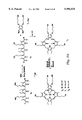
- FIG. 1 shows a schematic representation of the reduced (1 A ) and oxidized (1 B ) forms of the free-base “texaphyrin” and a representative five coordinate cadmium complex (1 C ) derived from this "expanded porphyrin".
- FIG. 2 schematically summarizes the synthesis of texaphyrin (2 G also designated 1 B in FIG. 1).
- FIG. 3 shows 1 H NMR spectrum of 1 C .NO 3 in CDCl 3 .
- the signals at 1.5 and 7.26 ppm represent residual water and solvent peaks respectively.
- FIG. 4 shows a UV-visible spectrum of 1 C .NO 3 1.50 ⁇ 10 -5 M in CHCl 3 .
- FIG. 5 shows metal complexes and derivatives (5 A -5 E ) of compounds of the parent patent application.
- FIG. 6 schematically summarizes the synthesis of B2TXP, 6 F and [LUB2TXP] 2+ ,6 G , compounds of the present invention.
- Compounds 6 D and 6 E are claimed as intermediates in the synthesis of B2TXP in the present invention.
- FIG. 7 schematically summarizes the synthesis of B2T2TXP(7 J ), [Gd B2T2 TXP] 2+ (7 K ), [Lu B2T2 TXP] 2+ (7 L ), and [La B2T2 TXP] 2+ (7 M ), compounds of the present invention.
- Other trivalent metal complexes analogous to those shown can be prepared including that of In(III).
- Compound 7 H is claimed as an intermediate in the synthesis of B2T2TXP in the present invention.
- FIG. 8 schematically summarizes the synthesis of B4T2TXP(8 F ) and [Gd B4T2 TXP] 2+ (8 G ) compounds of the present invention.
- Compound 8 D is claimed as an intermediate in the synthesis of B4T2TXP in the present invention.
- Cell kill was determined by [(3H]-Thy uptake after phytohemagglutinin (PHA) stimulation.
- FIG. 10 shows mononuclear cell killing by 1 ⁇ g/ml complex 1 C and irradiation. Cell kill was determined by [ 3 H]-Thy uptake after PHA stimulation.
- FIG. 11 summarizes the synthesis of polyether-linked polyhydroxylated texaphyrins.
- Ts is a tosyl group.
- FIG. 12 summarizes the synthesis of catechol (i.e. benzene diol) texaphyrin derivatives bearing further hydroxyalkyl substituents off the tripyrrane-derived portion of the macrocycle.
- FIG. 13 provides an example of a saccharide substituted texaphyrin in which the saccharide is appended via an acetal-like glycosidic linkage.
- Triflate is trifluoromethanesulfonate.
- FIG. 14 summarizes the synthesis of a doubly carboxylated texaphyrin system in which the carboxyl groups are linked to the texaphyrin core via aryl ethers or functionalized alkyl substituents.
- the products of this scheme, compounds 14 H and 14 J could be converted on to various esterified products wherein the ester linkages serve to append further hydroxyl-containing substituents.
- FIG. 15 summarizes the synthesis of polyhydroxylated texaphyrin derivatives via the use of secondary amide linkages.
- DCC is dicyclohexylcarbodiimide
- DMF is dimethylformamide
- DME is dimethoxyethane.
- FIG. 16 summarizes the synthesis of another set of polyhydroxyl substituted texaphyrin derivatives using similar amide bonds as in FIG. 15.
- FIG. 17 summarizes the synthesis of saccharide substituted texaphyrins, wherein the saccharide moieties are appended via amide bonds.
- FIG. 18 summarizes the synthesis of polyhydroxylated texaphyrin derivatives containing branched polyhydroxyl (polyol) subunits appended to the texaphyrin core via aryl ethers.
- FIG. 19 summarizes how similar polyol subunits may be appended via ester linkages.
- the present invention involves the synthesis and utility of novel water soluble hydroxy-substituted aromatic pentadentate expanded porphyrin analog metal complexes retaining lipophilicity, in particular, hydroxy-substituted texaphyrin metal complexes.
- the aromatic "texaphyrin" system described herein provides an important complement to the existing rich coordination chemistry of porphyrins. For instance, by using methods similar to those described, zinc(II), manganese(II), mercury(II), Iron(III), neodymium(III), samarium(III), gadolinium(III), lutetium(III), indium(III), and lanthanum(III) complexes have been prepared and characterized.
- the present invention involves hydroxy substituted derivatives of texaphyrin, and the synthesis and characterization thereof.
- the introduction of hydroxy substituents on the B (benzene ring) portion of the molecule is accomplished by their attachment to phenylenediamine in the 4 and 5 positions of the molecule.
- the introduction of hydroxy substituents on the T (tripyrrole) portion of the molecule is accomplished by appropriate functionalization of the alkyl substituents in the 3 and/or 4 positions of the pyrrole rings at a synthetic step prior to condensation with the substituted phenylenediamine.
- La(III), Lu(III) or In(III) rather than Cd(II) for the production of singlet oxygen will reduce the toxicity of these compounds in any biomedical usage.
- a powerful technique is the use of these hydroxy-substituted texaphyrins in magnetic resonance imaging followed by photodynamic tumor therapy in the treatment of atheroma, and benign and malignant tumors.
- This example describes the synthesis of compounds depicted in FIGS. 1 and 2; the nonaromatic methylene-bridged macrocycle 1 A , the expanded porphyrin named "texaphyrin” 1 B and the nitrate salt of the cadmium (II) complex 1 C .
- Macrocycle 1 A (50 mg, 0.1 mmol) was stirred in methanol/chloroform (150 ml, v/v/ 2/1) in the presence of N,N,N',N'-tetramethyl-1,8-diaminonaphthalene ("proton sponge") for one day at room temperature.
- the reaction mixture was then poured into ice water.
- the organic layer was separated and washed with aqueous ammonium chloride solution and then brine (a saturated solution of sodium chloride in water).
- the crude material was purified by chromatography on SEPHADEX using first pure chloroform and then chloroform/methanol (v/v/ 10/1) as eluents.
- compound 1 C suggests that it can be formulated as either an 18 ⁇ -electron benzannelated [18]annulene or as an overall 22 ⁇ -electron system; in either case an aromatic structure is defined.
- the proton NMR spectrum of complex 1 C .NO 3 (HNO 3 ) (see FIG. 3) is consistent with the proposed aromaticity.
- complex 1 C .NO 3 shows ligand features which are qualitatively similar to those observed for compound 1 A . As would be expected in the presence of a strong diamagnetic ring current, however, the alkyl, imine, and aromatic peaks are all shifted to lower field.
- bridging methylene signals of compound 1 A (at ⁇ 4.0) 13 are replaced by a sharp singlet, at ca. 9.2 ppm, ascribable to the bridging methine protons.
- the chemical shift of this "meso" signal is similar to that observed for Cd(OEP) 16 ( ⁇ 10.0), 17 an appropriate 18 ⁇ -electron aromatic reference system, and is also similar to that observed for the free-base form of decamethylsapphyrin ( ⁇ 11.5-11.7), 3 a 22 ⁇ -electron pyrrole-containing macrocycle.
- the molecular structure of the bis-pyridine adduct confirmeds the aromatic nature of the ligand.
- the central five nitrogen donor atoms of the complex are essentially coplanar and define a near circular cavity with a center-to-nitrogen radius of ca. 2.39 ⁇ which is roughly 20% larger than that found in metalloporphyrins.
- 21 The Cd atom lies in the plane of the central N 5 binding core.
- the structure of the "expanded porphyrin” thus differs dramatically from that of CdTPP 16 ,22 or CdTPP-(dioxane) 2 , 23 in which the cadmium atom lies out of the porphyrin N 4 donor plane (by 0.58 and 0.32 ⁇ respectively).
- the cadmium atom in contrast to cadmium porphyrins, for which a five-coordinate square-pyramidal geometry is preferred and to which only a single pyridine molecule will bind, 24 in the bis-pyridine adduct, the cadmium atom is seven-coordinate, being complexed by two apical pyridine ligands.
- the configuration about the Cd atom is thus pentagonal bipyramidal; a rare but not unknown geometry for cadmium(II) complexes. 25
- the tripyrroledimethine-derived free-base ligand 1 B was synthesized directly from 1 A by stirring in air-saturated chloroform-methanol, containing N,N,N',N'-tetramethyl-1,8-diaminonaphthalene. 15 Although the yield is low ( ⁇ 12%), 26 once formed, compound 1 B appears to be quite stable: It undergoes decomposition far more slowly than compound 1 A . 13 Presumably, this is a reflection of the aromatic stabilization present in compound 1 B .
- Compound 5 C is the metal adduct of ligand 5 A which was obtained in ca. 90% yield by condensing 1,2-diamino-4,5-dimethylbenzene with 2,5-Bis-(3-ethyl-5-formyl-4-methylpyrrol-2-ylmethyl)-3,4-diethylpyrrole under acid catalyzed conditions identical to those used to prepare 1 A .
- Chloroform/triethylamine (25/1) and chloroform/methanol/triethylamine 25/2.5/1 v/v) was used as eluents. A dark red band was first collected followed by two green bands. The last green band, which showed a clear aromatic pattern by UV/VIS, was concentrated and recrystallized from chloroform/n-hexane to give 14 mg (22%) of the Gd complex 5 C .
- complexes 5 C -5 E are mononuclear 1:1 species, a conclusion that is further supported, by both high resolution FAB MS accurate molecular weight determinations and combustion analysis.
- FAB MS fast atom bombardment mass spectrometric
- the electronic spectra represents a second remarkable feature of these new materials.
- the lanthanide complexes isolated to date display a dominant Soret-like transition in the 435-455 nm region which is considerably less intense than that observed in the corresponding metalloporphyrins, 33 and show a prominent low energy Q-type band in the 760-800 nm region.
- a third notable property of complexes 5 C -5 E is their high solubility in both chloroform and methanol.
- the fact that these three complexes are also moderately soluble (to roughly 10 -3 M concentrations) in 1:1 (v.v.) methanol/water mixtures was of particular interest.
- a 3.5 ⁇ 10-5 M solution of the gadolinium complex 5 C in 1:1 (v.v.) methanol/water at ambient temperature shows less than 10% bleaching of the Soret and Q-type bands when monitored spectroscopically over the course of 2 weeks. This suggests that the half-life for decomplexation and/or decomposition of this complex is ⁇ 100 days under these conditions.
- 1,2-bis((3-hydroxypropyl)oxy)-4,5-dinitrobenzene 6 C , FIG. 6.
- 1,2-bis((2-carboxy)ethoxy)-4,5-dinitrobenzene 5.0 g, 14.5 mmol
- 50 mL dry THF distilled over ketyl
- 120 mL of BH 3 .THF (1M) was added dropwise over a period of 30 minutes. After the borane addition, the reaction mixture was stirred an additional 5 minutes at 10° C. and then it was brought up to room temperature.
- the formation of the diol product was followed by TLC and the reaction was deemed complete after approximately 2 hours.
- the borane solution was quenched by careful addition of 65 mL of absolute methanol (Careful: frothing occurs!). After stirring the yellow solution for 30 minutes, it was concentrated to a bright yellow solid on a rotary evaporator.
- the crude solid was dissolved in 200 mL ethyl acetate and washed with 4 M sodium acetate (2 ⁇ 100 mL), water (2 ⁇ 100 mL) and then brine (50 mL). The organic layer was dried over MgSO 4 and concentrated to dryness on a rotary evaporator.
- the diamine was obtained by reduction of the corresponding 1,2-bis((3-hydroxypropyl)oxy)-4,5-dinitrobenzene (3.0 g, 9.6 mmol) with hydrazine hydrate (4.7 mL, 96.2 mmol) and 10% palladium on carbon (200 mg) in 120 mL refluxing absolute ethanol.
- the resulting brown suspension bubbled for approximately 15-20 minutes and then turned colorless after 1 hour. At this point, the reduction was deemed complete as judged by TLC (a low R f spot).
- This macrocycle was prepared in >90% yield from 1,2-diamino-4,5-bis((3-hydroxypropyl)oxy)benzene and 2,5-bis((3-ethyl-5-formyl-4-methylpyrrol-2-yl)methyl)-3,4-diethyl pyrrole by using the acid-catalyzed procedure reported earlier for the preparation of the reduced sp 3 texaphyrin, see Example 1.
- B2 sp 3 texaphyrin mp 190° C.
- the dark green reaction mixture was concentrated on a rotary evaporator to dryness and dried in vacuo for 24 hours.
- the crude complex was dissolved in a 100 mL 1:1 (v/v) mixture of chloroform and methanol, filtered through celite and concentrated to 20 mL.
- a small amount of silica gel (approx. 3 grams) was added to the flask and then the dark green solution was carefully concentrated to dryness on a rotary evaporator.
- the silica was dried for 2 hours in vacuo, then it was loaded on a chloroform packed silica column and the complex was purified by first using neat chloroform and then increasing concentrations of methanol in chloroform (0%-20%) as eluents.
- Lu (III) complex 1 H NMR (CDCl 3 /CD 3 OH) ⁇ : 1.82-1.91 (m, 12H, CH 2 CH 3 ), 2.39 (m, 4H, OCH 2 CH 2 CH 2 OH), 3.32 (m, 4H, OCH 2 CH 2 CH 2 OH), 3.39 (s, 6H, pyrr--CH 3 ), 3.92-4.04 (m, 12H, OCH 2 CH 2 CH 2 OH and CH 2 CH 3 ), 9.52 (s, 2H, CH ⁇ C), 10.24 (s, 2H, ArH), 12.23 (s, 2H, CH ⁇ N); UV/vis: ⁇ max 420.0, 477.5, 730.0; FAB MS M + 811.
- lanthanide and rare earth-like metal complexes may be synthesized including the Gd +3 , Lu +3 , La +3 , In +3 and Dy +3 complexes.
- p-Toluenesulfonic acid 65 mg was added and the reaction temperature maintained at 60° C. The reaction slowly changed color from a clear yellow to a dark red with the product precipitating out of the solution as the reaction progressed. After ten hours the reaction was cooled to room temperature, the volume reduced to one half on a rotary evaporator, and then placed in the freezer for several hours.
- the tripyrrane was washed three times with 0.5M HCl (200 mL total), dried over anhydrous K 2 CO 3 , filtered, and the CH 2 Cl 2 removed under reduced pressure until crystals of the tripyrrane just started to form. Hexanes (50 mL) was added and the tripyrrane allowed to crystallize in the freezer for several hours. The product was filtered and again recrystallized from CH 2 Cl 2 /ethanol.
- the tripyrrane dissolved with visible evolution of CO 2 to form a dark orange solution.
- the reaction was stirred at room temperature for 10-15 minutes, then cooled to -20° C using a dry ice/CCl 4 bath.
- Freshly distilled triethylorthoformate (16 mL, dried over CaH2) was added dropwise via syringe to produce a deep red solution which was stirred an additional ten minutes at -20° C.
- the cold bath was removed and 100 mL of water was added slowly to the solution. A precipitate formed during addition of the water and the resulting orange suspension was stirred at room temperature for 20-30 minutes.
- the product was collected by filtration, washed several times with water, and resuspended in 1:1 50% aqueous NH 4 OH/Ethanol (240 mL). The yellow/brown suspension was stirred for one hour at room temperature, filtered, washed several times with water and then washed with a small amount of cold ethanol.
- the volume of the reaction mixture was reduced to 75 mL on a rotary evaporator and the resulting slurry placed in the freezer for several hours.
- the product was filtered and then purified by forming a slurry with 400 mL of methanol and 50 mL of water and heating close to boiling. The slurry was first cooled to room temperature, reduced to 1/2 volume under reduced pressure, and placed in the freezer for several hours.
- the silica mixture was placed on top of a silica gel column and eluted with CHCl 3 containing increasing concentrations of methanol (5-100%). Fractions containing the complex were collected and the solvent removed under reduced pressure. The complex was further purified by passing it through a plug of neutral alumina using 1:1 CHCl 3 /methanol as the eluent. The final column was used to remove any remaining free gadolinium salts.
- the dark green reaction was cooled to room temperature and the solvents removed on a rotary evaporator.
- the complex was dissolved into methanol and filtered through a fine glass frit. A small amount of neutral alumina was added and the methanol removed under reduced pressure.
- the alumina/complex mixture was dried under vacuum for several hours then placed on top of a neutral alumina column. The column was eluted using neat CHCl 3 and CHCl 3 containing increasing concentrations of methanol (5-20%). Fractions containing the complex were reduced to dryness on a rotary evaporator and the resulting green solid recrystallized several times from methanol/diethyl ether.
- 1,2-Dihydroxy-4,5-dinitrobenzene. 8 B FIG. 8.
- 1,2-dimethoxy-4,5-dinitrobenzene (3.2 g, 0.12 mmol) 8 A was stirred vigorously in 40 mL of glacial acetic acid at 30° C. Once a homogeneous solution 200 mL of 48% HBr was added to the flask and the reaction was slowly heated to reflux. The reaction was complete as indicated by TLC after 4 hours. The work up involved pouring the cooled solution into 800 mL of ice water and then extracting the aqueous phase with CHCl 3 (3 ⁇ 150 mL) in order to remove any organic impurities.
- 1,2-Dihydroxy-4,5-dinitrobenzene 8 B (5.0 g, 22 mmol) and 1-chloro-2,3-dihydroxypropane (12.1 g, 110 mmol) were refluxed for 48 hours in a solution of potassium hydroxide (4.4 g) in 1-butanol (100 mL) under a nitrogen atmosphere. The resulting mixture was concentrated under reduced pressure, and the dark residue was partitioned between 100 mL of THF and 100 mL of brine/50 mL water solution in a 500 mL separatory funnel.
- the slurry was concentrated to dryness and the orange solid was dried in vacuo for one hour.
- the orange solid was loaded on a packed deactivated silica gel column.
- the column was-eluted starting with neat CHCl 3 followed by CHCl 3 with increasing concentration of methanol (0-10%).
- a bright yellow impurity monoalkylated product
- a colorless product began to elute (using 8-10% methanol in CHCl 3 eluents).
- the product will elute faster than the bright yellow monoalkylated product.
- the purified dialkylated tetrahydroxy product can be recrystallized from acetone/diethyl ether to yield 2.60 grams (30%) of a light yellow fluffy solid.
- the metal complex was dissolved into 100 mL of methanol and 6-8 grams of deactivated silica gel was added. (The silica gel was deactivated by adding a mixture of 6 mL water in 20 mL of methanol to 100 g of silica gel. After thorough mixing, the silica gel was allowed to air dry for 12 hours before bottling).
- the solvent was carefully removed on a rotary evaporator and the silica/complex mixture dried in vacuo for one hour.
- the complex was loaded onto a prepacked column of deactivated silica gel (5 cm length ⁇ 3.5 cm diameter) and eluted with chloroform containing increasing amounts of methanol (0-80%). Fractions containing the complex were collected and concentrated to dryness.
- the green complex was further purified by recrystallization from methanol/anhydrous ethyl ether. 480 mg of product was obtained from the two combined reactions (25%).
- the B4 TXP derivative is synthesized by reacting the intermediate compound 6 E from FIG. 6 with compound 8 D of FIG. 8. This constructs a molecule without hydroxyl groups on the tripyrrole moiety but with 4 hydroxyl groups on the benzene ring moiety.
- the molecule T2 TXP is synthesized by reacting intermediate 7 H in FIG. 7 with 4,5-dimethyl-1,2-phenylenediamine to yield a texaphyrin derivative with two hydroxyls on the tripyrrole portion of the molecule and no hydroxyl substituents on the benzene ring.
- a heptahydroxylated target B4T3 TXP is obtained by using the appropriate derivative 3-hydroxypropyl-4-methylpyrrole of the pyrrole (structure 7 B of FIG. 7) to make the trihydroxylated tripyrrole precursor which is then reacted with compound 8 D of FIG. 8.
- FIGS. 11-19 provide specific examples of how one skilled in the art could extend and refine the basic synthetic chemistry outlined in this application so as to produce other hydroxylated texaphyrins equivalent in basic utility to those specifically detailed in the examples.
- FIG. 11 summarizes the synthesis of polyether-linked polyhydroxylated texaphyrins.
- FIG. 12 summarizes the synthesis of catechol (i.e. benzene diol) texaphyrin derivatives bearing further hydroxyalkyl substituents off the tripyrrane-derived portion of the macrocycle.
- FIG. 13 provides an example of a saccharide substituted texaphyrin in which the saccharide is appended via an acetal-like glycosidic linkage.
- FIG. 11 summarizes the synthesis of polyether-linked polyhydroxylated texaphyrins.
- FIG. 12 summarizes the synthesis of catechol (i.e. benzene diol) texaphyrin derivatives bearing further hydroxyal
- FIG. 14 summarizes the synthesis of a doubly carboxylated texaphyrin system in which the carboxyl groups are linked to the texaphyrin core via aryl ethers or functionalized alkyl substituents.
- the products of this scheme, compounds 14 E and 14 J could be converted to various esterified products wherein the ester linkages serve to append further hydroxyl-containing substituents.
- FIG. 15 summarizes the synthesis of polyhydroxylated texaphyrin derivatives via the use of secondary amide linkages.
- FIG. 16 summarizes the synthesis of another set of polyhydroxyl substituted texaphyrin derivatives using similar amide bonds as in FIG. 15.
- FIG. 17 summarizes the synthesis of saccharide substituted texaphyrins, wherein the saccharide moieties are appended via amide bonds.
- FIG. 18 summarizes the synthesis of polyhydroxylated texaphyrin derivatives containing branched polyhydroxyl (polyol) subunits appended to the texaphyrin core via aryl ethers.
- FIG. 19 summarizes how similar polyol subunits may be appended via ester linkages.
- New texaphyrin derivatives may be characterized fully using normal spectroscopic and analytical means, including, X-ray diffraction methods.
- a complete analysis of the optical properties may be made for new systems under a range of experimental conditions including conditions designed to approximate those in vivo.
- Detailed analyses, including triplet lifetime and singlet oxygen quantum yield determinations may be made.
- the objective is to obtain a complete ground and excited state reactivity profile for each new texaphyrin produced. Questions such as when singlet oxygen production is maximized, how the quantum yield for its formation is influenced by the position of the lowest energy (Q-type) transition, whether aggregation is more prevalent in certain solvents or in the presence of certain biologically important components (e.g. lipids, proteins, etc.), and, finally, whether significant differences in in vitro optical properties are derived from the use of elaborated texaphyrins bearing cationic, anionic, or neutral substituents may be answered.
- texaphyrin complexes of choice may be administered in varying concentrations to a variety of cancerous cells and the rate of cell replication determined both in the presence and absence of light.
- texaphyrin complexes of choice may be added to standard viral cultures and the rate of viral growth retardation determined in the presence and absence of light.
- solubilizing carriers will be used to augment the solubility and/or monomeric nature of the texaphyrin photosensitizers and the effect, if any, that these carriers have in adjusting the biodistribution properties of the dyes will be assessed (using primarily fluorescence spectroscopy). Appropriate control experiments are carried out with normal cells so that the intrinsic dark and light toxicity of the texaphyrins may be determined.
- One aspect of the utility of the present invention is the use of complexes described herein for photon-induced deactivation of viruses and virally infected or potentially infected eucaryotic cells.
- the general photodeactivation method used in this example was developed by the Infectious Disease and Advanced Laser Applications Laboratories of the Baylor Research Foundation, Dallas, Tex. and is a subject of U.S. Pat. No. 4,878,891 which is incorporated herein by reference.
- HSV-1 Herpes Simplex Virus
- the macrocycle photosensitizing studies employed enveloped HSV-1 as the model for screening based on its ease of propagation and assessment of infectivity in cell culture.
- the screening procedure for photoinactivation of HSV-1 was similar to the methods previously described. 135 Essentially, selected macrocycles at different concentrations were added to a cell-free suspension of 10 6 PFU/ml of HSV-1.
- the viral suspensions were irradiated at the optimal absorption wavelength of the selected dye at different light-energy densities. Controls consisted of (1) nonirradiated virus, (2) virus irradiated in the absence of macrocycle, and (3) virus treated with selected concentrations of macrocycle and maintained in the dark. All samples were then assessed for viral infectivity by determining the number of PFU/ml in Vero cells.
- Viral suspensions were serially diluted and subsequently absorbed onto Vero cell monolayers for 11/2 hours at 37° C.
- An overlay medium was added and the cells incubated at 37° C. for 3-4 days.
- the overlay medium was then removed, the monolayers fixed with methanol and tinctured with Giemsa, and individual plaques counted under a dissecting microscope. Uninfected cell cultures also were exposed to the macrocycle complexes to rule out direct cytotoxic effects.
- results indicate that the expanded porphyrin-like macrocycles should be efficient photosensitizers for free HIV-1 and infected mononuclear cells. Altering the polarity and electrical charges of side groups of these macrocycles is anticipated to alter the degree, rate, and perhaps site(s) of binding to free enveloped viruses such as HIV-1 and to virally-infected peripheral mononuclear cells, thus modulating photosensitizer take-up and photosensitization of leukemia or lymphoma cells contaminating bone-marrow as well.
- Radioisotopes play a central role in the detection and treatment of neoplastic disorders. Improving their efficacy in medical applications involves attaching radioisotopes to tumor-directed monoclonal antibodies and their fragments. Radiolabeled antibodies could therefore serve as "magic bullets" and allow the direct transport of radioisotopes to neoplastic sites thus minimizing whole body exposure to radiation. 177-187 The use of bifunctional metal chelating agents in radioimmunodiagnostics (RID) and therapy (RIT) is most closely related to the present invention.
- RID radioimmunodiagnostics
- RIT therapy
- Bifunctional metal chelating agents for use in antibody conjugate-based treatment and diagnostic applications must 1) have functional groups suitable for conjugation to the antibody, 2) form covalent linkages that are stable in vivo and which do not destroy the immunological competence of the antibody, 3) be relatively nontoxic, and 4) bind and retain the radiometal of interest under physiological conditions. 187-191 The last of these conditions is particularly severe. The potential damage arising from "free" radioisotopes, released from the conjugate, can be very serious. On the other hand, only nanomole concentrations of isotopes, and hence ligand, are generally required for RID and RIT applications, so that the concerns associated with intrinsic metal and/or free ligand toxicity are somewhat relaxed.
- an ideal isotope should be readily detectable by available monitoring techniques and induce a minimal radiation-based toxic response.
- 131 I and 123 I are easily conjugated to antibodies via electrophilic aromatic substitution of tyrosine residues.
- the metabolism of 131 I or 123 I labeled proteins produces free radioactive iodide anion and as a result can lead to a fair concentration of radioactivity at sites other than those targeted by the antibody-derived "magic bullet".
- the half-lives of both 131 I and 123I are relatively inconvenient for optimal use, being too long and too short, respectively, and the fact that 131 I is also a ⁇ emitter.
- Suitable ligands exist for either 111 In 3+ or 67 Ga 3+ which form stable nonlabile complexes and which might be suitable for radioimmunological applications.
- texaphyrin forms a kinetically and hydrolytically stable complex with In 3+ .
- Such a ligand system may be elaborated and serve as the critical core of a bifunctional conjugate for use in 111 In-based RID.
- 90 Y is currently considered the best, 192 ,197 with an emission energy of 2.28 MeV, it is calculated to deliver roughly 3 to 4 times more energy (dose) to the tumor per nanomole than either 186 Re or 67 Cu.
- Good immuno-compatible chelands exist for only 186 Re and 67 Cu, the former may be attached using the same ligands as were developed for 99m Tc, 194 and the latter via the rationally-designed activated porphyrins developed by Prof. Lavallee of Hunter College and the Los Alamos INC-11 team. 191
- Further benefits should be derived from a bifunctional conjugate which is capable of forming stable, nonlabile complexes with 90 Y 3+ (which cannot be done with porphyrins).
- the texaphyrin ligand of the present invention not only forms stable complexes with In 3+ but also binds Y 3+ effectively.
- a texaphyrin-type bifunctional conjugate may be prepared for use in 111 In-based RID and in 90 Y-based RIT. Both 90 Y and 111 In could conceivably be attached to an antibody of choice using a functionalized texaphyrin.
- the Y 3+ and In 3+ complexes of texaphyrin are formed rapidly (insertion and oxidation times are less than 3 hours) from the methylene-linked reduced precursor, and are hydrolytically stable in 1:1 methanol-water mixtures (the half-lives for decomplexation and/or ligand decomposition exceed 3 weeks in both cases.
- the hydroxy-substituted texaphyrin molecules of the present invention are especially suited for acting as bifunctional chelating agents in antibody conjugate-based treatment since they have functional groups suitable for conjugation to the antibody, they form covalent linkages that are stable in vivo which do not destroy the immunological competence of the antibody, they are relatively nontoxic, and they are readily soluble in a physiological environment.
- a further advantage of these soluble texaphyrins is that many of these would be suitable for further functionalization.
- Treatment of carboxylated texaphyrins with thionyl chloride or p-nitrophenol acetate would generate activated acyl species suitable for attachment to monoclonal antibodies or other biomolecules of interest.
- Standard in situ coupling methods e.g.
- 1,1'-carbonyldiimidazole (CDI) 202 ) could be used to effect the conjugation.
- the ability to attach and deliver a potent photosensitizer directly to a tumor locus could have tremendous potential benefit in the treatment of neoplastic disorders.
- this approach will allow a variety of useful radioisotopes such as 90 Y and 111 In to be attached to a monoclonal antibody.
- hydroxy-substituted texaphyrin molecules of the present invention are also suited for delivering radioactivity to a tumor on their own since they chelate radioisotopes and have intrinsic biolocalization selectivity.
- MRI magnetic resonance imaging
- both iron and, to a lesser extent, manganese are sequestered and stored very efficiently in humans (and many other organisms) by a variety of specialized metal-binding systems. 173 Moreover both iron and manganese are capable of existing in a range of oxidation states and are known to catalyze a variety of deleterious Fenton-type free-radical reactions. 174 Gadolinium(III), which suffers from neither of these deficiencies, thus appears to offer many advantages. As is true for Fe(III) and Mn(II), the aqueous solution of Gd(III) is too toxic to be used directly for MRI imaging at the 0.01 to 1 mM concentrations required for effective enhancement.
- Gd(III) forms only weak and/or hydrolytically unstable complexes with porphyrins, 165c ,169,175 although other simple macrocyclic amine- and imine-derived ligands 171 ,172,176 will support stable complexes with certain members of the lanthanide series and do show some promise, as yet unrealized, of acting as supporting chelands for Gd(III)-based MRI applications.
- nonlabile Gd(III) complexes of hydroxy-substituted texaphyrins prove to be useful contrast agents for MRI applications.
- Hydroxy-substituted texaphyrins are capable of stabilizing complexes with a variety of di- and trivalent cations, including Cd 2+ , Hg 2+ , Lu +3 , Gd +3 , and La +3 .
- Such complexes are particularly soluble in physiological environments.
- the T2B2 gadolinium complex showed low toxicity and good tissue selectivity in magnetic resonance imaging enhancement.
- the rats were anesthetized with 90 mg/kg of ketamine (Vetalar, Aveco Corporation, Fort Dodge, Iowa) and 10 mg/kg of xylazine (Rompun, Mobay Corporation, Shawnee, Kans.) intraperitoneally. Following the insertion of an intravenous catheter in the tail vein, each animal was placed in supine (normal rats) or prone (tumor-bearing rats) position in the center of the coil. Coronal and axial T1 weighted images were obtained of each animal using a spin echo pulse sequence with the following parameters: TR 300 msec, TE 15 msec, slice thickness 5 mm, matrix 128 ⁇ 256, field of view 10 cm, 4 excitations and no phase wrap.
- ROI regions of interest
- SSI Standardized signal intensities
- Enhancement Liver SSI increased by 81.7% (p ⁇ 0.001), kidney by 114.9% (p ⁇ 0.001) and tumor by 49.7% (p ⁇ 0.02) from pre to 10-15 minutes post contrast. There was no significant difference in enhancement between the right and left lobe of the liver and between the two kidneys. Pre contrast, tumor parenchyma appeared homogeneous and of an intensity similar to adjacent muscle. Post contrast, tumor tissue demonstrated a mottled pattern of enhancement and was easily distinguished from adjacent tissues. The MRI appearance reflected the heterogeneous appearance of the tumor grossly which consists of necrotic tissue surrounded by viable stroma. In addition, in the one animal studied at 6 and 28 hours post contrast, there was visible tumor enhancement throughout the study period. The pattern of enhancement, however, changed over time, with enhancement starting at the edges of the tumor initially and including the center by 28 hours.
- T2B2 gadolinium complex is an hepatic, renal and tumor-specific contrast agent.
- the agent was found to have relatively low toxicity in rodents. Intravenous administration resulted in statistically significant hepatic, renal and tumor enhancement in rats within 10-15 minutes with persistence of tumor enhancement for up to 28 hours.
- the early enhancement of tumor edges may represent contrast localization in areas of viable tumor.
- the later appearance of the tumor probably was caused by passive diffusion of some of the agent into central necrotic areas. It is unclear whether a selective transport or passive diffusion mechanism is responsible for initial tumor enhancement with GD(III)texaphyrin and whether intracellular binding to peripheral-type benzodiazepene receptors occurs.
- the tumor could be differentiated from adjacent tissues for up to 28 hours.
- this texaphyrin class of macrocyclic ligands can be varied by peripheral substitution, which would allow biological properties to be optimized in terms of biodistribution, pharmacokinetics and toxicity.
- the gadolinium complex of B2T2 [4,5-diethyl-10,23-dimethyl-9,24-bis(3-hydroxypropyl)-16,17-(3-hydroxypropyloxy)-13,20,25,26,27-pentaaza pentacyclo[20.2.1.1 3 ,6.1 8 ,11.0 14 ,19 ]heptacosa-1,3,5,7,9,11(27),12,1 4(19),15,17,20,22(25),23-tridecaene] shows accumulation in human cadaveric aorta. Two aortas obtained from autopsies were examined using magnetic resonance imaging before and after incubation in vitro for 15 minutes with the gadolinium complex of B2T2. Selective labeling of the endothelial cell surface and atheromas plaque relative to surrounding tissue was observed. These data indicate that the Gd(III)B2T2 complex has utility in the non-invasive imaging of atheroma.
- the gadolinium complex of B2T2 [4,5-diethyl-10,23-dimethyl-9,24-bis(3-hydroxypropyl)-16,17-(3-hydroxypropyloxy)-13,20,25,26,27-pentaaza pentacyclo[20.2.1.1 3 ,6.1 8 ,11.0 14 ,19 ]heptacosa-1,3,5,7,9,11(27),12,1 4(19),15,17,20,22(25),23-tridecaene] shows accumulation in the upper GI tract, especially the stomach, as determined by magnetic resonance imaging.
- the lanthanum complex of B2T2 [4,5-diethyl-10,23-dimethyl-9,24-bis(3-hydroxypropyl)-16,17-(3-hydroxypropyloxy)-13,20,25,26,27-pentaaza pentacyclo[20.2.1.1 3 ,6.1 8 ,11.0 14 ,19 ]heptacosa-1,3,5,7,9,11(27),12,1 4(19), 15,17,20,22(25),23-tridecaene] (LaB2T2) was used at concentrations of 5.0, 1.0 or 0.1 micromolar in tissue culture medium.
- the murine mammary carcinoma cell line designated EMT-6 was cultured in medium containing LaB2T2 for 1 hour or 3 hours in the dark. Experimental cultures were irradiated with 10 Joules/cm 2 using an arc lamp with a 750 nanometer band pass filter. Cell survival was measured using a cell cloning assay. There was no dark toxicity indicating that LaB2T2 had no direct toxicity to the cells. Cultures which were irradiated with the visible red light showed viabilities of 3%, 50% and 100% for concentrations of LaB2T2 of 5.0, 1.0 and 0.1 micromolar respectively. The results were similar for 1 and 3 hour incubation periods. The results established that LaB2T2 was phototoxic to these tumor cells in vitro.
- the hydroxy-substituted texaphyrins can be conjugated to biological molecules, especially proteins of molecular weight greater than about 20,000 daltons, e.g. albumin and gamma globulin, in order to slow their clearance by the kidneys. A prolonged presence of these complexes in tissue may be desirable for photoirradiation purposes.
- the conjugation would be accomplished as described in Example 9 for antibody conjugates.
- a detectable metal complex of a water soluble hydroxy-substituted aromatic pentadentate expanded porphyrin analog retaining lipophilicity, said complex exhibiting selective biolocalization in benign or malignant tumor cells relative to surrounding tissue is administered as a first agent to a host harboring benign or malignant tumor cells. Localization sites in the host are determined by reference to the detectable metal.
- a water soluble hydroxy-substituted aromatic pentadentate expanded porphyrin analog-detectable-metal complex retaining lipophilicity and having essentially identical biolocalization property and exhibiting the ability to generate singlet oxygen upon exposure to light will be administered as a second agent.
- the second agent is photoirradiated in proximity to the benign or malignant tumor cells, as is using fiber optics, to cause tumor tissue destruction from the singlet oxygen produced.
- the water soluble hydroxy-substituted aromatic pentadentate expanded porphyrin analog retaining lipophilicity is a hydroxy-substituted texaphyrin although one skilled in the art can see from the foregoing that substituted sapphyrins, pentaphyrins or other macrocyclic ligands capable of chelating a metal, soluble in aqueous fluids and localizing in a lipid rich environment may be of particular value.
- the detectable metal in the first agent is a paramagnetic metal, preferably Gd(III) or a gamma emitting metal.
- the localization sites are determined using MRI when a paramagnetic metal is used and gamma body scanning when a gamma emitting metal is used.
- the detectable metal in the second agent is a diamagnetic metal, preferably La(III), Lu(III) or In(III).
- Texaphyrin-metal complexes will be chosen which themselves show a high intrinsic biolocalization selectivity for tumors or neoplastic tissues.
- the B2T2 Gd(III) complex demonstrates in vivo affinity for tissue high in lipid content, atheroma, the liver, kidneys and tumors. When appropriately followed by fiber optic photodynamic therapy, cells in the atheroma or tumor can be deactivated.
- hydroxy substituted diamagnetic texaphyrin complexes are good candidates for such biomedical photosensitizers. They are easily available, have low intrinsic cytotoxicity, long wavelength absorption, generate singlet oxygen, are soluble in physiological environments, have the ability to be conjugated to site specific transport molecules, have quick elimination, are stable and are easily subject to synthetic modification.
- Nonaromatic planar pentadentate pyridine-derived ligands are known. Seek for instance: (a) Curtis, N. F. In Coordination Chemistry of Macrocyclic Compounds; nelson, G. A., Ed.; Plenum: New York, 1979; Chapter 4. (b) Nelson, S. M. Pure Appl. Chem. 1980, 52, 2461-2476. (c) Ansell, C. W. G.; Lewis, J.; Raithby, P. R.; Ramsden, J. N.; Schroder, M. J. Chem. Soc., Chem. Commun. 1982, 546-547. (d) Lewis, J.; O'Donoghue, T.
- Texaphyrin 1 C ⁇ NO 3 was crystallized from CHCl 3 -hexanes in a triclinic space group.
- the bispyridine cadmium complex, of compound 1 C appears to be the first seven-coordinate cadmium complex derived from all nitrogen donors.
- pentagonal bipyramidal cadmium complexes see: (a) Cameron, A. F.; Taylor, D. W.; Nuttall, R. H. J. Chem. Soc., Dalton Trans. 1972, 1608-1614. (b) Liles, D. C.; McPartlin, M.; Tasker, P. A.; Lip, H. C.; Lindoy, L. F. J. Chem. Soc., Chem. Commun. 1976, 549-551. (c) Nelson, S. M.; McFall, S.
Landscapes
- Health & Medical Sciences (AREA)
- Life Sciences & Earth Sciences (AREA)
- Chemical & Material Sciences (AREA)
- General Health & Medical Sciences (AREA)
- Veterinary Medicine (AREA)
- Animal Behavior & Ethology (AREA)
- Public Health (AREA)
- Epidemiology (AREA)
- Medicinal Chemistry (AREA)
- Organic Chemistry (AREA)
- Pharmacology & Pharmacy (AREA)
- Engineering & Computer Science (AREA)
- Biochemistry (AREA)
- Molecular Biology (AREA)
- Nuclear Medicine, Radiotherapy & Molecular Imaging (AREA)
- Proteomics, Peptides & Aminoacids (AREA)
- Biomedical Technology (AREA)
- Immunology (AREA)
- Physics & Mathematics (AREA)
- Optics & Photonics (AREA)
- Biotechnology (AREA)
- Genetics & Genomics (AREA)
- Bioinformatics & Cheminformatics (AREA)
- Radiology & Medical Imaging (AREA)
- General Chemical & Material Sciences (AREA)
- Chemical Kinetics & Catalysis (AREA)
- Pharmaceuticals Containing Other Organic And Inorganic Compounds (AREA)
- Medicines Containing Antibodies Or Antigens For Use As Internal Diagnostic Agents (AREA)
- Laminated Bodies (AREA)
- Solid-Sorbent Or Filter-Aiding Compositions (AREA)
- Conductive Materials (AREA)
- Nitrogen Condensed Heterocyclic Rings (AREA)
- Paints Or Removers (AREA)
- Medicines Containing Material From Animals Or Micro-Organisms (AREA)
Abstract
Description
              TABLE 1
______________________________________
Herpes Simplex Virus I Inactivation with
  Expanded Porphyrin Macrocycle Complexes*
                             % Survival Viral
  Complex** Conc. (μM) Infectivity
______________________________________
1.sub.c        20        12
   10 8
   2.5 20
   0.25 100
  5.sub.B (where M = Cd) 20 4
   10 14
   2.5 42
   0.25 100
______________________________________
 *All light irradiation at ax absorption and to give a light fluence of 10
 J/cm.sup.2
 **Structural formulas in FIGS. 1 and 5.
Claims (21)
Priority Applications (1)
| Application Number | Priority Date | Filing Date | Title |
|---|---|---|---|
| US09/031,239 US5994535A (en) | 1989-03-06 | 1998-02-26 | Water soluble texaphyrin metal complex preparation |
Applications Claiming Priority (5)
| Application Number | Priority Date | Filing Date | Title |
|---|---|---|---|
| US07/320,293 US4935498A (en) | 1989-03-06 | 1989-03-06 | Expanded porphyrins: large porphyrin-like tripyrroledimethine-derived macrocycles |
| US07/822,964 US5252720A (en) | 1989-03-06 | 1992-01-21 | Metal complexes of water soluble texaphyrins |
| US08/098,514 US5569759A (en) | 1989-03-06 | 1993-07-28 | Water soluble texaphyrin metal complex preparation |
| US08/679,162 US5733903A (en) | 1992-01-21 | 1996-07-10 | Treatment of neoplastic tissue by water-soluble texaphyrine metal complexes |
| US09/031,239 US5994535A (en) | 1989-03-06 | 1998-02-26 | Water soluble texaphyrin metal complex preparation |
Related Parent Applications (1)
| Application Number | Title | Priority Date | Filing Date |
|---|---|---|---|
| US08/679,162 Continuation US5733903A (en) | 1989-03-06 | 1996-07-10 | Treatment of neoplastic tissue by water-soluble texaphyrine metal complexes |
Publications (1)
| Publication Number | Publication Date |
|---|---|
| US5994535A true US5994535A (en) | 1999-11-30 |
Family
ID=25237423
Family Applications (9)
| Application Number | Title | Priority Date | Filing Date |
|---|---|---|---|
| US07/822,964 Expired - Lifetime US5252720A (en) | 1989-03-06 | 1992-01-21 | Metal complexes of water soluble texaphyrins |
| US08/098,514 Expired - Lifetime US5569759A (en) | 1989-03-06 | 1993-07-28 | Water soluble texaphyrin metal complex preparation |
| US08/100,093 Expired - Lifetime US5432171A (en) | 1989-03-06 | 1993-07-28 | Water soluble texaphyrin metal complexes for viral deactivation |
| US08/112,871 Expired - Lifetime US5439570A (en) | 1989-03-06 | 1993-08-25 | Water soluble texaphyrin metal complexes for singlet oxygen production |
| US08/112,872 Expired - Lifetime US5451576A (en) | 1989-03-06 | 1993-08-25 | Tumor imaging and treatment by water soluble texaphyrin metal complexes |
| US08/112,786 Expired - Lifetime US5475104A (en) | 1989-03-06 | 1993-08-25 | Water soluble texaphyrin metal complexes for enhancing relaxivity |
| US08/280,351 Expired - Lifetime US5504205A (en) | 1989-03-06 | 1994-07-26 | Reduced sp3 texaphyrins |
| US08/679,162 Expired - Lifetime US5733903A (en) | 1989-03-06 | 1996-07-10 | Treatment of neoplastic tissue by water-soluble texaphyrine metal complexes |
| US09/031,239 Expired - Lifetime US5994535A (en) | 1989-03-06 | 1998-02-26 | Water soluble texaphyrin metal complex preparation |
Family Applications Before (8)
| Application Number | Title | Priority Date | Filing Date |
|---|---|---|---|
| US07/822,964 Expired - Lifetime US5252720A (en) | 1989-03-06 | 1992-01-21 | Metal complexes of water soluble texaphyrins |
| US08/098,514 Expired - Lifetime US5569759A (en) | 1989-03-06 | 1993-07-28 | Water soluble texaphyrin metal complex preparation |
| US08/100,093 Expired - Lifetime US5432171A (en) | 1989-03-06 | 1993-07-28 | Water soluble texaphyrin metal complexes for viral deactivation |
| US08/112,871 Expired - Lifetime US5439570A (en) | 1989-03-06 | 1993-08-25 | Water soluble texaphyrin metal complexes for singlet oxygen production |
| US08/112,872 Expired - Lifetime US5451576A (en) | 1989-03-06 | 1993-08-25 | Tumor imaging and treatment by water soluble texaphyrin metal complexes |
| US08/112,786 Expired - Lifetime US5475104A (en) | 1989-03-06 | 1993-08-25 | Water soluble texaphyrin metal complexes for enhancing relaxivity |
| US08/280,351 Expired - Lifetime US5504205A (en) | 1989-03-06 | 1994-07-26 | Reduced sp3 texaphyrins |
| US08/679,162 Expired - Lifetime US5733903A (en) | 1989-03-06 | 1996-07-10 | Treatment of neoplastic tissue by water-soluble texaphyrine metal complexes |
Country Status (15)
| Country | Link |
|---|---|
| US (9) | US5252720A (en) |
| EP (1) | EP0623134B1 (en) |
| JP (1) | JP3530529B2 (en) |
| KR (1) | KR100286963B1 (en) |
| AT (1) | ATE227291T1 (en) |
| AU (1) | AU664877B2 (en) |
| CA (1) | CA2127530C (en) |
| DE (1) | DE69332469T2 (en) |
| DK (1) | DK0623134T3 (en) |
| ES (1) | ES2185627T3 (en) |
| FI (1) | FI107157B (en) |
| NO (1) | NO301828B1 (en) |
| NZ (1) | NZ246795A (en) |
| PT (1) | PT623134E (en) |
| WO (1) | WO1993014093A1 (en) |
Cited By (6)
| Publication number | Priority date | Publication date | Assignee | Title |
|---|---|---|---|---|
| WO2005112759A1 (en) * | 2004-05-20 | 2005-12-01 | Pharmacyclics, Inc. | A method of enhancing visualization of atherosclerotic plaque |
| US6984734B2 (en) | 2002-02-26 | 2006-01-10 | Board Of Regents, The University Of Texas System | Cyclo[n]pyrroles and methods thereto |
| US20060088530A1 (en) * | 2000-01-12 | 2006-04-27 | Chen James C | Photodynamic therapy treatment for eye disease |
| US20080138292A1 (en) * | 2006-09-15 | 2008-06-12 | Massachusetts Institute Of Technology | Sensors for fluorescence and magnetic resonance imaging |
| EP3154541A1 (en) | 2014-06-11 | 2017-04-19 | Board of Regents, The University of Texas System | Texaphyrin-pt(iv) conjugates and compositions for use in overcoming platinum resistance |
| WO2022036292A1 (en) | 2020-08-14 | 2022-02-17 | Board Of Regents, The University Of Texas System | Texaphyrin derivatives for manganese chemotherapy, photoacoustic imaging, and photothermal therapy |
Families Citing this family (90)
| Publication number | Priority date | Publication date | Assignee | Title |
|---|---|---|---|---|
| US5162509A (en) * | 1989-03-06 | 1992-11-10 | Board Of Regents, The University Of Texas System | Process for preparing expanded porphyrins: large porphyrin-like tripyrroledimethine-derived macrocycles |
| US5252720A (en) * | 1989-03-06 | 1993-10-12 | Board Of Regents, The University Of Texas System | Metal complexes of water soluble texaphyrins |
| US4935498A (en) * | 1989-03-06 | 1990-06-19 | Board Of Regents, The University Of Texas System | Expanded porphyrins: large porphyrin-like tripyrroledimethine-derived macrocycles |
| US5567687A (en) * | 1989-03-06 | 1996-10-22 | University Of Texas | Texaphyrins and uses thereof |
| US5559207A (en) * | 1989-03-06 | 1996-09-24 | Board Of Regents, University Of Texas | Texaphyrin metal complex mediated ester hydrolysis |
| US5599923A (en) * | 1989-03-06 | 1997-02-04 | Board Of Regents, University Of Tx | Texaphyrin metal complexes having improved functionalization |
| US5457183A (en) * | 1989-03-06 | 1995-10-10 | Board Of Regents, The University Of Texas System | Hydroxylated texaphyrins |
| US5457195A (en) * | 1989-12-21 | 1995-10-10 | Board Of Regents, The University Of Texas System | Sapphyrin derivatives and conjugates |
| US5543514A (en) * | 1989-12-21 | 1996-08-06 | Board Of Regents, The University Of Texas System | Water-soluble sapphyrins |
| US5594136A (en) * | 1989-12-21 | 1997-01-14 | Pharmacyclics, Inc. | Texaphyrin solid supports and devices |
| US5763172A (en) * | 1992-01-21 | 1998-06-09 | Board Of Regents, The University Of Texas System | Method of phosphate ester hydrolysis |
| US5595726A (en) * | 1992-01-21 | 1997-01-21 | Pharmacyclics, Inc. | Chromophore probe for detection of nucleic acid |
| US5565552A (en) * | 1992-01-21 | 1996-10-15 | Pharmacyclics, Inc. | Method of expanded porphyrin-oligonucleotide conjugate synthesis |
| US5888997A (en) * | 1994-04-14 | 1999-03-30 | Pharmacyclics, Inc. | Radiation sensitization using texaphyrins |
| US5607924A (en) * | 1992-01-21 | 1997-03-04 | Pharmacyclics, Inc. | DNA photocleavage using texaphyrins |
| US5798491A (en) * | 1993-06-09 | 1998-08-25 | Board Of Regents, The University Of Texas System | Multi-mechanistic chemical cleavage using certain metal complexes |
| KR100361933B1 (en) * | 1993-09-08 | 2003-02-14 | 라 졸라 파마슈티칼 컴파니 | Chemically defined nonpolymeric bonds form the platform molecule and its conjugate |
| US6551618B2 (en) | 1994-03-15 | 2003-04-22 | University Of Birmingham | Compositions and methods for delivery of agents for neuronal regeneration and survival |
| US6231593B1 (en) * | 1994-03-21 | 2001-05-15 | Dusa Pharmaceuticals, Inc. | Patch, controller, and method for the photodynamic therapy of a dermal lesion |
| US5969111A (en) * | 1994-04-14 | 1999-10-19 | Board Of Regents, The University Of Texas System | Texaphyrins substituted with imidazole are provided |
| EP0765381B1 (en) * | 1994-06-13 | 1999-08-11 | Unilever N.V. | Bleach activation |
| AU733805C (en) * | 1994-06-13 | 2001-12-13 | Unilever Plc | Bleach activation |
| US5530122A (en) * | 1994-08-23 | 1996-06-25 | Pharmacyclics, Inc. | Method of isolating texaphyrins |
| US5633354A (en) * | 1994-09-21 | 1997-05-27 | Pharmacyclics, Inc. | Phosphoramidite derivatives of texaphyrins |
| US5837866A (en) * | 1994-09-21 | 1998-11-17 | Board Of Regents, The University Of Texas | Phosphoramidite derivatives of macrocycles |
| US6095147A (en) * | 1994-12-01 | 2000-08-01 | The Regents Of The University Of California | Method for photo-altering a biological system to improve biological effect |
| US5703230A (en) * | 1994-12-02 | 1997-12-30 | University Of British Columbia | Meso-monoiodo-substituted tetramacrocyclic compounds and methods for making and using the same |
| US6329139B1 (en) | 1995-04-25 | 2001-12-11 | Discovery Partners International | Automated sorting system for matrices with memory |
| US5591422A (en) * | 1995-06-02 | 1997-01-07 | Pharmacyclics, Inc. | Texaphyrin complexes having improved functionalization |
| US5714328A (en) * | 1995-06-07 | 1998-02-03 | Board Of Regents, The University Of Texas System | RNA photocleavage using texaphyrins |
| EP0846003A1 (en) | 1995-08-17 | 1998-06-10 | Monsanto Company | Methods of diagnostic image analysis using bioconjugates of metal complexes of nitrogen-containing macrocyclic ligands |
| EP0844889A1 (en) * | 1995-08-17 | 1998-06-03 | Monsanto Company | Methods of diagnostic image analysis using metal complexes of nitrogen-containing macrocyclic ligands |
| CA2231114A1 (en) | 1995-09-06 | 1997-03-13 | The Research Foundation Of State University Of New York | Two-photon upconverting dyes and applications |
| US5776925A (en) * | 1996-01-25 | 1998-07-07 | Pharmacyclics, Inc. | Methods for cancer chemosensitization |
| US5883246A (en) * | 1996-03-07 | 1999-03-16 | Qlt Phototherapeutics, Inc. | Synthesis of polypyrrolic macrocycles from meso-substituted tripyrrane compounds |
| US5955586A (en) * | 1996-03-22 | 1999-09-21 | Sessler; Jonathan L. | Highly boronated derivatives of texaphyrins |
| NZ331977A (en) * | 1996-03-26 | 2000-07-28 | Pharmacyclics Inc | Texaphyrin in photodynamic therapy of pigment-related lesions |
| US6375930B2 (en) | 1996-06-04 | 2002-04-23 | Board Of Regents, The University Of Texas System | Membrane incorporation of texaphyrins |
| US6022959A (en) * | 1996-08-20 | 2000-02-08 | Pharmacyclics, Inc. | Nucleic acids internally-derivatized with a texaphyrin metal complex and uses thereof |
| US6270749B1 (en) | 1996-12-11 | 2001-08-07 | Pharmacyclics, Inc. | Use of Texaphyrin in ocular diagnosis and therapy |
| US6444194B1 (en) | 1997-02-14 | 2002-09-03 | Miravant Pharmaceuticals, Inc. | Indium photosensitizers for PDT |
| US6214817B1 (en) | 1997-06-20 | 2001-04-10 | Monsanto Company | Substituted pyridino pentaazamacrocyle complexes having superoxide dismutase activity |
| US5886173A (en) * | 1997-07-30 | 1999-03-23 | Pharmacyclics, Inc. | Metallation of macrocycles with 2,4-dicarbonyl-metal complexes |
| US6022526A (en) * | 1997-07-30 | 2000-02-08 | Pharmacyclics, Inc. | Use of texaphyrins in detection of melanin and melanin metabolites diagnostic of melanotic melanoma |
| US20020155999A1 (en) * | 1998-04-30 | 2002-10-24 | Han In Suk | Method of using a porphyrin-like molecule conjugated with an anti-cancer drug for the treatment of cancer |
| DE19831217A1 (en) * | 1998-07-03 | 2000-01-05 | Schering Ag | New porphyrin derivatives, pharmaceutical compositions containing them and their use in photodynamic therapy and MRI diagnostics |
| US20030215421A1 (en) * | 1999-07-21 | 2003-11-20 | Mcdonald John R. | Methods and compositions for treating secondary tissue damage and other inflammatory conditions and disorders |
| US7157418B1 (en) | 1998-07-22 | 2007-01-02 | Osprey Pharmaceuticals, Ltd. | Methods and compositions for treating secondary tissue damage and other inflammatory conditions and disorders |
| AU5048400A (en) | 1999-05-27 | 2000-12-18 | Monsanto Company | Biomaterials modified with superoxide dismutase mimics |
| CN1762990A (en) * | 1999-06-08 | 2006-04-26 | 拉卓拉药物公司 | Valency platform molecules comprising aminooxy groups |
| WO2001055151A1 (en) * | 2000-01-26 | 2001-08-02 | Japan Science And Technology Corporation | Polymeric micellar structure |
| WO2001093914A2 (en) * | 2000-06-08 | 2001-12-13 | La Jolla Pharmaceutical Company | Multivalent platform molecules comprising high molecular weight polyethylene oxide |
| US6638924B2 (en) | 2000-08-30 | 2003-10-28 | Pharmacyclics, Inc. | Metallotexaphyrin derivatives |
| US7449454B2 (en) * | 2000-08-30 | 2008-11-11 | Pharmacyclics, Inc. | Metallotexaphyrin derivatives |
| US7112671B2 (en) * | 2000-08-30 | 2006-09-26 | Pharmacyclics, Inc. | Non-symmetric tripyrranes in the synthesis of novel macrocycles |
| US20030082101A1 (en) * | 2001-06-11 | 2003-05-01 | Cavalier Discovery | Accelerators for increasing the rate of formation of free radicals and reactive oxygen species |
| US7928278B2 (en) * | 2001-06-12 | 2011-04-19 | University Of Florida Research Foundation, Inc. | Method and apparatus for producing near-infrared radiation |
| DE60229437D1 (en) * | 2001-12-13 | 2008-11-27 | Pharmacyclics Inc | METHOD FOR INFLUENCING NEUROLOGICAL PROGRESSION |
| US6723750B2 (en) | 2002-03-15 | 2004-04-20 | Allergan, Inc. | Photodynamic therapy for pre-melanomas |
| WO2004050716A2 (en) * | 2002-12-04 | 2004-06-17 | Pharmacyclics, Inc. | Preparation of metallotexaphyrins |
| CN1717234A (en) * | 2002-12-06 | 2006-01-04 | 爱尔康公司 | Superoxide dismutase mimics for the treatment of ocular disorders and diseases |
| US7659301B2 (en) * | 2003-04-15 | 2010-02-09 | The General Hospital Corporation | Methods and devices for epithelial protection during photodynamic therapy |
| US7220778B2 (en) * | 2003-04-15 | 2007-05-22 | The General Hospital Corporation | Methods and devices for epithelial protection during photodynamic therapy |
| US20050118102A1 (en) * | 2003-04-28 | 2005-06-02 | Intematix Corporation | Spin resonance heating and/or imaging in medical applications |
| US20050196466A1 (en) * | 2004-03-02 | 2005-09-08 | Pharmacyclics, Inc. | Process for inhibiting cell proliferation |
| WO2006080022A2 (en) * | 2005-01-31 | 2006-08-03 | Yeda Research And Development Co. Ltd. | Mri contrast agents for diagnosis and prognosis of tumors |
| US20060171845A1 (en) * | 2005-01-31 | 2006-08-03 | Dakota Technologies, Inc. | Sensors for measuring analytes |
| JP2006224318A (en) * | 2005-02-15 | 2006-08-31 | Brother Ind Ltd | Inkjet recording device |
| WO2006116021A2 (en) * | 2005-04-22 | 2006-11-02 | Intematix Corporation | Mri technique based on electron spin resonance and endohedral contrast agent |
| US20070072838A1 (en) | 2005-09-26 | 2007-03-29 | Pharmacyclics, Inc. | High-purity texaphyrin metal complexes |
| US20070078119A1 (en) * | 2005-09-30 | 2007-04-05 | Pharmacyclics, Inc. | Storage system for texaphyrin pharmaceutical formulations |
| WO2007059329A2 (en) * | 2005-11-16 | 2007-05-24 | Pharmacyclics, Inc. | Methods and compositions for treating cancer |
| US7528125B2 (en) * | 2006-03-20 | 2009-05-05 | Jonathan L. Sessler | Water-soluble zinc ionophores, zinc chelators, and/or zinc complexes and use for treating cancer |
| WO2008020113A1 (en) * | 2006-08-18 | 2008-02-21 | Abacus Diagnostica Oy | Luminescent lanthanide labelling reagents and their use |
| ES2454974T3 (en) * | 2007-06-27 | 2014-04-14 | The General Hospital Corporation | Apparatus for optical inhibition of photodynamic therapy |
| WO2009006075A2 (en) * | 2007-06-29 | 2009-01-08 | Board Of Regents, The University Of Texas System | Functionalized expanded porphyrins |
| CZ2007599A3 (en) * | 2007-08-31 | 2009-03-11 | Vysoká škola chemicko-technologická v Praze | Use of multimodal systems for preparing pharmaceutical compositions for the treatment and diagnosis of tumor diseases |
| NZ585999A (en) * | 2007-12-07 | 2011-05-27 | Prana Biotechnology Ltd | Transition metal complexes for therapy and diagnosis |
| US8835104B2 (en) | 2007-12-20 | 2014-09-16 | Fenwal, Inc. | Medium and methods for the storage of platelets |
| US8802074B2 (en) | 2008-11-26 | 2014-08-12 | Board Of Regents, The University Of Texas System | Polymers functionalized with ion-specific recognition elements |
| US9599591B2 (en) | 2009-03-06 | 2017-03-21 | California Institute Of Technology | Low cost, portable sensor for molecular assays |
| WO2011140561A1 (en) * | 2010-05-07 | 2011-11-10 | Molycorp Minerals Llc | Lanthanide-mediated photochemical water splitting process for hydrogen and oxygen generation |
| EP3662750A1 (en) | 2011-04-07 | 2020-06-10 | Fenwal, Inc. | Automated methods and systems for providing platelet concentrates with reduced residual plasma volumes and storage media for such platelet concentrates |
| AU2013229786B2 (en) | 2012-03-08 | 2017-06-22 | Halozyme, Inc. | Conditionally active anti-epidermal growth factor receptor antibodies and methods of use thereof |
| GB201306984D0 (en) | 2013-04-17 | 2013-05-29 | Mexichem Amanco Holding Sa | Composition |
| JP6282745B2 (en) | 2013-09-12 | 2018-02-21 | ハロザイム インコーポレイテッド | Modified anti-epidermal growth factor receptor antibody and method of use thereof |
| WO2017161206A1 (en) | 2016-03-16 | 2017-09-21 | Halozyme, Inc. | Conjugates containing conditionally active antibodies or antigen-binding fragments thereof, and methods of use |
| US10335608B2 (en) | 2016-04-20 | 2019-07-02 | Theralase Technologies, Inc. | Photodynamic compounds and methods for activating them using ionizing radiation and/or other electromagnetic radiation for therapy and/or diagnostics |
| MA51184A (en) | 2017-12-15 | 2020-10-21 | Juno Therapeutics Inc | ANTI-CCT5 BINDING MOLECULES AND RELATED METHODS OF USE |
| CN108586469B (en) * | 2018-03-19 | 2021-05-07 | 西北师范大学 | Method for inhibiting photo-corrosion of cadmium sulfide |
Citations (1)
| Publication number | Priority date | Publication date | Assignee | Title |
|---|---|---|---|---|
| US5733903A (en) * | 1992-01-21 | 1998-03-31 | Board Of Regents, The University Of Texas System | Treatment of neoplastic tissue by water-soluble texaphyrine metal complexes |
Family Cites Families (24)
| Publication number | Priority date | Publication date | Assignee | Title |
|---|---|---|---|---|
| DE2308252A1 (en) * | 1973-02-20 | 1974-08-22 | Basf Ag | METHOD FOR MANUFACTURING MESOTETRAARYL PORPHINES |
| US4957939A (en) * | 1981-07-24 | 1990-09-18 | Schering Aktiengesellschaft | Sterile pharmaceutical compositions of gadolinium chelates useful enhancing NMR imaging |
| US4647447A (en) * | 1981-07-24 | 1987-03-03 | Schering Aktiengesellschaft | Diagnostic media |
| US4613322A (en) * | 1982-12-08 | 1986-09-23 | Edelson Richard Leslie | Method and system for externally treating the blood |
| JPS61275228A (en) * | 1985-03-14 | 1986-12-05 | バクスタ−、トラベノ−ル、ラボラトリ−ズ、インコ−ポレイテツド | Photodynamic inactivity of virus in therapeutical protein composition |
| US4977177A (en) * | 1985-04-30 | 1990-12-11 | Nippon Petrochemicals Company, Ltd. | Tetrapyrrole polyaminomonocarboxylic acid therapeutic agents |
| US4880008A (en) * | 1985-05-08 | 1989-11-14 | The General Hospital Corporation | Vivo enhancement of NMR relaxivity |
| US4899755A (en) * | 1985-05-08 | 1990-02-13 | The General Hospital Corporation | Hepatobiliary NMR contrast agents |
| CA1315780C (en) * | 1986-01-17 | 1993-04-06 | Yozo Fukuda | Porphyrin derivatives |
| US4915683A (en) * | 1986-11-21 | 1990-04-10 | The Medical College Of Wisconsin, Inc. | Antiviral method, agents and apparatus |
| US4883790A (en) * | 1987-01-20 | 1989-11-28 | University Of British Columbia | Wavelength-specific cytotoxic agents |
| US4878891A (en) * | 1987-06-25 | 1989-11-07 | Baylor Research Foundation | Method for eradicating infectious biological contaminants in body tissues |
| US5250668A (en) * | 1988-01-11 | 1993-10-05 | Morgan Alan R | Production and use of porphyrin derivatives and of compositions containing such derivatives |
| US5162509A (en) * | 1989-03-06 | 1992-11-10 | Board Of Regents, The University Of Texas System | Process for preparing expanded porphyrins: large porphyrin-like tripyrroledimethine-derived macrocycles |
| US5457183A (en) * | 1989-03-06 | 1995-10-10 | Board Of Regents, The University Of Texas System | Hydroxylated texaphyrins |
| US5041078A (en) * | 1989-03-06 | 1991-08-20 | Baylor Research Foundation, A Nonprofit Corporation Of The State Of Texas | Photodynamic viral deactivation with sapphyrins |
| US5272142A (en) * | 1989-03-06 | 1993-12-21 | Board Of Regents, The University Of Texas System | Expanded porphyrins: large porphyrin-like tripyrroledimethine-derived macrocycles and methods for treating tumors |
| US5599923A (en) * | 1989-03-06 | 1997-02-04 | Board Of Regents, University Of Tx | Texaphyrin metal complexes having improved functionalization |
| US5256399A (en) * | 1989-03-06 | 1993-10-26 | Board Of Regents, The University Of Texas System | Aromatic pentadentate expanded porphyrins in magnetic resonance imaging |
| US4935498A (en) * | 1989-03-06 | 1990-06-19 | Board Of Regents, The University Of Texas System | Expanded porphyrins: large porphyrin-like tripyrroledimethine-derived macrocycles |
| US5559207A (en) * | 1989-03-06 | 1996-09-24 | Board Of Regents, University Of Texas | Texaphyrin metal complex mediated ester hydrolysis |
| US4959363A (en) * | 1989-06-23 | 1990-09-25 | Sterling Drug Inc. | Quinolonecarboxamide compounds, their preparation and use as antivirals. |
| US5607924A (en) * | 1992-01-21 | 1997-03-04 | Pharmacyclics, Inc. | DNA photocleavage using texaphyrins |
| US5257970A (en) * | 1992-04-09 | 1993-11-02 | Health Research, Inc. | In situ photodynamic therapy |
-
1992
- 1992-01-21 US US07/822,964 patent/US5252720A/en not_active Expired - Lifetime
-
1993
- 1993-01-07 AT AT93902982T patent/ATE227291T1/en not_active IP Right Cessation
- 1993-01-07 NZ NZ246795A patent/NZ246795A/en not_active IP Right Cessation
- 1993-01-07 WO PCT/US1993/000107 patent/WO1993014093A1/en not_active Ceased
- 1993-01-07 AU AU34367/93A patent/AU664877B2/en not_active Ceased
- 1993-01-07 EP EP93902982A patent/EP0623134B1/en not_active Expired - Lifetime
- 1993-01-07 DK DK93902982T patent/DK0623134T3/en active
- 1993-01-07 CA CA002127530A patent/CA2127530C/en not_active Expired - Fee Related
- 1993-01-07 ES ES93902982T patent/ES2185627T3/en not_active Expired - Lifetime
- 1993-01-07 JP JP51256293A patent/JP3530529B2/en not_active Expired - Fee Related
- 1993-01-07 PT PT93902982T patent/PT623134E/en unknown
- 1993-01-07 KR KR1019940702497A patent/KR100286963B1/en not_active Expired - Fee Related
- 1993-01-07 DE DE69332469T patent/DE69332469T2/en not_active Expired - Fee Related
- 1993-07-28 US US08/098,514 patent/US5569759A/en not_active Expired - Lifetime
- 1993-07-28 US US08/100,093 patent/US5432171A/en not_active Expired - Lifetime
- 1993-08-25 US US08/112,871 patent/US5439570A/en not_active Expired - Lifetime
- 1993-08-25 US US08/112,872 patent/US5451576A/en not_active Expired - Lifetime
- 1993-08-25 US US08/112,786 patent/US5475104A/en not_active Expired - Lifetime
-
1994
- 1994-07-20 FI FI943445A patent/FI107157B/en active
- 1994-07-20 NO NO942719A patent/NO301828B1/en unknown
- 1994-07-26 US US08/280,351 patent/US5504205A/en not_active Expired - Lifetime
-
1996
- 1996-07-10 US US08/679,162 patent/US5733903A/en not_active Expired - Lifetime
-
1998
- 1998-02-26 US US09/031,239 patent/US5994535A/en not_active Expired - Lifetime
Patent Citations (1)
| Publication number | Priority date | Publication date | Assignee | Title |
|---|---|---|---|---|
| US5733903A (en) * | 1992-01-21 | 1998-03-31 | Board Of Regents, The University Of Texas System | Treatment of neoplastic tissue by water-soluble texaphyrine metal complexes |
Cited By (12)
| Publication number | Priority date | Publication date | Assignee | Title |
|---|---|---|---|---|
| US20060088530A1 (en) * | 2000-01-12 | 2006-04-27 | Chen James C | Photodynamic therapy treatment for eye disease |
| US7320786B2 (en) | 2000-01-12 | 2008-01-22 | Light Sciences Oncology, Inc. | Photodynamic therapy treatment for eye disease |
| US6984734B2 (en) | 2002-02-26 | 2006-01-10 | Board Of Regents, The University Of Texas System | Cyclo[n]pyrroles and methods thereto |
| WO2005112759A1 (en) * | 2004-05-20 | 2005-12-01 | Pharmacyclics, Inc. | A method of enhancing visualization of atherosclerotic plaque |
| US20080063605A1 (en) * | 2004-05-20 | 2008-03-13 | Wai-Fung Cheong | Method of Enhancing Visualization of Atherosclerotic Plaque |
| US20080138292A1 (en) * | 2006-09-15 | 2008-06-12 | Massachusetts Institute Of Technology | Sensors for fluorescence and magnetic resonance imaging |
| US8133474B2 (en) | 2006-09-15 | 2012-03-13 | Massachusetts Institute Of Technology | Sensors for fluorescence and magnetic resonance imaging |
| EP3154541A1 (en) | 2014-06-11 | 2017-04-19 | Board of Regents, The University of Texas System | Texaphyrin-pt(iv) conjugates and compositions for use in overcoming platinum resistance |
| US10406167B2 (en) | 2014-06-11 | 2019-09-10 | Board Of Regents, The University Of Texas System | Texaphyrin-Pt(IV) conjugates and compositions for use in overcoming platinum resistance |
| US11389459B2 (en) | 2014-06-11 | 2022-07-19 | Board Of Regents, The University Of Texas System | Texaphyrin-Pt(IV) conjugates and compositions for use in overcoming platinum resistance |
| US12472187B2 (en) | 2014-06-11 | 2025-11-18 | Board Of Regents, The University Of Texas System | Texaphyrin-Pt(IV) conjugates and compositions for use in overcoming platinum resistance |
| WO2022036292A1 (en) | 2020-08-14 | 2022-02-17 | Board Of Regents, The University Of Texas System | Texaphyrin derivatives for manganese chemotherapy, photoacoustic imaging, and photothermal therapy |
Also Published As
| Publication number | Publication date |
|---|---|
| CA2127530C (en) | 2001-05-29 |
| ES2185627T3 (en) | 2003-05-01 |
| US5432171A (en) | 1995-07-11 |
| US5475104A (en) | 1995-12-12 |
| ATE227291T1 (en) | 2002-11-15 |
| WO1993014093A1 (en) | 1993-07-22 |
| US5733903A (en) | 1998-03-31 |
| CA2127530A1 (en) | 1993-07-22 |
| NZ246795A (en) | 1996-02-27 |
| AU664877B2 (en) | 1995-12-07 |
| NO942719L (en) | 1994-09-19 |
| DE69332469T2 (en) | 2003-07-10 |
| DE69332469D1 (en) | 2002-12-12 |
| DK0623134T3 (en) | 2003-03-17 |
| US5252720A (en) | 1993-10-12 |
| US5504205A (en) | 1996-04-02 |
| JP3530529B2 (en) | 2004-05-24 |
| US5439570A (en) | 1995-08-08 |
| EP0623134A1 (en) | 1994-11-09 |
| AU3436793A (en) | 1993-08-03 |
| NO301828B1 (en) | 1997-12-15 |
| PT623134E (en) | 2003-03-31 |
| FI943445A7 (en) | 1994-07-20 |
| JPH07503009A (en) | 1995-03-30 |
| US5569759A (en) | 1996-10-29 |
| US5451576A (en) | 1995-09-19 |
| KR100286963B1 (en) | 2001-04-16 |
| NO942719D0 (en) | 1994-07-20 |
| EP0623134B1 (en) | 2002-11-06 |
| FI107157B (en) | 2001-06-15 |
| FI943445A0 (en) | 1994-07-20 |
Similar Documents
| Publication | Publication Date | Title |
|---|---|---|
| US5994535A (en) | Water soluble texaphyrin metal complex preparation | |
| US5587463A (en) | Texaphyrin macrocycles and metal complexes thereof | |
| US4935498A (en) | Expanded porphyrins: large porphyrin-like tripyrroledimethine-derived macrocycles | |
| US5272142A (en) | Expanded porphyrins: large porphyrin-like tripyrroledimethine-derived macrocycles and methods for treating tumors | |
| US5256399A (en) | Aromatic pentadentate expanded porphyrins in magnetic resonance imaging | |
| EP0745085B1 (en) | Texaphyrin metal complexes having improved functionalization | |
| US5457183A (en) | Hydroxylated texaphyrins | |
| Sessler et al. | Reduced sp. sup. 3 texaphyrins | |
| Sessler et al. | Metal complexes of water soluble texaphyrins | |
| Austin | 75 Inventors: Jonathan L. Sessler; Gregory W. |
Legal Events
| Date | Code | Title | Description |
|---|---|---|---|
| STCF | Information on status: patent grant |
Free format text: PATENTED CASE |
|
| FEPP | Fee payment procedure |
Free format text: PAYOR NUMBER ASSIGNED (ORIGINAL EVENT CODE: ASPN); ENTITY STATUS OF PATENT OWNER: SMALL ENTITY |
|
| FPAY | Fee payment |
Year of fee payment: 4 |
|
| FPAY | Fee payment |
Year of fee payment: 8 |
|
| FPAY | Fee payment |
Year of fee payment: 12 |
|
| AS | Assignment |
Owner name: PHARMACYCLICS LLC, CALIFORNIA Free format text: MERGER AND CHANGE OF NAME;ASSIGNORS:PHARMACYCLICS, INC.;OXFORD AMHERST LLC;REEL/FRAME:036130/0285 Effective date: 20150526 Owner name: PHARMACYCLICS, INC., CALIFORNIA Free format text: MERGER;ASSIGNOR:OXFORD AMHERST CORPORATION;REEL/FRAME:036130/0254 Effective date: 20150526 |
|
| AS | Assignment |
Owner name: PHARMACYCLICS LLC, CALIFORNIA Free format text: CORRECTIVE ASSIGNMENT TO CORRECT THE CONVEYING PARTY DATA PREVIOUSLY RECORDED ON REEL 036130 FRAME 0285. ASSIGNOR(S) HEREBY CONFIRMS THE MERGER AND CHANGE OF NAME;ASSIGNORS:PHARMACYCLICS, INC.;OXFORD AMHERST LLC;REEL/FRAME:038742/0673 Effective date: 20150526 Owner name: PHARMACYCLICS, INC., CALIFORNIA Free format text: CORRECTIVE ASSIGNMENT TO CORRECT THE CONVEYING PARTY DATA PREVIOUSLY RECORDED ON REEL 036130 FRAME 0254. ASSIGNOR(S) HEREBY CONFIRMS THE MERGER;ASSIGNORS:OXFORD AMHERST CORPORATION;PHARMACYCLICS, INC.;REEL/FRAME:038742/0624 Effective date: 20150526 |