US5976357A - Purification of oil - Google Patents
Purification of oil Download PDFInfo
- Publication number
- US5976357A US5976357A US08/960,077 US96007797A US5976357A US 5976357 A US5976357 A US 5976357A US 96007797 A US96007797 A US 96007797A US 5976357 A US5976357 A US 5976357A
- Authority
- US
- United States
- Prior art keywords
- polymer
- oil
- polymers
- particles
- phase
- Prior art date
- Legal status (The legal status is an assumption and is not a legal conclusion. Google has not performed a legal analysis and makes no representation as to the accuracy of the status listed.)
- Expired - Lifetime
Links
- 238000000746 purification Methods 0.000 title claims abstract description 22
- 229920000642 polymer Polymers 0.000 claims abstract description 123
- 239000002245 particle Substances 0.000 claims abstract description 58
- XLYOFNOQVPJJNP-UHFFFAOYSA-N water Substances O XLYOFNOQVPJJNP-UHFFFAOYSA-N 0.000 claims abstract description 23
- 238000000034 method Methods 0.000 claims abstract description 20
- 239000000356 contaminant Substances 0.000 claims abstract description 14
- 238000005119 centrifugation Methods 0.000 claims abstract description 11
- 239000007788 liquid Substances 0.000 claims abstract description 10
- GOOHAUXETOMSMM-UHFFFAOYSA-N Propylene oxide Chemical compound CC1CO1 GOOHAUXETOMSMM-UHFFFAOYSA-N 0.000 claims description 10
- IAYPIBMASNFSPL-UHFFFAOYSA-N Ethylene oxide Chemical compound C1CO1 IAYPIBMASNFSPL-UHFFFAOYSA-N 0.000 claims description 8
- 239000000203 mixture Substances 0.000 claims description 7
- 239000002202 Polyethylene glycol Substances 0.000 claims description 2
- 229920001223 polyethylene glycol Polymers 0.000 claims description 2
- 239000003795 chemical substances by application Substances 0.000 claims 3
- 229920002959 polymer blend Polymers 0.000 abstract description 10
- 230000005484 gravity Effects 0.000 abstract description 2
- 239000003921 oil Substances 0.000 description 63
- 238000000926 separation method Methods 0.000 description 31
- DNIAPMSPPWPWGF-UHFFFAOYSA-N Propylene glycol Chemical compound CC(O)CO DNIAPMSPPWPWGF-UHFFFAOYSA-N 0.000 description 27
- KRKNYBCHXYNGOX-UHFFFAOYSA-N citric acid Chemical compound OC(=O)CC(O)(C(O)=O)CC(O)=O KRKNYBCHXYNGOX-UHFFFAOYSA-N 0.000 description 24
- 229920001451 polypropylene glycol Polymers 0.000 description 20
- ZBJVLWIYKOAYQH-UHFFFAOYSA-N naphthalen-2-yl 2-hydroxybenzoate Chemical compound OC1=CC=CC=C1C(=O)OC1=CC=C(C=CC=C2)C2=C1 ZBJVLWIYKOAYQH-UHFFFAOYSA-N 0.000 description 19
- 241000894006 Bacteria Species 0.000 description 12
- 239000002480 mineral oil Substances 0.000 description 8
- 239000010730 cutting oil Substances 0.000 description 7
- 239000010720 hydraulic oil Substances 0.000 description 7
- 239000000126 substance Substances 0.000 description 7
- 239000007979 citrate buffer Substances 0.000 description 6
- 238000005555 metalworking Methods 0.000 description 6
- 235000010446 mineral oil Nutrition 0.000 description 6
- LYCAIKOWRPUZTN-UHFFFAOYSA-N ethylene glycol Natural products OCCO LYCAIKOWRPUZTN-UHFFFAOYSA-N 0.000 description 5
- 239000011521 glass Substances 0.000 description 5
- 239000003760 tallow Substances 0.000 description 5
- 238000000605 extraction Methods 0.000 description 4
- 230000008929 regeneration Effects 0.000 description 4
- 238000011069 regeneration method Methods 0.000 description 4
- WGCNASOHLSPBMP-UHFFFAOYSA-N hydroxyacetaldehyde Natural products OCC=O WGCNASOHLSPBMP-UHFFFAOYSA-N 0.000 description 3
- 230000001050 lubricating effect Effects 0.000 description 3
- 239000010687 lubricating oil Substances 0.000 description 3
- 238000005259 measurement Methods 0.000 description 3
- 239000008363 phosphate buffer Substances 0.000 description 3
- 239000010731 rolling oil Substances 0.000 description 3
- 239000000243 solution Substances 0.000 description 3
- NBLBCGUCPBXKOV-UHFFFAOYSA-N 8-(methoxymethyl)-1-methyl-3-(2-methylpropyl)-7H-purine-2,6-dione Chemical compound CC(C)CN1C(=O)N(C)C(=O)C2=C1N=C(COC)N2 NBLBCGUCPBXKOV-UHFFFAOYSA-N 0.000 description 2
- KRKNYBCHXYNGOX-UHFFFAOYSA-K Citrate Chemical compound [O-]C(=O)CC(O)(CC([O-])=O)C([O-])=O KRKNYBCHXYNGOX-UHFFFAOYSA-K 0.000 description 2
- 235000015844 Citrullus colocynthis Nutrition 0.000 description 2
- 240000000885 Citrullus colocynthis Species 0.000 description 2
- XEEYBQQBJWHFJM-UHFFFAOYSA-N Iron Chemical compound [Fe] XEEYBQQBJWHFJM-UHFFFAOYSA-N 0.000 description 2
- 241000589516 Pseudomonas Species 0.000 description 2
- 239000000571 coke Substances 0.000 description 2
- 239000012141 concentrate Substances 0.000 description 2
- 238000001816 cooling Methods 0.000 description 2
- 238000009826 distribution Methods 0.000 description 2
- 239000000839 emulsion Substances 0.000 description 2
- 230000002209 hydrophobic effect Effects 0.000 description 2
- 230000003993 interaction Effects 0.000 description 2
- 239000000463 material Substances 0.000 description 2
- 238000003801 milling Methods 0.000 description 2
- 238000010587 phase diagram Methods 0.000 description 2
- 239000000523 sample Substances 0.000 description 2
- OKTJSMMVPCPJKN-UHFFFAOYSA-N Carbon Chemical compound [C] OKTJSMMVPCPJKN-UHFFFAOYSA-N 0.000 description 1
- 229920003043 Cellulose fiber Polymers 0.000 description 1
- ZAMOUSCENKQFHK-UHFFFAOYSA-N Chlorine atom Chemical compound [Cl] ZAMOUSCENKQFHK-UHFFFAOYSA-N 0.000 description 1
- VGGSQFUCUMXWEO-UHFFFAOYSA-N Ethene Chemical compound C=C VGGSQFUCUMXWEO-UHFFFAOYSA-N 0.000 description 1
- 239000005977 Ethylene Substances 0.000 description 1
- 239000005069 Extreme pressure additive Substances 0.000 description 1
- DGAQECJNVWCQMB-PUAWFVPOSA-M Ilexoside XXIX Chemical compound C[C@@H]1CC[C@@]2(CC[C@@]3(C(=CC[C@H]4[C@]3(CC[C@@H]5[C@@]4(CC[C@@H](C5(C)C)OS(=O)(=O)[O-])C)C)[C@@H]2[C@]1(C)O)C)C(=O)O[C@H]6[C@@H]([C@H]([C@@H]([C@H](O6)CO)O)O)O.[Na+] DGAQECJNVWCQMB-PUAWFVPOSA-M 0.000 description 1
- 229910000831 Steel Inorganic materials 0.000 description 1
- NINIDFKCEFEMDL-UHFFFAOYSA-N Sulfur Chemical compound [S] NINIDFKCEFEMDL-UHFFFAOYSA-N 0.000 description 1
- 239000005864 Sulphur Substances 0.000 description 1
- NIXOWILDQLNWCW-UHFFFAOYSA-N acrylic acid group Chemical group C(C=C)(=O)O NIXOWILDQLNWCW-UHFFFAOYSA-N 0.000 description 1
- -1 alkylene glycols Chemical class 0.000 description 1
- 239000010775 animal oil Substances 0.000 description 1
- 230000015572 biosynthetic process Effects 0.000 description 1
- 239000007853 buffer solution Substances 0.000 description 1
- 229910052799 carbon Inorganic materials 0.000 description 1
- 239000000460 chlorine Substances 0.000 description 1
- 229910052801 chlorine Inorganic materials 0.000 description 1
- 238000011109 contamination Methods 0.000 description 1
- 239000002826 coolant Substances 0.000 description 1
- 229920001577 copolymer Polymers 0.000 description 1
- 238000005520 cutting process Methods 0.000 description 1
- 235000014113 dietary fatty acids Nutrition 0.000 description 1
- 238000005553 drilling Methods 0.000 description 1
- 239000000428 dust Substances 0.000 description 1
- 230000000694 effects Effects 0.000 description 1
- 230000005686 electrostatic field Effects 0.000 description 1
- 239000000194 fatty acid Substances 0.000 description 1
- 229930195729 fatty acid Natural products 0.000 description 1
- 150000004665 fatty acids Chemical class 0.000 description 1
- 239000010685 fatty oil Substances 0.000 description 1
- 239000000835 fiber Substances 0.000 description 1
- 238000001914 filtration Methods 0.000 description 1
- 239000000446 fuel Substances 0.000 description 1
- 229920000578 graft copolymer Polymers 0.000 description 1
- 238000000227 grinding Methods 0.000 description 1
- BHEPBYXIRTUNPN-UHFFFAOYSA-N hydridophosphorus(.) (triplet) Chemical class [PH] BHEPBYXIRTUNPN-UHFFFAOYSA-N 0.000 description 1
- MTNDZQHUAFNZQY-UHFFFAOYSA-N imidazoline Chemical compound C1CN=CN1 MTNDZQHUAFNZQY-UHFFFAOYSA-N 0.000 description 1
- 238000007654 immersion Methods 0.000 description 1
- 229920000831 ionic polymer Polymers 0.000 description 1
- 229910052742 iron Inorganic materials 0.000 description 1
- JEIPFZHSYJVQDO-UHFFFAOYSA-N iron(III) oxide Inorganic materials O=[Fe]O[Fe]=O JEIPFZHSYJVQDO-UHFFFAOYSA-N 0.000 description 1
- 239000000314 lubricant Substances 0.000 description 1
- 238000005461 lubrication Methods 0.000 description 1
- 238000003754 machining Methods 0.000 description 1
- 239000002923 metal particle Substances 0.000 description 1
- 150000004702 methyl esters Chemical class 0.000 description 1
- 238000002156 mixing Methods 0.000 description 1
- 239000000178 monomer Substances 0.000 description 1
- 239000011146 organic particle Substances 0.000 description 1
- 230000003647 oxidation Effects 0.000 description 1
- 238000007254 oxidation reaction Methods 0.000 description 1
- 239000004033 plastic Substances 0.000 description 1
- 229920003023 plastic Polymers 0.000 description 1
- 229920001515 polyalkylene glycol Polymers 0.000 description 1
- 239000011148 porous material Substances 0.000 description 1
- 239000008057 potassium phosphate buffer Substances 0.000 description 1
- 238000003825 pressing Methods 0.000 description 1
- PZQSQRCNMZGWFT-QXMHVHEDSA-N propan-2-yl (z)-octadec-9-enoate Chemical compound CCCCCCCC\C=C/CCCCCCCC(=O)OC(C)C PZQSQRCNMZGWFT-QXMHVHEDSA-N 0.000 description 1
- ZMRUPTIKESYGQW-UHFFFAOYSA-N propranolol hydrochloride Chemical compound [H+].[Cl-].C1=CC=C2C(OCC(O)CNC(C)C)=CC=CC2=C1 ZMRUPTIKESYGQW-UHFFFAOYSA-N 0.000 description 1
- QQONPFPTGQHPMA-UHFFFAOYSA-N propylene Natural products CC=C QQONPFPTGQHPMA-UHFFFAOYSA-N 0.000 description 1
- 125000004805 propylene group Chemical group [H]C([H])([H])C([H])([*:1])C([H])([H])[*:2] 0.000 description 1
- 238000010791 quenching Methods 0.000 description 1
- 239000013074 reference sample Substances 0.000 description 1
- 230000001172 regenerating effect Effects 0.000 description 1
- 239000012064 sodium phosphate buffer Substances 0.000 description 1
- 230000003068 static effect Effects 0.000 description 1
- 239000010959 steel Substances 0.000 description 1
- 239000004094 surface-active agent Substances 0.000 description 1
- 238000007514 turning Methods 0.000 description 1
- 239000008158 vegetable oil Substances 0.000 description 1
- 235000013311 vegetables Nutrition 0.000 description 1
Images


Classifications
-
- C—CHEMISTRY; METALLURGY
- C10—PETROLEUM, GAS OR COKE INDUSTRIES; TECHNICAL GASES CONTAINING CARBON MONOXIDE; FUELS; LUBRICANTS; PEAT
- C10M—LUBRICATING COMPOSITIONS; USE OF CHEMICAL SUBSTANCES EITHER ALONE OR AS LUBRICATING INGREDIENTS IN A LUBRICATING COMPOSITION
- C10M175/00—Working-up used lubricants to recover useful products ; Cleaning
- C10M175/0016—Working-up used lubricants to recover useful products ; Cleaning with the use of chemical agents
Definitions
- the present invention relates to purification of oil, which is contaminated by particles of random density and/or water.
- Pure oils are commonly used within the industry i.a. for metal working, as lubricating oils and hydraulic oils. The total consumption was estimated to be about 10 000 tons for metal working liquids, 55 000 tons for lubricating oils and 35 000 tons for hydraulic oils in Sweden 1986.
- Straight (pure) oils 1980 represented 7 000 tons, emulsions 3 000 tons (concentrate) and synthetics 1 000 tons (concentrate) of the metal working liquids.
- Metal working liquids are used as cooling and lubricating agents at cutting working such as turning, milling, drilling, grinding and so on and in different types of plastic machining as milling, pressing and drawing.
- metal working liquids are the largest within iron, steel and engineering industry.
- the main tasks for the metal working liquids are to reduce the friction between tool and work piece by lubrication, and to remove the heat which has been formed, i.e. to cool.
- lubricating ability is the most important a straight oil is chosen, while for example at higher working rates where the cooling ability is important, an oil emulsion or a synthetic one is often chosen.
- the main components in the straight cutting oil are refined mineral oil and vegetable or animal oil. If necessary the fatty oils have been replaced with synthetic derivatives of the same for example methyl esters of tallow fatty acids and isopropyl oleate. In order to obtain a well working lubricating film certain EP-additives (Extreme Pressure) are also added which among all may consist of sulphur, chlorine or phosphorous compounds.
- oils get worse with the usage time due to contamination.
- Particulate contaminants in the oils are often of the type metal particles, rust, oxidation products (coke particles) from the oil.
- Other not desirable contaminants are water, cellulose fibres, carbon, dust and other organic particles.
- Electrostatic purification--the oil is pumped through an electrostatic field (10 kV) where statically charged particles will move across the flow direction of the oil. The particles then get caught on collectors of pleated paper material.
- Centrifugation type centrifugal separators -in a centrifuge liquid and particles are separated, as soon as the densities are different. This makes it possible to separate particles which are lighter or heavier than the liquid.
- the present invention solves the problems mentioned above by a method for purification of oil which is contaminated by particles of random density and/or water.
- the method is mainly characterized in that a collection polymer or polymer mixture which is insoluble in oil and which is liquid at room temperature and has a density which is higher than the oil is added to and mixed with the contaminated oil.
- the collection polymer and the oil are separated by gravity with or without centrifugation such that the oil forms a top phase and the collection polymer or polymer mixture and the main part of the contaminants form a bottom phase.
- the bottom phase with the collection polymer or polymer mixture is removed.
- particles refers to all kinds of substances, cells and cell remains.
- the oils to be purified may consist for example of lubricating oils, hydraulic oils, rolling oils or quench oils.
- the collection polymer or polymer mixture consists of polymers with a relatively low molecular weight.
- the used polymer or polymer mixture may consist of different alkylene glycols or polyalkylene glycols based on ethylene or propylene and different copolymers of ethylene oxide (EO) and propylene oxide (PO).
- EO ethylene oxide
- PO propylene oxide
- the choice of collection polymers depend on the actual contaminants. If the contaminating particles have a surface structure of a hydrophilic nature then a polyethylene glycol with a rather low molecular weight may be chosen (100-300). If the surface structure of the particles is mainly of hydrophobic nature then a blockpolymer of ethylene oxide (EO) or propylene oxide (PO) with a high content of PO may be used (Molecular weight 4000-8000).
- EO ethylene oxide
- PO propylene oxide
- the used amounts of collection polymers may be up to 1%, preferably only 1-5% of the amount of oil.
- FIG. 1 shows a step-by-step purification of a cutting oil with and without addition of polymers
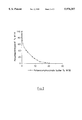
- FIG. 2 is a phase diagram for polypropylene glycol 425 and phosphate buffer.
- FIG. 3 Arrangement for purification of oil and regeneration of collection polymers.
- PA 06 Nas Petrolium polymer particles with a median diameter of 4.3 ⁇ m (Expancel 051 DC) are added. The concentration of particles was measured by means of a HACH turbidimeter (Svenska Merkanto AB, Uppsala, Sweden). 8 g particle contaminated oil and 0.2 g of the polymers and polymer mixtures described in Table 1 were added to test tubes of glass containing 10 ml. Polymer/hydroxyethyl-tallow-oil-imidazoline (Berol 594) (Berol Kemi, Stenungsund, Sweden) will in the following be abbreviated as Berol 594.
- Berol 594 Polymer/hydroxyethyl-tallow-oil-imidazoline
- test tube containing 8 g particle-contaminated oil without added polymer and a test tube where the collection polymer was replaced by 0.2 g H 2 O were used as reference.
- test tubes were mixed thoroughly and centrifuged at 2 000 rpm during 2 minutes, after which 4 ml of the upper oil phase is transferred to clean trays of glass for measurement of the turbidity.
- the trials were carried out at room temperature.
- centrifugation only of the particle contaminated oil results in a reduction of particles of 21%.
- the corresponding result when adding propylene glycol and polypropylene glycol was 70 and 95%, respectively.
- the reduction of particle was 51 and 66%, respectively, and for the negatively charged (acrylic acid-grafted) polymer Breox 380EP a separation efficiency of 50% was obtained.
- the mechanism for distribution of the particles in the uncharged systems is probably based on hydrophilic/hydrophobic interactions between the collection polymers and the surface structure of the particles.
- An addition of the positively charged polymer hydroxyethyl-tallow oil-imidazoline to the polymers resulted except from Breox 380EP in an increased separation efficiency.
- the best results were obtained after an addition of a positively charged polymer to propylene glycol where an increase from 70 to 96% was obtained.
- the corresponding increase for polypropylene glycol was 95 to 97%.
- the improved separation depends most likely on charge interactions between the positively charged hydroxyethyl-tallow oil-imidazoline and negative charges on the surfaces of the particles which may result in formation of micells and thereby an increased solubility of the particles in the polymer phase.
- test tubes were well mixed and centrifuged at 2 000 rpm during 2 minutes, after which 4 ml of the upper oil phase was transferred to clean trays of glass for measurement of the turbidity.
- the trials were carried out at room temperature.
- the addition was carried through in 10 ml test tubes of glass. After addition the contents of the tubes were mixed thoroughly after which they were centrifuged at 2 000 rpm during 2 minutes. As a control a sample of particle contaminated cutting oil without any addition of polymer was centrifuged. After removal of the particle containing polymer rich bottom phase the particle content in the upper oil phase was determined by means of a HACH turbidimeter. The extraction procedure was repeated twice. The turbidity was determined after each of the three centrifugations. The trials were carried out at room temperature.
- FIG. 1 Purification of a particle-contaminated cutting oil with and without addition of polymer is presented in FIG. 1.
- the addition of polymers was carried out step-by-step in order to simulate the continuous polymer addition which may be used when using centrifugal separators.
- Three successive centrifugations of the cutting oil at 2 000 rpm reduced the content of particles by 1%.
- Addition of the polymer Dapral 210 dissolved in propylene glycol gave in the first extraction step 93% separation efficiency and after two and three extractions the separation efficiency was 98 and 99%, respectively.
- By including the positively charged polymer hydroxyethyl-tallow oil-imidazoline an increased separation efficiency was obtained which after three extractions was >99%.
- Polymer particles with a median diameter of 4.3 ⁇ m were added to 200 liters of oil (Nynas).
- the oil was heated by means of an immersion heater to 55° C.
- the particle-contaminated oil was fed by way of a pump to a two-ways centrifugal separator (MMPX 304, Tetra-Laval AB, Tumba).
- MMPX 304 Tetra-Laval AB, Tumba
- the flow through the separator was 500 liters/hour.
- polypropylene glycol Mw 425) was added.
- the flow of collection polymer was 3 liters/hour.
- the concentration of particles in the effluent from the separator was measured with and without addition of polymers by means of a HACH turbidity meter.
- a hydraulic oil (Load Way EP 220, Stat Oil) heavily contaminated with coke particles was heated to 80° C.
- the hydraulic oil was fed by way of a pump to a centrifugal separator (MMPX 304, Tetra Laval AB, Tumba).
- the flow through the separator was 500 l/h.
- a mixture of polypropylene glycol (MW 425) and Berol 594 (mixing ratio 5:1) was added to the feed inlet to the separator by way of a tube pump.
- the flow of collection polymer was 500 l/h.
- the concentration of particles in the effluent from the separator was measured by means of a HACH turbidity meter with and without addition of polymers.
- 0.5 g H 2 O was added to a test tube containing 19.5 g oil.
- the content of the tube was mixed well on a shaking device for test tubes and in a ultrasonic bath until the water was well emulsified into the oil phase.
- the water containing oil was divided into four test tubes after which the turbidity was determined.
- To tube A 2.5% polypropylene glycol was added, to tube B 2.5% polypropylene glycol containing 10% Berol 594 and to the tube C 2.5% polypropyleneglycol containing 20% Dapral 210.
- the tubes were centrifuged together with a reference sample at 2 000 rpm during 6 minutes. After the centrifugation the turbidity in the oil phase was measured in all the tubes.
- Particle containing poylmer phase from oil purification may be regenerated by means of polymer two-phase-systems, where the polymer phase is the top phase and a water solution of citrate/citric acid, sodium or potassium phosphate buffer constitutes the bottom phase.
- FIG. 2 there is shown a phase diagram for polypropylene glycol 425 and phosphate buffer.
- a central collection tank for contaminated oil 1. From this tank the oil is led towards a centrifugal separator 2 by way of a pipe 3. In this pipe there is a pump 4 where the oil is mixed with polymers according to the invention. The oil and the polymers are separated in the centrifugal separator and the purified oil is returned to the tank 1 by way of pipe 5. The polymers and the particles are led to a second purification step where the polymers are regenerated by way of a pipe 6. In this step there is a tank 7 for a citric acid/citrate buffer. The mixture of polymer and particles are mixed with the citric acid/citrate buffer in a further pump 8 and led to a second centrifugal separator 9. The purified polymer phase is returned to the polymer tank by way of pipe 10, while the contaminants are removed by way of pipe 11.
Landscapes
- Chemical & Material Sciences (AREA)
- Organic Chemistry (AREA)
- Combustion & Propulsion (AREA)
- Chemical Kinetics & Catalysis (AREA)
- General Chemical & Material Sciences (AREA)
- Oil, Petroleum & Natural Gas (AREA)
- Engineering & Computer Science (AREA)
- Lubricants (AREA)
- Production Of Liquid Hydrocarbon Mixture For Refining Petroleum (AREA)
- Fats And Perfumes (AREA)
- Detergent Compositions (AREA)
- Water Treatment By Sorption (AREA)
- Extraction Or Liquid Replacement (AREA)
- Separation Of Suspended Particles By Flocculating Agents (AREA)
Abstract
The present invention relates to a method for purification of oil which is contaminated with particles of random density and/or water. A collection polymer or polymer mixture which is insoluble in oil and liquid at room temperature and which has a density which is higher than the oil is added to and mixed with the contaminated oil. The collection polymer and the oil are separated by gravity with or without centrifugation such that the oil forms a top phase and the collection polymer or polymer mixture and the main part of the contaminants form a bottom phase. The bottom phase with the collection polymer and the contaminants is removed.
Description
This is a continuation of application Ser. No. 08/649,715, filed Jun. 19, 1996, now abandoned, which is a 371 of PCT SE94/01136, filed Nov. 28, 1994.
The present invention relates to purification of oil, which is contaminated by particles of random density and/or water.
Pure oils are commonly used within the industry i.a. for metal working, as lubricating oils and hydraulic oils. The total consumption was estimated to be about 10 000 tons for metal working liquids, 55 000 tons for lubricating oils and 35 000 tons for hydraulic oils in Sweden 1986. Straight (pure) oils 1980 represented 7 000 tons, emulsions 3 000 tons (concentrate) and synthetics 1 000 tons (concentrate) of the metal working liquids.
Metal working liquids are used as cooling and lubricating agents at cutting working such as turning, milling, drilling, grinding and so on and in different types of plastic machining as milling, pressing and drawing.
The use of metal working liquids is the largest within iron, steel and engineering industry. The main tasks for the metal working liquids are to reduce the friction between tool and work piece by lubrication, and to remove the heat which has been formed, i.e. to cool. In the case where the lubricating ability is the most important a straight oil is chosen, while for example at higher working rates where the cooling ability is important, an oil emulsion or a synthetic one is often chosen.
The main components in the straight cutting oil are refined mineral oil and vegetable or animal oil. If necessary the fatty oils have been replaced with synthetic derivatives of the same for example methyl esters of tallow fatty acids and isopropyl oleate. In order to obtain a well working lubricating film certain EP-additives (Extreme Pressure) are also added which among all may consist of sulphur, chlorine or phosphorous compounds.
However, the properties of the oils get worse with the usage time due to contamination. Particulate contaminants in the oils are often of the type metal particles, rust, oxidation products (coke particles) from the oil. Other not desirable contaminants are water, cellulose fibres, carbon, dust and other organic particles.
In the prior art there are mainly known the following three types of purification of oil:
Mechanical filtration--the oil is brought to pass through relatively thin (about 0.25-2 mm) "paper" or through thick layers where the oil has a long way to pass. The filters consist of different fibre materials.
Electrostatic purification--the oil is pumped through an electrostatic field (10 kV) where statically charged particles will move across the flow direction of the oil. The particles then get caught on collectors of pleated paper material.
Centrifugation type centrifugal separators--in a centrifuge liquid and particles are separated, as soon as the densities are different. This makes it possible to separate particles which are lighter or heavier than the liquid.
The known methods have different advantages and disadvantages. For separation of emulsified water from oil centrifugal separator are to be preferred. Hitherto there is no satisfactory solution for separation of all kinds of particulate contaminants and water from oil.
The present invention solves the problems mentioned above by a method for purification of oil which is contaminated by particles of random density and/or water. The method is mainly characterized in that a collection polymer or polymer mixture which is insoluble in oil and which is liquid at room temperature and has a density which is higher than the oil is added to and mixed with the contaminated oil. The collection polymer and the oil are separated by gravity with or without centrifugation such that the oil forms a top phase and the collection polymer or polymer mixture and the main part of the contaminants form a bottom phase. The bottom phase with the collection polymer or polymer mixture is removed.
The word "particles" refers to all kinds of substances, cells and cell remains.
The oils to be purified may consist for example of lubricating oils, hydraulic oils, rolling oils or quench oils.
The collection polymer or polymer mixture consists of polymers with a relatively low molecular weight.
The used polymer or polymer mixture may consist of different alkylene glycols or polyalkylene glycols based on ethylene or propylene and different copolymers of ethylene oxide (EO) and propylene oxide (PO).
The choice of collection polymers depend on the actual contaminants. If the contaminating particles have a surface structure of a hydrophilic nature then a polyethylene glycol with a rather low molecular weight may be chosen (100-300). If the surface structure of the particles is mainly of hydrophobic nature then a blockpolymer of ethylene oxide (EO) or propylene oxide (PO) with a high content of PO may be used (Molecular weight 4000-8000).
The used amounts of collection polymers may be up to 1%, preferably only 1-5% of the amount of oil.
The invention will be described further with reference to the trials and drawings described below, in which
FIG. 1 shows a step-by-step purification of a cutting oil with and without addition of polymers; and
FIG. 2 is a phase diagram for polypropylene glycol 425 and phosphate buffer.
FIG. 3 Arrangement for purification of oil and regeneration of collection polymers.
To a basic oil, PA 06 (Nynas Petrolium) polymer particles with a median diameter of 4.3 μm (Expancel 051 DC) are added. The concentration of particles was measured by means of a HACH turbidimeter (Svenska Merkanto AB, Uppsala, Sweden). 8 g particle contaminated oil and 0.2 g of the polymers and polymer mixtures described in Table 1 were added to test tubes of glass containing 10 ml. Polymer/hydroxyethyl-tallow-oil-imidazoline (Berol 594) (Berol Kemi, Stenungsund, Sweden) will in the following be abbreviated as Berol 594.
A test tube containing 8 g particle-contaminated oil without added polymer and a test tube where the collection polymer was replaced by 0.2 g H2 O were used as reference.
The test tubes were mixed thoroughly and centrifuged at 2 000 rpm during 2 minutes, after which 4 ml of the upper oil phase is transferred to clean trays of glass for measurement of the turbidity. The trials were carried out at room temperature.
              TABLE 1
______________________________________
                                    Particle
    Viscosity reduction
  Polymer EO/PO (CSt) (%)
______________________________________
Propylene glycol (MB Sveda Kemi)
                  --       62       70
  Propylene glycol + Berol 594 (5:1) --  62 96
  Polypropylene glycol 425 --  80 95
  (MB Sveda Kemi)
  Polypropylene glycol 425 + --  80 97
  Berol 594
  Breox 50A140 (BP, Chemicals) 1:1  130 51
  Breox 50A140 + Berol 594 1:1  130 59
  Breox 50A1000 + (BP Chemicals) 1:1 1000 66
  Breox 380EP + Berol 594 1:1 1000 74
  Breox 380EP + (BP, Chemicals) 1:1 1250-3000 50
  Breox 380EP + Berol 594 1:1 1250-3000 45
  None   21
  Water   44
______________________________________
Addition of small amounts of non-ionic or charged polymers/tensides consisting of ethylene oxide and/or propylene oxide monomers (0.1-10%) to a straight mineral oil containing particulate contaminants results in a turbid solution which after centrifugation alternatively after static separation divides into an oil phase (top phase) and a polymer phase (bottom phase). The particles are after the separation mainly found in the polymer containing bottom phase.
As may be seen from Table 1 centrifugation only of the particle contaminated oil results in a reduction of particles of 21%. The corresponding result when adding propylene glycol and polypropylene glycol was 70 and 95%, respectively. When the two non-ionic polymers consisting of both ethylene oxide and propylene oxide (Breox 50A 140 and 50A 1000) were used the reduction of particle was 51 and 66%, respectively, and for the negatively charged (acrylic acid-grafted) polymer Breox 380EP a separation efficiency of 50% was obtained.
The mechanism for distribution of the particles in the uncharged systems is probably based on hydrophilic/hydrophobic interactions between the collection polymers and the surface structure of the particles. An addition of the positively charged polymer hydroxyethyl-tallow oil-imidazoline to the polymers resulted except from Breox 380EP in an increased separation efficiency. The best results were obtained after an addition of a positively charged polymer to propylene glycol where an increase from 70 to 96% was obtained. The corresponding increase for polypropylene glycol was 95 to 97%. The improved separation depends most likely on charge interactions between the positively charged hydroxyethyl-tallow oil-imidazoline and negative charges on the surfaces of the particles which may result in formation of micells and thereby an increased solubility of the particles in the polymer phase.
To a rolling oil (Roll oil 450, Nynas) bacteria cells (Pseudomonas spp) with a size of about 2 μm were added. The concentration of bacteria was measured by means of a HACH turbidity meter. 8 g bacteria contaminated oil and 0.2 g of the polymers mentioned above were added to a 10 ml test tube of glass. A test tube containing 8 g bacteria contaminated oil without any added polymer was used as reference.
The contents of the test tubes were well mixed and centrifuged at 2 000 rpm during 2 minutes, after which 4 ml of the upper oil phase was transferred to clean trays of glass for measurement of the turbidity. The trials were carried out at room temperature.
Results from the separation of bacteria cells from a mineral oil (rolling oil) with and without polymer dosing is presented in Table 2. Without any added polymers a separation efficiency of 30% was obtained after centrifugation at 2 000 rpm during 2 minutes. Corresponding results with the different polymers varied between 80 and 90%. Addition of the positively charged hydroxyethyl-tallow oil-imidazoline gave also in this trial an increased bacteria separation (86-95%) also for Breox 380EP.
              TABLE 2
______________________________________
                       Bacteria
  Polymer reduction
______________________________________
Propylene glycol (MB Sveda Kemi)
                       88.4
  Propylene glycol + Berol 594 94.2
  Polypropylene glycol 425 (MB Sveda Kemi) 80
  Polypropylene glycol 425 + Berol 594 86
  Breox 50A140 (BP, Chemicals) 88.4
  Breox 50A140 + Berol 594 93.2
  Breox 50A1000 (BP, Chemicals) 89.7
  Breox 50A1000 + Berol 594 93.1
  Breox 380EP (BP, Chemicals) 88.8
  Breox 380EP + Berol 594 90.9
  None 21.5
______________________________________
To a particle contaminated straight cutting oil (Volvo, Skovde) 2.5% (w/w) of the following polymer mixtures were added:
12% Dapral 210 (Akzo) dissolved in propylene glycol
12% Dapral 210 (Akzo) dissolved in propylene glycol+3% Berol 594
The addition was carried through in 10 ml test tubes of glass. After addition the contents of the tubes were mixed thoroughly after which they were centrifuged at 2 000 rpm during 2 minutes. As a control a sample of particle contaminated cutting oil without any addition of polymer was centrifuged. After removal of the particle containing polymer rich bottom phase the particle content in the upper oil phase was determined by means of a HACH turbidimeter. The extraction procedure was repeated twice. The turbidity was determined after each of the three centrifugations. The trials were carried out at room temperature.
Purification of a particle-contaminated cutting oil with and without addition of polymer is presented in FIG. 1. The addition of polymers was carried out step-by-step in order to simulate the continuous polymer addition which may be used when using centrifugal separators. Three successive centrifugations of the cutting oil at 2 000 rpm reduced the content of particles by 1%. Addition of the polymer Dapral 210 dissolved in propylene glycol gave in the first extraction step 93% separation efficiency and after two and three extractions the separation efficiency was 98 and 99%, respectively. By including the positively charged polymer hydroxyethyl-tallow oil-imidazoline an increased separation efficiency was obtained which after three extractions was >99%.
Polymer particles with a median diameter of 4.3 μm (Expancel 051 DC) were added to 200 liters of oil (Nynas). The oil was heated by means of an immersion heater to 55° C. The particle-contaminated oil was fed by way of a pump to a two-ways centrifugal separator (MMPX 304, Tetra-Laval AB, Tumba). The flow through the separator was 500 liters/hour. By way of a tube pump connected to the inlet to the separator polypropylene glycol (Mw 425) was added. The flow of collection polymer was 3 liters/hour. The concentration of particles in the effluent from the separator was measured with and without addition of polymers by means of a HACH turbidity meter.
Industrial separators are commonly used to purify mineral oils from particulate contaminants and water on a large scale. Great application areas are purification of fuel and of lubricating systems on board of ships and within the industry. Purification from particles only by means of centrifugal separator does not give a satisfactory result in many cases which means that one has been forced to combine this technique with other purification methods, e.g. filtration. Addition of small amounts of polymer to particle-contaminated mineral oil in combination with separation of the polymer phase with an industrial separator results in a dramatical increase in the efficiency of separation (Table 3).
              TABLE 3
______________________________________
Particle concentration (NTU) in the effluent with and
  without an addition of polymers. The concentration in
  the tank at start was 1960 NTU.
  Time (min.)    Without polymer
                             With polymer
______________________________________
5            1725        4.9
  10 1465 2.3
  15 1399 2.0
  20 1352 1.4
______________________________________
Only separation at a high g-force brings as may be seen from the table a low separation efficiency (9-31%) counted on the original concentraton in the oil. Addition of 0.6% polypropylene glycol to the oil prior to the separator increased the separation efficiency dramatically as regards the particles (99.8-99.9%). The advantage of this technique of purifying oil compared to the filter technique is that the problem with clogged filter pores is avoided. Since the distribution coefficient for the particles to the bottom phase polymer is extreme it is also possible to recirculate the bottom phase polymer, which means that very large volumes of oil may be purified with small volumes of polymer.
A hydraulic oil (Load Way EP 220, Stat Oil) heavily contaminated with coke particles was heated to 80° C. The hydraulic oil was fed by way of a pump to a centrifugal separator (MMPX 304, Tetra Laval AB, Tumba). The flow through the separator was 500 l/h. A mixture of polypropylene glycol (MW 425) and Berol 594 (mixing ratio 5:1) was added to the feed inlet to the separator by way of a tube pump. The flow of collection polymer was 500 l/h. The concentration of particles in the effluent from the separator was measured by means of a HACH turbidity meter with and without addition of polymers.
The results from the trials with and without addition of polymer/imidazoline is given in table 4. As may be seen in the table centrifugal separation only gives a reduction of particles in the oil corresponding to about 73-78%. This reduction is probably a decrease of the amount of larger particles but a gradual increase in the number of very small particles 0,1-3 μm in the hydraulic oil. Addition of polymer/Berol 594 gives an essentially increased separation efficiency corresponding to 99.3-99.6%. With this addition a reduction of all present particle sizes takes place, i.e. also of particles of submicron size.
              TABLE 4
______________________________________
Concentration of particles (NTU) in effeluent with and
  without addition of polymers. The initial concentra-
  tion in the tank was 1230 NTU.
  Time (min.)    Without polymer
                             With polymer
______________________________________
5            335         6.8
  10 311 5.2
  15 268 8.8
  20 306 5.6
______________________________________
0.5 g H2 O was added to a test tube containing 19.5 g oil. The content of the tube was mixed well on a shaking device for test tubes and in a ultrasonic bath until the water was well emulsified into the oil phase. The water containing oil was divided into four test tubes after which the turbidity was determined. To tube A 2.5% polypropylene glycol was added, to tube B 2.5% polypropylene glycol containing 10% Berol 594 and to the tube C 2.5% polypropyleneglycol containing 20% Dapral 210. The tubes were centrifuged together with a reference sample at 2 000 rpm during 6 minutes. After the centrifugation the turbidity in the oil phase was measured in all the tubes.
Separation of water in oil is a usual application for industrial separators. The technique may be improved considerably by additon of polymer/polymer mixtures (Table 5).
              TABLE 5
______________________________________
Purification of oil as regards water by means of
  addition of polymers. The water content is given as
  turbidity in the oil (NTU).
                              Poly- Poly-
    propy- propy-
   Poly- lene lene
   propy- glycol + glycol +
  No poly- lene Berol Dapral
  mer glycol 594 210
______________________________________
O-sample   2110     2050      2089  2167
  After 784 11 14 14
  centrifug.
  Purifica-tion 63 99.5 99.3 99.4
  eff. (%)
______________________________________
As may be seen in the table there is a purification efficiency obtained around 60% by using only centrifugation at 2 000 rpm during 2 minutes of oil containing very small water drops. By addition of polypropylene glycol, polypropylene glycol with addition of Berol 594 or polypropylene glycol with addition of Dapral 210 in all cases a separation efficiency >95% is obtained. The polymers which are used in this trial are all water soluble but not soluble in oil.
To test tubes containing 10 g polypropylene glycol, (Mw 450) contaminated Expancel particles and bacteria cells there was added a 20% citric acid/citrate buffer to a final concentration of 3.3%. The relation between citric acid and citrate was 1:1. The test tubes were well mixed and centrifuged at 2 000 rpm during 2 minutes. The upper top phase rich in polypropylene glycol was analyzed by means of turbidity measurement.
Particle containing poylmer phase from oil purification may be regenerated by means of polymer two-phase-systems, where the polymer phase is the top phase and a water solution of citrate/citric acid, sodium or potassium phosphate buffer constitutes the bottom phase. In FIG. 2 there is shown a phase diagram for polypropylene glycol 425 and phosphate buffer. By dosing low concentrations of phosphate buffer in combination with a high polymer concentration there is formed, as may be seen in the figure, a system with a very small amount of bottom phase in which particulate contaminants from the polymer phase are concentrated.
Regeneration of collection polymer (polypropylene glycol 425) containing Expancel particles and bacteria cells (Pseudomonas spp) by means of a water containing polymer two-phase system consisting of citric acid/citrate buffer as a bottom phase polymer is shown in Table 6.
              TABLE 6
______________________________________
Regeneration of collection polymer phase by means of a
  water containing polymer two-phase system. The particles
  consist of Expancel particles and bacteria cells. The
  particle concentration in the polymer phase is given in
  NTU.
                  Expancel Bacteria
  particles cells
______________________________________
Particle content polymer
                  4790     2620
  phase prior to separation
  Particle content polymer 420 170
  phase after separation
  Regenerative eff. 91 94
______________________________________
As may be seen in the table there a good separation efficiency 91-94% is obtained of the polymer phase after only one separation with citric acid/citrate buffer. At the addition of buffer solution to the polymer a certain part of water will be found in the polymer phase when the two phase system is formed. This water amount is very small <6% and will not effect the separation efficiency when the polymers are used for purification of mineral oils.
An arrangement for purification of oil will be described with reference to FIG. 3.
In this figure there is shown a central collection tank for contaminated oil 1. From this tank the oil is led towards a centrifugal separator 2 by way of a pipe 3. In this pipe there is a pump 4 where the oil is mixed with polymers according to the invention. The oil and the polymers are separated in the centrifugal separator and the purified oil is returned to the tank 1 by way of pipe 5. The polymers and the particles are led to a second purification step where the polymers are regenerated by way of a pipe 6. In this step there is a tank 7 for a citric acid/citrate buffer. The mixture of polymer and particles are mixed with the citric acid/citrate buffer in a further pump 8 and led to a second centrifugal separator 9. The purified polymer phase is returned to the polymer tank by way of pipe 10, while the contaminants are removed by way of pipe 11.
Claims (10)
1. A method for the purification of oil which is contaminated by particles having different densities from the oil, or by water or by both said particles and water, consisting essentially of the steps of adding a polymer or a plurality of polymers to the contaminated oil to form a mixture, said polymer or plurality of polymers taken from the group consisting of polyethylene glycol having a molecular weight in the range of from about 100 to about 300, ethylene oxide blockpolymer and propylene oxide blockpolymer having a molecular weight in the range of from about 4000 to about 8000, agitating the mixture, separating the mixture into two phases, namely, a top phase comprising purified oil and a bottom phase comprising the polymer or the plurality of polymers with a substantial portion of the contaminants originally present in the oil, and removing the bottom phase, and wherein the polymer or plurality of polymers are insoluble in the oil, are liquid at room temperature and have higher densities than that of the oil being purified.
2. The method according to claim 1 wherein a charged control polymer is also added with the polymer or plurality of polymers, the control polymer having affinity for the contaminants and thereby increasing the proportion of the contaminants present in the bottom phase over the proportion present in the absence of the control polymer.
3. The method according to claim 1 wherein the purified oil is further treated by additional polymer or plurality of polymers to form a further mixture, and the further mixture is agitated, is separated into two phases and the bottom phase is removed.
4. The method according to claim 1 wherein the polymer or plurality of polymers is recovered from the bottom phase.
5. The method according to claim 1 wherein a complex forming agent is added with the polymer or plurality of polymers.
6. The method according to claim 1 wherein a plurality of polymers is used, comprising a polymer, a charged control polymer and a complex forming agent.
7. The method according to claim 6 wherein the purified oil is further treated by an additional plurality of polymers comprising a polymer, a charged control polymer and a complex forming agent.
8. The method according to claim 1 wherein the separating step is performed in part by centrifugation.
9. The method according to claim 1 wherein the polymer or plurality of polymers comprises up to 10% of the amount of the oil.
10. The method according to claim 1 wherein the polymer or plurality of polymers comprises up to 5% of the amount of the oil.
Applications Claiming Priority (2)
| Application Number | Priority Date | Filing Date | Title |
|---|---|---|---|
| SE9303961A SE512750C2 (en) | 1993-11-29 | 1993-11-29 | Method of gravimetric separation of oil contaminated with particles and or water |
| SE9303961 | 1993-11-29 |
Related Parent Applications (1)
| Application Number | Title | Priority Date | Filing Date |
|---|---|---|---|
| US08649715 Continuation | 1996-06-19 |
Publications (1)
| Publication Number | Publication Date |
|---|---|
| US5976357A true US5976357A (en) | 1999-11-02 |
Family
ID=20391928
Family Applications (1)
| Application Number | Title | Priority Date | Filing Date |
|---|---|---|---|
| US08/960,077 Expired - Lifetime US5976357A (en) | 1993-11-29 | 1997-10-24 | Purification of oil |
Country Status (11)
| Country | Link |
|---|---|
| US (1) | US5976357A (en) |
| EP (1) | EP0731830B1 (en) |
| JP (1) | JP3608789B2 (en) |
| KR (1) | KR100349823B1 (en) |
| AT (1) | ATE236241T1 (en) |
| AU (1) | AU1207295A (en) |
| CA (1) | CA2176930C (en) |
| DE (1) | DE69432432T2 (en) |
| ES (1) | ES2196052T3 (en) |
| SE (1) | SE512750C2 (en) |
| WO (1) | WO1995014752A1 (en) |
Cited By (10)
| Publication number | Priority date | Publication date | Assignee | Title |
|---|---|---|---|---|
| WO2005111181A1 (en) * | 2004-05-17 | 2005-11-24 | Viatech Systems Ab | Process for the purification of spent process oil |
| US20120277461A1 (en) * | 2009-07-25 | 2012-11-01 | Soil Net Llc | Enhanced biodiesel process |
| EP2679657A1 (en) * | 2012-06-27 | 2014-01-01 | Alfa Laval Corporate AB | A method and system for separating catalyst fines from an oil stream |
| US20140039212A1 (en) * | 2009-02-23 | 2014-02-06 | Aicardo Roa-Espinosa | Refining of edible oil |
| US20140083909A1 (en) * | 2012-09-26 | 2014-03-27 | General Electric Company | Single drum oil and aqueous products and methods of use |
| US11629296B2 (en) | 2012-09-26 | 2023-04-18 | Bl Technologies, Inc. | Demulsifying compositions and methods of use |
| US11958004B2 (en) | 2019-02-08 | 2024-04-16 | Skf Recondoil Ab | Method and system for purification of contaminated oil |
| US12097453B2 (en) | 2019-02-08 | 2024-09-24 | Skf Recondoil Ab | Method and system for circular use of industrial oil |
| US12377367B2 (en) | 2020-05-18 | 2025-08-05 | Skf Recondoil Ab | Solvent extraction system and method |
| US12616925B2 (en) | 2020-06-05 | 2026-05-05 | Skf Recondoil Ab | Oil purification filter |
Families Citing this family (4)
| Publication number | Priority date | Publication date | Assignee | Title |
|---|---|---|---|---|
| SE524469C2 (en) * | 2002-12-12 | 2004-08-10 | Alfa Laval Corp Ab | When cleaning oil from polluting particles, put in a centrifugal separator |
| SE541119C2 (en) | 2017-04-28 | 2019-04-09 | Recondoil Sweden Ab | Method, system and computer program for purification of oil by reusing a sludge phase |
| SE541116C2 (en) | 2017-04-28 | 2019-04-09 | Recondoil Sweden Ab | A system, method and computer program for purification of oil by sedimentation |
| ES2899192T3 (en) | 2017-04-28 | 2022-03-10 | Recondoil Sweden Ab | oil purification |
Citations (6)
| Publication number | Priority date | Publication date | Assignee | Title |
|---|---|---|---|---|
| US4033859A (en) * | 1975-04-24 | 1977-07-05 | Witco Chemical Corporation | Thermal treatment of used petroleum oils |
| US4045330A (en) * | 1975-06-04 | 1977-08-30 | Institut Francais Du Petrole | Process for regenerating lubricating oils |
| US4512878A (en) * | 1983-02-16 | 1985-04-23 | Exxon Research And Engineering Co. | Used oil re-refining |
| WO1990005768A1 (en) * | 1988-11-21 | 1990-05-31 | Pegasus Separation Ab | Purification of industrial lubricating agents |
| EP0493693A1 (en) * | 1990-12-14 | 1992-07-08 | Bayer Ag | Breaking-up of water-in-oil emulsions |
| US5141628A (en) * | 1987-08-19 | 1992-08-25 | Rwe-Entsorgung Aktiengesellschaft | Method of cleaning and regenerating used oils |
-
1993
- 1993-11-29 SE SE9303961A patent/SE512750C2/en not_active IP Right Cessation
-
1994
- 1994-11-28 EP EP95903074A patent/EP0731830B1/en not_active Expired - Lifetime
- 1994-11-28 KR KR1019960702788A patent/KR100349823B1/en not_active Expired - Fee Related
- 1994-11-28 ES ES95903074T patent/ES2196052T3/en not_active Expired - Lifetime
- 1994-11-28 WO PCT/SE1994/001136 patent/WO1995014752A1/en not_active Ceased
- 1994-11-28 AU AU12072/95A patent/AU1207295A/en not_active Abandoned
- 1994-11-28 AT AT95903074T patent/ATE236241T1/en not_active IP Right Cessation
- 1994-11-28 DE DE69432432T patent/DE69432432T2/en not_active Expired - Lifetime
- 1994-11-28 CA CA002176930A patent/CA2176930C/en not_active Expired - Fee Related
- 1994-11-28 JP JP51500995A patent/JP3608789B2/en not_active Expired - Fee Related
-
1997
- 1997-10-24 US US08/960,077 patent/US5976357A/en not_active Expired - Lifetime
Patent Citations (6)
| Publication number | Priority date | Publication date | Assignee | Title |
|---|---|---|---|---|
| US4033859A (en) * | 1975-04-24 | 1977-07-05 | Witco Chemical Corporation | Thermal treatment of used petroleum oils |
| US4045330A (en) * | 1975-06-04 | 1977-08-30 | Institut Francais Du Petrole | Process for regenerating lubricating oils |
| US4512878A (en) * | 1983-02-16 | 1985-04-23 | Exxon Research And Engineering Co. | Used oil re-refining |
| US5141628A (en) * | 1987-08-19 | 1992-08-25 | Rwe-Entsorgung Aktiengesellschaft | Method of cleaning and regenerating used oils |
| WO1990005768A1 (en) * | 1988-11-21 | 1990-05-31 | Pegasus Separation Ab | Purification of industrial lubricating agents |
| EP0493693A1 (en) * | 1990-12-14 | 1992-07-08 | Bayer Ag | Breaking-up of water-in-oil emulsions |
Cited By (18)
| Publication number | Priority date | Publication date | Assignee | Title |
|---|---|---|---|---|
| US20070241030A1 (en) * | 2004-05-17 | 2007-10-18 | Strom Gunnar | Process for the Purification of Spent Process Oil |
| WO2005111181A1 (en) * | 2004-05-17 | 2005-11-24 | Viatech Systems Ab | Process for the purification of spent process oil |
| US20140039212A1 (en) * | 2009-02-23 | 2014-02-06 | Aicardo Roa-Espinosa | Refining of edible oil |
| US20120277461A1 (en) * | 2009-07-25 | 2012-11-01 | Soil Net Llc | Enhanced biodiesel process |
| US8907113B2 (en) * | 2009-07-25 | 2014-12-09 | Aicardo Roa-Espinosa | Enhanced biodiesel process |
| CN104379706A (en) * | 2012-06-27 | 2015-02-25 | 阿尔法拉瓦尔股份有限公司 | A method and system for separating catalyst fines from an oil stream |
| WO2014001168A1 (en) * | 2012-06-27 | 2014-01-03 | Alfa Laval Corporate Ab | A method and system for separating catalyst fines from an oil stream |
| EP2679657A1 (en) * | 2012-06-27 | 2014-01-01 | Alfa Laval Corporate AB | A method and system for separating catalyst fines from an oil stream |
| CN104379706B (en) * | 2012-06-27 | 2016-05-25 | 阿尔法拉瓦尔股份有限公司 | For the method and system from oily logistics separating catalyst smalls |
| RU2621731C2 (en) * | 2012-06-27 | 2017-06-07 | Альфа Лаваль Корпорейт Аб | A method for detailing catalyst dust from the flow of the fuel oil |
| US20140083909A1 (en) * | 2012-09-26 | 2014-03-27 | General Electric Company | Single drum oil and aqueous products and methods of use |
| US9260601B2 (en) * | 2012-09-26 | 2016-02-16 | General Electric Company | Single drum oil and aqueous products and methods of use |
| US11629296B2 (en) | 2012-09-26 | 2023-04-18 | Bl Technologies, Inc. | Demulsifying compositions and methods of use |
| US11958004B2 (en) | 2019-02-08 | 2024-04-16 | Skf Recondoil Ab | Method and system for purification of contaminated oil |
| US12097453B2 (en) | 2019-02-08 | 2024-09-24 | Skf Recondoil Ab | Method and system for circular use of industrial oil |
| US12370477B2 (en) | 2019-02-08 | 2025-07-29 | Skf Recondoil Ab | Liquid composition for purification of oil |
| US12377367B2 (en) | 2020-05-18 | 2025-08-05 | Skf Recondoil Ab | Solvent extraction system and method |
| US12616925B2 (en) | 2020-06-05 | 2026-05-05 | Skf Recondoil Ab | Oil purification filter |
Also Published As
| Publication number | Publication date |
|---|---|
| SE512750C2 (en) | 2000-05-08 |
| JP3608789B2 (en) | 2005-01-12 |
| JPH09505622A (en) | 1997-06-03 |
| EP0731830B1 (en) | 2003-04-02 |
| DE69432432T2 (en) | 2004-01-29 |
| ES2196052T3 (en) | 2003-12-16 |
| ATE236241T1 (en) | 2003-04-15 |
| CA2176930A1 (en) | 1995-06-01 |
| DE69432432D1 (en) | 2003-05-08 |
| KR100349823B1 (en) | 2002-12-11 |
| WO1995014752A1 (en) | 1995-06-01 |
| AU1207295A (en) | 1995-06-13 |
| SE9303961L (en) | 1995-05-30 |
| SE9303961D0 (en) | 1993-11-29 |
| EP0731830A1 (en) | 1996-09-18 |
| CA2176930C (en) | 2003-09-16 |
Similar Documents
| Publication | Publication Date | Title |
|---|---|---|
| EP0731830B1 (en) | Purification of oil | |
| US4636317A (en) | Recycling of metalworking fluids | |
| US5205937A (en) | Recovery and reuse of water-based cleaners | |
| US3409551A (en) | Lubricant-coolant emulsion | |
| SE524469C2 (en) | When cleaning oil from polluting particles, put in a centrifugal separator | |
| JPH05132678A (en) | Method and equipment for cleaning cooling medium and/or lubricant used in rolling mill | |
| US5447642A (en) | Metalworking fluid recycling process with pasteurization by direct steam injection | |
| US5137654A (en) | Process for reclaiming oil/water emulsion | |
| EP3921053B1 (en) | A method and system for circular use of industrial oil | |
| CN109809618A (en) | A kind of machinery industry oily waste liquor treatment process | |
| Sheng et al. | Life-cycle planning of cutting fluids—a review | |
| JP2005000904A (en) | Oil/water separation apparatus and oil/water separation method | |
| US20230026931A1 (en) | Process for cleanup and recycling of rolling oils | |
| KR100581242B1 (en) | Refining device of metal processing | |
| US6027658A (en) | Fluid filtration, recirculation and delivery apparatus and method | |
| US7338605B2 (en) | Filter aid and method of using same for reclaiming water-based fluids used in metal working processes | |
| WO1997023264A1 (en) | Method of recycling fluids | |
| EP0724655B1 (en) | Purification method | |
| WO1990005768A1 (en) | Purification of industrial lubricating agents | |
| WO2025061704A1 (en) | Method and system for purifying contaminated lubricating oil | |
| US20240051844A1 (en) | Fluid filtration system and method | |
| WO1992014849A1 (en) | Process and apparatus for de-oiling mill scale waste materials | |
| CN122033690A (en) | Circulating and recycling system and treatment method for wafer manufacturing processing liquid | |
| JP2022178715A (en) | Wastewater treatment method | |
| Mahto et al. | Dynamic Programming for Optimal Disposal of Metal Working Industrial Waste Water/Oil/Fluids Mixtures–An Overview |
Legal Events
| Date | Code | Title | Description |
|---|---|---|---|
| STCF | Information on status: patent grant |
Free format text: PATENTED CASE |
|
| FPAY | Fee payment |
Year of fee payment: 4 |
|
| FPAY | Fee payment |
Year of fee payment: 8 |
|
| FPAY | Fee payment |
Year of fee payment: 12 |