US5890060A - Micro-wave mixing circuit and down-flow converter using the same - Google Patents

Micro-wave mixing circuit and down-flow converter using the same Download PDF

Info

Publication number
US5890060A
US5890060A US08/932,883 US93288397A US5890060A US 5890060 A US5890060 A US 5890060A US 93288397 A US93288397 A US 93288397A US 5890060 A US5890060 A US 5890060A
Authority
US
United States
Prior art keywords
micro
diode
bias current
bias
voltage
Prior art date
Legal status (The legal status is an assumption and is not a legal conclusion. Google has not performed a legal analysis and makes no representation as to the accuracy of the status listed.)
Expired - Fee Related
Application number
US08/932,883
Inventor
Yukiro Kashima
Current Assignee (The listed assignees may be inaccurate. Google has not performed a legal analysis and makes no representation or warranty as to the accuracy of the list.)
Panasonic Holdings Corp
Original Assignee
Matsushita Electric Industrial Co Ltd
Priority date (The priority date is an assumption and is not a legal conclusion. Google has not performed a legal analysis and makes no representation as to the accuracy of the date listed.)
Filing date
Publication date
Application filed by Matsushita Electric Industrial Co Ltd filed Critical Matsushita Electric Industrial Co Ltd
Assigned to MATSUSHITA ELECTRIC INDUSTRIAL CO., LTD reassignment MATSUSHITA ELECTRIC INDUSTRIAL CO., LTD ASSIGNMENT OF ASSIGNORS INTEREST (SEE DOCUMENT FOR DETAILS). Assignors: KASHIMA, YUKIRO
Application granted granted Critical
Publication of US5890060A publication Critical patent/US5890060A/en
Anticipated expiration legal-status Critical
Expired - Fee Related legal-status Critical Current

Links

Images

Classifications

    • HELECTRICITY
    • H03ELECTRONIC CIRCUITRY
    • H03DDEMODULATION OR TRANSFERENCE OF MODULATION FROM ONE CARRIER TO ANOTHER
    • H03D7/00Transference of modulation from one carrier to another, e.g. frequency-changing
    • H03D7/02Transference of modulation from one carrier to another, e.g. frequency-changing by means of diodes

Definitions

  • the present invention relates to a micro-wave mixing circuit used in a down-flow converter for satellite communication or satellite broadcasting.
  • FIG. 3 depicts a conventional micro-wave mixing circuit and an intermediate frequency amplifier.
  • SBD 5 is coupled to a micro strip line 4 (MSL), and then the mixed signal is converted into an intermediate frequency signal having a 1 GHz bandwidth.
  • MSL micro strip line 4
  • a bias voltage is applied to the frequency converting diode.
  • a specified bias control voltage is applied to a bias current supply terminal 6.
  • the intermediate frequency signal passed through a low pass filter 7 is amplified by intermediate frequency amplifiers 8 and 9, and then tapped off from an intermediate frequency signal output part 10.
  • the local oscillation signal voltage is not constant but varies widely due to individual frequency characteristics of each device (e.g. metal semiconductor MESEFT!) used in the local oscillator 2 and also dispersion caused by mounting those devices.
  • each device e.g. metal semiconductor MESEFT
  • a rectifying voltage of the local oscillation signal voltage of SBD 5 has a dispersion responsive to the dispersion of the local oscillation signal voltage applied to SBD 5.
  • the bias current traveling through SBD 5 does not become an expected value, but generates a wider dispersion. Accordingly, it is very difficult to obtain a certain level of performance from the conventional micro-wave mixing circuit when volume production thereof has been started.
  • a micro-wave mixing circuit of the present invention applies a bias current to SBD 5 responding to an output voltage of the local oscillation signal, thereby narrowing the dispersion of conversion loss due to mixing.
  • the micro-wave mixing circuit comprises;
  • the above bias supply circuit includes a bias current supply terminal which applies a bias voltage to an anode of a mixer diode, and a detection terminal which detects a dc voltage generated at the anode.
  • the bias supply circuit applies a bias control voltage to the bias supply terminal which supplies bias current responding to a dc voltage generated at the detection terminal.
  • the present invention addresses the problems which the conventional micro-wave mixing circuit has, and provides a micro-wave mixing circuit as well as a down-flow converter with a smaller dispersion and at an inexpensive cost.
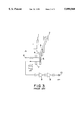
  • FIG. 1 is a circuit pattern of a micro-wave mixing circuit used in Exemplary Embodiment 1 of the present invention.
  • FIG. 2 is a circuit pattern of a down-flow converter incorporating a micro-wave mixing circuit which is used in Exemplary Embodiment 1.
  • FIG. 3 is a circuit pattern of a conventional micro-wave mixing circuit.
  • FIG. 1 is a circuit pattern of a micro-wave mixing circuit used in Exemplary Embodiment 1 of the present invention.
  • the circuit comprises the components below:
  • a micro-wave signal input part 1 a local oscillator 2, BPF 3 for passing a local oscillation frequency, MSL 4, SVD 5, a bias current supply terminal 6 which supplies bias current to SVD 5, LPF 7 for passing an intermediate frequency, an intermediate amplifiers 8 and 9, an output part 10 of the intermediate frequency signal, a detection terminal 11 for detecting a dc voltage generated at SBD 5, a bias supply circuit 12 comprising a computation circuit, resistors 13 and 14 for dividing a supply voltage (not shown in FIG. 1).
  • the divided voltage is applied to a lead of an input terminal of the bias supply circuit as a predetermined reference voltage, thereby minimizing the conversion loss at SBD 5.
  • micro-wave mixing circuit and the intermediate frequency amplifier so structured as above are now detailed in their operation.
  • a micro-wave signal having a 12 GHz bandwidth is fed into the micro-wave signal input part 1 and a local oscillation signal (e.g. 10.678 GHz) supplied from the local oscillator 2 via BPF 3 travel together to MSL 4.
  • a local oscillation signal e.g. 10.678 GHz
  • the produced dc voltage is detected by the detection terminal 11 as a detection voltage.
  • the bias supply circuit 12 compares the detection voltage with the reference voltage, and then applies a bias control voltage to the bias current supply terminal 6.
  • the bias supply circuit 12 is thus controlled so that the detection voltage may become equal to the reference voltage.
  • SBD 5 is not influenced by a of the output voltage of the local oscillation signal supplied from the local oscillator 2. As a result, conversion loss is maintained at a reasonable level.
  • the micro-wave signal which is converted by SBD 5 into the intermediate frequency signal having a 1 GHz bandwidth, for example, passes through LPF 7, and is then amplified to a desirable level by the intermediate amplifiers 8 and 9. Finally, the micro-wave signal is tapped off from the intermediate frequency signal output part 10.
  • FIG. 2 is a circuit pattern of a down-flow converter incorporating a micro-wave mixing circuit which is used in Exemplary Embodiment 1.
  • a probe 15 converts a micro-wave signal having a 12 GHz bandwidth, for example, radiated from a satellite into a quasi transverse electromagnetic (TEM) wave.
  • Low noise amplifiers 16 and 17 comprise low noise elements such as high electron mobility transistors.
  • BPF 3 passes a local oscillation frequency.
  • MSL 4 and SBD 5 are the same as in FIG. 1.
  • a bias current supply terminal 6 applies a bias current to SBD 5.
  • LPF 7 passes an intermediate frequency signal.
  • Other elements included in FIG. 2 are intermediate amplifiers 8 and 9, an intermediate frequency signal output part 10, a detection terminal 11 for detecting dc current generated at SBD 5, a bias supply circuit 12 comprising a computation circuit, resistors 13 and 14 which divide a supply voltage (not shown in FIG. 2). The divided voltage is applied to a lead of an input terminal of the bias supply circuit as a predetermined reference voltage, thereby minimizing a conversion loss at SBD 5.
  • the micro-wave signal radiated from the satellite is converted by the probe 15 into the quasi TEM wave which can travel through a micro strip line.
  • the micro-wave signal is amplified by the low noise amplifiers 16 and 17.
  • the amplified micro-wave signal and the local oscillation signal (e.g. 10.678 GHz) travel together to MSL 4.
  • the produced dc voltage is detected by the detection terminal 11 as a detection voltage.
  • the bias supply circuit 12 compares the detection voltage with the reference voltage, and then applies a bias control voltage to the bias current supply terminal 6.
  • the bias supply circuit 12 is thus controlled so that the detection voltage may become equal to the reference voltage.
  • SBD 5 is not influenced by a dispersion of the output voltage of the local oscillation signal supplied from the local oscillator 2. As a result, conversion loss is maintained at a reasonable level.
  • the micro-wave signal which is converted by SBD 5 into the intermediate frequency signal having a 1 GHz bandwidth, for example, passes through LPF 7, and is then amplified to a desirable level by the intermediate amplifiers 8 and 9. Finally, the micro-wave signal is tapped off from the intermediate frequency signal output part 10.
  • the present invention realizes an inexpensive and a small size micro-wave mixing circuit as well as a down flow converter both of which have stable characteristics against a dispersion of the local oscillation output tapped off from the local oscillator.

Landscapes

  • Engineering & Computer Science (AREA)
  • Power Engineering (AREA)
  • Superheterodyne Receivers (AREA)
  • Input Circuits Of Receivers And Coupling Of Receivers And Audio Equipment (AREA)

Abstract

A micro-wave mixing circuit produces producing a stable frequency conversion characteristic against a dispersion of output voltage of a local oscillation signal tapped off from a local oscillator. A micro-wave signal fed into a micro-wave signal input can be converted into an intermediate frequency signal of 1 GHz bandwidth where a stable frequency conversion characteristic is maintained against a dispersion of an output voltage of a local oscillation signal, by supplying bias current from a bias supply circuit to an anode of a Schotkky barrier diode responsive to a local oscillation output which is supplied from a local oscillator.

Description

FIELD OF THE INVENTION
The present invention relates to a micro-wave mixing circuit used in a down-flow converter for satellite communication or satellite broadcasting.
BACKGROUND OF THE INVENTION
As the satellite broadcasting becomes popular, (CS) communication satellite broadcasting which uses a communication satellite is now commercially available. Thus, an ordinary house has more opportunities to receive broadcasting from plural satellites. A receiving antenna which is smaller in size and lower at cost is therefore desirable.
FIG. 3 depicts a conventional micro-wave mixing circuit and an intermediate frequency amplifier. A micro-wave signal having a 12 GHz bandwidth fed into a micro-wave signal input part 1 and a local oscillation signal (e.g. 10.678 GHz), supplied from a local oscillator 2 via a band pass filter 3 (BPF), are mixed by a frequency converting diode, such as Schottky barrier diode 5 (SBD). SBD 5 is coupled to a micro strip line 4 (MSL), and then the mixed signal is converted into an intermediate frequency signal having a 1 GHz bandwidth.
When a local oscillation signal voltage at SBD 5 is less than an expected value, loss due to frequency conversion is increased. In order to prevent the frequency conversion loss from being increased, a bias voltage is applied to the frequency converting diode. In order to produce this bias voltage, a specified bias control voltage is applied to a bias current supply terminal 6.
The intermediate frequency signal passed through a low pass filter 7 (LPF) is amplified by intermediate frequency amplifiers 8 and 9, and then tapped off from an intermediate frequency signal output part 10.
However, according to the above structure, the local oscillation signal voltage is not constant but varies widely due to individual frequency characteristics of each device (e.g. metal semiconductor MESEFT!) used in the local oscillator 2 and also dispersion caused by mounting those devices.
Thus, a rectifying voltage of the local oscillation signal voltage of SBD 5 has a dispersion responsive to the dispersion of the local oscillation signal voltage applied to SBD 5. As a result, even if a constant bias control voltage is applied to the bias supply terminal 6, the bias current traveling through SBD 5 does not become an expected value, but generates a wider dispersion. Accordingly, it is very difficult to obtain a certain level of performance from the conventional micro-wave mixing circuit when volume production thereof has been started.
SUMMARY OF THE INVENTION
A micro-wave mixing circuit of the present invention applies a bias current to SBD 5 responding to an output voltage of the local oscillation signal, thereby narrowing the dispersion of conversion loss due to mixing.
To be more specific, the micro-wave mixing circuit comprises;
(a) a micro-wave signal input part formed on a dielectric substrate with a micro strip line (MSL),
SBD 5 of which anode is coupled to a terminal of the above MSL, and of which cathode is grounded, and
a bias supply circuit.
The above bias supply circuit includes a bias current supply terminal which applies a bias voltage to an anode of a mixer diode, and a detection terminal which detects a dc voltage generated at the anode. The bias supply circuit applies a bias control voltage to the bias supply terminal which supplies bias current responding to a dc voltage generated at the detection terminal.
Even if an output voltage of a local oscillation signal which is supplied from the local oscillator has a dispersion, conversion loss due to the mixing can be reduced to a small value by applying the bias current responding to the dc voltage to the anode of SBD 5.
The present invention addresses the problems which the conventional micro-wave mixing circuit has, and provides a micro-wave mixing circuit as well as a down-flow converter with a smaller dispersion and at an inexpensive cost.
BRIEF DESCRIPTION OF THE DRAWINGS
FIG. 1 is a circuit pattern of a micro-wave mixing circuit used in Exemplary Embodiment 1 of the present invention.
FIG. 2 is a circuit pattern of a down-flow converter incorporating a micro-wave mixing circuit which is used in Exemplary Embodiment 1.
FIG. 3 is a circuit pattern of a conventional micro-wave mixing circuit.
PREFERRED EXEMPLARY EMBODIMENTS
Exemplary Embodiment 1
FIG. 1 is a circuit pattern of a micro-wave mixing circuit used in Exemplary Embodiment 1 of the present invention. The circuit comprises the components below:
a micro-wave signal input part 1, a local oscillator 2, BPF 3 for passing a local oscillation frequency, MSL 4, SVD 5, a bias current supply terminal 6 which supplies bias current to SVD 5, LPF 7 for passing an intermediate frequency, an intermediate amplifiers 8 and 9, an output part 10 of the intermediate frequency signal, a detection terminal 11 for detecting a dc voltage generated at SBD 5, a bias supply circuit 12 comprising a computation circuit, resistors 13 and 14 for dividing a supply voltage (not shown in FIG. 1).
The divided voltage is applied to a lead of an input terminal of the bias supply circuit as a predetermined reference voltage, thereby minimizing the conversion loss at SBD 5.
The micro-wave mixing circuit and the intermediate frequency amplifier so structured as above are now detailed in their operation.
A micro-wave signal having a 12 GHz bandwidth, for example, is fed into the micro-wave signal input part 1 and a local oscillation signal (e.g. 10.678 GHz) supplied from the local oscillator 2 via BPF 3 travel together to MSL 4.
On the anode of SBD 5 which is coupled to MSL 4, a dc voltage is produced by the following two factors:
a dc voltage generated by an applied voltage from the bias current supply terminal 6, and
a dc voltage generated by being rectified by the local oscillation
signal supplied from the local oscillator 2
The produced dc voltage is detected by the detection terminal 11 as a detection voltage.
The bias supply circuit 12 compares the detection voltage with the reference voltage, and then applies a bias control voltage to the bias current supply terminal 6.
The bias supply circuit 12 is thus controlled so that the detection voltage may become equal to the reference voltage.
Therefore, SBD 5 is not influenced by a of the output voltage of the local oscillation signal supplied from the local oscillator 2. As a result, conversion loss is maintained at a reasonable level. The micro-wave signal, which is converted by SBD 5 into the intermediate frequency signal having a 1 GHz bandwidth, for example, passes through LPF 7, and is then amplified to a desirable level by the intermediate amplifiers 8 and 9. Finally, the micro-wave signal is tapped off from the intermediate frequency signal output part 10.
Exemplary Embodiment 2
FIG. 2 is a circuit pattern of a down-flow converter incorporating a micro-wave mixing circuit which is used in Exemplary Embodiment 1.
A probe 15 converts a micro-wave signal having a 12 GHz bandwidth, for example, radiated from a satellite into a quasi transverse electromagnetic (TEM) wave. Low noise amplifiers 16 and 17 comprise low noise elements such as high electron mobility transistors. BPF 3 passes a local oscillation frequency. MSL 4 and SBD 5 are the same as in FIG. 1. A bias current supply terminal 6 applies a bias current to SBD 5. LPF 7 passes an intermediate frequency signal. Other elements included in FIG. 2 are intermediate amplifiers 8 and 9, an intermediate frequency signal output part 10, a detection terminal 11 for detecting dc current generated at SBD 5, a bias supply circuit 12 comprising a computation circuit, resistors 13 and 14 which divide a supply voltage (not shown in FIG. 2). The divided voltage is applied to a lead of an input terminal of the bias supply circuit as a predetermined reference voltage, thereby minimizing a conversion loss at SBD 5.
The down flow converter thus structured as above is now detailed in its operation.
The micro-wave signal radiated from the satellite is converted by the probe 15 into the quasi TEM wave which can travel through a micro strip line.The micro-wave signal is amplified by the low noise amplifiers 16 and 17. The amplified micro-wave signal and the local oscillation signal (e.g. 10.678 GHz) travel together to MSL 4.
On the anode of SBD 5 which is coupled to MSL 4, a dc voltage is produced by the following two factors:
a dc voltage generated by an applied voltage from the bias current supply terminal 6, and
a dc voltage generated by being rectified by the local oscillation
signal supplied from the local oscillator 2
The produced dc voltage is detected by the detection terminal 11 as a detection voltage.
The bias supply circuit 12 compares the detection voltage with the reference voltage, and then applies a bias control voltage to the bias current supply terminal 6.
The bias supply circuit 12 is thus controlled so that the detection voltage may become equal to the reference voltage.
Therefore, SBD 5 is not influenced by a dispersion of the output voltage of the local oscillation signal supplied from the local oscillator 2. As a result, conversion loss is maintained at a reasonable level. The micro-wave signal, which is converted by SBD 5 into the intermediate frequency signal having a 1 GHz bandwidth, for example, passes through LPF 7, and is then amplified to a desirable level by the intermediate amplifiers 8 and 9. Finally, the micro-wave signal is tapped off from the intermediate frequency signal output part 10.
According to the present invention, the following three elements are added to the conventional micro-wave mixing circuit: (1) the detection terminal which detects the dc voltage generated at the anode, (2) the bias current supply terminal with which the bias current is applied to the anode of SBD 5, (3) the bias supply circuit which supplies the bias control voltage to the bias current supply terminal responding to the dc voltage generated at the detection terminal. As a result, the present invention realizes an inexpensive and a small size micro-wave mixing circuit as well as a down flow converter both of which have stable characteristics against a dispersion of the local oscillation output tapped off from the local oscillator.
Claims (6)

What is claimed is:
1. A micro-wave mixing circuit for use with a micro-wave input signal, comprising:
(a) a local oscillation circuit,
(b) a diode which converts a frequency by using said microwave input signal and a local oscillation signal supplied from said local oscillation circuit,
(c) a bias current supply terminal to which a bias control voltage is applied, said bias control voltage supplying bias current to said diode,
(d) a detection terminal which detects a dc voltage generated at said diode, and
(e) a bias supply circuit which controls said bias control voltage supplied to said bias current supply terminal responsive to a comparison of the detected dc voltage generated by said diode and a reference voltage.
2. The micro-wave mixing circuit of claim 1 wherein said bias supply circuit controls said bias control voltage so that the dc voltage detected by said detection terminal becomes a predetermined voltage.
3. A micro-wave mixing circuit for use with an input signal, comprising:
(a) a micro-wave signal input part for receiving said input signal,
(b) a local oscillation circuit,
(c) a diode which converts a frequency by using said input signal fed into said micro-wave signal input part, an anode of said diode being coupled to a terminal of said micro-wave signal input part, and a cathode of said diode being grounded,
(d) a bias current supply terminal which applies a bias current to the anode of said diode,
(e) a detection terminal which detects a dc voltage generated at the anode of said diode, and
(f) a bias supply circuit which applies a bias control voltage to said bias current supply terminal responsive to a comparison of the dc voltage detected by said detection terminal and a reference voltage.
4. A down flow converter for use with an input signal, comprising:
(a) a micro-wave signal input part formed by a micro strip line,
(b) a local oscillation circuit,
(c) a diode having an anode which is coupled to a terminal of said micro strip line, and having a cathode which is grounded, said diode converting a frequency by using the input signal fed into said micro-wave signal input part and a local oscillation signal supplied from said local oscillation circuit,
(d) a bias current supply terminal which supplies a bias current to the anode of said diode,
(e) a detection terminal which detects a dc voltage generated at the anode,
(f) a bias supply circuit which supplies bias current to said bias current supply terminal responsive to a comparison of the dc voltage generated at said detection terminal and a reference voltage.
5. A down flow converter for use with a micro-wave signal comprising:
(a) a probe which converts said micro-wave signal into a transverse electromagnetic wave,
(b) a low noise amplifier,
(c) a micro strip line coupled to said low noise amplifier,
(d) a diode coupled to of said micro strip line,
(e) a bias current supply terminal which supplies a bias current to said diode,
(f) a detection terminal which detects a dc voltage generated at said diode, and
(g) a bias supply circuit which supplies said bias current to said bias current supply terminal responsive to a comparison of the dc voltage generated at said detection terminal and a reference voltage.
6. A down flow converter for use with a micro-wave signal comprising:
(a) a probe which converts said micro-wave signal into a transverse electromagnetic wave,
(b) a low noise amplifier,
(c) a micro strip line coupled to said low noise amplifier,
(d) a diode having an anode coupled to said micro strip line, and a cathode which is grounded,
(e) a bias current supply terminal which supplies a bias current to the anode of said diode,
(f) a detection terminal which detects a dc voltage generated at the anode of said diode, and
(g) a bias supply circuit which supplies said bias current to said bias current supply terminal responsive to a comparison of the dc voltage generated at said detection terminal and a reference voltage.
US08/932,883 1996-09-19 1997-09-18 Micro-wave mixing circuit and down-flow converter using the same Expired - Fee Related US5890060A (en)

Applications Claiming Priority (2)

Application Number Priority Date Filing Date Title
JP8247359A JPH1093352A (en) 1996-09-19 1996-09-19 Microwave mixer circuit and down converter
JP8-247359 1996-09-19

Publications (1)

Publication Number Publication Date
US5890060A true US5890060A (en) 1999-03-30

Family

ID=17162254

Family Applications (1)

Application Number Title Priority Date Filing Date
US08/932,883 Expired - Fee Related US5890060A (en) 1996-09-19 1997-09-18 Micro-wave mixing circuit and down-flow converter using the same

Country Status (6)

Country Link
US (1) US5890060A (en)
EP (1) EP0831583B1 (en)
JP (1) JPH1093352A (en)
CN (1) CN1114277C (en)
DE (1) DE69724722T2 (en)
MY (1) MY120953A (en)

Cited By (2)

* Cited by examiner, † Cited by third party
Publication number Priority date Publication date Assignee Title
US20110102095A1 (en) * 2008-06-18 2011-05-05 Nxp B.V. Mems resonator for filtering and mixing
CN105958944A (en) * 2016-05-24 2016-09-21 中国电子科技集团公司第十三研究所 Terahertz frequency-doubled balanced type frequency multiplication circuit

Citations (8)

* Cited by examiner, † Cited by third party
Publication number Priority date Publication date Assignee Title
JPS5765903A (en) * 1980-10-13 1982-04-21 Nec Corp Converting circuit for receiving frequency
EP0317642A1 (en) * 1987-06-02 1989-05-31 Matsushita Electric Industrial Co., Ltd. Frequency converter circuit
US5153469A (en) * 1991-04-25 1992-10-06 Rockwell International Corporation Biasing network for use with field effect transistor ring mixer
JPH07211969A (en) * 1994-01-17 1995-08-11 Hitachi Cable Ltd Light emitting element driving circuit and driving method thereof
US5446923A (en) * 1994-03-03 1995-08-29 B.E.L.-Tronics Limited Mixer using fundamental frequency or second or third harmonic frequencies of a local oscillator for maximized resultant frequency mixer product
US5471664A (en) * 1993-12-30 1995-11-28 Samsung Electro-Mechanics Co., Ltd. Clockwise and counterclockwise circularly polarized wave common receiving apparatus for low noise converter
EP0713288A2 (en) * 1994-11-17 1996-05-22 AT&T GLOBAL INFORMATION SOLUTIONS INTERNATIONAL INC. Radio frequency detector circuit
US5754951A (en) * 1994-09-01 1998-05-19 Matsushita Electric Industrial Co., Ltd. Microwave mixing circuit and a down converter comprising it

Patent Citations (8)

* Cited by examiner, † Cited by third party
Publication number Priority date Publication date Assignee Title
JPS5765903A (en) * 1980-10-13 1982-04-21 Nec Corp Converting circuit for receiving frequency
EP0317642A1 (en) * 1987-06-02 1989-05-31 Matsushita Electric Industrial Co., Ltd. Frequency converter circuit
US5153469A (en) * 1991-04-25 1992-10-06 Rockwell International Corporation Biasing network for use with field effect transistor ring mixer
US5471664A (en) * 1993-12-30 1995-11-28 Samsung Electro-Mechanics Co., Ltd. Clockwise and counterclockwise circularly polarized wave common receiving apparatus for low noise converter
JPH07211969A (en) * 1994-01-17 1995-08-11 Hitachi Cable Ltd Light emitting element driving circuit and driving method thereof
US5446923A (en) * 1994-03-03 1995-08-29 B.E.L.-Tronics Limited Mixer using fundamental frequency or second or third harmonic frequencies of a local oscillator for maximized resultant frequency mixer product
US5754951A (en) * 1994-09-01 1998-05-19 Matsushita Electric Industrial Co., Ltd. Microwave mixing circuit and a down converter comprising it
EP0713288A2 (en) * 1994-11-17 1996-05-22 AT&T GLOBAL INFORMATION SOLUTIONS INTERNATIONAL INC. Radio frequency detector circuit

Non-Patent Citations (4)

* Cited by examiner, † Cited by third party
Title
European Search Report for Int l Appln No. EP 97 11 6149, dated 21 Nov. 1997. *
European Search Report for Int'l Appln No. EP 97 11 6149, dated 21 Nov. 1997.
Henry H. Cross, "Automatic Bias Circuit for Mixers", Microwave Journal, vol. 26, No. 5, May 1983.
Henry H. Cross, Automatic Bias Circuit for Mixers , Microwave Journal, vol. 26, No. 5, May 1983. *

Cited By (4)

* Cited by examiner, † Cited by third party
Publication number Priority date Publication date Assignee Title
US20110102095A1 (en) * 2008-06-18 2011-05-05 Nxp B.V. Mems resonator for filtering and mixing
US8493157B2 (en) 2008-06-18 2013-07-23 Nxp B.V. MEMS resonator for filtering and mixing
CN105958944A (en) * 2016-05-24 2016-09-21 中国电子科技集团公司第十三研究所 Terahertz frequency-doubled balanced type frequency multiplication circuit
CN105958944B (en) * 2016-05-24 2019-04-23 中国电子科技集团公司第十三研究所 THz double frequency balanced frequency doubler circuit

Also Published As

Publication number Publication date
DE69724722D1 (en) 2003-10-16
CN1114277C (en) 2003-07-09
MY120953A (en) 2005-12-30
EP0831583B1 (en) 2003-09-10
DE69724722T2 (en) 2004-07-15
CN1179020A (en) 1998-04-15
JPH1093352A (en) 1998-04-10
EP0831583A1 (en) 1998-03-25

Similar Documents

Publication Publication Date Title
US6069528A (en) Automatic microwave gain control device
US6178319B1 (en) Microwave mixing circuit and down-converter
US20040192190A1 (en) Low noise block down converter with reduced power consumption
US7570919B2 (en) Transmitter, receiver, and radio communications system and method
US20070155355A1 (en) Apparatus and method for frequency conversion
US10205422B2 (en) System and method for a voltage controlled oscillator
US5327583A (en) Using a clock signal generated by a microcomputer for providing a negative bias voltage to a galium arsenide field effect transistor in a high frequency amplifier of the device
JPH08228112A (en) Down converter and down conversion method
US5890060A (en) Micro-wave mixing circuit and down-flow converter using the same
CA1199370A (en) Integrated rf receiver/waveguide
EP1079531A2 (en) Integrated semicondutor circuit for processing receiving signals
US20040113833A1 (en) Microwave detector using fet resistive mixer
USH646H (en) Wideband self mixing millimeter wave receiver
EP0767531A1 (en) A microwave oscillation circuit and a down converter using the same
US6388529B2 (en) Grounded emitter amplifier and a radio communication device using the same
US6242981B1 (en) AGC circuit
US4652839A (en) Waveguide-to-coaxial converter
US5224218A (en) Microwave device
KR100410792B1 (en) Radio receiver
JPH10107549A (en) Microwave mixer circuit and down converter
Ho et al. GaAs MMIC frequency converters and their system applications
JPS58201415A (en) Agc circuit of receiver
KR100522292B1 (en) Microwave detector
JP2000183773A (en) Microwave amplifier matching circuit
JPH06153100A (en) Television tuner device

Legal Events

Date Code Title Description
AS Assignment

Owner name: MATSUSHITA ELECTRIC INDUSTRIAL CO., LTD, JAPAN

Free format text: ASSIGNMENT OF ASSIGNORS INTEREST;ASSIGNOR:KASHIMA, YUKIRO;REEL/FRAME:008831/0859

Effective date: 19970903

FEPP Fee payment procedure

Free format text: PAYOR NUMBER ASSIGNED (ORIGINAL EVENT CODE: ASPN); ENTITY STATUS OF PATENT OWNER: LARGE ENTITY

FPAY Fee payment

Year of fee payment: 4

FPAY Fee payment

Year of fee payment: 8

REMI Maintenance fee reminder mailed
LAPS Lapse for failure to pay maintenance fees
STCH Information on status: patent discontinuation

Free format text: PATENT EXPIRED DUE TO NONPAYMENT OF MAINTENANCE FEES UNDER 37 CFR 1.362

FP Lapsed due to failure to pay maintenance fee

Effective date: 20110330