US5843784A - Radio-detection method of oxygenation reaction - Google Patents
Radio-detection method of oxygenation reaction Download PDFInfo
- Publication number
- US5843784A US5843784A US08/713,479 US71347996A US5843784A US 5843784 A US5843784 A US 5843784A US 71347996 A US71347996 A US 71347996A US 5843784 A US5843784 A US 5843784A
- Authority
- US
- United States
- Prior art keywords
- reaction
- oxygenation
- oxygen
- radio
- enzymatic
- Prior art date
- Legal status (The legal status is an assumption and is not a legal conclusion. Google has not performed a legal analysis and makes no representation as to the accuracy of the status listed.)
- Expired - Fee Related
Links
Images


Classifications
-
- C—CHEMISTRY; METALLURGY
- C12—BIOCHEMISTRY; BEER; SPIRITS; WINE; VINEGAR; MICROBIOLOGY; ENZYMOLOGY; MUTATION OR GENETIC ENGINEERING
- C12Q—MEASURING OR TESTING PROCESSES INVOLVING ENZYMES, NUCLEIC ACIDS OR MICROORGANISMS; COMPOSITIONS OR TEST PAPERS THEREFOR; PROCESSES OF PREPARING SUCH COMPOSITIONS; CONDITION-RESPONSIVE CONTROL IN MICROBIOLOGICAL OR ENZYMOLOGICAL PROCESSES
- C12Q1/00—Measuring or testing processes involving enzymes, nucleic acids or microorganisms; Compositions therefor; Processes of preparing such compositions
- C12Q1/26—Measuring or testing processes involving enzymes, nucleic acids or microorganisms; Compositions therefor; Processes of preparing such compositions involving oxidoreductase
-
- Y—GENERAL TAGGING OF NEW TECHNOLOGICAL DEVELOPMENTS; GENERAL TAGGING OF CROSS-SECTIONAL TECHNOLOGIES SPANNING OVER SEVERAL SECTIONS OF THE IPC; TECHNICAL SUBJECTS COVERED BY FORMER USPC CROSS-REFERENCE ART COLLECTIONS [XRACs] AND DIGESTS
- Y10—TECHNICAL SUBJECTS COVERED BY FORMER USPC
- Y10T—TECHNICAL SUBJECTS COVERED BY FORMER US CLASSIFICATION
- Y10T436/00—Chemistry: analytical and immunological testing
- Y10T436/20—Oxygen containing
-
- Y—GENERAL TAGGING OF NEW TECHNOLOGICAL DEVELOPMENTS; GENERAL TAGGING OF CROSS-SECTIONAL TECHNOLOGIES SPANNING OVER SEVERAL SECTIONS OF THE IPC; TECHNICAL SUBJECTS COVERED BY FORMER USPC CROSS-REFERENCE ART COLLECTIONS [XRACs] AND DIGESTS
- Y10—TECHNICAL SUBJECTS COVERED BY FORMER USPC
- Y10T—TECHNICAL SUBJECTS COVERED BY FORMER US CLASSIFICATION
- Y10T436/00—Chemistry: analytical and immunological testing
- Y10T436/20—Oxygen containing
- Y10T436/207497—Molecular oxygen
Definitions
- the present invention relates to a radio-detection method of oxygenation. More particularly, the present invention relates to a novel radio-detection method which permits easier detection of trace metabolites even in a crude substance system, and allows clarification of mechanism of the oxygenation, oxidation and biochemical applications.
- Oxygen is an essential molecule for life. Recently, the general attention is attracted by many biochemical changes brought about by the result of oxidation stress as one of senescence mechanisms, and participation of oxygen in biomolecules is becoming an important problem.
- metabolism as viewed from the point of view of oxygen, there have often been referred to the facts that cellular respiration produces energy (ATP), that it is important for biosynthesis of many physiologically active substances such as steroids, prostaglandin, catecholamine and serotonin by the action of a enzymatic oxygenation, and radicals produced from oxygen.
- ATP energy
- the present invention has therefore an object to provide a novel method for detecting an oxygenation, which overcomes the restrictions in the conventional technology as described above, and permits detection, even in a more complicated system, of trace unstable substance in an enzymatic reaction and a trace intermediate compound in a catalytic reaction.
- the present invention provides a radio-detection method of oxygenation, which comprises the step of, in an oxygenation, introducing positron nuclide 15 O as an additive oxygen.
- the present invention provides also embodiments of the foregoing method, in which stable isotopes 17 O and/or 18 O are simultaneously used, and in which 15 O prepared through the nuclear reaction, e.g., 14 N(d,n) 15 O reaction is introduced by means of an oxygen-nitrogen mixed gas.
- FIG. 1 shows a configurational diagram illustrating an experimental system
- FIG. 2 shows a graph illustrating the relationship between the reaction time in an example and the detection radioactivity
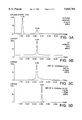
- FIG. 3 shows radio-UV-LC-MS spectral diagrams.
- the present invention makes it possible to, in oxygenation involving various substances, detect trace unstable metabolites or reaction intermediates which has conventionally been difficult to detect. It is thus possible to apply the present invention to clarification of reaction mechanism, studies on functions displayed in biological cells and tissues, and to various medical and biochemical uses as well as to chemical synthesis.
- the label by 15 O is positron nuclide: for example, the one used for positron emission tomography is applicable, which may be introduced during oxygenation reaction.
- reaction substrate in enzymatic reaction There is no particular limitation on reaction substrate in enzymatic reaction, kind of enzyme, kind of raw material substance and catalyst in catalytic reaction and means for identifying the product, and various embodiments are possible.
- the present invention provides an advantage of monitoring the presence of an unknown metabolite (oxygen additive) with 15 O and determining the structure of that portion from the presence of 17 O or 18 O without hurry, spending a sufficient time.
- an unknown metabolite oxygen additive
- Various embodiments are possible also for this simultaneous use.
- FIG. 1 illustrates a typical experimental system for the model reaction in the present invention.
- 15 O was prepared through a steady 14 N(d,n) 15 O reaction by means of a baby cyclotron, and was supplied to the experiment on an oxygen-nitrogen mixed gas flow at a ratio of 1% O 2 /99% N 2 and a flow rate of 250 ml/min.
- the product was identified by means of HPLC and LC-MS.
- FIG. 2 illustrates the relationship between the reaction time having demonstrated the participation in the 15 O 2 reaction and radioactivity.
- FIG. 3 shows the results of HPLC-mass spectrometry identification. Conditions for HPLC identification were as follows:
- FIG. 3 illustrates radio-UV-LC-MS spectra: the lowermost stage represents the substrate catechol. The first radioactive peak in the uppermost stage indicates 15 O in combination with the enzyme. Spectra for catechol and the products were scanned with 50 to 1,000 Da. Conditions for LC-MS identification were as follows:
- a chemical reaction such as an enzymatic reaction involving oxygen or a catalytic reaction
- evaluate oxygenation activity to detect a trace unstable substance such as an intermediate or the product of the reaction, to clarify the reaction mechanism, and furthermore, through simultaneous use of study with a stable isotope such as 18 O or 17 O, to apply in areas of synthesis chemistry, biochemistry regarding the process of metabolism in cells and labelling, and in medical science.
Landscapes
- Chemical & Material Sciences (AREA)
- Organic Chemistry (AREA)
- Life Sciences & Earth Sciences (AREA)
- Health & Medical Sciences (AREA)
- Wood Science & Technology (AREA)
- Proteomics, Peptides & Aminoacids (AREA)
- Zoology (AREA)
- Engineering & Computer Science (AREA)
- Immunology (AREA)
- General Engineering & Computer Science (AREA)
- Microbiology (AREA)
- Molecular Biology (AREA)
- Analytical Chemistry (AREA)
- Biotechnology (AREA)
- Physics & Mathematics (AREA)
- Biochemistry (AREA)
- Bioinformatics & Cheminformatics (AREA)
- Biophysics (AREA)
- General Health & Medical Sciences (AREA)
- Genetics & Genomics (AREA)
- Organic Low-Molecular-Weight Compounds And Preparation Thereof (AREA)
- Investigating Or Analysing Biological Materials (AREA)
- Measurement Of Radiation (AREA)
- Measuring Or Testing Involving Enzymes Or Micro-Organisms (AREA)
- Medicines Containing Antibodies Or Antigens For Use As Internal Diagnostic Agents (AREA)
Abstract
Description
              TABLE 1
______________________________________
Volume:       10 μl
Column:       KromaSil C18, 5μ
Size(mm):     100 × 4.6
λ:     360 nm
Mobile phase A:
              Aq
Mobile phase B:
              CH.sub.3 CN
Mobile phase C:
              CH.sub.3 CN/Aq 50/50, 100 mM HOMe
Flow (ml/min):
              1
Program:   Time         % B    % C
______________________________________
         0          1      3
         0.1        1      3
         6.1        97     3
         7          97     3
         8          1      3
         10         1      3
______________________________________
              TABLE 2
______________________________________
Sm(Mn, 2 × 3)
          Sm Smooth
          Mn Mean(smooth function)
          Window size (scans) +/-3
          Number of smoothes 2
ES-       Ionization mode: Negative electrospray
SIR       Selected Ion Recording
31 (1.110) Cm (31:34 - (36:55 + 23:30) written on spectra
        Spectra chosen at time 1.110
        Cm Combine spectra
        This means that spectra 31:35 are combined under the
        chromatografic peak, spectra 36:55 and 23:30 are
        subtracted as background.
______________________________________
Claims (5)
Applications Claiming Priority (1)
| Application Number | Priority Date | Filing Date | Title |
|---|---|---|---|
| JP06068096A JP3789972B2 (en) | 1996-03-18 | 1996-03-18 | Radiation detection method for oxygen addition reaction |
Publications (1)
| Publication Number | Publication Date |
|---|---|
| US5843784A true US5843784A (en) | 1998-12-01 |
Family
ID=34532090
Family Applications (1)
| Application Number | Title | Priority Date | Filing Date |
|---|---|---|---|
| US08/713,479 Expired - Fee Related US5843784A (en) | 1996-03-18 | 1996-09-13 | Radio-detection method of oxygenation reaction |
Country Status (3)
| Country | Link |
|---|---|
| US (1) | US5843784A (en) |
| JP (1) | JP3789972B2 (en) |
| CA (1) | CA2185306C (en) |
Cited By (2)
| Publication number | Priority date | Publication date | Assignee | Title |
|---|---|---|---|---|
| WO2006079982A1 (en) | 2005-01-28 | 2006-08-03 | Philips Intellectual Property & Standards Gmbh | Treatment system comprising a dielectric barrier discharge lamp |
| US20080038190A1 (en) * | 2006-08-11 | 2008-02-14 | Simpson Thomas J | Composition apparatus and method for use in imaging |
Families Citing this family (1)
| Publication number | Priority date | Publication date | Assignee | Title |
|---|---|---|---|---|
| JP4913938B2 (en) * | 2000-09-27 | 2012-04-11 | 財団法人電力中央研究所 | Nuclear reaction induction method and nuclear reaction induction device |
-
1996
- 1996-03-18 JP JP06068096A patent/JP3789972B2/en not_active Expired - Fee Related
- 1996-09-11 CA CA002185306A patent/CA2185306C/en not_active Expired - Fee Related
- 1996-09-13 US US08/713,479 patent/US5843784A/en not_active Expired - Fee Related
Non-Patent Citations (30)
| Title |
|---|
| Abstract of "The 68th Japan Biochemical Society Conference", Sep. 15 --Sep. 18, 1995. |
| Abstract of The 68th Japan Biochemical Society Conference , Sep. 15 Sep. 18, 1995. * |
| B. Hyllbrant et al. J. Labelled Comp. Radiopharm . 1995, 317, 704 705. * |
| B. Hyllbrant et al. J. Labelled Comp. Radiopharm. 1995, 317, 704-705. |
| B. L ngstr o m et al. Dev. Nucl. Med . 1995, 26, 37 50. * |
| B. Langstrom Acta Radiol. Supp . 1990, 374, 47 51. * |
| B. Langstrom Acta Radiol. Supp. 1990, 374, 47-51. |
| B. Långstrom et al. Dev. Nucl. Med. 1995, 26, 37-50. |
| E. Meyer et al. J. Cereb. Blood Flow Metab . 1987, 7, 403 414. * |
| E. Meyer et al. J. Cereb. Blood Flow Metab. 1987, 7, 403-414. |
| G. Jonkers et al. Nature 1992, 355, 63 66. * |
| G. Jonkers et al. Nature 1992, 355, 63-66. |
| K.A. Vonkeman et al. Stud. Surf. Gci Catal . 1991, 71, 239 252. * |
| K.A. Vonkeman et al. Stud. Surf. Gci Catal. 1991, 71, 239-252. |
| M. Sajjad et al. Radiochim. Acta . 1985, 38, 57 63. * |
| M. Sajjad et al. Radiochim. Acta. 1985, 38, 57-63. |
| M. Yuasa et al. Chem. Lett . 1984, 1889 1892. * |
| M. Yuasa et al. Chem. Lett. 1984, 1889-1892. |
| M.M. Ter Pogossian et al. J. Clin. Invest , 1970, 49, 381 391. * |
| M.M. Ter Pogossian et al. Semin. Nucl. Med . 1985, 15, 377 394. * |
| M.M. Ter-Pogossian et al. J. Clin. Invest, 1970, 49, 381-391. |
| M.M. Ter-Pogossian et al. Semin. Nucl. Med. 1985, 15, 377-394. |
| M.S. Berridge et al J. Nucl. Med . 1990, 31, 1727 1731. * |
| M.S. Berridge et al J. Nucl. Med. 1990, 31, 1727-1731. |
| R.E. Bigler et al. J. Nucl. Med . 1981, 22, 959 965. * |
| R.E. Bigler et al. J. Nucl. Med. 1981, 22, 959-965. |
| R.P. Fogel et al. Nucl. Phys. A 1972, 187, 624 636. * |
| R.P. Fogel et al. Nucl. Phys. A 1972, 187, 624-636. |
| Y. Watanabe et al. Biochem. Biophys. Res. Commun . 1997, 231, 131 134. * |
| Y. Watanabe et al. Biochem. Biophys. Res. Commun. 1997, 231, 131-134. |
Cited By (4)
| Publication number | Priority date | Publication date | Assignee | Title |
|---|---|---|---|---|
| WO2006079982A1 (en) | 2005-01-28 | 2006-08-03 | Philips Intellectual Property & Standards Gmbh | Treatment system comprising a dielectric barrier discharge lamp |
| US20080185536A1 (en) * | 2005-01-28 | 2008-08-07 | Koninklijke Philips Electronics, N.V. | Treatment System Comprising a Dielectric Barrier Discharge Lamp |
| US7683343B2 (en) | 2005-01-28 | 2010-03-23 | Koninklijke Philips Electronics N.V. | Treatment system comprising a dielectric barrier discharge lamp |
| US20080038190A1 (en) * | 2006-08-11 | 2008-02-14 | Simpson Thomas J | Composition apparatus and method for use in imaging |
Also Published As
| Publication number | Publication date |
|---|---|
| JPH09251096A (en) | 1997-09-22 |
| CA2185306C (en) | 2004-10-26 |
| JP3789972B2 (en) | 2006-06-28 |
| CA2185306A1 (en) | 1997-09-19 |
Similar Documents
| Publication | Publication Date | Title |
|---|---|---|
| Korfhage et al. | Phthalocyanine-containing chemically modified electrodes for electrochemical detection in liquid chromatography/flow injection systems | |
| JP2002514302A (en) | A continuous isotope monitoring system that tracks fluorine-based chemical reactions | |
| Tiller et al. | Application of liquid chromatography–mass spectrometryn analyses to the characterization of novel glyburide metabolites formed in vitro | |
| Englard et al. | . gamma.-Butyrobetaine hydroxylase: stereochemical course of the hydroxylation reaction | |
| Hintikka et al. | Liquid chromatographic–mass spectrometric analysis of glucuronide‐conjugated anabolic steroid metabolites: method validation and interlaboratory comparison | |
| Mitchum et al. | Atmospheric pressure ionization mass spectrometry | |
| Fowler | Relative stabilities of the N-methyldihydropyridines | |
| Göldner et al. | Development of an electrochemical flow‐through cell for the fast and easy generation of isotopically labeled metabolite standards | |
| US5843784A (en) | Radio-detection method of oxygenation reaction | |
| Fenselau | Gas chromatography mass spectrometry: a report on the state of the art | |
| Subhahar et al. | Detection and identification of ACP‐105 and its metabolites in equine urine using LC/MS/MS after oral administration | |
| Hardwick et al. | Structural Characterization of Nitazene Analogs Using Electrospray Ionization–Tandem Mass Spectrometry (ESI–MS/MS) | |
| Marzo et al. | L-Carnitine moiety assay: an up-to-date reappraisal covering the commonest methods for various applications | |
| Walker et al. | Identification of N, N-dimethyltryptamine as the product of an in vitro enzymic methylation | |
| Shibasaki et al. | Stable isotope dilution mass spectrometry for the simultaneous determination of cortisol, cortisone, prednisolone and prednisone in plasma | |
| Davies et al. | Hydrogen/deuterium exchange on aromatic rings during atmospheric pressure chemical ionization mass spectrometry | |
| Ohmori et al. | Fluorimetric and high-performance liquid chromatographic determination of D-lactate in biological samples | |
| Edlund et al. | Identification of BVT. 2938 metabolites by LC/MS and LC/MS/MS after in vitro incubations with liver microsomes and hepatocytes | |
| Dueker et al. | Protocol development for biological tracer studies | |
| Rosenberg et al. | Measurement of heavy atom kinetic isotope effects by direct mass spectrometric analysis | |
| Gorsen et al. | Analysis of procarbazine and metabolites by gas chromatography—mass spectrometry | |
| Åberg et al. | Structural elucidation of N‐oxidized clemastine metabolites by liquid chromatography/tandem mass spectrometry and the use of Cunninghamella elegans to facilitate drug metabolite identification | |
| Axelsson et al. | Carbon-11/carbon-14 kinetic isotope effects in enzyme mechanism studies. 11C/14C Kinetic isotope effect of the tyrosine phenol-lyase catalyzed. alpha.,. beta.-elimination of L-tyrosine | |
| Paneth | Some analytical aspects of the measurement of heavy-atom kinetic isotope effects | |
| Zhang et al. | Pharmacokinetics of S‐epacadostat, an indoleamine 2, 3‐dioxygenase 1 inhibitor, in dog plasma and identification of its metabolites in vivo and in vitro |
Legal Events
| Date | Code | Title | Description |
|---|---|---|---|
| AS | Assignment |
Owner name: RESEARCH DEVELOPMENT CORPORATION OF JAPAN, JAPAN Free format text: ASSIGNMENT OF ASSIGNORS INTEREST;ASSIGNORS:WATANABE, YASUYOSHI;LANGSTROM, BENGT;REEL/FRAME:008289/0254 Effective date: 19961114 |
|
| CC | Certificate of correction | ||
| FPAY | Fee payment |
Year of fee payment: 4 |
|
| FEPP | Fee payment procedure |
Free format text: PAYOR NUMBER ASSIGNED (ORIGINAL EVENT CODE: ASPN); ENTITY STATUS OF PATENT OWNER: LARGE ENTITY |
|
| FPAY | Fee payment |
Year of fee payment: 8 |
|
| REMI | Maintenance fee reminder mailed | ||
| LAPS | Lapse for failure to pay maintenance fees | ||
| STCH | Information on status: patent discontinuation |
Free format text: PATENT EXPIRED DUE TO NONPAYMENT OF MAINTENANCE FEES UNDER 37 CFR 1.362 |
|
| FP | Lapsed due to failure to pay maintenance fee |
Effective date: 20101201 |