US5834457A - Method of modulating radical formation by mutant cuznsod enzymes - Google Patents
Method of modulating radical formation by mutant cuznsod enzymes Download PDFInfo
- Publication number
- US5834457A US5834457A US08/592,704 US59270496A US5834457A US 5834457 A US5834457 A US 5834457A US 59270496 A US59270496 A US 59270496A US 5834457 A US5834457 A US 5834457A
- Authority
- US
- United States
- Prior art keywords
- cuznsod
- mutant
- ddc
- wild type
- penicillamine
- Prior art date
- Legal status (The legal status is an assumption and is not a legal conclusion. Google has not performed a legal analysis and makes no representation as to the accuracy of the status listed.)
- Expired - Lifetime
Links
Images


Classifications
-
- A—HUMAN NECESSITIES
- A61—MEDICAL OR VETERINARY SCIENCE; HYGIENE
- A61K—PREPARATIONS FOR MEDICAL, DENTAL OR TOILETRY PURPOSES
- A61K31/00—Medicinal preparations containing organic active ingredients
- A61K31/13—Amines
-
- A—HUMAN NECESSITIES
- A61—MEDICAL OR VETERINARY SCIENCE; HYGIENE
- A61K—PREPARATIONS FOR MEDICAL, DENTAL OR TOILETRY PURPOSES
- A61K31/00—Medicinal preparations containing organic active ingredients
- A61K31/045—Hydroxy compounds, e.g. alcohols; Salts thereof, e.g. alcoholates
- A61K31/05—Phenols
-
- A—HUMAN NECESSITIES
- A61—MEDICAL OR VETERINARY SCIENCE; HYGIENE
- A61K—PREPARATIONS FOR MEDICAL, DENTAL OR TOILETRY PURPOSES
- A61K31/00—Medicinal preparations containing organic active ingredients
- A61K31/16—Amides, e.g. hydroxamic acids
- A61K31/17—Amides, e.g. hydroxamic acids having the group >N—C(O)—N< or >N—C(S)—N<, e.g. urea, thiourea, carmustine
- A61K31/175—Amides, e.g. hydroxamic acids having the group >N—C(O)—N< or >N—C(S)—N<, e.g. urea, thiourea, carmustine having the group, >N—C(O)—N=N— or, e.g. carbonohydrazides, carbazones, semicarbazides, semicarbazones; Thioanalogues thereof
-
- A—HUMAN NECESSITIES
- A61—MEDICAL OR VETERINARY SCIENCE; HYGIENE
- A61K—PREPARATIONS FOR MEDICAL, DENTAL OR TOILETRY PURPOSES
- A61K31/00—Medicinal preparations containing organic active ingredients
- A61K31/185—Acids; Anhydrides, halides or salts thereof, e.g. sulfur acids, imidic, hydrazonic or hydroximic acids
- A61K31/19—Carboxylic acids, e.g. valproic acid
- A61K31/195—Carboxylic acids, e.g. valproic acid having an amino group
- A61K31/197—Carboxylic acids, e.g. valproic acid having an amino group the amino and the carboxyl groups being attached to the same acyclic carbon chain, e.g. gamma-aminobutyric acid [GABA], beta-alanine, epsilon-aminocaproic acid or pantothenic acid
- A61K31/198—Alpha-amino acids, e.g. alanine or edetic acid [EDTA]
-
- A—HUMAN NECESSITIES
- A61—MEDICAL OR VETERINARY SCIENCE; HYGIENE
- A61K—PREPARATIONS FOR MEDICAL, DENTAL OR TOILETRY PURPOSES
- A61K31/00—Medicinal preparations containing organic active ingredients
- A61K31/325—Carbamic acids; Thiocarbamic acids; Anhydrides or salts thereof
-
- A—HUMAN NECESSITIES
- A61—MEDICAL OR VETERINARY SCIENCE; HYGIENE
- A61K—PREPARATIONS FOR MEDICAL, DENTAL OR TOILETRY PURPOSES
- A61K31/00—Medicinal preparations containing organic active ingredients
- A61K31/33—Heterocyclic compounds
- A61K31/335—Heterocyclic compounds having oxygen as the only ring hetero atom, e.g. fungichromin
- A61K31/35—Heterocyclic compounds having oxygen as the only ring hetero atom, e.g. fungichromin having six-membered rings with one oxygen as the only ring hetero atom
- A61K31/352—Heterocyclic compounds having oxygen as the only ring hetero atom, e.g. fungichromin having six-membered rings with one oxygen as the only ring hetero atom condensed with carbocyclic rings, e.g. methantheline
- A61K31/353—3,4-Dihydrobenzopyrans, e.g. chroman, catechin
- A61K31/355—Tocopherols, e.g. vitamin E
-
- A—HUMAN NECESSITIES
- A61—MEDICAL OR VETERINARY SCIENCE; HYGIENE
- A61K—PREPARATIONS FOR MEDICAL, DENTAL OR TOILETRY PURPOSES
- A61K31/00—Medicinal preparations containing organic active ingredients
- A61K31/33—Heterocyclic compounds
- A61K31/335—Heterocyclic compounds having oxygen as the only ring hetero atom, e.g. fungichromin
- A61K31/365—Lactones
- A61K31/375—Ascorbic acid, i.e. vitamin C; Salts thereof
-
- A—HUMAN NECESSITIES
- A61—MEDICAL OR VETERINARY SCIENCE; HYGIENE
- A61K—PREPARATIONS FOR MEDICAL, DENTAL OR TOILETRY PURPOSES
- A61K31/00—Medicinal preparations containing organic active ingredients
- A61K31/33—Heterocyclic compounds
- A61K31/395—Heterocyclic compounds having nitrogen as a ring hetero atom, e.g. guanethidine or rifamycins
- A61K31/40—Heterocyclic compounds having nitrogen as a ring hetero atom, e.g. guanethidine or rifamycins having five-membered rings with one nitrogen as the only ring hetero atom, e.g. sulpiride, succinimide, tolmetin, buflomedil
-
- A—HUMAN NECESSITIES
- A61—MEDICAL OR VETERINARY SCIENCE; HYGIENE
- A61K—PREPARATIONS FOR MEDICAL, DENTAL OR TOILETRY PURPOSES
- A61K31/00—Medicinal preparations containing organic active ingredients
- A61K31/33—Heterocyclic compounds
- A61K31/395—Heterocyclic compounds having nitrogen as a ring hetero atom, e.g. guanethidine or rifamycins
- A61K31/40—Heterocyclic compounds having nitrogen as a ring hetero atom, e.g. guanethidine or rifamycins having five-membered rings with one nitrogen as the only ring hetero atom, e.g. sulpiride, succinimide, tolmetin, buflomedil
- A61K31/4015—Heterocyclic compounds having nitrogen as a ring hetero atom, e.g. guanethidine or rifamycins having five-membered rings with one nitrogen as the only ring hetero atom, e.g. sulpiride, succinimide, tolmetin, buflomedil having oxo groups directly attached to the heterocyclic ring, e.g. piracetam, ethosuximide
-
- A—HUMAN NECESSITIES
- A61—MEDICAL OR VETERINARY SCIENCE; HYGIENE
- A61K—PREPARATIONS FOR MEDICAL, DENTAL OR TOILETRY PURPOSES
- A61K31/00—Medicinal preparations containing organic active ingredients
- A61K31/33—Heterocyclic compounds
- A61K31/395—Heterocyclic compounds having nitrogen as a ring hetero atom, e.g. guanethidine or rifamycins
- A61K31/435—Heterocyclic compounds having nitrogen as a ring hetero atom, e.g. guanethidine or rifamycins having six-membered rings with one nitrogen as the only ring hetero atom
- A61K31/44—Non condensed pyridines; Hydrogenated derivatives thereof
- A61K31/4427—Non condensed pyridines; Hydrogenated derivatives thereof containing further heterocyclic ring systems
- A61K31/444—Non condensed pyridines; Hydrogenated derivatives thereof containing further heterocyclic ring systems containing a six-membered ring with nitrogen as a ring heteroatom, e.g. amrinone
-
- A—HUMAN NECESSITIES
- A61—MEDICAL OR VETERINARY SCIENCE; HYGIENE
- A61P—SPECIFIC THERAPEUTIC ACTIVITY OF CHEMICAL COMPOUNDS OR MEDICINAL PREPARATIONS
- A61P21/00—Drugs for disorders of the muscular or neuromuscular system
- A61P21/04—Drugs for disorders of the muscular or neuromuscular system for myasthenia gravis
Definitions
- the present invention relates to methods for modulating radical formation and treating a subject with amyotrophic lateral sclerosis (ALS; Lou Gehrig's disease).
- the invention relates to methods of treating subjects with a mutant copper-zinc superoxide dismutase (CuZnSOD) protein.
- Invention treatment involves administration of a copper chelating agent to prevent or reduce the ability of the mutant CuZnSOD protein to generate hydroxyl radicals, or to decrease the peroxidase activity of the mutant CuZnSOD protein.
- invention treatment can be accomplished by administration of a radical scavenging agent to scavenge the hydroxyl radicals formed by the mutant CuZnSOD protein.
- the invention relates to methods of treating a subject having DNA encoding a mutant CuZnSOD protein by administration of an agent to inhibit the expression of such DNA.
- ALS is a motor neuron degenerative disease that affects approximately one person in ten thousand. About 10-15% of cases are familial (R. H. Brown, Jr., Cell 80:687 (1995)), and 20-25% of familial ALS (FALS) cases are associated with dominantly inherited mutations in sod1, the gene that encodes human CuZnSOD (D. R. Rosen, et al., Nature 362:59 (1993)).
- FALS familial ALS
- CuZnSOD is a homodimeric enzyme containing one copper and one zinc ion per subunit. It is a major antioxidant enzyme, found in virtually all eukaryotic cells. CuZnSOD catalyzes the disproportionation of superoxide to O 2 and H 2 O 2 (J. M. McCord and I. Fridovich, J. Biol. Chem. 244:6049 (1969); and I. Fridovich, Ann. Rev. Biochem. 64:97 (1995)). In 1975, Hodgson and Fridovich reported that CuZnSOD could be inactivated by H 2 O 2 , and suggested that the mechanism for this inactivation was oxidative inactivation of active site histidine residues (Biochem.
- CuZnSOD catalyzes oxidation of substrates by H 2 O 2 at rates competitive with its own oxidative inactivation by the same reagent (Hodgson and Fridovich, (1975), supra (both articles), and Cabelli, (1989), supra).
- a convenient substrate used to study this type of reaction is the spin trapping agent 5,5'-dimethyl-1-pyrroline N-oxide (DMPO), which reacts with H 2 O 2 to give its electron paramagnetic resonance (EPR)-detectable hydroxyl adduct, DMPO-OH.
- the hydroxyl radicals could exit from the active site channel, causing oxidative damage to other molecules within the short range of hydroxyl radical diffusion.
- the radicals could be scavenged by small anionic molecules (e.g., formate or glutamate) capable of entering the active site channel. Although such a reaction would prevent damage to CuZnSOD, thereby prolonging the enzyme's half-life, the resulting scavenger radicals (e.g., formyl or glutamyl radicals) could potentially diffuse away from the enzyme and interact with targets beyond the range of hydroxyl radical diffusion (Yim, et al., (1993), supra).
- FALS-associated mutant CuZnSODs, A4V and G93A have been discovered to catalyze the oxidation of substrates using hydrogen peroxide (peroxidase activity) at higher rates than that of wild type CuZnSOD.
- the copper chelator diethyldithiocarbamate (DDC) has been found to inhibit this activity in the mutant CuZnSODs A4V and G93A at concentrations significantly lower than required for DDC to inhibit wild type CuZnSOD.
- DDC reverses the effect of four FALS-associated mutants, but does not alter the survival of cells expressing only wild type CuZnSOD.
- This invention demonstrates that ALS caused by mutant CuZnSODs is treatable.
- copper chelating agents are shown to be capable of inhibiting the hydroxyl radical forming activities of mutant CuZnSOD enzymes at levels that do not have a significant effect on the SOD activity of the mutant or wild type enzyme.
- the beneficial actions of the enzyme may be preserved while treating the harmful, disease-causing actions.
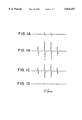
- FIG. 1(A)-(D) illustrate the EPR spectra of the DMPO-OH adduct formed by fully metallated wild type and mutant CuZnSODs, and by copper ions.
- FIG. 1(A) was generated using 1.25 ⁇ M wild type CuZnSOD;
- FIG. 1(B) was generated using 1.25 ⁇ M CuZnSOD mutant A4V;
- FIG. 1(C) was generated using 1.25 ⁇ M CuZnSOD mutant G93A; and
- FIG. 1(D) was generated using 2.5 ⁇ M CuSO 4 .
- FIG. 2(A)-(E) illustrate the EPR spectra of the DMPO-OH adduct formed by wild type CuZnSOD and mutant A4V with varying degrees of copper metallation of the proteins.
- FIG. 2(A) was generated using copper-free enzyme;
- FIG. 2(B) was generated using 25% copper metallated;
- FIG. 2(C) was generated using 50% copper metallated;
- FIG. 2(D) was generated using 75% copper metallated; and
- FIG. 2(E) was generated using 100% copper metallated.
- FIG. 3(A)-(C) illustrate the EPR spectra of the DMPO-OH adducts formed by wild type, A4V, and G93A CuZnSOD with varying concentrations of DDC.
- FIG. 3(A) was generated with no DDC added;
- FIG. 3(B) was generated with 0.62 ⁇ M DDC (0.25 equivalents per enzyme subunit copper); and
- FIG. 3(C) was generated with 10 ⁇ M DDC (4.0 equivalents per enzyme subunit copper).
- FIG. 4(A)-(B) illustrates the concentrations of DMPO-OH adducts formed during the reaction of H 2 O 2 (30 ⁇ ) with wild type, A4V, and G93A CuZnSOD with varying concentrations of DDC.
- FIG. 4(A) shows two trials with wild type CuZnSOD; and
- FIG. 4(B) shows the mutant CuZnSOD results. Filled circles and filled squares: wild type CuZnSOD, two separate experiments; open triangles: CuZnSOD mutant G37R; open circles: CuZnSOD mutant A4V.
- FIG. 5 illustrates the superoxide dismutase activity of purified wild type CuZnSOD and mutant CuZnSOD enzymes A4V and G93A with varying concentrations of DDC. Filled squares: wild type CuZnSOD; filled circles: CuZnSOD mutant G37R; filled triangles: CuZnSOD mutant A4V.
- FIG. 6 illustrates the viability of CSM 14.1 cells expressing wild type and mutant CuZnSODs, with increasing concentrations of DDC added to the growth media.
- Filled circles wild type CuZnSOD; filled squares: control (vector only); open diamonds: CuZnSOD mutant G37R; open triangles: CuZnSOD mutant A4V; open squares: CuZnSOD mutant G41D; open circles: CuZnSOD mutant G85R. Error bars represent standard error.
- FIG. 7 illustrates the cellular viability shown in FIG. 6, expressed as percent improvement in survival relative to control transfectants, with a DDC concentration of 100 ⁇ M.
- a subject with ALS or a subject susceptible to developing ALS
- methods of treating a subject with ALS by administering to said subject an amount of a copper chelating agent effective to ameliorate the symptoms of ALS.
- the present invention is based on the hypothesis that the FALS-associated mutant CuZnSODs might enhance the catalytic generation of radicals from H 2 O 2 or the peroxidase activity of the enzyme.
- mutant human CuZnSODs A4V, G37R
- Apoptosis programmeed cell death
- wild type CuZnSOD inhibits apoptosis
- Apoptosis in many paradigms is mediated by reactive oxygen species (T. A. Sarafian and D. E. Bredesen, Free Radic. Res.
- the amplitude of the signal generated by the CuZnSOD mutant A4V was reproducibly greater than that from the CuZnSOD mutant G93A, which was, in turn reproducibly greater than that from wild type CuZnSOD.
- the apoenzymes did not produce hydroxyl radicals detectable by EPR (FIG. 2(A)). With increasing degrees of metallation, the enzymes gave increasing DMPO-OH specific EPR signals due to hydroxyl radical production (FIG. 2(B)-(E)). Differences between wild type and mutant enzymes were seen at all degrees of metallation. The increase in the EPR signals was not simply due to free copper in solution, since free Cu 2+ without any enzyme does not give a significant EPR signal (FIG. 1(D)). Neither could the spectra be explained simply by the preferential loss of zinc from the mutant CuZnSODs, since the zinc-free derivatives of wild type CuZnSODs gave results similar to the fully metallated wild type enzyme.
- DDC Diethyldithiocarbamate
- DDC 25-100 ⁇ M added to the cultures inhibited apoptosis induced by all four mutant CuZnSODs from 30-70%, but had no effect on cells overexpressing wild type CuZnSOD (FIGS. 6 and 7).
- DDC at a concentration of 500 ⁇ M decreased the viability of the cells expressing wild type CuZnSOD but continued to rescue the cells expressing the mutant CuZnSODs.
- DDC at a concentration of 1 mM or greater was toxic in all groups.
- one aspect of the invention is the modulation of radical formation and the treatment of ALS by administration to a subject of a copper chelating agent in a pharmaceutically acceptable vehicle.
- Classes of copper chelating agents contemplated for use in the practice of the present invention include in particular those with access to the active site channel of mutant CuZnSOD.
- Particular copper chelating agents contemplated for use in the practice of the present invention include DDC, penicillamine, catechol, diethylenetriaminepentaacetic acid, diisopropylsalicylate, dithizone, ethylenediaminetetraacetic acid, tetraethylenepentamine, triethylenetetramine, tetrakis-2-(pyridylmethyl) ethylenediamine, and the like.
- a presently preferred copper chelating agent contemplated for use in the practice of the present invention is DDC.
- DDC is preferably used to treat a subject by administration of about 0.001 to about 1 g of DDC per kg body weight of the subject.
- the required dosage will vary with the severity of the condition and with the duration of desired treatment, and this should be determined by and administered under the guidance of a physician.
- 0.1 g of DDC per kg body weight is administered to the subject. More important than the amount administered to a subject is the concentration of the DDC that is achieved in the subject's neural cells.
- the optimal intracellular concentration of DDC is relatively the same as the intracellular concentration of the CuZnSOD enzyme.
- the preferred intracellular concentration is in the range of about 0.01 to about 1 ⁇ M.
- a sufficient amount of DDC is administered so as to achieve an extracellular DDC concentration in the range of about 10 to about 500 ⁇ M.
- the extracellular DDC concentration will be about 100 ⁇ M.
- penicillamine When penicillamine is used, it is preferably administered in an amount of about 0.001 to about 1 g of penicillamine per kg body weight of the subject. In a presently preferred embodiment, 0.1 g of penicillamine per kg body weight is administered to the subject. More important than the amount administered to a subject is the concentration of the penicillamine that is achieved in the subject's neural cells.
- the optimal intracellular concentration of penicillamine is relatively the same as the intracellular concentration of the CuZnSOD enzyme.
- the preferred intracellular concentration is in the range of about 0.01 to about 1 ⁇ M penicillamine.
- a sufficient amount of penicillamine is administered so as to achieve an extracellular penicillamine concentration in the range of about 10 to about 500 ⁇ M. In a presently preferred embodiment, the extracellular penicillamine concentration will be about 100 ⁇ M.
- Another aspect of the invention is the modulation of radical formation and the treatment of ALS by administration to a subject of a radical scavenging agent in a pharmaceutically acceptable vehicle.
- Classes of radical scavenging agents include thiol reagents, lipid-soluble antioxidants, water-soluble antioxidants, spin-trapping agents, and the like.
- Particular radical scavenging agents contemplated for use in the invention include DMPO, tocopherol, ascorbate, N-acetylcysteine, N-t- ⁇ -phenylnitrone, and the like.
- a presently preferred radical scavenging agent is DMPO.
- DMPO is preferably used to treat a subject by administration of about 0.001 to about 1 g of DMPO per kg body weight of the subject. In a presently preferred embodiment, 0.01 g of DMPO per kg body weight is administered to the subject. More important than the amount administered to a subject is the concentration of the DMPO that is achieved in the subject's neural cells.
- a sufficient amount of DMPO is administered so as to achieve a cellular DMPO concentration in the range of about 10 to about 1000 ⁇ M. In a presently preferred embodiment, the cellular DMPO concentration will be about 45 ⁇ M.
- ALS caused by mutant sod1 genes may be inherited in a dominant manner.
- afflicted subjects may have both a wild type and a mutant version of the gene within their genome.
- the expression of the mutant gene could be inhibited, the disease state would be reduced or abated, while the wild type gene could express a sufficient amount of the active, wild type enzyme to provide the SOD activity required by the patient.
- another aspect of the invention is the modulation of radical formation and the treatment of ALS by administration to a subject of an expression inhibitor in an amount effective to inhibit expression of the DNA encoding the mutant sod 1 protein.
- a variety of methods to achieve this aim will be apparent to those of ordinary skill in the art, including the use of antisense DNA or RNA, the use of retroviral constructs that will integrate specifically into the mutant gene to prevent expression thereof, adenoviral vectors, and the like.
- sod1 genes have been elucidated, including A4V, G93A, G37R, G41D, G85R, I112T, I113T, D90A, E100, L106, V148, H43, H46R, L38V, L144, and the like.
- A4V is known to be involved in a particularly severe form of ALS, and therefore may be the most suited to treatment by the invention methods.
- the results of the work done in developing the invention demonstrate a qualitatively different chemistry for the active site copper of the CuZnSOD mutants A4V and G93A as compared to the wild type enzyme.
- the alteration in reactivity of the CuZnSOD mutants A4V and G93A relative to the wild type CuZnSOD enzyme is demonstrated by their responses to the chelating agent DDC.
- hydroxyl radical generation by the wild type CuZnSOD is slightly enhanced by stoichiometric amounts of DDC, similar amounts markedly reduce hydroxyl radical generation by the mutants (FIGS. 3 and 4).
- wild type CuZnSOD shows no loss of SOD activity at concentrations of DDC that cause substantial reduction of the SOD activity of CuZnSOD mutants A4V and G93A (FIG. 5).
- Results both from previous studies (Yim (1990), supra) and the present invention show that hydroxyl radical generation requires an active CuZnSOD; neither apoenzyme nor boiled, inactivated enzyme demonstrates the effect.
- the enhancement of hydroxyl radical generation by the CuZnSOD mutants A4V and G93A is not mimicked by zinc-free derivatives of wild type CuZnSOD nor by adding free copper to the solution.
- the enhancement of hydroxyl radical generation by the CuZnSOD mutants A4V and G93A is due to the reactivity of copper within the active site of CuZnSOD.
- Free hydroxyl radicals react at diffusion-controlled rates and are therefore likely to be scavenged by small-molecule antioxidants immediately after they are produced in vivo. It is more likely that a small, anionic substrate(s), such as formate or glutamate, scavenges the hydroxyl radical within the active site channel, forming free radical products such as formyl or glutamyl radicals, which in turn may participate in more long range oxidative reactions.
- a small, anionic substrate(s) such as formate or glutamate
- Hydroxyl radical formation by mutant and wild type CuZnSODs was determined by measuring the amount of adduct formed when the radical scavenging agent 5,5'-dimethyl-1-pyrroline N-oxide (DMPO) was added to the hydroxyl radical forming reaction.
- the amount of the DMPO-OH radical adduct formed was determined by measurement of the unique EPR spectra signals of the adduct.
- Reactions were carried out as described (Yim (1990), supra), with minor modifications.
- Reaction mixes consisted of 1.25 ⁇ M protein (or 2.5 ⁇ M CuSO 4 ), 45 mM DMPO (Aldrich) in 23.5 mM NaHCO 3 buffer (pH 7.4) balanced with 5% CO 2 /95% N 2 gas.
- 30 mM hydrogen peroxide was injected to start the reaction.
- EPR spectra were recorded on a Bruker ER 200 D at room temperature, operated at 9.5 GHz with a modulation frequency of 100 KHz. Conditions were: microwave power 20.7 milliwatts, modulation amplitude 1 Gauss (G), time constant 10 ms, sweep width 100 G with 2046 point resolution.
- G modulation amplitude 1 Gauss
- the signals shown in FIG. 1(A)-(D) are representative; measurements were repeated 5 to 10 times, always paired with the wild type protein. Double integration of these signals using the spin label carbamoyl-proxyl (Aldrich) as a standard to quantitate the hydroxyl radical production showed that wild type CuZnSOD produced 3.2 ⁇ M, CuZnSOD mutant A4V produced 15.6 ⁇ M, CuZnSOD mutant G93A produced 6.5 ⁇ M, and CuSO 4 produced 1.9 ⁇ M hydroxyl radical in this experiment.
- Hydroxyl radical formation by wild type and mutant A4V CuZnSODs was determined with varying degrees of copper metallation of the enzymes.
- the same methodology was used as in Example 1, with the samples containing 1.25 ⁇ M enzyme, 45 mM DMPO and 30 mM H 2 O 2 in 23.5 mM NaHC 3 O buffer, pH 7.4. Experiments were repeated three times, and representative signals, recorded at 3 minutes post-initiation, are shown in FIG. 2(A)-(E).
- the mutant A4V CuZnSOD produced more adduct at all levels of metallation, although neither enzyme produced any measurable adduct when no copper was present.
- Hydroxyl radical formation was next measured as varying amounts of DDC were added to the reaction. Experiments were performed as described in Example 1, and repeated 2-3 times. DDC was freshly prepared, and added to the CuZnSOD immediately before adding the DMPO and injecting the H 2 O 2 . EPR spectra, shown in FIG. 3(A)-(C), were recorded at 2.5 minutes post-initiation. While DDC caused a slight increase in adduct production by wild type CuZnSOD enzyme, a sharp decrease in adduct production is seen in both mutant enzyme samples.
- FIG. 4 shows the data of FIG. 3(A)-(C) plotted as hydroxyl radical formation (i.e., adduct concentration) vs. DDC concentration.
- adduct concentration i.e., adduct concentration
- Temperature-sensitive nigral neural cells (SCM 14.1) were transfected with wild type and A4V, G37R, G85R, and G41D mutant CuZnSOD constructs by methods described previously (Rabizadeh (1995), supra). Following selection in puromycin (7 ⁇ g/ml), cells were plated onto 96-well plates. DDC was added at concentrations of 25 ⁇ M-1 mM to cells in serum-free media. Viability was assessed at 60 hours, by methods described in Rabizadeh (1995), and is shown in FIG. 6. There was no significant improvement at any DDC concentration for the cells transfected with the wild type CuZnSOD construct.
- FIG. 7 illustrates the improvement in viability of the various transfected cell lines when DDC was added at a concentration of 100 ⁇ M, as opposed to viability with no added DDC in the growth media. This was calculated as follows:
- Vm(x) is defined as the viability of mutant transfected cells at x concentration of DDC
- Vm(0) is defined as viability of mutant transfected cells at a DDC concentration of
- Vc(0) is defined as viability of control transfected cells at a DDC concentration of 0.
- Standard errors were computed by the delta method for computing the asymptotic standard error for the estimate of a nonlinear function (D. Colquhoun, Lectures on Biostatistics (Clarendon Press, 1971) pp. 39-42).
- CuZnSOD enzyme proteins used in Examples 1-4, were prepared as follows. cDNA clones for wild type CuZnSOD, ALS CuZnSOD mutant A4V, and ALS CuZnSOD mutant G93A, under the control of the yeast CuZnSOD promoter, were cloned into the yeast shuttle vector YEp351, and transformed into yeast strain EG118, which is null for yeast sod1 (Rabizadeh (1995), supra). Cultures of 10 liters were grown in highly aerated, YEPD medium (5% yeast extract, 10% peptone, 2% dextrose) for 24 hours. Cells were harvested by centrifugation, and lysed using an equal volume of 0.5 mm glass beads in a blender.
- Protein purification was as described previously (Lu (1993), supra) with the addition of a final Sephadex G75 chromatography step.
- the purified proteins were homogeneous, as indicated by SDS-polyacrylamide gel electrophoresis. For each batch, 50-200 mg of purified protein was obtained.
- Human CuZnSOD expressed in yeast is properly N-terminal acetylated (R. A. Hallewell, et al., Bio/Tech. 5:363 (1987)).
- the identities of the purified mutant proteins were verified by electrospray mass spectrometry, which detected the change in mass due to single amino acid substitutions. For both wild type and mutant CuZnSOD proteins, the observed and predicted masses corresponded, within 2-4 atomic mass units.
Landscapes
- Health & Medical Sciences (AREA)
- Chemical & Material Sciences (AREA)
- Medicinal Chemistry (AREA)
- Pharmacology & Pharmacy (AREA)
- Life Sciences & Earth Sciences (AREA)
- Animal Behavior & Ethology (AREA)
- General Health & Medical Sciences (AREA)
- Public Health (AREA)
- Veterinary Medicine (AREA)
- Epidemiology (AREA)
- Engineering & Computer Science (AREA)
- Bioinformatics & Cheminformatics (AREA)
- Neurology (AREA)
- Orthopedic Medicine & Surgery (AREA)
- Physical Education & Sports Medicine (AREA)
- Chemical Kinetics & Catalysis (AREA)
- General Chemical & Material Sciences (AREA)
- Nuclear Medicine, Radiotherapy & Molecular Imaging (AREA)
- Organic Chemistry (AREA)
- Enzymes And Modification Thereof (AREA)
- Medicines That Contain Protein Lipid Enzymes And Other Medicines (AREA)
- Acyclic And Carbocyclic Compounds In Medicinal Compositions (AREA)
Abstract
Description
Enz-Cu.sup.II +H.sub.2 O.sub.2 →Enz-Cu.sup.I +O.sub.2.sup.- +2H.sup.+( 1)
Enz-Cu.sup.I +HO.sub.2.sup.- +H.sup.+ →Enz-Cu.sup.II (.OH)+OH.sup.-( 2)
Enz-Cu.sup.II (.OH)+X.sup.- →Enz-Cu.sup.II +X.+OH.sup.-( 3)
viability= Vm(x)-Vm(0)!/ Vc(0)-Vm(0)!
Claims (20)
Priority Applications (6)
| Application Number | Priority Date | Filing Date | Title |
|---|---|---|---|
| US08/592,704 US5834457A (en) | 1996-01-26 | 1996-01-26 | Method of modulating radical formation by mutant cuznsod enzymes |
| JP09527058A JP2000515491A (en) | 1996-01-26 | 1997-01-24 | Method for modifying radical formation by mutant CuZnSOD enzyme |
| CA002244711A CA2244711A1 (en) | 1996-01-26 | 1997-01-24 | Methods of modulating radical formation by mutant cuznsod enzymes |
| AU17107/97A AU1710797A (en) | 1996-01-26 | 1997-01-24 | Methods of modulating radical formation by mutant cuznsod enzymes |
| PCT/US1997/001228 WO1997026791A1 (en) | 1996-01-26 | 1997-01-24 | METHODS OF MODULATING RADICAL FORMATION BY MUTANT CuZnSOD ENZYMES |
| EP97903119A EP0893951A4 (en) | 1996-01-26 | 1997-01-24 | METHODS OF MODULATING RADICAL FORMATION USING MUTANT CuZnSOD ENZYMES |
Applications Claiming Priority (1)
| Application Number | Priority Date | Filing Date | Title |
|---|---|---|---|
| US08/592,704 US5834457A (en) | 1996-01-26 | 1996-01-26 | Method of modulating radical formation by mutant cuznsod enzymes |
Publications (1)
| Publication Number | Publication Date |
|---|---|
| US5834457A true US5834457A (en) | 1998-11-10 |
Family
ID=24371747
Family Applications (1)
| Application Number | Title | Priority Date | Filing Date |
|---|---|---|---|
| US08/592,704 Expired - Lifetime US5834457A (en) | 1996-01-26 | 1996-01-26 | Method of modulating radical formation by mutant cuznsod enzymes |
Country Status (6)
| Country | Link |
|---|---|
| US (1) | US5834457A (en) |
| EP (1) | EP0893951A4 (en) |
| JP (1) | JP2000515491A (en) |
| AU (1) | AU1710797A (en) |
| CA (1) | CA2244711A1 (en) |
| WO (1) | WO1997026791A1 (en) |
Cited By (10)
| Publication number | Priority date | Publication date | Assignee | Title |
|---|---|---|---|---|
| US6022879A (en) * | 1997-10-15 | 2000-02-08 | Uab Research Foundation | Bathocuproine treatment of neurologic disease |
| US6231852B1 (en) * | 1993-11-18 | 2001-05-15 | The Regents Of The University Of California | Method for reducing BCL-2 expressing cells resistance to death |
| US20030055113A1 (en) * | 2000-12-01 | 2003-03-20 | Xuefeng Wang | Copper chelators for treating ocular inflammation |
| WO2004033723A3 (en) * | 2002-10-09 | 2004-06-03 | Imp College Innovations Ltd | Neurodegenerative disease-associated gene |
| US20070292410A1 (en) * | 2005-12-02 | 2007-12-20 | Cashman Neil R | Methods and compositions to treat and detect misfolded-sod1 mediated diseases |
| US20080132685A1 (en) * | 2005-12-02 | 2008-06-05 | Avijit Chakrabartty | Methods and Compositions for Detecting Amyotrophic Lateral Sclerosis |
| US20080206251A1 (en) * | 2005-12-02 | 2008-08-28 | Cashman Neil R | Methods and Compositions to Treat and Detect Misfolded-SOD1 Mediated Diseases |
| US7754765B2 (en) | 2000-12-01 | 2010-07-13 | Radical Vision Therapeutics Inc | Copper chelators for treating ocular inflammation |
| WO2011041584A2 (en) | 2009-09-30 | 2011-04-07 | President And Fellows Of Harvard College | Methods for modulation of autophagy through the modulation of autophagy-enhancing gene products |
| US20110124018A1 (en) * | 2003-08-20 | 2011-05-26 | Amorfix Life Sciences Ltd. | Detection of pathogenic polypeptides using an epitope protection assay |
Families Citing this family (2)
| Publication number | Priority date | Publication date | Assignee | Title |
|---|---|---|---|---|
| GB0518890D0 (en) * | 2005-09-15 | 2005-10-26 | Ucl Biomedica Plc | Method of determining damage to skin |
| WO2024208828A1 (en) * | 2023-04-03 | 2024-10-10 | Deutsches Krebsforschungszentrum Stiftung des öffentlichen Rechts | Radioprotection by inhibition of superoxide dismutase 1 |
Family Cites Families (5)
| Publication number | Priority date | Publication date | Assignee | Title |
|---|---|---|---|---|
| DE4307883A1 (en) * | 1992-03-12 | 1993-09-23 | Westarp Martin Egon Dr Med | Use of anti-retroviral substances - to treat motor-neuronal diseases |
| US5716929A (en) * | 1994-06-17 | 1998-02-10 | Vertex Pharmaceuticals, Inc. | Inhibitors of interleukin-1β converting enzyme |
| US5681711A (en) * | 1995-03-27 | 1997-10-28 | University Of California-Los Angeles | Method for promoting apoptosis in mammalian neual cells |
| ATE306936T1 (en) * | 1995-06-07 | 2005-11-15 | Univ Duke | CATCHER FOR OXIDANTS |
| AU6887996A (en) * | 1995-09-01 | 1997-04-01 | Washington University School Of Medicine | Method of reducing neurotoxic injury with zinc chelators |
-
1996
- 1996-01-26 US US08/592,704 patent/US5834457A/en not_active Expired - Lifetime
-
1997
- 1997-01-24 CA CA002244711A patent/CA2244711A1/en not_active Abandoned
- 1997-01-24 AU AU17107/97A patent/AU1710797A/en not_active Abandoned
- 1997-01-24 JP JP09527058A patent/JP2000515491A/en active Pending
- 1997-01-24 WO PCT/US1997/001228 patent/WO1997026791A1/en not_active Ceased
- 1997-01-24 EP EP97903119A patent/EP0893951A4/en not_active Withdrawn
Non-Patent Citations (22)
| Title |
|---|
| Borchelt et al., "Superoxide dismutase 1 with mutations linked to familial amyotrohic lateral sclerosis possesses significant activity," Proc. Natl. Acad. Sci. USA, vol. 91, pp. 8292-8296, Aug. 1994. |
| Borchelt et al., Superoxide dismutase 1 with mutations linked to familial amyotrohic lateral sclerosis possesses significant activity, Proc. Natl. Acad. Sci. USA, vol. 91, pp. 8292 8296, Aug. 1994. * |
| Collard et al. "Defective axonal transport in a transgenic mouse model of amyotrophic lateral sclerosis" Nature 375:61-64 (1995). |
| Collard et al. Defective axonal transport in a transgenic mouse model of amyotrophic lateral sclerosis Nature 375:61 64 (1995). * |
| Conradi, et al., "Long-tme penicallamine-treatment in amyotrophic lateral sclerosis with parallel determination of lead in blood, plasma and urine", Acta Neurol. Scandinav., vol. 65, pp. 203-211, 1983. |
| Conradi, et al., Long tme penicallamine treatment in amyotrophic lateral sclerosis with parallel determination of lead in blood, plasma and urine , Acta Neurol. Scandinav., vol. 65, pp. 203 211, 1983. * |
| Deng et al., "Two novel SOD1 mutations in patients with familial amyotrophic lateral sclerosis", Human Molecular Genetics, vol. 4, No. 6, pp. 1113-1116, 1995. |
| Deng et al., Two novel SOD1 mutations in patients with familial amyotrophic lateral sclerosis , Human Molecular Genetics, vol. 4, No. 6, pp. 1113 1116, 1995. * |
| Gurney et al., "Motor Neuron Degeneration in Mice That Express a Human Cu,Zn Superoxide Dismutase Mutation," Science, vol. 264, pp. 1772-1775, 17 Jun. 1994. |
| Gurney et al., Motor Neuron Degeneration in Mice That Express a Human Cu,Zn Superoxide Dismutase Mutation, Science, vol. 264, pp. 1772 1775, 17 Jun. 1994. * |
| Misra. "Reaction of Copper-Zinc Superoxide Dismutase with Diethyldithiocarbamate" The Journal of Biological Chemistry 254 No. 22:11623-11628 (1979). |
| Misra. Reaction of Copper Zinc Superoxide Dismutase with Diethyldithiocarbamate The Journal of Biological Chemistry 254 No. 22:11623 11628 (1979). * |
| Nishida et al. "Characterization of three yeast copper-zinc superoxide dismutase mutatns analogous to those coded for in familial amyotrophic lateral sclerosis" Pro. Natl. Acad. Sci. USA. 91:9906-9910 (1994). |
| Nishida et al. Characterization of three yeast copper zinc superoxide dismutase mutatns analogous to those coded for in familial amyotrophic lateral sclerosis Pro. Natl. Acad. Sci. USA. 91:9906 9910 (1994). * |
| Pardo et al. "Superoxide dismutase is an abundant component in cell bodies, dendrites, and axons of motor neurons and in a subset of other neurons" Proc. Natl. Acad. Sci. USA 92: 954-958 (1995). |
| Pardo et al. Superoxide dismutase is an abundant component in cell bodies, dendrites, and axons of motor neurons and in a subset of other neurons Proc. Natl. Acad. Sci. USA 92: 954 958 (1995). * |
| Rabizadeh, S., "Mutations associated with amyotrophic lateral sclerosis convert superoxide dismutase from an antiapoptotic gene to a proapoptoitic gene: Studies in yeast and neural cells," Proc. Natl. Acad. Sci. USA, vol. 92, pp. 3024-3028, Mar. 1995. |
| Rabizadeh, S., Mutations associated with amyotrophic lateral sclerosis convert superoxide dismutase from an antiapoptotic gene to a proapoptoitic gene: Studies in yeast and neural cells, Proc. Natl. Acad. Sci. USA, vol. 92, pp. 3024 3028, Mar. 1995. * |
| Yim et al. "Enzyme Function of Copper, Zinc Superoxide Dismutase as a Free Radical Generator" The Journal of Biological Chemistry 268 No. 6:4099-4105 (1993). |
| Yim et al. Enzyme Function of Copper, Zinc Superoxide Dismutase as a Free Radical Generator The Journal of Biological Chemistry 268 No. 6:4099 4105 (1993). * |
| Zhong et al., "bcl-2 inhibits death of central neural cells induced by multiple agents," Proc. Natl. Acad. Sci. USA, vol. 90, pp. 4533-4537, May 1993. |
| Zhong et al., bcl 2 inhibits death of central neural cells induced by multiple agents, Proc. Natl. Acad. Sci. USA, vol. 90, pp. 4533 4537, May 1993. * |
Cited By (23)
| Publication number | Priority date | Publication date | Assignee | Title |
|---|---|---|---|---|
| US6231852B1 (en) * | 1993-11-18 | 2001-05-15 | The Regents Of The University Of California | Method for reducing BCL-2 expressing cells resistance to death |
| US6022879A (en) * | 1997-10-15 | 2000-02-08 | Uab Research Foundation | Bathocuproine treatment of neurologic disease |
| US20030055113A1 (en) * | 2000-12-01 | 2003-03-20 | Xuefeng Wang | Copper chelators for treating ocular inflammation |
| WO2002043722A3 (en) * | 2000-12-01 | 2003-10-02 | Univ British Columbia | Copper chelators for treating ocular inflammation |
| US7754765B2 (en) | 2000-12-01 | 2010-07-13 | Radical Vision Therapeutics Inc | Copper chelators for treating ocular inflammation |
| WO2004033723A3 (en) * | 2002-10-09 | 2004-06-03 | Imp College Innovations Ltd | Neurodegenerative disease-associated gene |
| US9625476B2 (en) | 2003-08-20 | 2017-04-18 | Promis Neurosciences Inc. | Methods of diagnosing ALS |
| US9523697B2 (en) | 2003-08-20 | 2016-12-20 | Promis Neurosciences Inc. | Detection of pathogenic abeta using an epitope protection assay |
| US8828389B2 (en) | 2003-08-20 | 2014-09-09 | Amorfix Life Sciences Ltd. | Methods of diagnosing ALS |
| US20110124018A1 (en) * | 2003-08-20 | 2011-05-26 | Amorfix Life Sciences Ltd. | Detection of pathogenic polypeptides using an epitope protection assay |
| US20110020358A1 (en) * | 2005-12-02 | 2011-01-27 | Amorfix Life Sciences Ltd. | Methods and Compositions for Detecting Amyotrophic Lateral Sclerosis |
| US7887803B2 (en) | 2005-12-02 | 2011-02-15 | Amorfix Life Sciences | Methods and compositions to treat misfolded-SOD1 mediated diseases |
| US7794692B2 (en) | 2005-12-02 | 2010-09-14 | Amorfix Life Sciences Ltd. | Methods and compositions for detecting amyotrophic lateral sclerosis |
| US7977314B2 (en) | 2005-12-02 | 2011-07-12 | Amorfix Life Sciences Limited | Methods and compositions to treat and detect misfolded-SOD1 mediated diseases |
| US8513387B2 (en) | 2005-12-02 | 2013-08-20 | Amorfix Life Sciences Ltd. | Methods and compositions for detecting amyotrophic lateral sclerosis |
| US8709422B2 (en) | 2005-12-02 | 2014-04-29 | Amorfix Life Sciences Ltd. | Methods and compositions to treat and detect misfolded-SOD1 mediated diseases |
| US8778885B2 (en) | 2005-12-02 | 2014-07-15 | Amorfix Life Sciences Ltd. | Methods and compositions to treat and detect misfolded-SOD1 mediated diseases |
| US20080206251A1 (en) * | 2005-12-02 | 2008-08-28 | Cashman Neil R | Methods and Compositions to Treat and Detect Misfolded-SOD1 Mediated Diseases |
| US20080132685A1 (en) * | 2005-12-02 | 2008-06-05 | Avijit Chakrabartty | Methods and Compositions for Detecting Amyotrophic Lateral Sclerosis |
| US20070292410A1 (en) * | 2005-12-02 | 2007-12-20 | Cashman Neil R | Methods and compositions to treat and detect misfolded-sod1 mediated diseases |
| US9637552B2 (en) | 2005-12-02 | 2017-05-02 | Promis Neurosciences Inc. | Methods and compositions to treat and detect misfolded-SOD1 mediated diseases |
| WO2011041584A2 (en) | 2009-09-30 | 2011-04-07 | President And Fellows Of Harvard College | Methods for modulation of autophagy through the modulation of autophagy-enhancing gene products |
| WO2011041582A2 (en) | 2009-09-30 | 2011-04-07 | President And Fellows Of Harvard College | Methods for modulation of autophagy through the modulation of autophagy-inhibiting gene products |
Also Published As
| Publication number | Publication date |
|---|---|
| AU1710797A (en) | 1997-08-20 |
| EP0893951A1 (en) | 1999-02-03 |
| EP0893951A4 (en) | 2003-04-23 |
| JP2000515491A (en) | 2000-11-21 |
| WO1997026791A1 (en) | 1997-07-31 |
| CA2244711A1 (en) | 1997-07-31 |
Similar Documents
| Publication | Publication Date | Title |
|---|---|---|
| Kuhn et al. | Tryptophan hydroxylase. The role of oxygen, iron, and sulfhydryl groups as determinants of stability and catalytic activity. | |
| Nishio et al. | Cigarette smoke extract inhibits plasma paraoxonase activity by modification of the enzyme's free thiols | |
| Moss et al. | Activation of murine microglial cell lines by lipopolysaccharide and interferon‐γ causes NO‐mediated decreases in mitochondrial and cellular function | |
| Kuzkaya et al. | Interactions of peroxynitrite with uric acid in the presence of ascorbate and thiols: implications for uncoupling endothelial nitric oxide synthase | |
| Craven et al. | Electron spin resonance study of the role of NO. catalase in the activation of guanylate cyclase by NaN3 and NH2OH. Modulation of enzyme responses by heme proteins and their nitrosyl derivatives. | |
| de Mello Filho et al. | Protection of mammalian cells by o-phenanthroline from lethal and DNA-damaging effects produced by active oxygen species | |
| Biemond et al. | Iron mobilization from ferritin by superoxide derived from stimulated polymorphonuclear leukocytes. Possible mechanism in inflammation diseases. | |
| Rotilio et al. | Properties of the apoprotein and role of copper and zinc in protein conformation and enzyme activity of bovine superoxide dismutase | |
| Menconi et al. | Nitric oxide donor-induced hyperpermeability of cultured intestinal epithelial monolayers: role of superoxide radical, hydroxyl radical, and peroxynitrite | |
| Yim et al. | A gain-of-function of an amyotrophic lateral sclerosis-associated Cu, Zn-superoxide dismutase mutant: An enhancement of free radical formation due to a decrease in Km for hydrogen peroxide. | |
| Bolann et al. | Release of iron from ferritin by xanthine oxidase. Role of the superoxide radical | |
| Zager et al. | Iron, heme oxygenase, and glutathione: effects on myohemoglobinuric proximal tubular injury | |
| Kuzkaya et al. | Interactions of peroxynitrite, tetrahydrobiopterin, ascorbic acid, and thiols: implications for uncoupling endothelial nitric-oxide synthase | |
| Thayer et al. | Synthesis of adenosine triphosphate by an artificially imposed electrochemical proton gradient in bovine heart submitochondrial particles. | |
| Girotti et al. | Inhibitory effect of zinc (II) on free radical lipid peroxidation in erythrocyte membranes | |
| Sinha | Enzymatic activation of hydrazine derivatives. A spin-trapping study. | |
| US5834457A (en) | Method of modulating radical formation by mutant cuznsod enzymes | |
| Aruoma et al. | Evaluation of the ability of the angiotensin-converting enzyme inhibitor captopril to scavenge reactive oxygen species | |
| Grady et al. | Hydroxyl radical production during oxidative deposition of iron in ferritin | |
| Gupta et al. | Nitric oxide attenuates hydrogen peroxide-mediated injury to porcine pulmonary artery endothelial cells | |
| Pieper et al. | Detection by ESR of DMPO hydroxyl adduct formation from islets of langerhans | |
| Gille et al. | Generation of hydroxyl radicals mediated by streptozotocin in pancreatic islets of mice in vitro | |
| Zöllner et al. | Nitroxides increase the detectable amount of nitric oxide released from endothelial cells | |
| Sato et al. | Nitric oxide generation from hydroxyurea via copper‐catalyzed peroxidation and implications for pharmacological actions of hydroxyurea | |
| Velsor et al. | Influence of epithelial lining fluid lipids on NO2-induced membrane oxidation and nitration |
Legal Events
| Date | Code | Title | Description |
|---|---|---|---|
| AS | Assignment |
Owner name: REGENTS OF THE UNIVERSITY OF CALIFORNIA, THE, CALI Free format text: ASSIGNMENT OF ASSIGNORS INTEREST;ASSIGNORS:VALENTINE, JOAN S.;WIEDAU-PAZOS, MARTINA;GOTO, JOY J.;AND OTHERS;SIGNING DATES FROM 19960716 TO 19960808;REEL/FRAME:008103/0135 Owner name: CALIFORNIA, UNIVERSITY OF, THE, REGENTS OF, CALIFO Free format text: ASSIGNMENT OF ASSIGNORS INTEREST;ASSIGNORS:VALENTINE, JOAN S.;WIEDAU-PAZOS, MARTINA;GOTO, JOY J.;AND OTHERS;REEL/FRAME:008103/0135;SIGNING DATES FROM 19960716 TO 19960808 |
|
| AS | Assignment |
Owner name: REGENTS OF THE UNIVERSITY OF CALIFORNIA, THE, CALI Free format text: ASSIGNMENT OF ASSIGNORS INTEREST;ASSIGNOR:BREDESEN, DALE E.;REEL/FRAME:008111/0164 Effective date: 19960826 Owner name: BURNHAM INSTITUTE, THE, CALIFORNIA Free format text: ASSIGNMENT OF ASSIGNORS INTEREST;ASSIGNOR:BREDESEN, DALE E.;REEL/FRAME:008111/0164 Effective date: 19960826 |
|
| STCF | Information on status: patent grant |
Free format text: PATENTED CASE |
|
| CC | Certificate of correction | ||
| FEPP | Fee payment procedure |
Free format text: PAYOR NUMBER ASSIGNED (ORIGINAL EVENT CODE: ASPN); ENTITY STATUS OF PATENT OWNER: SMALL ENTITY |
|
| FPAY | Fee payment |
Year of fee payment: 4 |
|
| REMI | Maintenance fee reminder mailed | ||
| FPAY | Fee payment |
Year of fee payment: 8 |
|
| FPAY | Fee payment |
Year of fee payment: 12 |
|
| AS | Assignment |
Owner name: NATIONAL INSTITUTES OF HEALTH (NIH), U.S. DEPT. OF Free format text: CONFIRMATORY LICENSE;ASSIGNOR:UNIVERSITY OF CALIFORNIA;REEL/FRAME:028109/0055 Effective date: 20070908 |