US5830722A - Clostridium bifermentans DNA fragment bearing genes coding for proteins linked to an insecticidal activity - Google Patents
Clostridium bifermentans DNA fragment bearing genes coding for proteins linked to an insecticidal activity Download PDFInfo
- Publication number
- US5830722A US5830722A US08/569,166 US56916696A US5830722A US 5830722 A US5830722 A US 5830722A US 56916696 A US56916696 A US 56916696A US 5830722 A US5830722 A US 5830722A
- Authority
- US
- United States
- Prior art keywords
- protein
- seq
- fragment
- polypeptide
- nucleotide sequence
- Prior art date
- Legal status (The legal status is an assumption and is not a legal conclusion. Google has not performed a legal analysis and makes no representation as to the accuracy of the status listed.)
- Expired - Fee Related
Links
- 108090000623 proteins and genes Proteins 0.000 title claims abstract description 121
- 239000012634 fragment Substances 0.000 title claims abstract description 97
- 102000004169 proteins and genes Human genes 0.000 title claims abstract description 95
- 241000193157 Paraclostridium bifermentans Species 0.000 title description 18
- 230000000749 insecticidal effect Effects 0.000 title description 2
- 108090000765 processed proteins & peptides Proteins 0.000 claims abstract description 88
- 239000002773 nucleotide Substances 0.000 claims abstract description 70
- 125000003729 nucleotide group Chemical group 0.000 claims abstract description 70
- 102000004196 processed proteins & peptides Human genes 0.000 claims abstract description 68
- 229920001184 polypeptide Polymers 0.000 claims abstract description 67
- 230000000974 larvacidal effect Effects 0.000 claims abstract description 47
- 239000013612 plasmid Substances 0.000 claims abstract description 46
- 241000255925 Diptera Species 0.000 claims abstract description 36
- 239000000203 mixture Substances 0.000 claims abstract description 24
- 230000002588 toxic effect Effects 0.000 claims abstract description 24
- 239000000523 sample Substances 0.000 claims abstract description 23
- 230000014509 gene expression Effects 0.000 claims abstract description 20
- LWGJTAZLEJHCPA-UHFFFAOYSA-N n-(2-chloroethyl)-n-nitrosomorpholine-4-carboxamide Chemical compound ClCCN(N=O)C(=O)N1CCOCC1 LWGJTAZLEJHCPA-UHFFFAOYSA-N 0.000 claims abstract description 20
- 150000001413 amino acids Chemical class 0.000 claims description 42
- 239000000284 extract Substances 0.000 claims description 33
- 108091034117 Oligonucleotide Proteins 0.000 claims description 28
- 210000004027 cell Anatomy 0.000 claims description 26
- 125000003275 alpha amino acid group Chemical group 0.000 claims description 17
- 239000013598 vector Substances 0.000 claims description 17
- 241000193386 Lysinibacillus sphaericus Species 0.000 claims description 12
- FAPWRFPIFSIZLT-UHFFFAOYSA-M Sodium chloride Chemical compound [Na+].[Cl-] FAPWRFPIFSIZLT-UHFFFAOYSA-M 0.000 claims description 12
- 241000193388 Bacillus thuringiensis Species 0.000 claims description 11
- 241000894006 Bacteria Species 0.000 claims description 11
- 230000001413 cellular effect Effects 0.000 claims description 11
- 101710142159 Protein P16 Proteins 0.000 claims description 10
- 230000028070 sporulation Effects 0.000 claims description 9
- 231100000331 toxic Toxicity 0.000 claims description 9
- 239000007984 Tris EDTA buffer Substances 0.000 claims description 8
- 101710142331 Protein P18 Proteins 0.000 claims description 6
- JLCPHMBAVCMARE-UHFFFAOYSA-N [3-[[3-[[3-[[3-[[3-[[3-[[3-[[3-[[3-[[3-[[3-[[5-(2-amino-6-oxo-1H-purin-9-yl)-3-[[3-[[3-[[3-[[3-[[3-[[5-(2-amino-6-oxo-1H-purin-9-yl)-3-[[5-(2-amino-6-oxo-1H-purin-9-yl)-3-hydroxyoxolan-2-yl]methoxy-hydroxyphosphoryl]oxyoxolan-2-yl]methoxy-hydroxyphosphoryl]oxy-5-(5-methyl-2,4-dioxopyrimidin-1-yl)oxolan-2-yl]methoxy-hydroxyphosphoryl]oxy-5-(6-aminopurin-9-yl)oxolan-2-yl]methoxy-hydroxyphosphoryl]oxy-5-(6-aminopurin-9-yl)oxolan-2-yl]methoxy-hydroxyphosphoryl]oxy-5-(6-aminopurin-9-yl)oxolan-2-yl]methoxy-hydroxyphosphoryl]oxy-5-(6-aminopurin-9-yl)oxolan-2-yl]methoxy-hydroxyphosphoryl]oxyoxolan-2-yl]methoxy-hydroxyphosphoryl]oxy-5-(5-methyl-2,4-dioxopyrimidin-1-yl)oxolan-2-yl]methoxy-hydroxyphosphoryl]oxy-5-(4-amino-2-oxopyrimidin-1-yl)oxolan-2-yl]methoxy-hydroxyphosphoryl]oxy-5-(5-methyl-2,4-dioxopyrimidin-1-yl)oxolan-2-yl]methoxy-hydroxyphosphoryl]oxy-5-(5-methyl-2,4-dioxopyrimidin-1-yl)oxolan-2-yl]methoxy-hydroxyphosphoryl]oxy-5-(6-aminopurin-9-yl)oxolan-2-yl]methoxy-hydroxyphosphoryl]oxy-5-(6-aminopurin-9-yl)oxolan-2-yl]methoxy-hydroxyphosphoryl]oxy-5-(4-amino-2-oxopyrimidin-1-yl)oxolan-2-yl]methoxy-hydroxyphosphoryl]oxy-5-(4-amino-2-oxopyrimidin-1-yl)oxolan-2-yl]methoxy-hydroxyphosphoryl]oxy-5-(4-amino-2-oxopyrimidin-1-yl)oxolan-2-yl]methoxy-hydroxyphosphoryl]oxy-5-(6-aminopurin-9-yl)oxolan-2-yl]methoxy-hydroxyphosphoryl]oxy-5-(4-amino-2-oxopyrimidin-1-yl)oxolan-2-yl]methyl [5-(6-aminopurin-9-yl)-2-(hydroxymethyl)oxolan-3-yl] hydrogen phosphate Polymers Cc1cn(C2CC(OP(O)(=O)OCC3OC(CC3OP(O)(=O)OCC3OC(CC3O)n3cnc4c3nc(N)[nH]c4=O)n3cnc4c3nc(N)[nH]c4=O)C(COP(O)(=O)OC3CC(OC3COP(O)(=O)OC3CC(OC3COP(O)(=O)OC3CC(OC3COP(O)(=O)OC3CC(OC3COP(O)(=O)OC3CC(OC3COP(O)(=O)OC3CC(OC3COP(O)(=O)OC3CC(OC3COP(O)(=O)OC3CC(OC3COP(O)(=O)OC3CC(OC3COP(O)(=O)OC3CC(OC3COP(O)(=O)OC3CC(OC3COP(O)(=O)OC3CC(OC3COP(O)(=O)OC3CC(OC3COP(O)(=O)OC3CC(OC3COP(O)(=O)OC3CC(OC3COP(O)(=O)OC3CC(OC3COP(O)(=O)OC3CC(OC3CO)n3cnc4c(N)ncnc34)n3ccc(N)nc3=O)n3cnc4c(N)ncnc34)n3ccc(N)nc3=O)n3ccc(N)nc3=O)n3ccc(N)nc3=O)n3cnc4c(N)ncnc34)n3cnc4c(N)ncnc34)n3cc(C)c(=O)[nH]c3=O)n3cc(C)c(=O)[nH]c3=O)n3ccc(N)nc3=O)n3cc(C)c(=O)[nH]c3=O)n3cnc4c3nc(N)[nH]c4=O)n3cnc4c(N)ncnc34)n3cnc4c(N)ncnc34)n3cnc4c(N)ncnc34)n3cnc4c(N)ncnc34)O2)c(=O)[nH]c1=O JLCPHMBAVCMARE-UHFFFAOYSA-N 0.000 claims description 6
- 239000011780 sodium chloride Substances 0.000 claims description 6
- 241000193403 Clostridium Species 0.000 claims description 5
- 239000004480 active ingredient Substances 0.000 claims description 5
- 239000008188 pellet Substances 0.000 claims description 5
- 101710151559 Crystal protein Proteins 0.000 claims description 4
- 241000193365 Bacillus thuringiensis serovar israelensis Species 0.000 claims description 3
- 241000256113 Culicidae Species 0.000 claims description 3
- 239000000287 crude extract Substances 0.000 claims description 3
- 238000012258 culturing Methods 0.000 claims description 3
- 238000012217 deletion Methods 0.000 claims description 3
- 230000037430 deletion Effects 0.000 claims description 3
- 239000002243 precursor Substances 0.000 claims description 3
- 238000005406 washing Methods 0.000 claims description 3
- 238000007792 addition Methods 0.000 claims description 2
- 210000003527 eukaryotic cell Anatomy 0.000 claims description 2
- 230000008105 immune reaction Effects 0.000 claims description 2
- 230000010076 replication Effects 0.000 claims description 2
- 238000006467 substitution reaction Methods 0.000 claims description 2
- 241000894007 species Species 0.000 claims 1
- 108020005187 Oligonucleotide Probes Proteins 0.000 abstract description 8
- 239000002751 oligonucleotide probe Substances 0.000 abstract description 8
- 241000255129 Phlebotominae Species 0.000 abstract 1
- 235000018102 proteins Nutrition 0.000 description 78
- 229940024606 amino acid Drugs 0.000 description 41
- 235000001014 amino acid Nutrition 0.000 description 41
- 108020004707 nucleic acids Proteins 0.000 description 30
- 102000039446 nucleic acids Human genes 0.000 description 30
- 150000007523 nucleic acids Chemical class 0.000 description 30
- 108020004414 DNA Proteins 0.000 description 23
- 230000000875 corresponding effect Effects 0.000 description 13
- 108700012359 toxins Proteins 0.000 description 13
- 238000000034 method Methods 0.000 description 12
- 239000003053 toxin Substances 0.000 description 12
- 231100000765 toxin Toxicity 0.000 description 12
- 241000588724 Escherichia coli Species 0.000 description 10
- 108091028043 Nucleic acid sequence Proteins 0.000 description 10
- 238000009396 hybridization Methods 0.000 description 10
- 239000000047 product Substances 0.000 description 10
- 241000238631 Hexapoda Species 0.000 description 9
- 238000012360 testing method Methods 0.000 description 9
- 238000002415 sodium dodecyl sulfate polyacrylamide gel electrophoresis Methods 0.000 description 8
- 230000015572 biosynthetic process Effects 0.000 description 7
- 238000002474 experimental method Methods 0.000 description 7
- 238000003786 synthesis reaction Methods 0.000 description 7
- 231100000419 toxicity Toxicity 0.000 description 7
- 230000001988 toxicity Effects 0.000 description 7
- 241001414900 Anopheles stephensi Species 0.000 description 6
- 230000000295 complement effect Effects 0.000 description 6
- 241000283973 Oryctolagus cuniculus Species 0.000 description 5
- 238000004458 analytical method Methods 0.000 description 5
- 230000000694 effects Effects 0.000 description 5
- 239000012528 membrane Substances 0.000 description 5
- 238000002360 preparation method Methods 0.000 description 5
- 101710154545 16 kDa protein Proteins 0.000 description 4
- 101710194912 18 kDa protein Proteins 0.000 description 4
- 241000238421 Arthropoda Species 0.000 description 4
- 101710124086 Envelope protein UL45 Proteins 0.000 description 4
- 241001028048 Nicola Species 0.000 description 4
- 101710162629 Trypsin inhibitor Proteins 0.000 description 4
- 238000004587 chromatography analysis Methods 0.000 description 4
- 238000010367 cloning Methods 0.000 description 4
- 238000001962 electrophoresis Methods 0.000 description 4
- 230000001418 larval effect Effects 0.000 description 4
- 101150000874 11 gene Proteins 0.000 description 3
- 101710132383 66 kDa protein Proteins 0.000 description 3
- FKQPWMZLIIATBA-AJNGGQMLSA-N Leu-Lys-Ile Chemical compound [H]N[C@@H](CC(C)C)C(=O)N[C@@H](CCCCN)C(=O)N[C@@H]([C@@H](C)CC)C(O)=O FKQPWMZLIIATBA-AJNGGQMLSA-N 0.000 description 3
- 239000000020 Nitrocellulose Substances 0.000 description 3
- HEMHJVSKTPXQMS-UHFFFAOYSA-M Sodium hydroxide Chemical compound [OH-].[Na+] HEMHJVSKTPXQMS-UHFFFAOYSA-M 0.000 description 3
- 239000002671 adjuvant Substances 0.000 description 3
- 230000001580 bacterial effect Effects 0.000 description 3
- 230000006037 cell lysis Effects 0.000 description 3
- 238000004925 denaturation Methods 0.000 description 3
- 230000036425 denaturation Effects 0.000 description 3
- 238000001514 detection method Methods 0.000 description 3
- 230000001900 immune effect Effects 0.000 description 3
- 238000001114 immunoprecipitation Methods 0.000 description 3
- 229920001220 nitrocellulos Polymers 0.000 description 3
- 231100000252 nontoxic Toxicity 0.000 description 3
- 230000003000 nontoxic effect Effects 0.000 description 3
- 238000002264 polyacrylamide gel electrophoresis Methods 0.000 description 3
- 238000012216 screening Methods 0.000 description 3
- 238000012163 sequencing technique Methods 0.000 description 3
- 239000013605 shuttle vector Substances 0.000 description 3
- XLYOFNOQVPJJNP-UHFFFAOYSA-N water Chemical compound O XLYOFNOQVPJJNP-UHFFFAOYSA-N 0.000 description 3
- 241000193830 Bacillus <bacterium> Species 0.000 description 2
- 235000019750 Crude protein Nutrition 0.000 description 2
- 241000256059 Culex pipiens Species 0.000 description 2
- 102000053602 DNA Human genes 0.000 description 2
- 108010067770 Endopeptidase K Proteins 0.000 description 2
- 102000004190 Enzymes Human genes 0.000 description 2
- 108090000790 Enzymes Proteins 0.000 description 2
- 241000282326 Felis catus Species 0.000 description 2
- 102000006382 Ribonucleases Human genes 0.000 description 2
- 108010083644 Ribonucleases Proteins 0.000 description 2
- 230000008901 benefit Effects 0.000 description 2
- 230000015556 catabolic process Effects 0.000 description 2
- 230000001276 controlling effect Effects 0.000 description 2
- 238000007796 conventional method Methods 0.000 description 2
- 230000007423 decrease Effects 0.000 description 2
- 238000006731 degradation reaction Methods 0.000 description 2
- 230000000967 entomopathogenic effect Effects 0.000 description 2
- GNBHRKFJIUUOQI-UHFFFAOYSA-N fluorescein Chemical compound O1C(=O)C2=CC=CC=C2C21C1=CC=C(O)C=C1OC1=CC(O)=CC=C21 GNBHRKFJIUUOQI-UHFFFAOYSA-N 0.000 description 2
- 239000000499 gel Substances 0.000 description 2
- 238000002523 gelfiltration Methods 0.000 description 2
- 230000002779 inactivation Effects 0.000 description 2
- 238000002372 labelling Methods 0.000 description 2
- 238000006386 neutralization reaction Methods 0.000 description 2
- 108091008146 restriction endonucleases Proteins 0.000 description 2
- 238000000527 sonication Methods 0.000 description 2
- 241001148471 unidentified anaerobic bacterium Species 0.000 description 2
- QIJRTFXNRTXDIP-UHFFFAOYSA-N (1-carboxy-2-sulfanylethyl)azanium;chloride;hydrate Chemical compound O.Cl.SCC(N)C(O)=O QIJRTFXNRTXDIP-UHFFFAOYSA-N 0.000 description 1
- QKNYBSVHEMOAJP-UHFFFAOYSA-N 2-amino-2-(hydroxymethyl)propane-1,3-diol;hydron;chloride Chemical compound Cl.OCC(N)(CO)CO QKNYBSVHEMOAJP-UHFFFAOYSA-N 0.000 description 1
- KMEMIMRPZGDOMG-UHFFFAOYSA-N 2-cyanoethoxyphosphonamidous acid Chemical compound NP(O)OCCC#N KMEMIMRPZGDOMG-UHFFFAOYSA-N 0.000 description 1
- 101710112984 20 kDa protein Proteins 0.000 description 1
- HRPVXLWXLXDGHG-UHFFFAOYSA-N Acrylamide Chemical compound NC(=O)C=C HRPVXLWXLXDGHG-UHFFFAOYSA-N 0.000 description 1
- 241000251468 Actinopterygii Species 0.000 description 1
- 241000256118 Aedes aegypti Species 0.000 description 1
- 108010088751 Albumins Proteins 0.000 description 1
- 102000009027 Albumins Human genes 0.000 description 1
- 241000193363 Bacillus thuringiensis serovar aizawai Species 0.000 description 1
- 241000193366 Bacillus thuringiensis serovar entomocidus Species 0.000 description 1
- 241000193364 Bacillus thuringiensis serovar thuringiensis Species 0.000 description 1
- 108091003079 Bovine Serum Albumin Proteins 0.000 description 1
- ZAKOWWREFLAJOT-CEFNRUSXSA-N D-alpha-tocopherylacetate Chemical compound CC(=O)OC1=C(C)C(C)=C2O[C@@](CCC[C@H](C)CCC[C@H](C)CCCC(C)C)(C)CCC2=C1C ZAKOWWREFLAJOT-CEFNRUSXSA-N 0.000 description 1
- 102000007260 Deoxyribonuclease I Human genes 0.000 description 1
- 108010008532 Deoxyribonuclease I Proteins 0.000 description 1
- 102100030012 Deoxyribonuclease-1 Human genes 0.000 description 1
- 102000016911 Deoxyribonucleases Human genes 0.000 description 1
- 108010053770 Deoxyribonucleases Proteins 0.000 description 1
- KCXVZYZYPLLWCC-UHFFFAOYSA-N EDTA Chemical compound OC(=O)CN(CC(O)=O)CCN(CC(O)=O)CC(O)=O KCXVZYZYPLLWCC-UHFFFAOYSA-N 0.000 description 1
- 241000192125 Firmicutes Species 0.000 description 1
- WQZGKKKJIJFFOK-GASJEMHNSA-N Glucose Natural products OC[C@H]1OC(O)[C@H](O)[C@@H](O)[C@@H]1O WQZGKKKJIJFFOK-GASJEMHNSA-N 0.000 description 1
- 102000004407 Lactalbumin Human genes 0.000 description 1
- 108090000942 Lactalbumin Proteins 0.000 description 1
- 241000124008 Mammalia Species 0.000 description 1
- 101710159910 Movement protein Proteins 0.000 description 1
- JOCBASBOOFNAJA-UHFFFAOYSA-N N-tris(hydroxymethyl)methyl-2-aminoethanesulfonic acid Chemical compound OCC(CO)(CO)NCCS(O)(=O)=O JOCBASBOOFNAJA-UHFFFAOYSA-N 0.000 description 1
- 101710188688 Non-structural protein 7a Proteins 0.000 description 1
- 108010058846 Ovalbumin Proteins 0.000 description 1
- 239000002033 PVDF binder Substances 0.000 description 1
- 108091005804 Peptidases Proteins 0.000 description 1
- 102000035195 Peptidases Human genes 0.000 description 1
- 102000004503 Perforin Human genes 0.000 description 1
- 108010056995 Perforin Proteins 0.000 description 1
- 108010065081 Phosphorylase b Proteins 0.000 description 1
- 239000004365 Protease Substances 0.000 description 1
- 229920002684 Sepharose Polymers 0.000 description 1
- 108020004682 Single-Stranded DNA Proteins 0.000 description 1
- 238000002105 Southern blotting Methods 0.000 description 1
- 239000012505 Superdex™ Substances 0.000 description 1
- 239000007994 TES buffer Substances 0.000 description 1
- 108010006785 Taq Polymerase Proteins 0.000 description 1
- 108090000631 Trypsin Proteins 0.000 description 1
- 102000004142 Trypsin Human genes 0.000 description 1
- 229940122618 Trypsin inhibitor Drugs 0.000 description 1
- 101710090398 Viral interleukin-10 homolog Proteins 0.000 description 1
- QPMSXSBEVQLBIL-CZRHPSIPSA-N ac1mix0p Chemical compound C1=CC=C2N(C[C@H](C)CN(C)C)C3=CC(OC)=CC=C3SC2=C1.O([C@H]1[C@]2(OC)C=CC34C[C@@H]2[C@](C)(O)CCC)C2=C5[C@]41CCN(C)[C@@H]3CC5=CC=C2O QPMSXSBEVQLBIL-CZRHPSIPSA-N 0.000 description 1
- 238000000246 agarose gel electrophoresis Methods 0.000 description 1
- 230000004075 alteration Effects 0.000 description 1
- 238000012870 ammonium sulfate precipitation Methods 0.000 description 1
- 229940097012 bacillus thuringiensis Drugs 0.000 description 1
- 239000011324 bead Substances 0.000 description 1
- 238000004166 bioassay Methods 0.000 description 1
- 229940098773 bovine serum albumin Drugs 0.000 description 1
- 229940041514 candida albicans extract Drugs 0.000 description 1
- 238000005119 centrifugation Methods 0.000 description 1
- 238000012512 characterization method Methods 0.000 description 1
- 238000006243 chemical reaction Methods 0.000 description 1
- 238000003776 cleavage reaction Methods 0.000 description 1
- 239000002299 complementary DNA Substances 0.000 description 1
- 230000002596 correlated effect Effects 0.000 description 1
- 230000037029 cross reaction Effects 0.000 description 1
- 239000013078 crystal Substances 0.000 description 1
- 229960001305 cysteine hydrochloride Drugs 0.000 description 1
- 230000009089 cytolysis Effects 0.000 description 1
- 239000008367 deionised water Substances 0.000 description 1
- 229910021641 deionized water Inorganic materials 0.000 description 1
- 238000011161 development Methods 0.000 description 1
- 230000018109 developmental process Effects 0.000 description 1
- 201000010099 disease Diseases 0.000 description 1
- 208000037265 diseases, disorders, signs and symptoms Diseases 0.000 description 1
- 230000007071 enzymatic hydrolysis Effects 0.000 description 1
- 238000006047 enzymatic hydrolysis reaction Methods 0.000 description 1
- 238000011156 evaluation Methods 0.000 description 1
- 238000001914 filtration Methods 0.000 description 1
- 238000005194 fractionation Methods 0.000 description 1
- 239000008103 glucose Substances 0.000 description 1
- 230000009931 harmful effect Effects 0.000 description 1
- 238000011141 high resolution liquid chromatography Methods 0.000 description 1
- 230000007062 hydrolysis Effects 0.000 description 1
- 238000006460 hydrolysis reaction Methods 0.000 description 1
- 230000001939 inductive effect Effects 0.000 description 1
- 238000002347 injection Methods 0.000 description 1
- 239000007924 injection Substances 0.000 description 1
- 238000003780 insertion Methods 0.000 description 1
- 230000037431 insertion Effects 0.000 description 1
- 238000005342 ion exchange Methods 0.000 description 1
- 238000004255 ion exchange chromatography Methods 0.000 description 1
- 238000002955 isolation Methods 0.000 description 1
- 231100000636 lethal dose Toxicity 0.000 description 1
- 239000007788 liquid Substances 0.000 description 1
- 238000003760 magnetic stirring Methods 0.000 description 1
- 239000003550 marker Substances 0.000 description 1
- 239000000463 material Substances 0.000 description 1
- 238000000520 microinjection Methods 0.000 description 1
- 231100000956 nontoxicity Toxicity 0.000 description 1
- 229940092253 ovalbumin Drugs 0.000 description 1
- 238000012261 overproduction Methods 0.000 description 1
- 239000002245 particle Substances 0.000 description 1
- 239000013600 plasmid vector Substances 0.000 description 1
- 229920003023 plastic Polymers 0.000 description 1
- 229920002401 polyacrylamide Polymers 0.000 description 1
- 229920002981 polyvinylidene fluoride Polymers 0.000 description 1
- 239000011148 porous material Substances 0.000 description 1
- 230000001376 precipitating effect Effects 0.000 description 1
- 238000001556 precipitation Methods 0.000 description 1
- 125000002924 primary amino group Chemical group [H]N([H])* 0.000 description 1
- 238000000746 purification Methods 0.000 description 1
- 230000003362 replicative effect Effects 0.000 description 1
- 230000007017 scission Effects 0.000 description 1
- 238000011451 sequencing strategy Methods 0.000 description 1
- 238000013207 serial dilution Methods 0.000 description 1
- 239000000243 solution Substances 0.000 description 1
- 238000001228 spectrum Methods 0.000 description 1
- 239000007929 subcutaneous injection Substances 0.000 description 1
- 238000010254 subcutaneous injection Methods 0.000 description 1
- 239000006228 supernatant Substances 0.000 description 1
- 230000001629 suppression Effects 0.000 description 1
- 230000002194 synthesizing effect Effects 0.000 description 1
- 230000001131 transforming effect Effects 0.000 description 1
- YNJBWRMUSHSURL-UHFFFAOYSA-N trichloroacetic acid Chemical compound OC(=O)C(Cl)(Cl)Cl YNJBWRMUSHSURL-UHFFFAOYSA-N 0.000 description 1
- 239000012588 trypsin Substances 0.000 description 1
- 239000002753 trypsin inhibitor Substances 0.000 description 1
- 238000001262 western blot Methods 0.000 description 1
- 239000012138 yeast extract Substances 0.000 description 1
- 235000021241 α-lactalbumin Nutrition 0.000 description 1
Images



Classifications
-
- C—CHEMISTRY; METALLURGY
- C07—ORGANIC CHEMISTRY
- C07K—PEPTIDES
- C07K14/00—Peptides having more than 20 amino acids; Gastrins; Somatostatins; Melanotropins; Derivatives thereof
- C07K14/195—Peptides having more than 20 amino acids; Gastrins; Somatostatins; Melanotropins; Derivatives thereof from bacteria
- C07K14/33—Peptides having more than 20 amino acids; Gastrins; Somatostatins; Melanotropins; Derivatives thereof from bacteria from Clostridium (G)
-
- A—HUMAN NECESSITIES
- A01—AGRICULTURE; FORESTRY; ANIMAL HUSBANDRY; HUNTING; TRAPPING; FISHING
- A01N—PRESERVATION OF BODIES OF HUMANS OR ANIMALS OR PLANTS OR PARTS THEREOF; BIOCIDES, e.g. AS DISINFECTANTS, AS PESTICIDES OR AS HERBICIDES; PEST REPELLANTS OR ATTRACTANTS; PLANT GROWTH REGULATORS
- A01N63/00—Biocides, pest repellants or attractants, or plant growth regulators containing microorganisms, viruses, microbial fungi, animals or substances produced by, or obtained from, microorganisms, viruses, microbial fungi or animals, e.g. enzymes or fermentates
- A01N63/50—Isolated enzymes; Isolated proteins
Definitions
- the invention relates to new toxins isolated from a strain of anaerobic bacterium of the species Clostridium bifermentans.
- the strain CH18 of Clostridium bifermentans serovar malaysia (Cbm) has been described by H. de Barjac and M. Sebald, in C.R. Acad. Sci. Paris, vol. 310, series III, p. 383-387, 1990.
- toxins specific to bacteria of the species Bacillus thuringiensis or of the species Bacillus sphaericus were known for their entomopathogenic activity and especially their toxic activity against mosquito larvae (Nicolas (1992). Pes. agropec. bras., Brasilia, abr. 1992, 27, 37-46).
- the search for new toxins active against certain insects proved to be important especially with the aim of offering means for controlling the risk of development of resistance against these products with larvicidal activity.
- the inventors have detected the existence of a larvicidal activity in the bacterium of the species Clostridium bifermentans.
- the invention proposes, for the first time, toxins present in anaerobic bacteria, which are capable of having a toxic activity and in particular a larvicidal activity against arthropods, and in particular insects of the Diptera type.
- the strain of Clostridium bifermentans serovariety malaysia used is harmless against the mammals and fish tested as well as against all aquatic organisms outside the natural target for the larvicidal activity of Cbm (Thiery et al. (1992) J. econ. Entomol. 85(5), 1618-1623).
- the existence of the larvicidal activity of Cbm has already been observed and associated, in the prior art, with sporulating cells (Charles et al. (1990) Res.
- the subject of the invention is therefore nucleotide sequences encoding polypeptides capable of taking part in the toxic activity against the larvae of arthropods and in particular of insects, especially of Diptera such as mosquitoes and simuliids.
- the invention also relates to these polypeptides as well as recombinant cells containing the nucleotide sequences and the nucleotide fragments of the invention, under conditions allowing their expression.
- oligonucleotide probe 18A (SEQ ID NO:1) (TGT GAA GTI AAT TGT GA) and/or with the oligonucleotide probe 16A (SEQ ID NO:2) (TTT CAT ATI GAA GCI GTI AAT GAA GG) and/or with at least one of the probes 66A (SEQ ID NO:3) (ATG AAT ACI AAT ATI TTT TCI ACI AA) or 66B (SEQ ID NO:4) (TC IGG TTC ICC ATA IAT CCA TTC ATC) under stringent conditions described in the experimental part;
- the toxic activity is defined within the frame-work of the invention in relation to the "target” on which it is desired to obtain this activity.
- This "target” is generally an arthropod and more particularly an insect, especially of the Diptera family and for example, a mosquito or simuliid larva.
- a nucleotide sequence encodes a protein or a polypeptide having the capacity to take part in the toxic activity of the products of expression of the 7 kb XbaI fragment contained in the plasmid pCBM1 deposited at CNCM under the No. I-1317, provided that the deletion or the alteration of this sequence within the said plasmid results in a decrease or suppression of the toxic activity against the larvae of Diptera and in particular the larvae of mosquitoes or of simuliids, which is observed when this plasmid is introduced into a recombinant cell which does not have a larvicidal activity naturally.
- the toxic activity can be evaluated by measuring the LC 50 (lethal dose for 50% of the insects or more generally of the "target" on which it is desired to evaluate the toxic activity).
- the nucleotide sequence according to the invention may encode a protein, a polypeptide or a peptide which is necessary for inducing the larvicidal activity and/or may encode a protein, a polypeptide or a peptide which influences the level of expression of the toxicity against a given target.
- tests carried out with recombinant cells lacking larvicidal activity naturally, transformed by the plasmid pCBM1 under conditions allowing the expression of the genes contained in the inserted DNA fragment can be used as a basis for comparison to test the larvicidal activity of proteins or parts of proteins expressed by a nucleotide sequence according to the invention.
- protein designate within the framework of the application, any amino acid sequence, it being possible for this sequence, in addition, to be modified by groups which are of a nonprotein nature. To simplify the text, these proteins, polypeptides and peptides will be included in the expression “polypeptides”.
- a specific nucleotide sequence is characterized in that it hybridizes with the four probes 16A, 18A, 66A and 66B, under stringent conditions.
- the stringent conditions referred to here are described in detail in the experimental part of the present application.
- a specific sequence is characterized in that it hybridizes with the four probes 16A, 18A, 66A and 66B, under nonstringent conditions (less stringent compared with the conditions given later as stringent conditions).
- the invention relates in particular to the nucleotide sequence characterized in that it is the 7 kb XbaI fragment of the plasmid pCMB1 deposited at CNCM under the No. I-1317.
- the subject of the invention is a nucleotide sequence chosen from the chains designated by the expressions Seq1, Seq2.1, Seq2.2 or Seq3, and which are represented in FIG. 6.
- the invention also relates to a nucleotide sequence characterized in that it hybridizes with one of the sequences described above, in that it is present in the DNA of a bacterium of the species Clostridium bifermentans, and in that it encodes a protein, a polypeptide or a peptide having the capacity to take part in a toxic activity against the larvae of Diptera and in particular against the larvae of mosquitoes or of simuliids.
- nucleotide sequences of the invention can be isolated for example from anaerobic bacteria of the species Clostridium bifermentans and in particular from the strain Clostridium bifermentans malaysia. They can also be synthesized chemically according to conventional techniques.
- these nucleotide sequences may consist of single-stranded or double-stranded DNA, of cDNA or of RNA.
- the subject of the invention is a nucleotide sequence characterized in that it contains fragments encoding the following amino acid sequences:
- the identification of the amino acid sequences is carried out by having recourse to the single-letter code for designating amino acids.
- the invention also relates to a nucleotide fragment contained in one of the sequences defined above, characterized by the following properties:
- a preferred nucleotide fragment encoding a 66 kDa protein is characterized in that it contains a sequence encoding the amino acid chain M N T N I F S T N L at its NH 2 terminal end, and a sequence encoding the amino acid chain N N D E W I Y G E P D S S N I as internal fragment (SEQ ID NO:5,6).
- nucleotide fragment according to the invention which is contained in one of the sequences defined above, is characterized by the following properties:
- a preferred fragment encoding a protein having a molecular weight of about 16 kDa is, in addition, characterized in that it contains a sequence encoding the amino acid chain A Y (R) Q W V K F H I E A V N E G L K I at its NH 2 -terminal end and a sequence encoding the amino acid chain D I P I S P E D I S K as internal fragment (SEQ ID NO:12,13).
- nucleotide fragment according to the invention which is contained in one of the preceding sequences, is characterized in that it encodes a protein P20 having a molecular weight of about 20 kDa, which is a precursor of the protein P16, P20 being synthesized during the sporulating phase of bacteria of the species C. bifermentans, in particular of Cbm.
- the subject of the invention is also a nucleotide fragment contained in one of the preceding sequences, characterized by the following properties:
- Such a fragment may be preferably characterized in that it encodes a protein having a molecular weight of about 18 kDa and in that it contains a sequence encoding the amino acid chain M N N (X) C E V N C E (X) T at its NH 2 -terminal end and sequences encoding the amino acid chains N A S L T W G K, F E L, Q W V K, E N T A S G T E, and I E Y H N N L R as internal fragments (SEQ ID NO:7,8,11).
- vectors characterized in that they contain a nucleotide sequence or a nucleotide fragment corresponding to the preceding definitions, this sequence or this fragment being inserted at a site which is not essential for the replication of the vector.
- these vectors are plasmids.
- a specific vector is characterized in that it is the plasmid pCBM1 deposited at CNCM under the No. I-1317.
- Another recombinant vector according to the invention is the plasmid pHT316 which results from the introduction into the plasmid pHT315 (Arantes and Lereclus, 1991, Gene, 108: 115-119) of a 0.5 kb BamHI-EcoRI fragment (Nicolas et al (1993) FEMS Microbiol. Letter 106, 275-280) containing the promoter for B. thuringiensis cytolysin (Ward and Ellar, 1986, J. Mol. Biol., 191:1-11).
- This vector can be modified by the Cbm sequence.
- the plasmid pHT316 allows advantageously the overproduction in Bt of the Cbm proteins which are toxic against insects.
- the subject of the invention is also prokaryotic or eukaryotic recombinant host cells, characterized in that they contain a sequence or a fragment corresponding to one of the definitions given above, or a vector of the invention under conditions which allow the cloning and/or the expression of the said sequence or of the said fragment.
- a specific host may be a bacterial cell, for example a strain of Clostridium bifermentans, a strain of Bacillus thuringiensis or a strain of Bacillus sphaericus.
- B. thuringiensis As regards B. thuringiensis, reference may be made to the publication by Lereclus D. et al (1989), FEMS Microbiology Letters 60, 211-218, in which the technique for transforming (by introducing toxin genes into Bt) B. thuringiensis is described.
- Another cell according to the invention may be an eukaryotic cell, for example a plant cell.
- the subject of the invention is also a polypeptide or a polypeptide composition, characterized in that it is encoded by a nucleotide sequence or a nucleotide fragment defined above.
- a specific polypeptide according to the invention is involved in a larvicidal activity against the larvae of Diptera, especially of mosquitoes or of simuliids, and is characterized by the following properties:
- the polypeptides of the invention comprise especially a first protein characterized in that it has a molecular weight of about 16 kDa and in that it is the product of the expression, in a recombinant cell of a nucleotide fragment which hybridizes with the oligonucleotide 16A under stringent conditions, this fragment being contained in the NsiI-XbaI sequence of the XbaI fragment contained in the plasmid pCMB1 deposited at CNCM under the number I-1317.
- Another protein of the invention is characterized in that it has a molecular weight of about 18 kDa and in that the product of the expression, in a recombinant cell, of a nucleotide fragment which hybridizes with the oligonucleotide 18A under stringent conditions, this fragment being contained in the EcoRI-XbaI sequence of the XbaI fragment contained in the plasmid pCMB1 deposited at CNCM under the number I-1317 and described in FIG. 4A.
- a third protein according to the invention is characterized in that it has a molecular weight of about 66 kDa and in that it is the product of the expression, in a recombinant cell, of a nucleotide fragment which hybridizes with the oligonucleotide 66A and/or 66B under stringent conditions, this fragment being contained in the XbaI-EcoRI sequence of the XbaI fragment contained in the plasmid pCMB1 deposited at CNCM under the number I-1317.
- the invention also relates to the polypeptide fragments of the proteins P16, P18 or P66, or any fragment as obtained from the proteins defined above provided that it is involved in a larvicidal activity against the larvae of Diptera, especially of mosquitoes or of simuliids.
- polypeptide sequences encoded by the nucleotide sequences Seq1, Seq2.1, Seq2.2, Seq3 or Seq4 (SEQ ID NOS:26, 27, 28, 29 and 30, respectively.
- Another sequence of interest is the amino acid sequence corresponding to the cbm11 gene, as represented in FIG. 6.
- a polypeptide of the invention is characterized in that it is recognized by antibodies directed against the protein P16 and/or by antibodies directed against the protein P18 and/or by antibodies directed against the protein P66.
- polypeptides of the invention are for example polypeptides comprising an amino acid sequence encoded by one of the chains Seq1, Seq2.1, or Seq2.2 or Seq3 and which are recognized respectively by anti-protein P66 antibodies for the polypeptide comprising at least one of the sequences Seq1, Seq2.1 or Seq2.2 and by anti-protein P16 or anti-protein P18 antibodies for the polypeptide comprising the sequence Seq3.
- the application also relates to a polypeptide characterized in that it is modified by addition, deletion, substitution of amino acids provided that it retains the capacity of the corresponding unmodified polypeptide to become involved in the toxic activity against the larvae of Diptera, especially of mosquitoes or of simuliids.
- the present application also relates to polypeptide compositions characterized in that they comprise for example the protein P16 and the protein P18 or in that they comprise the proteins P16, P18 and P66.
- proteins are preferably in a form which is purified, where appropriate copurified, either after isolation from a strain, or after expression in a recombinant cellular host.
- the invention also relates to a protein extract having a larvicidal activity against the larvae of Diptera, especially of mosquitoes or of simuliids as obtained by:
- Clostridium bifermentans at 34° C. under anaerobic conditions in TYG medium in a gaseous stream containing 5% H 2 , 5° CO 2 and 90% N 2 ,
- a specific polypeptide composition according to the invention may also be characterized in that it has the larvicidal activity of a crude extract as defined above.
- the subject of the present application is also monoclonal antibodies directed against a protein according to the definitions given above.
- It also relates to a polyclonal antiserum characterized in that it is directed against a protein of the invention or against a composition of these proteins or even against an extract as described above.
- nucleotide sequences or fragments according to the invention also allow the preparation of nucleotide probes obtained by labeling, according to conventional techniques, the fragments or sequences described above.
- compositions with larvicidal activity comprising, as active ingredient, one or more polypeptides according to any one of the definitions given above.
- compositions with larvicidal activity according to the invention may also be characterized in that they comprise, as active ingredient, recombinant cells corresponding to the definitions given above.
- compositions may, in addition, contain recombinant cells modified by sequences encoding one or more polypeptides with larvicidal activity of B. thuringiensis and/or of B. sphaericus.
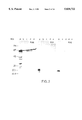
- FIGS. 1 to 3 Immunological relationships, distribution and kinetics of synthesis of P66, P18 and P16.
- FIG. 1 SDS-PAGE of the toxic extract of Cbm. The molecular weights of standard proteins are indicated in the right hand margin (in kDa).
- FIG. 2 Detection of the proteins P66, P18 and P16 in Cbm and in nontoxic C. bifermentans strains.
- 100 ⁇ l samples of sporulating cultures were subjected to polyacrylamide gel electrophoresis (SDS-PAGE), transferred onto a nitrocellulose membrane and subjected to immunodetection with affinity-purified IgG's directed against P66 (A66), P18 (A18) or P16 (A16).
- FIG. 3 Kinetics of synthesis of P66, P18 and P16 during sporulation of Cbm, at 34° C. (top) or at 42° C. (bottom), under anaerobic conditions.
- 100 ⁇ l aliquots of culture were subjected to polyacrylamide gel electrophoresis (SDS-PAGE), transferred onto a nitrocellulose membrane and subjected to immunodetection with affinity-purified IgG's directed against P66 (A66), P18 (A18) or P16 (A16).
- Culture time in hours a, 4.5; b, 6 (corresponding to t 0 of sporulation); c, 7.5; d, 9; e, 10.5; f, 13; g, 30.
- the molecular weights of standard proteins are indicated in the margin (in kDa).
- FIGS. 4A and 4B Structure of the plasmid pCBM1 and restriction map of the XbaI fragment.
- XbaI fragment Bg: BglII; N: NsiI; P: PvuII; R: EcoRI; Rv: EcoRV; X: XbaI
- H HindIII
- S SphI
- Ps PstI
- Sal SalI
- Bm BamHI
- Sm SmaI
- K KpnI
- Sst SstI
- R EcoRI
- the shaded parts on the right and on the left of the XbaI fragment are fragments of the plasmid vector pHT304 (Arantes O. et al (1991), Gene, 108, p. 115-119).
- the fragments to which the oligonucleotide probes hybridize are represented as shaded lines, under the XbaI fragment.
- the arrow corresponds to the 5' end of the P16 gene which hybridizes with the probe 16A.
- FIG. 5 Location of the oligonucleotides used for the sequencing of the sequences read.
- 16A' complementary 16A:: acc cat tgt cta tat gc
- 16B' complementary 16B'*: ccg ata tct cct gaa ga
- 18B' complementary 18b*: gct tcc ggt aca gaa gg
- FIG. 6 Nucleotide sequences read.
- 6C and 6D Seq.2.2, read with the primers 66B, 66D-A and 66E-A (SEQ ID NO:28).
- 6E to 6G Cbm gene, read with the various primers "16 and 18" (SEQ ID NO:29).
- 6H to 6J SEq4, read with the universal primer R-40 (SEQ ID NO:30).
- FIG. 7 Amino acid sequence corresponding to the Cbm11 gene and location of the NH 2 -terminal and internal sequences of the proteins P18 and P16 (SEQ ID NO:31).
- FIG. 8 Location of the copies of cbm 11 on the XbaI fragment.
- FIG. 9A and 9B Location of the XbaI fragment on the resident plasmid.
- Line 1 Size marker CCC from 16 to 2.06 Kb
- FIG. 10 Expression of the genes introduced into pCBM1, in E.coli
- Line 1 E.coli+pHT 304 (shuttle vector used)
- Probe used total anti-Cbm antibody.
- FIGS 11A, 11B and 11C Sequence homologies found between the protein Cbm 11 and the proteins described in the Swissprot data bank (SEQ ID NO:31-36).
- An extract was prepared from a Cbm culture obtained at 34° C. under anaerobic conditions in TYG medium (based on 3% Biotrypcase, 2% yeast extract, 0.5 to 1% glucose, 0.05% cysteine hydrochloride) in a fermenter having a capacity of 6 liters, in the presence of a gaseous stream containing 5% H 2 , 5% CO 2 and 90% N 2 .
- the sporulating bacterial culture was harvested after 16 h, at the end of the sporulating phase. The culture was then washed with 1M NaCl, rinsed twice with 20 mM Tris HCl, 5 mM EDTA, pH8 (TE buffer) and stored at -70° C. up to the time of use.
- the frozen pellets were thawed, resuspended in a TE buffer, treated in a sonicator for a total period of 1 minute comprising a real sonication time of 15 seconds on ice (Branson sonicator, large probe, outlet scale 40%, duration of the sonication cycle ("duty cycle": 25%) and centrifuged at 5000 g for 15 min. The resulting supernatant (corresponding to the crude protein extract) was recovered.
- the protein concentration of the extract was determined using the Biorad protein test with bovine serum albumin as standard.
- a polyacrylamide gel electrophoresis was carried out according to the technique of Laemmli, U.K. (1970) (Nature 227, 680-685) on 13% polyacrylamide gels.
- the molecular weight markers used in this SDS-PAGE protein analysis under denaturing conditions are those of the Pharmacia protein electrophoresis kit (LMW Ref. 17-0446-01), containing the following proteins: phosphorylase B (with a molecular mass of 94,000 daltons), albumin (67,000), ovalbumin (43,000), anhydrase (30,000) trypsin inhibitor (20,100) and alpha lactalbumin (14,000).
- Polyclonal antisera against the crude Cbm protein extract were obtained in rabbits after two series of 10 to 15 intradermal microinjections of 500 ⁇ g of protein emulsified in complete Freund's adjuvant, at an interval of 3 weeks.
- the rabbits received subcutaneous injections of a booster dose without Freund's adjuvant, 3 weeks later.
- the IgG's were purified from the sera by ammonium sulfate precipitation and chromatography on a DEAE-52 column (Whatmann) and then stored at 4° C.
- Polyclonal antisera against the denatured individualized polypeptides P66, P18 and P16 were produced in rabbits in the following manner: three proteins were separated by preparative SDS-PAGE electrophoresis and detected with 1M KCl. The bands were cut out from the gels and the acrylamide bands cut out were rinsed with deionized water, and then immersed in water, emulsified with complete Freund's adjuvant and injected into the rabbits according to the technique described above. After recovering the antisera, the IgG's were affinity-purified on nitrocellulose bands containing the polypeptide used for the injection into rabbits, according to the technique of Burke et al (1982). EMBO J. 1, 1621-1628.
- the larvicidal activity was tested on Anopheles stephensi larvae at the third larval instar.
- the crude protein extracts were filtered on an HA-MILLEX filter containing pores of 0.45 ⁇ m (millipore) and subjected to a high-resolution liquid chromatography (FPLC®, Pharmacia).
- An ion-exchange chromatography was carried out on a MONO Q HR 10/10 column equilibrated with a TE buffer.
- the proteins were eluted with a multi-step gradient containing from 0 to 1M NaCl.
- a gel filtration was carried out on a SUPERDEX 200 HILOAD 16/60 column in a TE buffer containing 150 mM NaCl (TES buffer).
- the fractions were analyzed by electrophoresis (SDS-PAGE) after precipitation of the proteins with 10% trichloroacetic acid.
- the capacity of the various antisera to inhibit the larvicidal activity of the extract was tested according to the following method: serial dilutions of the extract were incubated with a fixed volume of antiextract IgG in a TE buffer at 20° C. for 1 hour. The toxicity of the samples and of the untreated control samples was tested using A. stephensi larvae. Neutralization tests were also carried out under the same conditions with the antisera or the affinity-purified antibodies, directed against the denatured proteins P66, P18 or P16. The proteins were immunoprecipitated from the extract with the antisera directed against the extract or against the denatured individual proteins P66, P18 or P16 by the technique of Howe et al, ((1982). Mol. Gen. Genet. 186, 525-530), using Protein A SEPHAROSE beads (Sigma) as carrier.
- Cbm was grown in 1 liter sealed bottles containing 800 ml of liquid TYG medium, with gentle magnetic stirring, either at 34° C. or at 42° C. 30 ml samples were recovered at 90-minute intervals without renewing the gas content by piercing through a rubber stopper. The samples were centrifuged, rinsed as described above and the centrifugation pellets were kept at -70° C. up to the analysis of the larvicidal activity and of the protein content by SDS-PAGE electrophoresis. The immunodetection experiments were carried out after electrotransfer onto a HYBOND-C SUPER® membrane (Amersham).
- P66, P18 and P16 were detected with the affinity-purified IgG's directed against each protein (A66, A18 and A16) and visualized with an ECL® Western blot detection system (Amersham). For comparison, the cultures were carried out at 34° C. and 42° C. in bottles in which gas exchange was possible.
- C. bifermentans type strain ATCC 638, 744-83, VPI 4407 and VPI 4413A were screened by immunodetection in order to search for the presence of P66, P18 and P16. These strains, as well as the Cbm strain, were cultured in sealed bottles containing 50 ml of TYG medium, at 34° C. and recovered after 15 h when the sporulation was completely over but before the cell lysis.
- Samples of bacterial culture or of the protein extracts were tested on 20 larvae of Culex pipiens at the fourth larval instar and/or of A. stephensi at the third larval instar in plastic Petri dishes with a capacity of 6 ml. The mortality was recorded after 24 h and 48 h of exposure.
- a crude Cbm extract was tested with antisera directed against the crystals from B. thuringiensis serovar israelensis 1884, B. thuringiensis serovar aizawai 7.29, B. thuringiensis serovar thuringiensis 1715 and B. thuringiensis serovar entomocidus HD9, as well as antisera against the 42 and 51 kDa crystal proteins from B. sphaericus 2362.
- the Cbm extract contained three major proteins with apparent molecular weights of 66, 18 and 16 kDa, designated by the abbreviations P66, P18 and P16,as well as various minor components of protein nature (FIGS. 1 to 3).
- the extract obtained is toxic toward the larvae of the mosquitoes Culex pipiens, Anopheles stephensi and Aedes aegypti.
- Antisera directed against the entomopathogenic crystal proteins from B. thuringiensis or B. sphaericus did not give rise to a cross-reaction with the proteins of the Cbm extract, indicating that the Cbm toxins belong to a new class of insecticidal toxins.
- P66, P18 and P16 are the predominant components of the toxic Cbm extracts.
- P66, P18 or P16 are not immunlogically related (FIG. 2, lines a). P18 and P16 were only present in Cbm whereas a 66 kDa protein immunologically related to Cbm P66 was detected in 4 strains of nonentomopathogenic strains of C. bifermentans tested (FIG. 2, lines b to e).
- P18 and P16 in a culture carried out at 34° C. were concomitant with the sporulation of Cbm (FIG. 3) and the appearance of the larvicidal activity.
- P16 was synthesized in the form of a 20 kDa precursor (P20) which was gradually converted to a 16 kDa polypeptide during the cell lysis (FIG. 3).
- P18 and P20/P16 are not immunologically detected in the strains of C. bifermentans lacking larvicidal activity (FIG. 2).
- P18 and P20/P16 are very weakly detected in Cbm cultured at 42° C., under conditions where the bacterium is not toxic (FIG. 3).
- P66 was detected in Cbm cells during the vegetative stage and during sporulation. In the sporulating cells, other polypeptides immunologically related to P66 were detected, ranging from 25 to 66 kDa (FIG. 3); these polypeptides could be products of the degradation of P66.
- the Cbm culture grew at 42° C. without gaseous exchange; it was not toxic and contained only traces of P18 and P16.
- P66 was also synthesized during the vegetative phase but no protein of a lower molecular weight was detected (FIG. 3).
- the cultures with gaseous exchange no difference was noted in the larvicidal activity, the synthesis of P66, P18 and P16 and the lysis of the sporangium, between the cultures carried out at 34° C. or at 42° C.
- IgG's directed against the denatured proteins P66, P18 and/or P16 did not neutralize the toxicity; on the other hand, antibodies against the crude fraction of the extract neutralized the toxicity. It is conceivable that IgG's directed against the denatured proteins were capable of recognizing the P66-P18-P16 complex, but did not recognize epitopes or domains involved in the larvicidal activity.
- Partial amino acid sequences of P66, P18 and P16 were determined by microsequencing.
- sequences were obtained by micro-sequencing, according to techniques commonly used by microsequencing laboratories. The following were obtained for each protein: i) the NH 2 -terminal sequences and ii) one or more sequences of internal fragments obtained by trypsin hydrolysis of the protein. The sequences were determined with an Applied Biosystems 470 sequencer using the proteins separated on SDS-PAGE and transferred onto a PVDF IMMOBILON membrane (millipore).
- oligonucleotide probes were made from the sequences underlined
- oligonucleotide probes were synthesized and used to screen a Cbm XbaI enzyme-hydrolyzed total DNA library constructed in the shuttle plasmid pHT304 (Arantes & Lereclus, Gene. 1991. 108:115-119).
- a DNA library was constructed in a shuttle vector pHT304, constructed by O. Arantes and D. Lereclus, from a B. thuringiensis resident plasmid pHT 1030 and from pUC19, which is capable of replicating in E. coli and in Gram-positive bacteria.
- the Cbm total DNA was hydrolyzed with XbaI, transferred onto a HYBOND N+ membrane (Amersham) after agarose gel electrophoresis, and hybridized with each of the probes synthesized, labeled at the 3' end with fluorescein ("kit ECLTTM 3' oligolabeling and detection systems", Amersham) according to the procedure recommended by the supplier under the following hybridization and stringency conditions:
- Hybridization temperature 42° C., 15 h, in a HYBAID hybridization oven (Cera-Labo) with 5-10 ng of probes/ml.
- the Cbm genomic DNA library constructed in E. coli strain TG1 was screened by colony hybridization with the oligonucleotide 16A labeled at the 3' end with fluorescein (ECL 3' oligolabeling system Amersham). The screening made it possible to isolate a recombinant plasmid pCBM1 which hybridizes with the oligonucleotide 16A but also with the oligonucleotides 66A, 66B and 18A.
- the plasmid pCBM1 has a size of 13.5 kb and therefore results from the insertion of a 7 kb XbaI fragment of DNA of Cbm at the XbaI cloning site of pHT304 (6.5 kb).
- the restriction map of pCBM1 was determined (FIG. 4A and 4B).
- the regions with which the abovementioned probes hybridize were determined by Southern blotting on the plasmid pCBM1 hydrolyzed with various restriction enzymes for the 4 probes. Furthermore, the PCR technique, using as primers, the universal primer and the oligonucleotide 16A, made it possible to locate the region for hybridization of 16A at 2 kb from the 3' end of the XbaI fragment (FIG. 4A) . These results make it possible to conclude that the 3 genes encoding P66, P20/16 and P18 are contained in the 7 kb XbaI fragment.
- a PCR was carried out using Taq polymerase and, as primers, the oligonucleotide 16A and the universal primer (M13 universal sequencing primer Pharmacia) and, as template, the plasmid pCBM1, with the following cycle:
- the sequencing strategy used was that of "fragment walking".
- the sequence was established according to the technique of Sanger (Sanger et al., 1977, Proc. Natl. Acad. Sci. USA, 74:5463-5467) on the plasmid pCBM1 rendered single-stranded by denaturation with sodium hydroxide.
- the extension was performed using reverse, universal primers, or the oligonucleotides corresponding to the sequences deduced from the amino acid sequences of the proteins P66, P18 and P16 or the nucleotide sequences read. All the oligonucleotides used and their location on the DNA fragment are represented in FIG. 5.
- the determination of the restriction sites contained in the sequence of the gene encoding the 66 kDa protein made it possible to locate precisely the position of the beginning of the 66 kDa gene on the XbaI fragment; about 95% of the gene is present on the cloned fragment.
- the 16 kDa protein is in fact thought to be a protein having a calculated molecular mass of 8.9 kDa; it is thought to result from the 11 kDa protein by cleavage of the 17 NH 2 -terminal amino acids.
- Hybridization experiments were carried out in parallel on the plasmid DNA and total DNA of Cbm using, as probe, the 7 kb XbaI fragment; these experiments were carried out using the cold probe ECL "Direct nucleic acid labelling system" technique (Amersham), according to the supplier's information. The results obtained made it possible to locate this fragment on a resident plasmid of about 13 kb (FIG. 9A and 9B).
- the study of the expression of the genes cloned into the plasmid pCBM1 was carried out in E.coli by immunodetection using cold probes.
- the E.coli extracts were prepared in the following manner: the clones TG1 (pHT304 ) and TG1 (pCBM1) were cultured in LB medium. This experiment demonstrated the synthesis in this recombinant of a single protein of 20 kDa which reacts specifically with the anti-18 kDa protein antibody (FIG. 10). No product corresponding to the expression of the 66 kDa gene was able to be visualized.
Landscapes
- Life Sciences & Earth Sciences (AREA)
- Health & Medical Sciences (AREA)
- Chemical & Material Sciences (AREA)
- General Health & Medical Sciences (AREA)
- Zoology (AREA)
- Proteomics, Peptides & Aminoacids (AREA)
- Engineering & Computer Science (AREA)
- Organic Chemistry (AREA)
- Dentistry (AREA)
- Biochemistry (AREA)
- Virology (AREA)
- Pest Control & Pesticides (AREA)
- Microbiology (AREA)
- Wood Science & Technology (AREA)
- Environmental Sciences (AREA)
- Gastroenterology & Hepatology (AREA)
- Biotechnology (AREA)
- Plant Pathology (AREA)
- Biophysics (AREA)
- Genetics & Genomics (AREA)
- Medicinal Chemistry (AREA)
- Molecular Biology (AREA)
- Agronomy & Crop Science (AREA)
- Peptides Or Proteins (AREA)
- Micro-Organisms Or Cultivation Processes Thereof (AREA)
Abstract
A nucleotide sequence having the following properties: it includes all or part of DNA fragment XbaI of 7 kb shown in FIG. 4A, as obtained from plasmid pCBM1 filed with the CNCM on Jun. 15, 1993 under no. I-1317; it hybridises with oligonucleotide probe 18A (TGT GAA GTI AAT TGT GA) SEQ ID NO:1 and/or oligonucleotide probe 16A (TTT CAT ATI GAA GCI GTI AAT GAA GG) SEQ ID NO:2 and/or at least one of probes 66A (ATG AAT ACI AAT ATI TTT TCI ACI AA) SEQ ID NO:3 or 66B (TC IGG TTC ICC ATA IAT CCA TTC ATC) SEQ ID NO:4 under stringent conditions; and it codes for a protein, polypeptide or peptide capable of participating in the toxic activity of the expression products of fragment XbaI of 7 kb against Diptera larvae and mosquito or sandfly larvae in particular. The polypeptides encoded by said sequence and their use in larvicidal compositions are also disclosed.
Description
The invention relates to new toxins isolated from a strain of anaerobic bacterium of the species Clostridium bifermentans. The strain CH18 of Clostridium bifermentans serovar malaysia (Cbm) has been described by H. de Barjac and M. Sebald, in C.R. Acad. Sci. Paris, vol. 310, series III, p. 383-387, 1990.
It exhibits a toxic activity during the sporulation phase via toxins having a larvicidal power against the larvae of arthropods, in particular of insects and especially against the larvae of Diptera, for example the larvae of mosquitoes or of similis. These particular Diptera are vectors of diseases or cause harmful effects.
Until now, toxins specific to bacteria of the species Bacillus thuringiensis or of the species Bacillus sphaericus were known for their entomopathogenic activity and especially their toxic activity against mosquito larvae (Nicolas (1992). Pes. agropec. bras., Brasilia, abr. 1992, 27, 37-46). In spite of the obvious benefit of these Bacillus toxins for controlling insects and especially insect larvae, the search for new toxins active against certain insects proved to be important especially with the aim of offering means for controlling the risk of development of resistance against these products with larvicidal activity. In this context, the inventors have detected the existence of a larvicidal activity in the bacterium of the species Clostridium bifermentans. In this regard, the invention proposes, for the first time, toxins present in anaerobic bacteria, which are capable of having a toxic activity and in particular a larvicidal activity against arthropods, and in particular insects of the Diptera type. The strain of Clostridium bifermentans serovariety malaysia used is harmless against the mammals and fish tested as well as against all aquatic organisms outside the natural target for the larvicidal activity of Cbm (Thiery et al. (1992) J. econ. Entomol. 85(5), 1618-1623). The existence of the larvicidal activity of Cbm has already been observed and associated, in the prior art, with sporulating cells (Charles et al. (1990) Res. Microbiol. 141, 721d-733). It has also been noted that this activity decreases very substantially after cell lysis because of inactivation by cellular proteases (Nicolas et al (1990). Appl. Microbiol. Biotechnol. 34, 36-41).
The subject of the invention is therefore nucleotide sequences encoding polypeptides capable of taking part in the toxic activity against the larvae of arthropods and in particular of insects, especially of Diptera such as mosquitoes and simuliids.
The invention also relates to these polypeptides as well as recombinant cells containing the nucleotide sequences and the nucleotide fragments of the invention, under conditions allowing their expression.
Also entering into the framework of the present application are antibodies which recognize the polypeptides of the invention, as well as compositions with larvicidal activity.
A nucleotide sequence of the invention is characterized by the following properties:
it comprises all or part of the 7 kb XbaI DNA fragment represented in FIG. 4A, as obtained from the plasmid pCBM1 deposited at CNCM on 15 Jun. 1993 under the No. I-1317;
it hybridizes with the oligonucleotide probe 18A (SEQ ID NO:1) (TGT GAA GTI AAT TGT GA) and/or with the oligonucleotide probe 16A (SEQ ID NO:2) (TTT CAT ATI GAA GCI GTI AAT GAA GG) and/or with at least one of the probes 66A (SEQ ID NO:3) (ATG AAT ACI AAT ATI TTT TCI ACI AA) or 66B (SEQ ID NO:4) (TC IGG TTC ICC ATA IAT CCA TTC ATC) under stringent conditions described in the experimental part;
it encodes a protein, a polypeptide or a peptide having the capacity to take part in the toxic activity of the products of expression of the 7 kb XbaI fragment against the larvae of Diptera and in particular the larvae of mosquitoes or of simuliids.
The toxic activity is defined within the frame-work of the invention in relation to the "target" on which it is desired to obtain this activity. This "target" is generally an arthropod and more particularly an insect, especially of the Diptera family and for example, a mosquito or simuliid larva.
It will be considered within the framework of the invention that a nucleotide sequence encodes a protein or a polypeptide having the capacity to take part in the toxic activity of the products of expression of the 7 kb XbaI fragment contained in the plasmid pCBM1 deposited at CNCM under the No. I-1317, provided that the deletion or the alteration of this sequence within the said plasmid results in a decrease or suppression of the toxic activity against the larvae of Diptera and in particular the larvae of mosquitoes or of simuliids, which is observed when this plasmid is introduced into a recombinant cell which does not have a larvicidal activity naturally.
Other recombinant cells, such as those described by Delecluse A. et al (1988) Mol. Gen. Genet. 214:42-47), can also be used.
The statement relating to the toxic activity against Diptera larvae should in no way be considered to be restrictive as regards the activity spectrum, the means of the invention. It constitutes solely a reference for the evaluation of the activity of the products of the invention.
The toxic activity can be evaluated by measuring the LC50 (lethal dose for 50% of the insects or more generally of the "target" on which it is desired to evaluate the toxic activity).
Various tests have already been proposed in the prior art for detecting the larvidical activity of strains of bacteria capable of producing toxins. In this regard, reference may be made to the publication by Thiery, I. et al. (1992) Journal of American Mosquito Control Association, vol. 8, No. 3, 272-276.
Within the framework of the definition given above, the nucleotide sequence according to the invention may encode a protein, a polypeptide or a peptide which is necessary for inducing the larvicidal activity and/or may encode a protein, a polypeptide or a peptide which influences the level of expression of the toxicity against a given target. As stated above, tests carried out with recombinant cells lacking larvicidal activity naturally, transformed by the plasmid pCBM1 under conditions allowing the expression of the genes contained in the inserted DNA fragment, can be used as a basis for comparison to test the larvicidal activity of proteins or parts of proteins expressed by a nucleotide sequence according to the invention.
The terms "protein", "polypeptide" and "peptide" designate within the framework of the application, any amino acid sequence, it being possible for this sequence, in addition, to be modified by groups which are of a nonprotein nature. To simplify the text, these proteins, polypeptides and peptides will be included in the expression "polypeptides".
According to an advantageous embodiment of the invention, a specific nucleotide sequence is characterized in that it hybridizes with the four probes 16A, 18A, 66A and 66B, under stringent conditions. The stringent conditions referred to here are described in detail in the experimental part of the present application.
According to another embodiment of the invention, a specific sequence is characterized in that it hybridizes with the four probes 16A, 18A, 66A and 66B, under nonstringent conditions (less stringent compared with the conditions given later as stringent conditions).
The invention relates in particular to the nucleotide sequence characterized in that it is the 7 kb XbaI fragment of the plasmid pCMB1 deposited at CNCM under the No. I-1317.
According to a specific embodiment, the subject of the invention is a nucleotide sequence chosen from the chains designated by the expressions Seq1, Seq2.1, Seq2.2 or Seq3, and which are represented in FIG. 6.
The invention also relates to a nucleotide sequence characterized in that it hybridizes with one of the sequences described above, in that it is present in the DNA of a bacterium of the species Clostridium bifermentans, and in that it encodes a protein, a polypeptide or a peptide having the capacity to take part in a toxic activity against the larvae of Diptera and in particular against the larvae of mosquitoes or of simuliids.
The nucleotide sequences of the invention can be isolated for example from anaerobic bacteria of the species Clostridium bifermentans and in particular from the strain Clostridium bifermentans malaysia. They can also be synthesized chemically according to conventional techniques.
Moreover, these nucleotide sequences may consist of single-stranded or double-stranded DNA, of cDNA or of RNA.
The subject of the invention, according to a specific embodiment, is a nucleotide sequence characterized in that it contains fragments encoding the following amino acid sequences:
M N T N I F S T N L (SEQ ID NO:5) and/or
N N D E W I Y G E P D S S N I (SEQ ID NO:6) and/or
M N N (X) C E V N C E (X) T and/or
N A S L T W G K (SEQ ID NO:8) and/or
F E L and/or
Q W V K (SEQ ID NO:9) and/or
E N T A S G T E (SEQ ID NO:10) and/or
I E Y H N N L R (SEQ ID NO:11) and/or
A Y (R) Q W V K F H I E A V N E G L K I (SEQ ID NO:12) and/or
D I P I S P E D I S K. (SEQ ID NO.13)
The identification of the amino acid sequences is carried out by having recourse to the single-letter code for designating amino acids.
The invention also relates to a nucleotide fragment contained in one of the sequences defined above, characterized by the following properties:
it comprises the XbaI-EcoRV fragment of the 7 kb XbaI fragment represented in FIG. 4A and contained in the plasmid pCMB1 deposited at CNCM under the No. I-1317,
it has a size of about 1.8 kb and it encodes a protein having a molecular weight of 66 kDa.
A preferred nucleotide fragment encoding a 66 kDa protein is characterized in that it contains a sequence encoding the amino acid chain M N T N I F S T N L at its NH2 terminal end, and a sequence encoding the amino acid chain N N D E W I Y G E P D S S N I as internal fragment (SEQ ID NO:5,6).
Another nucleotide fragment according to the invention, which is contained in one of the sequences defined above, is characterized by the following properties:
it hybridizes under stringent conditions with the probe 16A;
it is present in the 7 kb XbaI fragment represented in FIG. 4A and contained in the plasmid pCMB1 deposited at CNCM under the No. I-1317;
it has a size of about 0.5 kb;
it encodes a protein P16 having a molecular weight of about 16 kDa.
A preferred fragment encoding a protein having a molecular weight of about 16 kDa (protein P16) is, in addition, characterized in that it contains a sequence encoding the amino acid chain A Y (R) Q W V K F H I E A V N E G L K I at its NH2 -terminal end and a sequence encoding the amino acid chain D I P I S P E D I S K as internal fragment (SEQ ID NO:12,13).
Another nucleotide fragment according to the invention, which is contained in one of the preceding sequences, is characterized in that it encodes a protein P20 having a molecular weight of about 20 kDa, which is a precursor of the protein P16, P20 being synthesized during the sporulating phase of bacteria of the species C. bifermentans, in particular of Cbm.
The subject of the invention is also a nucleotide fragment contained in one of the preceding sequences, characterized by the following properties:
it hybridizes under stringent conditions with the probe 18A;
it is present in the 7 kb XbaI fragment represented in FIG. 4A and contained in the plasmid pCMB1 deposited at CNCM under the No. I-1317;
it has a size of about 0.55 kb;
it encodes a protein P18 having a molecular weight of about 18 kDa.
Such a fragment may be preferably characterized in that it encodes a protein having a molecular weight of about 18 kDa and in that it contains a sequence encoding the amino acid chain M N N (X) C E V N C E (X) T at its NH2 -terminal end and sequences encoding the amino acid chains N A S L T W G K, F E L, Q W V K, E N T A S G T E, and I E Y H N N L R as internal fragments (SEQ ID NO:7,8,11).
Also forming part of the invention are recombinant vectors characterized in that they contain a nucleotide sequence or a nucleotide fragment corresponding to the preceding definitions, this sequence or this fragment being inserted at a site which is not essential for the replication of the vector. Advantageously, these vectors are plasmids.
A specific vector is characterized in that it is the plasmid pCBM1 deposited at CNCM under the No. I-1317.
Another recombinant vector according to the invention is the plasmid pHT316 which results from the introduction into the plasmid pHT315 (Arantes and Lereclus, 1991, Gene, 108: 115-119) of a 0.5 kb BamHI-EcoRI fragment (Nicolas et al (1993) FEMS Microbiol. Letter 106, 275-280) containing the promoter for B. thuringiensis cytolysin (Ward and Ellar, 1986, J. Mol. Biol., 191:1-11). This vector can be modified by the Cbm sequence.
The plasmid pHT316 allows advantageously the overproduction in Bt of the Cbm proteins which are toxic against insects.
The subject of the invention is also prokaryotic or eukaryotic recombinant host cells, characterized in that they contain a sequence or a fragment corresponding to one of the definitions given above, or a vector of the invention under conditions which allow the cloning and/or the expression of the said sequence or of the said fragment.
A specific host may be a bacterial cell, for example a strain of Clostridium bifermentans, a strain of Bacillus thuringiensis or a strain of Bacillus sphaericus.
As regards B. thuringiensis, reference may be made to the publication by Lereclus D. et al (1989), FEMS Microbiology Letters 60, 211-218, in which the technique for transforming (by introducing toxin genes into Bt) B. thuringiensis is described.
As regards B. sphaericus, reference may be made for example to the publication by Taylor L. D. et al (1990) FEMS Microbiology Letters 66, 125-128.
Another cell according to the invention may be an eukaryotic cell, for example a plant cell.
The subject of the invention is also a polypeptide or a polypeptide composition, characterized in that it is encoded by a nucleotide sequence or a nucleotide fragment defined above.
A specific polypeptide according to the invention is involved in a larvicidal activity against the larvae of Diptera, especially of mosquitoes or of simuliids, and is characterized by the following properties:
it is characteristic of an anaerobic bacterium of the species Clostridium bifermentans;
it does not produce an immunological reaction with sera directed against the crystal proteins of B. thuringiensis israelensis or of B. sphaericus.
The polypeptides of the invention comprise especially a first protein characterized in that it has a molecular weight of about 16 kDa and in that it is the product of the expression, in a recombinant cell of a nucleotide fragment which hybridizes with the oligonucleotide 16A under stringent conditions, this fragment being contained in the NsiI-XbaI sequence of the XbaI fragment contained in the plasmid pCMB1 deposited at CNCM under the number I-1317.
Another protein of the invention is characterized in that it has a molecular weight of about 18 kDa and in that the product of the expression, in a recombinant cell, of a nucleotide fragment which hybridizes with the oligonucleotide 18A under stringent conditions, this fragment being contained in the EcoRI-XbaI sequence of the XbaI fragment contained in the plasmid pCMB1 deposited at CNCM under the number I-1317 and described in FIG. 4A.
A third protein according to the invention is characterized in that it has a molecular weight of about 66 kDa and in that it is the product of the expression, in a recombinant cell, of a nucleotide fragment which hybridizes with the oligonucleotide 66A and/or 66B under stringent conditions, this fragment being contained in the XbaI-EcoRI sequence of the XbaI fragment contained in the plasmid pCMB1 deposited at CNCM under the number I-1317.
The invention also relates to the polypeptide fragments of the proteins P16, P18 or P66, or any fragment as obtained from the proteins defined above provided that it is involved in a larvicidal activity against the larvae of Diptera, especially of mosquitoes or of simuliids.
Especially entering within the framework of the invention are the polypeptide sequences encoded by the nucleotide sequences Seq1, Seq2.1, Seq2.2, Seq3 or Seq4 (SEQ ID NOS:26, 27, 28, 29 and 30, respectively.
Another sequence of interest is the amino acid sequence corresponding to the cbm11 gene, as represented in FIG. 6.
According to another embodiment of the invention, a polypeptide of the invention is characterized in that it is recognized by antibodies directed against the protein P16 and/or by antibodies directed against the protein P18 and/or by antibodies directed against the protein P66.
Specific polypeptides of the invention are for example polypeptides comprising an amino acid sequence encoded by one of the chains Seq1, Seq2.1, or Seq2.2 or Seq3 and which are recognized respectively by anti-protein P66 antibodies for the polypeptide comprising at least one of the sequences Seq1, Seq2.1 or Seq2.2 and by anti-protein P16 or anti-protein P18 antibodies for the polypeptide comprising the sequence Seq3.
The application also relates to a polypeptide characterized in that it is modified by addition, deletion, substitution of amino acids provided that it retains the capacity of the corresponding unmodified polypeptide to become involved in the toxic activity against the larvae of Diptera, especially of mosquitoes or of simuliids.
The present application also relates to polypeptide compositions characterized in that they comprise for example the protein P16 and the protein P18 or in that they comprise the proteins P16, P18 and P66.
These proteins are preferably in a form which is purified, where appropriate copurified, either after isolation from a strain, or after expression in a recombinant cellular host.
The invention also relates to a protein extract having a larvicidal activity against the larvae of Diptera, especially of mosquitoes or of simuliids as obtained by:
culturing Clostridium bifermentans at 34° C. under anaerobic conditions in TYG medium in a gaseous stream containing 5% H2, 5° CO2 and 90% N2,
recovering the culture at the end of sporulation, after about 16 h,
washing the culture with 1M NaCl,
rinsing twice with a TE buffer,
recovering the pellet which constitutes the extract.
A specific polypeptide composition according to the invention may also be characterized in that it has the larvicidal activity of a crude extract as defined above.
The subject of the present application is also monoclonal antibodies directed against a protein according to the definitions given above.
It also relates to a polyclonal antiserum characterized in that it is directed against a protein of the invention or against a composition of these proteins or even against an extract as described above.
The nucleotide sequences or fragments according to the invention also allow the preparation of nucleotide probes obtained by labeling, according to conventional techniques, the fragments or sequences described above.
Also entering within the framework of the invention are compositions with larvicidal activity comprising, as active ingredient, one or more polypeptides according to any one of the definitions given above.
Other compositions with larvicidal activity according to the invention may also be characterized in that they comprise, as active ingredient, recombinant cells corresponding to the definitions given above.
Such compositions may, in addition, contain recombinant cells modified by sequences encoding one or more polypeptides with larvicidal activity of B. thuringiensis and/or of B. sphaericus.
It can also be envisaged, according to the invention, preparing recombinant cells containing at the same time genes or nucleotide sequences or fragments encoding a protein corresponding to the definitions above and containing, in addition, a sequence with larvicidal activity of B. thuringiensis and/or of B. sphaericus.
Other characteristics and advantages of the invention appear in the examples and the figures which follow.
FIGS. 1 to 3: Immunological relationships, distribution and kinetics of synthesis of P66, P18 and P16.
FIG. 1: SDS-PAGE of the toxic extract of Cbm. The molecular weights of standard proteins are indicated in the right hand margin (in kDa).
FIG. 2: Detection of the proteins P66, P18 and P16 in Cbm and in nontoxic C. bifermentans strains. 100 μl samples of sporulating cultures were subjected to polyacrylamide gel electrophoresis (SDS-PAGE), transferred onto a nitrocellulose membrane and subjected to immunodetection with affinity-purified IgG's directed against P66 (A66), P18 (A18) or P16 (A16). Well a, Cbm; well b, strain ATCC 638; well c, strain 744-83; well d, strain VPI 4407; well e, strain VPI 4413A.
FIG. 3: Kinetics of synthesis of P66, P18 and P16 during sporulation of Cbm, at 34° C. (top) or at 42° C. (bottom), under anaerobic conditions. 100 μl aliquots of culture were subjected to polyacrylamide gel electrophoresis (SDS-PAGE), transferred onto a nitrocellulose membrane and subjected to immunodetection with affinity-purified IgG's directed against P66 (A66), P18 (A18) or P16 (A16). Culture time in hours: a, 4.5; b, 6 (corresponding to t0 of sporulation); c, 7.5; d, 9; e, 10.5; f, 13; g, 30. The molecular weights of standard proteins are indicated in the margin (in kDa).
FIGS. 4A and 4B: Structure of the plasmid pCBM1 and restriction map of the XbaI fragment.
XbaI fragment: Bg: BglII; N: NsiI; P: PvuII; R: EcoRI; Rv: EcoRV; X: XbaI
Cloning site:
H: HindIII; S: SphI; Ps: PstI; Sal; SalI; Bm: BamHI; Sm: SmaI; K: KpnI; Sst: SstI; R: EcoRI.
The shaded parts on the right and on the left of the XbaI fragment are fragments of the plasmid vector pHT304 (Arantes O. et al (1991), Gene, 108, p. 115-119).
The fragments to which the oligonucleotide probes hybridize are represented as shaded lines, under the XbaI fragment.
The arrow corresponds to the 5' end of the P16 gene which hybridizes with the probe 16A.
Enzymes not having restriction sites in the XbaI fragment:
BaHI, HIndIII, PstI, SstI, SalI, SmaI.
FIG. 5: Location of the oligonucleotides used for the sequencing of the sequences read.
Sequences of the oligonucleotides used (SEQ ID NOS:14-21):
16A': complementary 16A:: acc cat tgt cta tat gc
16B*: nondegenerate oligon 16B: ggagat atc gga atg tc
16B': complementary 16B'*: ccg ata tct cct gaa ga
18B: nondegenerate oligo 18B: tct gta ccg gaa gca gt
18B': complementary 18b*: gct tcc ggt aca gaa gg
66C-R: aac cct aca tct gtt aa
66D-A: tac tac cat agt ttc ca
66E-A: tgc aaa gcc aag ttg at
Legend
XbaI fragment inserted, derived from the Cbm DNA
"Reverse" primer R-48
"Universal" primer--40
Synthetic nucleotide primers (*)
Shuttle vector pHT 304
FIG. 6: Nucleotide sequences read.
6A:Seq.1, read with the aid of the reverse primer R-48 (SEQ ID NO:26).
6B: Seq.2.1, read with the aid of the primer 66C-R (SEQ ID NO:27).
6C and 6D: Seq.2.2, read with the primers 66B, 66D-A and 66E-A (SEQ ID NO:28).
6E to 6G: Cbm gene, read with the various primers "16 and 18" (SEQ ID NO:29).
6H to 6J: SEq4, read with the universal primer R-40 (SEQ ID NO:30).
FIG. 7: Amino acid sequence corresponding to the Cbm11 gene and location of the NH2 -terminal and internal sequences of the proteins P18 and P16 (SEQ ID NO:31).
FIG. 8: Location of the copies of cbm 11 on the XbaI fragment.
FIG. 9A and 9B: Location of the XbaI fragment on the resident plasmid.
Line 1: Size marker CCC from 16 to 2.06 Kb
Line 2: Preparation of the native Cbm CH 18 plasmids
Line 3: Preparation of the XbaI-hydrolyzed Cbm CH 18 plasmids hydrolyzed with Xba
Probe used: pCBM1
FIG. 10: Expression of the genes introduced into pCBM1, in E.coli
Line 1: E.coli+pHT 304 (shuttle vector used)
Line 2: E.coli+pCBM 1
Probe used: total anti-Cbm antibody.
FIGS 11A, 11B and 11C: Sequence homologies found between the protein Cbm 11 and the proteins described in the Swissprot data bank (SEQ ID NO:31-36).
Preparation of the extract
An extract was prepared from a Cbm culture obtained at 34° C. under anaerobic conditions in TYG medium (based on 3% Biotrypcase, 2% yeast extract, 0.5 to 1% glucose, 0.05% cysteine hydrochloride) in a fermenter having a capacity of 6 liters, in the presence of a gaseous stream containing 5% H2, 5% CO2 and 90% N2. The sporulating bacterial culture was harvested after 16 h, at the end of the sporulating phase. The culture was then washed with 1M NaCl, rinsed twice with 20 mM Tris HCl, 5 mM EDTA, pH8 (TE buffer) and stored at -70° C. up to the time of use. The frozen pellets were thawed, resuspended in a TE buffer, treated in a sonicator for a total period of 1 minute comprising a real sonication time of 15 seconds on ice (Branson sonicator, large probe, outlet scale 40%, duration of the sonication cycle ("duty cycle": 25%) and centrifuged at 5000 g for 15 min. The resulting supernatant (corresponding to the crude protein extract) was recovered.
Protein analysis
The protein concentration of the extract was determined using the Biorad protein test with bovine serum albumin as standard. A polyacrylamide gel electrophoresis was carried out according to the technique of Laemmli, U.K. (1970) (Nature 227, 680-685) on 13% polyacrylamide gels. The molecular weight markers used in this SDS-PAGE protein analysis under denaturing conditions are those of the Pharmacia protein electrophoresis kit (LMW Ref. 17-0446-01), containing the following proteins: phosphorylase B (with a molecular mass of 94,000 daltons), albumin (67,000), ovalbumin (43,000), anhydrase (30,000) trypsin inhibitor (20,100) and alpha lactalbumin (14,000).
Preparation of antisera against the Cbm proteins
Polyclonal antisera against the crude Cbm protein extract were obtained in rabbits after two series of 10 to 15 intradermal microinjections of 500 μg of protein emulsified in complete Freund's adjuvant, at an interval of 3 weeks. The rabbits received subcutaneous injections of a booster dose without Freund's adjuvant, 3 weeks later. The IgG's were purified from the sera by ammonium sulfate precipitation and chromatography on a DEAE-52 column (Whatmann) and then stored at 4° C.
Polyclonal antisera against the denatured individualized polypeptides P66, P18 and P16 were produced in rabbits in the following manner: three proteins were separated by preparative SDS-PAGE electrophoresis and detected with 1M KCl. The bands were cut out from the gels and the acrylamide bands cut out were rinsed with deionized water, and then immersed in water, emulsified with complete Freund's adjuvant and injected into the rabbits according to the technique described above. After recovering the antisera, the IgG's were affinity-purified on nitrocellulose bands containing the polypeptide used for the injection into rabbits, according to the technique of Burke et al (1982). EMBO J. 1, 1621-1628.
Enzymatic hydrolysis of the Cbm extract
In order to evaluate the toxicity of the extract, 500 μl of aliquots of the extract (400 μg) were each treated for two hours at 37° C. with one of the following enzymes: proteinase K (EC 3.4.21.14, Boehringer, 40 μg/ml), ribonuclease type I-A (EC 3.1.27.5, Sigma, 100 μg/ml) and deoxyribonuclease I (EC 3.1.21.1, Boehringer, 100 μg/ml).
The larvicidal activity was tested on Anopheles stephensi larvae at the third larval instar.
Fractionation of the protein extract
The crude protein extracts were filtered on an HA-MILLEX filter containing pores of 0.45 μm (millipore) and subjected to a high-resolution liquid chromatography (FPLC®, Pharmacia). An ion-exchange chromatography was carried out on a MONO Q HR 10/10 column equilibrated with a TE buffer. The proteins were eluted with a multi-step gradient containing from 0 to 1M NaCl. A gel filtration was carried out on a SUPERDEX 200 HILOAD 16/60 column in a TE buffer containing 150 mM NaCl (TES buffer). The fractions were analyzed by electrophoresis (SDS-PAGE) after precipitation of the proteins with 10% trichloroacetic acid.
Neutralization and immunoprecipitation tests
The capacity of the various antisera to inhibit the larvicidal activity of the extract was tested according to the following method: serial dilutions of the extract were incubated with a fixed volume of antiextract IgG in a TE buffer at 20° C. for 1 hour. The toxicity of the samples and of the untreated control samples was tested using A. stephensi larvae. Neutralization tests were also carried out under the same conditions with the antisera or the affinity-purified antibodies, directed against the denatured proteins P66, P18 or P16. The proteins were immunoprecipitated from the extract with the antisera directed against the extract or against the denatured individual proteins P66, P18 or P16 by the technique of Howe et al, ((1982). Mol. Gen. Genet. 186, 525-530), using Protein A SEPHAROSE beads (Sigma) as carrier.
Kinetics of the synthesis of P66. P18 and P16
Cbm was grown in 1 liter sealed bottles containing 800 ml of liquid TYG medium, with gentle magnetic stirring, either at 34° C. or at 42° C. 30 ml samples were recovered at 90-minute intervals without renewing the gas content by piercing through a rubber stopper. The samples were centrifuged, rinsed as described above and the centrifugation pellets were kept at -70° C. up to the analysis of the larvicidal activity and of the protein content by SDS-PAGE electrophoresis. The immunodetection experiments were carried out after electrotransfer onto a HYBOND-C SUPER® membrane (Amersham). P66, P18 and P16 were detected with the affinity-purified IgG's directed against each protein (A66, A18 and A16) and visualized with an ECL® Western blot detection system (Amersham). For comparison, the cultures were carried out at 34° C. and 42° C. in bottles in which gas exchange was possible.
Screening of P66. P18 and P16 in nonlarvicidal C. bifermentans strains
The nonlarvicidal strains of C. bifermentans (type strain ATCC 638, 744-83, VPI 4407 and VPI 4413A were screened by immunodetection in order to search for the presence of P66, P18 and P16. These strains, as well as the Cbm strain, were cultured in sealed bottles containing 50 ml of TYG medium, at 34° C. and recovered after 15 h when the sporulation was completely over but before the cell lysis.
Bioassays on mosquito larvae
Samples of bacterial culture or of the protein extracts were tested on 20 larvae of Culex pipiens at the fourth larval instar and/or of A. stephensi at the third larval instar in plastic Petri dishes with a capacity of 6 ml. The mortality was recorded after 24 h and 48 h of exposure.
Immunological relationships with Bacillus toxins
A crude Cbm extract was tested with antisera directed against the crystals from B. thuringiensis serovar israelensis 1884, B. thuringiensis serovar aizawai 7.29, B. thuringiensis serovar thuringiensis 1715 and B. thuringiensis serovar entomocidus HD9, as well as antisera against the 42 and 51 kDa crystal proteins from B. sphaericus 2362.
The Cbm extract contained three major proteins with apparent molecular weights of 66, 18 and 16 kDa, designated by the abbreviations P66, P18 and P16,as well as various minor components of protein nature (FIGS. 1 to 3).
1. Characterization of the P66, P18 and P16 proteins
The extract obtained is toxic toward the larvae of the mosquitoes Culex pipiens, Anopheles stephensi and Aedes aegypti.
Its LC50 after 48 h against A. stephensi at the third larval instar was 5 μg/ml. The larvicidal activity of the extract was lost after incubating for 2 h at 37° C. with proteinase K. In contrast, no inactivation was obtained with DNase or RNase. Furthermore, the larvicidal activity was completely inhibited by the IgG's directed against the total extract. Thus, the larvicidal activity is indeed due to toxins of a protein nature, at least in part.
Antisera directed against the entomopathogenic crystal proteins from B. thuringiensis or B. sphaericus did not give rise to a cross-reaction with the proteins of the Cbm extract, indicating that the Cbm toxins belong to a new class of insecticidal toxins.
P66, P18 and P16 are the predominant components of the toxic Cbm extracts.
P66, P18 or P16 are not immunlogically related (FIG. 2, lines a). P18 and P16 were only present in Cbm whereas a 66 kDa protein immunologically related to Cbm P66 was detected in 4 strains of nonentomopathogenic strains of C. bifermentans tested (FIG. 2, lines b to e).
The synthesis of P18 and P16 in a culture carried out at 34° C. was concomitant with the sporulation of Cbm (FIG. 3) and the appearance of the larvicidal activity. P16 was synthesized in the form of a 20 kDa precursor (P20) which was gradually converted to a 16 kDa polypeptide during the cell lysis (FIG. 3).
P18 and P20/P16 are not immunologically detected in the strains of C. bifermentans lacking larvicidal activity (FIG. 2).
P18 and P20/P16 are very weakly detected in Cbm cultured at 42° C., under conditions where the bacterium is not toxic (FIG. 3).
P66 was detected in Cbm cells during the vegetative stage and during sporulation. In the sporulating cells, other polypeptides immunologically related to P66 were detected, ranging from 25 to 66 kDa (FIG. 3); these polypeptides could be products of the degradation of P66.
The Cbm culture grew at 42° C. without gaseous exchange; it was not toxic and contained only traces of P18 and P16. In this culture, P66 was also synthesized during the vegetative phase but no protein of a lower molecular weight was detected (FIG. 3). In the cultures with gaseous exchange, no difference was noted in the larvicidal activity, the synthesis of P66, P18 and P16 and the lysis of the sporangium, between the cultures carried out at 34° C. or at 42° C.
Trials for the purification of each protein allowed the following observations to be made: most of the toxicity was lost after filtration, before carrying out an FPLC® chromatography, although the filtered and nonfiltered extracts had the same protein profiles. This suggests that the larvicidal activity could be linked to the presence of protein aggregates or particles. This was also observed for the Bti or B. sphaericus toxins which are much more active in the form of aggregates than in solution (Schnell et al (1984). Science 223, 1191-1193 and Nicolas et al (1993). FEMS Lett. 106, 275-280). In addition, with FPLC® chromatography, either on an ion-exchange column, or by gel filtration, the three polypeptides P66, P18 and P16 coeluted at different points. Immunoprecipitation tests have shown that each of the individual antisera directed against P66, P18 or P16 were capable of precipitating the three products together as was the case with antibodies prepared against the crude extract. Chromatography and immunoprecipitation tests suggested that P66, P18 and P16 are assembled into a complex.
IgG's directed against the denatured proteins P66, P18 and/or P16 did not neutralize the toxicity; on the other hand, antibodies against the crude fraction of the extract neutralized the toxicity. It is conceivable that IgG's directed against the denatured proteins were capable of recognizing the P66-P18-P16 complex, but did not recognize epitopes or domains involved in the larvicidal activity.
These experiments showed the involvement of P18 and P16 in the larvicidal activity. Indeed, in Cbm cultures carried out at 34° C., both proteins are synthesized concomitantly with the appearance of the larvicidal activity. They are absent from nontoxic strains of C. bifermentans and are present at a very low level in nontoxic Cbm cells cultured at 42° C. The larvicidal activity of Cbm at 42° C. is modulated by the conditions for gas exchange between the culture and the mixture of anaerobic gas. The absence of larvicidal activity in sealed bottles, without gaseous exchange, is correlated with the low synthesis and/or a rapid degradation of P18 and P20/P16.
2. Cloning of the genes encoding P66, P18 and P16
Partial amino acid sequences of P66, P18 and P16 were determined by microsequencing.
Amino acid sequences of the proteins P66, P18 and P16
These sequences were obtained by micro-sequencing, according to techniques commonly used by microsequencing laboratories. The following were obtained for each protein: i) the NH2 -terminal sequences and ii) one or more sequences of internal fragments obtained by trypsin hydrolysis of the protein. The sequences were determined with an Applied Biosystems 470 sequencer using the proteins separated on SDS-PAGE and transferred onto a PVDF IMMOBILON membrane (millipore).
__________________________________________________________________________
p66
NH.sub.2 -terminal sequence M N T N I F S T N L (complete sequence:
SEQ ID NO: 5, underlined portion: SEQ ID NO:22)
internal 1 (complete sequence:
                      N N D E W I Y G E P D S S N I
SEQ ID NO:6, underlined portion: SEQ ID NO:23)
p18
NH.sub.2 -terminal (complete sequence:
                      M N N (X) C E V N C E (X) T
SEQ ID NO:7, underlined portion: SEQ ID NO:24)
internal 1 (SEQ ID NO:8)
                      N A S L T W G K
internal 2            F E L
internal 3 (SEQ ID NO:9)
                      Q W V K
internal 4 (SEQ ID NO:10)
                      E N T A S G T E
internal 25 (SEQ ID NO:11)
                      I E Y H N N L R
P16
NH.sub.2 -terminal (complete sequence:
                      A Y (R) Q W V K F H I E A V N E G L K I
SEQ ID NO:12; underlined sequence:
SEQ ID NO:25)
internal 1 (SEQ ID NO:13)
                      D I P I S P E D I S K
__________________________________________________________________________
 (X):not determined
The oligonucleotide probes were made from the sequences underlined
__________________________________________________________________________
Protein Amino acids
                   Oligonucleotide probe 5'-3'
__________________________________________________________________________
P66, NH.sub.2 -term.
        M N T N I F S T N
                   66A (SEQ ID NO:3) = ATG AAT ACI AAT
(SEQ ID NO:22)     ATI TTT TCI ACI AA
                   (26 mer)
P66, internal
        D E W I Y G E P D
                   66B (SEQ ID NO:4) = TC IGG TTC ICC
                   ATA IAT CCA TTC ATC
                   (26 mer)
P18, NH.sub.2 -term.
        C E V N C E
                   18A (SEQ ID NO:2) = TGT GAA GTI ATT
(SEQ ID NO:24)     TGT GA (17 mer)
P16, NH.sub.2 -term.
        F H I E A V N E G
                   16A (SEQ ID NO:1) = TTT CAT ATI GAA
(SEQ ID NO:25)     GCI GTI AAT GAA GG
                   (26 mer)
__________________________________________________________________________
 I = DMT dInosine cyanoethyl phosphoramidite
 * = complementary sequence
From this information, oligonucleotide probes were synthesized and used to screen a Cbm XbaI enzyme-hydrolyzed total DNA library constructed in the shuttle plasmid pHT304 (Arantes & Lereclus, Gene. 1991. 108:115-119).
Selection of the plasmid pCBM1
A DNA library was constructed in a shuttle vector pHT304, constructed by O. Arantes and D. Lereclus, from a B. thuringiensis resident plasmid pHT 1030 and from pUC19, which is capable of replicating in E. coli and in Gram-positive bacteria. The Cbm total DNA was hydrolyzed with XbaI, transferred onto a HYBOND N+ membrane (Amersham) after agarose gel electrophoresis, and hybridized with each of the probes synthesized, labeled at the 3' end with fluorescein ("kit ECLT™ 3' oligolabeling and detection systems", Amersham) according to the procedure recommended by the supplier under the following hybridization and stringency conditions:
Hybridization temperature: 42° C., 15 h, in a HYBAID hybridization oven (Cera-Labo) with 5-10 ng of probes/ml.
Washes after hybridization: twice 5 minutes at room temperature in 5×SSC, 0.1% SDS, then twice 15 minutes in 1×SSC, 0.1% SDS.
The Cbm genomic DNA library constructed in E. coli strain TG1 was screened by colony hybridization with the oligonucleotide 16A labeled at the 3' end with fluorescein (ECL 3' oligolabeling system Amersham). The screening made it possible to isolate a recombinant plasmid pCBM1 which hybridizes with the oligonucleotide 16A but also with the oligonucleotides 66A, 66B and 18A.
A single 7 kb band was detected on the DNA hydrolyzed with XbaI with the probe corresponding to the NH2 -terminal end of P16 (probe 16A) . A weak reaction was also detected on this fragment with the probes 18A and 66A. The library was therefore constructed in E. coli TG1 with the XbaI fragments of DNA having a size of close to 7.5 kb which are eluted on PREP-A-GENE (Biorad). The screening of the library (400 clones) by colony hybridization on a HYBOND N+ filter with the oligonucleotide 16A revealed 10 positive clones (same stringency conditions as described above). Analysis of the 10 recombinant plasmids, with several restriction enzymes, showed that they were all similar. One of the plasmids (pCBM1, 13.5 kb) was selected.
The plasmid pCBM1 has a size of 13.5 kb and therefore results from the insertion of a 7 kb XbaI fragment of DNA of Cbm at the XbaI cloning site of pHT304 (6.5 kb).
The restriction map of pCBM1 was determined (FIG. 4A and 4B).
The regions with which the abovementioned probes hybridize were determined by Southern blotting on the plasmid pCBM1 hydrolyzed with various restriction enzymes for the 4 probes. Furthermore, the PCR technique, using as primers, the universal primer and the oligonucleotide 16A, made it possible to locate the region for hybridization of 16A at 2 kb from the 3' end of the XbaI fragment (FIG. 4A) . These results make it possible to conclude that the 3 genes encoding P66, P20/16 and P18 are contained in the 7 kb XbaI fragment.
PCR location of the 5' end of the gene encoding P16 on the XbaI fragment
A PCR was carried out using Taq polymerase and, as primers, the oligonucleotide 16A and the universal primer (M13 universal sequencing primer Pharmacia) and, as template, the plasmid pCBM1, with the following cycle:
______________________________________
1 cycle    Denaturation: 95° C.
                                 10 min.
25 cycles  Hybridization:
                         42° C.
                                 1 min.
           Extension:    72° C.
                                 2 min.
           Denaturation: 95° C.
                                 1 min.
1 cycle    Hybridization:
                         42° C.
                                 3 min.
           Extension:    72° C.
                                 4 min.
______________________________________
3. Determination of the nucleotide sequence
The sequencing strategy used was that of "fragment walking". The sequence was established according to the technique of Sanger (Sanger et al., 1977, Proc. Natl. Acad. Sci. USA, 74:5463-5467) on the plasmid pCBM1 rendered single-stranded by denaturation with sodium hydroxide. The extension was performed using reverse, universal primers, or the oligonucleotides corresponding to the sequences deduced from the amino acid sequences of the proteins P66, P18 and P16 or the nucleotide sequences read. All the oligonucleotides used and their location on the DNA fragment are represented in FIG. 5.
A total of 1800 bp was read and is represented in FIG. 6. The nucleotide sequences (Seq1, Seq2, Seq3 and Seq4) determined, as well as the amino acid sequence deduced from the sequence Seq3 are given in FIG. 6.
The determination of the restriction sites contained in the sequence of the gene encoding the 66 kDa protein made it possible to locate precisely the position of the beginning of the 66 kDa gene on the XbaI fragment; about 95% of the gene is present on the cloned fragment.
Analysis of the sequence Seq3 and comparison with the terminal and internal amino sequences of the 16 kDa and 18 kDa proteins (mentioned in FIG. 6) showed that the 16 kDa and 18 kDa genes are not different and in fact represent the same gene. A single reading frame capable of encoding an 11 kDa (calculated molecular mass) protein was found; the corresponding gene was designated CBM11 gene. The calculated molecular mass of 11 kDa is thought to correspond to that of the 18 kDa protein. According to the sequence, the 16 kDa protein is in fact thought to be a protein having a calculated molecular mass of 8.9 kDa; it is thought to result from the 11 kDa protein by cleavage of the 17 NH2 -terminal amino acids.
The search for homologies at the amino acid level between the Seq3 sequence and other proteins was carried out. Only three proteins (including one produced by another Clostridium species) having very limited homologies were found in the data banks.
The existence of a single gene encoding the two proteins is in apparent contradiction with a result previously found regarding the absence of an immunological relationship between these proteins. A search was therefore carried out for the presence of several copies of the CBM 11 gene encoding different proteins.
4. Copy number of the CBM 11 gene
PCR experiments carried out on the plasmid pCBM1 with various combinations of primers described in FIG. 5 showed the presence of two copies of the Cbm 11 gene on the 7 kb XbaI fragment cloned. These two copies have similar sizes, are in a direct orientation and are separated by about 200 bp (FIG. 8).
Similar experiments carried out on the total Cbm DNA made it possible to show the existence of at least one additional copy on this DNA in a reverse orientation.
5. Location of the genes encoding the 66 kDa. 18 kDa and 16 kDa proteins
Hybridization experiments were carried out in parallel on the plasmid DNA and total DNA of Cbm using, as probe, the 7 kb XbaI fragment; these experiments were carried out using the cold probe ECL "Direct nucleic acid labelling system" technique (Amersham), according to the supplier's information. The results obtained made it possible to locate this fragment on a resident plasmid of about 13 kb (FIG. 9A and 9B).
6. Expression of the genes for the 66 kDa. 18 kDa and 16 kDa proteins in E. coli
The study of the expression of the genes cloned into the plasmid pCBM1 was carried out in E.coli by immunodetection using cold probes. The E.coli extracts were prepared in the following manner: the clones TG1 (pHT304 ) and TG1 (pCBM1) were cultured in LB medium. This experiment demonstrated the synthesis in this recombinant of a single protein of 20 kDa which reacts specifically with the anti-18 kDa protein antibody (FIG. 10). No product corresponding to the expression of the 66 kDa gene was able to be visualized.
Biological tests carried out on Anopheles stephensi Liston show that this recombinant clone, although synthesizing a protein which is immunologically related to the Cbm proteins, exhibits no toxicity even at a high concentration. This suggests that the 20 kDa protein expressed in E.coli is not the only component responsible for the toxicity of Cbm and confirms the results obtained regarding a phenomenon of synergism between the various proteins produced by Cbm.
__________________________________________________________________________
SEQUENCE LISTING
(1) GENERAL INFORMATION:
(iii) NUMBER OF SEQUENCES: 35
(2) INFORMATION FOR SEQ ID NO:1:
(i) SEQUENCE CHARACTERISTICS:
(A) LENGTH: 17 base pairs
(B) TYPE: nucleic acid
(C) STRANDEDNESS: single
(D) TOPOLOGY: linear
(ii) MOLECULE TYPE: other nucleic acid
(A) DESCRIPTION: /desc = "OLIGONUCLEOTIDE"
(xi) SEQUENCE DESCRIPTION: SEQ ID NO:1:
TGTGAAGTNAATTGTGA17
(2) INFORMATION FOR SEQ ID NO:2:
(i) SEQUENCE CHARACTERISTICS:
(A) LENGTH: 26 base pairs
(B) TYPE: nucleic acid
(C) STRANDEDNESS: single
(D) TOPOLOGY: linear
(ii) MOLECULE TYPE: other nucleic acid
(A) DESCRIPTION: /desc = "OLIGONUCLEOTIDE"
(xi) SEQUENCE DESCRIPTION: SEQ ID NO:2:
TTTCATATNGAAGCNGTNAATGAAGG26
(2) INFORMATION FOR SEQ ID NO:3:
(i) SEQUENCE CHARACTERISTICS:
(A) LENGTH: 26 base pairs
(B) TYPE: nucleic acid
(C) STRANDEDNESS: single
(D) TOPOLOGY: linear
(ii) MOLECULE TYPE: other nucleic acid
(A) DESCRIPTION: /desc = "OLIGONUCLEOTIDE"
(xi) SEQUENCE DESCRIPTION: SEQ ID NO:3:
ATGAATACNAATATNTTTTCNACNAA26
(2) INFORMATION FOR SEQ ID NO:4:
(i) SEQUENCE CHARACTERISTICS:
(A) LENGTH: 26 base pairs
(B) TYPE: nucleic acid
(C) STRANDEDNESS: single
(D) TOPOLOGY: linear
(ii) MOLECULE TYPE: other nucleic acid
(A) DESCRIPTION: /desc = "OLIGONULCEOTIDE"
(xi) SEQUENCE DESCRIPTION: SEQ ID NO:4:
TCNGGTTCNCCATANATCCATTCATC26
(2) INFORMATION FOR SEQ ID NO:5:
(i) SEQUENCE CHARACTERISTICS:
(A) LENGTH: 10 amino acids
(B) TYPE: amino acid
(C) STRANDEDNESS: single
(D) TOPOLOGY: linear
(ii) MOLECULE TYPE: peptide
(xi) SEQUENCE DESCRIPTION: SEQ ID NO:5:
MetAsnThrAsnIlePheSerThrAsnLeu
1510
(2) INFORMATION FOR SEQ ID NO:6:
(i) SEQUENCE CHARACTERISTICS:
(A) LENGTH: 15 amino acids
(B) TYPE: amino acid
(C) STRANDEDNESS: single
(D) TOPOLOGY: linear
(ii) MOLECULE TYPE: peptide
(xi) SEQUENCE DESCRIPTION: SEQ ID NO:6:
AsnAsnAspGluTrpIleTyrGlyGluProAspSerSerAsnIle
151015
(2) INFORMATION FOR SEQ ID NO:7:
(i) SEQUENCE CHARACTERISTICS:
(A) LENGTH: 12 amino acids
(B) TYPE: amino acid
(C) STRANDEDNESS: single
(D) TOPOLOGY: linear
(ii) MOLECULE TYPE: peptide
(xi) SEQUENCE DESCRIPTION: SEQ ID NO:7:
MetAsnAsnXaaCysGluValAsnCysGluXaaThr
1510
(2) INFORMATION FOR SEQ ID NO:8:
(i) SEQUENCE CHARACTERISTICS:
(A) LENGTH: 8 amino acids
(B) TYPE: amino acid
(C) STRANDEDNESS: single
(D) TOPOLOGY: linear
(ii) MOLECULE TYPE: peptide
(xi) SEQUENCE DESCRIPTION: SEQ ID NO:8:
AsnAlaSerLeuThrTrpGlyLys
15
(2) INFORMATION FOR SEQ ID NO:9:
(i) SEQUENCE CHARACTERISTICS:
(A) LENGTH: 4 amino acids
(B) TYPE: amino acid
(C) STRANDEDNESS: single
(D) TOPOLOGY: linear
(ii) MOLECULE TYPE: peptide
(xi) SEQUENCE DESCRIPTION: SEQ ID NO:9:
GlnTrpValLys
(2) INFORMATION FOR SEQ ID NO:10:
(i) SEQUENCE CHARACTERISTICS:
(A) LENGTH: 8 amino acids
(B) TYPE: amino acid
(C) STRANDEDNESS: single
(D) TOPOLOGY: linear
(ii) MOLECULE TYPE: peptide
(xi) SEQUENCE DESCRIPTION: SEQ ID NO:10:
GluAsnThrAlaSerGlyThrGlu
15
(2) INFORMATION FOR SEQ ID NO:11:
(i) SEQUENCE CHARACTERISTICS:
(A) LENGTH: 8 amino acids
(B) TYPE: amino acid
(C) STRANDEDNESS: single
(D) TOPOLOGY: linear
(ii) MOLECULE TYPE: peptide
(xi) SEQUENCE DESCRIPTION: SEQ ID NO:11:
IleGluTyrHisAsnAsnLeuArg
15
(2) INFORMATION FOR SEQ ID NO:12:
(i) SEQUENCE CHARACTERISTICS:
(A) LENGTH: 19 amino acids
(B) TYPE: amino acid
(C) STRANDEDNESS: single
(D) TOPOLOGY: linear
(ii) MOLECULE TYPE: peptide
(xi) SEQUENCE DESCRIPTION: SEQ ID NO:12:
AlaTyrArgGlnTrpValLysPheHisIleGluAlaValAsnGluGly
151015
LeuLysIle
(2) INFORMATION FOR SEQ ID NO:13:
(i) SEQUENCE CHARACTERISTICS:
(A) LENGTH: 11 amino acids
(B) TYPE: amino acid
(C) STRANDEDNESS: single
(D) TOPOLOGY: linear
(ii) MOLECULE TYPE: peptide
(xi) SEQUENCE DESCRIPTION: SEQ ID NO:13:
AspIleProIleSerProGluAspIleSerLys
1510
(2) INFORMATION FOR SEQ ID NO:14:
(i) SEQUENCE CHARACTERISTICS:
(A) LENGTH: 17 base pairs
(B) TYPE: nucleic acid
(C) STRANDEDNESS: single
(D) TOPOLOGY: linear
(ii) MOLECULE TYPE: other nucleic acid
(A) DESCRIPTION: /desc = "OLIGONUCLEOTIDE,
COMPLEMENTARY TO SEQ ID NO:2"
(xi) SEQUENCE DESCRIPTION: SEQ ID NO:14:
ACCCATTGTCTATATGC17
(2) INFORMATION FOR SEQ ID NO:15:
(i) SEQUENCE CHARACTERISTICS:
(A) LENGTH: 17 base pairs
(B) TYPE: nucleic acid
(C) STRANDEDNESS: single
(D) TOPOLOGY: linear
(ii) MOLECULE TYPE: other nucleic acid
(A) DESCRIPTION: /desc = "OLIGONULCEOTIDE,
NON- DEGENERATE OLIGONUCLEOTIDE 16 B"
(xi) SEQUENCE DESCRIPTION: SEQ ID NO:15:
GGAGATATCGGAATGTC17
(2) INFORMATION FOR SEQ ID NO:16:
(i) SEQUENCE CHARACTERISTICS:
(A) LENGTH: 17 base pairs
(B) TYPE: nucleic acid
(C) STRANDEDNESS: single
(D) TOPOLOGY: linear
(ii) MOLECULE TYPE: other nucleic acid
(A) DESCRIPTION: /desc = "OLIGONUCLEOTIDE,
COMPLEMENTARY 16 B'*"
(xi) SEQUENCE DESCRIPTION: SEQ ID NO:16:
CCGATATCTCCTGAAGA17
(2) INFORMATION FOR SEQ ID NO:17:
(i) SEQUENCE CHARACTERISTICS:
(A) LENGTH: 17 base pairs
(B) TYPE: nucleic acid
(C) STRANDEDNESS: single
(D) TOPOLOGY: linear
(ii) MOLECULE TYPE: other nucleic acid
(A) DESCRIPTION: /desc = "OLIGONUCLEOTIDE,
NON- DEGENERATE OLIGO 18 B"
(xi) SEQUENCE DESCRIPTION: SEQ ID NO:17:
TCTGTACCGGAAGCAGT17
(2) INFORMATION FOR SEQ ID NO:18:
(i) SEQUENCE CHARACTERISTICS:
(A) LENGTH: 17 base pairs
(B) TYPE: nucleic acid
(C) STRANDEDNESS: single
(D) TOPOLOGY: linear
(ii) MOLECULE TYPE: other nucleic acid
(A) DESCRIPTION: /desc = "OLIGONUCLEOTIDE"
(xi) SEQUENCE DESCRIPTION: SEQ ID NO:18:
GCTTCCGGTACAGAAGG17
(2) INFORMATION FOR SEQ ID NO:19:
(i) SEQUENCE CHARACTERISTICS:
(A) LENGTH: 17 base pairs
(B) TYPE: nucleic acid
(C) STRANDEDNESS: single
(D) TOPOLOGY: linear
(ii) MOLECULE TYPE: other nucleic acid
(A) DESCRIPTION: /desc = "OLIGONUCLEOTIDE"
(xi) SEQUENCE DESCRIPTION: SEQ ID NO:19:
AACCCTACATCTGTTAA17
(2) INFORMATION FOR SEQ ID NO:20:
(i) SEQUENCE CHARACTERISTICS:
(A) LENGTH: 17 base pairs
(B) TYPE: nucleic acid
(C) STRANDEDNESS: single
(D) TOPOLOGY: linear
(ii) MOLECULE TYPE: other nucleic acid
(A) DESCRIPTION: /desc = "OLIGONULCEOTIDE"
(xi) SEQUENCE DESCRIPTION: SEQ ID NO:20:
TACTACCATAGTTTCCA17
(2) INFORMATION FOR SEQ ID NO:21:
(i) SEQUENCE CHARACTERISTICS:
(A) LENGTH: 17 base pairs
(B) TYPE: nucleic acid
(C) STRANDEDNESS: single
(D) TOPOLOGY: linear
(ii) MOLECULE TYPE: other nucleic acid
(A) DESCRIPTION: /desc = "OLIGONUCLEOTIDE"
(xi) SEQUENCE DESCRIPTION: SEQ ID NO:21:
TGCAAAGCCAAGTTGAT17
(2) INFORMATION FOR SEQ ID NO:22:
(i) SEQUENCE CHARACTERISTICS:
(A) LENGTH: 9 amino acids
(B) TYPE: amino acid
(C) STRANDEDNESS: single
(D) TOPOLOGY: linear
(ii) MOLECULE TYPE: peptide
(xi) SEQUENCE DESCRIPTION: SEQ ID NO:22:
MetAsnThrAsnIlePheSerThrAsn
15
(2) INFORMATION FOR SEQ ID NO:23:
(i) SEQUENCE CHARACTERISTICS:
(A) LENGTH: 9 amino acids
(B) TYPE: amino acid
(C) STRANDEDNESS: single
(D) TOPOLOGY: linear
(ii) MOLECULE TYPE: peptide
(xi) SEQUENCE DESCRIPTION: SEQ ID NO:23:
AspGluTrpIleTyrGlyGluProAsp
15
(2) INFORMATION FOR SEQ ID NO:24:
(i) SEQUENCE CHARACTERISTICS:
(A) LENGTH: 6 amino acids
(B) TYPE: amino acid
(C) STRANDEDNESS: single
(D) TOPOLOGY: linear
(ii) MOLECULE TYPE: peptide
(xi) SEQUENCE DESCRIPTION: SEQ ID NO:24:
CysGluValAsnCysGlu
15
(2) INFORMATION FOR SEQ ID NO:25:
(i) SEQUENCE CHARACTERISTICS:
(A) LENGTH: 9 amino acids
(B) TYPE: amino acid
(C) STRANDEDNESS: single
(D) TOPOLOGY: linear
(ii) MOLECULE TYPE: peptide
(xi) SEQUENCE DESCRIPTION: SEQ ID NO:25:
PheHisIleGluAlaValAsnGluGly
15
(2) INFORMATION FOR SEQ ID NO:26:
(i) SEQUENCE CHARACTERISTICS:
(A) LENGTH: 224 base pairs
(B) TYPE: nucleic acid
(C) STRANDEDNESS: double
(D) TOPOLOGY: linear
(ii) MOLECULE TYPE: DNA (genomic)
(xi) SEQUENCE DESCRIPTION: SEQ ID NO:26:
CCTTAACGAATAATATTTGTGCTCTAGGTACTGTACCTACTTGATTGGCTATATATTTAA60
CTATAGTTTCTGGTATATTTTTATTAAATATATATGGCCACCCTGGATAACGTAATAATG120
CTAACTGTATTGCAAAGCCAAGTTGATTTTCTTCTTTTCTCTCTTTTTTTATAACTCTAA180
ATCAAGTTTCGAAAATGTATAGTATGAGCCTATAAAATATTCAC224
(2) INFORMATION FOR SEQ ID NO:27:
(i) SEQUENCE CHARACTERISTICS:
(A) LENGTH: 299 base pairs
(B) TYPE: nucleic acid
(C) STRANDEDNESS: double
(D) TOPOLOGY: linear
(ii) MOLECULE TYPE: DNA (genomic)
(xi) SEQUENCE DESCRIPTION: SEQ ID NO:27:
TTAATAACTAAAAATAATGACGAATGGATTTACGGAGAACCAGATTCAAGTAATATTGAT60
TTCACTCGTAATATACAAGGATACTTAAGTAATTTAAATAATGAAAGTTATACCCATTCA120
TTATCTGATATGATTTTGGCTAATAACGACAAAATACAAATTAATATGATACTCCTCATA180
GTTATTCATATTCTTGGATATACAAAGGCATTGAAGATACTAATTATATATCTGATAAAT240
TAATAAATCAAATTCCTTTAGTTAAAGGAAGTAAAATTGAAGCTCTGAACACTATAGTG299
(2) INFORMATION FOR SEQ ID NO:28:
(i) SEQUENCE CHARACTERISTICS:
(A) LENGTH: 432 base pairs
(B) TYPE: nucleic acid
(C) STRANDEDNESS: double
(D) TOPOLOGY: linear
(ii) MOLECULE TYPE: DNA (genomic)
(xi) SEQUENCE DESCRIPTION: SEQ ID NO:28:
AATTGATTTAACAGATGTAGGGTTATTATTTTGTGTATTAAAAAATGTAGTTGTTTGAAT60
AGCTTTAATATCGTCAAAAGCCATAGACTCTACTTCATAATTACTACCATAGTTTCCATA120
ATGAGTTTCTCTAAGTCCATTATAGTTAAGGTCAGTTCCTACATGTCTATTAACATGACC180
ATTTAAAAATTTATTTCCACTTTTATTAGTATAAAAAGATATACTAAATAATGTAGAAAA240
AAGTTCTGGAGAAATATTATACATTTTCTCATATCACTAATTGGTATATCTCATCTATAA300
ATTTACAGGATCTGAATAAACTTTTCTTGTGAGAGTTTGCATATTTATAGGTTTATCATA360
TCTTTTGTATCATATATTGGGAAAATAGAAATCATGTCTAGGATGTAAAAAGTCATAAAT420
CTACAATATCTG432
(2) INFORMATION FOR SEQ ID NO:29:
(i) SEQUENCE CHARACTERISTICS:
(A) LENGTH: 575 base pairs
(B) TYPE: nucleic acid
(C) STRANDEDNESS: double
(D) TOPOLOGY: linear
(ii) MOLECULE TYPE: DNA (genomic)
(xi) SEQUENCE DESCRIPTION: SEQ ID NO:29:
AGTTAGTAAAAATACACTTTAATTATTTAGATTAAATAGTTACATTTCCATCAAACAAAC60
TCAAATGTATAGTTTTAATTAAAATAAAATATTTAATTATATTAGGCGGATATAAATATG120
AACAATAATTGTGAAGTTAATTGTGAGAACACTGAAGAAAATAAATACAGAGCATATAGA180
CAATGGGTAAAATTTCATATTGAAGCGGTTAATGAAGGATTAAAAATTAGAAATGCTAGT240
CTTAAATGGGGAAAGTTTCATGATCCAAACAATAAAGACATTCCGATATCTCCTGAAGAC300
ATTAGTAAAATCAATATAGAAAAACATGATACAGCTATAATAGCATCTTCTGGAAAAGAA360
AATACTGCTTCTGGTACAGAAGGAGTTTTTTATATATGTGATGAAACATGAAGATAAAAA420
TAGCTTGACCTAGTTCTACTGGGATTGTCCATGGAGTGGGTCAAATAAAGTTTAGCAAAT480
TTAGCGATAAGATTAACAAATACCTAAGCTTTGACTCAATAGAACACCATAGCCCAACAA540
TGATTAGTTCAAGTGGAGCATATGGAGACTGTTAA575
(2) INFORMATION FOR SEQ ID NO:30:
(i) SEQUENCE CHARACTERISTICS:
(A) LENGTH: 403 base pairs
(B) TYPE: nucleic acid
(C) STRANDEDNESS: single
(D) TOPOLOGY: linear
(ii) MOLECULE TYPE: DNA (genomic)
(xi) SEQUENCE DESCRIPTION: SEQ ID NO:30:
GGTTAGTGAATTCGAGCTCGGTACCCGGGGATCCTCTAGAAATTTATTATTTTATGGTAT60
TGAAGATGGATGCTCTGATAAAGTATTTACTAGAAGTTTTACATCTTTGTTATTAGTTGT120
TTTGATTGAGAGTCACTTTAAAAATAGATACATATGATCTGAAATTGAAAAAGAAATAAT180
CAAACTATCTATTGAAACATGGAAACCGAAAAAGATAATAGAGGTTTGGTAGAGATGAAA240
AAGGCTGGGCCATGCATTTGCTCATGGAGCTGATTTATTAGAAACTATTTCAAAATCTAC300
ATACCTAACATCTGATAGTGCAACAAGGGTCACTTTAAAAATAGATACATAGATACTGAA360
ATTGAAAAAGAAATAATCAAACATCTATTGAATACAGGAAACC403
(2) INFORMATION FOR SEQ ID NO:31:
(i) SEQUENCE CHARACTERISTICS:
(A) LENGTH: 97 amino acids
(B) TYPE: amino acid
(C) STRANDEDNESS: single
(D) TOPOLOGY: linear
(ii) MOLECULE TYPE: protein
(xi) SEQUENCE DESCRIPTION: SEQ ID NO:31:
MetAsnAsnAsnCysGluValAsnCysGluAsnThrGluGluAsnLys
151015
TyrArgAlaTyrArgGlnTrpValLysPheHisIleGluAlaValAsn
202530
GluGlyLeuLysIleArgAsnAlaSerLeuLysTrpGlyLysPheHis
354045
AspProAsnAsnLysAspIleProIleSerProGluAspIleSerLys
505560
IleAsnIleGluLysHisAspThrAlaIleIleAlaSerSerGlyLys
65707580
GluAsnThrAlaSerGlyThrGluGlyValPheTyrIleCysAspGlu
859095
Thr
(2) INFORMATION FOR SEQ ID NO:32:
(i) SEQUENCE CHARACTERISTICS:
(A) LENGTH: 100 amino acids
(B) TYPE: amino acid
(C) STRANDEDNESS: single
(D) TOPOLOGY: linear
(ii) MOLECULE TYPE: protein
(xi) SEQUENCE DESCRIPTION: SEQ ID NO:32:
XaaAlaAspIleAsnMetAsnAsnAsnCysGluValAsnCysGluAsn
151015
ThrGluGluAsnLysTyrArgAlaTyrArgGlnTrpValLysPheHis
202530
IleGluAlaValAsnGluGlyLeuLysIleArgAsnAlaSerLeuLys
354045
TrpGlyLysPheHisAspProAsnAsnLysAspIleProIleSerPro
505560
GluAspIleSerLysIleAsnIleGluLysHisAspThrAlaIleIle
65707580
AlaSerSerGlyLysGluAsnThrAlaSerGlyThrGluGlyValPhe
859095
TyrIleCysAsp
100
(2) INFORMATION FOR SEQ ID NO:33:
(i) SEQUENCE CHARACTERISTICS:
(A) LENGTH: 106 amino acids
(B) TYPE: amino acid
(C) STRANDEDNESS: single
(D) TOPOLOGY: linear
(ii) MOLECULE TYPE: protein
(xi) SEQUENCE DESCRIPTION: SEQ ID NO:33:
GlyAsnAspIleTyrPheMetAspValLeuGluValIleLysGlyGly
151015
ThrAspArgAsnAlaGlnAlaLysAlaArgGlnTyrValSerGlnArg
202530
LysCysGlnGluAlaLeuAsnLeuLysLeuAspAsnAspTyrLeuIle
354045
TrpGlyLeuSerSerAspLeuTrpProMetLysAspAspIleSerTyr
505560
LeuIleThrLysAsnThrTrpIleGluArgTrpProAsnGluAspGlu
65707580
CysGlnAspGluGluPheGlnAsnLeuCysAspAspPheAlaGlnLeu
859095
SerAsnThrLeuThrIlePheGlyCysPro
100105
(2) INFORMATION FOR SEQ ID NO:34:
(i) SEQUENCE CHARACTERISTICS:
(A) LENGTH: 110 amino acids
(B) TYPE: amino acid
(C) STRANDEDNESS: single
(D) TOPOLOGY: linear
(ii) MOLECULE TYPE: protein
(xi) SEQUENCE DESCRIPTION: SEQ ID NO:34:
AsnAsnThrAsnAsnAsnAsnAsnAsnThrAsnAsnAsnThrAsnAsn
151015
AsnAsnAsnAsnIleAsnAsnAsnAsnAsnAsnThrAsnAsnAsnAsn
202530
AsnAsnAlaAsnAsnGlnAsnThrAsnAsnAsnAsnMetGlyAsnAsn
354045
SerAsnAsnAsnAsnAsnProAsnAsnAsnAsnHisGlnAsnAsnAsn
505560
AsnAsnAsnThrSerAsnAsnSerAsnThrThrThrAlaThrThrThr
65707580
AlaProGlyGlyAsnAsnLeuThrAsnSerLeuAsnAsnAlaGlyAsn
859095
LeuGlyAsnLeuGlyArgValSerGlyLeuHisSerSerAsp
100105110
(2) INFORMATION FOR SEQ ID NO:35:
(i) SEQUENCE CHARACTERISTICS:
(A) LENGTH: 94 amino acids
(B) TYPE: amino acid
(C) STRANDEDNESS: single
(D) TOPOLOGY: linear
(ii) MOLECULE TYPE: protein
(xi) SEQUENCE DESCRIPTION: SEQ ID NO:35:
AsnAsnAsnCysGluValAsnCysGluAsnThrGluGluAsnLysTyr
151015
ArgAlaTyrArgGlnTrpValLysPheHisIleGluAlaValAsnGlu
202530
GlyLeuLysIleArgAsnAlaSerLeuLysTrpGlyLysPheHisAsp
354045
ProAsnAsnLysAspIleProIleSerProGluAspIleSerLysIle
505560
AsnIleGluLysHisAspThrAlaIleIleAlaSerSerGlyLysGlu
65707580
AsnThrAlaSerGlyThrGluGlyValPheTyrIleCysAsp
8590
__________________________________________________________________________
Claims (49)
1. A nucleotide sequence having the following properties:
said nucleotide sequence comprises a 7 kb Xba I DNA fragment of FIG. 4A or a fragment thereof, obtained from plasmid pCBM1 deposited at CNCM on Jun. 15, 1993 under accession number I-1317;
said nucleotide sequence hybridizes under stringent conditions with an oligonucleotide identified by SEQ ID NO:1, 2, 3 or 4, or a mixture thereof; and
said nucleotide sequence encodes a protein, polypeptide or peptide toxic against Diptera larvae.
2. The nucleotide sequence of claim 1, wherein said Diptera is a mosquito or simuliid.
3. The nucleotide sequence of claim 1, wherein said nucleotide sequence hybridizes with the oligonucleotides identified by SEQ ID NO:1, 2, 3 or 4, or a mixture thereof under stringent conditions.
4. The nucleotide sequence of claim 1, wherein said nucleotide sequence is a 7 kb Xba I fragment of plasmid pCMB1 deposited at CNCM under accession number I-1317.
5. The nucleotide sequence of claim 1 isolated from Clostridium bifermantans.
6. The nucleotide sequence of claim 1 encoding one or more of SEQ ID NO:5, 6, 7, 8, 9, 10, 11, 12 or 13.
7. The nucleotide sequence of claim 1 comprising one or more of SEQ ID NOS:26, 27 or 28.
8. The nucleotide sequence according to claim 1 comprising SEQ ID NO: 29.
9. The nucleotide sequence according to claim 1, wherein said nucleotide fragment encodes a protein P20 having a molecular weight of about 20 kDa, wherein P20 is a precursor of the protein P16, wherein P20 is synthesized during the sporulating phase of bacteria of the species C. bifermantans.
10. The nucleotide sequence of claim 1 having the following properties:
said nucleotide sequence comprises an Xba I-Eco RV fragment of the 7 kb Xba I fragment of FIG. 4a and contained in the plasmid pCMB1 deposited at CNCM under accession number I-1317; and
said sequence is about 1.8 kb and encodes a protein having a molecular weight of 66 kDa.
11. The nucleotide sequence of claim 10, wherein said nucleotide sequence encodes a protein P66 wherein said protein has a molecular weight of about 66 kDa, comprises SEQ ID NO:5 at the NH2 terminal end of said protein and said protein further comprises SEQ ID NO:6.
12. The nucleotide sequence of claim 1 having the following properties:
said nucleotide sequence is present in the 7 kb Xba I fragment of FIG. 4A and contained in plasmid pCMB1 deposited at CNCM under accession number I-1317;
said nucleotide sequence has a size of about 0.5 kb; and
said nucleotide sequence encodes a protein P16, wherein said protein has a molecular weight of about 16 kDa.
13. The nucleotide sequence of claim 12 encoding the protein P16, wherein said protein (1) has a molecular weight of about 16 kDa; (2) comprises SEQ ID NO:12 at the NH2 terminal end of said protein; and (3) further comprises SEQ ID NO:13.
14. A nucleotide fragment contained in the nucleotide sequence of claim 1 having the following properties:
said nucleotide fragment hybridizes under stringent conditions with the probe 18A;
said nucleotide fragment is present in the 7 kb Xba I fragment represented in FIG. 4A and contained in the plasmid pCMB1 deposited at CNCM under the No. I-1317;
said nucleotide fragment has a size of about 0.55 kb;
said nucleotide fragment encodes a protein P18, wherein said protein has a molecular weight of about 18 kDa.
15. The nucleotide fragment according to claim 14, wherein said nucleotide fragment encodes a protein having a molecular weight of about 18 kDa and said protein comprises SEQ ID NO:7 at the NH2 -terminal end of said protein and said protein further comprises SEQ ID NOS:8-11.
16. A nucleotide probe comprising the nucleotide sequence according to claim 1 or the nucleotide fragment according to claim 14.
17. A recombinant vector comprising the nucleotide sequence of claim 1 at a site which is not essential for replication of said vector.
18. The vector according to claim 17, wherein said vector is the plasmid pCBM1 deposited at CNCM under the number I-1317.
19. The vector according to claim 17, wherein said vector is the plasmid pHT316 further comprising a nucleotide sequence of claim 1.
20. A composition with larvicidal activity comprising, as an active ingredient, recombinant cells comprising the nucleotide sequence of claim 1 or the vector according to claim 17, said cells further comprising a sequence with larvicidal activity of B. thuringiensis and/or of B. sphaericus.
21. A eukaryotic recombinant cellular host, comprising a nucleotide sequence according to claim 1, or a vector according to claim 17.
22. A prokaryotic recombinant cellular host, comprising a nucleotide sequence according to claim 1, or a vector according to claim 17.
23. The cellular host according to claim 22, wherein said cellular host is a bacterium.
24. The cellular host of claim 23 which is a C. bifermantans strain, a B thuringiensis strain or a B sphaericus strain.
25. The cellular host according to claim 22, wherein said cellular host is a eukaryotic cell.
26. The cellular host according to claim 25, wherein said cellular host is a plant cell.
27. A composition with larvicidal activity comprising, as an active ingredient, recombinant cells according to claim 22.
28. A composition with larvicidal activity according to claim 27, further comprising recombinant cells containing a sequence encoding a polypeptide with larvicidal activity of B. thuringiensis and/or of B. sphaericus.
29. A polypeptide composition comprising the protein P16 and a protein P18.
30. A polypeptide encoded by the nucleotide sequence of claim 1.
31. A composition comprising the polypeptide of claim 30.
32. A monoclonal antibody directed against a polypeptide according to claim 30.
33. The polypeptide composition according to claim 29 further comprising a protein P66.
34. The polypeptide composition of claim 29, wherein the composition is toxic against mosquitos or simuliids.
35. The polypeptide composition according to claim 29, wherein said composition has the larvicidal activity of a crude extract obtained by:
culturing Clostridium bifermantans at 34° C. under anaerobic conditions in TYG medium in a gaseous stream containing 5% H2 5% CO2 and 90% N2,
recovering the culture at the end of sporulation, after about 16 h,
washing the culture with 1M NaCl,
rinsing twice with a TE buffer, and
recovering the pellet which constitutes the extract.
36. A protein extract having larvicidal activity against the larvae of Diptera, obtained by:
culturing Clostridium bifermantans at 34° C. under anaerobic conditions in TYG medium in a gaseous stream containing 5% H2 5% CO2 and 90% N2,
recovering the culture at the end of sporulation, after about 16 h,
washing the culture with 1M NaCl,
rinsing twice with a TE buffer, and
recovering the pellet which constitutes the extract.
37. A polyclonal antiserum directed against a polypeptide according claim 30 or a composition according to claim 29 or an extract according to claim 36.
38. A polypeptide having larvicidal activity against larvae of Diptera, said polypeptide having the following properties:
said polypeptide is present in an anaerobic bacterium of the species Clostridium bifermantans;
said polypeptide does not produce an immunological reaction with sera directed against the crystal proteins of B. thuringiensis israelensis or of B. sphaericus.
39. The polypeptide of claim 38 having larvicidal activity against mosquitoes or simuliids.
40. The polypeptide according to claim 38, wherein said polypeptide has a molecular weight of about 16 kDa and is the product of expression in a recombinant cell of a nucleotide fragment which hybridizes with the oligonucleotide 16A (SEQ ID NO:1) under stringent conditions, said fragment being contained in the Nsi I-Xba I sequence of the Xba I fragment contained in the plasmid pCMB1 deposited at CNCM under the number I-1317.
41. The polypeptide according to claim 38, wherein said polypeptide has a molecular weight of about 18 kDa and is the product of the expression in a recombinant cell of a nucleotide fragment which hybridizes with the oligonucleotide 18A (SEQ ID NO:2) under stringent conditions, said fragment being contained in the Eco RI-Xba I sequence of the Xba I fragment contained in the plasmid pCMB1 deposited at CNCM under the number I-1317.
42. The polypeptide according to claim 38, wherein said polypeptide has a molecular weight of about 66 kDa and is the product of the expression in a recombinant cell of a nucleotide fragment which hybridizes with the oligonucleotide 66A and/or 66B under stringent conditions, said fragment being contained in the Xba I-Eco RI sequence of the Xba I fragment contained in the plasmid pCMB1 deposited at CNCM under the number I-1317 (SEQ ID NO: 3-4).
43. A polypeptide fragment of a protein according to claim 38, wherein said fragment has larvicidal activity against the larvae of Diptera.
44. The polypeptide fragment of claim 43, wherein the fragment has larvicidal activity against mosquitoes or simuliids.
45. A polypeptide according to claim 38, wherein said polypeptide is recognized by antibodies directed against the protein P16, and/or by antibodies directed against the protein P18, and/or by antibodies directed against the protein P66.
46. The polypeptide according claim 38, wherein said polypeptide comprises an amino acid sequence encoded by at least one of the chains Seq1 (SEQ ID NO:26), Seq2.1 (SEQ ID NO:27), Seq2.2 (SEQ ID NO:28) and is recognized by anti-protein P66 antibodies or encoded by the chain Seq3 (SEQ ID NO:29) and recognized by anti-protein P16 antibodies or, anti-protein P18 antibodies.
47. A composition with larvicidal activity comprising, as an active ingredient, one or more polypeptides according to claim 30.
48. The polypeptide according to claim 38, wherein said polypeptide is modified by addition, deletion, substitution of amino acids provided that it retains toxic activity against the larvae of Diptera.
49. The polypeptide of claim 48 which is toxic against mosquitoes or simuliids.
Applications Claiming Priority (3)
| Application Number | Priority Date | Filing Date | Title |
|---|---|---|---|
| FR9307795A FR2706908B1 (en) | 1993-06-25 | 1993-06-25 | |
| FR9307795 | 1993-06-25 | ||
| PCT/FR1994/000768 WO1995000639A1 (en) | 1993-06-25 | 1994-06-24 | Clostridium bifermentans dna fragment bearing genes coding for proteins linked to an insecticidal activity |
Publications (1)
| Publication Number | Publication Date |
|---|---|
| US5830722A true US5830722A (en) | 1998-11-03 |
Family
ID=9448586
Family Applications (1)
| Application Number | Title | Priority Date | Filing Date |
|---|---|---|---|
| US08/569,166 Expired - Fee Related US5830722A (en) | 1993-06-25 | 1994-06-24 | Clostridium bifermentans DNA fragment bearing genes coding for proteins linked to an insecticidal activity |
Country Status (6)
| Country | Link |
|---|---|
| US (1) | US5830722A (en) |
| EP (1) | EP0705337A1 (en) |
| JP (1) | JPH08511686A (en) |
| CA (1) | CA2166124A1 (en) |
| FR (1) | FR2706908B1 (en) |
| WO (1) | WO1995000639A1 (en) |
Cited By (2)
| Publication number | Priority date | Publication date | Assignee | Title |
|---|---|---|---|---|
| US20030044979A1 (en) * | 2001-04-05 | 2003-03-06 | Isis Pharmaceuticals Inc. | Antisense modulation of phospholipid scramblase I expression |
| EP2009102A2 (en) | 1999-08-13 | 2008-12-31 | Genopsys | Random mutagenesis and amplification of nucleic acid |
Family Cites Families (2)
| Publication number | Priority date | Publication date | Assignee | Title |
|---|---|---|---|---|
| IL86623A0 (en) * | 1988-06-05 | 1988-11-30 | Biotechnological Applic Ltd | Bacilli and insecticidal compositions containing the same |
| CA2059898C (en) * | 1991-02-21 | 2004-10-19 | Gregory A. Bradfisch | Biologically active bacillus thuringiensis isolates and gene encoding a coleopteran-active toxin |
-
1993
- 1993-06-25 FR FR9307795A patent/FR2706908B1/fr not_active Expired - Lifetime
-
1994
- 1994-06-24 US US08/569,166 patent/US5830722A/en not_active Expired - Fee Related
- 1994-06-24 JP JP7502527A patent/JPH08511686A/en active Pending
- 1994-06-24 WO PCT/FR1994/000768 patent/WO1995000639A1/en not_active Ceased
- 1994-06-24 EP EP94920513A patent/EP0705337A1/en not_active Withdrawn
- 1994-06-24 CA CA002166124A patent/CA2166124A1/en not_active Abandoned
Non-Patent Citations (2)
| Title |
|---|
| Porter, Mosquitocidal toxins, genes and bacteria: the hit squad. Parasitology Today. vol. 12(5):175 179, Apr. 25, 1996. * |
| Porter, Mosquitocidal toxins, genes and bacteria: the hit squad. Parasitology Today. vol. 12(5):175-179, Apr. 25, 1996. |
Cited By (2)
| Publication number | Priority date | Publication date | Assignee | Title |
|---|---|---|---|---|
| EP2009102A2 (en) | 1999-08-13 | 2008-12-31 | Genopsys | Random mutagenesis and amplification of nucleic acid |
| US20030044979A1 (en) * | 2001-04-05 | 2003-03-06 | Isis Pharmaceuticals Inc. | Antisense modulation of phospholipid scramblase I expression |
Also Published As
| Publication number | Publication date |
|---|---|
| JPH08511686A (en) | 1996-12-10 |
| FR2706908A1 (en) | 1994-12-30 |
| EP0705337A1 (en) | 1996-04-10 |
| CA2166124A1 (en) | 1995-01-05 |
| FR2706908B1 (en) | 1995-09-01 |
| WO1995000639A1 (en) | 1995-01-05 |
Similar Documents
| Publication | Publication Date | Title |
|---|---|---|
| AU2004267355B2 (en) | Insecticidal proteins secreted from Bacillus thuringiensis and uses therefor | |
| EP0299828B1 (en) | Bactericidal and/or bacteriostatic peptides, process for their isolation, their production and their applications | |
| US5804184A (en) | Transgenic pathogen-resistant organism | |
| CA2547933C (en) | Secreted insecticidal protein and gene compositions from bacillus thuringiensis and uses therefor | |
| UA126058C2 (en) | INSECTICIDE GENE AND METHOD OF ITS APPLICATION | |
| CA2117270A1 (en) | Use of bacillus thuringiensis isolates for controlling pests in the family aphididae | |
| US7030296B2 (en) | Toxin gene from the bacteria photorhabdus luminescens | |
| US6280722B1 (en) | Antifungal Bacillus thuringiensis strains | |
| EP1130970B1 (en) | Insecticidal agents | |
| CN100529080C (en) | Bacterial insecticidal proteins | |
| JPH08511686A (en) | DNA fragment of Clostridium bifermentans supporting a gene encoding a protein related to insecticidal activity | |
| JPH10505743A (en) | New polypeptides with toxic activity against dipteran insects | |
| WO1992011363A1 (en) | Recombinant molecules useful for producing insecticidal microbes | |
| WO1992014826A1 (en) | Bacillus thuringiensis-promoter | |
| AU613074B2 (en) | Bactericidal and/or bacteriostatic peptides, process for their isolation, their production and their applications |
Legal Events
| Date | Code | Title | Description |
|---|---|---|---|
| AS | Assignment |
Owner name: INSTITUT PASTEUR, FRANCE Free format text: ASSIGNMENT OF ASSIGNORS INTEREST;ASSIGNORS:NICOLAS, LUC;CHARLES, JEAN-FRANCOIS;DELECLUSE, ARMELLE;AND OTHERS;REEL/FRAME:008105/0122;SIGNING DATES FROM 19960220 TO 19960304 |
|
| REMI | Maintenance fee reminder mailed | ||
| LAPS | Lapse for failure to pay maintenance fees | ||
| STCH | Information on status: patent discontinuation |
Free format text: PATENT EXPIRED DUE TO NONPAYMENT OF MAINTENANCE FEES UNDER 37 CFR 1.362 |
|
| FP | Lapsed due to failure to pay maintenance fee |
Effective date: 20021103 |