US5807724A - Degradation of petroleum hydrocarbons with organisms encapsulated in wax - Google Patents
Degradation of petroleum hydrocarbons with organisms encapsulated in wax Download PDFInfo
- Publication number
- US5807724A US5807724A US08/487,589 US48758995A US5807724A US 5807724 A US5807724 A US 5807724A US 48758995 A US48758995 A US 48758995A US 5807724 A US5807724 A US 5807724A
- Authority
- US
- United States
- Prior art keywords
- organism
- wax
- shell
- container
- microshell
- Prior art date
- Legal status (The legal status is an assumption and is not a legal conclusion. Google has not performed a legal analysis and makes no representation as to the accuracy of the status listed.)
- Expired - Fee Related
Links
- 229930195733 hydrocarbon Natural products 0.000 title abstract description 8
- 150000002430 hydrocarbons Chemical class 0.000 title abstract description 8
- 230000015556 catabolic process Effects 0.000 title description 2
- 238000006731 degradation reaction Methods 0.000 title description 2
- 239000003208 petroleum Substances 0.000 title description 2
- 239000000126 substance Substances 0.000 claims abstract description 20
- XLYOFNOQVPJJNP-UHFFFAOYSA-N water Substances O XLYOFNOQVPJJNP-UHFFFAOYSA-N 0.000 claims abstract description 14
- 235000015097 nutrients Nutrition 0.000 claims abstract description 10
- 102000004882 Lipase Human genes 0.000 claims abstract description 7
- 108090001060 Lipase Proteins 0.000 claims abstract description 7
- 239000004367 Lipase Substances 0.000 claims abstract description 7
- 235000013871 bee wax Nutrition 0.000 claims abstract description 7
- 239000012166 beeswax Substances 0.000 claims abstract description 7
- 235000019421 lipase Nutrition 0.000 claims abstract description 7
- 239000001993 wax Substances 0.000 claims abstract description 7
- 241000222120 Candida <Saccharomycetales> Species 0.000 claims abstract description 6
- 241000894007 species Species 0.000 claims description 12
- 238000000034 method Methods 0.000 claims description 10
- 239000004005 microsphere Substances 0.000 claims description 7
- 239000003209 petroleum derivative Substances 0.000 claims description 7
- 102000004190 Enzymes Human genes 0.000 claims description 5
- 108090000790 Enzymes Proteins 0.000 claims description 5
- 230000000593 degrading effect Effects 0.000 claims description 5
- 238000005067 remediation Methods 0.000 claims description 5
- 241000235013 Yarrowia Species 0.000 claims description 3
- 230000002708 enhancing effect Effects 0.000 claims 1
- 238000005188 flotation Methods 0.000 abstract description 12
- 239000012188 paraffin wax Substances 0.000 abstract description 11
- 229910052623 talc Inorganic materials 0.000 abstract description 6
- 239000000454 talc Substances 0.000 abstract description 6
- OKTJSMMVPCPJKN-UHFFFAOYSA-N Carbon Chemical compound [C] OKTJSMMVPCPJKN-UHFFFAOYSA-N 0.000 abstract description 4
- 239000004215 Carbon black (E152) Substances 0.000 abstract description 4
- 238000009413 insulation Methods 0.000 abstract description 3
- FPAFDBFIGPHWGO-UHFFFAOYSA-N dioxosilane;oxomagnesium;hydrate Chemical compound O.[Mg]=O.[Mg]=O.[Mg]=O.O=[Si]=O.O=[Si]=O.O=[Si]=O.O=[Si]=O FPAFDBFIGPHWGO-UHFFFAOYSA-N 0.000 abstract 1
- 239000003305 oil spill Substances 0.000 abstract 1
- 239000003921 oil Substances 0.000 description 19
- 238000004519 manufacturing process Methods 0.000 description 12
- 239000012530 fluid Substances 0.000 description 10
- 230000007246 mechanism Effects 0.000 description 10
- 239000010779 crude oil Substances 0.000 description 6
- -1 e.g. Substances 0.000 description 5
- 230000008569 process Effects 0.000 description 5
- 235000019271 petrolatum Nutrition 0.000 description 4
- 239000007787 solid Substances 0.000 description 4
- 239000003643 water by type Substances 0.000 description 4
- WQZGKKKJIJFFOK-GASJEMHNSA-N Glucose Natural products OC[C@H]1OC(O)[C@H](O)[C@@H](O)[C@@H]1O WQZGKKKJIJFFOK-GASJEMHNSA-N 0.000 description 3
- 241000235015 Yarrowia lipolytica Species 0.000 description 3
- WQZGKKKJIJFFOK-VFUOTHLCSA-N beta-D-glucose Chemical compound OC[C@H]1O[C@@H](O)[C@H](O)[C@@H](O)[C@@H]1O WQZGKKKJIJFFOK-VFUOTHLCSA-N 0.000 description 3
- 238000005516 engineering process Methods 0.000 description 3
- 235000013305 food Nutrition 0.000 description 3
- 239000008103 glucose Substances 0.000 description 3
- 230000002209 hydrophobic effect Effects 0.000 description 3
- 150000002632 lipids Chemical class 0.000 description 3
- 239000000463 material Substances 0.000 description 3
- 239000000178 monomer Substances 0.000 description 3
- 239000003129 oil well Substances 0.000 description 3
- 229920000642 polymer Polymers 0.000 description 3
- 241000235048 Meyerozyma guilliermondii Species 0.000 description 2
- 235000014680 Saccharomyces cerevisiae Nutrition 0.000 description 2
- 150000004945 aromatic hydrocarbons Chemical class 0.000 description 2
- 125000003118 aryl group Chemical group 0.000 description 2
- 230000008901 benefit Effects 0.000 description 2
- 229910052799 carbon Inorganic materials 0.000 description 2
- HVYWMOMLDIMFJA-DPAQBDIFSA-N cholesterol Chemical compound C1C=C2C[C@@H](O)CC[C@]2(C)[C@@H]2[C@@H]1[C@@H]1CC[C@H]([C@H](C)CCCC(C)C)[C@@]1(C)CC2 HVYWMOMLDIMFJA-DPAQBDIFSA-N 0.000 description 2
- 239000011248 coating agent Substances 0.000 description 2
- 238000000576 coating method Methods 0.000 description 2
- 230000006378 damage Effects 0.000 description 2
- 239000003925 fat Substances 0.000 description 2
- 239000013505 freshwater Substances 0.000 description 2
- 150000002989 phenols Chemical class 0.000 description 2
- 239000004033 plastic Substances 0.000 description 2
- 229920003023 plastic Polymers 0.000 description 2
- 239000000047 product Substances 0.000 description 2
- 150000003839 salts Chemical class 0.000 description 2
- 239000002002 slurry Substances 0.000 description 2
- 229920002799 BoPET Polymers 0.000 description 1
- 241000222122 Candida albicans Species 0.000 description 1
- 229930091371 Fructose Natural products 0.000 description 1
- RFSUNEUAIZKAJO-ARQDHWQXSA-N Fructose Chemical compound OC[C@H]1O[C@](O)(CO)[C@@H](O)[C@@H]1O RFSUNEUAIZKAJO-ARQDHWQXSA-N 0.000 description 1
- 239000005715 Fructose Substances 0.000 description 1
- 239000005041 Mylar™ Substances 0.000 description 1
- 239000004264 Petrolatum Substances 0.000 description 1
- 240000004808 Saccharomyces cerevisiae Species 0.000 description 1
- 208000027418 Wounds and injury Diseases 0.000 description 1
- LKDRXBCSQODPBY-ZXXMMSQZSA-N alpha-D-fructopyranose Chemical compound OC[C@]1(O)OC[C@@H](O)[C@@H](O)[C@@H]1O LKDRXBCSQODPBY-ZXXMMSQZSA-N 0.000 description 1
- 239000012080 ambient air Substances 0.000 description 1
- QVGXLLKOCUKJST-UHFFFAOYSA-N atomic oxygen Chemical compound [O] QVGXLLKOCUKJST-UHFFFAOYSA-N 0.000 description 1
- 230000009286 beneficial effect Effects 0.000 description 1
- 210000004027 cell Anatomy 0.000 description 1
- 210000000170 cell membrane Anatomy 0.000 description 1
- 230000001413 cellular effect Effects 0.000 description 1
- 238000012824 chemical production Methods 0.000 description 1
- 235000012000 cholesterol Nutrition 0.000 description 1
- 239000004927 clay Substances 0.000 description 1
- 239000000470 constituent Substances 0.000 description 1
- 238000001816 cooling Methods 0.000 description 1
- 229920001577 copolymer Polymers 0.000 description 1
- 238000005553 drilling Methods 0.000 description 1
- 239000003814 drug Substances 0.000 description 1
- 230000000694 effects Effects 0.000 description 1
- 238000005538 encapsulation Methods 0.000 description 1
- 230000007613 environmental effect Effects 0.000 description 1
- 239000003344 environmental pollutant Substances 0.000 description 1
- 238000002474 experimental method Methods 0.000 description 1
- 239000000835 fiber Substances 0.000 description 1
- 239000012467 final product Substances 0.000 description 1
- 239000007789 gas Substances 0.000 description 1
- 150000002334 glycols Chemical class 0.000 description 1
- 230000036541 health Effects 0.000 description 1
- 239000001257 hydrogen Substances 0.000 description 1
- 229910052739 hydrogen Inorganic materials 0.000 description 1
- 125000004435 hydrogen atom Chemical class [H]* 0.000 description 1
- 230000008676 import Effects 0.000 description 1
- 230000000266 injurious effect Effects 0.000 description 1
- 208000014674 injury Diseases 0.000 description 1
- 239000012212 insulator Substances 0.000 description 1
- 239000004816 latex Substances 0.000 description 1
- 229920000126 latex Polymers 0.000 description 1
- 238000002844 melting Methods 0.000 description 1
- 230000008018 melting Effects 0.000 description 1
- 230000000813 microbial effect Effects 0.000 description 1
- 244000005700 microbiome Species 0.000 description 1
- 230000005012 migration Effects 0.000 description 1
- 238000013508 migration Methods 0.000 description 1
- 230000000116 mitigating effect Effects 0.000 description 1
- 230000007935 neutral effect Effects 0.000 description 1
- 238000006386 neutralization reaction Methods 0.000 description 1
- 235000021048 nutrient requirements Nutrition 0.000 description 1
- 235000016046 other dairy product Nutrition 0.000 description 1
- 239000001301 oxygen Substances 0.000 description 1
- 229910052760 oxygen Inorganic materials 0.000 description 1
- 239000002245 particle Substances 0.000 description 1
- 229940066842 petrolatum Drugs 0.000 description 1
- 231100000719 pollutant Toxicity 0.000 description 1
- 239000004800 polyvinyl chloride Substances 0.000 description 1
- 229920000915 polyvinyl chloride Polymers 0.000 description 1
- 235000014059 processed cheese Nutrition 0.000 description 1
- 230000001681 protective effect Effects 0.000 description 1
- 229920005989 resin Polymers 0.000 description 1
- 239000011347 resin Substances 0.000 description 1
- 238000000926 separation method Methods 0.000 description 1
- 230000011664 signaling Effects 0.000 description 1
- 230000002459 sustained effect Effects 0.000 description 1
- 235000013618 yogurt Nutrition 0.000 description 1
Images




Classifications
-
- E—FIXED CONSTRUCTIONS
- E02—HYDRAULIC ENGINEERING; FOUNDATIONS; SOIL SHIFTING
- E02B—HYDRAULIC ENGINEERING
- E02B15/00—Cleaning or keeping clear the surface of open water; Apparatus therefor
- E02B15/04—Devices for cleaning or keeping clear the surface of open water from oil or like floating materials by separating or removing these materials
-
- B—PERFORMING OPERATIONS; TRANSPORTING
- B09—DISPOSAL OF SOLID WASTE; RECLAMATION OF CONTAMINATED SOIL
- B09C—RECLAMATION OF CONTAMINATED SOIL
- B09C1/00—Reclamation of contaminated soil
- B09C1/002—Reclamation of contaminated soil involving in-situ ground water treatment
-
- B—PERFORMING OPERATIONS; TRANSPORTING
- B09—DISPOSAL OF SOLID WASTE; RECLAMATION OF CONTAMINATED SOIL
- B09C—RECLAMATION OF CONTAMINATED SOIL
- B09C1/00—Reclamation of contaminated soil
- B09C1/10—Reclamation of contaminated soil microbiologically, biologically or by using enzymes
-
- C—CHEMISTRY; METALLURGY
- C02—TREATMENT OF WATER, WASTE WATER, SEWAGE, OR SLUDGE
- C02F—TREATMENT OF WATER, WASTE WATER, SEWAGE, OR SLUDGE
- C02F3/00—Biological treatment of water, waste water, or sewage
- C02F3/02—Aerobic processes
- C02F3/10—Packings; Fillings; Grids
- C02F3/105—Characterized by the chemical composition
- C02F3/108—Immobilising gels, polymers or the like
-
- C—CHEMISTRY; METALLURGY
- C02—TREATMENT OF WATER, WASTE WATER, SEWAGE, OR SLUDGE
- C02F—TREATMENT OF WATER, WASTE WATER, SEWAGE, OR SLUDGE
- C02F3/00—Biological treatment of water, waste water, or sewage
- C02F3/34—Biological treatment of water, waste water, or sewage characterised by the microorganisms used
- C02F3/342—Biological treatment of water, waste water, or sewage characterised by the microorganisms used characterised by the enzymes used
-
- C—CHEMISTRY; METALLURGY
- C02—TREATMENT OF WATER, WASTE WATER, SEWAGE, OR SLUDGE
- C02F—TREATMENT OF WATER, WASTE WATER, SEWAGE, OR SLUDGE
- C02F3/00—Biological treatment of water, waste water, or sewage
- C02F3/34—Biological treatment of water, waste water, or sewage characterised by the microorganisms used
- C02F3/344—Biological treatment of water, waste water, or sewage characterised by the microorganisms used for digestion of mineral oil
-
- C—CHEMISTRY; METALLURGY
- C12—BIOCHEMISTRY; BEER; SPIRITS; WINE; VINEGAR; MICROBIOLOGY; ENZYMOLOGY; MUTATION OR GENETIC ENGINEERING
- C12N—MICROORGANISMS OR ENZYMES; COMPOSITIONS THEREOF; PROPAGATING, PRESERVING, OR MAINTAINING MICROORGANISMS; MUTATION OR GENETIC ENGINEERING; CULTURE MEDIA
- C12N11/00—Carrier-bound or immobilised enzymes; Carrier-bound or immobilised microbial cells; Preparation thereof
- C12N11/02—Enzymes or microbial cells immobilised on or in an organic carrier
-
- Y—GENERAL TAGGING OF NEW TECHNOLOGICAL DEVELOPMENTS; GENERAL TAGGING OF CROSS-SECTIONAL TECHNOLOGIES SPANNING OVER SEVERAL SECTIONS OF THE IPC; TECHNICAL SUBJECTS COVERED BY FORMER USPC CROSS-REFERENCE ART COLLECTIONS [XRACs] AND DIGESTS
- Y02—TECHNOLOGIES OR APPLICATIONS FOR MITIGATION OR ADAPTATION AGAINST CLIMATE CHANGE
- Y02A—TECHNOLOGIES FOR ADAPTATION TO CLIMATE CHANGE
- Y02A20/00—Water conservation; Efficient water supply; Efficient water use
- Y02A20/20—Controlling water pollution; Waste water treatment
- Y02A20/204—Keeping clear the surface of open water from oil spills
-
- Y—GENERAL TAGGING OF NEW TECHNOLOGICAL DEVELOPMENTS; GENERAL TAGGING OF CROSS-SECTIONAL TECHNOLOGIES SPANNING OVER SEVERAL SECTIONS OF THE IPC; TECHNICAL SUBJECTS COVERED BY FORMER USPC CROSS-REFERENCE ART COLLECTIONS [XRACs] AND DIGESTS
- Y02—TECHNOLOGIES OR APPLICATIONS FOR MITIGATION OR ADAPTATION AGAINST CLIMATE CHANGE
- Y02W—CLIMATE CHANGE MITIGATION TECHNOLOGIES RELATED TO WASTEWATER TREATMENT OR WASTE MANAGEMENT
- Y02W10/00—Technologies for wastewater treatment
- Y02W10/10—Biological treatment of water, waste water, or sewage
Definitions
- the invention relates to the subject of remediation of chemical and petrochemical spills on land, in standing or moving water, e.g., oceans, lakes, rivers, etc., though use of microencapsulated species of microbes e.g., those representative of the genus Candida lipolytica; C. guilliermondii; and C. yarrowia.
- the object of my invention is to provide a method and means whereby such accidental spills may be contained in such a way as to remediate the spill, while simultaneously preventing devastation to the biosphere and specific marine ecosystems.
- Other aspects of my invention e.g., use of same in food and chemical production processes are also described.
- the instant invention teaches a method and means for enabling the remediation and removal (neutralization, if you will) of spilled oils or fats (lipids) from land, moving or standing fluids (lakes, oceans, seas, standing aquifers, etc.) slurries, or semi-solid, processed manufactures, or from food substances.
- My invention relates to my discovery of a three particular species of the yeasts which possess the capability to produce an enzyme, lipase, which is capable of breaking down hydrocarbon-based substances, e.g., crude oil and other petroleum distillates, either paraffin-based or possessing other peculiar chemical bases.
- the particular strains I use in reducing my discovery to practice were identified through a Field and Technical Search which was conducted for me, under contract, by the National Aeronautics and Space Administration's IAC, the NASA Industrial Application Center at the University of Pittsburgh, Profile #7209, which is herein incorporated by reference.
- the particular species I have named above, and their ability to produce lipase (and accomplish hydrocarbon and N-Aldehane degradation in to base components, e.g., H; C; and O) has been well established in the literature.
- the species cited above may be used i.e., encapsulated in their freeze-dried or reconstituted forms in the treatment and remediation of oil spills on land and in water. Common brewers yeast, in the freeze dried state, will also perform to degrade hydrocarbons.
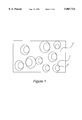
- a second, more important aspect of my discovery is the ability to place living organisms 2 in a protective "shell" 1 , as it were, thereby allowing the shell containing the organism to be placed in standing or moving aquifers where oil spills 3 have occurred.
- Such placement enables the organism to gain proximity to the oil (containing hydrocarbons) where it may produce lipase and digest the hydrocarbons (crude oils) thereby preventing damage to the environment, marine life, and other elements of the ecosystem and biosphere.
- a third aspect of the invention brought about through such placement in the microcontainer is that the viable cell(s) maintains its integrity by preventing it the organism from osmosing too much water across its cell membrane, preventing the organism's demise (these species lack water intake control mechanisms such that when placed in water the microbe has a propensity to take on so much water that it eventually explodes (and dies).
- Placement of the reconstituted organisms 2 in the microshell 1 is accomplished through use of the Kornfeld Rotary Reactor, a device developed by NASA (see NASA Tech Briefs, MFS-28214, entitled Rotary Reactor Makes Large Latex Particles) which is in the public domain, or through utilization of any number of encapsulating devices or processes, e.g., the Vanderhoff Rotary Reactor (also a NASA technology), by microshell manufacturers e.g., KMS Industries of Ann Arbor, Mich., or Micro-Pak, Inc. of N.Y.; Insulated Technologies Corp. of Philadelphia, Pa. or any encapsulation method accomplished by one reasonably skilled in the art of microencapsulation technologies.
- the device, or components thereof may be used to prevent the buildup of paraffin wax upon and in the well head and casings of producing oil wells (provided the container, sic., well casing or well head is comprised of materials containing the instant manufacture--which is now made possible); to remove or alter/treat specific confined oils (lipids or fats) or petroleum distillates, in systems such as back-wash processes, oil separation units, food processing systems (for the removal of specific esthers, monomers, polymers, co-polymers (cholesterol, for example, excess of which is injurious to human health, could be removed from processed cheeses or other dairy products), production of medical pharmaceuticals, eta., or in any situation where it may be desired to remove oil-based substances from standing or moving fluids; from manufacturing processes, or from processed solids, semi-solids or slurries (yogurt, for example).
- the present invention provides encapsulated microbes or cryptobiotic microbes.
- the microbes possess the ability to produce chemical-degrading enzymes.
- the microbes are capable of producing lipase (a hydrocarbon-degrading enzyme).
- the microencapsulated organisms are contained in a semipermeable, hydrophobic microsphere to protect the organisms from contact with aqueous fluids.
- the encapsulating microsphere of the present invention may be fabricated from a paraffin or paraffin-based substance(s).
- the encapsulating microsphere of the present invention may is fabricated of beeswax, natural or synthesized.
- the microspheres preferably have a diameter between 0.20 and 1000 micrometers;
- microencapsulated organisms of the present invention may be sustained, if necessary, by organic or inorganic nutrients, particularly, fructose, glucose, and/or amulose.
- organic or inorganic nutrients particularly, fructose, glucose, and/or amulose.
- the microorganisms may be aerobic or anaerobic.
- the present microencapsulated organism also preferably include an insulation coating, e.g., talc or powdered carbon.
- an insulation coating e.g., talc or powdered carbon.
- the encapsulated microbes are contained in a buoyant container to act as a flotation device.
- the container has affixed thereupon fastening means or mechanisms.
- An example of a suitable fastening means is a Velcro® fastening system.
- the fastening means may also comprise of a manufactured orifice, slot or receptacle or a curved protrusion.
- the fastening means enables attachment of two or more similar flotation devices.
- the present invention thus provides an efficient and convenient delivery system enabling use of a single encapsulated-microbe-containing flotation device or multiple fastened devices.
- the flotation device may be, for example, fabricated of plastic compartments.
- the flotation device may also have flotation means such as multiple layers or groupings of gas-filled microballoons to facilitate flotation.
- Such microballoons may, for example, be fabricated polyvinylchloride or polybutylcarbonate.
- the floatation device may also include means of insulating the organisms from injury arising from environmental elements such as temperature extremes.
- the present invention may also include a signalling means comprising systems sufficient to inform the user as to the operability of the present invention, as exampled by the teachings of U.S. Pat. No. 4,424,911.
- FIG. 1 is a plan view of part of one embodiment of the invention showing the organism 2 being encapsulated in a microshell 1 having an aspect ratio of 0.024 ⁇ m and an outside diameter of 30 ⁇ m (representative).
- the term "aspect ratio” refers to the ratio of the wall thickness (i.e., outer diameter minus inner diameter) to the inner diameter of the microsphere.
- FIG. 1A is an elevational views of the microshell 1 containing the organism 2, the shell 1 being comprised of lipids, paraffin, or any other substance which will protect the organism from contacting the water, yet allowing osmosis of aromatic and non-aromatic hydrocarbons and N-alkanes across and through the microshell, enabling access to the proximity of the organism 2.
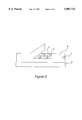
- FIG. 2 is a plan view of the organism 2 and the microshell 1 containing a nutrient 4 suspended in a fluid (oil) 9 representative of how the crude oils, or constituent elements contained therein (N-alkanes, aromatic and non-aromatic hydrocarbons) act to move across the semipermeable microsphere and into the proximity of the organism.
- a fluid oil 9 representative of how the crude oils, or constituent elements contained therein (N-alkanes, aromatic and non-aromatic hydrocarbons) act to move across the semipermeable microsphere and into the proximity of the organism.
- FIG. 3 is a plan view showing the microshell 1 containing the organism 2 being contained in a sack or oblongated container 5 enabling easy placement of the combined devices into the proximity of small oil spills, e.g., those which might occur in foundries or machine shops.
- the significance of this embodiment is that in view of such placement ease of transportation and mobility is obtained, as is the added feature of reuse (the device is reusable so long as the organism has sufficient nutrient (oil, etc.).
- a similar object is now marketed under the Trademark of PIG manufactured by New Pig Corporation of Tipton, Pa.
- the PIG utilizes absorptive mechanisms clay) and certain fibres contained in flexible, oblongated sacks as a means of absorbing oil spills.
- the PIG performs well on land based oil spills, but not in water where oil has been accidentally spilled.
- a problem with the PIG is that, although it absorbes the oil, the PIG containing the oil then becomes a "pollutant" and must be dealt with accordingly.
- the present invention possesses a number of advantages over the present art in that it, i) will operate in both water and on land; ii) is reusable; and iii) is environmentally beneficial in that the microbial action of the present invention reduces the harmful elements of the hydrocarbon-bearing fluids to their base elements, hydrogen, carbon, etc., and returns same to the environment in a neutral, non-polluting state.
- FIG. 3A is an elevational view of FIG. 3 showing the addition of floatation means 6 and locking mechanisms 7.
- FIG. 4 is a representation drawing displaying how the instant manufacture may be used to prevent the build-up of paraffin wax in and upon the well head of producing oil wells; wherein the microshells 1 containing the organism 2 are contained in and comprise a specially designed fitting 10 or sieve 11 permitting retro-fit to existing well head structures 12.
- an example of the instant manufacture comprises a microscopic-sized container 1, or microballoon, such as may be produced though use of the Kornfeld Rotary Reactor, the Vanderhoff Reactor, or other such scintillating or rotary processes, which range in size from 0.20 ⁇ m to 1000 ⁇ m, comprised of a material, e.g., beeswax which is a hydrophobic, which will permit passage of petroleum substances to gain access to the organism, yet preventing entrance of water to the proximity of the organism.
- a material e.g., beeswax which is a hydrophobic
- microshell 1 containing the organism 2 is represented.
- the representative organism, C. lipolytica for example, may be placed within the microballoon, as may certain nutrients 4 required to sustain the organism (oxygen, glucose, etc.), simultaneously with production of the microballoon.
- the substances, nutrients 4, contained within the microballoon may be ambient air, rarified gasses, nutrient gasses, or chemical nutrients, e.g. fructose or glucose.
- the shell 1 may be comprised of any substance, being hydrophobic, capable of preventing entrance of undesired fluids from making contact with the organism contained in the microshell, yet which will permit passage of certain substances, e.g., esthers, phenols, glycols, isomers, polymers, monomers, etc. into the proximity of the organism.
- the shell comprising the instant manufacture is comprised of paraffin based wax.
- beeswax which possesses certain other desirable molecular properties which paraffin wax does not possess will be used to comprise the shells.
- the reason for this is apparent, as the molecular density of beeswax differs from that of paraffin-based wax.
- the shell of the instant invention has an aspect ratio of 0.24 ⁇ m, and this feature of the device can be controlled during the manufacture process.
- the device is "coated" with a substance, e.g., talc 8, which aids in cooling the microshell and further prevents one microshell from bonding to another by virtue of proximity.
- a substance e.g., talc 8
- talc powdered substances
- other powdered substances e.g., carbon powder
- the ideal coating is easily determined by one of reasonable skill, and it would be obvious for one to use any reliable insulator, which is what the talc 8 becomes when so applied, in reducing the instant manufacture to practice.
- the microshell 1 containing the organism 2 may be a component in a second novel embodiment comprising a porous, buoyant container 5, e.g., a sack, constructed of natural or man-made fibers, resins, plastics, isomers, monomers, polymers, mylar, etc. or any versions of a suitable container (oblongated, square, etc.) which may afford convenient transportation and placement of the product in the area requiring remediation, both on land and in fluids, e.g. oceans and seas.
- a porous, buoyant container 5 e.g., a sack, constructed of natural or man-made fibers, resins, plastics, isomers, monomers, polymers, mylar, etc. or any versions of a suitable container (oblongated, square, etc.) which may afford convenient transportation and placement of the product in the area requiring remediation, both on land and in fluids, e.g. oceans and seas.
- FIG. 3 shows the embodiment of FIG. 3 having contained therein a flotation mechanism 6, together therewith at various points along the instant manufacture are located fastening mechanisms, e.g., Velcro fasteners, or slots (male and female eye/hook configuration) or other such fastening mechanisms (snap button fasteners) which enable placement of a number of buoyant mechanisms of the present invention in a straight line, in a circle or a solid sheet, or in any shape which would be to the advantage of the user in terms of confining and remediating a dangerous fluid spill.
- fastening mechanisms e.g., Velcro fasteners, or slots (male and female eye/hook configuration) or other such fastening mechanisms (snap button fasteners) which enable placement of a number of buoyant mechanisms of the present invention in a straight line, in a circle or a solid sheet, or in any shape which would be to the advantage of the user in terms of confining and remediating a dangerous fluid spill.
- buoyant mechanisms of the present invention could be linked together surrounding and thereby containing the spill, thereby permitting the microshells containing the organism to function to dissolve the spill, thereby preventing devastation to the biosphere and ecosystems of the sea.
- buoyant mechanisms of the present invention configured into the shape of a tarpaulin, mitigating the severity of the incident to a minimum.
- a compartment comprising a floatation device
- another aspect of the floatation device actually comprises additional microshells 1 which may be filled with buoyant gasses enabling floatation, thereby eliminating the need for separate buoyancy compartments.
- these compartments are desirable for obvious reasons.
- the present invention is the subject of Disclosure Document Number JR-019 (my Serial Number) filed at the United States Patent and Trademark Office on Jul. 21, 1989 and the entire contents of the Disclosure Document, specifying the actual conception and discovery date, are incorporated herein by reference.
Landscapes
- Life Sciences & Earth Sciences (AREA)
- Engineering & Computer Science (AREA)
- Microbiology (AREA)
- Chemical & Material Sciences (AREA)
- Environmental & Geological Engineering (AREA)
- Organic Chemistry (AREA)
- Hydrology & Water Resources (AREA)
- Water Supply & Treatment (AREA)
- Health & Medical Sciences (AREA)
- Biodiversity & Conservation Biology (AREA)
- General Engineering & Computer Science (AREA)
- General Health & Medical Sciences (AREA)
- Bioinformatics & Cheminformatics (AREA)
- Biotechnology (AREA)
- Zoology (AREA)
- Wood Science & Technology (AREA)
- Biomedical Technology (AREA)
- Soil Sciences (AREA)
- Genetics & Genomics (AREA)
- Mycology (AREA)
- Oil, Petroleum & Natural Gas (AREA)
- Molecular Biology (AREA)
- General Chemical & Material Sciences (AREA)
- Biochemistry (AREA)
- Chemical Kinetics & Catalysis (AREA)
- Mechanical Engineering (AREA)
- Civil Engineering (AREA)
- Structural Engineering (AREA)
- Immobilizing And Processing Of Enzymes And Microorganisms (AREA)
- Apparatus Associated With Microorganisms And Enzymes (AREA)
Abstract
Description
Claims (13)
Priority Applications (1)
| Application Number | Priority Date | Filing Date | Title |
|---|---|---|---|
| US08/487,589 US5807724A (en) | 1989-08-07 | 1995-06-07 | Degradation of petroleum hydrocarbons with organisms encapsulated in wax |
Applications Claiming Priority (4)
| Application Number | Priority Date | Filing Date | Title |
|---|---|---|---|
| US39036389A | 1989-08-07 | 1989-08-07 | |
| US88851592A | 1992-05-26 | 1992-05-26 | |
| US20105994A | 1994-02-24 | 1994-02-24 | |
| US08/487,589 US5807724A (en) | 1989-08-07 | 1995-06-07 | Degradation of petroleum hydrocarbons with organisms encapsulated in wax |
Related Parent Applications (1)
| Application Number | Title | Priority Date | Filing Date |
|---|---|---|---|
| US20105994A Continuation | 1989-08-07 | 1994-02-24 |
Publications (1)
| Publication Number | Publication Date |
|---|---|
| US5807724A true US5807724A (en) | 1998-09-15 |
Family
ID=27394238
Family Applications (1)
| Application Number | Title | Priority Date | Filing Date |
|---|---|---|---|
| US08/487,589 Expired - Fee Related US5807724A (en) | 1989-08-07 | 1995-06-07 | Degradation of petroleum hydrocarbons with organisms encapsulated in wax |
Country Status (1)
| Country | Link |
|---|---|
| US (1) | US5807724A (en) |
Cited By (25)
| Publication number | Priority date | Publication date | Assignee | Title |
|---|---|---|---|---|
| US6121038A (en) * | 1998-06-26 | 2000-09-19 | Kirschner; Leon | Method for pre-emptive potential in remediation of oil spills |
| US6573087B2 (en) * | 1999-07-06 | 2003-06-03 | William F. Lehr | Packaged timed release microorganisms and absorbent matrix for degradation of hydrocarbons |
| WO2002057862A3 (en) * | 2001-01-22 | 2003-06-05 | Unified Environmental Services | Production and use of biosolid granules |
| US6699390B1 (en) * | 2001-07-31 | 2004-03-02 | Petrol Rem. Incorporated | Use of beeswax to degrade hydrocarbons |
| US20050283849A1 (en) * | 2001-06-28 | 2005-12-22 | Masanori Asada | Capsules containing vital cells or tissues |
| US20060068406A1 (en) * | 2000-02-28 | 2006-03-30 | Maxygen, Inc. | Single-stranded nucleic acid template-mediated recombination and nucleic acid fragment isolation |
| US7166221B1 (en) * | 2002-06-24 | 2007-01-23 | William I. Young | Oil digesting microbe-plastic foam system |
| US20070207533A1 (en) * | 2006-03-03 | 2007-09-06 | Callahan And Chase Llc | Device and method for collection and biodegradation of hydrocarbon fluids |
| US20090148929A1 (en) * | 2005-10-19 | 2009-06-11 | Unirem, Inc. | Biostimulation agent for bioremediation and methods therefor |
| US20090311296A1 (en) * | 2005-10-19 | 2009-12-17 | Tarasi Raymond J | Active Agent Delivery and/or Odor Retentive Composition and Methods of Use Thereof |
| US20100291660A1 (en) * | 2009-04-09 | 2010-11-18 | Shaw Mark D | Method of staggered release or exposure of microorganisms for biological remediation of hydrocarbons and other organic matter |
| US7947105B2 (en) | 2005-09-15 | 2011-05-24 | Vitag Corp. | Organic fertilizer made by alkaline conversion process |
| US7947104B2 (en) | 2007-02-16 | 2011-05-24 | Vitag Corp. | Process for treating sludge and manufacturing bioorganically-augmented high nitrogen-containing inorganic fertilizer |
| US8105413B2 (en) | 2005-02-23 | 2012-01-31 | Vitag Corporation | Manufacturing of bioorganic-augmented high nitrogen-containing inorganic fertilizer |
| WO2011149323A3 (en) * | 2010-05-27 | 2012-04-12 | Daniela Esponda Rodriguez | Floating device moved by waves in order to absorb and degrade hydrocarbons floating on the surface of the water |
| US8192519B2 (en) | 2005-03-09 | 2012-06-05 | Vitag Corporation | Beneficiated, heat-dried biosolid pellets |
| US8545697B2 (en) | 2011-04-08 | 2013-10-01 | United Laboratories, Inc. | Water-dissolvable device for treatment of waste material |
| US8557013B2 (en) | 2009-12-30 | 2013-10-15 | Vitag Holdings, Llc | Bioorganically-augmented high value fertilizer |
| US8772219B1 (en) | 2013-03-15 | 2014-07-08 | Clean Control Corporation | Oil spill bioremediation compositions and processes for use |
| US8992654B2 (en) | 2011-03-28 | 2015-03-31 | Vitag Corporation | High value organic-enhanced inorganic fertilizers |
| US9150444B2 (en) | 2013-03-15 | 2015-10-06 | United Laboratories, Inc. | Solid dissolver system for treatment of waste material |
| US9695092B2 (en) | 2006-02-23 | 2017-07-04 | Anuvia Plant Nutrients Corporation | Process for treating sludge and manufacturing bioorganically-augmented high nitrogen-containing inorganic fertilizer |
| US9856178B2 (en) | 2015-06-05 | 2018-01-02 | Anuvia Plant Nutrients Corporation | High value organic containing fertilizers and methods of manufacture |
| US10870609B2 (en) | 2018-08-16 | 2020-12-22 | Anuvia Plant Nutrients Corporation | Reactive inorganic coatings for agricultural fertilizers |
| US11999670B2 (en) | 2018-11-14 | 2024-06-04 | Profile Products Llc | Delivery of bioactive molecules in coatings or surface layers of organically enhanced inorganic fertilizers |
Citations (7)
| Publication number | Priority date | Publication date | Assignee | Title |
|---|---|---|---|---|
| US3860490A (en) * | 1972-02-11 | 1975-01-14 | Nat Patent Dev Corp | Process of subjecting a microorganism susceptible material to a microorganism |
| US3870599A (en) * | 1970-06-03 | 1975-03-11 | Bioteknika International | Microbial degradation of petroleum |
| US4415661A (en) * | 1981-07-30 | 1983-11-15 | Thirumalachar Mandayam J | Microbial degradation of petroleum materials |
| US4521515A (en) * | 1981-10-21 | 1985-06-04 | Seiken Kai Foundation Juridical Person | Bacterial strain for purifying hydrocarbons pollution and purification process |
| US4681851A (en) * | 1983-04-08 | 1987-07-21 | Bayer Aktiengesellschaft | Biologically active composition for purifying waste water and outgoing air |
| US4734439A (en) * | 1984-01-26 | 1988-03-29 | Bayer Aktiengesellschaft | Foam-containing polyurethane(urea) compositions and process for the preparation thereof |
| US5298264A (en) * | 1987-08-25 | 1994-03-29 | Gist-Brocades, N.V. | Oxygen removal with immobilized dried Saccharomyces cerevisiae |
-
1995
- 1995-06-07 US US08/487,589 patent/US5807724A/en not_active Expired - Fee Related
Patent Citations (7)
| Publication number | Priority date | Publication date | Assignee | Title |
|---|---|---|---|---|
| US3870599A (en) * | 1970-06-03 | 1975-03-11 | Bioteknika International | Microbial degradation of petroleum |
| US3860490A (en) * | 1972-02-11 | 1975-01-14 | Nat Patent Dev Corp | Process of subjecting a microorganism susceptible material to a microorganism |
| US4415661A (en) * | 1981-07-30 | 1983-11-15 | Thirumalachar Mandayam J | Microbial degradation of petroleum materials |
| US4521515A (en) * | 1981-10-21 | 1985-06-04 | Seiken Kai Foundation Juridical Person | Bacterial strain for purifying hydrocarbons pollution and purification process |
| US4681851A (en) * | 1983-04-08 | 1987-07-21 | Bayer Aktiengesellschaft | Biologically active composition for purifying waste water and outgoing air |
| US4734439A (en) * | 1984-01-26 | 1988-03-29 | Bayer Aktiengesellschaft | Foam-containing polyurethane(urea) compositions and process for the preparation thereof |
| US5298264A (en) * | 1987-08-25 | 1994-03-29 | Gist-Brocades, N.V. | Oxygen removal with immobilized dried Saccharomyces cerevisiae |
Non-Patent Citations (1)
| Title |
|---|
| Hamley, G.G., The Condensed Chemical Dictionary, 8th edition, VNR, New York, 1971, p. 936. * |
Cited By (43)
| Publication number | Priority date | Publication date | Assignee | Title |
|---|---|---|---|---|
| US6451585B1 (en) * | 1998-06-26 | 2002-09-17 | Leon Kirschner | Product for pre-emptive potential in remediation of oil spills |
| US6121038A (en) * | 1998-06-26 | 2000-09-19 | Kirschner; Leon | Method for pre-emptive potential in remediation of oil spills |
| US6573087B2 (en) * | 1999-07-06 | 2003-06-03 | William F. Lehr | Packaged timed release microorganisms and absorbent matrix for degradation of hydrocarbons |
| US20060068406A1 (en) * | 2000-02-28 | 2006-03-30 | Maxygen, Inc. | Single-stranded nucleic acid template-mediated recombination and nucleic acid fragment isolation |
| WO2002057862A3 (en) * | 2001-01-22 | 2003-06-05 | Unified Environmental Services | Production and use of biosolid granules |
| US6841515B2 (en) * | 2001-01-22 | 2005-01-11 | Unified Enviromental Services Group, L.L.C. | Production and use of biosolid granules |
| US20050283849A1 (en) * | 2001-06-28 | 2005-12-22 | Masanori Asada | Capsules containing vital cells or tissues |
| US8859853B2 (en) * | 2001-06-28 | 2014-10-14 | Morishita Jintan Co., Ltd | Capsules containing vital cells or tissues |
| US6699390B1 (en) * | 2001-07-31 | 2004-03-02 | Petrol Rem. Incorporated | Use of beeswax to degrade hydrocarbons |
| US7166221B1 (en) * | 2002-06-24 | 2007-01-23 | William I. Young | Oil digesting microbe-plastic foam system |
| US7354516B1 (en) * | 2002-06-24 | 2008-04-08 | Young Enterprises Llc | Oil digesting microbe-plastic foam system |
| US8105413B2 (en) | 2005-02-23 | 2012-01-31 | Vitag Corporation | Manufacturing of bioorganic-augmented high nitrogen-containing inorganic fertilizer |
| US8470065B1 (en) | 2005-02-23 | 2013-06-25 | Vitag Corporation | Manufacturing of bioorganic-augmented high nitrogen-containing inorganic fertilizer |
| US8192519B2 (en) | 2005-03-09 | 2012-06-05 | Vitag Corporation | Beneficiated, heat-dried biosolid pellets |
| US8864868B2 (en) | 2005-09-15 | 2014-10-21 | Vitag Corporation | Organic containing sludge to fertilizer alkaline conversion process |
| US8491693B2 (en) | 2005-09-15 | 2013-07-23 | Vitag Corporation | Process to beneficiate heat-dried biosolid pellets |
| US7947105B2 (en) | 2005-09-15 | 2011-05-24 | Vitag Corp. | Organic fertilizer made by alkaline conversion process |
| US9233882B2 (en) | 2005-09-15 | 2016-01-12 | Anuvia Plant Nutrients Corporation | Organic containing sludge to fertilizer alkaline conversion process |
| US8597394B2 (en) | 2005-09-15 | 2013-12-03 | Vitag Corporation | Organic containing sludge to fertilizer alkaline conversion process |
| US8202342B2 (en) | 2005-09-15 | 2012-06-19 | Vitag Corporation | Organic containing sludge to fertilizer alkaline conversion process |
| US20090148929A1 (en) * | 2005-10-19 | 2009-06-11 | Unirem, Inc. | Biostimulation agent for bioremediation and methods therefor |
| US20090311296A1 (en) * | 2005-10-19 | 2009-12-17 | Tarasi Raymond J | Active Agent Delivery and/or Odor Retentive Composition and Methods of Use Thereof |
| US8236333B2 (en) | 2005-10-19 | 2012-08-07 | Unirem, Inc. | Active agent delivery and/or odor retentive composition and methods of use thereof |
| US8609119B2 (en) | 2005-10-19 | 2013-12-17 | Unirem, Inc. | Active agent delivery and/or odor retentive composition and methods of use thereof |
| US9695092B2 (en) | 2006-02-23 | 2017-07-04 | Anuvia Plant Nutrients Corporation | Process for treating sludge and manufacturing bioorganically-augmented high nitrogen-containing inorganic fertilizer |
| US20070207533A1 (en) * | 2006-03-03 | 2007-09-06 | Callahan And Chase Llc | Device and method for collection and biodegradation of hydrocarbon fluids |
| US7947104B2 (en) | 2007-02-16 | 2011-05-24 | Vitag Corp. | Process for treating sludge and manufacturing bioorganically-augmented high nitrogen-containing inorganic fertilizer |
| US8298425B2 (en) | 2009-04-09 | 2012-10-30 | Shaw Mark D | Method of staggered release or exposure of microorganisms for biological remediation of hydrocarbons and other organic matter |
| US20100291660A1 (en) * | 2009-04-09 | 2010-11-18 | Shaw Mark D | Method of staggered release or exposure of microorganisms for biological remediation of hydrocarbons and other organic matter |
| US8920733B2 (en) | 2009-12-30 | 2014-12-30 | Vitag Corporation | Bioorganically-augmented high value fertilizer |
| US9328030B2 (en) | 2009-12-30 | 2016-05-03 | Anuvia Plant Nutrients Corporation | Bioorganically-augmented high value fertilizer |
| US8557013B2 (en) | 2009-12-30 | 2013-10-15 | Vitag Holdings, Llc | Bioorganically-augmented high value fertilizer |
| US9586869B1 (en) | 2009-12-30 | 2017-03-07 | Anuvia Plant Nutrients Corporation | Bioorganically-augmented high value fertilizer |
| WO2011149323A3 (en) * | 2010-05-27 | 2012-04-12 | Daniela Esponda Rodriguez | Floating device moved by waves in order to absorb and degrade hydrocarbons floating on the surface of the water |
| US8992654B2 (en) | 2011-03-28 | 2015-03-31 | Vitag Corporation | High value organic-enhanced inorganic fertilizers |
| US9975792B2 (en) | 2011-04-08 | 2018-05-22 | United Laboratories, Inc. | Water-dissolvable device for treatment of waste material |
| US8545697B2 (en) | 2011-04-08 | 2013-10-01 | United Laboratories, Inc. | Water-dissolvable device for treatment of waste material |
| US9150444B2 (en) | 2013-03-15 | 2015-10-06 | United Laboratories, Inc. | Solid dissolver system for treatment of waste material |
| US8772219B1 (en) | 2013-03-15 | 2014-07-08 | Clean Control Corporation | Oil spill bioremediation compositions and processes for use |
| US9856178B2 (en) | 2015-06-05 | 2018-01-02 | Anuvia Plant Nutrients Corporation | High value organic containing fertilizers and methods of manufacture |
| US10870609B2 (en) | 2018-08-16 | 2020-12-22 | Anuvia Plant Nutrients Corporation | Reactive inorganic coatings for agricultural fertilizers |
| US11542213B2 (en) | 2018-08-16 | 2023-01-03 | Anuvia Plant Nutrients IP Holdings, LLC | Reactive inorganic coatings for agricultural fertilizers |
| US11999670B2 (en) | 2018-11-14 | 2024-06-04 | Profile Products Llc | Delivery of bioactive molecules in coatings or surface layers of organically enhanced inorganic fertilizers |
Similar Documents
| Publication | Publication Date | Title |
|---|---|---|
| US5807724A (en) | Degradation of petroleum hydrocarbons with organisms encapsulated in wax | |
| Bayat et al. | Immobilization of microbes for bioremediation of crude oil polluted environments: a mini review | |
| US7354516B1 (en) | Oil digesting microbe-plastic foam system | |
| AU631247B2 (en) | Process for separating and/or recovering hydrocarbon oils from water using biodegradable absorbent sponges | |
| US8968718B2 (en) | Bioremediation method for accelerated biological decomposition of petroleum hydrocarbons in sea ice-covered polar regions, and bacteria and enzyme mixtures as agents for carrying out said method | |
| US20130180915A1 (en) | Composition for triggering microbiological processes in water and method of producing the same | |
| Wu et al. | Impact of polymer colonization on the fate of organic contaminants in sediment | |
| ATE283725T1 (en) | SYSTEMS FOR IMPROVED TREATMENT OF HYDROCARBON CONTAMINANTS IN AQUEOUS ENVIRONMENTS | |
| Chanthamalee et al. | Treatment of oily bilge water from small fishing vessels by PUF-immobilized Gordonia sp. JC11 | |
| US6267888B1 (en) | Biodispersion as a method for removal of hydrocarbon oil from marine aqueous environments | |
| CN102604924A (en) | Offshore oil degrading microbial inoculum and preparation method thereof | |
| Jin et al. | Mussel-inspired and in situ polymerization-modified commercial sponge for efficient crude oil and organic solvent adsorption | |
| US5981272A (en) | Composite medium for attaching and growing microorganisms | |
| Ismail et al. | Biotreatment of real petroleum wastewater using non-acclimated immobilized mixed cells in spouted bed bioreactor | |
| AU5204699A (en) | Product and method for pre-emptive potential in remediation of oil spills | |
| KR102093432B1 (en) | The composition and preparation method of quorum quenching media of core-shell structure for anti-biofouling strategy | |
| Wang et al. | Biocompatible meshes with appropriate wettabilities for underwater oil transportation/collection and highly effective oil/water separation | |
| CN108251409B (en) | Composite microbial missile material for adsorbing and degrading oil stains and preparation method thereof | |
| US9206062B2 (en) | Methods to recover and reclaim hydrocarbons or hydrophobic substances in an aqueous environment | |
| Banerjee et al. | Overview on natural materials for oil water separation | |
| RU2571180C2 (en) | Method for purification of marine and brackish water ecosystems from oil and oil products under high latitude conditions | |
| Mahmoud et al. | Organogels as oil sorbers for oil spill treatment | |
| CN107937386A (en) | A kind of oleophylic bag hydropexis microbe carrier and preparation method thereof | |
| US20080138883A1 (en) | Method for Bioremediation and Biodegradable Product Therefor | |
| Sonbhadra et al. | Bioelectrochemical Remediation and Valorization of Oily Wastewaters: A Review |
Legal Events
| Date | Code | Title | Description |
|---|---|---|---|
| AS | Assignment |
Owner name: RESNICK, KATHY YVONNE (COUCH), PENNSYLVANIA Free format text: ASSIGNMENT OF ASSIGNORS INTEREST;ASSIGNOR:RESNICK, JOSEPH A.;REEL/FRAME:009703/0014 Effective date: 19960303 Owner name: RESNICK, NICOLE YVONNE, PENNSYLVANIA Free format text: ASSIGNMENT OF ASSIGNORS INTEREST;ASSIGNOR:RESNICK, JOSEPH A.;REEL/FRAME:009703/0014 Effective date: 19960303 Owner name: RESNICK, ADRIENNE I., PENNSYLVANIA Free format text: ASSIGNMENT OF ASSIGNORS INTEREST;ASSIGNOR:RESNICK, JOSEPH A.;REEL/FRAME:009703/0014 Effective date: 19960303 |
|
| REMI | Maintenance fee reminder mailed | ||
| FPAY | Fee payment |
Year of fee payment: 4 |
|
| SULP | Surcharge for late payment | ||
| REMI | Maintenance fee reminder mailed | ||
| LAPS | Lapse for failure to pay maintenance fees | ||
| STCH | Information on status: patent discontinuation |
Free format text: PATENT EXPIRED DUE TO NONPAYMENT OF MAINTENANCE FEES UNDER 37 CFR 1.362 |
|
| FP | Lapsed due to failure to pay maintenance fee |
Effective date: 20060915 |