US5798205A - Retrovirus from the HIV type O and its use (MVP-2901/94) - Google Patents
Retrovirus from the HIV type O and its use (MVP-2901/94) Download PDFInfo
- Publication number
- US5798205A US5798205A US08/602,713 US60271396A US5798205A US 5798205 A US5798205 A US 5798205A US 60271396 A US60271396 A US 60271396A US 5798205 A US5798205 A US 5798205A
- Authority
- US
- United States
- Prior art keywords
- antibody
- virus
- sample
- protein
- polypeptide
- Prior art date
- Legal status (The legal status is an assumption and is not a legal conclusion. Google has not performed a legal analysis and makes no representation as to the accuracy of the status listed.)
- Expired - Lifetime
Links
Images
Classifications
-
- C—CHEMISTRY; METALLURGY
- C07—ORGANIC CHEMISTRY
- C07K—PEPTIDES
- C07K14/00—Peptides having more than 20 amino acids; Gastrins; Somatostatins; Melanotropins; Derivatives thereof
- C07K14/005—Peptides having more than 20 amino acids; Gastrins; Somatostatins; Melanotropins; Derivatives thereof from viruses
-
- C—CHEMISTRY; METALLURGY
- C12—BIOCHEMISTRY; BEER; SPIRITS; WINE; VINEGAR; MICROBIOLOGY; ENZYMOLOGY; MUTATION OR GENETIC ENGINEERING
- C12N—MICROORGANISMS OR ENZYMES; COMPOSITIONS THEREOF; PROPAGATING, PRESERVING, OR MAINTAINING MICROORGANISMS; MUTATION OR GENETIC ENGINEERING; CULTURE MEDIA
- C12N15/00—Mutation or genetic engineering; DNA or RNA concerning genetic engineering, vectors, e.g. plasmids, or their isolation, preparation or purification; Use of hosts therefor
- C12N15/09—Recombinant DNA-technology
- C12N15/11—DNA or RNA fragments; Modified forms thereof; Non-coding nucleic acids having a biological activity
-
- A—HUMAN NECESSITIES
- A61—MEDICAL OR VETERINARY SCIENCE; HYGIENE
- A61P—SPECIFIC THERAPEUTIC ACTIVITY OF CHEMICAL COMPOUNDS OR MEDICINAL PREPARATIONS
- A61P31/00—Antiinfectives, i.e. antibiotics, antiseptics, chemotherapeutics
- A61P31/12—Antivirals
-
- A—HUMAN NECESSITIES
- A61—MEDICAL OR VETERINARY SCIENCE; HYGIENE
- A61P—SPECIFIC THERAPEUTIC ACTIVITY OF CHEMICAL COMPOUNDS OR MEDICINAL PREPARATIONS
- A61P31/00—Antiinfectives, i.e. antibiotics, antiseptics, chemotherapeutics
- A61P31/12—Antivirals
- A61P31/14—Antivirals for RNA viruses
- A61P31/18—Antivirals for RNA viruses for HIV
-
- C—CHEMISTRY; METALLURGY
- C12—BIOCHEMISTRY; BEER; SPIRITS; WINE; VINEGAR; MICROBIOLOGY; ENZYMOLOGY; MUTATION OR GENETIC ENGINEERING
- C12N—MICROORGANISMS OR ENZYMES; COMPOSITIONS THEREOF; PROPAGATING, PRESERVING, OR MAINTAINING MICROORGANISMS; MUTATION OR GENETIC ENGINEERING; CULTURE MEDIA
- C12N7/00—Viruses; Bacteriophages; Compositions thereof; Preparation or purification thereof
-
- A—HUMAN NECESSITIES
- A61—MEDICAL OR VETERINARY SCIENCE; HYGIENE
- A61K—PREPARATIONS FOR MEDICAL, DENTAL OR TOILETRY PURPOSES
- A61K39/00—Medicinal preparations containing antigens or antibodies
-
- C—CHEMISTRY; METALLURGY
- C12—BIOCHEMISTRY; BEER; SPIRITS; WINE; VINEGAR; MICROBIOLOGY; ENZYMOLOGY; MUTATION OR GENETIC ENGINEERING
- C12N—MICROORGANISMS OR ENZYMES; COMPOSITIONS THEREOF; PROPAGATING, PRESERVING, OR MAINTAINING MICROORGANISMS; MUTATION OR GENETIC ENGINEERING; CULTURE MEDIA
- C12N2740/00—Reverse transcribing RNA viruses
- C12N2740/00011—Details
- C12N2740/10011—Retroviridae
- C12N2740/16011—Human Immunodeficiency Virus, HIV
- C12N2740/16021—Viruses as such, e.g. new isolates, mutants or their genomic sequences
-
- C—CHEMISTRY; METALLURGY
- C12—BIOCHEMISTRY; BEER; SPIRITS; WINE; VINEGAR; MICROBIOLOGY; ENZYMOLOGY; MUTATION OR GENETIC ENGINEERING
- C12N—MICROORGANISMS OR ENZYMES; COMPOSITIONS THEREOF; PROPAGATING, PRESERVING, OR MAINTAINING MICROORGANISMS; MUTATION OR GENETIC ENGINEERING; CULTURE MEDIA
- C12N2740/00—Reverse transcribing RNA viruses
- C12N2740/00011—Details
- C12N2740/10011—Retroviridae
- C12N2740/16011—Human Immunodeficiency Virus, HIV
- C12N2740/16022—New viral proteins or individual genes, new structural or functional aspects of known viral proteins or genes
-
- C—CHEMISTRY; METALLURGY
- C12—BIOCHEMISTRY; BEER; SPIRITS; WINE; VINEGAR; MICROBIOLOGY; ENZYMOLOGY; MUTATION OR GENETIC ENGINEERING
- C12N—MICROORGANISMS OR ENZYMES; COMPOSITIONS THEREOF; PROPAGATING, PRESERVING, OR MAINTAINING MICROORGANISMS; MUTATION OR GENETIC ENGINEERING; CULTURE MEDIA
- C12N2740/00—Reverse transcribing RNA viruses
- C12N2740/00011—Details
- C12N2740/10011—Retroviridae
- C12N2740/16011—Human Immunodeficiency Virus, HIV
- C12N2740/16111—Human Immunodeficiency Virus, HIV concerning HIV env
- C12N2740/16122—New viral proteins or individual genes, new structural or functional aspects of known viral proteins or genes
-
- Y—GENERAL TAGGING OF NEW TECHNOLOGICAL DEVELOPMENTS; GENERAL TAGGING OF CROSS-SECTIONAL TECHNOLOGIES SPANNING OVER SEVERAL SECTIONS OF THE IPC; TECHNICAL SUBJECTS COVERED BY FORMER USPC CROSS-REFERENCE ART COLLECTIONS [XRACs] AND DIGESTS
- Y10—TECHNICAL SUBJECTS COVERED BY FORMER USPC
- Y10S—TECHNICAL SUBJECTS COVERED BY FORMER USPC CROSS-REFERENCE ART COLLECTIONS [XRACs] AND DIGESTS
- Y10S435/00—Chemistry: molecular biology and microbiology
- Y10S435/974—Aids related test
-
- Y—GENERAL TAGGING OF NEW TECHNOLOGICAL DEVELOPMENTS; GENERAL TAGGING OF CROSS-SECTIONAL TECHNOLOGIES SPANNING OVER SEVERAL SECTIONS OF THE IPC; TECHNICAL SUBJECTS COVERED BY FORMER USPC CROSS-REFERENCE ART COLLECTIONS [XRACs] AND DIGESTS
- Y10—TECHNICAL SUBJECTS COVERED BY FORMER USPC
- Y10S—TECHNICAL SUBJECTS COVERED BY FORMER USPC CROSS-REFERENCE ART COLLECTIONS [XRACs] AND DIGESTS
- Y10S435/00—Chemistry: molecular biology and microbiology
- Y10S435/975—Kit
-
- Y—GENERAL TAGGING OF NEW TECHNOLOGICAL DEVELOPMENTS; GENERAL TAGGING OF CROSS-SECTIONAL TECHNOLOGIES SPANNING OVER SEVERAL SECTIONS OF THE IPC; TECHNICAL SUBJECTS COVERED BY FORMER USPC CROSS-REFERENCE ART COLLECTIONS [XRACs] AND DIGESTS
- Y10—TECHNICAL SUBJECTS COVERED BY FORMER USPC
- Y10S—TECHNICAL SUBJECTS COVERED BY FORMER USPC CROSS-REFERENCE ART COLLECTIONS [XRACs] AND DIGESTS
- Y10S436/00—Chemistry: analytical and immunological testing
- Y10S436/828—Protein A
-
- Y—GENERAL TAGGING OF NEW TECHNOLOGICAL DEVELOPMENTS; GENERAL TAGGING OF CROSS-SECTIONAL TECHNOLOGIES SPANNING OVER SEVERAL SECTIONS OF THE IPC; TECHNICAL SUBJECTS COVERED BY FORMER USPC CROSS-REFERENCE ART COLLECTIONS [XRACs] AND DIGESTS
- Y10—TECHNICAL SUBJECTS COVERED BY FORMER USPC
- Y10S—TECHNICAL SUBJECTS COVERED BY FORMER USPC CROSS-REFERENCE ART COLLECTIONS [XRACs] AND DIGESTS
- Y10S530/00—Chemistry: natural resins or derivatives; peptides or proteins; lignins or reaction products thereof
- Y10S530/81—Carrier - bound or immobilized peptides or proteins and the preparation thereof, e.g. biological cell or cell fragment as carrier
- Y10S530/812—Peptides or proteins is immobilized on, or in, an organic carrier
Definitions
- the present invention relates to a novel retrovirus from the HIV group which is presently designated more precisely as HIV subtype O, and to variants or parts thereof which contain the essential properties of the virus. A process is described for culturing the retrovirus. The invention furthermore relates to the isolation of this retrovirus and to the use of the virus, its parts or extracts for medicinal purposes, for diagnosis and in the preparation of vaccines.
- HIV immunodeficiency
- HIV human immunodeficiency virus
- HIV-2 retroviruses clearly differ from HIV-1 but are also related to monkey immunodeficiency viruses (SIV-2). Like HIV-1, HIV-2 also gives rise to an AIDS symptomatology.
- New HI viruses as represented by ANT70 (J. Vir., 1994, Vol. 68, No. 3, pp. 1586-1596) and MVP-5180/91 (J. Vir., 1994, Vol. 68, No. 3, pp. 1581-1585) have recently been described which can not be classified in HIV-1 subtypes A-F. Owing to their clear structural differences from the known HIV-1 strains, both isolates have provisionally been classified together under subtype 0 (G. Myers, Los Alamos Data Base), although they clearly differ from each other in their genomic nucleotide sequences.
- HIV-1 isolates exhibit a high degree of variability which markedly complicates the comparability of the different isolates.
- high degrees of variability are found, for example, in some regions of the genome whereas other genome regions are comparatively well conserved (Benn, S. et al., Science 230, 949-951 1985!).
- HIV-2 has also been reported to exhibit a very high degree of polymorphism (Clavel, F. et al., Nature 324, 691-695 1986!).
- Regions in the gag and pol genes which encode proteins which are structurally and enzymatically essential possess the greatest genetic stability.
- some regions in the env gene, and also the genes (vif, vpr, tat, rev, nef) which encode regulatory proteins exhibit a high degree of variability.
- the genotypic diversity of the HIV viruses presents a substantial problem for diagnosis in particular.
- the HIV-1 viruses it is assumed that one nucleotide is changed per genome in each replication cycle.
- the HIV viruses are able to respond in an extraordinarily flexible manner to the in-vivo selection pressure and to generate, extremely rapidly, mutants which either are resistant to pharmacological agents or are able to attack individuals who have built up a certain degree of immunological protection (Sharp et al., "Origins and diversity of human immunodeficiency viruses", AIDS 1994, vol. 8, Suppl. 1; S 27-S 42).
- the present invention relates to a novel retrovirus of the HIV subtype O group, which retrovirus is designated MVP-2901/94, and to its variants, to DNA sequences, amino acid sequences and constituent sequences derived therefrom, and to test kits containing the latter.
- MVP-2901/94 can be propagated in the MT2 and Jurkat cell lines.
- the isolation and propagation of viruses are described in detail in the book "Viral Quantitation in HIV Infection, Editor Jean-Marie Andrieu, John Libbey Eurotext, 1991".
- the procedural methods described therein are incorporated in the disclosure of the present application by reference.
- the RNA is located in a conical core which is assembled from protein subunits which carry the designation p 24 (p for protein).
- This inner core is surrounded by a protein coat which is constructed from protein p 17 (outer core), and by a glycoprotein coat which, in addition to lipids, which originate from the host cell, contains the transmembrane protein gp 41 and the coat protein 120 (gp 120). This gp 120 then binds to the CD-4 receptors of the host cells.
- the RNA of the HIV viruses--portrayed in a simplified manner-- possesses the following gene regions: so-called long terminal repeats (LTR) at each end, together with the following gene regions: gag, pol, env and nef.
- the gag gene encodes, inter alia, the core proteins, p 24 and p 17, the pol gene encodes the reverse transcriptase, the protease, the RNAse H and the integrase, and the env gene encodes the glycoproteins, gp 41 and gp 120, of the virus coat.
- the nef gene encodes a protein having a regulatory function.
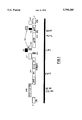
- the arrangement of the genome of retroviruses of the HIV type is shown diagrammatically in FIG. 1.
- PCR polymerase chain reaction
- the polymerization (DNA synthesis) is carried out for a defined time, and the nucleic acid strands are then separated by heating. After cooling, the polymerization then proceeds once more.
- the retrovirus according to the invention is an HIV-1 or HIV-2 virus
- Some primers of this type have previously been described (Laure, F. et al., Lancet ii, (1988) 538-541 for pol 3 and pol 4, and Ou C.Y. et al., Science 239 (1988) 295-297 for sk 38/39, sk 68/69).
- the entire genome of the virus can be cloned and sequenced using known, standard molecular biological methods.
- the synthesis of the first cDNA strand is carried out on the viral RNA, or parts thereof, using an oligo(dT) primer.
- the synthesis, for which reverse transcriptase is added, can be carried out using a commercially available kit.
- the RNA strand of the RNA/DNA hybrid is digested with RNase H, and the second strand is synthesized using E. coli DNA polymerase I. Blunt ends can then be produced using T4 DNA polymerase, and these ends can be bonded to suitable linkers for restriction cleavage sites.
- the cDNA fragment is isolated from an agarose gel and ligated to a vector which has previously been cut in a suitable manner.
- the vector containing the cDNA insert can then be used to transform competent E. coli cells.
- the resulting colonies are then transferred to membranes, lyzed and denatured, and finally detected by hybridization with nucleic acid which is labeled with digoxigenin or biotin.
- nucleic acid which is labeled with digoxigenin or biotin.
- the nucleic acid of the immunodeficiency virus can be cloned with the aid of PCR technology. To do this, it is necessary in each case to identify, from the still unknown region of the sequence, primers which can, in combination with the primers derived from the known part of the sequence, render it possible to amplify the DNA of the isolate.
- genomic DNA from an infected cell line is first purified by standard methods.
- the proviral DNA which is integrated into the host genome, can then be cloned after constructing and screening a genomic library.
- the genomic DNA is partially fragmented, and the fraction containing fragments of a length of about 10-25 kb is isolated and cloned into a vector system, such as cosmids or lambda phages, which is able to accommodate fragments of this length.
- a vector system such as cosmids or lambda phages
- Vectors which contain the viral genome can then be identified by hybridization with a cloned DNA fragment of the sought-after virus, which fragment is labeled radioactively or in some other way, and subsequently isolated (plaque screening or colony screening).
- the viral genome is thereby made available for sequence analysis and for expression of its proteins.
- the similarity between different virus isolates can be expressed by the degree of homology between the nucleic acid or protein sequences. 50% homology means, for example, that 50 out of 100 nucleotide or amino acid positions in the sequences correspond to each other.
- the homology of proteins is determined by sequence analysis. Homologous DNA sequences can also be identified by the hybridization technique.
- the present invention therefore relates to an immunodeficiency virus of the HIV group, or variants of this virus, which exhibits morpholoical and immunological properties which correspond to those of the retrovirus which is deposited with the European Collection of Animal Cell Cultures (ECACC) under No. V 95012601 and which has the designation MVP-2901/94. The date of deposition was 26th Jan. 1995.
- the essential morphological and immunological properties of the immunodeficiency virus are understood to mean those structures which are of decisive importance for the immunological characterization of the virus.
- those epitopes are particularly crucial which give rise to an amplified production of antibodies in infected persons and which are suitable for dividing the viruses into different subclasses and subtypes. Consequently, the epitopes which are of importance in this context are, in particular, not those which are also present in viruses of the HIV-1 and/or HIV-2 groups but rather those epitopes which occur only in the deposited virus according to the invention and in those variants which belong to the narrow group of the MVP-2901/94 virus.
- the morphological and immunological properties of the virus are also mirrored in the diagnostically relevant region of the coat protein.
- the invention also embraces immunodeficiency viruses which exhibit an RNA sequence which possesses at least 75% homology, based on the entire genome, with the RNA of the deposited virus.
- Preferred immunodeficiency viruses are those which exhibit an RNA sequence which possesses at least 85%, and particularly preferably at least 90%, homology, based on the entire genome, with the RNA of the deposited virus.
- Very particularly preferred immunodeficiency viruses are those which possess 92%, or even 95%, homology, based on the entire genome, with the RNA of the deposited virus.
- the immunodeficiency viruses according to the invention exhibit an RNA sequence which is complementary to the DNA sequence in Table 1 and possesses at least 75% homology with this sequence in Table 1.
- the immunodeficiency viruses according to the invention exhibit an RNA sequence which, is complementary to the DNA sequence in Table 1 and possesses at least 85% homology with the sequence in Table 1.
- the homologous moiety of the sequence is at least 50 nucleotides in length and, in a preferred embodiment, at least 100 nucleotides in length.
- the immunodeficiency viruses according to the invention exhibit a sequence or a constituent sequence which is complementary to the sequence depicted in Table 1 or is homologous with this sequence, with the difference from the sequence given in Table 1, based on the diagnostically relevant region, being at most 20% at the nucleotide level and 25% at the protein level.
- the difference from the sequence given in Table 1, based on the diagnostically relevant region is at most 10% at the nucleotide level and 15% at the protein level.
- the present invention also relates to a cDNA which is complementary to the RNA, or parts thereof, of the immunodeficiency virus MVP-2901/94, which is deposited at the European Collection of Animal Cell Cultures (ECACC) under No. V 95012601, or of a virus according to the invention.
- ECACC European Collection of Animal Cell Cultures
- this cDNA is in the form of recombinant DNA.
- the invention also embraces antigens which are prepared using the CDNA according to the invention or the recombinant DNA, or using the amino acid structure which can be deduced from its cDNA.
- the antigen is a protein or peptide.
- the antigens according to the invention exhibit an amino acid sequence which corresponds to the amino acid sequence depicted in Table 1 or to a constituent sequence thereof.
- the antigen exhibits a constituent sequence having at least 10 amino acids, particularly preferably having at least 20 amino acids, selected from the amino acid sequence in Table 1.
- the antigen according to the invention exhibits an amino acid sequence NQQLLNLWGCKGKLICYTSVKWN or a constituent sequence thereof having at least 10 consecutive amino acids.
- the present invention also embraces antigens which are prepared from an immunodeficiency virus according to the invention are, for example, in the form of purified viral preparations.
- the antigen according to the invention is preferably prepared by recombinant means; however, it is also possible to prepare the antigen synthetically, for example by solid phase synthesis.
- the invention also embraces test kits for detecting antibodies against viruses which cause immune deficiency, which contain at least one antigen according to the invention.
- test kits can be based on Western blots, ELISA tests or fluorescence antibody detection tests. Recently, it has emerged that those methods in which the viral nucleic acid, or a specific region thereof, is amplified are very sensitive and effective for diagnosing viruses, and in particular HIV viruses.
- PCR polymerase chain reaction
- the competitive polymerase chain reaction can also be used for detecting HIV infections (for example AIDS (1993), 7, Suppl. 2; S 65-S 71).
- NASBA nucleic acid sequence-based amplification
- a further method for detecting HIV viruses is that of detection by means of signal amplification using branched DNA. This is described, for example, in AIDS 1993, 7 (Suppl. 2) : S 11-S 14.
- the viral nucleic acid is hybridized to probes which are bound to a solid phase.
- a detection molecule (branched DNA structures) is hybridized to the probe and then detected enzymically.
- a feature shared in common by the above methods is that defined nucleic acid regions, which are specific for the virus to be detected, are employed in the detection methods.
- defined, short nucleic acid fragments, which are, in particular DNA fragments, are selected and employed in the detection methods.
- the present invention also relates, therefore, to those nucleic acid fragments which exhibit a sequence which corresponds to a nucleic acid according to the invention or is complementary to this nucleic acid.
- These nucleic acid fragments which can, for example, be primers, have, as a rule, a length of at least 15, preferably at least 25, and particularly preferably at least 35, nucleotides.
- These nucleic acid fragments may be used, in accordance with the invention, in methods for detecting HIV viruses.
- the immunodeficiency viruses according to the invention, the cDNA according to the invention and the antigens may be used for detecting retroviruses which cause immune deficiency.
- the antigens according to the invention may be used for preparing vaccines.
- the invention also relates to ribonucleic acid which encodes a virus according to the invention.
- This part is an envelope region which encompasses the area of the so-called V3 loop; the region which was sequenced within the scope of the present invention extends into the so-called gp 41 region.
- the sequence of the virus according to the invention differs from that of previously known viruses.
- the present invention relates, therefore, to those viruses, and corresponding DNA and amino acid sequences, which substantially correspond with the sequence of the virus according to the invention, with the degree of deviation being determined by the degree of homology.
- An homology of, for example, more than 85% denotes, therefore, that those sequences are encompassed in which at least 85 out of 100 nucleotides or amino acids are the same nucleotides or amino acids, while the remainder can be different.
- the two sequences are aligned in such a way that the greatest possible number of nucleotides or amino acids which correspond to each other coincide with each other.
- immunodominant epitopes can be formulated and synthesized. Since the nucleic acid sequence of the virus is known, the person skilled in the art can deduce the amino acid sequence from this. A constituent region of the amino acid sequence is given in Table 1.
- the present invention also relates, therefore, to antigens, i.e. proteins, oligopeptides or polypeptides, which can be prepared using the information disclosed in Table 1. These antigens, proteins, polypeptides and oligopeptides exhibit amino acid sequences which are given in Table 1. The antigens or peptides can exhibit relatively short constituent sequences of an amino acid sequence which is reproduced in Table 1.
- This amino acid sequence is at least 10 amino acids, preferably at least 20, and particularly preferably at least 25, amino acids in length.
- these peptides can also be prepared by synthetic methods.
- a suitable route of preparation is solid phase synthesis of the Merrifield type. Further description of this technique, and of other methods which are known from the state of the art, can be found in the literature, for example M. Bodansky, et al., Peptide Synthesis, John Wiley & Sons, 2nd Edition 1976.
- a serum sample from the person to be investigated is brought into contact with the protein chains of one or more proteins or glycoproteins (which can be expressed in eukaryotic cell lines), or parts thereof, which derive from MVP-2901/94.
- Test methods which are preferred include the immunofluoresence or immunoenzymic test methods (e.g. ELISA and immunoblot).
- antigen which derives from MVP-2901/94, or a variant thereof can, for example, be bound to the walls of microtiter plates.
- the dose which is used in this context essentially depends on the test system and on the treatment of the microtiter plates. Serum, or serum dilutions, which derive from the person to be investigated are then added to the wells of the microtiter plates. After a defined incubation period, the plate is washed and specific immune complexes are detected with antibodies which bind specifically to human immunoglobulins and which have been linked beforehand to an enzyme, for example horseradish peroxidase, alkaline phosphatase, etc., or to an enzyme-labeled antigen. These enzymes can convert a colorless substrate into a highly colored product, and the presence of specific anti-HIV antibodies can then be determined from the intensity of the color.
- Another possible use for the virus according to the invention in test systems is its use in Western blots.
- this virus or parts thereof, i.e. immunodominant epitopes and inducers of cellular immunity, or recombinantly prepared antigens, can, nevertheless, also be used to develop and prepare vaccines.
- FIG. 1 is a map of the genome of retrovirus MVP 2901/94.
- the immunodeficiency virus according to the invention was isolated from the blood of a female patient exhibiting signs of immune deficiency.
- peripheral mononuclear cells peripheral blood lymphocytes, PBL
- the customary medium RPMI 1640 containing 10% fetal calf serum was used.
- the culture conditions are described in Landay A. et al., J. Inf. Dis., 161 (1990) pp. 706-710. No formation of giant cells was observed.
- HI viruses The production of HI viruses was determined by measuring the p 24 antigen using the test which is commercially available from Abbott. Another test which was employed for determining the growth of the viruses was the test using particle-bound reverse transcriptase (Eberle J., Seibl R., J. Virol. Methods 40, 1992, pp. 347-356). Consequently, in order to monitor the virus production, the growth of the viruses was determined once or twice a week on the basis of the enzymic activities in the culture supernatant. New donor lymphocytes were added once a week.
- PCR polymerase chain reaction
- the primers which were used for the PCR and the nucleotide sequencing were synthesized in a Biosearch 8750 oligonucleotide synthesizer, and the primers exhibited the following sequences: ##STR2##
- the amplified DNA was fractionated using a 3% "Nusieve” agarose gel (from Biozyme), and the amplified fragment was excised and treated with an equal volume of buffer (1 ⁇ TBE (0.09M tris/borate, 0.002M EDTA, pH 8.0)). After incubating the DNA/agarose mixture at 700° C. for 10 minutes and subsequently extracting it with phenol, the DNA was precipitated, at -20° C. for 15', from the aqueous phase by adding 1/10 vol of 3M NaAc, pH 5.5, and 2 vol of ethanol, and then pelleted in an Eppendorf centrifuge (13000 rpm, 4° C., 10').
- the pelleted DNA was dried and taken up in water and then sequenced by the Sanger (F. Sanger, Proc. Natl. Acad. Sci., 74:5463, 1977) method after the DNA concentration had been determined photometrically at 260 nm in a Beckman spectrophotometer.
- the sequencing reaction was carried out using a kit from Applied Biosystems ("Taq Dye Deaxy Terminator Cycle Sequencing", Order No.: 401150).
- One of the primers used for the PCR was in each case employed (1 ⁇ M in each case) as the primer in separate sequencing reactions.
- the sequencing reaction was analyzed in an Applied Biosystems 373A DNA sequencer in accordance with the manufacturer's instructions.
- nucleotide sequence in Table 1 exhibits an homology of 79.6% with an HIV-1 subtype O isolate.
- the best homology with another HIV-1 subtype is 59.6%.
- the DNA in Table 1 is 51.6% homologous with HIV-2 isolates.
- the amino acid sequence in Table 1 exhibits 72.7% homology with the corresponding coat protein segment of a representative of HIV-1 subtype O and in the best instance exhibits 52.1% homology with the HIV-1 isolate HIV-1-Mal.
- the amino acid sequence in Table 1 is at best 37.0% homologous with HIV-2 coat proteins (HIV-2 ROD isolate).
- the MVP-2901/94 isolate is most similar to the two isolates MVP-5180/91 and ANT70, which have provisionally been designated as HIV-1 subtype O. Nevertheless, there exists a relatively high sequence heterology, of at least 20.9% at the nucleotide level and of at least 27.3% at the protein level, with respect to the two isolates.
- the present invention therefore relates to peptides which can be prepared recombinantly or synthetically and which exhibit the sequence given in Table 1, or a constituent sequence, with the constituent sequences having at least 10 consecutive amino acids, preferably 20, and particularly preferably 25, consecutive amino acids.
- the present invention relates, therefore, to viruses, DNA sequences, amino acid sequences and constituent sequences thereof which exhibit an homology with the sequence depicted in Table 1 such that, based on the diagnostically relevant gene locus, at most the proportions given in Table 3, expressed in % values, are different.
- the ENV region is the diagnostically relevant region of the coat protein, which region is given in Table 1 both as the nucleotide sequence and as the amino acid sequence.
- the homology values given in % in Table 3 mean that when the protein sequence according to Table 1 is compared with a sequence from another virus, at most a proportion of the sequence corresponding to the abovementioned percentages is allowed to be different.
- a particularly preferred region of the amino acid sequence depicted in Table 1 is the region which begins with the amino acid sequence NQQLL . . . (this region begins roughly at nucleotide 1010 according to the numeration used in Table 1).
- Example 4 also demonstrates that, in order to exploit the disclosure of the present invention diagnostically, minor alterations may be made in the amino acid sequence without this having a detrimental effect on the diagnostic relevance of a corresponding test.
Landscapes
- Health & Medical Sciences (AREA)
- Life Sciences & Earth Sciences (AREA)
- Chemical & Material Sciences (AREA)
- Organic Chemistry (AREA)
- Genetics & Genomics (AREA)
- Engineering & Computer Science (AREA)
- Virology (AREA)
- Bioinformatics & Cheminformatics (AREA)
- General Health & Medical Sciences (AREA)
- Wood Science & Technology (AREA)
- Zoology (AREA)
- Medicinal Chemistry (AREA)
- Biomedical Technology (AREA)
- Biochemistry (AREA)
- Molecular Biology (AREA)
- Biotechnology (AREA)
- General Engineering & Computer Science (AREA)
- Microbiology (AREA)
- Immunology (AREA)
- Biophysics (AREA)
- General Chemical & Material Sciences (AREA)
- Public Health (AREA)
- Veterinary Medicine (AREA)
- Proteomics, Peptides & Aminoacids (AREA)
- Communicable Diseases (AREA)
- Oncology (AREA)
- Chemical Kinetics & Catalysis (AREA)
- Gastroenterology & Hepatology (AREA)
- Nuclear Medicine, Radiotherapy & Molecular Imaging (AREA)
- Pharmacology & Pharmacy (AREA)
- Animal Behavior & Ethology (AREA)
- Plant Pathology (AREA)
- Physics & Mathematics (AREA)
- AIDS & HIV (AREA)
- Tropical Medicine & Parasitology (AREA)
- Micro-Organisms Or Cultivation Processes Thereof (AREA)
- Peptides Or Proteins (AREA)
- Measuring Or Testing Involving Enzymes Or Micro-Organisms (AREA)
- Medicines Containing Material From Animals Or Micro-Organisms (AREA)
- Saccharide Compounds (AREA)
Abstract
Description
                                  TABLE 1
__________________________________________________________________________
TCAGGTAATATCTTAGTGACCCTAAATTCTACTATAAACATGACCTGCGTGAGGCCAGGA
1---------+---------+---------+---------+---------+---------+60
AGTCCATTATAGAATCACTGGGATTTAAGATGATATTTGTACTGGACGCACTCCGGTCCT
SGNILVTLNSTINMTCVRPG
AATAATCCAGTACAGGAGATAAGGATAGGTCCAATGGCTTGGTACAGTATGGGACTTGAG
61---------+---------+---------+---------+---------+---------+
TTATTAGGTCATGTCCTCTATTCCTATCCAGGTTACCGAACCATGTCATACCCTGAACTC
NNPVQEIRIGPMAWYSMGLE
AGAGGGTATACAAATAAATCAAGAATAGCTTATTGTGCCTATAATGTCACAAAATGGAAA
121---------+---------+---------+---------+---------+---------+
TCTCCCATATGTTTATTTAGTTCTTATCGAATAACACGGATATTACAGTGTTTTACCTTT
RGYTNKSRIAYCAYNVTKWK
GAAACCTTGCSSGGGATAGCTGAAAGGTATTTAGAACTTGTAAATTATTCAAGAAACATG
181---------+---------+---------+---------+---------+---------+
CTTTGGAACGTTCCCTATCGACTTTCCATAAATCTTGAACATTTAATAAGTTCTTTGTAC
ETLQGIAERYLELVNYSRNM
ACCATAACATTCAATAGCAGCATTGGTGGAGGAGATATAGAAGTAACCCGTTTGCATTTT
241---------+---------+---------+---------+---------+---------+
TGGTATTGTAAGTTATCGTCGTAACCACCTCCTCTATATCTTCATTGGGCAAACGTAAAA
TITFNSSIGGGDIEVTRLHF
AACTGTCATGGAGAATTCTTTTATTGTAACACAAGTCAAATGTTTAATTATACATTCAAA
301---------+---------+---------+---------+---------+---------+
TTGACAGTACCTCTTAAGAAAATAACATTGTGTTCAGTTTACAAATTAATATGTAAGTTT
NCHGEFFYCNTSQMFNYTFK
TGTAATAACTCCAAATGTAATACTCATAATGACAATAATACTTATGAGAACAGTACAAGA
361---------+---------+---------+---------+---------+---------+
ACATTATTGAGGTTTACATTATGAGTATTACTGTTATTATGAATACTCTTGTCATGTTCT
CNNSKCNTHNDNNTYENSTR
ATAATATATTGCCAGTTGAGACAGGTAGTAAGGTCATGGATGAGGGGAGGGTCAGGGCTC
421---------+---------+---------+---------+---------+---------+
TATTATATAACGGTCAACTCTGTCCATCATTCCAGTACCTACTCCCCTCCCAGTCCCGAG
IIYCOLRQVVRSWMRGGSGL
TATGCACCTCCTATCAGAGGTAATCTAACCTGCAATTCAAACATAACTGGATTGATTCTA
481---------+---------+---------+---------+---------+---------+
ATACGTGGAGGATAGTCTCCATTAGATTGGACGTTAAGTTTGTATTGACCTAACTAAGAT
YAPPIRGNLTCNSNITGLIL
CAAATGGATACACCATATAATAAAAGCTCCAACATCACATTTAGACCAATAGGAGGAGAT
541---------+---------+---------+---------+---------+---------+
GTTTACCTATGTGGTATATTATTTTCGAGGTTGTAGTGTAAATCTGGTTATCTCTCTCTA
CMDTPYNKAANITFRPIGGD
ATGAAGGATATATGGAGAACCCAAATGTAQCAATTACAAAGTAGTAAGGGTAAAATCTTTT
601---------+---------+---------+---------+---------+---------+
TACTTCCTATATACCTCTTGGGTTTACATGTTAATGTTTCATCATTCCCATTTTAGAAAA
MKDIWRTQMYNYKVVRVKSF
AGTGTAGCACCTACTAAGATTAGTAGACCAGTTATAGGCACTAACCATCAAAGAGAAAAA
661---------+---------+---------+---------+---------+---------+
TCACATCGTGGATGATTCTAATCATCTGGTCAATATCCGTGATTGGTAGTTTCTCTTTTT
SVAPTKISRPVIGTNHQREK
AGGGCAGTAGGATTGGGAATGCTATTCTTGGGGGTTCTAAGTGCAGGTAGCAGCACTATG
721---------+---------+---------+---------+---------+---------+
TCCCGTCATCCTAACCCTTACGATAAGAACCCCCAAGATTCACGTCGTCCATCGTGATAC
RAVGLGMLFLGVLSAAGSTM
GGCGCAGCGGGAGTAACGCTGTCGGTACGAACCCACTCATTAATGAGGGGTATAGTGCAA
781---------+---------+---------+---------+---------+---------+
CCGCGTCGCCCTCATTGCGACAGCCATGCTTGGGTGAGTAATTACTCCCCATATCACGTT
GAAGVTLSVRTHSLMRGIVQ
CAGCAGGACAACCTGCTGAGAGCAATACAGGCCCAGCAACATCTGCTGAGGTTATCTGTA
841---------+---------+---------+---------+---------+---------+
GTCGTCCTGTTGGACGACTCTCGTTATGTCCGGGTCGTTGTAGACGACTCCAATAGACAT
QQDNLLRAIQAQQHLLRLSV
TGGGGTATTAGACAACTCCGAGCTCGCCTGCAAGCCTTAGAAACCCTTATGCAGAATCAG
901---------+---------+---------+---------+---------+---------+
ACCCCATAATCTGTTGAGGCTCGAGCGGACGTTCGGAATCTTTGGGAATACGTCTTAGTC
WGIRQLRARLQALETLMQNQ
CAACTCCTAAACCTGTGGGGCTGTAAAGGAAAATTAATCTGCTACACATCAGTAAAATGG
961---------+---------+---------+---------+---------+---------+
GTTGAGGATTTGGACACCCCGACATTTCCTTTTAATTAGACGATGTGTAGTCATTTTACC
QLLNLWGCKGKLICYTSVKW
AACGAAACATGGGGAGGAAATCTCTCAATTTGGGACAGCTTAACATGGCA
1021---------+---------+---------+---------+---------+1070
TTGCTTTGTACCCCTCCTTTAGAGAGTTAAACCCTGTCGAATTGTACCGT
NETWGGNLSIWDSLTW
__________________________________________________________________________
              TABLE 2
______________________________________
Comparisons of the homology between MVP-2901/94
and other HIV isolates at the nucleotide and protein levels
Best homologies
with HIV-1     Best homology
                            Best homology
subtype O      with another with HIV-2
representatives
               HIV-1 subtype
                            isolate
______________________________________
Nucelotide
       79.1% ANT70 59.6%        51.6%
level  78.0% MVP-5180
                   HIV1u8450    HIV2U1GMN
                   (Subtype B)
Protein
       72.7% ANT70 52.1% HIV-1MAL
                                37.0% HIV-2ROD
level  70.3% MVP-5180
                   (Subtype B)
______________________________________
              TABLE 3
______________________________________
Homology based in gene loci, expressed as maximim
differences in the protein sequence
                    Preferred  Particularly preferred
Gene locus
         Differences
                    differences
                               differences
______________________________________
ENV      25%        15%        10%
______________________________________
              TABLE 4
______________________________________
       Enzygnost Abbott Anit-
       anti-HIV-1/-
                 HIV-1/2, 3rd
                           Ortho/CBC
                                    2901 gp 41
Sample HIV-2     generation
                           Anti-HIV-1/2
                                    peptide
______________________________________
2901   0.7       0.5       0.4      4.2
______________________________________
__________________________________________________________________________
SEQUENCE LISTING
(1) GENERAL INFORMATION:
(iii) NUMBER OF SEQUENCES: 12
(2) INFORMATION FOR SEQ ID NO: 1:
(i) SEQUENCE CHARACTERISTICS:
(A) LENGTH: 21 base pairs
(B) TYPE: nucleic acid
(C) STRANDEDNESS: single
(D) TOPOLOGY: linear
(ii) MOLECULE TYPE: Genomic DNA
(xi) SEQUENCE DESCRIPTION: SEQ ID NO: 1:
AGTGCAGCAGGTAGCACTATG21
(2) INFORMATION FOR SEQ ID NO: 2:
(i) SEQUENCE CHARACTERISTICS:
(A) LENGTH: 21 base pairs
(B) TYPE: nucleic acid
(C) STRANDEDNESS: single
(D) TOPOLOGY: linear
(ii) MOLECULE TYPE: Genomic DNA
(xi) SEQUENCE DESCRIPTION: SEQ ID NO: 2:
GTTCCATTTTACTGATGTGTA21
(2) INFORMATION FOR SEQ ID NO: 3:
(i) SEQUENCE CHARACTERISTICS:
(A) LENGTH: 21 base pairs
(B) TYPE: nucleic acid
(C) STRANDEDNESS: single
(D) TOPOLOGY: linear
(ii) MOLECULE TYPE: Genomic DNA
(xi) SEQUENCE DESCRIPTION: SEQ ID NO: 3:
AGTGCAGCAGGTAGCACTATG21
(2) INFORMATION FOR SEQ ID NO: 4:
(i) SEQUENCE CHARACTERISTICS:
(A) LENGTH: 22 base pairs
(B) TYPE: nucleic acid
(C) STRANDEDNESS: single
(D) TOPOLOGY: linear
(ii) MOLECULE TYPE: Genomic DNA
(xi) SEQUENCE DESCRIPTION: SEQ ID NO: 4:
TTTAGTTATGTCAAACCAATTC22
(2) INFORMATION FOR SEQ ID NO: 5:
(i) SEQUENCE CHARACTERISTICS:
(A) LENGTH: 21 base pairs
(B) TYPE: nucleic acid
(C) STRANDEDNESS: single
(D) TOPOLOGY: linear
(ii) MOLECULE TYPE: Genomic DNA
(xi) SEQUENCE DESCRIPTION: SEQ ID NO: 5:
GTTCCATTTTACTGATGTGTA21
(2) INFORMATION FOR SEQ ID NO: 6:
(i) SEQUENCE CHARACTERISTICS:
(A) LENGTH: 19 base pairs
(B) TYPE: nucleic acid
(C) STRANDEDNESS: single
(D) TOPOLOGY: linear
(ii) MOLECULE TYPE: Genomic DNA
(xi) SEQUENCE DESCRIPTION: SEQ ID NO: 6:
TCGGTACGAACCCACTCAT19
(2) INFORMATION FOR SEQ ID NO: 7:
(i) SEQUENCE CHARACTERISTICS:
(A) LENGTH: 20 base pairs
(B) TYPE: nucleic acid
(C) STRANDEDNESS: single
(D) TOPOLOGY: linear
(ii) MOLECULE TYPE: Genomic DNA
(xi) SEQUENCE DESCRIPTION: SEQ ID NO: 7:
ACTATACCCCTCATTAATGA20
(2) INFORMATION FOR SEQ ID NO: 8:
(i) SEQUENCE CHARACTERISTICS:
(A) LENGTH: 23 base pairs
(B) TYPE: nucleic acid
(C) STRANDEDNESS: single
(D) TOPOLOGY: linear
(ii) MOLECULE TYPE: Genomic DNA
(xi) SEQUENCE DESCRIPTION: SEQ ID NO: 8:
AACTGTCATGGAGAATTCTTTTA23
(2) INFORMATION FOR SEQ ID NO: 9:
(i) SEQUENCE CHARACTERISTICS:
(A) LENGTH: 21 base pairs
(B) TYPE: nucleic acid
(C) STRANDEDNESS: single
(D) TOPOLOGY: linear
(ii) MOLECULE TYPE: Genomic DNA
(xi) SEQUENCE DESCRIPTION: SEQ ID NO: 9:
AGTAGTTACTTGTACACATGG21
(2) INFORMATION FOR SEQ ID NO: 10:
(i) SEQUENCE CHARACTERISTICS:
(A) LENGTH: 1070 base pairs
(B) TYPE: nucleic acid
(C) STRANDEDNESS: single
(D) TOPOLOGY: linear
(ii) MOLECULE TYPE: Genomic DNA
(xi) SEQUENCE DESCRIPTION: SEQ ID NO: 10:
TCAGGTAATATCTTAGTGACCCTAAATTCTACTATAAACATGACCTGCGTGAGGCCAGGA60
AATAATCCAGTACAGGAGATAAGGATAGGTCCAATGGCTTGGTACAGTATGGGACTTGAG120
AGAGGGTATACAAATAAATCAAGAATAGCTTATTGTGCCTATAATGTCACAAAATGGAAA180
GAAACCTTGCAAGGGATAGCTGAAAGGTATTTAGAACTTGTAAATTATTCAAGAAACATG240
ACCATAACATTCAATAGCAGCATTGGTGGAGGAGATATAGAAGTAACCCGTTTGCATTTT300
AACTGTCATGGAGAATTCTTTTATTGTAACACAAGTCAAATGTTTAATTATACATTCAAA360
TGTAATAACTCCAAATGTAATACTCATAATGACAATAATACTTATGAGAACAGTACAAGA420
ATAATATATTGCCAGTTGAGACAGGTAGTAAGGTCATGGATGAGGGGAGGGTCAGGGCTC480
TATGCACCTCCTATCAGAGGTAATCTAACCTGCAATTCAAACATAACTGGATTGATTCTA540
CAAATGGATACACCATATAATAAAAGCTCCAACATCACATTTAGACCAATAGGAGGAGAT600
ATGAAGGATATATGGAGAACCCAAATGTACAATTACAAAGTAGTAAGGGTAAAATCTTTT660
AGTGTAGCACCTACTAAGATTAGTAGACCAGTTATAGGCACTAACCATCAAAGAGAAAAA720
AGGGCAGTAGGATTGGGAATGCTATTCTTGGGGGTTCTAAGTGCAGCAGGTAGCACTATG780
GGCGCAGCGGGAGTAACGCTGTCGGTACGAACCCACTCATTAATGAGGGGTATAGTGCAA840
CAGCAGGACAACCTGCTGAGAGCAATACAGGCCCAGCAACATCTGCTGAGGTTATCTGTA900
TGGGGTATTAGACAACTCCGAGCTCGCCTGCAAGCCTTAGAAACCCTTATGCAGAATCAG960
CAACTCCTAAACCTGTGGGGCTGTAAAGGAAAATTAATCTGCTACACATCAGTAAAATGG1020
AACGAAACATGGGGAGGAAATCTCTCAATTTGGGACAGCTTAACATGGCA1070
(2) INFORMATION FOR SEQ ID NO: 11:
(i) SEQUENCE CHARACTERISTICS:
(A) LENGTH: 1070 base pairs
(B) TYPE: nucleic acid
(C) STRANDEDNESS: single
(D) TOPOLOGY: linear
(ii) MOLECULE TYPE: Genomic DNA
(xi) SEQUENCE DESCRIPTION: SEQ ID NO: 11:
AGTCCATTATAGAATCACTGGGATTTAAGATGATATTTGTACTGGACGCACTCCGGTCCT60
TTATTAGGTCATGTCCTCTATTCCTATCCAGGTTACCGAACCATGTCATACCCTGAACTC120
TCTCCCATATGTTTATTTAGTTCTTATCGAATAACACGGATATTACAGTGTTTTACCTTT180
CTTTGGAACGTTCCCTATCGACTTTCCATAAATCTTGAACATTTAATAAGTTCTTTGTAC240
TGGTATTGTAAGTTATCGTCGTAACCACCTCCTCTATATCTTCATTGGGCAAACGTAAAA300
TTGACAGTACCTCTTAAGAAAATAACATTGTGTTCAGTTTACAAATTAATATGTAAGTTT360
ACATTATTGAGGTTTACATTATGAGTATTACTGTTATTATGAATACTCTTGTCATGTTCT420
TATTATATAACGGTCAACTCTGTCCATCATTCCAGTACCTACTCCCCTCCCAGTCCCGAG480
ATACGTGGAGGATAGTCTCCATTAGATTGGACGTTAAGTTTGTATTGACCTAACTAAGAT540
GTTTACCTATGTGGTATATTATTTTCGAGGTTGTAGTGTAAATCTGGTTATCCTCCTCTA600
TACTTCCTATATACCTCTTGGGTTTACATGTTAATGTTTCATCATTCCCATTTTAGAAAA660
TCACATCGTGGATGATTCTAATCATCTGGTCAATATCCGTGATTGGTAGTTTCTCTTTTT720
TCCCGTCATCCTAACCCTTACGATAAGAACCCCCAAGATTCACGTCGTCCATCGTGATAC780
CCGCGTCGCCCTCATTGCGACAGCCATGCTTGGGTGAGTAATTACTCCCCATATCACGTT840
GTCGTCCTGTTGGACGACTCTCGTTATGTCCGGGTCGTTGTAGACGACTCCAATAGACAT900
ACCCCATAATCTGTTGAGGCTCGAGCGGACGTTCGGAATCTTTGGGAATACGTCTTAGTC960
GTTGAGGATTTGGACACCCCGACATTTCCTTTTAATTAGACGATGTGTAGTCATTTTACC1020
TTGCTTTGTACCCCTCCTTTAGAGAGTTAAACCCTGTCGAATTGTACCGT1070
(2) INFORMATION FOR SEQ ID NO: 12:
(i) SEQUENCE CHARACTERISTICS:
(A) LENGTH: 356 amino acids
(B) TYPE: amino acid
(C) STRANDEDNESS: unknown
(D) TOPOLOGY: unknown
(ii) MOLECULE TYPE: Protein
(v) FRAGMENT TYPE: internal
(xi) SEQUENCE DESCRIPTION: SEQ ID NO: 12:
SerGlyAsnIleLeuValThrLeuAsnSerThrIleAsnMetThrCys
151015
ValArgProGlyAsnAsnProValGlnGluIleArgIleGlyProMet
202530
AlaTrpTyrSerMetGlyLeuGluArgGlyTyrThrAsnLysSerArg
354045
IleAlaTyrCysAlaTyrAsnValThrLysTrpLysGluThrLeuGln
505560
GlyIleAlaGluArgTyrLeuGluLeuValAsnTyrSerArgAsnMet
65707580
ThrIleThrPheAsnSerSerIleGlyGlyGlyAspIleGluValThr
859095
ArgLeuHisPheAsnCysHisGlyGluPhePheTyrCysAsnThrSer
100105110
GlnMetPheAsnTyrThrPheLysCysAsnAsnSerLysCysAsnThr
115120125
HisAsnAspAsnAsnThrTyrGluAsnSerThrArgIleIleTyrCys
130135140
GlnLeuArgGlnValValArgSerTrpMetArgGlyGlySerGlyLeu
145150155160
TyrAlaProProIleArgGlyAsnLeuThrCysAsnSerAsnIleThr
165170175
GlyLeuIleLeuGlnMetAspThrProTyrAsnLysSerSerAsnIle
180185190
ThrPheArgProIleGlyGlyAspMetLysAspIleTrpArgThrGln
195200205
MetTyrAsnTyrLysValValArgValLysSerPheSerValAlaPro
210215220
ThrLysIleSerArgProValIleGlyThrAsnHisGlnArgGluLys
225230235240
ArgAlaValGlyLeuGlyMetLeuPheLeuGlyValLeuSerAlaAla
245250255
GlySerThrMetGlyAlaAlaGlyValThrLeuSerValArgThrHis
260265270
SerLeuMetArgGlyIleValGlnGlnGlnAspAsnLeuLeuArgAla
275280285
IleGlnAlaGlnGlnHisLeuLeuArgLeuSerValTrpGlyIleArg
290295300
GlnLeuArgAlaArgLeuGlnAlaLeuGluThrLeuMetGlnAsnGln
305310315320
GlnLeuLeuAsnLeuTrpGlyCysLysGlyLysLeuIleCysTyrThr
325330335
SerValLysTrpAsnGluThrTrpGlyGlyAsnLeuSerIleTrpAsp
340345350
SerLeuThrTrp
355
__________________________________________________________________________
Claims (22)
Priority Applications (3)
| Application Number | Priority Date | Filing Date | Title |
|---|---|---|---|
| US08/989,493 US6162631A (en) | 1995-02-16 | 1997-12-12 | Retrovirus from the HIV group and its use (MVP-2901/94) |
| US09/610,271 US6548635B1 (en) | 1995-02-16 | 2000-07-06 | Retrovirus from the HIV type O and its use (MVP-2901/94) |
| US10/357,400 US6974866B2 (en) | 1995-02-16 | 2003-02-04 | Retrovirus from the HIV type O and its use (MVP-2901/94) |
Applications Claiming Priority (2)
| Application Number | Priority Date | Filing Date | Title |
|---|---|---|---|
| DE19505262.5 | 1995-02-16 | ||
| DE19505262A DE19505262C2 (en) | 1995-02-16 | 1995-02-16 | Retrovirus from the HIV group and its use |
Related Child Applications (1)
| Application Number | Title | Priority Date | Filing Date |
|---|---|---|---|
| US08/989,493 Continuation US6162631A (en) | 1995-02-16 | 1997-12-12 | Retrovirus from the HIV group and its use (MVP-2901/94) |
Publications (1)
| Publication Number | Publication Date |
|---|---|
| US5798205A true US5798205A (en) | 1998-08-25 |
Family
ID=7754168
Family Applications (2)
| Application Number | Title | Priority Date | Filing Date |
|---|---|---|---|
| US08/602,713 Expired - Lifetime US5798205A (en) | 1995-02-16 | 1996-02-16 | Retrovirus from the HIV type O and its use (MVP-2901/94) |
| US08/989,493 Expired - Lifetime US6162631A (en) | 1995-02-16 | 1997-12-12 | Retrovirus from the HIV group and its use (MVP-2901/94) |
Family Applications After (1)
| Application Number | Title | Priority Date | Filing Date |
|---|---|---|---|
| US08/989,493 Expired - Lifetime US6162631A (en) | 1995-02-16 | 1997-12-12 | Retrovirus from the HIV group and its use (MVP-2901/94) |
Country Status (12)
| Country | Link |
|---|---|
| US (2) | US5798205A (en) |
| EP (1) | EP0727483B1 (en) |
| JP (3) | JP3759226B2 (en) |
| KR (1) | KR100216417B1 (en) |
| AT (1) | ATE412736T1 (en) |
| AU (1) | AU697040B2 (en) |
| CA (1) | CA2169603C (en) |
| DE (2) | DE19505262C2 (en) |
| DK (1) | DK0727483T3 (en) |
| ES (1) | ES2316151T3 (en) |
| PT (1) | PT727483E (en) |
| ZA (1) | ZA961174B (en) |
Cited By (6)
| Publication number | Priority date | Publication date | Assignee | Title |
|---|---|---|---|---|
| US6162631A (en) * | 1995-02-16 | 2000-12-19 | Behringwerke Aktiengesellschaft | Retrovirus from the HIV group and its use (MVP-2901/94) |
| WO2001036442A1 (en) * | 1999-11-17 | 2001-05-25 | Jiuping Ji | Simultaneous detection of hbv, hcv and hiv in plasma samples using a multiplex capture assay |
| US6511801B1 (en) | 1997-07-18 | 2003-01-28 | Innogenetics, N.V. | HIV-1 group O antigens and uses thereof |
| US6548635B1 (en) | 1995-02-16 | 2003-04-15 | Dade Behring Marburg Gmbh | Retrovirus from the HIV type O and its use (MVP-2901/94) |
| US20040053223A1 (en) * | 1999-07-09 | 2004-03-18 | Bee Gary G. | Detection of HIV-1 by nucleic acid amplification |
| WO2007084568A2 (en) | 2006-01-17 | 2007-07-26 | Health Research, Inc. | Heteroduplex tracking assay |
Families Citing this family (10)
| Publication number | Priority date | Publication date | Assignee | Title |
|---|---|---|---|---|
| EP0832113B1 (en) * | 1995-06-07 | 2004-05-19 | Abbott Laboratories | Peptides for hiv-1 detection |
| CZ300927B6 (en) | 1997-04-09 | 2009-09-16 | Bio-Rad Pasteur | Synthetic peptide of monomeric type, composition containing thereof, method for immunological in vitro quantification, and diagnostic kit for use in biological tests for detection infections caused by HIV viruses |
| WO2011119920A2 (en) | 2010-03-25 | 2011-09-29 | Oregon Health & Science University | Cmv glycoproteins and recombinant vectors |
| ES2667425T3 (en) | 2011-06-10 | 2018-05-10 | Oregon Health & Science University | CMV recombinant glycoproteins and vectors |
| AU2012216792A1 (en) | 2011-09-12 | 2013-03-28 | International Aids Vaccine Initiative | Immunoselection of recombinant vesicular stomatitis virus expressing HIV-1 proteins by broadly neutralizing antibodies |
| EP2679596B1 (en) | 2012-06-27 | 2017-04-12 | International Aids Vaccine Initiative | HIV-1 env glycoprotein variant |
| US20150065381A1 (en) | 2013-09-05 | 2015-03-05 | International Aids Vaccine Initiative | Methods of identifying novel hiv-1 immunogens |
| EP2873423B1 (en) | 2013-10-07 | 2017-05-31 | International Aids Vaccine Initiative | Soluble hiv-1 envelope glycoprotein trimers |
| US10174292B2 (en) | 2015-03-20 | 2019-01-08 | International Aids Vaccine Initiative | Soluble HIV-1 envelope glycoprotein trimers |
| EP3072901A1 (en) | 2015-03-23 | 2016-09-28 | International Aids Vaccine Initiative | Soluble hiv-1 envelope glycoprotein trimers |
Family Cites Families (7)
| Publication number | Priority date | Publication date | Assignee | Title |
|---|---|---|---|---|
| US2107732A (en) * | 1935-07-31 | 1938-02-08 | Binks Mfg Co | Spray gun with pneumatic material control |
| ES2287969T3 (en) * | 1992-03-06 | 2007-12-16 | Innogenetics N.V. | HIV PEPTIDES |
| JP3277045B2 (en) * | 1992-10-06 | 2002-04-22 | デイド・ベーリング・マルブルク・ゲゼルシヤフト・ミツト・ベシユレンクテル・ハフツング | HIV-group retroviruses and uses thereof |
| DE4405810A1 (en) * | 1994-02-23 | 1995-08-24 | Behringwerke Ag | Peptides derived from a retrovirus from the HIV group and their use |
| CA2202408C (en) * | 1994-10-20 | 2012-03-06 | Pierre Charneau | Nucleotide sequences of hiv-1 type (or subtype) o retrovirus antigens |
| DE19505262C2 (en) * | 1995-02-16 | 1998-06-18 | Behring Diagnostics Gmbh | Retrovirus from the HIV group and its use |
| FR2731013B1 (en) * | 1995-02-27 | 1997-05-16 | Inst Nat Sante Rech Med | GROUP O HIV-1, FRAGMENTS OF SAID VIRUSES, AND THEIR APPLICATIONS |
-
1995
- 1995-02-16 DE DE19505262A patent/DE19505262C2/en not_active Expired - Lifetime
-
1996
- 1996-01-19 DE DE59611486T patent/DE59611486D1/en not_active Expired - Lifetime
- 1996-01-19 ES ES96100770T patent/ES2316151T3/en not_active Expired - Lifetime
- 1996-01-19 PT PT96100770T patent/PT727483E/en unknown
- 1996-01-19 AT AT96100770T patent/ATE412736T1/en active
- 1996-01-19 DK DK96100770T patent/DK0727483T3/en active
- 1996-01-19 EP EP96100770A patent/EP0727483B1/en not_active Expired - Lifetime
- 1996-02-14 ZA ZA961174A patent/ZA961174B/en unknown
- 1996-02-15 CA CA002169603A patent/CA2169603C/en not_active Expired - Lifetime
- 1996-02-15 AU AU45545/96A patent/AU697040B2/en not_active Expired
- 1996-02-15 JP JP05378096A patent/JP3759226B2/en not_active Expired - Fee Related
- 1996-02-15 KR KR1019960003644A patent/KR100216417B1/en not_active Expired - Lifetime
- 1996-02-16 US US08/602,713 patent/US5798205A/en not_active Expired - Lifetime
-
1997
- 1997-12-12 US US08/989,493 patent/US6162631A/en not_active Expired - Lifetime
-
2000
- 2000-02-09 JP JP2000032366A patent/JP3851480B2/en not_active Expired - Lifetime
-
2004
- 2004-11-02 JP JP2004318636A patent/JP2006008653A/en active Pending
Non-Patent Citations (4)
| Title |
|---|
| Bachmann et al. "Multicentre Study for Diagnostic Evaluation of an Assay for Simultaneous Detection of Antibodies to HIV-1, HIV-2 and HIV-1 Subtype 0 (HIV-0)", Infection, vol. 23, No. 5(1995 Sep.-Oct.), pp. 322-333. |
| Bachmann et al. Multicentre Study for Diagnostic Evaluation of an Assay for Simultaneous Detection of Antibodies to HIV 1, HIV 2 and HIV 1 Subtype 0 (HIV 0) , Infection , vol. 23, No. 5(1995 Sep. Oct.), pp. 322 333. * |
| G u rtler et al. Reactivity of Five Anti HIV 1 Subtype O Specimens with Six Different Anti HIV Screening ELISAs and Three Immunoblots , Journal of Vitrological Methods , vol. 51, Nos. 2 3(Feb. 1995), pp. 177 183. QR355.J6. * |
| Gurtler et al. "Reactivity of Five Anti-HIV-1 Subtype O Specimens with Six Different Anti-HIV Screening ELISAs and Three Immunoblots", Journal of Vitrological Methods, vol. 51, Nos. 2-3(Feb. 1995), pp. 177-183. QR355.J6. |
Cited By (11)
| Publication number | Priority date | Publication date | Assignee | Title |
|---|---|---|---|---|
| US6162631A (en) * | 1995-02-16 | 2000-12-19 | Behringwerke Aktiengesellschaft | Retrovirus from the HIV group and its use (MVP-2901/94) |
| US6548635B1 (en) | 1995-02-16 | 2003-04-15 | Dade Behring Marburg Gmbh | Retrovirus from the HIV type O and its use (MVP-2901/94) |
| US6511801B1 (en) | 1997-07-18 | 2003-01-28 | Innogenetics, N.V. | HIV-1 group O antigens and uses thereof |
| US20040053223A1 (en) * | 1999-07-09 | 2004-03-18 | Bee Gary G. | Detection of HIV-1 by nucleic acid amplification |
| US7097979B2 (en) | 1999-07-09 | 2006-08-29 | Gen-Probe Incorporated | Detection of HIV-1 by nucleic acid amplification |
| US20090053692A1 (en) * | 1999-07-09 | 2009-02-26 | Gen-Probe Incorporated | Detection of hiv-1 by nucleic acid amplification |
| US7723040B2 (en) | 1999-07-09 | 2010-05-25 | Gen-Probe Incorporated | Detection of HIV-1 by nucleic acid amplification |
| WO2001036442A1 (en) * | 1999-11-17 | 2001-05-25 | Jiuping Ji | Simultaneous detection of hbv, hcv and hiv in plasma samples using a multiplex capture assay |
| US20040072148A1 (en) * | 1999-11-17 | 2004-04-15 | Jiuping Ji | Simultaneous detection of HBV, HCV, and HIV in plasma samples using a multiplex capture assay |
| WO2007084568A2 (en) | 2006-01-17 | 2007-07-26 | Health Research, Inc. | Heteroduplex tracking assay |
| EP2025762A2 (en) | 2006-01-17 | 2009-02-18 | Health Research Inc. | Heteroduplex tracking assay |
Also Published As
| Publication number | Publication date |
|---|---|
| JP2000230930A (en) | 2000-08-22 |
| AU697040B2 (en) | 1998-09-24 |
| ATE412736T1 (en) | 2008-11-15 |
| JPH08280389A (en) | 1996-10-29 |
| EP0727483B1 (en) | 2008-10-29 |
| CA2169603C (en) | 2005-01-18 |
| DE19505262A1 (en) | 1996-08-22 |
| ES2316151T3 (en) | 2009-04-01 |
| EP0727483A2 (en) | 1996-08-21 |
| DK0727483T3 (en) | 2009-02-09 |
| JP3759226B2 (en) | 2006-03-22 |
| KR960031609A (en) | 1996-09-17 |
| CA2169603A1 (en) | 1996-08-17 |
| DE19505262C2 (en) | 1998-06-18 |
| PT727483E (en) | 2009-01-09 |
| DE59611486D1 (en) | 2008-12-11 |
| ZA961174B (en) | 1996-08-22 |
| KR100216417B1 (en) | 1999-08-16 |
| AU4554596A (en) | 1996-08-22 |
| JP3851480B2 (en) | 2006-11-29 |
| US6162631A (en) | 2000-12-19 |
| EP0727483A3 (en) | 1997-09-10 |
| JP2006008653A (en) | 2006-01-12 |
Similar Documents
| Publication | Publication Date | Title |
|---|---|---|
| JP4113318B2 (en) | CDNA complementary to RNA of HIV-group immunodeficiency virus | |
| JP5143814B2 (en) | Viral substances and nucleotide fragments involved in multiple sclerosis for diagnosis, prevention and treatment | |
| Lightfoote et al. | Structural characterization of reverse transcriptase and endonuclease polypeptides of the acquired immunodeficiency syndrome retrovirus | |
| JP2948121B2 (en) | Retrovirus-derived peptides belonging to the HIV group and their use | |
| JP4589420B2 (en) | Nucleotide sequence of HIV-1 O group (or subgroup) retroviral antigen | |
| CA2169603C (en) | Retrovirus from the hiv group and its use | |
| JPH07309779A (en) | Production of envelop antigen for virus of lymphadenopathy and acquired immunodeficiency, and use of the antigen for preparing immunogen composition or detecting antibody for the virus | |
| JPH02131576A (en) | Hiv-2 virus variant | |
| US6664041B2 (en) | Method for preparing a viral extract containing HIV-II RNA | |
| US6974866B2 (en) | Retrovirus from the HIV type O and its use (MVP-2901/94) | |
| Buonaguro et al. | Heteroduplex mobility assay and phylogenetic analysis of V3 region sequences of human immunodeficiency virus type 1 isolates from Gulu, northern Uganda. The Italian-Ugandan Cooperation AIDS Program | |
| Devare et al. | Genomic diversity of the acquired immunodeficiency syndrome retroviruses is reflected in alteration of its translational products. | |
| CA1338323C (en) | Retrovirus capable of causing aids, means and methods for detecting it in vitro | |
| BURNY et al. | D. GREGOIRE, R. KETTMANN, M. MAMMERICKX+ and D. PORTETELLE | |
| FR2731225A1 (en) | PEPTIDES OF TRANSMEMBRANARY ENVELOPE GLYCOPROTEIN AND CAPSIDE PROTEIN OF THE HIV-1 TYPE HUMAN RETROVIRUS AND PEPTIDES WITH THEM WITH AN IMMUNOLOGICAL RELATIVE |
Legal Events
| Date | Code | Title | Description |
|---|---|---|---|
| AS | Assignment |
Owner name: BEHRINGWERKE AKTIENGESELLSCHAFT, GERMANY Free format text: ASSIGNMENT OF ASSIGNORS INTEREST;ASSIGNORS:HAUER, HANS-PETER;KNAPP, STEFAN;GURTLER, LUTZ G.;AND OTHERS;REEL/FRAME:008611/0857;SIGNING DATES FROM 19960226 TO 19960325 |
|
| AS | Assignment |
Owner name: BEHRINGWERKE AKTIENGESELLSCHAFT, GERMANY Free format text: CORRECTION OF NAMES OF CONVEYING PARTIES, PREVIOUSLY RECORDED ON REEL 8611, FRAME 0857.;ASSIGNORS:HAUSER, HANS-PETER;KNAPP, STEFAN;BRUST, STEFAN;AND OTHERS;REEL/FRAME:008884/0021;SIGNING DATES FROM 19960226 TO 19960325 |
|
| AS | Assignment |
Owner name: DADE BEHRING MARBURG GMBH, GERMANY Free format text: ASSIGNMENT OF ASSIGNORS INTEREST;ASSIGNOR:HOECHST AG (SUCCESOR TO BEHRINGWERKE AG);REEL/FRAME:009307/0715 Effective date: 19980515 |
|
| AS | Assignment |
Owner name: DADE BEHRING MARBURG GMBH, GERMANY Free format text: ASSIGNMENT OF ASSIGNORS INTEREST;ASSIGNOR:HOECHST AG;REEL/FRAME:009384/0681 Effective date: 19980528 |
|
| STCF | Information on status: patent grant |
Free format text: PATENTED CASE |
|
| CC | Certificate of correction | ||
| CC | Certificate of correction | ||
| FPAY | Fee payment |
Year of fee payment: 4 |
|
| FPAY | Fee payment |
Year of fee payment: 8 |
|
| AS | Assignment |
Owner name: SIEMENS HEALTHCARE DIAGNOSTICS PRODUCTS GMBH, GERM Free format text: CHANGE OF NAME;ASSIGNOR:DADE BEHRING MARBURG GMBH;REEL/FRAME:022309/0627 Effective date: 20080829 Owner name: SIEMENS HEALTHCARE DIAGNOSTICS PRODUCTS GMBH,GERMA Free format text: CHANGE OF NAME;ASSIGNOR:DADE BEHRING MARBURG GMBH;REEL/FRAME:022309/0627 Effective date: 20080829 |
|
| FPAY | Fee payment |
Year of fee payment: 12 |