US5786338A - Method of treating hypercholesterolemia with a macrolide antibiotic - Google Patents
Method of treating hypercholesterolemia with a macrolide antibiotic Download PDFInfo
- Publication number
- US5786338A US5786338A US08/646,062 US64606296A US5786338A US 5786338 A US5786338 A US 5786338A US 64606296 A US64606296 A US 64606296A US 5786338 A US5786338 A US 5786338A
- Authority
- US
- United States
- Prior art keywords
- day
- plasma
- human
- cholesterol
- cholesterol concentration
- Prior art date
- Legal status (The legal status is an assumption and is not a legal conclusion. Google has not performed a legal analysis and makes no representation as to the accuracy of the status listed.)
- Expired - Fee Related
Links
- 238000000034 method Methods 0.000 title claims abstract description 76
- 208000035150 Hypercholesterolemia Diseases 0.000 title claims abstract description 55
- 239000003120 macrolide antibiotic agent Substances 0.000 title abstract description 21
- ULGZDMOVFRHVEP-RWJQBGPGSA-N Erythromycin Natural products O([C@@H]1[C@@H](C)C(=O)O[C@@H]([C@@]([C@H](O)[C@@H](C)C(=O)[C@H](C)C[C@@](C)(O)[C@H](O[C@H]2[C@@H]([C@H](C[C@@H](C)O2)N(C)C)O)[C@H]1C)(C)O)CC)[C@H]1C[C@@](C)(OC)[C@@H](O)[C@H](C)O1 ULGZDMOVFRHVEP-RWJQBGPGSA-N 0.000 claims abstract description 147
- AGOYDEPGAOXOCK-KCBOHYOISA-N clarithromycin Chemical compound O([C@@H]1[C@@H](C)C(=O)O[C@@H]([C@@]([C@H](O)[C@@H](C)C(=O)[C@H](C)C[C@](C)([C@H](O[C@H]2[C@@H]([C@H](C[C@@H](C)O2)N(C)C)O)[C@H]1C)OC)(C)O)CC)[C@H]1C[C@@](C)(OC)[C@@H](O)[C@H](C)O1 AGOYDEPGAOXOCK-KCBOHYOISA-N 0.000 claims abstract description 87
- 229960003276 erythromycin Drugs 0.000 claims abstract description 82
- 229960002626 clarithromycin Drugs 0.000 claims abstract description 40
- -1 erythromycin compound Chemical class 0.000 claims abstract description 33
- 229960004099 azithromycin Drugs 0.000 claims abstract description 23
- MQTOSJVFKKJCRP-BICOPXKESA-N azithromycin Chemical compound O([C@@H]1[C@@H](C)C(=O)O[C@@H]([C@@]([C@H](O)[C@@H](C)N(C)C[C@H](C)C[C@@](C)(O)[C@H](O[C@H]2[C@@H]([C@H](C[C@@H](C)O2)N(C)C)O)[C@H]1C)(C)O)CC)[C@H]1C[C@@](C)(OC)[C@@H](O)[C@H](C)O1 MQTOSJVFKKJCRP-BICOPXKESA-N 0.000 claims abstract description 23
- 229960005041 troleandomycin Drugs 0.000 claims abstract description 22
- LQCLVBQBTUVCEQ-QTFUVMRISA-N troleandomycin Chemical compound O1[C@@H](C)[C@H](OC(C)=O)[C@@H](OC)C[C@@H]1O[C@@H]1[C@@H](C)C(=O)O[C@H](C)[C@H](C)[C@H](OC(C)=O)[C@@H](C)C(=O)[C@@]2(OC2)C[C@H](C)[C@H](O[C@H]2[C@@H]([C@H](C[C@@H](C)O2)N(C)C)OC(C)=O)[C@H]1C LQCLVBQBTUVCEQ-QTFUVMRISA-N 0.000 claims abstract description 22
- HVYWMOMLDIMFJA-DPAQBDIFSA-N cholesterol Chemical compound C1C=C2C[C@@H](O)CC[C@]2(C)[C@@H]2[C@@H]1[C@@H]1CC[C@H]([C@H](C)CCCC(C)C)[C@@]1(C)CC2 HVYWMOMLDIMFJA-DPAQBDIFSA-N 0.000 claims description 443
- 108010010234 HDL Lipoproteins Proteins 0.000 claims description 76
- 102000015779 HDL Lipoproteins Human genes 0.000 claims description 76
- 230000037396 body weight Effects 0.000 claims description 48
- 108010007622 LDL Lipoproteins Proteins 0.000 claims description 45
- 102000007330 LDL Lipoproteins Human genes 0.000 claims description 45
- 230000003247 decreasing effect Effects 0.000 claims description 36
- 108010023302 HDL Cholesterol Proteins 0.000 claims description 29
- 108010028554 LDL Cholesterol Proteins 0.000 claims description 18
- 235000012000 cholesterol Nutrition 0.000 description 92
- 238000011282 treatment Methods 0.000 description 85
- 230000008859 change Effects 0.000 description 71
- 229940087430 biaxin Drugs 0.000 description 47
- 238000008214 LDL Cholesterol Methods 0.000 description 44
- 230000009467 reduction Effects 0.000 description 41
- 201000001320 Atherosclerosis Diseases 0.000 description 28
- 230000000260 hypercholesteremic effect Effects 0.000 description 26
- 208000029078 coronary artery disease Diseases 0.000 description 22
- 239000003814 drug Substances 0.000 description 19
- 229940079593 drug Drugs 0.000 description 18
- 210000004027 cell Anatomy 0.000 description 17
- 230000000694 effects Effects 0.000 description 14
- 230000002829 reductive effect Effects 0.000 description 14
- 150000001875 compounds Chemical class 0.000 description 13
- 102000005962 receptors Human genes 0.000 description 11
- 108020003175 receptors Proteins 0.000 description 11
- 108010001831 LDL receptors Proteins 0.000 description 9
- 102100024640 Low-density lipoprotein receptor Human genes 0.000 description 9
- 210000004369 blood Anatomy 0.000 description 9
- 239000008280 blood Substances 0.000 description 9
- 235000005911 diet Nutrition 0.000 description 9
- 208000037265 diseases, disorders, signs and symptoms Diseases 0.000 description 9
- 244000144972 livestock Species 0.000 description 9
- 102000006410 Apoproteins Human genes 0.000 description 7
- 108010083590 Apoproteins Proteins 0.000 description 7
- 102000004895 Lipoproteins Human genes 0.000 description 7
- 108090001030 Lipoproteins Proteins 0.000 description 7
- 208000008589 Obesity Diseases 0.000 description 7
- 239000003242 anti bacterial agent Substances 0.000 description 7
- 229940088710 antibiotic agent Drugs 0.000 description 7
- 230000037213 diet Effects 0.000 description 7
- 150000002596 lactones Chemical group 0.000 description 7
- 235000020824 obesity Nutrition 0.000 description 7
- 230000036470 plasma concentration Effects 0.000 description 7
- 108090000623 proteins and genes Proteins 0.000 description 7
- 230000015572 biosynthetic process Effects 0.000 description 6
- 206010012601 diabetes mellitus Diseases 0.000 description 6
- 102000004169 proteins and genes Human genes 0.000 description 6
- 235000000346 sugar Nutrition 0.000 description 6
- 230000003143 atherosclerotic effect Effects 0.000 description 5
- 239000002775 capsule Substances 0.000 description 5
- 201000010099 disease Diseases 0.000 description 5
- 229950007432 endomycin Drugs 0.000 description 5
- 235000013305 food Nutrition 0.000 description 5
- 230000006872 improvement Effects 0.000 description 5
- 230000037356 lipid metabolism Effects 0.000 description 5
- 150000002632 lipids Chemical class 0.000 description 5
- 230000007246 mechanism Effects 0.000 description 5
- 230000004048 modification Effects 0.000 description 5
- 238000012986 modification Methods 0.000 description 5
- 239000002245 particle Substances 0.000 description 5
- 230000004044 response Effects 0.000 description 5
- 230000001225 therapeutic effect Effects 0.000 description 5
- 206010012735 Diarrhoea Diseases 0.000 description 4
- 210000001367 artery Anatomy 0.000 description 4
- 238000011161 development Methods 0.000 description 4
- 208000035475 disorder Diseases 0.000 description 4
- 230000037406 food intake Effects 0.000 description 4
- 239000003112 inhibitor Substances 0.000 description 4
- IJGRMHOSHXDMSA-UHFFFAOYSA-N nitrogen Substances N#N IJGRMHOSHXDMSA-UHFFFAOYSA-N 0.000 description 4
- 229910052757 nitrogen Inorganic materials 0.000 description 4
- 238000011160 research Methods 0.000 description 4
- 239000000126 substance Substances 0.000 description 4
- 150000008163 sugars Chemical class 0.000 description 4
- 230000001502 supplementing effect Effects 0.000 description 4
- 230000004580 weight loss Effects 0.000 description 4
- 108090000790 Enzymes Proteins 0.000 description 3
- 102000004190 Enzymes Human genes 0.000 description 3
- 206010028813 Nausea Diseases 0.000 description 3
- 238000009825 accumulation Methods 0.000 description 3
- 230000036523 atherogenesis Effects 0.000 description 3
- 125000004429 atom Chemical group 0.000 description 3
- 239000003613 bile acid Substances 0.000 description 3
- 210000004556 brain Anatomy 0.000 description 3
- 239000000969 carrier Substances 0.000 description 3
- 150000001840 cholesterol esters Chemical class 0.000 description 3
- 230000034994 death Effects 0.000 description 3
- 231100000517 death Toxicity 0.000 description 3
- 238000002651 drug therapy Methods 0.000 description 3
- 235000012631 food intake Nutrition 0.000 description 3
- 230000036541 health Effects 0.000 description 3
- 150000002634 lipophilic molecules Chemical class 0.000 description 3
- 229940041033 macrolides Drugs 0.000 description 3
- 210000002540 macrophage Anatomy 0.000 description 3
- 238000005259 measurement Methods 0.000 description 3
- 238000002483 medication Methods 0.000 description 3
- 208000010125 myocardial infarction Diseases 0.000 description 3
- 230000008693 nausea Effects 0.000 description 3
- 230000007935 neutral effect Effects 0.000 description 3
- 125000002924 primary amino group Chemical group [H]N([H])* 0.000 description 3
- 239000013589 supplement Substances 0.000 description 3
- 230000003442 weekly effect Effects 0.000 description 3
- 238000010626 work up procedure Methods 0.000 description 3
- LIKMAJRDDDTEIG-UHFFFAOYSA-N 1-hexene Chemical class CCCCC=C LIKMAJRDDDTEIG-UHFFFAOYSA-N 0.000 description 2
- 206010067484 Adverse reaction Diseases 0.000 description 2
- TWCMVXMQHSVIOJ-UHFFFAOYSA-N Aglycone of yadanzioside D Natural products COC(=O)C12OCC34C(CC5C(=CC(O)C(O)C5(C)C3C(O)C1O)C)OC(=O)C(OC(=O)C)C24 TWCMVXMQHSVIOJ-UHFFFAOYSA-N 0.000 description 2
- 102100040214 Apolipoprotein(a) Human genes 0.000 description 2
- 101710115418 Apolipoprotein(a) Proteins 0.000 description 2
- 206010003210 Arteriosclerosis Diseases 0.000 description 2
- 206010003211 Arteriosclerosis coronary artery Diseases 0.000 description 2
- PLMKQQMDOMTZGG-UHFFFAOYSA-N Astrantiagenin E-methylester Natural products CC12CCC(O)C(C)(CO)C1CCC1(C)C2CC=C2C3CC(C)(C)CCC3(C(=O)OC)CCC21C PLMKQQMDOMTZGG-UHFFFAOYSA-N 0.000 description 2
- 208000037260 Atherosclerotic Plaque Diseases 0.000 description 2
- 241000283690 Bos taurus Species 0.000 description 2
- 208000024172 Cardiovascular disease Diseases 0.000 description 2
- 206010013911 Dysgeusia Diseases 0.000 description 2
- KCXVZYZYPLLWCC-UHFFFAOYSA-N EDTA Chemical compound OC(=O)CN(CC(O)=O)CCN(CC(O)=O)CC(O)=O KCXVZYZYPLLWCC-UHFFFAOYSA-N 0.000 description 2
- 102000003886 Glycoproteins Human genes 0.000 description 2
- 108090000288 Glycoproteins Proteins 0.000 description 2
- 241000282412 Homo Species 0.000 description 2
- 208000031226 Hyperlipidaemia Diseases 0.000 description 2
- 206010020772 Hypertension Diseases 0.000 description 2
- ATDILMLBOZKFGI-JUTMVFGESA-N Lankacidin C Chemical class C1[C@H](O)\C=C\C(\C)=C\C[C@H](O)\C=C\C(\C)=C\[C@@H](NC(=O)C(C)=O)[C@@]2(C)C(=O)[C@H](C)[C@@H]1OC2=O ATDILMLBOZKFGI-JUTMVFGESA-N 0.000 description 2
- 241000124008 Mammalia Species 0.000 description 2
- 241000315040 Omura Species 0.000 description 2
- 208000018262 Peripheral vascular disease Diseases 0.000 description 2
- 230000001133 acceleration Effects 0.000 description 2
- 230000006838 adverse reaction Effects 0.000 description 2
- 208000011775 arteriosclerosis disease Diseases 0.000 description 2
- 230000009286 beneficial effect Effects 0.000 description 2
- 239000002876 beta blocker Substances 0.000 description 2
- 229940097320 beta blocking agent Drugs 0.000 description 2
- 238000009534 blood test Methods 0.000 description 2
- 210000000170 cell membrane Anatomy 0.000 description 2
- 238000003759 clinical diagnosis Methods 0.000 description 2
- 208000026758 coronary atherosclerosis Diseases 0.000 description 2
- 230000002596 correlated effect Effects 0.000 description 2
- 238000012631 diagnostic technique Methods 0.000 description 2
- 230000000378 dietary effect Effects 0.000 description 2
- 235000005686 eating Nutrition 0.000 description 2
- 150000002148 esters Chemical class 0.000 description 2
- 230000002349 favourable effect Effects 0.000 description 2
- 230000006870 function Effects 0.000 description 2
- 230000002068 genetic effect Effects 0.000 description 2
- 230000005802 health problem Effects 0.000 description 2
- PFOARMALXZGCHY-UHFFFAOYSA-N homoegonol Natural products C1=C(OC)C(OC)=CC=C1C1=CC2=CC(CCCO)=CC(OC)=C2O1 PFOARMALXZGCHY-UHFFFAOYSA-N 0.000 description 2
- JYGXADMDTFJGBT-VWUMJDOOSA-N hydrocortisone Chemical compound O=C1CC[C@]2(C)[C@H]3[C@@H](O)C[C@](C)([C@@](CC4)(O)C(=O)CO)[C@@H]4[C@@H]3CCC2=C1 JYGXADMDTFJGBT-VWUMJDOOSA-N 0.000 description 2
- 230000002218 hypoglycaemic effect Effects 0.000 description 2
- NOESYZHRGYRDHS-UHFFFAOYSA-N insulin Chemical compound N1C(=O)C(NC(=O)C(CCC(N)=O)NC(=O)C(CCC(O)=O)NC(=O)C(C(C)C)NC(=O)C(NC(=O)CN)C(C)CC)CSSCC(C(NC(CO)C(=O)NC(CC(C)C)C(=O)NC(CC=2C=CC(O)=CC=2)C(=O)NC(CCC(N)=O)C(=O)NC(CC(C)C)C(=O)NC(CCC(O)=O)C(=O)NC(CC(N)=O)C(=O)NC(CC=2C=CC(O)=CC=2)C(=O)NC(CSSCC(NC(=O)C(C(C)C)NC(=O)C(CC(C)C)NC(=O)C(CC=2C=CC(O)=CC=2)NC(=O)C(CC(C)C)NC(=O)C(C)NC(=O)C(CCC(O)=O)NC(=O)C(C(C)C)NC(=O)C(CC(C)C)NC(=O)C(CC=2NC=NC=2)NC(=O)C(CO)NC(=O)CNC2=O)C(=O)NCC(=O)NC(CCC(O)=O)C(=O)NC(CCCNC(N)=N)C(=O)NCC(=O)NC(CC=3C=CC=CC=3)C(=O)NC(CC=3C=CC=CC=3)C(=O)NC(CC=3C=CC(O)=CC=3)C(=O)NC(C(C)O)C(=O)N3C(CCC3)C(=O)NC(CCCCN)C(=O)NC(C)C(O)=O)C(=O)NC(CC(N)=O)C(O)=O)=O)NC(=O)C(C(C)CC)NC(=O)C(CO)NC(=O)C(C(C)O)NC(=O)C1CSSCC2NC(=O)C(CC(C)C)NC(=O)C(NC(=O)C(CCC(N)=O)NC(=O)C(CC(N)=O)NC(=O)C(NC(=O)C(N)CC=1C=CC=CC=1)C(C)C)CC1=CN=CN1 NOESYZHRGYRDHS-UHFFFAOYSA-N 0.000 description 2
- 230000003902 lesion Effects 0.000 description 2
- 108010022197 lipoprotein cholesterol Proteins 0.000 description 2
- 210000004185 liver Anatomy 0.000 description 2
- 230000002132 lysosomal effect Effects 0.000 description 2
- 210000003712 lysosome Anatomy 0.000 description 2
- 230000001868 lysosomic effect Effects 0.000 description 2
- 239000011159 matrix material Substances 0.000 description 2
- 235000013372 meat Nutrition 0.000 description 2
- 239000012528 membrane Substances 0.000 description 2
- 230000004060 metabolic process Effects 0.000 description 2
- 210000001616 monocyte Anatomy 0.000 description 2
- 150000003904 phospholipids Chemical class 0.000 description 2
- 230000037081 physical activity Effects 0.000 description 2
- 230000002265 prevention Effects 0.000 description 2
- 230000009862 primary prevention Effects 0.000 description 2
- 230000008569 process Effects 0.000 description 2
- 239000007787 solid Substances 0.000 description 2
- 208000024891 symptom Diseases 0.000 description 2
- 238000003786 synthesis reaction Methods 0.000 description 2
- 238000002560 therapeutic procedure Methods 0.000 description 2
- 230000032258 transport Effects 0.000 description 2
- 150000003626 triacylglycerols Chemical class 0.000 description 2
- XLYOFNOQVPJJNP-UHFFFAOYSA-N water Substances O XLYOFNOQVPJJNP-UHFFFAOYSA-N 0.000 description 2
- OHCNRADJYUSTIV-FPNHNIPFSA-N (2s)-n-[(2s)-1-[[(2s)-1-[[(2s)-1-[[2-[[(2s)-1-[[(2s)-1-[[(2s)-1-amino-4-methylsulfanyl-1-oxobutan-2-yl]amino]-1-oxo-3-phenylpropan-2-yl]amino]-3-(1h-imidazol-5-yl)-1-oxopropan-2-yl]amino]-2-oxoethyl]amino]-3-methyl-1-oxobutan-2-yl]amino]-1-oxopropan-2-yl] Chemical compound C([C@@H](C(=O)N[C@@H](CCSC)C(N)=O)NC(=O)[C@H](CC=1NC=NC=1)NC(=O)CNC(=O)[C@@H](NC(=O)[C@H](C)NC(=O)[C@H](CC=1C2=CC=CC=C2NC=1)NC(=O)[C@H](CCC(N)=O)NC(=O)[C@H]1NC(=O)CC1)C(C)C)C1=CC=CC=C1 OHCNRADJYUSTIV-FPNHNIPFSA-N 0.000 description 1
- HSINOMROUCMIEA-FGVHQWLLSA-N (2s,4r)-4-[(3r,5s,6r,7r,8s,9s,10s,13r,14s,17r)-6-ethyl-3,7-dihydroxy-10,13-dimethyl-2,3,4,5,6,7,8,9,11,12,14,15,16,17-tetradecahydro-1h-cyclopenta[a]phenanthren-17-yl]-2-methylpentanoic acid Chemical compound C([C@@]12C)C[C@@H](O)C[C@H]1[C@@H](CC)[C@@H](O)[C@@H]1[C@@H]2CC[C@]2(C)[C@@H]([C@H](C)C[C@H](C)C(O)=O)CC[C@H]21 HSINOMROUCMIEA-FGVHQWLLSA-N 0.000 description 1
- NNRXCKZMQLFUPL-WBMZRJHASA-N (3r,4s,5s,6r,7r,9r,11r,12r,13s,14r)-6-[(2s,3r,4s,6r)-4-(dimethylamino)-3-hydroxy-6-methyloxan-2-yl]oxy-14-ethyl-7,12,13-trihydroxy-4-[(2r,4r,5s,6s)-5-hydroxy-4-methoxy-4,6-dimethyloxan-2-yl]oxy-3,5,7,9,11,13-hexamethyl-oxacyclotetradecane-2,10-dione;(2r,3 Chemical compound OC(=O)[C@H](O)[C@@H](O)[C@@H]([C@H](O)CO)O[C@@H]1O[C@H](CO)[C@H](O)[C@H](O)[C@H]1O.O([C@@H]1[C@@H](C)C(=O)O[C@@H]([C@@]([C@H](O)[C@@H](C)C(=O)[C@H](C)C[C@@](C)(O)[C@H](O[C@H]2[C@@H]([C@H](C[C@@H](C)O2)N(C)C)O)[C@H]1C)(C)O)CC)[C@H]1C[C@@](C)(OC)[C@@H](O)[C@H](C)O1 NNRXCKZMQLFUPL-WBMZRJHASA-N 0.000 description 1
- RXZBMPWDPOLZGW-XMRMVWPWSA-N (E)-roxithromycin Chemical compound O([C@@H]1[C@@H](C)C(=O)O[C@@H]([C@@]([C@H](O)[C@@H](C)C(=N/OCOCCOC)/[C@H](C)C[C@@](C)(O)[C@H](O[C@H]2[C@@H]([C@H](C[C@@H](C)O2)N(C)C)O)[C@H]1C)(C)O)CC)[C@H]1C[C@@](C)(OC)[C@@H](O)[C@H](C)O1 RXZBMPWDPOLZGW-XMRMVWPWSA-N 0.000 description 1
- METKIMKYRPQLGS-GFCCVEGCSA-N (R)-atenolol Chemical compound CC(C)NC[C@@H](O)COC1=CC=C(CC(N)=O)C=C1 METKIMKYRPQLGS-GFCCVEGCSA-N 0.000 description 1
- DZGHWPQKGWXOHD-NHLONWFASA-N 10-deoxymethymycin Chemical compound C[C@H]1C[C@@H](C)C(=O)\C=C\[C@@H](C)[C@@H](CC)OC(=O)[C@H](C)[C@H]1O[C@H]1[C@H](O)[C@@H](N(C)C)C[C@@H](C)O1 DZGHWPQKGWXOHD-NHLONWFASA-N 0.000 description 1
- VOXZDWNPVJITMN-ZBRFXRBCSA-N 17β-estradiol Chemical compound OC1=CC=C2[C@H]3CC[C@](C)([C@H](CC4)O)[C@@H]4[C@@H]3CCC2=C1 VOXZDWNPVJITMN-ZBRFXRBCSA-N 0.000 description 1
- ACTOXUHEUCPTEW-BWHGAVFKSA-N 2-[(4r,5s,6s,7r,9r,10r,11e,13e,16r)-6-[(2s,3r,4r,5s,6r)-5-[(2s,4r,5s,6s)-4,5-dihydroxy-4,6-dimethyloxan-2-yl]oxy-4-(dimethylamino)-3-hydroxy-6-methyloxan-2-yl]oxy-10-[(2s,5s,6r)-5-(dimethylamino)-6-methyloxan-2-yl]oxy-4-hydroxy-5-methoxy-9,16-dimethyl-2-o Chemical compound O([C@H]1/C=C/C=C/C[C@@H](C)OC(=O)C[C@@H](O)[C@@H]([C@H]([C@@H](CC=O)C[C@H]1C)O[C@H]1[C@@H]([C@H]([C@H](O[C@@H]2O[C@@H](C)[C@H](O)[C@](C)(O)C2)[C@@H](C)O1)N(C)C)O)OC)[C@@H]1CC[C@H](N(C)C)[C@@H](C)O1 ACTOXUHEUCPTEW-BWHGAVFKSA-N 0.000 description 1
- HVYWMOMLDIMFJA-UHFFFAOYSA-N 3-cholesterol Natural products C1C=C2CC(O)CCC2(C)C2C1C1CCC(C(C)CCCC(C)C)C1(C)CC2 HVYWMOMLDIMFJA-UHFFFAOYSA-N 0.000 description 1
- IZVFFXVYBHFIHY-SKCNUYALSA-N 5alpha-cholest-7-en-3beta-ol Chemical compound C1[C@@H](O)CC[C@]2(C)[C@@H](CC[C@@]3([C@@H]([C@H](C)CCCC(C)C)CC[C@H]33)C)C3=CC[C@H]21 IZVFFXVYBHFIHY-SKCNUYALSA-N 0.000 description 1
- 208000004998 Abdominal Pain Diseases 0.000 description 1
- 240000007241 Agrostis stolonifera Species 0.000 description 1
- 108010064733 Angiotensins Proteins 0.000 description 1
- 102000015427 Angiotensins Human genes 0.000 description 1
- 241000272517 Anseriformes Species 0.000 description 1
- 108010012927 Apoprotein(a) Proteins 0.000 description 1
- 101100442689 Caenorhabditis elegans hdl-1 gene Proteins 0.000 description 1
- 241000283707 Capra Species 0.000 description 1
- 208000018380 Chemical injury Diseases 0.000 description 1
- 229920001268 Cholestyramine Polymers 0.000 description 1
- 102000005853 Clathrin Human genes 0.000 description 1
- 108010019874 Clathrin Proteins 0.000 description 1
- 229920002911 Colestipol Polymers 0.000 description 1
- 208000002881 Colic Diseases 0.000 description 1
- 206010011091 Coronary artery thrombosis Diseases 0.000 description 1
- 206010013975 Dyspnoeas Diseases 0.000 description 1
- 229930006677 Erythromycin A Natural products 0.000 description 1
- YAVZHCFFUATPRK-YZPBMOCRSA-N Erythromycin stearate Chemical compound CCCCCCCCCCCCCCCCCC(O)=O.O([C@@H]1[C@@H](C)C(=O)O[C@@H]([C@@]([C@H](O)[C@@H](C)C(=O)[C@H](C)C[C@@](C)(O)[C@H](O[C@H]2[C@@H]([C@H](C[C@@H](C)O2)N(C)C)O)[C@H]1C)(C)O)CC)[C@H]1C[C@@](C)(OC)[C@@H](O)[C@H](C)O1 YAVZHCFFUATPRK-YZPBMOCRSA-N 0.000 description 1
- 208000010201 Exanthema Diseases 0.000 description 1
- 241000287828 Gallus gallus Species 0.000 description 1
- 108010010803 Gelatin Proteins 0.000 description 1
- HEMJJKBWTPKOJG-UHFFFAOYSA-N Gemfibrozil Chemical compound CC1=CC=C(C)C(OCCCC(C)(C)C(O)=O)=C1 HEMJJKBWTPKOJG-UHFFFAOYSA-N 0.000 description 1
- 206010020751 Hypersensitivity Diseases 0.000 description 1
- 208000013016 Hypoglycemia Diseases 0.000 description 1
- 206010061216 Infarction Diseases 0.000 description 1
- 206010061218 Inflammation Diseases 0.000 description 1
- 102000004877 Insulin Human genes 0.000 description 1
- 108090001061 Insulin Proteins 0.000 description 1
- 244000178870 Lavandula angustifolia Species 0.000 description 1
- 235000010663 Lavandula angustifolia Nutrition 0.000 description 1
- 102000016267 Leptin Human genes 0.000 description 1
- 108010092277 Leptin Proteins 0.000 description 1
- 108010033266 Lipoprotein(a) Proteins 0.000 description 1
- 102000057248 Lipoprotein(a) Human genes 0.000 description 1
- DMUAPQTXSSNEDD-QALJCMCCSA-N Midecamycin Chemical compound C1[C@](O)(C)[C@@H](OC(=O)CC)[C@H](C)O[C@H]1O[C@H]1[C@H](N(C)C)[C@@H](O)[C@H](O[C@@H]2[C@H]([C@H](OC(=O)CC)CC(=O)O[C@H](C)C/C=C/C=C/[C@H](O)[C@H](C)C[C@@H]2CC=O)OC)O[C@@H]1C DMUAPQTXSSNEDD-QALJCMCCSA-N 0.000 description 1
- PCZOHLXUXFIOCF-UHFFFAOYSA-N Monacolin X Natural products C12C(OC(=O)C(C)CC)CC(C)C=C2C=CC(C)C1CCC1CC(O)CC(=O)O1 PCZOHLXUXFIOCF-UHFFFAOYSA-N 0.000 description 1
- UEIVQYHYALXCBD-UHFFFAOYSA-N Neomethymycin Natural products CC1CC(C)C(=O)C=CC(C)C(C(O)C)OC(=O)C(C)C1OC1C(O)C(N(C)C)CC(C)O1 UEIVQYHYALXCBD-UHFFFAOYSA-N 0.000 description 1
- PVNIIMVLHYAWGP-UHFFFAOYSA-N Niacin Chemical compound OC(=O)C1=CC=CN=C1 PVNIIMVLHYAWGP-UHFFFAOYSA-N 0.000 description 1
- 239000004104 Oleandomycin Substances 0.000 description 1
- RZPAKFUAFGMUPI-UHFFFAOYSA-N Oleandomycin Natural products O1C(C)C(O)C(OC)CC1OC1C(C)C(=O)OC(C)C(C)C(O)C(C)C(=O)C2(OC2)CC(C)C(OC2C(C(CC(C)O2)N(C)C)O)C1C RZPAKFUAFGMUPI-UHFFFAOYSA-N 0.000 description 1
- 241000282520 Papio Species 0.000 description 1
- 241001494479 Pecora Species 0.000 description 1
- 241000286209 Phasianidae Species 0.000 description 1
- 206010035148 Plague Diseases 0.000 description 1
- 241000288906 Primates Species 0.000 description 1
- 102000016611 Proteoglycans Human genes 0.000 description 1
- 108010067787 Proteoglycans Proteins 0.000 description 1
- 102000015176 Proton-Translocating ATPases Human genes 0.000 description 1
- 108010039518 Proton-Translocating ATPases Proteins 0.000 description 1
- 206010037660 Pyrexia Diseases 0.000 description 1
- 206010038063 Rectal haemorrhage Diseases 0.000 description 1
- VYWWNRMSAPEJLS-MDWYKHENSA-N Rokitamycin Chemical compound C1[C@](OC(=O)CC)(C)[C@@H](OC(=O)CCC)[C@H](C)O[C@H]1O[C@H]1[C@H](N(C)C)[C@@H](O)[C@H](O[C@@H]2[C@H]([C@H](O)CC(=O)O[C@H](C)C/C=C/C=C/[C@H](O)[C@H](C)C[C@@H]2CC=O)OC)O[C@@H]1C VYWWNRMSAPEJLS-MDWYKHENSA-N 0.000 description 1
- RYMZZMVNJRMUDD-UHFFFAOYSA-N SJ000286063 Natural products C12C(OC(=O)C(C)(C)CC)CC(C)C=C2C=CC(C)C1CCC1CC(O)CC(=O)O1 RYMZZMVNJRMUDD-UHFFFAOYSA-N 0.000 description 1
- 244000061456 Solanum tuberosum Species 0.000 description 1
- 235000002595 Solanum tuberosum Nutrition 0.000 description 1
- 239000004187 Spiramycin Substances 0.000 description 1
- 229920002472 Starch Polymers 0.000 description 1
- 108010034396 Streptogramins Proteins 0.000 description 1
- 241000187747 Streptomyces Species 0.000 description 1
- 241000282887 Suidae Species 0.000 description 1
- 102000003929 Transaminases Human genes 0.000 description 1
- 108090000340 Transaminases Proteins 0.000 description 1
- 206010045261 Type IIa hyperlipidaemia Diseases 0.000 description 1
- 208000024780 Urticaria Diseases 0.000 description 1
- 206010047700 Vomiting Diseases 0.000 description 1
- 208000027418 Wounds and injury Diseases 0.000 description 1
- DZGHWPQKGWXOHD-QDDCPWOZSA-N YC-17 Natural products C[C@H]1C[C@@H](C)C(=O)C=C[C@@H](C)[C@@H](CC)OC(=O)[C@H](C)[C@H]1O[C@H]1[C@H](O)[C@@H](N(C)C)C[C@@H](C)O1 DZGHWPQKGWXOHD-QDDCPWOZSA-N 0.000 description 1
- 241000607479 Yersinia pestis Species 0.000 description 1
- 206010000059 abdominal discomfort Diseases 0.000 description 1
- 230000002159 abnormal effect Effects 0.000 description 1
- 230000005856 abnormality Effects 0.000 description 1
- 239000002253 acid Substances 0.000 description 1
- 150000007513 acids Chemical class 0.000 description 1
- 239000004480 active ingredient Substances 0.000 description 1
- 210000001789 adipocyte Anatomy 0.000 description 1
- 210000004100 adrenal gland Anatomy 0.000 description 1
- 208000030961 allergic reaction Diseases 0.000 description 1
- 239000002160 alpha blocker Substances 0.000 description 1
- 210000004102 animal cell Anatomy 0.000 description 1
- 238000010171 animal model Methods 0.000 description 1
- 229960002274 atenolol Drugs 0.000 description 1
- 230000000923 atherogenic effect Effects 0.000 description 1
- XDHNQDDQEHDUTM-JQWOJBOSSA-N bafilomycin A1 Chemical compound CO[C@H]1\C=C\C=C(C)\C[C@H](C)[C@H](O)[C@H](C)\C=C(/C)\C=C(OC)\C(=O)O[C@@H]1[C@@H](C)[C@@H](O)[C@H](C)[C@]1(O)O[C@H](C(C)C)[C@@H](C)[C@H](O)C1 XDHNQDDQEHDUTM-JQWOJBOSSA-N 0.000 description 1
- XDHNQDDQEHDUTM-ZGOPVUMHSA-N bafilomycin A1 Natural products CO[C@H]1C=CC=C(C)C[C@H](C)[C@H](O)[C@H](C)C=C(C)C=C(OC)C(=O)O[C@@H]1[C@@H](C)[C@@H](O)[C@H](C)[C@]1(O)O[C@H](C(C)C)[C@@H](C)[C@H](O)C1 XDHNQDDQEHDUTM-ZGOPVUMHSA-N 0.000 description 1
- XDHNQDDQEHDUTM-UHFFFAOYSA-N bafliomycin A1 Natural products COC1C=CC=C(C)CC(C)C(O)C(C)C=C(C)C=C(OC)C(=O)OC1C(C)C(O)C(C)C1(O)OC(C(C)C)C(C)C(O)C1 XDHNQDDQEHDUTM-UHFFFAOYSA-N 0.000 description 1
- 230000008901 benefit Effects 0.000 description 1
- 239000000440 bentonite Substances 0.000 description 1
- 229910000278 bentonite Inorganic materials 0.000 description 1
- 235000012216 bentonite Nutrition 0.000 description 1
- SVPXDRXYRYOSEX-UHFFFAOYSA-N bentoquatam Chemical compound O.O=[Si]=O.O=[Al]O[Al]=O SVPXDRXYRYOSEX-UHFFFAOYSA-N 0.000 description 1
- 230000017531 blood circulation Effects 0.000 description 1
- 230000036765 blood level Effects 0.000 description 1
- 210000001772 blood platelet Anatomy 0.000 description 1
- 230000036772 blood pressure Effects 0.000 description 1
- 235000008429 bread Nutrition 0.000 description 1
- 230000015556 catabolic process Effects 0.000 description 1
- 230000001413 cellular effect Effects 0.000 description 1
- 239000001913 cellulose Substances 0.000 description 1
- 229920002678 cellulose Polymers 0.000 description 1
- 210000001627 cerebral artery Anatomy 0.000 description 1
- 208000026106 cerebrovascular disease Diseases 0.000 description 1
- 238000006243 chemical reaction Methods 0.000 description 1
- 235000013330 chicken meat Nutrition 0.000 description 1
- 210000002314 coated vesicle Anatomy 0.000 description 1
- 239000011248 coating agent Substances 0.000 description 1
- 238000000576 coating method Methods 0.000 description 1
- 239000000470 constituent Substances 0.000 description 1
- 208000002528 coronary thrombosis Diseases 0.000 description 1
- 210000004351 coronary vessel Anatomy 0.000 description 1
- 230000006378 damage Effects 0.000 description 1
- NKLGIWNNVDPGCA-ZDYKNUMJSA-N davercin Chemical compound O([C@@H]1[C@@H](C)C(=O)O[C@@H]([C@]2(OC(=O)O[C@@H]2[C@@H](C)C(=O)[C@H](C)C[C@@](C)(O)[C@H](O[C@H]2[C@@H]([C@H](C[C@@H](C)O2)N(C)C)O)[C@H]1C)C)CC)[C@H]1C[C@@](C)(OC)[C@@H](O)[C@H](C)O1 NKLGIWNNVDPGCA-ZDYKNUMJSA-N 0.000 description 1
- 229950010035 davercin Drugs 0.000 description 1
- 230000002950 deficient Effects 0.000 description 1
- 238000006731 degradation reaction Methods 0.000 description 1
- 230000008021 deposition Effects 0.000 description 1
- 235000014113 dietary fatty acids Nutrition 0.000 description 1
- 235000021196 dietary intervention Nutrition 0.000 description 1
- 235000001434 dietary modification Nutrition 0.000 description 1
- 235000001916 dieting Nutrition 0.000 description 1
- 230000037228 dieting effect Effects 0.000 description 1
- 230000001079 digestive effect Effects 0.000 description 1
- 102000038379 digestive enzymes Human genes 0.000 description 1
- 108091007734 digestive enzymes Proteins 0.000 description 1
- 150000004683 dihydrates Chemical class 0.000 description 1
- 229960004100 dirithromycin Drugs 0.000 description 1
- WLOHNSSYAXHWNR-NXPDYKKBSA-N dirithromycin Chemical compound O([C@@H]1[C@@H](C)C(=O)O[C@@H]([C@@]([C@H]2O[C@H](COCCOC)N[C@H]([C@@H]2C)[C@H](C)C[C@@](C)(O)[C@H](O[C@H]2[C@@H]([C@H](C[C@@H](C)O2)N(C)C)O)[C@H]1C)(C)O)CC)[C@H]1C[C@@](C)(OC)[C@@H](O)[C@H](C)O1 WLOHNSSYAXHWNR-NXPDYKKBSA-N 0.000 description 1
- 235000006694 eating habits Nutrition 0.000 description 1
- 210000002889 endothelial cell Anatomy 0.000 description 1
- 230000003511 endothelial effect Effects 0.000 description 1
- 230000007613 environmental effect Effects 0.000 description 1
- 229960003203 erythromycin estolate Drugs 0.000 description 1
- AWMFUEJKWXESNL-JZBHMOKNSA-N erythromycin estolate Chemical compound CCCCCCCCCCCCOS(O)(=O)=O.O([C@@H]1[C@@H](C)C(=O)O[C@@H]([C@@]([C@H](O)[C@@H](C)C(=O)[C@H](C)C[C@@](C)(O)[C@H](O[C@H]2[C@@H]([C@H](C[C@@H](C)O2)N(C)C)OC(=O)CC)[C@H]1C)(C)O)CC)[C@H]1C[C@@](C)(OC)[C@@H](O)[C@H](C)O1 AWMFUEJKWXESNL-JZBHMOKNSA-N 0.000 description 1
- 229960000741 erythromycin ethylsuccinate Drugs 0.000 description 1
- NSYZCCDSJNWWJL-YXOIYICCSA-N erythromycin ethylsuccinate Chemical compound O1[C@H](C)C[C@H](N(C)C)[C@@H](OC(=O)CCC(=O)OCC)[C@@H]1O[C@H]1[C@@](O)(C)C[C@@H](C)C(=O)[C@H](C)[C@@H](O)[C@](C)(O)[C@@H](CC)OC(=O)[C@H](C)[C@@H](O[C@@H]2O[C@@H](C)[C@H](O)[C@](C)(OC)C2)[C@@H]1C NSYZCCDSJNWWJL-YXOIYICCSA-N 0.000 description 1
- 229960004213 erythromycin lactobionate Drugs 0.000 description 1
- 229960004142 erythromycin stearate Drugs 0.000 description 1
- 229960005309 estradiol Drugs 0.000 description 1
- 229930182833 estradiol Natural products 0.000 description 1
- 201000005884 exanthem Diseases 0.000 description 1
- 238000009207 exercise therapy Methods 0.000 description 1
- 210000003722 extracellular fluid Anatomy 0.000 description 1
- 239000000194 fatty acid Substances 0.000 description 1
- 229930195729 fatty acid Natural products 0.000 description 1
- 150000004665 fatty acids Chemical class 0.000 description 1
- 150000002191 fatty alcohols Chemical class 0.000 description 1
- 239000012530 fluid Substances 0.000 description 1
- 229960001398 flurithromycin Drugs 0.000 description 1
- XOEUHCONYHZURQ-HNUBZJOYSA-N flurithromycin Chemical compound O([C@@H]1[C@@H](C)C(=O)O[C@@H]([C@@]([C@H](O)[C@@H](C)C(=O)[C@@](C)(F)C[C@@](C)(O)[C@H](O[C@H]2[C@@H]([C@H](C[C@@H](C)O2)N(C)C)O)[C@H]1C)(C)O)CC)[C@H]1C[C@@](C)(OC)[C@@H](O)[C@H](C)O1 XOEUHCONYHZURQ-HNUBZJOYSA-N 0.000 description 1
- 210000000497 foam cell Anatomy 0.000 description 1
- 239000008273 gelatin Substances 0.000 description 1
- 229920000159 gelatin Polymers 0.000 description 1
- 235000019322 gelatine Nutrition 0.000 description 1
- 235000011852 gelatine desserts Nutrition 0.000 description 1
- 229960003627 gemfibrozil Drugs 0.000 description 1
- 230000012010 growth Effects 0.000 description 1
- 229960000890 hydrocortisone Drugs 0.000 description 1
- 230000002267 hypothalamic effect Effects 0.000 description 1
- 230000007574 infarction Effects 0.000 description 1
- 230000004054 inflammatory process Effects 0.000 description 1
- 208000014674 injury Diseases 0.000 description 1
- 229940125396 insulin Drugs 0.000 description 1
- 210000000936 intestine Anatomy 0.000 description 1
- 238000007918 intramuscular administration Methods 0.000 description 1
- 238000007912 intraperitoneal administration Methods 0.000 description 1
- 238000001990 intravenous administration Methods 0.000 description 1
- 229960004144 josamycin Drugs 0.000 description 1
- XJSFLOJWULLJQS-NGVXBBESSA-N josamycin Chemical compound CO[C@H]1[C@H](OC(C)=O)CC(=O)O[C@H](C)C\C=C\C=C\[C@H](O)[C@H](C)C[C@H](CC=O)[C@@H]1O[C@H]1[C@H](O)[C@@H](N(C)C)[C@H](O[C@@H]2O[C@@H](C)[C@H](OC(=O)CC(C)C)[C@](C)(O)C2)[C@@H](C)O1 XJSFLOJWULLJQS-NGVXBBESSA-N 0.000 description 1
- KEOITPILCOILGM-LLJOFIFVSA-N kalopanaxsaponin A Chemical compound O[C@@H]1[C@H](O)[C@@H](O)[C@H](C)O[C@H]1O[C@H]1[C@H](O[C@@H]2[C@@]([C@H]3[C@]([C@@H]4[C@@]([C@@]5(CC[C@]6(CCC(C)(C)C[C@H]6C5=CC4)C(O)=O)C)(C)CC3)(C)CC2)(C)CO)OC[C@H](O)[C@@H]1O KEOITPILCOILGM-LLJOFIFVSA-N 0.000 description 1
- 229950007634 kitasamycin Drugs 0.000 description 1
- 229930184823 lankacidin Natural products 0.000 description 1
- 150000002605 large molecules Chemical class 0.000 description 1
- 239000001102 lavandula vera Substances 0.000 description 1
- 235000018219 lavender Nutrition 0.000 description 1
- XYJOGTQLTFNMQG-KJHBSLKPSA-N leucomycin V Chemical compound CO[C@H]1[C@H](O)CC(=O)O[C@H](C)C\C=C\C=C\[C@H](O)[C@H](C)C[C@H](CC=O)[C@@H]1O[C@H]1[C@H](O)[C@@H](N(C)C)[C@H](O[C@@H]2O[C@@H](C)[C@H](O)[C@](C)(O)C2)[C@@H](C)O1 XYJOGTQLTFNMQG-KJHBSLKPSA-N 0.000 description 1
- 210000000265 leukocyte Anatomy 0.000 description 1
- 230000000670 limiting effect Effects 0.000 description 1
- 108010061043 litorin Proteins 0.000 description 1
- OHCNRADJYUSTIV-UHFFFAOYSA-N litorin Natural products C=1N=CNC=1CC(NC(=O)CNC(=O)C(NC(=O)C(C)NC(=O)C(CC=1C2=CC=CC=C2NC=1)NC(=O)C(CCC(N)=O)NC(=O)C1NC(=O)CC1)C(C)C)C(=O)NC(C(=O)NC(CCSC)C(N)=O)CC1=CC=CC=C1 OHCNRADJYUSTIV-UHFFFAOYSA-N 0.000 description 1
- 230000003908 liver function Effects 0.000 description 1
- 150000004668 long chain fatty acids Chemical class 0.000 description 1
- PCZOHLXUXFIOCF-BXMDZJJMSA-N lovastatin Chemical compound C([C@H]1[C@@H](C)C=CC2=C[C@H](C)C[C@@H]([C@H]12)OC(=O)[C@@H](C)CC)C[C@@H]1C[C@@H](O)CC(=O)O1 PCZOHLXUXFIOCF-BXMDZJJMSA-N 0.000 description 1
- 229960004844 lovastatin Drugs 0.000 description 1
- QLJODMDSTUBWDW-UHFFFAOYSA-N lovastatin hydroxy acid Natural products C1=CC(C)C(CCC(O)CC(O)CC(O)=O)C2C(OC(=O)C(C)CC)CC(C)C=C21 QLJODMDSTUBWDW-UHFFFAOYSA-N 0.000 description 1
- 235000015263 low fat diet Nutrition 0.000 description 1
- 239000000314 lubricant Substances 0.000 description 1
- 229920002521 macromolecule Polymers 0.000 description 1
- 238000012423 maintenance Methods 0.000 description 1
- 206010025482 malaise Diseases 0.000 description 1
- 238000004519 manufacturing process Methods 0.000 description 1
- 239000000463 material Substances 0.000 description 1
- 230000006680 metabolic alteration Effects 0.000 description 1
- 230000037353 metabolic pathway Effects 0.000 description 1
- 125000002496 methyl group Chemical group [H]C([H])([H])* 0.000 description 1
- HUKYPYXOBINMND-HYUJHOPRSA-N methymycin Chemical compound C[C@H]1C[C@@H](C)C(=O)\C=C\[C@@](O)(C)[C@@H](CC)OC(=O)[C@H](C)[C@H]1O[C@H]1[C@H](O)[C@@H](N(C)C)C[C@@H](C)O1 HUKYPYXOBINMND-HYUJHOPRSA-N 0.000 description 1
- HUKYPYXOBINMND-UHFFFAOYSA-N methymycin Natural products CC1CC(C)C(=O)C=CC(O)(C)C(CC)OC(=O)C(C)C1OC1C(O)C(N(C)C)CC(C)O1 HUKYPYXOBINMND-UHFFFAOYSA-N 0.000 description 1
- 229960002757 midecamycin Drugs 0.000 description 1
- 229960000931 miocamycin Drugs 0.000 description 1
- GQNZGCARKRHPOH-RQIKCTSVSA-N miocamycin Chemical compound C1[C@](OC(C)=O)(C)[C@@H](OC(=O)CC)[C@H](C)O[C@H]1O[C@H]1[C@H](N(C)C)[C@@H](O)[C@H](O[C@@H]2[C@H]([C@H](OC(=O)CC)CC(=O)O[C@H](C)C/C=C/C=C/[C@H](OC(C)=O)[C@H](C)C[C@@H]2CC=O)OC)O[C@@H]1C GQNZGCARKRHPOH-RQIKCTSVSA-N 0.000 description 1
- 239000000203 mixture Substances 0.000 description 1
- 238000012544 monitoring process Methods 0.000 description 1
- UEIVQYHYALXCBD-OTUJEKPESA-N neomethymycin Chemical compound C[C@H]1C[C@@H](C)C(=O)\C=C\[C@@H](C)[C@@H]([C@H](O)C)OC(=O)[C@H](C)[C@H]1O[C@H]1[C@H](O)[C@@H](N(C)C)C[C@@H](C)O1 UEIVQYHYALXCBD-OTUJEKPESA-N 0.000 description 1
- 229960003512 nicotinic acid Drugs 0.000 description 1
- 235000001968 nicotinic acid Nutrition 0.000 description 1
- 239000011664 nicotinic acid Substances 0.000 description 1
- 150000002829 nitrogen Chemical group 0.000 description 1
- 125000004433 nitrogen atom Chemical group N* 0.000 description 1
- 229960002351 oleandomycin Drugs 0.000 description 1
- RZPAKFUAFGMUPI-KGIGTXTPSA-N oleandomycin Chemical compound O1[C@@H](C)[C@H](O)[C@@H](OC)C[C@@H]1O[C@@H]1[C@@H](C)C(=O)O[C@H](C)[C@H](C)[C@H](O)[C@@H](C)C(=O)[C@]2(OC2)C[C@H](C)[C@H](O[C@H]2[C@@H]([C@H](C[C@@H](C)O2)N(C)C)O)[C@H]1C RZPAKFUAFGMUPI-KGIGTXTPSA-N 0.000 description 1
- 235000019367 oleandomycin Nutrition 0.000 description 1
- 210000001672 ovary Anatomy 0.000 description 1
- 230000001590 oxidative effect Effects 0.000 description 1
- 230000036961 partial effect Effects 0.000 description 1
- 230000001575 pathological effect Effects 0.000 description 1
- 230000002085 persistent effect Effects 0.000 description 1
- 239000008194 pharmaceutical composition Substances 0.000 description 1
- 238000001050 pharmacotherapy Methods 0.000 description 1
- 230000035790 physiological processes and functions Effects 0.000 description 1
- 229920001296 polysiloxane Polymers 0.000 description 1
- 235000012015 potatoes Nutrition 0.000 description 1
- 239000000843 powder Substances 0.000 description 1
- IENZQIKPVFGBNW-UHFFFAOYSA-N prazosin Chemical compound N=1C(N)=C2C=C(OC)C(OC)=CC2=NC=1N(CC1)CCN1C(=O)C1=CC=CO1 IENZQIKPVFGBNW-UHFFFAOYSA-N 0.000 description 1
- 229960001289 prazosin Drugs 0.000 description 1
- 238000009117 preventive therapy Methods 0.000 description 1
- FYPMFJGVHOHGLL-UHFFFAOYSA-N probucol Chemical compound C=1C(C(C)(C)C)=C(O)C(C(C)(C)C)=CC=1SC(C)(C)SC1=CC(C(C)(C)C)=C(O)C(C(C)(C)C)=C1 FYPMFJGVHOHGLL-UHFFFAOYSA-N 0.000 description 1
- 229960003912 probucol Drugs 0.000 description 1
- 239000000047 product Substances 0.000 description 1
- 230000001681 protective effect Effects 0.000 description 1
- 206010037844 rash Diseases 0.000 description 1
- 230000010837 receptor-mediated endocytosis Effects 0.000 description 1
- 230000003014 reinforcing effect Effects 0.000 description 1
- 230000008085 renal dysfunction Effects 0.000 description 1
- 229920005989 resin Polymers 0.000 description 1
- 239000011347 resin Substances 0.000 description 1
- 230000004141 reverse cholesterol transport Effects 0.000 description 1
- 229960001170 rokitamycin Drugs 0.000 description 1
- 229960005224 roxithromycin Drugs 0.000 description 1
- 150000003839 salts Chemical class 0.000 description 1
- 230000036186 satiety Effects 0.000 description 1
- 235000019627 satiety Nutrition 0.000 description 1
- 238000012216 screening Methods 0.000 description 1
- 230000028327 secretion Effects 0.000 description 1
- 230000035807 sensation Effects 0.000 description 1
- 235000019615 sensations Nutrition 0.000 description 1
- 210000002966 serum Anatomy 0.000 description 1
- RYMZZMVNJRMUDD-HGQWONQESA-N simvastatin Chemical compound C([C@H]1[C@@H](C)C=CC2=C[C@H](C)C[C@@H]([C@H]12)OC(=O)C(C)(C)CC)C[C@@H]1C[C@@H](O)CC(=O)O1 RYMZZMVNJRMUDD-HGQWONQESA-N 0.000 description 1
- 229960002855 simvastatin Drugs 0.000 description 1
- 231100000046 skin rash Toxicity 0.000 description 1
- 230000000391 smoking effect Effects 0.000 description 1
- 210000000329 smooth muscle myocyte Anatomy 0.000 description 1
- 235000011888 snacks Nutrition 0.000 description 1
- 241000894007 species Species 0.000 description 1
- 239000012798 spherical particle Substances 0.000 description 1
- 229960001294 spiramycin Drugs 0.000 description 1
- 235000019372 spiramycin Nutrition 0.000 description 1
- 229930191512 spiramycin Natural products 0.000 description 1
- 235000019698 starch Nutrition 0.000 description 1
- 239000008107 starch Substances 0.000 description 1
- 238000007619 statistical method Methods 0.000 description 1
- 239000003270 steroid hormone Substances 0.000 description 1
- 230000004936 stimulating effect Effects 0.000 description 1
- 229940041030 streptogramins Drugs 0.000 description 1
- 239000000758 substrate Substances 0.000 description 1
- 238000001356 surgical procedure Methods 0.000 description 1
- 210000001519 tissue Anatomy 0.000 description 1
- 230000000699 topical effect Effects 0.000 description 1
- 238000011144 upstream manufacturing Methods 0.000 description 1
- 230000008673 vomiting Effects 0.000 description 1
- 238000004260 weight control Methods 0.000 description 1
Images




Classifications
-
- A—HUMAN NECESSITIES
- A61—MEDICAL OR VETERINARY SCIENCE; HYGIENE
- A61K—PREPARATIONS FOR MEDICAL, DENTAL OR TOILETRY PURPOSES
- A61K31/00—Medicinal preparations containing organic active ingredients
- A61K31/70—Carbohydrates; Sugars; Derivatives thereof
- A61K31/7042—Compounds having saccharide radicals and heterocyclic rings
- A61K31/7048—Compounds having saccharide radicals and heterocyclic rings having oxygen as a ring hetero atom, e.g. leucoglucosan, hesperidin, erythromycin, nystatin, digitoxin or digoxin
Definitions
- This invention relates to methods and compositions for treating human patients diagnosed with hypercholesterolemia with a macrolide antibiotic. More specifically, this invention is directed to the oral administration of an erythromycin compound or an erythromycin derivative for treating hypercholesteremia. Most specifically, this invention teaches the novel oral administration of clarithromycin, troleandomycin, erythromycin, or azithromycin for treating human patients with hypercholesterolemia.
- hypercholesterolemia One of the most prevalent disorders of lipid metabolism is hypercholesterolemia. Hypercholesterolemia has long been recognized as a significant risk factor for atherosclerotic disease.
- the causative factors in disorders of lipid metabolism include dietary factors, environmental factors (e.g. physical activity levels) and a variety of metabolic alterations.
- Atherosclerosis is a disease in which cholesterol accumulates in the wall of arteries, forms bulky plaques that inhibit the flow of blood, forms a clot eventually, obstructing an artery and eventually causes a heart attack or stroke.
- the cholesterol for the atherosclerotic plaque is derived from particles called low-density lipoprotein (LDL) that circulate in the bloodstream.
- LDL low-density lipoprotein
- LDL low density lipoproteins
- LDL receptors The mechanism responsible for elevated LDL levels in many Americans has been identified by studies of specialized proteins called LDL receptors (See discussion below).
- the LDL receptors project from the surface of animal cells.
- the receptors bind LDL particles and extract them from the fluid that bathes the cells.
- the LDL is taken into the cells and cholesterol is metabolized to serve each cell's needs.
- the receptors perform a second physiological function which is critical to the prevention of atherosclerosis.
- LDL receptors found on the surface of cells varies with the cellular demand for cholesterol. When the demand is low, excess cholesterol accumulates, cells make fewer receptors and LDL is "taken up” at a reduced rate. This mechanism protects cells against excess cholesterol accumulation. However, the reduction in the number of receptors and the consequent decrease in the rate at which LDL is removed from the blood circulation, results in elevated blood levels of LDL and an acceleration of atherosclerosis.
- Atherosclerosis and its associated complications, particularly coronary heart and peripheral vascular diseases are a major health problems in human patients.
- Risk factors associated with the development of atherosclerosis and coronary heart disease include: (a) smoking; (b) diabetes mellitus; (c) hypertension; (d) a positive family history; and (e) plasma hypercholesterolemia.
- the level of certain plasma lipoproteins is an important factor that impacts the development of atherosclerosis. Elevated levels of LDL and reduced levels of high density lipoproteins (“HDL”) are associated with more severe atherosclerosis and a greater risk of coronary heart disease in humans and experimental animals (Holme, I., Enger, S.
- plaques are asymptomatic before infarction, reducing luminal diameter by less than fifty (50) percent.
- Coronary thrombosis is commonly caused by the fissuring of plaques, usually at the upstream margin. Fissure occurs mainly in areas where a thin fibrous cap overlies a poorly structured matrix that is rich in macrophage foam cells containing cholestryl esters. Lowering the cholesterol concentration reduces macrophage activity, reduces the accumulation of cholesterol, improves endothelial integrity and function, and thereby makes atherosclerotic lesions more stable and less likely to fissure.
- Concentrations of plasma total cholesterol and LDL cholesterol are highly positively correlated with the prevalence of coronary heart disease throughout the world. Observational studies of the incidence of disease have focused attention on the beneficial effects of lipid-lowering therapy in reducing both plasma LDL cholesterol concentrations and the frequency of clinical events. The emphasis placed on lowering plasma LDL cholesterol concentrations also reflects the increased risk of coronary heart disease in patients with heterozygous familial hypercholesterolemia. This disorder is characterized by elevated plasma LDL cholesterol concentrations and the early onset of coronary disease.
- LDL cholesterol is a large spherical particle whose oily core is composed of some 1,500 molecules of the fatty alcohol cholesterol, each attached by an ester linkage to a long-chain fatty acid. This core of cholesterol esters is enclosed in a layer of phospholipid and unesterified cholesterol molecules. The phospholipids are arrayed so that their hydrophilic heads are on the outside, allowing the LDL to be dissolved in the blood or intercellular fluid. Embedded in this hydrophilic coat is one large protein molecule designated apoprotein B-100.
- Apoprotein B-100 is recognized and bound by the LDL receptor, a glycoprotein (a protein to which sugar chains are attached).
- the receptor spans the cell's plasma membrane and carries a binding site which protrudes from the cell surface. Binding takes place when LDL is present at a concentration of less than 10 -9 molar (i.e., the LDL receptor can pick out a single LDL particle from more than a billion molecules of water).
- the LDL receptor binds only lipoproteins carrying apoprotein B-100 and a related protein designated apoprotein E.
- LDL receptors are clustered in specialized regions where the cell membrane is indented to form craters known as clarthrin-coated pits (because the inner surface of the membrane under them is coated with the protein clathrin). Within minutes of their formation, the pits pouch inward into the cell and pinch off from the surface to form membrane-bounded sacs called coated vesicles. LDL bound to a receptor is carried into the cell by this mechanism.
- Receptor-mediated endocytosis the term applied to this process of uptake through coated pits and vesicles, is recognized as a mechanism for cells to envelope or take up many large molecules, each having its own highly specific receptor.
- the LDL is separated from the receptor and the LDL is delivered to a lysosome which is a sac filled with digestive enzymes.
- the LDL receptor is recycled to the cell's surface to transport more LDL into the cell.
- Some of the lysosomal enzymes break down the LDL's coat, exposing the cholesterol ester core.
- Another enzyme clips off the fatty acid tails of the cholesterol esters, liberating unesterified cholesterol, which leaves the lysosome.
- All cells incorporate the cholesterol into newly synthesized surface membranes.
- the cholesterol extracted from LDL has other roles. For example, in the adrenal gland and ovary cholesterol is converted into the steroid hormones cortisol and estradiol, respectively.
- the liver transforms cholesterol into bile acids, which have a digestive function in the intestine.
- Lp(a) lipoprotein(a) or Lp(a), a complex LDL with a large glycoprotein (apoprotein(a)) is another independent risk factor for coronary heart disease.
- Lp(a) and other lipoprotein species that contain apoprotein B are found in atherosclerotic plaques in which they interact with proteoglycans in the arterial matrix and are subject to oxidative modification, possibly a key event in provoking inflammation and the deposition of cholesterol during atherogenesis.
- HDLs small lipoprotein particles that lack apoprotein B, are integral to the retrieval of cholesterol from cells and tissues (i.e., reverse cholesterol transport).
- High plasma HDL cholesterol concentrations at least those accompanied by an increased concentration of apoprotein A-1, may reduce atherogenesis. Because HDL particles are polymorphic, measurement of HDL subpopulations could provide both improved measures of risk and more accurate assessment of the response of patients to treatment.
- Hypercholesterolemia is one of the five major risk factors for the development of atherosclerotic disease. It has been estimated that complications of atherosclerosis account for up to 50% of all deaths in the United States. Hypercholesterolemia has been hypothesized to contribute to atherosclerosis by: (1) chemical injury to endothelial cells lining the intima of arteries; (2) stimulating adherence of monocytes and macrophages to the site of injury; and (3) providing increased lipid substrates for uptake by monocytes and arterial smooth muscle cells.
- the risk of death from coronary artery disease has a continuous and graded relation to total serum cholesterol levels greater than 180 mg/dL.
- the acceleration of atherosclerosis is positively correlated with elevations of LDL cholesterol.
- elevation of high-density lipoprotein cholesterol HDL cholesterol has a negative correlation with atherosclerosis. Therefore, treatment regimes traditionally have been designed to reduce LDL cholesterol and/or elevate HDL cholesterol. These treatments include dietary intervention, exercise, and pharmacotherapy. Because many patients have difficulty achieving and maintaining a low-fat diet and a regular exercise program, drug therapy is wide-spread.
- Drug treatment for hypercholesterolemia takes two principal forms: (1) resins which bind to bile acids and increase the utilization of endogenous cholesterol for bile acid synthesis (e.g., Cholestyramine and Cholestipol), and (2) compounds which alter the metabolism (e.g., synthesis, degradation, uptake or secretion) of various constituents within the cholesterol metabolic pathway (e.g., Lovastatin, Parvastatin, Simvastatin, Probucol, Gemfibrozil, and Niacin).
- resins which bind to bile acids and increase the utilization of endogenous cholesterol for bile acid synthesis e.g., Cholestyramine and Cholestipol
- compounds which alter the metabolism e.g., synthesis, degradation, uptake or secretion of various constituents within the cholesterol metabolic pathway (e.g., Lovastatin, Parvastatin, Simvastatin, Probucol, Gemfibrozil, and Niacin).
- Endomycin a polyenic macrolide antibiotic
- U.S. Pat. No. 4,482,540 (Issued to Gordon et al on Nov. 13, 1984; incorporated herein by reference) is directed toward the oral administration of endomycin for altering lipid metabolism and reducing blood cholesterol levels.
- the Gordon invention is directed to a process for treating hypercholesterolemia in a mammal comprising the oral administration of an effective dose of endomycin to said mammal.
- the claimed invention is different from the Gordon invention in that the claimed invention utilizes an erythromycin compound or an erythromycin derivative for treating hypercholesterolemia.
- erythromycin (or an erythromycin derivative) is structurally, and chemically different from endomycin (a polyenic macrolide antibiotic).
- the general class of polyenic macrolide compounds described in the Gordon invention are the hexaenes.
- the hexaene group of polyenic macrolides is relatively small in comparison to other groups. Representatives of this group are mediocidin, endomycin B (synonymous with Helixin B), cryptocidin and flavacid.
- Implicit in screening is a commitment to provide appropriate advice and treatment.
- causes of secondary hyperlipidemia must first be excluded. Dietary modification and increased physical activity not only reduce plasma cholesterol concentrations but also restrain the tendency of young Americans to gain weight. This tendency has been associated with plasma cholesterol concentrations that increase with age. Changes in diet and activity should be recommended most strongly to person at increased risk for cardiovascular disease because of high plasma non-HDL cholesterol value or other risk factors. A favorable response by young adults to nonpharmacologic treatment may make later drug therapy unnecessary.
- the claimed invention offers a solution to the serious health problem facing most Americans eating a high fat and high cholesterol diet.
- the claimed invention is directed to a novel method for treating human patients diagnosed with hypercholesterolemia.
- the claimed invention treats hypercholesterolemia by giving an effective amount of an erythromycin compound or erythromycin derivative to a human patient diagnosed with hypercholesterolemia.
- the erythromycin compound or erythromycin derivative used in this invention include, but are not limited, to clarithromycin, troleandomycin, erythromycin, or azithromycin.
- hypercholesterolemia is clinically defined as a cholesterol level greater than 200 mg/dL, an HDL cholesterol level of less than 35 mg/dL, or an LDL cholesterol level of greater than 130 mg/dL.
- erythromycin or an "erythromycin derivative” are used interchangeably and have the following meaning: a macrolide antibiotic which is a lipophilic molecule with a characteristic central lactone ring bearing 12 to 17 atoms, fewer than 5 and preferably no double bonds and preferably no nitrogen bonds. Several amino and/or neutral sugars are preferably fixed to the lactone ring.
- erythromycin and erythromycin derivatives examples include: erythromycin, clarithromycin, azithromycin, and troleandomycin.
- clarithromycin and BiaxinTM are used interchangeably. For example, ten (10) milligrams of BiaxinTM or ten (10) milligrams of clarithromycin per pound of body weight was administered to patients diagnosed with hypercholesterolemia at 48 hour intervals.
- One aspect of this invention is a method of treating a human having hypercholesterolemia comprising administering to the human an effective dose for treating hypercholesterolemia of an erythromycin compound.
- the erythromycin compound is selected from the group consisting of clarithromycin, troleandomycin, erythromycin, and azithromycin.
- the dose is administered orally and ranges from 100 mg/day to 6,000 mg/day.
- the doses administered to the human by any known route and ranges from 1 mg/kg of body weight/day to 100 mg/kg of body weight/day.
- An alternative aspect of this invention is a method of decreasing total plasma cholesterol levels in a human comprising administering to the human an effective dose for decreasing total plasma cholesterol levels of an erythromycin compound.
- the erythromycin compound is selected from the group consisting of clarithromycin, troleandomycin, erythromycin, and azithromycin.
- the dose is administered orally and ranges from 100 mg/day to 6,000 mg/day.
- the does is administered to the human by any known route and ranges from 1 mg/kg of body weight/day to 100 mg/kg of body weight/day.
- An alternative aspect of this invention is a method of decreasing the ratio of plasma low-density lipoprotein cholesterol to plasma high-density lipoprotein cholesterol in a human comprising administering to the human an effective dose for decreasing the ratio of plasma low-density lipoprotein to plasma high-density lipoprotein of an erythromycin compound.
- the erythromycin compound is selected from the group consisting of clarithromycin, troleandomycin, erythromycin, and azithromycin.
- the dose is administered orally and ranges from 100 mg/day to 6,000 mg/day.
- the dose is administered to the human by any known route and ranges from 1 mg/kg of body weight/day to 100 mg/kg of body weight/day.
- An alternative aspect of this invention is a method of decreasing plasma low-density lipoprotein cholesterol levels in a human comprising administering to the human an effective dose for decreasing plasma low-density lipoprotein cholesterol levels of an erythromycin compound.
- the erythromycin compound is selected from the group consisting of clarithromycin, troleandomycin, erythromycin, and azithromycin.
- the dose is administered orally and ranges from 100 mg/day to 6,000 mg/day
- the dose is administered to the human by any known route and ranges from 1 mg/kg of body weight/day to 100 mg/kg of body weight/day.
- An alternative aspect of this invention is a method of increasing plasma high-density lipoprotein cholesterol levels in a human comprising administering to the human an effective dose for increasing plasma high-density lipoprotein cholesterol levels of an erythromycin compound.
- the erythromycin compound is selected from the group consisting of clarithromycin, troleandomycin, erythromycin, and azithromycin.
- the dose is administered orally and ranges from 100 mg/day to 6,000 mg/day.
- the dose is administered to the human by any known route and ranges from 1 mg/kg of body weight/day to 100 mg/kg of body weight/day.
- this invention involves novel methods to treat patients diagnosed with hypercholesterolemia.
- the pharmaceutical compositions of the claimed erythromycin or erythromycin derivatives are formulated so as to be suitable for oral administration.
- the active ingredient (erythromycin or erythromycin derivatives) is contained in a capsule or tablet, preferably in enteric form.
- the quantity of effective dose supplied by each capsule or tablet is relatively unimportant since the total dosage can be reached by administration of either one or a plurality of capsules or tablets or both.
- the capsules employed may comprise any well known pharmaceutically acceptable material such as gelatin, cellulose derivatives, etc.
- the tablets may be formulated in accordance with conventional procedures well known to those skilled in the art which employ solid carriers, lubricants and the like. Examples of solid carriers are: starch, sugar, bentonite and other commonly used carriers.
- Hypercholesterolemia is clinically defined as a cholesterol level greater than 200 mg/dL, or an HDL cholesterol level of less than 35 mg/dL, or an LDL cholesterol level of greater than 130 mg/dL or a total cholesterol/HDL cholesterol ratio of greater than 5.1 or an LDL/HDL ratio of greater than 3.7. Thus, any one of the above five determinants being "abnormal" is indicative of hypercholesterolemia.
- Erythromycin or an "erythromycin derivative” are used interchangeably and have the following meaning: a macrolide antibiotic which is a lipophilic molecule with a characteristic central lactone ring bearing 12 to 17 atoms, fewer than 5 and preferably no double bonds and preferably no nitrogen bonds. Several amino and/or neutral sugars are preferably fixed to the lactone ring. Examples of preferred erythromycin and erythromycin derivatives include: erythromycin, clarithromycin, azithromycin, and troleandomycin.
- Clarithromycin and BiaxinTM are used interchangeably. For example, ten (10) milligrams of BiaxinTM or ten (10) milligrams of clarithromycin per pound of body weight was administered to patients diagnosed with hypercholesterolemia at 24 or 48 hour intervals.
- HDL high-density lipoprotein
- LDL low-density lipoprotein
- ND not determined.
- Macrolide antibiotics and macrolide-like antibiotics have been described by Bryskier, et al (Bryskier, A., Agouridas, C., and Chantot, J. F., Structure and Activity in THE NEW MACROLIDES, AZALIDES, AND STREPTOGRAMINS: PHARMACOLOGY AND CLINICAL APPLICATIONS, 3,3-11 Neu, H. C., Young, L. S., and Zinner, S. H., eds., 1993! and Omura (Omura, S., Macrolide Antibiotics--Chemistry, Biology and Practice 1984).
- Macrolide antibiotics include, for example, those described by Bryskier et al, (e.g., a lipophilic molecule with a characteristic central lactone ring bearing 12 to 17 atoms, fewer than 5 and preferably no double bonds, preferably no nitrogen atoms and several amino and/or neutral sugars preferably fixed to the lactone ring).
- One group of somewhat atypical macrolide antibiotics are lankacidin derivatives, 17 membered-ring macrocyclic antibiotics which do not have sugars fixed to the aglycone ring.
- Another group of somewhat atypical macrolide antibiotics are azalide compounds which contain an endocyclic nitrogen, namely azalide, within the aglycone ring.
- macrolide antibiotics include the following synthetic, semi-synthetic or naturally occurring compounds: methymycin, neomethymycin, YC-17, litorin, erythromycin A to F, oleandomycin, roxithromycin, dirithromycin, flurithromycin, clarithromycin, davercin, azithromycin, josamycin, kitasamycin, spiramycin, midecamycin, rokitamycin, miokamycin, lankacidin, and the derivatives of these compounds.
- erythromycin and compounds derived from erythromycin belong to the general class of antibiotics known as "macrolides.”
- examples of preferred erythromycin and erythromycin-like compounds include: erythromycin, clarithromycin, azithromycin, and troleandomycin.
- the erythromycin compound is clarithromycin.
- the route of administration and dose will depend upon a variety of factors (e.g., treatment environment, patient compliance and tolerance, therapeutic goals, etc.), the preferred dose of clarithromycin taken orally ranges between 1 mg/kg of body weight/day and 100 mg/kg of body weight/day (i.e., approximately 100 mg/day to 6,000 mg/day).
- Clarithromycin also known as, 6-0-methylerythromycin, has the chemical formula, C 38 H 69 NO 13 , and a molecular weight of 747.96 (see Physicians' Desk Reference®, 405-407, 1994). Clarithromycin is commercially available from Abbott Laboratories under the trademark "BIAXINTM", and is described, with other related erythromycin compounds in Watanabe, et al., U.S. Pat. No. 4,331,803 (which is incorporated herein by reference).
- the erythromycin compound is azithromycin which is derived from erythromycin. It differs from erythromycin in that a methyl substituted nitrogen atom is incorporated into the lactone ring.
- the route of administration and dose will depend upon a variety of factors (e.g., treatment environment, patient compliance, patient tolerance, therapeutic goals, etc.), the preferred dose of azithromycin is taken orally and ranges between 1 mg/kg per body weight/day and 100 mg/kg of body weight/day (i.e., approximately 100 mg/day to 6,000 mg/day).
- Azithromycin as a dihydrate, is a white crystalline powder with the chemical formula C 38 H 72 N 2 O 12 2H 20 and a molecular weight of 785.0 (see Physician's Desk Reference®, 1789-91, 1994). Azithromycin is commercially available from Pfizer Laboratories Division under the trademark "ZITHROMAXTM".
- the erythromycin compound is troleandomycin.
- the route of administration and dose will vary depending upon a variety of factors (e.g., treatment environment, patient compliance and tolerance, therapeutic goals, etc.), the preferred dose of troleandomycin is taken orally and ranges between 1 mg/kg of body weight/day and 100 mg/kg of body weight/day (i.e., approximately 100 mg/day to 6,000 mg/day).
- Troleandomycin has the chemical formula C 41 H 67 NO 15 , and a molecular weight of 814 (see Physicians' Desk Reference®, 2102, 1995). Troleandomycin is commercially available from Pfizer Roerig Division under the trademark "TAO".
- the erythromycin compound is erythromycin (i.e., including, but not limited to, erythromycin ethylsuccinate, erythromycin estolate, erythromycin stearate, erythromycin lactobionate).
- Erythromycin is produced by a strain of Streptomyces erythrueus and belongs to the macrolide group of antibiotics. It is basic and readily forms salts with acids, but it is the base which is pharmacologically active.
- the route of administration and dose will depend upon a variety of factors (e.g., treatment environment, patient compliance, tolerance, therapeutic goal, etc.), the preferred dose of erythromycin is take orally and ranges between 1 mg/kg of body weight/day and 100 mg/kg of body weight/day (i.e., approximately 100 mg/day to 6,000 mg/day).
- Erythromycin has the chemical formula C 37 H 67 NO 13 and a molecular weight of 733.92 (see Physicians' Desk Reference®, 421-423, 425-427, 449, 651, 935, 937, 1841, and 2102, 1995).
- Erythromycin is commercially available from Abbott Laboratories, Boots Pharmaceuticals, Parke-Davis, Dista Products Company, Ross Laboratories, and Pfizer Roerig under a variety of trademark names, (e.g., "Erythromycin Delayed-Released Capsules (USP)TM", E-MycinTM, ERYCTM, IlotycinTM, PediazoleTM, and TAOTM).
- USP rythromycin Delayed-Released Capsules
- a preferred aspect of the present invention is a method of treating hypercholesterolemia which includes administering an effective dose or amount of an erythromycin or erythromycin derived compound to a human patient with a clinical diagnosis of hypercholesterolemia. Patients are diagnosed as being hypercholesterolemic when their plasma cholesterol levels are out of the "normal” range. Table 1 below lists the "normal" ranges for the cholesterol components or ratios that are monitored during the course of the patient's treatment with erythromycin or erythromycin derived compounds.
- a preferred aspect of the present invention is a method of treating hypercholesterolemia which includes administering an effective dose or amount of an erythromycin or erythromycin derived compound to a human patient with a clinical diagnosis of hypercholesterolemia.
- a patient in need of treatment of hypercholesterolemia may be identified by measuring plasma cholesterol levels (e.g., total cholesterol, low-density lipoprotein cholesterol, high-density lipoprotein cholesterol, etc.) or by other standard diagnostic techniques (e.g., a family history of hypercholesterolemia, a patient history of atherosclerosis, etc.).
- hypercholesterolemia is defined as a cholesterol level greater than 200 mg/dL, an HDL cholesterol level of less than 35 mg/dL, an LDL cholesterol level of greater than 130 mg/dL, a total cholesterol: HDL cholesterol ratio of greater than 5.1 or a LDL cholesterol: HDL cholesterol ratio of greater than 3.7.
- a complete medical history is obtained with emphasis on potential adverse reactions to or contraindications for the use of erythromycin compounds.
- the desired reduction of total plasma cholesterol, the reduction of LDL cholesterol, the reduction of the LDL/HDL ratio, the reduction of the total plasma cholesterol/HDL ratio, and/or the elevation of HDL cholesterol is then determined based upon a comparison of the patient's present baseline plasma cholesterol levels with normative values and the physician's professional judgment.
- An effective dose or amount for treating hypercholesterolemia, the interval between doses, and the duration of treatment are then determined on a case-by-case basis.
- BiaxinTM treatment is initiated. The patient is followed at appropriate intervals during treatment (usually weekly) and measurements of plasma cholesterol, updating patient histories, and dose modification, if necessary, are performed (as determined by the clinician).
- An aspect of this invention is a novel method of treating hypercholesterolemia.
- Yet another preferred aspect of the present invention is a method of treating a patient with hypercholesterolemia which includes the administration of an effective amount of an erythromycin compound.
- erythromycin compounds or erythromycin derived compounds are known to those skilled in this art but the inventor prefers to use erythromycin, clarithromycin, azithromycin, or troleandomycin.
- a patient in need of treatment for hypercholesterolemia may be identified by measuring plasma levels of cholesterol, HDL cholesterol, and LDL cholesterol or by other standard diagnostic techniques.
- hypercholesterolemia is defined as a total cholesterol level greater than 200 mg/dL, an HDL cholesterol level of less than 35 mg/dL, an LDL cholesterol level of greater than 130 mg/dL, a total cholesterol: HDL cholesterol ratio of less than 5.1 or an LDL cholesterol: HDL cholesterol ratio of less than 3.7.
- erythromycin compounds Five milliliters of blood are drawn from the patient and baseline plasma levels of total cholesterol, HDL cholesterol, and LDL cholesterol are determined.
- the desired reduction of plasma cholesterol levels is then determined based upon a comparison of the patient's present plasma levels with normative values and the physician's professional judgment.
- An effective dose for treating hypercholesterolemia, the interval between doses, and the duration of treatment are then determined.
- BiaxinTM treatment is initiated. The patient is followed at appropriate intervals during treatment (usually weekly) and measurements of plasma levels for total cholesterol, HDL cholesterol and LDL cholesterol, patient histories, and dose modification, if necessary, are performed.
- hypercholesterolemia is defined as a cholesterol level greater than 200 mg/dL, an HDL cholesterol level of less than 35 mg/dL, an LDL cholesterol level of greater than 130 mg/dL, a total cholesterol: HDL cholesterol ratio of less than 5.1 or an LDL cholesterol: HDL cholesterol ratio of less than 3.7
- ccs Five milliliters
- ACE angiotensin conversion enzyme
- each patient received one dose of clarithromycin every 48 hours.
- the dose provided was 10 mg per pound (22.2 mg per kilogram). Because clarithromycin is available by prescription as 500 mg tablets, most patients receive a single dose of 500 mg per 50 pounds of body weight on each day of treatment.
- the dose may be modified (increased or decreased) by the physician as a result of the patient's response to treatment.
- the patient is also provided with basic information regarding the mechanism behind successful weight loss. In addition, how to maintain weight loss is explained to each patient. Individuals not able to maintain weight loss may lack the effect in the brain to turn off the desire to ingest further food when it is not needed.
- Recent studies with regard to the obesity gene demonstrate that a protein is produced by fat cells, the ob protein that normally attaches to a brain receptor site. The effect of this is to create a sensation of satiety and turn off the desire to eat further.
- Obese individuals produce a defective protein that fails to attach to the receptor site in the brain. These individuals continue to consume more food than would otherwise be warranted. It is well known to those skilled in the art that obesity raises serum cholesterol and food high in cholesterol content will increase the serum cholesterol.
- clarithromycin may act independently to decrease total cholesterol, increase the HDL cholesterol, decrease the LDL cholesterol, reduce the cholesterol/HDL and LDL/HDL ratios (See Furuchi, et al, Bafilomycin A1, A Specific Inhibitor or Vacuolar-type H+-ATPase, Blocks Lysosomal Cholesterol Trafficking in Macrophages, Journal of Biological Chemistry, 268:27345-27348, 1993 and Kawashima, et al, New Cholesterol Biosynthesis Inhibitors . . . , Journal of Antibiotics, 45(1):207-212, (1992)). As described above, these effects decrease the risk for complications of atherosclerosis, coronary artery disease (heart attack), cerebrovascular disease (stroke), and peripheral vascular disease.
- clarithromycin may be discontinued or the patient may be continued on it as prophylactic therapy.
- the resetting of the hypothalamic thermostat may persist for some time after cessation of taking of the medication and the duration of maintenance of normal cholesterol levels (and maintained weight loss) without medication will be determined on a case-by-case basis. The cholesterol levels are monitored closely after cessation of medication to determine if further treatment were indicated.
- Patient 1 a 44 year old white female was diagnosed as hypercholesterolemic and began BiaxinTM treatment every other day for 24 days. This patient's data are presented in Table 2 and the data are graphed in FIGS. 1A to 1D.
- This patient demonstrated a 3.2% change in total cholesterol levels, a 38.9% change in HDL cholesterol levels and a -3.6% change in LDL cholesterol levels.
- This patient demonstrated a -13.3% change in total cholesterol levels, a -20.5% change in HDL cholesterol levels and a -16.9% change in LDL cholesterol levels.
- Patient 3 a 66 year old white male was diagnosed as hypercholesterolemic and began BiaxinTM treatment every other day for 8 days. This patient's data are presented in Table 2 and the data are graphed in FIGS. 3A to 3D.
- This patient demonstrated a -5.7% change in total cholesterol levels, a -4.7% change in HDL cholesterol levels and a 12.2% change in LDL cholesterol levels. This patient showed no clinical improvement while on the Biaxin treatment.
- Patient 4 a 50 year old white male was diagnosed as hypercholesterolemic and began BiaxinTM treatment every other day for 22 days. Of interest, this patient has been followed since mid-1986 and has been consistently diagnosed as hypercholesterolemic. Over the last eight to nine (8-9) years, Patient 4 was placed on different cholesterol reducing medications with little or no success observed. As noted below, this patient demonstrated marked improvement after only 22 days on Biaxin treatment. This patient's data are presented in Table 2 and the data are graphed in FIGS. 4A to 4D.
- Patient 5 a 38 year old white female was diagnosed as hypercholesterolemic and began BiaxinTM treatment every other day for 33 days. This patient's data are presented in Table 2 and the data are graphed in FIGS. 5A to 5D.
- This patient demonstrated a -13.3% change in total cholesterol levels, a 0.0% change in HDL cholesterol levels and a -11.0% change in LDL cholesterol levels.
- Patient 6 a 58 year old white male was diagnosed as hypercholesterolemic and began BiaxinTM treatment every other day for 29 days. This patient's data are presented in Table 2 and the data are graphed in FIGS. 6A to 6D.
- This patient demonstrated a -3.9% change in total cholesterol levels, a 18.5% change in HDL cholesterol levels and a 10.0% change in LDL cholesterol levels.
- Patient 8 a 49 year old white male was diagnosed as hypercholesterolemic and began BiaxinTM treatment every other day for 22 days. This patient's data are presented in Table 2 and the data are graphed in FIGS. 8A to 8D.
- Patient 10 a 47 year old white male, was not diagnosed as hypercholesterolemic, but began BiaxinTM treatment every other day for 29 days to treat his obesity. This patient's data are presented in Table 2 and the data are graphed in FIGS. 10A to 10C.
- This patient demonstrated a 10.4% change in total cholesterol levels, a 5.6% change in HDL cholesterol levels and a 40.4% change in LDL cholesterol levels. This patient showed no clinical improvement because he was not hypercholesterolemic at the onset of Biaxin therapy.
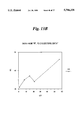
- Patient 11 a 48 year old white female was diagnosed as hypercholesterolemic and began BiaxinTM treatment every other day for 43 days. This patient's data are presented in Table 2 and the data are graphed in FIGS. 11A to 11D.
- This patient demonstrated a 5.9% change in total cholesterol levels, a 17.1% change in HDL cholesterol levels and a 39.0% change in LDL cholesterol levels.
- Patient 14 a 40 year old white male was diagnosed as hypercholesterolemic and began BiaxinTM treatment every other day for 15 days. This patient's data are presented in Table 2 and the data are graphed in FIGS. 14A to 14C.
- This patient demonstrated a -22.4% change in total cholesterol levels, a -26.0% change in HDL cholesterol levels and a -6.8% change in LDL cholesterol levels.
- Patient 17 a 43 year old white female was diagnosed as hypercholesterolemic and began BiaxinTM treatment every other day for 22 days. This patient's data are presented in Table 2 and the data are graphed in FIGS. 17A to 17D.
- This patient demonstrated a 4.5% change in total cholesterol levels, a -3.9% change in HDL cholesterol levels and a 5.7% change in LDL cholesterol levels. This patient showed no clinical improvement on the Biaxin treatment.
- Patient 19 a 36 year old white female was diagnosed as hypercholesterolemic and began BiaxinTM treatment every other day for 15 days. This patient's data are presented in Table 2 and the data are graphed in FIGS. 19A to 19D.
- This patient demonstrated a 0.4% change in total cholesterol levels, a 36.7% change in HDL cholesterol levels and a 0.0% change in LDL cholesterol levels.
- Patient 21 a 38 year old white female was diagnosed as hypercholesterolemic and began BiaxinTM treatment every other day for 15 days. This patient's data are presented in Table 2 and the data are graphed in FIGS. 21A to 21C.
- FIGS. 1-9 Panels A-D detail plasma cholesterol levels for Patients #1-#9, respectively.
- FIG. 10 Panels A-C detail plasma cholesterol levels for Patient #10.
- FIG. 11 Panels A-D detail plasma cholesterol levels for Patient #11.
- FIGS. 12-14 Panels A-C detail plasma cholesterol levels for Patients #12-#14, respectively.
- FIGS. 15-17 Panels A-D detail plasma cholesterol levels for Patients #15-#17, respectively.
- FIG. 18 Panels A-C detail plasma cholesterol levels for Patient #18.
- FIG. 19 Panels A-D detail plasma cholesterol levels for Patient #19.
- FIG. 20-21 Panels A-C detail plasma cholesterol levels for Patients #20 and 21, respectively.
- modes alternative to oral administration may be used (e.g., intravenous, intramuscular, intraperitoneal, topical, or the like).
- macrolide antibiotic compounds may be administered on a continuous or an intermittent basis.
Landscapes
- Health & Medical Sciences (AREA)
- Life Sciences & Earth Sciences (AREA)
- Molecular Biology (AREA)
- Chemical & Material Sciences (AREA)
- Medicinal Chemistry (AREA)
- Pharmacology & Pharmacy (AREA)
- Epidemiology (AREA)
- Animal Behavior & Ethology (AREA)
- General Health & Medical Sciences (AREA)
- Public Health (AREA)
- Veterinary Medicine (AREA)
- Pharmaceuticals Containing Other Organic And Inorganic Compounds (AREA)
Abstract
This invention is directed to a novel method for treating human patients with hypercholesterolemia with a macrolide antibiotic. More specifically, this invention is directed to the oral administration of an erythromycin compound or an erythromycin derivative for treating hypercholesterolemia. Most specifically, this invention teaches the novel oral administration of clarithromycin, troleandomycin, erythromycin, or azithromycin for treating human patients with hypercholesterolemia.
Description
This application is related to the provisional application filed Jun. 28, 1995 having Ser. No. 60/000,583.
This invention is related to co-pending United States patent application having Ser. No. 08/348,366 which was filed on Nov. 30, 1994, now U.S. Pat. No. 5,498,424, and is entitled "Method of Treating Obesity" (incorporated herein by reference).
This invention relates to methods and compositions for treating human patients diagnosed with hypercholesterolemia with a macrolide antibiotic. More specifically, this invention is directed to the oral administration of an erythromycin compound or an erythromycin derivative for treating hypercholesteremia. Most specifically, this invention teaches the novel oral administration of clarithromycin, troleandomycin, erythromycin, or azithromycin for treating human patients with hypercholesterolemia.
One of the most prevalent disorders of lipid metabolism is hypercholesterolemia. Hypercholesterolemia has long been recognized as a significant risk factor for atherosclerotic disease. The causative factors in disorders of lipid metabolism include dietary factors, environmental factors (e.g. physical activity levels) and a variety of metabolic alterations.
Half of all deaths in the United States are caused by atherosclerosis. Atherosclerosis is a disease in which cholesterol accumulates in the wall of arteries, forms bulky plaques that inhibit the flow of blood, forms a clot eventually, obstructing an artery and eventually causes a heart attack or stroke. The cholesterol for the atherosclerotic plaque is derived from particles called low-density lipoprotein (LDL) that circulate in the bloodstream. In general, the more LDL there is in the blood, the more rapidly atherosclerosis develops.
Epidemiologic, clinical, genetic, experimental, and pathological studies have clearly established the primary role of lipoproteins in atherogenesis (i.e., the formation of atherosclerotic plagues). Lowering plasma cholesterol concentrations reduces the availability of atherogenic lipoproteins and presumably, the accumulation of cholesterol in the intima of arteries. Efforts to lower plasma cholesterol have become fundamental to the practice of preventative cardiology, and their use in both normal patients and those who already have coronary disease has materially contributed to the 50% reduction observed in mortality from coronary heart disease in the United States over the past two decades (Havel, et al, Management of Primary Hyperlipidemia, The New England Journal of Medicine, 332 (22):1491-1498 (1995)). The claimed invention is directed to lowering plasma cholesterol levels in patients diagnosed with hypercholesterolemia.
Lowering the plasma cholesterol concentration by a variety of means, including diet, partial ileal bypass surgery, and drug therapy, retards the progression of coronary plaques and promotes their regression. Although substantial regression is unusual and the change in average plaque size during and after treatment is small, the frequency of clinical coronary events is reduced out of proportion to the degree of anatomical change.
Epidemiologic data has revealed that more than half of the people in Western industrialized societies, including the United States, have a level of circulating low density lipoproteins ("LDL" discussed in detail below) associated with a high risk for developing atherosclerosis. These individuals are predisposed to accelerated atherosclerosis, heart attacks, and/or strokes.
The mechanism responsible for elevated LDL levels in many Americans has been identified by studies of specialized proteins called LDL receptors (See discussion below). The LDL receptors project from the surface of animal cells. The receptors bind LDL particles and extract them from the fluid that bathes the cells. The LDL is taken into the cells and cholesterol is metabolized to serve each cell's needs. In supplying cells with cholesterol and thereby removing LDL from the bloodstream, the receptors perform a second physiological function which is critical to the prevention of atherosclerosis.
The number of LDL receptors found on the surface of cells varies with the cellular demand for cholesterol. When the demand is low, excess cholesterol accumulates, cells make fewer receptors and LDL is "taken up" at a reduced rate. This mechanism protects cells against excess cholesterol accumulation. However, the reduction in the number of receptors and the consequent decrease in the rate at which LDL is removed from the blood circulation, results in elevated blood levels of LDL and an acceleration of atherosclerosis.
It has been hypothesized that the elevated plasma levels of LDL in many Americans is attributable to a combination of factors that diminish the production of LDL receptors. Recognition of the central role of the receptors has led to a treatment for a severe genetic form of atherosclerosis and has also shed light on the continuing controversy over the role of diet in atherosclerosis in the general population.
As stated above, atherosclerosis and its associated complications, particularly coronary heart and peripheral vascular diseases are a major health problems in human patients. Risk factors associated with the development of atherosclerosis and coronary heart disease include: (a) smoking; (b) diabetes mellitus; (c) hypertension; (d) a positive family history; and (e) plasma hypercholesterolemia. Among these risk factors, the level of certain plasma lipoproteins is an important factor that impacts the development of atherosclerosis. Elevated levels of LDL and reduced levels of high density lipoproteins ("HDL") are associated with more severe atherosclerosis and a greater risk of coronary heart disease in humans and experimental animals (Holme, I., Enger, S. C., Helgeland, A., Hjermann, I., Lerin, P., Lund-Larsen, P. G., Soleberg, L. A., and Strong, J. P.: Risk factors and raised atherosclerotic lesions in coronary and cerebral arteries. Statistical analysis from the Oslo Study. Arteriosclerosis 1:250-256, 1991; Kannel, W. B., Sorlie, P., Brand, F. Castelli, W. P., McNamara, P. M., Gherardi, G. J.: Epidemiology of coronary atherosclerosis: Postmortem vs clinical risk factor correlation's. The Framingham Study. In: Gotto, A. M., Jr., Smith, L. C., Allen, B., eds. International Symposium on atherosclerosis, 5th, Houston, 1079; Atherosclerosis V. New York Springer-Verlag, pp. 54-56, 1980; McGill, H. C., Jr. McMahan, C. A., Kruski, A. W., and Mott, G. E.: Relationship of lipoprotein cholesterol concentrations to experimental atherosclerosis in baboons. Arteriosclerosis 1:3-12, 1981; and Rudel L. L. In: The Use of Nonhuman Primates in Cardiovascular Disease. Kalter, S. S (ed.), University of Texas Press, Austin, Tex., pp. 37-57, 1980).
It is now known and widely accepted that lowering plasma LDL cholesterol levels reduces the risk of coronary heart disease in humans (Lipids Research Clinics Program. The Lipid Research Clinics Coronary Primary Prevention Trial Results. I Reduction in incidence of coronary heart disease. JAMA 251:351-364, 1984). The instant invention addresses this major health concern. A high fat and high cholesterol diet is a "way of eating" for far too many Americans. This invention relates to a method directed to an economical and novel way of treating hypercholesterolemia.
Most plaques are asymptomatic before infarction, reducing luminal diameter by less than fifty (50) percent. Coronary thrombosis is commonly caused by the fissuring of plaques, usually at the upstream margin. Fissure occurs mainly in areas where a thin fibrous cap overlies a poorly structured matrix that is rich in macrophage foam cells containing cholestryl esters. Lowering the cholesterol concentration reduces macrophage activity, reduces the accumulation of cholesterol, improves endothelial integrity and function, and thereby makes atherosclerotic lesions more stable and less likely to fissure.
In patients with coronary heart disease, lowering plasma cholesterol concentrations reduces mortality from coronary heart disease and from all causes. Although the evidence that the reduction of plasma cholesterol concentrations aids in the prevention of coronary heart disease is less compelling, there is little doubt that reducing cholesterol concentrations in the general population would lower both the incidence of and morality from coronary heart disease in the United States. In support of this contention the incidence of coronary heart disease and consequent mortality are substantially reduced in hypercholesterolemia patients treated with cholesterol-lowering diets and drugs. However, mortality from all causes is not significantly reduced, presumably because of limited statistical power to analyze this end point.
Concentrations of plasma total cholesterol and LDL cholesterol are highly positively correlated with the prevalence of coronary heart disease throughout the world. Observational studies of the incidence of disease have focused attention on the beneficial effects of lipid-lowering therapy in reducing both plasma LDL cholesterol concentrations and the frequency of clinical events. The emphasis placed on lowering plasma LDL cholesterol concentrations also reflects the increased risk of coronary heart disease in patients with heterozygous familial hypercholesterolemia. This disorder is characterized by elevated plasma LDL cholesterol concentrations and the early onset of coronary disease.
LDL cholesterol is a large spherical particle whose oily core is composed of some 1,500 molecules of the fatty alcohol cholesterol, each attached by an ester linkage to a long-chain fatty acid. This core of cholesterol esters is enclosed in a layer of phospholipid and unesterified cholesterol molecules. The phospholipids are arrayed so that their hydrophilic heads are on the outside, allowing the LDL to be dissolved in the blood or intercellular fluid. Embedded in this hydrophilic coat is one large protein molecule designated apoprotein B-100.
Apoprotein B-100 is recognized and bound by the LDL receptor, a glycoprotein (a protein to which sugar chains are attached). The receptor spans the cell's plasma membrane and carries a binding site which protrudes from the cell surface. Binding takes place when LDL is present at a concentration of less than 10-9 molar (i.e., the LDL receptor can pick out a single LDL particle from more than a billion molecules of water). The LDL receptor binds only lipoproteins carrying apoprotein B-100 and a related protein designated apoprotein E.
LDL receptors are clustered in specialized regions where the cell membrane is indented to form craters known as clarthrin-coated pits (because the inner surface of the membrane under them is coated with the protein clathrin). Within minutes of their formation, the pits pouch inward into the cell and pinch off from the surface to form membrane-bounded sacs called coated vesicles. LDL bound to a receptor is carried into the cell by this mechanism. Receptor-mediated endocytosis, the term applied to this process of uptake through coated pits and vesicles, is recognized as a mechanism for cells to envelope or take up many large molecules, each having its own highly specific receptor.
Eventually the LDL is separated from the receptor and the LDL is delivered to a lysosome which is a sac filled with digestive enzymes. The LDL receptor is recycled to the cell's surface to transport more LDL into the cell. Some of the lysosomal enzymes break down the LDL's coat, exposing the cholesterol ester core. Another enzyme clips off the fatty acid tails of the cholesterol esters, liberating unesterified cholesterol, which leaves the lysosome. All cells incorporate the cholesterol into newly synthesized surface membranes. In certain specialized cells the cholesterol extracted from LDL has other roles. For example, in the adrenal gland and ovary cholesterol is converted into the steroid hormones cortisol and estradiol, respectively. In addition, the liver transforms cholesterol into bile acids, which have a digestive function in the intestine.
The plasma concentration of lipoprotein(a) or Lp(a), a complex LDL with a large glycoprotein (apoprotein(a)) is another independent risk factor for coronary heart disease. Lp(a) and other lipoprotein species that contain apoprotein B are found in atherosclerotic plaques in which they interact with proteoglycans in the arterial matrix and are subject to oxidative modification, possibly a key event in provoking inflammation and the deposition of cholesterol during atherogenesis.
A high plasma HDL cholesterol concentration is a powerful protective factor against coronary heart disease. HDLs, small lipoprotein particles that lack apoprotein B, are integral to the retrieval of cholesterol from cells and tissues (i.e., reverse cholesterol transport). High plasma HDL cholesterol concentrations, at least those accompanied by an increased concentration of apoprotein A-1, may reduce atherogenesis. Because HDL particles are polymorphic, measurement of HDL subpopulations could provide both improved measures of risk and more accurate assessment of the response of patients to treatment.
Hypercholesterolemia is one of the five major risk factors for the development of atherosclerotic disease. It has been estimated that complications of atherosclerosis account for up to 50% of all deaths in the United States. Hypercholesterolemia has been hypothesized to contribute to atherosclerosis by: (1) chemical injury to endothelial cells lining the intima of arteries; (2) stimulating adherence of monocytes and macrophages to the site of injury; and (3) providing increased lipid substrates for uptake by monocytes and arterial smooth muscle cells.
The risk of death from coronary artery disease has a continuous and graded relation to total serum cholesterol levels greater than 180 mg/dL. Moreover, the acceleration of atherosclerosis is positively correlated with elevations of LDL cholesterol. In contrast, elevation of high-density lipoprotein cholesterol HDL cholesterol has a negative correlation with atherosclerosis. Therefore, treatment regimes traditionally have been designed to reduce LDL cholesterol and/or elevate HDL cholesterol. These treatments include dietary intervention, exercise, and pharmacotherapy. Because many patients have difficulty achieving and maintaining a low-fat diet and a regular exercise program, drug therapy is wide-spread.
Drug treatment for hypercholesterolemia takes two principal forms: (1) resins which bind to bile acids and increase the utilization of endogenous cholesterol for bile acid synthesis (e.g., Cholestyramine and Cholestipol), and (2) compounds which alter the metabolism (e.g., synthesis, degradation, uptake or secretion) of various constituents within the cholesterol metabolic pathway (e.g., Lovastatin, Parvastatin, Simvastatin, Probucol, Gemfibrozil, and Niacin). Although these drugs are effective in reducing the levels of plasma cholesterol, they have a variety of undesirable side effects including: (1) elevation of plasma triglycerides; (2) increased liver aminotransferase activity; (3) abdominal discomfort, nausea, vomiting, diarrhea, and malaise; (4) QT interval prolongation; and (5) decreased high-density lipoprotein levels. (Fortmann, et al. Disorders of Lipid Metabolism in Scientific American Medicine, 9 Metabolism II: 14-15, 1993).
Endomycin, a polyenic macrolide antibiotic, has been previously used to alter lipid metabolism. U.S. Pat. No. 4,482,540 (Issued to Gordon et al on Nov. 13, 1984; incorporated herein by reference) is directed toward the oral administration of endomycin for altering lipid metabolism and reducing blood cholesterol levels. The Gordon invention is directed to a process for treating hypercholesterolemia in a mammal comprising the oral administration of an effective dose of endomycin to said mammal. The claimed invention is different from the Gordon invention in that the claimed invention utilizes an erythromycin compound or an erythromycin derivative for treating hypercholesterolemia. Additionally, one of ordinary skill in this art knows that erythromycin (or an erythromycin derivative) is structurally, and chemically different from endomycin (a polyenic macrolide antibiotic). The general class of polyenic macrolide compounds described in the Gordon invention are the hexaenes. The hexaene group of polyenic macrolides is relatively small in comparison to other groups. Representatives of this group are mediocidin, endomycin B (synonymous with Helixin B), cryptocidin and flavacid.
Implicit in screening is a commitment to provide appropriate advice and treatment. Causes of secondary hyperlipidemia must first be excluded. Dietary modification and increased physical activity not only reduce plasma cholesterol concentrations but also restrain the tendency of young Americans to gain weight. This tendency has been associated with plasma cholesterol concentrations that increase with age. Changes in diet and activity should be recommended most strongly to person at increased risk for cardiovascular disease because of high plasma non-HDL cholesterol value or other risk factors. A favorable response by young adults to nonpharmacologic treatment may make later drug therapy unnecessary.
The claimed invention offers a solution to the serious health problem facing most Americans eating a high fat and high cholesterol diet. The claimed invention is directed to a novel method for treating human patients diagnosed with hypercholesterolemia. The claimed invention treats hypercholesterolemia by giving an effective amount of an erythromycin compound or erythromycin derivative to a human patient diagnosed with hypercholesterolemia. The erythromycin compound or erythromycin derivative used in this invention include, but are not limited, to clarithromycin, troleandomycin, erythromycin, or azithromycin.
For this invention, dose and amount are used interchangeably. Also, hypercholesterolemia is clinically defined as a cholesterol level greater than 200 mg/dL, an HDL cholesterol level of less than 35 mg/dL, or an LDL cholesterol level of greater than 130 mg/dL. Also, "erythromycin" or an "erythromycin derivative" are used interchangeably and have the following meaning: a macrolide antibiotic which is a lipophilic molecule with a characteristic central lactone ring bearing 12 to 17 atoms, fewer than 5 and preferably no double bonds and preferably no nitrogen bonds. Several amino and/or neutral sugars are preferably fixed to the lactone ring. Examples of preferred erythromycin and erythromycin derivatives include: erythromycin, clarithromycin, azithromycin, and troleandomycin. Furthermore, in this invention, clarithromycin and Biaxin™ are used interchangeably. For example, ten (10) milligrams of Biaxin™ or ten (10) milligrams of clarithromycin per pound of body weight was administered to patients diagnosed with hypercholesterolemia at 48 hour intervals.
One aspect of this invention is a method of treating a human having hypercholesterolemia comprising administering to the human an effective dose for treating hypercholesterolemia of an erythromycin compound. In one embodiment of this method, the erythromycin compound is selected from the group consisting of clarithromycin, troleandomycin, erythromycin, and azithromycin. In a preferred embodiment, the dose is administered orally and ranges from 100 mg/day to 6,000 mg/day. In an alternative embodiment, the doses administered to the human by any known route and ranges from 1 mg/kg of body weight/day to 100 mg/kg of body weight/day.
An alternative aspect of this invention is a method of decreasing total plasma cholesterol levels in a human comprising administering to the human an effective dose for decreasing total plasma cholesterol levels of an erythromycin compound. In one embodiment of this method, the erythromycin compound is selected from the group consisting of clarithromycin, troleandomycin, erythromycin, and azithromycin. In a preferred embodiment, the dose is administered orally and ranges from 100 mg/day to 6,000 mg/day. In an alternative embodiment, the does is administered to the human by any known route and ranges from 1 mg/kg of body weight/day to 100 mg/kg of body weight/day.
An alternative aspect of this invention is a method of decreasing the ratio of plasma low-density lipoprotein cholesterol to plasma high-density lipoprotein cholesterol in a human comprising administering to the human an effective dose for decreasing the ratio of plasma low-density lipoprotein to plasma high-density lipoprotein of an erythromycin compound. In one embodiment, the erythromycin compound is selected from the group consisting of clarithromycin, troleandomycin, erythromycin, and azithromycin. In a preferred embodiment, the dose is administered orally and ranges from 100 mg/day to 6,000 mg/day. In an alternative embodiment, the dose is administered to the human by any known route and ranges from 1 mg/kg of body weight/day to 100 mg/kg of body weight/day.
An alternative aspect of this invention is a method of decreasing plasma low-density lipoprotein cholesterol levels in a human comprising administering to the human an effective dose for decreasing plasma low-density lipoprotein cholesterol levels of an erythromycin compound. In one embodiment, the erythromycin compound is selected from the group consisting of clarithromycin, troleandomycin, erythromycin, and azithromycin. In a preferred embodiment, the dose is administered orally and ranges from 100 mg/day to 6,000 mg/day In an alternative embodiment, the dose is administered to the human by any known route and ranges from 1 mg/kg of body weight/day to 100 mg/kg of body weight/day.
An alternative aspect of this invention is a method of increasing plasma high-density lipoprotein cholesterol levels in a human comprising administering to the human an effective dose for increasing plasma high-density lipoprotein cholesterol levels of an erythromycin compound. In one embodiment, the erythromycin compound is selected from the group consisting of clarithromycin, troleandomycin, erythromycin, and azithromycin. In a preferred embodiment, the dose is administered orally and ranges from 100 mg/day to 6,000 mg/day. In an alternative embodiment, the dose is administered to the human by any known route and ranges from 1 mg/kg of body weight/day to 100 mg/kg of body weight/day.
In its preferred embodiments, this invention involves novel methods to treat patients diagnosed with hypercholesterolemia.
The pharmaceutical compositions of the claimed erythromycin or erythromycin derivatives are formulated so as to be suitable for oral administration. The active ingredient (erythromycin or erythromycin derivatives) is contained in a capsule or tablet, preferably in enteric form. The quantity of effective dose supplied by each capsule or tablet is relatively unimportant since the total dosage can be reached by administration of either one or a plurality of capsules or tablets or both. The capsules employed may comprise any well known pharmaceutically acceptable material such as gelatin, cellulose derivatives, etc. The tablets may be formulated in accordance with conventional procedures well known to those skilled in the art which employ solid carriers, lubricants and the like. Examples of solid carriers are: starch, sugar, bentonite and other commonly used carriers.
For the purpose of this invention, certain phrases and words are defined as follows:
1. "Dose" and "amount" (e.g., "effective dose") are interchangeably used;
2. Hypercholesterolemia is clinically defined as a cholesterol level greater than 200 mg/dL, or an HDL cholesterol level of less than 35 mg/dL, or an LDL cholesterol level of greater than 130 mg/dL or a total cholesterol/HDL cholesterol ratio of greater than 5.1 or an LDL/HDL ratio of greater than 3.7. Thus, any one of the above five determinants being "abnormal" is indicative of hypercholesterolemia.
3. "Erythromycin" or an "erythromycin derivative" are used interchangeably and have the following meaning: a macrolide antibiotic which is a lipophilic molecule with a characteristic central lactone ring bearing 12 to 17 atoms, fewer than 5 and preferably no double bonds and preferably no nitrogen bonds. Several amino and/or neutral sugars are preferably fixed to the lactone ring. Examples of preferred erythromycin and erythromycin derivatives include: erythromycin, clarithromycin, azithromycin, and troleandomycin.
4. Clarithromycin and Biaxin™ are used interchangeably. For example, ten (10) milligrams of Biaxin™ or ten (10) milligrams of clarithromycin per pound of body weight was administered to patients diagnosed with hypercholesterolemia at 24 or 48 hour intervals.
5. HDL=high-density lipoprotein; LDL=low-density lipoprotein; and ND=not determined.
6. 1 mg/kg/day=0.45 mg/lb/day; 100 mg/kg/day=45.0 mg/lb/day; 1.0 kg=2.222 lb; and 10 mg/lb=22.2 mg/kg.
7. "ccs" and "mls" are used interchangeably.
The following examples illustrate selected modes for carrying out the claimed invention and are not to be construed as limiting the specification and claims in any way. These examples are provided so as to enable those of ordinary skill in the art to make and use the invention. These examples are not intended to limit the scope of what the inventor regards as the invention. Efforts have been made to ensure accuracy with respect to numbers used to characterize the conditions; however, some experimental errors and deviations may be present.
Macrolide antibiotics and macrolide-like antibiotics have been described by Bryskier, et al (Bryskier, A., Agouridas, C., and Chantot, J. F., Structure and Activity in THE NEW MACROLIDES, AZALIDES, AND STREPTOGRAMINS: PHARMACOLOGY AND CLINICAL APPLICATIONS, 3,3-11 Neu, H. C., Young, L. S., and Zinner, S. H., eds., 1993!) and Omura (Omura, S., Macrolide Antibiotics--Chemistry, Biology and Practice 1984).
Macrolide antibiotics include, for example, those described by Bryskier et al, (e.g., a lipophilic molecule with a characteristic central lactone ring bearing 12 to 17 atoms, fewer than 5 and preferably no double bonds, preferably no nitrogen atoms and several amino and/or neutral sugars preferably fixed to the lactone ring). One group of somewhat atypical macrolide antibiotics are lankacidin derivatives, 17 membered-ring macrocyclic antibiotics which do not have sugars fixed to the aglycone ring. Another group of somewhat atypical macrolide antibiotics, are azalide compounds which contain an endocyclic nitrogen, namely azalide, within the aglycone ring.
Examples of macrolide antibiotics include the following synthetic, semi-synthetic or naturally occurring compounds: methymycin, neomethymycin, YC-17, litorin, erythromycin A to F, oleandomycin, roxithromycin, dirithromycin, flurithromycin, clarithromycin, davercin, azithromycin, josamycin, kitasamycin, spiramycin, midecamycin, rokitamycin, miokamycin, lankacidin, and the derivatives of these compounds. Thus, erythromycin and compounds derived from erythromycin belong to the general class of antibiotics known as "macrolides." Examples of preferred erythromycin and erythromycin-like compounds include: erythromycin, clarithromycin, azithromycin, and troleandomycin.
Clarithromycin
In one aspect of the present invention, the erythromycin compound is clarithromycin.
Although the route of administration and dose will depend upon a variety of factors (e.g., treatment environment, patient compliance and tolerance, therapeutic goals, etc.), the preferred dose of clarithromycin taken orally ranges between 1 mg/kg of body weight/day and 100 mg/kg of body weight/day (i.e., approximately 100 mg/day to 6,000 mg/day).
Clarithromycin, also known as, 6-0-methylerythromycin, has the chemical formula, C38 H69 NO13, and a molecular weight of 747.96 (see Physicians' Desk Reference®, 405-407, 1994). Clarithromycin is commercially available from Abbott Laboratories under the trademark "BIAXIN™", and is described, with other related erythromycin compounds in Watanabe, et al., U.S. Pat. No. 4,331,803 (which is incorporated herein by reference).
2. Azithromycin
In another aspect of the present invention, the erythromycin compound is azithromycin which is derived from erythromycin. It differs from erythromycin in that a methyl substituted nitrogen atom is incorporated into the lactone ring. Although the route of administration and dose will depend upon a variety of factors (e.g., treatment environment, patient compliance, patient tolerance, therapeutic goals, etc.), the preferred dose of azithromycin is taken orally and ranges between 1 mg/kg per body weight/day and 100 mg/kg of body weight/day (i.e., approximately 100 mg/day to 6,000 mg/day). Azithromycin, as a dihydrate, is a white crystalline powder with the chemical formula C38 H72 N2 O12 2H20 and a molecular weight of 785.0 (see Physician's Desk Reference®, 1789-91, 1994). Azithromycin is commercially available from Pfizer Laboratories Division under the trademark "ZITHROMAX™".
3. Troleandomycin
In another aspect of the present invention, the erythromycin compound is troleandomycin. Although the route of administration and dose will vary depending upon a variety of factors (e.g., treatment environment, patient compliance and tolerance, therapeutic goals, etc.), the preferred dose of troleandomycin is taken orally and ranges between 1 mg/kg of body weight/day and 100 mg/kg of body weight/day (i.e., approximately 100 mg/day to 6,000 mg/day). Troleandomycin has the chemical formula C41 H67 NO15, and a molecular weight of 814 (see Physicians' Desk Reference®, 2102, 1995). Troleandomycin is commercially available from Pfizer Roerig Division under the trademark "TAO".
4. Erythromycin
In another aspect of the present invention, the erythromycin compound is erythromycin (i.e., including, but not limited to, erythromycin ethylsuccinate, erythromycin estolate, erythromycin stearate, erythromycin lactobionate). Erythromycin is produced by a strain of Streptomyces erythrueus and belongs to the macrolide group of antibiotics. It is basic and readily forms salts with acids, but it is the base which is pharmacologically active. Although the route of administration and dose will depend upon a variety of factors (e.g., treatment environment, patient compliance, tolerance, therapeutic goal, etc.), the preferred dose of erythromycin is take orally and ranges between 1 mg/kg of body weight/day and 100 mg/kg of body weight/day (i.e., approximately 100 mg/day to 6,000 mg/day). Erythromycin has the chemical formula C37 H67 NO13 and a molecular weight of 733.92 (see Physicians' Desk Reference®, 421-423, 425-427, 449, 651, 935, 937, 1841, and 2102, 1995). Erythromycin is commercially available from Abbott Laboratories, Boots Pharmaceuticals, Parke-Davis, Dista Products Company, Ross Laboratories, and Pfizer Roerig under a variety of trademark names, (e.g., "Erythromycin Delayed-Released Capsules (USP)™", E-Mycin™, ERYC™, Ilotycin™, Pediazole™, and TAO™).
A preferred aspect of the present invention is a method of treating hypercholesterolemia which includes administering an effective dose or amount of an erythromycin or erythromycin derived compound to a human patient with a clinical diagnosis of hypercholesterolemia. Patients are diagnosed as being hypercholesterolemic when their plasma cholesterol levels are out of the "normal" range. Table 1 below lists the "normal" ranges for the cholesterol components or ratios that are monitored during the course of the patient's treatment with erythromycin or erythromycin derived compounds.
              TABLE 1
______________________________________
NORMAL PLASMA CHOLESTEROL LEVELS
PLASMA COMPONENT   "NORMAL" PLASMA
OR RATIO           CONCENTRATION
______________________________________
Total Cholesterol  <200.0 mg/dL
HDL Cholesterol    >35.0 mg/dL
LDL Cholesterol    <130.0 mg/dL
Total Cholesterol/ <5.1
HDL Cholesterol
LDL/HDL            <3.7
______________________________________
A preferred aspect of the present invention is a method of treating hypercholesterolemia which includes administering an effective dose or amount of an erythromycin or erythromycin derived compound to a human patient with a clinical diagnosis of hypercholesterolemia.
A patient in need of treatment of hypercholesterolemia may be identified by measuring plasma cholesterol levels (e.g., total cholesterol, low-density lipoprotein cholesterol, high-density lipoprotein cholesterol, etc.) or by other standard diagnostic techniques (e.g., a family history of hypercholesterolemia, a patient history of atherosclerosis, etc.). For the purpose of this invention, hypercholesterolemia is defined as a cholesterol level greater than 200 mg/dL, an HDL cholesterol level of less than 35 mg/dL, an LDL cholesterol level of greater than 130 mg/dL, a total cholesterol: HDL cholesterol ratio of greater than 5.1 or a LDL cholesterol: HDL cholesterol ratio of greater than 3.7.
Following patient identification, a complete medical history is obtained with emphasis on potential adverse reactions to or contraindications for the use of erythromycin compounds. The desired reduction of total plasma cholesterol, the reduction of LDL cholesterol, the reduction of the LDL/HDL ratio, the reduction of the total plasma cholesterol/HDL ratio, and/or the elevation of HDL cholesterol is then determined based upon a comparison of the patient's present baseline plasma cholesterol levels with normative values and the physician's professional judgment. An effective dose or amount for treating hypercholesterolemia, the interval between doses, and the duration of treatment are then determined on a case-by-case basis. Once informed patient consent is obtained, Biaxin™ treatment is initiated. The patient is followed at appropriate intervals during treatment (usually weekly) and measurements of plasma cholesterol, updating patient histories, and dose modification, if necessary, are performed (as determined by the clinician).
An aspect of this invention is a novel method of treating hypercholesterolemia. Yet another preferred aspect of the present invention is a method of treating a patient with hypercholesterolemia which includes the administration of an effective amount of an erythromycin compound. Many different erythromycin compounds or erythromycin derived compounds are known to those skilled in this art but the inventor prefers to use erythromycin, clarithromycin, azithromycin, or troleandomycin.
A patient in need of treatment for hypercholesterolemia may be identified by measuring plasma levels of cholesterol, HDL cholesterol, and LDL cholesterol or by other standard diagnostic techniques. For the purpose of this invention, hypercholesterolemia is defined as a total cholesterol level greater than 200 mg/dL, an HDL cholesterol level of less than 35 mg/dL, an LDL cholesterol level of greater than 130 mg/dL, a total cholesterol: HDL cholesterol ratio of less than 5.1 or an LDL cholesterol: HDL cholesterol ratio of less than 3.7. Following patient classification, a complete medical history is obtained with emphasis on potential adverse reactions to or contraindications for the use of erythromycin compounds. Five milliliters of blood are drawn from the patient and baseline plasma levels of total cholesterol, HDL cholesterol, and LDL cholesterol are determined. The desired reduction of plasma cholesterol levels is then determined based upon a comparison of the patient's present plasma levels with normative values and the physician's professional judgment. An effective dose for treating hypercholesterolemia, the interval between doses, and the duration of treatment are then determined. Once informed patient consent is obtained, Biaxin™ treatment is initiated. The patient is followed at appropriate intervals during treatment (usually weekly) and measurements of plasma levels for total cholesterol, HDL cholesterol and LDL cholesterol, patient histories, and dose modification, if necessary, are performed.
Once diagnosed as hypercholesterolemic, the patient was entered into the study. Twenty one patients, each diagnosed with hypercholesterolemia, have been treated with clarithromycin (10 mg/pound of body weight at 48 hour intervals from 8 to 45 days; see individual patient data for exact number of days on Biaxin™). For the purpose of this invention, hypercholesterolemia is defined as a cholesterol level greater than 200 mg/dL, an HDL cholesterol level of less than 35 mg/dL, an LDL cholesterol level of greater than 130 mg/dL, a total cholesterol: HDL cholesterol ratio of less than 5.1 or an LDL cholesterol: HDL cholesterol ratio of less than 3.7 Five milliliters (ccs) of blood was drawn from each patient on the days indicated and plasma levels of cholesterol, HDL cholesterol and LDL cholesterol were determined for each patient. The data was then analyzed and the percent change over time was calculated.
As stated above, informed consent was obtained from all patients with regard to the potential benefits and risks of the experimental protocol. Patients were informed that clarithromycin had not been approved by the F.D.A. for the treatment of hypercholesterolemia. The observations with regard to cholesterol were made as part of a larger clinical trial for the treatment of obesity with clarithromycin (subject matter of co-pending United States patent application having Ser. No. 08/348,366 which was filed on Nov. 30, 1994 and is entitled "Method of Treating Obesity" incorporated herein by reference!).
All current medications were reviewed in detail for each patient by the clinician. Patients on certain medications or with histories of certain diseases were excluded from participation in the trial.
A physical examination was performed on all patients. Hypertension is extremely common in this patient population. Patients on angiotensin conversion enzyme (ACE) inhibitors were transferred to an alpha blocker, prazosin, if they were diabetic, and to a beta blocker, atenolol, if they were not diabetic. Beta blockers should be avoided with diabetes mellitus as they may hide the symptoms of hypoglycemia. Diabetes is quite common in this population. Optimum control of diabetes was provided with either insulin, or oral hypoglycemic medication where indicated.
All patients had a complete CBC and SMA-29 work-up on the days indicated on Table 2 (usually weeks 0, 1, 2, 3, 4 or day 1, 8, 15, 22, and 29) and every 4 weeks thereafter. For the CBC work-up, 5 milliliters of blood were drawn into a Vacutainer™ with 0.05 ml of 15% EDTA (K3) solution (7.5 mg). There was no interior coating, the tube had a silicone lubricated stopper and a lavender top for identification. For the SMA-29 work-up 5 milliliters of blood were drawn into an empty Vacutainer™ with a red top for identification. The blood was centrifuged and the results were obtained by examination of the serum by an automated processor. These automated processors are readily available through routine laboratory services provided to all physicians. The automated processors are calibrated and routinely checked and re-calibrated.
In general, each patient received one dose of clarithromycin every 48 hours. The dose provided was 10 mg per pound (22.2 mg per kilogram). Because clarithromycin is available by prescription as 500 mg tablets, most patients receive a single dose of 500 mg per 50 pounds of body weight on each day of treatment. The dose may be modified (increased or decreased) by the physician as a result of the patient's response to treatment.
The inventor observed that women develop nausea more frequently with ingestion of clarithromycin than men. Thus, all women were instructed to take a 250 mg tablet of Tigan™ (See Physicians' Desk Reference, page 2419, 1995) upon awakening the day that clarithromycin was to be taken. In addition, all women were instructed to wait 30 minutes before taking the full dose of clarithromycin. The medication is taken with water only and is not to be taken with food. Men were instructed to take the medication upon awakening without food.
Patients were informed that they may have a bad taste in their mouth as a result of the medication. Although this bad taste has a beneficial effect of reinforcing a decrease of food intake, patients were also told that additional side effects (abdominal cramps, nausea, diarrhea) may occur during the first and second doses. In addition, some patients report one or two loose bowel movements within 4 hours of taking the medication. These symptoms generally decrease thereafter with continued use. Patients were also informed that if there is any suspicion of an allergic reaction (e.g., hives, skin rash, difficulty breathing) they should call their physician immediately. Any persistent diarrhea, fever or rectal bleeding should also be evaluated as soon as possible.
Since weight control is critical to maintaining normal cholesterol levels, all patients are advised regarding eating habits and food intake. Regarding dietary instructions, the patients were advised to avoid ingestion of bread, potatoes, deserts, and snacks. With most patients, simplicity of instructions is important. A weekly check-up with monitoring of weight, blood pressure, and blood tests allows the physician to reinforce the importance of diet to help improve their health. The medication was discontinued if any significant abnormalities on the blood tests arise. In particular, the physician would monitor for indications of hepatic or renal dysfunction and a decrease of the white blood cell or platelet count as these can indicate rare side effects of the medication.
During the discussion about dieting, the patient is also provided with basic information regarding the mechanism behind successful weight loss. In addition, how to maintain weight loss is explained to each patient. Individuals not able to maintain weight loss may lack the effect in the brain to turn off the desire to ingest further food when it is not needed. Recent studies with regard to the obesity gene demonstrate that a protein is produced by fat cells, the ob protein that normally attaches to a brain receptor site. The effect of this is to create a sensation of satiety and turn off the desire to eat further. Obese individuals produce a defective protein that fails to attach to the receptor site in the brain. These individuals continue to consume more food than would otherwise be warranted. It is well known to those skilled in the art that obesity raises serum cholesterol and food high in cholesterol content will increase the serum cholesterol.
Apart from decreased food consumption, clarithromycin may act independently to decrease total cholesterol, increase the HDL cholesterol, decrease the LDL cholesterol, reduce the cholesterol/HDL and LDL/HDL ratios (See Furuchi, et al, Bafilomycin A1, A Specific Inhibitor or Vacuolar-type H+-ATPase, Blocks Lysosomal Cholesterol Trafficking in Macrophages, Journal of Biological Chemistry, 268:27345-27348, 1993 and Kawashima, et al, New Cholesterol Biosynthesis Inhibitors . . . , Journal of Antibiotics, 45(1):207-212, (1992)). As described above, these effects decrease the risk for complications of atherosclerosis, coronary artery disease (heart attack), cerebrovascular disease (stroke), and peripheral vascular disease.
Once normal plasma cholesterol levels and ideal body weight have been achieved, clarithromycin may be discontinued or the patient may be continued on it as prophylactic therapy. The resetting of the hypothalamic thermostat may persist for some time after cessation of taking of the medication and the duration of maintenance of normal cholesterol levels (and maintained weight loss) without medication will be determined on a case-by-case basis. The cholesterol levels are monitored closely after cessation of medication to determine if further treatment were indicated.
The results for the 21 patients are shown in Table 2. All 21 patients received 10 milligrams of Biaxin™ per pound of body weight at 24 or 48 hour intervals. General conclusions after fifteen (15) days of Biaxin treatment for these initial 21 patients are that:
1. Total cholesterol level decreased by ≧10% in 5 out of 19 patients (26%).
2. Total high density lipoprotein cholesterol level increased by ≧10% in 8 out of 19 patients (42%).
3. Total low density lipoprotein cholesterol level decreased by ≧10% in 5 out of 19 patients (26%).
The results for the 21 patients demonstrating a favorable response of 10% or greater in any one of the determining five categories as of the date of their most recent Biaxin treatment (but not final Biaxin treatment) is presented in the Table below. An "X" in the box labeled "Cholesterol" indicates that the patient demonstrated a 10% or greater reduction in total cholesterol levels as of their most recent Biaxin treatment. An "X" in the box labeled "HDL" indicates that the patient demonstrated a 10% or greater increase in HDL levels as of their most recent Biaxin treatment. An "X" in the box labeled "LDL" indicates that the patient demonstrated a 10% or greater reduction in LDL levels as of their most recent Biaxin treatment. An "X" in the box labeled "C/HDL" indicates that the patient demonstrated a 10% or greater reduction in cholesterol/HDL ratio as of their most recent Biaxin treatment. An "X" in the box labeled "LDL/HDL" indicates that the patient demonstrated a 10% or greater reduction in LDL/HDL ratio as of their most recent Biaxin treatment. Note that Patient 10 was never diagnosed as hypercholesterolemic, was treated with Biaxin for his obesity and was inadvertently added to this Table. Also, Patients 3 and 18 showed no clinical improvement while on the Biaxin treatment.
General conclusions for the 20 patients on Biaxin treatment at the time this application was filed with the United States Patent and Trademark Office are:
1. Eight out 20 (40%) demonstrated a reduction in total cholesterol levels of 10% or more.
2. Ten out of 20 (50%) demonstrated an increase in HDL level of 10% or more.
3. Eight out of 20 demonstrated a reduction in LDL levels of 10% or more.
4. Fourteen out of 20 (70%) demonstrated a reduction in cholesterol/HDL ratio of 10% or more.
5. Twelve out of 20 (60%) demonstrated a reduction in LDL/HDL ratio of 10% or more.
______________________________________
Overall Response For The 21 Patients As Of Most Recent
Biaxin Treatment
Pt. #
     Cholesterol  HDL    LDL    C/HDL LDL/HDL
______________________________________
 1                X             X     X
 2   X                   X
 3   --           --     --     --    --
 4   X                   X      X     X
 5   X                   X      X     X
 6   X            X      X      X     X
 7                X             X
 8                X      X      X     X
 9   X            X             X
10   --           --     --     --    --
11                X      X      X     X
12                X
13                              X     X
14   X                   X            X
15   X                          X     X
16   X
17                              X
18   --           --     --     --    --
19                X      X      X     X
20                X             X     X
21                X             X     X
______________________________________
This patient demonstrated a 3.2% change in total cholesterol levels, a 38.9% change in HDL cholesterol levels and a -3.6% change in LDL cholesterol levels.
This patient demonstrated a -13.3% change in total cholesterol levels, a -20.5% change in HDL cholesterol levels and a -16.9% change in LDL cholesterol levels.
This patient demonstrated a -5.7% change in total cholesterol levels, a -4.7% change in HDL cholesterol levels and a 12.2% change in LDL cholesterol levels. This patient showed no clinical improvement while on the Biaxin treatment.
This patient demonstrated a -29.1% change in total cholesterol levels, a -12.2% change in HDL cholesterol levels and a -30.3% change in LDL cholesterol levels.
This patient demonstrated a -13.3% change in total cholesterol levels, a 0.0% change in HDL cholesterol levels and a -11.0% change in LDL cholesterol levels.
This patient demonstrated a -22.6% change in total cholesterol levels, a 28.6% change in HDL cholesterol levels and a -23.0% change in LDL cholesterol levels.
This patient demonstrated a -3.9% change in total cholesterol levels, a 18.5% change in HDL cholesterol levels and a 10.0% change in LDL cholesterol levels.
This patient demonstrated a -2.1% change in total cholesterol levels, a 26.9% change in HDL cholesterol levels and a -11.5% change in LDL cholesterol levels.
This patient demonstrated a -13.4% change in total cholesterol levels, a 15.6% change in HDL cholesterol levels and a 30.1% change in LDL cholesterol levels.
This patient demonstrated a 10.4% change in total cholesterol levels, a 5.6% change in HDL cholesterol levels and a 40.4% change in LDL cholesterol levels. This patient showed no clinical improvement because he was not hypercholesterolemic at the onset of Biaxin therapy.
This patient demonstrated a -8.8% change in total cholesterol levels, a 12.5% change in HDL cholesterol levels and a -14.0% change in LDL cholesterol levels.
This patient demonstrated a 5.9% change in total cholesterol levels, a 17.1% change in HDL cholesterol levels and a 39.0% change in LDL cholesterol levels.
This patient demonstrated a 29.3% change in total cholesterol levels, a 48.4% change in HDL cholesterol levels and a 35.9% change in LDL cholesterol levels.
This patient demonstrated a -20.9% change in total cholesterol levels, a -14.7% change in HDL cholesterol levels and a -36.9% change in LDL cholesterol levels.
This patient demonstrated a -11.0% change in total cholesterol levels, a 9.1% change in HDL cholesterol levels and a -5.7% change in LDL cholesterol levels.
This patient demonstrated a -22.4% change in total cholesterol levels, a -26.0% change in HDL cholesterol levels and a -6.8% change in LDL cholesterol levels.
This patient demonstrated a -4.2% change in total cholesterol levels, a 8.1% change in HDL cholesterol levels and a 1.2% change in LDL cholesterol levels.
This patient demonstrated a 4.5% change in total cholesterol levels, a -3.9% change in HDL cholesterol levels and a 5.7% change in LDL cholesterol levels. This patient showed no clinical improvement on the Biaxin treatment.
This patient demonstrated a -2.8% change in total cholesterol levels, a 21.2% change in HDL cholesterol levels and a -16.2% change in LDL cholesterol levels.
This patient demonstrated a 0.4% change in total cholesterol levels, a 36.7% change in HDL cholesterol levels and a 0.0% change in LDL cholesterol levels.
This patient demonstrated a 13.8% change in total cholesterol levels, a 53.1% change in HDL cholesterol levels and a -3.3% change in LDL cholesterol levels.
Since the average American person needs to reduce their total dietary cholesterol intake, raising livestock (e.g., including, but not limited to, cows, pigs, sheep, goats, chickens, turkeys, ducks, and the like) with a reduced cholesterol level would help reduce dietary cholesterol intake. Raising livestock and therefore producing meat with a reduced cholesterol level could be accomplished by supplementing livestock feeds with Biaxin™ (for example, 10 to 1000 milligrams of Biaxin™ per pound of livestock weight). Livestock would be raised on Biaxin™ supplemented feed and during their growth stages, plasma cholesterol levels could be monitored in order to determine the amount of Biaxin™ to be used in the supplement, the duration of supplementing the cattle feed with Biaxin™ and side effects (if any). Raising livestock containing a reduced cholesterol level will address one of the average American's major health concerns which is to reduce dietary cholesterol intake.
Livestock will be fed Biaxin™ supplemented feed and their plasma cholesterol levels will be monitored during their development. Different factors that will be studied in order to determine the dose of Biaxin™ to be added to supplement the livestock feed are: (1) the amount of Biaxin™ to be used in the supplement, (2) the duration of supplementing the feed with Biaxin™ and (3) the side effects (if any).
FIGS. 1-9 Panels A-D detail plasma cholesterol levels for Patients #1-#9, respectively.
FIG. 10 Panels A-C detail plasma cholesterol levels for Patient # 10.
FIG. 11 Panels A-D detail plasma cholesterol levels for Patient # 11.
FIGS. 12-14 Panels A-C detail plasma cholesterol levels for Patients #12-#14, respectively.
FIGS. 15-17 Panels A-D detail plasma cholesterol levels for Patients #15-#17, respectively.
FIG. 18 Panels A-C detail plasma cholesterol levels for Patient # 18.
FIG. 19 Panels A-D detail plasma cholesterol levels for Patient # 19.
FIG. 20-21 Panels A-C detail plasma cholesterol levels for Patients #20 and 21, respectively.
The following references may facilitate understanding or practice of certain aspects of the present invention. Inclusion of a reference in this list is not intended to and does not constitute an admission that the reference represents prior art with respect to the present invention.
Bryskier, A., Agouridas, C., and Chantot, J. F., Structure and Activity THE NEW MACROLIDES, AZALIDES, AND STREPTOGRAMINS: PHARMACOLOGY AND CLINICAL APPLICATIONS, 3,3-11 (Neu, H. C., Young, L. S., and Zinner, S. H., eds., 1993.
Fortmann, et al. Disorders of Lipid Metabolism in Scientific American Medicine, Metabolism 9-II:14-15, 1993.
Furuchi, et al, Bafilomycin A1, A Specific Inhibitor or Vacuolar-type H+-ATPase, Blocks Lysosomal Cholesterol Trafficking in Macrophages, Journal of Biological Chemistry, 268:27345-27348, 1993.
Havel, et al, Management of Primary Hyperlipidemia, The New England Journal of Medicine, 332 (22):1491-1498, 1995.
Holme, I., Enger, S. C., Helgeland, A., Hjermann, I., Lerin, P., Lund-Larsen, P. G., Soleberg, L. A., and Strong, J. P.: Risk factors and raised atherosclerotic lesions in coronary and cerebral arteries. Statistical analysis from the Oslo Study, Arteriosclerosis 1:250-256, 1991.
Kannel, W. B., Sorlie, P., Brand, F. Castelli, W. P., McNamara, P. M., Gherardi, G. J.: Epidemiology of coronary atherosclerosis: Postmortem vs clinical risk factor correlation's. The Framingham Study. In: Gotto, A. M., Jr., Smith, L. C., Allen, B., eds. International Symposium on atherosclerosis, 5th, Houston, 1079. Atherosclerosis V. New York Springer-Verlag, pp. 54-56, 1980.
Kawashima, et al, New Cholesterol Biosynthesis Inhibitors . . . , Journal of Antibiotics, 45(1):207-212, 1992.
Lipids Research Clinics Program, The Lipid Research Clinics Coronary Primary Prevention Trial Results. I. Reduction in incidence of coronary heart disease, JAMA 251:351-364, 1984.
McGill, H. C., Jr. McMahan, C. A., Kruski, A. W., and Mott, G. E.: Relationship of lipoprotein cholesterol concentrations to experimental atherosclerosis in baboons. Arteriosclerosis 1:3-12, 1981.
Omura (Omura, S., Macrolide Antibiotics--Chemistry, Biology and Practice 1984.
Physicians' Desk Reference®, 405-407, 1789-91, 1994.
Physicians' Desk Reference®, 421-423, 425-427, 449, 651, 935, 937, 1841, 2102, and 2419, 1995.
Rudel L. L. In: The Use of Nonhuman Primates in Cardiovascular Disease, Kalter, S. S (ed.), University of Texas Press, Austin, Texas, pp. 37-57, 1980.
U.S. Pat. No. 4,331,803, Issued to Watanabe, et al.
U.S. Pat. No. 4,482,540, Issued to Gordon et al, Nov. 13, 1984.
Alternative aspects of the present invention are described within the following claims. In addition, modes alternative to oral administration may be used (e.g., intravenous, intramuscular, intraperitoneal, topical, or the like). Moreover, macrolide antibiotic compounds may be administered on a continuous or an intermittent basis.
The foregoing description has been directed to particular embodiments of the invention in accordance with the Patent Statutes for the purposes of illustration and explanation. It will be apparent, however, to those skilled in this art that many modifications, changes and variations in the claimed invention will be possible without departing from the scope and spirit of the claimed invention. It is intended that the following claims be interpreted to embrace all such modifications and changes.
TABLE 2
__________________________________________________________________________
EFFECT OF CLARITHROMYCIN ON PLASMA CHOLESTEROL
LEVELS IN PATIENTS WITH HYPERCHOLESTEROLEMIA
DAY CHOLESTEROL
% CHANGE
HDL % CHANGE
LDL % CHANGE
CHOL/HDL
% CHANGE
LDL/HDL
%
__________________________________________________________________________
CHANGE
PATIENT 1 CHOLESTEROL DATA
1 1.000
220.000 36.000 165.000 6.100 4.600
2 8.000
199.000 -9.500
41.000
13.900
141.000
-14.500
4.900 -17.400
3.400
-26.100
3 24.000
227.000 3.200 50.000
38.900
159.000
-3.600
4.500 -26.200
3.200
-30.400
PT. 2 CHOLESTEROL DATA
1 1.000
286.000 39.000 183.000 7.300 4.700
2 8.000
284.000 0.700 37.000
-5.100
190.000
3.800 7.700 5.500 5.100
7.000
3 15.000
267.000 -7.700
35.000
-10.300
164.000
-10.400
7.600 4.100 4.700
0000
4 22.090
260.000 -9.100
35.000
-10.300
159.000
-13.100
7.400 1.400 4.500
-4.400
5 29.000
248.000 -13.300
31.000
-20.500
152.000
-16.900
8.000 9.600 4.900
4.400
PT. 3 CHOLESTEROL DATA
1 1.000
233.000 43.000 164.000 5.400 3.800
2 8.000
230.000 -5.700
41.000
-4.700
166.000
12.200
5.600 3.700 4.100
7.900
PT. 4 CHOLESTEROL DATA
1 1.000
358.000 49.000 251.000 7.300 5.100
2 8.000
336.000 -6.100
40.000
-18.400
231.000
-8.000
8.400 15.100
5.800
13.700
3 15.000
321.000 -10.300
49.000
0.000 236.000
-6.000
6.600 -9.600
4.800
-5.900
4 22.000
254.000 -29.100
43.000
-12.200
175.000
-30.300
5.900 -19.200
4.100
-19.600
PT. 5 CHOLESTEROL DATA
1 1.000
203.000 31.000 118.000 6.500 3.800
2 8.000
208.000 2.500 31.000
0.000 125.000
5.900 6.700 3.100 4.000
5.300
3 15.000
179.000 -11.800
25.000
-19.400
105.000
-11.000
7.200 10.800
4.200
10.500
4 33.000
176.000 -13.300
31.000
0.000 105.000
-11.000
5.700 -12.300
3.400
-10.500
PT. 6 CHOLESTEROL DATA
1 1.000
195.000 21.000 148.000 9.300 7.100
2 8.000
208.000 6.700 26.000
23.800
160.000
8.100 8.000 -14.000
6.200
-12.700
3 15.000
190.000 -2.600
28.000
33.300
147.000
-0.700
6.800 -26.900
5.200
-26.800
4 22.000
173.000 -11.300
26.000
23.800
127.000
-14.200
6.700 -28.000
4.900
-31.000
5 29.000
161.000 -22.600
27.000
28.600
114.000
-23.000
6.000 -35.500
4.200
-40.800
PT 7 CHOLESTEROL DATA
1 1.000
229.000 27.000 140.000 8.500 5.200
2 8.000
216.000 -5.700
28.000
3.700 157.000
12.100
7.700 -9.400
5.600
7.700
3 21.000
201.000 -12.200
25.000
-7.400
151.000
7.900 8.000 -5.900
6.000
15.400
4 28.000
231.000 0.900 32.000
18.500
174.000
24.300
7.200 -15.300
5.400
3.800
5 35.000
236.000 3.100 33.000
22.200
176.000
25.700
7.200 -15.300
5.300
1.900
6 42.000
220.000 -3.900
32.000
18.500
154.000
10.000
6.900 -18.900
4.800
-7.700
PT. 8 CHOLESTEROL DATA
1 1.000
235.000 29.000 183.000 8.100 6.300
2 8.000
202.000 -16.300
27.000
-6.900
134.000
-26.800
7.500 -7.400
5.000
-20.600
3 15.000
243.000 3.400 41.000
34.500
154.000
-15.800
5.900 -27.200
3.800
-39.700
4 22.000
230.000 -2.100
36.000
26.900
162.000
-11.500
6.400 -21.000
4.500
-28.600
PT. 9 CHOLESTEROL DATA
1 1.000
194.000 32.000 83.000 6.100 2.600
2 8.000
155.000 -20.100
33.000
3.100 77.000
-7.200
4.700 -23.000
2.300
11.500
3 15.000
173.000 -10.800
34.000
6.200 104.000
25.300
5.100 -16.400
3.000
15.400
4 38.000
191.000 -1.500
5 45.000
182.000 -6.200
33.000
3.100 112.000
34.900
5.500 -9.800
3.400
30.800
6 60.000
212.000 9.300 38.000
18.700
140.000
40.700
5.600 -8.200
3.700
42.300
7 66.000
168.000 -13.400
37.000
15.600
108.000
30.100
4.500 -26.200
2.900
11.500
PT. 10 CHOLESTEROL DATA
1 1.000
183.000 36.000 104.000 5.100 2.900
2 8.000
217.000 18.600
37.000
2.800 164.000
58.000
5.900 15.700
4.400
51.700
3 15.000
190.000 3.800 32.000
-11,100
126.000
21.200
5.900 15.700
3.900
34.400
4 22.000
235.000 28.400
38.000
5.600 176.000
69.200
6.200 21.600
4.600
58.600
5 29.000
202.000 10.400
38.000
5.600 146.000
40.400
5.300 3.900 3.900
34.400
PT. 11 CHOLESTEROL DATA
1 1.000
259.000 32.000 172.000 8.100 5.400
2 8.000
215.000 -17.000
34.000
6.300 151.000
-12.200
6.300 -22.200
4.400
-18.500
3 15.000
232.000 -10.400
31.000
-3.100
159.000
-7.600
7.500 -7.400
5.100
-5.600
4 22.000
230.000 -15.100
33.000
3.100 157.000
-8.700
7.000 -13.600
4.800
-11.100
5 29.000
217.000 -16.200
31.000
-3.100
149.000
-13.400
7.000 -13.600
4.800
-11.100
6 36.000
235.000 -9.300
38.000
18.700
155.000
-9.900
6.200 -23.500
4.100
-24.100
7 43.000
236.000 -8.800
36.000
12.500
148.000
-14.000
6.600 -18.500
4.100
-24.100
PT. 12 CHOLESTEROL DATA
1 1.000
220.000 35.000 129.000 6.300 3.700
2 8.000
228.000 3.600 33.000
-5.700
144.000
11.600
6.900 9.500 4.400
18.900
3 15.000
237.000 7.700 40.000
14.300
159.000
23.200
5.900 -6.300
4.000
8.100
4 22.000
233.000 5.900 41.000
17.100
161.000
39.000
5.700 -9.500
3.900
5.400
PT. 13 CHOLESTEROL DATA
1 1.000
181.000 31.000 128.000 5.800 4.100
2 8.000
188.000 3.700 35.000
11.400
139.000
8.500 5.400 -6.900
4.000
-2.400
3 15.000
170.000 -6.100
37.000
19.300
123.000
-3.900
4.600 -20.700
3.300
-19.500
4 22.000
168.000 -7.200
34.000
9.700 120.000
6.300 4.900 -15.500
3.500
-14.600
5 57.000
234.000 29.300
46.000
48.400
174.000
35.900
5.100 -12.100
3.800
-7.300
PT. 14 CHOLESTEROL DATA
1 1.000
177.000 34.000 122.000 5.200 3.600
2 8.000
151.000 -14.700
34.000
0.000 97.000
-20.500
4.400 -15.400
2.800
-22.200
3 15.000
140.000 -20.900
29.000
-14.700
77.000
-36.900
4.800 -7.700
2.700
-25.000
PT. 15 CHOLESTEROL DATA
1 1.000
164.000 22.000 106.000 7.500 4.800
2 8.000
165.000 0.600 26.000
18.200
103.000
-2.800
6.300 -16.000
3.900
-18.700
3 15.000
150.000 -6.100
25.000
13.600
109.000
2.800 6.000 -20.000
4.300
-10.400
4 22.000
150.000 -6.100
21.000
-4.500
102.000
-3.800
7.100 -5.300
4.900
2.100
5 29.000
146.000 -11.000
24.000
9.100 100.000
-5.700
6.100 -18.700
4.200
-12.500
PT. 16 CHOLESTEROL DATA
1 1.000
232.000 50.000 117.000 4.600 2.400
2 8.000
191.000 -17.700
43.000
-14.000
102.000
-12.800
4.400 -4.300
2.400
0.000
3 15.000
180.000 22.400
37.000
-26.000
109.000
-6.800
4.900 6.500 3.000
25.000
PT. 17 CHOLESTEROL DATA
1 1.000
213.000 37.000 135.000 5.800 3.600
2 8.000
210.000 -1.400
36.000
-2.800
143.000
5.900 5.800 0.000 4.000
11.100
3 15.000
208000 -2.300
39.000
5.400 137.000
1.500 5.300 -8.600
3.500
-2.800
4 22.000
204.000 -4.200
40.000
8.100 138.000
1.200 5.100 -12.100
3.500
-2.800
PT. 18 CHOLESTEROL DATA
1 1.000
209.000 51.000 150.000 4.100 2.900
2 8.000
194.000 -7.200
53.000
3.900 132.000
-12.000
3.700 -9.800
2.500
-13.800
3 15.000
219.000 4.500 49.000
-3.900
159.000
5.700 4.500 9.800 3.200
10.300
PT. 19 CHOLESTEROL DATA
1 1.000
213.000 47.000 148.000 4.500 3.100
2 8.000
217.000 1.800 42.000
-10.600
131.000
-7.400
5.200 15.600
3.100
0.000
3 15.000
207.000 -2.800
57.000
21.200
124.000
-16.200
3.600 -20.000
2.200
-29.000
PT. 20 CHOLESTEROL DATA
1 1.000
240.000 30.000 154.000 8.000 5.100
2 8.000
215.000 -10.400
36.000
20.000
147.000
-4.500
6.000 -25.000
4.100
-19.600
3 15.000
234.000 -2.500
39.000
30.000
144.000
-6.500
6.000 -25.000
3.700
-37.800
4 22.000
241.000 0.400 41.000
36.700
154.000
0.000 5.900 -26.200
3.700
-37.800
PT. 21 CHOLESTEROL DATA
1 1.000
145.000 32.000 91.000 4.500 2.800
2 8.000
161.000 11.000
45.000
40.600
81.000
-11.000
3.600 -20.000
1.800
-35.700
3 15.000
165.000 13.800
49.000
53.100
88.000
-3,300
3.400 -24.400
1.800
-35.700
__________________________________________________________________________
Claims (54)
1. A method of treating a human having hypercholesterolemia comprising administering to the human an effective dose for treating hypercholesterolemia of an erythromycin compound.
2. The method of claim 1, wherein the erythromycin compound is selected from the group consisting of clarithromycin, troleandomycin, erythromycin, and azithromycin.
3. The method of claim 1, wherein the dose is administered orally and ranges from about 100 mg/day to about 6,000 mg/day.
4. The method of claim 1, wherein the dose ranges from 1 mg/kg of body weight/day to 100 mg/kg of body weight/day.
5. A method of treating a human having hypercholesterolemia characterized by a supranormal total plasma cholesterol concentration comprising administering to the human an effective dose for decreasing the total plasma cholesterol concentration of an erythromycin compound.
6. The method of claim 5, wherein the erythromycin compound is selected from the group consisting of clarithromycin, troleandomycin, erythromycin, and azithromycin.
7. The method of claim 5, wherein the dose is administered orally and ranges from about 100 mg/day to about 6,000 mg/day.
8. The method of claim 5 wherein the dose ranges from 1 mg/kg of body weight/day to 100 mg/kg of body weight/day.
9. A method of treating a human having hypercholesterolemia characterized by a supranormal ratio of plasma low-density lipoprotein cholesterol concentration to plasma high-density lipoprotein cholesterol concentration comprising administering to the human an effective dose for decreasing the ratio of plasma low-density lipoprotein concentration to plasma high-density lipoprotein concentration of an erythromycin compound.
10. The method of claim 9, wherein the erythromycin compound is selected from the group consisting of clarithromycin, troleandomycin, erythromycin, and azithromycin.
11. The method of claim 9 wherein the dose is administered orally and ranges from about 100 mg/day to about 6,000 mg/day.
12. The method of claim 9 wherein the dose ranges from 1 mg/kg of body weight/day to 100 mg/kg of body weight/day.
13. A method of treating a human having hyoercholesterolemia characterized by a supranormal plasma low-density lipoprotein cholesterol concentration comprising administering to the human an effective dose for decreasing the plasma low-density lipoprotein cholesterol concentration of an erythromycin compound.
14. The method of claim 13, wherein the erythromycin compound is selected from the group consisting of clarithromycin, troleandomycin, erythromycin, and azithromycin.
15. The method of claim 13 wherein the dose is administered orally and ranges from about 100 mg/day to about 6,000 mg/day.
16. The method of claim 13 wherein the dose ranges from 1 mg/kg of body weight/day to 100 mg/kg of body weight/day.
17. A method of treating a human having hypercholesterolemia characterized by a below normal plasma high-density lipoprotein cholesterol concentration comprising administering to the human an effective dose for increasing the plasma high-density lipoprotein cholesterol concentration of an erythromycin compound.
18. The method of claim 17, wherein the erythromycin compound is selected from the group consisting of clarithromycin, troleandomycin, erythromycin, and azithromycin.
19. The method of claim 17, wherein the dose is administered orally and ranges from about 100 mg/day to about 6,000 mg/day.
20. The method of claim 17, wherein the dose ranges from 1 mg/kg of body weight/day to 100 mg/kg of body weight/day.
21. The method of claim 1, wherein the dose is about 11 mg/kg of body weight/day.
22. The method of claim 1, wherein the dose is about 22 mg/kg of body weight/day.
23. A method of treating a human having hypercholesterolemia, comprising:
administering to the human a dose of an erythromycin compound ranging from 1 mg/kg of body weight/day to 100 mg/kg of body weight/day;
decreasing the plasma low-density lipoprotein cholesterol concentration in the human; and
increasing the plasma high-density lipoprotein cholesterol concentration in the human.
24. The method of claim 23, further comprising decreasing the total plasma cholesterol concentration in the human.
25. The method of claim 23, further comprising decreasing the ratio of the plasma low-density lipoprotein cholesterol concentration to the plasma high-density lipoprotein cholesterol concentration in the human.
26. The method of claim 23, further comprising decreasing the ratio of the total plasma cholesterol concentration to the plasma high-density lipoprotein cholesterol concentration in the human.
27. A method of treating a human having hypercholesterolemia, comprising:
administering to the human a dose of clarithromycin ranging from 1 mg/kg of body weight/day to 100 mg/kg of body weight/day;
decreasing the plasma low-density lipoprotein cholesterol concentration in the human; and
increasing the plasma high-density lipoprotein cholesterol concentration in the human.
28. The method of claim 27, further comprising decreasing the total plasma cholesterol concentration in the human.
29. The method of claim 28, further comprising decreasing the ratio of the plasma low-density lipoprotein cholesterol concentration to the plasma high-density lipoprotein cholesterol concentration in the human.
30. The method of claim 29, further comprising decreasing the ratio of the total plasma cholesterol concentration to the plasma high-density lipoprotein cholesterol concentration in the human.
31. The method of claim 5, wherein the dose is about 11 mg/kg of body weight/day.
32. The method of claim 5, wherein the dose is about 22 mg/kg of body weight/day.
33. The method of claim 5, further comprising decreasing the plasma low-density lipoprotein cholesterol concentration in the human.
34. The method of claim 5, further comprising increasing the plasma high-density lipoprotein cholesterol concentration in the human.
35. The method of claim 5, further comprising decreasing the ratio of plasma low-density lipoprotein cholesterol concentration to plasma high-density lipoprotein cholesterol concentration in the human.
36. The method of claim 5, further comprising decreasing the ratio of total plasma cholesterol concentration to plasma high-density lipoprotein cholesterol concentration in the human.
37. The method of claim 9, wherein the dose is about 11 mg/kg of body weight/day.
38. The method of claim 9, wherein the dose is about 22 mg/kg of body weight/day.
39. The method of claim 9, further comprising decreasing the plasma low-density lipoprotein cholesterol concentration in the human.
40. The method of claim 9, further comprising increasing the plasma high-density lipoprotein cholesterol concentration in the human.
41. The method of claim 9, further comprising decreasing the ratio of total plasma cholesterol concentration to plasma high-density lipoprotein cholesterol concentration in the human.
42. The method of claim 9, further comprising decreasing the total plasma cholesterol concentration in the human.
43. The method of claim 13, wherein the dose is about 11 mg/kg of body weight/day.
44. The method of claim 13, wherein the dose is about 22 mg/kg of body weight/day.
45. The method of claim 13, further comprising increasing the plasma high-density lipoprotein cholesterol concentration in the human.
46. The method of claim 13, further comprising decreasing the ratio of plasma low-density lipoprotein cholesterol concentration to plasma high-density lipoprotein cholesterol concentration in the human.
47. The method of claim 13, further comprising decreasing the ratio of total plasma cholesterol concentration to plasma high-density lipoprotein cholesterol concentration in the human.
48. The method of claim 13, further comprising decreasing the total plasma cholesterol concentration in the human.
49. The method of claim 17, wherein the dose is about 11 mg/kg of body weight/day.
50. The method of claim 17, wherein the dose is about 22 mg/kg of body weight/day.
51. The method of claim 17, further comprising decreasing the plasma low-density lipoprotein cholesterol concentration in the human.
52. The method of claim 17, further comprising decreasing the ratio of plasma low-density lipoprotein cholesterol concentration to plasma high-density lipoprotein cholesterol concentration in the human.
53. The method of claim 17, further comprising decreasing the ratio of total plasma cholesterol concentration to plasma high-density lipoprotein cholesterol concentration in the human.
54. The method of claim 17, further comprising decreasing the total plasma cholesterol concentration in the human.
Priority Applications (1)
| Application Number | Priority Date | Filing Date | Title |
|---|---|---|---|
| US08/646,062 US5786338A (en) | 1995-06-28 | 1996-05-07 | Method of treating hypercholesterolemia with a macrolide antibiotic |
Applications Claiming Priority (2)
| Application Number | Priority Date | Filing Date | Title |
|---|---|---|---|
| US58395P | 1995-06-28 | 1995-06-28 | |
| US08/646,062 US5786338A (en) | 1995-06-28 | 1996-05-07 | Method of treating hypercholesterolemia with a macrolide antibiotic |
Publications (1)
| Publication Number | Publication Date |
|---|---|
| US5786338A true US5786338A (en) | 1998-07-28 |
Family
ID=26667838
Family Applications (1)
| Application Number | Title | Priority Date | Filing Date |
|---|---|---|---|
| US08/646,062 Expired - Fee Related US5786338A (en) | 1995-06-28 | 1996-05-07 | Method of treating hypercholesterolemia with a macrolide antibiotic |
Country Status (1)
| Country | Link |
|---|---|
| US (1) | US5786338A (en) |
Cited By (7)
| Publication number | Priority date | Publication date | Assignee | Title |
|---|---|---|---|---|
| US6174865B1 (en) * | 1997-09-25 | 2001-01-16 | Ira Klein | Method of treating hypertriglyceridemia with an erythromycin compound |
| US20030099715A1 (en) * | 2000-03-28 | 2003-05-29 | Schwarz Franz Xaver | Granulated particles with masked taste |
| US20030224076A1 (en) * | 2002-05-28 | 2003-12-04 | Bernd Haber | Anti-inflammatory and chemopreventive composition |
| US20050209172A1 (en) * | 2004-03-17 | 2005-09-22 | American Pharmaceutical Partners, Inc. | Lyophilized azithromycin formulation |
| US20060116336A1 (en) * | 2004-03-17 | 2006-06-01 | American Pharmaceutical Partners, Inc. | Lyophilized azithromycin formulation |
| US20070015719A1 (en) * | 2005-07-07 | 2007-01-18 | Elan Pharma International Limited | Nanoparticulate clarithromycin formulations |
| JP2007507479A (en) * | 2003-10-06 | 2007-03-29 | ケンブリッジ セラノスティックス リミテッド | Methods and means for modulating lipid metabolism |
Citations (1)
| Publication number | Priority date | Publication date | Assignee | Title |
|---|---|---|---|---|
| US4482540A (en) * | 1979-04-12 | 1984-11-13 | Schmid Laboratories | Method for treating hypercholesterolemia with endomycin |
-
1996
- 1996-05-07 US US08/646,062 patent/US5786338A/en not_active Expired - Fee Related
Patent Citations (1)
| Publication number | Priority date | Publication date | Assignee | Title |
|---|---|---|---|---|
| US4482540A (en) * | 1979-04-12 | 1984-11-13 | Schmid Laboratories | Method for treating hypercholesterolemia with endomycin |
Non-Patent Citations (41)
| Title |
|---|
| Achord, J.L., Review of Alcoholic Hepatitis, and Its Treatment, The American Journal of Gastroenterology, 88(11):1822 1828 (1993). * |
| Achord, J.L., Review of Alcoholic Hepatitis, and Its Treatment, The American Journal of Gastroenterology, 88(11):1822-1828 (1993). |
| Alpers, D.H., et al., Fatty Liver: Biochemical and Clinical Aspects, Diseases of the Liver, 4th Ed., 25:815 829, 1224 1229 (1975). * |
| Alpers, D.H., et al., Fatty Liver: Biochemical and Clinical Aspects, Diseases of the Liver, 4th Ed., 25:815-829, 1224-1229 (1975). |
| Bacon, B.R., et al. Nonalcoholic Steatohepatitis: An Expanded Clinical Entity, Gastroenterology, 107:1103 1109 (1994). * |
| Bacon, B.R., et al. Nonalcoholic Steatohepatitis: An Expanded Clinical Entity, Gastroenterology, 107:1103-1109 (1994). |
| Cohen, et al., The SGOT/SGPT Ratio: An Indicator of Alcoholic Liver Disease, Dig. Dis. Sci. , 24:835 838 (1979). * |
| Cohen, et al., The SGOT/SGPT Ratio: An Indicator of Alcoholic Liver Disease, Dig. Dis. Sci., 24:835-838 (1979). |
| Fortmann, et al., Disorders of Lipid Metabolism, Scientific American, 9 Metabolism:1 24 (1993). * |
| Fortmann, et al., Disorders of Lipid Metabolism, Scientific American, 9 Metabolism:1-24 (1993). |
| Furuchi, T., et al., Bafilomycin A 1 , a Specific Inhibitor of Vacuolar type H ATPase, Blocks Lysosomal Cholesterol Trafficking in Macrophages, The Journal of Biological Chemistry , 258:27345 27348 (1993). * |
| Furuchi, T., et al., Bafilomycin A1, a Specific Inhibitor of Vacuolar-type H+ -ATPase, Blocks Lysosomal Cholesterol Trafficking in Macrophages, The Journal of Biological Chemistry, 258:27345-27348 (1993). |
| Goldberg, et al., VA Cooperative Study on Alcoholic Hepatitis IV, American Journal of Gastroenterology, 81;1029 1034 (1986). * |
| Goldberg, et al., VA Cooperative Study on Alcoholic Hepatitis IV, American Journal of Gastroenterology, 81;1029-1034 (1986). |
| Gregory, P.G., Cirrhosis of the Liver in Scientific American Medicine for Gastroenterology, pp. 1 18 (1995). * |
| Gregory, P.G., Cirrhosis of the Liver in Scientific American Medicine for Gastroenterology, pp. 1-18 (1995). |
| Gregory, P.G.; "Cirrhosis of the Liver"; Mar. 1995; Scientific American Medicine for Gastroenterology. |
| Gregory, P.G.; Cirrhosis of the Liver ; Mar. 1995; Scientific American Medicine for Gastroenterology . * |
| Havel, R.J., et al., Management of Primary Hyperlipidemia, The New England Journal of Medicine, 332:1491 1498 (1995). * |
| Havel, R.J., et al., Management of Primary Hyperlipidemia, The New England Journal of Medicine, 332:1491-1498 (1995). |
| Holme, I., et al., Risk factors and raised atherosclerotic lesions in coronary and cerebral arteries. Statistical analysis for the Oslo Study, Arteriosclerosis 1:250 256 (1981). * |
| Holme, I., et al., Risk factors and raised atherosclerotic lesions in coronary and cerebral arteries. Statistical analysis for the Oslo Study, Arteriosclerosis 1:250-256 (1981). |
| Isselbacher, K.J. et al., Infiltrative and Metabolic Disease affecting the Liver in Harrison s Principles of Internal Medicine, eds. Brawnwald, E. et al., pp. 1353 54 (1988). * |
| Isselbacher, K.J. et al., Infiltrative and Metabolic Disease affecting the Liver in Harrison's Principles of Internal Medicine, eds. Brawnwald, E. et al., pp. 1353--54 (1988). |
| Kannel, W.B., et al., Epidemiology of coronary atherosclerosis: Postmortem vs clinical risk factor correlation s. The Framingham Study. In: Gotto, A.M., Jr., et al., eds. International Symposium on Atheroscierosis, 5th, Houston, 1079; Atherosclerosis V. New York Springer Verlag, pp. 54 56 (1980). * |
| Kannel, W.B., et al., Epidemiology of coronary atherosclerosis: Postmortem vs clinical risk factor correlation's. The Framingham Study. In: Gotto, A.M., Jr., et al., eds. International Symposium on Atheroscierosis, 5th, Houston, 1079; Atherosclerosis V. New York Springer-Verlag, pp. 54-56 (1980). |
| Kawashima, et al., New Cholesterol Biosynthesis Inhibitors MC 031 (O Demethylchlorothericin), 032 O Demethyhydroxychlorothricin), 033 and 034, Journal of Antibotics, 45(2):207 212 (1992). * |
| Kawashima, et al., New Cholesterol Biosynthesis Inhibitors MC-031 (O-Demethylchlorothericin), -032 O-Demethyhydroxychlorothricin), -033 and -034, Journal of Antibotics, 45(2):207-212 (1992). |
| Lipids Research Clinics Program, The Lipid Research Clinics Coronary Primary Prevention trial Results. I. Reduction in incidence of coronary heart disease, JAMA 251:351 364 (1984). * |
| Lipids Research Clinics Program, The Lipid Research Clinics Coronary Primary Prevention trial Results. I. Reduction in incidence of coronary heart disease, JAMA 251:351-364 (1984). |
| Ludwig, et al., Nonalcoholic Steatohepatitis. Mayo Clinic Experiences With A Hitherto Unnamed Disease, Mayo Clinic Proceedings, 55:434 438 (1980). * |
| Ludwig, et al., Nonalcoholic Steatohepatitis. Mayo Clinic Experiences With A Hitherto Unnamed Disease, Mayo Clinic Proceedings, 55:434-438 (1980). |
| McGills, H.C., et al., Relationship of Lipoprotein cholesterol concentrations to experimental atherosclerosis in baboons, Artheriosclerosis 1:3 12 (1981). * |
| McGills, H.C., et al., Relationship of Lipoprotein cholesterol concentrations to experimental atherosclerosis in baboons, Artheriosclerosis 1:3-12 (1981). |
| Metropolitan Height and Weight Tables, New York: Metropolitan Life Insurance Company (1983). * |
| Physicians Desk Reference , pp. 405 407, 1789 1791 (1994). * |
| Physicians Desk Reference , pp. 421 423, 449, 651, 935, 937, 1841, 2102, and 2419 (1995). * |
| Physicians' Desk Reference®, pp. 405-407, 1789-1791 (1994). |
| Physicians' Desk Reference®, pp. 421-423, 449, 651, 935, 937, 1841, 2102, and 2419 (1995). |
| Rudel, L.L., Plasma Liproproteins in Atherogenesis in Nonhuman Primates , Kalter, S.S. (ed.), University of Texas Press, Austin, Texas, pp. 37 57 (1980). * |
| Rudel, L.L., Plasma Liproproteins in Atherogenesis in Nonhuman Primates, Kalter, S.S. (ed.), University of Texas Press, Austin, Texas, pp. 37-57 (1980). |
Cited By (10)
| Publication number | Priority date | Publication date | Assignee | Title |
|---|---|---|---|---|
| US6174865B1 (en) * | 1997-09-25 | 2001-01-16 | Ira Klein | Method of treating hypertriglyceridemia with an erythromycin compound |
| US20030099715A1 (en) * | 2000-03-28 | 2003-05-29 | Schwarz Franz Xaver | Granulated particles with masked taste |
| US20050220871A1 (en) * | 2000-03-28 | 2005-10-06 | Schwarz Franz X | Taste masking granules |
| US20080095855A1 (en) * | 2000-03-28 | 2008-04-24 | Schwarz Franz X | Taste Masking Granules |
| US20030224076A1 (en) * | 2002-05-28 | 2003-12-04 | Bernd Haber | Anti-inflammatory and chemopreventive composition |
| JP2007507479A (en) * | 2003-10-06 | 2007-03-29 | ケンブリッジ セラノスティックス リミテッド | Methods and means for modulating lipid metabolism |
| US20050209172A1 (en) * | 2004-03-17 | 2005-09-22 | American Pharmaceutical Partners, Inc. | Lyophilized azithromycin formulation |
| US20060116336A1 (en) * | 2004-03-17 | 2006-06-01 | American Pharmaceutical Partners, Inc. | Lyophilized azithromycin formulation |
| US7468428B2 (en) | 2004-03-17 | 2008-12-23 | App Pharmaceuticals, Llc | Lyophilized azithromycin formulation |
| US20070015719A1 (en) * | 2005-07-07 | 2007-01-18 | Elan Pharma International Limited | Nanoparticulate clarithromycin formulations |
Similar Documents
| Publication | Publication Date | Title |
|---|---|---|
| US5760010A (en) | Method of treating liver disorders with a macrolide antibiotic | |
| Cann et al. | What is the benefit of coarse wheat bran in patients with irritable bowel syndrome? | |
| EP2848254A1 (en) | Pyrazole derivative and use thereof for medical purposes | |
| KR100422162B1 (en) | Drugs for the treatment of diabetes type II, including ketoconazole | |
| US11207337B2 (en) | Co-therapy comprising canagliflozin and phentermine for the treatment of obesity and obesity related disorders | |
| US5786338A (en) | Method of treating hypercholesterolemia with a macrolide antibiotic | |
| Wibowo et al. | Impact of sodium butyrate treatment in LPS-stimulated peripheral blood mononuclear cells of poorly controlled type 2 DM | |
| CN1255855A (en) | Fructan containing compsn. for prevention and treatment of colon cancer | |
| US20210145794A1 (en) | Licofligozin for the treatment of non-alcoholic steatohepatitis | |
| D'odorico et al. | Influence of disease site and activity on peripheral neutrophil function in inflammatory bowel disease | |
| BABA et al. | Comparison of gliclazide and glibenclamide treatment in non-insulin-dependent diabetes | |
| JP2023518058A (en) | Compositions for enhancing urolithin production in human subjects | |
| Hardison et al. | The effect of neomycin on bile salt metabolism and fat digestion in man | |
| Cesar et al. | Citrus flavonoid supplement enhances glycemic and metabolic control in prediabetic patients on metformin: a randomized controlled trial | |
| US20110021468A1 (en) | Treatment of cardiovascular disease with salicylates | |
| CN118845809A (en) | Use of a flavonoid derivative in preventing and treating sarcopenia | |
| US6174865B1 (en) | Method of treating hypertriglyceridemia with an erythromycin compound | |
| CN117298126A (en) | Application of natural five-carbon sugar in preparation of antidepressant drugs | |
| US20130116308A1 (en) | Cd36 inhibition to control obesity and insulin sensitivity | |
| KR102483150B1 (en) | Use of triacetyl-3-hydroxyphenyl adenosine in the treatment of vascular inflammation or improvement of vascular endothelial function | |
| WO2021002645A1 (en) | Composition for excretion of sugar comprising hydrogel and egfr ligand as active ingredients | |
| EP4640223A1 (en) | Pharmaceutical composition for prevention or treatment of cardiovascular disease, comprising sodium-glucose cotransporter-2 inhibitor and angiotensin ii receptor blocker | |
| RU2357730C1 (en) | 2-ethyl-6-methyl-3-oxypyridine succinate composition of cytoprotection medication | |
| Migasena et al. | Studies in Ancylostoma caninum infection in dogs: I: Absorbtion from the small intestine of amino-acids, carbohydrates and fat | |
| CN119745894A (en) | Application of compound of general formula |
Legal Events
| Date | Code | Title | Description |
|---|---|---|---|
| FEPP | Fee payment procedure |
Free format text: PAYOR NUMBER ASSIGNED (ORIGINAL EVENT CODE: ASPN); ENTITY STATUS OF PATENT OWNER: SMALL ENTITY |
|
| FPAY | Fee payment |
Year of fee payment: 4 |
|
| REMI | Maintenance fee reminder mailed | ||
| REMI | Maintenance fee reminder mailed | ||
| LAPS | Lapse for failure to pay maintenance fees | ||
| STCH | Information on status: patent discontinuation |
Free format text: PATENT EXPIRED DUE TO NONPAYMENT OF MAINTENANCE FEES UNDER 37 CFR 1.362 |
|
| FP | Lapsed due to failure to pay maintenance fee |
Effective date: 20060728 |
|
| AS | Assignment |
Owner name: KLEIN, YOLANDE VIRGINIA, TEXAS Free format text: LIEN;ASSIGNOR:KLEIN, IRA;REEL/FRAME:021489/0821 Effective date: 20010201 |