US5750300A - Photoconductor comprising a complex between metal oxide phthalocyanine compounds and hydroxy compounds - Google Patents
Photoconductor comprising a complex between metal oxide phthalocyanine compounds and hydroxy compounds Download PDFInfo
- Publication number
- US5750300A US5750300A US08/634,495 US63449596A US5750300A US 5750300 A US5750300 A US 5750300A US 63449596 A US63449596 A US 63449596A US 5750300 A US5750300 A US 5750300A
- Authority
- US
- United States
- Prior art keywords
- metal oxide
- binder
- hydroxy
- oxide phthalocyanine
- film layer
- Prior art date
- Legal status (The legal status is an assumption and is not a legal conclusion. Google has not performed a legal analysis and makes no representation as to the accuracy of the status listed.)
- Expired - Lifetime
Links
Images



Classifications
-
- G—PHYSICS
- G03—PHOTOGRAPHY; CINEMATOGRAPHY; ANALOGOUS TECHNIQUES USING WAVES OTHER THAN OPTICAL WAVES; ELECTROGRAPHY; HOLOGRAPHY
- G03G—ELECTROGRAPHY; ELECTROPHOTOGRAPHY; MAGNETOGRAPHY
- G03G5/00—Recording-members for original recording by exposure, e.g. to light, to heat or to electrons; Manufacture thereof; Selection of materials therefor
- G03G5/02—Charge-receiving layers
- G03G5/04—Photoconductive layers; Charge-generation layers or charge-transporting layers; Additives therefor; Binders therefor
- G03G5/05—Organic bonding materials; Methods for coating a substrate with a photoconductive layer; Inert supplements for use in photoconductive layers
- G03G5/0528—Macromolecular bonding materials
- G03G5/0532—Macromolecular bonding materials obtained by reactions only involving carbon-to-carbon unsatured bonds
- G03G5/0542—Polyvinylalcohol, polyallylalcohol; Derivatives thereof, e.g. polyvinylesters, polyvinylethers, polyvinylamines
-
- G—PHYSICS
- G03—PHOTOGRAPHY; CINEMATOGRAPHY; ANALOGOUS TECHNIQUES USING WAVES OTHER THAN OPTICAL WAVES; ELECTROGRAPHY; HOLOGRAPHY
- G03G—ELECTROGRAPHY; ELECTROPHOTOGRAPHY; MAGNETOGRAPHY
- G03G5/00—Recording-members for original recording by exposure, e.g. to light, to heat or to electrons; Manufacture thereof; Selection of materials therefor
- G03G5/02—Charge-receiving layers
- G03G5/04—Photoconductive layers; Charge-generation layers or charge-transporting layers; Additives therefor; Binders therefor
- G03G5/06—Photoconductive layers; Charge-generation layers or charge-transporting layers; Additives therefor; Binders therefor characterised by the photoconductive material being organic
- G03G5/0664—Dyes
- G03G5/0696—Phthalocyanines
Definitions
- This invention relates, generally, to a novel method of manufacture and a novel organic photoconductor (OPC) for high speed, high resolution electrophotography. More specifically, this invention relates to an OPC comprising a complex between metal oxide phthalocyanine compounds and hydroxy compounds, which operates efficiently with laser wavelengths longer than about 850 nm.
- OPC organic photoconductor
- the present invention is related to the photoconductor materials suitable for electrophotography.
- electrostatic charge is utilized as the key component for recording information and reading out information.
- the recording process involves a photoconductive material that must be capable of: a) holding an electrostatic charge in darkness, and b) dissipating this electrostatic charge when exposed to a suitable light source of a wavelength that is strongly absorbed by the photoconductive material.
- the requirement of holding electrostatic charge can be realized if the photoconductor can exhibit a surface resistivity greater than 10 13 ohm-cm in darkness, i.e. the photoconductor must be a good insulator in the dark.
- the requirement of releasing the electrostatic charge under light exposure is related to the significant decrease of the surface and the bulk resistivity during the process of light exposure.
- the requirements for the xerographic or electrophotographic photoconductor are different from that of photoconductors utilized in opto-electronic devices, such as photodiodes, solar cells, photodetectors, etc.
- Electrophotographic processes have been successfully utilized in reprographic, copier, and duplicating products from low speed print-out, in the range of 1-3 pages per minute (ppm), to high speed print-out in the range of above 100 pages per minute.
- electrophotography has become important in the design of electronic printers.
- the electronic printing process utilizing electrophotography is mainly based on synchronizing of the light source, controlled by electrical signal output from a computing device such as computer.
- the electrical signal turns on or off the light source in order to produce many small dots, which can be developed into visible dots by electrophotographic ink or toner.
- the selection and collection of these dots form a halftone image.
- the basic difference between copying machines and electronic printers can be identified by the position at which the toner is deposited.
- the toner In the copying machine, due to the reflection of the light source from the original image being copied, the toner is attached to the non-exposed area of the photoconductor, which leaves behind the light-exposed area as white background.
- toner In electronic printing using electrophotography, toner is attached to the light-exposed area, and thus the light source performs as a writing head or a print head.
- the laser print head provides much smaller beam diameter than LED, and it is considered a key component for high resolution print-out.
- IR photoconductors typically include inorganic compounds such as amorphous silicone, dye-sensitized CdS, ZnO, TiO 2 and As 2 Se 3 .
- organic photoconductors progress in development of organic materials has shown organic photoconductors to have some advantages over inorganic photoconductors in terms of photo-response, cost and ecological concerns.
- edge-emitting laser diode exhibits productivity and excellent performance in conventional laser printers products, its applications are limited in the area of higher speed and higher resolution printing.
- a multi-beam scanner is effective for higher speed printing above 600 DPI, for example, at 1200 DPI, 2400 DPI, or 4800 DPI.
- Such multi-beam scanners use laser diodes that are surface-emitting lasers (SEL) instead of edge-emitting diodes.
- SEL surface-emitting lasers
- the best-performing SEL is one that emits wavelengths longer than 780 nm, for example, wavelengths above 830 nm and preferably in the range of 850 nm-1000 nm.
- OPC organic photoconductor
- IR photoconductors include a charge generation layer comprising: an X-form, metal-free phthalocyanine (X--H 2 Pc), with an absorption maximum of about 790 nm, vanadium oxide phthalocyanine (VOPc), titanium oxide phthalocyanine (TiOPc), or hydroxy gallium phthalocyanine (OHGaPc), with an absorption maximum of about 800 nm. None of these photoconductors exhibit the desired characteristics of having an absorption maximum and enough speed beyond 850 nm. Speed is herein defined as the capability of absorbing at least about 1 erg/sec-cm 2 at 850 nm. TiOPc, VOPc and Secondary Alcohol Additives for OPC's
- Oda et al. U.S. Pat. No. 5,114,815) discloses a method for manufacturing an OPC like the one disclosed in Kinoshita et al., above, by dispersing the titanium oxide phthalocyanine in branched ester or alcohol solvents.
- Takano et al. U.S. Pat. No. 5,213,929 discloses a photoconductive crystal formed by mixing titanium oxide phthalocyanine with other phthalocyanines before crystallization.
- Tokida et al. (U.S. Pat. No. 5,252,417) discloses a method for making a titanium oxide phthalocyanine which includes a sulfuric acid treatment, followed by a water treatment, and followed by a treatment with aqueous alcohol or aromatic compounds.
- Stegbauer et al. (U.S. Pat. No. 5,324,615) discloses a method for manufacturing a vanadium oxide phthalocyanine which includes ball-milling particles of the phthalocyanine less than 0.6 micron for about 4 days in alkyl acetate and poly-vinyl butyral.
- Hsiao et al. (U.S. Pat. No. 5,330,867) discloses a method for making a titanium oxide phthalocyanine which includes contacting the phthalocyanine with an aliphatic alcohol at -30°-250° C.
- Oshiba et al. (U.S. Pat. No. 5,350,655) discloses an OPC containing a special titanium oxide phthalocyanine which is made by contacting the phthalocyanine with an alkydiol and then with a hydroxyl compound.
- the present invention relates to organic photoconductors (OPC's) and methods of making OPC's comprising a complex between metal oxide phthalocyanine compounds and hydroxy compounds.
- OPC's organic photoconductors
- R1 may be:
- R1 H, Me, F
- R2 alkyl, aryl, cycloalkyl
- m 0 to 30.
- Suitable binders are selected based on the solubility criterion of the binders in alcohol-based milling solvents.
- the (B-1) content should be in the range between 10-60 wt-%, with the most preferable range of the content of (B-1) in the copolymer being 18-40 wt-%.
- the binder molecular weight preferably may vary between about 10,000 and 2 millions.
- the metal oxide phthalocyanine pigment and the specific hydroxy binder form a complex which extends the photo-response of an OPC to longer wavelengths, that is, wavelengths beyond about 850 nm.
- an OPC comprising such a complex between the components metal oxide phthalocyanine pigment and hydroxy binder may be used to achieve higher xerographic speed with higher resolution at these wavelengths.
- the interaction between the metal oxide phthalocyanine pigment and the hydroxy binder, and the overall OPC performance, may be enhanced by several additional process steps and components, for example, in the raw pigment preparation and in the milling and the coating processes.
- these process steps and components include: a) preparation of pigment by a special heating process to form a "dehydrated” or "hydroxy-starved” pigment, b) milling the pigment and hydroxy binder with optional hydroxy-containing solvents and with optional hydroxy-containing additives.
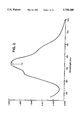
- FIG. 1 shows the absorption spectrum of a prior art photoconductive film material of conventional PVB binder and alpha titanyl phthalocyanine pigment, as in Example 1 below.
- FIG. 2 shows the absorption spectrum of a photoconductive film material according to one embodiment of this invention, using PVB and dehydrated pigment, as in Example 2 below.
- FIG. 3 shows a reaction scheme, according to one embodiment of the invention, for preparing a modified PVB binder having a --CH2CH2OH unit (MPVB-1), as in Example 3 below.
- MPVB-1 --CH2CH2OH unit
- FIG. 4 shows the absorption spectrum of a photoconductive film material according to another embodiment of this invention, utilizing a complex between MPVB-1 binder and dehydrated pigment, as in Example 4.
- FIG. 5 shows the absorption spectrum of a photoconductive film material according to another embodiment of this invention, utilizing a complex between MPVB-1 binder and non-dehydrated pigment, as in Example 5.
- FIG. 6A shows the absorption spectrum of a photoconductive film material according to another embodiment of this invention, utilizing a complex between MPVB-1 binder and dehydrated pigment, with cyclopentanol additive during the milling step, as in Example 6A.
- FIG. 6B shows the absorption spectrum of a photoconductive film material according to another embodiment of this invention, utilizing a complex between MPVB-1 binder and dehydrated pigment, with 2,3-butane-diol additive during the milling step, as in Example 6B.
- FIG. 6C shows the absorption spectrum of a photoconductive film material according to another embodiment of this invention, utilizing a complex between MPVB-1 binder and dehydrated pigment, with 1,4-cyclohexane-diol additive during the milling step, as in Example 6C.
- FIG. 7 shows the absorption spectrum of a photoconductive film material according to another embodiment of this invention, as in Example 8, using PVB and a dehydrated form of the Titanyl Phthalocyanine A-form pigment made according to the method of Example 7.
- FIG. 8 shows the absorption spectrum of a photoconductive film material according to another embodiment of this invention, as in Example 9, using MPVB-1 and a dehydrated form of the Titanyl Phthalocyanine A-form pigment made according to the method of Example 7.
- FIG. 9 shows a reaction scheme, according to another embodiment of the invention, for preparing a modified PVB binder having a cyclohexanol unit (MPVB-2), as in Example 11.
- MPVB-2 cyclohexanol unit
- FIG. 10 shows the absorption spectrum of a photoconductive film material according to another embodiment of this invention, as in Example 12, using MPVB-2 and a dehydrated form of the Titanyl Phthalocyanine A-form pigment made according to Example 7.
- a preferred method of making the invented organic photoconductor comprises milling a dehydrated metal oxide phthalocyanine pigment, with a modified PVB binder manufactured, for example, as described in Examples 3 and 11 below.
- alcohol solvents or additives may be selected and added prior to or during the milling.
- a dehydrated metal oxide phthalocyanine pigment such as dehydrated titanyl phthalocyanine (TiOPc) or dehydrated vanadyl phthalocyanine (VOPc) is obtained.
- TiOPc dehydrated titanyl phthalocyanine
- VOPc dehydrated vanadyl phthalocyanine
- TiOPc dehydrated titanyl phthalocyanine
- VOPc dehydrated vanadyl phthalocyanine
- Pseudo--alpha phthalocyanine, a transition form between alpha and beta phthalocyanine may be the starting material for producing TiOPc.
- the raw material TiOPc may be alpha TiOPc, beta TiOPc, X-form TiOPc, Y-form TiOPc, amorphous TiOPc, or salt-milled TiOPc, for example.
- the raw material VOPc may be different forms of VOPc crystal prepared by the similar treatment techniques available for TiOPc.
- the hydrated forms of the pigments
- the dehydrated metal oxide phthalocyanine pigment herein also called “hydroxy-starved” pigment, is prepared by heating the hydrated forms to high temperature, that is, between about 200°-250° C. in nitrogen for several hours before milling. Preferably, this heating step lasts about ten hours.
- This heat treatment process at such a high temperature prior to the milling step, tends to eliminate the water adsorption on the surface of the pigment. In many cases, it tends to change the morphology and make the pigment into a dried, water-starved form.
- Other conventional dehydration techniques may also be used. Dehydration herein is defined as reducing the water associated with the metal oxide phthalocyanine to a level below several ppm and is considered a method for obtaining a hydroxy-starved pigment.
- the dehydrated metal oxide phthalocyanine pigment is then preferably wetted with fatty alcohol component(s), specific hydroxy binder(s), such as the preferred MPVB, and milling media in order to be subjected to the milling.
- fatty alcohol component(s) specific hydroxy binder(s), such as the preferred MPVB
- milling media in order to be subjected to the milling.
- metal oxide phthalocyanine pigment typically TiOPC and /or VOPc
- “Complex” herein is defined as the formation of a compound wherein at least part of the bonding is by coordination, that is, a central ion or polar group surrounded by an ion(s) or polar group(s).
- milling the dehydrated pigment with the specific hydroxy binders of this invention, and preferably with the fatty alcohol solvents and with other optional hydroxy additives, is believed to produce a complex in which the specific hydroxy groups surround the oxygen atom.
- This complexing is believed to be due to the interaction between the --Ti ⁇ O group or --V ⁇ O group of the pigment with hydroxyl group(s) of the binder and/or of the alcohol. This kind of interaction is believed to affect the behavior of the lone pair of the nitrogen atoms on the phthalocyanine ring, thus affecting the carrier generation efficiency.
- the invented method of photoconductor manufacture creates a complex of the specific hydroxy groups surrounding the oxygen atom of the --Ti ⁇ O or --V ⁇ O chromophore, rather than the carbon of the phthalocyanine ring.
- This complex between the metal oxide phthalocyanine pigment and the hydroxyl groups of the various components in the milling process results in a charge generation layer exhibiting an absorption maximum in the vicinity of about 850 nm to 890 nm and an excellent photoresponse.
- the water molecules adjacent to metal oxide phthalocyanine pigment are believed to affect the stability of the OPC performance.
- the attachment or detachment of the water molecules, and the consequent interaction between the water and metal oxide phthalocyanine, is believed to cause instability of performance especially at elevated temperature.
- the complex between pigment and hydroxyl groups, according to this invention, is believed to minimize or eliminate the water effect, resulting in stable OPC performance at a high level of photoresponse at greater than about 850 nm.
- the fatty alcohols preferably used as milling solvents are defined by the functional group:
- Fatty alcohol (7) may be normal alcohol, branched alcohol, or ring alcohol, such as:
- Optional hydroxy additives may be added into the milling system by using secondary alcohols as milling solvents.
- Such hydroxy additives include, for example:
- A-9) a combination of metal oxide pigment with hydroxy phthalocyanine pigments including:
- Vanadium oxide phthalocyanine as metal oxide pigments
- the range of solid hydroxyl additives in the milling mixture is preferably about 0.1 wt-% to 40 wt-%.
- additives may include a crosslinker, which can cause a crosslinking reaction between excess hydroxy groups of the specific hydroxy binders or it can link the hydroxy groups of the additives with the hydroxy groups of the binder.
- crosslinker which can cause a crosslinking reaction between excess hydroxy groups of the specific hydroxy binders or it can link the hydroxy groups of the additives with the hydroxy groups of the binder.
- Milling conditions are preferably set to promote the reaction between the metal oxide phthalocyanine pigment and hydroxy group of the specific binders.
- Devices that may be used include: paint-shakers, homogenizers, attritors, ball mills, sand mills, etc. These devices may be used with various kinds of milling media, including ceramic beads (for example, zirconium or alumina), glass beads, or steel stainless beads.
- the milling time in some cases, needs to be extended from several hours to several days in order to give enough reaction time between metal oxide phthalocyanine pigments and hydroxyl groups of the specific binders or hydroxyl additives.
- the milling temperature is controlled between room temperature and 75° C. using a water jacket fitted onto the milling vessel or using hot air in the milling chamber where the milling vessel is located.
- a baking or drying step may be included after the milling process, for removal of coating solvents, as well as to promote crosslinking, if necessary.
- the baking conditions may be a temperature ranging from 35° C. to 300° C. and a time ranging from several minutes to several hours, depending, for example, on the solvents and crosslinking additives used.
- composition of matter and methods of manufacture produce an OPC with excellent photoresponse at greater than about 800 nm, and preferably at about 850 nm or higher, for use in high speed, high resolution EP.
- the preferred embodiment comprises:
- alpha titanyl phthalocyanine for example, from W.W. Sander Co., U.S.A.
- conventional poly-vinyl butyral binder B98, Monsanto Chemical
- 190 g of methanol were milled together in a ceramic pot using ceramic beads (3 mm diameter) for 72 hrs using a ball mill.
- the product was a blue slurry suspension, which was diluted further with isopropanol to yield a dispersion of 5 wt % solid.
- a wound wire bar was utilized to cast a film of 1 micron of the slurry on a transparent mylar substrate and this film was dried in the oven at 60° C. for 2 hours.
- the absorption spectrum of this film material illustrated in FIG. 1, shows a maximum absorption at 638 nm.
- the baked powder pigment and beads were immediately transferred back to the above ceramic milling jar containing 197.5 g of poly-vinyl butyral B98 (3.6% solid in methanol) and the system was wet milled for 72 hours. The suspension was adjusted to 5 wt % solid by dilution with isopropanol.
- the specimen for spectroscopic study was prepared in the same manner as described in Example 1. The absorption spectrum of this material, illustrated in FIG. 2, indicates an absorption max at 738 nm, that is, about a 100 nm red shift, relative to Example 1.
- Example 2 was repeated, except that the poly-vinyl butyral B-98 was replaced by the modified poly-vinyl butyral (MPVB-1) as prepared in Example 3.
- the absorption spectrum for this material is illustrated in FIG. 4. It was observed that, in this case the absorption max was at 850 nm, i.e., another red shift of about 112 nm due to the specific functional group --CH 2 CH 2 OH instead of --H functional group in the alcohol unit of the conventional PVB.
- Example 4 was repeated, except that the alpha titanyl phthalocyanine pigment was not pre-treated (that is, using the same pigment as utilized in Example 1).
- the absorption spectrum for the resulting material is illustrated in FIG. 5.
- This case of MPVB-1 with non-hydroxy-starved pigment exhibited a spectrum with a maximum between the maxima for Examples 1 and 4, that is, a moderate blue shift relative to MPVB-1 with hydroxy-starved pigment (762 nm vs. 850 nm max.), and with a red shift compared to conventional PVB with non-hydroxy-starved pigment (762 nm vs. 638 nm max.).
- the FIG. 5 spectrum indicates that a new complex was formed between the alpha titanyl pigment and the specific poly-vinyl butyral having the specific unit --CH 2 CH 2 OH, that is, the modified PVB made as described in Example 3.
- Example 4 was repeated, except that cyclopentanol was used as the milling solvent instead of methanol (MeOH).
- the absorption spectrum for the material resulting from this example is illustrated in FIG. 6A and exhibits an absorption maximum at 844 nm. This spectrum exhibits a maximum very close to, but with a slight blue shift relative to, what was observed in Example 4 (FIG. 4).
- Example 6(A) was repeated, except that 1.5 g of 2,3-butane-diol was added before milling.
- the absorption spectrum of the material resulting from this example is illustrated in FIG. 6B, with an absorption maximum at 740 nm. This indicates clear evidence that a complex was formed between the hydroxy-starved titanyl phthalocyanine pigment and the 2,3-butane-diol additive, resulting in a blue shift of the absorption max from 844 nm to 740 nm.
- Examples 6(B) was repeated, except that 1,4-cyclohexane-diol was used instead of 2,3-butane-diol.
- the absorption spectrum is illustrated in FIG. 6C, with an absorption maximum at 856 nm.
- This Example provides additional evidence of a strong interaction between the hydroxy-starved pigment and a specific hydroxy additive, such as 1,4-cyclohexane-diol. This interaction is believed to form a complex of titanyl phthalocyanine and the specific hydroxy compound.
- Freshly distilled quinoline (480 ml) was poured into a 1 liter round bottom flask. The flask was purged with N 2 for 15 minutes. Next, 30.59 g of tetraisopropoxy titanium (Ti(OPr i ) 4 from Tokyo Kasei was added to the quinoline and purged with N 2 gas another 20 minutes. 62.49 g of diiminoisoindoline was weighed in a nitrogen-filled glove bag and transferred to the quinoline solution. Immediately, heating was started. The solution turned yellow-orange and then light brown. The reaction temperature was kept at 1 80° C. for 6 hours, then reduced to room temperature. The solid was filtered under vacuum and washed with quinoline, hot dimethylaniline, and IPA in succession, and dried at 115° C. for 24 hours. The product was a dark-blue color, with a yield of 85%.
- Example 2 was repeated, except that the alpha titanyl phthalocyanine raw material was replaced by the pigment prepared in Example 7 and the methanol was replaced by cyclopentanol.
- the absorption spectrum is illustrated in FIG. 7 with absorption max. at 758 nm.
- Example 8 was repeated, except that the conventional PVB was replaced by the modified PVB having --CH 2 CH 2 OH unit (MPVB-1 described in Example 3).
- the absorption spectrum is illustrated in FIG. 8 with maximum at 784 nm.
- CGL thin charge generation layer
- the xerographic properties of the samples were measured using Cynthia OPC testing system (prepared by Gentek Company, Japan).
- the well-grounded photoconductor sample was mounted on the surface of an aluminum drum, which was exposed to a negative corona charging system operated at approximately -600V for 5 seconds and the surface potential Vo was read by a surface probe TREK 362.
- the xerographic response of the photoconductor sample was read by the energy required to discharge 80% of the initial potential V at the maximum absorption wavelength, as recorded in Table 2 below as "Xerographic Speed". So, the higher the energy required, the slower the photoresponse. And the residual potential was read by Vr(V) after stopping the exposure. The results are illustrated in Table 2 below.
- Modified polyvinylbutryal containing a pendant group with cyclohexanol was prepared by the reaction of PVB with tetrahydropyranyl (THP) protected bromomethylcyclohexanol, followed by acid hydrolysis of the THP protection group.
- THP-protected cyclohexanol-containing moiety was prepared by the following reaction sequence: 4-Methoxycyclohexanoic acid was reduced with borane-tetrahydrofuran complex to obtain 4-bromomethyl-cyclohexanol. This compound was treated with phosphorus tribromide to obtain the corresponding bromo compound.
- compound C-6 and PVB were then reacted to form an intermediate polymer, which was then reacted to form the desired modified PVB with cyclohexanol unit ("MPVB-2").
- Polyvinylbutral (2.9 g) was dissolved in THF (35.0 g) and mixed with potassium carbonate (6.55 g) and tetrahydropyranyl bromomethylcyclohexyl ether (5.1 g). This mixture was refluxed for 19 h at 80° C. It was diluted with THF (48 g) and centrifuged. The clear THF solution was added dropwise to water (1 L) to precipitate the intermediate polymer (C-7). The precipitated C-7 polymer was washed with water and dried in air for 24 h.
- Example 8 was repeated, except the conventional PVB was replaced by the modified polyvinyl butyral containing cyclohexanol unit, MPVB-2 made according to Example 11.
- the absorption spectrum is illustrated in FIG. 10 with maximum at 794 nm, and xerographic data is shown in Table 2.
- Example 12 was repeated, except that the titanyl phthalocyanine A was replaced by vanadyl phthalocyanine VOPc (Kodak Cat). The absorption maximum was 820 nm.
- Example 8 was repeated, except that TiOPc was replaced by VOPc.
- the absorption maximum was 790 nm.
- the absorbance spectra (Table 1 and figures) and the xerographic data (Table 2) indicate that forming a complex between metal oxide phthalocyanine pigment and modified PVB, according to this invention, tends to shift the absorption maximum to longer wavelengths and to improve the photoresponse at about the maximum absorption wavelength.
- Using dehydrated, hydroxy-starved pigment in the complex with the specific binder also improves the absorption maximum and photoresponse.
- the complex formation and its particular photo-response appear to depend upon the chemical structure of the particular hydroxy binder and other particular hydroxy compound additives and the particular metal oxide phthalocyanine pigment used in the manufacture of the OPC.
Landscapes
- Physics & Mathematics (AREA)
- General Physics & Mathematics (AREA)
- Chemical & Material Sciences (AREA)
- Chemical Kinetics & Catalysis (AREA)
- Spectroscopy & Molecular Physics (AREA)
- Photoreceptors In Electrophotography (AREA)
Abstract
Description
CH.sub.2 ═CR1 --CH.sub.2 OH (2)
CH.sub.2 ═CR1 --O--R2--CH.sub.2 OH (3),
CH.sub.2 ═CR1 --COO--R2--CH.sub.2 OH (4)
CH.sub.2 ═CR1 --CONH--R2--CH.sub.2 OH (5),
CH.sub.2 ═CR1 --CH.sub.2 O--CH.sub.2 --CHOH--CH.sub.2 --O(CH.sub.2)m--CH.sub.3 ( 6),
C.sub.n H.sub.2n+1 OH (7)
              TABLE 1
______________________________________
Comparison of Absorption Maxima
                             Absorption
                             Maximum
Example
       Method                Wavelength, nm
______________________________________
1      PVB with Conventional Pigment
                             638
2      PVB with Hydroxy-Starved Pigment
                             738
4      MPVB-1 with Hydroxy-Starved Pigment
                             850
5      MPVB-1 with Conventional Pigment
                             762
.sup.  6A
       MPVB-1 with Hydroxy-Starved Pigment
                             844
       and Cyclopentanol as milling solvent
.sup.  6B
       MPVB-1 with Hydroxy-Starved Pigment,
                             740
       Cyclopentanol, and 2,3 butane diol
.sup.  6C
       MPVB-1 with Hydroxy-Starved Pigment,
                             856
       Cyclopentanol, and 1,4 cyclohexane diol
8      PVB with Hydroxy-Starved
                             758
       Titanyl Phthalocyanine A-Form,
       Cyclopentanol as milling solvent
9      MPVB-1 with Hydroxy-Starved
                             784
       Titanyl Phthalocyanine A-Form,
       Cyclopentanol as milling solvent
12     MPVB-2 (with cyclohexanol unit) with
                             794
       Hydroxy-Starved Titanyl
       Phthalocyanine A-Form,
       Cyclopentanol as milling solvent
13     MPVB-2 (with cyclohexanol unit) with
                             820
       Hydroxy-Starved VOPc,
       Cyclopentanol as milling solvent
14     PVB with Hydroxy-Starved
                             790
       VOPc, Cyclopentanol as milling solvent
       (for comparison to Example 13)
______________________________________
              TABLE 2
______________________________________
Xerographic Data
       Initial          Exposure
                                Xerographic
       Voltage          Wave-   Speed
Example
       (V)     DDR(V/s) length (nm)
                                (ergs/cm2)
                                        Vr(V)
______________________________________
1      -600 V  7.0 V/s  660 nm  80.0    -150 V
2      -615 V  3.0 V/s  740 nm  42.0    -45 V
4      -620 V  2.0 V/s  850 nm  5.0     -10 V
5      -620 V  2.5 V/s  760 nm  39.0    -50 V
.sup.  6(A)
       -610 V  1.5 V/s  850 nm  3.5      -5 V
.sup.  -620 V  2.0 V/s  760 nm  30.0    -40 V
.sup.  -625 V  1.0 V/s  850 nm  2.0      -0 V
8      -550 V  3.0 V/s  760 nm  10.0    -10 V
9      -600 V  2.0 V/s  780 nm  3.5      -3 V
12     -660 V  0.4 V/s  790 nm  1.0      -0 V
13     -597 V  4.0 V/s  820 nm  8.0     -10 V
14     -530 V  6.0 V/s  790 nm  27.0    -30 V
______________________________________
Claims (19)
Priority Applications (2)
| Application Number | Priority Date | Filing Date | Title |
|---|---|---|---|
| US08/634,495 US5750300A (en) | 1996-04-18 | 1996-04-18 | Photoconductor comprising a complex between metal oxide phthalocyanine compounds and hydroxy compounds |
| US09/025,142 US5972552A (en) | 1996-04-18 | 1998-02-18 | Photoconductor comprising a complex between metal oxide phthalocyanine compounds and hydroxy or amine compounds |
Applications Claiming Priority (1)
| Application Number | Priority Date | Filing Date | Title |
|---|---|---|---|
| US08/634,495 US5750300A (en) | 1996-04-18 | 1996-04-18 | Photoconductor comprising a complex between metal oxide phthalocyanine compounds and hydroxy compounds |
Related Child Applications (1)
| Application Number | Title | Priority Date | Filing Date |
|---|---|---|---|
| US09/025,142 Continuation-In-Part US5972552A (en) | 1996-04-18 | 1998-02-18 | Photoconductor comprising a complex between metal oxide phthalocyanine compounds and hydroxy or amine compounds |
Publications (1)
| Publication Number | Publication Date |
|---|---|
| US5750300A true US5750300A (en) | 1998-05-12 |
Family
ID=24544034
Family Applications (1)
| Application Number | Title | Priority Date | Filing Date |
|---|---|---|---|
| US08/634,495 Expired - Lifetime US5750300A (en) | 1996-04-18 | 1996-04-18 | Photoconductor comprising a complex between metal oxide phthalocyanine compounds and hydroxy compounds |
Country Status (1)
| Country | Link |
|---|---|
| US (1) | US5750300A (en) |
Cited By (9)
| Publication number | Priority date | Publication date | Assignee | Title |
|---|---|---|---|---|
| US5905009A (en) * | 1996-10-09 | 1999-05-18 | Fuji Electric Co., Ltd. | Charge generation agent electrophotographic photoconductors and method for making same |
| US5972552A (en) * | 1996-04-18 | 1999-10-26 | Hewlett-Packard Company | Photoconductor comprising a complex between metal oxide phthalocyanine compounds and hydroxy or amine compounds |
| US6066427A (en) * | 1999-07-26 | 2000-05-23 | Lexmark International, Inc. | Methods for making a charge generating layers comprising type I polymorph of titanyl phthalocyanine with reduced photosensitivity and photoconductors including the same |
| US6174636B1 (en) * | 1999-06-04 | 2001-01-16 | Xerox Corporation | Imaging members containing arylene ether alcohol polymers |
| US6214502B1 (en) | 1998-07-21 | 2001-04-10 | Lexmark International, Inc. | Charge generation layers comprising binder blends and photoconductors including the same |
| US6265124B1 (en) | 2000-05-31 | 2001-07-24 | Lexmark International, Inc. | Photoconductors and charge generation layers comprising polymeric hindered phenols |
| US20070077478A1 (en) * | 2005-10-03 | 2007-04-05 | The Board Of Management Of Saigon Hi-Tech Park | Electrolyte membrane for fuel cell utilizing nano composite |
| US20100278715A1 (en) * | 2009-04-29 | 2010-11-04 | Th Llc | Systems, Devices, and/or Methods Regarding Specific Precursors or Tube Control Agent for the Synthesis of Carbon Nanofiber and Nanotube |
| US20200133146A1 (en) * | 2018-10-25 | 2020-04-30 | Canon Kabushiki Kaisha | Electrophotographic photosensitive member, process cartridge, and electrophotographic apparatus |
Citations (12)
| Publication number | Priority date | Publication date | Assignee | Title |
|---|---|---|---|---|
| US3793021A (en) * | 1969-05-28 | 1974-02-19 | Ricoh Kk | Electronic recording material |
| US4734348A (en) * | 1985-10-23 | 1988-03-29 | Tetsumi Suzuki | Photosensitive member for electrophotography containing polyvinyl acetal |
| US4994339A (en) * | 1989-01-09 | 1991-02-19 | Konica Corporation | Electrophotographic photoreceptor using titanyl phthalocyanine |
| US5213929A (en) * | 1989-06-06 | 1993-05-25 | Nec Corporation | Titanyl phthaloycyanine crystal, method of manufacture thereof and its use for electrophotographic photosensitive material |
| US5252417A (en) * | 1990-03-20 | 1993-10-12 | Fuji Xerox Co., Ltd. | Titanyl phthalocyanine crystal and electrophotographic photoreceptor using the same |
| US5320923A (en) * | 1993-01-28 | 1994-06-14 | Hewlett-Packard Company | Reusable, positive-charging organic photoconductor containing phthalocyanine pigment, hydroxy binder and silicon stabilizer |
| US5324615A (en) * | 1993-08-13 | 1994-06-28 | Xerox Corporation | Method of making electrostatographic imaging members containing vanadyl phthalocyanine |
| US5330867A (en) * | 1992-08-24 | 1994-07-19 | Xerox Corporation | Photogenerating titanyl phthalocyanine and processes thereof |
| US5350655A (en) * | 1992-03-13 | 1994-09-27 | Konica Corporation | Electrophotographic photoreceptor with titanyl phthaloycyanine |
| JPH0772637A (en) * | 1993-09-07 | 1995-03-17 | Matsushita Electric Ind Co Ltd | Laminated electrophotographic photoreceptor and method for producing the same |
| JPH0772638A (en) * | 1993-09-07 | 1995-03-17 | Matsushita Electric Ind Co Ltd | Laminated electrophotographic photoreceptor and method for producing the same |
| US5529869A (en) * | 1993-02-08 | 1996-06-25 | Hewlett-Packard Company | Reusable positive-charging organic photoconductor containing phthalocyanine pigment and cross-linking binder |
-
1996
- 1996-04-18 US US08/634,495 patent/US5750300A/en not_active Expired - Lifetime
Patent Citations (12)
| Publication number | Priority date | Publication date | Assignee | Title |
|---|---|---|---|---|
| US3793021A (en) * | 1969-05-28 | 1974-02-19 | Ricoh Kk | Electronic recording material |
| US4734348A (en) * | 1985-10-23 | 1988-03-29 | Tetsumi Suzuki | Photosensitive member for electrophotography containing polyvinyl acetal |
| US4994339A (en) * | 1989-01-09 | 1991-02-19 | Konica Corporation | Electrophotographic photoreceptor using titanyl phthalocyanine |
| US5213929A (en) * | 1989-06-06 | 1993-05-25 | Nec Corporation | Titanyl phthaloycyanine crystal, method of manufacture thereof and its use for electrophotographic photosensitive material |
| US5252417A (en) * | 1990-03-20 | 1993-10-12 | Fuji Xerox Co., Ltd. | Titanyl phthalocyanine crystal and electrophotographic photoreceptor using the same |
| US5350655A (en) * | 1992-03-13 | 1994-09-27 | Konica Corporation | Electrophotographic photoreceptor with titanyl phthaloycyanine |
| US5330867A (en) * | 1992-08-24 | 1994-07-19 | Xerox Corporation | Photogenerating titanyl phthalocyanine and processes thereof |
| US5320923A (en) * | 1993-01-28 | 1994-06-14 | Hewlett-Packard Company | Reusable, positive-charging organic photoconductor containing phthalocyanine pigment, hydroxy binder and silicon stabilizer |
| US5529869A (en) * | 1993-02-08 | 1996-06-25 | Hewlett-Packard Company | Reusable positive-charging organic photoconductor containing phthalocyanine pigment and cross-linking binder |
| US5324615A (en) * | 1993-08-13 | 1994-06-28 | Xerox Corporation | Method of making electrostatographic imaging members containing vanadyl phthalocyanine |
| JPH0772637A (en) * | 1993-09-07 | 1995-03-17 | Matsushita Electric Ind Co Ltd | Laminated electrophotographic photoreceptor and method for producing the same |
| JPH0772638A (en) * | 1993-09-07 | 1995-03-17 | Matsushita Electric Ind Co Ltd | Laminated electrophotographic photoreceptor and method for producing the same |
Non-Patent Citations (4)
| Title |
|---|
| English translation of JP 7 72637, Mar. 1995. * |
| English translation of JP 7 72638, Mar. 1995. * |
| English translation of JP 7-72637, Mar. 1995. |
| English translation of JP 7-72638, Mar. 1995. |
Cited By (10)
| Publication number | Priority date | Publication date | Assignee | Title |
|---|---|---|---|---|
| US5972552A (en) * | 1996-04-18 | 1999-10-26 | Hewlett-Packard Company | Photoconductor comprising a complex between metal oxide phthalocyanine compounds and hydroxy or amine compounds |
| US5905009A (en) * | 1996-10-09 | 1999-05-18 | Fuji Electric Co., Ltd. | Charge generation agent electrophotographic photoconductors and method for making same |
| US6214502B1 (en) | 1998-07-21 | 2001-04-10 | Lexmark International, Inc. | Charge generation layers comprising binder blends and photoconductors including the same |
| US6174636B1 (en) * | 1999-06-04 | 2001-01-16 | Xerox Corporation | Imaging members containing arylene ether alcohol polymers |
| US6066427A (en) * | 1999-07-26 | 2000-05-23 | Lexmark International, Inc. | Methods for making a charge generating layers comprising type I polymorph of titanyl phthalocyanine with reduced photosensitivity and photoconductors including the same |
| WO2001007526A1 (en) * | 1999-07-26 | 2001-02-01 | Lexmark International, Inc. | Charge generating layers comprising type i polymorph of titanyl phthalocyanine |
| US6265124B1 (en) | 2000-05-31 | 2001-07-24 | Lexmark International, Inc. | Photoconductors and charge generation layers comprising polymeric hindered phenols |
| US20070077478A1 (en) * | 2005-10-03 | 2007-04-05 | The Board Of Management Of Saigon Hi-Tech Park | Electrolyte membrane for fuel cell utilizing nano composite |
| US20100278715A1 (en) * | 2009-04-29 | 2010-11-04 | Th Llc | Systems, Devices, and/or Methods Regarding Specific Precursors or Tube Control Agent for the Synthesis of Carbon Nanofiber and Nanotube |
| US20200133146A1 (en) * | 2018-10-25 | 2020-04-30 | Canon Kabushiki Kaisha | Electrophotographic photosensitive member, process cartridge, and electrophotographic apparatus |
Similar Documents
| Publication | Publication Date | Title |
|---|---|---|
| KR940007962B1 (en) | Oxytitanium phthalocyanine, its manufacturing method and photosensitive member and electrophotographic apparatus using the same | |
| US4585884A (en) | Silylated compositions, and deuterated hydroxyl squaraine compositions and processes | |
| US4665000A (en) | Photoresponsive devices containing aromatic ether hole transport layers | |
| US4725519A (en) | Dual layer electrophotographic photoreceptor comprises titanium phthalocyanine charge generator and hydrazone charge transport materials | |
| US4521621A (en) | Novel squarine systems | |
| KR100302427B1 (en) | Titanyloxyphthalocyanine crystals, methods for their preparation and electrophotographic photosensitive members using the crystals | |
| US4606986A (en) | Electrophotographic elements containing unsymmetrical squaraines | |
| US5750300A (en) | Photoconductor comprising a complex between metal oxide phthalocyanine compounds and hydroxy compounds | |
| JPH0715067B2 (en) | Oxytitanium phthalocyanine, method for producing the same, and electrophotographic photoreceptor using the same | |
| US5972552A (en) | Photoconductor comprising a complex between metal oxide phthalocyanine compounds and hydroxy or amine compounds | |
| JPH02214867A (en) | Electrophotographic photoreceptor | |
| US5821019A (en) | Composite organic photoconductor having particulate charge transport layer | |
| US4983483A (en) | Organic photoreceptor for use in electrophotography employing squarylium and copper phthalocyanine as charge generation materials | |
| CA1039943A (en) | Aggregate photoconductive composition containing combination of pyrylium type dye salts | |
| KR100284059B1 (en) | Coating solution for electrophotographic photosensitive member and charge transport layer | |
| KR100474118B1 (en) | Electrophotographic photoconductor and method of manufacturing the same | |
| CA2206327C (en) | Oxytitanium phthalocyanine crystal | |
| US5453343A (en) | Hydrazone compounds as charge transport material in photoreceptors | |
| US3706554A (en) | Photoconductive composition | |
| JPS58162955A (en) | organic photoconductor | |
| JP2557834B2 (en) | Electrophotographic photoreceptor | |
| JP3155887B2 (en) | Electrophotographic photoreceptor, process cartridge having the electrophotographic photoreceptor, and electrophotographic apparatus | |
| JPH0651549A (en) | Electrophotographic photoreceptor using oxytitanium phthalocyanine | |
| US4628018A (en) | Silylated compositions, and deuterated hydroxyl squaraine compositions and processes | |
| EP0532176B1 (en) | Laser-sensitive electrophotographic lithograph printing plate material |
Legal Events
| Date | Code | Title | Description |
|---|---|---|---|
| AS | Assignment |
Owner name: HEWLETT-PACKARD COMPANY, CALIFORNIA Free format text: ASSIGNMENT OF ASSIGNORS INTEREST;ASSIGNOR:NGUYEN, KHE;REEL/FRAME:008287/0655 Effective date: 19960412 |
|
| STCF | Information on status: patent grant |
Free format text: PATENTED CASE |
|
| FEPP | Fee payment procedure |
Free format text: PAYOR NUMBER ASSIGNED (ORIGINAL EVENT CODE: ASPN); ENTITY STATUS OF PATENT OWNER: LARGE ENTITY |
|
| AS | Assignment |
Owner name: HEWLETT-PACKARD COMPANY, COLORADO Free format text: MERGER;ASSIGNOR:HEWLETT-PACKARD COMPANY;REEL/FRAME:011523/0469 Effective date: 19980520 |
|
| FPAY | Fee payment |
Year of fee payment: 4 |
|
| REMI | Maintenance fee reminder mailed | ||
| FPAY | Fee payment |
Year of fee payment: 8 |
|
| FPAY | Fee payment |
Year of fee payment: 12 |
|
| AS | Assignment |
Owner name: HEWLETT-PACKARD DEVELOPMENT COMPANY, L.P., TEXAS Free format text: ASSIGNMENT OF ASSIGNORS INTEREST;ASSIGNOR:HEWLETT-PACKARD COMPANY;REEL/FRAME:026945/0699 Effective date: 20030131 |