US5712049A - Sliding element and process for producing the same - Google Patents
Sliding element and process for producing the same Download PDFInfo
- Publication number
- US5712049A US5712049A US08/436,417 US43641795A US5712049A US 5712049 A US5712049 A US 5712049A US 43641795 A US43641795 A US 43641795A US 5712049 A US5712049 A US 5712049A
- Authority
- US
- United States
- Prior art keywords
- tin
- sliding element
- layer
- immersion
- metal layer
- Prior art date
- Legal status (The legal status is an assumption and is not a legal conclusion. Google has not performed a legal analysis and makes no representation as to the accuracy of the status listed.)
- Expired - Lifetime
Links
- 238000000034 method Methods 0.000 title claims description 17
- ATJFFYVFTNAWJD-UHFFFAOYSA-N Tin Chemical compound [Sn] ATJFFYVFTNAWJD-UHFFFAOYSA-N 0.000 claims abstract description 70
- 229910052718 tin Inorganic materials 0.000 claims abstract description 70
- PXHVJJICTQNCMI-UHFFFAOYSA-N Nickel Chemical compound [Ni] PXHVJJICTQNCMI-UHFFFAOYSA-N 0.000 claims abstract description 60
- 238000007654 immersion Methods 0.000 claims abstract description 44
- 229910052782 aluminium Inorganic materials 0.000 claims abstract description 30
- XAGFODPZIPBFFR-UHFFFAOYSA-N aluminium Chemical compound [Al] XAGFODPZIPBFFR-UHFFFAOYSA-N 0.000 claims abstract description 30
- 229910052759 nickel Inorganic materials 0.000 claims abstract description 29
- XEEYBQQBJWHFJM-UHFFFAOYSA-N Iron Chemical compound [Fe] XEEYBQQBJWHFJM-UHFFFAOYSA-N 0.000 claims abstract description 26
- RYGMFSIKBFXOCR-UHFFFAOYSA-N Copper Chemical compound [Cu] RYGMFSIKBFXOCR-UHFFFAOYSA-N 0.000 claims abstract description 15
- 229910052802 copper Inorganic materials 0.000 claims abstract description 15
- 239000010949 copper Substances 0.000 claims abstract description 15
- HCHKCACWOHOZIP-UHFFFAOYSA-N Zinc Chemical compound [Zn] HCHKCACWOHOZIP-UHFFFAOYSA-N 0.000 claims abstract description 14
- 229910052725 zinc Inorganic materials 0.000 claims abstract description 14
- 239000011701 zinc Substances 0.000 claims abstract description 14
- 229910052742 iron Inorganic materials 0.000 claims abstract description 13
- 229910000838 Al alloy Inorganic materials 0.000 claims abstract description 11
- XLYOFNOQVPJJNP-UHFFFAOYSA-N water Chemical compound O XLYOFNOQVPJJNP-UHFFFAOYSA-N 0.000 claims abstract description 10
- 150000003839 salts Chemical class 0.000 claims abstract description 7
- XFXPMWWXUTWYJX-UHFFFAOYSA-N Cyanide Chemical compound N#[C-] XFXPMWWXUTWYJX-UHFFFAOYSA-N 0.000 claims abstract description 4
- 239000008367 deionised water Substances 0.000 claims abstract description 4
- 229910021641 deionized water Inorganic materials 0.000 claims abstract description 4
- 229910000897 Babbitt (metal) Inorganic materials 0.000 claims description 22
- 238000000151 deposition Methods 0.000 claims description 21
- 230000008021 deposition Effects 0.000 claims description 21
- QAOWNCQODCNURD-UHFFFAOYSA-N Sulfuric acid Chemical compound OS(O)(=O)=O QAOWNCQODCNURD-UHFFFAOYSA-N 0.000 claims description 20
- 238000007747 plating Methods 0.000 claims description 14
- 239000002253 acid Substances 0.000 claims description 13
- 239000001996 bearing alloy Substances 0.000 claims description 8
- 230000032798 delamination Effects 0.000 claims description 6
- 238000009713 electroplating Methods 0.000 claims description 6
- 238000005554 pickling Methods 0.000 claims description 6
- XUIMIQQOPSSXEZ-UHFFFAOYSA-N Silicon Chemical compound [Si] XUIMIQQOPSSXEZ-UHFFFAOYSA-N 0.000 claims description 5
- 239000003795 chemical substances by application Substances 0.000 claims description 5
- 238000005238 degreasing Methods 0.000 claims description 5
- 239000003921 oil Substances 0.000 claims description 5
- 229910052710 silicon Inorganic materials 0.000 claims description 5
- 239000010703 silicon Substances 0.000 claims description 5
- 239000000080 wetting agent Substances 0.000 claims description 5
- AFVFQIVMOAPDHO-UHFFFAOYSA-N Methanesulfonic acid Chemical compound CS(O)(=O)=O AFVFQIVMOAPDHO-UHFFFAOYSA-N 0.000 claims description 4
- WGLPBDUCMAPZCE-UHFFFAOYSA-N Trioxochromium Chemical compound O=[Cr](=O)=O WGLPBDUCMAPZCE-UHFFFAOYSA-N 0.000 claims description 4
- 229910000423 chromium oxide Inorganic materials 0.000 claims description 4
- 239000000203 mixture Substances 0.000 claims description 3
- 238000004140 cleaning Methods 0.000 claims description 2
- 238000004519 manufacturing process Methods 0.000 claims description 2
- 229940098779 methanesulfonic acid Drugs 0.000 claims description 2
- 239000008237 rinsing water Substances 0.000 claims 1
- 239000011135 tin Substances 0.000 description 52
- 229910052751 metal Inorganic materials 0.000 description 6
- 239000002184 metal Substances 0.000 description 6
- 239000011133 lead Substances 0.000 description 5
- XLOMVQKBTHCTTD-UHFFFAOYSA-N Zinc monoxide Chemical compound [Zn]=O XLOMVQKBTHCTTD-UHFFFAOYSA-N 0.000 description 4
- YVIMHTIMVIIXBQ-UHFFFAOYSA-N [SnH3][Al] Chemical compound [SnH3][Al] YVIMHTIMVIIXBQ-UHFFFAOYSA-N 0.000 description 4
- 150000002739 metals Chemical class 0.000 description 4
- 229910052709 silver Inorganic materials 0.000 description 4
- 239000004332 silver Substances 0.000 description 4
- 229910000831 Steel Inorganic materials 0.000 description 3
- 239000011248 coating agent Substances 0.000 description 3
- 238000000576 coating method Methods 0.000 description 3
- 229910052736 halogen Inorganic materials 0.000 description 3
- 239000000463 material Substances 0.000 description 3
- 239000010959 steel Substances 0.000 description 3
- 239000000126 substance Substances 0.000 description 3
- KRHYYFGTRYWZRS-UHFFFAOYSA-N Fluorane Chemical compound F KRHYYFGTRYWZRS-UHFFFAOYSA-N 0.000 description 2
- 229910001128 Sn alloy Inorganic materials 0.000 description 2
- 230000002411 adverse Effects 0.000 description 2
- 229910045601 alloy Inorganic materials 0.000 description 2
- 239000000956 alloy Substances 0.000 description 2
- 230000015572 biosynthetic process Effects 0.000 description 2
- BVKZGUZCCUSVTD-UHFFFAOYSA-N carbonic acid Chemical compound OC(O)=O BVKZGUZCCUSVTD-UHFFFAOYSA-N 0.000 description 2
- 238000005260 corrosion Methods 0.000 description 2
- 230000007797 corrosion Effects 0.000 description 2
- 239000003792 electrolyte Substances 0.000 description 2
- 150000002367 halogens Chemical class 0.000 description 2
- 239000007788 liquid Substances 0.000 description 2
- 238000007788 roughening Methods 0.000 description 2
- 238000006748 scratching Methods 0.000 description 2
- 230000002393 scratching effect Effects 0.000 description 2
- 238000006557 surface reaction Methods 0.000 description 2
- 238000004381 surface treatment Methods 0.000 description 2
- FAKFSJNVVCGEEI-UHFFFAOYSA-J tin(4+);disulfate Chemical class [Sn+4].[O-]S([O-])(=O)=O.[O-]S([O-])(=O)=O FAKFSJNVVCGEEI-UHFFFAOYSA-J 0.000 description 2
- 239000011787 zinc oxide Substances 0.000 description 2
- JPVYNHNXODAKFH-UHFFFAOYSA-N Cu2+ Chemical compound [Cu+2] JPVYNHNXODAKFH-UHFFFAOYSA-N 0.000 description 1
- BQCADISMDOOEFD-UHFFFAOYSA-N Silver Chemical compound [Ag] BQCADISMDOOEFD-UHFFFAOYSA-N 0.000 description 1
- 238000005299 abrasion Methods 0.000 description 1
- 239000012190 activator Substances 0.000 description 1
- 239000000853 adhesive Substances 0.000 description 1
- 230000001070 adhesive effect Effects 0.000 description 1
- 150000001450 anions Chemical class 0.000 description 1
- 150000008365 aromatic ketones Chemical class 0.000 description 1
- 238000001311 chemical methods and process Methods 0.000 description 1
- 239000012459 cleaning agent Substances 0.000 description 1
- 150000001875 compounds Chemical class 0.000 description 1
- 229910001431 copper ion Inorganic materials 0.000 description 1
- 238000011161 development Methods 0.000 description 1
- 230000018109 developmental process Effects 0.000 description 1
- 238000001035 drying Methods 0.000 description 1
- 238000004070 electrodeposition Methods 0.000 description 1
- 238000009499 grossing Methods 0.000 description 1
- -1 halogen ions Chemical class 0.000 description 1
- 230000001771 impaired effect Effects 0.000 description 1
- 230000002045 lasting effect Effects 0.000 description 1
- 239000000314 lubricant Substances 0.000 description 1
- 229910021645 metal ion Inorganic materials 0.000 description 1
- 238000001465 metallisation Methods 0.000 description 1
- 229910001453 nickel ion Inorganic materials 0.000 description 1
- 239000004033 plastic Substances 0.000 description 1
- 230000002028 premature Effects 0.000 description 1
- 229920005989 resin Polymers 0.000 description 1
- 239000011347 resin Substances 0.000 description 1
Images

Classifications
-
- F—MECHANICAL ENGINEERING; LIGHTING; HEATING; WEAPONS; BLASTING
- F16—ENGINEERING ELEMENTS AND UNITS; GENERAL MEASURES FOR PRODUCING AND MAINTAINING EFFECTIVE FUNCTIONING OF MACHINES OR INSTALLATIONS; THERMAL INSULATION IN GENERAL
- F16C—SHAFTS; FLEXIBLE SHAFTS; ELEMENTS OR CRANKSHAFT MECHANISMS; ROTARY BODIES OTHER THAN GEARING ELEMENTS; BEARINGS
- F16C33/00—Parts of bearings; Special methods for making bearings or parts thereof
- F16C33/02—Parts of sliding-contact bearings
- F16C33/04—Brasses; Bushes; Linings
- F16C33/06—Sliding surface mainly made of metal
- F16C33/12—Structural composition; Use of special materials or surface treatments, e.g. for rust-proofing
-
- C—CHEMISTRY; METALLURGY
- C25—ELECTROLYTIC OR ELECTROPHORETIC PROCESSES; APPARATUS THEREFOR
- C25D—PROCESSES FOR THE ELECTROLYTIC OR ELECTROPHORETIC PRODUCTION OF COATINGS; ELECTROFORMING; APPARATUS THEREFOR
- C25D3/00—Electroplating: Baths therefor
- C25D3/02—Electroplating: Baths therefor from solutions
- C25D3/30—Electroplating: Baths therefor from solutions of tin
-
- C—CHEMISTRY; METALLURGY
- C25—ELECTROLYTIC OR ELECTROPHORETIC PROCESSES; APPARATUS THEREFOR
- C25D—PROCESSES FOR THE ELECTROLYTIC OR ELECTROPHORETIC PRODUCTION OF COATINGS; ELECTROFORMING; APPARATUS THEREFOR
- C25D5/00—Electroplating characterised by the process; Pretreatment or after-treatment of workpieces
- C25D5/34—Pretreatment of metallic surfaces to be electroplated
- C25D5/42—Pretreatment of metallic surfaces to be electroplated of light metals
- C25D5/44—Aluminium
-
- C—CHEMISTRY; METALLURGY
- C25—ELECTROLYTIC OR ELECTROPHORETIC PROCESSES; APPARATUS THEREFOR
- C25D—PROCESSES FOR THE ELECTROLYTIC OR ELECTROPHORETIC PRODUCTION OF COATINGS; ELECTROFORMING; APPARATUS THEREFOR
- C25D7/00—Electroplating characterised by the article coated
- C25D7/10—Bearings
-
- F—MECHANICAL ENGINEERING; LIGHTING; HEATING; WEAPONS; BLASTING
- F16—ENGINEERING ELEMENTS AND UNITS; GENERAL MEASURES FOR PRODUCING AND MAINTAINING EFFECTIVE FUNCTIONING OF MACHINES OR INSTALLATIONS; THERMAL INSULATION IN GENERAL
- F16C—SHAFTS; FLEXIBLE SHAFTS; ELEMENTS OR CRANKSHAFT MECHANISMS; ROTARY BODIES OTHER THAN GEARING ELEMENTS; BEARINGS
- F16C2204/00—Metallic materials; Alloys
- F16C2204/20—Alloys based on aluminium
-
- F—MECHANICAL ENGINEERING; LIGHTING; HEATING; WEAPONS; BLASTING
- F16—ENGINEERING ELEMENTS AND UNITS; GENERAL MEASURES FOR PRODUCING AND MAINTAINING EFFECTIVE FUNCTIONING OF MACHINES OR INSTALLATIONS; THERMAL INSULATION IN GENERAL
- F16C—SHAFTS; FLEXIBLE SHAFTS; ELEMENTS OR CRANKSHAFT MECHANISMS; ROTARY BODIES OTHER THAN GEARING ELEMENTS; BEARINGS
- F16C2204/00—Metallic materials; Alloys
- F16C2204/20—Alloys based on aluminium
- F16C2204/22—Alloys based on aluminium with tin as the next major constituent
-
- F—MECHANICAL ENGINEERING; LIGHTING; HEATING; WEAPONS; BLASTING
- F16—ENGINEERING ELEMENTS AND UNITS; GENERAL MEASURES FOR PRODUCING AND MAINTAINING EFFECTIVE FUNCTIONING OF MACHINES OR INSTALLATIONS; THERMAL INSULATION IN GENERAL
- F16C—SHAFTS; FLEXIBLE SHAFTS; ELEMENTS OR CRANKSHAFT MECHANISMS; ROTARY BODIES OTHER THAN GEARING ELEMENTS; BEARINGS
- F16C2204/00—Metallic materials; Alloys
- F16C2204/60—Ferrous alloys, e.g. steel alloys
-
- Y—GENERAL TAGGING OF NEW TECHNOLOGICAL DEVELOPMENTS; GENERAL TAGGING OF CROSS-SECTIONAL TECHNOLOGIES SPANNING OVER SEVERAL SECTIONS OF THE IPC; TECHNICAL SUBJECTS COVERED BY FORMER USPC CROSS-REFERENCE ART COLLECTIONS [XRACs] AND DIGESTS
- Y10—TECHNICAL SUBJECTS COVERED BY FORMER USPC
- Y10S—TECHNICAL SUBJECTS COVERED BY FORMER USPC CROSS-REFERENCE ART COLLECTIONS [XRACs] AND DIGESTS
- Y10S384/00—Bearings
- Y10S384/90—Cooling or heating
- Y10S384/912—Metallic
-
- Y—GENERAL TAGGING OF NEW TECHNOLOGICAL DEVELOPMENTS; GENERAL TAGGING OF CROSS-SECTIONAL TECHNOLOGIES SPANNING OVER SEVERAL SECTIONS OF THE IPC; TECHNICAL SUBJECTS COVERED BY FORMER USPC CROSS-REFERENCE ART COLLECTIONS [XRACs] AND DIGESTS
- Y10—TECHNICAL SUBJECTS COVERED BY FORMER USPC
- Y10S—TECHNICAL SUBJECTS COVERED BY FORMER USPC CROSS-REFERENCE ART COLLECTIONS [XRACs] AND DIGESTS
- Y10S428/00—Stock material or miscellaneous articles
- Y10S428/922—Static electricity metal bleed-off metallic stock
- Y10S428/9335—Product by special process
- Y10S428/934—Electrical process
- Y10S428/935—Electroplating
-
- Y—GENERAL TAGGING OF NEW TECHNOLOGICAL DEVELOPMENTS; GENERAL TAGGING OF CROSS-SECTIONAL TECHNOLOGIES SPANNING OVER SEVERAL SECTIONS OF THE IPC; TECHNICAL SUBJECTS COVERED BY FORMER USPC CROSS-REFERENCE ART COLLECTIONS [XRACs] AND DIGESTS
- Y10—TECHNICAL SUBJECTS COVERED BY FORMER USPC
- Y10T—TECHNICAL SUBJECTS COVERED BY FORMER US CLASSIFICATION
- Y10T428/00—Stock material or miscellaneous articles
- Y10T428/12—All metal or with adjacent metals
- Y10T428/12493—Composite; i.e., plural, adjacent, spatially distinct metal components [e.g., layers, joint, etc.]
- Y10T428/12708—Sn-base component
-
- Y—GENERAL TAGGING OF NEW TECHNOLOGICAL DEVELOPMENTS; GENERAL TAGGING OF CROSS-SECTIONAL TECHNOLOGIES SPANNING OVER SEVERAL SECTIONS OF THE IPC; TECHNICAL SUBJECTS COVERED BY FORMER USPC CROSS-REFERENCE ART COLLECTIONS [XRACs] AND DIGESTS
- Y10—TECHNICAL SUBJECTS COVERED BY FORMER USPC
- Y10T—TECHNICAL SUBJECTS COVERED BY FORMER US CLASSIFICATION
- Y10T428/00—Stock material or miscellaneous articles
- Y10T428/12—All metal or with adjacent metals
- Y10T428/12493—Composite; i.e., plural, adjacent, spatially distinct metal components [e.g., layers, joint, etc.]
- Y10T428/12736—Al-base component
Definitions
- the invention relates to a plain bearing having an electroplated tin layer bonded to an aluminum containing layer by a halogen free deposition containing zinc, copper, nickel and iron.
- Compound plain bearings comprise a supporting steel shell with a layer of anti-friction metal which is mostly of an aluminum-tin alloy.
- the running surface of the bearing must be additionally provided with a usually electroplated coating of an alloy whose hardness is much lesser than that of the aluminum-tin alloy.
- the aluminum-tin anti-friction metal is itself capable of very limited conformation to the steel shaft during the running-in phase.
- the conformation process consists essentially of plastic deformation and also partial abrasion of the anti-friction coating.
- Aluminum-tin layers minimally plastically conform to the shaft and are not abraded with simultaneous smoothing of the running surface in the regions of the sliding surface which are in a state of mixed friction due to the geometrical imperfection of the bearing shell and shaft.
- DE-AS 10 48 757 From DE-AS 10 48 757 it is known to provide between the aluminum alloy and the overlay a silver layer to achieve better adhesion between the aluminum and the running surface.
- the silver bonding layer known from DE-AS 10 48 757 has the disadvantage that it must be at least 2.5 um thick to obtain sufficient bond to the thin zinc layer situated below it and to the backing layer of aluminum material.
- deposition of the conventional silver bonding layer by electroplating is associated with critical working conditions so that the silver bonding known from DE-AS 10 48 757 was not successful in actual practice.
- Nickel as a bonding base has been known to be successful in bearings for a long time in conjunction with surface-hardened shaft journals, which is the case with smaller engines. In such cases, it is relatively safe when after long operating times the soft outer layer is locally worn down to the nickel layer and the shaft gets into contact with nickel. The conditions are, however, different in the case of large diesel engines with soft journals.
- Nickel deposited by electroplating on a bearing has a hardness which is higher than the surface hardness of shafts which are not surface-hardened. If, after wearing of the electroplated layer, the journal of the shaft reaches the nickel bonded base, two nearly equally hard materials, which are also very similar metallurgically, slide in contact with each other. This desirable pairing of elements in sliding contact causes wear of the journal which initially manifests itself as roughening and, in an advanced stage, ultimately as scratching.
- the nickel layer In addition to its undesirable high hardness, the nickel layer also behaves adversely in another respect.
- intermetallic phases may be formed within some thousands of operational hours between the nickel and tin, the hardness of the intermetallic phases being much greater than that of a layer of pure nickel. If the wear of the overlay proceeds slowly, the shaft comes into contact with the intermetallic layer which meanwhile has acquired a thickness of several um, and which then causes heavy wear to the shaft.
- Nickel immersion coating is known also from Chemical Abstracts, vol. 98 (1983), p. 547, no. 224260W, where acid solutions were used as well. Moreover, this treatment did not result in a thin immersion deposition but in a true nickel layer comparable to a nickel intermediate layer according to DE-OS 15 33 214.
- the alkaline immersion deposition causes a surface reaction with the aluminum, whereby the surface is so changed that the tin layer can be properly anchored on the layer of bearing metal.
- the fact that complexly bonded anions are present in the immersion solution and the metals are complexly bonded contributes to this, given that the salts are halogen-free.
- the immersion deposition has a thickness below 1 um, preferably below 0.3 um.
- the functional tin layer is preferably formed as a layer protecting against corrosion of a thickness of between 1 um and 5 um.
- the tin layer may also be thicker and made as a running-in layer with a thickness of between 5 um and 50 um.
- the sliding element has outstanding properties when certain limiting values are observed as regards the proportions contained in the aluminum alloy.
- the proportion of tin may be up to 22.5%.
- the proportion of tin is higher, the bond of the layer of pure tin on the layer of bearing metal is degraded.
- the proportion of lead is preferably up to 20%.
- a proportion of silicon of up to 10% is possible.
- the process according to the invention provides (1) that the preformed sliding element blanks, coated with a bearing metal layer, are after degreasing, pickling and cleaning of the surface of the bearing metal layer with a highly alkaline aluminum immersion bath which contains salts of zinc, nickel, copper and iron in a predominantly cyanide base; and (2) that after the immersion treatment the sliding element blanks are rinsed with considerably carbonic acid-free water and that at least in one first tin-plating step are provided a bath temperature between 20° and 26° C., the current density of 1 to 3 A/dm 2 and duration of exposure of at least 1 minute.
- the water is, before rinsing, treated by an exchanger with resins which are capable of binding carbonic acid. It was found that water containing carbonic acid is too aggressive and can damage the immersion deposition which in turn leads to a premature delamination of the electroplated tin layer. It is further advantageous when the water has a temperature of 24° to 26° C.
- the Ph value of the immersion bath is 12 to 14, preferably 14.
- the treatment is preferably carried out in an aluminum immersion bath at room temperature, which is understood to mean at least 20° C. for 15 to 16 seconds.
- an aluminum immersion bath which contains 10 to 20 g/l of zinc, 5 to 10 g/l of nickel, 1 to 2 g/l of copper and small quantities of iron in the form of complexly bonded salts.
- the tin plating bath has preferably the following composition:
- This sulphate tin plating may be used also for pure aluminum bearing metals or silicon-containing aluminum bearing metals.
- the tin bath preferably exhibits the following composition:
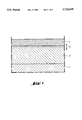
- FIG. 1 is a section through a sliding element according to the invention.
- FIG. 2 is a bar chart showing, by way of comparison, tests of various plain bearings.
- FIG. 1 shows a sliding element in section.
- a bearing metal layer 2 of pure aluminum or an aluminum alloy containing silicon, lead or tin On a steel backing 1 is deposited a bearing metal layer 2 of pure aluminum or an aluminum alloy containing silicon, lead or tin.
- the surface reaction caused by the immersion deposition is indicated by the region 3. Because a surface treatment is involved, this immersion deposition is not a measurable layer deposited on the aluminum bearing alloy 2. Consequently, there is also no distinct border between the immersion deposition 3 and the bearing metal layer 2.
- a pure tin layer 4 is deposited on the bearing metal layer 2 treated in this way is deposited a pure tin layer 4 as a functional tin layer.
- Immersion in acid immersion in a mixed acid of sulfuric acid and chromium oxide for 22 seconds
- Aluminum immersion liquid the double rack is immersed in the aluminum immersion liquid for 22 seconds; thin oxide layers are dissolved and at the same time metal deposition of nickel, tin and copper is produced.
- the tin electrolyte is composed of 18-22 g/l of tin, 180-220 g/l of sulfuric acid, 10 g/l of wetting agent and 20 g/l of a grain refinement agent; the temperature of the bath is 20° to 26° C.; the sliding elements are tin plated for a period of 2 minutes in a tin-plating bath containing sulfuric acid at a current density of 2 A/dm 2 .
Landscapes
- Chemical & Material Sciences (AREA)
- Engineering & Computer Science (AREA)
- Materials Engineering (AREA)
- Chemical Kinetics & Catalysis (AREA)
- Electrochemistry (AREA)
- Metallurgy (AREA)
- Organic Chemistry (AREA)
- General Engineering & Computer Science (AREA)
- Mechanical Engineering (AREA)
- Sliding-Contact Bearings (AREA)
- Electroplating Methods And Accessories (AREA)
- Electroplating And Plating Baths Therefor (AREA)
- Lubricants (AREA)
- Silicates, Zeolites, And Molecular Sieves (AREA)
- ing And Chemical Polishing (AREA)
Abstract
A sliding element has a bearing metallic layer made of aluminum or an aluminum alloy which bears on its side facing the sliding surface a galvanically produced tin layer bonded to the bearing metallic layer by a very thin alkaline, halogen-free layer of zinc, copper, nickel and iron immersion deposited on the bearing metallic layer. To produce such sliding element, a highly-alkaline immersion bath is used containing salts of zinc, nickel, copper and iron mainly cyanide-based. After the immersion treatment, the sliding element blank is rinsed with considerably carbonic acid-free deionized water. During a first tinning step, the sliding element is treated in a bath at a temperature between 20° and 26° C. with a current intensity from 2 to 3 amperes/dm2 and for a duration of exposure of at least one minute.
Description
This application is a 371 of PCT/DE93/01131,filed Nov. 24, 1993.
1. Field of the Invention
The invention relates to a plain bearing having an electroplated tin layer bonded to an aluminum containing layer by a halogen free deposition containing zinc, copper, nickel and iron.
2. Description of Prior Developments
Compound plain bearings comprise a supporting steel shell with a layer of anti-friction metal which is mostly of an aluminum-tin alloy. In the majority of cases, the running surface of the bearing must be additionally provided with a usually electroplated coating of an alloy whose hardness is much lesser than that of the aluminum-tin alloy. The aluminum-tin anti-friction metal is itself capable of very limited conformation to the steel shaft during the running-in phase. The conformation process consists essentially of plastic deformation and also partial abrasion of the anti-friction coating. Aluminum-tin layers minimally plastically conform to the shaft and are not abraded with simultaneous smoothing of the running surface in the regions of the sliding surface which are in a state of mixed friction due to the geometrical imperfection of the bearing shell and shaft. Instead, in adverse conditions, roughening even scratching takes place in the hard regions. The formation of the lubricant film of uniform thickness is impaired by these variations in the running surface and local mixed friction which should be limited to the brake-in phase remains so that even after a relatively short operating time the bearing may be significantly damaged.
In order to improve the conformability of the bearing by deposition of a soft layer, the problem of electrochemical deposition onto aluminum alloys had to be solved.
From DE-AS 10 48 757 it is known to provide between the aluminum alloy and the overlay a silver layer to achieve better adhesion between the aluminum and the running surface. However, the silver bonding layer known from DE-AS 10 48 757 has the disadvantage that it must be at least 2.5 um thick to obtain sufficient bond to the thin zinc layer situated below it and to the backing layer of aluminum material. Moreover, deposition of the conventional silver bonding layer by electroplating is associated with critical working conditions so that the silver bonding known from DE-AS 10 48 757 was not successful in actual practice.
From DE-OS 15 33 214 it is known, for instance, to provide an intermediate layer of nickel between an outer layer of copper and inner layer of lead and tin. Nickel as a bonding base has been known to be successful in bearings for a long time in conjunction with surface-hardened shaft journals, which is the case with smaller engines. In such cases, it is relatively safe when after long operating times the soft outer layer is locally worn down to the nickel layer and the shaft gets into contact with nickel. The conditions are, however, different in the case of large diesel engines with soft journals.
Nickel deposited by electroplating on a bearing has a hardness which is higher than the surface hardness of shafts which are not surface-hardened. If, after wearing of the electroplated layer, the journal of the shaft reaches the nickel bonded base, two nearly equally hard materials, which are also very similar metallurgically, slide in contact with each other. This desirable pairing of elements in sliding contact causes wear of the journal which initially manifests itself as roughening and, in an advanced stage, ultimately as scratching.
In addition to its undesirable high hardness, the nickel layer also behaves adversely in another respect. At operational temperatures existing in a bearing, intermetallic phases may be formed within some thousands of operational hours between the nickel and tin, the hardness of the intermetallic phases being much greater than that of a layer of pure nickel. If the wear of the overlay proceeds slowly, the shaft comes into contact with the intermetallic layer which meanwhile has acquired a thickness of several um, and which then causes heavy wear to the shaft.
The deposition of a layer of pure tin without an intermediate layer of nickel onto an aluminum bearing alloy is not possible because a sufficient bond to the aluminum bearing alloy cannot be achieved. After a relatively short time of operation, delamination of the tin layer occurs. It was therefore attempted to deposit the tin layer directly onto the aluminum bearing alloy using a chemical process. The aluminum bearing alloy is pretreated by an alkaline and an acid cleaning agent. Then, using an activator, the surface is pretreated for the tin layer to be subsequently deposited by immersion in a tin solution. This tin layer, deposited chemically without an intermediate layer, results in failures relatively quickly. It could be verified on a test bench for connecting rod bearings that bearings provided with a tin layer in this way fail at oil inlet temperatures as low as 100° C. before the test rpm of 6700/min is reached.
A similar process is known from EP 0 234 738 A1 in which, before the deposition of a tin layer by electroplating, treatment in an immersion bath is carried out. This is an acid immersion bath which contains free metal ions, such as nickel or copper ions, or complexly bonded metals, in the course of which halogen ions are necessarily present. Acid immersion solutions, whose components contain nickel and halogens, tend to cause surface corrosion of aluminum.
Deposited tin layers are therefore not stable and adhesion tests (adhesive strip tests) have shown that the tin layer undergoes partial delamination up to 30% of the layer of aluminum or aluminum alloy. If the coated parts are subjected to a blister test lasting for four hours at a temperature at 160° C., blistering occurs, which indicates gas occlusions which contribute to the delamination of the tin layer.
Nickel immersion coating is known also from Chemical Abstracts, vol. 98 (1983), p. 547, no. 224260W, where acid solutions were used as well. Moreover, this treatment did not result in a thin immersion deposition but in a true nickel layer comparable to a nickel intermediate layer according to DE-OS 15 33 214.
It is, therefore, the object of the invention to produce a sliding element which has a better adhering functional tin layer without another intermediate metallic layer on the layer of bearing material. It is also the aim of the invention to devise a process for the production of such sliding elements.
Surprisingly, it was found that an electroplated tin layer adheres much better if the tin layer is bonded through an alkaline immersion deposition containing zinc, copper, nickel and iron. Alkaline immersion deposition results in a compatible surface treatment which provides much better adhesion of the tin layer. A blister test performed for four hours at 160° C. showed no formation of blistering. No delamination of the tin layer could be detected.
The alkaline immersion deposition causes a surface reaction with the aluminum, whereby the surface is so changed that the tin layer can be properly anchored on the layer of bearing metal. Presumably, the fact that complexly bonded anions are present in the immersion solution and the metals are complexly bonded contributes to this, given that the salts are halogen-free.
In contrast to the relatively thick intermediate layers, the immersion deposition has a thickness below 1 um, preferably below 0.3 um.
The functional tin layer is preferably formed as a layer protecting against corrosion of a thickness of between 1 um and 5 um. The tin layer may also be thicker and made as a running-in layer with a thickness of between 5 um and 50 um.
It was found that the sliding element has outstanding properties when certain limiting values are observed as regards the proportions contained in the aluminum alloy. When the layer of bearing metal is based on a tin-containing alloy, the proportion of tin may be up to 22.5%. When the proportion of tin is higher, the bond of the layer of pure tin on the layer of bearing metal is degraded.
When a lead-bearing aluminum alloy is used, the proportion of lead is preferably up to 20%. In case of a silicon-containing aluminum alloy, a proportion of silicon of up to 10% is possible.
The process according to the invention provides (1) that the preformed sliding element blanks, coated with a bearing metal layer, are after degreasing, pickling and cleaning of the surface of the bearing metal layer with a highly alkaline aluminum immersion bath which contains salts of zinc, nickel, copper and iron in a predominantly cyanide base; and (2) that after the immersion treatment the sliding element blanks are rinsed with considerably carbonic acid-free water and that at least in one first tin-plating step are provided a bath temperature between 20° and 26° C., the current density of 1 to 3 A/dm2 and duration of exposure of at least 1 minute.
In order to produce the carbonic acid-free, deionized water, the water is, before rinsing, treated by an exchanger with resins which are capable of binding carbonic acid. It was found that water containing carbonic acid is too aggressive and can damage the immersion deposition which in turn leads to a premature delamination of the electroplated tin layer. It is further advantageous when the water has a temperature of 24° to 26° C.
The Ph value of the immersion bath is 12 to 14, preferably 14.
The treatment is preferably carried out in an aluminum immersion bath at room temperature, which is understood to mean at least 20° C. for 15 to 16 seconds.
Preferably an aluminum immersion bath is used which contains 10 to 20 g/l of zinc, 5 to 10 g/l of nickel, 1 to 2 g/l of copper and small quantities of iron in the form of complexly bonded salts.
Due to the immersion deposition, only certain electrolytes may be used for tin plating using the electroplating method. It was found that, for instance, a fluoroborate bath is too aggressive and damages the immersion layer. If a tin-containing aluminum bearing alloy is to be provided with an electroplated tin layer, the tin plating bath has preferably the following composition:
______________________________________
tin                 18-22    g/l
sulfuric acid       180-220  g/l
wetting agent       8-12     g/l and
grain refinement agent
                    18-22    g/l,
______________________________________
while anodes of pure tin are used. This sulphate tin plating may be used also for pure aluminum bearing metals or silicon-containing aluminum bearing metals.
If a lead-containing aluminum bearing metal is to be tin plated, the tin bath preferably exhibits the following composition:
______________________________________
tin                 15-30    g/l
methane sulfonic acid
                    12-180   g/l
wetting agent       15-25    g/l and
grain refinement agent
                    8-12     g/l
(aromatic ketones).
______________________________________
It was found to be particularly advantageous when the sliding element blanks are subjected to a multi-step pretreatment in which they are several times immersed in a mixed acid bath of sulfuric acid and chromium oxide.
Embodiments will now be explained in greater detail, by way of example, with reference to the drawings, in which:
FIG. 1 is a section through a sliding element according to the invention, and
FIG. 2 is a bar chart showing, by way of comparison, tests of various plain bearings.
FIG. 1 shows a sliding element in section. On a steel backing 1 is deposited a bearing metal layer 2 of pure aluminum or an aluminum alloy containing silicon, lead or tin. The surface reaction caused by the immersion deposition is indicated by the region 3. Because a surface treatment is involved, this immersion deposition is not a measurable layer deposited on the aluminum bearing alloy 2. Consequently, there is also no distinct border between the immersion deposition 3 and the bearing metal layer 2. On the bearing metal layer 2 treated in this way is deposited a pure tin layer 4 as a functional tin layer.
In the following will be described, in connection with an embodiment of the process, the deposition of a tin layer onto a tin-containing aluminum bearing alloy.
For the fixing of the bearing lines double racks are used. The width of the recesses is 30 mm when the bearing diameter is up to 70 mm. This rack has no lateral baffles and contains no rogue cathode. The process contains the following steps:
Degreasing: twice degreasing the parts in automatic degreasing equipment
Pickling: in a pickling acid of sulfuric acid, hydrofluoric acid and zinc oxide the bearing liners are immersed for 1 minute
Rinsing
Pickling: in a pickling acid of sulfuric acid and zinc oxide, the bearing liners are immersed for 22 seconds
Rinsing: in deionized water for 22 seconds
Immersion in acid: immersion in a mixed acid of sulfuric acid and chromium oxide for 1 minute
Rinsing
Immersion in acid: immersion in a mixed acid of sulfuric acid and chromium oxide for 22 seconds
Rinsing
Aluminum immersion liquid: the double rack is immersed in the aluminum immersion liquid for 22 seconds; thin oxide layers are dissolved and at the same time metal deposition of nickel, tin and copper is produced.
Rinsing
Sulphate tin plating: the tin electrolyte is composed of 18-22 g/l of tin, 180-220 g/l of sulfuric acid, 10 g/l of wetting agent and 20 g/l of a grain refinement agent; the temperature of the bath is 20° to 26° C.; the sliding elements are tin plated for a period of 2 minutes in a tin-plating bath containing sulfuric acid at a current density of 2 A/dm2.
Rinsing
Drying
All rinsing is carried out with carbonic acid-free water heated to 24° to 26° C.
Plain bearings produced in this way were broached before the electroplating and finally tested on a test bench for connecting rods. The test conditions are summarized in the following Table.
______________________________________
              MACH. OF   TOTAL   MAX TIME
TABLE         SLIDING    TEST    OF ONE
NO.           SURF.      TIME    TEST
______________________________________
I     El. plated tin
                  drilled    225 h 105 h
      flash with Ni-
      interm. layer
II    El. plated tin
                  broached    40 h  15 h
      flash with Ni-
      interm. layer
III   El. plated tin
                  broached    80 h  50 h
      flash according
      to the invention
IV    El. plated tin
                  broached    30 h  50 h
      flash according
      to the invention
V     Chemical tin
                  broached   --    --
      flash
______________________________________
This series of tests has shown that the sliding elements provided with a chemical tin flash even failed at an oil inlet temperature of a mere 100° C. before reaching the test rotational velocity of 6700/min. Only a test rotational velocity of 5200/min could be achieved (No. V).
With plain bearings having an electroplated tin flash and a nickel intermediate layer, failures of more than 50% happen in the case of broached sliding elements (No. II) even at an oil inlet temperature of 100° C.
In plain bearings according to the invention, no failures were noticed at oil inlet temperatures of 150° C.
Claims (18)
1. A sliding element, comprising a bearing metal layer comprising aluminum and an electroplated tin layer bonded to the bearing metal layer by an alkaline, halogen-free immersion deposition containing zinc, copper, nickel and iron from an immersion bath containing 10 to 20 g/l zinc, 5 to 10 g/l nickel, 1 to 2 g/l copper and a small amount of iron, mainly in the form of cyanide-based salts.
2. The sliding element according to claim 1, wherein the bearing metal layer comprises a tin-containing aluminum alloy containing up to 22.5% of tin.
3. The sliding element according to claim 1, wherein the bearing metal layer comprises a lead-containing aluminum alloy containing up to 20% of lead.
4. The sliding element according to claim 1, wherein the bearing metal layer comprises a silicon-containing aluminum alloy.
5. The sliding element according to claim 1, wherein the immersion deposition has a thickness of less than 1 um.
6. The sliding element according to claim 5, wherein the immersion deposition has a thickness below 0.3 um.
7. The sliding element according to claim 1, wherein the tin layer is formed as a layer having a thickness between 1 um and 5 um.
8. The sliding element according to claim 1, wherein the tin layer is formed as a layer having a thickness between 5 um and 50 um.
9. A process for the production of a sliding element comprising a preformed sliding element blank coated with a bearing metal layer and which, after degreasing, pickling and cleaning of the bearing metal layer, is subjected to successive treatment in an immersion bath and tin-plating by electroplating, wherein said process comprises treating said sliding element in a highly alkaline immersion bath treatment containing salts of zinc, nickel, copper and iron and, after the immersion bath treatment, rinsing the sliding element blank with considerably carbonic acid-free, deionized water, and at least in a first tin-plating step providing a tin-plating bath temperature between 20° and 26° C. with a current density of 1 to 3 A/dm2 and a duration of exposure of at least 1 minute and wherein the immersion bath comprises 10 to 20 g/l zinc, 5 to 10 g/l nickel, 1 to 2 g/l copper and a small amount of iron, and wherein the zinc, nickel, copper and iron have the form of salts, mainly cyanide based.
10. The process according to claim 9, wherein the immersion bath treatment is carried out at a temperature of at least 20° C. for a period of between 15 to 60 seconds.
11. A process according to claim 9, wherein the bearing metal layer comprises aluminum and wherein the tin plating is carried out in a tin-plating bath comprising the following concentrations:
______________________________________
tin                 18-22    g/l,
sulfuric acid       180-220  g/l,
wetting agent       8-12     g/l,
grain refinement agent
                    18-22    g/l, and
______________________________________
wherein pure tin anodes are used.
12. A process according to claim 9, wherein the bearing metal layer comprises a lead-containing aluminum bearing alloy and wherein, in a first tin-plating step, tin plating is carried out in a tin-plating bath of a composition comprising the following concentrations:
______________________________________
tin                 15-30    g/l,
methane sulfonic acid
                    120-180  g/l,
wetting agent       15-25    g/l,
grain refinement agent
                    8-12     g/l, and
______________________________________
wherein pure tin anodes are used.
13. The process according to claim 9, wherein the rinsing water has a temperature of 24° to 26° C.
14. The process according to claim 9, wherein the sliding element blank is subjected to a multi-step pretreatment in which it is several times immersed in a mixed acid bath of sulfuric acid and chromium oxide.
15. The process according to claim 14, wherein, after immersion in the mixed acid bath, the sliding element blank is rinsed with carbonic acid-free water.
16. The process according to claim 9, wherein the Ph value of the immersion bath is 12 to 14.
17. A plain bearing, comprising a bearing metal layer comprising aluminum and an electroplated tin layer bonded to the bearing metal layer by an alkaline, halogen-free immersion deposition layer comprising zinc, copper, nickel and iron each in an amount effective, when combined, to securely anchor said tin layer on said aluminum and prevent failure of said tin layer after bench testing at a rotational velocity of 6700 revolutions per minute with an oil inlet temperature of 150° C.
18. A sliding element, comprising a bearing metal layer comprising aluminum and an electroplated tin layer bonded to the bearing metal layer by an alkaline, halogen-free immersion deposition layer comprising zinc, copper, nickel and iron each in an amount effective, when combined, to securely anchor said tin layer on said aluminum and prevent delamination and blistering of said tin layer after blister testing of said sliding element for four hours at 160° C.
Applications Claiming Priority (5)
| Application Number | Priority Date | Filing Date | Title |
|---|---|---|---|
| DE4239851 | 1992-11-27 | ||
| DE4239851.7 | 1993-11-24 | ||
| DE4340073A DE4340073C2 (en) | 1992-11-27 | 1993-11-24 | Sliding element and method for its production |
| PCT/DE1993/001131 WO1994012688A1 (en) | 1992-11-27 | 1993-11-24 | Sliding element and process for producing the same |
| DE4340073.6 | 1993-11-24 |
Publications (1)
| Publication Number | Publication Date |
|---|---|
| US5712049A true US5712049A (en) | 1998-01-27 |
Family
ID=25920769
Family Applications (1)
| Application Number | Title | Priority Date | Filing Date |
|---|---|---|---|
| US08/436,417 Expired - Lifetime US5712049A (en) | 1992-11-27 | 1993-11-24 | Sliding element and process for producing the same |
Country Status (7)
| Country | Link |
|---|---|
| US (1) | US5712049A (en) |
| EP (1) | EP0670914B1 (en) |
| JP (1) | JP3284227B2 (en) |
| AT (1) | ATE144005T1 (en) |
| BR (1) | BR9307532A (en) |
| ES (1) | ES2094039T3 (en) |
| WO (1) | WO1994012688A1 (en) |
Cited By (9)
| Publication number | Priority date | Publication date | Assignee | Title |
|---|---|---|---|---|
| US5911809A (en) * | 1998-03-30 | 1999-06-15 | Ford Motor Company | Cobalt-tin alloy coating on aluminum by chemical conversion |
| WO1999057448A1 (en) * | 1998-05-01 | 1999-11-11 | Federal-Mogul Corporation | Multi-layer engine bearings and method of manufacture |
| US6308544B1 (en) * | 1998-01-22 | 2001-10-30 | Emhart Inc. | Vehicle body component with a tin/zinc coating |
| US6543333B2 (en) | 2001-06-01 | 2003-04-08 | Visteon Global Technologies, Inc. | Enriched cobalt-tin swashplate coating alloy |
| US6656606B1 (en) * | 2000-08-17 | 2003-12-02 | The Westaim Corporation | Electroplated aluminum parts and process of production |
| WO2004007809A3 (en) * | 2002-07-13 | 2004-04-15 | Dana Corp | Plain bearing having an overlay alloy layer |
| CN108103515A (en) * | 2017-12-25 | 2018-06-01 | 横琴国际知识产权交易中心有限公司 | A kind of processing method of aluminium alloy |
| US20190024708A1 (en) * | 2017-07-20 | 2019-01-24 | GM Global Technology Operations LLC | Bearing with lightweight backing substrate |
| CN111733432A (en) * | 2019-03-25 | 2020-10-02 | 深圳市威富通讯技术有限公司 | Zinc dipping solution and preparation method thereof, metal surface treatment method and aluminum part |
Families Citing this family (1)
| Publication number | Priority date | Publication date | Assignee | Title |
|---|---|---|---|---|
| RU2427671C1 (en) * | 2010-08-18 | 2011-08-27 | Российская Федерация, от имени которой выступает Министерство промышленности и торговли Российской Федерации (Минпромторг России) | Procedure for application of complex protective coating on steel parts |
Citations (11)
| Publication number | Priority date | Publication date | Assignee | Title |
|---|---|---|---|---|
| US2676916A (en) * | 1949-09-23 | 1954-04-27 | Aluminum Co Of America | Electroplating on aluminum |
| US2734024A (en) * | 1956-02-07 | Method of making bearings | ||
| US2745799A (en) * | 1951-03-16 | 1956-05-15 | Pechiney Prod Chimiques Sa | Processes for coating aluminum and alloys thereof |
| US2766195A (en) * | 1953-01-26 | 1956-10-09 | American Brake Shoe Co | Plated aluminum bearings |
| US3616291A (en) * | 1969-09-16 | 1971-10-26 | Vulcan Materials Co | Stannous solutions containing hydroxy carboxylic acid ions their preparation and their use in plating tin on conductive surfaces particularly on aluminum |
| DE2522926A1 (en) * | 1974-05-24 | 1976-04-15 | Alcan Res & Dev | PROCESS FOR MANUFACTURING METAL-CLAD LONG STRETCH ALUMINUM MATERIALS |
| US3969199A (en) * | 1975-07-07 | 1976-07-13 | Gould Inc. | Coating aluminum with a strippable copper deposit |
| US4100038A (en) * | 1977-11-08 | 1978-07-11 | M&T Chemicals Inc. | Plating on aluminum alloys |
| US4225397A (en) * | 1978-11-06 | 1980-09-30 | Ford Motor Company | New and unique aluminum plating method |
| FR2469465A1 (en) * | 1979-11-07 | 1981-05-22 | Glacier Metal Co Ltd | SMOOTH BEARING WITH TIN COATING ON AN ALUMINUM ALLOY, AND MATERIAL AND METHOD FOR THE PRODUCTION THEREOF |
| EP0500015A1 (en) * | 1991-02-18 | 1992-08-26 | Sumitomo Metal Industries, Ltd. | Plated aluminum sheet having improved spot weldability |
Family Cites Families (1)
| Publication number | Priority date | Publication date | Assignee | Title |
|---|---|---|---|---|
| JP6130035B2 (en) | 2016-07-20 | 2017-05-17 | 株式会社三共 | Slot machine |
-
1993
- 1993-11-24 US US08/436,417 patent/US5712049A/en not_active Expired - Lifetime
- 1993-11-24 AT AT94900731T patent/ATE144005T1/en not_active IP Right Cessation
- 1993-11-24 JP JP51265494A patent/JP3284227B2/en not_active Expired - Fee Related
- 1993-11-24 WO PCT/DE1993/001131 patent/WO1994012688A1/en not_active Ceased
- 1993-11-24 BR BR9307532A patent/BR9307532A/en not_active IP Right Cessation
- 1993-11-24 EP EP94900731A patent/EP0670914B1/en not_active Expired - Lifetime
- 1993-11-24 ES ES94900731T patent/ES2094039T3/en not_active Expired - Lifetime
Patent Citations (11)
| Publication number | Priority date | Publication date | Assignee | Title |
|---|---|---|---|---|
| US2734024A (en) * | 1956-02-07 | Method of making bearings | ||
| US2676916A (en) * | 1949-09-23 | 1954-04-27 | Aluminum Co Of America | Electroplating on aluminum |
| US2745799A (en) * | 1951-03-16 | 1956-05-15 | Pechiney Prod Chimiques Sa | Processes for coating aluminum and alloys thereof |
| US2766195A (en) * | 1953-01-26 | 1956-10-09 | American Brake Shoe Co | Plated aluminum bearings |
| US3616291A (en) * | 1969-09-16 | 1971-10-26 | Vulcan Materials Co | Stannous solutions containing hydroxy carboxylic acid ions their preparation and their use in plating tin on conductive surfaces particularly on aluminum |
| DE2522926A1 (en) * | 1974-05-24 | 1976-04-15 | Alcan Res & Dev | PROCESS FOR MANUFACTURING METAL-CLAD LONG STRETCH ALUMINUM MATERIALS |
| US3969199A (en) * | 1975-07-07 | 1976-07-13 | Gould Inc. | Coating aluminum with a strippable copper deposit |
| US4100038A (en) * | 1977-11-08 | 1978-07-11 | M&T Chemicals Inc. | Plating on aluminum alloys |
| US4225397A (en) * | 1978-11-06 | 1980-09-30 | Ford Motor Company | New and unique aluminum plating method |
| FR2469465A1 (en) * | 1979-11-07 | 1981-05-22 | Glacier Metal Co Ltd | SMOOTH BEARING WITH TIN COATING ON AN ALUMINUM ALLOY, AND MATERIAL AND METHOD FOR THE PRODUCTION THEREOF |
| EP0500015A1 (en) * | 1991-02-18 | 1992-08-26 | Sumitomo Metal Industries, Ltd. | Plated aluminum sheet having improved spot weldability |
Cited By (17)
| Publication number | Priority date | Publication date | Assignee | Title |
|---|---|---|---|---|
| US6308544B1 (en) * | 1998-01-22 | 2001-10-30 | Emhart Inc. | Vehicle body component with a tin/zinc coating |
| US5911809A (en) * | 1998-03-30 | 1999-06-15 | Ford Motor Company | Cobalt-tin alloy coating on aluminum by chemical conversion |
| US6136454A (en) * | 1998-03-30 | 2000-10-24 | Ford Motor Company | Cobalt-tin alloy coating on aluminum by chemical conversion |
| WO1999057448A1 (en) * | 1998-05-01 | 1999-11-11 | Federal-Mogul Corporation | Multi-layer engine bearings and method of manufacture |
| US6178639B1 (en) | 1998-05-01 | 2001-01-30 | Federal-Mogul World Wide, Inc. | Multi-layer engine bearings and method of manufacture |
| US6656606B1 (en) * | 2000-08-17 | 2003-12-02 | The Westaim Corporation | Electroplated aluminum parts and process of production |
| US6543333B2 (en) | 2001-06-01 | 2003-04-08 | Visteon Global Technologies, Inc. | Enriched cobalt-tin swashplate coating alloy |
| US20060147138A1 (en) * | 2002-07-13 | 2006-07-06 | Johal Charan P S | Bearings |
| WO2004007809A3 (en) * | 2002-07-13 | 2004-04-15 | Dana Corp | Plain bearing having an overlay alloy layer |
| US7174637B2 (en) | 2002-07-13 | 2007-02-13 | Dana Corporation | Bearings |
| US20070160315A1 (en) * | 2002-07-13 | 2007-07-12 | Dana Corporation | Bearings |
| US7455458B2 (en) | 2002-07-13 | 2008-11-25 | Mahle Engine Systems Ltd. | Bearings |
| US20190024708A1 (en) * | 2017-07-20 | 2019-01-24 | GM Global Technology Operations LLC | Bearing with lightweight backing substrate |
| US10495141B2 (en) * | 2017-07-20 | 2019-12-03 | GM Global Technology Operations LLC | Bearing with lightweight backing substrate |
| CN108103515A (en) * | 2017-12-25 | 2018-06-01 | 横琴国际知识产权交易中心有限公司 | A kind of processing method of aluminium alloy |
| CN111733432A (en) * | 2019-03-25 | 2020-10-02 | 深圳市威富通讯技术有限公司 | Zinc dipping solution and preparation method thereof, metal surface treatment method and aluminum part |
| CN111733432B (en) * | 2019-03-25 | 2021-11-30 | 深圳市威富通讯技术有限公司 | Zinc dipping solution and preparation method thereof, metal surface treatment method and aluminum part |
Also Published As
| Publication number | Publication date |
|---|---|
| WO1994012688A1 (en) | 1994-06-09 |
| ATE144005T1 (en) | 1996-10-15 |
| BR9307532A (en) | 1999-06-01 |
| ES2094039T3 (en) | 1997-01-01 |
| JP3284227B2 (en) | 2002-05-20 |
| EP0670914B1 (en) | 1996-10-09 |
| JPH08503523A (en) | 1996-04-16 |
| EP0670914A1 (en) | 1995-09-13 |
Similar Documents
| Publication | Publication Date | Title |
|---|---|---|
| US8337997B2 (en) | Composite material for electrical/electronic part and electrical/electronic part using the same | |
| JP3715743B2 (en) | Manufacturing method of Mg alloy member | |
| JPS6328896A (en) | Method and apparatus for electrodeposition of bearing alloy | |
| HU202936B (en) | Process for producing more-layer metal coating on surface of objects made of aluminium- or aluminium alloy | |
| JP3284227B2 (en) | Bearing slip element and method of manufacturing the same | |
| RU2610811C2 (en) | Aluminium zinc plating | |
| CN101243211A (en) | Pretreatment of Magnesium Substrates for Electroplating | |
| US6258415B1 (en) | Iron-plated aluminum alloy parts and method for planting same | |
| US4904352A (en) | Electrodeposited multilayer coating for titanium | |
| JP4571546B2 (en) | Wear resistant parts and power transmission parts | |
| US2734024A (en) | Method of making bearings | |
| EP1520064B1 (en) | Plain bearing having an overlay alloy layer | |
| US3493474A (en) | Aluminum plating process | |
| JPS6350437B2 (en) | ||
| RU2844563C1 (en) | Method of applying anti-corrosion zinc phosphate coating | |
| DE4340073C2 (en) | Sliding element and method for its production | |
| JPH09228092A (en) | Corrosion resistant iron plating film and plating method | |
| WO2010039323A1 (en) | Novel cyanide-free electroplating process for zinc and zinc alloy die-cast components | |
| JPH0631475B2 (en) | Manufacturing method of galvannealed steel sheet for cationic electrodeposition coating | |
| JP2665297B2 (en) | Manufacturing method of zinc-based plated aluminum sheet | |
| JP2991920B2 (en) | Multi-layer plated steel sheet | |
| TINNING | Tin & Tin Alloy Coatings | |
| JP3434927B2 (en) | Manufacturing method of steel plate for welding can with excellent paint appearance | |
| JP2000309897A (en) | Method for producing Zn-based alloy electroplated steel sheet | |
| JP2003096591A (en) | Plating method for heat and corrosion resistant material, and heat and corrosion resistant plated product |
Legal Events
| Date | Code | Title | Description |
|---|---|---|---|
| STCF | Information on status: patent grant |
Free format text: PATENTED CASE |
|
| FPAY | Fee payment |
Year of fee payment: 4 |
|
| FPAY | Fee payment |
Year of fee payment: 8 |
|
| FPAY | Fee payment |
Year of fee payment: 12 |