US5658494A - Fluorescent compounds - Google Patents
Fluorescent compounds Download PDFInfo
- Publication number
- US5658494A US5658494A US08/445,858 US44585895A US5658494A US 5658494 A US5658494 A US 5658494A US 44585895 A US44585895 A US 44585895A US 5658494 A US5658494 A US 5658494A
- Authority
- US
- United States
- Prior art keywords
- chelate
- tritium
- polymer
- lanthanide
- transition
- Prior art date
- Legal status (The legal status is an assumption and is not a legal conclusion. Google has not performed a legal analysis and makes no representation as to the accuracy of the status listed.)
- Expired - Lifetime
Links
Images




Classifications
-
- C—CHEMISTRY; METALLURGY
- C09—DYES; PAINTS; POLISHES; NATURAL RESINS; ADHESIVES; COMPOSITIONS NOT OTHERWISE PROVIDED FOR; APPLICATIONS OF MATERIALS NOT OTHERWISE PROVIDED FOR
- C09K—MATERIALS FOR MISCELLANEOUS APPLICATIONS, NOT PROVIDED FOR ELSEWHERE
- C09K11/00—Luminescent materials, e.g. electroluminescent or chemiluminescent
- C09K11/04—Luminescent materials, e.g. electroluminescent or chemiluminescent containing natural or artificial radioactive elements or unspecified radioactive elements
-
- C—CHEMISTRY; METALLURGY
- C09—DYES; PAINTS; POLISHES; NATURAL RESINS; ADHESIVES; COMPOSITIONS NOT OTHERWISE PROVIDED FOR; APPLICATIONS OF MATERIALS NOT OTHERWISE PROVIDED FOR
- C09K—MATERIALS FOR MISCELLANEOUS APPLICATIONS, NOT PROVIDED FOR ELSEWHERE
- C09K11/00—Luminescent materials, e.g. electroluminescent or chemiluminescent
- C09K11/06—Luminescent materials, e.g. electroluminescent or chemiluminescent containing organic luminescent materials
Definitions
- This invention concerns polymer bodies which are light-emitting by virtue of containing a transition or lanthanide or actinide metal chelate or other complex.
- the energy for light emission is provided by internal radioactivity, e.g. by using a tritiated polymer.
- novel compounds based on certain metal chelates have been identified as having outstanding fluorescent properties.
- British patent specification 2242908 describes tritiated light emitting polymer compositions, containing one or more organic fluors linked to the polymer in some way, for example as a result of having been dissolved in the monomer prior to polymerisation.
- the polymer compositions can be made transparent or translucent so that useful light is emitted from the entire volume of the polymer.
- Such compositions have other advantages: they are easily fabricated and shaped; the tritium is present in combined form and so is not released by accidental damage (as would for example be the case with a glass envelope containing gaseous tritium); when performance falls off, the composition is easily replaced and recycled. But using the organic fluors described, the generation of light from radioactive decay is not as efficient as may be desired. As a result, the polymer composition may be subject to radiation damage from the high concentrations of tritium needed to generate bright light.
- Rare earth chelates having the property of fluorescing in UV radiation are well known.
- A. P. B. Sinha (Spectroscopy in Inorganic Chemistry edited by C. N. R. Rao and John R. Ferraro, Vol. 2, Academic Press 1971--History of Congress Catalogue No. 77-117102) describes several classes of rare earth chelates with various monodentate and bidentate ligands. The mechanism of fluorescence is also described.
- the first step involves the absorption of energy by the organic part of the chelate leading to its excitation from a ground state singlet to an excited singlet. The excited molecule can then go over to a triplet state in which energy can be transferred to a central rare earth metal ion.
- the excited metal ion can then undergo a radiative transition resulting in the characteristic line emission of the ion (ion fluorescence). All these steps take place in competition with other non-radiative steps. For efficient fluorescence, it is necessary that the transition metal ion have a resonant frequency which is close to, but slightly lower than, the excited triplet frequency of the chelating group. This ensures that the probability of triplet-to-resonance level transition is high.
- Other complexes of Group IIIA metals and rare earth and lanthanide metals with aromatic complexing agents have been described by G. Kallistratos (Chimika Chronika, New Series, 11, 249-266, 1982). For example, this reference describes the Eu 3+, Tb 3+ and U 3+ complexes of diphenyl-phosphonimido-triphenyl-phosphoran.
- this invention provides a solid body comprising a polymer, together with a chelate of a transition or lanthanide or actinide metal, the body having the property of emitting light by virtue of internally generated ionising radiation.
- the polymer is radioactively labelled so that the radioactive decay provides the ionising radiation.
- the metal chelate may be the same as or similar to the known classes of metal chelate referred to above. However, it needs to have a number of special properties not always possessed by the known fluorescers:
- the metal chelate should preferably remain soluble as the monomer polymerises.
- the presence of the metal chelate should preferably not inhibit polymerisation of the monomer to a transparent wholly or substantially colourless polymer.
- a scintillant has normally been regarded as consisting of a solvent plus one, two or three solutes.
- the solute with the fluorescence level highest in energy is called the primary solute or scintillator and the second and third solutes are known and act as wavelength shifters.
- the scintillation process has thus been seen as involving the following steps: absorption of nuclear radiation by the solvent with the formation of a solvent excited state; energy transfer from the solvent to a primary scintillant followed by fluorescence emission; absorption and re-emission by secondary and possibly tertiary scintillants to shift the final emitted light to the desired wave-length.
- the chelates of the transition metals particularly those of the rare earths can act as primary scintillants, such that the nuclear radiation energy adsorbed by the solvent (polymer) is transferred to the chelate or chelates and only emitted at the final desired wavelength, this process being achieved without the use of secondary or tertiary scintillants or wave-shifters.
- These chelates have thus minimised energy losses and give rise to more efficient light output.
- the metal chelates often have very narrow emission spectral bands, which can be designed to be at particular wavelengths, thus enabling photodiodes to be used at high efficiency.
- any metal ion having an unfilled inner electron shell that is to say almost any transition or lanthanide or actinide metal ion, can be used as the basis of the fluorescent chelate.
- a metal ion having a convenient emission frequency, and a convenient resonant frequency, and an efficient transition between the two is most usually chosen.
- the most usual are the lanthanide metal ions Sm 3+, Eu 3+, Tb 3+, Dy 3+, Yb 3+, Lu 3+, Gd 3+, Eu 2+, and the actinide metal ions U 3+ and UO 2 3+. Transition metal ions are useful for fluorescing in the visible and also in the infra-red range.
- the chelating or complexing groups are chosen to have a triplet energy level similar to but slightly higher than the resonant energy level of the chosen metal ion.
- Known chelates including those described in the abovementioned references are likely to be suitable, including those based on diketone and triketone chelating moieties.
- a preferred chelating group has the formula ##STR1## where R' may be the same or different at different parts of the molecule and each R" and R' is an aromatic or heterocyclic ring structure which may be substituted or hydrocarbon or fluorocarbon or R" is hydrogen.
- R" can be used to modify the triplet energy and may affect light emission.
- R" can also be made co-polymerisable with a monomer, e.g. styrene.
- R' is t-butyl and R" is hydrogen.
- Metal chelates may have up to four, typically three, of such groups surrounding the metal ion.
- metal chelates useful in this invention are:
- Terbium (3+) (dipivaloylmethide) 3 otherwise known as terbium tris(2,2,6,6-tetramethyl-3,5-heptanedionato)chelate, commercially available from Strem Chemicals.
- the invention provides a compound that results from reacting together a phosphine oxide or an imido-reactant of formula ##STR2## where Q may the same or different at different parts of the molecule and is P, As or Sb,
- R may be the same or different at different parts of the molecule and each R is an aromatic or heterocyclic ring structure which may be substituted or unsubstituted, provided that one group R may alternatively be a co-polymerisable group,
- Z is either QR 3 or an oligophosphoranyl group (an organophosphoranyl group with two or more P atoms),
- M is the transition or lanthanide or actinide metal ion, such as those described above,
- X is a chelating group
- n 1 to 4
- p 1 to 4
- s is 1 to 4 preferably 1 or 2.
- Q may be Sb or As or P, the latter being preferred.
- At least four of the five groups R should be of aromatic or heterocyclic character, the following being examples: phenyl; p-tolyl; 2,4-dimethylphenyl; p-tertiary butyl phenyl; 1-naphthyl; 2-naphthyl; 4-pyridyl; 4-quinolyl.
- Z may be an oligophosphoranyl group, e.g. of the formula:
- Ar is aryl preferably phenyl
- Alk is alkene preferably --C 2 H 4 --
- 1, m and q are small integers such that 1+q is 3
- Tetraphos II-P(C 2 H 4 PPh 2 ) 3 Tetraphos II-P(C 2 H 4 PPh 2 ) 3 .
- one of the groups R may be a co-polymerisable group, that is to say a group capable of joining in a polymerisation reaction with a monomer with which the compound is mixed.
- examples are carboxylic and sulphonic acid groups, and ethylenically unsaturated hydrocarbon groups such as allyl and p-styryl.
- a preferred imido reagent has the formula ##STR3## where Ph is phenyl.
- phosphine oxide of formula ##STR4## where R is aromatic or heterocyclic and R' is ##STR5## with a chelate of a transition or lanthanide or actinide metal ion.
- the three groups R of the phosphine oxide may be the same or different. Preferably they are different, as this has been found to increase the solubility of the compound in organic monomer/polymer systems.
- two of the groups R are phenyl and the third is p-tolyl. This can be compared for example to the phosphine oxide in which all three groups R are phenyl.
- the compound derived from p-tolyl diphenyl phosphine oxide is more lipophilic and has an even higher solubility in a styrene/polystyrene system than does the compound derived from triphenyl phosphine oxide.
- a particularly preferred compound is that which results from reacting p-tolyl diphenyl phosphine oxide with trivalent terbium tris(dipivaloyl methide). This compound is expected to have the formula ##STR6##
- ALP-3 This compound is hereinafter called ALP-3, and has the following characteristics:
- the phosphine oxide may be a dimer ##STR7## which can be reacted with chelates of two transition or lanthanide or actinide metals M 1 and M 2 to give compounds of the structure ##STR8##
- the chelating group may be a highly planar structure such as naphthyl trifluoroacetyl, and the two metal ions may be the same e.g. Eu 3+ or different e.g. Eu 3+ and Gd 3+ (for energy transmission by ion to ion transfer).
- Transition metal chelates such as those described by A. P. B. Sinha (reference above) are well known. Some are commercially available. General methods of preparation are described by Reid and Kelvin (Journal of the American Chemical Society, 72 (1950), 2948-2952). Imido reagents are known materials (see the Kallistratos reference above) whose preparation is described by R. A. Baldwin and R. M. Washburn (Journal of the American Chemical Society, 83, pages 4466-4467, 1961) and M. J. P. Harger and S. Westlake (Tetrahedron, 38, No. 10, pages 1511-1515, 1982). Phosphine oxides are also known materials.
- the chosen metal chelate and the chosen phosphine oxide or imido-reactant may be heated together in molar quantities defined by the formulae above at a melting temperature of 200° C. for one hour. More preferably, appropriate molar quantities of the two reactants are heated together in a refluxing organic solvent.
- the inventors have found trimethylpentane when s is 1 and toluene when s is 2 to be convenient. If the starting metal chelate is insoluble, progress of the reaction can be monitored by noting that the refluxing solution clears. On cooling, the desired product crystallises out in easily recoverable form.
- This aspect of the invention is not restricted to compounds prepared by this route, and other preparative methods are possible.
- one molar part of a complex of the metal ion with the phosphine oxide or imido-reactant may be heated with generally 2-4 molar parts of the chelating moiety so as to form the desired compound.
- the compounds individually, have the property of fluorescing, in the visible or infra-red region depending on the metal ion chosen, when subjected to UV or other energetic radiation. This property may be exploited in various ways.
- the compound may be applied as a coating on a glass vessel or on glass beads, and these may be maintained in the presence of a radioactive gas such as tritium or xenon-133 or krypton-85.
- the compounds, in combination, may act in a less well known manner.
- the energy collected by the metal ion of one structure will not be emitted by that ion but will be transferred most efficiently, by so-called radiationless transfer, to a second different metal ion (chelated).
- This phenomenon known as ⁇ ion to ion transfer ⁇ can be made very efficient by careful selection of the two metal ion structures.
- trivalent gadolinium structures do not usually emit light even in isolation but, in combination with known fluorescent lanthanide chelates, they prove to be very efficient energy collectors.
- Such metal ion chelate pairs can be of greater efficiency than any one chelate on its own.
- the invention provides a body comprising a polymer together with at least one compound as described above, the body being capable of emitting light or infra-red radiation when subjected to a flux of ultra violet or ionising electromagnetic radiation.
- the body is preferably solid, but may alternatively be liquid, in which case it is contained in a transparent or translucent glass or plastic vessel.
- the flux of electromagnetic radiation is generated internally by radioactivity in the body.
- either the polymer or the metal chelate may be radio-labelled, preferably with tritium.
- the metal chelates act as scintillants, either alone or in conjunction with conventional organic scintillants.
- Polymers labelled with tritium are well known, and are most conveniently prepared by labelling a monomer or co-monomer with tritium prior to polymerisation.
- the polymer should preferably be clear for maximum efficiency at the wavelength of the emitted light, and should preferably be resistant to damage by self-irradiation (E. A. Evans, Tritium and Its Compounds, 2nd Edition, Butterworths, London 1974 pages 720-721). On these grounds, polymers of vinyl-aromatic hydrocarbons, such as styrene and vinyltoluene, are preferred.
- G s (scission) value of 0.04 is quoted for irradiation of polymethylstyrene and a G x (cross-linking value of 0.02 which is much less than for other known polymers, see Polymer Photophysics and Photochemistry by J. Guillet Pub. Cambridge University Press, 1985 page 353 et seq.
- Some or all of the protium hydrogen in the polymer and/or in the metal chelate may be replaced by deuterium. Additional stability is however conferred on the composition by the presence of the metal chelates, by virtue of their conversion of beta radiation energy into light, reducing the proportion of energy available for self-irradiation of the polymer.
- tritium labelling is a compromise between several factors. By incorporating 2 atoms of tritium per monomer molecule, it is possible to achieve activities of 600 Ci/g. Such monomers may be diluted with non-radioactive monomer, or the monomer prepared using tritium-hydrogen mixtures in the tritiation/hydrogenation step, to achieve the overall specific radioactivity required. Activities below about 100 mCi/g are rather unlikely to be useful as 5 illuminating devices but do have a use as light sources for calibration. As the tritium labelled polymer is a relatively expensive material, it will generally be preferred to use the minimum required to achieve the desired light output.
- Tritiated vinyl aromatic monomers may be made by the catalytic partial reduction by tritium of substituted acetylenes.
- reduction is carried out with tritium-hydrogen or tritium-deuterium mixtures up to 100 per cent isotopic abundance of tritium as required, preferably in the presence of a platinum or palladium catalyst or other suitable hydrogenation catalyst.
- the catalyst chosen should not contain volatile components such as quinoline and should not be adversely affected by monomer stabilisers. After the reduction it is preferable to remove by filtration or by distillation any catalyst from the tritiated monomer.
- Siloxanes can have two beneficial effects. First, they may increase the initial light output. Second, they may slow down the inevitable drop in light output that occurs when the solid body is radioactively labelled with tritium, thus increasing the light output obtainable over a prolonged period of time. Preferred siloxanes may show both these effects. Preferred siloxanes comprise the grouping ##STR9##
- X is aromatic or heterocyclic or C 1 -C 4 alkyl or alkenyl and n is an integer of at least 1.
- siloxanes examples include tetraphenyltetramethyltrisiloxane (sold as Dow 704) and pentaphenyltrimethyltrisiloxane (sold as Dow 705).
- the siloxane may preferably be present in a proportion of 5-100%, particularly 10-40%, by weight on the weight of the solid body.
- the solid body may preferably contain a free radical scavenger which reduces polymer degradation.
- a preferred free radical scavenger is tetralin.
- a preferred concentration is 1-5% by weight.
- this component may be a polymerisable siloxane.
- divinyltetraphenyldisiloxane may be partly reduced with tritium gas to yield a tritium-labelled siloxane moiety.
- a polysiloxane may be used in partial or even total replacement of a poly-(vinyl aromatic compound).
- groups X are alkenyl, cross-linking of the polysiloxane to give a solid product is possible.
- the concentration of the metal chelate should be enough to efficiently convert the beta-radiation into visible light, but not so great as to inhibit polymerisation of the monomer mix or to substantially harm the properties of the polymer. While optimum concentrations may vary depending on the nature of the polymer, the extent of tritium labelling, and the nature of the scintillant, suitable concentrations are likely to lie in the range 1 ⁇ g to 500 mg, preferably 50-400 mg of total scintillant per ml of polymer. The concentration of scintillants are optimised for the light output required but too high a concentration will result in self-absorption of the light and thus reduce the efficiency--see Design Principles of Fluoresence Radiation Converters by G. Keil in Nuclear Instruments and Methods 87, 111-123 (1970).
- a cross-linking agent may be included in the monomer mix and may be beneficial in increasing light output, and in stabilising the composition against radiolytic decomposition, as discussed below.
- a cross-linking agent may be included in the monomer mix and may be beneficial in increasing light output, and in stabilising the composition against radiolytic decomposition, as discussed below.
- a vinyl aromatic system up to 50 g/l of divinylbenzene may be useful.
- These light-emitting polymer compositions may be made by providing a reaction mix comprising at least one polymerisable organic monomer, preferably a vinyl-aromatic hydrocarbon, labelled with tritium, and at least one metal chelate scintillant, and subjecting the reaction mix to polymerisation conditions.
- the scintillant is preferably present in solution in the monomer.
- Transition metal chelates are often sparingly soluble in vinylaromatic monomers; a preferred feature of adducts such as the aromatic imido-moiety is to render the compounds of this invention highly soluble.
- polymerisation of the monomer or monomers is effected by heat in the presence or absence of free-radical polymerisation initiators and in the substantial absence of oxygen.
- the reaction mix may be shaped prior to polymerisation to generate plastic sheets of desired thickness, rods, filaments, microbeads, capillary tubing, or other desired shapes. After polymerisation, the solid products can also be cut and shaped as desired. These shapes may be "silvered” or combined with or contained within other reflective materials in known manner to increase directional light output.
- the body may be in the shape of cylinder with the curved surface made internally reflecting, or of a chord of a cylinder with the curved surface and the ends made internally reflecting.
- the light emitted by the composition increases, to an extent that is dependent on various factors: use of purer reagents; increasing molecular weight of the polymer (and for this reason a cross-linking agent may be beneficial); cooling the product; stretching the product or otherwise inducing molecular ordering; all these steps may increase light output from a given composition.
- compositions of this invention are useful wherever a continuous or intermittent independent light source is required and power lines or batteries cannot conveniently be provided, or in inactive form as a detector of radiation, or where extremes of temperature preclude use of chemical batteries.
- liquid scintillation compositions as well as polymers, e.g. for liquid scintillation beta measurements.
- FIG. 1 is a structure, obtained by X-ray crystallography, of the compound tris(2,2,6,6-tetramethyl-3,5-heptanedionato)terbium III-diphenyl-phosphonimido-triphenyl phosphorane.
- FIGS. 2 and 3 are graphs of power output against phosphor concentration at two different polymer tritium concentrations.
- FIG. 4 is a graph of light emission intensity against wavelength for different light emitting sources.
- FIG. 5 is a graph of power output against radioactive concentration.
- FIG. 6 is a graph of light emission intensity against wavelength for the formulations of Example 5.
- FIG. 7 is a graph comparing efficiencies in terms of power output, of various light emitting sources.
- FIG. 8 is a graph comparing efficiencies, in terms of brightness, of the same light emitting sources.
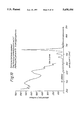
- FIGS. 9 to 12 show excitation/emission spectra of various compounds.
- FIGS. 13 to 16 are graphs of light output against time for various formulations.
- FIGS. 17 and 18 are graphs of initial light output and rate of diminution of light output against the concentration of a formulation component.
- FIG. 19 is a graph of decomposition rate against radioactive concentration.
- preferred light emitting polymer formulations according to the present invention show the following stability:
- Tris(2,2,6,6-tetramethyl-3,5-heptanedionato)terbium III+ (2) was purchased from Strem Chemicals Inc.
- Diphenyl-phosphonimido-triphenyl phosphorane (3) was prepared by a method given in the references quoted above.
- Diphenyl-phosphinic acid chloride (68 g) and sodium azide (30 g) were stirred in dried acetonitrile (380 ml) for 64 hours.
- the precipitated material was filtered off, washed with a) ether, b) dilute ammonia solution (10 ml of 2N ammonia diluted to 100 ml), and c) water (5 ⁇ 100 ml), and dried at room temperature under vacuum to yield 36.31 g (76% of theory) of (3).
- Phenylacetylene (1 mM 100 mg) was reduced with 60 curies tritium gas in the presence of Pdc catalyst--(reference see Example 5, 1 ml solution pumped to dryness under vacuum) then styrene (10 ml without the stabiliser removed) added along with a magnetic stirrer. The phenylacetylene was quantitatively reduced to tritiated styrene without there being any significant further reduction of the styrene to ethyl benzene.
- a solution of polymerisation catalyst (AZBN) was added to yield a final catalyst concentration of 0.1 milligrams per milliliter.
- the solution was then flushed with argon/methane to minimise oxygen content which tends to quench light emission, and the container was sealed and the solution polymerised at 60° C. for 16 hours.
- the polymer was allowed to cool to room temperature to yield a virtually colourless high clarity polymer with a bright yellow/green (545 nanometers) light emission.
- the product may then be further shaped as it is a thermoplastic to emit its light optimally in one plane and further efficiency of emission may be obtained by applying a reflective metal coating to parts of the shaped product.
- the body was formed in the shape of a chord of a cylinder with the curved surface and the ends made internally reflecting by being coated with aluminium metal.
- FIG. 2 is a graph of power output (expressed in nW/Ci) against phosphor concentration at a fixed polymer tritium concentration of 6.06 Ci/g.
- the upper curve of the graph was obtained in an experiment in which the light emitting body was "silvered” and optically linked to a photodiode.
- the lower graph was obtained in an experiment in which these steps were omitted.
- FIG. 3 is a corresponding graph, in which the polymer tritium concentration was 0.606 Ci/g.
- FIG. 4 is a graph of emitted light intensity against wavelength for compositions having a polymer tritium concentration of 6.06 Ci/g and various phosphor concentrations. Curves 1, 2, 3 and 4 were obtained with different concentrations of phosphor. Curves 5, 6 and 7 are included for comparison, and were obtained using a commercially obtainable source containing tritium gas in a glass vessel coated with zinc sulphide scintillant.
- the fluorescent emission of the phosphor of this invention is strikingly monochromatic at 545 nm, and the peak intensity at this wavelength is much higher than obtainable from the commercially available sources.
- Naphthalene trifluoroacetylacetonate (ex Lambda Probes & Diagnostics (Austria). 4.7 millimoles (1.25 grams) were dissolved in ethanol (10 ml) and Europium trichloride (1.04 millimoles, 1.04 grams) dissolved in ethanol (5 ml) was added. The combined solutions were heated at 65° C. for 30 minutes.
- the total volume was then reduced to 10 milliliters, neutralised with sodium hydroxide solution and stored overnight at +2° C.
- the resultant precipitate was filtered off, washed with ethanol:water (7:3) (5 ml) and dried at 100° C. under vacuum.
- Terbium (3+)(2,2,6,6-tetramethyl-3,5-heptanedionato)chelate was purchased from Strem Chemicals. Methods of preparing the pyrazolyl borates are described by E. Trofimenko J. A. C. S. 89:13/ Jun. 21 1967.
- the tri-pyrazolyl borate adduct was prepared by heating stoichiometric amounts of the chelate and the pyrazolyl borate in acetone to dissolution, driving off the acetone and melting the residue to a clear melt at minimum temperature. After cooling, the solid was crushed to a powder and any residual solvent pumped off under vacuum at room temperature.
- Phenylacetylene (3 mmoles, 290 ⁇ l) dissolved in styrene-d 8 (5 ml) were added to the dried homogeneous Pdc catalyst obtained from 4 ml of catalyst solution (Brunet+Caubert, J. Org. Chem., 1984, 49, 4058-4060).
- the above solution was stirred with 200 curies tritium gas.
- the phenylacetylene is quantitatively reduced to tritiated styrene without there being any significant further reduction of the styrene to ethyl benzene.
- This tritiated styrene dissolved in the fully deuterated styrene-d 8 is removed from the catalyst, polymerisation inhibitor and other contaminants by vacuum distillation.
- the volume of each aliquot was about 1.1 ml.
- the tritium activity was as stated, achieved by use of different specific activity tritium gas.
- the polymer was allowed to cool to room temperature to yield clear polymer pieces.
- each piece was measured after shaping to a uniform size and shape in a mould and partially silvering by vapour deposition to guide the light out of one surface.
- the emission spectra shows that the europium chelate containing polymer piece emits light at ⁇ 614 millimicron (orange-red) and the terbium chelates at ⁇ 548 millimicrons (yellow-green).
- FIG. 5 is a graph of power output at 540 nm (expressed in nW) against radioactive concentration (Ci/g) of the polymer.
- the phosphor concentration was held constant at 120 mg/ml.
- the power output goes up more or less linearly with increasing radioactive polymer concentration.
- the polystyrene would have had a limited life due to radiation damage.
- FIG. 7 is a graph comparing efficiencies of various different light emitting sources, expressed as power output (nW) against polymer radioactive concentration (Ci/g). In this graph:
- Line A represent polymer sources as described in GB 2242908A.
- Erect triangles (line B) represent the formulation of Example 5b).
- Inverted triangles (line C) represent formulations according to Example 2 containing a phosphor concentration of 120-150 mg/ml of polymer
- the diamond represents a commercially available source comprising tritium gas contained in a glass vessel coated with a zinc sulphide scintillant.
- FIG. 8 is a comparable graph, in which the ordinate is not power output but brightness expressed in nW/cm 2 of photodiode.
- Performance of the Example 5b) formulation (B) is strikingly superior to that of the previously known polymer sources (A).
- Performance of the formulations (C) according to Example 2 is strikingly superior to the performance of all other sources including the commercially available gas source.
- Dibenzoyl methane 100 mmoles, 22.43 grams, (ex Aldrich Chemical Co. Ltd.), m.p. 77.5-79° C.), and sodium hydroxide 100 mmoles, 4 grams, were reacted together in 50% v/v ethanol:water, 200 ml at room temperature to give a solution of the sodium salt of dibenzoyl methide at a concentration of 0.5 millimoles/mi.
- EuIII[DBM] 3 30 mg was dissolved in 1 ml styrene, polymerised using 1.25 mg AZBN, heating overnight at 75° C., and shaped into a flat sheet ⁇ 1.5 mm thick. Surface reflectance measurements were made at room temperature and at approx. -140° C. using an excitation wavelength of 360 nm. EuIII[DBM] 3 ⁇ DPTP] 2 25 mg was similarly treated and measured.
- EuIII[DBM] 3 [DPTP] 2 shows an efficiency of 79.72%. i.e. a 2.2 fold increase in efficiency.
- the monomers were polymerised (as described in Example 2) with a fixed amount of compound (1) (Example 1) hereinafter called ALP-1 at fixed radioactive concentration.
- the radioactivity was introduced by ⁇ spiking ⁇ the monomer with small quantities of tritiated styrene ( ⁇ 10% v/v). The results are shown in Table 1.
- Compounds (1) and (2) are available through commercial suppliers.
- Compound (3) is a novel fluorescent chelate based on the ligand imidotetraphenyldiphosphinic acid (5). Their relative light outputs in tritiated polystyrene are shown in Table 2.
- Example 1 describes the compound ALP-1 which contains a Lewis base adduct in the form of diphenylphosphonimido triphenylphosphorane.
- This compound confers high solubility in styrene and high fluorescence efficiency on tris(2,2,6,6-tetramethyl-3,5-heptanedionato)terbium(III) when adducted. Therefore, work was undertaken to vary the functionality of this phosphorane compound to investigate structure/fluorescence efficiency relationships when adducted to terbium chelates.
- the relative light outputs were determined using a standard luminometer with 1 mmol/ml fluor in tritiated styrene
- a polymerisable phosphine oxide, p-styryldiphenyl phosphine oxide (12) was prepared and its adduct with tris(2,2,6,6-tetramethyl-3,5-heptanedionato)terbium(III) prepared in situ as described. Results were obtained for various fluor loadings and were shown to be essentially the same (up to a fluor concentration of 5% w/v) as for triphenyl phosphine oxide.
- Terbium and europium in general are reported as more efficient than samarium and dysprosium.
- some extremely efficient perfluorinated 1,3-diketonate chelates are described in the literature, naphthoyl trifluoro acetone for example. These compounds normally produce a deep red fluorescence.
- naphthoyl trifluoro acetone for example.
- Tris (2,2,6,6-tetramethyl-3,5-heptanedionato)dysprosium (III) and its diphenylphosphonimido triphenylphosphorane adduct (16) have been prepared, both fluoresce yellow under UV irradiation.
- Compound (16) also gives the same emission when incorporated in tritiated polystyrene (5 Ci/g). Its excitation/emission spectra is shown in FIG. 11.
- uranium as its dioxide has been investigated.
- the chelate shown below (17) fluoresces green under UV irradiation and when incorporated in tritiated polystyrene. Adduction of this compound with diphenylphosphonimido triphenyl phosphorane increases the solubility of the chelate in styrene.
- This is a new type of fluorescent uranyl chelate. We are unaware, as yet, of any other room temperature fluorescent uranyl chelate of this type. Its excitation/emission spectra is shown in FIG. 12.
- Waveshifters such as dimethyl-POPOP and xylene may be incorporated in tritiated polystyrene with ALP-1 to increase the light output (10-20%) with various loadings 1-10% w/v waveshifter.
- Diphenylphosphinylchloride (57.5 g, 0.261 mole) in toluene (100ml) was added to hexamethyldisilazane (21.0 g, 0.130 mole) in toluene (50 ml) at 80°-90° C. over 20 minutes.
- the reaction mixture was heated at 85° C. for 2 hours then 100° C. for 1 hour.
- the reaction mixture was then evaporated to Ca 100 ml volume. A white solid was collected upon cooling. Recrystallization from hot toluene gave a white solid 19.5 g. (mp 147° C.; Lit 2 mp. 149-151).
- Imidotetraphenyldiphosphinic acid (8.34 g, 20 mmole) and potassium hydroxide (1.12 g, 20 mmole) were heated to reflux in ethanol/water (10:3, 130 ml) for 10 minutes. A fine precipitate was filtered off.
- reaction mixture was then heated to reflux for 30 minutes.
- the reaction mixture was cooled, filtered and washed with water (50 ml) and ethanol (50 ml).
- the product was dried under vacuum at 90° C. for two hours to give the product as an amorphous white powder (7.2 g). (mp. 280° C. dissoc.).
- Tris(2,2,6,6-tetramethyl-3,5-heptanedionato)terbium(III) 14.17 g, 0.02 moles
- triphenylphosphine oxide 5.57 g, 0.02 moles
- the reaction mixture was cooled with stirring in an ice/bath.
- the mother liquor was decanted and the product dried under vacuum to give the product as a white crystalline solid (17.2 g) (mp. 148° C.).
- Tris(2,2,6,6-tetramethyl-3,5-heptanedionato)terbium(III) (5.0 g, 7.1 mmole) and tri-n-octylphosphine oxide (2.75 g, 7.1 mmole) were refluxed in trimethylpentane (50 ml) for 2 hours. The solvent was evaporated to give the product as an amber oil (7.6 g).
- p-Styryldiphenylphosphine was prepared according to published procedure 6 .
- P-Chlorostyrene(30.0 g, 0.22 m) in tetrahydrofuran (100 ml) was added to magnesium turnings (15 g) at such a rate as to maintain reflux.
- the reaction was initiated by adding 3 ml ethyl bromide to the magnesium turnings. After 30 minutes, the reaction mixtures cooled to room temperature and was stirred for an additional 30 minutes. The reaction solution was then added slowly to chlorodiphenylphosphine (40.4 g, 0.183 m) in tetrahydrofuran (100 ml) with ice-bath cooling.
- reaction mixture was stirred for 1 hour and then poured onto 3 m ammonium chloride solution (300 ml). The organic layer was then separated, dried over anhydrous sodium sulphate and filtered. Polymeric material was precipitated from solution by adding hexane (500 ml). The solution was then filtered and evaporated to give the product as a white amorphic solid which was crystallised from methanol as white crystals (18.0 g).
- Europium chloride hexahydrate (2.2 g, 6.0 mmole) in 50% aqueous ethanol (50 ml) was added to a solution of the sodium salt of dibenzoylmethide (4.37 g, 18 mmole) in aqueous ethanol(35 ml) at 60° C.
- the reaction was stirred at 60° C. for 30 minutes, then cooled, filtered and the solid collected, washed with water (50 ml) and dried to give the product as a bright yellow solid (4.5 g).
- Tris(dibenzoylmethide)europium(III) (3.6 g, 4.2 mmole) and diphenylphosphonimido triphenylphosphorane (2.0 g, 4.2 mmole) were refluxed in trimethylpentane (50 ml ) for 30 minutes, Reaction mixture filtered wash with pentane (30 ml) to give the product as a yellow solid (5.0 g).
- Tris(dibenzoylmethide)samarium(III)diphenylphosphonimido triphenylphosphorane (15) Tris(dibenzoylmethide)samarium(III) (1.5 g, 1.83 mmole) and diphenylphosphonimido triphenylphosphorane(0.87 g, 1.83 mmole) were refluxed in trimethylpentane (30 ml) for 30 minutes. The reaction mixture was cooled, filtered and the product dried under vacuum for 2 hours to give a yellow amorphous solid (2.0 g) (mp. 163° C.).
- Tris(2,2,6,6-tetramethyl-3,5-heptanedionato)dysprosium(III) (6.1 g, 9.75 mmole) and diphenylphosphonimido triphenyphosphorane ** were refluxed in trimethylpentane (60 ml) for 30 minutes.
- the mother liquor was decanted from a small amount of insoluble material and allowed to cool to room temperature.
- a white crystalline material formed which was redissolved in diethyl ether (70 ml) and clarified by filtration through a 0.45 micron filter. The solvent was evaporated to give a white solid (8.1 g, mp. 154° C.).
- Imidotetraphenyldiphosphinic acid (4.30 g, 10.3 mmole) and sodium hydroxide (0.412 g, 10.3 mmole) were heated to 60° C. in 90% aqueous ethanol (100 ml).
- Uranyl acetate (2.0 g, 5.15 mmole) in 50% aqueous ethanol (40 ml) was then added quickly and the reaction mixture heated to reflux for 20 minutes. The reaction mixture was cooled to room temperature, filtered, washed with ethanol (30 ml) and dried under vacuum to give the product as a yellow solid (4.4 g).
- the product was dissolved in diethyl ether (Rathburn) 500 ml, filtered through a 1.5 micron glass fibre mat filter and rotary evaporated to dryness.
- the product was recrystallised from trimethyl pentane three times and finally pumped to dryness under vacuum at 10 -1 torr for 24 hours.
- a 30% w/v solution in styrene should be totally transparent, haze-free and water white in appearance and should polymerise to a transparent fluorescent water white polymer.
- Triphenylvinylsilane (ABCR Chemicals T3960) (now known to be divinyl tetraphenyl disiloxane)
- Triphenylvinylsilane (475 mg) and 10% palladium on-charcoal (20 mg) were placed in a dry tritiation vessel (55 ml) with benzene (10 ml).
- reaction mixture was tritiated over 20 hrs with 100 Ci of tritium gas (98% isotopic purity) using a multi-port tritiation apparatus.
- reaction mixture was filtered, the catalyst washed with toluene (2 ⁇ 10 ml) and solvent removed under vacuum.
- the product (white solid) was placed in a desiccator (10 -1 mbar) for 1 hour and stored at ambient conditions under an argon atmosphere.
- Divinylbenzene (Polysciences 1892) (Note that this material is only 50% divinylbenzene. The other 50% is ethyl styrene).
- Styrene 200 ml was passed through a column of alumina (150 g) and degassed by freeze/thawing (x3) with liquid nitrogen under vacuum (10 -1 mbar). The material was stored at ambient conditions under an argon atmosphere.
- Divinylbenzene (10 ml) was prepared as per styrene.
- Tetralin (50 g) was passed through a column of alumina (10 g) and degassed by freeze/thawing (x3) with liquid nitrogen under vacuum (10 -1 mbar). The material was stored at ambient conditions under an argon atmosphere.
- Inactive LEP monomer solution 100 ml.
- ALP-1 (24.0 g) solid was degassed by placing under vacuum (10 -1 mbar) then purging with argon in a graduated vessel.
- Tetralin 1.0 ml
- divinylbenzene 2.0 ml
- styrene was added to make the final volume 80 ml. Residual gases were then removed by freeze/thawing (x3) with liquid nitrogen under vacuum (10 -1 mbar).
- Dow 704 (Eu) (20 ml) and dicumyl peroxide (250 mg) were added to give the final inactive monomer formulation which was stored at ambient conditions under an argon atmosphere.
- the inactive monomer solution (100 ml) was added to [ 3 H]-ethyltriphenylsilane tritium carrier (100 Ci) under argon.
- the radioactive concentration was then determined by liquid scintillation counting. 100 ⁇ 1.0 ml aliquots were dispensed and flame sealed into 2 ml Wheaton cryovacules under argon and polymerised at 80° C. for 48 hrs. After 48 hours the samples were allowed to cool to ambient temperature over 6 hours.
- the mixture was polymerised as above.
- ALP-1 is the phosphor of Example 1 and Example 18.
- ALP-3 is the phosphor of Example 17.
- PS is polystyrene
- PVT is polyvinyltoluene.
- [ 3 H]DPEB is [ 3 H] diphenylethylbenzene.
- PEN is pentaphenyltrimethyltrisiloxane.
- TET is tetralin.
- FIG. 13 shows that ALP-3 is an effective scintillant, and that light output and stability are improved by incorporating Dow 704 siloxane.
- FIG. 14 shows that ALP-3 is an effective scintillant in a different formulation; and that PEN and tetralin are together effective in improving light output and stability.
- FIG. 15 shows the effect of tetralin alone in improving light output and stability.
- FIG. 16 shows formulations with a higher radioactive concentration having excellent light output and stability properties.
- FIG. 17 is a graph of initial light output against concentration of Dow 704 siloxane, which was added to a 30% ALP-1 solution in styrene.
- FIG. 18 is a comparable graph of rate of loss of light output against Dow 704 siloxane concentration in the same ALP-1 formulation. Both graphs show an optimum concentration of Dow 704 to be around 20-30%.
- FIG. 19 is a graph of decomposition rate against radioactive concentration for various formulations containing 30% ALP-3 in vinyltoluene or 30% ALP-1 in styrene together with either 50% or 20% by weight of Dow 704 siloxane.
- the tritium-labelled component was divinyltetraphenyldisiloxane partly reduced with tritium.
- NTFA 4,4,4-Trifluoro-1-(2-naphthyl)-1,3-butanedione
- F.W. 266.62 m.p. 74°-76° [893-33-4] Aldrich 34,363-3
- 300 millimoles, 79.87 grams was dissolved in hot methanol 600 milliliters (Rathburn) and a solution of sodium hydroxide 300 millimoles 12 g (BDH) dissolved in a mixture of distilled water, 25 ml, and methanol, 75 ml (Rathburn), was added to the stirred hot (40° C.) NTFA solution to form a clear pale yellow solution of the sodio derivative of NTFA.
- Europium(III)chloride hexahydrate, F.W. 366.41, 99.9% [13759-92-7] 100 millimoles, 36.64 grams (Aldrich 21,288.1) was dissolved in warm (40° C.) methanol, 200 milliliters (Rathburn). This solution was stirred and brought to reflux. To the stirred refluxing solution was added the solution of the sodio derivative of NTFA at a rate of 4 milliliters/minute. After completion of the addition of the sodio derivative, the solution was stirred and refluxed for a further 30 minutes, then allowed to cool and the methanol removed by evaporation at room temperature overnight leaving a solid mixture of Europium(III)(NTFA) 3 dihydrate (F. W. 983.62) and sodium chloride byproduct. The solid was then washed with water (4 ⁇ 50 ml) to remove sodium chloride and the resulting crude product dried under vacuum at 40° C.
- This crude reaction product was purified by extracting with benzene. 500 ml (Aldrich 15630-2) using a soxlet extractor for 6 hours. The benzene extract was transferred to a liter beaker and allowed to crystallise overnight. The crystalline product was dried at room temperature under vacuum. Yield 54.8 g (55.5% of theoretical yield).
- reaction has to be carried out using benzene not toluene as disproportionation occurs when toluene is used--resulting in a red tar being produced.
- the material is used as produced as it has not been possible to crystallise the material--an oil is produced from all solvents.
- the mono-phosphorane derivative, (ALP-7) generates much more light than the un-phosphoraned material or the bis-phosphoraned material.
- ALP-1 was prepared as per Example 1.
- Formulation and polymerisation of the inactive monomer solution was generally as per Example 18 excluding any tritium carrier but including, for this experiment, 1% by weight of fumed silica to minimize light piping.
- the average of three counts minus background for the vials containing just ethanol and the 12 microcuries was 120 CPM.
- the average of three counts minus background for the vials containing slices of polymer was 1392 CPM, i.e. the presence of polymer raised the CPM by over 10 times (11.6).
- the polymer can be used as a solid scintillant.
Landscapes
- Chemical & Material Sciences (AREA)
- Engineering & Computer Science (AREA)
- Materials Engineering (AREA)
- Organic Chemistry (AREA)
- Compositions Of Macromolecular Compounds (AREA)
Abstract
Description
(X.sub.n --M--O--QR.sub.2 --N).sub.p Z or X.sub.n --M(--O--QR.sub.2 --N=Z).sub.s
Ar.sub.1 --P-[(Alk-P--Ar).sub.m -Alk-P--Ar.sub.2 ].sub.q
X.sub.n --M--O--P(Ph).sub.2 --N═P(Ph).sub.2 --C.sub.2 H.sub.4 --P(Ph).sub.2 ═N--P(Ph).sub.2 --O--M--X.sub.n
______________________________________
a)  Terbium [DPM].sub.3 P.sub.g3 B (see Example 4)
                            21.1   mg
    Butyl PBD (primary scintillant)
                            100    mg
    Divinyl benzene (cross-linker)
                            10     microliters
    AZBN catalyst for polymerisation
                            1      mg
    1.5 curies
b)  Terbium [DPM].sub.3 P.sub.g3 B] (different batch to
                            20     mg
    Divinyl benzene         20     microliters
    AZBN                    1      mg
    8.0 curies
c)  Europium NTFA bipyridyl (see Example 3)
                            20     mg
    Butyl PBD               100    mg
    Divinyl benzene         20     microliters
    Triphenyl styryl lead   5      mg
    8.0 curies
______________________________________
              TABLE 1
______________________________________
Relative light Output of Some Styrene Analogues
               Relative Light Outputs
Styrene Analogue
               (Arbitrary Units)
______________________________________
Styrene        100
4-t-Butylstyrene
               106
4-Methylstyrene
               97
2,4-Dimethylstyrene
               88
4-Methoxystyrene
               60
2,4,6-Trimethylstyrene
               39
4-Vinyl-biphenyl
               65
______________________________________
TABLE 2 ______________________________________ Relative Light Output of SomeTerbium 1,3-Diketonate Chelates Compound Relative Light Output Chelate Number (Arbitrary units) ______________________________________ ##STR13## (1) 25 ##STR14## (2) 50 ##STR15## (3) 10 ALP-1 (4) 100 ______________________________________
              TABLE 3
______________________________________
Relative Light Outputs of Various Phosphorane Adducts of
Tris(2,2,6,6-tetramethyl-3,5-heptanedionato)terbium (III)
                    Com-     Relative
                    pound    Light Output
Phosphorane Adduct  Number   (Arbitrary units)
______________________________________
 ##STR16##          (4)      100
 ##STR17##          (6)      83
 ##STR18##          (7)      64
 ##STR19##          (8)      64
 ##STR20##          (9)      50
 ##STR21##          (10)     98
(n-C8H17)3PO        (11)     82
______________________________________
              TABLE 4
______________________________________
Lewis Base Adducts of
Tris(2,2,6,6-tetramethyl-3,5-heptanedionato)terbium(III)
                      Relative Light Output
Lewis Base Adduct     (Arbitrary units)
______________________________________
No Adduct             25
Diphenylphosphonimido-triphenylposphorane
                      100
Tri-n-octylphosphine oxide
                      52
Triphenylphosphine oxide
                      98
Triphenyl arsyl oxide 19
Tributyl phosphate    15
Triphenylphosphate    42
N,N-Dimethylformamide 37
Morpholine            30
Piperidine            45
Pyridine              29
4-Vinyl-Pyridine      23
Dimethylsulphoxide    42
Bipyridyl              7
______________________________________
______________________________________ ALP-1 24% DOW 704 (Eu) 20% Dicumyl peroxide 2.5 mg/ml Tetralin 1.0%Styrene monomer Divinylbenzene 2% (effectively 1% DVB) [.sup.3 H]-Ethyltriphenylsilane 1.0 Ci/ml ______________________________________
 ______________________________________
Dow 704/
       PHOSPHOR USED AT 7.5% CONCENTRATION
Styrene          Eu(NTFA).sub.3 phos
Ratio  Eu(NTFA).sub.3
                 (ALP-7)       Eu(NTFA).sub.3 bis-phos.
______________________________________
50/50  0.10      3.01          2.25
75/25  0.05      2.01          1.72
100/0  0.24      4.64          3.32
______________________________________
Claims (16)
Priority Applications (2)
| Application Number | Priority Date | Filing Date | Title |
|---|---|---|---|
| US08/445,858 US5658494A (en) | 1992-02-14 | 1995-05-22 | Fluorescent compounds |
| CA 2176525 CA2176525C (en) | 1995-05-22 | 1996-05-14 | Fluorescent compounds |
Applications Claiming Priority (4)
| Application Number | Priority Date | Filing Date | Title |
|---|---|---|---|
| EP92301249 | 1992-02-14 | ||
| EP92301249 | 1992-02-14 | ||
| US08/017,674 US5435937A (en) | 1992-02-14 | 1993-02-12 | Fluorescent compounds |
| US08/445,858 US5658494A (en) | 1992-02-14 | 1995-05-22 | Fluorescent compounds |
Related Parent Applications (1)
| Application Number | Title | Priority Date | Filing Date |
|---|---|---|---|
| US08/017,674 Continuation-In-Part US5435937A (en) | 1992-02-14 | 1993-02-12 | Fluorescent compounds |
Publications (1)
| Publication Number | Publication Date |
|---|---|
| US5658494A true US5658494A (en) | 1997-08-19 |
Family
ID=26131952
Family Applications (1)
| Application Number | Title | Priority Date | Filing Date |
|---|---|---|---|
| US08/445,858 Expired - Lifetime US5658494A (en) | 1992-02-14 | 1995-05-22 | Fluorescent compounds |
Country Status (1)
| Country | Link |
|---|---|
| US (1) | US5658494A (en) |
Cited By (12)
| Publication number | Priority date | Publication date | Assignee | Title |
|---|---|---|---|---|
| US5808307A (en) * | 1996-02-07 | 1998-09-15 | Director-General Of Agency Of Industrial Science And Technology | Method of detecting ultraviolet laser beam and method of recording information |
| WO2003016429A1 (en) * | 2001-08-14 | 2003-02-27 | Qinetiq Limited | Triboluminescent materials and devices |
| US20040131886A1 (en) * | 2000-06-12 | 2004-07-08 | Maxdem Incorporated | Polymer matrix electroluminescent materials and devices |
| US20050019603A1 (en) * | 2001-10-31 | 2005-01-27 | Poopathy Kathirgamanathan | Document authentification |
| US20060063036A1 (en) * | 2004-09-13 | 2006-03-23 | Hiroki Iwanaga | Fluorescent image-printed article and fluorescent ink |
| JP2009023914A (en) * | 2007-07-17 | 2009-02-05 | Mitsubishi Chemicals Corp | Novel rare earth complex, rare earth complex phosphor, and phosphor-containing composition, laminate, color conversion film, light emitting device, lighting device, and image display device using the phosphor |
| US20090221783A1 (en) * | 2008-02-28 | 2009-09-03 | Hawker Craig J | Encapsulation resins |
| WO2011022715A1 (en) * | 2009-08-21 | 2011-02-24 | Lep America Ltd. | Light-emitting polymer |
| WO2012131278A1 (en) * | 2011-03-31 | 2012-10-04 | Crime Scene Technology | Fluorescent polymer composition, fluorescent bichromophoric tetrazine derivatives, method for preparing same, and uses thereof |
| JP2016128392A (en) * | 2015-01-09 | 2016-07-14 | 国立大学法人北海道大学 | Rare earth metal complex and light-emitting device using the same |
| US20170157974A1 (en) * | 2014-04-07 | 2017-06-08 | Hewlett-Packard Development Company, L.P. | Electrostatic printing systems |
| US11396566B2 (en) * | 2016-09-30 | 2022-07-26 | Sekisui Kasei Co., Ltd. | Fluorescent resin particles and use thereof |
Citations (6)
| Publication number | Priority date | Publication date | Assignee | Title |
|---|---|---|---|---|
| US3377292A (en) * | 1965-10-22 | 1968-04-09 | American Cyanamid Co | Synergized lanthanide chelate photoluminescent composition |
| US3989768A (en) * | 1971-02-22 | 1976-11-02 | Cpc International Inc. | Chemically joined phase separated thermoplastic graft copolymers |
| US4518814A (en) * | 1983-05-02 | 1985-05-21 | Phillips Petroleum Company | Ethylene oligomeration |
| US4997597A (en) * | 1989-11-13 | 1991-03-05 | The United States Of America As Represented By The United States Department Of Energy | Solid-state radioluminescent compositions |
| EP0556005A1 (en) * | 1992-02-14 | 1993-08-18 | AMERSHAM INTERNATIONAL plc | Fluorescent compounds |
| US5435937A (en) * | 1992-02-14 | 1995-07-25 | Amersham International Plc | Fluorescent compounds |
-
1995
- 1995-05-22 US US08/445,858 patent/US5658494A/en not_active Expired - Lifetime
Patent Citations (6)
| Publication number | Priority date | Publication date | Assignee | Title |
|---|---|---|---|---|
| US3377292A (en) * | 1965-10-22 | 1968-04-09 | American Cyanamid Co | Synergized lanthanide chelate photoluminescent composition |
| US3989768A (en) * | 1971-02-22 | 1976-11-02 | Cpc International Inc. | Chemically joined phase separated thermoplastic graft copolymers |
| US4518814A (en) * | 1983-05-02 | 1985-05-21 | Phillips Petroleum Company | Ethylene oligomeration |
| US4997597A (en) * | 1989-11-13 | 1991-03-05 | The United States Of America As Represented By The United States Department Of Energy | Solid-state radioluminescent compositions |
| EP0556005A1 (en) * | 1992-02-14 | 1993-08-18 | AMERSHAM INTERNATIONAL plc | Fluorescent compounds |
| US5435937A (en) * | 1992-02-14 | 1995-07-25 | Amersham International Plc | Fluorescent compounds |
Cited By (20)
| Publication number | Priority date | Publication date | Assignee | Title |
|---|---|---|---|---|
| US5808307A (en) * | 1996-02-07 | 1998-09-15 | Director-General Of Agency Of Industrial Science And Technology | Method of detecting ultraviolet laser beam and method of recording information |
| US20040131886A1 (en) * | 2000-06-12 | 2004-07-08 | Maxdem Incorporated | Polymer matrix electroluminescent materials and devices |
| US8308978B2 (en) * | 2000-06-12 | 2012-11-13 | Sumitomo Chemical Co., Ltd. | Polymer matrix electroluminescent materials and devices |
| WO2003016429A1 (en) * | 2001-08-14 | 2003-02-27 | Qinetiq Limited | Triboluminescent materials and devices |
| US20040245504A1 (en) * | 2001-08-14 | 2004-12-09 | Sage Ian C | Triboluminescent materials and devices |
| US7270770B2 (en) | 2001-08-14 | 2007-09-18 | Qinetiq Limited | Triboluminescent materials and devices |
| US7767315B2 (en) * | 2001-10-31 | 2010-08-03 | Merck Patent Gmbh | Document authentification |
| US20050019603A1 (en) * | 2001-10-31 | 2005-01-27 | Poopathy Kathirgamanathan | Document authentification |
| US20060063036A1 (en) * | 2004-09-13 | 2006-03-23 | Hiroki Iwanaga | Fluorescent image-printed article and fluorescent ink |
| US7575253B2 (en) * | 2004-09-13 | 2009-08-18 | Kabushik Kaisha Toshiba | Fluorescent image-printed article and fluorescent ink |
| JP2009023914A (en) * | 2007-07-17 | 2009-02-05 | Mitsubishi Chemicals Corp | Novel rare earth complex, rare earth complex phosphor, and phosphor-containing composition, laminate, color conversion film, light emitting device, lighting device, and image display device using the phosphor |
| US20090221783A1 (en) * | 2008-02-28 | 2009-09-03 | Hawker Craig J | Encapsulation resins |
| US7943719B2 (en) * | 2008-02-28 | 2011-05-17 | The Regents of the University of California; | Encapsulation resins |
| WO2011022715A1 (en) * | 2009-08-21 | 2011-02-24 | Lep America Ltd. | Light-emitting polymer |
| US8569610B2 (en) | 2009-08-21 | 2013-10-29 | Power and Light Sources, Incorporated | Light-emitting polymer |
| US8697982B2 (en) * | 2009-08-21 | 2014-04-15 | Lep America, Incorporated | Light-emitting polymer |
| WO2012131278A1 (en) * | 2011-03-31 | 2012-10-04 | Crime Scene Technology | Fluorescent polymer composition, fluorescent bichromophoric tetrazine derivatives, method for preparing same, and uses thereof |
| US20170157974A1 (en) * | 2014-04-07 | 2017-06-08 | Hewlett-Packard Development Company, L.P. | Electrostatic printing systems |
| JP2016128392A (en) * | 2015-01-09 | 2016-07-14 | 国立大学法人北海道大学 | Rare earth metal complex and light-emitting device using the same |
| US11396566B2 (en) * | 2016-09-30 | 2022-07-26 | Sekisui Kasei Co., Ltd. | Fluorescent resin particles and use thereof |
Similar Documents
| Publication | Publication Date | Title |
|---|---|---|
| US5435937A (en) | Fluorescent compounds | |
| EP0688849B1 (en) | Fluorescent compounds | |
| EP0913448B1 (en) | Fluorescent compound | |
| Thomas et al. | Aromatic phosphonates: A novel group of emitters showing blue ultralong room temperature phosphorescence | |
| Matthes et al. | The Series of Rare Earth Complexes [Ln2Cl6 (μ‐4, 4′‐bipy)(py) 6], Ln= Y, Pr, Nd, Sm‐Yb: A Molecular Model System for Luminescence Properties in MOFs Based on LnCl3 and 4, 4′‐Bipyridine | |
| Hasan et al. | Syntheses, crystal structure and photophysical properties of [Sm (dbm) 3 (impy)] and [Tb (dbm) 3 (impy)] and their hybrid films | |
| Zucchi et al. | 2, 2′‐Bipyrimidine as Efficient Sensitizer of the Solid‐State Luminescence of Lanthanide and Uranyl Ions from Visible to Near‐Infrared | |
| Suta et al. | Bright Photoluminescence of [{(Cp) 2Ce (μ‐Cl)} 2]: A Valuable Technique for the Determination of the Oxidation State of Cerium | |
| Parra et al. | Optical characteristics of the Eu3+–β-diketonate complex doped into epoxy resin | |
| Batrice et al. | Photoluminescence of visible and NIR‐emitting lanthanide‐doped bismuth‐organic materials | |
| Chamberlain et al. | A highly stable yttrium organic framework as a host for optical thermometry and D2O detection | |
| Taydakov et al. | Synthesis, phosphorescence and luminescence properties of novel europium and gadolinium tris-acylpyrazolonate complexes | |
| Erasmus et al. | Making Eu2+-and Sm2+-doped borates fit for solar energy applications | |
| Ramakrishna et al. | Spectroscopic properties, Judd Ofelt analysis of U and Eu activated Li2O-ZnO-SrO-B2O3-P2O5 borophosphate glasses for solid-state lighting applications | |
| Razquin‐Bobillo et al. | Water Soluble Rare‐Earth (III) based Coordination Polymers with Luminescence Versatility in Various Media: Reaching the Sky of Quantum Efficiency | |
| Kuzmina et al. | New lanthanide complexes with CAPh type ligand dimethyl-N-benzoylamidophosphate and an additional ligand triphenylphosphine oxide. Synthesis, crystal structure, luminescent and thermal properties | |
| Li et al. | Novel luminescent hybrids by incorporating rare earth β-diketonates into polymers through ion pairing with an imidazolium counter ion | |
| Li et al. | Tailorable Photonic Blocks within Well‐Defined Framework for Architecting MOFs Scintillators | |
| Qiao et al. | Photoactive binary and ternary lanthanide (Eu3+, Tb3+, Nd3+) hybrids with p-tert-butylcalix [4] arene derived Si–O linkages and polymers | |
| Thomas et al. | Europium Doped Atomically Precise Bismuth Oxido Nanoclusters as Molecular Building Blocks for Photoluminescent Hybrid Materials | |
| CA2425105C (en) | Fluorescent compounds | |
| CA2176525C (en) | Fluorescent compounds | |
| Metlina et al. | Exploring the luminescent and thermometric potentials of samarium (iii) diketonate complexes with extended fluoroalkyl chains | |
| Wachtel | Sb3+ and Mn2+ Activated Calcium Halophosphate Phosphors from Flux‐Grown Apatites | |
| CN106518901B (en) | A kind of trapezoidal organoboron compound of luminous four-coordination and its preparation method and application |
Legal Events
| Date | Code | Title | Description |
|---|---|---|---|
| AS | Assignment |
Owner name: AMERSHAM INTERNATIONAL PLC, UNITED KINGDOM Free format text: ASSIGNMENT OF ASSIGNORS INTEREST;ASSIGNORS:BELL, COLIN D.;HOWSE, JOHN H. C.;BOSWORTH, NIGEL;AND OTHERS;REEL/FRAME:007497/0894 Effective date: 19950406 |
|
| STCF | Information on status: patent grant |
Free format text: PATENTED CASE |
|
| FPAY | Fee payment |
Year of fee payment: 4 |
|
| AS | Assignment |
Owner name: AEA TECHNOLOGY PLC, UNITED KINGDOM Free format text: ASSIGNMENT OF ASSIGNORS INTEREST;ASSIGNOR:AMERSHAM PLC;REEL/FRAME:013563/0659 Effective date: 20021014 Owner name: AMERSHAM PLC, UNITED KINGDOM Free format text: CHANGE OF NAME;ASSIGNOR:AMERSHAM INTERNATIONAL PLC;REEL/FRAME:013563/0657 Effective date: 20021016 |
|
| FEPP | Fee payment procedure |
Free format text: PAYOR NUMBER ASSIGNED (ORIGINAL EVENT CODE: ASPN); ENTITY STATUS OF PATENT OWNER: LARGE ENTITY |
|
| FPAY | Fee payment |
Year of fee payment: 8 |
|
| AS | Assignment |
Owner name: SAFEGUARD INTERNATIONAL SOLUTIONS LTD, UNITED KING Free format text: NUNC PRO TUNC ASSIGNMENT;ASSIGNOR:AEA TECHNOLOGY PLC;REEL/FRAME:017303/0541 Effective date: 20060123 Owner name: QSA UK LTD, UNITED KINGDOM Free format text: ASSIGNMENT OF ASSIGNORS INTEREST;ASSIGNOR:SAFEGUARD INTERNATIONAL SOLUTIONS LTD;REEL/FRAME:017297/0994 Effective date: 20060111 |
|
| AS | Assignment |
Owner name: NUCLITEC GMBH, GERMANY Free format text: ASSIGNMENT OF ASSIGNORS INTEREST;ASSIGNOR:KREPO UK LIMITED, BY CHANGE OF NAME FROM QSA UK LIMITED;REEL/FRAME:022127/0836 Effective date: 20090115 |
|
| FPAY | Fee payment |
Year of fee payment: 12 |
|
| AS | Assignment |
Owner name: KREPO UK LIMITED, UNITED KINGDOM Free format text: CHANGE OF NAME;ASSIGNOR:QSA UK LIMITED;REEL/FRAME:022266/0284 Effective date: 20081112 |
|
| AS | Assignment |
Owner name: ECKERT & ZIEGLER NUCLITEC GMBH, GERMANY Free format text: CHANGE OF NAME;ASSIGNOR:NUCLITEC GMBH;REEL/FRAME:022645/0320 Effective date: 20090327 |