US5526937A - Process for regenerating used foundry sand having high oolitic levels - Google Patents
Process for regenerating used foundry sand having high oolitic levels Download PDFInfo
- Publication number
- US5526937A US5526937A US08/347,518 US34751894A US5526937A US 5526937 A US5526937 A US 5526937A US 34751894 A US34751894 A US 34751894A US 5526937 A US5526937 A US 5526937A
- Authority
- US
- United States
- Prior art keywords
- sand
- magnetic
- stream
- used foundry
- foundry sand
- Prior art date
- Legal status (The legal status is an assumption and is not a legal conclusion. Google has not performed a legal analysis and makes no representation as to the accuracy of the status listed.)
- Expired - Fee Related
Links
Images
Classifications
-
- B—PERFORMING OPERATIONS; TRANSPORTING
- B22—CASTING; POWDER METALLURGY
- B22C—FOUNDRY MOULDING
- B22C5/00—Machines or devices specially designed for dressing or handling the mould material so far as specially adapted for that purpose
- B22C5/06—Machines or devices specially designed for dressing or handling the mould material so far as specially adapted for that purpose by sieving or magnetic separating
-
- B—PERFORMING OPERATIONS; TRANSPORTING
- B03—SEPARATION OF SOLID MATERIALS USING LIQUIDS OR USING PNEUMATIC TABLES OR JIGS; MAGNETIC OR ELECTROSTATIC SEPARATION OF SOLID MATERIALS FROM SOLID MATERIALS OR FLUIDS; SEPARATION BY HIGH-VOLTAGE ELECTRIC FIELDS
- B03C—MAGNETIC OR ELECTROSTATIC SEPARATION OF SOLID MATERIALS FROM SOLID MATERIALS OR FLUIDS; SEPARATION BY HIGH-VOLTAGE ELECTRIC FIELDS
- B03C1/00—Magnetic separation
- B03C1/02—Magnetic separation acting directly on the substance being separated
- B03C1/10—Magnetic separation acting directly on the substance being separated with cylindrical material carriers
- B03C1/14—Magnetic separation acting directly on the substance being separated with cylindrical material carriers with non-movable magnets
-
- Y—GENERAL TAGGING OF NEW TECHNOLOGICAL DEVELOPMENTS; GENERAL TAGGING OF CROSS-SECTIONAL TECHNOLOGIES SPANNING OVER SEVERAL SECTIONS OF THE IPC; TECHNICAL SUBJECTS COVERED BY FORMER USPC CROSS-REFERENCE ART COLLECTIONS [XRACs] AND DIGESTS
- Y10—TECHNICAL SUBJECTS COVERED BY FORMER USPC
- Y10S—TECHNICAL SUBJECTS COVERED BY FORMER USPC CROSS-REFERENCE ART COLLECTIONS [XRACs] AND DIGESTS
- Y10S241/00—Solid material comminution or disintegration
- Y10S241/10—Foundry sand treatment
Definitions
- the present invention is drawn to a process for regenerating used foundry sand having high oolitic levels and, more particularly, a process as aforesaid wherein the used foundry sand is subjected to magnetic separation by one or more high power magnets for dividing the used foundry sand into a first highly magnetic stream containing a high degree of oolite particles and a second less magnetic stream having a relatively high degree of sand particles.
- German Document DE 36 42 916 discloses a process for reclaiming used foundry sand wherein the foundry sand is subjected sequentially to the steps of screening, annealing, pressure blasting and magnetic separation.
- the aforesaid process disclosed in the German document is very expensive. In particular, because of the annealing step in the German process, a very high energy is required which adds considerably to the expense of the process.
- used foundry sand is separated by magnetic means into two magnetic streams, a first highly magnetic stream containing a high degree of oolite particles which stream is difficult to generate and a second less magnetic stream having a relatively high degree of sand particles and small amount of bentonite when compared to the first magnetic stream, the second stream being relatively easy to regenerate.
- the separation takes place by using at least one high powered magnet for separating the used foundry sand into the two streams as discussed above.
- the second less magnetic stream having a relatively high degree of sand particles and small amounts of bentonite can be regenerated by known processes in a relatively easy and inexpensive manner.
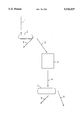
- FIGURE is a schematic illustration of the process in accordance with the present invention.
- the basis of the present invention is based on the natural phenomenon that bentonites, which exist in nature with an Fe 2 O 3 content, have magnetic properties.
- the invention is further based on the fact that the higher the amount of bentonite, the higher the degree of oolitic levels, and/or the higher the amount of dead-burned bentonite in the used sand, the more expensive the mechanical or thermal treatment is for regenerating the used sand.
- the regeneration time amounts to 30 to 35 minutes and the yield of residual material amounts to 30 to 40% of the total material treated.
- the used foundry sand can be separated into two types of sand streams, one sand stream being relatively high in sand particles and free of bentonite and oolitic particles and the second stream having a high degree of oolitic particles.
- the process of the present invention is particularly suitable when the used foundry sand contains less than 65% molding sand as the efficiency of the separation process is superior at such molding sand levels.
- a used foundry sand stream is delivered via line 1 to a high power magnetic separator 2 for separating the molding sand into a substantially non-magnetic fraction 3 and a highly magnetic fraction 4.
- the sand is fed to and from the separator at a rate of between about 0.2 to 1.0 meter per second.
- the highly magnetic fraction or stream 4 contains a high degree of oolitic particles while the substantially non-magnetic or less magnetic stream 3 has a relatively high degree of sand particles and a small amount of bentonite when compared to stream 4.
- the substantially non-magnetic stream 3 still contains small trace amounts of molding sand with bentonite, the stream cannot be reused directly as core sand. Accordingly, the substantially non-magnetic stream 3 is delivered to regeneration plant 5 for mechanical and or thermal regeneration as known in the art.
- the actual time required for regenerating the substantially non-magnetic stream 3 in the regeneration unit 5 is substantially less, normally one half the amount of time, that would be required when processing the used sand without magnetic separation.
- feeders as a rule contain binder such as sodium silicate which interfere with the reuse of the regenerated sand.
- binder such as sodium silicate which interfere with the reuse of the regenerated sand.
- the regenerated sand stream 6 from the regeneration plant 5 may be subject to further high powered magnetic separation in magnetic separator 7 for further removing powdered bentonite particles, exothermic feeders, and the like via line 8 from the magnetic fraction in line 9.
- micropellets in the form of very fine quartz particles mixed with binding clays and having grain sizes of smaller than 2 millimeters which result from mechanical abrasion in the regenerating process 5 may remain in the regenerated sand stream 6. These micro pellets likewise can be removed by the subsequent magnetic separation in magnetic separator 7.
Landscapes
- Engineering & Computer Science (AREA)
- Mechanical Engineering (AREA)
- Molds, Cores, And Manufacturing Methods Thereof (AREA)
- Mold Materials And Core Materials (AREA)
Abstract
A process for regenerating used foundry sand having high oolitic level and, more particularly, a process as aforesaid wherein the used foundry sand is subjected to magnetic separation by one or more high power magnets for dividing the used foundry sand into a first highly magnetic stream containing a high degree of oolite particles and a second less magnetic stream having a relatively high degree of sand particles.
Description
The present invention is drawn to a process for regenerating used foundry sand having high oolitic levels and, more particularly, a process as aforesaid wherein the used foundry sand is subjected to magnetic separation by one or more high power magnets for dividing the used foundry sand into a first highly magnetic stream containing a high degree of oolite particles and a second less magnetic stream having a relatively high degree of sand particles.
It is known in the prior art to reclaim used foundry sand to mechanical and/or thermal treatment followed by a separating process which separates the sand granules from the oolith materials. Typical prior art processes are disclosed for example in U.S. Pat. No. 3,312,403 and U.S. Pat. No. 5,163,562. In addition to the known processes disclosed above, German Document DE 36 42 916 discloses a process for reclaiming used foundry sand wherein the foundry sand is subjected sequentially to the steps of screening, annealing, pressure blasting and magnetic separation. The aforesaid process disclosed in the German document is very expensive. In particular, because of the annealing step in the German process, a very high energy is required which adds considerably to the expense of the process.
In order to overcome the problems associated with known sand recovery processes, it is the object of the present invention to provide a process which allows for the separation of new sand particles which are easily regenerable from those particles which are difficult to regenerate prior to performing the actual mechanical and or thermal regeneration steps.
The foregoing object is achieved by way of the present invention wherein used foundry sand is separated by magnetic means into two magnetic streams, a first highly magnetic stream containing a high degree of oolite particles which stream is difficult to generate and a second less magnetic stream having a relatively high degree of sand particles and small amount of bentonite when compared to the first magnetic stream, the second stream being relatively easy to regenerate. In accordance with the present invention, the separation takes place by using at least one high powered magnet for separating the used foundry sand into the two streams as discussed above. Once separated into two streams, the second less magnetic stream having a relatively high degree of sand particles and small amounts of bentonite can be regenerated by known processes in a relatively easy and inexpensive manner.
The FIGURE is a schematic illustration of the process in accordance with the present invention.
The process of the present invention will be described hereinbelow with reference to the FIGURE.
The basis of the present invention is based on the natural phenomenon that bentonites, which exist in nature with an Fe2 O3 content, have magnetic properties. The invention is further based on the fact that the higher the amount of bentonite, the higher the degree of oolitic levels, and/or the higher the amount of dead-burned bentonite in the used sand, the more expensive the mechanical or thermal treatment is for regenerating the used sand. In the case of a typical used sand having a level of oolitic particles of around 12% the regeneration time amounts to 30 to 35 minutes and the yield of residual material amounts to 30 to 40% of the total material treated.
In accordance with the present invention, by employing a high power magnet, preferably a permanent magnet, the used foundry sand can be separated into two types of sand streams, one sand stream being relatively high in sand particles and free of bentonite and oolitic particles and the second stream having a high degree of oolitic particles. The process of the present invention is particularly suitable when the used foundry sand contains less than 65% molding sand as the efficiency of the separation process is superior at such molding sand levels.
With reference to the FIGURE, a used foundry sand stream is delivered via line 1 to a high power magnetic separator 2 for separating the molding sand into a substantially non-magnetic fraction 3 and a highly magnetic fraction 4. In order to achieve a high degree of separation by the magnetic separator 2 the sand is fed to and from the separator at a rate of between about 0.2 to 1.0 meter per second. The highly magnetic fraction or stream 4 contains a high degree of oolitic particles while the substantially non-magnetic or less magnetic stream 3 has a relatively high degree of sand particles and a small amount of bentonite when compared to stream 4.
As the substantially non-magnetic stream 3 still contains small trace amounts of molding sand with bentonite, the stream cannot be reused directly as core sand. Accordingly, the substantially non-magnetic stream 3 is delivered to regeneration plant 5 for mechanical and or thermal regeneration as known in the art. The actual time required for regenerating the substantially non-magnetic stream 3 in the regeneration unit 5 is substantially less, normally one half the amount of time, that would be required when processing the used sand without magnetic separation.
Accordingly, by providing an upstream magnetic separation prior to the regeneration treatment, a reduction in regenerating costs is realized. In addition, a further advantage is obtained when using thermal regeneration in the regeneration treatment 5. By separating out bentonite-containing sands prior to the thermal regeneration, the bentonite-containing sands are not sintered and thus do not lead to an increase in the pH of the regenerated material. Tests have shown that sand separated by means of high powered magnets after a heat treatment produces 30% higher course strength mold than the regenerated materials without a preliminary separation stage in accordance with the present invention. In addition to the foregoing, the process of the present invention allows for so-called exothermic feeders to be removed out of the sand. These feeders as a rule contain binder such as sodium silicate which interfere with the reuse of the regenerated sand. By employing the process of the present invention, these exothermic feeders are separated out by the magnetic separation. The resulting sand particles may be recycled to a sand mold making unit (not shown).
With further reference to the FIGURE, the regenerated sand stream 6 from the regeneration plant 5 may be subject to further high powered magnetic separation in magnetic separator 7 for further removing powdered bentonite particles, exothermic feeders, and the like via line 8 from the magnetic fraction in line 9. In addition, micropellets in the form of very fine quartz particles mixed with binding clays and having grain sizes of smaller than 2 millimeters which result from mechanical abrasion in the regenerating process 5 may remain in the regenerated sand stream 6. These micro pellets likewise can be removed by the subsequent magnetic separation in magnetic separator 7.
It is to be understood that the invention is not limited to the illustrations described and shown herein, which are deemed to be merely illustrative of the best modes of carrying out the invention, and which are susceptible of modification of form, size, arrangement of parts and details of operation. The invention rather is intended to encompass all such modifications which are within its spirit and scope as defined by the claims.
Claims (8)
1. A process for regenerating used foundry sand having high oolitic levels comprises:
(a) feeding used foundry sand having high oolitic levels to a magnetic separator;
(b) separating said used foundry sand with a magnetic separator into a first highly magnetic stream containing a high degree of oolitic particles and a second less substantially non-magnetic stream having a relatively high degree of sand particles and smaller amounts of bentonite when compared to the first highly magnetic stream;
(c) subjecting said second less magnetic stream to regeneration treatment for separating the bentonite from the sand particles to produce a regenerated sand stream; and
(d) subjecting said regenerated sand stream to further magnetic separation in a second magnetic separator for further removal of powdered bentonite particles and exothermic feeders.
2. A process according to claim 1 wherein said regeneration treatment is mechanical regeneration.
3. A process according to claim 1 wherein said regeneration treatment is pneumatic regeneration.
4. A process according to claim 1 wherein said regeneration treatment is thermal regeneration.
5. A process according to claim 1 feeding the used foundry sand to and from the magnetic separator at a rate of between about 0.2 to 1.0 meter per second.
6. A process according to claim 1 wherein said first highly magnetic stream is less than or equal to 40% by weight of the used foundry sand.
7. A process according to claim 1 wherein the used foundry sand contains up to 65% by weight molding sand.
8. A process according to claim 7 wherein said first highly magnetic stream is less than or equal to 40% by weight of the used foundry sand.
Applications Claiming Priority (2)
| Application Number | Priority Date | Filing Date | Title |
|---|---|---|---|
| SE03690/93 | 1993-12-10 | ||
| CH03690/93A CH689202A5 (en) | 1993-12-10 | 1993-12-10 | Method for regenerating foundry used sand with shares of weakly magnetic materials. |
Publications (1)
| Publication Number | Publication Date |
|---|---|
| US5526937A true US5526937A (en) | 1996-06-18 |
Family
ID=4261429
Family Applications (1)
| Application Number | Title | Priority Date | Filing Date |
|---|---|---|---|
| US08/347,518 Expired - Fee Related US5526937A (en) | 1993-12-10 | 1994-11-30 | Process for regenerating used foundry sand having high oolitic levels |
Country Status (6)
| Country | Link |
|---|---|
| US (1) | US5526937A (en) |
| BR (1) | BR9404908A (en) |
| CH (1) | CH689202A5 (en) |
| DE (1) | DE4442974C2 (en) |
| FR (1) | FR2713523B1 (en) |
| NL (1) | NL193685C (en) |
Cited By (7)
| Publication number | Priority date | Publication date | Assignee | Title |
|---|---|---|---|---|
| US20020110044A1 (en) * | 2001-01-15 | 2002-08-15 | Sintokogio, Ltd. | Method for making sand covered with bentonite, the sand, and a method for recycling molding sand for a mold using the sand covered by bentonite |
| EP2191909A1 (en) | 2008-11-14 | 2010-06-02 | Société Francaise d'Etudes Minières | Method and installation of recycling used green foundry sands |
| JP2014024097A (en) * | 2012-07-27 | 2014-02-06 | Asahi Tec Corp | Regeneration method of casting sand |
| WO2024121205A1 (en) * | 2022-12-06 | 2024-06-13 | HÜTTENES-ALBERTUS Chemische Werke Gesellschaft mit beschränkter Haftung | Method for guiding a moulding material in a moulding material cycle comprising two or more cycles |
| WO2024121197A1 (en) * | 2022-12-06 | 2024-06-13 | HÜTTENES-ALBERTUS Chemische Werke Gesellschaft mit beschränkter Haftung | Method for guiding a moulding material in a moulding material cycle comprising two or more cycles |
| WO2024121195A1 (en) * | 2022-12-06 | 2024-06-13 | HÜTTENES-ALBERTUS Chemische Werke Gesellschaft mit beschränkter Haftung | Method for reducing carbon-based emissions and/or carbon-based casting defects during a moulding cycle of a moulding material containing smectite-containing clay, said moulding cycle comprising two or more cycles. |
| WO2024121198A1 (en) * | 2022-12-06 | 2024-06-13 | HÜTTENES-ALBERTUS Chemische Werke Gesellschaft mit beschränkter Haftung | Method for guiding a moulding material in a moulding material cycle comprising two or more cycles |
Families Citing this family (2)
| Publication number | Priority date | Publication date | Assignee | Title |
|---|---|---|---|---|
| CH688543A5 (en) * | 1992-10-28 | 1997-11-14 | Fischer Georg Giessereianlagen | Regeneration of old foundry sand with magnetic constituents |
| DE102010030451A1 (en) | 2010-06-23 | 2011-12-29 | Hüttenes-Albertus Chemische Werke GmbH | Surface-sealed chamotte as molding base material for the production of casting molds |
Citations (9)
| Publication number | Priority date | Publication date | Assignee | Title |
|---|---|---|---|---|
| DE238341C (en) * | ||||
| US3312403A (en) * | 1964-12-31 | 1967-04-04 | Zifferer Lothar Robert | Machine and process for reclaiming foundry sand |
| US3764078A (en) * | 1970-12-01 | 1973-10-09 | Applic Prod Ind | Apparatus for regenerating foundry sand |
| JPS5686646A (en) * | 1979-12-18 | 1981-07-14 | Tomio Ino | Refining method of molding sand |
| US4491277A (en) * | 1981-01-30 | 1985-01-01 | Klockner-Humboldt-Deutz Ag | Method and apparatus for reclaiming foundry sand |
| US4671867A (en) * | 1984-03-21 | 1987-06-09 | Centre Stephanois De Recherches Mecaniques Hydromecanique Et Frottement | Method and means for treating foundry sands and the like |
| US4700766A (en) * | 1984-01-11 | 1987-10-20 | Gsr Sandregenerierungsgesellschaft Mbh | Process and apparatus for reclaiming foundry scrap sands |
| DE3642916A1 (en) * | 1986-12-16 | 1988-06-30 | Kloeckner Humboldt Deutz Ag | Regeneration of used sand |
| US5279741A (en) * | 1990-03-20 | 1994-01-18 | Kuttner Gmbh & Co. Kg | Process for regenerating used foundry sand |
-
1993
- 1993-12-10 CH CH03690/93A patent/CH689202A5/en not_active IP Right Cessation
-
1994
- 1994-11-30 US US08/347,518 patent/US5526937A/en not_active Expired - Fee Related
- 1994-12-02 DE DE4442974A patent/DE4442974C2/en not_active Expired - Fee Related
- 1994-12-09 FR FR9414857A patent/FR2713523B1/en not_active Expired - Fee Related
- 1994-12-09 NL NL9402083A patent/NL193685C/en not_active IP Right Cessation
- 1994-12-09 BR BR9404908A patent/BR9404908A/en not_active IP Right Cessation
Patent Citations (9)
| Publication number | Priority date | Publication date | Assignee | Title |
|---|---|---|---|---|
| DE238341C (en) * | ||||
| US3312403A (en) * | 1964-12-31 | 1967-04-04 | Zifferer Lothar Robert | Machine and process for reclaiming foundry sand |
| US3764078A (en) * | 1970-12-01 | 1973-10-09 | Applic Prod Ind | Apparatus for regenerating foundry sand |
| JPS5686646A (en) * | 1979-12-18 | 1981-07-14 | Tomio Ino | Refining method of molding sand |
| US4491277A (en) * | 1981-01-30 | 1985-01-01 | Klockner-Humboldt-Deutz Ag | Method and apparatus for reclaiming foundry sand |
| US4700766A (en) * | 1984-01-11 | 1987-10-20 | Gsr Sandregenerierungsgesellschaft Mbh | Process and apparatus for reclaiming foundry scrap sands |
| US4671867A (en) * | 1984-03-21 | 1987-06-09 | Centre Stephanois De Recherches Mecaniques Hydromecanique Et Frottement | Method and means for treating foundry sands and the like |
| DE3642916A1 (en) * | 1986-12-16 | 1988-06-30 | Kloeckner Humboldt Deutz Ag | Regeneration of used sand |
| US5279741A (en) * | 1990-03-20 | 1994-01-18 | Kuttner Gmbh & Co. Kg | Process for regenerating used foundry sand |
Cited By (8)
| Publication number | Priority date | Publication date | Assignee | Title |
|---|---|---|---|---|
| US20020110044A1 (en) * | 2001-01-15 | 2002-08-15 | Sintokogio, Ltd. | Method for making sand covered with bentonite, the sand, and a method for recycling molding sand for a mold using the sand covered by bentonite |
| US6591891B2 (en) * | 2001-01-15 | 2003-07-15 | Sintokogio Ltd. | Method for making sand covered with bentonite, the sand, and a method for recycling molding sand for a mold using the sand covered by bentonite |
| EP2191909A1 (en) | 2008-11-14 | 2010-06-02 | Société Francaise d'Etudes Minières | Method and installation of recycling used green foundry sands |
| JP2014024097A (en) * | 2012-07-27 | 2014-02-06 | Asahi Tec Corp | Regeneration method of casting sand |
| WO2024121205A1 (en) * | 2022-12-06 | 2024-06-13 | HÜTTENES-ALBERTUS Chemische Werke Gesellschaft mit beschränkter Haftung | Method for guiding a moulding material in a moulding material cycle comprising two or more cycles |
| WO2024121197A1 (en) * | 2022-12-06 | 2024-06-13 | HÜTTENES-ALBERTUS Chemische Werke Gesellschaft mit beschränkter Haftung | Method for guiding a moulding material in a moulding material cycle comprising two or more cycles |
| WO2024121195A1 (en) * | 2022-12-06 | 2024-06-13 | HÜTTENES-ALBERTUS Chemische Werke Gesellschaft mit beschränkter Haftung | Method for reducing carbon-based emissions and/or carbon-based casting defects during a moulding cycle of a moulding material containing smectite-containing clay, said moulding cycle comprising two or more cycles. |
| WO2024121198A1 (en) * | 2022-12-06 | 2024-06-13 | HÜTTENES-ALBERTUS Chemische Werke Gesellschaft mit beschränkter Haftung | Method for guiding a moulding material in a moulding material cycle comprising two or more cycles |
Also Published As
| Publication number | Publication date |
|---|---|
| DE4442974A1 (en) | 1995-06-14 |
| FR2713523B1 (en) | 1998-11-06 |
| BR9404908A (en) | 1995-08-08 |
| NL9402083A (en) | 1995-07-03 |
| NL193685B (en) | 2000-03-01 |
| NL193685C (en) | 2000-07-04 |
| DE4442974C2 (en) | 1996-04-18 |
| CH689202A5 (en) | 1998-12-15 |
| FR2713523A1 (en) | 1995-06-16 |
Similar Documents
| Publication | Publication Date | Title |
|---|---|---|
| CN101758163B (en) | Large-scale self-hardening sand regeneration apparatus for crushing of vibrating shakeout | |
| EP3500379B1 (en) | Processes for recovering sand and active clay from foundry waste | |
| EP1387729B1 (en) | Process for recovering sand and bentonite clay used in a foundry | |
| US5219123A (en) | Process for the selective reclamation treatment of used foundry sand | |
| EP3823760B1 (en) | Recovering sand, bentonite and organics from foundry sand waste | |
| US5540270A (en) | Process for wet regeneration of granular bulk materials charged with impurities and pollutants | |
| US3857201A (en) | Regenerating of casting sand | |
| US5167270A (en) | Method for the treatment of foundry sand and/or core sand | |
| TW388727B (en) | Method and apparatus for cold reclamation of foundry sand | |
| NL193685C (en) | Method for regenerating old foundry sand with contents of weakly magnetic substances. | |
| JP2001038449A (en) | Casting sand regeneration treatment device and casting sand regeneration method | |
| JPH0413438A (en) | A method for recycling used sand in foundries and a system for doing so | |
| JP5420475B2 (en) | How to recycle foundry sand | |
| KR100305273B1 (en) | Reproduction processing method of waste casting sand for ASCON | |
| JPH0455038A (en) | Method for recycling regenerated sand of casting mold | |
| JPS6253255B2 (en) | ||
| JPH06134546A (en) | How to reclaim old foundry sand | |
| SU1458061A1 (en) | Method of regeneration of waste moulding and core sands | |
| CN118558939A (en) | Regeneration and reuse method of foundry sodium silicate waste sand and regenerated sand prepared by same | |
| CN201596747U (en) | Large self-hardening sand vibrating shakeout crushing regeneration device | |
| SU996053A1 (en) | Electric corundum powder regeneration method | |
| JPS61269956A (en) | Method for separating and recovering used molding sand | |
| Bauer | Thermische und mechanische Regenerierung von Giesserei-Altsanden. Abschlussbericht.(Thermal and mechanical regeneration of old foundry sand. Final report) | |
| JPS59163047A (en) | Method and device for reconditioning old molding sand | |
| HU186798B (en) | Process for the regeneration of moulding sand bound with water-glass |
Legal Events
| Date | Code | Title | Description |
|---|---|---|---|
| AS | Assignment |
Owner name: GEORG FISCHER GIESSEREIANLAGEN AG, SWITZERLAND Free format text: ASSIGNMENT OF ASSIGNORS INTEREST;ASSIGNOR:ROSSMANITH, PETER;REEL/FRAME:007374/0176 Effective date: 19950227 |
|
| FEPP | Fee payment procedure |
Free format text: PAYOR NUMBER ASSIGNED (ORIGINAL EVENT CODE: ASPN); ENTITY STATUS OF PATENT OWNER: LARGE ENTITY |
|
| FPAY | Fee payment |
Year of fee payment: 4 |
|
| LAPS | Lapse for failure to pay maintenance fees | ||
| FP | Lapsed due to failure to pay maintenance fee |
Effective date: 20040618 |
|
| STCH | Information on status: patent discontinuation |
Free format text: PATENT EXPIRED DUE TO NONPAYMENT OF MAINTENANCE FEES UNDER 37 CFR 1.362 |