US5525592A - Alkaline gland fluid proteins and methods of enhancing and inhibiting sperm motility - Google Patents
Alkaline gland fluid proteins and methods of enhancing and inhibiting sperm motility Download PDFInfo
- Publication number
- US5525592A US5525592A US08/160,025 US16002593A US5525592A US 5525592 A US5525592 A US 5525592A US 16002593 A US16002593 A US 16002593A US 5525592 A US5525592 A US 5525592A
- Authority
- US
- United States
- Prior art keywords
- sperm
- motility
- agf
- purified
- protein
- Prior art date
- Legal status (The legal status is an assumption and is not a legal conclusion. Google has not performed a legal analysis and makes no representation as to the accuracy of the status listed.)
- Expired - Lifetime
Links
- 102000004169 proteins and genes Human genes 0.000 title claims abstract description 90
- 108090000623 proteins and genes Proteins 0.000 title claims abstract description 90
- 230000019100 sperm motility Effects 0.000 title claims abstract description 54
- 210000004907 gland Anatomy 0.000 title claims abstract description 30
- 238000000034 method Methods 0.000 title claims abstract description 30
- 239000012530 fluid Substances 0.000 title claims abstract description 15
- 230000002708 enhancing effect Effects 0.000 title description 2
- 230000002401 inhibitory effect Effects 0.000 title 1
- 230000004899 motility Effects 0.000 claims abstract description 43
- 230000001965 increasing effect Effects 0.000 claims abstract description 22
- 238000002415 sodium dodecyl sulfate polyacrylamide gel electrophoresis Methods 0.000 claims abstract description 19
- 239000000203 mixture Substances 0.000 claims abstract description 14
- 230000007423 decrease Effects 0.000 claims abstract description 10
- 241001670157 Gymnura Species 0.000 claims description 39
- 238000000338 in vitro Methods 0.000 claims description 25
- 239000003937 drug carrier Substances 0.000 claims description 3
- 239000000934 spermatocidal agent Substances 0.000 claims description 3
- 239000003433 contraceptive agent Substances 0.000 abstract description 7
- 241000251468 Actinopterygii Species 0.000 abstract description 6
- 230000002254 contraceptive effect Effects 0.000 abstract description 6
- 238000011282 treatment Methods 0.000 description 45
- 238000010790 dilution Methods 0.000 description 29
- 239000012895 dilution Substances 0.000 description 29
- 230000000694 effects Effects 0.000 description 29
- 230000000750 progressive effect Effects 0.000 description 24
- 241000251729 Elasmobranchii Species 0.000 description 20
- 239000012891 Ringer solution Substances 0.000 description 20
- 108091003079 Bovine Serum Albumin Proteins 0.000 description 19
- 229940098773 bovine serum albumin Drugs 0.000 description 19
- 230000033001 locomotion Effects 0.000 description 17
- 239000000499 gel Substances 0.000 description 13
- 230000008859 change Effects 0.000 description 12
- 230000004720 fertilization Effects 0.000 description 11
- BYPFEZZEUUWMEJ-UHFFFAOYSA-N Pentoxifylline Chemical compound O=C1N(CCCCC(=O)C)C(=O)N(C)C2=C1N(C)C=N2 BYPFEZZEUUWMEJ-UHFFFAOYSA-N 0.000 description 10
- 235000013601 eggs Nutrition 0.000 description 10
- 229960001476 pentoxifylline Drugs 0.000 description 10
- 239000012634 fragment Substances 0.000 description 9
- 238000005406 washing Methods 0.000 description 9
- 239000002609 medium Substances 0.000 description 8
- 208000021267 infertility disease Diseases 0.000 description 7
- RYYVLZVUVIJVGH-UHFFFAOYSA-N caffeine Chemical compound CN1C(=O)N(C)C(=O)C2=C1N=CN2C RYYVLZVUVIJVGH-UHFFFAOYSA-N 0.000 description 6
- 210000000287 oocyte Anatomy 0.000 description 6
- 239000000523 sample Substances 0.000 description 6
- 238000001727 in vivo Methods 0.000 description 5
- 238000011534 incubation Methods 0.000 description 5
- 238000002264 polyacrylamide gel electrophoresis Methods 0.000 description 5
- 238000004659 sterilization and disinfection Methods 0.000 description 5
- QKNYBSVHEMOAJP-UHFFFAOYSA-N 2-amino-2-(hydroxymethyl)propane-1,3-diol;hydron;chloride Chemical compound Cl.OCC(N)(CO)CO QKNYBSVHEMOAJP-UHFFFAOYSA-N 0.000 description 4
- 108020004414 DNA Proteins 0.000 description 4
- TWRXJAOTZQYOKJ-UHFFFAOYSA-L Magnesium chloride Chemical compound [Mg+2].[Cl-].[Cl-] TWRXJAOTZQYOKJ-UHFFFAOYSA-L 0.000 description 4
- UIIMBOGNXHQVGW-UHFFFAOYSA-M Sodium bicarbonate Chemical compound [Na+].OC([O-])=O UIIMBOGNXHQVGW-UHFFFAOYSA-M 0.000 description 4
- FAPWRFPIFSIZLT-UHFFFAOYSA-M Sodium chloride Chemical compound [Na+].[Cl-] FAPWRFPIFSIZLT-UHFFFAOYSA-M 0.000 description 4
- DBMJMQXJHONAFJ-UHFFFAOYSA-M Sodium laurylsulphate Chemical compound [Na+].CCCCCCCCCCCCOS([O-])(=O)=O DBMJMQXJHONAFJ-UHFFFAOYSA-M 0.000 description 4
- 238000004458 analytical method Methods 0.000 description 4
- 230000006870 function Effects 0.000 description 4
- 108020004707 nucleic acids Proteins 0.000 description 4
- 102000039446 nucleic acids Human genes 0.000 description 4
- 150000007523 nucleic acids Chemical class 0.000 description 4
- 210000000582 semen Anatomy 0.000 description 4
- 239000000725 suspension Substances 0.000 description 4
- 210000001177 vas deferen Anatomy 0.000 description 4
- QFVHZQCOUORWEI-UHFFFAOYSA-N 4-[(4-anilino-5-sulfonaphthalen-1-yl)diazenyl]-5-hydroxynaphthalene-2,7-disulfonic acid Chemical compound C=12C(O)=CC(S(O)(=O)=O)=CC2=CC(S(O)(=O)=O)=CC=1N=NC(C1=CC=CC(=C11)S(O)(=O)=O)=CC=C1NC1=CC=CC=C1 QFVHZQCOUORWEI-UHFFFAOYSA-N 0.000 description 3
- LPHGQDQBBGAPDZ-UHFFFAOYSA-N Isocaffeine Natural products CN1C(=O)N(C)C(=O)C2=C1N(C)C=N2 LPHGQDQBBGAPDZ-UHFFFAOYSA-N 0.000 description 3
- 229930006000 Sucrose Natural products 0.000 description 3
- 229960001948 caffeine Drugs 0.000 description 3
- VJEONQKOZGKCAK-UHFFFAOYSA-N caffeine Natural products CN1C(=O)N(C)C(=O)C2=C1C=CN2C VJEONQKOZGKCAK-UHFFFAOYSA-N 0.000 description 3
- 150000001875 compounds Chemical class 0.000 description 3
- 230000003247 decreasing effect Effects 0.000 description 3
- 229940079593 drug Drugs 0.000 description 3
- 239000003814 drug Substances 0.000 description 3
- 238000002474 experimental method Methods 0.000 description 3
- 208000000509 infertility Diseases 0.000 description 3
- 230000036512 infertility Effects 0.000 description 3
- 231100000535 infertility Toxicity 0.000 description 3
- 230000035935 pregnancy Effects 0.000 description 3
- 238000000746 purification Methods 0.000 description 3
- 239000012146 running buffer Substances 0.000 description 3
- 239000005720 sucrose Substances 0.000 description 3
- WCDDVEOXEIYWFB-VXORFPGASA-N (2s,3s,4r,5r,6r)-3-[(2s,3r,5s,6r)-3-acetamido-5-hydroxy-6-(hydroxymethyl)oxan-2-yl]oxy-4,5,6-trihydroxyoxane-2-carboxylic acid Chemical compound CC(=O)N[C@@H]1C[C@H](O)[C@@H](CO)O[C@H]1O[C@@H]1[C@@H](C(O)=O)O[C@@H](O)[C@H](O)[C@H]1O WCDDVEOXEIYWFB-VXORFPGASA-N 0.000 description 2
- 102100026041 Acrosin Human genes 0.000 description 2
- 108090000107 Acrosin Proteins 0.000 description 2
- HRPVXLWXLXDGHG-UHFFFAOYSA-N Acrylamide Chemical compound NC(=O)C=C HRPVXLWXLXDGHG-UHFFFAOYSA-N 0.000 description 2
- 241000251730 Chondrichthyes Species 0.000 description 2
- 241001327079 Dasyatis sabina Species 0.000 description 2
- 238000009007 Diagnostic Kit Methods 0.000 description 2
- 108091006905 Human Serum Albumin Proteins 0.000 description 2
- 102000008100 Human Serum Albumin Human genes 0.000 description 2
- 241000251738 Leucoraja erinacea Species 0.000 description 2
- 241001465754 Metazoa Species 0.000 description 2
- 108091005804 Peptidases Proteins 0.000 description 2
- 108010001014 Plasminogen Activators Proteins 0.000 description 2
- 102000001938 Plasminogen Activators Human genes 0.000 description 2
- 239000004365 Protease Substances 0.000 description 2
- 102100037486 Reverse transcriptase/ribonuclease H Human genes 0.000 description 2
- CZMRCDWAGMRECN-UGDNZRGBSA-N Sucrose Chemical compound O[C@H]1[C@H](O)[C@@H](CO)O[C@@]1(CO)O[C@@H]1[C@H](O)[C@@H](O)[C@H](O)[C@@H](CO)O1 CZMRCDWAGMRECN-UGDNZRGBSA-N 0.000 description 2
- XSQUKJJJFZCRTK-UHFFFAOYSA-N Urea Chemical compound NC(N)=O XSQUKJJJFZCRTK-UHFFFAOYSA-N 0.000 description 2
- 230000030120 acrosome reaction Effects 0.000 description 2
- 230000008901 benefit Effects 0.000 description 2
- 239000004202 carbamide Substances 0.000 description 2
- 210000004027 cell Anatomy 0.000 description 2
- 238000005119 centrifugation Methods 0.000 description 2
- 239000000470 constituent Substances 0.000 description 2
- 239000000356 contaminant Substances 0.000 description 2
- 230000002596 correlated effect Effects 0.000 description 2
- 238000010828 elution Methods 0.000 description 2
- 239000011521 glass Substances 0.000 description 2
- 230000036541 health Effects 0.000 description 2
- 229940014041 hyaluronate Drugs 0.000 description 2
- 229910001629 magnesium chloride Inorganic materials 0.000 description 2
- 239000000463 material Substances 0.000 description 2
- 230000001338 necrotic effect Effects 0.000 description 2
- 230000008520 organization Effects 0.000 description 2
- 210000003101 oviduct Anatomy 0.000 description 2
- 229940127126 plasminogen activator Drugs 0.000 description 2
- 235000019419 proteases Nutrition 0.000 description 2
- 230000009467 reduction Effects 0.000 description 2
- 238000000926 separation method Methods 0.000 description 2
- 229910000030 sodium bicarbonate Inorganic materials 0.000 description 2
- 239000011780 sodium chloride Substances 0.000 description 2
- 238000010186 staining Methods 0.000 description 2
- 229910052712 strontium Inorganic materials 0.000 description 2
- CIOAGBVUUVVLOB-UHFFFAOYSA-N strontium atom Chemical compound [Sr] CIOAGBVUUVVLOB-UHFFFAOYSA-N 0.000 description 2
- 239000000126 substance Substances 0.000 description 2
- 239000000829 suppository Substances 0.000 description 2
- 210000004340 zona pellucida Anatomy 0.000 description 2
- DGVVWUTYPXICAM-UHFFFAOYSA-N β‐Mercaptoethanol Chemical compound OCCS DGVVWUTYPXICAM-UHFFFAOYSA-N 0.000 description 2
- WBLNTYQENSLQLZ-UHFFFAOYSA-N 1-(6-methyl-5-oxoheptyl)-3,7-dihydropurine-2,6-dione Chemical compound CC(C(CCCCN1C(=O)NC=2N=CNC=2C1=O)=O)C WBLNTYQENSLQLZ-UHFFFAOYSA-N 0.000 description 1
- PFWLFWPASULGAN-UHFFFAOYSA-N 7-methylxanthine Chemical compound N1C(=O)NC(=O)C2=C1N=CN2C PFWLFWPASULGAN-UHFFFAOYSA-N 0.000 description 1
- UXVMQQNJUSDDNG-UHFFFAOYSA-L Calcium chloride Chemical compound [Cl-].[Cl-].[Ca+2] UXVMQQNJUSDDNG-UHFFFAOYSA-L 0.000 description 1
- 108091026890 Coding region Proteins 0.000 description 1
- 241000238557 Decapoda Species 0.000 description 1
- 102000002322 Egg Proteins Human genes 0.000 description 1
- 108010000912 Egg Proteins Proteins 0.000 description 1
- 108090000790 Enzymes Proteins 0.000 description 1
- 102000004190 Enzymes Human genes 0.000 description 1
- WQZGKKKJIJFFOK-GASJEMHNSA-N Glucose Natural products OC[C@H]1OC(O)[C@H](O)[C@@H](O)[C@@H]1O WQZGKKKJIJFFOK-GASJEMHNSA-N 0.000 description 1
- 241000251188 Holocephali Species 0.000 description 1
- 108020004711 Nucleic Acid Probes Proteins 0.000 description 1
- 102000007056 Recombinant Fusion Proteins Human genes 0.000 description 1
- 108010008281 Recombinant Fusion Proteins Proteins 0.000 description 1
- 210000000683 abdominal cavity Anatomy 0.000 description 1
- 230000002159 abnormal effect Effects 0.000 description 1
- 125000003275 alpha amino acid group Chemical group 0.000 description 1
- 230000004071 biological effect Effects 0.000 description 1
- 210000001124 body fluid Anatomy 0.000 description 1
- 239000010839 body fluid Substances 0.000 description 1
- 238000009835 boiling Methods 0.000 description 1
- 244000309464 bull Species 0.000 description 1
- 239000001110 calcium chloride Substances 0.000 description 1
- 229910001628 calcium chloride Inorganic materials 0.000 description 1
- 230000015556 catabolic process Effects 0.000 description 1
- 230000001413 cellular effect Effects 0.000 description 1
- 210000003850 cellular structure Anatomy 0.000 description 1
- 210000003756 cervix mucus Anatomy 0.000 description 1
- 210000000349 chromosome Anatomy 0.000 description 1
- 238000010367 cloning Methods 0.000 description 1
- 239000012468 concentrated sample Substances 0.000 description 1
- 229940124558 contraceptive agent Drugs 0.000 description 1
- 230000000875 corresponding effect Effects 0.000 description 1
- 238000006731 degradation reaction Methods 0.000 description 1
- 230000002939 deleterious effect Effects 0.000 description 1
- 239000008121 dextrose Substances 0.000 description 1
- 238000000502 dialysis Methods 0.000 description 1
- 235000005911 diet Nutrition 0.000 description 1
- 230000037213 diet Effects 0.000 description 1
- 230000000687 effect on sperms Effects 0.000 description 1
- 238000001962 electrophoresis Methods 0.000 description 1
- 210000000981 epithelium Anatomy 0.000 description 1
- 239000006260 foam Substances 0.000 description 1
- 230000037406 food intake Effects 0.000 description 1
- 230000002068 genetic effect Effects 0.000 description 1
- 239000011544 gradient gel Substances 0.000 description 1
- 239000001963 growth medium Substances 0.000 description 1
- 230000009931 harmful effect Effects 0.000 description 1
- 238000004128 high performance liquid chromatography Methods 0.000 description 1
- 230000006698 induction Effects 0.000 description 1
- 230000005764 inhibitory process Effects 0.000 description 1
- 230000009027 insemination Effects 0.000 description 1
- 235000015110 jellies Nutrition 0.000 description 1
- 239000007788 liquid Substances 0.000 description 1
- 244000144972 livestock Species 0.000 description 1
- 230000008376 long-term health Effects 0.000 description 1
- 230000007774 longterm Effects 0.000 description 1
- 239000006210 lotion Substances 0.000 description 1
- 210000004379 membrane Anatomy 0.000 description 1
- 239000012528 membrane Substances 0.000 description 1
- 238000000386 microscopy Methods 0.000 description 1
- 238000010369 molecular cloning Methods 0.000 description 1
- 238000002703 mutagenesis Methods 0.000 description 1
- 231100000350 mutagenesis Toxicity 0.000 description 1
- 239000002853 nucleic acid probe Substances 0.000 description 1
- 210000000056 organ Anatomy 0.000 description 1
- 210000004681 ovum Anatomy 0.000 description 1
- 239000008188 pellet Substances 0.000 description 1
- 230000035515 penetration Effects 0.000 description 1
- 210000004303 peritoneum Anatomy 0.000 description 1
- 239000008194 pharmaceutical composition Substances 0.000 description 1
- 230000019612 pigmentation Effects 0.000 description 1
- 229920002401 polyacrylamide Polymers 0.000 description 1
- 230000008569 process Effects 0.000 description 1
- 108090000765 processed proteins & peptides Proteins 0.000 description 1
- 230000002035 prolonged effect Effects 0.000 description 1
- 238000001742 protein purification Methods 0.000 description 1
- 239000012521 purified sample Substances 0.000 description 1
- 230000001850 reproductive effect Effects 0.000 description 1
- 239000013535 sea water Substances 0.000 description 1
- 238000012163 sequencing technique Methods 0.000 description 1
- 230000001568 sexual effect Effects 0.000 description 1
- 239000007787 solid Substances 0.000 description 1
- 239000000243 solution Substances 0.000 description 1
- 238000001228 spectrum Methods 0.000 description 1
- 231100000527 sperm abnormality Toxicity 0.000 description 1
- 230000001150 spermicidal effect Effects 0.000 description 1
- 125000000185 sucrose group Chemical group 0.000 description 1
- 150000003445 sucroses Chemical class 0.000 description 1
- 230000002459 sustained effect Effects 0.000 description 1
- ZMCBYSBVJIMENC-UHFFFAOYSA-N tricaine Chemical compound CCOC(=O)C1=CC=CC(N)=C1 ZMCBYSBVJIMENC-UHFFFAOYSA-N 0.000 description 1
- 238000000539 two dimensional gel electrophoresis Methods 0.000 description 1
- 239000000286 vaginal jelly Substances 0.000 description 1
- 239000003981 vehicle Substances 0.000 description 1
- 210000001835 viscera Anatomy 0.000 description 1
- XLYOFNOQVPJJNP-UHFFFAOYSA-N water Substances O XLYOFNOQVPJJNP-UHFFFAOYSA-N 0.000 description 1
Images



Classifications
-
- C—CHEMISTRY; METALLURGY
- C07—ORGANIC CHEMISTRY
- C07K—PEPTIDES
- C07K14/00—Peptides having more than 20 amino acids; Gastrins; Somatostatins; Melanotropins; Derivatives thereof
- C07K14/435—Peptides having more than 20 amino acids; Gastrins; Somatostatins; Melanotropins; Derivatives thereof from animals; from humans
- C07K14/46—Peptides having more than 20 amino acids; Gastrins; Somatostatins; Melanotropins; Derivatives thereof from animals; from humans from vertebrates
Definitions
- IVF is one of the only effective treatments (Winston and Handyside, 1993). IVF can be done by transfer of oocytes and sperm in a synthetic medium into the fallopian tube (gamete intrafallopian transfer (GIFT)) or newly fertilized zygotes (egg and sperm put into a synthetic medium and fertilization allowed to proceed) are transferred into the fallopian tube (zygote intrafallopian transfer (ZIFT).
- GIFT gamete intrafallopian transfer
- ZIFT zygote intrafallopian transfer
- sperm motility parameters are important for both presenting the maximum number of male gametes to the egg as well as facilitating penetration through its zona pellucida (Bedford et al. 1982). Sperm motility parameters have a high correlation with fertilization rates in vitro (Mahadevan and Trounson, 1984).
- Pentoxifylline (3-7 dimethyl-1-5-oxohexylxanthine) is added routinely to spermatozoa in human IVF programs. Its efficacy is hotly debated in the scientific literature, since one study reported that it was not useful in enhancing sperm function in cases with previous IVF failure (Tournaye et al. 1993). Furthermore, two recent studies have indicated that pentoxifylline causes spermatic mutagenesis as does direct application of caffeine to these gametes (Barkay et al. 1984 and Harrison et al. 1980). Another study showed that oral administration increased sperm count and motility, but suggested that the effect may not have been any greater than that produced by ingestion of drinks containing caffeine, also a methylxanthine.
- pentoxifylline did not increase sperm motility parameters in normospermic men, it had significant increases in these parameters in oligospermic samples. Nevertheless, when this drug was added to sperm from donors with a history of previously failed fertilization, there was only a 5.1% increase in the oocyte fertilization rate from 17.6 in controls to 22.7% in pentoxifylline-treated groups (Yovich et al. 1988). Also, recent studies have shown that pentoxifylline can only enhance significantly the fertilization rate when used within a brief time (30 minutes) prior to exposure to the egg.
- a composition comprising purified alkaline gland fluid (AGF) from the alkaline gland of a cartilaginous fish.
- the invention also provides a purified protein of approximately 14 kD as determined by sodium dodecyl sulfate polyacrylamide gel electrophoresis under non-denaturing conditions, that decreases sperm motility. Further provided are purified proteins that increase sperm motility. Particularly, purified proteins of approximately 350 kD, approximately 40 kD and approximately 22 kD as determined by sodium dodecyl sulfate polyacrylamide gel electrophoresis (SDS-PAGE) under non-denaturing conditions increase sperm motility.
- SDS-PAGE sodium dodecyl sulfate polyacrylamide gel electrophoresis
- a method of increasing sperm motility comprising the step of contacting sperm with an amount of the present purified AGF composition or purified proteins effective to increase the motility of the sperm is also provided.
- a contraceptive method is also provided that comprises the step of contacting sperm with an amount of the purified approximately 14 kD protein effective to inhibit the motility of the sperm.
- FIG. 1A a polyacrylamide gel of alkaline gland fluid (AGF) under non-denaturing conditions.
- FIG. 1B shows a polyacrylamine gel of AGF under denaturing conditions.
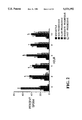
- FIG. 2 is a bar graph showing the effects of AGF on stringray sperm.
- FIG. 3 is a bar graph showing the effects of denatured AGF on stingray sperm.
- FIG. 5 is a bar graph showing the effects of elasmobranch Ringer solution +100 mg BSA/ml on stingray sperm.
- FIG. 7 is a bar graph of control conditions (elasmobranch Ringer solution +5 mg BSA/ml) used to determine significant changes in stingray sperm motility after exposure to isolated AGF proteins (FIGS. 8-12).
- FIG. 8 is a bar graph demonstrating the motility distribution pattern of stingray sperm exposed to protein isolated from band 1 of AGF separated using non-denaturing PAGE.
- FIG. 9 is a bar graph demonstrating the motility distribution pattern of stingray sperm exposed to protein isolated from band 2 of AGF separated using non-denaturing PAGE.
- FIG. 10 is a bar graph demonstrating the motility distribution pattern of stingray sperm exposed to protein isolated from band 3 of AGF separated using non-denaturing PAGE.
- FIG. 11 is a bar graph demonstrating the motility distribution pattern of stingray sperm exposed to protein isolated from band 5 of AGF separated using non-denaturing PAGE.
- FIG. 12 is a bar graph demonstrating the motility distribution pattern of stingray sperm exposed to protein isolated from band 4 of AGF separated using non-denaturing PAGE.
- FIG. 13 is a bar graph demonstrating changes in the percent motility of human sperm after exposure to AGF and denatured AGF (1:16 and 1:32 dilutions).
- FIG. 14 is a bar graph demonstrating changes in the velocity of human sperm after exposure to AGF and denatured AGF (1:16 and 1:32 dilutions). Values are given as ⁇ m/sec.
- FIG. 15 is a bar graph demonstrating changes in the linearity of human sperm after exposure to AGF and denatured AGF (1:16 and 1:32 dilutions).
- This invention provides a composition comprising purified alkaline gland fluid (AGF) from the alkaline gland of a cartilaginous fish.
- AGF alkaline gland fluid
- purified refers to AGF from which some necrotic and viable sperm as well as membrane fragments and cellular debris have been removed. The removal of these components of whole AGF can be accomplished by centrifugation, among other methods.
- Cartilaginous fish include rays, skates, sharks and chimaeras.
- the present invention teaches that the AGF from the alkaline glands of skates and rays, and certain proteins in the AGF, have sperm motility increasing or decreasing effects.
- Other animals with alkaline glands or animals with homologous organs that produce fluids with homologous proteins, can be expected to provide compositions and proteins for use in the present invention.
- the invention also provides a purified protein of approximately 14 kD as determined by sodium dodecyl sulfate polyacrylamide gel electrophoresis under nondenaturing conditions, that decreases sperm motility.
- purified means the protein is sufficiently free of contaminants, cell components or other AGF proteins with which the protein normally occurs to distinguish the protein from the contaminants or components.
- SDS-PAGE followed by elution can be used to obtain the purified proteins of the present invention.
- Methods of purifying the present proteins to homogeneity include high performance liquid chromatography, as well as two dimensional gel electrophoresis.
- motility unless otherwise specified, describes % motility, which is the percentage of the total number of sperm assessed that fall within all World Health Organization (WHO) categories of motility except the category designated "no motility" regardless of velocity or directionality. It should be understood that other standardized measures of sperm motility parameters can also be used. Other measures of sperm motility include “velocity” and “linearity” which can be assessed using automatic semen analyzers as described in the Examples. A decrease in sperm motility, as contemplated herein, constitutes a statistically significant reduction in the motility of sperm.
- WHO World Health Organization
- compositions comprising the approximately 14 kD protein and a pharmaceutically acceptable carrier are also contemplated.
- pharmaceutically acceptable is meant a material that is not biologically or otherwise undesirable, i.e., the material may be administered to gametes in vivo or in vitro along with the selected protein without causing any undesirable biological effects or interacting in a deleterious manner with any of the other components of the pharmaceutical composition in which it is contained.
- the above protein composition can also include a spermicide.
- the spermicide can be selected from among the numerous well known spermicidal compounds, such as NONOXYL-9.
- purified proteins that increase sperm motility.
- purified proteins of approximately 350 kD, approximately40 kD and approximately 22 kD as determined by sodium dodecyl sulfate polyacrylamide gel electrophoresis (SDS-PAGE) under non-denaturing conditions increase sperm motility.
- SDS-PAGE sodium dodecyl sulfate polyacrylamide gel electrophoresis
- the invention also provides nucleic acids encoding the proteins of the invention.
- nucleic acids encoding the proteins of the invention.
- a DNA library generated from alkaline gland DNA can be screened for clones expressing the present AGF proteins. Once such clones are located, their DNA can be sequenced and the coding sequence for the expressed protein determined.
- a partial sequence of the protein e.g., by N-terminal sequencing
- nucleic acid manipulations see Sambrook et al. (Molecular Cloning: A Laboratory Manual, 2nd Ed., Cold Spring Harbor Laboratory, Cold Spring Harbor, N.Y. 1989).
- a fragment of the protein can be isolated from the whole protein by chemical or mechanical disruption. The purified fragments thus obtained can be tested to determine their activity by the methods taught herein. Fragments of the protein can also be synthesized directly once the amino acid sequence is determined.
- the fragments of the present invention can also be recombinant proteins obtained by cloning nucleic acids encoding the protein in an expression system capable of producing the protein or fragments thereof. As described above, the proteins and fragments of the invention can be used in conjunction with a pharmaceutically acceptable carrier for delivery to the subject.
- a method of increasing sperm motility comprising the step of contacting sperm with an amount of the present purified AGF composition effective to increase the motility of the sperm is also provided.
- An increase in sperm motility constitutes a statistically significant increase in the motility of sperm as defined above.
- the contacting step can take place in vitro, as in any of the well known IVF methods, for example.
- the contacting step can also take place in vivo. For example, intravaginal administration by means of a suppository or other solid, liquid, gel or lotion carrier.
- a method of increasing sperm motility comprising the step of contacting sperm with an amount of any of the purified proteins of approximately 160 kD, approximately 40 kD and approximately 22 kD effective to increase the motility of the sperm.
- purified mixtures of the sperm motility increasing proteins of the invention can be used in the method.
- the contacting step can take place in vitro or in vivo.
- a contraceptive method comprises the step of contacting sperm with an amount of the purified approximately 14 kD protein effective to inhibit the motility of the sperm.
- the inhibition of sperm motility reduces the likelihood of fertilization of an ovum.
- the contacting step of this method can take place intravaginally.
- the protein can be a component of or used in conjunction with vaginal jellies, foams, sponges, suppositories and condoms, as such combinations, using conventional contraceptives, are well understood in the art.
- a timed release, scrotally implanted vehicle can be provided for in vivo delivery of the contraceptive protein directly to the vas deferens or seminal vesical of the male.
- Stingrays were anesthetized with 3-aminobenzoic acid ethyl ester (0.5 g/liter of sea water, Sigma Chemical Co., St. Louis, Mo.). The abdominal cavity was opened, the viscera retracted, and the peritoneum stripped from the vas deferens and alkaline glands. A 5 ml sterile syringe with a 21 gauge needle was used to aspirate alkaline gland fluid (AGF), which was initially stored at -20° C. and later at -80° C. for long term storage. To obtain the purified AGF of the present invention, the frozen whole AGF was thawed and samples were centrifuged for 5 min at 2500 rpm to remove some large fragments, including viable and necrotic sperm.
- AGF alkaline gland fluid
- Aspirated sperm was immediately diluted with elasmobranch Ringer solution (NaCl, 280.0 mM; KCl, 5.0 mM; MgCl 2 , 3.3 mM; CaCl 2 , 3.8 mM; NaHCO 3 , 10.0 mM; urea, 350.0 mM; dextrose, 5.0 mM; 800 mOsm/L; pH 8.2) containing 5.0 mg bovine serum albumin (BSA)/ml.
- BSA bovine serum albumin
- sperm was diluted to approximately 25 million sperm/ml in elasmobranch Ringer solution with 5 mg BSA/ml.
- concentration of stingray sperm was determined from the number of sperm from a 10 ⁇ l sample in five quadrants of a Neubauer hemacytometer, with a depth of 0.1 mm (Baxter Healthcare Corp., McCaw Park, Ill.).
- Human volunteers donated sperm by masturbation into a sterile receptacle, which was allowed to liquefy for one hour before analysis. Volunteers were instructed to abstain from sexual activity for at least two days prior to sperm donation. The collected sample was then diluted with sperm washing media with 5.0 mg human albumin/ml (Catalog No. 9983, Irvine Scientific, Santa Ana, Calif.), centrifuged at 200 g for ten minutes, the supernant drawn off, the pellet resuspended and washed once more, and finally diluted in washing media at a concentration of 50 million sperm/ml.
- human albumin/ml Catalog No. 9983, Irvine Scientific, Santa Ana, Calif.
- Five different samples were pooled, and concentrated two fold in a Minicon-B15 protein concentrator (Amicon Corp., Lexington, Mass.) at 4° C. Concentrated samples and molecular weight markers were then denatured for SDS-PAGE, by boiling 10 minutes with 2.0% SDS and 2.0% 2-mercaptoethanol (1:1 dilution ).
- a 7.5%-15% acrylamide gradient gel was used for the separating gel, at a thickness of 1.5 mm using a SE400 Vertical Slab Gel Unit (Hoefer Scientific Instruments, San Francisco).
- the running buffer was Tris HCl containing 0.4% SDS (pH 8.8).
- the SDS-PAGE was run for four hours at 45 mA/110 V using a PS 500 ⁇ DC power supply (Hoefer Scientific Instruments, San Francisco, Calif.).
- the resultant gel was removed from its glass plates, stained for 15 minutes with 0.1% Coomassie Blue, and destained overnight.
- Molecular weights of separated proteins were then determined using the respective R f values of AGF protein bands, compared against those of molecular markers. All electrophoresis supplies were purchased from Baxter Healthcare Corp. (McGaw Park, Ill.).
- Bands 1-3 formed a high molecular weight group of 250, 155, and kD, respectively.
- Bands 4 and 5 formed a group having molecular weights of 70 and 62 kD, and bands 6 and 7 formed a group having molecular weights of 38.5 and 37 kD, respectively.
- Band 8 had a molecular weight of 25 kD, and band 9 a molecular weight of 16 kD.
- AGF samples were pooled and concentrated five fold using the Minicon-B15 as described above.
- One hundred microliters of non-denatured AGF sample was loaded into two gels similar to that described above for SDS-PAGE.
- One gel was loaded with non-denatured samples and molecular markers, and the other with non-denatured samples.
- the running buffer was Tris HCl without SDS, and both gels were run at room temperature for four hours at 45 mA/110 V.
- the gel with the molecular markers was stained with Coomassie Blue, for 15 minutes and destained for one hour.
- band 1 Purification of AGF proteins by SDS-PAGE under non-denaturing conditions yielded 5 separated bands with the following molecular weights: band 1, MW 350 kD; band 2, MW 40 kD; band 3, MW 22 kD; band 4, MW 14 kD; and band 5, MW 40 kD (FIG. 1).
- Bands 3-5 were apparently responsible for the brown pigmentation of AGF, because they were dark brown, and easily distinguished without prior staining. After staining with Coomassie Blue, these bands took on the same coloration as bands 1 and 2.
- the gel with only the non-denatured samples was then removed from its glass plates, and individual bands were sliced out using the stained gel as a guide.
- Each isolated band was placed in its own separate tube, and placed in an ElectroEluter: Model 422 (BIO-Rad Lab., Richmond, Calif.). The elution process lasted five hours, with Tris HCl running buffer with a 0.4% SDS, at 10 mA/24 V using BIO-RAD power supply (model 500/200).
- Each isolated protein was dialyzed for 24 hours in three changes of Tris HCl (pH 8.8) at 4° C., using dialysis tubing with a 6000-8000 MW cutoff (Spectrum Medical Industries, Inc., Los Angeles, Calif.). The protein concentrations were determined using Lowry's method (Sigma diagnostic kit #690, St Louis, Mo.) for each purified sample. The samples were then stored at -20° C. until used for sperm analysis.
- Washed stingray sperm samples were exposed to five different treatments for a period of ten hours.
- the treatments included: 1) elasmobranch Ringer solution +5 mg BSA/ml, 2) elasmobranch Ringer solution +100 mg BSA/ml, 3) AGF, 4) denatured AGF, and 5) synthetic AGF (described below) +sucrose. All treatments were adjusted to an osmolarity equivalent to that of AGF (approximately 810 mOsm), and a pH of 8.2-8.3.
- Synthetic AGF includes the ionic constituents of AGF (NaCl, 102.5 mM; KCl, 2.0 mM; MgCl 2 , 2.4 mM; NaHCO 3 , 204.0 mM; urea, 116.1 mM) with the osmolality adjusted using a saturated sucrose solution.
- Each treatment was diluted with one part elasmobranch Ringer solution containing 5.0 mg BSA/ml, and one part washed sperm suspension.
- a 10 ⁇ l sample of each treatment was placed in a Neubauer hemacytometer, with a depth of 0.1 mm (Baxter Healthcare Corp., McGaw Park, Ill.).
- spermatozoa were assessed using the World Health Organization (WHO) rating system (Glover et al. 1990), every two hours during a ten hour period.
- WHO World Health Organization
- Stingray sperm exposed to denatured AGF did not demonstrate a significant change in the number of sperm with no motion, non-progressive motion, and slow progressive motion (FIG. 3).
- the only significant difference in the denatured AGF treatment was noted in sperm with moderate progression at hours 8 and 10 (FIG. 3).
- the number of moderately progressive sperm during these hours increased 107.7% and 307.7%, respectively, from initial numbers at time 0.
- There was no significant difference between rating categories of denatured AGF (FIG. 3) with those of either elasmobranch Ringer solution with 5 and 100 mg BSA/ml (FIGS. 4 and 5, respectively), as well as between the categories of the latter two treatments.
- the number of slow progressive sperm within AGF treatments (FIG. 2) were 40% and 30% higher after ten hours than those in denatured AGF (FIG. 3) and elasmobranch Ringer solution with 100 mg BSA/ml (FIG. 5), respectively.
- sperm with non-progressive motion were 41.1% lower in AGF treatments, and sperm that were slow or moderately progressive were 272% and 977% higher in AGF treatments, respectively, than in protein-free elasmobranch Ringer solution (FIGS. 2 and 6).
- the number of sperm either without motion or with non-progressive motion are higher in protein-free Ringer solution, but those with slow progression are approximately 60% lower.
- the WHO rating system was also applied to washed sperm samples exposed to purified AGF non-denatured proteins.
- Purified proteins were diluted to the original total protein concentration of AGF with elasmobranch Ringer solution containing 5.0 mg BSA/ml.
- Each purified protein sample was diluted with one part elasmobranch Ringer solution containing 5.0 mg BSA/ml and one part washed sperm suspension. These were assessed against a control consisting of two parts elasmobranch Ringer solution with 5.0 mg BSA/ml and one part washed sperm suspension.
- One hundred spermatozoa were randomly assessed every two hours during a period of ten hours.
- FIGS. 4 and 7 represent internal controls for two separate sets of experiments on stingray sperm, both of which demonstrate no significant change in sperm motility.
- Proteins 1-3 caused a significant decrease in the number of sperm with non-progressive motion ranging from 22% to 40% within 4-10 hours (FIGS. 8-10, respectively).
- the number of moderately progressive sperm was significantly higher throughout the entire ten hours when compared to control conditions.
- Increases in moderately progressive sperm compared to control conditions ranged 2.3-8.4 fold higher for protein 1 (FIG. 8), 2.3-5.4 fold higher for protein 2 (FIG. 9), and 9.1-21.9 fold higher for protein 3 (FIG. 10).
- Proteins 1-3 cause a shift from non-progressive sperm to those that are moderately progressive.
- Washed human sperm was initially exposed to diluted AGF, to determine the concentration required for further experimentation.
- AGF was diluted with sperm washing medium in the following ratios: 1:1, 1:2, 1:4, 1:8, and 1:16.
- One hundred microliters of each dilution was added to an equal amount of washed sperm.
- a 5 ⁇ l aliquot was removed every two hours for a total of ten hours and assessed for velocity, linearity, and percent motility using a Cell Soft Semen analyzer (CyroResources, Montgomery, N.Y.).
- a total of 100 spermatozoa were assessed for each dilution every two hours during the ten hour experiment.
- Determination of the dilution factor of AGF to be used with human sperm was primarily based on the bihourly percent motility of sperm. Dilutions 1:16 and 1:32 sustained sperm motility for up to 10 hours, displaying moderate increases in percent motility in 4-6 hours (FIG. 13). Lower dilutions resulted in a steady decline in percent motility, just above the percent motility obtained under control conditions (HTF medium modified with 5 mg human albumin/ml).
- the overall effect of AGF was to significantly increase the percent of motile human sperm (FIG. 13).
- Percent motility includes sperm within all of the WHO motility categories except non-motile.
- the maximum percent of motile sperm for AGF treatments was approximately 60%, for both dilution factors at hour 6. Comparisons made on hourly basis showed a significantly higher percent of motile sperm at hours 2, 6, and 10 in the presence of AGF at a dilution of 1:32, over those under control conditions (FIG. 13).
- the percent motility of sperm at hour 10 was about 25% higher than that under control conditions.
- the percent of motile sperm after exposure to AGF at a dilution of 1:16 were significantly higher at all hours except hour 4 when compared to control values (FIG. 13). The highest increase in the percent of motile sperm was 27% at hour 10. Hours 2, 6, and 8 were 22%, 14%, and 16% higher than control values, respectively.
- FIG. 14 Comparisons between sperm velocity among AGF, denatured AGF, and control treatments are shown in FIG. 14.
- the velocity of sperm exposed to denatured AGF between hours 2-8 were not significantly different from that of control conditions at each time period. However, at 4-8 hrs at a dilution of 1:16 and 1:32, the velocity of sperm exposed to AGF was significantly higher than sperm exposed to denatured AGF. Within hours 4-8, the velocity of sperm exposed to denatured AGF decreased 12% while AFG treated sperm increased 7% in 4 hours (hour 2-6). The reduction in velocity resulting from denatured AGF (1:16 and 1:32) was 35% and 25% lower, respectively, than sperm in AGF treatments at hour 10.
- Linearity of sperm movement was significantly higher with exposure to AGF at a 1:32 dilution than controls or denatured AGF treatments within 6-8 hours (FIG. 15).
- AGF did not significantly alter sperm linearity when hourly comparisons were made with the control treatments.
- Hourly comparisons between AGF treatment and control and denatured AGF treatments at a 1:32 dilution show AGF exposure significantly increased the linearity of sperm at hours 6-10. Increases of 16-18% were observed over control values during this time period, whereas denatured AGF treatments (1:32) were 26% lower at hour 6 and 41% lower at hour 10, than AGF treatments (FIG. 15).
- Denatured AGF at a dilution of 1:16 was significantly lower at hours 8 and 10 by 26% and 24%, respectively, when compared to control conditions.
- denatured AGF treatments were significantly lower than control by 15% and 31% for hours 8 and 10, respectively.
- Tables 1-3 show the effect of AGF diluted 1:2, 1:4, 1:8 and 1:16 on sperm from infertile men.
- Table 1 shows that AGF diluted 1:2 with washing media significantly increased the percentage of motile sperm at both two and four hours after it was added. Longer time periods or greater dilutions had no significant effect on the percent motility. Likewise, AGF had no significant effect on velocity (Table 2) or linearity (Table 3) of sperm from these men.
- Pentoxifylline is not useful in enhancing sperm function in cases with previous in vitro fertilization failure. Fertil. Steril. 59:210-215, 1993.
Landscapes
- Chemical & Material Sciences (AREA)
- Health & Medical Sciences (AREA)
- Life Sciences & Earth Sciences (AREA)
- Organic Chemistry (AREA)
- Biochemistry (AREA)
- Gastroenterology & Hepatology (AREA)
- Zoology (AREA)
- Biophysics (AREA)
- General Health & Medical Sciences (AREA)
- Genetics & Genomics (AREA)
- Medicinal Chemistry (AREA)
- Molecular Biology (AREA)
- Proteomics, Peptides & Aminoacids (AREA)
- Toxicology (AREA)
- Medicines That Contain Protein Lipid Enzymes And Other Medicines (AREA)
Abstract
Description
                                  TABLE 1
__________________________________________________________________________
Percentage of motile spermatozoa (mean ± S.C.) from infertile
men before and after treatment with different dilutions of AGF in vitro
(n = 9).
Hour of
Incubation
      Control
             1:2   1:4    1:8   1:16
__________________________________________________________________________
2 hr  37.9 ± 22.3
             49.9 ± 22.4
                   42.5 ± 15.4
                          46.3 ± 17.5
                                37.9 ± 16.5
p Value
      --     0.03  N.S.   N.S.  N.S.
4 hr  39.1 ± 17.7
             49.7 ± 22.3
                   45.8 ± 15.3
                          48.5 ± 21.5
                                44.6 ± 17.1
p Value
      --     0.01  N.S.   N.S.  N.S.
6 hr  38.8 ± 20.7
             45.1 ± 21.5
                   40.3 ± 15.5
                          35.9 ± 15.5
                                32.1 ± 16.5
p Value
      --     N.S.  N.S.   N.S.  N.S.
24 hr 34.8 ± 18.4
             33.9 ± 16.3
                   39.5 ± 16.7
                          42.2 ± 16.8
                                33.6 ± 13.3
p Value
      --     N.S.  N.S.   N.S.  N.S.
__________________________________________________________________________
                                  TABLE 2
__________________________________________________________________________
Velocity (μm/second) of motile spermatoza (mean ± S.D.) from
infertile men before and after treatment with different dilutions of AGF
in vitro (n = 9).
Hour of
Incubation
      Control
             1:2   1:4    1:8   1:16
__________________________________________________________________________
2 hr  25.5 ± 5.3
             27.8 ± 5.8
                   29.0 ± 5.3
                          33.6 ± 9.7
                                29.8 ± 5.0
p Value
      --     N.S.  N.S.   0.05  0.06
4 hr  28.8 ± 7.7
             30.7 ± 8.1
                   29.6 ± 5.9
                          31.4 ± 8.0
                                30.2 ± 6.6
p Value
      --     N.S.  N.S.   N.S.  N.S.
6 hr  28.8 ± 3.6
             33.2 ± 13.1
                   32.2 ± 7.4
                          29.0 ± 6.4
                                30.6 ± 5.4
p Value
      --     N.S.  N.S.   N.S.  N.S.
24 hr 28.3 ± 6.8
             25.2 ± 6.2
                   29.5 ± 4.4
                          27.0 ± 5.1
                                27.9 ± 4.0
p Value
      --     N.S.  N.S.   N.S.  N.S.
__________________________________________________________________________
                                  TABLE 3
__________________________________________________________________________
Linearity of motile spermatozoa (mean ± S.D.) from infertile
men before and after treatment with different dilutions of AGF in vitro
(n = 9).
Hour of
Incubation
      Control
             1:2   1:4    1:8   1:16
__________________________________________________________________________
2 hr  3.4 ± 1.0
             3.2 ± 0.9
                   3.9 ± 1.2
                          3.9 ± 1.6
                                3.7 ± 1.1
p Value
      --     N.S.  N.S.   N.S.  N.S.
4 hr  3.3 ± 0.9
             3.7 ± 1.2
                   3.5 ± 1.1
                          3.6 ± 0.9
                                3.9 ± 1.0
p Value
      --     N.S.  N.S.   0.02  N.S(0.07)
6 hr  3.9 ± 1.1
             3.3 ± 0.9
                   3.6 ± 1.1
                          3.7 ± 1.1
                                3.6 ± 1.0
p Value
      --     N.S.  N.S.   N.S.  N.S.
24 hr 3.9 ± 1.0
             3.8 ± 1.1
                   3.3 ± 1.4
                          3.0 ± 1.3
                                3.1 ± 1.0
p Value
      --     N.S.  N.S.   N.S.  N.S.
__________________________________________________________________________
Claims (10)
Priority Applications (3)
| Application Number | Priority Date | Filing Date | Title |
|---|---|---|---|
| US08/160,025 US5525592A (en) | 1993-11-30 | 1993-11-30 | Alkaline gland fluid proteins and methods of enhancing and inhibiting sperm motility |
| PCT/US1994/013721 WO1995015337A1 (en) | 1993-11-30 | 1994-11-30 | Alkaline gland fluid proteins and methods of enhancing and inhibiting sperm motility |
| AU12142/95A AU1214295A (en) | 1993-11-30 | 1994-11-30 | Alkaline gland fluid proteins and methods of enhancing and inhibiting sperm motility |
Applications Claiming Priority (1)
| Application Number | Priority Date | Filing Date | Title |
|---|---|---|---|
| US08/160,025 US5525592A (en) | 1993-11-30 | 1993-11-30 | Alkaline gland fluid proteins and methods of enhancing and inhibiting sperm motility |
Publications (1)
| Publication Number | Publication Date |
|---|---|
| US5525592A true US5525592A (en) | 1996-06-11 |
Family
ID=22575170
Family Applications (1)
| Application Number | Title | Priority Date | Filing Date |
|---|---|---|---|
| US08/160,025 Expired - Lifetime US5525592A (en) | 1993-11-30 | 1993-11-30 | Alkaline gland fluid proteins and methods of enhancing and inhibiting sperm motility |
Country Status (3)
| Country | Link |
|---|---|
| US (1) | US5525592A (en) |
| AU (1) | AU1214295A (en) |
| WO (1) | WO1995015337A1 (en) |
Cited By (1)
| Publication number | Priority date | Publication date | Assignee | Title |
|---|---|---|---|---|
| WO2000044395A1 (en) * | 1999-02-01 | 2000-08-03 | University Of Virginia Patent Foundation | Methods and compositions for modulating fertility |
Citations (1)
| Publication number | Priority date | Publication date | Assignee | Title |
|---|---|---|---|---|
| US4267268A (en) * | 1979-03-12 | 1981-05-12 | Nelson Jr Robert A | Spermatozoa extenders |
-
1993
- 1993-11-30 US US08/160,025 patent/US5525592A/en not_active Expired - Lifetime
-
1994
- 1994-11-30 WO PCT/US1994/013721 patent/WO1995015337A1/en not_active Ceased
- 1994-11-30 AU AU12142/95A patent/AU1214295A/en not_active Abandoned
Patent Citations (1)
| Publication number | Priority date | Publication date | Assignee | Title |
|---|---|---|---|---|
| US4267268A (en) * | 1979-03-12 | 1981-05-12 | Nelson Jr Robert A | Spermatozoa extenders |
Non-Patent Citations (9)
| Title |
|---|
| Grabowski et al., Ion Transport & Fluid Alkalinization of the Alkaline Gland of the Atlantic Stingray FASEB J. 6(4) A1458, Abstract 3024, 1991. * |
| Maren et al., Comp. Biochem. Physiol. 10:1 16, 1963. * |
| Maren et al., Comp. Biochem. Physiol. 10:1-16, 1963. |
| Smith, Homer W. J. Biol. Chem. 81:407 419, 1929. * |
| Smith, Homer W. J. Biol. Chem. 81:407-419, 1929. |
| Winston and Handyside Science 260:932 936, 1993. * |
| Winston and Handyside Science 260:932-936, 1993. |
| Yovich et al., Fertility and Sterility 53(4):715 722, 1990. * |
| Yovich et al., Fertility and Sterility 53(4):715-722, 1990. |
Cited By (1)
| Publication number | Priority date | Publication date | Assignee | Title |
|---|---|---|---|---|
| WO2000044395A1 (en) * | 1999-02-01 | 2000-08-03 | University Of Virginia Patent Foundation | Methods and compositions for modulating fertility |
Also Published As
| Publication number | Publication date |
|---|---|
| WO1995015337A1 (en) | 1995-06-08 |
| AU1214295A (en) | 1995-06-19 |
Similar Documents
| Publication | Publication Date | Title |
|---|---|---|
| Leboeuf et al. | Production and storage of goat semen for artificial insemination | |
| Tarín et al. | Consequences on offspring of abnormal function in ageing gametes | |
| Huang et al. | Substantial decrease of heat-shock protein 90 precedes the decline of sperm motility during cooling of boar spermatozoa | |
| Young et al. | Triplet pregnancy after intracytoplasmic sperm injection of cryopreserved oocytes: case report | |
| RUSSELL et al. | Improvement in the quality and fertilization potential of a human sperm population using the rise technique | |
| Strzeżek et al. | Effect of depletion tests (DT) on the composition of boar semen | |
| Jager et al. | Studies on the decondensation of human, mouse, and bull sperm nuclei by heparin and other polyanions | |
| Siegel et al. | The influence of human follicular fluid on the acrosome reaction, fertilizing capacity and proteinase activity of human spermatozoa | |
| US5525592A (en) | Alkaline gland fluid proteins and methods of enhancing and inhibiting sperm motility | |
| Joo et al. | The effect of nitric oxide on sperm cell function and embryo development | |
| O'Rand | In vitro fertilization and capacitation‐like interaction in the hydroid Campanularia flexuosa | |
| Lanzendorf et al. | The effect of egg yolk medium on human sperm binding in the hemizona assay | |
| Giannakis et al. | Role of testicular tissue telomerase assay for the prediction of the presence of testicular spermatozoa in azoospermic men with varicoceles, pre‐and post‐varicocelectomy | |
| Osanai | Interspecific hybridization of sea urchins, Strongylocentrotus nudus and Strongylocentrotus intermedius | |
| Joyce et al. | Release, extraction, and stability of hyaluronidase associated with human spermatozoa Comparisons with the rabbit | |
| Shalgi | Developmental capacity of rat embryos produced by in vivo or in vitro fertilization | |
| Gamzu et al. | The effect of egg yolk on the binding capacity of human spermatozoa to zona pellucida | |
| Deloof et al. | Effects of water deprivation on atrial natriuretic peptide secretion and density of binding sites in adrenal glands and kidneys of maternal and fetal rats in late gestation | |
| El Sahwi et al. | In vivo study of the embryotoxic activity of leukocytes | |
| Van der Ven et al. | Effect of heterologous seminal plasma on the fertilizing capacity of human spermatozoa as assessed by the zona-free hamster egg test | |
| Suarez et al. | Seminal plasma plays important roles in fertility | |
| Wood et al. | Current status and future prospects | |
| Quinn et al. | Interaction of semen with ova in vitro | |
| Songsasen | Reproductive biology and assisted reproductive technologies in felids | |
| Pearlstone et al. | The effects of Vero (Green monkey kidney) cell coculture on the motility patterns of cyropreserved human spermatozoa |
Legal Events
| Date | Code | Title | Description |
|---|---|---|---|
| AS | Assignment |
Owner name: MEDICAL UNIVERSITY OF SOUTH CAROLINA, SOUTH CAROLI Free format text: ASSIGNMENT OF ASSIGNORS INTEREST;ASSIGNORS:LACY, ERIC R.;MATHUR, SUBBI;REEL/FRAME:006818/0511;SIGNING DATES FROM 19931209 TO 19931213 |
|
| AS | Assignment |
Owner name: LACY, ERIC R., SOUTH CAROLINA Free format text: ASSIGNMENT OF ASSIGNORS INTEREST;ASSIGNOR:MATHUR, SUBBI;REEL/FRAME:007706/0451 Effective date: 19951017 Owner name: MATHUR, SUBBI, SOUTH CAROLINA Free format text: ASSIGNMENT OF ASSIGNORS INTEREST;ASSIGNOR:SOUTH CAROLINA, MEDICAL UNIVERSITY OF;REEL/FRAME:007706/0438 Effective date: 19950816 Owner name: LACY, ERIC R., SOUTH CAROLINA Free format text: ASSIGNMENT OF ASSIGNORS INTEREST;ASSIGNOR:SOUTH CAROLINA, MEDICAL UNIVERSITY OF;REEL/FRAME:007706/0438 Effective date: 19950816 |
|
| STCF | Information on status: patent grant |
Free format text: PATENTED CASE |
|
| FPAY | Fee payment |
Year of fee payment: 4 |
|
| REMI | Maintenance fee reminder mailed | ||
| FPAY | Fee payment |
Year of fee payment: 8 |
|
| SULP | Surcharge for late payment |
Year of fee payment: 7 |
|
| REMI | Maintenance fee reminder mailed | ||
| FPAY | Fee payment |
Year of fee payment: 12 |
|
| SULP | Surcharge for late payment |
Year of fee payment: 11 |