US5494981A - Epoxy-cyanate ester compositions that form interpenetrating networks via a Bronsted acid - Google Patents
Epoxy-cyanate ester compositions that form interpenetrating networks via a Bronsted acid Download PDFInfo
- Publication number
- US5494981A US5494981A US08/398,230 US39823095A US5494981A US 5494981 A US5494981 A US 5494981A US 39823095 A US39823095 A US 39823095A US 5494981 A US5494981 A US 5494981A
- Authority
- US
- United States
- Prior art keywords
- composition according
- cyanate ester
- group
- bronsted acid
- carbon atoms
- Prior art date
- Legal status (The legal status is an assumption and is not a legal conclusion. Google has not performed a legal analysis and makes no representation as to the accuracy of the status listed.)
- Expired - Lifetime
Links
- 239000000203 mixture Substances 0.000 title claims abstract description 104
- 239000004643 cyanate ester Substances 0.000 title claims abstract description 68
- 239000007848 Bronsted acid Substances 0.000 title claims abstract description 34
- 229920005989 resin Polymers 0.000 claims abstract description 52
- 239000011347 resin Substances 0.000 claims abstract description 52
- 239000003999 initiator Substances 0.000 claims abstract description 27
- 150000003077 polyols Chemical class 0.000 claims abstract description 26
- 238000013016 damping Methods 0.000 claims abstract description 25
- 229920005862 polyol Polymers 0.000 claims abstract description 25
- 229920000642 polymer Polymers 0.000 claims abstract description 18
- 239000011353 cycloaliphatic epoxy resin Substances 0.000 claims abstract description 17
- 239000000853 adhesive Substances 0.000 claims abstract description 12
- 230000001070 adhesive effect Effects 0.000 claims abstract description 12
- 239000011230 binding agent Substances 0.000 claims abstract description 5
- 239000011253 protective coating Substances 0.000 claims abstract description 5
- 239000003082 abrasive agent Substances 0.000 claims abstract description 4
- 125000004432 carbon atom Chemical group C* 0.000 claims description 31
- 239000004593 Epoxy Substances 0.000 claims description 25
- -1 --S-- Chemical group 0.000 claims description 23
- 229920000647 polyepoxide Polymers 0.000 claims description 22
- 238000000034 method Methods 0.000 claims description 17
- 239000003822 epoxy resin Substances 0.000 claims description 16
- 150000001875 compounds Chemical class 0.000 claims description 15
- 239000002253 acid Substances 0.000 claims description 14
- 125000000217 alkyl group Chemical group 0.000 claims description 13
- 229910052739 hydrogen Inorganic materials 0.000 claims description 13
- 238000006116 polymerization reaction Methods 0.000 claims description 13
- 239000001257 hydrogen Substances 0.000 claims description 11
- 125000004435 hydrogen atom Chemical group [H]* 0.000 claims description 10
- 239000003381 stabilizer Substances 0.000 claims description 10
- 150000003839 salts Chemical class 0.000 claims description 9
- 125000003118 aryl group Chemical class 0.000 claims description 8
- 125000002887 hydroxy group Chemical group [H]O* 0.000 claims description 8
- 229910052787 antimony Inorganic materials 0.000 claims description 7
- WATWJIUSRGPENY-UHFFFAOYSA-N antimony atom Chemical compound [Sb] WATWJIUSRGPENY-UHFFFAOYSA-N 0.000 claims description 7
- 125000004185 ester group Chemical group 0.000 claims description 7
- 150000002148 esters Chemical class 0.000 claims description 7
- LFQSCWFLJHTTHZ-UHFFFAOYSA-N Ethanol Chemical compound CCO LFQSCWFLJHTTHZ-UHFFFAOYSA-N 0.000 claims description 5
- 125000002877 alkyl aryl group Chemical group 0.000 claims description 5
- 150000004982 aromatic amines Chemical class 0.000 claims description 5
- 239000000178 monomer Substances 0.000 claims description 5
- DNIAPMSPPWPWGF-GSVOUGTGSA-N (R)-(-)-Propylene glycol Chemical compound C[C@@H](O)CO DNIAPMSPPWPWGF-GSVOUGTGSA-N 0.000 claims description 4
- 125000004429 atom Chemical group 0.000 claims description 4
- 238000006243 chemical reaction Methods 0.000 claims description 4
- 230000037029 cross reaction Effects 0.000 claims description 4
- 239000007788 liquid Substances 0.000 claims description 4
- 230000000379 polymerizing effect Effects 0.000 claims description 4
- WVDDGKGOMKODPV-UHFFFAOYSA-N Benzyl alcohol Chemical compound OCC1=CC=CC=C1 WVDDGKGOMKODPV-UHFFFAOYSA-N 0.000 claims description 3
- 239000004721 Polyphenylene oxide Substances 0.000 claims description 3
- 125000001931 aliphatic group Chemical group 0.000 claims description 3
- BHEPBYXIRTUNPN-UHFFFAOYSA-N hydridophosphorus(.) (triplet) Chemical compound [PH] BHEPBYXIRTUNPN-UHFFFAOYSA-N 0.000 claims description 3
- 229910052757 nitrogen Inorganic materials 0.000 claims description 3
- 229920000570 polyether Polymers 0.000 claims description 3
- QGZKDVFQNNGYKY-UHFFFAOYSA-O Ammonium Chemical group [NH4+] QGZKDVFQNNGYKY-UHFFFAOYSA-O 0.000 claims description 2
- ZOXJGFHDIHLPTG-UHFFFAOYSA-N Boron Chemical compound [B] ZOXJGFHDIHLPTG-UHFFFAOYSA-N 0.000 claims description 2
- UFHFLCQGNIYNRP-UHFFFAOYSA-N Hydrogen Chemical compound [H][H] UFHFLCQGNIYNRP-UHFFFAOYSA-N 0.000 claims description 2
- 125000003342 alkenyl group Chemical group 0.000 claims description 2
- 125000002947 alkylene group Chemical group 0.000 claims description 2
- 229910052785 arsenic Inorganic materials 0.000 claims description 2
- RQNWIZPPADIBDY-UHFFFAOYSA-N arsenic atom Chemical compound [As] RQNWIZPPADIBDY-UHFFFAOYSA-N 0.000 claims description 2
- 229910052796 boron Inorganic materials 0.000 claims description 2
- 229910052794 bromium Inorganic materials 0.000 claims description 2
- 229910052801 chlorine Inorganic materials 0.000 claims description 2
- 230000000295 complement effect Effects 0.000 claims description 2
- 125000004122 cyclic group Chemical group 0.000 claims description 2
- 150000002443 hydroxylamines Chemical class 0.000 claims description 2
- 229910052740 iodine Inorganic materials 0.000 claims description 2
- 125000004433 nitrogen atom Chemical group N* 0.000 claims description 2
- 229920005906 polyester polyol Polymers 0.000 claims description 2
- 229920006395 saturated elastomer Polymers 0.000 claims description 2
- 125000000962 organic group Chemical group 0.000 claims 2
- 101150108015 STR6 gene Proteins 0.000 claims 1
- 239000000463 material Substances 0.000 abstract description 25
- 239000003054 catalyst Substances 0.000 description 21
- 230000000052 comparative effect Effects 0.000 description 16
- MTHSVFCYNBDYFN-UHFFFAOYSA-N diethylene glycol Chemical compound OCCOCCO MTHSVFCYNBDYFN-UHFFFAOYSA-N 0.000 description 13
- 150000007513 acids Chemical class 0.000 description 10
- 238000000113 differential scanning calorimetry Methods 0.000 description 9
- 229910000831 Steel Inorganic materials 0.000 description 8
- 229910052751 metal Inorganic materials 0.000 description 8
- 239000002184 metal Substances 0.000 description 8
- 239000010959 steel Substances 0.000 description 8
- XLJMAIOERFSOGZ-UHFFFAOYSA-M cyanate Chemical compound [O-]C#N XLJMAIOERFSOGZ-UHFFFAOYSA-M 0.000 description 7
- 150000001913 cyanates Chemical class 0.000 description 7
- 125000003700 epoxy group Chemical group 0.000 description 7
- 238000010438 heat treatment Methods 0.000 description 7
- 150000001412 amines Chemical group 0.000 description 6
- 229920000909 polytetrahydrofuran Polymers 0.000 description 6
- PEDCQBHIVMGVHV-UHFFFAOYSA-N Glycerine Chemical compound OCC(O)CO PEDCQBHIVMGVHV-UHFFFAOYSA-N 0.000 description 5
- IISBACLAFKSPIT-UHFFFAOYSA-N bisphenol A Chemical compound C=1C=C(O)C=CC=1C(C)(C)C1=CC=C(O)C=C1 IISBACLAFKSPIT-UHFFFAOYSA-N 0.000 description 5
- 238000010276 construction Methods 0.000 description 5
- LNEPOXFFQSENCJ-UHFFFAOYSA-N haloperidol Chemical compound C1CC(O)(C=2C=CC(Cl)=CC=2)CCN1CCCC(=O)C1=CC=C(F)C=C1 LNEPOXFFQSENCJ-UHFFFAOYSA-N 0.000 description 5
- 239000000047 product Substances 0.000 description 5
- PAYRUJLWNCNPSJ-UHFFFAOYSA-N Aniline Chemical compound NC1=CC=CC=C1 PAYRUJLWNCNPSJ-UHFFFAOYSA-N 0.000 description 4
- 238000004458 analytical method Methods 0.000 description 4
- QVGXLLKOCUKJST-UHFFFAOYSA-N atomic oxygen Chemical compound [O] QVGXLLKOCUKJST-UHFFFAOYSA-N 0.000 description 4
- 125000001797 benzyl group Chemical group [H]C1=C([H])C([H])=C(C([H])=C1[H])C([H])([H])* 0.000 description 4
- GYZLOYUZLJXAJU-UHFFFAOYSA-N diglycidyl ether Chemical class C1OC1COCC1CO1 GYZLOYUZLJXAJU-UHFFFAOYSA-N 0.000 description 4
- 125000003055 glycidyl group Chemical group C(C1CO1)* 0.000 description 4
- 229910052760 oxygen Inorganic materials 0.000 description 4
- 239000001301 oxygen Substances 0.000 description 4
- CMJLMPKFQPJDKP-UHFFFAOYSA-N 3-methylthiolane 1,1-dioxide Chemical compound CC1CCS(=O)(=O)C1 CMJLMPKFQPJDKP-UHFFFAOYSA-N 0.000 description 3
- 229910021630 Antimony pentafluoride Inorganic materials 0.000 description 3
- 239000004970 Chain extender Substances 0.000 description 3
- KFZMGEQAYNKOFK-UHFFFAOYSA-N Isopropanol Chemical compound CC(C)O KFZMGEQAYNKOFK-UHFFFAOYSA-N 0.000 description 3
- 239000002841 Lewis acid Substances 0.000 description 3
- OKKJLVBELUTLKV-UHFFFAOYSA-N Methanol Chemical compound OC OKKJLVBELUTLKV-UHFFFAOYSA-N 0.000 description 3
- ZMANZCXQSJIPKH-UHFFFAOYSA-N Triethylamine Chemical compound CCN(CC)CC ZMANZCXQSJIPKH-UHFFFAOYSA-N 0.000 description 3
- 238000007171 acid catalysis Methods 0.000 description 3
- 238000000137 annealing Methods 0.000 description 3
- VBVBHWZYQGJZLR-UHFFFAOYSA-I antimony pentafluoride Chemical compound F[Sb](F)(F)(F)F VBVBHWZYQGJZLR-UHFFFAOYSA-I 0.000 description 3
- LMMDJMWIHPEQSJ-UHFFFAOYSA-N bis[(3-methyl-7-oxabicyclo[4.1.0]heptan-4-yl)methyl] hexanedioate Chemical compound C1C2OC2CC(C)C1COC(=O)CCCCC(=O)OCC1CC2OC2CC1C LMMDJMWIHPEQSJ-UHFFFAOYSA-N 0.000 description 3
- 239000007795 chemical reaction product Substances 0.000 description 3
- 238000001816 cooling Methods 0.000 description 3
- 229920001577 copolymer Polymers 0.000 description 3
- 230000001351 cycling effect Effects 0.000 description 3
- HPNMFZURTQLUMO-UHFFFAOYSA-N diethylamine Chemical compound CCNCC HPNMFZURTQLUMO-UHFFFAOYSA-N 0.000 description 3
- 150000007517 lewis acids Chemical class 0.000 description 3
- 239000011572 manganese Substances 0.000 description 3
- 230000000737 periodic effect Effects 0.000 description 3
- 150000002989 phenols Chemical class 0.000 description 3
- PAYRUJLWNCNPSJ-UHFFFAOYSA-O phenylazanium Chemical compound [NH3+]C1=CC=CC=C1 PAYRUJLWNCNPSJ-UHFFFAOYSA-O 0.000 description 3
- 229920001721 polyimide Polymers 0.000 description 3
- 239000011342 resin composition Substances 0.000 description 3
- 239000011550 stock solution Substances 0.000 description 3
- 239000000126 substance Substances 0.000 description 3
- PUPZLCDOIYMWBV-UHFFFAOYSA-N (+/-)-1,3-Butanediol Chemical compound CC(O)CCO PUPZLCDOIYMWBV-UHFFFAOYSA-N 0.000 description 2
- FOYHNROGBXVLLX-UHFFFAOYSA-N 2,6-diethylaniline Chemical compound CCC1=CC=CC(CC)=C1N FOYHNROGBXVLLX-UHFFFAOYSA-N 0.000 description 2
- MSXVEPNJUHWQHW-UHFFFAOYSA-N 2-methylbutan-2-ol Chemical compound CCC(C)(C)O MSXVEPNJUHWQHW-UHFFFAOYSA-N 0.000 description 2
- XAYDWGMOPRHLEP-UHFFFAOYSA-N 6-ethenyl-7-oxabicyclo[4.1.0]heptane Chemical compound C1CCCC2OC21C=C XAYDWGMOPRHLEP-UHFFFAOYSA-N 0.000 description 2
- YXALYBMHAYZKAP-UHFFFAOYSA-N 7-oxabicyclo[4.1.0]heptan-4-ylmethyl 7-oxabicyclo[4.1.0]heptane-4-carboxylate Chemical compound C1CC2OC2CC1C(=O)OCC1CC2OC2CC1 YXALYBMHAYZKAP-UHFFFAOYSA-N 0.000 description 2
- NIXOWILDQLNWCW-UHFFFAOYSA-M Acrylate Chemical compound [O-]C(=O)C=C NIXOWILDQLNWCW-UHFFFAOYSA-M 0.000 description 2
- IJGRMHOSHXDMSA-UHFFFAOYSA-N Atomic nitrogen Chemical compound N#N IJGRMHOSHXDMSA-UHFFFAOYSA-N 0.000 description 2
- ROSDSFDQCJNGOL-UHFFFAOYSA-N Dimethylamine Chemical compound CNC ROSDSFDQCJNGOL-UHFFFAOYSA-N 0.000 description 2
- QUSNBJAOOMFDIB-UHFFFAOYSA-N Ethylamine Chemical compound CCN QUSNBJAOOMFDIB-UHFFFAOYSA-N 0.000 description 2
- BAVYZALUXZFZLV-UHFFFAOYSA-N Methylamine Chemical compound NC BAVYZALUXZFZLV-UHFFFAOYSA-N 0.000 description 2
- 229920003171 Poly (ethylene oxide) Polymers 0.000 description 2
- 239000004642 Polyimide Substances 0.000 description 2
- 208000032005 Spinocerebellar ataxia with axonal neuropathy type 2 Diseases 0.000 description 2
- DKGAVHZHDRPRBM-UHFFFAOYSA-N Tert-Butanol Chemical compound CC(C)(C)O DKGAVHZHDRPRBM-UHFFFAOYSA-N 0.000 description 2
- ZJCCRDAZUWHFQH-UHFFFAOYSA-N Trimethylolpropane Chemical compound CCC(CO)(CO)CO ZJCCRDAZUWHFQH-UHFFFAOYSA-N 0.000 description 2
- HYAOCWBXRFEHDV-UHFFFAOYSA-N [4-bis(4-cyanatophenoxy)phosphoryloxyphenyl] cyanate Chemical compound C=1C=C(OC#N)C=CC=1OP(OC=1C=CC(OC#N)=CC=1)(=O)OC1=CC=C(OC#N)C=C1 HYAOCWBXRFEHDV-UHFFFAOYSA-N 0.000 description 2
- 239000000654 additive Substances 0.000 description 2
- 230000000996 additive effect Effects 0.000 description 2
- 125000003710 aryl alkyl group Chemical group 0.000 description 2
- 208000033361 autosomal recessive with axonal neuropathy 2 spinocerebellar ataxia Diseases 0.000 description 2
- 125000005605 benzo group Chemical group 0.000 description 2
- 229940106691 bisphenol a Drugs 0.000 description 2
- WERYXYBDKMZEQL-UHFFFAOYSA-N butane-1,4-diol Chemical compound OCCCCO WERYXYBDKMZEQL-UHFFFAOYSA-N 0.000 description 2
- 230000015556 catabolic process Effects 0.000 description 2
- 125000002091 cationic group Chemical group 0.000 description 2
- 150000001768 cations Chemical class 0.000 description 2
- 239000011248 coating agent Substances 0.000 description 2
- 238000000576 coating method Methods 0.000 description 2
- ZWAJLVLEBYIOTI-UHFFFAOYSA-N cyclohexene oxide Chemical compound C1CCCC2OC21 ZWAJLVLEBYIOTI-UHFFFAOYSA-N 0.000 description 2
- FWFSEYBSWVRWGL-UHFFFAOYSA-N cyclohexene oxide Natural products O=C1CCCC=C1 FWFSEYBSWVRWGL-UHFFFAOYSA-N 0.000 description 2
- 238000006731 degradation reaction Methods 0.000 description 2
- DMBHHRLKUKUOEG-UHFFFAOYSA-N diphenylamine Chemical compound C=1C=CC=CC=1NC1=CC=CC=C1 DMBHHRLKUKUOEG-UHFFFAOYSA-N 0.000 description 2
- 230000000694 effects Effects 0.000 description 2
- 230000001747 exhibiting effect Effects 0.000 description 2
- 238000009472 formulation Methods 0.000 description 2
- 235000011187 glycerol Nutrition 0.000 description 2
- 229910052736 halogen Inorganic materials 0.000 description 2
- 150000002367 halogens Chemical class 0.000 description 2
- 150000002739 metals Chemical class 0.000 description 2
- VNWKTOKETHGBQD-UHFFFAOYSA-N methane Chemical class C VNWKTOKETHGBQD-UHFFFAOYSA-N 0.000 description 2
- 125000002496 methyl group Chemical group [H]C([H])([H])* 0.000 description 2
- SLCVBVWXLSEKPL-UHFFFAOYSA-N neopentyl glycol Chemical compound OCC(C)(C)CO SLCVBVWXLSEKPL-UHFFFAOYSA-N 0.000 description 2
- 229920003986 novolac Polymers 0.000 description 2
- WXZMFSXDPGVJKK-UHFFFAOYSA-N pentaerythritol Chemical compound OCC(CO)(CO)CO WXZMFSXDPGVJKK-UHFFFAOYSA-N 0.000 description 2
- 229920001568 phenolic resin Polymers 0.000 description 2
- 229920000515 polycarbonate Polymers 0.000 description 2
- 239000004417 polycarbonate Substances 0.000 description 2
- 229920000139 polyethylene terephthalate Polymers 0.000 description 2
- 239000005020 polyethylene terephthalate Substances 0.000 description 2
- 238000002360 preparation method Methods 0.000 description 2
- 239000000243 solution Substances 0.000 description 2
- 239000002904 solvent Substances 0.000 description 2
- 229940124530 sulfonamide Drugs 0.000 description 2
- 229920005992 thermoplastic resin Polymers 0.000 description 2
- 229920001187 thermosetting polymer Polymers 0.000 description 2
- GETQZCLCWQTVFV-UHFFFAOYSA-N trimethylamine Chemical compound CN(C)C GETQZCLCWQTVFV-UHFFFAOYSA-N 0.000 description 2
- WMKLZBNHZFHSNP-UHFFFAOYSA-N $l^{1}-phosphanylphosphane Chemical compound P[P] WMKLZBNHZFHSNP-UHFFFAOYSA-N 0.000 description 1
- DNIAPMSPPWPWGF-VKHMYHEASA-N (+)-propylene glycol Chemical compound C[C@H](O)CO DNIAPMSPPWPWGF-VKHMYHEASA-N 0.000 description 1
- PYGFCFSLFFALAX-UHFFFAOYSA-N (2,5-ditert-butyl-4-cyanatophenyl) cyanate Chemical compound CC(C)(C)C1=CC(OC#N)=C(C(C)(C)C)C=C1OC#N PYGFCFSLFFALAX-UHFFFAOYSA-N 0.000 description 1
- IALZLVVOMYFDGE-UHFFFAOYSA-N (2-chloro-5-cyanatophenyl) cyanate Chemical compound ClC1=CC=C(OC#N)C=C1OC#N IALZLVVOMYFDGE-UHFFFAOYSA-N 0.000 description 1
- NGGIZAWDYJYQBS-UHFFFAOYSA-N (2-tert-butyl-4-cyanatophenyl) cyanate Chemical compound CC(C)(C)C1=CC(OC#N)=CC=C1OC#N NGGIZAWDYJYQBS-UHFFFAOYSA-N 0.000 description 1
- UFKLQICEQCIWNE-UHFFFAOYSA-N (3,5-dicyanatophenyl) cyanate Chemical compound N#COC1=CC(OC#N)=CC(OC#N)=C1 UFKLQICEQCIWNE-UHFFFAOYSA-N 0.000 description 1
- YDCUTCGACVVRIQ-UHFFFAOYSA-N (3,6-dicyanatonaphthalen-1-yl) cyanate Chemical compound N#COC1=CC(OC#N)=CC2=CC(OC#N)=CC=C21 YDCUTCGACVVRIQ-UHFFFAOYSA-N 0.000 description 1
- XSQMOWKODCDFPI-UHFFFAOYSA-N (3-cyanato-2,4-dimethylphenyl) cyanate Chemical compound CC1=CC=C(OC#N)C(C)=C1OC#N XSQMOWKODCDFPI-UHFFFAOYSA-N 0.000 description 1
- NZTBWEVKIDDAOM-UHFFFAOYSA-N (4-cyanato-2,3,5,6-tetramethylphenyl) cyanate Chemical compound CC1=C(C)C(OC#N)=C(C)C(C)=C1OC#N NZTBWEVKIDDAOM-UHFFFAOYSA-N 0.000 description 1
- GUGZCSAPOLLKNG-UHFFFAOYSA-N (4-cyanatophenyl) cyanate Chemical compound N#COC1=CC=C(OC#N)C=C1 GUGZCSAPOLLKNG-UHFFFAOYSA-N 0.000 description 1
- CCEFMUBVSUDRLG-KXUCPTDWSA-N (4R)-limonene 1,2-epoxide Natural products C1[C@H](C(=C)C)CC[C@@]2(C)O[C@H]21 CCEFMUBVSUDRLG-KXUCPTDWSA-N 0.000 description 1
- OFIWROJVVHYHLQ-UHFFFAOYSA-N (7-cyanatonaphthalen-2-yl) cyanate Chemical compound C1=CC(OC#N)=CC2=CC(OC#N)=CC=C21 OFIWROJVVHYHLQ-UHFFFAOYSA-N 0.000 description 1
- ORTVZLZNOYNASJ-UPHRSURJSA-N (z)-but-2-ene-1,4-diol Chemical compound OC\C=C/CO ORTVZLZNOYNASJ-UPHRSURJSA-N 0.000 description 1
- GIMDPFBLSKQRNP-UHFFFAOYSA-N 1,1-diphenylethanol Chemical compound C=1C=CC=CC=1C(O)(C)C1=CC=CC=C1 GIMDPFBLSKQRNP-UHFFFAOYSA-N 0.000 description 1
- ZWVMLYRJXORSEP-UHFFFAOYSA-N 1,2,6-Hexanetriol Chemical compound OCCCCC(O)CO ZWVMLYRJXORSEP-UHFFFAOYSA-N 0.000 description 1
- YPFDHNVEDLHUCE-UHFFFAOYSA-N 1,3-propanediol Substances OCCCO YPFDHNVEDLHUCE-UHFFFAOYSA-N 0.000 description 1
- WEEGYLXZBRQIMU-UHFFFAOYSA-N 1,8-cineole Natural products C1CC2CCC1(C)OC2(C)C WEEGYLXZBRQIMU-UHFFFAOYSA-N 0.000 description 1
- BMVXCPBXGZKUPN-UHFFFAOYSA-N 1-hexanamine Chemical compound CCCCCCN BMVXCPBXGZKUPN-UHFFFAOYSA-N 0.000 description 1
- RRJUYQOFOMFVQS-UHFFFAOYSA-N 2,3,4-trichloroaniline Chemical compound NC1=CC=C(Cl)C(Cl)=C1Cl RRJUYQOFOMFVQS-UHFFFAOYSA-N 0.000 description 1
- NQFUSWIGRKFAHK-UHFFFAOYSA-N 2,3-epoxypinane Chemical compound CC12OC1CC1C(C)(C)C2C1 NQFUSWIGRKFAHK-UHFFFAOYSA-N 0.000 description 1
- BLDLRWQLBOJPEB-UHFFFAOYSA-N 2-(2-hydroxyphenyl)sulfanylphenol Chemical compound OC1=CC=CC=C1SC1=CC=CC=C1O BLDLRWQLBOJPEB-UHFFFAOYSA-N 0.000 description 1
- KUAUJXBLDYVELT-UHFFFAOYSA-N 2-[[2,2-dimethyl-3-(oxiran-2-ylmethoxy)propoxy]methyl]oxirane Chemical compound C1OC1COCC(C)(C)COCC1CO1 KUAUJXBLDYVELT-UHFFFAOYSA-N 0.000 description 1
- VNAWKNVDKFZFSU-UHFFFAOYSA-N 2-ethyl-2-methylpropane-1,3-diol Chemical compound CCC(C)(CO)CO VNAWKNVDKFZFSU-UHFFFAOYSA-N 0.000 description 1
- AJKXDPSHWRTFOZ-UHFFFAOYSA-N 2-ethylhexane-1,6-diol Chemical compound CCC(CO)CCCCO AJKXDPSHWRTFOZ-UHFFFAOYSA-N 0.000 description 1
- CMFPYSAYYUSFQC-UHFFFAOYSA-N 2-ethylpentane-1,3-diol Chemical compound CCC(O)C(CC)CO CMFPYSAYYUSFQC-UHFFFAOYSA-N 0.000 description 1
- UUKRGTVEQBMYMH-UHFFFAOYSA-N 2-methyl-1,3-diphenylpropan-2-ol Chemical compound C=1C=CC=CC=1CC(O)(C)CC1=CC=CC=C1 UUKRGTVEQBMYMH-UHFFFAOYSA-N 0.000 description 1
- WFRBDWRZVBPBDO-UHFFFAOYSA-N 2-methyl-2-pentanol Chemical compound CCCC(C)(C)O WFRBDWRZVBPBDO-UHFFFAOYSA-N 0.000 description 1
- KXJIIWGGVZEGBD-UHFFFAOYSA-N 2-methyl-n,n-bis(2-methylphenyl)aniline Chemical compound CC1=CC=CC=C1N(C=1C(=CC=CC=1)C)C1=CC=CC=C1C KXJIIWGGVZEGBD-UHFFFAOYSA-N 0.000 description 1
- KRIMXCDMVRMCTC-UHFFFAOYSA-N 2-methylhexan-2-ol Chemical compound CCCCC(C)(C)O KRIMXCDMVRMCTC-UHFFFAOYSA-N 0.000 description 1
- QWGRWMMWNDWRQN-UHFFFAOYSA-N 2-methylpropane-1,3-diol Chemical compound OCC(C)CO QWGRWMMWNDWRQN-UHFFFAOYSA-N 0.000 description 1
- ZXNBBWHRUSXUFZ-UHFFFAOYSA-N 3-methyl-2-pentanol Chemical compound CCC(C)C(C)O ZXNBBWHRUSXUFZ-UHFFFAOYSA-N 0.000 description 1
- OECTYKWYRCHAKR-UHFFFAOYSA-N 4-vinylcyclohexene dioxide Chemical compound C1OC1C1CC2OC2CC1 OECTYKWYRCHAKR-UHFFFAOYSA-N 0.000 description 1
- RBHIUNHSNSQJNG-UHFFFAOYSA-N 6-methyl-3-(2-methyloxiran-2-yl)-7-oxabicyclo[4.1.0]heptane Chemical compound C1CC2(C)OC2CC1C1(C)CO1 RBHIUNHSNSQJNG-UHFFFAOYSA-N 0.000 description 1
- 229910017049 AsF5 Inorganic materials 0.000 description 1
- 229910015900 BF3 Inorganic materials 0.000 description 1
- 229930185605 Bisphenol Natural products 0.000 description 1
- CPELXLSAUQHCOX-UHFFFAOYSA-M Bromide Chemical compound [Br-] CPELXLSAUQHCOX-UHFFFAOYSA-M 0.000 description 1
- 239000004215 Carbon black (E152) Substances 0.000 description 1
- VEXZGXHMUGYJMC-UHFFFAOYSA-M Chloride anion Chemical compound [Cl-] VEXZGXHMUGYJMC-UHFFFAOYSA-M 0.000 description 1
- VYZAMTAEIAYCRO-UHFFFAOYSA-N Chromium Chemical compound [Cr] VYZAMTAEIAYCRO-UHFFFAOYSA-N 0.000 description 1
- 229920000742 Cotton Polymers 0.000 description 1
- FBPFZTCFMRRESA-FSIIMWSLSA-N D-Glucitol Natural products OC[C@H](O)[C@H](O)[C@@H](O)[C@H](O)CO FBPFZTCFMRRESA-FSIIMWSLSA-N 0.000 description 1
- FBPFZTCFMRRESA-KVTDHHQDSA-N D-Mannitol Chemical compound OC[C@@H](O)[C@@H](O)[C@H](O)[C@H](O)CO FBPFZTCFMRRESA-KVTDHHQDSA-N 0.000 description 1
- FBPFZTCFMRRESA-JGWLITMVSA-N D-glucitol Chemical compound OC[C@H](O)[C@@H](O)[C@H](O)[C@H](O)CO FBPFZTCFMRRESA-JGWLITMVSA-N 0.000 description 1
- LYCAIKOWRPUZTN-UHFFFAOYSA-N Ethylene glycol Chemical compound OCCO LYCAIKOWRPUZTN-UHFFFAOYSA-N 0.000 description 1
- KRHYYFGTRYWZRS-UHFFFAOYSA-M Fluoride anion Chemical compound [F-] KRHYYFGTRYWZRS-UHFFFAOYSA-M 0.000 description 1
- 229910052688 Gadolinium Inorganic materials 0.000 description 1
- OAKJQQAXSVQMHS-UHFFFAOYSA-N Hydrazine Chemical compound NN OAKJQQAXSVQMHS-UHFFFAOYSA-N 0.000 description 1
- 229920002121 Hydroxyl-terminated polybutadiene Polymers 0.000 description 1
- CCEFMUBVSUDRLG-XNWIYYODSA-N Limonene-1,2-epoxide Chemical compound C1[C@H](C(=C)C)CCC2(C)OC21 CCEFMUBVSUDRLG-XNWIYYODSA-N 0.000 description 1
- 229930195725 Mannitol Natural products 0.000 description 1
- ZOKXTWBITQBERF-UHFFFAOYSA-N Molybdenum Chemical compound [Mo] ZOKXTWBITQBERF-UHFFFAOYSA-N 0.000 description 1
- NJPFXVJJYCDUCD-UHFFFAOYSA-N N,N-bis(3-chlorophenyl)hydroxylamine Chemical compound C=1C=CC(Cl)=CC=1N(O)C1=CC=CC(Cl)=C1 NJPFXVJJYCDUCD-UHFFFAOYSA-N 0.000 description 1
- IGFHQQFPSIBGKE-UHFFFAOYSA-N Nonylphenol Natural products CCCCCCCCCC1=CC=C(O)C=C1 IGFHQQFPSIBGKE-UHFFFAOYSA-N 0.000 description 1
- 229910021174 PF5 Inorganic materials 0.000 description 1
- ALQSHHUCVQOPAS-UHFFFAOYSA-N Pentane-1,5-diol Chemical compound OCCCCCO ALQSHHUCVQOPAS-UHFFFAOYSA-N 0.000 description 1
- 239000004698 Polyethylene Substances 0.000 description 1
- 239000004820 Pressure-sensitive adhesive Substances 0.000 description 1
- 101100386054 Saccharomyces cerevisiae (strain ATCC 204508 / S288c) CYS3 gene Proteins 0.000 description 1
- XUIMIQQOPSSXEZ-UHFFFAOYSA-N Silicon Chemical compound [Si] XUIMIQQOPSSXEZ-UHFFFAOYSA-N 0.000 description 1
- NINIDFKCEFEMDL-UHFFFAOYSA-N Sulfur Chemical compound [S] NINIDFKCEFEMDL-UHFFFAOYSA-N 0.000 description 1
- UWHCKJMYHZGTIT-UHFFFAOYSA-N Tetraethylene glycol, Natural products OCCOCCOCCOCCO UWHCKJMYHZGTIT-UHFFFAOYSA-N 0.000 description 1
- RTAQQCXQSZGOHL-UHFFFAOYSA-N Titanium Chemical compound [Ti] RTAQQCXQSZGOHL-UHFFFAOYSA-N 0.000 description 1
- HCHKCACWOHOZIP-UHFFFAOYSA-N Zinc Chemical compound [Zn] HCHKCACWOHOZIP-UHFFFAOYSA-N 0.000 description 1
- QCWXUUIWCKQGHC-UHFFFAOYSA-N Zirconium Chemical compound [Zr] QCWXUUIWCKQGHC-UHFFFAOYSA-N 0.000 description 1
- WXVMBZDFEQHMFC-UHFFFAOYSA-N [2-chloro-4-[(3-chloro-4-cyanatophenyl)methyl]phenyl] cyanate Chemical compound C1=C(OC#N)C(Cl)=CC(CC=2C=C(Cl)C(OC#N)=CC=2)=C1 WXVMBZDFEQHMFC-UHFFFAOYSA-N 0.000 description 1
- TYOIYFCSNDZEKB-UHFFFAOYSA-N [4-(4-cyanato-3,5-dimethylphenyl)-2,6-dimethylphenyl] cyanate Chemical group CC1=C(OC#N)C(C)=CC(C=2C=C(C)C(OC#N)=C(C)C=2)=C1 TYOIYFCSNDZEKB-UHFFFAOYSA-N 0.000 description 1
- SPPHTMLVUBCBKQ-UHFFFAOYSA-N [4-(4-cyanatobenzoyl)phenyl] cyanate Chemical compound C=1C=C(OC#N)C=CC=1C(=O)C1=CC=C(OC#N)C=C1 SPPHTMLVUBCBKQ-UHFFFAOYSA-N 0.000 description 1
- HEJGXMCFSSDPOA-UHFFFAOYSA-N [4-(4-cyanatophenyl)phenyl] cyanate Chemical group C1=CC(OC#N)=CC=C1C1=CC=C(OC#N)C=C1 HEJGXMCFSSDPOA-UHFFFAOYSA-N 0.000 description 1
- CNUHQZDDTLOZRY-UHFFFAOYSA-N [4-(4-cyanatophenyl)sulfanylphenyl] cyanate Chemical compound C1=CC(OC#N)=CC=C1SC1=CC=C(OC#N)C=C1 CNUHQZDDTLOZRY-UHFFFAOYSA-N 0.000 description 1
- BUPOATPDNYBPMR-UHFFFAOYSA-N [4-(4-cyanatophenyl)sulfonylphenyl] cyanate Chemical compound C=1C=C(OC#N)C=CC=1S(=O)(=O)C1=CC=C(OC#N)C=C1 BUPOATPDNYBPMR-UHFFFAOYSA-N 0.000 description 1
- YIMQCDZDWXUDCA-UHFFFAOYSA-N [4-(hydroxymethyl)cyclohexyl]methanol Chemical compound OCC1CCC(CO)CC1 YIMQCDZDWXUDCA-UHFFFAOYSA-N 0.000 description 1
- BWVAOONFBYYRHY-UHFFFAOYSA-N [4-(hydroxymethyl)phenyl]methanol Chemical compound OCC1=CC=C(CO)C=C1 BWVAOONFBYYRHY-UHFFFAOYSA-N 0.000 description 1
- JNCRKOQSRHDNIO-UHFFFAOYSA-N [4-[(4-cyanato-3,5-dimethylphenyl)methyl]-2,6-dimethylphenyl] cyanate Chemical compound CC1=C(OC#N)C(C)=CC(CC=2C=C(C)C(OC#N)=C(C)C=2)=C1 JNCRKOQSRHDNIO-UHFFFAOYSA-N 0.000 description 1
- AUYQDAWLRQFANO-UHFFFAOYSA-N [4-[(4-cyanatophenyl)methyl]phenyl] cyanate Chemical compound C1=CC(OC#N)=CC=C1CC1=CC=C(OC#N)C=C1 AUYQDAWLRQFANO-UHFFFAOYSA-N 0.000 description 1
- SIZDMAYTWUINIG-UHFFFAOYSA-N [4-[1-(4-cyanatophenyl)ethyl]phenyl] cyanate Chemical compound C=1C=C(OC#N)C=CC=1C(C)C1=CC=C(OC#N)C=C1 SIZDMAYTWUINIG-UHFFFAOYSA-N 0.000 description 1
- LIQFULFVUWNTNN-UHFFFAOYSA-N [4-[2-(4-cyanatophenoxy)phenoxy]phenyl] cyanate Chemical compound C1=CC(OC#N)=CC=C1OC1=CC=CC=C1OC1=CC=C(OC#N)C=C1 LIQFULFVUWNTNN-UHFFFAOYSA-N 0.000 description 1
- INHGSGHLQLYYND-UHFFFAOYSA-N [4-[2-(4-cyanatophenyl)-1,1,1,3,3,3-hexafluoropropan-2-yl]phenyl] cyanate Chemical compound C=1C=C(OC#N)C=CC=1C(C(F)(F)F)(C(F)(F)F)C1=CC=C(OC#N)C=C1 INHGSGHLQLYYND-UHFFFAOYSA-N 0.000 description 1
- AHZMUXQJTGRNHT-UHFFFAOYSA-N [4-[2-(4-cyanatophenyl)propan-2-yl]phenyl] cyanate Chemical compound C=1C=C(OC#N)C=CC=1C(C)(C)C1=CC=C(OC#N)C=C1 AHZMUXQJTGRNHT-UHFFFAOYSA-N 0.000 description 1
- NJQVPRXMBXLWIZ-UHFFFAOYSA-N [6,6-dibromo-4-[2-(5,5-dibromo-4-cyanatocyclohexa-1,3-dien-1-yl)propan-2-yl]cyclohexa-1,3-dien-1-yl] cyanate Chemical compound C=1C=C(OC#N)C(Br)(Br)CC=1C(C)(C)C1=CC=C(OC#N)C(Br)(Br)C1 NJQVPRXMBXLWIZ-UHFFFAOYSA-N 0.000 description 1
- 230000009471 action Effects 0.000 description 1
- 125000004171 alkoxy aryl group Chemical group 0.000 description 1
- 125000003545 alkoxy group Chemical group 0.000 description 1
- 125000005233 alkylalcohol group Chemical group 0.000 description 1
- NQFUSWIGRKFAHK-BDNRQGISSA-N alpha-Pinene epoxide Natural products C([C@@H]1O[C@@]11C)[C@@H]2C(C)(C)[C@H]1C2 NQFUSWIGRKFAHK-BDNRQGISSA-N 0.000 description 1
- 229930006723 alpha-pinene oxide Natural products 0.000 description 1
- 230000004075 alteration Effects 0.000 description 1
- 229910052782 aluminium Inorganic materials 0.000 description 1
- XAGFODPZIPBFFR-UHFFFAOYSA-N aluminium Chemical compound [Al] XAGFODPZIPBFFR-UHFFFAOYSA-N 0.000 description 1
- 125000003277 amino group Chemical group 0.000 description 1
- 150000001450 anions Chemical class 0.000 description 1
- 150000008430 aromatic amides Chemical class 0.000 description 1
- 150000004945 aromatic hydrocarbons Chemical class 0.000 description 1
- YBGKQGSCGDNZIB-UHFFFAOYSA-N arsenic pentafluoride Chemical compound F[As](F)(F)(F)F YBGKQGSCGDNZIB-UHFFFAOYSA-N 0.000 description 1
- AXYSDZQJEIAXBL-UHFFFAOYSA-N bis(oxomethylidene)iron Chemical compound O=C=[Fe]=C=O AXYSDZQJEIAXBL-UHFFFAOYSA-N 0.000 description 1
- WTEOIRVLGSZEPR-UHFFFAOYSA-N boron trifluoride Chemical compound FB(F)F WTEOIRVLGSZEPR-UHFFFAOYSA-N 0.000 description 1
- 229910052792 caesium Inorganic materials 0.000 description 1
- TVFDJXOCXUVLDH-UHFFFAOYSA-N caesium atom Chemical compound [Cs] TVFDJXOCXUVLDH-UHFFFAOYSA-N 0.000 description 1
- 229910052799 carbon Inorganic materials 0.000 description 1
- 239000011951 cationic catalyst Substances 0.000 description 1
- 230000009920 chelation Effects 0.000 description 1
- 229910052804 chromium Inorganic materials 0.000 description 1
- 239000011651 chromium Substances 0.000 description 1
- 239000008199 coating composition Substances 0.000 description 1
- 238000009833 condensation Methods 0.000 description 1
- 238000006482 condensation reaction Methods 0.000 description 1
- XLJMAIOERFSOGZ-UHFFFAOYSA-N cyanic acid Chemical class OC#N XLJMAIOERFSOGZ-UHFFFAOYSA-N 0.000 description 1
- ATDGTVJJHBUTRL-UHFFFAOYSA-N cyanogen bromide Chemical compound BrC#N ATDGTVJJHBUTRL-UHFFFAOYSA-N 0.000 description 1
- 125000006165 cyclic alkyl group Chemical group 0.000 description 1
- VKONPUDBRVKQLM-UHFFFAOYSA-N cyclohexane-1,4-diol Chemical compound OC1CCC(O)CC1 VKONPUDBRVKQLM-UHFFFAOYSA-N 0.000 description 1
- 230000009849 deactivation Effects 0.000 description 1
- 230000003247 decreasing effect Effects 0.000 description 1
- CIYGMWIAXRMHQS-UHFFFAOYSA-N ditert-butyl oxalate Chemical compound CC(C)(C)OC(=O)C(=O)OC(C)(C)C CIYGMWIAXRMHQS-UHFFFAOYSA-N 0.000 description 1
- 230000032050 esterification Effects 0.000 description 1
- 238000005886 esterification reaction Methods 0.000 description 1
- 150000002170 ethers Chemical class 0.000 description 1
- SLGWESQGEUXWJQ-UHFFFAOYSA-N formaldehyde;phenol Chemical compound O=C.OC1=CC=CC=C1 SLGWESQGEUXWJQ-UHFFFAOYSA-N 0.000 description 1
- 125000000524 functional group Chemical group 0.000 description 1
- UIWYJDYFSGRHKR-UHFFFAOYSA-N gadolinium atom Chemical compound [Gd] UIWYJDYFSGRHKR-UHFFFAOYSA-N 0.000 description 1
- 229910052732 germanium Inorganic materials 0.000 description 1
- GNPVGFCGXDBREM-UHFFFAOYSA-N germanium atom Chemical compound [Ge] GNPVGFCGXDBREM-UHFFFAOYSA-N 0.000 description 1
- 125000003106 haloaryl group Chemical group 0.000 description 1
- 125000005842 heteroatom Chemical group 0.000 description 1
- XXMIOPMDWAUFGU-UHFFFAOYSA-N hexane-1,6-diol Chemical compound OCCCCCCO XXMIOPMDWAUFGU-UHFFFAOYSA-N 0.000 description 1
- 229930195733 hydrocarbon Natural products 0.000 description 1
- XMBWDFGMSWQBCA-UHFFFAOYSA-N hydrogen iodide Chemical compound I XMBWDFGMSWQBCA-UHFFFAOYSA-N 0.000 description 1
- 150000002460 imidazoles Chemical class 0.000 description 1
- 229910052500 inorganic mineral Inorganic materials 0.000 description 1
- XEEYBQQBJWHFJM-UHFFFAOYSA-N iron Substances [Fe] XEEYBQQBJWHFJM-UHFFFAOYSA-N 0.000 description 1
- 229910052746 lanthanum Inorganic materials 0.000 description 1
- FZLIPJUXYLNCLC-UHFFFAOYSA-N lanthanum atom Chemical compound [La] FZLIPJUXYLNCLC-UHFFFAOYSA-N 0.000 description 1
- 239000011968 lewis acid catalyst Substances 0.000 description 1
- 230000000670 limiting effect Effects 0.000 description 1
- 239000012705 liquid precursor Substances 0.000 description 1
- QVXQYMZVJNYDNG-UHFFFAOYSA-N lithium;bis(trifluoromethylsulfonyl)methylsulfonyl-trifluoromethane Chemical compound [Li+].FC(F)(F)S(=O)(=O)[C-](S(=O)(=O)C(F)(F)F)S(=O)(=O)C(F)(F)F QVXQYMZVJNYDNG-UHFFFAOYSA-N 0.000 description 1
- WPBNNNQJVZRUHP-UHFFFAOYSA-L manganese(2+);methyl n-[[2-(methoxycarbonylcarbamothioylamino)phenyl]carbamothioyl]carbamate;n-[2-(sulfidocarbothioylamino)ethyl]carbamodithioate Chemical compound [Mn+2].[S-]C(=S)NCCNC([S-])=S.COC(=O)NC(=S)NC1=CC=CC=C1NC(=S)NC(=O)OC WPBNNNQJVZRUHP-UHFFFAOYSA-L 0.000 description 1
- 239000000594 mannitol Substances 0.000 description 1
- 235000010355 mannitol Nutrition 0.000 description 1
- 239000002905 metal composite material Substances 0.000 description 1
- 150000002736 metal compounds Chemical class 0.000 description 1
- 125000005525 methide group Chemical group 0.000 description 1
- 239000011707 mineral Substances 0.000 description 1
- 239000002480 mineral oil Substances 0.000 description 1
- 235000010446 mineral oil Nutrition 0.000 description 1
- 230000004048 modification Effects 0.000 description 1
- 238000012986 modification Methods 0.000 description 1
- 229910052750 molybdenum Inorganic materials 0.000 description 1
- 239000011733 molybdenum Substances 0.000 description 1
- DNIAPMSPPWPWGF-UHFFFAOYSA-N monopropylene glycol Natural products CC(O)CO DNIAPMSPPWPWGF-UHFFFAOYSA-N 0.000 description 1
- FYZKBPJFPUOUHT-UHFFFAOYSA-N n,n-bis(4-methylphenyl)hydroxylamine Chemical compound C1=CC(C)=CC=C1N(O)C1=CC=C(C)C=C1 FYZKBPJFPUOUHT-UHFFFAOYSA-N 0.000 description 1
- GXELTROTKVKZBQ-UHFFFAOYSA-N n,n-dibenzylhydroxylamine Chemical compound C=1C=CC=CC=1CN(O)CC1=CC=CC=C1 GXELTROTKVKZBQ-UHFFFAOYSA-N 0.000 description 1
- FMMQDMHSGNXJSQ-UHFFFAOYSA-N n,n-diphenylhydroxylamine Chemical compound C=1C=CC=CC=1N(O)C1=CC=CC=C1 FMMQDMHSGNXJSQ-UHFFFAOYSA-N 0.000 description 1
- 150000002825 nitriles Chemical class 0.000 description 1
- FJDUDHYHRVPMJZ-UHFFFAOYSA-N nonan-1-amine Chemical compound CCCCCCCCCN FJDUDHYHRVPMJZ-UHFFFAOYSA-N 0.000 description 1
- SNQQPOLDUKLAAF-UHFFFAOYSA-N nonylphenol Chemical compound CCCCCCCCCC1=CC=CC=C1O SNQQPOLDUKLAAF-UHFFFAOYSA-N 0.000 description 1
- 230000000269 nucleophilic effect Effects 0.000 description 1
- OEIJHBUUFURJLI-UHFFFAOYSA-N octane-1,8-diol Chemical compound OCCCCCCCCO OEIJHBUUFURJLI-UHFFFAOYSA-N 0.000 description 1
- XZZXKVYTWCYOQX-UHFFFAOYSA-J octanoate;tin(4+) Chemical compound [Sn+4].CCCCCCCC([O-])=O.CCCCCCCC([O-])=O.CCCCCCCC([O-])=O.CCCCCCCC([O-])=O XZZXKVYTWCYOQX-UHFFFAOYSA-J 0.000 description 1
- 230000009965 odorless effect Effects 0.000 description 1
- 125000002524 organometallic group Chemical group 0.000 description 1
- 230000036961 partial effect Effects 0.000 description 1
- 239000002245 particle Substances 0.000 description 1
- 239000005011 phenolic resin Substances 0.000 description 1
- OBCUTHMOOONNBS-UHFFFAOYSA-N phosphorus pentafluoride Chemical compound FP(F)(F)(F)F OBCUTHMOOONNBS-UHFFFAOYSA-N 0.000 description 1
- 229910052699 polonium Inorganic materials 0.000 description 1
- HZEBHPIOVYHPMT-UHFFFAOYSA-N polonium atom Chemical compound [Po] HZEBHPIOVYHPMT-UHFFFAOYSA-N 0.000 description 1
- 229920000090 poly(aryl ether) Polymers 0.000 description 1
- 229920002492 poly(sulfone) Polymers 0.000 description 1
- 229920000412 polyarylene Polymers 0.000 description 1
- 125000003367 polycyclic group Chemical group 0.000 description 1
- 229920001601 polyetherimide Polymers 0.000 description 1
- 229920002959 polymer blend Polymers 0.000 description 1
- 229920001451 polypropylene glycol Polymers 0.000 description 1
- 229920001296 polysiloxane Polymers 0.000 description 1
- 229920000166 polytrimethylene carbonate Polymers 0.000 description 1
- 230000002028 premature Effects 0.000 description 1
- 235000013772 propylene glycol Nutrition 0.000 description 1
- 229910052761 rare earth metal Inorganic materials 0.000 description 1
- 150000002910 rare earth metals Chemical class 0.000 description 1
- 230000000717 retained effect Effects 0.000 description 1
- 238000000926 separation method Methods 0.000 description 1
- 229910052710 silicon Inorganic materials 0.000 description 1
- 239000010703 silicon Substances 0.000 description 1
- WSFQLUVWDKCYSW-UHFFFAOYSA-M sodium;2-hydroxy-3-morpholin-4-ylpropane-1-sulfonate Chemical compound [Na+].[O-]S(=O)(=O)CC(O)CN1CCOCC1 WSFQLUVWDKCYSW-UHFFFAOYSA-M 0.000 description 1
- 239000000600 sorbitol Substances 0.000 description 1
- 239000007858 starting material Substances 0.000 description 1
- 101150035983 str1 gene Proteins 0.000 description 1
- 239000000758 substrate Substances 0.000 description 1
- FDDDEECHVMSUSB-UHFFFAOYSA-N sulfanilamide Chemical compound NC1=CC=C(S(N)(=O)=O)C=C1 FDDDEECHVMSUSB-UHFFFAOYSA-N 0.000 description 1
- 229910052717 sulfur Inorganic materials 0.000 description 1
- 239000011593 sulfur Substances 0.000 description 1
- 238000009864 tensile test Methods 0.000 description 1
- 150000003509 tertiary alcohols Chemical class 0.000 description 1
- 150000003512 tertiary amines Chemical class 0.000 description 1
- 238000012360 testing method Methods 0.000 description 1
- 239000012974 tin catalyst Substances 0.000 description 1
- 229910052719 titanium Inorganic materials 0.000 description 1
- 239000010936 titanium Substances 0.000 description 1
- 125000003944 tolyl group Chemical group 0.000 description 1
- ZIBGPFATKBEMQZ-UHFFFAOYSA-N triethylene glycol Chemical compound OCCOCCOCCO ZIBGPFATKBEMQZ-UHFFFAOYSA-N 0.000 description 1
- 238000005829 trimerization reaction Methods 0.000 description 1
- UHUUYVZLXJHWDV-UHFFFAOYSA-N trimethyl(methylsilyloxy)silane Chemical compound C[SiH2]O[Si](C)(C)C UHUUYVZLXJHWDV-UHFFFAOYSA-N 0.000 description 1
- QXJQHYBHAIHNGG-UHFFFAOYSA-N trimethylolethane Chemical compound OCC(C)(CO)CO QXJQHYBHAIHNGG-UHFFFAOYSA-N 0.000 description 1
- ODHXBMXNKOYIBV-UHFFFAOYSA-N triphenylamine Chemical compound C1=CC=CC=C1N(C=1C=CC=CC=1)C1=CC=CC=C1 ODHXBMXNKOYIBV-UHFFFAOYSA-N 0.000 description 1
- 239000011701 zinc Substances 0.000 description 1
- 229910052725 zinc Inorganic materials 0.000 description 1
- 229910052726 zirconium Inorganic materials 0.000 description 1
Images


Classifications
-
- C—CHEMISTRY; METALLURGY
- C08—ORGANIC MACROMOLECULAR COMPOUNDS; THEIR PREPARATION OR CHEMICAL WORKING-UP; COMPOSITIONS BASED THEREON
- C08L—COMPOSITIONS OF MACROMOLECULAR COMPOUNDS
- C08L79/00—Compositions of macromolecular compounds obtained by reactions forming in the main chain of the macromolecule a linkage containing nitrogen with or without oxygen or carbon only, not provided for in groups C08L61/00 - C08L77/00
- C08L79/04—Polycondensates having nitrogen-containing heterocyclic rings in the main chain; Polyhydrazides; Polyamide acids or similar polyimide precursors
-
- C—CHEMISTRY; METALLURGY
- C08—ORGANIC MACROMOLECULAR COMPOUNDS; THEIR PREPARATION OR CHEMICAL WORKING-UP; COMPOSITIONS BASED THEREON
- C08G—MACROMOLECULAR COMPOUNDS OBTAINED OTHERWISE THAN BY REACTIONS ONLY INVOLVING UNSATURATED CARBON-TO-CARBON BONDS
- C08G73/00—Macromolecular compounds obtained by reactions forming a linkage containing nitrogen with or without oxygen or carbon in the main chain of the macromolecule, not provided for in groups C08G12/00 - C08G71/00
- C08G73/06—Polycondensates having nitrogen-containing heterocyclic rings in the main chain of the macromolecule
- C08G73/0622—Polycondensates containing six-membered rings, not condensed with other rings, with nitrogen atoms as the only ring hetero atoms
- C08G73/0638—Polycondensates containing six-membered rings, not condensed with other rings, with nitrogen atoms as the only ring hetero atoms with at least three nitrogen atoms in the ring
- C08G73/065—Preparatory processes
- C08G73/0655—Preparatory processes from polycyanurates
-
- C—CHEMISTRY; METALLURGY
- C08—ORGANIC MACROMOLECULAR COMPOUNDS; THEIR PREPARATION OR CHEMICAL WORKING-UP; COMPOSITIONS BASED THEREON
- C08G—MACROMOLECULAR COMPOUNDS OBTAINED OTHERWISE THAN BY REACTIONS ONLY INVOLVING UNSATURATED CARBON-TO-CARBON BONDS
- C08G59/00—Polycondensates containing more than one epoxy group per molecule; Macromolecules obtained by polymerising compounds containing more than one epoxy group per molecule using curing agents or catalysts which react with the epoxy groups
- C08G59/18—Macromolecules obtained by polymerising compounds containing more than one epoxy group per molecule using curing agents or catalysts which react with the epoxy groups ; e.g. general methods of curing
- C08G59/20—Macromolecules obtained by polymerising compounds containing more than one epoxy group per molecule using curing agents or catalysts which react with the epoxy groups ; e.g. general methods of curing characterised by the epoxy compounds used
- C08G59/22—Di-epoxy compounds
- C08G59/24—Di-epoxy compounds carbocyclic
-
- C—CHEMISTRY; METALLURGY
- C08—ORGANIC MACROMOLECULAR COMPOUNDS; THEIR PREPARATION OR CHEMICAL WORKING-UP; COMPOSITIONS BASED THEREON
- C08G—MACROMOLECULAR COMPOUNDS OBTAINED OTHERWISE THAN BY REACTIONS ONLY INVOLVING UNSATURATED CARBON-TO-CARBON BONDS
- C08G59/00—Polycondensates containing more than one epoxy group per molecule; Macromolecules obtained by polymerising compounds containing more than one epoxy group per molecule using curing agents or catalysts which react with the epoxy groups
- C08G59/18—Macromolecules obtained by polymerising compounds containing more than one epoxy group per molecule using curing agents or catalysts which react with the epoxy groups ; e.g. general methods of curing
- C08G59/40—Macromolecules obtained by polymerising compounds containing more than one epoxy group per molecule using curing agents or catalysts which react with the epoxy groups ; e.g. general methods of curing characterised by the curing agents used
- C08G59/4007—Curing agents not provided for by the groups C08G59/42 - C08G59/66
- C08G59/4014—Nitrogen containing compounds
-
- C—CHEMISTRY; METALLURGY
- C08—ORGANIC MACROMOLECULAR COMPOUNDS; THEIR PREPARATION OR CHEMICAL WORKING-UP; COMPOSITIONS BASED THEREON
- C08G—MACROMOLECULAR COMPOUNDS OBTAINED OTHERWISE THAN BY REACTIONS ONLY INVOLVING UNSATURATED CARBON-TO-CARBON BONDS
- C08G73/00—Macromolecular compounds obtained by reactions forming a linkage containing nitrogen with or without oxygen or carbon in the main chain of the macromolecule, not provided for in groups C08G12/00 - C08G71/00
- C08G73/06—Polycondensates having nitrogen-containing heterocyclic rings in the main chain of the macromolecule
-
- C—CHEMISTRY; METALLURGY
- C08—ORGANIC MACROMOLECULAR COMPOUNDS; THEIR PREPARATION OR CHEMICAL WORKING-UP; COMPOSITIONS BASED THEREON
- C08L—COMPOSITIONS OF MACROMOLECULAR COMPOUNDS
- C08L63/00—Compositions of epoxy resins; Compositions of derivatives of epoxy resins
-
- Y—GENERAL TAGGING OF NEW TECHNOLOGICAL DEVELOPMENTS; GENERAL TAGGING OF CROSS-SECTIONAL TECHNOLOGIES SPANNING OVER SEVERAL SECTIONS OF THE IPC; TECHNICAL SUBJECTS COVERED BY FORMER USPC CROSS-REFERENCE ART COLLECTIONS [XRACs] AND DIGESTS
- Y10—TECHNICAL SUBJECTS COVERED BY FORMER USPC
- Y10S—TECHNICAL SUBJECTS COVERED BY FORMER USPC CROSS-REFERENCE ART COLLECTIONS [XRACs] AND DIGESTS
- Y10S525/00—Synthetic resins or natural rubbers -- part of the class 520 series
- Y10S525/903—Interpenetrating network
Definitions
- This invention relates to mixed epoxy resin and cyanate ester resin compositions that can be cured to interpenetrating polymer networks (IPNs).
- IPNs provide high temperature stable vibration damping materials, adhesives, binders for abrasives, and protective coatings.
- IPNs have been disclosed.
- Energy-curable compositions comprising interpenetrating polymer networks of epoxy resins and acrylate resins have been described (see, for example, U.S. Pat. Nos. 5,262,232 and 5,086,088) in which the compositions are stated to be useful as pressure sensitive adhesives and as vibration damping materials.
- the compositions have limited utility at higher temperatures.
- Cyanate esters which can be prepared by reacting polyhydric phenols with cyanogen bromide, as described in U.S. Pat. No. 3,553,244, are thermosetting resins having high heat resistance and, at the same time, considerable brittleness. Interpenetrating polymer networks of cyanate ester resins and acrylate resins show considerably increased flexibility as well as resistance to moderately high temperature degradation. See, for example, U.S. Pat. No. 5,331,018. However, industrial applications at temperatures exceeding 275° C. are becoming more common, and the need exists for materials that are both flexible and durable at these temperatures.
- Blends of cyanate ester resins and epoxy resins have been described.
- U.S. Pat. Nos. 4,604,452, 4,785,075, 4,902,752, 4,983,683, 5,068,309, and 5,149,863 describe various blends of cyanate ester resins with glycidyl ethers of polyhydric phenols ('452 and '075) or with thermoplastic resins such as polysulfones, polyetherimides, polyarylethers, etc., terminated with epoxy groups ('752 and '683).
- Compositions of various morphologies and properties were obtained. Single polymer networks or polymer blends were obtained, but no interpenetrating polymer networks are disclosed.
- U.S. Pat. No. 4,797,454 describes cyanate-functional oxazolinylpolysiloxanes useful for toughening resin systems such as epoxies and cyanates.
- Oligomeric epoxy-terminated siloxanes e.g., glycidyl ethers
- dicyanates e.g., glycidyl ethers
- cross-reaction of glycidyl ethers with cyanates is faster than self-condensation of the epoxy compounds, so that no interpenetrating polymer network is formed.
- U.S. Pat. No. 4,956,393 describes heat curable cyanate adhesive compositions comprising a cyanate ester resin, an epoxy resin, and a catalyst effective to promote the elevated temperature cure of the composition. Both polysiloxyl and cycloaliphatic epoxy resins are disclosed, while tin catalysts, e.g., tin octanoate, are said to be preferred for the polymerizations (col. 7, lines 8-9). In Example 9, a non-Bronsted acid initiator is used in an uncured composition comprising cycloaliphatic epoxy, cyanate ester, and polyimide.
- U.S. Pat. No. 5,043,411 describes a thermosetting cyanate ester resin containing an epoxy resin pre-condensed with an aromatic amine or aromatic amide.
- catalyst for the cyanate ester polymerization only a coordination metal compound soluble in nonylphenol is described.
- Catalysts for the epoxy condensation reaction include amine salts, imidazoles, tertiary amines or hindered phenols. Interpenetrating polymer networks are not disclosed.
- U.S. Pat. No. 5,330,684 describes Z-axis conductive adhesive compositions comprising cyanate ester resins, film-forming thermoplastic resins, epoxy resins including cycloaliphatic epoxies, an organometallic catalyst, and conductive particles. No Bronsted acids are disclosed as catalysts.
- the present invention provides a polymerizable composition of matter comprising a cycloaliphatic epoxy resin, a cyanate ester resin, optionally a polyol, a Bronsted acid as initiator, and optionally a stabilizer for the initiator.
- the present invention provides an interpenetrating polymer network (IPN) prepared from the above-described polymerizable composition.
- IPN interpenetrating polymer network
- a method of polymerizing monomers to provide an IPN comprising the step of polymerizing a miscible mixture of cycloaliphatic epoxy resin, a cyanate ester resin, optionally a polyol, and, as cationic initiator, a Bronsted acid, and optionally a stabilizer for the initiator, the energy for polymerization of the cycloaliphatic epoxy and cyanate ester resins being provided at temperatures differing by at least 20° C. so as to sequentially polymerize the resins and provide an IPN.
- the initial temperature of cure for the cycloaliphatic epoxy and the higher temperature of cure for the cyanate ester resin depend on the curable composition and the curatives employed.
- a mixed cycloaliphatic epoxy resin and cyanate ester resin composition comprising a Bronsted acid as initiator when subjected to two different temperatures (at least 20° C. apart) can be sequentially polymerized to provide an IPN which is stable at temperatures of at least about 300° C. for at least one hour.
- the IPNs are essentially free of epoxy-cyanate interreaction (cross-reaction) product. It has been found that the use of Bronsted acid as initiator provides an interpenetrating polymer network which is responsible for high temperature stability of the cured product.
- the present invention provides the art with useful vibration damping, adhesive, abrasive, and coating compositions which are stable to temperatures of at least 300° C. for prolonged periods of time in the absence of oxygen. These materials exhibit stability over a broad range of temperatures. Surprisingly, brittleness typically associated with cyanate ester resins is not characteristic of the present invention IPNs. Rather, these IPNs are flexible and stable even at high temperatures (e.g., at least 300° C.).
- “Bronsted acid” means a compound capable of donating a proton, optionally with heating; the term includes compounds capable of generating a Bronsted acid;
- stabilizer means an additive that controls the activity of a Bronsted acid initiator
- “sequentially polymerized” means polymerization of cycloaliphatic epoxy at a lower temperature followed by polymerization of cyanate ester at a higher temperature;
- interpenetrating polymer network means a plurality of intermeshed polymers, each highly crosslinked, with essentially no cycloaliphatic epoxy-cyanate ester cross-reactions;
- B-stage means at least partial cure of at least one component in a resin mixture, provided that all components are not fully cured; such a composition comprises monomeric and polymeric materials.
- a desirable feature of the components of the present invention is that cycloaliphatic epoxies can be present as either a two-part liquid precursor or as a "B-staged" two-part composition.
- Another desirable feature of the components of the present invention is that they are essentially free of odor.
- the starting materials exhibit low vapor pressure because of their relatively high molecular weights.
- the present invention compositions can be processed under the ambient environment, e.g., in the presence of oxygen.
- the present invention IPNs can retain their flexibility at temperatures of at least 300° C. for at least one hour. Such materials make particularly useful vibration damping materials.
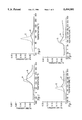
- FIG. 1 shows DMA (dynamic mechanical analysis) scans from -70° to 280° C. for two compositions, A (comparative) and B (present invention).
- FIG. 2 shows DMA scans of a comparative composition comprising glycidyl epoxy resin C. (non-annealed) and D (annealed).
- FIG. 3 shows DMA scans E and F from -70° to >250° C. of comparative sample I.
- FIG. 4 shows DMA scans G (non-annealed) and H (annealed) from -70° to >250° C. of comparative sample II.
- FIG. 5 shows DMA scans I (non-annealed), J (intermediate annealed), and K (fully annealed) from ⁇ 50° to >250° C. for sample III, a composition within the present invention.
- FIG. 6 shows a DSC scan of the cure exotherm for a comparative composition.
- FIG. 7 shows a DSC scan of cure exotherms for a composition of the present invention.
- FIG. 8 shows a DSC scan of the cure exotherm of a comparative composition.
- FIG. 9 shows a DSC scan of cure exotherms for a composition of the present invention.
- compositions of the present invention provide vibration-damping, adhesive, abrasive binder, and coating materials exhibiting remarkably high temperature stability and utility over a broad range of temperatures.
- vibration damping materials comprising IPNs of the present invention are stable over a temperature range of about 0° to at least 300° C.
- compositions of the present invention comprise resins which are cured in sequential fashion using a single catalyst, a Bronsted acid, which activates the epoxy resin component at a temperature preferably at or near room temperature, then activates cyanate trimerization into poly(triazines) at temperatures at least 20° C. higher, preferably 50° C. higher, and more preferably 50° to 100° C. higher. It appears that Bronstead acids afford a much faster cycloaliphatic epoxy polymerization than cyanate ester polymerization at a specific temperature in the range of 0° to 150° C.
- the distinct separation in cure temperatures provides convenient processing and handling; the two-part system can be mixed and cured on site, or a "B-staged" film comprising at least partially cured cycloaliphatic epoxy resin and uncured cyanate ester can be prepared and easily transported to the work site where it can be cut or formed into a desired shape, applied between workpieces and thermally cured.
- the compositions of the invention are environmentally responsible, in that no solvents are used in any step of their formulation or use. Because the individual components arc typically odorless, low vapor pressure liquids whose cures are unaffected by ambient oxygen, they can be handled and processed with only nominal precautions.
- Cyanate ester resins comprise cyanate ester compounds (monomers and oligomers) each having one or preferably two or more --OCN functional groups, and typically having a cyanate equivalent weight of from about 50 to about 500, preferably from about 50 to about 250. Molecular weight of the monomers and oligomers are typically from about 150 to about 2000. If the molecular weight is too low, the cyanate ester may have a crystalline structure which is difficult to dissolve. If the molecular weight is too high, the compatibility of the cyanate ester with other resins may be poor.
- compositions of the invention include one or more cyanate esters according to formulas I, II, III or IV.
- Formula I is represented by
- Q comprises a mono-, di-, tri-, or tetravalent aromatic hydrocarbon containing from 5 to 30 carbon atoms and zero to 5 aliphatic, cyclic aliphatic, or polycyclic aliphatic, mono- or divalent hydrocarbon linking groups containing 7 to 20 carbon atoms.
- Q may comprise 1 to 10 heteroatoms selected from the group consisting of non-peroxidic oxygen, sulfur, non-phosphino phosphorus, non-amino nitrogen, halogen, and silicon.
- Formula II is represented by ##STR1## where X is a single bond, a lower alkylene group having from 1 to 4 carbons, --S--, or an SO 2 group; and where each R 1 is independently hydrogen, an alkyl group having from one to three carbon atoms, or a cyanate group (--OC.tbd.N), with the proviso that at least one R 1 group is a cyanate group.
- each of the R 1 groups is either --H, methyl or a cyanate group, with at least two R 1 groups being cyanate groups.
- Formula III is represented by ##STR2## where n is a number from 0 to about 5.
- Formula IV is represented by ##STR3## wherein each R 2 independently is ##STR4## wherein each R 3 is independently --H, a lower alkyl group having from about 1 to about 5 carbon atoms, or a cyanate ester group, and preferably is a hydrogen, methyl or a cyanate ester group, with the proviso that the R 3 s together comprise at least one cyanate ester group.
- Useful cyanate ester compounds include, but are not limited to the following:
- cyanic acid esters derived from phenolic resins e.g., as disclosed in U.S. Pat. No. 3,962,184
- cyanated novolac resins derived from novolac e.g., as disclosed in U.S. Pat. No. 4,022,755
- cyanated bis-phenol-type polycarbonate oligomers derived from bisphenol-type polycarbonate oligomers as disclosed in U.S. Pat. No. 4,026,913, cyano-terminated polyarylene ethers as disclosed in U.S. Pat. No. 3,595,900
- dicyanate esters free of ortho hydrogen atoms as disclosed in U.S. Pat. No.
- Polycyanate compounds obtained by reacting a phenol-formaldehyde precondensate with a halogenated cyanide are also useful.
- Examples of preferred cyanate ester resin compositions include low molecular weight (M n ) oligomers, e.g., from about 250 to about 5000, e.g., bisphenol-A dicyanates such as AroCyTM "B-30 Cyanate Ester Semisolid Resin”; low molecular weight oligomers of tetra o-methyl bis-phenol F dicyanates, such as "AroCyTM M-30 Cyanate Ester Semisolid Resin”; low o molecular weight oligomers of thiodiphenol dicyanates, such as AroCyTM "T-30", all of which are commercially available from Ciba-Geigy Corp., Hawthorne, N.Y.
- M n low molecular weight oligomers
- Cycloaliphatic epoxy resins useful in the invention preferably are selected from 3,4-epoxycyclohexylmethyl-3,4-epoxycyclohexane carboxylate (ERL-4221), 2-(3,4-epoxy)cyclohexylmethyl-5,5'-spiro(3,4-epoxy)cyclohexane-m-dioxane (ERL-4234), and bis((4-methyl-7-oxabicyclo(4.1.0)hept-3-yl)methyl) adipate (ERL-4299), all of which are available from Union Carbide Corp., Tarrytown, N.Y.
- cycloaliphatic epoxies that are useful in the present invention include vinyl cyclohexene monoxide (Union Carbide Corp.), cyclohexene oxide (Aldrich Chemical Co., Milwaukee, Wisc.), vinyl cyclohexene dioxide (ERL 4206TM, Union Carbide Corp.), and limonene oxide, limonene dioxide, and ⁇ -pinene oxide (these three being available from Elf Atochem, Philadelphia, PA).
- cycloaliphatic mono- and di-epoxy oligo-siloxanes which include ⁇ , ⁇ -di-(3,4-cyclohexene-2-ethyl) siloxanes, such as ⁇ , ⁇ -di-(3,4-cyclohexene-2-ethyl)-tetramethyl disiloxane, ⁇ , ⁇ -di(3,4-cyclohexene-2-ethyl)-hexamethyl trisiloxane, as well as ⁇ -3,4-cyclohexene-2-ethyl siloxanes, such as ⁇ -3,4-cyclohexene-2-ethyl pentamethyl disiloxane.
- epoxies can be prepared according to the method of Crivello et al., J. Poly. Sci., A: Poly. Chem. 28, pp 479-503 (1990).
- compositions of the invention may include acyclic aliphatic, cycloaliphatic and oligomeric polyhydroxy compounds commonly known as polyols.
- Polyols are known in the art for their reaction with polyepoxy resins to form so-called "chain-extended” epoxies, wherein low- to medium-molecular weight copolymers are formed.
- chain-extended epoxy resins can add flexibility and resilience to compositions of the invention without compromising their thermal stability.
- Amine chain-extenders are preferably avoided in the present invention because significant amounts of amines (i.e., 10% weight percent or greater of the total composition) interfere with the action of the initiator.
- Polyols useful in the present invention preferably have two to five, more preferably two to four, hydroxyl groups.
- useful polyols include, but are not limited to, 1,2-ethanediol, 1,2-propanediol, 1,3-propanediol, 1,4-butanediol, 1,3-butanediol, 2-methyl-1,3-propanediol, 2,2-dimethyl-1,3-propanediol, and 2-ethyl- 1,6-hexanediol, 1,5-pentanediol, 1,6-hexanediol, 1,8-octanediol, neopentyl glycol, glycerol, trimethylolpropane, 1,2,6-hexanetriol, trimethylolethane, pentaerythritol, quinitol, mannitol, diethylene glycol, triethylene glycol
- Useful higher molecular weight polyols include the polyethylene and polypropylene oxide polymers in the molecular weight range of 200 to 20,000 such as the CarbowaxTM polyethyleneoxide materials supplied by Union Carbide, Tarrytown, N.Y., caprolactone polyols in the molecular weight range of 200 to 5,000, such as the ToneTM polyol materials supplied by Union Carbide, polytetramethylene ether glycol in the molecular weight range of 200 to 4,000, such as the TerathaneTM materials supplied by Dupont (Wilmington, Del.), hydroxyl terminated polybutadiene resins such as the Poly bdTM supplied by Elf Atochem, Philadelphia, Pa., or equivalent materials supplied by other manufacturers.
- Polytetramethylene ether glycols such as Poly THF 250TM, Poly THF CD 1000TM, and Poly THF CD 2000TM, all available from BASF, Mount Olive, N.J., are particularly useful polyols. Polyether polyols and polyester polyols are particularly useful.
- the alcohol functional component can be present as a mixture of materials and comprises poly-hydroxyl containing materials.
- the compositions preferably comprises an amount sufficient to provide an epoxy to hydroxy weight ratio in the composition between about 0.3:1 to 100:1, preferably between about 0.5:1 to 2:1.
- the ratio of (epoxy resin plus optional polyol) to cyanate ester resin in the composition of the invention is in the weight percent range (40 to 80) to (60 to 20), preferably (50 to 65) to (50 to 35).
- Bronsted acid initiators useful in the present invention include any of the strong protic acids (i.e., proton donors) whose anions are sufficiently non-nucleophilic, nonbasic and nonreducing so as to prevent initiator deactivation and cationic chain termination.
- the conjugate base of such acids typically has a pK a of zero or less.
- Useful Bronsted acids of the invention include:
- R f is a fluorinated, saturated, monovalent, non-aromatic, aliphatic radical that is straight-chain, branched-chain or cyclic and has a backbone preferably of carbon-to-carbon linkages.
- R f is fully fluorinated, and contains less than 20 carbon atoms, preferably less than 8 carbon atoms, and, more preferably, contains from 1 to 3 carbon atoms;
- Y is hydrogen or an ammonium cation having at least one hydrogen on the nitrogen atom
- Q' is a divalent radical of the general formula --NY-- or --CR 4 Y--, wherein R 4 is selected from the group consisting of H, Cl, Br, I, alkyl having from 1 to 19 carbon atoms, alkenyl having from 3 to 20 carbon atoms, aryl having up to 20 carbon atoms (preferably up to 10 carbon atoms), alkaryl having from 7 to 20 carbon atoms, or R f SO 2 ; and Y is as defined above.
- Preferred salts of fluoroalkanesulfonic acids are those wherein Y is as defined above; preferred bis(fluoroalkylsulfonyl) methanes are those wherein Q' is selected from the group consisting of --NH--, and --CH(R f SO 2 )--;
- acid-generating esters as described, for example, in U.S. Pat. No. 3,907,706, which is incorporated herein by reference.
- acid-generating esters which decompose thermally are the esterification product of a tertiary alkyl alcohol and an acid that forms a chelation complex with a metal cation of a metal salt, and preferably comprise:
- any tertiary alcohols that form an ester reaction product with an appropriate acid may be used, including, but not limited to, t-butanol, 1,1-dimethylpropanol, 1-methyl-2-ethylpropanol, 1,1-dimethyl-n-butanol, 1,1-dimethyl-n-pentanol, 1,1-diphenylethanol, 1,1-dibenzylethanol, and the like, with
- chelating acids preferably selected from the group consisting of oxalic, phosphoric, phosphorous, malonic, succinic, fumaric, glycolic, lactic, gamma-hydroxybutyric, oxalacetic, tartaric, pyruvic, acetoacetic, mercaptosuccinic, thiophosphoric, chromic, vanadic, and related acids.
- Metal salts which can be useful with the above thermally-decomposable esters are those comprising essentially any metal; all metals inclusive of and to the left of aluminum, germanium, antimony and polonium on the periodic chart of the elements, and the rare earth metals can function in the invention. According to the Periodic Table in Advanced Organic Chemistry, Cotton and Wilkinson, 2d. Ed., Wiley Interscience Publishers, 1966, more preferred metals would be those of Groups IA, IIA, VIA, VIII, IB, IIB, IIIB, IVB and VB, VIB (CAS version of the Periodic Table) and lanthanum, titanium, zirconium, chromium, molybdenum, manganese, cesium and gadolinium.
- Counterions for the metal cations can be essentially any negatively-charged species commonly associated with a metal, and may include, but are not limited to, chloride, bromide, iodide, fluoride, fluoroalkylsulfonides and bis(fluoroalkylsulfonyl)methides generated from the above-noted fluoroalkylsulfonic acids and bis(fluoroalkylsulfonyl)methanes, those derived from mineral acids such as sulfonic, sulfuric, phosphonic, phosphoric, and the like;
- aromatic amine salts of antimony hexafluoride as described, for example, in U.S. Pat. No. 3,542,828, which is incorporated herein by reference.
- Such salts preferably comprise compounds of the general formula (R 5 ) 3 NH + SbF 6 - , wherein each R 5 may be independently H or the same or different alkyl groups having from between 1 and 20 carbon atoms, and aryl, alkaryl, alkoxyaryl or haloaryl having up to 20 carbon atoms, provided that at least one R 5 is not hydrogen.
- amines useful as hexafluoroantimonate salts include, but are not limited to, aniline, diphenylamine, triphenylamine, methylamine, dimethylamine, trimethylamine, ethylamine, diethylamine, triethylamine, hexylamine, nonylamine, (trichlorophenyl)amine, tritolylamine, and the like.
- Anilinium hexafluoroantimonate is a preferred example of this class of catalysts;
- R 6 may be H, alkyl, aryl, aralkyl, alkaryl groups comprising up to 20 carbon atoms, preferably up to 10 carbon atoms
- R 7 may be alkyl, aryl, aralkyl, alkaryl groups comprising up to 20 carbon atoms, preferably up to 10 carbon atoms.
- Preferred groups include tolyl and benzyl, with benzyl being particularly preferred.
- Examples of these catalysts include hexafluoroantimonates of mono- and diphenylhydroxylammonium, mono- and dibenzylhydroxylammonium, mono- and bis(m-chlorophenyl)hydroxylammonium, and mono- and bis-(p-tolyl)hydroxylammonium.
- Dibenzylhydroxylammonium hexafluoroantimonate is a most preferred example of this class of catalysts;
- salts of the general formula MF m OR 8- H + which are formed by the general reaction of an alcohol R 8 OH with a functionally complementary compound comprising a perfluoro group MF m , wherein OR 8 is the residue of an aliphatic or aromatic alcohol preferably having a molecular weight (M n ) of 32 to at least about 100,000, and a primary or secondary hydroxyl functionality of at least 1, preferably at least 2; M is an atom selected from the group consisting of boron, antimony, arsenic, phosphorous, and the like; and m is the valence of the atom M.
- perfluorometal compounds are BF 3 , PF 5 , AsF 5 , SbF 5 , and related compounds, and the like.
- a example of this class of compounds is the complex formed by the reaction of BF 3 with methanol;
- R 10 , R 11 , R 12 are independently hydrogen, an alkyl group having 1 to 10 carbon atoms, benzyl, or an electron donating group, or at least one of R 10 and R 11 is joined together with R 12 to form a benzo group; provided that, if no benzo group is present in the hindered amine, at least one of R 9 , R 10 , and R 11 is an alkyl group or an electron donating group; and if R 10 , R 11 and one R 9 is hydrogen, the other R 9 is an alkyl group having at least two carbon atoms.
- Suitable electron donating groups include hydroxyl group, branched straight chain or cyclic alkyl or alkoxy groups having up to 18 carbon atoms and amine groups.
- the substituted pentafluoroantimonic acid can have the formula HSbF 5 X, wherein X is halogen, hydroxy, or --OR 13 , wherein OR 13 is the residue of an aliphatic or aromatic alcohol preferably having a molecular weight (Mn) of 32 to at least about 100,000, and a primary or secondary hydroxyl functionality of at least 1, preferably at least 2.
- the most preferred s alcohol is diethylene glycol, i.e., the most preferred --OR 13 group is 2-(2-hydroxyethoxy)ethoxy, and the most preferred example of this class of catalysts is the equimolar reaction product of antimony pentafluoride, diethylene glycol (DEG) and 2,6-diethylaniline (DEA).
- the initiator can be present in the range of 0.1 to 10 percent by weight of the polymerizable composition, preferably 0.5 to 5 percent.
- an effective amount of an aromatic amine as stabilizer (less than 10 weight percent, preferably 0.1 to 8 weight percent based on the total composition) can be used with the catalyst to inhibit premature curing.
- High temperature stable resins of the invention are prepared generally by admixture of a cyanate ester resin, cyclo aliphatic epoxy resin, preferably a polyether polyol, and a suitable Bronsted acid.
- the mixture can be spread on a suitable heat-resistant release liner, then cured at 90°-150° C., preferably 100°-125° C., for 1-15 minutes, preferably 5-8 minutes.
- the resultant film is a flexible, tough sheet that can be cut or shaped, then applied between workpieces that are to be bonded together. Subsequent heating, preferably at temperatures above 200° C., cures the cyanate ester component and produces, in this embodiment, a temperature-resistant vibration-damping bond.
- a curable mixture may be cast into a preferred shape or into a cavity, then heated to cure the composition in place. Heating can be carried out in a single continuous operation or in two distinct steps, separated in time.
- the initiator provides for independent polymerization of the cycloaliphatic epoxy resin and the cyanate ester resin.
- a tough, high-temperature protective coating may be prepared by heating a composition of the invention that has been applied directly on a substrate.
- the present invention IPNs provide ultra high temperature damping materials, high temperature adhesives, binders for use in high temperature s abrasives, and high temperature protective coatings.
- IPN there are two intermeshed components, each highly crosslinked, and not swellable by solvents.
- the polymerizable composition of the present invention can be provided as a kit comprising a two-part composition, a first part comprising a cycloaliphatic epoxy resin and a cyanate ester resin, and a second part comprising a Bronsted acid initiator and optionally a polyol.
- LAC means a mixture comprising a 1:1:2.93 weight-to-weight ratio of SbF 5 :diethylene glycol (DEC) and 2,6-diethylaniline (DEA), as stabilizer, the preparation of which is described in U.S. Pat. No. 4,503,211, example 1, which is incorporated herein by reference.
- sample A A second aliquot (sample A) was taken and mixed with one part (relative to the weight of the aliquot) of dicyclopentadienyl iron antimony hexafluoride (Cp 2 FeSbF 6 , a Lewis acid initiator), 40% by weight in 3-methyltetrahydrothiophene-1,1-dioxide (3-methyl sulfolane, available from Aldrich).
- Samples A and B were knife-coated between 0.050 mm silicone-release-coated polyethylene terephthalate sheets and the sandwich construction was heated in a convection oven at 125° C. for 7 minutes such that the resin mixture formed a flexible free-standing film.
- the release liners were removed and a sample of the resin film was cut into a 51 ⁇ 12.5 mm coupon which was sandwiched between two 0.25 mm thick steel coupons of the same size as the resin film coupon and analyzed by dynamic mechanical analysis (DMA) in a constrained layer geometry using a Seiko Instruments DMS 110 Rheometer using a 20 mm flexure fixture. Samples A and B were annealed for two hours at 260° C. DMA tracings of tan delta values of the two samples are shown in FIG. 1. This trial shows that Lewis acid catalysis afforded a single-phase morphology exhibiting a narrow temperature range where tan delta ⁇ 0.06, thus limiting its utility as a vibration damping material.
- DMA dynamic mechanical analysis
- Tan delta indicates the vibration damping efficiency of a material. Tan delta values of 0.06 are accepted in the art as a minimum for adequate damping for such a metal-polymer-metal composite.
- the LAC initiator can be replaced by an equivalent number of moles of HC(SO 2 CF 3 ) 3 or HN(SO 2 CF 3 ) 2 to provide compositions having desirable properties within the present invention.
- Cyanate ester resin QUARTEX 7187 can be used instead of B-30 to provide a composition having desirable properties within the present invention.
- a 1:1 mixture of neopentyl glycol diglycidyl ether (Heloxy 68, available from Shell Chemicals Co., Houston, Tex.) and B-30 cyanate ester resin (available from Ciba-Geigy, Ardsley, N.Y.) was stirred and mixed with 5% by weight of LAC.
- the mixture was coated via a Meyer bar apparatus (#28) onto a 0.20 mm (8 mil) thick steel sheet and immediately covered with a second steel sheet to form a sandwich.
- the sandwich construction was heated at 150° C. in a convection oven for 10 minutes, and then a coupon of 51 ⁇ 12 mm was cut from the sandwich, then annealed in a convection oven at 260° C. for two hours and cooled.
- the sample was processed in a DMA rheometer (as in Example 1 ) four times by ramping from ambient temperature to 250° C. at 5° C. per minute, cooling rapidly with liquid nitrogen, then cycling twice from -40° C. to 250° C. at the same heating rate and holding at that temperature for 20 minutes, then cycling over the same range and holding for 50 minutes, then recording the tan delta from ambient at 275° C.
- the results are shown in FIG. 2. It is clear that the resin had lost essentially all of its vibration damping ability by the time the fourth scan is taken.
- scan C of FIG. 2 represents data before annealing and scan D data was after annealing at 250° C. for the combined total of 90 minutes. The data show poor thermal stability as indicated by scan D. In scan D there were no thermal ranges having tan delta values of 0.06 or above.
- a stock solution of two parts B-30 cyanate ester resin available from Ciba-Geigy, Ardsley, N.Y.
- one part bis((4-methyl-7-oxabicyclo[4.1.0]hept-3-yl)methyl) adipate available as ERL-4299 from Union Carbide Corp., Tarrytown, N.Y.
- polytetrahydrofuran polyol PolyTHF CD 1000TM polyol chain extender, BASF, Mount Olive, N.Y.
- Cure times and temperatures were varied according to the relative effectiveness of the catalyst in order to obtain approximately the same degree of cure for each sample.
- the "B-staged” films were removed from the liners and a piece approximately 5 cm ⁇ 1.3 cm was cut from each and laminated by hand between two 0.20 mm thick steel shims of similar dimensions.
- Each of the sandwich constructions was subjected to dynamic mechanical analysis (DMA) using a Seiko DMS-100 instrument equipped with a 20 mm flexure fixture, using the temperature cycling regimen shown in Table 2.
- DMA dynamic mechanical analysis
- the "B-staged” samples continued to cure and were deemed to be largely cured by the end of the 30-minute (scan 2) hold at 260° C. Tangent delta vs. temperature data are shown in FIGS.
- Scan E (sample I from TABLE 1, scan procedure 4) represents non-annealed material and scan F (sample I from TABLE 1, scan procedure 8) represents the same sample which was annealed through eight scan cycles as shown in Table 2.
- the data show that comparative annealed sample 1 exhibited poor thermal stability.
- Scan G (sample II, from Table 1, scan procedure 4) represents non-annealed material and scan H (sample II, from Table 1, scan procedure 8) represents the same sample which was annealed through eight scan cycles as shown in Table 2. Both scans of sample II show narrow ranges for damping utility.
- Scans J (sample III, from Table 1, scan procedure 6) and K (sample III, from Table 1, scan procedure 8) show excellent thermal stability. Both scans show broadened damping utility of sample III.
- Scan I (sample III, from Table 1, scan procedure 4) represents a non-annealed sample. Scans I, J, and K relate to the same sample (III).
- the Figures also show superior high-temperature stability of the IPN system of the present invention, since damping ability was retained after repeated exposure to temperatures in excess of 300° C.
- the area under the curve having tan ⁇ values equal to or greater than 0.06 remained essentially constant in FIG. 5 but decreased significantly for FIGS. 3 and 4.
- a stock solution containing 30 g of 2 parts of bisphenol-A dicyanatc (B-30 cyanate ester resin), 2 parts bis((4-methyl-7-oxabicyclo[4.1.0]hept-3-yl)methyl) adipate (ERL-4299), polytetramethylene ether glycol (PolyTHF CD 1000) polyol chain extender was prepared and stirred with 1.5 g LAC catalyst system until a uniform color was attained. The mixture was divided, with one portion coated onto steel stock (see below) and one portion coated between two KaptonTM polyimide films (see below).
- LAC the same number of moles of any of anilinium C(SO 2 CF 3 ) 3 , lithium tris(trifluoromethylsulfonyl) methide and di(tert-butyl)oxalate, or dibenzylhydroxylammonium hexafluoroantimonate can be used as initiator to provide compositions having desirable properties within the present invention.
- a portion of the mixture above was coated onto a 15 ⁇ 30 cm coupon of 0.02 cm thick steel shim stock that had been previously cleaned with isopropyl alcohol, using an RDS 50 Meyer Rod coater.
- a second piece of previously-washed steel, of identical dimensions, was placed over the coated sheet, and the sandwich assembly was heated in an oven at 125° C. for 30 minutes. After cooling to room temperature, a 2.54 cm wide strip was cut from the laminated construction. The strip was placed in the jaws of an Instron tensile testing apparatus (Model No. 1122) to determine its peel strength. The cross-head speed was 25.4 cm/minute. T-peel adhesive strength was 112 N/dm (2800 g/cm).
- Example 2 An aliquot of the mixture of Example 2 (comparative) was separated (prior to coating) for DSC (differential scanning calorimetry) analysis, shown in FIG. 6 (comparative).
- the instrument used was a Seiko DSC Analyzer, Model. No. DSC220C. The sample was heated at 10° C. per minute. The scan of FIG. 6 shows that the cure exotherms of the glycidyl epoxy resin and cyanate ester resin almost completely coincide. The scan indicates that a substantial amount of the product is a copolymer of cyanate ester and glycidyl epoxy.
- the mixture was subjected to DSC analysis using the instrument and conditions described above for DSC analysis.
- the scan is shown in FIG. 7 and the two distinct peaks are designated L and M.
- Lower temperature peak L is associated with cycloaliphatic epoxy polymerization
- higher temperature peak M represents the exotherm of the cyanate ester polymerization.
- Scan of FIG. 8 shows that when a Lewis acid was present as an initiator, the cure exotherm of cyclo aliphatic epoxy resin was not distinct from that of the cyanate ester resin.
- the scan indicates that a substantial amount of product was a copolymer of cyanate ester and epoxy.
- the scan of FIG. 9 shows two distinct peaks, designated N and O. Lower temperature peak N is associated with cycloaliphatic epoxy polymerization, and higher temperature peak O represents the exotherm of the cyanate ester polymerization.
Landscapes
- Chemical & Material Sciences (AREA)
- Health & Medical Sciences (AREA)
- Chemical Kinetics & Catalysis (AREA)
- Medicinal Chemistry (AREA)
- Polymers & Plastics (AREA)
- Organic Chemistry (AREA)
- Macromolecular Compounds Obtained By Forming Nitrogen-Containing Linkages In General (AREA)
- Adhesives Or Adhesive Processes (AREA)
- Compositions Of Macromolecular Compounds (AREA)
- Epoxy Resins (AREA)
Abstract
A polymerizable composition of matter comprises a cycloaliphatic epoxy resin, a cyanate ester resin, optionally a polyol, and, as initiator, a Bronsted acid. When cured, the compositions provide interpenetrating polymer networks (IPNs). The IPNs are useful as high temperature stable vibration damping materials, adhesives, binders for abrasives, and protective coatings.
Description
This invention relates to mixed epoxy resin and cyanate ester resin compositions that can be cured to interpenetrating polymer networks (IPNs). The IPNs provide high temperature stable vibration damping materials, adhesives, binders for abrasives, and protective coatings.
Industry is constantly searching for high temperature stable materials that resist degradation. Such materials can have utility, for example, as adhesives, and in vibration damping applications.
IPNs have been disclosed. Energy-curable compositions comprising interpenetrating polymer networks of epoxy resins and acrylate resins have been described (see, for example, U.S. Pat. Nos. 5,262,232 and 5,086,088) in which the compositions are stated to be useful as pressure sensitive adhesives and as vibration damping materials. However, the compositions have limited utility at higher temperatures.
Cyanate esters, which can be prepared by reacting polyhydric phenols with cyanogen bromide, as described in U.S. Pat. No. 3,553,244, are thermosetting resins having high heat resistance and, at the same time, considerable brittleness. Interpenetrating polymer networks of cyanate ester resins and acrylate resins show considerably increased flexibility as well as resistance to moderately high temperature degradation. See, for example, U.S. Pat. No. 5,331,018. However, industrial applications at temperatures exceeding 275° C. are becoming more common, and the need exists for materials that are both flexible and durable at these temperatures.
Blends of cyanate ester resins and epoxy resins have been described. For example, U.S. Pat. Nos. 4,604,452, 4,785,075, 4,902,752, 4,983,683, 5,068,309, and 5,149,863 describe various blends of cyanate ester resins with glycidyl ethers of polyhydric phenols ('452 and '075) or with thermoplastic resins such as polysulfones, polyetherimides, polyarylethers, etc., terminated with epoxy groups ('752 and '683). Compositions of various morphologies and properties were obtained. Single polymer networks or polymer blends were obtained, but no interpenetrating polymer networks are disclosed.
U.S. Pat. No. 4,797,454 describes cyanate-functional oxazolinylpolysiloxanes useful for toughening resin systems such as epoxies and cyanates. Oligomeric epoxy-terminated siloxanes (e.g., glycidyl ethers) are reacted with dicyanates to give a resin additive, demonstrating that cross-reaction of glycidyl ethers with cyanates is faster than self-condensation of the epoxy compounds, so that no interpenetrating polymer network is formed.
U.S. Pat. No. 4,956,393 describes heat curable cyanate adhesive compositions comprising a cyanate ester resin, an epoxy resin, and a catalyst effective to promote the elevated temperature cure of the composition. Both polysiloxyl and cycloaliphatic epoxy resins are disclosed, while tin catalysts, e.g., tin octanoate, are said to be preferred for the polymerizations (col. 7, lines 8-9). In Example 9, a non-Bronsted acid initiator is used in an uncured composition comprising cycloaliphatic epoxy, cyanate ester, and polyimide.
U.S. Pat. No. 5,043,411 describes a thermosetting cyanate ester resin containing an epoxy resin pre-condensed with an aromatic amine or aromatic amide. As catalyst for the cyanate ester polymerization, only a coordination metal compound soluble in nonylphenol is described. Catalysts for the epoxy condensation reaction include amine salts, imidazoles, tertiary amines or hindered phenols. Interpenetrating polymer networks are not disclosed.
U.S. Pat. No. 5,330,684 describes Z-axis conductive adhesive compositions comprising cyanate ester resins, film-forming thermoplastic resins, epoxy resins including cycloaliphatic epoxies, an organometallic catalyst, and conductive particles. No Bronsted acids are disclosed as catalysts.
Briefly, the present invention provides a polymerizable composition of matter comprising a cycloaliphatic epoxy resin, a cyanate ester resin, optionally a polyol, a Bronsted acid as initiator, and optionally a stabilizer for the initiator.
In another aspect, the present invention provides an interpenetrating polymer network (IPN) prepared from the above-described polymerizable composition.
In a further aspect, there is provided a method of polymerizing monomers to provide an IPN comprising the step of polymerizing a miscible mixture of cycloaliphatic epoxy resin, a cyanate ester resin, optionally a polyol, and, as cationic initiator, a Bronsted acid, and optionally a stabilizer for the initiator, the energy for polymerization of the cycloaliphatic epoxy and cyanate ester resins being provided at temperatures differing by at least 20° C. so as to sequentially polymerize the resins and provide an IPN. The initial temperature of cure for the cycloaliphatic epoxy and the higher temperature of cure for the cyanate ester resin depend on the curable composition and the curatives employed.
It has been discovered that a mixed cycloaliphatic epoxy resin and cyanate ester resin composition comprising a Bronsted acid as initiator when subjected to two different temperatures (at least 20° C. apart) can be sequentially polymerized to provide an IPN which is stable at temperatures of at least about 300° C. for at least one hour. The IPNs are essentially free of epoxy-cyanate interreaction (cross-reaction) product. It has been found that the use of Bronsted acid as initiator provides an interpenetrating polymer network which is responsible for high temperature stability of the cured product.
The present invention provides the art with useful vibration damping, adhesive, abrasive, and coating compositions which are stable to temperatures of at least 300° C. for prolonged periods of time in the absence of oxygen. These materials exhibit stability over a broad range of temperatures. Surprisingly, brittleness typically associated with cyanate ester resins is not characteristic of the present invention IPNs. Rather, these IPNs are flexible and stable even at high temperatures (e.g., at least 300° C.).
In this application:
"Bronsted acid" means a compound capable of donating a proton, optionally with heating; the term includes compounds capable of generating a Bronsted acid;
"stabilizer" means an additive that controls the activity of a Bronsted acid initiator;
"sequentially polymerized" means polymerization of cycloaliphatic epoxy at a lower temperature followed by polymerization of cyanate ester at a higher temperature;
"interpenetrating polymer network" means a plurality of intermeshed polymers, each highly crosslinked, with essentially no cycloaliphatic epoxy-cyanate ester cross-reactions; and
"B-stage" means at least partial cure of at least one component in a resin mixture, provided that all components are not fully cured; such a composition comprises monomeric and polymeric materials.
A desirable feature of the components of the present invention is that cycloaliphatic epoxies can be present as either a two-part liquid precursor or as a "B-staged" two-part composition. Another desirable feature of the components of the present invention is that they are essentially free of odor. Preferably, the starting materials exhibit low vapor pressure because of their relatively high molecular weights. Advantageously, the present invention compositions can be processed under the ambient environment, e.g., in the presence of oxygen. Additionally, the present invention IPNs can retain their flexibility at temperatures of at least 300° C. for at least one hour. Such materials make particularly useful vibration damping materials.
FIG. 1 shows DMA (dynamic mechanical analysis) scans from -70° to 280° C. for two compositions, A (comparative) and B (present invention).
FIG. 2 shows DMA scans of a comparative composition comprising glycidyl epoxy resin C. (non-annealed) and D (annealed).
FIG. 3 shows DMA scans E and F from -70° to >250° C. of comparative sample I.
FIG. 4 shows DMA scans G (non-annealed) and H (annealed) from -70° to >250° C. of comparative sample II.
FIG. 5 shows DMA scans I (non-annealed), J (intermediate annealed), and K (fully annealed) from <50° to >250° C. for sample III, a composition within the present invention.
FIG. 6 shows a DSC scan of the cure exotherm for a comparative composition.
FIG. 7 shows a DSC scan of cure exotherms for a composition of the present invention.
FIG. 8 shows a DSC scan of the cure exotherm of a comparative composition.
FIG. 9 shows a DSC scan of cure exotherms for a composition of the present invention.
Compositions of the present invention provide vibration-damping, adhesive, abrasive binder, and coating materials exhibiting remarkably high temperature stability and utility over a broad range of temperatures. For example, vibration damping materials comprising IPNs of the present invention are stable over a temperature range of about 0° to at least 300° C.
Compositions of the present invention comprise resins which are cured in sequential fashion using a single catalyst, a Bronsted acid, which activates the epoxy resin component at a temperature preferably at or near room temperature, then activates cyanate trimerization into poly(triazines) at temperatures at least 20° C. higher, preferably 50° C. higher, and more preferably 50° to 100° C. higher. It appears that Bronstead acids afford a much faster cycloaliphatic epoxy polymerization than cyanate ester polymerization at a specific temperature in the range of 0° to 150° C. The distinct separation in cure temperatures provides convenient processing and handling; the two-part system can be mixed and cured on site, or a "B-staged" film comprising at least partially cured cycloaliphatic epoxy resin and uncured cyanate ester can be prepared and easily transported to the work site where it can be cut or formed into a desired shape, applied between workpieces and thermally cured. The compositions of the invention are environmentally responsible, in that no solvents are used in any step of their formulation or use. Because the individual components arc typically odorless, low vapor pressure liquids whose cures are unaffected by ambient oxygen, they can be handled and processed with only nominal precautions.
Cyanate ester resins comprise cyanate ester compounds (monomers and oligomers) each having one or preferably two or more --OCN functional groups, and typically having a cyanate equivalent weight of from about 50 to about 500, preferably from about 50 to about 250. Molecular weight of the monomers and oligomers are typically from about 150 to about 2000. If the molecular weight is too low, the cyanate ester may have a crystalline structure which is difficult to dissolve. If the molecular weight is too high, the compatibility of the cyanate ester with other resins may be poor.
Preferred compositions of the invention include one or more cyanate esters according to formulas I, II, III or IV. Formula I is represented by
Q(OCN).sub.p I
where p is an integer from 1 to 7, preferably from 2 to 7, and wherein Q comprises a mono-, di-, tri-, or tetravalent aromatic hydrocarbon containing from 5 to 30 carbon atoms and zero to 5 aliphatic, cyclic aliphatic, or polycyclic aliphatic, mono- or divalent hydrocarbon linking groups containing 7 to 20 carbon atoms. Optionally, Q may comprise 1 to 10 heteroatoms selected from the group consisting of non-peroxidic oxygen, sulfur, non-phosphino phosphorus, non-amino nitrogen, halogen, and silicon.
Formula II is represented by ##STR1## where X is a single bond, a lower alkylene group having from 1 to 4 carbons, --S--, or an SO2 group; and where each R1 is independently hydrogen, an alkyl group having from one to three carbon atoms, or a cyanate group (--OC.tbd.N), with the proviso that at least one R1 group is a cyanate group. In preferred compounds, each of the R1 groups is either --H, methyl or a cyanate group, with at least two R1 groups being cyanate groups.
Formula III is represented by ##STR2## where n is a number from 0 to about 5.
Formula IV is represented by ##STR3## wherein each R2 independently is ##STR4## wherein each R3 is independently --H, a lower alkyl group having from about 1 to about 5 carbon atoms, or a cyanate ester group, and preferably is a hydrogen, methyl or a cyanate ester group, with the proviso that the R3 s together comprise at least one cyanate ester group.
Useful cyanate ester compounds include, but are not limited to the following:
1,3- and 1,4-dicyanatobenzene;
2-tert-butyl-1,4-dicyanatobenzene;
2,4-dimethyl-1,3-dicyanatobenzene;
2,5-di-tert-butyl-1,4-dicyanatobenzene;
tetramethyl-1,4-dicyanatobenzene;
4-chloro-1,3-dicyanatobenzene;
1,3,5-tricyanatobenzene;
2,2'- and 4,4'-dicyanatobiphenyl;
3,3',5,5'-tetramethyl-4,4'-dicyanatobiphenyl;
1,3-, 1,4-, 1,5-, 1,6-, 1,8-, 2,6-, and 2,7-dicyanatonaphthalene;
1,3,6-tricyanatonaphthalene;
bis(4-cyanatophenyl)methane;
bis(3-chloro-4-cyanatophenyl)methane;
bis(3,5-dimethyl-4-cyanatophenyl)methane;
1,1-bis(4-cyanatophenyl)ethane;
2,2-bis(4-cyanatophenyl)propane;
2,2-bis(3,3-dibromo-4-cyanatophenyl)propane;
2,2-bis(4-cyanatophenyl)-1,1,1,3,3,3-hexafluoropropane;
bis(4-cyanatophenyl)ester;
bis(4-cyanatophenoxy)benzene;
bis(4-cyanatophenyl)ketone;
bis(4-cyanatophenyl)thioether;
bis(4-cyanatophenyl)sulfone;
tris(4-cyanatophenyl)phosphate, and
tris(4-cyanatophenyl)phosphate.
Also useful are cyanic acid esters derived from phenolic resins, e.g., as disclosed in U.S. Pat. No. 3,962,184, cyanated novolac resins derived from novolac, e.g., as disclosed in U.S. Pat. No. 4,022,755, cyanated bis-phenol-type polycarbonate oligomers derived from bisphenol-type polycarbonate oligomers, as disclosed in U.S. Pat. No. 4,026,913, cyano-terminated polyarylene ethers as disclosed in U.S. Pat. No. 3,595,900, and dicyanate esters free of ortho hydrogen atoms as disclosed in U.S. Pat. No. 4,740,584, mixtures of di- and tricyanates as disclosed in U.S. Pat. No. 4,709,008, polyaromatic cyanates containing polycyclic aliphatic groups as disclosed in U.S. Pat. No. 4,528,366, e.g., QUARTEX™7187, available from Dow Chemical, fluorocarbon cyanates as disclosed in U.S. Pat. No. 3,733,349, and cyanates disclosed in U.S. Pat. Nos. 4,195,132, and 4,116,946, all of the foregoing patents being incorporated herein by reference for teachings related to cyanates.
Polycyanate compounds obtained by reacting a phenol-formaldehyde precondensate with a halogenated cyanide are also useful.
Examples of preferred cyanate ester resin compositions include low molecular weight (Mn) oligomers, e.g., from about 250 to about 5000, e.g., bisphenol-A dicyanates such as AroCy™ "B-30 Cyanate Ester Semisolid Resin"; low molecular weight oligomers of tetra o-methyl bis-phenol F dicyanates, such as "AroCy™ M-30 Cyanate Ester Semisolid Resin"; low o molecular weight oligomers of thiodiphenol dicyanates, such as AroCy™ "T-30", all of which are commercially available from Ciba-Geigy Corp., Hawthorne, N.Y.
Cycloaliphatic epoxy resins useful in the invention preferably are selected from 3,4-epoxycyclohexylmethyl-3,4-epoxycyclohexane carboxylate (ERL-4221), 2-(3,4-epoxy)cyclohexylmethyl-5,5'-spiro(3,4-epoxy)cyclohexane-m-dioxane (ERL-4234), and bis((4-methyl-7-oxabicyclo(4.1.0)hept-3-yl)methyl) adipate (ERL-4299), all of which are available from Union Carbide Corp., Tarrytown, N.Y.
Other commercially available cycloaliphatic epoxies that are useful in the present invention include vinyl cyclohexene monoxide (Union Carbide Corp.), cyclohexene oxide (Aldrich Chemical Co., Milwaukee, Wisc.), vinyl cyclohexene dioxide (ERL 4206™, Union Carbide Corp.), and limonene oxide, limonene dioxide, and α-pinene oxide (these three being available from Elf Atochem, Philadelphia, PA). Also useful are cycloaliphatic mono- and di-epoxy oligo-siloxanes, which include α, ω-di-(3,4-cyclohexene-2-ethyl) siloxanes, such as α, ω-di-(3,4-cyclohexene-2-ethyl)-tetramethyl disiloxane, α, ω-di(3,4-cyclohexene-2-ethyl)-hexamethyl trisiloxane, as well as α-3,4-cyclohexene-2-ethyl siloxanes, such as α-3,4-cyclohexene-2-ethyl pentamethyl disiloxane. These epoxies can be prepared according to the method of Crivello et al., J. Poly. Sci., A: Poly. Chem. 28, pp 479-503 (1990).
Optionally, compositions of the invention may include acyclic aliphatic, cycloaliphatic and oligomeric polyhydroxy compounds commonly known as polyols. Polyols are known in the art for their reaction with polyepoxy resins to form so-called "chain-extended" epoxies, wherein low- to medium-molecular weight copolymers are formed. These chain-extended epoxy resins can add flexibility and resilience to compositions of the invention without compromising their thermal stability. Amine chain-extenders are preferably avoided in the present invention because significant amounts of amines (i.e., 10% weight percent or greater of the total composition) interfere with the action of the initiator.
Polyols useful in the present invention preferably have two to five, more preferably two to four, hydroxyl groups. Examples of useful polyols include, but are not limited to, 1,2-ethanediol, 1,2-propanediol, 1,3-propanediol, 1,4-butanediol, 1,3-butanediol, 2-methyl-1,3-propanediol, 2,2-dimethyl-1,3-propanediol, and 2-ethyl- 1,6-hexanediol, 1,5-pentanediol, 1,6-hexanediol, 1,8-octanediol, neopentyl glycol, glycerol, trimethylolpropane, 1,2,6-hexanetriol, trimethylolethane, pentaerythritol, quinitol, mannitol, diethylene glycol, triethylene glycol, tetraethylene glycol, glycerine, 2-ethyl-2-(hydroxymethyl)-1,3-propanediol, 2-ethyl-2-methyl- 1,3-propanediol, pentaerythritol, 2-ethyl-1,3-pentanediol, and 2,2-oxydiethanol, sorbitol, 1,4-cyclohexane dimethanol, 1,4-benzene dimethanol, 2-butene-1,4-diol, and polyalkoxylated bis-phenol A derivatives. Other examples of useful polyols are disclosed in U.S. Pat. No. 4,503,211, which is incorporated herein by reference.
Useful higher molecular weight polyols include the polyethylene and polypropylene oxide polymers in the molecular weight range of 200 to 20,000 such as the Carbowax™ polyethyleneoxide materials supplied by Union Carbide, Tarrytown, N.Y., caprolactone polyols in the molecular weight range of 200 to 5,000, such as the Tone™ polyol materials supplied by Union Carbide, polytetramethylene ether glycol in the molecular weight range of 200 to 4,000, such as the Terathane™ materials supplied by Dupont (Wilmington, Del.), hydroxyl terminated polybutadiene resins such as the Poly bd™ supplied by Elf Atochem, Philadelphia, Pa., or equivalent materials supplied by other manufacturers. Polytetramethylene ether glycols, such as Poly THF 250™, Poly THF CD 1000™, and Poly THF CD 2000™, all available from BASF, Mount Olive, N.J., are particularly useful polyols. Polyether polyols and polyester polyols are particularly useful.
The alcohol functional component can be present as a mixture of materials and comprises poly-hydroxyl containing materials. When alcohol is present, the compositions preferably comprises an amount sufficient to provide an epoxy to hydroxy weight ratio in the composition between about 0.3:1 to 100:1, preferably between about 0.5:1 to 2:1. The ratio of (epoxy resin plus optional polyol) to cyanate ester resin in the composition of the invention is in the weight percent range (40 to 80) to (60 to 20), preferably (50 to 65) to (50 to 35).
Bronsted acid initiators useful in the present invention include any of the strong protic acids (i.e., proton donors) whose anions are sufficiently non-nucleophilic, nonbasic and nonreducing so as to prevent initiator deactivation and cationic chain termination. The conjugate base of such acids typically has a pKa of zero or less. Useful Bronsted acids of the invention include:
(1) fluoroalkanesulfonic acids or their salts of the general formula (Rf SO3)Y and bis(fluoroalkylsulfonyl) methanes of the general formula (Rf SO2)2 Q', as described, for example, in U.S. Pat. Nos. 3,907,706 and 4,049,861, each of which is incorporated herein by reference, wherein
Rf is a fluorinated, saturated, monovalent, non-aromatic, aliphatic radical that is straight-chain, branched-chain or cyclic and has a backbone preferably of carbon-to-carbon linkages. Preferably, Rf is fully fluorinated, and contains less than 20 carbon atoms, preferably less than 8 carbon atoms, and, more preferably, contains from 1 to 3 carbon atoms;
Y is hydrogen or an ammonium cation having at least one hydrogen on the nitrogen atom;
Q' is a divalent radical of the general formula --NY-- or --CR4 Y--, wherein R4 is selected from the group consisting of H, Cl, Br, I, alkyl having from 1 to 19 carbon atoms, alkenyl having from 3 to 20 carbon atoms, aryl having up to 20 carbon atoms (preferably up to 10 carbon atoms), alkaryl having from 7 to 20 carbon atoms, or Rf SO2 ; and Y is as defined above.
Preferred salts of fluoroalkanesulfonic acids are those wherein Y is as defined above; preferred bis(fluoroalkylsulfonyl) methanes are those wherein Q' is selected from the group consisting of --NH--, and --CH(Rf SO2)--;
(2) acid-generating esters, as described, for example, in U.S. Pat. No. 3,907,706, which is incorporated herein by reference. Preferably, acid-generating esters which decompose thermally are the esterification product of a tertiary alkyl alcohol and an acid that forms a chelation complex with a metal cation of a metal salt, and preferably comprise:
(a) any tertiary alcohols that form an ester reaction product with an appropriate acid may be used, including, but not limited to, t-butanol, 1,1-dimethylpropanol, 1-methyl-2-ethylpropanol, 1,1-dimethyl-n-butanol, 1,1-dimethyl-n-pentanol, 1,1-diphenylethanol, 1,1-dibenzylethanol, and the like, with
(b) chelating acids preferably selected from the group consisting of oxalic, phosphoric, phosphorous, malonic, succinic, fumaric, glycolic, lactic, gamma-hydroxybutyric, oxalacetic, tartaric, pyruvic, acetoacetic, mercaptosuccinic, thiophosphoric, chromic, vanadic, and related acids.
Metal salts which can be useful with the above thermally-decomposable esters are those comprising essentially any metal; all metals inclusive of and to the left of aluminum, germanium, antimony and polonium on the periodic chart of the elements, and the rare earth metals can function in the invention. According to the Periodic Table in Advanced Organic Chemistry, Cotton and Wilkinson, 2d. Ed., Wiley Interscience Publishers, 1966, more preferred metals would be those of Groups IA, IIA, VIA, VIII, IB, IIB, IIIB, IVB and VB, VIB (CAS version of the Periodic Table) and lanthanum, titanium, zirconium, chromium, molybdenum, manganese, cesium and gadolinium. Counterions for the metal cations can be essentially any negatively-charged species commonly associated with a metal, and may include, but are not limited to, chloride, bromide, iodide, fluoride, fluoroalkylsulfonides and bis(fluoroalkylsulfonyl)methides generated from the above-noted fluoroalkylsulfonic acids and bis(fluoroalkylsulfonyl)methanes, those derived from mineral acids such as sulfonic, sulfuric, phosphonic, phosphoric, and the like;
(3) aromatic amine salts of antimony hexafluoride, as described, for example, in U.S. Pat. No. 3,542,828, which is incorporated herein by reference. Such salts preferably comprise compounds of the general formula (R5)3 NH+ SbF6 -, wherein each R5 may be independently H or the same or different alkyl groups having from between 1 and 20 carbon atoms, and aryl, alkaryl, alkoxyaryl or haloaryl having up to 20 carbon atoms, provided that at least one R5 is not hydrogen. Representative amines useful as hexafluoroantimonate salts include, but are not limited to, aniline, diphenylamine, triphenylamine, methylamine, dimethylamine, trimethylamine, ethylamine, diethylamine, triethylamine, hexylamine, nonylamine, (trichlorophenyl)amine, tritolylamine, and the like. Anilinium hexafluoroantimonate is a preferred example of this class of catalysts;
(4) hydroxylamine salts of antimony hexafluoride, as described, for example, in U.S. Pat. No. 3,879,312, incorporated herein by reference, which may be represented by the general formula R6 R7 N(OH)H+ SbF6 -, wherein R6 may be H, alkyl, aryl, aralkyl, alkaryl groups comprising up to 20 carbon atoms, preferably up to 10 carbon atoms, and R7 may be alkyl, aryl, aralkyl, alkaryl groups comprising up to 20 carbon atoms, preferably up to 10 carbon atoms. Preferred groups include tolyl and benzyl, with benzyl being particularly preferred. Examples of these catalysts include hexafluoroantimonates of mono- and diphenylhydroxylammonium, mono- and dibenzylhydroxylammonium, mono- and bis(m-chlorophenyl)hydroxylammonium, and mono- and bis-(p-tolyl)hydroxylammonium. Dibenzylhydroxylammonium hexafluoroantimonate is a most preferred example of this class of catalysts;
(5) salts of the general formula MFm OR8- H+, which are formed by the general reaction of an alcohol R8 OH with a functionally complementary compound comprising a perfluoro group MFm, wherein OR8 is the residue of an aliphatic or aromatic alcohol preferably having a molecular weight (Mn) of 32 to at least about 100,000, and a primary or secondary hydroxyl functionality of at least 1, preferably at least 2; M is an atom selected from the group consisting of boron, antimony, arsenic, phosphorous, and the like; and m is the valence of the atom M. Representative examples of such perfluorometal compounds are BF3, PF5, AsF5, SbF5, and related compounds, and the like. A example of this class of compounds is the complex formed by the reaction of BF3 with methanol;
(6) liquid salts of substituted pentafluoroantimonic acids and aromatic amines (as stabilizers), as described, for example, in U.S. Pat. No. 4,503,211, incorporated herein by reference, wherein the aromatic amines preferably are selected from the group consisting of aniline and hindered amines, wherein the hindered amines are of the general formula ##STR5## wherein each R9 is independently hydrogen, primary or secondary alkyl group having from 1 to about 10 carbon atoms, or benzyl;
R10, R11, R12 are independently hydrogen, an alkyl group having 1 to 10 carbon atoms, benzyl, or an electron donating group, or at least one of R10 and R11 is joined together with R12 to form a benzo group; provided that, if no benzo group is present in the hindered amine, at least one of R9, R10, and R11 is an alkyl group or an electron donating group; and if R10, R11 and one R9 is hydrogen, the other R9 is an alkyl group having at least two carbon atoms.
Suitable electron donating groups include hydroxyl group, branched straight chain or cyclic alkyl or alkoxy groups having up to 18 carbon atoms and amine groups.
The substituted pentafluoroantimonic acid can have the formula HSbF5 X, wherein X is halogen, hydroxy, or --OR13, wherein OR13 is the residue of an aliphatic or aromatic alcohol preferably having a molecular weight (Mn) of 32 to at least about 100,000, and a primary or secondary hydroxyl functionality of at least 1, preferably at least 2. The most preferred s alcohol is diethylene glycol, i.e., the most preferred --OR13 group is 2-(2-hydroxyethoxy)ethoxy, and the most preferred example of this class of catalysts is the equimolar reaction product of antimony pentafluoride, diethylene glycol (DEG) and 2,6-diethylaniline (DEA).
The initiator can be present in the range of 0.1 to 10 percent by weight of the polymerizable composition, preferably 0.5 to 5 percent. Optionally, an effective amount of an aromatic amine as stabilizer (less than 10 weight percent, preferably 0.1 to 8 weight percent based on the total composition) can be used with the catalyst to inhibit premature curing.
High temperature stable resins of the invention are prepared generally by admixture of a cyanate ester resin, cyclo aliphatic epoxy resin, preferably a polyether polyol, and a suitable Bronsted acid. In one embodiment, the mixture can be spread on a suitable heat-resistant release liner, then cured at 90°-150° C., preferably 100°-125° C., for 1-15 minutes, preferably 5-8 minutes. The resultant film is a flexible, tough sheet that can be cut or shaped, then applied between workpieces that are to be bonded together. Subsequent heating, preferably at temperatures above 200° C., cures the cyanate ester component and produces, in this embodiment, a temperature-resistant vibration-damping bond. It is within the scope of the invention that a curable mixture may be cast into a preferred shape or into a cavity, then heated to cure the composition in place. Heating can be carried out in a single continuous operation or in two distinct steps, separated in time. The initiator provides for independent polymerization of the cycloaliphatic epoxy resin and the cyanate ester resin. Finally, a tough, high-temperature protective coating may be prepared by heating a composition of the invention that has been applied directly on a substrate.
The present invention IPNs provide ultra high temperature damping materials, high temperature adhesives, binders for use in high temperature s abrasives, and high temperature protective coatings. In the IPN there are two intermeshed components, each highly crosslinked, and not swellable by solvents.
The polymerizable composition of the present invention can be provided as a kit comprising a two-part composition, a first part comprising a cycloaliphatic epoxy resin and a cyanate ester resin, and a second part comprising a Bronsted acid initiator and optionally a polyol.
Objects and advantages of this invention are further illustrated by the following examples, but the particular materials and amounts thereof recited in these examples, as well as other conditions and details, should not be construed to unduly limit this invention. In the Examples below, LAC means a mixture comprising a 1:1:2.93 weight-to-weight ratio of SbF5 :diethylene glycol (DEC) and 2,6-diethylaniline (DEA), as stabilizer, the preparation of which is described in U.S. Pat. No. 4,503,211, example 1, which is incorporated herein by reference.
A solution of 1 part α, ω-di-(3,4-epoxycyclohexane-2-ethyl)tetramethyl disiloxane, 8 parts α-3,4-epoxycyclohexane-2-ethyl pentamethyl disiloxane, both of which were prepared according to the method described by Crivello et al., J. Poly. Sci.: A: Poly. Chem Vol. 28, p. 479-503 (1990), 8 parts vinylcyclohexene oxide (available from Union Carbide Corp., Tarrytown, N.Y.) and 4 parts cyclohexene oxide (available from Aldrich Chemicals, Milwaukee, Wisc.) was stirred and thoroughly mixed at room temperature, then mixed with 21 parts B-30 cyanate ester oligomer (available from Ciba-Geigy, Ardsley, N.Y.) which had previously been heated to 100° C. The mixture was stirred and allowed to cool to room temperature, whereupon an aliquot (sample B) of the mixture was taken and mixed with one part (relative to the aliquot weight) of LAC. A second aliquot (sample A) was taken and mixed with one part (relative to the weight of the aliquot) of dicyclopentadienyl iron antimony hexafluoride (Cp2 FeSbF6, a Lewis acid initiator), 40% by weight in 3-methyltetrahydrothiophene-1,1-dioxide (3-methyl sulfolane, available from Aldrich). Samples A and B were knife-coated between 0.050 mm silicone-release-coated polyethylene terephthalate sheets and the sandwich construction was heated in a convection oven at 125° C. for 7 minutes such that the resin mixture formed a flexible free-standing film. The release liners were removed and a sample of the resin film was cut into a 51×12.5 mm coupon which was sandwiched between two 0.25 mm thick steel coupons of the same size as the resin film coupon and analyzed by dynamic mechanical analysis (DMA) in a constrained layer geometry using a Seiko Instruments DMS 110 Rheometer using a 20 mm flexure fixture. Samples A and B were annealed for two hours at 260° C. DMA tracings of tan delta values of the two samples are shown in FIG. 1. This trial shows that Lewis acid catalysis afforded a single-phase morphology exhibiting a narrow temperature range where tan delta ≧0.06, thus limiting its utility as a vibration damping material. Conversely, the resin mixture cured by Bronsted acid catalysis, per the present invention, exhibited a tan delta ≧0.06 over a temperature range of greater than 100° C. These trials also show the excellent thermal stability of compositions of the invention; even after annealing for two hours at 260° C.;, the mixture cured by Bronsted acid catalysis showed excellent damping.
Further, the scans of FIG. 1 show that sample B had desirable damping properties over a wider range than sample A, the comparative sample. Tan delta indicates the vibration damping efficiency of a material. Tan delta values of 0.06 are accepted in the art as a minimum for adequate damping for such a metal-polymer-metal composite. The LAC initiator can be replaced by an equivalent number of moles of HC(SO2 CF3)3 or HN(SO2 CF3)2 to provide compositions having desirable properties within the present invention.
Cyanate ester resin QUARTEX 7187 can be used instead of B-30 to provide a composition having desirable properties within the present invention.
(Comparative)
A 1:1 mixture of neopentyl glycol diglycidyl ether (Heloxy 68, available from Shell Chemicals Co., Houston, Tex.) and B-30 cyanate ester resin (available from Ciba-Geigy, Ardsley, N.Y.) was stirred and mixed with 5% by weight of LAC. The mixture was coated via a Meyer bar apparatus (#28) onto a 0.20 mm (8 mil) thick steel sheet and immediately covered with a second steel sheet to form a sandwich. The sandwich construction was heated at 150° C. in a convection oven for 10 minutes, and then a coupon of 51×12 mm was cut from the sandwich, then annealed in a convection oven at 260° C. for two hours and cooled. The sample was processed in a DMA rheometer (as in Example 1 ) four times by ramping from ambient temperature to 250° C. at 5° C. per minute, cooling rapidly with liquid nitrogen, then cycling twice from -40° C. to 250° C. at the same heating rate and holding at that temperature for 20 minutes, then cycling over the same range and holding for 50 minutes, then recording the tan delta from ambient at 275° C. The results are shown in FIG. 2. It is clear that the resin had lost essentially all of its vibration damping ability by the time the fourth scan is taken. In sum, scan C of FIG. 2 represents data before annealing and scan D data was after annealing at 250° C. for the combined total of 90 minutes. The data show poor thermal stability as indicated by scan D. In scan D there were no thermal ranges having tan delta values of 0.06 or above.
In order to compare the vibration-damping and thermal stability characteristics of cycloaliphatic epoxy resin, cyanate ester resin, and polyol polymer networks prepared using Bronsted acid catalysts of the present invention and art-known cationic catalysts, the following comparative tests were performed:
A stock solution of two parts B-30 cyanate ester resin (available from Ciba-Geigy, Ardsley, N.Y.), one part bis((4-methyl-7-oxabicyclo[4.1.0]hept-3-yl)methyl) adipate (available as ERL-4299 from Union Carbide Corp., Tarrytown, N.Y.) and one part polytetrahydrofuran polyol (PolyTHF CD 1000™ polyol chain extender, BASF, Mount Olive, N.Y.) was prepared. 100 parts of the stock solution were mixed with a portion of each catalyst, as shown in Table 1, and the mixture was knife-coated at a thickness of 0.1 mm between two 0.05 mm-thick release-coated poly(ethyleneterephthalate) films (Toyo Metallizing Co., Tokyo, Japan), and the mixture was cured to a "B-stage" free-standing film by heating at the temperatures and times shown in Table 1, below.
              TABLE 1
______________________________________
                   Catalyst         "B-stage"
                   Amount,          cure time,
Sample
      Catalyst     parts    Temp, °C.
                                    min.
______________________________________
 I    [C.sub.5 H.sub.5 Fe(CO).sub.2 ].sub.2 .sup.(b)
                   1        135     4
      (comparative)
 II   Zinc naphthenate
                   1.3.sup.(d)
                            135     60
      sulfanilamide.sup.(c)
                   2.2.sup.(e)
      (comparative)
 III  LAC.sup.(a)(f)
                   5        125     7
______________________________________
 .sup.(a) Bronsted acid catalyst system defined above
 .sup.(b) As described in U.S. Pat. No. 5,330,684
 .sup.(c) As described in U.S. Pat. No. 5,043,411
 .sup.(d) 67% solution in mineral oil; available from Strem Chemicals Inc.
 Newport, MA
 .sup.(e) dissolved in minimal amount of 3methylsulfolane
 .sup.(f) Instead of LAC, the same number of moles of the reaction product
 of SbF.sub.5 and diethylene glycol or anilinium hexafluoroantimonate can
 be used to provide a composition having desirable properties within the
 present invention.
Cure times and temperatures were varied according to the relative effectiveness of the catalyst in order to obtain approximately the same degree of cure for each sample.
The "B-staged" films were removed from the liners and a piece approximately 5 cm×1.3 cm was cut from each and laminated by hand between two 0.20 mm thick steel shims of similar dimensions. Each of the sandwich constructions was subjected to dynamic mechanical analysis (DMA) using a Seiko DMS-100 instrument equipped with a 20 mm flexure fixture, using the temperature cycling regimen shown in Table 2. During scan 2, the "B-staged" samples continued to cure and were deemed to be largely cured by the end of the 30-minute (scan 2) hold at 260° C. Tangent delta vs. temperature data are shown in FIGS. 3, 4, and 5 for the [C5 H5 Fe(CO)2 ]2, zinc naphthenate-sulfanilamide catalyst systems, and the Bronsted acid, respectively, taken for scans 4 and 8, in order to compare high-temperature damping and high-temperature stability characteristics of the resulting cured polymer systems.
              TABLE 2
______________________________________
Scan From [°C.]
                To [°C.]
                          Rate [°C.in]
                                    Hold [min]
______________________________________
1     20        -80       50        15
2    -80         260       5        30
3     260       -80       50        15
4    -80         300       5        30
5     300       -80       50        15
6    -80         330       5        60
7     330       -80       50        15
8    -80         350       5         5
9     350         0       50         0
______________________________________
Scan E (sample I from TABLE 1, scan procedure 4) represents non-annealed material and scan F (sample I from TABLE 1, scan procedure 8) represents the same sample which was annealed through eight scan cycles as shown in Table 2. The data show that comparative annealed sample 1 exhibited poor thermal stability.
Scan G (sample II, from Table 1, scan procedure 4) represents non-annealed material and scan H (sample II, from Table 1, scan procedure 8) represents the same sample which was annealed through eight scan cycles as shown in Table 2. Both scans of sample II show narrow ranges for damping utility.
Scans J (sample III, from Table 1, scan procedure 6) and K (sample III, from Table 1, scan procedure 8) show excellent thermal stability. Both scans show broadened damping utility of sample III. Scan I (sample III, from Table 1, scan procedure 4) represents a non-annealed sample. Scans I, J, and K relate to the same sample (III).
Results presented in FIGS. 3, 4, and 5 clearly show the superior high temperature damping characteristics of the IPN system obtained when a Bronsted acid catalyst system, LAC, was used (FIG. 5). In order to be considered a good damping material, the tan δ should be above 0.06 over an extended temperature range. Only the IPN prepared according to the present invention exhibited the desired damping characteristics.
The Figures also show superior high-temperature stability of the IPN system of the present invention, since damping ability was retained after repeated exposure to temperatures in excess of 300° C. Thus, the area under the curve having tan δ values equal to or greater than 0.06 remained essentially constant in FIG. 5 but decreased significantly for FIGS. 3 and 4.
A stock solution containing 30 g of 2 parts of bisphenol-A dicyanatc (B-30 cyanate ester resin), 2 parts bis((4-methyl-7-oxabicyclo[4.1.0]hept-3-yl)methyl) adipate (ERL-4299), polytetramethylene ether glycol (PolyTHF CD 1000) polyol chain extender was prepared and stirred with 1.5 g LAC catalyst system until a uniform color was attained. The mixture was divided, with one portion coated onto steel stock (see below) and one portion coated between two Kapton™ polyimide films (see below).
Instead of LAC, the same number of moles of any of anilinium C(SO2 CF3)3, lithium tris(trifluoromethylsulfonyl) methide and di(tert-butyl)oxalate, or dibenzylhydroxylammonium hexafluoroantimonate can be used as initiator to provide compositions having desirable properties within the present invention.
T-Peel Adhesion to Steel
A portion of the mixture above was coated onto a 15×30 cm coupon of 0.02 cm thick steel shim stock that had been previously cleaned with isopropyl alcohol, using an RDS 50 Meyer Rod coater. A second piece of previously-washed steel, of identical dimensions, was placed over the coated sheet, and the sandwich assembly was heated in an oven at 125° C. for 30 minutes. After cooling to room temperature, a 2.54 cm wide strip was cut from the laminated construction. The strip was placed in the jaws of an Instron tensile testing apparatus (Model No. 1122) to determine its peel strength. The cross-head speed was 25.4 cm/minute. T-peel adhesive strength was 112 N/dm (2800 g/cm).
T-Peel Adhesion to Kapton™ (Polyimide)
A portion of the above mixture was knife coated (net thickness of 0.02 mm) between two pieces of 0.005 cm Kapton™ film measuring 10 cm×60 cm. The laminate was heated in an oven at 125° C. for 30 minutes. After cooling to room temperature, a 1.27 cm strip was cut from the laminated construction. T-peel adhesion, tested as above, was 44 N/dm (1100 g/cm).
The data of this example show that the mixed epoxy resin-cyanate ester IPN of the invention provided a good adhesive formulation.
An aliquot of the mixture of Example 2 (comparative) was separated (prior to coating) for DSC (differential scanning calorimetry) analysis, shown in FIG. 6 (comparative). The instrument used was a Seiko DSC Analyzer, Model. No. DSC220C. The sample was heated at 10° C. per minute. The scan of FIG. 6 shows that the cure exotherms of the glycidyl epoxy resin and cyanate ester resin almost completely coincide. The scan indicates that a substantial amount of the product is a copolymer of cyanate ester and glycidyl epoxy.
A 1:1 mixture of cycloaliphatic epoxy resin, ERL 4299 and cyanate ester resin B-30, were stirred and mixed with 5% by weight of LAC. The mixture was subjected to DSC analysis using the instrument and conditions described above for DSC analysis. The scan is shown in FIG. 7 and the two distinct peaks are designated L and M. Lower temperature peak L is associated with cycloaliphatic epoxy polymerization, and higher temperature peak M represents the exotherm of the cyanate ester polymerization.
Aliquots of samples A and B prepared as in Example 1 were analyzed in a Seiko DSC220C. Differential Scanning Caloimeter. The heating rate was 10° C. per minute. These scans are shown in FIGS. 8 and 9, respectively.
Scan of FIG. 8 (comparative) shows that when a Lewis acid was present as an initiator, the cure exotherm of cyclo aliphatic epoxy resin was not distinct from that of the cyanate ester resin. The scan indicates that a substantial amount of product was a copolymer of cyanate ester and epoxy. The scan of FIG. 9 shows two distinct peaks, designated N and O. Lower temperature peak N is associated with cycloaliphatic epoxy polymerization, and higher temperature peak O represents the exotherm of the cyanate ester polymerization.
DSC scans of LAC-initiated epoxy resin cure and of LAC-initiated cyanate ester resin cure confirmed the assignment of peaks in FIGS. 7 and 9.
Various modifications and alterations of this invention will become apparent to those skilled in the art without departing from the scope and spirit of this invention, and it should be understood that this invention is not to be unduly limited to the illustrative embodiments set forth herein.
Claims (32)
1. A polymerizable composition of matter comprising
a cycloaliphatic epoxy resin,
a cyanate ester resin, and
as single initiator, a Bronsted acid.
2. The composition according to claim 1 further comprising a polyol.
3. The composition according to claim 1 further comprising a stabilizer for said initiator.
4. The composition according to claim 1 which has been partially cured to a B-stage.
5. The composition according to claim 1 wherein said epoxy resin is a mono- or di-epoxy oligo-siloxane.
6. The composition according to claim 1 wherein said cyanate ester resin has any of formulas I, II, III, or IV, wherein
Q(OCN).sub.p I
wherein p can be an integer from 1 to 7, and wherein Q comprises at least one of the following categories: (1) a mono-, di-, tri-, or tetra-substituted aromatic organic group comprising from about 5 to about 30 carbon atoms, (2) a 1 to 5 aliphatic or polycyclic aliphatic mono-, di-, tri- or tetra-substituted organic group comprising from about 7 to about 20 carbon atoms;
Formula II is represented by ##STR6## where X is a single bond, a lower alkylene group having from 1 to 4 carbon atoms, --S--, or an SO2 group; and wherein each R1 is independently hydrogen, an alkyl group having from one to three carbon atoms, or a cyanate ester group (--OC.tbd.N), with the proviso that at least one R1 group is a cyanate ester group;
Formula III is represented by ##STR7## where n is a number from 0 to about 5 ; Formula IV is represented by ##STR8## wherein each R2 independently is ##STR9## wherein each R3 is independently --H, a lower alkyl group having from about 1 to about 5 carbon atoms, or the cyanate ester group, with the proviso that the R3 s together comprise at least one cyanate ester group.
7. The composition according to claim 1 wherein said cyanate ester resin has an equivalent weight in the range of 50 to 500.
8. The composition according to claim 1 wherein said polyol is selected from the group consisting of cycloaliphatic, acyclic aliphatic, and oligomeric polyhydroxy compounds, polyether polyols, and polyester polyols.
9. The composition according to claim 2 wherein the range in weight percent of (epoxy resin plus polyol) to cyanate ester resin is (40 to 80) to (60 to 20).
10. The polymerizable composition according to claim 1 wherein said Bronsted acid initiator has a formula selected from (Rf SO3)Y and (Rf SO2)2 Q'
wherein
Rf is a fluorinated, saturated, monovalent, non-aromatic, aliphatic radical that is straight-chain, branched-chain or cyclic;
Y is hydrogen or an ammonium cation having at least one hydrogen on the nitrogen atom;
Q' is a divalent radical of the general formula --NY-- or --CR4 Y--, wherein R4 is selected from the group consisting of H, Cl, Br, I, alkyl having from 1 to 19 carbon atoms, alkenyl having from 3 to 4 carbon atoms, aryl having up to 20 carbon atoms, alkaryl having from 7 to 20 carbon atoms, or Rf SO2 ; and Y is as defined above.
11. The polymerizable composition according to claim 1 wherein said Bronsted acid is an acid-generating ester.
12. The polymerizable composition according to claim 1 wherein said Bronsted acid is an aromatic amine salt of antimony hexafluoride.
13. The polymerizable composition according to claim 1 wherein said Bronsted acid is a hydroxylamine salt of antimony hexafluoride.
14. The polymerizable composition according to claim 1 wherein said Bronsted acid is a salt having the formula MFm OR8- H+, which is formed by the reaction of an alcohol R8 OH with a functionally complementary compound comprising a perfluoro group MFm, wherein OR8 is the residue of an aliphatic or aromatic alcohol having primary or secondary hydroxyl functionality of at least 1; M is an atom selected from the group consisting of boron, antimony, arsenic, and phosphorous; and m is the valence of the atom M.
15. The polymerizable composition according to claim 1 wherein said Bronsted acid is a liquid salt of a substituted pentafluoroantimonic acid which is used in combination with an aromatic amine as stabilizer for said initiator.
16. The composition according to claim 1 wherein said initiator is present in the range of 0.1 to 10 percent by weight of the polymerizable composition.
17. The polymerized composition according to claim 1 which provides an interpenetrating polymer network.
18. The composition according to claim 17 which provides a vibration damping composition.
19. The composition according to claim 17 which provides an adhesive composition.
20. The composition according to claim 17 which provides a binder for abrasives.
21. The composition according to claim 17 which provides a protective coating.
22. The polymerized composition according to claim 1.
23. A method of polymerizing monomers to provide an interpenetrating polymer network comprising the steps of:
preparing a miscible mixture of cycloaliphatic epoxy resin, a cyanate ester resin, and as initiator a Bronsted acid, and
polymerizing said monomers sequentially at temperatures differing by at least 20° C., so as to provide said IPN.
24. The method according to claim 23 wherein said miscible mixture further comprises a polyol.
25. The method according to claim 23 wherein said miscible mixture further comprises a stabilizer for said Bronsted acid.
26. The method according to claim 23 wherein said difference in temperatures is at least 50° C.
27. The method according to claim 23 wherein said difference in temperatures is in the range of 50°-100° C.
28. The method according to claim 23 wherein polymerization of said epoxy resin is initiated first.
29. The polymerized composition prepared according to the method of claim 23.
30. A kit comprising a two-part composition, a first part comprising a cycloaliphatic epoxy resin and a cyanate ester resin, and a second part comprising as initiator a single Bronsted acid and optionally at least one of a polyol and a stabilizer.
31. The kit according to claim 30 wherein said first part further comprises a polyol.
32. A polymerizable composition of matter comprising
a cycloaliphatic epoxy resin,
a cyanate ester resin, and
as a single initiator, a Bronsted acid, said composition being capable of producing a plurality of intermeshed polymers, each highly crosslinked, with essentially no cycloaliphatic epoxy-cyanate ester cross-reactions.
Priority Applications (9)
| Application Number | Priority Date | Filing Date | Title |
|---|---|---|---|
| US08/398,230 US5494981A (en) | 1995-03-03 | 1995-03-03 | Epoxy-cyanate ester compositions that form interpenetrating networks via a Bronsted acid |
| CA002213333A CA2213333A1 (en) | 1995-03-03 | 1996-01-16 | Epoxy-cyanate ester compositions |
| DE69607328T DE69607328T2 (en) | 1995-03-03 | 1996-01-16 | EPOXY CYANATE ESTER COMPOSITIONS |
| JP52683996A JP3749940B2 (en) | 1995-03-03 | 1996-01-16 | Epoxy cyanate ester composition |
| EP96902686A EP0813576B1 (en) | 1995-03-03 | 1996-01-16 | Epoxy-cyanate ester compositions |
| AU46999/96A AU4699996A (en) | 1995-03-03 | 1996-01-16 | Epoxy-cyanate ester compositions |
| KR1019970706107A KR100416574B1 (en) | 1995-03-03 | 1996-01-16 | Epoxy-cyanate ester composition |
| BR9607691A BR9607691A (en) | 1995-03-03 | 1996-01-16 | Composition of polymerizable material Process for polymerizing monomers to provide an interpenetrating polymeric network and kit |
| PCT/US1996/000544 WO1996027640A1 (en) | 1995-03-03 | 1996-01-16 | Epoxy-cyanate ester compositions |
Applications Claiming Priority (1)
| Application Number | Priority Date | Filing Date | Title |
|---|---|---|---|
| US08/398,230 US5494981A (en) | 1995-03-03 | 1995-03-03 | Epoxy-cyanate ester compositions that form interpenetrating networks via a Bronsted acid |
Publications (1)
| Publication Number | Publication Date |
|---|---|
| US5494981A true US5494981A (en) | 1996-02-27 |
Family
ID=23574540
Family Applications (1)
| Application Number | Title | Priority Date | Filing Date |
|---|---|---|---|
| US08/398,230 Expired - Lifetime US5494981A (en) | 1995-03-03 | 1995-03-03 | Epoxy-cyanate ester compositions that form interpenetrating networks via a Bronsted acid |
Country Status (9)
| Country | Link |
|---|---|
| US (1) | US5494981A (en) |
| EP (1) | EP0813576B1 (en) |
| JP (1) | JP3749940B2 (en) |
| KR (1) | KR100416574B1 (en) |
| AU (1) | AU4699996A (en) |
| BR (1) | BR9607691A (en) |
| CA (1) | CA2213333A1 (en) |
| DE (1) | DE69607328T2 (en) |
| WO (1) | WO1996027640A1 (en) |
Cited By (41)
| Publication number | Priority date | Publication date | Assignee | Title |
|---|---|---|---|---|
| US5780581A (en) * | 1995-10-27 | 1998-07-14 | Hughes Aircraft Company | Plateable structural adhesive for cyanate ester composites |
| US5912316A (en) * | 1996-11-08 | 1999-06-15 | Johnson Matthey, Inc. | Flexible interpenetrating networks formed by epoxy-cyanate ester compositions via a polyamide |
| US6133354A (en) * | 1998-11-17 | 2000-10-17 | Bridgestone Corporation | Copolymers as additives in thermoplastic elastomer gels |
| US6184292B1 (en) | 1998-10-05 | 2001-02-06 | Bridgestone Corporation | Soft gel polymers for high temperature use |
| US6191217B1 (en) | 1998-11-17 | 2001-02-20 | Bridgestone Corporation | Gels derived from polypropylene grafted alkyl vinylether-maleimide copolymers |
| US6204354B1 (en) | 1998-05-06 | 2001-03-20 | Bridgestone Corporation | Soft compounds derived from polypropylene grafted disubstituted ethylene- maleimide copolymers |
| US6207763B1 (en) | 1998-06-12 | 2001-03-27 | Bridgestone Corporation | Application of disubstituted ethylene-maleimide copolymers in rubber compounds |
| US6228939B1 (en) | 1999-05-19 | 2001-05-08 | Bridgestone Corporation | Thermoreversible gels comprising near gelation polymers |
| US6248825B1 (en) | 1998-05-06 | 2001-06-19 | Bridgestone Corporation | Gels derived from extending grafted centipede polymers and polypropylene |
| US6248827B1 (en) | 1997-12-22 | 2001-06-19 | Bridgestone Corporation | Centipede polymers and preparation and application in rubber compositions |
| US6251994B1 (en) | 1999-02-18 | 2001-06-26 | Bridgestone Corporation | Elastomeric compositions for damping |
| US6268427B1 (en) | 1999-02-18 | 2001-07-31 | Bridgestone Corporation | Elastomeric compositions for damping |
| WO2001085358A1 (en) | 2000-05-09 | 2001-11-15 | 3M Innovative Properties Company | Method and apparatus for making particle-embedded webs |
| US6350800B1 (en) | 2000-06-05 | 2002-02-26 | Bridgestone Corporation | Soft polymer gel |
| US6353054B1 (en) | 2000-07-31 | 2002-03-05 | Bridgestone Corporation | Alkenyl-co-maleimide/diene rubber copolymers and applications |
| US6359064B1 (en) | 2000-09-08 | 2002-03-19 | Bridgestone Corporation | Compound of polyester and polyalkylene grafted comb polymer |
| US6384134B1 (en) | 2000-06-05 | 2002-05-07 | Bridgestone Corporation | Poly(alkenyl-co-maleimide) and maleated polyalkylene grafted with grafting agent, and epoxy polymer |
| US6407165B1 (en) | 1999-02-18 | 2002-06-18 | Bridgestone Corporation | Elastomeric compositions for damping |
| US6407166B1 (en) | 1999-02-18 | 2002-06-18 | Bridgestone Corporation | Elastomeric compositions for damping |
| US6417259B1 (en) | 2000-06-05 | 2002-07-09 | Bridgestone Corporation | Polyalkylene grafted centipede polymers |
| US6476117B1 (en) | 2000-06-05 | 2002-11-05 | Bridgestone Corporation | Grafted near-gelation polymers having high damping properties |
| WO2003035718A1 (en) * | 2001-10-19 | 2003-05-01 | Lonza Ag | Hardenable cyanate compositions |
| US6565969B1 (en) | 1999-10-21 | 2003-05-20 | 3M Innovative Properties Company | Adhesive article |
| US20030129438A1 (en) * | 2001-12-14 | 2003-07-10 | Becker Kevin Harris | Dual cure B-stageable adhesive for die attach |
| US6630535B1 (en) | 2000-08-18 | 2003-10-07 | Bridgestone Corporation | Rubber compositions & vulcanizates including comb polymers |
| US6709738B2 (en) | 2001-10-15 | 2004-03-23 | 3M Innovative Properties Company | Coated substrate with energy curable cyanate resin |
| US6833629B2 (en) * | 2001-12-14 | 2004-12-21 | National Starch And Chemical Investment Holding Corporation | Dual cure B-stageable underfill for wafer level |
| US20080251201A1 (en) * | 2004-01-22 | 2008-10-16 | 3M Innovative Properties Company | Adhesive Tape For Structural Bonding |
| US20090130403A1 (en) * | 2005-10-20 | 2009-05-21 | Sikkel Bernardus J | Adhesive pad comprising fibrous layer of metal and polymeric fibers |
| US20090191396A1 (en) * | 2004-10-19 | 2009-07-30 | Swan Michael D | Adhesive article having core/sheath structure |
| US20090197051A1 (en) * | 2005-04-04 | 2009-08-06 | Swan Michael D | Reinforcement pad |
| US20110028653A1 (en) * | 2007-12-28 | 2011-02-03 | Bridgestone Corporation | Interpolymers containing isobutylene and diene mer units |
| US8030431B2 (en) | 2001-10-19 | 2011-10-04 | Lonza Ag | Hardenable cyanate compositions |
| US20140349018A1 (en) * | 2010-08-19 | 2014-11-27 | Basf | Sound deadener composition with emulsion polymer and fluorinated compound |
| WO2016095903A1 (en) | 2014-12-19 | 2016-06-23 | Airbus Defence and Space GmbH | High-temperature resistant duromers on the basis of naphthalene-based epoxy resins and cyanate esters, and improvement of the impact strength |
| EP3112419A1 (en) | 2015-06-30 | 2017-01-04 | Airbus Defence and Space GmbH | Flame-resistant and high temperature resistant duromers on the basis of naphthalene-based epoxy resins and cyanate esters |
| CN107001593A (en) * | 2014-12-08 | 2017-08-01 | 三键有限公司 | Hot curing resin composition |
| US9879163B2 (en) | 2014-06-06 | 2018-01-30 | General Electric Company | Composition for bonding windings or core laminates in an electrical machine, and associated method |
| US9911521B2 (en) | 2014-06-06 | 2018-03-06 | General Electric Company | Curable composition for electrical machine, and associated method |
| US10471655B2 (en) | 2015-09-04 | 2019-11-12 | Carbon, Inc. | Cyanate ester dual resins for additive manufacturing |
| WO2020219885A1 (en) | 2019-04-26 | 2020-10-29 | Stepan Company | Polyol-epoxide polymers for nvh damping applications |
Families Citing this family (3)
| Publication number | Priority date | Publication date | Assignee | Title |
|---|---|---|---|---|
| DE102009003132A1 (en) * | 2009-05-15 | 2010-11-18 | Robert Bosch Gmbh | Plastic molding compound and process for its preparation |
| EP3719090A1 (en) * | 2019-04-02 | 2020-10-07 | 3M Innovative Properties Company | Elastic one-part structural adhesive tape |
| CN110437569B (en) * | 2019-08-09 | 2021-03-02 | 株洲飞鹿高新材料技术股份有限公司 | Damping emulsion with interpenetrating network structure and preparation method thereof |
Citations (24)
| Publication number | Priority date | Publication date | Assignee | Title |
|---|---|---|---|---|
| US3553244A (en) * | 1963-02-16 | 1971-01-05 | Bayer Ag | Esters of cyanic acid |
| US3879312A (en) * | 1973-01-02 | 1975-04-22 | Shell Oil Co | Process and catalyst |
| US3907706A (en) * | 1973-07-06 | 1975-09-23 | Minnesota Mining & Mfg | Latent catalyst systems for cationically polymerizable materials |
| US4049861A (en) * | 1975-03-07 | 1977-09-20 | Minnesota Mining And Manufacturing Company | Abrasion resistant coatings |
| US4503211A (en) * | 1984-05-31 | 1985-03-05 | Minnesota Mining And Manufacturing Co. | Epoxy resin curing agent, process and composition |
| US4558078A (en) * | 1983-08-01 | 1985-12-10 | American Cyanamid Company | Curable epoxy resin compositions |
| US4604452A (en) * | 1985-10-21 | 1986-08-05 | Celanese Corporation | Metal carboxylate/alkylphenol curing catalyst for polycyanate esters of polyhydric phenols |
| US4785075A (en) * | 1987-07-27 | 1988-11-15 | Interez, Inc. | Metal acetylacetonate/alkylphenol curing catalyst for polycyanate esters of polyhydric phenols |
| US4797454A (en) * | 1987-09-24 | 1989-01-10 | Basf Corporation | Curable resin systems containing cyanate ester functional oxazolinylpolysiloxanes |
| US4902752A (en) * | 1987-10-05 | 1990-02-20 | Hi-Tek Polymers, Inc. | Polycyanate esters of polyhydric phenols blended with thermoplastic polymers |
| US4956393A (en) * | 1988-08-29 | 1990-09-11 | Basf Aktiengesellschaft | Structures exhibiting improved transmission of ultrahigh frequency electromagnetic radiation and structural materials which allow their construction |
| US4983683A (en) * | 1987-10-05 | 1991-01-08 | Hi-Tek Polymers, Inc. | Polycyanate esters of polyhydric phenols blended with thermoplastic polymers |
| US5043411A (en) * | 1990-05-14 | 1991-08-27 | Nova Petrochemicals Inc. | Cyanate ester resin composition containing an epoxy/aromatic adduct |
| US5068309A (en) * | 1990-03-29 | 1991-11-26 | Hi-Tek Polymers, Inc. | Low temperature curable dicyanate ester of dihydric phenol composition |
| US5086088A (en) * | 1989-03-09 | 1992-02-04 | Minnesota Mining And Manufacturing Company | Epoxy-acrylate blend pressure-sensitive thermosetting adhesives |
| US5089440A (en) * | 1990-03-14 | 1992-02-18 | International Business Machines Corporation | Solder interconnection structure and process for making |
| US5149863A (en) * | 1990-03-29 | 1992-09-22 | Hi-Tek Polymers, Inc. | Low temperature curable dicyanate esters of dihydric phenols |
| US5194930A (en) * | 1991-09-16 | 1993-03-16 | International Business Machines | Dielectric composition and solder interconnection structure for its use |
| US5215860A (en) * | 1988-08-19 | 1993-06-01 | Minnesota Mining And Manufacturing Company | Energy-curable cyanate compositions |
| US5262232A (en) * | 1992-01-22 | 1993-11-16 | Minnesota Mining And Manufacturing Company | Vibration damping constructions using acrylate-containing damping materials |
| US5330684A (en) * | 1991-07-12 | 1994-07-19 | Minnesota Mining And Manufacturing Company | Anisotropic conductive adhesive film |
| US5331018A (en) * | 1992-08-26 | 1994-07-19 | Three Bond Co., Ltd. | Bimodal cured intermixed polymeric networks which are stable at high temperature |
| US5350635A (en) * | 1992-12-22 | 1994-09-27 | Minnesota Mining And Manufacturing Company | Cyanate resin adhesive for polyimide film |
| US5405686A (en) * | 1990-01-19 | 1995-04-11 | Minnesota Mining And Manufacturing Company | Article coated with kured homogeneous thermoset resin/thermoplastic particles |
Family Cites Families (1)
| Publication number | Priority date | Publication date | Assignee | Title |
|---|---|---|---|---|
| US4544704A (en) * | 1983-07-27 | 1985-10-01 | The Dow Chemical Company | Polymeric cyanate compositions |
-
1995
- 1995-03-03 US US08/398,230 patent/US5494981A/en not_active Expired - Lifetime
-
1996
- 1996-01-16 WO PCT/US1996/000544 patent/WO1996027640A1/en not_active Ceased
- 1996-01-16 JP JP52683996A patent/JP3749940B2/en not_active Expired - Fee Related
- 1996-01-16 KR KR1019970706107A patent/KR100416574B1/en not_active Expired - Fee Related
- 1996-01-16 DE DE69607328T patent/DE69607328T2/en not_active Expired - Fee Related
- 1996-01-16 BR BR9607691A patent/BR9607691A/en not_active Application Discontinuation
- 1996-01-16 AU AU46999/96A patent/AU4699996A/en not_active Abandoned
- 1996-01-16 EP EP96902686A patent/EP0813576B1/en not_active Expired - Lifetime
- 1996-01-16 CA CA002213333A patent/CA2213333A1/en not_active Abandoned
Patent Citations (25)
| Publication number | Priority date | Publication date | Assignee | Title |
|---|---|---|---|---|
| US3553244A (en) * | 1963-02-16 | 1971-01-05 | Bayer Ag | Esters of cyanic acid |
| US3879312A (en) * | 1973-01-02 | 1975-04-22 | Shell Oil Co | Process and catalyst |
| US3907706A (en) * | 1973-07-06 | 1975-09-23 | Minnesota Mining & Mfg | Latent catalyst systems for cationically polymerizable materials |
| US4049861A (en) * | 1975-03-07 | 1977-09-20 | Minnesota Mining And Manufacturing Company | Abrasion resistant coatings |
| US4558078A (en) * | 1983-08-01 | 1985-12-10 | American Cyanamid Company | Curable epoxy resin compositions |
| US4503211A (en) * | 1984-05-31 | 1985-03-05 | Minnesota Mining And Manufacturing Co. | Epoxy resin curing agent, process and composition |
| US4604452A (en) * | 1985-10-21 | 1986-08-05 | Celanese Corporation | Metal carboxylate/alkylphenol curing catalyst for polycyanate esters of polyhydric phenols |
| US4785075A (en) * | 1987-07-27 | 1988-11-15 | Interez, Inc. | Metal acetylacetonate/alkylphenol curing catalyst for polycyanate esters of polyhydric phenols |
| US4797454A (en) * | 1987-09-24 | 1989-01-10 | Basf Corporation | Curable resin systems containing cyanate ester functional oxazolinylpolysiloxanes |
| US4983683A (en) * | 1987-10-05 | 1991-01-08 | Hi-Tek Polymers, Inc. | Polycyanate esters of polyhydric phenols blended with thermoplastic polymers |
| US4902752A (en) * | 1987-10-05 | 1990-02-20 | Hi-Tek Polymers, Inc. | Polycyanate esters of polyhydric phenols blended with thermoplastic polymers |
| US5215860A (en) * | 1988-08-19 | 1993-06-01 | Minnesota Mining And Manufacturing Company | Energy-curable cyanate compositions |
| US4956393A (en) * | 1988-08-29 | 1990-09-11 | Basf Aktiengesellschaft | Structures exhibiting improved transmission of ultrahigh frequency electromagnetic radiation and structural materials which allow their construction |
| US5086088A (en) * | 1989-03-09 | 1992-02-04 | Minnesota Mining And Manufacturing Company | Epoxy-acrylate blend pressure-sensitive thermosetting adhesives |
| US5405686A (en) * | 1990-01-19 | 1995-04-11 | Minnesota Mining And Manufacturing Company | Article coated with kured homogeneous thermoset resin/thermoplastic particles |
| US5089440A (en) * | 1990-03-14 | 1992-02-18 | International Business Machines Corporation | Solder interconnection structure and process for making |
| US5250848A (en) * | 1990-03-14 | 1993-10-05 | International Business Machines Corporation | Solder interconnection structure |
| US5149863A (en) * | 1990-03-29 | 1992-09-22 | Hi-Tek Polymers, Inc. | Low temperature curable dicyanate esters of dihydric phenols |
| US5068309A (en) * | 1990-03-29 | 1991-11-26 | Hi-Tek Polymers, Inc. | Low temperature curable dicyanate ester of dihydric phenol composition |
| US5043411A (en) * | 1990-05-14 | 1991-08-27 | Nova Petrochemicals Inc. | Cyanate ester resin composition containing an epoxy/aromatic adduct |
| US5330684A (en) * | 1991-07-12 | 1994-07-19 | Minnesota Mining And Manufacturing Company | Anisotropic conductive adhesive film |
| US5194930A (en) * | 1991-09-16 | 1993-03-16 | International Business Machines | Dielectric composition and solder interconnection structure for its use |
| US5262232A (en) * | 1992-01-22 | 1993-11-16 | Minnesota Mining And Manufacturing Company | Vibration damping constructions using acrylate-containing damping materials |
| US5331018A (en) * | 1992-08-26 | 1994-07-19 | Three Bond Co., Ltd. | Bimodal cured intermixed polymeric networks which are stable at high temperature |
| US5350635A (en) * | 1992-12-22 | 1994-09-27 | Minnesota Mining And Manufacturing Company | Cyanate resin adhesive for polyimide film |
Cited By (57)
| Publication number | Priority date | Publication date | Assignee | Title |
|---|---|---|---|---|
| US5780581A (en) * | 1995-10-27 | 1998-07-14 | Hughes Aircraft Company | Plateable structural adhesive for cyanate ester composites |
| US5912316A (en) * | 1996-11-08 | 1999-06-15 | Johnson Matthey, Inc. | Flexible interpenetrating networks formed by epoxy-cyanate ester compositions via a polyamide |
| US6599988B2 (en) | 1997-12-22 | 2003-07-29 | Bridgestone Corporation | Centipede polymers and preparation and application in rubber compositions |
| US6248827B1 (en) | 1997-12-22 | 2001-06-19 | Bridgestone Corporation | Centipede polymers and preparation and application in rubber compositions |
| US6204354B1 (en) | 1998-05-06 | 2001-03-20 | Bridgestone Corporation | Soft compounds derived from polypropylene grafted disubstituted ethylene- maleimide copolymers |
| US6248825B1 (en) | 1998-05-06 | 2001-06-19 | Bridgestone Corporation | Gels derived from extending grafted centipede polymers and polypropylene |
| US6455626B2 (en) | 1998-05-06 | 2002-09-24 | Bridgestone Corporation | Gels derived from extending grafted centipede polymers and polypropylene |
| US6207763B1 (en) | 1998-06-12 | 2001-03-27 | Bridgestone Corporation | Application of disubstituted ethylene-maleimide copolymers in rubber compounds |
| US6369166B1 (en) | 1998-06-12 | 2002-04-09 | Bridgestone Corporation | Application of disubstituted ethylene-maleimide copolymers in rubber compounds |
| US6184292B1 (en) | 1998-10-05 | 2001-02-06 | Bridgestone Corporation | Soft gel polymers for high temperature use |
| US6133354A (en) * | 1998-11-17 | 2000-10-17 | Bridgestone Corporation | Copolymers as additives in thermoplastic elastomer gels |
| US6191217B1 (en) | 1998-11-17 | 2001-02-20 | Bridgestone Corporation | Gels derived from polypropylene grafted alkyl vinylether-maleimide copolymers |
| US6407165B1 (en) | 1999-02-18 | 2002-06-18 | Bridgestone Corporation | Elastomeric compositions for damping |
| US6407166B1 (en) | 1999-02-18 | 2002-06-18 | Bridgestone Corporation | Elastomeric compositions for damping |
| US6251994B1 (en) | 1999-02-18 | 2001-06-26 | Bridgestone Corporation | Elastomeric compositions for damping |
| US6268427B1 (en) | 1999-02-18 | 2001-07-31 | Bridgestone Corporation | Elastomeric compositions for damping |
| US6228939B1 (en) | 1999-05-19 | 2001-05-08 | Bridgestone Corporation | Thermoreversible gels comprising near gelation polymers |
| US6565969B1 (en) | 1999-10-21 | 2003-05-20 | 3M Innovative Properties Company | Adhesive article |
| US6834612B2 (en) | 2000-05-09 | 2004-12-28 | 3M Innovative Properties Company | Method and apparatus for making particle-embedded webs |
| US20030129302A1 (en) * | 2000-05-09 | 2003-07-10 | 3M Innovative Properties Company | Method and apparatus for making particle-embedded webs |
| WO2001085358A1 (en) | 2000-05-09 | 2001-11-15 | 3M Innovative Properties Company | Method and apparatus for making particle-embedded webs |
| US6569494B1 (en) | 2000-05-09 | 2003-05-27 | 3M Innovative Properties Company | Method and apparatus for making particle-embedded webs |
| US6384134B1 (en) | 2000-06-05 | 2002-05-07 | Bridgestone Corporation | Poly(alkenyl-co-maleimide) and maleated polyalkylene grafted with grafting agent, and epoxy polymer |
| US6350800B1 (en) | 2000-06-05 | 2002-02-26 | Bridgestone Corporation | Soft polymer gel |
| US6417259B1 (en) | 2000-06-05 | 2002-07-09 | Bridgestone Corporation | Polyalkylene grafted centipede polymers |
| US6476117B1 (en) | 2000-06-05 | 2002-11-05 | Bridgestone Corporation | Grafted near-gelation polymers having high damping properties |
| US6353054B1 (en) | 2000-07-31 | 2002-03-05 | Bridgestone Corporation | Alkenyl-co-maleimide/diene rubber copolymers and applications |
| US6630535B1 (en) | 2000-08-18 | 2003-10-07 | Bridgestone Corporation | Rubber compositions & vulcanizates including comb polymers |
| US6359064B1 (en) | 2000-09-08 | 2002-03-19 | Bridgestone Corporation | Compound of polyester and polyalkylene grafted comb polymer |
| US6709738B2 (en) | 2001-10-15 | 2004-03-23 | 3M Innovative Properties Company | Coated substrate with energy curable cyanate resin |
| US8030431B2 (en) | 2001-10-19 | 2011-10-04 | Lonza Ag | Hardenable cyanate compositions |
| WO2003035718A1 (en) * | 2001-10-19 | 2003-05-01 | Lonza Ag | Hardenable cyanate compositions |
| CN100478378C (en) * | 2001-10-19 | 2009-04-15 | 隆萨股份公司 | Hardenable cyanate compositions |
| US6833629B2 (en) * | 2001-12-14 | 2004-12-21 | National Starch And Chemical Investment Holding Corporation | Dual cure B-stageable underfill for wafer level |
| US20030129438A1 (en) * | 2001-12-14 | 2003-07-10 | Becker Kevin Harris | Dual cure B-stageable adhesive for die attach |
| US20080251201A1 (en) * | 2004-01-22 | 2008-10-16 | 3M Innovative Properties Company | Adhesive Tape For Structural Bonding |
| US20090191396A1 (en) * | 2004-10-19 | 2009-07-30 | Swan Michael D | Adhesive article having core/sheath structure |
| US20090197051A1 (en) * | 2005-04-04 | 2009-08-06 | Swan Michael D | Reinforcement pad |
| US20090130403A1 (en) * | 2005-10-20 | 2009-05-21 | Sikkel Bernardus J | Adhesive pad comprising fibrous layer of metal and polymeric fibers |
| US20110028653A1 (en) * | 2007-12-28 | 2011-02-03 | Bridgestone Corporation | Interpolymers containing isobutylene and diene mer units |
| US8513361B2 (en) | 2007-12-28 | 2013-08-20 | Bridgestone Corporation | Interpolymers containing isobutylene and diene mer units |
| US9428619B2 (en) | 2007-12-28 | 2016-08-30 | Bridgestone Corporation | Interpolymers containing isobutylene and diene mer units |
| US20140349018A1 (en) * | 2010-08-19 | 2014-11-27 | Basf | Sound deadener composition with emulsion polymer and fluorinated compound |
| US9080040B2 (en) * | 2010-08-19 | 2015-07-14 | Basf Se | Sound deadener composition with emulsion polymer and fluorinated compound |
| US9879163B2 (en) | 2014-06-06 | 2018-01-30 | General Electric Company | Composition for bonding windings or core laminates in an electrical machine, and associated method |
| US9911521B2 (en) | 2014-06-06 | 2018-03-06 | General Electric Company | Curable composition for electrical machine, and associated method |
| CN107001593B (en) * | 2014-12-08 | 2020-01-17 | 三键有限公司 | Thermosetting resin composition |
| CN107001593A (en) * | 2014-12-08 | 2017-08-01 | 三键有限公司 | Hot curing resin composition |
| DE102014019207A1 (en) | 2014-12-19 | 2016-06-23 | Airbus Defence and Space GmbH | High-temperature-resistant thermosets based on naphthalene-based epoxy resins and cyanate esters, as well as improving impact resistance |
| WO2016095903A1 (en) | 2014-12-19 | 2016-06-23 | Airbus Defence and Space GmbH | High-temperature resistant duromers on the basis of naphthalene-based epoxy resins and cyanate esters, and improvement of the impact strength |
| EP3112419A1 (en) | 2015-06-30 | 2017-01-04 | Airbus Defence and Space GmbH | Flame-resistant and high temperature resistant duromers on the basis of naphthalene-based epoxy resins and cyanate esters |
| US10077359B2 (en) | 2015-06-30 | 2018-09-18 | Airbus Defence and Space GmbH | Flame-retardant, high temperature resistant thermosets on the basis of naphthalene-based epoxy resins and cyanate esters |
| US10471655B2 (en) | 2015-09-04 | 2019-11-12 | Carbon, Inc. | Cyanate ester dual resins for additive manufacturing |
| US11040483B2 (en) | 2015-09-04 | 2021-06-22 | Carbon, Inc. | Cyanate ester dual cure resins for additive manufacturing |
| US11090859B2 (en) | 2015-09-04 | 2021-08-17 | Carbon, Inc. | Cyanate ester epoxy dual cure resins for additive manufacturing |
| WO2020219885A1 (en) | 2019-04-26 | 2020-10-29 | Stepan Company | Polyol-epoxide polymers for nvh damping applications |
| US11970571B2 (en) | 2019-04-26 | 2024-04-30 | Stepan Company | Polyol-epoxide polymers for NVH damping applications |
Also Published As
| Publication number | Publication date |
|---|---|
| WO1996027640A1 (en) | 1996-09-12 |
| KR19980702700A (en) | 1998-08-05 |
| JPH11501075A (en) | 1999-01-26 |
| EP0813576A1 (en) | 1997-12-29 |
| JP3749940B2 (en) | 2006-03-01 |
| AU4699996A (en) | 1996-09-23 |
| BR9607691A (en) | 1998-07-07 |
| KR100416574B1 (en) | 2004-06-23 |
| DE69607328T2 (en) | 2000-07-27 |
| CA2213333A1 (en) | 1996-09-12 |
| EP0813576B1 (en) | 2000-03-22 |
| DE69607328D1 (en) | 2000-04-27 |
Similar Documents
| Publication | Publication Date | Title |
|---|---|---|
| EP0813576B1 (en) | Epoxy-cyanate ester compositions | |
| JP6279588B2 (en) | Polybenzoxazine composition | |
| US4503211A (en) | Epoxy resin curing agent, process and composition | |
| EP2470587B1 (en) | Polybenzoxazine composition | |
| JP3231814B2 (en) | Anisotropic conductive film | |
| US4553982A (en) | Coated abrasive containing epoxy binder and method of producing the same | |
| KR101951266B1 (en) | Amine/epoxy curing of benzoxazines | |
| JP2016520692A (en) | Process for preparing poly (benzoxazine) | |
| WO1994029399A1 (en) | Stabilized curable adhesives | |
| US5939508A (en) | High temperature epoxy-phthalonitrile blends | |
| US5811505A (en) | Energy-polymerizable compositions comprising a cyanate ester monomer or oligomer and a polyol | |
| US5242755A (en) | High temperature adhesive | |
| US10040905B2 (en) | Benzoxazine polymerization | |
| JP6363098B2 (en) | Polymerizable composition, article and method comprising benzoxazine and acid-forming peroxide catalyst | |
| US5247060A (en) | Curing phthalonitriles with acid | |
| US3876607A (en) | Epoxy compositions | |
| US5350635A (en) | Cyanate resin adhesive for polyimide film | |
| US4252936A (en) | Use of 2,5-dimethyl-2,5-hexane diamine as a curing agent for epoxy resins | |
| JP3165976B2 (en) | Thermosetting resin composition | |
| US4929305A (en) | Method of bonding using UV curable epoxy resin compositions with delayed cure | |
| JPH07506125A (en) | adhesive film |
Legal Events
| Date | Code | Title | Description |
|---|---|---|---|
| AS | Assignment |
Owner name: MINNESOTA MINING AND MANUFACTURING COMPANY, MINNES Free format text: ASSIGNMENT OF ASSIGNORS INTEREST;ASSIGNORS:GORODISHER, ILYA;PALAZZOTTO, MICHAEL C.;REEL/FRAME:007386/0801 Effective date: 19950303 |
|
| STCF | Information on status: patent grant |
Free format text: PATENTED CASE |
|
| CC | Certificate of correction | ||
| FPAY | Fee payment |
Year of fee payment: 4 |
|
| FPAY | Fee payment |
Year of fee payment: 8 |
|
| FPAY | Fee payment |
Year of fee payment: 12 |