US5437783A - Process for aromatics reduction and enhanced isoparaffin yield in reformate - Google Patents
Process for aromatics reduction and enhanced isoparaffin yield in reformate Download PDFInfo
- Publication number
- US5437783A US5437783A US08/250,220 US25022094A US5437783A US 5437783 A US5437783 A US 5437783A US 25022094 A US25022094 A US 25022094A US 5437783 A US5437783 A US 5437783A
- Authority
- US
- United States
- Prior art keywords
- catalyst
- reforming
- less
- pores
- aromatics
- Prior art date
- Legal status (The legal status is an assumption and is not a legal conclusion. Google has not performed a legal analysis and makes no representation as to the accuracy of the status listed.)
- Expired - Lifetime
Links
- 238000000034 method Methods 0.000 title claims abstract description 33
- 239000003054 catalyst Substances 0.000 claims abstract description 88
- 239000011148 porous material Substances 0.000 claims abstract description 78
- 238000002407 reforming Methods 0.000 claims abstract description 26
- TVMXDCGIABBOFY-UHFFFAOYSA-N octane Chemical compound CCCCCCCC TVMXDCGIABBOFY-UHFFFAOYSA-N 0.000 claims abstract description 21
- 229910052751 metal Inorganic materials 0.000 claims abstract description 14
- 239000002184 metal Substances 0.000 claims abstract description 14
- 150000002739 metals Chemical class 0.000 claims abstract description 7
- 238000004519 manufacturing process Methods 0.000 claims abstract description 6
- 230000000737 periodic effect Effects 0.000 claims abstract 3
- BASFCYQUMIYNBI-UHFFFAOYSA-N platinum Chemical compound [Pt] BASFCYQUMIYNBI-UHFFFAOYSA-N 0.000 claims description 20
- 229910052697 platinum Inorganic materials 0.000 claims description 10
- UFHFLCQGNIYNRP-UHFFFAOYSA-N Hydrogen Chemical compound [H][H] UFHFLCQGNIYNRP-UHFFFAOYSA-N 0.000 claims description 8
- 239000001257 hydrogen Substances 0.000 claims description 8
- 229910052739 hydrogen Inorganic materials 0.000 claims description 8
- 239000007789 gas Substances 0.000 claims description 7
- ATJFFYVFTNAWJD-UHFFFAOYSA-N Tin Chemical compound [Sn] ATJFFYVFTNAWJD-UHFFFAOYSA-N 0.000 claims description 5
- 229910052718 tin Inorganic materials 0.000 claims description 5
- VEXZGXHMUGYJMC-UHFFFAOYSA-M Chloride anion Chemical compound [Cl-] VEXZGXHMUGYJMC-UHFFFAOYSA-M 0.000 claims description 4
- PXHVJJICTQNCMI-UHFFFAOYSA-N Nickel Chemical compound [Ni] PXHVJJICTQNCMI-UHFFFAOYSA-N 0.000 claims description 4
- VYPSYNLAJGMNEJ-UHFFFAOYSA-N Silicium dioxide Chemical compound O=[Si]=O VYPSYNLAJGMNEJ-UHFFFAOYSA-N 0.000 claims description 4
- 238000006317 isomerization reaction Methods 0.000 claims description 4
- OKTJSMMVPCPJKN-UHFFFAOYSA-N Carbon Chemical compound [C] OKTJSMMVPCPJKN-UHFFFAOYSA-N 0.000 claims description 3
- -1 IVA metals Chemical class 0.000 claims description 3
- NINIDFKCEFEMDL-UHFFFAOYSA-N Sulfur Chemical compound [S] NINIDFKCEFEMDL-UHFFFAOYSA-N 0.000 claims description 3
- 229910052799 carbon Inorganic materials 0.000 claims description 3
- 229910052809 inorganic oxide Inorganic materials 0.000 claims description 3
- 229910052717 sulfur Inorganic materials 0.000 claims description 3
- 239000011593 sulfur Substances 0.000 claims description 3
- PNEYBMLMFCGWSK-UHFFFAOYSA-N aluminium oxide Inorganic materials [O-2].[O-2].[O-2].[Al+3].[Al+3] PNEYBMLMFCGWSK-UHFFFAOYSA-N 0.000 claims description 2
- 229910052759 nickel Inorganic materials 0.000 claims description 2
- 239000000377 silicon dioxide Substances 0.000 claims description 2
- XEEYBQQBJWHFJM-UHFFFAOYSA-N Iron Chemical compound [Fe] XEEYBQQBJWHFJM-UHFFFAOYSA-N 0.000 claims 2
- KDLHZDBZIXYQEI-UHFFFAOYSA-N Palladium Chemical compound [Pd] KDLHZDBZIXYQEI-UHFFFAOYSA-N 0.000 claims 2
- KJTLSVCANCCWHF-UHFFFAOYSA-N Ruthenium Chemical compound [Ru] KJTLSVCANCCWHF-UHFFFAOYSA-N 0.000 claims 1
- XUIMIQQOPSSXEZ-UHFFFAOYSA-N Silicon Chemical compound [Si] XUIMIQQOPSSXEZ-UHFFFAOYSA-N 0.000 claims 1
- 229910017052 cobalt Inorganic materials 0.000 claims 1
- 239000010941 cobalt Substances 0.000 claims 1
- GUTLYIVDDKVIGB-UHFFFAOYSA-N cobalt atom Chemical compound [Co] GUTLYIVDDKVIGB-UHFFFAOYSA-N 0.000 claims 1
- 229910052732 germanium Inorganic materials 0.000 claims 1
- GNPVGFCGXDBREM-UHFFFAOYSA-N germanium atom Chemical compound [Ge] GNPVGFCGXDBREM-UHFFFAOYSA-N 0.000 claims 1
- 229910052741 iridium Inorganic materials 0.000 claims 1
- GKOZUEZYRPOHIO-UHFFFAOYSA-N iridium atom Chemical compound [Ir] GKOZUEZYRPOHIO-UHFFFAOYSA-N 0.000 claims 1
- 229910052742 iron Inorganic materials 0.000 claims 1
- 229910052762 osmium Inorganic materials 0.000 claims 1
- SYQBFIAQOQZEGI-UHFFFAOYSA-N osmium atom Chemical compound [Os] SYQBFIAQOQZEGI-UHFFFAOYSA-N 0.000 claims 1
- 229910052763 palladium Inorganic materials 0.000 claims 1
- 229910052703 rhodium Inorganic materials 0.000 claims 1
- 239000010948 rhodium Substances 0.000 claims 1
- MHOVAHRLVXNVSD-UHFFFAOYSA-N rhodium atom Chemical compound [Rh] MHOVAHRLVXNVSD-UHFFFAOYSA-N 0.000 claims 1
- 229910052707 ruthenium Inorganic materials 0.000 claims 1
- 229910052710 silicon Inorganic materials 0.000 claims 1
- 239000010703 silicon Substances 0.000 claims 1
- 239000002243 precursor Substances 0.000 abstract 1
- UHOVQNZJYSORNB-UHFFFAOYSA-N Benzene Chemical compound C1=CC=CC=C1 UHOVQNZJYSORNB-UHFFFAOYSA-N 0.000 description 15
- IJGRMHOSHXDMSA-UHFFFAOYSA-N Atomic nitrogen Chemical compound N#N IJGRMHOSHXDMSA-UHFFFAOYSA-N 0.000 description 10
- 239000000203 mixture Substances 0.000 description 8
- 238000009835 boiling Methods 0.000 description 6
- 238000011069 regeneration method Methods 0.000 description 6
- 230000003197 catalytic effect Effects 0.000 description 5
- 238000003795 desorption Methods 0.000 description 5
- 238000009826 distribution Methods 0.000 description 5
- 229910052736 halogen Inorganic materials 0.000 description 5
- 150000002367 halogens Chemical class 0.000 description 5
- 229910052757 nitrogen Inorganic materials 0.000 description 5
- 239000008188 pellet Substances 0.000 description 5
- 230000008929 regeneration Effects 0.000 description 5
- 238000003786 synthesis reaction Methods 0.000 description 5
- 230000015572 biosynthetic process Effects 0.000 description 4
- 239000002131 composite material Substances 0.000 description 4
- 230000001186 cumulative effect Effects 0.000 description 4
- NNPPMTNAJDCUHE-UHFFFAOYSA-N isobutane Chemical compound CC(C)C NNPPMTNAJDCUHE-UHFFFAOYSA-N 0.000 description 4
- 125000003118 aryl group Chemical group 0.000 description 3
- 238000001833 catalytic reforming Methods 0.000 description 3
- 150000001768 cations Chemical class 0.000 description 3
- 150000001875 compounds Chemical class 0.000 description 3
- 230000000694 effects Effects 0.000 description 3
- ZAMOUSCENKQFHK-UHFFFAOYSA-N Chlorine atom Chemical compound [Cl] ZAMOUSCENKQFHK-UHFFFAOYSA-N 0.000 description 2
- RTZKZFJDLAIYFH-UHFFFAOYSA-N Diethyl ether Chemical compound CCOCC RTZKZFJDLAIYFH-UHFFFAOYSA-N 0.000 description 2
- CPLXHLVBOLITMK-UHFFFAOYSA-N Magnesium oxide Chemical compound [Mg]=O CPLXHLVBOLITMK-UHFFFAOYSA-N 0.000 description 2
- GWEVSGVZZGPLCZ-UHFFFAOYSA-N Titan oxide Chemical compound O=[Ti]=O GWEVSGVZZGPLCZ-UHFFFAOYSA-N 0.000 description 2
- MCMNRKCIXSYSNV-UHFFFAOYSA-N Zirconium dioxide Chemical compound O=[Zr]=O MCMNRKCIXSYSNV-UHFFFAOYSA-N 0.000 description 2
- 239000002253 acid Substances 0.000 description 2
- 150000001336 alkenes Chemical class 0.000 description 2
- QVGXLLKOCUKJST-UHFFFAOYSA-N atomic oxygen Chemical compound [O] QVGXLLKOCUKJST-UHFFFAOYSA-N 0.000 description 2
- 238000004523 catalytic cracking Methods 0.000 description 2
- 239000000460 chlorine Substances 0.000 description 2
- 229910052801 chlorine Inorganic materials 0.000 description 2
- 238000004821 distillation Methods 0.000 description 2
- 229930195733 hydrocarbon Natural products 0.000 description 2
- 150000002430 hydrocarbons Chemical class 0.000 description 2
- 239000001282 iso-butane Substances 0.000 description 2
- 239000000463 material Substances 0.000 description 2
- 239000003607 modifier Substances 0.000 description 2
- 239000001301 oxygen Substances 0.000 description 2
- 229910052760 oxygen Inorganic materials 0.000 description 2
- 230000007420 reactivation Effects 0.000 description 2
- 238000001179 sorption measurement Methods 0.000 description 2
- 239000003826 tablet Substances 0.000 description 2
- XLYOFNOQVPJJNP-UHFFFAOYSA-N water Substances O XLYOFNOQVPJJNP-UHFFFAOYSA-N 0.000 description 2
- UOCLXMDMGBRAIB-UHFFFAOYSA-N 1,1,1-trichloroethane Chemical compound CC(Cl)(Cl)Cl UOCLXMDMGBRAIB-UHFFFAOYSA-N 0.000 description 1
- ZCYVEMRRCGMTRW-UHFFFAOYSA-N 7553-56-2 Chemical compound [I] ZCYVEMRRCGMTRW-UHFFFAOYSA-N 0.000 description 1
- WKBOTKDWSSQWDR-UHFFFAOYSA-N Bromine atom Chemical compound [Br] WKBOTKDWSSQWDR-UHFFFAOYSA-N 0.000 description 1
- 229910014780 CaAl2 Inorganic materials 0.000 description 1
- 239000004215 Carbon black (E152) Substances 0.000 description 1
- 229910052692 Dysprosium Inorganic materials 0.000 description 1
- LFQSCWFLJHTTHZ-UHFFFAOYSA-N Ethanol Chemical compound CCO LFQSCWFLJHTTHZ-UHFFFAOYSA-N 0.000 description 1
- 229910015370 FeAl2 Inorganic materials 0.000 description 1
- PXGOKWXKJXAPGV-UHFFFAOYSA-N Fluorine Chemical compound FF PXGOKWXKJXAPGV-UHFFFAOYSA-N 0.000 description 1
- GYHNNYVSQQEPJS-UHFFFAOYSA-N Gallium Chemical compound [Ga] GYHNNYVSQQEPJS-UHFFFAOYSA-N 0.000 description 1
- UCKMPCXJQFINFW-UHFFFAOYSA-N Sulphide Chemical compound [S-2] UCKMPCXJQFINFW-UHFFFAOYSA-N 0.000 description 1
- 229910052770 Uranium Inorganic materials 0.000 description 1
- 229910021536 Zeolite Inorganic materials 0.000 description 1
- HCHKCACWOHOZIP-UHFFFAOYSA-N Zinc Chemical compound [Zn] HCHKCACWOHOZIP-UHFFFAOYSA-N 0.000 description 1
- 229910007440 ZnAl2 O4 Inorganic materials 0.000 description 1
- 238000005299 abrasion Methods 0.000 description 1
- 239000008186 active pharmaceutical agent Substances 0.000 description 1
- 230000000274 adsorptive effect Effects 0.000 description 1
- 230000029936 alkylation Effects 0.000 description 1
- 229910000323 aluminium silicate Inorganic materials 0.000 description 1
- 239000011324 bead Substances 0.000 description 1
- GDTBXPJZTBHREO-UHFFFAOYSA-N bromine Substances BrBr GDTBXPJZTBHREO-UHFFFAOYSA-N 0.000 description 1
- 229910052794 bromium Inorganic materials 0.000 description 1
- 239000012876 carrier material Substances 0.000 description 1
- 238000003442 catalytic alkylation reaction Methods 0.000 description 1
- 238000004517 catalytic hydrocracking Methods 0.000 description 1
- 238000006243 chemical reaction Methods 0.000 description 1
- 238000002485 combustion reaction Methods 0.000 description 1
- 238000005336 cracking Methods 0.000 description 1
- 239000013078 crystal Substances 0.000 description 1
- 238000005520 cutting process Methods 0.000 description 1
- 238000006356 dehydrogenation reaction Methods 0.000 description 1
- QDOXWKRWXJOMAK-UHFFFAOYSA-N dichromium trioxide Chemical compound O=[Cr]O[Cr]=O QDOXWKRWXJOMAK-UHFFFAOYSA-N 0.000 description 1
- HNPSIPDUKPIQMN-UHFFFAOYSA-N dioxosilane;oxo(oxoalumanyloxy)alumane Chemical compound O=[Si]=O.O=[Al]O[Al]=O HNPSIPDUKPIQMN-UHFFFAOYSA-N 0.000 description 1
- 238000001035 drying Methods 0.000 description 1
- KBQHZAAAGSGFKK-UHFFFAOYSA-N dysprosium atom Chemical compound [Dy] KBQHZAAAGSGFKK-UHFFFAOYSA-N 0.000 description 1
- 238000000605 extraction Methods 0.000 description 1
- 238000004231 fluid catalytic cracking Methods 0.000 description 1
- 239000011737 fluorine Substances 0.000 description 1
- 229910052731 fluorine Inorganic materials 0.000 description 1
- 239000000446 fuel Substances 0.000 description 1
- 229910052733 gallium Inorganic materials 0.000 description 1
- 239000008187 granular material Substances 0.000 description 1
- 230000005484 gravity Effects 0.000 description 1
- 150000004820 halides Chemical class 0.000 description 1
- BHEPBYXIRTUNPN-UHFFFAOYSA-N hydridophosphorus(.) (triplet) Chemical compound [PH] BHEPBYXIRTUNPN-UHFFFAOYSA-N 0.000 description 1
- 125000004435 hydrogen atom Chemical group [H]* 0.000 description 1
- 238000005984 hydrogenation reaction Methods 0.000 description 1
- 229910052738 indium Inorganic materials 0.000 description 1
- APFVFJFRJDLVQX-UHFFFAOYSA-N indium atom Chemical compound [In] APFVFJFRJDLVQX-UHFFFAOYSA-N 0.000 description 1
- 239000004615 ingredient Substances 0.000 description 1
- 239000011630 iodine Substances 0.000 description 1
- 229910052740 iodine Inorganic materials 0.000 description 1
- 239000000395 magnesium oxide Substances 0.000 description 1
- QSHDDOUJBYECFT-UHFFFAOYSA-N mercury Chemical compound [Hg] QSHDDOUJBYECFT-UHFFFAOYSA-N 0.000 description 1
- 229910052753 mercury Inorganic materials 0.000 description 1
- 239000002808 molecular sieve Substances 0.000 description 1
- 239000012188 paraffin wax Substances 0.000 description 1
- 239000003208 petroleum Substances 0.000 description 1
- 230000000704 physical effect Effects 0.000 description 1
- 239000006187 pill Substances 0.000 description 1
- 238000010926 purge Methods 0.000 description 1
- 229910052702 rhenium Inorganic materials 0.000 description 1
- WUAPFZMCVAUBPE-UHFFFAOYSA-N rhenium atom Chemical compound [Re] WUAPFZMCVAUBPE-UHFFFAOYSA-N 0.000 description 1
- 230000000630 rising effect Effects 0.000 description 1
- 238000005096 rolling process Methods 0.000 description 1
- 238000000926 separation method Methods 0.000 description 1
- 150000004760 silicates Chemical class 0.000 description 1
- URGAHOPLAPQHLN-UHFFFAOYSA-N sodium aluminosilicate Chemical compound [Na+].[Al+3].[O-][Si]([O-])=O.[O-][Si]([O-])=O URGAHOPLAPQHLN-UHFFFAOYSA-N 0.000 description 1
- 238000000638 solvent extraction Methods 0.000 description 1
- 229910052566 spinel group Inorganic materials 0.000 description 1
- 238000009987 spinning Methods 0.000 description 1
- 239000000126 substance Substances 0.000 description 1
- 238000006467 substitution reaction Methods 0.000 description 1
- 229910052716 thallium Inorganic materials 0.000 description 1
- BKVIYDNLLOSFOA-UHFFFAOYSA-N thallium Chemical compound [Tl] BKVIYDNLLOSFOA-UHFFFAOYSA-N 0.000 description 1
- ZCUFMDLYAMJYST-UHFFFAOYSA-N thorium dioxide Chemical compound O=[Th]=O ZCUFMDLYAMJYST-UHFFFAOYSA-N 0.000 description 1
- WFKWXMTUELFFGS-UHFFFAOYSA-N tungsten Chemical compound [W] WFKWXMTUELFFGS-UHFFFAOYSA-N 0.000 description 1
- 229910052721 tungsten Inorganic materials 0.000 description 1
- 239000010937 tungsten Substances 0.000 description 1
- DNYWZCXLKNTFFI-UHFFFAOYSA-N uranium Chemical compound [U][U][U][U][U][U][U][U][U][U][U][U][U][U][U][U][U][U][U][U][U][U][U][U][U][U][U][U][U][U][U][U][U][U][U][U][U][U][U][U][U][U][U][U][U][U][U][U][U][U][U][U][U][U][U][U][U][U][U][U][U][U][U][U][U][U][U][U][U][U][U][U][U][U][U][U][U][U][U][U][U][U][U][U][U][U][U][U][U][U][U][U][U][U][U][U][U][U][U][U][U][U][U][U][U][U][U][U][U][U][U][U][U][U] DNYWZCXLKNTFFI-UHFFFAOYSA-N 0.000 description 1
- 239000010457 zeolite Substances 0.000 description 1
- 229910052725 zinc Inorganic materials 0.000 description 1
- 239000011701 zinc Substances 0.000 description 1
Images


Classifications
-
- C—CHEMISTRY; METALLURGY
- C10—PETROLEUM, GAS OR COKE INDUSTRIES; TECHNICAL GASES CONTAINING CARBON MONOXIDE; FUELS; LUBRICANTS; PEAT
- C10G—CRACKING HYDROCARBON OILS; PRODUCTION OF LIQUID HYDROCARBON MIXTURES, e.g. BY DESTRUCTIVE HYDROGENATION, OLIGOMERISATION, POLYMERISATION; RECOVERY OF HYDROCARBON OILS FROM OIL-SHALE, OIL-SAND, OR GASES; REFINING MIXTURES MAINLY CONSISTING OF HYDROCARBONS; REFORMING OF NAPHTHA; MINERAL WAXES
- C10G35/00—Reforming naphtha
- C10G35/04—Catalytic reforming
- C10G35/06—Catalytic reforming characterised by the catalyst used
-
- C—CHEMISTRY; METALLURGY
- C10—PETROLEUM, GAS OR COKE INDUSTRIES; TECHNICAL GASES CONTAINING CARBON MONOXIDE; FUELS; LUBRICANTS; PEAT
- C10G—CRACKING HYDROCARBON OILS; PRODUCTION OF LIQUID HYDROCARBON MIXTURES, e.g. BY DESTRUCTIVE HYDROGENATION, OLIGOMERISATION, POLYMERISATION; RECOVERY OF HYDROCARBON OILS FROM OIL-SHALE, OIL-SAND, OR GASES; REFINING MIXTURES MAINLY CONSISTING OF HYDROCARBONS; REFORMING OF NAPHTHA; MINERAL WAXES
- C10G35/00—Reforming naphtha
- C10G35/04—Catalytic reforming
- C10G35/06—Catalytic reforming characterised by the catalyst used
- C10G35/085—Catalytic reforming characterised by the catalyst used containing platinum group metals or compounds thereof
- C10G35/09—Bimetallic catalysts in which at least one of the metals is a platinum group metal
Definitions
- This invention relates to the reduction of aromatics in the gasoline pool and, more particularly, this invention relates to the reduction of aromatics and benzene and improved production of isoparaffins employing a catalyst which effects these reactions but, unlike other available methods, does not cause a reduction in octane.
- Aromatics content of gasoline is currently 30% or higher and it may contain more than 40% aromatics.
- One method of reducing the content of environmentally undesirable aromatic-containing compounds is catalytic aromatic saturation.
- hydrotreating catalysts have been utilized for such operations.
- a typical catalyst contains hydrogenation metals supported on a porous refractory oxide. This method results in a reduction in octane as well as aromatics. The search continues for better ways to reduce aromatics with less reduction in octane.
- U.S. Pat. No. 5,135,639 discloses a process combination to reduce the aromatic content of a key component of gasoline blends. Paraffins contained in catalytic reformates are conserved and upgraded by separation and isomerization, reducing the reforming severity required to achieve a given product. Light reformates may be separated and isomerized and heavier paraffins are separated from the reformate by solvent extraction and adsorption and isomerized.
- a specific object is to produce gasoline containing higher yields of isoparaffins and reduced amounts of aromatics while maintaining a constant octane level.
- the invention provides a process incorporating a catalyst, preferably containing platinum and tin, characterized by a total pore volume of about 0.300 to 0.600 cc/g, a median pore size of about 60-80 ⁇ , less than 15% of the total pore volume in pores of diameter >100 ⁇ , less 5% in pores >160 ⁇ , less than 2% in pores of diameter >200 ⁇ , less than 1% in pores of diameter greater than 500 ⁇ , and having greater than 85% in pores of diameter less than 100 ⁇ , which provides improved isoparaffin yield, reduced aromatics and reduced loss of octane.
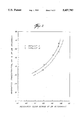
- FIG. 1 is a graph which compares the yield of aromatics versus reformate octane for two catalysts, labeled A and B.
- FIG. 2 is a graph which compares the concentration of aromatics versus the reformate octane for both Catalyst A and B.
- FIG. 3 is a graph which compares the yield in vol% of isoparaffins versus reformate octane.
- the invention is directed to a process for reformulating gasoline.
- a number of reforming processes are known in the art. Examples include processes described in U.S. Pat. No. 5,135,639, U.S. Pat. No. 5,198,097 and U.S. Pat. No. 5,200,059, incorporated herein by reference in their entirety.
- the process and catalyst of the instant invention could be employed in most reforming processes.
- the naphtha feedstock used in the present process comprises paraffins, naphthenes and aromatics boiling within the gasoline range.
- Feedstocks may include straight run naphthas, natural gasoline, synthetic naphthas, thermal gasoline, catalytically cracked gasoline, partially reformed naphthas or raffinates from extraction of aromatics.
- the naphtha feedstock is relatively high boiling.
- a high boiling naphtha feedstock is converted in the selective isoparaffin synthesis step to obtain a greater proportion of naphtha into gasoline than if the feedstock were processed by catalytic reforming without selective isoparaffin synthesis.
- a suitable reforming catalyst may comprise a dual-function composite containing a metallic hydrogenation-dehydrogenation component on a refractory support which provides acid sites for cracking and isomerization.
- the refractory support should be a porous, adsorptive, high-surface-area material which is uniform in composition without composition gradients of the species inherent to its composition.
- refractory supports containing one or more of: (1) refractory inorganic oxides such as alumina, silica, titania, magnesia, zirconia, chromia, thoria, boria or mixtures thereof; (2) synthetically prepared or naturally occurring clays and silicates, which may be acid-treated; (3) crystalline zeolitic aluminosilicates, either naturally occurring or synthetically prepared in hydrogen form or in a form which has been exchanged with metal cations; (4) spinels such as MgAl 2 O 4 , FeAl 2 O 4 , ZnAl 2 O 4 , CaAl 2 O 4 ; and (5) combinations of materials from one or more of these groups.
- refractory inorganic oxides such as alumina, silica, titania, magnesia, zirconia, chromia, thoria, boria or mixtures thereof
- synthetically prepared or naturally occurring clays and silicates which may be
- the catalyst may be formed into any shape or form of carrier material known to those skilled in the art such as spheres, extrudates, rods, pills, tablets or granules.
- carrier material known to those skilled in the art such as spheres, extrudates, rods, pills, tablets or granules.
- spherical pellets were employed. Spherical pellets can be formed by rolling extrudates on a spinning disk.
- An essential component of the first reforming catalyst is one or more Group VIII metals, with a platinum component being preferred.
- the platinum may exist within the catalyst as a compound such as an oxide, sulfide, halide, or oxyhalide, in chemical combination with one or more other ingredients of the catalytic composite, or as an elemental metal. Best results are obtained when substantially all of the platinum exists in the catalytic composite in a reduced state.
- the platinum component generally comprises from about 0.01 to 2 wt% of the catalytic composite, preferably 0.05 to 1 wt%, calculated on an elemental basis. It is within the scope of the present invention that the catalyst is combined with a metal known to modify the effect of the preferred platinum component.
- Such metal modifiers may include Group IVA metals, other Group VIII (8-10) metals, rhenium, indium, gallium, zinc, uranium, dysprosium, thallium and mixtures thereof. Excellent results are obtained when the reforming catalyst contains a tin component. Catalytically effective amounts of such metal modifiers may be incorporated into the catalyst by any means known in the art.
- the reforming catalyst may also contain a halogen component.
- the halogen component may be either fluorine, chlorine, bromine or iodine or mixtures thereof. Chlorine is the preferred halogen component.
- the halogen component is generally present in a combined state with the inorganic-oxide support.
- the halogen component is preferably well dispersed throughout the catalyst and may comprise from more than 0.2 to about 15 wt% calculated on an elemental basis, of the final catalyst.
- the naphtha feedstock may contact the reforming catalyst in either upflow, downflow or radial-flow mode.
- the catalyst is contained in a fixed bed reactor or in a moving bed reactor whereby catalyst may be continuously withdrawn and added.
- catalyst regeneration options known to those of ordinary skill in the art, such as: (1) a semiregenerative unit containing fixed bed reactors maintains operating severity by increasing temperature, eventually shutting the unit down for catalyst regeneration and reactivation; (2) a swing reactor unit, in which individual fixed-bed reactors are serially isolated by manifolding arrangements as the catalyst becomes deactivated and the catalyst in the isolated reactor is regenerated and reactivated while the other reactors remain on-stream; (3) continuous regeneration of catalyst withdrawn from a moving-bed reactor, with reactivation and substitution of the reactivated catalyst, permitting higher operating severity by maintaining high catalyst activity through regeneration cycles of a few days; or (4) a hybrid system with a semiregenerative and continuous-regeneration provisions in the same unit.
- the preferred embodiment of the present invention is a moving bed reactor with continuous catalyst regeneration.
- a reforming catalyst within the scope of the instant invention would be characterized by a median pore size of about 70-75 ⁇ , with less than or equal to 15% of the total pore volume in pores of diameter greater than 100 ⁇ , less than or equal to 5% of pores greater than 160 ⁇ , less than or equal to 2% of pores greater than 200 ⁇ , and less than or equal to 1% of pores greater than 500 ⁇ .
- Table 1 lists weight percents of elements of the instant catalysts. The examples were carried out using two catalysts, labeled "A” and "B” with similar characteristics. The data indicates the pore volumes of "A” and “B” are equal. The surface area is similar. The significant difference was that catalyst “B” has more small pores. Catalyst "B” was prepared so as to have a very narrow pore size distribution. More detail data regarding the surface area, pore volume and pore structure of the two similar catalysts are listed in Table II.
- a catalyst characterized by 98% of the total pore volume in pores of diameter less than 160 ⁇ , 95% of the total pore volume in pores of diameter less than 100 ⁇ , less than about 1% of the total pore volume in pores of diameter greater than 200 ⁇ and less than 500 ⁇ , and minimal, for example, 0-0.7 percent of the pore volume in pores of diameter greater than 500 ⁇ .
- the median pore diameter of the catalyst usually lies in the range of 50 to 100 ⁇ , preferably about 60 ⁇ to 80 ⁇ and most preferably about 70-75 ⁇ , say 73 ⁇ .
- Other physical properties of the catalyst typically include a total pore volume of about 0.300 to 0.600 cc/g, preferably about 0.400 to 0.500 cc/g, and most preferably about 0.470 cc/g.
- the catalyst may be in the form of pellets, tablets, extrudates, spheres or beads, however to maintain reproducible diffusivity within the formed catalyst-and reproducible pressure drop through the catalyst bed it is desirable to control the diameter of the formed catalyst within narrow limits. This is accomplished employing a caliper or dial gauge micrometer, calibrated in increments no larger than 0.001 inch to measure a random sample of the diameters of the formed catalyst, calculate the average value and report this value to the nearest 0.001 inch.
- the chargestock used in evaluating catalysts A and B was a hydrotreated straight run naphtha having the following properties.
- the naphtha chargestock was dried to less than 0.1 wppm water using a drier containing Davison 4A molecular sieve. After drying the charge was spiked with sufficient trichloroethane to obtain a 2.0 wppm concentration of chloride in the chargestock, which is added to maintain a nominal 1.0 wt% chloride content on the catalyst.
- the catalysts were dried at 400° F. for 4-6 hours prior to being loaded in the reactor. They were loaded under a dry nitrogen purge.
- the catalysts were oxidized by setting the temperature at 200 psig and the dry air flow at 4.0 SCFH.
- the reactor temperature was increased to 900° F. at 100° F./hr in flowing air and held at 900° F. for about 1 hour to make sure the catalyst was oxidized.
- the reactor temperature was lowered to 700° F. and purged with nitrogen prior to reducing the catalyst with hydrogen.
- the catalysts were then reduced.
- the reactor pressure was set at 500 psig and recycle operations were established using hydrogen.
- the reactor temperature was raised to 700° F. at 50° F./hr, while maintaining a recycle gas moisture content of less than 100 vppm.
- the reactor inlet temperature was lined out, the temperature was held at 700° F. for four hours or until the unit passed the hot hydrogen pressure test.
- the recycle gas was dried to less than 10 vppm water. Hydrogen was introduced and a rate of 1-2 SCFH was maintained prior to cutting in charge to the unit at 700° F. After charge was introduced the reactor was increased from 700° F. to 800° F. at 50° F./hr maximum while maintaining a recycle gas moisture content of 35 vppm or less.
- the reactor temperature was further increased to the first test period conditions (890° F.) at 30° F./hr while continuing to hold the recycle moisture content below 35 vppm. Hydrogen makeup gas was then cut out and the run was begun. The moisture content of the recycle gas was held below 30 vppm at temperatures above 900° F.
- FIGS. 1 through 3 Test results on this chargestock are shown in FIGS. 1 through 3.
- FIGS. 1 and 2 demonstrate that the aromatics yield and concentration are higher for Catalyst A at a constant octane level.
- FIG. 3 shows the yield of isoparaffins for each catalyst. The total isoparaffin yields are lower for Catalyst A than Catalyst B at a constant octane level.
- Catalyst B having a similar surface area, pore volume, and pore distributions, has more pores ⁇ 100 ⁇ and produces a product containing less aromatics and more isoparaffins for constant octane level.
- Table III provides specific mercury autopore data regarding the pore distribution of Catalysts "A" and "B".
Landscapes
- Chemical & Material Sciences (AREA)
- Oil, Petroleum & Natural Gas (AREA)
- Engineering & Computer Science (AREA)
- Chemical Kinetics & Catalysis (AREA)
- General Chemical & Material Sciences (AREA)
- Organic Chemistry (AREA)
- Production Of Liquid Hydrocarbon Mixture For Refining Petroleum (AREA)
- Catalysts (AREA)
Abstract
Disclosed is a reforming process for the production of gasoline having an increased isoparaffin yield, reduced aromatics content and a constant octane level which comprises passing the gasoline precursor containing greater than 20 vol% aromatics over a reforming catalyst comprising one or more metals from Group VIII and IVA of the Periodic Table on an oxide support, having a total pore volume of about 0.300 to 0.600 cc/g and greater than 85% of the pore volume in pores of diameter less than 100Å.
Description
This invention relates to the reduction of aromatics in the gasoline pool and, more particularly, this invention relates to the reduction of aromatics and benzene and improved production of isoparaffins employing a catalyst which effects these reactions but, unlike other available methods, does not cause a reduction in octane.
During the lead reduction program in the last 15 years the principal source of increased gasoline octane was aromatics.
Aromatics content of gasoline is currently 30% or higher and it may contain more than 40% aromatics.
Recently, the Clean Air Act required the reduction of aromatics and benzene in the gasoline pool. CRU reformate is a major stream in the gasoline pool. Refineries are faced with the prospect of supplying reformulated gasoline to meet tightened automotive emission standards. Reformulated gasoline would differ from existing products in having a lower vapor pressure, lower final boiling point, increased content of oxygenates and lower content of olefins, benzene and aromatics. The aromatics content may be lowered over several years to a maximum of as low as 20%. Rising fuel quality demands of high-performance internal-combustion engines have compelled petroleum refineries to install new and modified processes for increased "octane" or knock resistance in the gasoline pool. A number of options have been used by refineries to accomplish this. Some methods include higher-severity catalytic cracking, higher fluid catalytic cracking gasoline octane, isomerization of light naphtha and the use of oxygenated compounds.
Unfortunately, increased reforming severity and higher FCC gasoline octane result in a higher aromatics content of the gasoline pool through the production of high-octane aromatics at the expense of low-octane heavy paraffins.
One method of reducing the content of environmentally undesirable aromatic-containing compounds is catalytic aromatic saturation. Several hydrotreating catalysts have been utilized for such operations. A typical catalyst contains hydrogenation metals supported on a porous refractory oxide. This method results in a reduction in octane as well as aromatics. The search continues for better ways to reduce aromatics with less reduction in octane.
U.S. Pat. No. 4,209,383 (Herout et al.) teaches a process combination for benzene reduction using catalytic reforming, catalytic cracking and alkylation of cracked light olefins with aromatics in the reformate.
U.S. Pat. No. 4,647,368 (McGuiness et al.) discloses a method for upgrading naphtha by hydrocracking over zeolite beta, recovering isobutane, C5 -C7 isoparaffins and a higher boiling stream and reforming the latter stream.
In U.S. Pat. No. 5,200,059, to UOP, there is disclosed a process combination to reduce the aromatics content and increase the oxygen content of a key component of gasoline blends. The feedstock is contacted with a selective isoparaffin-synthesis catalyst in the presence of hydrogen to form a synthesis effluent with a higher isoparaffin/n-paraffin ratio, separating an isobutane-rich stream, dehydrogenating same and contacting with alcohol to obtain an ether.
U.S. Pat. No. 5,135,639 discloses a process combination to reduce the aromatic content of a key component of gasoline blends. Paraffins contained in catalytic reformates are conserved and upgraded by separation and isomerization, reducing the reforming severity required to achieve a given product. Light reformates may be separated and isomerized and heavier paraffins are separated from the reformate by solvent extraction and adsorption and isomerized.
In U.S. Pat. No. 5,135,902 there is disclosed a catalyst containing nickel, tungsten and phosphorous supported on an amorphous, porous refractory oxide having a narrow pore size distribution for converting hydrocarbon-containing feedstocks.
Another process combination to reduce the aromatics content and increase the oxygen content of a key component of gasoline is disclosed in U.S. Pat. No. 5,198,097. A naphtha feedstock having a boiling range usually suitable as catalytic reforming feed is processed by selective isoparaffin synthesis to yield lower-molecular weight hydrocarbons.
Of the proposed methods heretofore suggested for reducing aromatics a problem has been that a reduction in aromatics is usually accompanied by a decrease in octane.
Some of the more recent references cited above appear to be attempting to address the need in the art for a simple, effective method of reforming gasoline to reduce the amount of benzene and aromatics and increase yields of isoparaffins. None of the available references suggest the possibility of reducing aromatics while, at the same time, maintaining octane, although this would represent a distinct advance in the art.
It is an object of the present invention to provide an improved process for reformulating gasoline. A specific object is to produce gasoline containing higher yields of isoparaffins and reduced amounts of aromatics while maintaining a constant octane level.
The invention provides a process incorporating a catalyst, preferably containing platinum and tin, characterized by a total pore volume of about 0.300 to 0.600 cc/g, a median pore size of about 60-80Å, less than 15% of the total pore volume in pores of diameter >100Å, less 5% in pores >160Å, less than 2% in pores of diameter >200Å, less than 1% in pores of diameter greater than 500Å, and having greater than 85% in pores of diameter less than 100Å, which provides improved isoparaffin yield, reduced aromatics and reduced loss of octane.
FIG. 1 is a graph which compares the yield of aromatics versus reformate octane for two catalysts, labeled A and B.
FIG. 2 is a graph which compares the concentration of aromatics versus the reformate octane for both Catalyst A and B.
FIG. 3 is a graph which compares the yield in vol% of isoparaffins versus reformate octane.
The invention is directed to a process for reformulating gasoline. A number of reforming processes are known in the art. Examples include processes described in U.S. Pat. No. 5,135,639, U.S. Pat. No. 5,198,097 and U.S. Pat. No. 5,200,059, incorporated herein by reference in their entirety. The process and catalyst of the instant invention could be employed in most reforming processes.
The naphtha feedstock used in the present process comprises paraffins, naphthenes and aromatics boiling within the gasoline range. Feedstocks may include straight run naphthas, natural gasoline, synthetic naphthas, thermal gasoline, catalytically cracked gasoline, partially reformed naphthas or raffinates from extraction of aromatics. Preferably the naphtha feedstock is relatively high boiling. A high boiling naphtha feedstock is converted in the selective isoparaffin synthesis step to obtain a greater proportion of naphtha into gasoline than if the feedstock were processed by catalytic reforming without selective isoparaffin synthesis.
A suitable reforming catalyst may comprise a dual-function composite containing a metallic hydrogenation-dehydrogenation component on a refractory support which provides acid sites for cracking and isomerization. The refractory support should be a porous, adsorptive, high-surface-area material which is uniform in composition without composition gradients of the species inherent to its composition. Within the scope of the present invention are refractory supports containing one or more of: (1) refractory inorganic oxides such as alumina, silica, titania, magnesia, zirconia, chromia, thoria, boria or mixtures thereof; (2) synthetically prepared or naturally occurring clays and silicates, which may be acid-treated; (3) crystalline zeolitic aluminosilicates, either naturally occurring or synthetically prepared in hydrogen form or in a form which has been exchanged with metal cations; (4) spinels such as MgAl2 O4, FeAl2 O4, ZnAl2 O4, CaAl2 O4 ; and (5) combinations of materials from one or more of these groups.
The catalyst may be formed into any shape or form of carrier material known to those skilled in the art such as spheres, extrudates, rods, pills, tablets or granules. In the instant examples spherical pellets were employed. Spherical pellets can be formed by rolling extrudates on a spinning disk.
An essential component of the first reforming catalyst is one or more Group VIII metals, with a platinum component being preferred. The platinum may exist within the catalyst as a compound such as an oxide, sulfide, halide, or oxyhalide, in chemical combination with one or more other ingredients of the catalytic composite, or as an elemental metal. Best results are obtained when substantially all of the platinum exists in the catalytic composite in a reduced state. The platinum component generally comprises from about 0.01 to 2 wt% of the catalytic composite, preferably 0.05 to 1 wt%, calculated on an elemental basis. It is within the scope of the present invention that the catalyst is combined with a metal known to modify the effect of the preferred platinum component. Such metal modifiers may include Group IVA metals, other Group VIII (8-10) metals, rhenium, indium, gallium, zinc, uranium, dysprosium, thallium and mixtures thereof. Excellent results are obtained when the reforming catalyst contains a tin component. Catalytically effective amounts of such metal modifiers may be incorporated into the catalyst by any means known in the art.
The reforming catalyst may also contain a halogen component. The halogen component may be either fluorine, chlorine, bromine or iodine or mixtures thereof. Chlorine is the preferred halogen component. The halogen component is generally present in a combined state with the inorganic-oxide support. The halogen component is preferably well dispersed throughout the catalyst and may comprise from more than 0.2 to about 15 wt% calculated on an elemental basis, of the final catalyst.
The naphtha feedstock may contact the reforming catalyst in either upflow, downflow or radial-flow mode.
The catalyst is contained in a fixed bed reactor or in a moving bed reactor whereby catalyst may be continuously withdrawn and added. These alternatives are associated with catalyst regeneration options known to those of ordinary skill in the art, such as: (1) a semiregenerative unit containing fixed bed reactors maintains operating severity by increasing temperature, eventually shutting the unit down for catalyst regeneration and reactivation; (2) a swing reactor unit, in which individual fixed-bed reactors are serially isolated by manifolding arrangements as the catalyst becomes deactivated and the catalyst in the isolated reactor is regenerated and reactivated while the other reactors remain on-stream; (3) continuous regeneration of catalyst withdrawn from a moving-bed reactor, with reactivation and substitution of the reactivated catalyst, permitting higher operating severity by maintaining high catalyst activity through regeneration cycles of a few days; or (4) a hybrid system with a semiregenerative and continuous-regeneration provisions in the same unit. The preferred embodiment of the present invention is a moving bed reactor with continuous catalyst regeneration.
A reforming catalyst within the scope of the instant invention would be characterized by a median pore size of about 70-75Å, with less than or equal to 15% of the total pore volume in pores of diameter greater than 100Å, less than or equal to 5% of pores greater than 160Å, less than or equal to 2% of pores greater than 200Å, and less than or equal to 1% of pores greater than 500Å.
The actual catalysts used in the instant invention are described in Tables 1 through 4. Table 1 lists weight percents of elements of the instant catalysts. The examples were carried out using two catalysts, labeled "A" and "B" with similar characteristics. The data indicates the pore volumes of "A" and "B" are equal. The surface area is similar. The significant difference was that catalyst "B" has more small pores. Catalyst "B" was prepared so as to have a very narrow pore size distribution. More detail data regarding the surface area, pore volume and pore structure of the two similar catalysts are listed in Table II.
The results exemplified herein which demonstrate improvements in production of isoparaffins and reduced aromatics, with no reduction in octane, were obtained using a catalyst characterized by about 88% of the total pore volume in pores of diameter less than 100Å; about 9% of the total pore volume in pores of diameter between 100Å and 160Å, for example 0.04 cc/g; about 1% or less of the total pore volume in pores of diameter between 160Å and 200Å, for example 0.004 cc/g; about 1% or less (0.0106) of the total pore volume in pores of diameters between 200Å and 500Å, for example, about 0.005 cc/g; and 1% or less (0.0063) of the total pore volume of diameter greater than 500Å, for example about 0.003 cc/g.
Within the scope of the instant invention is a catalyst characterized by 98% of the total pore volume in pores of diameter less than 160Å, 95% of the total pore volume in pores of diameter less than 100Å, less than about 1% of the total pore volume in pores of diameter greater than 200Å and less than 500Å, and minimal, for example, 0-0.7 percent of the pore volume in pores of diameter greater than 500Å.
It is preferred that there is a narrow pore size distribution for pores of diameter greater than the median pore diameter. The median pore diameter of the catalyst usually lies in the range of 50 to 100Å, preferably about 60Å to 80Å and most preferably about 70-75Å, say 73Å.
Other physical properties of the catalyst typically include a total pore volume of about 0.300 to 0.600 cc/g, preferably about 0.400 to 0.500 cc/g, and most preferably about 0.470 cc/g.
The catalyst may be in the form of pellets, tablets, extrudates, spheres or beads, however to maintain reproducible diffusivity within the formed catalyst-and reproducible pressure drop through the catalyst bed it is desirable to control the diameter of the formed catalyst within narrow limits. This is accomplished employing a caliper or dial gauge micrometer, calibrated in increments no larger than 0.001 inch to measure a random sample of the diameters of the formed catalyst, calculate the average value and report this value to the nearest 0.001 inch.
Prior to use of the catalyst pellets or other forms in the examples it is helpful to calculate density in terms of:
1. Loose density determined from maximum volume.
2. Settled density determined after the loose catalyst has stood undisturbed for 15 minutes.
3. Compacted density determined after the settled catalyst has been vibrated or tapped to a constant volume.
Procedures for manipulating the catalyst spheres or pellets in each case are known in the art and the density corresponding to the volume observed and recorded under various test conditions is calculated as follows: ##EQU1##
Practice of the process of this invention can be illustrated by the following example and data which is only intended as a means of illustration and it should be understood that the invention is not limited thereby. There are many other possible variations, as those of ordinary skill in the art will recognize, which are within the spirit of the invention.
The chargestock used in evaluating catalysts A and B was a hydrotreated straight run naphtha having the following properties.
______________________________________
Test Results            Observed
______________________________________
Gravity, API            60.4 ck 60.1
ASTM Distillation, °F.
IBP/5 vol %             186/209
10/20                   216/223
30/40                   231/240
50                      250
60/70                   260/271
80/90                   283/302
95/EP                   319/349
TBP Distillation, °F.
IBP/5                   132/156
10/20                   179/206
30/40                   216/241
50                      254
60/70                   267/285
80/90                   300/323
95/EP                   343/412
Reid Vapor Pressure @ 100° F., psi
                        1.7
Sulfur, Dohrmann, wppm  <0.5
Nitrogen, Antek, wppm   0.12
Lead, wppb              NA
Copper, wppb            <1
FIA-MS, vol %           69.8
Paraffins               0.1
Naphthenes              18.8
Aromatics               11.3
ASTM Octanes
Research, Clear         42.2 ck 40.0
Motor, Clear            45.0 ck 41.7
______________________________________
The naphtha chargestock was dried to less than 0.1 wppm water using a drier containing Davison 4A molecular sieve. After drying the charge was spiked with sufficient trichloroethane to obtain a 2.0 wppm concentration of chloride in the chargestock, which is added to maintain a nominal 1.0 wt% chloride content on the catalyst. The catalysts were dried at 400° F. for 4-6 hours prior to being loaded in the reactor. They were loaded under a dry nitrogen purge.
The catalysts were oxidized by setting the temperature at 200 psig and the dry air flow at 4.0 SCFH. The reactor temperature was increased to 900° F. at 100° F./hr in flowing air and held at 900° F. for about 1 hour to make sure the catalyst was oxidized. The reactor temperature was lowered to 700° F. and purged with nitrogen prior to reducing the catalyst with hydrogen.
The catalysts were then reduced. The reactor pressure was set at 500 psig and recycle operations were established using hydrogen. The reactor temperature was raised to 700° F. at 50° F./hr, while maintaining a recycle gas moisture content of less than 100 vppm. After the reactor inlet temperature was lined out, the temperature was held at 700° F. for four hours or until the unit passed the hot hydrogen pressure test. After the unit was pressure tested, the recycle gas was dried to less than 10 vppm water. Hydrogen was introduced and a rate of 1-2 SCFH was maintained prior to cutting in charge to the unit at 700° F. After charge was introduced the reactor was increased from 700° F. to 800° F. at 50° F./hr maximum while maintaining a recycle gas moisture content of 35 vppm or less. The reactor temperature was further increased to the first test period conditions (890° F.) at 30° F./hr while continuing to hold the recycle moisture content below 35 vppm. Hydrogen makeup gas was then cut out and the run was begun. The moisture content of the recycle gas was held below 30 vppm at temperatures above 900° F.
Test results on this chargestock are shown in FIGS. 1 through 3. FIGS. 1 and 2 demonstrate that the aromatics yield and concentration are higher for Catalyst A at a constant octane level.
FIG. 3 shows the yield of isoparaffins for each catalyst. The total isoparaffin yields are lower for Catalyst A than Catalyst B at a constant octane level.
Catalyst B, having a similar surface area, pore volume, and pore distributions, has more pores <100Å and produces a product containing less aromatics and more isoparaffins for constant octane level.
              TABLE 1
______________________________________
FRESH CATALYST TEST RESULTS
Manufacturer       Catalyst A Catalyst B
Form               Spheres    Spheres
______________________________________
Test Results
Average Diameter, in.
                   0.074      0.0652
Compacted Bulk Density, lb/ft.sup.3
                   35.7       36.2
Abrasion Coefficient
                   0.01       0.02
Platinum Content, wt %
                   0.375*     0.37*
Tin Content, wt %  0.38*      0.30*
Platinum Crystal Size, A
                   42         16
Chloride Content, wt %
                   1.07       1.0
LECO Carbon, wt %  0.07       0.02
LECO Sulfur, wt %  0.01       <0.01
______________________________________
 *Manufacturer's Specification
              TABLE 2
______________________________________
Surface Area, Pore Volume and Pore
Structure of Selected Reforming Catalysts
Catalyst Code
Catalyst Designation A       B
______________________________________
Nitrogen Adsorption
Pore Size, Dist., (cc/g)
TPV                  0.812   0.470
>500A                0.000   0.003
>200A                0.073   0.009
>160A                0.418   0.013
>100A                0.744   0.056
<100A                0.068   0.414
Desorption Ave. Pore Dia., A
                     133     73
Calculated Pore Mode, A
                     162     74
Multi-Point BET      182     181
Surface Area (m.sup.2 /g)
                     182     181
Desorption Pore Vol. (cc/g)
                     0.80*   0.80*
______________________________________
 *Manufacturer's Data
Table III provides specific mercury autopore data regarding the pore distribution of Catalysts "A" and "B".
                                  TABLE 3
__________________________________________________________________________
     CUMULATIVE INCREMENTAL
                           % OF TOTAL
     VOLUME     VOLUME     INTRUSION
Pore mL/g       mL/g       VOLUME
Diameter
     Catalyst
           Catalyst
                Catalyst
                      Catalyst
                           Catalyst
                                 Catalyst
mL/9 A     B    A     B    A     B
__________________________________________________________________________
40   0.81  0.75 0.0026
                      0.0020
                           0.32  0.27
50   0.81  0.75 0.0050
                      0.0091
                           0.62  1.22
60   0.80  0.74 0.0097
                      0.0510
                           1.20  6.82
70   0.79  0.69 0.0137
                      0.5450
                           1.69  72.88
80   0.78  0.14 0.0208
                      0.1035
                           2.56  13.84
90   0.76  0.04 0.0256
                      0.0070
                           3.16  0.94
100  0.73  0.03 0.0337
                      0.0042
                           4.15  0.56
110  0.70  0.03 0.0452
                      0.0026
                           5.57  0.35
120  0.66  0.02 0.0735
                      0.0017
                           9.05  0.23
130  0.58  0.02 0.1111
                      0.0020
                           13.69 0.27
140  0.47  0.02 0.1251
                      0.0007
                           15.42 0.09
150  0.35  0.02 0.1287
                      0.0189
                           15.85 0.17
160  0.22  0.02 0.1779
                      0.0037
                           21.92 0.50
200  0.04  0.02 0.0240
                      0.0073
                           2.95  0.99
500  0.02  0.01 0.0088
                      0.0041
                           1.09  0.54
1500 0.006 0.002
                0.0061
                      0.0024
                           0.76  0.33
__________________________________________________________________________
                Catalyst A Catalyst B
__________________________________________________________________________
Total Intrusion Volume
                0.8119
                      mL/g 0.7478
                                 mL/g
Total Pore Area 238.614
                      sq-m/g
                           388.574
                                 sq-m/g
Median Pore Diameter, vol
                0.0145     0.0074
Median Pore Diameter (Area)
                0.0138     0.0074
Average Pore Diameter (4V/A)
                0.0136     0.0077
Bulk Density    0.8812
                      g/mL 0.9428
                                 g/mL
Apparent (Skeletal) Density
                3.0974
                      g/mL 3.1968
                                 g/mL
Porosity        71.55%     70.51%
Stem Volume Used
                59.0%      64.0%
__________________________________________________________________________
              TABLE 4
______________________________________
NITROGEN DESORPTION
______________________________________
PORE      CUMULATIVE    INCREMENTAL
DIAMETER  VOLUME        VOLUME
cc/g      cc/g          cc/g
______________________________________
40        0.808942 0.465154 0.002275
                                   0.004613
50        0.803565 0.454471 0.003809
                                   0.009115
60        0.795043 0.431660 0.005599
                                   0.013940
70        0.782645 0.007745 0.007745
                                   0.060011
80        0.765938 0.248325 0.009425
                                   0.071714
90        0.745709 0.114538 0.012375
                                   0.042066
100       0.719614 0.055489 0.014701
                                   0.009018
110       0.689610 0.040310 0.016118
                                   0.006048
120       0.657092 0.029054 0.017044
                                   0.003886
130       0.621612 0.021804 0.019487
                                   0.002615
140       0.579529 0.017201 0.026808
                                   0.001689
150       0.520854 0.014178 0.037569
                                   0.000999
160       0.437309 0.012291 0.057491
                                   0.000769
170       0.321573 0.010902 0.049770
                                   0.000541
180       0.226778 0.009856 0.042442
                                   0.000445
190       0.144850 0.009043 0.036229
                                   0.000296
200       0.075916 0.008471 0.027978
                                   0.000258
300       0.047938 0.008213 0.045167
                                   0.002804
400       0.002771 0.005409 0.000901
                                   0.001406
500       0.001870 0.004003 0.000658
                                   0.001062
600       0.001212 0.002941 0.000364
                                   0.000869
700       0.000848 0.002072 0.000256
                                   0.000735
800       0.000592 0.001337 0.000222
                                   0.000637
900       0.000370 0.000700 0.000195
                                   0.000562
1000      0.000175 0.000138 0.000175
                                   0.000138
______________________________________
             Catalyst A  Catalyst B
______________________________________
Cumulative Desorption
Area
Surface Area of Pores
               243.8961 sq m/g   256.7276 sq m/g
Cumulative Desorption
Pore
Volume of Pores Between
               0.811730 cc/g     0.469663 cc/g
17.00 and 3000.00A
               178.2496 A        102.7485 A
Diameter
Average Pore Diameter
(4V/A)
______________________________________
Claims (9)
1. In a reforming process for the production of a gasoline component from naphtha feedstock comprising:
(a) contacting the naphtha feedstock containing above 20 mol% aromatics in a reforming zone at reforming conditions with a reforming catalyst comprising one or more metals from Group VIII and IVA of the Periodic Table, optionally on a support, to produce a reformate and a hydrogen-rich gas, the improvement which provides reduced aromatics by isomerization to isoparaffins, improved isoparaffin yield, and reduced loss of octane which comprises,
(b) contacting said naphtha with said catalyst further characterized by a total pore volume of about 0.300 to 0.600 cc/g, a median pore size of about 60-80Å, less than 1% in pores of diameter greater than 500Å, and greater than 85% in pores of diameter less than 100Å, and producing said gasoline component.
2. The process of claim 1 wherein the reforming catalyst is selected from one or more metals from the group consisting of iron, ruthenium, osmium, cobalt, rhodium, iridium, nickel, palladium and platinum.
3. The process of claim 1 wherein the reforming catalyst also contains one or more Group IVA metals selected from the group consisting of carbon, silicon, germanium and tin.
4. The process of claim 1 wherein the catalyst contains 0.30 to 0.45 wt% platinum, 0.25 to 0.45 wt% tin, 0.5 to 2.0 wt% chloride, and less than 0.1 wt% carbon and sulfur.
5. The process of claim 1 wherein the catalyst is on a support which comprises a refractory inorganic oxide selected from the group consisting of alumina and silica.
6. The process of claim 1 wherein the total pore volume of said catalyst is 0.400 to 0.500 cc/g.
7. The process of claim 1 wherein the median pore size is about 70-75Å.
8. In a reforming process for the production of a gasoline component from naphtha feedstock which comprises:
(a) contacting the naphtha feedstock containing greater than 20 mol% aromatics in a reforming zone at reforming conditions with a reforming catalyst comprising one or more metals from Group VIII and IVA of the Periodic Table, optionally on a refractory support, to produce a reformate and a hydrogen-rich gas, the improvement which provides improved isoparaffin yield, reduced aromatics and reduced loss of octane which comprises
(b) contacting said naphtha with said reforming catalyst, further characterized by: a total pore volume of about 0.400 to 0.500 cc/g, a median pore size of about 70-75Å; less than or equal to 15% of pores greater than 100Å; less or equal to 5% of pores greater than 160Å; less than or equal to 2% of pores greater than 200Å; less than 1% of pores greater than 500Å and producing said gasoline component.
9. The process of claim 1 wherein less than 2% of the total pore volume is in pores of >200Å.
Priority Applications (1)
| Application Number | Priority Date | Filing Date | Title |
|---|---|---|---|
| US08/250,220 US5437783A (en) | 1994-08-10 | 1994-08-10 | Process for aromatics reduction and enhanced isoparaffin yield in reformate |
Applications Claiming Priority (1)
| Application Number | Priority Date | Filing Date | Title |
|---|---|---|---|
| US08/250,220 US5437783A (en) | 1994-08-10 | 1994-08-10 | Process for aromatics reduction and enhanced isoparaffin yield in reformate |
Publications (1)
| Publication Number | Publication Date |
|---|---|
| US5437783A true US5437783A (en) | 1995-08-01 |
Family
ID=22946827
Family Applications (1)
| Application Number | Title | Priority Date | Filing Date |
|---|---|---|---|
| US08/250,220 Expired - Lifetime US5437783A (en) | 1994-08-10 | 1994-08-10 | Process for aromatics reduction and enhanced isoparaffin yield in reformate |
Country Status (1)
| Country | Link |
|---|---|
| US (1) | US5437783A (en) |
Cited By (5)
| Publication number | Priority date | Publication date | Assignee | Title |
|---|---|---|---|---|
| US5972207A (en) * | 1998-10-08 | 1999-10-26 | Texaco Inc. | Catalytic reforming process for heavy cracked naphtha |
| US7347929B2 (en) | 2003-12-05 | 2008-03-25 | Intercat, Inc. | Gasoline sulfur reduction using hydrotalcite like compounds |
| US7361264B2 (en) | 2004-06-02 | 2008-04-22 | Intercat, Inc. | Mixed metal oxide additives |
| US7361319B2 (en) | 2003-12-05 | 2008-04-22 | Intercat, Inc. | Mixed metal oxide sorbents |
| US20130123555A1 (en) * | 2008-03-26 | 2013-05-16 | Council Of Scientific & Industrial Research | Modified Zeolite Catalyst Useful for the Conversion of Paraffins, Olefins and Aromatics in a Mixed Feedstock into Isoparaffins and a Process Thereof |
Citations (7)
| Publication number | Priority date | Publication date | Assignee | Title |
|---|---|---|---|---|
| US4964975A (en) * | 1989-06-30 | 1990-10-23 | Uop | Reforming catalyst with homogeneous metals dispersion |
| US4969990A (en) * | 1988-06-29 | 1990-11-13 | Union Oil Company Of California | Hydroprocessing with a catalyst having a narrow pore size distribution |
| US5106800A (en) * | 1989-11-20 | 1992-04-21 | Uop | Method of stabilizing a reforming catalyst |
| US5135639A (en) * | 1990-05-24 | 1992-08-04 | Uop | Production of reformulated gasoline |
| US5135902A (en) * | 1990-05-25 | 1992-08-04 | Union Oil Company Of California | Nickel-tungsten-phosphorus catalyst |
| US5198097A (en) * | 1991-11-21 | 1993-03-30 | Uop | Reformulated-gasoline production |
| US5235120A (en) * | 1991-11-21 | 1993-08-10 | Uop | Selective isoparaffin synthesis from naphtha |
-
1994
- 1994-08-10 US US08/250,220 patent/US5437783A/en not_active Expired - Lifetime
Patent Citations (7)
| Publication number | Priority date | Publication date | Assignee | Title |
|---|---|---|---|---|
| US4969990A (en) * | 1988-06-29 | 1990-11-13 | Union Oil Company Of California | Hydroprocessing with a catalyst having a narrow pore size distribution |
| US4964975A (en) * | 1989-06-30 | 1990-10-23 | Uop | Reforming catalyst with homogeneous metals dispersion |
| US5106800A (en) * | 1989-11-20 | 1992-04-21 | Uop | Method of stabilizing a reforming catalyst |
| US5135639A (en) * | 1990-05-24 | 1992-08-04 | Uop | Production of reformulated gasoline |
| US5135902A (en) * | 1990-05-25 | 1992-08-04 | Union Oil Company Of California | Nickel-tungsten-phosphorus catalyst |
| US5198097A (en) * | 1991-11-21 | 1993-03-30 | Uop | Reformulated-gasoline production |
| US5235120A (en) * | 1991-11-21 | 1993-08-10 | Uop | Selective isoparaffin synthesis from naphtha |
Cited By (7)
| Publication number | Priority date | Publication date | Assignee | Title |
|---|---|---|---|---|
| US5972207A (en) * | 1998-10-08 | 1999-10-26 | Texaco Inc. | Catalytic reforming process for heavy cracked naphtha |
| EP1127938A1 (en) * | 1998-10-08 | 2001-08-29 | Texaco Development Corporation | Catalytic reforming process for heavy cracked naphtha |
| US7347929B2 (en) | 2003-12-05 | 2008-03-25 | Intercat, Inc. | Gasoline sulfur reduction using hydrotalcite like compounds |
| US7361319B2 (en) | 2003-12-05 | 2008-04-22 | Intercat, Inc. | Mixed metal oxide sorbents |
| US7361264B2 (en) | 2004-06-02 | 2008-04-22 | Intercat, Inc. | Mixed metal oxide additives |
| US20130123555A1 (en) * | 2008-03-26 | 2013-05-16 | Council Of Scientific & Industrial Research | Modified Zeolite Catalyst Useful for the Conversion of Paraffins, Olefins and Aromatics in a Mixed Feedstock into Isoparaffins and a Process Thereof |
| US8772560B2 (en) * | 2008-03-26 | 2014-07-08 | Council Of Scientific & Industrial Research | Modified zeolite catalyst useful for the conversion of paraffins, olefins and aromatics in a mixed feedstock into isoparaffins and a process thereof |
Similar Documents
| Publication | Publication Date | Title |
|---|---|---|
| US5935415A (en) | Continuous catalytic reforming process with dual zones | |
| US5885439A (en) | Catalytic reforming process with multiple zones | |
| US8668824B2 (en) | Rapid cycle reforming process | |
| US5885443A (en) | Reforming with selective multimetallic multigradient catalyst | |
| US5683573A (en) | Continuous catalytic reforming process with dual zones | |
| US5507939A (en) | Catalytic reforming process with sulfur preclusion | |
| US5384038A (en) | Stable, high-yield reforming catalyst | |
| US5270272A (en) | Sulfur removal from molecular-sieve catalyst | |
| US5366614A (en) | Catalytic reforming process with sulfur preclusion | |
| US6177002B1 (en) | Catalytic reforming process with multiple zones | |
| US4940532A (en) | Cleanup of hydrocarbon conversion system | |
| US6358400B1 (en) | Selective reforming process for the production of aromatics | |
| EP0682981B1 (en) | Sulfur tolerant reforming catalyst system containing a sulfur-sensitive ingredient | |
| US5135639A (en) | Production of reformulated gasoline | |
| US5461016A (en) | High-stability catalyst containing a platinum group metal and nickel on zeolite L and a binder | |
| US5211837A (en) | Catalytic reforming process with sulfur preclusion | |
| US5366617A (en) | Selective catalytic reforming with high-stability catalyst | |
| US5880051A (en) | Reforming catalyst system with differentiated acid properties | |
| US5464800A (en) | Stable, high-yield reforming catalyst | |
| US5972207A (en) | Catalytic reforming process for heavy cracked naphtha | |
| JP2547968B2 (en) | Sulfur-resistant reforming catalyst system containing sulfur-sensitive components and hydrocarbon reforming process using the same | |
| US5300211A (en) | Catalytic reforming process with sulfur preclusion | |
| EP0067014A1 (en) | Catalytic reforming process | |
| CA2123955C (en) | Sulfur tolerant reforming catalyst system containing a sulfur-sensitive ingredient | |
| CA2123238C (en) | Multimetallic and multigradient reforming catalyst for converting paraffins to aromatics |
Legal Events
| Date | Code | Title | Description |
|---|---|---|---|
| AS | Assignment |
Owner name: TEXACO INC., NEW YORK Free format text: ASSIGNMENT OF ASSIGNORS INTEREST;ASSIGNORS:CUTHBERT, VERSIE TREANETTA;ABRAHAM, OORIAPADICAL COSHY;REEL/FRAME:007128/0949 Effective date: 19940519 |
|
| STCF | Information on status: patent grant |
Free format text: PATENTED CASE |
|
| FPAY | Fee payment |
Year of fee payment: 4 |
|
| FEPP | Fee payment procedure |
Free format text: PAYOR NUMBER ASSIGNED (ORIGINAL EVENT CODE: ASPN); ENTITY STATUS OF PATENT OWNER: LARGE ENTITY |
|
| FPAY | Fee payment |
Year of fee payment: 8 |
|
| REMI | Maintenance fee reminder mailed | ||
| FPAY | Fee payment |
Year of fee payment: 12 |