US5316935A - Subtilisin variants suitable for hydrolysis and synthesis in organic media - Google Patents
Subtilisin variants suitable for hydrolysis and synthesis in organic media Download PDFInfo
- Publication number
- US5316935A US5316935A US07/864,298 US86429892A US5316935A US 5316935 A US5316935 A US 5316935A US 86429892 A US86429892 A US 86429892A US 5316935 A US5316935 A US 5316935A
- Authority
- US
- United States
- Prior art keywords
- subtilisin
- modified
- subtilisin enzyme
- enzyme according
- substitution
- Prior art date
- Legal status (The legal status is an assumption and is not a legal conclusion. Google has not performed a legal analysis and makes no representation as to the accuracy of the status listed.)
- Expired - Fee Related
Links
Images


Classifications
-
- C—CHEMISTRY; METALLURGY
- C12—BIOCHEMISTRY; BEER; SPIRITS; WINE; VINEGAR; MICROBIOLOGY; ENZYMOLOGY; MUTATION OR GENETIC ENGINEERING
- C12N—MICROORGANISMS OR ENZYMES; COMPOSITIONS THEREOF; PROPAGATING, PRESERVING, OR MAINTAINING MICROORGANISMS; MUTATION OR GENETIC ENGINEERING; CULTURE MEDIA
- C12N9/00—Enzymes; Proenzymes; Compositions thereof; Processes for preparing, activating, inhibiting, separating or purifying enzymes
- C12N9/14—Hydrolases (3)
- C12N9/48—Hydrolases (3) acting on peptide bonds (3.4)
- C12N9/50—Proteinases, e.g. Endopeptidases (3.4.21-3.4.25)
- C12N9/52—Proteinases, e.g. Endopeptidases (3.4.21-3.4.25) derived from bacteria or Archaea
- C12N9/54—Proteinases, e.g. Endopeptidases (3.4.21-3.4.25) derived from bacteria or Archaea bacteria being Bacillus
Definitions
- the present invention relates to the production of proteins using recombinant techniques. More specifically, the invention relates to the generation and production of subtilisin variants using recombinant means.
- subtilisin is a proteolytic enzyme that has considerable utility in food processing and laundry applications for degrading proteinaceous materials.
- subtilisin is also capable of promoting a wide variety of chemical conversions, such as peptide synthesis; the resolution of racemic alcohols, esters and amines; the regioselective acylation of polyhydroxy-compounds such as glycols, steroids and sugars, and the like.
- Many of these chemical reactions must be carried out in organic media in order to be practically useful. While useful to some extent for conducting such reactions in organic media, subtilisins exhibit relatively low levels of enzymatic activity in organic media. This relative lack of activity in organic solvents severely limits the commercial and industrial applications of subtilisin enzymes in chemical synthesis. In view of this, it would be desirable to be able to produce modified subtilisins which have improved activities in organic media.
- subtilisin has found considerable utility in industrial and commercial applications [see, for example, U.S. Pat. No. 3,623,957 and J. Millet, J. Appl. Bact. 33:207 (1970)].
- subtilisins and other proteases are commonly used in detergents for the removal of protein-based stains. They also are used in food processing to accommodate the proteinaceous substances present in the food preparations to their desired impact on the composition.
- Subtilisins have also been employed in organic synthesis to catalyze a wide variety of chemical reactions in organic media.
- the resolution of racemic alcohols employing hydrolases is reviewed by Klibanov in Accts. Chem. Res. Vol. 23:114 (1990).
- the use of subtilisin for the resolution of racemic amines in anhydrous organic solvent is described by Kitaguchi et al., in J. Am. Chem. Soc. Vol. 111:3094 (1989).
- Subtilisin has also been used for the synthesis of peptides in organic solvents [see, for example, Ferjancic et al., Appl. Microbiol. Technol. Vol. 32:65 (1990)].
- organic solvent alters the relative amidase and esterase activities of the enzyme, providing a catalyst that is well-suited to peptide synthesis by aminolysis [see, for example, Wong and Wang, Experientia 47:1123 (1991)].
- the ability of enzymes such as subtilisin to discriminate between optical isomers of a substrate can also be altered by carrying out such reactions in organic solvents.
- D-amino acid-containing peptides can be prepared using subtilisin in anhydrous tert-amyl alcohol [see Margolin et al., J. Am. Chem. Soc. Vol. 109:7885 (1987)].
- Enzymes having characteristics which vary from available stock are required.
- enzymes having enhanced catalytic activity and/or stability in non-aqueous media will be useful in extending the range of processes for which such enzymes can be employed.
- Other characteristics which one may wish to vary relative to available stock include enzyme shelf life and an enzyme's ability to withstand exposure to high temperatures. Because many industrial processes are conducted at temperatures that are above the stability range of many enzymes, highly stable proteases not only will be advantageous to certain industries such as detergent and hide dehairing, that already require stable proteases, but may be useful in industries that currently use chemical means to carry out the reactions described earlier: peptide synthesis, resolution of racemic compounds, acylation reactions, and the like.
- Chemical modification methods suffer from numerous disadvantages, e.g., being dependent upon the presence of amino acid residues convenient for such modification.
- these methods are frequently nonspecific in that all accessible residues with common side chains are modified, and such methods are not capable of reaching sterically and/or electronically inaccessible amino acid residues without further processing (e.g., denaturation; once denatured, it is generally not possible to fully reinstitute enzyme activity).
- denaturation once denatured, it is generally not possible to fully reinstitute enzyme activity
- mutagenesis promises to supplant such methods.
- subtilisin which exhibit useful new properties, including increased thermostability [Pantoliano et al., Biochemistry Vol. 28:7205 (1989); Pantoliano et al., Biochemistry Vol. 26:2077 (1987); Takagi et al., J. Biol. Chem. Vol. 265:6874 (1990)], to increase the ratio of esterase to amidase activity for peptide synthesis [Abrahmsen et al., Biochemistry Vol. 30:4151 (1991)], to alter the pH dependence of the catalytic activity [Thomas et al., Nature Vol. 318:375 (1985); Wells and Estell, TIBS Vol.
- subtilisins Modifying the activity/stability/pH-activity profiles of subtilisins (especially in organic media) would be desirable in making these enzymes more widely applicable in a wide variety of processes. For example, enhancing the enzymatic activity of subtilisins in organic media will make it possible to use such enzymes in reactions which are preferably conducted in organic media, such as, for example, peptide synthesis, and the like.
- proteases such as subtilisins will hopefully provide a variety of different proteases having modified properties such as improved K m , k cat , K m /k cat ratio and substrate specificity. These mutations would then allow such enzymes to be tailored for the particular medium to be employed, or the substrate which is anticipated to be present, for example in peptide synthesis, or for hydrolytic processes such as laundry uses.
- modified subtilisin enzyme(s) having improved catalytic activity and/or stability in organic media.
- Invention enzymes are useful for the catalysis of a variety of reactions which are preferably carried out in organic media, such as transesterification, peptide polymer synthesis, selective acylation reactions, and the like.
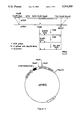
- FIG. 1 shows the scheme used for construction of plasmid pKWC and random mutagenesis of subtilisin E, whose coding region is framed in pKWZ.
- the figure includes a partial restriction map of plasmid pKWC.
- FIG. 2 shows the catalytic efficiency (k cat /K M ) for hydrolysis of suc-Ala-Ala-Pro-Met-p-nitroanilide (sAAPM-pna) by wild-type subtilisin E ( ⁇ ), triple subtilisin mutant 3M (Q103R+D60N+N218S; O) and multiple subtilisin mutant PC3 (D60N+Q103R+N218S+D97G+E156G+N181S+ G131D+S182G+S188P+T255A; ).
- FIG. 3 shows deactivation of wild-type ( ) and Q103R+D60N+N218S ( ) subtilisin E in 40% aqueous DMF at 50° C.
- FIG. 4 shows the secondary structural topology of subtilisins. ⁇ -helices are shown as cylinders, B-sheet strands as arrows. Solid lines indicate regions of conserved amino acids (SCRs), dashed lines indicate variable regions (VRs). Locations of amino acid substitutions listed in Table V are indicated by .
- subtilisin enzymes having improved catalytic activity and/or stability in organic media, relative to the catalytic activity and/or stability of subtilisin enzymes in organic media, said modified enzymes characterized by having at least one of residues 60, 97, 103, 131, 181, 182, 188, 248 or 255, and optionally 156 and/or 218, replaced with a residue which does not naturally occur at the corresponding position, wherein the position of each residue is given relative to subtilisin type BPN'.
- Bacillus subtilisin molecules are composed of a single polypeptide chain of different lengths, depending on the source from which the subtilisin is obtained.
- subtilisin type Carlsberg produced by Bacillus licheniformis [Smith et al., J. Biol. Chem., 243:2184-2191 (1968)]
- subtilisin produced by Bacillus subtilis strain DY; [Nedkov et al., Hoppe-Seyler's Z, Physiol. Chem. Vol. 364:1537-1540 (1983)] each contain 274 residues; or subtilisin type BPN' produced by Bacillus amyloliquefaciens [Markland et al., J. Biol.
- subtilisin BPN' When comparing amino acid sequences of subtilisin from different strains of Bacillus herein, the sequence of subtilisin BPN' is used as a standard. For example, based on an alignment of sequences that gives the highest degree of homology between subtilisin Carlsberg and subtilisin BPN', the serine at the active site of the former is referred to a serine 221, even though it is located at position 220 of the amino acid sequence. On the same basis, position 220 of the amino acid sequence of subtilisin Carlsberg may be said to "correspond" to position 221 of subtilisin BPN'. See e.g., Nedkov et al., supra.
- subtilisin Carlsberg and subtilisin BPN' (sometimes referred to as subtilisin Novo) differ by 84 amino acids and one additional residue in BPN' (subtilisin Carlsberg lacks an amino acid residue corresponding to residue 56 of subtilisin BPN').
- Subtilisin DY comprises 274 amino acids and differs from subtilisin Carlsberg in 32 amino acid positions and from subtilisin BPN' by 82 amino acid replacements and one deletion (subtilisin DY lacks an amino acid residue corresponding to residue 56 of subtilisin BPN').
- the amino acid sequence of the aprA gene product is 85% homologous to the amino acid sequence of subtilisin BPN'.
- subtilisin-like enzymes from different organisms (see Siezen et al., supra).
- This homology is particularly strong in certain regions of the molecule and especially in those that play a role in the catalytic mechanism and in substrate binding.
- Examples of such conserved sequences are the primary and secondary substrate binding sites, Ser 125 -Leu 126 -Gly 127 -Gly 128 and Tyr 104 respectively and the sequence around the reactive serine (221), ASN 218 -Gly 219 -Thr 220 -Ser 221 -Met 222 -Ala 223 .
- conserved regions of the subtilisin sequences are indicated in Siezen et al., supra.
- Subtilisins contemplated for use in the practice of the present invention are preferably Class I subtilisin enzymes, as defined by Siezen et al., supra.
- Exemplary Class I subtilisin enzymes include subtilisin BPN' (BASBPN), subtilisin I168 (aprA or BSS168), subtilisin DY (BSSDY), subtilisin Carlsberg (BLSCAR), subtilisin PB92 (BAPB92), alkaline elastase YaB (BYSYAB), subtilisin 147 (BLS147), minor extracellular protease (BSEPR), intracellular serine protease 1 (BSISP1), thermitase (TVTHER), basic protease (DNEBPR), extracellular protease, obtained from Xanthomonas campestris (XCEXPR), bacillopeptidase F (BSBPF), cytolysin component A (EFCYLA), epidermin leader protease (SEEPIP), C
- DSM 4828 (BDSM48), intracellular serine protease, obtained from Bacillus subtilis A50 (BSIA50), extracellular serine protease, obtained from Bacillus thuringiensis (BTFINI), extracellular serine protease, obtained from Bacillus cereus (BCESPR), and the like.
- subtilisin BPN subtilisin BPN'
- subtilisin I168 subtilisin aprA or BSSI68
- subtilisin DY subtilisin DY
- BLSCAR subtilisin Carlsberg
- BYSYAB subtilisin PB92
- BSEPR minor extracellular protease
- BSISP1 subtilisin 1
- TVTHER minor extracellular protease
- amino acid substitutions are those that enhance the activity and/or stability of subtilisins in organic solvents.
- Substitutions which are effective for this purpose include the following, which are reported starting from the amino acid sequence of subtilisin E (subtilisin I168):
- subtilisin e.g., subtilisin I168
- subtilisins from other sources.
- the specific residue identified herein for incorporation into a modified subtilisin derivative refers to a subtilisin which does not naturally contain that residue.
- Naturally occurring subtilisins which have the individual substitutions identified herein include:
- subtilisin modifications due to the additive benefits of the subtilisin modifications described herein, a multiplicity of the above-described modifications can be incorporated into a subtilisin derivative to improve the activity thereof.
- subtilisin activity when used in reference to subtilisin enzymes, means an increase in the k cat or a decrease in the K M for a given substrate, reflected in an increase in the k cat /K M ratio.
- Catalytic activity can be conveniently measured by determining the ability of subtilisin to hydrolyze a substrate such as succinyl-Ala-Ala-Pro-Phe-p-nitroanilide or succinyl-Ala-Ala-Pro-Met-p-nitroanilide to produce para-nitroaniline.
- a change in substrate specificity is defined as a difference between the k cat /K m ratio of the precursor enzyme and that of the mutant.
- the k cat /K m ratio is a measure of catalytic efficiency. Subtilisins with increased or diminished k cat /K m ratios are described in the examples.
- the objective will be to secure a mutant having a greater (numerically larger) k cat /K m ratio for a given substrate, thereby enabling the use of the enzyme to more efficiently act on such target substrate.
- An increase in k cat /K m ratio for one substrate may be accompanied by a reduction in k cat /K m for another substrate. This is a shift in substrate specificity, and mutants exhibiting such shifts have utility where the precursors are undesirable, e.g. to prevent undesired hydrolysis of a particular substrate in an admixture of substrates.
- k cat and K m are measured in accord with known procedures, or as described in Example X.
- organic media refers to solvent systems containing polar organic compounds such as dimethylformamide (DMF), dimethyl acetamide acetonitrile, ethanol, methanol, butanol, acetone, tetrahydrofuran, dioxane, and the like; non-polar organic compounds such as hexane, benzene, toluene, and the like; as well as mixtures of any two or more thereof, and aqueous solutions containing same.
- polar organic compounds such as dimethylformamide (DMF), dimethyl acetamide acetonitrile, ethanol, methanol, butanol, acetone, tetrahydrofuran, dioxane, and the like
- non-polar organic compounds such as hexane, benzene, toluene, and the like
- mixtures of any two or more thereof and aqueous solutions containing same.
- DNA sequence(s) encoding the above-described modified enzyme(s), expression vector(s) containing such DNA, and host cells containing such DNA sequence(s) and/or expression vector(s) as described above there is also provided a process for the production of the above-described modified enzyme, said process comprising expressing DNA encoding said modified enzyme in a suitable host.
- a method for identifying amino acid substitutions which render a subtilisin derivative more active and/or more stable in organic media than is the parental subtilisin from which said derivative is derived comprising:
- mutagenesis of subtilisin can be carried out in a variety of ways.
- a presently preferred way to conduct such mutagenesis is described in greater detail in Example II, employing a modified polymerase chain reaction (PCR) protocol.
- PCR polymerase chain reaction
- PCR primers which each fall within, or near, the targeted coding region for subtilisin, and then carrying out multiple cycles of PCR in medium containing a small amount of dimethyl sulfoxide (DMSO) and limiting quantities of dATP, genes encoding variants of subtilisin are generated at moderate frequency.
- DMSO dimethyl sulfoxide
- random mutagenesis of the subtilisin gene can be carried out using chemical mutagens, as described by Bryan et al., Proteins: Struct. Funct. Genet. 1:326 (1986).
- Another alternative for the mutagenesis is site-directed mutagenesis, which can be employed to introduce specific modifications into the subtilisin sequence at specified positions. Site-directed mutagenesis can be used to randomly incorporate DNA mutations at a specific position in the corresponding amino acid sequence, as described by Martinez and Arnold, J. Am. Chem. Soc. Vol. 113:6336 (1991). Sets of subtilisin genes containing various mutations are produced by these techniques.
- the mutated genes are then incorporated into an expression vector which is used to transform suitable host cells.
- the variant enzymes are expressed by the host cells, which are screened in order to identify those that express an enzyme variant exhibiting desired characteristics, e.g. enhanced activity, stability, or altered substrate specificity in organic solvent.
- the screening process of this invention consists of a rapid (preferably visual) assay for subtilisin activity in the presence of a polar organic solvent.
- Active enzyme forms a visible halo surrounding the bacterial colony on agar plates containing the broad subtilisin substrate casein. Halo formation on casein plates has been used previously to screen for thermostable subtilisin variants (Bryan et al., supra). In the current procedure, those enzyme variants that exhibit enhanced activity in organic solvents are found by screening on casein plates that contain a polar organic solvent, as described in Example IV.
- the enzymes can be purified from these cells and subjected to further characterization. In fact, additional screening on different substrates (e.g. specific amide or ester substrates) can be performed. In accordance with the present invention, it has been found that the particular substrate used in any subsequent screening step is reflected in the properties of the resulting enzyme variant. For example, mutations that affect substrate specificity and K M in organic solvents can be found when a second screening is performed using a specific peptide substrate, succinyl-Ala-Ala-Pro-Phe-p-nitroanilide, as described in Example XIV.
- substrates e.g. specific amide or ester substrates
- screening is carried out in a slightly different way. Mutants with higher catalytic activity than wild-type will quickly cause larger halos to form on the casein plates.
- screening for enhanced stability is carried out after incubating the enzymes for a given period of time in the presence of the organic solvent (or at high temperatures) (see Example V). In this process, one selects those enzymes that remain active after the wild-type no longer is able to produce a halo.
- Organic solvents both polar and nonpolar, dramatically reduce the catalytic efficiency of subtilisins and other enzymes.
- the catalytic constant organic solvents have a major effect on the Michaelis constant K M , which reflects substrate binding to the enzyme binding pocket.
- K M Michaelis constant
- mutations that reduce K M (an increased affinity for the substrate) are useful.
- mutations that increase k cat are useful.
- the objective is to identify mutants that increase the ratio k cat /K M , known as the enzyme's catalytic efficiency for the target substrate, in organic solvents, thereby enabling the use of the enzyme to more efficiently act upon such target substrate. Such mutations are described in the examples.
- the enzymes herein may be obtained as salts. It is clear that the ionization state of a protein will be dependent on the pH of the surrounding medium, if it is in solution, or of the solution from which it is prepared, if it is in solid form. Acidic proteins are commonly prepared as, for example, the ammonium, sodium, or potassium salts; basic proteins as the chlorides, sulfates, or phosphates. Accordingly, the present application includes both electrically neutral and salt forms of the designated subtilisin, and the term subtilisin refers to the organic structural backbone regardless of ionization state.
- the mutants described herein can be used in organic synthetic applications such as peptide synthesis, resolution of chiral racemic mixtures, regioselective acylation, and the like.
- an improved process for subtilisin-promoted polymerization of amino acid esters in organic media comprising carrying out said reaction with modified enzyme as described herein, under suitable reaction conditions (see Example XXI).
- the modified subtilisins described herein are capable of carrying out peptide synthesis in higher concentrations of organic solvent, where the features of the resulting peptide product can be dramatically altered.
- the modified subtilisins also exhibit higher activities than wild-type enzyme in the organic solvent.
- an improved process for subtilisin-promoted transesterification in organic media comprising carrying out said reaction with modified enzyme as described herein, under suitable reaction conditions (see, for example, Example XX).
- modified subtilisins exhibit higher activities than wild-type enzyme in the organic solvent.
- subtilisin-promoted reactions contemplated by the present invention include synthesis of specific peptides, regioselective acylation of carbohydrates and other polyhydroxy-compounds, resolution of racemic esters, alcohols, and amines, and the like.
- subtilisin-promoted reactions are preferably carried out in polar or non-polar organic reaction media as described above, as well as aqueous media containing same.
- the mutants described herein can also be used in the food processing and cleaning arts.
- the carbonyl hydrolases, including mutants, are produced by fermentation as described herein and recovered by suitable techniques. See for example K. Anstrup, Industrial Aspects of Biochemistry, ed. B. Spencer pp. 23-46 (1974). They are formulated with detergents or other surfactants in accord with methods known per se for use in industrial processes, especially laundry. In the latter case the enzymes are combined with detergents, builders, bleach and/or fluorescent whitening agents as is known in the art for proteolytic enzymes.
- Suitable detergents include linear alkyl benzene sulfonates, alkyl ethoxylated sulfate, sulfated linear alcohol or ethoxylated linear alcohol.
- the compositions may be formulated in granular or liquid form. See for example U.S. Pat. Nos. 3,623,957; 4,404,128; 4,381,247; 4,404,115; 4,318,818; 4,261,868; 4,242,219; 4,142,999; 4,111,855; 4,011,169; 4,090,973; 3,985,686; 3,790,482; 3,749,671; 3,560,392; 3,558,498; and 3,557,002.
- the subtilisin E expression vector pKWC was constructed by removing two HindIII sites, and one BamHI site, from plasmid pKWZ [kindly provided by R. Doi, UC Davis; see Park et al., J. Bacteriol. Vol. 171:2657-2665 (1989)]
- the DNA fragment containing the HindIII site from the upstream region of the subtilisin promoter of vector pKWZ was removed by double digestion with EcoRI and SalI.
- the sticky ends of the plasmid were filled using Klenow fragment and ligated using T4 DNA ligase.
- a BamHI linker attached to the PCR 3' primer was used to delete a PstI-BamHI fragment downstream of the subtilisin gene, which contained another HindIII site.
- FIG. 1 A restriction map of the resulting vector, pKWC, is shown in FIG. 1.
- the sequence of the subtilisin E gene has been published [see Stahl and Ferrari in J. Bacteriol. 158:411-418 (1984)], and is reproduced herein as SEQ ID NO: 1.
- the HindIII-BamHI DNA fragment which encodes mature subtilisin E from amino acid residue 49 to the C-terminus was chosen as the target for random murtagenesis (see FIG. 1).
- Two oligonucleotides, SEQ ID NO; 2 and SEQ ID NO: 3, were used as 5' and 3' PCR primers, respectively: ##STR1##
- Two restriction sites, PstI and Bam HI, were added to the 3' primer for convenience in the subsequent cloning steps.
- the PCR was carried out essentially as previously described [see Saiki eta al., Science 239:487-491 (1988); and Leung et al., Teucnique 1:11-15 (1989)] on 50 ng of single-stranded target DNA.
- a 100 ⁇ l reaction mixture contained 10 mM Tris-HCl, pH 8.0, 20 mM KCl, 1.5 mM MgCl 2 , 0.01% (w/v) gelatin, 10 mM ⁇ -mercaptoethanol, 10 ⁇ l DMSO, 1 mM each of dGTP, dCTP and dTTP, 0.2 mM dATP, 1.5 ⁇ l each of the 5' and 3' primers (0.4 mg/ml), and 0.5 ⁇ l AmpliTaqTM DNA polymerase (5U/ ⁇ l) (Perkin Elmer-Cetus). PCR was carried out at 94° C. for 1 minute, 42° C. for 2 minutes, and 72° C. for 3 minutes. The last chain extension reaction was carried out at 72° C. for 7 minutes, and a total of 25 cycles were performed. The size and yield of the amplified DNA fragments were determined by agarose gel electrophoresis.
- plasmid pKWC prepared as described in Example I
- the PCR-generated subtilisin DNA fragments prepared as described in Example II
- Appropriate vector and insert fragments were separated by agarose gel electrophroesis, purified from the agarose gel and ligated.
- These constructs were transformed into a subtilisin-deficient B. subtilis strain, DB 428 [kindly provided by R. Doi, UC Davis]; using the procedure of Dubnau et al. [see Dubnau and Davidoff-Abelson, J. Mol. Biol. 56:209-221 (1971); and Gryczan et al., Bacteriol. 134:318-329 (1978)].
- Example III Following transformation, the cells of Example III were plated onto agar plates containing modified Schaeffer's medium [see Leighton and Doi, J. Biol. Chem. 246:3189-3195 (1971)] containing 1% casein.
- Subtilisin enzyme is secreted by the B. subtilis, and active enzyme creates a visible halo surrounding the bacterial colony when it hydrolyzes casein.
- the bacterial clones were transferred, using filter paper, to a second set of agar plates containing 27.5% dimethylformamide (DMF) and 1% casein (referred to herein as "DMf screening plates").
- DMF dimethylformamide
- DMf screening plates a second set of agar plates containing 27.5% dimethylformamide (DMF) and 1% casein
- a clone expressing wild-type subtilisin E and a clone expressing a variant known to be more active in DMF (N218S) were also plated as controls. These plates were incubated at 37° C. for 12 to 20 h. Under these conditions a clone expressing wild-type subtilisin E does not produce a detectable halo.
- subtilisin enzyme that is active in the presence of organic solvent could still produce a halo on the screening plates.
- the corresponding clones on the original, DMF-free plates were marked for further study. Each marked clone was then selected from the original plates and transferred (using nitrocellulose filters) to a new series of plates containing different DMF concentrations, ranging from 27.5 up to 35%. Those clones showing halos larger than wild-type and N218S mutant clones were subjected to further kinetic analysis and to DNA sequencing.
- Example XI was measured as described in Example XI, and the resulting activity compared to the activity of wild-type subtilisin E.
- the cells are plated on agar plates of modified Schaeffer's medium containing 1% casein, as described in Example IV.
- the expression of the subtilisin reaches a maximum level (determined by the size of the halo)
- the bacterial clones are transferred, using nitrocellulose paper, to a second set of agar plates containing a set percentage of dimethylformamide (DMF) and 1% casein.
- DMF dimethylformamide
- These DMF-containing plates are incubated at a specified temperature for a period of time sufficient for deactivation of wild-type (or another control) subtilisin.
- the enzymes can then be transferred to another set of 1% casein plates (containing no organic solvent) to screen for those that exhibit residual activity.
- Enzyme that retains activity longer in the presence of the organic solvent can still produce a halo on these screening plates.
- Those clones which exhibit a halo on the screening plates are putative interesting mutants, and the corresponding clones on the original, DMF-free plates are marked for further stability analysis and DNA sequencing.
- the subtilisin gene coding for enzyme with four amino acid substitutions D60N+D97G+Q103R+N218S was used as the template for further rounds of random mutagenesis and screening.
- the target DNA fragments were chosen from the clones identified as positive in the previous round, so that beneficial mutations could be accumulated in the gene.
- the PCR conditions were modified with respect to those described in Example II by increasing the concentration of dimethylsulfoxide 1.5 times and reducing the concentration of dATP by a factor of two. Furthermore, 45 reaction cycles were used. Following digestion, ligation and transformation of the PCR-generated subtilisin DNA fragments as described in Examples II and III, the clones were screened on agar plates containing 30% DMF.
- subtilisin variants were constructed using this method:
- the appropriate DNA fragments were obtained from the single mutants by double digestion with HindIII and BamHI, followed by partial digestion with HaeIII (for which there are two cutting sites within the HindIII-BamHI insert DNA (see FIG. 1).
- the appropriate fragments were purified from an agarose electrophoresis gel and ligated to the pUC119 vector using T4 ligase. The constructions were confirmed by DNA sequencing.
- the HindIII-BamHI DNA fragments containing the multiple mutations were reinserted into pKWC and transformed into B. subtilis DB428 for expression, purification, and characterization of the mutant enzymes.
- subtilis harboring the pKWC expression vector were grown in modified Schaeffer's medium for approximately 36 hours at 37° C.
- the purification of wild-type and variant subtilisins E was carried out according to published protocols [Estell et al., J. Biol. Chem. 260:6518-6521 (1985)].
- Subtilisin was recovered from the medium by ammonium sulfate precipitation followed by two acetone precipitation steps (employing 50% and 65% acetone, respectively). Following each precipitation, the protein was dialysed against 10 mM sodium phosphate buffer, pH 6.2. The enzyme was then passed through a CM Sepharose column equilibrated with this dialysis buffer.
- Subtilisin was eluted with a gradient of 0-0.4M NaCl in 10 mM sodium phosphate buffer, pH 6.2. The resulting enzyme was dialyzed against 10 mM Tris-HCl, pH 8.0 and 2 mM CaCl 2 .
- Protein concentrations were determined using the Bio-Rad protein assay, as described by the supplier.
- the purities of the variant and wild-type subtilisin E preparations were determined by SDS PAGE [Laemmli, U.K., Nature 227:680-685 (1970)].
- a major band with a molecular weight about 27 kD was detected in each protein sample, and the purity was estimated to be greater than 95%.
- subtilisin and derivatives thereof were measured on the substrate succinyl-Ala-Ala-Pro-Phe-p-nitroanilide (sAAPF-pna) at 37° C. in 0.1M Tris-HCl, pH 8.0 and 10 mM CaCl 2 . Assays were initiated by mixing the enzyme, the substrate and the reaction buffer. The amount of released p-nitroaniline was measured spectrophotometrically at 410 nm as a function of time. K M and k cat values for hydrolysis of sAAPF-pna by the subtilisin variants were obtained by nonlinear regression of the data using the program Enzfitter (Biosoft).
- ⁇ G* values are calculated from the ratio of the catalytic efficiencies of the mutant and wild-type enzymes (as set forth above) and reflect the extent to which the amino acid substitution is effective in enhancing activity.
- a large negative ⁇ G* indicates that the mutation preferentially stabilizes the transition state for the reaction and thereby improves the catalytic efficiency of the enzyme.
- subtilisin variants are more active than wild-type subtilisin E in aqueous media.
- Example XII demonstrates that they are also more active in the presence of an organic solvent (DMF).
- the improvement in catalytic efficiency is greater (more negative ⁇ G*) in the presence of DMF than it is in the purely aqueous medium (see Example XI, Table I).
- the mutations are more effective in improving enzyme amidase activity in 40% DMF than in 20% or purely aqueous buffer.
- the effects of different amino acid substitutions at position 103 on amidase activity were investigated.
- the variants Q103E, Q103K, and Q103S were constructed by PCR site-directed mutagenesis as described in Example VIII.
- the amidase activities of these variants and the variant Q103R identified by random mutagenesis and screening for enhanced activity in the presence of DMF (Example IV) are compared in Table III.
- the reactions were carried out in 10% DMF according to the procedures outlined in Examples XI and XII.
- the Q103R substitution results in the highest activity.
- This example shows that the random mutagenesis and screening procedure identified an amino acid substitution that is more effective than other amino acid substitutions at the same position.
- Q103R mutation affects substrate binding/specificity and reflects the substrate used during screening
- the Q103R mutation decreases K M for the negatively charged peptide substrate (suc-AAPFpna), but dramatically increases K M for the positively charged substrate.
- Succinyl-Ala-Ala-Pro-Phe-p-nitroanilide was used during the final screening step for this mutant. This example demonstrates that the effectiveness and substrate specificity of the random mutations that are found can strongly depend on the substrate used during the screening process.
- mutations identified in separate mutagenesis and screening experiments can be combined to obtain cumulative improvements in enzyme activity.
- the additivity of mutations can be ascertained by comparing the ⁇ G* values for the single variants (see Example XV, Table V) with those of combination variants (see Example XII, Table II).
- the triple variant D60N+Q103R+N218S has ⁇ G* of -2.15 with respect to wild type in 20% DMF (3M, Table V).
- the effects of these three mutations are additive.
- subtilisin E The locations of the various mutations found to increase subtilisin E activity in the presence of DMF were found within the subtilisin E three-dimensional structure. Four of the mutations were found to be in the substrate binding pocket: D97G, Q103R, E156G and N218S. Other mutations were found to be close to the catalytic triad in the enzyme active site: D60N and E156G. The mutations are all clustered in a region that encompasses the active site and substrate binding pocket.
- FIG. 4 shows a schematic representation of the secondary structure topology of the subtilisins, indicating those regions of the sequence that are conserved (SCRs) and those that are not conserved (i.e., variable regions, or VRs). Other amino acids are commonly found in the variable regions of the sequences of other natural subtilisins.
- SCRs conserved
- VRs variable regions, or VRs.
- Other amino acids are commonly found in the variable regions of the sequences of other natural subtilisins.
- the locations of the 10 amino acid substitutions listed in Table V are also marked on FIG. 4. Nine out of these ten substitutions are found either in variable regions, or in close proximity to the variable regions.
- variable regions can be determined by sequence comparisons with homologous enzymes.
- the esterase activities of the wild-type and mutant subtilisins were investigated for hydrolysis of the peptide ester substrate succinyl-Ala-Ala-Pro-Phe-thiobenzyl ester in the presence of 70% DMF.
- the reactions were carried out in 1.5 mL of 70% DMF, with 150 ⁇ L of 0.1M Tris-HCl, pH 8.2, 0.1M NaCl buffer and 5 ⁇ L dithiodipyridine (0.16M in DMF) at 37° C.
- Assays were initiated by mixing the enzyme, substrate and reaction buffer. The activity was measured spectrophotometrically at 324 nm.
- K M and k cat values were obtained by nonlinear regression using the program Enzfitter (Biosoft).
- Kinetic constants are reported in Table VI for wild-type subtilisin E and two mutants with 3 and 10 amino acid substitutions.
- the activity of the D60N+Q103R+N218S (3M) subtilisin E triple variant was compared to that of the wild-type enzyme for the transesterification of N-acetyl-L-phenylalanine methyl ester to the ethyl ester in three organic solvents.
- the reactions were carried out in 2 mL volumes of the indicated solvent, containing 1 mg/mL of enzyme, 100 mM N-acetyl-L-phenylalanine methyl ester, 1M ethanol.
- the samples were incubated, with shaking, at 32° C., and the formation of the ethyl ester product was measured by capillary gas chromatography.
- mutant subtilisins can exhibit enhanced activity in a transesterification reaction. Furthermore, the enhanced activity is observed in organic solvents other than DMF. Finally, enhanced activity is observed in an anhydrous solvent.
- subtilisin E variant 3M D60N+Q103R+N218S
- a 1 mL reaction solution containing 60% or 70% (v/v) DMF, 0.75 ⁇ L triethylamine, and 150 mg of methionine methyl ester hydrochloride.
- the reaction was carried out at room temperature for 24 to 48 hours with constant rotation of the tube.
- the precipitated polymer was collected by centrifugation, washed several times with water and dried.
- the polymer was then subjected to amino acid analysis. A portion of the polymer was hydrolyzed with acid at high temperature, and the content of free amino acid in the hydrolyzed sample was compared to that in the unhydrolyzed polymer. A peak corresponding to free methionine appeared only in the assay on the hydrolyzed polymer, indicating that the precipitated material was a polymer of methionine, i.e., poly(methionine).
- Mass spectrometric analysis of the polymer synthesized by 3M subtilisin in 70% DMF showed a molecular weight of approximately 4700 and a degree of polymerization of approximately 36. Wild-type subtilisin E synthesized no detectable polymer at this concentration of DMF (70%). In 60% DMF, wild-type subtilisin catalyzed the polymerization of methionine to yield a product with a molecular weight of 1000-1500 and a degree of polymerization of approximately 10.
- mutant subtilisin 3M is effective in peptide synthesis in organic solvents.
- the mutant enzyme can produce poly(methionine) in a high concentration of organic solvent (70% DMF), where the wild-type enzyme is inactive. Furthermore, a higher degree of polymerization (a longer polymer) is achieved using the mutant enzyme in 70% DMF than using wild-type enzyme in 60% DMF.
- Stabilities of the various mutant subtilisins were determined from the loss of activity as a function of time at a fixed temperature.
- the enzymes were incubated at 25° C. in 10 mM Tris-HCl, pH 8.0, 2 mM CaCl 2 with 70% (v/v) DMF.
- the residual amidase activities were measured by diluting not more than 100 ⁇ L of the enzyme solution into a standard 1.5 mL reaction mixture for the amidase activity assays described in Example XI. The residual activities are reported in Table VIII.
- the 3M and 7M mutant subtilisins appear to be more stable than wild-type in 70% DMF at 25° C. All the variants are stable for a period of many days in 70% DMF. This example demonstrates that the amino acid substitutions can enhance activity without compromising the stability of the enzyme.
- each of the variants is significantly more stable than the wild-type enzyme in the presence of DMF.
- the double variant N218S+D248N is more than three times as stable as the wild-type enzyme in 80% DMF.
- This example also demonstrates that mutations affecting subtilisin stability in organic solvents can be combined to obtain greater enhancements.
- Sequence ID No. 1 is the amino acid sequence of wild-type subtilisin E.
- Sequence ID Nos. 2 and 3 are PCR primer sequences used for the random mutagenesis of subtilisin E.
- Sequence ID Nos. 4-6 are deoxyoligonucleotides, corresponding to the specific mutations D248N, D248A, D248L, and N218S, respectively. These oligos were used for site-directed mutagenesis of the HindIII-BamHI DNA fragment of the mature subtilisin E gene.
Landscapes
- Life Sciences & Earth Sciences (AREA)
- Chemical & Material Sciences (AREA)
- Health & Medical Sciences (AREA)
- Genetics & Genomics (AREA)
- Organic Chemistry (AREA)
- Engineering & Computer Science (AREA)
- Bioinformatics & Cheminformatics (AREA)
- Zoology (AREA)
- Wood Science & Technology (AREA)
- Molecular Biology (AREA)
- Microbiology (AREA)
- Biotechnology (AREA)
- Biomedical Technology (AREA)
- Biochemistry (AREA)
- General Engineering & Computer Science (AREA)
- General Health & Medical Sciences (AREA)
- Medicinal Chemistry (AREA)
- Enzymes And Modification Thereof (AREA)
- Detergent Compositions (AREA)
Abstract
Description
______________________________________
Amino acid position
                Substitution
                          Abbreviation
______________________________________
 60             Asp → Asn
                          D60N
 97             Asp → Gly
                          D97G
103             Gln → Arg
                          Q103R
131             Gly → Asp
                          G131D
156             Glu → Gly
                          E156G
181             Asn → Ser
                          N181S
182             Ser → Gly
                          S182G
188             Ser → Pro
                          S188P
218             Asn → Ser
                          N218S
248             Asp → Asn
                          D248N
248             Asp → Ala
                          D248A
248             Asp → Leu
                          D248L
255             Thr → Ala
                          T255A
______________________________________
______________________________________
Amino Acid          Abbreviation
______________________________________
L-Alanine           Ala    A
L-Arginine          Arg    R
L-Asparagine        Asn    N
L-Aspartic acid     Asp    D
L-Cysteine          Cys    C
L-Glutamine         Gln    Q
L-Glutamic Acid     Glu    E
L-Glycine           Gly    G
L-Histidine         His    H
L-Isoleucine        Ile    I
L-Leucine           Leu    L
L-Lysine            Lys    K
L-Methionine        Met    M
L-Phenylalanine     Phe    F
L-Proline           Pro    P
L-Serine            Ser    S
L-Threonine         Thr    T
L-Tryptophan        Trp    W
L-Tyrosine          Tyr    Y
L-Valine            Val    V
______________________________________
______________________________________
Amino
acid
Sub-   Subtilisins containing the specified
stitution
       amino acid residue
______________________________________
D60N   TVTHER, AVPRVA, HSFURI
D97G   BASBPN, BAPB92, BYSYAB, BSISP1, DNEBPR,
       XCEXPR, SEEPIP
Q103R  None
G131D  BSEPR, BSISPI, SMEXSP, MMPPC3, HSFURI,
       KLKEXI, DMFURI, SCKEX2
E156G  AVPRCA, MMPPC3, HSIPC2, HSFURI, DMFUR1,
       KLKEX1, SCKEX2
N181S  BSISP1, SPSCPA, SMEXSP, MMPPC3
S182G  None
S188P  DNEBPR, KLKEX1, SCKEX2
N218S  BLS147, BSEPR, TVTHER, SEEPIP, SPSCPA,
       LLSK11, SMEXSP, HSIPC2
T255A  None
______________________________________
succinyl-Ala-Ala-Pro-Phe-p-nitroanilide
______________________________________
Q103S    Q103K         Q103E   E156G
N181S    S182G         S188P   T255A
D60N + D97G + Q103R + N218S (4M)
D60N + D97I + Q103R + N218S
D60N + D97T + Q103R + N218S
D60N + D97G + Q103R + E156G + N181S + N218S (6M)
D60N + D97G + Q103R + G131D + E156G + N181S +
N218S (7M)
______________________________________
              TABLE I
______________________________________
k.sub.cat, K.sub.M, k.sub.cat /K.sub.M and free energies of transition
state stabilization (ΔΔG*) for the hydrolysis
of succinyl-Ala--Ala--Pro--Phe-p-nitroanilide by
wild-type and variant subtilisin E in 0.1M
Tris-HCl, 10 mM CaCl.sub.2, pH 8, 37° C.
                         k.sub.cat /K.sub.M
                                    ΔΔG*
Mutant k.sub.cat s.sup.-1)
                K.sub.M (mM)
                         (M.sup.-1 s.sup.-1 × 10.sup.3)
                                    (kcal mol.sup.-1)
______________________________________
WT     21       0.56      38        --
3M     40       0.11     360        -1.39
4M     43       0.17     249        -1.17
6M     12       0.04     268        -1.2
7M     18       0.03     606        -1.7
PC1    16       0.05     334        -1.35
PC3    27       0.10     274        -1.22
______________________________________
 Legend:
 WT = wildtype
 3M = D60N + Q103R + N218S
 4M = D60N + Q103R + N218S + D97G
 6M = D60N + Q103R + N218S +  D97G + E156G + N181S
 7M = D60N + Q103R + N218S + D97G + E156G + N181S + G131D
 PC1 = D60N + Q103R + N218S + D97G + E156G + N181S + S182G + S188P
 PC3 = D60N + Q103R + N218S + D97G + E156G + N181S + G131D + S182G + S188P
 + T255A
                                  TABLE II
__________________________________________________________________________
k.sub.cat K.sub.M, k.sub.cat /K.sub.M and free energies of transition
state stabilization (ΔΔG*)
for the hydrolysis of succinyl-Ala--Ala--Pro--Phe-p-nitroanilide by
wild-type and variant subtilisin
E in 0.1M Tris-HCl, 10 mM CaCl.sub.2, pH 8, containing 20% and 40% DMF,
37° C.
20% DMF                    40% DMF
k.sub.cat
      K.sub.M
          k.sub.cat /K.sub.M
                    ΔΔG*
                           k.sub.cat
                              K.sub.M
                                  k.sub.cat /K.sub.M
                                            ΔΔG*
(s.sup.-1)
      (mM)
          (M.sup.-1 s.sup.-1 × 10.sup.-3)
                    (kcal mol.sup.-1)
                           (s.sup.-1)
                              (mM)
                                  (M.sup.-1 s.sup.-1 × 10.sup.-3)
                                            (kcal mol.sup.-1)
__________________________________________________________________________
WT 17 12.2
          1.4       --     3.3
                              20.9
                                  0.16      --
3M 63 1.4 44        -2.15  19.9
                              2.94
                                  6.8       -2.32
4M 76 2.4 31.5      -1.84  41.3
                              5.54
                                  7.5       -2.38
6M 29 1.0 28        -1.85  11 2.3 4.8       -2.1
7M 64 0.97
          66        -2.37  31 2.5 12.5      -2.69
PC1
   20 0.3 59.7      -2.33  10 0.99
                                  10.5      -2.59
PC3
   73 0.7 98.9      -2.63  62 2.96
                                  20.9      -3.0
__________________________________________________________________________
 Legend:
 WT = wildtype
 3M = D60N + Q103R + N218S
 4M = D60N + Q103R + N218S + D97G
 6M = D60N + Q103R + N218S + D97G + E156G + N181S
 7M = D60N + Q103R + N218S + D97G + E156G + N181S + G131D
 PC1 = D60N + Q103R + N218S + D97G + E156G + N181S S182G + S188P
 PC3 = D60N + Q103R + N218S + D97G + E156G + N181S + G131D + S182G + S188P
 + T255A
              TABLE III
______________________________________
K.sub.M, k.sub.cat, K.sub.cat /K.sub.M and free energies of transition
state stabilization (ΔΔG*) for the hydrolysis
of succinyl-Ala--Ala--Pro--Phe-p-nitroanilide by
wild-type and variant subtilisin E in 0.1M Tris-HCl,
10 mM CaCl.sub.2, pH 8, with 10% DMF, 37° C.
       K.sub.M k.sub.cat
                      k.sub.cat /K.sub.M
Variant
       (mM)    (s.sup.-1)
                      (M.sup.-1 s.sup.-1 × 10.sup.3)
                                 ΔΔG* (kcal
______________________________________
                                 mol.sup.-1)
Wild-  2.9     20     7.0        --
type
Q103R  1.3     34     26         -0.81
Q103S  3.0     20     7.0        0.0
Q103K  2.4     13     5.0        +0.21
Q103E  7.1     16     2.3        +0.70
______________________________________
              TABLE IV
______________________________________
k.sub.cat, K.sub.M, k.sub.cat /K.sub.M and free energies of transition
state stabilization
(ΔΔG*) for the hydrolysis of succinyl-Ala--Ala--Pro--Phe-p-
nitroanilide by wild-type subtilisin E and Q103R variant thereof
in 0.1M Tris-HCl, 10 mM CaCl.sub.2, pH 8, with 10% DMF, 37° C.
K.sub.M     k.sub.cat
                     k.sub.cat /K.sub.M
                                  ΔΔG*
(mM)        (s.sup.-1)
                     (M.sup.-1 s.sup.-1 × 10.sup.3)
                                  (kcal mol.sup.-1)
______________________________________
Suc-AAPFpna
WT     0.51     21       41         --
Q103R  0.27     34       126        -0.69
AAPFpna
WT     7.8      0.83     0.11       --
Q103R  ≧37
                ≧2.6
                         0.07       +0.25
______________________________________
                                  TABLE V
__________________________________________________________________________
k.sub.cat K.sub.M, k.sub.cat /K.sub.M and free energies of transition
state stabilization (ΔΔG*)
for the hydrolysis of succinyl-Ala--Ala--Pro--Phe-p-nitroanilide by
wild-type subtilisin E and
variants thereof in 0.1M Tris-HCl, 10 mM CaCl.sub.2, pH 8, containing 0%
and 20% DMF, 37° C.
0% DMF                      20% DMF
k.sub.cat
       K.sub.M
           k.sub.cat /K.sub.M
                     ΔΔG*
                            k.sub.cat
                               K.sub.M
                                   k.sub.cat /K.sub.M
                                             ΔΔG*
(s.sup.-1)
       (mM)
           (M.sup.-1 s.sup.-1 × 10.sup.-3)
                     (kcal mol.sup.-1)
                            (s.sup.-1)
                               (mM)
                                   (M.sup.-1 s.sup.-1 × 10.sup.-3)
                                             (kcal mol.sup.-1)
__________________________________________________________________________
WT  21 0.56
           38        --     17 12.2
                                   1.4       --
D60N
    22 0.53
           42        -0.06  23 7.6 3.1       -0.51
D97G
    20 0.27
           74        -0.41  21 5.2 4         -0.64
Q103R
    31 0.25
           124       -0.73  18 2.7 6.8       -0.98
G131D
    39 1.15
           33        +0.09  29 10.6
                                   2.8       -0.43
E156G
    10 0.25
           39        -0.02  12 7.8 1.5       -0.04
N181S
    27 0.23
           120       -0.71  17 3.8 4.4       -0.71
S182G
    18 0.47
           38        0.0    11 8.0 1.4       0.0
S181P
    19 0.52
           37        +0.02  10 6.1 1.6       -0.08
N218S
    36 0.45
           81        -0.46         3.9       -0.61
T255A
     7 0.14
           52        -0.19   6 3.0 1.8       -0.17
__________________________________________________________________________
              TABLE VI
______________________________________
k.sub.cat, K.sub.M, k.sub.cat /K.sub.M for the hydrolysis of
succinyl-Ala--Ala--Pro--Phe-thiobenzyl ester by wild-type
subtilisin E and mutants thereof in 70% DMF, 37° C.
Mutant
      k.sub.cat s.sup.-1)
                  K.sub.M (mM)
                           k.sub.cat /K.sub.M (M.sup.-1 s.sup.-1 ×
                           10.sup.3)
______________________________________
WT     80         59       1.4
3M    222         25       8.9
PC3   292         18       16
______________________________________
 Legend:
 WT = wildtype
 3M = D60N + Q103R + N218S
 PC3 = D60N + Q103R + N218S + D97G + E156G + N181S + G131D + S182G + S188P
 + T255A
TABLE VII ______________________________________ k.sub.cat /K.sub.M for transesterification of N-acetyl-L- phenylalanine methyl ester by subtilisin E (wild-type andvariant 3M (D60N + Q103R + N218S) in three different organic solvents, at 32° C. Solvent k.sub.cat /K.sub.M (Min.sup.-1 mg.sup.-1 × 10.sup.-3) WT3M ##STR2## ______________________________________ hexane (anhydrous) 0.4 17 43 hexane (0.1% water) 5 220 43 Ch.sub.3 CN (0.1% water) 0.3 3.1 10 ______________________________________
TABLE VIII ______________________________________ Residual amidase activities of wild-type and mutants of subtilisin E in 70% DMF, 25° C. Mutant 60 h 130 h 460 h ______________________________________ WT 88% 85% 49% 3M 98% 96% 63% 7M 94% 91% 55% PC3 91% 85% 41% ______________________________________ Legend: WT =wildtype 3M = D60N + Q103R + N218S 7M = D60N + Q103R + N218S + D97G + E156G + N181S + G131D DC3 = D60N + Q103R + N218S + D97G + E156G + N181S + G131D + S182G + S188P + T255A
TABLE IX ______________________________________ Half-lives for inactivation of wild-type and variants of substilisin E in the presence of DMF.Variant 80% DMF, 30° C. t.sub.1/2 (h) 40% DMF, 50° C. t.sub.1/2 (h) ______________________________________ WT 5.7 4.7 D248N 10.2 3.7 D248A 10.3 3.6 D248L 11.1 4.2 N218S 10.2 10.0 N218S + 19.2 8.0 D248N ______________________________________
__________________________________________________________________________
SEQUENCE LISTING
(1) GENERAL INFORMATION:
(iii) NUMBER OF SEQUENCES: 7
(2) INFORMATION FOR SEQ ID NO:1:
(i) SEQUENCE CHARACTERISTICS:
(A) LENGTH: 275 amino acids
(B) TYPE: amino acid
(D) TOPOLOGY: linear
(ii) MOLECULE TYPE: peptide
(iii) HYPOTHETICAL: NO
(iv) ANTI-SENSE: NO
(vi) ORIGINAL SOURCE:
 (A) ORGANISM: Bacillus subtilis
(B) STRAIN: I168
(xi) SEQUENCE DESCRIPTION: SEQ ID NO:1:
AlaGlnSerValProTyrGlyIleSerGlnIleLysAlaProAlaLeu
151015
HisSerGl nGlyTyrThrGlySerAsnValLysValAlaValIleAsp
202530
SerGlyIleAspSerSerHisProAspLeuAsnValArgGlyGlyAla
 354045
SerPheValProSerGluThrAsnProTyrGlnAspGlySerSerHis
505560
GlyThrHisValAlaGlyTh rIleAlaAlaLeuAsnAsnSerIleGly
65707580
ValLeuGlyValAlaProSerAlaSerLeuTyrAlaValLysValLeu
 859095
AspSerThrGlySerGlyGlnTyrSerTrpIleIleAsnGlyIleGlu
100105110
TrpAlaIleSerA snAsnMetAspValIleAsnMetSerLeuGlyGly
115120125
ProThrGlySerThrAlaLeuLysThrValValAspLysAlaValSer
130 135140
SerGlyIleValValValAlaAlaAlaGlyAsnGluGlySerSerGly
145150155160
SerThrSerThrValGl yTyrProAlaLysTyrProSerThrIleAla
165170175
ValGlyAlaValAsnSerSerAsnGlnArgAlaSerPheSerSerAla
180 185190
GlySerGluLeuAspValMetAlaProGlyValSerIleGlnSerThr
195200205
LeuProGlyGlyThrTyr GlyAlaTyrAsnGlyThrSerMetAlaThr
210215220
ProHisValAlaGlyAlaAlaAlaLeuIleLeuSerLysHisProThr
225230 235240
TrpThrAsnAlaGlnValArgAspArgLeuGluSerThrAlaThrTyr
245250255
LeuGlyAsnSerPhe TyrTyrGlyLysGlyLeuIleAsnValGlnAla
260265270
AlaAlaGln
275
(2) INFORMATION FOR SEQ ID NO:2:
(i) SEQUENCE CHARACTERISTICS:
(A) LENGTH: 18 base pairs
(B ) TYPE: nucleic acid
(C) STRANDEDNESS: single
(D) TOPOLOGY: linear
(ii) MOLECULE TYPE: cDNA
(vi) ORIGINAL SOURCE:
(A) ORGANISM: PCR Primer
(xi) SEQUENCE DESCRIPTION: SEQ ID NO:2:
GCGGAGCAAGCTTCGTAC18
(2) INFORMATION FOR SEQ ID NO:3:
(i) SEQUENCE CHARACTERISTICS:
 (A) LENGTH: 29 base pairs
(B) TYPE: nucleic acid
(C) STRANDEDNESS: single
(D) TOPOLOGY: linear
(ii) MOLECULE TYPE: cDNA
(vi) ORIGINAL SOURCE:
(A) ORGANISM: PCR Primer
(xi) SEQUENCE DESCRIPTION: SEQ ID NO:3:
CGGGATCCTGCAGGATTCAACATGCGGAG 29
(2) INFORMATION FOR SEQ ID NO:4:
(i) SEQUENCE CHARACTERISTICS:
(A) LENGTH: 23 base pairs
(B) TYPE: nucleic acid
(C) STRANDEDNESS: single
(D) TOPOLOGY: linear
(ii) MOLECULE TYPE: cDNA
(vi) ORIGINAL SOURCE:
(A) ORGANISM: D248N site-directed mutagenesis primer
(xi) SEQUENCE DESCRIPTION: SEQ ID NO:4:
TTTCTAAACGGTTACGGACTTGC 23
(2) INFORMATION FOR SEQ ID NO:5:
(i) SEQUENCE CHARACTERISTICS:
(A) LENGTH: 17 base pairs
(B) TYPE: nucleic acid
(C) STRANDEDNESS: single
(D) TOPOLOGY: linear
(ii) MOLECULE TYPE: cDNA
(vi) ORIGINAL SOURCE:
(A) ORGANISM: D248A site directed mutagenesis primer
(xi) SEQUENCE DESCRIPTION: SEQ ID NO:5:
CTAAACGAGCACGGACT17
(2) INFORMATION FOR SEQ ID NO:6:
(i) SEQUENCE CHARACTERISTICS:
(A) LENGTH: 17 base pairs
(B) TYPE: nucleic acid
(C) STRANDEDNESS: single
(D) TOPOLOGY: linear
(ii) MOLECULE TYPE: cDNA
(vi) ORIGINAL SOURCE:
 (A) ORGANISM: D248L site directed mutagenesis primer
(xi) SEQUENCE DESCRIPTION: SEQ ID NO:6:
CTAAACGAAGACGGACT17
(2) INFORMATION FOR SEQ ID NO:7:
(i) SEQUENCE CHARACTERISTICS:
(A) LENGTH: 17 base pairs
(B) TYPE: nucleic acid
(C) STRANDEDNESS: single
 (D) TOPOLOGY: linear
(ii) MOLECULE TYPE: cDNA
(vi) ORIGINAL SOURCE:
(A) ORGANISM: N218S site directed mutagenesis primer
(xi) SEQUENCE DESCRIPTION: SEQ ID NO:7:
CGCTTATAGCGGAACGT17
Claims (25)
Priority Applications (1)
| Application Number | Priority Date | Filing Date | Title |
|---|---|---|---|
| US07/864,298 US5316935A (en) | 1992-04-06 | 1992-04-06 | Subtilisin variants suitable for hydrolysis and synthesis in organic media |
Applications Claiming Priority (1)
| Application Number | Priority Date | Filing Date | Title |
|---|---|---|---|
| US07/864,298 US5316935A (en) | 1992-04-06 | 1992-04-06 | Subtilisin variants suitable for hydrolysis and synthesis in organic media |
Publications (1)
| Publication Number | Publication Date |
|---|---|
| US5316935A true US5316935A (en) | 1994-05-31 |
Family
ID=25342953
Family Applications (1)
| Application Number | Title | Priority Date | Filing Date |
|---|---|---|---|
| US07/864,298 Expired - Fee Related US5316935A (en) | 1992-04-06 | 1992-04-06 | Subtilisin variants suitable for hydrolysis and synthesis in organic media |
Country Status (1)
| Country | Link |
|---|---|
| US (1) | US5316935A (en) |
Cited By (50)
| Publication number | Priority date | Publication date | Assignee | Title |
|---|---|---|---|---|
| US5719039A (en) * | 1995-06-01 | 1998-02-17 | University Of Iowa Research Foundation | Enzyme-surfactant ion-pair complex catalyzed reactions in organic solvents |
| US5741691A (en) * | 1996-01-23 | 1998-04-21 | California Institute Of Technology | Para-nitrobenzyl esterases with enhanced activity in aqueous and nonaqueous media |
| US5801039A (en) * | 1994-02-24 | 1998-09-01 | Cognis Gesellschaft Fuer Bio Und Umwelttechnologie Mbh | Enzymes for detergents |
| WO1999020771A3 (en) * | 1997-10-23 | 1999-07-01 | Genencor Int | Multiply-substituted protease variants with altered net charge for use in detergents |
| US5945325A (en) * | 1998-04-20 | 1999-08-31 | California Institute Of Technology | Thermally stable para-nitrobenzyl esterases |
| US5958672A (en) * | 1995-07-18 | 1999-09-28 | Diversa Corporation | Protein activity screening of clones having DNA from uncultivated microorganisms |
| US6117679A (en) * | 1994-02-17 | 2000-09-12 | Maxygen, Inc. | Methods for generating polynucleotides having desired characteristics by iterative selection and recombination |
| US6153410A (en) * | 1997-03-25 | 2000-11-28 | California Institute Of Technology | Recombination of polynucleotide sequences using random or defined primers |
| US6165793A (en) * | 1996-03-25 | 2000-12-26 | Maxygen, Inc. | Methods for generating polynucleotides having desired characteristics by iterative selection and recombination |
| US6277638B1 (en) | 1994-02-17 | 2001-08-21 | Maxygen, Inc. | Methods for generating polynucleotides having desired characteristics by iterative selection and recombination |
| US6277617B1 (en) | 1996-11-26 | 2001-08-21 | Genencor International, Inc. | Chemically modified enzymes |
| US6284512B1 (en) | 1998-01-23 | 2001-09-04 | Genencor International, Inc. | Chemically modified mutant enzymes and methods for producing them, and screening them for amidase and/or esterase activity |
| US6303344B1 (en) | 1996-12-18 | 2001-10-16 | Maxygen, Inc. | Methods and compositions for polypeptide engineering |
| US6309883B1 (en) | 1994-02-17 | 2001-10-30 | Maxygen, Inc. | Methods and compositions for cellular and metabolic engineering |
| WO2002022796A1 (en) * | 2000-09-11 | 2002-03-21 | University Of Maryland Biotechnology Institute | Calcium free subtilisin mutants |
| US6365408B1 (en) | 1998-06-19 | 2002-04-02 | Maxygen, Inc. | Methods of evolving a polynucleotides by mutagenesis and recombination |
| WO2002026956A1 (en) * | 2000-09-29 | 2002-04-04 | University Of Maryland Biotechnology Institute | Calcium free subtilisin mutants |
| US6379942B1 (en) | 1998-12-21 | 2002-04-30 | Genencor International, Inc. | Chemically modified enzymes with multiple charged variants |
| US6391640B1 (en) | 1994-02-17 | 2002-05-21 | Maxygen, Inc. | Methods and compositions for cellular and metabolic engineering |
| US6395547B1 (en) | 1994-02-17 | 2002-05-28 | Maxygen, Inc. | Methods for generating polynucleotides having desired characteristics by iterative selection and recombination |
| US6395532B1 (en) | 1998-01-23 | 2002-05-28 | Genencor International, Inc. | Modified enzymes and their use for peptide synthesis |
| US6406855B1 (en) | 1994-02-17 | 2002-06-18 | Maxygen, Inc. | Methods and compositions for polypeptide engineering |
| US20020102734A1 (en) * | 2000-07-31 | 2002-08-01 | Rolf Menzel | Methods and compositions for directed gene assembly |
| US20020146803A1 (en) * | 1998-07-02 | 2002-10-10 | Jones J. Bryan | Chemically modified proteins with a carbohydrate moiety |
| US20020164580A1 (en) * | 1995-12-07 | 2002-11-07 | Diversa Corporation | Combinatorial screening of mixed populations of organisms |
| WO2001075087A3 (en) * | 2000-04-03 | 2002-12-19 | Maxygen Inc | Subtilisin variants |
| US6506602B1 (en) | 1996-03-25 | 2003-01-14 | Maxygen, Inc. | Methods for generating polynucleotides having desired characteristics by iterative selection and recombination |
| US6537746B2 (en) | 1997-12-08 | 2003-03-25 | Maxygen, Inc. | Method for creating polynucleotide and polypeptide sequences |
| US6555355B1 (en) * | 1997-08-29 | 2003-04-29 | Novozymes, A/S | Protease variants and compositions |
| US6586221B2 (en) * | 1993-10-14 | 2003-07-01 | Genencor International, Inc. | Subtilisin variants multiply-substituted subtilising variants having a substitution at position 76 |
| US20030157645A1 (en) * | 2001-12-21 | 2003-08-21 | Direvo Bio Tech Ag. | Subtilisin variants with improved characteristics |
| US20030166010A1 (en) * | 2002-02-25 | 2003-09-04 | Affholter Joseph A. | Custom ligand design for biomolecular filtration and purification for bioseperation |
| US6627744B2 (en) | 1999-07-02 | 2003-09-30 | Genencor International, Inc. | Synthesis of glycodendrimer reagents |
| US6632600B1 (en) | 1995-12-07 | 2003-10-14 | Diversa Corporation | Altered thermostability of enzymes |
| US20040097720A1 (en) * | 2001-04-02 | 2004-05-20 | Bott Richard R. | Use of glycodendrimer reagents for inhibiting adhesion by microorganisms |
| US20040170618A1 (en) * | 1999-04-28 | 2004-09-02 | Davis Benjamin G. | Specifically targeted catalytic antagonists and uses thereof |
| US6790605B1 (en) * | 1995-12-07 | 2004-09-14 | Diversa Corporation | Methods for obtaining a desired bioactivity or biomolecule using DNA libraries from an environmental source |
| US20040241780A1 (en) * | 2001-08-24 | 2004-12-02 | Jones J. Bryan | Chemically modified mutant enzymes and methods for producing them, and screening them for amidase and /or esterase activity |
| US6995017B1 (en) | 1994-02-17 | 2006-02-07 | Maxygen, Inc. | Methods for generating polynucleotides having desired characteristics by iterative selection and recombination |
| US7129076B2 (en) | 1997-10-23 | 2006-10-31 | Genencor International, Inc. | Multiply-substituted protease variants with altered net charge for use in detergents |
| US20060257890A1 (en) * | 1996-05-20 | 2006-11-16 | Maxygen, Inc. | Methods and compositions for cellular and metabolic engineering |
| US20070009930A1 (en) * | 1996-12-18 | 2007-01-11 | Maxygen, Inc. | Methods and compositions for polypeptide engineering |
| JP2008514213A (en) * | 2004-10-01 | 2008-05-08 | フラウンホファー ゲセルシャフトツール フェールデルンク ダー アンゲヴァンテン フォルシュンク エー.ファオ. | Improved electrophoretic separation method for gene expression analysis |
| US20080221027A1 (en) * | 2007-03-09 | 2008-09-11 | The Regents Of The University Of California | Composition and Methods for the Treatment of Duchene Muscular Dystrophy |
| US20090075329A1 (en) * | 1998-11-10 | 2009-03-19 | John Bryan Jones | Chemically modified mutant serine hydrolases show improved catalytic activity and chiral selectivity |
| WO2011009859A1 (en) | 2009-07-24 | 2011-01-27 | Dsm Ip Assets B.V. | Process for the preparation of 1,4-butanediamine via n-acyl or n-guanidyl protected 1,4-butanediamine precursors |
| EP2634258A1 (en) | 2012-02-29 | 2013-09-04 | Enzypep B.V. | Enzymatic synthesis of amino acid and peptide c-terminal amides |
| EP2634193A1 (en) | 2012-02-29 | 2013-09-04 | Enzypep B.V. | Side-chain protected oligopeptide fragment condensation using subtilisins in organic solvents |
| CN107955074A (en) * | 2016-10-13 | 2018-04-24 | 傑安生技股份有限公司 | Oxidative modification for improving the drug-forming property of cell-penetrating peptides as drug carriers |
| WO2023225459A2 (en) | 2022-05-14 | 2023-11-23 | Novozymes A/S | Compositions and methods for preventing, treating, supressing and/or eliminating phytopathogenic infestations and infections |
Citations (5)
| Publication number | Priority date | Publication date | Assignee | Title |
|---|---|---|---|---|
| US4760025A (en) * | 1984-05-29 | 1988-07-26 | Genencor, Inc. | Modified enzymes and methods for making same |
| US4980288A (en) * | 1986-02-12 | 1990-12-25 | Genex Corporation | Subtilisin with increased thermal stability |
| US4990452A (en) * | 1986-02-12 | 1991-02-05 | Genex Corporation | Combining mutations for stabilization of subtilisin |
| EP0130756B1 (en) * | 1983-06-24 | 1991-02-06 | Genencor International, Inc. | Procaryotic carbonyl hydrolases, methods, dna, vectors and transformed hosts for producing them, and detergent compositions containing them |
| US5116741A (en) * | 1988-04-12 | 1992-05-26 | Genex Corporation | Biosynthetic uses of thermostable proteases |
-
1992
- 1992-04-06 US US07/864,298 patent/US5316935A/en not_active Expired - Fee Related
Patent Citations (5)
| Publication number | Priority date | Publication date | Assignee | Title |
|---|---|---|---|---|
| EP0130756B1 (en) * | 1983-06-24 | 1991-02-06 | Genencor International, Inc. | Procaryotic carbonyl hydrolases, methods, dna, vectors and transformed hosts for producing them, and detergent compositions containing them |
| US4760025A (en) * | 1984-05-29 | 1988-07-26 | Genencor, Inc. | Modified enzymes and methods for making same |
| US4980288A (en) * | 1986-02-12 | 1990-12-25 | Genex Corporation | Subtilisin with increased thermal stability |
| US4990452A (en) * | 1986-02-12 | 1991-02-05 | Genex Corporation | Combining mutations for stabilization of subtilisin |
| US5116741A (en) * | 1988-04-12 | 1992-05-26 | Genex Corporation | Biosynthetic uses of thermostable proteases |
Non-Patent Citations (36)
| Title |
|---|
| Arnold, Frances H., "Engineering enzymes for non-aqueous solvents", in Tibtech, vo.l. 8:244-249 (1990). |
| Arnold, Frances H., Engineering enzymes for non aqueous solvents , in Tibtech, vo.l. 8:244 249 (1990). * |
| Bott, R., et al., 1988, The Journal of Biological Chemistry, 263(16):7895 7906. * |
| Bott, R., et al., 1988, The Journal of Biological Chemistry, 263(16):7895-7906. |
| Chen, Keqin and Arnold, Frances H., "Enzyme Engineering for Nonaqueous Solvents: Random Mutagenesis to Enhance Activity of Subtilisin E in Polar Organic Media", Biotechnology, vol. 9:1073-1077 (1991). |
| Chen, Keqin and Arnold, Frances H., Enzyme Engineering for Nonaqueous Solvents: Random Mutagenesis to Enhance Activity of Subtilisin E in Polar Organic Media , Biotechnology, vol. 9:1073 1077 (1991). * |
| Chen, Keqin, et al., "Enzyme Engineering for Nonaqueous Solvents. II. Additive of Subtilisin E in Polar Organic Media", in Biotechnol. Prog., vol. 7:125-129 (1991). |
| Chen, Keqin, et al., Enzyme Engineering for Nonaqueous Solvents. II. Additive of Subtilisin E in Polar Organic Media , in Biotechnol. Prog., vol. 7:125 129 (1991). * |
| Economou, C., et al., 1992, Biotechnology and Bioengineering 39(6):658 662. * |
| Economou, C., et al., 1992, Biotechnology and Bioengineering 39(6):658-662. |
| Evnin, L. B., et al., 1989, Journal of Cellular Biochemistry, 13A, Abstract A110. * |
| Gorman, L. A. S., et al., 1992, Biotechnology and Bioengineering, 39(4):392 397. * |
| Gorman, L. A. S., et al., 1992, Biotechnology and Bioengineering, 39(4):392-397. |
| Gupta, M. N., 1992, European Journal of Biochemistry, 203(1/2):25 32. * |
| Gupta, M. N., 1992, European Journal of Biochemistry, 203(1/2):25-32. |
| Hwang, J. Y. and Arnold, F. H., 1991, in Applied Biocatalysis, Blanch, H. W. et al., Eds., Marcel Dekker, Inc., publisher, pp. 53 86. * |
| Hwang, J. Y. and Arnold, F. H., 1991, in Applied Biocatalysis, Blanch, H. W. et al., Eds., Marcel Dekker, Inc., publisher, pp. 53-86. |
| Martinez, P. and Arnold, F. H., 1991, Journal of the American Chemical Society, 113(16):6336 6337. * |
| Martinez, P. and Arnold, F. H., 1991, Journal of the American Chemical Society, 113(16):6336-6337. |
| Martinez, Pascal, et al., "Stabilization of Subtilisin E in Organic Solvents by Site-Directed Mutagenesis", Biotechnology and Bioengineering, vol. 39:141-147 (1992). |
| Martinez, Pascal, et al., Stabilization of Subtilisin E in Organic Solvents by Site Directed Mutagenesis , Biotechnology and Bioengineering, vol. 39:141 147 (1992). * |
| Melonn, B., et al., 1985, FEBS Letters 183(2):195 200. * |
| Melonn, B., et al., 1985, FEBS Letters 183(2):195-200. |
| Richelli, F., et al., 1982, Biochemical Journal, 207:201 205. * |
| Richelli, F., et al., 1982, Biochemical Journal, 207:201-205. |
| Roseman, M. A., 1988, Journal of Molecular Biology, 200:513 522. * |
| Roseman, M. A., 1988, Journal of Molecular Biology, 200:513-522. |
| Russell, A. J., et al., 1987, Journal of Molecular Biology, 193:803 813. * |
| Russell, A. J., et al., 1987, Journal of Molecular Biology, 193:803-813. |
| Russell, A. J., et al., 1989, Journal of Cellular Biochemistry, 13A, p. 77, Abstract A240. * |
| Siezen, Roland J., et al., "Homology modeling and protein engineering strategy of subtilases, the family of subtilisin-like serine proteinases", Protein Engineering, vol. 4:719-737 (1991). |
| Siezen, Roland J., et al., Homology modeling and protein engineering strategy of subtilases, the family of subtilisin like serine proteinases , Protein Engineering, vol. 4:719 737 (1991). * |
| Wong, C. H., et al., 1990, Journal of the American Chemical Society, 112(3):945 953. * |
| Wong, C.-H., et al., 1990, Journal of the American Chemical Society, 112(3):945-953. |
| Zhong, Z., et al., 1991, Journal of the American Chemical Society, 113(1):683 684. * |
| Zhong, Z., et al., 1991, Journal of the American Chemical Society, 113(1):683-684. |
Cited By (138)
| Publication number | Priority date | Publication date | Assignee | Title |
|---|---|---|---|---|
| US6586221B2 (en) * | 1993-10-14 | 2003-07-01 | Genencor International, Inc. | Subtilisin variants multiply-substituted subtilising variants having a substitution at position 76 |
| US6372497B1 (en) | 1994-02-17 | 2002-04-16 | Maxygen, Inc. | Methods for generating polynucleotides having desired characteristics by iterative selection and recombination |
| US6613514B2 (en) | 1994-02-17 | 2003-09-02 | Maxygen, Inc. | Methods and compositions for polypeptide engineering |
| US7981614B2 (en) | 1994-02-17 | 2011-07-19 | Codexis Mayflower Holdings Llc | Methods for generating polynucleotides having desired characteristics by iterative selection and recombination |
| US7868138B2 (en) | 1994-02-17 | 2011-01-11 | Codexis, Inc. | Methods for generating polynucleotides having desired characteristics by iterative selection and recombination |
| US7795030B2 (en) | 1994-02-17 | 2010-09-14 | Maxygen, Inc. | Methods and compositions for cellular and metabolic engineering |
| US20100144547A1 (en) * | 1994-02-17 | 2010-06-10 | Maxygen, Inc. | Methods and compositions for cellular and metabolic engineering |
| US6518065B1 (en) | 1994-02-17 | 2003-02-11 | Maxygen, Inc. | Methods for generating polynucleotides having desired characteristics by iterative selection and recombination |
| US6117679A (en) * | 1994-02-17 | 2000-09-12 | Maxygen, Inc. | Methods for generating polynucleotides having desired characteristics by iterative selection and recombination |
| US7288375B2 (en) | 1994-02-17 | 2007-10-30 | Maxygen, Inc. | Methods for generating polynucleotides having desired characteristics by iterative selection and recombination |
| US20070092887A1 (en) * | 1994-02-17 | 2007-04-26 | Maxygen, Inc. | Methods for generating polynucleotides having desired characteristics by iterative selection and recombination |
| US20030082611A1 (en) * | 1994-02-17 | 2003-05-01 | Affymax Technologies N.V. | Methods and compositions for cellular and metabolic engineering |
| US7105297B2 (en) | 1994-02-17 | 2006-09-12 | Maxygen, Inc. | Methods and compositions for cellular and metabolic engineering |
| US6180406B1 (en) | 1994-02-17 | 2001-01-30 | Maxygen, Inc. | Methods for generating polynucleotides having desired characteristics by iterative selection and recombination |
| US6277638B1 (en) | 1994-02-17 | 2001-08-21 | Maxygen, Inc. | Methods for generating polynucleotides having desired characteristics by iterative selection and recombination |
| US6995017B1 (en) | 1994-02-17 | 2006-02-07 | Maxygen, Inc. | Methods for generating polynucleotides having desired characteristics by iterative selection and recombination |
| US6573098B1 (en) | 1994-02-17 | 2003-06-03 | Maxygen, Inc. | Nucleic acid libraries |
| US6444468B1 (en) | 1994-02-17 | 2002-09-03 | Maxygen, Inc. | Methods for generating polynucleotides having desired characteristics by iterative selection and recombination |
| US6287861B1 (en) | 1994-02-17 | 2001-09-11 | Maxygen, Inc. | Methods for generating polynucleotides having desired characteristics by iterative selection and recombination |
| US6291242B1 (en) | 1994-02-17 | 2001-09-18 | Maxygen, Inc. | Methods for generating polynucleotides having desired characteristics by iterative selection and recombination |
| US6297053B1 (en) | 1994-02-17 | 2001-10-02 | Maxygen, Inc. | Methods for generating polynucleotides having desired characteristics by iterative selection and recombination |
| US20040241853A1 (en) * | 1994-02-17 | 2004-12-02 | Stemmer Willem P.C. | Methods for generating polynucleotides having desired characteristics by iterative selection and recombination |
| US6576467B1 (en) | 1994-02-17 | 2003-06-10 | Maxygen, Inc. | Methods for producing recombined antibodies |
| US6309883B1 (en) | 1994-02-17 | 2001-10-30 | Maxygen, Inc. | Methods and compositions for cellular and metabolic engineering |
| US6319713B1 (en) | 1994-02-17 | 2001-11-20 | Maxygen, Inc. | Methods and compositions for polypeptide engineering |
| US6323030B1 (en) | 1994-02-17 | 2001-11-27 | Maxygen, Inc. | Methods for generating polynucleotides having desired characteristics by iterative selection and recombination |
| US6413774B1 (en) | 1994-02-17 | 2002-07-02 | Maxygen, Inc. | Methods for generating polynucleotides having desired characteristics by iterative selection and recombination |
| US6406855B1 (en) | 1994-02-17 | 2002-06-18 | Maxygen, Inc. | Methods and compositions for polypeptide engineering |
| US6344356B1 (en) | 1994-02-17 | 2002-02-05 | Maxygen, Inc. | Methods for recombining nucleic acids |
| US6355484B1 (en) | 1994-02-17 | 2002-03-12 | Maxygen, Inc. | Methods and compositions for polypeptides engineering |
| US8048674B2 (en) | 1994-02-17 | 2011-11-01 | Codexis Mayflower Holdings, Llc | Methods and compositions for cellular and metabolic engineering |
| US20030186356A1 (en) * | 1994-02-17 | 2003-10-02 | Maxygen, Inc. | Methods for generating polynucleotides having desired characteristics by iterative selection and recombination |
| US6395547B1 (en) | 1994-02-17 | 2002-05-28 | Maxygen, Inc. | Methods for generating polynucleotides having desired characteristics by iterative selection and recombination |
| US6506603B1 (en) | 1994-02-17 | 2003-01-14 | Maxygen, Inc. | Shuffling polynucleotides by incomplete extension |
| US6602986B1 (en) | 1994-02-17 | 2003-08-05 | Maxygen, Inc. | Methods for generating polynucleotides having desired characteristics by iterative selection and recombination |
| US6391640B1 (en) | 1994-02-17 | 2002-05-21 | Maxygen, Inc. | Methods and compositions for cellular and metabolic engineering |
| US5801039A (en) * | 1994-02-24 | 1998-09-01 | Cognis Gesellschaft Fuer Bio Und Umwelttechnologie Mbh | Enzymes for detergents |
| US6335160B1 (en) | 1995-02-17 | 2002-01-01 | Maxygen, Inc. | Methods and compositions for polypeptide engineering |
| US5719039A (en) * | 1995-06-01 | 1998-02-17 | University Of Iowa Research Foundation | Enzyme-surfactant ion-pair complex catalyzed reactions in organic solvents |
| US6171813B1 (en) | 1995-06-01 | 2001-01-09 | Biotechnology Research & Develop. Corp. | Enzyme catalysis in organic solutions containing water |
| US6849395B2 (en) * | 1995-07-18 | 2005-02-01 | Diversa Corporation | Gene cluster screening of clones having DNA from mixed populations of organisms |
| US6677115B2 (en) | 1995-07-18 | 2004-01-13 | Diversa Corporation | Protein activity screening of clones having DNA from uncultivated microorganisms |
| US6280926B1 (en) | 1995-07-18 | 2001-08-28 | Diversa Corporation | Gene expression library produced from DNA from uncultivated microorganisms and methods for making the same |
| US5958672A (en) * | 1995-07-18 | 1999-09-28 | Diversa Corporation | Protein activity screening of clones having DNA from uncultivated microorganisms |
| US6946296B2 (en) | 1995-11-30 | 2005-09-20 | Maxygen, Inc. | Methods and compositions for polypeptide engineering |
| US20030215883A1 (en) * | 1995-12-07 | 2003-11-20 | Short Jay M. | Altered thermostability of enzymes |
| US20020164580A1 (en) * | 1995-12-07 | 2002-11-07 | Diversa Corporation | Combinatorial screening of mixed populations of organisms |
| US20050009080A1 (en) * | 1995-12-07 | 2005-01-13 | Short Jay M. | Production of enzymes having desired activities by mutagenesis |
| US6632600B1 (en) | 1995-12-07 | 2003-10-14 | Diversa Corporation | Altered thermostability of enzymes |
| US7018793B1 (en) | 1995-12-07 | 2006-03-28 | Diversa Corporation | Combinatorial screening of mixed populations of organisms |
| US6790605B1 (en) * | 1995-12-07 | 2004-09-14 | Diversa Corporation | Methods for obtaining a desired bioactivity or biomolecule using DNA libraries from an environmental source |
| US5741691A (en) * | 1996-01-23 | 1998-04-21 | California Institute Of Technology | Para-nitrobenzyl esterases with enhanced activity in aqueous and nonaqueous media |
| US5906930A (en) * | 1996-01-23 | 1999-05-25 | California Institute Of Technology | Para-nitrobenzyl esterases with enhanced activity in aqueous and nonaqueous media |
| US6165793A (en) * | 1996-03-25 | 2000-12-26 | Maxygen, Inc. | Methods for generating polynucleotides having desired characteristics by iterative selection and recombination |
| US6506602B1 (en) | 1996-03-25 | 2003-01-14 | Maxygen, Inc. | Methods for generating polynucleotides having desired characteristics by iterative selection and recombination |
| US20060257890A1 (en) * | 1996-05-20 | 2006-11-16 | Maxygen, Inc. | Methods and compositions for cellular and metabolic engineering |
| US6277617B1 (en) | 1996-11-26 | 2001-08-21 | Genencor International, Inc. | Chemically modified enzymes |
| US6653072B1 (en) | 1996-12-18 | 2003-11-25 | Maxygen, Inc. | Methods and compositions for polypeptide engineering |
| US6579678B1 (en) | 1996-12-18 | 2003-06-17 | Maxygen, Inc. | Methods and compositions for polypeptide engineering |
| US20110053781A1 (en) * | 1996-12-18 | 2011-03-03 | Maxygen, Inc. | Methods and compositions for polypeptide engineering |
| US20070009930A1 (en) * | 1996-12-18 | 2007-01-11 | Maxygen, Inc. | Methods and compositions for polypeptide engineering |
| US6455253B1 (en) | 1996-12-18 | 2002-09-24 | Maxygen, Inc. | Methods and compositions for polypeptide engineering |
| US20060166225A1 (en) * | 1996-12-18 | 2006-07-27 | Maxygen, Inc. | Methods and compositions for polypeptide engineering |
| US20060084091A1 (en) * | 1996-12-18 | 2006-04-20 | Maxygen, Inc. | Methods and compositions for polypeptide engineering |
| US7776598B2 (en) | 1996-12-18 | 2010-08-17 | Maxygen, Inc. | Methods and compositions for polypeptide engineering |
| US6303344B1 (en) | 1996-12-18 | 2001-10-16 | Maxygen, Inc. | Methods and compositions for polypeptide engineering |
| US6177263B1 (en) * | 1997-03-25 | 2001-01-23 | California Institute Of Technology | Recombination of polynucleotide sequences using random or defined primers |
| US6153410A (en) * | 1997-03-25 | 2000-11-28 | California Institute Of Technology | Recombination of polynucleotide sequences using random or defined primers |
| US20030176304A1 (en) * | 1997-08-29 | 2003-09-18 | Novozymes A/S | Protease variants and compositions |
| US20050239185A1 (en) * | 1997-08-29 | 2005-10-27 | Novozymes A/S | Protease variants and compositions |
| US20110028378A1 (en) * | 1997-08-29 | 2011-02-03 | Novozymes A/S | Protease Variants and Compositions |
| US6921657B2 (en) | 1997-08-29 | 2005-07-26 | Novozymes A/S | Protease variants and compositions |
| US6555355B1 (en) * | 1997-08-29 | 2003-04-29 | Novozymes, A/S | Protease variants and compositions |
| US7288401B2 (en) | 1997-08-29 | 2007-10-30 | Novozymes A/S | Protease variants and compositions |
| US6673590B1 (en) * | 1997-10-23 | 2004-01-06 | Genencor International, Inc. | Multiply-substituted protease variants with altered net charge for use in detergents |
| EP1571199A3 (en) * | 1997-10-23 | 2006-01-11 | Genencor International, Inc. | Multiply-substituted protease variants |
| US6815193B2 (en) | 1997-10-23 | 2004-11-09 | Genencor International, Inc. | Multiply-substituted protease variants |
| EP1624050A3 (en) * | 1997-10-23 | 2006-06-21 | Genencor International, Inc. | Multiply-substituted protease variants |
| US6312936B1 (en) | 1997-10-23 | 2001-11-06 | Genencor International, Inc. | Multiply-substituted protease variants |
| WO1999020771A3 (en) * | 1997-10-23 | 1999-07-01 | Genencor Int | Multiply-substituted protease variants with altered net charge for use in detergents |
| US7129076B2 (en) | 1997-10-23 | 2006-10-31 | Genencor International, Inc. | Multiply-substituted protease variants with altered net charge for use in detergents |
| KR100612981B1 (en) * | 1997-10-23 | 2006-08-14 | 제넨코 인터내셔날 인코포레이티드 | Multisubstituted Protease Variants |
| WO1999020770A3 (en) * | 1997-10-23 | 1999-09-02 | Genencor Int | Multiply-substituted protease variants |
| US20080274938A1 (en) * | 1997-10-23 | 2008-11-06 | Poulose Ayrookaran J | Multiply-substituted protease variants with altered net charge for use in detergents |
| US20030119690A1 (en) * | 1997-10-23 | 2003-06-26 | Poulose Ayrookaran J. | Multiply-substituted protease variants |
| US6927055B2 (en) | 1997-10-23 | 2005-08-09 | Genencor International, Inc. | Multiply-substituted protease variants |
| US20080268505A1 (en) * | 1997-12-08 | 2008-10-30 | California Institute Of Technology | Method for creating polynucleotide and polypeptide sequences |
| US7790381B2 (en) | 1997-12-08 | 2010-09-07 | California Institute Of Technology | Method for creating polynucleotide and polypeptide sequences |
| US7166466B2 (en) | 1997-12-08 | 2007-01-23 | California Institute Of Technology | Method for creating polynucleotide and polypeptide sequences |
| US6537746B2 (en) | 1997-12-08 | 2003-03-25 | Maxygen, Inc. | Method for creating polynucleotide and polypeptide sequences |
| US6284512B1 (en) | 1998-01-23 | 2001-09-04 | Genencor International, Inc. | Chemically modified mutant enzymes and methods for producing them, and screening them for amidase and/or esterase activity |
| US6576454B2 (en) | 1998-01-23 | 2003-06-10 | Governing Council Of The University Of Toronto | Modified enzymes and their use for peptide synthesis |
| US20020012959A1 (en) * | 1998-01-23 | 2002-01-31 | Jones J. Bryan | Chemically modified mutant enzymes and methods for producing them, and screening them for amidase and/or esterase activity |
| US6395532B1 (en) | 1998-01-23 | 2002-05-28 | Genencor International, Inc. | Modified enzymes and their use for peptide synthesis |
| US5945325A (en) * | 1998-04-20 | 1999-08-31 | California Institute Of Technology | Thermally stable para-nitrobenzyl esterases |
| US6365408B1 (en) | 1998-06-19 | 2002-04-02 | Maxygen, Inc. | Methods of evolving a polynucleotides by mutagenesis and recombination |
| US6512098B2 (en) | 1998-07-02 | 2003-01-28 | Genencor International, Inc. | Chemically modified proteins with a carbohydrate moiety |
| US20020146803A1 (en) * | 1998-07-02 | 2002-10-10 | Jones J. Bryan | Chemically modified proteins with a carbohydrate moiety |
| US6930180B2 (en) | 1998-07-02 | 2005-08-16 | Genencor International, Inc. | Chemically modified proteins with a carbohydrate moiety |
| US8357524B2 (en) | 1998-11-10 | 2013-01-22 | Danisco Us Inc. | Chemically modified mutant serine hydrolases show improved catalytic activity and chiral selectivity |
| US8148128B2 (en) * | 1998-11-10 | 2012-04-03 | The Governing Council Of The University Of Toronto | Chemically modified mutant serine hydrolases show improved catalytic activity and chiral selectivity |
| US20090075329A1 (en) * | 1998-11-10 | 2009-03-19 | John Bryan Jones | Chemically modified mutant serine hydrolases show improved catalytic activity and chiral selectivity |
| US7371553B2 (en) | 1998-12-21 | 2008-05-13 | Genencor International, Inc. | Chemically modified enzymes with multiple charged variants |
| US6379942B1 (en) | 1998-12-21 | 2002-04-30 | Genencor International, Inc. | Chemically modified enzymes with multiple charged variants |
| US20050089966A1 (en) * | 1998-12-21 | 2005-04-28 | David Benjamin G. | Chemically modified enzymes with multiple charged variants |
| US8431121B2 (en) | 1999-04-28 | 2013-04-30 | Danisco Us Inc. | Specifically targeted catalytic antagonists and uses thereof |
| US20040170618A1 (en) * | 1999-04-28 | 2004-09-02 | Davis Benjamin G. | Specifically targeted catalytic antagonists and uses thereof |
| US6627744B2 (en) | 1999-07-02 | 2003-09-30 | Genencor International, Inc. | Synthesis of glycodendrimer reagents |
| WO2001075087A3 (en) * | 2000-04-03 | 2002-12-19 | Maxygen Inc | Subtilisin variants |
| US7220566B2 (en) | 2000-04-03 | 2007-05-22 | Novozymes A/S | Subtilisin variants |
| US20070270574A1 (en) * | 2000-04-03 | 2007-11-22 | Novozymes A/S | Subtilisin variants |
| US20040203130A1 (en) * | 2000-04-03 | 2004-10-14 | Novozymes A/S | Subtilisin variants |
| US6902922B2 (en) | 2000-04-03 | 2005-06-07 | Novozymes A/S | Subtilisin variants |
| US7605115B2 (en) | 2000-04-03 | 2009-10-20 | Novozymas Als | Subtilisin variants |
| US20060205019A1 (en) * | 2000-07-31 | 2006-09-14 | Athena Biotechnologies, Inc. | Methods and compositions for directed gene assembly |
| US7087415B2 (en) | 2000-07-31 | 2006-08-08 | Athena Biotechnologies, Inc. | Methods and compositions for directed gene assembly |
| US20020102734A1 (en) * | 2000-07-31 | 2002-08-01 | Rolf Menzel | Methods and compositions for directed gene assembly |
| US6541234B1 (en) | 2000-09-11 | 2003-04-01 | University Of Maryland Biotechnology Institute | Calcium free subtilisin mutants |
| WO2002022796A1 (en) * | 2000-09-11 | 2002-03-21 | University Of Maryland Biotechnology Institute | Calcium free subtilisin mutants |
| WO2002026956A1 (en) * | 2000-09-29 | 2002-04-04 | University Of Maryland Biotechnology Institute | Calcium free subtilisin mutants |
| US20040097720A1 (en) * | 2001-04-02 | 2004-05-20 | Bott Richard R. | Use of glycodendrimer reagents for inhibiting adhesion by microorganisms |
| US20050272670A1 (en) * | 2001-04-02 | 2005-12-08 | Davis Benjamin G | Synthesis and use of glycodendrimer reagents |
| US20050042708A1 (en) * | 2001-08-24 | 2005-02-24 | Bryan J. Jones | Chemically modified mutant enzymes and methods for producing them, and screening them for amidase and/or esterase activity |
| US20040241780A1 (en) * | 2001-08-24 | 2004-12-02 | Jones J. Bryan | Chemically modified mutant enzymes and methods for producing them, and screening them for amidase and /or esterase activity |
| US20030157645A1 (en) * | 2001-12-21 | 2003-08-21 | Direvo Bio Tech Ag. | Subtilisin variants with improved characteristics |
| US20030166010A1 (en) * | 2002-02-25 | 2003-09-04 | Affholter Joseph A. | Custom ligand design for biomolecular filtration and purification for bioseperation |
| JP2008514213A (en) * | 2004-10-01 | 2008-05-08 | フラウンホファー ゲセルシャフトツール フェールデルンク ダー アンゲヴァンテン フォルシュンク エー.ファオ. | Improved electrophoretic separation method for gene expression analysis |
| US20080261209A1 (en) * | 2004-10-01 | 2008-10-23 | Kai Sohn | Electrophoretic Separation Method for Analyzing Gene Expression |
| US20080221027A1 (en) * | 2007-03-09 | 2008-09-11 | The Regents Of The University Of California | Composition and Methods for the Treatment of Duchene Muscular Dystrophy |
| WO2011009859A1 (en) | 2009-07-24 | 2011-01-27 | Dsm Ip Assets B.V. | Process for the preparation of 1,4-butanediamine via n-acyl or n-guanidyl protected 1,4-butanediamine precursors |
| EP2634258A1 (en) | 2012-02-29 | 2013-09-04 | Enzypep B.V. | Enzymatic synthesis of amino acid and peptide c-terminal amides |
| EP2634193A1 (en) | 2012-02-29 | 2013-09-04 | Enzypep B.V. | Side-chain protected oligopeptide fragment condensation using subtilisins in organic solvents |
| WO2013129927A1 (en) | 2012-02-29 | 2013-09-06 | Enzypep B.V. | Enzymatic synthesis of amino acid and peptide c-terminal amides |
| WO2013129926A1 (en) | 2012-02-29 | 2013-09-06 | Enzypep B.V. | Side-chain protected oligopeptide fragment condensation using subtilisins in organic solvents |
| CN104284901A (en) * | 2012-02-29 | 2015-01-14 | 恩细贝普有限公司 | Side-chain protected oligopeptide fragment condensation using subtilisins in organic solvents |
| CN107955074A (en) * | 2016-10-13 | 2018-04-24 | 傑安生技股份有限公司 | Oxidative modification for improving the drug-forming property of cell-penetrating peptides as drug carriers |
| CN107955074B (en) * | 2016-10-13 | 2021-07-13 | 傑安生技股份有限公司 | Oxidative modification improves the druggability of cell-penetrating peptides as drug carriers |
| WO2023225459A2 (en) | 2022-05-14 | 2023-11-23 | Novozymes A/S | Compositions and methods for preventing, treating, supressing and/or eliminating phytopathogenic infestations and infections |
Similar Documents
| Publication | Publication Date | Title |
|---|---|---|
| JP3471797B2 (en) | Stabilizing enzymes and detergents | |
| EP0328229B1 (en) | Novel proteolytic enzymes and their use in detergents | |
| EP0396608B1 (en) | Mutated subtilisin genes | |
| US5324653A (en) | Recombinant genetic means for the production of serine protease muteins | |
| AU773066B2 (en) | Subtilase enzymes of the I-S1 and I-S2 sub-groups having an additional amino acid residue in an active site loop region | |
| EP0516200A1 (en) | Detergent compositions containing stabilized enzymes | |
| KR20010093169A (en) | Subtilase enzymes of the i-s1 and i-s2 sub-groups having an additional amino acid residue in the active site loop region | |
| AU772347B2 (en) | Subtilase enzymes of the I-S1 and I-S2 sub-groups having an additional amino acid residue in an active site loop region | |
| JP5563180B2 (en) | Subtilase enzymes of the I-S1 and I-S2 subgroups having at least one additional amino acid residue between positions 97 and 98 | |
| JP4050654B6 (en) | Stabilizing enzymes and detergents | |
| KR20010093166A (en) | Subtilase enzymes of the i-s1 and i-s2 sub-groups having an additional amino acid residue in an active site loop region | |
| AU771154B2 (en) | Subtilase enzymes of the I-S1 and I-S2 sub-groups having at least one additional amino acid residue between positions 97 and 98 | |
| EP1183339B2 (en) | Subtilase enzymes of the i-s1 and i-s2 sub-groups having at least one additional amino acid residue between positions 129 and 130 | |
| KR20010093172A (en) | Subtilase enzymes of the i-s1 and i-s2 sub-groups having an additional amino acid residue in an active site loop region | |
| KR20010093167A (en) | Subtilase enzymes of the i-s1 and i-s2 sub-groups having an additional amino acid residue in an active site loop region | |
| MXPA01006219A (en) | Subtilase enzymes of the i-s1 and i-s2 sub-groups having an additional amino acid residue in an active site loop region | |
| MXPA01006223A (en) | Subtilase enzymes of the i-s1 and i-s2 sub-groups having an additional amino acid residue in an active site loop region |
Legal Events
| Date | Code | Title | Description |
|---|---|---|---|
| AS | Assignment |
Owner name: CALIFORNIA INSTITUTE OF TECHNOLOGY, CALIFORNIA Free format text: ASSIGNMENT OF ASSIGNORS INTEREST.;ASSIGNORS:ARNOLD, FRANCES H.;CHEN, KEQIN;REEL/FRAME:006220/0156 Effective date: 19920619 |
|
| FEPP | Fee payment procedure |
Free format text: PAYOR NUMBER ASSIGNED (ORIGINAL EVENT CODE: ASPN); ENTITY STATUS OF PATENT OWNER: SMALL ENTITY |
|
| FPAY | Fee payment |
Year of fee payment: 4 |
|
| REMI | Maintenance fee reminder mailed | ||
| FPAY | Fee payment |
Year of fee payment: 8 |
|
| SULP | Surcharge for late payment |
Year of fee payment: 7 |
|
| REMI | Maintenance fee reminder mailed | ||
| LAPS | Lapse for failure to pay maintenance fees | ||
| STCH | Information on status: patent discontinuation |
Free format text: PATENT EXPIRED DUE TO NONPAYMENT OF MAINTENANCE FEES UNDER 37 CFR 1.362 |
|
| FP | Lapsed due to failure to pay maintenance fee |
Effective date: 20060531 |
|
| AS | Assignment |
Owner name: U.S. DEPARTMENT OF ENERGY, DISTRICT OF COLUMBIA Free format text: CONFIRMATORY LICENSE;ASSIGNOR:CALIFORNIA INSTITUTE OF TECHNOLOGY;REEL/FRAME:074616/0927 Effective date: 20231214 |