US5246547A - Hydrophobic polyelectrolyte coagulants for the control of pitch in pulp and paper systems - Google Patents
Hydrophobic polyelectrolyte coagulants for the control of pitch in pulp and paper systems Download PDFInfo
- Publication number
- US5246547A US5246547A US07/913,153 US91315392A US5246547A US 5246547 A US5246547 A US 5246547A US 91315392 A US91315392 A US 91315392A US 5246547 A US5246547 A US 5246547A
- Authority
- US
- United States
- Prior art keywords
- dadmac
- grams
- pitch
- hydrophobic
- dmaea
- Prior art date
- Legal status (The legal status is an assumption and is not a legal conclusion. Google has not performed a legal analysis and makes no representation as to the accuracy of the status listed.)
- Expired - Lifetime
Links
Images


Classifications
-
- D—TEXTILES; PAPER
- D21—PAPER-MAKING; PRODUCTION OF CELLULOSE
- D21H—PULP COMPOSITIONS; PREPARATION THEREOF NOT COVERED BY SUBCLASSES D21C OR D21D; IMPREGNATING OR COATING OF PAPER; TREATMENT OF FINISHED PAPER NOT COVERED BY CLASS B31 OR SUBCLASS D21G; PAPER NOT OTHERWISE PROVIDED FOR
- D21H21/00—Non-fibrous material added to the pulp, characterised by its function, form or properties; Paper-impregnating or coating material, characterised by its function, form or properties
- D21H21/02—Agents for preventing deposition on the paper mill equipment, e.g. pitch or slime control
-
- Y—GENERAL TAGGING OF NEW TECHNOLOGICAL DEVELOPMENTS; GENERAL TAGGING OF CROSS-SECTIONAL TECHNOLOGIES SPANNING OVER SEVERAL SECTIONS OF THE IPC; TECHNICAL SUBJECTS COVERED BY FORMER USPC CROSS-REFERENCE ART COLLECTIONS [XRACs] AND DIGESTS
- Y10—TECHNICAL SUBJECTS COVERED BY FORMER USPC
- Y10S—TECHNICAL SUBJECTS COVERED BY FORMER USPC CROSS-REFERENCE ART COLLECTIONS [XRACs] AND DIGESTS
- Y10S162/00—Paper making and fiber liberation
- Y10S162/04—Pitch control
Definitions
- the present invention relates generally to the use of novel hydrophobic polyelectrolyte compositions as coagulants for the control of pitch in pulp and paper mills.
- These polyelectrolyte compositions are preferably hydrophobically modified copolymers of diallyldimethylammonium chloride (DADMAC) and either dimethylaminoethylacrylate (DMAEA) or dimethylaminoethylmethacrylate (DMAEM).
- Pitch in a papermaking system can be simply defined as the sticky, resinous material that is released from wood during the pulping process.
- pitch exists as an unstable, colloidal dispersion of hydrophobic particles.
- colloidal pitch particles tend to agglomerate and deposit on paper machine surfaces.
- Pitch deposits often lead to quality defects in the finished paper product, shortened equipment life, impaired system operation, paper machine downtime and, ultimately, lost profits for the mill.
- These problems are magnified when a paper mill "closes up" its process water system, as many mills have already done for conservation and environmental reasons, thus eliminating many potential exit points for pitch in the system.
- a closed, recirculating papermaking process water system only has a limited holding capacity for hydrophobic materials like pitch. Unless these pitch particles are continuously removed from the system in a controlled manner, spontaneous system purges can occur which lead to pitch deposits and runnability problems.
- the control of pitch deposition in a papermaking system is a priority for many papermakers.
- a number of pitch deposit control methods are used in the paper industry. For example, optimizing the performance of the pulp washing stages (e.g., kraft brown stock washers and bleach plant extraction stages) through the application of pitch dispersants and defoamers or washaids to these stages is a control option for many mills. The removal of pitch through these viable exit points is especially important in closed papermaking systems.
- the use of pitch adsorbants such as talc is often employed; however, unless the talc/pitch particles are effectively retained in the paper sheet, talc can end up contributing to, rather than solving, the pitch deposit problems.
- Alum is a widely used pitch control agent for acid papermaking systems. It acts to attach pitch particles to fibers in a manner analogous to the setting of rosin size. Cationic coagulants promote the attachment of the anionically charged, colloidal pitch particles to fibers and fines through a charge neutralization mechanism.
- the advantage to using cationic coagulants and alum for pitch control is that pitch is removed from the system in the form of microscopic particles dispersed among the fibers in the finished paper product.
- a polymer's cationic charge is not necessarily dependent on the pH of the system, thus cationic polymers can be used effectively in neutral and alkaline paper machines.
- cationic polymers remain soluble under normal alkaline papermaking conditions while alum can form insoluble aluminum hydroxide.
- the present inventors undertook the task of examining the effects of polymer charge, chemistry and molecular weight for various polymers to determine their performance in controlling pitch in papermaking systems.
- hydrophobically modified copolymers of DADMAC and DMAEA or DMAEM are good agents for the removal or control of pitch in pulp and paper mill processes.
- Particularly effective copolymers were diallyldimethylammonium chloride/dimethylaminoethylacrylate benzyl chloride quaternary (DADMAC/DMAEA.BCQ) and diallyldimethylammonium chloride/dimethylaminoethylmethacrylate cetyl chloride quaternary (DADMAC/DMAEM.CCQ).
- the present invention also provides many additional advantages which shall become apparent as described below.
- a method for controlling pitch in papermaking systems comprising the step of adding a hydrophobic polyelectrolyte copolymer coagulant to pulp and paper process water.
- the hydrophobic polyelectrolyte copolymer coagulant comprises diallyldimethylammonium chloride (DADMAC) and a hydrophobic monomer selected from the group consisting of: quaternized dimethylaminoethylacrylates (DMAEA) and quaternized dimethylaminoethylmethacrylates (DMAEM).
- the coagulant is added to the pulp and paper process water in an amount between about 1 to about 5 pounds per ton of dry pulp, whereby the charges on the surfaces of the pitch are reduced or neutralized which allows the pitch to deposit on the fibers contained within the pulp and paper process water instead of on the surfaces of the papermaking machines.
- the quaternized DMAEA and DMAEM monomers may include methyl chloride quaternary (MCQ) or C 4 to C 20 chloride quaternaries.
- the C 4 to C 20 chloride quaternaries may be either aliphatic (e.g., cetyl chloride quaternary (CCQ)) or aromatic (e.g., benzyl chloride quaternary (BCQ)).
- hydrophobic polyelectrolyte copolymers are preferably made via a semi-batch process.
- the semi-batch process typically comprises the steps of: adding diallyldimethylammonium chloride to a polymerization reactor vessel in an amount between about 1 to about 19 weight percent; heating the diallyldimethylammonium chloride to a temperature in the range between about 47° C.
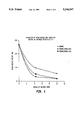
- FIG. 1 is a graph plotting pitch deposit weight versus dosage of polymer for poly(DADMAC), DADMAC/DMAEA.BCQ (70/30) and DADMAC/DMAEM.CCQ (97/3);
- FIG. 2 is a graph plotting pitch deposit weight versus dosage of polymer for poly(DADMAC), DADMAC/DMAEA.BCQ (70/30) and DADMAC/DMAEA.BCQ (90/10); and
- FIG. 3 is a graph plotting filtrate turbidity versus dosage of polymer for poly(DADMAC) and DADMAC/DMAEA.BCQ (70/30).
- the present inventors have developed a new class of polyelectrolyte copolymer coagulants which exhibit enhanced performance in controlling and/or removing pitch from papermaking systems.
- These coagulants are hydrophobic copolymers of DADMAC and a hydrophobic monomer such as dimethylaminoethylacrylate benzyl chloride quaternary (DMAEA.BCQ).
- cationic polymer retention aids act purely by charge neutralization to allow the anionic pitch to deposit on the anionic wood fiber instead of the hydrophobic plastic surface of the headbox and other papermaking machine parts.
- Pitch is typically formed from fatty acids, sterols, fatty alcohols, alkylesters, and fatty triglycerides. It has been discovered that surface charge neutralization of colloidal pitch in the papermaking process water suspension can be enhanced by the use of a coagulant of poly(DADMAC) or DADMAC which has been modified to incorporate a certain degree of hydrophobic nature.
- Such a modification can be accomplished by copolymerizing DADMAC with hydrophobic monomers, such as, DMAEA.BCQ, DMAEM.BCQ, DMAEA.CCQ, DMAEM.CCQ, DMAEA.MCQ and DMAEM.MCQ.
- these copolymers are particularly effective in controlling and/or removing pitch when they are prepared via a semibatch technique instead of a batch mode.
- This hydrophobic polyelectrolyte copolymer coagulant preferably comprises a diallyldimethylammonium chloride and a hydrophobic monomer.
- the hydrophobic monomer is at least one monomer selected from the group consisting of: quaternized dimethylaminoethylacrylates and quaternized dimethylaminoethylmethacrylates.
- DMAEA and DMAEM are preferably quaternized using aliphatic or aromatic C 4 to C 20 chloride quaternaries or methyl chloride quaternaries (MCQ).
- a preferred aliphatic C 4 to C 20 chloride quaternary is a cetyl chloride quaternary (CCQ) and a preferred aromatic C 4 to C 20 chloride quaternary is benzyl chloride quaternary (BCQ) It is contemplated herein that the term C 4 to C 20 chloride quaternary is generally intended to include both aliphatic and aromatic configurations.
- DADMAC can be prepared in accordance with any conventional manner such as the technique described in U.S. Pat. No. 4,151,202 (Hunter et al.), which issued on Apr. 24, 1979, and which is incorporated herein by reference.
- the quaternized dimethylaminoethylacrylate is selected from the group consisting of: dimethylaminoethylacrylate methyl chloride quaternary (DMAEA.MCQ) and dimethylaminoethylacrylates having either an aliphatic or aromatic C 4 to C 20 chloride quaternary.
- the dimethylaminoethylacrylates having aliphatic C 4 to C 20 chloride quaternary is preferably dimethylaminoethylacrylate cetyl chloride quaternary (DMAEA.CCQ) and the preferred aromatic C 4 to C 20 chloride quaternary is dimethylaminoethylacrylate benzyl chloride quaternary.
- the quaternized dimethylaminoethylmethacrylate is selected from the group consisting of: dimethylaminoethylmethacrylate methyl chloride quaternary (DMAEM.MCQ) and dimethylaminoethylmethacrylates having aliphatic or aromatic C 4 to C 20 chloride quaternary.
- the dimethylaminoethylmethacrylates having aliphatic C 4 to C 20 chloride quaternary is preferably dimethylaminoethylmethacrylate cetyl chloride quaternary (DMAEM.CCQ) and the preferred aromatic C 4 to C 20 chloride quaternary is dimethylaminoethylmethacrylate benzyl chloride quaternary (DMAEM.BCQ).
- DMAEM.CCQ dimethylaminoethylmethacrylate cetyl chloride quaternary
- DMAEM.BCQ dimethylaminoethylmethacrylate benzyl chloride quaternary
- diallyldimethylammonium chloride and hydrophobic monomer are preferably present in a molar ratio in the range from 20:80 to 99:1.
- the unique semi-batch process for making the hydrophobic polyelectrolyte copolymers according to the present invention comprise the following steps:
- diallyldimethylammonium chloride added to a polymerization reactor vessel in an amount between about 1 to about 19 weight percent, and purging with nitrogen at a pressure in the range between about 4 to about 6 psig;
- deionized water is added periodically as needed during the polymerization process in a total amount between about 63 to about 80 weight percent.
- diallyldimethylammonium chloride with NaCl and deionized water to form a diallyldimethylammonium chloride solution prior to charging it into the reactor vessel.
- the NaCl is preferably added in an amount between about 2.0 to about 3.5 weight percent and the deionized water is preferably added in an amount between about 1.0 to about 2.5 weight percent.
- This diallyldimethylammonium chloride solution has a concentration of diallyldimethylammonium chloride in the range between about 54 to about 59.
- the diallyldimethylammonium chloride, polymer initiator and hydrophobic monomer are heated at a temperature in the range between about 47° C. to about 57° C. for a period of between about 4 to 5 hours. Thereafter, the temperature of the reactor vessel is increased to about 72° C. to about 82° C. for a period of between about 1 to 4 hours. After polymerization has been completed the copolymer product is typically diluted with deionized water, cooled and stored.
- the polymer initiator is selected from the group consisting of 2,2'-azobis(2-amidinopropane) hydrochloride (Vazo(50)), ammonium persulfate, 2,2'-azobis(N,N'-dimethylene isobutylamide) dihydrochloride, and ammonium persulfate/sodium meta bisulfite.
- the coagulant is typically added to the papermaking process water suspension in an amount between about 1 to about 5 pounds per ton of dry pulp.
- the present invention can best be understood by reference to the below working and comparative examples.
- the following standard pitch deposition test method was used in evaluating the below examples.
- the pH of the test pulp was then adjusted to 6.0 or any other desired test pH with 0.1N HCL or 0.1N NaOH.
- the test pulp was poured into an Osterizer blender container and the pitch control agent to be tested was added at this point.
- a pre-weighed polytetrafluoroethylene coupon was immersed in the test pulp and the latter mixed in the blender for four minutes.
- the coupon now coated with deposited pitch was removed, gently rinsed to remove any fibers but not pitch adhering to the surface, and dried.
- the original weight of the coupon was subtracted from the weight of the coupon plus deposited pitch in order to obtain the pitch deposit weight.
- the synthetic pitch compositions used in the pitch deposition tests were comprised cf common wood pitch components. Solutions of these synthetic pitch compositions were added to the laboratory pulps to form a colloidal pitch dispersion similar to real wood pitch in actual papermaking pulps, only at a higher effective concentration, so that in the pitch deposition test a measurable pitch deposit could be obtained from a relatively small quantity of pulp in a reasonably short time period.
- the synthetic pitch compositions typically include the following components:
- Sample 1 was a copolymer formed from 70% DADMAC and 30% DMAEA.BCQ with 20% active polymer and an intrinsic viscosity of 1.4 dl/g.
- Sample 2 was a copolymer formed from 90% DADMAC and 10% DMAEA.BCQ with 26% active polymer and an intrinsic viscosity of 2.9 dl/g.
- Pitch deposition test results indicated that the two hydrophobically modified copolymer coagulants were essentially equal to poly(DADMAC) in activity at all treatment dosages.
- the experimental data is shown in Table 1 below and FIG. 2, attached hereto.
- Sample 1 was a copolymer formed from 70% DADMAC and 30% DMAEA.BCQ With 20% active polymer and an intrinsic viscosity of 1.4 dl/g.
- Sample 2 was a copolymer formed from 90% DADMAC and 10% DMAEM.BCQ with 26% active polymer and an intrinsic viscosity of 2.9 dl/g.
- Table 2 The experimental data is shown in Table 2 below.
- Pitch deposition test results indicated that the coagulant of Sample 1 was essentially equal to poly(DADMAC) in activity at all treatment dosages.
- the coagulant of Sample 2 demonstrated higher percent inhibition of pitch deposition at lower dosages than poly(DADMAC). All of the hydrophobic polyelectrolyte copolymer coagulants resulted in .sup. ⁇ 90% inhibition of pitch deposition.
- Two hydrophobic polyelectrolyte copolymer coagulants i.e., a DADMAC/DMAEA.BCQ copolymer and a DADMAC/DMAEM.CCQ copolymer, were evaluated versus a conventional poly(DADMAC) pitch control agent.
- a hydrophobic polyelectrolyte copolymer was formed from 95% diallyldimethylammonium chloride (DADMAC) and 5% dimethylaminoethylmethacrylate cetyl chloride quaternary (DMAEM.CCQ) monomers. The following reagents were used:
- DADMAC was added to a mixture of DMAEM.CCQ, adipic acid, versene, and deionized water. This reaction mixture was then heated to about 50° C. and thereafter the ammonium persulfate was added. The reactor vessel was purged with nitrogen and stirred at about 250 rpm. After 30 minutes a precipitate began to form so an additional 154.76 grams of a 62% solution of DADMAC, 10 grams of a 25% solution of ammonium persulfate and 0.10 grams of versene were added to the reactor vessel. Thereafter, the temperature of the mixture was increased to 65° C. for 6 hours and then cooled to ambient temperature. The final molar ratio of DADMAC to DMAEM.CCQ was 96.68% to 3.32%.
- a hydrophobic polyelectrolyte copolymer was formed from 70% DADMAC and 30% dimethylaminoethylacrylate benzyl chloride quaternary (DMAEA.BCQ) monomers. The following reagents were used:
- DADMAC and 100 grams of deionized water were placed within a polymerization reactor vessel which was purged with nitrogen. Thereafter, the ammonium persulfate was added dropwise to the reactor vessel via a 60 cc syringe pump for 2 hours. Simultaneously, DMAEA.BCQ was added dropwise to the reactor vessel via a 60 cc syringe pump for 2 hours. The DMAEA.BCQ was diluted with 100 grams of deionized water prior to being loaded into the syringe pump. Thereafter, the remaining deionized water and versene were added to the reactor vessel which was then heated at 65° C. for 6 hours.
- a hydrophobic polyelectrolyte copolymer was formed from 70% DADMAC and 30% dimethylaminoethylacrylate benzyl chloride quaternary (DMAEA.BCQ) monomers. The following reagents were used:
- DADMAC was placed within a polymerization reactor vessel which was purged with nitrogen and stirred at 300 rpm and a torque of 350 dynes-cm. The pH was adjusted by addition of H 2 SO 4 . After 40 minutes the torque gradually rose to 2240 dynes-cm. Thereafter, 100 grams of deionized water was added to the DADMAC which reduced the torque to 850 dynes-cm. This was followed by the dropwise addition of Vazo(50) and DMAEA.BCQ via separate 60 cc syringe pumps for 2 hours. The DMAEA.BCQ was diluted with 100 grams of deionized water. The reactor vessel was then heated at 65° C. for 5 hours.
- a hydrophobic polyelectrolyte copolymer was formed from 80% DADMAC and 20% dimethylaminoethylmethacrylate cetyl chloride quaternary (DMAEM.CCQ) monomers. The following reagents were used:
- DADMAC was placed within a polymerization reactor vessel which was purged with nitrogen and stirred at 300 rpm. The pH was adjusted by addition of H 2 SO 4 . 150 ml of deionized water was added to the DADMAC. This was followed by the dropwise addition of Vazo(50) and DMAEA.BCQ via separate 60 cc syringe pumps for 2 hours. The DMAEA.BCQ was diluted with 100 grams of deionized water. The reactor vessel was then heated at 65° C. for 4.5 hours. Between 1.5 to 2 hours, 180 ml of deionized water was again added. After 4.5 hours the temperature was raised to 70° C. for 0.5 hours. Thereafter, the resulting polymer was diluted with the remaining deionized water, cooled and stored.
- a hydrophobic polyelectrolyte copolymer was formed using the same technique described in Example 7 above from 80% DADMAC and 20% dimethylaminoethylacrylate benzyl chloride quaternary (DMAEA.BCQ) monomers. The following reagents were used:
- Table 3 sets forth the time of deionized water addition during the semi-batch polymerization process.
- a hydrophobic polyelectrolyte copolymer was formed from DADMAC and 10% dimethylaminoethylacrylate benzyl chloride quaternary (DMAEA.BCQ) monomers. The following reagents were used:
- a DADMAC solution was prepared by evaporating a solution comprising: 251.79 grams of a 67% solution of DADMAC, 27.52 grams of NaCl and 16.6 grams of deionized water for 30 minutes.
- a hydrophobic polyelectrolyte copolymer was formed from 90% DADMAC and 10% dimethylaminoethylacrylate benzyl chloride quaternary (DMAEA.BCQ) monomers. The following reagents were used:
- a hydrophobic polyelectrolyte copolymer was formed from 90% DADMAC and 10% dimethylaminoethylacrylate benzyl chloride quaternary (DMAEA.BCQ) monomers. The following reagents were used:
- DADMAC and deionized water were charged into a reaction vessel and heated to 57° C. in a nitrogen atmosphere. Thereafter, the DMAEA.BCQ and 1.68 grams of Vazo were added dropwise for 4 hours via separate 60 cc syringe pumps to the mixture of DADMAC and water. 500 ml of deionized water was taken in an addition funnel, purged with nitrogen, and added from time to time as needed. Thereafter, the versene was added and the reaction vessel was heated at 57° C. for an additional 5 hours. 1.68 grams of Vazo were added and the reaction vessel was heated at 82° C. for 4.5 hours. The resultant polymer product was diluted with the remaining deionized water, cooled and stored. The intrinsic viscosity of the resultant copolymer was 2.37 dl/gm and the solvent was 0.125m NaNO 3 .
- a hydrophobic polyelectrolyte copolymer was formed from 85% DADMAC and 15% dimethylaminoethylacrylate benzyl chloride quaternary (DMAEA.BCQ) monomers. The following reagents were used:
- DADMAC, NaCl, and deionized water were mixed together and heated to 57° C. in a nitrogen atmosphere. Thereafter, the DMAEA.BCQ and 1.80 grams of Vazo were added dropwise for 4 hours via separate 60 cc syringe pumps to the mixture of DADMAC, NaCl and water. 500 ml of deionized water was taken in an addition funnel, purged with nitrogen, and added from time to time as needed. Thereafter, the versene was added and the reaction vessel was heated at 57° C. for an additional 5 hours. 1.80 grams of Vazo were added and the reaction vessel was heated at 82° C. for 4.5 hours. The resultant polymer product was diluted with the remaining deionized water, cooled and stored.
- a 1% solution of hydrophobic polyelectrolyte copolymer formed from 70% DADMAC and 30% dimethylaminoethylacrylate benzyl chloride quaternary (DMAEA.BCQ) monomers and a 1% solution of poly(DADMAC) were independently added to a synthetic softwood pitch pulp to compare their respective filtrate turbidity at various dosages.
- the test was performed by dosing the softwood pitch pulp with either DADMAC/DMAEA.BCQ or poly(DADMAC) at 100 rpm shear stirring for two minutes, filtering through Reeves Angel 202 filter paper, diluting the filtrate ten-fold, and then measuring the turbidity at 450 nm using the #750 turbidity program on a Hach DR 2000 portable spectrophotometer.
- the filtrate turbidity measurements are in Formazin Turbidity Units (FTU); this is an absorptometric method where the light source is at 180° from the detector.
Landscapes
- Paper (AREA)
- Addition Polymer Or Copolymer, Post-Treatments, Or Chemical Modifications (AREA)
Abstract
Description
______________________________________
SYNTHETIC PITCH COMPOSITIONS:
______________________________________
Abietic Acid (a resin acid)
                          5-50%
Oleic Acid               10-25%
Palmitic Acid             5-10%
Corn Oil                 10-35%
Oleyl Alcohol           2.5-7.5%
Methyl Stearate           5-15%
β-Sitosterol       2.5-7.5%
Cholesteryl Caproate    2.5-7.5%
______________________________________
              TABLE 1
______________________________________
           DOSAGE     PITCH
           (LB/TON)   DEPOSIT   % INHIBITION
           ACTIVES    WEIGHT    OF PITCH
PRODUCT    BASIS      (MG)      DEPOSITION
______________________________________
Control (1)
           0          367
Control (2)
           0          381
Poly(DADMAC)
           0.01       308       17
Poly(DADMAC)
           0.02       163       56
Poly(DADMAC)
           0.03       142       62
Poly(DADMAC)
           0.04        97       74
Poly(DADMAC)
           0.05        38       90
Poly(DADMAC)
           0.10        16       96
Control (3)
           0          358
Sample 1   0.01       315       15
Sample 1   0.02       211       43
Sample 1   0.03       132       64
Sample 1   0.04       119       68
Sample 1   0.05        40       89
Sample 1   0.10        14       96
Control (4)
           0          364
Sample 2   0.008      275       26
Sample 2   0.017      174       53
Sample 2   0.025      119       68
Sample 2   0.033       77       79
Sample 2   0.042       36       90
Sample 2   0.083       10       97
Control (5)
           0          380
Control (6)
           0          371
______________________________________
              TABLE 2
______________________________________
           DOSAGE     PITCH
           (LB/TON)   DEPOSIT   % INHIBITION
           ACTIVES    WEIGHT    OF PITCH
PRODUCT    BASIS      (MG)      DEPOSITION
______________________________________
Control (1)
           0          367
Control (2)
           0          381
Poly(DADMAC)
           0.01       308       17
Poly(DADMAC)
           0.02       163       56
Poly(DADMAC)
           0.03       142       62
Poly(DADMAC)
           0.04        97       74
Poly(DADMAC)
           0.05        38       90
Poly(DADMAC)
           0.10        16       96
Control (3)
           0          358
Sample 1   0.01       315       15
Sample 1   0.0.2      211       43
Sample 1   0.0.3      132       64
Sample 1   0.04       119       68
Sample 1   0.05        40       89
Sample 1   0.10        14       96
Control (4)
           0          364
Sample 2   0.008      275       26
Sample 2   0.017      174       53
Sample 2   0.025      119       68
Sample 2   0.033       77       79
Sample 2   0.042       36       90
Sample 2   0.083       10       97
Control (5)
           0          380
Control (6)
           0          371
______________________________________
______________________________________
250.62 grams
            62% Solution of DADMAC
150.00 grams
            20% Solution of DMAEM.CCQ
 0.30 grams Versene
 10.00 grams
            Adipic Acid
 15.00 grams
            25% Solution of Ammonium Persulfate
 75.08 grams
            Deionized Water
______________________________________
______________________________________
188.03 grams
            62% Solution of DADMAC
104.28 grams
            80% Solution of DMAEA.BCQ
 0.20 grams Versene
 15.00 grams
            25% Solution of Ammonium Persulfate
692.49 grams
            Deionized Water
______________________________________
______________________________________
188.03 grams  62% Solution of DADMAC
104.28 grams  80% Solution of DMAEA.BCQ
 0.20 grams   Versene
 1.17 grams   Vazo(50)
706.00 grams  Deionized Water
 0.32 grams   H.sub.2 SO.sub.4
______________________________________
______________________________________ 188.02 grams 62% Solution of DADMAC 83.43grams 100% Solution of DMAEM.CCQ 0.20 grams Versene 1.17 grams Vazo(50) 727.03 grams Deionized Water 0.15 grams H.sub.2 SO.sub.4 ______________________________________
______________________________________
227.52 grams  62% Solution of DADMAC
 73.68 grams  80% Solution of DMAEA.BCQ
 0.40 grams   Versene
 1.42 grams   Vazo(50)
696.63 grams  Deionized Water
 0.35 grams   H.sub.2 SO.sub.4
______________________________________
TABLE 3 ______________________________________ SPEED OF ROTATION TORQUE H2O (RPM) (Dynes-cm) TIME ADDITION ______________________________________ 200 400 0 0 200 850 30 min. 0 200 1200 45 min. 50grams 200 700 45.1 min. -- 200 1600 1 hr. 10 min. 50grams 200 1000 1 hr. 10.1 min. -- 200 1510 1 hr. 35 min. 50grams 200 1200 1 hr. 35.1 min. 50grams 200 650 1 hr. 35.2 min. -- 200 1500 1 hr. 55 min. -- 200 1610 2 hr. 12 min. 50grams 200 558 2 hr. 12.1 min. -- ______________________________________
______________________________________
251.79 grams  67% Solution of DADMAC
 39.13 grams  80% Solution of DMAEA.BCQ
 0.20 grams   Versene
 3.36 grams   Vazo(50)
678.00 grams  Deionized Water
 27.52        NaCl
______________________________________
______________________________________
185.10 grams  67% Solution of DADMAC
 28.77 grams  80% Solution of DMAEA.BCQ
 0.15 grams   Versene
 2.48 grams   Vazo(50)
498.42 grams  Deionized Water
 20.23 grams  NaCl
______________________________________
______________________________________
251.79 grams  67% Solution of DADMAC
 39.13 grams  80% Solution of DMAEA.BCQ
 0.20 grams   Versene
 3.36 grams   Vazo(50)
705.52 grams  Deionized Water
______________________________________
______________________________________
308.35 grams  72.5% Solution of DADMAC
 85.15 grams  80% Solution of DMAEA.BCQ
 0.20 grams   Versene
 3.60 grams   Vazo(50)
548.70 grams  Deionized Water
 54.00 grams  NaCl
______________________________________
______________________________________
                DOSAGE    FILTRATE
POLYMER         (lb/ton)  TURBIDITY (FTU)
______________________________________
Poly(DADMAC)    0.02      119
Poly(DADMAC)    0.05      117.5
Poly(DADMAC)    0.10      110.5
DADMAC/DMAEA.BCQ
                0.02      120
DADMAC/DMAEA.BCQ
                0.05      116
DADMAC/DMAEA.BCQ
                0.10      108
______________________________________
Claims (6)
Priority Applications (2)
| Application Number | Priority Date | Filing Date | Title |
|---|---|---|---|
| US07/913,153 US5246547A (en) | 1992-07-14 | 1992-07-14 | Hydrophobic polyelectrolyte coagulants for the control of pitch in pulp and paper systems |
| CA002100414A CA2100414C (en) | 1992-07-14 | 1993-07-13 | Hydrophobic polyelectrolyte coagulants for the control of pitch in pulp and paper systems |
Applications Claiming Priority (1)
| Application Number | Priority Date | Filing Date | Title |
|---|---|---|---|
| US07/913,153 US5246547A (en) | 1992-07-14 | 1992-07-14 | Hydrophobic polyelectrolyte coagulants for the control of pitch in pulp and paper systems |
Publications (1)
| Publication Number | Publication Date |
|---|---|
| US5246547A true US5246547A (en) | 1993-09-21 |
Family
ID=25432974
Family Applications (1)
| Application Number | Title | Priority Date | Filing Date |
|---|---|---|---|
| US07/913,153 Expired - Lifetime US5246547A (en) | 1992-07-14 | 1992-07-14 | Hydrophobic polyelectrolyte coagulants for the control of pitch in pulp and paper systems |
Country Status (2)
| Country | Link |
|---|---|
| US (1) | US5246547A (en) |
| CA (1) | CA2100414C (en) |
Cited By (12)
| Publication number | Priority date | Publication date | Assignee | Title |
|---|---|---|---|---|
| US5510439A (en) * | 1993-11-04 | 1996-04-23 | Nalco Chemical Company | Vinyl alkoxysilane copolymer polyelectrolytes for pitch deposit control |
| WO1996035731A1 (en) * | 1995-05-08 | 1996-11-14 | Nalco Chemical Company | Dadmac/vinyl trialkoxysilane copolymers and their use in wastewater treatment |
| US5635112A (en) | 1993-06-09 | 1997-06-03 | Nalco Chemical Company | Hydrophobically-modified demulsifiers for oil-in-water systems |
| EP0825293A1 (en) * | 1996-08-20 | 1998-02-25 | Nalco Chemical Company | Enhanced removal of hydrophobic contaminants from water clarification systems |
| US5989392A (en) * | 1997-09-10 | 1999-11-23 | Nalco Chemical Company | Method of using polyammonium quaternary for controlling anionic trash and pitch deposition in pulp containing broke |
| US6054054A (en) * | 1994-09-06 | 2000-04-25 | Nalco Chemical Company | Chemical for the prevention of attachment of microorganisms to surfaces |
| US20030164336A1 (en) * | 2000-07-27 | 2003-09-04 | Weir Josephine Michelle | Processes of reducing contamination from cellulosic suspensions |
| US20090260767A1 (en) * | 2003-04-14 | 2009-10-22 | Every Penny Counts, Inc. | Use of hydrophobic dyes to monitor hydrophobic contaminants in a papermaking process |
| US20100147476A1 (en) * | 2008-11-18 | 2010-06-17 | Qu-Ming Gu | Hydrophobically Modified Poly(aminoamides) |
| US20100236732A1 (en) * | 2009-03-17 | 2010-09-23 | Alessandra Gerli | Use of fluorescence to monitor hydrophobic contaminants in a papermaking process |
| WO2012027272A3 (en) * | 2010-08-23 | 2012-04-12 | Hercules Incorporated | Method of treating paper forming wire surface |
| US10519602B2 (en) | 2017-06-15 | 2019-12-31 | Ecolab Usa Inc. | Polymer for pitch and stickies deposition control in papermaking |
Citations (8)
| Publication number | Priority date | Publication date | Assignee | Title |
|---|---|---|---|---|
| US4734473A (en) * | 1984-06-15 | 1988-03-29 | Nalco Chemical Company | Water-soluble cationic quaternary ammonium monomers |
| US4769432A (en) * | 1984-06-15 | 1988-09-06 | Nalco Chemical Company | Water-soluble quaternary cationic monomers |
| US4802992A (en) * | 1985-06-03 | 1989-02-07 | Nalco Chemical Company | Removal of dispersed oil from water |
| US4913775A (en) * | 1986-01-29 | 1990-04-03 | Allied Colloids Ltd. | Production of paper and paper board |
| US4964955A (en) * | 1988-12-21 | 1990-10-23 | Cyprus Mines Corporation | Method of reducing pitch in pulping and papermaking operations |
| US4968435A (en) * | 1988-12-19 | 1990-11-06 | American Cyanamid Company | Cross-linked cationic polymeric microparticles |
| US5006596A (en) * | 1990-02-09 | 1991-04-09 | Betz Laboratories, Inc. | Self-inverting, water-in-oil emulsions |
| US5152903A (en) * | 1988-12-19 | 1992-10-06 | American Cyanamid Company | Cross-linked cationic polymeric microparticles |
-
1992
- 1992-07-14 US US07/913,153 patent/US5246547A/en not_active Expired - Lifetime
-
1993
- 1993-07-13 CA CA002100414A patent/CA2100414C/en not_active Expired - Fee Related
Patent Citations (8)
| Publication number | Priority date | Publication date | Assignee | Title |
|---|---|---|---|---|
| US4734473A (en) * | 1984-06-15 | 1988-03-29 | Nalco Chemical Company | Water-soluble cationic quaternary ammonium monomers |
| US4769432A (en) * | 1984-06-15 | 1988-09-06 | Nalco Chemical Company | Water-soluble quaternary cationic monomers |
| US4802992A (en) * | 1985-06-03 | 1989-02-07 | Nalco Chemical Company | Removal of dispersed oil from water |
| US4913775A (en) * | 1986-01-29 | 1990-04-03 | Allied Colloids Ltd. | Production of paper and paper board |
| US4968435A (en) * | 1988-12-19 | 1990-11-06 | American Cyanamid Company | Cross-linked cationic polymeric microparticles |
| US5152903A (en) * | 1988-12-19 | 1992-10-06 | American Cyanamid Company | Cross-linked cationic polymeric microparticles |
| US4964955A (en) * | 1988-12-21 | 1990-10-23 | Cyprus Mines Corporation | Method of reducing pitch in pulping and papermaking operations |
| US5006596A (en) * | 1990-02-09 | 1991-04-09 | Betz Laboratories, Inc. | Self-inverting, water-in-oil emulsions |
Cited By (15)
| Publication number | Priority date | Publication date | Assignee | Title |
|---|---|---|---|---|
| US5635112A (en) | 1993-06-09 | 1997-06-03 | Nalco Chemical Company | Hydrophobically-modified demulsifiers for oil-in-water systems |
| US5527431A (en) * | 1993-11-04 | 1996-06-18 | Nalco Chemical Company | Silicon polyelectrolytes for pitch deposit control |
| US5510439A (en) * | 1993-11-04 | 1996-04-23 | Nalco Chemical Company | Vinyl alkoxysilane copolymer polyelectrolytes for pitch deposit control |
| US6054054A (en) * | 1994-09-06 | 2000-04-25 | Nalco Chemical Company | Chemical for the prevention of attachment of microorganisms to surfaces |
| WO1996035731A1 (en) * | 1995-05-08 | 1996-11-14 | Nalco Chemical Company | Dadmac/vinyl trialkoxysilane copolymers and their use in wastewater treatment |
| EP0825293A1 (en) * | 1996-08-20 | 1998-02-25 | Nalco Chemical Company | Enhanced removal of hydrophobic contaminants from water clarification systems |
| US5989392A (en) * | 1997-09-10 | 1999-11-23 | Nalco Chemical Company | Method of using polyammonium quaternary for controlling anionic trash and pitch deposition in pulp containing broke |
| US20030164336A1 (en) * | 2000-07-27 | 2003-09-04 | Weir Josephine Michelle | Processes of reducing contamination from cellulosic suspensions |
| US20090260767A1 (en) * | 2003-04-14 | 2009-10-22 | Every Penny Counts, Inc. | Use of hydrophobic dyes to monitor hydrophobic contaminants in a papermaking process |
| US20100147476A1 (en) * | 2008-11-18 | 2010-06-17 | Qu-Ming Gu | Hydrophobically Modified Poly(aminoamides) |
| US8506757B2 (en) | 2008-11-18 | 2013-08-13 | Hercules Incorporated | Hydrophobically modified poly(aminoamides) |
| US20100236732A1 (en) * | 2009-03-17 | 2010-09-23 | Alessandra Gerli | Use of fluorescence to monitor hydrophobic contaminants in a papermaking process |
| WO2012027272A3 (en) * | 2010-08-23 | 2012-04-12 | Hercules Incorporated | Method of treating paper forming wire surface |
| US8524042B2 (en) | 2010-08-23 | 2013-09-03 | Hercules Incorporated | Method of treating paper forming wire surface |
| US10519602B2 (en) | 2017-06-15 | 2019-12-31 | Ecolab Usa Inc. | Polymer for pitch and stickies deposition control in papermaking |
Also Published As
| Publication number | Publication date |
|---|---|
| CA2100414A1 (en) | 1994-01-15 |
| CA2100414C (en) | 2007-07-03 |
Similar Documents
| Publication | Publication Date | Title |
|---|---|---|
| EP1012392B1 (en) | Use of a polyammonium quaternary polymer for controlling anionic trash and pitch deposition and treating coated broke | |
| DE60311467T2 (en) | DISPERSION OF WATER-SOLUBLE POLYMER, METHOD OF MANUFACTURING THEREOF AND USE METHOD THEREFOR | |
| US5246547A (en) | Hydrophobic polyelectrolyte coagulants for the control of pitch in pulp and paper systems | |
| DE69507858T2 (en) | Enzymes together with polyelectrolytes to increase the drainage of sludge or newsprint in paper production | |
| KR102510957B1 (en) | Use of the polymer product for controlling deposit formation in the manufacture of paper or board | |
| DE3929226A1 (en) | NEUTRALIZER FOR RAW PAPER DIMENSIONS USING CATIONIC PLASTIC DISPERSIONS | |
| SK285207B6 (en) | Process for producing paper or cardboard | |
| DE19715832A1 (en) | Process for the production of paper, cardboard and cardboard | |
| DE69120374T2 (en) | Cross-linked, anionic and amphoteric polymer microbeads | |
| DE69107529T2 (en) | Procedures for pitch control in paper making systems. | |
| EP4623154A1 (en) | Water soluble amphoteric emulsion terpolymers, methods of making, and methods of use as retention and dewatering aids | |
| US5510439A (en) | Vinyl alkoxysilane copolymer polyelectrolytes for pitch deposit control | |
| DE69912954T3 (en) | METHOD FOR PRODUCING PAPER AND PAPER | |
| US6579417B1 (en) | Flocculation method for making a paper sheet | |
| US5393380A (en) | Polydiallyl dimethyl ammonium chloride/3-acrylamido-3-methylbutanoic acid copolymers and their use for pitch control in paper mill systems | |
| KR20010042950A (en) | Use of dispersions for paper mill color removal | |
| EP0793749B1 (en) | Processes for reducing contamination of cellulosic liquors | |
| IPPIII | IIIlIIIIIIIIIIIIIIIIIIIIIIIIIIIIIIIIIIIIIIIIIIIIllIlIIIIIIIIIIIIIIIIIIIIIII | |
| EP2148001A1 (en) | Pulping of cellulosic material in the presence of a cationic polymer | |
| KR20240072146A (en) | Method for reducing starch content of aqueous phase removed from fiber stock manufacture | |
| WO2001063050A1 (en) | An organic coagulant composition for treating coated broke | |
| WO1995003450A1 (en) | Retention aids for papermaking | |
| MXPA00002154A (en) | Polyammonium quaternary polymer for controlling anionic trash and pitch deposition and treating coated broke | |
| CA2235637A1 (en) | Improved papermaking process | |
| MXPA97006074A (en) | Use of mixtures of dispersion polymers and coagulants for the treatment of damaged paper revest |
Legal Events
| Date | Code | Title | Description |
|---|---|---|---|
| AS | Assignment |
Owner name: NALCO CHEMICAL COMPANY, ILLINOIS Free format text: ASSIGNMENT OF ASSIGNORS INTEREST.;ASSIGNORS:FINCK, MARTHA R.;GREER, CAROL R.;RAMESH, MANIAN;REEL/FRAME:006212/0406 Effective date: 19920710 |
|
| STCF | Information on status: patent grant |
Free format text: PATENTED CASE |
|
| FEPP | Fee payment procedure |
Free format text: PAYOR NUMBER ASSIGNED (ORIGINAL EVENT CODE: ASPN); ENTITY STATUS OF PATENT OWNER: LARGE ENTITY |
|
| FEPP | Fee payment procedure |
Free format text: PAYOR NUMBER ASSIGNED (ORIGINAL EVENT CODE: ASPN); ENTITY STATUS OF PATENT OWNER: LARGE ENTITY Free format text: PAYER NUMBER DE-ASSIGNED (ORIGINAL EVENT CODE: RMPN); ENTITY STATUS OF PATENT OWNER: LARGE ENTITY |
|
| FPAY | Fee payment |
Year of fee payment: 4 |
|
| FPAY | Fee payment |
Year of fee payment: 8 |
|
| AS | Assignment |
Owner name: ONDEO NALCO COMPANY, ILLINOIS Free format text: CHANGE OF NAME & ADDRESS;ASSIGNOR:NALCO CHEMICAL COMPANY;REEL/FRAME:013011/0582 Effective date: 20010319 |
|
| AS | Assignment |
Owner name: NALCO COMPANY, ILLINOIS Free format text: GRANT OF SECURITY INTEREST;ASSIGNOR:ONDEO NALCO COMPANY;REEL/FRAME:014822/0305 Effective date: 20031104 |
|
| AS | Assignment |
Owner name: CITICORP NORTH AMERICA, INC., AS ADMINISTRATIVE AG Free format text: GRANT OF SECURITY INTEREST;ASSIGNOR:NALCO COMPANY;REEL/FRAME:014805/0132 Effective date: 20031104 |
|
| FPAY | Fee payment |
Year of fee payment: 12 |
|
| AS | Assignment |
Owner name: BANK OF AMERICA, N.A., AS COLLATERAL AGENT, NEW YO Free format text: SECURITY AGREEMENT;ASSIGNORS:NALCO COMPANY;CALGON LLC;NALCO ONE SOURCE LLC;AND OTHERS;REEL/FRAME:022703/0001 Effective date: 20090513 Owner name: BANK OF AMERICA, N.A., AS COLLATERAL AGENT,NEW YOR Free format text: SECURITY AGREEMENT;ASSIGNORS:NALCO COMPANY;CALGON LLC;NALCO ONE SOURCE LLC;AND OTHERS;REEL/FRAME:022703/0001 Effective date: 20090513 |
|
| AS | Assignment |
Owner name: NALCO COMPANY, ILLINOIS Free format text: RELEASE BY SECURED PARTY;ASSIGNOR:BANK OF AMERICA, N.A.;REEL/FRAME:035976/0609 Effective date: 20111201 |
|
| AS | Assignment |
Owner name: NALCO COMPANY, ILLINOIS Free format text: RELEASE BY SECURED PARTY;ASSIGNOR:BANK OF AMERICA, N.A.;REEL/FRAME:041808/0713 Effective date: 20111201 |
|
| AS | Assignment |
Owner name: NALCO COMPANY LLC, DELAWARE Free format text: CHANGE OF NAME;ASSIGNOR:NALCO COMPANY;REEL/FRAME:041835/0903 Effective date: 20151229 Owner name: ECOLAB USA INC., MINNESOTA Free format text: ASSIGNMENT OF ASSIGNORS INTEREST;ASSIGNORS:NALCO COMPANY LLC;CALGON CORPORATION;CALGON LLC;AND OTHERS;REEL/FRAME:041836/0437 Effective date: 20170227 Owner name: NALCO COMPANY, ILLINOIS Free format text: RELEASE BY SECURED PARTY;ASSIGNOR:CITICORP NORTH AMERICA, INC.;REEL/FRAME:041832/0826 Effective date: 20170227 |
|
| AS | Assignment |
Owner name: ECOLAB USA INC., MINNESOTA Free format text: ASSIGNMENT OF ASSIGNORS INTEREST;ASSIGNOR:NALCO COMPANY;REEL/FRAME:042147/0420 Effective date: 20170227 |