US5227501A - Iodine- and fluorine-containing epoxy compound - Google Patents
Iodine- and fluorine-containing epoxy compound Download PDFInfo
- Publication number
- US5227501A US5227501A US07/882,065 US88206592A US5227501A US 5227501 A US5227501 A US 5227501A US 88206592 A US88206592 A US 88206592A US 5227501 A US5227501 A US 5227501A
- Authority
- US
- United States
- Prior art keywords
- compound
- iodo
- fluorine
- undecafluoro
- hypochlorite
- Prior art date
- Legal status (The legal status is an assumption and is not a legal conclusion. Google has not performed a legal analysis and makes no representation as to the accuracy of the status listed.)
- Expired - Fee Related
Links
- 150000001875 compounds Chemical class 0.000 title abstract description 20
- 239000004593 Epoxy Substances 0.000 title description 4
- RNIPBGMVTAUWNH-UHFFFAOYSA-N [F].[I] Chemical compound [F].[I] RNIPBGMVTAUWNH-UHFFFAOYSA-N 0.000 title description 3
- PVPPEBGNSKYGIV-UHFFFAOYSA-N 2,2,3-trifluoro-3-(1,1,2,2,3,3,4,4-octafluoro-4-iodobutyl)oxirane Chemical compound FC(F)(I)C(F)(F)C(F)(F)C(F)(F)C1(F)OC1(F)F PVPPEBGNSKYGIV-UHFFFAOYSA-N 0.000 claims abstract description 8
- WQYVRQLZKVEZGA-UHFFFAOYSA-N hypochlorite Chemical compound Cl[O-] WQYVRQLZKVEZGA-UHFFFAOYSA-N 0.000 abstract description 17
- 238000006243 chemical reaction Methods 0.000 abstract description 12
- 229910052731 fluorine Inorganic materials 0.000 abstract description 4
- 150000003856 quaternary ammonium compounds Chemical class 0.000 abstract description 4
- SUKJFIGYRHOWBL-UHFFFAOYSA-N sodium hypochlorite Chemical compound [Na+].Cl[O-] SUKJFIGYRHOWBL-UHFFFAOYSA-N 0.000 abstract description 4
- YCKRFDGAMUMZLT-UHFFFAOYSA-N Fluorine atom Chemical compound [F] YCKRFDGAMUMZLT-UHFFFAOYSA-N 0.000 abstract description 3
- 239000005708 Sodium hypochlorite Substances 0.000 abstract description 3
- 238000006735 epoxidation reaction Methods 0.000 abstract description 3
- 239000011737 fluorine Substances 0.000 abstract description 3
- 239000008346 aqueous phase Substances 0.000 abstract description 2
- 239000003054 catalyst Substances 0.000 abstract description 2
- 150000002118 epoxides Chemical class 0.000 abstract description 2
- 239000012074 organic phase Substances 0.000 abstract description 2
- 239000012071 phase Substances 0.000 abstract description 2
- KDFQBRZJOYZDEV-UHFFFAOYSA-N 1,1,2,3,3,4,4,5,5,6,6-undecafluoro-6-iodohex-1-ene Chemical compound FC(F)=C(F)C(F)(F)C(F)(F)C(F)(F)C(F)(F)I KDFQBRZJOYZDEV-UHFFFAOYSA-N 0.000 abstract 1
- -1 difluoroiodomethyl group Chemical group 0.000 description 19
- 239000003960 organic solvent Substances 0.000 description 6
- 239000000203 mixture Substances 0.000 description 5
- 239000011541 reaction mixture Substances 0.000 description 5
- LIKMAJRDDDTEIG-UHFFFAOYSA-N 1-hexene Chemical compound CCCCC=C LIKMAJRDDDTEIG-UHFFFAOYSA-N 0.000 description 4
- HEDRZPFGACZZDS-UHFFFAOYSA-N Chloroform Chemical compound ClC(Cl)Cl HEDRZPFGACZZDS-UHFFFAOYSA-N 0.000 description 4
- 239000007864 aqueous solution Substances 0.000 description 4
- 239000002904 solvent Substances 0.000 description 4
- XLYOFNOQVPJJNP-UHFFFAOYSA-N water Substances O XLYOFNOQVPJJNP-UHFFFAOYSA-N 0.000 description 4
- AJDIZQLSFPQPEY-UHFFFAOYSA-N 1,1,2-Trichlorotrifluoroethane Chemical compound FC(F)(Cl)C(F)(Cl)Cl AJDIZQLSFPQPEY-UHFFFAOYSA-N 0.000 description 3
- YMWUJEATGCHHMB-UHFFFAOYSA-N Dichloromethane Chemical compound ClCCl YMWUJEATGCHHMB-UHFFFAOYSA-N 0.000 description 3
- 238000010521 absorption reaction Methods 0.000 description 3
- 238000000862 absorption spectrum Methods 0.000 description 3
- 125000000524 functional group Chemical group 0.000 description 3
- 239000007858 starting material Substances 0.000 description 3
- ZKQDCIXGCQPQNV-UHFFFAOYSA-N Calcium hypochlorite Chemical class [Ca+2].Cl[O-].Cl[O-] ZKQDCIXGCQPQNV-UHFFFAOYSA-N 0.000 description 2
- 239000004215 Carbon black (E152) Substances 0.000 description 2
- VEXZGXHMUGYJMC-UHFFFAOYSA-M Chloride anion Chemical compound [Cl-] VEXZGXHMUGYJMC-UHFFFAOYSA-M 0.000 description 2
- ZAMOUSCENKQFHK-UHFFFAOYSA-N Chlorine atom Chemical compound [Cl] ZAMOUSCENKQFHK-UHFFFAOYSA-N 0.000 description 2
- FAPWRFPIFSIZLT-UHFFFAOYSA-M Sodium chloride Chemical compound [Na+].[Cl-] FAPWRFPIFSIZLT-UHFFFAOYSA-M 0.000 description 2
- 230000015572 biosynthetic process Effects 0.000 description 2
- XJHCXCQVJFPJIK-UHFFFAOYSA-M caesium fluoride Chemical compound [F-].[Cs+] XJHCXCQVJFPJIK-UHFFFAOYSA-M 0.000 description 2
- 125000004432 carbon atom Chemical group C* 0.000 description 2
- 239000000460 chlorine Substances 0.000 description 2
- 229910052801 chlorine Inorganic materials 0.000 description 2
- 229960001701 chloroform Drugs 0.000 description 2
- 239000003431 cross linking reagent Substances 0.000 description 2
- 230000000694 effects Effects 0.000 description 2
- 229920001971 elastomer Polymers 0.000 description 2
- 239000000806 elastomer Substances 0.000 description 2
- 125000003700 epoxy group Chemical group 0.000 description 2
- 125000001153 fluoro group Chemical group F* 0.000 description 2
- 229930195733 hydrocarbon Natural products 0.000 description 2
- QAOWNCQODCNURD-UHFFFAOYSA-M hydrogensulfate Chemical compound OS([O-])(=O)=O QAOWNCQODCNURD-UHFFFAOYSA-M 0.000 description 2
- XLYOFNOQVPJJNP-UHFFFAOYSA-M hydroxide Chemical compound [OH-] XLYOFNOQVPJJNP-UHFFFAOYSA-M 0.000 description 2
- XKBGEWXEAPTVCK-UHFFFAOYSA-M methyltrioctylammonium chloride Chemical compound [Cl-].CCCCCCCC[N+](C)(CCCCCCCC)CCCCCCCC XKBGEWXEAPTVCK-UHFFFAOYSA-M 0.000 description 2
- 150000002894 organic compounds Chemical class 0.000 description 2
- 239000012429 reaction media Substances 0.000 description 2
- 238000001228 spectrum Methods 0.000 description 2
- 238000003786 synthesis reaction Methods 0.000 description 2
- RIOQSEWOXXDEQQ-UHFFFAOYSA-N triphenylphosphine Chemical compound C1=CC=CC=C1P(C=1C=CC=CC=1)C1=CC=CC=C1 RIOQSEWOXXDEQQ-UHFFFAOYSA-N 0.000 description 2
- TXGPGHBYAPBDAG-UHFFFAOYSA-N 1,1,2,2,3,3-hexafluoro-4,4-bis(trifluoromethyl)cyclobutane Chemical compound FC(F)(F)C1(C(F)(F)F)C(F)(F)C(F)(F)C1(F)F TXGPGHBYAPBDAG-UHFFFAOYSA-N 0.000 description 1
- WSLDOOZREJYCGB-UHFFFAOYSA-N 1,2-Dichloroethane Chemical compound ClCCCl WSLDOOZREJYCGB-UHFFFAOYSA-N 0.000 description 1
- DDMOUSALMHHKOS-UHFFFAOYSA-N 1,2-dichloro-1,1,2,2-tetrafluoroethane Chemical compound FC(F)(Cl)C(F)(F)Cl DDMOUSALMHHKOS-UHFFFAOYSA-N 0.000 description 1
- JUQBWXTVWJXUBI-UHFFFAOYSA-N 1,2-dichloro-1,1,2,3,3,4,4,5,5,6,6-undecafluoro-6-iodohexane Chemical compound FC(F)(Cl)C(F)(Cl)C(F)(F)C(F)(F)C(F)(F)C(F)(F)I JUQBWXTVWJXUBI-UHFFFAOYSA-N 0.000 description 1
- HUXKILHRRVEGEU-UHFFFAOYSA-N 2,2,3-trifluoro-3-[1,1,2,2-tetrafluoro-2-(1,1,2,2-tetrafluoro-2-iodoethoxy)ethyl]oxirane Chemical compound FC(F)(I)C(F)(F)OC(F)(F)C(F)(F)C1(F)OC1(F)F HUXKILHRRVEGEU-UHFFFAOYSA-N 0.000 description 1
- LXUPZOCLYIKDIX-UHFFFAOYSA-N 2-[[difluoro(iodo)methoxy]-difluoromethyl]-2,3,3-trifluorooxirane Chemical compound FC(F)(I)OC(F)(F)C1(F)OC1(F)F LXUPZOCLYIKDIX-UHFFFAOYSA-N 0.000 description 1
- AAMFNTBPXWLZGM-UHFFFAOYSA-N 2-[difluoro(iodo)methyl]-2,3,3-trifluorooxirane Chemical compound FC(F)(I)C1(F)OC1(F)F AAMFNTBPXWLZGM-UHFFFAOYSA-N 0.000 description 1
- CPELXLSAUQHCOX-UHFFFAOYSA-M Bromide Chemical compound [Br-] CPELXLSAUQHCOX-UHFFFAOYSA-M 0.000 description 1
- KRHYYFGTRYWZRS-UHFFFAOYSA-M Fluoride anion Chemical compound [F-] KRHYYFGTRYWZRS-UHFFFAOYSA-M 0.000 description 1
- WHXSMMKQMYFTQS-UHFFFAOYSA-N Lithium Chemical compound [Li] WHXSMMKQMYFTQS-UHFFFAOYSA-N 0.000 description 1
- FYYHWMGAXLPEAU-UHFFFAOYSA-N Magnesium Chemical compound [Mg] FYYHWMGAXLPEAU-UHFFFAOYSA-N 0.000 description 1
- 238000005481 NMR spectroscopy Methods 0.000 description 1
- 101100386054 Saccharomyces cerevisiae (strain ATCC 204508 / S288c) CYS3 gene Proteins 0.000 description 1
- PMZURENOXWZQFD-UHFFFAOYSA-L Sodium Sulfate Chemical compound [Na+].[Na+].[O-]S([O-])(=O)=O PMZURENOXWZQFD-UHFFFAOYSA-L 0.000 description 1
- QAOWNCQODCNURD-UHFFFAOYSA-L Sulfate Chemical compound [O-]S([O-])(=O)=O QAOWNCQODCNURD-UHFFFAOYSA-L 0.000 description 1
- 238000013019 agitation Methods 0.000 description 1
- 229910052783 alkali metal Inorganic materials 0.000 description 1
- 229910052784 alkaline earth metal Inorganic materials 0.000 description 1
- 150000001450 anions Chemical class 0.000 description 1
- YOUGRGFIHBUKRS-UHFFFAOYSA-N benzyl(trimethyl)azanium Chemical compound C[N+](C)(C)CC1=CC=CC=C1 YOUGRGFIHBUKRS-UHFFFAOYSA-N 0.000 description 1
- 238000009835 boiling Methods 0.000 description 1
- 238000012512 characterization method Methods 0.000 description 1
- 239000003795 chemical substances by application Substances 0.000 description 1
- 150000008280 chlorinated hydrocarbons Chemical class 0.000 description 1
- 238000004587 chromatography analysis Methods 0.000 description 1
- 238000000354 decomposition reaction Methods 0.000 description 1
- 230000008034 disappearance Effects 0.000 description 1
- 238000004821 distillation Methods 0.000 description 1
- 238000007701 flash-distillation Methods 0.000 description 1
- 238000007710 freezing Methods 0.000 description 1
- 230000008014 freezing Effects 0.000 description 1
- 150000002430 hydrocarbons Chemical class 0.000 description 1
- 238000011835 investigation Methods 0.000 description 1
- XMBWDFGMSWQBCA-UHFFFAOYSA-M iodide Chemical compound [I-] XMBWDFGMSWQBCA-UHFFFAOYSA-M 0.000 description 1
- 229910052744 lithium Inorganic materials 0.000 description 1
- 229910052749 magnesium Inorganic materials 0.000 description 1
- 239000011777 magnesium Substances 0.000 description 1
- 238000004949 mass spectrometry Methods 0.000 description 1
- ZUZLIXGTXQBUDC-UHFFFAOYSA-N methyltrioctylammonium Chemical compound CCCCCCCC[N+](C)(CCCCCCCC)CCCCCCCC ZUZLIXGTXQBUDC-UHFFFAOYSA-N 0.000 description 1
- BCCOBQSFUDVTJQ-UHFFFAOYSA-N octafluorocyclobutane Chemical compound FC1(F)C(F)(F)C(F)(F)C1(F)F BCCOBQSFUDVTJQ-UHFFFAOYSA-N 0.000 description 1
- 235000019407 octafluorocyclobutane Nutrition 0.000 description 1
- 229960004624 perflexane Drugs 0.000 description 1
- ZJIJAJXFLBMLCK-UHFFFAOYSA-N perfluorohexane Chemical compound FC(F)(F)C(F)(F)C(F)(F)C(F)(F)C(F)(F)C(F)(F)F ZJIJAJXFLBMLCK-UHFFFAOYSA-N 0.000 description 1
- YVBBRRALBYAZBM-UHFFFAOYSA-N perfluorooctane Chemical compound FC(F)(F)C(F)(F)C(F)(F)C(F)(F)C(F)(F)C(F)(F)C(F)(F)C(F)(F)F YVBBRRALBYAZBM-UHFFFAOYSA-N 0.000 description 1
- 238000005191 phase separation Methods 0.000 description 1
- 239000003444 phase transfer catalyst Substances 0.000 description 1
- 238000002360 preparation method Methods 0.000 description 1
- 125000001453 quaternary ammonium group Chemical group 0.000 description 1
- 230000009257 reactivity Effects 0.000 description 1
- 238000010992 reflux Methods 0.000 description 1
- 239000011780 sodium chloride Substances 0.000 description 1
- 239000000243 solution Substances 0.000 description 1
- 101150035983 str1 gene Proteins 0.000 description 1
- 239000000725 suspension Substances 0.000 description 1
- DZLFLBLQUQXARW-UHFFFAOYSA-N tetrabutylammonium Chemical compound CCCC[N+](CCCC)(CCCC)CCCC DZLFLBLQUQXARW-UHFFFAOYSA-N 0.000 description 1
- CBXCPBUEXACCNR-UHFFFAOYSA-N tetraethylammonium Chemical compound CC[N+](CC)(CC)CC CBXCPBUEXACCNR-UHFFFAOYSA-N 0.000 description 1
- CYRMSUTZVYGINF-UHFFFAOYSA-N trichlorofluoromethane Chemical compound FC(Cl)(Cl)Cl CYRMSUTZVYGINF-UHFFFAOYSA-N 0.000 description 1
Images

Classifications
-
- C—CHEMISTRY; METALLURGY
- C07—ORGANIC CHEMISTRY
- C07D—HETEROCYCLIC COMPOUNDS
- C07D303/00—Compounds containing three-membered rings having one oxygen atom as the only ring hetero atom
- C07D303/02—Compounds containing oxirane rings
- C07D303/48—Compounds containing oxirane rings with hetero atoms or with carbon atoms having three bonds to hetero atoms with at the most one bond to halogen, directly attached to ring carbon atoms, e.g. ester or nitrile radicals
Definitions
- the present invention relates to a novel iodine- and fluorine-containing epoxy compound having usefulness as a crosslinking agent of rubbery elastomers and as an intermediate in the synthetic preparation of various kinds of fluorine-containing organic compounds.
- novel iodine- and fluorine-containing epoxy compound not known in the prior art nor described in any literatures and provided by the invention is 6-iodo-undecafluoro-1,2-epoxy hexane expressed by the structural formula ##STR1##
- This compound can be prepared by the epoxidation reaction of 6-iodo-undecafluoro hexene-1 with a hypochlorite.
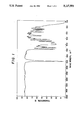
- FIGS. 1 and 2 are each an infrared absorption spectrum of the starting compound 6-iodo-undecafluoro hexene-1 and inventive novel compound 6-iodo-undecafluoro-1,2-epoxy hexane, respectively.
- the above described novel compound of the invention is characterized by the two types of functional groups including the epoxy groups bridging the carbon atoms having fluorine atoms at one end of the molecule and the difluoroiodomethyl group at the other end of the molecule.
- the inventive novel compound i.e. 6-iodo-undecafluoro-1,2-epoxy hexane
- 6-iodo-undecafluoro hexene-1 which is referred to as the hexene compound hereinafter
- the starting material with a hypochlorite to effect the epoxidation reaction in a two-phase reaction medium consisting of, one, an aqueous phase and, the other, an organic phase of a water-immiscible organic solvent.
- hexene compound above mentioned is a known compound easily synthesized, for example, by the reaction of 1,2-dichloro-6-iodo-undecafluoro hexane with triphenyl phosphine.
- hypochlorite compound suitable as the epoxidizing agent examples include alkali metal hypochlorite such as lithium and sodium hypochlorites and alkaline earth metal hypochlorites such as magnesium and calcium hypochlorites, of which sodium hypochlorite and calcium hypochlorite are preferred for the economical reason.
- the hypochlorite compound is used in the form of an aqueous solution or in the form of a suspension in water.
- the amount of the hypochlorite compound used in the reaction is in the range from 1 to 30 moles or, preferably, from 1 to 10 moles or, more preferably, from 1 to 5 moles per mole of the hexene compound.
- the concentration of the aqueous solution of the hypochlorite is in the range from 0.5 to 25% by weight or, preferably, 1 to 20% by weight calculated for the content of effective chlorine.
- concentration is too low, the volume of the aqueous solution must be so large to cause a disadvantage.
- concentration is too high, the hypochlorite would be somewhat unstable due to decomposition.
- water-immiscible organic solvent examples include chlorinated hydrocarbon solvents such as methylene chloride, chloroform, 1,2-dichloroethane and the like, chloro-fluorinated hydrocarbon solvents such as 1,2-dichloro-1,1,2,2-tetrafluoro ethane, fluoro trichloro methane, 1,1,2-trichloro-1,2,2-trifluoro ethane and the like, perfluoro hydrocarbon solvents such as perfluoro cyclobutane and perfluoro dimethylcyclobutane, perfluoro hexane, perfluoro octane and the like.
- chlorinated hydrocarbon solvents such as methylene chloride, chloroform, 1,2-dichloroethane and the like
- chloro-fluorinated hydrocarbon solvents such as 1,2-dichloro-1,1,2,2-tetrafluoro ethane, fluoro trichloro methane, 1,1,
- organic solvents can be used either singly or as a mixture of two kinds or more according to need. It is important that the solubility of the hexene compound in the organic solvent is as high as possible and the solvent has miscibility with water as low as possible. In this regard, chloroform and 1,1,2-trichloro-1,2,2-trifluoro ethane are preferred as the organic solvent.
- the organic solvent is used in a volume in the range from 0.01 to 30 times or, preferably, from 0.05 to 20 times or, more preferably, from 0.2 to 5 times based on the volume of water forming the reaction medium.
- the reaction between the hexene compound and the hypochlorite compound is promoted when the reaction is performed in the presence of a quaternary ammonium compound acting as a phase-transfer catalyst.
- the quaternary ammonium cation forming the quaternary ammonium compound is exemplified by tetraethyl ammonium ion, tetra-n-propyl ammonium ion, tetra-n-butyl ammonium ion, tri-n-octyl methyl ammonium ion, benzyl trimethyl ammonium ion and the like which is coupled with a counter anion such as chlorine ion, bromine ion, iodine ion, fluorine ion, sulfate ion, hydrogensulfate ion, hydroxy ion and the like, of which chlorine ion, hydrogensulfate ion and hydroxy ion are preferred.
- Tri-n-octyl methyl ammonium chloride is the most preferable.
- the quaternary ammonium compound as the catalyst is used in an amount in the range from 0.0001 to 10 moles or, preferably, from 0.001 to 1 mole per mole of the hypochlorite compound.
- the reaction of the hexene compound with the hypochlorite compound is performed at a temperature in the range, usually. from -25° to 80° C. or, preferably, from -20° to 60° C. or, more preferably, from -18° to 40° C. although the reaction temperature should be high enough not to cause freezing of the reaction mixture.
- the reaction is complete usually within 2 hours to give the desired 6-iodo-undecafluoro-1,2-epoxy hexane in a yield of, for example, at least 50% of the theoretical value.
- the organic solution of the reaction mixture was taken by phase separation, twice washed with water and then dehydrated by the addition of anhydrous sodium sulfate.
- the dehydrated reaction mixture was subjected to flash distillation and then distillation under reduced pressure to give 13.1 g of a fraction boiling at 36°-37° C. under a pressure of 34 Torr, which could be identified to be the desired 6-iodo-undecafluoro-1,2-epoxy hexane from the analytical results shown below.
- the yield of the product compound was about 50% of the theoretical value.
- FIG. 1 of the accompanying drawing shows an infrared absorption spectrum of the starting hexene compound, of which the strong absorption band at a wave number of about 1790 cm -1 is assignable to the groups of --CF ⁇ CF 2 while this absorption band is not found in the spectrum of FIG. 2 which shows the spectrum of the product compound indicating a strong absorption band at a wave number of about 1540 cm -1 assignable to the fluorine-substituted epoxide structure.
- Mass-spectrometric analysis m/e(species, relative intensity) 297 (M-I, 4), 181 (12); 177 (12); 131 (32); 127 (15); 100 (15); 97 (14); 69 (100); 50 (12).
Landscapes
- Chemical & Material Sciences (AREA)
- Organic Chemistry (AREA)
- Epoxy Compounds (AREA)
- Compositions Of Macromolecular Compounds (AREA)
Abstract
Disclosed is a novel fluorine-containing epoxide compound 6-iodo-undecafluoro-1,2-epoxy hexane which can be prepared by the epoxidation reaction of 6-iodo-undecafluoro-1-hexene with a hypochlorite such as sodium hypochlorite in a two-phase reaction system consisting of an organic phase and an aqueous phase in the presence of a quaternary ammonium compound as the catalyst.
Description
The present invention relates to a novel iodine- and fluorine-containing epoxy compound having usefulness as a crosslinking agent of rubbery elastomers and as an intermediate in the synthetic preparation of various kinds of fluorine-containing organic compounds.
The novel iodine- and fluorine-containing epoxy compound not known in the prior art nor described in any literatures and provided by the invention is 6-iodo-undecafluoro-1,2-epoxy hexane expressed by the structural formula ##STR1##
This compound can be prepared by the epoxidation reaction of 6-iodo-undecafluoro hexene-1 with a hypochlorite.
FIGS. 1 and 2 are each an infrared absorption spectrum of the starting compound 6-iodo-undecafluoro hexene-1 and inventive novel compound 6-iodo-undecafluoro-1,2-epoxy hexane, respectively.
The above described novel compound of the invention is characterized by the two types of functional groups including the epoxy groups bridging the carbon atoms having fluorine atoms at one end of the molecule and the difluoroiodomethyl group at the other end of the molecule. Several compounds are known belonging to the class of the compounds having these two types of the functional groups including 3-iodo-pentafluoro-1,2-epoxy propane disclosed in Japanese Patent Kokai 60-75472, 2,3 -epoxy-pentafluoropropyl iododifluoromethyl ether disclosed in Japanese Patent Kokai 2-31716 and 3,4-epoxy-heptafluorobutyl 2-iodo-tetrafluoroethyl ether disclosed in a Russian article Zh. Org. Khim., volume 16, No. 2, pages 300-303 (1980) concerning the reactivity of cesium fluoride with an epoxy compound.
These known compounds are useful, for example, as a special crosslinking agent of rubbery elastomers or as an intermediate in the synthesis of several fluorine-containing organic compounds by virtue of the two different highly active functional groups, i.e. an epoxy group bridging carbon atoms having a fluorine atom and a difluoroiodomethyl group, at the molecular terminals although these known compounds are not without problems when they are used in the above mentioned applications.
The inventors accordingly have conducted extensive investigations for obtaining a novel compound similar to the above mentioned known compounds but more effective and free from the problems of the known compounds when it is used in the above mentioned applications arriving at a discovery that the object can well be achieved by the novel compound of the invention.
The inventive novel compound, i.e. 6-iodo-undecafluoro-1,2-epoxy hexane, can be easily prepared by the reaction of 6-iodo-undecafluoro hexene-1, which is referred to as the hexene compound hereinafter, as the starting material with a hypochlorite to effect the epoxidation reaction in a two-phase reaction medium consisting of, one, an aqueous phase and, the other, an organic phase of a water-immiscible organic solvent.
The hexene compound above mentioned is a known compound easily synthesized, for example, by the reaction of 1,2-dichloro-6-iodo-undecafluoro hexane with triphenyl phosphine.
Examples of the hypochlorite compound suitable as the epoxidizing agent include alkali metal hypochlorite such as lithium and sodium hypochlorites and alkaline earth metal hypochlorites such as magnesium and calcium hypochlorites, of which sodium hypochlorite and calcium hypochlorite are preferred for the economical reason. The hypochlorite compound is used in the form of an aqueous solution or in the form of a suspension in water. The amount of the hypochlorite compound used in the reaction is in the range from 1 to 30 moles or, preferably, from 1 to 10 moles or, more preferably, from 1 to 5 moles per mole of the hexene compound. The concentration of the aqueous solution of the hypochlorite is in the range from 0.5 to 25% by weight or, preferably, 1 to 20% by weight calculated for the content of effective chlorine. When the concentration is too low, the volume of the aqueous solution must be so large to cause a disadvantage. When the concentration is too high, the hypochlorite would be somewhat unstable due to decomposition.
Examples of the water-immiscible organic solvent include chlorinated hydrocarbon solvents such as methylene chloride, chloroform, 1,2-dichloroethane and the like, chloro-fluorinated hydrocarbon solvents such as 1,2-dichloro-1,1,2,2-tetrafluoro ethane, fluoro trichloro methane, 1,1,2-trichloro-1,2,2-trifluoro ethane and the like, perfluoro hydrocarbon solvents such as perfluoro cyclobutane and perfluoro dimethylcyclobutane, perfluoro hexane, perfluoro octane and the like. These organic solvents can be used either singly or as a mixture of two kinds or more according to need. It is important that the solubility of the hexene compound in the organic solvent is as high as possible and the solvent has miscibility with water as low as possible. In this regard, chloroform and 1,1,2-trichloro-1,2,2-trifluoro ethane are preferred as the organic solvent. The organic solvent is used in a volume in the range from 0.01 to 30 times or, preferably, from 0.05 to 20 times or, more preferably, from 0.2 to 5 times based on the volume of water forming the reaction medium.
The reaction between the hexene compound and the hypochlorite compound is promoted when the reaction is performed in the presence of a quaternary ammonium compound acting as a phase-transfer catalyst. The quaternary ammonium cation forming the quaternary ammonium compound is exemplified by tetraethyl ammonium ion, tetra-n-propyl ammonium ion, tetra-n-butyl ammonium ion, tri-n-octyl methyl ammonium ion, benzyl trimethyl ammonium ion and the like which is coupled with a counter anion such as chlorine ion, bromine ion, iodine ion, fluorine ion, sulfate ion, hydrogensulfate ion, hydroxy ion and the like, of which chlorine ion, hydrogensulfate ion and hydroxy ion are preferred. Tri-n-octyl methyl ammonium chloride is the most preferable. The quaternary ammonium compound as the catalyst is used in an amount in the range from 0.0001 to 10 moles or, preferably, from 0.001 to 1 mole per mole of the hypochlorite compound.
The reaction of the hexene compound with the hypochlorite compound is performed at a temperature in the range, usually. from -25° to 80° C. or, preferably, from -20° to 60° C. or, more preferably, from -18° to 40° C. although the reaction temperature should be high enough not to cause freezing of the reaction mixture. The reaction is complete usually within 2 hours to give the desired 6-iodo-undecafluoro-1,2-epoxy hexane in a yield of, for example, at least 50% of the theoretical value.
In the following, more detailed description is given of the synthesis and characterization of the 6-iodo-undecafluoro-1,2-epoxy hexane by way of an example.
Into a three-necked flask of 1 liter capacity equipped with a reflux condenser and thermometer were introduced 25.3 g (0.062 mole) of 6-iodo-undecafluoro hexene-1 and 125 ml of 1,1,2-trichloro-1,2,2-trifluoro ethane to form a mixture. While vigorously agitating the mixture in the flask at room temperature by means of a magnetic stirrer, 375 ml of an aqueous solution of sodium hypochlorite, of which the effective chlorine concentration was 10% by weight, and then 0.4 g of tri-n-octyl methyl ammonium chloride were added to the mixture and agitation of the mixture was further continued for additional 75 minutes at 25° C. to effect the reaction. Completion of the reaction was checked by the disappearance of the hexene compound as the starting material in the reaction mixture by the gas chromatographic analysis of the reaction mixture periodically undertaken.
After completion of the reaction, the organic solution of the reaction mixture was taken by phase separation, twice washed with water and then dehydrated by the addition of anhydrous sodium sulfate. The dehydrated reaction mixture was subjected to flash distillation and then distillation under reduced pressure to give 13.1 g of a fraction boiling at 36°-37° C. under a pressure of 34 Torr, which could be identified to be the desired 6-iodo-undecafluoro-1,2-epoxy hexane from the analytical results shown below. The yield of the product compound was about 50% of the theoretical value.
Infrared absorption spectrum (NaCl plates): FIG. 1 of the accompanying drawing shows an infrared absorption spectrum of the starting hexene compound, of which the strong absorption band at a wave number of about 1790 cm-1 is assignable to the groups of --CF═CF2 while this absorption band is not found in the spectrum of FIG. 2 which shows the spectrum of the product compound indicating a strong absorption band at a wave number of about 1540 cm-1 assignable to the fluorine-substituted epoxide structure.
19 F-NMR analysis (CF3 COOH as the external standard):
______________________________________
δ, ppm      structure
______________________________________
15.6              C .sub.--F.sub.2 I
-34.7, -37.1
                   ##STR2##
-38.4
                   ##STR3##
-46.5, -47.9      C .sub.--F.sub.2
-76.3
                   ##STR4##
______________________________________
Mass-spectrometric analysis: m/e(species, relative intensity) 297 (M-I, 4), 181 (12); 177 (12); 131 (32); 127 (15); 100 (15); 97 (14); 69 (100); 50 (12).
Claims (1)
1. 6-Iodo-undecafluoro-1,2-epoxy hexane.
Applications Claiming Priority (2)
| Application Number | Priority Date | Filing Date | Title |
|---|---|---|---|
| JP3-138480 | 1991-05-14 | ||
| JP3138480A JPH04338380A (en) | 1991-05-14 | 1991-05-14 | New fluorine-containing epoxy compound |
Publications (1)
| Publication Number | Publication Date |
|---|---|
| US5227501A true US5227501A (en) | 1993-07-13 |
Family
ID=15223061
Family Applications (1)
| Application Number | Title | Priority Date | Filing Date |
|---|---|---|---|
| US07/882,065 Expired - Fee Related US5227501A (en) | 1991-05-14 | 1992-05-12 | Iodine- and fluorine-containing epoxy compound |
Country Status (2)
| Country | Link |
|---|---|
| US (1) | US5227501A (en) |
| JP (1) | JPH04338380A (en) |
Citations (6)
| Publication number | Priority date | Publication date | Assignee | Title |
|---|---|---|---|---|
| US3358003A (en) * | 1959-07-17 | 1967-12-12 | Fluorocarbon epoxides | |
| US3366610A (en) * | 1965-05-14 | 1968-01-30 | Du Pont | Perhalogenated epoxy olefin monomers and polymers |
| US3996259A (en) * | 1975-11-06 | 1976-12-07 | The Dow Chemical Company | Oxidation of organic compounds by aqueous hypohalites using phase transfer catalysis |
| JPS5849372A (en) * | 1981-09-19 | 1983-03-23 | Daikin Ind Ltd | Production method of hexafluoropropene oxide |
| JPH0240373A (en) * | 1988-07-29 | 1990-02-09 | Asahi Glass Co Ltd | Novel fluorine-containing compound and production thereof |
| US4965379A (en) * | 1982-07-26 | 1990-10-23 | Asahi Kasei Kogyo Kabushiki Kaisha | Fluoroepoxides and a process for production thereof |
Family Cites Families (2)
| Publication number | Priority date | Publication date | Assignee | Title |
|---|---|---|---|---|
| JPS59110687A (en) * | 1982-12-15 | 1984-06-26 | Asahi Chem Ind Co Ltd | Epoxidation of fluoroolefin |
| JPS5920277A (en) * | 1982-07-26 | 1984-02-01 | Asahi Chem Ind Co Ltd | Epoxidation of fluoroolefin |
-
1991
- 1991-05-14 JP JP3138480A patent/JPH04338380A/en active Pending
-
1992
- 1992-05-12 US US07/882,065 patent/US5227501A/en not_active Expired - Fee Related
Patent Citations (7)
| Publication number | Priority date | Publication date | Assignee | Title |
|---|---|---|---|---|
| US3358003A (en) * | 1959-07-17 | 1967-12-12 | Fluorocarbon epoxides | |
| US3366610A (en) * | 1965-05-14 | 1968-01-30 | Du Pont | Perhalogenated epoxy olefin monomers and polymers |
| US3506635A (en) * | 1965-05-14 | 1970-04-14 | Du Pont | Poly (omega - perfluoroalkanoic - substituted trifluoroethylene) and the process for their preparation |
| US3996259A (en) * | 1975-11-06 | 1976-12-07 | The Dow Chemical Company | Oxidation of organic compounds by aqueous hypohalites using phase transfer catalysis |
| JPS5849372A (en) * | 1981-09-19 | 1983-03-23 | Daikin Ind Ltd | Production method of hexafluoropropene oxide |
| US4965379A (en) * | 1982-07-26 | 1990-10-23 | Asahi Kasei Kogyo Kabushiki Kaisha | Fluoroepoxides and a process for production thereof |
| JPH0240373A (en) * | 1988-07-29 | 1990-02-09 | Asahi Glass Co Ltd | Novel fluorine-containing compound and production thereof |
Also Published As
| Publication number | Publication date |
|---|---|
| JPH04338380A (en) | 1992-11-25 |
Similar Documents
| Publication | Publication Date | Title |
|---|---|---|
| US4686024A (en) | Novel perfluoro chemicals and polyfluorinated compounds and process for production of the same | |
| Giudicelli et al. | Et3n. 2Hf, a new convenient reagent for nucleophilic fluorine displacement reactions | |
| Willy et al. | Conversion of alkyl chlorides to bromides, selective reactions of mixed bromochloroalkanes, and halogen exchange. | |
| US4317934A (en) | Preparation of carbonyl compounds | |
| Chen et al. | Studies on fluoroalkylation and fluoroalkoxylation. Part 33. Direct trifluoromethylation of aryl halides with fluorosulphonyldifluoromethyl iodide in the presence of copper: an electron transfer induced process | |
| US5227501A (en) | Iodine- and fluorine-containing epoxy compound | |
| Abe et al. | Fluorination of perfluoroalkylsulfenyl chlorides, perfluorodialkyl disulfides and perfluorodialkyl sulfides with chlorine monofluoride | |
| Galle et al. | Stereochemistry. LXVI. Stereochemistry of mercuric azide addition to cyclopropenes. Synthesis of cyclopropyl azides | |
| US5041687A (en) | Bromination process | |
| Tanaka et al. | Reaction of phenyl-substituted allyllithiums with tert-alkyl bromides. Remarkable difference in the alkylation regiochemistry between a polar process and the one involving single-electron transfer | |
| JPS632536B2 (en) | ||
| US5073651A (en) | Process for the preparation of extensively fluorinated alkyl bromides | |
| CA2100748C (en) | Process for the preparation of 3,4-dihalo-1,2-epoxybutanes | |
| EP0900772B1 (en) | Method for production of fluorine-containing aromatic compound | |
| JP2583162B2 (en) | Method for producing difluoromethoxyphenyl alkyl ketones | |
| Bégué et al. | Trifluoromethylated furans via iodocyclisation of γ-unsaturated ethyl trifluoroacetoacetates | |
| EP0013048B1 (en) | 8-substituted bicyclo(3.2.1)octanes and processes for the preparation thereof | |
| RU2047591C1 (en) | Process for preparing 4-halogen-3-methyl-3-oxybutene | |
| EP0155093B1 (en) | Method for production of fluorine-containing aromatic derivative | |
| EP0415320A2 (en) | Selective production of threo-epoxy compounds | |
| Lucas et al. | 1, 2-Dimethylethyleneiodonium Ions as Intermediates in Reactions of the 3-Iodo-2-butanols | |
| US5302764A (en) | Process for preparing trifluorohydrocarbon compound | |
| De Roocker et al. | Chlorination of Olefins in Dimethylformamide with Intermediate Formation of Immonium Chlorides | |
| US5710289A (en) | Process for the preparation of dihalotetrahydrofurans from dihydrofuran | |
| JPS608234A (en) | Fluoromethane manufacturing method |
Legal Events
| Date | Code | Title | Description |
|---|---|---|---|
| AS | Assignment |
Owner name: SHIN-ETSU CHEMICAL CO., LTD., JAPAN Free format text: ASSIGNMENT OF ASSIGNORS INTEREST.;ASSIGNORS:SATO, SHINICHI;TARUMI, YASUO;MATSUDA, TAKASHI;AND OTHERS;REEL/FRAME:006205/0504 Effective date: 19920623 |
|
| FPAY | Fee payment |
Year of fee payment: 4 |
|
| FPAY | Fee payment |
Year of fee payment: 8 |
|
| LAPS | Lapse for failure to pay maintenance fees | ||
| STCH | Information on status: patent discontinuation |
Free format text: PATENT EXPIRED DUE TO NONPAYMENT OF MAINTENANCE FEES UNDER 37 CFR 1.362 |
|
| FP | Lapsed due to failure to pay maintenance fee |
Effective date: 20050713 |