US5216546A - Attachment lens system for close-up photography - Google Patents

Attachment lens system for close-up photography Download PDF

Info

Publication number
US5216546A
US5216546A US07/505,640 US50564090A US5216546A US 5216546 A US5216546 A US 5216546A US 50564090 A US50564090 A US 50564090A US 5216546 A US5216546 A US 5216546A
Authority
US
United States
Prior art keywords
lens
sub
lens system
attachment
face
Prior art date
Legal status (The legal status is an assumption and is not a legal conclusion. Google has not performed a legal analysis and makes no representation as to the accuracy of the status listed.)
Expired - Fee Related
Application number
US07/505,640
Inventor
Sachio Hasushita
Current Assignee (The listed assignees may be inaccurate. Google has not performed a legal analysis and makes no representation or warranty as to the accuracy of the list.)
Pentax Corp
Original Assignee
Asahi Kogaku Kogyo Co Ltd
Priority date (The priority date is an assumption and is not a legal conclusion. Google has not performed a legal analysis and makes no representation as to the accuracy of the date listed.)
Filing date
Publication date
Application filed by Asahi Kogaku Kogyo Co Ltd filed Critical Asahi Kogaku Kogyo Co Ltd
Assigned to ASAHI KOGAKU KOGYO KABUSHIKI KAISHA, reassignment ASAHI KOGAKU KOGYO KABUSHIKI KAISHA, ASSIGNMENT OF ASSIGNORS INTEREST. Assignors: HASUSHITA, SACHIO
Application granted granted Critical
Publication of US5216546A publication Critical patent/US5216546A/en
Anticipated expiration legal-status Critical
Expired - Fee Related legal-status Critical Current

Links

Images

Classifications

    • GPHYSICS
    • G02OPTICS
    • G02BOPTICAL ELEMENTS, SYSTEMS OR APPARATUS
    • G02B15/00Optical objectives with means for varying the magnification
    • G02B15/02Optical objectives with means for varying the magnification by changing, adding, or subtracting a part of the objective, e.g. convertible objective
    • G02B15/10Optical objectives with means for varying the magnification by changing, adding, or subtracting a part of the objective, e.g. convertible objective by adding a part, e.g. close-up attachment

Definitions

  • the present invention relates to an attachment lens system for close-up photography used with a master lens in such a fashion that the attachment lens system is attached to the front of the master lens, and more particularly to an attachment lens system for close-up photography suitable for macrophotography at a magnification exceeding unity magnification in the case where the master lens is a macrophotographic lens unit (hereinafter referred to a "macro-lens").
  • an attachment lens for close-up photography in use with a master lens in such a fashion that the attachment lens is attached to the front of the master lens.
  • This type of lens particularly, the attachment lens of low magnification is categorized into two types of lens; a lens consisting of a single lens element and a cemented lens consisting of two lens elements (“smc PENTAX close-up lens S40"), manufactured by ASAHI KOGAKU KOGYO K.K. may typically be enumerated as a single lens element type available on the market and "6 ⁇ 7 smc PENTAX close-up lens T132" manufactured by the same company may typically be enumerated as a cemented lens type.
  • the lens of the type in which a macro-lens is used for the master lens, with magnification of 1 to 2 contains typically "smc PENTAX dental close-up lens DS9" for a cemented lens consisting of two lens elements, and the lens disclosed in Japanese Patent Unexamined Publication No. 53-16628 for a cemented lens consisting of four lens elements.
  • a working distance in a condition that rays of light coming from a point infinitely distance are incident on the master lens is small, at most approximately 0.9 to 1.0 times a focal distance of the attachment lens. Accordingly, at some specific magnifications, an object per se casts its shadow on the lens.
  • lens whose working distance is large, approximately 1.2 times a focal distance of the attachment lens, as disclosed in the above-described publication.
  • This lens is constructed with four groups, each consisting of a single lens element.
  • the instant lens suffers from an increased cost.
  • the second to fourth lens elements of the lens are greatly sensitive. Because of this, an error in the manufacturing stage leads to an amplified degradation of the performance of the resultant lens. Additionally, in macrophotography over unity magnification, it is possible to unsatisfactorily compensate for the lateral chromatic aberration and the coma aberration.
  • an object of the present invention is to provide an attachment lens system for close-up photography which is simple in construction, and operable with a satisfactory working distance even for macrophotography, which minimizes an aberration arising from attachment of the attachment lens to the master lens, and which satisfactorily compensates for the aberrations in a broad range of magnifications.
  • an attachment lens system for close-up photography in use with a master lens system in such a fashion that the attachment lens system is attached to the front of the master lens system comprising:
  • a second lens whose face on the object side is convex, the second lens serving as a positive component
  • the first to third lenses being arranged in this order from the object to the master lens system, and the attachment lens system meets the following conditions:
  • the attachment lens system such that the second and third lenses are coupled in the form of a meniscus lens, i.e., a cemented lens whose convex face faces the object, and the overall lens system contains three lens elements into two groups to meet the following condition:
  • r III1 is the radius of the first face of the third lens.
  • the attachment lens system is composed of three lens elements of three groups, it is preferable to meet the following condition:
  • the cemented lens produces less aberrations of higher order.
  • the lens face of the lens closest to the master lens system has a strong negative power.
  • a first principal point of the attachment lens system is located outside the object point of the lens, thereby increasing the working distance.
  • the conditions (1) to (3) are indispensable for increasing the working distance and improving the performance of the lens system.
  • the condition (1) is defined for increasing the working distance.
  • the working distance can be increased, but the three-lens structure fails to compensate for the spherical aberration and the chromatic aberration.
  • the lower limit is exceeded, the various aberrations may be well compensated for but the obtained working distance is short. Under this condition, it is impossible to attain the object of the present invention.
  • the single- or double-lens structure is equivalent to the lens operating below the lower limit.
  • the condition (2) relates to a negative power of the face of the third lens, which is closer to the master lens system.
  • the condition (3) relates to the thickness of the second and third lenses.
  • the negative power of the face of the lens closer to the master lens system is small, to thereby obtain an unsatisfactory working distance.
  • the working distance is satisfactory, but the other face of the lens fails to compensate for the various aberrations due to the great negative power.
  • the lens disclosed in the above-described Japanese Patent Unexamined Publication No. 53-16628 operates below the lower limit.
  • this lens system includes four lens elements, it is insufficient to compensate for the aberration on the enlargement side.
  • Some of the lenses of the single- or double-lens structure may satisfy the condition (2) but the focal distances of such lenses are several times or ten times or more larger than that of the master lens system. Namely the refractive power of the attachment lens is small. Accordingly, the macro-range magnification is small. It is evident that the lenses operate below the lower limit of the condition (1).
  • the face of the lens existing on the master lens side must have such a great negative power as to exceed the lower limit of the condition (2). This is undesirable.
  • the second and third lenses are bulky in volume and heavy in weight. The bulky and heavy lenses are unsuitable for the attachment lens.
  • the conditions (4) and (5) are defined for compensating for the aberrations generated by the face of the lens having a strong divergence, which is located on the master lens side.
  • the condition (4) defines the radius of curvature of the first face of the second lens, which is located on the object side.
  • the condition (5) defines the focal distance of the first lens.
  • the second and third lenses function mainly to increase the working distance. Under the condition (4), the aberration, within the groups of the second and third lenses are compensated to a certain degree.
  • the attachment lens system must have a positive power for the close-up photography.
  • the first lens plays its role, as indicated by the condition (5). Attempt to realize those two objects by using the structure of two lens elements would fail to compensate for the spherical aberration, coma aberration, and astigmatism.
  • the condition (5) is used for supplementing the condition (4), and for compensating for coma aberration and astigmatism.
  • the power of the first lens becomes excessively large.
  • the aberrations by the face of the lens on the master lens side is excessively compensated.
  • the power of the first lens group is too small. Under this condition, the positive power of the first and second lenses groups tend to increase. It is difficult to secure the lower limit of the condition (4). This leads to degradation of the performance of the lens due to the aberrations.
  • the master lens functions to increase the longitudinal chromatic aberration and the lateral aberration by the attachment lens system in proportion to its magnification (the longitudinal chromatic aberration is magnified by the magnification squared). Therefore, it is necessary to minimize the aberrations in the attachment lens system.
  • Conditions (6) to (8) are the conditions to minimize the aberrations. When the quantity is below the lower limit of the condition (6), the compensation of the longitudinal chromatic aberration is poor.
  • the conditions (7) and (8) are used for making the best compromise between the longitudinal chromatic aberration and the lateral chromatic aberration.
  • the condition (7) is applied for the case that the second and third lenses are cemented together and constructed with three lens elements in two groups.
  • the condition (8) is applied for the case that the second and third lenses are separated from each other and constructed with three lens elements in three groups.
  • both conditions (7) and (8) when the upper limit is exceeded, the compensation of the lateral chromatic aberration is properly carried out, but the compensation of the longitudinal chromatic aberration is excessively effected. When the lower limit is exceeded, it fails to compensate for the lateral chromatic aberration.
  • the relation (8) describes the condition for the first face of the third lens when the cemented lens is disintegrated. To obtain an effect comparable to that of the cemented lens, therefore, the curvature of it must be reduced (the radius of curvature is increased) to be smaller than that in the condition (7).
  • FIG. 1 is an explanatory diagram for explaining the principles of the invention, in which
  • h l , h M is the incident height of the paraxial rays on the first face of the lens (closest to the object) and on the face of the lens, which is located on the master lens side, when the master lens is placed in an afocal state, and
  • h MAX is the maximum incident height of the paraxial rays on the first face of the lens (closest to the object) and on the face of the lens, which is located on the master lens side, when the master lens is placed in an afocal state;
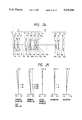
  • FIGS. 2, 6, 10, 14, 18 and 22 are arrangements of lens systems when the master lens is in an afocal state according to first to sixth embodiments of the present invention
  • FIGS. 3, 7, 11, 15, 19 and 23 are diagrams for explaining the various types of aberrations for the afocal state according to the first to sixth embodiments of the present invention.
  • FIGS. 4, 8, 12, 16, 20, and 24 are arrangements of lenses for the close-up photography according to the first to sixth embodiments of the present invention.
  • FIGS. 5, 9, 13, 17, 21 and 25 are diagrams for explaining various types of aberrations for the close-up photographing according to the first to sixth embodiments of the invention.
  • f M Focal distance when the master lens is set in an afocal state
  • an attachment lens for close-up photography when it is attached to the front of a master lens, the aberrations are satisfactorily compensated over a broad range of magnifications, while keeping an enough working distance.

Landscapes

  • Physics & Mathematics (AREA)
  • General Physics & Mathematics (AREA)
  • Optics & Photonics (AREA)
  • Lenses (AREA)

Abstract

An attachment lens system for close-up photography in use with a master lens system in such a fashion that the attachment lens system is attached to the front of the master lens system, comprising a first lens as a positive component, a second lens whose face on the object side is convex, the second lens serving as a positive component, a third lens whose face on the master lens side is concave, the third lens serving as a negative component, and the first to third lenses being arranged in this order from the object to the master lens system, and the specific conditions on the working distance, a negative power of the lens system of the attachment lens system on the master lens system side, and the thicknesses of the specific lenses contained in the attachment lens system being satisfied.

Description

BACKGROUND OF THE INVENTION
The present invention relates to an attachment lens system for close-up photography used with a master lens in such a fashion that the attachment lens system is attached to the front of the master lens, and more particularly to an attachment lens system for close-up photography suitable for macrophotography at a magnification exceeding unity magnification in the case where the master lens is a macrophotographic lens unit (hereinafter referred to a "macro-lens").
There has been known an attachment lens for close-up photography in use with a master lens in such a fashion that the attachment lens is attached to the front of the master lens. This type of lens, particularly, the attachment lens of low magnification is categorized into two types of lens; a lens consisting of a single lens element and a cemented lens consisting of two lens elements ("smc PENTAX close-up lens S40"), manufactured by ASAHI KOGAKU KOGYO K.K. may typically be enumerated as a single lens element type available on the market and "6×7 smc PENTAX close-up lens T132" manufactured by the same company may typically be enumerated as a cemented lens type. The lens of the type in which a macro-lens is used for the master lens, with magnification of 1 to 2 contains typically "smc PENTAX dental close-up lens DS9" for a cemented lens consisting of two lens elements, and the lens disclosed in Japanese Patent Unexamined Publication No. 53-16628 for a cemented lens consisting of four lens elements.
In the single lens element and the cemented lens of two lens elements, a working distance in a condition that rays of light coming from a point infinitely distance are incident on the master lens is small, at most approximately 0.9 to 1.0 times a focal distance of the attachment lens. Accordingly, at some specific magnifications, an object per se casts its shadow on the lens.
There is a lens whose working distance is large, approximately 1.2 times a focal distance of the attachment lens, as disclosed in the above-described publication. This lens is constructed with four groups, each consisting of a single lens element. When comparing with an ordinary lens consisting of one or two lens elements, the instant lens suffers from an increased cost. Further, the second to fourth lens elements of the lens are greatly sensitive. Because of this, an error in the manufacturing stage leads to an amplified degradation of the performance of the resultant lens. Additionally, in macrophotography over unity magnification, it is possible to unsatisfactorily compensate for the lateral chromatic aberration and the coma aberration.
SUMMARY OF THE INVENTION
Accordingly, an object of the present invention is to provide an attachment lens system for close-up photography which is simple in construction, and operable with a satisfactory working distance even for macrophotography, which minimizes an aberration arising from attachment of the attachment lens to the master lens, and which satisfactorily compensates for the aberrations in a broad range of magnifications.
To achieve the above and other objects, there is provided an attachment lens system for close-up photography in use with a master lens system in such a fashion that the attachment lens system is attached to the front of the master lens system, comprising:
a first lens as a positive component;
a second lens whose face on the object side is convex, the second lens serving as a positive component;
a third lens whose face on the master lens system side is concave, the third lens serving as a negative component; and
the first to third lenses being arranged in this order from the object to the master lens system, and the attachment lens system meets the following conditions:
1.10<h.sub.l /h.sub.M <1.35                                (1)
-3.0<f.sub.A /f.sub.AL <-1.0                               (2) ##EQU1## where h.sub.l is the incident height of the paraxial rays on the face of the attachment lens system, which is closest to the object, when the master lens is placed in an afocal state, h.sub.M is the incident height of the paraxial rays on the face of the attachment lens system, which is closest to the master lens system, when the master lens system is placed in an afocal state, f.sub.A is the focal distance of the attachment lens system, ##EQU2## is the focal distance of the face of the attachment lens closest to the master lens system, r.sub.III2 is the radius of curvature of a second face of the third lens, n.sub.III is the refractive index of a d-line of the third lens, and d.sub.II, d.sub.III is the thickness of the second and third lens.
In the attachment lens, it is preferable to satisfy the following conditions:
0.9<r.sub.II1 /r.sub.II2 <1.5                              (4)
0.7<f.sub.A /f.sub.l <1.3                                  (5) ##EQU3## where r.sub.II1 is the radius of curvature of a first face of the second lens, f.sub.l is the focal distance of the first lens, and ν.sub.I, ν.sub.II, ν.sub.III is the Abbe numbers of the first to third lenses.
Further, it is preferable to arrange the attachment lens system such that the second and third lenses are coupled in the form of a meniscus lens, i.e., a cemented lens whose convex face faces the object, and the overall lens system contains three lens elements into two groups to meet the following condition:
-1.0<r.sub.III1 /f.sub.A <-0.4                             (7)
where rIII1 is the radius of the first face of the third lens.
Furthermore, when the attachment lens system is composed of three lens elements of three groups, it is preferable to meet the following condition:
-5.0<r.sub.III1 /f.sub.A <-1.5                             (8)
The reason why the two positive lenses are provided on the object side follows. To increase the working distance, it is necessary to increase a negative power of the face of the attachment lens system closest to the master lens system. With only one positive lens, it is impossible to fully compensate for the aberrations.
To minimize the performance degradation due to manufacturing error, it is preferable to cement the second and third lenses together. The cemented lens produces less aberrations of higher order.
In the present invention, the lens face of the lens closest to the master lens system has a strong negative power. A first principal point of the attachment lens system is located outside the object point of the lens, thereby increasing the working distance. With this, the aberrations such as spherical aberration and chromatic aberration, are well compensated for.
DESCRIPTION OF THE CONDITIONS
The conditions as mentioned above will be described.
The conditions (1) to (3) are indispensable for increasing the working distance and improving the performance of the lens system.
The condition (1) is defined for increasing the working distance. When the upper limit is exceeded, the working distance can be increased, but the three-lens structure fails to compensate for the spherical aberration and the chromatic aberration. When the lower limit is exceeded, the various aberrations may be well compensated for but the obtained working distance is short. Under this condition, it is impossible to attain the object of the present invention.
The single- or double-lens structure is equivalent to the lens operating below the lower limit.
The condition (2) relates to a negative power of the face of the third lens, which is closer to the master lens system. The condition (3) relates to the thickness of the second and third lenses.
Above the upper limit of the condition (2), the negative power of the face of the lens closer to the master lens system is small, to thereby obtain an unsatisfactory working distance. Below the lower limit, the working distance is satisfactory, but the other face of the lens fails to compensate for the various aberrations due to the great negative power.
The lens disclosed in the above-described Japanese Patent Unexamined Publication No. 53-16628 operates below the lower limit. Although this lens system includes four lens elements, it is insufficient to compensate for the aberration on the enlargement side. Some of the lenses of the single- or double-lens structure may satisfy the condition (2) but the focal distances of such lenses are several times or ten times or more larger than that of the master lens system. Namely the refractive power of the attachment lens is small. Accordingly, the macro-range magnification is small. It is evident that the lenses operate below the lower limit of the condition (1).
When the lower limit of the condition (3) is exceeded, it is difficult to increase the working distance. To increase the working distance under this condition, the face of the lens existing on the master lens side must have such a great negative power as to exceed the lower limit of the condition (2). This is undesirable. Further, when it exceeds the upper limit, the second and third lenses are bulky in volume and heavy in weight. The bulky and heavy lenses are unsuitable for the attachment lens.
The conditions (4) and (5) are defined for compensating for the aberrations generated by the face of the lens having a strong divergence, which is located on the master lens side. The condition (4) defines the radius of curvature of the first face of the second lens, which is located on the object side. The condition (5) defines the focal distance of the first lens. The second and third lenses function mainly to increase the working distance. Under the condition (4), the aberration, within the groups of the second and third lenses are compensated to a certain degree. The attachment lens system must have a positive power for the close-up photography. In the present invention, the first lens plays its role, as indicated by the condition (5). Attempt to realize those two objects by using the structure of two lens elements would fail to compensate for the spherical aberration, coma aberration, and astigmatism.
When the upper limit of the condition (4) is exceeded, the compensation of the aberration generated by the face of the lens on the master lens side is poor. When the lower limit is exceeded, that compensation is excessive. Under this condition, the aberrations of high order tends to occur.
The condition (5) is used for supplementing the condition (4), and for compensating for coma aberration and astigmatism. Above the upper limit of the relation (5), the power of the first lens becomes excessively large. The aberrations by the face of the lens on the master lens side is excessively compensated. Below the lower limit, the power of the first lens group is too small. Under this condition, the positive power of the first and second lenses groups tend to increase. It is difficult to secure the lower limit of the condition (4). This leads to degradation of the performance of the lens due to the aberrations.
In the attachment lens system of the type in which it is attached to the front of the master lens, the master lens functions to increase the longitudinal chromatic aberration and the lateral aberration by the attachment lens system in proportion to its magnification (the longitudinal chromatic aberration is magnified by the magnification squared). Therefore, it is necessary to minimize the aberrations in the attachment lens system. Conditions (6) to (8) are the conditions to minimize the aberrations. When the quantity is below the lower limit of the condition (6), the compensation of the longitudinal chromatic aberration is poor.
The conditions (7) and (8) are used for making the best compromise between the longitudinal chromatic aberration and the lateral chromatic aberration. The condition (7) is applied for the case that the second and third lenses are cemented together and constructed with three lens elements in two groups. The condition (8) is applied for the case that the second and third lenses are separated from each other and constructed with three lens elements in three groups. In both conditions (7) and (8), when the upper limit is exceeded, the compensation of the lateral chromatic aberration is properly carried out, but the compensation of the longitudinal chromatic aberration is excessively effected. When the lower limit is exceeded, it fails to compensate for the lateral chromatic aberration.
The relation (8) describes the condition for the first face of the third lens when the cemented lens is disintegrated. To obtain an effect comparable to that of the cemented lens, therefore, the curvature of it must be reduced (the radius of curvature is increased) to be smaller than that in the condition (7).
BRIEF DESCRIPTION OF THE DRAWINGS
FIG. 1 is an explanatory diagram for explaining the principles of the invention, in which
hl, hM is the incident height of the paraxial rays on the first face of the lens (closest to the object) and on the face of the lens, which is located on the master lens side, when the master lens is placed in an afocal state, and
hMAX is the maximum incident height of the paraxial rays on the first face of the lens (closest to the object) and on the face of the lens, which is located on the master lens side, when the master lens is placed in an afocal state;
FIGS. 2, 6, 10, 14, 18 and 22 are arrangements of lens systems when the master lens is in an afocal state according to first to sixth embodiments of the present invention;
FIGS. 3, 7, 11, 15, 19 and 23 are diagrams for explaining the various types of aberrations for the afocal state according to the first to sixth embodiments of the present invention.
FIGS. 4, 8, 12, 16, 20, and 24 are arrangements of lenses for the close-up photography according to the first to sixth embodiments of the present invention; and
FIGS. 5, 9, 13, 17, 21 and 25 are diagrams for explaining various types of aberrations for the close-up photographing according to the first to sixth embodiments of the invention.
DESCRIPTION OF EXAMPLES
The present invention was embodied into embodiments 1 to 6. Those embodiments will be described using specific numerical values for specification items of the attachment lens. The data in embodiment 1 of Japanese Patent Unexamined Publication No. 62-227111, entitled "Telephoto Lens Capable of Close-Up Photographing" were directly used for the specifications of a master lens used, except that FNO was set at 1 : 4. The symbols used and their meanings are as follows:
FNO : Diameter ratio of the master lens
fM : Focal distance when the master lens is set in an afocal state
fB : Back focus
m: Magnification of the whole lens system
WD: Object distance
r: Radius of curvature of the face of each lens
d: Lens thickness or lens interval
N: Refractive index
ν: Abbe numbers of each lens
A: Attachment lens
______________________________________                                    
EXAMPLE 1                                                                 
F.sub.NO = 1:4  f.sub.A = 84.48  f.sub.M = 100.2                          
m = -1.186 - -2.165  f.sub.B = 45.51                                      
WD = 102.5 - 63.9                                                         
Surface No                                                                
         r          d          N      υ                           
______________________________________                                    
           1     104.140  5.70     1.62299                                
                                          58.2                            
           2     -104.140 0.20                                            
A          3     31.900   11.83    1.64000                                
                                          60.1                            
           4     -51.387  2.00     1.70154                                
                                          41.2                            
           5     26.790   20.00                                           
           6     64.764   4.30     1.78590                                
                                          44.2                            
           7     473.491  4.77                                            
           8     31.180   4.80     1.80610                                
                                          40.9                            
           9     75.635   1.80                                            
          10     152.788  1.50     1.80518                                
                                          25.4                            
          11     25.817   11.67                                           
          12     -24.386  1.80     1.74000                                
                                          28.3                            
          13     -83.740  4.50     1.80610                                
                                          40.9                            
M         14     -32.411  0.15                                            
          15     250.715  4.60     1.72000                                
                                          42.0                            
          16     -54.589  2.50-47.58                                      
          17     -906.318 3.70     1.80518                                
                                          25.4                            
          18     -67.189  5.36                                            
          19     -51.897  1.50     1.80610                                
                                          40.9                            
          20     47.120   10.20                                           
          21     50.044   5.43     1.51633                                
                                          64.1                            
          22     -466.238                                                 
(1) h.sub.1 /h.sub.M = 1.21                                               
(2) f.sub.A /f.sub.AL = -2.2                                              
 ##STR1##                                                                 
(4) r.sub.II1 /r.sub.III2 = 1.192                                         
(5) f.sub.A /f.sub.1 = 1.23                                               
 ##STR2##                                                                 
(7) r.sub.III1 /f.sub.A = -0.63                                           
______________________________________                                    
EXAMPLE 2                                                                 
F.sub.NO = 1:4  f.sub.A = 83.87                                           
m = -1.194 - -2.177  f.sub.B = 45.51                                      
WD = 101.0 - 62.9                                                         
Surface No.                                                               
         r          d          N      υ                           
______________________________________                                    
          1      100.455  5.80      1.62041                               
                                          60.3                            
          2      -100.455 0.20                                            
A         3      34.227   11.80    1.64000                                
                                          60.1                            
          4      -52.900  2.30     1.70154                                
                                          41.2                            
          5      28.470   20.00                                           
M is the same as that of Example 1.                                       
(1) h.sub.1 /h.sub.M = 1.22                                               
(2) F.sub.A /f.sub.AL = -2.08                                             
 ##STR3##                                                                 
(4) r.sub.II1 /r.sub.III2 = 1.204                                         
(5) f.sub.A /f.sub.1 = 1.20                                               
 ##STR4##                                                                 
(7) r.sub.III1 /f.sub.A = -0.61                                           
______________________________________                                    
Example 3                                                                 
F.sub.NO = 1:4  f.sub.A = 88.60                                           
m = -1.131 - -2.123  f.sub.B = 45.51                                      
WD = 105.1 - 63.8                                                         
Surface No.                                                               
         r          d          N      υ                           
______________________________________                                    
          1      106.150  5.26     1.61800                                
                                          63.4                            
          2      -106.150 0.20                                            
A         3      34.057   10.74    1.64000                                
                                          60.1                            
          4      -56.940  2.44     1.69500                                
                                          42.2                            
          5      28.783   20.00                                           
M is the same as that of Example 1.                                       
(1) h.sub.1 /h.sub.M = 1.19                                               
(2) f.sub.A /f.sub.AL = -2.14                                             
 ##STR5##                                                                 
(4) r.sub.II1 /r.sub.III2 = 1.182                                         
(5) f.sub.A /f.sub.1 = 1.20                                               
 ##STR6##                                                                 
(7) r.sub.III1 /f.sub.A = -0.64                                           
______________________________________                                    
Example 4                                                                 
F.sub.NO = 1:4  f.sub.A = 83.46                                           
m = -1.20 - -2.18  f.sub.B = 45.51                                        
WD = 101.6 - 63.7                                                         
Surface No.                                                               
         r          d          N      υ                           
______________________________________                                    
          1      63.000   6.211    1.65830                                
                                          57.3                            
          2      -159.486 0.200                                           
A         3      36.658   11.137   1.64000                                
                                          60.1                            
          4      -46.599  2.000    1.70154                                
                                          4.12                            
          5      27.450   20.000                                          
M is the same as that of Example 1.                                       
(1) h.sub.1 /h.sub.M = 1.22                                               
(2) f.sub.A /f.sub.AL = -1.95                                             
 ##STR7##                                                                 
(4) r.sub.II1 /r.sub.III2 = 1.34                                          
(5) f.sub.A /f.sub.1 = 1.20                                               
 ##STR8##                                                                 
(7) r.sub.III1 /f.sub.A = -0.56                                           
______________________________________                                    
Example 5                                                                 
F.sub.NO = 1:4  f.sub.A = 89.04                                           
m = -1.125 - -2.128  f.sub.B =  45.51                                     
WD = 105.0 - 63.1                                                         
Surface No.                                                               
         r          d          N      υ                           
______________________________________                                    
          1      208.715  5.97     1.62041                                
                                          60.3                            
          2      -80.948  0.20                                            
A         3      32.615   11.62    1.64000                                
                                          60.1                            
          4      -45.972  2.00     1.69500                                
                                          42.2                            
          5      28.987   20.00                                           
M is the same as the Example 1.                                           
(1) h.sub.1 /h.sub.M = 1.18                                               
(2) f.sub.A /f.sub.AL = -2.13                                             
 ##STR9##                                                                 
(4) r.sub.II1 /r.sub.III2 = 1.13                                          
(5) f.sub.A /f.sub.1 = 0.94                                               
 ##STR10##                                                                
(7) r.sub.III1 /f.sub.A = -0.52                                           
______________________________________                                    
Example 6                                                                 
F.sub.NO = 1:4  f.sub.A = 94.83                                           
m = - 1.057 - -2.088  f.sub.B = 45.51                                     
WD = 109.1 = 63.7                                                         
Surface No.                                                               
         r          d          N      υ                           
______________________________________                                    
          1      74.390   4.38     1.64250                                
                                          58.4                            
          2      -369.102 0.20                                            
          3      36.993   7.43     1.69680                                
                                          56.5                            
A         4      -835.347 0.98                                            
          5      -290.874 2.00     1.59270                                
                                          35.3                            
          6      27.082   20.00                                           
M is the same as that of Example 1.                                       
(1) h.sub.1 /h.sub.M = 1.15                                               
(2) f.sub.A /f.sub.AL = -2.08                                             
 ##STR11##                                                                
(4) r.sub.II1 /r.sub.III2 = 1.37                                          
(5) f.sub.A /f.sub.1 = 0.98                                               
 ##STR12##                                                                
(7) r.sub.III1 /f.sub.A = -3.1                                            
______________________________________                                    
As seen from the foregoing description, in an attachment lens for close-up photography according to the present invention, when it is attached to the front of a master lens, the aberrations are satisfactorily compensated over a broad range of magnifications, while keeping an enough working distance.
While the invention has been described using some specific embodiments, it should be understood that the invention may variously be modified and changed within the spirit and scope of the appended claims.

Claims (6)

What is claimed is:
1. An attachment lens system for close-up photography in use with a master lens system in such a fashion that said attachment lens system is attached to the front of said master lens system, comprising:
a first lens as a positive component;
a second lens whose face on the object side is convex, said second lens serving as a positive component;
a third lens whose face on the master lens system side is concave, said third lens serving as a negative component; and
said first to third lenses being arranged in this order from the object to said master lens system, said attachment lens system meeting the following conditions:
1.10<h.sub.l /h.sub.M <1.35                                (1)
-3.0<f.sub.A /f.sub.AL <-1.0                               (2) ##EQU4## where h.sub.l is the incident height of the paraxial rays on the face of the attachment lens system, which is closest to the object, when the master lens is placed in an afocal state, h.sub.M is the incident height of the paraxial rays on the face of the attachment lens system, which is closest to the master lens system, when the master lens system is placed in an afocal state, f.sub.A is the focal distance of the attachment lens system, ##EQU5## is the focal distance of the face of the attachment lens closest to the master lens system, r.sub.III2 is the radius of curvature of a second face of the third lens, n.sub.III is the refractive index of a d-line of the third lens, and d.sub.II, d.sub.III is the thickness of the second and third lens.
2. The attachment lens system according to claim 1, in which the following conditions are met:
0.9<r.sub.II1 /r.sub.II2 <1.5                              (4)
0.7<f.sub.A /f.sub.l <1.3                                  (5) ##EQU6## where r.sub.II1 is the radius of curvature of a first face of the second lens, f.sub.l is the focal distance of the first lens, and ν.sub.I, ν.sub.II, ν.sub.III is the Abbe numbers of the first to third lenses.
3. The attachment lens system according to claim 1, in which said second and third lenses are cemented in the form of a meniscus lens, a convex face thereof being directed to the object, and said lenses contain three components in two groups, and the following condition is met:
-1.0<r.sub.III1 /f.sub.A <-0.4                             (7)
where rIII1 is the radius of the first face of said third lens.
4. The attachment lens system according to claim 2, in which said second and third lenses are cemented in the form of a meniscus lens, a convex face thereof being directed to the object, and said attachment lens system contains three lens components in two groups, and the following condition is met:
-1.0<r.sub.III1 /f.sub.A <-0.4                             (7)
where rIII1 is the radius of the first face of said third lens.
5. The attachment lens system according to claim 1, in which said said attachment lens contains three lens components in three groups, and the following condition is met:
-5.0<r.sub.III1 /f.sub.A <1.5                              (8)
where rIII1 is the radius of the first face of said thirs lens.
6. The attachment lens system according to claim 2, in which said said attachment lens system contains three lens components in three groups, and the following condition is met:
-5.0<r.sub.III1 /f.sub.A <1.5                              (8)
where rIII1 is the radius of the first face of said third lens.
US07/505,640 1989-04-07 1990-04-06 Attachment lens system for close-up photography Expired - Fee Related US5216546A (en)

Applications Claiming Priority (4)

Application Number Priority Date Filing Date Title
JP1-88364 1989-04-07
JP8836489 1989-04-07
JP2-65596 1990-03-16
JP2065596A JP2828307B2 (en) 1989-04-07 1990-03-16 Attachment lens for close-up

Publications (1)

Publication Number Publication Date
US5216546A true US5216546A (en) 1993-06-01

Family

ID=26406732

Family Applications (1)

Application Number Title Priority Date Filing Date
US07/505,640 Expired - Fee Related US5216546A (en) 1989-04-07 1990-04-06 Attachment lens system for close-up photography

Country Status (3)

Country Link
US (1) US5216546A (en)
JP (1) JP2828307B2 (en)
DE (1) DE4011280C2 (en)

Cited By (2)

* Cited by examiner, † Cited by third party
Publication number Priority date Publication date Assignee Title
US6002533A (en) * 1997-03-17 1999-12-14 Asahi Kogaku Kogyo Kabushiki Kaisha Close-up attachment lens
US20020171943A1 (en) * 2001-05-07 2002-11-21 Fuji Photo Optical Co., Ltd. Close-up attachment lens

Families Citing this family (3)

* Cited by examiner, † Cited by third party
Publication number Priority date Publication date Assignee Title
JP3276337B2 (en) * 1997-07-31 2002-04-22 旭光学工業株式会社 Attachment lens for close-up
KR100497041B1 (en) * 1997-12-26 2005-09-30 삼성테크윈 주식회사 Zoom lens with adapter lens for near-field photography
JP2001100097A (en) 1999-09-29 2001-04-13 Fuji Photo Optical Co Ltd Attachment lens for close-up photography

Citations (1)

* Cited by examiner, † Cited by third party
Publication number Priority date Publication date Assignee Title
US4929068A (en) * 1986-09-01 1990-05-29 Canon Kabushiki Kaisha Conversion lens

Family Cites Families (3)

* Cited by examiner, † Cited by third party
Publication number Priority date Publication date Assignee Title
DE1087370B (en) * 1957-09-07 1960-08-18 Leitz Ernst Gmbh Projector with change of magnification
JPS62227111A (en) * 1986-03-28 1987-10-06 Asahi Optical Co Ltd Telephoto lens capable of close-up photography
JP2903277B2 (en) * 1992-05-12 1999-06-07 協栄線材株式会社 Connection fitting to connect cable support wire to cable support

Patent Citations (1)

* Cited by examiner, † Cited by third party
Publication number Priority date Publication date Assignee Title
US4929068A (en) * 1986-09-01 1990-05-29 Canon Kabushiki Kaisha Conversion lens

Cited By (3)

* Cited by examiner, † Cited by third party
Publication number Priority date Publication date Assignee Title
US6002533A (en) * 1997-03-17 1999-12-14 Asahi Kogaku Kogyo Kabushiki Kaisha Close-up attachment lens
US20020171943A1 (en) * 2001-05-07 2002-11-21 Fuji Photo Optical Co., Ltd. Close-up attachment lens
US6661583B2 (en) * 2001-05-07 2003-12-09 Fuji Photo Optical Co., Ltd. Close-up attachment lens

Also Published As

Publication number Publication date
DE4011280A1 (en) 1990-10-11
JP2828307B2 (en) 1998-11-25
DE4011280C2 (en) 1996-07-11
JPH0339917A (en) 1991-02-20

Similar Documents

Publication Publication Date Title
US5000551A (en) Zoom lens
US4465345A (en) Small-size telescopic lens
US4830476A (en) Compact zoom lens system
JP3251041B2 (en) Rear converter lens
US5253112A (en) Rear conversion lens
US5243468A (en) Wide angle objective lens
US5579169A (en) Underwater wide angle lens
US5808808A (en) Wide-angle lens system
US5636067A (en) Taking lens system
US4900141A (en) Rear conversion lens
US4241983A (en) Telephoto lens
US6580568B2 (en) Telephoto lens system
US4266860A (en) Wide angle zoom lens system having shortened closeup focal length
US4772108A (en) Macro lens system
US5175652A (en) Imaging optical system
US5625497A (en) Retrofocus type standard lens and wide angle lens
JP3735909B2 (en) Retro focus lens
US5726811A (en) Compact zoom lens system
US5646787A (en) Zoom lens system
US4770516A (en) Telephoto lens system capable of closeup shooting
US5216546A (en) Attachment lens system for close-up photography
US4364641A (en) Wide angle zoom lens
US5508848A (en) Wide-angle lens for film-combined type cameras
US5790324A (en) Wide-angle photographic lens system
US4448497A (en) Great aperture ratio lens

Legal Events

Date Code Title Description
AS Assignment

Owner name: ASAHI KOGAKU KOGYO KABUSHIKI KAISHA,, JAPAN

Free format text: ASSIGNMENT OF ASSIGNORS INTEREST.;ASSIGNOR:HASUSHITA, SACHIO;REEL/FRAME:005275/0659

Effective date: 19900402

CC Certificate of correction
FPAY Fee payment

Year of fee payment: 4

FEPP Fee payment procedure

Free format text: PAYOR NUMBER ASSIGNED (ORIGINAL EVENT CODE: ASPN); ENTITY STATUS OF PATENT OWNER: LARGE ENTITY

FPAY Fee payment

Year of fee payment: 8

REMI Maintenance fee reminder mailed
LAPS Lapse for failure to pay maintenance fees
STCH Information on status: patent discontinuation

Free format text: PATENT EXPIRED DUE TO NONPAYMENT OF MAINTENANCE FEES UNDER 37 CFR 1.362

FP Lapsed due to failure to pay maintenance fee

Effective date: 20050601