US5149809A - Synthesis of 2-alkylhexahydropyrimidines from nitriles - Google Patents
Synthesis of 2-alkylhexahydropyrimidines from nitriles Download PDFInfo
- Publication number
- US5149809A US5149809A US07/798,605 US79860591A US5149809A US 5149809 A US5149809 A US 5149809A US 79860591 A US79860591 A US 79860591A US 5149809 A US5149809 A US 5149809A
- Authority
- US
- United States
- Prior art keywords
- alkyl
- supported
- catalyst
- carbon atoms
- nitrile
- Prior art date
- Legal status (The legal status is an assumption and is not a legal conclusion. Google has not performed a legal analysis and makes no representation as to the accuracy of the status listed.)
- Expired - Fee Related
Links
- 150000002825 nitriles Chemical class 0.000 title claims description 8
- 230000015572 biosynthetic process Effects 0.000 title description 4
- 238000003786 synthesis reaction Methods 0.000 title 1
- 239000003054 catalyst Substances 0.000 claims abstract description 22
- 238000005984 hydrogenation reaction Methods 0.000 claims abstract description 13
- 238000000034 method Methods 0.000 claims abstract description 13
- -1 alkyl nitriles Chemical class 0.000 claims abstract description 11
- PXHVJJICTQNCMI-UHFFFAOYSA-N Nickel Chemical compound [Ni] PXHVJJICTQNCMI-UHFFFAOYSA-N 0.000 claims description 24
- 239000001257 hydrogen Substances 0.000 claims description 19
- 229910052739 hydrogen Inorganic materials 0.000 claims description 19
- WTSXICLFTPPDTL-UHFFFAOYSA-N pentane-1,3-diamine Chemical group CCC(N)CCN WTSXICLFTPPDTL-UHFFFAOYSA-N 0.000 claims description 19
- UFHFLCQGNIYNRP-UHFFFAOYSA-N Hydrogen Chemical compound [H][H] UFHFLCQGNIYNRP-UHFFFAOYSA-N 0.000 claims description 15
- DKYBVKMIZODYKL-UHFFFAOYSA-N 1,3-diazinane Chemical class C1CNCNC1 DKYBVKMIZODYKL-UHFFFAOYSA-N 0.000 claims description 11
- 125000004432 carbon atom Chemical group C* 0.000 claims description 11
- VYPSYNLAJGMNEJ-UHFFFAOYSA-N Silicium dioxide Chemical compound O=[Si]=O VYPSYNLAJGMNEJ-UHFFFAOYSA-N 0.000 claims description 9
- 229910052759 nickel Inorganic materials 0.000 claims description 9
- 229910017052 cobalt Inorganic materials 0.000 claims description 7
- 239000010941 cobalt Substances 0.000 claims description 7
- GUTLYIVDDKVIGB-UHFFFAOYSA-N cobalt atom Chemical compound [Co] GUTLYIVDDKVIGB-UHFFFAOYSA-N 0.000 claims description 7
- XEEYBQQBJWHFJM-UHFFFAOYSA-N Iron Chemical compound [Fe] XEEYBQQBJWHFJM-UHFFFAOYSA-N 0.000 claims description 6
- KDLHZDBZIXYQEI-UHFFFAOYSA-N Palladium Chemical compound [Pd] KDLHZDBZIXYQEI-UHFFFAOYSA-N 0.000 claims description 6
- 125000000217 alkyl group Chemical group 0.000 claims description 6
- 239000002904 solvent Substances 0.000 claims description 6
- KJTLSVCANCCWHF-UHFFFAOYSA-N Ruthenium Chemical compound [Ru] KJTLSVCANCCWHF-UHFFFAOYSA-N 0.000 claims description 3
- 150000001298 alcohols Chemical class 0.000 claims description 3
- PNEYBMLMFCGWSK-UHFFFAOYSA-N aluminium oxide Inorganic materials [O-2].[O-2].[O-2].[Al+3].[Al+3] PNEYBMLMFCGWSK-UHFFFAOYSA-N 0.000 claims description 3
- 229910052878 cordierite Inorganic materials 0.000 claims description 3
- JSKIRARMQDRGJZ-UHFFFAOYSA-N dimagnesium dioxido-bis[(1-oxido-3-oxo-2,4,6,8,9-pentaoxa-1,3-disila-5,7-dialuminabicyclo[3.3.1]nonan-7-yl)oxy]silane Chemical compound [Mg++].[Mg++].[O-][Si]([O-])(O[Al]1O[Al]2O[Si](=O)O[Si]([O-])(O1)O2)O[Al]1O[Al]2O[Si](=O)O[Si]([O-])(O1)O2 JSKIRARMQDRGJZ-UHFFFAOYSA-N 0.000 claims description 3
- 150000002170 ethers Chemical class 0.000 claims description 3
- 229910052742 iron Inorganic materials 0.000 claims description 3
- 229910052763 palladium Inorganic materials 0.000 claims description 3
- 238000002360 preparation method Methods 0.000 claims description 3
- 229910052703 rhodium Inorganic materials 0.000 claims description 3
- 239000010948 rhodium Substances 0.000 claims description 3
- MHOVAHRLVXNVSD-UHFFFAOYSA-N rhodium atom Chemical compound [Rh] MHOVAHRLVXNVSD-UHFFFAOYSA-N 0.000 claims description 3
- 229910052707 ruthenium Inorganic materials 0.000 claims description 3
- 239000000377 silicon dioxide Substances 0.000 claims description 3
- BVKZGUZCCUSVTD-UHFFFAOYSA-L Carbonate Chemical compound [O-]C([O-])=O BVKZGUZCCUSVTD-UHFFFAOYSA-L 0.000 claims description 2
- 239000007868 Raney catalyst Substances 0.000 claims description 2
- 229910000564 Raney nickel Inorganic materials 0.000 claims description 2
- 150000001335 aliphatic alkanes Chemical class 0.000 claims description 2
- 150000001412 amines Chemical class 0.000 claims 1
- WEVYAHXRMPXWCK-UHFFFAOYSA-N Acetonitrile Chemical compound CC#N WEVYAHXRMPXWCK-UHFFFAOYSA-N 0.000 description 21
- 238000006243 chemical reaction Methods 0.000 description 21
- 239000000203 mixture Substances 0.000 description 19
- 239000000047 product Substances 0.000 description 15
- 238000004458 analytical method Methods 0.000 description 13
- 238000003965 capillary gas chromatography Methods 0.000 description 9
- SLCHVDWAOLNLDR-UHFFFAOYSA-N 4-ethyl-2-methyl-1,3-diazinane Chemical compound CCC1CCNC(C)N1 SLCHVDWAOLNLDR-UHFFFAOYSA-N 0.000 description 8
- IJGRMHOSHXDMSA-UHFFFAOYSA-N Atomic nitrogen Chemical compound N#N IJGRMHOSHXDMSA-UHFFFAOYSA-N 0.000 description 6
- QGZKDVFQNNGYKY-UHFFFAOYSA-N Ammonia Chemical compound N QGZKDVFQNNGYKY-UHFFFAOYSA-N 0.000 description 4
- 229920006362 Teflon® Polymers 0.000 description 4
- 238000009987 spinning Methods 0.000 description 4
- 229910001220 stainless steel Inorganic materials 0.000 description 4
- 239000010935 stainless steel Substances 0.000 description 4
- XFNJVJPLKCPIBV-UHFFFAOYSA-N trimethylenediamine Chemical compound NCCCN XFNJVJPLKCPIBV-UHFFFAOYSA-N 0.000 description 4
- ZBURKOBPSISCCE-UHFFFAOYSA-N 2,4-diethyl-1,3-diazinane Chemical compound CCC1CCNC(CC)N1 ZBURKOBPSISCCE-UHFFFAOYSA-N 0.000 description 3
- CQMZYAFVTNOAST-UHFFFAOYSA-N 2-methyl-1,3-diazinane Chemical compound CC1NCCCN1 CQMZYAFVTNOAST-UHFFFAOYSA-N 0.000 description 3
- LFQSCWFLJHTTHZ-UHFFFAOYSA-N Ethanol Chemical compound CCO LFQSCWFLJHTTHZ-UHFFFAOYSA-N 0.000 description 3
- OKKJLVBELUTLKV-UHFFFAOYSA-N Methanol Chemical compound OC OKKJLVBELUTLKV-UHFFFAOYSA-N 0.000 description 3
- 238000009833 condensation Methods 0.000 description 3
- 230000005494 condensation Effects 0.000 description 3
- 238000001816 cooling Methods 0.000 description 3
- 125000004435 hydrogen atom Chemical group [H]* 0.000 description 3
- 229910052757 nitrogen Inorganic materials 0.000 description 3
- FVSKHRXBFJPNKK-UHFFFAOYSA-N propionitrile Chemical compound CCC#N FVSKHRXBFJPNKK-UHFFFAOYSA-N 0.000 description 3
- REXFQZHBKCORJS-UHFFFAOYSA-N 1-methyl-2-pentan-3-ylhydrazine Chemical compound CCC(CC)NNC REXFQZHBKCORJS-UHFFFAOYSA-N 0.000 description 2
- KRGCCPLBNRHPEI-UHFFFAOYSA-N 4-ethyl-1,3-diazinane Chemical compound CCC1CCNCN1 KRGCCPLBNRHPEI-UHFFFAOYSA-N 0.000 description 2
- KTRKYMNNQAVCIF-UHFFFAOYSA-N 6-ethyl-1,2-dimethyl-1,3-diazinane Chemical compound CCC1CCNC(C)N1C KTRKYMNNQAVCIF-UHFFFAOYSA-N 0.000 description 2
- IKHGUXGNUITLKF-UHFFFAOYSA-N Acetaldehyde Chemical compound CC=O IKHGUXGNUITLKF-UHFFFAOYSA-N 0.000 description 2
- KFZMGEQAYNKOFK-UHFFFAOYSA-N Isopropanol Chemical compound CC(C)O KFZMGEQAYNKOFK-UHFFFAOYSA-N 0.000 description 2
- ATUOYWHBWRKTHZ-UHFFFAOYSA-N Propane Chemical compound CCC ATUOYWHBWRKTHZ-UHFFFAOYSA-N 0.000 description 2
- WYURNTSHIVDZCO-UHFFFAOYSA-N Tetrahydrofuran Chemical compound C1CCOC1 WYURNTSHIVDZCO-UHFFFAOYSA-N 0.000 description 2
- 230000004913 activation Effects 0.000 description 2
- BTGRAWJCKBQKAO-UHFFFAOYSA-N adiponitrile Chemical compound N#CCCCCC#N BTGRAWJCKBQKAO-UHFFFAOYSA-N 0.000 description 2
- 229910021529 ammonia Inorganic materials 0.000 description 2
- 239000012298 atmosphere Substances 0.000 description 2
- 239000006227 byproduct Substances 0.000 description 2
- 150000004985 diamines Chemical class 0.000 description 2
- 239000012467 final product Substances 0.000 description 2
- 238000010438 heat treatment Methods 0.000 description 2
- 150000002466 imines Chemical class 0.000 description 2
- LRDFRRGEGBBSRN-UHFFFAOYSA-N isobutyronitrile Chemical compound CC(C)C#N LRDFRRGEGBBSRN-UHFFFAOYSA-N 0.000 description 2
- 230000002829 reductive effect Effects 0.000 description 2
- 238000003756 stirring Methods 0.000 description 2
- XLYOFNOQVPJJNP-UHFFFAOYSA-N water Substances O XLYOFNOQVPJJNP-UHFFFAOYSA-N 0.000 description 2
- RYHBNJHYFVUHQT-UHFFFAOYSA-N 1,4-Dioxane Chemical compound C1COCCO1 RYHBNJHYFVUHQT-UHFFFAOYSA-N 0.000 description 1
- JMJYKXDLIDTTEP-UHFFFAOYSA-N 1-ethyl-2-methyl-1,3-diazinane Chemical compound CCN1CCCNC1C JMJYKXDLIDTTEP-UHFFFAOYSA-N 0.000 description 1
- BBIIIEVCKOBKBZ-UHFFFAOYSA-N 4-ethyl-2-(2-methylpropyl)-1,3-diazinane Chemical compound CCC1CCNC(CC(C)C)N1 BBIIIEVCKOBKBZ-UHFFFAOYSA-N 0.000 description 1
- ZSZKJGPPYAQGHN-UHFFFAOYSA-N 5-(4-ethyl-1,3-diazinan-2-yl)pentanenitrile Chemical compound CCC1CCNC(CCCCC#N)N1 ZSZKJGPPYAQGHN-UHFFFAOYSA-N 0.000 description 1
- 239000004593 Epoxy Substances 0.000 description 1
- 239000002841 Lewis acid Substances 0.000 description 1
- 101100386054 Saccharomyces cerevisiae (strain ATCC 204508 / S288c) CYS3 gene Proteins 0.000 description 1
- 239000002253 acid Substances 0.000 description 1
- 150000001299 aldehydes Chemical class 0.000 description 1
- 150000001336 alkenes Chemical class 0.000 description 1
- 239000003963 antioxidant agent Substances 0.000 description 1
- 150000004649 carbonic acid derivatives Chemical class 0.000 description 1
- 150000001875 compounds Chemical class 0.000 description 1
- 239000003814 drug Substances 0.000 description 1
- 230000008030 elimination Effects 0.000 description 1
- 238000003379 elimination reaction Methods 0.000 description 1
- 239000003995 emulsifying agent Substances 0.000 description 1
- 125000003700 epoxy group Chemical group 0.000 description 1
- 238000004508 fractional distillation Methods 0.000 description 1
- 239000003747 fuel oil additive Substances 0.000 description 1
- 239000000417 fungicide Substances 0.000 description 1
- 239000007789 gas Substances 0.000 description 1
- 239000011521 glass Substances 0.000 description 1
- 150000002431 hydrogen Chemical class 0.000 description 1
- 150000002576 ketones Chemical class 0.000 description 1
- 150000007517 lewis acids Chemical class 0.000 description 1
- 239000004611 light stabiliser Substances 0.000 description 1
- 239000012263 liquid product Substances 0.000 description 1
- 238000004519 manufacturing process Methods 0.000 description 1
- 238000001819 mass spectrum Methods 0.000 description 1
- 238000005259 measurement Methods 0.000 description 1
- 229910052751 metal Inorganic materials 0.000 description 1
- 239000002184 metal Substances 0.000 description 1
- 150000002739 metals Chemical class 0.000 description 1
- 239000012299 nitrogen atmosphere Substances 0.000 description 1
- KJOMYNHMBRNCNY-UHFFFAOYSA-N pentane-1,1-diamine Chemical compound CCCCC(N)N KJOMYNHMBRNCNY-UHFFFAOYSA-N 0.000 description 1
- 229920000647 polyepoxide Polymers 0.000 description 1
- 239000004814 polyurethane Substances 0.000 description 1
- 229920002635 polyurethane Polymers 0.000 description 1
- 239000000843 powder Substances 0.000 description 1
- 239000001294 propane Substances 0.000 description 1
- 238000000746 purification Methods 0.000 description 1
- 238000012950 reanalysis Methods 0.000 description 1
- 238000011084 recovery Methods 0.000 description 1
- 238000005932 reductive alkylation reaction Methods 0.000 description 1
- 238000007363 ring formation reaction Methods 0.000 description 1
- 150000003335 secondary amines Chemical class 0.000 description 1
- 101150035983 str1 gene Proteins 0.000 description 1
- 238000006467 substitution reaction Methods 0.000 description 1
- YLQBMQCUIZJEEH-UHFFFAOYSA-N tetrahydrofuran Natural products C=1C=COC=1 YLQBMQCUIZJEEH-UHFFFAOYSA-N 0.000 description 1
Images
Classifications
-
- C—CHEMISTRY; METALLURGY
- C07—ORGANIC CHEMISTRY
- C07D—HETEROCYCLIC COMPOUNDS
- C07D239/00—Heterocyclic compounds containing 1,3-diazine or hydrogenated 1,3-diazine rings
- C07D239/02—Heterocyclic compounds containing 1,3-diazine or hydrogenated 1,3-diazine rings not condensed with other rings
- C07D239/04—Heterocyclic compounds containing 1,3-diazine or hydrogenated 1,3-diazine rings not condensed with other rings having no double bonds between ring members or between ring members and non-ring members
Definitions
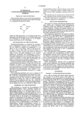
- This invention relates to a process for the preparation of 2-alkylhexahydropyrimidines and N-alkyl homologs, i.e., compounds having the formula: ##STR1## where the alkyl group has 1 to 18 carbon atoms, R is hydrogen or an alkyl group of 1 to 15 carbon atoms, and R 1 is hydrogen or an alkyl group of 1 to 18 carbon atoms, and at least one R 1 is hydrogen.
- Hexahydropyrimidines are produced by condensation of aldehydes or ketones with 1,3-diamines (U.S. Pat. No. 4,404,379 to Hajek et al.; Reibsomer, J. L., & Morey, G. H., J. Org. Chem., 1950, 15, 245; Evans, R. F., Aust. J. Chem., 1967, 1967, 20, 1634-61). Water is a by-product in these reactions and must be removed either to favor the imine equilibrium or for product purification. Generally, the condensation is acid or lewis acid catalyzed and run in solvents (DE Patent No. 1,670,093 to BASF). In some cases the open-chain tautomer is produced as a co-product which further contaminates the desired hexahydropyrimidines.
- a process has been found to make alkyl-, dialkyl-, and trialkylhexahydropyrimidines in high yield without the formation of water or its open-chain tautomer.
- the invention is selective to the hexahydropyrimidines with only ammonia as the by-product. Cyclization, ammonia elimination and hydrogenation occur rapidly to produce the hexahydropyrimidine derivative in a single reaction step.
- the hexahydropyrimidines have use as catalysts in the production of polyurethanes and epoxies (U.S. Pat. No. 3,787,416), as fungicides (U.S. Pat. No. 3,872,120), emulsifiers (U.S. Pat. No. 4,579,593 to Stanley), pharmaceuticals (J. Pharm. Sci., 1968, 57, 1817-19 and EP 226,511), fuel oil additives (U.S. Pat. No. 3,936,279), antioxidants (U.S. Pat. No. 3,787,416), and light stabilizers for olefins (U.S. Pat. No. 4,404,302 to Gupta et al).
- This invention is a process for the preparation of hexahydropyrimidines which comprises reacting an alkyl nitrile having 1 to 18 carbon atoms with a 1,3-diaminoalkane having 3 to 18 carbon atoms or an N-alkyl-1,3-diaminoalkane in which the alkane has 3 to 18 carbon atoms, and in which the N-alkyl group has 1 to 18 carbon atoms, in the presence of a hydrogenation catalyst at a temperature in the range of 70 to 150 degrees C.
- Suitable hydrogenation catalysts include supported cobalt, supported nickel, supported ruthenium, supported iron, supported rhodium, supported palladium, Raney cobalt and Raney nickel. If the catalyst is a supported catalyst, suitable supports include: alumina, silica, kieselguhr, carbonate, and cordierite.
- the reaction may be carried out in a solvent for the nitrile.
- Suitable solvents include alcohols and ethers.
- the alkyl nitrile may be a mononitrile or a dinitrile; for example, adiponitrile is satisfactory.
- the reaction to produce hexahydropyrimidines from alkyl nitriles and 1,3-diamines under hydrogenation conditions include any substituted 1,3-diamines or N-alkyl-1,3-diamines.
- Propane and pentane diamine are preferred diamines, but diamines of C3 to C18 are satisfactory.
- Both the N-alkyl group and the alkyl nitrile can have alkyl substitution of C1 to C18.
- the temperature employed in the reaction is preferably about 90° C.
- Hydrogenation of nitriles documented in the art range from 70° to 150° C., preferably 90° to 125° C. Because the activation energy for the reductive alkylation of the intermediate imine is approximately 31 Kcal/mole, higher temperatures will tend to favor hexahydropyrimidine formation. However, the activation energy for nitrile hydrogenation is in the range of 12 Kcal/mole (e.g., favored at lower temperatures) and thus a temperature compromise must be met to optimize both reactions.
- the above 90° to 150° C. temperature range fulfills this requirement.
- Nitrile hydrogenation solvents such as alcohols (e.g., methanol, ethanol or isopropanol) or ethers (e.g., tetrahydrofuran or dioxane) can also be used.
- alcohols e.g., methanol, ethanol or isopropanol
- ethers e.g., tetrahydrofuran or dioxane
- catalysts and reaction conditions that favor secondary amine formation are desirable.
- Nitrile hydrogenation catalysts such as supported cobalt, nickel, ruthenium, iron, rhodium, palladium, and Raney® catalysts (e.g., cobalt and nickel) can be used in this process.
- Catalyst supports for these metals include alumina, silica, kieselguhr and basic supports such as carbonates and cordierite.
- a 500 ml stainless steel ballast cylinder was inserted in series with the hydrogen feed to allow measurement of hydrogen uptake by propionitrile at constant reactor pressure.
- the pressure in the ballast was set at 800-850 psig and repressured when the gauge dropped to approximately 650 psig.
- the filtered product was fractionally distilled under vacuum on a 36 inch Teflon® spinning band column to yield 31.7 g of >98% pure 2-isobutyl, 4-ethylhexahydropyrimidine having a b.p. of 53° C./1 mm Hg.
Landscapes
- Chemical & Material Sciences (AREA)
- Organic Chemistry (AREA)
- Low-Molecular Organic Synthesis Reactions Using Catalysts (AREA)
- Organic Low-Molecular-Weight Compounds And Preparation Thereof (AREA)
Abstract
Process for producing 2-alkylhexahydropyrimidines from 1,3-diamines and alkyl nitriles using a hydrogenation catalyst.
Description
This invention relates to a process for the preparation of 2-alkylhexahydropyrimidines and N-alkyl homologs, i.e., compounds having the formula: ##STR1## where the alkyl group has 1 to 18 carbon atoms, R is hydrogen or an alkyl group of 1 to 15 carbon atoms, and R1 is hydrogen or an alkyl group of 1 to 18 carbon atoms, and at least one R1 is hydrogen.
Hexahydropyrimidines are produced by condensation of aldehydes or ketones with 1,3-diamines (U.S. Pat. No. 4,404,379 to Hajek et al.; Reibsomer, J. L., & Morey, G. H., J. Org. Chem., 1950, 15, 245; Evans, R. F., Aust. J. Chem., 1967, 1967, 20, 1634-61). Water is a by-product in these reactions and must be removed either to favor the imine equilibrium or for product purification. Generally, the condensation is acid or lewis acid catalyzed and run in solvents (DE Patent No. 1,670,093 to BASF). In some cases the open-chain tautomer is produced as a co-product which further contaminates the desired hexahydropyrimidines.
A process has been found to make alkyl-, dialkyl-, and trialkylhexahydropyrimidines in high yield without the formation of water or its open-chain tautomer. The invention is selective to the hexahydropyrimidines with only ammonia as the by-product. Cyclization, ammonia elimination and hydrogenation occur rapidly to produce the hexahydropyrimidine derivative in a single reaction step.
The hexahydropyrimidines have use as catalysts in the production of polyurethanes and epoxies (U.S. Pat. No. 3,787,416), as fungicides (U.S. Pat. No. 3,872,120), emulsifiers (U.S. Pat. No. 4,579,593 to Stanley), pharmaceuticals (J. Pharm. Sci., 1968, 57, 1817-19 and EP 226,511), fuel oil additives (U.S. Pat. No. 3,936,279), antioxidants (U.S. Pat. No. 3,787,416), and light stabilizers for olefins (U.S. Pat. No. 4,404,302 to Gupta et al).
This invention is a process for the preparation of hexahydropyrimidines which comprises reacting an alkyl nitrile having 1 to 18 carbon atoms with a 1,3-diaminoalkane having 3 to 18 carbon atoms or an N-alkyl-1,3-diaminoalkane in which the alkane has 3 to 18 carbon atoms, and in which the N-alkyl group has 1 to 18 carbon atoms, in the presence of a hydrogenation catalyst at a temperature in the range of 70 to 150 degrees C. and hydrogen at a pressure of 100 to 1000 psig, said alkyl nitrile being present in a 1 to 3 molar ratio to the amount of the 1,3-diaminoalkane or the N-alkyl-1,3-diaminoalkane. Suitable hydrogenation catalysts include supported cobalt, supported nickel, supported ruthenium, supported iron, supported rhodium, supported palladium, Raney cobalt and Raney nickel. If the catalyst is a supported catalyst, suitable supports include: alumina, silica, kieselguhr, carbonate, and cordierite.
The reaction may be carried out in a solvent for the nitrile. Suitable solvents include alcohols and ethers.
The alkyl nitrile may be a mononitrile or a dinitrile; for example, adiponitrile is satisfactory.
The reaction to produce hexahydropyrimidines from alkyl nitriles and 1,3-diamines under hydrogenation conditions include any substituted 1,3-diamines or N-alkyl-1,3-diamines. Propane and pentane diamine are preferred diamines, but diamines of C3 to C18 are satisfactory. Both the N-alkyl group and the alkyl nitrile can have alkyl substitution of C1 to C18.
The temperature employed in the reaction is preferably about 90° C. Hydrogenation of nitriles documented in the art range from 70° to 150° C., preferably 90° to 125° C. Because the activation energy for the reductive alkylation of the intermediate imine is approximately 31 Kcal/mole, higher temperatures will tend to favor hexahydropyrimidine formation. However, the activation energy for nitrile hydrogenation is in the range of 12 Kcal/mole (e.g., favored at lower temperatures) and thus a temperature compromise must be met to optimize both reactions. The above 90° to 150° C. temperature range fulfills this requirement.
Low concentrations of hydrogenation catalyst produce a desirable slow hydrogenation of nitrile. Nitrile hydrogenation solvents such as alcohols (e.g., methanol, ethanol or isopropanol) or ethers (e.g., tetrahydrofuran or dioxane) can also be used. Generally, catalysts and reaction conditions that favor secondary amine formation are desirable.
Nitrile hydrogenation catalysts such as supported cobalt, nickel, ruthenium, iron, rhodium, palladium, and Raney® catalysts (e.g., cobalt and nickel) can be used in this process. Catalyst supports for these metals include alumina, silica, kieselguhr and basic supports such as carbonates and cordierite.
Into a 300 ml stainless steel batch stirred autoclave was charged 70 g (96.7% purity, 0.66 mole) 1,3-diaminopentane, 80 g propionitrile (1.45 moles) and 3 g of wet Raney® nickel (W. R. Grace Raney® 2800) powder. The reactor was purged twice at 25° C. with hydrogen followed by pressurization with 50 psig hydrogen. The mixture was stirred at 500 rpm while heating to 90° C. At 90° C., the reactor was repressured to 650 psi with hydrogen, and stirring at 1200 rpm commenced. A 500 ml stainless steel ballast cylinder was inserted in series with the hydrogen feed to allow measurement of hydrogen uptake by propionitrile at constant reactor pressure. The pressure in the ballast was set at 800-850 psig and repressured when the gauge dropped to approximately 650 psig.
After 4 hours of heating and stirring, the mixture was cooled to room temperature and a sample taken through a high pressure sample valve on the reactor. The reactor pressure was then reduced to 1 atmosphere. Gas chromatographic (GC) capillary analysis of the product mixture indicated a 58% conversion of the 1,3-diaminopentane and 80.8% yield of the 2,4-diethylhexahydropyrimidine. The mixture was then allowed to stand 16 hours at 25° C. and 50 psig hydrogen pressure. Reanalysis of the mixture showed conversion of the 1,3-diaminopentane had increased to 72% and the yield of hexahydropyrimidine to 96.4%. An additional 25 ml propionitrile was added to a reactor inlet port by means of a glass syringe at atmospheric pressure. The reactor was repurged with hydrogen and brought to the original reaction conditions and allowed to run for 3 more hours. Analysis of the final product mixture showed a 92% conversion of 1,3-diaminopentane and 92.8% yield of 2,4-diethylhexahydropyrimidine.
After replacing the reactor atmosphere with nitrogen, the cooled product was filtered away from the catalyst under a nitrogen atmosphere. Fractional distillation under reduced pressure on a 36 inch Teflon® spinning band column yielded 27 g of clear liquid product with >99% purity having a b.p. of 84° C. at 22 mm Hg.
Sixty grams of 1,3-diaminopentane (96.7% purity, 0.569 mole), 60 g acetonitrile (1.46 moles) and 1 g of wet Raney® nickel (Raney 2800) catalyst were charged to a 300 ml stainless steel autoclave reactor. The mixture was stirred and heated at 90° C. and 500 psig hydrogen pressure for 6 hours. Capillary GC analysis of the cooled product indicated a 36% conversion of 1,3-diaminopentane and 97.4% yield of 2-methyl-4-ethylhexahydropyrimidine. The reactor was recharged with 25 ml (19.5 g) additional acetonitrile and run at 90° C. and 500 psig for 21 hours. Capillary GC analysis of the mixture indicated a 92.1% conversion of 1,3-diaminopentane and 98% yield of 2-methyl-4-ethylhexahydropyrimidine, b.p. 71° C./20 mm Hg. The structure was confirmed by comparison with a mass spectrum of the hexahydropyrimidine obtained by the condensation of 1,3-diaminopentane and acetaldehyde at 50° C.
Forty grams of 1,3-diaminopentane (96.8% purity, 0.45 mol), 76 g (1.1 moles) isobutyronitrile and 2 g wet Raney® nickel (Raney 2800) catalyst were charged to the 300 ml autoclave described in Example 1. The mixture was stirred and heated at 90° C. and 500 psig hydrogen for 6 hours. The product was cooled and allowed to stand 16 hours at 25° C. and 50 psig hydrogen pressure. The mixture was then heated at 100° C. and 500 psig hydrogen for an additional 15 hours. Analysis of the final product mixture by capillary GC analysis showed a 64% conversion of 1,3-diaminopentane, 87.6% conversion of isobutyronitrile and 97% yield to 2-isobutyl, 4-ethylhexahydropyrimidine.
The filtered product was fractionally distilled under vacuum on a 36 inch Teflon® spinning band column to yield 31.7 g of >98% pure 2-isobutyl, 4-ethylhexahydropyrimidine having a b.p. of 53° C./1 mm Hg.
Thirty-five grams (0.47 mole) 1,3-diaminopropane, 60 g acetonitrile (1.46 moles) and 2 g of wet Raney®) nickel (Raney 2800) catalyst was charged to a 300 ml batch reactor described in Example 1. The mixture was stirred and heated at 90° C. and 500 psig hydrogen pressure for 7 hours. The product mixture was cooled and sampled. Analysis of the filtered product by capillary GC analysis indicated a 98.5% conversion of 1,3-diaminopropane and 94% yield of 2-methylhexahydropyrimidine.
The product was filtered from the catalyst under nitrogen and fractionally distilled under vacuum on a 36 inch Teflon® spinning band column yielding 20.4 g of 99% purity 2-methylhexahydropyrimidine having a b.p. of 82° C./88 mm Hg.
Ninety grams (96.8% purity, 0.854 mole) 1,3-diaminopentane, 60 g acetonitrile (1.46 moles) and 3 g powdered nickel on alumina catalyst were charged to a 300 ml autoclave described in Example 1. The mixture was stirred and heated at 90° C. and 650 psig pressure for 6 hours followed by cooling to 25° C. Analysis of the filtered product on a capillary GC column showed a 42.9% conversion of 1,3-diaminopentane and 94% yield of 2-methyl-4-ethylhexahydropyrimidine.
Ninety grams (96.8% purity, 0.854 mole) 1,3-diaminopentane, 60 g acetonitrile (1.46 moles) and 3 g Cr promoted Raney® cobalt catalyst were charged to a 300 ml autoclave described in Example 1. The mixture was stirred and heated at 90° C. and 650 psig pressure for 5 hours followed by cooling to 25° C. Analysis of the filtered product on a capillary GC column showed a 14% conversion of 1,3-diaminopentane and 96.2% yield of 2-methyl-4-ethylhexahydropyrimidine
Ninety grams (96.8% purity, 0.854 mole) 1,3-diaminopentane, 60 g acetonitrile (1.46 moles) and 3 g wet Raney® nickel catalyst were charged to a 300 ml autoclave described in Example 1. The mixture was stirred and heated at 90° C. and 650 psig pressure for 6 hours followed by cooling to 25° C. Analysis of the filtered product on a capillary GC column showed a 85% conversion of 1,3-diaminopentane and 98% yield of 2-methyl-3-ethylhexahydropyrimidine.
Thirty-five grams of 3-(N-methylamino)aminopentane (99% purity, 0.302 mole), 60 g acetonitrile (1.46 moles) and 2 g of Raney® nickel catalyst were charged to a 300 ml stainless steel autoclave reactor. The mixture was stirred and heated at 90° C. and 500 psig hydrogen pressure for 7 hours. Capillary GC analysis of the cooled product indicated a 96.5% conversion of 3-(N-methylamino)aminopentane and 82.8% yield of 2,3-dimethyl-4-ethylhexahydropyrimidine. Fifty-five grams were recovered and vacuum distilled on a 36 inch Teflon® spinning band column to yield 18.1 g (68% recovery) of 2,3-dimethyl-4-hexahydropyrimidine (97.6% purity) having a bp of 81° C. at 20 mm Hg.
Fifty grams of 1,3-diaminopentane (99%, 0.485 mole), 116 g (1.07 moles) adiponitrile and 2.3 g Raney® nickel were charged to a 300 cc autoclave reactor. The mixture was stirred and heated at 90° C. and 650 psig hydrogen pressure for 10 hours. The mixture was cooled and filtered under nitrogen. Capillary GC analysis of the filtered product indicated a 56% conversion of 1,3-diaminopentane and 59% yield of 2-(4-cyanobutyl)-4-ethylhexahydropyrimidine.
Claims (7)
1. A process for the preparation of hexahydropyrimidines which comprises reacting an alkyl nitrile having 1 to 18 carbon atoms with a 1,3-diaminoalkane having 3 to 18 carbon atoms or an N-alkyl-1,3-diaminoalkane in which the alkane has 3 to 18 carbon atoms, and in which the N-alkyl group has 1 to 18 carbon atoms, in the presence of a hydrogenation catalyst at a temperature in the range of 70 to 150 degrees C. and hydrogen at a pressure of 100 to 1000 psig, said alkyl nitrile being present in a 1 to 3 molar ratio to the amount of the 1,3-diaminoalkane or the N-alkyl-1,3-diaminoalkane.
2. The process of claim 1 in which the hydrogenation catalyst is selected from the group consisting of supported cobalt, supported nickel, supported ruthenium, supported iron, supported rhodium, supported palladium, Raney cobalt and Raney nickel.
3. The process of claim 1 in which the amine is 1,3-diaminopentane.
4. The process of claim 2 in which the catalyst is a supported catalyst, and the support is selected from the group consisting of alumina, silica, kieselguhr, carbonate, and cordierite.
5. The process of claim 4 in which the process is carried out in a solvent for the nitrile.
6. The process of claim 5 in which the solvent is selected from the group consisting of alcohols and ethers.
7. The process of claim 1 in which the alkyl nitrile is an alkyl dinitrile.
Priority Applications (1)
| Application Number | Priority Date | Filing Date | Title |
|---|---|---|---|
| US07/798,605 US5149809A (en) | 1991-11-26 | 1991-11-26 | Synthesis of 2-alkylhexahydropyrimidines from nitriles |
Applications Claiming Priority (1)
| Application Number | Priority Date | Filing Date | Title |
|---|---|---|---|
| US07/798,605 US5149809A (en) | 1991-11-26 | 1991-11-26 | Synthesis of 2-alkylhexahydropyrimidines from nitriles |
Publications (1)
| Publication Number | Publication Date |
|---|---|
| US5149809A true US5149809A (en) | 1992-09-22 |
Family
ID=25173829
Family Applications (1)
| Application Number | Title | Priority Date | Filing Date |
|---|---|---|---|
| US07/798,605 Expired - Fee Related US5149809A (en) | 1991-11-26 | 1991-11-26 | Synthesis of 2-alkylhexahydropyrimidines from nitriles |
Country Status (1)
| Country | Link |
|---|---|
| US (1) | US5149809A (en) |
Citations (1)
| Publication number | Priority date | Publication date | Assignee | Title |
|---|---|---|---|---|
| US4404379A (en) * | 1977-09-01 | 1983-09-13 | Bayer Aktiengesellschaft | Cycloaminals and a process for their preparation |
-
1991
- 1991-11-26 US US07/798,605 patent/US5149809A/en not_active Expired - Fee Related
Patent Citations (1)
| Publication number | Priority date | Publication date | Assignee | Title |
|---|---|---|---|---|
| US4404379A (en) * | 1977-09-01 | 1983-09-13 | Bayer Aktiengesellschaft | Cycloaminals and a process for their preparation |
Similar Documents
| Publication | Publication Date | Title |
|---|---|---|
| CN103228614B (en) | Process for the preparation of 3-aminomethyl-3,5,5-trimethylcyclohexylamine | |
| US7074963B2 (en) | Preparation of secondary amines | |
| JP3805364B2 (en) | Method for producing amine from compound having at least 3 cyano groups | |
| EP0449297B1 (en) | Cyanobutylation of amines with 2-pentenenitrile | |
| US5105013A (en) | Method for the reductive methylation of primary amines | |
| EP1348688A1 (en) | Process for producing diamines from dialdehydes | |
| US5149809A (en) | Synthesis of 2-alkylhexahydropyrimidines from nitriles | |
| US4001213A (en) | Repression of polymer formation in the conversion of linear or branched primary diamines to cyclic imines | |
| EP0391349B1 (en) | Coproduction of propanediamine and alkylated aminopropylamines | |
| US6245932B1 (en) | Cyanoethylation of cycloaliphatic vicinal primary diamines | |
| US20120165463A1 (en) | Low-voc polyamines | |
| JP2022522886A (en) | Preparation of polyalkylene-polyamines by reductive amination | |
| EP1444193B1 (en) | Process for the preparation of tertiary amines from primary amines and nitriles | |
| EP0080240B1 (en) | Process for the preparation of a lactam | |
| US5902883A (en) | Cyanobutylation of ammonia, alkylamines and hydrazine with 3-pentenenitrile, 4-pentenenitrile or mixtures thereof | |
| JP4822649B2 (en) | Method for producing 3-hydroxyalkanenitrile and hydroxyaminoalkane | |
| EP0378910B1 (en) | Method for the preparation of imidazoles | |
| US4299777A (en) | Preparation of cyano acetals | |
| CA2736305A1 (en) | Method for the preparation of 3-methylpyridine | |
| US5118846A (en) | Synthesis of N-disubstituted amides by reaction of amides with certain organic hydroxyl compounds | |
| EP0342742B1 (en) | Process for the preparation of 2-alkylpyrimidines | |
| US5099066A (en) | Synthesis of N-substituted amides by condensation of nitriles with certain organic hydroxyl compounds | |
| Alexandre et al. | Synthesis and reactivity of bis-lactamic compounds | |
| US20230025575A1 (en) | Process for preparing amines over a copper catalyst | |
| JPS63287752A (en) | Production of n-methylated tertiary amine |
Legal Events
| Date | Code | Title | Description |
|---|---|---|---|
| AS | Assignment |
Owner name: E. I. DU PONT DE NEMOURS AND COMPANY A CORP. OF Free format text: ASSIGNMENT OF ASSIGNORS INTEREST.;ASSIGNOR:HERKES, FRANK E.;REEL/FRAME:005967/0148 Effective date: 19911121 |
|
| FPAY | Fee payment |
Year of fee payment: 4 |
|
| REMI | Maintenance fee reminder mailed | ||
| LAPS | Lapse for failure to pay maintenance fees | ||
| FP | Lapsed due to failure to pay maintenance fee |
Effective date: 20000922 |
|
| STCH | Information on status: patent discontinuation |
Free format text: PATENT EXPIRED DUE TO NONPAYMENT OF MAINTENANCE FEES UNDER 37 CFR 1.362 |