US5122601A - Synthesis of 2,3,3',4,4'-penta-o-methylsucrose - Google Patents
Synthesis of 2,3,3',4,4'-penta-o-methylsucrose Download PDFInfo
- Publication number
- US5122601A US5122601A US07/624,085 US62408590A US5122601A US 5122601 A US5122601 A US 5122601A US 62408590 A US62408590 A US 62408590A US 5122601 A US5122601 A US 5122601A
- Authority
- US
- United States
- Prior art keywords
- penta
- process according
- methylsucrose
- tri
- trityl
- Prior art date
- Legal status (The legal status is an assumption and is not a legal conclusion. Google has not performed a legal analysis and makes no representation as to the accuracy of the status listed.)
- Expired - Lifetime
Links
Images




Classifications
-
- C—CHEMISTRY; METALLURGY
- C07—ORGANIC CHEMISTRY
- C07H—SUGARS; DERIVATIVES THEREOF; NUCLEOSIDES; NUCLEOTIDES; NUCLEIC ACIDS
- C07H15/00—Compounds containing hydrocarbon or substituted hydrocarbon radicals directly attached to hetero atoms of saccharide radicals
- C07H15/02—Acyclic radicals, not substituted by cyclic structures
- C07H15/04—Acyclic radicals, not substituted by cyclic structures attached to an oxygen atom of the saccharide radical
-
- C—CHEMISTRY; METALLURGY
- C07—ORGANIC CHEMISTRY
- C07H—SUGARS; DERIVATIVES THEREOF; NUCLEOSIDES; NUCLEOTIDES; NUCLEIC ACIDS
- C07H15/00—Compounds containing hydrocarbon or substituted hydrocarbon radicals directly attached to hetero atoms of saccharide radicals
- C07H15/18—Acyclic radicals, substituted by carbocyclic rings
-
- C—CHEMISTRY; METALLURGY
- C07—ORGANIC CHEMISTRY
- C07H—SUGARS; DERIVATIVES THEREOF; NUCLEOSIDES; NUCLEOTIDES; NUCLEIC ACIDS
- C07H3/00—Compounds containing only hydrogen atoms and saccharide radicals having only carbon, hydrogen, and oxygen atoms
- C07H3/04—Disaccharides
Definitions
- the present invention relates to a process for manipulating any polyhydroxy compound bearing two or more primary and secondary hydroxyl groups to expose only the primary hydroxyl groups, while blocking all interfering secondary hydroxyl groups as their methyl or other alkyl ethers. More particularly, the present invention relates to the synthesis of 2,3,3',4,4'-penta-O-methylsucrose by using the aforedescribed method.
- Sucrose used as a starting carbohydrate for the production of carbohydrate polymers would be ideal since it is produced in vast quantities and is low in price.
- To synthesize intermediate sucrose derivatives for further use in the production of novel polymers using sucrose as a starting compound is difficult due to the reactivity of the primary hydroxyl groups at carbons 6, 1' and 6' and the remaining five secondary hydroxyl groups.
- sucrose intermediate is 2,3,3',4,4'-penta-O-methylsucrose having the structure: ##STR1##
- the compound of structure (I) is useful as an intermediate in the synthesis of other sucrose derivatives that can be used to synthesize various polymers. This compound has been ambiguously reported by McKeown et al in the Canadian Journal of Chemistry, Vol. 35 (1957), p. 992, and subsequently prepared in moderate yields by O'Donnell and Richards as described in the Australian Journal of Chemistry, Vol. 25 (1972), pp. 407-412.
- 2,3,3',4,4'-penta-0-methylsucrose has been synthesized by O'Donnell and Richards through several intermediate compounds such as 1',6,6'-tri-O-tritylsucrose, 1',6,6'-tri-O-trityl-2,3,3',4,4'-penta-O-acetylsucrose, and 1',6,6'-tri-O-trityl-2,3,3',4,4'-penta-O-methylsucrose.
- the final product of 2,3,3',4,4'-penta-0methylsucrose was isolated in the final step by chromatography through amberlite resins, which tend to epimerize the C-1 of the glucopyranoside due to the acidity of these resins. Moreover, the total yield for the synthesis of 2,3,3',4,4'-penta-0-methylsucrose is about 26%, while the yield in the final step is about 79% by using the method described by O'Donnell and Richards.
- 2,3,3',4,4'-penta-O-methylsucrose can be synthesized by eliminating the intermediate compound of 1',6,6'-tri-O-trityl-2,3,4',4,4'-penta-O-acetylsucrose.
- the synthesized product does not epimerize at the C-1 position.
- a marked increase in yield of penta-0-methylsucrose e.g., yields of up to 97%) is also produced by the present process, thus leading to an intermediate that can be readily produced for use in polymer synthesis.
- the present invention features a process for the synthesis of a polyhydroxy compound having two or more primary and secondary hydroxyl groups, said process comprising the steps of:
- n is an integer of from 1 to 12 and R represents a benzyl, allyl, methyl, ethyl, butyl, octyl or alkyl group.
- the present invention provides a process for the synthesis of 2,3,3',4,4'-penta-O-methylsucrose comprising the steps of:
- FIG. 1 represents the synthesis of 2,3,3',4,4'-penta-O-methylsucrose according to the process of the present invention.
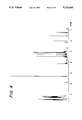
- FIG. 2 is an 1 H NMR spectrum of 1',6,6'-tri-O-tritylsucrose synthesized by the process of the present invention.
- FIG. 3 is a 13 C NMR spectrum of 1',6,6'-tri-O-tritylsucrose synthesized by the process of the present invention.
- FIG. 4 is an 1 H NMR spectrum of 1',6,6'-tri-O-trityl-2,3,3',4,4'-penta-O-methylsucrose synthesized by the process of the present invention.
- FIG. 5 is a 13 C NMR spectrum of 1',6,6'-tri-O-trityl-2,3,3',4,4'-penta-O-methylsucrose synthesized by the process of the present invention.
- FIG. 6 is an 1 H NMR spectrum of 2,3,3',4,4'-penta-O-methylsucrose synthesized by the process of the present invention.
- FIG. 7 is a 13 C NMR spectrum of 2,3,3',4,4'-penta-O-methylsucrose synthesized by the process of the present invention.
- FIG. 8 is a heteronuclear multiple bond connectivity (HMBC) spectrum of 2,3,3',4,4'-penta-O-methylsucrose synthesized by the process of the present invention.
- HMBC heteronuclear multiple bond connectivity
- the present invention relates to the synthesis of any polyhydroxy compound having two or more primary and secondary hydroxyl groups, wherein the primary hydroxyl groups are maintained and the secondary hydroxyl groups are blocked as their alkyl ethers or methyl ethers.
- compounds having the general structure (II): ##STR4## can be converted to diols having the respective structure (III): ##STR5## where n in structures (II) and (III) is an integer from 1 to 12, and R in structure (III) represents a benzyl group, allyl group, methyl group, ethyl group, butyl group, octyl group or alkyl group.
- any compound bearing primary hydroxyl group appendages and secondary hydroxyl groups on a cyclic hydrocarbon, furan, and/or pyran can also be manipulated as set forth above, as well as other disaccharides such as cellobiose, lactose, gentiobiose, and the like.
- the procedure involves adding to the polyhydroxy compound, a solution of tritylchloride in dimethylformamide over a period of about one hour at a temperature between C to 5° C.
- the primary hydroxyl groups are tritylated by addition of an excess amount of tritylchloride.
- the excess amount of tritylchloride used is generally about 4.5 times the molar amount of sucrose.
- a solution of the trityl adduct is added dropwise to a suspension of a hydride base over a period of about 20 minutes to three hours to convert the secondary hydroxyl groups to alkoxides.
- hydride bases that can be used in this process include all group (I) and group (II) metal hydrides. More specifically, sodium hydride, potassium hydride and the like. It is most preferable to use sodium hydride in the present process.
- lithium bases can also be used.
- alkyl lithium bases a solution of the lithium base is added to a solution of the polyhydroxy compound at low temperatures.
- lithium bases include methyllithium, butyllithium, t-butyllithium, phenyllithium and the like.
- the amount of hydride used in the reaction may vary depending on the amount of starting polyhydroxy compound used.
- the presence of 3 to 5 equivalents of hydride base per reactive hydroxyl group in the tritylated polyol moiety will generally ensure complete deprotonation of the alcohol to form the alkoxide, without the possibility of reverting back to the alcohols upon protonation. This can occur, provided no excess proton source is purposely introduced into the reaction mixture (i.e., by addition of water or other protic solvents).
- the reaction mixture is cooled to a temperature of between 0° C. and 25° C., and an alkylating agent is then added thereto.
- the alkylating agent is generally chosen depending on the R substituent group desired in structure (III) which is the final product.
- the alkylating agents that may be used in the present invention include methyl iodide, dimethyl sulfate, methyl bromide, allyl bromide, benzyl bromide, octyl iodide, butyl iodide, halides and sulfonate esters of long chain hydrocarbons, and the like.
- the concentration of the alkylating agent varies depending upon the amount of starting material present in the reaction medium. It is preferable to use a 5 molar equivalent excess of alkylating agent for each hydroxyl group in the tritylated polyol.
- the alkylating agent is added over a period of time at a variety of temperatures which depend upon the alkylating agent used. It is important that the addition of said alkylating agent should be slow and at a temperature to preclude evaporation of the alkylating agent during the reaction.
- Two methods may be employed for the removal of primary trityl protecting groups; treatment with acetic acid followed by heating or reductive cleavage by use of a group (I) metal in liquid ammonia and tetrahydrofuran.
- the latter method is preferable when R is an alkyl group.
- the former method is preferable if the pendant R groups are allyl or benzyl groups.
- the preferred method for removal of the primary O-trityl groups when R represents a methyl or alkyl group is by reductive cleavage with an alkali metal.
- Any alkali metal may be used in this procedure including lithium, sodium, mixtures thereof and the like.
- Two alkali metals can also be used such as lithium and potassium. It is preferable to use lithium in this procedure, because it is relatively inexpensive, less reactive than other group (I) metals in air, safe to handle in air, and less pyrophoric than any other group (I) metals in the presence of moisture. It is preferable to use a 2 to 5 equivalent excess of the alkali metal for each millimole of triphenylmethyl group present in the molecule. It is even more preferable to use a minimum of 2 equivalent excess alkali metal per mole of the trityl moiety.
- the alkali metal is added over a period of time between 30 to 60 minutes and at a temperature between -65° C. to -78° C., more preferably -70° C.
- the excess alkali metal is then decomposed by the addition of ethanol or isopropanol, and small pieces of solid carbon dioxide may be added to aid in the evaporation of ammonia as the solution is allowed to attain room temperature.
- the final product may be further isolated by use of flash column chromatography or any other isolation procedure that will separate the final product from other nonpolar compounds present in the reaction mixture.
- the present invention relates to the synthesis of 2,3,3',4,4'-penta-O-methylsucrose from sucrose by converting sucrose to 1',6,6'-tri-O-trityl-sucrose, which is converted to the tri-O-trityl penta-methyl ether moiety and reduced with an alkali metal in liquid ammonia to form the final product.
- sucrose is first converted to 1',6,6'-tri-O-tritylsucrose by reacting sucrose with trityl chloride.
- This method is described by Hough et al in the journal, Carbohydrate Research, Vol. 21 (1972), pp.414-417, and is incorporated herein with some modifications.
- the process involves the addition of trityl (triphenylmethyl) moieties to the 1', 6, and 6' positions on the sucrose molecule.
- the synthesis is performed by adding a solution of trityl chloride in dimethylformamide to a solution of sucrose in dimethylformamide and triethylamine.
- the amount of sucrose used may vary.
- sucrose between 314 mg (1 mmol) to 70 grams (204.5 mmol) of sucrose may be used.
- the amount of trityl chloride may also vary depending on the amount of starting sucrose used. For instance, about 4.5 times the molar amount of trityl chloride is used per mole of sucrose, and, therefore, it is preferable to use 260 grams (935 mmol) of tritylchloride per 70 grams (204.5 mmol) of sucrose. After dropwise addition of a solution of trityl chloride in dimethylformamide at 0° to 5° C. over a time period of about one hour, the mixture is allowed to warm to room temperature and then stirred at a constant temperature of about 45° C. for two days.
- the mixture is then concentrated to about half the original volume under reduced pressure and dissolved in methylene chloride, washed successively with water, 1 M hydrochloric acid, saturated aqueous sodium bicarbonate, water, and brine, and then dried in the presence of sodium sulfate.
- the methylene chloride is then removed in vacuo.
- the residue is then applied on a column of silica gel (230 to 400 mesh) and eluted successively with methylene chloride, 10% acetone in methylene chloride and 20% acetone in methylene chloride at a flow rate of about 100 ml/min.
- the tri-O-tritylsucrose adduct is then O-methylated at positions 2, 3, 3', 4 and 4' to produce 1',6,6'-tri-O-trityl-2,3,3',4,4'-penta-O-methylsucrose.
- the penta-O-methylation is performed under conditions that take advantage of the fact that a hydride base reacts rapidly with the secondary alcohols to produce hydrogen gas and the said alkoxides, without the possibility of reverting back to the alcohols.
- the alkoxides are then alkylated with an alkylating agent such as methyl iodide or dimethyl sulfate to produce the penta-O-methyl ethers.
- the amount of group (I) and group (II) metal hydrides and the aforementioned bases utilized in the second step of this process may vary depending on the amount of 1',6,6'-tri-O-tritylsucrose used in the reaction. For scales up to 10 mmol to 10.69 grams of tri-O-tritylsucrose, approximately 6 grams to 10 grams or 150 mmol to 250 mmol of a 60% dispersion of sodium hydride in oil are used.
- the hydride is usually stored as a dispersion in oil at varying concentrations. Prior to using the hydride base in the reaction, it should be washed free of the oil with pentane. Then, the washed hydride is resuspended in a suitable solvent. Any polar aprotic solvent that can suspend or dissolve the hydride may be used, provided the solvent and hydride do not destructively react at the temperatures needed to deprotonate the alcohols. For example, dimethylformamide (DMF) begins to decompose in the presence of sodium hydride at 55° C. to 60° C. within a few hours to produce carbon monoxide and sodium dimethylamide.
- DMF dimethylformamide
- Suitable hydrides and their corresponding solvent for this reaction include sodium hydride in DMSO, potassium hydride in DMSO at low temperatures of 0° to 40° C., sodium hydride in tetrahydrofuran (THF), potassium hydride in tetrahydrofuran (THF), sodium hydride in HMPA (hexamethylphosphoric triamide), sodium hydride in N-methylpyrrolidone, potassium hydride in N-methylpyrrolidone, sodium hydride in DMSO/THF, potassium hydride in DMSO/THF at low temperatures of 0° to 40° C., sodium or potassium hydrides in DMF at low temperatures of 0° to 40° C., calcium hydride in hexamethylphosphoric triamide, methyllithium, phenyllithium, butyllithium, sec-butyllithium or t-butyllithium in ether solvents such as tetrahydrofuran (THF), dioxan
- DMSO dimethylsulfoxide
- the amount of solvent used in the present invention may vary depending upon the amount of tri-O-tritylsucrose and hydride used in the reaction. It is preferable to use 10 ml of DMSO per gram of tri-O-tritylsucrose or 0.1 M tri-O-tritylsucrose in DMSO.
- the addition of the 1',6,6'-tri-O-tritylsucrose to the hydride base usually takes place at a temperature between 45° C. to 55° C. to permit the formation of alkoxides. It is preferable, however, that the reaction proceed at a temperature of about 50° C. to 60° C., most preferably about 50° C. The internal temperatures do not ever rise above 60° C.
- This addition usually takes place over a period of 20 minutes to three hours depending on the amount of starting 1',6,6'-tri-O-tritylsucrose being used. For instance, if up to 10 mmol of the tritylsucrose is being reacted, then the addition takes place over a period of about 30 minutes. If the starting tritylsucrose concentration is greater than 10 mmol, then the addition to the hydride base may take up to 3 hours.
- the 1',6,6'-tri-O-tritylsucrose is added dropwise 3 hours.
- the 1',6,6'-tri-O-tritylsucrose is added dropwise under constant stirring while the reaction temperature is monitored by placing a thermometer in the reaction vessel.
- the reaction mixture is maintained at the above-described temperature and constantly stirred for an additional time period. Usually this period is approximately 90 minutes.
- an alkylating agent is then added dropwise over a varying time period, depending on the amounts of alkylating agents being added. For instance, in preparation containing up to 10 mmol of the tritylsucrose, the alkylating agent may be added over a period of about 30 minutes since less of the alkylating agent is used in the reaction. For preparations of larger than 10 mmol, the alkylating agent may be added over a time span of up to 90 minutes.
- any alkylating agent may be used in the present invention that will add an alkyl moiety to the alkoxide.
- the alkylating agents which may be used in the present invention include methyl iodide, dimethyl sulfate, methyl chloride, methyl bromide, allyl bromide, benzyl bromide, octyl iodide, butyl iodide, halides and sulfonate esters of long chain hydrocarbons, and the like. If methyl iodide is used in this method, then it is usually freshly distilled over copper.
- the concentration of the alkylating agent may vary depending upon the amount of starting material present in the reaction medium.
- tri-O-tritylsucrose it is preferable to use a 5 molar equivalent excess of alkylating agent for each hydroxyl group in tri-O-tritylsucrose.
- a 5 molar equivalent excess of alkylating agent for each hydroxyl group in tri-O-tritylsucrose.
- 500 mmol of hydroxyl groups/100 mmol tri-O-tritylsucrose react and therefore 2,500 mmol of alkylating agent is used.
- the alkylating agent is added over a period of time at a variety of temperatures, which depend upon the alkylating agent used. For instance, if methyl iodide is used, the reaction should be cooled to 0° C. and should not rise above 10° C. during the reaction. The addition of said alkylating agent should be very slow to preclude the internal temperature of the reaction from rising to the boiling point since the alkylating agent may evaporate. The reaction is then stirred at room temperature for a period between 2 to 24 hours. At this point, the mixture can be concentrated to one-fifth the volume at a temperature of about 60° C. under 0.1 mm Hg, if desired.
- the solution or concentrated solution is treated with a 10% solution of sodium hydroxide and stirred for an additional time period.
- the resulting mixture is then diluted with water and an extracting agent such as methylene chloride or ethyl acetate.
- the extraction with the solvents is usually repeated at least twice, and the organic extracts are combined and further washed with water and brine.
- the washed organic extracts are then further dried over anhydrous magnesium sulfate, filtered, and concentrated in vacuo to provide a residue.
- the residue is then placed over a silica gel column and the final product is eluted therefrom with a 1:1 hexane:methylene chloride solution of approximately liters; followed by methylene chloride and 5% ethyl acetate in methylene chloride.
- the flow rate of the column varied between 100 ml/min to 200 ml/min.
- the yield of 1',6,6'-tri-O-trityl-2,3,3',4,4'-penta-O-methylsucrose obtained by the above process is between 89% to 97%.
- the 1',6,6'-tri-O-trityl-2,3,3',4,4'-penta-O-methylsucrose obtained is converted to 2,3,3',4,4'-penta-O-methylsucrose by unmasking the tri-O-trityl protecting groups to regenerate the hydroxyl groups at positions 1', 6 and 6'.
- the trityl groups are removed by reduction without adversely effecting the glycosidic linkage.
- This reductive cleavage is performed by using alkali metals in the presence of liquid ammonia in a suitable aprotic solvent such as tetrahydrofuran (THF).
- the triphenylmethyl protecting groups may be removed by treatment of the tritritylpentamethyl adduct of sucrose with acetic acid.
- the yields may be low possibly due to cleavage of the sucrose to produce O-methylated glucose and fructose derivatives.
- Any alkali metal can be used in the present procedure such as lithium, sodium and the like. Two alkali metals may also be used such as lithium and sodium. It is preferable, however, to use lithium in this reduction procedure, because it is relatively inexpensive, is less reactive than other group (I) metals in air, is safe to handle in air and is less pyrophoric than any other group (I) metals in the presence of moisture.
- the tritylated penta-O-methylsucrose is diluted in tetrahydrofuran (THF) and liquid ammonia. It is preferable to use approximately 1 liter of tetrahydrofuran for every 100 grams of tri-O-trityl-penta-O-methylsucrose; however variations from this amount do not affect the yield of the final product.
- THF tetrahydrofuran
- tri-O-trityl-2,3,3',4,4'-penta-O-methylsucrose can be dissolved in 1.0 liter of tetrahydrofuran (THF), or 288 grams of tri-O-trityl-2,3,3',4,4'-penta-methylsucrose can be dissolved in 2.5 liters of THF. If 288 grams (253 mmol) of 1',6,6'-tri-O-trityl-2,3,3',4,4'-penta-O-methylsucrose is dissolved in 2.5 liters of dry tetrahydrofuran, then the mixture is cooled to -70° C.
- the excess alkali metal is then decomposed by the addition of ethanol or isopropanol. However, it is preferable to use ethanol, since it can be easily removed in vacuo. Approximately 0.1 ml of ethanol is added per millimole of alkali metal used. Small pieces of solid carbon dioxide are also added after destroying the lithium metal to aid in the evaporation of ammonia as the solution is allowed to attain room temperature.
- FIG. 8 illustrates a heteronuclear multiple bond conductivity spectrum (HMBC) performed on 2,3,3',4,4'-penta-O-methylsucrose synthesized from the above-described procedure.
- HMBC is an NMR technique used to correlate resonances or signals of carbon and hydrogen atoms within a molecule which molecule is separated by a heteroatom such as oxygen or nitrogen.
- 512-2K blocks of 64 scans were recorded using a delay of 80 ms for the evolution of the long-range coupling and a 3.6 ms delay for the removal of the direct correlation.
- the final data set was multiplied by a sine-bell function in both domains and zero filled to yield a 1K ⁇ 1K real data matrix.
- the sample temperature was regulated at 25° C. and the sample was not spun.
- 2,3,3',4,4'-Penta-O-methylsucrose synthesized by the process of the present invention is a versatile intermediate that can be used in a variety of different applications.
- penta-O-methylsucrose can be used neat as a cross linking agent for preparing cross-linked polyesters.
- the manipulation of the three primary hydroxyl groups can result in variety of trifunctional monomers that can be used as cross linking agents for poly vinyl ethers, vinyl and allyl polymers, nylons, polyacrylamides and the like. These monomers may be found in the development of various cross-linked polymers, network polymers or starburst polymers.
- some of the trifunctional monomers produced in this way such as triamine and tricarboxylic acid derivatives of penta-O-methylsucrose make excellent tridentate ligands for metal complexation.
- diols Polyhydroxy compounds containing 2-primary hydroxyl groups, i.e., addition to other secondary alcohols after tritylation, alkylation and the deprotection series will provide diols. These diols may be used for the preparation of linear polyethers and polyesters. In addition, the diols may be modified to generate other polyesters, polyethers, polyamides, polyamines, and polyurethanes. The diols and diamines may be converted to the corresponding diacrylates, diacrylamides, dimethacrylates, and dimetharylamides for the development of linear and cross-linked acrylate, methacrylate, and acrylamide addition polymers. Divinyl ethers of these diols may be used for preparing linear and cross-linked vinyl ether polymers.
- Asymmetric reducing agents are also contemplated from the present invention. Because naturally occurring materials such as sucrose and derivatives thereof are asymmetric, they can be used in conjunction with other organic or inorganic materials to produce coordination or organometallic complexes which show proclivity to attack one face or the other of a double bond with high selectivity. This selective mode of attack is known as asymmetric synthesis and the agent effecting the transformation is called an asymmetric reagent.
- the presently disclosed penta-O-methylsucrose compound can be further used to synthesize asymmetric reagents that can be used in conjunction with certain metals to facilitate the synthesis of artificial enzyme mimics or industrially useful asymmetric reagents and catalysts for reductions and carbon-carbon bond formations.
- reaction mixture is filtered through a short pad of silica gel to remove the precipitated triethylammonium hydrochloride and the residue is washed with methylene chloride:acetone (4:1).
- the effluent is then concentrated to a residue, which is reconstituted in methylene chloride and washed successively with 1 N hydrochloric acid, saturated sodium bicarbonate solution, water, and brine and then dried over anhydrous sodium sulfate.
- the dry organic extract is then filtered and concentrated in vacuo to provide a yellow foamy solid.
- This material is then applied on a silica gel column (230 to 400 mesh, 10 cm x 50 cm) packed with methylene chloride and successively eluted with methylene chloride, then 10% acetone in methylene chloride, followed by elution with 20% acetone in methylene chloride.
- the desired tri-O-tritylsucrose elutes with 20% acetone in methylene chloride and has an R f of 0.21 in the same solvent.
- the amount of 1',6,6'-tri-O-tritylsucrose obtained by this method of synthesis and isolation is typically between 146 to 150 grams or 67% to 68.8%. On scales between 1 mmol and 50 mmol(314 mg to 15.7 grams) yields average about 76%.
- FIGS. 2 and 3 illustrate the respective NMR spectra of 1',6,6'-tri-O-tritylsucrose.
- the burgundy-red solution is cooled to 25° C. and treated with dimethyl sulfate (147.5 grams, 1175 mmol, 111 ml, added dropwise over 90 minutes).
- the reaction is stirred at room temperature for 24 hours, treated with aqueous sodium hydroxide (10% solution, 500 ml), and stirred for an additional 3 hours.
- the mixture is then diluted with water (500 ml) and methylene chloride (500 ml) and the phases separated.
- the aqueous layer is re-extracted with methylene chloride (4 ⁇ 300 ml), then the organic extracts are combined, washed with water and brine, dried over anhydrous magnesium sulfate, filtered, and concentrated in vacuo.
- the glassy residue is flash-chromatographed over a column of silica gel (10 cm ⁇ 15 cm) and eluted with hexanes:methylene chloride (1:1, 2 L), then methylene chloride (2 L) followed by 5% ethyl acetate in methylene chloride (2 L), at a flow rate of about 200 ml/min.
- the isolated product (mp 103°-108° C.) weighed 47.1 grams (41.35 mmol) and a 89% yield is obtained.
- FIGS. 4 and 5 illustrate the respective NMR spectra for this product.
- the product is then purified by flash column chromatography according to the guidelines of Still, Kahn and Mitra, J. Org. Chem., Vol. 43 (1978), pp. 2923-2925, on 230-400 mesh silica gel.
- the oil is then placed on a silica gel column (10 cm ⁇ 15 cm) and is washed with a solution containing 50% ethyl acetate in methylene chloride at a flow rate of 200 ml/min. This wash separates out the triphenylmethane and other nonpolar components of the reaction mixture.
- 2,3,3',4,4'-Penta-O-methylsucrose is eluted from the column with a 10% ethanol in methylene chloride solution. 16.11 Grams, 39.10 mmol of 2,3,3',4,4'-penta-O-methylsucrose is obtained, and the yield of this product is 97%.
- FIGS. 6 and 7 illustrate the respective NMR spectra of 2,3,3',4,4'-penta-O-methylsucrose.
Landscapes
- Chemical & Material Sciences (AREA)
- Organic Chemistry (AREA)
- Health & Medical Sciences (AREA)
- Life Sciences & Earth Sciences (AREA)
- Engineering & Computer Science (AREA)
- Biochemistry (AREA)
- Biotechnology (AREA)
- General Health & Medical Sciences (AREA)
- Genetics & Genomics (AREA)
- Molecular Biology (AREA)
- Crystallography & Structural Chemistry (AREA)
- Saccharide Compounds (AREA)
Abstract
Description
Claims (20)
Priority Applications (1)
| Application Number | Priority Date | Filing Date | Title |
|---|---|---|---|
| US07/624,085 US5122601A (en) | 1990-12-07 | 1990-12-07 | Synthesis of 2,3,3',4,4'-penta-o-methylsucrose |
Applications Claiming Priority (1)
| Application Number | Priority Date | Filing Date | Title |
|---|---|---|---|
| US07/624,085 US5122601A (en) | 1990-12-07 | 1990-12-07 | Synthesis of 2,3,3',4,4'-penta-o-methylsucrose |
Publications (1)
| Publication Number | Publication Date |
|---|---|
| US5122601A true US5122601A (en) | 1992-06-16 |
Family
ID=24500592
Family Applications (1)
| Application Number | Title | Priority Date | Filing Date |
|---|---|---|---|
| US07/624,085 Expired - Lifetime US5122601A (en) | 1990-12-07 | 1990-12-07 | Synthesis of 2,3,3',4,4'-penta-o-methylsucrose |
Country Status (1)
| Country | Link |
|---|---|
| US (1) | US5122601A (en) |
Cited By (5)
| Publication number | Priority date | Publication date | Assignee | Title |
|---|---|---|---|---|
| US5410036A (en) * | 1992-06-30 | 1995-04-25 | Hawaiian Sugar Planters' Association | 1',6,6'-triamino- and 6,6'-diamino- sucrose derivatives |
| WO1998058940A1 (en) * | 1997-06-20 | 1998-12-30 | Iowa State University Research Foundation, Inc. | Activated mono-, di-, oligo- and polysaccharides, reaction products thereof, their preparation and uses |
| US6037421A (en) * | 1997-09-30 | 2000-03-14 | Solutia Inc. | Functionalized polymers |
| US6288239B1 (en) * | 2000-09-19 | 2001-09-11 | Board Of Trustees Operating Michigan State University | 5-trityloxymethyl-oxazolidinones and process for the preparation thereof |
| CN100415762C (en) * | 2006-08-28 | 2008-09-03 | 江南大学 | A kind of preparation method of the intermediate of synthetic sucralose |
Citations (5)
| Publication number | Priority date | Publication date | Assignee | Title |
|---|---|---|---|---|
| US3042666A (en) * | 1958-02-26 | 1962-07-03 | Ici Ltd | Polyether derivatives |
| US4493831A (en) * | 1982-10-25 | 1985-01-15 | Fujisawa Pharmaceutical Co., Ltd. | Aminoglycoside derivatives |
| US4783526A (en) * | 1985-10-21 | 1988-11-08 | Mcneilab, Inc. | Chlorination of carbohydrates and other alcohols |
| US4801700A (en) * | 1985-10-21 | 1989-01-31 | Mcneilab, Inc. | Process for the preparation of 1,6-dichloro-1,6-dideoxy-β-D-fructofuranosyl-4-chloro-4-deoxy-α- |
| US4920207A (en) * | 1986-09-17 | 1990-04-24 | Tate & Lyle Public Ltd. Co. | Selected removal of trityl groups from trispa |
-
1990
- 1990-12-07 US US07/624,085 patent/US5122601A/en not_active Expired - Lifetime
Patent Citations (5)
| Publication number | Priority date | Publication date | Assignee | Title |
|---|---|---|---|---|
| US3042666A (en) * | 1958-02-26 | 1962-07-03 | Ici Ltd | Polyether derivatives |
| US4493831A (en) * | 1982-10-25 | 1985-01-15 | Fujisawa Pharmaceutical Co., Ltd. | Aminoglycoside derivatives |
| US4783526A (en) * | 1985-10-21 | 1988-11-08 | Mcneilab, Inc. | Chlorination of carbohydrates and other alcohols |
| US4801700A (en) * | 1985-10-21 | 1989-01-31 | Mcneilab, Inc. | Process for the preparation of 1,6-dichloro-1,6-dideoxy-β-D-fructofuranosyl-4-chloro-4-deoxy-α- |
| US4920207A (en) * | 1986-09-17 | 1990-04-24 | Tate & Lyle Public Ltd. Co. | Selected removal of trityl groups from trispa |
Non-Patent Citations (14)
| Title |
|---|
| Dirlikov, "Monomers and Polymers based on Mono-and Dissaccharides", Pacific Polymer Preprints, vol. 1 (Nov. 1989), pp. 113-114. |
| Dirlikov, "Monomes and Polymers based on Mono-and Disaccharides", Pacific Polymer Prepints, vol. 1, (Dec. 12-15, 1989), pp. 113-114. |
| Dirlikov, Monomers and Polymers based on Mono and Dissaccharides , Pacific Polymer Preprints, vol. 1 (Nov. 1989), pp. 113 114. * |
| Dirlikov, Monomes and Polymers based on Mono and Disaccharides , Pacific Polymer Prepints, vol. 1, (Dec. 12 15, 1989), pp. 113 114. * |
| Hough et al., "Sucrochemistry. Part II. 6,6'-Di-O-tritylsucrose", Carbohyd. Res., vol. 21 (1972), pp. 144-147. |
| Hough et al., Sucrochemistry. Part II. 6,6 Di O tritylsucrose , Carbohyd. Res., vol. 21 (1972), pp. 144 147. * |
| McKeown et al., "Selective Substitution in Sucrose. II. The Synthesis of 2,3,3',4,4'-Penta-O-Methyl Sucrose and C4 to C6 Acetyl Migration in Sucrose", Canadian Journal of Chemistry, vol. 35 (1987), pp. 992-997. |
| McKeown et al., Selective Substitution in Sucrose. II. The Synthesis of 2,3,3 ,4,4 Penta O Methyl Sucrose and C 4 to C 6 Acetyl Migration in Sucrose , Canadian Journal of Chemistry, vol. 35 (1987), pp. 992 997. * |
| Moody et al., "Isolation and alkaline degradation of some mono-O-methylsucroses", Carbohyd. Res., vol. 114 (1983), pp. 306-310. |
| Moody et al., Isolation and alkaline degradation of some mono O methylsucroses , Carbohyd. Res., vol. 114 (1983), pp. 306 310. * |
| O Donnell et al., Synthesis of Some Partially Methylated Sucrose Derivatives , Aust. J. Chem., vol. 25 (1972), pp. 407 412. * |
| O'Donnell et al., "Synthesis of Some Partially Methylated Sucrose Derivatives", Aust. J. Chem., vol. 25 (1972), pp. 407-412. |
| Ogata et al., "Molecular Weight Control in Polycondensation of Hydroxyl Diesters with Hexamethylenediamine by Polymer Matrices", Journal of Polymer Science: Polymer Chemistry Edition, vol. 19 (1981), pp. 2609-2617. |
| Ogata et al., Molecular Weight Control in Polycondensation of Hydroxyl Diesters with Hexamethylenediamine by Polymer Matrices , Journal of Polymer Science: Polymer Chemistry Edition, vol. 19 (1981), pp. 2609 2617. * |
Cited By (7)
| Publication number | Priority date | Publication date | Assignee | Title |
|---|---|---|---|---|
| US5410036A (en) * | 1992-06-30 | 1995-04-25 | Hawaiian Sugar Planters' Association | 1',6,6'-triamino- and 6,6'-diamino- sucrose derivatives |
| US5449773A (en) * | 1992-06-30 | 1995-09-12 | Hawaiian Sugar Planters' Association | Platinum complexes of sucrose derivatives |
| WO1998058940A1 (en) * | 1997-06-20 | 1998-12-30 | Iowa State University Research Foundation, Inc. | Activated mono-, di-, oligo- and polysaccharides, reaction products thereof, their preparation and uses |
| US6031085A (en) * | 1997-06-20 | 2000-02-29 | Iowa State University Research Foundation, Inc. | Activated mono,di,oligo- and polysaccharides, reaction products thereof, their preparation and uses |
| US6037421A (en) * | 1997-09-30 | 2000-03-14 | Solutia Inc. | Functionalized polymers |
| US6288239B1 (en) * | 2000-09-19 | 2001-09-11 | Board Of Trustees Operating Michigan State University | 5-trityloxymethyl-oxazolidinones and process for the preparation thereof |
| CN100415762C (en) * | 2006-08-28 | 2008-09-03 | 江南大学 | A kind of preparation method of the intermediate of synthetic sucralose |
Similar Documents
| Publication | Publication Date | Title |
|---|---|---|
| Gao et al. | Building fluorescent sensors for carbohydrates using template-directed polymerizations | |
| Kochetkov | Tetrahedron report number 218: Synthesis of polysaccharides with a regular structure | |
| CN108610243B (en) | Water-soluble cation biphenyl aromatic hydrocarbon, inclusion compound thereof and preparation method thereof | |
| US5608015A (en) | Processes for producing cyclodextrin derivatives and polymers containing immobilized cyclodextrin therein | |
| Tamura et al. | Synthesis of chondroitin sulfate E octasaccharide in a repeating region involving an acetamide auxiliary | |
| Furuike et al. | Synthetic glycoconjugates. 6. Preparation and biochemical evaluation of novel cluster-type glycopolymers containing Gal. beta.(1. fwdarw. 4) GlcNAc (N-Acetyllactosamine) residue | |
| DE60218891T2 (en) | SACCHARIDE-CONTAINING FUNCTIONAL ORGANOPOLYCARBOSILOXANES AND PROCESS FOR THEIR PREPARATION | |
| AU638146B2 (en) | Alkylated oligosaccharides and acetyl derivatives of the same | |
| CN113603730B (en) | Method for selectively synthesizing oxyglycoside or 2-deoxysaccharide by using boric acid triester as saccharide acceptor | |
| CN108530570B (en) | Preparation method of polynorbornene backbone saccharide polymer and its application in the synthesis of fucoidan sulfate mimetic | |
| Pakulski et al. | 6-Deoxyheptoses in nature, chemistry, and medicine | |
| US5116961A (en) | 1',6,6'-trimethacryloyl-2,3,3',4,4'-penta-O-methylsucrose | |
| CN114105922B (en) | Synthesis method of hydroxypropyl tetrahydropyran triol | |
| Bennett et al. | The pyruvate ketal as a stereospecific immunodeterminant in the type XXVII Streptococcus pneumoniae (pneumococcal) capsular polysaccharide | |
| Morelli et al. | Synthesis of Neisseria meningitidis X capsular polysaccharide fragments. | |
| Yang et al. | Rapid assembly of phosphate-bridged tetra-mannose by ionic liquid-supported oligosaccharide synthesis | |
| US5166334A (en) | 1',2,3,3',4,4'-hexa-O-methylsucrose | |
| US5126438A (en) | 6,6'-dihalo-6,6'-dideoxy-1',2,3,3',4,4'-hexa-o-methylsucrose compounds | |
| Li et al. | A concise synthesis of oligosaccharides derived from lipoarabinomannan (LAM) with glycosyl donors having a nonparticipating group at C2 | |
| US5120836A (en) | 6,6'-diamino-6,6'-dideoxy-1',2,3,3',4,4'-hexa-O-methylsucrose | |
| Prosperi et al. | Boranophosphate diesters as stable synthetic analogues of 1-O-glycosylphosphates | |
| Pinto et al. | Use of the [. beta.-(trimethylsilyl) ethoxy] methyl (SEM) protecting group in carbohydrate chemistry. Fully functionalized rhamnose acceptors and donors for use in oligosaccharide synthesis | |
| Yang et al. | Synthesis, conformation, and glycosidic coupling reactions of highly active substituted 2, 7-dioxabicyclo [4.1. 0] heptanes: 1, 2-anhydro-3, 4-di-O-benzyl-α-d-xylopyranose | |
| Hua et al. | Synthesis and biological activities of octyl 2, 3, 4-tri-O-sulfo-α-l-fucopyranosyl-(1→ 3)-2, 4-di-O-sulfo-α-l-fucopyranosyl-(1→ 3)-2, 4-di-O-sulfo-α-l-fucopyranosyl-(1→ 3)-2, 4-di-O-sulfo-β-l-fucopyranoside | |
| Nishimura et al. | [22] Preparation of glycoprotein models: Pendant-type oligosaccharide polymers |
Legal Events
| Date | Code | Title | Description |
|---|---|---|---|
| AS | Assignment |
Owner name: HAWAIIAN SUGAR PLANTERS' ASSOCIATION, 99-193 AIEA Free format text: ASSIGNMENT OF ASSIGNORS INTEREST.;ASSIGNOR:SACHINVALA, NAVZER D.;REEL/FRAME:005530/0770 Effective date: 19901207 |
|
| FEPP | Fee payment procedure |
Free format text: PAYOR NUMBER ASSIGNED (ORIGINAL EVENT CODE: ASPN); ENTITY STATUS OF PATENT OWNER: LARGE ENTITY |
|
| STCF | Information on status: patent grant |
Free format text: PATENTED CASE |
|
| FPAY | Fee payment |
Year of fee payment: 4 |
|
| AS | Assignment |
Owner name: HAWAII AGRICULTURE RESEARCH CENTER, HAWAII Free format text: CHANGE OF NAME;ASSIGNOR:HAWAIIAN SUGAR PLANTERS' ASSOCIATION;REEL/FRAME:008094/0222 Effective date: 19960319 |
|
| AS | Assignment |
Owner name: AGRICULTURE, UNITED STATES DEPARTMENT OF, DISTRICT Free format text: ASSIGNMENT OF ASSIGNORS INTEREST;ASSIGNOR:HAWAII AGRICULTURE RESEARCH CENTER;REEL/FRAME:008660/0143 Effective date: 19970708 Owner name: HAWAII AGRICULTURE RESEARCH CENTER, HAWAII Free format text: ASSIGNMENT OF ASSIGNORS INTEREST;ASSIGNOR:HAWAII AGRICULTURE RESEARCH CENTER;REEL/FRAME:008660/0143 Effective date: 19970708 |
|
| FEPP | Fee payment procedure |
Free format text: PAYER NUMBER DE-ASSIGNED (ORIGINAL EVENT CODE: RMPN); ENTITY STATUS OF PATENT OWNER: LARGE ENTITY |
|
| FPAY | Fee payment |
Year of fee payment: 8 |
|
| FPAY | Fee payment |
Year of fee payment: 12 |