US5099067A - Use of ammonium formate as a hydrogen transfer reagent for reduction of chiral nitro compounds with retention of configuration - Google Patents
Use of ammonium formate as a hydrogen transfer reagent for reduction of chiral nitro compounds with retention of configuration Download PDFInfo
- Publication number
- US5099067A US5099067A US07/749,492 US74949291A US5099067A US 5099067 A US5099067 A US 5099067A US 74949291 A US74949291 A US 74949291A US 5099067 A US5099067 A US 5099067A
- Authority
- US
- United States
- Prior art keywords
- nitro
- ammonium formate
- alcohol
- configuration
- compound
- Prior art date
- Legal status (The legal status is an assumption and is not a legal conclusion. Google has not performed a legal analysis and makes no representation as to the accuracy of the status listed.)
- Expired - Fee Related
Links
- VZTDIZULWFCMLS-UHFFFAOYSA-N ammonium formate Chemical compound [NH4+].[O-]C=O VZTDIZULWFCMLS-UHFFFAOYSA-N 0.000 title claims abstract description 34
- 150000002828 nitro derivatives Chemical class 0.000 title claims description 37
- 230000014759 maintenance of location Effects 0.000 title abstract description 8
- 125000004435 hydrogen atom Chemical class [H]* 0.000 title description 4
- 239000003153 chemical reaction reagent Substances 0.000 title description 3
- 229910052739 hydrogen Inorganic materials 0.000 title description 3
- 239000001257 hydrogen Substances 0.000 title description 3
- 238000000034 method Methods 0.000 claims abstract description 32
- -1 hydroxy amines Chemical class 0.000 claims abstract description 14
- KDLHZDBZIXYQEI-UHFFFAOYSA-N Palladium Chemical group [Pd] KDLHZDBZIXYQEI-UHFFFAOYSA-N 0.000 claims description 24
- 150000001412 amines Chemical class 0.000 claims description 21
- 239000003054 catalyst Substances 0.000 claims description 15
- 239000002904 solvent Substances 0.000 claims description 15
- GRYLNZFGIOXLOG-UHFFFAOYSA-N Nitric acid Chemical compound O[N+]([O-])=O GRYLNZFGIOXLOG-UHFFFAOYSA-N 0.000 claims description 14
- 239000000203 mixture Substances 0.000 claims description 13
- 230000003287 optical effect Effects 0.000 claims description 5
- LFQSCWFLJHTTHZ-UHFFFAOYSA-N Ethanol Chemical compound CCO LFQSCWFLJHTTHZ-UHFFFAOYSA-N 0.000 claims description 4
- 150000001875 compounds Chemical class 0.000 claims description 3
- 238000003756 stirring Methods 0.000 claims 2
- 125000002924 primary amino group Chemical group [H]N([H])* 0.000 claims 1
- 150000001298 alcohols Chemical class 0.000 abstract 1
- OKKJLVBELUTLKV-UHFFFAOYSA-N Methanol Chemical compound OC OKKJLVBELUTLKV-UHFFFAOYSA-N 0.000 description 30
- ULGZDMOVFRHVEP-RWJQBGPGSA-N Erythromycin Chemical class O([C@@H]1[C@@H](C)C(=O)O[C@@H]([C@@]([C@H](O)[C@@H](C)C(=O)[C@H](C)C[C@@](C)(O)[C@H](O[C@H]2[C@@H]([C@H](C[C@@H](C)O2)N(C)C)O)[C@H]1C)(C)O)CC)[C@H]1C[C@@](C)(OC)[C@@H](O)[C@H](C)O1 ULGZDMOVFRHVEP-RWJQBGPGSA-N 0.000 description 14
- VYPSYNLAJGMNEJ-UHFFFAOYSA-N Silicium dioxide Chemical compound O=[Si]=O VYPSYNLAJGMNEJ-UHFFFAOYSA-N 0.000 description 10
- RTZKZFJDLAIYFH-UHFFFAOYSA-N Diethyl ether Chemical compound CCOCC RTZKZFJDLAIYFH-UHFFFAOYSA-N 0.000 description 7
- 238000006243 chemical reaction Methods 0.000 description 6
- 238000009901 transfer hydrogenation reaction Methods 0.000 description 6
- 239000000377 silicon dioxide Substances 0.000 description 5
- HEDRZPFGACZZDS-UHFFFAOYSA-N Chloroform Chemical compound ClC(Cl)Cl HEDRZPFGACZZDS-UHFFFAOYSA-N 0.000 description 4
- 229910052681 coesite Inorganic materials 0.000 description 4
- 229910052906 cristobalite Inorganic materials 0.000 description 4
- 238000003818 flash chromatography Methods 0.000 description 4
- 229910052682 stishovite Inorganic materials 0.000 description 4
- 238000003786 synthesis reaction Methods 0.000 description 4
- 229910052905 tridymite Inorganic materials 0.000 description 4
- HEMHJVSKTPXQMS-UHFFFAOYSA-M Sodium hydroxide Chemical compound [OH-].[Na+] HEMHJVSKTPXQMS-UHFFFAOYSA-M 0.000 description 3
- 230000015572 biosynthetic process Effects 0.000 description 3
- VLKZOEOYAKHREP-UHFFFAOYSA-N n-Hexane Chemical compound CCCCCC VLKZOEOYAKHREP-UHFFFAOYSA-N 0.000 description 3
- 230000000717 retained effect Effects 0.000 description 3
- KWGRBVOPPLSCSI-WPRPVWTQSA-N (-)-ephedrine Chemical compound CN[C@@H](C)[C@H](O)C1=CC=CC=C1 KWGRBVOPPLSCSI-WPRPVWTQSA-N 0.000 description 2
- YUCKTVHWTGLUOQ-UHFFFAOYSA-N 2-nitro-1-[2-(trifluoromethyl)phenyl]butan-1-ol Chemical compound CCC([N+]([O-])=O)C(O)C1=CC=CC=C1C(F)(F)F YUCKTVHWTGLUOQ-UHFFFAOYSA-N 0.000 description 2
- JGYVPZIKTZGAAD-UHFFFAOYSA-N 2-nitro-1-phenylpropan-1-ol Chemical compound [O-][N+](=O)C(C)C(O)C1=CC=CC=C1 JGYVPZIKTZGAAD-UHFFFAOYSA-N 0.000 description 2
- OKTJSMMVPCPJKN-UHFFFAOYSA-N Carbon Chemical group [C] OKTJSMMVPCPJKN-UHFFFAOYSA-N 0.000 description 2
- LCGLNKUTAGEVQW-UHFFFAOYSA-N Dimethyl ether Chemical compound COC LCGLNKUTAGEVQW-UHFFFAOYSA-N 0.000 description 2
- LRHPLDYGYMQRHN-UHFFFAOYSA-N N-Butanol Chemical compound CCCCO LRHPLDYGYMQRHN-UHFFFAOYSA-N 0.000 description 2
- 125000003118 aryl group Chemical group 0.000 description 2
- 229910052799 carbon Inorganic materials 0.000 description 2
- 239000000706 filtrate Substances 0.000 description 2
- WQWWNLSHTDBLPN-UHFFFAOYSA-N methyl 4-(2-hydroxy-2-nitrobutyl)benzoate Chemical compound CCC(O)([N+]([O-])=O)CC1=CC=C(C(=O)OC)C=C1 WQWWNLSHTDBLPN-UHFFFAOYSA-N 0.000 description 2
- 229910000510 noble metal Inorganic materials 0.000 description 2
- BASFCYQUMIYNBI-UHFFFAOYSA-N platinum Chemical compound [Pt] BASFCYQUMIYNBI-UHFFFAOYSA-N 0.000 description 2
- 239000000047 product Substances 0.000 description 2
- 230000000707 stereoselective effect Effects 0.000 description 2
- DYQPMBLUZWYVIU-UHFFFAOYSA-N 2-amino-1-[2-(trifluoromethyl)phenyl]butan-1-ol Chemical compound CCC(N)C(O)C1=CC=CC=C1C(F)(F)F DYQPMBLUZWYVIU-UHFFFAOYSA-N 0.000 description 1
- QCQCHGYLTSGIGX-GHXANHINSA-N 4-[[(3ar,5ar,5br,7ar,9s,11ar,11br,13as)-5a,5b,8,8,11a-pentamethyl-3a-[(5-methylpyridine-3-carbonyl)amino]-2-oxo-1-propan-2-yl-4,5,6,7,7a,9,10,11,11b,12,13,13a-dodecahydro-3h-cyclopenta[a]chrysen-9-yl]oxy]-2,2-dimethyl-4-oxobutanoic acid Chemical compound N([C@@]12CC[C@@]3(C)[C@]4(C)CC[C@H]5C(C)(C)[C@@H](OC(=O)CC(C)(C)C(O)=O)CC[C@]5(C)[C@H]4CC[C@@H]3C1=C(C(C2)=O)C(C)C)C(=O)C1=CN=CC(C)=C1 QCQCHGYLTSGIGX-GHXANHINSA-N 0.000 description 1
- 238000005481 NMR spectroscopy Methods 0.000 description 1
- 239000007868 Raney catalyst Substances 0.000 description 1
- 229910000564 Raney nickel Inorganic materials 0.000 description 1
- NPXOKRUENSOPAO-UHFFFAOYSA-N Raney nickel Chemical compound [Al].[Ni] NPXOKRUENSOPAO-UHFFFAOYSA-N 0.000 description 1
- KJTLSVCANCCWHF-UHFFFAOYSA-N Ruthenium Chemical compound [Ru] KJTLSVCANCCWHF-UHFFFAOYSA-N 0.000 description 1
- 101100386054 Saccharomyces cerevisiae (strain ATCC 204508 / S288c) CYS3 gene Proteins 0.000 description 1
- 239000005456 alcohol based solvent Substances 0.000 description 1
- 229910052782 aluminium Inorganic materials 0.000 description 1
- XAGFODPZIPBFFR-UHFFFAOYSA-N aluminium Chemical compound [Al] XAGFODPZIPBFFR-UHFFFAOYSA-N 0.000 description 1
- 150000001414 amino alcohols Chemical class 0.000 description 1
- 239000010953 base metal Substances 0.000 description 1
- 238000009835 boiling Methods 0.000 description 1
- 150000001721 carbon Chemical group 0.000 description 1
- 125000004432 carbon atom Chemical group C* 0.000 description 1
- 150000001728 carbonyl compounds Chemical class 0.000 description 1
- 150000001732 carboxylic acid derivatives Chemical class 0.000 description 1
- 230000003197 catalytic effect Effects 0.000 description 1
- WIIZWVCIJKGZOK-RKDXNWHRSA-N chloramphenicol Chemical compound ClC(Cl)C(=O)N[C@H](CO)[C@H](O)C1=CC=C([N+]([O-])=O)C=C1 WIIZWVCIJKGZOK-RKDXNWHRSA-N 0.000 description 1
- 229960005091 chloramphenicol Drugs 0.000 description 1
- WORJEOGGNQDSOE-UHFFFAOYSA-N chloroform;methanol Chemical compound OC.ClC(Cl)Cl WORJEOGGNQDSOE-UHFFFAOYSA-N 0.000 description 1
- 238000013375 chromatographic separation Methods 0.000 description 1
- 239000004927 clay Substances 0.000 description 1
- 229910052570 clay Inorganic materials 0.000 description 1
- 238000002425 crystallisation Methods 0.000 description 1
- 230000008025 crystallization Effects 0.000 description 1
- 125000000753 cycloalkyl group Chemical group 0.000 description 1
- KWGRBVOPPLSCSI-UHFFFAOYSA-N d-ephedrine Natural products CNC(C)C(O)C1=CC=CC=C1 KWGRBVOPPLSCSI-UHFFFAOYSA-N 0.000 description 1
- 238000006356 dehydrogenation reaction Methods 0.000 description 1
- 230000005595 deprotonation Effects 0.000 description 1
- 238000010537 deprotonation reaction Methods 0.000 description 1
- 238000004821 distillation Methods 0.000 description 1
- DLNKOYKMWOXYQA-UHFFFAOYSA-N dl-pseudophenylpropanolamine Natural products CC(N)C(O)C1=CC=CC=C1 DLNKOYKMWOXYQA-UHFFFAOYSA-N 0.000 description 1
- 229960002179 ephedrine Drugs 0.000 description 1
- 125000004185 ester group Chemical group 0.000 description 1
- 238000005984 hydrogenation reaction Methods 0.000 description 1
- 125000002887 hydroxy group Chemical group [H]O* 0.000 description 1
- 239000000543 intermediate Substances 0.000 description 1
- 238000004519 manufacturing process Methods 0.000 description 1
- 239000000463 material Substances 0.000 description 1
- 229910052751 metal Inorganic materials 0.000 description 1
- 239000002184 metal Substances 0.000 description 1
- QQRVBPFZOFODQL-UHFFFAOYSA-N methyl 4-(2-amino-1-hydroxybutyl)benzoate Chemical compound CCC(N)C(O)C1=CC=C(C(=O)OC)C=C1 QQRVBPFZOFODQL-UHFFFAOYSA-N 0.000 description 1
- 125000000449 nitro group Chemical group [O-][N+](*)=O 0.000 description 1
- 125000004971 nitroalkyl group Chemical group 0.000 description 1
- 229910052763 palladium Inorganic materials 0.000 description 1
- DLNKOYKMWOXYQA-APPZFPTMSA-N phenylpropanolamine Chemical compound C[C@@H](N)[C@H](O)C1=CC=CC=C1 DLNKOYKMWOXYQA-APPZFPTMSA-N 0.000 description 1
- 229960000395 phenylpropanolamine Drugs 0.000 description 1
- 229910052697 platinum Inorganic materials 0.000 description 1
- 238000001556 precipitation Methods 0.000 description 1
- 238000002360 preparation method Methods 0.000 description 1
- 239000011541 reaction mixture Substances 0.000 description 1
- 229910052703 rhodium Inorganic materials 0.000 description 1
- 239000010948 rhodium Substances 0.000 description 1
- MHOVAHRLVXNVSD-UHFFFAOYSA-N rhodium atom Chemical compound [Rh] MHOVAHRLVXNVSD-UHFFFAOYSA-N 0.000 description 1
- 229910052707 ruthenium Inorganic materials 0.000 description 1
- 150000003839 salts Chemical class 0.000 description 1
- 238000000926 separation method Methods 0.000 description 1
- 239000007858 starting material Substances 0.000 description 1
- 101150035983 str1 gene Proteins 0.000 description 1
- 125000001424 substituent group Chemical group 0.000 description 1
- 125000000547 substituted alkyl group Chemical group 0.000 description 1
- 238000006467 substitution reaction Methods 0.000 description 1
- 238000007738 vacuum evaporation Methods 0.000 description 1
Images
Classifications
-
- C—CHEMISTRY; METALLURGY
- C07—ORGANIC CHEMISTRY
- C07B—GENERAL METHODS OF ORGANIC CHEMISTRY; APPARATUS THEREFOR
- C07B53/00—Asymmetric syntheses
-
- C—CHEMISTRY; METALLURGY
- C07—ORGANIC CHEMISTRY
- C07C—ACYCLIC OR CARBOCYCLIC COMPOUNDS
- C07C213/00—Preparation of compounds containing amino and hydroxy, amino and etherified hydroxy or amino and esterified hydroxy groups bound to the same carbon skeleton
- C07C213/02—Preparation of compounds containing amino and hydroxy, amino and etherified hydroxy or amino and esterified hydroxy groups bound to the same carbon skeleton by reactions involving the formation of amino groups from compounds containing hydroxy groups or etherified or esterified hydroxy groups
-
- C—CHEMISTRY; METALLURGY
- C07—ORGANIC CHEMISTRY
- C07C—ACYCLIC OR CARBOCYCLIC COMPOUNDS
- C07C227/00—Preparation of compounds containing amino and carboxyl groups bound to the same carbon skeleton
- C07C227/04—Formation of amino groups in compounds containing carboxyl groups
Definitions
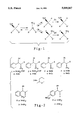
- the present invention is directed to an improvement in the prior art process wherein the reduction protocol is clearly demonstrated to show that the ammonium formate transfer hydrogenation method is stereospecific and provides retention of configuration to the amines produced from functionalized nitro compounds as shown in FIG. I.
- the present invention relates to a relatively simple method of converting chiral compounds, i.e., nitro compounds and preferably nitro alcohols, into amines by transfer hydrogenation wherein the configuration is retained.
- the stereospecific method comprises admixing a solution of the nitro compound with a catalyst followed by an excess of ammonium formate. The admixture is stirred at ambient temperature until the nitro compound is consumed. The amine is then separated.
- a preferred method comprises admixing a solution of nitro alcohol in THF and methanol with a 10% palladium on carbon catalyst followed by the admixture of excess ammonium formate in the amount of about 5 equivalents.
- the mixture is stirred at room temperature until the starting nitro alcohol has been consumed.
- the mixture is then diluted with Et 2 O, filtered and the filtrate is evaporated in vacuo to yield the crude amine.
- Relative proportions of ammonium formate to the nitro compound range from about 3:1 to about 7:1.
- the method of the present invention is generally directed to the reduction of chiral nitro compounds to amines wherein chirality is retained by the use of ammonium formate as a hydrogen transfer reagent.
- Nitro compounds can be reduced to amines with retention of stereo configuration by the process of the present invention provided the carbon atom to which the nitro group is attached also has a hydrogen atom bonded to it.
- nitro compound is defined as follows: ##STR1## wherein R and R 1 are different and represent an unsubstituted or substituted alkyl, cycloalkyl or aryl group with the substitution being inert to the present reduction.
- the substituents may be ether, aryl, hydroxyl, carboxylic acid, ester groups and the like, the length of the carbon chain is immaterial, however, it is preferably 1-30 carbon atoms. While the present invention is generally directed to nitro compounds, it is specifically directed to chiral nitro alcohols without limitation.
- Niro alcohol refers to the following compound: ##STR2## wherein each R can be the same or different, and represent the same groups as described above for R and R 1 for the nitro compound described above.
- Nitro alcohols are frequently used as intermediates in the synthesis of ⁇ -amino alcohol derivatives; for example, they are useful in the synthesis of chloramphenicol, T. Controulis, et al., J. Am. Chem. Soc. 1949, 71, 2463, and of ephedrine, F. Hoover, et al., J. Org. Chem. 1967, 12, 506, and norephedrine.
- nitro alcohols 1b (threo:erythro 6.5:1), 3a (threo:erythro 1:2.9), 3b (threo:erythro 1:3.2), 5a (erythro only) and 6a (threo:erythro 1:8.1) were converted into the corresponding ⁇ -amino alcohols 2b (44%, threo:erythro 6:1), 4a (61%, threo:erythro 1:2.8), 4b (87%, threo:erythro 1:3.2), 5b (73%, erythro) and 6b (58%, threo).
- the method of the present invention relates to the use of ammonium formate as a hydrogen transfer reagent to convert chiral nitro compounds to amines wherein the same optical activity is retained in the resultant amine product.
- the ammonium formate is admixed in a solvent, which for purposes of this invention, may be any solvent capable of dissolving the ammonium formate and nitro compounds and be inert to the reaction conditions.
- a solvent which for purposes of this invention, may be any solvent capable of dissolving the ammonium formate and nitro compounds and be inert to the reaction conditions.
- alcohol solvents are employed, such as methanol, ethanol, isopropyl alcohols, butanol and co-solvents such as diethyl ether, dimethyl ether, etc.
- the nitro compound is added. If the nitro compound is a nitro alcohol, it may be utilized as the solvent system.
- the catalyst may be any conventional hydrogenation-dehydrogenation catalyst.
- These conventional catalysts include, for example, catalysts supported by noble metals such as ruthenium, palladium or rhodium. Supports may include carbon, clay, aluminum, silica, etc.
- a supported metal and palladium on carbon are utilized in catalytic amounts as a catalyst.
- ammonium formate is utilized in the solvent over the amount of nitro compound.
- Equivalent amounts ranging from about 3:1 to about 7:1 of ammonium formate to nitro compound can be utilized.
- a preferred ratio is about 5:1.
- nitro compound and ammonium formate are added to the solvent, the mixture is stirred at a temperature effective to allow the nitro compound to be consumed.
- the effective reaction temperature may be from about 10° C. to about 100° C.
- ambient temperature is utilized, however, higher temperatures may be used depending upon the boiling point of the solvent. Lower temperatures may also be utilized.
- reaction mixture may then be diluted with any suitable solvent, filtered and evaporated to recover the crude amine.
- Vacuum evaporation is preferred. Any conventional separation means may be utilized to purify the crude amine such as distillation, crystallization or chromatographic separation.
- a typical procedure for converting nitro compounds into amines with retention of configuration comprises adding 10% palladium on carbon (50 milligram) to a solution of nitro alcohol (Scheme II, 3b) (0.219 grams, 1.1 mmol.) in THF and methanol (50:50, 10 mL) followed by the addition of an excess of ammonium formate (0.35 grams, 5 equiv.). The mixture is then stirred at room temperature until all the starting nitro alcohol has been consumed. The mixture is then diluted with Et 2 O (100 mL), filtered, and the filtrate is evaporated in vacuo to yield the crude amine. Flash column chromatography (SiO 2 , methanol chloroform, 2:98 v/v) yielded the amine 4b (0.16 grams, 87%).
- the method of the present invention is a relatively mild procedure for the conversion of the ⁇ -nitro alcohols into the corresponding hydroxy amines with retention of configuration.
Landscapes
- Chemical & Material Sciences (AREA)
- Organic Chemistry (AREA)
- Chemical Kinetics & Catalysis (AREA)
- Organic Low-Molecular-Weight Compounds And Preparation Thereof (AREA)
Abstract
The present invention relates to a method of converting β-nitro compounds, specifically alcohols, into the corresponding hydroxy amines with retention of configuration by the use of ammonium formate.
Description
This application is a continuation of U.S. Ser. No. 229,227, filed Aug. 5, 1988, now abandoned.
In 1984, Ram and Ehrenkaufer, Tetrahedron Lett. 1984, 25, 3415, reported that nitro compounds could be easily converted into the corresponding amines by transfer hydrogenation using ammonium formate catalyzed by palladium on carbon. The preparation of ammonium formate was described in 1941 by S. Zuffanti in J. Am. Chem. Soc.1941, 63, 3123. It has been generally used in the precipitation of base metals from the salts of the noble metals. The use of ammonium formate in organic synthesis was first illustrated by Leucart in Ber-Disch. Chem. Ges. 1885, 18, 2341, in which various carbonyl compounds were reacted with ammonium formate to afford the corresponding amines. This process was later named as the "Leucart Reaction".
Ram et al. Tetrahedron Letter, supra, and Ram et al. Synthesis, 1986, 138, disclose the conversion of nitro compounds to the corresponding amines by transfer hydrogenation using ammonium formate in the presence of a palladium on carbon catalyst without concern directed to steric configuration. Reduction of nitro compounds to the corresponding amine has been generally thought, by those skilled in the art, to entail the loss of stereo configuration and production of racemic mixtures when the starting nitro compound is an enantiomercially pure material. This involved deprotonation of untreated nitro compound to form a nitronate anion which is planar and, therefore, one which forms a racemic mixture of nitro compound on reprotonation (an equilibrium reaction). The reduction of the thus formed reprotonated racemic nitro compound provides the corresponding racemic amino compound.
Conventional prior art processes for converting β-nitro alcohols into the corresponding hydroxy amines with retention of configuration were usually carried out by hydrogenation over Raney nickel or platinum catalysts. These procedures frequently required elevated temperatures and pressures and cannot be carried out at room temperature in a relatively mild procedure.
The present invention is directed to an improvement in the prior art process wherein the reduction protocol is clearly demonstrated to show that the ammonium formate transfer hydrogenation method is stereospecific and provides retention of configuration to the amines produced from functionalized nitro compounds as shown in FIG. I.
The present invention relates to a relatively simple method of converting chiral compounds, i.e., nitro compounds and preferably nitro alcohols, into amines by transfer hydrogenation wherein the configuration is retained. The stereospecific method comprises admixing a solution of the nitro compound with a catalyst followed by an excess of ammonium formate. The admixture is stirred at ambient temperature until the nitro compound is consumed. The amine is then separated.
More particularly, a preferred method comprises admixing a solution of nitro alcohol in THF and methanol with a 10% palladium on carbon catalyst followed by the admixture of excess ammonium formate in the amount of about 5 equivalents. The mixture is stirred at room temperature until the starting nitro alcohol has been consumed. The mixture is then diluted with Et2 O, filtered and the filtrate is evaporated in vacuo to yield the crude amine. Relative proportions of ammonium formate to the nitro compound range from about 3:1 to about 7:1.
The method of the present invention is generally directed to the reduction of chiral nitro compounds to amines wherein chirality is retained by the use of ammonium formate as a hydrogen transfer reagent. Nitro compounds can be reduced to amines with retention of stereo configuration by the process of the present invention provided the carbon atom to which the nitro group is attached also has a hydrogen atom bonded to it.
In accordance with the present invention, the term "nitro compound" is defined as follows: ##STR1## wherein R and R1 are different and represent an unsubstituted or substituted alkyl, cycloalkyl or aryl group with the substitution being inert to the present reduction. The substituents may be ether, aryl, hydroxyl, carboxylic acid, ester groups and the like, the length of the carbon chain is immaterial, however, it is preferably 1-30 carbon atoms. While the present invention is generally directed to nitro compounds, it is specifically directed to chiral nitro alcohols without limitation.
"Nitro alcohol" refers to the following compound: ##STR2## wherein each R can be the same or different, and represent the same groups as described above for R and R1 for the nitro compound described above.
Nitro alcohols are frequently used as intermediates in the synthesis of β-amino alcohol derivatives; for example, they are useful in the synthesis of chloramphenicol, T. Controulis, et al., J. Am. Chem. Soc. 1949, 71, 2463, and of ephedrine, F. Hoover, et al., J. Org. Chem. 1967, 12, 506, and norephedrine.
Referring to FIG. II, the transfer hydrogenation of pure racemic threo nitro alcohol 1a in methanol solution produces the amino alcohol 2a with a yield of 80%. None of the erythro isomer is detected in such a product by NMR spectroscopy. In a similar manner, the nitro alcohols 1b (threo:erythro 6.5:1), 3a (threo:erythro 1:2.9), 3b (threo:erythro 1:3.2), 5a (erythro only) and 6a (threo:erythro 1:8.1) were converted into the corresponding β-amino alcohols 2b (44%, threo:erythro 6:1), 4a (61%, threo:erythro 1:2.8), 4b (87%, threo:erythro 1:3.2), 5b (73%, erythro) and 6b (58%, threo).
The method of the present invention relates to the use of ammonium formate as a hydrogen transfer reagent to convert chiral nitro compounds to amines wherein the same optical activity is retained in the resultant amine product. The ammonium formate is admixed in a solvent, which for purposes of this invention, may be any solvent capable of dissolving the ammonium formate and nitro compounds and be inert to the reaction conditions. Preferably, alcohol solvents are employed, such as methanol, ethanol, isopropyl alcohols, butanol and co-solvents such as diethyl ether, dimethyl ether, etc. Into this solvent the nitro compound is added. If the nitro compound is a nitro alcohol, it may be utilized as the solvent system. Further, a catalyst is added to the solvent. The catalyst may be any conventional hydrogenation-dehydrogenation catalyst. These conventional catalysts include, for example, catalysts supported by noble metals such as ruthenium, palladium or rhodium. Supports may include carbon, clay, aluminum, silica, etc. Preferably, a supported metal and palladium on carbon are utilized in catalytic amounts as a catalyst.
An excess of ammonium formate is utilized in the solvent over the amount of nitro compound. Equivalent amounts ranging from about 3:1 to about 7:1 of ammonium formate to nitro compound can be utilized. A preferred ratio is about 5:1.
After the catalyst, nitro compound and ammonium formate are added to the solvent, the mixture is stirred at a temperature effective to allow the nitro compound to be consumed. The effective reaction temperature may be from about 10° C. to about 100° C. Preferably, ambient temperature is utilized, however, higher temperatures may be used depending upon the boiling point of the solvent. Lower temperatures may also be utilized.
The reaction mixture may then be diluted with any suitable solvent, filtered and evaporated to recover the crude amine. Vacuum evaporation is preferred. Any conventional separation means may be utilized to purify the crude amine such as distillation, crystallization or chromatographic separation.
A typical procedure for converting nitro compounds into amines with retention of configuration comprises adding 10% palladium on carbon (50 milligram) to a solution of nitro alcohol (Scheme II, 3b) (0.219 grams, 1.1 mmol.) in THF and methanol (50:50, 10 mL) followed by the addition of an excess of ammonium formate (0.35 grams, 5 equiv.). The mixture is then stirred at room temperature until all the starting nitro alcohol has been consumed. The mixture is then diluted with Et2 O (100 mL), filtered, and the filtrate is evaporated in vacuo to yield the crude amine. Flash column chromatography (SiO2, methanol chloroform, 2:98 v/v) yielded the amine 4b (0.16 grams, 87%).
The method of the present invention is a relatively mild procedure for the conversion of the β-nitro alcohols into the corresponding hydroxy amines with retention of configuration.
In order to illustrate the method of converting the nitro alkanes to the corresponding amines with retention of configuration by transfer hydrogenation using ammonium formate, reference is made to the following examples which are, however, not to be interpreted as limiting the scope of this invention in any respect.
To a solution of threo 1-phenyl-2-nitro-propan-1-ol (0.61 g, 0.0037 moles) in methanol (10 ml), was added 10% palladium on carbon (0.3 g) followed by ammonium formate (1.06 g, 5 equivalents). The resulting mixture was stirred for 1 hour then poured into Et2 O (200 mL) and filtered. The ether solution was washed with 0.1 M sodium hydroxide (50 mL), dried and evaporated in vacuo. The residue was taken up in Et2 O and treated with 2 mL of saturated HCl in Et2 O giving the crystalline hydrochloride salt (0.27 g, 44%).
To a solution of 3β-acetoxy-6β-nitro-5α-cholestane (0.474 g, 0.001 mole) in THF (5 mL) and methanol (5 mL) was added 10% palladium on carbon (50 mg) followed by ammonium formate (0.315 g, 5 equivalents). The resulting mixture was stirred at room temperature for 50 minutes then diluted with Et2 O, filtered and evaporated in vacuo. Flash column chromatography (SiO2, 4:1, hexane:Et2 O) gave 3β-acetoxy-6β-amino-5α-cholestane (0.366 g, 82%).
To a solution of etythro 1-(2-trifluoromethylphenyl)-2-nitro-butan-1-ol (0.18 g, 0.00068 mole) in THF (5 mL) and methanol (5 mL) was added 10% palladium on carbon (50 mg) followed by ammonium formate (0.21 g, 5 equivalents). The resulting mixture was stirred at room temperature for 1.5 hour then diluted with Et2 O, filtered and evaporated in vacuo. Flash column chromatography (SiO2, 2% MeOH in CHCl3) gave erythro 1-(2-trifluoromethylphenyl)-2-amino-butan-1-ol. (0.074 g, 47%), and some starting material (0.035 g).
To a solution of 1-(4-methoxycarbonylphenyl)-2-nitro-butan-2-ol (0.34 g, 1.3 mmol) in THF (5 mL) and methanol (5 mL) was added 10% palladium on carbon (50 mg) followed by ammonium formate (0.4 g, 5 equivalents). The resulting mixture was stirred at room temperature for 3 hours ten diluted with Et2 O, filtered and evaporated in vacuo. Flash column chromatography (SiO2, 15% MeOH in CHCl3) gave erythro 1-(4-methoxycarbonylphenyl)-2-amino-butan-1-ol (0.22 g, 73%).
Claims (15)
1. The method of reducing chiral nitro compounds while maintaining their configuration, comprising: admixing a catalyst with the nitro compound having a known optical purity greater than 0% and up to and including 100% in a solvent; admixing and stirring an excess of ammonium formate with said mixture converting the nitro compound to an amino while retaining the same optical purity of the compound; and separating the amine having the same configuration as the nitro compound.
2. The method of claim 1 wherein the nitro compound is a nitro alcohol.
3. The method of claim 1 wherein the ammonium formate and nitro compound are admixed in the ratio of about 7 to 1.
4. The method of claim 1 wherein the ammonium formate and nitro compound are admixed in the ratio of about 5 to 1.
5. The method of claim 1 wherein the ammonium formate and nitro compound are admixed in ratios ranging from 3:1 to 7:1.
6. The method of claim 1 wherein the catalyst is palladium on carbon.
7. The method of claim 1 wherein the solvent is any solvent capable of dissolving ammonium formate and the nitro compound.
8. The method of claim 1 wherein the temperature is about 10° C. to about 100° C.
9. The method of reducing chiral nitro alcohols while maintaining their configuration, comprising: admixing a catalyst with the nitro alcohol having a known optical purity greater than 0% and up to and including 100%; admixing and stirring an excess of ammonium formate with said mixture; converting the nitro alcohol to an amine alcohol while retaining the same optical purity of the alcohol and separating the amine having the same configuration as the nitro compound.
10. The method of claim 9 wherein the ammonium formate and nitro alcohol are admixed in the ratio of about 7 to 1.
11. The method of claim 9 wherein the ammonium formate and nitro alcohol are admixed in the ratio of about 5 to 1.
12. The method of claim 9 wherein the ammonium formate and nitro alcohol are admixed in ratios ranging from 3:1 to 7:1.
13. The method of claim 9 wherein the catalyst is palladium on carbon.
14. The method of claim 9 wherein the solvent is any solvent capable of dissolving ammonium formate and the nitro alcohol.
15. The method of claim 9 wherein the temperature is about 10° C. to about 100° C.
Priority Applications (1)
| Application Number | Priority Date | Filing Date | Title |
|---|---|---|---|
| US07/749,492 US5099067A (en) | 1988-08-05 | 1991-08-15 | Use of ammonium formate as a hydrogen transfer reagent for reduction of chiral nitro compounds with retention of configuration |
Applications Claiming Priority (2)
| Application Number | Priority Date | Filing Date | Title |
|---|---|---|---|
| US22922788A | 1988-08-05 | 1988-08-05 | |
| US07/749,492 US5099067A (en) | 1988-08-05 | 1991-08-15 | Use of ammonium formate as a hydrogen transfer reagent for reduction of chiral nitro compounds with retention of configuration |
Related Parent Applications (1)
| Application Number | Title | Priority Date | Filing Date |
|---|---|---|---|
| US22922788A Continuation | 1988-08-05 | 1988-08-05 |
Publications (1)
| Publication Number | Publication Date |
|---|---|
| US5099067A true US5099067A (en) | 1992-03-24 |
Family
ID=26923085
Family Applications (1)
| Application Number | Title | Priority Date | Filing Date |
|---|---|---|---|
| US07/749,492 Expired - Fee Related US5099067A (en) | 1988-08-05 | 1991-08-15 | Use of ammonium formate as a hydrogen transfer reagent for reduction of chiral nitro compounds with retention of configuration |
Country Status (1)
| Country | Link |
|---|---|
| US (1) | US5099067A (en) |
Cited By (5)
| Publication number | Priority date | Publication date | Assignee | Title |
|---|---|---|---|---|
| US5391710A (en) * | 1993-03-25 | 1995-02-21 | Air Products And Chemicals, Inc. | Production of amine functional polymers having improved purity |
| US5750802A (en) * | 1995-06-07 | 1998-05-12 | Amvac Chemical Corporation | (1R*, 2S)-1-phenyl-2-nitroalcohols and method for producing same |
| US20050148801A1 (en) * | 1996-02-12 | 2005-07-07 | Masakatsu Shibasaki | Optically active nitro alcohol derivatives, optically active amino alcohol derivatives, and process for producing thereof |
| WO2014093583A3 (en) * | 2012-12-12 | 2014-08-07 | Ariad Pharmaceuticals, Inc. | Synthetic methods for preparing 3-(imidazo[1,2-b]pyridazin-3-ylethynyl)-4-methyl-n-{4-[(4-methylpiperazin-1-yl)methyl]-3-(trifluoromethyl)phenyl}benzamide mono hydrochloride, other salt forms of this compound and intermediates thereof |
| US9029533B2 (en) | 2005-12-23 | 2015-05-12 | Ariad Pharmaceuticals, Inc. | Substituted acetylenic imidazo[1,2-A]pyridazines as kinase inhibitors |
Citations (8)
| Publication number | Priority date | Publication date | Assignee | Title |
|---|---|---|---|---|
| US2586512A (en) * | 1948-09-15 | 1952-02-19 | Searle & Co | Cyclohexyl-amino-alcohols |
| US3651144A (en) * | 1969-06-06 | 1972-03-21 | John B Tindall | Production of alkanolamines |
| US3883580A (en) * | 1972-02-09 | 1975-05-13 | Monsanto Co | Asymmetric reduction of ketones to form optically active alcohols |
| US3968147A (en) * | 1972-02-09 | 1976-07-06 | Monsanto Company | Asymmetric reduction of ketones to form optically active alcohols |
| US4067905A (en) * | 1975-02-04 | 1978-01-10 | Societe Chimique De La Grande Paroisse, Azote Et Produits Chimiques | Preparation of 2-amino-n-butanol |
| US4148803A (en) * | 1976-10-01 | 1979-04-10 | International Minerals & Chemical Corp. | Nitrosamine reaction products for controlling the growth of bacteria and fungi |
| US4448999A (en) * | 1981-07-30 | 1984-05-15 | Dynamit Nobel Aktiengesellschaft | Process for the preparation of 2-aminopropanediol-1,3(serinol) |
| US4746737A (en) * | 1985-07-26 | 1988-05-24 | Kowa Co., Ltd. | Phenyl guanidinobenzoate derivatives which have protease inhibitory activity |
-
1991
- 1991-08-15 US US07/749,492 patent/US5099067A/en not_active Expired - Fee Related
Patent Citations (8)
| Publication number | Priority date | Publication date | Assignee | Title |
|---|---|---|---|---|
| US2586512A (en) * | 1948-09-15 | 1952-02-19 | Searle & Co | Cyclohexyl-amino-alcohols |
| US3651144A (en) * | 1969-06-06 | 1972-03-21 | John B Tindall | Production of alkanolamines |
| US3883580A (en) * | 1972-02-09 | 1975-05-13 | Monsanto Co | Asymmetric reduction of ketones to form optically active alcohols |
| US3968147A (en) * | 1972-02-09 | 1976-07-06 | Monsanto Company | Asymmetric reduction of ketones to form optically active alcohols |
| US4067905A (en) * | 1975-02-04 | 1978-01-10 | Societe Chimique De La Grande Paroisse, Azote Et Produits Chimiques | Preparation of 2-amino-n-butanol |
| US4148803A (en) * | 1976-10-01 | 1979-04-10 | International Minerals & Chemical Corp. | Nitrosamine reaction products for controlling the growth of bacteria and fungi |
| US4448999A (en) * | 1981-07-30 | 1984-05-15 | Dynamit Nobel Aktiengesellschaft | Process for the preparation of 2-aminopropanediol-1,3(serinol) |
| US4746737A (en) * | 1985-07-26 | 1988-05-24 | Kowa Co., Ltd. | Phenyl guanidinobenzoate derivatives which have protease inhibitory activity |
Non-Patent Citations (10)
| Title |
|---|
| Brieger and Nestrick, Chem. Reviews, 74:567 580 (1974). * |
| Brieger and Nestrick, Chem. Reviews, 74:567-580 (1974). |
| F. A. Carey, and Sandberg, R. J., "Advanced Organic Chemistry," 2nd ed. pp. 193-198, 1983, Plenum Press, New York. |
| F. A. Carey, and Sandberg, R. J., Advanced Organic Chemistry, 2nd ed. pp. 193 198, 1983, Plenum Press, New York. * |
| Ram and Ehrenkaufer, Communications, Feb. 1986, pp. 133 135. * |
| Ram and Ehrenkaufer, Communications, Feb. 1986, pp. 133-135. |
| Ram and Ehrenkaufer, Synthesis, Feb. 1988, pp. 91 95. * |
| Ram and Ehrenkaufer, Synthesis, Feb. 1988, pp. 91-95. |
| Ram and Ehrenkaufer, Tetrahedron Lett., 25:3415 3418 (1984). * |
| Ram and Ehrenkaufer, Tetrahedron Lett., 25:3415-3418 (1984). |
Cited By (16)
| Publication number | Priority date | Publication date | Assignee | Title |
|---|---|---|---|---|
| US5391710A (en) * | 1993-03-25 | 1995-02-21 | Air Products And Chemicals, Inc. | Production of amine functional polymers having improved purity |
| US5750802A (en) * | 1995-06-07 | 1998-05-12 | Amvac Chemical Corporation | (1R*, 2S)-1-phenyl-2-nitroalcohols and method for producing same |
| US20050148801A1 (en) * | 1996-02-12 | 2005-07-07 | Masakatsu Shibasaki | Optically active nitro alcohol derivatives, optically active amino alcohol derivatives, and process for producing thereof |
| US7205425B2 (en) | 1996-02-12 | 2007-04-17 | Chisso Corporation | Optically active nitro alcohol derivatives, optically active amino alcohol derivatives, and process for producing thereof |
| US20070060656A1 (en) * | 1996-12-02 | 2007-03-15 | Masakatsu Shibasaki | Optically active nitro alcohol derivatives, optically active amino alcohol derivatives, and process for producing thereof |
| US9278971B2 (en) | 2005-12-23 | 2016-03-08 | Ariad Pharmaceuticals, Inc. | Substituted acetylenic pyrazolo[1,5-a]pyrimidines as kinase inhibitors |
| US9029533B2 (en) | 2005-12-23 | 2015-05-12 | Ariad Pharmaceuticals, Inc. | Substituted acetylenic imidazo[1,2-A]pyridazines as kinase inhibitors |
| US9493470B2 (en) | 2012-12-12 | 2016-11-15 | Ariad Pharmaceuticals, Inc. | Crystalline forms of 3-(imidazo[1,2-B] pyridazin-3-ylethynyl)-4-methyl-N-{4-[(4-methylpiperazin-1-yl) methyl]-3-(trifluoromethyl)phenyl}benzamide and its mono hydrochloride salt |
| WO2014093583A3 (en) * | 2012-12-12 | 2014-08-07 | Ariad Pharmaceuticals, Inc. | Synthetic methods for preparing 3-(imidazo[1,2-b]pyridazin-3-ylethynyl)-4-methyl-n-{4-[(4-methylpiperazin-1-yl)methyl]-3-(trifluoromethyl)phenyl}benzamide mono hydrochloride, other salt forms of this compound and intermediates thereof |
| US10125136B2 (en) | 2012-12-12 | 2018-11-13 | Ariad Pharmaceuticals, Inc. | Crystalline forms of 3-(imidazo[1,2-B] pyridazin-3-ylethynyl)-4-methyl-N-{4-[(4-methylpiperazin-1-yl)methyl]-3-(trifluoromethyl)phenyl}benzamide and its mono hydrochloride salt |
| US10662197B2 (en) | 2012-12-12 | 2020-05-26 | Ariad Pharmaceuticals, Inc. | Crystalline forms of 3-(imidazo[1,2-b)pyridazin-3-ylethynyl)-4-methyl-N-{4-[(4-methylpiperazin-1-yl)methyl]-3-(trifluoromethyl)phenyl}benzamide and its mono hydrochloride salt |
| US11192895B2 (en) | 2012-12-12 | 2021-12-07 | Ariad Pharmaceuticals, Inc. | Crystalline forms of 3-(imidazo[1,2-b]pyridazin-3-ylethynyl)-4-methyl-n-{4-[(4-methylpiperazin-1-yl)methyl]-3-(trifluoromethyl)phenyl}benzamide and its mono hydrochloride salt |
| US11192897B2 (en) | 2012-12-12 | 2021-12-07 | Ariad Pharmaceuticals, Inc. | Crystalline forms of 3-(imidazo[1,2-b]pyridazin-3-ylethynyl)-4-methyl-N-{4-[(4-methylpiperazin-1-yl)methyl]-3-(trifluoromethyl)phenyl}benzamide and its mono hydrochloride salt |
| US11192896B2 (en) | 2012-12-12 | 2021-12-07 | Ariad Pharmaceuticals, Inc. | Crystalline forms of 3-(imidazo[1,2-b]pyridazin-3-ylethynyl)-4-methyl-N-{4-[(4-methylpiperazin-1-yl)methyl]-3-(trifluoromethyl)phenyl}benzamide and its mono hydrochloride salt |
| US11279705B2 (en) | 2012-12-12 | 2022-03-22 | Ariad Pharmaceuticals, Inc. | Crystalline forms of 3-(imidazo[1,2-b]pyridazin-3-ylethynyl)-4-methyl-n-{4-[(4-methylpiperazin-1-yl)methyl]-3-(trifluoromethyl)phenyl}benzamide and its mono hydrochloride salt |
| US11384086B2 (en) | 2012-12-12 | 2022-07-12 | Ariad Pharmaceuticals, Inc. | Crystalline forms of 3-(imidazo[1,2-b]pyridazin-3-ylethynyl)-4-methyl-n-{4-[(4-methylpiperazin-1- yl)methyl]-3-(trifluoromethyl)phenyl}benzamide and its mono hydrochloride salt |
Similar Documents
| Publication | Publication Date | Title |
|---|---|---|
| KR100421073B1 (en) | Preparation of substituted perhydroisoindoles | |
| US5371237A (en) | Process for the production of 4-hydroxy-2-oxopyrrolidin-1-yl-acetamide | |
| KR960000758B1 (en) | Optically active hydroxybenzylamine derivatives and preparation method thereof | |
| US4595765A (en) | Process for preparing 5,6-dihydroxyindole | |
| US4092314A (en) | Preparation of 4,6-diamino-5-arylazopyrimidines and adenine compounds | |
| CN113214255B (en) | Synthesis method of 2, 6-diazaspiro [3.5] nonane-6-tert-butyl formate and salt thereof | |
| US7288678B2 (en) | Process for preparing terbinafine by using platinum as catalyst | |
| US4469876A (en) | Process for the production of L-proline | |
| EP1405843B1 (en) | Method for producing aminostilbene derivative | |
| JPS62126164A (en) | 4-alkoxy-2-oxo-pyrrolidine-1 acetic acid alkyl ester and manufacture | |
| KR20020032589A (en) | Preparation of Halogenated Primary Amines | |
| US4997984A (en) | Process for preparation of N-(α-alkoxyethyl)-carboxylic acid amide | |
| US5475140A (en) | Process for producing N,N-disubstituted p-phenylenediamine derivative sulfate | |
| JP3111438B2 (en) | Method for producing cyclododecylamine | |
| JPH04368377A (en) | 4-amino-3-hydroxyphthalide and method for manufacturing same | |
| JP4314602B2 (en) | Process for producing optically active 3-hydroxypyrrolidine derivative | |
| JP5192807B2 (en) | Stable crystals of protected pseudouridine | |
| JP2000256284A (en) | Method for producing imine and enamine | |
| US4178453A (en) | Process for the preparation of 2,5-dideoxystreptamine and of a novel intermediate therefor | |
| JP3387579B2 (en) | Method for producing 2-oxaindane derivative | |
| WO2023007712A1 (en) | (r,s)-nicotine production method | |
| JPH072809A (en) | New process for producing aminothiazoleacetic acid derivative | |
| FR2497797A1 (en) | PROCESS FOR THE PREPARATION OF AMINO-4 BUTYRAMIDE | |
| US20080293938A1 (en) | Novel Process for the Preparation of Didanosine Using Novel Intermediates | |
| JP2002212155A (en) | Process for producing optically active asparagine ester derivative, optically active 3-aminopyrrolidine-2,5-dione derivative and optically active 3-aminopyrrolidine derivative |
Legal Events
| Date | Code | Title | Description |
|---|---|---|---|
| FEPP | Fee payment procedure |
Free format text: PAYOR NUMBER ASSIGNED (ORIGINAL EVENT CODE: ASPN); ENTITY STATUS OF PATENT OWNER: SMALL ENTITY |
|
| FPAY | Fee payment |
Year of fee payment: 4 |
|
| REMI | Maintenance fee reminder mailed | ||
| LAPS | Lapse for failure to pay maintenance fees | ||
| FP | Lapsed due to failure to pay maintenance fee |
Effective date: 20000324 |
|
| STCH | Information on status: patent discontinuation |
Free format text: PATENT EXPIRED DUE TO NONPAYMENT OF MAINTENANCE FEES UNDER 37 CFR 1.362 |