US5030442A - Non-crystalline minoxidil composition - Google Patents
Non-crystalline minoxidil composition Download PDFInfo
- Publication number
- US5030442A US5030442A US07/333,660 US33366089A US5030442A US 5030442 A US5030442 A US 5030442A US 33366089 A US33366089 A US 33366089A US 5030442 A US5030442 A US 5030442A
- Authority
- US
- United States
- Prior art keywords
- minoxidil
- composition
- drug
- sulfosuccinate
- weight
- Prior art date
- Legal status (The legal status is an assumption and is not a legal conclusion. Google has not performed a legal analysis and makes no representation as to the accuracy of the status listed.)
- Expired - Lifetime
Links
- ZFMITUMMTDLWHR-UHFFFAOYSA-N Minoxidil Chemical compound NC1=[N+]([O-])C(N)=CC(N2CCCCC2)=N1 ZFMITUMMTDLWHR-UHFFFAOYSA-N 0.000 title claims abstract description 260
- 229960003632 minoxidil Drugs 0.000 title claims abstract description 249
- 239000000203 mixture Substances 0.000 title claims abstract description 228
- 150000001875 compounds Chemical class 0.000 claims abstract description 58
- 239000007921 spray Substances 0.000 claims abstract description 24
- WRIDQFICGBMAFQ-UHFFFAOYSA-N (E)-8-Octadecenoic acid Natural products CCCCCCCCCC=CCCCCCCC(O)=O WRIDQFICGBMAFQ-UHFFFAOYSA-N 0.000 claims abstract description 14
- LQJBNNIYVWPHFW-UHFFFAOYSA-N 20:1omega9c fatty acid Natural products CCCCCCCCCCC=CCCCCCCCC(O)=O LQJBNNIYVWPHFW-UHFFFAOYSA-N 0.000 claims abstract description 14
- QSBYPNXLFMSGKH-UHFFFAOYSA-N 9-Heptadecensaeure Natural products CCCCCCCC=CCCCCCCCC(O)=O QSBYPNXLFMSGKH-UHFFFAOYSA-N 0.000 claims abstract description 14
- ZQPPMHVWECSIRJ-UHFFFAOYSA-N Oleic acid Natural products CCCCCCCCC=CCCCCCCCC(O)=O ZQPPMHVWECSIRJ-UHFFFAOYSA-N 0.000 claims abstract description 14
- 239000005642 Oleic acid Substances 0.000 claims abstract description 14
- QXJSBBXBKPUZAA-UHFFFAOYSA-N isooleic acid Natural products CCCCCCCC=CCCCCCCCCC(O)=O QXJSBBXBKPUZAA-UHFFFAOYSA-N 0.000 claims abstract description 14
- ZQPPMHVWECSIRJ-KTKRTIGZSA-N oleic acid Chemical compound CCCCCCCC\C=C/CCCCCCCC(O)=O ZQPPMHVWECSIRJ-KTKRTIGZSA-N 0.000 claims abstract description 14
- 230000000699 topical effect Effects 0.000 claims abstract description 7
- 150000002632 lipids Chemical class 0.000 claims description 50
- 238000000034 method Methods 0.000 claims description 38
- 229940071190 laureth sulfosuccinate Drugs 0.000 claims description 27
- TYTGWHZODQKWEF-UHFFFAOYSA-N 1-o-dodecyl 4-o-sulfo butanedioate Chemical compound CCCCCCCCCCCCOC(=O)CCC(=O)OS(O)(=O)=O TYTGWHZODQKWEF-UHFFFAOYSA-N 0.000 claims description 18
- 229940071180 lauryl sulfosuccinate Drugs 0.000 claims description 18
- ULUAUXLGCMPNKK-UHFFFAOYSA-N Sulfobutanedioic acid Chemical compound OC(=O)CC(C(O)=O)S(O)(=O)=O ULUAUXLGCMPNKK-UHFFFAOYSA-N 0.000 claims description 15
- 239000002674 ointment Substances 0.000 claims description 11
- 229910019142 PO4 Inorganic materials 0.000 claims description 9
- 239000006071 cream Substances 0.000 claims description 9
- 239000010452 phosphate Substances 0.000 claims description 9
- AWUCVROLDVIAJX-UHFFFAOYSA-N alpha-glycerophosphate Natural products OCC(O)COP(O)(O)=O AWUCVROLDVIAJX-UHFFFAOYSA-N 0.000 claims description 8
- 229940071088 methyl cocoyl taurate Drugs 0.000 claims description 8
- -1 phosphate ester Chemical class 0.000 claims description 8
- UEZVMMHDMIWARA-UHFFFAOYSA-M phosphonate Chemical compound [O-]P(=O)=O UEZVMMHDMIWARA-UHFFFAOYSA-M 0.000 claims description 7
- 201000004384 Alopecia Diseases 0.000 claims description 6
- SFNALCNOMXIBKG-UHFFFAOYSA-N ethylene glycol monododecyl ether Chemical compound CCCCCCCCCCCCOCCO SFNALCNOMXIBKG-UHFFFAOYSA-N 0.000 claims description 6
- BDHFUVZGWQCTTF-UHFFFAOYSA-M sulfonate Chemical compound [O-]S(=O)=O BDHFUVZGWQCTTF-UHFFFAOYSA-M 0.000 claims description 5
- 238000011200 topical administration Methods 0.000 claims description 4
- WRGQSWVCFNIUNZ-GDCKJWNLSA-N 1-oleoyl-sn-glycerol 3-phosphate Chemical compound CCCCCCCC\C=C/CCCCCCCC(=O)OC[C@@H](O)COP(O)(O)=O WRGQSWVCFNIUNZ-GDCKJWNLSA-N 0.000 claims 2
- 231100000360 alopecia Toxicity 0.000 claims 2
- 229940079593 drug Drugs 0.000 abstract description 78
- 239000003814 drug Substances 0.000 abstract description 78
- 239000002904 solvent Substances 0.000 abstract description 37
- 230000004907 flux Effects 0.000 abstract description 11
- 239000000546 pharmaceutical excipient Substances 0.000 abstract description 2
- 239000008135 aqueous vehicle Substances 0.000 abstract 1
- 239000002502 liposome Substances 0.000 description 80
- 239000000243 solution Substances 0.000 description 61
- 238000009472 formulation Methods 0.000 description 54
- 239000002253 acid Substances 0.000 description 51
- 210000003491 skin Anatomy 0.000 description 46
- XLYOFNOQVPJJNP-UHFFFAOYSA-N water Substances O XLYOFNOQVPJJNP-UHFFFAOYSA-N 0.000 description 32
- PORPENFLTBBHSG-MGBGTMOVSA-N 1,2-dihexadecanoyl-sn-glycerol-3-phosphate Chemical compound CCCCCCCCCCCCCCCC(=O)OC[C@H](COP(O)(O)=O)OC(=O)CCCCCCCCCCCCCCC PORPENFLTBBHSG-MGBGTMOVSA-N 0.000 description 28
- HEDRZPFGACZZDS-UHFFFAOYSA-N Chloroform Chemical compound ClC(Cl)Cl HEDRZPFGACZZDS-UHFFFAOYSA-N 0.000 description 28
- LFQSCWFLJHTTHZ-UHFFFAOYSA-N Ethanol Chemical compound CCO LFQSCWFLJHTTHZ-UHFFFAOYSA-N 0.000 description 23
- DNIAPMSPPWPWGF-UHFFFAOYSA-N Propylene glycol Chemical compound CC(O)CO DNIAPMSPPWPWGF-UHFFFAOYSA-N 0.000 description 22
- 238000002360 preparation method Methods 0.000 description 21
- WTJKGGKOPKCXLL-RRHRGVEJSA-N phosphatidylcholine Chemical compound CCCCCCCCCCCCCCCC(=O)OC[C@H](COP([O-])(=O)OCC[N+](C)(C)C)OC(=O)CCCCCCCC=CCCCCCCCC WTJKGGKOPKCXLL-RRHRGVEJSA-N 0.000 description 19
- 239000000725 suspension Substances 0.000 description 17
- QPCDCPDFJACHGM-UHFFFAOYSA-N N,N-bis{2-[bis(carboxymethyl)amino]ethyl}glycine Chemical compound OC(=O)CN(CC(O)=O)CCN(CC(=O)O)CCN(CC(O)=O)CC(O)=O QPCDCPDFJACHGM-UHFFFAOYSA-N 0.000 description 16
- 229960003330 pentetic acid Drugs 0.000 description 16
- 230000035515 penetration Effects 0.000 description 14
- 238000002156 mixing Methods 0.000 description 13
- 239000002245 particle Substances 0.000 description 13
- 239000003380 propellant Substances 0.000 description 13
- OKKJLVBELUTLKV-UHFFFAOYSA-N Methanol Chemical compound OC OKKJLVBELUTLKV-UHFFFAOYSA-N 0.000 description 12
- WBWWGRHZICKQGZ-HZAMXZRMSA-N taurocholic acid Chemical compound C([C@H]1C[C@H]2O)[C@H](O)CC[C@]1(C)[C@@H]1[C@@H]2[C@@H]2CC[C@H]([C@@H](CCC(=O)NCCS(O)(=O)=O)C)[C@@]2(C)[C@@H](O)C1 WBWWGRHZICKQGZ-HZAMXZRMSA-N 0.000 description 12
- BHYOQNUELFTYRT-UHFFFAOYSA-N Cholesterol sulfate Natural products C1C=C2CC(OS(O)(=O)=O)CCC2(C)C2C1C1CCC(C(C)CCCC(C)C)C1(C)CC2 BHYOQNUELFTYRT-UHFFFAOYSA-N 0.000 description 11
- BHYOQNUELFTYRT-DPAQBDIFSA-N cholesterol sulfate Chemical compound C1C=C2C[C@@H](OS(O)(=O)=O)CC[C@]2(C)[C@@H]2[C@@H]1[C@@H]1CC[C@H]([C@H](C)CCCC(C)C)[C@@]1(C)CC2 BHYOQNUELFTYRT-DPAQBDIFSA-N 0.000 description 11
- 239000010432 diamond Substances 0.000 description 11
- 239000012153 distilled water Substances 0.000 description 11
- 230000036571 hydration Effects 0.000 description 11
- 238000006703 hydration reaction Methods 0.000 description 11
- 229940107889 rogaine Drugs 0.000 description 11
- WBWWGRHZICKQGZ-UHFFFAOYSA-N Taurocholic acid Natural products OC1CC2CC(O)CCC2(C)C2C1C1CCC(C(CCC(=O)NCCS(O)(=O)=O)C)C1(C)C(O)C2 WBWWGRHZICKQGZ-UHFFFAOYSA-N 0.000 description 10
- 239000007933 dermal patch Substances 0.000 description 10
- 239000010408 film Substances 0.000 description 10
- 230000008901 benefit Effects 0.000 description 9
- 239000000839 emulsion Substances 0.000 description 9
- 230000007928 solubilization Effects 0.000 description 9
- 238000005063 solubilization Methods 0.000 description 9
- 239000013078 crystal Substances 0.000 description 8
- 230000001186 cumulative effect Effects 0.000 description 8
- 239000006185 dispersion Substances 0.000 description 8
- 238000000605 extraction Methods 0.000 description 8
- 238000011068 loading method Methods 0.000 description 8
- 238000012360 testing method Methods 0.000 description 8
- QAOWNCQODCNURD-UHFFFAOYSA-L Sulfate Chemical compound [O-]S([O-])(=O)=O QAOWNCQODCNURD-UHFFFAOYSA-L 0.000 description 7
- 229940079868 disodium laureth sulfosuccinate Drugs 0.000 description 7
- YGAXLGGEEQLLKV-UHFFFAOYSA-L disodium;4-dodecoxy-4-oxo-2-sulfonatobutanoate Chemical compound [Na+].[Na+].CCCCCCCCCCCCOC(=O)CC(C([O-])=O)S([O-])(=O)=O YGAXLGGEEQLLKV-UHFFFAOYSA-L 0.000 description 7
- NBIIXXVUZAFLBC-UHFFFAOYSA-K phosphate Chemical compound [O-]P([O-])([O-])=O NBIIXXVUZAFLBC-UHFFFAOYSA-K 0.000 description 7
- 239000003981 vehicle Substances 0.000 description 7
- RTZKZFJDLAIYFH-UHFFFAOYSA-N Diethyl ether Chemical compound CCOCC RTZKZFJDLAIYFH-UHFFFAOYSA-N 0.000 description 6
- VEXZGXHMUGYJMC-UHFFFAOYSA-N Hydrochloric acid Chemical compound Cl VEXZGXHMUGYJMC-UHFFFAOYSA-N 0.000 description 6
- 241000699666 Mus <mouse, genus> Species 0.000 description 6
- 239000007864 aqueous solution Substances 0.000 description 6
- 238000003756 stirring Methods 0.000 description 6
- QXNVGIXVLWOKEQ-UHFFFAOYSA-N Disodium Chemical class [Na][Na] QXNVGIXVLWOKEQ-UHFFFAOYSA-N 0.000 description 5
- ATBOMIWRCZXYSZ-XZBBILGWSA-N [1-[2,3-dihydroxypropoxy(hydroxy)phosphoryl]oxy-3-hexadecanoyloxypropan-2-yl] (9e,12e)-octadeca-9,12-dienoate Chemical compound CCCCCCCCCCCCCCCC(=O)OCC(COP(O)(=O)OCC(O)CO)OC(=O)CCCCCCC\C=C\C\C=C\CCCCC ATBOMIWRCZXYSZ-XZBBILGWSA-N 0.000 description 5
- 239000012736 aqueous medium Substances 0.000 description 5
- 239000003795 chemical substances by application Substances 0.000 description 5
- KYKAJFCTULSVSH-UHFFFAOYSA-N chloro(fluoro)methane Chemical compound F[C]Cl KYKAJFCTULSVSH-UHFFFAOYSA-N 0.000 description 5
- 238000002474 experimental method Methods 0.000 description 5
- 239000000463 material Substances 0.000 description 5
- 150000003904 phospholipids Chemical class 0.000 description 5
- FAPWRFPIFSIZLT-UHFFFAOYSA-M Sodium chloride Chemical compound [Na+].[Cl-] FAPWRFPIFSIZLT-UHFFFAOYSA-M 0.000 description 4
- 239000002738 chelating agent Substances 0.000 description 4
- HVYWMOMLDIMFJA-DPAQBDIFSA-N cholesterol Chemical compound C1C=C2C[C@@H](O)CC[C@]2(C)[C@@H]2[C@@H]1[C@@H]1CC[C@H]([C@H](C)CCCC(C)C)[C@@]1(C)CC2 HVYWMOMLDIMFJA-DPAQBDIFSA-N 0.000 description 4
- 238000004090 dissolution Methods 0.000 description 4
- 150000002148 esters Chemical class 0.000 description 4
- 238000001704 evaporation Methods 0.000 description 4
- 230000008020 evaporation Effects 0.000 description 4
- 230000000887 hydrating effect Effects 0.000 description 4
- 239000002960 lipid emulsion Substances 0.000 description 4
- LXCFILQKKLGQFO-UHFFFAOYSA-N methylparaben Chemical compound COC(=O)C1=CC=C(O)C=C1 LXCFILQKKLGQFO-UHFFFAOYSA-N 0.000 description 4
- 238000012986 modification Methods 0.000 description 4
- 230000004048 modification Effects 0.000 description 4
- QELSKZZBTMNZEB-UHFFFAOYSA-N p-hydroxybenzoic acid propyl ester Natural products CCCOC(=O)C1=CC=C(O)C=C1 QELSKZZBTMNZEB-UHFFFAOYSA-N 0.000 description 4
- 150000003905 phosphatidylinositols Chemical class 0.000 description 4
- 238000002390 rotary evaporation Methods 0.000 description 4
- 238000003345 scintillation counting Methods 0.000 description 4
- 230000037317 transdermal delivery Effects 0.000 description 4
- NWUYHJFMYQTDRP-UHFFFAOYSA-N 1,2-bis(ethenyl)benzene;1-ethenyl-2-ethylbenzene;styrene Chemical compound C=CC1=CC=CC=C1.CCC1=CC=CC=C1C=C.C=CC1=CC=CC=C1C=C NWUYHJFMYQTDRP-UHFFFAOYSA-N 0.000 description 3
- TZCPCKNHXULUIY-RGULYWFUSA-N 1,2-distearoyl-sn-glycero-3-phosphoserine Chemical compound CCCCCCCCCCCCCCCCCC(=O)OC[C@H](COP(O)(=O)OC[C@H](N)C(O)=O)OC(=O)CCCCCCCCCCCCCCCCC TZCPCKNHXULUIY-RGULYWFUSA-N 0.000 description 3
- ZWZWYGMENQVNFU-UHFFFAOYSA-N Glycerophosphorylserin Natural products OC(=O)C(N)COP(O)(=O)OCC(O)CO ZWZWYGMENQVNFU-UHFFFAOYSA-N 0.000 description 3
- 238000012404 In vitro experiment Methods 0.000 description 3
- 239000007987 MES buffer Substances 0.000 description 3
- 239000002202 Polyethylene glycol Substances 0.000 description 3
- HEMHJVSKTPXQMS-UHFFFAOYSA-M Sodium hydroxide Chemical compound [OH-].[Na+] HEMHJVSKTPXQMS-UHFFFAOYSA-M 0.000 description 3
- 229930182558 Sterol Natural products 0.000 description 3
- 150000001408 amides Chemical class 0.000 description 3
- 239000000872 buffer Substances 0.000 description 3
- 239000003729 cation exchange resin Substances 0.000 description 3
- 230000000536 complexating effect Effects 0.000 description 3
- 239000000284 extract Substances 0.000 description 3
- 238000004108 freeze drying Methods 0.000 description 3
- 239000000499 gel Substances 0.000 description 3
- 210000003128 head Anatomy 0.000 description 3
- 238000002347 injection Methods 0.000 description 3
- 239000007924 injection Substances 0.000 description 3
- 229910052500 inorganic mineral Inorganic materials 0.000 description 3
- 230000007774 longterm Effects 0.000 description 3
- 229910052751 metal Inorganic materials 0.000 description 3
- 239000002184 metal Substances 0.000 description 3
- 239000011707 mineral Substances 0.000 description 3
- 229920001223 polyethylene glycol Polymers 0.000 description 3
- 150000003839 salts Chemical group 0.000 description 3
- 239000011877 solvent mixture Substances 0.000 description 3
- 150000003432 sterols Chemical class 0.000 description 3
- 235000003702 sterols Nutrition 0.000 description 3
- 238000003860 storage Methods 0.000 description 3
- 210000000434 stratum corneum Anatomy 0.000 description 3
- 239000004094 surface-active agent Substances 0.000 description 3
- 238000004809 thin layer chromatography Methods 0.000 description 3
- KILNVBDSWZSGLL-KXQOOQHDSA-N 1,2-dihexadecanoyl-sn-glycero-3-phosphocholine Chemical compound CCCCCCCCCCCCCCCC(=O)OC[C@H](COP([O-])(=O)OCC[N+](C)(C)C)OC(=O)CCCCCCCCCCCCCCC KILNVBDSWZSGLL-KXQOOQHDSA-N 0.000 description 2
- SXGZJKUKBWWHRA-UHFFFAOYSA-N 2-(N-morpholiniumyl)ethanesulfonate Chemical compound [O-]S(=O)(=O)CC[NH+]1CCOCC1 SXGZJKUKBWWHRA-UHFFFAOYSA-N 0.000 description 2
- PWQNOLAKMCLNJI-KTKRTIGZSA-N 2-[2-[2-[(z)-octadec-9-enoxy]ethoxy]ethoxy]ethyl dihydrogen phosphate Chemical compound CCCCCCCC\C=C/CCCCCCCCOCCOCCOCCOP(O)(O)=O PWQNOLAKMCLNJI-KTKRTIGZSA-N 0.000 description 2
- 239000004322 Butylated hydroxytoluene Substances 0.000 description 2
- NLZUEZXRPGMBCV-UHFFFAOYSA-N Butylhydroxytoluene Chemical compound CC1=CC(C(C)(C)C)=C(O)C(C(C)(C)C)=C1 NLZUEZXRPGMBCV-UHFFFAOYSA-N 0.000 description 2
- VOPWNXZWBYDODV-UHFFFAOYSA-N Chlorodifluoromethane Chemical compound FC(F)Cl VOPWNXZWBYDODV-UHFFFAOYSA-N 0.000 description 2
- LYCAIKOWRPUZTN-UHFFFAOYSA-N Ethylene glycol Chemical compound OCCO LYCAIKOWRPUZTN-UHFFFAOYSA-N 0.000 description 2
- 241001465754 Metazoa Species 0.000 description 2
- 241000714177 Murine leukemia virus Species 0.000 description 2
- NBIIXXVUZAFLBC-UHFFFAOYSA-N Phosphoric acid Chemical compound OP(O)(O)=O NBIIXXVUZAFLBC-UHFFFAOYSA-N 0.000 description 2
- 238000010521 absorption reaction Methods 0.000 description 2
- 150000007513 acids Chemical class 0.000 description 2
- 125000005600 alkyl phosphonate group Chemical group 0.000 description 2
- 206010068168 androgenetic alopecia Diseases 0.000 description 2
- 239000012062 aqueous buffer Substances 0.000 description 2
- 239000013011 aqueous formulation Substances 0.000 description 2
- 230000015572 biosynthetic process Effects 0.000 description 2
- 235000010354 butylated hydroxytoluene Nutrition 0.000 description 2
- 229940095259 butylated hydroxytoluene Drugs 0.000 description 2
- QPAXMPYBNSHKAK-UHFFFAOYSA-N chloro(difluoro)methane Chemical compound F[C](F)Cl QPAXMPYBNSHKAK-UHFFFAOYSA-N 0.000 description 2
- 235000012000 cholesterol Nutrition 0.000 description 2
- 230000003247 decreasing effect Effects 0.000 description 2
- 229940079886 disodium lauryl sulfosuccinate Drugs 0.000 description 2
- KHIQYZGEUSTKSB-UHFFFAOYSA-L disodium;4-dodecoxy-4-oxo-3-sulfobutanoate Chemical compound [Na+].[Na+].CCCCCCCCCCCCOC(=O)C(S(O)(=O)=O)CC([O-])=O.CCCCCCCCCCCCOC(=O)C(S(O)(=O)=O)CC([O-])=O KHIQYZGEUSTKSB-UHFFFAOYSA-L 0.000 description 2
- 238000001647 drug administration Methods 0.000 description 2
- 230000003779 hair growth Effects 0.000 description 2
- 230000003676 hair loss Effects 0.000 description 2
- 238000010438 heat treatment Methods 0.000 description 2
- 230000014759 maintenance of location Effects 0.000 description 2
- 239000012528 membrane Substances 0.000 description 2
- 235000010270 methyl p-hydroxybenzoate Nutrition 0.000 description 2
- 239000004292 methyl p-hydroxybenzoate Substances 0.000 description 2
- 229960002216 methylparaben Drugs 0.000 description 2
- 238000000386 microscopy Methods 0.000 description 2
- 230000003020 moisturizing effect Effects 0.000 description 2
- 229940093440 oleth-3-phosphate Drugs 0.000 description 2
- 239000003960 organic solvent Substances 0.000 description 2
- 230000000149 penetrating effect Effects 0.000 description 2
- 150000008105 phosphatidylcholines Chemical class 0.000 description 2
- 150000003014 phosphoric acid esters Chemical class 0.000 description 2
- 230000010287 polarization Effects 0.000 description 2
- 239000003755 preservative agent Substances 0.000 description 2
- 230000008569 process Effects 0.000 description 2
- 238000003672 processing method Methods 0.000 description 2
- 235000010232 propyl p-hydroxybenzoate Nutrition 0.000 description 2
- 239000004405 propyl p-hydroxybenzoate Substances 0.000 description 2
- 229960003415 propylparaben Drugs 0.000 description 2
- 229920006395 saturated elastomer Polymers 0.000 description 2
- 239000011780 sodium chloride Substances 0.000 description 2
- XGRLSUFHELJJAB-JGSYTFBMSA-M sodium;[(2r)-2-hydroxy-3-[(z)-octadec-9-enoyl]oxypropyl] hydrogen phosphate Chemical compound [Na+].CCCCCCCC\C=C/CCCCCCCC(=O)OC[C@@H](O)COP(O)([O-])=O XGRLSUFHELJJAB-JGSYTFBMSA-M 0.000 description 2
- 230000003381 solubilizing effect Effects 0.000 description 2
- 238000000935 solvent evaporation Methods 0.000 description 2
- 238000000638 solvent extraction Methods 0.000 description 2
- 238000001694 spray drying Methods 0.000 description 2
- 150000003871 sulfonates Chemical class 0.000 description 2
- 239000010409 thin film Substances 0.000 description 2
- 210000001519 tissue Anatomy 0.000 description 2
- 238000013271 transdermal drug delivery Methods 0.000 description 2
- AJDIZQLSFPQPEY-UHFFFAOYSA-N 1,1,2-Trichlorotrifluoroethane Chemical compound FC(F)(Cl)C(F)(Cl)Cl AJDIZQLSFPQPEY-UHFFFAOYSA-N 0.000 description 1
- DDMOUSALMHHKOS-UHFFFAOYSA-N 1,2-dichloro-1,1,2,2-tetrafluoroethane Chemical compound FC(F)(Cl)C(F)(F)Cl DDMOUSALMHHKOS-UHFFFAOYSA-N 0.000 description 1
- RFCAUADVODFSLZ-UHFFFAOYSA-N 1-Chloro-1,1,2,2,2-pentafluoroethane Chemical compound FC(F)(F)C(F)(F)Cl RFCAUADVODFSLZ-UHFFFAOYSA-N 0.000 description 1
- KGULFLCOPRYBEV-KTKRTIGZSA-N 2-[2-[2-[(z)-octadec-9-enoxy]ethoxy]ethoxy]ethanol Chemical compound CCCCCCCC\C=C/CCCCCCCCOCCOCCOCCO KGULFLCOPRYBEV-KTKRTIGZSA-N 0.000 description 1
- MJJJJEUEZVGFLW-UHFFFAOYSA-N 2-dodecyl-2-sulfobutanedioic acid Chemical compound CCCCCCCCCCCCC(S(O)(=O)=O)(C(O)=O)CC(O)=O MJJJJEUEZVGFLW-UHFFFAOYSA-N 0.000 description 1
- YLZOPXRUQYQQID-UHFFFAOYSA-N 3-(2,4,6,7-tetrahydrotriazolo[4,5-c]pyridin-5-yl)-1-[4-[2-[[3-(trifluoromethoxy)phenyl]methylamino]pyrimidin-5-yl]piperazin-1-yl]propan-1-one Chemical compound N1N=NC=2CN(CCC=21)CCC(=O)N1CCN(CC1)C=1C=NC(=NC=1)NCC1=CC(=CC=C1)OC(F)(F)F YLZOPXRUQYQQID-UHFFFAOYSA-N 0.000 description 1
- KCXVZYZYPLLWCC-UHFFFAOYSA-N EDTA Chemical compound OC(=O)CN(CC(O)=O)CCN(CC(O)=O)CC(O)=O KCXVZYZYPLLWCC-UHFFFAOYSA-N 0.000 description 1
- 206010020772 Hypertension Diseases 0.000 description 1
- 239000000232 Lipid Bilayer Substances 0.000 description 1
- 238000000585 Mann–Whitney U test Methods 0.000 description 1
- 241000699670 Mus sp. Species 0.000 description 1
- 208000002193 Pain Diseases 0.000 description 1
- ABLZXFCXXLZCGV-UHFFFAOYSA-N Phosphorous acid Chemical class OP(O)=O ABLZXFCXXLZCGV-UHFFFAOYSA-N 0.000 description 1
- 239000004698 Polyethylene Substances 0.000 description 1
- 206010040880 Skin irritation Diseases 0.000 description 1
- 239000003929 acidic solution Substances 0.000 description 1
- 230000002378 acidificating effect Effects 0.000 description 1
- 150000008052 alkyl sulfonates Chemical class 0.000 description 1
- 229910000147 aluminium phosphate Inorganic materials 0.000 description 1
- 238000013459 approach Methods 0.000 description 1
- 238000003556 assay Methods 0.000 description 1
- 125000004429 atom Chemical group 0.000 description 1
- 230000036772 blood pressure Effects 0.000 description 1
- 230000003139 buffering effect Effects 0.000 description 1
- 125000004432 carbon atom Chemical group C* 0.000 description 1
- 238000005341 cation exchange Methods 0.000 description 1
- 238000005277 cation exchange chromatography Methods 0.000 description 1
- 150000001768 cations Chemical group 0.000 description 1
- 238000005119 centrifugation Methods 0.000 description 1
- 230000008859 change Effects 0.000 description 1
- 235000019406 chloropentafluoroethane Nutrition 0.000 description 1
- 230000000052 comparative effect Effects 0.000 description 1
- 239000000356 contaminant Substances 0.000 description 1
- 239000002537 cosmetic Substances 0.000 description 1
- 239000006184 cosolvent Substances 0.000 description 1
- 238000002425 crystallisation Methods 0.000 description 1
- 230000008025 crystallization Effects 0.000 description 1
- RNPXCFINMKSQPQ-UHFFFAOYSA-N dicetyl hydrogen phosphate Chemical compound CCCCCCCCCCCCCCCCOP(O)(=O)OCCCCCCCCCCCCCCCC RNPXCFINMKSQPQ-UHFFFAOYSA-N 0.000 description 1
- 229940093541 dicetylphosphate Drugs 0.000 description 1
- PXBRQCKWGAHEHS-UHFFFAOYSA-N dichlorodifluoromethane Chemical compound FC(F)(Cl)Cl PXBRQCKWGAHEHS-UHFFFAOYSA-N 0.000 description 1
- 235000019404 dichlorodifluoromethane Nutrition 0.000 description 1
- LOKCTEFSRHRXRJ-UHFFFAOYSA-I dipotassium trisodium dihydrogen phosphate hydrogen phosphate dichloride Chemical compound P(=O)(O)(O)[O-].[K+].P(=O)(O)([O-])[O-].[Na+].[Na+].[Cl-].[K+].[Cl-].[Na+] LOKCTEFSRHRXRJ-UHFFFAOYSA-I 0.000 description 1
- 125000003438 dodecyl group Chemical group [H]C([H])([H])C([H])([H])C([H])([H])C([H])([H])C([H])([H])C([H])([H])C([H])([H])C([H])([H])C([H])([H])C([H])([H])C([H])([H])C([H])([H])* 0.000 description 1
- 239000013583 drug formulation Substances 0.000 description 1
- 230000000694 effects Effects 0.000 description 1
- 239000003995 emulsifying agent Substances 0.000 description 1
- 230000001804 emulsifying effect Effects 0.000 description 1
- 238000005538 encapsulation Methods 0.000 description 1
- 210000002615 epidermis Anatomy 0.000 description 1
- 125000001495 ethyl group Chemical group [H]C([H])([H])C([H])([H])* 0.000 description 1
- 230000002349 favourable effect Effects 0.000 description 1
- 239000010419 fine particle Substances 0.000 description 1
- 239000003349 gelling agent Substances 0.000 description 1
- 238000007429 general method Methods 0.000 description 1
- 208000024963 hair loss Diseases 0.000 description 1
- 230000003659 hair regrowth Effects 0.000 description 1
- 125000001183 hydrocarbyl group Chemical group 0.000 description 1
- GPRLSGONYQIRFK-UHFFFAOYSA-N hydron Chemical group [H+] GPRLSGONYQIRFK-UHFFFAOYSA-N 0.000 description 1
- WGCNASOHLSPBMP-UHFFFAOYSA-N hydroxyacetaldehyde Natural products OCC=O WGCNASOHLSPBMP-UHFFFAOYSA-N 0.000 description 1
- 230000006872 improvement Effects 0.000 description 1
- 238000000338 in vitro Methods 0.000 description 1
- 238000001802 infusion Methods 0.000 description 1
- 230000002401 inhibitory effect Effects 0.000 description 1
- 230000003993 interaction Effects 0.000 description 1
- 238000012417 linear regression Methods 0.000 description 1
- 238000005567 liquid scintillation counting Methods 0.000 description 1
- 229910021645 metal ion Inorganic materials 0.000 description 1
- 125000002496 methyl group Chemical group [H]C([H])([H])* 0.000 description 1
- 239000004530 micro-emulsion Substances 0.000 description 1
- 239000013081 microcrystal Substances 0.000 description 1
- 150000007522 mineralic acids Chemical class 0.000 description 1
- 230000007935 neutral effect Effects 0.000 description 1
- 229940075643 oleth-3 Drugs 0.000 description 1
- 230000010412 perfusion Effects 0.000 description 1
- 239000002953 phosphate buffered saline Substances 0.000 description 1
- 150000003013 phosphoric acid derivatives Chemical class 0.000 description 1
- 125000003386 piperidinyl group Chemical group 0.000 description 1
- 229920000573 polyethylene Polymers 0.000 description 1
- 238000012545 processing Methods 0.000 description 1
- 239000011347 resin Substances 0.000 description 1
- 229920005989 resin Polymers 0.000 description 1
- 239000011833 salt mixture Substances 0.000 description 1
- 238000013341 scale-up Methods 0.000 description 1
- 210000004761 scalp Anatomy 0.000 description 1
- 238000004513 sizing Methods 0.000 description 1
- 239000002884 skin cream Substances 0.000 description 1
- 230000036556 skin irritation Effects 0.000 description 1
- 231100000475 skin irritation Toxicity 0.000 description 1
- 159000000000 sodium salts Chemical class 0.000 description 1
- 239000007787 solid Substances 0.000 description 1
- 125000002328 sterol group Chemical group 0.000 description 1
- 239000000126 substance Substances 0.000 description 1
- 150000003467 sulfuric acid derivatives Chemical class 0.000 description 1
- 230000001225 therapeutic effect Effects 0.000 description 1
- 150000003568 thioethers Chemical class 0.000 description 1
- 229940100611 topical cream Drugs 0.000 description 1
- 229940100615 topical ointment Drugs 0.000 description 1
- 239000012049 topical pharmaceutical composition Substances 0.000 description 1
- CYRMSUTZVYGINF-UHFFFAOYSA-N trichlorofluoromethane Chemical compound FC(Cl)(Cl)Cl CYRMSUTZVYGINF-UHFFFAOYSA-N 0.000 description 1
- ZBZJXHCVGLJWFG-UHFFFAOYSA-N trichloromethyl(.) Chemical compound Cl[C](Cl)Cl ZBZJXHCVGLJWFG-UHFFFAOYSA-N 0.000 description 1
- 210000000707 wrist Anatomy 0.000 description 1
Images


Classifications
-
- A—HUMAN NECESSITIES
- A61—MEDICAL OR VETERINARY SCIENCE; HYGIENE
- A61K—PREPARATIONS FOR MEDICAL, DENTAL OR TOILETRY PURPOSES
- A61K31/00—Medicinal preparations containing organic active ingredients
- A61K31/33—Heterocyclic compounds
- A61K31/395—Heterocyclic compounds having nitrogen as a ring hetero atom, e.g. guanethidine or rifamycins
- A61K31/495—Heterocyclic compounds having nitrogen as a ring hetero atom, e.g. guanethidine or rifamycins having six-membered rings with two or more nitrogen atoms as the only ring heteroatoms, e.g. piperazine or tetrazines
- A61K31/505—Pyrimidines; Hydrogenated pyrimidines, e.g. trimethoprim
-
- A—HUMAN NECESSITIES
- A61—MEDICAL OR VETERINARY SCIENCE; HYGIENE
- A61K—PREPARATIONS FOR MEDICAL, DENTAL OR TOILETRY PURPOSES
- A61K47/00—Medicinal preparations characterised by the non-active ingredients used, e.g. carriers or inert additives; Targeting or modifying agents chemically bound to the active ingredient
- A61K47/50—Medicinal preparations characterised by the non-active ingredients used, e.g. carriers or inert additives; Targeting or modifying agents chemically bound to the active ingredient the non-active ingredient being chemically bound to the active ingredient, e.g. polymer-drug conjugates
- A61K47/51—Medicinal preparations characterised by the non-active ingredients used, e.g. carriers or inert additives; Targeting or modifying agents chemically bound to the active ingredient the non-active ingredient being chemically bound to the active ingredient, e.g. polymer-drug conjugates the non-active ingredient being a modifying agent
- A61K47/54—Medicinal preparations characterised by the non-active ingredients used, e.g. carriers or inert additives; Targeting or modifying agents chemically bound to the active ingredient the non-active ingredient being chemically bound to the active ingredient, e.g. polymer-drug conjugates the non-active ingredient being a modifying agent the modifying agent being an organic compound
- A61K47/542—Carboxylic acids, e.g. a fatty acid or an amino acid
-
- A—HUMAN NECESSITIES
- A61—MEDICAL OR VETERINARY SCIENCE; HYGIENE
- A61K—PREPARATIONS FOR MEDICAL, DENTAL OR TOILETRY PURPOSES
- A61K47/00—Medicinal preparations characterised by the non-active ingredients used, e.g. carriers or inert additives; Targeting or modifying agents chemically bound to the active ingredient
- A61K47/50—Medicinal preparations characterised by the non-active ingredients used, e.g. carriers or inert additives; Targeting or modifying agents chemically bound to the active ingredient the non-active ingredient being chemically bound to the active ingredient, e.g. polymer-drug conjugates
- A61K47/51—Medicinal preparations characterised by the non-active ingredients used, e.g. carriers or inert additives; Targeting or modifying agents chemically bound to the active ingredient the non-active ingredient being chemically bound to the active ingredient, e.g. polymer-drug conjugates the non-active ingredient being a modifying agent
- A61K47/54—Medicinal preparations characterised by the non-active ingredients used, e.g. carriers or inert additives; Targeting or modifying agents chemically bound to the active ingredient the non-active ingredient being chemically bound to the active ingredient, e.g. polymer-drug conjugates the non-active ingredient being a modifying agent the modifying agent being an organic compound
- A61K47/543—Lipids, e.g. triglycerides; Polyamines, e.g. spermine or spermidine
- A61K47/544—Phospholipids
-
- A—HUMAN NECESSITIES
- A61—MEDICAL OR VETERINARY SCIENCE; HYGIENE
- A61K—PREPARATIONS FOR MEDICAL, DENTAL OR TOILETRY PURPOSES
- A61K8/00—Cosmetics or similar toiletry preparations
- A61K8/02—Cosmetics or similar toiletry preparations characterised by special physical form
- A61K8/14—Liposomes; Vesicles
-
- A—HUMAN NECESSITIES
- A61—MEDICAL OR VETERINARY SCIENCE; HYGIENE
- A61K—PREPARATIONS FOR MEDICAL, DENTAL OR TOILETRY PURPOSES
- A61K8/00—Cosmetics or similar toiletry preparations
- A61K8/18—Cosmetics or similar toiletry preparations characterised by the composition
- A61K8/30—Cosmetics or similar toiletry preparations characterised by the composition containing organic compounds
- A61K8/49—Cosmetics or similar toiletry preparations characterised by the composition containing organic compounds containing heterocyclic compounds
- A61K8/494—Cosmetics or similar toiletry preparations characterised by the composition containing organic compounds containing heterocyclic compounds with more than one nitrogen as the only hetero atom
- A61K8/4953—Cosmetics or similar toiletry preparations characterised by the composition containing organic compounds containing heterocyclic compounds with more than one nitrogen as the only hetero atom containing pyrimidine ring derivatives, e.g. minoxidil
-
- A—HUMAN NECESSITIES
- A61—MEDICAL OR VETERINARY SCIENCE; HYGIENE
- A61K—PREPARATIONS FOR MEDICAL, DENTAL OR TOILETRY PURPOSES
- A61K9/00—Medicinal preparations characterised by special physical form
- A61K9/10—Dispersions; Emulsions
- A61K9/107—Emulsions ; Emulsion preconcentrates; Micelles
- A61K9/1075—Microemulsions or submicron emulsions; Preconcentrates or solids thereof; Micelles, e.g. made of phospholipids or block copolymers
-
- A—HUMAN NECESSITIES
- A61—MEDICAL OR VETERINARY SCIENCE; HYGIENE
- A61K—PREPARATIONS FOR MEDICAL, DENTAL OR TOILETRY PURPOSES
- A61K9/00—Medicinal preparations characterised by special physical form
- A61K9/10—Dispersions; Emulsions
- A61K9/127—Synthetic bilayered vehicles, e.g. liposomes or liposomes with cholesterol as the only non-phosphatidyl surfactant
- A61K9/1271—Non-conventional liposomes, e.g. PEGylated liposomes or liposomes coated or grafted with polymers
- A61K9/1272—Non-conventional liposomes, e.g. PEGylated liposomes or liposomes coated or grafted with polymers comprising non-phosphatidyl surfactants as bilayer-forming substances, e.g. cationic lipids or non-phosphatidyl liposomes coated or grafted with polymers
-
- A—HUMAN NECESSITIES
- A61—MEDICAL OR VETERINARY SCIENCE; HYGIENE
- A61Q—SPECIFIC USE OF COSMETICS OR SIMILAR TOILETRY PREPARATIONS
- A61Q7/00—Preparations for affecting hair growth
-
- Y—GENERAL TAGGING OF NEW TECHNOLOGICAL DEVELOPMENTS; GENERAL TAGGING OF CROSS-SECTIONAL TECHNOLOGIES SPANNING OVER SEVERAL SECTIONS OF THE IPC; TECHNICAL SUBJECTS COVERED BY FORMER USPC CROSS-REFERENCE ART COLLECTIONS [XRACs] AND DIGESTS
- Y10—TECHNICAL SUBJECTS COVERED BY FORMER USPC
- Y10T—TECHNICAL SUBJECTS COVERED BY FORMER US CLASSIFICATION
- Y10T428/00—Stock material or miscellaneous articles
- Y10T428/29—Coated or structually defined flake, particle, cell, strand, strand portion, rod, filament, macroscopic fiber or mass thereof
- Y10T428/2982—Particulate matter [e.g., sphere, flake, etc.]
- Y10T428/2984—Microcapsule with fluid core [includes liposome]
Definitions
- the present invention relates to a topical minoxidil composition, and in particular, to non-crystalline compositions which can be applied in spray, gel, or ointment form.
- the composition improves significantly the flux of the drug through skin, thereby increasing potential therapeutic benefits.
- Another added advantage is that the process can be scaled-up easily.
- Minoxidil is an arterial dilator which has been used, in oral form, in the treatment of hypertension to lower blood pressure. More recently, the drug has been shown to stimulate new hair growth, when applied topically, in cases of male pattern baldness. Initial clinical studies with a topical form of the drug indicate that reversal of male pattern baldness is most favorable in younger men, and where recent hair loss has occurred, but that new hair growth is observed in a significant percentage of older men and/or where in cases of long-term baldness.
- the drug itself is a piperidinyl pirimidine compound which is poorly soluble in water and in most water-immiscible organic solvents such as chloroform.
- minoxidil has been formulated, for topical use, in an ethanol-based ointment vehicle containing ethanol, propylene glycol and water.
- the solubility of the drug in pure propylene glycol is between about 7-9% by weight, and in an ethanol/propylene glycol/water vehicle, only about 2%.
- One drawback of the formulation is the tendency of the minoxidil to revert to an insoluble crystalline form when applied to the skin, as the ethanol solvent evaporates.
- the minoxidil formulation shows relatively inefficient uptake by the skin.
- Another limitation is the limited solubility of the drug in the ethanol/propylene glycol/water vehicle.
- evaporation of ethanol when the formulation is applied to the skin, leaves a viscous propylene glycol/water residue which may be objectionable to many users.
- the drug is poorly soluble in water and practically insoluble in lipophilic solvents, such as chloroform. Therefore, predominantly water-based or propellant-solvent formulations have not been feasible heretofore and it would be advantageous to have an alternative formulation avoiding the above problems.
- European patent application No. 177,223 discloses a liposomal minoxidil composition in which minoxidil is present (1) in solution form possibly in a supersaturated state, either encapsulated in lipid vesicles, or in the aqueous or lipid phases of a liposome suspension, and (2) in a finely divided crystalline (solid) form both within and outside the lipid vesicles.
- Preferred embodiments of the composition are formed by hydrating a minoxidil lipid film containing a saturated phosphatidylcholine (PC), such as dipalmitoylphosphatidylcholine (DPPC), cholesterol, and minoxidil in ethanol/propylene glycol and water.
- PC saturated phosphatidylcholine
- DPPC dipalmitoylphosphatidylcholine
- Minoxidil is present at a final weight concentration of between about 1.2-3%.
- the composition was found to contain liposomes of various sizes between about 1 ⁇ to 15 ⁇ , and more importantly minoxidil crystals.
- the formulation is reported to increase drug uptake by the epidermis when applied topically to skin, it has the same limitation as the above non-liposomal formulation in that the drug is applied to the skin largely in crystalline form.
- Another object of the invention is to provide improved minoxidil formulation having substantially enhanced transdermal penetration of the drug through the skin.
- the invention includes a non-crystalline minoxidil composition in which minoxidil is complexed with an amphipathic compound having a pK of less than about 5, and containing a single lipophilic chain and a polar head moiety selected from a sulfate, sulfonate, phosphate, or phosphonate free acid.
- the molar ratio of the amphipath to minoxidil is at least about 1:1, and the composition has a preferred pH between about 4-6.5.
- Preferred amphipathic compounds include sulfosuccinic acid hemiesters and alkyl phosphonates and phosphate esters, and exemplary sulfosuccinic acid hemiesters include ethoxylated sulfosuccinic acid hemiesters, such as the free acids of laureth, lauryl or oleamido-polyethylene glycol sulfosuccinate.
- composition may further include vesicle-forming lipids, such as PC, at a preferred molar ratio of lipid to minoxidil of between about 1:1 to 4:1.
- vesicle-forming lipids such as PC
- the minoxidil composition may be administered in either spray or ointment form.
- a convenient spray formulation includes minoxidil/ester complex dispersed in a chlorofluorocarbon propellant solvent. Phospholipid, such as PC, may be added to achieve a molecular monodisperse form of the drug in the solvent.
- the minoxidil spray is directed against the topical area of interest, to deposit (with solvent evaporation) a noncrystalline minoxidil composition on the skin.
- the minoxidil composition is dispersed in non-crystalline form in an aqueous medium, in the presence of absence of suspended liposomal or lipid-emulsion particles.
- the formulation typically contains 1-6% minoxidil, at least an equal molar amount of the amphipathic compound, and between about 60-90% water.
- the vesicle-forming lipids are present a weight ratio of lipids to minoxidil of between about 1:1 and 4:1, where the transdermal uptake of minoxidil is reduced at higher lipid to drug ratios.
- this composition includes a non-crystalline minoxidil composition in which minoxidil is (a) present at a weight concentration of between about 1-6%; (b) complexed with an amphipathic compound having a pK less than about 5, at an amphipath:minoxidil molar ratio of at least about 1:1; (c) dispersed in an aqueous or lipophilic-solvent carrier, and (d) maintained in non-crystalline form for a period of at least several hours after application to the skin.
- the amphipathic compound is preferably one which promotes transdermal uptake of the drug.
- Also forming part of the invention is a method for applying minoxidil topically in a substantially noncrystalline form which remains in non-crystalline form at least several hours after application to the skin.
- the method includes complexing the minoxidil with an amphipathic compound having a pK less than about 5, and containing a single lipophilic chain moiety and a polar head moiety selected from a sulfate, sulfonate, phosphate, or phosphonate free acid.
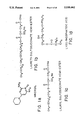
- FIG. 1(1a) shows the molecular structure of minoxidil (1a)
- FIG. (1b) shows the molecular structure of laureth sulfosuccinate hemi-ester.
- FIG. (1c) shows the molecular structure of lauryl sulfosuccinate hemi-ester.
- FIG. (1d) shows the molecular structure of lyso phophatidic acid.
- FIG. (1e) shows the molecular structure Crodafo 3N3 acid (Oleth 3 Phosphoric Acid).
- FIG. (1f) shows the molecular structure of alkyl phosphonate.
- FIG. (1g) shows the molecular structure of alkyl sulfate ester.
- FIG. (1h) shows the molecular structure of alkyl sulfonate.
- FIG. (1i) shows the molecular structure of oleamido polyethylene glycol -z sulfo-succinate hemi-ester.
- FIG. (2a) shows the molecular structure of taurocholic acid.
- FIG. (2b) show the molecular structure of cholesterol sulfate.
- FIG. (2c) shows the molecular structure of phosphatidic acid.
- FIG. (2d) shows the molecular structure of phosphatidylglycerol.
- FIG. 3 is a plot showing changes in minoxidil solubility, in a 20% laureth sulfosuccinate mixture, as a function of pH.
- FIG. 4 is a plot showing the increase in minoxidil solubility with increased concentrations of laureth sulfosuccinate in a pH 5.0 mixture.
- FIG. 5 shows hairless mouse skin transdermal uptake curves, over a 24 hour period, for control (open squares), 5% minoxidil/sulfosuccinate (open diamonds), 2% minoxidil/sulfosuccinate (crosses), and 2% minoxidil/taurocholate (open triangles) compositions.
- FIG. 6 shows hairless mouse skin transdermal uptake curves for control (open squares) and a 1% minoxidil/phosphate monoester composition (crosses).
- FIG. 7 shows hairless mouse skin transdermal uptake curves for lauryl sulfosuccinate/PC liposome compositions containing either 2% (crosses) or 5% (open diamonds) minoxidil, a 1% minoxidil/cholesterol sulfate composition (open triangles), and the control composition (open squares).
- FIG. 8 shows hairless mouse skin transdermal uptake curves for a 2% minoxidil/oleamido-PEG-2/PC liposome formulation (open diamonds), 2% lauryl sulfosuccinate/PC liposomes (crosses), and the control formulation (open squares).
- FIG. 9 shows hairless mouse skin transdermal uptake curves for a 2% minoxidil/lysoPA/PA composition (crosses), a 2% minoxidil/PA composition (open diamonds), and the control formulation (open squares).
- FIG. 10 shows the 3 H minoxidil (Rogaine) absorbed percutaneously per square cm of human cadaver skin in in vitro experiments.
- FIG. 11 shows the liposome minoxidil (2%) absorbed percutaneously per square cm of human cadaver skin in in vitro experiments.
- FIG. 12 shows the liposome minoxidil (1%) absorbed percutaneously per square cm of human cadaver skin in in vitro experiments.
- FIG. 13 shows the free minoxidil (Rogaine), and liposomes minoxidil (2% and 1%) remaining in the stratum corneum.
- the minoxidil composition of the invention is formed by complexing minoxidil with the free acid of an amphipathic compounds.
- the amphipathic compound acts to solubilize minoxidil in both aqueous and lipophilic solvents, and preferred compounds also enhance transdermal uptake of the drug.
- This section describes amphipathic compounds for use in the invention, and methods of preparing a water-soluble minoxidil composition which is suitable for ointment, cream, and gel formulations.
- FIG. 1 shows the molecular structure of minoxidil (1a).
- the piperidinyl pyrimidinediamine compound is relatively soluble in alcohol, but poorly soluble in water (about 0.2-0.3%), and practically insoluble in chloroform.
- the figure also shows the molecular structure of several specific and general types of amphipathic compounds which promote solubilization of the drug in both aqueous and lipophilic solvents and, according to an important feature of the invention, also enhance transdermal uptake of the drug.
- amphipathic compounds in this class are characterized by a single lipophilic chain moiety and a polar head group moiety selected from a sulfate, sulfonate, phosphate, or phosphonate free acid, where the pK of the compound is no greater than about 5.0.
- the exemplary compounds shown in the figure include laureth sulfosuccinate hemiester (1b) and lauryl sulfosuccinate (1c), representative or sulfosuccinate hemiesters, lysophosphatidic acid (1d) and monoalkyl phosphate esters, such as CrodafosTM N3 (1e), monoalkyl phosphonates (1f), monoalkyl sulfate esters, (1g), monoalkyl sulfonates (1h), and oleamido-PEG-2-sulfosuccinate (1i), representative of amido-lined amphipaths.
- laureth sulfosuccinate hemiester (1b) and lauryl sulfosuccinate (1c) representative or sulfosuccinate hemiesters
- lysophosphatidic acid (1d
- monoalkyl phosphate esters such as CrodafosTM N3 (1e
- the lipophilic chain moiety may be a pure hydrocarbon chain, or may contain ether or other chain linkages, such as internal ester or amide linkages.
- the lipophilic chains preferably include at least about 6-8 carbon atoms, and are typically at least about 12 atoms in length.
- the chains may be attached to the mineral acid head group through ester, ether, thioether, amide, or other stable linkages, as illustrated variously in the FIG. 1 compounds.
- a second class of amphipathic compounds which have been examined herein are capable of solubilizing minoxidil in an aqueous medium, but fail to promote transdermal uptake of minoxidil.
- Several of the compounds in this class are acidic vesicle-forming lipids, typically having charged phosphate or sulfate free acid head groups, a pK less than about 5, and diacyl, dialkyl or sterol lipophilic moieties.
- Exemplary compounds include the free acid forms of negatively charged phospholipids, such as phosphatidylglycerol (PG), phosphatidylinositol (PI), and phosphatidic acid (PA), dialkyl phosphate compounds, such as dicetyl phosphate, and sterol mineral acids, such as cholesterol sulfate and taurocholic acid.
- phospholipids such as phosphatidylglycerol (PG), phosphatidylinositol (PI), and phosphatidic acid (PA), dialkyl phosphate compounds, such as dicetyl phosphate, and sterol mineral acids, such as cholesterol sulfate and taurocholic acid.
- Other phosphate, phosphonate, sulfate, and sulfonate lipids containing two or more lipophilic chains or a sterol group through ester, ether, or amide linkages are also in this general class. Representative members of this class are illustrated in FIG. 2. These are: tau
- optimal solubilization of minoxidil by the amphipathic compound occurs at a pH of about 5 or less, where a significant fraction of the compound exists in free acid form.
- the solubility dependence of minoxidil on pH is illustrated in FIG. 3, for a 20% by weight solution of laureth sulfosuccinate (FIG. 2a compound).
- minoxidil solubility increases from about 1.5% to nearly 5%. Little improvement is seen as the pH is lowered beyond about 4.5.
- a pH of about 5 is preferred, since good solubility is achieved, and skin irritation which may result from below-physiological pH is minimized.
- a portion of the amphipath is converted to a free acid form, and then "titrated" to the desired pH, e.g., pH 5.0, with metal salt form of the compound.
- the desired pH e.g., pH 5.0
- metal salt form of the compound e.g., sodium bicarbonate
- Example 1 describes the preparation of a 20 weight % laureth sulfosuccinate solution having a final pH of 5.
- the disodium salt of the compound is converted to the free acid form by passage through a cation exchange resin. Mixing the free acid with the disodium salt, at a ratio of about 1:3, yields a pH 5.0 solution suitable for solubilization of the minoxidil. It is appreciated that the free acid and salt components effectively buffer the solution at the selected pH, obviating the need for additional buffering components.
- the compound may be converted to or supplied in free acid form, then adjusted to the selected pH after addition of minoxidil.
- Optimal solubilization of the minoxidil in an aqueous formulation requires a molar concentration of amphipathic compound to minoxidil of at least about 1:1, and molar ratios of between 1:1 and 1:5 are typical.
- FIG. 4 illustrates the increasing solubility of minoxidil with increasing concentration of amphipath in an aqueous solution at pH 5.0. Details are given in Example 4. As seen from the figure, minoxidil solubility up to about 5 percent by weight was achieved at the highest amphipath concentration.
- the minoxidil composition is preferably formed by adding dry minoxidil to the aqueous solution of amphipath, prepared as above, to a desired pH and amphipath concentration. Typically, the solution is warmed to about 50° C., or greater and the minoxidil is added slowly with stirring. When the minoxidil is completely dissolved, the solution is cooled and the pH adjusted, if needed.
- the general method is illustrated in Examples 1 and 2, for the preparation of laureth sulfosuccinate/minoxidil compositions; in Example 5, for the preparation of a CrodafosTM/minoxidil composition; and in Example 6, for the preparation of a taurocholic acid/minoxidil composition. All of the compositions gave clear aqueous solutions.
- the composition of the invention includes minoxidil in a substantially non-crystalline or molecular monodisperse or dissolved form. These terms are defined herein to indicate that the minoxidil composition is substantially free of crystalline minoxidil, as judged, for example, by examination by polarization microscopy. It will be appreciated that the minoxidil may be present in a microdispersion, such as in micellar or microemulsion form, and/or as a soluble molecular binary drug/amphipath complex in a liposome or emulsion. Thus, in preparing the composition, complete drug solubilization is judged by the absence of the drug in crystalline or microcrystalline form.
- the composition may include additional soluble or suspension components, such as metal chelators, preservatives, and/or conventional lipid, emulsifying or gelling agents used in formulating ointment and cream topical formulations.
- metal chelators include EDTA and DTPA
- exemplary preservatives include propyl- and methylparaben.
- Agents suitable for formulating the composition in cream or ointment form are known.
- An alternative way of preparing a composition of this invention is dissolve the amphipath (such as Tauranol) with mixing in 15-25% g distilled water or some other aqueous solution such as 0.01% DTPA (w/w) a metal ion chelating agent.
- Tauranol WS HP N-methyl cocoyl taurate
- Tauranol WS HP N-methyl cocoyl taurate
- the obtained mixture is heated to between 50°-80° C., preferably 70° C., with mixing until mixture clears while maintaining the constant temperature.
- the mixture is then titrated to pH between 1-2 with inorganic acid, preferably with hydrochloric acid.
- 1%, 2% or up to 4% of minoxidil is added slowly with mixing and heating and maintaining the constant temperature in between 60°-8° C., preferably 70° C. until the mixture clears.
- Between 1.5 to 3.5, preferably 2.5 g of oleic acid is added slowly, with vigorous mixing at the above temperature, preferably at 70° C.
- MLVs are formed in the solution with continuing mixing at elevated (70° C.) temperature for about 10-40 minutes, preferably for at least 20 minutes.
- the solution is cooled to room temperature and aqueous solution is added up to 100 gm.
- the final pH of the solution is between 5.4-6.1.
- Example 22 The preparation of this specific 1, 2 or 4% minoxidil formulation is described in Example 22 which also describes the formulations scaled up to make 2 kg.
- aqueous compositions for topical administration of minoxidil, and transdermal uptake characteristics of compositions containing each class of amphipathic compound, are considered in Section IV below.
- amphipathic compounds which promote solubilization of the drug in aqueous medium also promote solubilization in lipophilic solvents, such as chloroform, in which the drug is otherwise practically insoluble.
- the amphipathic compound used in preparing the minoxidil composition in a lipophilic solvent may be supplied in free form, or converted to a free acid by treatment with a cation-exchange resin, as above.
- a cation-exchange resin as above.
- the compound when the compound is supplied in the salt form, the compound is most conveniently converted to a free acid by solvent extraction into the organic solvent phase of an acidified, two-phase extraction mixture, such as in the Bleigh-Dryer extraction procedure detailed in Example 7.
- the amphipathic compound is shaken in an acidified chloroform/methanol/water mixture and extracted in free acid form from the lower chloroform phase.
- amphipathic compound containing the free acid form of the compound in a lipophilic solvent is mixed with dry minoxidil to form a non-crystalline dispersion of minoxidil in the solvent.
- a lipophilic solvent such as the lower-phase extract from a Bleigh-Dryer extraction
- dispersion of the drug in a non-flocculated form also requires addition of a vesicle-forming lipid, such as PC, as illustrated in Example 10 and 11.
- Vesicle-or emulsion-forming lipids are also added to the solution when the composition is to be used in forming a liposomal or emulsion form of molecularly dispersed minoxidil, as detailed in Section III below.
- Solubilization of minoxidil in the lipophilic solvent containing an amphipathic compound may also be achieved by addition of a co-solvent, such as an alcohol or glycol, to the mixture of minoxidil and amphipath in lipophilic solvent.
- minoxidil/lipophilic solvent mixtures On application of the minoxidil/lipophilic solvent mixtures is for delivery of the drug in spray form from a self-propelled atomizer system.
- minoxidil the amphipathic compound and, if needed, a vesicle- or emulsion-forming agent are co-dissolved in a Freon chlorofluorocarbon solvent.
- fluorochlorocarbon propellant solvents have been used or proposed for self-contained spray devices.
- Representative solvents includes "Freon 11" (CCl 3 F).
- Freon 12 CCl 2 F 2
- Freon 22 CHClF 2
- Freon 113 CCl 2 FCClF 2
- Freon 114 (CClF 2 CClF 2 )
- Freon 115 ClF 2 CF 3
- the propellant solution is loaded in a conventional pressurized propellant spray device for delivering a metered amount of spray-dried minoxidil dispersed in the propellant. Since the spray system may require long-term storage of the solution components in the propellant solvent, the lipid components in the system should be selected for stability on storage, for example by employing partially or totally saturated amphipathic and vesicle-forming lipid components.
- the propellant spray device produces a fine-particle spray of solubilized minoxidil which is directed against the skin area being treated.
- the spray particles initially contain minoxidil complexed with the amphipathic compound and, if present, added co-solubilized agent, dispersed in the propellant solvent. Rapid evaporation of the solvent, as the spray particles are ejected through the air, yields non-crystalline minoxidil particles which form a layer of drug particles which substantially cover the sprayed skin area.
- the minoxidil composition can be entrapped in non-crystalline form in both lipid emulsion particles and liposomes, providing additional advantages for topical administration of the drug.
- Liposomes and emulsion particles are both compatible with topical ointment and cream formulations, and in fact are commonly added to skin creams as moisturizing agents. Liposomes may also be adapted for use with self-propelled spray systems, providing a convenient method of delivery of a non-crystalline, high-concentration minoxidil composition.
- the vesicle forming lipids are preferably neutral phospholipids, such as PC, and may also include negatively charged phospholipids, such as PG, phosphatidylinositol (PI), and phosphatidylserine (PS) which can function as the negatively charged amphipaths in the composition.
- the amphipathic compound used in the composition is preferably a single chain mineral acid compound of the type which by itself would not form lipid bilayer vesicles upon hydration.
- Other liposomal lipids, such as cholesterol may also be included.
- minoxidil transdermal uptake can be modulated by the factors which affect the fluidity of liposome membranes, such as the extent of phospholipid acyl chain saturation. As a rule, transdermal uptake is decreased by entrapment of the non-crystalline composition in liposomes. Another factor which is important in rate of drug uptake is the ratio of vesicle-forming lipids to minoxidil. Preferred weight ratios of phospholipid to minoxidil are between about 1:1, which gives relatively high transdermal uptake and 4:1, which gives quite low uptake.
- the non-crystalline liposome composition can be formed by a variety of methods which are modifications of existing liposome preparation methods.
- a lipid solution containing minoxidil, the amphipathic compound, and PC is prepared as above, by dissolving the lipid and minoxidil in the lower-phase solution of amphipath in free acid form.
- the resulting solution of minoxidil, amphipath, and lipid are dried to a thin film, then hydrated with a suitable aqueous buffer.
- This hydration method is illustrated in Examples 7-9 below.
- a film of vesicle-forming lipids alone can be hydrated by a solution of the non-crystalline minoxidil composition, formed as in Section i.
- One preferred method of forming the liposome composition uses a novel lipid injection method described in co-owned U.S. Pat. No. 4,752,425 for "High-Encapsulation Liposome Processing Method", and U.S. Pat. No. 4,718,871 for "High-Concentration Liposome Processing Method”.
- a solution of minoxidil, amphipathic compound, and vesicle-forming lipids in a preferably chlorofluorocarbon solvent is prepared as described above in Section ii. This solution is injected into an aqueous medium under selected temperature and pressure conditions which lead to liposome formation.
- solvent injection may be continued, with or without concomitant liposome sizing, until a liposome composition having the consistency of a thick paste is formed.
- the paste composition has the capability of high minoxidil loading, and also is suitable as a cream or ointment without further processing.
- the liposome composition may also be delivered in dried particle form from a self-propelled spray device.
- the liposomes, formed according to above methods are dried, by spray drying, then suspended in a chlorofluorocarbon propellant solvent.
- Methods for spray drying liposomes and forming stable liposome-particle suspensions in several Freon propellants have been described in co-owned U.S. patent application for Ser. No. 022,937, filed Mar. 6, 1987 now U.S. Pat. No. 4,895,719, and similar methods are applicable to the diposomal composition of the present invention.
- the suspension of dried minoxidil liposomes in propellant solvent can be administered in metered dose spray form from a conventional pressurized spray device such as used above for delivery of a Freon dispersion solution of minoxidil/amphipath components.
- Methods for producing a non-crystalline lipid emulsion composition may similarly follow standard preparative methods, with modification to include the amphipathic compound needed for minoxidil solubilization.
- Examples 10 and 11 illustrate methods for forming emulsions of the lysoPA/PA and PA alone in a emulsion. Briefly, a Bleigh-Dryer solvent extraction containing the free acid form of the lysoPA/PS mixture or PA alone was added to minoxidil, and the lipid solution dried to a thin film. Hydration of the lipid film with an aqueous buffer containing 30% Tween-20TM yielded an aqueous non-crystalline emulsion.
- This emulsion may be formulated in a concentrated, viscous or paste-like form for topical administration, giving the same advantages of high loading available with the liposomal formulation.
- the emulsion composition can be produced in a self-propelled device by dissolving the minoxidil/amphipath/emulsion lipid components in a Freon solvent, as above, and delivering the components in spray form. Non-crystalline minoxidil/lipid particles are formed during rapid evaporation of the propellant solvent.
- transdermal uptake characteristics of several exemplary minoxidil compositions prepared according to the invention have been examined, as outlined generally in example 12. Briefly, a small isolated skin patch is sealed between upper and lower chambers of a transdermal cell, and an aliquot of the selected composition (spiked with radiolabeled minoxidil) is applied to the upper surface of the patch.
- the lower chamber holds a reservoir buffer which is in contact with the lower surface of the skin, and which is circulated through the lower chamber by a constant-rate pump.
- drug penetrates the skin patch, it is captured in the lower reservoir, and pumped out of the chamber into assay vials for scintillation counting.
- Transdermal uptake (drug penetration) is typically measured for over a 24 hour period.
- the preparation of the several compositions studies is detailed in Examples 1, 2, 5-11 for hairless mouse skin, and example 22 for human cadaver skin.
- the control drug composition used in the studies is 2% minoxidil composition in an ethanol/propylene glycol/water vehicle.
- the transdermal uptake of this control formulation, over a 24 hours period, is shown by the open squares in FIG. 5.
- the cumulative amount of drug taken across the skin in the 24 hours period is less than about 1% of the total applied to the skin.
- transdermal uptake curves for a soluble 2% minoxidil/laureth sulfosuccinate composition crosses
- a soluble 5% minoxidil laureth sulfosuccinate composition open diamonds
- both of the soluble laureth sulfosuccinate compositions have higher transdermal penetration rates than the control composition expressed as ug drug penetrating/cm 2 of skin.
- the total cumulative drug uptake for the 2% composition is about 6% of the total applied to the skin.
- the 2% laureth sulfosuccinate composition which contains about 8% by weight of the laureth sulfosuccinate, gave a significantly higher transdermal uptake than the 5% composition, which contains about 25% by weight of the amphipath. This result may be due to the greater viscosity of the 5% composition, and/or interactions between the surfactant and skin which are less inhibitory in the 2% composition.
- FIG. 5 also shows the transdermal uptake for a soluble 2% minoxidil/taurocholic acid composition (open triangles). It is evident that taurocholic acid does not promote the uptake of minoxidil across the skin, even though it is effective in solubilizing the drug in an aqueous formulation.
- FIG. 6 shows similar transdermal uptake data comparing a minoxidil/Crofados composition prepared according to the invention with the above control composition.
- the transdermal uptake for the composition of about 700 ug/cm 2 is nearly three times that of the 2% laureth sulfosuccinate composition and about 35 times that of the control material.
- the total amount of drug material passing through the skin in a 24 hour period is about 35% of the total added.
- FIG. 7 shows transdermal uptake curves for 2% (crosses) and 5% (open diamonds) minoxidil/lauryl sulfosuccinate/PC liposome suspension formed as in Example 7.
- the data show enhanced transdermal uptake when compared with the control formulation (open squares). It is noted that, in contrast to the results observed for the soluble laureth sulfate composition, the higher percent composition (5% minoxidil) gave greater transdermal uptake. Both liposome formulations gave about 5% total drug penetration over the 24 hour test period.
- the best liposomal formulation gave higher drug penetration (about 350 ug drug/cm 2 ) than the best laureth sulfosuccinate composition (about 240 ug drug/cm 2 ).
- the figure also shows transdermal uptake for a 1% minoxidil/cholesterol sulfate/PC liposome composition. This composition thus differs from the ones just discussed in that cholesterol sulfate has been substituted for lauryl sulfosuccinate. As seen, virtually no transdermal uptake of minoxidil occurred during the 24 hour test period.
- FIG. 9 transdermal uptake curves for suspensions formed from 2% minoxidil and either lysoPA/PA (crosses) or PA alone (open diamonds), according to the preparative methods of Examples 10 and 11, respectively.
- the control composition is indicated by open squares. PA alone gives very poor drug uptake, whereas with the addition of lysoPA, uptake is enhanced slightly above the control level.
- the currently claimed improved minoxidil formulations have significantly higher flux rates through human skin than minoxidil in solution (Rogaine TSTM).
- the results are described in Example 21, Table 1.
- the data are also illustrated in FIGS. 10-13.
- composition of the invention may be administered topically in a water-base cream, ointment, or gel form.
- Several factors contribute to cosmetic advantages of the water-base composition. High drug loading up to 5% or more in non-crystalline form is possible, and the drug remains in a non-crystalline form up to several hours or more after administration, since solvent evaporation is relatively slow and because evaporation can occur without leading to drug crystallization. Since the composition contains little or no alcohol, it can be applied without stinging.
- the drug is efficiently taken up by the skin, by virtue of the selected amphipath, and different rates of uptake can be achieved by varying the drug or amphipath concentration, and by selection of different amphipathic compounds.
- the water-base composition may additionally contain liposome of lipid-emulsion particles in which the drug can be entrapped in non-crystalline form.
- a concentrated liposomal composition having desired cream or ointment consistency can be formulated using a novel solvent injection system.
- the liposome formulation can have high loading, and a rate of drug uptake can be modulated by choice of lipid components and relative molar amounts of lipid and drug.
- the lipid formulation is also expected to have the known moisturizing benefits of topical lipid formulations.
- the composition is dispersed in a chlorofluorocarbon solvent for delivery in spray form.
- the spray form has many advantages of the water-base formulation, including high drug loading and enhanced drug uptake. Additionally, the spray composition has the advantage that it can be applied in a more convenient manner and without matting the hair in the treated scalp region.
- Disodium laureth sulfosuccinate was obtained from Sherex (Dublin, Calif.), and supplied under the trade from Mona Industries (Paterson, N.J.); disodium salt of taurocholic acid, from Sigma Chemical Co (St. Louis, Mo.); oleamido-polyethylene glycol-2 sulfosuccinate, disodium salt, from Mona Industries; CrodafosTM N3 acid (oleth 3 phosphate), from Croda, Inc. (Fullerton, Calif.); phosphatidic acid (PA), from Avanti Polar Lipids, Inc., (Birmingham, Ala.); Tween-O from J. T.
- the pH of the final dispersion can be varied by changing the ratio of laureth sulfosuccinic acid to disodium laureth sulfosuccinate.
- a 1:3 ratio (as above) after minoxidil dissolution gave a pH of about 4.7 ⁇ 0.2.
- a 2% dispersion of solubilized minoxidil and the free acid of laureth sulfosuccinate was prepared substantially as in Example 1, with the following modifications:
- the AG50W-X8 column was prepared with 10 g.
- Two hundred fifty ml of 4.0% wt/vol disodium laureth sulfosuccinate was diluted to 20% wt/vol surfactant by adding 250 ml distilled water. This solution was passed over the AG50W-XB cation exchange column and the free acid eluate collector.
- Four hundred ml of free acid solution was combined with 1,200 ml of 20% disodium laureth sulfosuccinate and 2.0 liters distilled water. The mixture was heated to 50° C.
- Example 1A Solutions of the free acid of laureth sulfosuccinate, at concentrations of 0.5%, 10%, 15%, 20%, and 25% by weight in distilled water were prepared as in Example 1A. Each solution was heated to about 50° C. and radiolabeled minoxidil was added slowly with stirring until minoxidil saturation was achieved, this being monitored as described in Example 3. The pH of each solution was adjusted to about pH 5 prior to centrifugation and scintillation counting. The results, expressed in mg minoxidil/ml laureth sulfosuccinate solution, are plotted in FIG. 4. Minoxidil solubility in the absence of the amphipath is about 3 mg/ml, or 0.3%. With increasing concentrations of the laureth sulfosuccinate up to 25 weight percent, the solubility of minoxidil increases up to about 50 mg/ml, or 5% at pH 5.
- CrodafosTM N3 acid (the oleth-3 phosphate) was obtained in free acid form and diluted in 5 ml distilled water: 10 ml punctilious ethanol. The solution was heated to 37° C., 2 g minoxidil was added slowly with stirring until dissolution. The mixture was diluted with 180 ml of aqueous solution buffered by MEA at pH 5.5. Examination of the composition with a polarizing microscope showed no drug crystals in the dispersion containing 1% minoxidil and 5% CrodafosTM N3 acid.
- Taurochalic acid, sodium salt, was converted to a free acid form by the procedure of Example 11. About 100 mg by weight of the free acid form was mixed with 20 mg of dry minoxidil in 1 ml pH 5.5 buffer yielding a clear solution with a final minoxidil concentration of about 2% by weight. Stirring was continued until a clear solution was obtained, after which the pH of the solution was readjusted to 5.0. No crystals were observed on examination of the composition with a polarizing microscope.
- This example describes the preparation of a minoxidil/lauryl sulfosuccinate/liposome composition.
- the free acid form of disodium lauryl sulfosuccinate was formed by the Bleigh-Dryer extraction procedure, as follows: A first solvent mixture was prepared by mixing 8 ml 1N HCl, 20 ml methanol, and 10 ml chloroform in a 250 ml separatory funnel. To this solvent was added 500 mgs of the disodiumlauryl sulfosuccinate, which was dissolved by vigorous shaking. A second solvent mixture containing 7 ml HCl, 10 ml chloroform, and 3 ml distilled water was added to the funnel, which was then shaken vigorously, and allowed to phase separate.
- the lower chloroform phase (containing the bulk of the free acid form of the lauryl sulfosuccinate) was collected in a 250 ml round bottomed flask containing 580 mgs partially hydrogenated PC (PHPC) and 200 mg of minoxidil, both in dry form.
- the flask was swirled until both of the dry components were in solution, and to this solution was added butylated hydroxy toluene (BHT) in chloroform to a final concentration of about 1 mM.
- BHT butylated hydroxy toluene
- the upper phase in the separatory funnel was reextracted with 5 ml chloroform and 1 ml methanol by vigorous shaking, and the lower phase which formed on standing was collected in the flask containing the minoxidil/lipid solution.
- the solvent in the flask was removed by rotary evaporation, yielding a thin lipid film.
- the dried material was further lyophilized for 1/2 hour to insure complete solvent removal.
- the final minoxidil/liposome suspension was formed by hydrating the lipid film with 10 ml of MES buffer, pH 5.5, containing 0.01% DTPA, using a mechanical "wrist" shaker. Shaking for 1 hour with the flask maintained at 50° C. over a water bath was sufficient to produce complete hydration, as judged by the uniform appearance of the liposome suspension.
- Oleamido (2 -polyethylene glycol)-sulfosuccinate was converted the free acid form by Bleigh-Dryer extraction procedure, substantially as described in Example 7.
- the first lower chloroform phase was collected in a 250 ml round bottom flask containing 580 mg partially hydrated PC (PHPC) and 200 mg of minoxidil, both in dry form.
- PHPC partially hydrated PC
- minoxidil minoxidil
- the final minoxidil/liposome suspension was formed by hydrating the lipid film with 10 ml of MES buffer, pH 5.5, containing 0.01% DTPA, under hydration conditions used in Example 7. The pH was adjusted to 5.0 after hydration was completed. Microscopic examination of the liposome suspension showed a heterogeneous-size population of spherical vesicles. No polarizing crystals were noted.
- Cholesterol sulfate was converted to the free acid form by cation exchange chromatography in a methanol/chloroform/water (5:4:1) solvent.
- the free acid form 120 mg was dissolved in 2 ml of chloroform, and this solution was added to a round bottom flask containing 40 mg minoxidil and 370 mg of PC. The flask was gently agitated until the components were completely dissolved.
- the solution was dried to a thin lipid film in a round bottom flask with rotary evaporation and lyophilization, as above.
- a liposome suspension was prepared as in Example 8. No minoxidil crystals were observed in the suspension.
- lipophosphatidic acid lipoPA
- PA lipophosphatidic acid
- FIG. c A mixture of lipophosphatidic acid (lipoPA) and PA was formed by long term storage of pure PA at 4° C. The mixture was confirmed with thin layer chromatography as containing significant portions of both PA and lipoPA (FIG. c).
- One 110 mg of the mixture was converted to the free acid form by the Bleigh-Dyer extraction procedure above, and the combined lower-phase extracts were added to a round bottom flask containing 30 mg minoxidil. The flask was gently agitated until the drug was completely dissolved. The solution was dried to a thin lipid film in a round bottom flask with rotary evaporation and lyophilization, as above.
- the final minoxidil/lysoPA/PA liposome suspension was formed by hydrating the lipid film with 10 ml of MES buffer, pH 5.5, also containing 30% Tween-0, under hydration conditions used in Example 7. The pH was adjusted to 5.0 after hydration was completed. Microscope examination of the suspension showed a very small ( ⁇ 1 micron diameter) particles. No polarizing crystals were noted.
- the transdermal cell used for measuring skin penetration has upper and lower chambers which are separated by a skin patch.
- the lower chamber is designed to permit continuous flow through of saline, which collects drug penetrating from the outer side of the skin (exposed to the upper chamber) through the skin and into the saline in the lower chamber.
- An infusion pump is used to move through the chamber at a controlled rate (about 5 ml/hour).
- mice Female hairless mice, strain HRS/hr, were obtained from Simonsen (Gilroy, Calif.). The animals were 7-8 weeks old, and weighed 20-30 gm when used. After sacrifice, three 2 cm diameter skin patches were removed from each animal. The patches were individually mounted in the cell, and held sealed against the lower chamber by an O-ring which is pressed against the patch by clamping.
- a phosphate buffered saline solution was pumped through the system, at a flow rate of about 5 ml/hr for one hour. Fractions were collected for up to 24 hours after the drug solution was applied to the skin membrane. After the test period, the skin patch was washed several times, and removed. The hourly fractions, wash fractions obtained at the end of the experiment, and the skin patch itself were counted for radioactivity by conventional scintillation counting methods.
- the control vehicle was Rogaine®, obtained from Upjohn Co. This formation contains 2% minoxidil in an ethanol/propylene glycol/water solvent vehicle, and was labeled with tritiated minoxidil before testing.
- One hundred fifty ul samples were applied to skin patches and the uptake of minoxidil across the skin monitored as described. Typical results for a 24 hour test period are shown in FIG. 5, where the control drug data is indicated by the open squares in the figure.
- the rate of uptake of the drug in the control formulation is substantially linear over the test period, and reaches a cumulative maximum, at the end of the test period, of about 30 ug/cm 2 , corresponding to about 0.5-1.0% of the total drug applied to the skin.
- Example 12 The results, expressed in terms of cumulative ug drug uptake/cm 2 of skin patch, are shown in FIG. 5, where the data for the 2% composition is indicated by crosses, and for the 5% composition, control system, as indicated above.
- both sulfosuccinate compositions give greater drug transdermal penetration than the control drug formulation.
- the final cumulative doses correspond to about 0.5-1.0 for control drug, 2% for the 5% composition and 5-6% for the 2% composition.
- Example 12 A 1% minoxidil/CrodafosTM N3 acid was prepared as in Example 5, and tested for transdermal uptake using the experimental methods described in Example 12. These results are from four replicate cells, and are plotted along with the control formulation (Example 12). The results, expressed in ug drug penetration/cm 2 skin, are shown in FIG. 6, where the data the 1% minoxidil in CrodafosTM N3 acid is indicated by crosses; open squares indicate the control formulation.
- the formulation causes more than an order of magnitude increase in cumulative drug uptake as compared to the control formulation, even though the control formulation has twice the drug loading.
- Example 6 The 2% minoxidil/taurocholic acid compositions prepared as in Example 6 were tested for transdermal uptake using the experimental method described in Example 12. Four replicate cells were run and the data plotted in FIG. 5 as open triangles. The open squares indicate transdermal penetration by the control formulation. It can be observed that although taurocholic acid has the same drug loading as the control formulation, less drug is put through the skin.
- the 2% and 5% aminoxidil/lauryl sulfosuccinate liposome compositions prepared as in Example 7 were similarly tested for transdermal delivery, with the results therein in FIG. 7.
- the control formulation is denoted by open squares, the 2% liposome formulation by crosses, and the 5% liposome formulation by open diamonds.
- the 2% formulation delivers 6 times the cumulative dose of the control formulation at 24 hours and the 5% formulation delivers 13 times the cumulative dose of the control at 24 hours.
- a 2% minoxidil/oleamido PEG-2 sulfosuccinate liposome composition prepared as in Example 8 was tested for transdermal delivery of minoxidil using the experimental protocol described in Example 12.
- the data are plotted in FIG. as open diamonds, and compared to the control formulation (open squares) and the 2% minoxidil lauryl sulfosuccinate liposomes (crosses).
- the oleamido PEG-2 composition produces an approximately threefold increase in transdermal uptake over the lauryl sulfosuccinate liposome preparation. It is evident that changing the hemiester sulfosuccinate in the composition can change the rate of transdermal delivery of drug.
- the minoxidil/cholesterol sulfate/PC composition was prepared as in Example 9 and assayed for transdermal drug delivery as in Example 12. The results are plotted as open triangles in FIG. 8. As seen, this composition showed no transdermal penetration, even though the composition was saturated with drug (1% wt/vol).
- the minoxidil/lysoPA/PA in 30% Tween- 2 OTM composition prepared as in Example 11 was tested for transdermal drug delivery as in Example 12.
- the data plotted as crosses in FIG. 9. This composition similar to the control formulation during the first 12 hours, and then increases substantially relative to the control formulation during the next twelve hour period.
- the minoxidil/PA in Tween- 2 OTM composition was prepared as in Example 11, and assayed for transdermal drug penetration as in Example 12. These data are also plotted as open diamonds in FIG. 10. This composition delivers one-third the drug of the control formulation (open squares) and one-sixth that of the composition containing lyso PA (crosses). The results indicate that lyso PA and not PA or Tween- 2 0TM is responsible for facilitating transdermal delivery of the drug.
- Formulations prepared according to Example 22 were compared as to their comparative activity and retention in the human cadaver skin.
- Tritiated minoxidil was incorporated into preparations of Rogaine TSTM (2% drug, w/v) and Minoxidil liposomes (2%., 1% drug, w/v) in order to evaluate percutaneous absorption and the size of drug reservoir in prepared human cadaver skin.
- Tritiated minoxidil was co-crystallized with cold non-labeled minoxidil. Thin layer chromatography of the preparation revealed that greater than 96% of the radiolabel co-migrated with authentic minoxidil standard, indicating suitable radiochemical purity.
- Rogaine TSTM (2% minoxidil) and two minoxidil liposome formulations, 2% minoxidil and 1% minoxidil were prepared. Individual 0.1 ml aliquots of each preparation were applied to patches of human cadaver skin (specimen S1-16-M) mounted in Bronaugh flow-through perfusion cells. The skin patches were maintained at 32° C. The receiver compartment was perfused with isotonic saline; the perfusate was collected in 1.5 hour fractions. The skin patches were removed from the cells at twenty-four hours, washed four timed with isotonic saline and digested with tissue solubilizer. The perfusate fractions, washes, and solubilized tissue were analyzed by liquid scintillation counting.
- Flux rates were calculated from least squares linear regression of the time points from individual cells.
- FIG. 10 Percutaneous absorption of minoxidil in Rogaine TSTM (FIG. 10), a 2% FIG. 11), and 1% minoxidil liposome (FIG. 12) are illustrated below.
- Table 1 summarizes the flux data and indicates that the liposome preparations of minoxidil were able to significantly increase the flux rate by a factor of 2.5 to 3 over RogaineTM. Surprisingly, the 1% liposome preparation performed as well as the 2% preparation. There was no significant difference in flux rate between the two liposomes. The free drug (Rogaine) on the other hand had approximately 3 ⁇ lesser performance.
- This example illustrates an alternative way of preparing a composition of this invention and also a preparation of scaled-up 2 kg batch.
- a solution of chelating agent diethylenetriaminepentaacetic acid (DTPA) in distilled water at 0.01% (w/w) concentration is prepared and combined in with mixing 3.7 g of amphipath Tauranol WS HP (N-methyl cocoyl taurate) is added to 52 g of DTPA solution at room temperature.
- the obtained mixture is heated to 70° C. with mixing until mixture clears while maintaining the constant temperature.
- the mixture is then titrated to pH between 1-2 with hydrochloric acid.
- minoxidil is added slowly with mixing and heating and maintaining a constant temperature of 70° C. until the mixture clears.
- 2.5 g of oleic acid is added slowly, with vigorous mixing at 70° C.
- the solution will become turbid as MLVs are formed with continued mixing at elevated (70° C.) temperature.
- the mixture is cooled to room temperature and DTPA solution is added up to 100 gm.
- the final pH of the solution is between 5.4-6.1.
- minoxidil liposome formulation for scale-up.
- 2 kg of 1%, 2% and 4% of minoxidil liposomes is prepared as follows.
Landscapes
- Health & Medical Sciences (AREA)
- Life Sciences & Earth Sciences (AREA)
- Animal Behavior & Ethology (AREA)
- General Health & Medical Sciences (AREA)
- Public Health (AREA)
- Veterinary Medicine (AREA)
- Chemical & Material Sciences (AREA)
- Epidemiology (AREA)
- Pharmacology & Pharmacy (AREA)
- Medicinal Chemistry (AREA)
- Molecular Biology (AREA)
- Biophysics (AREA)
- Bioinformatics & Cheminformatics (AREA)
- Engineering & Computer Science (AREA)
- Birds (AREA)
- Dispersion Chemistry (AREA)
- Dermatology (AREA)
- Medicinal Preparation (AREA)
- Pharmaceuticals Containing Other Organic And Inorganic Compounds (AREA)
Abstract
An aqueous, noncrystalline minoxidil composition for topical use which has significantly improved flux of the drug through human cadaver skin. The composition contains minoxidil complexed with an amphipathic compound, oleic acid and with pharmaceutically acceptable excipients. The composition may be formulated in an aqueous vehicle, or dispersed in fluorochlorocarbon solvent for spray delivery from a self- propelled spray device.
Description
This is a continuation-in-part of U.S. patent application Ser. No. 032,512, filed on Mar. 30, 1987, now U.S. Pat. No. 4,828,837 issued on May 9, 1989.
The present invention relates to a topical minoxidil composition, and in particular, to non-crystalline compositions which can be applied in spray, gel, or ointment form. The composition improves significantly the flux of the drug through skin, thereby increasing potential therapeutic benefits. Another added advantage is that the process can be scaled-up easily.
Minoxidil is an arterial dilator which has been used, in oral form, in the treatment of hypertension to lower blood pressure. More recently, the drug has been shown to stimulate new hair growth, when applied topically, in cases of male pattern baldness. Initial clinical studies with a topical form of the drug indicate that reversal of male pattern baldness is most favorable in younger men, and where recent hair loss has occurred, but that new hair growth is observed in a significant percentage of older men and/or where in cases of long-term baldness.
The drug itself is a piperidinyl pirimidine compound which is poorly soluble in water and in most water-immiscible organic solvents such as chloroform. Heretofore, minoxidil has been formulated, for topical use, in an ethanol-based ointment vehicle containing ethanol, propylene glycol and water. The solubility of the drug in pure propylene glycol is between about 7-9% by weight, and in an ethanol/propylene glycol/water vehicle, only about 2%. One drawback of the formulation is the tendency of the minoxidil to revert to an insoluble crystalline form when applied to the skin, as the ethanol solvent evaporates. Whether due to the tendency of the drug to crystallize or other factors, the minoxidil formulation shows relatively inefficient uptake by the skin. Another limitation is the limited solubility of the drug in the ethanol/propylene glycol/water vehicle. Further, evaporation of ethanol, when the formulation is applied to the skin, leaves a viscous propylene glycol/water residue which may be objectionable to many users. The drug is poorly soluble in water and practically insoluble in lipophilic solvents, such as chloroform. Therefore, predominantly water-based or propellant-solvent formulations have not been feasible heretofore and it would be advantageous to have an alternative formulation avoiding the above problems.
European patent application No. 177,223 discloses a liposomal minoxidil composition in which minoxidil is present (1) in solution form possibly in a supersaturated state, either encapsulated in lipid vesicles, or in the aqueous or lipid phases of a liposome suspension, and (2) in a finely divided crystalline (solid) form both within and outside the lipid vesicles. Preferred embodiments of the composition are formed by hydrating a minoxidil lipid film containing a saturated phosphatidylcholine (PC), such as dipalmitoylphosphatidylcholine (DPPC), cholesterol, and minoxidil in ethanol/propylene glycol and water. Minoxidil is present at a final weight concentration of between about 1.2-3%. The composition was found to contain liposomes of various sizes between about 1 μ to 15 μ, and more importantly minoxidil crystals. Although the formulation is reported to increase drug uptake by the epidermis when applied topically to skin, it has the same limitation as the above non-liposomal formulation in that the drug is applied to the skin largely in crystalline form.
It is one general object of the present invention to provide a non-crystalline minoxidil compositions that can be formulated in a water-based or lipophilic-solvent vehicle and is easily scalable and cost-effective.
Another object of the invention is to provide improved minoxidil formulation having substantially enhanced transdermal penetration of the drug through the skin. The invention includes a non-crystalline minoxidil composition in which minoxidil is complexed with an amphipathic compound having a pK of less than about 5, and containing a single lipophilic chain and a polar head moiety selected from a sulfate, sulfonate, phosphate, or phosphonate free acid. The molar ratio of the amphipath to minoxidil is at least about 1:1, and the composition has a preferred pH between about 4-6.5. Preferred amphipathic compounds include sulfosuccinic acid hemiesters and alkyl phosphonates and phosphate esters, and exemplary sulfosuccinic acid hemiesters include ethoxylated sulfosuccinic acid hemiesters, such as the free acids of laureth, lauryl or oleamido-polyethylene glycol sulfosuccinate.
The composition may further include vesicle-forming lipids, such as PC, at a preferred molar ratio of lipid to minoxidil of between about 1:1 to 4:1.
The minoxidil composition may be administered in either spray or ointment form. A convenient spray formulation includes minoxidil/ester complex dispersed in a chlorofluorocarbon propellant solvent. Phospholipid, such as PC, may be added to achieve a molecular monodisperse form of the drug in the solvent. The minoxidil spray is directed against the topical area of interest, to deposit (with solvent evaporation) a noncrystalline minoxidil composition on the skin.
In a cream or ointment formulation, the minoxidil composition is dispersed in non-crystalline form in an aqueous medium, in the presence of absence of suspended liposomal or lipid-emulsion particles. The formulation typically contains 1-6% minoxidil, at least an equal molar amount of the amphipathic compound, and between about 60-90% water. In a liposomal formulation, the vesicle-forming lipids are present a weight ratio of lipids to minoxidil of between about 1:1 and 4:1, where the transdermal uptake of minoxidil is reduced at higher lipid to drug ratios.
More generally, this composition includes a non-crystalline minoxidil composition in which minoxidil is (a) present at a weight concentration of between about 1-6%; (b) complexed with an amphipathic compound having a pK less than about 5, at an amphipath:minoxidil molar ratio of at least about 1:1; (c) dispersed in an aqueous or lipophilic-solvent carrier, and (d) maintained in non-crystalline form for a period of at least several hours after application to the skin. The amphipathic compound is preferably one which promotes transdermal uptake of the drug.
Also forming part of the invention is a method for applying minoxidil topically in a substantially noncrystalline form which remains in non-crystalline form at least several hours after application to the skin. The method includes complexing the minoxidil with an amphipathic compound having a pK less than about 5, and containing a single lipophilic chain moiety and a polar head moiety selected from a sulfate, sulfonate, phosphate, or phosphonate free acid. Specific formulations, and methods of application of the complex to the skin are described above.
These and other objects and features of the invention will become more fully apparent when the following detailed description of the invention is read in conjunction with the accompanying drawings.
FIG. 1(1a); shows the molecular structure of minoxidil (1a)
FIG. (1b) shows the molecular structure of laureth sulfosuccinate hemi-ester.
FIG. (1c) shows the molecular structure of lauryl sulfosuccinate hemi-ester.
FIG. (1d) shows the molecular structure of lyso phophatidic acid.
FIG. (1e) shows the molecular structure Crodafo 3N3 acid (Oleth 3 Phosphoric Acid).
FIG. (1f) shows the molecular structure of alkyl phosphonate.
FIG. (1g) shows the molecular structure of alkyl sulfate ester.
FIG. (1h) shows the molecular structure of alkyl sulfonate.
FIG. (1i) shows the molecular structure of oleamido polyethylene glycol -z sulfo-succinate hemi-ester.
FIG. (2a) shows the molecular structure of taurocholic acid.
FIG. (2b) show the molecular structure of cholesterol sulfate.
FIG. (2c) shows the molecular structure of phosphatidic acid.
FIG. (2d) shows the molecular structure of phosphatidylglycerol.
FIG. 3 is a plot showing changes in minoxidil solubility, in a 20% laureth sulfosuccinate mixture, as a function of pH.
FIG. 4 is a plot showing the increase in minoxidil solubility with increased concentrations of laureth sulfosuccinate in a pH 5.0 mixture.
FIG. 5 shows hairless mouse skin transdermal uptake curves, over a 24 hour period, for control (open squares), 5% minoxidil/sulfosuccinate (open diamonds), 2% minoxidil/sulfosuccinate (crosses), and 2% minoxidil/taurocholate (open triangles) compositions.
FIG. 6 shows hairless mouse skin transdermal uptake curves for control (open squares) and a 1% minoxidil/phosphate monoester composition (crosses).
FIG. 7 shows hairless mouse skin transdermal uptake curves for lauryl sulfosuccinate/PC liposome compositions containing either 2% (crosses) or 5% (open diamonds) minoxidil, a 1% minoxidil/cholesterol sulfate composition (open triangles), and the control composition (open squares).
FIG. 8 shows hairless mouse skin transdermal uptake curves for a 2% minoxidil/oleamido-PEG-2/PC liposome formulation (open diamonds), 2% lauryl sulfosuccinate/PC liposomes (crosses), and the control formulation (open squares).
FIG. 9 shows hairless mouse skin transdermal uptake curves for a 2% minoxidil/lysoPA/PA composition (crosses), a 2% minoxidil/PA composition (open diamonds), and the control formulation (open squares).
FIG. 10 shows the 3 H minoxidil (Rogaine) absorbed percutaneously per square cm of human cadaver skin in in vitro experiments.
FIG. 11 shows the liposome minoxidil (2%) absorbed percutaneously per square cm of human cadaver skin in in vitro experiments.
FIG. 12 shows the liposome minoxidil (1%) absorbed percutaneously per square cm of human cadaver skin in in vitro experiments.
FIG. 13 shows the free minoxidil (Rogaine), and liposomes minoxidil (2% and 1%) remaining in the stratum corneum.
The minoxidil composition of the invention is formed by complexing minoxidil with the free acid of an amphipathic compounds. The amphipathic compound acts to solubilize minoxidil in both aqueous and lipophilic solvents, and preferred compounds also enhance transdermal uptake of the drug. This section describes amphipathic compounds for use in the invention, and methods of preparing a water-soluble minoxidil composition which is suitable for ointment, cream, and gel formulations.
FIG. 1 shows the molecular structure of minoxidil (1a). The piperidinyl pyrimidinediamine compound is relatively soluble in alcohol, but poorly soluble in water (about 0.2-0.3%), and practically insoluble in chloroform. The figure also shows the molecular structure of several specific and general types of amphipathic compounds which promote solubilization of the drug in both aqueous and lipophilic solvents and, according to an important feature of the invention, also enhance transdermal uptake of the drug. The amphipathic compounds in this class are characterized by a single lipophilic chain moiety and a polar head group moiety selected from a sulfate, sulfonate, phosphate, or phosphonate free acid, where the pK of the compound is no greater than about 5.0. The exemplary compounds shown in the figure include laureth sulfosuccinate hemiester (1b) and lauryl sulfosuccinate (1c), representative or sulfosuccinate hemiesters, lysophosphatidic acid (1d) and monoalkyl phosphate esters, such as Crodafos™ N3 (1e), monoalkyl phosphonates (1f), monoalkyl sulfate esters, (1g), monoalkyl sulfonates (1h), and oleamido-PEG-2-sulfosuccinate (1i), representative of amido-lined amphipaths. As can be appreciated from the compounds shown in FIG. 1, the lipophilic chain moiety may be a pure hydrocarbon chain, or may contain ether or other chain linkages, such as internal ester or amide linkages. The lipophilic chains preferably include at least about 6-8 carbon atoms, and are typically at least about 12 atoms in length. The chains may be attached to the mineral acid head group through ester, ether, thioether, amide, or other stable linkages, as illustrated variously in the FIG. 1 compounds.
A second class of amphipathic compounds which have been examined herein are capable of solubilizing minoxidil in an aqueous medium, but fail to promote transdermal uptake of minoxidil. Several of the compounds in this class are acidic vesicle-forming lipids, typically having charged phosphate or sulfate free acid head groups, a pK less than about 5, and diacyl, dialkyl or sterol lipophilic moieties. Exemplary compounds include the free acid forms of negatively charged phospholipids, such as phosphatidylglycerol (PG), phosphatidylinositol (PI), and phosphatidic acid (PA), dialkyl phosphate compounds, such as dicetyl phosphate, and sterol mineral acids, such as cholesterol sulfate and taurocholic acid. Other phosphate, phosphonate, sulfate, and sulfonate lipids containing two or more lipophilic chains or a sterol group through ester, ether, or amide linkages are also in this general class. Representative members of this class are illustrated in FIG. 2. These are: taurocholic acid (2a) cholesterol sulfate (2b), phosphatidic acid (2c), and phosphatidylglycerol (2d).
According to an important property of the amphipathic compounds, optimal solubilization of minoxidil by the amphipathic compound occurs at a pH of about 5 or less, where a significant fraction of the compound exists in free acid form. The solubility dependence of minoxidil on pH is illustrated in FIG. 3, for a 20% by weight solution of laureth sulfosuccinate (FIG. 2a compound). Between pH 7.0 and about 5.0, minoxidil solubility increases from about 1.5% to nearly 5%. Little improvement is seen as the pH is lowered beyond about 4.5. For most purposes, a pH of about 5 is preferred, since good solubility is achieved, and skin irritation which may result from below-physiological pH is minimized.
In a preferred method for preparing the composition, a portion of the amphipath is converted to a free acid form, and then "titrated" to the desired pH, e.g., pH 5.0, with metal salt form of the compound. This approach is illustrated in Example 1, which describes the preparation of a 20 weight % laureth sulfosuccinate solution having a final pH of 5. Here the disodium salt of the compound is converted to the free acid form by passage through a cation exchange resin. Mixing the free acid with the disodium salt, at a ratio of about 1:3, yields a pH 5.0 solution suitable for solubilization of the minoxidil. It is appreciated that the free acid and salt components effectively buffer the solution at the selected pH, obviating the need for additional buffering components.
Alternatively, the compound may be converted to or supplied in free acid form, then adjusted to the selected pH after addition of minoxidil.
Optimal solubilization of the minoxidil in an aqueous formulation requires a molar concentration of amphipathic compound to minoxidil of at least about 1:1, and molar ratios of between 1:1 and 1:5 are typical. FIG. 4 illustrates the increasing solubility of minoxidil with increasing concentration of amphipath in an aqueous solution at pH 5.0. Details are given in Example 4. As seen from the figure, minoxidil solubility up to about 5 percent by weight was achieved at the highest amphipath concentration.
The minoxidil composition is preferably formed by adding dry minoxidil to the aqueous solution of amphipath, prepared as above, to a desired pH and amphipath concentration. Typically, the solution is warmed to about 50° C., or greater and the minoxidil is added slowly with stirring. When the minoxidil is completely dissolved, the solution is cooled and the pH adjusted, if needed. The general method is illustrated in Examples 1 and 2, for the preparation of laureth sulfosuccinate/minoxidil compositions; in Example 5, for the preparation of a Crodafos™/minoxidil composition; and in Example 6, for the preparation of a taurocholic acid/minoxidil composition. All of the compositions gave clear aqueous solutions.
As indicated above, the composition of the invention includes minoxidil in a substantially non-crystalline or molecular monodisperse or dissolved form. These terms are defined herein to indicate that the minoxidil composition is substantially free of crystalline minoxidil, as judged, for example, by examination by polarization microscopy. It will be appreciated that the minoxidil may be present in a microdispersion, such as in micellar or microemulsion form, and/or as a soluble molecular binary drug/amphipath complex in a liposome or emulsion. Thus, in preparing the composition, complete drug solubilization is judged by the absence of the drug in crystalline or microcrystalline form.
The composition may include additional soluble or suspension components, such as metal chelators, preservatives, and/or conventional lipid, emulsifying or gelling agents used in formulating ointment and cream topical formulations. Exemplary metal chelators include EDTA and DTPA, and exemplary preservatives include propyl- and methylparaben. Agents suitable for formulating the composition in cream or ointment form are known.
An alternative way of preparing a composition of this invention is dissolve the amphipath (such as Tauranol) with mixing in 15-25% g distilled water or some other aqueous solution such as 0.01% DTPA (w/w) a metal ion chelating agent. Tauranol WS HP (N-methyl cocoyl taurate) in amounts around 0.12 g is added at temperatures between 20°-28° C., preferably at room temperature. The obtained mixture is heated to between 50°-80° C., preferably 70° C., with mixing until mixture clears while maintaining the constant temperature. The mixture is then titrated to pH between 1-2 with inorganic acid, preferably with hydrochloric acid. To the resulting solution, 1%, 2% or up to 4% of minoxidil is added slowly with mixing and heating and maintaining the constant temperature in between 60°-8° C., preferably 70° C. until the mixture clears. Between 1.5 to 3.5, preferably 2.5 g of oleic acid is added slowly, with vigorous mixing at the above temperature, preferably at 70° C. At this point MLVs are formed in the solution with continuing mixing at elevated (70° C.) temperature for about 10-40 minutes, preferably for at least 20 minutes. The solution is cooled to room temperature and aqueous solution is added up to 100 gm. The final pH of the solution is between 5.4-6.1.
The preparation of this specific 1, 2 or 4% minoxidil formulation is described in Example 22 which also describes the formulations scaled up to make 2 kg.
The use of the aqueous composition for topical administration of minoxidil, and transdermal uptake characteristics of compositions containing each class of amphipathic compound, are considered in Section IV below.
According to another important aspect of the invention, the above-described amphipathic compounds which promote solubilization of the drug in aqueous medium, also promote solubilization in lipophilic solvents, such as chloroform, in which the drug is otherwise practically insoluble.
The amphipathic compound used in preparing the minoxidil composition in a lipophilic solvent may be supplied in free form, or converted to a free acid by treatment with a cation-exchange resin, as above. Typically, however, when the compound is supplied in the salt form, the compound is most conveniently converted to a free acid by solvent extraction into the organic solvent phase of an acidified, two-phase extraction mixture, such as in the Bleigh-Dryer extraction procedure detailed in Example 7. In this example, the amphipathic compound is shaken in an acidified chloroform/methanol/water mixture and extracted in free acid form from the lower chloroform phase.
The solution of amphipathic compound containing the free acid form of the compound in a lipophilic solvent (such as the lower-phase extract from a Bleigh-Dryer extraction) is mixed with dry minoxidil to form a non-crystalline dispersion of minoxidil in the solvent. For many amphipathic compounds, such as those described in Examples 7-11, dispersion of the drug in a non-flocculated form also requires addition of a vesicle-forming lipid, such as PC, as illustrated in Example 10 and 11. Vesicle-or emulsion-forming lipids are also added to the solution when the composition is to be used in forming a liposomal or emulsion form of molecularly dispersed minoxidil, as detailed in Section III below. Solubilization of minoxidil in the lipophilic solvent containing an amphipathic compound may also be achieved by addition of a co-solvent, such as an alcohol or glycol, to the mixture of minoxidil and amphipath in lipophilic solvent.
On application of the minoxidil/lipophilic solvent mixtures is for delivery of the drug in spray form from a self-propelled atomizer system. Here minoxidil, the amphipathic compound and, if needed, a vesicle- or emulsion-forming agent are co-dissolved in a Freon chlorofluorocarbon solvent. Several fluorochlorocarbon propellant solvents have been used or proposed for self-contained spray devices. Representative solvents includes "Freon 11" (CCl3 F). "Freon 12" (CCl2 F2), (Freon 22"(CHClF2), "Freon 113" (CCl2 FCClF2). "Freon 114" (CClF2 CClF2), and "Freon 115" (CClF2 CF3), as well as other fluorochloro substituted methyl and ethyl compounds.
The propellant solution is loaded in a conventional pressurized propellant spray device for delivering a metered amount of spray-dried minoxidil dispersed in the propellant. Since the spray system may require long-term storage of the solution components in the propellant solvent, the lipid components in the system should be selected for stability on storage, for example by employing partially or totally saturated amphipathic and vesicle-forming lipid components.
In use, the propellant spray device produces a fine-particle spray of solubilized minoxidil which is directed against the skin area being treated. The spray particles initially contain minoxidil complexed with the amphipathic compound and, if present, added co-solubilized agent, dispersed in the propellant solvent. Rapid evaporation of the solvent, as the spray particles are ejected through the air, yields non-crystalline minoxidil particles which form a layer of drug particles which substantially cover the sprayed skin area.
According to another aspect of the invention, the minoxidil composition can be entrapped in non-crystalline form in both lipid emulsion particles and liposomes, providing additional advantages for topical administration of the drug. One of these advantages, in the case of liposomes, is the ability to modulate the rate of drug- release from the composition, by selection of the suitable vesicle-forming lipids. Another is the greater drug loading capacity of lipid particles. Liposomes and emulsion particles are both compatible with topical ointment and cream formulations, and in fact are commonly added to skin creams as moisturizing agents. Liposomes may also be adapted for use with self-propelled spray systems, providing a convenient method of delivery of a non-crystalline, high-concentration minoxidil composition.
Considering first the preparation of non-crystalline minoxidil liposomes, the vesicle forming lipids are preferably neutral phospholipids, such as PC, and may also include negatively charged phospholipids, such as PG, phosphatidylinositol (PI), and phosphatidylserine (PS) which can function as the negatively charged amphipaths in the composition. For the reasons discussed above, however, the amphipathic compound used in the composition is preferably a single chain mineral acid compound of the type which by itself would not form lipid bilayer vesicles upon hydration. Other liposomal lipids, such as cholesterol, may also be included. Studies conducted in support of the present invention indicate that minoxidil transdermal uptake can be modulated by the factors which affect the fluidity of liposome membranes, such as the extent of phospholipid acyl chain saturation. As a rule, transdermal uptake is decreased by entrapment of the non-crystalline composition in liposomes. Another factor which is important in rate of drug uptake is the ratio of vesicle-forming lipids to minoxidil. Preferred weight ratios of phospholipid to minoxidil are between about 1:1, which gives relatively high transdermal uptake and 4:1, which gives quite low uptake.
The non-crystalline liposome composition can be formed by a variety of methods which are modifications of existing liposome preparation methods. For example, to prepare the liposomes by lipid hydration, a lipid solution containing minoxidil, the amphipathic compound, and PC, is prepared as above, by dissolving the lipid and minoxidil in the lower-phase solution of amphipath in free acid form. The resulting solution of minoxidil, amphipath, and lipid are dried to a thin film, then hydrated with a suitable aqueous buffer. This hydration method is illustrated in Examples 7-9 below. Alternatively, a film of vesicle-forming lipids alone can be hydrated by a solution of the non-crystalline minoxidil composition, formed as in Section i.
One preferred method of forming the liposome composition uses a novel lipid injection method described in co-owned U.S. Pat. No. 4,752,425 for "High-Encapsulation Liposome Processing Method", and U.S. Pat. No. 4,718,871 for "High-Concentration Liposome Processing Method". In this method, a solution of minoxidil, amphipathic compound, and vesicle-forming lipids in a preferably chlorofluorocarbon solvent is prepared as described above in Section ii. This solution is injected into an aqueous medium under selected temperature and pressure conditions which lead to liposome formation. According to an important feature of the method, solvent injection may be continued, with or without concomitant liposome sizing, until a liposome composition having the consistency of a thick paste is formed. The paste composition has the capability of high minoxidil loading, and also is suitable as a cream or ointment without further processing. The liposome composition may also be delivered in dried particle form from a self-propelled spray device. Here the liposomes, formed according to above methods, are dried, by spray drying, then suspended in a chlorofluorocarbon propellant solvent. Methods for spray drying liposomes and forming stable liposome-particle suspensions in several Freon propellants, have been described in co-owned U.S. patent application for Ser. No. 022,937, filed Mar. 6, 1987 now U.S. Pat. No. 4,895,719, and similar methods are applicable to the diposomal composition of the present invention.
Studies conducted in support of the just-cited patent applications have examined the stability and size characteristics of spray dried liposomes in several Freon propellants. Good liposome stability, as measured by microscopic examination of the liposomes and retention of encapsulated material was seen with Freons 12, 113, 114, and 115.
The suspension of dried minoxidil liposomes in propellant solvent can be administered in metered dose spray form from a conventional pressurized spray device such as used above for delivery of a Freon dispersion solution of minoxidil/amphipath components.
Methods for producing a non-crystalline lipid emulsion composition, according to the invention, may similarly follow standard preparative methods, with modification to include the amphipathic compound needed for minoxidil solubilization. Examples 10 and 11 illustrate methods for forming emulsions of the lysoPA/PA and PA alone in a emulsion. Briefly, a Bleigh-Dryer solvent extraction containing the free acid form of the lysoPA/PS mixture or PA alone was added to minoxidil, and the lipid solution dried to a thin film. Hydration of the lipid film with an aqueous buffer containing 30% Tween-20™ yielded an aqueous non-crystalline emulsion.
This emulsion may be formulated in a concentrated, viscous or paste-like form for topical administration, giving the same advantages of high loading available with the liposomal formulation. Alternatively, the emulsion composition can be produced in a self-propelled device by dissolving the minoxidil/amphipath/emulsion lipid components in a Freon solvent, as above, and delivering the components in spray form. Non-crystalline minoxidil/lipid particles are formed during rapid evaporation of the propellant solvent.
The transdermal uptake characteristics of several exemplary minoxidil compositions prepared according to the invention have been examined, as outlined generally in example 12. Briefly, a small isolated skin patch is sealed between upper and lower chambers of a transdermal cell, and an aliquot of the selected composition (spiked with radiolabeled minoxidil) is applied to the upper surface of the patch. The lower chamber holds a reservoir buffer which is in contact with the lower surface of the skin, and which is circulated through the lower chamber by a constant-rate pump. As drug penetrates the skin patch, it is captured in the lower reservoir, and pumped out of the chamber into assay vials for scintillation counting. Transdermal uptake (drug penetration) is typically measured for over a 24 hour period.
The preparation of the several compositions studies is detailed in Examples 1, 2, 5-11 for hairless mouse skin, and example 22 for human cadaver skin. The control drug composition used in the studies is 2% minoxidil composition in an ethanol/propylene glycol/water vehicle. The transdermal uptake of this control formulation, over a 24 hours period, is shown by the open squares in FIG. 5. The cumulative amount of drug taken across the skin in the 24 hours period is less than about 1% of the total applied to the skin.
Also shown in the figure are the transdermal uptake curves for a soluble 2% minoxidil/laureth sulfosuccinate composition (crosses), and a soluble 5% minoxidil laureth sulfosuccinate composition (open diamonds). As seen, both of the soluble laureth sulfosuccinate compositions have higher transdermal penetration rates than the control composition expressed as ug drug penetrating/cm2 of skin. The total cumulative drug uptake for the 2% composition is about 6% of the total applied to the skin.
Interestingly, the 2% laureth sulfosuccinate composition, which contains about 8% by weight of the laureth sulfosuccinate, gave a significantly higher transdermal uptake than the 5% composition, which contains about 25% by weight of the amphipath. This result may be due to the greater viscosity of the 5% composition, and/or interactions between the surfactant and skin which are less inhibitory in the 2% composition.
FIG. 5 also shows the transdermal uptake for a soluble 2% minoxidil/taurocholic acid composition (open triangles). It is evident that taurocholic acid does not promote the uptake of minoxidil across the skin, even though it is effective in solubilizing the drug in an aqueous formulation.
FIG. 6 shows similar transdermal uptake data comparing a minoxidil/Crofados composition prepared according to the invention with the above control composition. The transdermal uptake for the composition of about 700 ug/cm2 is nearly three times that of the 2% laureth sulfosuccinate composition and about 35 times that of the control material. The total amount of drug material passing through the skin in a 24 hour period is about 35% of the total added.
The transdermal uptake characteristics of several liposomal compositions were also examined, and compared with the above minoxidil control composition. FIG. 7 shows transdermal uptake curves for 2% (crosses) and 5% (open diamonds) minoxidil/lauryl sulfosuccinate/PC liposome suspension formed as in Example 7. The data show enhanced transdermal uptake when compared with the control formulation (open squares). It is noted that, in contrast to the results observed for the soluble laureth sulfate composition, the higher percent composition (5% minoxidil) gave greater transdermal uptake. Both liposome formulations gave about 5% total drug penetration over the 24 hour test period. It is also noted that the best liposomal formulation gave higher drug penetration (about 350 ug drug/cm2) than the best laureth sulfosuccinate composition (about 240 ug drug/cm2). The figure also shows transdermal uptake for a 1% minoxidil/cholesterol sulfate/PC liposome composition. This composition thus differs from the ones just discussed in that cholesterol sulfate has been substituted for lauryl sulfosuccinate. As seen, virtually no transdermal uptake of minoxidil occurred during the 24 hour test period.
In FIG. 8, the transdermal uptake of the above 2% minoxidil/lauryl sulfosuccinate/PC liposomes (crosses) is compared with that of 2% minoxidil/oleamido PEG-2 sulfosuccinate/PC liposomes (open diamonds). As observed, the latter composition gave substantially higher transdermal uptake than either 2% or 5% minoxidil/lauryl sulfosuccinate/PC liposome compositions.
Finally in FIG. 9 are shown transdermal uptake curves for suspensions formed from 2% minoxidil and either lysoPA/PA (crosses) or PA alone (open diamonds), according to the preparative methods of Examples 10 and 11, respectively. The control composition is indicated by open squares. PA alone gives very poor drug uptake, whereas with the addition of lysoPA, uptake is enhanced slightly above the control level.
The currently claimed improved minoxidil formulations have significantly higher flux rates through human skin than minoxidil in solution (Rogaine TS™). The results are described in Example 21, Table 1. The data are also illustrated in FIGS. 10-13.
Considering the data as a whole, it is seen that enhanced transdermal uptake is present in each composition where the amphipathic compound used to solubilize minoxidil contains a single lipophilic chain and a sulfosuccinate (sulfate), phosphonate, or phosphate polar head. In all cases where the lipophilic moiety of the amphipath was either a sterol or included more than a single lipophilic chain, transdermal uptake was severely limited.
The composition of the invention may be administered topically in a water-base cream, ointment, or gel form. Several factors contribute to cosmetic advantages of the water-base composition. High drug loading up to 5% or more in non-crystalline form is possible, and the drug remains in a non-crystalline form up to several hours or more after administration, since solvent evaporation is relatively slow and because evaporation can occur without leading to drug crystallization. Since the composition contains little or no alcohol, it can be applied without stinging.
The drug is efficiently taken up by the skin, by virtue of the selected amphipath, and different rates of uptake can be achieved by varying the drug or amphipath concentration, and by selection of different amphipathic compounds.
The water-base composition may additionally contain liposome of lipid-emulsion particles in which the drug can be entrapped in non-crystalline form. In one embodiment, a concentrated liposomal composition having desired cream or ointment consistency can be formulated using a novel solvent injection system. The liposome formulation can have high loading, and a rate of drug uptake can be modulated by choice of lipid components and relative molar amounts of lipid and drug. The lipid formulation is also expected to have the known moisturizing benefits of topical lipid formulations.
In another embodiment, the composition is dispersed in a chlorofluorocarbon solvent for delivery in spray form. The spray form has many advantages of the water-base formulation, including high drug loading and enhanced drug uptake. Additionally, the spray composition has the advantage that it can be applied in a more convenient manner and without matting the hair in the treated scalp region.
The following example illustrates methods of preparing non-crystalline minoxidil compositions according to various embodiments of the invention, and compares transdermal penetration characteristics of the various compositions. The examples are intended to illustrate, but not limit the scope of the invention.
Disodium laureth sulfosuccinate was obtained from Sherex (Dublin, Calif.), and supplied under the trade from Mona Industries (Paterson, N.J.); disodium salt of taurocholic acid, from Sigma Chemical Co (St. Louis, Mo.); oleamido-polyethylene glycol-2 sulfosuccinate, disodium salt, from Mona Industries; Crodafos™ N3 acid (oleth 3 phosphate), from Croda, Inc. (Fullerton, Calif.); phosphatidic acid (PA), from Avanti Polar Lipids, Inc., (Birmingham, Ala.); Tween-O from J. T. Baker (Phillipsburg, N.J.); and cholesterol sulfate, from Sigma Chemical Co., (St. Louis Mo.). Minoxidil, USP, was obtained from Upjohn (Kalamazoo, Mich.); methylparaben and propylparaben, from Sigma Chemical Co. (St. Louis, Mo.); diethylenetriamine pentaacetic acid (DTPA) from Aldrich (Milwaukee, Wis.); and partially hydrogenated egg phosphatidylcholine (PC), from Asahi (Tokyo, Japan). MES (morpholinoethane-sulfonic acid) was obtained from Sigma (St. Louis, Mo.). AG 50W-X8 cation exchange resin were supplied by Bio-Rad (Rockville Center, N.Y.).
250 ml distilled water was added to 750 ml of a 40% (wt/vol) solution of disodium laureth sulfosuccinate to make one liter of 30% solution. This solution was passed over a prepared column packed with approximately 270 g of AG50W-X8 cation exchanged resin that has been converted to the hydrogen ion form. The eluate was collected as a single fraction after the pH of the eluate dropped to 1.3. This eluate was the free acid, lauryl sulfosuccinic acid.
800 ml of the AG50W-X8 eluate from above was mixed with 2,400 ml of a 30% (wt/vol) solution of disodium laureth sulfosuccinate. The resulting solution was heated to about 50° C. and 192 grams minoxidil was added slowly with stirring. After completed dissolution of the minoxidil occurred, the solution was cooled room temperature, and the pH adjusted to 5.0±0.1. Distilled water sufficient to bring the volume to 3,840 ml was added, yielding a clear, 5% minoxidil/25% surfactant solution which is free of microcrystals, as judged in the polarizing microscope (630×magnification).
The pH of the final dispersion can be varied by changing the ratio of laureth sulfosuccinic acid to disodium laureth sulfosuccinate. A 1:3 ratio (as above) after minoxidil dissolution gave a pH of about 4.7±0.2.
A 2% dispersion of solubilized minoxidil and the free acid of laureth sulfosuccinate was prepared substantially as in Example 1, with the following modifications: The AG50W-X8 column was prepared with 10 g. Two hundred fifty ml of 4.0% wt/vol disodium laureth sulfosuccinate was diluted to 20% wt/vol surfactant by adding 250 ml distilled water. This solution was passed over the AG50W-XB cation exchange column and the free acid eluate collector. Four hundred ml of free acid solution was combined with 1,200 ml of 20% disodium laureth sulfosuccinate and 2.0 liters distilled water. The mixture was heated to 50° C. and 80 grams of minoxidil was added slowly with mixing. After minoxidil dissolution, other excipients may be added. The mixture was cooled to room temperature, and the pH adjusted to about 5.3±0.1. Distilled water was added to give 4.0 l of a clear dispersion containing 2% solubilized drug and 8% laureth sulfosuccinate.
A 20% solution of the free acid of laureth sulfosuccinate in distilled water was prepared as described in Example 1A. More acidic solutions of laureth sulfosuccinate were prepared by increasing the proportion of free acid in the free acid/disodium salt mixture, and more basic forms by decreasing the ratio. The different-pH solutions were each heated to about 50° C. and dry minoxidil containing tritiated minoxidil was added slowly with stirring until minoxidil saturation was achieved. The dispersions were cooled overnight at 4° C. and centrifuged. The concentration of minoxidil in the clear solution was determined by scintillation counting. The results, expressed in mg minoxidil/ml laureth sulfosuccinate solution, are plotted in FIG. 3 for two separate experiments. As seen, minoxidil solubility is very low at pH 7.0, and increases linearly to a maximum at a pH 4.5-5.0.
Solutions of the free acid of laureth sulfosuccinate, at concentrations of 0.5%, 10%, 15%, 20%, and 25% by weight in distilled water were prepared as in Example 1A. Each solution was heated to about 50° C. and radiolabeled minoxidil was added slowly with stirring until minoxidil saturation was achieved, this being monitored as described in Example 3. The pH of each solution was adjusted to about pH 5 prior to centrifugation and scintillation counting. The results, expressed in mg minoxidil/ml laureth sulfosuccinate solution, are plotted in FIG. 4. Minoxidil solubility in the absence of the amphipath is about 3 mg/ml, or 0.3%. With increasing concentrations of the laureth sulfosuccinate up to 25 weight percent, the solubility of minoxidil increases up to about 50 mg/ml, or 5% at pH 5.
Five milliliters of Crodafos™ N3 acid (the oleth-3 phosphate) was obtained in free acid form and diluted in 5 ml distilled water: 10 ml punctilious ethanol. The solution was heated to 37° C., 2 g minoxidil was added slowly with stirring until dissolution. The mixture was diluted with 180 ml of aqueous solution buffered by MEA at pH 5.5. Examination of the composition with a polarizing microscope showed no drug crystals in the dispersion containing 1% minoxidil and 5% Crodafos™ N3 acid.
Taurochalic acid, sodium salt, was converted to a free acid form by the procedure of Example 11. About 100 mg by weight of the free acid form was mixed with 20 mg of dry minoxidil in 1 ml pH 5.5 buffer yielding a clear solution with a final minoxidil concentration of about 2% by weight. Stirring was continued until a clear solution was obtained, after which the pH of the solution was readjusted to 5.0. No crystals were observed on examination of the composition with a polarizing microscope.
This example describes the preparation of a minoxidil/lauryl sulfosuccinate/liposome composition. The free acid form of disodium lauryl sulfosuccinate was formed by the Bleigh-Dryer extraction procedure, as follows: A first solvent mixture was prepared by mixing 8 ml 1N HCl, 20 ml methanol, and 10 ml chloroform in a 250 ml separatory funnel. To this solvent was added 500 mgs of the disodiumlauryl sulfosuccinate, which was dissolved by vigorous shaking. A second solvent mixture containing 7 ml HCl, 10 ml chloroform, and 3 ml distilled water was added to the funnel, which was then shaken vigorously, and allowed to phase separate. The lower chloroform phase (containing the bulk of the free acid form of the lauryl sulfosuccinate) was collected in a 250 ml round bottomed flask containing 580 mgs partially hydrogenated PC (PHPC) and 200 mg of minoxidil, both in dry form. The flask was swirled until both of the dry components were in solution, and to this solution was added butylated hydroxy toluene (BHT) in chloroform to a final concentration of about 1 mM. The upper phase in the separatory funnel was reextracted with 5 ml chloroform and 1 ml methanol by vigorous shaking, and the lower phase which formed on standing was collected in the flask containing the minoxidil/lipid solution. The solvent in the flask was removed by rotary evaporation, yielding a thin lipid film. The dried material was further lyophilized for 1/2 hour to insure complete solvent removal.
The final minoxidil/liposome suspension was formed by hydrating the lipid film with 10 ml of MES buffer, pH 5.5, containing 0.01% DTPA, using a mechanical "wrist" shaker. Shaking for 1 hour with the flask maintained at 50° C. over a water bath was sufficient to produce complete hydration, as judged by the uniform appearance of the liposome suspension. The pH of the suspension which was dropped to about 4 during the hydration step, was raised to 5.0 with 5N NaOH. Microscopic examination of the liposome suspension showed a heterogeneous-size population of spherical vesicles. No polarizing crystals were noted.
Oleamido (2 -polyethylene glycol)-sulfosuccinate was converted the free acid form by Bleigh-Dryer extraction procedure, substantially as described in Example 7. The first lower chloroform phase was collected in a 250 ml round bottom flask containing 580 mg partially hydrated PC (PHPC) and 200 mg of minoxidil, both in dry form. To this was added the second lower extraction phase, as above, and the amphipath/minoxidil/lipid solution was taken to dryness with rotary evaporation and lyophilization.
The final minoxidil/liposome suspension was formed by hydrating the lipid film with 10 ml of MES buffer, pH 5.5, containing 0.01% DTPA, under hydration conditions used in Example 7. The pH was adjusted to 5.0 after hydration was completed. Microscopic examination of the liposome suspension showed a heterogeneous-size population of spherical vesicles. No polarizing crystals were noted.
Cholesterol sulfate was converted to the free acid form by cation exchange chromatography in a methanol/chloroform/water (5:4:1) solvent. The free acid form (120 mg) was dissolved in 2 ml of chloroform, and this solution was added to a round bottom flask containing 40 mg minoxidil and 370 mg of PC. The flask was gently agitated until the components were completely dissolved. The solution was dried to a thin lipid film in a round bottom flask with rotary evaporation and lyophilization, as above. A liposome suspension was prepared as in Example 8. No minoxidil crystals were observed in the suspension.
A mixture of lipophosphatidic acid (lipoPA) and PA was formed by long term storage of pure PA at 4° C. The mixture was confirmed with thin layer chromatography as containing significant portions of both PA and lipoPA (FIG. c). One 110 mg of the mixture was converted to the free acid form by the Bleigh-Dyer extraction procedure above, and the combined lower-phase extracts were added to a round bottom flask containing 30 mg minoxidil. The flask was gently agitated until the drug was completely dissolved. The solution was dried to a thin lipid film in a round bottom flask with rotary evaporation and lyophilization, as above.
The final minoxidil/lysoPA/PA liposome suspension was formed by hydrating the lipid film with 10 ml of MES buffer, pH 5.5, also containing 30% Tween-0, under hydration conditions used in Example 7. The pH was adjusted to 5.0 after hydration was completed. Microscope examination of the suspension showed a very small (<1 micron diameter) particles. No polarizing crystals were noted.
Freshly obtained PA was examined by thin layer chromatography for purity, and only minor contaminants were observed. One hundred ten milligrams PA were converted to the free acid form by the Bleigh-Dyer extraction procedure above, and the combined lower-phase extracts were added to a round bottom flask containing 30 mg minoxidil. A suspension was formed by hydration of the dried-film lipids, as in Example 9. No minoxidil crystals were observed when examined with polarization microscopy.
The transdermal cell used for measuring skin penetration has upper and lower chambers which are separated by a skin patch. The lower chamber is designed to permit continuous flow through of saline, which collects drug penetrating from the outer side of the skin (exposed to the upper chamber) through the skin and into the saline in the lower chamber. An infusion pump is used to move through the chamber at a controlled rate (about 5 ml/hour).
Female hairless mice, strain HRS/hr, were obtained from Simonsen (Gilroy, Calif.). The animals were 7-8 weeks old, and weighed 20-30 gm when used. After sacrifice, three 2 cm diameter skin patches were removed from each animal. The patches were individually mounted in the cell, and held sealed against the lower chamber by an O-ring which is pressed against the patch by clamping.
Prior to adding the drug solution to the skin, a phosphate buffered saline solution was pumped through the system, at a flow rate of about 5 ml/hr for one hour. Fractions were collected for up to 24 hours after the drug solution was applied to the skin membrane. After the test period, the skin patch was washed several times, and removed. The hourly fractions, wash fractions obtained at the end of the experiment, and the skin patch itself were counted for radioactivity by conventional scintillation counting methods.
The control vehicle was Rogaine®, obtained from Upjohn Co. This formation contains 2% minoxidil in an ethanol/propylene glycol/water solvent vehicle, and was labeled with tritiated minoxidil before testing. One hundred fifty ul samples were applied to skin patches and the uptake of minoxidil across the skin monitored as described. Typical results for a 24 hour test period are shown in FIG. 5, where the control drug data is indicated by the open squares in the figure. As seen, the rate of uptake of the drug in the control formulation is substantially linear over the test period, and reaches a cumulative maximum, at the end of the test period, of about 30 ug/cm2, corresponding to about 0.5-1.0% of the total drug applied to the skin.
The 5% and 2% minoxidil/lauryl sulfosuccinate compositions prepared as in Examples 1 and 2, respectively, were tested for transdermal uptake, using the experimental methods described in Example 10. Three duplicate runs were made with each of the two formulations, along with the control formulation (Example 12). The results, expressed in terms of cumulative ug drug uptake/cm2 of skin patch, are shown in FIG. 5, where the data for the 2% composition is indicated by crosses, and for the 5% composition, control system, as indicated above.
It is seen that both sulfosuccinate compositions give greater drug transdermal penetration than the control drug formulation. The final cumulative doses correspond to about 0.5-1.0 for control drug, 2% for the 5% composition and 5-6% for the 2% composition.
A 1% minoxidil/Crodafos™ N3 acid was prepared as in Example 5, and tested for transdermal uptake using the experimental methods described in Example 12. These results are from four replicate cells, and are plotted along with the control formulation (Example 12). The results, expressed in ug drug penetration/cm2 skin, are shown in FIG. 6, where the data the 1% minoxidil in Crodafos™ N3 acid is indicated by crosses; open squares indicate the control formulation.
It is seen that the formulation causes more than an order of magnitude increase in cumulative drug uptake as compared to the control formulation, even though the control formulation has twice the drug loading.
The 2% minoxidil/taurocholic acid compositions prepared as in Example 6 were tested for transdermal uptake using the experimental method described in Example 12. Four replicate cells were run and the data plotted in FIG. 5 as open triangles. The open squares indicate transdermal penetration by the control formulation. It can be observed that although taurocholic acid has the same drug loading as the control formulation, less drug is put through the skin.
The 2% and 5% aminoxidil/lauryl sulfosuccinate liposome compositions prepared as in Example 7 were similarly tested for transdermal delivery, with the results therein in FIG. 7. The control formulation is denoted by open squares, the 2% liposome formulation by crosses, and the 5% liposome formulation by open diamonds. The 2% formulation delivers 6 times the cumulative dose of the control formulation at 24 hours and the 5% formulation delivers 13 times the cumulative dose of the control at 24 hours.
A 2% minoxidil/oleamido PEG-2 sulfosuccinate liposome composition prepared as in Example 8 was tested for transdermal delivery of minoxidil using the experimental protocol described in Example 12. The data are plotted in FIG. as open diamonds, and compared to the control formulation (open squares) and the 2% minoxidil lauryl sulfosuccinate liposomes (crosses). The oleamido PEG-2 composition produces an approximately threefold increase in transdermal uptake over the lauryl sulfosuccinate liposome preparation. It is evident that changing the hemiester sulfosuccinate in the composition can change the rate of transdermal delivery of drug.
The minoxidil/cholesterol sulfate/PC composition was prepared as in Example 9 and assayed for transdermal drug delivery as in Example 12. The results are plotted as open triangles in FIG. 8. As seen, this composition showed no transdermal penetration, even though the composition was saturated with drug (1% wt/vol).
The minoxidil/lysoPA/PA in 30% Tween-2 O™ composition prepared as in Example 11 was tested for transdermal drug delivery as in Example 12. The data plotted as crosses in FIG. 9. This composition similar to the control formulation during the first 12 hours, and then increases substantially relative to the control formulation during the next twelve hour period.
The minoxidil/PA in Tween-2 O™ composition was prepared as in Example 11, and assayed for transdermal drug penetration as in Example 12. These data are also plotted as open diamonds in FIG. 10. This composition delivers one-third the drug of the control formulation (open squares) and one-sixth that of the composition containing lyso PA (crosses). The results indicate that lyso PA and not PA or Tween-2 0™ is responsible for facilitating transdermal delivery of the drug.
Formulations prepared according to Example 22 were compared as to their comparative activity and retention in the human cadaver skin.
Tritiated minoxidil was incorporated into preparations of Rogaine TS™ (2% drug, w/v) and Minoxidil liposomes (2%., 1% drug, w/v) in order to evaluate percutaneous absorption and the size of drug reservoir in prepared human cadaver skin.
Tritiated minoxidil was co-crystallized with cold non-labeled minoxidil. Thin layer chromatography of the preparation revealed that greater than 96% of the radiolabel co-migrated with authentic minoxidil standard, indicating suitable radiochemical purity.
Rogaine TS™ (2% minoxidil) and two minoxidil liposome formulations, 2% minoxidil and 1% minoxidil were prepared. Individual 0.1 ml aliquots of each preparation were applied to patches of human cadaver skin (specimen S1-16-M) mounted in Bronaugh flow-through perfusion cells. The skin patches were maintained at 32° C. The receiver compartment was perfused with isotonic saline; the perfusate was collected in 1.5 hour fractions. The skin patches were removed from the cells at twenty-four hours, washed four timed with isotonic saline and digested with tissue solubilizer. The perfusate fractions, washes, and solubilized tissue were analyzed by liquid scintillation counting.
Flux rates were calculated from least squares linear regression of the time points from individual cells.
              TABLE 1
______________________________________
Minoxidil Flux Rates Through Human Stratum Corneum
Minoxidil Flux (ug/cm.sup.2 -hr) in vitro
                  Mean ± Std. Dev.
                              (N)
______________________________________
Rogaine TS ™ (2% free minoxidil)
                    21.37 ± 12.68
                                  (7)
Liposome Minoxidil (2% minoxidil)
                    55.96 ± 16.45*
                                  (7)
Liposome Minoxidil (1% minoxidil)
                    65.22 ± 10.16*
                                  (6)
______________________________________
 *Significantly different from Rogaine TS ™ (P < 0.05) by MannWhitney U
 test.
Percutaneous absorption of minoxidil in Rogaine TS™ (FIG. 10), a 2% FIG. 11), and 1% minoxidil liposome (FIG. 12) are illustrated below. Table 1 summarizes the flux data and indicates that the liposome preparations of minoxidil were able to significantly increase the flux rate by a factor of 2.5 to 3 over Rogaine™. Surprisingly, the 1% liposome preparation performed as well as the 2% preparation. There was no significant difference in flux rate between the two liposomes. The free drug (Rogaine) on the other hand had approximately 3× lesser performance.
It has been observed in some clinical data that a two to fourfold increase in flux rate may increase efficacy (hair regrowth) without substantial increase of side effects. Thus, these liposomal formulations which significantly increase the flux rate of minoxidil across human cadaver stratum corneum may be of clinical importance.
Although the invention has been described with reference to particular methods of preparation, modes of drug administration, and transdermal uptake characteristics, it will be appreciated that various modifications and changes in the methods and results can be made or achieved within the scope of the invention.
This example illustrates an alternative way of preparing a composition of this invention and also a preparation of scaled-up 2 kg batch.
A solution of chelating agent diethylenetriaminepentaacetic acid (DTPA) in distilled water at 0.01% (w/w) concentration is prepared and combined in with mixing 3.7 g of amphipath Tauranol WS HP (N-methyl cocoyl taurate) is added to 52 g of DTPA solution at room temperature. The obtained mixture is heated to 70° C. with mixing until mixture clears while maintaining the constant temperature. The mixture is then titrated to pH between 1-2 with hydrochloric acid. To the resulting solution, minoxidil is added slowly with mixing and heating and maintaining a constant temperature of 70° C. until the mixture clears. Then, 2.5 g of oleic acid is added slowly, with vigorous mixing at 70° C. At this point, the solution will become turbid as MLVs are formed with continued mixing at elevated (70° C.) temperature. The mixture is cooled to room temperature and DTPA solution is added up to 100 gm. The final pH of the solution is between 5.4-6.1.
To prepare 100 g quantity of 1%, 2% and 4% minoxidil liposomes, the following components are used.
              TABLE 2
______________________________________
2% Minoxidil Liposomes
                     gm
______________________________________
Tauranol WS HP (Finetex)
                     3.7
Oleic Acid USP, FCC (VWR)
                     2.5
Minoxidil USP (Upjohn)
                     2.0
DTPA, 97% (Aldrich)  0.01
Water, purified      91.8
______________________________________
              TABLE 3
______________________________________
1% Minoxidil Liposomes
                     gm
______________________________________
Tauranol WS HP (Finetex)
                     1.85
Oleic Acid USP, FCC (VWR)
                     1.25
Minoxidil USP (Upjohn)
                     1.00
DTPA, 97% (Aldrich)  0.005
Water, purified      95.90
______________________________________
              TABLE 4
______________________________________
4% Minoxidil Liposomes
                     gm
______________________________________
Tauranol WS HP (Finetex)
                     7.4
Oleic Acid USP, FCC (VWR)
                     5.0
Minoxidil USP (Upjohn)
                     4.0
DTPA, 97% (Aldrich)  0.02
Water, purified      83.6
______________________________________
The same process is used for preparation of large quantities of minoxidil liposome formulation for scale-up. Thus, 2 kg of 1%, 2% and 4% of minoxidil liposomes is prepared as follows.
              TABLE 5
______________________________________
1% Minoxidil Liposomes
                    gm
______________________________________
Tauranol WS HP (Finetex)
                    37
Oleic Acid USP, FCC (VWR)
                    25
Minoxidil USP (Upjohn)
                    20
DTPA, 97% (Aldrich) 0.2
Water, purified     1917.8
______________________________________
              TABLE 6
______________________________________
2% Minoxidil Liposomes
                    gm
______________________________________
Tauranol WS HP (Finetex)
                    74
Oleic Acid USP, FCC (VWR)
                    50
Minoxidil USP (Upjohn)
                    40
DTPA, 97% (Aldrich) 0.4
Water, purified     1835.6
______________________________________
              TABLE 7
______________________________________
4% Minoxidil Liposomes
                    gm
______________________________________
Tauranol WS HP (Finetex)
                    148
Oleic Acid USP, FCC (VWR)
                    100
Minoxidil USP (Upjohn)
                    80
DTPA, 97% (Aldrich) 0.8
Water, purified     1671.2
______________________________________
Claims (18)
1. A topical minoxidil composition suitable for treatment of alopecia consisting essentially of predominantly non-crystalline minoxidil, complexed with an amphiphatic compound having pK 5 or less than 5, and a lipid.
2. The compositions of claim 1 wherein the minoxidil is made soluble with amphiphatic compound having a pK less than 5 and wherein the lipid is oleic acid.
3. The composition of claim 2 wherein the ratio of minoxidil:amphiphatic compound:oleic acid is 1-4:1-1.85-4 weight/weight/weight.
4. The composition of claim 3 wherein the amphiphatic compound is chosen from the group consisting of N-methyl cocoyl taurate, laureth sulfosuccinate hemiester, lauryl sulfosuccinate, lysophosphatidic acid, monoalkyl phosphate ester, monoalkyl phosphonate, monoalkyl sulfonate and oleamido-PEG-2-sulfosuccinate.
5. The composition of claim 4 wherein the amphiphatic compound is N-methyl cocoyl taurate or laureth sulfosuccinic acid.
6. The composition of claim 5 wherein the ratio of minoxidil:N-methyl cocoyl taurate/laureth sulfosuccinic acid: oleic acid is 1:1.85:1.25 weight/weight/weight.
7. The composition of claim 6 wherein the concentration of minoxidil is 1%.
8. The composition of claim 6 wherein the concentration of minoxidil is 2%.
9. The composition of claim 6 wherein the concentration of minoxidil is 4%.
10. A method for treatment of alopecia by topical administration to a patient in need of such treatment, of a minoxidil composition consisting essentially of predominantly non-crystalline minoxidil, complexed with an amphiphatic compound having pK 5 or less than 5, and a lipid.
11. The method of claim 10 wherein the ratio of minoxidil:amphiphatic compound:lipid is 1.4:1-1.85:1-4 weight/weight/weight.
12. The method of claim 11 wherein the lipid is oleic acid and the amphiphatic compound is chosen from the group consisting of N-methyl cocoyl taurate, laureth sulfosuccinate hemiester, lauryl sulfosuccinate, lysophosphatidic acid, monoalkyl phosphate ester, monoalkyl phosphonate, monoalkyl sulfonate and oleamido-PEG-2-sulfosuccinate.
13. The method of claim 12 wherein the amphiphatic compound is N-methyl cocoyl taurate.
14. The method of claim 13 wherein the ratio of minoxidil: N-methyl cocoyl taurate:oleic acid is 1:1.85:1.25 weight/weight/weight.
15. The method of claim 14 wherein the concentration of minoxidil is 1%.
16. The method of claim 14 wherein the concentration of minoxidil is 2%.
17. The method of claim 14 wherein the concentration of minoxidil is 4%.
18. The method of claim 14 wherein the composition is a spray, a cream, an ointment or a gel.
Priority Applications (1)
| Application Number | Priority Date | Filing Date | Title |
|---|---|---|---|
| US07/333,660 US5030442A (en) | 1987-03-30 | 1989-04-04 | Non-crystalline minoxidil composition |
Applications Claiming Priority (2)
| Application Number | Priority Date | Filing Date | Title |
|---|---|---|---|
| US07/032,512 US4828837A (en) | 1987-03-30 | 1987-03-30 | Non-crystalline minoxidil composition, its production and application |
| US07/333,660 US5030442A (en) | 1987-03-30 | 1989-04-04 | Non-crystalline minoxidil composition |
Related Parent Applications (1)
| Application Number | Title | Priority Date | Filing Date |
|---|---|---|---|
| US07/032,512 Continuation-In-Part US4828837A (en) | 1987-03-30 | 1987-03-30 | Non-crystalline minoxidil composition, its production and application |
Publications (1)
| Publication Number | Publication Date |
|---|---|
| US5030442A true US5030442A (en) | 1991-07-09 |
Family
ID=26708521
Family Applications (1)
| Application Number | Title | Priority Date | Filing Date |
|---|---|---|---|
| US07/333,660 Expired - Lifetime US5030442A (en) | 1987-03-30 | 1989-04-04 | Non-crystalline minoxidil composition |
Country Status (1)
| Country | Link |
|---|---|
| US (1) | US5030442A (en) |
Cited By (40)
| Publication number | Priority date | Publication date | Assignee | Title |
|---|---|---|---|---|
| US5165994A (en) * | 1990-06-05 | 1992-11-24 | University Of Delaware | Spontaneous equilbrium surfactant vesicles |
| US5417978A (en) * | 1993-07-29 | 1995-05-23 | Board Of Regents, The University Of Texas System | Liposomal antisense methyl phosphonate oligonucleotides and methods for their preparation and use |
| US5466695A (en) * | 1993-02-09 | 1995-11-14 | Tulsa Forte Pharmacy Enterprises, Inc. | Method for stimulating hair growth with cationic derivative of minoxidil using therapeutic iontophoresis |
| WO1997012602A1 (en) * | 1995-10-06 | 1997-04-10 | The Regents Of The University Of Michigan | Stimulation of hair follicles |
| EP0746292A4 (en) * | 1992-09-02 | 1998-04-01 | Cygnus Therapeutic Systems | IMPROVING THE TRANSDERMAL DELIVERY OF MEDICAMENTS USING MONOALKYL PHOSPHATES AND OTHER ABSORPTION ACTIVATORS |
| US5855911A (en) * | 1995-08-29 | 1999-01-05 | Board Of Regents, The University Of Texas System | Liposomal phosphodiester, phosphorothioate, and P-ethoxy oligonucleotides |
| JP2950520B2 (en) | 1993-04-02 | 1999-09-20 | アンティキャンサー インコーポレーテド | Methods for delivering beneficial formulations to hair follicles |
| US20020052340A1 (en) * | 1999-03-01 | 2002-05-02 | Jerussi Thomas P. | Bupropion metabolites and methods of their synthesis and use |
| US20020172649A1 (en) * | 1998-04-22 | 2002-11-21 | So Tony Wai-Chiu | Pharmaceutical composition |
| US6562804B2 (en) | 2001-02-16 | 2003-05-13 | Kyowa Hakko Kogyo Co., Ltd. | Hair-growing agent |
| US6562803B2 (en) | 2001-02-16 | 2003-05-13 | Kyowa Hakko Kogyo Co., Ltd. | Hair-growing agent |
| WO2003055454A1 (en) * | 2001-12-21 | 2003-07-10 | Ponsus Pharma Ab | New composition |
| US6596266B2 (en) | 2000-02-18 | 2003-07-22 | Natural Science, Inc. | Compositions containing minoxidil and saw palmetto for treating baldness |
| US20030219474A1 (en) * | 1996-10-04 | 2003-11-27 | Mar Tormo | Inhibition of Bcl-2 protein expression by liposomal antisense oligodeoxynucleotides |
| US20040052760A1 (en) * | 2002-04-23 | 2004-03-18 | Societe L'oreal S.A. | Cosmetic composition, method of cosmetic treatment and preparation of a composition for promoting the growth and/or preventing or delaying the loss of hair |
| EP1214928A4 (en) * | 1999-08-18 | 2004-03-24 | Kyowa Hakko Kogyo Kk | STIMULANTS FOR HAIR GROWTH |
| US20040146469A1 (en) * | 1996-02-19 | 2004-07-29 | Monash University | Dermal penetration enhancers and drug delivery systems involving same |
| US20040204433A1 (en) * | 2000-04-07 | 2004-10-14 | Taisho Pharmaceutical Co., Ltd. | Hair growth stimulant compositions |
| US20070141004A1 (en) * | 2005-12-16 | 2007-06-21 | Shane Malek | Topical administration carrier composition and therapeutic formulations comprising same |
| US7285288B1 (en) | 1997-10-03 | 2007-10-23 | Board Of Regents, The University Of Texas System | Inhibition of Bcl-2 protein expression by liposomal antisense oligodeoxynucleotides |
| US20080206156A1 (en) * | 2007-02-22 | 2008-08-28 | Cronk Peter J | Continuous spray scalp therapy and dispensing systems for same |
| US20090016970A1 (en) * | 2007-02-22 | 2009-01-15 | Cronk Peter J | Continuous spray scalp therapy and dispensing systems for same |
| WO2009058135A1 (en) * | 2007-10-30 | 2009-05-07 | Celonova Biosciences, Inc. | Loadable polymeric microparticles for therapeutic use in alopecia and methods of preparing and using the same |
| US7704962B1 (en) | 1997-10-03 | 2010-04-27 | Board Of Regents, The University Of Texas System | Small oligonucleotides with anti-tumor activity |
| US20110112125A1 (en) * | 2009-11-09 | 2011-05-12 | Tritech Biopharmaceuticals Co., Ltd. | Novel hair growth composition |
| US20110159077A1 (en) * | 2008-09-12 | 2011-06-30 | Patricio Roberto Figueroa Lizama | Pentoxifilin-based dermatological pharmaceutical composition, for topical application, in cream, gel, solution, emulsion, liposome and microcapsule form |
| US20110189114A1 (en) * | 2010-01-29 | 2011-08-04 | Nyangenya Maniga | minoxidil composition and non-aerosol, non-spray foam method of delivery therefor |
| US20110212167A1 (en) * | 2008-09-27 | 2011-09-01 | Jina Pharmaceuticals, Inc. | Lipid based pharmaceutical preparations for oral and topical application; their compositions, methods, and uses thereof |
| US8642097B1 (en) | 2013-03-19 | 2014-02-04 | Nyangenya Maniga | Natural product energy drink and method of use thereof |
| US8877808B2 (en) | 2012-12-06 | 2014-11-04 | Aurin Biotech Inc. | Protection against skin diseases by aurin tricarboxylic acid and its derivatives |
| US9271917B2 (en) | 2010-01-29 | 2016-03-01 | Nyangenya Maniga | Method and apparatus for delivery of a measured dosage of a non-aerosol, non-spray foam composition of minoxidil |
| WO2016055961A1 (en) | 2014-10-09 | 2016-04-14 | Farmalabor S.R.L. | Minoxidil-based pharmaceutical formulation for the topical use and kit thereof |
| EP2233139B1 (en) * | 2009-03-23 | 2017-04-19 | FUJIFILM Corporation | Minoxidil aqueous composition containing bile acid |
| US9751824B2 (en) | 2013-11-18 | 2017-09-05 | Aurin Biotech Inc. | Acetyl salicyclic acid dimers, synthesis thereof, and uses thereof to prevent and treat complement-mediated disorders |
| WO2018064233A1 (en) * | 2016-09-27 | 2018-04-05 | Shane Malek | Pharmacokinetically extended action topical hair growth formulation, and administration method |
| WO2019232242A1 (en) | 2018-05-30 | 2019-12-05 | Follica, Inc. | Methods for promoting hair growth |
| WO2021026084A1 (en) | 2019-08-07 | 2021-02-11 | Aneira Pharma, Inc. | Compositions for the treatment of hair loss |
| US11337923B2 (en) * | 2018-06-18 | 2022-05-24 | Moogene Medi Co., Ltd. | Nanoliposome-microbubble conjugate including drug for hair loss treatment encapsulated in nanoliposome and composition for alleviating or treating hair loss containing same |
| WO2022178604A1 (en) | 2021-02-24 | 2022-09-01 | Eurofarma Laboratorios S.A. | Foaming topical pharmaceutical composition |
| US12539302B2 (en) | 2019-08-07 | 2026-02-03 | Aneira Pharma, Inc. | Methods and compositions for the treatment of hair loss |
Citations (9)
| Publication number | Priority date | Publication date | Assignee | Title |
|---|---|---|---|---|
| US3413400A (en) * | 1964-08-27 | 1968-11-26 | Geigy Chem Corp | Colored pharmaceutical coating compositions |
| US4073943A (en) * | 1974-09-11 | 1978-02-14 | Apoteksvarucentralen Vitrum Ab | Method of enhancing the administration of pharmalogically active agents |
| US4156719A (en) * | 1977-02-28 | 1979-05-29 | Yamanouchi Pharmaceutical Co., Ltd. | Compositions for rectal use |
| GB2145107A (en) * | 1983-08-17 | 1985-03-20 | Sterwin Ag | Preparation of aerosol compositions |
| EP0161445A1 (en) * | 1984-03-31 | 1985-11-21 | Green Cross Corporation | Water soluble drug complex and method for production of same |
| EP0177223A2 (en) * | 1984-09-24 | 1986-04-09 | Michael Mezei | Pharmaceutical multi-phase composition |
| US4654354A (en) * | 1984-09-26 | 1987-03-31 | Centre International De Recherches Dermatologiques (C.I.R.D.) | Retinoic acid derivatives, process for their preparation and pharmaceutical and cosmetic compositions containing them |
| US4670185A (en) * | 1982-07-19 | 1987-06-02 | Lion Corporation | Aqueous vesicle dispersion having surface charge |
| US4828837A (en) * | 1987-03-30 | 1989-05-09 | Liposome Technology, Inc. | Non-crystalline minoxidil composition, its production and application |
-
1989
- 1989-04-04 US US07/333,660 patent/US5030442A/en not_active Expired - Lifetime
Patent Citations (9)
| Publication number | Priority date | Publication date | Assignee | Title |
|---|---|---|---|---|
| US3413400A (en) * | 1964-08-27 | 1968-11-26 | Geigy Chem Corp | Colored pharmaceutical coating compositions |
| US4073943A (en) * | 1974-09-11 | 1978-02-14 | Apoteksvarucentralen Vitrum Ab | Method of enhancing the administration of pharmalogically active agents |
| US4156719A (en) * | 1977-02-28 | 1979-05-29 | Yamanouchi Pharmaceutical Co., Ltd. | Compositions for rectal use |
| US4670185A (en) * | 1982-07-19 | 1987-06-02 | Lion Corporation | Aqueous vesicle dispersion having surface charge |
| GB2145107A (en) * | 1983-08-17 | 1985-03-20 | Sterwin Ag | Preparation of aerosol compositions |
| EP0161445A1 (en) * | 1984-03-31 | 1985-11-21 | Green Cross Corporation | Water soluble drug complex and method for production of same |
| EP0177223A2 (en) * | 1984-09-24 | 1986-04-09 | Michael Mezei | Pharmaceutical multi-phase composition |
| US4654354A (en) * | 1984-09-26 | 1987-03-31 | Centre International De Recherches Dermatologiques (C.I.R.D.) | Retinoic acid derivatives, process for their preparation and pharmaceutical and cosmetic compositions containing them |
| US4828837A (en) * | 1987-03-30 | 1989-05-09 | Liposome Technology, Inc. | Non-crystalline minoxidil composition, its production and application |
Cited By (86)
| Publication number | Priority date | Publication date | Assignee | Title |
|---|---|---|---|---|
| US5165994A (en) * | 1990-06-05 | 1992-11-24 | University Of Delaware | Spontaneous equilbrium surfactant vesicles |
| EP0746292A4 (en) * | 1992-09-02 | 1998-04-01 | Cygnus Therapeutic Systems | IMPROVING THE TRANSDERMAL DELIVERY OF MEDICAMENTS USING MONOALKYL PHOSPHATES AND OTHER ABSORPTION ACTIVATORS |
| US5466695A (en) * | 1993-02-09 | 1995-11-14 | Tulsa Forte Pharmacy Enterprises, Inc. | Method for stimulating hair growth with cationic derivative of minoxidil using therapeutic iontophoresis |
| JP2950520B2 (en) | 1993-04-02 | 1999-09-20 | アンティキャンサー インコーポレーテド | Methods for delivering beneficial formulations to hair follicles |
| US5417978A (en) * | 1993-07-29 | 1995-05-23 | Board Of Regents, The University Of Texas System | Liposomal antisense methyl phosphonate oligonucleotides and methods for their preparation and use |
| US5855911A (en) * | 1995-08-29 | 1999-01-05 | Board Of Regents, The University Of Texas System | Liposomal phosphodiester, phosphorothioate, and P-ethoxy oligonucleotides |
| US20040005353A1 (en) * | 1995-08-29 | 2004-01-08 | Gabriel Lopez-Berestein | Liposomal phosphodiester, phosphorothioate, and p-ethoxy oligonucleotides |
| US6042846A (en) * | 1995-08-29 | 2000-03-28 | Board Of Regents, University Of Texas System | Liposomal phosphodiester, phosphorothioate, and p-ethoxy oligonucleotides |
| US20070202157A1 (en) * | 1995-08-29 | 2007-08-30 | Gabriel Lopez-Berestein | Liposomal Phosphodiester, Phosphorothioate, and p-Ethoxy Oligonucleotides |
| US7754872B2 (en) | 1995-08-29 | 2010-07-13 | Board Of Regents, The University Of Texas System | Liposomal phosphodiester, phophorothioate, and p-ethoxy oligonucleotides |
| US7176302B2 (en) | 1995-08-29 | 2007-02-13 | Board Of Regents, The University Of Texas System | Liposomal phosphodiester, phosphorothioate, and p-ethoxy oligonucleotides |
| US5834014A (en) * | 1995-10-06 | 1998-11-10 | The Regents Of The University Of Michigan | Stimulation of hair follicles |
| WO1997012602A1 (en) * | 1995-10-06 | 1997-04-10 | The Regents Of The University Of Michigan | Stimulation of hair follicles |
| US8071075B2 (en) | 1996-02-19 | 2011-12-06 | Acrux Dds Pty Ltd. | Dermal penetration enhancers and drug delivery systems involving the same |
| US7438203B2 (en) | 1996-02-19 | 2008-10-21 | Acrux Dds Pty Ltd | Dermal penetration enhancers and drug delivery systems involving same |
| US7387789B2 (en) | 1996-02-19 | 2008-06-17 | Acrux Dds Pty. Ltd. | Transdermal delivery of non-steroidal anti-inflammatory drugs |
| US20080131494A1 (en) * | 1996-02-19 | 2008-06-05 | Acrux Dds Pty Ltd. | Dermal Penetration enhancers and drug delivery systems involving same |
| US20040146469A1 (en) * | 1996-02-19 | 2004-07-29 | Monash University | Dermal penetration enhancers and drug delivery systems involving same |
| US20070077288A1 (en) * | 1996-02-19 | 2007-04-05 | Acrux Dds Pty Ltd. | Transdermal delivery of non-steroidal anti-inflammatory drugs |
| US20070071803A1 (en) * | 1996-02-19 | 2007-03-29 | Acrux Dds Pty Ltd | Dermal penetration enhancers and drug delivery systems involving same |
| US6977244B2 (en) | 1996-10-04 | 2005-12-20 | Board Of Regents, The University Of Texas Systems | Inhibition of Bcl-2 protein expression by liposomal antisense oligodeoxynucleotides |
| US20030219474A1 (en) * | 1996-10-04 | 2003-11-27 | Mar Tormo | Inhibition of Bcl-2 protein expression by liposomal antisense oligodeoxynucleotides |
| US7285288B1 (en) | 1997-10-03 | 2007-10-23 | Board Of Regents, The University Of Texas System | Inhibition of Bcl-2 protein expression by liposomal antisense oligodeoxynucleotides |
| US7704962B1 (en) | 1997-10-03 | 2010-04-27 | Board Of Regents, The University Of Texas System | Small oligonucleotides with anti-tumor activity |
| US20020172649A1 (en) * | 1998-04-22 | 2002-11-21 | So Tony Wai-Chiu | Pharmaceutical composition |
| US6946120B2 (en) | 1998-04-22 | 2005-09-20 | Connetics Australia Pty. Ltd. | Pharmaceutical composition |
| US20050037060A1 (en) * | 1998-04-22 | 2005-02-17 | Connetics Corporation | Pharmaceutical composition |
| US20020052340A1 (en) * | 1999-03-01 | 2002-05-02 | Jerussi Thomas P. | Bupropion metabolites and methods of their synthesis and use |
| US7015209B2 (en) | 1999-08-18 | 2006-03-21 | Kyowa Hakko Kogyo Co., Ltd. | Hair-growing agent |
| EP1214928A4 (en) * | 1999-08-18 | 2004-03-24 | Kyowa Hakko Kogyo Kk | STIMULANTS FOR HAIR GROWTH |
| US6596266B2 (en) | 2000-02-18 | 2003-07-22 | Natural Science, Inc. | Compositions containing minoxidil and saw palmetto for treating baldness |
| US20040204433A1 (en) * | 2000-04-07 | 2004-10-14 | Taisho Pharmaceutical Co., Ltd. | Hair growth stimulant compositions |
| EP1232740A3 (en) * | 2001-02-16 | 2003-07-02 | Kyowa Hakko Kogyo Co., Ltd. | Hair-growing agent |
| US6562803B2 (en) | 2001-02-16 | 2003-05-13 | Kyowa Hakko Kogyo Co., Ltd. | Hair-growing agent |
| US6562804B2 (en) | 2001-02-16 | 2003-05-13 | Kyowa Hakko Kogyo Co., Ltd. | Hair-growing agent |
| US20050049232A1 (en) * | 2001-12-21 | 2005-03-03 | Par Lindau | Composition |
| WO2003055454A1 (en) * | 2001-12-21 | 2003-07-10 | Ponsus Pharma Ab | New composition |
| US20040052760A1 (en) * | 2002-04-23 | 2004-03-18 | Societe L'oreal S.A. | Cosmetic composition, method of cosmetic treatment and preparation of a composition for promoting the growth and/or preventing or delaying the loss of hair |
| US7320967B2 (en) * | 2002-04-23 | 2008-01-22 | L'oreal | Cosmetic composition, method of cosmetic treatment and preparation of a composition for promoting the growth and/or preventing or delaying the loss of hair |
| US20080249117A1 (en) * | 2002-04-23 | 2008-10-09 | Societe Loreal S.A. | Methods for stimulating or inducing the growth and/or reducing the loss of keratinous fibers |
| US7749489B2 (en) | 2005-12-16 | 2010-07-06 | Celmatrix Corporation | Topical administration carrier composition and therapeutic formulations comprising same |
| US8147815B2 (en) | 2005-12-16 | 2012-04-03 | Celmatrix Corporation | Topical administration carrier composition and therapeutic formulations comprising same |
| US20070141015A1 (en) * | 2005-12-16 | 2007-06-21 | Shane Malek | Topical administration carrier composition and therapeutic formulations comprising same |
| US20100298365A1 (en) * | 2005-12-16 | 2010-11-25 | Shane Malek | Topical administration carrier composition and therapeutic formulations comprising same |
| US8444960B2 (en) | 2005-12-16 | 2013-05-21 | Celmatrix Corporation | Topical administration carrier composition and therapeutic formulations comprising same |
| US20070141004A1 (en) * | 2005-12-16 | 2007-06-21 | Shane Malek | Topical administration carrier composition and therapeutic formulations comprising same |
| US8119111B2 (en) | 2005-12-16 | 2012-02-21 | Celmatrix Corporation | Topical administration carrier composition and therapeutic formulations comprising same |
| US20090016970A1 (en) * | 2007-02-22 | 2009-01-15 | Cronk Peter J | Continuous spray scalp therapy and dispensing systems for same |
| US20080206156A1 (en) * | 2007-02-22 | 2008-08-28 | Cronk Peter J | Continuous spray scalp therapy and dispensing systems for same |
| US8231863B2 (en) | 2007-02-22 | 2012-07-31 | Cronk Peter J | Continuous spray scalp therapy and dispensing systems for same |
| US8021649B2 (en) | 2007-02-22 | 2011-09-20 | Cronk Peter J | Continuous spray scalp therapy and dispensing systems for same |
| WO2009058135A1 (en) * | 2007-10-30 | 2009-05-07 | Celonova Biosciences, Inc. | Loadable polymeric microparticles for therapeutic use in alopecia and methods of preparing and using the same |
| US20110159077A1 (en) * | 2008-09-12 | 2011-06-30 | Patricio Roberto Figueroa Lizama | Pentoxifilin-based dermatological pharmaceutical composition, for topical application, in cream, gel, solution, emulsion, liposome and microcapsule form |
| US9750812B2 (en) | 2008-09-27 | 2017-09-05 | Jina Pharmaceuticals, Inc. | Lipid based pharmaceutical preparations for oral and topical application; their compositions, methods, and uses thereof |
| EP2344198A4 (en) * | 2008-09-27 | 2013-01-09 | Jina Pharmaceuticals Inc | LIPID (S) PHARMACEUTICAL PREPARATIONS FOR ORAL AND TOPICAL USE, COMPOSITIONS THEREOF, METHODS AND USES |
| US20110212167A1 (en) * | 2008-09-27 | 2011-09-01 | Jina Pharmaceuticals, Inc. | Lipid based pharmaceutical preparations for oral and topical application; their compositions, methods, and uses thereof |
| EP2233139B1 (en) * | 2009-03-23 | 2017-04-19 | FUJIFILM Corporation | Minoxidil aqueous composition containing bile acid |
| US20110112125A1 (en) * | 2009-11-09 | 2011-05-12 | Tritech Biopharmaceuticals Co., Ltd. | Novel hair growth composition |
| US9326929B1 (en) | 2010-01-29 | 2016-05-03 | Nyangenya Maniga | Method and apparatus for delivery of a measured dosage of a non-aerosol, non-spray foam composition of minoxidil |
| US20110189114A1 (en) * | 2010-01-29 | 2011-08-04 | Nyangenya Maniga | minoxidil composition and non-aerosol, non-spray foam method of delivery therefor |
| US9271917B2 (en) | 2010-01-29 | 2016-03-01 | Nyangenya Maniga | Method and apparatus for delivery of a measured dosage of a non-aerosol, non-spray foam composition of minoxidil |
| US8877808B2 (en) | 2012-12-06 | 2014-11-04 | Aurin Biotech Inc. | Protection against skin diseases by aurin tricarboxylic acid and its derivatives |
| US8642097B1 (en) | 2013-03-19 | 2014-02-04 | Nyangenya Maniga | Natural product energy drink and method of use thereof |
| US9751824B2 (en) | 2013-11-18 | 2017-09-05 | Aurin Biotech Inc. | Acetyl salicyclic acid dimers, synthesis thereof, and uses thereof to prevent and treat complement-mediated disorders |
| WO2016055961A1 (en) | 2014-10-09 | 2016-04-14 | Farmalabor S.R.L. | Minoxidil-based pharmaceutical formulation for the topical use and kit thereof |
| WO2018064233A1 (en) * | 2016-09-27 | 2018-04-05 | Shane Malek | Pharmacokinetically extended action topical hair growth formulation, and administration method |
| US9962444B2 (en) | 2016-09-27 | 2018-05-08 | Shane Malek | Pharmacokinetically extended action topical hair growth formulation, and administration method |
| US10342872B2 (en) | 2016-09-27 | 2019-07-09 | Celmatrix Corporation | Pharmacokinetically extended action topical hair growth formulation, and administration method |
| WO2019232242A1 (en) | 2018-05-30 | 2019-12-05 | Follica, Inc. | Methods for promoting hair growth |
| US11337923B2 (en) * | 2018-06-18 | 2022-05-24 | Moogene Medi Co., Ltd. | Nanoliposome-microbubble conjugate including drug for hair loss treatment encapsulated in nanoliposome and composition for alleviating or treating hair loss containing same |
| US11980688B2 (en) | 2018-06-18 | 2024-05-14 | Moogene Medi Co., Ltd. | Nanoliposome-microbubble conjugate including drug for hair loss treatment encapsulated in nanoliposome and composition for alleviating or treating hair loss containing same |
| US11944705B2 (en) | 2018-06-18 | 2024-04-02 | Moogene Medi Co., Ltd. | Nanoliposome-microbubble conjugate including drug for hair loss treatment encapsulated in nanoliposome and composition for alleviating or treating hair loss containing same |
| US10987355B2 (en) | 2019-08-07 | 2021-04-27 | Aneira Pharma, Inc. | Methods and compositions for the treatment of hair loss |
| US10993944B2 (en) | 2019-08-07 | 2021-05-04 | Aneira Pharma, Inc. | Methods and compositions for the treatment of hair loss |
| US11166955B2 (en) | 2019-08-07 | 2021-11-09 | Aneira Pharma, Inc. | Methods and compositions for the treatment of hair loss |
| US11369610B2 (en) | 2019-08-07 | 2022-06-28 | Aneira Pharma, Inc. | Methods and compositions for the treatment of hair loss |
| US12539302B2 (en) | 2019-08-07 | 2026-02-03 | Aneira Pharma, Inc. | Methods and compositions for the treatment of hair loss |
| US11541053B2 (en) | 2019-08-07 | 2023-01-03 | Aneira Pharma, Inc. | Methods and compositions for the treatment of hair loss |
| US11541054B2 (en) | 2019-08-07 | 2023-01-03 | Aneira Pharma, Inc. | Methods and compositions for the treatment of hair loss |
| US11696915B2 (en) | 2019-08-07 | 2023-07-11 | Aneira Pharma, Inc. | Methods and compositions for the treatment of hair loss |
| US11918579B2 (en) | 2019-08-07 | 2024-03-05 | Aneira Pharma, Inc. | Methods and compositions for the treatment of hair loss |
| EP4331683A2 (en) | 2019-08-07 | 2024-03-06 | Aneira Pharma, Inc. | Methods and compositions for the treatment of hair loss |
| US11253518B2 (en) | 2019-08-07 | 2022-02-22 | Aneira Pharma, Inc. | Methods and compositions for the treatment of hair loss |
| WO2021026084A1 (en) | 2019-08-07 | 2021-02-11 | Aneira Pharma, Inc. | Compositions for the treatment of hair loss |
| US12226415B2 (en) | 2019-08-07 | 2025-02-18 | Aneira Pharma, Inc. | Methods and compositions for the treatment of hair loss |
| WO2022178604A1 (en) | 2021-02-24 | 2022-09-01 | Eurofarma Laboratorios S.A. | Foaming topical pharmaceutical composition |
Similar Documents
| Publication | Publication Date | Title |
|---|---|---|
| US4828837A (en) | Non-crystalline minoxidil composition, its production and application | |
| Guo et al. | Lecithin vesicular carriers for transdermal delivery of cyclosporin A | |
| US5147859A (en) | Complexes of glycerrhetinic acid with phospholipids and pharmaceutical and cosmetic compositions containing them | |
| EP0804160B1 (en) | Compositions for applying active substances to or through the skin | |
| Jain et al. | Proultraflexible lipid vesicles for effective transdermal delivery of levonorgestrel: development, characterization, and performance evaluation | |
| US5137725A (en) | Dispersion of lipidic spherules | |
| EP0892638B1 (en) | Liposome-based topical vitamin d formulation | |
| US5166139A (en) | Complexes of saponins and their aglycons with phospholipids and pharmaceutical and cosmetic compositions containing them | |
| US5064655A (en) | Liposome gel composition and method | |
| KR101076335B1 (en) | Water-based delivery systems | |
| EP0956853B1 (en) | Use of nanodispersions in pharmaceutical compositions | |
| CA2233961C (en) | Stimulation of hair follicles | |
| Deo et al. | Proliposome-based transdermal delivery of levonorgestrel | |
| US20030152602A1 (en) | Cyclodextrins preferentially substituted on their primary face by acid or amine functions | |
| EP0935457B1 (en) | Preparation for the transport of an active substance across barriers | |
| HU198836B (en) | Composition suitable for forming liposomes | |
| EP0088046A2 (en) | Lipids in the aqueous phase | |
| EP0514506A1 (en) | SYSTEM BASED ON A LIPID FORMULATION. | |
| HUT73531A (en) | Ketoprofene liposomes | |
| WO1990012565A1 (en) | Water-containing formulations with phospholipids | |
| AU2001276254B2 (en) | Liposomic formulation of clobetasol propionate | |
| CN101146509B (en) | Enhanced delivery of skin benefit agents | |
| JPH10316555A (en) | External preparation for liposome containing polymer compound | |
| Meybeck | Comedolytic activity of a liposomal antiacne drug in an experimental model | |
| NO893584L (en) | NON-CRYSTALLINE MINOXIDIL COMPOSITION AND PROCEDURE FOR USING IT. |
Legal Events
| Date | Code | Title | Description |
|---|---|---|---|
| AS | Assignment |
Owner name: LIPOSOME TECHNOLOGY, INC., A CORP. OF CA, CALIFORN Free format text: ASSIGNMENT OF ASSIGNORS INTEREST.;ASSIGNORS:USTER, PAUL S.;QUINN, YOLANDA P.;REEL/FRAME:005064/0023 Effective date: 19890331 |
|
| STCF | Information on status: patent grant |
Free format text: PATENTED CASE |
|
| FEPP | Fee payment procedure |
Free format text: PAYOR NUMBER ASSIGNED (ORIGINAL EVENT CODE: ASPN); ENTITY STATUS OF PATENT OWNER: SMALL ENTITY |
|
| FPAY | Fee payment |
Year of fee payment: 4 |
|
| FPAY | Fee payment |
Year of fee payment: 8 |
|
| FPAY | Fee payment |
Year of fee payment: 12 |