US4953546A - Method and apparatus for pulmonary and cariovascular conditioning of the young of large animals - Google Patents
Method and apparatus for pulmonary and cariovascular conditioning of the young of large animals Download PDFInfo
- Publication number
- US4953546A US4953546A US07/295,656 US29565689A US4953546A US 4953546 A US4953546 A US 4953546A US 29565689 A US29565689 A US 29565689A US 4953546 A US4953546 A US 4953546A
- Authority
- US
- United States
- Prior art keywords
- gas
- stream
- delivering
- veterinary animal
- humidified
- Prior art date
- Legal status (The legal status is an assumption and is not a legal conclusion. Google has not performed a legal analysis and makes no representation as to the accuracy of the status listed.)
- Expired - Fee Related
Links
- 241001465754 Metazoa Species 0.000 title claims abstract description 51
- 238000000034 method Methods 0.000 title claims abstract description 24
- 230000002685 pulmonary effect Effects 0.000 title claims description 11
- 230000003750 conditioning effect Effects 0.000 title claims description 6
- 238000011282 treatment Methods 0.000 claims abstract description 24
- 210000002345 respiratory system Anatomy 0.000 claims abstract description 18
- 206010035664 Pneumonia Diseases 0.000 claims abstract description 9
- XLYOFNOQVPJJNP-UHFFFAOYSA-N water Substances O XLYOFNOQVPJJNP-UHFFFAOYSA-N 0.000 claims description 45
- 239000007789 gas Substances 0.000 claims description 31
- 230000001965 increasing effect Effects 0.000 claims description 7
- 230000017531 blood circulation Effects 0.000 claims description 5
- 230000000241 respiratory effect Effects 0.000 claims description 5
- 210000000748 cardiovascular system Anatomy 0.000 claims description 4
- 230000001225 therapeutic effect Effects 0.000 claims description 4
- 210000005259 peripheral blood Anatomy 0.000 claims description 3
- 239000011886 peripheral blood Substances 0.000 claims description 3
- 230000001737 promoting effect Effects 0.000 claims description 3
- 208000000884 Airway Obstruction Diseases 0.000 claims description 2
- QVGXLLKOCUKJST-UHFFFAOYSA-N atomic oxygen Chemical compound [O] QVGXLLKOCUKJST-UHFFFAOYSA-N 0.000 claims description 2
- 230000036760 body temperature Effects 0.000 claims description 2
- 239000012530 fluid Substances 0.000 claims description 2
- 230000035876 healing Effects 0.000 claims description 2
- 210000004072 lung Anatomy 0.000 claims description 2
- 229910052760 oxygen Inorganic materials 0.000 claims description 2
- 239000001301 oxygen Substances 0.000 claims description 2
- 230000000284 resting effect Effects 0.000 claims description 2
- LQIAZOCLNBBZQK-UHFFFAOYSA-N 1-(1,2-Diphosphanylethyl)pyrrolidin-2-one Chemical compound PCC(P)N1CCCC1=O LQIAZOCLNBBZQK-UHFFFAOYSA-N 0.000 claims 1
- 206010020751 Hypersensitivity Diseases 0.000 claims 1
- 206010037394 Pulmonary haemorrhage Diseases 0.000 claims 1
- 208000026935 allergic disease Diseases 0.000 claims 1
- 230000007815 allergy Effects 0.000 claims 1
- 210000000621 bronchi Anatomy 0.000 claims 1
- 206010006451 bronchitis Diseases 0.000 claims 1
- 239000003795 chemical substances by application Substances 0.000 claims 1
- 230000018044 dehydration Effects 0.000 claims 1
- 238000006297 dehydration reaction Methods 0.000 claims 1
- 230000000779 depleting effect Effects 0.000 claims 1
- 239000002085 irritant Substances 0.000 claims 1
- 231100000021 irritant Toxicity 0.000 claims 1
- 230000001624 sedative effect Effects 0.000 claims 1
- 201000009890 sinusitis Diseases 0.000 claims 1
- 239000003570 air Substances 0.000 description 29
- 241000283073 Equus caballus Species 0.000 description 12
- 238000002560 therapeutic procedure Methods 0.000 description 6
- 241000283086 Equidae Species 0.000 description 5
- 239000012080 ambient air Substances 0.000 description 5
- 239000003814 drug Substances 0.000 description 5
- 229920006395 saturated elastomer Polymers 0.000 description 5
- 206010037660 Pyrexia Diseases 0.000 description 4
- 239000003242 anti bacterial agent Substances 0.000 description 4
- 229940088710 antibiotic agent Drugs 0.000 description 4
- 238000009833 condensation Methods 0.000 description 4
- 230000005494 condensation Effects 0.000 description 4
- 230000028327 secretion Effects 0.000 description 4
- 238000001816 cooling Methods 0.000 description 3
- 229940079593 drug Drugs 0.000 description 3
- 230000000694 effects Effects 0.000 description 3
- 238000010438 heat treatment Methods 0.000 description 3
- 210000003097 mucus Anatomy 0.000 description 3
- 229920003023 plastic Polymers 0.000 description 3
- 239000004033 plastic Substances 0.000 description 3
- 208000023504 respiratory system disease Diseases 0.000 description 3
- 238000012360 testing method Methods 0.000 description 3
- 206010002091 Anaesthesia Diseases 0.000 description 2
- ULGZDMOVFRHVEP-RWJQBGPGSA-N Erythromycin Chemical compound O([C@@H]1[C@@H](C)C(=O)O[C@@H]([C@@]([C@H](O)[C@@H](C)C(=O)[C@H](C)C[C@@](C)(O)[C@H](O[C@H]2[C@@H]([C@H](C[C@@H](C)O2)N(C)C)O)[C@H]1C)(C)O)CC)[C@H]1C[C@@](C)(OC)[C@@H](O)[C@H](C)O1 ULGZDMOVFRHVEP-RWJQBGPGSA-N 0.000 description 2
- GQPLMRYTRLFLPF-UHFFFAOYSA-N Nitrous Oxide Chemical compound [O-][N+]#N GQPLMRYTRLFLPF-UHFFFAOYSA-N 0.000 description 2
- 208000037656 Respiratory Sounds Diseases 0.000 description 2
- 230000037005 anaesthesia Effects 0.000 description 2
- 230000036757 core body temperature Effects 0.000 description 2
- 230000005484 gravity Effects 0.000 description 2
- 230000036571 hydration Effects 0.000 description 2
- 238000006703 hydration reaction Methods 0.000 description 2
- 230000003434 inspiratory effect Effects 0.000 description 2
- 239000007788 liquid Substances 0.000 description 2
- 239000012528 membrane Substances 0.000 description 2
- 238000005192 partition Methods 0.000 description 2
- 238000002644 respiratory therapy Methods 0.000 description 2
- 230000004044 response Effects 0.000 description 2
- 206010002660 Anoxia Diseases 0.000 description 1
- 241000976983 Anoxia Species 0.000 description 1
- 241000894006 Bacteria Species 0.000 description 1
- 241000283690 Bos taurus Species 0.000 description 1
- 241000282472 Canis lupus familiaris Species 0.000 description 1
- 241000777300 Congiopodidae Species 0.000 description 1
- 206010011224 Cough Diseases 0.000 description 1
- 241000282326 Felis catus Species 0.000 description 1
- 241000287828 Gallus gallus Species 0.000 description 1
- 241000288140 Gruiformes Species 0.000 description 1
- 206010021143 Hypoxia Diseases 0.000 description 1
- 206010024264 Lethargy Diseases 0.000 description 1
- 241000005139 Lycium andersonii Species 0.000 description 1
- 206010037368 Pulmonary congestion Diseases 0.000 description 1
- 206010057190 Respiratory tract infections Diseases 0.000 description 1
- 206010039101 Rhinorrhoea Diseases 0.000 description 1
- 241000158504 Rhodococcus hoagii Species 0.000 description 1
- 230000001133 acceleration Effects 0.000 description 1
- 230000035508 accumulation Effects 0.000 description 1
- 238000009825 accumulation Methods 0.000 description 1
- XECAHXYUAAWDEL-UHFFFAOYSA-N acrylonitrile butadiene styrene Chemical compound C=CC=C.C=CC#N.C=CC1=CC=CC=C1 XECAHXYUAAWDEL-UHFFFAOYSA-N 0.000 description 1
- 229920000122 acrylonitrile butadiene styrene Polymers 0.000 description 1
- 239000004676 acrylonitrile butadiene styrene Substances 0.000 description 1
- 230000009471 action Effects 0.000 description 1
- 239000000443 aerosol Substances 0.000 description 1
- 230000003444 anaesthetic effect Effects 0.000 description 1
- 230000007953 anoxia Effects 0.000 description 1
- 230000036528 appetite Effects 0.000 description 1
- 235000019789 appetite Nutrition 0.000 description 1
- 238000002555 auscultation Methods 0.000 description 1
- 230000004888 barrier function Effects 0.000 description 1
- 230000002146 bilateral effect Effects 0.000 description 1
- 230000015572 biosynthetic process Effects 0.000 description 1
- 238000004820 blood count Methods 0.000 description 1
- 238000009529 body temperature measurement Methods 0.000 description 1
- 238000009835 boiling Methods 0.000 description 1
- 208000029028 brain injury Diseases 0.000 description 1
- 210000004027 cell Anatomy 0.000 description 1
- 235000013330 chicken meat Nutrition 0.000 description 1
- 238000002648 combination therapy Methods 0.000 description 1
- 238000011109 contamination Methods 0.000 description 1
- 229920001577 copolymer Polymers 0.000 description 1
- 230000003247 decreasing effect Effects 0.000 description 1
- 239000000645 desinfectant Substances 0.000 description 1
- 230000002542 deteriorative effect Effects 0.000 description 1
- 201000010099 disease Diseases 0.000 description 1
- 208000037265 diseases, disorders, signs and symptoms Diseases 0.000 description 1
- 210000005069 ears Anatomy 0.000 description 1
- 230000002526 effect on cardiovascular system Effects 0.000 description 1
- 230000002708 enhancing effect Effects 0.000 description 1
- 230000007613 environmental effect Effects 0.000 description 1
- 229960003276 erythromycin Drugs 0.000 description 1
- 210000000416 exudates and transudate Anatomy 0.000 description 1
- 230000002349 favourable effect Effects 0.000 description 1
- 229920002457 flexible plastic Polymers 0.000 description 1
- 239000003193 general anesthetic agent Substances 0.000 description 1
- 210000003128 head Anatomy 0.000 description 1
- 230000000887 hydrating effect Effects 0.000 description 1
- 230000006872 improvement Effects 0.000 description 1
- 238000002664 inhalation therapy Methods 0.000 description 1
- 238000009413 insulation Methods 0.000 description 1
- 239000000463 material Substances 0.000 description 1
- 230000002503 metabolic effect Effects 0.000 description 1
- 238000002156 mixing Methods 0.000 description 1
- 239000000203 mixture Substances 0.000 description 1
- 208000010753 nasal discharge Diseases 0.000 description 1
- 210000000440 neutrophil Anatomy 0.000 description 1
- 239000001272 nitrous oxide Substances 0.000 description 1
- 230000000474 nursing effect Effects 0.000 description 1
- 238000006213 oxygenation reaction Methods 0.000 description 1
- 210000003695 paranasal sinus Anatomy 0.000 description 1
- 238000009928 pasteurization Methods 0.000 description 1
- 244000052769 pathogen Species 0.000 description 1
- 238000009428 plumbing Methods 0.000 description 1
- 238000001556 precipitation Methods 0.000 description 1
- 230000002028 premature Effects 0.000 description 1
- 230000002265 prevention Effects 0.000 description 1
- 210000001747 pupil Anatomy 0.000 description 1
- 206010037833 rales Diseases 0.000 description 1
- 208000012802 recumbency Diseases 0.000 description 1
- 230000009467 reduction Effects 0.000 description 1
- 230000011514 reflex Effects 0.000 description 1
- 230000000717 retained effect Effects 0.000 description 1
- JQXXHWHPUNPDRT-WLSIYKJHSA-N rifampicin Chemical compound O([C@](C1=O)(C)O/C=C/[C@@H]([C@H]([C@@H](OC(C)=O)[C@H](C)[C@H](O)[C@H](C)[C@@H](O)[C@@H](C)\C=C\C=C(C)/C(=O)NC=2C(O)=C3C([O-])=C4C)C)OC)C4=C1C3=C(O)C=2\C=N\N1CC[NH+](C)CC1 JQXXHWHPUNPDRT-WLSIYKJHSA-N 0.000 description 1
- 229960001225 rifampicin Drugs 0.000 description 1
- 239000007787 solid Substances 0.000 description 1
- 241000894007 species Species 0.000 description 1
- 230000000087 stabilizing effect Effects 0.000 description 1
- 229910001220 stainless steel Inorganic materials 0.000 description 1
- 239000010935 stainless steel Substances 0.000 description 1
- 229940124597 therapeutic agent Drugs 0.000 description 1
- 239000010409 thin film Substances 0.000 description 1
- 230000000451 tissue damage Effects 0.000 description 1
- 231100000827 tissue damage Toxicity 0.000 description 1
- 238000002627 tracheal intubation Methods 0.000 description 1
- 239000003204 tranquilizing agent Substances 0.000 description 1
- 230000002936 tranquilizing effect Effects 0.000 description 1
- 230000001052 transient effect Effects 0.000 description 1
- 230000032258 transport Effects 0.000 description 1
- 238000002255 vaccination Methods 0.000 description 1
- 239000012808 vapor phase Substances 0.000 description 1
- 238000009736 wetting Methods 0.000 description 1
Images



Classifications
-
- A—HUMAN NECESSITIES
- A61—MEDICAL OR VETERINARY SCIENCE; HYGIENE
- A61D—VETERINARY INSTRUMENTS, IMPLEMENTS, TOOLS, OR METHODS
- A61D7/00—Devices or methods for introducing solid, liquid, or gaseous remedies or other materials into or onto the bodies of animals
- A61D7/04—Devices for anaesthetising animals by gases or vapours; Inhaling devices
-
- A—HUMAN NECESSITIES
- A61—MEDICAL OR VETERINARY SCIENCE; HYGIENE
- A61M—DEVICES FOR INTRODUCING MEDIA INTO, OR ONTO, THE BODY; DEVICES FOR TRANSDUCING BODY MEDIA OR FOR TAKING MEDIA FROM THE BODY; DEVICES FOR PRODUCING OR ENDING SLEEP OR STUPOR
- A61M16/00—Devices for influencing the respiratory system of patients by gas treatment, e.g. ventilators; Tracheal tubes
- A61M16/10—Preparation of respiratory gases or vapours
- A61M16/1075—Preparation of respiratory gases or vapours by influencing the temperature
-
- A—HUMAN NECESSITIES
- A61—MEDICAL OR VETERINARY SCIENCE; HYGIENE
- A61M—DEVICES FOR INTRODUCING MEDIA INTO, OR ONTO, THE BODY; DEVICES FOR TRANSDUCING BODY MEDIA OR FOR TAKING MEDIA FROM THE BODY; DEVICES FOR PRODUCING OR ENDING SLEEP OR STUPOR
- A61M16/00—Devices for influencing the respiratory system of patients by gas treatment, e.g. ventilators; Tracheal tubes
- A61M16/10—Preparation of respiratory gases or vapours
- A61M16/1075—Preparation of respiratory gases or vapours by influencing the temperature
- A61M16/1085—Preparation of respiratory gases or vapours by influencing the temperature after being humidified or mixed with a beneficial agent
-
- A—HUMAN NECESSITIES
- A61—MEDICAL OR VETERINARY SCIENCE; HYGIENE
- A61M—DEVICES FOR INTRODUCING MEDIA INTO, OR ONTO, THE BODY; DEVICES FOR TRANSDUCING BODY MEDIA OR FOR TAKING MEDIA FROM THE BODY; DEVICES FOR PRODUCING OR ENDING SLEEP OR STUPOR
- A61M16/00—Devices for influencing the respiratory system of patients by gas treatment, e.g. ventilators; Tracheal tubes
- A61M16/10—Preparation of respiratory gases or vapours
- A61M16/1075—Preparation of respiratory gases or vapours by influencing the temperature
- A61M16/1095—Preparation of respiratory gases or vapours by influencing the temperature in the connecting tubes
-
- A—HUMAN NECESSITIES
- A61—MEDICAL OR VETERINARY SCIENCE; HYGIENE
- A61M—DEVICES FOR INTRODUCING MEDIA INTO, OR ONTO, THE BODY; DEVICES FOR TRANSDUCING BODY MEDIA OR FOR TAKING MEDIA FROM THE BODY; DEVICES FOR PRODUCING OR ENDING SLEEP OR STUPOR
- A61M16/00—Devices for influencing the respiratory system of patients by gas treatment, e.g. ventilators; Tracheal tubes
- A61M16/10—Preparation of respiratory gases or vapours
- A61M16/105—Filters
- A61M16/106—Filters in a path
- A61M16/107—Filters in a path in the inspiratory path
Definitions
- a high-humidity method and an apparatus are described which are useful for conditioning the respiratory pulmonary and/or a cardiovascular system in young animals. More particularly a method and an apparatus which are useful for delivering a therapeutic stream of humidified gas to a foal's respiratory tract at a dew point temperature greater than the ambient dew point temperature.
- Respiratory therapy involving conditioning of the pulmonary and/or cardiovascular systems of large animals comprising delivering a saturated vapor/gas stream at a dew point temperature greater than the environmental ambient dew point temperature has not been proposed in the prior art or reported in the literature.
- prior patent and technical art refer to the administration of medicines, anesthesia, drugs, (M.A.D.), etc., to small animals such as cats, dogs, chickens and the like for the purpose of enhancing vaccinations, etc.
- Water vapor reportedly has been transferred into the respiratory system of small animals at temperatures equal to or lower than the normal body temperature of the animals.
- Therapy treatment i.e., other than replacement of bypassed natural humidification during anesthesia or other procedures involving tracheal intubation
- dew point temperatures near or above normal core body temperatures is unreported or unsuggested in the prior art.
- the present invention is a drug free therapeutic treatment for respiratory disease in animals.
- Respiratory disease particularly foal pneumonia is a major cause of death in foals. Over 1% of 22 foals die of pneumonia each year. Improving mucocilliary clearance can lead to reduced mortality rates.
- a high humidity method and an apparatus for therapeutic of treatment of young animals are described which are useful for conditioning the respiratory, pulmonary and/or cardiovascular system in an animal.
- the method broadly comprises delivering a humidified stream of gas at a dew point temperature greater than the ambient dew point temperature to an animal's respiratory tract. This reduces airway water loss and if the dew point delivered is above core body temperature upon cooling produces a thin film of condensation on the walls of the entire respiratory tract from the nasal sinus to the alveoli. Retained and absorbed water thins the mucous blanket, dissolves mucous plugs, and promotes mucocilliary clearance.
- a high-humidity therapy and apparatus are described which are useful for clearing pulmonary secretions and hydrating the pulmonary tract and for increasing peripheral blood circulation of foals to treat and prevent respiratory diseases.
- the invention relates to apparatus and methods where the humidity level in the respiratory tracts of large animals is increased by muzzle mask administration of water-vapor saturated air to produce inspired dew point temperatures ranging from above ambient up to about 110° F. and no higher than 115° F.
- the present invention is a method to minimize negative inspiratory pressure and obstruction of bronchial connections to the alveoli by promoting the natural mucocilliary secretion and particulate-clearance action of the bronchial system by the prevention of airway water loss and by the hydration of airway surfaces through the administration to the upper respiratory tract of large animals of a substantially sterile, water-vapor-saturated airstream.
- This method of improving pulmonary hygiene helps condition the animal to achieve its maximum oxygenation efficiency through reduction of airway obstructions and hydration of airway membranes and mucous.
- the method also eliminates evaporative cooling from the respiratory system and, typically will increase metabolic heat rejection from other body surfaces by about 10 percent, and consequently, induces increased peripheral blood circulation.
- the veterinary respiratory therapy apparatus of the present invention is particularly adapted for application of vapor-phase water in treating the upper respiratory tract of large animals with a substantially sterile, water-vapor-saturated airstream having a substantially uniform dew point/dry bulb temperature above ambient temperature and to above 110° and at flow rates less than 60 liters per minute but sufficient to match the normal inhalation flow rate of a typical young animal.
- the apparatus of the invention comprises a portable electric-powered air blower, means for humidifying the air stream, a flexible delivery tube, means for conducting the humidified air without excessive condensation to a muzzle mask and means for administering the humidified air to the nasal passages of a large animal such that the dew point temperature of the inspired air can be controlled from above ambient to 110° F.
- the unified apparatus comprises elements that are relatively inexpensive, portable, and can be operated or maintained by individuals not having a high degree of technical expertise or horse-handling skill for pulmonary and cardiovascular conditioning of foals and other large animals.
- FIG. 1 is a front oblique perspective view of the right side of the portable electric powered humidifier unit showing the muzzle mask secured for the administration of a high-humidity air stream to an equine.
- FIG. 2 is a side view of the left side of the portable electric powered humidifier unit.
- FIG. 3 is a horizontal cut-away showing the internal features of the apparatus.
- FIG. 4 is a vertical cut-away showing air flow through the right half of the apparatus.
- FIG. 5 is a sectional view of the humidification pot.
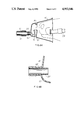
- FIG. 6A is a sectional view of the mask on an equine showing connection to a delivery tube.
- FIG. 6B is an enlarged view of the connector portion of the mask.
- FIG. 6C is a side view of the mask.
- FIG. 6D is an end view of the mask.
- FIG. 1 is a front oblique perspective view of the right side of the portable electric powered humidifier unit showing the muzzle mask secured for the administration of a high-humidity air stream to an equine.
- Ambient air enters the cabinet 1 at atmospheric pressure, through air filter 35, exits into a delivery tube 51 after mixing with water vapor, and is delivered to the animal shown standing on the left side of the cabinet via a muzzle mask 61.
- the apparatus as shown is designed for ambient air, it can be readily adapted to receive supplementary gas under pressure. Oxygen, nitrous oxide, and other inhaled anesthetic and therapeutic agents can be used.
- the air enters the cabinet through air filter 35 and is drawn into the gas blower 37 through intake orifice 39 and exits via a plastic conduit 41 under positive pressure.
- the air mixes with water vapor which exits water reservoir 43 through second conduit 49.
- the air and water vapor flows mix at the intersection of the two conduits 41 and 49 and then continue through a third conduit 53, exit the cabinet 1 and flow through the flexible plastic delivery tube 51 into the mask 61.
- a plastic tube 42 coaxial with reservoir 43 divides the container into an inner reservoir 44 and outer reservoir 46. Water flows into the inner reservoir 44 through tubing 47 until the fluid levels in the two reservoirs are equal.
- a vent 34 near the top of the divider 42 allows the air pressure in the two chambers to equilibrate.
- Water in the inner chamber is in direct contact with an electric heater 45.
- electric power is fed to the heater coils 38 which are embedded in the electric heater.
- Water in the inner reservoir 44 is preferentially heated.
- the water sequestered in the inner reservoir 44 is a minor portion of the water in the container 43 and permits a fast heat up.
- the electric heater 45 imparts sufficient energy to the water 36 in the interior chamber to humidify the air in the chamber. Water vapor flows into conduit 49 and then mixes with the ambient air flow and is delivered to the animal.
- the conduit 49 is axially aligned with the plastic tube 42. This minimizes the effect of tilting of the cabinet 1 on the water level.
- Pasteurizing the water serves to kill bacteria which are a source of respiratory infections. Pathogenic organisms can multiply in the unheated container 43 but will be pasteurized as they pass from chamber 46 to chamber 44 where the water is vaporized for introduction into the air on its way to the animals respiratory tract.
- the delivery tube 51 is heated by the water vapor. Insulation may be added to minimize condensation of water vapor on cooling.
- the delivery tube may be optionally heated by electrical or water-jacket means to prevent condensation.
- the electric heater 45 administers heat to the interior chamber in response to control signals from a wet-bulb temperature sensor 84 (shown in FIG. 6A) located near the exit of delivery tube 51. Should the temperature at the sensor 84 exceed a pre-determined upper limit, i.e., 115° F., a thermal switch opens thereby turning off power to the electric heater 45.
- a wet-bulb temperature sensor 84 shown in FIG. 6A
- the power to the heater 45 will be turned off. However, the fan 62 and the blower 37 will still operate. Thus, when sensor 84 is disconnected, unheated ambient air will be passed through the delivery tube. This air will have an additional water carrying capacity and can be used to dry the delivery tube. During such procedures, the muzzle mask is not intended to be connected to an animal.
- a recessed liquid drain outlet port 71 (shown in FIG. 1) and drain valve 19 (shown in FIG. 5) are incorporated to provide a means of removing water from the container 43.
- a recessed drain lever 73 located on the left side of the cabinet (shown in FIG. 2) is rotated to open drain valve 19. Gravity forces the water through drain conduit via outlet port 71.
- Conduit 21 is beneath the heating container 43 and delivers the water to the drain port 71 on the right side of the cabinet away from the attendant. This design is a safety feature which prevents water from spilling on the attendant who opens the valve.
- a sight tube 5 (shown in FIG. 2) on the left side of the cabinet permits the user to check the water level in the heating container 43 prior to starting treatment.
- the sight tube is operationally connected to the water reservoir via a conduit 75 (shown in FIG. 5).
- a conduit 77 permits the air pressure in the sight tube 5 and the heating container to equilibrate.
- water in the inner reservoir 44 acts as a heat sink to keep the temperature of heater 45 below a predetermined level.
- the temperature of the electric heater 45 increases.
- a sensor 79 (not shown) attached to the electric heater automatically shuts the power to the heater off when the sensor exceeds a predetermined temperature. Simultaneously, an indicator light marked “Refill” located on the control panel 69 (shown in FIG. 1) will lock on.
- FIG. 6A depicts a preferred configuration of a reusable, easily cleaned mask.
- Delivery tube 51 connects to fitting 85 which is molded into mask 61.
- tube 88 is inserted inside fitting 85 and protrudes into the mask.
- air exiting the delivery tube impinges directly on diffuser 12 which is molded into the mask to prevent direct impingement of high velocity air from the delivery tube onto the horse's muzzle.
- the mask is designed to minimize the formation of aerosols from condensed water in tube 51.
- Flow director 86 is molded into the mask to direct humidified air flow preferentially toward the horse's nostrils in order to maximize the total amount of water vapor inspired.
- Diffuser 12 acts as a barrier to condensate. Excess condensate drains from the mask via port 63.
- Tube 88 prevents condensate from draining directly into delivery tube 51.
- Diffuser 12 and flow deflector 86 act in concert to direct humidified air toward the horse's nostrils. Condensate from the body of the mask and secretions from the animal drain from the mask via port 87.
- FIG. 6D an end view of the mask, shows its oval shape so as to fit relatively closely to the horse's muzzle.
- Drain ports 63 and 87 are positioned so as to be at a low point of the mask when the horse is standing with a lowered head, the normal position for receiving treatment.
- the mask is secured to the horse by means of an adjustable strap 89 which connects to the mask via a port 90 on each side of the rear end of the mask.
- the strap passes behind the horse's ears and is adjusted in length to allow clearance between the end of the horses muzzle and diffuser 12.
- a tracheal mask, ventilator, hood, or tent may also be used.
- the mask may optionally include a temperature sensor indicator (not shown) to continuously monitor the temperature within the muzzle mask 61 during the administration of therapy.
- An electric circuit board 55 as shown in FIG. 4 is attached to the partition 56. Positioned on the opposite side of the partition are a transformer 57, a heat sink 58 and two solid state relays 59.
- the exterior of the therapy apparatus of the present invention as shown in FIGS. 2 and 3 is designed for safety.
- the cabinet 1 includes an upper section 7, a middle section 9, and a lower section 11.
- the apparatus is double insulated and grounded. There are no exposed electrical parts.
- a twist lock electrical plug 17 prevents the animal or the attendant from unintentionally breaking the electrical connection.
- the electrical plug is removable for ease of storage and transportation.
- the three cabinet sections 7, 9 and 11 are vacuum formed using an acrylonitrile-butadiene-styrene copolymer, which has good impact resistance and heat resistance under normal ambient conditions. This copolymer contributes to the light weight of the apparatus, allowing it to be lifted with relative ease.
- the apparatus may optionally include integral wheels. However, because it is light weight, this is unnecessary.
- the upper section 7 is contoured to prevent water accumulations if the apparatus is exposed to precipitation.
- the control panel 69 is waterproof and is positioned in a protected area.
- the lower section 11 is water-tight since it is formed as one piece. Thus, the device can sit in water such as a puddle without wetting the interior of the device.
- the apparatus in its upright position has a low center of gravity for stability. This prevents the apparatus from falling over if it is kicked by the animal or the attendant or if it is subjected to a sudden acceleration during transport.
- An inlet port cap 33 (shown in FIG. 2) seals inlet port 31 to maintain container pressure, prevent contamination of the water and prevent spills during transportation.
- Screen 92 (FIG. 5) filters large particulates from the feed water.
- a recess 22 in the upper section 7 provides a convenient place for the storage of a disinfectant solution.
- a handle 29 is centered in the upper section for ease of transporting the cabinet 1.
- the control panel 69 has a power switch 52, a test switch 24, a run/dry switch 25, and a digital temperature gauge 23 (not shown).
- the power switch 52 controls the power to the entire apparatus including heater 45, blower 37, fan 62 and electric control circuitry 55.
- the run/dry switch 25 is normally placed in the run position. In the dry position, no power is applied to heater 45, but blower 37 continues to operate. The resulting flow of ambient air through the apparatus dries condensate from delivery tube 51.
- a test switch 24 allows the user to substitute a known resistance for temperature sensor 84. The temperature sensed by sensor 84 is displayed on digital temperature gauge 23. When test switch 24 is closed, the gauge reading on 23 indicates whether or not the control is functioning properly.
- a green light may also be on control panel 69 to indicate power is being applied to heater 45. If the temperature at the top of conduit 49 exceeds preset limits a red light (not shown) which may also be on control panel 69 turns on to indicate "fault”. This temperature is sensed by a sensor (not shown) located at the top of conduit 49.
- a "fault” signal can be caused by loss of air flow as a result of plumbing failure, blocked conduits, or a failure of blower 37.
- An elapsed time indicator records the total number of hours the apparatus has been switched on. Either a "refill” or "fault” signal will shut off the power to heater 45.
- the following examples illustrates the high humidity therapy treatment in accordance with the present invention of the young of large animals as an effective means of preventing and/or healing, reducing, and repairing the tissue damage done to the cells, alveoli, mucousa, nostrils, mucus membranes, nasal passages, bronchioli, etc., associated with respiratory illnesses such as pneumonia.
- Foal suffering from Corynebacterium equi did not respond. Tried rifampin/erythromycin combination therapy in conjunction with Transpirator. According to the veterinarian, "Three days after treatment, the foal was 100% better. I find it hard to believe it was just the antibiotics. You could near him start to break up. And the material that came out of his nose-gobs of wet dark mucus. One other amazing thing: the foals actually seek out the treatment.
- Tranquilizers were administered at first use, but then were discontinued after it was found that the foals would stand quietly while receiving treatment via muzzle mask. Approximately 30 minutes after treatment, they coughed up copious amounts of secretions. Fever subsided and temperatures were normal the next day. Lung sounds improved dramatically after each use. Four more foals were treated with humidity therapy. The duration of treatment for the total of seven foals treated ranged from 5-7 days vs. the 8-30 days for non-treated foals. Fever subsided in one day vs. 7-10 days.”
Landscapes
- Health & Medical Sciences (AREA)
- Veterinary Medicine (AREA)
- Life Sciences & Earth Sciences (AREA)
- Public Health (AREA)
- Anesthesiology (AREA)
- Animal Behavior & Ethology (AREA)
- General Health & Medical Sciences (AREA)
- Engineering & Computer Science (AREA)
- Biomedical Technology (AREA)
- Heart & Thoracic Surgery (AREA)
- Pulmonology (AREA)
- Hematology (AREA)
- Emergency Medicine (AREA)
- Wood Science & Technology (AREA)
- Zoology (AREA)
- Pharmaceuticals Containing Other Organic And Inorganic Compounds (AREA)
Abstract
An method and apparatus for delivering a humidified stream of gas to a young animal's respiratory tract. The gas is delivered at a dew point temperature greater than the ambient dew point temperature. The apparatus is especially useful in the treatment of foal pneumonia.
Description
1. Cross-Reference to Related Applications
This application is a continuation-in-part of co-pending U.S. application Ser. No. 841,300 filed 03-19-86 which is a continuation-in-part of co-pending U.S. application Ser. No. 755,562 filed July 16, 1985, now U.S. Pat. No. 4,722,334. The invention of the present application improves upon the invention of U.S. application Ser. No. 755,562 in that it provides an apparatus and method for the treatment of young animals with a much faster heat up time and at the same time is simpler in design and less expensive. The apparatus of the present invention also contains numerous safety features which will become obvious.
2. Field of the Invention
A high-humidity method and an apparatus are described which are useful for conditioning the respiratory pulmonary and/or a cardiovascular system in young animals. More particularly a method and an apparatus which are useful for delivering a therapeutic stream of humidified gas to a foal's respiratory tract at a dew point temperature greater than the ambient dew point temperature.
3. Description of the Prior Art
The treatment of the respiratory tract of the young of large animals with heated, humidified air is virtually unreported in both patent and technical journal literature. Large animals is a term commonly used in the art to refer to the following animals: equine, including standardbred and thoroughbred horses, bovine, and ovine species. Approximately 9% of young horses (foals) contract pneumonia and 12% of those die as a result of the disease.
Respiratory therapy involving conditioning of the pulmonary and/or cardiovascular systems of large animals comprising delivering a saturated vapor/gas stream at a dew point temperature greater than the environmental ambient dew point temperature has not been proposed in the prior art or reported in the literature.
Inhalation therapy involving inhalation by large animals of water-vapor-saturated air at dew point temperatures from above ambient to 110° F. while administering 300 to 400 liters per minute of such air to standardbred and thoroughbred racehorses also has not been found in technical literature.
In general, prior patent and technical art refer to the administration of medicines, anesthesia, drugs, (M.A.D.), etc., to small animals such as cats, dogs, chickens and the like for the purpose of enhancing vaccinations, etc. Water vapor reportedly has been transferred into the respiratory system of small animals at temperatures equal to or lower than the normal body temperature of the animals. Therapy treatment (i.e., other than replacement of bypassed natural humidification during anesthesia or other procedures involving tracheal intubation) of the respiratory tract of animals at dew point temperatures near or above normal core body temperatures is unreported or unsuggested in the prior art.
The present invention is a drug free therapeutic treatment for respiratory disease in animals. Respiratory disease particularly foal pneumonia, is a major cause of death in foals. Over 1% of 22 foals die of pneumonia each year. Improving mucocilliary clearance can lead to reduced mortality rates.
A high humidity method and an apparatus for therapeutic of treatment of young animals are described which are useful for conditioning the respiratory, pulmonary and/or cardiovascular system in an animal. The method broadly comprises delivering a humidified stream of gas at a dew point temperature greater than the ambient dew point temperature to an animal's respiratory tract. This reduces airway water loss and if the dew point delivered is above core body temperature upon cooling produces a thin film of condensation on the walls of the entire respiratory tract from the nasal sinus to the alveoli. Retained and absorbed water thins the mucous blanket, dissolves mucous plugs, and promotes mucocilliary clearance.
A high-humidity therapy and apparatus are described which are useful for clearing pulmonary secretions and hydrating the pulmonary tract and for increasing peripheral blood circulation of foals to treat and prevent respiratory diseases.
The invention relates to apparatus and methods where the humidity level in the respiratory tracts of large animals is increased by muzzle mask administration of water-vapor saturated air to produce inspired dew point temperatures ranging from above ambient up to about 110° F. and no higher than 115° F. The present invention is a method to minimize negative inspiratory pressure and obstruction of bronchial connections to the alveoli by promoting the natural mucocilliary secretion and particulate-clearance action of the bronchial system by the prevention of airway water loss and by the hydration of airway surfaces through the administration to the upper respiratory tract of large animals of a substantially sterile, water-vapor-saturated airstream. This method of improving pulmonary hygiene helps condition the animal to achieve its maximum oxygenation efficiency through reduction of airway obstructions and hydration of airway membranes and mucous. The method also eliminates evaporative cooling from the respiratory system and, typically will increase metabolic heat rejection from other body surfaces by about 10 percent, and consequently, induces increased peripheral blood circulation.
The veterinary respiratory therapy apparatus of the present invention is particularly adapted for application of vapor-phase water in treating the upper respiratory tract of large animals with a substantially sterile, water-vapor-saturated airstream having a substantially uniform dew point/dry bulb temperature above ambient temperature and to above 110° and at flow rates less than 60 liters per minute but sufficient to match the normal inhalation flow rate of a typical young animal.
The apparatus of the invention comprises a portable electric-powered air blower, means for humidifying the air stream, a flexible delivery tube, means for conducting the humidified air without excessive condensation to a muzzle mask and means for administering the humidified air to the nasal passages of a large animal such that the dew point temperature of the inspired air can be controlled from above ambient to 110° F. The unified apparatus comprises elements that are relatively inexpensive, portable, and can be operated or maintained by individuals not having a high degree of technical expertise or horse-handling skill for pulmonary and cardiovascular conditioning of foals and other large animals.
FIG. 1 is a front oblique perspective view of the right side of the portable electric powered humidifier unit showing the muzzle mask secured for the administration of a high-humidity air stream to an equine.
FIG. 2 is a side view of the left side of the portable electric powered humidifier unit.
FIG. 3 is a horizontal cut-away showing the internal features of the apparatus.
FIG. 4 is a vertical cut-away showing air flow through the right half of the apparatus.
FIG. 5 is a sectional view of the humidification pot.
FIG. 6A is a sectional view of the mask on an equine showing connection to a delivery tube.
FIG. 6B is an enlarged view of the connector portion of the mask.
FIG. 6C is a side view of the mask.
FIG. 6D is an end view of the mask.
FIG. 1 is a front oblique perspective view of the right side of the portable electric powered humidifier unit showing the muzzle mask secured for the administration of a high-humidity air stream to an equine. Ambient air enters the cabinet 1 at atmospheric pressure, through air filter 35, exits into a delivery tube 51 after mixing with water vapor, and is delivered to the animal shown standing on the left side of the cabinet via a muzzle mask 61.
Although the apparatus as shown is designed for ambient air, it can be readily adapted to receive supplementary gas under pressure. Oxygen, nitrous oxide, and other inhaled anesthetic and therapeutic agents can be used.
Referring now to FIG. 4, the air enters the cabinet through air filter 35 and is drawn into the gas blower 37 through intake orifice 39 and exits via a plastic conduit 41 under positive pressure.
The air mixes with water vapor which exits water reservoir 43 through second conduit 49. The air and water vapor flows mix at the intersection of the two conduits 41 and 49 and then continue through a third conduit 53, exit the cabinet 1 and flow through the flexible plastic delivery tube 51 into the mask 61.
Referring now to FIG. 5, water enters the cabinet 1 from a liquid inlet port 31 into the outer reservoir 46 of the insulated stainless steel water reservoir 43. A plastic tube 42 coaxial with reservoir 43 divides the container into an inner reservoir 44 and outer reservoir 46. Water flows into the inner reservoir 44 through tubing 47 until the fluid levels in the two reservoirs are equal. A vent 34 near the top of the divider 42 allows the air pressure in the two chambers to equilibrate.
Water in the inner chamber is in direct contact with an electric heater 45. When the invention is switched on, electric power is fed to the heater coils 38 which are embedded in the electric heater. Water in the inner reservoir 44 is preferentially heated. The water sequestered in the inner reservoir 44 is a minor portion of the water in the container 43 and permits a fast heat up.
The electric heater 45 imparts sufficient energy to the water 36 in the interior chamber to humidify the air in the chamber. Water vapor flows into conduit 49 and then mixes with the ambient air flow and is delivered to the animal.
The conduit 49 is axially aligned with the plastic tube 42. This minimizes the effect of tilting of the cabinet 1 on the water level.
Water within the inner reservoir 44 is heated by the electric heater 45 to boiling temperature, which temperature exceeds the temperature required for pasteurization, i.e., 140° to 180° F. Pasteurizing the water serves to kill bacteria which are a source of respiratory infections. Pathogenic organisms can multiply in the unheated container 43 but will be pasteurized as they pass from chamber 46 to chamber 44 where the water is vaporized for introduction into the air on its way to the animals respiratory tract.
The delivery tube 51 is heated by the water vapor. Insulation may be added to minimize condensation of water vapor on cooling. The delivery tube may be optionally heated by electrical or water-jacket means to prevent condensation.
The electric heater 45 administers heat to the interior chamber in response to control signals from a wet-bulb temperature sensor 84 (shown in FIG. 6A) located near the exit of delivery tube 51. Should the temperature at the sensor 84 exceed a pre-determined upper limit, i.e., 115° F., a thermal switch opens thereby turning off power to the electric heater 45.
In the event that sensor 84 is disconnected and no temperature measurement can be made, the power to the heater 45 will be turned off. However, the fan 62 and the blower 37 will still operate. Thus, when sensor 84 is disconnected, unheated ambient air will be passed through the delivery tube. This air will have an additional water carrying capacity and can be used to dry the delivery tube. During such procedures, the muzzle mask is not intended to be connected to an animal.
A recessed liquid drain outlet port 71 (shown in FIG. 1) and drain valve 19 (shown in FIG. 5) are incorporated to provide a means of removing water from the container 43. To drain the water, a recessed drain lever 73 located on the left side of the cabinet (shown in FIG. 2) is rotated to open drain valve 19. Gravity forces the water through drain conduit via outlet port 71. Conduit 21 is beneath the heating container 43 and delivers the water to the drain port 71 on the right side of the cabinet away from the attendant. This design is a safety feature which prevents water from spilling on the attendant who opens the valve.
A sight tube 5 (shown in FIG. 2) on the left side of the cabinet permits the user to check the water level in the heating container 43 prior to starting treatment. The sight tube is operationally connected to the water reservoir via a conduit 75 (shown in FIG. 5). A conduit 77 permits the air pressure in the sight tube 5 and the heating container to equilibrate.
In normal operation, water in the inner reservoir 44 acts as a heat sink to keep the temperature of heater 45 below a predetermined level. When the reservoirs 44 and 46 run dry, the temperature of the electric heater 45 increases. A sensor 79 (not shown) attached to the electric heater automatically shuts the power to the heater off when the sensor exceeds a predetermined temperature. Simultaneously, an indicator light marked "Refill" located on the control panel 69 (shown in FIG. 1) will lock on.
FIG. 6A depicts a preferred configuration of a reusable, easily cleaned mask. Delivery tube 51 connects to fitting 85 which is molded into mask 61. As shown in FIG. 6B, tube 88 is inserted inside fitting 85 and protrudes into the mask. Referring to FIG. 6A, air exiting the delivery tube impinges directly on diffuser 12 which is molded into the mask to prevent direct impingement of high velocity air from the delivery tube onto the horse's muzzle.
The mask is designed to minimize the formation of aerosols from condensed water in tube 51. Flow director 86 is molded into the mask to direct humidified air flow preferentially toward the horse's nostrils in order to maximize the total amount of water vapor inspired. Diffuser 12 acts as a barrier to condensate. Excess condensate drains from the mask via port 63. Tube 88 prevents condensate from draining directly into delivery tube 51. Diffuser 12 and flow deflector 86 act in concert to direct humidified air toward the horse's nostrils. Condensate from the body of the mask and secretions from the animal drain from the mask via port 87.
FIG. 6D, an end view of the mask, shows its oval shape so as to fit relatively closely to the horse's muzzle. When the mask is placed on a horse, there is a relatively uniform velocity of humidified air over the nostrils, and virtually no entrained air is drawn into the mask around the horses muzzle. Drain ports 63 and 87 are positioned so as to be at a low point of the mask when the horse is standing with a lowered head, the normal position for receiving treatment.
The mask is secured to the horse by means of an adjustable strap 89 which connects to the mask via a port 90 on each side of the rear end of the mask. The strap passes behind the horse's ears and is adjusted in length to allow clearance between the end of the horses muzzle and diffuser 12.
A tracheal mask, ventilator, hood, or tent may also be used. The mask may optionally include a temperature sensor indicator (not shown) to continuously monitor the temperature within the muzzle mask 61 during the administration of therapy.
An electric circuit board 55 as shown in FIG. 4 is attached to the partition 56. Positioned on the opposite side of the partition are a transformer 57, a heat sink 58 and two solid state relays 59.
The exterior of the therapy apparatus of the present invention as shown in FIGS. 2 and 3 is designed for safety. The cabinet 1 includes an upper section 7, a middle section 9, and a lower section 11.
The apparatus is double insulated and grounded. There are no exposed electrical parts. A twist lock electrical plug 17 prevents the animal or the attendant from unintentionally breaking the electrical connection. The electrical plug is removable for ease of storage and transportation. The three cabinet sections 7, 9 and 11 are vacuum formed using an acrylonitrile-butadiene-styrene copolymer, which has good impact resistance and heat resistance under normal ambient conditions. This copolymer contributes to the light weight of the apparatus, allowing it to be lifted with relative ease. The apparatus may optionally include integral wheels. However, because it is light weight, this is unnecessary.
The upper section 7 is contoured to prevent water accumulations if the apparatus is exposed to precipitation. For additional safety, the control panel 69 is waterproof and is positioned in a protected area.
The lower section 11 is water-tight since it is formed as one piece. Thus, the device can sit in water such as a puddle without wetting the interior of the device.
The apparatus in its upright position has a low center of gravity for stability. This prevents the apparatus from falling over if it is kicked by the animal or the attendant or if it is subjected to a sudden acceleration during transport.
These features are critical because of the environment of actual use. Severe service is expected as the apparatus can be easily transported throughout stables, and can be used to treat several horses on any given day.
An inlet port cap 33 (shown in FIG. 2) seals inlet port 31 to maintain container pressure, prevent contamination of the water and prevent spills during transportation. Screen 92 (FIG. 5) filters large particulates from the feed water.
A recess 22 in the upper section 7 (shown in FIG. 1) provides a convenient place for the storage of a disinfectant solution. A handle 29 is centered in the upper section for ease of transporting the cabinet 1.
The control panel 69 has a power switch 52, a test switch 24, a run/dry switch 25, and a digital temperature gauge 23 (not shown). The power switch 52 controls the power to the entire apparatus including heater 45, blower 37, fan 62 and electric control circuitry 55. The run/dry switch 25 is normally placed in the run position. In the dry position, no power is applied to heater 45, but blower 37 continues to operate. The resulting flow of ambient air through the apparatus dries condensate from delivery tube 51. A test switch 24 allows the user to substitute a known resistance for temperature sensor 84. The temperature sensed by sensor 84 is displayed on digital temperature gauge 23. When test switch 24 is closed, the gauge reading on 23 indicates whether or not the control is functioning properly. A green light (not shown) may also be on control panel 69 to indicate power is being applied to heater 45. If the temperature at the top of conduit 49 exceeds preset limits a red light (not shown) which may also be on control panel 69 turns on to indicate "fault". This temperature is sensed by a sensor (not shown) located at the top of conduit 49. A "fault" signal can be caused by loss of air flow as a result of plumbing failure, blocked conduits, or a failure of blower 37. An elapsed time indicator records the total number of hours the apparatus has been switched on. Either a "refill" or "fault" signal will shut off the power to heater 45.
The following examples illustrates the high humidity therapy treatment in accordance with the present invention of the young of large animals as an effective means of preventing and/or healing, reducing, and repairing the tissue damage done to the cells, alveoli, mucousa, nostrils, mucus membranes, nasal passages, bronchioli, etc., associated with respiratory illnesses such as pneumonia.
Foal was premature and contracted pneumonia. Following a relapse, treatment with high humidity was started evening of Apr. 9, 1986. On April 10, foal was up and lively all day. Resting breath rate had decreased to 36 (had been 50). Continued with 1 hour treatments through April 12. Discontinued treatments on April 14 and 15 due to temperature rise. On April 16, foal was examined by x-ray which showed pneumonia cleared except for a small spot.
This case was reported in July, 1986 Modern Horse Breeding as follows:
Thoroughbred foal born 31/2 weeks prematurely developed signs of consolidated pneumonia soon after birth. Antibiotics helped, but relapse followed. Lung congestion resulting from recumbency was a contributing factor to deteriorating condition. Placed on Transpirator. By morning he was producing copious amounts of mucus. "Auscultation of the lungs revealed definite clinical improvement." Jim Prendergast, DVM. Side effect of transient temperature spikes attributed to the effort of coughing up exudate. Antibiotics discontinued at 7 weeks. Colt continuing to progress at 3 months on Transpirator and round-the-clock nursing.
The following case was also reported in the July 1986 issue of Modern Horse Breeding:
Foal suffering from Corynebacterium equi did not respond. Tried rifampin/erythromycin combination therapy in conjunction with Transpirator. According to the veterinarian, "Three days after treatment, the foal was 100% better. I find it hard to believe it was just the antibiotics. You could near him start to break up. And the material that came out of his nose-gobs of wet dark mucus. One other amazing thing: the foals actually seek out the treatment.
Two treatments of foal with anoxia brain injury at birth. Favorable response both times. After first treatment, foal got up on its own for the first time and appeared to show better pupil reflex to light. Foal's temperature dropped 1° F. during treatment. Foal subsequently died due to prior problems.
The following results were reported by a doctor of veterinary medicine at the University of Minnesota:
"Twelve foals with a clinical history of bilateral nasal discharge, initial fevers from 103°-105° F., sibilant sounds, rales, depression, lethargy, poor appetite and activity, increased with blood cell count to 14-25,000 cbc and 60-80% neutrophils were placed on antibiotics. The duration of treatment ranged from 8-10 days with and average of 14-18 days. Fever persisted for 7-10 days. Nine of these foals suffered relapse approximately 10 days after they were deemed to have recovered. Three of the sickest were placed on a nigh humidity treatment regime consisting of 60 minutes of treatment per day at a dew point of 105° F. and a flow greater than their peak inspiratory flow. Tranquilizers were administered at first use, but then were discontinued after it was found that the foals would stand quietly while receiving treatment via muzzle mask. Approximately 30 minutes after treatment, they coughed up copious amounts of secretions. Fever subsided and temperatures were normal the next day. Lung sounds improved dramatically after each use. Four more foals were treated with humidity therapy. The duration of treatment for the total of seven foals treated ranged from 5-7 days vs. the 8-30 days for non-treated foals. Fever subsided in one day vs. 7-10 days."
Claims (11)
1. A method for the therapeutic treatment of a young veterinary animal's respiratory tract comprising the step of continuously delivering to the young veterinary animal's respiratory tract a humidified stream of gas at a dew point temperature which is greater than the ambient dew point temperature at flow rates exceeding the veterinary animal's peak resting inhalation rate to condition the veterinary animal's respiratory, pulmonary and cardiovascular system.
2. The method of claim 1 wherein the step of delivering the humidified stream of gas further comprises delivering of the humidified stream of gas to a foal.
3. The method of claims 1 or 2 wherein the step of delivering the humidified stream of gas further comprises delivering a humidified stream of gas in which the dew point temperature is also greater than the normal body temperature of the veterinary animal.
4. The method of claims 1 or 2 further comprising the step of adding a sedating agent to the stream of gas thereby preventing dehydration of respiratory and pulmonary airways and preventing water loss from the airway.
5. The method of claims 1 or 2 wherein the conditioning provided by the step of delivering the humidified stream of gas comprises increasing the peripheral blood circulation of the veterinary animal to warm-up without unnecessarily depleting energy and oxygen reserves.
6. The method of claims 1 or 2 wherein the step of delivering the humidified stream of gas further comprises delivering the stream of gas to a veterinary animal suffering from bronchitis to condition the veterinary animal's bronchi wherein the stream of gas deposits water to soothe inflamed tissue thereby preventing water loss from the veterinary animal's respiratory tract allowing the animal to breath more freely.
7. The method of claims 1 or 2 wherein the step of delivery the humidified stream of gas further comprises delivering the stream of gas to a veterinary animal suffering from a sinus infection to condition the veterinary animal's sinus cavities wherein the stream of gas promotes opening and draining thereby increasing the blood flow in said infected sinus to promote healing.
8. The method of claims 1 or 2 wherein the step of delivering the humidified stream of gas further comprises delivering the stream of gas to a veterinary animal suffering from an allergy wherein the stream of gas delivers filtered gas to the veterinary animal to facilitate mucous flow and promote the removal of irritants in the respiratory tract.
9. The method of claims 1 or 2 wherein the step of delivering the humidified stream of gas further comprises delivering the stream of gas to a veterinary animal suffering from exercise-induced pulmonary hemorrhage to condition the veterinary animal's respiratory tract wherein the stream of gas deposits water thereby thinning the mucous blanket, dissolving mucous plugs and promoting mucocilliary clearance.
10. The method of claims 1 or 2 wherein the step of delivering the humidified stream of gas further comprises delivering the stream of gas to a veterinary animal suffering from pneumonia to condition the veterinary animal's lungs wherein the stream of gas promotes mucocilliary clearance of fluids thereby increasing the blood flow in the pulmonary system.
11. The method of claims 1 or 2 wherein the step of delivering the humidified stream of gas further comprises delivering the stream of gas to a veterinary animal suffering from airway obstruction wherein the stream of gas deposits water on the walls of the respiratory tract thereby thinning the mucous blanket, dissolving mucous plugs, and promoting mucocilliary clearance.
Priority Applications (1)
| Application Number | Priority Date | Filing Date | Title |
|---|---|---|---|
| US07/295,656 US4953546A (en) | 1985-07-16 | 1989-01-10 | Method and apparatus for pulmonary and cariovascular conditioning of the young of large animals |
Applications Claiming Priority (3)
| Application Number | Priority Date | Filing Date | Title |
|---|---|---|---|
| US06/755,562 US4722334A (en) | 1985-07-16 | 1985-07-16 | Method and apparatus for pulmonary and cardiovascular conditioning of racehorses and competition animals |
| US84130086A | 1986-03-19 | 1986-03-19 | |
| US07/295,656 US4953546A (en) | 1985-07-16 | 1989-01-10 | Method and apparatus for pulmonary and cariovascular conditioning of the young of large animals |
Related Parent Applications (1)
| Application Number | Title | Priority Date | Filing Date |
|---|---|---|---|
| US84130086A Continuation-In-Part | 1985-07-16 | 1986-03-19 |
Publications (1)
| Publication Number | Publication Date |
|---|---|
| US4953546A true US4953546A (en) | 1990-09-04 |
Family
ID=27404377
Family Applications (1)
| Application Number | Title | Priority Date | Filing Date |
|---|---|---|---|
| US07/295,656 Expired - Fee Related US4953546A (en) | 1985-07-16 | 1989-01-10 | Method and apparatus for pulmonary and cariovascular conditioning of the young of large animals |
Country Status (1)
| Country | Link |
|---|---|
| US (1) | US4953546A (en) |
Cited By (27)
| Publication number | Priority date | Publication date | Assignee | Title |
|---|---|---|---|---|
| US5062423A (en) * | 1990-02-27 | 1991-11-05 | Minnesota Mining And Manufacturing Company | Equine aerosol drug delivery method and apparatus |
| US5231983A (en) * | 1990-01-03 | 1993-08-03 | Minnesota Mining And Manufacturing | Method of and apparatus for the aerosol administration of medication |
| US5292347A (en) * | 1990-02-13 | 1994-03-08 | Exergen Corporation | Method and apparatus for regulating body temperature |
| US5337738A (en) * | 1990-12-18 | 1994-08-16 | Instrumentarium Corporation | Fluid vaporizing apparatus |
| US5609619A (en) * | 1990-02-13 | 1997-03-11 | Exergen Corporation | Method and apparatus for heating bodies |
| US5666948A (en) * | 1993-02-12 | 1997-09-16 | Minnesota Mining And Manufacturing Company | Attachment for aerosol device for large animals and method of use |
| US6435180B1 (en) | 1999-07-01 | 2002-08-20 | J&M Distributors Limited | Method and apparatus for delivering humidified air to a face mask |
| US20030070674A1 (en) * | 2001-10-12 | 2003-04-17 | Bryan Perry | Use of aerosolized compounds in the treatment of exercise induced pulmonary hemorrhage in an equine |
| US20030209246A1 (en) * | 1999-12-10 | 2003-11-13 | Gary Schroeder | Apparatus and method for respiratory tract therapy |
| US20040200476A1 (en) * | 2003-01-29 | 2004-10-14 | Bamford Owen S. | Method for reducing the work of breathing |
| US20040231672A1 (en) * | 2001-05-25 | 2004-11-25 | Thomas Schmehl | Equine inhalation mask |
| US20040245658A1 (en) * | 2000-12-08 | 2004-12-09 | Niland William F. | Apparatus and method for delivering water vapor to a gas |
| US20040250816A1 (en) * | 2003-05-19 | 2004-12-16 | Pari Gmbh Spezialisten Fur Effective Inhalation | Inhalation therapy mask and device for animals |
| US20050172965A1 (en) * | 2002-05-28 | 2005-08-11 | Bjorn Thulin | Breathing device |
| US20050247314A1 (en) * | 2001-02-16 | 2005-11-10 | Resmed Limited | Humidifier with structure to prevent backflow of liquid through the humidifier inlet |
| US8006691B2 (en) | 2003-06-20 | 2011-08-30 | Resmed Limited | Humidifier with removable water tank |
| US8020551B2 (en) | 2003-06-20 | 2011-09-20 | Resmed Limited | Breathable gas apparatus with humidifier |
| US8469025B2 (en) | 1999-08-05 | 2013-06-25 | Resmed R&D Germany Gmbh | Apparatus for humidifying a respiratory gas |
| US8789525B2 (en) | 2007-06-07 | 2014-07-29 | Resmed Limited | Tub for humidifier |
| US9084865B2 (en) * | 2004-09-15 | 2015-07-21 | Covidien Ag | System and method for regulating a heating humidifier |
| USD753352S1 (en) * | 2014-09-24 | 2016-04-05 | Tonda Collins | Equine mask |
| US9610416B2 (en) | 2009-06-04 | 2017-04-04 | Resmed Limited | Flow generator chassis assembly with suspension seal |
| US10179220B2 (en) * | 2015-08-06 | 2019-01-15 | Rebecca G. Canaday | Animal respiratory treatment masks and system |
| CN109907000A (en) * | 2019-03-12 | 2019-06-21 | 山西中医药大学 | Device and method for preparing animal model of depression |
| US10806889B2 (en) | 2008-06-05 | 2020-10-20 | ResMed Pty Ltd | Treatment of respiratory conditions |
| USD899598S1 (en) | 2018-09-04 | 2020-10-20 | 3B Medical, Inc. | CPAP device |
| RU2772056C1 (en) * | 2021-09-29 | 2022-05-16 | Федеральное государственное бюджетное образовательное учреждение высшего образования «Национальный исследовательский Мордовский государственный университет им. Н.П. Огарёва» | Device for individual inhalation treatment of calves |
Citations (10)
| Publication number | Priority date | Publication date | Assignee | Title |
|---|---|---|---|---|
| US2091034A (en) * | 1935-05-06 | 1937-08-24 | George R Duncan | Apparatus for thermal treatments |
| US3638926A (en) * | 1967-09-27 | 1972-02-01 | Alfred W Melville | Humidification |
| US3863630A (en) * | 1971-11-10 | 1975-02-04 | Synthelabo | Respiratory apparatus |
| US4038980A (en) * | 1973-11-12 | 1977-08-02 | Imre Fodor | Air humidifiers |
| US4201204A (en) * | 1977-01-24 | 1980-05-06 | Dragerwerk Aktiengesellschaft | Breathing gas humidifier |
| US4319566A (en) * | 1980-07-21 | 1982-03-16 | John Hayward | Method and apparatus for inhalation rewarming |
| US4369777A (en) * | 1981-04-03 | 1983-01-25 | Yeda Research & Dev., Co., Ltd. | Apparatus for treatment of the common cold and allergic rhinitis |
| US4381267A (en) * | 1978-07-12 | 1983-04-26 | Jackson Richard R | Airway humidifier for the respiratory tract |
| US4461114A (en) * | 1982-06-28 | 1984-07-24 | Riead John T | Fishing float |
| US4722334A (en) * | 1985-07-16 | 1988-02-02 | Transpirator Technologies, Inc. | Method and apparatus for pulmonary and cardiovascular conditioning of racehorses and competition animals |
-
1989
- 1989-01-10 US US07/295,656 patent/US4953546A/en not_active Expired - Fee Related
Patent Citations (10)
| Publication number | Priority date | Publication date | Assignee | Title |
|---|---|---|---|---|
| US2091034A (en) * | 1935-05-06 | 1937-08-24 | George R Duncan | Apparatus for thermal treatments |
| US3638926A (en) * | 1967-09-27 | 1972-02-01 | Alfred W Melville | Humidification |
| US3863630A (en) * | 1971-11-10 | 1975-02-04 | Synthelabo | Respiratory apparatus |
| US4038980A (en) * | 1973-11-12 | 1977-08-02 | Imre Fodor | Air humidifiers |
| US4201204A (en) * | 1977-01-24 | 1980-05-06 | Dragerwerk Aktiengesellschaft | Breathing gas humidifier |
| US4381267A (en) * | 1978-07-12 | 1983-04-26 | Jackson Richard R | Airway humidifier for the respiratory tract |
| US4319566A (en) * | 1980-07-21 | 1982-03-16 | John Hayward | Method and apparatus for inhalation rewarming |
| US4369777A (en) * | 1981-04-03 | 1983-01-25 | Yeda Research & Dev., Co., Ltd. | Apparatus for treatment of the common cold and allergic rhinitis |
| US4461114A (en) * | 1982-06-28 | 1984-07-24 | Riead John T | Fishing float |
| US4722334A (en) * | 1985-07-16 | 1988-02-02 | Transpirator Technologies, Inc. | Method and apparatus for pulmonary and cardiovascular conditioning of racehorses and competition animals |
Cited By (73)
| Publication number | Priority date | Publication date | Assignee | Title |
|---|---|---|---|---|
| US5231983A (en) * | 1990-01-03 | 1993-08-03 | Minnesota Mining And Manufacturing | Method of and apparatus for the aerosol administration of medication |
| US5292347A (en) * | 1990-02-13 | 1994-03-08 | Exergen Corporation | Method and apparatus for regulating body temperature |
| US5609619A (en) * | 1990-02-13 | 1997-03-11 | Exergen Corporation | Method and apparatus for heating bodies |
| US6245094B1 (en) | 1990-02-13 | 2001-06-12 | Exergen Corporation | Method and apparatus for heating bodies |
| US5062423A (en) * | 1990-02-27 | 1991-11-05 | Minnesota Mining And Manufacturing Company | Equine aerosol drug delivery method and apparatus |
| US5337738A (en) * | 1990-12-18 | 1994-08-16 | Instrumentarium Corporation | Fluid vaporizing apparatus |
| US5666948A (en) * | 1993-02-12 | 1997-09-16 | Minnesota Mining And Manufacturing Company | Attachment for aerosol device for large animals and method of use |
| US6435180B1 (en) | 1999-07-01 | 2002-08-20 | J&M Distributors Limited | Method and apparatus for delivering humidified air to a face mask |
| US10052450B2 (en) | 1999-08-05 | 2018-08-21 | Resmed R&D Germany Gmbh | Apparatus for humidifying a respiratory gas |
| US9884163B2 (en) | 1999-08-05 | 2018-02-06 | RedMed R&D Germany GmbH | Apparatus for humidifying a respiratory gas |
| US9555211B2 (en) | 1999-08-05 | 2017-01-31 | Resmed R&D Germany Gmbh | Apparatus for humidifying a respiratory gas |
| US9545494B2 (en) | 1999-08-05 | 2017-01-17 | Resmed R&D Germany Gmbh | Apparatus for humidifying a respiratory gas |
| US9545493B2 (en) | 1999-08-05 | 2017-01-17 | Resmed R&D Germany Gmbh | Apparatus for humidifying a respiratory gas |
| US9302067B2 (en) | 1999-08-05 | 2016-04-05 | Resmed R&D Germany Gmbh | Apparatus for humidifying a respiratory gas |
| US9272116B2 (en) | 1999-08-05 | 2016-03-01 | Resmed R&D Germany Gmbh | Apparatus for humidifying a respiratory gas |
| US8469025B2 (en) | 1999-08-05 | 2013-06-25 | Resmed R&D Germany Gmbh | Apparatus for humidifying a respiratory gas |
| US20080289631A1 (en) * | 1999-12-10 | 2008-11-27 | Gary Schroeder | Apparatus and method for respiratory tract therapy |
| US20030209246A1 (en) * | 1999-12-10 | 2003-11-13 | Gary Schroeder | Apparatus and method for respiratory tract therapy |
| US7314046B2 (en) | 1999-12-10 | 2008-01-01 | Vapotherm, Inc. | Apparatus and method for respiratory tract therapy |
| US7708013B2 (en) | 2000-12-08 | 2010-05-04 | Vapotherm, Inc. | Apparatus and method for delivering water vapor to a gas |
| US20040245658A1 (en) * | 2000-12-08 | 2004-12-09 | Niland William F. | Apparatus and method for delivering water vapor to a gas |
| USRE46079E1 (en) * | 2001-02-16 | 2016-07-26 | Resmed Limited | Humidifier with structure to prevent backflow of liquid through the humidifier inlet |
| USRE48149E1 (en) * | 2001-02-16 | 2020-08-11 | ResMed Pty Ltd | Humidifier with structure to prevent backflow of liquid through the humidifier inlet |
| USRE48118E1 (en) * | 2001-02-16 | 2020-07-28 | ResMed Pty Ltd | Humidifier with structure to prevent backflow of liquid through the humidifier inlet |
| USRE48095E1 (en) * | 2001-02-16 | 2020-07-14 | ResMed Pty Ltd | Humidifier with structure to prevent backflow of liquid through the humidifier inlet |
| US7614398B2 (en) * | 2001-02-16 | 2009-11-10 | Resmed Limited | Humidifier with structure to prevent backflow of liquid through the humidifier inlet |
| US20050247314A1 (en) * | 2001-02-16 | 2005-11-10 | Resmed Limited | Humidifier with structure to prevent backflow of liquid through the humidifier inlet |
| USRE44453E1 (en) | 2001-02-16 | 2013-08-27 | Resmed Limited | Humidifier with structure to prevent backflow of liquid through the humidifier inlet |
| USRE46571E1 (en) * | 2001-02-16 | 2017-10-17 | Resmed Limited | Humidifier with structure to prevent backflow of liquid through the humidifier inlet |
| US7111626B2 (en) * | 2001-05-25 | 2006-09-26 | Transmit Gesellschaft Fur Technologietransfer Mbh | Equine inhalation mask |
| US20040231672A1 (en) * | 2001-05-25 | 2004-11-25 | Thomas Schmehl | Equine inhalation mask |
| US20030070674A1 (en) * | 2001-10-12 | 2003-04-17 | Bryan Perry | Use of aerosolized compounds in the treatment of exercise induced pulmonary hemorrhage in an equine |
| US20050172965A1 (en) * | 2002-05-28 | 2005-08-11 | Bjorn Thulin | Breathing device |
| US7827981B2 (en) | 2003-01-29 | 2010-11-09 | Vapotherm, Inc. | Method for reducing the work of breathing |
| US20040200476A1 (en) * | 2003-01-29 | 2004-10-14 | Bamford Owen S. | Method for reducing the work of breathing |
| US7077126B2 (en) * | 2003-05-19 | 2006-07-18 | Pari Gmbh Spezialisten Fur Effektive Inhalation | Inhalation therapy mask and device for animals |
| US20040250816A1 (en) * | 2003-05-19 | 2004-12-16 | Pari Gmbh Spezialisten Fur Effective Inhalation | Inhalation therapy mask and device for animals |
| USRE46543E1 (en) | 2003-06-20 | 2017-09-12 | Resmed Limited | Breathable gas apparatus with humidifier |
| US10881820B2 (en) | 2003-06-20 | 2021-01-05 | ResMed Pty Ltd | Breathable gas apparatus with humidifier |
| US11413412B2 (en) | 2003-06-20 | 2022-08-16 | ResMed Pty Ltd | Breathable gas supply apparatus |
| US9539409B2 (en) | 2003-06-20 | 2017-01-10 | Resmed Limited | Breathable gas apparatus with humidifier |
| US9227035B2 (en) | 2003-06-20 | 2016-01-05 | Resmed Limited | Breathable gas apparatus with humidifier |
| US8020551B2 (en) | 2003-06-20 | 2011-09-20 | Resmed Limited | Breathable gas apparatus with humidifier |
| US9072860B2 (en) | 2003-06-20 | 2015-07-07 | Resmed Limited | Breathable gas apparatus with humidifier |
| US11260187B2 (en) | 2003-06-20 | 2022-03-01 | ResMed Pty Ltd | Breathable gas supply apparatus |
| US9610420B2 (en) | 2003-06-20 | 2017-04-04 | Resmed Limited | Breathable gas apparatus with humidifier |
| US9038631B2 (en) | 2003-06-20 | 2015-05-26 | Resmed Limited | Breathable gas apparatus with humidifier |
| US9038632B2 (en) | 2003-06-20 | 2015-05-26 | Resmed Limited | Breathable gas apparatus with humidifier |
| US11235115B2 (en) | 2003-06-20 | 2022-02-01 | ResMed Pty Ltd | Breathable gas apparatus with humidifier |
| US8042535B2 (en) | 2003-06-20 | 2011-10-25 | Resmed Limited | Breathable gas apparatus with humidifier |
| US8006691B2 (en) | 2003-06-20 | 2011-08-30 | Resmed Limited | Humidifier with removable water tank |
| US10201676B2 (en) | 2003-06-20 | 2019-02-12 | Resmed Limited | Breathable gas supply apparatus |
| US10293125B2 (en) | 2003-06-20 | 2019-05-21 | Resmed Limited | Flow generator with patient reminder |
| US10850053B2 (en) | 2003-06-20 | 2020-12-01 | ResMed Pty Ltd | Breathable gas supply apparatus |
| US9358359B2 (en) | 2003-06-20 | 2016-06-07 | Resmed Limited | Breathable gas apparatus with humidifier |
| US8028693B2 (en) | 2003-06-20 | 2011-10-04 | Resmed Limited | Breathable gas apparatus with humidifier |
| US9084865B2 (en) * | 2004-09-15 | 2015-07-21 | Covidien Ag | System and method for regulating a heating humidifier |
| US10478585B2 (en) | 2007-06-07 | 2019-11-19 | ResMed Pty Ltd | Tub for humidifier |
| US12011545B2 (en) | 2007-06-07 | 2024-06-18 | ResMed Pty Ltd | Tub for humidifier |
| US8789525B2 (en) | 2007-06-07 | 2014-07-29 | Resmed Limited | Tub for humidifier |
| US11433213B2 (en) | 2008-06-05 | 2022-09-06 | ResMed Pty Ltd | Treatment of respiratory conditions |
| US10806889B2 (en) | 2008-06-05 | 2020-10-20 | ResMed Pty Ltd | Treatment of respiratory conditions |
| US11229766B2 (en) | 2008-06-05 | 2022-01-25 | ResMed Pty Ltd | Treatment of respiratory conditions |
| US11247019B2 (en) | 2008-06-05 | 2022-02-15 | ResMed Pty Ltd | Treatment of respiratory conditions |
| US11878123B2 (en) | 2008-06-05 | 2024-01-23 | ResMed Pty Ltd | Treatment of respiratory conditions |
| US12161800B2 (en) | 2009-06-04 | 2024-12-10 | ResMed Pty Ltd | Flow generator chassis assembly with suspension seal |
| US11129948B2 (en) | 2009-06-04 | 2021-09-28 | ResMed Pty Ltd | Flow generator chassis assembly with suspension seal |
| US9610416B2 (en) | 2009-06-04 | 2017-04-04 | Resmed Limited | Flow generator chassis assembly with suspension seal |
| USD753352S1 (en) * | 2014-09-24 | 2016-04-05 | Tonda Collins | Equine mask |
| US10179220B2 (en) * | 2015-08-06 | 2019-01-15 | Rebecca G. Canaday | Animal respiratory treatment masks and system |
| USD899598S1 (en) | 2018-09-04 | 2020-10-20 | 3B Medical, Inc. | CPAP device |
| CN109907000A (en) * | 2019-03-12 | 2019-06-21 | 山西中医药大学 | Device and method for preparing animal model of depression |
| RU2772056C1 (en) * | 2021-09-29 | 2022-05-16 | Федеральное государственное бюджетное образовательное учреждение высшего образования «Национальный исследовательский Мордовский государственный университет им. Н.П. Огарёва» | Device for individual inhalation treatment of calves |
Similar Documents
| Publication | Publication Date | Title |
|---|---|---|
| US4953546A (en) | Method and apparatus for pulmonary and cariovascular conditioning of the young of large animals | |
| US4955372A (en) | Method and apparatus for pulmonary and cardiovascular conditioning of racehorses and competition animals | |
| US4722334A (en) | Method and apparatus for pulmonary and cardiovascular conditioning of racehorses and competition animals | |
| US7314046B2 (en) | Apparatus and method for respiratory tract therapy | |
| CA2074520C (en) | Continuous flow augmentation of ventilation | |
| ES2999682T3 (en) | A breathing assistance apparatus with a manifold to add auxiliary gases to ambient gases | |
| CN206120879U (en) | Ultrasonic atomization inhales therapeutic instrument | |
| CN100464797C (en) | Sterilized Respiratory Assisted Therapy Machine | |
| US20200268656A1 (en) | Nebulized Ethanol for Internal Disinfecting and Improvement | |
| CN107952147A (en) | A kind of medical humidification heating breathing equipment | |
| EP1586345A1 (en) | Apparatus and method for respiratory tract therapy | |
| CN106512176A (en) | Warming humidification device and warming humidification oxygen inhalation system with same | |
| Schulze | Respiratory gas conditioning in infants with an artificial airway | |
| CN210750775U (en) | A high-flow humidification device for artificial airway patients | |
| CN219983653U (en) | A kind of heating and insulation atomization device for ventilator | |
| Raffe | Respiratory care | |
| CA1261215A (en) | Method and apparatus for pulmonary and cardiovascular conditioning of racehorse and competition animals | |
| CN213312724U (en) | Respirator ponding cup is easily emptyd in anti palirrhea | |
| CN215780665U (en) | Medical emergency atomizer for pediatrics | |
| Sierra et al. | Artificial airway management | |
| CN211065158U (en) | A filter mask device with additional air humidification function | |
| CN220175800U (en) | Auxiliary oxygen inhalation device | |
| CN216294946U (en) | An automatic control constant temperature continuous humidifier | |
| FAARC | A randomized, controlled, clinical trial of a chemically-reactive heated humidifier | |
| CN213642715U (en) | An oxygen humidification bottle with alarm function |
Legal Events
| Date | Code | Title | Description |
|---|---|---|---|
| AS | Assignment |
Owner name: TRANSPIRATOR TECHNOLOGIES, INC., A CORP., NEW JERS Free format text: ASSIGNMENT OF ASSIGNORS INTEREST.;ASSIGNORS:BLACKMER, RICHARD H.;HEDMAN, JONATHAN W.;REEL/FRAME:005017/0748 Effective date: 19890103 |
|
| FEPP | Fee payment procedure |
Free format text: PAYOR NUMBER ASSIGNED (ORIGINAL EVENT CODE: ASPN); ENTITY STATUS OF PATENT OWNER: LARGE ENTITY |
|
| REMI | Maintenance fee reminder mailed | ||
| LAPS | Lapse for failure to pay maintenance fees | ||
| FP | Lapsed due to failure to pay maintenance fee |
Effective date: 19940907 |
|
| STCH | Information on status: patent discontinuation |
Free format text: PATENT EXPIRED DUE TO NONPAYMENT OF MAINTENANCE FEES UNDER 37 CFR 1.362 |