US4935163A - High service temperature conductive polymers and method of producing same - Google Patents
High service temperature conductive polymers and method of producing same Download PDFInfo
- Publication number
- US4935163A US4935163A US07/226,484 US22648488A US4935163A US 4935163 A US4935163 A US 4935163A US 22648488 A US22648488 A US 22648488A US 4935163 A US4935163 A US 4935163A
- Authority
- US
- United States
- Prior art keywords
- acid
- conductive polymer
- polyaniline
- multisulfonic
- aromatic
- Prior art date
- Legal status (The legal status is an assumption and is not a legal conclusion. Google has not performed a legal analysis and makes no representation as to the accuracy of the status listed.)
- Expired - Fee Related
Links
- 229920001940 conductive polymer Polymers 0.000 title claims abstract description 60
- 238000000034 method Methods 0.000 title claims description 22
- 229920000767 polyaniline Polymers 0.000 claims abstract description 67
- 239000002253 acid Substances 0.000 claims abstract description 57
- 125000003118 aryl group Chemical class 0.000 claims abstract description 41
- WRUAHXANJKHFIL-UHFFFAOYSA-N benzene-1,3-disulfonic acid Chemical compound OS(=O)(=O)C1=CC=CC(S(O)(=O)=O)=C1 WRUAHXANJKHFIL-UHFFFAOYSA-N 0.000 claims abstract description 14
- CKUAXEQHGKSLHN-UHFFFAOYSA-N [C].[N] Chemical compound [C].[N] CKUAXEQHGKSLHN-UHFFFAOYSA-N 0.000 claims abstract description 6
- 229920000642 polymer Polymers 0.000 claims description 35
- 238000006243 chemical reaction Methods 0.000 claims description 20
- UHOVQNZJYSORNB-UHFFFAOYSA-N Benzene Chemical compound C1=CC=CC=C1 UHOVQNZJYSORNB-UHFFFAOYSA-N 0.000 claims description 18
- 150000007513 acids Chemical class 0.000 claims description 15
- UFWIBTONFRDIAS-UHFFFAOYSA-N Naphthalene Chemical compound C1=CC=CC2=CC=CC=C21 UFWIBTONFRDIAS-UHFFFAOYSA-N 0.000 claims description 14
- BBEAQIROQSPTKN-UHFFFAOYSA-N pyrene Chemical compound C1=CC=C2C=CC3=CC=CC4=CC=C1C2=C43 BBEAQIROQSPTKN-UHFFFAOYSA-N 0.000 claims description 10
- 125000001624 naphthyl group Chemical group 0.000 claims description 9
- 125000004433 nitrogen atom Chemical group N* 0.000 claims description 9
- ZUOUZKKEUPVFJK-UHFFFAOYSA-N diphenyl Chemical group C1=CC=CC=C1C1=CC=CC=C1 ZUOUZKKEUPVFJK-UHFFFAOYSA-N 0.000 claims description 8
- 125000000217 alkyl group Chemical group 0.000 claims description 7
- NUSQOFAKCBLANB-UHFFFAOYSA-N phthalocyanine tetrasulfonic acid Chemical compound C12=CC(S(=O)(=O)O)=CC=C2C(N=C2NC(C3=CC=C(C=C32)S(O)(=O)=O)=N2)=NC1=NC([C]1C=CC(=CC1=1)S(O)(=O)=O)=NC=1N=C1[C]3C=CC(S(O)(=O)=O)=CC3=C2N1 NUSQOFAKCBLANB-UHFFFAOYSA-N 0.000 claims description 7
- IJGRMHOSHXDMSA-UHFFFAOYSA-N Atomic nitrogen Chemical compound N#N IJGRMHOSHXDMSA-UHFFFAOYSA-N 0.000 claims description 6
- IEQIEDJGQAUEQZ-UHFFFAOYSA-N phthalocyanine Chemical compound N1C(N=C2C3=CC=CC=C3C(N=C3C4=CC=CC=C4C(=N4)N3)=N2)=C(C=CC=C2)C2=C1N=C1C2=CC=CC=C2C4=N1 IEQIEDJGQAUEQZ-UHFFFAOYSA-N 0.000 claims description 6
- YZBGUDOBFPDWKS-UHFFFAOYSA-N 2-[4-(trifluoromethoxy)anilino]benzoic acid Chemical compound OC(=O)C1=CC=CC=C1NC1=CC=C(OC(F)(F)F)C=C1 YZBGUDOBFPDWKS-UHFFFAOYSA-N 0.000 claims description 5
- MIAUJDCQDVWHEV-UHFFFAOYSA-N benzene-1,2-disulfonic acid Chemical compound OS(=O)(=O)C1=CC=CC=C1S(O)(=O)=O MIAUJDCQDVWHEV-UHFFFAOYSA-N 0.000 claims description 5
- GVEPBJHOBDJJJI-UHFFFAOYSA-N fluoranthrene Natural products C1=CC(C2=CC=CC=C22)=C3C2=CC=CC3=C1 GVEPBJHOBDJJJI-UHFFFAOYSA-N 0.000 claims description 5
- GPUMPJNVOBTUFM-UHFFFAOYSA-N naphthalene-1,2,3-trisulfonic acid Chemical compound C1=CC=C2C(S(O)(=O)=O)=C(S(O)(=O)=O)C(S(=O)(=O)O)=CC2=C1 GPUMPJNVOBTUFM-UHFFFAOYSA-N 0.000 claims description 5
- ORUDTFXLZCCWNY-UHFFFAOYSA-N pyrene-1,2,3-trisulfonic acid Chemical compound C1=CC=C2C=CC3=C(S(O)(=O)=O)C(S(=O)(=O)O)=C(S(O)(=O)=O)C4=CC=C1C2=C43 ORUDTFXLZCCWNY-UHFFFAOYSA-N 0.000 claims description 5
- SGJUITZZLRFAJC-UHFFFAOYSA-N pyrene-1,2-disulfonic acid Chemical compound C1=CC=C2C=CC3=C(S(O)(=O)=O)C(S(=O)(=O)O)=CC4=CC=C1C2=C43 SGJUITZZLRFAJC-UHFFFAOYSA-N 0.000 claims description 5
- XLYOFNOQVPJJNP-UHFFFAOYSA-N water Substances O XLYOFNOQVPJJNP-UHFFFAOYSA-N 0.000 claims description 4
- 125000002490 anilino group Chemical group [H]N(*)C1=C([H])C([H])=C([H])C([H])=C1[H] 0.000 claims description 3
- 239000012736 aqueous medium Substances 0.000 claims description 3
- 229910052757 nitrogen Inorganic materials 0.000 claims description 3
- 239000003960 organic solvent Substances 0.000 claims description 3
- 125000001997 phenyl group Chemical group [H]C1=C([H])C([H])=C(*)C([H])=C1[H] 0.000 claims description 3
- 238000004519 manufacturing process Methods 0.000 abstract description 5
- 239000012458 free base Substances 0.000 description 14
- 229920000775 emeraldine polymer Polymers 0.000 description 10
- BDAGIHXWWSANSR-UHFFFAOYSA-N methanoic acid Natural products OC=O BDAGIHXWWSANSR-UHFFFAOYSA-N 0.000 description 10
- 239000003795 chemical substances by application Substances 0.000 description 7
- YYROPELSRYBVMQ-UHFFFAOYSA-N 4-toluenesulfonyl chloride Chemical compound CC1=CC=C(S(Cl)(=O)=O)C=C1 YYROPELSRYBVMQ-UHFFFAOYSA-N 0.000 description 6
- -1 that is Polymers 0.000 description 6
- OSWFIVFLDKOXQC-UHFFFAOYSA-N 4-(3-methoxyphenyl)aniline Chemical compound COC1=CC=CC(C=2C=CC(N)=CC=2)=C1 OSWFIVFLDKOXQC-UHFFFAOYSA-N 0.000 description 5
- 235000019253 formic acid Nutrition 0.000 description 5
- 239000007858 starting material Substances 0.000 description 5
- 238000004132 cross linking Methods 0.000 description 4
- 230000001590 oxidative effect Effects 0.000 description 4
- QTBSBXVTEAMEQO-UHFFFAOYSA-N Acetic acid Chemical compound CC(O)=O QTBSBXVTEAMEQO-UHFFFAOYSA-N 0.000 description 3
- 239000002841 Lewis acid Substances 0.000 description 3
- 125000006267 biphenyl group Chemical class 0.000 description 3
- 238000000354 decomposition reaction Methods 0.000 description 3
- 150000007517 lewis acids Chemical class 0.000 description 3
- 239000000463 material Substances 0.000 description 3
- 230000003647 oxidation Effects 0.000 description 3
- 238000007254 oxidation reaction Methods 0.000 description 3
- 239000000376 reactant Substances 0.000 description 3
- 150000003839 salts Chemical class 0.000 description 3
- 125000000542 sulfonic acid group Chemical group 0.000 description 3
- TURIHPLQSRVWHU-UHFFFAOYSA-N 2-phenylnaphthalene Chemical compound C1=CC=CC=C1C1=CC=C(C=CC=C2)C2=C1 TURIHPLQSRVWHU-UHFFFAOYSA-N 0.000 description 2
- 238000010521 absorption reaction Methods 0.000 description 2
- MWPLVEDNUUSJAV-UHFFFAOYSA-N anthracene Chemical compound C1=CC=CC2=CC3=CC=CC=C3C=C21 MWPLVEDNUUSJAV-UHFFFAOYSA-N 0.000 description 2
- 150000001555 benzenes Chemical class 0.000 description 2
- 239000004020 conductor Substances 0.000 description 2
- 239000012153 distilled water Substances 0.000 description 2
- 230000008020 evaporation Effects 0.000 description 2
- 238000001704 evaporation Methods 0.000 description 2
- 239000000203 mixture Substances 0.000 description 2
- QJGQUHMNIGDVPM-UHFFFAOYSA-N nitrogen group Chemical group [N] QJGQUHMNIGDVPM-UHFFFAOYSA-N 0.000 description 2
- RNVCVTLRINQCPJ-UHFFFAOYSA-N o-toluidine Chemical group CC1=CC=CC=C1N RNVCVTLRINQCPJ-UHFFFAOYSA-N 0.000 description 2
- 239000008188 pellet Substances 0.000 description 2
- 239000002861 polymer material Substances 0.000 description 2
- 239000002244 precipitate Substances 0.000 description 2
- URGSMJLDEFDWNX-UHFFFAOYSA-N 1-butylnaphthalene Chemical group C1=CC=C2C(CCCC)=CC=CC2=C1 URGSMJLDEFDWNX-UHFFFAOYSA-N 0.000 description 1
- ALLIZEAXNXSFGD-UHFFFAOYSA-N 1-methyl-2-phenylbenzene Chemical group CC1=CC=CC=C1C1=CC=CC=C1 ALLIZEAXNXSFGD-UHFFFAOYSA-N 0.000 description 1
- PAYRUJLWNCNPSJ-UHFFFAOYSA-N Aniline Chemical compound NC1=CC=CC=C1 PAYRUJLWNCNPSJ-UHFFFAOYSA-N 0.000 description 1
- VEXZGXHMUGYJMC-UHFFFAOYSA-M Chloride anion Chemical compound [Cl-] VEXZGXHMUGYJMC-UHFFFAOYSA-M 0.000 description 1
- SECXISVLQFMRJM-UHFFFAOYSA-N N-Methylpyrrolidone Chemical compound CN1CCCC1=O SECXISVLQFMRJM-UHFFFAOYSA-N 0.000 description 1
- 101100386054 Saccharomyces cerevisiae (strain ATCC 204508 / S288c) CYS3 gene Proteins 0.000 description 1
- YXFVVABEGXRONW-UHFFFAOYSA-N Toluene Chemical compound CC1=CC=CC=C1 YXFVVABEGXRONW-UHFFFAOYSA-N 0.000 description 1
- 239000002168 alkylating agent Substances 0.000 description 1
- 229940100198 alkylating agent Drugs 0.000 description 1
- 150000001412 amines Chemical class 0.000 description 1
- 239000004305 biphenyl Substances 0.000 description 1
- 235000010290 biphenyl Nutrition 0.000 description 1
- 239000003990 capacitor Substances 0.000 description 1
- 150000001721 carbon Chemical class 0.000 description 1
- 150000001768 cations Chemical group 0.000 description 1
- 239000003153 chemical reaction reagent Substances 0.000 description 1
- 239000002131 composite material Substances 0.000 description 1
- 150000001875 compounds Chemical class 0.000 description 1
- 239000002322 conducting polymer Substances 0.000 description 1
- 230000001747 exhibiting effect Effects 0.000 description 1
- 229910052739 hydrogen Inorganic materials 0.000 description 1
- 239000001257 hydrogen Substances 0.000 description 1
- 125000004435 hydrogen atom Chemical group [H]* 0.000 description 1
- 230000003993 interaction Effects 0.000 description 1
- INQOMBQAUSQDDS-UHFFFAOYSA-N iodomethane Chemical compound IC INQOMBQAUSQDDS-UHFFFAOYSA-N 0.000 description 1
- 238000005259 measurement Methods 0.000 description 1
- 125000002496 methyl group Chemical group [H]C([H])([H])* 0.000 description 1
- 238000012986 modification Methods 0.000 description 1
- 230000004048 modification Effects 0.000 description 1
- 239000000178 monomer Substances 0.000 description 1
- YZMHQCWXYHARLS-UHFFFAOYSA-N naphthalene-1,2-disulfonic acid Chemical compound C1=CC=CC2=C(S(O)(=O)=O)C(S(=O)(=O)O)=CC=C21 YZMHQCWXYHARLS-UHFFFAOYSA-N 0.000 description 1
- 230000000269 nucleophilic effect Effects 0.000 description 1
- 229920000620 organic polymer Polymers 0.000 description 1
- 230000000704 physical effect Effects 0.000 description 1
- 125000005581 pyrene group Chemical group 0.000 description 1
- 239000002904 solvent Substances 0.000 description 1
- 230000000087 stabilizing effect Effects 0.000 description 1
- 101150035983 str1 gene Proteins 0.000 description 1
Images
Classifications
-
- C—CHEMISTRY; METALLURGY
- C08—ORGANIC MACROMOLECULAR COMPOUNDS; THEIR PREPARATION OR CHEMICAL WORKING-UP; COMPOSITIONS BASED THEREON
- C08G—MACROMOLECULAR COMPOUNDS OBTAINED OTHERWISE THAN BY REACTIONS ONLY INVOLVING UNSATURATED CARBON-TO-CARBON BONDS
- C08G73/00—Macromolecular compounds obtained by reactions forming a linkage containing nitrogen with or without oxygen or carbon in the main chain of the macromolecule, not provided for in groups C08G12/00 - C08G71/00
- C08G73/02—Polyamines
- C08G73/026—Wholly aromatic polyamines
- C08G73/0266—Polyanilines or derivatives thereof
-
- H—ELECTRICITY
- H01—ELECTRIC ELEMENTS
- H01B—CABLES; CONDUCTORS; INSULATORS; SELECTION OF MATERIALS FOR THEIR CONDUCTIVE, INSULATING OR DIELECTRIC PROPERTIES
- H01B1/00—Conductors or conductive bodies characterised by the conductive materials; Selection of materials as conductors
- H01B1/06—Conductors or conductive bodies characterised by the conductive materials; Selection of materials as conductors mainly consisting of other non-metallic substances
- H01B1/12—Conductors or conductive bodies characterised by the conductive materials; Selection of materials as conductors mainly consisting of other non-metallic substances organic substances
- H01B1/124—Intrinsically conductive polymers
- H01B1/128—Intrinsically conductive polymers comprising six-membered aromatic rings in the main chain, e.g. polyanilines, polyphenylenes
-
- H—ELECTRICITY
- H01—ELECTRIC ELEMENTS
- H01M—PROCESSES OR MEANS, e.g. BATTERIES, FOR THE DIRECT CONVERSION OF CHEMICAL ENERGY INTO ELECTRICAL ENERGY
- H01M4/00—Electrodes
- H01M4/02—Electrodes composed of, or comprising, active material
- H01M4/36—Selection of substances as active materials, active masses, active liquids
- H01M4/60—Selection of substances as active materials, active masses, active liquids of organic compounds
-
- Y—GENERAL TAGGING OF NEW TECHNOLOGICAL DEVELOPMENTS; GENERAL TAGGING OF CROSS-SECTIONAL TECHNOLOGIES SPANNING OVER SEVERAL SECTIONS OF THE IPC; TECHNICAL SUBJECTS COVERED BY FORMER USPC CROSS-REFERENCE ART COLLECTIONS [XRACs] AND DIGESTS
- Y02—TECHNOLOGIES OR APPLICATIONS FOR MITIGATION OR ADAPTATION AGAINST CLIMATE CHANGE
- Y02E—REDUCTION OF GREENHOUSE GAS [GHG] EMISSIONS, RELATED TO ENERGY GENERATION, TRANSMISSION OR DISTRIBUTION
- Y02E60/00—Enabling technologies; Technologies with a potential or indirect contribution to GHG emissions mitigation
- Y02E60/10—Energy storage using batteries
Definitions
- This invention relates to the production of electrically conductive polymer materials and is particularly concerned with the production of such materials exhibiting high thermal stability, and with procedure for producing same.
- the free-base form of polyaniline that is, polyaniline free of acid groups, is believed to comprise subunits having the formula: ##STR1## where x is between 0 and 1.
- the oxidation state of polyaniline referred to as "emeraldine" is believed to have a value of x of about 0.5.
- the free-base form of polyaniline is electrically non-conductive.
- Protonic acid doping of polyaniline by reaction of polyaniline with a protonic acid HX where X is, for example, Cl, to produce electrically conductive polyaniline is known, for example, as disclosed in A. G. MacDiarmid, et al, Mol. Cryst. Liq. Cryst. 121, 173 (1985).
- Conductive polyaniline of this type has been employed in batteries, as disclosed, for example, in French Pat. No. 1,519,729.
- a base-type non-conductive polymer such as polyaniline
- a base-type non-conductive polymer such as polyaniline
- methyl iodide a base-type non-conductive polymer in which the methyl group is covalently linked to the nitrogen atoms of the polymer.
- emeraldine free-base can be reacted with reagents of the form RS 2 Cl, e.g., tosyl chloride, to form an electrically conductive polymer in which the --SO 2 R cation groups are covalently linked to the nitrogen atoms of the polymer.
- RS 2 Cl e.g., tosyl chloride
- polymers of the above applications exhibit loss of conductivity when exposed to high temperatures.
- the thermal instability results from interaction of the relatively nucleophilic chloride counterion with the amine bound hydrogens of the polymer backbone.
- An object of the present invention is the provision of improved base-type electrically conductive polymers of the class of conductive polyaniline.
- Another object is to provide conductive polymers, such as conductive polyaniline, having thermally stable counterions in the conductive polymer system.
- Still another object is the provision of a conductive base-type polymer of the above type, such as conductive polyaniline, having groups which are thermally stable and remain bound to the nitrogen atoms of the polymer even at high temperatures and which increase the oxidative stability of the polymer backbone.
- Yet another object is to provide novel procedure for producing the above conductive polymers.
- the above objects are achieved, according to the invention, to produce highly thermally stable electrically conductive polymers, by reacting a base-type non-conductive polymer containing carbon-nitrogen linkages, particularly from the family of the polyanilines, as described in greater detail below, with an effective amount sufficient to increase electrical conductivity of a multiprotic acid in the form of an aromatic multisulfonic acid, such as m-benzene disulfonic acid, and forming an electrically conductive polymer in which sulfonic acid groups are linked to the nitrogen atoms of the polymer.
- base-type non-conductive polymers particularly as represented by the free-base polyaniline, or emeraldine, can be reacted with a multisulfonic acid having the formula R(SO 3 H) n , where R is aryl and n is an integer of 2 or more, or mixtures thereof, as defined more fully below, to form a polymer salt in which the --SO 3 H groups are covalently linked to the nitrogens of the polymer through the hydrogen bond.
- a multisulfonic acid having the formula R(SO 3 H) n , where R is aryl and n is an integer of 2 or more, or mixtures thereof, as defined more fully below.
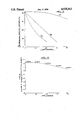
- FIG. 1 of the drawings is a plot showing the relative decomposition rates for polyaniline derivatized with m-benzene disulfonic acid in comparison with other derivatizing agents, at 180° C. in air;
- FIG. 2 shows the slow drop in bulk conductivity of polyaniline derivatized with m-benzenedisulfonic acid when heated at 180° C. in air.
- the base-type conductive polymers of the invention are prepared by the reaction of a base-type non-conductive polymer containing the carbon-nitrogen linkage with an aromatic multisulfonic acid.
- the base-type non-conductive organic polymers employed for reaction with the multisulfonic acid according to the invention include polyaniline, its naphthyl and biphenyl derivatives, and alkyl and aryl substituted polyaniline and its alkyl and aryl substituted naphthyl and biphenyl derivatives.
- Such base-type non-conductive polymers can be represented as follows: ##STR2## where A is an unsaturated carbon-containing group, such as aryl, particularly the benzene ring, as in polyaniline, and including naphthyl and biphenyl, and substituted benzene, naphthyl or biphenyl groups, such as the alkyl substituted derivatives, e.g., 2-methyl biphenyl, butyl naphthalene, 2-methyl aniline, and aryl substituted derivatives, e.g., beta phenyl naphthalene and beta tolyl naphthalene; and y is an integer ranging from about 1 to about 1,000, e.g., about 10 to about 100. When y is in the low end of the above range, e.g., when y is 1 or 2, the materials are known as oligomers and are intended to be included within the term "polymer" employed herein.
- A is an unsaturated carbon-containing
- the preferred non-conductive polymer employed as the basic polymeric starting material is polyaniline emeraldine free-base (PFB). This is a high polymer having a molecular weight of the order of 50,000 to 80,000. Lower molecular weight forms of polyaniline can also be employed, such as an oligomer of polyaniline containing 8 aniline monomer units and having a molecular weight of about 800 to 900.
- PFB polyaniline emeraldine free-base
- the multiprotic acids employed according to the invention are thermally stable organic multisulfonic acids, particularly aromatic multisulfonic acids having the formula R(SO 3 H) n , where R is aryl, such as benzene, naphthalene, substituted benzene and substituted naphthalene groups, such as phthalocyanine, and fused on benzcne and napthalene groups, such as anthracene and pyrene groups, and n is an integer of at least 2, preferably 2 to 4.
- the preferred aromatic multisulfonic acids are benzene, naphthalene, phthalocyanine and pyrene multisulfonic acids.
- aromatic multisulfonic acids have low volatility and good stability, an important factor in producing conductive derivatized polyanilines, which are very stable to oxidation at elevated temperature.
- reaction between polyaniline emeraldine free-base and m-benzene disulfonic acid can be represented as follows: ##STR3##
- the thermal stability of the resulting conductive polymers is exceptionally high due to the low volatility and high thermal stability of the multisulfonic acids employed as derivatizing agents for the non-conductive polymer, e.g., polyaniline, resulting in sulfonic acid groups bound to the polymer backbone through nitrogen.
- polyaniline containing phenyl groups there can be employed other non-conductive base-type polymeric starting materials of the polyaniline family, containing naphthalene or biphenyl groups, the resulting conductive polymers thus produced according to the invention being analogous base-type conductive polymers containing naphthyl or biphenyl groups, respectively.
- the polyaniline free-base is treated with the aromatic multisulfonic acid, e.g., m-benzene disulfonic acid.
- aromatic multisulfonic acid e.g., m-benzene disulfonic acid
- a combination of aromatic multisulfonic acids can be reacted with the non-conductive polymer.
- non-conductive polyaniline can be reacted with a mixture of m-benzene disulfonic acid and naphthalene disulfonic acid, in order to tailor the properties of the resulting conductive polymer, e.g., so as to have a desired electrical conductivity, together with high thermal stability.
- the molar proportions of aromatic multisulfonic acid to non-conductive nitrogen-containing polymer free-base to produce an electrically conductive polymer according to the invention can vary and can range from about 1/16 to about 2 moles of multisulfonic acid per nitrogen of each polymer unit, and in the case of polyaniline, from about 1/8 to about 2 moles of multisulfonic acid, for every two aniline units in the polyaniline chain.
- the reaction can be carried out as a heterogeneous reaction wherein the polymer starting material is not dissolved but is reacted with the aromatic multisulfonic acid in aqueous medium, since most of the multisulfonic acid reactants hereof are soluble in water although the polymer starting material is not.
- phthalocyanine tetrasulfonic acid and certain of the other multisulfonic acids hereof are soluble in organic solvents, such as N-methyl pyrrolidone, formic acid, and acetic acid, and hence the reaction employing such derivatizing agents can be carried out in such solvents.
- the reaction is generally carried out at about ambient or room temperature, e.g., 20°-25° C., or at higher or lower temperatures, and preferably at ambient or atmospheric pressure.
- the rate of reaction can range widely, depending on the particular multisulfonic acid reactant employed. Thus, the reaction rate can range from almost instantaneous to several hours or longer.
- the resulting conductive polymer has high conductivity, ranging from about 0.2 to about 10 S/cm, and has high thermal stability and remains electrically conductive at elevated temperature, e.g., at 150° C. to 180° C. in air over an extended time period.
- the physical properties of the highly conductive polymer produced according to the invention can be varied, so as to enhance the thermal stability, e.g., by increasing the number of --SO 3 H groups on the multisulfonic acid reactant.
- FIG. 1 of the drawings shows the relative decomposition rates for (a) polyaniline derivatized with m-benzene disulfonic acid, (b) polyaniline derivatized with p-toluene solfonic acid, and (c) polyaniline derivatized with tosyl chloride, at 180° C. in air.
- the decomposition of polyaniline derivatized with various acids in this figure is followed by studying the decrease in the precent of the original 800 nm absorption of polyaniline over time.
- the 800 nm absorption ordinate of the plot in FIG. 1 of the drawings correlates with polyaniline's electrical conductivity.
- the plot shows the substantial increase in stability over an extended period of time at 180° C. of the conductive polyaniline derivatized with m-benzene disulfonic acid, as indicated by curve (a), according to the invention as compared to the thermal stability of polyaniline derivatized with the other two compounds noted above and indicated by curves (b) and (c), respectively, over the same period of time at 180° C.
- FIG. 2 shows the slow decrease in conductivity of polyaniline derivatized with m-benzene disulfonic acid heated at 180° C. in air. The plot shows that the polymer loses its conductivity only slowly and only after several days.
- Example 1 The procedure of Example 1 is carried out using 1,6 naphthalene disulfonic acid as derivatizing agent.
- the resulting conductive polymer has a conductivity of 1.3 S/cm.
- Example 1 The procedure of Example 1 is carried out using naphthalene trisulfonic acid as derivatizing agent.
- the resulting conductive polymer has a conductivity of 3.5 S/cm.
- Example 1 The procedure of Example 1 is carried out using pyrene trisulfonic acid as derivatizing agent.
- the resulting conductive polymer has a conductivity of 1 S/cm.
- Example 1 The procedure of Example 1 is carried out using phthalocyanine tetrasulfonic acid as derivatizing agent.
- the resulting conductive polymer has a conductivity of 0.16 S/cm.
- a highly thermally stable conductive polymer is formed upon evaporation of the formic acid. This polymer loses its conductivity only very slowly after several days at 180° C. in air, as shown by the plot in FIG. 2 of the drawing.
- the oxidative thermal stability of this conductive polyaniline shown by curve (a) in FIG. 1 is much higher than conductive polyanilines of the prior art, as shown by curves (b) and (c) in FIG. 1 of the drawing.
- a highly thermally stable conductive polymer is formed upon evaporation of the formic acid.
- the base-type electrically conductive highly thermally stable polymers of the invention have utility in the production of conductive composites, electronic components, electrical conductors, electrodes, batteries, switches, electrical shielding material, resistors, capacitors, and the like.
- the invention provides a class of novel conductive polymer materials prepared by reacting a multiprotic acid in the form of an aromatic multisulfonic acid, with a non-conductive polymer, particularly base-type polymers, such as polyaniline, thus stabilizing the polymer backbone to oxidation at high temperature.
- a non-conductive polymer particularly base-type polymers, such as polyaniline
- the resulting conductive polymers accordingly have high thermal stability and can be readily prepared.
Landscapes
- Chemical & Material Sciences (AREA)
- Chemical Kinetics & Catalysis (AREA)
- Physics & Mathematics (AREA)
- Medicinal Chemistry (AREA)
- Polymers & Plastics (AREA)
- Organic Chemistry (AREA)
- Health & Medical Sciences (AREA)
- Spectroscopy & Molecular Physics (AREA)
- Electrochemistry (AREA)
- General Chemical & Material Sciences (AREA)
- Macromolecular Compounds Obtained By Forming Nitrogen-Containing Linkages In General (AREA)
- Compositions Of Macromolecular Compounds (AREA)
- Polymers With Sulfur, Phosphorus Or Metals In The Main Chain (AREA)
- Battery Electrode And Active Subsutance (AREA)
Abstract
Description
Claims (21)
Priority Applications (4)
| Application Number | Priority Date | Filing Date | Title |
|---|---|---|---|
| US07/226,484 US4935163A (en) | 1988-08-01 | 1988-08-01 | High service temperature conductive polymers and method of producing same |
| EP19890909467 EP0427785A4 (en) | 1988-08-01 | 1989-07-21 | High service temperature conductive polymers and method of producing same |
| JP1508869A JPH03504872A (en) | 1988-08-01 | 1989-07-21 | Conductive polymers and their manufacturing methods at high operating temperatures |
| PCT/US1989/003131 WO1990001775A1 (en) | 1988-08-01 | 1989-07-21 | High service temperature conductive polymers and method of producing same |
Applications Claiming Priority (1)
| Application Number | Priority Date | Filing Date | Title |
|---|---|---|---|
| US07/226,484 US4935163A (en) | 1988-08-01 | 1988-08-01 | High service temperature conductive polymers and method of producing same |
Publications (1)
| Publication Number | Publication Date |
|---|---|
| US4935163A true US4935163A (en) | 1990-06-19 |
Family
ID=22849089
Family Applications (1)
| Application Number | Title | Priority Date | Filing Date |
|---|---|---|---|
| US07/226,484 Expired - Fee Related US4935163A (en) | 1988-08-01 | 1988-08-01 | High service temperature conductive polymers and method of producing same |
Country Status (4)
| Country | Link |
|---|---|
| US (1) | US4935163A (en) |
| EP (1) | EP0427785A4 (en) |
| JP (1) | JPH03504872A (en) |
| WO (1) | WO1990001775A1 (en) |
Cited By (25)
| Publication number | Priority date | Publication date | Assignee | Title |
|---|---|---|---|---|
| WO1991011480A1 (en) * | 1990-01-30 | 1991-08-08 | Lockheed Corporation | Preparation of conductive polyaniline having controlled molecular weight |
| US5095076A (en) * | 1990-11-05 | 1992-03-10 | Lockheed Corporation | Preparation of highly soluble conductive polymer materials |
| WO1992022911A1 (en) * | 1991-06-12 | 1992-12-23 | Uniax Corporation | Processible forms of electrically conductive polyaniline and conductive products formed therefrom |
| US5232631A (en) * | 1991-06-12 | 1993-08-03 | Uniax Corporation | Processible forms of electrically conductive polyaniline |
| US5246627A (en) * | 1991-05-06 | 1993-09-21 | Uniax Corporation | Melt-processible conducting polymer blends based on fibrils of intractable conducting polymers |
| WO1994005016A1 (en) * | 1992-08-14 | 1994-03-03 | Hexcel Corporation | Electrically conductive compositions of carbon particles and methods for their production |
| WO1994011885A1 (en) * | 1992-11-06 | 1994-05-26 | Hexcel Corporation | Electrically conductive polymeric compositions |
| US5324453A (en) * | 1992-08-07 | 1994-06-28 | Neste Oy | Electrically conducting polyaniline: method for emulsion polymerization |
| US5378403A (en) * | 1987-08-07 | 1995-01-03 | Alliedsignal Inc. | High electrically conductive polyanaline complexes having polar substitutents |
| US5422423A (en) * | 1992-06-03 | 1995-06-06 | Alliedsignal Inc. | Thermally stable electrically conductive conjugated polymer complexes having hydrogen bonding counterions |
| US5425995A (en) * | 1993-01-11 | 1995-06-20 | Unruh; Greg R. | Composition and process for preventing electrostatic discharge |
| US5456862A (en) * | 1987-08-07 | 1995-10-10 | Alliedsignal Inc. | Thermally stable forms of electrically conductive polyaniline |
| US5498372A (en) * | 1992-08-14 | 1996-03-12 | Hexcel Corporation | Electrically conductive polymeric compositions |
| US5520852A (en) * | 1994-06-08 | 1996-05-28 | Neste Oy | Processible electrically conducting polyaniline compositions |
| US5540862A (en) * | 1992-02-04 | 1996-07-30 | Uniax Corporation | Colored electrically conductive polyaniline compounds |
| US5624605A (en) * | 1991-06-12 | 1997-04-29 | Uniax Corporation | Processible forms of electrically conductive polyaniline |
| US5626795A (en) * | 1991-11-27 | 1997-05-06 | Uniax Corporation | Optical quality transparent conductors |
| US5629050A (en) * | 1995-08-30 | 1997-05-13 | The Dow Chemical Company | Process for preparing coated articles |
| US5728321A (en) * | 1988-09-30 | 1998-03-17 | Nitto Denko Corporation | Organic polymer, conducting organic polymer, production methods and uses of the same |
| EP0825618A3 (en) * | 1996-08-16 | 1998-08-05 | Nec Corporation | Electrically-conductive polymer and production method thereof, and solid-electrolytic capacitor |
| US6030550A (en) * | 1995-11-15 | 2000-02-29 | International Business Machines Corporation | Methods of fabrication of cross-linked electrically conductive polymers and precursors thereof |
| CN1053681C (en) * | 1992-08-11 | 2000-06-21 | 奈斯特公司 | Electrically conductive compositions and methods for their preparation |
| US6193909B1 (en) | 1995-11-15 | 2001-02-27 | International Business Machines Corporation | Cross-linked electrically conductive polymers, precursors thereof |
| WO2002037536A3 (en) * | 2000-10-30 | 2002-07-11 | Al Coat Ltd | Solutions of conducting polyaniline |
| CN112996856A (en) * | 2018-11-15 | 2021-06-18 | 三菱化学株式会社 | Conductive composition and method for producing same, and electrical conductor and method for producing same |
Families Citing this family (19)
| Publication number | Priority date | Publication date | Assignee | Title |
|---|---|---|---|---|
| US5378404A (en) * | 1991-04-22 | 1995-01-03 | Alliedsignal Inc. | Process for forming dispersions or solutions of electrically conductive conjugated polymers in a polymeric or liquid phase |
| EP0601105A1 (en) * | 1991-08-29 | 1994-06-15 | AlliedSignal Inc. | Solubility modification of conductive conjugated backbone polymers via the dopant moieties |
| US5595680A (en) * | 1991-10-10 | 1997-01-21 | The Lubrizol Corporation | Electrorheological fluids containing polyanilines |
| ATE160581T1 (en) * | 1991-10-10 | 1997-12-15 | Lubrizol Corp | ELECTRONICALLY CONDUCTIVE ELECTRORHEOLOGICAL LIQUIDS |
| DE69218915D1 (en) * | 1991-10-10 | 1997-05-15 | Lubrizol Corp | Electrorheological fluids containing polyanilines |
| ATE217439T1 (en) * | 1991-12-05 | 2002-05-15 | Neste Oy | METHOD FOR PRODUCING CONDUCTIVE POLYER MATERIAL |
| JP2515656B2 (en) * | 1991-12-13 | 1996-07-10 | 株式会社巴川製紙所 | Electrode |
| GB9213974D0 (en) * | 1992-07-01 | 1992-08-12 | Dow Deutschland Inc | Conjugated polymers |
| US5340499A (en) * | 1992-08-11 | 1994-08-23 | Neste Oy | Electrically conductive compositions and methods for their preparation |
| JPH06234852A (en) * | 1992-09-11 | 1994-08-23 | Nec Corp | Production of polyaniline or its derivative and solution thereof, method for making polyaniline or its derivative highly conductive and production of solid electrolyte condenser |
| JP2773792B2 (en) * | 1993-05-25 | 1998-07-09 | 日本電気株式会社 | Waveguide optical device |
| JPH0710992A (en) * | 1993-06-04 | 1995-01-13 | Neste Oy | Processible conductive polymer material and its production |
| FI98820C (en) * | 1993-06-04 | 1997-08-25 | Neste Oy | Process for making a conductive polymer material |
| US5783111A (en) * | 1993-09-03 | 1998-07-21 | Uniax Corporation | Electrically conducting compositions |
| FR2711657B1 (en) * | 1993-10-28 | 1996-07-12 | Alsthom Cge Alcatel | Process for the copolymerization of aniline compounds. |
| JPH08143771A (en) * | 1994-11-25 | 1996-06-04 | Nec Corp | Heat-resistant poltaniline, derivative therefrom, solid electrolytic capacitor, and process for producing the same |
| TWI325007B (en) | 2004-10-08 | 2010-05-21 | Shinetsu Polymer Co | Conductive composition and production method thereof, antistatic coating material, antistatic coating, antistatic film, optical filter, and optical information recording medium, and capacitors and production method thereof |
| JP5283818B2 (en) * | 2004-10-08 | 2013-09-04 | 信越ポリマー株式会社 | Conductive composition and method for producing the same |
| US11028277B2 (en) | 2016-02-03 | 2021-06-08 | Nissan Chemical Corporation | Charge transport varnish |
Citations (4)
| Publication number | Priority date | Publication date | Assignee | Title |
|---|---|---|---|---|
| US4466911A (en) * | 1982-10-12 | 1984-08-21 | Uop Inc. | Electrically conducting polymers |
| US4505845A (en) * | 1982-10-12 | 1985-03-19 | Uop Inc. | Electrically conducting polymers |
| US4798685A (en) * | 1986-10-20 | 1989-01-17 | Lockheed Corporation | Production of base-type conducting polymers |
| US4806271A (en) * | 1987-02-11 | 1989-02-21 | Lockheed Corporation | Preparation of base-type conducting polymers |
Family Cites Families (5)
| Publication number | Priority date | Publication date | Assignee | Title |
|---|---|---|---|---|
| JPS5998165A (en) * | 1982-08-02 | 1984-06-06 | レイケム・リミテツド | Electroconductive polymer composition |
| DE3318857A1 (en) * | 1983-05-25 | 1984-11-29 | Basf Ag, 6700 Ludwigshafen | METHOD FOR PRODUCING POLYPYROLES AND FILM-SHAPED PRODUCTS OBTAINED BY THIS METHOD |
| JPS61108644A (en) * | 1984-11-01 | 1986-05-27 | Nitto Electric Ind Co Ltd | Electrically conductive porous membrane |
| JPH0751627B2 (en) * | 1984-09-07 | 1995-06-05 | 昭和電工株式会社 | Method for producing aniline-based polymer |
| US5069820A (en) * | 1987-08-07 | 1991-12-03 | Allied-Signal Inc. | Thermally stable forms of electrically conductive polyaniline |
-
1988
- 1988-08-01 US US07/226,484 patent/US4935163A/en not_active Expired - Fee Related
-
1989
- 1989-07-21 EP EP19890909467 patent/EP0427785A4/en not_active Withdrawn
- 1989-07-21 WO PCT/US1989/003131 patent/WO1990001775A1/en not_active Ceased
- 1989-07-21 JP JP1508869A patent/JPH03504872A/en active Pending
Patent Citations (4)
| Publication number | Priority date | Publication date | Assignee | Title |
|---|---|---|---|---|
| US4466911A (en) * | 1982-10-12 | 1984-08-21 | Uop Inc. | Electrically conducting polymers |
| US4505845A (en) * | 1982-10-12 | 1985-03-19 | Uop Inc. | Electrically conducting polymers |
| US4798685A (en) * | 1986-10-20 | 1989-01-17 | Lockheed Corporation | Production of base-type conducting polymers |
| US4806271A (en) * | 1987-02-11 | 1989-02-21 | Lockheed Corporation | Preparation of base-type conducting polymers |
Cited By (35)
| Publication number | Priority date | Publication date | Assignee | Title |
|---|---|---|---|---|
| US5378403A (en) * | 1987-08-07 | 1995-01-03 | Alliedsignal Inc. | High electrically conductive polyanaline complexes having polar substitutents |
| US5456862A (en) * | 1987-08-07 | 1995-10-10 | Alliedsignal Inc. | Thermally stable forms of electrically conductive polyaniline |
| US5728321A (en) * | 1988-09-30 | 1998-03-17 | Nitto Denko Corporation | Organic polymer, conducting organic polymer, production methods and uses of the same |
| WO1991011480A1 (en) * | 1990-01-30 | 1991-08-08 | Lockheed Corporation | Preparation of conductive polyaniline having controlled molecular weight |
| US5095076A (en) * | 1990-11-05 | 1992-03-10 | Lockheed Corporation | Preparation of highly soluble conductive polymer materials |
| WO1992007909A1 (en) * | 1990-11-05 | 1992-05-14 | Lockheed Corporation | Preparation of highly soluble conductive polymer materials |
| US5246627A (en) * | 1991-05-06 | 1993-09-21 | Uniax Corporation | Melt-processible conducting polymer blends based on fibrils of intractable conducting polymers |
| US5491027A (en) * | 1991-05-06 | 1996-02-13 | Uniax Corporation | Melt-processible conducting polymer blends based on fibrils of intractable conducting poymers |
| US5427855A (en) * | 1991-05-06 | 1995-06-27 | Uniax Corporation | Melt-processible conducting polymer blends based on fibrils of intractable conducting polymers |
| US5624605A (en) * | 1991-06-12 | 1997-04-29 | Uniax Corporation | Processible forms of electrically conductive polyaniline |
| US5232631A (en) * | 1991-06-12 | 1993-08-03 | Uniax Corporation | Processible forms of electrically conductive polyaniline |
| WO1992022911A1 (en) * | 1991-06-12 | 1992-12-23 | Uniax Corporation | Processible forms of electrically conductive polyaniline and conductive products formed therefrom |
| US5626795A (en) * | 1991-11-27 | 1997-05-06 | Uniax Corporation | Optical quality transparent conductors |
| US5968416A (en) * | 1991-11-27 | 1999-10-19 | Uniax Corporation | Optical quality transparent conductors |
| US5540862A (en) * | 1992-02-04 | 1996-07-30 | Uniax Corporation | Colored electrically conductive polyaniline compounds |
| US5422423A (en) * | 1992-06-03 | 1995-06-06 | Alliedsignal Inc. | Thermally stable electrically conductive conjugated polymer complexes having hydrogen bonding counterions |
| US5324453A (en) * | 1992-08-07 | 1994-06-28 | Neste Oy | Electrically conducting polyaniline: method for emulsion polymerization |
| USRE37370E1 (en) | 1992-08-07 | 2001-09-18 | Neste Oy | Electrically conducting polyaniline: method for emulsion polymerization |
| CN1053681C (en) * | 1992-08-11 | 2000-06-21 | 奈斯特公司 | Electrically conductive compositions and methods for their preparation |
| WO1994005016A1 (en) * | 1992-08-14 | 1994-03-03 | Hexcel Corporation | Electrically conductive compositions of carbon particles and methods for their production |
| US5498372A (en) * | 1992-08-14 | 1996-03-12 | Hexcel Corporation | Electrically conductive polymeric compositions |
| US6132645A (en) * | 1992-08-14 | 2000-10-17 | Eeonyx Corporation | Electrically conductive compositions of carbon particles and methods for their production |
| WO1994011885A1 (en) * | 1992-11-06 | 1994-05-26 | Hexcel Corporation | Electrically conductive polymeric compositions |
| US5425995A (en) * | 1993-01-11 | 1995-06-20 | Unruh; Greg R. | Composition and process for preventing electrostatic discharge |
| US5520852A (en) * | 1994-06-08 | 1996-05-28 | Neste Oy | Processible electrically conducting polyaniline compositions |
| US5866043A (en) * | 1994-06-08 | 1999-02-02 | Neste Oy | Processible electrically conducting polyaniline compositions and processes for the preparation thereof |
| US5629050A (en) * | 1995-08-30 | 1997-05-13 | The Dow Chemical Company | Process for preparing coated articles |
| US6030550A (en) * | 1995-11-15 | 2000-02-29 | International Business Machines Corporation | Methods of fabrication of cross-linked electrically conductive polymers and precursors thereof |
| US6193909B1 (en) | 1995-11-15 | 2001-02-27 | International Business Machines Corporation | Cross-linked electrically conductive polymers, precursors thereof |
| US5965062A (en) * | 1996-08-16 | 1999-10-12 | Nec Corporation | Electrically-conductive polymer and production method thereof, and solid-electrolytic capacitor |
| EP0825618A3 (en) * | 1996-08-16 | 1998-08-05 | Nec Corporation | Electrically-conductive polymer and production method thereof, and solid-electrolytic capacitor |
| WO2002037536A3 (en) * | 2000-10-30 | 2002-07-11 | Al Coat Ltd | Solutions of conducting polyaniline |
| CN112996856A (en) * | 2018-11-15 | 2021-06-18 | 三菱化学株式会社 | Conductive composition and method for producing same, and electrical conductor and method for producing same |
| CN112996856B (en) * | 2018-11-15 | 2024-04-09 | 三菱化学株式会社 | Conductive composition and method for producing the same, conductor and method for producing the same |
| US12443103B2 (en) | 2018-11-15 | 2025-10-14 | Mitsubishi Chemical Corporation | Conductive composition and method for manufacturing same, and conductor and method for manufacturing same |
Also Published As
| Publication number | Publication date |
|---|---|
| EP0427785A4 (en) | 1992-01-02 |
| EP0427785A1 (en) | 1991-05-22 |
| WO1990001775A1 (en) | 1990-02-22 |
| JPH03504872A (en) | 1991-10-24 |
Similar Documents
| Publication | Publication Date | Title |
|---|---|---|
| WO1990001775A1 (en) | High service temperature conductive polymers and method of producing same | |
| US4851487A (en) | Conductive polymer materials and method of producing same | |
| US4798685A (en) | Production of base-type conducting polymers | |
| US4766198A (en) | Process for making thiophene and furfurane polymers | |
| US5008041A (en) | Preparation of conductive polyaniline having controlled molecular weight | |
| US5278213A (en) | Method of processing neutral polyanilines in solvent and solvent mixtures | |
| US4983690A (en) | Conductive polymer-maleimide blends and method of producing same | |
| US4806271A (en) | Preparation of base-type conducting polymers | |
| US4582587A (en) | Anion-doped polymers of five-membered oxygen family heterocyclic compounds and method for producing same | |
| US4548738A (en) | Electrically conducting complexes of poly (3,6-N-alkylcarbazolyl alkenes) and method of making | |
| US3835102A (en) | Electroconductive high polymer composition | |
| JP4269113B2 (en) | Aromatic amine derivatives and soluble conductive compounds | |
| US4505842A (en) | Heteroazole electroactive polymers | |
| US5637652A (en) | Electroconductive polymer and process for producing the same | |
| US4832869A (en) | Highly conducting polymers and materials for polymeric batteries | |
| US4624999A (en) | Electrically conducting complexes of polymers of N-substituted carbazoles and substituted benzaldehydes | |
| US5776370A (en) | Charge transfer complexes between polyaniline and organic electron acceptors and method of fabrication | |
| US5276102A (en) | Electrically conductive polythiopheneamine polymer networks | |
| CA1337880C (en) | Polymer compositions | |
| JP3413958B2 (en) | Novel conductive polymer and method for producing the same | |
| US5254627A (en) | Electrically conductive polypyrroleamine polymer networks | |
| US5264511A (en) | Polymers of bis (ethynylstyryl) benzene and related monomers | |
| KR0149830B1 (en) | Method for preparing water-soluble conductive polymer compound and composites thereof | |
| JP3252336B2 (en) | Linear poly (arylene-ethynylene-arylene-ethynylene) polymer | |
| US4598139A (en) | Complexes of poly (3,6-N-alkylcarbazolyl alkenes) |
Legal Events
| Date | Code | Title | Description |
|---|---|---|---|
| AS | Assignment |
Owner name: LOCKHEED CORPORATION, BURBANK, LOS ANGELES, CALIFO Free format text: ASSIGNMENT OF ASSIGNORS INTEREST.;ASSIGNOR:CAMERON, RANDY E.;REEL/FRAME:004916/0058 Effective date: 19880715 |
|
| FPAY | Fee payment |
Year of fee payment: 4 |
|
| REMI | Maintenance fee reminder mailed | ||
| LAPS | Lapse for failure to pay maintenance fees | ||
| FP | Lapsed due to failure to pay maintenance fee |
Effective date: 19980624 |
|
| AS | Assignment |
Owner name: LOCKHEED MARTIN CORPORATION, MARYLAND Free format text: MERGER;ASSIGNOR:LOCKHEED CORPORATION;REEL/FRAME:009430/0915 Effective date: 19960128 |
|
| STCH | Information on status: patent discontinuation |
Free format text: PATENT EXPIRED DUE TO NONPAYMENT OF MAINTENANCE FEES UNDER 37 CFR 1.362 |