US4910015A - Surface-active polysiloxanes and drug releasing materials thereof - Google Patents
Surface-active polysiloxanes and drug releasing materials thereof Download PDFInfo
- Publication number
- US4910015A US4910015A US07/110,006 US11000687A US4910015A US 4910015 A US4910015 A US 4910015A US 11000687 A US11000687 A US 11000687A US 4910015 A US4910015 A US 4910015A
- Authority
- US
- United States
- Prior art keywords
- polyethylene oxide
- polymer network
- crosslinked
- network
- pharmaceutical
- Prior art date
- Legal status (The legal status is an assumption and is not a legal conclusion. Google has not performed a legal analysis and makes no representation as to the accuracy of the status listed.)
- Expired - Fee Related
Links
- -1 polysiloxanes Polymers 0.000 title claims abstract description 49
- 239000003814 drug Substances 0.000 title claims abstract description 34
- 239000000463 material Substances 0.000 title claims abstract description 24
- 229940079593 drug Drugs 0.000 title description 29
- 229920001296 polysiloxane Polymers 0.000 title description 6
- 229920003171 Poly (ethylene oxide) Polymers 0.000 claims abstract description 64
- 239000000017 hydrogel Substances 0.000 claims abstract description 25
- 229920006037 cross link polymer Polymers 0.000 claims abstract description 17
- 239000007795 chemical reaction product Substances 0.000 claims abstract description 7
- 229920000642 polymer Polymers 0.000 claims description 58
- YMWUJEATGCHHMB-UHFFFAOYSA-N Dichloromethane Chemical group ClCCl YMWUJEATGCHHMB-UHFFFAOYSA-N 0.000 claims description 30
- 239000000243 solution Substances 0.000 claims description 23
- 229960002601 protriptyline Drugs 0.000 claims description 15
- BWPIARFWQZKAIA-UHFFFAOYSA-N protriptyline Chemical compound C1=CC2=CC=CC=C2C(CCCNC)C2=CC=CC=C21 BWPIARFWQZKAIA-UHFFFAOYSA-N 0.000 claims description 15
- YXFVVABEGXRONW-UHFFFAOYSA-N Toluene Natural products CC1=CC=CC=C1 YXFVVABEGXRONW-UHFFFAOYSA-N 0.000 claims description 14
- 239000007864 aqueous solution Substances 0.000 claims description 14
- 229940123445 Tricyclic antidepressant Drugs 0.000 claims description 13
- 239000003029 tricyclic antidepressant agent Substances 0.000 claims description 13
- 239000002202 Polyethylene glycol Substances 0.000 claims description 10
- 239000000203 mixture Substances 0.000 claims description 10
- 229920001223 polyethylene glycol Polymers 0.000 claims description 10
- 239000002904 solvent Substances 0.000 claims description 10
- 238000000034 method Methods 0.000 claims description 9
- 239000005556 hormone Substances 0.000 claims description 8
- 229940088597 hormone Drugs 0.000 claims description 8
- 229920001577 copolymer Polymers 0.000 claims description 7
- 239000011541 reaction mixture Substances 0.000 claims description 7
- XNWFRZJHXBZDAG-UHFFFAOYSA-N 2-METHOXYETHANOL Chemical compound COCCO XNWFRZJHXBZDAG-UHFFFAOYSA-N 0.000 claims description 5
- HCYAFALTSJYZDH-UHFFFAOYSA-N Desimpramine Chemical compound C1CC2=CC=CC=C2N(CCCNC)C2=CC=CC=C21 HCYAFALTSJYZDH-UHFFFAOYSA-N 0.000 claims description 5
- 229960003914 desipramine Drugs 0.000 claims description 5
- ZNQVEEAIQZEUHB-UHFFFAOYSA-N 2-ethoxyethanol Chemical compound CCOCCO ZNQVEEAIQZEUHB-UHFFFAOYSA-N 0.000 claims description 4
- VSCWAEJMTAWNJL-UHFFFAOYSA-K aluminium trichloride Chemical compound Cl[Al](Cl)Cl VSCWAEJMTAWNJL-UHFFFAOYSA-K 0.000 claims description 4
- 229960000836 amitriptyline Drugs 0.000 claims description 4
- KRMDCWKBEZIMAB-UHFFFAOYSA-N amitriptyline Chemical compound C1CC2=CC=CC=C2C(=CCCN(C)C)C2=CC=CC=C21 KRMDCWKBEZIMAB-UHFFFAOYSA-N 0.000 claims description 4
- 238000013270 controlled release Methods 0.000 claims description 4
- 239000000839 emulsion Substances 0.000 claims description 4
- 229960004801 imipramine Drugs 0.000 claims description 4
- BCGWQEUPMDMJNV-UHFFFAOYSA-N imipramine Chemical compound C1CC2=CC=CC=C2N(CCCN(C)C)C2=CC=CC=C21 BCGWQEUPMDMJNV-UHFFFAOYSA-N 0.000 claims description 4
- 239000000047 product Substances 0.000 claims description 4
- 229960002431 trimipramine Drugs 0.000 claims description 4
- ZSCDBOWYZJWBIY-UHFFFAOYSA-N trimipramine Chemical compound C1CC2=CC=CC=C2N(CC(CN(C)C)C)C2=CC=CC=C21 ZSCDBOWYZJWBIY-UHFFFAOYSA-N 0.000 claims description 4
- WTEOIRVLGSZEPR-UHFFFAOYSA-N boron trifluoride Chemical compound FB(F)F WTEOIRVLGSZEPR-UHFFFAOYSA-N 0.000 claims description 3
- 239000011968 lewis acid catalyst Substances 0.000 claims description 3
- 238000002156 mixing Methods 0.000 claims description 3
- 229910021630 Antimony pentafluoride Inorganic materials 0.000 claims description 2
- VBVBHWZYQGJZLR-UHFFFAOYSA-I antimony pentafluoride Chemical compound F[Sb](F)(F)(F)F VBVBHWZYQGJZLR-UHFFFAOYSA-I 0.000 claims description 2
- GUNJVIDCYZYFGV-UHFFFAOYSA-K antimony trifluoride Chemical compound F[Sb](F)F GUNJVIDCYZYFGV-UHFFFAOYSA-K 0.000 claims description 2
- VMPVEPPRYRXYNP-UHFFFAOYSA-I antimony(5+);pentachloride Chemical compound Cl[Sb](Cl)(Cl)(Cl)Cl VMPVEPPRYRXYNP-UHFFFAOYSA-I 0.000 claims description 2
- 229920003020 cross-linked polyethylene Polymers 0.000 claims 3
- 239000004703 cross-linked polyethylene Substances 0.000 claims 3
- RTZKZFJDLAIYFH-UHFFFAOYSA-N Diethyl ether Chemical compound CCOCC RTZKZFJDLAIYFH-UHFFFAOYSA-N 0.000 claims 2
- 210000001124 body fluid Anatomy 0.000 claims 1
- 239000010839 body fluid Substances 0.000 claims 1
- 238000001035 drying Methods 0.000 claims 1
- 238000010438 heat treatment Methods 0.000 claims 1
- DOHVAKFYAHLCJP-UHFFFAOYSA-N peldesine Chemical compound C1=2NC(N)=NC(=O)C=2NC=C1CC1=CC=CN=C1 DOHVAKFYAHLCJP-UHFFFAOYSA-N 0.000 claims 1
- 125000003944 tolyl group Chemical group 0.000 claims 1
- 238000001291 vacuum drying Methods 0.000 claims 1
- XLYOFNOQVPJJNP-UHFFFAOYSA-N water Substances O XLYOFNOQVPJJNP-UHFFFAOYSA-N 0.000 abstract description 20
- 238000005192 partition Methods 0.000 abstract description 10
- 238000013267 controlled drug release Methods 0.000 abstract description 2
- 238000000746 purification Methods 0.000 abstract description 2
- 150000001875 compounds Chemical class 0.000 description 15
- 239000012071 phase Substances 0.000 description 12
- 238000006243 chemical reaction Methods 0.000 description 9
- 239000004205 dimethyl polysiloxane Substances 0.000 description 9
- 229920000435 poly(dimethylsiloxane) Polymers 0.000 description 9
- 238000000638 solvent extraction Methods 0.000 description 9
- 230000015572 biosynthetic process Effects 0.000 description 6
- 239000003054 catalyst Substances 0.000 description 6
- 238000003786 synthesis reaction Methods 0.000 description 6
- 239000008346 aqueous phase Substances 0.000 description 5
- IJGRMHOSHXDMSA-UHFFFAOYSA-N Atomic nitrogen Chemical compound N#N IJGRMHOSHXDMSA-UHFFFAOYSA-N 0.000 description 4
- KZMGYPLQYOPHEL-UHFFFAOYSA-N Boron trifluoride etherate Chemical compound FB(F)F.CCOCC KZMGYPLQYOPHEL-UHFFFAOYSA-N 0.000 description 4
- 239000000499 gel Substances 0.000 description 4
- 230000002209 hydrophobic effect Effects 0.000 description 4
- 125000002887 hydroxy group Chemical group [H]O* 0.000 description 4
- 239000007788 liquid Substances 0.000 description 4
- 239000003960 organic solvent Substances 0.000 description 4
- 238000006116 polymerization reaction Methods 0.000 description 4
- 239000004698 Polyethylene Substances 0.000 description 3
- 230000008901 benefit Effects 0.000 description 3
- 238000009792 diffusion process Methods 0.000 description 3
- KPUWHANPEXNPJT-UHFFFAOYSA-N disiloxane Chemical class [SiH3]O[SiH3] KPUWHANPEXNPJT-UHFFFAOYSA-N 0.000 description 3
- 230000000694 effects Effects 0.000 description 3
- 238000009472 formulation Methods 0.000 description 3
- 238000005227 gel permeation chromatography Methods 0.000 description 3
- 239000008363 phosphate buffer Substances 0.000 description 3
- 229920000573 polyethylene Polymers 0.000 description 3
- 108090000623 proteins and genes Proteins 0.000 description 3
- 102000004169 proteins and genes Human genes 0.000 description 3
- 150000003431 steroids Chemical class 0.000 description 3
- ULGZDMOVFRHVEP-RWJQBGPGSA-N Erythromycin Chemical compound O([C@@H]1[C@@H](C)C(=O)O[C@@H]([C@@]([C@H](O)[C@@H](C)C(=O)[C@H](C)C[C@@](C)(O)[C@H](O[C@H]2[C@@H]([C@H](C[C@@H](C)O2)N(C)C)O)[C@H]1C)(C)O)CC)[C@H]1C[C@@](C)(OC)[C@@H](O)[C@H](C)O1 ULGZDMOVFRHVEP-RWJQBGPGSA-N 0.000 description 2
- 239000004372 Polyvinyl alcohol Substances 0.000 description 2
- RJKFOVLPORLFTN-LEKSSAKUSA-N Progesterone Chemical compound C1CC2=CC(=O)CC[C@]2(C)[C@@H]2[C@@H]1[C@@H]1CC[C@H](C(=O)C)[C@@]1(C)CC2 RJKFOVLPORLFTN-LEKSSAKUSA-N 0.000 description 2
- 238000010521 absorption reaction Methods 0.000 description 2
- 239000012620 biological material Substances 0.000 description 2
- 239000000084 colloidal system Substances 0.000 description 2
- 239000011243 crosslinked material Substances 0.000 description 2
- 230000001186 cumulative effect Effects 0.000 description 2
- 238000003795 desorption Methods 0.000 description 2
- 238000004945 emulsification Methods 0.000 description 2
- 229920001477 hydrophilic polymer Polymers 0.000 description 2
- 239000007943 implant Substances 0.000 description 2
- 230000006698 induction Effects 0.000 description 2
- 239000011159 matrix material Substances 0.000 description 2
- 239000002808 molecular sieve Substances 0.000 description 2
- 229910052757 nitrogen Inorganic materials 0.000 description 2
- BASFCYQUMIYNBI-UHFFFAOYSA-N platinum Chemical compound [Pt] BASFCYQUMIYNBI-UHFFFAOYSA-N 0.000 description 2
- 229920002338 polyhydroxyethylmethacrylate Polymers 0.000 description 2
- 229920001451 polypropylene glycol Polymers 0.000 description 2
- 229920002635 polyurethane Polymers 0.000 description 2
- 239000004814 polyurethane Substances 0.000 description 2
- 229920002451 polyvinyl alcohol Polymers 0.000 description 2
- 239000011148 porous material Substances 0.000 description 2
- 229920006395 saturated elastomer Polymers 0.000 description 2
- 229920002379 silicone rubber Polymers 0.000 description 2
- 239000004945 silicone rubber Substances 0.000 description 2
- URGAHOPLAPQHLN-UHFFFAOYSA-N sodium aluminosilicate Chemical compound [Na+].[Al+3].[O-][Si]([O-])=O.[O-][Si]([O-])=O URGAHOPLAPQHLN-UHFFFAOYSA-N 0.000 description 2
- 238000001356 surgical procedure Methods 0.000 description 2
- 230000008961 swelling Effects 0.000 description 2
- STMDPCBYJCIZOD-UHFFFAOYSA-N 2-(2,4-dinitroanilino)-4-methylpentanoic acid Chemical compound CC(C)CC(C(O)=O)NC1=CC=C([N+]([O-])=O)C=C1[N+]([O-])=O STMDPCBYJCIZOD-UHFFFAOYSA-N 0.000 description 1
- WROUWQQRXUBECT-UHFFFAOYSA-N 2-ethylacrylic acid Chemical compound CCC(=C)C(O)=O WROUWQQRXUBECT-UHFFFAOYSA-N 0.000 description 1
- CSDQQAQKBAQLLE-UHFFFAOYSA-N 4-(4-chlorophenyl)-4,5,6,7-tetrahydrothieno[3,2-c]pyridine Chemical compound C1=CC(Cl)=CC=C1C1C(C=CS2)=C2CCN1 CSDQQAQKBAQLLE-UHFFFAOYSA-N 0.000 description 1
- 229910015844 BCl3 Inorganic materials 0.000 description 1
- 229910015900 BF3 Inorganic materials 0.000 description 1
- UXVMQQNJUSDDNG-UHFFFAOYSA-L Calcium chloride Chemical compound [Cl-].[Cl-].[Ca+2] UXVMQQNJUSDDNG-UHFFFAOYSA-L 0.000 description 1
- 206010010144 Completed suicide Diseases 0.000 description 1
- 208000020401 Depressive disease Diseases 0.000 description 1
- UFHFLCQGNIYNRP-UHFFFAOYSA-N Hydrogen Chemical compound [H][H] UFHFLCQGNIYNRP-UHFFFAOYSA-N 0.000 description 1
- 206010061218 Inflammation Diseases 0.000 description 1
- CERQOIWHTDAKMF-UHFFFAOYSA-M Methacrylate Chemical compound CC(=C)C([O-])=O CERQOIWHTDAKMF-UHFFFAOYSA-M 0.000 description 1
- WHNWPMSKXPGLAX-UHFFFAOYSA-N N-Vinyl-2-pyrrolidone Chemical compound C=CN1CCCC1=O WHNWPMSKXPGLAX-UHFFFAOYSA-N 0.000 description 1
- 241000283973 Oryctolagus cuniculus Species 0.000 description 1
- 101100386054 Saccharomyces cerevisiae (strain ATCC 204508 / S288c) CYS3 gene Proteins 0.000 description 1
- 230000001154 acute effect Effects 0.000 description 1
- 150000001412 amines Chemical class 0.000 description 1
- 125000003277 amino group Chemical group 0.000 description 1
- 239000008280 blood Substances 0.000 description 1
- 210000004369 blood Anatomy 0.000 description 1
- 238000009835 boiling Methods 0.000 description 1
- 239000000872 buffer Substances 0.000 description 1
- 239000001110 calcium chloride Substances 0.000 description 1
- 229910001628 calcium chloride Inorganic materials 0.000 description 1
- 230000015556 catabolic process Effects 0.000 description 1
- 238000006555 catalytic reaction Methods 0.000 description 1
- 238000005119 centrifugation Methods 0.000 description 1
- 230000010405 clearance mechanism Effects 0.000 description 1
- 230000007547 defect Effects 0.000 description 1
- 229920006237 degradable polymer Polymers 0.000 description 1
- 238000006731 degradation reaction Methods 0.000 description 1
- 230000000994 depressogenic effect Effects 0.000 description 1
- 239000002274 desiccant Substances 0.000 description 1
- 238000001514 detection method Methods 0.000 description 1
- XEYBRNLFEZDVAW-ARSRFYASSA-N dinoprostone Chemical compound CCCCC[C@H](O)\C=C\[C@H]1[C@H](O)CC(=O)[C@@H]1C\C=C/CCCC(O)=O XEYBRNLFEZDVAW-ARSRFYASSA-N 0.000 description 1
- LOKCTEFSRHRXRJ-UHFFFAOYSA-I dipotassium trisodium dihydrogen phosphate hydrogen phosphate dichloride Chemical compound P(=O)(O)(O)[O-].[K+].P(=O)(O)([O-])[O-].[Na+].[Na+].[Cl-].[K+].[Cl-].[Na+] LOKCTEFSRHRXRJ-UHFFFAOYSA-I 0.000 description 1
- 239000002552 dosage form Substances 0.000 description 1
- 239000013583 drug formulation Substances 0.000 description 1
- 239000003792 electrolyte Substances 0.000 description 1
- 201000003104 endogenous depression Diseases 0.000 description 1
- 230000007613 environmental effect Effects 0.000 description 1
- 229960003276 erythromycin Drugs 0.000 description 1
- 125000001495 ethyl group Chemical group [H]C([H])([H])C([H])([H])* 0.000 description 1
- 230000007717 exclusion Effects 0.000 description 1
- 229920001600 hydrophobic polymer Polymers 0.000 description 1
- 238000000338 in vitro Methods 0.000 description 1
- 230000004054 inflammatory process Effects 0.000 description 1
- 230000003993 interaction Effects 0.000 description 1
- 238000011835 investigation Methods 0.000 description 1
- 229910052741 iridium Inorganic materials 0.000 description 1
- GKOZUEZYRPOHIO-UHFFFAOYSA-N iridium atom Chemical compound [Ir] GKOZUEZYRPOHIO-UHFFFAOYSA-N 0.000 description 1
- 238000004811 liquid chromatography Methods 0.000 description 1
- 230000007774 longterm Effects 0.000 description 1
- 208000024714 major depressive disease Diseases 0.000 description 1
- 238000004519 manufacturing process Methods 0.000 description 1
- 238000005259 measurement Methods 0.000 description 1
- 125000002496 methyl group Chemical group [H]C([H])([H])* 0.000 description 1
- 239000000178 monomer Substances 0.000 description 1
- 239000002858 neurotransmitter agent Substances 0.000 description 1
- 239000002245 particle Substances 0.000 description 1
- 239000012466 permeate Substances 0.000 description 1
- 125000001997 phenyl group Chemical group [H]C1=C([H])C([H])=C(*)C([H])=C1[H] 0.000 description 1
- 239000002953 phosphate buffered saline Substances 0.000 description 1
- 229910052697 platinum Inorganic materials 0.000 description 1
- 229920002401 polyacrylamide Polymers 0.000 description 1
- 230000000379 polymerizing effect Effects 0.000 description 1
- 239000002243 precursor Substances 0.000 description 1
- 238000002360 preparation method Methods 0.000 description 1
- 230000003518 presynaptic effect Effects 0.000 description 1
- 239000000186 progesterone Substances 0.000 description 1
- 229960003387 progesterone Drugs 0.000 description 1
- 230000005855 radiation Effects 0.000 description 1
- 229910052703 rhodium Inorganic materials 0.000 description 1
- 239000010948 rhodium Substances 0.000 description 1
- MHOVAHRLVXNVSD-UHFFFAOYSA-N rhodium atom Chemical compound [Rh] MHOVAHRLVXNVSD-UHFFFAOYSA-N 0.000 description 1
- 238000007142 ring opening reaction Methods 0.000 description 1
- 150000003839 salts Chemical class 0.000 description 1
- 229920002545 silicone oil Polymers 0.000 description 1
- 239000007787 solid Substances 0.000 description 1
- 238000003756 stirring Methods 0.000 description 1
- 101150035983 str1 gene Proteins 0.000 description 1
- 230000009885 systemic effect Effects 0.000 description 1
- 231100000331 toxic Toxicity 0.000 description 1
- 230000002588 toxic effect Effects 0.000 description 1
- FAQYAMRNWDIXMY-UHFFFAOYSA-N trichloroborane Chemical compound ClB(Cl)Cl FAQYAMRNWDIXMY-UHFFFAOYSA-N 0.000 description 1
- 238000000825 ultraviolet detection Methods 0.000 description 1
- 239000002351 wastewater Substances 0.000 description 1
Images
Classifications
-
- C—CHEMISTRY; METALLURGY
- C08—ORGANIC MACROMOLECULAR COMPOUNDS; THEIR PREPARATION OR CHEMICAL WORKING-UP; COMPOSITIONS BASED THEREON
- C08G—MACROMOLECULAR COMPOUNDS OBTAINED OTHERWISE THAN BY REACTIONS ONLY INVOLVING UNSATURATED CARBON-TO-CARBON BONDS
- C08G77/00—Macromolecular compounds obtained by reactions forming a linkage containing silicon with or without sulfur, nitrogen, oxygen or carbon in the main chain of the macromolecule
- C08G77/42—Block-or graft-polymers containing polysiloxane sequences
- C08G77/46—Block-or graft-polymers containing polysiloxane sequences containing polyether sequences
-
- A—HUMAN NECESSITIES
- A61—MEDICAL OR VETERINARY SCIENCE; HYGIENE
- A61K—PREPARATIONS FOR MEDICAL, DENTAL OR TOILETRY PURPOSES
- A61K9/00—Medicinal preparations characterised by special physical form
- A61K9/20—Pills, tablets, discs, rods
- A61K9/2004—Excipients; Inactive ingredients
- A61K9/2022—Organic macromolecular compounds
- A61K9/2031—Organic macromolecular compounds obtained otherwise than by reactions only involving carbon-to-carbon unsaturated bonds, e.g. polyethylene glycol, polyethylene oxide, poloxamers
- A61K9/2036—Silicones; Polysiloxanes
-
- A—HUMAN NECESSITIES
- A61—MEDICAL OR VETERINARY SCIENCE; HYGIENE
- A61L—METHODS OR APPARATUS FOR STERILISING MATERIALS OR OBJECTS IN GENERAL; DISINFECTION, STERILISATION OR DEODORISATION OF AIR; CHEMICAL ASPECTS OF BANDAGES, DRESSINGS, ABSORBENT PADS OR SURGICAL ARTICLES; MATERIALS FOR BANDAGES, DRESSINGS, ABSORBENT PADS OR SURGICAL ARTICLES
- A61L33/00—Antithrombogenic treatment of surgical articles, e.g. sutures, catheters, prostheses, or of articles for the manipulation or conditioning of blood; Materials for such treatment
- A61L33/0005—Use of materials characterised by their function or physical properties
- A61L33/0011—Anticoagulant, e.g. heparin, platelet aggregation inhibitor, fibrinolytic agent, other than enzymes, attached to the substrate
- A61L33/0017—Anticoagulant, e.g. heparin, platelet aggregation inhibitor, fibrinolytic agent, other than enzymes, attached to the substrate using a surface active agent
-
- A—HUMAN NECESSITIES
- A61—MEDICAL OR VETERINARY SCIENCE; HYGIENE
- A61L—METHODS OR APPARATUS FOR STERILISING MATERIALS OR OBJECTS IN GENERAL; DISINFECTION, STERILISATION OR DEODORISATION OF AIR; CHEMICAL ASPECTS OF BANDAGES, DRESSINGS, ABSORBENT PADS OR SURGICAL ARTICLES; MATERIALS FOR BANDAGES, DRESSINGS, ABSORBENT PADS OR SURGICAL ARTICLES
- A61L33/00—Antithrombogenic treatment of surgical articles, e.g. sutures, catheters, prostheses, or of articles for the manipulation or conditioning of blood; Materials for such treatment
- A61L33/06—Use of macromolecular materials
- A61L33/068—Use of macromolecular materials obtained otherwise than by reactions only involving carbon-to-carbon unsaturated bonds
-
- C—CHEMISTRY; METALLURGY
- C02—TREATMENT OF WATER, WASTE WATER, SEWAGE, OR SLUDGE
- C02F—TREATMENT OF WATER, WASTE WATER, SEWAGE, OR SLUDGE
- C02F1/00—Treatment of water, waste water, or sewage
- C02F1/28—Treatment of water, waste water, or sewage by sorption
- C02F1/285—Treatment of water, waste water, or sewage by sorption using synthetic organic sorbents
Definitions
- Controlled drug release formulations offer several advantages over conventional dosage forms. They can provide more stable systemic drug concentrations, eliminating periods of toxic or sub-therapeutic levels. Release rates can be set by the polymer structure of the polymeric release formulation, its geometry and its interactions with drugs. Less effect from environmental variations is found from patient to patient. Bioavailability usually is increased because the drug in the polymer is protected from degradation by the body's clearance mechanisms. Furthermore, problems related to poor patient compliance are reduced because the patient does not have to take the drug as often.
- Silicone rubber (the common name for crosslinked polydimethylsiloxane) is one of the more commonly studied materials because acute tissue inflammation to filler-free silicone implants is very mild.
- silicone has been used for release of steroids, hydrophobic drugs which easily permeate through silicone. (see Y. W. Chien, ACS Symposium Series, 33, 53-71 (1976).) Steroid release rates in humans were constant up to 18 days. This phenomenon was attributed to rapid permeation of the steroids through the matrix compared to diffusion of drug through a boundary layer at the surface.
- polyethylene and polethylene-vinyl acetate polyethylene films have been used for release of progesterone in rabbits.
- polyEVA polethylene-vinyl acetate
- Polyethylene films have been used for release of progesterone in rabbits.
- release rates declined rapidly during the first 14 days, the maintained a steady level to 39 days.
- the copolymer polyEVA has been used to release a variety of proteins. In these polymers, interconnecting pores were created by the initially solid drug particles dispersed in the matrix. Drug release occurred when water diffused into the pores and dissolved the proteins and the protein then diffused through the water phase to the surface. (see R. Langer, Chem. Eng. Commun., 6, 1-48 (1980).)
- Hydrophilic polymers also have been studied as drug releasing materials.
- Polyhydroxyethylmethacrylate (polyHEMA) is the most popular material for studying drug release because of its ease of synthesis and its biocompatibility which has been demonstrated through its widespread use as soft contact lenses. Partition and diffusion coefficients of inorganic salts add hydrophilic non-electrolytes in loosely (1%) crosslinked gels have been measured. (see S. Wisniewski, et al., J. Membr. Sci., 6, 299-308 (1980).) These compounds partitioned mainly in the bulk water of the gel therefore implying that diffusion occurred in the bulk water phase. PolyHEMA gels have also been used for release of hydrophobic compounds. (see J. M. Anderson. et al., ACS Symposium Series, 31, 167-179 (1976).)
- hydrophilic polymers that have been used for drug release include polyethylene oxide (PEO)-polyurethane, polyvinyl alcohol((PVA), polyacrylamide, and a multi-polymeric system of methacrylate, ethacrylate and N-vinylpyrrolidone.
- PEO polyethylene oxide
- PVA polyvinyl alcohol
- Pacrylamide polyacrylamide
- a multi-polymeric system of methacrylate, ethacrylate and N-vinylpyrrolidone see M. P. Embrey, et al., Brit. Med. J., 28, 901-902, (1980); C. T. Reinhart, et al., J. Membr. Sci., 18, 227-239 (1984); B. K. Davis, Proc. Natl. Acad. Sci., U.S.A., 71, 3120-3123, (1974); S. Hosaka, et al., J. Appl. Polym.
- PEO-polyurethane was used for nearly constant release of prostaglandin E 2 for 10 hours.
- the composition of the polymer was varied to obtain networks of varying swelling ratios. Continuous release of erythromycin from these networks for four days was obtained.
- the invention pertains to polymer networks which comprise the reaction product of a polyethylene oxide (PEO) and a glycidoxypropylsiloxane polymer (PGPS) and hydrogels thereof.
- PEO polyethylene oxide
- PGPS glycidoxypropylsiloxane polymer
- hydrogels thereof hydrogels thereof.
- these materials have been found to have very high partition coefficients for various materials.
- the high partition coefficients of selected drugs in these materials make them very suitable for applications such as the controlled release of pharmaceuticals into patients over an extended period of time.
- the high partition coefficients of these materials also make them suitable for the treatment or purification of water.
- a further advantage of these materials is their biocompatibility as several decades of clinical experience with silicone rubber implants have established that issue reaction to this material is very mild.
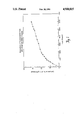
- FIG. 1 is a plot of cumulative drug release by desorption versus time for protriptyline incorporated into a crosslinked networksynthesized from PEO and P(GPMS/DMS).
- This invention involves the synthesis and use of crosslinked polymer networks comprising the reaction product of a glycidoxypropylsiloxane polymer (PGPS) and a polyethylene oxide (PEO).
- PGPS glycidoxypropylsiloxane polymer
- PEO polyethylene oxide
- the PGPS materials described herein comprise chain polysiloxanes containing the structural units (A) and (B) as represented by Formula (1) below: ##STR1## wherein GP is a glycidoxypropyl unit, and R and R' are --CH 3 , --C 2 H 5 or phenyl. Each PGPS molecule has between 3 and 25 (A) units, and the ratio of the number of (B) units to the number of (A) units is no greater than 10:1.
- polyethylene oxide is defined to include the class of polymers characterized by repeat units of the form (OCH 2 CH 2 ).
- One such compound is ⁇ , ⁇ dihdroxy PEO characterized by hydroyl units at each terminal.
- either one of the hydroxyl units can be replaced by a methyl group such as in polyethylene glycol monomethyl ether, or by an ethyl group such as in polyethylene glycol monoethyl ether.
- either or both of the hydroxyl groups can be placed by an amino group such as in ⁇ , ⁇ diamino PEO.
- Other end capping groups for PEO are also known in the art.
- siloxane polymers of this invention include polyglycidoxypropylmethylsiloxane, (PGPMS), and poly(glycidoxypropylmethylsiloxane/dimethylsiloxane), P(GPMS/DMS), copolymer. These materials are among those represented by general Formula (1) above and the abbreviation PGPS.
- siloxane polymers existing as oily liquids similar to silicone oil, have been found to spontaneously emulsify water, whereas polydimethylsiloxane (PDMS) by itself does not. Additionally, when immersed in aqueous solutions, PGPS and network sof PEO and PGPS absorb compounds much more readily than either PEO or PDMS alone, thereby allowing these siloxane materials to act as excellent vehicles for applications such as the controlled release of pharmaceuticals.
- hydrogel refers to a broad class of polymeric materials which are swollen extensively in water but which do not dissolve in water. Generally, hydrogels are formed by polymerizing a hydrophilic monomer in an aqueous solution under conditions in which the polymer becomes crosslinked so that a three-dimensional polymer network sufficient to gel the solution is formed. Hydrogels are described in greater detail in Hoffman, A. S., “Polymers in Medicine and Surgery", Plenum Press, New York, pp. 33-44 (1974), the teachings of which are incorporated herein by reference.
- PEO is dissolved in an organic solvent for both PEO and PGPS.
- PEO-PGPS material are synthesized by mixing PGPS into the PEO solution, followed by the dropwise addition of a ring-opening Lewis-acid catalyst such as dilute boron-trifluoride etherate.
- a ring-opening Lewis-acid catalyst such as dilute boron-trifluoride etherate.
- Other suitable catalysts include BCl 3 , AlCl 3 , SbF 3 , SbF 5 , SbCl 5 .
- Exclusion of water is essential for the reaction of the PEO and PGPS to proceed properly. This may be accomplished by adding a drying agent such as molecular sieves, calcium hydride or calcium chloride to the solution, thereby removing trace amounts of water.
- the reacting solution is stirred and transferred to molds which are maintained under a saturated atmosphere of solvent for at least 8 hours.
- the polymer samples are then dried to effect the removel of the organic solvent
- a network an be formed by the reaction of a PGPS and ⁇ , ⁇ diamino PEO.
- the PGPS and the ⁇ , ⁇ diamino PEO are dissolved in an organic solvent.
- the reaction mixture is heated to increase the rate of reaction.
- the polymer network product is then dried to effect the removal of the organic solvent.
- PGPMS polyhydromethylsiloxane
- catalysts such as rhodium and iridium may be used, platinum is preferred.
- P(GPMS/DMS) is synthesized by starting with the PHMS/PDMS copolymer.
- n is between about 25 and about 500. In the preferred embodiment, n is greater than about 38.
- the mole ratio of glycidoxypropyl groups to hydroxyl groups in the initial mixture should be greater than 1:2 and preferably greater than 1:1. In a preferred embodiment, the mole ratio of glycidoxypropyl groups to hydroxyl groups is 3:2 or greater.
- Emulsification properties of the PGPS precursor of the networks described herein can be illustrated in the following manner.
- An aliquot of water is gently layered upon the top of an aliquot of PGPS. Initially, two distinct and clear liquids are observed. Spontaneously, the interface between the polymer phase and the aqueous phase becomes progressively diffractive of light as a result of emulsification of water in polymer and vice versa.
- an aliquot of water is mixed vigorously with an aliquot of liquid PGPS, three distinct phases form: the lowest phase being an emulsion of water in polymer, the middle phase being an emulsion of polymer in water, and the top phase being a clear aqueous solution.
- the emulsion is extremely stable and centrifugation at 9000 G for 30 minutes does not separate the polymer from water.
- the partition coefficient K is defined as the ratio of the concentration of a compound dissolved in a hydrogel network or polymer to the concentration of compound dissolved in the non-hydrogel or -polymer phase at equilibrium when he hydrogel network or polymer is immersed in an aqueous mixture in which a solute has been dissolved.
- K in the case wherein the polymer is in liquid form, an aliquot or aqueous solution of a compound of known concentration is thoroughly mixed with an aliquot of polymer. The two phases are allowed to reach equilibrium, and the concentration of solute in the aqueous phase is measured. K can be determined by a mass balance on the aqueous phase using equation (2) below:
- C i is the initial concentration of the solute in the aqueous solution
- C f is the final concentration of the solute in the aqueous solution once mixed with the polymer and allowed to reach equilibrium
- V a is the volume of the aqueous phase
- V p is the volume of the polymer phase.
- K may also be determined when the polymer is an insoluble, crosslinked network such as a hydrogel.
- the network may undergo swelling depending upon the content and molecular weight of the PEO in the network.
- polymer which has reached its equilibrium swollen state is placed in a solution in which tee initial solution volume and solute concentration are known. Once the mixture reaches equilibrium, the concentration of the aqueous phase is remeasured. By using an appropriate mass balance, K can be calculated.
- Equation (3) ##EQU1## wherein C i and C f are as stated previously, V a is the initial volume of the aqueous solution, V s is the volume of aqueous solution in swollen polymer, and V p is the initial polymer volume.
- hydrogels The high partitioning of these hydrogels makes them an excellent delivery vehicle for pharmaceuticals, especially those having low molecular weight and limited solubility in water and with which it is desirable to dispense in substantially constant, low dosages over an extended period of time.
- One such pharmaceutical class is that of tricyclic antidepressants.
- Another pharmaceutical for which the hydrogel network is an excellent delivery vehicle is leutinizing hormone release hormone (LHRH).
- Tricyclic antidepressants are prescribed for endogenous depression, a condition thought to be caused by a defect in the uptake of amine neurotransmitters at the presynaptic junctions.
- the tricyclic antidepressants benefit from a controlled delivery formulation for a number of reasons. Depressed patients are at a higher risk for suicide, and thus more likely to hoard the drug and then attempt to take an overdose. Furthermore, tricyclic antidepressants have a long induction period, sometimes taking several weeks before patients obtain relief from the drug. As a result of the long induction period, patients often stop using the medication after a short period of time because they think it is not working.
- a controlled delivery form of the drug solves these problems by providing continuous release of the drug for the time period necessary to provide relief.
- Crosslinked polymer networks have been found to have unexpectedly high partition coefficients for compounds such as tricyclic antidepressants.
- Tables 1 to 3 below show partitioning data obtained for several compounds when contacted with polymers, or polymer networks of PDMS, P(GPMS/DMS) and PEO.
- the data of Tables 2 and 3 show that it is possible to control partitioning via network composition.
- the drug was dissolved in a phosphate buffered saline solution (pH 7.4) and subsequently contacted with the polymer phase. Both dissolving and contacting steps were carried out at room temperature.
- a phosphate buffered saline solution pH 7.4
- both dissolving and contacting steps were carried out at room temperature.
- the PEO-P(GPMS/DMS) networks are in their swollen hydrogel form.
- the amount of protriptyline incorporated is greater in PEO-P(GPMS/DMS) hydrogel networks compared to any of the polymers individually. (See Tables 2 and 3). Drug absorption is thus likely to occur specifically in the interfacial region between the two polymer phases. PEO likely plays an important role in the partitioning of compounds in the PPEO-P(GPMS/DMS) networks by imparting swellability to these polymers, thereby allowing the aqueous solution to penetrate into the polymer.
- a reaction between PEO and P(GPMS/DMS) was carried out under an atmosphere of nitrogen.
- a volume of PEO solution containing 0.5 PEO and a volume of P(GPMS/DMS) solution containing 0.5 g P(GPMS/DMS) were mixed together, and a volume of dichloromethane was added so that the final total polymer concentration was 18.5%.
- An aliquot of boron trifluoride etherate was diluted 140 times in dichloromethane and 2 ml of this diluted catalyst was added dropwise and stirred into the polymer solution. Aliquots of solution were transferred into polyethylene molds and placed in a sealed container which contained a saturated atmosphere of dichloromethane. After 15 hours, the sample was removed and placed in a vacuum apparatus for complete removal of dichloromethane.
- FIG. 1 plots the cumulative percentage of protriptyline released by desorption from a PEO-P(GPMS/DMS) network over a 600 hour period.
- reaction can proceed in the absence of a catalyst, however, to obtain gelling in a short time (i.e., less than one day), the reaction mixture must be heated.
- the solvent toluene was substituted for dichloromethane, because toluene has a higher boiling point that dichloromethane, therefore making it easier to use at the elevated reaction temperature.
Landscapes
- Health & Medical Sciences (AREA)
- Chemical & Material Sciences (AREA)
- Life Sciences & Earth Sciences (AREA)
- General Health & Medical Sciences (AREA)
- Engineering & Computer Science (AREA)
- Veterinary Medicine (AREA)
- Public Health (AREA)
- Epidemiology (AREA)
- Animal Behavior & Ethology (AREA)
- Surgery (AREA)
- Hematology (AREA)
- Materials Engineering (AREA)
- Organic Chemistry (AREA)
- Medicinal Chemistry (AREA)
- Hydrology & Water Resources (AREA)
- Environmental & Geological Engineering (AREA)
- Water Supply & Treatment (AREA)
- Pharmacology & Pharmacy (AREA)
- Chemical Kinetics & Catalysis (AREA)
- Polymers & Plastics (AREA)
- Medicinal Preparation (AREA)
Abstract
Description
K=(C.sub.i /C.sub.f -1)(V.sub.a /V.sub.p) (2)
              TABLE 1
______________________________________
Partition Coefficients in PDMS, Unreacted P(GPMS/DMS),
Crosslinked P(GPMS/DMS) Networks, and Crosslinked
PEO Networks
                 K in       K in
                 Unreacted  Crosslinked
                                      K in
         K in    P(GPMS/    P(GPMS/   Crosslinked
Drug     PDMS    DMS)       DMS)      PEO
______________________________________
Protriptyline
        0.4     29        34         2
Desipramine
        0.4     22        43         2
Imipramine
        21      139       123        2
Amitriptyline
        68      281       296        2
Trimipramine
        155     465       565        2
______________________________________
              TABLE 2
______________________________________
Partitioning of Protriptyline in
PEO-P(GPMS/DMS) Hydrogel Networks
M.W. of PEO     % PGPMS   K
______________________________________
1700            35        69
1700            42        146
1700            50        224
2600            40        252
8600            35        64
8600            50        258
17700           20        37
17700           35        94
17700           50        221
______________________________________
              TABLE 3
______________________________________
Partitioning of Desipramine in PEO-P(GPMS/DMS)
Hydrogel Networks
M.W. of PEO     % PGPMS   K
______________________________________
1700            50        42
2600            40        52
8600            35        67
8600            50        76
17700           35        54
17700           50        72
______________________________________
Claims (37)
Priority Applications (4)
| Application Number | Priority Date | Filing Date | Title |
|---|---|---|---|
| US07/110,006 US4910015A (en) | 1987-10-19 | 1987-10-19 | Surface-active polysiloxanes and drug releasing materials thereof |
| US07/168,673 US4906465A (en) | 1987-10-19 | 1988-03-16 | Antithrombogenic devices containing polysiloxanes |
| PCT/US1988/003667 WO1989003851A1 (en) | 1987-10-19 | 1988-10-18 | Surface-active polysiloxanes |
| EP89900420A EP0383835A1 (en) | 1987-10-19 | 1988-10-18 | Surface-active polysiloxanes |
Applications Claiming Priority (1)
| Application Number | Priority Date | Filing Date | Title |
|---|---|---|---|
| US07/110,006 US4910015A (en) | 1987-10-19 | 1987-10-19 | Surface-active polysiloxanes and drug releasing materials thereof |
Related Child Applications (1)
| Application Number | Title | Priority Date | Filing Date |
|---|---|---|---|
| US07/168,673 Continuation-In-Part US4906465A (en) | 1987-10-19 | 1988-03-16 | Antithrombogenic devices containing polysiloxanes |
Publications (1)
| Publication Number | Publication Date |
|---|---|
| US4910015A true US4910015A (en) | 1990-03-20 |
Family
ID=22330762
Family Applications (1)
| Application Number | Title | Priority Date | Filing Date |
|---|---|---|---|
| US07/110,006 Expired - Fee Related US4910015A (en) | 1987-10-19 | 1987-10-19 | Surface-active polysiloxanes and drug releasing materials thereof |
Country Status (1)
| Country | Link |
|---|---|
| US (1) | US4910015A (en) |
Cited By (13)
| Publication number | Priority date | Publication date | Assignee | Title |
|---|---|---|---|---|
| US5223262A (en) * | 1989-02-23 | 1993-06-29 | University Of Utah | Transdermal delivery system utilizing one way membranes |
| US5543048A (en) * | 1994-04-22 | 1996-08-06 | Becton, Dickinson And Company | Blood collection assembly with blood compatible, shear sensitive gels |
| US5807956A (en) * | 1996-03-04 | 1998-09-15 | Osi Specialties, Inc. | Silicone aminopolyalkyleneoxide block copolymers |
| US20050027312A1 (en) * | 2001-08-10 | 2005-02-03 | Andreas Hahn | Balloon occlusion device |
| US20060198892A1 (en) * | 2003-08-22 | 2006-09-07 | Ellis Jeanne Y | Polymeric systems for controlled drug therapy |
| US20070149916A1 (en) * | 2005-12-22 | 2007-06-28 | Alza Corporation | Dry matrices as drug reservoirs in electrotransport applications |
| EP1750617A4 (en) * | 2004-03-30 | 2009-08-12 | Thoratec Lab Corp | Agent eluting bioimplantable devices and polymer systems for their preparation |
| US20090258058A1 (en) * | 2006-05-23 | 2009-10-15 | Dow Corning Corporation | Novel silicone film former for delivery of actives |
| US8795727B2 (en) | 2009-11-09 | 2014-08-05 | Spotlight Technology Partners Llc | Fragmented hydrogels |
| US9700650B2 (en) | 2009-11-09 | 2017-07-11 | Spotlight Technology Partners Llc | Polysaccharide based hydrogels |
| US10010502B2 (en) | 2015-05-19 | 2018-07-03 | Amorphex Therapeutics Llc | Device that delivers a sustained low-dose of a myopia-suppressing drug, while preserving pupillary function and accommodation |
| WO2021053586A1 (en) | 2019-09-18 | 2021-03-25 | Alcon Inc. | Wet-packed soft hydrogel ocular inserts |
| WO2024180472A1 (en) | 2023-02-28 | 2024-09-06 | Alcon Inc. | Ocular inserts |
Citations (9)
| Publication number | Priority date | Publication date | Assignee | Title |
|---|---|---|---|---|
| EP0002519A1 (en) * | 1977-12-20 | 1979-06-27 | Bayer Ag | Oxyalkylated polysiloxanes, their preparation and their use as heat sensitisers |
| US4423099A (en) * | 1980-07-28 | 1983-12-27 | Ciba-Geigy Corporation | Membrane modified hydrogels |
| US4548990A (en) * | 1983-08-15 | 1985-10-22 | Ciba-Geigy Corporation | Crosslinked, porous polymers for controlled drug delivery |
| US4625010A (en) * | 1984-08-23 | 1986-11-25 | Wacker-Chemie Gmbh | Organopolysiloxanes having Si-bonded hydrogen and SiC-bonded epoxy groups and a process for preparing the same |
| US4624848A (en) * | 1984-05-10 | 1986-11-25 | Ciba-Geigy Corporation | Active agent containing hydrogel devices wherein the active agent concentration profile contains a sigmoidal concentration gradient for improved constant release, their manufacture and use |
| US4666745A (en) * | 1984-08-23 | 1987-05-19 | Wacker-Chemie Gmbh | Organopolysiloxanes having Si-bonded hydrogen and SiC-bonded epoxy groups and a process for preparing the same |
| US4675361A (en) * | 1980-02-29 | 1987-06-23 | Thoratec Laboratories Corp. | Polymer systems suitable for blood-contacting surfaces of a biomedical device, and methods for forming |
| US4684709A (en) * | 1985-02-28 | 1987-08-04 | Toray Silicone Co., Ltd. | Organopolysiloxane compounds comprising epoxy-terminated polyoxyalkylene radicals |
| US4686137A (en) * | 1980-02-29 | 1987-08-11 | Thoratec Laboratories Corp. | Moisture vapor permeable materials |
-
1987
- 1987-10-19 US US07/110,006 patent/US4910015A/en not_active Expired - Fee Related
Patent Citations (9)
| Publication number | Priority date | Publication date | Assignee | Title |
|---|---|---|---|---|
| EP0002519A1 (en) * | 1977-12-20 | 1979-06-27 | Bayer Ag | Oxyalkylated polysiloxanes, their preparation and their use as heat sensitisers |
| US4675361A (en) * | 1980-02-29 | 1987-06-23 | Thoratec Laboratories Corp. | Polymer systems suitable for blood-contacting surfaces of a biomedical device, and methods for forming |
| US4686137A (en) * | 1980-02-29 | 1987-08-11 | Thoratec Laboratories Corp. | Moisture vapor permeable materials |
| US4423099A (en) * | 1980-07-28 | 1983-12-27 | Ciba-Geigy Corporation | Membrane modified hydrogels |
| US4548990A (en) * | 1983-08-15 | 1985-10-22 | Ciba-Geigy Corporation | Crosslinked, porous polymers for controlled drug delivery |
| US4624848A (en) * | 1984-05-10 | 1986-11-25 | Ciba-Geigy Corporation | Active agent containing hydrogel devices wherein the active agent concentration profile contains a sigmoidal concentration gradient for improved constant release, their manufacture and use |
| US4625010A (en) * | 1984-08-23 | 1986-11-25 | Wacker-Chemie Gmbh | Organopolysiloxanes having Si-bonded hydrogen and SiC-bonded epoxy groups and a process for preparing the same |
| US4666745A (en) * | 1984-08-23 | 1987-05-19 | Wacker-Chemie Gmbh | Organopolysiloxanes having Si-bonded hydrogen and SiC-bonded epoxy groups and a process for preparing the same |
| US4684709A (en) * | 1985-02-28 | 1987-08-04 | Toray Silicone Co., Ltd. | Organopolysiloxane compounds comprising epoxy-terminated polyoxyalkylene radicals |
Non-Patent Citations (34)
| Title |
|---|
| A. S. Hoffman, "Polymers in Medicine and Surgery", (Plenum Press, New York 1974), 33-44. |
| A. S. Hoffman, Polymers in Medicine and Surgery , (Plenum Press, New York 1974), 33 44. * |
| B. K. Davis, Proc. Natl. Acad. Sci., U.S.A., 71, 3120 3123 (1974). * |
| B. K. Davis, Proc. Natl. Acad. Sci., U.S.A., 71, 3120-3123 (1974). |
| B. Kanner et al., Industrial and Engineering Chemistry Product Research and Development, 6(2), 88 92 (1967). * |
| B. Kanner et al., Industrial and Engineering Chemistry Product Research and Development, 6(2), 88-92 (1967). |
| C. T. Reinhart et al., J. Membr. Sci., 18, 227 239 (1984). * |
| C. T. Reinhart et al., J. Membr. Sci., 18, 227-239 (1984). |
| J. M. Anderson et al., ACS Symposium Series, 31, 167 179 (1976). * |
| J. M. Anderson et al., ACS Symposium Series, 31, 167-179 (1976). |
| M. P. Embrey et al., Brit. Med. J., 28, 901 902 (1980). * |
| M. P. Embrey et al., Brit. Med. J., 28, 901-902 (1980). |
| Pekala et al., Biomaterials 7: 372 378 (1986). * |
| Pekala et al., Biomaterials 7: 372-378 (1986). |
| R. langer, Chem. Eng. Commun., 6, 1 48 (1980). * |
| R. langer, Chem. Eng. Commun., 6, 1-48 (1980). |
| R. W. Pekala et al., Biomaterials, 7, 372 378 (1986). * |
| R. W. Pekala et al., Biomaterials, 7, 372-378 (1986). |
| R. W. Pekala et al., Biomaterials, 7, 379 385 (1986). * |
| R. W. Pekala et al., Biomaterials, 7, 379-385 (1986). |
| R. W. Pekala et al., J. Colloid & Interface Sci., 101, 120 128. * |
| R. W. Pekala et al., J. Colloid & Interface Sci., 101, 120-128. |
| R. W. Pekala, "Synthesis and Characterization of Polyether/Polysiloxane Networks for Blood-Interfacing Applications". |
| R. W. Pekala, Synthesis and Characterization of Polyether/Polysiloxane Networks for Blood Interfacing Applications . * |
| S. Hosaka et al., J. Appl. Polym. Sci., 23, 2089 2098 (1979). * |
| S. Hosaka et al., J. Appl. Polym. Sci., 23, 2089-2098 (1979). |
| S. Wisniewski et al., J. Membr. Sci., 6, 299 308 (1980). * |
| S. Wisniewski et al., J. Membr. Sci., 6, 299-308 (1980). |
| S. Yolles, "Polymers in Medicine and Surgery", R. L. Kronenthal et al., eds. (Plenum Press, New York 1975), 245-261. |
| S. Yolles, Polymers in Medicine and Surgery , R. L. Kronenthal et al., eds. (Plenum Press, New York 1975), 245 261. * |
| T. J. Roseman et al., ACS Symposium Series, 33, 33 52 (1976). * |
| T. J. Roseman et al., ACS Symposium Series, 33, 33-52 (1976). |
| Y. W. Chien, ACS Symposium Series, 33, 53 71 (1976). * |
| Y. W. Chien, ACS Symposium Series, 33, 53-71 (1976). |
Cited By (23)
| Publication number | Priority date | Publication date | Assignee | Title |
|---|---|---|---|---|
| US5223262A (en) * | 1989-02-23 | 1993-06-29 | University Of Utah | Transdermal delivery system utilizing one way membranes |
| US5543048A (en) * | 1994-04-22 | 1996-08-06 | Becton, Dickinson And Company | Blood collection assembly with blood compatible, shear sensitive gels |
| US5547577A (en) * | 1994-04-22 | 1996-08-20 | Becton, Dickinson And Company | Blood compatible, shear sensitive gels |
| US5807956A (en) * | 1996-03-04 | 1998-09-15 | Osi Specialties, Inc. | Silicone aminopolyalkyleneoxide block copolymers |
| US5981681A (en) * | 1996-03-04 | 1999-11-09 | Witco Corporation | Silicone aminopolyalkyleneoxide block copolymers |
| US20050027312A1 (en) * | 2001-08-10 | 2005-02-03 | Andreas Hahn | Balloon occlusion device |
| US20100178315A1 (en) * | 2003-08-22 | 2010-07-15 | Vista Scientific Llc | Polymeric systems for controlled drug therapy |
| US20060198892A1 (en) * | 2003-08-22 | 2006-09-07 | Ellis Jeanne Y | Polymeric systems for controlled drug therapy |
| EP1750617A4 (en) * | 2004-03-30 | 2009-08-12 | Thoratec Lab Corp | Agent eluting bioimplantable devices and polymer systems for their preparation |
| US20070149916A1 (en) * | 2005-12-22 | 2007-06-28 | Alza Corporation | Dry matrices as drug reservoirs in electrotransport applications |
| US8968773B2 (en) | 2006-05-23 | 2015-03-03 | Dow Corning Corporation | Silicone film former for delivery of actives |
| US20090258058A1 (en) * | 2006-05-23 | 2009-10-15 | Dow Corning Corporation | Novel silicone film former for delivery of actives |
| EP2019678A4 (en) * | 2006-05-23 | 2012-05-02 | Dow Corning | NOVEL SILICONE FILMOGENIC AGENT FOR RELEASE OF ACTIVE INGREDIENTS |
| US9592299B2 (en) | 2009-11-09 | 2017-03-14 | Spotlight Technology Partners Llc | Hydrogel compositions |
| US9289449B2 (en) | 2009-11-09 | 2016-03-22 | Spotlight Technology Partners Llc | Hydrogel compositions |
| US8795727B2 (en) | 2009-11-09 | 2014-08-05 | Spotlight Technology Partners Llc | Fragmented hydrogels |
| US9700650B2 (en) | 2009-11-09 | 2017-07-11 | Spotlight Technology Partners Llc | Polysaccharide based hydrogels |
| US9861701B2 (en) | 2009-11-09 | 2018-01-09 | Spotlight Technology Partners Llc | Hydrogel compositions |
| US10159742B2 (en) | 2009-11-09 | 2018-12-25 | Spotlight Technology Partners Llc | Hydrogel compositions |
| US10010502B2 (en) | 2015-05-19 | 2018-07-03 | Amorphex Therapeutics Llc | Device that delivers a sustained low-dose of a myopia-suppressing drug, while preserving pupillary function and accommodation |
| WO2021053586A1 (en) | 2019-09-18 | 2021-03-25 | Alcon Inc. | Wet-packed soft hydrogel ocular inserts |
| US11931454B2 (en) | 2019-09-18 | 2024-03-19 | Alcon Inc. | Wet-packed soft hydrogel ocular inserts |
| WO2024180472A1 (en) | 2023-02-28 | 2024-09-06 | Alcon Inc. | Ocular inserts |
Similar Documents
| Publication | Publication Date | Title |
|---|---|---|
| WO1989003851A1 (en) | Surface-active polysiloxanes | |
| Badiger et al. | Porogens in the preparation of microporous hydrogels based on poly (ethylene oxides) | |
| Stringer et al. | Diffusion of small molecular weight drugs in radiation-crosslinked poly (ethylene oxide) hydrogels | |
| US7074424B2 (en) | Polyalkylene glycol viscosity-enhancing polymeric formulations | |
| Gayet et al. | High water content BSA-PEG hydrogel for controlled release device: Evaluation of the drug release properties | |
| Liang-Chang et al. | Controlled release of amylase from a thermal and pH-sensitive, macroporous hydrogel | |
| Cruise et al. | Characterization of permeability and network structure of interfacially photopolymerized poly (ethylene glycol) diacrylate hydrogels | |
| US8323794B2 (en) | Injectable hydrogel microspheres from aqueous two-phase system | |
| US6331578B1 (en) | Process for preparing interpenetrating polymer networks of controlled morphology | |
| Blanco et al. | 5-Fluorouracil release from copolymeric hydrogels of itaconic acid monoester: I. Acrylamide-co-monomethyl itaconate | |
| Engberg et al. | Protein diffusion in photopolymerized poly (ethylene glycol) hydrogel networks | |
| GB2143733A (en) | Controlled release device comprising a hydrogel | |
| EP0465744A1 (en) | Formulations for sustained release dressings and their use | |
| Graham | Poly (ethylene glycol) gels and drug delivery | |
| SE431821B (en) | STORAGE STABLE, PROSTAGLANDIN-CONTAINING MEDICAL PREPARATION | |
| AU615929B2 (en) | Pharmaceutical formulation ensuring the transdermal absorption of the active ingredient and process for preparing same | |
| WO1996025148A1 (en) | A time-release delivery matrix composition and corresponding controlled-release compositions | |
| Graham et al. | Caffeine release from fully swollen poly (ethylene oxide) hydrogels | |
| Qiao et al. | Sustained release of bee venom peptide from biodegradable thermosensitive PLGA-PEG-PLGA triblock copolymer-based hydrogels in vitro | |
| Gayet et al. | Drug release from new bioartificial hydrogel | |
| PT90867B (en) | PREPARATION PROCESS OF A THREE-DIMENSIONAL POLYMER INTERPENETRATING NET CONTAINING A PHARMACO | |
| CN1172646A (en) | Fill material for soft gelatin pharmaceutical dosage form containing antiflatulent | |
| Scranton et al. | Soluble chain fractions in hydrophilic polymer networks: Origin and effect on dynamic uptake overshoots | |
| Hsieh et al. | Enhanced release of drugs from silicone elastomers (II): induction of swelling and changes in microstructure | |
| Sung et al. | Drug partitioning and release characteristics of tricyclic antidepressant drugs using a series of related hydrophilic-hydrophobic copolymers |
Legal Events
| Date | Code | Title | Description |
|---|---|---|---|
| AS | Assignment |
Owner name: MASSACHUSETTS INSTITUTE OF TECHNOLOGY, 77 MASSACHU Free format text: ASSIGNMENT OF ASSIGNORS INTEREST.;ASSIGNORS:SUNG, CYNTHIA;MERRILL, EDWARD W.;REEL/FRAME:004773/0859 Effective date: 19871015 Owner name: MASSACHUSETTS INSTITUTE OF TECHNOLOGY,MASSACHUSETT Free format text: ASSIGNMENT OF ASSIGNORS INTEREST;ASSIGNORS:SUNG, CYNTHIA;MERRILL, EDWARD W.;REEL/FRAME:004773/0859 Effective date: 19871015 |
|
| FEPP | Fee payment procedure |
Free format text: PAYOR NUMBER ASSIGNED (ORIGINAL EVENT CODE: ASPN); ENTITY STATUS OF PATENT OWNER: LARGE ENTITY |
|
| CC | Certificate of correction | ||
| FEPP | Fee payment procedure |
Free format text: PAT HLDR NO LONGER CLAIMS SMALL ENT STAT AS NONPROFIT ORG (ORIGINAL EVENT CODE: LSM3); ENTITY STATUS OF PATENT OWNER: LARGE ENTITY |
|
| FPAY | Fee payment |
Year of fee payment: 4 |
|
| FPAY | Fee payment |
Year of fee payment: 8 |
|
| REMI | Maintenance fee reminder mailed | ||
| LAPS | Lapse for failure to pay maintenance fees | ||
| LAPS | Lapse for failure to pay maintenance fees |
Free format text: PATENT EXPIRED FOR FAILURE TO PAY MAINTENANCE FEES (ORIGINAL EVENT CODE: EXP.); ENTITY STATUS OF PATENT OWNER: LARGE ENTITY |
|
| STCH | Information on status: patent discontinuation |
Free format text: PATENT EXPIRED DUE TO NONPAYMENT OF MAINTENANCE FEES UNDER 37 CFR 1.362 |
|
| FP | Lapsed due to failure to pay maintenance fee |
Effective date: 20020320 |