US4900851A - Synthesis of azidodinitro compounds - Google Patents
Synthesis of azidodinitro compounds Download PDFInfo
- Publication number
- US4900851A US4900851A US07/082,879 US8287987A US4900851A US 4900851 A US4900851 A US 4900851A US 8287987 A US8287987 A US 8287987A US 4900851 A US4900851 A US 4900851A
- Authority
- US
- United States
- Prior art keywords
- dinitro
- sub
- butanol
- compounds
- azido
- Prior art date
- Legal status (The legal status is an assumption and is not a legal conclusion. Google has not performed a legal analysis and makes no representation as to the accuracy of the status listed.)
- Expired - Fee Related
Links
Images
Classifications
-
- C—CHEMISTRY; METALLURGY
- C25—ELECTROLYTIC OR ELECTROPHORETIC PROCESSES; APPARATUS THEREFOR
- C25B—ELECTROLYTIC OR ELECTROPHORETIC PROCESSES FOR THE PRODUCTION OF COMPOUNDS OR NON-METALS; APPARATUS THEREFOR
- C25B3/00—Electrolytic production of organic compounds
-
- C—CHEMISTRY; METALLURGY
- C06—EXPLOSIVES; MATCHES
- C06B—EXPLOSIVES OR THERMIC COMPOSITIONS; MANUFACTURE THEREOF; USE OF SINGLE SUBSTANCES AS EXPLOSIVES
- C06B25/00—Compositions containing a nitrated organic compound
-
- C—CHEMISTRY; METALLURGY
- C07—ORGANIC CHEMISTRY
- C07C—ACYCLIC OR CARBOCYCLIC COMPOUNDS
- C07C247/00—Compounds containing azido groups
- C07C247/02—Compounds containing azido groups with azido groups bound to acyclic carbon atoms of a carbon skeleton
- C07C247/04—Compounds containing azido groups with azido groups bound to acyclic carbon atoms of a carbon skeleton being saturated
-
- C—CHEMISTRY; METALLURGY
- C25—ELECTROLYTIC OR ELECTROPHORETIC PROCESSES; APPARATUS THEREFOR
- C25B—ELECTROLYTIC OR ELECTROPHORETIC PROCESSES FOR THE PRODUCTION OF COMPOUNDS OR NON-METALS; APPARATUS THEREFOR
- C25B3/00—Electrolytic production of organic compounds
- C25B3/01—Products
- C25B3/07—Oxygen containing compounds
-
- C—CHEMISTRY; METALLURGY
- C25—ELECTROLYTIC OR ELECTROPHORETIC PROCESSES; APPARATUS THEREFOR
- C25B—ELECTROLYTIC OR ELECTROPHORETIC PROCESSES FOR THE PRODUCTION OF COMPOUNDS OR NON-METALS; APPARATUS THEREFOR
- C25B3/00—Electrolytic production of organic compounds
- C25B3/01—Products
- C25B3/09—Nitrogen containing compounds
Definitions
- This invention relates to energetic organic compounds.
- this invention relates to gem-dinitro precursor alcohols.
- it relates to azidodinitro compounds.
- it relates to methods for preparing these compounds.
- Energetic organic compounds have a long history of use in explosives and propellants. Examples have included polynitroaromatic compounds such as 2,4,6-trinitrotoluene (TNT); cyclic nitramines such as 1,3,5-trinitrazacyclohexane (RDX) and 1,3,5,7,- tetranitrazacyclooctane (HMX); and nitrate esters such as nitrocellulose (NC) and nitroglycerin (NG).
- TNT 2,4,6-trinitrotoluene
- RDX 1,3,5-trinitrazacyclohexane
- HMX 1,3,5,7,- tetranitrazacyclooctane
- nitrate esters such as nitrocellulose (NC) and nitroglycerin (NG).
- BDPNF-A bis(2,2-dinitropropyl) formal/acetal
- FEFO bis(2,2,2-fluoridinitroethyl) formal
- Examples include azidoalkyl esters of polynitroacids such as 1,3-diazido-2-propyl 4',4',4'-trinitrobutyrate (DAPT) and azide-terminated nitramines such as 1,7-diazido-2,4,6-trinitrazeheptane (DATH) and 1,5-diazido-3-nitrazapentene (DANPE).
- DAPT 1,3-diazido-2-propyl 4',4',4'-trinitrobutyrate
- DATH 1,7-diazido-2,4,6-trinitrazeheptane
- DANPE 1,5-diazido-3-nitrazapentene
- the compound 4,4-dinitro-1-butanol and a method for making same which comprise reacting trinitromethane and acrolein at a reduced temeprature to provide 4,4,4-trinitrobutyraldehyde, reducing the butyraldehyde to provide the corresponding alcohol, and reducing the alcohol.
- the compound 4-azido-4,4-dinitro-1-butyl acetate and a method for preparing same which comprises reacting 4,4-dinitro-1-butanol with acetyl chloride to provide the corresponding ester, and reacting the ester with an alkali metal azide in the electrolysis cell.
- reaction I trinitromethane to acrolein
- reaction I The addition of trinitromethane to acrolein is conducted at a temperature of about -10° to +10° C. in aqueous medium. Stoichiometric quantities may be employed, although it is presently preferred to employ a slight excess of acrolein.
- the solution may be allowed to warm to room temperature.
- the organic phase is separated from the aqueous phase and the aqueous phase is extracted with a suitable solvent, such as, for example, methylene chloride.
- a suitable solvent such as, for example, methylene chloride.
- the combined organic layers are washed with water, separated, dried and concentrated to yield the aldehyde.
- reaction II The reduction of the aldehyde to 4,4,4-trinitro-1-butanol (Reaction II) is conducted at a reduced temperature of about 0° to 10° C. in alcoholic solution by the portionwise addition of sodium borohydride to the aldehyde solution. After the addition is complete, the solution may be allowed to warm to room temperature. The solution may be stirred for 2 to 12 hours to ensure complete reaction. Following removal of the solvent, the remaining material is hydrolyzed with a suitable acid, then extracted with a suitable solvent, such as methylene chloride. The extracts are washed successively with water, a weak basic solution and water, then dried and concentrated to yield the trinitroalcohol.
- a suitable acid such as methylene chloride
- reaction III The conversion of 4,4,4-trinitro-1-butanol to 4,4-dinitro-1-butanol (Reaction III) is conducted by stirring the trinitro alcohol is a suitable alcoholic medium with an excess of KI at room temperature for 1 to 10 days or about 2 to 24 hours at an elevated temperature.
- the precipitated potassium salt is filtered. suspended in water, acidified, and then extracted with a suitable organic solvent. The extracts are neutralized, dried and concentrated to yield the dinitro alcohol.
- the azidodinitro compounds of this invention are prepared according to the following scheme.
- the 4,4-dinitro-1-butyl acetate is prepared (Reaction IV) by treating a solution of 4,4-dinitro-1-butanol in a suitable solvent, such as methylene chloride, with about 10 to 30 percent excess acetyl chloride. After complete addition of the acetyl chloride, the resulting mixture is stirred at room temperature for 30 to 120 minutes. The mixture is then quenched with cooled water, separated, dried and concentrated to yield the desired dinitro acetate.
- a suitable solvent such as methylene chloride
- Conversion of the 4,4-dinitro-1-butyl acetate to the correspondingazido dinitro compound (Reaction V) is accomplished by charging the dinitro compound together with aqueous sodium azide and an electrolyte, such as NaOH, to the anode compartment of a divided electrolysis cell, charging aqueous soidum azide to the cathode compartment of the cell and applying a current to the cell. After a suitable reaction period, the reaction is stopped and the anolyte extracted with a suitable solvent, such as methylene chloride. The extract is then washed, dried and concentrated to yield the desired product.
- aqueous sodium azide and an electrolyte such as NaOH
- This alcohol was prepared by stirring 4,4,4-trinitro-1-butanol (554 g, 2.65 mol) in methanol (6 l) with KI (1426 g, 8.6 mol) for 6 days at room temperature.
- the precipitated potassium salt was filtered, suspended in water (4 L), acidified with concentrated HCl (250 ml), and extracted into CH 2 Cl 2 (6 ⁇ 500 ml). The extracts were washed with 10% NaHSO 3 (1000 ml). The solution was dried over anhydrous MgSO 4 and concentrated to give the product (220 g, 51%) as a yellow oil.
- the infrared spectrum had peaks at 3450, 2950, 1575, 1340, and 1070 cm -1 .
- a divided electrochemical H-cell was charged with 4,4-dinitro-1-butyl acetate (10.2 g), 30% aqueous NaN 3 (25 ml) and 12N NaOH (4 ml) in the anode compartment and 30% NaN 3 (35 ml) in the cathode compartment.
- This solution was electrolyzed at 650 mA using a platimum foil anode (6.5 cm 2 ) and a stainless steel cathode. After 5.25 h the reaction was stopped, and the anolyte was extracted with CH 2 Cl 2 (3 ⁇ 25 ml). Brine-washing, drying, and concentrating the extracts yielded a product which displayed a weak hydroxyl absorption in the infrared spectrum.
Landscapes
- Chemical & Material Sciences (AREA)
- Organic Chemistry (AREA)
- Engineering & Computer Science (AREA)
- Chemical Kinetics & Catalysis (AREA)
- Electrochemistry (AREA)
- Materials Engineering (AREA)
- Metallurgy (AREA)
- Organic Low-Molecular-Weight Compounds And Preparation Thereof (AREA)
Abstract
Provided herein are the compounds 4,4-dinitro-1-butanol, 4-azido-4,4-dinitro-1-butyl acetate and methods for preparing each compound.
4,4-dinitro-1-butanol is prepared by reacting trinitromethane with acrolein, reducing the resulting trinitroaldehyde to provide the corresponding alcohol and reducing the alcohol.
4-azido-4,4-dinitro-1-butyl acetate is prepared by reacting 4,4-dinitro-1-butanol with acetyl chloride to yield the corresponding acetate and reacting the acetate with an alkali metal azide in an electrolysis cell.
Description
The invention described herein may be manufactured and used by or for the Government of the United States for all governmental purposes without the payment of any royalty.
This invention relates to energetic organic compounds. In one aspect, this invention relates to gem-dinitro precursor alcohols. In another aspect, it relates to azidodinitro compounds. In a further aspect, it relates to methods for preparing these compounds.
Energetic organic compounds have a long history of use in explosives and propellants. Examples have included polynitroaromatic compounds such as 2,4,6-trinitrotoluene (TNT); cyclic nitramines such as 1,3,5-trinitrazacyclohexane (RDX) and 1,3,5,7,- tetranitrazacyclooctane (HMX); and nitrate esters such as nitrocellulose (NC) and nitroglycerin (NG). Despite some shortcomings in terms of their thermal stability and sensitivity, these materials have seen heavy use during the past century.
More recently, considerable attention has been paid to various polynitro aliphatic compounds. Compounds, such as bis(2,2-dinitropropyl) formal/acetal (BDPNF-A) and bis(2,2,2-fluoridinitroethyl) formal (FEFO), have found widespread use as energetic plasticizers in modern explosive and propellant formulations.
Yet another promising class of compounds is the group of azido and azidonitro aliphatic compounds. Despite their well deserved reputation as sensitive materials, organic azides are potentially useful ingredients in energetic formulations because the azido group contributes 80 to 90 kcal/mol, while not detracting from the O/C ratio of the molecule. Incorporating both azido and polynitro functionalities in the same molecule generally has been accomplished by joining individual polynitroalkyl and azidoalkyl moieties via a non-energetic linkage. Examples include azidoalkyl esters of polynitroacids such as 1,3-diazido-2-propyl 4',4',4'-trinitrobutyrate (DAPT) and azide-terminated nitramines such as 1,7-diazido-2,4,6-trinitrazeheptane (DATH) and 1,5-diazido-3-nitrazapentene (DANPE). A more compact combination of these two functionalities would be the use of the azidodinitromethyl group in place of trinitromethyl and fluorodinitromethyl groups, which have been incorporated previously in propellant ingredients.
It is an object of the present invention to provide novel azidodinitro compounds.
It is another object of this invention to provide a method for preparing novel azidodinitro compounds.
It is yet another object of this invention to provide novel gem-dinitro alcohols.
It is a further object of this invention to provide a method for preparing gem-dinitro alcohols.
Other objects, aspects and advantages of the present invention will be readily apparent to those skilled in the art from a reading of the following detailed disclosure.
In accordance with the present invention there is provided the compound 4,4-dinitro-1-butanol and a method for making same which comprise reacting trinitromethane and acrolein at a reduced temeprature to provide 4,4,4-trinitrobutyraldehyde, reducing the butyraldehyde to provide the corresponding alcohol, and reducing the alcohol.
Also provided is the compound 4-azido-4,4-dinitro-1-butyl acetate and a method for preparing same which comprises reacting 4,4-dinitro-1-butanol with acetyl chloride to provide the corresponding ester, and reacting the ester with an alkali metal azide in the electrolysis cell.
There is further provided the compound 4-azido-4,4-dinitro-1-butanol and a method for preparing same which comprises reacting 4-azido-4,4-dinitro-1-butyl acetate with methanol and recovering the aforesaid azidodinitro alcohol.
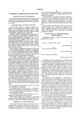
4,4-dinitro-1-butanol is prepared according to the scheme shown below. ##STR1##
The addition of trinitromethane to acrolein (Reaction I) is conducted at a temperature of about -10° to +10° C. in aqueous medium. Stoichiometric quantities may be employed, although it is presently preferred to employ a slight excess of acrolein. After the addition is complete, the solution may be allowed to warm to room temperature. The organic phase is separated from the aqueous phase and the aqueous phase is extracted with a suitable solvent, such as, for example, methylene chloride. The combined organic layers are washed with water, separated, dried and concentrated to yield the aldehyde.
The reduction of the aldehyde to 4,4,4-trinitro-1-butanol (Reaction II) is conducted at a reduced temperature of about 0° to 10° C. in alcoholic solution by the portionwise addition of sodium borohydride to the aldehyde solution. After the addition is complete, the solution may be allowed to warm to room temperature. The solution may be stirred for 2 to 12 hours to ensure complete reaction. Following removal of the solvent, the remaining material is hydrolyzed with a suitable acid, then extracted with a suitable solvent, such as methylene chloride. The extracts are washed successively with water, a weak basic solution and water, then dried and concentrated to yield the trinitroalcohol.
The conversion of 4,4,4-trinitro-1-butanol to 4,4-dinitro-1-butanol (Reaction III) is conducted by stirring the trinitro alcohol is a suitable alcoholic medium with an excess of KI at room temperature for 1 to 10 days or about 2 to 24 hours at an elevated temperature. The precipitated potassium salt is filtered. suspended in water, acidified, and then extracted with a suitable organic solvent. The extracts are neutralized, dried and concentrated to yield the dinitro alcohol.
The azidodinitro compounds of this invention are prepared according to the following scheme.
HC(NO.sub.2).sub.2 CH.sub.2 CH.sub.2 CH.sub.2 OH+ClCOCH.sub.3 →HC(NO.sub.2)CH.sub.2 CH.sub.2 CH.sub.2 O.sub.2 CCH.sub.3 (IV)
HC(NO.sub.2).sub.2 CH.sub.2 CH.sub.2 CH.sub.2 O.sub.2 CCH.sub.3 +NaN.sub.3 →N.sub.3 C(NO.sub.2).sub.2 CH.sub.2 CH.sub.2 CH.sub.2 O.sub.2 CCH.sub.3 (V)
The 4,4-dinitro-1-butyl acetate is prepared (Reaction IV) by treating a solution of 4,4-dinitro-1-butanol in a suitable solvent, such as methylene chloride, with about 10 to 30 percent excess acetyl chloride. After complete addition of the acetyl chloride, the resulting mixture is stirred at room temperature for 30 to 120 minutes. The mixture is then quenched with cooled water, separated, dried and concentrated to yield the desired dinitro acetate.
Conversion of the 4,4-dinitro-1-butyl acetate to the correspondingazido dinitro compound (Reaction V) is accomplished by charging the dinitro compound together with aqueous sodium azide and an electrolyte, such as NaOH, to the anode compartment of a divided electrolysis cell, charging aqueous soidum azide to the cathode compartment of the cell and applying a current to the cell. After a suitable reaction period, the reaction is stopped and the anolyte extracted with a suitable solvent, such as methylene chloride. The extract is then washed, dried and concentrated to yield the desired product.
The following examples illustrate the invention.
A 12 L three-necked, round-bottom flask with a thermometer, mechanical stirrer, and 1000 ml addition funnel was charged with 6377 g of an 11% aqueous trinitromethane solution (701.5 g; 4.675 mol) and cooled in a dry-ice bath at 9° C. A solution of acrolein (274.1 g, 4.90 mol) in 2000 ml of water was added at a rate that maintained the temperature at 0° C. The dry-ice bath was removed and the stirred solution allowed to warm to room temperature overnight. The two phases were separated and the aqueous layer was extracted with CH2 Cl2 (2×2000 ml). The combined organic layers were washed with water (2×2000 ml). The product was dried (MgSO4) and concentrated to give 878 g (91%) of the aldehyde as a yellow oil; nD =1.4731 (26C). The infrared spectrum showed bands at 1725 cm-1 (C═O), 1590, 1300, and 800 cm-1 (NO2).
Crude 4,4,4-trinitrobutaldehyde (878 g, 4.24 mol) was dissolved in methanol (1000 ml) and cooled in an ice bath while NaBH4 (130.7 g, 3.44 mol) was added portion-wise. The mixture was stirred at room temperature overnight under a nitrogen purge which removed much of the solvent. The thick suspension was hydrolyzed with 6 N HCl (approx. 41) and the product extracted with CH2 Cl2 (3×1000 ml). The extracts were washed with water (1000 ml), saturated NaHCO3 (2×1000 ml), and water (1000 ml). The product solution was dried over anhydrous MgSO4 and concentrated to yield 554 g (63%) of a yellow oil, nD =4735 (19C). The infrared spectrum showed peaks at 3619, 3370, 2950, 2890, 1595, 1305, 1058 and 801 cm-1.
This alcohol was prepared by stirring 4,4,4-trinitro-1-butanol (554 g, 2.65 mol) in methanol (6 l) with KI (1426 g, 8.6 mol) for 6 days at room temperature. The precipitated potassium salt was filtered, suspended in water (4 L), acidified with concentrated HCl (250 ml), and extracted into CH2 Cl2 (6×500 ml). The extracts were washed with 10% NaHSO3 (1000 ml). The solution was dried over anhydrous MgSO4 and concentrated to give the product (220 g, 51%) as a yellow oil. The infrared spectrum had peaks at 3450, 2950, 1575, 1340, and 1070 cm-1.
This ester was synthesized by treating a solution of 4,4-dinitro-1-butanol (39.2 g, 0.24 mols) in CH2 Cl2 (100 ml) with acetyl chloride (22 ml, 24 g, 0.31 mol). After 90 minutes at room temperature, the reaction was quenched with ice water. Separation, drying (MgSO4), and concentration of the organic phase gave the product (42.7 g, 87%) as a light yellow oil; nD =1.4574 (24C). The infrared spectrum of the product had peaks at 2960, 1745, 1575, 1245, and 1060 cm-1. Elemental analyses-Calculated for C6 H10 N2 O6 : C, 34.95; H, 4.85; N, 13.59; Found: C, 35.17; H, 4.83; N, 12.95.
A divided electrochemical H-cell was charged with 4,4-dinitro-1-butyl acetate (10.2 g), 30% aqueous NaN3 (25 ml) and 12N NaOH (4 ml) in the anode compartment and 30% NaN3 (35 ml) in the cathode compartment. This solution was electrolyzed at 650 mA using a platimum foil anode (6.5 cm2) and a stainless steel cathode. After 5.25 h the reaction was stopped, and the anolyte was extracted with CH2 Cl2 (3×25 ml). Brine-washing, drying, and concentrating the extracts yielded a product which displayed a weak hydroxyl absorption in the infrared spectrum. The product was reacetylated by stirring with acetyl chloride (1 ml) in CH2 Cl2 (30 ml) for 2 h. This reaction was quenched in ice water, dried, and concentrated. The crude yellow oil was purified by column chromatography on silica gel eluting with 10% ethyl acetate in hexanes. The purified product was a clear light yellow oil which was greater than 95 % pure by HPLC: nD =1.4649 (25C); IR: 2165, 1735, and 1590 cm-1 ; NMR (CDCl3): 4.07 (q, 2H), 2.58 (m, 2H), 2.07 (s, 3H), 1.73 (m, 2H). Elemental analyses calcluated for C6 H9 N5 O6 : C, 29.15; H, 3.64; N, 28.34. Found: C, 29.59; H, 3.90; N, 27.89.
Various modifications may be made without departing from the spirit of the invention or the scope of the appended claims.
Claims (2)
1. 4-azido-4,4-dinitro-1-butyl acetate.
2. A method for preparing 4-azido-4,4-dinitro-1-butylacetate which comprises electrochemically reacting 4,4-dinitro-1-butanol with acetyl chloride to yield 4,4-dinitro-1-butyl acetate and reacting said acetate with an alkali metal azide in an electrolysis cell.
Priority Applications (1)
| Application Number | Priority Date | Filing Date | Title |
|---|---|---|---|
| US07/082,879 US4900851A (en) | 1987-08-05 | 1987-08-05 | Synthesis of azidodinitro compounds |
Applications Claiming Priority (1)
| Application Number | Priority Date | Filing Date | Title |
|---|---|---|---|
| US07/082,879 US4900851A (en) | 1987-08-05 | 1987-08-05 | Synthesis of azidodinitro compounds |
Publications (1)
| Publication Number | Publication Date |
|---|---|
| US4900851A true US4900851A (en) | 1990-02-13 |
Family
ID=22174038
Family Applications (1)
| Application Number | Title | Priority Date | Filing Date |
|---|---|---|---|
| US07/082,879 Expired - Fee Related US4900851A (en) | 1987-08-05 | 1987-08-05 | Synthesis of azidodinitro compounds |
Country Status (1)
| Country | Link |
|---|---|
| US (1) | US4900851A (en) |
Cited By (1)
| Publication number | Priority date | Publication date | Assignee | Title |
|---|---|---|---|---|
| US20110319643A1 (en) * | 2010-06-23 | 2011-12-29 | Physical Sciences, Inc. | Synthesis of an Azido Energetic Alcohol |
Citations (5)
| Publication number | Priority date | Publication date | Assignee | Title |
|---|---|---|---|---|
| US3356714A (en) * | 1965-09-15 | 1967-12-05 | Mortimer J Kamlet | 4-fluoro-4, 4-dinitrobutyric acids and esters thereof |
| US3770795A (en) * | 1970-10-12 | 1973-11-06 | Shell Oil Co | 4,4,4-trinitrobutyl cyanoacetate |
| US3883377A (en) * | 1968-11-27 | 1975-05-13 | Us Navy | 1-Azido-1,1-dinitroalkanes, useful as propellants |
| US4472311A (en) * | 1982-07-22 | 1984-09-18 | Rockwell International Corporation | Method of preparing 1,1,1-azidodinitro compounds |
| US4795593A (en) * | 1987-08-05 | 1989-01-03 | The United States Of America As Represented By The Secretary Of The Air Force | 4-azido-4,4-dinitro-1-butanol and derivatives thereof |
-
1987
- 1987-08-05 US US07/082,879 patent/US4900851A/en not_active Expired - Fee Related
Patent Citations (5)
| Publication number | Priority date | Publication date | Assignee | Title |
|---|---|---|---|---|
| US3356714A (en) * | 1965-09-15 | 1967-12-05 | Mortimer J Kamlet | 4-fluoro-4, 4-dinitrobutyric acids and esters thereof |
| US3883377A (en) * | 1968-11-27 | 1975-05-13 | Us Navy | 1-Azido-1,1-dinitroalkanes, useful as propellants |
| US3770795A (en) * | 1970-10-12 | 1973-11-06 | Shell Oil Co | 4,4,4-trinitrobutyl cyanoacetate |
| US4472311A (en) * | 1982-07-22 | 1984-09-18 | Rockwell International Corporation | Method of preparing 1,1,1-azidodinitro compounds |
| US4795593A (en) * | 1987-08-05 | 1989-01-03 | The United States Of America As Represented By The Secretary Of The Air Force | 4-azido-4,4-dinitro-1-butanol and derivatives thereof |
Non-Patent Citations (3)
| Title |
|---|
| Chemical Abstract 35191q vol. 69, No. 9 1968 Slovetskii, V. I. et al. * |
| Chemical Abstract 65882r vol. 73, No. 13 1970 Tselinskii et al. * |
| Organic Chemistry 3rd ed. Morrison et al., Allyn and Bacon, Boston 1973. * |
Cited By (2)
| Publication number | Priority date | Publication date | Assignee | Title |
|---|---|---|---|---|
| US20110319643A1 (en) * | 2010-06-23 | 2011-12-29 | Physical Sciences, Inc. | Synthesis of an Azido Energetic Alcohol |
| US8841468B2 (en) * | 2010-06-23 | 2014-09-23 | Physical Sciences, Inc. | Synthesis of an azido energetic alcohol |
Similar Documents
| Publication | Publication Date | Title |
|---|---|---|
| US4141910A (en) | Azido compounds | |
| EP0120668A1 (en) | Azido nitramine | |
| US3883377A (en) | 1-Azido-1,1-dinitroalkanes, useful as propellants | |
| US4781861A (en) | Azide-terminated azido compound | |
| US4795593A (en) | 4-azido-4,4-dinitro-1-butanol and derivatives thereof | |
| US4381400A (en) | Process for the synthesis of isosorbide mononitrates | |
| US4476322A (en) | Synthesis of dimethylmethylene dinitramine | |
| US3531534A (en) | Bisfluorodinitro ethers and their preparation | |
| US5214166A (en) | Method of synthesizing nitrato alkyl oxetanes | |
| US4472311A (en) | Method of preparing 1,1,1-azidodinitro compounds | |
| Witucki et al. | Synthesis of novel energetic aliphatic compounds | |
| US4683086A (en) | Azido derivatives of pentaerythritol | |
| US3066169A (en) | Preparation of polynitro-nitramines | |
| US4683085A (en) | Polyazido esters | |
| US4453021A (en) | Dinitropropyl fluorodinitroethyl formal plasticizer and method of preparation | |
| US6841690B1 (en) | Polyazido compounds | |
| US4091040A (en) | Procedure for making trimethylolmethane | |
| US3962349A (en) | 2,2,2-Fluorodinitroethyl 2-nitroalkyl acetals and methods of preparation | |
| US4394329A (en) | 2-Hydroxymethyl-1,3-propanediol nitrate ester | |
| US4336408A (en) | 2-Hydroxymethyl-1,3-propanediol preparation | |
| US3020319A (en) | Preparing 2, 2-dinitro-1, 3-propanediol | |
| US5194103A (en) | High density energetic materials | |
| US5276171A (en) | 2-azido-2,2-difluoroethanol | |
| USH181H (en) | Bis(2-fluoro-2,2-dinitroethoxy)acetonitrile and a method of preparation | |
| US3344167A (en) | Difluoraminoalkyl nitrates |
Legal Events
| Date | Code | Title | Description |
|---|---|---|---|
| AS | Assignment |
Owner name: UNITED STATES OF AMERICA, THE, AS REPRESENTED BY T Free format text: ASSIGNMENT OF ASSIGNORS INTEREST. SUBJECT TO LICENSE RECITED;ASSIGNORS:ROCKWELL INTERNATIONAL CORPORATION;FRANKEL, MILTON B.;WEBER, JAMES F.;REEL/FRAME:005136/0078;SIGNING DATES FROM 19870708 TO 19870721 |
|
| REMI | Maintenance fee reminder mailed | ||
| FPAY | Fee payment |
Year of fee payment: 4 |
|
| SULP | Surcharge for late payment | ||
| REMI | Maintenance fee reminder mailed | ||
| LAPS | Lapse for failure to pay maintenance fees | ||
| FP | Lapsed due to failure to pay maintenance fee |
Effective date: 19980218 |
|
| STCH | Information on status: patent discontinuation |
Free format text: PATENT EXPIRED DUE TO NONPAYMENT OF MAINTENANCE FEES UNDER 37 CFR 1.362 |