US4900842A - Organic compounds of the tetrathiafluvalene type which can be used to make langmuir-blodgett conducting films and method for their manufacture - Google Patents
Organic compounds of the tetrathiafluvalene type which can be used to make langmuir-blodgett conducting films and method for their manufacture Download PDFInfo
- Publication number
- US4900842A US4900842A US07/154,013 US15401388A US4900842A US 4900842 A US4900842 A US 4900842A US 15401388 A US15401388 A US 15401388A US 4900842 A US4900842 A US 4900842A
- Authority
- US
- United States
- Prior art keywords
- sub
- group
- langmuir
- blodgett
- organic compounds
- Prior art date
- Legal status (The legal status is an assumption and is not a legal conclusion. Google has not performed a legal analysis and makes no representation as to the accuracy of the status listed.)
- Expired - Fee Related
Links
- 150000002894 organic compounds Chemical class 0.000 title claims abstract description 9
- 238000000034 method Methods 0.000 title description 6
- 238000004519 manufacturing process Methods 0.000 title description 3
- 238000006467 substitution reaction Methods 0.000 claims abstract description 3
- 150000001875 compounds Chemical class 0.000 claims description 15
- 125000001165 hydrophobic group Chemical group 0.000 abstract description 8
- 230000002209 hydrophobic effect Effects 0.000 abstract description 4
- OKTJSMMVPCPJKN-UHFFFAOYSA-N Carbon Chemical compound [C] OKTJSMMVPCPJKN-UHFFFAOYSA-N 0.000 abstract description 3
- 125000003118 aryl group Chemical group 0.000 abstract description 3
- 229910052799 carbon Inorganic materials 0.000 abstract description 3
- 239000010408 film Substances 0.000 description 24
- RTZKZFJDLAIYFH-UHFFFAOYSA-N Diethyl ether Chemical compound CCOCC RTZKZFJDLAIYFH-UHFFFAOYSA-N 0.000 description 12
- 230000015572 biosynthetic process Effects 0.000 description 12
- XLYOFNOQVPJJNP-UHFFFAOYSA-N water Substances O XLYOFNOQVPJJNP-UHFFFAOYSA-N 0.000 description 12
- 239000000047 product Substances 0.000 description 10
- 238000002360 preparation method Methods 0.000 description 9
- 238000003786 synthesis reaction Methods 0.000 description 9
- VEXZGXHMUGYJMC-UHFFFAOYSA-N Hydrochloric acid Chemical compound Cl VEXZGXHMUGYJMC-UHFFFAOYSA-N 0.000 description 8
- 150000003254 radicals Chemical class 0.000 description 8
- 238000002844 melting Methods 0.000 description 7
- 230000008018 melting Effects 0.000 description 7
- WFDIJRYMOXRFFG-UHFFFAOYSA-N Acetic anhydride Chemical compound CC(=O)OC(C)=O WFDIJRYMOXRFFG-UHFFFAOYSA-N 0.000 description 6
- WEVYAHXRMPXWCK-UHFFFAOYSA-N Acetonitrile Chemical compound CC#N WEVYAHXRMPXWCK-UHFFFAOYSA-N 0.000 description 6
- HEDRZPFGACZZDS-MICDWDOJSA-N Trichloro(2H)methane Chemical compound [2H]C(Cl)(Cl)Cl HEDRZPFGACZZDS-MICDWDOJSA-N 0.000 description 6
- ZMANZCXQSJIPKH-UHFFFAOYSA-N Triethylamine Chemical compound CCN(CC)CC ZMANZCXQSJIPKH-UHFFFAOYSA-N 0.000 description 6
- 239000000370 acceptor Substances 0.000 description 6
- 239000000203 mixture Substances 0.000 description 6
- 239000002356 single layer Substances 0.000 description 6
- 239000000725 suspension Substances 0.000 description 6
- QGJOPFRUJISHPQ-UHFFFAOYSA-N Carbon disulfide Chemical compound S=C=S QGJOPFRUJISHPQ-UHFFFAOYSA-N 0.000 description 4
- HEDRZPFGACZZDS-UHFFFAOYSA-N Chloroform Chemical compound ClC(Cl)Cl HEDRZPFGACZZDS-UHFFFAOYSA-N 0.000 description 4
- WYURNTSHIVDZCO-UHFFFAOYSA-N Tetrahydrofuran Chemical compound C1CCOC1 WYURNTSHIVDZCO-UHFFFAOYSA-N 0.000 description 4
- 239000002253 acid Substances 0.000 description 4
- 238000001704 evaporation Methods 0.000 description 4
- 230000008020 evaporation Effects 0.000 description 4
- 238000007429 general method Methods 0.000 description 4
- JUJWROOIHBZHMG-RALIUCGRSA-N pyridine-d5 Chemical compound [2H]C1=NC([2H])=C([2H])C([2H])=C1[2H] JUJWROOIHBZHMG-RALIUCGRSA-N 0.000 description 4
- 239000002904 solvent Substances 0.000 description 4
- ZRCNMGXQNBXLQO-UHFFFAOYSA-N 3-ethoxy-3h-dithiole Chemical compound CCOC1SSC=C1 ZRCNMGXQNBXLQO-UHFFFAOYSA-N 0.000 description 3
- UHOVQNZJYSORNB-UHFFFAOYSA-N Benzene Chemical compound C1=CC=CC=C1 UHOVQNZJYSORNB-UHFFFAOYSA-N 0.000 description 3
- XEKOWRVHYACXOJ-UHFFFAOYSA-N Ethyl acetate Chemical compound CCOC(C)=O XEKOWRVHYACXOJ-UHFFFAOYSA-N 0.000 description 3
- QAOWNCQODCNURD-UHFFFAOYSA-N Sulfuric acid Chemical compound OS(O)(=O)=O QAOWNCQODCNURD-UHFFFAOYSA-N 0.000 description 3
- 150000001408 amides Chemical class 0.000 description 3
- 229910052729 chemical element Inorganic materials 0.000 description 3
- UKMSUNONTOPOIO-UHFFFAOYSA-N docosanoic acid Chemical compound CCCCCCCCCCCCCCCCCCCCCC(O)=O UKMSUNONTOPOIO-UHFFFAOYSA-N 0.000 description 3
- 150000002118 epoxides Chemical class 0.000 description 3
- 239000010410 layer Substances 0.000 description 3
- 150000003839 salts Chemical class 0.000 description 3
- 239000000126 substance Substances 0.000 description 3
- 239000000758 substrate Substances 0.000 description 3
- 239000001117 sulphuric acid Substances 0.000 description 3
- 235000011149 sulphuric acid Nutrition 0.000 description 3
- PCCVSPMFGIFTHU-UHFFFAOYSA-N tetracyanoquinodimethane Chemical compound N#CC(C#N)=C1C=CC(=C(C#N)C#N)C=C1 PCCVSPMFGIFTHU-UHFFFAOYSA-N 0.000 description 3
- FHCPAXDKURNIOZ-UHFFFAOYSA-N tetrathiafulvalene Chemical compound S1C=CSC1=C1SC=CS1 FHCPAXDKURNIOZ-UHFFFAOYSA-N 0.000 description 3
- JXPDNDHCMMOJPC-UHFFFAOYSA-N 2-hydroxybutanedinitrile Chemical compound N#CC(O)CC#N JXPDNDHCMMOJPC-UHFFFAOYSA-N 0.000 description 2
- GOUHYARYYWKXHS-UHFFFAOYSA-N 4-formylbenzoic acid Chemical compound OC(=O)C1=CC=C(C=O)C=C1 GOUHYARYYWKXHS-UHFFFAOYSA-N 0.000 description 2
- CSCPPACGZOOCGX-UHFFFAOYSA-N Acetone Chemical compound CC(C)=O CSCPPACGZOOCGX-UHFFFAOYSA-N 0.000 description 2
- WKBOTKDWSSQWDR-UHFFFAOYSA-N Bromine atom Chemical compound [Br] WKBOTKDWSSQWDR-UHFFFAOYSA-N 0.000 description 2
- LFQSCWFLJHTTHZ-UHFFFAOYSA-N Ethanol Chemical compound CCO LFQSCWFLJHTTHZ-UHFFFAOYSA-N 0.000 description 2
- DGAQECJNVWCQMB-PUAWFVPOSA-M Ilexoside XXIX Chemical compound C[C@@H]1CC[C@@]2(CC[C@@]3(C(=CC[C@H]4[C@]3(CC[C@@H]5[C@@]4(CC[C@@H](C5(C)C)OS(=O)(=O)[O-])C)C)[C@@H]2[C@]1(C)O)C)C(=O)O[C@H]6[C@@H]([C@H]([C@@H]([C@H](O6)CO)O)O)O.[Na+] DGAQECJNVWCQMB-PUAWFVPOSA-M 0.000 description 2
- NQRYJNQNLNOLGT-UHFFFAOYSA-N Piperidine Chemical compound C1CCNCC1 NQRYJNQNLNOLGT-UHFFFAOYSA-N 0.000 description 2
- 239000005708 Sodium hypochlorite Substances 0.000 description 2
- YBGKQGSCGDNZIB-UHFFFAOYSA-N arsenic pentafluoride Chemical compound F[As](F)(F)(F)F YBGKQGSCGDNZIB-UHFFFAOYSA-N 0.000 description 2
- GDTBXPJZTBHREO-UHFFFAOYSA-N bromine Substances BrBr GDTBXPJZTBHREO-UHFFFAOYSA-N 0.000 description 2
- 229910052794 bromium Inorganic materials 0.000 description 2
- RBWFQWFQFWBVBP-UHFFFAOYSA-N carbamodithioic acid;piperidine Chemical compound NC(S)=S.C1CCNCC1 RBWFQWFQFWBVBP-UHFFFAOYSA-N 0.000 description 2
- 230000005611 electricity Effects 0.000 description 2
- PNDPGZBMCMUPRI-UHFFFAOYSA-N iodine Chemical compound II PNDPGZBMCMUPRI-UHFFFAOYSA-N 0.000 description 2
- 239000002244 precipitate Substances 0.000 description 2
- 238000010992 reflux Methods 0.000 description 2
- 238000011160 research Methods 0.000 description 2
- 229910052708 sodium Inorganic materials 0.000 description 2
- 239000011734 sodium Substances 0.000 description 2
- SUKJFIGYRHOWBL-UHFFFAOYSA-N sodium hypochlorite Chemical compound [Na+].Cl[O-] SUKJFIGYRHOWBL-UHFFFAOYSA-N 0.000 description 2
- 239000007787 solid Substances 0.000 description 2
- YLQBMQCUIZJEEH-UHFFFAOYSA-N tetrahydrofuran Natural products C=1C=COC=1 YLQBMQCUIZJEEH-UHFFFAOYSA-N 0.000 description 2
- 238000012546 transfer Methods 0.000 description 2
- YNJBWRMUSHSURL-UHFFFAOYSA-N trichloroacetic acid Chemical compound OC(=O)C(Cl)(Cl)Cl YNJBWRMUSHSURL-UHFFFAOYSA-N 0.000 description 2
- RYHBNJHYFVUHQT-UHFFFAOYSA-N 1,4-Dioxane Chemical compound C1COCCO1 RYHBNJHYFVUHQT-UHFFFAOYSA-N 0.000 description 1
- 235000021357 Behenic acid Nutrition 0.000 description 1
- UXVMQQNJUSDDNG-UHFFFAOYSA-L Calcium chloride Chemical compound [Cl-].[Cl-].[Ca+2] UXVMQQNJUSDDNG-UHFFFAOYSA-L 0.000 description 1
- 101100386054 Saccharomyces cerevisiae (strain ATCC 204508 / S288c) CYS3 gene Proteins 0.000 description 1
- ZVQOOHYFBIDMTQ-UHFFFAOYSA-N [methyl(oxido){1-[6-(trifluoromethyl)pyridin-3-yl]ethyl}-lambda(6)-sulfanylidene]cyanamide Chemical compound N#CN=S(C)(=O)C(C)C1=CC=C(C(F)(F)F)N=C1 ZVQOOHYFBIDMTQ-UHFFFAOYSA-N 0.000 description 1
- 150000001299 aldehydes Chemical class 0.000 description 1
- 125000001931 aliphatic group Chemical group 0.000 description 1
- 229940116226 behenic acid Drugs 0.000 description 1
- 238000009835 boiling Methods 0.000 description 1
- 239000001110 calcium chloride Substances 0.000 description 1
- 229910001628 calcium chloride Inorganic materials 0.000 description 1
- 150000001732 carboxylic acid derivatives Chemical class 0.000 description 1
- 238000012512 characterization method Methods 0.000 description 1
- 238000001816 cooling Methods 0.000 description 1
- 235000014113 dietary fatty acids Nutrition 0.000 description 1
- 238000000605 extraction Methods 0.000 description 1
- 239000000194 fatty acid Substances 0.000 description 1
- 229930195729 fatty acid Natural products 0.000 description 1
- 229910052736 halogen Inorganic materials 0.000 description 1
- 150000002367 halogens Chemical class 0.000 description 1
- 238000009413 insulation Methods 0.000 description 1
- 239000007788 liquid Substances 0.000 description 1
- 229910052751 metal Inorganic materials 0.000 description 1
- 239000002184 metal Substances 0.000 description 1
- 150000002739 metals Chemical class 0.000 description 1
- 238000004377 microelectronic Methods 0.000 description 1
- 238000006386 neutralization reaction Methods 0.000 description 1
- 239000012299 nitrogen atmosphere Substances 0.000 description 1
- 239000011368 organic material Substances 0.000 description 1
- 230000000704 physical effect Effects 0.000 description 1
- 238000001556 precipitation Methods 0.000 description 1
- 101150035983 str1 gene Proteins 0.000 description 1
- 239000010409 thin film Substances 0.000 description 1
- 230000009466 transformation Effects 0.000 description 1
- ZBZJXHCVGLJWFG-UHFFFAOYSA-N trichloromethyl(.) Chemical compound Cl[C](Cl)Cl ZBZJXHCVGLJWFG-UHFFFAOYSA-N 0.000 description 1
- 238000005406 washing Methods 0.000 description 1
Images
Classifications
-
- H—ELECTRICITY
- H10—SEMICONDUCTOR DEVICES; ELECTRIC SOLID-STATE DEVICES NOT OTHERWISE PROVIDED FOR
- H10K—ORGANIC ELECTRIC SOLID-STATE DEVICES
- H10K85/00—Organic materials used in the body or electrodes of devices covered by this subclass
- H10K85/60—Organic compounds having low molecular weight
- H10K85/611—Charge transfer complexes
-
- C—CHEMISTRY; METALLURGY
- C07—ORGANIC CHEMISTRY
- C07D—HETEROCYCLIC COMPOUNDS
- C07D339/00—Heterocyclic compounds containing rings having two sulfur atoms as the only ring hetero atoms
- C07D339/02—Five-membered rings
- C07D339/06—Five-membered rings having the hetero atoms in positions 1 and 3, e.g. cyclic dithiocarbonates
-
- H—ELECTRICITY
- H10—SEMICONDUCTOR DEVICES; ELECTRIC SOLID-STATE DEVICES NOT OTHERWISE PROVIDED FOR
- H10K—ORGANIC ELECTRIC SOLID-STATE DEVICES
- H10K85/00—Organic materials used in the body or electrodes of devices covered by this subclass
- H10K85/701—Langmuir Blodgett films
Definitions
- the present invention pertains to organic compounds of the tetrathiafulvalene type which can be used to make Langmuir-Blodgett conducting films.
- the Langmuir-Blodgett method makes it possible to obtain very thin (10 to 40 angstroms) organized monolayers on the surface of a liquid, to transfer these monolayers and to superimpose them on a substrate.
- the possibilities for the application of these films are derived from the following characteristics: simplicity of the preparation method, very high precision of thicknesses obtained (a few angstroms), orientation of the molecules and adjustable physical properties.
- Langmuir-Blodgett films are obtained from amphiphilic molecules. These molecules are elongated and have a hydrophilic group at one end and a hydrophobic group at their other end.
- the simplest amphiphilic molecules are the fatty acids CH 3 --(CH 2 ) n --COOH which consist of a hydrophilic polar head --COOH and a hydrophobic aliphatic chain CH 3 --(CH 2 ) n --. Behenic acid CH 3 --(CH 2 ) 20 --COOH is one of the most frequently used molecules.
- EP No. 193 362 describes conducting films of this type made with tetracyanoquinodimethane (TCNQ) suitably substituted so that it can be deposited in the form of a Langmuir-Blodgett film.
- TCNQ tetracyanoquinodimethane
- anisotropic conductivity especially when the anisotropism is such that the conduction takes place in the direction of the plane of the film while the insulation is provided in a direction perpendicular to this plane.
- TTF Tetrathiafulvalenes
- organic metals have the remarkable property of conducting electrical current in a preferred direction.
- these molecules are not amphiphilic and, therefore, cannot lead to the formation of Langmuir-Blodgett films. To date, no method is known for the preparation of amphiphilic TTF molecules.
- the invention proposes new molecules of tetrathiafulvalene which are disubstituted so as to be made amphiphilic. It is thus possible to obtain Langmuir-Blodgett thin films which become conductive when they are doped by electron acceptors (iodine, bromine, arsenic pentafluoride, etc.). Furthermore, the layered structure of these films results in a conductivity anisotropism: they are conductive in the directions of the plane of the film and insulating in the direction perpendicular to this plane.
- An object of the invention is an organic compound of the tetrathiafulvalene type, which is made amphiphilic by substitution of radicals, the compound having the following formulae ##STR1## with R 1 and R 2 meeting one of the following conditions:
- R 1 is a hydrophilic group and R 2 is a hydrophobic group
- R 1 is a hydrophobic group and R 2 is a hydrophilic group
- R 1 is an aromatic group and R 2 is a group having a long carbon-containing chain with a hydrophobic nature and a hydrophilic end.
- Another object of the invention is a method for the manufacture of this organic compound.
- Yet another object of the invention is a Langmuir-Blodgett film made with the above organic compound, the film being made conductive by doping, for example by using electron acceptor chemical elements.
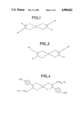
- FIGS. 1 and 2 represent two possible configurations for the molecules according to the invention
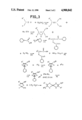
- FIG. 3 illustrates the general method for the synthesis of molecules according to the invention
- FIG. 4 represents an TTF molecule according to the invention.
- the new molecules according to the invention have the general chemical formulae shown in FIGS. 1 (trans-form) and 2 (cis-form). In either of these formulae, it is possible to have the following:
- R 1 represents a hydrophilic group and R 2 represents a hydrophobic group
- R 1 represents a hydrophobic group and R 2 represents a hydrophilic group
- R 1 represents an aromatic group and R 2 has a long carbon-containing chain with a hydrophobic nature and a hydrophilic end.
- FIG. 3 The general method of synthesis is shown in FIG. 3. It comprises the following steps:
- a suspension consisting of 0.1 mole of malonitrile, 200 cm 3 of dioxan and 0.1 mole of 4-carboxybenzaldehyde is cooled in ice then 7 cm 3 of piperidine is added to it. After been shaken for 40 minutes, the mixture is diluted with 100 m 3 of iced water, then acidified with 6N hydrochloric acid. Then an extraction with ether is done. After the evaporation of the solvent, the ethylenic compound is obtained quantitatively.
- the dithiolium salt obtained in the previous step is partially dissolved in 20 cm 3 of ethanol.
- 100 mg of sodium hydroboride is added while shaking the mixture.
- 1 cm 3 of 12N hydrochloric acid is added and, after 30 minutes at ambient temperature, the medium is diluted with 60 cm 3 of water, then extracted under ether.
- the product obtained is isolated in the form of a yellow solid with a melting point of 89° C.
- the general method of synthesis provides for the making of molecules according to the invention. These molecules are, among others, those for which certain characteristics are summarized in tables 1 and 2 placed at the end of the description.
- the table 1 pertains to mesoionic dithioles obtained at the end of the step (f) and according to certain radicals R 1 .
- the table 2 pertains to TTF molecules for certain compounds of the radicals R 1 and R 2 . These two tables indicate the value of the melting points F of the various products as well as the data pertaining to the NMR characteristics (protons).
- the solvent used for the characterization is deuterated chloroform.
- it is either deuterated pyridine or deuterated chloroform.
- the TTF molecule with a trans- or cis-form is wholly suited to the formation of a monolayer film on the surface of water.
- This monolayer film can then be transferred to a substrate in order to prepare a Langmuir-Blodgett film.
- An example of the manufacture of a film of this type is described below.
- TTF molecules 10 -3 M of the TTF molecules are put into solution in chloroform. This solution is then deposited on the surface of a container of water in which calcium chloride 10 -3 M is dissolved. The TTF molecules then form a monolayer which can be compressed to obtain a monolayer film which is compact and stable on the surface of the water. This film is then transferred and superimposed on a substrate.
- CMOS complementary metal-oxide-semiconductor
- electron acceptor chemical elements such as iodine, bromine, arsenic pentafluoride, TCNQ, etc. may be made to react on this film. Again, these layers may be doped by dissolving the electron acceptor elements in the water of the container, thus forming a conductive monolayer directly on the surface of the water. It is also possible to prepare the complex compound formed by TTF and electron acceptor chemical elements in solution in chloroform, and thus form a conductive monolayer directly on the surface of the water.
- a Langmuir-Blodgett film is obtained, the thickness of which may comprise one or more layers, each layer being about 30 angstroms thick.
- This film conducts electricity in the plane of the film and is insulating in a direction perpendicular to the said plane.
Landscapes
- Chemical & Material Sciences (AREA)
- Organic Chemistry (AREA)
- Engineering & Computer Science (AREA)
- Materials Engineering (AREA)
- Physics & Mathematics (AREA)
- Spectroscopy & Molecular Physics (AREA)
- Application Of Or Painting With Fluid Materials (AREA)
- Organic Low-Molecular-Weight Compounds And Preparation Thereof (AREA)
- Liquid Deposition Of Substances Of Which Semiconductor Devices Are Composed (AREA)
- Electroluminescent Light Sources (AREA)
- Heterocyclic Compounds Containing Sulfur Atoms (AREA)
- Heterocyclic Carbon Compounds Containing A Hetero Ring Having Oxygen Or Sulfur (AREA)
Abstract
The invention pertains to organic compounds of the tetrahiafulvalene type made amphiphillic by substitution of the radicals R1 and R2 meeting one of the following conditions:
R1 is a hydrophilic group and R2 is a hydrophobic group,
R1 is a hydrophobic group and R2 is a hydrophilic group,
R1 is an aromatic group and R2 is a group having a long carbon-containing chain with a hydrophobic nature and a hydrophilic end.
These organic compounds can form Langmuir-Blodgett films which are made anisotropically conductive by doping.
Description
1. Field of the Invention
The present invention pertains to organic compounds of the tetrathiafulvalene type which can be used to make Langmuir-Blodgett conducting films.
The Langmuir-Blodgett method makes it possible to obtain very thin (10 to 40 angstroms) organized monolayers on the surface of a liquid, to transfer these monolayers and to superimpose them on a substrate. The possibilities for the application of these films are derived from the following characteristics: simplicity of the preparation method, very high precision of thicknesses obtained (a few angstroms), orientation of the molecules and adjustable physical properties.
2. Description of the Prior Art
Langmuir-Blodgett films are obtained from amphiphilic molecules. These molecules are elongated and have a hydrophilic group at one end and a hydrophobic group at their other end. The simplest amphiphilic molecules are the fatty acids CH3 --(CH2)n --COOH which consist of a hydrophilic polar head --COOH and a hydrophobic aliphatic chain CH3 --(CH2)n --. Behenic acid CH3 --(CH2)20 --COOH is one of the most frequently used molecules.
The very small thickness of these films makes them especially valuable in micro-electronics. It has therefore, been sought to make them conduct electricity. EP No. 193 362 describes conducting films of this type made with tetracyanoquinodimethane (TCNQ) suitably substituted so that it can be deposited in the form of a Langmuir-Blodgett film.
Another type of conductivity would be of greater value in electronics. This is anisotropic conductivity, especially when the anisotropism is such that the conduction takes place in the direction of the plane of the film while the insulation is provided in a direction perpendicular to this plane.
Organic materials having a conduction anisotropism are already known. Tetrathiafulvalenes (TTF) are electron donor organic compounds which can give rise to the formation of complex compounds through the transfer of charges with electron acceptors. Compounds of this type, known as organic metals, have the remarkable property of conducting electrical current in a preferred direction. In view of the value of these compounds, especially in electronics, a great many works have been devoted to studying their synthesis and their properties (M. Narita, C. U. Pittman Jr., Synthesis 1976, p. 489; J. B. Torrance, Account Chemical Research 1979, No. 12, p. 79, F. Wudl, Account Chemical Research 1984, No. 17, p. 227). However, these molecules are not amphiphilic and, therefore, cannot lead to the formation of Langmuir-Blodgett films. To date, no method is known for the preparation of amphiphilic TTF molecules.
In order to cope with this problem, the invention proposes new molecules of tetrathiafulvalene which are disubstituted so as to be made amphiphilic. It is thus possible to obtain Langmuir-Blodgett thin films which become conductive when they are doped by electron acceptors (iodine, bromine, arsenic pentafluoride, etc.). Furthermore, the layered structure of these films results in a conductivity anisotropism: they are conductive in the directions of the plane of the film and insulating in the direction perpendicular to this plane.
An object of the invention, therefore, is an organic compound of the tetrathiafulvalene type, which is made amphiphilic by substitution of radicals, the compound having the following formulae ##STR1## with R1 and R2 meeting one of the following conditions:
R1 is a hydrophilic group and R2 is a hydrophobic group,
R1 is a hydrophobic group and R2 is a hydrophilic group,
R1 is an aromatic group and R2 is a group having a long carbon-containing chain with a hydrophobic nature and a hydrophilic end.
Another object of the invention is a method for the manufacture of this organic compound.
Yet another object of the invention is a Langmuir-Blodgett film made with the above organic compound, the film being made conductive by doping, for example by using electron acceptor chemical elements.
The invention will be better understood and other of its advantages will emerge from the following description, given as a non-exhaustive example, and the appended drawings, of which:
FIGS. 1 and 2 represent two possible configurations for the molecules according to the invention;
FIG. 3 illustrates the general method for the synthesis of molecules according to the invention;
FIG. 4 represents an TTF molecule according to the invention.
The new molecules according to the invention have the general chemical formulae shown in FIGS. 1 (trans-form) and 2 (cis-form). In either of these formulae, it is possible to have the following:
R1 represents a hydrophilic group and R2 represents a hydrophobic group;
R1 represents a hydrophobic group and R2 represents a hydrophilic group;
R1 represents an aromatic group and R2 has a long carbon-containing chain with a hydrophobic nature and a hydrophilic end.
The method used to prepare these new TTFs makes it possible to substitute them both by hydrophilic groups an by hydrophobic groups. This results in amphiphilic molecules which are very well suited to the making of Langmuir-Blodgett films.
The general method of synthesis is shown in FIG. 3. It comprises the following steps:
Step (a): the preparation of an ethylenic compound by the action of malonitrile CH2 (CN)2 on an aldehyde comprising the radical R1,
Step (b): the preparation of an epoxide by the action of sodium hypochlorite on the product obtained in the step (a),
Step (c): the preparation of an amide by action of piperidinium dithiocarbamate on the product obtained in the step (b),
Step (d): the transformation of the product obtained in the step (c) into carboxylic acid, preferably by the action of sulphuric acid.
Steps (e) and (f): the step (e) does not have to be separate; the acid obtained in the step (d) is subjected to the action of a mixture consisting of acetic anhydride, triethylamine and carbon disulphide to obtain mesoionic dithiole.
Step (g): the preparation of a dithiolium salt by the action of a halogenic derivate comprising the radical R2 and a halogen X on the product obtained at the end of the step (f)
Step (h): the preparation of ethoxydithiole by the action of sodium hydroboride and hydrochloric acid on the product obtained at the end of the step (g),
Step (i): preparation of the TTF compound according to the invention by the action of trichloroacetic acid CCl3 CO2 H on the product obtained in the step (h).
By way of example, we shall describe more precisely the preparation of a particular molecule for which the radicals R1 and R2 are the following:
R.sup.1 =pCO.sub.2 HC.sub.6 H.sub.4
R.sup.2 =(CH.sub.2).sub.17 CH.sub.3
Step (a)
A suspension consisting of 0.1 mole of malonitrile, 200 cm3 of dioxan and 0.1 mole of 4-carboxybenzaldehyde is cooled in ice then 7 cm3 of piperidine is added to it. After been shaken for 40 minutes, the mixture is diluted with 100 m3 of iced water, then acidified with 6N hydrochloric acid. Then an extraction with ether is done. After the evaporation of the solvent, the ethylenic compound is obtained quantitatively.
Step (b)
To 10 grams of ethylenic compound obtained at the end of the step (a), in suspension in 120 cm3 of acetonitrile, 120 cm3 of 2.3N sodium hypochlorite is added, while shaking the mixture and while keeping the pH in the region of 6 by adding 2N sulphuric acid. After 10 minutes, 200 cm3 of iced water is added and the medium is extracted by ether. The evaporation of ether leads to epoxide with a melting point of 214° C.
Step (c)
To a suspension of 6×10⁻³ mole of piperidinium dithiocarbamate in 15 cm3 of dry tetrahydrofuran, 7×10⁻³ mole of epoxide obtained at the end of the step (b), dissolved in 15 cm3 of dry tetrahydrofuran are added drop by drop, while shaking the mixture, under a nitrogen atmosphere. After 15 hours at ambient temperature, the medium is acidified by 6N hydrochloric acid. The precipitate formed is washed with water and dried. The amide obtained has a melting point of 208° C.
Step (d)
5.5 g. of amide obtained earlier are put into solution in 60 cm3 of sulphuric acid. After two hours at ambient temperature, the solution is diluted with ice until the complete precipitation of the desired acid which has a melting point of 205° C.
Step (e) and (f)
These steps lead to the synthesis of mesoionic dithiole. This compound can be obtained directly from the acid obtained at the end of the step (d) without its being necessary to isolate the product resulting from the step (e).
A mixture consisting of 1 g. of the acid obtained previously, 5 cm3 of acetic anhydride, 2 cm3 of triethylamine and 5 cm3 of carbon disulphide is brought to boiling point for 1 hour. The solution is then cooled and the precipitate obtained is centrifuged, washed with ether and re-crystallized in acetonitrile. The melting point of the mesoionic dithiole obtained is greater than 260° C.
Step (g)
2×10⁻³ mole of the mesoionic derivate obtained previously, in suspension in 30 cm3 of dry acetone, is added to 8×10⁻³ moles of halogenic derivate Br(CH2)17 CH3, and the suspension is heated in a reflux condenser for 16 hours. After the evaporation of the solvent, dithiolium salt is obtained and can be used directly for the next step.
Step (h)
The dithiolium salt obtained in the previous step is partially dissolved in 20 cm3 of ethanol. To the suspension, cooled in an ice bath, 100 mg of sodium hydroboride is added while shaking the mixture. After 10 minutes, 1 cm3 of 12N hydrochloric acid is added and, after 30 minutes at ambient temperature, the medium is diluted with 60 cm3 of water, then extracted under ether. After the evaporation of the solvent, the product obtained (ethoxydithiole) is isolated in the form of a yellow solid with a melting point of 89° C.
Step (i)
2×10⁻³ mole of the dry ethoxydithiole obtained in the previous step is heated in a reflux condenser for 1 hour in 70 cm3 of dry benzene in the presence of 500 mg of trichloroacetic acid. After cooling, the solution is washed with water until the neutralization of the washing water, and then evaporated. The TTF is obtained in the form of a red solid, washed with ether and then re-crystallized in ethyl acetate. The melting point of the product obtained ranges between 140° C. and 150° C. The FIG. 4 represents a molecule of the TTF obtained.
The general method of synthesis provides for the making of molecules according to the invention. These molecules are, among others, those for which certain characteristics are summarized in tables 1 and 2 placed at the end of the description. The table 1 pertains to mesoionic dithioles obtained at the end of the step (f) and according to certain radicals R1. The table 2 pertains to TTF molecules for certain compounds of the radicals R1 and R2. These two tables indicate the value of the melting points F of the various products as well as the data pertaining to the NMR characteristics (protons). For the table 1, the solvent used for the characterization is deuterated chloroform. For table 2, it is either deuterated pyridine or deuterated chloroform.
It must be noted that when R1 =pCO2 HC6 H4 (as is the case in the example described in greater detail above), this radical R1 acquires, during the step (e), a group CO which it loses during the step (h). This is why the first radical R1 of table 1 appears in the form pCH3 COOCOC6 H4.
The TTF molecule with a trans- or cis-form, the synthesis of which is described above, is wholly suited to the formation of a monolayer film on the surface of water. This monolayer film can then be transferred to a substrate in order to prepare a Langmuir-Blodgett film. An example of the manufacture of a film of this type is described below.
10-3 M of the TTF molecules are put into solution in chloroform. This solution is then deposited on the surface of a container of water in which calcium chloride 10-3 M is dissolved. The TTF molecules then form a monolayer which can be compressed to obtain a monolayer film which is compact and stable on the surface of the water. This film is then transferred and superimposed on a substrate.
Several prior art methods may be used to make the film conductive. For example, electron acceptor chemical elements such as iodine, bromine, arsenic pentafluoride, TCNQ, etc. may be made to react on this film. Again, these layers may be doped by dissolving the electron acceptor elements in the water of the container, thus forming a conductive monolayer directly on the surface of the water. It is also possible to prepare the complex compound formed by TTF and electron acceptor chemical elements in solution in chloroform, and thus form a conductive monolayer directly on the surface of the water.
At the end of the operation a Langmuir-Blodgett film is obtained, the thickness of which may comprise one or more layers, each layer being about 30 angstroms thick. This film conducts electricity in the plane of the film and is insulating in a direction perpendicular to the said plane.
              TABLE 1
______________________________________
R.sup.1      F (°C.)
                          RMN
______________________________________
pCH.sub.3 COOCOC.sub.6 H.sub.4
             >260         1.82 (m, 6 H); 2.42 (s, 3 H)
                          3.62 (m, 4 H); 8.13 (m, 4 H)
CH.sub.3 (CH.sub.2).sub.10
             115          0.87 (t, 3 H); 1.25 (m, 18 H)
                          1.78 (m, 6 H); 2.70 (t, 2 H)
                          3.67 (m, 4 H)
pClC.sub.6 H.sub.4
             266          1.60 (m, 6 H); 3.60 (m, 4 H)
                          7.70 (m, 4 H)
______________________________________
              TABLE 2
______________________________________
R.sup.1  R.sup.2    F (°C.)
                             RMN
______________________________________
pCO.sub.2 HC.sub.6 H.sub.4
         (CH.sub.2).sub.17 CH.sub.3
                    140-150  (deuterated pyridine)
                             0.94 (t, 6 H); 1.36 (m,
                             64 H)
                             2.92 (t, 4 H); 8.15 (m,
                             8 H)
pClC.sub.6 H.sub.4
         (CH.sub.2).sub.10 CO.sub.2 H
                    138-140  (deuterated chloroform)
                             1.23 (m, 32 H); 2.37 (t,
                             4 H)
                             2.62 (t, 4 H); 7.40 (m,
                             8 H)
(CH.sub.2).sub.10 CH.sub.3
         CH.sub.2 CO.sub.2 H
                    90-95    (deuterated pyridine)
                             0.86 (t, 6 H); 1.26 (m,
                             36 H)
                             2.75 (t, 4 H); 3.87 (s,
                             4 H)
(CH.sub.2).sub.10 CH.sub.3
         (CH.sub.2).sub.10 CO.sub.2 H
                    108-112  (deuterated pyridine)
                             0.90 (t, 6 H); 1.30 (m,
                             74 H)
                             2.65 (m, 12 H)
______________________________________
Claims (5)
1. An organic compound having the formula: ##STR2## which is made amphiphilic by substitution of radicals, wherein R1 is p--CO2 HC6 H4 and R2 is (CH2)17 CH3 ; or R1 is p--ClC6 H4 and R2 is (CH2)10 CO2 H; or R1 is (CH2)10 CH3 and R2 is CH2 CO2 H; or R1 is (CH2)10 CH3 and R2 is (CH2)10 CO2 H.
2. The compound according to claim 1 wherein R1 is the group pCO2 HC6 H4 and R2 is the group (CH2)17 CH3.
3. The compound according to claim 1 wherein R1 is the group pCIC6 H4 and R2 the group (CH2)10 CO2 H.
4. The compound according to claim 1 wherein R1 is the group (CH2)10 CH3 and R2 the group CH2 CO2 H.
5. The compound according to claim 1 wherein R1 is the group (CH2)10 CH3 and R2 is the group (CH2)10 CO2 H.
Applications Claiming Priority (2)
| Application Number | Priority Date | Filing Date | Title |
|---|---|---|---|
| FR8701869 | 1987-02-13 | ||
| FR8701869A FR2610928B1 (en) | 1987-02-13 | 1987-02-13 | TETRATHIAFULVALENE-LIKE ORGANIC COMPOUNDS FOR THE PREPARATION OF CONDUCTIVE LANGMUIR-BLODGETT FILMS AND THEIR MANUFACTURING METHOD |
Publications (1)
| Publication Number | Publication Date |
|---|---|
| US4900842A true US4900842A (en) | 1990-02-13 |
Family
ID=9347911
Family Applications (1)
| Application Number | Title | Priority Date | Filing Date |
|---|---|---|---|
| US07/154,013 Expired - Fee Related US4900842A (en) | 1987-02-13 | 1988-02-09 | Organic compounds of the tetrathiafluvalene type which can be used to make langmuir-blodgett conducting films and method for their manufacture |
Country Status (5)
| Country | Link |
|---|---|
| US (1) | US4900842A (en) |
| EP (1) | EP0281449B1 (en) |
| JP (1) | JPS63307874A (en) |
| DE (1) | DE3862954D1 (en) |
| FR (1) | FR2610928B1 (en) |
Cited By (4)
| Publication number | Priority date | Publication date | Assignee | Title |
|---|---|---|---|---|
| US5436353A (en) * | 1992-08-20 | 1995-07-25 | Ciba-Geigy Corporation | Dithiopentacene derivatives, their preparation and the use thereof as electron acceptors on charge transfer complexes |
| US5753728A (en) * | 1992-10-07 | 1998-05-19 | Rhone-Poulenc Chimie | Polymer compositions comprising electroactive amphiphilic organic compounds and electroconductive shaped articles produced therefrom |
| US6074744A (en) * | 1997-03-11 | 2000-06-13 | Tokyo University Of Mercantile Marine | Langmuir-Blodgett films containing tetrathiafulvalene |
| EP2793235A4 (en) * | 2012-10-13 | 2015-07-15 | Nat Inst For Materials Science | ORGANIC TRANSPARENT ELECTRODE, PROCESS FOR PRODUCING ORGANIC TRANSPARENT ELECTRODE, TOUCH SCREEN, SCREEN, ORGANIC METAL, PROCESS FOR PRODUCING ORGANIC METAL, COMPOUND OR CORRESPONDING SALT, ELECTRIC WIRE, AND ELECTRONIC DEVICE |
Families Citing this family (1)
| Publication number | Priority date | Publication date | Assignee | Title |
|---|---|---|---|---|
| JPH06107668A (en) * | 1992-09-30 | 1994-04-19 | Sumitomo Electric Ind Ltd | Tetrathiafulvalene derivative precursor, tetrathiafulvalene derivative, method for producing tetrathiafulvalene derivative precursor, and method for producing tetrathiafulvalene derivative |
Citations (1)
| Publication number | Priority date | Publication date | Assignee | Title |
|---|---|---|---|---|
| US4691028A (en) * | 1985-04-26 | 1987-09-01 | Ajinomoto Co., Inc. | Tetra-substituted fulvalene derivatives |
-
1987
- 1987-02-13 FR FR8701869A patent/FR2610928B1/en not_active Expired
-
1988
- 1988-02-09 EP EP88400295A patent/EP0281449B1/en not_active Expired - Lifetime
- 1988-02-09 DE DE8888400295T patent/DE3862954D1/en not_active Expired - Fee Related
- 1988-02-09 US US07/154,013 patent/US4900842A/en not_active Expired - Fee Related
- 1988-02-13 JP JP63031690A patent/JPS63307874A/en active Pending
Patent Citations (1)
| Publication number | Priority date | Publication date | Assignee | Title |
|---|---|---|---|---|
| US4691028A (en) * | 1985-04-26 | 1987-09-01 | Ajinomoto Co., Inc. | Tetra-substituted fulvalene derivatives |
Non-Patent Citations (6)
| Title |
|---|
| Engler, E. M., Syntesis of Tetrathifulvalene Derivatives via Polymer Bound Triphenylphosphine, Mar. 1987. * |
| Engler, E. M., Syntesis of Tetrathifulvalene Derivatives via Polymer--Bound Triphenylphosphine, Mar. 1987. |
| Tetrahedron, vol. 40, No. 10, 1984, pp. 1817 1821, A. Souizi et al. * |
| Tetrahedron, vol. 40, No. 10, 1984, pp. 1817-1821, A. Souizi et al. |
| Zhurnal Obshchei Khimii, vol. 56, No. 5, mai 1986, pp. 1157 1160, v. Yu., Khodorkovskii et al. * |
| Zhurnal Obshchei Khimii, vol. 56, No. 5, mai 1986, pp. 1157-1160, v. Yu., Khodorkovskii et al. |
Cited By (9)
| Publication number | Priority date | Publication date | Assignee | Title |
|---|---|---|---|---|
| US5783643A (en) * | 1991-05-21 | 1998-07-21 | Rhone-Poulenc Films | Polymer compositions comprising electroactive amphiphilic organic compounds and electroconductive shaped articles produced therefrom |
| US5436353A (en) * | 1992-08-20 | 1995-07-25 | Ciba-Geigy Corporation | Dithiopentacene derivatives, their preparation and the use thereof as electron acceptors on charge transfer complexes |
| US5492652A (en) * | 1992-08-20 | 1996-02-20 | Ciba-Geigy Corporation | Dithiopentacene derivatives, their preparation and the use thereof as electron acceptors in charge transfer complexes |
| US5753728A (en) * | 1992-10-07 | 1998-05-19 | Rhone-Poulenc Chimie | Polymer compositions comprising electroactive amphiphilic organic compounds and electroconductive shaped articles produced therefrom |
| US5783112A (en) * | 1992-10-07 | 1998-07-21 | Rhone-Poulenc Chimie | Polymer compositions comprising electroactive amphiphil organic compounds and electroconductive shaped articles produced therefrom |
| US6074744A (en) * | 1997-03-11 | 2000-06-13 | Tokyo University Of Mercantile Marine | Langmuir-Blodgett films containing tetrathiafulvalene |
| EP0864373A3 (en) * | 1997-03-11 | 2002-07-24 | Tokyo University of Mercantile Marine | Langmuir-blodgett films and a method for manufacturing the same |
| EP2793235A4 (en) * | 2012-10-13 | 2015-07-15 | Nat Inst For Materials Science | ORGANIC TRANSPARENT ELECTRODE, PROCESS FOR PRODUCING ORGANIC TRANSPARENT ELECTRODE, TOUCH SCREEN, SCREEN, ORGANIC METAL, PROCESS FOR PRODUCING ORGANIC METAL, COMPOUND OR CORRESPONDING SALT, ELECTRIC WIRE, AND ELECTRONIC DEVICE |
| US9202605B2 (en) | 2012-10-13 | 2015-12-01 | National Institute For Materials Science | Organic transparent electrode, method for producing organic transparent electrode, touch panel, display, organic metal, method for producing organic metal, compound or salt thereof, electric wire and electronic device |
Also Published As
| Publication number | Publication date |
|---|---|
| DE3862954D1 (en) | 1991-07-04 |
| JPS63307874A (en) | 1988-12-15 |
| EP0281449A1 (en) | 1988-09-07 |
| FR2610928B1 (en) | 1989-05-05 |
| FR2610928A1 (en) | 1988-08-19 |
| EP0281449B1 (en) | 1991-05-29 |
Similar Documents
| Publication | Publication Date | Title |
|---|---|---|
| JP4581062B2 (en) | Field effect transistor, ink for manufacturing semiconductor device, method for producing field effect transistor, and organic heterocyclic compound | |
| Kemp et al. | Synthesis and conformational analysis of cis, cis-1, 3, 5-trimethylcyclohexane-1, 3, 5-tricarboxylic acid | |
| JP3539995B2 (en) | Oxadiazole compound and method for producing the same | |
| DE69204359T2 (en) | Organic electroluminescent devices. | |
| JP4218746B2 (en) | Field effect transistor | |
| DE69332819T2 (en) | CHARGING INJECTION AID AND ORGANIC ELECTROLUMINESCENT DEVICE CONTAINING IT. | |
| Sandman et al. | Improved synthetic route to 11, 11, 12, 12-tetracyanonaphtho-2, 6-quinodimethan | |
| JP5167560B2 (en) | Field effect transistor | |
| KR101429370B1 (en) | Organic semiconductor material, organic semiconductor thin film, and organic thin film transistor | |
| JPH06293778A (en) | Silanamine derivative and its production | |
| WO1998011150A1 (en) | Triazine polymers and the application thereof in electroluminescent arrangements | |
| US4500459A (en) | Tetracyanoanthraquinodimethane compounds | |
| JP5187737B2 (en) | FIELD EFFECT TRANSISTOR, PROCESS FOR PRODUCING THE SAME, COMPOUND USED FOR THE SAME, AND INK FOR SEMICONDUCTOR DEVICE | |
| JPH0471591B2 (en) | ||
| JP5160078B2 (en) | Field effect transistor | |
| DE602005000959T2 (en) | Process for the preparation of oligomeric thiophene compounds | |
| DE69318045T2 (en) | Electrically conductive alternating copolymer and process for making such a copolymer | |
| JPS63307874A (en) | Tetrathiafurvalene type organic compound for use of manufacturing lungmuler blowjet electroconductive film and manufacture | |
| JP4723812B2 (en) | Organic thin-film transistors using naphthalenecarboxylic acid derivatives | |
| JP4911486B2 (en) | Organic transistor | |
| EP0193362B1 (en) | Organic compounds of 7,7,8,8-tetracyanoquinodimethane and method for preparing the same | |
| Lerstrup et al. | Dibenzotetratellurafulvalene (DBTTeF) | |
| CH664963A5 (en) | DIFLUORED (5,6,11,12-TETRASELENOTETRACEN) 2-HALOGENIDES, METHOD FOR THE PRODUCTION AND USE THEREOF. | |
| EP0061264A1 (en) | Tetracyanoanthraquinodimethane compounds and processes for the production thereof, polymers and charge-transfer complexes derived therefrom | |
| JP2003332076A (en) | Organic red electroluminescent devices and dopants |
Legal Events
| Date | Code | Title | Description |
|---|---|---|---|
| AS | Assignment |
Owner name: THOMSON-CSF, FRANCE Free format text: ASSIGNMENT OF ASSIGNORS INTEREST.;ASSIGNORS:ROBIN, PHILIPPE;ROBERT, ALBERT;BERTHO, FRANCOISE;AND OTHERS;REEL/FRAME:005181/0716 Effective date: 19880219 |
|
| FEPP | Fee payment procedure |
Free format text: PAYOR NUMBER ASSIGNED (ORIGINAL EVENT CODE: ASPN); ENTITY STATUS OF PATENT OWNER: LARGE ENTITY |
|
| FPAY | Fee payment |
Year of fee payment: 4 |
|
| REMI | Maintenance fee reminder mailed | ||
| LAPS | Lapse for failure to pay maintenance fees | ||
| FP | Lapsed due to failure to pay maintenance fee |
Effective date: 19980218 |
|
| STCH | Information on status: patent discontinuation |
Free format text: PATENT EXPIRED DUE TO NONPAYMENT OF MAINTENANCE FEES UNDER 37 CFR 1.362 |