US4900829A - 2,4-disubstituted-5-cyano-1,6-dihydro-6-oxo-1-pyrimidineacetic acid aldose reductase inhibitors - Google Patents
2,4-disubstituted-5-cyano-1,6-dihydro-6-oxo-1-pyrimidineacetic acid aldose reductase inhibitors Download PDFInfo
- Publication number
- US4900829A US4900829A US07/221,588 US22158888A US4900829A US 4900829 A US4900829 A US 4900829A US 22158888 A US22158888 A US 22158888A US 4900829 A US4900829 A US 4900829A
- Authority
- US
- United States
- Prior art keywords
- dihydro
- oxo
- cyano
- compounds
- methyl
- Prior art date
- Legal status (The legal status is an assumption and is not a legal conclusion. Google has not performed a legal analysis and makes no representation as to the accuracy of the status listed.)
- Expired - Fee Related
Links
- -1 2,4-disubstituted-5-cyano-1,6-dihydro-6-oxo-1-pyrimidineacetic acid Chemical class 0.000 title abstract description 36
- 239000003288 aldose reductase inhibitor Substances 0.000 title abstract 2
- 229940090865 aldose reductase inhibitors used in diabetes Drugs 0.000 title abstract 2
- 150000001875 compounds Chemical class 0.000 claims abstract description 39
- 238000000034 method Methods 0.000 claims abstract description 29
- 150000003839 salts Chemical class 0.000 claims abstract description 24
- 230000008569 process Effects 0.000 claims description 16
- 125000004432 carbon atom Chemical group C* 0.000 claims description 14
- 125000000217 alkyl group Chemical group 0.000 claims description 11
- WYURNTSHIVDZCO-UHFFFAOYSA-N Tetrahydrofuran Chemical compound C1CCOC1 WYURNTSHIVDZCO-UHFFFAOYSA-N 0.000 claims description 8
- 125000001797 benzyl group Chemical group [H]C1=C([H])C([H])=C(C([H])=C1[H])C([H])([H])* 0.000 claims description 8
- 239000002904 solvent Substances 0.000 claims description 7
- XTHFKEDIFFGKHM-UHFFFAOYSA-N Dimethoxyethane Chemical compound COCCOC XTHFKEDIFFGKHM-UHFFFAOYSA-N 0.000 claims description 6
- 229910000104 sodium hydride Inorganic materials 0.000 claims description 6
- 125000001624 naphthyl group Chemical group 0.000 claims description 5
- 125000001997 phenyl group Chemical group [H]C1=C([H])C([H])=C(*)C([H])=C1[H] 0.000 claims description 5
- 229910052736 halogen Chemical group 0.000 claims description 4
- 150000002367 halogens Chemical group 0.000 claims description 4
- ZCYVEMRRCGMTRW-UHFFFAOYSA-N 7553-56-2 Chemical group [I] ZCYVEMRRCGMTRW-UHFFFAOYSA-N 0.000 claims description 3
- KEAYESYHFKHZAL-UHFFFAOYSA-N Sodium Chemical compound [Na] KEAYESYHFKHZAL-UHFFFAOYSA-N 0.000 claims description 3
- GDTBXPJZTBHREO-UHFFFAOYSA-N bromine Substances BrBr GDTBXPJZTBHREO-UHFFFAOYSA-N 0.000 claims description 3
- 229910052794 bromium Inorganic materials 0.000 claims description 3
- 125000001246 bromo group Chemical group Br* 0.000 claims description 3
- 125000004210 cyclohexylmethyl group Chemical group [H]C([H])(*)C1([H])C([H])([H])C([H])([H])C([H])([H])C([H])([H])C1([H])[H] 0.000 claims description 3
- 229910052740 iodine Chemical group 0.000 claims description 3
- 239000011630 iodine Chemical group 0.000 claims description 3
- 239000012312 sodium hydride Substances 0.000 claims description 3
- YLQBMQCUIZJEEH-UHFFFAOYSA-N tetrahydrofuran Natural products C=1C=COC=1 YLQBMQCUIZJEEH-UHFFFAOYSA-N 0.000 claims description 3
- 125000004185 ester group Chemical group 0.000 claims 1
- 230000003301 hydrolyzing effect Effects 0.000 claims 1
- 238000002360 preparation method Methods 0.000 abstract description 19
- 208000002249 Diabetes Complications Diseases 0.000 abstract description 2
- 206010012655 Diabetic complications Diseases 0.000 abstract description 2
- 230000002265 prevention Effects 0.000 abstract 1
- OKKJLVBELUTLKV-UHFFFAOYSA-N Methanol Chemical compound OC OKKJLVBELUTLKV-UHFFFAOYSA-N 0.000 description 36
- ZMXDDKWLCZADIW-UHFFFAOYSA-N N,N-Dimethylformamide Chemical compound CN(C)C=O ZMXDDKWLCZADIW-UHFFFAOYSA-N 0.000 description 30
- VLKZOEOYAKHREP-UHFFFAOYSA-N n-Hexane Chemical compound CCCCCC VLKZOEOYAKHREP-UHFFFAOYSA-N 0.000 description 22
- RTZKZFJDLAIYFH-UHFFFAOYSA-N Diethyl ether Chemical compound CCOCC RTZKZFJDLAIYFH-UHFFFAOYSA-N 0.000 description 21
- 239000000243 solution Substances 0.000 description 21
- 239000000203 mixture Substances 0.000 description 19
- XLYOFNOQVPJJNP-UHFFFAOYSA-N water Substances O XLYOFNOQVPJJNP-UHFFFAOYSA-N 0.000 description 19
- HEDRZPFGACZZDS-UHFFFAOYSA-N Chloroform Chemical compound ClC(Cl)Cl HEDRZPFGACZZDS-UHFFFAOYSA-N 0.000 description 14
- LFQSCWFLJHTTHZ-UHFFFAOYSA-N Ethanol Chemical compound CCO LFQSCWFLJHTTHZ-UHFFFAOYSA-N 0.000 description 13
- XEKOWRVHYACXOJ-UHFFFAOYSA-N Ethyl acetate Chemical compound CCOC(C)=O XEKOWRVHYACXOJ-UHFFFAOYSA-N 0.000 description 13
- IAZDPXIOMUYVGZ-WFGJKAKNSA-N Dimethyl sulfoxide Chemical compound [2H]C([2H])([2H])S(=O)C([2H])([2H])[2H] IAZDPXIOMUYVGZ-WFGJKAKNSA-N 0.000 description 12
- HEMHJVSKTPXQMS-UHFFFAOYSA-M Sodium hydroxide Chemical compound [OH-].[Na+] HEMHJVSKTPXQMS-UHFFFAOYSA-M 0.000 description 12
- HEDRZPFGACZZDS-MICDWDOJSA-N Trichloro(2H)methane Chemical compound [2H]C(Cl)(Cl)Cl HEDRZPFGACZZDS-MICDWDOJSA-N 0.000 description 10
- NOESYZHRGYRDHS-UHFFFAOYSA-N insulin Chemical compound N1C(=O)C(NC(=O)C(CCC(N)=O)NC(=O)C(CCC(O)=O)NC(=O)C(C(C)C)NC(=O)C(NC(=O)CN)C(C)CC)CSSCC(C(NC(CO)C(=O)NC(CC(C)C)C(=O)NC(CC=2C=CC(O)=CC=2)C(=O)NC(CCC(N)=O)C(=O)NC(CC(C)C)C(=O)NC(CCC(O)=O)C(=O)NC(CC(N)=O)C(=O)NC(CC=2C=CC(O)=CC=2)C(=O)NC(CSSCC(NC(=O)C(C(C)C)NC(=O)C(CC(C)C)NC(=O)C(CC=2C=CC(O)=CC=2)NC(=O)C(CC(C)C)NC(=O)C(C)NC(=O)C(CCC(O)=O)NC(=O)C(C(C)C)NC(=O)C(CC(C)C)NC(=O)C(CC=2NC=NC=2)NC(=O)C(CO)NC(=O)CNC2=O)C(=O)NCC(=O)NC(CCC(O)=O)C(=O)NC(CCCNC(N)=N)C(=O)NCC(=O)NC(CC=3C=CC=CC=3)C(=O)NC(CC=3C=CC=CC=3)C(=O)NC(CC=3C=CC(O)=CC=3)C(=O)NC(C(C)O)C(=O)N3C(CCC3)C(=O)NC(CCCCN)C(=O)NC(C)C(O)=O)C(=O)NC(CC(N)=O)C(O)=O)=O)NC(=O)C(C(C)CC)NC(=O)C(CO)NC(=O)C(C(C)O)NC(=O)C1CSSCC2NC(=O)C(CC(C)C)NC(=O)C(NC(=O)C(CCC(N)=O)NC(=O)C(CC(N)=O)NC(=O)C(NC(=O)C(N)CC=1C=CC=CC=1)C(C)C)CC1=CN=CN1 NOESYZHRGYRDHS-UHFFFAOYSA-N 0.000 description 10
- 239000000047 product Substances 0.000 description 10
- 150000003230 pyrimidines Chemical class 0.000 description 10
- 241001465754 Metazoa Species 0.000 description 9
- YXFVVABEGXRONW-UHFFFAOYSA-N Toluene Chemical compound CC1=CC=CC=C1 YXFVVABEGXRONW-UHFFFAOYSA-N 0.000 description 9
- FFBHFFJDDLITSX-UHFFFAOYSA-N benzyl N-[2-hydroxy-4-(3-oxomorpholin-4-yl)phenyl]carbamate Chemical compound OC1=C(NC(=O)OCC2=CC=CC=C2)C=CC(=C1)N1CCOCC1=O FFBHFFJDDLITSX-UHFFFAOYSA-N 0.000 description 9
- 206010012601 diabetes mellitus Diseases 0.000 description 9
- FBPFZTCFMRRESA-GUCUJZIJSA-N galactitol Chemical compound OC[C@H](O)[C@@H](O)[C@@H](O)[C@H](O)CO FBPFZTCFMRRESA-GUCUJZIJSA-N 0.000 description 9
- 125000002496 methyl group Chemical group [H]C([H])([H])* 0.000 description 9
- 239000000725 suspension Substances 0.000 description 9
- 238000009825 accumulation Methods 0.000 description 8
- 239000002253 acid Substances 0.000 description 8
- 238000006243 chemical reaction Methods 0.000 description 7
- 238000002474 experimental method Methods 0.000 description 7
- 239000007787 solid Substances 0.000 description 7
- 102000016912 Aldehyde Reductase Human genes 0.000 description 6
- 108010053754 Aldehyde reductase Proteins 0.000 description 6
- YMWUJEATGCHHMB-UHFFFAOYSA-N Dichloromethane Chemical compound ClCCl YMWUJEATGCHHMB-UHFFFAOYSA-N 0.000 description 6
- VEXZGXHMUGYJMC-UHFFFAOYSA-N Hydrochloric acid Chemical compound Cl VEXZGXHMUGYJMC-UHFFFAOYSA-N 0.000 description 6
- CSNNHWWHGAXBCP-UHFFFAOYSA-L Magnesium sulfate Chemical compound [Mg+2].[O-][S+2]([O-])([O-])[O-] CSNNHWWHGAXBCP-UHFFFAOYSA-L 0.000 description 6
- 241000700159 Rattus Species 0.000 description 6
- ZMANZCXQSJIPKH-UHFFFAOYSA-N Triethylamine Chemical compound CCN(CC)CC ZMANZCXQSJIPKH-UHFFFAOYSA-N 0.000 description 6
- 125000001449 isopropyl group Chemical group [H]C([H])([H])C([H])(*)C([H])([H])[H] 0.000 description 6
- 239000003538 oral antidiabetic agent Substances 0.000 description 6
- 229940127209 oral hypoglycaemic agent Drugs 0.000 description 6
- UHOVQNZJYSORNB-UHFFFAOYSA-N Benzene Chemical compound C1=CC=CC=C1 UHOVQNZJYSORNB-UHFFFAOYSA-N 0.000 description 5
- 102000004877 Insulin Human genes 0.000 description 5
- 108090001061 Insulin Proteins 0.000 description 5
- 235000019439 ethyl acetate Nutrition 0.000 description 5
- 238000001914 filtration Methods 0.000 description 5
- 229940125396 insulin Drugs 0.000 description 5
- 238000012360 testing method Methods 0.000 description 5
- WQZGKKKJIJFFOK-GASJEMHNSA-N Glucose Natural products OC[C@H]1OC(O)[C@H](O)[C@@H](O)[C@@H]1O WQZGKKKJIJFFOK-GASJEMHNSA-N 0.000 description 4
- 241000124008 Mammalia Species 0.000 description 4
- 239000004480 active ingredient Substances 0.000 description 4
- 238000005804 alkylation reaction Methods 0.000 description 4
- 150000001412 amines Chemical class 0.000 description 4
- 230000037396 body weight Effects 0.000 description 4
- 238000009833 condensation Methods 0.000 description 4
- 230000005494 condensation Effects 0.000 description 4
- 239000012043 crude product Substances 0.000 description 4
- DGJMPUGMZIKDRO-UHFFFAOYSA-N cyanoacetamide Chemical class NC(=O)CC#N DGJMPUGMZIKDRO-UHFFFAOYSA-N 0.000 description 4
- 239000006185 dispersion Substances 0.000 description 4
- 238000001704 evaporation Methods 0.000 description 4
- 230000008020 evaporation Effects 0.000 description 4
- 229930182830 galactose Natural products 0.000 description 4
- 239000008103 glucose Substances 0.000 description 4
- 150000002463 imidates Chemical class 0.000 description 4
- 238000000338 in vitro Methods 0.000 description 4
- 230000002401 inhibitory effect Effects 0.000 description 4
- 239000002244 precipitate Substances 0.000 description 4
- OEZMRIFJQNXWDQ-UHFFFAOYSA-N 2-(5-cyano-2-cyclohexyl-4-methylsulfanyl-6-oxopyrimidin-1-yl)acetic acid Chemical compound OC(=O)CN1C(=O)C(C#N)=C(SC)N=C1C1CCCCC1 OEZMRIFJQNXWDQ-UHFFFAOYSA-N 0.000 description 3
- WEVYAHXRMPXWCK-UHFFFAOYSA-N Acetonitrile Chemical compound CC#N WEVYAHXRMPXWCK-UHFFFAOYSA-N 0.000 description 3
- QGJOPFRUJISHPQ-UHFFFAOYSA-N Carbon disulfide Chemical compound S=C=S QGJOPFRUJISHPQ-UHFFFAOYSA-N 0.000 description 3
- 208000002177 Cataract Diseases 0.000 description 3
- FBPFZTCFMRRESA-FSIIMWSLSA-N D-Glucitol Natural products OC[C@H](O)[C@H](O)[C@@H](O)[C@H](O)CO FBPFZTCFMRRESA-FSIIMWSLSA-N 0.000 description 3
- GUBGYTABKSRVRQ-QKKXKWKRSA-N Lactose Chemical compound OC[C@H]1O[C@@H](O[C@H]2[C@H](O)[C@@H](O)C(O)O[C@@H]2CO)[C@H](O)[C@@H](O)[C@H]1O GUBGYTABKSRVRQ-QKKXKWKRSA-N 0.000 description 3
- SJRJJKPEHAURKC-UHFFFAOYSA-N N-Methylmorpholine Chemical compound CN1CCOCC1 SJRJJKPEHAURKC-UHFFFAOYSA-N 0.000 description 3
- RWRDLPDLKQPQOW-UHFFFAOYSA-N Pyrrolidine Chemical compound C1CCNC1 RWRDLPDLKQPQOW-UHFFFAOYSA-N 0.000 description 3
- UIIMBOGNXHQVGW-UHFFFAOYSA-M Sodium bicarbonate Chemical compound [Na+].OC([O-])=O UIIMBOGNXHQVGW-UHFFFAOYSA-M 0.000 description 3
- FAPWRFPIFSIZLT-UHFFFAOYSA-M Sodium chloride Chemical compound [Na+].[Cl-] FAPWRFPIFSIZLT-UHFFFAOYSA-M 0.000 description 3
- 230000029936 alkylation Effects 0.000 description 3
- 239000002775 capsule Substances 0.000 description 3
- 239000003795 chemical substances by application Substances 0.000 description 3
- 239000013078 crystal Substances 0.000 description 3
- 235000005911 diet Nutrition 0.000 description 3
- 230000037213 diet Effects 0.000 description 3
- 229940079593 drug Drugs 0.000 description 3
- 239000003814 drug Substances 0.000 description 3
- 229910052739 hydrogen Inorganic materials 0.000 description 3
- 239000001257 hydrogen Substances 0.000 description 3
- 125000004435 hydrogen atom Chemical group [H]* 0.000 description 3
- 238000001727 in vivo Methods 0.000 description 3
- 230000005764 inhibitory process Effects 0.000 description 3
- 150000007529 inorganic bases Chemical class 0.000 description 3
- 229910052943 magnesium sulfate Inorganic materials 0.000 description 3
- 238000002844 melting Methods 0.000 description 3
- 230000008018 melting Effects 0.000 description 3
- YDCHPLOFQATIDS-UHFFFAOYSA-N methyl 2-bromoacetate Chemical compound COC(=O)CBr YDCHPLOFQATIDS-UHFFFAOYSA-N 0.000 description 3
- 239000002480 mineral oil Substances 0.000 description 3
- 235000010446 mineral oil Nutrition 0.000 description 3
- 150000002825 nitriles Chemical class 0.000 description 3
- 150000007530 organic bases Chemical class 0.000 description 3
- 229920005862 polyol Polymers 0.000 description 3
- 150000003077 polyols Chemical class 0.000 description 3
- 125000002924 primary amino group Chemical group [H]N([H])* 0.000 description 3
- 239000011541 reaction mixture Substances 0.000 description 3
- 238000010992 reflux Methods 0.000 description 3
- 210000003497 sciatic nerve Anatomy 0.000 description 3
- 239000000600 sorbitol Substances 0.000 description 3
- BNWCETAHAJSBFG-UHFFFAOYSA-N tert-butyl 2-bromoacetate Chemical class CC(C)(C)OC(=O)CBr BNWCETAHAJSBFG-UHFFFAOYSA-N 0.000 description 3
- LUBHDINQXIHVLS-UHFFFAOYSA-N tolrestat Chemical compound OC(=O)CN(C)C(=S)C1=CC=CC2=C(C(F)(F)F)C(OC)=CC=C21 LUBHDINQXIHVLS-UHFFFAOYSA-N 0.000 description 3
- RYHBNJHYFVUHQT-UHFFFAOYSA-N 1,4-Dioxane Chemical compound C1COCCO1 RYHBNJHYFVUHQT-UHFFFAOYSA-N 0.000 description 2
- HCQVOEBHAJXJSJ-UHFFFAOYSA-N 2-(4-methylmorpholin-4-ium-4-yl)ethanol Chemical compound OCC[N+]1(C)CCOCC1 HCQVOEBHAJXJSJ-UHFFFAOYSA-N 0.000 description 2
- NUEOMHGQNLQJEW-UHFFFAOYSA-N 2-(5-bromonaphthalen-1-yl)-4-oxo-6-phenyl-1h-pyrimidine-5-carbonitrile Chemical compound C1=CC=C2C(Br)=CC=CC2=C1C(N1)=NC(=O)C(C#N)=C1C1=CC=CC=C1 NUEOMHGQNLQJEW-UHFFFAOYSA-N 0.000 description 2
- SFVAYWMLULGDET-UHFFFAOYSA-N 2-(5-cyano-2-methyl-4-methylsulfanyl-6-oxopyrimidin-1-yl)acetic acid Chemical compound CSC=1N=C(C)N(CC(O)=O)C(=O)C=1C#N SFVAYWMLULGDET-UHFFFAOYSA-N 0.000 description 2
- ZWEHNKRNPOVVGH-UHFFFAOYSA-N 2-Butanone Chemical compound CCC(C)=O ZWEHNKRNPOVVGH-UHFFFAOYSA-N 0.000 description 2
- NRRCYZPJUABYHL-UHFFFAOYSA-N 2-Pyrimidine Acetic Acid Chemical class OC(=O)CC1=NC=CC=N1 NRRCYZPJUABYHL-UHFFFAOYSA-N 0.000 description 2
- VANQYCJGJZRHQN-UHFFFAOYSA-N 2-[2-(5-bromonaphthalen-1-yl)-5-cyano-6-oxo-4-phenylpyrimidin-1-yl]acetic acid Chemical compound N#CC=1C(=O)N(CC(=O)O)C(C=2C3=CC=CC(Br)=C3C=CC=2)=NC=1C1=CC=CC=C1 VANQYCJGJZRHQN-UHFFFAOYSA-N 0.000 description 2
- PJQASSRZJSQVNJ-UHFFFAOYSA-N 2-cyclohexyl-4-methylsulfanyl-6-oxo-1h-pyrimidine-5-carbonitrile Chemical compound N1C(=O)C(C#N)=C(SC)N=C1C1CCCCC1 PJQASSRZJSQVNJ-UHFFFAOYSA-N 0.000 description 2
- BVKZGUZCCUSVTD-UHFFFAOYSA-M Bicarbonate Chemical class OC([O-])=O BVKZGUZCCUSVTD-UHFFFAOYSA-M 0.000 description 2
- CURLTUGMZLYLDI-UHFFFAOYSA-N Carbon dioxide Chemical compound O=C=O CURLTUGMZLYLDI-UHFFFAOYSA-N 0.000 description 2
- ROSDSFDQCJNGOL-UHFFFAOYSA-N Dimethylamine Chemical compound CNC ROSDSFDQCJNGOL-UHFFFAOYSA-N 0.000 description 2
- 102000004190 Enzymes Human genes 0.000 description 2
- 108090000790 Enzymes Proteins 0.000 description 2
- QUSNBJAOOMFDIB-UHFFFAOYSA-N Ethylamine Chemical compound CCN QUSNBJAOOMFDIB-UHFFFAOYSA-N 0.000 description 2
- DGAQECJNVWCQMB-PUAWFVPOSA-M Ilexoside XXIX Chemical compound C[C@@H]1CC[C@@]2(CC[C@@]3(C(=CC[C@H]4[C@]3(CC[C@@H]5[C@@]4(CC[C@@H](C5(C)C)OS(=O)(=O)[O-])C)C)[C@@H]2[C@]1(C)O)C)C(=O)O[C@H]6[C@@H]([C@H]([C@@H]([C@H](O6)CO)O)O)O.[Na+] DGAQECJNVWCQMB-PUAWFVPOSA-M 0.000 description 2
- FYYHWMGAXLPEAU-UHFFFAOYSA-N Magnesium Chemical compound [Mg] FYYHWMGAXLPEAU-UHFFFAOYSA-N 0.000 description 2
- BAVYZALUXZFZLV-UHFFFAOYSA-N Methylamine Chemical compound NC BAVYZALUXZFZLV-UHFFFAOYSA-N 0.000 description 2
- YNAVUWVOSKDBBP-UHFFFAOYSA-N Morpholine Chemical compound C1COCCN1 YNAVUWVOSKDBBP-UHFFFAOYSA-N 0.000 description 2
- LRHPLDYGYMQRHN-UHFFFAOYSA-N N-Butanol Chemical compound CCCCO LRHPLDYGYMQRHN-UHFFFAOYSA-N 0.000 description 2
- 238000007126 N-alkylation reaction Methods 0.000 description 2
- GLUUGHFHXGJENI-UHFFFAOYSA-N Piperazine Chemical compound C1CNCCN1 GLUUGHFHXGJENI-UHFFFAOYSA-N 0.000 description 2
- NQRYJNQNLNOLGT-UHFFFAOYSA-N Piperidine Chemical compound C1CCNCC1 NQRYJNQNLNOLGT-UHFFFAOYSA-N 0.000 description 2
- JUJWROOIHBZHMG-UHFFFAOYSA-N Pyridine Chemical compound C1=CC=NC=C1 JUJWROOIHBZHMG-UHFFFAOYSA-N 0.000 description 2
- 208000017442 Retinal disease Diseases 0.000 description 2
- 206010038923 Retinopathy Diseases 0.000 description 2
- CDBYLPFSWZWCQE-UHFFFAOYSA-L Sodium Carbonate Chemical compound [Na+].[Na+].[O-]C([O-])=O CDBYLPFSWZWCQE-UHFFFAOYSA-L 0.000 description 2
- 229920002472 Starch Polymers 0.000 description 2
- JLRGJRBPOGGCBT-UHFFFAOYSA-N Tolbutamide Chemical compound CCCCNC(=O)NS(=O)(=O)C1=CC=C(C)C=C1 JLRGJRBPOGGCBT-UHFFFAOYSA-N 0.000 description 2
- DTQVDTLACAAQTR-UHFFFAOYSA-N Trifluoroacetic acid Chemical compound OC(=O)C(F)(F)F DTQVDTLACAAQTR-UHFFFAOYSA-N 0.000 description 2
- 150000007513 acids Chemical class 0.000 description 2
- 150000001263 acyl chlorides Chemical class 0.000 description 2
- 150000001409 amidines Chemical class 0.000 description 2
- 239000002585 base Substances 0.000 description 2
- 230000009286 beneficial effect Effects 0.000 description 2
- WGQKYBSKWIADBV-UHFFFAOYSA-N benzylamine Chemical compound NCC1=CC=CC=C1 WGQKYBSKWIADBV-UHFFFAOYSA-N 0.000 description 2
- 230000015572 biosynthetic process Effects 0.000 description 2
- 125000002915 carbonyl group Chemical group [*:2]C([*:1])=O 0.000 description 2
- 150000001768 cations Chemical class 0.000 description 2
- 238000001816 cooling Methods 0.000 description 2
- PBCFZTOCSCULAL-UHFFFAOYSA-N cyclohexanecarboximidamide Chemical compound NC(=N)C1CCCCC1 PBCFZTOCSCULAL-UHFFFAOYSA-N 0.000 description 2
- NZNMSOFKMUBTKW-UHFFFAOYSA-N cyclohexanecarboxylic acid Chemical compound OC(=O)C1CCCCC1 NZNMSOFKMUBTKW-UHFFFAOYSA-N 0.000 description 2
- 125000000113 cyclohexyl group Chemical group [H]C1([H])C([H])([H])C([H])([H])C([H])(*)C([H])([H])C1([H])[H] 0.000 description 2
- 239000002552 dosage form Substances 0.000 description 2
- 239000003937 drug carrier Substances 0.000 description 2
- 238000001035 drying Methods 0.000 description 2
- 230000000694 effects Effects 0.000 description 2
- LIWAQLJGPBVORC-UHFFFAOYSA-N ethylmethylamine Chemical compound CCNC LIWAQLJGPBVORC-UHFFFAOYSA-N 0.000 description 2
- 239000000284 extract Substances 0.000 description 2
- 239000000706 filtrate Substances 0.000 description 2
- 239000006260 foam Substances 0.000 description 2
- 230000037406 food intake Effects 0.000 description 2
- 235000012631 food intake Nutrition 0.000 description 2
- 238000003304 gavage Methods 0.000 description 2
- NAQMVNRVTILPCV-UHFFFAOYSA-N hexane-1,6-diamine Chemical compound NCCCCCCN NAQMVNRVTILPCV-UHFFFAOYSA-N 0.000 description 2
- 229910017053 inorganic salt Inorganic materials 0.000 description 2
- 208000017169 kidney disease Diseases 0.000 description 2
- 239000010410 layer Substances 0.000 description 2
- 229910052749 magnesium Inorganic materials 0.000 description 2
- 239000011777 magnesium Substances 0.000 description 2
- 239000000463 material Substances 0.000 description 2
- KJUZSYPEKZRPJX-UHFFFAOYSA-N methyl 2-(5-cyano-2-cyclohexyl-4-methylsulfanyl-6-oxopyrimidin-1-yl)acetate Chemical compound CSC1=C(C#N)C(=O)N(CC(=O)OC)C(C2CCCCC2)=N1 KJUZSYPEKZRPJX-UHFFFAOYSA-N 0.000 description 2
- QCITZWUVYMSIBZ-UHFFFAOYSA-N methyl 2-[5-cyano-2-methyl-6-oxo-4-(pyridin-3-ylmethylamino)pyrimidin-1-yl]acetate Chemical compound O=C1N(CC(=O)OC)C(C)=NC(NCC=2C=NC=CC=2)=C1C#N QCITZWUVYMSIBZ-UHFFFAOYSA-N 0.000 description 2
- 201000001119 neuropathy Diseases 0.000 description 2
- 230000007823 neuropathy Effects 0.000 description 2
- 239000003921 oil Substances 0.000 description 2
- 239000012044 organic layer Substances 0.000 description 2
- 238000007911 parenteral administration Methods 0.000 description 2
- 208000033808 peripheral neuropathy Diseases 0.000 description 2
- 239000008194 pharmaceutical composition Substances 0.000 description 2
- 239000000546 pharmaceutical excipient Substances 0.000 description 2
- 238000000746 purification Methods 0.000 description 2
- 125000001453 quaternary ammonium group Chemical group 0.000 description 2
- 238000001953 recrystallisation Methods 0.000 description 2
- 239000011734 sodium Substances 0.000 description 2
- 229910052708 sodium Inorganic materials 0.000 description 2
- 239000011780 sodium chloride Substances 0.000 description 2
- 239000008107 starch Substances 0.000 description 2
- 235000019698 starch Nutrition 0.000 description 2
- 238000003786 synthesis reaction Methods 0.000 description 2
- KZGFNEDQFUWAML-UHFFFAOYSA-N tert-butyl 2-[2-(5-bromonaphthalen-1-yl)-5-cyano-6-oxo-4-phenylpyrimidin-1-yl]acetate Chemical compound N#CC=1C(=O)N(CC(=O)OC(C)(C)C)C(C=2C3=CC=CC(Br)=C3C=CC=2)=NC=1C1=CC=CC=C1 KZGFNEDQFUWAML-UHFFFAOYSA-N 0.000 description 2
- 229960003069 tolrestat Drugs 0.000 description 2
- YNJBWRMUSHSURL-UHFFFAOYSA-N trichloroacetic acid Chemical compound OC(=O)C(Cl)(Cl)Cl YNJBWRMUSHSURL-UHFFFAOYSA-N 0.000 description 2
- GETQZCLCWQTVFV-UHFFFAOYSA-N trimethylamine Chemical compound CN(C)C GETQZCLCWQTVFV-UHFFFAOYSA-N 0.000 description 2
- FQFPEAIYOIZBJD-UHFFFAOYSA-N 2-(2-methyl-4-methylsulfanyl-6-oxopyrimidin-1-yl)acetic acid Chemical compound CSC1=CC(=O)N(CC(O)=O)C(C)=N1 FQFPEAIYOIZBJD-UHFFFAOYSA-N 0.000 description 1
- KZTWONRVIPPDKH-UHFFFAOYSA-N 2-(piperidin-1-yl)ethanol Chemical compound OCCN1CCCCC1 KZTWONRVIPPDKH-UHFFFAOYSA-N 0.000 description 1
- FJDCCLMNSOPZEA-UHFFFAOYSA-N 2-[4-[(4-bromo-2-fluorophenyl)methylsulfanyl]-5-cyano-2-cyclohexyl-6-oxopyrimidin-1-yl]acetic acid Chemical compound N#CC=1C(=O)N(CC(=O)O)C(C2CCCCC2)=NC=1SCC1=CC=C(Br)C=C1F FJDCCLMNSOPZEA-UHFFFAOYSA-N 0.000 description 1
- SPLCXRNAUSGFLF-UHFFFAOYSA-N 2-[5-cyano-2-methyl-6-oxo-4-(pyridin-3-ylmethylamino)pyrimidin-1-yl]acetic acid Chemical compound O=C1N(CC(O)=O)C(C)=NC(NCC=2C=NC=CC=2)=C1C#N SPLCXRNAUSGFLF-UHFFFAOYSA-N 0.000 description 1
- VAJZCFLYJRMBFN-UHFFFAOYSA-N 4,4-dimethylmorpholin-4-ium Chemical compound C[N+]1(C)CCOCC1 VAJZCFLYJRMBFN-UHFFFAOYSA-N 0.000 description 1
- ABBNELIHGHZIDT-UHFFFAOYSA-N 5-bromonaphthalene-1-carbonyl chloride Chemical compound C1=CC=C2C(C(=O)Cl)=CC=CC2=C1Br ABBNELIHGHZIDT-UHFFFAOYSA-N 0.000 description 1
- 101100177155 Arabidopsis thaliana HAC1 gene Proteins 0.000 description 1
- 201000001320 Atherosclerosis Diseases 0.000 description 1
- 241000283690 Bos taurus Species 0.000 description 1
- JGLMVXWAHNTPRF-CMDGGOBGSA-N CCN1N=C(C)C=C1C(=O)NC1=NC2=CC(=CC(OC)=C2N1C\C=C\CN1C(NC(=O)C2=CC(C)=NN2CC)=NC2=CC(=CC(OCCCN3CCOCC3)=C12)C(N)=O)C(N)=O Chemical compound CCN1N=C(C)C=C1C(=O)NC1=NC2=CC(=CC(OC)=C2N1C\C=C\CN1C(NC(=O)C2=CC(C)=NN2CC)=NC2=CC(=CC(OCCCN3CCOCC3)=C12)C(N)=O)C(N)=O JGLMVXWAHNTPRF-CMDGGOBGSA-N 0.000 description 1
- OYPRJOBELJOOCE-UHFFFAOYSA-N Calcium Chemical compound [Ca] OYPRJOBELJOOCE-UHFFFAOYSA-N 0.000 description 1
- 241000282472 Canis lupus familiaris Species 0.000 description 1
- BVKZGUZCCUSVTD-UHFFFAOYSA-L Carbonate Chemical compound [O-]C([O-])=O BVKZGUZCCUSVTD-UHFFFAOYSA-L 0.000 description 1
- 241000282693 Cercopithecidae Species 0.000 description 1
- RKWGIWYCVPQPMF-UHFFFAOYSA-N Chloropropamide Chemical compound CCCNC(=O)NS(=O)(=O)C1=CC=C(Cl)C=C1 RKWGIWYCVPQPMF-UHFFFAOYSA-N 0.000 description 1
- 229910020364 ClSO2 Inorganic materials 0.000 description 1
- 229910003556 H2 SO4 Inorganic materials 0.000 description 1
- 241000282414 Homo sapiens Species 0.000 description 1
- PQBAWAQIRZIWIV-UHFFFAOYSA-N N-methylpyridinium Chemical compound C[N+]1=CC=CC=C1 PQBAWAQIRZIWIV-UHFFFAOYSA-N 0.000 description 1
- 229910004809 Na2 SO4 Inorganic materials 0.000 description 1
- 238000010934 O-alkylation reaction Methods 0.000 description 1
- 101100434170 Oryza sativa subsp. japonica ACR2.1 gene Proteins 0.000 description 1
- 101100434171 Oryza sativa subsp. japonica ACR2.2 gene Proteins 0.000 description 1
- 102000004316 Oxidoreductases Human genes 0.000 description 1
- 108090000854 Oxidoreductases Proteins 0.000 description 1
- ZLMJMSJWJFRBEC-UHFFFAOYSA-N Potassium Chemical compound [K] ZLMJMSJWJFRBEC-UHFFFAOYSA-N 0.000 description 1
- 101150108015 STR6 gene Proteins 0.000 description 1
- 101100386054 Saccharomyces cerevisiae (strain ATCC 204508 / S288c) CYS3 gene Proteins 0.000 description 1
- 229910020813 Sn-C Inorganic materials 0.000 description 1
- 229910018732 Sn—C Inorganic materials 0.000 description 1
- GSEJCLTVZPLZKY-UHFFFAOYSA-N Triethanolamine Chemical compound OCCN(CCO)CCO GSEJCLTVZPLZKY-UHFFFAOYSA-N 0.000 description 1
- 238000010521 absorption reaction Methods 0.000 description 1
- 229960001466 acetohexamide Drugs 0.000 description 1
- VGZSUPCWNCWDAN-UHFFFAOYSA-N acetohexamide Chemical compound C1=CC(C(=O)C)=CC=C1S(=O)(=O)NC(=O)NC1CCCCC1 VGZSUPCWNCWDAN-UHFFFAOYSA-N 0.000 description 1
- WETWJCDKMRHUPV-UHFFFAOYSA-N acetyl chloride Chemical compound CC(Cl)=O WETWJCDKMRHUPV-UHFFFAOYSA-N 0.000 description 1
- 239000012346 acetyl chloride Substances 0.000 description 1
- 229910052783 alkali metal Inorganic materials 0.000 description 1
- 150000001340 alkali metals Chemical class 0.000 description 1
- 229910052784 alkaline earth metal Inorganic materials 0.000 description 1
- 150000001342 alkaline earth metals Chemical class 0.000 description 1
- 125000005263 alkylenediamine group Chemical group 0.000 description 1
- 150000005005 aminopyrimidines Chemical class 0.000 description 1
- 239000000908 ammonium hydroxide Substances 0.000 description 1
- 150000003863 ammonium salts Chemical class 0.000 description 1
- 239000007864 aqueous solution Substances 0.000 description 1
- KXDAEFPNCMNJSK-UHFFFAOYSA-M benzenecarboximidate Chemical compound [NH-]C(=O)C1=CC=CC=C1 KXDAEFPNCMNJSK-UHFFFAOYSA-M 0.000 description 1
- 239000012267 brine Substances 0.000 description 1
- KDPAWGWELVVRCH-UHFFFAOYSA-M bromoacetate Chemical compound [O-]C(=O)CBr KDPAWGWELVVRCH-UHFFFAOYSA-M 0.000 description 1
- 239000000872 buffer Substances 0.000 description 1
- 229910052791 calcium Inorganic materials 0.000 description 1
- 239000011575 calcium Substances 0.000 description 1
- 235000011089 carbon dioxide Nutrition 0.000 description 1
- 150000004649 carbonic acid derivatives Chemical class 0.000 description 1
- 150000001732 carboxylic acid derivatives Chemical class 0.000 description 1
- 230000000747 cardiac effect Effects 0.000 description 1
- 239000000969 carrier Substances 0.000 description 1
- 239000003153 chemical reaction reagent Substances 0.000 description 1
- WRJWRGBVPUUDLA-UHFFFAOYSA-N chlorosulfonyl isocyanate Chemical compound ClS(=O)(=O)N=C=O WRJWRGBVPUUDLA-UHFFFAOYSA-N 0.000 description 1
- 229960001761 chlorpropamide Drugs 0.000 description 1
- 238000011210 chromatographic step Methods 0.000 description 1
- 238000004587 chromatography analysis Methods 0.000 description 1
- 239000004927 clay Substances 0.000 description 1
- 229940125773 compound 10 Drugs 0.000 description 1
- 239000012059 conventional drug carrier Substances 0.000 description 1
- 239000013058 crude material Substances 0.000 description 1
- YJMNOKOLADGBKA-UHFFFAOYSA-N cyanonaphthalene Natural products C1=CC=C2C(C#N)=CC=CC2=C1 YJMNOKOLADGBKA-UHFFFAOYSA-N 0.000 description 1
- 125000004122 cyclic group Chemical group 0.000 description 1
- 230000002939 deleterious effect Effects 0.000 description 1
- 230000001627 detrimental effect Effects 0.000 description 1
- HPNMFZURTQLUMO-UHFFFAOYSA-N diethylamine Chemical compound CCNCC HPNMFZURTQLUMO-UHFFFAOYSA-N 0.000 description 1
- 239000003085 diluting agent Substances 0.000 description 1
- 230000003467 diminishing effect Effects 0.000 description 1
- 238000006073 displacement reaction Methods 0.000 description 1
- 238000004821 distillation Methods 0.000 description 1
- 238000010828 elution Methods 0.000 description 1
- MODZVIMSNXSQIH-UHFFFAOYSA-N ethyl benzenecarboximidate;hydron;chloride Chemical compound Cl.CCOC(=N)C1=CC=CC=C1 MODZVIMSNXSQIH-UHFFFAOYSA-N 0.000 description 1
- 125000001495 ethyl group Chemical group [H]C([H])([H])C([H])([H])* 0.000 description 1
- OCUZZUKESXFVFD-UHFFFAOYSA-N ethyl n-(5-bromonaphthalene-1-carbonyl)benzenecarboximidate Chemical compound C=1C=CC2=C(Br)C=CC=C2C=1C(=O)N=C(OCC)C1=CC=CC=C1 OCUZZUKESXFVFD-UHFFFAOYSA-N 0.000 description 1
- 235000013305 food Nutrition 0.000 description 1
- 230000008570 general process Effects 0.000 description 1
- 238000010438 heat treatment Methods 0.000 description 1
- 150000002402 hexoses Chemical class 0.000 description 1
- 239000012456 homogeneous solution Substances 0.000 description 1
- 230000007062 hydrolysis Effects 0.000 description 1
- 238000006460 hydrolysis reaction Methods 0.000 description 1
- XLYOFNOQVPJJNP-UHFFFAOYSA-M hydroxide Chemical compound [OH-] XLYOFNOQVPJJNP-UHFFFAOYSA-M 0.000 description 1
- 150000004679 hydroxides Chemical class 0.000 description 1
- 239000005457 ice water Substances 0.000 description 1
- 239000003701 inert diluent Substances 0.000 description 1
- 238000002329 infrared spectrum Methods 0.000 description 1
- 239000003112 inhibitor Substances 0.000 description 1
- ZLVXBBHTMQJRSX-VMGNSXQWSA-N jdtic Chemical compound C1([C@]2(C)CCN(C[C@@H]2C)C[C@H](C(C)C)NC(=O)[C@@H]2NCC3=CC(O)=CC=C3C2)=CC=CC(O)=C1 ZLVXBBHTMQJRSX-VMGNSXQWSA-N 0.000 description 1
- 210000003734 kidney Anatomy 0.000 description 1
- 239000008101 lactose Substances 0.000 description 1
- 239000007788 liquid Substances 0.000 description 1
- NNCAWEWCFVZOGF-UHFFFAOYSA-N mepiquat Chemical class C[N+]1(C)CCCCC1 NNCAWEWCFVZOGF-UHFFFAOYSA-N 0.000 description 1
- YTYZELULQLIIBF-UHFFFAOYSA-N methyl 2-(5-cyano-2-methyl-4-methylsulfanyl-6-oxopyrimidin-1-yl)acetate Chemical compound COC(=O)CN1C(C)=NC(SC)=C(C#N)C1=O YTYZELULQLIIBF-UHFFFAOYSA-N 0.000 description 1
- SJDBEROAEMAOJW-UHFFFAOYSA-N methyl 2-cyano-3,3-bis(methylsulfanyl)prop-2-enoate Chemical compound COC(=O)C(C#N)=C(SC)SC SJDBEROAEMAOJW-UHFFFAOYSA-N 0.000 description 1
- 125000000325 methylidene group Chemical group [H]C([H])=* 0.000 description 1
- 238000002156 mixing Methods 0.000 description 1
- 230000004048 modification Effects 0.000 description 1
- 238000012986 modification Methods 0.000 description 1
- 125000001280 n-hexyl group Chemical group C(CCCCC)* 0.000 description 1
- DBGFNLVRAFYZBI-UHFFFAOYSA-N n-methylpyridin-3-amine Chemical compound CNC1=CC=CN=C1 DBGFNLVRAFYZBI-UHFFFAOYSA-N 0.000 description 1
- 238000006386 neutralization reaction Methods 0.000 description 1
- ODUCDPQEXGNKDN-UHFFFAOYSA-N nitroxyl Chemical compound O=N ODUCDPQEXGNKDN-UHFFFAOYSA-N 0.000 description 1
- 239000002997 ophthalmic solution Substances 0.000 description 1
- 239000012074 organic phase Substances 0.000 description 1
- 239000003960 organic solvent Substances 0.000 description 1
- KVNYFPKFSJIPBJ-UHFFFAOYSA-N ortho-diethylbenzene Natural products CCC1=CC=CC=C1CC KVNYFPKFSJIPBJ-UHFFFAOYSA-N 0.000 description 1
- 230000037361 pathway Effects 0.000 description 1
- 230000002093 peripheral effect Effects 0.000 description 1
- 239000003208 petroleum Substances 0.000 description 1
- 239000008024 pharmaceutical diluent Substances 0.000 description 1
- ICFJFFQQTFMIBG-UHFFFAOYSA-N phenformin Chemical compound NC(=N)NC(=N)NCCC1=CC=CC=C1 ICFJFFQQTFMIBG-UHFFFAOYSA-N 0.000 description 1
- 229960003243 phenformin Drugs 0.000 description 1
- 125000003884 phenylalkyl group Chemical group 0.000 description 1
- 125000000286 phenylethyl group Chemical group [H]C1=C([H])C([H])=C(C([H])=C1[H])C([H])([H])C([H])([H])* 0.000 description 1
- 239000006187 pill Substances 0.000 description 1
- 125000003386 piperidinyl group Chemical group 0.000 description 1
- 235000010482 polyoxyethylene sorbitan monooleate Nutrition 0.000 description 1
- 229920000053 polysorbate 80 Polymers 0.000 description 1
- 229910052573 porcelain Inorganic materials 0.000 description 1
- 229910052700 potassium Inorganic materials 0.000 description 1
- 239000011591 potassium Substances 0.000 description 1
- 239000000843 powder Substances 0.000 description 1
- UMJSCPRVCHMLSP-UHFFFAOYSA-N pyridine Natural products COC1=CC=CN=C1 UMJSCPRVCHMLSP-UHFFFAOYSA-N 0.000 description 1
- 229920006395 saturated elastomer Polymers 0.000 description 1
- 150000003335 secondary amines Chemical class 0.000 description 1
- 229910000030 sodium bicarbonate Inorganic materials 0.000 description 1
- 235000017557 sodium bicarbonate Nutrition 0.000 description 1
- 229910000029 sodium carbonate Inorganic materials 0.000 description 1
- QDRKDTQENPPHOJ-UHFFFAOYSA-N sodium ethoxide Chemical compound [Na+].CC[O-] QDRKDTQENPPHOJ-UHFFFAOYSA-N 0.000 description 1
- 159000000000 sodium salts Chemical class 0.000 description 1
- HPALAKNZSZLMCH-UHFFFAOYSA-M sodium;chloride;hydrate Chemical compound O.[Na+].[Cl-] HPALAKNZSZLMCH-UHFFFAOYSA-M 0.000 description 1
- 238000013222 sprague-dawley male rat Methods 0.000 description 1
- 239000007858 starting material Substances 0.000 description 1
- 239000008174 sterile solution Substances 0.000 description 1
- 238000003756 stirring Methods 0.000 description 1
- 239000011550 stock solution Substances 0.000 description 1
- 101150035983 str1 gene Proteins 0.000 description 1
- 239000003826 tablet Substances 0.000 description 1
- 238000003419 tautomerization reaction Methods 0.000 description 1
- 238000012956 testing procedure Methods 0.000 description 1
- 125000003698 tetramethyl group Chemical group [H]C([H])([H])* 0.000 description 1
- 238000004809 thin layer chromatography Methods 0.000 description 1
- 125000004055 thiomethyl group Chemical group [H]SC([H])([H])* 0.000 description 1
- 229960002277 tolazamide Drugs 0.000 description 1
- OUDSBRTVNLOZBN-UHFFFAOYSA-N tolazamide Chemical compound C1=CC(C)=CC=C1S(=O)(=O)NC(=O)NN1CCCCCC1 OUDSBRTVNLOZBN-UHFFFAOYSA-N 0.000 description 1
- 229960005371 tolbutamide Drugs 0.000 description 1
- 238000011200 topical administration Methods 0.000 description 1
- 230000009466 transformation Effects 0.000 description 1
- 238000000844 transformation Methods 0.000 description 1
- 125000005270 trialkylamine group Chemical group 0.000 description 1
- 125000002023 trifluoromethyl group Chemical group FC(F)(F)* 0.000 description 1
- 238000005303 weighing Methods 0.000 description 1
- 230000036642 wellbeing Effects 0.000 description 1
Images
Classifications
-
- C—CHEMISTRY; METALLURGY
- C07—ORGANIC CHEMISTRY
- C07D—HETEROCYCLIC COMPOUNDS
- C07D239/00—Heterocyclic compounds containing 1,3-diazine or hydrogenated 1,3-diazine rings
- C07D239/02—Heterocyclic compounds containing 1,3-diazine or hydrogenated 1,3-diazine rings not condensed with other rings
- C07D239/24—Heterocyclic compounds containing 1,3-diazine or hydrogenated 1,3-diazine rings not condensed with other rings having three or more double bonds between ring members or between ring members and non-ring members
- C07D239/28—Heterocyclic compounds containing 1,3-diazine or hydrogenated 1,3-diazine rings not condensed with other rings having three or more double bonds between ring members or between ring members and non-ring members with hetero atoms or with carbon atoms having three bonds to hetero atoms with at the most one bond to halogen, directly attached to ring carbon atoms
- C07D239/32—One oxygen, sulfur or nitrogen atom
- C07D239/34—One oxygen atom
- C07D239/36—One oxygen atom as doubly bound oxygen atom or as unsubstituted hydroxy radical
-
- C—CHEMISTRY; METALLURGY
- C07—ORGANIC CHEMISTRY
- C07D—HETEROCYCLIC COMPOUNDS
- C07D239/00—Heterocyclic compounds containing 1,3-diazine or hydrogenated 1,3-diazine rings
- C07D239/02—Heterocyclic compounds containing 1,3-diazine or hydrogenated 1,3-diazine rings not condensed with other rings
- C07D239/24—Heterocyclic compounds containing 1,3-diazine or hydrogenated 1,3-diazine rings not condensed with other rings having three or more double bonds between ring members or between ring members and non-ring members
- C07D239/28—Heterocyclic compounds containing 1,3-diazine or hydrogenated 1,3-diazine rings not condensed with other rings having three or more double bonds between ring members or between ring members and non-ring members with hetero atoms or with carbon atoms having three bonds to hetero atoms with at the most one bond to halogen, directly attached to ring carbon atoms
- C07D239/46—Two or more oxygen, sulphur or nitrogen atoms
- C07D239/47—One nitrogen atom and one oxygen or sulfur atom, e.g. cytosine
-
- C—CHEMISTRY; METALLURGY
- C07—ORGANIC CHEMISTRY
- C07D—HETEROCYCLIC COMPOUNDS
- C07D239/00—Heterocyclic compounds containing 1,3-diazine or hydrogenated 1,3-diazine rings
- C07D239/02—Heterocyclic compounds containing 1,3-diazine or hydrogenated 1,3-diazine rings not condensed with other rings
- C07D239/24—Heterocyclic compounds containing 1,3-diazine or hydrogenated 1,3-diazine rings not condensed with other rings having three or more double bonds between ring members or between ring members and non-ring members
- C07D239/28—Heterocyclic compounds containing 1,3-diazine or hydrogenated 1,3-diazine rings not condensed with other rings having three or more double bonds between ring members or between ring members and non-ring members with hetero atoms or with carbon atoms having three bonds to hetero atoms with at the most one bond to halogen, directly attached to ring carbon atoms
- C07D239/46—Two or more oxygen, sulphur or nitrogen atoms
- C07D239/56—One oxygen atom and one sulfur atom
-
- C—CHEMISTRY; METALLURGY
- C07—ORGANIC CHEMISTRY
- C07D—HETEROCYCLIC COMPOUNDS
- C07D401/00—Heterocyclic compounds containing two or more hetero rings, having nitrogen atoms as the only ring hetero atoms, at least one ring being a six-membered ring with only one nitrogen atom
- C07D401/02—Heterocyclic compounds containing two or more hetero rings, having nitrogen atoms as the only ring hetero atoms, at least one ring being a six-membered ring with only one nitrogen atom containing two hetero rings
- C07D401/12—Heterocyclic compounds containing two or more hetero rings, having nitrogen atoms as the only ring hetero atoms, at least one ring being a six-membered ring with only one nitrogen atom containing two hetero rings linked by a chain containing hetero atoms as chain links
Definitions
- This invention relates to 2,4-disubstituted-5-cyano-1,6dihydro-6-oxo-1-pyrimidineacetic acids, to pharmaceutical salts thereof, to the processes for their preparation, and to methods for using these compounds.
- the compounds have pharmaceutical properties which render them beneficial for the treatment of diabetes mellitus and associated conditions.
- diabetes mellitus has been treated with two established types of drugs, namely insulin and oral hypoglycemic agents. These drugs have benefited hundreds of thousands of diabetics by improving their well-being and prolonging their lives.
- insulin and oral hypoglycemic agents have benefited hundreds of thousands of diabetics by improving their well-being and prolonging their lives.
- the resulting logevity of diabetic patients has led to complications such as neuropathy, nephropathy, retinopathy, cataracts, and atherosclerosis.
- These complications have been linked to the undesirable accumulation of sorbitol in diabetic tissue, which inturn results from the high levels of glucose characteristic of the diabetic patient.
- aldose reductase In mammals, including humans, the key enzyme involved in the conversion of hexoses to polyols (e.g. the sorbitol pathway) is aldose reductase.
- J. H. Kinoshita and collaborators have demonstrated that aldose reductase plays a central role in the etiology of galactosemic cataracts by effecting the conversion of galactose to dulcitol (galactitol); and that an agent capable of inhibiting aldose reductase can prevent the detrimental accumulation of dulcitol in the lens.
- N-[[6-Methoxy-5-(trifluoromethyl)-1-naphthalenyl]thioxomethyl]-N-methylglycine has been reported to be an effective inhibitor of aldose reductase, see K. Sestanj et al, U.S. Pat. No. 4,568,693, Feb. 4, 1986.
- the present invention discloses novel 2,4-disubstituted-5-cyano-1,6-dihydro-6-oxo-1-pyrimidineacetic acids which unexpectedly show adlose reductase inhibitory activity.
- amino-pyrimidine derivatives have been reported to be useful for increasing cardiac contractility, see J. Bagli et al, U.S. Pat. Nos. 4,505,910, March 19, 1985, and 4,617,393, Oct. 14, 1986.
- R 1 is lower alkyl containing 1 to 3 carbon atoms, cyclo(lower)alkyl containing 3 to 6 carbon atoms, naphthalenyl, or halogen substituted naphthalenyl
- R is --SR 2 wherein R 2 is lower alkyl containing 1 to 6 carbon atoms, phenylmethyl, halogen substituted phenylmethyl, cyclohexylmethyl
- R is ##STR2## wherein R 3 is hydrogen, and R 4 is phenylalkyl, pyrindinylmethyl, cyclohexylmethyl; or R 3 and R 4 are joined together to form piperidinyl, 4-phenylmethylpiperidinyl, or N-phenylmethylpiperazinyl; or R is R 5 wherein R
- a preferred aspect of the present invention is the compounds of formula (I) wherein R 1 is methyl, isopropyl, cyclohexyl, 1-naphthalency, or 5-bromo-1-naphthalenyl; R is --SR 2 wherein R 2 is methyl, isopropyl, n-hexyl, phenylmethyl, 4-bromophenylmethyl, or 4-bromo-2-fluorophenylmethyl; or R is ##STR3## wherein R 3 is hydrogen and R 4 is phenylmethyl, or phenylethyl; or R is R 5 wherein R 5 is methyl, phenyl, 1-naphthalenylmethyl; and the pharmaceutically acceptable salts thereof.
- a still further preferred aspect of the present invention is the compounds of formula (I) wherein R 1 is methyl, cyclohexyl, or 1naphthalenyl; R is --SR 2 wherein R 2 is methyl, isopropyl, phenylmethyl, or 4-bromo-2-fluorophenylmethyl; or R is ##STR4## wherein R 3 is hydrogen and R 4 is phenylmethyl; or R is R 5 wherein R 5 is methyl, phenyl, or 1-naphthalenylmethyl; and the pharmaceutically acceptable salts thereof.
- the most preferred compounds of the present invention are 4-[[(4-bromo-2-fluorophenyl)methyl]thio]-5-cyano-2-cyclohexyl-1,6-dihydro-6-oxo-1-pyrimidineacetic acid; 5-cyano-2-cyclohexyl-1,6-dihydro-4-(methylthio)-6-oxo-1-pyrimidineacetic acid; and 5-cyano-1,6-dihydro-4-methyl-2-(1-naphthaleny)-6-oxo-1pyrimidineacetic acid; and the pharmaceutically acceptable salts thereof.
- the 2,4-disubstituted-5-cyano-1,6-dihydro-6oxo-1-pyrimidineacetic acids, and the pharmaceutically acceptable salts thereof can be prepared by the processes described hereinafter.
- a method for preventing or relieving diabetes mellitus associated complications in a diabetic mammal by administering to said mammal a phophylactic or alleviating amount of a compound of formula (I).
- Such complications include neuropathy, nephropathy, retinopathy, and cataracts.
- the compounds of formula (I) form salts with suitable therapeutically acceptable inorganic and organic bases. These derived salts possess the same activity as their parent acid and are included within the scope of this invention.
- the acid is transormed in excellent yield into the corresponding therapeutically acceptable salt by neutralization of said acid with the appropriate inorganic or organic base.
- the salts are administered usually in the same manner as the parent acid compounds.
- Suitable inorganic bases to form these salts include, for example, the hydroxides, carbonates, or bicarbonates of the therapeutically acceptable alkali metals or alkaline earth metals, for example, sodium, potassium, magnesium, calcium, and the like.
- Suitable organic bases include the following amines: benzylamine; lower mono-, di- and trialkylamines, the alkyl radicals of which contain up to three carbon atoms, such as methylamine, dimethylamine, trimethylamine, ethylamine, di- and triethylamine, methylethylamine, and the like; mono-, di- and trialkanolamines, the alkanol radicals of which contain up to three carbon atoms, for example, mono-, di- and triethanolamine; alkylene-diamines which contain up to six carbon atoms, such as hexamethylenediamine; cyclic saturated or unsturated bases containing up to six carbon atoms, such as pyrrolidine, piperidine, morpholine, piperazine, and their N-alkyl and N-hydroxyalkyl derivatives, such as N-methyl-morpholine and N-(2hydroxyethyl)-piperidine, as well as pyridine.
- the corresponding quaternary salts such as the tetraalkyl (for example, tetramethyl), alkyl-alkanol (for example, methyltriethanol and trimethyl-monoethanol), and cyclic ammonium salts, for example, the N-methylpyridinium, N-methyl-N-(2-hydroxyethyl)-morpholinium, N,N-dimethylmorpholinium, N-methyl-N-(2-hydroxyethyl)-morpholinium, N,N-dimethylpiperidinium salts, which are characterized by having good water-solubility. In principle, however, there can be used all the ammonium salts which are physiologically compatible.
- tetraalkyl for example, tetramethyl
- alkyl-alkanol for example, methyltriethanol and trimethyl-monoethanol
- cyclic ammonium salts for example, the N-methylpyridinium, N-methyl-N-(2-hydroxyethyl)-morpholin
- the transformations to the salts can be carried out by a variety of methods known in the art.
- the reaction is performed in a water-miscible,inert organic solvent, for example, methanol, ethanol, dioxane, and the like in the presence of water.
- a water-miscible,inert organic solvent for example, methanol, ethanol, dioxane, and the like in the presence of water.
- sodium hydroxide, sodium carbonate, or sodium bicarbonate gives a solution of the sodium salt.
- Evaporation of the solution or addition of a water-miscible solvent of a more moderate polarity for example, a lower alkanol, for instance, butanol, or a lowre alkanone, for instance, ethyl methyl ketone, gives the solid inorganic salt if that form is desired.
- a water-miscible solvent of a more moderate polarity for example, a lower alkanol, for instance, butanol, or a lowre alkanone, for instance, ethyl methyl ketone
- an amine salt the acidic compound of formula (I) is dissolved in a suitable solvent of either moderate or low polarity, for example, ethanol, methanol, ethyl acetate, diethyl ether, and benzene. At least an equivalent amount of the amine corresponding to the desired cation is then added to that solution. If the resulting salt does not precipitate, it can usually be obtained in solid form by addition of a miscible diluent of lower polarity, for example, benzene or petroleum ether, or by evaporation. If the amine is relatively volatile, any excess can easily be removed by evaporation. It is preferred to use substantially equivalent amounts of the less volatile amines.
- a suitable solvent of either moderate or low polarity for example, ethanol, methanol, ethyl acetate, diethyl ether, and benzene.
- a suitable solvent of either moderate or low polarity for example, ethanol, methanol, ethyl
- Salts wherein the cation is quaternary ammonium are produced by mixing the acid of formula (I) with an equivalent amount of the corresponding quaternary ammonium hydroxide in water solution, followed by evaporation of the water.
- the 2,3-disubstituted -5-cyano-1,6-dihydro-6oxo-1-pyrimidineacetic acids amd the pharmaceutically acceptable salts thereof of this invention may be administered to mammals, for example, man, monkeys, or dogs, either alone or combined with pharmaceutically acceptable excipients, in dosage forms, i.e., capsules or tablets.
- the compounds of this invention may be given orally.
- the method of administering the present active ingredients of this invention is not to be construed as limited to a particular mode of administration.
- the compounds may be administered topically directly in the eye in the form of drops of sterile, buffered ophthalmic solutions, preferably of pH 7.2-7.6.
- they may be administered orally in solid form containing such excipients as starch, milk sugar, certain types of clay, and so forth. They may also be administered orally in the form of solutions or they may be injected parenterally.
- parenteral administration may be used in the form of a sterile solution, preferably of pH 7.2-7.6, containing a pharmaceutically acceptable buffer.
- the dosage of the 2,4-disubstituted-5-cyano-1,6-dihydro-6-oxo-1-pyrimidineacetic acids and the pharmaceutically acceptable salts thereof will vary with the form of administration. Furthermore, it will vary with the particular host under treatment. Generally, treatment is initiated with small dosages substantially less than the optimal dose of the compound. In general, the compounds of this invention are most desirably administered at a concentration level that will generally afford effective results without causing any harmful or deleterious side effects. For topical administration, a 0.05-1.8% solution may be administered dropwise in the eye. The frequency of instillation varies with the subject under treatment from a drop every two or three days to once daily.
- a preferred level of dosage ranges from about 0.5 mg to about 1000 mg per kilo of body weight per day, although aforementioned variations will occur. However, a dosage level that is in the range of from about 5.0 mg to about 60 mg per kilo of body weight per day is most satisfactory.
- Unit dosage forms such as capsules, tablets, pills, and the like may contain from about 25 mg to about 1250 mg of the active ingredients of this invention with a pharmaceutical carrier.
- capsules can contain from between about 25 mg to about 1250 mg of the active ingredients of this invention with or without a pharmaceutical diluent.
- Tablets either efferfvescent or noneffervescent, can contain between about 25 to 1250 mg of the active ingredients of this invention together with conventional pharmaceutical carriers.
- tablets, which may be coated and either effervescent or noneffervescent may be prepared according to the known art.
- Inert diluents or carriers for example, magnesium cabonate or lactose, can be used together with conventional disintegrating agents, for example, starch.
- the 2,4-disubstituted -5-cyano-1,6-dihydro-6-oxo-1-pyrimidinaecetic acids and the pharmaceutically acceptable salts thereof can also be used in combination with insulin or oral hypoglycemic agents to produce a beneficial effect in the treatment of diabetes mellitus.
- insulin preparations or oral hypoglycemic agents exemplified by acetohexamide, chlorpropamide, tolazamide, tolbutamide, and phenformin, are suitable.
- the compounds herein can be administered sequentially or simultaneously with insulin or the oral hypoglycemic agent.
- the 2,4-disubstituted-5-cyano-1,6-dihydro-6-oxo-1-pyrimidineacetic acids and the pharmaceutically acceptable salts thereof can be administered with an oral hypoglycemic agent in the form of a pharmaceutical composition comprising effective amounts of each agent.
- mice Male Sprague-Dawley rats, weighing approximately 90 grams were separated into groups of equal average body weight, with six animals per group. The animals were housed in cages of six animals each and maintained on 12 hour night/12 hour day cycles. Except as otherwise noted, the animals were given food and water ad libitum.
- the polyol determination was performed by a modification of the procedure of M. Krami et al, Clin. Biochem., 2,373 (1969). Only two minor reagent changes were made: (a) the rinsing mixture was an aqueous 5% (w/v) trichloroacetic acid solution and (b) the stock solution was prepared by dissolving 25 mg of dulcitol in 100 mL of an aqueous trichloroacetic acid solution. [N.B.: For each experiment the average value found in the tissue from rats fed the glucose diet was subtracted from the individual values found in the corresponding tissue in galactose-fed rats to obtain the amount of polyol accumulated.]
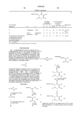
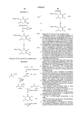
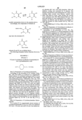
- the 2,4-disubstituted-5-cyano-1,6-dihydro-6-oxo-1-pyrimidineacetic acids of the present invention were produced by Process 1) condensation of suitable amidines (V) with ⁇ , ⁇ -bisthioalkyl- ⁇ -cyanoacrylic acid methyl esters (VIII) to produce the pyrimidines (IX); Process 1A) displacement of the thiomethyl group of pyrimidineacetic acid esters (XII) made by Process 1 with a primary or secondary amine ##STR25## wherein R 3 and R 4 are defined as above to produce the pyrimidines (XIII); and Process 2) condensation of cyanoacetamides (XIX) with N-acyliminoethers (XVIII) to produce the pyrimidines (XX).
- N-Alkylations of (IX) and (XX) were carried out with X--CH 2 --COOR 6 wherein R 6 is lower alkyl, and X is bromine, or iodine; preferably with methyl or t-butyl bromoacetates to produce the pyrimidine esters (X) and (XXI); and finally hydrolysis of (X), (XIII), and (XXI) lead to the desired compounds of formula (I).
- PROCESS 1 ##STR26## wherein R 1 and R 2 are as defined above; R 6 is lower alkyl containing 1 to 4 carbon atoms; and X is bromine, or iodine.
- PROCESS 1A ##STR27## wherein R 1 , R 3 , R 4 , and R 6 are as defined above.
- PROCESS 2 ##STR28## wherein R 1 , R 5 , R 6 , and X are as defined above.
- the alkylation could be affected either by using methyl bromoacetate or tbutyl bromoacetate.
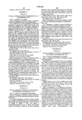
- the compounds of formula (I) ##STR30## may have the structure (I') ##STR31## wherein R and R 1 are as defined above.
- 1,6-Dihydro-2-(5-bromo-1-naphthalenyl)-6-oxo-4-phenyl-5-pyrimidinecarbonitrile (4.0 g, 9.9 mmol) was added portionwise to a suspension of sodium hydride (60% dispersion in mineral oil, washed with hexane, 0.6 g, 14.9 mmol) in dry THF (80 mL). After 5 minutes the mixture became a homogeneous solution. Neat t-butyl bromoacetate (2.9 g, 14.9 mmol) was added in one portion and the mixture was refluxed for 18 hours. Additional t-butyl bromoacetate (0.4 g, 2.0 mmol) was added and reflux was continued for 2 hours.
- the reaction mixture was cooled to room temperature and quenched with water.
- the mixture was partitioned between water (50 mL) and CHCl 3 (100 mL), and the aqueous layer was extracted with CHCl 3 (2 ⁇ 50 mL).
- the combined organic layers were washed with water, brine, dried over Na 2 SO 4 , and concentrated in vacuo to give an orange foam (5.4 g).
- the material was purified by radial preparative thin-layer (Chromatotron) chromatography with elution by EtOAc/hexanes (20:80) to give the pure product (3.0 g, 59%).
Landscapes
- Chemical & Material Sciences (AREA)
- Organic Chemistry (AREA)
- Pharmaceuticals Containing Other Organic And Inorganic Compounds (AREA)
Abstract
Disclosed herein are 2,4-disubstituted-5-cyano-1,6-dihydro-6-oxo-1-pyrimidineacetic acids and pharmaceutically acceptable salts thereof and methods of their preparation. The compounds are new aldose reductase inhibitors useful for the treatment or prevention of diabetic complications.
Description
This is a division of copending application Ser. No. 061,831, filed June 12, 1987, now U.S. Pat. No. 4,786,638.
This invention relates to 2,4-disubstituted-5-cyano-1,6dihydro-6-oxo-1-pyrimidineacetic acids, to pharmaceutical salts thereof, to the processes for their preparation, and to methods for using these compounds. The compounds have pharmaceutical properties which render them beneficial for the treatment of diabetes mellitus and associated conditions.
For many years diabetes mellitus has been treated with two established types of drugs, namely insulin and oral hypoglycemic agents. These drugs have benefited hundreds of thousands of diabetics by improving their well-being and prolonging their lives. However,the resulting logevity of diabetic patients has led to complications such as neuropathy, nephropathy, retinopathy, cataracts, and atherosclerosis. These complications have been linked to the undesirable accumulation of sorbitol in diabetic tissue, which inturn results from the high levels of glucose characteristic of the diabetic patient.
In mammals, including humans, the key enzyme involved in the conversion of hexoses to polyols (e.g. the sorbitol pathway) is aldose reductase. J. H. Kinoshita and collaborators (see J. H. Kinoshita et al, Biochem. Biophys. Acta, 158,472 (1968) and references cited therein) have demonstrated that aldose reductase plays a central role in the etiology of galactosemic cataracts by effecting the conversion of galactose to dulcitol (galactitol); and that an agent capable of inhibiting aldose reductase can prevent the detrimental accumulation of dulcitol in the lens. Furthermore, a relationship between elevated levels of glucose and an undesireable accumulation of sorbitol has been demonstrated in the lens, peripheral nervous cord, and kidney of diabetic animals, (see A. Pirie and R. van Heyningen, Exp. Eye Res., 3,124 (1964); L. T. Chylack and J. H. Kinoshita, Invest. Ophthal., 8,401 (1969) and J. D. Ward and R. W. R. Baker, Diabetol., 6,531 (1970)).
N-[[6-Methoxy-5-(trifluoromethyl)-1-naphthalenyl]thioxomethyl]-N-methylglycine has been reported to be an effective inhibitor of aldose reductase, see K. Sestanj et al, U.S. Pat. No. 4,568,693, Feb. 4, 1986. The present invention discloses novel 2,4-disubstituted-5-cyano-1,6-dihydro-6-oxo-1-pyrimidineacetic acids which unexpectedly show adlose reductase inhibitory activity. Up to now, amino-pyrimidine derivatives have been reported to be useful for increasing cardiac contractility, see J. Bagli et al, U.S. Pat. Nos. 4,505,910, March 19, 1985, and 4,617,393, Oct. 14, 1986.
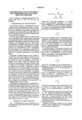
The 2,4-disubstituted-5-cyano-1,6-dihydro-6-oxo-1-pyrimidineacetic acids of this invention are represented by formula (I) ##STR1## wherein R1 is lower alkyl containing 1 to 3 carbon atoms, cyclo(lower)alkyl containing 3 to 6 carbon atoms, naphthalenyl, or halogen substituted naphthalenyl; R is --SR2 wherein R2 is lower alkyl containing 1 to 6 carbon atoms, phenylmethyl, halogen substituted phenylmethyl, cyclohexylmethyl; or R is ##STR2## wherein R3 is hydrogen, and R4 is phenylalkyl, pyrindinylmethyl, cyclohexylmethyl; or R3 and R4 are joined together to form piperidinyl, 4-phenylmethylpiperidinyl, or N-phenylmethylpiperazinyl; or R is R5 wherein R5 is lower alkyl containing 1 to 3 carbon atoms, phenyl, or naphthalenylmethyl; and the pharmaceutically acceptable salts thereof.
A preferred aspect of the present invention is the compounds of formula (I) wherein R1 is methyl, isopropyl, cyclohexyl, 1-naphthalency, or 5-bromo-1-naphthalenyl; R is --SR2 wherein R2 is methyl, isopropyl, n-hexyl, phenylmethyl, 4-bromophenylmethyl, or 4-bromo-2-fluorophenylmethyl; or R is ##STR3## wherein R3 is hydrogen and R4 is phenylmethyl, or phenylethyl; or R is R5 wherein R5 is methyl, phenyl, 1-naphthalenylmethyl; and the pharmaceutically acceptable salts thereof.
A still further preferred aspect of the present invention is the compounds of formula (I) wherein R1 is methyl, cyclohexyl, or 1naphthalenyl; R is --SR2 wherein R2 is methyl, isopropyl, phenylmethyl, or 4-bromo-2-fluorophenylmethyl; or R is ##STR4## wherein R3 is hydrogen and R4 is phenylmethyl; or R is R5 wherein R5 is methyl, phenyl, or 1-naphthalenylmethyl; and the pharmaceutically acceptable salts thereof.
The most preferred compounds of the present invention are 4-[[(4-bromo-2-fluorophenyl)methyl]thio]-5-cyano-2-cyclohexyl-1,6-dihydro-6-oxo-1-pyrimidineacetic acid; 5-cyano-2-cyclohexyl-1,6-dihydro-4-(methylthio)-6-oxo-1-pyrimidineacetic acid; and 5-cyano-1,6-dihydro-4-methyl-2-(1-naphthaleny)-6-oxo-1pyrimidineacetic acid; and the pharmaceutically acceptable salts thereof.
Included in the present invention are the 2,6-disubstituted-5-cyano-1,4-dihydro-4-oxo-1-pyrimidineacetic acid compounds of formula (I') ##STR5## wherein R and R1 are as defined above.
The 2,4-disubstituted-5-cyano-1,6-dihydro-6oxo-1-pyrimidineacetic acids, and the pharmaceutically acceptable salts thereof can be prepared by the processes described hereinafter.
A method is provided for preventing or relieving diabetes mellitus associated complications in a diabetic mammal by administering to said mammal a phophylactic or alleviating amount of a compound of formula (I). Such complications include neuropathy, nephropathy, retinopathy, and cataracts.
The compounds of formula (I), when admixed with a pharmaceutically acceptable carrier, form a pharmaceutical composition which can be used according to the preceding method.
The compounds of formula (I) form salts with suitable therapeutically acceptable inorganic and organic bases. These derived salts possess the same activity as their parent acid and are included within the scope of this invention. The acid is transormed in excellent yield into the corresponding therapeutically acceptable salt by neutralization of said acid with the appropriate inorganic or organic base. The salts are administered usually in the same manner as the parent acid compounds. Suitable inorganic bases to form these salts include, for example, the hydroxides, carbonates, or bicarbonates of the therapeutically acceptable alkali metals or alkaline earth metals, for example, sodium, potassium, magnesium, calcium, and the like. Suitable organic bases include the following amines: benzylamine; lower mono-, di- and trialkylamines, the alkyl radicals of which contain up to three carbon atoms, such as methylamine, dimethylamine, trimethylamine, ethylamine, di- and triethylamine, methylethylamine, and the like; mono-, di- and trialkanolamines, the alkanol radicals of which contain up to three carbon atoms, for example, mono-, di- and triethanolamine; alkylene-diamines which contain up to six carbon atoms, such as hexamethylenediamine; cyclic saturated or unsturated bases containing up to six carbon atoms, such as pyrrolidine, piperidine, morpholine, piperazine, and their N-alkyl and N-hydroxyalkyl derivatives, such as N-methyl-morpholine and N-(2hydroxyethyl)-piperidine, as well as pyridine. Furthermore, there may be mentioned the corresponding quaternary salts, such as the tetraalkyl (for example, tetramethyl), alkyl-alkanol (for example, methyltriethanol and trimethyl-monoethanol), and cyclic ammonium salts, for example, the N-methylpyridinium, N-methyl-N-(2-hydroxyethyl)-morpholinium, N,N-dimethylmorpholinium, N-methyl-N-(2-hydroxyethyl)-morpholinium, N,N-dimethylpiperidinium salts, which are characterized by having good water-solubility. In principle, however, there can be used all the ammonium salts which are physiologically compatible.
The transformations to the salts can be carried out by a variety of methods known in the art. For example, in the case of the inorganic salts, it is preferred to dissolve the acid of formula (I) in water containing at least one equivalent amount of a hydroxide, carbonate, or bicarbonate corresponding to the inorganic salt desired. Advantageously, the reaction is performed in a water-miscible,inert organic solvent, for example, methanol, ethanol, dioxane, and the like in the presence of water. For example, such use of sodium hydroxide, sodium carbonate, or sodium bicarbonate gives a solution of the sodium salt. Evaporation of the solution or addition of a water-miscible solvent of a more moderate polarity, for example, a lower alkanol, for instance, butanol, or a lowre alkanone, for instance, ethyl methyl ketone, gives the solid inorganic salt if that form is desired.
To produce an amine salt, the acidic compound of formula (I) is dissolved in a suitable solvent of either moderate or low polarity, for example, ethanol, methanol, ethyl acetate, diethyl ether, and benzene. At least an equivalent amount of the amine corresponding to the desired cation is then added to that solution. If the resulting salt does not precipitate, it can usually be obtained in solid form by addition of a miscible diluent of lower polarity, for example, benzene or petroleum ether, or by evaporation. If the amine is relatively volatile, any excess can easily be removed by evaporation. It is preferred to use substantially equivalent amounts of the less volatile amines.
Salts wherein the cation is quaternary ammonium are produced by mixing the acid of formula (I) with an equivalent amount of the corresponding quaternary ammonium hydroxide in water solution, followed by evaporation of the water.
The 2,3-disubstituted -5-cyano-1,6-dihydro-6oxo-1-pyrimidineacetic acids amd the pharmaceutically acceptable salts thereof of this invention may be administered to mammals, for example, man, monkeys, or dogs, either alone or combined with pharmaceutically acceptable excipients, in dosage forms, i.e., capsules or tablets.
Preferably, the compounds of this invention may be given orally. However, the method of administering the present active ingredients of this invention is not to be construed as limited to a particular mode of administration. For example, the compounds may be administered topically directly in the eye in the form of drops of sterile, buffered ophthalmic solutions, preferably of pH 7.2-7.6. Also, they may be administered orally in solid form containing such excipients as starch, milk sugar, certain types of clay, and so forth. They may also be administered orally in the form of solutions or they may be injected parenterally. For parenteral administration they may be used in the form of a sterile solution, preferably of pH 7.2-7.6, containing a pharmaceutically acceptable buffer.
The dosage of the 2,4-disubstituted-5-cyano-1,6-dihydro-6-oxo-1-pyrimidineacetic acids and the pharmaceutically acceptable salts thereof will vary with the form of administration. Furthermore, it will vary with the particular host under treatment. Generally, treatment is initiated with small dosages substantially less than the optimal dose of the compound. In general, the compounds of this invention are most desirably administered at a concentration level that will generally afford effective results without causing any harmful or deleterious side effects. For topical administration, a 0.05-1.8% solution may be administered dropwise in the eye. The frequency of instillation varies with the subject under treatment from a drop every two or three days to once daily. For oral or parenteral administration a preferred level of dosage ranges from about 0.5 mg to about 1000 mg per kilo of body weight per day, although aforementioned variations will occur. However, a dosage level that is in the range of from about 5.0 mg to about 60 mg per kilo of body weight per day is most satisfactory.
Unit dosage forms such as capsules, tablets, pills, and the like may contain from about 25 mg to about 1250 mg of the active ingredients of this invention with a pharmaceutical carrier. Thus, for oral administration, capsules can contain from between about 25 mg to about 1250 mg of the active ingredients of this invention with or without a pharmaceutical diluent. Tablets, either efferfvescent or noneffervescent, can contain between about 25 to 1250 mg of the active ingredients of this invention together with conventional pharmaceutical carriers. Thus, tablets, which may be coated and either effervescent or noneffervescent, may be prepared according to the known art. Inert diluents or carriers, for example, magnesium cabonate or lactose, can be used together with conventional disintegrating agents, for example, starch.
The 2,4-disubstituted -5-cyano-1,6-dihydro-6-oxo-1-pyrimidinaecetic acids and the pharmaceutically acceptable salts thereof can also be used in combination with insulin or oral hypoglycemic agents to produce a beneficial effect in the treatment of diabetes mellitus. In this instance, commercially available insulin preparations or oral hypoglycemic agents, exemplified by acetohexamide, chlorpropamide, tolazamide, tolbutamide, and phenformin, are suitable. The compounds herein can be administered sequentially or simultaneously with insulin or the oral hypoglycemic agent. Suitable methods of administration, compositions, and doses of the insulin preparation or oral hypoglycemic agent are described in medical textbooks; for instance, "Physicians' Desk Reference", 36 ed., Medical Economics Co., Oradell, N.J. U.S.A., 1982. When used in combination, the 2,4disubstituted-5-cyano-1,6-dihydro-6-oxo-1-pyrimidineacetic acids and the pharmaceutically acceptable salts thereof are administered as described previously. The 2,4-disubstituted-5-cyano-1,6-dihydro-6-oxo-1-pyrimidineacetic acids and the pharmaceutically acceptable salts thereof can be administered with an oral hypoglycemic agent in the form of a pharmaceutical composition comprising effective amounts of each agent.
The aldose reductase inhibiting property of the compounds of this invention and the utilization of the compounds in preventing, diminishing, and alleviating diabetic complications are demonstrable in experiments using galactosemic rats, see Dvornik et al, Science, 182, 1146 (1973). Such experiments are exemplified hereinbelow after the listing of the following general comments pertaining to these experiments:
Male Sprague-Dawley rats, weighing approximately 90 grams were separated into groups of equal average body weight, with six animals per group. The animals were housed in cages of six animals each and maintained on 12 hour night/12 hour day cycles. Except as otherwise noted, the animals were given food and water ad libitum.
On day 1, the galactosemic control group and all drug-treated groups were given access to 20% galactose chow (Bio-serv, Frenchtown, N.J.). Animals in the control group were given access to 20% glucose chow (Bio-Serv). Test compounds were administered either in the diet or by gavage as a suspension in 2% Tween 80 in saline. In experiments in which gavage dosing was used, the animals were administered the test compound daily at approximately the same hour each day. Food intake and body weight were determined twice during the course of the experiment. In cases in which the compound was administered in the diet, the average dose was calculated on the basis of the actual average food intake during the experiment.
On the morning of day 5, all animals were fasted; beginning two hours later the animals were decapitated and the lenses, sciatic nerves, and a 50-100 mg portion of the diaphragm were removed, weighed, and frozen in porcelain plates on dry ice.
The polyol determination was performed by a modification of the procedure of M. Krami et al, Clin. Biochem., 2,373 (1969). Only two minor reagent changes were made: (a) the rinsing mixture was an aqueous 5% (w/v) trichloroacetic acid solution and (b) the stock solution was prepared by dissolving 25 mg of dulcitol in 100 mL of an aqueous trichloroacetic acid solution. [N.B.: For each experiment the average value found in the tissue from rats fed the glucose diet was subtracted from the individual values found in the corresponding tissue in galactose-fed rats to obtain the amount of polyol accumulated.]
The aldose reductase inhibiting effects of the compounds of formula (I) were also tested by employing an in vitro testing procedure similar to that described by S. Hayman and J. H. Kinoshita, J. Biol. Chem., 240, 877 (1965). In the present case the procedure of Hayman and Kinoshita was modified in that the final chromatography step was omitted in the preparation of the enzyme from bovine lens.
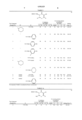
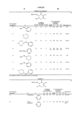
The following tabulated results show that the 2,4-disubstituted-5-cyano-1,6dihydro-6-oxo-1-pyrimidineacetic acids of this invention show the property that they diminish the accumulation of galactitol in the lenses and sciatic nerves of rats fed galactose. The figures under L, N and D represent the percentage decrease of galactitol accumulation in the tissues of the lens, sciatic nerve, and diaphragm, respectively, for treated rats as compared to untreated rats.
The last entry in the tables is the compound N-[[6-methoxy-5-(trifluoromethyl)-1-naphthalenyl]-thioxomethyl]-N-methylgylcine. The latter compound is also known as tolrestat. (See U.S. Pat. No. 4,568,693.)
                                  TABLE 1
__________________________________________________________________________
 ##STR6##                                                    (I)
                                            % Lowering dulcitol
                             % Inhibition   accumulation
Test Compound                IN VITRO       IN VIVO      Melting
Example No.
        R.sup.1
               R             10.sup.-5 M
                                  10.sup.-6 M
                                       10.sup.-7 M
                                            mg/kg
                                                L  N  D  Point °
__________________________________________________________________________
                                                         C.
         ##STR7##
               SCH.sub.3     98   94   89   90  N.S.
                                                   47 42 198-199
2       "
                ##STR8##     97   96   91   128 N.S.
                                                   N.S.
                                                      N.S.
                                                         156-158
3       "
                ##STR9##     96   96   93   141 N.S.
                                                   N.S.
                                                      N.S.
                                                         184-185
4       "
                ##STR10##    96   94   92   93  15 50 N.S.
                                                         183-184
5       "      Sn-C.sub.6 H.sub.13
                             94   95   96   121 N.S.
                                                   N.S.
                                                      N.S.
                                                         128-129
6
         ##STR11##
               Si-propyl     93   92   90   110 N.S.
                                                   N.S.
                                                      N.S.
                                                         197-200
7       "
                ##STR12##    96   95   90   123 N.S.
                                                   N.S.
                                                      N.S.
                                                         160-161
8       i-propyl
               SCH.sub.3     96   96   94   87  N.S.
                                                   N.S.
                                                      N.S.
                                                         226-228
9       i-propyl
               Si-propyl     96   97   91   92  N.S.
                                                   38 16 192.5-193.5
10      i-propyl
                ##STR13##    96   98   94   102 N.S.
                                                   N.S.
                                                      38 194-195
__________________________________________________________________________
 The compounds of TABLE 1 are produced by Process 1 set forth below.
                                  TABLE 1A
__________________________________________________________________________
 ##STR14##                                                  (I)
                                        % Lowering dulcitol
                         % Inhibition   accumulation
Test Compound            IN VITRO       IN VIVO
Example No.
        R                10.sup.-5 M
                              10.sup.-6 M
                                   10.sup.-7 M
                                        mg/kg
                                            L  N   D  Melting Point
                                                      °C.
__________________________________________________________________________
11      SCH.sub.3        86   84   74   71  N.S.
                                               N.S.
                                                   N.S.
                                                      236-238
12
         ##STR15##       88   90   30   84  N.S.
                                               N.S.
                                                   N.S.
                                                      300
13
         ##STR16##       88   75   52   93  N.S.
                                               N.S.
                                                   N.S.
                                                      229-230
14
         ##STR17##       92   89   64   112 N.S.
                                               N.S.
                                                   N.S.
                                                      276-278
15
         ##STR18##       89   88   71   98 196
                                            N.S. N.S.
                                               N.S. N.S.
                                                   N.S. N.S.
                                                      238-240
16
         ##STR19##       93   91   72   100 N.S.
                                               N.S.
                                                   N.S.
                                                      290
17
         ##STR20##       96   90   78   100 N.S.
                                               33  N.S.
                                                      222-224
18
         ##STR21##       90   88   81   128 N.S.
                                               N.S.
                                                   N.S.
                                                      183-184
__________________________________________________________________________
 The compounds of TABLE 1A are produced by Process 1A set forth below.
                                  TABLE 2
__________________________________________________________________________
 ##STR22##                                                   (I)
                                  % Inhibition
                                           % Lowering dulcitol
                                  IN VITRO accumulation
Test Compound                     10.sup.-5
                                     10.sup.-6
                                        10.sup.-7
                                           IN VIVO      Melting Point
Example No.       R.sup.1 R       M  M  M  mg/kg
                                               L  N  D  °C.
__________________________________________________________________________
19                1-naphthalenyl
                           ##STR23##
                                  84 68 29 117 N.S.
                                                  N.S.
                                                     21 234.5-236
20                5-Br1- naphthalenyl
                           ##STR24##
                                  82 71 22 140 N.S.
                                                  N.S.
                                                     N.S.
                                                        234-236 (dec.)
21                1-naphthalenyl
                          CH.sub.3
                                  87 55 14 103 18 N.S.
                                                     N.S.
                                                        234.5-237
                                                        (dec.)
22                5-Br1-  1-naphthalenyl
                                  93 85 46 151 N.S.
                                                  30 N.S.
                                                        192-193
                  naphthalenyl
                          methyl
N[[6-methoxy-5-(trifluoromethyl)- 98 94 65 6   N.S.
                                                  53 90 164-165
1-naphthalenyl]thioxomethyl]-
Nmethylglycine (tolrestat)
U.S. Pat. No. 4,568,693
__________________________________________________________________________
 N.S. = not significant
 The compounds of TABLE 2 are produced by Process 2 set forth below.
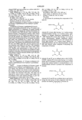
The 2,4-disubstituted-5-cyano-1,6-dihydro-6-oxo-1-pyrimidineacetic acids of the present invention were produced by Process 1) condensation of suitable amidines (V) with β, β-bisthioalkyl-α-cyanoacrylic acid methyl esters (VIII) to produce the pyrimidines (IX); Process 1A) displacement of the thiomethyl group of pyrimidineacetic acid esters (XII) made by Process 1 with a primary or secondary amine ##STR25## wherein R3 and R4 are defined as above to produce the pyrimidines (XIII); and Process 2) condensation of cyanoacetamides (XIX) with N-acyliminoethers (XVIII) to produce the pyrimidines (XX). N-Alkylations of (IX) and (XX) were carried out with X--CH2 --COOR6 wherein R6 is lower alkyl, and X is bromine, or iodine; preferably with methyl or t-butyl bromoacetates to produce the pyrimidine esters (X) and (XXI); and finally hydrolysis of (X), (XIII), and (XXI) lead to the desired compounds of formula (I).
Referring to Process 1, the required amidines (V) were obtained from the corresponding nitriles (IV) in two steps via iminoethers as described in P. E. Fanta et al, J. Am. Chem. Soc., 78, 1434 (1956). However, preparation of naphthalenyl amidine as reported in L. Weintraub, J. Org. Chem., 33, 1679 (1968), via the iminoether of naphthalenyl-1-carboxamide was not reproducible in our hands. The reaction yielded either the starting material or naphthalenyl-1-carbonitrile. The naphthalene moiety was introduced using the alternative synthesis described in Process 2. The required β, β-bisthioalkyl-α-cyanoacrylic acid methyl esters (VIII) in Process 1 were prepared using the general process reported in K. A. Jensen et al, Acta Chem. Scand., 22, 1107 (1968), for the reaction of carbon disulfide with active methylene containing compounds (VI) to produce the compounds (VII), followed by alkylation.
Referring to Process 2, the nitriles (XV) were transformed to the corresponding iminoethers (XVI). Condensation of these iminoethers (XVI) with an acyl chloride (XVII) led to the N-acylimidates (XVIII). These compounds, on condensation with cyanoacetamide (XIX), according to J. L. Soto et al, J. Chem. Soc. Perkins Trans I., 2447 (1984), led to suitably substituted pyrimidines (XX).
In both Process 1 and 2, alkylation of pyrimidines (IX) and (XX), respectively, was effected using sodium hydride as a base in the presence of suitable solvents. It was observed that the proportion of N- and O-alkylated products can be controlled by the choice of the solvent used for the reaction. Thus, using tetrahydrofuran (THR), or dimethoxyethane (DME), it was possible to preferentially obtain N-alkylation, whereas use of dimethylformamide (DMF) as a solvent led to O-alkylation as a preponderant product.
The alkylation could be affected either by using methyl bromoacetate or tbutyl bromoacetate.
The structure of the products of formula (I) was assigned based on the following observations.
(1) The infrared spectra showed a second carbonyl absorption band at 1640-1690 cm-1, in addition to the carbonyl due to carboxylic acid.
(2) The --N--CH2 --signal characteristic in the NMR.
(3) The lower Rf on the thin layer chromatography relative to the O-alkylated isomers.
The regio-assignment of 1N-alkylation is tentative. The alternative 3N-alkylated structure for the compounds of formula (I) cannot be ruled out because of the ##STR29## possible tautomerism shown in the equation above.
Accordingly, the compounds of formula (I) ##STR30## may have the structure (I') ##STR31## wherein R and R1 are as defined above.
The following Examples further illustrate this invention.
Step (1) Preparation of Cyclohexylcarbonitrile
According to the procedure of G. Lohaus, Chem. Ber., 100, 2719 (1967), to a cooled (0° C.), magnetically stirred solution of cyclohexyl carboxylic acid (113.8 g, 0.89 mol) in methylene chloride (300 mL) was added chlorosulfonylisocyanate, ClSO2 NCO, (85.5 mL, 0.98 mol) dropwise. The solution was refluxed 15 minutes and then cooled to room temperature. The ice bath was replaced and DMF (151.3 mL, 1.95 mol) was added dropwise. The ice bath was removed and the resulting yellow solution was stirred at room temperature overnight. The solution was poured onto ice water. The organic layer was washed with saturated NaHCO3, and NaCl solutions and dried with MgSo4. Methylene chloride (≈300 mL) was removed by distillation at atmospheric pressure through a 20 cm Vigreaux column. The crude material remaining was distilled through the same column at reduced pressure. It was collected as a colorless liquid b.p. 83°-86° C./20 mm Hg (77.6 g, 81%).
Step (2) Preparation of Cyclohexylamidine Hydrochloride
To a cooled (0° C.), magnetically stirred solution of cyclohexylcarbonitrile (77.6 g, 0.71 mol), dry methanol (63.4 mL, 1.56 mol), and ether (50 mL) was added acetyl chloride (60.7 mL, 0.85 mol) dropwise. After the addition, cooling was continued for 15 minutes. The mixture was stirred at room temperature for 2 days. The resulting white crystals were filtered, washed with ether, and dried in vacuo. After drying, the crystals were combined with 10% NH3 /ethanol (420 mL, 2.46 mol) and stirred at room temperature for 3 days. The solution was filtered, and the filtrate concentrated to yield the product as white needles (84.8 g, 745) m.p. 178°-180° C.
NMR (DMSO-d6): δ 1.45 (m, 10H), 2.40 (t, 1H,), 8.76 (br s, 3H,)
Step (3) Preparation of 2-Cyclohexyl-1,6-dihydro-4-(methylthio)-6-oxo-5-pyrimidinecarbonitrile
According to the procedure of U.S. Pat. No. 4,505,910, to a cooled (0° C.), stirred suspension of NaH (50% dispersion inmineral oil, washed with hexane, 5.4 g. 0.113 mol) in DMF (50 mL) was added a solution of cyclohexylamidine hydrochloride (15.2 g, 0.094 mol) in DMF (100 mL). After 1 hour, a solution of 2-cyano-3,3-bis(methylthio)-2-propenoic acid methyl ester [described by R. Gompper et al, Chem. Ber., 95, 2861 (1962)] (19.1 g, 0.094 mol) in DMF (100 mL) was added dropwise. The cooling bath was removed after 1 hour and the reaction mixture was stirred at room temperature overnight. Water (250 mL) and concentrated HCl (10 mL) were added, and the resulting precipitate was collected by filtration. The yellow solid (19.1 g, 82%) was dried and used without further purification.
NMR (DMSO-d6): δ 1.53 (m, 10H), 2.63 (s, 3H), 2.87 (m, 1H)
Step (4) Preparation of Methyl 5-Cyano-2cyclohexyl-1,6-dihydro-4-(methylthio)-6-oxo-1-pyrimidineacetate
To a cooled (0° C.), stirred suspension of NaH (50% dispersion in mineral oil, washed with hexane, 2.2 g, 0.047 mol) in DME (350 mL) was added 2-cyclohexyl-1,6-dihydro-4-(methylthio)-6-oxo-5-pyrimidinecarbonitrile (9.5 g, 0.038 mol) in several portions. After 1 hour, methyl bromoacetate was added and the resulting solution was heated at 95°-100° C. for 2 days. The solution was cooled and water (300 mL) was added. The mixture was extracted with ethyl acetate and the combined extracts were washed with water, dried (MgSO4), and concentrated to give a beige powder (12.2 g, 99%) which was used without further purification.
NMR (CDCl3): δ 1.55 (m, 10H), 2.62 (s, 3H), 2.45 (m, 1H), 3.81 (s, 3H), 4.84 (s, 2H)
Step (5) Preparation of 5-Cyano-2-cyclohexyl-1,6-dihydro-4-(methylthio)-6-oxo-1-pyrimidineacetic Acid
To a stirred solution of methyl 5-cyano-2-cyclohexyl-1,6-dihydro-4-(methylthio)-6-oxo-1-pyrimidineacetate (4.0 g, 0.012 mol) in dioxane (40 mL) was added 1 N NaOH (14.0 mL, 0.014 mol). After 1.5 hours, the mixture was concentrated, then diluted with water (150 mL). The aqueous solution was washed with ether and acidified with 1 N HCl (16.0 mL, 0.016 mol). The resulting mixture was extracted with ethyl acetate, and the combined extracts were dried (MgSO4), and concentrated. The crude product was recrystallized from acetonitrile (three times) to yield white crystals (1.8 g, 475) m.p. 198°-199° C.
NMR (DMSO-d6): δ 1.51 (m, 10H), 2.62 (s, 3H), 2.85 (m, 1H), 4.82 (s, 2H)
IR (KRb): 2230, 1760, 1640 cm-1
UV (MeOH): 240 (19,500), 287 (11,654), 318.5 (8,196)
MS (m/e): 307, 252 (100%), 82
Anal. Calcd.: C, 54.71; H, 5.57; N, 13.675
Found: C, 54.61; H, 5.42; N, 13.87%
(I: R1 =--CH3 ; R=--S--CH3)
Step (1) Preparation of Methyl 5-Cyano-1,6-dihydro-2-methyl-4-(methylthio-6-oxo-1-pyrimidineacetate
To a cooled (0° C.), stirred suspension of NaH (50% dispersion in mineral oil, washed with hexane, 5.0g, 0.105 mol) in DMF (70 mL) was added 1,6-dihydro-2-methyl-4-(methylthio)-6-oxo-5-pyrinidinecarbonitrile (prepared by the process of J. Bagli, U.s. Pat. No. 4,505,910, Example 1) (18.1 g, 0.100 mol) in several portions. After 30 minutes, methyl bromoacetate was added and the resulting mixture was stirred at room temperature for 4.5 hours. A little water was added and most of the DMF was removed under reduced pressure. The residue was partitioned between water (150 mL) and chloroform (100 mL), and the organic phase was dried (MgSO4), and concentrated. The crude product was triturated with ether (100 mL) to give the produce (18.5 g, 73%) m.p. 150°-152° C. A portion of the crude product (2.0 g) was recrystallized (twice) from chloroform/hexane to give pure product (1.6 g).
NMR (CDCl3): δ 2.58 (s, 3H), 2.65 (s, 3H), 3.85 (s, 3H), 4.83 (s, 2H)
IR (CHCl3): 2240, 1760, 1690 cm-1
UV (MeOH): 240 (18,371), 285 (10,989), 317 (7,571)
MS (m/e): 253(M+), 222, 194
Anal. Calcd.: C, 47.43; H, 4.34; N, 16.60%
Found: C, 47.13; H, 4.29; N, 16.24%
Step (2) Preparation of 5-Cyano-1,6-dihydro-2-methyl-4-(methylthio)-6-oxo-1-pyrimidineacetic Acid
To a suspension of methyl 5-cyanob 1,6-dihydro-2-methyl-4-(methylthio)-6-oxo-1-pyrimidineacetate (2.3 g, 9.0 mmol) in methanol (6 mL) was added 3 N NaOH (3.3 mL, 9.9 mmol). The mixture was warmed to 30° C. for 1.5 hours, then concentrated to remove the methanol. The residue was dissolved in water (20 mL) and neutralized with 3 N HCl (3.3 mL, 9.9 mmol). The resulting precipitate was collected by filtration, and recrystallized from methanol/ether/hexane (twice) to yield pure product (1.5 g, 35%) m.p. 236°-238° C.
NMR (DMSO-d6): δ 2.60 (s, 3H), 2.68 (s, 3H), 4.05 (s, 1H), 4.84 (s, 2H)
IR (NUJOL): 3050, 2230, 1740, 1660 cm-1
UV (MeOH): 286 (10,260), 240 (14,216), 213 (13845)
MS (m/e): 239 (M+)
Anal. Calcl.: C, 45.18; H, 3.76; N, 17.57%
Found: C, 45.46; H, 4.00; N, 17.56%
[I: R1 =--CH3 ; R=(3-pyridinylmethyl)amino]
Step (1) Preparation of Methyl 5-cyano-1,6-dihydro-2-methyl-6-oxo-4-[(3-pyridinylmethyl)amino]-1-pyrimidineacetate
To a stirred suspension of methyl 5-cyano-1,6-dihydro-2-methyl-4-(methylthio)-6-oxo-1-pyrimidineacetate (prepared by the process of Example 11, Step 1) (0.25 g, 1.0 mm9l) in DME (1 mL) was added 3-methylaminopyridine (0.12 g, 1.1 mmol). The reaction mixture was heated to reflux for 19 hours, additional DME (0.5 mL) was added, and heating was continued for 4 hours. The mixture was then cooled to room temperature, diluted with ether, and filtered to give the produce (0.2 g, 94%).
NMR (CDCl3): δ 2.45 (s, 3H), 3.50 (br s, 2H), 3.85 (s, 3H), 4.75 (m, 3H), 7.40 (m, 1H), 8.60 (m, 2H)
IR (CHCl3): 2100, 1735, 1660 cm-1
Step (2) Preparation of 5-Cyano-1,6-dihydro-1-methyl-6-oxo-4-[(3-pyridinylmethyl)amino]-1-pyrimidineacetic Acid
To a suspension of methyl 5-cyano-1,6-dihydro-2-methyl-6-oxo-4-[(3-pyridinylmethyl)amino]-1-pyrimidineacetate (1.5 g, 5.0 mmol) in methanol (5 mL) was added 3 N NaOH (1.8 mL, 5.5 mmol). The resulting mixture was warmed to 50° C. for 1.5 hours, cooled, and neutralized with 3 N HCl (1.8 mL, 5.5 mmol). A precipitate formed, and was collected by filtration to give a crude product (1.5 g, 88%). Recrystallization from DMF/methanol (twice) yielded a white solid (1.2 g) m.p. >300° C.
NMR (CF3 CO2 D): δ 2.70 (s, 3H), 5.05 (s, 2H), 5.25 (s, 2H), 8.20 (m, 1H), 8.90 (m, 3H)
IR (KBr): 3450, 3275, 3000, 2210, 1660, 1615 cm-1
UV (MeOH): 294 (4,883), 270 (6,028), 228 (23,713)
Anal. Calcd.: C, 56.18; H, 4.34: N, 23.42%
Found: C, 55.78; H, 4.51; N, 22.97%
(I: R1 =5-bromo-1naphthalenyl; R=phenyl)
Step (1) Preparation of Ethyl N-(5-Bromo-1-naphtholy)benzimidate
According to the procedure of Soto et al, Synthesis, 483 (1983), a solution of 5-bromo-1-naphthoyl chloride (10.7 g, 39.8 mmol) in dry toluene (30 mL) was added dropwise to a mixture of ethyl benzimidate hydrochloride (7.4 g, 39.8 mmol) and triethylamine (8.9 g, 12.2 mL, 87.6 mmol) in dry toluene (100 mL). The mixture was stirred for 18 hours at room temperature, then heated to 70° C. for 60 hours. The mixture was cooled to room temperature and the precipitated salt removed by filtration and washed with toluene. The filtrate was concentrated in vacuo to give a red oil which crystallized upon drying in vacuo (15.2 g, quant.). This material was of sufficient purity to be used in the subsequent reaction.
NMR (CDCl3): δ 1.51 (t, 3H, J=6.8Hz), 4.52 (q, 3H, J=6.8Hz), 7.35 (m, 5H), 7.61 (d, 2H, J=7.1Hz), 7.85 (d, 1H, J=7.2Hz), 8.21 (d, 1H, J=7.4Hz), 8.48 (d, 1H, J=8.6Hz), 9.02 (d, 1H, J=8.4Hz)
Step (2) Preparation of 1,6-Dihydro-2-(5-bromo-1-naphthalenyl)-6-oxo-4-phenyl-5-pyrimidinecarbonitrile
According to the procedure of Soto et al, J. Chem. Soc. Perkin Trans. I, 2447 (1984), cyanoacetamide (3.4 g, 40 mmol) was added to a suspension of sodium ethoxide, freshly prepared from sodium (1.1 g, 48 mmol) in anhydrous ethanol (75 mL). Ethyl N-(5-bromo-1-naphthoyl)benzimidate (15.3 g, 40 mmol) was added portionwise, and the resulting mixture was heated to reflux for 5 hours. The mixture was allowed to stir at room temperature for 15 hours, neutralized with concentrated H2 SO4 (1.33 mL), and diluted with water (300 mL). The precipitated product was collected by filtration, and washed with water. Recrystallization from ethanol/DMF gave pur product as a yellow solid (10.3 g, 64%), m.p. 328°-330° C.
NMR (DMSO-d6): δ 7.55 (m, 4H), 7.82 (dd, 1H, J1 =8.6Hz, J2 =8.5Hz), 7.95 (d, 3H, J=8.1Hz), 7.99 (d, 1H, J=7.5Hz), 8.30 (d, 1H, J=8.6Hz), 8.39 (d, 1H, J=8.5Hz), 9.10 (br s, 1H)
IR (KBr): 2225, 1660 cm-1
Anal. Calcd.: C, 62.70; H, 3.01; N, 10.45%
Found: C, 62.88; H, 3.39; N, 10.37%
Step (3) Preparation of t-Butyl 5-Cyano-1,6-dihydro-2-(5-bromo-1-naphthalenyl)-6-oxo-4-phenyl-1-pyrimidineacetate
1,6-Dihydro-2-(5-bromo-1-naphthalenyl)-6-oxo-4-phenyl-5-pyrimidinecarbonitrile (4.0 g, 9.9 mmol) was added portionwise to a suspension of sodium hydride (60% dispersion in mineral oil, washed with hexane, 0.6 g, 14.9 mmol) in dry THF (80 mL). After 5 minutes the mixture became a homogeneous solution. Neat t-butyl bromoacetate (2.9 g, 14.9 mmol) was added in one portion and the mixture was refluxed for 18 hours. Additional t-butyl bromoacetate (0.4 g, 2.0 mmol) was added and reflux was continued for 2 hours. The reaction mixture was cooled to room temperature and quenched with water. The mixture was partitioned between water (50 mL) and CHCl3 (100 mL), and the aqueous layer was extracted with CHCl3 (2×50 mL). The combined organic layers were washed with water, brine, dried over Na2 SO4, and concentrated in vacuo to give an orange foam (5.4 g). The material was purified by radial preparative thin-layer (Chromatotron) chromatography with elution by EtOAc/hexanes (20:80) to give the pure product (3.0 g, 59%).
NMR (CDCl3): δ 1.38 (s, 9H), 4.10 (d, 1H, J=16.9Hz), 4.77 (d, 1H, J=16.9Hz), 7.40-7.80 (m, 7H), 7.94 (d, 1H, J=9.0Hz), 8.15 (d, 2H, J=7.6Hz), 8.52 (d, 1H, J=8.0Hz)
Step (4) Preparation of 5-Cyano-1,6-dihydro-2-(5-bromo-1-naphthalenyl)-6-oxo-4-phenyl-1-pyrimidineacetic Acid
t-Butyl 5-cyano-1,6-dihydro-2-(5-bromo-1-naphthalenyl)-6-oxo-4-phenyl-1-pyrimidineacetate (3.02 g, 5.85 mmol) was dissolved in trifluoroacetic acid (10 mL), and the mixture was stirred at room temperature for 4 hours. The solvent was removed in vacuo and the oily residue was triturated with ether. The ether was removed in vacuo to give a yellow foam which was recystallized twice from EtOAc/hexanes to give the pure product as a white solid (1.28 g, 48%).
NMR (DMSO-d6): δ 4.25 (d, 1H, J=7.1Hz), 4.59 (d, 1H, J=7.1Hz), 7.49 (t, 1H, J=7.4Hz), 7.58 (m, 2H), 7.62 (m, 1H), 7.78 (d, 1H, J=7.1Hz), 7.85 (dd, 1H, J1 =8.4Hz, J2 =7.4Hz), 7.91 (d, 1H, J=8.3Hz), 7.96 (d, 2H, J=7.0Hz), 8.01 (d, 1H, J=7.4Hz), 8.39 (d, 1H, J=8.0Hz), 9.70 (br s, 1H)
IR (CHCl3): 3420, 2225, 1725, 1695 cm-1
Anal. Calcd.: C, 60.02; H, 3.07; N, 9.13%
Found: C, 60.08; H, 3.45; N, 8.90%
Claims (1)
1. The process for producing the compounds of formula (I) ##STR33## wherein R1 is lower alkyl having 1 to 3 carbon atoms, cyclo(lower)alkyl having 3 to 6 carbon atoms, naphthalenyl, or halogen substituted naphthalenyl; R is -SR2 wherein R2 is lower alkyl having 1 to 6 carbon atoms, phenylmethyl, halogen substituted phenylmethyl, or cyclohexylmethyl or R is R5 wherein R5 is lower alkyl having 1 to 3 carbon atoms, phenyl, or naphthalenymethyl; and the pharmaceutically acceptable salts thereof which comprises N-alkylating the compounds of formula ##STR34## wherein R and R1 are as defined above with X-CH2 -COOR6, wherein R6 is lower alkyl having 1 to 4 carbon atoms, and X is bromine or iodine in the presence of the strong base sodium hydride in tetrahydrofuran or dimethoxyethane solvent to produce the compounds of formula ##STR35## wherein R, R1 and R6 are as defined above and hydrolyzing the ester group of said compound with base to produce the desired compounds of formula (I).
Applications Claiming Priority (1)
| Application Number | Priority Date | Filing Date | Title |
|---|---|---|---|
| US07/061,831 US4786638A (en) | 1987-06-12 | 1987-06-12 | 2,4-disubstituted-5-cyano-1,6-dihydro-6-oxo-1-pyrimidineacetic acid aldose reductase inhibitors |
Related Parent Applications (1)
| Application Number | Title | Priority Date | Filing Date |
|---|---|---|---|
| US07/061,831 Division US4786638A (en) | 1987-06-12 | 1987-06-12 | 2,4-disubstituted-5-cyano-1,6-dihydro-6-oxo-1-pyrimidineacetic acid aldose reductase inhibitors |
Publications (1)
| Publication Number | Publication Date |
|---|---|
| US4900829A true US4900829A (en) | 1990-02-13 |
Family
ID=22038415
Family Applications (2)
| Application Number | Title | Priority Date | Filing Date |
|---|---|---|---|
| US07/061,831 Expired - Lifetime US4786638A (en) | 1987-06-12 | 1987-06-12 | 2,4-disubstituted-5-cyano-1,6-dihydro-6-oxo-1-pyrimidineacetic acid aldose reductase inhibitors |
| US07/221,588 Expired - Fee Related US4900829A (en) | 1987-06-12 | 1988-07-20 | 2,4-disubstituted-5-cyano-1,6-dihydro-6-oxo-1-pyrimidineacetic acid aldose reductase inhibitors |
Family Applications Before (1)
| Application Number | Title | Priority Date | Filing Date |
|---|---|---|---|
| US07/061,831 Expired - Lifetime US4786638A (en) | 1987-06-12 | 1987-06-12 | 2,4-disubstituted-5-cyano-1,6-dihydro-6-oxo-1-pyrimidineacetic acid aldose reductase inhibitors |
Country Status (1)
| Country | Link |
|---|---|
| US (2) | US4786638A (en) |
Cited By (1)
| Publication number | Priority date | Publication date | Assignee | Title |
|---|---|---|---|---|
| US6495558B1 (en) | 1999-01-22 | 2002-12-17 | Amgen Inc. | Kinase inhibitors |
Families Citing this family (3)
| Publication number | Priority date | Publication date | Assignee | Title |
|---|---|---|---|---|
| US4786638A (en) * | 1987-06-12 | 1988-11-22 | American Home Products Corporation | 2,4-disubstituted-5-cyano-1,6-dihydro-6-oxo-1-pyrimidineacetic acid aldose reductase inhibitors |
| US7790734B2 (en) * | 2003-09-08 | 2010-09-07 | Takeda Pharmaceutical Company Limited | Dipeptidyl peptidase inhibitors |
| US10183949B2 (en) | 2014-08-29 | 2019-01-22 | The University Of Tokyo | Pyrimidinone derivative having autotaxin-inhibitory activity |
Citations (3)
| Publication number | Priority date | Publication date | Assignee | Title |
|---|---|---|---|---|
| US4505910A (en) * | 1983-06-30 | 1985-03-19 | American Home Products Corporation | Amino-pyrimidine derivatives, compositions and use |
| US4568693A (en) * | 1981-03-02 | 1986-02-04 | Ayerst, Mckenna & Harrison, Inc. | N-Naphthoylglycine derivatives |
| US4786638A (en) * | 1987-06-12 | 1988-11-22 | American Home Products Corporation | 2,4-disubstituted-5-cyano-1,6-dihydro-6-oxo-1-pyrimidineacetic acid aldose reductase inhibitors |
Family Cites Families (1)
| Publication number | Priority date | Publication date | Assignee | Title |
|---|---|---|---|---|
| US4617393A (en) * | 1985-07-19 | 1986-10-14 | American Home Products Corporation | 5-substituted-6-aminopyrimidines, composition and uses as cardiotonic agents for increasing cardiac contractility |
-
1987
- 1987-06-12 US US07/061,831 patent/US4786638A/en not_active Expired - Lifetime
-
1988
- 1988-07-20 US US07/221,588 patent/US4900829A/en not_active Expired - Fee Related
Patent Citations (3)
| Publication number | Priority date | Publication date | Assignee | Title |
|---|---|---|---|---|
| US4568693A (en) * | 1981-03-02 | 1986-02-04 | Ayerst, Mckenna & Harrison, Inc. | N-Naphthoylglycine derivatives |
| US4505910A (en) * | 1983-06-30 | 1985-03-19 | American Home Products Corporation | Amino-pyrimidine derivatives, compositions and use |
| US4786638A (en) * | 1987-06-12 | 1988-11-22 | American Home Products Corporation | 2,4-disubstituted-5-cyano-1,6-dihydro-6-oxo-1-pyrimidineacetic acid aldose reductase inhibitors |
Non-Patent Citations (12)
| Title |
|---|
| Bubranski et al., CA96 142888b. * |
| Bubranski et al., CA96-142888b. |
| D. J. Brown, the Pyrimidines, 1962, pp. 289 291, 359 360. * |
| D. J. Brown, the Pyrimidines, 1962, pp. 289-291, 359-360. |
| Kinoshita et al., Biochem. Biophys. Acta 158, 472 475 (1968). * |
| Kinoshita et al., Biochem. Biophys. Acta 158, 472-475 (1968). |
| March, Advanced Organic Chemistry, 3rd Edition, 1985, pp. 334 335. * |
| March, Advanced Organic Chemistry, 3rd Edition, 1985, pp. 334-335. |
| Mitsui Toatsu Chemicals, Inc. CA97 110029b. * |
| Mitsui Toatsu Chemicals, Inc. CA97-110029b. |
| Vainilavicius et al., CA105 191119q. * |
| Vainilavicius et al., CA105-191119q. |
Cited By (1)
| Publication number | Priority date | Publication date | Assignee | Title |
|---|---|---|---|---|
| US6495558B1 (en) | 1999-01-22 | 2002-12-17 | Amgen Inc. | Kinase inhibitors |
Also Published As
| Publication number | Publication date |
|---|---|
| US4786638A (en) | 1988-11-22 |
Similar Documents
| Publication | Publication Date | Title |
|---|---|---|
| US6335332B1 (en) | Barbituric acid derivatives with antimetastatic and antitumor activity | |
| EP0316630A1 (en) | Novel fenamic acid hydroxamate derivatives having cyclooxygenase and 5-lipoxygenase inhibition | |
| EP0357316A1 (en) | Antidepressant N-substituted nicotinamide compounds | |
| EP1193255A1 (en) | Heterocyclic compounds and medicinal use thereof | |
| US8759355B2 (en) | Aryl pyrimidine derivatives, preparation methods and pharmaceutical uses thereof | |
| US4281127A (en) | Trans-3-(4-oxo-4H-quinazolin-3-yl)-2-propenoic acid derivatives | |
| US5872115A (en) | 2-ureido-benzamide derivatives | |
| US4774249A (en) | Pyrimidine derivatives for treating malaria | |
| AU748432B2 (en) | Antidiabetic agents | |
| US4218457A (en) | 2-Substituted 5-hydroxy-1H-imidazole-4-carboxamide derivatives and use | |
| US4925968A (en) | N-acyl-N-naphthoylglycines as aldose reductase inhibitors | |
| US4391825A (en) | N-[[6-(Lower alkoxy)-5-(trifluoromethylthio)-1-naphthalenyl]thioxomethyl]-N-(lower alkyl)glycines | |
| EP0353198B1 (en) | Parabanic acid derivatives and pharmaceutical compositions containing them | |
| US4900829A (en) | 2,4-disubstituted-5-cyano-1,6-dihydro-6-oxo-1-pyrimidineacetic acid aldose reductase inhibitors | |
| US4604406A (en) | N-[6-methoxy-5-(perfluoroalkyl)-1-naphtholyl]-N-methylglycines and their thionaphthoyl analogs | |
| JPH0660163B2 (en) | Substituted oxophthalazinyl acetic acid and its homologues | |
| US5326787A (en) | Cycloalkyl N-hydroxy derivatives having lipoxygenase inhibitory activity | |
| EP0563798A1 (en) | Butadiene derivatives, their preparation and use as an antithrombotic agent | |
| US5698564A (en) | Diphenyl disulfide compounds | |
| US4672058A (en) | N[[5-(trifluoromethyl)-6-methoxy-1-naphthalenyl]-thioxomethyl]-N-methylglycinamides | |
| US4786640A (en) | 2,6-disubstituted-5-cyano-4-pyrimidinyloxyacetic acid aldose reductase inhibitors | |
| US4672059A (en) | N-[[5-(trifluoromethyl)-6-methoxy-1-naphthalenyl]-thioxomethyl and carbonyl]-N-methylglycinamides | |
| EP0028923A1 (en) | 1H-Benz (de) isoquinoline -2 (3H) -acetic acid derivatives, processes for their preparation, pharmaceutical compositions containing same and their use | |
| US4906753A (en) | Preparation of 2,6-disubstituted-5-cyano-4-pyrimidinyloxyacetic acid aldose reductase inhibitors | |
| US4337265A (en) | Cyclohepta[b]pyrrole derivatives |
Legal Events
| Date | Code | Title | Description |
|---|---|---|---|
| FEPP | Fee payment procedure |
Free format text: PAYOR NUMBER ASSIGNED (ORIGINAL EVENT CODE: ASPN); ENTITY STATUS OF PATENT OWNER: LARGE ENTITY |
|
| FPAY | Fee payment |
Year of fee payment: 4 |
|
| FPAY | Fee payment |
Year of fee payment: 8 |
|
| REMI | Maintenance fee reminder mailed | ||
| LAPS | Lapse for failure to pay maintenance fees | ||
| STCH | Information on status: patent discontinuation |
Free format text: PATENT EXPIRED DUE TO NONPAYMENT OF MAINTENANCE FEES UNDER 37 CFR 1.362 |
|
| FP | Lapsed due to failure to pay maintenance fee |
Effective date: 20020213 |