US4900789A - Polymer blend of carbon monoxide/olefin copolymer and conjugated alkadiene - Google Patents
Polymer blend of carbon monoxide/olefin copolymer and conjugated alkadiene Download PDFInfo
- Publication number
- US4900789A US4900789A US07/288,367 US28836788A US4900789A US 4900789 A US4900789 A US 4900789A US 28836788 A US28836788 A US 28836788A US 4900789 A US4900789 A US 4900789A
- Authority
- US
- United States
- Prior art keywords
- polymer
- composition
- weight
- ethylenically unsaturated
- alkadiene
- Prior art date
- Legal status (The legal status is an assumption and is not a legal conclusion. Google has not performed a legal analysis and makes no representation as to the accuracy of the status listed.)
- Expired - Fee Related
Links
- 150000001993 dienes Chemical class 0.000 title claims abstract description 21
- UGFAIRIUMAVXCW-UHFFFAOYSA-N Carbon monoxide Chemical compound [O+]#[C-] UGFAIRIUMAVXCW-UHFFFAOYSA-N 0.000 title claims abstract description 19
- 229910002091 carbon monoxide Inorganic materials 0.000 title claims abstract description 19
- 229920002959 polymer blend Polymers 0.000 title abstract description 12
- 229920000089 Cyclic olefin copolymer Polymers 0.000 title 1
- 229920000642 polymer Polymers 0.000 claims abstract description 91
- -1 alkenyl nitrile Chemical class 0.000 claims abstract description 26
- 229920002554 vinyl polymer Polymers 0.000 claims abstract description 19
- 229930195735 unsaturated hydrocarbon Natural products 0.000 claims abstract description 15
- 239000000178 monomer Substances 0.000 claims abstract description 6
- 239000000203 mixture Substances 0.000 claims description 50
- 230000000052 comparative effect Effects 0.000 claims description 20
- 125000004432 carbon atom Chemical group C* 0.000 claims description 13
- PPBRXRYQALVLMV-UHFFFAOYSA-N Styrene Natural products C=CC1=CC=CC=C1 PPBRXRYQALVLMV-UHFFFAOYSA-N 0.000 claims description 11
- KAKZBPTYRLMSJV-UHFFFAOYSA-N butadiene group Chemical group C=CC=C KAKZBPTYRLMSJV-UHFFFAOYSA-N 0.000 claims description 8
- 239000003054 catalyst Substances 0.000 claims description 7
- NLHHRLWOUZZQLW-UHFFFAOYSA-N Acrylonitrile Chemical group C=CC#N NLHHRLWOUZZQLW-UHFFFAOYSA-N 0.000 claims description 5
- 125000000217 alkyl group Chemical group 0.000 claims description 5
- 229910052739 hydrogen Inorganic materials 0.000 claims description 5
- 239000001257 hydrogen Substances 0.000 claims description 5
- 125000004435 hydrogen atom Chemical group [H]* 0.000 claims description 5
- 239000003446 ligand Substances 0.000 claims description 5
- QQONPFPTGQHPMA-UHFFFAOYSA-N propylene Natural products CC=C QQONPFPTGQHPMA-UHFFFAOYSA-N 0.000 claims description 5
- 125000004805 propylene group Chemical group [H]C([H])([H])C([H])([*:1])C([H])([H])[*:2] 0.000 claims description 5
- SXXPTCXIFIOPQF-UHFFFAOYSA-N 3-bis(2-methoxyphenyl)phosphanylpropyl-bis(2-methoxyphenyl)phosphane Chemical compound COC1=CC=CC=C1P(C=1C(=CC=CC=1)OC)CCCP(C=1C(=CC=CC=1)OC)C1=CC=CC=C1OC SXXPTCXIFIOPQF-UHFFFAOYSA-N 0.000 claims description 4
- OAICVXFJPJFONN-UHFFFAOYSA-N Phosphorus Chemical compound [P] OAICVXFJPJFONN-UHFFFAOYSA-N 0.000 claims description 3
- 239000002253 acid Substances 0.000 claims description 3
- 150000002941 palladium compounds Chemical class 0.000 claims description 3
- 229910052698 phosphorus Inorganic materials 0.000 claims description 3
- 239000011574 phosphorus Substances 0.000 claims description 3
- 101150108015 STR6 gene Proteins 0.000 claims 1
- 239000002245 particle Substances 0.000 claims 1
- 125000003011 styrenyl group Chemical group [H]\C(*)=C(/[H])C1=C([H])C([H])=C([H])C([H])=C1[H] 0.000 claims 1
- 229920001470 polyketone Polymers 0.000 description 22
- VGGSQFUCUMXWEO-UHFFFAOYSA-N Ethene Chemical compound C=C VGGSQFUCUMXWEO-UHFFFAOYSA-N 0.000 description 11
- 239000005977 Ethylene Substances 0.000 description 11
- 229920001897 terpolymer Polymers 0.000 description 11
- 238000000034 method Methods 0.000 description 10
- 238000004519 manufacturing process Methods 0.000 description 9
- 239000004215 Carbon black (E152) Substances 0.000 description 7
- 238000001125 extrusion Methods 0.000 description 7
- 229930195733 hydrocarbon Natural products 0.000 description 7
- 150000002430 hydrocarbons Chemical class 0.000 description 7
- 238000001746 injection moulding Methods 0.000 description 7
- DTQVDTLACAAQTR-UHFFFAOYSA-N Trifluoroacetic acid Chemical compound OC(=O)C(F)(F)F DTQVDTLACAAQTR-UHFFFAOYSA-N 0.000 description 6
- 238000012986 modification Methods 0.000 description 6
- 230000004048 modification Effects 0.000 description 6
- 239000012071 phase Substances 0.000 description 6
- 150000001450 anions Chemical class 0.000 description 5
- 239000003963 antioxidant agent Substances 0.000 description 5
- 229920001577 copolymer Polymers 0.000 description 5
- 239000000463 material Substances 0.000 description 5
- KDLHZDBZIXYQEI-UHFFFAOYSA-N Palladium Chemical group [Pd] KDLHZDBZIXYQEI-UHFFFAOYSA-N 0.000 description 4
- 238000006243 chemical reaction Methods 0.000 description 4
- RLSSMJSEOOYNOY-UHFFFAOYSA-N m-cresol Chemical compound CC1=CC=CC(O)=C1 RLSSMJSEOOYNOY-UHFFFAOYSA-N 0.000 description 4
- 238000005259 measurement Methods 0.000 description 4
- 238000006116 polymerization reaction Methods 0.000 description 4
- 230000008569 process Effects 0.000 description 4
- OKKJLVBELUTLKV-UHFFFAOYSA-N Methanol Chemical compound OC OKKJLVBELUTLKV-UHFFFAOYSA-N 0.000 description 3
- 238000002844 melting Methods 0.000 description 3
- 230000008018 melting Effects 0.000 description 3
- 150000002825 nitriles Chemical class 0.000 description 3
- YJVFFLUZDVXJQI-UHFFFAOYSA-L palladium(ii) acetate Chemical compound [Pd+2].CC([O-])=O.CC([O-])=O YJVFFLUZDVXJQI-UHFFFAOYSA-L 0.000 description 3
- LVEYOSJUKRVCCF-UHFFFAOYSA-N 1,3-bis(diphenylphosphino)propane Chemical compound C=1C=CC=CC=1P(C=1C=CC=CC=1)CCCP(C=1C=CC=CC=1)C1=CC=CC=C1 LVEYOSJUKRVCCF-UHFFFAOYSA-N 0.000 description 2
- CRSBERNSMYQZNG-UHFFFAOYSA-N 1-dodecene Chemical compound CCCCCCCCCCC=C CRSBERNSMYQZNG-UHFFFAOYSA-N 0.000 description 2
- WHFHDVDXYKOSKI-UHFFFAOYSA-N 1-ethenyl-4-ethylbenzene Chemical compound CCC1=CC=C(C=C)C=C1 WHFHDVDXYKOSKI-UHFFFAOYSA-N 0.000 description 2
- KWKAKUADMBZCLK-UHFFFAOYSA-N 1-octene Chemical compound CCCCCCC=C KWKAKUADMBZCLK-UHFFFAOYSA-N 0.000 description 2
- VSAWBBYYMBQKIK-UHFFFAOYSA-N 4-[[3,5-bis[(3,5-ditert-butyl-4-hydroxyphenyl)methyl]-2,4,6-trimethylphenyl]methyl]-2,6-ditert-butylphenol Chemical compound CC1=C(CC=2C=C(C(O)=C(C=2)C(C)(C)C)C(C)(C)C)C(C)=C(CC=2C=C(C(O)=C(C=2)C(C)(C)C)C(C)(C)C)C(C)=C1CC1=CC(C(C)(C)C)=C(O)C(C(C)(C)C)=C1 VSAWBBYYMBQKIK-UHFFFAOYSA-N 0.000 description 2
- NLZUEZXRPGMBCV-UHFFFAOYSA-N Butylhydroxytoluene Chemical compound CC1=CC(C(C)(C)C)=C(O)C(C(C)(C)C)=C1 NLZUEZXRPGMBCV-UHFFFAOYSA-N 0.000 description 2
- 241001640117 Callaeum Species 0.000 description 2
- LFQSCWFLJHTTHZ-UHFFFAOYSA-N Ethanol Chemical compound CCO LFQSCWFLJHTTHZ-UHFFFAOYSA-N 0.000 description 2
- RRHGJUQNOFWUDK-UHFFFAOYSA-N Isoprene Chemical compound CC(=C)C=C RRHGJUQNOFWUDK-UHFFFAOYSA-N 0.000 description 2
- GYCMBHHDWRMZGG-UHFFFAOYSA-N Methylacrylonitrile Chemical compound CC(=C)C#N GYCMBHHDWRMZGG-UHFFFAOYSA-N 0.000 description 2
- PXHVJJICTQNCMI-UHFFFAOYSA-N Nickel Chemical compound [Ni] PXHVJJICTQNCMI-UHFFFAOYSA-N 0.000 description 2
- 239000000654 additive Substances 0.000 description 2
- 125000001931 aliphatic group Chemical group 0.000 description 2
- XYLMUPLGERFSHI-UHFFFAOYSA-N alpha-Methylstyrene Chemical compound CC(=C)C1=CC=CC=C1 XYLMUPLGERFSHI-UHFFFAOYSA-N 0.000 description 2
- 230000003078 antioxidant effect Effects 0.000 description 2
- 125000003118 aryl group Chemical group 0.000 description 2
- 238000007796 conventional method Methods 0.000 description 2
- 238000002347 injection Methods 0.000 description 2
- 239000007924 injection Substances 0.000 description 2
- 239000011159 matrix material Substances 0.000 description 2
- 238000002156 mixing Methods 0.000 description 2
- SSDSCDGVMJFTEQ-UHFFFAOYSA-N octadecyl 3-(3,5-ditert-butyl-4-hydroxyphenyl)propanoate Chemical compound CCCCCCCCCCCCCCCCCCOC(=O)CCC1=CC(C(C)(C)C)=C(O)C(C(C)(C)C)=C1 SSDSCDGVMJFTEQ-UHFFFAOYSA-N 0.000 description 2
- 229910052763 palladium Inorganic materials 0.000 description 2
- 239000002530 phenolic antioxidant Substances 0.000 description 2
- 230000006641 stabilisation Effects 0.000 description 2
- 238000011105 stabilization Methods 0.000 description 2
- JOXIMZWYDAKGHI-UHFFFAOYSA-N toluene-4-sulfonic acid Chemical compound CC1=CC=C(S(O)(=O)=O)C=C1 JOXIMZWYDAKGHI-UHFFFAOYSA-N 0.000 description 2
- 239000004711 α-olefin Substances 0.000 description 2
- NVZWEEGUWXZOKI-UHFFFAOYSA-N 1-ethenyl-2-methylbenzene Chemical compound CC1=CC=CC=C1C=C NVZWEEGUWXZOKI-UHFFFAOYSA-N 0.000 description 1
- JZHGRUMIRATHIU-UHFFFAOYSA-N 1-ethenyl-3-methylbenzene Chemical compound CC1=CC=CC(C=C)=C1 JZHGRUMIRATHIU-UHFFFAOYSA-N 0.000 description 1
- TVONJMOVBKMLOM-UHFFFAOYSA-N 2-methylidenebutanenitrile Chemical compound CCC(=C)C#N TVONJMOVBKMLOM-UHFFFAOYSA-N 0.000 description 1
- IGLWCQMNTGCUBB-UHFFFAOYSA-N 3-methylidenepent-1-ene Chemical compound CCC(=C)C=C IGLWCQMNTGCUBB-UHFFFAOYSA-N 0.000 description 1
- JLBJTVDPSNHSKJ-UHFFFAOYSA-N 4-Methylstyrene Chemical compound CC1=CC=C(C=C)C=C1 JLBJTVDPSNHSKJ-UHFFFAOYSA-N 0.000 description 1
- 101100386054 Saccharomyces cerevisiae (strain ATCC 204508 / S288c) CYS3 gene Proteins 0.000 description 1
- 150000001336 alkenes Chemical class 0.000 description 1
- 229910052787 antimony Inorganic materials 0.000 description 1
- WATWJIUSRGPENY-UHFFFAOYSA-N antimony atom Chemical compound [Sb] WATWJIUSRGPENY-UHFFFAOYSA-N 0.000 description 1
- 229910052785 arsenic Inorganic materials 0.000 description 1
- RQNWIZPPADIBDY-UHFFFAOYSA-N arsenic atom Chemical compound [As] RQNWIZPPADIBDY-UHFFFAOYSA-N 0.000 description 1
- SQHOHKQMTHROSF-UHFFFAOYSA-N but-1-en-2-ylbenzene Chemical compound CCC(=C)C1=CC=CC=C1 SQHOHKQMTHROSF-UHFFFAOYSA-N 0.000 description 1
- 229910052799 carbon Inorganic materials 0.000 description 1
- 230000015556 catabolic process Effects 0.000 description 1
- 239000010941 cobalt Substances 0.000 description 1
- 229910017052 cobalt Inorganic materials 0.000 description 1
- GUTLYIVDDKVIGB-UHFFFAOYSA-N cobalt atom Chemical compound [Co] GUTLYIVDDKVIGB-UHFFFAOYSA-N 0.000 description 1
- 239000003086 colorant Substances 0.000 description 1
- 239000008139 complexing agent Substances 0.000 description 1
- 150000001875 compounds Chemical class 0.000 description 1
- 238000010908 decantation Methods 0.000 description 1
- 238000006731 degradation reaction Methods 0.000 description 1
- 239000003085 diluting agent Substances 0.000 description 1
- 229940069096 dodecene Drugs 0.000 description 1
- HQQADJVZYDDRJT-UHFFFAOYSA-N ethene;prop-1-ene Chemical group C=C.CC=C HQQADJVZYDDRJT-UHFFFAOYSA-N 0.000 description 1
- 239000000945 filler Substances 0.000 description 1
- 238000001914 filtration Methods 0.000 description 1
- 230000009970 fire resistant effect Effects 0.000 description 1
- 239000007792 gaseous phase Substances 0.000 description 1
- 238000005227 gel permeation chromatography Methods 0.000 description 1
- 230000008570 general process Effects 0.000 description 1
- 239000012442 inert solvent Substances 0.000 description 1
- 239000003999 initiator Substances 0.000 description 1
- 239000007791 liquid phase Substances 0.000 description 1
- 229910052751 metal Inorganic materials 0.000 description 1
- 239000002184 metal Substances 0.000 description 1
- 150000002739 metals Chemical class 0.000 description 1
- 239000006082 mold release agent Substances 0.000 description 1
- 238000000465 moulding Methods 0.000 description 1
- TVMXDCGIABBOFY-UHFFFAOYSA-N n-Octanol Natural products CCCCCCCC TVMXDCGIABBOFY-UHFFFAOYSA-N 0.000 description 1
- 229910052759 nickel Inorganic materials 0.000 description 1
- JRZJOMJEPLMPRA-UHFFFAOYSA-N olefin Natural products CCCCCCCC=C JRZJOMJEPLMPRA-UHFFFAOYSA-N 0.000 description 1
- 150000002940 palladium Chemical class 0.000 description 1
- 125000000864 peroxy group Chemical group O(O*)* 0.000 description 1
- 230000000704 physical effect Effects 0.000 description 1
- 239000002243 precursor Substances 0.000 description 1
- 150000003254 radicals Chemical class 0.000 description 1
- 239000000376 reactant Substances 0.000 description 1
- 239000002904 solvent Substances 0.000 description 1
- 239000003381 stabilizer Substances 0.000 description 1
- 238000003756 stirring Methods 0.000 description 1
- 101150035983 str1 gene Proteins 0.000 description 1
- 229920001169 thermoplastic Polymers 0.000 description 1
- 239000004416 thermosoftening plastic Substances 0.000 description 1
Images

Classifications
-
- C—CHEMISTRY; METALLURGY
- C08—ORGANIC MACROMOLECULAR COMPOUNDS; THEIR PREPARATION OR CHEMICAL WORKING-UP; COMPOSITIONS BASED THEREON
- C08L—COMPOSITIONS OF MACROMOLECULAR COMPOUNDS
- C08L73/00—Compositions of macromolecular compounds obtained by reactions forming a linkage containing oxygen or oxygen and carbon in the main chain, not provided for in groups C08L59/00 - C08L71/00; Compositions of derivatives of such polymers
-
- C—CHEMISTRY; METALLURGY
- C08—ORGANIC MACROMOLECULAR COMPOUNDS; THEIR PREPARATION OR CHEMICAL WORKING-UP; COMPOSITIONS BASED THEREON
- C08L—COMPOSITIONS OF MACROMOLECULAR COMPOUNDS
- C08L55/00—Compositions of homopolymers or copolymers, obtained by polymerisation reactions only involving carbon-to-carbon unsaturated bonds, not provided for in groups C08L23/00 - C08L53/00
- C08L55/02—ABS [Acrylonitrile-Butadiene-Styrene] polymers
Definitions
- This invention relates to improved polymer blends comprising a major proportion of a linear alternating polymer of carbon monoxide and at least one ethylenically unsaturated hydrocarbon. More particularly, it relates to blends of the linear alternating polymer with certain alkenylnitrile/alkadiene/vinyl aromatic polymers.
- the class of linear alternating polymers of carbon monoxide and at least one ethylenically unsaturated hydrocarbon has become of greater interest in part because of the greater availability of the polymers.
- These polymers often referred to as polyketones or polyketone polymers, have been shown to be of the repeating structure --CO(A) where A is the moiety of the unsaturated hydrocarbon polymerized through the ethylenic unsaturation.
- the ethylenically unsaturated hydrocarbon is ethylene
- the polymer is of the repeating formula --CO(CH 2 --CH 2 ).
- the general process for the production of such polymers is illustrated by a number of published European patent applications including 0,121,965 and 0,181,014.
- the process generally involves the use of a catalyst composition formed from a compound of the Group VIII metals palladium, cobalt or nickel, the anion of a non-hydrohalogenic acid having a pKa below 2 and a bidentate ligand of phosphorus, arsenic or antimony.
- the resulting polymers are relatively high molecular weight thermoplastics having utility in the production of shaped articles such as containers for the food and drink industry and parts for the automotive industry.
- properties of a polymeric composition which are somewhat different from those of the polyketone polymer. It would be of advantage to retain the more desirable properties of the polyketone polymer and yet improve other properties.
- the invention contemplates the provision of blends of linear alternating polymers of carbon monoxide and at least one ethylenically unsaturated hydrocarbon with other polymeric material. More particularly, there is provided according to the invention a continuous or partially continuous phase of the linear alternating polymer with a dispersed or partially continuous polymer of alkenyl nitrile, vinyl aromatic and alkadiene monomers.
- the compositions demonstrate increased modulus and good melt strength in comparison to the linear alternating polymer.
- the polyketone polymers which form the continuous or partially continuous phase of the blends of the invention are linear alternating polymers of carbon monoxide and at least one ethylenically unsaturated hydrocarbon.
- Suitable ethylenically unsaturated hydrocarbons for use as precursors of the polyketones have up to 20 carbon atoms inclusive, preferably up to 10 carbon atoms inclusive, and are aliphatic such as ethylene and other ⁇ -olefins including propylene, butylene, isobutylene, 1-octene and 1-dodecene, or are arylaliphatic containing an aryl substituent on an otherwise aliphatic molecule, particularly an aryl substituent on a carbon atom of the ethylenic unsaturation.
- Illustrative of this latter class of ethylenically unsaturated hydrocarbons are styrene, p-methylstyrene, p-ethylstyrene and m-methylstyrene.
- Preferred polyketones are copolymers of carbon monoxide and ethylene or are terpolymers of carbon monoxide, ethylene and a second hydrocarbon of at least 3 carbon atoms, particularly an ⁇ -olefin such as propylene.
- the structure of the polyketone polymers is that of a linear alternating polymer of carbon monoxide and ethylenically unsaturated hydrocarbon and the polymer will contain substantially one molecule of carbon monoxide for each molecule of unsaturated hydrocarbon.
- terpolymers of carbon monoxide, ethylene and a second hydrocarbon are employed in the blends of the invention there will be within the terpolymer at least two units incorporating a moiety of ethylene for each unit incorporating a molecule of the second hydrocarbon, preferably from about 10 units to about 100 units incorporating a moiety of ethylene for each unit incorporating a moiety of the second hydrocarbon.
- the polymer chain is therefore illustrated by the formula ##STR1## where B is the moiety obtained by polymerization of the second hydrocarbon through the ethylenic unsaturation.
- the --CO(CH 2 --CH 2 ) units and the --CO(B) units are found randomly throughout the polymer chain and the ratio of y:x is no more than about 0.5.
- ratios of y:x from about 0.01 to about 0.1 are preferred.
- end groups or "caps" of the polymer chain will depend on what materials are present during the production of the polymer and whether and how the polymer was purified. The precise nature of the end groups is of little significance with regard to the overall properties of the polymer so that the polymer is fairly represented by the above formula.
- polyketone polymers of molecular weight from about 1,000 to about 200,000, particularly those polyketone polymers of number average molecular weight from about 20,000 to about 90,000 as determined by gel permeation chromatography.
- the physical properties of such polymers will depend in part on whether the polymer is a copolymer or a terpolymer and the relative proportion of the second hydrocarbon present in the case of terpolymers.
- Typical melting points of such polymers are from about 175° C. to about 300° C., more preferably from about 210° C. to about 270° C.
- a method of producing polyketone polymers which is now becoming conventional is to contact the carbon monoxide and the unsaturated hydrocarbon(s) in the presence of a palladium compound, a non-hydrohalogenic acid having a pKa below about 6 and a bidentate ligand of phosphorus.
- the scope of the process for the production of polyketone polymer is extensive.
- a preferred palladium compound is a palladium carboxylate, particularly palladium acetate
- the preferred anion is the anion of trifluoroacetic acid or p-toluenesulfonic acid
- the preferred bidentate ligand is 1,3-bis(diphenylphosphino)propane or 1,3-bis[di(2-methoxyphenyl)phosphino]propane.
- Polymerization is conducted under polymerization conditions in the gaseous phase or in a liquid phase in the presence of a reaction diluent such as a lower alkanol, e.g., methanol or ethanol.
- a reaction diluent such as a lower alkanol, e.g., methanol or ethanol.
- the reactants and catalyst composition are contacted by conventional means such as shaking or stirring.
- Suitable reaction temperatures are from about 20° C. to about 150° C. with preferred temperatures being from about 50° C. to about 135° C.
- Typical reaction pressures are from about 1 bar to about 200 bar, more typically from about 10 bar to about 100 bar.
- the polymer product is recovered as by filtration or decantation.
- the polymer product may contain residues of the catalyst which are removed, if desired, by treatment with a solvent or a complexing agent which is selective for the residues.
- the polymer which forms the dispersed or partially discontinuous phase of the blends with the polyketones comprises a polymer of an ⁇ , ⁇ -ethylenically unsaturated alkenyl nitrile of up to 8 carbon atoms inclusive, a vinyl aromatic compound of up to 10 carbon atoms, and an alkadiene of up to 8 carbon atoms inclusive.
- this polymer will be identified as the dispersed polymer although it is understood that the polymer can exist as a partially continuous phase at high concentrations in the blends of the invention.
- the ⁇ , ⁇ -ethylenically unsaturated nitrile used to produce the dispersed polymer is preferably an alkenyl nitrile of the formula ##STR2## wherein R is hydrogen or alkyl of up to 2 carbon atoms inclusive.
- These nitriles are acrylonitrile, methacrylonitrile, and ethacrylonitrile.
- Preferred nitriles of the above formula are acrylonitrile and methacrylonitrile and particularly preferred is acrylonitrile.
- the vinyl compound used to produce the dispersed polymer is preferably a vinyl aromatic compound of the formula ##STR3## wherein R independently is hydrogen or alkyl of up to 2 carbon atoms inclusive.
- vinyl aromatic compounds are styrene, ⁇ -methylstyrene, ⁇ -ethylstyrene, o-methylstyrene, and p-ethylstyrene.
- Styrene and ⁇ -methylstyrene are preferred vinyl aromatic compounds of the above formula, particularly styrene.
- the alkadiene used to prepare the dispersed polymer is preferably a conjugated alkadiene of the formula ##STR4## wherein R is hydrogen or alkyl of up to 2 carbon atoms inclusive.
- Preferred alkadienes are butadiene, isoprene and 2-ethyl-1,3-butadiene. Of these, butadiene is the most preferred conjugated alkadiene.
- the alkenyl nitrile, vinyl aromatic, and alkadiene monomers can be combined in a variety of ways to produce the dispersed polymer of the blend.
- the alkenyl nitrile and vinyl aromatic monomers are grafted polymerized upon a backbone of polyalkadiene.
- the alkenyl nitrile and the vinyl aromatic compound are copolymerized to about 70-90% of completion, alkadiene is then added and the polymerization continued.
- copolymers of the alkenyl nitrile and the vinyl aromatic having less than 40% by weight of the alkenyl nitrile based on the total copolymer, are melt processed with polymerized alkadiene under conditions sufficient to graft some of the poly(alkadiene) to the poly(vinyl aromatic/alkenyl nitrile).
- the preferred polymer is characterized by polymerized alkadiene being highly dispersed in the alkenyl nitrile/vinyl aromatic polymer matrix and is essentially gel free.
- the polymerized alkadiene component of the dispersed polymer is present in an amount of up to about 35% by weight based on the total weight of the dispersed polymer. Preferred quantities of polymerized alkadiene are from about 5% by weight to about 25% by weight on the same basis.
- the preferred dispersed polymers are produced from acrylonitrile, butadiene, and styrene, and are commercially referred to as ABS polymers. The production of such preferred ABS polymers is illustrated by U.S. Pat. No. 4,287,318. The production of the dispersed polymer is generally well known to persons skilled in the art. Suitable ABS polymers for use in the invention are available from Borg Warner which sells the polymers under the trademark CYCOLAC.
- the blends of the invention are predominantly polyketone with a lesser quantity of the alkenylnitrile/alkadiene/vinyl aromatic polymer.
- the precise percentage of the components to be employed in the blends of the invention is not critical and percentages from about 0.5% by weight to about 50% by weight, based on total blend, of the poly(alkenyl nitrile/alkadiene/vinyl aromatic) are believed to be satisfactory with 0.5% to 35% being the preferred concentration for a truly dispersed phase.
- the method of producing the blends of the invention is not material so long as a uniform blend is produced without undue degradation of the blend or its components.
- the polymer components of the blend are extruded in a corotating twin screw extruder to produce the blend.
- the polymer components are blended in a mixing device which exhibits high shear.
- the blends of the invention are non-miscible blends having improved melt strength and high gloss in comparison to the polyketone polymer.
- the blends will not, of course, be homogeneous but good results are obtained when uniform mixtures of the dispersed phase in the polyketone matrix are obtained.
- the blends of the invention may also include conventional additives such as antioxidants and stabilizers, fillers and fire resistant materials, mold release agents, colorants and other materials designed to improve the processability of the polymers or the properties of the resulting blend.
- additives are added by conventional methods prior to, together with or subsequent to the blending of the polyketone and the nitrilic polymer.
- the blends are processed by conventional methods such as extrusion and injection molding into sheets, films, plates and shaped parts. Illustrative of such applications are the production of internal as external parts for automotive use.
- a linear alternating terpolymer of carbon monoxide, ethylene and propylene was produced in the presence of a catalyst composition formed from palladium acetate, the anion of trifluoroacetic acid and 1,3-bis[di(2-methoxyphenyl)phosphino]propane.
- the melting point of the polymer was 196° C. and the polymer had a limiting viscosity number (LVN) of 1.7 when measured in m-cresol at 60° C.
- the terpolymer was extruded in a twin screw Baker Perkins extruder at 245° C. and 300 rpm then injection molded at 235° C. for measurement of impact strength and room temperature tensile properties.
- the composition obstructed the injection molding nozzle and measurements of properties were not made.
- a terpolymer of CO/ethylene/propylene was prepared as described in Comparative Example I with the exception that 0.5% by weight of ETHANOX 330 was added as an antioxidant. Polymer extrusion and molding was conducted at the same conditions except that the extrusion temperature was 250° C. The composition obstructed the injection molding nozzle but did not preclude measurement of properties. The molded sample had a notched Izod impact strength of 3.2 ft. lbs/in. at room temperature, a tangent modulus of 200,000 and other tensile properties as shown in Table I.
- a molded sample of a blend of the polyketone polymer of Comparative Example I and 20% by weight (based on total blend) of Borg-Warner's CYCOLAC 3540 ABS polymer was produced with the same procedure as described in Comparative Example II except that the extrusion temperature was 256° C. and the injection molding temperature was 240° C.
- the polymer blend exhibited increased melt strength, was very easy to mold, and produced molded parts having high gloss in comparison to the polymer blend of Comparative Example II.
- the molded sample had a notched Izod impact strength of 2.2 ft. lbs/in. at room temperature, a tangent modulus of 215,000 and other tensile properties as shown in Table I.
- a linear alternating terpolymer of carbon monoxide, ethylene and propylene was produced in the presence of a catalyst composition formed from palladium acetate, the anion of trifluoroacetic acid and 1,3-bis[di(2-methoxyphenyl)phosphino]propane.
- the melting point of the polymer was 220° C. and the polymer had a limiting viscosity number (LVN) of 2.0 when measured in m-cresol at 60° C.
- the terpolymer was extruded in a twin screw Baker Perkins extruder at 245° C. and 300 rpm then injection molded at 240° C. and 900 psi for measurement of impact strength and room temperature tensile properties.
- the molded sample had a notched Izod impact strength of 3.9 ft. lbs/in. at room temperature, a tangent modulus of 190,000 and other tensile properties as shown in Table II.
- a molded sample of a blend of the polyketone polymer of Comparative Example III and 20% by weight (based on total blend) of Borg-Warner's CYCOLAC 3540 ABS polymer was produced with the same procedure as described in Comparative Example III except that the extrusion temperature was 255° C. and the injection molding pressure was 1500 psi.
- the polymer blend exhibited increased melt strength in comparison to the polymer blend of Comparative Example III.
- the molded sample had a notched Izod impact strength of 1.8 ft. lbs/in. at room temperature, a tangent modulus of 220,000 and other tensile properties as shown in Table II.
- a molded sample of a blend of the polyketone polymer of Comparative Example III and 40% by weight (based on total blend) of Borg-Warner's CYCOLAC 3540 ABS polymer was produced with the same procedure as described in Comparative Example III except that the extrusion temperature was 255° C. and the injection molding pressure was 1200 psi.
- the polymer blend exhibited increased melt strength in comparison to the polymer blend of Comparative Example III.
- the molded sample had a notched Izod impact strength of 1.2 ft. lbs/in. at room temperature, a tangent modulus of 225,000 and other tensile properties as shown in Table II.
- a molded sample of a blend of the polyketone polymer of Comparative Example III and 60% by weight (based on total blend) of Borg-Warner's CYCOLAC 3540 ABS polymer was produced with the same procedure as described in Comparative Example III except that the extrusion temperature was 250° C. and the injection molding pressure was 800 psi.
- the polymer blend exhibited poor mold strength in comparison to the polymer blend of Comparative Example III.
- the molded sample had a notched Izod impact strength of 1.8 ft. lbs/in. at room temperature, a tangent modulus of 230,000 and other tensile properties as shown in Table II.
Landscapes
- Chemical & Material Sciences (AREA)
- Health & Medical Sciences (AREA)
- Chemical Kinetics & Catalysis (AREA)
- Medicinal Chemistry (AREA)
- Polymers & Plastics (AREA)
- Organic Chemistry (AREA)
- Compositions Of Macromolecular Compounds (AREA)
Abstract
Polymer blends of improved properties are produced with a continuous or partially continuous phase of a linear alternating polymer of carbon monoxide and at least one ethylenically unsaturated hydrocarbon, and a dispersed or partially continuous phase of a polymer of an alkenyl nitrile, a vinyl aromatic monomer, and an alkadiene.
Description
This invention relates to improved polymer blends comprising a major proportion of a linear alternating polymer of carbon monoxide and at least one ethylenically unsaturated hydrocarbon. More particularly, it relates to blends of the linear alternating polymer with certain alkenylnitrile/alkadiene/vinyl aromatic polymers.
The class of polymers of carbon monoxide and olefin(s) has been known for a number of years. Brubaker, U.S. Pat. No. 2,495,286, produced such polymers of relatively low carbon monoxide content in the presence of free radical initiators, e.g., peroxy compounds. U.K. 1,018,304 produced similar polymers of higher carbon monoxide content in the presence of alkylphosphine complexes of palladium salts as catalyst. Nozaki extended the process to the production of linear alternating polymers in the presence of arylphosphine complexes of palladium moieties and certain inert solvents. See, for example, U.S. Pat. No. 3,694,412.
More recently, the class of linear alternating polymers of carbon monoxide and at least one ethylenically unsaturated hydrocarbon, e.g., ethylene or ethylene and propylene, has become of greater interest in part because of the greater availability of the polymers. These polymers, often referred to as polyketones or polyketone polymers, have been shown to be of the repeating structure --CO(A) where A is the moiety of the unsaturated hydrocarbon polymerized through the ethylenic unsaturation. For example, when the ethylenically unsaturated hydrocarbon is ethylene, the polymer is of the repeating formula --CO(CH2 --CH2). The general process for the production of such polymers is illustrated by a number of published European patent applications including 0,121,965 and 0,181,014. The process generally involves the use of a catalyst composition formed from a compound of the Group VIII metals palladium, cobalt or nickel, the anion of a non-hydrohalogenic acid having a pKa below 2 and a bidentate ligand of phosphorus, arsenic or antimony.
The resulting polymers are relatively high molecular weight thermoplastics having utility in the production of shaped articles such as containers for the food and drink industry and parts for the automotive industry. For some particular applications it has been found to be desirable to have properties of a polymeric composition which are somewhat different from those of the polyketone polymer. It would be of advantage to retain the more desirable properties of the polyketone polymer and yet improve other properties. These advantages are often obtained through the provision of a polymer blend.
The invention contemplates the provision of blends of linear alternating polymers of carbon monoxide and at least one ethylenically unsaturated hydrocarbon with other polymeric material. More particularly, there is provided according to the invention a continuous or partially continuous phase of the linear alternating polymer with a dispersed or partially continuous polymer of alkenyl nitrile, vinyl aromatic and alkadiene monomers. The compositions demonstrate increased modulus and good melt strength in comparison to the linear alternating polymer.
The polyketone polymers which form the continuous or partially continuous phase of the blends of the invention are linear alternating polymers of carbon monoxide and at least one ethylenically unsaturated hydrocarbon. Suitable ethylenically unsaturated hydrocarbons for use as precursors of the polyketones have up to 20 carbon atoms inclusive, preferably up to 10 carbon atoms inclusive, and are aliphatic such as ethylene and other α-olefins including propylene, butylene, isobutylene, 1-octene and 1-dodecene, or are arylaliphatic containing an aryl substituent on an otherwise aliphatic molecule, particularly an aryl substituent on a carbon atom of the ethylenic unsaturation. Illustrative of this latter class of ethylenically unsaturated hydrocarbons are styrene, p-methylstyrene, p-ethylstyrene and m-methylstyrene. Preferred polyketones are copolymers of carbon monoxide and ethylene or are terpolymers of carbon monoxide, ethylene and a second hydrocarbon of at least 3 carbon atoms, particularly an α-olefin such as propylene.
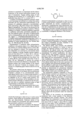
The structure of the polyketone polymers is that of a linear alternating polymer of carbon monoxide and ethylenically unsaturated hydrocarbon and the polymer will contain substantially one molecule of carbon monoxide for each molecule of unsaturated hydrocarbon. When terpolymers of carbon monoxide, ethylene and a second hydrocarbon are employed in the blends of the invention there will be within the terpolymer at least two units incorporating a moiety of ethylene for each unit incorporating a molecule of the second hydrocarbon, preferably from about 10 units to about 100 units incorporating a moiety of ethylene for each unit incorporating a moiety of the second hydrocarbon. The polymer chain is therefore illustrated by the formula ##STR1## where B is the moiety obtained by polymerization of the second hydrocarbon through the ethylenic unsaturation. The --CO(CH2 --CH2) units and the --CO(B) units are found randomly throughout the polymer chain and the ratio of y:x is no more than about 0.5. In the modification of the invention where copolymers are employed the second hydrocarbon is not present and the polymers are represented by the above formula wherein y=0. When y is other than 0, as in the case of terpolymers, ratios of y:x from about 0.01 to about 0.1 are preferred. The end groups or "caps" of the polymer chain will depend on what materials are present during the production of the polymer and whether and how the polymer was purified. The precise nature of the end groups is of little significance with regard to the overall properties of the polymer so that the polymer is fairly represented by the above formula. Of particular interest are the polyketone polymers of molecular weight from about 1,000 to about 200,000, particularly those polyketone polymers of number average molecular weight from about 20,000 to about 90,000 as determined by gel permeation chromatography. The physical properties of such polymers will depend in part on whether the polymer is a copolymer or a terpolymer and the relative proportion of the second hydrocarbon present in the case of terpolymers. Typical melting points of such polymers are from about 175° C. to about 300° C., more preferably from about 210° C. to about 270° C.
A method of producing polyketone polymers which is now becoming conventional is to contact the carbon monoxide and the unsaturated hydrocarbon(s) in the presence of a palladium compound, a non-hydrohalogenic acid having a pKa below about 6 and a bidentate ligand of phosphorus. The scope of the process for the production of polyketone polymer is extensive. Without wishing to be limited, a preferred palladium compound is a palladium carboxylate, particularly palladium acetate, the preferred anion is the anion of trifluoroacetic acid or p-toluenesulfonic acid and the preferred bidentate ligand is 1,3-bis(diphenylphosphino)propane or 1,3-bis[di(2-methoxyphenyl)phosphino]propane. Such a process for polyketone production is illustrated by copending U.S. patent application Ser. No. 930,468, filed Nov. 14, 1986 (Docket No. K-0722).
Polymerization is conducted under polymerization conditions in the gaseous phase or in a liquid phase in the presence of a reaction diluent such as a lower alkanol, e.g., methanol or ethanol. The reactants and catalyst composition are contacted by conventional means such as shaking or stirring. Suitable reaction temperatures are from about 20° C. to about 150° C. with preferred temperatures being from about 50° C. to about 135° C. Typical reaction pressures are from about 1 bar to about 200 bar, more typically from about 10 bar to about 100 bar. Subsequent to reaction the polymer product is recovered as by filtration or decantation. The polymer product may contain residues of the catalyst which are removed, if desired, by treatment with a solvent or a complexing agent which is selective for the residues.
The polymer which forms the dispersed or partially discontinuous phase of the blends with the polyketones comprises a polymer of an α,β-ethylenically unsaturated alkenyl nitrile of up to 8 carbon atoms inclusive, a vinyl aromatic compound of up to 10 carbon atoms, and an alkadiene of up to 8 carbon atoms inclusive. For convenience, this polymer will be identified as the dispersed polymer although it is understood that the polymer can exist as a partially continuous phase at high concentrations in the blends of the invention.
The α,β-ethylenically unsaturated nitrile used to produce the dispersed polymer is preferably an alkenyl nitrile of the formula ##STR2## wherein R is hydrogen or alkyl of up to 2 carbon atoms inclusive. These nitriles are acrylonitrile, methacrylonitrile, and ethacrylonitrile. Preferred nitriles of the above formula are acrylonitrile and methacrylonitrile and particularly preferred is acrylonitrile.
The vinyl compound used to produce the dispersed polymer is preferably a vinyl aromatic compound of the formula ##STR3## wherein R independently is hydrogen or alkyl of up to 2 carbon atoms inclusive. Illustrative of such vinyl aromatic compounds are styrene, α-methylstyrene, α-ethylstyrene, o-methylstyrene, and p-ethylstyrene. Styrene and α-methylstyrene are preferred vinyl aromatic compounds of the above formula, particularly styrene.
The alkadiene used to prepare the dispersed polymer is preferably a conjugated alkadiene of the formula ##STR4## wherein R is hydrogen or alkyl of up to 2 carbon atoms inclusive. Preferred alkadienes are butadiene, isoprene and 2-ethyl-1,3-butadiene. Of these, butadiene is the most preferred conjugated alkadiene.
The alkenyl nitrile, vinyl aromatic, and alkadiene monomers can be combined in a variety of ways to produce the dispersed polymer of the blend. In one modification, the alkenyl nitrile and vinyl aromatic monomers are grafted polymerized upon a backbone of polyalkadiene. In another modification, the alkenyl nitrile and the vinyl aromatic compound are copolymerized to about 70-90% of completion, alkadiene is then added and the polymerization continued. In another modification, copolymers of the alkenyl nitrile and the vinyl aromatic, having less than 40% by weight of the alkenyl nitrile based on the total copolymer, are melt processed with polymerized alkadiene under conditions sufficient to graft some of the poly(alkadiene) to the poly(vinyl aromatic/alkenyl nitrile). The preferred polymer is characterized by polymerized alkadiene being highly dispersed in the alkenyl nitrile/vinyl aromatic polymer matrix and is essentially gel free.
The polymerized alkadiene component of the dispersed polymer is present in an amount of up to about 35% by weight based on the total weight of the dispersed polymer. Preferred quantities of polymerized alkadiene are from about 5% by weight to about 25% by weight on the same basis. The preferred dispersed polymers are produced from acrylonitrile, butadiene, and styrene, and are commercially referred to as ABS polymers. The production of such preferred ABS polymers is illustrated by U.S. Pat. No. 4,287,318. The production of the dispersed polymer is generally well known to persons skilled in the art. Suitable ABS polymers for use in the invention are available from Borg Warner which sells the polymers under the trademark CYCOLAC.
The blends of the invention are predominantly polyketone with a lesser quantity of the alkenylnitrile/alkadiene/vinyl aromatic polymer. The precise percentage of the components to be employed in the blends of the invention is not critical and percentages from about 0.5% by weight to about 50% by weight, based on total blend, of the poly(alkenyl nitrile/alkadiene/vinyl aromatic) are believed to be satisfactory with 0.5% to 35% being the preferred concentration for a truly dispersed phase.
The method of producing the blends of the invention is not material so long as a uniform blend is produced without undue degradation of the blend or its components. In one modification the polymer components of the blend are extruded in a corotating twin screw extruder to produce the blend. In an alternate modification, the polymer components are blended in a mixing device which exhibits high shear.
The blends of the invention are non-miscible blends having improved melt strength and high gloss in comparison to the polyketone polymer. The blends will not, of course, be homogeneous but good results are obtained when uniform mixtures of the dispersed phase in the polyketone matrix are obtained.
The blends of the invention may also include conventional additives such as antioxidants and stabilizers, fillers and fire resistant materials, mold release agents, colorants and other materials designed to improve the processability of the polymers or the properties of the resulting blend. Such additives are added by conventional methods prior to, together with or subsequent to the blending of the polyketone and the nitrilic polymer.
The blends are processed by conventional methods such as extrusion and injection molding into sheets, films, plates and shaped parts. Illustrative of such applications are the production of internal as external parts for automotive use.
The invention is further illustrated by the following Illustrative Embodiments which should not be regarded as limiting.
A linear alternating terpolymer of carbon monoxide, ethylene and propylene was produced in the presence of a catalyst composition formed from palladium acetate, the anion of trifluoroacetic acid and 1,3-bis[di(2-methoxyphenyl)phosphino]propane. The melting point of the polymer was 196° C. and the polymer had a limiting viscosity number (LVN) of 1.7 when measured in m-cresol at 60° C. Small amounts of IRGANOX 1076 and IONOL® antioxidants, which are conventional hindered phenolic antioxidants, were added for stabilization.
The terpolymer was extruded in a twin screw Baker Perkins extruder at 245° C. and 300 rpm then injection molded at 235° C. for measurement of impact strength and room temperature tensile properties. The composition obstructed the injection molding nozzle and measurements of properties were not made.
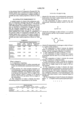
A terpolymer of CO/ethylene/propylene was prepared as described in Comparative Example I with the exception that 0.5% by weight of ETHANOX 330 was added as an antioxidant. Polymer extrusion and molding was conducted at the same conditions except that the extrusion temperature was 250° C. The composition obstructed the injection molding nozzle but did not preclude measurement of properties. The molded sample had a notched Izod impact strength of 3.2 ft. lbs/in. at room temperature, a tangent modulus of 200,000 and other tensile properties as shown in Table I.
A molded sample of a blend of the polyketone polymer of Comparative Example I and 20% by weight (based on total blend) of Borg-Warner's CYCOLAC 3540 ABS polymer was produced with the same procedure as described in Comparative Example II except that the extrusion temperature was 256° C. and the injection molding temperature was 240° C. The polymer blend exhibited increased melt strength, was very easy to mold, and produced molded parts having high gloss in comparison to the polymer blend of Comparative Example II. The molded sample had a notched Izod impact strength of 2.2 ft. lbs/in. at room temperature, a tangent modulus of 215,000 and other tensile properties as shown in Table I.
              TABLE I
______________________________________
        Room Temperature Tensile Properties
          Tangent  Yield    Tensile @
                                    Elongation @
Polymer   Modulus  Stress psi
                            Break,psi
                                    Break, %
______________________________________
Comparative
          --       --       --      --
Example I
Comparative
          200,000  7,300    7,300   8
Example II
Illustrative
          215,000  6,800    6,800   5
Embodiment I
______________________________________
A linear alternating terpolymer of carbon monoxide, ethylene and propylene was produced in the presence of a catalyst composition formed from palladium acetate, the anion of trifluoroacetic acid and 1,3-bis[di(2-methoxyphenyl)phosphino]propane. The melting point of the polymer was 220° C. and the polymer had a limiting viscosity number (LVN) of 2.0 when measured in m-cresol at 60° C. Small amounts of IRGANOX 1076 and IONOL® antioxidants, which are conventional hindered phenolic antioxidants, were added for stabilization, and 0.5% by weight of ETHANOX 330 was added as an antioxidant.
The terpolymer was extruded in a twin screw Baker Perkins extruder at 245° C. and 300 rpm then injection molded at 240° C. and 900 psi for measurement of impact strength and room temperature tensile properties. The molded sample had a notched Izod impact strength of 3.9 ft. lbs/in. at room temperature, a tangent modulus of 190,000 and other tensile properties as shown in Table II.
A molded sample of a blend of the polyketone polymer of Comparative Example III and 20% by weight (based on total blend) of Borg-Warner's CYCOLAC 3540 ABS polymer was produced with the same procedure as described in Comparative Example III except that the extrusion temperature was 255° C. and the injection molding pressure was 1500 psi. The polymer blend exhibited increased melt strength in comparison to the polymer blend of Comparative Example III. The molded sample had a notched Izod impact strength of 1.8 ft. lbs/in. at room temperature, a tangent modulus of 220,000 and other tensile properties as shown in Table II.
A molded sample of a blend of the polyketone polymer of Comparative Example III and 40% by weight (based on total blend) of Borg-Warner's CYCOLAC 3540 ABS polymer was produced with the same procedure as described in Comparative Example III except that the extrusion temperature was 255° C. and the injection molding pressure was 1200 psi. The polymer blend exhibited increased melt strength in comparison to the polymer blend of Comparative Example III. The molded sample had a notched Izod impact strength of 1.2 ft. lbs/in. at room temperature, a tangent modulus of 225,000 and other tensile properties as shown in Table II.
A molded sample of a blend of the polyketone polymer of Comparative Example III and 60% by weight (based on total blend) of Borg-Warner's CYCOLAC 3540 ABS polymer was produced with the same procedure as described in Comparative Example III except that the extrusion temperature was 250° C. and the injection molding pressure was 800 psi. The polymer blend exhibited poor mold strength in comparison to the polymer blend of Comparative Example III. The molded sample had a notched Izod impact strength of 1.8 ft. lbs/in. at room temperature, a tangent modulus of 230,000 and other tensile properties as shown in Table II.
              TABLE II
______________________________________
        Room Temperature Tensile Properties
          Tangent  Yield    Tensile @
                                    Elongation @
Polymer   Modulus  Stress psi
                            Break, psi
                                    Break, %
______________________________________
Comparative
          190,000  8,400    9,800   311
Example III
Illustrative
          220,000  7,800    6,800   94
Embodiment
II
Illustrative
          225,000  7,100    6,200   108
Embodiment
III
Illustrative
          230,000  6,900    5,800   39
Embodiment
IV
______________________________________
Claims (10)
1. A composition comprising:
a linear alternating polymer of carbon monoxide and at least one ethylenically unsaturated hydrocarbon; and
a second polymer of a vinyl aromatic monomer, an α,β-ethylenically unsaturated alkenyl nitrile, and a conjugated alkadiene, the alkadiene being present in an amount less than about 35% by weight of the second polymer which is present in an amount between about 0.5% and about 50% by weight of the composition.
2. The composition of claim 1 wherein the linear alternating polymer is represented by the formula
__________________________________________________________________________
Particle size [mm]
       <0.125
           0.125-0.250
                 0.250-0.5
                      0.5-1.0
                          1.0-2.0
                              >2.0
__________________________________________________________________________
Example
       0   0.9   61.4 35.2
                          1.7 0.8
                                 [% wt.]
Comparative
Experiment
       0.2 3.9   41.8 28.8
                          13.5
                              1.8
__________________________________________________________________________
 ##STR5##
 wherein B is the moiety of an ethylenically unsaturated hydrocarbon of at
 least 3 carbon atoms and the ratio of y:x is no more than about 0.5.
3. The composition of claim 2 wherein the α,β-ethylenically unsaturated alkenyl nitrile is of the formula ##STR6## wherein R is hydrogen or alkyl of from 1 to 2 carbon atoms inclusive, and the vinyl aromatic compound is of the formula ##STR7## wherein R independently is hydrogen or alkyl of from 1 to 2 carbon atoms inclusive.
4. The composition of claim 3 wherein the alkenyl nitrile is acrylonitrile, the vinyl aromatic monomer is styrene, and the conjugated alkadiene is butadiene.
5. The composition of claim 2 wherein y is zero.
6. The composition of claim 2 wherein B is a moiety of propylene and the ratio of y:x is from about 0.01 to about 0.1.
7. The composition of claim 1 wherein the second polymer is present as a dispersed phase.
8. The composition of claim 7 wherein the alkadiene is present in an amount of from about 5% by weight to about 25% by weight, based on the weight of the second polymer.
9. The composition of claim 1 wherein the linear alternating polymer is produced by reacting the carbon monoxide and the ethylenically unsaturated hydrocarbon in the presence of a catalyst composition comprising a palladium compound, a non-hydrohalogenic acid having a pKa below about 6, and a bidentate ligand of phosphorus.
10. The composition of claim 9 wherein the bidentate ligand is 1,3-bis[di(2-methoxyphenyl)phosphino]propane.
Priority Applications (1)
| Application Number | Priority Date | Filing Date | Title |
|---|---|---|---|
| US07/288,367 US4900789A (en) | 1988-12-22 | 1988-12-22 | Polymer blend of carbon monoxide/olefin copolymer and conjugated alkadiene |
Applications Claiming Priority (1)
| Application Number | Priority Date | Filing Date | Title |
|---|---|---|---|
| US07/288,367 US4900789A (en) | 1988-12-22 | 1988-12-22 | Polymer blend of carbon monoxide/olefin copolymer and conjugated alkadiene |
Publications (1)
| Publication Number | Publication Date |
|---|---|
| US4900789A true US4900789A (en) | 1990-02-13 |
Family
ID=23106800
Family Applications (1)
| Application Number | Title | Priority Date | Filing Date |
|---|---|---|---|
| US07/288,367 Expired - Fee Related US4900789A (en) | 1988-12-22 | 1988-12-22 | Polymer blend of carbon monoxide/olefin copolymer and conjugated alkadiene |
Country Status (1)
| Country | Link |
|---|---|
| US (1) | US4900789A (en) |
Cited By (13)
| Publication number | Priority date | Publication date | Assignee | Title |
|---|---|---|---|---|
| US5132360A (en) * | 1990-05-29 | 1992-07-21 | Shell Oil Company | Polyketone polymer blends |
| US5162432A (en) * | 1990-04-12 | 1992-11-10 | Shell Oil Company | Polyketone polymer blends |
| EP0457374A3 (en) * | 1990-02-12 | 1992-11-25 | Shell Internationale Research Maatschappij B.V. | Polyketone polymer blends comprising a linear alternating polymer of carbon monoxide and ethylenically unsaturated compounds |
| EP0530894A1 (en) * | 1991-08-22 | 1993-03-10 | Shell Internationale Researchmaatschappij B.V. | A composition comprising a polymer of carbon monoxide with ethylenically unsaturated compounds |
| USH1403H (en) * | 1990-05-21 | 1995-01-03 | Shell Oil Company | Polyketone polymer blends |
| WO1998054262A1 (en) * | 1997-05-29 | 1998-12-03 | Bp Chemicals Limited | Toughened polyketone composition |
| EP0940441A1 (en) * | 1998-03-06 | 1999-09-08 | General Electric Company | A vinyl aromatic/ketone polymer composition |
| WO1999054406A1 (en) * | 1998-04-21 | 1999-10-28 | Bayer Aktiengesellschaft | Thermoplastic polyketone moulding materials with improved properties |
| WO1999058607A1 (en) * | 1998-05-11 | 1999-11-18 | Basf Aktiengesellschaft | POLYMER MIXTURES CONTAINING CARBON MONOXIDE/α-OLEFIN COPOLYMERS AND COPOLYMERS MADE OF VINYL AROMATIC COMPOUNDS AND VINYL CYANIDES |
| US20030217964A1 (en) * | 2002-05-24 | 2003-11-27 | Eu Bruce Ming-Da | Membrane material for automated dialysis system |
| KR100595562B1 (en) * | 2004-11-24 | 2006-07-03 | 주식회사 효성 | Method of manufacturing polyketone |
| KR100652087B1 (en) * | 2004-11-24 | 2006-12-01 | 주식회사 효성 | Method of manufacturing polyketone |
| WO2021012187A1 (en) * | 2019-07-23 | 2021-01-28 | 金发科技股份有限公司 | High-performance flame retardant abs composite material and preparation method therefor |
Citations (19)
| Publication number | Priority date | Publication date | Assignee | Title |
|---|---|---|---|---|
| US2495286A (en) * | 1949-06-08 | 1950-01-24 | Du Pont | Interpolymers of carbon monoxide and method for preparing the same |
| US3264272A (en) * | 1961-08-31 | 1966-08-02 | Du Pont | Ionic hydrocarbon polymers |
| US3325458A (en) * | 1965-11-29 | 1967-06-13 | Standard Oil Co | Acrylonitrile interpolymers |
| US3336276A (en) * | 1966-02-21 | 1967-08-15 | Standard Oil Co | Novel synthetic polymers |
| GB1081304A (en) * | 1965-03-23 | 1967-08-31 | Ici Ltd | Improvements in or relating to chemical compounds |
| US3426102A (en) * | 1965-08-18 | 1969-02-04 | Standard Oil Co | Polymerizates of olefinic nitriles and diene-nitrile rubbers |
| US3451538A (en) * | 1966-04-21 | 1969-06-24 | Monsanto Co | Packaging films with improved properties |
| US3538194A (en) * | 1967-03-20 | 1970-11-03 | Copolymer Rubber & Chem Corp | Preparation of rubber modified plastics |
| US3540577A (en) * | 1967-06-23 | 1970-11-17 | Monsanto Co | Interpolymers of methacrylonitrile and lower alpha-olefins and packaging materials prepared therefrom |
| US3580974A (en) * | 1969-01-03 | 1971-05-25 | Monsanto Co | Nitrile polymeric blends |
| US3586737A (en) * | 1969-02-13 | 1971-06-22 | Standard Oil Co | Impact-resistant rubber-modified olefinic nitrile-acrylic ester polymers |
| US3634547A (en) * | 1969-07-17 | 1972-01-11 | Ici Ltd | Thermoplastic compositions |
| US3652731A (en) * | 1970-11-13 | 1972-03-28 | Standard Oil Co Ohio | New polymeric compositions |
| US3671607A (en) * | 1969-10-14 | 1972-06-20 | Monsanto Co | Method for impact modification of ethylenically unsaturated nitrile polymers and polymer blends produced thereby |
| US3694412A (en) * | 1971-03-04 | 1972-09-26 | Shell Oil Co | Process for preparing interpolymers of carbon monoxide in the presence of aryl phosphine-palladium halide complex |
| US3951932A (en) * | 1974-06-17 | 1976-04-20 | Standard Oil Company | Process for preparing olefinic nitrile-vinyl aromatic resins |
| US4287318A (en) * | 1980-03-27 | 1981-09-01 | Labofina S.A. | Process for preparing rubber reinforced styrenic resins |
| EP0121965A2 (en) * | 1983-04-06 | 1984-10-17 | Shell Internationale Researchmaatschappij B.V. | Process for the preparation of polyketones |
| EP0181014A1 (en) * | 1984-10-05 | 1986-05-14 | Shell Internationale Researchmaatschappij B.V. | Process for the preparation of polyketones |
-
1988
- 1988-12-22 US US07/288,367 patent/US4900789A/en not_active Expired - Fee Related
Patent Citations (20)
| Publication number | Priority date | Publication date | Assignee | Title |
|---|---|---|---|---|
| US2495286A (en) * | 1949-06-08 | 1950-01-24 | Du Pont | Interpolymers of carbon monoxide and method for preparing the same |
| US3264272A (en) * | 1961-08-31 | 1966-08-02 | Du Pont | Ionic hydrocarbon polymers |
| US3404134A (en) * | 1961-08-31 | 1968-10-01 | Du Pont | Process of crosslinking polymers |
| GB1081304A (en) * | 1965-03-23 | 1967-08-31 | Ici Ltd | Improvements in or relating to chemical compounds |
| US3426102A (en) * | 1965-08-18 | 1969-02-04 | Standard Oil Co | Polymerizates of olefinic nitriles and diene-nitrile rubbers |
| US3325458A (en) * | 1965-11-29 | 1967-06-13 | Standard Oil Co | Acrylonitrile interpolymers |
| US3336276A (en) * | 1966-02-21 | 1967-08-15 | Standard Oil Co | Novel synthetic polymers |
| US3451538A (en) * | 1966-04-21 | 1969-06-24 | Monsanto Co | Packaging films with improved properties |
| US3538194A (en) * | 1967-03-20 | 1970-11-03 | Copolymer Rubber & Chem Corp | Preparation of rubber modified plastics |
| US3540577A (en) * | 1967-06-23 | 1970-11-17 | Monsanto Co | Interpolymers of methacrylonitrile and lower alpha-olefins and packaging materials prepared therefrom |
| US3580974A (en) * | 1969-01-03 | 1971-05-25 | Monsanto Co | Nitrile polymeric blends |
| US3586737A (en) * | 1969-02-13 | 1971-06-22 | Standard Oil Co | Impact-resistant rubber-modified olefinic nitrile-acrylic ester polymers |
| US3634547A (en) * | 1969-07-17 | 1972-01-11 | Ici Ltd | Thermoplastic compositions |
| US3671607A (en) * | 1969-10-14 | 1972-06-20 | Monsanto Co | Method for impact modification of ethylenically unsaturated nitrile polymers and polymer blends produced thereby |
| US3652731A (en) * | 1970-11-13 | 1972-03-28 | Standard Oil Co Ohio | New polymeric compositions |
| US3694412A (en) * | 1971-03-04 | 1972-09-26 | Shell Oil Co | Process for preparing interpolymers of carbon monoxide in the presence of aryl phosphine-palladium halide complex |
| US3951932A (en) * | 1974-06-17 | 1976-04-20 | Standard Oil Company | Process for preparing olefinic nitrile-vinyl aromatic resins |
| US4287318A (en) * | 1980-03-27 | 1981-09-01 | Labofina S.A. | Process for preparing rubber reinforced styrenic resins |
| EP0121965A2 (en) * | 1983-04-06 | 1984-10-17 | Shell Internationale Researchmaatschappij B.V. | Process for the preparation of polyketones |
| EP0181014A1 (en) * | 1984-10-05 | 1986-05-14 | Shell Internationale Researchmaatschappij B.V. | Process for the preparation of polyketones |
Cited By (18)
| Publication number | Priority date | Publication date | Assignee | Title |
|---|---|---|---|---|
| EP0457374A3 (en) * | 1990-02-12 | 1992-11-25 | Shell Internationale Research Maatschappij B.V. | Polyketone polymer blends comprising a linear alternating polymer of carbon monoxide and ethylenically unsaturated compounds |
| US5162432A (en) * | 1990-04-12 | 1992-11-10 | Shell Oil Company | Polyketone polymer blends |
| EP0451918A3 (en) * | 1990-04-12 | 1992-11-25 | Shell Internationale Research Maatschappij B.V. | Polyketone polymer compositions |
| USH1403H (en) * | 1990-05-21 | 1995-01-03 | Shell Oil Company | Polyketone polymer blends |
| US5132360A (en) * | 1990-05-29 | 1992-07-21 | Shell Oil Company | Polyketone polymer blends |
| EP0459587A3 (en) * | 1990-05-29 | 1993-03-03 | Shell Internationale Research Maatschappij B.V. | Polyketone polymer compositions |
| EP0530894A1 (en) * | 1991-08-22 | 1993-03-10 | Shell Internationale Researchmaatschappij B.V. | A composition comprising a polymer of carbon monoxide with ethylenically unsaturated compounds |
| US5369180A (en) * | 1991-08-22 | 1994-11-29 | Shell Oil Company | Miscible polyketone polymer blend |
| WO1998054262A1 (en) * | 1997-05-29 | 1998-12-03 | Bp Chemicals Limited | Toughened polyketone composition |
| EP0940441A1 (en) * | 1998-03-06 | 1999-09-08 | General Electric Company | A vinyl aromatic/ketone polymer composition |
| SG167648A1 (en) * | 1998-03-06 | 2011-01-28 | Gen Electric | A vinyl aromatic/ketone polymer composition |
| WO1999054406A1 (en) * | 1998-04-21 | 1999-10-28 | Bayer Aktiengesellschaft | Thermoplastic polyketone moulding materials with improved properties |
| WO1999058607A1 (en) * | 1998-05-11 | 1999-11-18 | Basf Aktiengesellschaft | POLYMER MIXTURES CONTAINING CARBON MONOXIDE/α-OLEFIN COPOLYMERS AND COPOLYMERS MADE OF VINYL AROMATIC COMPOUNDS AND VINYL CYANIDES |
| US20030217964A1 (en) * | 2002-05-24 | 2003-11-27 | Eu Bruce Ming-Da | Membrane material for automated dialysis system |
| US6764761B2 (en) | 2002-05-24 | 2004-07-20 | Baxter International Inc. | Membrane material for automated dialysis system |
| KR100595562B1 (en) * | 2004-11-24 | 2006-07-03 | 주식회사 효성 | Method of manufacturing polyketone |
| KR100652087B1 (en) * | 2004-11-24 | 2006-12-01 | 주식회사 효성 | Method of manufacturing polyketone |
| WO2021012187A1 (en) * | 2019-07-23 | 2021-01-28 | 金发科技股份有限公司 | High-performance flame retardant abs composite material and preparation method therefor |
Similar Documents
| Publication | Publication Date | Title |
|---|---|---|
| US4900789A (en) | Polymer blend of carbon monoxide/olefin copolymer and conjugated alkadiene | |
| US4839437A (en) | Blends of polyketone polymer with an at least partially crystalline polyamide polymer | |
| US4874819A (en) | Polymer blend | |
| US4851470A (en) | Mineral filled polyketone blend | |
| US5162432A (en) | Polyketone polymer blends | |
| US4816514A (en) | Polymer blends of polyolefins and alternating copolymers of carbon monoxide and other monomers | |
| US4956412A (en) | Polymer blend | |
| US4818786A (en) | Polymer blend of carbon monoxide/olefin copolymer and a polyvinylidine fluoride polymer | |
| US4904728A (en) | Polymer blends | |
| CA1324229C (en) | Mica-filled carbon monoxide unsaturated monomer copolymer | |
| US4960838A (en) | Blend of polyketone polymer with an amorphous polyamide polymer | |
| US4866128A (en) | Polymer blend | |
| EP0530894B1 (en) | A composition comprising a polymer of carbon monoxide with ethylenically unsaturated compounds | |
| US5071916A (en) | Blends of linear alternating polyketones and partially neutralized acidic polymers | |
| US4818798A (en) | Polymer blend of carbon monoxide/olefin copolymer and copolyester elastomer | |
| US4839435A (en) | Polymer blend of carbon monoxide/olefin copolymer and a poly(arylsulfone) polymer | |
| US4874825A (en) | Polymer blend of carbon monoxide olefin copolymer and polyether esteramide polymer | |
| US4824910A (en) | Polymer blend of carbon monoxide/olefin copolymer and a poly(vinylpyridine) polymer | |
| US4814378A (en) | Polymer blend of carbon monoxide/olefin copolymer and a vinyl aromatic compound with an α,β-unsaturated cyclic anhydride copolymer | |
| US4808678A (en) | Polymer blend of carbon monoxide/olefin copolymer and a hydroxyalkyl ether | |
| US5079340A (en) | Stabilized polyketone polymers | |
| US4775708A (en) | Linear alternating polymer of carbon monoxide and olefin plasticized with alkylene carbonate | |
| US4826926A (en) | Polymer blend of carbon monoxide/olefin copolymer and a poly(2-oxazoline) polymer | |
| US5115009A (en) | Polyketone polymer compositions containing a polar ester or amine lubricating compound | |
| US5082885A (en) | Stabilized ethylene-carbon monoxide copolymer compositions |
Legal Events
| Date | Code | Title | Description |
|---|---|---|---|
| AS | Assignment |
Owner name: SHELL OIL COMPANY, TEXAS Free format text: ASSIGNMENT OF ASSIGNORS INTEREST.;ASSIGNOR:GERGEN, WILLIAM P.;REEL/FRAME:005184/0678 Effective date: 19881207 |
|
| FEPP | Fee payment procedure |
Free format text: PAYOR NUMBER ASSIGNED (ORIGINAL EVENT CODE: ASPN); ENTITY STATUS OF PATENT OWNER: LARGE ENTITY |
|
| FPAY | Fee payment |
Year of fee payment: 4 |
|
| REMI | Maintenance fee reminder mailed | ||
| LAPS | Lapse for failure to pay maintenance fees | ||
| FP | Lapsed due to failure to pay maintenance fee |
Effective date: 19980218 |
|
| STCH | Information on status: patent discontinuation |
Free format text: PATENT EXPIRED DUE TO NONPAYMENT OF MAINTENANCE FEES UNDER 37 CFR 1.362 |