US4900769A - Acetal resin composition - Google Patents
Acetal resin composition Download PDFInfo
- Publication number
- US4900769A US4900769A US07/198,492 US19849288A US4900769A US 4900769 A US4900769 A US 4900769A US 19849288 A US19849288 A US 19849288A US 4900769 A US4900769 A US 4900769A
- Authority
- US
- United States
- Prior art keywords
- acetal resin
- fatty acid
- weight
- higher fatty
- carbon atoms
- Prior art date
- Legal status (The legal status is an assumption and is not a legal conclusion. Google has not performed a legal analysis and makes no representation as to the accuracy of the status listed.)
- Expired - Lifetime
Links
- 239000011354 acetal resin Substances 0.000 title claims abstract description 33
- 229920006324 polyoxymethylene Polymers 0.000 title claims abstract description 33
- DHKHKXVYLBGOIT-UHFFFAOYSA-N 1,1-Diethoxyethane Chemical compound CCOC(C)OCC DHKHKXVYLBGOIT-UHFFFAOYSA-N 0.000 title claims abstract description 32
- 239000000203 mixture Substances 0.000 title claims abstract description 26
- 235000014113 dietary fatty acids Nutrition 0.000 claims abstract description 34
- 239000000194 fatty acid Substances 0.000 claims abstract description 34
- 229930195729 fatty acid Natural products 0.000 claims abstract description 34
- -1 fatty acid ester Chemical class 0.000 claims abstract description 30
- 125000004432 carbon atom Chemical group C* 0.000 claims abstract description 23
- 150000004665 fatty acids Chemical class 0.000 claims abstract description 22
- 239000002253 acid Substances 0.000 claims abstract description 15
- LFQSCWFLJHTTHZ-UHFFFAOYSA-N Ethanol Chemical compound CCO LFQSCWFLJHTTHZ-UHFFFAOYSA-N 0.000 claims abstract description 7
- 150000005846 sugar alcohols Polymers 0.000 claims abstract description 7
- 150000001875 compounds Chemical class 0.000 claims description 8
- 229920001577 copolymer Polymers 0.000 claims description 6
- 150000001408 amides Chemical class 0.000 claims description 5
- 150000002148 esters Chemical class 0.000 claims description 4
- 125000002887 hydroxy group Chemical group [H]O* 0.000 claims description 3
- FTQWRYSLUYAIRQ-UHFFFAOYSA-N n-[(octadecanoylamino)methyl]octadecanamide Chemical compound CCCCCCCCCCCCCCCCCC(=O)NCNC(=O)CCCCCCCCCCCCCCCCC FTQWRYSLUYAIRQ-UHFFFAOYSA-N 0.000 claims description 3
- RKISUIUJZGSLEV-UHFFFAOYSA-N n-[2-(octadecanoylamino)ethyl]octadecanamide Chemical compound CCCCCCCCCCCCCCCCCC(=O)NCCNC(=O)CCCCCCCCCCCCCCCCC RKISUIUJZGSLEV-UHFFFAOYSA-N 0.000 claims description 3
- 230000001476 alcoholic effect Effects 0.000 claims description 2
- 125000005702 oxyalkylene group Chemical group 0.000 claims description 2
- 229920006395 saturated elastomer Polymers 0.000 claims description 2
- 150000002763 monocarboxylic acids Chemical class 0.000 claims 1
- ZZJXLPCLJWLLIZ-UHFFFAOYSA-N n-[(dodecanoylamino)methyl]dodecanamide Chemical compound CCCCCCCCCCCC(=O)NCNC(=O)CCCCCCCCCCC ZZJXLPCLJWLLIZ-UHFFFAOYSA-N 0.000 claims 1
- LYRFLYHAGKPMFH-UHFFFAOYSA-N octadecanamide Chemical compound CCCCCCCCCCCCCCCCCC(N)=O LYRFLYHAGKPMFH-UHFFFAOYSA-N 0.000 description 22
- 229940037312 stearamide Drugs 0.000 description 11
- 230000000052 comparative effect Effects 0.000 description 10
- 238000000465 moulding Methods 0.000 description 7
- JNYAEWCLZODPBN-JGWLITMVSA-N (2r,3r,4s)-2-[(1r)-1,2-dihydroxyethyl]oxolane-3,4-diol Chemical compound OC[C@@H](O)[C@H]1OC[C@H](O)[C@H]1O JNYAEWCLZODPBN-JGWLITMVSA-N 0.000 description 6
- 239000003795 chemical substances by application Substances 0.000 description 6
- LYCAIKOWRPUZTN-UHFFFAOYSA-N Ethylene glycol Chemical compound OCCO LYCAIKOWRPUZTN-UHFFFAOYSA-N 0.000 description 5
- 238000001746 injection moulding Methods 0.000 description 5
- 238000004898 kneading Methods 0.000 description 5
- 238000002156 mixing Methods 0.000 description 5
- 239000011347 resin Substances 0.000 description 5
- 229920005989 resin Polymers 0.000 description 5
- 238000012360 testing method Methods 0.000 description 5
- DRSHXJFUUPIBHX-UHFFFAOYSA-N COc1ccc(cc1)N1N=CC2C=NC(Nc3cc(OC)c(OC)c(OCCCN4CCN(C)CC4)c3)=NC12 Chemical compound COc1ccc(cc1)N1N=CC2C=NC(Nc3cc(OC)c(OC)c(OCCCN4CCN(C)CC4)c3)=NC12 DRSHXJFUUPIBHX-UHFFFAOYSA-N 0.000 description 4
- BQCADISMDOOEFD-UHFFFAOYSA-N Silver Chemical compound [Ag] BQCADISMDOOEFD-UHFFFAOYSA-N 0.000 description 4
- MTHSVFCYNBDYFN-UHFFFAOYSA-N diethylene glycol Chemical compound OCCOCCO MTHSVFCYNBDYFN-UHFFFAOYSA-N 0.000 description 4
- UKMSUNONTOPOIO-UHFFFAOYSA-N docosanoic acid Chemical compound CCCCCCCCCCCCCCCCCCCCCC(O)=O UKMSUNONTOPOIO-UHFFFAOYSA-N 0.000 description 4
- 125000005704 oxymethylene group Chemical group [H]C([H])([*:2])O[*:1] 0.000 description 4
- 229910052709 silver Inorganic materials 0.000 description 4
- 239000004332 silver Substances 0.000 description 4
- WFDIJRYMOXRFFG-UHFFFAOYSA-N Acetic anhydride Chemical compound CC(=O)OC(C)=O WFDIJRYMOXRFFG-UHFFFAOYSA-N 0.000 description 3
- WSFSSNUMVMOOMR-UHFFFAOYSA-N Formaldehyde Chemical compound O=C WSFSSNUMVMOOMR-UHFFFAOYSA-N 0.000 description 3
- PEDCQBHIVMGVHV-UHFFFAOYSA-N Glycerine Chemical compound OCC(O)CO PEDCQBHIVMGVHV-UHFFFAOYSA-N 0.000 description 3
- 238000011156 evaluation Methods 0.000 description 3
- 229920001519 homopolymer Polymers 0.000 description 3
- QGZKDVFQNNGYKY-UHFFFAOYSA-N Ammonia Chemical compound N QGZKDVFQNNGYKY-UHFFFAOYSA-N 0.000 description 2
- IAYPIBMASNFSPL-UHFFFAOYSA-N Ethylene oxide Chemical compound C1CO1 IAYPIBMASNFSPL-UHFFFAOYSA-N 0.000 description 2
- 239000000654 additive Substances 0.000 description 2
- 150000001412 amines Chemical class 0.000 description 2
- OGBUMNBNEWYMNJ-UHFFFAOYSA-N batilol Chemical compound CCCCCCCCCCCCCCCCCCOCC(O)CO OGBUMNBNEWYMNJ-UHFFFAOYSA-N 0.000 description 2
- ICAIHSUWWZJGHD-UHFFFAOYSA-N dotriacontanoic acid Chemical compound CCCCCCCCCCCCCCCCCCCCCCCCCCCCCCCC(O)=O ICAIHSUWWZJGHD-UHFFFAOYSA-N 0.000 description 2
- 230000000694 effects Effects 0.000 description 2
- 238000005187 foaming Methods 0.000 description 2
- XMHIUKTWLZUKEX-UHFFFAOYSA-N hexacosanoic acid Chemical compound CCCCCCCCCCCCCCCCCCCCCCCCCC(O)=O XMHIUKTWLZUKEX-UHFFFAOYSA-N 0.000 description 2
- HSEMFIZWXHQJAE-UHFFFAOYSA-N hexadecanamide Chemical compound CCCCCCCCCCCCCCCC(N)=O HSEMFIZWXHQJAE-UHFFFAOYSA-N 0.000 description 2
- 239000004615 ingredient Substances 0.000 description 2
- 238000002347 injection Methods 0.000 description 2
- 239000007924 injection Substances 0.000 description 2
- 238000000034 method Methods 0.000 description 2
- 239000000178 monomer Substances 0.000 description 2
- MGDIOJPGJAGMGP-UHFFFAOYSA-N pentacosanediamide Chemical compound NC(=O)CCCCCCCCCCCCCCCCCCCCCCCC(N)=O MGDIOJPGJAGMGP-UHFFFAOYSA-N 0.000 description 2
- GRWFGVWFFZKLTI-UHFFFAOYSA-N α-pinene Chemical compound CC1=CCC2C(C)(C)C1C2 GRWFGVWFFZKLTI-UHFFFAOYSA-N 0.000 description 2
- BGJSXRVXTHVRSN-UHFFFAOYSA-N 1,3,5-trioxane Chemical compound C1OCOCO1 BGJSXRVXTHVRSN-UHFFFAOYSA-N 0.000 description 1
- LDVVTQMJQSCDMK-UHFFFAOYSA-N 1,3-dihydroxypropan-2-yl formate Chemical compound OCC(CO)OC=O LDVVTQMJQSCDMK-UHFFFAOYSA-N 0.000 description 1
- CZLMRJZAHXYRIX-UHFFFAOYSA-N 1,3-dioxepane Chemical compound C1CCOCOC1 CZLMRJZAHXYRIX-UHFFFAOYSA-N 0.000 description 1
- WNXJIVFYUVYPPR-UHFFFAOYSA-N 1,3-dioxolane Chemical compound C1COCO1 WNXJIVFYUVYPPR-UHFFFAOYSA-N 0.000 description 1
- GRWFGVWFFZKLTI-IUCAKERBSA-N 1S,5S-(-)-alpha-Pinene Natural products CC1=CC[C@@H]2C(C)(C)[C@H]1C2 GRWFGVWFFZKLTI-IUCAKERBSA-N 0.000 description 1
- SFRDXVJWXWOTEW-UHFFFAOYSA-N 2-(hydroxymethyl)propane-1,3-diol Chemical compound OCC(CO)CO SFRDXVJWXWOTEW-UHFFFAOYSA-N 0.000 description 1
- WXNZTHHGJRFXKQ-UHFFFAOYSA-N 4-chlorophenol Chemical compound OC1=CC=C(Cl)C=C1 WXNZTHHGJRFXKQ-UHFFFAOYSA-N 0.000 description 1
- XZIIFPSPUDAGJM-UHFFFAOYSA-N 6-chloro-2-n,2-n-diethylpyrimidine-2,4-diamine Chemical compound CCN(CC)C1=NC(N)=CC(Cl)=N1 XZIIFPSPUDAGJM-UHFFFAOYSA-N 0.000 description 1
- 235000021357 Behenic acid Nutrition 0.000 description 1
- DPUOLQHDNGRHBS-UHFFFAOYSA-N Brassidinsaeure Natural products CCCCCCCCC=CCCCCCCCCCCCC(O)=O DPUOLQHDNGRHBS-UHFFFAOYSA-N 0.000 description 1
- 229920000049 Carbon (fiber) Polymers 0.000 description 1
- BRLQWZUYTZBJKN-UHFFFAOYSA-N Epichlorohydrin Chemical compound ClCC1CO1 BRLQWZUYTZBJKN-UHFFFAOYSA-N 0.000 description 1
- URXZXNYJPAJJOQ-UHFFFAOYSA-N Erucic acid Natural products CCCCCCC=CCCCCCCCCCCCC(O)=O URXZXNYJPAJJOQ-UHFFFAOYSA-N 0.000 description 1
- 229920000877 Melamine resin Polymers 0.000 description 1
- XBDQKXXYIPTUBI-UHFFFAOYSA-M Propionate Chemical compound CCC([O-])=O XBDQKXXYIPTUBI-UHFFFAOYSA-M 0.000 description 1
- GOOHAUXETOMSMM-UHFFFAOYSA-N Propylene oxide Chemical compound CC1CO1 GOOHAUXETOMSMM-UHFFFAOYSA-N 0.000 description 1
- HVUMOYIDDBPOLL-XWVZOOPGSA-N Sorbitan monostearate Chemical compound CCCCCCCCCCCCCCCCCC(=O)OC[C@@H](O)[C@H]1OC[C@H](O)[C@H]1O HVUMOYIDDBPOLL-XWVZOOPGSA-N 0.000 description 1
- 238000005299 abrasion Methods 0.000 description 1
- 239000006096 absorbing agent Substances 0.000 description 1
- 230000002411 adverse Effects 0.000 description 1
- 125000001931 aliphatic group Chemical group 0.000 description 1
- MVNCAPSFBDBCGF-UHFFFAOYSA-N alpha-pinene Natural products CC1=CCC23C1CC2C3(C)C MVNCAPSFBDBCGF-UHFFFAOYSA-N 0.000 description 1
- 229910021529 ammonia Inorganic materials 0.000 description 1
- 239000003963 antioxidant agent Substances 0.000 description 1
- 229940116226 behenic acid Drugs 0.000 description 1
- 230000015572 biosynthetic process Effects 0.000 description 1
- 239000004917 carbon fiber Substances 0.000 description 1
- 150000004292 cyclic ethers Chemical class 0.000 description 1
- 125000004122 cyclic group Chemical group 0.000 description 1
- 238000000354 decomposition reaction Methods 0.000 description 1
- 230000007547 defect Effects 0.000 description 1
- 150000001470 diamides Chemical class 0.000 description 1
- GPLRAVKSCUXZTP-UHFFFAOYSA-N diglycerol Chemical compound OCC(O)COCC(O)CO GPLRAVKSCUXZTP-UHFFFAOYSA-N 0.000 description 1
- 238000001035 drying Methods 0.000 description 1
- 239000000839 emulsion Substances 0.000 description 1
- DPUOLQHDNGRHBS-KTKRTIGZSA-N erucic acid Chemical compound CCCCCCCC\C=C/CCCCCCCCCCCC(O)=O DPUOLQHDNGRHBS-KTKRTIGZSA-N 0.000 description 1
- 125000004185 ester group Chemical group 0.000 description 1
- 239000000945 filler Substances 0.000 description 1
- 239000003365 glass fiber Substances 0.000 description 1
- 239000012760 heat stabilizer Substances 0.000 description 1
- WGCNASOHLSPBMP-UHFFFAOYSA-N hydroxyacetaldehyde Natural products OCC=O WGCNASOHLSPBMP-UHFFFAOYSA-N 0.000 description 1
- 238000011835 investigation Methods 0.000 description 1
- 230000007774 longterm Effects 0.000 description 1
- VTHJTEIRLNZDEV-UHFFFAOYSA-L magnesium dihydroxide Chemical compound [OH-].[OH-].[Mg+2] VTHJTEIRLNZDEV-UHFFFAOYSA-L 0.000 description 1
- 239000000347 magnesium hydroxide Substances 0.000 description 1
- 229910001862 magnesium hydroxide Inorganic materials 0.000 description 1
- JDSHMPZPIAZGSV-UHFFFAOYSA-N melamine Chemical compound NC1=NC(N)=NC(N)=N1 JDSHMPZPIAZGSV-UHFFFAOYSA-N 0.000 description 1
- 238000002844 melting Methods 0.000 description 1
- 230000008018 melting Effects 0.000 description 1
- 150000002762 monocarboxylic acid derivatives Chemical class 0.000 description 1
- HDKLIZDXVUCLHQ-UHFFFAOYSA-N non-3-en-2-one Chemical compound CCCCCC=CC(C)=O HDKLIZDXVUCLHQ-UHFFFAOYSA-N 0.000 description 1
- FATBGEAMYMYZAF-KTKRTIGZSA-N oleamide Chemical compound CCCCCCCC\C=C/CCCCCCCC(N)=O FATBGEAMYMYZAF-KTKRTIGZSA-N 0.000 description 1
- FATBGEAMYMYZAF-UHFFFAOYSA-N oleicacidamide-heptaglycolether Natural products CCCCCCCCC=CCCCCCCCC(N)=O FATBGEAMYMYZAF-UHFFFAOYSA-N 0.000 description 1
- WXZMFSXDPGVJKK-UHFFFAOYSA-N pentaerythritol Chemical compound OCC(CO)(CO)CO WXZMFSXDPGVJKK-UHFFFAOYSA-N 0.000 description 1
- 239000000049 pigment Substances 0.000 description 1
- 230000000379 polymerizing effect Effects 0.000 description 1
- 239000000243 solution Substances 0.000 description 1
- 229940035044 sorbitan monolaurate Drugs 0.000 description 1
- 239000001587 sorbitan monostearate Substances 0.000 description 1
- 229940035048 sorbitan monostearate Drugs 0.000 description 1
- 235000011076 sorbitan monostearate Nutrition 0.000 description 1
- 238000003756 stirring Methods 0.000 description 1
- 239000000725 suspension Substances 0.000 description 1
- NGCMLEQSKQCTAK-UHFFFAOYSA-N tetraoxane Chemical compound C1COOOO1 NGCMLEQSKQCTAK-UHFFFAOYSA-N 0.000 description 1
- 238000005979 thermal decomposition reaction Methods 0.000 description 1
- 239000013638 trimer Substances 0.000 description 1
- RQIDQEBURXNDKG-MDZDMXLPSA-N ximenic acid Chemical compound CCCCCCCC\C=C\CCCCCCCCCCCCCCCC(O)=O RQIDQEBURXNDKG-MDZDMXLPSA-N 0.000 description 1
Images


Classifications
-
- C—CHEMISTRY; METALLURGY
- C08—ORGANIC MACROMOLECULAR COMPOUNDS; THEIR PREPARATION OR CHEMICAL WORKING-UP; COMPOSITIONS BASED THEREON
- C08L—COMPOSITIONS OF MACROMOLECULAR COMPOUNDS
- C08L59/00—Compositions of polyacetals; Compositions of derivatives of polyacetals
-
- C—CHEMISTRY; METALLURGY
- C08—ORGANIC MACROMOLECULAR COMPOUNDS; THEIR PREPARATION OR CHEMICAL WORKING-UP; COMPOSITIONS BASED THEREON
- C08K—Use of inorganic or non-macromolecular organic substances as compounding ingredients
- C08K5/00—Use of organic ingredients
- C08K5/04—Oxygen-containing compounds
- C08K5/10—Esters; Ether-esters
- C08K5/101—Esters; Ether-esters of monocarboxylic acids
- C08K5/103—Esters; Ether-esters of monocarboxylic acids with polyalcohols
-
- C—CHEMISTRY; METALLURGY
- C08—ORGANIC MACROMOLECULAR COMPOUNDS; THEIR PREPARATION OR CHEMICAL WORKING-UP; COMPOSITIONS BASED THEREON
- C08K—Use of inorganic or non-macromolecular organic substances as compounding ingredients
- C08K5/00—Use of organic ingredients
- C08K5/04—Oxygen-containing compounds
- C08K5/10—Esters; Ether-esters
-
- C—CHEMISTRY; METALLURGY
- C08—ORGANIC MACROMOLECULAR COMPOUNDS; THEIR PREPARATION OR CHEMICAL WORKING-UP; COMPOSITIONS BASED THEREON
- C08K—Use of inorganic or non-macromolecular organic substances as compounding ingredients
- C08K5/00—Use of organic ingredients
- C08K5/16—Nitrogen-containing compounds
- C08K5/20—Carboxylic acid amides
Definitions
- This invention relates to an acetal resin composition. More specifically, it relates to an acetal resin composition having highly improved releasability in injection molding without substantially impairing the inherent mechanical properties and thermal stability of the acetal resin and the appearance of an article molded from it.
- the acetal resin is injection-molded into machine component parts and precision mechanism parts of complex structures because it has excellent flowability as well as well-balanced mechanical properties, excellent abrasion resistance and excellent thermal stability.
- a complex structure includes, for example, thick-walled portions and thin-walled portions occasionally with tangled ultrathin-walled portions or hollow cylindrical protrusions.
- these parts are frequently small-sized with a weight of about several grams to several tens of grams.
- Japanese Laid-Open Patent Publication No. 104151/1985 discloses an acetal resin composition of improved mold releasability which contains at least one higher fatty acid having 22 to 32 carbon atoms. Although this composition has sufficient mold releasability, it has the defect that when it is caused to stay for a long period of time at high temperatures within a molding machine, foaming occurs to develop silver streaks.
- Another object of this invention is to provide an acetal resin composition having highly improved mold releasability in injection molding without substantially impairing the inherent mechanical properties and thermal stability of the acetal resin and the appearance of an article molded from it.
- an acetal resin composition comprising (A) 100 parts by weight of an acetal resin, and (B) 0.01 to 2 parts by weight of a higher fatty acid ester derived from a polyhydric alcohol having 2 to 10 carbon atoms as an alcohol component and a higher fatty acid having 22 to 32 carbon atoms as an acid component.
- the higher fatty acid ester used in the composition of this invention denotes a compound derived from a polyhydric alcohol having 2 to 10 carbon atoms as an alcohol component and a higher fatty acid having 22 to 32 carbon atoms as an acid component and containing at least one ester group in the molecule.
- the polyhydric alcohol is preferably a compound having at least 2, especially 2 to 6, alcoholic hydroxyl groups in the molecule.
- examples include glycerol, diglycerol, pentaerythritol, sorbitan, ethylene glycol, diethylene glycol, trimethylolmethane and triethylolmethane.
- the higher fatty acid may be linear or branched and may be saturated or unsaturated. It may be a monocarboxylic acid or a di- or higher polycarboxylic acid. Preferred examples include behenic acid, cerotic acid, montan acid, lacceric acid, erucic acid and ximenic acid.
- the higher fatty acid ester is included in an amount of 0.01 to 2 parts by weight, preferably 0.05 to 0.3 parts by weight, per 100 parts by weight of the acetal resins.
- the acetal resin used in the composition of this invention may, for example, be an oxymethylene homopolymer composed substantially of oxymethylene units, or an oxymethylene copolymer comprising not more than 20% by weight, for example 0.1 to 20% by weight, of oxyalkylene units having 2 to 8 carbon atoms.
- the oxymethylene homopolymer can be produced, for example, by polymerizing a formaldehyde monomer of a cyclic oligomer thereof such as its trimer (trioxane) or its tetramer (tetroxane).
- the oxymethylene copolymer can be produced, for example, by copolymerizing the aforesaid monomer with a cyclic ether such as ethylene oxide, propylene oxide, epichlorohydrin, 1,3-dioxolane, 1,3-dioxepane, a formal of a glycol or a formal of a diglycol.
- the invention secondly provides an acetal resin composition
- an acetal resin composition comprising (A) 100 parts of an acetal resin, (B) 0.01 to 2 parts by weight of a higher fatty acid derived from a polyhydric alcohol having 2 to 10 carbon atoms as an alcohol component and a higher fatty acid having 22 to 32 carbon atoms as an acid component, and (C) 0.01 to 2 parts by weight of an amide of a linear fatty acid having at least 10 carbon atoms.
- the acetal resin (A) and the higher fatty acid ester (B) are as already described.
- the amide of a linear fatty acid having at least 10 carbon atoms used in the above composition is preferably an amide derived from a linear fatty acid having at least 10 carbon atoms, preferably 10 to 30 carbon atoms, as an acid component and ammonia, an aliphatic monoamine having 1 to 4 carbon atoms or an aliphatic diamine having 1 to 4 carbon atoms as an amine component.
- Diamides derived from 1 mole of aliphatic diamines and 2 moles of fatty acids having at least 10 carbon atoms are advantageously used.
- Suitable examples of the amines are stearamide, ethylenebis-stearamide, methylenebis-stearamide, methylenebis-lauramide, palmitamide, and oleamide. Ethylenebis-stearamide, methylenebis-stearamide and methylenebis-lauramide are especially preferred.
- the amide (C) is included in an amount of 0.01 to 2 parts by weight, preferably 0.05 to 0.3 part by weight, per 100 parts by weight of the acetal resin.
- additives such as heat stabilizers, antioxidants, ultraviolet absorbers, pigments, fillers, glass fibers and carbon fibers may be incorporated in the composition of this invention.
- the acetal resin composition of this invention may be produced by various methods which comprise mixing or melt-kneading the individual ingredients as an essential step.
- kneaders such as various extruders, kneaders, a Banbury mixer and a mixing roll may be used.
- the kneading may be done by a device performing gentle mixing such as a V-type blender or a device performing high-speed fluidized mixing; or by mixing the ingredients in the form of a solution, an emulsion, a suspension, etc. with stirring, drying the mixture, and putting the resulting mixture in the above kneader.
- the temperature for melt-kneading is properly selected depending upon various conditions such as the type of the acetal resin and the function of the mixing-kneading device. It is above the melting point of the acetal resin but below the decomposition temperatures of the additives, and preferably 175° to 230° C.
- the intrinsic viscosity [ ⁇ ] denotes a value measured at 60° C. in p-chlorophenol containing 2% by weight of alpha-pinene, and the amounts added (phr) mean parts by weight per 100 parts by weight of the acetal resin.
- Shape of the molded article a bottomed cylindrical article having a height of 27 mm, an outside diameter of 34 mm and a thickness of 2 mm.
- Mold releasing force Detected by a sensor connected to an ejection pin positioned centrally at the bottom of the cylindrical article.
- the sensor for measuring the mold releasing force made by Techno Plus Co., Ltd.
- Injection molding machine 1S-90B made by Toshiba Co., Ltd. Injection pressure: 800 kg/cm 2 Mold temperature: 60° C.
- Color difference meter Hunter color difference meter (made by Suga Testing Instrument Co., Ltd.)
- Color of the molded article after adding the mold releasing agent L 2 , a 2 , b 2 .
- Color difference meter Hunter color difference meter (made by Suga Testing Instrument Co., Ltd.).
- Injection molding machine SJ-35A made by Meiki Seisakusho Co., Ltd.
- Residence conditions temperature of the composition 235° C.; residence time, 60 minutes.
- Color of the molded article before residence L 3 , a 3 , b 3 .
- Color of the molded article after residence L 4 , a 4 , b 4 .
- Test rate of thermal decomposition in air at 222° C.
- Injection-molding machine used SJ-35A made by Meiki Seisakuso Co., Ltd.
- Resin temperature 235° C.
- Method of evaluation An amount of the resin sufficient for 6 shots was caused to reside within the molding machine, and injection-molded every 10 minutes. The time at which silver streaks attributed to foaming of the resin began to occur (for example, if the silver streaks occurred in the third shot, this time is 30 minutes) was determined.
- Molding machine SJ-35A made by Meiki Seisakusho Co., Ltd.
- Resin temperaure 200° C.
- Example 1 was repeated except that the mold releasing agent was not used (Comparative Example 1) or a mold releasing agent other than the higher fatty acid esters in accordance with this invention was used (Comparative Examples 2 to 6). The results are also shown in Table 1.
- Example 1 and Comparative Example 1 were respectively repeated except that an oxymethylene homopolymer with an intrinsic viscosity of 1.3 dl/g in which the terminal hydroxyl groups were acetylated with acetic anhydride was used as the acetal resin.
- the results are shown in Table 1.
- Example 1 In each run, Example 1 was repeated except that each of the higher fatty acid esters shown in the column of blended compound I and each of the higher fatty acid amides in the column of blended compound II in Table 1 were used in combination as the mold releasing agent. The results are shown in Table 1.
- Example 11 was repeated except that only the higher fatty acid amide was used as the mold releasing agent.
- the results are shown in Table 1.
- Example 1 In each run, Example 1 was repeated except that each of the higher fatty acid esters shown in the column of blended compound I and each of the higher fatty acid amides in the column of blended compound II in Table 1 were used in combination as the mold releasing agent. The results are shown in Table 3.
Landscapes
- Chemical & Material Sciences (AREA)
- Health & Medical Sciences (AREA)
- Chemical Kinetics & Catalysis (AREA)
- Medicinal Chemistry (AREA)
- Polymers & Plastics (AREA)
- Organic Chemistry (AREA)
- Compositions Of Macromolecular Compounds (AREA)
Abstract
An acetal resin composition comprising (A) 100 parts of an acetal resin, (B) 0.01 to 2 parts by weight of a higher fatty acid ester derived from a polyhydric alcohol having 2 to 10 carbon atoms as an alcohol component and a higher fatty acid having 22 to 32 carbon atoms as an acid component and, optionally, (C) 0.01 to 2 parts by weight of a linear fatty acid having at least 10 carbon atoms.
Description
This invention relates to an acetal resin composition. More specifically, it relates to an acetal resin composition having highly improved releasability in injection molding without substantially impairing the inherent mechanical properties and thermal stability of the acetal resin and the appearance of an article molded from it.
In many cases, the acetal resin is injection-molded into machine component parts and precision mechanism parts of complex structures because it has excellent flowability as well as well-balanced mechanical properties, excellent abrasion resistance and excellent thermal stability. Such a complex structure includes, for example, thick-walled portions and thin-walled portions occasionally with tangled ultrathin-walled portions or hollow cylindrical protrusions. Furthermore, these parts are frequently small-sized with a weight of about several grams to several tens of grams.
Releasing of complexly figured articles from molds by ejection should be performed as smoothly as possible. If the articles are ejected with an excessively strong force, they may be broken or the molding strain may remain within the articles to exert an adverse effect during long-term use. To avoid such quite undesirable results, it has been eagerly desired to improve mold releasability.
Japanese Laid-Open Patent Publication No. 104151/1985 discloses an acetal resin composition of improved mold releasability which contains at least one higher fatty acid having 22 to 32 carbon atoms. Although this composition has sufficient mold releasability, it has the defect that when it is caused to stay for a long period of time at high temperatures within a molding machine, foaming occurs to develop silver streaks.
It is an object of this invention to provide a novel acetal resin composition.
Another object of this invention is to provide an acetal resin composition having highly improved mold releasability in injection molding without substantially impairing the inherent mechanical properties and thermal stability of the acetal resin and the appearance of an article molded from it.
Further objects of the invention along with its advantages will become apparent from the following description.
According to the invention, these objects and advantages are achieved firstly by an acetal resin composition comprising (A) 100 parts by weight of an acetal resin, and (B) 0.01 to 2 parts by weight of a higher fatty acid ester derived from a polyhydric alcohol having 2 to 10 carbon atoms as an alcohol component and a higher fatty acid having 22 to 32 carbon atoms as an acid component.
The higher fatty acid ester used in the composition of this invention denotes a compound derived from a polyhydric alcohol having 2 to 10 carbon atoms as an alcohol component and a higher fatty acid having 22 to 32 carbon atoms as an acid component and containing at least one ester group in the molecule.
The polyhydric alcohol is preferably a compound having at least 2, especially 2 to 6, alcoholic hydroxyl groups in the molecule. Examples include glycerol, diglycerol, pentaerythritol, sorbitan, ethylene glycol, diethylene glycol, trimethylolmethane and triethylolmethane.
The higher fatty acid may be linear or branched and may be saturated or unsaturated. It may be a monocarboxylic acid or a di- or higher polycarboxylic acid. Preferred examples include behenic acid, cerotic acid, montan acid, lacceric acid, erucic acid and ximenic acid.
The higher fatty acid ester is included in an amount of 0.01 to 2 parts by weight, preferably 0.05 to 0.3 parts by weight, per 100 parts by weight of the acetal resins.
The acetal resin used in the composition of this invention may, for example, be an oxymethylene homopolymer composed substantially of oxymethylene units, or an oxymethylene copolymer comprising not more than 20% by weight, for example 0.1 to 20% by weight, of oxyalkylene units having 2 to 8 carbon atoms.
The oxymethylene homopolymer can be produced, for example, by polymerizing a formaldehyde monomer of a cyclic oligomer thereof such as its trimer (trioxane) or its tetramer (tetroxane). The oxymethylene copolymer can be produced, for example, by copolymerizing the aforesaid monomer with a cyclic ether such as ethylene oxide, propylene oxide, epichlorohydrin, 1,3-dioxolane, 1,3-dioxepane, a formal of a glycol or a formal of a diglycol.
Investigations of the present inventors have shown that when a higher fatty acid amide is further included in the composition of this invention, the mold releasability of the composition can be more highly improved synergistically without impairing the thermal stability of the acetal resin.
Accordingly, the invention secondly provides an acetal resin composition comprising (A) 100 parts of an acetal resin, (B) 0.01 to 2 parts by weight of a higher fatty acid derived from a polyhydric alcohol having 2 to 10 carbon atoms as an alcohol component and a higher fatty acid having 22 to 32 carbon atoms as an acid component, and (C) 0.01 to 2 parts by weight of an amide of a linear fatty acid having at least 10 carbon atoms.
The acetal resin (A) and the higher fatty acid ester (B) are as already described.
The amide of a linear fatty acid having at least 10 carbon atoms used in the above composition is preferably an amide derived from a linear fatty acid having at least 10 carbon atoms, preferably 10 to 30 carbon atoms, as an acid component and ammonia, an aliphatic monoamine having 1 to 4 carbon atoms or an aliphatic diamine having 1 to 4 carbon atoms as an amine component. Diamides derived from 1 mole of aliphatic diamines and 2 moles of fatty acids having at least 10 carbon atoms are advantageously used.
Suitable examples of the amines are stearamide, ethylenebis-stearamide, methylenebis-stearamide, methylenebis-lauramide, palmitamide, and oleamide. Ethylenebis-stearamide, methylenebis-stearamide and methylenebis-lauramide are especially preferred.
The amide (C) is included in an amount of 0.01 to 2 parts by weight, preferably 0.05 to 0.3 part by weight, per 100 parts by weight of the acetal resin.
As required, known additives such as heat stabilizers, antioxidants, ultraviolet absorbers, pigments, fillers, glass fibers and carbon fibers may be incorporated in the composition of this invention.
The acetal resin composition of this invention may be produced by various methods which comprise mixing or melt-kneading the individual ingredients as an essential step.
For melt-kneading, general kneaders such as various extruders, kneaders, a Banbury mixer and a mixing roll may be used. The kneading may be done by a device performing gentle mixing such as a V-type blender or a device performing high-speed fluidized mixing; or by mixing the ingredients in the form of a solution, an emulsion, a suspension, etc. with stirring, drying the mixture, and putting the resulting mixture in the above kneader. Alternatively, it is possible to add the ester (B) or both the ester (B) and the higher fatty acid amide (C) to a homogeneous molten mass of the acetal resin in the above kneader.
The temperature for melt-kneading is properly selected depending upon various conditions such as the type of the acetal resin and the function of the mixing-kneading device. It is above the melting point of the acetal resin but below the decomposition temperatures of the additives, and preferably 175° to 230° C.
No clear cause of the marked effect of this invention has yet been determined. It is theorized however that since the ester (B) has suitable compatibility with the acetal resin, it forms an easily releasable layer in a boundary surface between the resin and the surface of the mold cavity, and the joint use of the higher fatty acid amide (C) facilitates formation of this layer.
The following Examples and Comparative Examples illustrate the present invention in greater detail.
In the following description, the intrinsic viscosity [η] denotes a value measured at 60° C. in p-chlorophenol containing 2% by weight of alpha-pinene, and the amounts added (phr) mean parts by weight per 100 parts by weight of the acetal resin.
The tests conducted in the following examples were as follows:
Shape of the molded article: a bottomed cylindrical article having a height of 27 mm, an outside diameter of 34 mm and a thickness of 2 mm.
Mold releasing force: Detected by a sensor connected to an ejection pin positioned centrally at the bottom of the cylindrical article.
The sensor for measuring the mold releasing force: made by Techno Plus Co., Ltd.
Molding condition:
Injection molding machine, 1S-90B made by Toshiba Co., Ltd. Injection pressure: 800 kg/cm2 Mold temperature: 60° C.
Color difference meter: Hunter color difference meter (made by Suga Testing Instrument Co., Ltd.)
Color of the molded article before adding a molding releasing agent--L1, a1, b1.
Color of the molded article after adding the mold releasing agent=L2, a2, b2.
Calculating formula: ##EQU1##
Standards of evaluation:
⊚o : Δ E=0 to 1
○ : Δ E=more than 1 to 2
Δ: Δ E=more than 2 to 3
X: Δ E=more than 3 to 4
Color difference meter: Hunter color difference meter (made by Suga Testing Instrument Co., Ltd.).
Injection molding machine: SJ-35A made by Meiki Seisakusho Co., Ltd.
Residence conditions: temperature of the composition 235° C.; residence time, 60 minutes.
Color of the molded article before residence=L3, a3, b3.
Color of the molded article after residence=L4, a4, b4.
Calculation formula: ##EQU2##
Standards of evaluation:
⊚o : Δ E=0 to 4
○ : Δ E=more than 4 to 6
Δ: Δ E=more than 6 to 8
X: Δ E=more than 8 to 10
Instruments used: DT-30 made by Shimazu Corporation.
Test: rate of thermal decomposition in air at 222° C.
Injection-molding machine used: SJ-35A made by Meiki Seisakuso Co., Ltd.
Residence conditions:
Resin temperature: 235° C.
Residence time: 60 minutes at the longest
Method of evaluation: An amount of the resin sufficient for 6 shots was caused to reside within the molding machine, and injection-molded every 10 minutes. The time at which silver streaks attributed to foaming of the resin began to occur (for example, if the silver streaks occurred in the third shot, this time is 30 minutes) was determined.
Conditions for test sample molding:
Molding machine: SJ-35A made by Meiki Seisakusho Co., Ltd.
Resin temperaure: 200° C.
Injection pressure: 500 kg/cm2
Mold temperature: 80° C.
In each run, to an oxymethylene copolymer containing 2.5% by weight of copolymer units from ethylene oxide and having an intrinsic viscosity of 1.1 dl/g as an acetal resin were added 0.2 phr of melamine, 0.5 phr of triethylene glycol-bis-4-(3-t-butyl-4-hydroxy-5-methylphenyl)propionate, 0.1 phr of magnesium hydroxide and each of the fatty acid esters shown in the column of blended compound I in Table 1 in the amounts indicated. They were kneaded in a vent-equipped twin-screw extruder (L/D=30, diameter 50 mm) to produce an oxymethylene copolymer composition stabilized against heat.
The mold releasing force, thermal stability, thermal stability on residence and tensile impact strength of the resulting composition and the appearance (color) of a molded article prepared from it were measured. The results are shown in Table 1.
For comparison, Example 1 was repeated except that the mold releasing agent was not used (Comparative Example 1) or a mold releasing agent other than the higher fatty acid esters in accordance with this invention was used (Comparative Examples 2 to 6). The results are also shown in Table 1.
Example 1 and Comparative Example 1 were respectively repeated except that an oxymethylene homopolymer with an intrinsic viscosity of 1.3 dl/g in which the terminal hydroxyl groups were acetylated with acetic anhydride was used as the acetal resin. The results are shown in Table 1.
In each run, Example 1 was repeated except that each of the higher fatty acid esters shown in the column of blended compound I and each of the higher fatty acid amides in the column of blended compound II in Table 1 were used in combination as the mold releasing agent. The results are shown in Table 1.
For comparison, Example 11 was repeated except that only the higher fatty acid amide was used as the mold releasing agent. The results are shown in Table 1.
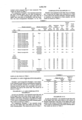
Samples were prepared in the same way as in Example 1 except that the higher fatty acids shown in Table 2 were used in the amounts indicated. Thermal stability on residence was measured on these samples, and the results are shown in Table 2.
                                  TABLE 1
__________________________________________________________________________
                                                     Thermal
                                                     stabili-
                                                          Tensile
                                    Mold Appearance
                                                Thermal
                                                     ty
                                                          impact
Blended compound I      Blended compound II
                                    releasing
                                         (color)
                                                sta- resi-
                                                          strength
                   Amount      Amount
                                    force
                                         Ini-
                                            Resi-
                                                bility
                                                     dence
                                                          (kg-
Run   Type         (phr)
                        Type   (phr)
                                    (kg/cm.sup.2)
                                         tial
                                            dence
                                                (%/min)
                                                     (min)
                                                          cm/cm.sup.2)
__________________________________________________________________________
Example
1     Behenyl monoglyceride
                   0.2  None   --   55   ⊚
                                            ⊚
                                                0.04 (*) 60
                                                          135
2     Behenyl monoglyceride
                   0.1  "      --   60   ⊚
                                            ⊚
                                                0.04 60 < 135
3     Behenyl monoglyceride
                   0.009
                        "      --   90   ⊚
                                            ⊚
                                                0.04 60 < 135
4     Behenyl monoglyceride
                   0.3  "      --   45   ⊚
                                            ○
                                                0.05 60 < 130
5     Sorbitan monobehenate
                   0.2  "      --   60   ⊚
                                            ⊚
                                                0.04 60 < 135
6     Sorbitan erucinate
                   0.2  "      --   60   ⊚
                                            ○
                                                0.05 60 < 135
7     Cerotyl monoglyceride
                   0.2  "      --   60   ⊚
                                            ○
                                                0.05 60 < 135
8     Lacceryl monoglyceride
                   0.2  None   --   60   ⊚
                                            ○
                                                0.05 60 < 135
9     Montanyl monoglyceride
                   0.2  "      --   60   ⊚
                                            ○
                                                0.05 60 < 135
10    Behenyl monoglyceride
                   0.2  "      --   60   ⊚
                                            Δ
                                                0.09 60 < 135
11    Behenyl monoglyceride
                   0.1  Ethylenebis-
                               0.1  45   ⊚
                                            ⊚
                                                0.04 60 < 135
                        stearamide
12    Behenyl monoglyceride
                   0.15 Ethylenebis-
                               0.1  40   ⊚
                                            ⊚
                                                0.04 60 < 135
                        stearamide
13    Behenyl monoglyceride
                   0.15 Ethylenebis-
                               0.15 40   ⊚
                                            ○
                                                0.04 60 < 130
                        stearamide
Com-
parative
Example
1     None         --   None   --   150  ⊚
                                            ⊚
                                                0.04 --   130
2     Stearyl monoglyceride
                   0.2  "      --   105  ⊚
                                            ⊚
                                                0.06 --   135
3     Sorbitan monostearate
                   0.2  "      --   115  ⊚
                                            ○
                                                0.08 --   130
4     Lauryl monoglyceride
                   0.2  "      --   115  ⊚
                                            ○
                                                0.08 --   130
5     Sorbitan monolaurate
                   0.2  "      --   115  ⊚
                                            ○
                                                0.08 --   135
6     Palmityl monoglyceride
                   0.2  "      --   115  ⊚
                                            ○
                                                0.08 --   135
7     None         --   "      --   155  ⊚
                                            Δ
                                                0.09 --   135
8     None         --   Ethylenebis-
                               0.2  75   ⊚
                                            ○
                                                0.04 --   135
                        stearamide
__________________________________________________________________________
 (*): "60 <" Shows that no silver streak occurred before 60 minutes passed
              TABLE 2
______________________________________
                       Thermal sta-
          Higher fatty acid
                       bility on
Comparative           Amount   residence
Example     Type      (phr)    (min.)
______________________________________
9           behenic   0.1      40
            acid
10          montan    0.1      40
            acid
11          cerotic   0.1      40
            acid
12          lacceric  0.1      40
            acid
13          behenic   0.2      30
            acid
______________________________________
In each run, Example 1 was repeated except that each of the higher fatty acid esters shown in the column of blended compound I and each of the higher fatty acid amides in the column of blended compound II in Table 1 were used in combination as the mold releasing agent. The results are shown in Table 3.
                                  TABLE 3
__________________________________________________________________________
                                                     Thermal
                                                     stabili-
                                                          Tensile
                                   Mold  Appearance
                                                Thermal
                                                     ty
                                                          impact
Blended compound I    Blended compound II
                                   releasing
                                         (color)
                                                sta- resi-
                                                          strength
Ex-              Amount       Amount
                                   force Ini-
                                            Resi-
                                                bility
                                                     dence
                                                          (kg-
ample
    Type         (phr)
                      Type    (phr)
                                   (kg/cm.sup.2)
                                         tial
                                            dence
                                                (%/min)
                                                     (min)
                                                          cm/cm.sup.2)
__________________________________________________________________________
14  Monoerucine  0.2  None    --   60    ⊚
                                            ○
                                                0.05 60 < 130
15  Ximenyl monoglyceride
                 0.2  None    --   60    ⊚
                                            ○
                                                0.05 60 < 130
16  Cerotyl monoglyceride
                 0.15 Ethylenebis-
                              0.15 40    ⊚
                                            ○
                                                0.05 60 < 130
                      stearamide
17  Sorbitan monobehenate
                 0.15 Ethylenebis-
                              0.15 40    ⊚
                                            ○
                                                0.04 60 < 130
                      stearamide
18  Sorbitan erucinate
                 0.15 Ethylenebis-
                              0.15 40    ⊚
                                            ○
                                                0.05 60 < 130
                      stearamide
19  Behenyl monoglyceride
                 0.15 Methylenebis-
                              0.15 40    ⊚
                                            ○
                                                0.04 60 < 130
                      stearamide
20  Behenyl monoglyceride
                 0.15 Stearamide
                              0.15 45    ⊚
                                            ○
                                                0.05 60 < 130
21  Sorbitan monobehenate
                 0.15 Methylenebis-
                              0.15 40    ⊚
                                            ○
                                                0.05 60 < 130
                      stearamide
__________________________________________________________________________
Claims (4)
1. An acetal resin composition comprising (A) 100 parts by weight of an acetal resin, and (B) 0.01 to 2 parts by weight of a higher fatty acid ester derived from a polyhydric alcohol having 2 to 10 carbon atoms as an alcohol component and a higher fatty acid having 22 to 32 carbon atoms as an acid component.
2. The composition of claim 1 wherein the acetal resin (A) is an oxymethylene copolymer containing not more than 20% by weight of oxyalkylene units having 2 to 8 carbon atoms.
3. The composition of claim 1 wherein the higher fatty acid ester (B) is an ester derived from a compound having at least two alcoholic hydroxyl groups in the molecule as an alcohol component and a linear saturated or unsaturated monocarboxylic acid as an acid component.
4. An acetal resin composition comprising (A) 100 parts by weight of an acetal resin, (B) 0.01 to 2 parts by weight of a higher fatty acid ester derived from a polyhydric alcohol having 2 to 10 carbon atoms as an alcohol component and a higher fatty acid having 22 to 32 carbon atoms as an acid component, and (C) 0.01 to 2 parts by weight of an amide selected from the group consisting of ethylene bis-stearamide, methylene bis-stearamide and methylene bis-lauramide.
Applications Claiming Priority (2)
| Application Number | Priority Date | Filing Date | Title |
|---|---|---|---|
| JP62127989A JP2522302B2 (en) | 1987-05-27 | 1987-05-27 | Acetal resin composition |
| JP62-127989 | 1987-05-27 |
Publications (1)
| Publication Number | Publication Date |
|---|---|
| US4900769A true US4900769A (en) | 1990-02-13 |
Family
ID=14973698
Family Applications (1)
| Application Number | Title | Priority Date | Filing Date |
|---|---|---|---|
| US07/198,492 Expired - Lifetime US4900769A (en) | 1987-05-27 | 1988-05-25 | Acetal resin composition |
Country Status (5)
| Country | Link |
|---|---|
| US (1) | US4900769A (en) |
| JP (1) | JP2522302B2 (en) |
| KR (1) | KR940001167B1 (en) |
| DE (1) | DE3817924C2 (en) |
| GB (1) | GB2205841B (en) |
Cited By (7)
| Publication number | Priority date | Publication date | Assignee | Title |
|---|---|---|---|---|
| US5187218A (en) * | 1990-08-21 | 1993-02-16 | Mitsubishi Gas Chemical Company, Inc. | Acetal resin composition containing a terminal-etherified polyalkylene glycol |
| US5191006A (en) * | 1990-02-07 | 1993-03-02 | Mitsubishi Gas Chemical Company, Inc. | Oxymethylene copolymer composition |
| US5200460A (en) * | 1991-04-30 | 1993-04-06 | Shell Oil Company | Polyacetal polymer blends |
| US5246999A (en) * | 1991-05-29 | 1993-09-21 | Instytut Chemii Przemyskowej | Thermoplastic polymer composition |
| US5248333A (en) * | 1989-05-19 | 1993-09-28 | Neynaber Chemie Gmbh | Mixtures of fatty acid alkylene diamides, fatty acid esters and metal soaps, and their use as additives in plastics |
| EP0719832A2 (en) | 1994-12-30 | 1996-07-03 | General Electric Company | Thermoplastic compositions containing polyphenylene ether resin and polyolefins |
| EP0719833A2 (en) | 1994-12-30 | 1996-07-03 | General Electric Company | Thermoplastic compositions containing polyphenylene ether resin and polyolefins |
Families Citing this family (4)
| Publication number | Priority date | Publication date | Assignee | Title |
|---|---|---|---|---|
| JP2538475B2 (en) * | 1992-02-04 | 1996-09-25 | 三ツ星ベルト株式会社 | Polyacetal resin composition for sliding |
| US5783619A (en) * | 1994-03-24 | 1998-07-21 | E. I. Du Pont De Nemours And Company | Polyacetal resin composition and sliding parts |
| DE19681504B4 (en) * | 1995-09-06 | 2005-12-29 | Asahi Kasei Kabushiki Kaisha | Polyacetal resin composition having high mechanical strength resistance |
| US6156834A (en) * | 1998-03-20 | 2000-12-05 | Asahi Kasei Kogyo Kabushiki Kaisha | Polyacetal resin composition |
Citations (5)
| Publication number | Priority date | Publication date | Assignee | Title |
|---|---|---|---|---|
| US3340219A (en) * | 1964-10-22 | 1967-09-05 | Celanese Corp | Lubricated polyacetal compositions and process therefor |
| US3578621A (en) * | 1968-08-27 | 1971-05-11 | Carlisle Chemical Works | Diesters exhibiting internal-external lubricating properties in structural resins |
| GB1314269A (en) * | 1969-05-07 | 1973-04-18 | Sapchim Fournier Cimag Sa | Process for modifying the properties of synthetic polymericmaterials |
| US3808133A (en) * | 1971-11-22 | 1974-04-30 | Du Pont | Lubricated oxymethylene composition |
| US4274986A (en) * | 1978-06-26 | 1981-06-23 | Celanese Corporation | Polyacetal molding composition |
Family Cites Families (6)
| Publication number | Priority date | Publication date | Assignee | Title |
|---|---|---|---|---|
| CA994030A (en) * | 1972-02-28 | 1976-07-27 | Northrop Brown | Lubricated oxymethylene composition |
| JPS5523304A (en) * | 1978-08-02 | 1980-02-19 | Dover Corp | Rotary pump |
| JPS55125148A (en) * | 1979-03-22 | 1980-09-26 | Asahi Chem Ind Co Ltd | Polyoxymethylene composition and preparation thereof |
| JPS5996157A (en) * | 1982-11-25 | 1984-06-02 | Polyplastics Co | Polyacetal resin composition |
| JPS6037138B2 (en) * | 1983-04-05 | 1985-08-24 | 大日本インキ化学工業株式会社 | Styrenic resin composition |
| JPH0236620B2 (en) * | 1985-09-04 | 1990-08-20 | Kao Corp | GOSEIJUSHOTAIDENBOSHIZAISOSEIBUTSU |
-
1987
- 1987-05-27 JP JP62127989A patent/JP2522302B2/en not_active Expired - Lifetime
-
1988
- 1988-05-24 GB GB8812236A patent/GB2205841B/en not_active Expired - Fee Related
- 1988-05-25 US US07/198,492 patent/US4900769A/en not_active Expired - Lifetime
- 1988-05-26 DE DE3817924A patent/DE3817924C2/en not_active Expired - Fee Related
- 1988-05-27 KR KR1019880006276A patent/KR940001167B1/en not_active Expired - Lifetime
Patent Citations (6)
| Publication number | Priority date | Publication date | Assignee | Title |
|---|---|---|---|---|
| US3340219A (en) * | 1964-10-22 | 1967-09-05 | Celanese Corp | Lubricated polyacetal compositions and process therefor |
| US3578621A (en) * | 1968-08-27 | 1971-05-11 | Carlisle Chemical Works | Diesters exhibiting internal-external lubricating properties in structural resins |
| GB1314269A (en) * | 1969-05-07 | 1973-04-18 | Sapchim Fournier Cimag Sa | Process for modifying the properties of synthetic polymericmaterials |
| US3864295A (en) * | 1969-05-07 | 1975-02-04 | Sapchim Fournier Cimag Soc | Forming synthetic material with glyceryl trimontanate as a lubricant |
| US3808133A (en) * | 1971-11-22 | 1974-04-30 | Du Pont | Lubricated oxymethylene composition |
| US4274986A (en) * | 1978-06-26 | 1981-06-23 | Celanese Corporation | Polyacetal molding composition |
Non-Patent Citations (1)
| Title |
|---|
| EP A2 0110108 (Polyplastics), p. 5, lines 19 to p. 6, line 5. * |
Cited By (9)
| Publication number | Priority date | Publication date | Assignee | Title |
|---|---|---|---|---|
| US5248333A (en) * | 1989-05-19 | 1993-09-28 | Neynaber Chemie Gmbh | Mixtures of fatty acid alkylene diamides, fatty acid esters and metal soaps, and their use as additives in plastics |
| US5191006A (en) * | 1990-02-07 | 1993-03-02 | Mitsubishi Gas Chemical Company, Inc. | Oxymethylene copolymer composition |
| AU638842B2 (en) * | 1990-07-02 | 1993-07-08 | Mitsubishi Gas Chemical Company, Inc. | Oxymethylene copolymer composition |
| US5187218A (en) * | 1990-08-21 | 1993-02-16 | Mitsubishi Gas Chemical Company, Inc. | Acetal resin composition containing a terminal-etherified polyalkylene glycol |
| AU634410B2 (en) * | 1990-08-21 | 1993-02-18 | Mitsubishi Gas Chemical Company, Inc. | Acetal resin composition |
| US5200460A (en) * | 1991-04-30 | 1993-04-06 | Shell Oil Company | Polyacetal polymer blends |
| US5246999A (en) * | 1991-05-29 | 1993-09-21 | Instytut Chemii Przemyskowej | Thermoplastic polymer composition |
| EP0719832A2 (en) | 1994-12-30 | 1996-07-03 | General Electric Company | Thermoplastic compositions containing polyphenylene ether resin and polyolefins |
| EP0719833A2 (en) | 1994-12-30 | 1996-07-03 | General Electric Company | Thermoplastic compositions containing polyphenylene ether resin and polyolefins |
Also Published As
| Publication number | Publication date |
|---|---|
| DE3817924C2 (en) | 1994-10-06 |
| GB8812236D0 (en) | 1988-06-29 |
| KR880014044A (en) | 1988-12-22 |
| GB2205841A (en) | 1988-12-21 |
| KR940001167B1 (en) | 1994-02-16 |
| JP2522302B2 (en) | 1996-08-07 |
| DE3817924A1 (en) | 1988-12-08 |
| JPS63295661A (en) | 1988-12-02 |
| GB2205841B (en) | 1991-02-13 |
Similar Documents
| Publication | Publication Date | Title |
|---|---|---|
| US2993025A (en) | Polyoxymethylene compositions stabilized with a synthetic superpolyamide | |
| JP5468295B2 (en) | Molding polyoxymethylene composition with improved processing stability and low release tendency | |
| US5191006A (en) | Oxymethylene copolymer composition | |
| JPS6131735B2 (en) | ||
| KR940001167B1 (en) | Acetal Resin Composition | |
| EP1171519A1 (en) | Polyacetal resins with reduced formaldehyde odor | |
| KR920007524B1 (en) | Improved polyoxymethylene composition and preparation method thereof | |
| US3316207A (en) | Stabilized copolymers of trioxane | |
| WO1994014888A1 (en) | Polyacetal resin composition | |
| DE3628561A1 (en) | Reinforced polyoxymethylene moulding compositions having improved thermostability, process for their preparation, and their use | |
| EP3460002B1 (en) | Method for producing polyacetal resin composition | |
| JPH04100847A (en) | Acetal resin composition | |
| JPH11209562A (en) | Polyoxymethylene resin composition for buckle | |
| JP2522302C (en) | ||
| US20040063853A1 (en) | Polyoxymethylene moulding material with improved processing stability and a reduced emissions tendency | |
| JPH0518864B2 (en) | ||
| JP2769287B2 (en) | Molding method of polyacetal resin composition with improved mold deposit | |
| EP0270279A1 (en) | Polyacetal stabilizer formulation with improved color stability | |
| JPS62280253A (en) | Acetal resin composition | |
| JPH0250948B2 (en) | ||
| JPH0970854A (en) | Insert molded product | |
| JPH07228753A (en) | Polyoxymethylene resin composition with improved releasability | |
| JPS594641A (en) | Acetal resin composition | |
| JPH0365831B2 (en) | ||
| JPH07268178A (en) | Polyacetal resin composition improved in resistance to aging discoloration |
Legal Events
| Date | Code | Title | Description |
|---|---|---|---|
| AS | Assignment |
Owner name: MITSUBISHI GAS CHEMICAL COMPANY, INC., 5-2, 2-CHOM Free format text: ASSIGNMENT OF ASSIGNORS INTEREST.;ASSIGNORS:KIMURA, MASAHARU;MIZUTANI, ZENPEI;FUJII, HIROYA;REEL/FRAME:004935/0906;SIGNING DATES FROM 19880509 TO 19880510 |
|
| STCF | Information on status: patent grant |
Free format text: PATENTED CASE |
|
| FEPP | Fee payment procedure |
Free format text: PAYOR NUMBER ASSIGNED (ORIGINAL EVENT CODE: ASPN); ENTITY STATUS OF PATENT OWNER: LARGE ENTITY |
|
| FPAY | Fee payment |
Year of fee payment: 4 |
|
| FPAY | Fee payment |
Year of fee payment: 8 |
|
| FPAY | Fee payment |
Year of fee payment: 12 |