US4900762A - Production of foamed polymer structures - Google Patents
Production of foamed polymer structures Download PDFInfo
- Publication number
- US4900762A US4900762A US07/255,264 US25526488A US4900762A US 4900762 A US4900762 A US 4900762A US 25526488 A US25526488 A US 25526488A US 4900762 A US4900762 A US 4900762A
- Authority
- US
- United States
- Prior art keywords
- article
- precursor
- shield
- polyimide
- tetracarboxylic acid
- Prior art date
- Legal status (The legal status is an assumption and is not a legal conclusion. Google has not performed a legal analysis and makes no representation as to the accuracy of the status listed.)
- Expired - Lifetime
Links
- 229920000642 polymer Polymers 0.000 title claims description 10
- 238000004519 manufacturing process Methods 0.000 title description 7
- 239000002243 precursor Substances 0.000 claims abstract description 54
- 239000004642 Polyimide Substances 0.000 claims abstract description 47
- 229920001721 polyimide Polymers 0.000 claims abstract description 47
- 239000006260 foam Substances 0.000 claims abstract description 45
- 230000005855 radiation Effects 0.000 claims abstract description 17
- -1 aromatic tetracarboxylic acid Chemical class 0.000 claims description 36
- 150000004985 diamines Chemical class 0.000 claims description 21
- 125000005907 alkyl ester group Chemical group 0.000 claims description 14
- 125000003118 aryl group Chemical group 0.000 claims description 14
- 239000000843 powder Substances 0.000 claims description 12
- YBRVSVVVWCFQMG-UHFFFAOYSA-N 4,4'-diaminodiphenylmethane Chemical compound C1=CC(N)=CC=C1CC1=CC=C(N)C=C1 YBRVSVVVWCFQMG-UHFFFAOYSA-N 0.000 claims description 10
- 229910052782 aluminium Inorganic materials 0.000 claims description 10
- XAGFODPZIPBFFR-UHFFFAOYSA-N aluminium Chemical compound [Al] XAGFODPZIPBFFR-UHFFFAOYSA-N 0.000 claims description 10
- UITKHKNFVCYWNG-UHFFFAOYSA-N 4-(3,4-dicarboxybenzoyl)phthalic acid Chemical compound C1=C(C(O)=O)C(C(=O)O)=CC=C1C(=O)C1=CC=C(C(O)=O)C(C(O)=O)=C1 UITKHKNFVCYWNG-UHFFFAOYSA-N 0.000 claims description 9
- 239000004744 fabric Substances 0.000 claims description 9
- 150000002148 esters Chemical class 0.000 claims description 8
- 239000000463 material Substances 0.000 claims description 8
- RTWNYYOXLSILQN-UHFFFAOYSA-N methanediamine Chemical compound NCN RTWNYYOXLSILQN-UHFFFAOYSA-N 0.000 claims description 8
- HLBLWEWZXPIGSM-UHFFFAOYSA-N 4-Aminophenyl ether Chemical compound C1=CC(N)=CC=C1OC1=CC=C(N)C=C1 HLBLWEWZXPIGSM-UHFFFAOYSA-N 0.000 claims description 7
- 125000000623 heterocyclic group Chemical group 0.000 claims description 7
- VHNQIURBCCNWDN-UHFFFAOYSA-N pyridine-2,6-diamine Chemical compound NC1=CC=CC(N)=N1 VHNQIURBCCNWDN-UHFFFAOYSA-N 0.000 claims description 6
- 239000004094 surface-active agent Substances 0.000 claims description 4
- OJURWUUOVGOHJZ-UHFFFAOYSA-N methyl 2-[(2-acetyloxyphenyl)methyl-[2-[(2-acetyloxyphenyl)methyl-(2-methoxy-2-oxoethyl)amino]ethyl]amino]acetate Chemical compound C=1C=CC=C(OC(C)=O)C=1CN(CC(=O)OC)CCN(CC(=O)OC)CC1=CC=CC=C1OC(C)=O OJURWUUOVGOHJZ-UHFFFAOYSA-N 0.000 claims description 3
- 238000000034 method Methods 0.000 abstract description 12
- 238000005187 foaming Methods 0.000 abstract description 6
- 230000007246 mechanism Effects 0.000 abstract 1
- 239000000203 mixture Substances 0.000 description 17
- 150000000000 tetracarboxylic acids Chemical class 0.000 description 12
- 239000004604 Blowing Agent Substances 0.000 description 11
- 238000006243 chemical reaction Methods 0.000 description 9
- 150000005690 diesters Chemical class 0.000 description 8
- NBOCQTNZUPTTEI-UHFFFAOYSA-N 4-[4-(hydrazinesulfonyl)phenoxy]benzenesulfonohydrazide Chemical compound C1=CC(S(=O)(=O)NN)=CC=C1OC1=CC=C(S(=O)(=O)NN)C=C1 NBOCQTNZUPTTEI-UHFFFAOYSA-N 0.000 description 6
- KAKZBPTYRLMSJV-UHFFFAOYSA-N Butadiene Chemical compound C=CC=C KAKZBPTYRLMSJV-UHFFFAOYSA-N 0.000 description 6
- JBKVHLHDHHXQEQ-UHFFFAOYSA-N epsilon-caprolactam Chemical compound O=C1CCCCCN1 JBKVHLHDHHXQEQ-UHFFFAOYSA-N 0.000 description 6
- 238000010438 heat treatment Methods 0.000 description 6
- 239000002184 metal Substances 0.000 description 6
- 239000002253 acid Substances 0.000 description 5
- 229910052751 metal Inorganic materials 0.000 description 5
- LFQSCWFLJHTTHZ-UHFFFAOYSA-N Ethanol Chemical compound CCO LFQSCWFLJHTTHZ-UHFFFAOYSA-N 0.000 description 4
- 125000004432 carbon atom Chemical group C* 0.000 description 4
- IJGRMHOSHXDMSA-UHFFFAOYSA-N Atomic nitrogen Chemical compound N#N IJGRMHOSHXDMSA-UHFFFAOYSA-N 0.000 description 3
- OKKJLVBELUTLKV-UHFFFAOYSA-N Methanol Chemical compound OC OKKJLVBELUTLKV-UHFFFAOYSA-N 0.000 description 3
- 125000002947 alkylene group Chemical group 0.000 description 3
- 150000001412 amines Chemical class 0.000 description 3
- XOZUGNYVDXMRKW-AATRIKPKSA-N azodicarbonamide Chemical compound NC(=O)\N=N\C(N)=O XOZUGNYVDXMRKW-AATRIKPKSA-N 0.000 description 3
- 229920001577 copolymer Polymers 0.000 description 3
- 239000011521 glass Substances 0.000 description 3
- 229910052757 nitrogen Inorganic materials 0.000 description 3
- 238000002360 preparation method Methods 0.000 description 3
- ALYNCZNDIQEVRV-UHFFFAOYSA-N 4-aminobenzoic acid Chemical compound NC1=CC=C(C(O)=O)C=C1 ALYNCZNDIQEVRV-UHFFFAOYSA-N 0.000 description 2
- ICGLPKIVTVWCFT-UHFFFAOYSA-N 4-methylbenzenesulfonohydrazide Chemical compound CC1=CC=C(S(=O)(=O)NN)C=C1 ICGLPKIVTVWCFT-UHFFFAOYSA-N 0.000 description 2
- 150000004982 aromatic amines Chemical class 0.000 description 2
- WPYMKLBDIGXBTP-UHFFFAOYSA-N benzoic acid Chemical compound OC(=O)C1=CC=CC=C1 WPYMKLBDIGXBTP-UHFFFAOYSA-N 0.000 description 2
- 230000015572 biosynthetic process Effects 0.000 description 2
- VHRGRCVQAFMJIZ-UHFFFAOYSA-N cadaverine Chemical compound NCCCCCN VHRGRCVQAFMJIZ-UHFFFAOYSA-N 0.000 description 2
- 230000001413 cellular effect Effects 0.000 description 2
- 210000003850 cellular structure Anatomy 0.000 description 2
- 238000005516 engineering process Methods 0.000 description 2
- 239000012530 fluid Substances 0.000 description 2
- 125000005842 heteroatom Chemical group 0.000 description 2
- 229910001092 metal group alloy Inorganic materials 0.000 description 2
- 239000000178 monomer Substances 0.000 description 2
- 150000002825 nitriles Chemical class 0.000 description 2
- 125000000962 organic group Chemical group 0.000 description 2
- 239000002245 particle Substances 0.000 description 2
- 125000001997 phenyl group Chemical group [H]C1=C([H])C([H])=C(*)C([H])=C1[H] 0.000 description 2
- FBZULTVJWVCJQV-UHFFFAOYSA-N propan-2-yl n-(propan-2-yloxycarbonylamino)carbamate Chemical compound CC(C)OC(=O)NNC(=O)OC(C)C FBZULTVJWVCJQV-UHFFFAOYSA-N 0.000 description 2
- KIDHWZJUCRJVML-UHFFFAOYSA-N putrescine Chemical compound NCCCCN KIDHWZJUCRJVML-UHFFFAOYSA-N 0.000 description 2
- ABYXFACYSGVHCW-UHFFFAOYSA-N pyridine-3,5-diamine Chemical compound NC1=CN=CC(N)=C1 ABYXFACYSGVHCW-UHFFFAOYSA-N 0.000 description 2
- 239000011541 reaction mixture Substances 0.000 description 2
- 239000011347 resin Substances 0.000 description 2
- 229920005989 resin Polymers 0.000 description 2
- 239000007787 solid Substances 0.000 description 2
- 239000000126 substance Substances 0.000 description 2
- XFNJVJPLKCPIBV-UHFFFAOYSA-N trimethylenediamine Chemical compound NCCCN XFNJVJPLKCPIBV-UHFFFAOYSA-N 0.000 description 2
- WZCQRUWWHSTZEM-UHFFFAOYSA-N 1,3-phenylenediamine Chemical compound NC1=CC=CC(N)=C1 WZCQRUWWHSTZEM-UHFFFAOYSA-N 0.000 description 1
- CBCKQZAAMUWICA-UHFFFAOYSA-N 1,4-phenylenediamine Chemical compound NC1=CC=C(N)C=C1 CBCKQZAAMUWICA-UHFFFAOYSA-N 0.000 description 1
- RNFJDJUURJAICM-UHFFFAOYSA-N 2,2,4,4,6,6-hexaphenoxy-1,3,5-triaza-2$l^{5},4$l^{5},6$l^{5}-triphosphacyclohexa-1,3,5-triene Chemical compound N=1P(OC=2C=CC=CC=2)(OC=2C=CC=CC=2)=NP(OC=2C=CC=CC=2)(OC=2C=CC=CC=2)=NP=1(OC=1C=CC=CC=1)OC1=CC=CC=C1 RNFJDJUURJAICM-UHFFFAOYSA-N 0.000 description 1
- VOZKAJLKRJDJLL-UHFFFAOYSA-N 2,4-diaminotoluene Chemical compound CC1=CC=C(N)C=C1N VOZKAJLKRJDJLL-UHFFFAOYSA-N 0.000 description 1
- RLYCRLGLCUXUPO-UHFFFAOYSA-N 2,6-diaminotoluene Chemical compound CC1=C(N)C=CC=C1N RLYCRLGLCUXUPO-UHFFFAOYSA-N 0.000 description 1
- LXJLFVRAWOOQDR-UHFFFAOYSA-N 3-(3-aminophenoxy)aniline Chemical compound NC1=CC=CC(OC=2C=C(N)C=CC=2)=C1 LXJLFVRAWOOQDR-UHFFFAOYSA-N 0.000 description 1
- LJGHYPLBDBRCRZ-UHFFFAOYSA-N 3-(3-aminophenyl)sulfonylaniline Chemical compound NC1=CC=CC(S(=O)(=O)C=2C=C(N)C=CC=2)=C1 LJGHYPLBDBRCRZ-UHFFFAOYSA-N 0.000 description 1
- ICNFHJVPAJKPHW-UHFFFAOYSA-N 4,4'-Thiodianiline Chemical compound C1=CC(N)=CC=C1SC1=CC=C(N)C=C1 ICNFHJVPAJKPHW-UHFFFAOYSA-N 0.000 description 1
- MARUHZGHZWCEQU-UHFFFAOYSA-N 5-phenyl-2h-tetrazole Chemical compound C1=CC=CC=C1C1=NNN=N1 MARUHZGHZWCEQU-UHFFFAOYSA-N 0.000 description 1
- NLHHRLWOUZZQLW-UHFFFAOYSA-N Acrylonitrile Chemical compound C=CC#N NLHHRLWOUZZQLW-UHFFFAOYSA-N 0.000 description 1
- 239000004156 Azodicarbonamide Substances 0.000 description 1
- 239000005711 Benzoic acid Substances 0.000 description 1
- IOKFZRLPAJGINU-UHFFFAOYSA-N C(=O)(O)C(C(C(=O)O)C1=CCCCC1)(C(=O)O)C(=O)O Chemical class C(=O)(O)C(C(C(=O)O)C1=CCCCC1)(C(=O)O)C(=O)O IOKFZRLPAJGINU-UHFFFAOYSA-N 0.000 description 1
- OKTJSMMVPCPJKN-UHFFFAOYSA-N Carbon Chemical compound [C] OKTJSMMVPCPJKN-UHFFFAOYSA-N 0.000 description 1
- RYGMFSIKBFXOCR-UHFFFAOYSA-N Copper Chemical compound [Cu] RYGMFSIKBFXOCR-UHFFFAOYSA-N 0.000 description 1
- MQJKPEGWNLWLTK-UHFFFAOYSA-N Dapsone Chemical compound C1=CC(N)=CC=C1S(=O)(=O)C1=CC=C(N)C=C1 MQJKPEGWNLWLTK-UHFFFAOYSA-N 0.000 description 1
- 229910001021 Ferroalloy Inorganic materials 0.000 description 1
- GYCMBHHDWRMZGG-UHFFFAOYSA-N Methylacrylonitrile Chemical compound CC(=C)C#N GYCMBHHDWRMZGG-UHFFFAOYSA-N 0.000 description 1
- 239000005700 Putrescine Substances 0.000 description 1
- 101150108015 STR6 gene Proteins 0.000 description 1
- 101100386054 Saccharomyces cerevisiae (strain ATCC 204508 / S288c) CYS3 gene Proteins 0.000 description 1
- 229910000676 Si alloy Inorganic materials 0.000 description 1
- UIIMBOGNXHQVGW-DEQYMQKBSA-M Sodium bicarbonate-14C Chemical compound [Na+].O[14C]([O-])=O UIIMBOGNXHQVGW-DEQYMQKBSA-M 0.000 description 1
- NINIDFKCEFEMDL-UHFFFAOYSA-N Sulfur Chemical compound [S] NINIDFKCEFEMDL-UHFFFAOYSA-N 0.000 description 1
- 239000004809 Teflon Substances 0.000 description 1
- 229920006362 Teflon® Polymers 0.000 description 1
- RTAQQCXQSZGOHL-UHFFFAOYSA-N Titanium Chemical compound [Ti] RTAQQCXQSZGOHL-UHFFFAOYSA-N 0.000 description 1
- NMFHJNAPXOMSRX-PUPDPRJKSA-N [(1r)-3-(3,4-dimethoxyphenyl)-1-[3-(2-morpholin-4-ylethoxy)phenyl]propyl] (2s)-1-[(2s)-2-(3,4,5-trimethoxyphenyl)butanoyl]piperidine-2-carboxylate Chemical compound C([C@@H](OC(=O)[C@@H]1CCCCN1C(=O)[C@@H](CC)C=1C=C(OC)C(OC)=C(OC)C=1)C=1C=C(OCCN2CCOCC2)C=CC=1)CC1=CC=C(OC)C(OC)=C1 NMFHJNAPXOMSRX-PUPDPRJKSA-N 0.000 description 1
- VRFNYSYURHAPFL-UHFFFAOYSA-N [(4-methylphenyl)sulfonylamino]urea Chemical compound CC1=CC=C(S(=O)(=O)NNC(N)=O)C=C1 VRFNYSYURHAPFL-UHFFFAOYSA-N 0.000 description 1
- GTDPSWPPOUPBNX-UHFFFAOYSA-N ac1mqpva Chemical compound CC12C(=O)OC(=O)C1(C)C1(C)C2(C)C(=O)OC1=O GTDPSWPPOUPBNX-UHFFFAOYSA-N 0.000 description 1
- 150000001298 alcohols Chemical class 0.000 description 1
- 125000001931 aliphatic group Chemical group 0.000 description 1
- 125000003545 alkoxy group Chemical group 0.000 description 1
- 125000000217 alkyl group Chemical group 0.000 description 1
- CSDREXVUYHZDNP-UHFFFAOYSA-N alumanylidynesilicon Chemical compound [Al].[Si] CSDREXVUYHZDNP-UHFFFAOYSA-N 0.000 description 1
- 150000001413 amino acids Chemical class 0.000 description 1
- 229960004050 aminobenzoic acid Drugs 0.000 description 1
- QVGXLLKOCUKJST-UHFFFAOYSA-N atomic oxygen Chemical compound [O] QVGXLLKOCUKJST-UHFFFAOYSA-N 0.000 description 1
- 235000019399 azodicarbonamide Nutrition 0.000 description 1
- 238000000498 ball milling Methods 0.000 description 1
- VJRITMATACIYAF-UHFFFAOYSA-N benzenesulfonohydrazide Chemical compound NNS(=O)(=O)C1=CC=CC=C1 VJRITMATACIYAF-UHFFFAOYSA-N 0.000 description 1
- 235000010233 benzoic acid Nutrition 0.000 description 1
- KGBXLFKZBHKPEV-UHFFFAOYSA-N boric acid Chemical compound OB(O)O KGBXLFKZBHKPEV-UHFFFAOYSA-N 0.000 description 1
- 239000004327 boric acid Substances 0.000 description 1
- 239000000919 ceramic Substances 0.000 description 1
- 229910052802 copper Inorganic materials 0.000 description 1
- 239000010949 copper Substances 0.000 description 1
- 238000001723 curing Methods 0.000 description 1
- 230000007547 defect Effects 0.000 description 1
- 230000002950 deficient Effects 0.000 description 1
- 230000001419 dependent effect Effects 0.000 description 1
- 230000000694 effects Effects 0.000 description 1
- 125000004185 ester group Chemical group 0.000 description 1
- 239000011152 fibreglass Substances 0.000 description 1
- 239000000945 filler Substances 0.000 description 1
- 239000003063 flame retardant Substances 0.000 description 1
- 238000009472 formulation Methods 0.000 description 1
- PCHJSUWPFVWCPO-UHFFFAOYSA-N gold Chemical compound [Au] PCHJSUWPFVWCPO-UHFFFAOYSA-N 0.000 description 1
- 239000010931 gold Substances 0.000 description 1
- 229910052737 gold Inorganic materials 0.000 description 1
- 229910002804 graphite Inorganic materials 0.000 description 1
- 239000010439 graphite Substances 0.000 description 1
- 238000000227 grinding Methods 0.000 description 1
- NAQMVNRVTILPCV-UHFFFAOYSA-N hexane-1,6-diamine Chemical compound NCCCCCCN NAQMVNRVTILPCV-UHFFFAOYSA-N 0.000 description 1
- 150000002429 hydrazines Chemical class 0.000 description 1
- 239000001257 hydrogen Substances 0.000 description 1
- 229910052739 hydrogen Inorganic materials 0.000 description 1
- 125000004435 hydrogen atom Chemical group [H]* 0.000 description 1
- 150000003949 imides Chemical class 0.000 description 1
- 230000000977 initiatory effect Effects 0.000 description 1
- 238000009413 insulation Methods 0.000 description 1
- 150000002739 metals Chemical class 0.000 description 1
- 125000002496 methyl group Chemical group [H]C([H])([H])* 0.000 description 1
- 239000011812 mixed powder Substances 0.000 description 1
- 125000000449 nitro group Chemical group [O-][N+](*)=O 0.000 description 1
- 125000004433 nitrogen atom Chemical group N* 0.000 description 1
- 150000002894 organic compounds Chemical class 0.000 description 1
- 229910052760 oxygen Inorganic materials 0.000 description 1
- 239000001301 oxygen Substances 0.000 description 1
- 125000000843 phenylene group Chemical group C1(=C(C=CC=C1)*)* 0.000 description 1
- 229920000768 polyamine Polymers 0.000 description 1
- 238000006116 polymerization reaction Methods 0.000 description 1
- 229920006324 polyoxymethylene Polymers 0.000 description 1
- 229920001451 polypropylene glycol Polymers 0.000 description 1
- 229920001296 polysiloxane Polymers 0.000 description 1
- 125000002924 primary amino group Chemical group [H]N([H])* 0.000 description 1
- YRVCHYUHISNKSG-UHFFFAOYSA-N propane-1,3-diol Chemical compound OCCCO.OCCCO YRVCHYUHISNKSG-UHFFFAOYSA-N 0.000 description 1
- 239000010453 quartz Substances 0.000 description 1
- 239000002994 raw material Substances 0.000 description 1
- 239000000376 reactant Substances 0.000 description 1
- 230000035484 reaction time Effects 0.000 description 1
- 239000012779 reinforcing material Substances 0.000 description 1
- VYPSYNLAJGMNEJ-UHFFFAOYSA-N silicon dioxide Inorganic materials O=[Si]=O VYPSYNLAJGMNEJ-UHFFFAOYSA-N 0.000 description 1
- 229910052709 silver Inorganic materials 0.000 description 1
- 239000004332 silver Substances 0.000 description 1
- 238000001694 spray drying Methods 0.000 description 1
- 239000010935 stainless steel Substances 0.000 description 1
- 229910001220 stainless steel Inorganic materials 0.000 description 1
- 101150035983 str1 gene Proteins 0.000 description 1
- 125000001424 substituent group Chemical group 0.000 description 1
- 239000011593 sulfur Substances 0.000 description 1
- 229910052717 sulfur Inorganic materials 0.000 description 1
- 229920002994 synthetic fiber Polymers 0.000 description 1
- 239000012209 synthetic fiber Substances 0.000 description 1
- 238000001029 thermal curing Methods 0.000 description 1
- 229910052719 titanium Inorganic materials 0.000 description 1
- 239000010936 titanium Substances 0.000 description 1
- 125000005147 toluenesulfonyl group Chemical group C=1(C(=CC=CC1)S(=O)(=O)*)C 0.000 description 1
- 125000003258 trimethylene group Chemical group [H]C([H])([*:2])C([H])([H])C([H])([H])[*:1] 0.000 description 1
- XLYOFNOQVPJJNP-UHFFFAOYSA-N water Substances O XLYOFNOQVPJJNP-UHFFFAOYSA-N 0.000 description 1
Images

Classifications
-
- C—CHEMISTRY; METALLURGY
- C08—ORGANIC MACROMOLECULAR COMPOUNDS; THEIR PREPARATION OR CHEMICAL WORKING-UP; COMPOSITIONS BASED THEREON
- C08J—WORKING-UP; GENERAL PROCESSES OF COMPOUNDING; AFTER-TREATMENT NOT COVERED BY SUBCLASSES C08B, C08C, C08F, C08G or C08H
- C08J9/00—Working-up of macromolecular substances to porous or cellular articles or materials; After-treatment thereof
-
- B—PERFORMING OPERATIONS; TRANSPORTING
- B01—PHYSICAL OR CHEMICAL PROCESSES OR APPARATUS IN GENERAL
- B01J—CHEMICAL OR PHYSICAL PROCESSES, e.g. CATALYSIS OR COLLOID CHEMISTRY; THEIR RELEVANT APPARATUS
- B01J19/00—Chemical, physical or physico-chemical processes in general; Their relevant apparatus
- B01J19/08—Processes employing the direct application of electric or wave energy, or particle radiation; Apparatus therefor
- B01J19/12—Processes employing the direct application of electric or wave energy, or particle radiation; Apparatus therefor employing electromagnetic waves
- B01J19/122—Incoherent waves
- B01J19/126—Microwaves
-
- C—CHEMISTRY; METALLURGY
- C08—ORGANIC MACROMOLECULAR COMPOUNDS; THEIR PREPARATION OR CHEMICAL WORKING-UP; COMPOSITIONS BASED THEREON
- C08J—WORKING-UP; GENERAL PROCESSES OF COMPOUNDING; AFTER-TREATMENT NOT COVERED BY SUBCLASSES C08B, C08C, C08F, C08G or C08H
- C08J2379/00—Characterised by the use of macromolecular compounds obtained by reactions forming in the main chain of the macromolecule a linkage containing nitrogen with or without oxygen, or carbon only, not provided for in groups C08J2361/00 - C08J2377/00
- C08J2379/04—Polycondensates having nitrogen-containing heterocyclic rings in the main chain; Polyhydrazides; Polyamide acids or similar polyimide precursors
- C08J2379/08—Polyimides; Polyester-imides; Polyamide-imides; Polyamide acids or similar polyimide precursors
-
- Y—GENERAL TAGGING OF NEW TECHNOLOGICAL DEVELOPMENTS; GENERAL TAGGING OF CROSS-SECTIONAL TECHNOLOGIES SPANNING OVER SEVERAL SECTIONS OF THE IPC; TECHNICAL SUBJECTS COVERED BY FORMER USPC CROSS-REFERENCE ART COLLECTIONS [XRACs] AND DIGESTS
- Y10—TECHNICAL SUBJECTS COVERED BY FORMER USPC
- Y10S—TECHNICAL SUBJECTS COVERED BY FORMER USPC CROSS-REFERENCE ART COLLECTIONS [XRACs] AND DIGESTS
- Y10S521/00—Synthetic resins or natural rubbers -- part of the class 520 series
- Y10S521/915—Utilizing electrical or wave energy during cell forming process
Definitions
- This invention relates to the production of cellular polymeric structures, and more particularly to improvements in the manufacture of polyimide foams.
- polyimide foams are generally produced by forming a polyimide precursor, usually an essentially equimolar mixture of a lower alkyl ester of a tetracarboxylic acid and one or more primary diamines, and subjecting a bed or body of this polyimide precursor mixture to a temperature sufficient to cause the development of a foamed polymer structure through the generation and evolution of gaseous material within the body of the precursor.
- a polyimide precursor usually an essentially equimolar mixture of a lower alkyl ester of a tetracarboxylic acid and one or more primary diamines
- a bed or body of this polyimide precursor mixture to a temperature sufficient to cause the development of a foamed polymer structure through the generation and evolution of gaseous material within the body of the precursor.
- the foaming operation may be performed in thermal ovens or by use of dielectric heating, to date use of microwaving as described in U.S. Pat. Nos. 4,305,796 and 4,439
- microwave radiation is directed upon the top, sides and ends of the body of polyimide precursor and of the foam structure as it is developing therefrom, but the extent to which such radiation impinges upwardly into the bottom of said body and said foam structure is curtailed.
- One way of accomplishing this radiation curtailment is to design the microwave cavity so that the radiation is not directed upwardly into the precursor or developing foam.
- a preferred method for accomplishing this curtailment involves maintaining a microwave radiation-curtailing shield between the precursor body and a source of microwave radiation therebelow. Not only does this avoid the difficulty and expense of redesigning and producing specially made microwave cavities, but it enables certain other operational advantages (described below) to be achieved when employing and properly positioning certain types of shields in the microwave cavity.
- the shield is preferably a metallic shield, and most preferably a shield composed of a metal or metallic alloy having a heat capacity similar to that of aluminum.
- the metal preferably does not conduct heat substantially more rapidly than aluminum.
- Suitable metals include aluminum, aluminum-silicon alloys, ferroalloys, copper, titanium, stainless steel, gold, silver, and the like.
- the shield When using a metal shield it is particularly desirable to maintain the shield at a suitable temperature in the range of about 50° to about 300° C. and at least the bottom portion of the precursor should be maintained at a suitable temperature in the range of about 50° to about 200° C. before the time of foaming.
- Aluminum is particularly well suited for use as a shield since its heat capacity and thermal conductivity enable it to be preheated to the desired temperature within this range and be positioned in close proximity to the bottom of the bed, and thus suitably control the temperature of the precursor before and during the actual generation of the foamed mass.
- Another advantage of employing a metal shield having thermal properties comparable to aluminum is that upon the completion of one microwaving operation, the foamed mass can be removed from the microwave cavity for thermal curing in a thermal oven, and another batch of precursor promptly put in place for the next run.
- the metal shield will retain enough heat from the prior run to heat up the lower portion of the incoming precursor to a temperature in or close to the desired temperature range by the time the application of the microwave radiation is begun.
- the metallic shield conserves thermal energy for effective use in the process and in so doing, enables plant throughput to be increased.
- the polyimide precursor when in the form of a powder, is preferably placed on a heat staple cloth which in turn is positioned on or a suitable distance above the metallic shield.
- a heat staple cloth which in turn is positioned on or a suitable distance above the metallic shield.
- materials from which such cloths may be fabricated are glass coated with a Teflon resin or other high temperature resin, glass cloth, ceramic cloth, fiberglass cloth, quartz cloth, and the like.
- another embodiment of this invention provides a method of producing a foamed polymer structure which comprises:
- (i) hereof may be effected simply by use of a metallic or other shield having a suitably high heat capacity, heated from a prior run, as the source of heat for heating up the precursor to the desired temperature.
- contact or radiant heaters may be positioned in the microwave cavity below the bed of precursor and above the microwave shield (if used) so that the temperature of the precursor or at least the lower portion thereof can be elevated to the desired temperature just prior to initiating the flow of microwave radiation into the precursor.
- Other ways of preheating the precursor prior to the onset of the microwave radiation may also be used.
- Preferred precursors for use in the embodiments of the immediately preceding paragraph are comprised of a lower alkyl ester of an aromatic tetracarboxylic acid and at least one aromatic or heterocyclic primary diamine. It is also preferable to employ in those embodiments a precursor that is initially in powder form.
- polyimide precursors used in the practice of this invention can vary widely in composition. In general, they are composed of a mixture comprising at least (i) one or more organic tetracarboxylic acids or derivatives thereof, and (ii) one or more organic diamines co-reactive therewith, preferably an aromatic or heterocyclic or primary diamine. Components (i) and (ii) are usually present in the mixture in essentially stoichiometric quantities.
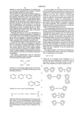
- the organic tetracarboxylic acids or derivatives thereof are preferably based on aromatic tetracarboxylic acids having the general formula: ##STR1## wherein A is a tetravalent organic group.
- the tetravalent organic group A is preferably one having one of the following structures: ##STR2## wherein X is one or more of the following: ##STR3##
- Preferred among the tetracarboxylic acid esters are the alkyl esters of 3,3',4,4'-benzophenone tetracarboxylic acid, most preferably the lower alkyl diesters thereof. Mixtures of two or more aromatic esters, most preferably predominating in diesters, may be employed, if desired.
- the tetracarboxylic acid derivative employed in the manufacture of the polyimide foams be a caprolactam as taught by U.S. Pat. Nos. 4,161,477, 4,183,838 and 4,183,839, the disclosures of which are incorporated herein by reference.
- bis-imide is formed by reaction of a tetracarboxylic acid dianhydride with an oxoimine such as caprolactam and then reacted with the diamine or diamines to produce the desired polyimides.
- the caprolactam is displaced during the reaction, in much the same way as is the ester portion of the tetracarboxylic acid ester.
- the tetracarboxylic acid derivatives used in the manufacture of the polyimide foams pursuant to this invention may also be an N-substituted imido acid ester of the tetracarboxylic acid as taught by U.S. No. 4,647,597 and 4,656,198, the disclosures of which are incorporated herein by reference.
- the N-substituted imido acid ester may be formed by reacting an aromatic tetracarboxylic acid dianhydride with an amino acid and an alcohol or mixture of alcohols.
- the acid ester group bonded to the nitrogen atom of the N-substituted imido acid ester is displaced so that the desired polyimide is formed.
- organic diamines with which the foregoing mixture of tetracarboxylic acids or derivatives is employed may be represented by the formula:
- R' is an aromatic group containing 5 to 16 carbon atoms and containing up to one hetero atom in the ring, the hetero atom being nitrogen, oxygen or sulfur. Also included are aromatic groups such as: ##STR4## Representatives of such diamines include: 2,6-diaminopyridine;
- aliphatic diamines are preferably alpha-omega diaminoalkanes having the formula:
- n is an integer from 2 to 16.
- diamines include 1,3-diaminopropane, 1,4-diaminobutane, 1,5-diaminopentane, 1,6-diaminohexane, etc.
- aliphatic etherified polyamines of the type polyoxypropylene amines having the formula:
- x varies from 1 to about 5 carbon atoms.
- polystyrene resins which may be included in the products of this invention include amino-terminated butadienenitrile copolymers having the general formula: ##STR5## wherein R is either a phenylene group or an alkylene group, R 1 is hydrogen or methyl, and x and y or each independently integers ranging from 1 to 25 and n is an integer, preferably below 20.
- butadiene constitute at least 50% by weight of the butadiene and nitrile monomer.
- the nitrile monomer copolymerized with the butadiene can either be acrylonitrile or methacrylonitrile.
- Such copolymers generally have low molecular weights, preferably less than 3,000 to insure that they are sufficient fluid to react in the formation of the polyimide as well as sufficiently fluid so as to be capable of foaming.
- Still another type of primary diamines which may be included in the products of this invention is the aromatic amino-terminated silicones, such as those having the general formula: ##STR6## wherein R is a C 2 to C 6 alkylene group, R 1 and R 2 are each independently lower alkyl containing 1 to 3 carbon atoms and n is an integer from 1 to 4.
- diesters may be represented by the general formula:
- R is an alkylene group (which may be branched or straight chain) and which preferably contains from 3 to 8 carbon atoms, most preferably trimethylene; and Ar is an aromatic group which may be composed of one or more fused or non-fused benzene rings which in turn may carry suitable substituents (e.g., nitro, alkoxy, etc.) in addition to the primary amino groups.
- a few exemplary diesters of this type include:
- a particularly preferred diester of this type is the diester of trimethylene glycol (1,3-propanediol) and 4-aminobenzoic acid.
- the organic tetracarboxylic acid preferably in the form of its diester, most preferably from methanol or ethanol, is reacted with the abovereferred-to amine(s) to form a prepolymer in the form of a consolidated, fragile foam structure, which is then subjected to additional heating in order to effect imide formation and thereby cure the polymer.
- this operation can be conducted either in the presence or absence of an added blowing agent to provide the desired polyimide foam.
- the relative proportions used in the preparation of the precursors and polymers of this invention can be varied. In general, it is preferred to employ essentially stoichiometric proportions as between the mixture of tetracarboxylic acids or derivatives thereof and the primary diamine(s). However, nonstoichiometric mixtures can be used although the excess of the reactant present in excess usually does not participate in the reaction. As noted above, about 1 to about 40 mol percent (preferably about 10 to about 30 mol percent, most preferably about 20 mol percent) of the combination of tetracarboxylic acids or derivatives thereof employed is composed of one or more dicarboxycyclohexenyl succinic acids or their derivatives.
- the balance of the combination is preferably composed of one or more aromatic or heterocyclic diamines with or without the addition of still other diamines, for example diamines of the type referred to hereinabove in Formulas I, II, III, IV and V, or any mixture thereof.
- diamines of the type referred to hereinabove in Formulas I, II, III, IV and V or any mixture thereof.
- the overall combination of amines will contain no more than about 10 mol percent of the diamines of Formulas I, II, III and IV.
- diamines of Formula V these may comprise up to about 40 mol percent of the mixture of diamines used.
- a combination of aromatic amines one of which is a nitrogen heterocyclic diamine, preferably 2,6-diaminopyridine and/or 3,5-diaminopyridine, while the other is a diamine containing two benzene rings, preferably 4,4'-methylenedianiline and/or 4,4'-oxydianiline.
- the mol ratio of the non-heterocyclic diamine to the nitrogen-containing heterocyclic diamine is within the range of 1.0 to 3.0, and preferably 1.5 to 2.8.
- the resulting alcohol produced in the reaction as well as the water released during the reaction can be used as the blowing agent during polymerization to form the desired polyimide foams.
- use can be made of any of a variety of organic or inorganic blowing agents.
- a solid blowing agent such as Celogen TSH, Celogen OT, Celogen AZ 130, Celogen RA, Celogen HT 500, Celogen HT 550, sodium bicarbonate, benzenesulfonyl hydrazide, boric acid, benzoic acid, and Expandex 5 PT of controlled particle size
- a solid blowing agent such as Celogen TSH, Celogen OT, Celogen AZ 130, Celogen RA, Celogen HT 500, Celogen HT 550, sodium bicarbonate, benzenesulfonyl hydrazide, boric acid, benzoic acid, and Expandex 5 PT of controlled particle size
- Preferred for such use are solid blowing agents which have been subjected to ball milling or other grinding so that the blowing agent is less than 200 microns in diameter, with 98 percent of the blowing agent particle sizes being less than 150 microns in diameter.
- Variations in the concentration of the blowing agent can be used to achieve specific densities and ILD values. Concentrations of up to 10 percent based on the weight of the polyimide precursor, and preferably 1 to 5 percent, can be employed. A concentration of about 2.5 weight percent is particularly preferred.
- Hydrated organic compounds of the type referred to in U.S. No. 4,621,015 may also be used as blowing agents in the process.
- the temperatures at which the precursor is converted to the polyimide foam are generally those temperatures used in the preparation of other polyimide polymers. As a general rule temperatures ranging from 200° to 400° C. can be used, with heating times from 5 to 60 minutes or longer. As those skilled in the art will appreciate, the time for carrying out the reaction is somewhat dependent upon the reaction temperature, higher temperatures enabling the use of shorter reaction times. It is also possible to heat to a lower temperature in the first stage of the reaction and then to higher temperatures in the later stages.
- Heating can be carried out in a conventional oven if desired.
- the foaming and curing of the precursor into a foamed polyimide polymer can be effected by means of microwave heating.
- the precursor is exposed for 1 to 120 minutes to radio frequencies within the range of 915 to 2450 mHz, with the power output ranging from 1 to 100 kw.
- the power output to prepolymer weight ratio generally falls within the range of 0.1 to 10 kw per kg.
- a run is conducted using 70 kg of a polyimide precursor powder in a microwave transparent mold using a microwave power input at 30 kw.
- the well-mixed powder is composed of 4,4'-methylenedianiline (MDA), 2,6-diaminopyridine (DAP) and benzophenone tetracarboxylic acid dimethyl ester (DTDE) in the mol ratio of approximately 0.7MDA:0.3 DAP:1.0 BTDE.
- MDA 4,4'-methylenedianiline
- DAP 2,6-diaminopyridine
- DTDE benzophenone tetracarboxylic acid dimethyl ester
Landscapes
- Chemical & Material Sciences (AREA)
- Chemical Kinetics & Catalysis (AREA)
- Organic Chemistry (AREA)
- Health & Medical Sciences (AREA)
- Polymers & Plastics (AREA)
- Medicinal Chemistry (AREA)
- Materials Engineering (AREA)
- Engineering & Computer Science (AREA)
- Physics & Mathematics (AREA)
- Electromagnetism (AREA)
- General Health & Medical Sciences (AREA)
- Toxicology (AREA)
- Macromolecular Compounds Obtained By Forming Nitrogen-Containing Linkages In General (AREA)
- Manufacture Of Porous Articles, And Recovery And Treatment Of Waste Products (AREA)
Abstract
Description
H.sub.2 N--R'--NH.sub.2
H.sub.2 N--(CH.sub.2).sub.n --NH.sub.2 (I)
H.sub.2 N--CH(CH.sub.3)CH.sub.2 --[OCH.sub.2 CH(CH.sub.3)].sub.x --NH.sub.2 (II)
H.sub.2 N--ArCOO--R--OOCAr--NH.sub.2 (V)
______________________________________
Blowing Agent
             Chemical Composition
______________________________________
Celogen TSH  toluenesulfonyl hydrazide
Celogen OT   p,p,'-oxybis(benzenesulfonyl hydrazide)
Celogen AZ 130
             azodicarbonamide
Celogen RA   p-toluenesulfonyl semicarbazide
Celogen HT 500
             a modified hydrazine derivative
Celogen HT 550
             hydrazol dicarboxylate
Expandex 5 PT
             5-phenyltetrazole
______________________________________
Claims (28)
Priority Applications (5)
| Application Number | Priority Date | Filing Date | Title |
|---|---|---|---|
| US07/255,264 US4900762A (en) | 1988-06-20 | 1988-10-11 | Production of foamed polymer structures |
| AU35868/89A AU615301B2 (en) | 1988-06-20 | 1989-05-31 | Production of foamed polymer structures |
| DE1989617542 DE68917542T2 (en) | 1988-06-20 | 1989-06-12 | Production of foamed polymer structures. |
| EP19890110596 EP0348722B1 (en) | 1988-06-20 | 1989-06-12 | Production of foamed polymer structures |
| JP15478589A JPH0241333A (en) | 1988-06-20 | 1989-06-19 | Manufacture of foamed polymer structure |
Applications Claiming Priority (2)
| Application Number | Priority Date | Filing Date | Title |
|---|---|---|---|
| US20901988A | 1988-06-20 | 1988-06-20 | |
| US07/255,264 US4900762A (en) | 1988-06-20 | 1988-10-11 | Production of foamed polymer structures |
Related Parent Applications (1)
| Application Number | Title | Priority Date | Filing Date |
|---|---|---|---|
| US20901988A Division | 1988-06-20 | 1988-06-20 |
Publications (1)
| Publication Number | Publication Date |
|---|---|
| US4900762A true US4900762A (en) | 1990-02-13 |
Family
ID=26903748
Family Applications (1)
| Application Number | Title | Priority Date | Filing Date |
|---|---|---|---|
| US07/255,264 Expired - Lifetime US4900762A (en) | 1988-06-20 | 1988-10-11 | Production of foamed polymer structures |
Country Status (1)
| Country | Link |
|---|---|
| US (1) | US4900762A (en) |
Cited By (10)
| Publication number | Priority date | Publication date | Assignee | Title |
|---|---|---|---|---|
| US5338765A (en) * | 1993-11-23 | 1994-08-16 | Schuller International, Inc. | Method of and apparatus for continuously foaming a polyimide powder |
| US5453161A (en) * | 1993-11-12 | 1995-09-26 | Enichem S.P.A. | Polyamic acid to polyimide conversion by microwave heating |
| US5593610A (en) * | 1995-08-04 | 1997-01-14 | Hormel Foods Corporation | Container for active microwave heating |
| US20080161432A1 (en) * | 2006-12-29 | 2008-07-03 | Korwin-Edson Michelle L | Room temperature crosslinked foam |
| US20080161431A1 (en) * | 2006-12-29 | 2008-07-03 | Korwin-Edson Michelle L | Room temperature crosslinked foam |
| US20080160203A1 (en) * | 2006-12-29 | 2008-07-03 | O' Leary Robert J | Spray-in latex foam for sealing and insulating |
| US20100175810A1 (en) * | 2006-12-29 | 2010-07-15 | Korwin-Edson Michelle L | Room temperature crosslinked foam |
| US20100189908A1 (en) * | 2006-12-29 | 2010-07-29 | Olang Fatemeh N | Formulation method for plural component latex- foam |
| US20110123717A1 (en) * | 2006-12-29 | 2011-05-26 | O'leary Robert J | Two part spray foam using a blowing agent as a plasticizer and a room temperature crosslinking agent |
| US20110224317A1 (en) * | 2009-01-19 | 2011-09-15 | Owens Corning Intellectual Capital, Llc | Spray foams with fine particulate blowing agent |
Citations (11)
| Publication number | Priority date | Publication date | Assignee | Title |
|---|---|---|---|---|
| US4305796A (en) * | 1980-09-12 | 1981-12-15 | International Harvester Company | Methods of preparing polyimides and artifacts composed thereof |
| US4315076A (en) * | 1980-09-12 | 1982-02-09 | International Harvester Company | Polyimides |
| US4315077A (en) * | 1981-04-14 | 1982-02-09 | International Harvester Company | Polyimides |
| US4332656A (en) * | 1981-04-10 | 1982-06-01 | International Harvester Company | Polyimide foams |
| US4353998A (en) * | 1980-09-12 | 1982-10-12 | International Harvester Company | Structural materials and components |
| US4361453A (en) * | 1980-09-12 | 1982-11-30 | International Harvester Company | Methods of preparing polyimides and artifacts composed thereof |
| US4363690A (en) * | 1980-09-12 | 1982-12-14 | International Harvester Company | Structural materials and components |
| US4369261A (en) * | 1981-04-10 | 1983-01-18 | International Harvester Company | Polyimide foams |
| US4439381A (en) * | 1980-09-12 | 1984-03-27 | I M L Corporation | Methods of preparing polyimides and artifacts composed thereof |
| US4599365A (en) * | 1983-12-27 | 1986-07-08 | John Gagliani | Foaming and curing polyimide resins by application of microwave energy |
| US4708972A (en) * | 1986-06-26 | 1987-11-24 | Imi-Tech Corporation | Steam resistant modified polyimide foams |
-
1988
- 1988-10-11 US US07/255,264 patent/US4900762A/en not_active Expired - Lifetime
Patent Citations (12)
| Publication number | Priority date | Publication date | Assignee | Title |
|---|---|---|---|---|
| US4305796A (en) * | 1980-09-12 | 1981-12-15 | International Harvester Company | Methods of preparing polyimides and artifacts composed thereof |
| US4315076A (en) * | 1980-09-12 | 1982-02-09 | International Harvester Company | Polyimides |
| US4353998A (en) * | 1980-09-12 | 1982-10-12 | International Harvester Company | Structural materials and components |
| US4361453A (en) * | 1980-09-12 | 1982-11-30 | International Harvester Company | Methods of preparing polyimides and artifacts composed thereof |
| US4363690A (en) * | 1980-09-12 | 1982-12-14 | International Harvester Company | Structural materials and components |
| US4439381A (en) * | 1980-09-12 | 1984-03-27 | I M L Corporation | Methods of preparing polyimides and artifacts composed thereof |
| US4305796B1 (en) * | 1980-09-12 | 1985-02-26 | ||
| US4332656A (en) * | 1981-04-10 | 1982-06-01 | International Harvester Company | Polyimide foams |
| US4369261A (en) * | 1981-04-10 | 1983-01-18 | International Harvester Company | Polyimide foams |
| US4315077A (en) * | 1981-04-14 | 1982-02-09 | International Harvester Company | Polyimides |
| US4599365A (en) * | 1983-12-27 | 1986-07-08 | John Gagliani | Foaming and curing polyimide resins by application of microwave energy |
| US4708972A (en) * | 1986-06-26 | 1987-11-24 | Imi-Tech Corporation | Steam resistant modified polyimide foams |
Non-Patent Citations (8)
| Title |
|---|
| Gagliani et al., NAS9 15050, Final Report, entitled Development of Fire Resistant, Low Smoke Generating, Thermally Stable End Items for Aircraft & Spacecraft (1977). * |
| Gagliani et al., NAS9 15848, Final Report, entitled Development of Fire Resistant Low Smoke Generating, Thermally Stable End Items for Commercial Aircraft & Spacecraft Using a Basic Polyimide Resin (1980). * |
| Gagliani et al., NAS9 16009, Final Report, entitled Formulation & Characterization of Polyimide Resilient Foams of Various Densities for Aircraft Seating Applications (1981). * |
| Gagliani et al., NAS9-15050, Final Report, entitled "Development of Fire-Resistant, Low Smoke Generating, Thermally Stable End Items for Aircraft & Spacecraft" (1977). |
| Gagliani et al., NAS9-15848, Final Report, entitled "Development of Fire-Resistant Low Smoke Generating, Thermally Stable End Items for Commercial Aircraft & Spacecraft Using a Basic Polyimide Resin" (1980). |
| Gagliani et al., NAS9-16009, Final Report, entitled "Formulation & Characterization of Polyimide Resilient Foams of Various Densities for Aircraft Seating Applications" (1981). |
| Gagliani, NAS9 14718, Final Report entitled Fire Resistant Resilient Foams (1975). * |
| Gagliani, NAS9-14718, Final Report entitled "Fire Resistant Resilient Foams" (1975). |
Cited By (14)
| Publication number | Priority date | Publication date | Assignee | Title |
|---|---|---|---|---|
| US5453161A (en) * | 1993-11-12 | 1995-09-26 | Enichem S.P.A. | Polyamic acid to polyimide conversion by microwave heating |
| US5338765A (en) * | 1993-11-23 | 1994-08-16 | Schuller International, Inc. | Method of and apparatus for continuously foaming a polyimide powder |
| US5593610A (en) * | 1995-08-04 | 1997-01-14 | Hormel Foods Corporation | Container for active microwave heating |
| US20100175810A1 (en) * | 2006-12-29 | 2010-07-15 | Korwin-Edson Michelle L | Room temperature crosslinked foam |
| US20080161431A1 (en) * | 2006-12-29 | 2008-07-03 | Korwin-Edson Michelle L | Room temperature crosslinked foam |
| US20080160203A1 (en) * | 2006-12-29 | 2008-07-03 | O' Leary Robert J | Spray-in latex foam for sealing and insulating |
| US20080161432A1 (en) * | 2006-12-29 | 2008-07-03 | Korwin-Edson Michelle L | Room temperature crosslinked foam |
| US20100189908A1 (en) * | 2006-12-29 | 2010-07-29 | Olang Fatemeh N | Formulation method for plural component latex- foam |
| US20110123717A1 (en) * | 2006-12-29 | 2011-05-26 | O'leary Robert J | Two part spray foam using a blowing agent as a plasticizer and a room temperature crosslinking agent |
| US8779016B2 (en) | 2006-12-29 | 2014-07-15 | Owens Corning Intellectual Capital, Llc | Spray-in latex foam for sealing and insulating |
| US8875472B2 (en) | 2006-12-29 | 2014-11-04 | Owens Corning Intellectual Capital, Llc | Room temperature crosslinked foam |
| US9714331B2 (en) | 2006-12-29 | 2017-07-25 | Owens Corning Intellectual Capital, Llc | Room temperature crosslinked foam |
| US9868836B2 (en) | 2006-12-29 | 2018-01-16 | Owens Corning Intellectual Capital, Llc | Room temperature crosslinked foam |
| US20110224317A1 (en) * | 2009-01-19 | 2011-09-15 | Owens Corning Intellectual Capital, Llc | Spray foams with fine particulate blowing agent |
Similar Documents
| Publication | Publication Date | Title |
|---|---|---|
| US4535101A (en) | Polyimide of 2,2-bis(4-(4-aminophenoxy)phenyl)-hexafluoropropane and process for the preparation of same | |
| EP0110723B1 (en) | Method of preparing polyimide foams with blowing agents and products thereof | |
| US4535099A (en) | Polyimide foam from mixture of silicon containing diamine and different aromatic diamine | |
| US4439381A (en) | Methods of preparing polyimides and artifacts composed thereof | |
| US4599365A (en) | Foaming and curing polyimide resins by application of microwave energy | |
| US4897432A (en) | Production of foamed polymer structures | |
| US4900761A (en) | Production of polyimide foams | |
| US4355120A (en) | Polyimide foams | |
| US4855331A (en) | Production of foamed polymer structures | |
| KR100270407B1 (en) | A process for preparing flexible polyimide foam | |
| US4822537A (en) | Production of foamed polymer structures | |
| US4877563A (en) | Production of foamed polymer structures | |
| EP0348722B1 (en) | Production of foamed polymer structures | |
| US5064867A (en) | Production of foamed polymer structures | |
| US5077318A (en) | Method for producing polyimide foam of desired density | |
| US5234966A (en) | Polyimide foam of desired density | |
| US4816493A (en) | Polyimide foams and their preparation | |
| US4952611A (en) | Polyimide foams and their production | |
| US4944902A (en) | Polyimide compositions and processes | |
| US4804504A (en) | Production of foamed polymer structures | |
| US5096932A (en) | Polyimide foam products and methods | |
| US5453161A (en) | Polyamic acid to polyimide conversion by microwave heating | |
| US5122546A (en) | Polyimide foam precursor | |
| US4826886A (en) | Polyimide foams and their production | |
| US4855332A (en) | Polyimide foams and their production |
Legal Events
| Date | Code | Title | Description |
|---|---|---|---|
| AS | Assignment |
Owner name: ETHYL CORPORATION, RICHMOND, VA A CORP. OF VA Free format text: ASSIGNMENT OF ASSIGNORS INTEREST.;ASSIGNORS:BROEMMELSIEK, H. EUGENE;LEE, RAYMOND;LANIER, CARROLL W.;REEL/FRAME:005186/0775 Effective date: 19891127 |
|
| STCF | Information on status: patent grant |
Free format text: PATENTED CASE |
|
| CC | Certificate of correction | ||
| FEPP | Fee payment procedure |
Free format text: PAYOR NUMBER ASSIGNED (ORIGINAL EVENT CODE: ASPN); ENTITY STATUS OF PATENT OWNER: LARGE ENTITY |
|
| FPAY | Fee payment |
Year of fee payment: 4 |
|
| AS | Assignment |
Owner name: ALBERMARLE CORPORATION, VIRGINIA Free format text: ASSIGNMENT OF ASSIGNORS INTEREST;ASSIGNOR:ETHYL CORPORATION;REEL/FRAME:007109/0340 Effective date: 19940228 |
|
| AS | Assignment |
Owner name: IMI-TECH CORPORATION, ILLINOIS Free format text: ASSIGNMENT OF ASSIGNORS INTEREST;ASSIGNOR:ALBEMARLE CORPORATION;REEL/FRAME:007249/0411 Effective date: 19940928 |
|
| FEPP | Fee payment procedure |
Free format text: PAYOR NUMBER ASSIGNED (ORIGINAL EVENT CODE: ASPN); ENTITY STATUS OF PATENT OWNER: LARGE ENTITY Free format text: PAYER NUMBER DE-ASSIGNED (ORIGINAL EVENT CODE: RMPN); ENTITY STATUS OF PATENT OWNER: LARGE ENTITY |
|
| FPAY | Fee payment |
Year of fee payment: 8 |
|
| FPAY | Fee payment |
Year of fee payment: 12 |
|
| REMI | Maintenance fee reminder mailed |