US4900740A - N,N'-disubstituted guanidines containing a carboxyl or a tetrazolyl moiety - Google Patents
N,N'-disubstituted guanidines containing a carboxyl or a tetrazolyl moiety Download PDFInfo
- Publication number
- US4900740A US4900740A US07/104,601 US10460187A US4900740A US 4900740 A US4900740 A US 4900740A US 10460187 A US10460187 A US 10460187A US 4900740 A US4900740 A US 4900740A
- Authority
- US
- United States
- Prior art keywords
- compound
- alk
- group
- physiologically acceptable
- atoms
- Prior art date
- Legal status (The legal status is an assumption and is not a legal conclusion. Google has not performed a legal analysis and makes no representation as to the accuracy of the status listed.)
- Expired - Fee Related
Links
Images


Classifications
-
- C—CHEMISTRY; METALLURGY
- C07—ORGANIC CHEMISTRY
- C07D—HETEROCYCLIC COMPOUNDS
- C07D257/00—Heterocyclic compounds containing rings having four nitrogen atoms as the only ring hetero atoms
- C07D257/02—Heterocyclic compounds containing rings having four nitrogen atoms as the only ring hetero atoms not condensed with other rings
- C07D257/04—Five-membered rings
-
- A—HUMAN NECESSITIES
- A23—FOODS OR FOODSTUFFS; TREATMENT THEREOF, NOT COVERED BY OTHER CLASSES
- A23L—FOODS, FOODSTUFFS OR NON-ALCOHOLIC BEVERAGES, NOT OTHERWISE PROVIDED FOR; PREPARATION OR TREATMENT THEREOF
- A23L27/00—Spices; Flavouring agents or condiments; Artificial sweetening agents; Table salts; Dietetic salt substitutes; Preparation or treatment thereof
- A23L27/30—Artificial sweetening agents
-
- C—CHEMISTRY; METALLURGY
- C07—ORGANIC CHEMISTRY
- C07C—ACYCLIC OR CARBOCYCLIC COMPOUNDS
- C07C279/00—Derivatives of guanidine, i.e. compounds containing the group, the singly-bound nitrogen atoms not being part of nitro or nitroso groups
- C07C279/04—Derivatives of guanidine, i.e. compounds containing the group, the singly-bound nitrogen atoms not being part of nitro or nitroso groups having nitrogen atoms of guanidine groups bound to acyclic carbon atoms of a carbon skeleton
- C07C279/14—Derivatives of guanidine, i.e. compounds containing the group, the singly-bound nitrogen atoms not being part of nitro or nitroso groups having nitrogen atoms of guanidine groups bound to acyclic carbon atoms of a carbon skeleton being further substituted by carboxyl groups
-
- C—CHEMISTRY; METALLURGY
- C07—ORGANIC CHEMISTRY
- C07C—ACYCLIC OR CARBOCYCLIC COMPOUNDS
- C07C279/00—Derivatives of guanidine, i.e. compounds containing the group, the singly-bound nitrogen atoms not being part of nitro or nitroso groups
- C07C279/16—Derivatives of guanidine, i.e. compounds containing the group, the singly-bound nitrogen atoms not being part of nitro or nitroso groups having nitrogen atoms of guanidine groups bound to carbon atoms of rings other than six-membered aromatic rings
-
- C—CHEMISTRY; METALLURGY
- C07—ORGANIC CHEMISTRY
- C07C—ACYCLIC OR CARBOCYCLIC COMPOUNDS
- C07C279/00—Derivatives of guanidine, i.e. compounds containing the group, the singly-bound nitrogen atoms not being part of nitro or nitroso groups
- C07C279/18—Derivatives of guanidine, i.e. compounds containing the group, the singly-bound nitrogen atoms not being part of nitro or nitroso groups having nitrogen atoms of guanidine groups bound to carbon atoms of six-membered aromatic rings
-
- C—CHEMISTRY; METALLURGY
- C07—ORGANIC CHEMISTRY
- C07C—ACYCLIC OR CARBOCYCLIC COMPOUNDS
- C07C313/00—Sulfinic acids; Sulfenic acids; Halides, esters or anhydrides thereof; Amides of sulfinic or sulfenic acids, i.e. compounds having singly-bound oxygen atoms of sulfinic or sulfenic groups replaced by nitrogen atoms, not being part of nitro or nitroso groups
- C07C313/08—Sulfenic acids; Derivatives thereof
- C07C313/18—Sulfenamides
- C07C313/26—Compounds containing any of the groups, X being a hetero atom, Y being any atom
- C07C313/30—Y being a hetero atom
-
- C—CHEMISTRY; METALLURGY
- C07—ORGANIC CHEMISTRY
- C07C—ACYCLIC OR CARBOCYCLIC COMPOUNDS
- C07C2601/00—Systems containing only non-condensed rings
- C07C2601/12—Systems containing only non-condensed rings with a six-membered ring
- C07C2601/14—The ring being saturated
-
- C—CHEMISTRY; METALLURGY
- C07—ORGANIC CHEMISTRY
- C07C—ACYCLIC OR CARBOCYCLIC COMPOUNDS
- C07C2601/00—Systems containing only non-condensed rings
- C07C2601/18—Systems containing only non-condensed rings with a ring being at least seven-membered
Definitions
- the present invention relates to novel N,N'-disubstituted guanidine compounds useful as sweetening agents. Additionally, the present invention relates to sweetening compositions, food products containing the present N,N'-disubstituted guanidines, methods of sweetening foods, novel intermediates and methods of preparing the novel guanidines.
- guanidine derivatives are known in the art as sweeteners. See, for example, Yuki and Inoue (Nippon Kagaku Kaishi, no. 11, 2140-43 (1974)), Chemical Abstracts, Vol. 82, no. 140061p (1975) which describes N-((4-chlorophenylamino)iminomethyl)- ⁇ -alanine (Chemical Substance Index, vol. 76-85, 1972-1976, p. 1067cs); European patent application Ser. No. 0,107,597 published May 2, 1984 (U.S. Pat. No. 4,645,678); U.S. Pat. No. 4,673,582 and European patent application Ser. No. 0,195,730 published Sept. 24, 1986.
- N,N'-disubstituted guanidines containing a carboxyl or a tetrazolyl moiety, are useful as sweetening agents.
- the present N,N'-disubstituted guanidines are added to food products in amounts sufficient to sweeten the food to a desired level.
- Typical food products include soft drinks, juices, condiments, candies, baked goods, chewing gum and pharmaceuticals.
- the present N,N'-disubstituted guanidines are prepared by reacting a 5-aminoalkyl-substituted tetrazolyl or aminoalkylcarboxylic acids (glycine) with derivatives of thioureas. The resulting product is recovered and used in food applications to replace sucrose.
- the present N,N'-disubstituted guanidines can be combined with other sweeteners and bulking agents.
- N-cyclooctyl-N'-carboxymethyl-guanidine (2) N-cyclohexyl-N'-tetrazol-5-yl-methyl-guanidine, (3) N-cyclooctyl-N'-tetrazol-5-yl-methyl-guanidine or mixtures of these three compounds are employed as a sweetening agent in foods especially in carbonated soft drinks.
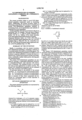
- the present substituted guanidines are represented by the following formula: ##STR1## wherein R 1 is hydrogen, a C 1 to C 4 saturated, unsaturated, acyclic, cyclic or mixed hydrocarbyl or modified hydrocarbyl group and wherein, in the modified hydrocarbyl group,
- 1 to 2 atoms of carbon may be replaced by 1 to 2 of the same or different heteroatoms selected from the group consisting of N, O, S, Cl, Br and I,
- 1 to 3 atoms of hydrogen may be replaced by 1 to 3 atoms of fluorine;
- R 2 is a C 1 to C 13 saturated, unsaturated, acyclic, cyclic or mixed hydrocarbyl or modified hydrocarbyl group and wherein, in the modified hydrocarbyl group,
- 1 to 4 atoms of carbon may be replaced by 1 to 4 of the same or different heteroatoms selected from the group consisting of N, O, S, Cl, Br and I,
- 1 to 5 atoms of hydrogen may be replaced by 1 to 5 atoms of fluorine;
- R 1 and R 2 can be fused
- n 0, 1, 2 or 3;
- R 3 is --COOH or 5-substituted tetrazolyl ##STR2##
- R 5 is H or C 1 -C 6 alkyl wherein R 5 can be in the 1 or 2 position. When R 5 is in the 1 position, then the double bonds are as shown in Formula (I) and when R 5 is in the 2 position, then the double bonds are in the 3-4 and 1-5 positions.
- N,N'-disubstituted guanidines include tautomeric forms and physiologically acceptable salts of the compounds of Formula I, above.
- Preferred compounds include those wherein R 4 and R 5 are hydrogen, n equals 1, and R 3 is 5-tetrazolyl.
- modified hydrocarbyl it is contemplated, as one example, that where R 2 is a C 2 modified hydrocarbyl group that one atom of carbon may be replaced by an atom of nitrogen so that the C 2 hydrocarbyl moiety may be replaced by the --CN cyano moiety. As a further example, it is contemplated that where R 2 is a C 3 modified hydrocarbyl group that one atom of carbon may be replaced by a nitrogen atom and two atoms of carbon may be replaced by two atoms of oxygen so that a C 3 hydrocarbyl moiety may be replaced by the --NO 2 (nitro) moiety.
- Other replacements of hydrocarbyl carbons by the same or different heteroatoms selected from the group consisting of N, O, S, Cl, Br, and I are similarly contemplated by the invention.
- R 2 is a C 1 to C 13 group is established as a consequence of solubility limitations. It is contemplated that R 2 may be longer than the 13 carbon limitation stated above where other portions of the sweetening agent molecule or of the R 2 chain itself may be modified so as to provide for greater solubility.
- the present guanidine is one wherein R 3 is 5-tetrazolyl and R 1 is H or CH 3 .
- Preferred guanidines also include those wherein R 1 is H and R 2 is cycoalkyl having 6 or more carbon atoms.
- R 2 substituents include
- alk(en)yl fused tricycloalk(en)yl alk(en)yl C 11 -C 13 .
- R 2 is selected from the group consisting of cyclooctyl, benzyl, cyclononyl, phenyl, alpha-phenethyl, cycloheptyl and cyclohexyl.
- Preferred guanidines also include those listed above wherein R 2 is a modified hydrocarbyl group wherein up to four carbon atoms may be replaced by the same or different heteroatoms selected from a group consisting of S to replace C or CH 2 , N to replace CH, NH and O to replace CH 2 and Cl, Br and I to replace CH 3 and wherein up to 5 atoms of hydrogen may be substituted by fluorine atoms.
- R 2 is selected from the group consisting of CH(CH 3 )C 6 H 5 , pyridinyl, piperidyl, homopiperidyl, indolyl, indolinyl, isoindolinyl, quinolyl, isoquinolyl, pyrazinyl, pyrimidyl, indazolyl, quinoxalinyl, quinazolinyl, purinyl, CH 2 C 6 H 5 , pyranyl, benzofuranyl, methoxyphenyl, methyloxycarbonylphenyl, 3-methylphenyl, 3-cyanophenyl, 3-chlorophenyl, 3,5-dimethylphenyl, 3,5-dichlorophenyl, 3,4,5-trichlorophenyl, 3-bromophenyl, 3,4-methylenedioxyphenyl, morpholinyl, benzoxazolyl, acetamidophenyl, thiopheny
- R 1 and R 4 are H; R 3 is 5-tetrazolyl; and wehrein R 2 is selected from the group consisting of CH(CH 3 )C 6 H 5 , CH 2 C 6 H 5 , CH(CH 3 )-c-C 6 H 11 , c-C 6 H 11 , c-C 7 H 13 , c-C 8 H 15 , c-C 9 H 17 , c-C 10 H 19 , SO 2 C 6 H 5 , alkyl substituted SO 2 C 6 H 5 and SO 2 C 7 H 13 .
- the present invention also includes physiologically acceptable salts of the present guanidines including sulfate, phosphate, citrate, hydrochloride, sodium, potassium, ammonium, calcium and magnesium salts.
- the present invention relates to edible products containing the present guanidine compounds as sweetening agents either alone or in combination with other sweeteners such as carbohydrate sweeteners or high potency sweeteners.
- the present N,N'-disubstituted guanidines may provide from about 10 to about 90 percent of the sweetness, advantageously from 25-75 percent of the sweetness and preferably 40-60 percent of the sweetness.
- a process for sweetening edible products such as foods, beverages, candies, chewing gums, sweets, pharmaceuticals, veterinary preparations and the like.
- the present invention further contemplates the present N,N'-disubstituted guanidines in combination with other sweetening agents and/or physiologically acceptable carriers which may be a bulking agent.
- suitable carriers include polydextrose, starch, maltodextrins, cellulose, methylcellulose, maltitol, carboxymethylcellulose, hydroxymethylcellulose, microcrystalline cellulose, sodium alginate, pectins, gums, lactose, maltose, glucose, leucine, glycerol, mannitol, sorbitol, sodium bicarbonate and phosphoric, citric, tartaric, fumaric, benzoic, sorbic, propionic acids and their sodium, potassium and calcium salts and mixtures of all of the above.
- Suitable sweetening agents which may be used in combination with the present N,N'-disubstituted guanidines can be sugar or high potency sweeteners such as, for example, sucrose, corn syrups, fructose, high fructose corn syrup, aspartame, alitame, neohesperidin dihydrochalcone, hydrogenated isomaltulose, stevioside, L-sugars, glycyrrhizin, xylitol, acesulfam-K, saccharin (sodium, potassium or calcium salt), cyclamic acid (sodium, potassium or calcium salt), trichlorogalactosucrose (TGS or sucralose), monellin and thaumatin and mixtures thereof.
- sugar or high potency sweeteners such as, for example, sucrose, corn syrups, fructose, high fructose corn syrup, aspartame, alitame, neohe
- the present invention also relates to a method of preparing the tetrazolyl and carboxyl containing guanidine compounds.
- the substituted guanidines of the present invention are prepared employing synthetic methods which are analogous to known methods disclosed in the literature. These known methods have been summarized in recent papers by Maryanoff (C. Maryanoff, R. C. Stanmony, J. N. Plampin, and J. E. Mills, J. Org. Chem. 1986, 51, 1882-1884) and A. E. Miller, J. J. Bischoff, Synthesis, 1986, 777-179. The techniques are further described in J. Med. Chem., 1978, no. 21, pp. 773-781; U.S. Pat. No.
- thiourea derivative i.e., sulfonic acid derivatives of a thiourea.
- These intermediates are reacted with a 5-aminoalkyl-substituted tetrazolyl or an aminoalkylcarboxylic acid (glycine) resulting in formation of the present N,N'-disubstituted guanidines.
- the preparation of 5-substituted tetrazolyls is described by Grzonka and Liberek in Roczniki Chemii, Ann. Soc. Chim. Polonorum, 45, 967-986 (1971), which is incorporated herein by reference.
- a reactive intermediate with an easily liberated activating moiety (leaving group), designated by the letter L in the following reactants, can be employed wherein the intermediate contains appropriately substituted amine groups corresponding to the substituents present in the guanidine nitrogens.
- the leaving groups are preferably selected from the group consisting of S-alkyl (isothiourea), O-alkyl (isourea), OSO 2 -aryl, SO 3 H and halogen moieties.
- the present invention encompasses novel intermediates used in preparing the present guanidine compounds as seen in the tetrazolyl and glycine containing reactants in (3) above.
- One of the preferred methods of synthesis employed to obtain these thiourea derivatives consists of allowing an alkyl or aryl isothiocyanate to react with NH 3 or NH 4 OH.
- the reaction is conducted from ambient temperature to boiling, depending on the reciprocal reactivity of the two compounds and takes place in an organic solvent such as ethanol, ethyl acetate, acetonitrile, chloroform or acetone.
- Preferred L leaving groups include S--CH 3 and SO 3 H, such as in the following compound, for example: ##STR7##
- the S-alkyl intermediates are obtained by treating the corresponding thiourea derivative with an alkylating agent (such as methyl iodide or dimethyl sulfate) in solution in an organic solvent such as acetone or 2-butanone at a temperature ranging from ambient temperature to boiling depending upon reactivity of the materials.
- an alkylating agent such as methyl iodide or dimethyl sulfate
- organic solvent such as acetone or 2-butanone
- an alkylisothiocyanate is allowed to condense with NH 3 or NH 4 OH preferably at ambient temperature and in an organic solvent to yield a thiourea NH 2 CSNR 1 R 2 .
- the thiourea is purified by recrystallization or other standard procedures and is then oxidized [o] with, for example, H 2 O 2 or H 2 O 2 /Na 2 MoO 4 .
- This reaction is conducted in an organic solvent or H 2 O at temperatures varying from 0°-40° C. depending on thiourea reactivity.
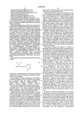
- the isothiourea is then reacted with the aminoalkyltetrazolyl or aminoalkylcarboxylic acid (glycine) to give the guanidine ##STR9##
- This reaction may be conducted in water or organic solvents and at temperatures varying from ambient to 100° C.
- the guanidine is then purified by recrystallization or other standard methods.
- the present N,N-disubstitued guanidines may exist as an equilibrium mixture of tautomeric forms. All tautomers of the guanidines are contemplated by the present invention.
- the guanidines are shown in the general formula as the tautomer with ##STR10## unsaturation; however, this tautomer is invariably in equilibrium with the other tautomers, i.e., ##STR11##
- the present N,N'-disubstituted guanidines are converted into salts by reacting them with physiologically acceptable acids such as HCl, sulfuric acid, phosphoric acid, citric acid and the like.
- physiologically acceptable acids such as HCl, sulfuric acid, phosphoric acid, citric acid and the like.
- R 5 is hydrogen
- the sweetening agents according to the present invention may exist in Zwitterion or in acid form. They can thus be converted into salts by acids or by physiologically acceptable organic or inorganic bases.
- a preferred method of preparing such salts consists of concentrating to dryness in vacuo a mixture of a compound according to the present invention in an aqueous solution with an equivalent amount of an acid or of an organic or inorganic base.
- the preferred salts according to the present invention are hydrochloride or sodium, potassium, ammonium, calcium, phosphate, citrate or magnesium salts.
- the present sweetening agents may take the form of a balanced mixture of tautomeric forms.
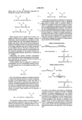
- the following tautomeric forms may be obtained, when R 1 is H: ##STR12##
- N,N'-disubstituted guanidines are represented in Formula (I) by a single tautomeric form with the full knowledge that the tautomeric form must necessarily be in balance with the other tautomeric forms, depending on the nature of the substituents R 1 , R 2 and R 5 as well as on the pH.
- the present N,N'-disubstituted guanidines may have an assymetrical carbon atom, i.e., optically active site. These compounds exist in (R) and (S) enantiomeric forms. Both the (R) and (S) enantiomers of the N,N'-disubstituted guanidines are contemplated by the present invention.
- the present invention also relates to a method of sweetening foods or comestible products.
- the present N,N'-disubstituted guanidines are added to any consumable product in which it is desired to have a sweet taste.
- the present sweetening agents are added to such products in amounts effective to impart the desired level of sweetness.
- the optimum amount of sweetening agent will vary depending on a variety of factors such as, for example, the sweetness potency of the particular sweetening agent, storage and use conditions of the product, the particular components of the products, the flavor profile of the comestible products and the level of sweetness desired.
- One skilled in the art can readily determine the optimum amount of sweetening agent to be employed in a particular formulation of a food product by conducting routine sweetness (sensory) experiments.
- the present sweetening agents are added to the comestible products in amounts of from about 0.001 to about 0.5 percent by weight of the comestible product, advantageously from about 0.005 to about 0.25 weight percent and preferably from about 0.01 to about 0.2 weight percent. Concentrates, of course, will contain higher percentages of sweetening agent(s), and are diluted for end use purposes.
- Suitable products which are sweetened by the present sweetening agents include any products for which a sweet flavor component is desired such as food products (for human or animal consumption), beverages (alcoholic, soft drinks, juices, carbonated beverages), confectionary products (candies, chewing gum, baked goods, pastries, breads, etc.), hygiene products, cosmetics, pharmaceutical products and veterinary products.
- a sweet flavor component for human or animal consumption
- beverages alcoholic, soft drinks, juices, carbonated beverages
- confectionary products candies, chewing gum, baked goods, pastries, breads, etc.
- hygiene products cosmetics, pharmaceutical products and veterinary products.
- the present N,N'-disubstituted guanidines can be added in amounts in excess of a sucrose equivalent normally found in chewing gum. This excess amount of guanidine sweetener provides a longer sweet taste and enhancement of flavor (flavor enhancer) as a result of having a slower dissolution rate and lower solubility when compared to sucrose.
- the present N,N'-disubstituted guanidines can be added in pure form to foods to impart a sweet flavor. However, because of the high sweetness potency of the present sweetening agents, they are typically admixed with a carrier or bulking agent.
- Suitable carriers or bulking agents include polydextrose, starch, malto-dextrins, cellulose, methylcellulose, carboxymethylcellulose, hydroxymethylcellulose, microcrystalline cellulose, cellulose derivatives, sodium alginate, pectins, gums, lactose, maltose, maltitol, glucose, leucine, glycerol, mannitol, sorbitol, sodium bicarbonate and phosphoric, citric, tartaric, fumaric, benzoic, sorbic and propionic acids and their sodium, potassium and calcium salts and mixtures of all of the above.
- the present N,N'-disubstituted guanidines can be employed alone as the sole sweetening agent in a comestible product. Mixtures of the present N,N'-disubstituted guanidines can also be employed.
- the present N,N'-disubstituted guanidines can be used in combination with other sweetening agents such as sugars (such as sucrose and fructose), corn syrups, dipeptide sweeteners such as aspartame and alitame and other sweeteners such as glycyrrhizin, aminoacyl sugars, xylitol, sorbitol, mannitol, acesulfam K, thaumatin, monellin, cyclamates, saccharin, neohesperidin dihydrochalcone, hydrogenated isomaltulose, stevioside, L-sugars, trichlorogalactosucrose (TGS), and mixtures thereof.
- sugars such as sucrose and fructose
- corn syrups such as corn syrups, dipeptide sweeteners such as aspartame and alitame and other sweeteners such as glycyrrhizin, aminoacy
Landscapes
- Chemical & Material Sciences (AREA)
- Organic Chemistry (AREA)
- Life Sciences & Earth Sciences (AREA)
- Proteomics, Peptides & Aminoacids (AREA)
- Health & Medical Sciences (AREA)
- Nutrition Science (AREA)
- Engineering & Computer Science (AREA)
- Food Science & Technology (AREA)
- Polymers & Plastics (AREA)
- Organic Low-Molecular-Weight Compounds And Preparation Thereof (AREA)
Abstract
Description
              TABLE I
______________________________________
 ##STR15##
Cpd.       R.sub.3    R.sub.2
______________________________________
1          COOH       c-C.sub.8 H.sub.15
2          COOH       c-C.sub.6 H.sub.11
3          COOH       (S)CH(CH.sub.3)C.sub.6 H.sub.5
4          COOH       (S)CH(CH.sub.3)C.sub.6 H.sub.5
5          COOH       (S)CH(CH.sub.3)C.sub.6 H.sub.5
6          COOH       (S)CH(CH.sub.3)C.sub.6 H.sub.5
7          COOH       (S)CH(CH.sub.3)C.sub.6 H.sub.5
8          COOH       CH.sub.2 C.sub.6 H.sub.5
9          COOH       1-naphthyl
10         COOH       SO.sub.2 C.sub.6 H.sub.5
11         COOH       c-C.sub.6 H.sub.11
12         COOH       c-C.sub.8 H.sub.15
13         COOH       CH.sub.3
14         COOH       CH.sub.2 C.sub.6 H.sub.5
15         COOH       SO.sub.2 C.sub.6 H.sub.5
16         5-tetrazolyl
                      c-C.sub.8 H.sub.15
17         5-tetrazolyl
                      c-C.sub.6 H.sub.11
18         5-tetrazolyl
                      (S)CH(CH.sub.3)C.sub.6 H.sub.5
19         5-tetrazolyl
                      (S)CH(CH.sub.3)C.sub.6 H.sub.5
20         5-tetrazolyl
                      (S)CH(CH.sub.3)C.sub.6 H.sub.5
21         5-tetrazolyl
                      (S)CH(CH.sub.3)C.sub.6 H.sub.5
22         5-tetrazolyl
                      (S)CH(CH.sub.3)C.sub.6 H.sub.5
23         5-tetrazolyl
                      CH.sub.2 C.sub.6 H.sub.5
24         5-tetrazolyl
                      1-naphthyl
25         5-tetrazolyl
                      SO.sub.2 C.sub.6 H.sub.5
26         5-tetrazolyl
                      c-C.sub.6 H.sub.11
27         5-tetrazolyl
                      c-C.sub.8 H.sub.15
28         5-tetrazolyl
                      CH.sub.3
29         5-tetrazolyl
                      CH.sub.2 C.sub.6 H.sub.5
30         5-tetrazolyl
                      SO.sub.2 C.sub.6 H.sub.5
______________________________________
 ##STR16##
Claims (43)
Priority Applications (1)
| Application Number | Priority Date | Filing Date | Title |
|---|---|---|---|
| US07/104,601 US4900740A (en) | 1987-10-02 | 1987-10-02 | N,N'-disubstituted guanidines containing a carboxyl or a tetrazolyl moiety |
Applications Claiming Priority (1)
| Application Number | Priority Date | Filing Date | Title |
|---|---|---|---|
| US07/104,601 US4900740A (en) | 1987-10-02 | 1987-10-02 | N,N'-disubstituted guanidines containing a carboxyl or a tetrazolyl moiety |
Publications (1)
| Publication Number | Publication Date |
|---|---|
| US4900740A true US4900740A (en) | 1990-02-13 |
Family
ID=22301339
Family Applications (1)
| Application Number | Title | Priority Date | Filing Date |
|---|---|---|---|
| US07/104,601 Expired - Fee Related US4900740A (en) | 1987-10-02 | 1987-10-02 | N,N'-disubstituted guanidines containing a carboxyl or a tetrazolyl moiety |
Country Status (1)
| Country | Link |
|---|---|
| US (1) | US4900740A (en) |
Cited By (4)
| Publication number | Priority date | Publication date | Assignee | Title |
|---|---|---|---|---|
| US6093848A (en) * | 1997-11-04 | 2000-07-25 | Basf Aktiengesellschaft | Preparation of substituted guanidine derivatives |
| WO2002030881A1 (en) * | 2000-09-30 | 2002-04-18 | Grünenthal GmbH | Sulfonylguanidine |
| US20190230952A1 (en) * | 2012-09-28 | 2019-08-01 | Südzucker AG | Fondant having a noncrystalline phase comprising isomaltulose and sucrose |
| CN116947705A (en) * | 2023-07-26 | 2023-10-27 | 河南易交联新材料研究院有限公司 | A green and environmentally friendly production process for vulcanization accelerator DPG |
Citations (16)
| Publication number | Priority date | Publication date | Assignee | Title |
|---|---|---|---|---|
| US3492131A (en) * | 1966-04-18 | 1970-01-27 | Searle & Co | Peptide sweetening agents |
| US3535336A (en) * | 1968-04-08 | 1970-10-20 | Lilly Co Eli | 6-(trifluoromethyl)tryptophane |
| US3615700A (en) * | 1968-07-05 | 1971-10-26 | Lilly Co Eli | Alpha-tetrazolyl-6-substituted-tryptamine and alpha-tetrazolyl-5 6-disubstituted-tryptamine sweetening compositions and their use |
| US3899592A (en) * | 1968-04-08 | 1975-08-12 | Lilly Co Eli | Sweetening agent |
| CA1027113A (en) * | 1973-04-02 | 1978-02-28 | General Foods Corporation | Sweetener solution containing saccharin and aspartane |
| EP0048051A1 (en) * | 1980-09-04 | 1982-03-24 | Stamicarbon B.V. | Dipeptide sweetener |
| US4426521A (en) * | 1979-02-16 | 1984-01-17 | Eisai Co., Ltd. | Cyanoguanidine derivatives |
| EP0195731A2 (en) * | 1985-03-19 | 1986-09-24 | NOFRE, Claude | Sweeteners, process for sweetening various products and compositions containing such sweeteners |
| EP0195730A2 (en) * | 1985-03-19 | 1986-09-24 | Universite Claude Bernard - Lyon 1 | Sweeteners derived from glycine and beta-alanine, process for sweetening various products and compositions containing such sweeteners |
| US4645678A (en) * | 1982-09-17 | 1987-02-24 | Universite Claude Bernard - Lyon 1 | Sweetening agents |
| US4680300A (en) * | 1985-01-10 | 1987-07-14 | Syntex (U.S.A.) Inc. | Anti-inflammatory guanidines |
| EP0241395A2 (en) * | 1986-04-10 | 1987-10-14 | Universite Claude Bernard - Lyon 1 | Sweeteners derived from n-phenylguanidinoacetic and n-phenylethananamidinacetic acids, and compositions containing such sweeteners |
| FR2597096A1 (en) * | 1986-04-10 | 1987-10-16 | Bernard Lyon I Universite Clau | NOVEL CHEMICAL COMPOUNDS DERIVED FROM PHENYLGUANIDINOACETIC ACID AND THEIR USE AS SWEETENERS |
| FR2606404A2 (en) * | 1986-04-10 | 1988-05-13 | Univ Claude Bernard Lyon | New chemical compounds deriving from phenylguanidinoacetic acid and their use as sweetening agents |
| FR2608379A1 (en) * | 1986-12-23 | 1988-06-24 | Univ Claude Bernard Lyon | Sweetening agents derived from N-phenylguanidinoacetic and N-phenylethanamidinoacetic acids, process for sweetening various products, and compositions containing such sweetening agents |
| FR2609603A1 (en) * | 1987-01-15 | 1988-07-22 | Univ Claude Bernard Lyon | EDULCORING AGENTS DERIVED FROM GUANIDINOACETIC AND ETHANAMIDINOACETIC ACIDS, PROCESS FOR PROMOTING VARIOUS PRODUCTS, AND COMPOSITIONS COMPRISING SUCH SWEETENING AGENTS |
-
1987
- 1987-10-02 US US07/104,601 patent/US4900740A/en not_active Expired - Fee Related
Patent Citations (17)
| Publication number | Priority date | Publication date | Assignee | Title |
|---|---|---|---|---|
| US3492131A (en) * | 1966-04-18 | 1970-01-27 | Searle & Co | Peptide sweetening agents |
| US3535336A (en) * | 1968-04-08 | 1970-10-20 | Lilly Co Eli | 6-(trifluoromethyl)tryptophane |
| US3899592A (en) * | 1968-04-08 | 1975-08-12 | Lilly Co Eli | Sweetening agent |
| US3615700A (en) * | 1968-07-05 | 1971-10-26 | Lilly Co Eli | Alpha-tetrazolyl-6-substituted-tryptamine and alpha-tetrazolyl-5 6-disubstituted-tryptamine sweetening compositions and their use |
| CA1027113A (en) * | 1973-04-02 | 1978-02-28 | General Foods Corporation | Sweetener solution containing saccharin and aspartane |
| US4426521A (en) * | 1979-02-16 | 1984-01-17 | Eisai Co., Ltd. | Cyanoguanidine derivatives |
| EP0048051A1 (en) * | 1980-09-04 | 1982-03-24 | Stamicarbon B.V. | Dipeptide sweetener |
| US4645678A (en) * | 1982-09-17 | 1987-02-24 | Universite Claude Bernard - Lyon 1 | Sweetening agents |
| US4680300A (en) * | 1985-01-10 | 1987-07-14 | Syntex (U.S.A.) Inc. | Anti-inflammatory guanidines |
| EP0195730A2 (en) * | 1985-03-19 | 1986-09-24 | Universite Claude Bernard - Lyon 1 | Sweeteners derived from glycine and beta-alanine, process for sweetening various products and compositions containing such sweeteners |
| US4673582A (en) * | 1985-03-19 | 1987-06-16 | Universite Claude Bernard/Lyon 1 | Novel sweetening agents, process for sweetening various products and compositions containing such sweetening agents |
| EP0195731A2 (en) * | 1985-03-19 | 1986-09-24 | NOFRE, Claude | Sweeteners, process for sweetening various products and compositions containing such sweeteners |
| EP0241395A2 (en) * | 1986-04-10 | 1987-10-14 | Universite Claude Bernard - Lyon 1 | Sweeteners derived from n-phenylguanidinoacetic and n-phenylethananamidinacetic acids, and compositions containing such sweeteners |
| FR2597096A1 (en) * | 1986-04-10 | 1987-10-16 | Bernard Lyon I Universite Clau | NOVEL CHEMICAL COMPOUNDS DERIVED FROM PHENYLGUANIDINOACETIC ACID AND THEIR USE AS SWEETENERS |
| FR2606404A2 (en) * | 1986-04-10 | 1988-05-13 | Univ Claude Bernard Lyon | New chemical compounds deriving from phenylguanidinoacetic acid and their use as sweetening agents |
| FR2608379A1 (en) * | 1986-12-23 | 1988-06-24 | Univ Claude Bernard Lyon | Sweetening agents derived from N-phenylguanidinoacetic and N-phenylethanamidinoacetic acids, process for sweetening various products, and compositions containing such sweetening agents |
| FR2609603A1 (en) * | 1987-01-15 | 1988-07-22 | Univ Claude Bernard Lyon | EDULCORING AGENTS DERIVED FROM GUANIDINOACETIC AND ETHANAMIDINOACETIC ACIDS, PROCESS FOR PROMOTING VARIOUS PRODUCTS, AND COMPOSITIONS COMPRISING SUCH SWEETENING AGENTS |
Non-Patent Citations (22)
| Title |
|---|
| Ariyoshi et al., The Structure Taste Relationships of the Dipeptide Esters Composed of L Aspartic Acid and B Hydroxy Amino Acids, Bulletin of the Chemical Society of Japan, 02/1974, pp. 326 330. * |
| Ariyoshi et al., The Structure-Taste Relationships of the Dipeptide Esters Composed of L-Aspartic Acid and B-Hydroxy Amino Acids, Bulletin of the Chemical Society of Japan, 02/1974, pp. 326-330. |
| Burger, A Guide to the Chemical Basis of Drug Design, History of Medicinal Chemistry, 28 30, 46, 84 87, (1983). * |
| Burger, A Guide to the Chemical Basis of Drug Design, History of Medicinal Chemistry, 28-30, 46, 84-87, (1983). |
| Chemische Berichter, vol. 94, No. 7, 1961, pp. 1814 1824, Weinheim, D. E.; F. Micheel et al., (with translation). * |
| Chemische Berichter, vol. 94, No. 7, 1961, pp. 1814-1824, Weinheim, D. E.; F. Micheel et al., (with translation). |
| Kawashima, J. Agricultural and Food Chem., vol. 28, No. 6, pp. 1338 1340, (1980). * |
| Kawashima, J. Agricultural and Food Chem., vol. 28, No. 6, pp. 1338-1340, (1980). |
| Lipinski, Bioisosterism in Drug Design, Annual Reports in Medicinal Chemistry, 21, 283 291, (1986). * |
| Lipinski, Bioisosterism in Drug Design, Annual Reports in Medicinal Chemistry, 21, 283-291, (1986). |
| Miller et al., A Facile Conversion of Amino Acids to Guanidino Acids, Communications, Sep. 1986, 777 779. * |
| Miller et al., A Facile Conversion of Amino Acids to Guanidino Acids, Communications, Sep. 1986, 777-779. |
| Thornber, Isosterism and Molecular Modification in Drug Design, 563 580, (1979). * |
| Thornber, Isosterism and Molecular Modification in Drug Design, 563-580, (1979). |
| Tinti et al., Studies on Sweeteners Requiring the Simultaneous Presence of Both the NO 2 /CN and COO Groups, Naturwissenschaften, 68, Dec., 1981, p. 143. * |
| Tinti et al., Studies on Sweeteners Requiring the Simultaneous Presence of Both the NO2 /CN and COO- Groups, Naturwissenschaften, 68, Dec., 1981, p. 143. |
| Tinti et al., Sweet Taste Receptor, Naturwissenschaften, 67, Jan. 2, 1980, pp. 193 194. * |
| Tinti et al., Sweet Taste Receptor, Naturwissenschaften, 67, Jan. 2, 1980, pp. 193-194. |
| Tsang et al., Peptide Sweeteners, 6, Structural Studies on the C Terminal Amino Acid of L Aspartyl Dipeptide Sweeteners, American Chemical Society, Jan. 3, 1984, 6 pages. * |
| Tsang et al., Peptide Sweeteners, 6, Structural Studies on the C-Terminal Amino Acid of L-Aspartyl Dipeptide Sweeteners, American Chemical Society, Jan. 3, 1984, 6 pages. |
| Yuki and Inoue, The Reaction of Urea, Thiourea and S Ethylisothiourea with Methyl Acrylate, Nippon Kagaku Kaishi, 1974, (11), 2140 43, (Translation), (Chemical Abstracts, 140061p, vol. 82, (1975)). * |
| Yuki and Inoue, The Reaction of Urea, Thiourea and S-Ethylisothiourea with Methyl Acrylate, Nippon Kagaku Kaishi, 1974, (11), 2140-43, (Translation), (Chemical Abstracts, 140061p, vol. 82, (1975)). |
Cited By (7)
| Publication number | Priority date | Publication date | Assignee | Title |
|---|---|---|---|---|
| US6093848A (en) * | 1997-11-04 | 2000-07-25 | Basf Aktiengesellschaft | Preparation of substituted guanidine derivatives |
| WO2002030881A1 (en) * | 2000-09-30 | 2002-04-18 | Grünenthal GmbH | Sulfonylguanidine |
| US20030225084A1 (en) * | 2000-09-30 | 2003-12-04 | Gruenenthal Gmbh | Sulfonylguanidine compounds and pharmaceutical uses thereof |
| US20080085900A1 (en) * | 2000-09-30 | 2008-04-10 | Gruenenthal Gmbh | Sulfonylguanidine compounds and pharmaceutical uses thereof |
| US7671074B2 (en) | 2000-09-30 | 2010-03-02 | Gruenenthal Gmbh | Sulfonylguanidine compounds and pharmaceutical uses thereof |
| US20190230952A1 (en) * | 2012-09-28 | 2019-08-01 | Südzucker AG | Fondant having a noncrystalline phase comprising isomaltulose and sucrose |
| CN116947705A (en) * | 2023-07-26 | 2023-10-27 | 河南易交联新材料研究院有限公司 | A green and environmentally friendly production process for vulcanization accelerator DPG |
Similar Documents
| Publication | Publication Date | Title |
|---|---|---|
| US4997667A (en) | Pyridinyl compounds of N-carbamoyl-N-thiocarbamoyl- or N-amidino-glycine or beta-alanine useful as sweetening agents | |
| US5480668A (en) | N-substituted derivatives of aspartame useful as sweetening agents | |
| US4673582A (en) | Novel sweetening agents, process for sweetening various products and compositions containing such sweetening agents | |
| CA1338669C (en) | Substituted aryl ureas as high potency sweeteners | |
| US4921939A (en) | Sweetening agents | |
| EP0299533B1 (en) | High potency sweetening agents | |
| EP0417256B1 (en) | Novel n-(sulfomethyl)-n'-arylureas | |
| US4877895A (en) | Glycine and β alanine derivatives as sweetening agents | |
| JP2554961B2 (en) | Novel sweetener derived from L-aspartic acid or L-glutamic acid, and process for producing the same | |
| JPH022326A (en) | Sweetener having heterocyclic group | |
| US5968581A (en) | Dipeptide derivatives and sweetening agents | |
| CA1301149C (en) | Sweeteners derived from n-phenylguanidinoacetic and n-phenylethanamidinoacetic acids; compositions containing said sweeteners | |
| EP0289430B1 (en) | Sweeteners derived from guanidinoacetic and ethanamidinoacetic acids, their uses and compositions containing these sweeteners | |
| US5272272A (en) | Sweetening agents derived from L-glutamic acid | |
| WO1990000552A1 (en) | High potency sweetening agents | |
| US6649784B2 (en) | Aspartyl dipeptide ester derivatives and sweeteners | |
| US5266717A (en) | N-(sulfomethyl)-N'arylureas | |
| JPH0586777B2 (en) | ||
| JPS63112964A (en) | High titer sweetener |
Legal Events
| Date | Code | Title | Description |
|---|---|---|---|
| AS | Assignment |
Owner name: NUTRASWEET COMPANY, THE, ILLINOIS Free format text: ASSIGNMENT OF ASSIGNORS INTEREST.;ASSIGNORS:MULLER, GEORGE W.;WALTERS, ERIC;DUBOIS, GRANT;REEL/FRAME:005136/0942 Effective date: 19871002 |
|
| FPAY | Fee payment |
Year of fee payment: 4 |
|
| FPAY | Fee payment |
Year of fee payment: 8 |
|
| AS | Assignment |
Owner name: BANKERS TRUST COMPANY, NEW YORK Free format text: SECURITY INTEREST;ASSIGNOR:NUTRASWEET COMPANY, THE;REEL/FRAME:010919/0925 Effective date: 20000525 |
|
| REMI | Maintenance fee reminder mailed | ||
| LAPS | Lapse for failure to pay maintenance fees | ||
| STCH | Information on status: patent discontinuation |
Free format text: PATENT EXPIRED DUE TO NONPAYMENT OF MAINTENANCE FEES UNDER 37 CFR 1.362 |
|
| FP | Lapsed due to failure to pay maintenance fee |
Effective date: 20020213 |
|
| AS | Assignment |
Owner name: NUTRASWEET COMPANY, THE, ILLINOIS Free format text: RELEASE OF SECURITY INTEREST IN U.S. PATENTS;ASSIGNOR:DEUTSCHE BANK TRUST COMPANY AMERICAS (F/K/A BANKERS TRUST COMPANY), AS AGENT;REEL/FRAME:015246/0555 Effective date: 20041008 |