US4900657A - Novel pyrazolone photographic color couplers and photographic elements containing them - Google Patents
Novel pyrazolone photographic color couplers and photographic elements containing them Download PDFInfo
- Publication number
- US4900657A US4900657A US07/358,047 US35804789A US4900657A US 4900657 A US4900657 A US 4900657A US 35804789 A US35804789 A US 35804789A US 4900657 A US4900657 A US 4900657A
- Authority
- US
- United States
- Prior art keywords
- photographic
- couplers
- alkyl
- sub
- coupler
- Prior art date
- Legal status (The legal status is an assumption and is not a legal conclusion. Google has not performed a legal analysis and makes no representation as to the accuracy of the status listed.)
- Expired - Fee Related
Links
- JEXVQSWXXUJEMA-UHFFFAOYSA-N pyrazol-3-one Chemical compound O=C1C=CN=N1 JEXVQSWXXUJEMA-UHFFFAOYSA-N 0.000 title abstract description 6
- 125000000217 alkyl group Chemical group 0.000 claims abstract description 9
- 125000000547 substituted alkyl group Chemical group 0.000 claims abstract description 3
- 239000000839 emulsion Substances 0.000 claims description 19
- 229910052709 silver Inorganic materials 0.000 claims description 16
- 239000004332 silver Substances 0.000 claims description 16
- -1 silver halide Chemical class 0.000 claims description 14
- 239000000463 material Substances 0.000 claims description 10
- 125000004432 carbon atom Chemical group C* 0.000 claims description 8
- 125000003545 alkoxy group Chemical group 0.000 claims description 2
- 101150108015 STR6 gene Proteins 0.000 claims 1
- 150000003931 anilides Chemical group 0.000 claims 1
- 125000001309 chloro group Chemical group Cl* 0.000 claims 1
- 150000001875 compounds Chemical class 0.000 claims 1
- 230000001808 coupling effect Effects 0.000 abstract description 2
- 238000011160 research Methods 0.000 description 18
- 239000000975 dye Substances 0.000 description 15
- 125000001449 isopropyl group Chemical group [H]C([H])([H])C([H])(*)C([H])([H])[H] 0.000 description 12
- WSFSSNUMVMOOMR-UHFFFAOYSA-N Formaldehyde Chemical compound O=C WSFSSNUMVMOOMR-UHFFFAOYSA-N 0.000 description 10
- 239000003795 chemical substances by application Substances 0.000 description 8
- XEKOWRVHYACXOJ-UHFFFAOYSA-N Ethyl acetate Chemical compound CCOC(C)=O XEKOWRVHYACXOJ-UHFFFAOYSA-N 0.000 description 6
- ZMXDDKWLCZADIW-UHFFFAOYSA-N N,N-Dimethylformamide Chemical compound CN(C)C=O ZMXDDKWLCZADIW-UHFFFAOYSA-N 0.000 description 6
- 238000011161 development Methods 0.000 description 6
- 125000000999 tert-butyl group Chemical group [H]C([H])([H])C(*)(C([H])([H])[H])C([H])([H])[H] 0.000 description 6
- 238000001228 spectrum Methods 0.000 description 5
- 238000002360 preparation method Methods 0.000 description 4
- ZWEHNKRNPOVVGH-UHFFFAOYSA-N 2-Butanone Chemical compound CCC(C)=O ZWEHNKRNPOVVGH-UHFFFAOYSA-N 0.000 description 3
- YMWUJEATGCHHMB-UHFFFAOYSA-N Dichloromethane Chemical compound ClCCl YMWUJEATGCHHMB-UHFFFAOYSA-N 0.000 description 3
- 108010010803 Gelatin Proteins 0.000 description 3
- 238000000576 coating method Methods 0.000 description 3
- 229920000159 gelatin Polymers 0.000 description 3
- 239000008273 gelatin Substances 0.000 description 3
- 235000019322 gelatine Nutrition 0.000 description 3
- 235000011852 gelatine desserts Nutrition 0.000 description 3
- 238000000034 method Methods 0.000 description 3
- 239000000203 mixture Substances 0.000 description 3
- 238000012545 processing Methods 0.000 description 3
- 239000007787 solid Substances 0.000 description 3
- 125000001424 substituent group Chemical group 0.000 description 3
- CSCPPACGZOOCGX-UHFFFAOYSA-N Acetone Chemical compound CC(C)=O CSCPPACGZOOCGX-UHFFFAOYSA-N 0.000 description 2
- VEXZGXHMUGYJMC-UHFFFAOYSA-N Hydrochloric acid Chemical compound Cl VEXZGXHMUGYJMC-UHFFFAOYSA-N 0.000 description 2
- BQCADISMDOOEFD-UHFFFAOYSA-N Silver Chemical compound [Ag] BQCADISMDOOEFD-UHFFFAOYSA-N 0.000 description 2
- DOIRQSBPFJWKBE-UHFFFAOYSA-N dibutyl phthalate Chemical compound CCCCOC(=O)C1=CC=CC=C1C(=O)OCCCC DOIRQSBPFJWKBE-UHFFFAOYSA-N 0.000 description 2
- 238000004128 high performance liquid chromatography Methods 0.000 description 2
- 239000004848 polyfunctional curative Substances 0.000 description 2
- 230000008569 process Effects 0.000 description 2
- 239000003381 stabilizer Substances 0.000 description 2
- GVEYRUKUJCHJSR-UHFFFAOYSA-N (4-azaniumyl-3-methylphenyl)-ethyl-(2-hydroxyethyl)azanium;sulfate Chemical compound OS(O)(=O)=O.OCCN(CC)C1=CC=C(N)C(C)=C1 GVEYRUKUJCHJSR-UHFFFAOYSA-N 0.000 description 1
- ILKZXYARHQNMEF-UHFFFAOYSA-N (4-azaniumyl-3-methylphenyl)-ethyl-(2-methoxyethyl)azanium;4-methylbenzenesulfonate Chemical compound CC1=CC=C(S(O)(=O)=O)C=C1.CC1=CC=C(S(O)(=O)=O)C=C1.COCCN(CC)C1=CC=C(N)C(C)=C1 ILKZXYARHQNMEF-UHFFFAOYSA-N 0.000 description 1
- WUIJTQZXUURFQU-UHFFFAOYSA-N 1-methylsulfonylethene Chemical compound CS(=O)(=O)C=C WUIJTQZXUURFQU-UHFFFAOYSA-N 0.000 description 1
- GITYRCFQJYSKGC-UHFFFAOYSA-N 2-tert-butyl-5-pentadecylbenzenethiol Chemical compound CCCCCCCCCCCCCCCC1=CC=C(C(C)(C)C)C(S)=C1 GITYRCFQJYSKGC-UHFFFAOYSA-N 0.000 description 1
- WKBOTKDWSSQWDR-UHFFFAOYSA-N Bromine atom Chemical compound [Br] WKBOTKDWSSQWDR-UHFFFAOYSA-N 0.000 description 1
- 101100386054 Saccharomyces cerevisiae (strain ATCC 204508 / S288c) CYS3 gene Proteins 0.000 description 1
- MPLZNPZPPXERDA-UHFFFAOYSA-N [4-(diethylamino)-2-methylphenyl]azanium;chloride Chemical compound [Cl-].CC[NH+](CC)C1=CC=C(N)C(C)=C1 MPLZNPZPPXERDA-UHFFFAOYSA-N 0.000 description 1
- 229940051880 analgesics and antipyretics pyrazolones Drugs 0.000 description 1
- 125000002490 anilino group Chemical group [H]N(*)C1=C([H])C([H])=C([H])C([H])=C1[H] 0.000 description 1
- 239000002216 antistatic agent Substances 0.000 description 1
- 125000003118 aryl group Chemical group 0.000 description 1
- 125000005110 aryl thio group Chemical group 0.000 description 1
- 230000004888 barrier function Effects 0.000 description 1
- 230000008901 benefit Effects 0.000 description 1
- 238000004061 bleaching Methods 0.000 description 1
- GDTBXPJZTBHREO-UHFFFAOYSA-N bromine Substances BrBr GDTBXPJZTBHREO-UHFFFAOYSA-N 0.000 description 1
- 229910052794 bromium Inorganic materials 0.000 description 1
- BVKZGUZCCUSVTD-UHFFFAOYSA-N carbonic acid Chemical compound OC(O)=O BVKZGUZCCUSVTD-UHFFFAOYSA-N 0.000 description 1
- 229920002301 cellulose acetate Polymers 0.000 description 1
- 239000011248 coating agent Substances 0.000 description 1
- 125000004122 cyclic group Chemical group 0.000 description 1
- 229960002380 dibutyl phthalate Drugs 0.000 description 1
- 238000001035 drying Methods 0.000 description 1
- 230000000694 effects Effects 0.000 description 1
- 125000001495 ethyl group Chemical group [H]C([H])([H])C([H])([H])* 0.000 description 1
- 238000003818 flash chromatography Methods 0.000 description 1
- 125000005843 halogen group Chemical group 0.000 description 1
- 239000000314 lubricant Substances 0.000 description 1
- 239000006224 matting agent Substances 0.000 description 1
- 125000002496 methyl group Chemical group [H]C([H])([H])* 0.000 description 1
- 238000012986 modification Methods 0.000 description 1
- 230000004048 modification Effects 0.000 description 1
- 239000003607 modifier Substances 0.000 description 1
- FECCTLUIZPFIRN-UHFFFAOYSA-N n-[2-[2-amino-5-(diethylamino)phenyl]ethyl]methanesulfonamide;hydrochloride Chemical compound Cl.CCN(CC)C1=CC=C(N)C(CCNS(C)(=O)=O)=C1 FECCTLUIZPFIRN-UHFFFAOYSA-N 0.000 description 1
- 125000004108 n-butyl group Chemical group [H]C([H])([H])C([H])([H])C([H])([H])C([H])([H])* 0.000 description 1
- 125000004123 n-propyl group Chemical group [H]C([H])([H])C([H])([H])C([H])([H])* 0.000 description 1
- NSDOBQVDOKRBRV-UHFFFAOYSA-N n-tert-butyl-2-[[2-(tert-butylcarbamoyl)phenyl]disulfanyl]benzamide Chemical compound CC(C)(C)NC(=O)C1=CC=CC=C1SSC1=CC=CC=C1C(=O)NC(C)(C)C NSDOBQVDOKRBRV-UHFFFAOYSA-N 0.000 description 1
- FWFGVMYFCODZRD-UHFFFAOYSA-N oxidanium;hydrogen sulfate Chemical compound O.OS(O)(=O)=O FWFGVMYFCODZRD-UHFFFAOYSA-N 0.000 description 1
- 150000004989 p-phenylenediamines Chemical class 0.000 description 1
- 239000004014 plasticizer Substances 0.000 description 1
- 239000000843 powder Substances 0.000 description 1
- 150000003142 primary aromatic amines Chemical class 0.000 description 1
- 230000005855 radiation Effects 0.000 description 1
- 239000011541 reaction mixture Substances 0.000 description 1
- 238000002390 rotary evaporation Methods 0.000 description 1
- ZUNKMNLKJXRCDM-UHFFFAOYSA-N silver bromoiodide Chemical compound [Ag].IBr ZUNKMNLKJXRCDM-UHFFFAOYSA-N 0.000 description 1
- 239000002904 solvent Substances 0.000 description 1
- 238000003756 stirring Methods 0.000 description 1
- 101150035983 str1 gene Proteins 0.000 description 1
- FWMUJAIKEJWSSY-UHFFFAOYSA-N sulfur dichloride Chemical compound ClSCl FWMUJAIKEJWSSY-UHFFFAOYSA-N 0.000 description 1
- YBBRCQOCSYXUOC-UHFFFAOYSA-N sulfuryl dichloride Chemical compound ClS(Cl)(=O)=O YBBRCQOCSYXUOC-UHFFFAOYSA-N 0.000 description 1
- 238000012360 testing method Methods 0.000 description 1
- 238000005406 washing Methods 0.000 description 1
- XLYOFNOQVPJJNP-UHFFFAOYSA-N water Substances O XLYOFNOQVPJJNP-UHFFFAOYSA-N 0.000 description 1
Images
Classifications
-
- G—PHYSICS
- G03—PHOTOGRAPHY; CINEMATOGRAPHY; ANALOGOUS TECHNIQUES USING WAVES OTHER THAN OPTICAL WAVES; ELECTROGRAPHY; HOLOGRAPHY
- G03C—PHOTOSENSITIVE MATERIALS FOR PHOTOGRAPHIC PURPOSES; PHOTOGRAPHIC PROCESSES, e.g. CINE, X-RAY, COLOUR, STEREO-PHOTOGRAPHIC PROCESSES; AUXILIARY PROCESSES IN PHOTOGRAPHY
- G03C7/00—Multicolour photographic processes or agents therefor; Regeneration of such processing agents; Photosensitive materials for multicolour processes
- G03C7/30—Colour processes using colour-coupling substances; Materials therefor; Preparing or processing such materials
- G03C7/32—Colour coupling substances
- G03C7/36—Couplers containing compounds with active methylene groups
- G03C7/38—Couplers containing compounds with active methylene groups in rings
- G03C7/384—Couplers containing compounds with active methylene groups in rings in pyrazolone rings
-
- C—CHEMISTRY; METALLURGY
- C07—ORGANIC CHEMISTRY
- C07D—HETEROCYCLIC COMPOUNDS
- C07D231/00—Heterocyclic compounds containing 1,2-diazole or hydrogenated 1,2-diazole rings
- C07D231/02—Heterocyclic compounds containing 1,2-diazole or hydrogenated 1,2-diazole rings not condensed with other rings
- C07D231/10—Heterocyclic compounds containing 1,2-diazole or hydrogenated 1,2-diazole rings not condensed with other rings having two or three double bonds between ring members or between ring members and non-ring members
- C07D231/14—Heterocyclic compounds containing 1,2-diazole or hydrogenated 1,2-diazole rings not condensed with other rings having two or three double bonds between ring members or between ring members and non-ring members with hetero atoms or with carbon atoms having three bonds to hetero atoms with at the most one bond to halogen, e.g. ester or nitrile radicals, directly attached to ring carbon atoms
- C07D231/44—Oxygen and nitrogen or sulfur and nitrogen atoms
- C07D231/52—Oxygen atom in position 3 and nitrogen atom in position 5, or vice versa
Definitions
- This invention relates to novel pyrazolone photographic color couplers and photographic elements containing them.
- color images may be obtained from imagewise exposed silver halide emulsions by developing them with a primary aromatic amine color developing agent in the presence of a color coupler.
- the oxidized color developing agent formed in the areas of silver halide development couples with the coupler to form a dye.
- the coupler may be present in the developer solution but is normally incorporated in the sensitive photographic material.
- pyrazolones having a coupling-off group in the 4-position behave as 2-equivalent couplers producing approximately one mole of dye for every two equivalents of silver produced during color development.
- the coupling-off groups known in this connection are the arylthio groups as described, for example, in U.S. Pat. Nos. 3,227,554, 4,351,897, 4,556,630 and 4,584,266.
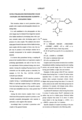
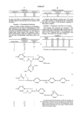
- pyrazolone color coupler of the general formula: ##STR1## wherein: R 1 is H or Cl;
- R 2 is NHSO 2 R 9 , NHCOR 9 , --NHCONHR 9 , --CONHR 9 , --NR 8 R 9 , --R 9 or --OR 9 , or together with R 3 forms a fused ring system;
- R 3 , R 4 , R 5 and R 6 are each H, Cl or as described for R 2 ;
- R 7 is H, --COOR 8 or --CONHR 8 ;
- R 8 is alkyl or substituted alkyl
- R 9 is H or as defined for R 8 .
- Couplers used in the present invention have excellent formaldehyde stability, keeping properties and coupling activity and provide image dyes of the desired hue having good stability to light, heat and mositure.
- alkyl groups which R 8 may represent include those having from 1 to about 20 carbon atoms, especially from 1 to about 4 carbon atoms, such as methyl, ethyl, n-propyl, iso-propyl, n-butyl, t-butyl. Higher alkyl groups having from about 12 to about 20 carbon atoms are also useful. Such alkyl groups may be substituted, for example, with halogen atoms, alkoxy, hydroxy, carboxylic acid and aryl groups.
- a preferred R 5 substituent is alkyl having from about 8 to about 15 carbon atoms.
- the R 7 substituent in the anilino ring can be a ballast group.
- Preferred ballast groups comprise from about 12 to about 15 carbon atoms linked to the ring through a --COO-- or a --NHCO-- group at the 3 or 4 position.
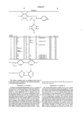
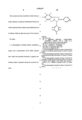
- couplers according to the present invention are illustrated in the following table:
- the instant couplers may be prepared from their 4-equivalent parent couplers by the methods illustrated in the following preparations.
- the 4-equivalent parent coupler (51.0 g, 76.1 mmol) and bis[2-(t-butylcarbamoyl)phenyl]-disulphide (19.0 g, 45.7 mmol) were dissolved in dimethylformamide (600 ml) and bromine (7.3 g, 45.8 mmol) added dropwise with stirring at room temperature. The resulting mixture was heated at 60° C. over 2 hours and then stirred at room temperature overnight. The reaction mixture was poured into dilute hydrochloric acid (101) and the solid filtered off, washed and dried. Flash chromatography using ethyl acetate and 60°-80° C.
- the dye-forming couplers of this invention can be used in the ways and for the purposes that dye-forming couplers have been previously used in the photographic art.
- the couplers are associated with a silver halide emulsion layer coated on a support to form a photographic element.
- the term "associated therewith” signifies that the coupler is incorporated in the silver halide emulsion layer or in a layer adjacent thereto where, during processing, it is capable of reacting with silver halide development products.
- the photographic elements can be single color elements or multicolor elements.
- the magenta dye-forming couplers of this invention would usually be associated with a green-sensitive emulsion, although they could be associated with an emulsion sensitized to a different region of the spectrum, or with a panchromatically sensitized, orthochromatically sensitized or unsensitized emulsion.
- Multicolor elements contain dye image-forming units sensitive to each of the three primary regions of the spectrum. Each unit can be comprised of a single emulsion layer or of multiple emulsion layers sensitive to a give region of the spectrum.
- the layers of the element, including the layers of the image-forming units can be arranged in various orders as known in the art.
- a typical multicolor photographic element comprises a support bearing yellow, magenta and cyan dye image-forming units comprising at least one blue-, green- or red-sensitive silver halide emulsion layer having associated therewith at least one blue-, green- or red-sensitive silver halide emulsion layer having associated therewith at least one yellow, magenta or cyan dye-forming coupler respectively, at least one of the magenta dye-forming couplers being a coupler of this invention.
- the element can contain additional layers, such as filter and barrier layers.
- the silver halide emulsion employed in the elements of this invention can be either negative-working or positive-working. Suitable emulsions and their preparation are described in Research Disclosure Sections I and II and the publications cited therein. Suitable vehicles for the emulsion layers and other layers of elements of this invention are described in Research Disclosure Section IX and the publications cited therein.
- the elements of the invention can include additional couplers as described in Research Disclosure Section VII, paragraphs D, E, F and G and the publications cited therein.
- the couplers of this invention and any additional couplers can be incorporated in the elements and emulsions as described in Research Disclosures of Section VII, paragraph C and the publications cite therein.
- the photographic elements of this invention or individual layers thereof can contain brighteners (see Research Disclosure Section V), antifoggants and stabilizers (see Research Disclosure Section VI), antistain agents and image dye stabilizer (see Research Disclosure Section VII, paragraphs I and J), light absorbing and scattering materials (see Research Disclosure Section VIII), hardeners (see Research Disclosure Section XI), plasticizers and lubricants (see Research Disclosure Section XII), antistatic agents (see Research Disclosure Section XIII), matting agents (see Research Disclosure Section XVI) and development modifiers (see Research Disclosure Section XXI).
- brighteners see Research Disclosure Section V
- antifoggants and stabilizers see Research Disclosure Section VI
- antistain agents and image dye stabilizer see Research Disclosure Section VII, paragraphs I and J
- light absorbing and scattering materials see Research Disclosure Section VIII
- hardeners see Research Disclosure Section XI
- plasticizers and lubricants see Research Disclosure Section XII
- antistatic agents see Research Disclosure Section XIII
- matting agents see Research Disclosure
- the photographic elements can be coated on a variety of supports as described in Research Disclosure Section XVII and the references described therein.
- Photographic elements can be exposed to actinic radiation, typically in the visible region of the spectrum, to form a latent image as described in Research Disclosure Section XVIII and then processed to form a visible dye image as described in Research Disclosure Section XIX.
- Processing to form a visible dye image includes the step of contacting the element with a color developing agent to reduce developable silver halide and oxidize the color developing agent. Oxidized color developing agent in turn reacts with the coupler to yield a dye.
- Preferred color developing agents are p-phenylene diamines.
- 4-amino-3-methyl-N,N-diethylaniline hydrochloride 4-amino-3-methyl-N-ethyl-N- ⁇ -(methanesulphonamido)-ethylaniline sulphate hydrate, 4-amino-3-methyl-N-ethyl-N- ⁇ -hydroxyethylaniline sulphate, 4-amino-3- ⁇ -(methanesulphonamido)ethyl-N,N-diethylaniline hydrochloride and 4-amino-N-ethyl-N-(2-methoxyethyl)-m-toluidine di-p-toluene sulphonate.
- this processing step leads to a negative image.
- this step can be preceded by development with a non-chromogenic developing agent to develop exposed silver halide, but not form dye, and then uniform fogging of the element to render unexposed silver halide developable.
- a direct positive emulsion can be employed to obtain a positive image.
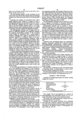
- Coatings of the following format were made, coating weights are in g/m 2 :
- the coupler (8.8 g) was dispersed in a mixture of dibutylphthalate and methylethyl ketone (2:1 by volume) with gelatin (6.0 g) as the continuous phase.
- the strips were sensitometrically exposed and processed through the C41 process.
- Couplers of the present invention were compared with equivalent trichloro couplers with regard to the hue of the dye produced when processed in the process described in the British Journal of Photography Annual, 1988, pp. 196-197.
- Test coatings were prepared as in Example 1. The coated strips were sensitometrically exposed and processed as described in Example I. The comparison couplers A, B, C represent prior art commercially used couplers. The results are recorded in Table 4.
- the couplers of the present invention provide image dyes at the desired higher ⁇ max and have narrower half bandwidth values than do dyes of the prior art. D max and ⁇ values are both within the desired range.
Landscapes
- Chemical & Material Sciences (AREA)
- Organic Chemistry (AREA)
- Physics & Mathematics (AREA)
- General Physics & Mathematics (AREA)
- Silver Salt Photography Or Processing Solution Therefor (AREA)
- Plural Heterocyclic Compounds (AREA)
- Non-Silver Salt Photosensitive Materials And Non-Silver Salt Photography (AREA)
- Nitrogen Condensed Heterocyclic Rings (AREA)
Abstract
Description
                                  TABLE I
__________________________________________________________________________
 ##STR2##
Coupler
Number
     R.sup.1
       R.sup.2 R.sup.3
                 R.sup.4
                    R.sup.5
                           R.sup.6
                              R.sup.7   λmax
                                            HBW, nm
__________________________________________________________________________
1    Cl
       n-BuO   H H  t-Oct  H  3-NHCO.sub.15 H.sub.31
                                        550.0
                                            80.5
2    Cl
       t-Bu    H H  H      H  "         552.5
                                            82.5
3    Cl
       t-Bu    H H  C.sub.15 H.sub.32n
                           H  "         552.5
                                            81.0
4    Cl
       n-BuO   H H  t-Oct  H  3-NHCOR.sup.10 *
                                        553.5
                                            85.0
5    Cl
       t-Bu    H H  C.sub.15 H.sub.31n
                           H  "         553.5
                                            84.0
6    Cl
       i-Pr    H i-Pr
                    H      i-Pr
                              "         554.5
                                            85.5
7    Cl
       i-Pr    H i-Pr
                    H      i-Pr
                              4-COOC.sub.12 H.sub.25
                                        548.0
                                            83.5
8    Cl
       **      **
                 ** **     ** "         551.0
                                            81.0
9    Cl
       t-Bu    H H  H      H  "         549.0
                                            82.0
10   Cl
       NHSO.sub.2 Me
               H H  H      H  "         550.0
                                            79.0
11   Cl
       i-Pr    H i-Pr
                    H      H  "         549.0
                                            82.5
12   Cl
       N(Me).sub.2
               H H  H      H  "         549.0
                                            80.0
13   Cl
       NHCOBut H H  H      H  "         549.5
                                            80.0
14   Cl
       Me      H Me H      Me "         548.5
                                            82.0
15   Cl
       t-Bu    H Cl H      H  "         549.0
                                            82.0
16   Cl
       n-BuO   H H  t-Oct  H  3-COOC.sub.12 H.sub.25n
                                        548.5
                                            81.0
17   Cl
       n-BuO   H H  t-Oct  H  4-COOC.sub.12 H.sub.25n
                                        546.0
                                            80.5
18   Cl
       i-Pr    H i-Pr
                    H      i-Pr
                              3-COOC.sub.12 H.sub.25n
                                        546.0
                                            81.0
19   H n-BuO   H H  t-Oct  H  3-NHCOC.sub.15 H.sub.31n
                                        547.0
                                            80.5
__________________________________________________________________________
 ##STR3##
 ##STR4##
______________________________________
Gelatin Overcoat (1.5)
Green sensitized silver
bromoiodide emulsion
                 (1.61)
Coupler          (1.04 mmol/m.sup.2)
Gelatin          (2.42)
Bis methylvinyl
sulphone (hardener)
                 (0.06)
/ / / Cellulose acetate support / / /
______________________________________
              TABLE 2
______________________________________
Coupler No.    λmax (penta)
                          λmax (tri)
______________________________________
6              554.5      546.0
4              553.5      544.5
5              553.0      544.0
______________________________________
              TABLE 3
______________________________________
              % Density loss
                          % Density loss
Coupler Number
              (invention) (parent)
______________________________________
1             -1.1        75.1
2             -6.0        "
3             -0.1        "
7             1.4         28.4
8             3.0         "
9             0.0         "
10            -1.7        "
11            -1.7        "
12            -3.8        "
14            -3.7        "
15            4.6         "
16            4.0         "
17            -0.4        31.1
18.           14.8        "
______________________________________
              TABLE 4
______________________________________
Coupler
Number     λ.sub.max
                  HBW         D.sub.max
                                   λ
______________________________________
 3         551.0  80.0        3.09 3.50
13         549.5  79.5        3.01 3.20
19         547.0  80.5        2.78 3.24
A          541.5  83.5        2.74 3.68
B          548.0  94.5        2.87 3.98
C          554.5  96.5        2.30 2.01
______________________________________
Claims (5)
Applications Claiming Priority (2)
| Application Number | Priority Date | Filing Date | Title |
|---|---|---|---|
| GB888814677A GB8814677D0 (en) | 1988-06-21 | 1988-06-21 | Novel pyrazolone photographic colour couplers & photographic elements containing them |
| GB8814677 | 1988-06-21 |
Publications (1)
| Publication Number | Publication Date |
|---|---|
| US4900657A true US4900657A (en) | 1990-02-13 |
Family
ID=10639038
Family Applications (1)
| Application Number | Title | Priority Date | Filing Date |
|---|---|---|---|
| US07/358,047 Expired - Fee Related US4900657A (en) | 1988-06-21 | 1989-05-30 | Novel pyrazolone photographic color couplers and photographic elements containing them |
Country Status (6)
| Country | Link |
|---|---|
| US (1) | US4900657A (en) |
| EP (1) | EP0348135B1 (en) |
| JP (1) | JPH0239148A (en) |
| AT (1) | ATE119691T1 (en) |
| DE (1) | DE68921511D1 (en) |
| GB (1) | GB8814677D0 (en) |
Cited By (5)
| Publication number | Priority date | Publication date | Assignee | Title |
|---|---|---|---|---|
| US5250407A (en) * | 1988-08-03 | 1993-10-05 | Fuji Photo Film Co., Ltd. | Silver halide color photographic light-sensitive material containing at least one 5-pyrazolone coupler and at least one monodisperse cubic silver halide emulsion |
| US5411841A (en) * | 1993-05-24 | 1995-05-02 | Eastman Kodak Company | Photographic elements containing magenta couplers and process for using same |
| US5646297A (en) * | 1995-09-18 | 1997-07-08 | Imation Corp. | Process for preparation of 2-equivalent 4-arylthio-5-pyrazolone magenta couplers |
| US5663040A (en) * | 1995-03-28 | 1997-09-02 | Imation Corp | Silver halide photographic elements containing 2-equivalent 5-pyrazolone magenta couplers |
| US6015657A (en) * | 1991-07-17 | 2000-01-18 | Eastman Kodak Company | Photographic elements containing 2-equivalent pyrazolone couplers and process for their use |
Families Citing this family (4)
| Publication number | Priority date | Publication date | Assignee | Title |
|---|---|---|---|---|
| JPH0240649A (en) * | 1988-07-30 | 1990-02-09 | Konica Corp | Silver halide color photographic sensitive material |
| JPH0240648A (en) * | 1988-07-30 | 1990-02-09 | Konica Corp | Silver halide color photographic sensitive material |
| GB9010966D0 (en) * | 1990-05-16 | 1990-07-04 | Kodak Ltd | Photographic material comprising a magenta dye image forming coupler combination |
| JPH0588324A (en) * | 1991-09-25 | 1993-04-09 | Konica Corp | Silver halide color photographic sensitive material |
Citations (5)
| Publication number | Priority date | Publication date | Assignee | Title |
|---|---|---|---|---|
| US3227554A (en) * | 1959-04-06 | 1966-01-04 | Eastman Kodak Co | Photographic elements and processes utilizing mercaptan-forming couplers |
| US4199361A (en) * | 1977-10-14 | 1980-04-22 | Fuji Photo Film Co., Ltd. | Color photographic light-sensitive element |
| US4351897A (en) * | 1980-08-12 | 1982-09-28 | Fuji Photo Film Co., Ltd. | Color photographic light-sensitive material |
| US4556630A (en) * | 1983-06-20 | 1985-12-03 | Fuji Photo Film Co., Ltd. | Color photographic light-sensitive material |
| US4584266A (en) * | 1984-01-31 | 1986-04-22 | Fuji Photo Film Co., Ltd. | Color photographic light-sensitive material |
Family Cites Families (1)
| Publication number | Priority date | Publication date | Assignee | Title |
|---|---|---|---|---|
| JPS5280027A (en) * | 1975-12-26 | 1977-07-05 | Konishiroku Photo Ind Co Ltd | Formation of magenta dye image |
-
1988
- 1988-06-21 GB GB888814677A patent/GB8814677D0/en active Pending
-
1989
- 1989-05-30 US US07/358,047 patent/US4900657A/en not_active Expired - Fee Related
- 1989-06-19 JP JP1154764A patent/JPH0239148A/en active Pending
- 1989-06-20 EP EP89306197A patent/EP0348135B1/en not_active Expired - Lifetime
- 1989-06-20 AT AT89306197T patent/ATE119691T1/en active
- 1989-06-20 DE DE68921511T patent/DE68921511D1/en not_active Expired - Lifetime
Patent Citations (6)
| Publication number | Priority date | Publication date | Assignee | Title |
|---|---|---|---|---|
| US3227554A (en) * | 1959-04-06 | 1966-01-04 | Eastman Kodak Co | Photographic elements and processes utilizing mercaptan-forming couplers |
| US4199361A (en) * | 1977-10-14 | 1980-04-22 | Fuji Photo Film Co., Ltd. | Color photographic light-sensitive element |
| US4351897A (en) * | 1980-08-12 | 1982-09-28 | Fuji Photo Film Co., Ltd. | Color photographic light-sensitive material |
| US4351897B1 (en) * | 1980-08-12 | 1988-06-14 | ||
| US4556630A (en) * | 1983-06-20 | 1985-12-03 | Fuji Photo Film Co., Ltd. | Color photographic light-sensitive material |
| US4584266A (en) * | 1984-01-31 | 1986-04-22 | Fuji Photo Film Co., Ltd. | Color photographic light-sensitive material |
Cited By (5)
| Publication number | Priority date | Publication date | Assignee | Title |
|---|---|---|---|---|
| US5250407A (en) * | 1988-08-03 | 1993-10-05 | Fuji Photo Film Co., Ltd. | Silver halide color photographic light-sensitive material containing at least one 5-pyrazolone coupler and at least one monodisperse cubic silver halide emulsion |
| US6015657A (en) * | 1991-07-17 | 2000-01-18 | Eastman Kodak Company | Photographic elements containing 2-equivalent pyrazolone couplers and process for their use |
| US5411841A (en) * | 1993-05-24 | 1995-05-02 | Eastman Kodak Company | Photographic elements containing magenta couplers and process for using same |
| US5663040A (en) * | 1995-03-28 | 1997-09-02 | Imation Corp | Silver halide photographic elements containing 2-equivalent 5-pyrazolone magenta couplers |
| US5646297A (en) * | 1995-09-18 | 1997-07-08 | Imation Corp. | Process for preparation of 2-equivalent 4-arylthio-5-pyrazolone magenta couplers |
Also Published As
| Publication number | Publication date |
|---|---|
| ATE119691T1 (en) | 1995-03-15 |
| JPH0239148A (en) | 1990-02-08 |
| DE68921511D1 (en) | 1995-04-13 |
| EP0348135B1 (en) | 1995-03-08 |
| EP0348135A2 (en) | 1989-12-27 |
| GB8814677D0 (en) | 1988-07-27 |
| EP0348135A3 (en) | 1990-06-27 |
Similar Documents
| Publication | Publication Date | Title |
|---|---|---|
| US4338393A (en) | Heterocyclic magenta dye-forming couplers | |
| US4420556A (en) | Photographic silver halide materials | |
| US4124396A (en) | 2,5-Dicarbonylaminophenol dye-forming couplers | |
| JPH0549975B2 (en) | ||
| EP0528930B2 (en) | Use of substituted phenols to improve the light fastness of magenta images | |
| US4157919A (en) | Silver halide emulsions containing yellow-dye-forming couplers | |
| US4777121A (en) | Substituted pyrazolo[3, 2-c]-s-triazole photographic couplers and photographic materials and processes employing them | |
| EP0348135B1 (en) | Novel pyrazolone photograhic colour couplers and photographic elements containing them | |
| US5143821A (en) | Color photographic material comprising a 2-alkoxy pyrazolo[1,5-a]benzimidazole color coupler | |
| US4960685A (en) | Color photographic element and process | |
| JPS6326377B2 (en) | ||
| US4977072A (en) | Color photographic recording material containing color couplers | |
| US4876182A (en) | Photographic elements containing pyrazolone color couplers | |
| US5021325A (en) | Photographic material and process comprising a pyrazolotriazole coupler | |
| US4978605A (en) | Benzoylacetanilide photographic yellow dye image-forming couplers and photographic elements containing them | |
| US4232114A (en) | Color photographic light-sensitive elements containing anti-color fogging agents | |
| US5071737A (en) | Silver halide photographic material | |
| US5190848A (en) | Photographic β-ketoamide and photographic elements containing them | |
| US4824771A (en) | Photographic acetanilide couplers with novel ballast group and photographic elements containing them | |
| EP0622672B1 (en) | Photographic colour couplers, methods of making them and photographic materials containing them | |
| EP0521019A1 (en) | PYRAZOLO 1,5-a]BENZIMIDAZOLE PHOTOGRAPHIC COLOUR COUPLERS | |
| US5374511A (en) | Photographic color couplers and photographic materials containing them | |
| DE69303301T2 (en) | Photographic material and process containing pyrazolotriazole couplers | |
| US5215878A (en) | Benzoylacetanilide photographic yellow dye image-forming couplers and photographic elements containing them | |
| US5262284A (en) | Arylidene pyrazolone coupler |
Legal Events
| Date | Code | Title | Description |
|---|---|---|---|
| AS | Assignment |
Owner name: EASTMAN KODAK COMPANY, ROCHESTER, NEW YORK A CORP. Free format text: ASSIGNMENT OF ASSIGNORS INTEREST.;ASSIGNORS:CRAWLEY, MICHAEL W.;STANLEY, PAUL LOUIS R.;REEL/FRAME:005086/0891 Effective date: 19890516 |
|
| FEPP | Fee payment procedure |
Free format text: PAYOR NUMBER ASSIGNED (ORIGINAL EVENT CODE: ASPN); ENTITY STATUS OF PATENT OWNER: LARGE ENTITY |
|
| CC | Certificate of correction | ||
| FPAY | Fee payment |
Year of fee payment: 4 |
|
| FEPP | Fee payment procedure |
Free format text: PAYER NUMBER DE-ASSIGNED (ORIGINAL EVENT CODE: RMPN); ENTITY STATUS OF PATENT OWNER: LARGE ENTITY Free format text: PAYOR NUMBER ASSIGNED (ORIGINAL EVENT CODE: ASPN); ENTITY STATUS OF PATENT OWNER: LARGE ENTITY |
|
| REMI | Maintenance fee reminder mailed | ||
| LAPS | Lapse for failure to pay maintenance fees | ||
| FP | Lapsed due to failure to pay maintenance fee |
Effective date: 19980218 |
|
| STCH | Information on status: patent discontinuation |
Free format text: PATENT EXPIRED DUE TO NONPAYMENT OF MAINTENANCE FEES UNDER 37 CFR 1.362 |