US4900641A - Radiographic intensifying screen - Google Patents
Radiographic intensifying screen Download PDFInfo
- Publication number
- US4900641A US4900641A US07/196,768 US19676887A US4900641A US 4900641 A US4900641 A US 4900641A US 19676887 A US19676887 A US 19676887A US 4900641 A US4900641 A US 4900641A
- Authority
- US
- United States
- Prior art keywords
- phosphor
- group
- intensifying screen
- phosphor layer
- radiographic
- Prior art date
- Legal status (The legal status is an assumption and is not a legal conclusion. Google has not performed a legal analysis and makes no representation as to the accuracy of the status listed.)
- Expired - Lifetime
Links
- OAICVXFJPJFONN-UHFFFAOYSA-N Phosphorus Chemical compound [P] OAICVXFJPJFONN-UHFFFAOYSA-N 0.000 claims abstract description 164
- 150000001875 compounds Chemical class 0.000 claims abstract description 84
- 229910052740 iodine Inorganic materials 0.000 claims abstract description 40
- 229910052751 metal Chemical class 0.000 claims abstract description 34
- 239000002184 metal Chemical class 0.000 claims abstract description 34
- 125000003700 epoxy group Chemical group 0.000 claims abstract description 30
- 150000007524 organic acids Chemical class 0.000 claims abstract description 27
- 239000011230 binding agent Substances 0.000 claims abstract description 25
- 239000011630 iodine Substances 0.000 claims abstract description 23
- 150000003839 salts Chemical class 0.000 claims abstract description 23
- 235000005985 organic acids Nutrition 0.000 claims abstract description 18
- AQSJGOWTSHOLKH-UHFFFAOYSA-N phosphite(3-) Chemical class [O-]P([O-])[O-] AQSJGOWTSHOLKH-UHFFFAOYSA-N 0.000 claims abstract description 15
- ZCYVEMRRCGMTRW-UHFFFAOYSA-N 7553-56-2 Chemical compound [I] ZCYVEMRRCGMTRW-UHFFFAOYSA-N 0.000 claims abstract 2
- -1 mercaptan carboxylic acid Chemical class 0.000 claims description 24
- 229910052693 Europium Inorganic materials 0.000 claims description 9
- 239000003822 epoxy resin Substances 0.000 claims description 9
- 229920000647 polyepoxide Polymers 0.000 claims description 9
- 125000000217 alkyl group Chemical group 0.000 claims description 8
- 125000003118 aryl group Chemical group 0.000 claims description 8
- 125000004435 hydrogen atom Chemical group [H]* 0.000 claims description 6
- 125000004430 oxygen atom Chemical group O* 0.000 claims description 6
- 229910052784 alkaline earth metal Inorganic materials 0.000 claims description 5
- 150000001342 alkaline earth metals Chemical class 0.000 claims description 5
- 229910052788 barium Chemical group 0.000 claims description 5
- 229910052791 calcium Inorganic materials 0.000 claims description 5
- 239000011575 calcium Substances 0.000 claims description 5
- GOOHAUXETOMSMM-UHFFFAOYSA-N Propylene oxide Chemical compound CC1CO1 GOOHAUXETOMSMM-UHFFFAOYSA-N 0.000 claims description 4
- 235000014113 dietary fatty acids Nutrition 0.000 claims description 4
- 239000000194 fatty acid Substances 0.000 claims description 4
- 229930195729 fatty acid Natural products 0.000 claims description 4
- 150000004665 fatty acids Chemical class 0.000 claims description 4
- 229910052717 sulfur Inorganic materials 0.000 claims description 4
- 125000004434 sulfur atom Chemical group 0.000 claims description 4
- 229910001516 alkali metal iodide Inorganic materials 0.000 claims description 3
- 229910052793 cadmium Inorganic materials 0.000 claims description 3
- 125000004432 carbon atom Chemical group C* 0.000 claims description 3
- OGPBJKLSAFTDLK-UHFFFAOYSA-N europium atom Chemical compound [Eu] OGPBJKLSAFTDLK-UHFFFAOYSA-N 0.000 claims description 3
- 229910052725 zinc Inorganic materials 0.000 claims description 3
- 239000011701 zinc Chemical group 0.000 claims description 3
- RBACIKXCRWGCBB-UHFFFAOYSA-N 1,2-Epoxybutane Chemical compound CCC1CO1 RBACIKXCRWGCBB-UHFFFAOYSA-N 0.000 claims description 2
- OYPRJOBELJOOCE-UHFFFAOYSA-N Calcium Chemical group [Ca] OYPRJOBELJOOCE-UHFFFAOYSA-N 0.000 claims description 2
- LSDPWZHWYPCBBB-UHFFFAOYSA-N Methanethiol Chemical compound SC LSDPWZHWYPCBBB-UHFFFAOYSA-N 0.000 claims description 2
- OFOBLEOULBTSOW-UHFFFAOYSA-N Propanedioic acid Natural products OC(=O)CC(O)=O OFOBLEOULBTSOW-UHFFFAOYSA-N 0.000 claims description 2
- HCHKCACWOHOZIP-UHFFFAOYSA-N Zinc Chemical group [Zn] HCHKCACWOHOZIP-UHFFFAOYSA-N 0.000 claims description 2
- DSAJWYNOEDNPEQ-UHFFFAOYSA-N barium atom Chemical group [Ba] DSAJWYNOEDNPEQ-UHFFFAOYSA-N 0.000 claims description 2
- BDOSMKKIYDKNTQ-UHFFFAOYSA-N cadmium atom Chemical group [Cd] BDOSMKKIYDKNTQ-UHFFFAOYSA-N 0.000 claims description 2
- 229910052799 carbon Inorganic materials 0.000 claims description 2
- VZCYOOQTPOCHFL-UPHRSURJSA-N maleic acid Chemical compound OC(=O)\C=C/C(O)=O VZCYOOQTPOCHFL-UPHRSURJSA-N 0.000 claims description 2
- 239000011976 maleic acid Substances 0.000 claims description 2
- 125000001424 substituent group Chemical group 0.000 claims description 2
- VZCYOOQTPOCHFL-UHFFFAOYSA-N trans-butenedioic acid Natural products OC(=O)C=CC(O)=O VZCYOOQTPOCHFL-UHFFFAOYSA-N 0.000 claims description 2
- 101150108015 STR6 gene Proteins 0.000 claims 1
- 239000010410 layer Substances 0.000 description 100
- ZWEHNKRNPOVVGH-UHFFFAOYSA-N 2-Butanone Chemical compound CCC(C)=O ZWEHNKRNPOVVGH-UHFFFAOYSA-N 0.000 description 48
- 239000011248 coating agent Substances 0.000 description 33
- 238000000576 coating method Methods 0.000 description 33
- 239000006185 dispersion Substances 0.000 description 27
- PNDPGZBMCMUPRI-UHFFFAOYSA-N iodine Chemical compound II PNDPGZBMCMUPRI-UHFFFAOYSA-N 0.000 description 26
- 230000001681 protective effect Effects 0.000 description 18
- 229910052801 chlorine Inorganic materials 0.000 description 16
- 229910052794 bromium Inorganic materials 0.000 description 15
- 229910052736 halogen Inorganic materials 0.000 description 12
- 150000002367 halogens Chemical class 0.000 description 12
- 229920000728 polyester Polymers 0.000 description 12
- 229910052731 fluorine Inorganic materials 0.000 description 11
- 238000000034 method Methods 0.000 description 11
- 229910052771 Terbium Inorganic materials 0.000 description 10
- 229910052775 Thulium Inorganic materials 0.000 description 10
- OJMIONKXNSYLSR-UHFFFAOYSA-N phosphorous acid Chemical compound OP(O)O OJMIONKXNSYLSR-UHFFFAOYSA-N 0.000 description 10
- 239000007787 solid Substances 0.000 description 10
- 239000000020 Nitrocellulose Substances 0.000 description 8
- GWEVSGVZZGPLCZ-UHFFFAOYSA-N Titan oxide Chemical compound O=[Ti]=O GWEVSGVZZGPLCZ-UHFFFAOYSA-N 0.000 description 8
- 239000012790 adhesive layer Substances 0.000 description 8
- 229920001220 nitrocellulos Polymers 0.000 description 8
- 229920000139 polyethylene terephthalate Polymers 0.000 description 8
- 239000005020 polyethylene terephthalate Substances 0.000 description 8
- 229910052761 rare earth metal Inorganic materials 0.000 description 8
- 238000004383 yellowing Methods 0.000 description 8
- 239000011888 foil Substances 0.000 description 7
- 239000000463 material Substances 0.000 description 7
- 239000000203 mixture Substances 0.000 description 7
- 230000005855 radiation Effects 0.000 description 7
- MYLBTCQBKAKUTJ-UHFFFAOYSA-N 7-methyl-6,8-bis(methylsulfanyl)pyrrolo[1,2-a]pyrazine Chemical compound C1=CN=CC2=C(SC)C(C)=C(SC)N21 MYLBTCQBKAKUTJ-UHFFFAOYSA-N 0.000 description 6
- 229910052688 Gadolinium Inorganic materials 0.000 description 6
- 229920000642 polymer Polymers 0.000 description 6
- 229910052727 yttrium Inorganic materials 0.000 description 6
- 229930185605 Bisphenol Natural products 0.000 description 5
- 229910052765 Lutetium Inorganic materials 0.000 description 5
- ATJFFYVFTNAWJD-UHFFFAOYSA-N Tin Chemical class [Sn] ATJFFYVFTNAWJD-UHFFFAOYSA-N 0.000 description 5
- 239000000654 additive Substances 0.000 description 5
- IISBACLAFKSPIT-UHFFFAOYSA-N bisphenol A Chemical compound C=1C=C(O)C=CC=1C(C)(C)C1=CC=C(O)C=C1 IISBACLAFKSPIT-UHFFFAOYSA-N 0.000 description 5
- 239000006229 carbon black Substances 0.000 description 5
- GLOQRSIADGSLRX-UHFFFAOYSA-N decyl diphenyl phosphite Chemical compound C=1C=CC=CC=1OP(OCCCCCCCCCC)OC1=CC=CC=C1 GLOQRSIADGSLRX-UHFFFAOYSA-N 0.000 description 5
- 230000006866 deterioration Effects 0.000 description 5
- 229910052746 lanthanum Inorganic materials 0.000 description 5
- 239000002245 particle Substances 0.000 description 5
- 238000002360 preparation method Methods 0.000 description 5
- 229910052706 scandium Inorganic materials 0.000 description 5
- GZCRRIHWUXGPOV-UHFFFAOYSA-N terbium atom Chemical compound [Tb] GZCRRIHWUXGPOV-UHFFFAOYSA-N 0.000 description 5
- 229910052691 Erbium Inorganic materials 0.000 description 4
- 229910052689 Holmium Inorganic materials 0.000 description 4
- 229910052779 Neodymium Inorganic materials 0.000 description 4
- VYPSYNLAJGMNEJ-UHFFFAOYSA-N Silicium dioxide Chemical compound O=[Si]=O VYPSYNLAJGMNEJ-UHFFFAOYSA-N 0.000 description 4
- 229910052769 Ytterbium Inorganic materials 0.000 description 4
- 229910052783 alkali metal Inorganic materials 0.000 description 4
- 150000001340 alkali metals Chemical class 0.000 description 4
- 229910052792 caesium Inorganic materials 0.000 description 4
- 239000011521 glass Substances 0.000 description 4
- 239000002985 plastic film Substances 0.000 description 4
- 229910052701 rubidium Inorganic materials 0.000 description 4
- CSCPPACGZOOCGX-UHFFFAOYSA-N Acetone Chemical compound CC(C)=O CSCPPACGZOOCGX-UHFFFAOYSA-N 0.000 description 3
- NIXOWILDQLNWCW-UHFFFAOYSA-M Acrylate Chemical compound [O-]C(=O)C=C NIXOWILDQLNWCW-UHFFFAOYSA-M 0.000 description 3
- 229910052684 Cerium Inorganic materials 0.000 description 3
- YMWUJEATGCHHMB-UHFFFAOYSA-N Dichloromethane Chemical compound ClCCl YMWUJEATGCHHMB-UHFFFAOYSA-N 0.000 description 3
- 229910052692 Dysprosium Inorganic materials 0.000 description 3
- LFQSCWFLJHTTHZ-UHFFFAOYSA-N Ethanol Chemical compound CCO LFQSCWFLJHTTHZ-UHFFFAOYSA-N 0.000 description 3
- XEKOWRVHYACXOJ-UHFFFAOYSA-N Ethyl acetate Chemical compound CCOC(C)=O XEKOWRVHYACXOJ-UHFFFAOYSA-N 0.000 description 3
- OKKJLVBELUTLKV-UHFFFAOYSA-N Methanol Chemical compound OC OKKJLVBELUTLKV-UHFFFAOYSA-N 0.000 description 3
- 229910052777 Praseodymium Inorganic materials 0.000 description 3
- 229910052772 Samarium Inorganic materials 0.000 description 3
- AGXUVMPSUKZYDT-UHFFFAOYSA-L barium(2+);octadecanoate Chemical compound [Ba+2].CCCCCCCCCCCCCCCCCC([O-])=O.CCCCCCCCCCCCCCCCCC([O-])=O AGXUVMPSUKZYDT-UHFFFAOYSA-L 0.000 description 3
- 230000015572 biosynthetic process Effects 0.000 description 3
- AYOHIQLKSOJJQH-UHFFFAOYSA-N dibutyltin Chemical compound CCCC[Sn]CCCC AYOHIQLKSOJJQH-UHFFFAOYSA-N 0.000 description 3
- MTHSVFCYNBDYFN-UHFFFAOYSA-N diethylene glycol Chemical compound OCCOCCO MTHSVFCYNBDYFN-UHFFFAOYSA-N 0.000 description 3
- 230000000694 effects Effects 0.000 description 3
- FUZZWVXGSFPDMH-UHFFFAOYSA-N hexanoic acid Chemical compound CCCCCC(O)=O FUZZWVXGSFPDMH-UHFFFAOYSA-N 0.000 description 3
- 238000002156 mixing Methods 0.000 description 3
- 229920006255 plastic film Polymers 0.000 description 3
- 238000002601 radiography Methods 0.000 description 3
- 150000002910 rare earth metals Chemical class 0.000 description 3
- 230000000630 rising effect Effects 0.000 description 3
- 229910052712 strontium Inorganic materials 0.000 description 3
- FRNOGLGSGLTDKL-UHFFFAOYSA-N thulium atom Chemical compound [Tm] FRNOGLGSGLTDKL-UHFFFAOYSA-N 0.000 description 3
- 239000004408 titanium dioxide Substances 0.000 description 3
- XOOUIPVCVHRTMJ-UHFFFAOYSA-L zinc stearate Chemical compound [Zn+2].CCCCCCCCCCCCCCCCCC([O-])=O.CCCCCCCCCCCCCCCCCC([O-])=O XOOUIPVCVHRTMJ-UHFFFAOYSA-L 0.000 description 3
- ZNQVEEAIQZEUHB-UHFFFAOYSA-N 2-ethoxyethanol Chemical compound CCOCCO ZNQVEEAIQZEUHB-UHFFFAOYSA-N 0.000 description 2
- 108010010803 Gelatin Proteins 0.000 description 2
- LRHPLDYGYMQRHN-UHFFFAOYSA-N N-Butanol Chemical compound CCCCO LRHPLDYGYMQRHN-UHFFFAOYSA-N 0.000 description 2
- 239000004952 Polyamide Substances 0.000 description 2
- 239000004372 Polyvinyl alcohol Substances 0.000 description 2
- 235000021355 Stearic acid Nutrition 0.000 description 2
- 229920002433 Vinyl chloride-vinyl acetate copolymer Polymers 0.000 description 2
- MCMNRKCIXSYSNV-UHFFFAOYSA-N Zirconium dioxide Chemical compound O=[Zr]=O MCMNRKCIXSYSNV-UHFFFAOYSA-N 0.000 description 2
- UKLDJPRMSDWDSL-UHFFFAOYSA-L [dibutyl(dodecanoyloxy)stannyl] dodecanoate Chemical compound CCCCCCCCCCCC(=O)O[Sn](CCCC)(CCCC)OC(=O)CCCCCCCCCCC UKLDJPRMSDWDSL-UHFFFAOYSA-L 0.000 description 2
- 239000011358 absorbing material Substances 0.000 description 2
- 230000000996 additive effect Effects 0.000 description 2
- 239000000853 adhesive Substances 0.000 description 2
- WNLRTRBMVRJNCN-UHFFFAOYSA-N adipic acid Chemical compound OC(=O)CCCCC(O)=O WNLRTRBMVRJNCN-UHFFFAOYSA-N 0.000 description 2
- 150000001298 alcohols Chemical class 0.000 description 2
- 229910052782 aluminium Inorganic materials 0.000 description 2
- WPYMKLBDIGXBTP-UHFFFAOYSA-N benzoic acid Chemical compound OC(=O)C1=CC=CC=C1 WPYMKLBDIGXBTP-UHFFFAOYSA-N 0.000 description 2
- NPAIMXWXWPJRES-UHFFFAOYSA-N butyltin(3+) Chemical compound CCCC[Sn+3] NPAIMXWXWPJRES-UHFFFAOYSA-N 0.000 description 2
- 229920002301 cellulose acetate Polymers 0.000 description 2
- 229910052681 coesite Inorganic materials 0.000 description 2
- 229910052906 cristobalite Inorganic materials 0.000 description 2
- YPTCITLUAFBFTK-FGSKAQBVSA-L dibutyltin(2+);(z)-2,3-dimethylbut-2-enedioate Chemical compound CCCC[Sn+2]CCCC.[O-]C(=O)C(/C)=C(/C)C([O-])=O YPTCITLUAFBFTK-FGSKAQBVSA-L 0.000 description 2
- FLKPEMZONWLCSK-UHFFFAOYSA-N diethyl phthalate Chemical compound CCOC(=O)C1=CC=CC=C1C(=O)OCC FLKPEMZONWLCSK-UHFFFAOYSA-N 0.000 description 2
- 239000002270 dispersing agent Substances 0.000 description 2
- POULHZVOKOAJMA-UHFFFAOYSA-N dodecanoic acid Chemical compound CCCCCCCCCCCC(O)=O POULHZVOKOAJMA-UHFFFAOYSA-N 0.000 description 2
- 229910052733 gallium Inorganic materials 0.000 description 2
- 229920000159 gelatin Polymers 0.000 description 2
- 239000008273 gelatin Substances 0.000 description 2
- 235000019322 gelatine Nutrition 0.000 description 2
- 235000011852 gelatine desserts Nutrition 0.000 description 2
- YBMRDBCBODYGJE-UHFFFAOYSA-N germanium dioxide Chemical compound O=[Ge]=O YBMRDBCBODYGJE-UHFFFAOYSA-N 0.000 description 2
- 229910052738 indium Inorganic materials 0.000 description 2
- 238000007689 inspection Methods 0.000 description 2
- 239000003446 ligand Substances 0.000 description 2
- 229910052744 lithium Inorganic materials 0.000 description 2
- 229910052749 magnesium Inorganic materials 0.000 description 2
- 229910044991 metal oxide Inorganic materials 0.000 description 2
- 150000004706 metal oxides Chemical class 0.000 description 2
- 239000000178 monomer Substances 0.000 description 2
- QIQXTHQIDYTFRH-UHFFFAOYSA-N octadecanoic acid Chemical compound CCCCCCCCCCCCCCCCCC(O)=O QIQXTHQIDYTFRH-UHFFFAOYSA-N 0.000 description 2
- OQCDKBAXFALNLD-UHFFFAOYSA-N octadecanoic acid Natural products CCCCCCCC(C)CCCCCCCCC(O)=O OQCDKBAXFALNLD-UHFFFAOYSA-N 0.000 description 2
- XNGIFLGASWRNHJ-UHFFFAOYSA-N phthalic acid Chemical compound OC(=O)C1=CC=CC=C1C(O)=O XNGIFLGASWRNHJ-UHFFFAOYSA-N 0.000 description 2
- 239000004014 plasticizer Substances 0.000 description 2
- 229920002037 poly(vinyl butyral) polymer Polymers 0.000 description 2
- 229920002647 polyamide Polymers 0.000 description 2
- 229920000515 polycarbonate Polymers 0.000 description 2
- 239000004417 polycarbonate Substances 0.000 description 2
- 239000002861 polymer material Substances 0.000 description 2
- 239000011118 polyvinyl acetate Substances 0.000 description 2
- 229920002689 polyvinyl acetate Polymers 0.000 description 2
- 229920002451 polyvinyl alcohol Polymers 0.000 description 2
- 229910052700 potassium Inorganic materials 0.000 description 2
- 230000002265 prevention Effects 0.000 description 2
- BDERNNFJNOPAEC-UHFFFAOYSA-N propan-1-ol Chemical compound CCCO BDERNNFJNOPAEC-UHFFFAOYSA-N 0.000 description 2
- YGSDEFSMJLZEOE-UHFFFAOYSA-N salicylic acid Chemical compound OC(=O)C1=CC=CC=C1O YGSDEFSMJLZEOE-UHFFFAOYSA-N 0.000 description 2
- 230000035939 shock Effects 0.000 description 2
- 239000000377 silicon dioxide Substances 0.000 description 2
- 229910052708 sodium Inorganic materials 0.000 description 2
- 239000002904 solvent Substances 0.000 description 2
- 239000008117 stearic acid Substances 0.000 description 2
- 229910052682 stishovite Inorganic materials 0.000 description 2
- 239000000126 substance Substances 0.000 description 2
- KDYFGRWQOYBRFD-UHFFFAOYSA-N succinic acid Chemical compound OC(=O)CCC(O)=O KDYFGRWQOYBRFD-UHFFFAOYSA-N 0.000 description 2
- 229920001059 synthetic polymer Polymers 0.000 description 2
- 229910052716 thallium Inorganic materials 0.000 description 2
- XOLBLPGZBRYERU-UHFFFAOYSA-N tin dioxide Chemical compound O=[Sn]=O XOLBLPGZBRYERU-UHFFFAOYSA-N 0.000 description 2
- JNZRDLWZFWFSBK-UHFFFAOYSA-N tribenzyltin Chemical compound C=1C=CC=CC=1C[Sn](CC=1C=CC=CC=1)CC1=CC=CC=C1 JNZRDLWZFWFSBK-UHFFFAOYSA-N 0.000 description 2
- 229910052905 tridymite Inorganic materials 0.000 description 2
- OBETXYAYXDNJHR-SSDOTTSWSA-M (2r)-2-ethylhexanoate Chemical compound CCCC[C@@H](CC)C([O-])=O OBETXYAYXDNJHR-SSDOTTSWSA-M 0.000 description 1
- WRIDQFICGBMAFQ-UHFFFAOYSA-N (E)-8-Octadecenoic acid Natural products CCCCCCCCCC=CCCCCCCC(O)=O WRIDQFICGBMAFQ-UHFFFAOYSA-N 0.000 description 1
- ZBBLRPRYYSJUCZ-GRHBHMESSA-L (z)-but-2-enedioate;dibutyltin(2+) Chemical compound [O-]C(=O)\C=C/C([O-])=O.CCCC[Sn+2]CCCC ZBBLRPRYYSJUCZ-GRHBHMESSA-L 0.000 description 1
- WSLDOOZREJYCGB-UHFFFAOYSA-N 1,2-Dichloroethane Chemical compound ClCCCl WSLDOOZREJYCGB-UHFFFAOYSA-N 0.000 description 1
- RYHBNJHYFVUHQT-UHFFFAOYSA-N 1,4-Dioxane Chemical compound C1COCCO1 RYHBNJHYFVUHQT-UHFFFAOYSA-N 0.000 description 1
- RSWGJHLUYNHPMX-UHFFFAOYSA-N 1,4a-dimethyl-7-propan-2-yl-2,3,4,4b,5,6,10,10a-octahydrophenanthrene-1-carboxylic acid Chemical compound C12CCC(C(C)C)=CC2=CCC2C1(C)CCCC2(C)C(O)=O RSWGJHLUYNHPMX-UHFFFAOYSA-N 0.000 description 1
- PZBLUWVMZMXIKZ-UHFFFAOYSA-N 2-o-(2-ethoxy-2-oxoethyl) 1-o-ethyl benzene-1,2-dicarboxylate Chemical compound CCOC(=O)COC(=O)C1=CC=CC=C1C(=O)OCC PZBLUWVMZMXIKZ-UHFFFAOYSA-N 0.000 description 1
- LQJBNNIYVWPHFW-UHFFFAOYSA-N 20:1omega9c fatty acid Natural products CCCCCCCCCCC=CCCCCCCCC(O)=O LQJBNNIYVWPHFW-UHFFFAOYSA-N 0.000 description 1
- HNNQYHFROJDYHQ-UHFFFAOYSA-N 3-(4-ethylcyclohexyl)propanoic acid 3-(3-ethylcyclopentyl)propanoic acid Chemical compound CCC1CCC(CCC(O)=O)C1.CCC1CCC(CCC(O)=O)CC1 HNNQYHFROJDYHQ-UHFFFAOYSA-N 0.000 description 1
- UKWUOTZGXIZAJC-UHFFFAOYSA-N 4-nitrosalicylic acid Chemical compound OC(=O)C1=CC=C([N+]([O-])=O)C=C1O UKWUOTZGXIZAJC-UHFFFAOYSA-N 0.000 description 1
- QSBYPNXLFMSGKH-UHFFFAOYSA-N 9-Heptadecensaeure Natural products CCCCCCCC=CCCCCCCCC(O)=O QSBYPNXLFMSGKH-UHFFFAOYSA-N 0.000 description 1
- 229910000838 Al alloy Inorganic materials 0.000 description 1
- 229910018404 Al2 O3 Inorganic materials 0.000 description 1
- 239000005711 Benzoic acid Substances 0.000 description 1
- DKPFZGUDAPQIHT-UHFFFAOYSA-N Butyl acetate Natural products CCCCOC(C)=O DKPFZGUDAPQIHT-UHFFFAOYSA-N 0.000 description 1
- GOJCZVPJCKEBQV-UHFFFAOYSA-N Butyl phthalyl butylglycolate Chemical compound CCCCOC(=O)COC(=O)C1=CC=CC=C1C(=O)OCCCC GOJCZVPJCKEBQV-UHFFFAOYSA-N 0.000 description 1
- 229920002307 Dextran Polymers 0.000 description 1
- ZZSNKZQZMQGXPY-UHFFFAOYSA-N Ethyl cellulose Chemical compound CCOCC1OC(OC)C(OCC)C(OCC)C1OC1C(O)C(O)C(OC)C(CO)O1 ZZSNKZQZMQGXPY-UHFFFAOYSA-N 0.000 description 1
- 239000001856 Ethyl cellulose Substances 0.000 description 1
- AEMRFAOFKBGASW-UHFFFAOYSA-N Glycolic acid Chemical class OCC(O)=O AEMRFAOFKBGASW-UHFFFAOYSA-N 0.000 description 1
- 229920000084 Gum arabic Polymers 0.000 description 1
- 239000005639 Lauric acid Substances 0.000 description 1
- NTIZESTWPVYFNL-UHFFFAOYSA-N Methyl isobutyl ketone Chemical compound CC(C)CC(C)=O NTIZESTWPVYFNL-UHFFFAOYSA-N 0.000 description 1
- UIHCLUNTQKBZGK-UHFFFAOYSA-N Methyl isobutyl ketone Natural products CCC(C)C(C)=O UIHCLUNTQKBZGK-UHFFFAOYSA-N 0.000 description 1
- 229910019639 Nb2 O5 Inorganic materials 0.000 description 1
- 239000005642 Oleic acid Substances 0.000 description 1
- ZQPPMHVWECSIRJ-UHFFFAOYSA-N Oleic acid Natural products CCCCCCCCC=CCCCCCCCC(O)=O ZQPPMHVWECSIRJ-UHFFFAOYSA-N 0.000 description 1
- IRFHBCVRLKISOO-UHFFFAOYSA-N P.I.I.I Chemical compound P.I.I.I IRFHBCVRLKISOO-UHFFFAOYSA-N 0.000 description 1
- 229910019142 PO4 Inorganic materials 0.000 description 1
- 229910000978 Pb alloy Inorganic materials 0.000 description 1
- ISWSIDIOOBJBQZ-UHFFFAOYSA-N Phenol Chemical compound OC1=CC=CC=C1 ISWSIDIOOBJBQZ-UHFFFAOYSA-N 0.000 description 1
- 239000004698 Polyethylene Substances 0.000 description 1
- 239000004642 Polyimide Substances 0.000 description 1
- 229920001328 Polyvinylidene chloride Polymers 0.000 description 1
- XBDQKXXYIPTUBI-UHFFFAOYSA-M Propionate Chemical compound CCC([O-])=O XBDQKXXYIPTUBI-UHFFFAOYSA-M 0.000 description 1
- 101100386054 Saccharomyces cerevisiae (strain ATCC 204508 / S288c) CYS3 gene Proteins 0.000 description 1
- 241000978776 Senegalia senegal Species 0.000 description 1
- YSMRWXYRXBRSND-UHFFFAOYSA-N TOTP Chemical compound CC1=CC=CC=C1OP(=O)(OC=1C(=CC=CC=1)C)OC1=CC=CC=C1C YSMRWXYRXBRSND-UHFFFAOYSA-N 0.000 description 1
- 229910004446 Ta2 O5 Inorganic materials 0.000 description 1
- 229910004369 ThO2 Inorganic materials 0.000 description 1
- 229910021626 Tin(II) chloride Inorganic materials 0.000 description 1
- 229920001986 Vinylidene chloride-vinyl chloride copolymer Polymers 0.000 description 1
- FJWGYAHXMCUOOM-QHOUIDNNSA-N [(2s,3r,4s,5r,6r)-2-[(2r,3r,4s,5r,6s)-4,5-dinitrooxy-2-(nitrooxymethyl)-6-[(2r,3r,4s,5r,6s)-4,5,6-trinitrooxy-2-(nitrooxymethyl)oxan-3-yl]oxyoxan-3-yl]oxy-3,5-dinitrooxy-6-(nitrooxymethyl)oxan-4-yl] nitrate Chemical compound O([C@@H]1O[C@@H]([C@H]([C@H](O[N+]([O-])=O)[C@H]1O[N+]([O-])=O)O[C@H]1[C@@H]([C@@H](O[N+]([O-])=O)[C@H](O[N+]([O-])=O)[C@@H](CO[N+]([O-])=O)O1)O[N+]([O-])=O)CO[N+](=O)[O-])[C@@H]1[C@@H](CO[N+]([O-])=O)O[C@@H](O[N+]([O-])=O)[C@H](O[N+]([O-])=O)[C@H]1O[N+]([O-])=O FJWGYAHXMCUOOM-QHOUIDNNSA-N 0.000 description 1
- 239000000205 acacia gum Substances 0.000 description 1
- 235000010489 acacia gum Nutrition 0.000 description 1
- KXKVLQRXCPHEJC-UHFFFAOYSA-N acetic acid trimethyl ester Natural products COC(C)=O KXKVLQRXCPHEJC-UHFFFAOYSA-N 0.000 description 1
- 239000002253 acid Substances 0.000 description 1
- NIXOWILDQLNWCW-UHFFFAOYSA-N acrylic acid group Chemical group C(C=C)(=O)O NIXOWILDQLNWCW-UHFFFAOYSA-N 0.000 description 1
- 239000012190 activator Substances 0.000 description 1
- 239000001361 adipic acid Substances 0.000 description 1
- 235000011037 adipic acid Nutrition 0.000 description 1
- 125000001931 aliphatic group Chemical group 0.000 description 1
- 229910001615 alkaline earth metal halide Inorganic materials 0.000 description 1
- OBETXYAYXDNJHR-UHFFFAOYSA-N alpha-ethylcaproic acid Natural products CCCCC(CC)C(O)=O OBETXYAYXDNJHR-UHFFFAOYSA-N 0.000 description 1
- XAGFODPZIPBFFR-UHFFFAOYSA-N aluminium Chemical compound [Al] XAGFODPZIPBFFR-UHFFFAOYSA-N 0.000 description 1
- 229910052785 arsenic Inorganic materials 0.000 description 1
- QVQLCTNNEUAWMS-UHFFFAOYSA-N barium oxide Chemical compound [Ba]=O QVQLCTNNEUAWMS-UHFFFAOYSA-N 0.000 description 1
- RAKMKCZMVZBODU-PIQLPZBWSA-L barium(2+);(z)-12-hydroxyoctadec-9-enoate Chemical compound [Ba+2].CCCCCCC(O)C\C=C/CCCCCCCC([O-])=O.CCCCCCC(O)C\C=C/CCCCCCCC([O-])=O RAKMKCZMVZBODU-PIQLPZBWSA-L 0.000 description 1
- VJFFDDQGMMQGTQ-UHFFFAOYSA-L barium(2+);2-ethylhexanoate Chemical compound [Ba+2].CCCCC(CC)C([O-])=O.CCCCC(CC)C([O-])=O VJFFDDQGMMQGTQ-UHFFFAOYSA-L 0.000 description 1
- 229910001864 baryta Inorganic materials 0.000 description 1
- 238000005452 bending Methods 0.000 description 1
- 235000010233 benzoic acid Nutrition 0.000 description 1
- 229910052790 beryllium Inorganic materials 0.000 description 1
- HSUIVCLOAAJSRE-UHFFFAOYSA-N bis(2-methoxyethyl) benzene-1,2-dicarboxylate Chemical compound COCCOC(=O)C1=CC=CC=C1C(=O)OCCOC HSUIVCLOAAJSRE-UHFFFAOYSA-N 0.000 description 1
- XQPRBTXUXXVTKB-UHFFFAOYSA-M caesium iodide Chemical compound [I-].[Cs+] XQPRBTXUXXVTKB-UHFFFAOYSA-M 0.000 description 1
- CJZGTCYPCWQAJB-UHFFFAOYSA-L calcium stearate Chemical compound [Ca+2].CCCCCCCCCCCCCCCCCC([O-])=O.CCCCCCCCCCCCCCCCCC([O-])=O CJZGTCYPCWQAJB-UHFFFAOYSA-L 0.000 description 1
- 235000013539 calcium stearate Nutrition 0.000 description 1
- 239000008116 calcium stearate Substances 0.000 description 1
- HIAAVKYLDRCDFQ-UHFFFAOYSA-L calcium;dodecanoate Chemical compound [Ca+2].CCCCCCCCCCCC([O-])=O.CCCCCCCCCCCC([O-])=O HIAAVKYLDRCDFQ-UHFFFAOYSA-L 0.000 description 1
- 150000001721 carbon Chemical group 0.000 description 1
- 150000001732 carboxylic acid derivatives Chemical class 0.000 description 1
- 229920002678 cellulose Polymers 0.000 description 1
- 239000001913 cellulose Substances 0.000 description 1
- 229920006217 cellulose acetate butyrate Polymers 0.000 description 1
- 239000013522 chelant Substances 0.000 description 1
- 239000002738 chelating agent Substances 0.000 description 1
- 150000008280 chlorinated hydrocarbons Chemical class 0.000 description 1
- 229910052804 chromium Inorganic materials 0.000 description 1
- HNEGQIOMVPPMNR-IHWYPQMZSA-N citraconic acid Chemical compound OC(=O)C(/C)=C\C(O)=O HNEGQIOMVPPMNR-IHWYPQMZSA-N 0.000 description 1
- 238000007796 conventional method Methods 0.000 description 1
- 239000003431 cross linking reagent Substances 0.000 description 1
- 230000003247 decreasing effect Effects 0.000 description 1
- 230000000994 depressogenic effect Effects 0.000 description 1
- 230000001066 destructive effect Effects 0.000 description 1
- 238000003745 diagnosis Methods 0.000 description 1
- 239000012975 dibutyltin dilaurate Substances 0.000 description 1
- NPIPHAWEFUEGCP-IJRZPAASSA-L dibutyltin(2+);(z)-2,3-dioctylbut-2-enedioate Chemical compound CCCC[Sn+2]CCCC.CCCCCCCC\C(C([O-])=O)=C(C([O-])=O)/CCCCCCCC NPIPHAWEFUEGCP-IJRZPAASSA-L 0.000 description 1
- ZUTRXIVVGQVCHA-GCOIFOBGSA-L dibutyltin(2+);(z)-2-(methoxymethyl)but-2-enedioate Chemical compound CCCC[Sn+2]CCCC.COC\C(C([O-])=O)=C\C([O-])=O ZUTRXIVVGQVCHA-GCOIFOBGSA-L 0.000 description 1
- CHNPVIBKPFVVQK-UHFFFAOYSA-L dibutyltin(2+);2-octyl-2-sulfanyldecanoate Chemical compound CCCC[Sn+2]CCCC.CCCCCCCCC(S)(C([O-])=O)CCCCCCCC.CCCCCCCCC(S)(C([O-])=O)CCCCCCCC CHNPVIBKPFVVQK-UHFFFAOYSA-L 0.000 description 1
- HGQSXVKHVMGQRG-UHFFFAOYSA-N dioctyltin Chemical compound CCCCCCCC[Sn]CCCCCCCC HGQSXVKHVMGQRG-UHFFFAOYSA-N 0.000 description 1
- ASMQGLCHMVWBQR-UHFFFAOYSA-M diphenyl phosphate Chemical compound C=1C=CC=CC=1OP(=O)([O-])OC1=CC=CC=C1 ASMQGLCHMVWBQR-UHFFFAOYSA-M 0.000 description 1
- 238000001035 drying Methods 0.000 description 1
- 150000002148 esters Chemical class 0.000 description 1
- 150000002170 ethers Chemical class 0.000 description 1
- 235000019325 ethyl cellulose Nutrition 0.000 description 1
- 229920001249 ethyl cellulose Polymers 0.000 description 1
- 150000004676 glycans Chemical class 0.000 description 1
- 230000005661 hydrophobic surface Effects 0.000 description 1
- 229910052742 iron Inorganic materials 0.000 description 1
- QXJSBBXBKPUZAA-UHFFFAOYSA-N isooleic acid Natural products CCCCCCCC=CCCCCCCCCC(O)=O QXJSBBXBKPUZAA-UHFFFAOYSA-N 0.000 description 1
- 150000002576 ketones Chemical class 0.000 description 1
- 229910052748 manganese Inorganic materials 0.000 description 1
- TXSUIVPRHHQNTM-UHFFFAOYSA-N n'-(3-methylanilino)-n-phenyliminobenzenecarboximidamide Chemical compound CC1=CC=CC(NN=C(N=NC=2C=CC=CC=2)C=2C=CC=CC=2)=C1 TXSUIVPRHHQNTM-UHFFFAOYSA-N 0.000 description 1
- 229920005615 natural polymer Polymers 0.000 description 1
- 229910052759 nickel Inorganic materials 0.000 description 1
- YOYLLRBMGQRFTN-SMCOLXIQSA-N norbuprenorphine Chemical class C([C@@H](NCC1)[C@]23CC[C@]4([C@H](C3)C(C)(O)C(C)(C)C)OC)C3=CC=C(O)C5=C3[C@@]21[C@H]4O5 YOYLLRBMGQRFTN-SMCOLXIQSA-N 0.000 description 1
- WWZKQHOCKIZLMA-UHFFFAOYSA-N octanoic acid Chemical compound CCCCCCCC(O)=O WWZKQHOCKIZLMA-UHFFFAOYSA-N 0.000 description 1
- ZQPPMHVWECSIRJ-KTKRTIGZSA-N oleic acid Chemical compound CCCCCCCC\C=C/CCCCCCCC(O)=O ZQPPMHVWECSIRJ-KTKRTIGZSA-N 0.000 description 1
- 239000013110 organic ligand Substances 0.000 description 1
- FJKROLUGYXJWQN-UHFFFAOYSA-N papa-hydroxy-benzoic acid Natural products OC(=O)C1=CC=C(O)C=C1 FJKROLUGYXJWQN-UHFFFAOYSA-N 0.000 description 1
- 235000021317 phosphate Nutrition 0.000 description 1
- RYIOLWQRQXDECZ-UHFFFAOYSA-N phosphinous acid Chemical compound PO RYIOLWQRQXDECZ-UHFFFAOYSA-N 0.000 description 1
- 150000003013 phosphoric acid derivatives Chemical class 0.000 description 1
- 229910052698 phosphorus Inorganic materials 0.000 description 1
- 239000011574 phosphorus Substances 0.000 description 1
- 125000005498 phthalate group Chemical class 0.000 description 1
- 239000000049 pigment Substances 0.000 description 1
- 229920003229 poly(methyl methacrylate) Polymers 0.000 description 1
- 229920000573 polyethylene Polymers 0.000 description 1
- 229920001223 polyethylene glycol Polymers 0.000 description 1
- 229920001721 polyimide Polymers 0.000 description 1
- 229920006254 polymer film Polymers 0.000 description 1
- 239000004926 polymethyl methacrylate Substances 0.000 description 1
- 229920001282 polysaccharide Polymers 0.000 description 1
- 239000005017 polysaccharide Substances 0.000 description 1
- 229920002635 polyurethane Polymers 0.000 description 1
- 239000004814 polyurethane Substances 0.000 description 1
- 239000005033 polyvinylidene chloride Substances 0.000 description 1
- 238000003825 pressing Methods 0.000 description 1
- 108090000623 proteins and genes Proteins 0.000 description 1
- 102000004169 proteins and genes Human genes 0.000 description 1
- 229920005989 resin Polymers 0.000 description 1
- 239000011347 resin Substances 0.000 description 1
- WBHHMMIMDMUBKC-XLNAKTSKSA-N ricinelaidic acid Chemical compound CCCCCC[C@@H](O)C\C=C\CCCCCCCC(O)=O WBHHMMIMDMUBKC-XLNAKTSKSA-N 0.000 description 1
- 229960003656 ricinoleic acid Drugs 0.000 description 1
- FEUQNCSVHBHROZ-UHFFFAOYSA-N ricinoleic acid Natural products CCCCCCC(O[Si](C)(C)C)CC=CCCCCCCCC(=O)OC FEUQNCSVHBHROZ-UHFFFAOYSA-N 0.000 description 1
- 229960004889 salicylic acid Drugs 0.000 description 1
- 239000000344 soap Substances 0.000 description 1
- 230000002269 spontaneous effect Effects 0.000 description 1
- 101150035983 str1 gene Proteins 0.000 description 1
- 239000001384 succinic acid Substances 0.000 description 1
- 239000004094 surface-active agent Substances 0.000 description 1
- DXIGZHYPWYIZLM-UHFFFAOYSA-J tetrafluorozirconium;dihydrofluoride Chemical class F.F.F[Zr](F)(F)F DXIGZHYPWYIZLM-UHFFFAOYSA-J 0.000 description 1
- ZCUFMDLYAMJYST-UHFFFAOYSA-N thorium dioxide Chemical compound O=[Th]=O ZCUFMDLYAMJYST-UHFFFAOYSA-N 0.000 description 1
- 229910052723 transition metal Inorganic materials 0.000 description 1
- 150000003624 transition metals Chemical class 0.000 description 1
- ILJSQTXMGCGYMG-UHFFFAOYSA-N triacetic acid Chemical compound CC(=O)CC(=O)CC(O)=O ILJSQTXMGCGYMG-UHFFFAOYSA-N 0.000 description 1
- ZIBGPFATKBEMQZ-UHFFFAOYSA-N triethylene glycol Chemical compound OCCOCCOCCO ZIBGPFATKBEMQZ-UHFFFAOYSA-N 0.000 description 1
- XZZNDPSIHUTMOC-UHFFFAOYSA-N triphenyl phosphate Chemical compound C=1C=CC=CC=1OP(OC=1C=CC=CC=1)(=O)OC1=CC=CC=C1 XZZNDPSIHUTMOC-UHFFFAOYSA-N 0.000 description 1
- 229910052720 vanadium Inorganic materials 0.000 description 1
- 229920002554 vinyl polymer Polymers 0.000 description 1
- 229940098697 zinc laurate Drugs 0.000 description 1
- GAWWVVGZMLGEIW-GNNYBVKZSA-L zinc ricinoleate Chemical compound [Zn+2].CCCCCC[C@@H](O)C\C=C/CCCCCCCC([O-])=O.CCCCCC[C@@H](O)C\C=C/CCCCCCCC([O-])=O GAWWVVGZMLGEIW-GNNYBVKZSA-L 0.000 description 1
- 229940100530 zinc ricinoleate Drugs 0.000 description 1
- 229940057977 zinc stearate Drugs 0.000 description 1
- IFNXAMCERSVZCV-UHFFFAOYSA-L zinc;2-ethylhexanoate Chemical compound [Zn+2].CCCCC(CC)C([O-])=O.CCCCC(CC)C([O-])=O IFNXAMCERSVZCV-UHFFFAOYSA-L 0.000 description 1
- GPYYEEJOMCKTPR-UHFFFAOYSA-L zinc;dodecanoate Chemical compound [Zn+2].CCCCCCCCCCCC([O-])=O.CCCCCCCCCCCC([O-])=O GPYYEEJOMCKTPR-UHFFFAOYSA-L 0.000 description 1
- 229910052726 zirconium Inorganic materials 0.000 description 1
Images
Classifications
-
- C—CHEMISTRY; METALLURGY
- C09—DYES; PAINTS; POLISHES; NATURAL RESINS; ADHESIVES; COMPOSITIONS NOT OTHERWISE PROVIDED FOR; APPLICATIONS OF MATERIALS NOT OTHERWISE PROVIDED FOR
- C09K—MATERIALS FOR MISCELLANEOUS APPLICATIONS, NOT PROVIDED FOR ELSEWHERE
- C09K11/00—Luminescent, e.g. electroluminescent, chemiluminescent materials
- C09K11/02—Use of particular materials as binders, particle coatings or suspension media therefor
-
- C—CHEMISTRY; METALLURGY
- C09—DYES; PAINTS; POLISHES; NATURAL RESINS; ADHESIVES; COMPOSITIONS NOT OTHERWISE PROVIDED FOR; APPLICATIONS OF MATERIALS NOT OTHERWISE PROVIDED FOR
- C09K—MATERIALS FOR MISCELLANEOUS APPLICATIONS, NOT PROVIDED FOR ELSEWHERE
- C09K11/00—Luminescent, e.g. electroluminescent, chemiluminescent materials
- C09K11/02—Use of particular materials as binders, particle coatings or suspension media therefor
- C09K11/025—Use of particular materials as binders, particle coatings or suspension media therefor non-luminescent particle coatings or suspension media
-
- C—CHEMISTRY; METALLURGY
- C09—DYES; PAINTS; POLISHES; NATURAL RESINS; ADHESIVES; COMPOSITIONS NOT OTHERWISE PROVIDED FOR; APPLICATIONS OF MATERIALS NOT OTHERWISE PROVIDED FOR
- C09K—MATERIALS FOR MISCELLANEOUS APPLICATIONS, NOT PROVIDED FOR ELSEWHERE
- C09K11/00—Luminescent, e.g. electroluminescent, chemiluminescent materials
- C09K11/08—Luminescent, e.g. electroluminescent, chemiluminescent materials containing inorganic luminescent materials
- C09K11/77—Luminescent, e.g. electroluminescent, chemiluminescent materials containing inorganic luminescent materials containing rare earth metals
- C09K11/7728—Luminescent, e.g. electroluminescent, chemiluminescent materials containing inorganic luminescent materials containing rare earth metals containing europium
- C09K11/7732—Halogenides
- C09K11/7733—Halogenides with alkali or alkaline earth metals
-
- G—PHYSICS
- G21—NUCLEAR PHYSICS; NUCLEAR ENGINEERING
- G21K—TECHNIQUES FOR HANDLING PARTICLES OR IONISING RADIATION NOT OTHERWISE PROVIDED FOR; IRRADIATION DEVICES; GAMMA RAY OR X-RAY MICROSCOPES
- G21K4/00—Conversion screens for the conversion of the spatial distribution of X-rays or particle radiation into visible images, e.g. fluoroscopic screens
Definitions
- the present invention relates to a radiographic intensifying screen, and more particularly, to a radiographic intensifying screen employing a phosphor containing iodine.
- a radiographic intensifying screen is generally employed in close contact with one or both surfaces of a radiographic film such as an X-ray film.
- the radiographic intensifying screen has a basic structure comprising a support and a phosphor layer provided on one surface of the support. Further, a transparent protective film of a polymer material is generally provided on the free surface (surface not facing the support) of the phosphor layer to keep the phosphor layer from chemical deterioration or physical shock.
- the phosphor layer comprises a binder and phosphor particles dispersed therein. When excited with a radiation such as X-rays having passed through an object, the phosphor particles emit light of high luminance in proportion to the dose of the radiation. Accordingly, the radiographic film placed in close contact with the phosphor layer of the intensifying screen can be exposed sufficiently to form a radiation image of the object, even if the radiation is applied to the object at a relatively small dose.
- the radiographic intensifying screen has a high radiographic speed and provide an image of high quality (high sharpness, high graininess, etc.). Especially when the object is a human body, the radiographic speed of the intensifying screen is desired to be as high as possible to reduce the radiation dose applied to the object.
- phosphors containing iodine as a component thereof such as a divalent europium activated barium fluorohalide phosphor (BaFX:Eu 2+ , in which X is I or a combination of I and Cl and/or Br), cesium iodide phosphors (CsI:Na, CsI:Tl), and a terbium and/or thulium activated rare earth oxyhalide phosphor (LnOX:Tb,Tm, in which Ln is at least one rare earth element selected from the group consisting of La, Y, Gd and Lu; X is I or a combination of I and F and/or Cl and/or Br).
- a divalent europium activated barium fluorohalide phosphor BaFX:Eu 2+ , in which X is I or a combination of I and Cl and/or Br
- CsI:Na, CsI:Tl cesium iodide phosphor
- the phosphor layer is liable to be colored yellow gradually because the iodine is liberated from the phosphor to produce an iodine molecule (I 2 ). Such yellowing of the phosphor layer causes a problem of prominently decreased radiographic speed in the intensifying screen.
- An object of the present invention is to provide a radiographic intensifying screen improved in the radiographic speed.
- the present invention provides a radiographic intensifying screen comprising a support and a phosphor layer provided on the support which comprises a binder and a phosphor dispersed therein, characterized in that said phosphor is a phosphor containing iodine and that said phosphor layer contains a compound having an epoxy group and/or at least one compound selected from the group consisting of phosphites, organotin compounds and metal salts of organic acids.
- tin salts of organic acids are not included in the metal salts of organic acids.
- the radiographic speed of a radiographic intensifying screen which employs a phosphor containing iodine as a phosphor component is remarkably enhanced, by incorporating into a phosphor layer thereof a compound having an epoxy group and/or at least one compound selected from the group consisting of phosphites, organotin compounds and metal salts of organic acids.
- a phosphor layer tends to be colored yellow when an iodine-containing phosphor is used in a radiographic intensifying screen, and hence the light emitted by the phosphor, particularly the light in the blue region, is absorbed in the phosphor layer to extremely decrease the radiographic speed of the intensifying screen.
- Such yellowing of the phosphor layer is caused by the phenomena that the iodine is liberated in the form of I 2 molecule from the phosphor in a coating dispersion for the preaparation of the phosphor layer, and that the liberated iodine forms an I 2 molecule in the prepared phosphor layer, during the preparation of the intensifying screen.
- a coating dispersion for the preparation of the phosphor layer is added a compound having an epoxy group and/or at least one compound selected from the group consisting of phosphites, organotin compounds and metal salts of organic acids, whereby iodine liberated from the phosphor is trapped by these compounds so as to prevent the formation of I 2 molecule.
- Iodine liberated from the phosphor in the prepared phosphor layer is also trapped by these compounds and free from the formation of I 2 molecule.
- a radiographic intensifying screen in which the phosphor layer contains not only the compound having an epoxy group but also the compound selected from the group consisting of phosphites, organotin compounds and metal salts of organic acids is effectively prevented from deterioration (decrease of radiographic speed) with the passage of time and more enhanced in the radiographic speed.
- the epoxy resin When an epoxy resin is used as the compound having an epoxy group, the epoxy resin also serves as a binder in the same place, so that adhesion strength between a support and the phosphor layer can be enhanced as well as the improvement in the radiographic speed. It is included in the scope of the invention that whole the binder of the phosphor layer is an epoxy resin.
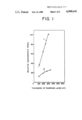
- FIG. 1 is a graph showing relationships between a thickness of the phosphor layer and a relative radiographic speed, with respect to a radiographic intensifying screen containing a compound having an epoxy group according to the present invention (Curve 1) and a conventional radiographic intensifying screen (Curve 2).
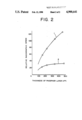
- FIG. 2 is a graph showing relationships between a thickness of the phosphor layer and a relative radiographic speed, with respect to a radiographic intensifying screen containing a phosphite according to the present invention (Curve 1) and a conventional radiographic intensifying screen (Curve 2).
- radiographic intensifying screen of the present invention having the above-described advantages can be prepared, for instance, in the following manner.
- the support material employed in the present invention can be selected from those employed in the conventional radiogaphic intensifying screens.
- the support material include plastic films such as films of cellulose acetate, polyester, polyethylene terephthalate, polyamide, polyimide, triacetate and polycarbonate; metal sheets such as aluminum foil and aluminum alloy foil; ordinary papers; baryta paper; resin-coated papers; pigment papers containing titanium dioxide or the like; and papers sized with polyvinyl alcohol or the like.
- a plastic film is preferably employed as the support material.
- the plastic film may contain a light-absorbing material such as carbon black, or may contain a light-reflecting material such as titanium dioxide.
- the former is appropriate for preparing a high-sharpness type radiographic intensifying screen, while the latter is appropriate for preparing a high-speed type radiographic intensifying screen.
- One or more additional layers may be occationally provided between the support and the phosphor layer, so as to enhance the bonding strength between the support and the phosphor layer, or to improve the radiographic speed of the screen or the quality of an image provided thereby.
- a subbing layer or an adhesive layer may be provided by coating a polymer material such as gelatin over the surface of the support on the phosphor layer-side.
- a light-reflecting layer and a light-absorbing layer may be provided by forming a polymer layer containing a light-reflecting material such as titanium dioxide or a light-absorbing material such as carbon black.
- a metal foil is optionally provided on the phosphor layer-side surface of the support, so as to remove scattered radiation.
- a metal foil is chosen from lead foil, lead alloy foil, tin foil and the like.
- the phosphor layer-side surface of the support (or the surface of a subbing layer, a light-reflecting layer, a light-absorbing layer or a metal foil in the case that such layers are provided on the phosphor layer) may be provided with protruded and depressed portions.
- the phosphor layer that is a characteristic requisite of the invention, comprises a binder, a phosphor containing iodine, and a compound having an epoxy group and/or at least one compound selected from the group consisting of phosphites, organotin compounds and metal salts of organic acids, the latter two or three being dispersed in a binder.
- the phosphor containing iodine which is employable in the invention contains iodine as a phosphor component.
- iodine is contained in the phosphor as at least one of a host component, an additive component and an activator component.
- Examples of the iodine-containing phosphor employable in the radiographic intensifying screen of the invention include:
- a rare earth element activated alkaline earth metal fluorohalide phosphor having the formula: (Ba 1-x , M 2+ x )FX:yA, in which M 2+ is at least one divalent metal selected from the group consisting of Mg, Ca, Sr, Zn and Cd; X is at least one element selected from the group consisting of Cl, Br and I; A is at least one element selected from the group consisting of Eu, Tb, Ce, Tm, Dy, Pr, Ho, Nd, Yb and Er; and x and y are numbers satisfying the conditions of 0 ⁇ x ⁇ 0.6 and 0 ⁇ y ⁇ 0.2, respectively, as described in U.S. Pat. No. 4,239,968;
- the phosphor may contain the following additives:
- LiX', BeX" 2 and M III X"' 3 in which each of X', X" and X"' is at least one element selected from the group consisting of Cl, Br and I; and M III is a trivalent metal, as described in Japanese Patent Provisional Publication No. 56(1981)-74175;
- metal oxides such as BeO, MgO, CaO, SrO, BaO, ZnO, Al 2 O 3 , Y 2 O 3 , La 2 O 3 , In 2 O 3 , SiO 2 , TiO 2 , ZrO 2 , GeO 2 , SnO 2 , Nb 2 O 5 , Ta 2 O 5 and ThO 2 , as described in Japanese Patent Provisional Publication No. 55(1980)-160078;
- M.L in which M is at least one alkali metal selected from the group consisting of Li, Na, K, Rb and Cs; and L is at least one trivalent metal selected from the group consisting of Sc, Y, La, Ce, Pr, Nd, Pm, Sm, Gd, Tb, Dy, Ho, Er, Tm, Yb, Lu, Al, Ga, In and Tl, as described in U.S. patent application No. 497,805;
- NaX' in which X' is at least one element selected from the group consisting of Cl, Br and I, as described in Japanese Patent Provisional Publication No. 59(1984)-56479;
- transition metals such as V, Cr, Mn, Fe, Co and Ni, as described in U.S. patent application No. 535,928;
- M I is at least one alkali metal selected from the group consisting of Li, Na, K, Rb and Cs
- M' II is at least one divalent metal selected from the group consisting of Be and Mg
- M III is at least one trivalent metal selected from the group consisting of Al, Ga, In and Tl
- A is metal oxide
- each of X', X" and X"' is at least one halogen selected from the group consisting of F, Cl, Br and I, as described in U.S. patent application No. 543,326;
- M I is at least one alkali metal selected from the group consisting of Rb and Cs; and X' is at least one halogen selected from the group consisting of F, Cl, Br and I, as described in as described in U.S. patent application No. 668,464;
- M II 'X' 2 .M II 'X" 2 in which M II ' is at least one alkaline earth metal selected from the group consisting of Ba, Sr and Ca; and each of X' and X" is at least one halogen selected from the group consisting of Cl, Br and I, and X ⁇ X', as described in U.S. patent application No. 754,424; and
- LnX" 3 in which Ln is at least one rare earth element selected from the group consisting of Sc, Y, La, Ce, Pr, Nd, Pm, Sm, Gd, Tb, Dy, Ho, Er, Tm, Yb and Lu; and X" is at least one halogen selected from the group consisting of F, Cl, Br and I, as described in Japanese Patent Application No. 60(1985)-106752;
- a divalent europium activated alkaline earth metal halide phosphor having the formula: M II X 2 .aM II X' 2 :xEu 2+ , in which M II is at least one alkaline earth metal selected from the group consisting of Ba, Sr and Ca; each of X and X' is at least one halogen selected from the group consisting of Cl, Br and I, and X ⁇ X'; and a and x are numbers satisfying the conditions of 0.1 ⁇ a ⁇ 10.0 and 0 ⁇ x ⁇ 0.2, respectively, as described in U.S. patent application No. 660,987;
- the phosphor may contain the following additives:
- M I is at least one alkali metal selected from the group consisting of Rb and Cs; and X" is at least one halogen selected from the group consisting of F, Cl, Br and I, as described in U.S. patent application No. 699,325;
- M III is at least one trivalent metal selected from the group consisting of Sc, Y, La, Gd and Lu, and each of X", X"' and X"" is at least one halogen selected from the group consisting of F, Cl, Br and I, as described in U.S. patent application No. 723,819;
- LiX and NaX", in which X" is at least one halogen selected from the group consisting of F, Cl, Br and I, as described in U.S. patent application No. 797,972;
- X is at least one halogen selected from the group consisting of F, Cl, Br and I
- Ln is at least one rare earth element selected from the group consisting of Sc, Y, Ce, Pr, Nd, Sm, Gd, Tb, Dy, Ho, Er, Tm, Yb and Lu, as described in U.S. patent application No. 850,715;
- a terbium and/or thulium activated rare earth oxyhalide phosphor having the formula: LnOX:A, in which Ln is at least one element selected from the group consisting of La, Y, Gd and Lu; X is at least one element selected from the group consisting of F, Cl, Br and I; and A is at least one rare earth element selected from the group consisting of Tb and Tm; and
- alkali metal iodide phosphors such as CsI:Na, CsI:Tl, NaI and KI:Tl.
- the divalent europium activated alkaline earth metal fluorohalide phosphor containing iodine, alkali metal iodide phosphor and terbium and/or thulium activated rare earth oxyhalide phosphor containing iodine are particularly preferred, because the phosphors show (spontaneous) emission of high luminance.
- These phosphors are given by no means to restrict the phosphor employable in the invention. Any other phosphors can also be employed, provided that the phosphor contains iodine as a phosphor component and emits light when excited with a radiation.
- the compound having an epoxy group employable in the invention has at least one epoxy group ##STR1## in a molecule.
- the epoxy group-containing compound may be a monomer or a polymer.
- the monomer include 1,2-epoxypropane and 1,2-epoxybutane.
- the polymer include a bisphenol A-type epoxy resin having the formula: ##STR2##
- the epoxy group-containing compound is preferably a polymer, because the compound serves not only as an additive for the prevention of yellowing but also as a binder. Whole the binder may be the epoxy group-containing compound.
- phosphite (phosphorus chelate) employable in the invention include a compound having the formula (I) and a compound having the formula (II): ##STR3## in which A is an oxygen atom or a sulfur atom; each of R 1 , R 2 , R 3 and R 4 is a hydrogen atom, an alkyl group or an aryl group, and R 1 , R 2 , R 3 and R 4 are the same or different from each other; and X 1 is a group comprising a carbon atom and/or an oxygen atom and/or a hydrogen atom.
- Examples of the preferred phosphite include: ##STR4##
- organotin compound employable in the invention examples include a compound having the formula (III): ##STR5## in which each of R 5 and R 6 is a hydrogen atom, an alkyl group or an aryl group, and R 5 and R 6 are the same or different from each other; each of Y 1 , Y 2 , Y 3 and Y 4 is an alkyl group, an aryl group, a fatty acid, a fatty acid derivative, mercaptan or a mercaptan carboxylic acid, and Y 1 , Y 2 , Y 3 and Y 4 are the same or different from each other; X 2 is an oxygen atom, a sulfur atom or a maleic acid; and n is 0 or an integer of not less than 1.
- the organotin compound is relatively stabilized with readiness in such a state that a portion of organic ligands bound to tin substituted by halogen, etc.
- at least one ligand of Y 1 to Y 4 is substituted by iodine to make the compound stable.
- Examples of the preferred organotin compound include dioctyltin mercaptide, monobutyltin trimethylmaleate, monobutyltin trioctylmaleate, dibutyltin dilaurate, dibutyltin laurate methylmaleate, dibutyltin dioleilmaleate, dibutyltin dimethylmaleate, dibutyltin maleate, dibutyltin methoxymethylmaleate, a mixture of dibutyltin dimaleate and dibutyltin dimethylmaleate, dibutyltin dioctylmaleate, dibutyltin dioctylthioglycolate, dibutyltin dilaurylmercaptide, tribenzyltin octylmaleate and tribenzyltin trimethylmaleate.
- Examples of the metal salt of organic acid employable in the invention include a compound having the formula (IV):
- R 7 is an alkyl group or an aryl group having 1-20 carbon atoms, which may have at least one substituent;
- M is calcium, zinc, cadmium or barium; and
- m is a positive integer.
- organic acid in the metal salt of organic acid examples include octylic acid, lauric acid, stearic acid, oleic acid, ricinoleic acid, naphthenic acid, 2-ethylhexanoic acid, resin acid, synthetic carboxylic acid, benzoic acid, salicylic acid and organic phosphinous acid.
- the organic acid may be phenol or alkylphenol.
- metal salt of organic acid examples include so-called metallic soap such as barium stearate, barium laurate, barium ricinoleate, barium naphthenate, barium 2-ethylhexanoate, calcium stearate, calcium laurate, calcium ricinoleate, zinc stearate, zinc laurate, zinc ricinoleate and zinc 2-ethylhexanoate.
- metallic soap such as barium stearate, barium laurate, barium ricinoleate, barium naphthenate, barium 2-ethylhexanoate, calcium stearate, calcium laurate, calcium ricinoleate, zinc stearate, zinc laurate, zinc ricinoleate and zinc 2-ethylhexanoate.
- phosphites, organotin compounds and metal salts of organic acids can be employed singly or in combination of two or more compounds.
- the above-mentioned epoxy group-containing compound and at least one of the compound selected from the group consisting of phosphites, organotin compounds and metal salts of organic acids may be incorporated singly into the phosphor layer. Otherwise, both of the compounds may be appropriately incorporated into the phosphor layer.
- the iodine liberated from the phosphor can be effectively trapped by these compounds, I 2 molecules are not produced and hence, the phosphor layer is free from yellowing.
- the employing of both the epoxy group-containing compound and the compound selected from phosphites, organotin compounds and metal salts of organic acids can more effectively reduce the deterioration (decrease of radiographic speed) with time.
- binder to be employed in the phosphor layer examples include: natural polymers such as proteins (e.g. gelatin), polysaccharides (e.g. dextran) and gum arabic; and synthetic polymers such as polyvinyl butyral, polyvinyl acetate, nitrocellulose, ethylcellulose, vinylidene chloride-vinyl chloride copolymer, polyalkyl (meth) acrylate, vinyl chloride-vinyl acetate copolymer, polyurethane, cellulose acetate butyrate, polyvinyl alcohol and linear polyester.
- natural polymers such as proteins (e.g. gelatin), polysaccharides (e.g. dextran) and gum arabic
- synthetic polymers such as polyvinyl butyral, polyvinyl acetate, nitrocellulose, ethylcellulose, vinylidene chloride-vinyl chloride copolymer, polyalkyl (meth) acrylate, vinyl chloride-vinyl acetate
- nitrocellulose linear polyester, polyalkyl (meth)acrylate, a mixture of nitrocellulose and linear polyester, and a mixture of nitrocellulose and polyalkyl (meth)acrylate.
- binders may be crosslinked with the crosslinking agent.
- the phosphor layer can be formed on the support, for instance, in the following manner.
- the above-described phosphor containing iodine, compound for the prevention of yellowing and binder are added to an appropriate solvent, and they are well mixed to prepare a homogeneous coating dispersion comprising the phosphor particles and the compound dispersed in a binder solution.
- Examples of the solvent employable in the preparation of the coating dispersion include lower alcohols such as methanol, ethanol, n-propanol and n-butanol; chlorinated hydrocarbons such as methylene chloride and ethylene chloride; ketones such as acetone, methyl ethyl ketone and methyl isobutyl ketone; esters of lower alcohols with lower aliphatic acids such as methyl acetate, ethyl acetate and butyl acetate; ethers such as dioxane, ethylene glycol monoethylether and ethylene glycol monoethyl ether; and mixtures of the above-mentioned compounds.
- lower alcohols such as methanol, ethanol, n-propanol and n-butanol
- chlorinated hydrocarbons such as methylene chloride and ethylene chloride
- ketones such as acetone, methyl ethyl ketone and methyl isobutyl
- the ratio between the binder and the phosphor in the coating dispersion may be determined according to the characteristics of the aimed radiographic intensifying screen, the nature of the phosphor employed, and the amount of the epoxy group-containing compound. Generally, the ratio therebetween is within the range of from 1:1 to 1:100 (binder:phosphor, by weight), preferably from 1:8 to 1:40.
- the amount of the compound having an epoxy group varies depending upon the nature and amount of the employed phosphor, the kind of the binder, etc., and the amount thereof is generally in the range of 0.001 to 10% by weight, preferably 0.03 to 3% by weight, of the phosphor.
- the amount is less than 0.001% by weight, there can be hardly obtained the yellowing-preventing effect.
- the amount exceeds 10% by weight, even if whole the binder is the epoxy group-containing compound, unfavorable effects are given to the emission characteristics of the phosphor or various properties of the resulting intensifying screen such as flexibility and endurance, although the yellowing-preventing effect is obtained.
- the amount of the phosphite, organotin compound and/or metal salt of organic acid also varies depending upon the nature and amount of the employed phosphor, the kind of the binder, etc., and generally is in the range of 0.0001 to 3% by weight, preferably in the range of 0.003 to 0.3% by weight, of the phosphor.
- the coating dispersion may contain a dispersing agent to assist the dispersibility of the phosphor particles therein, and also contain a variety of additives such as a plasticizer for increasing the bonding between the binder and the phosphor particles in the phosphor layer.
- a dispersing agent include phthalic acid, stearic acid, caproic acid and a hydrophobic surface active agent.
- plasticizer examples include phosphates such as triphenyl phosphate, tricresyl phosphate and diphenyl phosphate; phthalates such as diethyl phthalate and dimethoxyethyl phthalate; glycolates such as ethylphthalyl ethyl glycolate and butylphthalyl butyl glycolate; and polyesters of polyethylene glycols with aliphatic dicarboxylic acids such as polyester of triethylene glycol with adipic acid and polyester of diethylene glycol with succinic acid.
- phosphates such as triphenyl phosphate, tricresyl phosphate and diphenyl phosphate
- phthalates such as diethyl phthalate and dimethoxyethyl phthalate
- glycolates such as ethylphthalyl ethyl glycolate and butylphthalyl butyl glycolate
- the coating dispersion prepared as described above is applied evenly to the surface of the support to form a layer of the coating dispersion.
- the coating procedure can be carried out by a conventional method such as a method using a doctor blade, a roll coater or a knife coater.
- the coating dispersion After applying the coating dispersion to the support, the coating dispersion is then heated slowly to dryness so as to complete the formation of a phosphor layer.
- the thickness of the phosphor layer varies depending upon the characteristics of the aimed radiographic intensifying screen, the nature of the phosphor, the ratio between the binder and the phosphor, etc. Generally, the thickness of the phosphor layer is within the range of from 200 ⁇ m to 1 mm, preferably from 50 to 500 ⁇ m.
- the phosphor layer can be provided onto the support by the methods other than that given in the above.
- the phosphor layer is initially prepared on a sheet (false support) such as a glass plate, metal plate or plastic sheet using the aforementioned coating dispersion and then thus prepared phosphor layer is superposed on the genuine support by pressing or using an adhesive agent.
- a transparent protective film may be provided to protect the phosphor layer from physical and chemical deterioration.
- the transparent film can be provided on the phosphor layer by coating the surface of the phosphor layer with a solution of a transparent polymer such as a cellulose derivative (e.g. cellulose acetate or nitrocellulose), or a synthetic polymer (e.g. polymethyl methacrylate, polyvinyl butyral, polyvinyl formal, polycarbonate, polyvinyl acetate, or vinyl chloride-vinyl acetate copolymer), and drying the coated solution.
- the transparent film can be provided on the phosphor layer by beforehand preparing it from a polymer such as polyethylene terephthalate, polyethylene, polyvinylidene chloride or polyamide, followed by placing and fixing it onto the phosphor layer with an appropriate adhesive agent.
- the transparent protective film preferably has a thickness within a range of approx. 3 to 20 ⁇ m.
- the radiographic intensifying screen may be covered on the side surfaces thereof with a polumer material to improve the mechanical strength such as resistance to shock and resistance to bending.
- the radiographic intensifying screen of the invention is provided with the above-described various layers such as a subbing layer, a light-reflecting layer, a protective film, an adhesive layer and a polymer film for covering the side surfaces thereof, it is preferable that these layers, particularly the layer next to the phosphor layer, contain the compound having an epoxy group and/or the compound selected from the group consisting of phosphites, organotin compounds and metal salts of organic acids.
- the coating dispersion was applied evenly onto a polyethylene terephthalate sheet containing carbon black (support, thickness: 250 ⁇ m) placed horizontally on a glass plate.
- the application of the coating dispersion was carried out using a doctor blade with varying a diameter of the aperture of the doctor blade.
- the support having a layer of the coating dispersion was placed in an oven and heated at a temperature gradually rising from 25° to 100° C.
- a phosphor layer having various thickness in the range of 100 to 350 ⁇ m was formed on the support.
- a transparent polyethylene terephthalate film (thickness: 12 ⁇ m; provided with a polyester adhesive layer on one surface) to combine the transparent film and the phosphor layer with the adhesive layer.
- a radiographic intensifying screen consisting essentially of a support, a phosphor layer and a transparent protective film was prepared.
- Example 1 The procedure of Example 1 was repeated except for not using the bisphenol A-type epoxy resin solution and using 20 g. of methyl ethyl ketone in the preparation of the coating dispersion, to prepare a radiographic intensifying screen consisting essentially of a support, a phosphor layer and a transparent protective film.
- Example 1 The radiographic intensifying screens obtained in Example 1 and Comparison Example 1 were exposed to X-rays at 80 KVp to measure the radiographic speed. The results are shown in FIG. 1.
- FIG. 1 is a graph in which the thickness of the phosphor layer is plotted on the abscissa and the relative radiographic speed is plotted on the ordinate.
- Curve 1 screen containing epoxy group-containing compound (Example 1), and
- Curve 2 screen not containing epoxy group-containing compound (Com. Example 1).
- the radiographic intensifying screen wherein the epoxy-group containing compound is contained in the phosphor layer according to the invention was remarkably improved in the radiographic speed, as compared with the known radiographic intensifying screen not containing the epoxy-group containing compound (Comparison Example 1).
- the phosphor layer of the known intensifying screen extremely yellowed and the radiographic speed was enhanced only a little even when the thickness thereof was made larger. On the contrary, no yellowing was appeared in the phosphor layer of the intensifying screen of the invention and the radiographic speed increased in proportion to the thickness thereof.
- Example 1 The procedure of Example 1 was repeated except for using 120 g. of a particulate terbium and thulium activated lanthanum oxybromide (LaOBr 0 .8 I 0 .2 :0.01Tb,0.005Tm) phosphor as the phosphor and using 1 g. of 1,2-epoxypropane instead of the bisphenol A-type epoxy resin solution, to form a phosphor layer having a thickness of 250 ⁇ m on the support.
- LaOBr 0 .8 I 0 .2 :0.01Tb,0.005Tm 1,2-epoxypropane
- a radiographic intensifying screen consisting essentially of a support, a phosphor layer and a transparent protective film.
- Example 2 The procedure of Example 2 was repeated except for not adding 1,2-epoxypropane to the coating dispersion, to prepare a radiographic intensifying screen consisting essentially of a support, a phosphor layer and a transparent protective film.
- the radiographic intensifying screens obtained in Example 2 and Comparison Example 2 were measured on the radiographic speed in the same manner as described above. The results are set forth in Table 1.
- the radiographic speed of the intensifying screen was expressed by a relative value on the basis of that of Example 2 being 100.
- the coating dispersion was applied evenly onto a polyethylene terephthalate sheet containing carbon black (support, thickness: 250 ⁇ m) placed horizontally on a glass plate.
- the application of the coating dispersion was carried out using a doctor blade with varying a diameter of the aperture of the doctor blade.
- the support having a layer of the coating dispersion was placed in an oven and heated at a temperature gradually rising from 25° to 100° C.
- a phosphor layer having various thickness in the range of 150 to 500 ⁇ m was formed on the support.
- a transparent polyethylene terephthalate film (thickness: 12 ⁇ m; provided with a polyester adhesive layer on one surface) to combine the transparent film and the phosphor layer with the adhesive layer.
- a radiographic intensifying screen consisting essentially of a support, a phosphor layer and a transparent protective film was prepared.
- Example 3 The procedure of Example 3 was repeated except for not using the diphenyldecyl phosphite solution and using 20 g. of methyl ethyl ketone in the preparation of the coating dispersion, to prepare a radiographic intensifying screen consisting essentially of a support, a phosphor layer and a transparent protective film.
- FIG. 2 is a graph in which the thickness of the phosphor layer is plotted on the abscissa and the relative radiographic speed is plotted on the ordinate.
- Curve 1 screen containing phosphite (Example 3), and
- Curve 2 screen not containing phosphite (Com. Example 3).
- the radiographic intensifying screen wherein phosphite is contained in the phosphor layer according to the invention was remarkably improved in the radiographic speed, as compared with the known radiographic intensifying screen not containing phosphite (Comparison Example 3).
- the phosphor layer of the known intensifying screen extremely yellowed and the radiographic speed was enhanced only a little even when the thickness thereof was made larger. On the contrary, no yellowing was appeared in the phosphor layer of the intensifying screen of the invention and the radiographic speed increased in proportion to the thickness thereof.
- Example 3 The procedure of Example 3 was repeated except for using 120 g. of a particulate terbium and thulium activated lanthanum oxybromide (LaOBr 0 .8 I 0 .2 :0.01Tb,0.005Tm) phosphor as the phosphor and using 0.04 g. of dioctyltin mercapto instead of the diphenyldecyl phosphite, to form a phosphor layer having a thickness of 250 ⁇ m on the support.
- LaOBr 0 .8 I 0 .2 :0.01Tb,0.005Tm a particulate terbium and thulium activated lanthanum oxybromide
- a radiographic intensifying screen consisting essentially of a support, a phosphor layer and a transparent protective film.
- Example 4 The procedure of Example 4 was repeated except for not adding dioctyltin mercapto to the coating dispersion, to prepare a radiographic intensifying screen consisting essentially of a support, a phosphor layer and a transparent protective film.
- the radiographic intensifying screens obtained in Example 4 and Comparison Example 4 were measured on the radiographic speed in the same manner as described above. The results are set forth in Table 2.
- the radiographic speed of the intensifying screen was expressed by a relative value on the basis of that of Example 4 being 100.
- Example 3 The procedure of Example 3 was repeated except for using 120 g. of a particulate divalent europium activated barium chlorobromide (BaClBr 0 .9 I 0 .1 :0.001Eu 2+ ) phosphor as the phosphor and using 0.02 g. of zinc stearate and 0.02 g. of barium stearate instead of the diphenyldecyl phosphite, to form a phosphor layer having a thickness of 250 ⁇ m on the support.
- a particulate divalent europium activated barium chlorobromide BaClBr 0 .9 I 0 .1 :0.001Eu 2+
- a radiographic intensifying screen consisting essentially of a support, a phosphor layer and a transparent protective film.
- Example 5 The procedure of Example 5 was repeated except for not adding zinc stearate and barium stearate to the coating dispersion, to prepare a radiographic intensifying screen consisting essentially of a support, a phosphor layer and a transparent protective film.
- the radiographic intensifying screens obtained in Example 5 and Comparison Example 5 were measured on the radiographic speed in the same manner as described above. The results are set forth in Table 3. The radiographic speed of the intensifying screen was expressed by a relative value on the basis of that of Example 5 being 100.
- the coating dispersion was applied evenly onto a polyethylene terephthalate sheet containing carbon black (support, thickness: 250 ⁇ m) placed horizontally on a glass plate by using a doctor blade. After the coating was complete, the support having a layer of the coating dispersion was placed in an oven and heated at a temperature gradually rising from 25° to 100° C. Thus, a phosphor layer having a thickness of approx. 250 ⁇ m was formed on the support.
- a transparent polyethylene terephthalate film (thickness: 12 ⁇ m; provided with a polyester adhesive layer on one surface) to combine the transparent film and the phosphor layer with the adhesive layer.
- a radiographic intensifying screen consisting essentially of a support, a phosphor layer and a transparent protective film was prepared.
- Example 6 The radiographic intensifying screens obtained in Example 6 as well as Examples 1 and 3 were evaluated on the deterioration characteristics according to the following test.
- the intensifying screen was measured on the radiographic speed in the same manner as described above. After the intensifying screen was allowed to stand at a temperature of 60° C. and at a humidity of 80%RH for 7 days, the intensifying screen was again measured on the radiographic speed.
- the radiographic intensifying screen wherein both of phosphite and epoxy group-containing compound were contained in the phosphor layer according to the invention kept higher radiographic speed than the radiographic intensifying screen containing only epoxy group-containing compound (Example 1) and than the radiographic intensifying screen containing only phosphite (Example 3).
Landscapes
- Chemical & Material Sciences (AREA)
- Engineering & Computer Science (AREA)
- Materials Engineering (AREA)
- Organic Chemistry (AREA)
- Inorganic Chemistry (AREA)
- Physics & Mathematics (AREA)
- General Engineering & Computer Science (AREA)
- High Energy & Nuclear Physics (AREA)
- Conversion Of X-Rays Into Visible Images (AREA)
Abstract
A radiographic intensifying screen comprising a support and a phosphor layer provided on the support which comprises a binder and a phosphor dispersed therein, characterized in that said phosphor is a phosphor containing iodine and that said phosphor layer contains a compound having an epoxy group and/or at least one compound selected from the group consisting of phosphites, organotin compounds and metal salts of organic acids.
Description
This application is a continuation of Ser. No. 012,010, filed Feb. 6, 1987, now abandoned.
1. Field of the Invention
The present invention relates to a radiographic intensifying screen, and more particularly, to a radiographic intensifying screen employing a phosphor containing iodine.
2. Description of the Prior Art
In a variety of radiography such as medical radiography for diagnosis and industrial radiography for nondestructive inspection, a radiographic intensifying screen is generally employed in close contact with one or both surfaces of a radiographic film such as an X-ray film.
The radiographic intensifying screen has a basic structure comprising a support and a phosphor layer provided on one surface of the support. Further, a transparent protective film of a polymer material is generally provided on the free surface (surface not facing the support) of the phosphor layer to keep the phosphor layer from chemical deterioration or physical shock. The phosphor layer comprises a binder and phosphor particles dispersed therein. When excited with a radiation such as X-rays having passed through an object, the phosphor particles emit light of high luminance in proportion to the dose of the radiation. Accordingly, the radiographic film placed in close contact with the phosphor layer of the intensifying screen can be exposed sufficiently to form a radiation image of the object, even if the radiation is applied to the object at a relatively small dose.
It is desired that the radiographic intensifying screen has a high radiographic speed and provide an image of high quality (high sharpness, high graininess, etc.). Especially when the object is a human body, the radiographic speed of the intensifying screen is desired to be as high as possible to reduce the radiation dose applied to the object.
As a phosphor employed in the radiographic intensifying screen, there has been proposed phosphors containing iodine as a component thereof such as a divalent europium activated barium fluorohalide phosphor (BaFX:Eu2+, in which X is I or a combination of I and Cl and/or Br), cesium iodide phosphors (CsI:Na, CsI:Tl), and a terbium and/or thulium activated rare earth oxyhalide phosphor (LnOX:Tb,Tm, in which Ln is at least one rare earth element selected from the group consisting of La, Y, Gd and Lu; X is I or a combination of I and F and/or Cl and/or Br).
However, when these phosphors containing iodine are used in the radiographic intensifying screen, the phosphor layer is liable to be colored yellow gradually because the iodine is liberated from the phosphor to produce an iodine molecule (I2). Such yellowing of the phosphor layer causes a problem of prominently decreased radiographic speed in the intensifying screen.
An object of the present invention is to provide a radiographic intensifying screen improved in the radiographic speed.
The present invention provides a radiographic intensifying screen comprising a support and a phosphor layer provided on the support which comprises a binder and a phosphor dispersed therein, characterized in that said phosphor is a phosphor containing iodine and that said phosphor layer contains a compound having an epoxy group and/or at least one compound selected from the group consisting of phosphites, organotin compounds and metal salts of organic acids.
In the present specification, tin salts of organic acids are not included in the metal salts of organic acids.
In the present invention, the radiographic speed of a radiographic intensifying screen which employs a phosphor containing iodine as a phosphor component is remarkably enhanced, by incorporating into a phosphor layer thereof a compound having an epoxy group and/or at least one compound selected from the group consisting of phosphites, organotin compounds and metal salts of organic acids.
The present inventors have found that a phosphor layer tends to be colored yellow when an iodine-containing phosphor is used in a radiographic intensifying screen, and hence the light emitted by the phosphor, particularly the light in the blue region, is absorbed in the phosphor layer to extremely decrease the radiographic speed of the intensifying screen. Such yellowing of the phosphor layer is caused by the phenomena that the iodine is liberated in the form of I2 molecule from the phosphor in a coating dispersion for the preaparation of the phosphor layer, and that the liberated iodine forms an I2 molecule in the prepared phosphor layer, during the preparation of the intensifying screen.
According to the invention, to a coating dispersion for the preparation of the phosphor layer is added a compound having an epoxy group and/or at least one compound selected from the group consisting of phosphites, organotin compounds and metal salts of organic acids, whereby iodine liberated from the phosphor is trapped by these compounds so as to prevent the formation of I2 molecule. Iodine liberated from the phosphor in the prepared phosphor layer is also trapped by these compounds and free from the formation of I2 molecule. The reason is, in the case of the latter compounds, i.e., phosphites, organotin compounds and metal salts of organic acids, presumably that the compounds serve as a chelating agent for iodine to trap iodine effectively in a stable state. For instance, it is presumed that the liberated iodine atoms bind to tin in the organotin compound as a ligand to be in a prominently stable state. As a result, the phosphor layer is prevented from yellowing to obtain a radiographic intensifying screen having the high radiographic speed.
Especially, a radiographic intensifying screen in which the phosphor layer contains not only the compound having an epoxy group but also the compound selected from the group consisting of phosphites, organotin compounds and metal salts of organic acids is effectively prevented from deterioration (decrease of radiographic speed) with the passage of time and more enhanced in the radiographic speed.
When an epoxy resin is used as the compound having an epoxy group, the epoxy resin also serves as a binder in the same place, so that adhesion strength between a support and the phosphor layer can be enhanced as well as the improvement in the radiographic speed. It is included in the scope of the invention that whole the binder of the phosphor layer is an epoxy resin.
FIG. 1 is a graph showing relationships between a thickness of the phosphor layer and a relative radiographic speed, with respect to a radiographic intensifying screen containing a compound having an epoxy group according to the present invention (Curve 1) and a conventional radiographic intensifying screen (Curve 2).
FIG. 2 is a graph showing relationships between a thickness of the phosphor layer and a relative radiographic speed, with respect to a radiographic intensifying screen containing a phosphite according to the present invention (Curve 1) and a conventional radiographic intensifying screen (Curve 2).
The radiographic intensifying screen of the present invention having the above-described advantages can be prepared, for instance, in the following manner.
The support material employed in the present invention can be selected from those employed in the conventional radiogaphic intensifying screens. Examples of the support material include plastic films such as films of cellulose acetate, polyester, polyethylene terephthalate, polyamide, polyimide, triacetate and polycarbonate; metal sheets such as aluminum foil and aluminum alloy foil; ordinary papers; baryta paper; resin-coated papers; pigment papers containing titanium dioxide or the like; and papers sized with polyvinyl alcohol or the like. Among these materials, a plastic film is preferably employed as the support material. The plastic film may contain a light-absorbing material such as carbon black, or may contain a light-reflecting material such as titanium dioxide. The former is appropriate for preparing a high-sharpness type radiographic intensifying screen, while the latter is appropriate for preparing a high-speed type radiographic intensifying screen.
One or more additional layers may be occationally provided between the support and the phosphor layer, so as to enhance the bonding strength between the support and the phosphor layer, or to improve the radiographic speed of the screen or the quality of an image provided thereby. For instance, a subbing layer or an adhesive layer may be provided by coating a polymer material such as gelatin over the surface of the support on the phosphor layer-side. Otherwise, a light-reflecting layer and a light-absorbing layer may be provided by forming a polymer layer containing a light-reflecting material such as titanium dioxide or a light-absorbing material such as carbon black. In radiographic intensifying screens employed in the industrial raiography for non-destructive inspection, a metal foil is optionally provided on the phosphor layer-side surface of the support, so as to remove scattered radiation. Such a metal foil is chosen from lead foil, lead alloy foil, tin foil and the like.
As described in U.S. patent application No. 496,278, the phosphor layer-side surface of the support (or the surface of a subbing layer, a light-reflecting layer, a light-absorbing layer or a metal foil in the case that such layers are provided on the phosphor layer) may be provided with protruded and depressed portions.
On the support, a phosphor layer is formed.
The phosphor layer, that is a characteristic requisite of the invention, comprises a binder, a phosphor containing iodine, and a compound having an epoxy group and/or at least one compound selected from the group consisting of phosphites, organotin compounds and metal salts of organic acids, the latter two or three being dispersed in a binder.
The phosphor containing iodine which is employable in the invention contains iodine as a phosphor component. Namely, iodine is contained in the phosphor as at least one of a host component, an additive component and an activator component.
Examples of the iodine-containing phosphor employable in the radiographic intensifying screen of the invention include:
(1) a rare earth element activated alkaline earth metal fluorohalide phosphor having the formula: (Ba1-x, M2+ x)FX:yA, in which M2+ is at least one divalent metal selected from the group consisting of Mg, Ca, Sr, Zn and Cd; X is at least one element selected from the group consisting of Cl, Br and I; A is at least one element selected from the group consisting of Eu, Tb, Ce, Tm, Dy, Pr, Ho, Nd, Yb and Er; and x and y are numbers satisfying the conditions of 0≦x≦0.6 and 0≦y≦0.2, respectively, as described in U.S. Pat. No. 4,239,968;
The phosphor may contain the following additives:
LiX', BeX"2 and MIII X"'3, in which each of X', X" and X"' is at least one element selected from the group consisting of Cl, Br and I; and MIII is a trivalent metal, as described in Japanese Patent Provisional Publication No. 56(1981)-74175;
metal oxides such as BeO, MgO, CaO, SrO, BaO, ZnO, Al2 O3, Y2 O3, La2 O3, In2 O3, SiO2, TiO2, ZrO2, GeO2, SnO2, Nb2 O5, Ta2 O5 and ThO2, as described in Japanese Patent Provisional Publication No. 55(1980)-160078;
Zr and Sc, as described in Japanese Patent Provisional Publication No. 56(1981)-116777;
B, as described in Japanese Patent Provisional Publication No. 57(1982)-23673;
As and Si, as described in Japanese Patent Provisional Publication No. 57(1982)-23675;
M.L, in which M is at least one alkali metal selected from the group consisting of Li, Na, K, Rb and Cs; and L is at least one trivalent metal selected from the group consisting of Sc, Y, La, Ce, Pr, Nd, Pm, Sm, Gd, Tb, Dy, Ho, Er, Tm, Yb, Lu, Al, Ga, In and Tl, as described in U.S. patent application No. 497,805;
fired products of tetrafluoroboric acid compounds, as described in U.S. patent application No. 520,215;
fired products of monovalent or divalent metal salts of hexafluoro silicic acid, hexafluoro titanic acid and hexafluoro zirconic acid, as described in U.S. patent application No. 502,648;
NaX', in which X' is at least one element selected from the group consisting of Cl, Br and I, as described in Japanese Patent Provisional Publication No. 59(1984)-56479;
transition metals such as V, Cr, Mn, Fe, Co and Ni, as described in U.S. patent application No. 535,928;
MI X', M'II X"2, MIII X"'3 and A, in which MI is at least one alkali metal selected from the group consisting of Li, Na, K, Rb and Cs; M'II is at least one divalent metal selected from the group consisting of Be and Mg; MIII is at least one trivalent metal selected from the group consisting of Al, Ga, In and Tl; A is metal oxide; and each of X', X" and X"' is at least one halogen selected from the group consisting of F, Cl, Br and I, as described in U.S. patent application No. 543,326;
MI X', in which MI is at least one alkali metal selected from the group consisting of Rb and Cs; and X' is at least one halogen selected from the group consisting of F, Cl, Br and I, as described in as described in U.S. patent application No. 668,464;
MII 'X'2.MII 'X"2, in which MII ' is at least one alkaline earth metal selected from the group consisting of Ba, Sr and Ca; and each of X' and X" is at least one halogen selected from the group consisting of Cl, Br and I, and X≠X', as described in U.S. patent application No. 754,424; and
LnX"3, in which Ln is at least one rare earth element selected from the group consisting of Sc, Y, La, Ce, Pr, Nd, Pm, Sm, Gd, Tb, Dy, Ho, Er, Tm, Yb and Lu; and X" is at least one halogen selected from the group consisting of F, Cl, Br and I, as described in Japanese Patent Application No. 60(1985)-106752;
(2) a divalent europium activated alkaline earth metal halide phosphor having the formula: MII X2.aMII X'2 :xEu2+, in which MII is at least one alkaline earth metal selected from the group consisting of Ba, Sr and Ca; each of X and X' is at least one halogen selected from the group consisting of Cl, Br and I, and X≠X'; and a and x are numbers satisfying the conditions of 0.1≦a≦10.0 and 0<x≦0.2, respectively, as described in U.S. patent application No. 660,987;
The phosphor may contain the following additives:
MI X", in which MI is at least one alkali metal selected from the group consisting of Rb and Cs; and X" is at least one halogen selected from the group consisting of F, Cl, Br and I, as described in U.S. patent application No. 699,325;
KX", MgX"'2 and MIII X""3, in which MIII is at least one trivalent metal selected from the group consisting of Sc, Y, La, Gd and Lu, and each of X", X"' and X"" is at least one halogen selected from the group consisting of F, Cl, Br and I, as described in U.S. patent application No. 723,819;
B, as described in U.S. patent application No. 727,974;
oxides such as SiO2 and P2 O5, as described in U.S. patent application No. 727,972;
LiX" and NaX", in which X" is at least one halogen selected from the group consisting of F, Cl, Br and I, as described in U.S. patent application No. 797,972;
SiO, as described in U.S. patent application No. 797,971;
SnX"2, in which X" is at least one halogen selected from the group consisting of F, Cl, Br and I, as described in U.S. patent application No. 797,971;
CsX" and SnX"'2, in which each of X" and X"' is at least one halogen selected from the group consisting of F, Cl, Br and I, as described in U.S. patent application No. 850,715; and
CsX" and Ln3+, in which X" is at least one halogen selected from the group consisting of F, Cl, Br and I; and Ln is at least one rare earth element selected from the group consisting of Sc, Y, Ce, Pr, Nd, Sm, Gd, Tb, Dy, Ho, Er, Tm, Yb and Lu, as described in U.S. patent application No. 850,715;
(3) a terbium and/or thulium activated rare earth oxyhalide phosphor having the formula: LnOX:A, in which Ln is at least one element selected from the group consisting of La, Y, Gd and Lu; X is at least one element selected from the group consisting of F, Cl, Br and I; and A is at least one rare earth element selected from the group consisting of Tb and Tm; and
(4) alkali metal iodide phosphors such as CsI:Na, CsI:Tl, NaI and KI:Tl.
Among the above-described phosphors, the divalent europium activated alkaline earth metal fluorohalide phosphor containing iodine, alkali metal iodide phosphor and terbium and/or thulium activated rare earth oxyhalide phosphor containing iodine are particularly preferred, because the phosphors show (spontaneous) emission of high luminance. These phosphors are given by no means to restrict the phosphor employable in the invention. Any other phosphors can also be employed, provided that the phosphor contains iodine as a phosphor component and emits light when excited with a radiation.
The compound having an epoxy group employable in the invention has at least one epoxy group ##STR1## in a molecule.
The epoxy group-containing compound may be a monomer or a polymer. Examples of the monomer include 1,2-epoxypropane and 1,2-epoxybutane. Examples of the polymer include a bisphenol A-type epoxy resin having the formula: ##STR2##
The epoxy group-containing compound is preferably a polymer, because the compound serves not only as an additive for the prevention of yellowing but also as a binder. Whole the binder may be the epoxy group-containing compound.
Representative examples of the phosphite (phosphorus chelate) employable in the invention include a compound having the formula (I) and a compound having the formula (II): ##STR3## in which A is an oxygen atom or a sulfur atom; each of R1, R2, R3 and R4 is a hydrogen atom, an alkyl group or an aryl group, and R1, R2, R3 and R4 are the same or different from each other; and X1 is a group comprising a carbon atom and/or an oxygen atom and/or a hydrogen atom.
Examples of the preferred phosphite include: ##STR4##
The above-mentioned compounds having the formula (I) and the formula (II) may be employed singly or in combination.
Examples of the organotin compound employable in the invention include a compound having the formula (III): ##STR5## in which each of R5 and R6 is a hydrogen atom, an alkyl group or an aryl group, and R5 and R6 are the same or different from each other; each of Y1, Y2, Y3 and Y4 is an alkyl group, an aryl group, a fatty acid, a fatty acid derivative, mercaptan or a mercaptan carboxylic acid, and Y1, Y2, Y3 and Y4 are the same or different from each other; X2 is an oxygen atom, a sulfur atom or a maleic acid; and n is 0 or an integer of not less than 1.
The organotin compound is relatively stabilized with readiness in such a state that a portion of organic ligands bound to tin substituted by halogen, etc. In the formula (III), at least one ligand of Y1 to Y4 is substituted by iodine to make the compound stable.
Examples of the preferred organotin compound include dioctyltin mercaptide, monobutyltin trimethylmaleate, monobutyltin trioctylmaleate, dibutyltin dilaurate, dibutyltin laurate methylmaleate, dibutyltin dioleilmaleate, dibutyltin dimethylmaleate, dibutyltin maleate, dibutyltin methoxymethylmaleate, a mixture of dibutyltin dimaleate and dibutyltin dimethylmaleate, dibutyltin dioctylmaleate, dibutyltin dioctylthioglycolate, dibutyltin dilaurylmercaptide, tribenzyltin octylmaleate and tribenzyltin trimethylmaleate.
Examples of the metal salt of organic acid employable in the invention include a compound having the formula (IV):
(R.sup.7 COO).sub.m M (IV)
in which R7 is an alkyl group or an aryl group having 1-20 carbon atoms, which may have at least one substituent; M is calcium, zinc, cadmium or barium; and m is a positive integer.
It is presumed that a portion of organic acids in the metal salt of organic acid having the formula (IV), is substituted by iodine to form (R7 COO)m-1 MI. A tin salt of organic acid is not included in the metal salt of organic acid employable in the invention.
Examples of the organic acid in the metal salt of organic acid include octylic acid, lauric acid, stearic acid, oleic acid, ricinoleic acid, naphthenic acid, 2-ethylhexanoic acid, resin acid, synthetic carboxylic acid, benzoic acid, salicylic acid and organic phosphinous acid. The organic acid may be phenol or alkylphenol.
Examples of the metal salt of organic acid include so-called metallic soap such as barium stearate, barium laurate, barium ricinoleate, barium naphthenate, barium 2-ethylhexanoate, calcium stearate, calcium laurate, calcium ricinoleate, zinc stearate, zinc laurate, zinc ricinoleate and zinc 2-ethylhexanoate.
These phosphites, organotin compounds and metal salts of organic acids can be employed singly or in combination of two or more compounds.
The above-mentioned epoxy group-containing compound and at least one of the compound selected from the group consisting of phosphites, organotin compounds and metal salts of organic acids may be incorporated singly into the phosphor layer. Otherwise, both of the compounds may be appropriately incorporated into the phosphor layer.
The iodine liberated from the phosphor can be effectively trapped by these compounds, I2 molecules are not produced and hence, the phosphor layer is free from yellowing. The employing of both the epoxy group-containing compound and the compound selected from phosphites, organotin compounds and metal salts of organic acids can more effectively reduce the deterioration (decrease of radiographic speed) with time.
Examples of the binder to be employed in the phosphor layer include: natural polymers such as proteins (e.g. gelatin), polysaccharides (e.g. dextran) and gum arabic; and synthetic polymers such as polyvinyl butyral, polyvinyl acetate, nitrocellulose, ethylcellulose, vinylidene chloride-vinyl chloride copolymer, polyalkyl (meth) acrylate, vinyl chloride-vinyl acetate copolymer, polyurethane, cellulose acetate butyrate, polyvinyl alcohol and linear polyester. Particularly preferred are nitrocellulose, linear polyester, polyalkyl (meth)acrylate, a mixture of nitrocellulose and linear polyester, and a mixture of nitrocellulose and polyalkyl (meth)acrylate. Theses binders may be crosslinked with the crosslinking agent.
The phosphor layer can be formed on the support, for instance, in the following manner.
In the first place, the above-described phosphor containing iodine, compound for the prevention of yellowing and binder are added to an appropriate solvent, and they are well mixed to prepare a homogeneous coating dispersion comprising the phosphor particles and the compound dispersed in a binder solution.
Examples of the solvent employable in the preparation of the coating dispersion include lower alcohols such as methanol, ethanol, n-propanol and n-butanol; chlorinated hydrocarbons such as methylene chloride and ethylene chloride; ketones such as acetone, methyl ethyl ketone and methyl isobutyl ketone; esters of lower alcohols with lower aliphatic acids such as methyl acetate, ethyl acetate and butyl acetate; ethers such as dioxane, ethylene glycol monoethylether and ethylene glycol monoethyl ether; and mixtures of the above-mentioned compounds.
The ratio between the binder and the phosphor in the coating dispersion (the ratio between the epoxy group-containing compound and the phosphor in the case of whole the binder being said compound) may be determined according to the characteristics of the aimed radiographic intensifying screen, the nature of the phosphor employed, and the amount of the epoxy group-containing compound. Generally, the ratio therebetween is within the range of from 1:1 to 1:100 (binder:phosphor, by weight), preferably from 1:8 to 1:40.
The amount of the compound having an epoxy group varies depending upon the nature and amount of the employed phosphor, the kind of the binder, etc., and the amount thereof is generally in the range of 0.001 to 10% by weight, preferably 0.03 to 3% by weight, of the phosphor. When the amount is less than 0.001% by weight, there can be hardly obtained the yellowing-preventing effect. When the amount exceeds 10% by weight, even if whole the binder is the epoxy group-containing compound, unfavorable effects are given to the emission characteristics of the phosphor or various properties of the resulting intensifying screen such as flexibility and endurance, although the yellowing-preventing effect is obtained.
The amount of the phosphite, organotin compound and/or metal salt of organic acid also varies depending upon the nature and amount of the employed phosphor, the kind of the binder, etc., and generally is in the range of 0.0001 to 3% by weight, preferably in the range of 0.003 to 0.3% by weight, of the phosphor.
The coating dispersion may contain a dispersing agent to assist the dispersibility of the phosphor particles therein, and also contain a variety of additives such as a plasticizer for increasing the bonding between the binder and the phosphor particles in the phosphor layer. Examples of the dispersing agent include phthalic acid, stearic acid, caproic acid and a hydrophobic surface active agent. Examples of the plasticizer include phosphates such as triphenyl phosphate, tricresyl phosphate and diphenyl phosphate; phthalates such as diethyl phthalate and dimethoxyethyl phthalate; glycolates such as ethylphthalyl ethyl glycolate and butylphthalyl butyl glycolate; and polyesters of polyethylene glycols with aliphatic dicarboxylic acids such as polyester of triethylene glycol with adipic acid and polyester of diethylene glycol with succinic acid.
The coating dispersion prepared as described above is applied evenly to the surface of the support to form a layer of the coating dispersion. The coating procedure can be carried out by a conventional method such as a method using a doctor blade, a roll coater or a knife coater.
After applying the coating dispersion to the support, the coating dispersion is then heated slowly to dryness so as to complete the formation of a phosphor layer. The thickness of the phosphor layer varies depending upon the characteristics of the aimed radiographic intensifying screen, the nature of the phosphor, the ratio between the binder and the phosphor, etc. Generally, the thickness of the phosphor layer is within the range of from 200 μm to 1 mm, preferably from 50 to 500 μm.
The phosphor layer can be provided onto the support by the methods other than that given in the above. For instance, the phosphor layer is initially prepared on a sheet (false support) such as a glass plate, metal plate or plastic sheet using the aforementioned coating dispersion and then thus prepared phosphor layer is superposed on the genuine support by pressing or using an adhesive agent.
On the surface of the phosphor layer not facing the support, a transparent protective film may be provided to protect the phosphor layer from physical and chemical deterioration.
The transparent film can be provided on the phosphor layer by coating the surface of the phosphor layer with a solution of a transparent polymer such as a cellulose derivative (e.g. cellulose acetate or nitrocellulose), or a synthetic polymer (e.g. polymethyl methacrylate, polyvinyl butyral, polyvinyl formal, polycarbonate, polyvinyl acetate, or vinyl chloride-vinyl acetate copolymer), and drying the coated solution. Alternatively, the transparent film can be provided on the phosphor layer by beforehand preparing it from a polymer such as polyethylene terephthalate, polyethylene, polyvinylidene chloride or polyamide, followed by placing and fixing it onto the phosphor layer with an appropriate adhesive agent. The transparent protective film preferably has a thickness within a range of approx. 3 to 20 μm.
The radiographic intensifying screen may be covered on the side surfaces thereof with a polumer material to improve the mechanical strength such as resistance to shock and resistance to bending.
When the radiographic intensifying screen of the invention is provided with the above-described various layers such as a subbing layer, a light-reflecting layer, a protective film, an adhesive layer and a polymer film for covering the side surfaces thereof, it is preferable that these layers, particularly the layer next to the phosphor layer, contain the compound having an epoxy group and/or the compound selected from the group consisting of phosphites, organotin compounds and metal salts of organic acids.
The present invention will be illustrated by the following examples, but these examples by no means restrict the invention.
To 18 g. of methyl ethyl ketone were added 120 g. of a particulate divalent europium activated barium fluorobromide (BaFBr0.85 I0.15 :0.001Eu2+) phosphor, 24 g. of a methyl ethyl ketone solution of unsaturated linear polyester (trade name: Vylon #500, available from Toyobo Co., Ltd.) (solid content: 10 wt.%), 6 g. of a methyl ethyl ketone solution of nitrocellulose (solid content: 10 wt.%) and 2 g. of a methyl ethyl ketone solution of bisphenol A-type epoxy resin having an average molecular weight of 900 (solid content: 50 wt.%). The mixture was sufficiently stirred by means of a propeller agitator to obtain a homogeneous coating dispersion having a mixing ratio of 1:40 (binder:phosphor, by weight) and a viscosity of 25-30 PS (at 25° C.).
The coating dispersion was applied evenly onto a polyethylene terephthalate sheet containing carbon black (support, thickness: 250 μm) placed horizontally on a glass plate. The application of the coating dispersion was carried out using a doctor blade with varying a diameter of the aperture of the doctor blade. After the coating was complete, the support having a layer of the coating dispersion was placed in an oven and heated at a temperature gradually rising from 25° to 100° C. Thus, a phosphor layer having various thickness in the range of 100 to 350 μm was formed on the support.
On the phosphor layer was placed a transparent polyethylene terephthalate film (thickness: 12 μm; provided with a polyester adhesive layer on one surface) to combine the transparent film and the phosphor layer with the adhesive layer.
Thus, a radiographic intensifying screen consisting essentially of a support, a phosphor layer and a transparent protective film was prepared.
The procedure of Example 1 was repeated except for not using the bisphenol A-type epoxy resin solution and using 20 g. of methyl ethyl ketone in the preparation of the coating dispersion, to prepare a radiographic intensifying screen consisting essentially of a support, a phosphor layer and a transparent protective film.
The radiographic intensifying screens obtained in Example 1 and Comparison Example 1 were exposed to X-rays at 80 KVp to measure the radiographic speed. The results are shown in FIG. 1.
FIG. 1 is a graph in which the thickness of the phosphor layer is plotted on the abscissa and the relative radiographic speed is plotted on the ordinate.
In FIG. 1,
Curve 1: screen containing epoxy group-containing compound (Example 1), and
Curve 2: screen not containing epoxy group-containing compound (Com. Example 1).
As is evident from FIG. 1, the radiographic intensifying screen wherein the epoxy-group containing compound is contained in the phosphor layer according to the invention (Example 1) was remarkably improved in the radiographic speed, as compared with the known radiographic intensifying screen not containing the epoxy-group containing compound (Comparison Example 1). The phosphor layer of the known intensifying screen extremely yellowed and the radiographic speed was enhanced only a little even when the thickness thereof was made larger. On the contrary, no yellowing was appeared in the phosphor layer of the intensifying screen of the invention and the radiographic speed increased in proportion to the thickness thereof.
The procedure of Example 1 was repeated except for using 120 g. of a particulate terbium and thulium activated lanthanum oxybromide (LaOBr0.8 I0.2 :0.01Tb,0.005Tm) phosphor as the phosphor and using 1 g. of 1,2-epoxypropane instead of the bisphenol A-type epoxy resin solution, to form a phosphor layer having a thickness of 250 μm on the support.
On the phosphor layer was formed a transparent protective film in the same manner as described in Example 1, to prepare a radiographic intensifying screen consisting essentially of a support, a phosphor layer and a transparent protective film.
The procedure of Example 2 was repeated except for not adding 1,2-epoxypropane to the coating dispersion, to prepare a radiographic intensifying screen consisting essentially of a support, a phosphor layer and a transparent protective film.
The radiographic intensifying screens obtained in Example 2 and Comparison Example 2 were measured on the radiographic speed in the same manner as described above. The results are set forth in Table 1. The radiographic speed of the intensifying screen was expressed by a relative value on the basis of that of Example 2 being 100.
              TABLE 1
______________________________________
              Example 2
                       Com. Example 2
______________________________________
Relative Radiographic Speed
                100        40
______________________________________
To 18 g. of methyl ethyl ketone were added 120 g. of a particulate divalent europium activated barium fluorobromide (BaFBr0.85 I0.15 :0.001Eu2+) phosphor, 24 g. of a methyl ethyl ketone solution of unsaturated linear polyester (trade name: Vylon #500, available from Toyobo Co., Ltd.) (solid content: 10 wt.%), 6 g. of a methyl ethyl ketone solution of nitrocellulose (solid content: 10 wt.%) and 0.04 g. of a methyl ethyl ketone solution of diphenyldecyl phosphite having an average molecular weight of 374 (solid content: 50 wt.%). The mixture was sufficiently stirred by means of a propeller agitator to obtain a homogeneous coating dispersion having a mixing ratio of 1:40 (binder:phosphor, by weight) and a viscosity of 25-30 PS (at 25° C.).
The coating dispersion was applied evenly onto a polyethylene terephthalate sheet containing carbon black (support, thickness: 250 μm) placed horizontally on a glass plate. The application of the coating dispersion was carried out using a doctor blade with varying a diameter of the aperture of the doctor blade. After the coating was complete, the support having a layer of the coating dispersion was placed in an oven and heated at a temperature gradually rising from 25° to 100° C. Thus, a phosphor layer having various thickness in the range of 150 to 500 μm was formed on the support.
On the phosphor layer was placed a transparent polyethylene terephthalate film (thickness: 12 μm; provided with a polyester adhesive layer on one surface) to combine the transparent film and the phosphor layer with the adhesive layer.
Thus, a radiographic intensifying screen consisting essentially of a support, a phosphor layer and a transparent protective film was prepared.
The procedure of Example 3 was repeated except for not using the diphenyldecyl phosphite solution and using 20 g. of methyl ethyl ketone in the preparation of the coating dispersion, to prepare a radiographic intensifying screen consisting essentially of a support, a phosphor layer and a transparent protective film.
The radiographic intensifying screens obtained in Example 3 and Comparison Example 3 were measured on the radiographic speed in the same manner as described hereinbefore. The results are shown in FIG. 2.
FIG. 2 is a graph in which the thickness of the phosphor layer is plotted on the abscissa and the relative radiographic speed is plotted on the ordinate.
In FIG. 2,
Curve 1: screen containing phosphite (Example 3), and
Curve 2: screen not containing phosphite (Com. Example 3).
As is evident from FIG. 2, the radiographic intensifying screen wherein phosphite is contained in the phosphor layer according to the invention (Example 3) was remarkably improved in the radiographic speed, as compared with the known radiographic intensifying screen not containing phosphite (Comparison Example 3). The phosphor layer of the known intensifying screen extremely yellowed and the radiographic speed was enhanced only a little even when the thickness thereof was made larger. On the contrary, no yellowing was appeared in the phosphor layer of the intensifying screen of the invention and the radiographic speed increased in proportion to the thickness thereof.
The procedure of Example 3 was repeated except for using 120 g. of a particulate terbium and thulium activated lanthanum oxybromide (LaOBr0.8 I0.2 :0.01Tb,0.005Tm) phosphor as the phosphor and using 0.04 g. of dioctyltin mercapto instead of the diphenyldecyl phosphite, to form a phosphor layer having a thickness of 250 μm on the support.
On the phosphor layer was formed a transparent protective film in the same manner as described in Example 3, to prepare a radiographic intensifying screen consisting essentially of a support, a phosphor layer and a transparent protective film.
The procedure of Example 4 was repeated except for not adding dioctyltin mercapto to the coating dispersion, to prepare a radiographic intensifying screen consisting essentially of a support, a phosphor layer and a transparent protective film.
The radiographic intensifying screens obtained in Example 4 and Comparison Example 4 were measured on the radiographic speed in the same manner as described above. The results are set forth in Table 2. The radiographic speed of the intensifying screen was expressed by a relative value on the basis of that of Example 4 being 100.
              TABLE 2
______________________________________
              Example 4
                       Com. Example 4
______________________________________
Relative Radiographic Speed
                100        30
______________________________________
The procedure of Example 3 was repeated except for using 120 g. of a particulate divalent europium activated barium chlorobromide (BaClBr0.9 I0.1 :0.001Eu2+) phosphor as the phosphor and using 0.02 g. of zinc stearate and 0.02 g. of barium stearate instead of the diphenyldecyl phosphite, to form a phosphor layer having a thickness of 250 μm on the support.
On the phosphor layer was formed a transparent protective film in the same manner as described in Example 3, to prepare a radiographic intensifying screen consisting essentially of a support, a phosphor layer and a transparent protective film.
The procedure of Example 5 was repeated except for not adding zinc stearate and barium stearate to the coating dispersion, to prepare a radiographic intensifying screen consisting essentially of a support, a phosphor layer and a transparent protective film.
The radiographic intensifying screens obtained in Example 5 and Comparison Example 5 were measured on the radiographic speed in the same manner as described above. The results are set forth in Table 3. The radiographic speed of the intensifying screen was expressed by a relative value on the basis of that of Example 5 being 100.
              TABLE 3
______________________________________
              Example 5
                       Com. Example 5
______________________________________
Relative Radiographic Speed
                100        38
______________________________________
To 18 g. of methyl ethyl ketone were added 120 g. of a particulate divalent europium activated barium fluorobromide (BaFBr0.85 I0.15 :0.001Eu2+) phosphor, 24 g. of a methyl ethyl ketone solution of an acrylic resion (solid content: 10 wt.%), 6 g. of a methyl ethyl ketone solution of nitrocellulose (solid content: 10 wt.%), 2 g. of a methyl ethyl ketone solution of bisphenol A-type epoxy resin having an average molecular weight of 900 (solid content: 50 wt.%), and 0.04 g. of a methyl ethyl ketone solution of diphenyldecyl phosphite having an average molecular weight of 374 (solid content: 50 wt.%). The mixture was sufficiently stirred by means of a propeller agitator to obtain a homogeneous coating dispersion having a mixing ratio of 1:40 (binder:phosphor, by weight) and a viscosity of 25-30 PS (at 25° C.).
The coating dispersion was applied evenly onto a polyethylene terephthalate sheet containing carbon black (support, thickness: 250 μm) placed horizontally on a glass plate by using a doctor blade. After the coating was complete, the support having a layer of the coating dispersion was placed in an oven and heated at a temperature gradually rising from 25° to 100° C. Thus, a phosphor layer having a thickness of approx. 250 μm was formed on the support.
On the phosphor layer was placed a transparent polyethylene terephthalate film (thickness: 12 μm; provided with a polyester adhesive layer on one surface) to combine the transparent film and the phosphor layer with the adhesive layer.
Thus, a radiographic intensifying screen consisting essentially of a support, a phosphor layer and a transparent protective film was prepared.
The radiographic intensifying screens obtained in Example 6 as well as Examples 1 and 3 were evaluated on the deterioration characteristics according to the following test.
The intensifying screen was measured on the radiographic speed in the same manner as described above. After the intensifying screen was allowed to stand at a temperature of 60° C. and at a humidity of 80%RH for 7 days, the intensifying screen was again measured on the radiographic speed.
The results are set forth in Table 4. The radiographic speed of each intensifying screen was expressed by a relative value on the basis of that of each intensifying screen before the standing being 100.
              TABLE 4
______________________________________
            Relative Radiographic Speed
            Before Standing
                      After Standing
______________________________________
Example  1        100         85
Example  3        100         80
Example  6        100         90
______________________________________
As is evident from Table 4, the radiographic intensifying screen wherein both of phosphite and epoxy group-containing compound were contained in the phosphor layer according to the invention (Example 6) kept higher radiographic speed than the radiographic intensifying screen containing only epoxy group-containing compound (Example 1) and than the radiographic intensifying screen containing only phosphite (Example 3).
Claims (9)
1. A radiographic intensifying screen comprising a support and a phosphor layer provided on the support which comprises a binder and a phosphor dispersed therein, characterized in that said phosphor is a phosphor selected from the group consisting of divalent europium activated alkaline earth metal fluorohalide phosphors containing iodine and alkali metal iodide phosphors and that said phosphor layer contains a compound having an epoxy group and/or at least one compound selected from the group consisting of phosphites, organotin compounds and metal salts of organic acids.
2. The radiographic intensifying screen as claimed in claim 1, in which said compound having an epoxy group is contained in the phosphor layer in an amount of 0.001-10% by weight of the phosphor.
3. The radiographic intensifying screen as claimed in claim 2, in which said compound having an epoxy group is contained in the phosphor layer in an amount of 0.03-3% by weight of the phosphor.
4. The radiographic intensifying screen as claimed in claim 1, in which said compound having an epoxy group is at least one compound selected from the group consisting of 1,2-epoxypropane, 1,2-epoxybutane and an epoxy resin.
5. The radiographic intensifying screen as claimed in claim 1, in which said at least one compound selected from the group consisting of phosphites, organotin compounds and metal salts of organic acids is contained in the phosphor layer in an amount of 0.0001-3% by weight of the phosphor.
6. The radiographic intensifying screen as claimed in claim 5, in which said at least one compound selected from the group consisting of phosphites, organotin compounds and metal salts of organic acids is contained in the phosphor layer in an amount of 0.003-0.3% by weight of the phosphor.
7. The radiographic intensifying screen as claimed in claim 1, in which said phosphites are compounds having the formula (I) and compounds having the formula (II): ##STR6## in which A is an oxygen atom or a sulfur atom; each of R1, R2, R3 and R4 is a hydrogen atom, an alkyl group or an aryl group, and R1, R2, R3 and R4 are the same or different from each other; and X1 is a group comprising a carbon atom and/or an oxygen atom and/or a hydrogen atom.
8. The radiographic intensifying screen as claimed in claim 1, in which said organotin compounds are compounds having the formula (III): ##STR7## in which each of R5 and R6 is a hydrogen atom, an alkyl group or an aryl group, and R5 and R6 are the same or different from each other; each of Y1, Y2, Y3 and Y4 is an alkyl group, an aryl group, a fatty acid, a fatty acid derivative, mercaptan or a mercaptan carboxylic acid, and Y1, Y2, Y3 and Y4 are the same or different from each other; X2 is an oxygen atom, a sulfur atom or a maleic acid; and n is 0 or an integer of not less than 1.
9. The radiographic intensifying screen as claimed in claim 1, in which said metal salts of organic acids are compounds having the formula (IV):
(R.sup.7 COO).sub.m M (IV)
in which R7 is an alkyl group or an aryl group having 1-20 carbon atoms, which may have at least one substituent; M is calcium, zinc, cadmium or barium; and m is a positive integer.
Applications Claiming Priority (4)
| Application Number | Priority Date | Filing Date | Title |
|---|---|---|---|
| JP61-25572 | 1986-02-07 | ||
| JP2557286A JPH0631895B2 (en) | 1986-02-07 | 1986-02-07 | Radiation sensitization screen |
| JP61-90619 | 1986-04-19 | ||
| JP9061986A JPH0631897B2 (en) | 1986-04-19 | 1986-04-19 | Radiation sensitization screen |
Related Parent Applications (1)
| Application Number | Title | Priority Date | Filing Date |
|---|---|---|---|
| US07012010 Continuation | 1987-02-06 |
Publications (1)
| Publication Number | Publication Date |
|---|---|
| US4900641A true US4900641A (en) | 1990-02-13 |
Family
ID=26363207
Family Applications (1)
| Application Number | Title | Priority Date | Filing Date |
|---|---|---|---|
| US07/196,768 Expired - Lifetime US4900641A (en) | 1986-02-07 | 1987-05-17 | Radiographic intensifying screen |
Country Status (1)
| Country | Link |
|---|---|
| US (1) | US4900641A (en) |
Cited By (8)
| Publication number | Priority date | Publication date | Assignee | Title |
|---|---|---|---|---|
| EP0654796A1 (en) * | 1993-11-24 | 1995-05-24 | Eastman Kodak Company | Pigment stabilized radiation image storage panel |
| EP0654795A1 (en) * | 1993-11-24 | 1995-05-24 | Eastman Kodak Company | Radiographic phosphor panel having binder compatible oxosulfur stabilizer |
| EP0654794A1 (en) * | 1993-11-24 | 1995-05-24 | Eastman Kodak Company | Overcoated radiation image storage panel and method for preparing radiation image storage panel |
| EP0745657A1 (en) * | 1995-06-01 | 1996-12-04 | Agfa-Gevaert N.V. | A novel class of stabilizing compounds for phosphor screens |
| EP0747908A1 (en) * | 1995-06-01 | 1996-12-11 | Agfa-Gevaert N.V. | A novel class of stabilizing compounds for phosphor screens |
| US20030001140A1 (en) * | 2001-06-06 | 2003-01-02 | Loctite Corporation | Epoxy molding compounds containing phosphor and process for preparing such compositions |
| US20070215818A1 (en) * | 2006-03-14 | 2007-09-20 | Eastman Kodak Company | Phosphor panel with stabilizer |
| US20110147664A1 (en) * | 2009-12-23 | 2011-06-23 | General Electric Company | Coated phosphors, methods of making them, and articles comprising the same |
Citations (9)
| Publication number | Priority date | Publication date | Assignee | Title |
|---|---|---|---|---|
| US4138361A (en) * | 1976-03-18 | 1979-02-06 | Agfa-Gevaert N.V. | Radiation-conversion screens |
| US4246485A (en) * | 1978-03-22 | 1981-01-20 | Ciba-Geigy Aktiengesellschaft | X-ray intensifying screens |
| US4292107A (en) * | 1978-02-10 | 1981-09-29 | Kasei Optonix, Ltd. | Process for manufacturing a radiographic intensifying screen |
| US4360571A (en) * | 1977-08-22 | 1982-11-23 | General Electric Company | X-Ray intensifying screen |
| US4415471A (en) * | 1981-04-09 | 1983-11-15 | Siemens Aktiengesellschaft | X-Ray fluorescent screens |
| US4563580A (en) * | 1983-06-14 | 1986-01-07 | Fuji Photo Film Company, Ltd. | Radiation image storage panel |
| US4574102A (en) * | 1983-06-03 | 1986-03-04 | Fuji Photo Film Company, Ltd. | Radiation image storage panel |
| US4645721A (en) * | 1985-01-14 | 1987-02-24 | Fuji Photo Film Co., Ltd. | Radiation image storage panel |
| US4661419A (en) * | 1984-07-31 | 1987-04-28 | Fuji Photo Film Co., Ltd. | Phosphor and radiation image storage panel containing the same |
-
1987
- 1987-05-17 US US07/196,768 patent/US4900641A/en not_active Expired - Lifetime
Patent Citations (9)
| Publication number | Priority date | Publication date | Assignee | Title |
|---|---|---|---|---|
| US4138361A (en) * | 1976-03-18 | 1979-02-06 | Agfa-Gevaert N.V. | Radiation-conversion screens |
| US4360571A (en) * | 1977-08-22 | 1982-11-23 | General Electric Company | X-Ray intensifying screen |
| US4292107A (en) * | 1978-02-10 | 1981-09-29 | Kasei Optonix, Ltd. | Process for manufacturing a radiographic intensifying screen |
| US4246485A (en) * | 1978-03-22 | 1981-01-20 | Ciba-Geigy Aktiengesellschaft | X-ray intensifying screens |
| US4415471A (en) * | 1981-04-09 | 1983-11-15 | Siemens Aktiengesellschaft | X-Ray fluorescent screens |
| US4574102A (en) * | 1983-06-03 | 1986-03-04 | Fuji Photo Film Company, Ltd. | Radiation image storage panel |
| US4563580A (en) * | 1983-06-14 | 1986-01-07 | Fuji Photo Film Company, Ltd. | Radiation image storage panel |
| US4661419A (en) * | 1984-07-31 | 1987-04-28 | Fuji Photo Film Co., Ltd. | Phosphor and radiation image storage panel containing the same |
| US4645721A (en) * | 1985-01-14 | 1987-02-24 | Fuji Photo Film Co., Ltd. | Radiation image storage panel |
Cited By (16)
| Publication number | Priority date | Publication date | Assignee | Title |
|---|---|---|---|---|
| EP0654796A1 (en) * | 1993-11-24 | 1995-05-24 | Eastman Kodak Company | Pigment stabilized radiation image storage panel |
| EP0654795A1 (en) * | 1993-11-24 | 1995-05-24 | Eastman Kodak Company | Radiographic phosphor panel having binder compatible oxosulfur stabilizer |
| EP0654794A1 (en) * | 1993-11-24 | 1995-05-24 | Eastman Kodak Company | Overcoated radiation image storage panel and method for preparing radiation image storage panel |
| EP0745657A1 (en) * | 1995-06-01 | 1996-12-04 | Agfa-Gevaert N.V. | A novel class of stabilizing compounds for phosphor screens |
| EP0747908A1 (en) * | 1995-06-01 | 1996-12-11 | Agfa-Gevaert N.V. | A novel class of stabilizing compounds for phosphor screens |
| US5630963A (en) * | 1995-06-01 | 1997-05-20 | Agfa-Gevaert, N.V. | Class of stabilizing compounds for phosphor screens |
| US5632930A (en) * | 1995-06-01 | 1997-05-27 | Agfa-Gevaert, N.V. | Class of stabilizing compounds for phosphor screens |
| US20040063840A1 (en) * | 2001-06-06 | 2004-04-01 | Henkel Loctite Corporation | Epoxy molding compounds with resistance to UV light and heat |
| US20030001140A1 (en) * | 2001-06-06 | 2003-01-02 | Loctite Corporation | Epoxy molding compounds containing phosphor and process for preparing such compositions |
| US6989412B2 (en) | 2001-06-06 | 2006-01-24 | Henkel Corporation | Epoxy molding compounds containing phosphor and process for preparing such compositions |
| US7125917B2 (en) | 2001-06-06 | 2006-10-24 | Henkel Corporation | Epoxy molding compounds with resistance to UV light and heat |
| US7622516B1 (en) | 2001-06-06 | 2009-11-24 | Henkel Corporation | Composition of epoxy and anhydride components, antioxidant and phosphor material |
| US20070215818A1 (en) * | 2006-03-14 | 2007-09-20 | Eastman Kodak Company | Phosphor panel with stabilizer |
| US7304317B2 (en) | 2006-03-14 | 2007-12-04 | Carestream Health, Inc. | Phosphor panel with stabilizer |
| US20110147664A1 (en) * | 2009-12-23 | 2011-06-23 | General Electric Company | Coated phosphors, methods of making them, and articles comprising the same |
| US8377334B2 (en) * | 2009-12-23 | 2013-02-19 | General Electric Company | Coated phosphors, methods of making them, and articles comprising the same |
Similar Documents
| Publication | Publication Date | Title |
|---|---|---|
| EP0377470B1 (en) | Radiation image storage panel | |
| EP0234385B1 (en) | Radiation image storage panel | |
| EP0097377B1 (en) | Process for the preparation of radiographic intensifying screen | |
| US4939018A (en) | Radiation image storage panel | |
| US4900641A (en) | Radiographic intensifying screen | |
| US4501796A (en) | Radiographic intensifying screen | |
| US4574102A (en) | Radiation image storage panel | |
| US5032732A (en) | Radiation image storage panel and process for the preparation of the same | |
| EP0223062A2 (en) | Radiation image storage panel | |
| EP0133683B1 (en) | Radiation image storage panel | |
| EP0103302B1 (en) | Radiographic intensifying screen | |
| EP0168036B1 (en) | Phosphor and radiation image storage panel employing the same | |
| US4863826A (en) | Radiation image storage panel | |
| EP0128384B1 (en) | Radiation image storage panel | |
| US5021671A (en) | Radiation image storage panel | |
| EP0146974B1 (en) | Phosphor and radiation image storage panel employing the same | |
| EP0196675B1 (en) | Radiation image storage panel | |
| EP0148507A2 (en) | Phosphor and radiation image storage panel employing the same | |
| EP0264922A1 (en) | Phosphor and radiation image storage panel employing the same | |
| JPH0631909B2 (en) | Radiation image conversion panel | |
| JPH0631897B2 (en) | Radiation sensitization screen | |
| JPH0631916B2 (en) | Radiation image conversion panel | |
| JPH0631912B2 (en) | Radiation image conversion panel | |
| JPH0631913B2 (en) | Radiation image conversion panel | |
| JPH0631915B2 (en) | Radiation image conversion panel |
Legal Events
| Date | Code | Title | Description |
|---|---|---|---|
| STCF | Information on status: patent grant |
Free format text: PATENTED CASE |
|
| FPAY | Fee payment |
Year of fee payment: 4 |
|
| FPAY | Fee payment |
Year of fee payment: 8 |
|
| FPAY | Fee payment |
Year of fee payment: 12 |