US4900544A - Cationic polymers as antistatic additives for hair preparations - Google Patents
Cationic polymers as antistatic additives for hair preparations Download PDFInfo
- Publication number
- US4900544A US4900544A US06/883,024 US88302486A US4900544A US 4900544 A US4900544 A US 4900544A US 88302486 A US88302486 A US 88302486A US 4900544 A US4900544 A US 4900544A
- Authority
- US
- United States
- Prior art keywords
- acid
- shampoo composition
- alkyl
- weight
- hair
- Prior art date
- Legal status (The legal status is an assumption and is not a legal conclusion. Google has not performed a legal analysis and makes no representation as to the accuracy of the status listed.)
- Expired - Fee Related
Links
- 229920006317 cationic polymer Polymers 0.000 title claims abstract description 28
- 239000000654 additive Substances 0.000 title abstract description 13
- 239000003676 hair preparation Substances 0.000 title 1
- -1 epoxide compound Chemical class 0.000 claims abstract description 33
- ROSDSFDQCJNGOL-UHFFFAOYSA-N Dimethylamine Chemical compound CNC ROSDSFDQCJNGOL-UHFFFAOYSA-N 0.000 claims abstract description 30
- 238000006243 chemical reaction Methods 0.000 claims abstract description 30
- 239000002453 shampoo Substances 0.000 claims abstract description 28
- LLVWLCAZSOLOTF-UHFFFAOYSA-N 1-methyl-4-[1,4,4-tris(4-methylphenyl)buta-1,3-dienyl]benzene Chemical compound C1=CC(C)=CC=C1C(C=1C=CC(C)=CC=1)=CC=C(C=1C=CC(C)=CC=1)C1=CC=C(C)C=C1 LLVWLCAZSOLOTF-UHFFFAOYSA-N 0.000 claims abstract description 23
- 150000001412 amines Chemical class 0.000 claims abstract description 23
- YNAVUWVOSKDBBP-UHFFFAOYSA-N Morpholine Chemical compound C1COCCN1 YNAVUWVOSKDBBP-UHFFFAOYSA-N 0.000 claims abstract description 18
- 239000007795 chemical reaction product Substances 0.000 claims abstract description 18
- 150000003839 salts Chemical group 0.000 claims abstract description 15
- PUVAFTRIIUSGLK-UHFFFAOYSA-M trimethyl(oxiran-2-ylmethyl)azanium;chloride Chemical compound [Cl-].C[N+](C)(C)CC1CO1 PUVAFTRIIUSGLK-UHFFFAOYSA-M 0.000 claims abstract description 14
- IAYPIBMASNFSPL-UHFFFAOYSA-N Ethylene oxide Chemical compound C1CO1 IAYPIBMASNFSPL-UHFFFAOYSA-N 0.000 claims abstract description 13
- 229920001577 copolymer Polymers 0.000 claims abstract description 12
- 229920001519 homopolymer Polymers 0.000 claims abstract description 9
- LTVDFSLWFKLJDQ-UHFFFAOYSA-N α-tocopherolquinone Chemical compound CC(C)CCCC(C)CCCC(C)CCCC(C)(O)CCC1=C(C)C(=O)C(C)=C(C)C1=O LTVDFSLWFKLJDQ-UHFFFAOYSA-N 0.000 claims abstract description 9
- 150000003242 quaternary ammonium salts Chemical class 0.000 claims abstract description 7
- 238000006735 epoxidation reaction Methods 0.000 claims abstract description 5
- 239000000203 mixture Substances 0.000 claims description 35
- 229920000642 polymer Polymers 0.000 claims description 21
- 125000000217 alkyl group Chemical group 0.000 claims description 19
- 239000002253 acid Substances 0.000 claims description 18
- QTBSBXVTEAMEQO-UHFFFAOYSA-N Acetic acid Chemical compound CC(O)=O QTBSBXVTEAMEQO-UHFFFAOYSA-N 0.000 claims description 16
- VEXZGXHMUGYJMC-UHFFFAOYSA-N Hydrochloric acid Chemical compound Cl VEXZGXHMUGYJMC-UHFFFAOYSA-N 0.000 claims description 15
- BAVYZALUXZFZLV-UHFFFAOYSA-N Methylamine Chemical compound NC BAVYZALUXZFZLV-UHFFFAOYSA-N 0.000 claims description 12
- 239000001257 hydrogen Substances 0.000 claims description 12
- 229910052739 hydrogen Inorganic materials 0.000 claims description 12
- LYCAIKOWRPUZTN-UHFFFAOYSA-N Ethylene glycol Chemical compound OCCO LYCAIKOWRPUZTN-UHFFFAOYSA-N 0.000 claims description 10
- RTZKZFJDLAIYFH-UHFFFAOYSA-N ether Substances CCOCC RTZKZFJDLAIYFH-UHFFFAOYSA-N 0.000 claims description 10
- 125000002768 hydroxyalkyl group Chemical group 0.000 claims description 10
- ZMANZCXQSJIPKH-UHFFFAOYSA-N Triethylamine Chemical compound CCN(CC)CC ZMANZCXQSJIPKH-UHFFFAOYSA-N 0.000 claims description 9
- 235000014113 dietary fatty acids Nutrition 0.000 claims description 9
- 150000002148 esters Chemical class 0.000 claims description 9
- 229930195729 fatty acid Natural products 0.000 claims description 9
- 239000000194 fatty acid Substances 0.000 claims description 9
- KAKZBPTYRLMSJV-UHFFFAOYSA-N Butadiene Chemical compound C=CC=C KAKZBPTYRLMSJV-UHFFFAOYSA-N 0.000 claims description 8
- FFDGPVCHZBVARC-UHFFFAOYSA-N N,N-dimethylglycine Chemical compound CN(C)CC(O)=O FFDGPVCHZBVARC-UHFFFAOYSA-N 0.000 claims description 8
- GLUUGHFHXGJENI-UHFFFAOYSA-N Piperazine Chemical compound C1CNCCN1 GLUUGHFHXGJENI-UHFFFAOYSA-N 0.000 claims description 8
- NQRYJNQNLNOLGT-UHFFFAOYSA-N Piperidine Chemical compound C1CCNCC1 NQRYJNQNLNOLGT-UHFFFAOYSA-N 0.000 claims description 8
- 150000002924 oxiranes Chemical class 0.000 claims description 8
- 239000000047 product Substances 0.000 claims description 8
- QAOWNCQODCNURD-UHFFFAOYSA-N sulfuric acid Substances OS(O)(=O)=O QAOWNCQODCNURD-UHFFFAOYSA-N 0.000 claims description 8
- KWIUHFFTVRNATP-UHFFFAOYSA-N Betaine Natural products C[N+](C)(C)CC([O-])=O KWIUHFFTVRNATP-UHFFFAOYSA-N 0.000 claims description 7
- 229960003237 betaine Drugs 0.000 claims description 7
- 229910052500 inorganic mineral Inorganic materials 0.000 claims description 7
- 239000011707 mineral Substances 0.000 claims description 7
- HZAXFHJVJLSVMW-UHFFFAOYSA-N 2-Aminoethan-1-ol Chemical compound NCCO HZAXFHJVJLSVMW-UHFFFAOYSA-N 0.000 claims description 6
- QUSNBJAOOMFDIB-UHFFFAOYSA-N Ethylamine Chemical compound CCN QUSNBJAOOMFDIB-UHFFFAOYSA-N 0.000 claims description 6
- CTKINSOISVBQLD-UHFFFAOYSA-N Glycidol Chemical compound OCC1CO1 CTKINSOISVBQLD-UHFFFAOYSA-N 0.000 claims description 6
- AEMRFAOFKBGASW-UHFFFAOYSA-N Glycolic acid Chemical compound OCC(O)=O AEMRFAOFKBGASW-UHFFFAOYSA-N 0.000 claims description 6
- RRHGJUQNOFWUDK-UHFFFAOYSA-N Isoprene Chemical compound CC(=C)C=C RRHGJUQNOFWUDK-UHFFFAOYSA-N 0.000 claims description 6
- KFSLWBXXFJQRDL-UHFFFAOYSA-N Peracetic acid Chemical compound CC(=O)OO KFSLWBXXFJQRDL-UHFFFAOYSA-N 0.000 claims description 6
- 239000002202 Polyethylene glycol Substances 0.000 claims description 6
- GOOHAUXETOMSMM-UHFFFAOYSA-N Propylene oxide Chemical compound CC1CO1 GOOHAUXETOMSMM-UHFFFAOYSA-N 0.000 claims description 6
- 239000003795 chemical substances by application Substances 0.000 claims description 6
- 150000004665 fatty acids Chemical class 0.000 claims description 6
- JVTAAEKCZFNVCJ-UHFFFAOYSA-N lactic acid Chemical compound CC(O)C(O)=O JVTAAEKCZFNVCJ-UHFFFAOYSA-N 0.000 claims description 6
- 229920002587 poly(1,3-butadiene) polymer Polymers 0.000 claims description 6
- 229920001223 polyethylene glycol Polymers 0.000 claims description 6
- GETQZCLCWQTVFV-UHFFFAOYSA-N trimethylamine Chemical compound CN(C)C GETQZCLCWQTVFV-UHFFFAOYSA-N 0.000 claims description 6
- QVGXLLKOCUKJST-UHFFFAOYSA-N atomic oxygen Chemical compound [O] QVGXLLKOCUKJST-UHFFFAOYSA-N 0.000 claims description 5
- 125000002091 cationic group Chemical group 0.000 claims description 5
- 125000001495 ethyl group Chemical group [H]C([H])([H])C([H])([H])* 0.000 claims description 5
- 239000007788 liquid Substances 0.000 claims description 5
- 125000002496 methyl group Chemical group [H]C([H])([H])* 0.000 claims description 5
- 239000001301 oxygen Substances 0.000 claims description 5
- 229910052760 oxygen Inorganic materials 0.000 claims description 5
- DHMQDGOQFOQNFH-UHFFFAOYSA-N Glycine Chemical compound NCC(O)=O DHMQDGOQFOQNFH-UHFFFAOYSA-N 0.000 claims description 4
- 229940093476 ethylene glycol Drugs 0.000 claims description 4
- 238000005956 quaternization reaction Methods 0.000 claims description 4
- PMJHHCWVYXUKFD-SNAWJCMRSA-N (E)-1,3-pentadiene Chemical compound C\C=C\C=C PMJHHCWVYXUKFD-SNAWJCMRSA-N 0.000 claims description 3
- KWIUHFFTVRNATP-UHFFFAOYSA-O N,N,N-trimethylglycinium Chemical compound C[N+](C)(C)CC(O)=O KWIUHFFTVRNATP-UHFFFAOYSA-O 0.000 claims description 3
- UEEJHVSXFDXPFK-UHFFFAOYSA-N N-dimethylaminoethanol Chemical compound CN(C)CCO UEEJHVSXFDXPFK-UHFFFAOYSA-N 0.000 claims description 3
- ULUAUXLGCMPNKK-UHFFFAOYSA-N Sulfobutanedioic acid Chemical compound OC(=O)CC(C(O)=O)S(O)(=O)=O ULUAUXLGCMPNKK-UHFFFAOYSA-N 0.000 claims description 3
- GSEJCLTVZPLZKY-UHFFFAOYSA-N Triethanolamine Chemical compound OCCN(CCO)CCO GSEJCLTVZPLZKY-UHFFFAOYSA-N 0.000 claims description 3
- YACLQRRMGMJLJV-UHFFFAOYSA-N chloroprene Chemical compound ClC(=C)C=C YACLQRRMGMJLJV-UHFFFAOYSA-N 0.000 claims description 3
- ZBCBWPMODOFKDW-UHFFFAOYSA-N diethanolamine Chemical compound OCCNCCO ZBCBWPMODOFKDW-UHFFFAOYSA-N 0.000 claims description 3
- HPNMFZURTQLUMO-UHFFFAOYSA-N diethylamine Chemical compound CCNCC HPNMFZURTQLUMO-UHFFFAOYSA-N 0.000 claims description 3
- JJWLVOIRVHMVIS-UHFFFAOYSA-N isopropylamine Chemical compound CC(C)N JJWLVOIRVHMVIS-UHFFFAOYSA-N 0.000 claims description 3
- 239000004310 lactic acid Substances 0.000 claims description 3
- 235000014655 lactic acid Nutrition 0.000 claims description 3
- PMJHHCWVYXUKFD-UHFFFAOYSA-N piperylene Natural products CC=CC=C PMJHHCWVYXUKFD-UHFFFAOYSA-N 0.000 claims description 3
- QGZKDVFQNNGYKY-UHFFFAOYSA-O Ammonium Chemical compound [NH4+] QGZKDVFQNNGYKY-UHFFFAOYSA-O 0.000 claims description 2
- 239000004471 Glycine Substances 0.000 claims description 2
- FYYHWMGAXLPEAU-UHFFFAOYSA-N Magnesium Chemical compound [Mg] FYYHWMGAXLPEAU-UHFFFAOYSA-N 0.000 claims description 2
- 150000001252 acrylic acid derivatives Chemical class 0.000 claims description 2
- 229910052783 alkali metal Inorganic materials 0.000 claims description 2
- 150000001340 alkali metals Chemical class 0.000 claims description 2
- 150000001408 amides Chemical class 0.000 claims description 2
- 239000011777 magnesium Substances 0.000 claims description 2
- 229910052749 magnesium Inorganic materials 0.000 claims description 2
- 239000002280 amphoteric surfactant Substances 0.000 claims 6
- 239000002888 zwitterionic surfactant Substances 0.000 claims 6
- 239000003945 anionic surfactant Substances 0.000 claims 5
- 239000002216 antistatic agent Substances 0.000 claims 3
- 125000004178 (C1-C4) alkyl group Chemical group 0.000 claims 2
- 150000001732 carboxylic acid derivatives Chemical class 0.000 claims 2
- 125000002147 dimethylamino group Chemical group [H]C([H])([H])N(*)C([H])([H])[H] 0.000 claims 2
- MTNDZQHUAFNZQY-UHFFFAOYSA-N imidazoline Chemical compound C1CN=CN1 MTNDZQHUAFNZQY-UHFFFAOYSA-N 0.000 claims 2
- LDVVTQMJQSCDMK-UHFFFAOYSA-N 1,3-dihydroxypropan-2-yl formate Chemical compound OCC(CO)OC=O LDVVTQMJQSCDMK-UHFFFAOYSA-N 0.000 claims 1
- TURPNXCLLLFJAP-UHFFFAOYSA-N 2-[2-(2-hydroxyethoxy)ethoxy]ethyl hydrogen sulfate Chemical compound OCCOCCOCCOS(O)(=O)=O TURPNXCLLLFJAP-UHFFFAOYSA-N 0.000 claims 1
- FSYKKLYZXJSNPZ-UHFFFAOYSA-N N-methylaminoacetic acid Natural products C[NH2+]CC([O-])=O FSYKKLYZXJSNPZ-UHFFFAOYSA-N 0.000 claims 1
- 108010077895 Sarcosine Proteins 0.000 claims 1
- 239000002168 alkylating agent Substances 0.000 claims 1
- 229940100198 alkylating agent Drugs 0.000 claims 1
- 230000002152 alkylating effect Effects 0.000 claims 1
- 125000004435 hydrogen atom Chemical class [H]* 0.000 claims 1
- 125000002887 hydroxy group Chemical group [H]O* 0.000 claims 1
- 229940043230 sarcosine Drugs 0.000 claims 1
- 238000002360 preparation method Methods 0.000 abstract description 28
- 238000011282 treatment Methods 0.000 abstract description 28
- 230000000694 effects Effects 0.000 abstract description 18
- 239000002537 cosmetic Substances 0.000 abstract description 13
- 239000004094 surface-active agent Substances 0.000 abstract description 10
- 230000000996 additive effect Effects 0.000 abstract description 9
- 238000000034 method Methods 0.000 abstract description 9
- 229920002857 polybutadiene Polymers 0.000 abstract description 8
- 150000003840 hydrochlorides Chemical class 0.000 abstract description 7
- 150000003512 tertiary amines Chemical class 0.000 abstract description 7
- 239000013543 active substance Substances 0.000 abstract description 6
- 230000029936 alkylation Effects 0.000 abstract description 6
- 238000005804 alkylation reaction Methods 0.000 abstract description 6
- 239000005062 Polybutadiene Substances 0.000 abstract description 5
- 150000003335 secondary amines Chemical class 0.000 abstract description 4
- 239000000178 monomer Substances 0.000 abstract description 3
- 150000003141 primary amines Chemical class 0.000 abstract description 2
- 125000004432 carbon atom Chemical group C* 0.000 description 30
- 150000001875 compounds Chemical class 0.000 description 13
- 125000000129 anionic group Chemical group 0.000 description 10
- 150000002431 hydrogen Chemical class 0.000 description 8
- RYHBNJHYFVUHQT-UHFFFAOYSA-N 1,4-Dioxane Chemical compound C1COCCO1 RYHBNJHYFVUHQT-UHFFFAOYSA-N 0.000 description 7
- 239000000243 solution Substances 0.000 description 7
- XLYOFNOQVPJJNP-UHFFFAOYSA-N water Substances O XLYOFNOQVPJJNP-UHFFFAOYSA-N 0.000 description 7
- PEDCQBHIVMGVHV-UHFFFAOYSA-N Glycerine Chemical compound OCC(O)CO PEDCQBHIVMGVHV-UHFFFAOYSA-N 0.000 description 6
- OKKJLVBELUTLKV-UHFFFAOYSA-N Methanol Chemical compound OC OKKJLVBELUTLKV-UHFFFAOYSA-N 0.000 description 6
- 150000007513 acids Chemical class 0.000 description 6
- 230000003750 conditioning effect Effects 0.000 description 6
- 229910052757 nitrogen Inorganic materials 0.000 description 6
- 150000001735 carboxylic acids Chemical class 0.000 description 5
- 238000009472 formulation Methods 0.000 description 5
- 239000011541 reaction mixture Substances 0.000 description 5
- HEDRZPFGACZZDS-UHFFFAOYSA-N Chloroform Chemical compound ClC(Cl)Cl HEDRZPFGACZZDS-UHFFFAOYSA-N 0.000 description 4
- 229960000583 acetic acid Drugs 0.000 description 4
- 125000004433 nitrogen atom Chemical group N* 0.000 description 4
- 239000003921 oil Substances 0.000 description 4
- UFHFLCQGNIYNRP-UHFFFAOYSA-N Hydrogen Chemical compound [H][H] UFHFLCQGNIYNRP-UHFFFAOYSA-N 0.000 description 3
- 125000002252 acyl group Chemical group 0.000 description 3
- 239000000975 dye Substances 0.000 description 3
- 150000002191 fatty alcohols Chemical class 0.000 description 3
- 239000000118 hair dye Substances 0.000 description 3
- IJGRMHOSHXDMSA-UHFFFAOYSA-N nitrogen Substances N#N IJGRMHOSHXDMSA-UHFFFAOYSA-N 0.000 description 3
- 229920000647 polyepoxide Polymers 0.000 description 3
- 150000003856 quaternary ammonium compounds Chemical class 0.000 description 3
- 230000003068 static effect Effects 0.000 description 3
- 239000000126 substance Substances 0.000 description 3
- 238000005406 washing Methods 0.000 description 3
- PLIKAWJENQZMHA-UHFFFAOYSA-N 4-aminophenol Chemical compound NC1=CC=C(O)C=C1 PLIKAWJENQZMHA-UHFFFAOYSA-N 0.000 description 2
- QGZKDVFQNNGYKY-UHFFFAOYSA-N Ammonia Chemical compound N QGZKDVFQNNGYKY-UHFFFAOYSA-N 0.000 description 2
- 206010019049 Hair texture abnormal Diseases 0.000 description 2
- WQDUMFSSJAZKTM-UHFFFAOYSA-N Sodium methoxide Chemical compound [Na+].[O-]C WQDUMFSSJAZKTM-UHFFFAOYSA-N 0.000 description 2
- 125000003277 amino group Chemical group 0.000 description 2
- 239000007864 aqueous solution Substances 0.000 description 2
- 238000009835 boiling Methods 0.000 description 2
- 239000000470 constituent Substances 0.000 description 2
- 238000001816 cooling Methods 0.000 description 2
- 238000004090 dissolution Methods 0.000 description 2
- 239000012153 distilled water Substances 0.000 description 2
- 238000001035 drying Methods 0.000 description 2
- 238000004043 dyeing Methods 0.000 description 2
- 239000012362 glacial acetic acid Substances 0.000 description 2
- 239000002304 perfume Substances 0.000 description 2
- 229920002851 polycationic polymer Polymers 0.000 description 2
- 125000001453 quaternary ammonium group Chemical group 0.000 description 2
- 238000010992 reflux Methods 0.000 description 2
- GHMLBKRAJCXXBS-UHFFFAOYSA-N resorcinol Chemical compound OC1=CC=CC(O)=C1 GHMLBKRAJCXXBS-UHFFFAOYSA-N 0.000 description 2
- RPACBEVZENYWOL-XFULWGLBSA-M sodium;(2r)-2-[6-(4-chlorophenoxy)hexyl]oxirane-2-carboxylate Chemical compound [Na+].C=1C=C(Cl)C=CC=1OCCCCCC[C@]1(C(=O)[O-])CO1 RPACBEVZENYWOL-XFULWGLBSA-M 0.000 description 2
- 239000002904 solvent Substances 0.000 description 2
- 238000003756 stirring Methods 0.000 description 2
- 239000012085 test solution Substances 0.000 description 2
- JNYAEWCLZODPBN-JGWLITMVSA-N (2r,3r,4s)-2-[(1r)-1,2-dihydroxyethyl]oxolane-3,4-diol Chemical class OC[C@@H](O)[C@H]1OC[C@H](O)[C@H]1O JNYAEWCLZODPBN-JGWLITMVSA-N 0.000 description 1
- BAHPQISAXRFLCL-UHFFFAOYSA-N 2,4-Diaminoanisole Chemical compound COC1=CC=C(N)C=C1N BAHPQISAXRFLCL-UHFFFAOYSA-N 0.000 description 1
- CNPURSDMOWDNOQ-UHFFFAOYSA-N 4-methoxy-7h-pyrrolo[2,3-d]pyrimidin-2-amine Chemical compound COC1=NC(N)=NC2=C1C=CN2 CNPURSDMOWDNOQ-UHFFFAOYSA-N 0.000 description 1
- ZCYVEMRRCGMTRW-UHFFFAOYSA-N 7553-56-2 Chemical compound [I] ZCYVEMRRCGMTRW-UHFFFAOYSA-N 0.000 description 1
- 241001440269 Cutina Species 0.000 description 1
- 229920001875 Ebonite Polymers 0.000 description 1
- VMHLLURERBWHNL-UHFFFAOYSA-M Sodium acetate Chemical compound [Na+].CC([O-])=O VMHLLURERBWHNL-UHFFFAOYSA-M 0.000 description 1
- 229910000831 Steel Inorganic materials 0.000 description 1
- QAOWNCQODCNURD-UHFFFAOYSA-L Sulfate Chemical compound [O-]S([O-])(=O)=O QAOWNCQODCNURD-UHFFFAOYSA-L 0.000 description 1
- 239000004480 active ingredient Substances 0.000 description 1
- 239000000443 aerosol Substances 0.000 description 1
- 125000001931 aliphatic group Chemical group 0.000 description 1
- 150000001336 alkenes Chemical class 0.000 description 1
- 150000008051 alkyl sulfates Chemical class 0.000 description 1
- 229910021529 ammonia Inorganic materials 0.000 description 1
- 150000003863 ammonium salts Chemical class 0.000 description 1
- 239000003788 bath preparation Substances 0.000 description 1
- 238000004061 bleaching Methods 0.000 description 1
- 239000000872 buffer Substances 0.000 description 1
- 229920003086 cellulose ether Polymers 0.000 description 1
- WOWHHFRSBJGXCM-UHFFFAOYSA-M cetyltrimethylammonium chloride Chemical compound [Cl-].CCCCCCCCCCCCCCCC[N+](C)(C)C WOWHHFRSBJGXCM-UHFFFAOYSA-M 0.000 description 1
- NEHMKBQYUWJMIP-NJFSPNSNSA-N chloro(114C)methane Chemical compound [14CH3]Cl NEHMKBQYUWJMIP-NJFSPNSNSA-N 0.000 description 1
- HRYZWHHZPQKTII-UHFFFAOYSA-N chloroethane Chemical compound CCCl HRYZWHHZPQKTII-UHFFFAOYSA-N 0.000 description 1
- 230000001143 conditioned effect Effects 0.000 description 1
- 239000007857 degradation product Substances 0.000 description 1
- DENRZWYUOJLTMF-UHFFFAOYSA-N diethyl sulfate Chemical compound CCOS(=O)(=O)OCC DENRZWYUOJLTMF-UHFFFAOYSA-N 0.000 description 1
- 229940008406 diethyl sulfate Drugs 0.000 description 1
- VAYGXNSJCAHWJZ-UHFFFAOYSA-N dimethyl sulfate Chemical compound COS(=O)(=O)OC VAYGXNSJCAHWJZ-UHFFFAOYSA-N 0.000 description 1
- LQZZUXJYWNFBMV-UHFFFAOYSA-N dodecan-1-ol Chemical compound CCCCCCCCCCCCO LQZZUXJYWNFBMV-UHFFFAOYSA-N 0.000 description 1
- 125000001033 ether group Chemical group 0.000 description 1
- 229960003750 ethyl chloride Drugs 0.000 description 1
- 238000001704 evaporation Methods 0.000 description 1
- 230000008020 evaporation Effects 0.000 description 1
- WTDFFADXONGQOM-UHFFFAOYSA-N formaldehyde;hydrochloride Chemical compound Cl.O=C WTDFFADXONGQOM-UHFFFAOYSA-N 0.000 description 1
- 239000003205 fragrance Substances 0.000 description 1
- 229940083124 ganglion-blocking antiadrenergic secondary and tertiary amines Drugs 0.000 description 1
- 239000007789 gas Substances 0.000 description 1
- 239000011521 glass Substances 0.000 description 1
- 125000005456 glyceride group Chemical group 0.000 description 1
- 231100000640 hair analysis Toxicity 0.000 description 1
- 239000008266 hair spray Substances 0.000 description 1
- 238000010438 heat treatment Methods 0.000 description 1
- 239000011630 iodine Substances 0.000 description 1
- 229910052740 iodine Inorganic materials 0.000 description 1
- 239000004922 lacquer Substances 0.000 description 1
- 239000006210 lotion Substances 0.000 description 1
- 238000002156 mixing Methods 0.000 description 1
- 150000005673 monoalkenes Chemical class 0.000 description 1
- 230000007935 neutral effect Effects 0.000 description 1
- QJGQUHMNIGDVPM-UHFFFAOYSA-N nitrogen group Chemical group [N] QJGQUHMNIGDVPM-UHFFFAOYSA-N 0.000 description 1
- 239000003605 opacifier Substances 0.000 description 1
- 238000006116 polymerization reaction Methods 0.000 description 1
- 229920005862 polyol Polymers 0.000 description 1
- 150000003077 polyols Chemical class 0.000 description 1
- 230000000063 preceeding effect Effects 0.000 description 1
- 230000001376 precipitating effect Effects 0.000 description 1
- 238000001556 precipitation Methods 0.000 description 1
- 239000003755 preservative agent Substances 0.000 description 1
- SSOLNOMRVKKSON-UHFFFAOYSA-N proguanil Chemical compound CC(C)\N=C(/N)N=C(N)NC1=CC=C(Cl)C=C1 SSOLNOMRVKKSON-UHFFFAOYSA-N 0.000 description 1
- 102000004169 proteins and genes Human genes 0.000 description 1
- 108090000623 proteins and genes Proteins 0.000 description 1
- 230000017854 proteolysis Effects 0.000 description 1
- 238000010926 purge Methods 0.000 description 1
- 238000007493 shaping process Methods 0.000 description 1
- 239000001632 sodium acetate Substances 0.000 description 1
- 235000017281 sodium acetate Nutrition 0.000 description 1
- 238000003892 spreading Methods 0.000 description 1
- 239000003381 stabilizer Substances 0.000 description 1
- 239000010959 steel Substances 0.000 description 1
- 229920001059 synthetic polymer Polymers 0.000 description 1
- 239000003760 tallow Substances 0.000 description 1
- 239000002562 thickening agent Substances 0.000 description 1
- 125000000391 vinyl group Chemical group [H]C([*])=C([H])[H] 0.000 description 1
- 229920002554 vinyl polymer Polymers 0.000 description 1
- 238000005303 weighing Methods 0.000 description 1
Images
Classifications
-
- A—HUMAN NECESSITIES
- A61—MEDICAL OR VETERINARY SCIENCE; HYGIENE
- A61K—PREPARATIONS FOR MEDICAL, DENTAL OR TOILETRY PURPOSES
- A61K8/00—Cosmetics or similar toiletry preparations
- A61K8/18—Cosmetics or similar toiletry preparations characterised by the composition
- A61K8/72—Cosmetics or similar toiletry preparations characterised by the composition containing organic macromolecular compounds
- A61K8/84—Cosmetics or similar toiletry preparations characterised by the composition containing organic macromolecular compounds obtained by reactions otherwise than those involving only carbon-carbon unsaturated bonds
-
- A—HUMAN NECESSITIES
- A61—MEDICAL OR VETERINARY SCIENCE; HYGIENE
- A61Q—SPECIFIC USE OF COSMETICS OR SIMILAR TOILETRY PREPARATIONS
- A61Q5/00—Preparations for care of the hair
- A61Q5/02—Preparations for cleaning the hair
-
- C—CHEMISTRY; METALLURGY
- C08—ORGANIC MACROMOLECULAR COMPOUNDS; THEIR PREPARATION OR CHEMICAL WORKING-UP; COMPOSITIONS BASED THEREON
- C08C—TREATMENT OR CHEMICAL MODIFICATION OF RUBBERS
- C08C19/00—Chemical modification of rubber
- C08C19/30—Addition of a reagent which reacts with a hetero atom or a group containing hetero atoms of the macromolecule
- C08C19/34—Addition of a reagent which reacts with a hetero atom or a group containing hetero atoms of the macromolecule reacting with oxygen or oxygen-containing groups
- C08C19/40—Addition of a reagent which reacts with a hetero atom or a group containing hetero atoms of the macromolecule reacting with oxygen or oxygen-containing groups with epoxy radicals
-
- C—CHEMISTRY; METALLURGY
- C08—ORGANIC MACROMOLECULAR COMPOUNDS; THEIR PREPARATION OR CHEMICAL WORKING-UP; COMPOSITIONS BASED THEREON
- C08G—MACROMOLECULAR COMPOUNDS OBTAINED OTHERWISE THAN BY REACTIONS ONLY INVOLVING UNSATURATED CARBON-TO-CARBON BONDS
- C08G59/00—Polycondensates containing more than one epoxy group per molecule; Macromolecules obtained by polymerising compounds containing more than one epoxy group per molecule using curing agents or catalysts which react with the epoxy groups
- C08G59/02—Polycondensates containing more than one epoxy group per molecule
- C08G59/027—Polycondensates containing more than one epoxy group per molecule obtained by epoxidation of unsaturated precursor, e.g. polymer or monomer
-
- C—CHEMISTRY; METALLURGY
- C08—ORGANIC MACROMOLECULAR COMPOUNDS; THEIR PREPARATION OR CHEMICAL WORKING-UP; COMPOSITIONS BASED THEREON
- C08G—MACROMOLECULAR COMPOUNDS OBTAINED OTHERWISE THAN BY REACTIONS ONLY INVOLVING UNSATURATED CARBON-TO-CARBON BONDS
- C08G73/00—Macromolecular compounds obtained by reactions forming a linkage containing nitrogen with or without oxygen or carbon in the main chain of the macromolecule, not provided for in groups C08G12/00 - C08G71/00
- C08G73/02—Polyamines
- C08G73/0273—Polyamines containing heterocyclic moieties in the main chain
-
- A—HUMAN NECESSITIES
- A61—MEDICAL OR VETERINARY SCIENCE; HYGIENE
- A61Q—SPECIFIC USE OF COSMETICS OR SIMILAR TOILETRY PREPARATIONS
- A61Q5/00—Preparations for care of the hair
- A61Q5/10—Preparations for permanently dyeing the hair
Definitions
- R 1 is a member selected from the group consisting of hydrogen, lower alkyl containing from 1 to 4 carbon atoms and hydroxyalkyl containing from 2 to 4 carbon atoms
- R 2 and R 3 are members selected from the group consisting of hydrogen, lower alkyl containing from 1 to 4 carbon atoms, and hydroxyalkyl containing from 2 to 4 carbon atoms, and together with the nitrogen atom, morpholino, piperidino and piperazino, with the proviso that at least one of R 1 , R 2 and R 3 is other than hydrogen
- a further object of the present invention is the development of an aqueous hair-treatment composition comprising at least one hair-treatment agent and an additive to impart an antistatic effect to the hair, wherein said hair-treatment composition contains an amount sufficient to impart an antistatic effect to the hair of at least one cationic polymer produced by the process comprising
- R 1 is a member selected from the group consisting of hydrogen, lower alkyl containing from 1 to 4 carbon atoms and hydroxyalkyl containing from 2 to 4 carbon atoms
- R 2 and R 3 are members selected from the group consisting of hydrogen, lower alkyl containing from 1 to 4 carbon atoms, and hydroxyalkyl containing from 2 to 4 carbon atoms, and together with the nitrogen atom, morpholino, piperidino and piperazino, with the proviso that at least one of R 1 , R 2 and R 3 is other than hydrogen
- the present invention relates to an aqueous hair-treatment composition
- an aqueous hair-treatment composition comprising at least one hair-treatment agent and an additive to impart an antistatic effect to the hair, wherein said hair-treatment composition contains an amount sufficient to impart an antistatic effect to the hair of at least one cationic polymer produced by the process comprising
- R 1 is a member selected from the group consisting of hydrogen, lower alkyl containing from 1 to 4 carbon atoms and hydroxyalkyl containing from 2 to 4 carbon atoms
- R 2 and R 3 are members selected from the group consisting of hydrogen, lower alkyl containing from 1 to 4 carbon atoms, hydroxyalkyl containing from 2 to 4 carbon atoms and, together with the nitrogen atom, morpholino, piperidino and piperazino, with the provisio that at least one of R 1 , R 2 and R 3 is other than hydroxygen
- a process for imparting an antistatic effect to hair which comprises applying to hair the above aqueous hair-treatment composition.
- cationic polymers suitable for use in accordance with the invention and the processes by which they are produced are known.
- Conversion of the polymeric tertiary amines, which are formed during the reaction of the polyepoxides with secondary amines, into polymeric quaternary ammonium salts may also be carried out in known manner by alkylation with 3-chloro-2-hydroxypropyl trimethylammonium chloride, methyl chloride, ethyl chloride, dimethyl sulfate, diethyl sulfate or by the addition of 1,2-monoepoxides, such as ethylene oxide, propylene oxide, glycidol or glycidyl trimethylammonium chloride.
- the poly-1,3-dienes should be epoxidized up to a conversion of at least 10% of the double bond present.
- Polyepoxides containing from 3 to 6% by weight of epoxide oxygen are particularly suitable.
- reaction with primary and secondary amines leads to polymeric secondary and tertiary amines which, after conversion into the salt form, are suitable as cationic polymers for use in accordance with the invention.
- Cosmetic hair-treatment preparations suitable for use in accordance with the invention are, for example, shampoos, hair after treatment preparations, for example hair rinses, hair cure preparations, hair lotions, hair lacquers, hair sprays, hair dyes and hair waving preparations.
- the products may also be used with advantage in bath additives, shower baths and liquid body shampoos because they are also used for washing the hair or come into contact with the hair in use.
- the cationic polymers used in accordance with the invention are incorporated in the cosmetic hair-treatment preparations mentioned above in quantities of from 0.1% to 10% by weight and preferably in quantities of from 0.5% to 5.0% by weight, based on the preparation as a whole or in the case of aerosol preparations, on the propellent-free active solution.
Landscapes
- Chemical & Material Sciences (AREA)
- Health & Medical Sciences (AREA)
- Chemical Kinetics & Catalysis (AREA)
- Medicinal Chemistry (AREA)
- Polymers & Plastics (AREA)
- Organic Chemistry (AREA)
- Life Sciences & Earth Sciences (AREA)
- General Health & Medical Sciences (AREA)
- Veterinary Medicine (AREA)
- Public Health (AREA)
- Animal Behavior & Ethology (AREA)
- General Chemical & Material Sciences (AREA)
- Epidemiology (AREA)
- Birds (AREA)
- Cosmetics (AREA)
Abstract
An aqueous hair-treatment preparation containing an antistatic additive imparting an antistatic effect to the hair, characterized in that said antistatic additive is at least one cationic polymer produced by the process of (1) epoxidizing 1,3-diene homopolymers or copolymers (2) reacting the epoxide compound so produced with low molecular weight amines selected from the group consisting of primary amines, secondary amines and tertiary amines, and (3) converting the reaction products into the salt form or into polymeric quaternary ammonium salts. The use of these polymeric amine salts or quaternary ammonium salts in cosmetic hair-treatment preparations provides these preparations with antistatic effects. Preferred cationic polymers are obtained by the epoxidation of polybutadiene, of which more than 50% of the monomer units show the 1,4-cis-configuration, reaction with dimethylamine or morpholine and conversion into the hydrochlorides or alkylation with glycidyl trimethylammonium chloride, 3-chloro-2-hydroxypropyl trimethylammonium chloride or ethylene oxide. The cationic polymers are preferably used in shampoos in quantities of from 0.5 to 5.0% by weight in addition to 5 to 30% by weight of alkylether sulfate tensides and 1 to 5% by weight of a zwitterionic or amphoteric washing-active substance.
Description
This application is a continuation of application Ser. No. 665,253, filed Oct. 26, 1984, now abandoned, which is a division of Ser. No. 525,972, filed Aug. 24, 1983, now abandoned.
1. Field of the Invention
This invention relates to cosmetic hair-treatment preparations containing an antistatic additive imparting an antistatic effect to the hair.
After washing with shampoos, shower and bath preparations based on synthetic tensides, but above all after cosmetic treatments, such as dyeing and shaping, hair is often in a cosmetically unsatisfactory state. It is difficult to comb when wet and has little hold and body after drying. Above all, it tends to become statically charged which causes freshly washed hair to "fly".
It is known that conditioning preparations can be applied to hair after washing, dyeing or permanent waving. Conditioning preparations generally contain cationic interface-active compounds as their active ingredients. It is also known that certain substances may be added to normal shampoos based on anion-active tensides or on mixtures of tensides of different ionogenity in order to obtain a certain conditioning effect when the hair is washed. Examples of substances of the type in question are water-soluble proteins or protein degradation products, polycationic polymers, such as for example the synthetic polymers containing quaternary ammonium groups described in German published patent application No. 21 09 081 (and equivalent Canadian Pat. No. 958,644) or the cellulose ethers containing quaternary nitrogen which are known from German published patent application No. 24 23 833 (and equivalent Canadian Pat. No. 1,022,075).
However, known conditioning agents have considerable drawbacks. Although cationic tensides are highly effective in nonionic formulations, they can only be used in ineffective quantities, if at all, in shampoos or, for example, hair dyes containing anionic tensides on account of their limited compatibility with anionic tensides. In addition, anionic tenside complex with quaternary ammonium compounds make the hair very "heavy", which is reflected in a greasy appearance and lack of body of the treated hair.
This "heaviness" is also observed to a greater or lesser extent in the case of known, cation-active formulations for the after treatment of hair.
Although polycationic polymers bring about a satisfactory improvement in wet compatibility, they do not effectively reduce the tendency of dry hair towards static charging. In many cases, particularly in anionic or anionic-amphoteric shampoo formulations, cationic polymers can even lead to an increase in the static chargeability of dry hair.
2. OBJECTS OF THE INVENTION
An object of the invention is to obtain a cosmetic hair-treatment preparation containing an antistatic additive imparting an antistatic effect to the hair.
Another object of the invention is the development of an aqueous hair-treatment preparation containing an antistatic additive imparting an antistatic effect to the hair, characterized in that said antistatic additive is at least one cationic polymer obtainable by the process comprising
(1) epoxidizing 1,3-diene homopolymer or copolymers containing at least 10 1,3-diene units to a conversion of at least 10% of the double bonds present,
(2) reacting the epoxidized poly-1,3-dienes with amines having the formula R1 NR2 R3, in which R1 is a member selected from the group consisting of hydrogen, lower alkyl containing from 1 to 4 carbon atoms and hydroxyalkyl containing from 2 to 4 carbon atoms, and R2 and R3 are members selected from the group consisting of hydrogen, lower alkyl containing from 1 to 4 carbon atoms, and hydroxyalkyl containing from 2 to 4 carbon atoms, and together with the nitrogen atom, morpholino, piperidino and piperazino, with the proviso that at least one of R1, R2 and R3 is other than hydrogen,
(3) converting the reaction products with mineral acids or lower molecular weight carboxylic acids into the salt form, preferably into the hydrochlorides, or converting the polymeric tertiary amines into quaternary ammonium salts by alkylation with compounds selected from the group consisting of 3-chloro-2-hydroxypropyl trimethylammonium chloride, RCl, RBr, R2 SO4, in which R represents methyl or ethyl or by the addition of ethylene oxide, propylene oxide, glycidol or glycidyl trimethylammonium chloride and conversion into the salt form, preferably into the hydrochlorides.
A further object of the present invention is the development of an aqueous hair-treatment composition comprising at least one hair-treatment agent and an additive to impart an antistatic effect to the hair, wherein said hair-treatment composition contains an amount sufficient to impart an antistatic effect to the hair of at least one cationic polymer produced by the process comprising
(1) epoxidizing an unsaturated polymer selected from the group consisting of 1,3-diene homopolymers and copolymers from 1,3-diene monomers, said unsaturated polymer containing at least 10 1,3-diene units up to a conversion of at least 10% of the double bonds present,
(2) reacting the epoxidized unsaturated polymer with amines having the formula R1 NR2 R3, in which R1 is a member selected from the group consisting of hydrogen, lower alkyl group containing from 1 to 4 carbon atoms and hydroxy-alkyl containing 2 to 4 carbon atoms and R2 and R3 are members selected from the group consisting of hydrogen, lower alkyl containing from 1 to 4 carbon atoms, hydroxyalkyl containing from 2 to 4 carbon atoms and together with the nitrogen atom, morpholino, piperidino and piperazino, with the provisio that at least one of R1, R2 and R3 is other than hydrogen,
(3) converting the aminated polymer to the salt form by a process selected from the group consisting of
(a) acidifying with an acid selected from the group consisting of mineral acids and low-molecular-weight carboxylic acids having from 1 to 7 carbon atoms,
(b) quaternizing the tertiary aminated polymer by reaction with a quaternizing compound selected from the group consisting of 3-chloro-2-hydroxypropyl trimethyl ammonium chloride, RCl, RBr and R2 SO4, wherein R is member selected from the group consisting of methyl and ethyl and
(c) quaternizing the tertiary aminated polymer by reaction with a quaternizing compound selected from the group consisting of ethylene oxide, propylene oxide, glycidol and glycidyl trimethyl ammonium chloride followed by acidifying with said acid of (a) above.
A yet further object of the present invention is the development of a process for imparting an antistatic effect to hair which comprises applying to hair the above aqueous hair-treatment composition.
These and other objects of the invention will become more apparent as the description thereof proceeds.
Accordingly, there was a need to find conditioning agents which are suitable for use as conditioning and antistatically active additives for hair treatment preparations and which are attended by the above-mentioned disadvantages to a far lesser extent, if at all.
The present invention relates to the use of cationic polymers obtainable by
(1) epoxidizing 1,3-diene homopolymer or copolymers containing at least 10 1,3-diene units to a conversion of at least 10% of the double bonds present,
(2) reacting the epoxidized poly-1,3-dienes with amines having the formula R1 NR2 R3, in which R1 is a member selected from the group consisting of hydrogen, lower alkyl containing from 1 to 4 carbon atoms and hydroxyalkyl containing from 2 to 4 carbon atoms, and R2 and R3 are members selected from the group consisting of hydrogen, lower alkyl containing from 1 to 4 carbon atoms, and hydroxyalkyl containing from 2 to 4 carbon atoms, and together with the nitrogen atom, morpholino, piperidino and piperazino, with the proviso that at least one of R1, R2 and R3 is other than hydrogen,
(3) converting the reaction products with mineral acids or lower molecular weight carboxylic acids into the salt form, preferably into the hydrochlorides, or converting the polymeric tertiary amines into quaternary ammonium salts by alkylation with compounds
selected from the group consisting of 3-chloro-2-hydroxypropyl trimethyl ammonium chloride, RCl, RBr, R2 SO4, in which R is methyl or ethyl, or by the addition of ethylene oxide, propylene oxide, glycidol or glycidyl trimethyl ammonium chloride and conversion into the salt form, preferably into the hydrochlorides, as an antistatically active additive in cosmetic hair-treatment preparations.
More particularly, the present invention relates to an aqueous hair-treatment composition comprising at least one hair-treatment agent and an additive to impart an antistatic effect to the hair, wherein said hair-treatment composition contains an amount sufficient to impart an antistatic effect to the hair of at least one cationic polymer produced by the process comprising
(1) epoxidizing an unsaturated polymer selected from the group consisting of 1,3-diene homopolymer and copolymers from 1,3-diene monomers, said unsaturated polymer containing at least 10 1,3-diene units, to a conversion of at least 10% of the double bonds present,
(2) reacting the epoxidized unsaturated polymer with amines having the formula R1 NR2 R3, in which R1 is a member selected from the group consisting of hydrogen, lower alkyl containing from 1 to 4 carbon atoms and hydroxyalkyl containing from 2 to 4 carbon atoms and R2 and R3 are members selected from the group consisting of hydrogen, lower alkyl containing from 1 to 4 carbon atoms, hydroxyalkyl containing from 2 to 4 carbon atoms and, together with the nitrogen atom, morpholino, piperidino and piperazino, with the provisio that at least one of R1, R2 and R3 is other than hydroxygen,
(3) converting the aminated polymer to the salt form by a process selected from the group consisting of
(a) acidifying with an acid selected from the group consisting of mineral acids and low-molecular-weight carboxylic acids having from 1 to 7 carbon atoms,
(b) quaternizing the tertiary aminated polymer by reaction with a quaternizing compound selected from the group consisting of 3-chloro-2-hydroxypropyl trimethyl ammonium chloride, RCl, RBr and R2 SO4, wherein R is a member selected from the group consisting of methyl and ethyl, and
(c) quaternizing the tertiary aminated polymer by reaction with a quaternizing compound selected from the group consisting of ethylene oxide, propylene oxide, glycidol and glycidyl trimethyl ammonium chloride followed by acidifying with said acid of (a) above; as well as
a process for imparting an antistatic effect to hair which comprises applying to hair the above aqueous hair-treatment composition.
The cationic polymers suitable for use in accordance with the invention and the processes by which they are produced are known.
Thus, the epoxidation of butadiene oligomers is described, for example, in Chemiker-Zeitung 95 (1971), No. 20, pages 857 to 863. The reaction of epoxidized polybutadienes with tertiary amines to form quaternary ammonium polymers is known from published German patent application Ser. No. 21 41 941 (and corresponding British publication 1,342,269). The reaction of epoxidized butadiene homopolymers or copolymers with primary and secondary aliphatic and cycloaliphatic amines is described in published German patent application Ser. No. 27 32 736 (and corresponding British publication 1,602,560). Conversion of the polymeric tertiary amines, which are formed during the reaction of the polyepoxides with secondary amines, into polymeric quaternary ammonium salts may also be carried out in known manner by alkylation with 3-chloro-2-hydroxypropyl trimethylammonium chloride, methyl chloride, ethyl chloride, dimethyl sulfate, diethyl sulfate or by the addition of 1,2-monoepoxides, such as ethylene oxide, propylene oxide, glycidol or glycidyl trimethylammonium chloride.
Suitable starting products for producing the cationic polymers used in accordance with the invention are 1,3-diene homopolymers or copolymers. Suitable 1,3-dienes are, above all, butadiene, 1,3-pentadiene, isoprene and chloroprene. Liquid butadiene homopolymers or copolymers are preferably used. However, mono-olefins, such as ethylene, propylene, styrene, or acrylic acid derivatives may also be present as comonomers. The poly-1,3-dienes should contain at least 10 1,3-diene units per molecule. Liquid butadiene homopolymers are particularly suitable. The double bonds present in poly-1,3-dienes of the type in question may have the cis-configuration or trans-configuration or may be arranged in the vinyl position, depending on the polymerization conditions. It is preferred to use polymers of which more than 50% show the 1,4-cis-configuration at the double bonds.
The poly-1,3-dienes should be epoxidized up to a conversion of at least 10% of the double bond present. Polyepoxides containing from 3 to 6% by weight of epoxide oxygen are particularly suitable.
Amines suitable for reaction with the polyepoxides are, for example, methylamine, ethylamine, isopropylamine, monoethanolamine, dimethylamine, diethylamine, diethanolamine, morpholine, piperidine, piperazine, trimethylamine, triethylamine, triethanolamine, N,N-dimethylethanolamine. The reaction products with dimethylamine and morpholine are preferred.
The reaction with tertiary amines leads directly to polymeric quaternary ammonium compounds which are converted into the salt form by reaction with mineral acids or with low molecular weight carboxylic acids, preferably having from 1 to 7 carbon atoms, such as acetic acid, lactic acid, glycolic acid. Conversion with hydrochloric acid into the hydrochlorides is preferred.
The reaction with primary and secondary amines leads to polymeric secondary and tertiary amines which, after conversion into the salt form, are suitable as cationic polymers for use in accordance with the invention.
However, the polymeric tertiary amines obtained by reaction with secondary amines may also be converted by alkylation into polymeric quaternary ammonium compounds. It is preferred to convert reaction products of epoxidized poly-1,3-dienes with dimethylamine into polymeric quaternary ammonium salts by alkylation with glycidyl trimethylammonium chloride or with 3-chloro-2-hydroxypropyl trimethylammonium chloride. Another preferred group of cationic polymers for use in accordance with the invention is obtained by reacting the poly-1,3-diene epoxides with dimethylamine and quaternizing the reaction products obtained by the addition of ethylene oxide, followed by conversion into the salt form.
The use of the cationic polymers obtainable as described in accordance with the invention in cosmetic hair treatment preparations provides these preparations with a distinct antistatic effect when applied to human hair without any of the increased "heaviness" which normally occurs with cation-active compounds. By virtue of this effect, cosmetic hair-treatment preparations of the type in question considerably improve the set and body of the hair. This effect is surprising insofar as known cationic polymers produce hardly any antistatic effects, particularly when applied from formulations containing anionic tensides.
Antistatic activity may be tested, for example, as follows:
Strands of hair approximately 20 cm long and weighing approximately 2 g are subjected to a single bleaching treatment and to a single cold-wave treatment using standard commercial preparations (without the cationic polymers used in accordance with the invention), washed, rinsed and dried. 0.5 ml of a test solution containing, for example, 1% by weight of the cationic polymer is applied by pipette to the strands of hair thus pretreated and rubbed in. Instead of using the test solution, it is also possible to use any cosmetic hair-treatment preparation containing the cationic polymers to be used in accordance with the invention. After the treatment, the strands of hair are rinsed with clear, warm (35° C.) water, dried for 30 minutes at 60° C. and then conditioned for 24 hours at 20° C./50% relative air humidity.
Thereafter, the strands of hair are combed 20 times using a hard rubber comb. In the case of the untreated hair samples, this produces considerable static charging of the strands of hair, as reflected in a distinct spreading of the hair ends.
The strands of hair treated with the cationic polymers used in accordance with the invention or with preparations containing them are not statically charged and remain parallel after combing.
Cosmetic hair-treatment preparations suitable for use in accordance with the invention are, for example, shampoos, hair after treatment preparations, for example hair rinses, hair cure preparations, hair lotions, hair lacquers, hair sprays, hair dyes and hair waving preparations. However, the products may also be used with advantage in bath additives, shower baths and liquid body shampoos because they are also used for washing the hair or come into contact with the hair in use.
The cationic polymers used in accordance with the invention are incorporated in the cosmetic hair-treatment preparations mentioned above in quantities of from 0.1% to 10% by weight and preferably in quantities of from 0.5% to 5.0% by weight, based on the preparation as a whole or in the case of aerosol preparations, on the propellent-free active solution.
The cationic polymers used in accordance with the invention are particularly effective in cosmetic hair-treatment preparations containing anionic surface-active compounds, because an antistatic effect would otherwise be impossible to obtain with preparations such as these. Suitable anionic surface-active compounds are, for example, alkali metal, magnesium, ammonium and/or lower alkanol ammonium salts of alkyl sulfuric acid half esters containing from 8 to 18 and preferably from 12 to 16 carbon atoms in the alkyl (so-called alkyl sulfates) or of alkyl polyethyleneglycol ether sulfuric acid half esters containing from 8 to 18 and preferably from 12 to 16 carbon atoms in the alkyl and from 1 to 6 ethyleneglycol ether groups in the molecule (so-called alkyl ether sulfates). Other suitable anionic surface-active compounds are primary and secondary, linear alkane sulfonates containing from 10 to 18 carbon atoms, alkene sulfonates containing from 10 to 18 carbon atoms and hydroxy alkane sulfonates containing from 10 to 18 carbon atoms, of the type obtained by sulfonating linear olefins containing from 10 to 18 carbon atoms, higher fatty acid alkylol amide sulfates and higher fatty acid alkylol amide polyethyleneglycol ether sulfates, sulfated higher fatty acid monoglycerides, sulfosuccinic acid monoalkyl esters containing from 8 to 18 carbon atoms in the alkyl or dialkyl esters containing from 6 to 10 carbon atoms in the alkyls, alkyl polyethyleneglycol ether carboxylates containing from 8 to 18 carbon atoms in the alkyl and from 2 to 6 polyethyleneglycol ether groups in the molecule, acyl sarcosines, acyl taurides and acyl isethionates containing from 8 to 18 carbon atoms in the acyl groups.
In addition to the anionic surface-active compounds, zwitterionic or amphoteric wash-active substances may be used in quantities of up to about half the content of anionic surface-active compounds. Suitable zwitterionic wash-active substances are, for example, alkyl betaines, alkyl aminopropyl betaines, alkyl imidazolinium betaines, alkyl amidocarboxylic acids, in each case containing from 8 to 18 carbon atoms in the alkyl. Examples of such suitable zwitter-ionic tensides are cocoalkyl dimethylaminoacetic acid, cocoalkylamidopropyl dimethylaminoacetic acid or N-hydroxyethyl-N-cocoalkylamidoethyl glycine.
The cationic polymers are preferably used in accordance with the invention in a shampoo which, in addition to 0.5 to 5% by weight of the cationic polymer, contains from 5 to 30% by weight of alkylether sulfate tensides and from 1 to 5% by weight of a zwitterionic or amphoteric wash-active substance.
In addition, refatting constituents, such as for example ethoxylated higher fatty acid partial glycerides or glycerol polyethyleneglycol ether higher fatty acid esters, ethoxylated sorbitan higher fatty acid esters and also cosmetic oil components may be used in addition to the above-mentioned components.
The cosmetic hair-treatment preparations may also contain non-ionic wash active substances and the usual additives and auxiliaries, active substances, solvents, propellent gases, thickeners, dyes, opacifiers, fragrances, preservatives, stabilizers and buffers appropriate to the particular application or formulation.
The following Examples are intended to illustrate the invention without limiting it in any way.
In a glass apparatus consisting of a 4-liter three-necked flask, stirrer and intensive condenser, 540 g of a polybutadiene of which the viscosity at 20° C. according to DIN 53015 amounted to approximately 3 poises and the iodine number (according to Wijs) amounted to approximately 450 g/100 g and which predominantly contained 1,4-cis-double bonds (Polyol huls 130, a product of Chem. Werke Huls A. G., Germany were dissolved in 2000 ml of chloroform. 190 g of 40% peracetic acid (in glacial acetic acid) containing 19 g of dissolved sodium acetate were added dropwise over a period of 7.5 hours with vigorous stirring to the solution previously heated to 50° C. in such a way as to produce a steady, gentle reflux of the chloroform boiling under the effect of the heat of reaction. Thereafter, the reaction mixture was stirred for another 2 hours at 50° C. and then cooled to 30° C. The epoxide was precipitated by pouring the reaction mixture into 12,000 ml of methanol under continuous stirring. The viscous oil, precipitating to the bottom of the container, was separated off, mixed three times with 5 liters of methanol and separated and then washed until neutral. The oily reaction product was freed from volatile constituents in vacuo. The yield amounted to 95% of the theoretical. The product contained 2.5% by weight of epoxide oxygen.
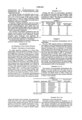
Starting with 540 g of polybutadiene, epoxidation was carried out in the same way as in Example 1 using the quantities of peracetic acid (40% in glacial acetic acid) shown in Table 1. The yields and epoxide oxygen contents indicated were obtained.
              TABLE 1
______________________________________
Exam- Quantity of peracetic
                     Yield [% of
ple   acid (40% in glacial
                     the theo- % Epoxide oxygen
No.   acetic acid)   retical]  [% by weight]
______________________________________
      190 g          95        2.5
2     285 g          93        3.6
3     380 g          88.5      4.7
4     570 g          83.7      6.7
5     665 g          64.3      7.4
6     950 g          79.0      9.3
7     1140 g         71.1      10.3
8     1425 g         47.5      5.8
______________________________________
Reaction of the epoxidized polybutadienes with dimethylamine
50 g of a 40% aqueous solution of dimethylamine were added to 50 g of epoxidized polybutadiene (Example 1) dissolved in 600 g of dioxane and the combined solutions introduced into an autoclave of V4A-steel. After purging twice with nitrogen, the contents of the autoclave were stirred under an initial pressure of 5 bars and at the same time heated to 200° C., producing a maximum pressure of 32 bars. After cooling to 20° C., the autoclave was vented and opened and the reaction product precipitated by pouring into 2.5 liters of distilled water. The isolated reaction product was purified by dissolution in dioxane and precipitation in water and, after drying, was characterized by the amine number. The reaction product had an amine number of 55.3. The yield amounted to 60% of the theoretical.
The reaction of the epoxidized polybutadienes (Examples 2 to 8) was carried out in the same way as in Example 9 starting with 50 g of the epoxides in 600 ml of dioxane, the amines shown in Table 2 being used. Reaction products having the amine numbers indicated in Table 2 were obtained.
                                  TABLE 2
__________________________________________________________________________
               Amine used    Reaction product
Example No.
        Epoxide used
               Type     Quantity
                             amine number
__________________________________________________________________________
9       Example 1
               dimethylamine*
                        50 g 55.3
10      Example 2
               dimethylamine*
                        70 g 69.1
11      Example 5
               dimethylamine*
                        90 g 134.8
12      Example 5
               monoethanolamine
                        61 g 98.5
13      Example 6
               dimethylamine*
                        120 g
                             107.8
14      Example 6
               methylamine*
                        225 g
                             240.4
15      Example 8
               dimethylamine*
                        105 g
                             168.2
16      Example 8
               morpholine
                        81 g 153.8
__________________________________________________________________________
 *40% aqueous solution
Preparation of the hydrochlorides
The amine reaction products of Examples 9 to 16 were dissolved in dioxane and an equivalent quantity of 18% aqueous hydrochloric acid calculated from the amine number was added to the resulting solutions. The solvent was then removed by evaporation in vacuo.
Quaternization with glycidyl trimethylammonium chloride
10 g of the amine reaction product of Example 9 was dissolved in 100 ml of dioxane, followed by the addition of 50 mg of KOH and mixing with 1.8 g of glycidyl trimethylammonium chloride (80%, moist). The reaction mixture was heated under reflux to boiling point over a period of 2 hours and kept at that temperature for another 5 hours, during which it became slightly cloudy. The reaction mixture was then concentrated to a volume of 50 ml and precipitated by pouring into 250 ml of distilled water. The substance precipitated was separated off and dried. The yield amounted to 9.7 g (i.e. 82.2% of the theoretical).
Conversion into the hydrochloride was carried out as in Examples 9 to 16.
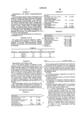
The amine reaction products indicated in Table 3 were alkylated as in Example 17 with the indicated quantities of glycidyl trimethylammonium chloride (GMAC) and the yields of the hydrochloride obtained are indicated.
                                  TABLE 3
__________________________________________________________________________
                          Yield
Example No.
       Amine reaction product
                   GMAC, 80%
                          % of theoretical
                                  Cl.sup.(-) (% by weight)
__________________________________________________________________________
17     Example 9   1.8 g  82.2    0.48
18     Example 10  2.2 g  72.9    2.18
19     Example 11  4.4 g  55.6    0.36
__________________________________________________________________________
Quaternization with ethylene oxide
20 g of the reaction product of Example 10 were dissolved in 400 ml of anhydrous dioxane and 0.5 g of sodium methylate added to the resulting solution. The solution was then transferred to an autoclave, followed by the addition of 5.4 g of ethylene oxide (i.e. approximately 5 mols/mol of amino groups). After heating to 70° C. the solution was stirred for 5 hours at that temperature. In that time, the pressure which was initially 5 bars fell to 4.1 bars. After cooling, the reaction mixture was concentrated to dryness under reduced pressure. An addition of approximately 1 mol of ethylene oxide per amino group is calculated from the yield of 21.1 g obtained.
The quaternization product was converted into the readily water-soluble hydrochloride by dissolution in dioxane followed by the addition of approximately 5 g of 18% hydrochloric acid and concentration to dryness.
______________________________________
Hair Shampoo
______________________________________
Fatty alcohol (C.sub.12-18) + 2 EO-
                     30%       by weight
sulfate, Na salt (28%)
Cocoalkylamidopropyl betaine (30%)
                     15%       by weight
Cationic polymer of Example 10
                     2.0%      by weight
(hydrochloride)
Formaldehyde (40%)   0.2%      by weight
Water, perfume oil, dyes
                     ad 100%   by weight
______________________________________
 EO = mols of ethylene oxide
______________________________________
Hair rinse
C16, a product of E.I.
                     1.5%      by weight
DuPont Corp., U.S.A. "Lorol"
Glycerol mono-/distearate
GMS, a product of Henkel
                     1.5%      by weight
KGaA, F.R. Germany "Cutina"
Cationic polymer of Example 16
(hydrochloride)      1.5%      by weight
Cetyl trimethylammonium
chloride (25%)       2.0%      by weight
Water, perfume oil, dye
                     ad 100%   by weight
______________________________________
______________________________________
Hair dye (brown)
______________________________________
Tallow fatty alcohol
                    8.0%     by weight
Fatty alcohol (C.sub.12-18) + 2 EO-
sulfate, Na salt (28%)
                    25.0%    by weight
Cationic polymer of Example 18
                    3.0%     by weight
p-tolylene diamine  1.5%     by weight
2,4 diaminoanisole  0.04%    by weight
p-aminophenol       0.23%    by weight
Resorcinol          0.4%     by weight
Ammonia, 25%        4.5%     by weight
Water               ad 100%  by weight
______________________________________
The preceeding specific embodiments are illustrative of the practice of the invention. It is to be understood however that other expedients known to those skilled in the art or disclosed herein, may be employed without departing from the spirit of the invention or the scope of the appended claims.
Claims (19)
1. An aqueous shampoo composition for human hair consisting essentially of:
(A) anionic surfactant present in an anionic surfactant effective amount;
(B) amphoteric or zwitterionic surfactant present in an amphoteric or zwitterionic surfactant effective amount; and
(C) cationic antistatic agent present in an antistatic effective amount, which agent is a cationic polymer that is the reaction product from:
(1) a 1,3-diene homopolymer or predominantly 1,3-diene copolymer, having at least 10 1,3-diene units per molecule, in which at least 10% of the double bonds present have been epoxidized and which contains about 3-6% by weight of epoxide oxygen and which has been aminated with
(2) amine selected from the group consisting of morpholine, piperidine, piperazine, and amines of the formula R1 NR2 R3, wherein R1 is a C1-4 alkyl or a C2-4 hydroxyalkyl; and R2 and R3 are the same or different and are each hydrogen, a C1-4 alkyl, or a C2-4 hydroxyalkyl; and then converted to a salt by
(3)
(a) reacting the aminated epoxidized 1,3-diene polymer with a C1-7 carboxylic acid or a mineral acid; or
(b) alkylating the aminated epoxidized 1,3-diene polymer with 3-chloro-2-hydroxypropyl trimethylammonium chloride, RCl, RBr, or R2 SO4 wherein R is methyl or ethyl, to form a quaternary ammonium salt; or
(c) quaternizing the aminated epoxidized 1,3-diene polymer with ethylene oxide, propylene oxide, glycidol, or glycidyl trimethylammonium chloride; and then further reacting the resulting product with a C1-7 carboxylic acid or a mineral acid.
2. The shampoo composition of claim 1 wherein said 1,3-diene homopolymer or predominantly 1,3-diene copolymer is a homopolymer of 1,3-butadiene, 1,3-pentadiene, isoprene, or chloroprene or a copolymer of 1,3-butadiene, 1,3-pentadiene, isoprene, or chloroprene with ethylene, propylene, styrene, or acrylic acid derivatives.
3. The shampoo composition of claim 2 wherein more than 50% of the double bonds of said polymer are in a 1,4-cis-configuration.
4. The shampoo composition of claim 2 wherein said 1,3-diene is a butadiene homopolymer or copolymer which is liquid under ambient conditions.
5. The shampoo composition of claim 4 wherein said 1,3-diene is a butadiene homopolymer whose viscosity at 20° C. according to DIN 53,015 is approximately 3 poises.
6. The shampoo composition of claim 1 wherein epoxidation of said 1,3-diene polymer is by reaction with peracetic acid.
7. The shampoo composition of claim 1 wherein said amine is selected from the group consisting of methylamine, ethylamine, isopropylamine, monoethanolamine, dimethylamine, diethylamine, diethanolamine, morpholine, piperidine, piperazine, trimethylamine, triethylamine, triethanolamine, and N,N-dimethylethanolamine.
8. The shampoo composition of claim 7 where said amine is dimethylamine, monoethanolamine, methylamine or morpholine.
9. The shampoo composition of claim 1, wherein item (a) or (c) of part (3) is selected and said acid is acetic acid, lactic acid, glycolic acid, or hydrochloric acid.
10. The shampoo composition of claim 9 wherein item (3) (c) is selected and quaternization is with ethylene oxide.
11. The shampoo composition of claim 2, wherein:
(1) said amine is selected from the group consisting of methylamine, ethylamine, isopropylamine, monoethanolamine, dimethylamine, diethylamine, diethanolamine, morpholine, piperidine, piperazine, trimethylamine, triethylamine, triethanolamine, and N,N-dimethylethanolamine; and
(2) in item (a) or (c) of part (3), said acid is acetic acid, lactic acid, glycolic acid, or hydrochloric acid.
12. The shampoo composition of claim 1 wherein:
(1) said 1,3-diene polymer is a butadiene homopolymer which is liquid under ambient conditions and wherein more than 50% of the double bonds of said polymer are in a 1-4-cis-configuration;
(2) said amine is dimethylamine, monoethanolamine, methylamine, or morpholine; and
(3) in item (3) (a) or (c) said acid is hydrochloric acid; in item (3) (b), the alkylating agent is 3-chloro-2-hydroxypropyl trimethyl ammonium chloride; and in item (3) (c) the quaternizing agent is glycidyl trimethylammonium chloride.
13. The shampoo composition of claim 1 wherein said anionic surfactant is:
(i) an alkali metal, magnesium, ammonium, or C1-7 -alkanol salt of a C8-18 -alkyl sulfuric acid half ester;
(ii) a C8-18 -alkyl poly (1-6) ethylene glycol ether sulfuric acid half ester;
(iii) a primary or secondary linear C10-18 -alkane sulfonate;
(iv) a C10-18 -alkene sulfonate;
(v) a hydroxy C10-18 -alkane sulfonate;
(vi) a higher fatty acid alkylol amide sulfate;
(vii) a higher fatty acid aklylol amide polyethylene glycol ether sulfate;
(viii) a sulfated higher fatty acid monoglyceride;
(ix) a sulfosuccinic acid C8-18 -monoalkyl ester;
(x) a sulfosuccinic acid C6-10 -dialkyl ester;
(xi) a C8-18 -alkyl poly (2-6) ethyleneglycol ether carboxylate;
(xii) a C8-18 -acyl sarcosine;
(xiii) a C8-18 -acyl tauride;
(xiv) a C8-18 -acyl isethionate; or
(xv) a mixture thereof or salt thereof.
14. The shampoo composition of claim 1 wherein said amphoteric or zwitterionic surfactant is:
(i) a C8-18 -alkyl betaine;
(ii) a C8-18 -alkyl aminopropyl betaine;
(iii) a C-18 -alkyl imidazolinium betaine;
(iv) a C8-18 alkyl amidocarboxylic acid; or
(v) a mixture thereof or salt thereof.
15. The shampoo composition of claim 13 wherein said amphoteric or zwitterionic surfactant is:
(i) a C8-18 -alkyl betaine;
(ii) a C8-18 -alkyl aminopropyl betaine;
(iii) a C-18 -alkyl imidazolinium betaine;
(iv) a C8-18 -alkyl amidocarboxylic acid; or
(v) a mixture thereof or salt thereof.
16. The shampoo composition of claim 14 wherein said anionic surfactant is a C8-18 -alkyl poly (1-6) ethyleneglycol ether sulfuric acid half ester.
17. The shampoo composition of claim 13 wherein said amphoteric or zwitterionic surfactant is: cocoalkyl dimethylaminoacetic acid; cocoalkylamidopropyl dimethylaminoacetic acid; or N-hydroxyethyl-N-cocoalkylamidoethyl glycine.
18. The shampoo composition of claim 16 wherein said anionic surfactant is present in about 5-30% by weight, said amphoteric or zwitterionic surfactant is present in about 1-5% by weight, and said cationic antistatic agent is present in about 0.1-10% by weight, all based upon the total weight of said composition.
19. The shampoo composition of claim 18 wherein said cationic antistatic agent is present in about 0.5-5% by weight.
Applications Claiming Priority (2)
| Application Number | Priority Date | Filing Date | Title |
|---|---|---|---|
| DE3305964 | 1983-02-21 | ||
| DE19833305964 DE3305964A1 (en) | 1983-02-21 | 1983-02-21 | USE OF CATIONIC POLYMERS AS ANTISTATIC ADDITIVES TO HAIR TREATMENT AGENTS |
Related Parent Applications (1)
| Application Number | Title | Priority Date | Filing Date |
|---|---|---|---|
| US06665253 Continuation | 1984-10-26 |
Publications (1)
| Publication Number | Publication Date |
|---|---|
| US4900544A true US4900544A (en) | 1990-02-13 |
Family
ID=6191403
Family Applications (2)
| Application Number | Title | Priority Date | Filing Date |
|---|---|---|---|
| US06/883,024 Expired - Fee Related US4900544A (en) | 1983-02-21 | 1986-07-08 | Cationic polymers as antistatic additives for hair preparations |
| US06/885,387 Expired - Fee Related US4900543A (en) | 1983-02-21 | 1986-07-17 | Cationic polymers as antistatic additives for hair preparations |
Family Applications After (1)
| Application Number | Title | Priority Date | Filing Date |
|---|---|---|---|
| US06/885,387 Expired - Fee Related US4900543A (en) | 1983-02-21 | 1986-07-17 | Cationic polymers as antistatic additives for hair preparations |
Country Status (3)
| Country | Link |
|---|---|
| US (2) | US4900544A (en) |
| EP (1) | EP0119454A3 (en) |
| DE (1) | DE3305964A1 (en) |
Cited By (19)
| Publication number | Priority date | Publication date | Assignee | Title |
|---|---|---|---|---|
| US5256407A (en) * | 1990-12-13 | 1993-10-26 | Chesebrough-Pond's Usa Co., Division Of Conopco, Inc. | Hair styling composition |
| US5328756A (en) * | 1992-01-31 | 1994-07-12 | Minnesota Mining And Manufacturing Company | Temperature sensitive circuit breaking element |
| US5651974A (en) * | 1993-09-30 | 1997-07-29 | Shiseido Co., Ltd. | Disinfectant-detergent composition |
| US6056948A (en) * | 1990-06-27 | 2000-05-02 | Benckiser N.V. | Extra-mild shower gel and hair shampoo formulation with low tenside concentration |
| US6312672B1 (en) | 1999-10-29 | 2001-11-06 | Exxon Mobil Chemical Patents Inc. | Sunscreen compositions containing copolymers of isoprene butadiene and/or styrene to provide improved water resistance |
| US20050065284A1 (en) * | 1999-08-06 | 2005-03-24 | Venkataram Krishnan | Novel latex compositions for deposition on various substrates |
| US20050140047A1 (en) * | 2003-12-30 | 2005-06-30 | Jennifer Dean | Thermoplastic composition containing polymeric anti-static salt, method of making, and use thereof |
| US20070149694A1 (en) * | 2003-07-03 | 2007-06-28 | Venkataram Krishnan | Cationic latex as a carrier for bioactive ingredients and methods for making and using the same |
| US20080057049A1 (en) * | 2006-08-24 | 2008-03-06 | Venkataram Krishnan | Cationic latex as a carrier for bioactive ingredients and methods for making and using the same |
| US20080207774A1 (en) * | 2006-08-24 | 2008-08-28 | Venkataram Krishnan | Anionic latex as a carrier for active ingredients and methods for making and using the same |
| US20080226584A1 (en) * | 2003-07-03 | 2008-09-18 | Venkataram Krishnan | Antimicrobial and antistatic polymers and methods of using such polymers on various substrates |
| US20080233062A1 (en) * | 2006-08-24 | 2008-09-25 | Venkataram Krishnan | Cationic latex as a carrier for active ingredients and methods for making and using the same |
| US7491753B2 (en) | 2003-07-03 | 2009-02-17 | Mallard Creek Polymers, Inc. | Antimicrobial and antistatic polymers and methods of using such polymers on various substrates |
| US8785519B2 (en) | 2006-08-24 | 2014-07-22 | Mallard Creek Polymers, Inc. | Anionic latex as a carrier for bioactive ingredients and methods for making and using the same |
| US11134684B2 (en) | 2005-08-24 | 2021-10-05 | Purdue Research Foundation | Method of using hydrophilized bactericidal polymers |
| US11421084B2 (en) | 2017-05-27 | 2022-08-23 | Poly Group LLC | Dispersible antimicrobial complex and coatings therefrom |
| US11680116B2 (en) | 2017-06-16 | 2023-06-20 | Poly Group LLC | Polymeric antimicrobial surfactant |
| US12104003B2 (en) | 2021-05-27 | 2024-10-01 | Evonik Operations Gmbh | Polyester-polyether-modified polybutadienes and processes for preparation thereof |
| US12139561B2 (en) | 2019-11-28 | 2024-11-12 | Evonik Operations Gmbh | Polyether-modified polybutadienes and processes for preparation thereof |
Families Citing this family (6)
| Publication number | Priority date | Publication date | Assignee | Title |
|---|---|---|---|---|
| DE4412366A1 (en) * | 1994-04-11 | 1995-10-12 | Hoechst Ag | Antistatic plastic molding compound |
| DE19648186C2 (en) * | 1996-11-21 | 2000-11-16 | Juenemann Gmbh | Hair curlers for winding human hair |
| US11465388B2 (en) * | 2017-01-15 | 2022-10-11 | Honeywell International Inc. | Peel strength between dissimilar fabrics |
| EP4047031A1 (en) | 2021-02-17 | 2022-08-24 | Evonik Operations GmbH | Amino-functional polybutadienes with comb-resistant polyether remnants and method for their production |
| JP2024519164A (en) | 2021-05-27 | 2024-05-08 | エボニック オペレーションズ ゲーエムベーハー | Hydrogenated polyether modified amino-functional polybutadiene and its preparation method |
| US20240247083A1 (en) | 2021-05-27 | 2024-07-25 | Evonik Operations Gmbh | Hydrogenated polyether-modified polybutadienes and processes for preparation thereof |
Citations (7)
| Publication number | Priority date | Publication date | Assignee | Title |
|---|---|---|---|---|
| US3626029A (en) * | 1968-04-26 | 1971-12-07 | Atlantic Richfield Co | Polymer composition of suppressed electrostatic charges |
| GB1342269A (en) * | 1970-08-27 | 1974-01-03 | Firestone Tire & Rubber Co | Quaternary ammonium polymer and process of preparing |
| CA958644A (en) * | 1970-02-25 | 1974-12-03 | Phillip E. Sokol | Cosmetic composition |
| CA1021264A (en) * | 1973-01-19 | 1977-11-22 | Bristol-Myers Canada Limited | Self-foaming shampoo and hair-setting or hair-bodying compositions |
| CA1022075A (en) * | 1973-05-17 | 1977-12-06 | Earl L. Richardson | Shampoo formulations comprising a quaternary nitrogen containing cellulose polymer |
| GB2067196A (en) * | 1980-01-14 | 1981-07-22 | Kao Corp | Quaternary Hydroxyalkylammonium Hydroxycarboxylate Salts for Use as Antistatic Agents |
| GB1602560A (en) * | 1977-07-20 | 1981-11-11 | Huels Chemische Werke Ag | Oxidatively drying aqueous coating agent |
-
1983
- 1983-02-21 DE DE19833305964 patent/DE3305964A1/en not_active Withdrawn
-
1984
- 1984-02-13 EP EP84101438A patent/EP0119454A3/en not_active Withdrawn
-
1986
- 1986-07-08 US US06/883,024 patent/US4900544A/en not_active Expired - Fee Related
- 1986-07-17 US US06/885,387 patent/US4900543A/en not_active Expired - Fee Related
Patent Citations (7)
| Publication number | Priority date | Publication date | Assignee | Title |
|---|---|---|---|---|
| US3626029A (en) * | 1968-04-26 | 1971-12-07 | Atlantic Richfield Co | Polymer composition of suppressed electrostatic charges |
| CA958644A (en) * | 1970-02-25 | 1974-12-03 | Phillip E. Sokol | Cosmetic composition |
| GB1342269A (en) * | 1970-08-27 | 1974-01-03 | Firestone Tire & Rubber Co | Quaternary ammonium polymer and process of preparing |
| CA1021264A (en) * | 1973-01-19 | 1977-11-22 | Bristol-Myers Canada Limited | Self-foaming shampoo and hair-setting or hair-bodying compositions |
| CA1022075A (en) * | 1973-05-17 | 1977-12-06 | Earl L. Richardson | Shampoo formulations comprising a quaternary nitrogen containing cellulose polymer |
| GB1602560A (en) * | 1977-07-20 | 1981-11-11 | Huels Chemische Werke Ag | Oxidatively drying aqueous coating agent |
| GB2067196A (en) * | 1980-01-14 | 1981-07-22 | Kao Corp | Quaternary Hydroxyalkylammonium Hydroxycarboxylate Salts for Use as Antistatic Agents |
Non-Patent Citations (4)
| Title |
|---|
| Lunn et al., "The Electrostatic Properties of Human Hair," J. Soc. Cosmetic Chem. 28 pp. 549-569, 1977. |
| Lunn et al., The Electrostatic Properties of Human Hair, J. Soc. Cosmetic Chem. 28 pp. 549 569, 1977. * |
| Torrey, Health Care Products Recent Developments, pp. 192 217, 1981. * |
| Torrey, Health Care Products Recent Developments, pp. 192-217, 1981. |
Cited By (27)
| Publication number | Priority date | Publication date | Assignee | Title |
|---|---|---|---|---|
| US6056948A (en) * | 1990-06-27 | 2000-05-02 | Benckiser N.V. | Extra-mild shower gel and hair shampoo formulation with low tenside concentration |
| US5256407A (en) * | 1990-12-13 | 1993-10-26 | Chesebrough-Pond's Usa Co., Division Of Conopco, Inc. | Hair styling composition |
| US5328756A (en) * | 1992-01-31 | 1994-07-12 | Minnesota Mining And Manufacturing Company | Temperature sensitive circuit breaking element |
| US5651974A (en) * | 1993-09-30 | 1997-07-29 | Shiseido Co., Ltd. | Disinfectant-detergent composition |
| AU680536B2 (en) * | 1993-09-30 | 1997-07-31 | Shiseido Company Ltd. | Disinfectant-detergent composition |
| US20050065284A1 (en) * | 1999-08-06 | 2005-03-24 | Venkataram Krishnan | Novel latex compositions for deposition on various substrates |
| US6312672B1 (en) | 1999-10-29 | 2001-11-06 | Exxon Mobil Chemical Patents Inc. | Sunscreen compositions containing copolymers of isoprene butadiene and/or styrene to provide improved water resistance |
| US20080226584A1 (en) * | 2003-07-03 | 2008-09-18 | Venkataram Krishnan | Antimicrobial and antistatic polymers and methods of using such polymers on various substrates |
| US7491753B2 (en) | 2003-07-03 | 2009-02-17 | Mallard Creek Polymers, Inc. | Antimicrobial and antistatic polymers and methods of using such polymers on various substrates |
| US20070149694A1 (en) * | 2003-07-03 | 2007-06-28 | Venkataram Krishnan | Cationic latex as a carrier for bioactive ingredients and methods for making and using the same |
| US7981946B2 (en) | 2003-07-03 | 2011-07-19 | Mallard Creek Polymers, Inc. | Antimicrobial and antistatic polymers and methods of using such polymers on various substrates |
| US7781498B2 (en) | 2003-07-03 | 2010-08-24 | Mallard Creek Polymers, Inc. | Cationic latex as a carrier for bioactive ingredients and methods for making and using the same |
| US20050140047A1 (en) * | 2003-12-30 | 2005-06-30 | Jennifer Dean | Thermoplastic composition containing polymeric anti-static salt, method of making, and use thereof |
| US7094861B2 (en) | 2003-12-30 | 2006-08-22 | General Electric Company | Thermoplastic composition containing polymeric anti-static salt, method of making, and use thereof |
| US11134684B2 (en) | 2005-08-24 | 2021-10-05 | Purdue Research Foundation | Method of using hydrophilized bactericidal polymers |
| US11459415B2 (en) | 2005-08-24 | 2022-10-04 | Purdue Research Foundation | Method of using hydrophilized bactericidal polymers |
| US20080057049A1 (en) * | 2006-08-24 | 2008-03-06 | Venkataram Krishnan | Cationic latex as a carrier for bioactive ingredients and methods for making and using the same |
| US8785519B2 (en) | 2006-08-24 | 2014-07-22 | Mallard Creek Polymers, Inc. | Anionic latex as a carrier for bioactive ingredients and methods for making and using the same |
| US9220725B2 (en) | 2006-08-24 | 2015-12-29 | Mallard Creek Polymers, Inc. | Cationic latex as a carrier for bioactive ingredients and methods for making and using the same |
| US20080233062A1 (en) * | 2006-08-24 | 2008-09-25 | Venkataram Krishnan | Cationic latex as a carrier for active ingredients and methods for making and using the same |
| US20080207774A1 (en) * | 2006-08-24 | 2008-08-28 | Venkataram Krishnan | Anionic latex as a carrier for active ingredients and methods for making and using the same |
| US11421084B2 (en) | 2017-05-27 | 2022-08-23 | Poly Group LLC | Dispersible antimicrobial complex and coatings therefrom |
| US11760844B2 (en) | 2017-05-27 | 2023-09-19 | Poly Group LLC | Dispersible antimicrobial complex and coatings therefrom |
| US11680116B2 (en) | 2017-06-16 | 2023-06-20 | Poly Group LLC | Polymeric antimicrobial surfactant |
| US12286498B2 (en) | 2017-06-16 | 2025-04-29 | Poly Group LLC | Polymeric antimicrobial surfactant |
| US12139561B2 (en) | 2019-11-28 | 2024-11-12 | Evonik Operations Gmbh | Polyether-modified polybutadienes and processes for preparation thereof |
| US12104003B2 (en) | 2021-05-27 | 2024-10-01 | Evonik Operations Gmbh | Polyester-polyether-modified polybutadienes and processes for preparation thereof |
Also Published As
| Publication number | Publication date |
|---|---|
| EP0119454A3 (en) | 1985-12-27 |
| US4900543A (en) | 1990-02-13 |
| EP0119454A2 (en) | 1984-09-26 |
| DE3305964A1 (en) | 1984-08-23 |
Similar Documents
| Publication | Publication Date | Title |
|---|---|---|
| US4900543A (en) | Cationic polymers as antistatic additives for hair preparations | |
| US4148762A (en) | Cosmetic cleaning agents containing betaines and process | |
| EP0122324B1 (en) | Polyquaternary ammonium compounds and cosmetic compositions containing them | |
| US4157388A (en) | Hair and fabric conditioning compositions containing polymeric ionenes | |
| US3280179A (en) | Processes for producing acyclic surfactant sulfobetaines | |
| US4399077A (en) | Certain polyoxy perfluorinated surface active oligomers | |
| US4080310A (en) | Amphoteric conditioning shampoo | |
| KR970001641B1 (en) | Hair treatment composition | |
| EP0165397B1 (en) | Hair care compositions | |
| GB2177109A (en) | Shampoo compositions | |
| US2992994A (en) | Detergent composition for the hair | |
| JPH10506417A (en) | Mild detergent mixture | |
| JPH07509740A (en) | foaming detergent mixture | |
| EP0539251B1 (en) | Conditioning rinse compositions which facilitates setting of hair | |
| US5254271A (en) | Ammonium compounds, preparation thereof and use thereof as cleaning agent, cosmetic raw material and softener, in particular as final-rinse fabric softner | |
| US3972998A (en) | Hair preparation containing a fluoropolymer | |
| US4137245A (en) | Nitrogenous condensation products | |
| EP0456079A1 (en) | Conditioning shampoo compositions | |
| US4676978A (en) | Shampoo | |
| US3427251A (en) | Gelatinous preparations containing quaternary ammonium salt derivatives | |
| US5693317A (en) | Conditioning rinse compositions which facilitates setting of hair | |
| US4415487A (en) | Bis-betaines, a process for their preparation, and cleaning agents containing these compounds | |
| US4338214A (en) | Mild-to-the-skin anionic tensides of basic protein aminolysates preparations containing them, and their use | |
| US5147635A (en) | Conditioners based on cationic polymers | |
| US2928772A (en) | Hair conditioning composition containing n (higher acyl colamino formylmethyl)pyridinium chloride and a fatty acids monoglyceride sulfate anionic detergent |
Legal Events
| Date | Code | Title | Description |
|---|---|---|---|
| REMI | Maintenance fee reminder mailed | ||
| LAPS | Lapse for failure to pay maintenance fees | ||
| FP | Lapsed due to failure to pay maintenance fee |
Effective date: 19940213 |
|
| STCH | Information on status: patent discontinuation |
Free format text: PATENT EXPIRED DUE TO NONPAYMENT OF MAINTENANCE FEES UNDER 37 CFR 1.362 |