US4900354A - (Quinolinyl and quinoxalinyloxy)phenoxy alkenols and their use as post emergent herbicides - Google Patents
(Quinolinyl and quinoxalinyloxy)phenoxy alkenols and their use as post emergent herbicides Download PDFInfo
- Publication number
- US4900354A US4900354A US06/901,844 US90184486A US4900354A US 4900354 A US4900354 A US 4900354A US 90184486 A US90184486 A US 90184486A US 4900354 A US4900354 A US 4900354A
- Authority
- US
- United States
- Prior art keywords
- sub
- compound
- phenoxy
- compounds
- formula
- Prior art date
- Legal status (The legal status is an assumption and is not a legal conclusion. Google has not performed a legal analysis and makes no representation as to the accuracy of the status listed.)
- Expired - Fee Related
Links
- -1 quinoxalinyloxy Chemical group 0.000 title abstract description 17
- 239000004009 herbicide Substances 0.000 title abstract description 8
- 125000000951 phenoxy group Chemical group [H]C1=C([H])C([H])=C(O*)C([H])=C1[H] 0.000 title abstract description 8
- 125000002943 quinolinyl group Chemical group N1=C(C=CC2=CC=CC=C12)* 0.000 title abstract 2
- 150000001875 compounds Chemical class 0.000 claims abstract description 109
- 241000196324 Embryophyta Species 0.000 claims abstract description 45
- 238000000034 method Methods 0.000 claims abstract description 34
- JRPMCELHBMQFDD-UHFFFAOYSA-N 4-[4-(6-chloroquinolin-2-yl)oxyphenoxy]pent-2-en-1-ol Chemical compound C1=CC(OC(C)C=CCO)=CC=C1OC1=CC=C(C=C(Cl)C=C2)C2=N1 JRPMCELHBMQFDD-UHFFFAOYSA-N 0.000 claims abstract description 5
- 239000000203 mixture Substances 0.000 claims description 57
- 125000002496 methyl group Chemical group [H]C([H])([H])* 0.000 claims description 8
- 125000001495 ethyl group Chemical group [H]C([H])([H])C([H])([H])* 0.000 claims description 5
- 230000003287 optical effect Effects 0.000 claims description 5
- 239000011149 active material Substances 0.000 claims description 4
- 239000002671 adjuvant Substances 0.000 claims description 4
- NVTIKNGJOFAMEZ-UHFFFAOYSA-N 4-[4-(6-fluoroquinolin-2-yl)oxyphenoxy]pent-2-en-1-ol Chemical compound C1=CC(OC(C)C=CCO)=CC=C1OC1=CC=C(C=C(F)C=C2)C2=N1 NVTIKNGJOFAMEZ-UHFFFAOYSA-N 0.000 claims description 3
- LHTVMBMETNGEAN-UHFFFAOYSA-N pent-1-en-1-ol Chemical class CCCC=CO LHTVMBMETNGEAN-UHFFFAOYSA-N 0.000 abstract description 16
- 230000002363 herbicidal effect Effects 0.000 abstract description 7
- OBSVQIZHVVTVJD-UHFFFAOYSA-N 4-(5-hydroxypent-3-en-2-yloxy)phenol Chemical compound OCC=CC(C)OC1=CC=C(O)C=C1 OBSVQIZHVVTVJD-UHFFFAOYSA-N 0.000 abstract description 6
- 241001057636 Dracaena deremensis Species 0.000 abstract description 5
- 239000000543 intermediate Substances 0.000 abstract description 4
- 238000002360 preparation method Methods 0.000 abstract description 4
- LPDFGLZUUCLXGM-UHFFFAOYSA-N 2,6-dichloroquinoline Chemical class N1=C(Cl)C=CC2=CC(Cl)=CC=C21 LPDFGLZUUCLXGM-UHFFFAOYSA-N 0.000 abstract description 2
- SMWDFEZZVXVKRB-UHFFFAOYSA-N anhydrous quinoline Natural products N1=CC=CC2=CC=CC=C21 SMWDFEZZVXVKRB-UHFFFAOYSA-N 0.000 abstract description 2
- 239000003960 organic solvent Substances 0.000 abstract description 2
- ISWSIDIOOBJBQZ-UHFFFAOYSA-N phenol group Chemical group C1(=CC=CC=C1)O ISWSIDIOOBJBQZ-UHFFFAOYSA-N 0.000 abstract description 2
- XSCHRSMBECNVNS-UHFFFAOYSA-N quinoxaline Chemical class N1=CC=NC2=CC=CC=C21 XSCHRSMBECNVNS-UHFFFAOYSA-N 0.000 abstract 2
- 150000003248 quinolines Chemical class 0.000 abstract 1
- RTZKZFJDLAIYFH-UHFFFAOYSA-N Diethyl ether Chemical compound CCOCC RTZKZFJDLAIYFH-UHFFFAOYSA-N 0.000 description 48
- VLKZOEOYAKHREP-UHFFFAOYSA-N n-Hexane Chemical compound CCCCCC VLKZOEOYAKHREP-UHFFFAOYSA-N 0.000 description 38
- YMWUJEATGCHHMB-UHFFFAOYSA-N Dichloromethane Chemical compound ClCCl YMWUJEATGCHHMB-UHFFFAOYSA-N 0.000 description 33
- CSNNHWWHGAXBCP-UHFFFAOYSA-L Magnesium sulfate Chemical compound [Mg+2].[O-][S+2]([O-])([O-])[O-] CSNNHWWHGAXBCP-UHFFFAOYSA-L 0.000 description 26
- 238000006243 chemical reaction Methods 0.000 description 26
- XLYOFNOQVPJJNP-UHFFFAOYSA-N water Substances O XLYOFNOQVPJJNP-UHFFFAOYSA-N 0.000 description 26
- 229910052757 nitrogen Inorganic materials 0.000 description 25
- YXFVVABEGXRONW-UHFFFAOYSA-N Toluene Chemical compound CC1=CC=CC=C1 YXFVVABEGXRONW-UHFFFAOYSA-N 0.000 description 24
- GVNVAWHJIKLAGL-UHFFFAOYSA-N 2-(cyclohexen-1-yl)cyclohexan-1-one Chemical compound O=C1CCCCC1C1=CCCCC1 GVNVAWHJIKLAGL-UHFFFAOYSA-N 0.000 description 21
- CSCPPACGZOOCGX-UHFFFAOYSA-N Acetone Chemical compound CC(C)=O CSCPPACGZOOCGX-UHFFFAOYSA-N 0.000 description 21
- 101150065749 Churc1 gene Proteins 0.000 description 21
- 102100038239 Protein Churchill Human genes 0.000 description 21
- 229910052739 hydrogen Inorganic materials 0.000 description 20
- 239000000243 solution Substances 0.000 description 19
- IJGRMHOSHXDMSA-UHFFFAOYSA-N Atomic nitrogen Chemical compound N#N IJGRMHOSHXDMSA-UHFFFAOYSA-N 0.000 description 18
- ZMXDDKWLCZADIW-UHFFFAOYSA-N N,N-Dimethylformamide Chemical compound CN(C)C=O ZMXDDKWLCZADIW-UHFFFAOYSA-N 0.000 description 18
- ZMANZCXQSJIPKH-UHFFFAOYSA-N Triethylamine Chemical compound CCN(CC)CC ZMANZCXQSJIPKH-UHFFFAOYSA-N 0.000 description 18
- 229910052799 carbon Inorganic materials 0.000 description 17
- 238000000921 elemental analysis Methods 0.000 description 17
- 239000007787 solid Substances 0.000 description 17
- HEMHJVSKTPXQMS-UHFFFAOYSA-M Sodium hydroxide Chemical compound [OH-].[Na+] HEMHJVSKTPXQMS-UHFFFAOYSA-M 0.000 description 15
- 239000002904 solvent Substances 0.000 description 14
- 239000004480 active ingredient Substances 0.000 description 13
- 150000002148 esters Chemical class 0.000 description 13
- 229910052943 magnesium sulfate Inorganic materials 0.000 description 13
- WEVYAHXRMPXWCK-UHFFFAOYSA-N Acetonitrile Chemical compound CC#N WEVYAHXRMPXWCK-UHFFFAOYSA-N 0.000 description 12
- IAZDPXIOMUYVGZ-UHFFFAOYSA-N Dimethylsulphoxide Chemical compound CS(C)=O IAZDPXIOMUYVGZ-UHFFFAOYSA-N 0.000 description 12
- BWHMMNNQKKPAPP-UHFFFAOYSA-L potassium carbonate Chemical compound [K+].[K+].[O-]C([O-])=O BWHMMNNQKKPAPP-UHFFFAOYSA-L 0.000 description 12
- 239000000047 product Substances 0.000 description 12
- 239000002253 acid Substances 0.000 description 11
- 239000000376 reactant Substances 0.000 description 11
- JUJWROOIHBZHMG-UHFFFAOYSA-N Pyridine Chemical compound C1=CC=NC=C1 JUJWROOIHBZHMG-UHFFFAOYSA-N 0.000 description 10
- 125000000217 alkyl group Chemical group 0.000 description 10
- 239000013078 crystal Substances 0.000 description 10
- XEKOWRVHYACXOJ-UHFFFAOYSA-N Ethyl acetate Chemical compound CCOC(C)=O XEKOWRVHYACXOJ-UHFFFAOYSA-N 0.000 description 9
- UIIMBOGNXHQVGW-UHFFFAOYSA-M Sodium bicarbonate Chemical compound [Na+].OC([O-])=O UIIMBOGNXHQVGW-UHFFFAOYSA-M 0.000 description 9
- 230000000694 effects Effects 0.000 description 9
- 238000004128 high performance liquid chromatography Methods 0.000 description 9
- 239000012044 organic layer Substances 0.000 description 9
- 239000006185 dispersion Substances 0.000 description 8
- UAEPNZWRGJTJPN-UHFFFAOYSA-N methylcyclohexane Chemical compound CC1CCCCC1 UAEPNZWRGJTJPN-UHFFFAOYSA-N 0.000 description 8
- 239000003921 oil Substances 0.000 description 8
- 125000004104 aryloxy group Chemical group 0.000 description 7
- 239000012442 inert solvent Substances 0.000 description 7
- 230000008635 plant growth Effects 0.000 description 7
- 229920006395 saturated elastomer Polymers 0.000 description 7
- RMWSEMVXXVNYSD-UHFFFAOYSA-N 4-[4-(6-chloroquinoxalin-2-yl)oxyphenoxy]pent-2-en-1-ol Chemical compound C1=CC(OC(C)C=CCO)=CC=C1OC1=CN=C(C=C(Cl)C=C2)C2=N1 RMWSEMVXXVNYSD-UHFFFAOYSA-N 0.000 description 6
- SIPUZPBQZHNSDW-UHFFFAOYSA-N bis(2-methylpropyl)aluminum Chemical compound CC(C)C[Al]CC(C)C SIPUZPBQZHNSDW-UHFFFAOYSA-N 0.000 description 6
- 229910000027 potassium carbonate Inorganic materials 0.000 description 6
- VHYFNPMBLIVWCW-UHFFFAOYSA-N 4-Dimethylaminopyridine Chemical compound CN(C)C1=CC=NC=C1 VHYFNPMBLIVWCW-UHFFFAOYSA-N 0.000 description 5
- QOSSAOTZNIDXMA-UHFFFAOYSA-N Dicylcohexylcarbodiimide Chemical compound C1CCCCC1N=C=NC1CCCCC1 QOSSAOTZNIDXMA-UHFFFAOYSA-N 0.000 description 5
- 235000010469 Glycine max Nutrition 0.000 description 5
- 240000002439 Sorghum halepense Species 0.000 description 5
- 240000008042 Zea mays Species 0.000 description 5
- 235000002017 Zea mays subsp mays Nutrition 0.000 description 5
- 239000002585 base Substances 0.000 description 5
- 239000003054 catalyst Substances 0.000 description 5
- 239000000706 filtrate Substances 0.000 description 5
- 239000010410 layer Substances 0.000 description 5
- UMJSCPRVCHMLSP-UHFFFAOYSA-N pyridine Natural products COC1=CC=CN=C1 UMJSCPRVCHMLSP-UHFFFAOYSA-N 0.000 description 5
- 229910000030 sodium bicarbonate Inorganic materials 0.000 description 5
- 239000004094 surface-active agent Substances 0.000 description 5
- 231100000167 toxic agent Toxicity 0.000 description 5
- 239000003440 toxic substance Substances 0.000 description 5
- 125000006656 (C2-C4) alkenyl group Chemical group 0.000 description 4
- QCXJEYYXVJIFCE-UHFFFAOYSA-N 4-acetamidobenzoic acid Chemical compound CC(=O)NC1=CC=C(C(O)=O)C=C1 QCXJEYYXVJIFCE-UHFFFAOYSA-N 0.000 description 4
- 240000001592 Amaranthus caudatus Species 0.000 description 4
- 235000007320 Avena fatua Nutrition 0.000 description 4
- 244000075850 Avena orientalis Species 0.000 description 4
- 235000001602 Digitaria X umfolozi Nutrition 0.000 description 4
- 240000003176 Digitaria ciliaris Species 0.000 description 4
- 235000017898 Digitaria ciliaris Nutrition 0.000 description 4
- 235000005476 Digitaria cruciata Nutrition 0.000 description 4
- 235000006830 Digitaria didactyla Nutrition 0.000 description 4
- 235000005804 Digitaria eriantha ssp. eriantha Nutrition 0.000 description 4
- 235000010823 Digitaria sanguinalis Nutrition 0.000 description 4
- 244000058871 Echinochloa crus-galli Species 0.000 description 4
- 235000014716 Eleusine indica Nutrition 0.000 description 4
- WYURNTSHIVDZCO-UHFFFAOYSA-N Tetrahydrofuran Chemical compound C1CCOC1 WYURNTSHIVDZCO-UHFFFAOYSA-N 0.000 description 4
- 235000005373 Uvularia sessilifolia Nutrition 0.000 description 4
- 235000005824 Zea mays ssp. parviglumis Nutrition 0.000 description 4
- 239000006096 absorbing agent Substances 0.000 description 4
- 235000005822 corn Nutrition 0.000 description 4
- 239000012433 hydrogen halide Substances 0.000 description 4
- 229910000039 hydrogen halide Inorganic materials 0.000 description 4
- 238000002844 melting Methods 0.000 description 4
- 230000008018 melting Effects 0.000 description 4
- GYNNXHKOJHMOHS-UHFFFAOYSA-N methyl-cycloheptane Natural products CC1CCCCCC1 GYNNXHKOJHMOHS-UHFFFAOYSA-N 0.000 description 4
- 230000000361 pesticidal effect Effects 0.000 description 4
- 125000001424 substituent group Chemical group 0.000 description 4
- ZWEHNKRNPOVVGH-UHFFFAOYSA-N 2-Butanone Chemical compound CCC(C)=O ZWEHNKRNPOVVGH-UHFFFAOYSA-N 0.000 description 3
- JMHSCWJIDIKGNZ-UHFFFAOYSA-N 4-carbamoylbenzoic acid Chemical compound NC(=O)C1=CC=C(C(O)=O)C=C1 JMHSCWJIDIKGNZ-UHFFFAOYSA-N 0.000 description 3
- QTBSBXVTEAMEQO-UHFFFAOYSA-N Acetic acid Chemical compound CC(O)=O QTBSBXVTEAMEQO-UHFFFAOYSA-N 0.000 description 3
- WFDIJRYMOXRFFG-UHFFFAOYSA-N Acetic anhydride Chemical compound CC(=O)OC(C)=O WFDIJRYMOXRFFG-UHFFFAOYSA-N 0.000 description 3
- 235000009328 Amaranthus caudatus Nutrition 0.000 description 3
- 241000219310 Beta vulgaris subsp. vulgaris Species 0.000 description 3
- 229920000742 Cotton Polymers 0.000 description 3
- 244000068988 Glycine max Species 0.000 description 3
- 235000021536 Sugar beet Nutrition 0.000 description 3
- 239000007864 aqueous solution Substances 0.000 description 3
- 238000009833 condensation Methods 0.000 description 3
- 230000005494 condensation Effects 0.000 description 3
- 244000038559 crop plants Species 0.000 description 3
- 238000001914 filtration Methods 0.000 description 3
- 230000012010 growth Effects 0.000 description 3
- 239000001257 hydrogen Substances 0.000 description 3
- 239000007788 liquid Substances 0.000 description 3
- 239000012280 lithium aluminium hydride Substances 0.000 description 3
- 239000011541 reaction mixture Substances 0.000 description 3
- 230000009467 reduction Effects 0.000 description 3
- 238000010992 reflux Methods 0.000 description 3
- 239000002689 soil Substances 0.000 description 3
- KVVXRISUSPIMLJ-UHFFFAOYSA-N 2,6-difluoro-4-nitrophenol Chemical compound OC1=C(F)C=C([N+]([O-])=O)C=C1F KVVXRISUSPIMLJ-UHFFFAOYSA-N 0.000 description 2
- QQEWXGTYYUSXII-UHFFFAOYSA-N 2-chloro-6-fluoroquinoxaline Chemical compound N1=C(Cl)C=NC2=CC(F)=CC=C21 QQEWXGTYYUSXII-UHFFFAOYSA-N 0.000 description 2
- ORPHLVJBJOCHBR-UHFFFAOYSA-N 403-19-0 Chemical compound OC1=CC=C([N+]([O-])=O)C=C1F ORPHLVJBJOCHBR-UHFFFAOYSA-N 0.000 description 2
- QTBSBXVTEAMEQO-UHFFFAOYSA-M Acetate Chemical compound CC([O-])=O QTBSBXVTEAMEQO-UHFFFAOYSA-M 0.000 description 2
- WPYMKLBDIGXBTP-UHFFFAOYSA-N Benzoic acid Natural products OC(=O)C1=CC=CC=C1 WPYMKLBDIGXBTP-UHFFFAOYSA-N 0.000 description 2
- PXGOKWXKJXAPGV-UHFFFAOYSA-N Fluorine Chemical compound FF PXGOKWXKJXAPGV-UHFFFAOYSA-N 0.000 description 2
- UFHFLCQGNIYNRP-UHFFFAOYSA-N Hydrogen Chemical compound [H][H] UFHFLCQGNIYNRP-UHFFFAOYSA-N 0.000 description 2
- SECXISVLQFMRJM-UHFFFAOYSA-N N-Methylpyrrolidone Chemical compound CN1CCCC1=O SECXISVLQFMRJM-UHFFFAOYSA-N 0.000 description 2
- 240000007594 Oryza sativa Species 0.000 description 2
- 235000007164 Oryza sativa Nutrition 0.000 description 2
- FAPWRFPIFSIZLT-UHFFFAOYSA-M Sodium chloride Chemical compound [Na+].[Cl-] FAPWRFPIFSIZLT-UHFFFAOYSA-M 0.000 description 2
- 241000209072 Sorghum Species 0.000 description 2
- 235000011684 Sorghum saccharatum Nutrition 0.000 description 2
- DTQVDTLACAAQTR-UHFFFAOYSA-N Trifluoroacetic acid Chemical compound OC(=O)C(F)(F)F DTQVDTLACAAQTR-UHFFFAOYSA-N 0.000 description 2
- 235000021307 Triticum Nutrition 0.000 description 2
- 244000098338 Triticum aestivum Species 0.000 description 2
- 229910052783 alkali metal Inorganic materials 0.000 description 2
- 125000004432 carbon atom Chemical group C* 0.000 description 2
- 239000003638 chemical reducing agent Substances 0.000 description 2
- 230000001419 dependent effect Effects 0.000 description 2
- 238000001035 drying Methods 0.000 description 2
- 229910052731 fluorine Inorganic materials 0.000 description 2
- 239000011737 fluorine Substances 0.000 description 2
- 150000004820 halides Chemical class 0.000 description 2
- 239000012948 isocyanate Substances 0.000 description 2
- 150000002513 isocyanates Chemical class 0.000 description 2
- GTCAXTIRRLKXRU-UHFFFAOYSA-N methyl carbamate Chemical compound COC(N)=O GTCAXTIRRLKXRU-UHFFFAOYSA-N 0.000 description 2
- XSXHWVKGUXMUQE-UHFFFAOYSA-N osmium dioxide Inorganic materials O=[Os]=O XSXHWVKGUXMUQE-UHFFFAOYSA-N 0.000 description 2
- DRINJBFRTLBHNF-UHFFFAOYSA-N propane-2-sulfonyl chloride Chemical compound CC(C)S(Cl)(=O)=O DRINJBFRTLBHNF-UHFFFAOYSA-N 0.000 description 2
- HNDXKIMMSFCCFW-UHFFFAOYSA-N propane-2-sulphonic acid Chemical compound CC(C)S(O)(=O)=O HNDXKIMMSFCCFW-UHFFFAOYSA-N 0.000 description 2
- 235000009566 rice Nutrition 0.000 description 2
- CDBYLPFSWZWCQE-UHFFFAOYSA-L sodium carbonate Substances [Na+].[Na+].[O-]C([O-])=O CDBYLPFSWZWCQE-UHFFFAOYSA-L 0.000 description 2
- 239000007858 starting material Substances 0.000 description 2
- 238000003756 stirring Methods 0.000 description 2
- BDHFUVZGWQCTTF-UHFFFAOYSA-M sulfonate Chemical compound [O-]S(=O)=O BDHFUVZGWQCTTF-UHFFFAOYSA-M 0.000 description 2
- YLQBMQCUIZJEEH-UHFFFAOYSA-N tetrahydrofuran Natural products C=1C=COC=1 YLQBMQCUIZJEEH-UHFFFAOYSA-N 0.000 description 2
- 239000000080 wetting agent Substances 0.000 description 2
- TXUICONDJPYNPY-UHFFFAOYSA-N (1,10,13-trimethyl-3-oxo-4,5,6,7,8,9,11,12,14,15,16,17-dodecahydrocyclopenta[a]phenanthren-17-yl) heptanoate Chemical compound C1CC2CC(=O)C=C(C)C2(C)C2C1C1CCC(OC(=O)CCCCCC)C1(C)CC2 TXUICONDJPYNPY-UHFFFAOYSA-N 0.000 description 1
- WFOKVKYNVKVWFK-UHFFFAOYSA-N 2,6-dichloroquinoxaline Chemical compound N1=C(Cl)C=NC2=CC(Cl)=CC=C21 WFOKVKYNVKVWFK-UHFFFAOYSA-N 0.000 description 1
- NGNBDVOYPDDBFK-UHFFFAOYSA-N 2-[2,4-di(pentan-2-yl)phenoxy]acetyl chloride Chemical compound CCCC(C)C1=CC=C(OCC(Cl)=O)C(C(C)CCC)=C1 NGNBDVOYPDDBFK-UHFFFAOYSA-N 0.000 description 1
- RILZRCJGXSFXNE-UHFFFAOYSA-N 2-[4-(trifluoromethoxy)phenyl]ethanol Chemical compound OCCC1=CC=C(OC(F)(F)F)C=C1 RILZRCJGXSFXNE-UHFFFAOYSA-N 0.000 description 1
- HFHFGHLXUCOHLN-UHFFFAOYSA-N 2-fluorophenol Chemical compound OC1=CC=CC=C1F HFHFGHLXUCOHLN-UHFFFAOYSA-N 0.000 description 1
- OBSVQIZHVVTVJD-NSCUHMNNSA-N 4-[(e)-5-hydroxypent-3-en-2-yl]oxyphenol Chemical compound OC/C=C/C(C)OC1=CC=C(O)C=C1 OBSVQIZHVVTVJD-NSCUHMNNSA-N 0.000 description 1
- RVMJWHBTWFWSJC-UHFFFAOYSA-N 4-[4-(6-bromoquinoxalin-2-yl)oxyphenoxy]pent-2-en-1-ol Chemical compound C1=CC(OC(C)C=CCO)=CC=C1OC1=CN=C(C=C(Br)C=C2)C2=N1 RVMJWHBTWFWSJC-UHFFFAOYSA-N 0.000 description 1
- MYNSVBOCILMMKV-UHFFFAOYSA-N 4-[4-(6-fluoroquinoxalin-2-yl)oxyphenoxy]pent-2-en-1-ol Chemical compound C1=CC(OC(C)C=CCO)=CC=C1OC1=CN=C(C=C(F)C=C2)C2=N1 MYNSVBOCILMMKV-UHFFFAOYSA-N 0.000 description 1
- XRHGYUZYPHTUJZ-UHFFFAOYSA-M 4-chlorobenzoate Chemical compound [O-]C(=O)C1=CC=C(Cl)C=C1 XRHGYUZYPHTUJZ-UHFFFAOYSA-M 0.000 description 1
- RKIDDEGICSMIJA-UHFFFAOYSA-N 4-chlorobenzoyl chloride Chemical compound ClC(=O)C1=CC=C(Cl)C=C1 RKIDDEGICSMIJA-UHFFFAOYSA-N 0.000 description 1
- XDJDRCGDVKTDHY-UHFFFAOYSA-N 6-bromo-2-chloroquinoxaline Chemical compound C1=C(Br)C=CC2=NC(Cl)=CN=C21 XDJDRCGDVKTDHY-UHFFFAOYSA-N 0.000 description 1
- 101100177155 Arabidopsis thaliana HAC1 gene Proteins 0.000 description 1
- 229930192334 Auxin Natural products 0.000 description 1
- 239000005711 Benzoic acid Substances 0.000 description 1
- KCBAMQOKOLXLOX-BSZYMOERSA-N CC1=C(SC=N1)C2=CC=C(C=C2)[C@H](C)NC(=O)[C@@H]3C[C@H](CN3C(=O)[C@H](C(C)(C)C)NC(=O)CCCCCCCCCCNCCCONC(=O)C4=C(C(=C(C=C4)F)F)NC5=C(C=C(C=C5)I)F)O Chemical compound CC1=C(SC=N1)C2=CC=C(C=C2)[C@H](C)NC(=O)[C@@H]3C[C@H](CN3C(=O)[C@H](C(C)(C)C)NC(=O)CCCCCCCCCCNCCCONC(=O)C4=C(C(=C(C=C4)F)F)NC5=C(C=C(C=C5)I)F)O KCBAMQOKOLXLOX-BSZYMOERSA-N 0.000 description 1
- 244000025254 Cannabis sativa Species 0.000 description 1
- KXDHJXZQYSOELW-UHFFFAOYSA-M Carbamate Chemical compound NC([O-])=O KXDHJXZQYSOELW-UHFFFAOYSA-M 0.000 description 1
- BVKZGUZCCUSVTD-UHFFFAOYSA-L Carbonate Chemical compound [O-]C([O-])=O BVKZGUZCCUSVTD-UHFFFAOYSA-L 0.000 description 1
- 229940126062 Compound A Drugs 0.000 description 1
- XDTMQSROBMDMFD-UHFFFAOYSA-N Cyclohexane Chemical compound C1CCCCC1 XDTMQSROBMDMFD-UHFFFAOYSA-N 0.000 description 1
- 244000052363 Cynodon dactylon Species 0.000 description 1
- 241000508725 Elymus repens Species 0.000 description 1
- LFQSCWFLJHTTHZ-UHFFFAOYSA-N Ethanol Chemical compound CCO LFQSCWFLJHTTHZ-UHFFFAOYSA-N 0.000 description 1
- 241000400611 Eucalyptus deanei Species 0.000 description 1
- 241000219146 Gossypium Species 0.000 description 1
- NLDMNSXOCDLTTB-UHFFFAOYSA-N Heterophylliin A Natural products O1C2COC(=O)C3=CC(O)=C(O)C(O)=C3C3=C(O)C(O)=C(O)C=C3C(=O)OC2C(OC(=O)C=2C=C(O)C(O)=C(O)C=2)C(O)C1OC(=O)C1=CC(O)=C(O)C(O)=C1 NLDMNSXOCDLTTB-UHFFFAOYSA-N 0.000 description 1
- 238000004566 IR spectroscopy Methods 0.000 description 1
- DGAQECJNVWCQMB-PUAWFVPOSA-M Ilexoside XXIX Chemical compound C[C@@H]1CC[C@@]2(CC[C@@]3(C(=CC[C@H]4[C@]3(CC[C@@H]5[C@@]4(CC[C@@H](C5(C)C)OS(=O)(=O)[O-])C)C)[C@@H]2[C@]1(C)O)C)C(=O)O[C@H]6[C@@H]([C@H]([C@@H]([C@H](O6)CO)O)O)O.[Na+] DGAQECJNVWCQMB-PUAWFVPOSA-M 0.000 description 1
- PAYRUJLWNCNPSJ-UHFFFAOYSA-N N-phenyl amine Natural products NC1=CC=CC=C1 PAYRUJLWNCNPSJ-UHFFFAOYSA-N 0.000 description 1
- 238000005481 NMR spectroscopy Methods 0.000 description 1
- GRYLNZFGIOXLOG-UHFFFAOYSA-N Nitric acid Chemical compound O[N+]([O-])=O GRYLNZFGIOXLOG-UHFFFAOYSA-N 0.000 description 1
- 101100434170 Oryza sativa subsp. japonica ACR2.1 gene Proteins 0.000 description 1
- 101100434171 Oryza sativa subsp. japonica ACR2.2 gene Proteins 0.000 description 1
- 101150108015 STR6 gene Proteins 0.000 description 1
- 101100386054 Saccharomyces cerevisiae (strain ATCC 204508 / S288c) CYS3 gene Proteins 0.000 description 1
- 244000200882 Setaria barbata Species 0.000 description 1
- 235000001561 Setaria barbata Nutrition 0.000 description 1
- 235000008515 Setaria glauca Nutrition 0.000 description 1
- 235000001155 Setaria leucopila Nutrition 0.000 description 1
- 244000010062 Setaria pumila Species 0.000 description 1
- VYPSYNLAJGMNEJ-UHFFFAOYSA-N Silicium dioxide Chemical compound O=[Si]=O VYPSYNLAJGMNEJ-UHFFFAOYSA-N 0.000 description 1
- UIIMBOGNXHQVGW-DEQYMQKBSA-M Sodium bicarbonate-14C Chemical compound [Na+].O[14C]([O-])=O UIIMBOGNXHQVGW-DEQYMQKBSA-M 0.000 description 1
- 229910021626 Tin(II) chloride Inorganic materials 0.000 description 1
- 235000016383 Zea mays subsp huehuetenangensis Nutrition 0.000 description 1
- LNUFLCYMSVYYNW-ZPJMAFJPSA-N [(2r,3r,4s,5r,6r)-2-[(2r,3r,4s,5r,6r)-6-[(2r,3r,4s,5r,6r)-6-[(2r,3r,4s,5r,6r)-6-[[(3s,5s,8r,9s,10s,13r,14s,17r)-10,13-dimethyl-17-[(2r)-6-methylheptan-2-yl]-2,3,4,5,6,7,8,9,11,12,14,15,16,17-tetradecahydro-1h-cyclopenta[a]phenanthren-3-yl]oxy]-4,5-disulfo Chemical compound O([C@@H]1[C@@H](COS(O)(=O)=O)O[C@@H]([C@@H]([C@H]1OS(O)(=O)=O)OS(O)(=O)=O)O[C@@H]1[C@@H](COS(O)(=O)=O)O[C@@H]([C@@H]([C@H]1OS(O)(=O)=O)OS(O)(=O)=O)O[C@@H]1[C@@H](COS(O)(=O)=O)O[C@H]([C@@H]([C@H]1OS(O)(=O)=O)OS(O)(=O)=O)O[C@@H]1C[C@@H]2CC[C@H]3[C@@H]4CC[C@@H]([C@]4(CC[C@@H]3[C@@]2(C)CC1)C)[C@H](C)CCCC(C)C)[C@H]1O[C@H](COS(O)(=O)=O)[C@@H](OS(O)(=O)=O)[C@H](OS(O)(=O)=O)[C@H]1OS(O)(=O)=O LNUFLCYMSVYYNW-ZPJMAFJPSA-N 0.000 description 1
- 239000000642 acaricide Substances 0.000 description 1
- 230000002378 acidificating effect Effects 0.000 description 1
- 150000007513 acids Chemical class 0.000 description 1
- 230000009471 action Effects 0.000 description 1
- 230000002411 adverse Effects 0.000 description 1
- 229910000288 alkali metal carbonate Inorganic materials 0.000 description 1
- 150000008041 alkali metal carbonates Chemical class 0.000 description 1
- 229910000102 alkali metal hydride Inorganic materials 0.000 description 1
- 150000008046 alkali metal hydrides Chemical class 0.000 description 1
- 150000008044 alkali metal hydroxides Chemical class 0.000 description 1
- 150000004703 alkoxides Chemical class 0.000 description 1
- 150000001412 amines Chemical class 0.000 description 1
- 125000004397 aminosulfonyl group Chemical group NS(=O)(=O)* 0.000 description 1
- QGZKDVFQNNGYKY-UHFFFAOYSA-O ammonium group Chemical group [NH4+] QGZKDVFQNNGYKY-UHFFFAOYSA-O 0.000 description 1
- 150000008064 anhydrides Chemical class 0.000 description 1
- 230000003042 antagnostic effect Effects 0.000 description 1
- 230000000844 anti-bacterial effect Effects 0.000 description 1
- 239000000010 aprotic solvent Substances 0.000 description 1
- 125000003118 aryl group Chemical group 0.000 description 1
- XRWSZZJLZRKHHD-WVWIJVSJSA-N asunaprevir Chemical compound O=C([C@@H]1C[C@H](CN1C(=O)[C@@H](NC(=O)OC(C)(C)C)C(C)(C)C)OC1=NC=C(C2=CC=C(Cl)C=C21)OC)N[C@]1(C(=O)NS(=O)(=O)C2CC2)C[C@H]1C=C XRWSZZJLZRKHHD-WVWIJVSJSA-N 0.000 description 1
- 125000004429 atom Chemical group 0.000 description 1
- 239000002363 auxin Substances 0.000 description 1
- 239000003899 bactericide agent Substances 0.000 description 1
- 230000009286 beneficial effect Effects 0.000 description 1
- 235000010233 benzoic acid Nutrition 0.000 description 1
- 150000001558 benzoic acid derivatives Chemical class 0.000 description 1
- PASDCCFISLVPSO-UHFFFAOYSA-N benzoyl chloride Chemical compound ClC(=O)C1=CC=CC=C1 PASDCCFISLVPSO-UHFFFAOYSA-N 0.000 description 1
- 230000033228 biological regulation Effects 0.000 description 1
- 238000009835 boiling Methods 0.000 description 1
- 150000001718 carbodiimides Chemical class 0.000 description 1
- 239000011203 carbon fibre reinforced carbon Substances 0.000 description 1
- 239000000969 carrier Substances 0.000 description 1
- 230000003197 catalytic effect Effects 0.000 description 1
- 239000004464 cereal grain Substances 0.000 description 1
- 239000003795 chemical substances by application Substances 0.000 description 1
- 150000008280 chlorinated hydrocarbons Chemical class 0.000 description 1
- 238000004440 column chromatography Methods 0.000 description 1
- 229940125904 compound 1 Drugs 0.000 description 1
- 229940125782 compound 2 Drugs 0.000 description 1
- 229940126208 compound 22 Drugs 0.000 description 1
- 229940125833 compound 23 Drugs 0.000 description 1
- 229940125961 compound 24 Drugs 0.000 description 1
- JNGZXGGOCLZBFB-IVCQMTBJSA-N compound E Chemical compound N([C@@H](C)C(=O)N[C@@H]1C(N(C)C2=CC=CC=C2C(C=2C=CC=CC=2)=N1)=O)C(=O)CC1=CC(F)=CC(F)=C1 JNGZXGGOCLZBFB-IVCQMTBJSA-N 0.000 description 1
- 235000008504 concentrate Nutrition 0.000 description 1
- 239000012141 concentrate Substances 0.000 description 1
- 239000000470 constituent Substances 0.000 description 1
- 238000002425 crystallisation Methods 0.000 description 1
- 230000008025 crystallization Effects 0.000 description 1
- 125000000753 cycloalkyl group Chemical group 0.000 description 1
- 239000012954 diazonium Substances 0.000 description 1
- 239000002270 dispersing agent Substances 0.000 description 1
- 238000004821 distillation Methods 0.000 description 1
- 239000000428 dust Substances 0.000 description 1
- 239000003995 emulsifying agent Substances 0.000 description 1
- 239000000839 emulsion Substances 0.000 description 1
- 239000000417 fungicide Substances 0.000 description 1
- 239000008187 granular material Substances 0.000 description 1
- GNOIPBMMFNIUFM-UHFFFAOYSA-N hexamethylphosphoric triamide Chemical compound CN(C)P(=O)(N(C)C)N(C)C GNOIPBMMFNIUFM-UHFFFAOYSA-N 0.000 description 1
- 150000002431 hydrogen Chemical class 0.000 description 1
- XLYOFNOQVPJJNP-UHFFFAOYSA-M hydroxide Chemical compound [OH-] XLYOFNOQVPJJNP-UHFFFAOYSA-M 0.000 description 1
- SEOVTRFCIGRIMH-UHFFFAOYSA-N indole-3-acetic acid Chemical compound C1=CC=C2C(CC(=O)O)=CNC2=C1 SEOVTRFCIGRIMH-UHFFFAOYSA-N 0.000 description 1
- 230000000266 injurious effect Effects 0.000 description 1
- 239000002917 insecticide Substances 0.000 description 1
- 150000002540 isothiocyanates Chemical class 0.000 description 1
- 238000004811 liquid chromatography Methods 0.000 description 1
- 235000014666 liquid concentrate Nutrition 0.000 description 1
- 235000009973 maize Nutrition 0.000 description 1
- 239000000463 material Substances 0.000 description 1
- YCDKRXAZCPFESL-FPYGCLRLSA-N methyl (e)-4-(4-hydroxyphenoxy)pent-2-enoate Chemical compound COC(=O)\C=C\C(C)OC1=CC=C(O)C=C1 YCDKRXAZCPFESL-FPYGCLRLSA-N 0.000 description 1
- HAMGRBXTJNITHG-UHFFFAOYSA-N methyl isocyanate Chemical compound CN=C=O HAMGRBXTJNITHG-UHFFFAOYSA-N 0.000 description 1
- 238000002156 mixing Methods 0.000 description 1
- 238000012986 modification Methods 0.000 description 1
- 230000004048 modification Effects 0.000 description 1
- 230000000051 modifying effect Effects 0.000 description 1
- VQSRKMNBWMHJKY-YTEVENLXSA-N n-[3-[(4ar,7as)-2-amino-6-(5-fluoropyrimidin-2-yl)-4,4a,5,7-tetrahydropyrrolo[3,4-d][1,3]thiazin-7a-yl]-4-fluorophenyl]-5-methoxypyrazine-2-carboxamide Chemical compound C1=NC(OC)=CN=C1C(=O)NC1=CC=C(F)C([C@@]23[C@@H](CN(C2)C=2N=CC(F)=CN=2)CSC(N)=N3)=C1 VQSRKMNBWMHJKY-YTEVENLXSA-N 0.000 description 1
- 230000001069 nematicidal effect Effects 0.000 description 1
- 239000005645 nematicide Substances 0.000 description 1
- 238000006386 neutralization reaction Methods 0.000 description 1
- 229910017604 nitric acid Inorganic materials 0.000 description 1
- 150000007530 organic bases Chemical class 0.000 description 1
- 230000001151 other effect Effects 0.000 description 1
- 230000020477 pH reduction Effects 0.000 description 1
- 125000001997 phenyl group Chemical group [H]C1=C([H])C([H])=C(*)C([H])=C1[H] 0.000 description 1
- 231100000208 phytotoxic Toxicity 0.000 description 1
- 230000000885 phytotoxic effect Effects 0.000 description 1
- 239000005648 plant growth regulator Substances 0.000 description 1
- 230000037039 plant physiology Effects 0.000 description 1
- LVTJOONKWUXEFR-FZRMHRINSA-N protoneodioscin Natural products O(C[C@@H](CC[C@]1(O)[C@H](C)[C@@H]2[C@]3(C)[C@H]([C@H]4[C@@H]([C@]5(C)C(=CC4)C[C@@H](O[C@@H]4[C@H](O[C@H]6[C@@H](O)[C@@H](O)[C@@H](O)[C@H](C)O6)[C@@H](O)[C@H](O[C@H]6[C@@H](O)[C@@H](O)[C@@H](O)[C@H](C)O6)[C@H](CO)O4)CC5)CC3)C[C@@H]2O1)C)[C@H]1[C@H](O)[C@H](O)[C@H](O)[C@@H](CO)O1 LVTJOONKWUXEFR-FZRMHRINSA-N 0.000 description 1
- 239000002516 radical scavenger Substances 0.000 description 1
- 230000035484 reaction time Effects 0.000 description 1
- 230000009257 reactivity Effects 0.000 description 1
- 238000011084 recovery Methods 0.000 description 1
- 238000001953 recrystallisation Methods 0.000 description 1
- 239000000741 silica gel Substances 0.000 description 1
- 229910002027 silica gel Inorganic materials 0.000 description 1
- 229910000029 sodium carbonate Inorganic materials 0.000 description 1
- 235000011182 sodium carbonates Nutrition 0.000 description 1
- 239000011780 sodium chloride Substances 0.000 description 1
- 239000008247 solid mixture Substances 0.000 description 1
- 238000000638 solvent extraction Methods 0.000 description 1
- 239000007921 spray Substances 0.000 description 1
- 239000001119 stannous chloride Substances 0.000 description 1
- 235000011150 stannous chloride Nutrition 0.000 description 1
- 239000011550 stock solution Substances 0.000 description 1
- 101150035983 str1 gene Proteins 0.000 description 1
- 239000000126 substance Substances 0.000 description 1
- HXJUTPCZVOIRIF-UHFFFAOYSA-N sulfolane Chemical compound O=S1(=O)CCCC1 HXJUTPCZVOIRIF-UHFFFAOYSA-N 0.000 description 1
- 125000000472 sulfonyl group Chemical group *S(*)(=O)=O 0.000 description 1
- 230000000153 supplemental effect Effects 0.000 description 1
- 150000003512 tertiary amines Chemical class 0.000 description 1
- 231100000331 toxic Toxicity 0.000 description 1
- 230000002588 toxic effect Effects 0.000 description 1
- 231100000419 toxicity Toxicity 0.000 description 1
- 230000001988 toxicity Effects 0.000 description 1
- IMNIMPAHZVJRPE-UHFFFAOYSA-N triethylenediamine Chemical compound C1CN2CCN1CC2 IMNIMPAHZVJRPE-UHFFFAOYSA-N 0.000 description 1
- 238000001665 trituration Methods 0.000 description 1
- 238000005406 washing Methods 0.000 description 1
- 238000009736 wetting Methods 0.000 description 1
Images






Classifications
-
- C—CHEMISTRY; METALLURGY
- C07—ORGANIC CHEMISTRY
- C07D—HETEROCYCLIC COMPOUNDS
- C07D215/00—Heterocyclic compounds containing quinoline or hydrogenated quinoline ring systems
- C07D215/02—Heterocyclic compounds containing quinoline or hydrogenated quinoline ring systems having no bond between the ring nitrogen atom and a non-ring member or having only hydrogen atoms or carbon atoms directly attached to the ring nitrogen atom
- C07D215/16—Heterocyclic compounds containing quinoline or hydrogenated quinoline ring systems having no bond between the ring nitrogen atom and a non-ring member or having only hydrogen atoms or carbon atoms directly attached to the ring nitrogen atom with hetero atoms or with carbon atoms having three bonds to hetero atoms with at the most one bond to halogen, e.g. ester or nitrile radicals, directly attached to ring carbon atoms
- C07D215/20—Oxygen atoms
- C07D215/22—Oxygen atoms attached in position 2 or 4
- C07D215/227—Oxygen atoms attached in position 2 or 4 only one oxygen atom which is attached in position 2
-
- A—HUMAN NECESSITIES
- A01—AGRICULTURE; FORESTRY; ANIMAL HUSBANDRY; HUNTING; TRAPPING; FISHING
- A01N—PRESERVATION OF BODIES OF HUMANS OR ANIMALS OR PLANTS OR PARTS THEREOF; BIOCIDES, e.g. AS DISINFECTANTS, AS PESTICIDES OR AS HERBICIDES; PEST REPELLANTS OR ATTRACTANTS; PLANT GROWTH REGULATORS
- A01N43/00—Biocides, pest repellants or attractants, or plant growth regulators containing heterocyclic compounds
- A01N43/34—Biocides, pest repellants or attractants, or plant growth regulators containing heterocyclic compounds having rings with one nitrogen atom as the only ring hetero atom
- A01N43/40—Biocides, pest repellants or attractants, or plant growth regulators containing heterocyclic compounds having rings with one nitrogen atom as the only ring hetero atom six-membered rings
- A01N43/42—Biocides, pest repellants or attractants, or plant growth regulators containing heterocyclic compounds having rings with one nitrogen atom as the only ring hetero atom six-membered rings condensed with carbocyclic rings
-
- A—HUMAN NECESSITIES
- A01—AGRICULTURE; FORESTRY; ANIMAL HUSBANDRY; HUNTING; TRAPPING; FISHING
- A01N—PRESERVATION OF BODIES OF HUMANS OR ANIMALS OR PLANTS OR PARTS THEREOF; BIOCIDES, e.g. AS DISINFECTANTS, AS PESTICIDES OR AS HERBICIDES; PEST REPELLANTS OR ATTRACTANTS; PLANT GROWTH REGULATORS
- A01N43/00—Biocides, pest repellants or attractants, or plant growth regulators containing heterocyclic compounds
- A01N43/48—Biocides, pest repellants or attractants, or plant growth regulators containing heterocyclic compounds having rings with two nitrogen atoms as the only ring hetero atoms
- A01N43/60—1,4-Diazines; Hydrogenated 1,4-diazines
-
- A—HUMAN NECESSITIES
- A01—AGRICULTURE; FORESTRY; ANIMAL HUSBANDRY; HUNTING; TRAPPING; FISHING
- A01N—PRESERVATION OF BODIES OF HUMANS OR ANIMALS OR PLANTS OR PARTS THEREOF; BIOCIDES, e.g. AS DISINFECTANTS, AS PESTICIDES OR AS HERBICIDES; PEST REPELLANTS OR ATTRACTANTS; PLANT GROWTH REGULATORS
- A01N47/00—Biocides, pest repellants or attractants, or plant growth regulators containing organic compounds containing a carbon atom not being member of a ring and having no bond to a carbon or hydrogen atom, e.g. derivatives of carbonic acid
- A01N47/08—Biocides, pest repellants or attractants, or plant growth regulators containing organic compounds containing a carbon atom not being member of a ring and having no bond to a carbon or hydrogen atom, e.g. derivatives of carbonic acid the carbon atom having one or more single bonds to nitrogen atoms
- A01N47/10—Carbamic acid derivatives, i.e. containing the group —O—CO—N<; Thio analogues thereof
- A01N47/12—Carbamic acid derivatives, i.e. containing the group —O—CO—N<; Thio analogues thereof containing a —O—CO—N< group, or a thio analogue thereof, neither directly attached to a ring nor the nitrogen atom being a member of a heterocyclic ring
-
- C—CHEMISTRY; METALLURGY
- C07—ORGANIC CHEMISTRY
- C07D—HETEROCYCLIC COMPOUNDS
- C07D241/00—Heterocyclic compounds containing 1,4-diazine or hydrogenated 1,4-diazine rings
- C07D241/36—Heterocyclic compounds containing 1,4-diazine or hydrogenated 1,4-diazine rings condensed with carbocyclic rings or ring systems
- C07D241/38—Heterocyclic compounds containing 1,4-diazine or hydrogenated 1,4-diazine rings condensed with carbocyclic rings or ring systems with only hydrogen or carbon atoms directly attached to the ring nitrogen atoms
- C07D241/40—Benzopyrazines
- C07D241/44—Benzopyrazines with hetero atoms or with carbon atoms having three bonds to hetero atoms with at the most one bond to halogen, e.g. ester or nitrile radicals, directly attached to carbon atoms of the hetero ring
Definitions
- the present invention relates to novel 4-((aryloxy)phenoxy)alkenols which are useful as intermediates for preparing highly active herbicidal compounds, which compounds are particularly effective in selectively controlling grassy weeds in the presence of corn plants.
- these compounds are active herbicides in their own right and are useful in controlling grassy weeds and especially controlling grassy weeds in the presence of many broadleaf crop plants.
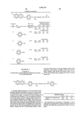
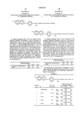
- aryloxyphenoxyalkenols of the present invention correspond to the formula ##STR1## wherein
- Y and Y 1 each independently represent --H or --F;
- P represents methyl or ethyl
- T represents --CH 2 --CH 2 ) a (CH ⁇ CH-- b and the cis (Z) or trans (E) stereoisomers thereof or --CH 2 --)CH 2 ) a C.tbd.C--;
- A represents .tbd.N or .tbd.CH
- a represents the integer 0, 1 or 2;
- b represents the integer 1 or 2;
- X represents --Br, --Cl, --F or --CF 3 .
- the compounds of the present invention can contain isomers of the geometric isomer class which result from a carbon-carbon double bond.
- the resulting isomers are called cis (Z) and trans (E) isomers.
- the compounds of the present invention are generally oils or low melting crystalline solids at ambient temperatures which are soluble in many organic solvents.
- the 4-((aryloxy)phenoxy)alkenols of the present invention corresponding to the formula ##STR4## can be prepared by the reaction of substantially equimolar amounts of an appropriate compound corresponding to the formula ##STR5## where X and A are as hereinbefore defined and X 1 represents --Br, --Cl, --F or --SO 2 R 1 and R 1 is C 1 -C 4 alkyl with an appropriate alkenol derivative corresponding to the formula ##STR6## wherein Y, Y 1 , P and T are as hereinbefore defined.
- the reactants and a strong base such as an anhydrous alkali metal hydride, alkoxide, hydroxide or carbonate are mixed together in a dipolar, aprotic solvent such as, for example, dimethylformamide (DMF), acetone, methyl ethyl ketone, acetonitrile, diomethylsulfoxide (DMOS), sulfolane, N-methylpyrrolidone or the like.
- a dipolar, aprotic solvent such as, for example, dimethylformamide (DMF), acetone, methyl ethyl ketone, acetonitrile, diomethylsulfoxide (DMOS), sulfolane, N-methylpyrrolidone or the like.
- the reaction is advantageously carried out at elevated temperatures of from about 50° to 120° C.
- reaction times employed in the hereinabove and hereinafter set forth preparative procedures vary considerably and are dependent upon factors such as the solvent, base, catalyst, if employed, reaction temperature and the reactivity of the specific reactants employed.
- the reactions are for the most part complete in a period of from about 30 minutes to about 12 hours or more.
- This procedure is also the preferred procedure to use when Y and Y 1 are both fluorine.
- the compound of Formula I wherein Y and Y 1 are both hydrogen and A is .tbd.CH can also be prepared by the reaction of an appropriate aryloxyphenol corresponding to the formula ##STR7## with an appropriate a-haloalkenoic acid ester corresponding to the formula ##STR8## wherein P, R 1 and T are as hereinbefore defined, and Hal is --Cl or --Br employing the same reaction conditions as set forth hereinabove for the reaction between the reactants of Formulae II and III.
- hydroxyphenoxy alkenols corresponding to the formula ##STR10## are prepared by a variety of procedures. Those compounds wherein Y and Y 1 are both hydrogen, are for the most part known compounds and are taught in U.S. Pat. Nos. 4,263,040 and 4,360,375; and Japanese Kokai J56034-647 and J56034-648.
- aniline compound corresponding to Formula X is treated with an aqueous solution of concentrated HCl at a temperature of from about 0°-10° C. and this solution is then reacted with an aqueous solution of an alkali metal nitrite. This mixture is thereafter reacted with an aqueous solution of fluoroboric acid to form the desired corresponding diazonium tetrafluoroborate compound corresponding to Formula XI.
- the product is separated employing conventional procedure.
- hydroxyphenoxy alkenoic acid ester corresponding to Formula XII can then be reduced to the corresponding hydroxyphenoxyalkenol of Formula III employing the procedure set forth hereinabove employed for reducing the compound of Formula VI to the compound of Formula I.
- heterocyclic halides employed as starting materials and which correspond to the formula ##STR12## wherein A, X and X 1 are as hereinbefore defined, are all known and/or commercially produced compounds and for the most part are taught in the above-listed applications and/or patents which teach preparing compounds of Formula IV.
- An oven-dried flask was equipped with a nitrogen inlet, a stirrer, a thermometer and a septum stoppered dropping funnel and was flushed with nitrogen.
- the flask was charged with a solution of 26.6 grams (g) (120 millimole (mmol)) of methyl (E)-4-(4-hydroxyphenoxy)-2-pentenoate in 150 milliliters (ml) of toluene.
- the solution was cooled to -78° C., and the dropping funnel was charged with 250 ml (375 mmol) of 25 percent (%) solution of diisobutylaluminum hydride (DIBAL) in toluene.
- DIBAL diisobutylaluminum hydride
- reaction mixture dropwise to the reaction mixture over a 1.5 hour period, and the reaction was stirred at -78° C. for an additional 0.5 hour.
- the reaction was quenched by cautious, dropwise addition of 250 ml of a stock solution prepared from 6 parts of water, 25 parts of acetic acid and 75 parts of ether while maintaining the temperature below -50° C.
- the resulting mixture was allowed to warm to room temperature and filtered, and the solid was washed with ether. The filtrates were combined and reserved while the solid was partitioned between water and ether.
- the novel 4-((aryloxy)phenoxy)alkenols of the present invention are herbicides and are useful in controlling grassy weeds and especially controlling grassy weeds in the presence of broadleaf crop plants both pre- and postemergently.
- alkenols of the present invention are also useful as intermediates in the preparation of herbicidally active derivatives. These so prepared derivatives correspond to the formula ##STR20## wherein Y and Y 1 each independently represent --H or --F;
- P represents methyl or ethyl
- T represents --CH 2 --CH 2 ) a CH ⁇ CH-- b and the cis (Z) or trans (E) stereoisomers thereof or --CH 2 --CH 2 ) a C.tbd.C--;
- A represents .tbd.N or .tbd.CH
- a represents the integer 0, 1 or 2;
- b represents the integer 1 or 2;
- X represents --Br, --Cl, --F, or --CF 3 ;
- R 2 represents --OSO 2 R 3 , ##STR21##
- R 3 represents C 1 -C 4 alkyl, C 2 -C 4 alkenyl or NR 4 R 5 ;
- R 4 represents C 2 -C 4 alkenyl, C 1 -C 4 alkyl, --NR 5 R 6 or ##STR22## wherein R 5 and R 6 each independently represent --H or C 1 -C 4 alkyl;
- D represents C 1 -C 4 alkyl, --Br, --Cl, --NO 2 , --CF 3 , --OCF 3 , ##STR23## wherein R 7 represents C 1 -C 4 alkyl and m represents an integer of from 0-3, inclusive.
- the above active derivative compounds have been found to be useful as herbicides for the postemergent kill and control of undesirable vegetation, for example, grassy or graminaceous weeds in the presence of corn plants.
- growth controlling or “herbicidally effective” amount are employed to designate an amount of active ingredient which causes a modifying effect and includes deviations from natural development, killing, regulation, dessication, retardation, and the like.
- control or "controlling” as it relates to plant growth has the same meaning as employed hereinabove for the term "herbicide”.
- R 8 is ##STR26## or --SO 2 R 3 and R 3 , R 4 is as further defined directly hereinabove and R 5 is other than hydrogen in the presence of an inert solvent and a hydrogen halide absorber (acid scavenger) to obtain the desired compound corresponding to the formula ##STR27## where in Formulae I, XIV and XV; A, X, Y, Y 1 , P, R 2 , T and Hal are as hereinabove defined.
- the reaction is generally carried out at a temperature in the range of from about 0° to about 25° C.
- catalysts include, for example, 4-dimethylaminopyridine and 1,4-diazabicyclo-2,2,2-octane.
- inert solvents for this reaction include, for example, chlorinated hydrocarbons (for example, methylene chloride), ether, toluene, pyridine, hexane, acetonitrile and the like.
- Representative hydrogen halide absorbers include tertiary amines, alkali metal hydroxides and alkali metal carbonates. Alternatively, it has also been found that the addition of a molar excess of the amine reactant can function as the hydrogen halide absorber. Additionally, when pyridine is employed as the solvent, it can also function as the hydrogen halide absorber.
- R 2 is ##STR30## and R 4 is C 2 -C 4 alkenyl or C 1 -C 4 alkyl
- an appropriate ester corresponding to the formula ##STR31## wherein P is as hereinbefore defined and R 9 is C 2 -C 4 alkenyl or C 1 -C 4 alkyl is reacted with the alkenol corresponding to Formula I employing the same procedure and conditions as set forth hereinabove for the reaction between the reactants of Formulae I and XIV.
- R 6 is as hereinbefore defined.
- the reaction is generally carried out in the presence of an inert solvent such as methylene chloride or toluene at ambient temperatures, though the use of higher temperatures could be necessary depending on the S/O ⁇ CNR 6 reactant to effect condensation.
- a catalytic amount of a base such as, for example, triethylamine, is sometimes beneficial.
- the isocyanate reactants are all known compounds of commerce.
- the derivative compounds which correspond to the formula ##STR33## wherein P, A, X, Y, Y 1 , T and m are as hereinbefore set ##STR34## forth and D 1 is and R 7 is as hereinbefore defined, can be prepared by the reaction, at ambient temperature, of an appropriate 4-((aryloxy)phenoxy)alkenol corresponding to the formula ##STR35## wherein P, A, X, Y, Y 1 and T are as hereinbefore set forth with an appropriate substituted benzoic acid corresponding to the formula ##STR36## wherein D 1 and m are as hereinbefore set forth in the presence of a solvent such as DMF, methylene chloride or ether and in the presence of a catalyst such as 4-(dimethylamino)pyridine and an aid for forming esters at low temperatures.
- a solvent such as DMF, methylene chloride or ether
- a catalyst such as 4-(dimethylamino)pyridine
- the desired product can be separated from the reaction mixture of the above preparative procedures employing conventional separatory procedures known to those skilled in the art including steps of solvent extraction, filtration, water washing, column chromatography, neutralization, acidification, crystallization and distillation.
- a solution prepared from 1.07 g (3 mmol) of the pentenol obtained in Example 2, 0.40 g (4 mmol) of triethylamine, and 20 ml of methylene chloride was cooled at 0° C. under nitrogen and a solution of 0.50 g (3.5 mmol) of isopropylsulfonylchloride in 3 ml of methylene chloride was added in one portion.
- the resulting solution was stirred at 0° C. for 30 minutes and then poured into a mixture of ether and about 1N aqueous HCl. The organic layer was separated, dried over MgSO 4 and evaporated to dryness.
- the alkenol compounds of the present invention have been found to be suitable for use in methods for the pre- and postemergent control of grassy weeds.
- grassy weeds involved, for example, foxtail, barnyard grass, wild oats, Johnson grass and crabgrass.
- these compounds can be employed to control these grassy weeds in the presence of various broadleaf crop plants including sugar beets, soybeans, cotton, rape and the like.
- the derivative compounds prepared from the alkenol intermediates of the present invention have been found to be suitable for use in methods for the selective postemergent control of many annual and perennial grassy weeds in the presence of corn plants.
- the active ingredients can be employed as a constituent of organic liquid compositions, oil-in-water and water-in-oil emulsions or water dispersions, with or without the addition of wetting, dispersing, or emulsifying agents.
- Suitable adjuvants of the foregoing type are well known to those skilled in the art.
- the herbicidally effective concentration of the active ingredients in solid or liquid compositions generally is from about 0.0003 to about 95 percent by weight or more. Concentrations from about 0.05 to about 50 percent by weight are often employed. In compositions to be employed as concentrates, the active ingredient can be present in a concentration from about 5 to about 98 weight percent.
- the active ingredient compositions can also contain other compatible additaments, for example, phytotoxicants, plant growth regulants and other biologically active compounds used in agriculture.
- the compounds of the present invention or compositions containing the same can be advantageously employed in combination with one or more additional pesticidal compounds.
- additional pesticidal compounds may be insecticides, nematocides, miticides, arthropodicides, herbicides, fungicides or bactericides that are compatible with the compounds of the present invention in the medium selected for application and not antagonistic to the activity of the present compounds.
- the pesticidal compound is employed as a supplemental toxicant for the same or for a different pesticidal use or as an additament.
- the compounds in combination can generally be present in a ratio of from 1 to 100 parts of the compound of the present invention with from 100 to 1 part of the additional compound(s).
- the derivative compounds taught to be prepared from the alkenols of the present invention have been found to possess desirable postemergent activity against grassy weeds such as foxtail, barnyard grass, wild oats, Johnson grass and crabgrass while showing high selectivity to corn plants. These compounds are also uniquely effective in controlling perennial grassy weeds such as Johnson grass, quackgrass, and bermuda grass.
- the exact amount of the active material to be applied is dependent not only on the specific active ingredient being applied, but also on the particular action desired, the weed plant species to be controlled and the stage of growth thereof as well as the part of the plant to be contacted with the toxic active ingredient. Thus, all of the active ingredients of the present invention and compositions containing the same may not be equally effective at similar concentrations or against the same weed plant species.
- a dosage of about 0.01 to about 20 lbs/acre (0.056-22.4 kg/hectare) is generally applicable, although not all compounds are equally effective and some weeds are more difficult to control.
- a dosage rate in the range of about 0.05 to about 1.0 lb/acre (0.01-1.12 kg/hectare) is preferred in control of annual grassy weeds, while about 0.05 to about 5 lbs/acre (0.056-5.6 kg/hectare) is a preferred dosage range for the control of perennial grassy weeds.
- compositions of the present invention were evaluated to determine their effectiveness in preemergent operations.
- Aqueous dispersions were prepared by admixing predetermined amounts of one of the hereinafter set forth compounds, dissolved in a predetermined amount of an inert solvent with a predetermined quantity of water and surfactant to dispersions of one of compound B or C as the sole toxicant.
- compositions were drenched soil onto the in plots immediately after they were seeded with predetermined plant seeds.
- Other plots similarly seeded with the same plant species were drenched with like compositions, containing no toxicant, to serve as controls.
- the plots were treated at a treating rate equivalent to 1 and 0.5 pound per acre. Thereafter, the plots were maintained under conditions conducive to good plant growth. Two weeks after treatment, the plots were examined to determine the amount of plant growth. The results of the examinations are set forth below in Table 5.
- compositions of the present invention were evaluated to determine their effectiveness in postemergent operations.
- Aqueous dispersions were prepared by admixing predetermined amounts of one of the hereinafter set forth compounds, dissolved in a predetermined amount of an inert solvent with a predetermined quantity of water, and a predetermined amount of a surfactant to give aqueous dispersions of compounds B, C, D, E or F as the sole toxicant.
- Predetermined plant seeds were planted in beds of good agricultural soil and grown in a greenhouse. After the plants had emerged and had grown to a height of about 4 inches, the plants were sprayed to runoff with one of the above-prepared compositions at a predetermined treating rate (in parts of the active compound per million parts of the ultimate composition (PPM)). Other beds of the plants were sprayed with a water-surfactant mixture, containing no active compound, to serve as controls. After treatment, the beds were maintained for two weeks under greenhouse conditions conducive for good plant growth. At the end of this period, the beds were examined to determine the amount of kill and control. The specific plant species, test compounds and the percent postemergent control are set forth below in Table 6.
- compositions of the derivatives made from the alkenols of the present invention were evaluated to determine their effectiveness in postemergent operations.
- Aqueous dispersions were prepared by admixing predetermined amounts of one of the hereinafter set forth compounds, dissolved in a predetermined amount of an inert solvent with a predetermined quantity of water and a predetermined amount of a surfactant to give aqueous dispersions of one of compounds 1-19 as the sole toxicant.
- Predetermined plant seeds were planted in beds of good agricultural soil and grown in a greenhouse. After the plants had emerged and had grown to a height of from 2-8 inches, the plants were sprayed to runoff with one of the above-prepared compositions at a predetermined treating rate (in parts of the active compound per million parts of the ultimate composition (PPM)). Other beds of the plants were sprayed with a water-surfactant mixture, containing no active compound, to serve as controls. After treatment, the beds were maintained for two weeks under greenhouse conditions conducive for good plant growth. At the end of this period, the beds were examined to determine the amount of kill and control. The specific plant species, test compounds and the percent postemergent control are set forth below in Table 7.
Landscapes
- Life Sciences & Earth Sciences (AREA)
- Organic Chemistry (AREA)
- Chemical & Material Sciences (AREA)
- Dentistry (AREA)
- Health & Medical Sciences (AREA)
- Engineering & Computer Science (AREA)
- Plant Pathology (AREA)
- General Health & Medical Sciences (AREA)
- Wood Science & Technology (AREA)
- Zoology (AREA)
- Environmental Sciences (AREA)
- Pest Control & Pesticides (AREA)
- Agronomy & Crop Science (AREA)
- Agricultural Chemicals And Associated Chemicals (AREA)
- Organic Low-Molecular-Weight Compounds And Preparation Thereof (AREA)
Abstract
Compounds of the class comprising (quinolinyl and quinoxalinyloxy)phenoxy) alkenols, e.g., 4-(4-((6-chloro-2-quinolinyl)oxy)phenoxy)-2-penten-1-ol; and a method of preparation, comprising reacting an appropriately substituted quinoline or quinoxaline, e.g., 2,6-dichloroquinoline, with a phenolic substituted pentenol, e.g., 4-(4-hydroxyphenoxy)-2-penten-1-ol, in the presence of a base and organic solvent under an inert atmosphere with or without heat, and then recovering the product.
These compounds are useful as intermediates for preparing various known herbicidal compounds and are useful in their own right as post-emergent herbicides for controlling grassy weeds in the presence of corn plants.
Description
Highly active herbicidal compounds of the class constituting aryloxyphenoxyalkanoic, and aryloxyphenoxyalkenoic acids and related compounds have been described in the patent literature. These compounds have been prepared by making derivatives of the acid function thereof and bearing various groups or substituents on, primarily, the aryl structure. Such compounds in which the aryloxy and O-alkanoic acid functions respectively are disposed in 1,4 relation on the phenyl group, are especially active against grassy, i.e., gramineous weeds while displaying little or no herbicidal activity against broadleaf plants and, often, only slight activity against cereal grains. However, these compounds as a group are generally injurious to corn, i.e., maize, and are of little use for controlling grassy weeds in corn crops.
The present invention relates to novel 4-((aryloxy)phenoxy)alkenols which are useful as intermediates for preparing highly active herbicidal compounds, which compounds are particularly effective in selectively controlling grassy weeds in the presence of corn plants. In addition, these compounds are active herbicides in their own right and are useful in controlling grassy weeds and especially controlling grassy weeds in the presence of many broadleaf crop plants.
The aryloxyphenoxyalkenols of the present invention correspond to the formula ##STR1## wherein
Y and Y1 each independently represent --H or --F;
P represents methyl or ethyl;
T represents --CH2 --CH2)a (CH═CH--b and the cis (Z) or trans (E) stereoisomers thereof or --CH2 --)CH2)a C.tbd.C--;
A represents .tbd.N or .tbd.CH;
a represents the integer 0, 1 or 2;
b represents the integer 1 or 2; and
X represents --Br, --Cl, --F or --CF3.
The term "C1 -C4 alkyl" as employed in the present specification and claims designates alkyl groups which can be straight or branched chain containing from 1 to 4 carbon atoms or cycloalkyl of 3 or 4 carbon atoms.
In the present invention, it is to be noted that all substituent groups are sterically compatible with each other. The term "sterically compatible" is employed to designate substituent groups which are not affected by steric hindrance as this term is defined in "The Condensed Chemical Dictionary", 7th edition, Reinhold Publishing Co., N.Y., page 893 (1966) which definition is as follows:
"steric hindrance. A characteristic of molecular structure in which the molecules have a spatial arrangement of their atoms such that a given reaction with another molecule is prevented or retarded in rate."
Sterically compatible may be further defined as reacting compounds having substituents whose physical bulk does not require confinement within volumes insufficient for the exercise of their normal behavior as discussed in "Organic Chemistry" of D. J. Cram and G. Hammond, 2nd edition, McGraw-Hill Book Company, N.Y., page 215 (1964).
The compounds of the present invention contain the optically active center ##STR2## and can exist in optically active stereoisomeric forms such as the R and S enantiomeric forms. The use of the various mixtures and racemates of the above isomers are within the scope of the present invention. Additionally, the R enantiomer of such compounds have been found to be more active biologically than the S enantiomer and may be used whenever the greater activity justifies the extra expenses for the use of this isomer.
In addition, the compounds of the present invention can contain isomers of the geometric isomer class which result from a carbon-carbon double bond. The resulting isomers are called cis (Z) and trans (E) isomers.
A general discussion of the isomer activity difference phenomenon can be found in A. Albert, Selective Toxicity, 4th edition, Met Luen & Co., Ltd., London, 1968, pp. 387-390 and more particular discussions in A. Fredga and B. Åberg, "Stereoisomerism in plant growth regulators of the auxin type", Ann. Rev. Plant Physiology 16:53-72, 1965, and in E. J. Lien, J. F. R. DeMiranda and E. J. Airens, "Quantitative structure-activity correlation of optical isomers", Molecular Pharmacology 12:598-604, 1976.
The compounds of the present invention are generally oils or low melting crystalline solids at ambient temperatures which are soluble in many organic solvents.
Representative compounds of the present invention are set forth below in Table 1.
                                  TABLE 1
__________________________________________________________________________
 ##STR3##
A    X    Y   Y.sup.1
                  P    T
__________________________________________________________________________
CH   F    H   H   C.sub.2 H.sub.5
                       (CHCH) .sub.2
N    Cl   H   H   CH.sub.3
                       CHCH
CH   Br   H   H   CH.sub.3
                       CHCH
N    F    H   H   CH.sub.3
                       CHCH
N    Cl   H   H   C.sub.2 H.sub.5
                       CHCH
N    CF.sub.3
          H   H   CH.sub.3
                       CHCH
CH   Cl   H   H   CH.sub.3
                       (CHCH) .sub.2
N    Cl   H   H   CH.sub.3
                       (CHCH) .sub.2
N    F    H   H   CH.sub.3
                       (CHCH) .sub.2
CH   CF.sub.3
          H   H   C.sub.2 H.sub.5
                       (CHCH) .sub.2
N    CF.sub.3
          H   H   CH.sub.3
                       (CHCH) .sub. 2
N    Cl   F   H   CH.sub.3
                       CHCH
N    F    H   F   CH.sub.3
                       CHCH
N    Cl   F   H   C.sub.2 H.sub.5
                       CHCH
CH   Cl   F   F   C.sub.2 H.sub.5
                       (CH.sub.2 CH.sub.2 ) .sub.2(CHCH) .sub.2
N    Cl   H   H   C.sub.2 H.sub.5
                       (CHCH) .sub.2
N    CF.sub.3
          H   H   C.sub.2 H.sub.5
                       CHCH
CH   Cl   H    H  CH.sub.3
                       CHCH
CH   Cl   F   H   C.sub.2 H.sub.5
                       CHCH
CH   F    F   F   CH.sub.3
                       CHCH
CH   Cl   F   F   CH.sub.3
                       CHCH
__________________________________________________________________________
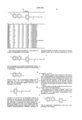
The 4-((aryloxy)phenoxy)alkenols of the present invention corresponding to the formula ##STR4## can be prepared by the reaction of substantially equimolar amounts of an appropriate compound corresponding to the formula ##STR5## where X and A are as hereinbefore defined and X1 represents --Br, --Cl, --F or --SO2 R1 and R1 is C1 -C4 alkyl with an appropriate alkenol derivative corresponding to the formula ##STR6## wherein Y, Y1, P and T are as hereinbefore defined. In carrying out this reaction, the reactants and a strong base such as an anhydrous alkali metal hydride, alkoxide, hydroxide or carbonate are mixed together in a dipolar, aprotic solvent such as, for example, dimethylformamide (DMF), acetone, methyl ethyl ketone, acetonitrile, diomethylsulfoxide (DMOS), sulfolane, N-methylpyrrolidone or the like. The reaction is advantageously carried out at elevated temperatures of from about 50° to 120° C.
The specific reaction times employed in the hereinabove and hereinafter set forth preparative procedures vary considerably and are dependent upon factors such as the solvent, base, catalyst, if employed, reaction temperature and the reactivity of the specific reactants employed. The reactions are for the most part complete in a period of from about 30 minutes to about 12 hours or more.
This procedure is also the preferred procedure to use when Y and Y1 are both fluorine.
The compound of Formula I wherein Y and Y1 are both hydrogen and A is .tbd.CH can also be prepared by the reaction of an appropriate aryloxyphenol corresponding to the formula ##STR7## with an appropriate a-haloalkenoic acid ester corresponding to the formula ##STR8## wherein P, R1 and T are as hereinbefore defined, and Hal is --Cl or --Br employing the same reaction conditions as set forth hereinabove for the reaction between the reactants of Formulae II and III.
The ester product corresponding to the formula ##STR9## is reduced to the corresponding 4-((aryloxy)phenoxy)alkenol of Formula I. The reduction of the ester of Formula VI is conveniently carried out by reaction of said ester with a reducing agent such as, for example, diisobutylaluminum hydride (DIBAL-H) or lithium aluminum hydride (LAH) in an inert solvent. The solvent and reaction temperature employed depend primarily upon the specific reducing agent. When DIBAL-H is employed, the reaction temperature is within the range of about -78° to about +25° C. and the solvents include toluene, ether or cyclohexane. When LAH is employed, the reaction is conducted by refluxing the ester in a solvent such as ether or tetrahydrofuran.
The hydroxyphenoxy alkenols corresponding to the formula ##STR10## are prepared by a variety of procedures. Those compounds wherein Y and Y1 are both hydrogen, are for the most part known compounds and are taught in U.S. Pat. Nos. 4,263,040 and 4,360,375; and Japanese Kokai J56034-647 and J56034-648.
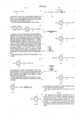
Those compounds of Formula III wherein Y and/or Y1 are fluorine can be prepared in a multistep procedure as follows: ##STR11## No attempt has been made to present a balanced equation in the above reaction sequence.
The above reaction steps can be carried out as follows:
The appropriate fluorophenol of Formula VII in a solvent such as, for example, methylene chloride is reacted for from about 1 to about 3 hours with 90 percent nitric acid at a temperature of from about -15° C. to about 5° C. At the end of this period, the desired 2-fluoro- or 2,6-difluoro-4-nitrophenol product of Formula VIII is recovered employing conventional procedures.
The thus formed 2-fluoro- or 2,6-difluoro-4-nitrophenol of Formula VIII is reacted with an appropriate α-alkenoic acid ester, corresponding to Formula V. In carrying out this reaction, the compound of Formula V, the phenol compound of Formula VIII and a base metallic base such as sodium or potassium carbonate, or an organic base such as triethylamine are mixed together in the presence of a solvent such as dimethylsulfoxide (DMSO), dimethylformamide, tetrahydrofuran, acetonitrile, hexamethylphosphoramide or N-methylpyrrolidone and heated to a temperature between about 40° C. to about 220° C. The desired fluorinated 4-nitrophenoxy alkenoic acid ester corresponding to Formula IX is recovered employing conventional procedures.
The thus formed fluorinated 4-nitrophenoxyalkenoic acid ester corresponding to Formula IX is selectively reduced to the corresponding amino (aniline) compound corresponding to Formula X. This reduction can be conveniently carried out employing conventional stannous chloride reduction procedure. The product is recovered employing conventional recovery procedures.
The thus formed aniline compound corresponding to Formula X is treated with an aqueous solution of concentrated HCl at a temperature of from about 0°-10° C. and this solution is then reacted with an aqueous solution of an alkali metal nitrite. This mixture is thereafter reacted with an aqueous solution of fluoroboric acid to form the desired corresponding diazonium tetrafluoroborate compound corresponding to Formula XI. The product is separated employing conventional procedure.
The thus formed compound corresponding to Formula XI is treated under reflux conditions with a mixture of an alkali metal trifluoroacetate in trifluoroacetic acid to obtain the desired product compound corresponding to Formula XII.
The hydroxyphenoxy alkenoic acid ester corresponding to Formula XII can then be reduced to the corresponding hydroxyphenoxyalkenol of Formula III employing the procedure set forth hereinabove employed for reducing the compound of Formula VI to the compound of Formula I.
The heterocyclic halides employed as starting materials and which correspond to the formula ##STR12## wherein A, X and X1 are as hereinbefore defined, are all known and/or commercially produced compounds and for the most part are taught in the above-listed applications and/or patents which teach preparing compounds of Formula IV.
The α-haloalkenoic acid esters employed as a starting material and corresponding to the formula ##STR13## wherein Hal, P, R1 and T are as hereinbefore defined are all known compounds and such compounds are taught in European Patent Application No. 42750.
The following examples illustrate the present invention and the manner by which it can be practiced but, as such, are not to be construed as limitations upon the overall scope thereof.
The compounds obtained in the following examples were characterized by infrared and/or nuclear magnetic resonance spectrometry.
An oven-dried flask was equipped with a nitrogen inlet, a stirrer, a thermometer and a septum stoppered dropping funnel and was flushed with nitrogen. The flask was charged with a solution of 26.6 grams (g) (120 millimole (mmol)) of methyl (E)-4-(4-hydroxyphenoxy)-2-pentenoate in 150 milliliters (ml) of toluene. The solution was cooled to -78° C., and the dropping funnel was charged with 250 ml (375 mmol) of 25 percent (%) solution of diisobutylaluminum hydride (DIBAL) in toluene. The DIBAL solution was then added at -78° C. dropwise to the reaction mixture over a 1.5 hour period, and the reaction was stirred at -78° C. for an additional 0.5 hour. The reaction was quenched by cautious, dropwise addition of 250 ml of a stock solution prepared from 6 parts of water, 25 parts of acetic acid and 75 parts of ether while maintaining the temperature below -50° C. The resulting mixture was allowed to warm to room temperature and filtered, and the solid was washed with ether. The filtrates were combined and reserved while the solid was partitioned between water and ether.
This mixture was made acidic with aqueous HCl, and the ether layer separated and combined with the reserved filtrates. The combined organic solution was then washed to neutrality with saturated aqueous sodium bicarbonate, dried over MgSO4 and evaporated to dryness. The oily residue was then purified by preparative scale liquid chromatography (HPLC) eluting with 3:2 hexane: acetone removal of solvent and through drying left 19.3 g (83%) of the desired alcohol as a tan oil. (Compound A).
______________________________________
Elemental Analysis:
                   % C  % H
______________________________________
Calculated for C.sub.11 H.sub.14 O.sub.3 :
                     68.02  7.26
Found:               67.24  7.26
______________________________________
A mixture of 3.06 g (15.4 mmol) of 2,6-dichloroquinoline, 3.00 g (15.4 mmol) of (E)-4-(4-hydroxyphenoxy)-2-penten-1-ol, 2.34 g (16.9 mmol) of powdered, anhydrous potassium carbonate and 50 ml of dry dimethylsulfoxide was warmed at 100°-110° C. for a period of 6 hours. The mixture was cooled to room temperature, poured over ice and extracted three times with ether. The combined ether layers were washed once with 1 percent aqueous sodium hydroxide then with water, dried over MgSO4 and evaporated to dryness. The residue was purified by preparative scale HPLC, eluting with 72:28 hexane:acetone, and then thoroughly dried to leave 2.9 g of the desired pentenol as a brown gum. (Compound B).
______________________________________
Elemental Analysis:
                 % C    % H    % N
______________________________________
Calculated for C.sub.20 H.sub.18 ClNO.sub.3 :
                   67.51    5.10   3.94
Found:             67.11    5.24   3.78
______________________________________
A mixture of 1.99 g (10 mmol) of 2,6-dichloroquinoxaline, 2.13 g (11 mmol) of 4-(4-hydroxyphenoxy)-2-penten-1-ol, 1.73 g (12.5 mmol) of powdered, anhydrous potassium carbonate and 50 ml of dry acetonitrile was warmed at reflux under nitrogen for a period of 3 hours. The mixture was cooled to room temperature, and the solid filtered off and washed well with ether. The filtrates were combined and evaporated to dryness, and the residue partitioned between ether and 2 percent aqueous sodium hydroxide. The aqueous layer was separated and extracted again with ether. The combined organic layers were washed with water, dried over MgSO4 and evaporated to dryness. The residual solid was purified by preparative scale HPLC, eluting with 7:3 hexane:ethyl acetate, to give a solid which was recrystallized from toluene. This gave 2.60 g (73%) of the desired pentenol as pale yellow crystals, having a melting point (m.p.) of 124°-126° C. (Compound C).
______________________________________
Elemental Analysis:
                 % C    % H    % N
______________________________________
Calculated for C.sub.19 H.sub.17 ClN.sub.2 O.sub.3 :
                   63.95    4.80   7.85
Found:             63.73    4.75   7.81
______________________________________
4-(4-((6-Bromo-2-quinoxalinyl)oxy)phenoxy)-2-penten-1-ol ##STR17##
A mixture of 3.76 g (15.4 mmol) of 6-bromo-2-chloroquinoxaline, 3.00 g (15.4 mmol) of 4-(4-hydroxy- phenoxy)-2-penten-1-ol, 2.34 g (16.9 mmol) of powdered, anhydrous potassium carbonate and 50 ml of dry dimethylsulfoxide was stirred at room temperature for a period of 24 hours. The mixture was poured over ice and extracted three times with ether. The combined ether layers were washed with 1 percent aqueous sodium hydroxide, then with water, dried over MgSO4 and evaporated to dryness. The residue was recrystallized from toluene to give 2.50 g of the desired pentenol as a yellow solid. (Compound D).
______________________________________
Elemental Analysis:
                 % C    % H    % N
______________________________________
Calculated for C.sub.19 H.sub.17 BrN.sub.2 O.sub.3 :
                   56.87    4.27   6.98
Found:             57.06    4.33   6.79
______________________________________
A mixture of 3.63 g (20 mmol) of 2-chloro-6fluoroquinoxaline, 4.27 g (22 mmol) of 4-(4-hydroxy-phenoxy)-2-penten-1-ol, 3.31 g (24 mmol) of powdered, anhydrous potassium carbonate and 30 ml of dry dimethylsulfoxide was warmed at 120° C. for a period of 5 hours. The mixture was cooled to room temperature, poured over dilute aqueous HCl, and the resulting aqueous mixture was extracted two times with ether. The combined ether layers were washed twice with 5 percent aqueous sodium hydroxide, then with water, dried over MgSO4 and evaporated to dryness. The residue was purified by preparative scale HPLC, eluting with 4:1:hexane:acetone, and then thoroughly dried to give 2.44 g of the desired pentenol as a tan gum. (Compound E).
______________________________________
Elemental Analysis:
                % C     % H    % N
______________________________________
Calculated for C.sub.20 H.sub.18 FNO.sub.3 :
                  70.78     5.35   4.13
Found:            70.09     5.23   4.16
______________________________________
A mixture of 1.28 g (7 mmol) of 2-chloro-6fluoroquinoxaline, 1.16 g (8.4 mmol) of anhydrous, powdered potassium carbonate, 1.55 g (8 mmol) of 4-(4-hydroxyphenoxy)-2-penten-1-ol and 20 ml of DMSO was warmed, under nitrogen, at 110° C. for a period of 2 hours. The mixture was cooled to room temperature, poured into dilute, aqueous HCl and extracted with two portions of ether. The combined organic layers were washed twice with 1 percent aqueous NaOH and with water, dried over MgSO4 and evaporated to dryness. The residue was purified by preparative scale HPLC, eluting with 3:1 hexane:acetone. After removal of solvent the resulting tan crystals were recrystallized from methylcyclohexane to give 1.05 g of crystals which were further purified by recrystallization from toluene to leave nearly colorless crystals, m.p. 109-111° C. (Compound F)
______________________________________
Elemental Analysis:
                 % C    % H    % N
______________________________________
Calculated for C.sub.19 H.sub.17 FN.sub.2 O.sub.3 :
                   67.05    5.04   8.23
Found:             66.04    5.07   8.01
______________________________________
As indicated hereinabove, the novel 4-((aryloxy)phenoxy)alkenols of the present invention are herbicides and are useful in controlling grassy weeds and especially controlling grassy weeds in the presence of broadleaf crop plants both pre- and postemergently.
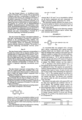
The alkenols of the present invention are also useful as intermediates in the preparation of herbicidally active derivatives. These so prepared derivatives correspond to the formula ##STR20## wherein Y and Y1 each independently represent --H or --F;
P represents methyl or ethyl;
T represents --CH2 --CH2)a CH═CH--b and the cis (Z) or trans (E) stereoisomers thereof or --CH2 --CH2)a C.tbd.C--;
A represents .tbd.N or .tbd.CH;
a represents the integer 0, 1 or 2;
b represents the integer 1 or 2;
X represents --Br, --Cl, --F, or --CF3 ;
R2 represents --OSO2 R3, ##STR21## R3 represents C1 -C4 alkyl, C2 -C4 alkenyl or NR4 R5 ;
R4 represents C2 -C4 alkenyl, C1 -C4 alkyl, --NR5 R6 or ##STR22## wherein R5 and R6 each independently represent --H or C1 -C4 alkyl;
D represents C1 -C4 alkyl, --Br, --Cl, --NO2, --CF3, --OCF3, ##STR23## wherein R7 represents C1 -C4 alkyl and m represents an integer of from 0-3, inclusive.
The above active derivative compounds have been found to be useful as herbicides for the postemergent kill and control of undesirable vegetation, for example, grassy or graminaceous weeds in the presence of corn plants.
The term "herbicide" is used herein to mean an active ingredient which controls or adversely modifies the growth of plants because of phytotoxic or other effects substantial enough to seriously retard the growth of the plant or further to damage the plant sufficiently to kill the plant.
The terms "growth controlling" or "herbicidally effective" amount are employed to designate an amount of active ingredient which causes a modifying effect and includes deviations from natural development, killing, regulation, dessication, retardation, and the like.
The term "plants" means established vegetation.
The terms "control" or "controlling" as it relates to plant growth has the same meaning as employed hereinabove for the term "herbicide".
The derivative compounds wherein R2 is ##STR24## or --OSO2 R3 and R3 and R4 are other than --NHR6 can be prepared by the condensation of an appropriate 4-((aryloxy)phenoxy)alkenol corresponding to the formula ##STR25## with an appropriate halide corresponding to the formula
Hal--R.sup.8 (XIV)
wherein R8 is ##STR26## or --SO2 R3 and R3, R4 is as further defined directly hereinabove and R5 is other than hydrogen in the presence of an inert solvent and a hydrogen halide absorber (acid scavenger) to obtain the desired compound corresponding to the formula ##STR27## where in Formulae I, XIV and XV; A, X, Y, Y1, P, R2, T and Hal are as hereinabove defined.
The reaction is generally carried out at a temperature in the range of from about 0° to about 25° C.
While not normally necessary, a catalyst can be employed, if desired. Representative catalysts include, for example, 4-dimethylaminopyridine and 1,4-diazabicyclo-2,2,2-octane.
Representative inert solvents for this reaction include, for example, chlorinated hydrocarbons (for example, methylene chloride), ether, toluene, pyridine, hexane, acetonitrile and the like.
Representative hydrogen halide absorbers include tertiary amines, alkali metal hydroxides and alkali metal carbonates. Alternatively, it has also been found that the addition of a molar excess of the amine reactant can function as the hydrogen halide absorber. Additionally, when pyridine is employed as the solvent, it can also function as the hydrogen halide absorber.
Additionally, when R2 is ##STR28## and R4 is other than --NR5 R6, an appropriate anhydride corresponding to the formula ##STR29## wherein R4 is as hereinbefore defined can be reacted with the alkenol corresponding to Formula I employing the same procedure and conditions as set forth hereinabove for the reaction between the reactants of Formulae I and XIV.
Further, when R2 is ##STR30## and R4 is C2 -C4 alkenyl or C1 -C4 alkyl, an appropriate ester corresponding to the formula ##STR31## wherein P is as hereinbefore defined and R9 is C2 -C4 alkenyl or C1 -C4 alkyl is reacted with the alkenol corresponding to Formula I employing the same procedure and conditions as set forth hereinabove for the reaction between the reactants of Formulae I and XIV.
The derivative compounds wherein R2 is ##STR32## and R are --NHR6 can be prepared by the condensation of an appropriate alkenol of Formula I with an appropriate isocyanate or isothiocyanate corresponding to the formula
R.sup.6 NC═O/S (XVIII)
wherein R6 is as hereinbefore defined. The reaction is generally carried out in the presence of an inert solvent such as methylene chloride or toluene at ambient temperatures, though the use of higher temperatures could be necessary depending on the S/O═CNR6 reactant to effect condensation. A catalytic amount of a base such as, for example, triethylamine, is sometimes beneficial. The isocyanate reactants are all known compounds of commerce.
The derivative compounds which correspond to the formula ##STR33## wherein P, A, X, Y, Y1, T and m are as hereinbefore set ##STR34## forth and D1 is and R7 is as hereinbefore defined, can be prepared by the reaction, at ambient temperature, of an appropriate 4-((aryloxy)phenoxy)alkenol corresponding to the formula ##STR35## wherein P, A, X, Y, Y1 and T are as hereinbefore set forth with an appropriate substituted benzoic acid corresponding to the formula ##STR36## wherein D1 and m are as hereinbefore set forth in the presence of a solvent such as DMF, methylene chloride or ether and in the presence of a catalyst such as 4-(dimethylamino)pyridine and an aid for forming esters at low temperatures. Representative of such agents are carbodiimides such as dicyclohexylcarbodiimide.
The desired product can be separated from the reaction mixture of the above preparative procedures employing conventional separatory procedures known to those skilled in the art including steps of solvent extraction, filtration, water washing, column chromatography, neutralization, acidification, crystallization and distillation.
Since the hereinabove and hereinafter set forth compound preparation procedures employ only standard chemistry practices, and it is known that slightly different reactants can require slightly different reaction parameters from those for other reactants, it is to be understood that minor modifications to the reaction parameters set forth such as the use of an excess of one reactant, the use of a catalyst, the use of high temperature and/or pressure equipment, high speed mixing and other such conventional changes are within the scope of this invention.
The following examples further illustrate the present invention and the manner by which it can be practiced.
A solution prepared from 1.07 g (3 mmol) of the pentenol obtained in Example 2, 0.40 g (4 mmol) of triethylamine, and 20 ml of methylene chloride was cooled at 0° C. under nitrogen and a solution of 0.50 g (3.5 mmol) of isopropylsulfonylchloride in 3 ml of methylene chloride was added in one portion. The resulting solution was stirred at 0° C. for 30 minutes and then poured into a mixture of ether and about 1N aqueous HCl. The organic layer was separated, dried over MgSO4 and evaporated to dryness. The residue was purified by preparative scale HPLC, eluting with 3:1 hexane:ethyl acetate, and then dried in a Kugelrohr apparatus at 50° C. and 0.1 mm Hg for 1 hour. This left 1.31 g (95%) of desired sulfonate product as a viscous oil. (Compound 1).
______________________________________
Elemental Analysis:
                 % C    % H    % N
______________________________________
Calculated for C.sub.23 H.sub.24 ClNO.sub.5 S:
                   59.80    5.24   3.03
Found:             58.91    5.11   2.90
______________________________________
A solution prepared from 1.78 g (5 mmol) of the pentenol obtained in Example 3 above, 0.61 g (6 mmol) of triethylamine and 25 ml of methylene chloride was cooled under N2 at 0° C. while 0.78 g (5.5 mmol) of isopropylsulfonylchloride was added in one portion. After stirring at 0° C. for 45 minutes, the mixture was poured into a mixture of ether and water. The organic layer was separated, dried over MgSO4 and evaporated to dryness. The residual solid was taken up in boiling hexane, filtered while hot and allowed to cool to give pale yellow crystals. The crystals were filtered and dried to give 1.65 g (71%) of the desired sulfonate product, m.p. 95°-96° C. (Compound 2).
______________________________________
Elemental Analysis:
                  % C    % H    % N
______________________________________
Calculated for C.sub.22 H.sub.23 ClN.sub.2 O.sub.5 S:
                    57.07    5.01   6.05
Found:              56.78    4.92   5.96
______________________________________
By following the procedure of Examples 4 and 5 employing the appropriate starting pentenols and sulfonyl or sulfamoyl halids, the following compounds in Table 2 are prepared.
                                  TABLE 2
__________________________________________________________________________
 ##STR39##
                          Molecular Formula and
Compound       M.P. °C. or
                          Elemental Analysis
No.   R.sup.2  RI at (n.sub.D.sup.25)
                          % C % H % N
__________________________________________________________________________
                          C.sub.22 H.sub.24 ClN.sub.3 O.sub.5 S
3     NHCH(CH.sub.3).sub.2
               73-75  Calc:
                          55.28
                              5.06
                                  8.79
                      Found:
                          55.59
                              5.09
                                  8.68
                          C.sub.20 H.sub.19 ClN.sub.2 O.sub.5 S
4     CH.sub.3 115-116
                      Calc:
                          55.23
                              4.40
                                  6.44
                      Found:
                          54.94
                              4.30
                                  6.34
                          C.sub.21 H.sub.21 ClN.sub.2 O.sub.5 S
5     C.sub.2 H.sub.5
               95-97  Calc:
                          56.18
                              4.72
                                  6.24
                      Found:
                          56.27
                              4.58
                                  6.14
                          C.sub.22 H.sub.23 ClN.sub.2 O.sub.5 S
6     C.sub.3 H.sub.7
               81-83  Calc:
                          57.07
                              5.01
                                  6.05
                      Found:
                          56.44
                              4.91
                                  5.94
                          C.sub.23 H.sub.25 ClN.sub.2 O.sub.5 S
7     C.sub.4 H.sub.9
               85-87  Calc:
                          57.91
                              5.28
                                  5.87
                      Found:
                          57.89
                              5.16
                                  5.71
__________________________________________________________________________
To an ice-cooled nitrogen flushed solution of 1.78 g (5 mmol) of the pentenol obtained in Example 3 above in 10 ml of pyridine was added 0.61 g (6 mmol) of acetic anhydride. The resulting solution was allowed to warm to room temperature and stirred under nitrogen overnight. The solution was then poured into a mixture of ether and water. The organic layer was separated and washed three times with 2 percent aqueous HCl and saturated aqueous NaHCO3, dried over MgSO4 and evaporated to leave an off-white solid. The solid was purified by filtration, using methylene chloride as the solvent, through a short plug of silica gel, and then, after removal of solvent, recrystallized from methylcyclohexane. This gave colorless crystals which were filtered, washed with hexane and dried to give 1.27 g (64%) of the desired acetate as colorless crystals, m.p. 89°-90° C. (Compound 8).
______________________________________
Elemental Analysis:
                 % C    % H    % N
______________________________________
Calculated for C.sub.21 H.sub.19 ClN.sub.2 O.sub.4 :
                   63.24    4.80   7.03
Found:             62.49    4.70   6.89
______________________________________
A nitrogen flushed solution of 1.78 g (5 mmol) of the pentenol obtained in Example 3 in 20 ml of pyridine was cooled in an ice bath and 0.77 g (5.5 mmol) of benzoylchloride was slowly added. The resulting mixture was stirred at 0° C. for 1 hour and then at ambient temperature for 2 hours. The reaction mixture was then poured into a mixture of water and ether. The organic layer was separated, washed twice with 1N aqueous HCl and then with saturated aqueous NaHCO3, dried over MgSO4 and evaporated to dryness. After standing at room temperature, the residue slowly crystallized and the solid was recrystallized from methylcyclohexane to give, after filtering and drying, 1.90 g (82%) of the desired benzoate as colorless crystals melting at 79°-81° C. (Compound 9).
______________________________________
Elemental Analysis:
                 % C    % H    % N
______________________________________
Calculated for C.sub.26 H.sub.21 ClN.sub.2 O.sub.4 :
                   67.75    4.59   6.08
Found:             67.56    4.49   6.08
______________________________________
By substantially following the procedures of Example 6 employing the appropriate starting pentenols and acid halide in pyridine, the following compounds in Table 3 are prepared.
                                  TABLE 3
__________________________________________________________________________
 ##STR42##
                            Molecular Formula and
Compound         M.P. °C. or
                            Elemental Analysis
No.   R.sup.2    RI at (n.sub.D.sup.25)
                            % C % H % N
__________________________________________________________________________
                            C.sub.24 H.sub.25 ClN.sub.2 O.sub.4
10    C(CH.sub.3).sub.3
                 86-88  Calc:
                            65.37
                                5.72
                                    6.35
                        Found:
                            65.39
                                5.72
                                    6.28
                            C.sub.27 H.sub.20 CF.sub.3 N.sub.2 O.sub.4
11
       ##STR43## 71-75  Calc: Found:
                            61.31 61.32
                                3.81 3.82
                                    5.30 5.61
                             C.sub.23 H.sub.23 ClN.sub.2 O.sub.4
12    CH(CH.sub.3).sub.2
                 45-49  Calc:
                            64.71
                                5.43
                                    6.56
                        Found:
                            64.51
                                5.37
                                    6.63
                            C.sub.23 H.sub.23 ClN.sub.2 O.sub.4
13    C.sub.3 H.sub.7
                 yellow oil
                        Calc:
                            64.71
                                5.43
                                    6.56
                        Found:
                            64.55
                                5.46
                                    6.76
                            C.sub.27 H.sub.20 ClF.sub.3 N.sub.2 O.sub.5
14
       ##STR44## 80-84  Calc: Found:
                            59.51 59.10
                                3.70 3.68
                                    5.14 5.29
                            C.sub.27 H.sub.23 ClN.sub.2 O.sub.4
15
       ##STR45## 70-74  Calc: Found:
                            68.28 68.25
                                4.88 4.88
                                    5.90 5.95
                            C.sub.28 H.sub.25 ClN.sub.2 O.sub.4
16
       ##STR46## 87-89  Calc: Found:
                            68.78 68.59
                                5.15 5.20
                                    5.73 5.92
                            C.sub.26 H.sub.20 ClN.sub.3 O.sub.6
17
       ##STR47## 99-103 Calc: Found:
                            61.73 62.13
                                3.98 4.11
                                    8.31 8.28
__________________________________________________________________________
A nitrogen flushed solution of 1.78 g (5 mmol) of the pentenol obtained in Example 3 above, 0.61 g (6 mmol) of triethylamine and 40 ml of methylene chloride was cooled in an ice bath. A solution of 1.05 g (6 mmol) of 4-chlorobenzoyl chloride in 2 ml of methylene chloride was slowly added, and the resulting solution allowed to stir at ambient temperature overnight. The mixture was then poured into water, and the organic layer separated and washed with saturated aqueous NaHCO3 and saturated aqueous NaCl, dried over MgSO4 and evaporated to leave an oil. The oil was purified by preparative scale HPLC, eluting with 85:15 hexane:ethyl acetate. After removal of the solvent, an oil was obtained which, after trituration with hexane, solidified. The solid was filtered, washed with hexane and dried to give 1.91 g (77%) of the desired ester melting at 96°-99° C. (Compound 18).
______________________________________
Elemental Analysis:
                 % C    % H    % N
______________________________________
Calculated for C.sub.26 H.sub.20 Cl.sub.2 N.sub.2 O.sub.4 :
                   63.04    4.07   5.66
Found:             62.41    3.99   5.71
______________________________________
By following the procedures of Examples 7 and 8 employing the appropriate starting pentenols and acid chloride, the following compounds in Table 4 are prepared.
                                  TABLE 4
__________________________________________________________________________
 ##STR49##
                         Molecular Formula and
Compound     M.P. °C. or
                         Elemental Analysis
No.   R.sup.2
             RI at (n.sub.D.sup.25)
                         % C % H % N
__________________________________________________________________________
                         C.sub.26 H.sub.20 Cl.sub.2 N.sub.2 O.sub.4
19
       ##STR50##
             63-65  Calc: Found:
                         63.04 62.53
                             4.07 4.07
                                 5.66 5.64
                         C.sub.26 H.sub.20 Cl.sub.2 N.sub.2 O.sub.4
20
       ##STR51##
             thick gum
                    Calc: Found:
                         63.04 62.12
                             4.07 3.90
                                 5.66 5.52
                         C.sub.26 H.sub.19 Cl.sub.3 N.sub.2 O.sub.4
21
       ##STR52##
             107-110
                    Calc: Found:
                         58.94 58.83
                             3.61 3.53
                                 5.29 5.11
__________________________________________________________________________
A mixture of 1.5 g (4.2 mmol) of the pentenol obtained in Example 3 above, 1.04 g (6.3 mmol) of 4-(aminocarbonyl)benzoic acid, 1.30 g (6.3 mmol) of dicyclohexylcarbodiimide (DCC), 0.05 g of 4-(dimethylamino)pyridine and 20 ml of DMF was stirred at room temperature overnight. An additional 0.3 g of DCC and 0.25 g of 4-(aminocarbonyl)benzoic acid are added and the mixture was stirred an additional 20 hours. The mixture was then poured into ether, water added and filtered. The filtrates were separated, and the organic layer washed with saturated aqueous NaHC03 and water, dried over MgSO4 and evaporated to dryness. The residue was purified by preparative scale HPLC, eluting with a 3:2 hexane:acetone, mixture to give 0.55 g of the desired product as a tan, glassy solid, m.p. 144°-148° C. (Compound 22).
______________________________________
Elemental Analysis:
                 % C    % H    % N
______________________________________
Calculated for C.sub.27 H.sub.22 ClN.sub.3 O.sub.5 :
                   64.35    4.40   8.34
Found:             63.97    4.70   8.06
______________________________________
A mixture of 1.5 g (4.2 mmol) of the pentenol obtained in Example 3 above, 0.82 g (4.6 mmol) of 4-(acetylamino)benzoic acid, 0.95 g (4.6 mmol) of dicyclohexylcarbodiimide and 0.05 g of 4-(dimethylamino)pyridine in 20 ml of dimethylformamide was stirred at room temperature for 72 hours. The mixture was diluted with ether and water and filtered. The filtrates were separated, and the organic layer washed with saturated aqueous NaHCO3 and water, dried over MgSO4 and evaporated to dryness. The residue was purified by preparative scale HPLC, eluting with a 65:35 hexane:acetone mixture to give 0.6 g of the desired product as a pale yellow, glassy solid, m.p. 62°-68° C. (Compound 23).
______________________________________
Elemental Analysis:
                 % C    % H    % N
______________________________________
Calculated for C.sub.28 H.sub.24 ClN.sub.3 O.sub.5 :
                   64.93    4.67   8.11
Found:             64.48    5.01   8.27
______________________________________
To a solution of 1.78 g (5 mmol) of the pentenol obtained in Example 3 above, and 50 ml of methylene chloride was added 3 drops of triethylamine and 0.86 g (15 mmol) of methylisocyanate. The solution was stirred at room temperature for 8 days. The solvent was separated and the residue was recrystallized twice from methylcyclohexane to give 1.68 g (81%) of the desired carbamate product as colorless crystals. The product melted at 114°-115° C. (compound 24).
______________________________________
Elemental Analysis:
                 % C    % H    % N
______________________________________
Calculated for C.sub.21 H.sub.20 ClN.sub.3 O.sub.4 :
                   60.97    4.87   10.15
Found:             60.69    4.81   10.43
______________________________________
The preparation of the optical isomer forms of the active compounds follow conventional procedures employed to prepare related compounds. Such procedures include those taught in U.S. Patent Applications No. 4,532,328; European Patent Applications 2,800, 3,890 and 6,608; German OLS No. 2,949,728 and U.K. Patent Application No. GB 2,042,503A. The teachings of these applications are incorporated herein by reference thereto.
The alkenol compounds of the present invention have been found to be suitable for use in methods for the pre- and postemergent control of grassy weeds. Such weeds involved, for example, foxtail, barnyard grass, wild oats, Johnson grass and crabgrass. In addition, these compounds can be employed to control these grassy weeds in the presence of various broadleaf crop plants including sugar beets, soybeans, cotton, rape and the like.
The derivative compounds prepared from the alkenol intermediates of the present invention have been found to be suitable for use in methods for the selective postemergent control of many annual and perennial grassy weeds in the presence of corn plants.
It is to be noted that not all compounds will have the same effect on all weed plants. Some compounds will be more active in the control of one weed specie than another.
For the above herbicidal uses, unmodified active ingredients of the active compounds can be employed. However, the present invention also embraces the use of the active compounds in admixture with inert materials, known in the art as agricultural adjuvants and/or carriers, in solid or liquid form. Thus, for example, an active ingredient can be dispersed on a finely-divided solid and employed therein as a dust or granule. Also, the active ingredients, as liquid concentrates or solid compositions comprising one or more of the active ingredients can be dispersed in water, typically with aid of a wetting agent, and the resulting aqueous dispersion employed as a spray. In other procedures, the active ingredients can be employed as a constituent of organic liquid compositions, oil-in-water and water-in-oil emulsions or water dispersions, with or without the addition of wetting, dispersing, or emulsifying agents. Suitable adjuvants of the foregoing type are well known to those skilled in the art.
The herbicidally effective concentration of the active ingredients in solid or liquid compositions generally is from about 0.0003 to about 95 percent by weight or more. Concentrations from about 0.05 to about 50 percent by weight are often employed. In compositions to be employed as concentrates, the active ingredient can be present in a concentration from about 5 to about 98 weight percent. The active ingredient compositions can also contain other compatible additaments, for example, phytotoxicants, plant growth regulants and other biologically active compounds used in agriculture.
In further embodiments, the compounds of the present invention or compositions containing the same, can be advantageously employed in combination with one or more additional pesticidal compounds. Such additional pesticidal compounds may be insecticides, nematocides, miticides, arthropodicides, herbicides, fungicides or bactericides that are compatible with the compounds of the present invention in the medium selected for application and not antagonistic to the activity of the present compounds. Accordingly, in such embodiments, the pesticidal compound is employed as a supplemental toxicant for the same or for a different pesticidal use or as an additament. The compounds in combination can generally be present in a ratio of from 1 to 100 parts of the compound of the present invention with from 100 to 1 part of the additional compound(s).
The derivative compounds taught to be prepared from the alkenols of the present invention have been found to possess desirable postemergent activity against grassy weeds such as foxtail, barnyard grass, wild oats, Johnson grass and crabgrass while showing high selectivity to corn plants. These compounds are also uniquely effective in controlling perennial grassy weeds such as Johnson grass, quackgrass, and bermuda grass.
The exact amount of the active material to be applied is dependent not only on the specific active ingredient being applied, but also on the particular action desired, the weed plant species to be controlled and the stage of growth thereof as well as the part of the plant to be contacted with the toxic active ingredient. Thus, all of the active ingredients of the present invention and compositions containing the same may not be equally effective at similar concentrations or against the same weed plant species.
In the above taught pre- and postemergent operations, a dosage of about 0.01 to about 20 lbs/acre (0.056-22.4 kg/hectare) is generally applicable, although not all compounds are equally effective and some weeds are more difficult to control. Thus, a dosage rate in the range of about 0.05 to about 1.0 lb/acre (0.01-1.12 kg/hectare) is preferred in control of annual grassy weeds, while about 0.05 to about 5 lbs/acre (0.056-5.6 kg/hectare) is a preferred dosage range for the control of perennial grassy weeds.
The following examples illustrate the effects of the compounds of this invention.
Representative compositions of the present invention were evaluated to determine their effectiveness in preemergent operations.
Aqueous dispersions were prepared by admixing predetermined amounts of one of the hereinafter set forth compounds, dissolved in a predetermined amount of an inert solvent with a predetermined quantity of water and surfactant to dispersions of one of compound B or C as the sole toxicant.
These compositions were drenched soil onto the in plots immediately after they were seeded with predetermined plant seeds. Other plots similarly seeded with the same plant species were drenched with like compositions, containing no toxicant, to serve as controls. The plots were treated at a treating rate equivalent to 1 and 0.5 pound per acre. Thereafter, the plots were maintained under conditions conducive to good plant growth. Two weeks after treatment, the plots were examined to determine the amount of plant growth. The results of the examinations are set forth below in Table 5.
                                  TABLE 5
__________________________________________________________________________
      Treating Rate
             Percent Kill and Control of the Following Plant
             Species.sup.(a)
Compound
      In Pounds
             at Indicated Treating Rate
Number
      Per Acre
             CT SOY
                   SB CN RC SG WH BG CG JG WO YFT
__________________________________________________________________________
B     0.5    0  0  0  0  10 100
                               10 60 100
                                        100
                                           50 95
      1.0    0  0  0  100
                         20 100
                               100
                                  100
                                     100
                                        100
                                           50 90
C     0.5    0  0  0  100
                         70 100
                               100
                                  100
                                     100
                                        100
                                           80 100
      1.0    0  0  0  100
                         100
                            100
                               100
                                  100
                                     100
                                        100
                                           100
                                              100
__________________________________________________________________________
 .sup.(a) CT = cotton; SOY = soybean, SB = sugar beet; CN = corn; RC =
 rice; SG = sorghum; WH = wheat; BG = barnyard grass; CG = crabgrass; JG =
 Johnson grass; WO = wild oats and YFT = yellow foxtail.
Representative compositions of the present invention were evaluated to determine their effectiveness in postemergent operations.
Aqueous dispersions were prepared by admixing predetermined amounts of one of the hereinafter set forth compounds, dissolved in a predetermined amount of an inert solvent with a predetermined quantity of water, and a predetermined amount of a surfactant to give aqueous dispersions of compounds B, C, D, E or F as the sole toxicant.
Predetermined plant seeds were planted in beds of good agricultural soil and grown in a greenhouse. After the plants had emerged and had grown to a height of about 4 inches, the plants were sprayed to runoff with one of the above-prepared compositions at a predetermined treating rate (in parts of the active compound per million parts of the ultimate composition (PPM)). Other beds of the plants were sprayed with a water-surfactant mixture, containing no active compound, to serve as controls. After treatment, the beds were maintained for two weeks under greenhouse conditions conducive for good plant growth. At the end of this period, the beds were examined to determine the amount of kill and control. The specific plant species, test compounds and the percent postemergent control are set forth below in Table 6.
                                  TABLE 6
__________________________________________________________________________
      Treating Rate
             Percent Kill and Control of the Following Plant
             Species.sup.(a)
Compound
      In Parts
             at Indicated Treating Rate
Number
      Per Million
             CT SOY
                   SB CN RC SG WH BG CG JG WO FT
__________________________________________________________________________
B     500    0  0  0  40 0  40 10 100
                                     100
                                        99 0  0
      250    0  0  0  15 0  15 0  100
                                     95 100
                                           0  0
      125    0  0  0  0  0  10 0  100
                                     100
                                        100
                                           0  0
C     250    0  0  0  100
                         90 90 100
                                  100
                                     100
                                        100
                                           70 100
      125    0  0  0  40 85 100
                               20 100
                                     90 100
                                           70 100
      62.5   0  0  0  20 80 100
                               20 100
                                     95 100
                                           20 100
D     500    0  0  0  100
                         98 90 100
                                  100
                                     100
                                        100
                                           98 100
      250    0  0  0  100
                         50 0  40 100
                                     100
                                        0  30 100
      125    0  0  0  50 0  0  40 98 100
                                        0  20 100
E     500    0  0  100
                      100
                         100
                            0  0  100
                                     NT 100
                                           30 100
      250    0  0  100
                      100
                         98 0  0  100
                                     NT 100
                                           30 100
F     500    0  20 0  100
                         100
                            0  90 100
                                     NT 100
                                           98 100
      250    0  0  0  100
                         100
                            0  90 100
                                     100
                                        90 90 100
__________________________________________________________________________
 .sup.(a) CT = cotton; SOY = soybean, SB = sugar beet; CN = corn; RC =
 rice; SG = sorghum; WH = wheat; BG = barnyard grass; CG = crabgrass; JG =
 Johnson grass; WO = wild oats and FT = foxtail. NT = not tested
Representative compositions of the derivatives made from the alkenols of the present invention were evaluated to determine their effectiveness in postemergent operations.
Aqueous dispersions were prepared by admixing predetermined amounts of one of the hereinafter set forth compounds, dissolved in a predetermined amount of an inert solvent with a predetermined quantity of water and a predetermined amount of a surfactant to give aqueous dispersions of one of compounds 1-19 as the sole toxicant.
Predetermined plant seeds were planted in beds of good agricultural soil and grown in a greenhouse. After the plants had emerged and had grown to a height of from 2-8 inches, the plants were sprayed to runoff with one of the above-prepared compositions at a predetermined treating rate (in parts of the active compound per million parts of the ultimate composition (PPM)). Other beds of the plants were sprayed with a water-surfactant mixture, containing no active compound, to serve as controls. After treatment, the beds were maintained for two weeks under greenhouse conditions conducive for good plant growth. At the end of this period, the beds were examined to determine the amount of kill and control. The specific plant species, test compounds and the percent postemergent control are set forth below in Table 7.
              TABLE 7
______________________________________
              Percent Kill and Control
Treatment     of the Following Plant Species
Compound
        Rate in          Crab-
                              Johnson
                                     Giant Green
No. Tested
        PPM       Corn   grass
                              Grass  Foxtail
                                           Foxtail
______________________________________
1       1000      0      NT   90     85    90
        500       0      NT   75     85    80
2       500       0      100  NT     100   100
        250       0      100  NT     100   100
3       250       0      NT   100    100   100
        125       0      NT   100    100   100
4       500       0      80   NT     98    98
        250       0      80   NT     100   98
5       500       0      100  NT     100   100
        250       0      100  NT     100   100
6       500       0      98   NT     100   100
        250       0      70   NT     98    100
7       500       0      95   NT     100   98
        250       0      90   NT     100   98
8       500       0      100  NT     100   100
        250       0      100  NT     100   100
9       500       10     NT   100    100   100
        250       0      NT   100    100   100
10      500       20     NT   100    100   100
        250       0      NT   100    100   100
11      62        10     NT   100    100   100
        31        0      NT   80     90    20
12      125       20     NT   100    100   100
        62        0      NT   100    100   100
13      500       10     NT   100    100   100
        250       0      NT   100    100   100
14      250       20     NT   100    100   100
        125       0      NT   100    90    50
15      500       20     NT   100    100   100
        250       0      NT   100    100   100
16      250       20     NT   100    100   100
        125       0      NT   100    90    95
17      250       0      NT   NT     94    NT
        125       0      NT   NT     92    NT
18      250       5      NT   NT     90    NT
        125       5      NT   NT     90    NT
19      250       5      NT   NT     98    NT
        125       0      NT   NT     98    NT
______________________________________
Claims (27)
1. A compound or an optical isomer thereof corresponding to the formula ##STR56## wherein Y and Y1 each independently represent --H or --F;
P represents methyl or ethyl;
T represents --CH2 --CH2 --a CH═CH--b and the cis (Z) or trans (E) stereoisomers thereof or --CH2 --CH2 --a C.tbd.C;
A represents .tbd.CH;
a represents the integer 0, 1 or 2;
b represents the integer 1 or 2; and
X represents --Br, --Cl, --F or --CF3.
2. A compound as defined in claim 1 which is in the R enantiomeric isomer form.
3. A compound as defined in claim 1 which is in the E stereoisomer form.
4. A compound as defined in claim 1 wherein X is --Br, --Cl or --F, a is 0, b is 1 and P is methyl.
5. A compound as defined in claim 4 wherein X is --Cl.
6. The compound as defined in claim 5 which is 4-(4-((6-chloro-2-quinolinyl)oxy)phenoxy)-2-penten-1-ol.
7. The compound as defined in claim 6 which is in the E stereoisomer form.
8. A compound as defined in claim 4 wherein X is --F.
9. The compound as defined in claim 8 which is 4-(4-((6-fluoro-2-quinolinyl)oxy)phenoxy)-2-penten-1-ol.
10. A composition which comprises an agriculturally acceptable inert adjuvant in intimate admixture with a herbicidally effective amount of a compound or an optical isomer thereof, as the active material, which corresponds to the formula ##STR57## wherein Y and Y1 each independently represent --H or --F;
P represents methyl or ethyl;
T represents --CH2 --CH2)a (CH═CH--b and the cis (Z) or trans (E) stereoisomers thereof or --CH2 --CH2 --a (C.tbd.C--;
A represents .tbd.CH;
a represents the integer 0.1 or 2;
b represents the integer 1 or 2; and
X represents --Br, --Cl, --F or --CF3.
11. A composition as defined in claim 10 wherein the compound is in the R enantiomeric isomer form.
12. A composition as defined in claim 10 wherein the compound is in the E stereoisomer form.
13. A composition as defined in claim 10 wherein X is --Br, --Cl or --F, a is 0, b is 1 and P is methyl.
14. A composition as defined in claim 13 wherein X is --Cl.
15. The composition as defined in claim 14 wherein the compound is 4-(4-((6-chloro-2-quinolinyl)-oxy)phenoxy)-2-penten-1-ol.
16. The composition as defined in claim 15 wherein the compound is in the E stereoisomer form.
17. A composition as defined in claim 13 wherein X is --F.
18. The composition as defined in claim 17 wherein the compound is 4-(4-((6-fluoro-2-quinolinyl)-oxy)phenoxy)-2-penten-1-ol.
19. A method for the postemergent kill and control of grassy weeds which comprises applying to said weeds a herbicidally effective amount of a composition comprising an agriculturally acceptable inert adjuvant in intimate admixture with, as the active material, a compound or an optical isomer thereof, as the active material, which corresponds to the formula ##STR58## wherein Y and Y1 each independently represent --H or --F;
P represents methyl or ethyl;
T represents --CH2 --CH2)a CH═CH--b and the cis (Z) or trans (E) stereoisomers thereof or --CH2 --CH2 --a C.tbd.CH--;
A represents .tbd.CH;
a represents the integer 0, 1 or 2;
b represents the integer 1 or 2; and
X represents --Br, --Cl, --F or --CF3.
20. A method as defined in claim 19 wherein the compound is in the R enantiomeric isomer form.
21. A method as defined in claim 19 wherein the compound is in the E stereoisomer form.
22. A method as defined in claim 19 wherein X is --Br, --Cl or --F, a is 0, b is 1 and P is methyl.
23. A method as defined in claim 22 wherein X is --Cl.
24. The method as defined in claim 23 wherein the compound is 4-(4-((6-chloro-2-quinolinyl)oxy)phenoxy)-2-penten-1-ol.
25. The method as defined in claim 24 wherein the compound is in the E isomer form.
26. A method as defined in claim 22 wherein X is --F.
27. The method as defined in claim 26 wherein the compound is 4-(4-((6-fluoro-2-quinolinyl)oxy)phenoxy-2-penten-1-ol.
Priority Applications (2)
| Application Number | Priority Date | Filing Date | Title |
|---|---|---|---|
| US06/901,844 US4900354A (en) | 1986-08-29 | 1986-08-29 | (Quinolinyl and quinoxalinyloxy)phenoxy alkenols and their use as post emergent herbicides |
| US07/435,095 US4976772A (en) | 1986-08-29 | 1989-11-13 | 4-((aryloxy)phenoxy)alkenol as intermediates and herbicides |
Applications Claiming Priority (1)
| Application Number | Priority Date | Filing Date | Title |
|---|---|---|---|
| US06/901,844 US4900354A (en) | 1986-08-29 | 1986-08-29 | (Quinolinyl and quinoxalinyloxy)phenoxy alkenols and their use as post emergent herbicides |
Related Child Applications (1)
| Application Number | Title | Priority Date | Filing Date |
|---|---|---|---|
| US07/435,095 Division US4976772A (en) | 1986-08-29 | 1989-11-13 | 4-((aryloxy)phenoxy)alkenol as intermediates and herbicides |
Publications (1)
| Publication Number | Publication Date |
|---|---|
| US4900354A true US4900354A (en) | 1990-02-13 |
Family
ID=25414908
Family Applications (1)
| Application Number | Title | Priority Date | Filing Date |
|---|---|---|---|
| US06/901,844 Expired - Fee Related US4900354A (en) | 1986-08-29 | 1986-08-29 | (Quinolinyl and quinoxalinyloxy)phenoxy alkenols and their use as post emergent herbicides |
Country Status (1)
| Country | Link |
|---|---|
| US (1) | US4900354A (en) |
Cited By (6)
| Publication number | Priority date | Publication date | Assignee | Title |
|---|---|---|---|---|
| US4976772A (en) * | 1986-08-29 | 1990-12-11 | The Dow Chemical Company | 4-((aryloxy)phenoxy)alkenol as intermediates and herbicides |
| US5032168A (en) * | 1987-03-18 | 1991-07-16 | Dowelanco | 4-((aryloxy)phenoxy)fluoroalkanoic acid derivatives and their herbicidal uses |
| US5034050A (en) * | 1988-02-01 | 1991-07-23 | Dowelanco | Derivatives of 4-((aryloxy)phenoxy)alkenols and their herbicidal uses |
| US5180417A (en) * | 1989-07-10 | 1993-01-19 | Dowelanco | 4-((aryloxy)phenoxy)fluoroalkanoic acid derivatives and their herbicidal uses |
| JP2004161699A (en) * | 2002-11-14 | 2004-06-10 | Japan Enviro Chemicals Ltd | Quinoxaline-based compound or its salt and industrial germicidal composition |
| CN113912537A (en) * | 2021-08-27 | 2022-01-11 | 重庆化工职业学院 | 2- (quinoline-8-yl) carbonyl-cyclohexane-1, 3-diketone compound and preparation method and application thereof |
Citations (5)
| Publication number | Priority date | Publication date | Assignee | Title |
|---|---|---|---|---|
| JPS5643269A (en) * | 1979-09-18 | 1981-04-21 | Nissan Chem Ind Ltd | Quinoline derivative and herbicide containing the same as the effective component |
| US4609396A (en) * | 1980-06-23 | 1986-09-02 | E. I. Du Pont De Nemours And Company | Quinoxalinyloxy ethers as selective weed control agents |
| US4629493A (en) * | 1979-02-22 | 1986-12-16 | Nissan Chemical Industries Ltd. | Heterocyclic ether type phenoxy fatty acid derivatives and herbicidal composition |
| US4661149A (en) * | 1985-11-12 | 1987-04-28 | Ppg Industries, Inc. | Substituted phenoxypropionaldehyde derivatives useful as herbicides |
| US4731108A (en) * | 1986-03-07 | 1988-03-15 | The Dow Chemical Company | Derivatives of 4-((aryloxy)phenoxy)alkenols and their herbicidal uses |
-
1986
- 1986-08-29 US US06/901,844 patent/US4900354A/en not_active Expired - Fee Related
Patent Citations (5)
| Publication number | Priority date | Publication date | Assignee | Title |
|---|---|---|---|---|
| US4629493A (en) * | 1979-02-22 | 1986-12-16 | Nissan Chemical Industries Ltd. | Heterocyclic ether type phenoxy fatty acid derivatives and herbicidal composition |
| JPS5643269A (en) * | 1979-09-18 | 1981-04-21 | Nissan Chem Ind Ltd | Quinoline derivative and herbicide containing the same as the effective component |
| US4609396A (en) * | 1980-06-23 | 1986-09-02 | E. I. Du Pont De Nemours And Company | Quinoxalinyloxy ethers as selective weed control agents |
| US4661149A (en) * | 1985-11-12 | 1987-04-28 | Ppg Industries, Inc. | Substituted phenoxypropionaldehyde derivatives useful as herbicides |
| US4731108A (en) * | 1986-03-07 | 1988-03-15 | The Dow Chemical Company | Derivatives of 4-((aryloxy)phenoxy)alkenols and their herbicidal uses |
Non-Patent Citations (1)
| Title |
|---|
| Chemical Abstracts, vol. 95, 115319q (1981), for Japan Patent 81/43,269 (4/21/81). * |
Cited By (7)
| Publication number | Priority date | Publication date | Assignee | Title |
|---|---|---|---|---|
| US4976772A (en) * | 1986-08-29 | 1990-12-11 | The Dow Chemical Company | 4-((aryloxy)phenoxy)alkenol as intermediates and herbicides |
| US5032168A (en) * | 1987-03-18 | 1991-07-16 | Dowelanco | 4-((aryloxy)phenoxy)fluoroalkanoic acid derivatives and their herbicidal uses |
| US5034050A (en) * | 1988-02-01 | 1991-07-23 | Dowelanco | Derivatives of 4-((aryloxy)phenoxy)alkenols and their herbicidal uses |
| US5180417A (en) * | 1989-07-10 | 1993-01-19 | Dowelanco | 4-((aryloxy)phenoxy)fluoroalkanoic acid derivatives and their herbicidal uses |
| JP2004161699A (en) * | 2002-11-14 | 2004-06-10 | Japan Enviro Chemicals Ltd | Quinoxaline-based compound or its salt and industrial germicidal composition |
| CN113912537A (en) * | 2021-08-27 | 2022-01-11 | 重庆化工职业学院 | 2- (quinoline-8-yl) carbonyl-cyclohexane-1, 3-diketone compound and preparation method and application thereof |
| CN113912537B (en) * | 2021-08-27 | 2024-05-07 | 重庆化工职业学院 | 2- (Quinoline-8-yl) carbonyl-cyclohexane-1, 3-dione compound and preparation method and application thereof |
Similar Documents
| Publication | Publication Date | Title |
|---|---|---|
| US5250690A (en) | Haloalkoxy anilide derivatives of 2-4(-heterocyclic oxyphenoxy)alkanoic or alkenoic acids and their use as herbicides | |
| US4270948A (en) | Herbicidal compound, herbicidal composition containing the same, and method of use thereof | |
| US4629493A (en) | Heterocyclic ether type phenoxy fatty acid derivatives and herbicidal composition | |
| US4550192A (en) | Fluorophenoxyphenoxypropionates and derivatives thereof | |
| US4565568A (en) | Pyridyl(oxy/thio)phenoxy compounds, herbicidal compositions and methods | |
| US4808750A (en) | Fluorophenoxyphenoxypropionates and derivatives thereof | |
| US5364831A (en) | Quinoxaline derivatives and herbicidal composition | |
| EP0288275B1 (en) | Phenoxypropionic acid derivatives for use as herbicides | |
| US4976772A (en) | 4-((aryloxy)phenoxy)alkenol as intermediates and herbicides | |
| US4968343A (en) | Fluoroalkyl anilide derivatives of 2-(4-aryloxyphenoxy)alkanoic or alkenoic acids as selective herbicides | |
| US4731108A (en) | Derivatives of 4-((aryloxy)phenoxy)alkenols and their herbicidal uses | |
| EP0205821A1 (en) | Haloalkoxy anilide derivatives of 2-(4-heterocyclic oxyphenoxy)-alkanoic acids and their use as herbicides | |
| US4330321A (en) | Compounds and method for selectively controlling grassy weeds in broadleaved crops | |
| US4751329A (en) | Fluorophenoxyphenoxypropionates and derivatives thereof 18-methyl-4,15-estradien-3-one, and the novel starting compounds for this process | |
| EP1006105A1 (en) | Benzene derivatives | |
| US4423222A (en) | Pyridinyl fungicides and herbicides | |
| US5032168A (en) | 4-((aryloxy)phenoxy)fluoroalkanoic acid derivatives and their herbicidal uses | |
| US4725683A (en) | Fluorophenoxyphenoxypropionates and derivatives thereof | |
| US4750931A (en) | Certain 3,5-disubstituted-2-pyridyloxy-fluorophenoxy-alkanoic acids, derivatives thereof and herbicidal properties | |
| US5186735A (en) | Derivatives of 4-((aryloxy)phenoxy)alkenols and their herbicidal uses | |
| US4521426A (en) | Pesticidal bicyclooxyheterocyclyl aroyl ureas | |
| JPH0517220B2 (en) | ||
| US4642338A (en) | Fluorophenoxyphenoxypropionates and derivatives thereof | |
| US5034050A (en) | Derivatives of 4-((aryloxy)phenoxy)alkenols and their herbicidal uses | |
| US5156667A (en) | Derivatives of 4-((aryloxy)phenoxy)alkenols and their herbicidal uses |
Legal Events
| Date | Code | Title | Description |
|---|---|---|---|
| AS | Assignment |
Owner name: DOW CHEMICAL COMPANY, THE, MICHIGAN Free format text: ASSIGNMENT OF ASSIGNORS INTEREST.;ASSIGNORS:TURNER, JAMES A.;ZORNER, PAUL S.;JACKS, WENDY S.;REEL/FRAME:005184/0863;SIGNING DATES FROM 19860815 TO 19860821 |
|
| REMI | Maintenance fee reminder mailed | ||
| LAPS | Lapse for failure to pay maintenance fees | ||
| FP | Lapsed due to failure to pay maintenance fee |
Effective date: 19940213 |
|
| STCH | Information on status: patent discontinuation |
Free format text: PATENT EXPIRED DUE TO NONPAYMENT OF MAINTENANCE FEES UNDER 37 CFR 1.362 |