US4883761A - Pertussis toxin gene: cloning and expression of protective antigen - Google Patents
Pertussis toxin gene: cloning and expression of protective antigen Download PDFInfo
- Publication number
- US4883761A US4883761A US06/843,727 US84372786A US4883761A US 4883761 A US4883761 A US 4883761A US 84372786 A US84372786 A US 84372786A US 4883761 A US4883761 A US 4883761A
- Authority
- US
- United States
- Prior art keywords
- subunits
- subunit
- pertussis
- pertussis toxin
- sequence
- Prior art date
- Legal status (The legal status is an assumption and is not a legal conclusion. Google has not performed a legal analysis and makes no representation as to the accuracy of the status listed.)
- Expired - Lifetime
Links
Images


Classifications
-
- C—CHEMISTRY; METALLURGY
- C07—ORGANIC CHEMISTRY
- C07K—PEPTIDES
- C07K14/00—Peptides having more than 20 amino acids; Gastrins; Somatostatins; Melanotropins; Derivatives thereof
- C07K14/195—Peptides having more than 20 amino acids; Gastrins; Somatostatins; Melanotropins; Derivatives thereof from bacteria
- C07K14/235—Peptides having more than 20 amino acids; Gastrins; Somatostatins; Melanotropins; Derivatives thereof from bacteria from Bordetella (G)
-
- A—HUMAN NECESSITIES
- A61—MEDICAL OR VETERINARY SCIENCE; HYGIENE
- A61K—PREPARATIONS FOR MEDICAL, DENTAL OR TOILETRY PURPOSES
- A61K39/00—Medicinal preparations containing antigens or antibodies
Definitions
- the present invention is related to molecular cloning of pertussis toxin genes capable of expressing an antigen peptide protective against pertussis. More particularly, the present invention is related to a bacterial plasmid pPTX42 encoding pertussis toxin.
- Pertussis toxin is one of the various toxic components produced by virulent Bordetella pertussis, the microorganism that causes whooping cough.
- a wide variety of biological activities such as histamine sensitization, insulin secretion, lymphocytosis promoting and immunopotentiating effects can be attributed to this toxin.
- the toxin provides protection to mice when challenged intracerebrally or by aerosol.
- Pertussis toxin is, therefore, an important constituent in the vaccine against whooping cough and is included as a component in such vaccines.
- toxin is one of the major protective antigens against whooping cough, it is also associated with a variety of pathophysiological activities and is believed to be the major cause of harmful side effects associated with the present pertussis vaccine. In most recipients these side effects are limited to local reactions, but in rare cases neurological damage and death does occur (Baraff et al., 1979 in Third International Symposium on Pertussis. U.S. HEW publication No. NIH-79-1830). Thus a need to produce a new generation of vaccine against whooping cough is evident.
- FIG. 1 shows SDS-electrophoresis of the products of HPLC separation of pertussis toxin. Lanes 1 and 12 contain 5 ⁇ g and 10 ⁇ g, respectively, of unfractionated pertussis toxin. Lanes 2 through 11 contain 100 ⁇ l aliquots of elution fractions 19 through 28, respectively. The molecular weights of the subunits are indicated;
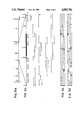
- FIG. 2 shows restriction map of the cloned 4.5 kb EcoRI/BamHI B. pertussis DNA fragment and genomic DNA in the region of the pertussis toxin subunit gene.
- FIG. 3 shows Southern blot analysis of B. pertussis genomic DNA with cloned DNA probes.
- FIG. 4 shows the physical map and genetic organization of the Pertussis Toxin Gene.
- the vertical lines indicate termination codons.
- the arrows show the translational direction and length of the protein coding regions for the individual subunits.
- the hatched boxes represent the signal peptides.
- the solid bars in S1 represent the regions homologous to the A subunits in cholera and E. coli heat labile toxins; and
- FIG. 5 shows the physical map of the pertussis toxin S4 subunit gene.
- the vertical lines indicate termination codons.
- the above objects and advantages of the present invention are achieved by molecular cloning of pertussis toxin genes.
- the cloning of the gene provides means for genetic manipulation thereof and for producing new generation of substantially pure and isolated form of antigenic peptides (toxins) for the synthesis of new generation of vaccine against pertussis.
- toxins antigenic peptides
- the present invention is the first to clone the pertussis toxin gene in an expression vector, to map its nucleotide sequence and to disclose the finger print of the polypeptide encoded by said gene(s).
- Any vector wherein the gene can be cloned by recombination of genetic material and which will express the cloned gene can be used, such as bacterial (e.g. ⁇ gt11), yeast (e.g. PGPD-1), Viral (e.g. PGS20 or pMM4), and the like.
- a preferred vector is the microorganism, E. coli wherein the pertussis gene has been cloned in the plasmid thereof.
- Restriction enzymes were purchased from Bethesda Research Laboratories (BRL) or International Biotechnologies, Inc. and used under conditions recommended by the suppliers.
- T4 DNA ligase, M13mp19 RF vector, isopropylthio- ⁇ -galactoside (IPTG), 5-bromo-4-chloro-3-indolyl- ⁇ - D- galactoside (X-Gal), the 17-bp universal primer, Klenow fragment (Lyphozyme®) and T 4 polynucleotide kinase were purchased from BRL.
- Calf intestine phosphatase was obtained from Boehringer Mannheim, nucleotides from PL-Biochemicals and base modifying chemicals from Kodak (dimethylsulfate, hydrazine and piperidine) and EM Science (formic acid).
- Plasmid pMC1403 and E. coli strain JM101 (supE, thi, ⁇ (lac-proAB), [F', traD36, proAB, lacI Z ⁇ M15]) were obtained from Dr. Francis Nano (Rocky Mountain Laboratories, Hamilton, Montana 59840) Elutip-d® columns came from Schleicher and Schuell and low melting point agarose (LMP Agarose®) from BRL.
- B. pertussis strain 3779 was obtained from Dr. John J. Munoz, Rocky Mountain Laboratories, Hamilton, Mont. 59840. This strain is also known as 3779 BL2S4 and is commonly available.
- Pertussis toxin from B. Pertussis strain 3779 was prepared by the method of Munoz et al, Cell Immunol. 83:92-100, 1984. Five mg of the toxin was resuspended in trifluoroacetic acid and fractionated by high pressure liquid chromatography, HPLC, using a 1 ⁇ 25 cm Vydac C-4 preparative column. The sample was injected in 50% trifluoroacetic acid and eluted at 4 ml/min over 30 min with a linear gradient of 25% to 100% acetonitrile solution containing 66% acetonitrile and 33% isopropyl alcohol. All solutions contained 0.1% trifluoroacetic acid.
- the conditions for ligation were: 60 ng of vector DNA and 40 ng of insert DNA incubated with 1.5 units of T4 DNA ligase (BRL) and 1 mM ATP at 15° C. for 20h.
- E. coli JM109 cells were transformed with the recombinant plasmid in accordance with the procedure of Hanahan, J. Mol. Biol. 166:557-580, 1983 and clones containing the toxin gene identified by colony hybridization at 37° C. using a 32 P-labeled 17-base mixed oligonucleotide probe 21D3 following the procedure of Woods, Focus 6:1-3, 1984.
- the probe was synthesized on a SAM-1 DNA synthesizer (Biosearch, San Rafael, Calif.) and consisted of the 32 possible oligonucleotides coding for 6 consecutive amino acids of the pertussis toxin subunit (Table 1).
- the probe was purified from a 20% urea-acrylamide gel and 5'-end labeled using 0.2 mCi of (gamma 32 P)ATP (ICN, crude, 7000 Ci/mmol) and 1 unit of T 4 polynucleotide kinase (BRL) per 10 ⁇ l of reaction mixture in 50 mM Tris-HCl (pH 7.4) 5 mM DTT, 10 mM MgCl 2 .
- the labeled oligonucleotides were purified by binding to a DEAE-cellulose column (DE52, Whatman) in 10 mM Tris-HCl (pH 7.4), 1 mM EDTA (TE) and eluted with 1.0 M NaCl in TE. Ten positive clones were isolated and purified. Plasmid DNA from these clones were extracted according to the procedure of Maniatis et al, Molecular Cloning: A Laboratory Manual, 1982, digested with routine restriction endonucleases (BRL), and then analyzed by 0.8% agarose gel electrophoresis in TBE (10 mM Trisborate pH 8.0, 1 mM EDTA).
- Southern Blot Analyses Extracted DNA as described supra, was digested and separated by electrophoresis using either 0.7% or 1.2% agarose gels in 40 mM Tris-acetate pH 8.3, 1 mM EDTA for 17 h at 30 V. The DNA was then blotted onto nitrocellulose in 20X SSPE, sodium chloride, sodium phosphate EDTA buffer, pH 7.4, in accordance with Maniatis et al., supra, and baked at 80° C. in a vacuum oven for 2 h. Filters were prehybridized at 68° C.
- the hybridization buffer was the same as the prehybridization buffer, except EDTA was added to a final concentration of 10 mM.
- PstI fragments A, B, C and D were isolated by 0.8% low-melting point agarose gel electrophoresis, purified on Elutip-d columns (Schleicher and Schuell) and nick translated (BRL) using (alpha 32 P)CTP (800 Ci/mmol, NEN Research Products).
- the nick translated probes were hybridized at a concentration of about 1 ⁇ Ci/ml for 48 h at 68° C. Filters were then washed in 2X SSPE and 0.5% SDS at room (22°-25° C.) temperature for 5 min, then in 2X SSPE and 0.1% SDS at room temperature for 15 min, and finally in 0.1X SSPE and 0.5% SDS at 68° C. for 2 h. The washed filters were air dried and exposed to X-ray film using a Lightning-Plus intensifying screen following standard techniques.
- a mixed oligonucleotide probe representing a region of six consecutive amino acids with the least redundancy of the genetic code was synthesized.
- this mixture of oligonucleotides identified as probe 21D3, approximately 1 out of 32 molecules corresponds to the actual DNA sequence of the pertussis toxin gene (Table 1).
- This mixed oligonucleotide probe was used to screen a DNA clone bank containing restriction fragments of total pertussis chromosomal DNA.
- the clone bank was prepared by digesting genomic DNA isolated from B. pertussis strain 3779 with both EcoRI and BamHI restriction endonucleases.
- a restriction map of the insert DNA was prepared and is shown in FIG. 2b; Southern blot analysis indicated that the oligonucleotide probe 21D3 hybridized to only the 0.8 kb SmaI/PstI fragment.
- Amino acid 15 could not be determined.
- the rest of the deduced amino acid sequence perfectly matches the original protein sequence.
- the oligonucleotide probe sequence also perfectly matches the cloned DNA sequence.
- a precursor protein perhaps containing a leader sequence may exist (Table 1).
- the NH 2 -terminal aspartic acid of the mature protein is not immediately preceded by one of the known initiation codons, i.e., ATG, GTG, TTG, or ATT, but by GCC coding for alanine, an amino acid that often occurs at the cleavage site of a signal peptide.
- a proline is found at amino acid position -4, which is also consistent with cleavage sites in other known sequences where this amino acid is usually present within six residues of the cleavage site.
- Possible translation initiation sites in the same reading frame as the mature protein and upstream of the NH 2 -terminal aspartic acid are: ATG at position -9, TTG at -15, and GTG at -21; however, none of these are preceded by a Shine/Dalgarno ribosomal binding site (Nature., London, 254:34-38, 1975) and only GTG at -21 is immediately followed by a basic amino acid (arginine) preceding a hydrophobic region, characteristic of bacterial signal sequences.
- arginine basic amino acid
- FIG. 3a shows a Southern blot analysis of total B. pertussis DNA digested with a variety of six base pair-specific restriction enzymes and probed with the 1.3 kb PstI fragment B isolated from pPTX42. Each restriction digest yielded only one DNA band which hybridized with the probe.
- genomic DNA from these mutants and strain 3779 by Southern blots using various restriction fragments of the cloned 4.5 kb EcoRI/BamHI DNA fragment as probes were analyzed.
- blots of genomic PstI fragments were separately probed with cloned PstI fragments A, B, C, and D (FIG. 2c).
- the PstI fragments from the mutants and strain 3779 which hybridized with the cloned PstI fragments A, B, and D were exactly the same size; the blot probed with PstI fragment B is shown in FIG. 3b.
- the pertussis toxin negative phenotype of strains BP356 and BP357 can be explained by either of two nonexclusive mechanisms.
- the Tn5 DNA may be inserted into the coding regions of either S3, S5, or perhaps another gene required for toxin assembly or transport. Alternatively, the Tn5 insertion could disrupt the expression of essential downstream cistrons in a polycistronic operon.
- Similar Southern blot analyses of genomic BamHI and EcoRI fragments indicate that none of the other virulence factor genes represented by the other Tn5-insertion mutants, are located within the 17kb region defined by the first BamHI and the second EcoRI sites as shown in FIG. 2a.
- the insert DNA from this plasmid i.e., the 4.5 kb EcoRI/BamHI fragment shown in FIG. 4a
- the insert DNA from this plasmid was digested with various restriction enzymes and subcloned by standard procedures (Maniatis et al., supra) using the cloning vectors M13 mp18 and M13 mp19 and E. coli strain JM1O1 as described by Messing, Methods Enzymol. 101:20-78, 1983.
- Both strands of the DNA were sequenced using either the Maxam and Gilbert base-specific chemical cleavage method, supra, or the dideoxy chain termination method of Sanger et al., PNAS, 74:5463-5467, 1977, with the universal 17-base primer, or both.
- the DNA sequence and the derived amino acid sequence were analyzed using MicroGenie® computer software.
- the entire sequence contains about 62.2% C+G with about 19.6% A, 33.8% C, 28.4% G and 18.2% T in the sense strand, wherein A, T, C and G represent the nucleotides adenine, thymine, cytosine and guanine, respectively.
- the DNA sequence shown in Table 2 was translated in all six reading frames and the reading frames are shown in FIG. 4b,c.
- the open reading frame (ORF) corresponding to the S4 subunit was identified and is shown in FIG. 4d.
- the assignment of the other subunits to their respective ORFs is based on the following lines of evidence: size of ORFs, high coding probability, deduced amino acid composition, predicted molecular weights, ratios of acidic to basic amino acids, amino acid homology to other bacterial toxins, mapping of Tn5-induced mutations, and partial amino acid sequence.
- the experimentally-estimated molecular weight and isoelectric point of the individual subunits were compared to the calculated molecular weight and ratio of acidic to basic amino acids of the putative proteins encoded by the ORFs shown in FIG. 4.
- Table 3 shows that differences in the ratios reflect corresponding differences in the observed isoelectric points for each subunit, i.e., the higher the acidic content, the lower the isoelectric point.
- the comparison of the molecular weights also shows good correspondence to the experimentally-determined values, with slight differences for the S1 (less than 10%) and the S5 (about 15%) subunits. These small differences are within acceptable limits for protein molecular weights determined by SDS-PAGE.
- the assignment for S1 in the location shown in FIG. 4d is further supported by a significant homology of two regions in the S1 amino acid sequence with two related regions in the A subunits of both cholera and E. coli heat labile toxins. These homologous regions, shown in Table 4, may be part of functional domains for a catalytic activity in the subunits for all three toxins. Furthermore, the assignment for S1, as well as the correct prediction of the signal peptide cleavage site, is supported by preliminary amino acid sequence data for the mature protein (unpublished results).
- Subunits S2 and S3 share 70% amino acid homology, which makes the correct assignment of these subunits to their ORFs difficult if it is based only on the amino acid composition and the molecular weight. Nevertheless, the gene order could be determined as shown in FIG. 4d based on the location of a Tn5-induced mutation responsible for the lack of active pertussis toxin in the supernatant of the mutant B. pertussis strains. This Tn5 insertion was mapped 1.3 kb downstream of the start site for the S4 subunit gene, as indicated by the arrow in FIG. 4a. As can be seen in FIG. 4, the Tn5-insertion in those mutants would be located in the ORF for S3.
- the mutants are still able to produce the S2 subunit.
- the Tn5-insertion in those mutants is not located in the structural gene for S2. Therefore, the ORFs for S2 and S3 could be differentiated.
- the amino acid sequence for each subunit was deduced from the nucleotide sequence and is shown in Table 2.
- the mature proteins contain 234 amino acids for S1, 199 amino acids for S2, 110 amino acids for S4, 100 amino acids for S5 and 199 amino acids for S3, in the order of the gene arrangement from the 5'-end to the 3'-end. Most likely all subunits contain signal peptides, as expected for secretory proteins.
- the length of the putative signal peptides was estimated after analysis of the hydrophobicity plot, the predicted secondary structure and application of von Heijne's rule for the prediction of the most probable signal peptide cleavage site. The cleavage site for each subunit is shown in Table 2 by the asterisks.
- the correct prediction of the cleavage sites for S4 and S1 was confirmed by amino terminal sequencing of the purified mature subunits.
- the length of the signal peptides varies from 34 residues for S1, 28 residues for S3, and 27 residues for S2, to 21 residues for S4, and 20 residues for S5.
- All of the signal peptides contain a positively-charged amino terminal region of variable length, followed by a sequence of hydrophobic amino acids, usually in ⁇ -helical or partially ⁇ -helical, partially ⁇ -pleated conformation. A less hydrophobic carboxy-terminal region follows, usually ending in a ⁇ -turn conformation at the signal peptide cleavage site.
- cysteines are involved in intrachain bonds, since reducing agents significantly change the electrophoretic mobility of all subunits but S4.
- Serines, threonines and tyrosines also are represented more frequently than in average E. coli proteins. The hydroxyl groups of these residues may be involved in the quaternary structure through hydrogen bonding.
- pertussis toxin subunits are closely linked and probably expressed in a very precise ratio, it is possible that they are arranged in a polycistronic operon.
- a polycistronic arrangement for the subunit cistrons also has been described for other bacterial toxins bearing similar enzymatic functions, such as diphtheria, cholera and E. coli heat labile toxins. Therefore, the flanking regions were analyzed for the presence of transcriptional signals. In the 5' flanking region, starting at position 469, the sequence TAAAATA was found, which matches six of the seven nucleotides found in the ideal TATAATA Pribnow or -10 box. An identical sequence can be found in several other bacterial promotors, including the lambda L57 promotor.
- the transcriptional start site was tentatively located at the adenine residue at position 482. This residue is located in the sequence CAT, often found at transcriptional start sites. Upstream from the proposed -10 box, the sequence CTGACC starts at position 442. This sequence matches four of the six nucleotides found in the ideal E. coli -35 box TTGACA.
- the mismatching nucleotides in the proposed pertussis toxin -35 box are the two end nucleotides, of which the 3' residue is the less important nucleotide in the E. coli -35 consensus box.
- a replacement of the T by a C in the first position of the consensus sequence can also be found in several E. coli promotors.
- the distance between the two proposed promotor boxes is 21 nucleotides, a distance of the same length has been found in the galPl promotor and in several plasmid promotors.
- the proposed -35 box is immediately preceded by two overlapping short inverted repeats with calculated free energies of -15.6 kcal and -8.6 kcal, respectively. Inverted repeats can also be found at the 5'-end of the cholera toxin promotor. In both cases, they may be involved in positive regulation of the toxin promotors. None of the ORFs assigned to the other subunit is closely preceded by a similar promotor-like structure. However, a different promotor-like structure was found associated with the S4 subunit ORF.
- the five different subunits may not be the only proteins encoded in the polycistronic operon and that cistrons for other peptides, possibly involved in regulation, assembly or transport, are cotranscribed.
- Non-structural proteins involved in the posttranslational processing of E. coli heat labile toxin have been proposed. However, no significantly long ORF was found at the 3'-end of the nucleotide sequence shown in FIG. 4b. If other proteins are encoded by the same polycistronic operon, their coding regions must be located further downstream.
- each cistron was also examined for the presence of ribosomal binding sites. Neither the ribosomal binding sequences for B. pertussis genes, nor the 3'-end sequence of the 16 S rRNA are known. Therefore, the flanking regions could be compared with only the ribosomal binding sequences of heterologous procaryotic organisms represented by the Shine-Dalgarno sequence. Preceding the S1 initiation codon, the sequence GGGGAAG was found starting at position 495. This sequence shares four out of seven nucleotides with the ideal Shine-Dalgarno sequence AAGGAGG.
- the two first mismatching nucleotides in the pertussis toxin gene would not destabilize the hybridizatin to the 3'-end of the E. coli 16 S rRNA. This putative ribosomal binding site is close enough to the initiation codon for S1 to be functional in E. coli.
- Another possible Shine-Dalgarno sequence overlaps the first one and also matches four out of seven nucleotides to the consensus sequence.
- the mismatching nucleotides however, have a more destabilizing effect than the ones found in the first sequence.
- the S2 subunit ORF is not closely preceded by a ribosomal binding sequence, which may suggest that S2 is translated through a mechanism not involving the detachment and reattachment of the ribosome between the coding regions for S1 and S2.
- the short distance between the S1 and S2 cistrons, and the absence of a ribosomal binding site are characteristic of this mechanism.
- a ribosomal binding site for S4 in the sequence CAGGGCGGC, starting at position 2066 is possible.
- the ORF for S5 is preceded by the sequence AAGGCG, starting at position 2485, which matches five out of six nucleotides in the consensus sequence AAGGAG.
- S3 is preceded by the sequence GGGAACAC, which is very similar to the proposed ribosomal binding site for S1, i.e., GGGAAGAC.
- the gene order is S1, S2, S4, S5, and S3.
- the calculated molecular weights from the deduced sequence of the mature peptides are 26,024 for S1; 21,924 for S2; 12,058 for S4; 11,013 for S5 and 21,873 for S3. Since S4 is present in two copies per toxin molecule, the total molecular weight for the holotoxin is about 104,950. This is in agreement with the apparent molecular weight estimated by non-denaturing PAGE.
- the most striking feature of the predicted peptide sequences is the high homology between S2 and S3.
- the two peptides share 70% amino acid homology and 75% nucleotide homology. This suggests that both cistrons were generated through a duplication of an ancestral cistron followed by mutations which result in functionally-different peptides.
- the differences between S2 and S3 are scattered throughout the whole sequence and are slightly more frequent in the amino-terminal half of the peptides.
- S2 and S3 subunits cannot substitute for each other in the functionally-active pertussis toxin.
- the comparison between the two subunits may be useful in localizing their functional domains in relation to their primary, secondary and tertiary structure.
- S2 and S3 are divided into two domains, the amino-terminal and the carboxy-terminal.
- Each of the subunits binds to a S4 subunit. This function could be located in the more conserved carboxy-terminal domains of S2 and S3.
- the two resulting dimers are thought to bind to one S5 subunit. This function could be assigned to the more divergent amino-terminal domains of S2 and S3.
- the dimers bind to the S5 subunit through S4 and that the amino-terminal domains of S2 and S3 are involved in some other function, possibly the interaction of the binding moiety (S2 through S5) with the enzymatically-active moiety (S1).
- the enzymatically-active S1 subunit was compared to the A subunits of other bacterial toxins.
- Two regions with significant homology to cholera and E. coli heat labile toxins were found (Table 4). They are tandemly located in analogous regions of all three toxins. However, the three amino acid differences found in these regions cannot be explained by single base pair changes in the DNA. Furthermore, in most cases the homologous amino acids use quite different codons in pertussis toxin compared to cholera and E. coli heat labile toxins.
- the NAD-binding site for the two enterotoxins has been identified at the carboxy-terminal region of their A1 subunit. No significant homology could be found between the carboxy-terminal of the enterotoxins, nor any other NAD-binding enzymes, and the analogous region in the S1 subunit. This suggests that the NAD-binding function of the ADP-ribosylating enzymes is dependent more on the secondary or tertiary structures, than on the primary structures. It is proposed that the two enzymatically-active domains lie in different regions of the protein, one at the amino-terminal half of the subunit for the acceptor substrate (Ni) binding and the other at the carboxy-terminal half of the subunit for the donor substrate (NAD + ) binding.
- the termination of transcription in B. pertussis may be carried out by a slightly different mechanism than in E. coli; on the other hand, the polycistron may contain other, not yet identified, genes related to expression of functionally-active pertussis toxin or other virulence factors.
- the S4 promotor-like structure is quite different from the proposed promotor at the beginning of S1 subunit. It is part of an inverted repeat, suggesting an iron regulation of the S4 subunit expression. This is supported by the fact that chelating agents stimulate the accumulation of active pertussis toxin in cell supernatants.
- pertussis toxin is expressed efficiently by two dissimilar promotors, one (promotor 1) located in the 5'-flanking region and the other (promotor 2) located upstream of S4. Both promotors would be regulated by different mechanisms. Promotor 1 would be positively regulated, possibly by the vir gene product, and promotor 2 would be negatively regulated by the presence of iron. In optimal expression conditions, such as in the presence of the vir gene product and in the absence of iron, the S4 subunit cistron would be transcribed twice for every transcription of the other subunits. This is a mechanism that would explain the stoichiometry of the pertussis toxin subunits of 1:1:1:2:1 for S1:S2:S3:S4:S5, respectively, in the biologically active holotoxin.
- E. coli Attempts to express the pertussis toxin gene in E. coli have been heretofore unsuccessful, although very sensitive monoclonal and polyclonal antibodies are available. This lack of expression in E. coli may reside in the fact that B. pertussis promotors are not efficiently recognized by the E. coli RNA polymerase. Analysis of the promotor-like structures of the pertussis toxin gene and their comparison to strong E. coli promotors show very significant differences, indeed, of which the most striking ones are the unusual distances between the proposed -35 and -10 boxes in the pertussis toxin promotors. The distance between those two boxes in strong E.
- coli promotors is around 17 nucleotides, whereas the distances in the two putative pertussis toxin promotors are 21 nucleotides for the polycistronic promotor and 10 nucleotides for the S4 subunit promotor.
- Preliminary results in our laboratory using expression vectors designed to detect heterologous expression signals which are able to function in E. coli further indicate that B. pertussis promotors may not be recognized by the E. coli expression machinery.
- the codon usage for pertussis toxin is extremely inefficient for translation in E. coli (Table 5).
- the cloned and sequenced pertussis toxin genes are useful for the development of an efficient and safer vaccine against whooping cough.
- knowing the DNA sequence, mapping of eventual protective epitopes is now made possible. Synthetic oligopeptides comprising those epitopes will also be useful in the development of a new generation vaccine.
Landscapes
- Chemical & Material Sciences (AREA)
- Organic Chemistry (AREA)
- Health & Medical Sciences (AREA)
- General Health & Medical Sciences (AREA)
- Biochemistry (AREA)
- Biophysics (AREA)
- Life Sciences & Earth Sciences (AREA)
- Genetics & Genomics (AREA)
- Medicinal Chemistry (AREA)
- Molecular Biology (AREA)
- Proteomics, Peptides & Aminoacids (AREA)
- Gastroenterology & Hepatology (AREA)
- Medicines Containing Antibodies Or Antigens For Use As Internal Diagnostic Agents (AREA)
- Peptides Or Proteins (AREA)
Abstract
Description
                                  TABLE 1
__________________________________________________________________________
Protein and DNA Sequences of Pertussis Toxin Subunit, Oligonucleotide
Probe and Homologous Genomic DNA Clone
__________________________________________________________________________
DNA sequence: Predicted amino acid sequence:
                ##STR1##
                ##STR2##
Mature protein sequence:
                ##STR3##
                ##STR4##
__________________________________________________________________________
 The S4 H.sub.2 Nterminal amino acid sequence determined using the
 automated protein sequenator is shown in blocks as the mature protein
 sequence. Residues that were questionable in the sequence are indicated b
 brackets. The DNA and predicted amino acid sequences are shown. Possible
 initiation codons are indicated by fMet. A putative proteolytic cleavage
 site is indicated by *. The oligonucleotide probe sequence is shown in th
 block labeled probe 21D3. The abbreviations used are: P = G or A; Y = T o
 C; N = A, C, G or T.
                                  TABLE 2
__________________________________________________________________________
Complete Nucleotide Sequence of Pertussis Toxin Gene
__________________________________________________________________________
 ##STR5##
 ##STR6##
 ##STR7##
 ##STR8##
 ##STR9##
 ##STR10##
 ##STR11##
 ##STR12##
 ##STR13##
 ##STR14##
 ##STR15##
 ##STR16##
 ##STR17##
 ##STR18##
 ##STR19##
 ##STR20##
 ##STR21##
 ##STR22##
 ##STR23##
 ##STR24##
 ##STR25##
 ##STR26##
 ##STR27##
 ##STR28##
 ##STR29##
 ##STR30##
 ##STR31##
 ##STR32##
 ##STR33##
 ##STR34##
 ##STR35##
 ##STR36##
 ##STR37##
 ##STR38##
 ##STR39##
 ##STR40##
 ##STR41##
 ##STR42##
 ##STR43##
 ##STR44##
 ##STR45##
 ##STR46##
 ##STR47##
 ##STR48##
 ##STR49##
 ##STR50##
 ##STR51##
 ##STR52##
 ##STR53##
 ##STR54##
 ##STR55##
 ##STR56##
 ##STR57##
 ##STR58##
 ##STR59##
 ##STR60##
 ##STR61##
 ##STR62##
 ##STR63##
 ##STR64##
 ##STR65##
 ##STR66##
 ##STR67##
 ##STR68##
 ##STR69##
 ##STR70##
 ##STR71##
 ##STR72##
 ##STR73##
 ##STR74##
 ##STR75##
__________________________________________________________________________
 The deduced amino acid sequences of the individual subunits are shown in
 the single letter code below the nucleotide sequence. The proposed signal
 peptide cleavage sites are indicated by asterisks. The start of the
 protein coding region for each subunit is indicated by the box and arrow
 over the initiation codon. Putative ribosomal binding sites are
 underlined. The promoterlike sequence is shown in the -35 and -10 boxes.
 Proposed transcriptional start site is indicated by the arrow in the CAT
 box. Inverted repeats are indicated by the arrows in the flanking regions
                                  TABLE 3
__________________________________________________________________________
Comparison of the Observed Amino Acid Composition With the Calculated
Composition From DNA Sequence for Mature Pertussis Toxin Subunits
                                      S4
S1             S2          S3         Observed      S5
Observed Calculated
               Observed
                     Calculated
                           Observed
                                Calculated
                                      values.sup.a
                                              Calculated
                                                    Observed
                                                         Calculated
values.sup.a
         values
               values.sup.a
                     values
                           values.sup.a
                                values
                                      Exp. 1
                                          Exp. 2
                                              values
                                                    values.sup.a
                                                         values
__________________________________________________________________________
Mr.sup.b
    28 k 26.0 k
               23 k  21.9 k
                           22 k 21.9 k
                                      11.7 k
                                          --  12.1 k
                                                    9.3
                                                         11.0 k
A/B.sup.c
    --   1.3   --    0.89  --   0.83  --  --  0.65  --   1.4
pI.sup.d
    5.8  --    8.5   --    8.8  --    10.0
                                          10.0
                                              --    5.0  --
Ala 10.6 11.5  6.5   6.0   11.7 11.1  9.4 9.8 8.2   9.8  9.0
Arg 5.9  9.0   6.2   6.0   6.1  6.5   5.1 5.4 5.5   3.3  3.0
Asn.sup.e
    9.3  5.6   6.3   2.5   6.3  2.0   5.3 5.0 0.9   8.2  3.0
Asp --   4.3   --    4.0   --   4.0   --  --  3.6   --   5.0
Cys 1.0  0.9   1.3   3.0   1.1  3.0   0.9 0.7 3.6   1.6  4.0
Gln.sup.f
    10.6 3.0   8.7   3.5   9.0  4.5   9.5 9.1 3.6   9.3  3.0
Glu --   7.3   --    4.0   --   3.5   --  --  4.5   --   6.0
Gly 11.2 7.7   13.0  10.6  11.9 10.1  9.6 8.9 6.4   8.7  8.0
His 1.7  2.6   2.4   2.0   1.0  1.0   0.5 0.5 0.9   3.0  3.0
Ile 3.2  3.4   4.2   5.5   5.0  6.5   2.0 1.8 1.8   3.4  3.0
Leu 5.5  3.4   7.3   7.5   8.1  8.0   8.4 8.7 9.1   13.8 15.0
Lys 2.2  0     3.4   3.0   2.7  2.5   6.9 7.6 7.3   4.7  5.0
Met 1.6  1.7   1.4   1.5   1.1  1.5   5.1 4.3 7.3   1.6  2.0
Phe 3.5  3.0   3.2   2.5   3.2  2.5   3.6 4.5 4.5   4.9  5.0
Pro 4.4  3.4   4.6   4.5   5.7  5.0   9.1 9.9 10.0  5.6  5.0
Ser 10.6 9.8   8.5   8.5   6.3  5.0   8.0 7.3 5.5   6.9  6.0
Thr 7.4  7.3   10.4  10.1  8.2  8.0   5.0 5.1 4.5   6.9  7.0
Trp ND.sup.g
         0.9   ND    1.0   ND   0.5   ND  ND  0     ND   1.0
Tyr 4.6  8.1   7.6   8.0   7.9  9.5   2.2 2.0 1.8   4.3  4.0
Val 6.7  7.3   4.9   6.0   4.7  5.0   9.4 9.4 10.9  4.0  3.0
__________________________________________________________________________
 .sup.a Data from Tamava et, al. Biochem 21:5516, 1982.
 .sup.b Mr = molecular weight.
 .sup.c A/B = acid amino acids (Glu + Asp) ÷ basic amino acids (Arg +
 Lys).
 .sup.d pI = isoelectric pH.
 .sup.e Observed values are Asn + Asp.
 .sup.f Observed values are Gln + Glu.
 .sup.g ND = not determined
TABLE 4 ______________________________________ Comparison of Two Homologous Regions in ADP-ribosylating subunits of Pertussis, Cholera, and E. coli Heat Labile ______________________________________ Toxins.Region 1 Pertussis S1 subunit (8) Tyr Arg Tyr Asp Ser Arg Pro Pro (15) Cholera.sup.a A subunit (6) Tyr Arg Ala Asp Ser Arg Pro Pro (13) E. coli.sup.a HLT A (6) Tyr Arg Ala Asp Ser Arg Pro Pro (13)subunit Region 2 Pertussis S1 subunit (51) Val Ser Thr Ser Ser Ser Arg Arg (58) Cholera.sup.a A subunit (60) Val Ser Thr Ser Ile Ser Leu Arg (67) E. coli.sup.a HLT A (60) Val Ser Thr Ser Leu Ser Leu Arg (67) subunit ______________________________________ The numbers in parentheses refer to the amino acid position in the mature proteins. .sup.a Data from Yamamoto, et al. FEBS Letter 169:241, 1983, HLT = Heat Labile Toxin.
                                  TABLE 5
__________________________________________________________________________
Comparison of Codon Usage Between Pertussis Toxin and
Strongly and Weakly Expressed E. coli Genes
       Pertussis Toxin.sup.a
                          E. coli.sup.b
                                      Pertussis Toxin.sup.a
                                                         E. coli.sup.b
       S1 S2 S3 S4
                  S5 PTX.sup.c
                         S.sup.c
                            W.sup.c   S1 S2 S3 S4
                                                 S5 PTX.sup.c
                                                        S.sup.c
                                                            W.sup.c
__________________________________________________________________________
Ala
   GCU 3  0  1  0 1  5   33 17 Lys
                                  AAA 0  2  0  1 1  4   49  31
   GCC 17 7  14 9 4  52  9  34    AAG 0  5  7  7 4  24  20   8
   GCA 5  3  2  1 1  12  23 20 Met
                                  AUG 4  3  4  9 2  22  27   25
   GCG 9  5  8  5 5  33  25 28 Phe
                                  UUU 0  1  0  1 1  3   7    29
Arg
   CGU 3  2  0  1 0  6   42 19    UUC 7  4  5  4 4  25  22   19
   CGC 12 7  9  4 0  33  19 25 Pro
                                  CCU 1  1  0  1 0  3   4    6
   CGA 1  0  0  0 0  1   1  5     CCC 5  3  2  6 1  17  0.4  9
   CGG 5  3  1  2 2  13  0.2
                            8     CCA 0  1  2  0 0  3   5    9
   AGA 1  1  1  0 1  4   1  5     CCG 4  6  7  5 5  28  31   19
   AGG 3  1  3  0 0  7   0.2
                            3  Ser
                                  UCU 0  1  0  0 0  1   18   7
Asn
   AAU 4  2  0  1 1  8   2  19    UCC 7  6  3  2 4  23  17   9
   AAC 9  3  6  0 2  20  30 19    UCA 0  2  0  0 0  2   1    7
Asp
   GAU 2  3  1  2 1  9   22 35    UCG 5  0  2  0 2  9   2    12
   GAC 8  6  7  2 5  29  39 20    ACU 0  0  0  1 0  1   2    11
Cys
   UGU 0  0  0  0 0  0   2  6     AGC 12 10 5  5 3  36  9    12
   UGC 3  7  6  4 4  25  4  7  Thr
                                  ACU 4  2  1  1 2  10  20   9
Gln
   CAA 1  2  3  3 0  9   7  17    ACC 10 9  8  3 4  35  26   23
   CAG 7  5  7  1 3  24  32 32    ACA 3  1  1  0 0  5   3    6
Glu
   GAA 10 5  5  5 3  29  63 40    ACG 6  9  7  2 2  27  5    15
   GAG 7  3  2  0 3  15  20 19 Trp
                                  UGG 5  2  1  1 1  10  5    13
Gly
   GGU 1  1  2  1 0  5   43 24 Tyr
                                  UAU 8  6  8  2 3  28  6    18
   GGC 15 16 13 7 7  59  33 27    UAC 11 10 11 0 2  35  19   12
   GGA 3  4  3  0 2  12  1  8  Val
                                  GUU 2  1  1  1 0  5   37   21
   GGG 0  1  3  0 0  4   3  13    GUC 10 7  6  6 3  33  8    13
His
   CAU 3  4  1  1 2  11  4  18    GUA 3  1  2  1 0  7   23   9
   CAC 3  2  3  1 2  11  14 11    GUG 4  5  2  4 2  17  16   24
Ile
   AUU 3  3  3  0 0  9   13 30 End
                                  UAA -- -- -- --
                                                 -- 0   .sup. ND.sup.d
                                                        ND
   AUC 7  8  9  2 4  31  15 23    UAG 1  -- -- --
                                                 -- 1   ND   ND
   AUA 0  1  4  0 2  7   0.4
                            5     UGA -- 1  1  1 1  4   ND   ND
Leu
   UUA 0  1  0  0 0  1   2  14 fMet
                                  AUG 1  1  1  --
                                                 1  4   ND   ND
   UUG 1  2  3  2 3  11  3  12    GUG -- -- -- 1 -- 1   ND   ND
   CUU 1  2  2  1 1  7   5  14
   CUC 4  7  5  3 4  24  6  13
   CUA 0  1  0  0 0  1   1  4
   CUG 5  9  14 9 10 48  66 56
__________________________________________________________________________
 .sup.a Absolute codon usage for the subunit cistrons include the signal
 peptides (see Table 2). The number of codons in the five individual
 subunits are 269(S1), 227(S2), 228(S3), 132(S4), and 121(S5).
 .sup.b Data deduced from Grosjean and Fiers Gene 18:199, 1982. S =
 strongly expressed genes; W = moderately to weakly expressed genes.
 .sup.c Relative codon usage per 1000 codons. Pertussis usage based on 977
 codons for the pertussis toxin gene (PTX). E. coli usage based on 5253
 codons for highly expressed genes (S) and 5231 codons for moderate to
 weakly expressed genes (W).
 .sup.d ND not determined.
Claims (3)
Priority Applications (1)
| Application Number | Priority Date | Filing Date | Title |
|---|---|---|---|
| US06/843,727 US4883761A (en) | 1986-03-25 | 1986-03-25 | Pertussis toxin gene: cloning and expression of protective antigen |
Applications Claiming Priority (1)
| Application Number | Priority Date | Filing Date | Title |
|---|---|---|---|
| US06/843,727 US4883761A (en) | 1986-03-25 | 1986-03-25 | Pertussis toxin gene: cloning and expression of protective antigen |
Publications (1)
| Publication Number | Publication Date |
|---|---|
| US4883761A true US4883761A (en) | 1989-11-28 |
Family
ID=25290852
Family Applications (1)
| Application Number | Title | Priority Date | Filing Date |
|---|---|---|---|
| US06/843,727 Expired - Lifetime US4883761A (en) | 1986-03-25 | 1986-03-25 | Pertussis toxin gene: cloning and expression of protective antigen |
Country Status (1)
| Country | Link |
|---|---|
| US (1) | US4883761A (en) |
Cited By (21)
| Publication number | Priority date | Publication date | Assignee | Title |
|---|---|---|---|---|
| WO1988002754A1 (en) * | 1986-10-20 | 1988-04-21 | Trion Forskning- Och Utvecklings Aktiebolag | New peptides and applications thereof |
| EP0275689A1 (en) * | 1986-12-23 | 1988-07-27 | The Board Of Trustees Of The Leland Stanford Junior University | Modified pertussis exotoxin |
| WO1992019750A1 (en) * | 1991-04-24 | 1992-11-12 | GESELLSCHAFT FüR BIOTECHNOLOGISCHE FORSCHUNG MBH (GBF) | Hybrid transposon with a pt-operon, plasmids and bacterial strains therefor |
| US5283321A (en) * | 1986-12-22 | 1994-02-01 | Trion Forskning-Och Utvecklings Aktiebolag | Polypeptide compound which binds to glyco-conjugates and to artificial pertussis toxin antigen |
| US5484889A (en) * | 1990-10-09 | 1996-01-16 | New York University | Plant protein useful for treating tumors and HIV infection |
| EP0646599A3 (en) * | 1993-08-24 | 1996-05-15 | Connaught Lab | Modification of pertussis toxin. |
| US5786189A (en) * | 1989-11-29 | 1998-07-28 | Smithkline Beecham Biologicals (S.A.) | Vaccine |
| US6355419B1 (en) | 1998-04-27 | 2002-03-12 | Hyseq, Inc. | Preparation of pools of nucleic acids based on representation in a sample |
| US6451996B1 (en) | 1987-04-01 | 2002-09-17 | Callida Genomics, Inc. | Method of sequencing of genomes by hybridization of oligonucleotide probes |
| US20040076998A1 (en) * | 1998-12-23 | 2004-04-22 | Preben Lexow | Sequencing method using magnifying tags |
| US20040146527A1 (en) * | 1989-02-15 | 2004-07-29 | Witold Cleplak | Pertussis toxin gene: cloning and expression of protective antigen |
| US20060159710A1 (en) * | 1989-02-15 | 2006-07-20 | Witold Cieplak | Pertussis toxin gene:cloning and expression of protective antigen |
| US7144576B1 (en) * | 1987-09-04 | 2006-12-05 | Amgen, Inc. | Modified pertussis toxin |
| US20070122428A1 (en) * | 2001-06-07 | 2007-05-31 | Wyeth Holdings Corporation | Mutant forms of cholera holotoxin as an adjuvant |
| US7285281B2 (en) | 2001-06-07 | 2007-10-23 | Wyeth Holdings Corporation | Mutant forms of cholera holotoxin as an adjuvant |
| US7427404B1 (en) * | 1989-04-28 | 2008-09-23 | Novartis Vaccines And Diagnostics S.R.L. | Pertussis toxin mutants, bordetella strains capable of producing such mutants and their use in the development of antipertussis vaccines |
| WO2010103017A2 (en) | 2009-03-09 | 2010-09-16 | William Henry | Hapten-carrier conjugates with bacterial toxins having a signal peptide as carrier and their use in immunogenic compositions |
| US11285201B2 (en) | 2006-03-10 | 2022-03-29 | Institut Pasteur De Lille | Attenuated Bordetella strains |
| US11446372B2 (en) * | 2017-10-18 | 2022-09-20 | Institut Pasteur De Lille | Bordetella strains expressing serotype 3 fimbriae |
| WO2022204491A1 (en) * | 2021-03-26 | 2022-09-29 | Modernatx, Inc. | Pertussis vaccine |
| US11819545B2 (en) | 2009-04-28 | 2023-11-21 | Institut National De La Santé Et De La Recherche Médicale (Inserm) | Vaccine for prophylaxis or treatment of an allergen-driven airway pathology |
-
1986
- 1986-03-25 US US06/843,727 patent/US4883761A/en not_active Expired - Lifetime
Non-Patent Citations (7)
| Title |
|---|
| Semina et al, Chemical Abstracts, vol. 99:170610k, 1986 report of 1983 article. * |
| Tamura et al, Biochemistry, vol. 21, pp. 5516 5522, (1982). * |
| Tamura et al, Biochemistry, vol. 21, pp. 5516-5522, (1982). |
| Unda et al, PNAS, U.S.A., vol. 81, pp. 6481 6485, Oct. 1984. * |
| Unda et al, PNAS, U.S.A., vol. 81, pp. 6481-6485, Oct. 1984. |
| Wood et al, PNAS, U.S.A., vol. 82, pp. 1585 1588, Mar. 1985. * |
| Wood et al, PNAS, U.S.A., vol. 82, pp. 1585-1588, Mar. 1985. |
Cited By (34)
| Publication number | Priority date | Publication date | Assignee | Title |
|---|---|---|---|---|
| WO1988002754A1 (en) * | 1986-10-20 | 1988-04-21 | Trion Forskning- Och Utvecklings Aktiebolag | New peptides and applications thereof |
| US5283321A (en) * | 1986-12-22 | 1994-02-01 | Trion Forskning-Och Utvecklings Aktiebolag | Polypeptide compound which binds to glyco-conjugates and to artificial pertussis toxin antigen |
| EP0275689A1 (en) * | 1986-12-23 | 1988-07-27 | The Board Of Trustees Of The Leland Stanford Junior University | Modified pertussis exotoxin |
| US6451996B1 (en) | 1987-04-01 | 2002-09-17 | Callida Genomics, Inc. | Method of sequencing of genomes by hybridization of oligonucleotide probes |
| US7144576B1 (en) * | 1987-09-04 | 2006-12-05 | Amgen, Inc. | Modified pertussis toxin |
| US7232671B2 (en) | 1989-02-15 | 2007-06-19 | The United States Of America As Represented By The Secretary, Department Of Health And Human Services | Pertussis toxin gene: cloning and expression of protective antigen |
| US20060159710A1 (en) * | 1989-02-15 | 2006-07-20 | Witold Cieplak | Pertussis toxin gene:cloning and expression of protective antigen |
| US20040146527A1 (en) * | 1989-02-15 | 2004-07-29 | Witold Cleplak | Pertussis toxin gene: cloning and expression of protective antigen |
| US7427404B1 (en) * | 1989-04-28 | 2008-09-23 | Novartis Vaccines And Diagnostics S.R.L. | Pertussis toxin mutants, bordetella strains capable of producing such mutants and their use in the development of antipertussis vaccines |
| US7666436B1 (en) | 1989-04-28 | 2010-02-23 | Novartis Ag | Pertussis toxin mutants, Bordetella strains capable of producing such mutants and their use in the development of antipertussis vaccines |
| US6040427A (en) * | 1989-11-29 | 2000-03-21 | Smithkline Beecham Biologicals | Vaccine |
| US5786189A (en) * | 1989-11-29 | 1998-07-28 | Smithkline Beecham Biologicals (S.A.) | Vaccine |
| US5484889A (en) * | 1990-10-09 | 1996-01-16 | New York University | Plant protein useful for treating tumors and HIV infection |
| WO1992019750A1 (en) * | 1991-04-24 | 1992-11-12 | GESELLSCHAFT FüR BIOTECHNOLOGISCHE FORSCHUNG MBH (GBF) | Hybrid transposon with a pt-operon, plasmids and bacterial strains therefor |
| US5705361A (en) * | 1991-04-24 | 1998-01-06 | Gesellschaft Fur Biotechnologische Forschung Mbh Gbf | Hybrid transposon with PT operon, plasmids and bacterial strains therefor |
| US6018022A (en) * | 1993-08-24 | 2000-01-25 | Connaught Laboratories Limited | Modification of pertussis toxin |
| US5856122A (en) * | 1993-08-24 | 1999-01-05 | University Of Alberta | Modification of pertussis toxin |
| US5977304A (en) * | 1993-08-24 | 1999-11-02 | Connaught Laboratories Limited | Modification of pertussis toxin |
| EP0646599A3 (en) * | 1993-08-24 | 1996-05-15 | Connaught Lab | Modification of pertussis toxin. |
| US6355419B1 (en) | 1998-04-27 | 2002-03-12 | Hyseq, Inc. | Preparation of pools of nucleic acids based on representation in a sample |
| US9458493B2 (en) | 1998-12-23 | 2016-10-04 | Empire Ip Llc | Sequencing method using magnifying tags |
| US20040076998A1 (en) * | 1998-12-23 | 2004-04-22 | Preben Lexow | Sequencing method using magnifying tags |
| US7332174B2 (en) * | 2001-06-07 | 2008-02-19 | Wyeth Holdings Corporation | Mutant forms of cholera holotoxin as an adjuvant |
| US20080213303A1 (en) * | 2001-06-07 | 2008-09-04 | Wyeth Holdings Corporation | Mutant forms of cholera holotoxin as an adjuvant |
| US7361355B2 (en) | 2001-06-07 | 2008-04-22 | Wyeth Holdings Corporation | Mutant forms of cholera holotoxin as an adjuvant |
| US7658931B2 (en) | 2001-06-07 | 2010-02-09 | Wyeth Holdings Corporation | Mutant forms of cholera holotoxin as an adjuvant |
| US7285281B2 (en) | 2001-06-07 | 2007-10-23 | Wyeth Holdings Corporation | Mutant forms of cholera holotoxin as an adjuvant |
| US20070122428A1 (en) * | 2001-06-07 | 2007-05-31 | Wyeth Holdings Corporation | Mutant forms of cholera holotoxin as an adjuvant |
| US11285201B2 (en) | 2006-03-10 | 2022-03-29 | Institut Pasteur De Lille | Attenuated Bordetella strains |
| WO2010103017A2 (en) | 2009-03-09 | 2010-09-16 | William Henry | Hapten-carrier conjugates with bacterial toxins having a signal peptide as carrier and their use in immunogenic compositions |
| US11819545B2 (en) | 2009-04-28 | 2023-11-21 | Institut National De La Santé Et De La Recherche Médicale (Inserm) | Vaccine for prophylaxis or treatment of an allergen-driven airway pathology |
| US11446372B2 (en) * | 2017-10-18 | 2022-09-20 | Institut Pasteur De Lille | Bordetella strains expressing serotype 3 fimbriae |
| WO2022204491A1 (en) * | 2021-03-26 | 2022-09-29 | Modernatx, Inc. | Pertussis vaccine |
| CN117677389A (en) * | 2021-03-26 | 2024-03-08 | 摩登纳特斯有限公司 | whooping cough vaccine |
Similar Documents
| Publication | Publication Date | Title |
|---|---|---|
| Locht et al. | Pertussis toxin gene: nucleotide sequence and genetic organization | |
| Suk et al. | Borrelia burgdorferi genes selectively expressed in the infected host. | |
| Ohashi et al. | Diversity of immunodominant 56-kDa type-specific antigen (TSA) of Rickettsia tsutsugamushi. Sequence and comparative analyses of the genes encoding TSA homologues from four antigenic variants. | |
| Arnold et al. | Nucleotide sequence of a 24,206-base-pair DNA fragment carrying the entire nitrogen fixation gene cluster of Klebsiella pneumoniae | |
| US5786189A (en) | Vaccine | |
| Picken et al. | Nucleotide sequence of the gene for heat-stable enterotoxin II of Escherichia coli | |
| Tweten | Nucleotide sequence of the gene for perfringolysin O (theta-toxin) from Clostridium perfringens: significant homology with the genes for streptolysin O and pneumolysin | |
| US5785971A (en) | Pertussis toxin and use in vaccines | |
| Manavathu et al. | Nucleotide sequence analysis and expression of a tetracycline-resistance gene from Campylobacter jejuni | |
| Locht et al. | Molecular cloning of pertussis toxin genes | |
| JP2655583B2 (en) | Novel pertussis toxin variants, Bordetella strains capable of producing such variants and their use in developing anti-pertussis vaccines | |
| Ramamurthy et al. | The novel heat-stable enterotoxin subtype gene (ystB) ofYersinia enterocolitica: nucleotide sequence and distribution of theystgenes | |
| EP0322533B1 (en) | Bordetella pertussis toxin with altered toxicity | |
| Cieplak et al. | Identification of a region in the S1 subunit of pertussis toxin that is required for enzymatic activity and that contributes to the formation of a neutralizing antigenic determinant. | |
| EP0306318A1 (en) | Recombinant DNA-derived bordetella toxin subunit analogs | |
| Li et al. | Cloning, nucleotide sequence and heterologous expression of the protective outer-membrane protein P. 68 pertactin from Bordetella bronchiseptica | |
| Li et al. | P. 70 pertactin, an outer‐membrane protein from Bordetella parapertussis: cloning, nucleotide sequence and surface expression in Escherichia coli | |
| JPH06504909A (en) | Mycobacterium polypeptides and nucleic acids encoding them for use in tuberculosis diagnosis and control | |
| JPH0829095B2 (en) | Bacillus thuringiensis crystal protein gene toxin segment | |
| Miyamoto et al. | Molecular cloning and sequence analysis of antigen gene tdpA of Treponema denticola | |
| WO2024023790A1 (en) | Vaccine constructs comprising tuberculosis antigens | |
| SUNAGAWA et al. | The complete amino acid sequence of the Clostridium botulinum type D neurotoxin, deduced by nucleotide sequence analysis of the encoding phage d-16φ genome | |
| US5695956A (en) | Clostridium perfingens type a enterotoxin toxoid and methods of preparation and use as a vaccine and therapeutic agent | |
| AU643190B2 (en) | Filamentous hemagglutinin of B. pertussis | |
| US7232671B2 (en) | Pertussis toxin gene: cloning and expression of protective antigen |
Legal Events
| Date | Code | Title | Description |
|---|---|---|---|
| AS | Assignment |
Owner name: UNITED STATES OF AMERICA AS REPRESENTED BY THE SEC Free format text: ASSIGNMENT OF ASSIGNORS INTEREST.;ASSIGNORS:KEITH, JERRY M.;LOCHT, CAMILLE;REEL/FRAME:004550/0541 Effective date: 19860321 Owner name: UNITED STATES OF AMERICA AS REPRESENTED BY THE SEC Free format text: ASSIGNMENT OF ASSIGNORS INTEREST;ASSIGNORS:KEITH, JERRY M.;LOCHT, CAMILLE;REEL/FRAME:004550/0541 Effective date: 19860321 |
|
| FEPP | Fee payment procedure |
Free format text: PAYOR NUMBER ASSIGNED (ORIGINAL EVENT CODE: ASPN); ENTITY STATUS OF PATENT OWNER: LARGE ENTITY |
|
| FPAY | Fee payment |
Year of fee payment: 4 |
|
| REMI | Maintenance fee reminder mailed | ||
| FPAY | Fee payment |
Year of fee payment: 8 |
|
| SULP | Surcharge for late payment | ||
| STCF | Information on status: patent grant |
Free format text: PATENTED CASE |
|
| FPAY | Fee payment |
Year of fee payment: 12 |