US4797192A - Ion selective electrode apparatus with an earth electrode - Google Patents
Ion selective electrode apparatus with an earth electrode Download PDFInfo
- Publication number
- US4797192A US4797192A US07/074,188 US7418887A US4797192A US 4797192 A US4797192 A US 4797192A US 7418887 A US7418887 A US 7418887A US 4797192 A US4797192 A US 4797192A
- Authority
- US
- United States
- Prior art keywords
- solution
- conduit
- electrode means
- ion selective
- earth
- Prior art date
- Legal status (The legal status is an assumption and is not a legal conclusion. Google has not performed a legal analysis and makes no representation as to the accuracy of the status listed.)
- Expired - Lifetime
Links
- 230000000694 effects Effects 0.000 claims abstract description 27
- 239000007788 liquid Substances 0.000 claims description 31
- 229910052751 metal Inorganic materials 0.000 claims description 21
- 239000002184 metal Substances 0.000 claims description 21
- 230000001419 dependent effect Effects 0.000 claims 2
- 238000011144 upstream manufacturing Methods 0.000 claims 1
- 150000002500 ions Chemical class 0.000 description 89
- 239000012488 sample solution Substances 0.000 description 26
- WYURNTSHIVDZCO-UHFFFAOYSA-N Tetrahydrofuran Chemical compound C1CCOC1 WYURNTSHIVDZCO-UHFFFAOYSA-N 0.000 description 20
- 239000012528 membrane Substances 0.000 description 16
- 239000000243 solution Substances 0.000 description 14
- WCUXLLCKKVVCTQ-UHFFFAOYSA-M Potassium chloride Chemical compound [Cl-].[K+] WCUXLLCKKVVCTQ-UHFFFAOYSA-M 0.000 description 11
- YLQBMQCUIZJEEH-UHFFFAOYSA-N tetrahydrofuran Natural products C=1C=COC=1 YLQBMQCUIZJEEH-UHFFFAOYSA-N 0.000 description 10
- 238000005259 measurement Methods 0.000 description 8
- VEXZGXHMUGYJMC-UHFFFAOYSA-M Chloride anion Chemical compound [Cl-] VEXZGXHMUGYJMC-UHFFFAOYSA-M 0.000 description 6
- 238000010276 construction Methods 0.000 description 6
- BASFCYQUMIYNBI-UHFFFAOYSA-N platinum Chemical compound [Pt] BASFCYQUMIYNBI-UHFFFAOYSA-N 0.000 description 6
- 229920000915 polyvinyl chloride Polymers 0.000 description 6
- 239000004800 polyvinyl chloride Substances 0.000 description 6
- 239000001103 potassium chloride Substances 0.000 description 5
- 235000011164 potassium chloride Nutrition 0.000 description 5
- 239000000523 sample Substances 0.000 description 5
- DGAQECJNVWCQMB-PUAWFVPOSA-M Ilexoside XXIX Chemical compound C[C@@H]1CC[C@@]2(CC[C@@]3(C(=CC[C@H]4[C@]3(CC[C@@H]5[C@@]4(CC[C@@H](C5(C)C)OS(=O)(=O)[O-])C)C)[C@@H]2[C@]1(C)O)C)C(=O)O[C@H]6[C@@H]([C@H]([C@@H]([C@H](O6)CO)O)O)O.[Na+] DGAQECJNVWCQMB-PUAWFVPOSA-M 0.000 description 4
- 229910021607 Silver chloride Inorganic materials 0.000 description 4
- 239000003153 chemical reaction reagent Substances 0.000 description 4
- HKZLPVFGJNLROG-UHFFFAOYSA-M silver monochloride Chemical compound [Cl-].[Ag+] HKZLPVFGJNLROG-UHFFFAOYSA-M 0.000 description 4
- 229910052708 sodium Inorganic materials 0.000 description 4
- 239000011734 sodium Substances 0.000 description 4
- ZLMJMSJWJFRBEC-UHFFFAOYSA-N Potassium Chemical compound [K] ZLMJMSJWJFRBEC-UHFFFAOYSA-N 0.000 description 3
- 210000004369 blood Anatomy 0.000 description 3
- 239000008280 blood Substances 0.000 description 3
- 238000006243 chemical reaction Methods 0.000 description 3
- 238000004140 cleaning Methods 0.000 description 3
- 239000000463 material Substances 0.000 description 3
- 238000000034 method Methods 0.000 description 3
- 229910052697 platinum Inorganic materials 0.000 description 3
- 229910052700 potassium Inorganic materials 0.000 description 3
- 239000011591 potassium Substances 0.000 description 3
- 238000012545 processing Methods 0.000 description 3
- 229910052709 silver Inorganic materials 0.000 description 3
- 239000004332 silver Substances 0.000 description 3
- 241000894007 species Species 0.000 description 3
- 239000000126 substance Substances 0.000 description 3
- 230000008016 vaporization Effects 0.000 description 3
- 238000009834 vaporization Methods 0.000 description 3
- OKTJSMMVPCPJKN-UHFFFAOYSA-N Carbon Chemical compound [C] OKTJSMMVPCPJKN-UHFFFAOYSA-N 0.000 description 2
- NPYPAHLBTDXSSS-UHFFFAOYSA-N Potassium ion Chemical compound [K+] NPYPAHLBTDXSSS-UHFFFAOYSA-N 0.000 description 2
- FKNQFGJONOIPTF-UHFFFAOYSA-N Sodium cation Chemical compound [Na+] FKNQFGJONOIPTF-UHFFFAOYSA-N 0.000 description 2
- ZFMQKOWCDKKBIF-UHFFFAOYSA-N bis(3,5-difluorophenyl)phosphane Chemical compound FC1=CC(F)=CC(PC=2C=C(F)C=C(F)C=2)=C1 ZFMQKOWCDKKBIF-UHFFFAOYSA-N 0.000 description 2
- 229910052799 carbon Inorganic materials 0.000 description 2
- 239000012895 dilution Substances 0.000 description 2
- 238000010790 dilution Methods 0.000 description 2
- 238000012986 modification Methods 0.000 description 2
- 230000004048 modification Effects 0.000 description 2
- 239000004014 plasticizer Substances 0.000 description 2
- 210000002966 serum Anatomy 0.000 description 2
- 229910001415 sodium ion Inorganic materials 0.000 description 2
- 239000002699 waste material Substances 0.000 description 2
- 208000020925 Bipolar disease Diseases 0.000 description 1
- RYGMFSIKBFXOCR-UHFFFAOYSA-N Copper Chemical compound [Cu] RYGMFSIKBFXOCR-UHFFFAOYSA-N 0.000 description 1
- 241000282414 Homo sapiens Species 0.000 description 1
- 229930191564 Monensin Natural products 0.000 description 1
- GAOZTHIDHYLHMS-UHFFFAOYSA-N Monensin A Natural products O1C(CC)(C2C(CC(O2)C2C(CC(C)C(O)(CO)O2)C)C)CCC1C(O1)(C)CCC21CC(O)C(C)C(C(C)C(OC)C(C)C(O)=O)O2 GAOZTHIDHYLHMS-UHFFFAOYSA-N 0.000 description 1
- 108010067973 Valinomycin Proteins 0.000 description 1
- 230000002159 abnormal effect Effects 0.000 description 1
- 230000002411 adverse Effects 0.000 description 1
- 125000000129 anionic group Chemical group 0.000 description 1
- 208000028683 bipolar I disease Diseases 0.000 description 1
- 125000002091 cationic group Chemical group 0.000 description 1
- 239000000919 ceramic Substances 0.000 description 1
- FCFNRCROJUBPLU-UHFFFAOYSA-N compound M126 Natural products CC(C)C1NC(=O)C(C)OC(=O)C(C(C)C)NC(=O)C(C(C)C)OC(=O)C(C(C)C)NC(=O)C(C)OC(=O)C(C(C)C)NC(=O)C(C(C)C)OC(=O)C(C(C)C)NC(=O)C(C)OC(=O)C(C(C)C)NC(=O)C(C(C)C)OC1=O FCFNRCROJUBPLU-UHFFFAOYSA-N 0.000 description 1
- 239000004020 conductor Substances 0.000 description 1
- 238000011109 contamination Methods 0.000 description 1
- 229910052802 copper Inorganic materials 0.000 description 1
- 239000010949 copper Substances 0.000 description 1
- 239000008367 deionised water Substances 0.000 description 1
- 229910021641 deionized water Inorganic materials 0.000 description 1
- 201000010099 disease Diseases 0.000 description 1
- 208000037265 diseases, disorders, signs and symptoms Diseases 0.000 description 1
- 239000012777 electrically insulating material Substances 0.000 description 1
- PCHJSUWPFVWCPO-UHFFFAOYSA-N gold Chemical compound [Au] PCHJSUWPFVWCPO-UHFFFAOYSA-N 0.000 description 1
- 229910052737 gold Inorganic materials 0.000 description 1
- 239000010931 gold Substances 0.000 description 1
- 230000001939 inductive effect Effects 0.000 description 1
- 210000003734 kidney Anatomy 0.000 description 1
- 238000012423 maintenance Methods 0.000 description 1
- 230000007257 malfunction Effects 0.000 description 1
- 239000000203 mixture Substances 0.000 description 1
- 229960005358 monensin Drugs 0.000 description 1
- GAOZTHIDHYLHMS-KEOBGNEYSA-N monensin A Chemical compound C([C@@](O1)(C)[C@H]2CC[C@@](O2)(CC)[C@H]2[C@H](C[C@@H](O2)[C@@H]2[C@H](C[C@@H](C)[C@](O)(CO)O2)C)C)C[C@@]21C[C@H](O)[C@@H](C)[C@@H]([C@@H](C)[C@@H](OC)[C@H](C)C(O)=O)O2 GAOZTHIDHYLHMS-KEOBGNEYSA-N 0.000 description 1
- 208000010125 myocardial infarction Diseases 0.000 description 1
- 210000000056 organ Anatomy 0.000 description 1
- 230000002093 peripheral effect Effects 0.000 description 1
- 239000011148 porous material Substances 0.000 description 1
- 229910001414 potassium ion Inorganic materials 0.000 description 1
- 230000001681 protective effect Effects 0.000 description 1
- 239000007787 solid Substances 0.000 description 1
- 239000000725 suspension Substances 0.000 description 1
- SBHRWOBHKASWGU-UHFFFAOYSA-M tridodecyl(methyl)azanium;chloride Chemical compound [Cl-].CCCCCCCCCCCC[N+](C)(CCCCCCCCCCCC)CCCCCCCCCCCC SBHRWOBHKASWGU-UHFFFAOYSA-M 0.000 description 1
- FCFNRCROJUBPLU-DNDCDFAISA-N valinomycin Chemical compound CC(C)[C@@H]1NC(=O)[C@H](C)OC(=O)[C@@H](C(C)C)NC(=O)[C@@H](C(C)C)OC(=O)[C@H](C(C)C)NC(=O)[C@H](C)OC(=O)[C@@H](C(C)C)NC(=O)[C@@H](C(C)C)OC(=O)[C@H](C(C)C)NC(=O)[C@H](C)OC(=O)[C@@H](C(C)C)NC(=O)[C@@H](C(C)C)OC1=O FCFNRCROJUBPLU-DNDCDFAISA-N 0.000 description 1
- XLYOFNOQVPJJNP-UHFFFAOYSA-N water Chemical compound O XLYOFNOQVPJJNP-UHFFFAOYSA-N 0.000 description 1
Images



Classifications
-
- G—PHYSICS
- G01—MEASURING; TESTING
- G01N—INVESTIGATING OR ANALYSING MATERIALS BY DETERMINING THEIR CHEMICAL OR PHYSICAL PROPERTIES
- G01N27/00—Investigating or analysing materials by the use of electric, electrochemical, or magnetic means
- G01N27/26—Investigating or analysing materials by the use of electric, electrochemical, or magnetic means by investigating electrochemical variables; by using electrolysis or electrophoresis
- G01N27/28—Electrolytic cell components
-
- G—PHYSICS
- G01—MEASURING; TESTING
- G01N—INVESTIGATING OR ANALYSING MATERIALS BY DETERMINING THEIR CHEMICAL OR PHYSICAL PROPERTIES
- G01N33/00—Investigating or analysing materials by specific methods not covered by groups G01N1/00 - G01N31/00
- G01N33/48—Biological material, e.g. blood, urine; Haemocytometers
- G01N33/483—Physical analysis of biological material
- G01N33/487—Physical analysis of biological material of liquid biological material
- G01N33/49—Blood
- G01N33/4915—Blood using flow cells
Definitions
- This invention relates to an ion selective electrode apparatus having an earth electrode for reducing noise leaked to the ion selective electrode, and, more particularly, to an earth electrode for an ion selective apparatus of the flowthrough type.
- Ion selective electrodes combined to constitute an ion selective electrode apparatus are generally used to electrochemically detect the activity of ions like sodium, potassium cation or chloride anion in blood.
- concentrations of these ions in blood of healthy or normal human beings lie in respective narrow ranges. In other words, an abnormal concentration of these ions indicates disease or malfunction of body organs. Actually, they provide diagnostic proof or information for determining, for example, the presence of kidney troubles, myocardial infarction, or manic depressive psychosis.
- the measurement of activity of ions in the blood indicates the concentration of the ions, for the concentration of ions is proportional to their activity.
- An ion selective electrode apparatus usually comprises an ion selective electrode and a reference electrode.
- the ion selective electrode includes an ion selective membrane on the surface of it.
- the ion selective membrane has holes as large as a specific ion and has an opposite polarity to that of the ion. The holes in the membrane tend to capture the specific ions for a longer time than any other ions.
- the reference electrode keeps a constant voltage difference across the solution so that the specific ions dissolve. When both the ion selective and reference electrodes are immersed in the solution, the potential of the ion selective electrode is different from that of the reference electrode. As a result, the electrodes induce a potential E related to the activity A of a specific ionic species present in the solution, as shown by the Nernst equation:
- R, T, Z, F, and E 0 represent the gas constant, the temperature of the solution expressed in terms of the absolute temperature, the ionic valence of the specific ion species, the Faradic constant, and the potential of the reference electrode, respectively.
- the (+) sign is employed when A is induced by cationic activity, and the (-) sign is employed when A is induced by anionic activity.
- the activity of the specific ion species can be readily calculated according to the Nernst equation.
- An ion selective electrode apparatus of the flowthrough type is available in the prior art for an automatic chemical analyzer which automatically analyzes many samples such as patient serums according to a number of items.
- Such an ion selective electrode is taught in U.S. Pat. No. 4,533,457 issued to Watanabe.
- the electrode apparatus taught by Watanabe includes a tube of substantial size where the samples flow.
- the inner peripheral surface includes a plurality of ion selective electrodes and a reference electrode, and when the samples flowthrough the tube, the activities of the several kinds of ions are simultaneously obtained from the potentials between the respective electrodes and the reference electrode.
- This type of selective electrode apparatus is compact and is useful for measuring many samples for a number of analysis items in a short period of time.
- electrical noise may leak to the electrode via the flowthrough.
- an ion selective electrode Since an ion selective electrode has a high input impedance, an electrical noise impinged on it adversely affects the measurement of the activity of an ion. Therefore, the electrical noise introduced via the flowthrough makes the measurement of activity of a certain ion less accurate.
- an ion selective electrode apparatus comprises a block having a conduit through which a sample solution flows.
- a reference electrode for keeping a constant voltage applied to the solution sample is disposed in the conduit so that the reference electrode is in contact with the sample solution.
- An ion selective electrode for inducing a potential related to the activity of a specific ion with respect to the reference electrode is juxtaposed in the conduit so that the ion selective electrode contacts the sample solution.
- An earth electrode is then disposed at one of or both entrance and exit of the conduit for grounding the electrical potential to ground.
- FIG. 1 is a sectional view illustrating the construction of a first embodiment of an ion selective electrode apparatus with earth electrodes according to the present invention
- FIG. 2 is a sectional view illustrating the construction of a second embodiment of an ion selective electrode apparatus with earth electrodes according to the present invention
- FIG. 3 is a sectional view illustrating the construction of a third embodiment of an ion selective electrode apparatus with earth electrodes according to the present invention
- FIG. 4 is a sectional view illustrating the construction of a fourth embodiment of an ion selective electrode apparatus with earth electrodes according to the present invention.
- FIG. 5 is a sectional view illustrating the construction of a fifth embodiment of an ion selective electrode apparatus with earth electrodes according to the present invention.
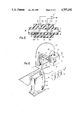
- FIG. 6 is a perspective view of the ion analyzing section of an automatic chemical analyzer.
- FIG. 7 is a partially cut-away perspective view illustrating the construction of a sixth embodiment of the ion selective electrode apparatus with a single earth electrode for use in an automatic chemical analyzer such as that shown in FIG. 6.
- a block 10 made of electrically insulating material has a conduit 11 through which a sample solution such as patient serum is diluted by a buffer. The sample solution flows through the conduit 11 in the direction 18. Also, in block 10, an ion selective electrode 120 and a reference electrode 140 are disposed so as to enclose the conduit 11.
- the ion selective electrode 120 includes an ion selective membrane 13 chosen by an ion to be measured.
- a solution of 0.2 to 0.5 weight % of valinomycin, 4.5 to 5.4 weight % of a plasticizer such as dioctyl adipate, 3.7 to 4.5 weight % of polyvinyl chloride, and 89.7 to 91.7 weight % of tetrahydrofuran is applied to the surface of the metal layer 12. Tetrahydrofuran is removed to form a membrane 13 of a thickness of 20 ⁇ m to 50 ⁇ m and sensitive to a potassium ion.
- the ion selective electrode 120 thus formed is disposed in the block 10 so that the membrane 13 contacts the sample solution flowing through the conduit 11.
- the metal layer 12 is connected to an amplifier 21 having a high input impedance, such as a differential amplifier.
- a reference electrode 140 also is disposed in the block 10 to enclose the inside of the conduit 11.
- the reference electrode 140 comprises a membrane 15 and a metal layer 14.
- a mixture of a suspension of 29 weight % of potassium chloride, 7 weight % of polyvinyl chloride and 64 weight % of tetrahydrofuran is applied to a surface of a metal layer 14 having silver and silver chloride thereon. After the tetrahydrofuran is removed by vaporization, a thin layer containing potassium chloride is left on the silver chloride film. Next a solution of polyvinyl chloride and tetrahydrofuran is applied to the surface of the thin layer containing potassium chloride, and the tetrahydrofuran is again removed by vaporization. Then a polyvinyl chloride film is formed on the thin layer containing potassium chloride film as a protective film. This thin layer forms the membrane 15 on the surface of the metal layer 14.
- the reference electrode 140 is disposed in the block 10 so that the membrane 15 contacts the sample solution flowing through the conduit 11.
- the metal layer 14 of the reference electrode is connected to another input of the amplifier 21.
- Two earth electrodes 16 and 17 are disposed at the entrance and exit of the block 10 so that they contact the sample of solution flowing through the conduit 11.
- the earth electrodes 16 and 17 are made of a stain-proof material such as platinum or carbon and are respectively grounded to earths 19 and 20 as shown.
- the sample solution flows through the conduit 11 in the direction 18.
- a potential related to the activity of the ion corresponding to the ion selective electrode 120 rises between the ion selective electrode 120 and the reference electrode 140.
- the amplifier 21 then amplifies the potential and provides it to a data processing unit (not shown) for displaying the activity of the ion digitally on a monitor or for printing it out.
- a calibrating solution of a known ion activity flows through the conduit 11 after each sample solution flows through it.
- the calibrating solution is used not only for the calibration of the ion selecive electrode apparatus 100, but also for the cleaning of the inside of the conduit 11 to prevent contamination with a previous sample solution.
- a solution may contain electrical noise which comes through the entrance 16 or the exit 7. This electrical noise is grounded to the earths 9 and 20 because the input impedance of the earth electrodes 19 and 20 are much smaller than that of the ion selective electrode 120 and the reference electrode 140. Therefore, the electrical noise coming from the entrance or exit of the conduit 11 is not received by the electrodes 120 and 140 due to the effects of grounding the noise.
- the reference electrode 240 is different from that of the first embodiment 100.
- the reference electrode 240 includes a vessel 29 in the conduit 10 for holding a reference liquid 28 such as saturated potassium chloride.
- This vessel 29 is covered by a lid 25 made of a porous material such as ceramic.
- This porous lid 25 allows the reference liquid 28 to contact the sample solution without losing the reference liquid 28. This contact thus forms a liquid junction for generating a liquid junction potential between the sample solution and the reference liquid 28.
- the reference potassium chloride liquid causes the junction to generate only a small potential which does not depend on the activities of any of the ions. In other words, it generates a reference potential.
- This reference potential is picked up by metal electrode 24, which is made of silver and silver chloride or the like, and the metal electrode 24 is inserted into the reference liquid 28 of the vessel 29.
- the metal electrode 24 is also electrically connected to the amplifier 21.
- This reference electrode 240 is stable with respect to the sample solution because of the liquid junction. Waste material in the sample solution is thus less likely to adhere to the surface of the reference electrode 240 than the solid type electrode 140 in the first embodiment. Accordingly, this reference electrode 240 may be used for a long time without maintenance.
- earth electrodes 160 and 170 as well as the reference electrode 240 the second embodiment are liquid type electrodes.
- Each of the earth electrodes 160 and 170 includes a vessel 34 engraved in the conduit 10.
- the vessel 34 holds a liquid 33 similar to the reference liquid.
- a porous lid 31 covers the vessel 34, but it keeps a liquid contact between the sample solution and the liquid 33.
- a metal electrode 32 made of silver and silver chloride or the like is inserted into the liquid 33 and is electrically connected to earths 19 and 20.
- earth electrodes 160 and 170 Since the input impedance of the earth electrodes 160 and 170 grounded to earths 19 and 20 is much lower than that of the ion selective electrode 120 or the reference electrode 240 connected to the amplifier 21, electrical noise coming through the conduit 11 is captured by these earth electrodes 160 and 170 and is not received by either the ion selective electrode 120 or the reference electrode 240. In this manner, earth electrodes 160 and 170 can function a long time for the same reason as the reference electrode 240 described above.
- FIG. 4 shows a fourth embodiment 400 of the ion selective electrode according to the present invention.
- This embodiment 400 includes three different ion selective electrodes 122, 124 and 126 for three different ions such as sodium, potassium and chloride.
- Each electrode has a surface with metal layers 41, 43 and 45, respectively, each being made of, for example, platinum, gold, copper, etc.
- the respective metal layers are coated with the respective membranes 42, 44 and 46.
- the membranes 42, 44 and 46 are respectively sensitive to sodium, potassium and chloride ions and are made by the processes described above with reference to the first embodiment 100.
- each of the metal layers 41, 43 and 45 is connected to one input of respective amplifiers 211, 212 and 213.
- each amplifier 211, 212 and 213 is commonly connected to the reference electrode 240.
- these amplifiers 211, 212 and 213 amplify the respective potentials detected by the ion selective electrodes 122, 123 and 124 to provide input to a data processing unit (not shown).
- This embodiment 400 is thus capable of measuring three different ions simultaneously.
- earth electrode of the embodiments described above is grounded to earth, but this is not essential to the present invention.
- earth electrodes 820 and 830 are connected to each other by a U shaped pipe 81 disposed in the block 10.
- the earth electrodes 820 and 830 comprise the respective porous lids 82 and 83 made of a material like the material of the lid 25 which covers both ends of the pipe 81.
- the pipe 81 is filled with a reference liquid, and the lids 82 and 83 form the respective liquid junctions between the liquid in the pipe 81 and the solution in the conduit 11.
- the input impedance between the earth electrodes 820 and 830 is much lower than that of the ion selective electrode 120 or the reference electrode 140 disposed between them, electrical noise flows through the pipe 81 and does not impinge on the electrodes 120 and 140. In other words, the electrical noise bypasses the electrodes 120 and 140 by flowing through the pipe 81.
- the pipe 81 may be replaced by an electrically conductive wire. In such an arrangement, the electrical noise flows through the wire without impinging on the ion selective or reference electrode.
- the embodiments described above include two earth electrodes disposed at the entrance and exit, respectively, of the conduit 11. However, if one of the flowing lines is a short distance from ground or is open (i.e., it is expected that little electrical noise comes from the flow), one of the earth electrodes is dispensable.
- FIGS. 6 and 7 the sixth embodiment of the ion selective electrode according to the present invention will be explained.
- a chain of cups 60 circulates in the direction 62 through a series comprised of a sample suction section, a reagent dilution section, a reaction section, an analysis section and a cleaning section.
- a sample suction section several different samples are pipetted into cups for each of the items to be analyzed.
- the reagent dilution section the samples are diluted by the respective reagents according to the item under analysis. Every cup following a cup holding the sample solution for ion analysis is loaded with a calibrating liquid.
- the reaction section also keeps the cups loaded with the sample solution over the range between 25° C. and 37° C. to promote the chemical reaction of the sample and the respective reagent.
- the sample solutions are biochemically analyzed by, for example, a spectrometer and a photometer as well as the ion selectrode apparatus.
- the cups are cleaned by deionized water and dried at the cleaning section.
- a box 52 containing an ion selective electrode apparatus as shown in FIG. 7 ascends and descends in the direction 61 by a drive mechanism (not shown).
- the box 52 has a nozzle 51 in the bottom of it.
- the nozzle 51 is connected to a syringe pump (not shown) through a tube 53 so as to suck the sample solution for the ion analysis and the calibrating liquid for the calibration of the ion selective electrode apparatus from the cup.
- the sucked sample solution and the calibrating liquid flowthrough the ion selective electrode apparatus 600 in the box 52 and are discharged through the tube 53 into a waste section (not shown).
- the ion selective electrode apparatus 600 in the box 52 as shown in FIG. 6 includes block 70 having a conduit 69, one end of which is connected to the nozzle 51 and the other of which is connected to the tube 53.
- one reference electrode 71, three different ion-selective electrodes 72, 73 and 74 and earth electrode 75 are juxtaposed along the conduit 69 so that their inside surfaces contact the sample solution flowing through the conduit 69.
- the reference electrode 71 includes a metal layer 711 and the membrane 712 on the inside surface of the metal layer 711 and generates a reference potential which is provided to an amplifier box 57 through cables 54.
- the three different ion-selective electrodes 72, 73 and 74 include the metal layers 721, 731 and 741 and the membranes 722, 732 and 742, respectively.
- the membranes 722, 732 and 742 are made by the process described with reference to the first embodiment 100 and are sensitive to the respective sodium, potassium and chloride ions.
- the metal layers 721, 731 and 741 are connected to the respective amplifiers (not shown) in the amplifier box 57 through the cables 54.
- the earth electrode 75 made of a chemically stable and electrically conductive material such as platinum, carbon and the like is connected to earth 63 through earth cable 58 extending from the box 57 to earth 63.
- the box 52 including the ion selective electrode apparatus 600 is grounded to earth 63 through earth cable 59.
- a warm liquid also circulates around the box 52 through tubes 55 and 56 to keep the temperature of the ion selective electrode apparatus 600 in the range of 25° C. to 37° C.
- the amplifier box 57 is also grounded to earth 63 through earth cable 64.
- the box 52 descends from the home position towards the cup 60 to suck the sample solution from the cup 60.
- the sample solution flows through the conduit 69 of the ion selective electrode apparatus 600, the ion selective electrodes 72, 73 and 74 generate the potentials related to the ion activities with respect to the reference potential provided from the reference electrode 71.
- the potentials are provided to the amplifiers in the amplifier box 57.
- the box 52 ascends to the home position, and the next cup 60 loaded with the calibrating liquid comes underneath the nozzle 51.
- the nozzle 51 again descends to suck the calibating liquid.
- the electrodes 71 to 74 are calibrated and cleaned by the calibrating liquid. This process is repeated until the last sample solution is tested and the data relating to the ion activities are processed by the data processing unit (not shown). The results of the measurement of the ion activities are then displayed on a monitor or printed out item by item.
- the earth electrode 75 is disposed only at the exit of the conduit 69, since the nozzle disposed at the entrance of the conduit 69 is short and electrically open, thereby causing little electrical noise to come from the nozzle 51. Accordingly, the single earth electrode 75 is capable of shunting the electrical noise coming from the flowing input. Thus, it is not necessary to dispose another earth electrode at the entrance of the conduit 69 in this case; however, it may be desirable to do so if too much noise is being generated for grounding by a single earth electrode.
Landscapes
- Health & Medical Sciences (AREA)
- Life Sciences & Earth Sciences (AREA)
- Engineering & Computer Science (AREA)
- Chemical & Material Sciences (AREA)
- Biomedical Technology (AREA)
- Physics & Mathematics (AREA)
- Immunology (AREA)
- General Health & Medical Sciences (AREA)
- Molecular Biology (AREA)
- Pathology (AREA)
- Hematology (AREA)
- General Physics & Mathematics (AREA)
- Biochemistry (AREA)
- Analytical Chemistry (AREA)
- Food Science & Technology (AREA)
- Biophysics (AREA)
- Medicinal Chemistry (AREA)
- Ecology (AREA)
- Urology & Nephrology (AREA)
- Chemical Kinetics & Catalysis (AREA)
- Electrochemistry (AREA)
- Investigating Or Analyzing Materials By The Use Of Electric Means (AREA)
- Investigating Or Analysing Biological Materials (AREA)
Abstract
Description
E=E.sub.0 ±2.303 (RT/ZF) log A
Claims (8)
Applications Claiming Priority (4)
| Application Number | Priority Date | Filing Date | Title |
|---|---|---|---|
| JP61169324A JPS6326569A (en) | 1986-07-18 | 1986-07-18 | Ion selective electrode device |
| JP61-169324 | 1986-07-18 | ||
| JP61-170822 | 1986-07-22 | ||
| JP61170822A JPS6327746A (en) | 1986-07-22 | 1986-07-22 | Ion selective electrode apparatus |
Publications (1)
| Publication Number | Publication Date |
|---|---|
| US4797192A true US4797192A (en) | 1989-01-10 |
Family
ID=26492700
Family Applications (1)
| Application Number | Title | Priority Date | Filing Date |
|---|---|---|---|
| US07/074,188 Expired - Lifetime US4797192A (en) | 1986-07-18 | 1987-07-16 | Ion selective electrode apparatus with an earth electrode |
Country Status (1)
| Country | Link |
|---|---|
| US (1) | US4797192A (en) |
Cited By (13)
| Publication number | Priority date | Publication date | Assignee | Title |
|---|---|---|---|---|
| US5041792A (en) * | 1990-03-22 | 1991-08-20 | Exxon Production Research Company | Electrodes incorporating intercalation compounds for mangetotelluric, electroseismic and other electrical survey applications |
| US5110441A (en) * | 1989-12-14 | 1992-05-05 | Monsanto Company | Solid state ph sensor |
| US5199652A (en) * | 1992-02-28 | 1993-04-06 | The B. F. Goodrich Company | Method for separating a mixture of two plastics with similar specific gravities |
| US5271820A (en) * | 1992-06-19 | 1993-12-21 | Monsanto Company | Solid state pH sensor |
| US5372696A (en) * | 1992-09-12 | 1994-12-13 | Dragerwerk Ag | Electrochemical sensor of modular design |
| NL1013072C2 (en) * | 1999-09-17 | 2001-03-20 | Stichting Fund Ond Material | Liquid analysis apparatus, e.g. for polluted water, has sensor located in cavity separated from through flow channel by semi permeable medium |
| WO2002068950A1 (en) * | 2001-02-28 | 2002-09-06 | Thermo Orion Inc. | Solid-state reference electrode system |
| US6663756B2 (en) * | 2000-10-19 | 2003-12-16 | I-Sens Inc. | Microchip-type oxygen gas sensor based on differential potentiometry |
| US20080135409A1 (en) * | 2006-12-06 | 2008-06-12 | Sakuraoka Masayuki | Ion sensor, ion sensor module, and ion sensor manufacturing method |
| US20080300789A1 (en) * | 2007-05-31 | 2008-12-04 | Fritchie Patrick P | Method for determining the order of execution of assays of a sample in a laboratory automation system |
| CN102498390A (en) * | 2009-09-18 | 2012-06-13 | 日立化成工业株式会社 | Ion Selective Electrode Cartridge |
| EP2149790A4 (en) * | 2007-04-12 | 2013-10-09 | Arkray Inc | Analyzing tool |
| US11209413B2 (en) * | 2018-03-29 | 2021-12-28 | Ecowater Systems Llc | Method for determining hardness concentration using a monovalent ion selective electrode |
Citations (3)
| Publication number | Priority date | Publication date | Assignee | Title |
|---|---|---|---|---|
| US3862895A (en) * | 1970-06-05 | 1975-01-28 | Great Lakes Instruments Inc | Self-compensating electrode system |
| US4409088A (en) * | 1981-06-30 | 1983-10-11 | Tokyo Shibaura Denki Kabushiki Kaisha | Regeneration method of ion-selective electrode, and ion-selective electrode and ion-concentration analyzer containing means adapted to practice said method |
| US4533457A (en) * | 1982-08-28 | 1985-08-06 | Tokyo Shibaura Denki Kabushiki Kaisha | Ion selective electrode device and ion analyzing apparatus |
-
1987
- 1987-07-16 US US07/074,188 patent/US4797192A/en not_active Expired - Lifetime
Patent Citations (3)
| Publication number | Priority date | Publication date | Assignee | Title |
|---|---|---|---|---|
| US3862895A (en) * | 1970-06-05 | 1975-01-28 | Great Lakes Instruments Inc | Self-compensating electrode system |
| US4409088A (en) * | 1981-06-30 | 1983-10-11 | Tokyo Shibaura Denki Kabushiki Kaisha | Regeneration method of ion-selective electrode, and ion-selective electrode and ion-concentration analyzer containing means adapted to practice said method |
| US4533457A (en) * | 1982-08-28 | 1985-08-06 | Tokyo Shibaura Denki Kabushiki Kaisha | Ion selective electrode device and ion analyzing apparatus |
Cited By (24)
| Publication number | Priority date | Publication date | Assignee | Title |
|---|---|---|---|---|
| US5110441A (en) * | 1989-12-14 | 1992-05-05 | Monsanto Company | Solid state ph sensor |
| AU639276B2 (en) * | 1989-12-14 | 1993-07-22 | Monsanto Company | Solid state ph sensor |
| US5041792A (en) * | 1990-03-22 | 1991-08-20 | Exxon Production Research Company | Electrodes incorporating intercalation compounds for mangetotelluric, electroseismic and other electrical survey applications |
| US5199652A (en) * | 1992-02-28 | 1993-04-06 | The B. F. Goodrich Company | Method for separating a mixture of two plastics with similar specific gravities |
| US5271820A (en) * | 1992-06-19 | 1993-12-21 | Monsanto Company | Solid state pH sensor |
| US5372696A (en) * | 1992-09-12 | 1994-12-13 | Dragerwerk Ag | Electrochemical sensor of modular design |
| NL1013072C2 (en) * | 1999-09-17 | 2001-03-20 | Stichting Fund Ond Material | Liquid analysis apparatus, e.g. for polluted water, has sensor located in cavity separated from through flow channel by semi permeable medium |
| US6663756B2 (en) * | 2000-10-19 | 2003-12-16 | I-Sens Inc. | Microchip-type oxygen gas sensor based on differential potentiometry |
| WO2002068950A1 (en) * | 2001-02-28 | 2002-09-06 | Thermo Orion Inc. | Solid-state reference electrode system |
| EP1939614A3 (en) * | 2006-12-06 | 2010-06-23 | Kabushiki Kaisha Toshiba | Ion sensor, ion sensor module, and ion sensor manufacturing method |
| EP1939614A2 (en) | 2006-12-06 | 2008-07-02 | Kabushiki Kaisha Toshiba | Ion sensor, ion sensor module, and ion sensor manufacturing method |
| US8778153B2 (en) | 2006-12-06 | 2014-07-15 | Kabushiki Kaisha Toshiba | Ion sensor, ion sensor module, and ion sensor manufacturing method |
| US20080135409A1 (en) * | 2006-12-06 | 2008-06-12 | Sakuraoka Masayuki | Ion sensor, ion sensor module, and ion sensor manufacturing method |
| US20100285208A1 (en) * | 2006-12-06 | 2010-11-11 | Sakuraoka Masayuki | Ion sensor, ion sensor module, and ion sensor manufacturing method |
| EP2306182A1 (en) * | 2006-12-06 | 2011-04-06 | Kabushiki Kaisha Toshiba | Ion sensor, ion sensor module, and ion sensor manufacturing method |
| US7998326B2 (en) | 2006-12-06 | 2011-08-16 | Kabushiki Kaisha Toshiba | Ion sensor, ion sensor module, and ion sensor manufacturing method |
| CN101196528B (en) * | 2006-12-06 | 2014-02-05 | 株式会社东芝 | Ion sensor, ion sensor module, and ion sensor manufacturing method |
| EP2149790A4 (en) * | 2007-04-12 | 2013-10-09 | Arkray Inc | Analyzing tool |
| US8112229B2 (en) | 2007-05-31 | 2012-02-07 | Abbott Laboratories | Method for determining the order of execution of assays of a sample in a laboratory automation system |
| US20080300789A1 (en) * | 2007-05-31 | 2008-12-04 | Fritchie Patrick P | Method for determining the order of execution of assays of a sample in a laboratory automation system |
| EP2479562A4 (en) * | 2009-09-18 | 2012-08-29 | Hitachi Chemical Co Ltd | Ion selective electrode cartridge |
| CN102498390A (en) * | 2009-09-18 | 2012-06-13 | 日立化成工业株式会社 | Ion Selective Electrode Cartridge |
| US8652313B2 (en) | 2009-09-18 | 2014-02-18 | Hitachi Chemical Company, Ltd. | Ion selective electrode cartridge |
| US11209413B2 (en) * | 2018-03-29 | 2021-12-28 | Ecowater Systems Llc | Method for determining hardness concentration using a monovalent ion selective electrode |
Similar Documents
| Publication | Publication Date | Title |
|---|---|---|
| US4797192A (en) | Ion selective electrode apparatus with an earth electrode | |
| EP0102042B1 (en) | Ion selective electrode device and ion analyzing apparatus | |
| AU621818B2 (en) | Electrode sensors, sensor cartridges and portable miniaturised analytical instruments | |
| EP0820593B1 (en) | Measuring device | |
| US4339317A (en) | Device for performing measurements on fluids, directly in the sample container | |
| KR100241928B1 (en) | Determination device in which the electrode is integrally formed on the porous thin film and the quantification method using the same | |
| EP1226427A1 (en) | Method for analysing a papermaking process and an electrochemical sensor for analysing liquid | |
| EP0978722B1 (en) | comb-shaped sensor element with electrodes on the projections and edge connector at the opposing edge | |
| US5830343A (en) | Electrochemical analysis process | |
| EP0587665A1 (en) | Electro-analysis of liquids and sensing elements for use therein. | |
| US5489371A (en) | Sensor for electrochemical measurements | |
| US5164067A (en) | Measuring device for determining chemical parameters of an aqueous sample | |
| EP0188319A2 (en) | Method and apparatus for measuring halogen ion concentration | |
| EP0579632A1 (en) | Electrode calibration | |
| EP1225449A1 (en) | Non-enzymatic disposable electrode strip comprising a surfactant for detecting uric acid or hemoglobin; method for producing the same and its use | |
| EP0350116A2 (en) | Electrochemical cell for measuring ionic activity in a solution and its method of use | |
| Wang et al. | Sensitive and selective voltammetric measurements of tricyclic antidepressants using lipid-coated electrodes | |
| EP0264210A2 (en) | Chemical probe and enzyme sensor therefor | |
| CN221465376U (en) | Universal disposable ion test card | |
| DE102019116308A1 (en) | Potentiometric sensor | |
| KR100279080B1 (en) | Integrated Composite Microelectrode Array | |
| JPH0718835B2 (en) | Ion concentration measurement method | |
| JP2549311B2 (en) | Ion sensor | |
| JPS58115361A (en) | Ion electrode apparatus | |
| JPH0139781B2 (en) |
Legal Events
| Date | Code | Title | Description |
|---|---|---|---|
| AS | Assignment |
Owner name: KABUSHIKI KAISHA TOSHIBA, 72, HORIKAWA-CHO, SAIWAI Free format text: ASSIGNMENT OF ASSIGNORS INTEREST.;ASSIGNOR:TAKIGUCHI, TOSHIO;REEL/FRAME:004780/0686 Effective date: 19870718 Owner name: KABUSHIKI KAISHA TOSHIBA,JAPAN Free format text: ASSIGNMENT OF ASSIGNORS INTEREST;ASSIGNOR:TAKIGUCHI, TOSHIO;REEL/FRAME:004780/0686 Effective date: 19870718 |
|
| STCF | Information on status: patent grant |
Free format text: PATENTED CASE |
|
| FEPP | Fee payment procedure |
Free format text: PAYOR NUMBER ASSIGNED (ORIGINAL EVENT CODE: ASPN); ENTITY STATUS OF PATENT OWNER: LARGE ENTITY |
|
| FPAY | Fee payment |
Year of fee payment: 4 |
|
| FPAY | Fee payment |
Year of fee payment: 8 |
|
| FPAY | Fee payment |
Year of fee payment: 12 |