US4740586A - Crystalline form III of N.sup.α -[[(S)-4-oxo-2-azetidinyl]-carbonyl]-L - Google Patents
Crystalline form III of N.sup.α -[[(S)-4-oxo-2-azetidinyl]-carbonyl]-L Download PDFInfo
- Publication number
- US4740586A US4740586A US06/937,608 US93760886A US4740586A US 4740586 A US4740586 A US 4740586A US 93760886 A US93760886 A US 93760886A US 4740586 A US4740586 A US 4740586A
- Authority
- US
- United States
- Prior art keywords
- crystals
- compound
- iii
- form iii
- carbonyl
- Prior art date
- Legal status (The legal status is an assumption and is not a legal conclusion. Google has not performed a legal analysis and makes no representation as to the accuracy of the status listed.)
- Expired - Fee Related
Links
- 239000013078 crystal Substances 0.000 claims abstract description 87
- 238000000634 powder X-ray diffraction Methods 0.000 claims abstract description 12
- 125000002915 carbonyl group Chemical group [*:2]C([*:1])=O 0.000 claims description 6
- 238000000862 absorption spectrum Methods 0.000 abstract description 12
- 150000001875 compounds Chemical class 0.000 abstract description 4
- 150000004683 dihydrates Chemical group 0.000 abstract description 3
- 208000026139 Memory disease Diseases 0.000 abstract description 2
- 238000000113 differential scanning calorimetry Methods 0.000 abstract description 2
- 238000004519 manufacturing process Methods 0.000 abstract description 2
- 229940126062 Compound A Drugs 0.000 description 22
- NLDMNSXOCDLTTB-UHFFFAOYSA-N Heterophylliin A Natural products O1C2COC(=O)C3=CC(O)=C(O)C(O)=C3C3=C(O)C(O)=C(O)C=C3C(=O)OC2C(OC(=O)C=2C=C(O)C(O)=C(O)C=2)C(O)C1OC(=O)C1=CC(O)=C(O)C(O)=C1 NLDMNSXOCDLTTB-UHFFFAOYSA-N 0.000 description 22
- 238000000034 method Methods 0.000 description 13
- XLYOFNOQVPJJNP-UHFFFAOYSA-N water Substances O XLYOFNOQVPJJNP-UHFFFAOYSA-N 0.000 description 13
- 239000000203 mixture Substances 0.000 description 11
- OKKJLVBELUTLKV-UHFFFAOYSA-N Methanol Chemical compound OC OKKJLVBELUTLKV-UHFFFAOYSA-N 0.000 description 9
- 238000001035 drying Methods 0.000 description 9
- 238000002360 preparation method Methods 0.000 description 9
- 238000002411 thermogravimetry Methods 0.000 description 9
- LFQSCWFLJHTTHZ-UHFFFAOYSA-N Ethanol Chemical compound CCO LFQSCWFLJHTTHZ-UHFFFAOYSA-N 0.000 description 6
- 238000000921 elemental analysis Methods 0.000 description 6
- 238000001914 filtration Methods 0.000 description 6
- DLYUQMMRRRQYAE-UHFFFAOYSA-N tetraphosphorus decaoxide Chemical compound O1P(O2)(=O)OP3(=O)OP1(=O)OP2(=O)O3 DLYUQMMRRRQYAE-UHFFFAOYSA-N 0.000 description 6
- 238000010438 heat treatment Methods 0.000 description 5
- 239000000243 solution Substances 0.000 description 5
- VYPSYNLAJGMNEJ-UHFFFAOYSA-N Silicium dioxide Chemical compound O=[Si]=O VYPSYNLAJGMNEJ-UHFFFAOYSA-N 0.000 description 4
- 125000003460 beta-lactamyl group Chemical group 0.000 description 4
- YIXJRHPUWRPCBB-UHFFFAOYSA-N magnesium nitrate Chemical compound [Mg+2].[O-][N+]([O-])=O.[O-][N+]([O-])=O YIXJRHPUWRPCBB-UHFFFAOYSA-N 0.000 description 4
- 238000002844 melting Methods 0.000 description 4
- 230000008018 melting Effects 0.000 description 4
- 239000000741 silica gel Substances 0.000 description 4
- 229910002027 silica gel Inorganic materials 0.000 description 4
- 150000008064 anhydrides Chemical class 0.000 description 3
- 238000001816 cooling Methods 0.000 description 3
- 238000001938 differential scanning calorimetry curve Methods 0.000 description 3
- 238000010521 absorption reaction Methods 0.000 description 2
- 239000007864 aqueous solution Substances 0.000 description 2
- 239000003795 chemical substances by application Substances 0.000 description 2
- 150000004682 monohydrates Chemical class 0.000 description 2
- 230000005855 radiation Effects 0.000 description 2
- 229920006395 saturated elastomer Polymers 0.000 description 2
- 238000001228 spectrum Methods 0.000 description 2
- 230000004580 weight loss Effects 0.000 description 2
- 101100386054 Saccharomyces cerevisiae (strain ATCC 204508 / S288c) CYS3 gene Proteins 0.000 description 1
- 238000002425 crystallisation Methods 0.000 description 1
- 230000018044 dehydration Effects 0.000 description 1
- 238000006297 dehydration reaction Methods 0.000 description 1
- 230000000694 effects Effects 0.000 description 1
- 238000009472 formulation Methods 0.000 description 1
- 238000011835 investigation Methods 0.000 description 1
- 238000005259 measurement Methods 0.000 description 1
- 239000002994 raw material Substances 0.000 description 1
- 238000001179 sorption measurement Methods 0.000 description 1
- 238000003756 stirring Methods 0.000 description 1
- 238000003860 storage Methods 0.000 description 1
- 101150035983 str1 gene Proteins 0.000 description 1
- 238000001757 thermogravimetry curve Methods 0.000 description 1
Images




Classifications
-
- C—CHEMISTRY; METALLURGY
- C07—ORGANIC CHEMISTRY
- C07K—PEPTIDES
- C07K5/00—Peptides containing up to four amino acids in a fully defined sequence; Derivatives thereof
- C07K5/04—Peptides containing up to four amino acids in a fully defined sequence; Derivatives thereof containing only normal peptide links
- C07K5/08—Tripeptides
-
- C—CHEMISTRY; METALLURGY
- C07—ORGANIC CHEMISTRY
- C07D—HETEROCYCLIC COMPOUNDS
- C07D403/00—Heterocyclic compounds containing two or more hetero rings, having nitrogen atoms as the only ring hetero atoms, not provided for by group C07D401/00
- C07D403/14—Heterocyclic compounds containing two or more hetero rings, having nitrogen atoms as the only ring hetero atoms, not provided for by group C07D401/00 containing three or more hetero rings
-
- A—HUMAN NECESSITIES
- A61—MEDICAL OR VETERINARY SCIENCE; HYGIENE
- A61P—SPECIFIC THERAPEUTIC ACTIVITY OF CHEMICAL COMPOUNDS OR MEDICINAL PREPARATIONS
- A61P25/00—Drugs for disorders of the nervous system
- A61P25/28—Drugs for disorders of the nervous system for treating neurodegenerative disorders of the central nervous system, e.g. nootropic agents, cognition enhancers, drugs for treating Alzheimer's disease or other forms of dementia
-
- C—CHEMISTRY; METALLURGY
- C07—ORGANIC CHEMISTRY
- C07K—PEPTIDES
- C07K5/00—Peptides containing up to four amino acids in a fully defined sequence; Derivatives thereof
- C07K5/04—Peptides containing up to four amino acids in a fully defined sequence; Derivatives thereof containing only normal peptide links
- C07K5/08—Tripeptides
- C07K5/0821—Tripeptides with the first amino acid being heterocyclic, e.g. His, Pro, Trp
Definitions
- This invention relates to novel crystals of N.sup. ⁇ -[[(S)-4-oxo-2-azetidinyl]carbonyl]-L-histidyl-L-prolinamide (hereinafter, is referred to as Compound A) shown by the formula ##STR1## and a process for producing the crystals. More particularly, the invention relates to the Form III crystals of Compound A and a process for producing them.
- Compound A is a known compound described in Japanese patent publication (Unexamined) Nos. 225,182/84, 172,996/85, and U.S. Pat. No. 4,564,609 as a compound having improving activities for consciousness disturbance and memory disorder.
- the crystals of Compound A thus obtained are 4 kinds of Forms II, III, IV and V.
- Form II is a monohydrate
- Form III the crystals of this invention, is a dihydrate
- Forms IV and V are anhydrides.
- FIG. 1 to FIG. 3 show the X-ray powder diffraction pattern, the infrared absorption spectrum, and the curve of thermogravimetry (TG)-differential scanning calorimetry (DSC), respectively, of the Form II crystals.
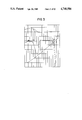
- FIG. 4 to FIG. 6 show the X-ray powder diffraction pattern, the infrared absorption spectrum, and the TG-DSC curve, respectively, of the Form III crystals of this invention.
- FIG. 7 and FIG. 8 show the X-ray powder diffraction pattern and the infrared absorption spectrum, respectively, of the Form IV crystals.
- FIG. 9 shows the X-ray powder diffraction pattern of the form V crystals
- FIG. 10 to FIG. 12 show the X-ray powder diffraction pattern, the infrared absorption spectrum, and the TG-DSC curve, respectively, of Form I crystals of Compound A.
- the diffraction pattern of Form II crystals recorded by monochromated Cu(K ⁇ ) radiation is shown in FIG. 1 in the values of diffraction angle 2 74 and the intensity I.
- the relation between interplannar spacing (d) and relative intensity (I/Io) in the characteristic peaks is shown in Table 1.
- the infrared absorption spectrum of the Form II crystals in Nujol mull is shown in FIG. 2.
- the carbonyl stretching vibration of the ⁇ -lactam ring, which is the characteristic absorption of the Form II crystals is 1780-1785 cm -1 .
- the TG-DSC curve of Form II crystals was recorded in ⁇ 2 mcal/sec of DSC full scale and 5 mg of TG full scale by heating to 200° C. in 5° C./min of the rate.
- the thermogram shown in FIG. 3 represents clearly an endothermic peak near 175° C. corresponded to the melting point, and weight loss in the TG curve.
- the diffraction pattern is shown in FIG. 4.
- the carbonyl stretching vibration of the ⁇ -lactam ring of the Form III crystals is 1730-1735 cm -1 .
- the curve of DSC-TG shown in FIG. 6 represents an endothermic peak near 147° C. corresponded to the melting point with weight loss in the TG curve.
- the diffraction pattern obtained by measuring as the case of the Form II crystals is shown in FIG. 7.
- the carbonyl stretching vibration of the ⁇ -lactam ring of the Form IV crystals is 1750-1755 cm -1 .
- the Form IV crystals show an endothermic peak near 147° C. which is corresponding to the melting point.
- the diffraction patterns recorded at 160° C. and 175° C. by monochromated Cu(K ⁇ ) radiation are shown in FIG. 9 in the relation between the diffraction angle 2 ⁇ and the intensity.
- Form V crystals are very hygroscopic, the spectrum shows a mixture of Form V and Form II which was transformed from Form V by moisture during the measurement.
- the carbonyl stretching vibration of the ⁇ -lactam ring of Form V are 1755-1760 cm -1 , which can be easily distinguished from the absorption of Form II.
- the curve shows an endothermic peak near 174° C. corresponded to the melting point.
- Crystals of Compound A thus obtained are novel crystals each having different water content from that of the above-described known crystals of Compound A.
- Forms I, II, IV, and V are very hygroscopic and Form III is stable under conditions of ambient temperature and humidity without any change of the crystal form due to water adsorption or dehydration. Accordingly, Form III crystals are advantageous to storage, manipulation, formulation of Compound A and so on.
- Process A Compound A was recrystallized from methanol followed by drying at 60° C. under reduced pressure, and the resulting crystals (referred to as Form I crystals hereafter) were allowed to stand in 100% of relative humidity (RH), or Form II crystals were allowed to stand in 100% of RH.
- RH relative humidity
- Process B The crystals of Compound A were suspended in water (2 to 6 times, preferably about 3 times) followed by stirring for about 1.5 to 3 hrs under ice-cooling, and the resulting crystals were collected by filtration followed by drying over a desicant agent such as silica gel.
- a desicant agent such as silica gel.
- Process C The crystals of Compound A were dissolved in water (3 to 6 times, preferably 4 to 5 times) under heating, and the solution was ice-cooled. The recrystallized crystals were collected by filtration followed by drying overnight over a desicant agent such as silica gel.
- a desicant agent such as silica gel.
- Form II crystals can be obtained by allowing to the Form I crystals described above to stand in about 52% of RH.
- the state of 52% RH is obtained by placing a saturated aqueous solution of magnesium nitrate in a closed desiccator.
- Form IV crystals are obtained by drying the Form III crystals over phosphorus pentaoxide at 40° to 65° C. under reduced pressure.
- Process D Form II crystals were dried over phosphorus pentaoxide at 40° to 65° C. under reduced pressure.
- Process E The crystals of Compound A were dissolved in about 10 times of ethanol under heating, and to the solution was added water in amount of 10% volume of ethanol under ice-cooling followed by keeping overnight in a refrigerator. The resulting crystals were collected by filtration followed by drying over phosphorus pentaoxide at 40° to 65° C. under reduced pressure.
- crystals of Compound A which are used for Process B, Process C and Process E described above may be any form.
- the water content of the Form II crystals measured by Karl Fischer's method was 5.67%.
- Form III crystals were obtained at a quantitative yield.
- Form II crystals By following the same procedure as above using the Form II crystals as a raw material, Form III crystals were also obtained.
- the water content of the Form III crystals measured by Karl Fischer's method was 9.54%.
- Form V crystals were obtained. The elemental analysis thereof was immediately performed.
Landscapes
- Chemical & Material Sciences (AREA)
- Organic Chemistry (AREA)
- Health & Medical Sciences (AREA)
- Life Sciences & Earth Sciences (AREA)
- Medicinal Chemistry (AREA)
- General Health & Medical Sciences (AREA)
- Proteomics, Peptides & Aminoacids (AREA)
- Molecular Biology (AREA)
- Genetics & Genomics (AREA)
- Biophysics (AREA)
- Biochemistry (AREA)
- Neurosurgery (AREA)
- Neurology (AREA)
- Biomedical Technology (AREA)
- Bioinformatics & Cheminformatics (AREA)
- Engineering & Computer Science (AREA)
- Psychiatry (AREA)
- Animal Behavior & Ethology (AREA)
- Public Health (AREA)
- Veterinary Medicine (AREA)
- Pharmacology & Pharmacy (AREA)
- Nuclear Medicine, Radiotherapy & Molecular Imaging (AREA)
- General Chemical & Material Sciences (AREA)
- Chemical Kinetics & Catalysis (AREA)
- Hospice & Palliative Care (AREA)
- Peptides Or Proteins (AREA)
- Medicines That Contain Protein Lipid Enzymes And Other Medicines (AREA)
- Pharmaceuticals Containing Other Organic And Inorganic Compounds (AREA)
- Plural Heterocyclic Compounds (AREA)
Abstract
Description
              TABLE 1
______________________________________
(Characteristic peaks of Form II)
        d (Å)
              I/Io
______________________________________
        10.7  11.0
        8.1   4.8
        6.0   9.2
        5.3   100.0
        5.1   18.2
        4.9   19.9
        4.7   25.7
        4.0   11.0
        3.9   11.8
        3.5   17.8
        3.2   4.8
        3.0   2.7
______________________________________
              TABLE 2
______________________________________
(Characteristic peaks of Form III)
        d (Å)
              I/Io
______________________________________
        9.8   9.1
        8.1   11.5
        7.0   10.0
        6.5   62.2
        5.5   76.2
        5.2   76.1
        4.7   100.0
        4.3   31.3
        4.1   10.3
        3.9   39.4
        3.8   15.4
        3.5   19.8
        3.4   12.1
        3.0   31.2
______________________________________
              TABLE 3
______________________________________
(Characteristic peaks of Form IV)
        d (Å)
              I/Io
______________________________________
        9.8   16.1
        8.1   8.3
        7.5   13.0
        6.8   35.4
        6.6   39.7
        6.1   28.3
        5.4   57.2
        5.0   83.0
        4.9   67.4
        4.5   23.7
        4.3   100.0
        4.0   40.0
        3.6   39.9
        3.5   46.2
        3.2   27.2
______________________________________
______________________________________
Elemental Analysis for C.sub.15 H.sub.20 N.sub.6 O.sub.4.H.sub.2 O:
         C (%)      H (%)   N (%)
______________________________________
Calculated:
           49.17        6.05    22.94
Found:     49.15        5.92    22.93
______________________________________
______________________________________
Elemental Analysis for C.sub.15 H.sub.20 N.sub.6 O.sub.4.2H.sub.2 O:
         C (%)      H (%)   N (%)
______________________________________
Calculated:
           46.87        6.29    21.86
Found:     46.77        6.28    21.73
______________________________________
______________________________________
Elemental Analysis for C.sub.15 H.sub.20 N.sub.6 O.sub.4 :
         C (%)      H (%)   N (%)
______________________________________
Calculated:
           51.72        5.79    24.12
Found:     51.81        5.80    24.38
______________________________________
______________________________________
Elemental Analysis for C.sub.15 H.sub.20 N.sub.6 O.sub.4 :
         C (%)      H (%)   N (%)
______________________________________
Calculated:
           51.72        5.79    24.12
Found:     51.31        5.58    24.18
______________________________________
              TABLE 4
______________________________________
        Employed conditions
Crystals
        at room temp.     Results
______________________________________
Form I  100% of RH for one day
                          Form III
        52% of RH for one day
                          Form II
        33% of RH for 7 days
                          a mixture of Form I
                          and Form II
        standing under ambient
                          a mixture of Form I
        conditions for 4 days
                          and Form II
Form II 100% of RH for one day
                          Form III
        52% of RH for 12-18 days
                          a mixture of Form II
                          and Form III
Form III
        100% of RH for 26 days
                          Form III
        standing under ambient
                          Form III
        conditions for 7 days
Form IV 100% RH for 3-5 days
                          a mixture containing
                          Form III
        100% of RH for 7-13 days
                          Form III
Form V  standing under ambient
                          a mixture of Form
        conditions for 3-10 min.
                          II and Form V
______________________________________
 RH: relative humidity
Claims (1)
______________________________________
        d (Å)
              I/Io
______________________________________
        9.8    9.1
        8.1   11.5
        7.0   10.0
        6.5   62.2
        5.5   76.2
        5.2   76.1
        4.7   100.0
        4.3   31.3
        4.1   10.3
        3.9   39.4
        3.8   15.4
        3.5   19.8
        3.4   12.1
        3.0    31.2.
______________________________________
Applications Claiming Priority (2)
| Application Number | Priority Date | Filing Date | Title |
|---|---|---|---|
| JP60-275686 | 1985-12-06 | ||
| JP27568685 | 1985-12-06 |
Publications (1)
| Publication Number | Publication Date |
|---|---|
| US4740586A true US4740586A (en) | 1988-04-26 |
Family
ID=17558938
Family Applications (1)
| Application Number | Title | Priority Date | Filing Date |
|---|---|---|---|
| US06/937,608 Expired - Fee Related US4740586A (en) | 1985-12-06 | 1986-12-03 | Crystalline form III of N.sup.α -[[(S)-4-oxo-2-azetidinyl]-carbonyl]-L |
Country Status (12)
| Country | Link |
|---|---|
| US (1) | US4740586A (en) |
| EP (1) | EP0225796A3 (en) |
| JP (1) | JPS62234094A (en) |
| KR (1) | KR940001625B1 (en) |
| AU (1) | AU588406B2 (en) |
| CA (1) | CA1281850C (en) |
| DK (1) | DK585686A (en) |
| ES (1) | ES2002667A6 (en) |
| IE (1) | IE863202L (en) |
| NO (1) | NO864889L (en) |
| PH (1) | PH24186A (en) |
| ZA (1) | ZA868957B (en) |
Cited By (1)
| Publication number | Priority date | Publication date | Assignee | Title |
|---|---|---|---|---|
| US20040149960A1 (en) * | 2003-02-04 | 2004-08-05 | Tremper Henry Stever | Conductive primer composition for ambient cure |
Families Citing this family (1)
| Publication number | Priority date | Publication date | Assignee | Title |
|---|---|---|---|---|
| KR20050105290A (en) | 2000-08-31 | 2005-11-03 | 시오노기세이야쿠가부시키가이샤 | Antiparkinsonism drugs |
Citations (2)
| Publication number | Priority date | Publication date | Assignee | Title |
|---|---|---|---|---|
| US4537900A (en) * | 1981-09-25 | 1985-08-27 | Richter Gedeon Vegyeszeti Gyar R.T. | Cimetidine Z, a new crystal modification of cimetidine |
| US4564609A (en) * | 1983-03-25 | 1986-01-14 | Yamanouchi Pharmaceutical Co., Ltd. | 4-Substituted-2-azetidinone compound, process of producing the compounds, and medicaments containing the compounds |
Family Cites Families (4)
| Publication number | Priority date | Publication date | Assignee | Title |
|---|---|---|---|---|
| AU576316B2 (en) * | 1983-03-25 | 1988-08-25 | Yamanouchi Pharmaceutical Co., Ltd. | 4-substituted-2-azetidinones |
| JPS59225182A (en) * | 1983-03-25 | 1984-12-18 | Yamanouchi Pharmaceut Co Ltd | Derivative of 2-azetidinone-4-carboxylic acid |
| JPS60172996A (en) * | 1984-02-16 | 1985-09-06 | Yamanouchi Pharmaceut Co Ltd | 2-azetidinone-4-substituted compound and its preparation |
| US4719207A (en) * | 1984-06-25 | 1988-01-12 | Yamanouchi Pharmaceutical Co., Ltd. | CNS active substituted azetidinone compounds |
-
1986
- 1986-11-26 ZA ZA868957A patent/ZA868957B/en unknown
- 1986-12-02 JP JP61288605A patent/JPS62234094A/en active Pending
- 1986-12-03 US US06/937,608 patent/US4740586A/en not_active Expired - Fee Related
- 1986-12-04 PH PH34557A patent/PH24186A/en unknown
- 1986-12-05 KR KR1019860010390A patent/KR940001625B1/en not_active Expired - Lifetime
- 1986-12-05 IE IE863202A patent/IE863202L/en unknown
- 1986-12-05 CA CA000524693A patent/CA1281850C/en not_active Expired - Fee Related
- 1986-12-05 ES ES8603317A patent/ES2002667A6/en not_active Expired
- 1986-12-05 NO NO864889A patent/NO864889L/en unknown
- 1986-12-05 DK DK585686A patent/DK585686A/en not_active Application Discontinuation
- 1986-12-05 EP EP86309501A patent/EP0225796A3/en not_active Withdrawn
- 1986-12-08 AU AU66308/86A patent/AU588406B2/en not_active Ceased
Patent Citations (2)
| Publication number | Priority date | Publication date | Assignee | Title |
|---|---|---|---|---|
| US4537900A (en) * | 1981-09-25 | 1985-08-27 | Richter Gedeon Vegyeszeti Gyar R.T. | Cimetidine Z, a new crystal modification of cimetidine |
| US4564609A (en) * | 1983-03-25 | 1986-01-14 | Yamanouchi Pharmaceutical Co., Ltd. | 4-Substituted-2-azetidinone compound, process of producing the compounds, and medicaments containing the compounds |
Non-Patent Citations (2)
| Title |
|---|
| Haleblian, J. et al., J. Pharm. Sci., 58(8), 913 917 (1969). * |
| Haleblian, J. et al., J. Pharm. Sci., 58(8), 913-917 (1969). |
Cited By (1)
| Publication number | Priority date | Publication date | Assignee | Title |
|---|---|---|---|---|
| US20040149960A1 (en) * | 2003-02-04 | 2004-08-05 | Tremper Henry Stever | Conductive primer composition for ambient cure |
Also Published As
| Publication number | Publication date |
|---|---|
| PH24186A (en) | 1990-03-22 |
| ES2002667A6 (en) | 1988-09-16 |
| ZA868957B (en) | 1987-07-29 |
| EP0225796A2 (en) | 1987-06-16 |
| AU6630886A (en) | 1987-06-11 |
| DK585686D0 (en) | 1986-12-05 |
| CA1281850C (en) | 1991-03-19 |
| EP0225796A3 (en) | 1989-01-25 |
| KR940001625B1 (en) | 1994-02-28 |
| IE863202L (en) | 1987-06-06 |
| AU588406B2 (en) | 1989-09-14 |
| JPS62234094A (en) | 1987-10-14 |
| KR870005987A (en) | 1987-07-08 |
| DK585686A (en) | 1987-06-07 |
| NO864889D0 (en) | 1986-12-05 |
| NO864889L (en) | 1987-06-09 |
Similar Documents
| Publication | Publication Date | Title |
|---|---|---|
| US4935507A (en) | Crystalline 7-(2-(2-aminothiazol-4-yl)-2-hydroxyiminoacetamido)-3-vinyl-3-cephem-4-carboxylic acid (syn isomer) | |
| US4721723A (en) | Anti-depressant crystalline paroxetine hydrochloride hemihydrate | |
| US4933443A (en) | Method for preparing crystalline hydrate of oral celphalosporin and its composition | |
| EP0907639B1 (en) | Polymorphic compounds | |
| KR970042550A (en) | New Crystalline Variants of CDCH, Methods of Making the Same, and Pharmaceutical Formulations Containing the Variants | |
| JP3726291B2 (en) | Benzoxazine compound having stable crystal structure and process for producing the same | |
| SU648103A3 (en) | Method of obtaining tetrazol (1,5-a)-quinolines or salts thereof | |
| US4605741A (en) | Pharmaceutically active salt derivative of 3-hydroxy-5-(hydroxymethyl)-2-methylisonicotinaldehyde phosphate | |
| JPH037264A (en) | Hystamine derivative, production thereof and medicine containing said derivative | |
| US3959247A (en) | TRH tartrate crystals | |
| US4740586A (en) | Crystalline form III of N.sup.α -[[(S)-4-oxo-2-azetidinyl]-carbonyl]-L | |
| RU2021271C1 (en) | Method of synthesis of 4-[5,6,7,8-tetrahydroimidazo(1,5-a)-pyridine-5-yl]-benzonitrile hydrochloride | |
| US5693790A (en) | Crystalline form of a cephalosporin antibiotic | |
| US4060542A (en) | 14-Desoxy-14 thiocyanato-acetoxy-mutilin | |
| EP0600460A1 (en) | Process for the preparation of 6(S)-5,6,7,8-tetrahydrofolic acid | |
| NL8203688A (en) | NEW CRYSTAL MODIFICATION OF CIMETIDINE AND PROCESS FOR ITS PREPARATION. | |
| US4594417A (en) | Crystalline antibiotic salt | |
| US5399590A (en) | Quaternary ammonium salts and pharmaceutical compositions containing them | |
| US4820838A (en) | Process for the preparation of depogen | |
| DE69106276T2 (en) | Acid addition salts of an optically active alanine anilide compound and pharmaceutical compositions containing them. | |
| CA1046514A (en) | Dihydroapovincaminic acid amines | |
| JPH0238588B2 (en) | SHINKIHIDANTOINKAGOBUTSU | |
| US4704403A (en) | 3-(2,2,2-trisubstituted hydrazinium) propionates | |
| US4272454A (en) | Process for the chlorination of α-aminoacids | |
| US4960917A (en) | Process for the preparation of an acexamic acid derivatives |
Legal Events
| Date | Code | Title | Description |
|---|---|---|---|
| AS | Assignment |
Owner name: YAMANOUCHI PHARMACEUTICAL CO., LTD., 5-1, NIHONBAS Free format text: ASSIGNMENT OF ASSIGNORS INTEREST.;ASSIGNORS:TAMURA, TOSHINARI;MATSUDA, HIDEYA;YOSHIDA, MAKOTO;REEL/FRAME:004639/0629 Effective date: 19861118 Owner name: YAMANOUCHI PHARMACEUTICAL CO., LTD.,JAPAN Free format text: ASSIGNMENT OF ASSIGNORS INTEREST;ASSIGNORS:TAMURA, TOSHINARI;MATSUDA, HIDEYA;YOSHIDA, MAKOTO;REEL/FRAME:004639/0629 Effective date: 19861118 |
|
| FPAY | Fee payment |
Year of fee payment: 4 |
|
| REMI | Maintenance fee reminder mailed | ||
| REMI | Maintenance fee reminder mailed | ||
| LAPS | Lapse for failure to pay maintenance fees | ||
| FP | Lapsed due to failure to pay maintenance fee |
Effective date: 19960501 |
|
| STCH | Information on status: patent discontinuation |
Free format text: PATENT EXPIRED DUE TO NONPAYMENT OF MAINTENANCE FEES UNDER 37 CFR 1.362 |