US4649729A - Method for manufacturing steel bar with intermittent smooth surface and patterned relief segments, and mine roof bolt product - Google Patents

Method for manufacturing steel bar with intermittent smooth surface and patterned relief segments, and mine roof bolt product Download PDF

Info

Publication number
US4649729A
US4649729A US06/691,141 US69114185A US4649729A US 4649729 A US4649729 A US 4649729A US 69114185 A US69114185 A US 69114185A US 4649729 A US4649729 A US 4649729A
Authority
US
United States
Prior art keywords
bar
segments
intermittent
rollers
patterned
Prior art date
Legal status (The legal status is an assumption and is not a legal conclusion. Google has not performed a legal analysis and makes no representation as to the accuracy of the status listed.)
Expired - Fee Related
Application number
US06/691,141
Inventor
A. Dale McDowell
George S. Vass
Current Assignee (The listed assignees may be inaccurate. Google has not performed a legal analysis and makes no representation or warranty as to the accuracy of the list.)
FLORIDA STEEL Corp A CORP OF FL
FLORIDA STEEL Corp HWY 115 & LAKEVIEW RD CHARLOTTE NC 28213 A CORP OF FL
Florida Steel Corp
Original Assignee
Florida Steel Corp
Priority date (The priority date is an assumption and is not a legal conclusion. Google has not performed a legal analysis and makes no representation as to the accuracy of the date listed.)
Filing date
Publication date
Application filed by Florida Steel Corp filed Critical Florida Steel Corp
Priority to US06/691,141 priority Critical patent/US4649729A/en
Assigned to EASTERN COMPANY THE, NAUGATUCK, CT., A CORP OF CT. reassignment EASTERN COMPANY THE, NAUGATUCK, CT., A CORP OF CT. ASSIGNMENT OF ASSIGNORS INTEREST. Assignors: VASS, GEORGE S.
Assigned to FLORIDA STEEL CORPORATION, HWY. 115 & LAKEVIEW RD., CHARLOTTE, NC., 28213, A CORP OF FL. reassignment FLORIDA STEEL CORPORATION, HWY. 115 & LAKEVIEW RD., CHARLOTTE, NC., 28213, A CORP OF FL. ASSIGNMENT OF ASSIGNORS INTEREST. Assignors: MC DOWELL, A. DALE
Assigned to FLORIDA STEEL CORPORATION, A CORP OF FL. reassignment FLORIDA STEEL CORPORATION, A CORP OF FL. ASSIGNMENT OF ASSIGNORS INTEREST. Assignors: EASTERN COMPANY THE, A CORP OF CT.
Application granted granted Critical
Publication of US4649729A publication Critical patent/US4649729A/en
Anticipated expiration legal-status Critical
Assigned to BANK OF AMERICA, N.A., AS ADMINISTRATIVE AGENT reassignment BANK OF AMERICA, N.A., AS ADMINISTRATIVE AGENT SECURITY AGREEMENT Assignors: GERDAU AMERISTEEL US INC.
Expired - Fee Related legal-status Critical Current

Links

Images

Classifications

    • BPERFORMING OPERATIONS; TRANSPORTING
    • B21MECHANICAL METAL-WORKING WITHOUT ESSENTIALLY REMOVING MATERIAL; PUNCHING METAL
    • B21BROLLING OF METAL
    • B21B1/00Metal-rolling methods or mills for making semi-finished products of solid or profiled cross-section; Sequence of operations in milling trains; Layout of rolling-mill plant, e.g. grouping of stands; Succession of passes or of sectional pass alternations
    • B21B1/16Metal-rolling methods or mills for making semi-finished products of solid or profiled cross-section; Sequence of operations in milling trains; Layout of rolling-mill plant, e.g. grouping of stands; Succession of passes or of sectional pass alternations for rolling wire rods, bars, merchant bars, rounds wire or material of like small cross-section
    • B21B1/163Rolling or cold-forming of concrete reinforcement bars or wire ; Rolls therefor
    • BPERFORMING OPERATIONS; TRANSPORTING
    • B21MECHANICAL METAL-WORKING WITHOUT ESSENTIALLY REMOVING MATERIAL; PUNCHING METAL
    • B21HMAKING PARTICULAR METAL OBJECTS BY ROLLING, e.g. SCREWS, WHEELS, RINGS, BARRELS, BALLS
    • B21H8/00Rolling metal of indefinite length in repetitive shapes specially designed for the manufacture of particular objects, e.g. checkered sheets
    • EFIXED CONSTRUCTIONS
    • E04BUILDING
    • E04CSTRUCTURAL ELEMENTS; BUILDING MATERIALS
    • E04C5/00Reinforcing elements, e.g. for concrete; Auxiliary elements therefor
    • E04C5/01Reinforcing elements of metal, e.g. with non-structural coatings
    • E04C5/02Reinforcing elements of metal, e.g. with non-structural coatings of low bending resistance
    • E04C5/03Reinforcing elements of metal, e.g. with non-structural coatings of low bending resistance with indentations, projections, ribs, or the like, for augmenting the adherence to the concrete
    • EFIXED CONSTRUCTIONS
    • E04BUILDING
    • E04CSTRUCTURAL ELEMENTS; BUILDING MATERIALS
    • E04C5/00Reinforcing elements, e.g. for concrete; Auxiliary elements therefor
    • E04C5/08Members specially adapted to be used in prestressed constructions
    • E04C5/12Anchoring devices
    • E04C5/125Anchoring devices the tensile members are profiled to ensure the anchorage, e.g. when provided with screw-thread, bulges, corrugations
    • EFIXED CONSTRUCTIONS
    • E21EARTH OR ROCK DRILLING; MINING
    • E21DSHAFTS; TUNNELS; GALLERIES; LARGE UNDERGROUND CHAMBERS
    • E21D21/00Anchoring-bolts for roof, floor in galleries or longwall working, or shaft-lining protection
    • E21D21/0026Anchoring-bolts for roof, floor in galleries or longwall working, or shaft-lining protection characterised by constructional features of the bolts

Definitions

  • the pattern traditionally found a rebar--usually a diamond-shaped pattern is not ideal for use as a mine roof bolt. Furthermore, it is expensive and time consuming to individually swage or grind off the pattern on each of many hundreds or thousands of bolts after they are cut and before they are threaded.
  • FIG. 5 is a perspective view of one of two rollers of the type which is used to create the intermittent raised pattern on the surface of the metal bar;
  • FIG. 8 A pass design of one type which is suitable for manufacturing bar according to the present invention is shown in FIG. 8.
  • the end product of the example set forth here is a bar 43/64 of an inch (1.7 cm.) in diameter.
  • the billet described above is first reduced to a billet 133/4(4.4 cm.) inches on a side. Then, during successive passes, the bar assumes the shape and sizes indicated in FIG. 8, concluding with the thickness indicated after the eighth pass.
  • the raised segments 13A and 13B shown on the bar after the eighth pass are in exaggerated scale.

Landscapes

  • Engineering & Computer Science (AREA)
  • Architecture (AREA)
  • Structural Engineering (AREA)
  • Mining & Mineral Resources (AREA)
  • Mechanical Engineering (AREA)
  • Civil Engineering (AREA)
  • Life Sciences & Earth Sciences (AREA)
  • General Life Sciences & Earth Sciences (AREA)
  • Geochemistry & Mineralogy (AREA)
  • Geology (AREA)
  • Metal Rolling (AREA)

Abstract

A method is disclosed for manufacturing steel bar (10) with intermittent smooth surface segments (11) and patterned relief segments (12). The method includes the steps of heating the bar (10) to a semiplastic state, rolling the semiplastic metal bar between rollers (30) having segments of patterned relief (33) around their respective circumferences separated by intermittent smooth segments (34). The rollers (30) rotate in registration with each other thereby imparting a corresponding intermittent pattern to the surface of the bar (10) along its length. The metal bar is then cooled to a solid state with the intermittent pattern intact on the surface of the bar. The metal bar (10) has intermittent segments of patterned relief (12) separated by intermittent smooth segments (11), the intermittent segments of patterned relief (12) being rolled onto the surface of the bar by passing the bar in a semiplastic state between rollers (30) having corresponding patterned relief (33) around their respective circumferences. The metal bar (10) has particular application as mine roof bolts when cut to an appropriate length and threads (14) are formed on one end of the bar to receive a threaded nut (15).

Description

TECHNICAL FIELD AND BACKGROUND OF THE INVENTION
This invention relates to a method for manufacturing steel bar having intermittent smooth surface segments and patterned relief segments. The steel bar thus manufactured is easily transformed by further processing into mine roof bolts in the manner described below.
The invention according to this application is related to an existing product which is generically referred to as reenforcing bar or "rebar." Therefore, the term "rebar" will be used in this application to mean a substantially round in cross-section steel bar having a raised pattern integrally formed on its surface. Rebar is typically used in concrete construction to reinforce a concrete structure by forming a web which is completely encased in concrete. The raised pattern on the surface of the bar forms gripping surfaces around which the concrete hardens. Once the concrete hardens, shifting is prevented by the outwardly protruding pattern on the bar.
Rebar bar has also been used in the mining industry. In many types of underground mines, safety regulations and good mining practice require that a suspended ceiling be bolted into place over the roof of the mine shaft. This is accomplished by drilling a series of spaced-apart, vertically extended holes in a mine shaft ceiling. An epoxy material is placed in each hole and then a length of steel reinforcing bar is inserted into the hole. The epoxy hardens around the rebar and holds it in place. Typically, 6 to 12 inches of the rebar extends downwardly from the plane of the ceiling and is threaded to receive a bolt. A ceiling panel having suitably spaced holes is placed on the ceiling with the rebar extending downwardly through the holes. Then, bolts are threaded onto the bars and the ceiling is suspended in place. Heretofore, the type of rebar used has been a rebar which has a pattern extending continuously along its entire length. Therefore, the bar would be cut to an appropriate length to serve as a mine roof bolt and then the raised pattern on several inches of one end of the bar would be removed either be swaging or grinding. Then, threads would be rolled or cut onto that end of the bar to recieive the nut. This practice has presented a number of problems.
First, the pattern traditionally found a rebar--usually a diamond-shaped pattern, is not ideal for use as a mine roof bolt. Furthermore, it is expensive and time consuming to individually swage or grind off the pattern on each of many hundreds or thousands of bolts after they are cut and before they are threaded.
These and other problems are resolved by manufacturing a metal, preferably steel, bar with intermittent smooth surface segments and patterned relief segments, as described below. The invention disclosed herein permits a length of bar to be cut to the desired length for use as a mine roof bolt and immediately threaded to receive a nut without intermediate processing.
SUMMARY OF THE INVENTION
Therefore, it is an object of the invention to provide a method for manufacturing steel bar with intermittent smooth surface segments and patterned relief segments.
It is another object of the invention to provide a metal bar with patterned relief segments particularly suitable for use as mine roof bolts.
It is yet another object of the present invention to provide a method for manufacturing metal bar which can be cut to any desired length for use as a mine roof bolt and yet provide a smooth surface ready to receive threads.
It is still another object of the present invention to provide a metal bar for use as a mine roof bolt having a pattern on its surface which provides quick and efficient agitation of a surrounding adhesive material as the bar is rotated and is held securely by the adhesive when set.
These and other objects of the present invention are achieved in the preferred embodiment disclosed below by providing, first, a method for manufacturing metal bar with intermittent smooth surface segments and patterned relief segments which comprise the steps of heating the metal bar to a semiplastic state, rolling the semiplastic metal between rollers having segments of patterned relief around their respective circumferences separated by intermittent smooth segments, and cooling the metal bar to a solid state with the intermittent pattern intact on the surface of the bar. Preferably, the rollers rotate in registration with each other thereby imparting a corresponding intermittent pattern to the surface of the bar along its length.
Preferably, the metal from which the bar is manufactured comprises steel and the patterned segments extend approximately 15 centimeters along the length of the bar before being interrupted by a segment of smooth surface.
Preferably, the rollers have the pattern relief engraved therein to form a raised relief pattern on the bar.
In accordance with the product according to this invention, the metal bar is provided with intermittent segments of patterned relief separated by intermittent smooth segments. The intermittent segments of patterned relief are rolled onto the surface of the bar by passing the bar in a semiplastic state between rollers having a corresponding patterned relief engraved intermittently around their respective circumferences.
According to the preferred embodiment disclosed below, the segments of patterned relief are comprised of a plurality of rows of separate x-shaped structures extending intermittently along the length of the bar. The smooth segments of the bar provide a ready surface on which screw threads can be formed for receiving a mating nut.
BRIEF DESCRIPTION OF THE DRAWINGS
Some of the objects of the invention have been set forth above. Other objects and advantages of the invention will appear as the description of the invention proceeds when taken in conjunction with the following drawings, in which:
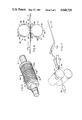
FIG. 1 is a perspective view of a length of metal bar according to the present invention;
FIG. 2 is an enlarged, perspective view of the length of metal bar shown in FIG. 1, to further illustrate the shape and size of the raised relief pattern;
FIG. 3 shows the length of bar in FIG. 2 after threads have been formed on the smooth surface segments;
FIG. 4 illustrates the manner in which a length of the metal bar according to this invention is used as a mine roof bolt;
FIG. 5 is a perspective view of one of two rollers of the type which is used to create the intermittent raised pattern on the surface of the metal bar;
FIG. 6 is a vertical cross-sectional view of a set of rollers through which the metal bar is passed to place the raised pattern segments thereon;
FIG. 7 is a perspective, schematic view of a short length of rolling mill line of the type used to produce the metal bar; and
FIG. 8 is a pass diagram showing the rolling steps used in creating the metal bar from starting stock to the final metal bar product.
DESCRIPTION OF THE PREFERRED EMBODIMENT
Referring now specifically to the drawings, a steel reinforcing bar product according to the present invention is shown and generally designated at broad reference numeral 10. The steel itself is a conventional reinforcing bar-type steel having a minimum yield strength of 75,000, a minimum tensile strength of 100,000 PSI and a minimum of 8% elongation. The bar is manufactured in several sizes, including 6 bar (3/4 inch 1.9 cm.) and 7 bar (7/8 inch 2.2 cm.)). As is shown in FIG. 1, bar 10 includes intermittent smooth surface segments 11 and patterned relief segments 12 extending along its length. Preferably, each segment 11 and 12 is approximately six inches in length along the entire length of the bar. Therefore, the 10 bar may be cut to any desired length within a six inch range exposing a smooth segment 11 at the end to receive threads.
Referring now to FIG. 2, the intermittent patterned relief segments 12 extend in opposing rows down opposite sides of bar 10. Each pattern segment is composed of two rows of five x-shaped structures having outwardly extending fingers 13A through 13D. Preferably, these fingers at their greatest thickness extend above the surface of the bar approximately 0.040 inches (1 mm.). In FIG. 3, threads 14 are shown rolled onto smooth segment 11 adjacent the end of the bar 10.
The above-described construction is ideal for the manufacture of mine roof bolts. Referring now to FIG. 4, the mine roof bolts are used in the following manner. First, a one inch hole (2.5 cm.) is drilled in the mine roof to the desired length. Depending upon the type of soil and/or rock which forms the mine ceiling, the mine roof bolt may be anywhere from 12 inches (30.5 cm.) to as much as 96 inches (244 cm.) long. The hole is drilled to the appropriate length and a "sausage" of epoxy, which comprises a powder epoxy material with a liquid in a separate membrane, is inserted into the hole. The mine roof bolt is then inserted into the hole and the bar is put in a torque wrench and driven into the hole at 300 RPM. The bar ruptures the sausage membrane and stirs the epoxy powder and liquid together. The epoxy is an industrial strength type which sets in several seconds, securely anchoring the mine roof bolt into the hole.
Still referring to FIG. 4, a roof panel 20 having suitably positioned holes therein is positioned with the threaded ends 14 extending through the holes. Then, a nut 15 and if necessary a large washer 16, is placed onto the threaded end which holds the ceiling panel 20 in position.
It is important to note that the threads 14 are rolled onto bar 10 and not cut. Therefore, the diameter of the bar increases slightly instead of decreasing.
The method by which the steel bar is manufactured is illustrated in FIGS. 5 through 8, to which reference is now made.
A roller of the type used in accordance with the present invention is shown in FIG. 5 and broadly indicated at reference numeral 30. Roller 30 is mounted on an arbor 31 and contains a plurality of individual, substantially hemispherical channels 32. As is well known in the metal rolling industry, only one of the channels 32 is used at any one time. As a channel 32 deteriorates during contact with the heated metal, the feed position of the steel bar relative to the roller 30 is shifted so that another one of the channels 32 is used. As is shown in FIG. 5, each of the channels 32 has intermittent segments of patterned relief 33 thereon, interrupted by intermittent smooth segments 34. The patterned segments 33 are formed in each of the channels 32 by engraving the appropriate pattern into the surface of channel 32 to form a depression.
Referring now to FIG. 6, two such rollers 30 are positioned in vertical and horizontal alignment with the respective channels 32 in alignment with each other. The respective channels 32 at the point of adjacency define a substantially circular passageway for the steel bar 10.
Rollers 30 are used as the last roller set in the bar forming process.
The bar enters the rolling process as a 4.5 inch by 4.5 inch by 20 foot billet which is heated to approximately 2200 degrees Fahrenheit. The billet is passed through sets of rollers having progressively smaller openings. As the rolling process takes place, the billet is reduced in cross-sectional dimension and greatly increased in length. In addition, the pass shape varies from one pass to the other with the bar assuming various oval, flat and round shapes as the bar passes through successive sets of rollers. As the bar 10 passes between rollers 30, it assumes its final shape as a substantially round bar having the intermittent smooth segments 11 and patterned segments 12. As is shown in FIG. 6, the patterned segments 33 of the respective rollers 30 are placed in registration so that the pattern is placed on opposite sides of the bar at exactly the same time. This forms the bar shown in FIGS. 1 through 4, with a plurality of x-shaped raised structures extending along opposite sides of the bar in diametrical alignment with each other.
The final stage in the rolling process is shown schematically in FIG. 7, with the bar 10 being passed between guide rollers 37 and 38, rollers 30 and another guide 39. The looper apparatus 40 controls the tension on the bar to prevent it from stretching. Once bar 10 has passed between guide rollers 37 and 38, it is cut into an appropriate length and placed on the cooling rack. The end result is a length of bar having intermittent smooth segments 11 and patterned segments 12 which are rolled at the same time without the necessity of additional processing.
A pass design of one type which is suitable for manufacturing bar according to the present invention is shown in FIG. 8. As will be appreciated by those skilled in the art, the sizes of the bar cross-sections shown for the individual passes are not relative but, are intended only to indicate the various shape which is assumed during each pass. The end product of the example set forth here is a bar 43/64 of an inch (1.7 cm.) in diameter. The billet described above is first reduced to a billet 133/4(4.4 cm.) inches on a side. Then, during successive passes, the bar assumes the shape and sizes indicated in FIG. 8, concluding with the thickness indicated after the eighth pass. The raised segments 13A and 13B shown on the bar after the eighth pass are in exaggerated scale.
As is apparent, a variety of patterns may be applied to the bar, depending entirely upon the end use of the bar. Furthermore, while the smooth segments 11 and patterned segments 12 in the embodiment shown in this application are of approximately the same length, this need not be the case in all circumstances. It has been found that the x-shaped pattern is effective to quickly mix the epoxy compound contained in the bolt hole and, at the same time, provide secure gripping surface against which the epoxy can harden.
A method of manufacturing metal bar and a metal bar product suitable for use as mine roof bolts are described above. Various details of the invention may be changed without departing from its scope. Furthermore, the foregoing description of a preferred embodiment of the method and product according to the present invention is provided for the purpose of illustration only and not for the purpose of limitation--the invention being defined by the claims.

Claims (4)

I claim:
1. A method of manufacturing a mine roof bolt comprising the steps of:
(a) heating solid metal bar to a semiplastic state;
(b) rolling the semiplastic metal bar between rollers having segments of patterned relief around their respective circumferences separated by intermittent smooth segments, said rollers rotating in registration with each other thereby imparting a corresponding intermittent pattern to the surface of the bar along its length;
(c) cooling the metal bar to a solid state with the intermittent pattern intact on the surface of the bar;
(d) cutting the bar into a predetermined required length at the juncture of a said patterned segment and a said smooth segment to form a bolt having a smooth segment on at least one end portion thereof; and
(e) forming threads onto the end of the bolt having said smooth segment to receive a mating bolt.
2. A method according to claim 1, wherein each patterned segment extends approximately 15 centimeters along the length of the bar.
3. A method according to claim 1, wherein the step of rolling the semiplastic bar comprises rolling the bar so that it is substantially circular in cross-section.
4. A method according to claim 1, wherein the step of rolling the semiplastic bar comprises using rollers having the pattern relief engraved therein to form a raised relief pattern on said bar.
US06/691,141 1985-01-14 1985-01-14 Method for manufacturing steel bar with intermittent smooth surface and patterned relief segments, and mine roof bolt product Expired - Fee Related US4649729A (en)

Priority Applications (1)

Application Number Priority Date Filing Date Title
US06/691,141 US4649729A (en) 1985-01-14 1985-01-14 Method for manufacturing steel bar with intermittent smooth surface and patterned relief segments, and mine roof bolt product

Applications Claiming Priority (1)

Application Number Priority Date Filing Date Title
US06/691,141 US4649729A (en) 1985-01-14 1985-01-14 Method for manufacturing steel bar with intermittent smooth surface and patterned relief segments, and mine roof bolt product

Publications (1)

Publication Number Publication Date
US4649729A true US4649729A (en) 1987-03-17

Family

ID=24775320

Family Applications (1)

Application Number Title Priority Date Filing Date
US06/691,141 Expired - Fee Related US4649729A (en) 1985-01-14 1985-01-14 Method for manufacturing steel bar with intermittent smooth surface and patterned relief segments, and mine roof bolt product

Country Status (1)

Country Link
US (1) US4649729A (en)

Cited By (14)

* Cited by examiner, † Cited by third party
Publication number Priority date Publication date Assignee Title
EP0351465A1 (en) * 1986-11-14 1990-01-24 Videx Wire Products (Pty) Limited Rock bolt
US4955219A (en) * 1986-11-14 1990-09-11 Videx-Wire Products (Proprietary) Limited Rock bolt
US6079907A (en) * 1995-11-03 2000-06-27 Sistemas S.R.S., S.L. Reinforcements and a reinforcement system for stabilized earth
EP1057968A1 (en) * 1999-06-01 2000-12-06 Max Dipl.-Ing. Aicher Method for producing a tip in a steel anchor bolt
WO2000079071A1 (en) * 1999-06-22 2000-12-28 Connector Vinkeveen B.V. Concrete structure comprising anchor rods and anchor rod
US6457909B1 (en) * 2000-12-22 2002-10-01 Shulin Xu Multi-purpose anchor bolt assembly
US20060144007A1 (en) * 2005-01-06 2006-07-06 Michael Azarin Coil bar anchor
WO2012131579A1 (en) * 2011-03-30 2012-10-04 Rand York Castings (Proprietary) Limited Steel bar
US20140010598A1 (en) * 2010-12-24 2014-01-09 Fci Holdings Delaware, Inc. Rock Bolt
US9010165B2 (en) 2011-01-18 2015-04-21 Nucor Corporation Threaded rebar manufacturing process and system
US20150113886A1 (en) * 2013-10-31 2015-04-30 Cheng Chi Steel Co., Ltd. Pre-embedded Piece, Method for Producing the Same, and Reinforcing Steel Structures Including the Same
US9551150B2 (en) 2010-06-24 2017-01-24 Nucor Corporation Tensionable threaded rebar bolt
USD835977S1 (en) * 2016-02-08 2018-12-18 Ncm Innovation (Pty) Ltd. Grout anchored rock bolt
CN109877155A (en) * 2019-03-26 2019-06-14 巩义市金迪冶金设备有限公司 A kind of high ductility cold-rolled ribbed bars production technology

Citations (13)

* Cited by examiner, † Cited by third party
Publication number Priority date Publication date Assignee Title
US440095A (en) * 1890-11-04 Half to julius arnd
US1577430A (en) * 1922-01-20 1926-03-16 Witherow Steel Company Die-rolled article and method of making the same
US1635658A (en) * 1921-12-15 1927-07-12 Charles S Boardman Reenforcing bar for concrete
US1998970A (en) * 1931-08-31 1935-04-23 Republic Steel Corp Die rolled article and die rolling method
FR1574005A (en) * 1968-04-01 1969-07-11 Lamendin Louis Improvement in anchor rods for mine galleries
US3653217A (en) * 1970-08-03 1972-04-04 Chester I Williams Rock bolt rod configuration
US3693359A (en) * 1971-01-25 1972-09-26 Said M Karara Rock stabilizing apparatus
US4040232A (en) * 1974-03-08 1977-08-09 Snow Kenneth T Building brace
US4064729A (en) * 1977-03-02 1977-12-27 Alex Homery Metal forming device
US4112637A (en) * 1976-02-16 1978-09-12 Dyckerhoff & Widmann Aktiengesellschaft Removable press anchor with destructible anchor body
US4303354A (en) * 1979-03-28 1981-12-01 Peabody Coal Company Mine roof bolting
US4338807A (en) * 1980-08-26 1982-07-13 Armco Inc. Method of producing improved serrated flats used in the manufacturing of grating
US4589803A (en) * 1984-01-09 1986-05-20 Totten Iii Arthur B Method and apparatus for installing mine roof supports

Patent Citations (13)

* Cited by examiner, † Cited by third party
Publication number Priority date Publication date Assignee Title
US440095A (en) * 1890-11-04 Half to julius arnd
US1635658A (en) * 1921-12-15 1927-07-12 Charles S Boardman Reenforcing bar for concrete
US1577430A (en) * 1922-01-20 1926-03-16 Witherow Steel Company Die-rolled article and method of making the same
US1998970A (en) * 1931-08-31 1935-04-23 Republic Steel Corp Die rolled article and die rolling method
FR1574005A (en) * 1968-04-01 1969-07-11 Lamendin Louis Improvement in anchor rods for mine galleries
US3653217A (en) * 1970-08-03 1972-04-04 Chester I Williams Rock bolt rod configuration
US3693359A (en) * 1971-01-25 1972-09-26 Said M Karara Rock stabilizing apparatus
US4040232A (en) * 1974-03-08 1977-08-09 Snow Kenneth T Building brace
US4112637A (en) * 1976-02-16 1978-09-12 Dyckerhoff & Widmann Aktiengesellschaft Removable press anchor with destructible anchor body
US4064729A (en) * 1977-03-02 1977-12-27 Alex Homery Metal forming device
US4303354A (en) * 1979-03-28 1981-12-01 Peabody Coal Company Mine roof bolting
US4338807A (en) * 1980-08-26 1982-07-13 Armco Inc. Method of producing improved serrated flats used in the manufacturing of grating
US4589803A (en) * 1984-01-09 1986-05-20 Totten Iii Arthur B Method and apparatus for installing mine roof supports

Cited By (18)

* Cited by examiner, † Cited by third party
Publication number Priority date Publication date Assignee Title
EP0351465A1 (en) * 1986-11-14 1990-01-24 Videx Wire Products (Pty) Limited Rock bolt
US4955219A (en) * 1986-11-14 1990-09-11 Videx-Wire Products (Proprietary) Limited Rock bolt
US6079907A (en) * 1995-11-03 2000-06-27 Sistemas S.R.S., S.L. Reinforcements and a reinforcement system for stabilized earth
EP1057968A1 (en) * 1999-06-01 2000-12-06 Max Dipl.-Ing. Aicher Method for producing a tip in a steel anchor bolt
WO2000079071A1 (en) * 1999-06-22 2000-12-28 Connector Vinkeveen B.V. Concrete structure comprising anchor rods and anchor rod
NL1012410C2 (en) * 1999-06-22 2001-01-10 R C M Ankertec B V Concrete construction with anchor rods and anchor rod.
US6688071B1 (en) 1999-06-22 2004-02-10 Connector Vinkeveen B.V. Concrete structure comprising anchor rods and anchor rod
US6457909B1 (en) * 2000-12-22 2002-10-01 Shulin Xu Multi-purpose anchor bolt assembly
US20060144007A1 (en) * 2005-01-06 2006-07-06 Michael Azarin Coil bar anchor
US9551150B2 (en) 2010-06-24 2017-01-24 Nucor Corporation Tensionable threaded rebar bolt
US20140010598A1 (en) * 2010-12-24 2014-01-09 Fci Holdings Delaware, Inc. Rock Bolt
US9010165B2 (en) 2011-01-18 2015-04-21 Nucor Corporation Threaded rebar manufacturing process and system
US20150336156A1 (en) * 2011-01-18 2015-11-26 Nucor Corporation Threaded rebar manufacturing process and system
US9855594B2 (en) * 2011-01-18 2018-01-02 Nucor Corporation Threaded rebar manufacturing process and system
WO2012131579A1 (en) * 2011-03-30 2012-10-04 Rand York Castings (Proprietary) Limited Steel bar
US20150113886A1 (en) * 2013-10-31 2015-04-30 Cheng Chi Steel Co., Ltd. Pre-embedded Piece, Method for Producing the Same, and Reinforcing Steel Structures Including the Same
USD835977S1 (en) * 2016-02-08 2018-12-18 Ncm Innovation (Pty) Ltd. Grout anchored rock bolt
CN109877155A (en) * 2019-03-26 2019-06-14 巩义市金迪冶金设备有限公司 A kind of high ductility cold-rolled ribbed bars production technology

Similar Documents

Publication Publication Date Title
US4649729A (en) Method for manufacturing steel bar with intermittent smooth surface and patterned relief segments, and mine roof bolt product
KR900000726B1 (en) Metal strip for use in stabilized earth structures
EP2000609A1 (en) Reinforcing bar
EP2665567B1 (en) Threaded rebar manufacturing process and system
EP1512875B1 (en) Connection device for a wood concrete connection
US5803671A (en) Hollow bars and method of manufacture
DE60001999T2 (en) Slitting device for the production of several profiles
CN100425779C (en) Threaded deformed bar and method for making the bar
DE1427880A1 (en) Process for the production of H-beams with protrusions on the outer surface of at least one flange
US5443331A (en) Threaded bar construction
CA2070485C (en) Extrusion of aluminium with hollow ribs
DE10337251A1 (en) Stator and disassembly method and associated device
EP1169524B1 (en) Wall tie fastener
CA1236343A (en) Method of rolling a simulated hole in sheet metal without drilling or punching
WO2003102374A1 (en) Threaded bar & rock bolts formed therefrom
EP0351465B1 (en) Rock bolt
JPS5841641A (en) Manufacture of expanded metal type rolling material
AT216730B (en) Rolled concrete rebar
EP0174501A2 (en) Method for bending section bars of metal, in particular of aluminium, with non supported webs, lips or the like
US4506399A (en) Method of making strut nuts
DE3887326T2 (en) Anchor bolt.
CA1317489C (en) Rock bolt
WO2000047349A1 (en) Method for externally threading a deformed bar
DE2651127A1 (en) PROCESS FOR REFORMING SPLIT WIRE
DE3200085A1 (en) Load suspension device for support sections in underground working

Legal Events

Date Code Title Description
AS Assignment

Owner name: FLORIDA STEEL CORPORATION, HWY. 115 & LAKEVIEW RD.

Free format text: ASSIGNMENT OF ASSIGNORS INTEREST.;ASSIGNOR:MC DOWELL, A. DALE;REEL/FRAME:004610/0055

Effective date: 19850108

Owner name: EASTERN COMPANY THE, NAUGATUCK, CT., A CORP OF CT.

Free format text: ASSIGNMENT OF ASSIGNORS INTEREST.;ASSIGNOR:VASS, GEORGE S.;REEL/FRAME:004610/0057

Effective date: 19841217

Owner name: FLORIDA STEEL CORPORATION, A CORP OF FL.

Free format text: ASSIGNMENT OF ASSIGNORS INTEREST.;ASSIGNOR:EASTERN COMPANY THE, A CORP OF CT.;REEL/FRAME:004610/0059

Effective date: 19841221

Owner name: FLORIDA STEEL CORPORATION, HWY. 115 & LAKEVIEW RD.

Free format text: ASSIGNMENT OF ASSIGNORS INTEREST;ASSIGNOR:MC DOWELL, A. DALE;REEL/FRAME:004610/0055

Effective date: 19850108

Owner name: EASTERN COMPANY THE, NAUGATUCK, CT., A CORP OF CT.

Free format text: ASSIGNMENT OF ASSIGNORS INTEREST;ASSIGNOR:VASS, GEORGE S.;REEL/FRAME:004610/0057

Effective date: 19841217

Owner name: FLORIDA STEEL CORPORATION, A CORP OF FL., STATELES

Free format text: ASSIGNMENT OF ASSIGNORS INTEREST;ASSIGNOR:EASTERN COMPANY THE, A CORP OF CT.;REEL/FRAME:004610/0059

Effective date: 19841221

FEPP Fee payment procedure

Free format text: PAYOR NUMBER ASSIGNED (ORIGINAL EVENT CODE: ASPN); ENTITY STATUS OF PATENT OWNER: LARGE ENTITY

FPAY Fee payment

Year of fee payment: 4

REMI Maintenance fee reminder mailed
LAPS Lapse for failure to pay maintenance fees
FP Lapsed due to failure to pay maintenance fee

Effective date: 19950322

AS Assignment

Owner name: BANK OF AMERICA, N.A., AS ADMINISTRATIVE AGENT, GE

Free format text: SECURITY AGREEMENT;ASSIGNOR:GERDAU AMERISTEEL US INC.;REEL/FRAME:016914/0682

Effective date: 20051028

STCH Information on status: patent discontinuation

Free format text: PATENT EXPIRED DUE TO NONPAYMENT OF MAINTENANCE FEES UNDER 37 CFR 1.362