US4645589A - Process for removing metals from crude - Google Patents
Process for removing metals from crude Download PDFInfo
- Publication number
- US4645589A US4645589A US06/789,218 US78921885A US4645589A US 4645589 A US4645589 A US 4645589A US 78921885 A US78921885 A US 78921885A US 4645589 A US4645589 A US 4645589A
- Authority
- US
- United States
- Prior art keywords
- hydrocarbon oil
- metal
- weight
- phosphorous compound
- vanadium
- Prior art date
- Legal status (The legal status is an assumption and is not a legal conclusion. Google has not performed a legal analysis and makes no representation as to the accuracy of the status listed.)
- Expired - Fee Related
Links
- 229910052751 metal Inorganic materials 0.000 title claims abstract description 43
- 239000002184 metal Substances 0.000 title claims abstract description 43
- 238000000034 method Methods 0.000 title claims abstract description 41
- 150000002739 metals Chemical class 0.000 title description 13
- PXHVJJICTQNCMI-UHFFFAOYSA-N Nickel Chemical compound [Ni] PXHVJJICTQNCMI-UHFFFAOYSA-N 0.000 claims abstract description 42
- 239000004215 Carbon black (E152) Substances 0.000 claims abstract description 40
- 229930195733 hydrocarbon Natural products 0.000 claims abstract description 40
- 150000002430 hydrocarbons Chemical class 0.000 claims abstract description 40
- 150000003018 phosphorus compounds Chemical class 0.000 claims abstract description 24
- XLYOFNOQVPJJNP-UHFFFAOYSA-N water Substances O XLYOFNOQVPJJNP-UHFFFAOYSA-N 0.000 claims abstract description 23
- GPPXJZIENCGNKB-UHFFFAOYSA-N vanadium Chemical compound [V]#[V] GPPXJZIENCGNKB-UHFFFAOYSA-N 0.000 claims abstract description 22
- 229910052720 vanadium Inorganic materials 0.000 claims abstract description 22
- 229910052759 nickel Inorganic materials 0.000 claims abstract description 21
- 239000008346 aqueous phase Substances 0.000 claims abstract description 13
- 239000012071 phase Substances 0.000 claims abstract description 10
- 150000001875 compounds Chemical class 0.000 claims abstract description 8
- 230000003197 catalytic effect Effects 0.000 claims abstract description 5
- 239000003921 oil Substances 0.000 claims description 48
- 238000000605 extraction Methods 0.000 claims description 20
- 239000010779 crude oil Substances 0.000 claims description 6
- 229910003944 H3 PO4 Inorganic materials 0.000 claims description 4
- 125000004066 1-hydroxyethyl group Chemical group [H]OC([H])([*])C([H])([H])[H] 0.000 claims description 3
- 229910003997 H4 P2 O7 Inorganic materials 0.000 claims description 2
- 239000007983 Tris buffer Substances 0.000 claims description 2
- 239000002253 acid Substances 0.000 claims description 2
- DMSZORWOGDLWGN-UHFFFAOYSA-N ctk1a3526 Chemical compound NP(N)(N)=O DMSZORWOGDLWGN-UHFFFAOYSA-N 0.000 claims description 2
- OWNZHTHZRZVKSQ-UHFFFAOYSA-N tribromo(sulfanylidene)-$l^{5}-phosphane Chemical compound BrP(Br)(Br)=S OWNZHTHZRZVKSQ-UHFFFAOYSA-N 0.000 claims description 2
- OAICVXFJPJFONN-UHFFFAOYSA-N Phosphorus Chemical compound [P] OAICVXFJPJFONN-UHFFFAOYSA-N 0.000 claims 2
- 229910052698 phosphorus Inorganic materials 0.000 claims 2
- 239000011574 phosphorus Substances 0.000 claims 2
- 239000007788 liquid Substances 0.000 abstract description 8
- BHEPBYXIRTUNPN-UHFFFAOYSA-N hydridophosphorus(.) (triplet) Chemical compound [PH] BHEPBYXIRTUNPN-UHFFFAOYSA-N 0.000 description 9
- NBIIXXVUZAFLBC-UHFFFAOYSA-N Phosphoric acid Chemical compound OP(O)(O)=O NBIIXXVUZAFLBC-UHFFFAOYSA-N 0.000 description 6
- 238000007324 demetalation reaction Methods 0.000 description 6
- 239000000356 contaminant Substances 0.000 description 5
- 239000000047 product Substances 0.000 description 5
- YDONNITUKPKTIG-UHFFFAOYSA-N [Nitrilotris(methylene)]trisphosphonic acid Chemical compound OP(O)(=O)CN(CP(O)(O)=O)CP(O)(O)=O YDONNITUKPKTIG-UHFFFAOYSA-N 0.000 description 4
- 239000007864 aqueous solution Substances 0.000 description 4
- 238000004523 catalytic cracking Methods 0.000 description 4
- 239000000203 mixture Substances 0.000 description 4
- 229910000147 aluminium phosphate Inorganic materials 0.000 description 3
- 239000003054 catalyst Substances 0.000 description 3
- 239000003245 coal Substances 0.000 description 3
- HNPSIPDUKPIQMN-UHFFFAOYSA-N dioxosilane;oxo(oxoalumanyloxy)alumane Chemical compound O=[Si]=O.O=[Al]O[Al]=O HNPSIPDUKPIQMN-UHFFFAOYSA-N 0.000 description 3
- 229910021536 Zeolite Inorganic materials 0.000 description 2
- 230000015572 biosynthetic process Effects 0.000 description 2
- 230000000694 effects Effects 0.000 description 2
- VNWKTOKETHGBQD-UHFFFAOYSA-N methane Chemical compound C VNWKTOKETHGBQD-UHFFFAOYSA-N 0.000 description 2
- 239000003079 shale oil Substances 0.000 description 2
- 239000000243 solution Substances 0.000 description 2
- 239000010457 zeolite Substances 0.000 description 2
- UFHFLCQGNIYNRP-UHFFFAOYSA-N Hydrogen Chemical compound [H][H] UFHFLCQGNIYNRP-UHFFFAOYSA-N 0.000 description 1
- 239000000654 additive Substances 0.000 description 1
- 230000000996 additive effect Effects 0.000 description 1
- 230000002411 adverse Effects 0.000 description 1
- 229910000323 aluminium silicate Inorganic materials 0.000 description 1
- 125000004429 atom Chemical group 0.000 description 1
- QVGXLLKOCUKJST-UHFFFAOYSA-N atomic oxygen Chemical compound [O] QVGXLLKOCUKJST-UHFFFAOYSA-N 0.000 description 1
- 238000009903 catalytic hydrogenation reaction Methods 0.000 description 1
- 238000006243 chemical reaction Methods 0.000 description 1
- 239000003795 chemical substances by application Substances 0.000 description 1
- 239000000571 coke Substances 0.000 description 1
- 238000011109 contamination Methods 0.000 description 1
- 238000010586 diagram Methods 0.000 description 1
- 239000007789 gas Substances 0.000 description 1
- 239000001257 hydrogen Substances 0.000 description 1
- 229910052739 hydrogen Inorganic materials 0.000 description 1
- 239000003077 lignite Substances 0.000 description 1
- 239000000463 material Substances 0.000 description 1
- 239000001301 oxygen Substances 0.000 description 1
- 229910052760 oxygen Inorganic materials 0.000 description 1
- 238000002161 passivation Methods 0.000 description 1
- 125000004437 phosphorous atom Chemical group 0.000 description 1
- 239000002574 poison Substances 0.000 description 1
- 231100000614 poison Toxicity 0.000 description 1
- 239000002244 precipitate Substances 0.000 description 1
- 238000003756 stirring Methods 0.000 description 1
- 239000000126 substance Substances 0.000 description 1
- ISIJQEHRDSCQIU-UHFFFAOYSA-N tert-butyl 2,7-diazaspiro[4.5]decane-7-carboxylate Chemical compound C1N(C(=O)OC(C)(C)C)CCCC11CNCC1 ISIJQEHRDSCQIU-UHFFFAOYSA-N 0.000 description 1
Images
Classifications
-
- C—CHEMISTRY; METALLURGY
- C10—PETROLEUM, GAS OR COKE INDUSTRIES; TECHNICAL GASES CONTAINING CARBON MONOXIDE; FUELS; LUBRICANTS; PEAT
- C10G—CRACKING HYDROCARBON OILS; PRODUCTION OF LIQUID HYDROCARBON MIXTURES, e.g. BY DESTRUCTIVE HYDROGENATION, OLIGOMERISATION, POLYMERISATION; RECOVERY OF HYDROCARBON OILS FROM OIL-SHALE, OIL-SAND, OR GASES; REFINING MIXTURES MAINLY CONSISTING OF HYDROCARBONS; REFORMING OF NAPHTHA; MINERAL WAXES
- C10G29/00—Refining of hydrocarbon oils, in the absence of hydrogen, with other chemicals
- C10G29/02—Non-metals
-
- C—CHEMISTRY; METALLURGY
- C10—PETROLEUM, GAS OR COKE INDUSTRIES; TECHNICAL GASES CONTAINING CARBON MONOXIDE; FUELS; LUBRICANTS; PEAT
- C10G—CRACKING HYDROCARBON OILS; PRODUCTION OF LIQUID HYDROCARBON MIXTURES, e.g. BY DESTRUCTIVE HYDROGENATION, OLIGOMERISATION, POLYMERISATION; RECOVERY OF HYDROCARBON OILS FROM OIL-SHALE, OIL-SAND, OR GASES; REFINING MIXTURES MAINLY CONSISTING OF HYDROCARBONS; REFORMING OF NAPHTHA; MINERAL WAXES
- C10G17/00—Refining of hydrocarbon oils in the absence of hydrogen, with acids, acid-forming compounds or acid-containing liquids, e.g. acid sludge
-
- C—CHEMISTRY; METALLURGY
- C10—PETROLEUM, GAS OR COKE INDUSTRIES; TECHNICAL GASES CONTAINING CARBON MONOXIDE; FUELS; LUBRICANTS; PEAT
- C10G—CRACKING HYDROCARBON OILS; PRODUCTION OF LIQUID HYDROCARBON MIXTURES, e.g. BY DESTRUCTIVE HYDROGENATION, OLIGOMERISATION, POLYMERISATION; RECOVERY OF HYDROCARBON OILS FROM OIL-SHALE, OIL-SAND, OR GASES; REFINING MIXTURES MAINLY CONSISTING OF HYDROCARBONS; REFORMING OF NAPHTHA; MINERAL WAXES
- C10G21/00—Refining of hydrocarbon oils, in the absence of hydrogen, by extraction with selective solvents
- C10G21/003—Solvent de-asphalting
-
- C—CHEMISTRY; METALLURGY
- C10—PETROLEUM, GAS OR COKE INDUSTRIES; TECHNICAL GASES CONTAINING CARBON MONOXIDE; FUELS; LUBRICANTS; PEAT
- C10G—CRACKING HYDROCARBON OILS; PRODUCTION OF LIQUID HYDROCARBON MIXTURES, e.g. BY DESTRUCTIVE HYDROGENATION, OLIGOMERISATION, POLYMERISATION; RECOVERY OF HYDROCARBON OILS FROM OIL-SHALE, OIL-SAND, OR GASES; REFINING MIXTURES MAINLY CONSISTING OF HYDROCARBONS; REFORMING OF NAPHTHA; MINERAL WAXES
- C10G21/00—Refining of hydrocarbon oils, in the absence of hydrogen, by extraction with selective solvents
- C10G21/06—Refining of hydrocarbon oils, in the absence of hydrogen, by extraction with selective solvents characterised by the solvent used
- C10G21/12—Organic compounds only
- C10G21/24—Phosphorus-containing compounds
Definitions
- This invention relates to a process for removing metal contaminants such as nickel and vanadium from a hydrocarbon feed stock, e.g., heavy crude, resid, and the like, thereby upgrading the feedstock for a variety of further refinery operations such as fluidized catalytic cracking, hydrodesulfurization, etc.
- One approach calls for passivating the catalyst with an additive which reduces the tendency of the deposited nickel to catalyze the formation of coke and hydrogen and, where the catalyst is of the porous aluminosilicate zeolite variety, to immobilize vanadium and prevent or inhibit it from migrating to the zeolite framework where it causes activity loss.
- Illustrative of this approach are the passivation procedures disclosed in U.S. Pat. Nos. 4,025,458; 4,031,002; 4,111,845; 4,141,858; 4,166,806; 4,167,471; 4,207,204; 4,208,302; 4,394,324; and 4,396,496.
- a process for reducing the metal content of a liquid hydrocarbon feed stock by extracting the feed stock with an aqueous solution of phosphorous compound containing large amounts of water relative to the amounts of feed to be treated.
- the extraction can be effected under fairly mild conditions and provides a demetallized crude which has been upgraded for downstream catalytic refinery operations.
- the demetallizing process of this invention comprises:
- hydrocarbon oil as used herein is primarily illustrated by crude oil but also includes such metal-contaminated feed stream as topped crude, resid, coal extract, coal pyrolyzate, shale oil, products from tar sands, and the like.
- metal applies to both free, or uncombined, vanadium and nickel as well as relatively nonvolatile compounds of these metals.
- vanadium and/or nickel contaminant(s) e.g., from 20 to 80 weight percent of the amount of these metals originally present, can be removed from a hydrocarbon oil in a single extraction operation with even larger amounts of the metals being removed in a multi-stage extraction operation.
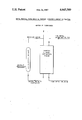
- the drawing is a flow diagram of a counter current aqueous extraction operation which can be used in carrying out the demetalation process of this invention.
- the present invention is particularly directed to the demetalation of liquid hydrocarbon feed streams such as heavy crude oils and other materials which are generally regarded as being too heavy to be distilled.
- feed streams will generally contain the highest concentrations of metals such as vanadium and nickel.
- the feed stocks employed will contain from about 10 to 1000 ppm of vanadium and from about 5 to about 500 ppm of nickel.
- a quantity of hydrocarbon oil feed stock is contacted with a relatively substantial quantity of water in which there is dissolved one or more phosphorous compounds capable of forming a compound or complex with the vanadium and nickel components of the feed and extracting the metals into the water.
- Suitable phosphorous compounds which are particularly effective are: P 2 O 5 , H 3 PO 4 , (NH 4 ) 3 PO 4 , (NH 4 ) 2 HPO 4 , (NH 4 )H 2 PO 4 , H 4 P 2 O 7 , PSBr 3 , H 3 PO 2 , H 3 PO 3 , (NH 4 )H 2 P 2 O 7 , phosphorylamide (PO(NH 2 ) 3 ), amino-tris(methane phosponic acid) and 1-hydroxyethyl di-phosphonic acid
- the effective amount of one or more phosphorous compounds dissolved in water is preferably that which results in an atomic ratio of phosphorus atoms, from said one or more compounds, to total number of atoms of vanadium and/or nickel metal contaminants in the range of about 0.01:1 to about 3:1, and preferably in the range of about 0.03:1 to about 1:1.
- the weight ratio of phosphorous compound to hydrocarbon feed stream will vary from about 1:500 to 1:5, preferably from about 1:200 to about 1:10 and most preferably from about 1:100 to about 1:25 with the nature of the phosphorous compound, its effectiveness in extracting metal from the hydrocarbon oil and cost being principal considerations in determining appropriate ratios.
- the process of this invention employs a fairly large quantity of water relative to the amount of hydrocarbon oil undergoing demetalation. So, for example, from about 0.5 to about 20 parts by weight of water per part by weight of oil, preferably from about 0.1 to about 10 parts by weight of water per part by weight of oil, and most preferably from about 0.2 to about 1 parts by weight of water per part by weight of oil, can be used herein with good results.
- the phosphorous compound in the desired amount can be dissolved in the water prior to contact of the latter with the oil or it can be added directly to the oil with or without a solution-forming amount of water, the balance of the water required being subsequently contacted with the phosphorous compound-containing oil. It is also within the scope of the process to contact the foregoing quantities of water with the metal-containing oil, the phosphorous compound thereafter being contacted with the oil/water mixture in a separate stream. The present process also contemplates the possibility of contacting the mixture with an oxygen-containing gas such as air.
- the hydrocarbon stream can be contacted with the aqueous phosphorous compound in any suitable manner, e.g., by batchwise or continuous counter current extraction, and in a single stage or in a multi-stage extraction unit.
- any suitable manner e.g., by batchwise or continuous counter current extraction, and in a single stage or in a multi-stage extraction unit.
- continuous counter current extraction may not be suitable and some other contacting procedure must be utilized.
- Time of contact between the oil and the aqueous phosphorous compound can vary widely it only being necessary that the duration of contact be at least sufficient to provide for a significant reduction in the vanadium and nickel content of the oil feed. Contact times of just a few minutes, e.g., 5 to 10 minutes or so, up to 60 minutes and even longer are suitable in most cases.
- the metal(s) extraction procedure herein can be carried out at any suitable temperature.
- the temperature will generally range from a minimal demetallizing temperature to any economically practical temperature.
- the temperature will be in the range of about 50° C. to about 300° C. and most preferably from about 80° C. to about 200° C.
- Higher temperatures than the aforestated may improve the removal of metals but temperatures should not be utilized which will have adverse effects on the hydrocarbon containing feed stream.
- Lower temperatures than those mentioned can generally be used for lighter feeds.
- pressurized vessels are required to maintain a liquid system.
- a method of contact which can be used herein is illustrated in the drawing and consists in counter current contact of the liquid hydrocarbon stream with the phosphorous compound dissolved in the full amount of water utilized in the process.
- Known and conventional equipment is contemplated throughout.
- a high metals content crude oil feed is introduced into the bottom of a counter current extraction tower where it is contacted with a phosphorous compound-containing aqueous stream introduced to the top of the tower.
- phosphorous compound reacts or forms a complex with a substantial amount of the vanadium and nickel present in the oil resulting in the extraction of these metals from the oil phase into the aqueous phase.
- the phosphorous-metal compound(s)/complex(es) so formed are withdrawn from the bottom of the extraction tower and the demetallized crude is withdrawn from the top of the tower where it is conveyed to a downstream catalytic process, e.g., fluidized catalytic cracking (FCC).
- a downstream catalytic process e.g., fluidized catalytic cracking (FCC).
- metal(s) contained in the aqueous stream withdrawn from the extraction tower can be separated therefrom with the water component of the stream being recycled to process. Considerations of cost permitting, the metals can be separated from the phosphorous compound/complex with which they are associated with the phosphorous compound being optionally recycled to process.
- liquid hydrocarbon feed was an atmospheric resid originally containing 23 ppm vanadium and 6 ppm nickel.
- HEDP 1-hydroxyethyl di-phosphonic acid
- aqueous phosphoric acid 1000 Ppm by weight of 1-hydroxyethyl di-phosphonic acid (HEDP) in 17 weight percent aqueous phosphoric acid was prepared. Two parts by weight of the aqueous solution were mixed with 5 parts by weight of atmospheric resid. The mixture was heated to 95° C. and stirred for 30 minutes. After separating the aqueous layer, analysis of the oil layer indicated that 39 weight percent vanadium and 41 weight percent nickel had been removed from the original oil.
- HEDP 1-hydroxyethyl di-phosphonic acid
Landscapes
- Chemical & Material Sciences (AREA)
- Oil, Petroleum & Natural Gas (AREA)
- Engineering & Computer Science (AREA)
- Chemical Kinetics & Catalysis (AREA)
- General Chemical & Material Sciences (AREA)
- Organic Chemistry (AREA)
- Production Of Liquid Hydrocarbon Mixture For Refining Petroleum (AREA)
Abstract
A process for removing metal from a metal-containing hydrocarbon oil such as a heavy crude is disclosed which comprises: (a) contacting a hydrocarbon oil phase containing at least one metal selected from the group consisting of vanadium and nickel with an aqueous phase of dissolved phosphorous compound capable of forming a compound or a complex with said metal, said aqueous phase containing a substantial quantity of water relative to the amount of liquid hydrocarbon contacted therewith, said contacting resulting in the removal of a substantial quantity of the metal from the hydrocarbon oil phase to the aqueous phase; and, (b) separating the metal-containing aqueous phase from the demetalated hydrocarbon oil phase prior to subjecting the latter to downstream catalytic processing.
Description
This invention relates to a process for removing metal contaminants such as nickel and vanadium from a hydrocarbon feed stock, e.g., heavy crude, resid, and the like, thereby upgrading the feedstock for a variety of further refinery operations such as fluidized catalytic cracking, hydrodesulfurization, etc.
It is well known that heavy crude oils, as well as products from extraction and/or liquefaction of coal and lignite, products from tar sands, products from shale oil and similar products may contain metals such as vanadium and nickel. The presence of the metals make further processing of heavier fractions difficult since the metals generally act as poisons for catalysts employed in processes such as catalytic cracking, hydrogenation or hydrodesulfurization. Consequently, a number of strategies have been developed to deal with the problem posed by the presence of metal contaminants in hydrocarbon oil feed stocks.
One approach calls for passivating the catalyst with an additive which reduces the tendency of the deposited nickel to catalyze the formation of coke and hydrogen and, where the catalyst is of the porous aluminosilicate zeolite variety, to immobilize vanadium and prevent or inhibit it from migrating to the zeolite framework where it causes activity loss. Illustrative of this approach are the passivation procedures disclosed in U.S. Pat. Nos. 4,025,458; 4,031,002; 4,111,845; 4,141,858; 4,166,806; 4,167,471; 4,207,204; 4,208,302; 4,394,324; and 4,396,496.
Another approach to the problem of metal contamination in a heavy crude feed stock is to add a substance to the feed stock which will form an oil insoluble precipitate with the metal contaminants. In many processes of this type, the metal-containing oil remains in the heavy crude feed stock even while the latter is undergoing further processing, e.g., catalytic cracking. Examples of such a procedure are described in U.S. Pat. Nos. 4,036,740; 4,148,717; 4,192,736; 4,321,128; 4,399,024; 4,419,225; 4,421,638; 4,432,890; 4,446,006; 4,454,025; 4,464,251; 4,465,589; 4,518,484; 4,522,702; and 4,529,503.
Heretofore, it has not been known to contact a metal-containing liquid hydrocarbon feed stock with a water-soluble phosphorous-containing compound dissolved in a substantial amount of water relative to the amount of oil to be treated and in this way, to remove contaminating metal(s) from the oil by their reaction or formation of a complex with the phosphorous-containing compound. Although it is known from U.S. Pat. No. 4,522,702 to contact a 40-80 weight percent aqueous solution of phosphorous acid demetalating agent with heavy crude oil, the amount of water employed is negligible compared to the amount of oil being treated.
In accordance with the present invention, a process is provided for reducing the metal content of a liquid hydrocarbon feed stock by extracting the feed stock with an aqueous solution of phosphorous compound containing large amounts of water relative to the amounts of feed to be treated. The extraction can be effected under fairly mild conditions and provides a demetallized crude which has been upgraded for downstream catalytic refinery operations.
Briefly stated, the demetallizing process of this invention comprises:
(a) contacting a hydrocarbon oil phase containing at least one metal selected from the group consisting of vanadium and nickel with an aqueous phase of dissolved phosphorous compound capable of forming a compound or a complex with said metal, said aqueous phase containing a substantial quantity of water relative to the amount of liquid hydrocarbon contacted therewith, said contacting resulting in the removal of a substantial quantity of the metal from the hydrocarbon oil phase to the aqueous phase; and,
(b) separating the metal-containing aqueous phase from the demetalated hydrocarbon oil phase prior to subjecting the latter to downstream catalytic processing.
The expression "hydrocarbon oil" as used herein is primarily illustrated by crude oil but also includes such metal-contaminated feed stream as topped crude, resid, coal extract, coal pyrolyzate, shale oil, products from tar sands, and the like. The term "metal" applies to both free, or uncombined, vanadium and nickel as well as relatively nonvolatile compounds of these metals.
Employing the foregoing process, significant quantities of vanadium and/or nickel contaminant(s), e.g., from 20 to 80 weight percent of the amount of these metals originally present, can be removed from a hydrocarbon oil in a single extraction operation with even larger amounts of the metals being removed in a multi-stage extraction operation.
The drawing is a flow diagram of a counter current aqueous extraction operation which can be used in carrying out the demetalation process of this invention.
The present invention is particularly directed to the demetalation of liquid hydrocarbon feed streams such as heavy crude oils and other materials which are generally regarded as being too heavy to be distilled. These feed streams will generally contain the highest concentrations of metals such as vanadium and nickel. Typically, the feed stocks employed will contain from about 10 to 1000 ppm of vanadium and from about 5 to about 500 ppm of nickel.
In carrying out the process of this invention, a quantity of hydrocarbon oil feed stock is contacted with a relatively substantial quantity of water in which there is dissolved one or more phosphorous compounds capable of forming a compound or complex with the vanadium and nickel components of the feed and extracting the metals into the water. Examples of suitable phosphorous compounds which are particularly effective are: P2 O5, H3 PO4, (NH4)3 PO4, (NH4)2 HPO4, (NH4)H2 PO4, H4 P2 O7, PSBr3, H3 PO2, H3 PO3, (NH4)H2 P2 O7, phosphorylamide (PO(NH2)3), amino-tris(methane phosponic acid) and 1-hydroxyethyl di-phosphonic acid
The effective amount of one or more phosphorous compounds dissolved in water is preferably that which results in an atomic ratio of phosphorus atoms, from said one or more compounds, to total number of atoms of vanadium and/or nickel metal contaminants in the range of about 0.01:1 to about 3:1, and preferably in the range of about 0.03:1 to about 1:1. In general, the weight ratio of phosphorous compound to hydrocarbon feed stream will vary from about 1:500 to 1:5, preferably from about 1:200 to about 1:10 and most preferably from about 1:100 to about 1:25 with the nature of the phosphorous compound, its effectiveness in extracting metal from the hydrocarbon oil and cost being principal considerations in determining appropriate ratios.
Unlike some known demetalation processes which at most will employ only a demetallizing agent-dissolving amount of water, the process of this invention employs a fairly large quantity of water relative to the amount of hydrocarbon oil undergoing demetalation. So, for example, from about 0.5 to about 20 parts by weight of water per part by weight of oil, preferably from about 0.1 to about 10 parts by weight of water per part by weight of oil, and most preferably from about 0.2 to about 1 parts by weight of water per part by weight of oil, can be used herein with good results. The phosphorous compound in the desired amount can be dissolved in the water prior to contact of the latter with the oil or it can be added directly to the oil with or without a solution-forming amount of water, the balance of the water required being subsequently contacted with the phosphorous compound-containing oil. It is also within the scope of the process to contact the foregoing quantities of water with the metal-containing oil, the phosphorous compound thereafter being contacted with the oil/water mixture in a separate stream. The present process also contemplates the possibility of contacting the mixture with an oxygen-containing gas such as air.
The hydrocarbon stream can be contacted with the aqueous phosphorous compound in any suitable manner, e.g., by batchwise or continuous counter current extraction, and in a single stage or in a multi-stage extraction unit. Of course, it will be recognized that where the densities of the aqueous phosphorous compound and hydrocarbon oil to be treated are very close and the interfacial tension is below recognized minimums, continuous counter current extraction may not be suitable and some other contacting procedure must be utilized. Time of contact between the oil and the aqueous phosphorous compound can vary widely it only being necessary that the duration of contact be at least sufficient to provide for a significant reduction in the vanadium and nickel content of the oil feed. Contact times of just a few minutes, e.g., 5 to 10 minutes or so, up to 60 minutes and even longer are suitable in most cases.
The metal(s) extraction procedure herein can be carried out at any suitable temperature. The temperature will generally range from a minimal demetallizing temperature to any economically practical temperature. Preferably, the temperature will be in the range of about 50° C. to about 300° C. and most preferably from about 80° C. to about 200° C. Higher temperatures than the aforestated may improve the removal of metals but temperatures should not be utilized which will have adverse effects on the hydrocarbon containing feed stream. Lower temperatures than those mentioned can generally be used for lighter feeds. Of course, it will be realized that with temperatures in excess of 100° C., pressurized vessels are required to maintain a liquid system.
A method of contact which can be used herein is illustrated in the drawing and consists in counter current contact of the liquid hydrocarbon stream with the phosphorous compound dissolved in the full amount of water utilized in the process. Known and conventional equipment is contemplated throughout. Thus, a high metals content crude oil feed is introduced into the bottom of a counter current extraction tower where it is contacted with a phosphorous compound-containing aqueous stream introduced to the top of the tower. During counter current passage of the two streams through the extraction tower, phosphorous compound reacts or forms a complex with a substantial amount of the vanadium and nickel present in the oil resulting in the extraction of these metals from the oil phase into the aqueous phase. The phosphorous-metal compound(s)/complex(es) so formed are withdrawn from the bottom of the extraction tower and the demetallized crude is withdrawn from the top of the tower where it is conveyed to a downstream catalytic process, e.g., fluidized catalytic cracking (FCC). If desired, metal(s) contained in the aqueous stream withdrawn from the extraction tower can be separated therefrom with the water component of the stream being recycled to process. Considerations of cost permitting, the metals can be separated from the phosphorous compound/complex with which they are associated with the phosphorous compound being optionally recycled to process.
The following examples are further illustrative of the demetalation method of the invention. In all cases, the liquid hydrocarbon feed was an atmospheric resid originally containing 23 ppm vanadium and 6 ppm nickel.
Two parts by weight of a 17 weight percent solution of phosphoric acid (H3 PO4) were mixed with 5 parts by weight of the atmospheric resid. The mixture was heated to 95° C. and stirred for 30 minutes after which the aqueous layer was separated from the oil layer. Analysis of the oil layer indicated that about 35 weight percent of the vanadium and 37 weight percent of the nickel had been removed therefrom. A second cycle of extraction of the separated oil layer with the same weight ratio of phosphoric acid solution under substantially the same conditions removed a further 13 weight percent of vanadium from the original oil.
1000 Ppm by weight of 1-hydroxyethyl di-phosphonic acid (HEDP) in 17 weight percent aqueous phosphoric acid was prepared. Two parts by weight of the aqueous solution were mixed with 5 parts by weight of atmospheric resid. The mixture was heated to 95° C. and stirred for 30 minutes. After separating the aqueous layer, analysis of the oil layer indicated that 39 weight percent vanadium and 41 weight percent nickel had been removed from the original oil.
In separate extraction procedures, three different phosphorous compounds were employed: HEDP; amino-tris (methanephosphonic acid) (ATP); and, H3 PO4. As in the previous examples, two weight parts of an aqueous solution of the phosphorous compounds were contacted with five weight parts of atmospheric resid for 30 minutes at 90° C. accompanied by stirring. The results of these extraction procedures are set forth in the accompanying table.
              TABLE
______________________________________
Demetalation of Atmospheric Resid
With Various Phosphorous Compounds
     Phos-
Ex-  phorus  Phosphorous
am-  Com-    Compound/Resid
                          Oil Layer After Extraction
ple  pound   (wt. percent)
                          Vanadium, ppm
                                    Nickel, ppm
______________________________________
3    HEDP    8.6          12        3.3
4    HEDP    4.3          18        4.0
5    ATP     7.1            11.2    2.5
6    ATP     3.6          16        4.8
7    H.sub.3 PO.sub.4
             5.1          15        3.8
______________________________________
Claims (16)
1. A process for removing metal from a metal-containing hydrocarbon oil which comprises:
(a) contacting a hydrocarbon oil phase containing at least one metal selected from the group consisting of vanadium and nickel with an aqueous phase of dissolved phosphorous compound capable of forming a compound or a complex with said metal, said aqueous phase containing from about 0.1 to about 20 parts by weight of water per part by weight of hydrocarbon oil contacted therewith, said contacting resulting in the removal of a substantial quantity of the metal from the hydrocarbon oil phase to the aqueous phase; and,
(b) separating the metal-containing aqueous phase from the demetalated hydrocarbon oil phase prior to subjecting the latter to downstream catalytic processing.
2. The process of claim 1 wherein the hydrocarbon oil is a heavy crude oil containing from about 10 to about 1000 ppm vanadium and from about 5 to about 500 ppm nickel.
3. The process of claim 1 wherein the phosphorous compound is selected from the group consisting of P2 O5, H3 PO4, (NH4)3 PO4, (NH4)2 HPO4, (NH4)H2 PO4, H4 P2 O7, PSBr3, H3 PO2, H3 PO3, (NH4)H2 P2 O7, phosphorylamide (PO(NH2)3), amino-tris(methanephosponic acid) and 1-hydroxyethyl di-phosphonic acid.
4. The process of claim 1 wherein the atomic ratio of atoms of phosphorus said phosphorous compound to atoms of vanadium and/or nickel present in the hydrocarbon oil is from about 0.01:1 to about 3:1.
5. The process of claim 1 wherein the atomic ratio of atoms of phosphorus in said phosphorous compound to atoms of vanadium and/or nickel present in the hydrocarbon oil is from about 0.03 to about 1:1.
6. The process of claim 1 wherein the weight ratio of phosphorous compound to hydrocarbon oil is from about 1:500 to about 1:5.
7. The process of claim 1 wherein the weight ratio of phosphorous compound to hydrocarbon oil is from about 1:200 to about 1:10.
8. The process of claim 1 wherein the weight ratio of phosphorous compound to hydrocarbon oil is from about 1:100 to about 1:25.
9. The process of claim 1 wherein from about 0.1 to about 10 parts by weight of water per part by weight of hydrocarbon oil are employed.
10. The process of claim 1 wherein from about 0.2 to about 1 part by weight of water per part by weight of hydrocarbon oil are employed.
11. The process of claim 1 carried out at a temperature of from about 50° to about 300° C.
12. The process of claim 1 carried out at a temperature of from about 80° to about 200° C.
13. The process of claim 1 wherein the hydrocarbon oil is contacted with the aqueous phosphorous compound for from 5 minutes to about 60 minutes.
14. The process of claim 1 wherein the demetalated hydrocarbon is recycled to step (a).
15. The process of claim 1 employing batchwise counter current extraction.
16. The process of claim 1 employing continuous counter current extraction.
Priority Applications (1)
| Application Number | Priority Date | Filing Date | Title |
|---|---|---|---|
| US06/789,218 US4645589A (en) | 1985-10-18 | 1985-10-18 | Process for removing metals from crude |
Applications Claiming Priority (1)
| Application Number | Priority Date | Filing Date | Title |
|---|---|---|---|
| US06/789,218 US4645589A (en) | 1985-10-18 | 1985-10-18 | Process for removing metals from crude |
Publications (1)
| Publication Number | Publication Date |
|---|---|
| US4645589A true US4645589A (en) | 1987-02-24 |
Family
ID=25146950
Family Applications (1)
| Application Number | Title | Priority Date | Filing Date |
|---|---|---|---|
| US06/789,218 Expired - Fee Related US4645589A (en) | 1985-10-18 | 1985-10-18 | Process for removing metals from crude |
Country Status (1)
| Country | Link |
|---|---|
| US (1) | US4645589A (en) |
Cited By (44)
| Publication number | Priority date | Publication date | Assignee | Title |
|---|---|---|---|---|
| US4988433A (en) * | 1988-08-31 | 1991-01-29 | Chevron Research Company | Demetalation of hydrocarbonaceous feedstocks using monobasic carboxylic acids and salts thereof |
| US5593573A (en) * | 1988-07-21 | 1997-01-14 | Chevron Research Company | Demetalation of hydrocarbonaceous feedstocks using sulfuric acid and salts thereof |
| CN1102636C (en) * | 1997-12-23 | 2003-03-05 | 中国石油化工集团公司 | Method for demetal from masrolar D using compound containing phosphorus |
| US20040045875A1 (en) * | 2002-08-30 | 2004-03-11 | Nguyen Tran M. | Additives to enhance metal and amine removal in refinery desalting processes |
| US20050067324A1 (en) * | 2003-09-30 | 2005-03-31 | Chevron U.S.A. Inc. | Method for removing calcium from crude oil |
| US20080000809A1 (en) * | 2006-06-30 | 2008-01-03 | Hua Wang | Membrane method of removing oil-soluble metals from hydrocarbons |
| WO2007092631A3 (en) * | 2006-02-09 | 2008-02-07 | Gerard Caneba | Multifunctional multipolymeric surfactants for oil and bitumen recovery and other applications |
| US20090057202A1 (en) * | 2007-08-30 | 2009-03-05 | Parag Prakash Kulkarni | Methods and systems for removing vanadium from low-grade fuels |
| US20090221417A1 (en) * | 2007-06-05 | 2009-09-03 | Alex Magdics | Catalyst slurry recycle |
| WO2010124030A1 (en) * | 2009-04-21 | 2010-10-28 | Sapphire Energy, Inc. | Methods of preparing oil compositions for fuel refining |
| US20110011771A1 (en) * | 2008-03-26 | 2011-01-20 | Auterra, Inc. | Sulfoxidation catalysts and methods and systems of using same |
| US20110031164A1 (en) * | 2008-03-26 | 2011-02-10 | Auterra Inc. | Methods for upgrading of contaminated hydrocarbon streams |
| US20110068049A1 (en) * | 2009-09-21 | 2011-03-24 | Garcia Iii Juan M | Method for removing metals and amines from crude oil |
| US20110108464A1 (en) * | 2008-03-26 | 2011-05-12 | Rankin Jonathan P | Methods for upgrading of contaminated hydrocarbon streams |
| US20120023810A1 (en) * | 2010-07-29 | 2012-02-02 | Conocophillips Company | Metal impurity and high molecular weight components removal of biomass derived biocrude |
| US8298404B2 (en) | 2010-09-22 | 2012-10-30 | Auterra, Inc. | Reaction system and products therefrom |
| CN102952568A (en) * | 2011-08-18 | 2013-03-06 | 中国石油化工股份有限公司 | Crude oil metal-removing method |
| US8425765B2 (en) | 2002-08-30 | 2013-04-23 | Baker Hughes Incorporated | Method of injecting solid organic acids into crude oil |
| US8609920B1 (en) | 2012-12-12 | 2013-12-17 | Uop Llc | UZM-44 aluminosilicate zeolite |
| US8609911B1 (en) | 2012-12-12 | 2013-12-17 | Uop Llc | Catalytic pyrolysis using UZM-44 aluminosilicate zeolite |
| US8609919B1 (en) | 2012-12-12 | 2013-12-17 | Uop Llc | Aromatic transformation using UZM-44 aluminosilicate zeolite |
| US8609921B1 (en) | 2012-12-12 | 2013-12-17 | Uop Llc | Aromatic transalkylation using UZM-44 aluminosilicate zeolite |
| US8609910B1 (en) | 2012-12-12 | 2013-12-17 | Uop Llc | Catalytic pyrolysis using UZM-39 aluminosilicate zeolite |
| US8618343B1 (en) | 2012-12-12 | 2013-12-31 | Uop Llc | Aromatic transalkylation using UZM-39 aluminosilicate zeolite |
| US8633344B2 (en) | 2011-12-22 | 2014-01-21 | Uop Llc | Aromatic transformation using UZM-39 aluminosilicate zeolite |
| US20140020456A1 (en) * | 2011-04-14 | 2014-01-23 | Sebastien L. Dreyfus | Method For Preparing Petroleum Based Samples For Analysis of Elemental and Isotopic Species |
| US8642823B2 (en) | 2011-12-22 | 2014-02-04 | Uop Llc | UZM-39 aluminosilicate zeolite |
| US8764973B2 (en) | 2008-03-26 | 2014-07-01 | Auterra, Inc. | Methods for upgrading of contaminated hydrocarbon streams |
| CN103987816A (en) * | 2011-12-15 | 2014-08-13 | 环球油品公司 | Extraction of polycyclic aromatic compounds from petroleum feedstocks by using ionic liquids |
| US8889939B2 (en) | 2012-12-12 | 2014-11-18 | Uop Llc | Dehydrocyclodimerization using UZM-44 aluminosilicate zeolite |
| US8894843B2 (en) | 2008-03-26 | 2014-11-25 | Auterra, Inc. | Methods for upgrading of contaminated hydrocarbon streams |
| US8907151B2 (en) | 2012-12-12 | 2014-12-09 | Uop Llc | Conversion of methane to aromatic compounds using UZM-39 aluminosilicate zeolite |
| US8912378B2 (en) | 2012-12-12 | 2014-12-16 | Uop Llc | Dehydrocyclodimerization using UZM-39 aluminosilicate zeolite |
| US8921634B2 (en) | 2012-12-12 | 2014-12-30 | Uop Llc | Conversion of methane to aromatic compounds using UZM-44 aluminosilicate zeolite |
| US9005573B2 (en) | 2011-12-22 | 2015-04-14 | Uop Llc | Layered conversion synthesis of zeolites |
| US9061273B2 (en) | 2008-03-26 | 2015-06-23 | Auterra, Inc. | Sulfoxidation catalysts and methods and systems of using same |
| US9206359B2 (en) | 2008-03-26 | 2015-12-08 | Auterra, Inc. | Methods for upgrading of contaminated hydrocarbon streams |
| US9512151B2 (en) | 2007-05-03 | 2016-12-06 | Auterra, Inc. | Product containing monomer and polymers of titanyls and methods for making same |
| US9828557B2 (en) | 2010-09-22 | 2017-11-28 | Auterra, Inc. | Reaction system, methods and products therefrom |
| ES2696986A1 (en) * | 2017-07-21 | 2019-01-21 | Grupo Tradebe Medioambiente S L | PROCEDURE FOR THE TREATMENT OF HEAVY HYDROCARBONS RESIDUES CONTAINING CALCIUM AND OTHER HEAVY METALS AND PRODUCT OBTAINED (Machine-translation by Google Translate, not legally binding) |
| US10202557B2 (en) | 2014-12-19 | 2019-02-12 | The United States Of America, As Represented By The Secretary Of Agriculture | Methods of producing calcined coke from bio-oil and calcined coke produced thereby |
| US10246647B2 (en) | 2015-03-26 | 2019-04-02 | Auterra, Inc. | Adsorbents and methods of use |
| US10450516B2 (en) | 2016-03-08 | 2019-10-22 | Auterra, Inc. | Catalytic caustic desulfonylation |
| US11060033B2 (en) | 2017-06-23 | 2021-07-13 | The United States Of America, As Represented By The Secretary Of Agriculture | Compositions and methods for producing calcined coke from biorenewable sources |
Citations (28)
| Publication number | Priority date | Publication date | Assignee | Title |
|---|---|---|---|---|
| US1962181A (en) * | 1930-06-28 | 1934-06-12 | Universal Oil Prod Co | Treatment of hydrocarbon oils |
| US2847362A (en) * | 1954-09-29 | 1958-08-12 | California Research Corp | Two-stage treating process |
| US3067126A (en) * | 1959-08-06 | 1962-12-04 | Arnold M Leas | Production of high temperature, high performance, and high energy hydrocarbon fuels |
| US4025458A (en) * | 1975-02-18 | 1977-05-24 | Phillips Petroleum Company | Passivating metals on cracking catalysts |
| US4031002A (en) * | 1975-02-18 | 1977-06-21 | Phillips Petroleum Company | Passivating metals on cracking catalysts with antimony compounds |
| US4036740A (en) * | 1975-10-28 | 1977-07-19 | Gulf Research & Development Company | Hydrocarbon catalytic cracking process |
| US4111845A (en) * | 1977-02-11 | 1978-09-05 | Mckay Dwight L | Cracking catalyst modified by antimony thiophosphate |
| US4141858A (en) * | 1976-03-29 | 1979-02-27 | Phillips Petroleum Company | Passivating metals on cracking catalysts |
| US4148717A (en) * | 1977-08-19 | 1979-04-10 | Union Oil Company Of California | Demetallization of petroleum feedstocks with zinc chloride and titanium tetrachloride catalysts |
| US4166806A (en) * | 1978-07-25 | 1979-09-04 | Phillips Petroleum Company | Cracking catalyst passivated with a crude antimony phosphorodithioate |
| US4167471A (en) * | 1978-07-31 | 1979-09-11 | Phillips Petroleum Co. | Passivating metals on cracking catalysts |
| US4192736A (en) * | 1978-11-29 | 1980-03-11 | Chevron Research Company | Removal of indigenous metal impurities from an oil with phosphorus oxide-promoted alumina |
| US4207204A (en) * | 1978-07-25 | 1980-06-10 | Phillips Petroleum Company | Passivation of metals on cracking catalyst with a crude antimony tris(O,O-dihydrocarbyl phosphorodithioate) |
| US4208302A (en) * | 1978-10-06 | 1980-06-17 | Phillips Petroleum Company | Passivating metals on cracking catalysts |
| US4321128A (en) * | 1980-05-19 | 1982-03-23 | Atlantic Richfield Company | Phosphorus passivation process |
| US4394324A (en) * | 1981-05-18 | 1983-07-19 | Phillips Petroleum Company | Stable antimony organophosphorodithioates |
| US4396496A (en) * | 1981-07-21 | 1983-08-02 | Phillips Petroleum Company | Cracking process |
| US4399024A (en) * | 1980-11-27 | 1983-08-16 | Daikyo Oil Company Ltd. | Method for treating petroleum heavy oil |
| US4419225A (en) * | 1983-03-30 | 1983-12-06 | Phillips Petroleum Company | Demetallization of heavy oils |
| US4421638A (en) * | 1983-03-31 | 1983-12-20 | Phillips Petroleum Company | Demetallization of heavy oils |
| US4432890A (en) * | 1981-03-30 | 1984-02-21 | Ashland Oil, Inc. | Immobilization of vanadia deposited on catalytic materials during carbo-metallic oil conversion |
| US4446006A (en) * | 1982-05-13 | 1984-05-01 | Union Oil Company Of California | Arsenic removal from hydrocarbons |
| US4454025A (en) * | 1981-05-13 | 1984-06-12 | Ashland Oil, Inc. | Passivating heavy metals in carbo-metallic oil conversion |
| US4464251A (en) * | 1983-01-12 | 1984-08-07 | Phillips Petroleum Company | Removal of contaminants from organic compositions |
| US4465589A (en) * | 1983-01-12 | 1984-08-14 | Phillips Petroleum Company | Removal of contaminants from organic compositions |
| US4518484A (en) * | 1984-02-16 | 1985-05-21 | Phillips Petroleum Company | Metals removal with a light hydrocarbon and an organophosphorous compound |
| US4522702A (en) * | 1984-09-27 | 1985-06-11 | Phillips Petroleum Company | Demetallization of heavy oils with phosphorous acid |
| US4529503A (en) * | 1982-08-05 | 1985-07-16 | Phillips Petroleum Company | Demetallization of hydrocarbon containing feed streams with phosphorous compounds |
-
1985
- 1985-10-18 US US06/789,218 patent/US4645589A/en not_active Expired - Fee Related
Patent Citations (28)
| Publication number | Priority date | Publication date | Assignee | Title |
|---|---|---|---|---|
| US1962181A (en) * | 1930-06-28 | 1934-06-12 | Universal Oil Prod Co | Treatment of hydrocarbon oils |
| US2847362A (en) * | 1954-09-29 | 1958-08-12 | California Research Corp | Two-stage treating process |
| US3067126A (en) * | 1959-08-06 | 1962-12-04 | Arnold M Leas | Production of high temperature, high performance, and high energy hydrocarbon fuels |
| US4025458A (en) * | 1975-02-18 | 1977-05-24 | Phillips Petroleum Company | Passivating metals on cracking catalysts |
| US4031002A (en) * | 1975-02-18 | 1977-06-21 | Phillips Petroleum Company | Passivating metals on cracking catalysts with antimony compounds |
| US4036740A (en) * | 1975-10-28 | 1977-07-19 | Gulf Research & Development Company | Hydrocarbon catalytic cracking process |
| US4141858A (en) * | 1976-03-29 | 1979-02-27 | Phillips Petroleum Company | Passivating metals on cracking catalysts |
| US4111845A (en) * | 1977-02-11 | 1978-09-05 | Mckay Dwight L | Cracking catalyst modified by antimony thiophosphate |
| US4148717A (en) * | 1977-08-19 | 1979-04-10 | Union Oil Company Of California | Demetallization of petroleum feedstocks with zinc chloride and titanium tetrachloride catalysts |
| US4166806A (en) * | 1978-07-25 | 1979-09-04 | Phillips Petroleum Company | Cracking catalyst passivated with a crude antimony phosphorodithioate |
| US4207204A (en) * | 1978-07-25 | 1980-06-10 | Phillips Petroleum Company | Passivation of metals on cracking catalyst with a crude antimony tris(O,O-dihydrocarbyl phosphorodithioate) |
| US4167471A (en) * | 1978-07-31 | 1979-09-11 | Phillips Petroleum Co. | Passivating metals on cracking catalysts |
| US4208302A (en) * | 1978-10-06 | 1980-06-17 | Phillips Petroleum Company | Passivating metals on cracking catalysts |
| US4192736A (en) * | 1978-11-29 | 1980-03-11 | Chevron Research Company | Removal of indigenous metal impurities from an oil with phosphorus oxide-promoted alumina |
| US4321128A (en) * | 1980-05-19 | 1982-03-23 | Atlantic Richfield Company | Phosphorus passivation process |
| US4399024A (en) * | 1980-11-27 | 1983-08-16 | Daikyo Oil Company Ltd. | Method for treating petroleum heavy oil |
| US4432890A (en) * | 1981-03-30 | 1984-02-21 | Ashland Oil, Inc. | Immobilization of vanadia deposited on catalytic materials during carbo-metallic oil conversion |
| US4454025A (en) * | 1981-05-13 | 1984-06-12 | Ashland Oil, Inc. | Passivating heavy metals in carbo-metallic oil conversion |
| US4394324A (en) * | 1981-05-18 | 1983-07-19 | Phillips Petroleum Company | Stable antimony organophosphorodithioates |
| US4396496A (en) * | 1981-07-21 | 1983-08-02 | Phillips Petroleum Company | Cracking process |
| US4446006A (en) * | 1982-05-13 | 1984-05-01 | Union Oil Company Of California | Arsenic removal from hydrocarbons |
| US4529503A (en) * | 1982-08-05 | 1985-07-16 | Phillips Petroleum Company | Demetallization of hydrocarbon containing feed streams with phosphorous compounds |
| US4465589A (en) * | 1983-01-12 | 1984-08-14 | Phillips Petroleum Company | Removal of contaminants from organic compositions |
| US4464251A (en) * | 1983-01-12 | 1984-08-07 | Phillips Petroleum Company | Removal of contaminants from organic compositions |
| US4419225A (en) * | 1983-03-30 | 1983-12-06 | Phillips Petroleum Company | Demetallization of heavy oils |
| US4421638A (en) * | 1983-03-31 | 1983-12-20 | Phillips Petroleum Company | Demetallization of heavy oils |
| US4518484A (en) * | 1984-02-16 | 1985-05-21 | Phillips Petroleum Company | Metals removal with a light hydrocarbon and an organophosphorous compound |
| US4522702A (en) * | 1984-09-27 | 1985-06-11 | Phillips Petroleum Company | Demetallization of heavy oils with phosphorous acid |
Cited By (72)
| Publication number | Priority date | Publication date | Assignee | Title |
|---|---|---|---|---|
| US5593573A (en) * | 1988-07-21 | 1997-01-14 | Chevron Research Company | Demetalation of hydrocarbonaceous feedstocks using sulfuric acid and salts thereof |
| US4988433A (en) * | 1988-08-31 | 1991-01-29 | Chevron Research Company | Demetalation of hydrocarbonaceous feedstocks using monobasic carboxylic acids and salts thereof |
| CN1102636C (en) * | 1997-12-23 | 2003-03-05 | 中国石油化工集团公司 | Method for demetal from masrolar D using compound containing phosphorus |
| US20050241997A1 (en) * | 2002-08-30 | 2005-11-03 | Baker Hughes Incorporated | Additives to enhance phosphorus compound removal in refinery desalting processes |
| US20110172473A1 (en) * | 2002-08-30 | 2011-07-14 | Baker Hughes Incorporated | Additives to Enhance Metal Removal in Refinery Desalting Processes |
| US20110108456A1 (en) * | 2002-08-30 | 2011-05-12 | Baker Hughes Incorporated | Additives to Enhance Metal and Amine Removal in Refinery Desalting Processes |
| US7799213B2 (en) | 2002-08-30 | 2010-09-21 | Baker Hughes Incorporated | Additives to enhance phosphorus compound removal in refinery desalting processes |
| US8372270B2 (en) | 2002-08-30 | 2013-02-12 | Baker Hughes Incorporated | Additives to enhance metal removal in refinery desalting processes |
| US8372271B2 (en) | 2002-08-30 | 2013-02-12 | Baker Hughes Incorporated | Additives to enhance metal and amine removal in refinery desalting processes |
| US8425765B2 (en) | 2002-08-30 | 2013-04-23 | Baker Hughes Incorporated | Method of injecting solid organic acids into crude oil |
| US7497943B2 (en) | 2002-08-30 | 2009-03-03 | Baker Hughes Incorporated | Additives to enhance metal and amine removal in refinery desalting processes |
| US20040045875A1 (en) * | 2002-08-30 | 2004-03-11 | Nguyen Tran M. | Additives to enhance metal and amine removal in refinery desalting processes |
| US9434890B2 (en) | 2002-08-30 | 2016-09-06 | Baker Hughes Incorporated | Additives to enhance metal and amine removal in refinery desalting processes |
| US9963642B2 (en) | 2002-08-30 | 2018-05-08 | Baker Petrolite LLC | Additives to enhance metal and amine removal in refinery desalting processes |
| US6905593B2 (en) | 2003-09-30 | 2005-06-14 | Chevron U.S.A. | Method for removing calcium from crude oil |
| US20050067324A1 (en) * | 2003-09-30 | 2005-03-31 | Chevron U.S.A. Inc. | Method for removing calcium from crude oil |
| US7691260B2 (en) | 2006-02-09 | 2010-04-06 | Nanochemical Oil Company | Multifunctional multipolymeric surfactants for oil and bitumen recovery and other applications |
| US20080190814A1 (en) * | 2006-02-09 | 2008-08-14 | Gerard Caneba | Multifunctional multipolymeric surfactants for oil and bitumen recovery and other applications |
| WO2007092631A3 (en) * | 2006-02-09 | 2008-02-07 | Gerard Caneba | Multifunctional multipolymeric surfactants for oil and bitumen recovery and other applications |
| US20080000809A1 (en) * | 2006-06-30 | 2008-01-03 | Hua Wang | Membrane method of removing oil-soluble metals from hydrocarbons |
| US9512151B2 (en) | 2007-05-03 | 2016-12-06 | Auterra, Inc. | Product containing monomer and polymers of titanyls and methods for making same |
| US20090221417A1 (en) * | 2007-06-05 | 2009-09-03 | Alex Magdics | Catalyst slurry recycle |
| US20090057202A1 (en) * | 2007-08-30 | 2009-03-05 | Parag Prakash Kulkarni | Methods and systems for removing vanadium from low-grade fuels |
| US7833409B2 (en) | 2007-08-30 | 2010-11-16 | General Electric Company | Methods and systems for removing vanadium from low-grade fuels |
| US20110031164A1 (en) * | 2008-03-26 | 2011-02-10 | Auterra Inc. | Methods for upgrading of contaminated hydrocarbon streams |
| US8241490B2 (en) | 2008-03-26 | 2012-08-14 | Auterra, Inc. | Methods for upgrading of contaminated hydrocarbon streams |
| US8197671B2 (en) | 2008-03-26 | 2012-06-12 | Auterra, Inc. | Methods for upgrading of contaminated hydrocarbon streams |
| US8764973B2 (en) | 2008-03-26 | 2014-07-01 | Auterra, Inc. | Methods for upgrading of contaminated hydrocarbon streams |
| US9206359B2 (en) | 2008-03-26 | 2015-12-08 | Auterra, Inc. | Methods for upgrading of contaminated hydrocarbon streams |
| US20110108464A1 (en) * | 2008-03-26 | 2011-05-12 | Rankin Jonathan P | Methods for upgrading of contaminated hydrocarbon streams |
| US8394261B2 (en) | 2008-03-26 | 2013-03-12 | Auterra, Inc. | Sulfoxidation catalysts and methods and systems of using same |
| US20110011771A1 (en) * | 2008-03-26 | 2011-01-20 | Auterra, Inc. | Sulfoxidation catalysts and methods and systems of using same |
| US8894843B2 (en) | 2008-03-26 | 2014-11-25 | Auterra, Inc. | Methods for upgrading of contaminated hydrocarbon streams |
| US9061273B2 (en) | 2008-03-26 | 2015-06-23 | Auterra, Inc. | Sulfoxidation catalysts and methods and systems of using same |
| US9145528B2 (en) | 2009-04-21 | 2015-09-29 | Sapphire Energy, Inc. | Methods of preparing oil compositions for fuel refining |
| WO2010124030A1 (en) * | 2009-04-21 | 2010-10-28 | Sapphire Energy, Inc. | Methods of preparing oil compositions for fuel refining |
| US9790438B2 (en) | 2009-09-21 | 2017-10-17 | Ecolab Usa Inc. | Method for removing metals and amines from crude oil |
| US20110068049A1 (en) * | 2009-09-21 | 2011-03-24 | Garcia Iii Juan M | Method for removing metals and amines from crude oil |
| US8961794B2 (en) * | 2010-07-29 | 2015-02-24 | Phillips 66 Company | Metal impurity and high molecular weight components removal of biomass derived biocrude |
| US20120023810A1 (en) * | 2010-07-29 | 2012-02-02 | Conocophillips Company | Metal impurity and high molecular weight components removal of biomass derived biocrude |
| US8961779B2 (en) | 2010-09-22 | 2015-02-24 | Auterra, Inc. | Reaction system and products therefrom |
| US9828557B2 (en) | 2010-09-22 | 2017-11-28 | Auterra, Inc. | Reaction system, methods and products therefrom |
| US8298404B2 (en) | 2010-09-22 | 2012-10-30 | Auterra, Inc. | Reaction system and products therefrom |
| US8877013B2 (en) | 2010-09-22 | 2014-11-04 | Auterra, Inc. | Reaction system and products therefrom |
| US8877043B2 (en) | 2010-09-22 | 2014-11-04 | Auterra, Inc. | Reaction system and products therefrom |
| US20140020456A1 (en) * | 2011-04-14 | 2014-01-23 | Sebastien L. Dreyfus | Method For Preparing Petroleum Based Samples For Analysis of Elemental and Isotopic Species |
| US9068910B2 (en) * | 2011-04-14 | 2015-06-30 | Exxonmobil Upstream Research Company | Method for preparing petroleum based samples for analysis of elemental and isotopic species |
| CN102952568A (en) * | 2011-08-18 | 2013-03-06 | 中国石油化工股份有限公司 | Crude oil metal-removing method |
| CN102952568B (en) * | 2011-08-18 | 2014-10-29 | 中国石油化工股份有限公司 | Crude oil metal-removing method |
| CN103987816A (en) * | 2011-12-15 | 2014-08-13 | 环球油品公司 | Extraction of polycyclic aromatic compounds from petroleum feedstocks by using ionic liquids |
| CN103987816B (en) * | 2011-12-15 | 2016-03-30 | 环球油品公司 | Ionic liquid is used to extract poly-ring aromatic compounds from petroleum |
| US8992885B2 (en) | 2011-12-22 | 2015-03-31 | Uop Llc | UZM-39 aluminosilicate zeolite |
| US9005573B2 (en) | 2011-12-22 | 2015-04-14 | Uop Llc | Layered conversion synthesis of zeolites |
| US8633344B2 (en) | 2011-12-22 | 2014-01-21 | Uop Llc | Aromatic transformation using UZM-39 aluminosilicate zeolite |
| US8642823B2 (en) | 2011-12-22 | 2014-02-04 | Uop Llc | UZM-39 aluminosilicate zeolite |
| US8609921B1 (en) | 2012-12-12 | 2013-12-17 | Uop Llc | Aromatic transalkylation using UZM-44 aluminosilicate zeolite |
| US8609911B1 (en) | 2012-12-12 | 2013-12-17 | Uop Llc | Catalytic pyrolysis using UZM-44 aluminosilicate zeolite |
| US8907151B2 (en) | 2012-12-12 | 2014-12-09 | Uop Llc | Conversion of methane to aromatic compounds using UZM-39 aluminosilicate zeolite |
| US8912378B2 (en) | 2012-12-12 | 2014-12-16 | Uop Llc | Dehydrocyclodimerization using UZM-39 aluminosilicate zeolite |
| US8623321B1 (en) | 2012-12-12 | 2014-01-07 | Uop Llc | UZM-44 aluminosilicate zeolite |
| US8618343B1 (en) | 2012-12-12 | 2013-12-31 | Uop Llc | Aromatic transalkylation using UZM-39 aluminosilicate zeolite |
| US8609910B1 (en) | 2012-12-12 | 2013-12-17 | Uop Llc | Catalytic pyrolysis using UZM-39 aluminosilicate zeolite |
| US8921634B2 (en) | 2012-12-12 | 2014-12-30 | Uop Llc | Conversion of methane to aromatic compounds using UZM-44 aluminosilicate zeolite |
| US8609919B1 (en) | 2012-12-12 | 2013-12-17 | Uop Llc | Aromatic transformation using UZM-44 aluminosilicate zeolite |
| US8889939B2 (en) | 2012-12-12 | 2014-11-18 | Uop Llc | Dehydrocyclodimerization using UZM-44 aluminosilicate zeolite |
| US8609920B1 (en) | 2012-12-12 | 2013-12-17 | Uop Llc | UZM-44 aluminosilicate zeolite |
| US10202557B2 (en) | 2014-12-19 | 2019-02-12 | The United States Of America, As Represented By The Secretary Of Agriculture | Methods of producing calcined coke from bio-oil and calcined coke produced thereby |
| US10246647B2 (en) | 2015-03-26 | 2019-04-02 | Auterra, Inc. | Adsorbents and methods of use |
| US10450516B2 (en) | 2016-03-08 | 2019-10-22 | Auterra, Inc. | Catalytic caustic desulfonylation |
| US11008522B2 (en) | 2016-03-08 | 2021-05-18 | Auterra, Inc. | Catalytic caustic desulfonylation |
| US11060033B2 (en) | 2017-06-23 | 2021-07-13 | The United States Of America, As Represented By The Secretary Of Agriculture | Compositions and methods for producing calcined coke from biorenewable sources |
| ES2696986A1 (en) * | 2017-07-21 | 2019-01-21 | Grupo Tradebe Medioambiente S L | PROCEDURE FOR THE TREATMENT OF HEAVY HYDROCARBONS RESIDUES CONTAINING CALCIUM AND OTHER HEAVY METALS AND PRODUCT OBTAINED (Machine-translation by Google Translate, not legally binding) |
Similar Documents
| Publication | Publication Date | Title |
|---|---|---|
| US4623444A (en) | Upgrading shale oil by a combination process | |
| US5364827A (en) | Composition comprising magnetically active moieties for magnetic beneficiation of particulates in fluid bed hydrocarbon processing | |
| JPS63113096A (en) | Catalytic hydroconversion of heavy oil using two-metal catalyst | |
| US3453206A (en) | Multiple-stage hydrorefining of petroleum crude oil | |
| US4303634A (en) | Method of catalyst preparation | |
| US4529503A (en) | Demetallization of hydrocarbon containing feed streams with phosphorous compounds | |
| US4551231A (en) | Ammonia contacting to passivate metals deposited on a cracking catalyst during reduced crude processing | |
| US4522702A (en) | Demetallization of heavy oils with phosphorous acid | |
| US4437981A (en) | Immobilization and neutralization of contaminants in crude oil | |
| US4207204A (en) | Passivation of metals on cracking catalyst with a crude antimony tris(O,O-dihydrocarbyl phosphorodithioate) | |
| US4356079A (en) | Denitrification of hydrocarbon feedstock | |
| JP2995269B2 (en) | Removal of metal contaminants from hydrocarbon liquids | |
| US4166806A (en) | Cracking catalyst passivated with a crude antimony phosphorodithioate | |
| US4419225A (en) | Demetallization of heavy oils | |
| US4421638A (en) | Demetallization of heavy oils | |
| US2729593A (en) | Demetalation of hydrocarbon oils | |
| EP0159140B1 (en) | Process for upgrading heavy crude oils | |
| CA1251758A (en) | Upgrading heavy hydrocarbon oils using sodium hypochlorite | |
| US2717857A (en) | Method for manufacturing heating oil | |
| US4199439A (en) | Process for hydrorefining a hydrocarbon utilizing a non-stoichiometric vanadium sulfide catalyst | |
| US4331563A (en) | Producing increased yield of hydrogen by cracking petroleum with potassium-containing catalyst | |
| US3303126A (en) | Non-catalytic crude oil hydrorefining process | |
| US3169919A (en) | Hydrorefining of petroleum crude oil and catalyst therefor | |
| JPS59170188A (en) | High boiling point hydrocarbon decomposition by continuouslyadding acidity increasing additive | |
| EP0141988B1 (en) | Passivation of metal contaminants on cracking catalyst |
Legal Events
| Date | Code | Title | Description |
|---|---|---|---|
| AS | Assignment |
Owner name: MOBIL OIL CORPORATION, A CORP OF NEW YORK Free format text: ASSIGNMENT OF ASSIGNORS INTEREST.;ASSIGNORS:KRAMBECK, FREDERICK J.;LAM, CHIU T.;SCHIPPER, PAUL H.;REEL/FRAME:004470/0423 Effective date: 19851011 |
|
| FPAY | Fee payment |
Year of fee payment: 4 |
|
| FPAY | Fee payment |
Year of fee payment: 8 |
|
| REMI | Maintenance fee reminder mailed | ||
| LAPS | Lapse for failure to pay maintenance fees | ||
| FP | Lapsed due to failure to pay maintenance fee |
Effective date: 19990224 |
|
| STCH | Information on status: patent discontinuation |
Free format text: PATENT EXPIRED DUE TO NONPAYMENT OF MAINTENANCE FEES UNDER 37 CFR 1.362 |