US4590082A - Flavoring with cycloalkyl esters of mercaptoalkanoic acids - Google Patents
Flavoring with cycloalkyl esters of mercaptoalkanoic acids Download PDFInfo
- Publication number
- US4590082A US4590082A US06/768,706 US76870685A US4590082A US 4590082 A US4590082 A US 4590082A US 76870685 A US76870685 A US 76870685A US 4590082 A US4590082 A US 4590082A
- Authority
- US
- United States
- Prior art keywords
- compound
- roasted
- reaction
- conditions
- aroma
- Prior art date
- Legal status (The legal status is an assumption and is not a legal conclusion. Google has not performed a legal analysis and makes no representation as to the accuracy of the status listed.)
- Expired - Fee Related
Links
- 239000002253 acid Substances 0.000 title claims abstract description 46
- 125000000753 cycloalkyl group Chemical group 0.000 title claims abstract description 27
- 150000007513 acids Chemical class 0.000 title abstract description 23
- 125000002496 methyl group Chemical group [H]C([H])([H])* 0.000 claims abstract description 12
- 230000003190 augmentative effect Effects 0.000 claims abstract description 11
- 230000002708 enhancing effect Effects 0.000 claims abstract description 11
- 239000001257 hydrogen Substances 0.000 claims abstract description 11
- 229910052739 hydrogen Inorganic materials 0.000 claims abstract description 11
- 125000000217 alkyl group Chemical group 0.000 claims abstract description 10
- 125000004435 hydrogen atom Chemical group [H]* 0.000 claims abstract description 10
- -1 cycloalkyl ester Chemical class 0.000 claims description 27
- 238000000034 method Methods 0.000 claims description 20
- 101100386054 Saccharomyces cerevisiae (strain ATCC 204508 / S288c) CYS3 gene Proteins 0.000 abstract 1
- 101150035983 str1 gene Proteins 0.000 abstract 1
- 150000001875 compounds Chemical class 0.000 description 133
- WQZGKKKJIJFFOK-GASJEMHNSA-N Glucose Chemical compound OC[C@H]1OC(O)[C@H](O)[C@@H](O)[C@@H]1O WQZGKKKJIJFFOK-GASJEMHNSA-N 0.000 description 54
- 239000007795 chemical reaction product Substances 0.000 description 44
- 238000010992 reflux Methods 0.000 description 42
- 239000002904 solvent Substances 0.000 description 41
- 239000000796 flavoring agent Substances 0.000 description 39
- 238000004821 distillation Methods 0.000 description 36
- 235000019634 flavors Nutrition 0.000 description 36
- 238000000655 nuclear magnetic resonance spectrum Methods 0.000 description 36
- CYRMSUTZVYGINF-UHFFFAOYSA-N trichlorofluoromethane Chemical compound FC(Cl)(Cl)Cl CYRMSUTZVYGINF-UHFFFAOYSA-N 0.000 description 36
- 239000000047 product Substances 0.000 description 34
- 244000226021 Anacardium occidentale Species 0.000 description 25
- 235000020226 cashew nut Nutrition 0.000 description 25
- 244000099147 Ananas comosus Species 0.000 description 22
- 235000007119 Ananas comosus Nutrition 0.000 description 22
- 244000144725 Amygdalus communis Species 0.000 description 20
- 235000011437 Amygdalus communis Nutrition 0.000 description 20
- 235000020224 almond Nutrition 0.000 description 20
- 239000000463 material Substances 0.000 description 20
- 235000013372 meat Nutrition 0.000 description 20
- 238000002360 preparation method Methods 0.000 description 20
- 229920001223 polyethylene glycol Polymers 0.000 description 19
- 235000017060 Arachis glabrata Nutrition 0.000 description 18
- 244000105624 Arachis hypogaea Species 0.000 description 18
- 235000010777 Arachis hypogaea Nutrition 0.000 description 18
- 235000018262 Arachis monticola Nutrition 0.000 description 18
- 241000207961 Sesamum Species 0.000 description 18
- 235000003434 Sesamum indicum Nutrition 0.000 description 18
- 235000020232 peanut Nutrition 0.000 description 18
- 239000000203 mixture Substances 0.000 description 16
- 244000070384 Vitis labrusca Species 0.000 description 15
- 235000004282 Vitis labrusca Nutrition 0.000 description 15
- 235000013305 food Nutrition 0.000 description 15
- XLYOFNOQVPJJNP-UHFFFAOYSA-N water Substances O XLYOFNOQVPJJNP-UHFFFAOYSA-N 0.000 description 15
- 240000000560 Citrus x paradisi Species 0.000 description 14
- WQDUMFSSJAZKTM-UHFFFAOYSA-N Sodium methoxide Chemical compound [Na+].[O-]C WQDUMFSSJAZKTM-UHFFFAOYSA-N 0.000 description 14
- 238000010438 heat treatment Methods 0.000 description 14
- 239000000126 substance Substances 0.000 description 14
- JOXIMZWYDAKGHI-UHFFFAOYSA-N toluene-4-sulfonic acid Chemical compound CC1=CC=C(S(O)(=O)=O)C=C1 JOXIMZWYDAKGHI-UHFFFAOYSA-N 0.000 description 14
- PMNLUUOXGOOLSP-UHFFFAOYSA-N 2-mercaptopropanoic acid Chemical compound CC(S)C(O)=O PMNLUUOXGOOLSP-UHFFFAOYSA-N 0.000 description 12
- IJGRMHOSHXDMSA-UHFFFAOYSA-N Atomic nitrogen Chemical compound N#N IJGRMHOSHXDMSA-UHFFFAOYSA-N 0.000 description 12
- YMWUJEATGCHHMB-UHFFFAOYSA-N Dichloromethane Chemical compound ClCCl YMWUJEATGCHHMB-UHFFFAOYSA-N 0.000 description 12
- RTZKZFJDLAIYFH-UHFFFAOYSA-N Diethyl ether Chemical compound CCOCC RTZKZFJDLAIYFH-UHFFFAOYSA-N 0.000 description 12
- 241000207199 Citrus Species 0.000 description 11
- 235000020971 citrus fruits Nutrition 0.000 description 11
- 235000011389 fruit/vegetable juice Nutrition 0.000 description 11
- 235000014571 nuts Nutrition 0.000 description 11
- 241000234282 Allium Species 0.000 description 10
- 235000002732 Allium cepa var. cepa Nutrition 0.000 description 10
- LSDPWZHWYPCBBB-UHFFFAOYSA-N Methanethiol Chemical compound SC LSDPWZHWYPCBBB-UHFFFAOYSA-N 0.000 description 10
- PMZURENOXWZQFD-UHFFFAOYSA-L Sodium Sulfate Chemical compound [Na+].[Na+].[O-]S([O-])(=O)=O PMZURENOXWZQFD-UHFFFAOYSA-L 0.000 description 10
- 235000021400 peanut butter Nutrition 0.000 description 10
- CWERGRDVMFNCDR-UHFFFAOYSA-N thioglycolic acid Chemical compound OC(=O)CS CWERGRDVMFNCDR-UHFFFAOYSA-N 0.000 description 10
- OKKJLVBELUTLKV-UHFFFAOYSA-N Methanol Chemical compound OC OKKJLVBELUTLKV-UHFFFAOYSA-N 0.000 description 9
- 244000061456 Solanum tuberosum Species 0.000 description 9
- 235000002595 Solanum tuberosum Nutrition 0.000 description 9
- 235000015242 cooked ham Nutrition 0.000 description 9
- 239000007788 liquid Substances 0.000 description 9
- 235000005976 Citrus sinensis Nutrition 0.000 description 8
- 240000002319 Citrus sinensis Species 0.000 description 8
- LFQSCWFLJHTTHZ-UHFFFAOYSA-N Ethanol Chemical compound CCO LFQSCWFLJHTTHZ-UHFFFAOYSA-N 0.000 description 8
- 240000008042 Zea mays Species 0.000 description 8
- 235000005824 Zea mays ssp. parviglumis Nutrition 0.000 description 8
- 235000002017 Zea mays subsp mays Nutrition 0.000 description 8
- 235000005822 corn Nutrition 0.000 description 8
- QCRFMSUKWRQZEM-UHFFFAOYSA-N cycloheptanol Chemical compound OC1CCCCCC1 QCRFMSUKWRQZEM-UHFFFAOYSA-N 0.000 description 8
- MIDXCONKKJTLDX-UHFFFAOYSA-N 3,5-dimethylcyclopentane-1,2-dione Chemical compound CC1CC(C)C(=O)C1=O MIDXCONKKJTLDX-UHFFFAOYSA-N 0.000 description 7
- 235000013736 caramel Nutrition 0.000 description 7
- XCIXKGXIYUWCLL-UHFFFAOYSA-N cyclopentanol Chemical compound OC1CCCC1 XCIXKGXIYUWCLL-UHFFFAOYSA-N 0.000 description 7
- 235000015201 grapefruit juice Nutrition 0.000 description 7
- 230000003595 spectral effect Effects 0.000 description 7
- DKIDEFUBRARXTE-UHFFFAOYSA-N 3-mercaptopropanoic acid Chemical compound OC(=O)CCS DKIDEFUBRARXTE-UHFFFAOYSA-N 0.000 description 6
- 235000009434 Actinidia chinensis Nutrition 0.000 description 6
- 235000009436 Actinidia deliciosa Nutrition 0.000 description 6
- 241000508269 Psidium Species 0.000 description 6
- CDBYLPFSWZWCQE-UHFFFAOYSA-L Sodium Carbonate Chemical compound [Na+].[Na+].[O-]C([O-])=O CDBYLPFSWZWCQE-UHFFFAOYSA-L 0.000 description 6
- 244000013123 dwarf bean Species 0.000 description 6
- 235000013355 food flavoring agent Nutrition 0.000 description 6
- 229910052757 nitrogen Inorganic materials 0.000 description 6
- 235000013311 vegetables Nutrition 0.000 description 6
- 238000004458 analytical method Methods 0.000 description 5
- 235000008429 bread Nutrition 0.000 description 5
- 239000000969 carrier Substances 0.000 description 5
- 235000019441 ethanol Nutrition 0.000 description 5
- 235000015110 jellies Nutrition 0.000 description 5
- 239000008274 jelly Substances 0.000 description 5
- 238000003756 stirring Methods 0.000 description 5
- PRBHEGAFLDMLAL-GQCTYLIASA-N (4e)-hexa-1,4-diene Chemical group C\C=C\CC=C PRBHEGAFLDMLAL-GQCTYLIASA-N 0.000 description 4
- VDSUAILXEZKWIZ-UHFFFAOYSA-N 4-methylsulfanylbutanoic acid Chemical compound CSCCCC(O)=O VDSUAILXEZKWIZ-UHFFFAOYSA-N 0.000 description 4
- 244000298697 Actinidia deliciosa Species 0.000 description 4
- 240000000716 Durio zibethinus Species 0.000 description 4
- 235000006025 Durio zibethinus Nutrition 0.000 description 4
- 240000004808 Saccharomyces cerevisiae Species 0.000 description 4
- 239000002671 adjuvant Substances 0.000 description 4
- 235000015278 beef Nutrition 0.000 description 4
- HPXRVTGHNJAIIH-UHFFFAOYSA-N cyclohexanol Chemical compound OC1CCCCC1 HPXRVTGHNJAIIH-UHFFFAOYSA-N 0.000 description 4
- FHADSMKORVFYOS-UHFFFAOYSA-N cyclooctanol Chemical compound OC1CCCCCCC1 FHADSMKORVFYOS-UHFFFAOYSA-N 0.000 description 4
- 229960004132 diethyl ether Drugs 0.000 description 4
- 239000000284 extract Substances 0.000 description 4
- 230000005923 long-lasting effect Effects 0.000 description 4
- LPUQAYUQRXPFSQ-DFWYDOINSA-M monosodium L-glutamate Chemical compound [Na+].[O-]C(=O)[C@@H](N)CCC(O)=O LPUQAYUQRXPFSQ-DFWYDOINSA-M 0.000 description 4
- 235000013923 monosodium glutamate Nutrition 0.000 description 4
- 239000004223 monosodium glutamate Substances 0.000 description 4
- 235000014347 soups Nutrition 0.000 description 4
- 239000003981 vehicle Substances 0.000 description 4
- XEKOWRVHYACXOJ-UHFFFAOYSA-N Ethyl acetate Chemical compound CCOC(C)=O XEKOWRVHYACXOJ-UHFFFAOYSA-N 0.000 description 3
- DNIAPMSPPWPWGF-UHFFFAOYSA-N Propylene glycol Chemical compound CC(O)CO DNIAPMSPPWPWGF-UHFFFAOYSA-N 0.000 description 3
- ATJFFYVFTNAWJD-UHFFFAOYSA-N Tin Chemical compound [Sn] ATJFFYVFTNAWJD-UHFFFAOYSA-N 0.000 description 3
- 229910052783 alkali metal Inorganic materials 0.000 description 3
- 235000013351 cheese Nutrition 0.000 description 3
- 150000002148 esters Chemical class 0.000 description 3
- 239000003205 fragrance Substances 0.000 description 3
- XPFVYQJUAUNWIW-UHFFFAOYSA-N furfuryl alcohol Chemical compound OCC1=CC=CO1 XPFVYQJUAUNWIW-UHFFFAOYSA-N 0.000 description 3
- 239000007789 gas Substances 0.000 description 3
- 229930195712 glutamate Natural products 0.000 description 3
- 235000013882 gravy Nutrition 0.000 description 3
- 230000001965 increasing effect Effects 0.000 description 3
- 239000004615 ingredient Substances 0.000 description 3
- 235000018102 proteins Nutrition 0.000 description 3
- 108090000623 proteins and genes Proteins 0.000 description 3
- 102000004169 proteins and genes Human genes 0.000 description 3
- 229910000029 sodium carbonate Inorganic materials 0.000 description 3
- PXQLVRUNWNTZOS-UHFFFAOYSA-N sulfanyl Chemical class [SH] PXQLVRUNWNTZOS-UHFFFAOYSA-N 0.000 description 3
- XMGQYMWWDOXHJM-JTQLQIEISA-N (+)-α-limonene Chemical compound CC(=C)[C@@H]1CCC(C)=CC1 XMGQYMWWDOXHJM-JTQLQIEISA-N 0.000 description 2
- QHDHNVFIKWGRJR-UHFFFAOYSA-N 1-cyclohexenol Chemical compound OC1=CCCCC1 QHDHNVFIKWGRJR-UHFFFAOYSA-N 0.000 description 2
- LNIMMWYNSBZESE-UHFFFAOYSA-N 2-Ethyl-3-methylpyrazine, 9CI Chemical compound CCC1=NC=CN=C1C LNIMMWYNSBZESE-UHFFFAOYSA-N 0.000 description 2
- FCSSPCOFDUKHPV-UHFFFAOYSA-N 2-Propenyl propyl disulfide Chemical compound CCCSSCC=C FCSSPCOFDUKHPV-UHFFFAOYSA-N 0.000 description 2
- XPCTZQVDEJYUGT-UHFFFAOYSA-N 3-hydroxy-2-methyl-4-pyrone Chemical compound CC=1OC=CC(=O)C=1O XPCTZQVDEJYUGT-UHFFFAOYSA-N 0.000 description 2
- HTSABYAWKQAHBT-UHFFFAOYSA-N 3-methylcyclohexanol Chemical compound CC1CCCC(O)C1 HTSABYAWKQAHBT-UHFFFAOYSA-N 0.000 description 2
- MQWCXKGKQLNYQG-UHFFFAOYSA-N 4-methylcyclohexan-1-ol Chemical compound CC1CCC(O)CC1 MQWCXKGKQLNYQG-UHFFFAOYSA-N 0.000 description 2
- JOOXCMJARBKPKM-UHFFFAOYSA-N 4-oxopentanoic acid Chemical compound CC(=O)CCC(O)=O JOOXCMJARBKPKM-UHFFFAOYSA-N 0.000 description 2
- CCOQPGVQAWPUPE-UHFFFAOYSA-N 4-tert-butylcyclohexan-1-ol Chemical compound CC(C)(C)C1CCC(O)CC1 CCOQPGVQAWPUPE-UHFFFAOYSA-N 0.000 description 2
- ROWKJAVDOGWPAT-UHFFFAOYSA-N Acetoin Chemical compound CC(O)C(C)=O ROWKJAVDOGWPAT-UHFFFAOYSA-N 0.000 description 2
- 244000298715 Actinidia chinensis Species 0.000 description 2
- FERIUCNNQQJTOY-UHFFFAOYSA-M Butyrate Chemical compound CCCC([O-])=O FERIUCNNQQJTOY-UHFFFAOYSA-M 0.000 description 2
- FERIUCNNQQJTOY-UHFFFAOYSA-N Butyric acid Natural products CCCC(O)=O FERIUCNNQQJTOY-UHFFFAOYSA-N 0.000 description 2
- 108010082495 Dietary Plant Proteins Proteins 0.000 description 2
- QNLREUZIHJHXRK-UHFFFAOYSA-N Ethyl 4-(methylthio)butyrate Chemical compound CCOC(=O)CCCSC QNLREUZIHJHXRK-UHFFFAOYSA-N 0.000 description 2
- 241000287828 Gallus gallus Species 0.000 description 2
- CSNNHWWHGAXBCP-UHFFFAOYSA-L Magnesium sulfate Chemical compound [Mg+2].[O-][S+2]([O-])([O-])[O-] CSNNHWWHGAXBCP-UHFFFAOYSA-L 0.000 description 2
- 244000061176 Nicotiana tabacum Species 0.000 description 2
- 235000002637 Nicotiana tabacum Nutrition 0.000 description 2
- ZLMJMSJWJFRBEC-UHFFFAOYSA-N Potassium Chemical compound [K] ZLMJMSJWJFRBEC-UHFFFAOYSA-N 0.000 description 2
- 235000014680 Saccharomyces cerevisiae Nutrition 0.000 description 2
- UIIMBOGNXHQVGW-UHFFFAOYSA-M Sodium bicarbonate Chemical compound [Na+].OC([O-])=O UIIMBOGNXHQVGW-UHFFFAOYSA-M 0.000 description 2
- FAPWRFPIFSIZLT-UHFFFAOYSA-M Sodium chloride Chemical class [Na+].[Cl-] FAPWRFPIFSIZLT-UHFFFAOYSA-M 0.000 description 2
- FINHMKGKINIASC-UHFFFAOYSA-N Tetramethylpyrazine Chemical compound CC1=NC(C)=C(C)N=C1C FINHMKGKINIASC-UHFFFAOYSA-N 0.000 description 2
- 241000219095 Vitis Species 0.000 description 2
- 235000009754 Vitis X bourquina Nutrition 0.000 description 2
- 235000012333 Vitis X labruscana Nutrition 0.000 description 2
- 235000014787 Vitis vinifera Nutrition 0.000 description 2
- 125000002877 alkyl aryl group Chemical group 0.000 description 2
- XNZOTQPMYMCTBZ-UHFFFAOYSA-N allyl methyl disulfide Chemical compound CSSCC=C XNZOTQPMYMCTBZ-UHFFFAOYSA-N 0.000 description 2
- 125000003710 aryl alkyl group Chemical group 0.000 description 2
- 125000003118 aryl group Chemical group 0.000 description 2
- HUMNYLRZRPPJDN-UHFFFAOYSA-N benzaldehyde Chemical compound O=CC1=CC=CC=C1 HUMNYLRZRPPJDN-UHFFFAOYSA-N 0.000 description 2
- 239000003054 catalyst Substances 0.000 description 2
- 239000012141 concentrate Substances 0.000 description 2
- 235000008504 concentrate Nutrition 0.000 description 2
- HXCKCCRKGXHOBK-UHFFFAOYSA-N cycloheptane Chemical class [CH]1CCCCCC1 HXCKCCRKGXHOBK-UHFFFAOYSA-N 0.000 description 2
- PQANGXXSEABURG-UHFFFAOYSA-N cyclohexenol Natural products OC1CCCC=C1 PQANGXXSEABURG-UHFFFAOYSA-N 0.000 description 2
- CWDIHTVAAQKCPT-UHFFFAOYSA-N cyclopentyl 3-sulfanylpropanoate Chemical compound SCCC(=O)OC1CCCC1 CWDIHTVAAQKCPT-UHFFFAOYSA-N 0.000 description 2
- PFRGXCVKLLPLIP-UHFFFAOYSA-N diallyl disulfide Chemical compound C=CCSSCC=C PFRGXCVKLLPLIP-UHFFFAOYSA-N 0.000 description 2
- 235000005911 diet Nutrition 0.000 description 2
- 230000037213 diet Effects 0.000 description 2
- ALVPFGSHPUPROW-UHFFFAOYSA-N dipropyl disulfide Chemical compound CCCSSCCC ALVPFGSHPUPROW-UHFFFAOYSA-N 0.000 description 2
- 238000001035 drying Methods 0.000 description 2
- 125000004494 ethyl ester group Chemical group 0.000 description 2
- HYBBIBNJHNGZAN-UHFFFAOYSA-N furfural Chemical compound O=CC1=CC=CO1 HYBBIBNJHNGZAN-UHFFFAOYSA-N 0.000 description 2
- IFYYFLINQYPWGJ-UHFFFAOYSA-N gamma-decalactone Chemical compound CCCCCCC1CCC(=O)O1 IFYYFLINQYPWGJ-UHFFFAOYSA-N 0.000 description 2
- CAWHJQAVHZEVTJ-UHFFFAOYSA-N methylpyrazine Chemical compound CC1=CN=CC=N1 CAWHJQAVHZEVTJ-UHFFFAOYSA-N 0.000 description 2
- NUJGJRNETVAIRJ-UHFFFAOYSA-N octanal Chemical compound CCCCCCCC=O NUJGJRNETVAIRJ-UHFFFAOYSA-N 0.000 description 2
- HGBOYTHUEUWSSQ-UHFFFAOYSA-N pentanal Chemical compound CCCCC=O HGBOYTHUEUWSSQ-UHFFFAOYSA-N 0.000 description 2
- DTUQWGWMVIHBKE-UHFFFAOYSA-N phenylacetaldehyde Chemical compound O=CCC1=CC=CC=C1 DTUQWGWMVIHBKE-UHFFFAOYSA-N 0.000 description 2
- SATCULPHIDQDRE-UHFFFAOYSA-N piperonal Chemical compound O=CC1=CC=C2OCOC2=C1 SATCULPHIDQDRE-UHFFFAOYSA-N 0.000 description 2
- 229910052700 potassium Inorganic materials 0.000 description 2
- 239000011591 potassium Substances 0.000 description 2
- 235000013324 preserved food Nutrition 0.000 description 2
- 239000000376 reactant Substances 0.000 description 2
- 239000011541 reaction mixture Substances 0.000 description 2
- 235000015067 sauces Nutrition 0.000 description 2
- 235000011888 snacks Nutrition 0.000 description 2
- 239000013589 supplement Substances 0.000 description 2
- 230000001502 supplementing effect Effects 0.000 description 2
- 238000005406 washing Methods 0.000 description 2
- IVPSEJKCTGYKMH-UHFFFAOYSA-N (1-chlorocycloheptyl) butanoate Chemical compound CCCC(=O)OC1(Cl)CCCCCC1 IVPSEJKCTGYKMH-UHFFFAOYSA-N 0.000 description 1
- FBMMEHJLWTZKOR-SOFGYWHQSA-N (1e)-cycloocten-1-ol Chemical compound O\C1=C\CCCCCC1 FBMMEHJLWTZKOR-SOFGYWHQSA-N 0.000 description 1
- JZQKTMZYLHNFPL-BLHCBFLLSA-N (2E,4E)-deca-2,4-dienal Chemical compound CCCCC\C=C\C=C\C=O JZQKTMZYLHNFPL-BLHCBFLLSA-N 0.000 description 1
- YDNYEJZZJXFADP-SNVBAGLBSA-N (2r)-5-amino-2-[(4-methylphenyl)sulfonylamino]-5-oxopentanoic acid Chemical compound CC1=CC=C(S(=O)(=O)N[C@H](CCC(N)=O)C(O)=O)C=C1 YDNYEJZZJXFADP-SNVBAGLBSA-N 0.000 description 1
- 239000001082 (3R)-3-sulfanylpentan-2-one Substances 0.000 description 1
- LRDBFMQLUCNJNS-UHFFFAOYSA-N (4-tert-butylcyclohexyl) 3-sulfanylpropanoate Chemical compound CC(C)(C)C1CCC(OC(=O)CCS)CC1 LRDBFMQLUCNJNS-UHFFFAOYSA-N 0.000 description 1
- IXJMGVJLUBBAQW-UHFFFAOYSA-N 1-(prop-2-enyltrisulfanyl)propane Chemical compound CCCSSSCC=C IXJMGVJLUBBAQW-UHFFFAOYSA-N 0.000 description 1
- USVCRBGYQRVTNK-UHFFFAOYSA-N 1-Mercapto-2-propanone Chemical compound CC(=O)CS USVCRBGYQRVTNK-UHFFFAOYSA-N 0.000 description 1
- VTBOTOBFGSVRMA-UHFFFAOYSA-N 1-Methylcyclohexanol Chemical compound CC1(O)CCCCC1 VTBOTOBFGSVRMA-UHFFFAOYSA-N 0.000 description 1
- HNAGHMKIPMKKBB-UHFFFAOYSA-N 1-benzylpyrrolidine-3-carboxamide Chemical compound C1C(C(=O)N)CCN1CC1=CC=CC=C1 HNAGHMKIPMKKBB-UHFFFAOYSA-N 0.000 description 1
- PSTRAAIJGQNXGR-UHFFFAOYSA-N 1-iodo-2,3,4,5-tetramethylbenzene Chemical compound CC1=CC(I)=C(C)C(C)=C1C PSTRAAIJGQNXGR-UHFFFAOYSA-N 0.000 description 1
- XFFKAYOHINCUNU-UHFFFAOYSA-N 1-methylcycloheptan-1-ol Chemical compound CC1(O)CCCCCC1 XFFKAYOHINCUNU-UHFFFAOYSA-N 0.000 description 1
- YCICXFIRAMLYDV-UHFFFAOYSA-N 1-methylcyclooctan-1-ol Chemical compound CC1(O)CCCCCCC1 YCICXFIRAMLYDV-UHFFFAOYSA-N 0.000 description 1
- CAKWRXVKWGUISE-UHFFFAOYSA-N 1-methylcyclopentan-1-ol Chemical compound CC1(O)CCCC1 CAKWRXVKWGUISE-UHFFFAOYSA-N 0.000 description 1
- KMVFQKNNDPKWOX-UHFFFAOYSA-N 2,3-dimethylcyclohexan-1-ol Chemical compound CC1CCCC(O)C1C KMVFQKNNDPKWOX-UHFFFAOYSA-N 0.000 description 1
- BZYUMXXOAYSFOW-UHFFFAOYSA-N 2,3-dimethylthiophene Chemical compound CC=1C=CSC=1C BZYUMXXOAYSFOW-UHFFFAOYSA-N 0.000 description 1
- RVCLTTCBVZGZNF-UHFFFAOYSA-N 2,4-dimethylcycloheptan-1-ol Chemical compound CC1CCCC(O)C(C)C1 RVCLTTCBVZGZNF-UHFFFAOYSA-N 0.000 description 1
- CKPQAKDCQGMTSO-UHFFFAOYSA-N 2,4-dimethylcyclohexan-1-ol Chemical compound CC1CCC(O)C(C)C1 CKPQAKDCQGMTSO-UHFFFAOYSA-N 0.000 description 1
- ZUMMHXONBKETGI-UHFFFAOYSA-N 2,4-dimethylcyclooctan-1-ol Chemical compound CC1CCCCC(O)C(C)C1 ZUMMHXONBKETGI-UHFFFAOYSA-N 0.000 description 1
- RUADGOLRFXTMCY-UHFFFAOYSA-N 2,5-dimethylcyclohexan-1-ol Chemical compound CC1CCC(C)C(O)C1 RUADGOLRFXTMCY-UHFFFAOYSA-N 0.000 description 1
- WSYRJWGXNSFPGS-UHFFFAOYSA-N 2,5-dimethylcyclooctan-1-ol Chemical compound CC1CCCC(O)C(C)CC1 WSYRJWGXNSFPGS-UHFFFAOYSA-N 0.000 description 1
- DBBHCZMXKBCICL-UHFFFAOYSA-N 2,5-dimethylfuran-3-thiol Chemical compound CC1=CC(S)=C(C)O1 DBBHCZMXKBCICL-UHFFFAOYSA-N 0.000 description 1
- WGQKBCSACFQGQY-UHFFFAOYSA-N 2-Methyl-1-butanethiol Chemical compound CCC(C)CS WGQKBCSACFQGQY-UHFFFAOYSA-N 0.000 description 1
- RUYNUXHHUVUINQ-UHFFFAOYSA-N 2-Methyl-3-furanthiol Chemical compound CC=1OC=CC=1S RUYNUXHHUVUINQ-UHFFFAOYSA-N 0.000 description 1
- MNDZHERKKXUTOE-UHFFFAOYSA-N 2-butylthiophene Chemical compound CCCCC1=CC=CS1 MNDZHERKKXUTOE-UHFFFAOYSA-N 0.000 description 1
- VZWOXDYRBDIHMA-UHFFFAOYSA-N 2-methyl-1,3-thiazole Chemical compound CC1=NC=CS1 VZWOXDYRBDIHMA-UHFFFAOYSA-N 0.000 description 1
- PZGLKZTWQCEEIT-UHFFFAOYSA-N 2-methyl-2,3-dihydrofuran-3-thiol Chemical compound CC1OC=CC1S PZGLKZTWQCEEIT-UHFFFAOYSA-N 0.000 description 1
- QJDRJTFSPVQEDV-UHFFFAOYSA-N 2-methylbutanethioic s-acid Chemical class CCC(C)C(O)=S QJDRJTFSPVQEDV-UHFFFAOYSA-N 0.000 description 1
- CVEWSZALSLGZAU-UHFFFAOYSA-N 2-methylcycloheptan-1-ol Chemical compound CC1CCCCCC1O CVEWSZALSLGZAU-UHFFFAOYSA-N 0.000 description 1
- NDVWOBYBJYUSMF-UHFFFAOYSA-N 2-methylcyclohexan-1-ol Chemical compound CC1CCCCC1O NDVWOBYBJYUSMF-UHFFFAOYSA-N 0.000 description 1
- WGDSUYJJQBCGRW-UHFFFAOYSA-N 2-methylcyclooctan-1-ol Chemical compound CC1CCCCCCC1O WGDSUYJJQBCGRW-UHFFFAOYSA-N 0.000 description 1
- BVIJQMCYYASIFP-UHFFFAOYSA-N 2-methylcyclopentan-1-ol Chemical compound CC1CCCC1O BVIJQMCYYASIFP-UHFFFAOYSA-N 0.000 description 1
- JZQKTMZYLHNFPL-UHFFFAOYSA-N 2-trans-4-trans-decadienal Natural products CCCCCC=CC=CC=O JZQKTMZYLHNFPL-UHFFFAOYSA-N 0.000 description 1
- SZECUQRKLXRGSJ-UHFFFAOYSA-N 3-Mercapto-2-pentanone Chemical compound CCC(S)C(C)=O SZECUQRKLXRGSJ-UHFFFAOYSA-N 0.000 description 1
- KBSVBCHYXYXDAG-UHFFFAOYSA-N 3-acetyl-2,5-dimethylfuran Chemical compound CC(=O)C=1C=C(C)OC=1C KBSVBCHYXYXDAG-UHFFFAOYSA-N 0.000 description 1
- DKIDEFUBRARXTE-UHFFFAOYSA-M 3-mercaptopropionate Chemical compound [O-]C(=O)CCS DKIDEFUBRARXTE-UHFFFAOYSA-M 0.000 description 1
- BALMGFJTWKIVLD-UHFFFAOYSA-N 3-methylcycloheptan-1-ol Chemical compound CC1CCCCC(O)C1 BALMGFJTWKIVLD-UHFFFAOYSA-N 0.000 description 1
- XFOYYVZPDWDTOW-UHFFFAOYSA-N 3-methylcyclooctan-1-ol Chemical compound CC1CCCCCC(O)C1 XFOYYVZPDWDTOW-UHFFFAOYSA-N 0.000 description 1
- VEALHWXMCIRWGC-UHFFFAOYSA-N 3-methylcyclopentan-1-ol Chemical compound CC1CCC(O)C1 VEALHWXMCIRWGC-UHFFFAOYSA-N 0.000 description 1
- LBFXPJUFQGXMJY-UHFFFAOYSA-N 4-Mercapto-2-butanone Chemical compound CC(=O)CCS LBFXPJUFQGXMJY-UHFFFAOYSA-N 0.000 description 1
- GNOXBYBSCDZVMJ-UHFFFAOYSA-N 4-methylcycloheptan-1-ol Chemical compound CC1CCCC(O)CC1 GNOXBYBSCDZVMJ-UHFFFAOYSA-N 0.000 description 1
- NPTXNGTWKIEGHH-UHFFFAOYSA-N 4-methylcyclooctan-1-ol Chemical compound CC1CCCCC(O)CC1 NPTXNGTWKIEGHH-UHFFFAOYSA-N 0.000 description 1
- BKAWJIRCKVUVED-UHFFFAOYSA-N 5-(2-hydroxyethyl)-4-methylthiazole Chemical compound CC=1N=CSC=1CCO BKAWJIRCKVUVED-UHFFFAOYSA-N 0.000 description 1
- OUDFNZMQXZILJD-UHFFFAOYSA-N 5-methyl-2-furaldehyde Chemical compound CC1=CC=C(C=O)O1 OUDFNZMQXZILJD-UHFFFAOYSA-N 0.000 description 1
- 244000215068 Acacia senegal Species 0.000 description 1
- 241000251468 Actinopterygii Species 0.000 description 1
- 101100177155 Arabidopsis thaliana HAC1 gene Proteins 0.000 description 1
- NWYGPVZOBBHKLI-UHFFFAOYSA-N Benzyl methyl disulfide Chemical compound CSSCC1=CC=CC=C1 NWYGPVZOBBHKLI-UHFFFAOYSA-N 0.000 description 1
- 0 CC(CCCC1CC(C*CCCCCCC=C)CC1)C(C)(C)C Chemical compound CC(CCCC1CC(C*CCCCCCC=C)CC1)C(C)(C)C 0.000 description 1
- 241000238424 Crustacea Species 0.000 description 1
- QSJXEFYPDANLFS-UHFFFAOYSA-N Diacetyl Chemical group CC(=O)C(C)=O QSJXEFYPDANLFS-UHFFFAOYSA-N 0.000 description 1
- 206010013911 Dysgeusia Diseases 0.000 description 1
- 239000000940 FEMA 2235 Substances 0.000 description 1
- 241000282326 Felis catus Species 0.000 description 1
- 108010028690 Fish Proteins Proteins 0.000 description 1
- WHUUTDBJXJRKMK-UHFFFAOYSA-N Glutamic acid Natural products OC(=O)C(N)CCC(O)=O WHUUTDBJXJRKMK-UHFFFAOYSA-N 0.000 description 1
- 229920002907 Guar gum Polymers 0.000 description 1
- 229920000084 Gum arabic Polymers 0.000 description 1
- 235000008694 Humulus lupulus Nutrition 0.000 description 1
- UFHFLCQGNIYNRP-UHFFFAOYSA-N Hydrogen Chemical compound [H][H] UFHFLCQGNIYNRP-UHFFFAOYSA-N 0.000 description 1
- DGAQECJNVWCQMB-PUAWFVPOSA-M Ilexoside XXIX Chemical compound C[C@@H]1CC[C@@]2(CC[C@@]3(C(=CC[C@H]4[C@]3(CC[C@@H]5[C@@]4(CC[C@@H](C5(C)C)OS(=O)(=O)[O-])C)C)[C@@H]2[C@]1(C)O)C)C(=O)O[C@H]6[C@@H]([C@H]([C@@H]([C@H](O6)CO)O)O)O.[Na+] DGAQECJNVWCQMB-PUAWFVPOSA-M 0.000 description 1
- WHUUTDBJXJRKMK-VKHMYHEASA-N L-glutamic acid Chemical compound OC(=O)[C@@H](N)CCC(O)=O WHUUTDBJXJRKMK-VKHMYHEASA-N 0.000 description 1
- 229920002774 Maltodextrin Polymers 0.000 description 1
- 239000005913 Maltodextrin Substances 0.000 description 1
- HYMLWHLQFGRFIY-UHFFFAOYSA-N Maltol Natural products CC1OC=CC(=O)C1=O HYMLWHLQFGRFIY-UHFFFAOYSA-N 0.000 description 1
- 241001465754 Metazoa Species 0.000 description 1
- 241000237852 Mollusca Species 0.000 description 1
- GXCLVBGFBYZDAG-UHFFFAOYSA-N N-[2-(1H-indol-3-yl)ethyl]-N-methylprop-2-en-1-amine Chemical compound CN(CCC1=CNC2=C1C=CC=C2)CC=C GXCLVBGFBYZDAG-UHFFFAOYSA-N 0.000 description 1
- 101100434170 Oryza sativa subsp. japonica ACR2.1 gene Proteins 0.000 description 1
- 101100434171 Oryza sativa subsp. japonica ACR2.2 gene Proteins 0.000 description 1
- 244000046052 Phaseolus vulgaris Species 0.000 description 1
- 235000010627 Phaseolus vulgaris Nutrition 0.000 description 1
- PCNDJXKNXGMECE-UHFFFAOYSA-N Phenazine Natural products C1=CC=CC2=NC3=CC=CC=C3N=C21 PCNDJXKNXGMECE-UHFFFAOYSA-N 0.000 description 1
- 235000008585 Pinus thunbergii Nutrition 0.000 description 1
- 241000218686 Pinus thunbergii Species 0.000 description 1
- KYQCOXFCLRTKLS-UHFFFAOYSA-N Pyrazine Natural products C1=CN=CC=N1 KYQCOXFCLRTKLS-UHFFFAOYSA-N 0.000 description 1
- 101150108015 STR6 gene Proteins 0.000 description 1
- FKNQFGJONOIPTF-UHFFFAOYSA-N Sodium cation Chemical compound [Na+] FKNQFGJONOIPTF-UHFFFAOYSA-N 0.000 description 1
- NINIDFKCEFEMDL-UHFFFAOYSA-N Sulfur Chemical compound [S] NINIDFKCEFEMDL-UHFFFAOYSA-N 0.000 description 1
- 239000005864 Sulphur Substances 0.000 description 1
- 239000000205 acacia gum Substances 0.000 description 1
- 235000010489 acacia gum Nutrition 0.000 description 1
- 235000013334 alcoholic beverage Nutrition 0.000 description 1
- 230000001476 alcoholic effect Effects 0.000 description 1
- 125000003342 alkenyl group Chemical group 0.000 description 1
- 125000005907 alkyl ester group Chemical group 0.000 description 1
- 125000006350 alkyl thio alkyl group Chemical group 0.000 description 1
- 125000004414 alkyl thio group Chemical group 0.000 description 1
- JGMPRNFEEAJLAJ-UHFFFAOYSA-N allyl methyl trisulphide Natural products CSSSCC=C JGMPRNFEEAJLAJ-UHFFFAOYSA-N 0.000 description 1
- WQZGKKKJIJFFOK-DVKNGEFBSA-N alpha-D-glucose Chemical compound OC[C@H]1O[C@H](O)[C@H](O)[C@@H](O)[C@@H]1O WQZGKKKJIJFFOK-DVKNGEFBSA-N 0.000 description 1
- 235000001014 amino acid Nutrition 0.000 description 1
- 150000001413 amino acids Chemical class 0.000 description 1
- 229940072049 amyl acetate Drugs 0.000 description 1
- PGMYKACGEOXYJE-UHFFFAOYSA-N anhydrous amyl acetate Natural products CCCCCOC(C)=O PGMYKACGEOXYJE-UHFFFAOYSA-N 0.000 description 1
- 235000015173 baked goods and baking mixes Nutrition 0.000 description 1
- 235000021152 breakfast Nutrition 0.000 description 1
- 125000001246 bromo group Chemical group Br* 0.000 description 1
- OBNCKNCVKJNDBV-UHFFFAOYSA-N butanoic acid ethyl ester Natural products CCCC(=O)OCC OBNCKNCVKJNDBV-UHFFFAOYSA-N 0.000 description 1
- 235000014121 butter Nutrition 0.000 description 1
- 239000000679 carrageenan Substances 0.000 description 1
- 235000010418 carrageenan Nutrition 0.000 description 1
- 229920001525 carrageenan Polymers 0.000 description 1
- 229940113118 carrageenan Drugs 0.000 description 1
- 235000013339 cereals Nutrition 0.000 description 1
- 239000007810 chemical reaction solvent Substances 0.000 description 1
- 125000001309 chloro group Chemical group Cl* 0.000 description 1
- 238000004587 chromatography analysis Methods 0.000 description 1
- KRKNYBCHXYNGOX-UHFFFAOYSA-N citric acid Chemical compound OC(=O)CC(O)(C(O)=O)CC(O)=O KRKNYBCHXYNGOX-UHFFFAOYSA-N 0.000 description 1
- 235000009508 confectionery Nutrition 0.000 description 1
- WQFXPTPZNRUROA-UHFFFAOYSA-N cycloheptyl 2-sulfanylacetate Chemical compound SCC(=O)OC1CCCCCC1 WQFXPTPZNRUROA-UHFFFAOYSA-N 0.000 description 1
- RQWYDXSRRXYLOM-UHFFFAOYSA-N cycloheptyl 2-sulfanylpropanoate Chemical compound CC(S)C(=O)OC1CCCCCC1 RQWYDXSRRXYLOM-UHFFFAOYSA-N 0.000 description 1
- XJCOTIMBBFZCDC-UHFFFAOYSA-N cycloheptyl 3-sulfanylpropanoate Chemical compound SCCC(=O)OC1CCCCCC1 XJCOTIMBBFZCDC-UHFFFAOYSA-N 0.000 description 1
- XZQOTVCXEBDHGU-UHFFFAOYSA-N cycloheptyl 4-methylsulfanylbutanoate Chemical compound CSCCCC(=O)OC1CCCCCC1 XZQOTVCXEBDHGU-UHFFFAOYSA-N 0.000 description 1
- DHQYDHVETSVMKQ-UHFFFAOYSA-N cyclohexyl 2-sulfanylacetate Chemical compound SCC(=O)OC1CCCCC1 DHQYDHVETSVMKQ-UHFFFAOYSA-N 0.000 description 1
- HPUNLFNHNWXDCI-UHFFFAOYSA-N cyclohexyl 2-sulfanylpropanoate Chemical compound CC(S)C(=O)OC1CCCCC1 HPUNLFNHNWXDCI-UHFFFAOYSA-N 0.000 description 1
- YYXOCZQIIIMTLB-UHFFFAOYSA-N cyclooctyl 2-sulfanylacetate Chemical compound SCC(=O)OC1CCCCCCC1 YYXOCZQIIIMTLB-UHFFFAOYSA-N 0.000 description 1
- FYXNXVRDDSZQFJ-UHFFFAOYSA-N cyclooctyl 2-sulfanylpropanoate Chemical compound CC(S)C(=O)OC1CCCCCCC1 FYXNXVRDDSZQFJ-UHFFFAOYSA-N 0.000 description 1
- LOGHRDQRXHHGON-UHFFFAOYSA-N cyclooctyl 3-sulfanylpropanoate Chemical compound SCCC(=O)OC1CCCCCCC1 LOGHRDQRXHHGON-UHFFFAOYSA-N 0.000 description 1
- IBVKEFWUBQZZTJ-UHFFFAOYSA-N cyclopentyl 2-sulfanylpropanoate Chemical compound CC(S)C(=O)OC1CCCC1 IBVKEFWUBQZZTJ-UHFFFAOYSA-N 0.000 description 1
- IKKXIBFSKVGFNF-UHFFFAOYSA-N cyclopentyl 4-methylsulfanylbutanoate Chemical compound CSCCCC(=O)OC1CCCC1 IKKXIBFSKVGFNF-UHFFFAOYSA-N 0.000 description 1
- 235000018417 cysteine Nutrition 0.000 description 1
- XUJNEKJLAYXESH-UHFFFAOYSA-N cysteine Natural products SCC(N)C(O)=O XUJNEKJLAYXESH-UHFFFAOYSA-N 0.000 description 1
- 235000013365 dairy product Nutrition 0.000 description 1
- 230000002950 deficient Effects 0.000 description 1
- 230000002939 deleterious effect Effects 0.000 description 1
- 235000014113 dietary fatty acids Nutrition 0.000 description 1
- 235000021158 dinner Nutrition 0.000 description 1
- 238000002036 drum drying Methods 0.000 description 1
- 235000013399 edible fruits Nutrition 0.000 description 1
- 239000003995 emulsifying agent Substances 0.000 description 1
- 239000000839 emulsion Substances 0.000 description 1
- 239000000686 essence Substances 0.000 description 1
- 125000001495 ethyl group Chemical group [H]C([H])([H])C([H])([H])* 0.000 description 1
- 235000013410 fast food Nutrition 0.000 description 1
- 235000019197 fats Nutrition 0.000 description 1
- 229930195729 fatty acid Natural products 0.000 description 1
- 239000000194 fatty acid Substances 0.000 description 1
- 150000004665 fatty acids Chemical class 0.000 description 1
- 235000002864 food coloring agent Nutrition 0.000 description 1
- 239000008369 fruit flavor Substances 0.000 description 1
- IFYYFLINQYPWGJ-VIFPVBQESA-N gamma-Decalactone Natural products CCCCCC[C@H]1CCC(=O)O1 IFYYFLINQYPWGJ-VIFPVBQESA-N 0.000 description 1
- 235000013922 glutamic acid Nutrition 0.000 description 1
- 239000004220 glutamic acid Substances 0.000 description 1
- LHGVFZTZFXWLCP-UHFFFAOYSA-N guaiacol Chemical compound COC1=CC=CC=C1O LHGVFZTZFXWLCP-UHFFFAOYSA-N 0.000 description 1
- 239000000665 guar gum Substances 0.000 description 1
- 235000010417 guar gum Nutrition 0.000 description 1
- 229960002154 guar gum Drugs 0.000 description 1
- MNWFXJYAOYHMED-UHFFFAOYSA-M heptanoate Chemical compound CCCCCCC([O-])=O MNWFXJYAOYHMED-UHFFFAOYSA-M 0.000 description 1
- GFAZHVHNLUBROE-UHFFFAOYSA-N hydroxymethyl propionaldehyde Natural products CCC(=O)CO GFAZHVHNLUBROE-UHFFFAOYSA-N 0.000 description 1
- 230000001771 impaired effect Effects 0.000 description 1
- 125000001449 isopropyl group Chemical group [H]C([H])([H])C([H])(*)C([H])([H])[H] 0.000 description 1
- 229940040102 levulinic acid Drugs 0.000 description 1
- 229940035034 maltodextrin Drugs 0.000 description 1
- 229940043353 maltol Drugs 0.000 description 1
- 238000004519 manufacturing process Methods 0.000 description 1
- 150000004702 methyl esters Chemical class 0.000 description 1
- 235000013336 milk Nutrition 0.000 description 1
- 239000008267 milk Substances 0.000 description 1
- 210000004080 milk Anatomy 0.000 description 1
- 230000000051 modifying effect Effects 0.000 description 1
- 235000013919 monopotassium glutamate Nutrition 0.000 description 1
- 239000004239 monopotassium glutamate Substances 0.000 description 1
- 125000004123 n-propyl group Chemical group [H]C([H])([H])C([H])([H])C([H])([H])* 0.000 description 1
- 229930014626 natural product Natural products 0.000 description 1
- 235000019520 non-alcoholic beverage Nutrition 0.000 description 1
- 231100000252 nontoxic Toxicity 0.000 description 1
- 230000003000 nontoxic effect Effects 0.000 description 1
- 235000016709 nutrition Nutrition 0.000 description 1
- JMXIVCMMTNPVQA-UHFFFAOYSA-N o-methyl heptanethioate Chemical compound CCCCCCC(=S)OC JMXIVCMMTNPVQA-UHFFFAOYSA-N 0.000 description 1
- GVHCSUVJWSAGFS-UHFFFAOYSA-N o-methyl hexanethioate Chemical compound CCCCCC(=S)OC GVHCSUVJWSAGFS-UHFFFAOYSA-N 0.000 description 1
- 239000012074 organic phase Substances 0.000 description 1
- QNGNSVIICDLXHT-UHFFFAOYSA-N para-ethylbenzaldehyde Natural products CCC1=CC=C(C=O)C=C1 QNGNSVIICDLXHT-UHFFFAOYSA-N 0.000 description 1
- 239000001814 pectin Substances 0.000 description 1
- 235000010987 pectin Nutrition 0.000 description 1
- 229920001277 pectin Polymers 0.000 description 1
- OTIJNTWWDCIUNM-UHFFFAOYSA-N pentanethioic s-acid Chemical compound CCCCC(S)=O OTIJNTWWDCIUNM-UHFFFAOYSA-N 0.000 description 1
- 229940100595 phenylacetaldehyde Drugs 0.000 description 1
- 230000035479 physiological effects, processes and functions Effects 0.000 description 1
- 229940081310 piperonal Drugs 0.000 description 1
- 239000005077 polysulfide Substances 0.000 description 1
- 229920001021 polysulfide Polymers 0.000 description 1
- 150000008117 polysulfides Polymers 0.000 description 1
- RPDAUEIUDPHABB-UHFFFAOYSA-N potassium ethoxide Chemical compound [K+].CC[O-] RPDAUEIUDPHABB-UHFFFAOYSA-N 0.000 description 1
- BDAWXSQJJCIFIK-UHFFFAOYSA-N potassium methoxide Chemical compound [K+].[O-]C BDAWXSQJJCIFIK-UHFFFAOYSA-N 0.000 description 1
- HQEROMHPIOLGCB-DFWYDOINSA-M potassium;(2s)-2-aminopentanedioate;hydron Chemical compound [K+].[O-]C(=O)[C@@H](N)CCC(O)=O HQEROMHPIOLGCB-DFWYDOINSA-M 0.000 description 1
- 239000002994 raw material Substances 0.000 description 1
- 150000003839 salts Chemical class 0.000 description 1
- 235000014102 seafood Nutrition 0.000 description 1
- 229910052708 sodium Inorganic materials 0.000 description 1
- 239000011734 sodium Substances 0.000 description 1
- 235000017557 sodium bicarbonate Nutrition 0.000 description 1
- 229910000030 sodium bicarbonate Inorganic materials 0.000 description 1
- 229910001415 sodium ion Inorganic materials 0.000 description 1
- 235000014214 soft drink Nutrition 0.000 description 1
- 239000007787 solid Substances 0.000 description 1
- 238000010183 spectrum analysis Methods 0.000 description 1
- 238000001694 spray drying Methods 0.000 description 1
- 239000003381 stabilizer Substances 0.000 description 1
- 238000003860 storage Methods 0.000 description 1
- 239000004094 surface-active agent Substances 0.000 description 1
- 239000006188 syrup Substances 0.000 description 1
- 235000020357 syrup Nutrition 0.000 description 1
- 230000009967 tasteless effect Effects 0.000 description 1
- 239000002562 thickening agent Substances 0.000 description 1
- 150000007970 thio esters Chemical class 0.000 description 1
- 229930192474 thiophene Natural products 0.000 description 1
- 238000005292 vacuum distillation Methods 0.000 description 1
- 235000019871 vegetable fat Nutrition 0.000 description 1
- 229920001285 xanthan gum Polymers 0.000 description 1
- UHVMMEOXYDMDKI-JKYCWFKZSA-L zinc;1-(5-cyanopyridin-2-yl)-3-[(1s,2s)-2-(6-fluoro-2-hydroxy-3-propanoylphenyl)cyclopropyl]urea;diacetate Chemical compound [Zn+2].CC([O-])=O.CC([O-])=O.CCC(=O)C1=CC=C(F)C([C@H]2[C@H](C2)NC(=O)NC=2N=CC(=CC=2)C#N)=C1O UHVMMEOXYDMDKI-JKYCWFKZSA-L 0.000 description 1
Images




Classifications
-
- C—CHEMISTRY; METALLURGY
- C07—ORGANIC CHEMISTRY
- C07C—ACYCLIC OR CARBOCYCLIC COMPOUNDS
- C07C323/00—Thiols, sulfides, hydropolysulfides or polysulfides substituted by halogen, oxygen or nitrogen atoms, or by sulfur atoms not being part of thio groups
-
- A—HUMAN NECESSITIES
- A23—FOODS OR FOODSTUFFS; TREATMENT THEREOF, NOT COVERED BY OTHER CLASSES
- A23L—FOODS, FOODSTUFFS OR NON-ALCOHOLIC BEVERAGES, NOT OTHERWISE PROVIDED FOR; PREPARATION OR TREATMENT THEREOF
- A23L27/00—Spices; Flavouring agents or condiments; Artificial sweetening agents; Table salts; Dietetic salt substitutes; Preparation or treatment thereof
- A23L27/20—Synthetic spices, flavouring agents or condiments
- A23L27/202—Aliphatic compounds
- A23L27/2022—Aliphatic compounds containing sulfur
-
- A—HUMAN NECESSITIES
- A23—FOODS OR FOODSTUFFS; TREATMENT THEREOF, NOT COVERED BY OTHER CLASSES
- A23L—FOODS, FOODSTUFFS OR NON-ALCOHOLIC BEVERAGES, NOT OTHERWISE PROVIDED FOR; PREPARATION OR TREATMENT THEREOF
- A23L27/00—Spices; Flavouring agents or condiments; Artificial sweetening agents; Table salts; Dietetic salt substitutes; Preparation or treatment thereof
- A23L27/20—Synthetic spices, flavouring agents or condiments
- A23L27/203—Alicyclic compounds
Definitions
- the present invention relates to cycloalkyl esters of mercaptoalkanoic acids defined according to the structure: ##STR2## wherein R 1 represents hydrogen or methyl; R 2 represents mono C 1 -C 4 alkyl substituted or unsubstituted C 5 -C 8 cycloalkyl; R 3 represents hydrogen or methyl; and N represents 0, 1 or 2 and uses thereof in augmenting or enhancing the aroma or taste of foodstuffs.
- Natural flavoring agents for foodstuffs have received increasing attention in recent years. In many areas, such food flavoring agents are preferred over natural flavoring agents at least in part, because of the uniform flavor that may be so obtained.
- natural food flavoring agents such as extracts, essences, concentrates and the like are often subject to wide variations due to changes in quality and type and treatment of the raw materials. Such variations can be reflected in the end product and results in unreliable flavor characteristics and uncertainty as to consumer acceptance cost. Additionally, the presence of the natural product in the ultimate food may be undesirable because of the increased tendency to spoil. This is particularly troublesome in convenience and snack food usage where such products as dips, soups, chips, prepared dinners, canned foods, sauces, gravies and the like are apt to be stored by the consumer for some time prior to use.
- U.S. Pat. No. 4,426,403 discloses the genus of compounds defined according to the structure: ##STR3## wherein R and R' represent hydrogen or C 1 -C 3 alkyl as food flavorants, particularly in the fruity, vegetable or green pine needle aroma and taste area.
- U.S. Pat. No. 3,870,800 relates to the processes for augmenting or enhancing the aroma or taste of foodstuffs using methylthio butanoic acid derivatives.
- U.S. Pat. No. 3,904,556 at Example XVII thereof states that ethyl-4-(methylthio)butyrate may be added to a cheese sauce to increase the notes usually present in the surface ripened cheese and to increase the cheese flavor intensity.
- this compound, ethyl-4-(methylthio)butyrate is added to tobacco to enhance the pineapple character of a fruit flavor for tobacco.
- FIG. 1 is the GLC profile for the crude reaction product of Example I(A) contaning the compound having the structure: ##STR5## (Conditions: 8' ⁇ 0.125" SE-30 column programmed at 220° C. isothermal).
- FIG. 2 is the NMR spectrum for the compound having the structure: ##STR6## produced according to Example I(A)(Conditions: Field strength: 100 MHz; Solvent: CFCl 3 ).
- FIG. 3 is the NMR spectrum for the compound having the structure: ##STR7## prepared according to Example I(B)(Conditions: Field strength: 100 MHz; Solvent: CFCl 3 ).
- FIG. 4 is the GLC profile for the crude reaction product of Example II containing the compound having the structure: ##STR8## (Conditions: 8' ⁇ 0.125" SE-30 column programmed at 100°-220° C. at 8° C. per minute).
- FIG. 5 is the NMR spectrum for the compound having the structure: ##STR9## prepared according to Example II (Conditions: Field strength: 100 MHz; Solvent: CFCl 3 ).
- FIG. 6 is the GLC profile for the crude reaction product of Example III containing the compound having the structure: ##STR10## (Conditions: Carbowax column programmed at 220° C. isothermal).
- FIG. 7 is the NMR spectrum for the compound having the structure: ##STR11## prepared according to Example III (Conditions: Field strength: 100 MHz; Solvent: CFCl 3 ).
- FIG. 8 is the NMR spectrum for the compound having the structure: ##STR12## prepared according to Example IV(A) (Conditions: Field strength: 100 MHz; Solvent: CFCl 3 ).
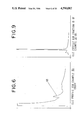
- FIG. 9 is the GLC profile for Fraction 15 of the distillation product of the reaction product of Example IV(B) containing the compound having the structure: ##STR13##
- FIG. 10 is the GLC profile for Fraction 8 of the distillation product of the reaction product of Example IV(B) containing the compound having the structure: ##STR14## (Conditions: 8' ⁇ 0.125" SE-30 column programmed at 220° C. isothermal).
- FIG. 11 is the GLC profile for Fraction 16 of the distillation product of the reaction product of Example IV(B) containing the compound having the structure: ##STR15## (Conditions: 8' ⁇ 0.125" SE-30 column programmed at 220° C. isothermal).
- FIG. 12 is the GLC profile for the crude reaction product of Example V containing the compound having the structure: ##STR16## (Conditions: 8' ⁇ 0.125" SE-30 column programmed at 220° C. isothermal).
- FIG. 13 is the NMR spectrum for the compound having the structure: ##STR17## prepared according to Example V (Conditions: Field strength: 100 MHz; Solvent: CFCl 3 ).
- FIG. 14 is the GLC profile for the crude reaction product of Example VI containing the compound having the structure: ##STR18## (Conditions: 8' ⁇ 0.125" SE-30 column programmed at 100°-220° C. at 8° C. per minute).
- FIG. 15 is the NMR spectrum for the compound having the structure: ##STR19## prepared according to Example VI (Conditions: Field strength: 100 MHz; Solvent: CFCl 3 ).
- FIG. 16 is the NMR spectrum for the compound having the structure: ##STR20## prepared according to Example VII (Conditions: Field strength: 100 MHz; Solvent: CFCl 3 ).
- FIG. 17 is the GLC profile for the crude reaction product of Example VIII containing the compound having the structure: ##STR21## prepared according to Example VIII (Conditions: 8' ⁇ 0.125" SE-30 column programmed at 100°-220° C. at 8° C. per minute).
- FIG. 18 is the NMR spectrum for the compound having the structure: ##STR22## prepared according to Example VIII (Conditions: Field strength: 100 MHz; Solvent; CFCl 3 ).
- FIG. 19 is the GLC profile for the crude reaction product of Example IX containing the compound having the structure: ##STR23## (Conditions: 8' ⁇ 0.25" carbowax column programmed at 220° C. isothermal).
- FIG. 20 is the NMR spectrum for the compound having the structure: ##STR24## prepared according to Example IX (Conditions: Field strength: 100 MHz; Solvent: CFCl 3 ).
- FIG. 21 is the NMR spectrum for the compound having the structure: ##STR25## prepared according to Example X (Conditions: Field strength: 100 MHz; Solvent: CFCl 3 ).
- FIG. 22 is the GLC profile for the crude reaction product of Example XI containing the compound having the structure: ##STR26## (Conditions: Carbowax column programmed at 100°-220° C. at 8° C. per minute).
- FIG. 23 is the NMR spectrum for the compound having the structure: ##STR27## prepared according to Example XI (Conditions: Field strength: 100 MHz; Solvent: CFCl 3 ).
- FIG. 24 is the GLC profile for the crude reaction product having the structure: ##STR28## prepared according to Example XII.
- FIG. 25 is the NMR spectrum for the compound having the structure: ##STR29## prepared according to Example XII (Conditions: Field strength: 100 MHz; Solvent: CFCl 3 ).
- FIG. 26 is the NMR spectrum for the compound having the structure: ##STR30## prepared according to Example XIII (Conditions: Field strength: 100 MHz; Solvent: CFCl 3 ).
- FIG. 27 is the GLC profile for Fraction 4 of the distillation product of the reaction product of Example XIV containing the compound having the structure: ##STR31## (Conditions: 8' ⁇ 0.25" carbowax column programmed at 220° C. isothermal).
- FIG. 28 is the GLC profile for Fraction 3 of the distillation product of the reaction product of Example XIV containing the compound having the structure: ##STR32## (Conditions: 8' ⁇ 0.25" carbowax column programmed at 220° C. isothermal).
- FIG. 29 is the NMR spectrum for Fraction 3 of the distillation product of the reaction product of Example XIV containing the compound having the structure: ##STR33## (Conditions: Field strength: 100 MHz; Solvent: CFCl 3 ).
- FIG. 30 is the NMR spectrum for the compound having the structure: ##STR34## prepared according to Example XV (Conditions: Field strength: 100 MHz; Solvent: CFCl 3 ).
- FIG. 31 is the GLC profile for the crude reaction product of Example XXII containing the compound having the structure: ##STR35##
- FIG. 32 is the GLC profile for Fraction 3 of the distillation of the reaction product of Example XXII containing the compound having the structure: ##STR36##
- FIG. 33 is the GLC profile for Fraction 4 of the distillation of the reaction product of Example XXII containing the compound having the structure: ##STR37##
- FIG. 34 is the GLC profile for Fraction 5 of the distillation of the reaction product of Example XXII containing the compound having the structure: ##STR38## (Conditions: Carbowax column programmed at 100°-220° C. at 8° C. per minute).
- FIG. 35 is the NMR spectrum for the compound having the structure: ##STR39## prepared according to Example XXII (Conditions: Field strength: 100 MHz; Solvent: CFCl 3 ).
- FIG. 36 is the GLC profile for Fraction 4 of the distillation of the reaction product of Example XXIII containing the compound having the structure: ##STR40## (Conditions: 8' ⁇ 0.25" carbowax column programmed at 100°-220° C. at 8° C. per minute).
- FIG. 37 is the NMR spectrum for Fraction 4 of the distillation of the reaction product of Example XXIII containing the compound having the structure: ##STR41## (Conditions: Field strength: 100 MHz; Solvent: CFCl 3 ).
- FIG. 1 is the GLC profile for the crude reaction product of Example I(A) (Conditions: 8' ⁇ 0.125" SE-30 column programmed at 220° C. isothermal).
- the peak indicated by reference numeral 10 is the peak for the reaction solvent.
- the peak indicated by reference numeral 11 is the peak for the product having the structure: ##STR42##
- FIG. 4 is the GLC profile for the crude reaction product of Example II (Conditions: 8' ⁇ 0.125" SE-30 column programmed at 100°-220° C. at 8° C. per minute).
- the peak indicated by reference numeral 40 is the peak for the compound having the structure: ##STR43##
- FIG. 6 is the GLC profile for the crude reaction product of Example III containing the compound having the structure: ##STR44## (Conditions: Carbowax column programmed at 220° C. isothermal).
- the peak indicated by reference numeral 60 is the peak for the compound having the structure: ##STR45##
- FIG. 12 is the GLC profile for the crude reaction product of Example V containing the compound having the structure: ##STR46## (Conditions: 8' ⁇ 0.125" SE-30 column programmed at 220° C. isothermal).
- the peak indicated by reference numeral 120 is the peak for the compound having the structure: ##STR47##
- FIG. 14 is the GLC profile for the crude reaction product of Example VI containing the compound having the structure: ##STR48## (Conditions: 8' ⁇ 0.125" SE-30 column programmed at 100°-220° C. at 8° C. per minute).
- the peak indicated by reference numeral 140 is the peak for the compound having the structure: ##STR49##
- FIG. 17 is the GLC profile for the crude reaction product of Example VIII containing the compound having the structure: ##STR50## (Conditions: 8' ⁇ 0.125" SE-30 column programmed at 100°-220° C. at 8° C. per minute).
- the peak indicated by reference numeral 170 is the peak for the compound having the structure: ##STR51##
- FIG. 19 is the GLC profile for the crude reaction product of Example IX containing the compound having the structure: ##STR52## (Conditions: 8' ⁇ 0.25" carbowax column programmed at 220° C. isothermal).
- the peak indicated by reference numeral 190 is the peak for the compound having the structure: ##STR53##
- FIG. 22 is the GLC profile for the crude reaction product of Example XI containing the compound having the structure: ##STR54## (Conditions: Carbowax column programmed at 100°-220° C. at 8° C. per minute). The peak indicated by reference numeral 220 is the peak for the the compound having the structure: ##STR55##
- the present invention provides cycloalkyl esters of mercaptoalkanoic acids useful for augmenting or enhancing the aroma or taste of foodstuffs, said cycloalkyl esters of mercaptoalkanoic acids being defined according to the structure: ##STR56## wherein R 1 represents hydrogen or methyl; R 2 represents mono C 1 -C 4 alkyl substituted or unsubstituted C 5 -C 8 cycloalkyl; R 3 represents hydrogen or methyl; and N represents 0, 1 or 2 as well as methods for augmenting, enhancing, or modifying the organoleptic properties, e.g., taste and aroma of said foodstuffs using said cycloalkyl esters of mercaptoalkanoic acids.
- the cycloalkyl esters of mercaptoalkanoic acids of our invention augment or enhance roasted, roasted sesame, roasted peanut, sulfury, concord grape, burnt potato skin, cashew juice, roasted almond, floral, roasted meat, peanut, yeasty, cashew, fruity, green, kiwi, citrus, bread crust, boiled corn, boiled bean, cooked ham, pineapple, grapefruit, meaty, sesame, oniony and roasted onion aroma and taste nuances in foodstuff flavors making them useful for augmenting or enhancing flavors for such foodstuffs as peanut, almond, sesame, potato, concord grape, cashew, roasted almond, carmel, roasted meat, roasted nut, roasted, nutty, cashew, yeast, kiwi, citrus, cooked vegetable, cooked ham, pineapple, grapefruit and durian flavored foodstuffs.
- the cycloalkyl esters of mercaptoalkanoic acids of our invention may be prepared by reacting an alcohol having the structure: ##STR57## with a mercapto alkanoic acid having the structure: ##STR58## in the presence of a protonic acid such as para-toluene sulfonic acid or in the absence of such acid at temperatures in the range of from about 100° C. up to about 150°; preferably at reflux conditions at atmospheric pressure. Pressures higher than atmospheric pressure may be utilized thereby giving rise to higher temperatures of reaction and shorter time periods of reaction. The time of reaction may vary from about 3 hours up to about 15 hours depending on the temperature of reaction.
- R 1 represents hydrogen or methyl
- R 2 represents mono C 1 -C 4 alkyl substituted or unsubstituted C 5 -C 8 cycloalkyl
- R 3 represents hydrogen or methyl
- N represents 0, 1 or 2.
- cycloalkyl esters of mercaptoalkanoic acids of our invention may be prepared, in the alternative, by reacting a mercaptan having the structure:
- R 3 ' represents C 1 -C 3 lower alkyl with an alpha, beta, or gamma halogen-substituted alkanoic acid ester having the structure: ##STR64## wherein R 1 , R 2 and N are defined, supra and X represents chloro or bromo according to the reaction: ##STR65##
- methyl mercaptan takes place in the presence of an alkali metal alkoxide catalyst such as sodium methoxide, potassium methoxide, potassium iso-t-butoxide and the like.
- the reaction takes place at a temperature in the range of from about 0° C. up to about 30° C.
- the methyl mercaptan being a gas at room temperature and pressure is bubbled in below the reaction mass and the temperature is preferably maintained at 10°-15° C.
- cycloalkyl esters of mercaptoalkanoic acids of our invention may also be prepared by means of a reaction well known to those having ordinary skill in the art as "ester interchange" whereby a lower alkyl ester of a mercapto or alkyl mercapto alkanoic acid is reacted with a cycloalkanol, e.g., cyclohexanol, cyclopentanol, cyclooctanol, cycloheptanol or 4-t-butyl cyclohexanol according to the reaction: ##STR66## wherein R 4 of the molecule: ##STR67## is C 1 -C 3 lower alkyl, e.g., methyl, ethyl, n-propyl or isopropyl.
- This reaction takes place in the presence of an alkali metal alkoxide catalyst such as sodium methoxide, potassium ethoxide or potassium iso-t-butoxide at a temperature in the range of from about 90° C. up to about 130° C. at atmospheric pressure.
- an alkali metal alkoxide catalyst such as sodium methoxide, potassium ethoxide or potassium iso-t-butoxide at a temperature in the range of from about 90° C. up to about 130° C. at atmospheric pressure.
- reaction product is extracted from the reaction mass or the reaction mass is washed, for example, with saturated sodium chloride.
- the reaction product is then distilled preferably by means of vacuum distillation.
- cycloalkyl esters of mercaptoalkanoic acids of our invention can be used to alter, vary, fortify, modify, enhance or otherwise improve the organoleptic properties including flavor and/or aroma of a wide variety of materials which are ingested, consumed or otherwise organoleptically sensed.
- alter in its various forms will be understood herein to mean the supplying or imparting of a flavor character or note to an otherwise bland, relatively tasteless substance or augmenting an existing flavor characteristic where the natural flavor is deficient in some regard or supplementing the existing flavor or aroma impression to modify the organoleptic character.
- the materials which are so altered are generally referred to herein as consumable materials.
- Flavoring compositions are herein taken to mean those which contribute a part of the overall flavor impression by supplementing or fortifying a natural or artifical flavor in a material, as well as those which supply substantially all the flavor and/or aroma character to a consumable article.
- foodstuff includes both solid and liquid ingestible materials for man or animals, which materials usually do, but need not, have nutritional value.
- foodstuffs include meats, gravies, soups, convenience foods, malt and other alcoholic or non-alcoholic beverages, milk and dairy products, nut butters such as peanut butter and other spreads, seafoods including fish, crustaceans, mollusks and the like, candies, breakfast foods, baked goods, vegetables, cereals, soft drinks, snack foods, dog and cat foods, other veterinary products, and the like.
- cycloalkyl esters of mercaptoalkanoic acids of our invention When used in a food flavoring composition, they can be combined with conventional flavoring materials or adjuvants.
- conventional flavoring materials or adjuvants are well known in the art for such use and have been extensively described in the literature.
- conventional materials can be used and broadly include other flavor materials, vehicles, stabilizers, thickeners, surface active agents, conditioners and flavor intensifiers. Examples of preferred co-flavoring adjuvants are:
- Methyl thiazole alcohol (4-methyl-5-betahydroxyethyl thiazole);
- Sulphur-containing amino acids e.g., cysteine
- the cycloalkyl esters of mercaptoalkanoic acids or the compositions incorporating them, as mentioned above, can be combined with one or more vehicles or carriers for adding them to the particular product to be flavored.
- Vehicles can be edible or otherwise suitable materials such as ethyl alcohol, propylene glycol, water and the like.
- Carriers include materials such as gum arabic, carrageenan, guar gum, xantham gum and the like.
- the cycloalkyl esters of mercaptoalkanoic acids of our invention can be incorporated with the carriers by conventional means such as spray-drying, drum-drying and the like.
- Such carriers can also include materials for coacervating the cycloalkyl esters of mercaptoalkanoic acids of our invention (and other flavoring ingredients, as present) to provide encapsulated products.
- the carrier is an emulsion
- the flavoring composition can also contain emulsifiers such as mono- and diglycerides or fatty acids and the like. With these carriers or vehicles, the desired physical form of the composition can be prepared.
- the quantity of cycloalkyl esters of mercaptoalkanoic acids utilized should be sufficient to impart the desired flavor characteristics to the product, but on the other hand, the use of an excessive amount of the derivative is not only wasteful and uneconomical, but in some instances too large a quantity may unbalance the flavor or other organoleptic properties of the product consumed.
- the quantity used will vary depending upon the ultimate foodstuff; the amount and type of flavor initially present in the foodstuff; the further process or treatment steps to which the foodstuff will be subjected; regional and other preference factors; the type of storage, if any, to which the product will be subject; and the preconsumption treatment, such as baking, frying and so on, given to the product by the ultimate consumer. Accordingly, the terminology "effective amount” and "sufficient amount” is understood in the context of the present invention to be quantitatively adequate to alter the flavor of the foodstuff.
- the ultimate composition contain from about 0.001 parts per million (ppm) to about 250 ppm of cycloalkyl esters of mercaptoalkanoic acids or mixtures thereof. More particularly, in food compositions it is desirable to use from about 0.001 ppm to 100 ppm for enhancing flavors and in certain preferred embodiments of the invention, from about 0.001 to 50 ppm of the derivatives are included to add positive flavors to the finished product.
- cycloalkyl esters of mercaptoalkanoic acids or mixtures thereof of our invention to be utilized in flavoring compositions can be varied over a wide range depending upon the particular quality to be added to the foodstuff.
- amounts of one or more derivatives according to the present invention of from about 0.04 ppm up to 80 to 90 percent of the total flavoring composition can be incorporated in such compositions. It is generally found to be desirable to include from about 0.05 ppm up to about 0.1 percent of the cycloalkyl esters of mercaptoalkanoic acids in such compositions.
- reaction mass Into a 250 ml reaction flask equipped with magnetic stirrer, heating mantle, thermometer, and nitrogen sparger are placed 11.4 grams cycloheptanol; 8.1 grams of the methyl ester of 4-methylthiobutyric acid; and 0.5 grams of sodium methoxide. With stirring, the reaction mass is slowly heated to 100° C. over a 15 minute period. The reaction mass is stirred at 100° C. for a period of 5 hours. At the end of the 5 hour period, the reaction mass is washed with saturated sodium chloride, dried over anhydrous magnesium sulfate and fractionally distilled yielding the following fractions:
- the resulting product has a pineapple and sulfury aroma and taste profile at 10 ppm.
- FIG. 1 is the GLC profile of the crude reaction product.
- the peak indicated by reference numeral 10 is the peak for the excess "solvent", in this case the reactant, cycloheptanol.
- the peak indicated by reference numeral 11 is the peak for the product having the structure: ##STR86## (GLC conditions: 8' ⁇ 0.125" SE-30 column programmed at 220° C. isothermal).
- FIG. 2 is the NMR spectrum for the compound having the structure: ##STR87## (Conditions: Field strength: 100 MHz; Solvent: CFCl 3 ).
- reaction mass is transferred to a separatory funnel and washed with three 100 ml volumes of water followed by drying over anhydrous sodium sulfate.
- the reaction mass is then fractionally distilled to yield the compound having the structure: ##STR89## as confirmed by NMR, IR, GLC and mass spectral analyses.
- the reaction product having the structure: ##STR90## has a fruity, pineapple and roasted aroma and taste profile at 0.2 ppm causing it to be useful in pineapple and peanut-flavored foodstuffs.
- FIG. 3 is the NMR spectrum for the compound having the structure: ##STR91## prepared according to this example (Conditions: Field strength: 100 MHz; Solvent: CFCl 3 ).
- FIG. 4 is the GLC profile for the crude reaction product containing the compound having the structure: ##STR95## (Conditions: 8' ⁇ 0.125" SE-30 column programmed at 100°-220° C. at 8° C. per minute).
- the peak indicated by reference numeral 40 is the peak for the compound having the structure: ##STR96##
- FIG. 5 is the NMR spectrum for the compound having the structure: ##STR97## (Conditions: Field strength: 100 MHz; Solvent: CFCl 3 ).
- the compound having the structure: ##STR100## has a roasted, meaty and sesame aroma and taste profile at 1 ppm causing it to be useful in sesame, roasted almond and roasted peanut flavored foodstuffs.
- FIG. 6 is the GLC profile of the crude reaction product containing the compound having the structure: ##STR101## (Conditions: Carbowax column programmed at 220° C. isothermal).
- the peak indicated by reference numeral 60 is the peak for the compound having the structure: ##STR102##
- FIG. 7 is the NMR spectrum for the compound having the structure: ##STR103## (Conditions: Field strength: 100 MHz; Solvent: CFCl 3 ).
- reaction mass Into a 250 cc reaction flask equipped with stirrer, thermometer, reflux condenser and heating mantle are placed 100 grams of cyclopentanol; 25 grams of 3-mercaptopropionic acid and 0.5 grams of paratoluene sulfonic acid.
- the reaction mass is heated to reflux and maintained at reflux for a period of 8 hours.
- the reaction mass is admixed with 200 ml of anhydrous diethylether and then washed with two 100 ml volumes of 10% aqueous sodium carbonate followed by one 100 ml volume of water.
- the reaction mass is dried over anhydrous magnesium sulfate and the solvent is recovered on a Buchi evaporator.
- reaction mass is then distilled using micro distillation apparatus to yield the compound having the structure: ##STR105##
- a GLC trap of this compound gives rise to a material having a roasted peanut, yeasty and cashew aroma and taste profile at 0.1 ppm causing it to be useful in roasted, nutty, cashew and yeast flavored foodstuffs.
- FIG. 8 is the NMR spectrum for the compound having the structure: ##STR106## (Conditions: Field strength: 100 MHz; Solvent: CFCl 3 ).
- the resulting distillation product (bulked Fractions 8-16) has a roasted, bread crust, cashew juice, roasted almond, roasted sesame and concord grape aroma and taste profile at 0.2 ppm causing it to be useful in roasted almond, caramel and concord grape flavored foodstuffs.
- FIG. 9 is the GLC profile for Fraction 15 of the foregoing distillation.
- FIG. 10 is the GLC profile for Fraction 8 of the foregoing distillation.
- FIG. 11 is the GLC profile for Fraction 16 of the foregoing distillation. All GLC conditions are 8' ⁇ 0.125" SE-30 column programmed at 220° C. isothermal.
- reaction mass is heated to reflux and maintained at reflux for a period of 8 hours. At the end of the 8 hour period, the reaction mass is washed with one 25 ml volume of water and then dried over anhydrous sodium sulfate. The reaction mass is then distilled on a micro distillation apparatus yielding the compound having the structure: ##STR110##
- the compound having the structure: ##STR111## has a roasted, floral and grapefruit aroma and taste profile at 0.5 ppm.
- FIG. 12 is the GLC profile for the crude reaction product (Conditions: 8' ⁇ 0.125" SE-30 column programmed at 220° C. isothermal).
- the peak indicated by reference numeral 120 is the peak for the compound having the structure: ##STR112##
- FIG. 13 is the NMR spectrum for the compound having the structure: ##STR113## (Conditions: Field strength: 100 MHz; Solvent: CFCl 3 ).
- reaction mass Into a 100 ml reaction flask equipped with stirrer, thermometer, reflux condenser and heating mantle are placed 28.5 grams of cycloheptanol; 9.2 grams of mercaptoacetic acid and 0.5 grams of paratoluene sulfonic acid. The reaction mass is heated to reflux and refluxed for a period of 10 hours. At the end of the 10 hour period, the reaction mass is washed with one 25 ml volume of water followed by drying over anhydrous sodium sulfate. The reaction mass is then distilled in a micro distillation apparatus yielding the compound having the structure ##STR115##
- FIG. 14 is the GLC profile for the crude reaction product (Conditions: 8' ⁇ 0.125" SE-30 column programmed at 100°-220° C. at 8° C. per minute).
- the peak indicated by reference numeral B 140 is the peak for the compound having the structure: ##STR116## as confirmed by NMR, IR and mass spectral analyses.
- the resulting product having the structure: ##STR117## has a distinct roasted, sulfury and floral aroma and taste profile at 0.5 ppm.
- FIG. 15 is the NMR spectrum for the compound having the structure: ##STR118## (Conditions: Field strength: 100 MHz; Solvent: CFCl 3 ).
- reaction mass is heated to reflux and maintained at reflux for a period of 12 hours. At the end of the 12 period, the reaction mass is distilled on a micro distillation apparatus yielding the compound having the structure: ##STR120##
- the resulting product having the structure: ##STR121## has a roasted and roasted meat aroma and taste profile at 0.001 ppm causing it to be useful in roasted meat, roasted nut and caramel flavored foodstuffs.
- FIG. 16 is the NMR spectrum for the compound having the structure: ##STR122## (Conditions: Field strength: 100 MHz; Solvent: CFCl 3 ).
- reaction mass is heated to reflux and refluxed for a period of 9 hours. At the end of the 9 hour period, the reaction mass is fractionally distilled on a micro distillation apparatus to yield the compound having the structure: ##STR124##
- the compound having the structure: ##STR125## has a oniony and roasted onion aroma and taste profile at 0.2 ppm.
- FIG. 17 is the GLC profile for the crude reaction product (Conditions: 8' ⁇ 0.125" SE-30 column programmed at 100°-220° C. at 8° C. per minute).
- the peak indicated by reference numeral 170 is the peak for the compound having the structure: ##STR126##
- FIG. 18 is the NMR spectrum for the compound having the structure: ##STR127## (Conditions: Field strength: 100 MHz; Solvent: CFCl 3 ).
- the compound having the structure: ##STR130## has a roasted, fruity, green, kiwi-like and citrus aroma and taste profile at 0.1 ppm causing it to be useful in kiwi, cashew and citrus flavored foodstuffs.
- FIG. 19 is the GLC profile for the crude reaction product containing the compound having the structure: ##STR131## (Conditions: 8' ⁇ 0.25" carbowax column programmed at 220° C. isothermal).
- the peak indicated by reference numeral 190 is the peak for the compound having the structure: ##STR132##
- FIG. 20 is the NMR spectrum for the compound having the structure: ##STR133## (Conditions: Field strength: 100 MHz; Solvent: CFCl 3 ).
- reaction mass Into a 250 ml reaction flask equipped with stirrer, thermometer, reflux condenser and heating mantle are placed 86 grams of cyclopentanol; 25 grams of 2-mercaptopropionic acid; and 1 gram of paratoluene sulfonic acid. The reaction mass is heated to reflux and refluxed for a period of 8 hours. At the end of the 8 hour reflux period, the reaction mass is cooled and admixed with 200 ml diethylether followed by washing with two 100 ml volumes of 10% aqueous sodium carbonate and one 100 ml volume of water. The reaction mass is dried over anhydrous sodium sulfate and the solvent is recovered on a Buchi apparatus. The reaction mass is then micro distilled yielding the product having the structure: ##STR135##
- the product having the structure: ##STR136## has a boiled corn, boiled green bean and cooked ham aroma and taste profile at 1 ppm.
- FIG. 21 is the NMR spectrum for the compound having the structure: ##STR137## (Conditions: Field strength: 100 MHz; Solvent: CFCl 3 ).
- reaction mass is heated to reflux and refluxed for a period of 9 hours. At the end of the 9 hour period, the reaction mass is cooled to room temperature and admixed with 200 ml diethylether followed by washing with two 100 ml volumes of 10% aqueous sodium carbonate and one 100 ml volume of water. The reaction mass is then dried over anhydrous sodium sulfate and the solvent is recovered on a Buchi evaporator. The reaction mass is then distilled on a micro distillation apparatus yielding the following fractions:
- the resulting product having the structure: ##STR139## has a boiled corn, boiled green bean and cooked ham aroma and taste profile at 1 ppm causing it to be useful in augmenting or enhancing the aroma or taste of ham and boiled green vegetable flavored foodstuffs.
- FIG. 22 is the GLC profile for the crude reaction product containing the compound having the structure: ##STR140## (Conditions: Carbowax column programmed at 100°-220° C. at 8° C. per minute).
- the peak indicated by reference numeral 220 is the peak for the compound having the structure: ##STR141##
- FIG. 23 is the NMR spectrum for the compound having the structure: ##STR142## (Conditions: Field strength: 100 MHz; Solvent: CFCl 3 ).
- reaction mass Into a 250 ml reaction flask equipped with stirrer, thermometer, reflux condenser and heating mantle are placed 100 grams of cyclohexanol; 26 grams of 3-mercaptopropionic acid and 0.5 grams of paratoluene sulfonic acid. The reaction mass is heated to reflux and refluxed for a period of 11 hours. At the end of the 11 hour period of refluxing, the reaction mass is cooled to room temperature. 200 ml Diethylether are added to the reaction mass. The reaction mass is then washed with two 100 ml volumes of 10% aqueous sodium bicarbonate solution followed by one 100 ml volume of water. The reaction mass is dried over anhydrous sodium sulfate and the solvent is recovered on a Buchi evaportor. The reaction mass is then micro distilled on a micro distillation apparatus yielding the following fractions:
- the compound having the structure: ##STR144## has a roasted, roasted sesame and roasted peanut aroma and taste profile at 0.1 ppm causing it to be useful in peanut, almond and sesame flavored foodstuffs.
- FIG. 24 is the GLC profile for the crude reaction product.
- FIG. 25 is the NMR spectrum for the compound having the structure: ##STR145## (Conditions: Field strength: 100 MHz; Solvent: CFCl 3 ).
- the compound having the structure: ##STR148## has a roasted, cashew juice, sulfury and roasted almond aroma and taste profile at 0.01 ppm causing it to be useful in cashew juice, roasted almond and caramel flavored foodstuffs.
- FIG. 26 is the NMR spectrum for the compound having the structure: ##STR149## (Conditions: Field strength: 100 MHz; Solvent: CFCl 3 ).
- the compound having the structure: ##STR151## has a pineapple and green aroma and taste profile at 0.2 ppm causing it to be useful in pineapple flavored foodstuffs.
- FIG. 27 is the GLC profile for Fraction 4 of the foregoing distillation (Conditions: 8' ⁇ 0.25" carbowax column programmed at 220° C. isothermal).
- FIG. 28 is the GLC profile for Fraction 3 of the foregoing distillation (Conditions: 8' ⁇ 0.25" carbowax column programmed at 220° C. isothermal).
- FIG. 29 is the NMR spectrum for the compound having the structure: ##STR152## (Conditions: Field strength: 100 MHz; Solvent: CFCl 3 ).
- FIG. 30 is the NMR spectrum for the compound having the structure: ##STR156## (Conditions: Field strength: 100 MHz; Solvent: CFCl 3 ).
- Example XV prepared according to Example XV
- the compound having the structure: ##STR158## prepared according to Example IV(B) are added separately to SMUCKER'S® grape jam (manufactured by the J. M. Smucker Company of Orrville, Ohio 44667).
- SMUCKER'S® grape jam manufactured by the J. M. Smucker Company of Orrville, Ohio 44667.
- Each of the compounds prepared according to Example XV and IV(B) imparts a very natural concord grape nuance to the grape jam causing it to be preferred by a bench panel of five members.
- Each of the members of the bench panel is employed by International Flavors & Fragrances Inc., the assignee of the instant application.
- Each of the members of the bench panel did not know the nature of the materials being compared and the meaning of the results ascertained. The preference is a unanimous preference.
- the resulting flavor can be described as "beef with excellent roasted meat, roasted nut and caramel-like nuances".
- the roasted nuances have a very natural like flavor imparted by the compound having the structure: ##STR160## prepared according to Example VII.
- the resulting guava jelly has an excellent durian flavor with grapefruit nuances which render the jelly more aesthetically pleasing to a panel of five members.
- the panel of five members unanimously prefer the guava jelly containing the compound having the structure: ##STR162## over the guava jelly without the compound having the structure: ##STR163##
- the compound having the structure: ##STR164## prepared according to Example VIII is dissolved in 95% ethanol to provide a 2% solution and is held at room temperature for 24 hours. It is then diluted with water and the water solution is added to a chicken broth to obtain a concentration of 2.5 ppm. It is found that the chicken taste is deepened and a light onion after taste is added. Increasing the concentration to 5 ppm adds an onion aroma and a roasted onion taste is dominating.
- flavor additive having the structure: ##STR165## can replace flavors where roasted onion is used. It may also be used to supplement other onion flavors containing:
- the compound having the structure: ##STR170## prepared according to Example III. are added, respectively at the levels of 0.1 ppm, 0.01 ppm, 0.1 ppm, 0.1 ppm and 1 ppm to SMUCKER'S® natural peanut butter produced by the J. M. Smucker Company of Orrville, Ohio 44667.
- the compound having the structure: ##STR171## prepared according to Example XII imparts a long-lasting natural character to the peanut butter even after it is maintained in an open jar in a refrigerator for 3 weeks.
- the compound having the structure: ##STR172## prepared according to Example XIII imparts a long-lasting cashew nuance to the peanut butter making it more aesthetically pleasing.
- the compound having the structure: ##STR173## produced according to Example IV(B) imparts a cashew and almond nuance to the peanut butter in a long-lasting manner making it more aesthetically pleasing.
- the compound having the structure: ##STR174## imparts a cashew nuance to the peanut butter making it more aesthetically pleasing.
- the compound having the structure: ##STR175## prepared according to Example III imparts a fresh long-lasting, natural roasted character to the peanut butter and causes it to be "natural tasting" for a period of 3 weeks even if the peanut butter is left in an open jar in a refrigerator.
- a bench panel of five members unanimously prefers the peanut butters containing the cycloalkyl esters of mercaptoalkanoic acids set forth above over peanut butter not containing such materials.
- Each of the members of the bench panel is an employee of International Flavors & Fragrances Inc., the assignee of the above-identified application and each of the members of the bench panel did not know the nature of the materials being compared and the meaning of the results ascertained.
- the compound having the structure: ##STR180## prepared according to Example V. are added at the rates of 0.1 ppm, 0.2 ppm, 0.1 ppm, 1 ppm and 0.5 ppm, respectively, to (a) ACME® unsweetened grapefruit juice made from concentrate (distributed by the American Stores Buying Company of Salt Lake City, Utah 84130); and (b) SMUCKER'S® sweet orange marmalade (manufactured by the J. M. Smucker Company of Orrville, Ohio 44667).
- the compound having the structure: ##STR181## prepared according to Example IX imparts an intense, Kiwi aroma and taste nuance to the grapefruit juice and to the sweet orange marmalade making it more aesthetically pleasing to a blind bench panel of five members.
- the compound having the structure: ##STR182## prepared according to Example XIV imparts an intense pineapple aroma and taste to the grapefruit juice and to the sweet orange marmalade thereby making it more aesthetically pleasing (unanimous opinion) to a blind bench panel of five members.
- the compound having the structure: ##STR183## prepared according to Example I(A) imparts an intense pineapple aroma and taste nuance to the grapefruit juice and to the sweet orange marmalade causing it to be unanimously preferred by a blind bench panel of five members.
- the compound having the structure: ##STR184## imparts a durian note to the grapefruit juice and to the sweet orange marmalade and also imparts an additional grapefruit nuance to the sweet orange marmalade making both the grapefruit juice and the sweet orange marmalade more aesthetically pleasing and causing them to be preferred by a blind bench panel of five members.
- the compound having the structure: ##STR185## prepared according to Example V causes the grapefruit juice (even in an open tin container), refrigerated, to be more aesthetically pleasing than one not containing the compound having the structure: ##STR186## because the tin nuance from the tin container is "covered".
- the compound having the structure: ##STR187## imparts a pleasant grapefruit nuance to the sweet orange marmalade causing it to be preferred by a blind bench panel of five members, unanimously.
- FIG. 31 is the GLC profile for the crude reaction product (Conditions: 8' ⁇ 0.25" carbowax column programmed at 100°-120° C. at 8° C. per minute).
- FIG. 32 is the GLC profile for Fraction 3 of the foregoing distillation.
- FIG. 33 is the GLC profile for Fraction 4 of the foregoing distillation (Conditions: 8' ⁇ 0.25" carbowax column programmed at 100°-220° C. at 8° C. per minute).
- FIG. 34 is the GLC profile for Fraction 5 of the foregoing distillation (Conditions: Carbowax column programmed at 100°-220° C. at 8° C. per minute).
- FIG. 35 is the NMR spectrum for the compound having the structure: ##STR190## (Conditions: Field strength: 100 MHz; solvent: CFCl 3 ).
- the resulting product having the structure: ##STR191## has an aesthetically pleasing pineapple and fruity aroma at 5 ppm.
- reaction mass is heated to 100° C. while sparging with nitrogen and maintained at that temperature for a period of 3 hours. At the end of the 3 hour period, the reaction mass is cooled to room temperature and transferred to a separatory funnel whereupon 50 ml methylene dichloride is added. The resulting mixture is washed with two 50 ml portions of water and the methylene chloride extract is dried over anhydrous sodium sulfate and distilled on a micro distillation column yielding the following fractions:
- FIG. 36 is the GLC profile for Fraction 4 of the foregoing distillation (Conditions: 8' ⁇ 0.25" carbowax column programmed at 100°-220° C. at 8° C. per minute).
- FIG. 37 is the NMR spectrum for Fraction 4 of the foregoing distillation containing the compound having the structure: ##STR194## (Conditions: Field strength: 100 MHz; solvent: CFCl 3 ).
- the resulting product having the structure: ##STR195## has an excellent fruity, pineapple and roasted aroma and taste profile at 0.2 ppm causing it to be useful in pineapple and peanut flavored foodstuffs.
- the compound having the structure: ##STR196## is added to SMUCKER'S® orange marmalade.
- the compound having the structure: ##STR197## imparts a pleasant and aesthetically pleasing pineapple nuance to this orange marmalade causing it to be preferred unanimously by a bench panel of five members (blind panel not associated with the inventive entity of the instant application).
Landscapes
- Chemical & Material Sciences (AREA)
- Organic Chemistry (AREA)
- Health & Medical Sciences (AREA)
- Nutrition Science (AREA)
- Life Sciences & Earth Sciences (AREA)
- Engineering & Computer Science (AREA)
- Food Science & Technology (AREA)
- Polymers & Plastics (AREA)
- Seasonings (AREA)
Abstract
Described are the cycloalkyl esters of mercaptoalkanoic acids defined according to the structure: ##STR1## wherein R1 represents hydrogen or methyl; R2 represents mono C1 -C4 alkyl substituted or unsubstituted C5 -C8 cycloalkyl; R3 represents hydrogen or methyl; and N represents 0, 1 or 2 and uses thereof in augmenting or enhancing the aroma or taste of foodstuffs.
Description
The present invention relates to cycloalkyl esters of mercaptoalkanoic acids defined according to the structure: ##STR2## wherein R1 represents hydrogen or methyl; R2 represents mono C1 -C4 alkyl substituted or unsubstituted C5 -C8 cycloalkyl; R3 represents hydrogen or methyl; and N represents 0, 1 or 2 and uses thereof in augmenting or enhancing the aroma or taste of foodstuffs.
Artificial flavoring agents for foodstuffs have received increasing attention in recent years. In many areas, such food flavoring agents are preferred over natural flavoring agents at least in part, because of the uniform flavor that may be so obtained. For example, natural food flavoring agents such as extracts, essences, concentrates and the like are often subject to wide variations due to changes in quality and type and treatment of the raw materials. Such variations can be reflected in the end product and results in unreliable flavor characteristics and uncertainty as to consumer acceptance cost. Additionally, the presence of the natural product in the ultimate food may be undesirable because of the increased tendency to spoil. This is particularly troublesome in convenience and snack food usage where such products as dips, soups, chips, prepared dinners, canned foods, sauces, gravies and the like are apt to be stored by the consumer for some time prior to use.
The fundamental problem in preparing artificial flavoring agents is that of achieving as nearly as possible a true flavor reproduction. This generally proves to be a difficult task since the mechanism for flavoring development in many foods is not understood. This is notable in products having roasted, roasted sesame, roasted peanut, concord grape, burnt potato skin, cashew juice, roasted almond, roasted meat, peanut, Yeasty, cashew, fruity, kiwi-like, citrus, boiled corn, boiled green bean, cooked ham, bread crust, pineapple, roasted nut, grapefruit, meaty, sesame, oniony and roasted onion aroma and taste nuances.
Reproduction of roasted, roasted sesame, roasted peanut, sulfury, concord grape, burnt potato skin, cashew juice, roasted almond, pineapple, roasted nut, grapefruit, meaty, sesame, oniony, roasted onion, floral, roasted meat, peanut, yeasty, cashew, bread crust, fruity, green, kiwi-like, citrus, boiled corn, boiled green bean and cooked ham aroma and taste nuances has been the subject of long and continuous searches by those engaged in the production of foodstuffs. The severe shortage of food, especially protein foods, in many parts of the world has given rise to the need for utilizing non-meat sources of proteins and making such proteins as palatable as possible. Hence, materials which will closely simulate or exactly reproduce the flavor and aroma of peanut, almond, sesame, potato, concord grape, cashew juice, roasted almond, caramel, roasted meat, roasted nut, cashew, yeast, kiwi, citrus, cooked vegetables, cooked ham, pineapple, grapefruit and durian are required. Furthermore, meat flavors and vegetable flavors have been enhanced previously by the use of such materials as monosodium glutamate. In many diets, sodium is not desired. Furthermore, in many diets, the use of glutamate ion or glutamic acid is highly undesirable. Therefore a need has arisen for a monosodium glutamate replacer and an alkali metal glutamate replacer which does not have any glutamate ion or any sodium ion present.
Moreover, there are a great many meat containing or meat based foods presently distributed in a preserved form. Examples of these are condensed soups, dry soup mixes, dry meat, freeze dried or lyophilized meats, packaged gravies and the like. While these products contain meat or meat extracts, the fragrance, taste and other organoleptic factors are often impaired by the processing operation and it is desirable to supplement or enhance the flavors of these preserved foods with versatile materials which have roasted, roasted meat and roasted nut aroma and taste nuances.
Food flavors in the thioalkanoic acid ester area are known in the prior art.
Thus, U.S. Pat. No. 4,426,403 discloses the genus of compounds defined according to the structure: ##STR3## wherein R and R' represent hydrogen or C1 -C3 alkyl as food flavorants, particularly in the fruity, vegetable or green pine needle aroma and taste area.
U.S. Pat. No. 3,870,800 relates to the processes for augmenting or enhancing the aroma or taste of foodstuffs using methylthio butanoic acid derivatives. U.S. Pat. No. 3,904,556, at Example XVII thereof states that ethyl-4-(methylthio)butyrate may be added to a cheese sauce to increase the notes usually present in the surface ripened cheese and to increase the cheese flavor intensity. In Example XX it is further stated that this compound, ethyl-4-(methylthio)butyrate is added to tobacco to enhance the pineapple character of a fruit flavor for tobacco.
U.S. Pat. No. 3,879,562 issued on Apr. 22, 1975 and the reissue patent thereof, U.S. Pat. No. Re. 30,370 issued on Aug. 12, 1980 disclose the genus of compounds having the structure: ##STR4## wherein R1 represents alkyl, cyckloalkyl, aryl, aralkyl, alkaryl, or alkenyl and R2 represents alkyl, alkyl thioalkyl, aralkyl, alkaryl or aryl in augmenting or enhancing the aroma or taste of various foodstuffs.
McFadden, et al, Analytical Chemistry 37,560, have suggested the presence of methyl thiohexanoate and thioheptanoate in oil derived from hops, and Buttery, et al, have reported similar work in J. Chromatography 18,399. Schultz, Day and Libbey, "The Chemistry and Physiology of Flavors", Westport, Conn.:Avi. Publishing Company, 1967, at page 412 disclose thioesters useful in flavoring.
Nevertheless, nothing in the prior art discloses the cycloalkyl esters of mercaptoalkanoic acids of our invention or their unexpected, unobvious and advantageous uses in augmenting or enhancing the aroma or taste of foodstuffs.
FIG. 1 is the GLC profile for the crude reaction product of Example I(A) contaning the compound having the structure: ##STR5## (Conditions: 8'×0.125" SE-30 column programmed at 220° C. isothermal).
FIG. 2 is the NMR spectrum for the compound having the structure: ##STR6## produced according to Example I(A)(Conditions: Field strength: 100 MHz; Solvent: CFCl3).
FIG. 3 is the NMR spectrum for the compound having the structure: ##STR7## prepared according to Example I(B)(Conditions: Field strength: 100 MHz; Solvent: CFCl3).
FIG. 4 is the GLC profile for the crude reaction product of Example II containing the compound having the structure: ##STR8## (Conditions: 8'×0.125" SE-30 column programmed at 100°-220° C. at 8° C. per minute).
FIG. 5 is the NMR spectrum for the compound having the structure: ##STR9## prepared according to Example II (Conditions: Field strength: 100 MHz; Solvent: CFCl3).
FIG. 6 is the GLC profile for the crude reaction product of Example III containing the compound having the structure: ##STR10## (Conditions: Carbowax column programmed at 220° C. isothermal).
FIG. 7 is the NMR spectrum for the compound having the structure: ##STR11## prepared according to Example III (Conditions: Field strength: 100 MHz; Solvent: CFCl3).
FIG. 8 is the NMR spectrum for the compound having the structure: ##STR12## prepared according to Example IV(A) (Conditions: Field strength: 100 MHz; Solvent: CFCl3).
FIG. 9 is the GLC profile for Fraction 15 of the distillation product of the reaction product of Example IV(B) containing the compound having the structure: ##STR13##
FIG. 10 is the GLC profile for Fraction 8 of the distillation product of the reaction product of Example IV(B) containing the compound having the structure: ##STR14## (Conditions: 8'×0.125" SE-30 column programmed at 220° C. isothermal).
FIG. 11 is the GLC profile for Fraction 16 of the distillation product of the reaction product of Example IV(B) containing the compound having the structure: ##STR15## (Conditions: 8'×0.125" SE-30 column programmed at 220° C. isothermal).
FIG. 12 is the GLC profile for the crude reaction product of Example V containing the compound having the structure: ##STR16## (Conditions: 8'×0.125" SE-30 column programmed at 220° C. isothermal).
FIG. 13 is the NMR spectrum for the compound having the structure: ##STR17## prepared according to Example V (Conditions: Field strength: 100 MHz; Solvent: CFCl3).
FIG. 14 is the GLC profile for the crude reaction product of Example VI containing the compound having the structure: ##STR18## (Conditions: 8'×0.125" SE-30 column programmed at 100°-220° C. at 8° C. per minute).
FIG. 15 is the NMR spectrum for the compound having the structure: ##STR19## prepared according to Example VI (Conditions: Field strength: 100 MHz; Solvent: CFCl3).
FIG. 16 is the NMR spectrum for the compound having the structure: ##STR20## prepared according to Example VII (Conditions: Field strength: 100 MHz; Solvent: CFCl3).
FIG. 17 is the GLC profile for the crude reaction product of Example VIII containing the compound having the structure: ##STR21## prepared according to Example VIII (Conditions: 8'×0.125" SE-30 column programmed at 100°-220° C. at 8° C. per minute).
FIG. 18 is the NMR spectrum for the compound having the structure: ##STR22## prepared according to Example VIII (Conditions: Field strength: 100 MHz; Solvent; CFCl3).
FIG. 19 is the GLC profile for the crude reaction product of Example IX containing the compound having the structure: ##STR23## (Conditions: 8'×0.25" carbowax column programmed at 220° C. isothermal).
FIG. 20 is the NMR spectrum for the compound having the structure: ##STR24## prepared according to Example IX (Conditions: Field strength: 100 MHz; Solvent: CFCl3).
FIG. 21 is the NMR spectrum for the compound having the structure: ##STR25## prepared according to Example X (Conditions: Field strength: 100 MHz; Solvent: CFCl3).
FIG. 22 is the GLC profile for the crude reaction product of Example XI containing the compound having the structure: ##STR26## (Conditions: Carbowax column programmed at 100°-220° C. at 8° C. per minute).
FIG. 23 is the NMR spectrum for the compound having the structure: ##STR27## prepared according to Example XI (Conditions: Field strength: 100 MHz; Solvent: CFCl3).
FIG. 24 is the GLC profile for the crude reaction product having the structure: ##STR28## prepared according to Example XII.
FIG. 25 is the NMR spectrum for the compound having the structure: ##STR29## prepared according to Example XII (Conditions: Field strength: 100 MHz; Solvent: CFCl3).
FIG. 26 is the NMR spectrum for the compound having the structure: ##STR30## prepared according to Example XIII (Conditions: Field strength: 100 MHz; Solvent: CFCl3).
FIG. 27 is the GLC profile for Fraction 4 of the distillation product of the reaction product of Example XIV containing the compound having the structure: ##STR31## (Conditions: 8'×0.25" carbowax column programmed at 220° C. isothermal).
FIG. 28 is the GLC profile for Fraction 3 of the distillation product of the reaction product of Example XIV containing the compound having the structure: ##STR32## (Conditions: 8'×0.25" carbowax column programmed at 220° C. isothermal).
FIG. 29 is the NMR spectrum for Fraction 3 of the distillation product of the reaction product of Example XIV containing the compound having the structure: ##STR33## (Conditions: Field strength: 100 MHz; Solvent: CFCl3).
FIG. 30 is the NMR spectrum for the compound having the structure: ##STR34## prepared according to Example XV (Conditions: Field strength: 100 MHz; Solvent: CFCl3).
FIG. 31 is the GLC profile for the crude reaction product of Example XXII containing the compound having the structure: ##STR35##
FIG. 32 is the GLC profile for Fraction 3 of the distillation of the reaction product of Example XXII containing the compound having the structure: ##STR36##
FIG. 33 is the GLC profile for Fraction 4 of the distillation of the reaction product of Example XXII containing the compound having the structure: ##STR37##
FIG. 34 is the GLC profile for Fraction 5 of the distillation of the reaction product of Example XXII containing the compound having the structure: ##STR38## (Conditions: Carbowax column programmed at 100°-220° C. at 8° C. per minute).
FIG. 35 is the NMR spectrum for the compound having the structure: ##STR39## prepared according to Example XXII (Conditions: Field strength: 100 MHz; Solvent: CFCl3).
FIG. 36 is the GLC profile for Fraction 4 of the distillation of the reaction product of Example XXIII containing the compound having the structure: ##STR40## (Conditions: 8'×0.25" carbowax column programmed at 100°-220° C. at 8° C. per minute).
FIG. 37 is the NMR spectrum for Fraction 4 of the distillation of the reaction product of Example XXIII containing the compound having the structure: ##STR41## (Conditions: Field strength: 100 MHz; Solvent: CFCl3).
FIG. 1 is the GLC profile for the crude reaction product of Example I(A) (Conditions: 8'×0.125" SE-30 column programmed at 220° C. isothermal). The peak indicated by reference numeral 10 is the peak for the reaction solvent. The peak indicated by reference numeral 11 is the peak for the product having the structure: ##STR42##
FIG. 4 is the GLC profile for the crude reaction product of Example II (Conditions: 8'×0.125" SE-30 column programmed at 100°-220° C. at 8° C. per minute). The peak indicated by reference numeral 40 is the peak for the compound having the structure: ##STR43##
FIG. 6 is the GLC profile for the crude reaction product of Example III containing the compound having the structure: ##STR44## (Conditions: Carbowax column programmed at 220° C. isothermal). The peak indicated by reference numeral 60 is the peak for the compound having the structure: ##STR45##
FIG. 12 is the GLC profile for the crude reaction product of Example V containing the compound having the structure: ##STR46## (Conditions: 8'×0.125" SE-30 column programmed at 220° C. isothermal). The peak indicated by reference numeral 120 is the peak for the compound having the structure: ##STR47##
FIG. 14 is the GLC profile for the crude reaction product of Example VI containing the compound having the structure: ##STR48## (Conditions: 8'×0.125" SE-30 column programmed at 100°-220° C. at 8° C. per minute). The peak indicated by reference numeral 140 is the peak for the compound having the structure: ##STR49##
FIG. 17 is the GLC profile for the crude reaction product of Example VIII containing the compound having the structure: ##STR50## (Conditions: 8'×0.125" SE-30 column programmed at 100°-220° C. at 8° C. per minute). The peak indicated by reference numeral 170 is the peak for the compound having the structure: ##STR51##
FIG. 19 is the GLC profile for the crude reaction product of Example IX containing the compound having the structure: ##STR52## (Conditions: 8'×0.25" carbowax column programmed at 220° C. isothermal). The peak indicated by reference numeral 190 is the peak for the compound having the structure: ##STR53##
FIG. 22 is the GLC profile for the crude reaction product of Example XI containing the compound having the structure: ##STR54## (Conditions: Carbowax column programmed at 100°-220° C. at 8° C. per minute). The peak indicated by reference numeral 220 is the peak for the the compound having the structure: ##STR55##
The present invention provides cycloalkyl esters of mercaptoalkanoic acids useful for augmenting or enhancing the aroma or taste of foodstuffs, said cycloalkyl esters of mercaptoalkanoic acids being defined according to the structure: ##STR56## wherein R1 represents hydrogen or methyl; R2 represents mono C1 -C4 alkyl substituted or unsubstituted C5 -C8 cycloalkyl; R3 represents hydrogen or methyl; and N represents 0, 1 or 2 as well as methods for augmenting, enhancing, or modifying the organoleptic properties, e.g., taste and aroma of said foodstuffs using said cycloalkyl esters of mercaptoalkanoic acids.
The cycloalkyl esters of mercaptoalkanoic acids of our invention augment or enhance roasted, roasted sesame, roasted peanut, sulfury, concord grape, burnt potato skin, cashew juice, roasted almond, floral, roasted meat, peanut, yeasty, cashew, fruity, green, kiwi, citrus, bread crust, boiled corn, boiled bean, cooked ham, pineapple, grapefruit, meaty, sesame, oniony and roasted onion aroma and taste nuances in foodstuff flavors making them useful for augmenting or enhancing flavors for such foodstuffs as peanut, almond, sesame, potato, concord grape, cashew, roasted almond, carmel, roasted meat, roasted nut, roasted, nutty, cashew, yeast, kiwi, citrus, cooked vegetable, cooked ham, pineapple, grapefruit and durian flavored foodstuffs.
The cycloalkyl esters of mercaptoalkanoic acids of our invention may be prepared by reacting an alcohol having the structure: ##STR57## with a mercapto alkanoic acid having the structure: ##STR58## in the presence of a protonic acid such as para-toluene sulfonic acid or in the absence of such acid at temperatures in the range of from about 100° C. up to about 150°; preferably at reflux conditions at atmospheric pressure. Pressures higher than atmospheric pressure may be utilized thereby giving rise to higher temperatures of reaction and shorter time periods of reaction. The time of reaction may vary from about 3 hours up to about 15 hours depending on the temperature of reaction.
Accordingly, the reaction taking place may be shown generically, thus: ##STR59## wherein R1 represents hydrogen or methyl; R2 represents mono C1 -C4 alkyl substituted or unsubstituted C5 -C8 cycloalkyl; R3 represents hydrogen or methyl; and N represents 0, 1 or 2. Examples of the alcohol defined according to the structure:
R.sub.2 --OH
are:
cyclopentanol;
cyclohexenol;
cycloheptanol;
cyclooctanol;
1-methyl cyclohexanol;
2-methyl cyclohexanol;
3-methyl cyclohexanol;
4-methyl cyclohexanol;
1-methyl cyclopentanol;
2-methyl cyclopentanol;
3-methyl cyclopentanol;
1-methyl cycloheptanol;
2-methyl cycloheptanol;
3-methyl cycloheptanol;
4-methyl cycloheptanol;
1-methyl cyclooctanol;
2-methyl cyclooctanol;
3-methyl cyclooctanol;
4-methyl cyclooctanol;
2,4-dimethyl cyclooctanol;
2,5-dimethyl cyclooctanol;
2,4-dimethyl cycloheptanol;
2,4-dimethyl cyclohexanol;
2,5-dimethyl cyclohexanol;
2,3-dimethyl cyclohexanol.
Examples of mercapto alkanoic acids defined according to the generic structure: ##STR60## are as follows:
2-Mercapto propionic acid having the structure: ##STR61##
3-Mercapto propionic acid having the structure; ##STR62##
2-Mercapto acetic acid having the structure: ##STR63##
The cycloalkyl esters of mercaptoalkanoic acids of our invention may be prepared, in the alternative, by reacting a mercaptan having the structure:
R.sub.3 '--SH
wherein R3 ' represents C1 -C3 lower alkyl with an alpha, beta, or gamma halogen-substituted alkanoic acid ester having the structure: ##STR64## wherein R1, R2 and N are defined, supra and X represents chloro or bromo according to the reaction: ##STR65## The reaction with the mercaptan having the structure:
R.sub.3 '--SH
takes place in the presence of an alkali metal alkoxide catalyst such as sodium methoxide, potassium methoxide, potassium iso-t-butoxide and the like. The reaction takes place at a temperature in the range of from about 0° C. up to about 30° C. When methyl mercaptan is used as a reactant, the methyl mercaptan being a gas at room temperature and pressure is bubbled in below the reaction mass and the temperature is preferably maintained at 10°-15° C.
The cycloalkyl esters of mercaptoalkanoic acids of our invention may also be prepared by means of a reaction well known to those having ordinary skill in the art as "ester interchange" whereby a lower alkyl ester of a mercapto or alkyl mercapto alkanoic acid is reacted with a cycloalkanol, e.g., cyclohexanol, cyclopentanol, cyclooctanol, cycloheptanol or 4-t-butyl cyclohexanol according to the reaction: ##STR66## wherein R4 of the molecule: ##STR67## is C1 -C3 lower alkyl, e.g., methyl, ethyl, n-propyl or isopropyl. This reaction takes place in the presence of an alkali metal alkoxide catalyst such as sodium methoxide, potassium ethoxide or potassium iso-t-butoxide at a temperature in the range of from about 90° C. up to about 130° C. at atmospheric pressure.
Examples of the products of our invention and their organoleptic properties are set forth in Table I below as follows:
              TABLE I
______________________________________
Structure of Compound
And Example Set Forth
Infra Used         Organoleptic
To Prepare Same:   Properties
______________________________________
 ##STR68##         A roasted, roasted sesame and roasted peanut aroma and
                   taste profile at 0.1 ppm causing it to be useful in
                   peanut, almond and sesame flavored foodstuffs.
 ##STR69##         A roasted, sulfury, concord grape and burnt potato
                   skin aroma and taste profile at 0.1 ppm causing it to
                   be useful in potato and concord grape flavored
                   foodstuffs.
 ##STR70##         A roasted, cashew juice,  sulfury and roasted almond
                   aroma and taste profile at 0.01 ppm causing it to be
                   useful in cashew juice, roasted almond and caramel
                   flavored foodstuffs.
 ##STR71##         A roasted, sulfury and floral aroma and taste profile
                   at 0.5 ppm.
 ##STR72##         A roasted and roasted meat aroma and taste profile at
                   0.001 ppm causing it to be useful in roasted meat,
                   roasted nut and caramel flavored foodstuffs.
 ##STR73##         A roasted, peanut, yeasty and cashew aroma and taste
                   profile at 0.1 ppm causing it to be useful in roasted,
                   utty, cashew and yeast flavored foodstuffs.
 ##STR74##         A roasted, bread crust- like, cashew juice, roasted
                   almond, roasted sesame and concord grape aroma and
                   taste profile at 0.2 ppm causing it to be useful in
                   roasted almond, caramel and concord grape flavored
                   foodstuffs.
 ##STR75##         A roasted, fruity, green, Kiwi-like and citrus aroma
                   and taste profile at 0.1 ppm causing it to be useful
                   in Kiwi, cashew and citrus flavored foodstuffs.
 ##STR76##         A boiled corn, boiled green bean and cooked ham aroma
                   and taste profile at 1 ppm.
 ##STR77##         A boiled corn, boiled green bean and cooked ham aroma
                   and taste profile at 1 ppm.
 ##STR78##         A pineapple and green aroma and taste profile at 0.2
                   ppm causing it to be useful in pineapple flavored
                   foodstuffs.
 ##STR79##         A fruity, pineapple and roasted aroma and taste
                   profile at 0.2 ppm causing it to be useful in
                   pineapple and peanut flavored foodstuffs.
 ##STR80##         A roasted, roasted nut, floral, citrus and grapefruit
                   aroma and taste profile at 0.1 ppm causing it to be
                   useful in grapefruit and durian-flavored foodstuffs.
 ##STR81##         A roasted, meaty and sesame aroma and taste profile at
                   1 ppm causing it to be useful in sesame, roasted
                   almond and roasted peanut flavored foodstuffs.
 ##STR82##         An oniony and roasted onion aroma and taste profile at
                   0.2 ppm.
 ##STR83##         A roasted, floral and grapefruit aroma and taste
                   profile at 0.5 ppm.
 ##STR84##         A pineapple and fruity aroma and taste profile at 5
                   ppm.
______________________________________
At the end of the reaction as stated, supra, the reaction product is extracted from the reaction mass or the reaction mass is washed, for example, with saturated sodium chloride. The reaction product is then distilled preferably by means of vacuum distillation.
Thus, the cycloalkyl esters of mercaptoalkanoic acids of our invention can be used to alter, vary, fortify, modify, enhance or otherwise improve the organoleptic properties including flavor and/or aroma of a wide variety of materials which are ingested, consumed or otherwise organoleptically sensed.
The term "alter" in its various forms will be understood herein to mean the supplying or imparting of a flavor character or note to an otherwise bland, relatively tasteless substance or augmenting an existing flavor characteristic where the natural flavor is deficient in some regard or supplementing the existing flavor or aroma impression to modify the organoleptic character. The materials which are so altered are generally referred to herein as consumable materials.
Such cycloalkyl esters of mercaptoalkanoic acids of our invention are accordingly useful in flavoring compositions. Flavoring compositions are herein taken to mean those which contribute a part of the overall flavor impression by supplementing or fortifying a natural or artifical flavor in a material, as well as those which supply substantially all the flavor and/or aroma character to a consumable article.
The term "foodstuff" as used herein includes both solid and liquid ingestible materials for man or animals, which materials usually do, but need not, have nutritional value. Thus foodstuffs include meats, gravies, soups, convenience foods, malt and other alcoholic or non-alcoholic beverages, milk and dairy products, nut butters such as peanut butter and other spreads, seafoods including fish, crustaceans, mollusks and the like, candies, breakfast foods, baked goods, vegetables, cereals, soft drinks, snack foods, dog and cat foods, other veterinary products, and the like.
When the cycloalkyl esters of mercaptoalkanoic acids of our invention are used in a food flavoring composition, they can be combined with conventional flavoring materials or adjuvants. Such co-ingredients or flavoring adjuvants are well known in the art for such use and have been extensively described in the literature. Apart from the requirement that any such adjuvant material is ingestibly acceptable, and thus non-toxic or otherwise non-deleterious, conventional materials can be used and broadly include other flavor materials, vehicles, stabilizers, thickeners, surface active agents, conditioners and flavor intensifiers. Examples of preferred co-flavoring adjuvants are:
Methyl thiazole alcohol (4-methyl-5-betahydroxyethyl thiazole);
2-Methyl butanethiol;
4-Mercapto-2-butanone;
3-Mercapto-2-pentanone;
1-Mercapto-2-propanone;
Benzaldehyde;
Furfural;
Furfuryl alcohol;
2-Mercapto propionic acid;
Alkyl pyrazine;
Methyl pyrazine;
2-Ethyl-3-methyl pyrazine;
Polysulfides;
Dipropyl disulfide;
Allyl propyl disulfide;
Allyl propyl trisulfide;
Allyl propenyl disulfide;
Allyl propenyl trisulfide;
Methyl benzyl disulfide;
Alkyl thiophenes;
2-Butyl thiophene;
2,3-Dimethyl thiophene;
5-Methyl furfural;
2,5-Dimethyl-3-acetyl furan;
2,4-Decadienal;
Guiacol;
Phenyl acetaldehyde;
Gamma-Decalactone;
d-Limonene;
Acetoin;
Amyl acetate;
Maltol;
Ethyl butyrate;
Levulinic acid;
Piperonal;
Ethyl acetate;
n-Octanal;
n-Pentanal;
n-Henanal;
Diacetyl;
Monosodium glutamate;
Monopotassium glutamate;
Sulphur-containing amino acids, e.g., cysteine;
Hydrolyzed vegetable protein;
2-Methylfuran-3-thiol;
2-Methyldihydrofuran-3-thiol;
2,5-dimethylfuran-3-thiol;
Hydrolyzed fish protein; and
Tetramethyl pyrazine.
The cycloalkyl esters of mercaptoalkanoic acids or the compositions incorporating them, as mentioned above, can be combined with one or more vehicles or carriers for adding them to the particular product to be flavored. Vehicles can be edible or otherwise suitable materials such as ethyl alcohol, propylene glycol, water and the like. Carriers include materials such as gum arabic, carrageenan, guar gum, xantham gum and the like. The cycloalkyl esters of mercaptoalkanoic acids of our invention can be incorporated with the carriers by conventional means such as spray-drying, drum-drying and the like. Such carriers can also include materials for coacervating the cycloalkyl esters of mercaptoalkanoic acids of our invention (and other flavoring ingredients, as present) to provide encapsulated products. When the carrier is an emulsion, the flavoring composition can also contain emulsifiers such as mono- and diglycerides or fatty acids and the like. With these carriers or vehicles, the desired physical form of the composition can be prepared.
The quantity of cycloalkyl esters of mercaptoalkanoic acids utilized should be sufficient to impart the desired flavor characteristics to the product, but on the other hand, the use of an excessive amount of the derivative is not only wasteful and uneconomical, but in some instances too large a quantity may unbalance the flavor or other organoleptic properties of the product consumed. The quantity used will vary depending upon the ultimate foodstuff; the amount and type of flavor initially present in the foodstuff; the further process or treatment steps to which the foodstuff will be subjected; regional and other preference factors; the type of storage, if any, to which the product will be subject; and the preconsumption treatment, such as baking, frying and so on, given to the product by the ultimate consumer. Accordingly, the terminology "effective amount" and "sufficient amount" is understood in the context of the present invention to be quantitatively adequate to alter the flavor of the foodstuff.
It is accordingly preferred that the ultimate composition contain from about 0.001 parts per million (ppm) to about 250 ppm of cycloalkyl esters of mercaptoalkanoic acids or mixtures thereof. More particularly, in food compositions it is desirable to use from about 0.001 ppm to 100 ppm for enhancing flavors and in certain preferred embodiments of the invention, from about 0.001 to 50 ppm of the derivatives are included to add positive flavors to the finished product.
The amount of cycloalkyl esters of mercaptoalkanoic acids or mixtures thereof of our invention to be utilized in flavoring compositions can be varied over a wide range depending upon the particular quality to be added to the foodstuff. Thus, amounts of one or more derivatives according to the present invention of from about 0.04 ppm up to 80 to 90 percent of the total flavoring composition can be incorporated in such compositions. It is generally found to be desirable to include from about 0.05 ppm up to about 0.1 percent of the cycloalkyl esters of mercaptoalkanoic acids in such compositions.
The following examples are given to illustrate embodiments of the invention as it is preferred to practice it. It will be understood that these examples are illustrative and the invention is not to be considered as restricted thereto except as indicated in the appended claims.
All parts, proportions, percentages and ratios used herein are by weight unless otherwise indicated.
Reaction: ##STR85##
Into a 250 ml reaction flask equipped with magnetic stirrer, heating mantle, thermometer, and nitrogen sparger are placed 11.4 grams cycloheptanol; 8.1 grams of the methyl ester of 4-methylthiobutyric acid; and 0.5 grams of sodium methoxide. With stirring, the reaction mass is slowly heated to 100° C. over a 15 minute period. The reaction mass is stirred at 100° C. for a period of 5 hours. At the end of the 5 hour period, the reaction mass is washed with saturated sodium chloride, dried over anhydrous magnesium sulfate and fractionally distilled yielding the following fractions:
______________________________________
         Vapor        Liquid   Vacuum
Fraction Temp.        Temp.    mm/Hg.
No.      (°C.) (°C.)
                               Pressure
______________________________________
1        70/70        110/103  10
2        165          180      10
3        165          185      10
4        165           95      10
______________________________________
The resulting product has a pineapple and sulfury aroma and taste profile at 10 ppm.
FIG. 1 is the GLC profile of the crude reaction product. The peak indicated by reference numeral 10 is the peak for the excess "solvent", in this case the reactant, cycloheptanol. The peak indicated by reference numeral 11 is the peak for the product having the structure: ##STR86## (GLC conditions: 8'×0.125" SE-30 column programmed at 220° C. isothermal).
FIG. 2 is the NMR spectrum for the compound having the structure: ##STR87## (Conditions: Field strength: 100 MHz; Solvent: CFCl3).
Reaction: ##STR88##
Into a 250 ml reaction flask equipped with hot plate, reflux condenser, stirring bar and gas bubbler are placed 35 grams of sodium methoxide and 25 ml of methyl alcohol. Over a period of 15 minutes, 30 grams of methyl mercaptan are added using the gas bubbler, below the surface of the reaction mixture with stirring. After the methyl mercaptan is added, with stirring 86 grams of chlorocycloheptyl butyrate is added to the reaction mass while maintaining the reaction temperature at 10°-15° C. The reaction mass is continued to be stirred for a period of 8 hours at 10°-15° C.
At the end of the reaction, the reaction mass is transferred to a separatory funnel and washed with three 100 ml volumes of water followed by drying over anhydrous sodium sulfate. The reaction mass is then fractionally distilled to yield the compound having the structure: ##STR89## as confirmed by NMR, IR, GLC and mass spectral analyses. The reaction product having the structure: ##STR90## has a fruity, pineapple and roasted aroma and taste profile at 0.2 ppm causing it to be useful in pineapple and peanut-flavored foodstuffs.
FIG. 3 is the NMR spectrum for the compound having the structure: ##STR91## prepared according to this example (Conditions: Field strength: 100 MHz; Solvent: CFCl3).
Reaction: ##STR92##
Into a 100 ml reaction flask equipped with stirrer, condenser, thermometer, hot plate, heating mantle and spin bar are placed 25 grams of cyclohexenol, 9.2 grams of mercapto acetic acid and 0.5 grams of paratoluene sulfonic acid. The reaction mass is heated to reflux and maintained at reflux for a period of 10 hours. At the end of the reaction, the reaction mass is fractionally distilled yielding the compound having the structure: ##STR93## (as confirmed by NMR, IR and mass spectral analyses). The product having the structure: ##STR94## has a roasted, roasted nut, floral, citrus and grapefruit aroma and taste profile at 0.1 ppm causing it to be useful in grapefruit and durian-flavored foodstuffs.
FIG. 4 is the GLC profile for the crude reaction product containing the compound having the structure: ##STR95## (Conditions: 8'×0.125" SE-30 column programmed at 100°-220° C. at 8° C. per minute). The peak indicated by reference numeral 40 is the peak for the compound having the structure: ##STR96##
FIG. 5 is the NMR spectrum for the compound having the structure: ##STR97## (Conditions: Field strength: 100 MHz; Solvent: CFCl3).
Reaction: ##STR98##
Into a 100 ml reaction flask equipped with reflux condenser, thermometer, hot plate, spin bar and heating mantle are placed 12.8 grams of cyclooctanol; 22 grams of 2-mercaptopropionic acid and 0.5 grams of paratoluene sulfonic acid. The reaction mass is heated to reflux and maintained at reflux for a period of 10 hours. At the end of the reaction mass, the reaction product is washed with one 25 ml volume of water and dried over anhydrous sodium sulfate. The reaction mass is then distilled on a micro distillation column yielding the compound having the structure: ##STR99##
The compound having the structure: ##STR100## has a roasted, meaty and sesame aroma and taste profile at 1 ppm causing it to be useful in sesame, roasted almond and roasted peanut flavored foodstuffs.
FIG. 6 is the GLC profile of the crude reaction product containing the compound having the structure: ##STR101## (Conditions: Carbowax column programmed at 220° C. isothermal). The peak indicated by reference numeral 60 is the peak for the compound having the structure: ##STR102##
FIG. 7 is the NMR spectrum for the compound having the structure: ##STR103## (Conditions: Field strength: 100 MHz; Solvent: CFCl3).
Reaction: ##STR104##
Into a 250 cc reaction flask equipped with stirrer, thermometer, reflux condenser and heating mantle are placed 100 grams of cyclopentanol; 25 grams of 3-mercaptopropionic acid and 0.5 grams of paratoluene sulfonic acid. The reaction mass is heated to reflux and maintained at reflux for a period of 8 hours. At the end of the 8 hour period, the reaction mass is admixed with 200 ml of anhydrous diethylether and then washed with two 100 ml volumes of 10% aqueous sodium carbonate followed by one 100 ml volume of water. The reaction mass is dried over anhydrous magnesium sulfate and the solvent is recovered on a Buchi evaporator. The reaction mass is then distilled using micro distillation apparatus to yield the compound having the structure: ##STR105## A GLC trap of this compound gives rise to a material having a roasted peanut, yeasty and cashew aroma and taste profile at 0.1 ppm causing it to be useful in roasted, nutty, cashew and yeast flavored foodstuffs.
FIG. 8 is the NMR spectrum for the compound having the structure: ##STR106## (Conditions: Field strength: 100 MHz; Solvent: CFCl3).
Reaction: ##STR107##
Into a 1 liter reaction flask equipped with heating mantle, stirrer, thermometer and reflux condenser are placed 172 grams of cyclopentanol; 265 grams of 3-mercaptopropionic acid and 0.5 grams of paratoluene sulfonic acid. The reaction mass is heated to reflux and reflux is continued for a period of 8 hours. At the end of the 8 hour period, the reaction mass is fractionally distilled on a 2" splash column yielding the following fractions:
______________________________________
         Vapor         Liquid  Vacuum
Fraction Temp.         Temp.   mm/Hg.
No.      (°C.)  (°C.)
                               Pressure
______________________________________
1         60/           84/    4
2        95             98     2
3        97             55     2
4        98            100     2
5        99            100     2
6        99            101     2
7        99            102     2
8        100           115     2
9        110           160     2
______________________________________
Fractions 1-9 are bulked and redistilled on a one foot stone-packed column yielding the following fractions:
______________________________________
          Vapor   Liquid     Vacuum
Fraction  Temp.   Temp.      mm/Hg. Reflux
No.       (°C.)
                  (°C.)
                             Pressure
                                    Ratio
______________________________________
1          50/     115/      20     9:1
2          60     120        20     9:1
3         108     118        10     9:1
4         104     118        10     9:1
5         104     118        10     9:1
6         105     120        10     9:1
7         105     120        10     9:1
8         104     120        10     9:1
9         104     118        10     9:1
10        102     118        10     9:1
11        102     116        10     9:1
12        102     119        10     9:1
13        102     124        10     19:1
14        102     132        10     19:1
15        103     150        10     19:1
16        100     176        10     19:1
______________________________________
The resulting distillation product (bulked Fractions 8-16) has a roasted, bread crust, cashew juice, roasted almond, roasted sesame and concord grape aroma and taste profile at 0.2 ppm causing it to be useful in roasted almond, caramel and concord grape flavored foodstuffs.
GLC, IR, NMR and mass spectral analysis confirm that the product has the structure: ##STR108##
FIG. 9 is the GLC profile for Fraction 15 of the foregoing distillation.
FIG. 10 is the GLC profile for Fraction 8 of the foregoing distillation.
FIG. 11 is the GLC profile for Fraction 16 of the foregoing distillation. All GLC conditions are 8'×0.125" SE-30 column programmed at 220° C. isothermal.
Reaction: ##STR109##
Into a 100 ml reaction flask equipped with stirrer, thermometer, reflux condenser and heating mantle are placed 32 grams of cyclooctanol; 9.2 grams of mercaptoacetic acid and 0.5 grams paratoluene sulfonic acid.
The reaction mass is heated to reflux and maintained at reflux for a period of 8 hours. At the end of the 8 hour period, the reaction mass is washed with one 25 ml volume of water and then dried over anhydrous sodium sulfate. The reaction mass is then distilled on a micro distillation apparatus yielding the compound having the structure: ##STR110##
The compound having the structure: ##STR111## has a roasted, floral and grapefruit aroma and taste profile at 0.5 ppm.
FIG. 12 is the GLC profile for the crude reaction product (Conditions: 8'×0.125" SE-30 column programmed at 220° C. isothermal). The peak indicated by reference numeral 120 is the peak for the compound having the structure: ##STR112##
FIG. 13 is the NMR spectrum for the compound having the structure: ##STR113## (Conditions: Field strength: 100 MHz; Solvent: CFCl3).
Reaction: ##STR114##
Into a 100 ml reaction flask equipped with stirrer, thermometer, reflux condenser and heating mantle are placed 28.5 grams of cycloheptanol; 9.2 grams of mercaptoacetic acid and 0.5 grams of paratoluene sulfonic acid. The reaction mass is heated to reflux and refluxed for a period of 10 hours. At the end of the 10 hour period, the reaction mass is washed with one 25 ml volume of water followed by drying over anhydrous sodium sulfate. The reaction mass is then distilled in a micro distillation apparatus yielding the compound having the structure ##STR115##
FIG. 14 is the GLC profile for the crude reaction product (Conditions: 8'×0.125" SE-30 column programmed at 100°-220° C. at 8° C. per minute). The peak indicated by reference numeral B 140 is the peak for the compound having the structure: ##STR116## as confirmed by NMR, IR and mass spectral analyses.
The resulting product having the structure: ##STR117## has a distinct roasted, sulfury and floral aroma and taste profile at 0.5 ppm.
FIG. 15 is the NMR spectrum for the compound having the structure: ##STR118## (Conditions: Field strength: 100 MHz; Solvent: CFCl3).
Reaction: ##STR119##
Into a 100 ml reaction flask equipped with reflux condenser, hot plate, spin bar and thermometer are placed 15.5 grams of 4-t-butylcyclohexanol; 0.5 grams paratoluene sulfonic acid and 15.5 grams of 3-mercapto-propionic acid.
The reaction mass is heated to reflux and maintained at reflux for a period of 12 hours. At the end of the 12 period, the reaction mass is distilled on a micro distillation apparatus yielding the compound having the structure: ##STR120##
The resulting product having the structure: ##STR121## has a roasted and roasted meat aroma and taste profile at 0.001 ppm causing it to be useful in roasted meat, roasted nut and caramel flavored foodstuffs.
FIG. 16 is the NMR spectrum for the compound having the structure: ##STR122## (Conditions: Field strength: 100 MHz; Solvent: CFCl3).
Reaction: ##STR123##
Into a 100 ml reaction flask equipped with stirrer, thermometer, reflux condenser and heating mantle are placed 21.5 grams of cyclopentanol and 9.2 grams of mercaptoacetic acid.
The reaction mass is heated to reflux and refluxed for a period of 9 hours. At the end of the 9 hour period, the reaction mass is fractionally distilled on a micro distillation apparatus to yield the compound having the structure: ##STR124##
The compound having the structure: ##STR125## has a oniony and roasted onion aroma and taste profile at 0.2 ppm.
FIG. 17 is the GLC profile for the crude reaction product (Conditions: 8'×0.125" SE-30 column programmed at 100°-220° C. at 8° C. per minute). The peak indicated by reference numeral 170 is the peak for the compound having the structure: ##STR126##
FIG. 18 is the NMR spectrum for the compound having the structure: ##STR127## (Conditions: Field strength: 100 MHz; Solvent: CFCl3).
Reaction: ##STR128## Into a 50 ml reaction flask equipped with stirrer, thermometer, reflux condenser and heating mantle are placed 11.4 grams cycloheptanol; 22 grams of 2-mercaptopropionic acid and 0.5 grams of paratoluene sulfonic acid. The reaction mass is heated to reflux and refluxed for a period of 10 hours. At the end of the 10 hour period, the reaction mass is distilled on a micro distillation apparatus to yield the compound having the structure: ##STR129##
The compound having the structure: ##STR130## has a roasted, fruity, green, kiwi-like and citrus aroma and taste profile at 0.1 ppm causing it to be useful in kiwi, cashew and citrus flavored foodstuffs.
FIG. 19 is the GLC profile for the crude reaction product containing the compound having the structure: ##STR131## (Conditions: 8'×0.25" carbowax column programmed at 220° C. isothermal).
The peak indicated by reference numeral 190 is the peak for the compound having the structure: ##STR132##
FIG. 20 is the NMR spectrum for the compound having the structure: ##STR133## (Conditions: Field strength: 100 MHz; Solvent: CFCl3).
Reaction: ##STR134##
Into a 250 ml reaction flask equipped with stirrer, thermometer, reflux condenser and heating mantle are placed 86 grams of cyclopentanol; 25 grams of 2-mercaptopropionic acid; and 1 gram of paratoluene sulfonic acid. The reaction mass is heated to reflux and refluxed for a period of 8 hours. At the end of the 8 hour reflux period, the reaction mass is cooled and admixed with 200 ml diethylether followed by washing with two 100 ml volumes of 10% aqueous sodium carbonate and one 100 ml volume of water. The reaction mass is dried over anhydrous sodium sulfate and the solvent is recovered on a Buchi apparatus. The reaction mass is then micro distilled yielding the product having the structure: ##STR135##
The product having the structure: ##STR136## has a boiled corn, boiled green bean and cooked ham aroma and taste profile at 1 ppm.
FIG. 21 is the NMR spectrum for the compound having the structure: ##STR137## (Conditions: Field strength: 100 MHz; Solvent: CFCl3).
Reaction: ##STR138##
Into a 250 ml reaction flask equipped with stirrer, thermometer, reflux condenser and heating mantle are placed 100 grams of cyclohexanol; 26 grams of 2-mercaptopropionic acid and 0.5 grams of paratoluene sulfonic acid.
The reaction mass is heated to reflux and refluxed for a period of 9 hours. At the end of the 9 hour period, the reaction mass is cooled to room temperature and admixed with 200 ml diethylether followed by washing with two 100 ml volumes of 10% aqueous sodium carbonate and one 100 ml volume of water. The reaction mass is then dried over anhydrous sodium sulfate and the solvent is recovered on a Buchi evaporator. The reaction mass is then distilled on a micro distillation apparatus yielding the following fractions:
______________________________________
         Vapor         Liquid  Vacuum
Fraction Temp.         Temp.   mm/Hg.
No.      (°C.)  (°C.)
                               Pressure
______________________________________
1         50/           55/    5
2        47            55      5
3        63            72      5
4        86            95      5
5        78            120     5
______________________________________
The resulting product having the structure: ##STR139## has a boiled corn, boiled green bean and cooked ham aroma and taste profile at 1 ppm causing it to be useful in augmenting or enhancing the aroma or taste of ham and boiled green vegetable flavored foodstuffs.
FIG. 22 is the GLC profile for the crude reaction product containing the compound having the structure: ##STR140## (Conditions: Carbowax column programmed at 100°-220° C. at 8° C. per minute). The peak indicated by reference numeral 220 is the peak for the compound having the structure: ##STR141##
FIG. 23 is the NMR spectrum for the compound having the structure: ##STR142## (Conditions: Field strength: 100 MHz; Solvent: CFCl3).
Reaction: ##STR143##
Into a 250 ml reaction flask equipped with stirrer, thermometer, reflux condenser and heating mantle are placed 100 grams of cyclohexanol; 26 grams of 3-mercaptopropionic acid and 0.5 grams of paratoluene sulfonic acid. The reaction mass is heated to reflux and refluxed for a period of 11 hours. At the end of the 11 hour period of refluxing, the reaction mass is cooled to room temperature. 200 ml Diethylether are added to the reaction mass. The reaction mass is then washed with two 100 ml volumes of 10% aqueous sodium bicarbonate solution followed by one 100 ml volume of water. The reaction mass is dried over anhydrous sodium sulfate and the solvent is recovered on a Buchi evaportor. The reaction mass is then micro distilled on a micro distillation apparatus yielding the following fractions:
______________________________________
         Vapor         Liquid  Vacuum
Fraction Temp.         Temp.   mm/Hg.
No.      (°C.)  (°C.)
                               Pressure
______________________________________
1         50/           57/    5
2        54            62      5
3        90            70      5
4        97            108     5
5        90            120     5
______________________________________
The compound having the structure: ##STR144## has a roasted, roasted sesame and roasted peanut aroma and taste profile at 0.1 ppm causing it to be useful in peanut, almond and sesame flavored foodstuffs.
FIG. 24 is the GLC profile for the crude reaction product.
FIG. 25 is the NMR spectrum for the compound having the structure: ##STR145## (Conditions: Field strength: 100 MHz; Solvent: CFCl3).
Reaction: ##STR146##
Into a 100 ml reaction flask equipped with stirrer, thermometer, reflux condenser and hot plate are placed 45.6 grams of cycloheptanol; 16 grams of 3-mercaptopropionic acid and 0.5 grams of paratoluene sulfonic acid. The reaction mass is heated to reflux and refluxed for a period of 12 hours. At the end of the 12 hour period, the reaction mass is cooled and distilled on a micro distillation apparatus yielding the compound having the structure: ##STR147## as confirmed by GLC, IR, NMR and mass spectral analyses.
The compound having the structure: ##STR148## has a roasted, cashew juice, sulfury and roasted almond aroma and taste profile at 0.01 ppm causing it to be useful in cashew juice, roasted almond and caramel flavored foodstuffs.
FIG. 26 is the NMR spectrum for the compound having the structure: ##STR149## (Conditions: Field strength: 100 MHz; Solvent: CFCl3).
Reaction: ##STR150##
Into a 250 ml reaction flask equipped with magnetic stirrer, heating mantle, nitrogen sparger and reflux condenser are placed 10 grams cyclohexanol; 8.1 grams of methyl(4-methylthio)butyrate; and 0.5 grams of sodium methoxide (25% in methyl alcohol). The reaction mass is heated to 100° C. and maintained at 100° C. for a period of 15 minutes. At the end of the 15 minute period, the reaction mass is cooled and transferred to a separatory funnel where 45 ml of methylene chloride is added. The resulting mixture is washed with two 50 ml portions of water. The methylene dichloride layer is then separated and dried over anhydrous sodium sulfate and distilled on a micro distillation apparatus yielding the following fractions:
______________________________________
         Vapor         Liquid  Vacuum
Fraction Temp.         Temp.   mm/Hg.
No.      (°C.)  (°C.)
                               Pressure
______________________________________
1        30/80         33/38   5
2        135           155     5
3        135           195     5
4        130           220     5
______________________________________
The compound having the structure: ##STR151## has a pineapple and green aroma and taste profile at 0.2 ppm causing it to be useful in pineapple flavored foodstuffs.
FIG. 27 is the GLC profile for Fraction 4 of the foregoing distillation (Conditions: 8'×0.25" carbowax column programmed at 220° C. isothermal).
FIG. 28 is the GLC profile for Fraction 3 of the foregoing distillation (Conditions: 8'×0.25" carbowax column programmed at 220° C. isothermal).
FIG. 29 is the NMR spectrum for the compound having the structure: ##STR152## (Conditions: Field strength: 100 MHz; Solvent: CFCl3).
Reaction: ##STR153##
Into a 100 ml reaction flask equipped with reflux condenser, hot plate and spin bar are placed 45.6 grams of cyclooctenol; 16 grams of 3-mercaptopropionate and 0.5 grams of paratoluene sulfonic acid. Using a hot plate, the reaction mass is heated to reflux and reflux is continued for a period of 9 hours. At the end of the 9 hour period, the reaction mass is cooled to room temperature and micro distilled on a micro distillation apparatus yielding the compound having the structure: ##STR154## as confirmed by NMR, IR and mass spectral analyses. The resulting product having the structure: ##STR155## has a roasted, sulfury, concord grape and burnt potato skin aroma and taste profile at 0.1 ppm causing it to be useful in potato and concord grape flavored foodstuffs.
FIG. 30 is the NMR spectrum for the compound having the structure: ##STR156## (Conditions: Field strength: 100 MHz; Solvent: CFCl3).
At the rate of 0.1 ppm the compound having the structure: ##STR157## prepared according to Example XV and the compound having the structure: ##STR158## prepared according to Example IV(B) are added separately to SMUCKER'S® grape jam (manufactured by the J. M. Smucker Company of Orrville, Ohio 44667). Each of the compounds prepared according to Example XV and IV(B) imparts a very natural concord grape nuance to the grape jam causing it to be preferred by a bench panel of five members. Each of the members of the bench panel is employed by International Flavors & Fragrances Inc., the assignee of the instant application. Each of the members of the bench panel did not know the nature of the materials being compared and the meaning of the results ascertained. The preference is a unanimous preference.
The substance having the structure: ##STR159## prepared according to Example VII is added to a 2% solution of Wyler's "Beef Flavored Instant Bouillon" (manufactured by Wyler Foods, a Division of Borden, Inc., Chicago, Ill.):
salt;
hydrolyzed vegetable protein;
malto dextrin;
sugar;
beef fat;
water;
monosodium glutamate;
flavorings;
corn sugar;
beef extract;
caramel color;
hydrogenated vegetable fat; and
U.S. certified food color
at the rate of 0.001 ppm.
The resulting flavor can be described as "beef with excellent roasted meat, roasted nut and caramel-like nuances". The roasted nuances have a very natural like flavor imparted by the compound having the structure: ##STR160## prepared according to Example VII.
To GOYA® guava jelly (manufactured by Goya Foods Inc. of Secaucus, N.J. 07094) containing:
guava fruit;
guava juice;
sugar;
corn syrup;
pectin;
citrus acid;
is placed at levels of 0.1 ppm and 0.5 ppm the compound having the structure: ##STR161## prepared according to Example II.
The resulting guava jelly has an excellent durian flavor with grapefruit nuances which render the jelly more aesthetically pleasing to a panel of five members. The panel of five members unanimously prefer the guava jelly containing the compound having the structure: ##STR162## over the guava jelly without the compound having the structure: ##STR163##
The compound having the structure: ##STR164## prepared according to Example VIII is dissolved in 95% ethanol to provide a 2% solution and is held at room temperature for 24 hours. It is then diluted with water and the water solution is added to a chicken broth to obtain a concentration of 2.5 ppm. It is found that the chicken taste is deepened and a light onion after taste is added. Increasing the concentration to 5 ppm adds an onion aroma and a roasted onion taste is dominating.
It is judged that the flavor additive having the structure: ##STR165## can replace flavors where roasted onion is used. It may also be used to supplement other onion flavors containing:
allyl propenyl disulfide;
allyl propenyl trisulfide;
diallyl disulfide;
allyl methyl disulfide; and
allyl methyl trisulfide.
Separately, the substances described as follows:
The compound having the structure: ##STR166## prepared according to Example XII.
The compound having the structure: ##STR167## prepared according to Example XIII.
The compound having the structure: ##STR168## prepared according to Example IV(B).
The compound having the structure: ##STR169## prepared according to Example IX.
The compound having the structure: ##STR170## prepared according to Example III. are added, respectively at the levels of 0.1 ppm, 0.01 ppm, 0.1 ppm, 0.1 ppm and 1 ppm to SMUCKER'S® natural peanut butter produced by the J. M. Smucker Company of Orrville, Ohio 44667.
The compound having the structure: ##STR171## prepared according to Example XII imparts a long-lasting natural character to the peanut butter even after it is maintained in an open jar in a refrigerator for 3 weeks.
The compound having the structure: ##STR172## prepared according to Example XIII imparts a long-lasting cashew nuance to the peanut butter making it more aesthetically pleasing.
The compound having the structure: ##STR173## produced according to Example IV(B) imparts a cashew and almond nuance to the peanut butter in a long-lasting manner making it more aesthetically pleasing.
The compound having the structure: ##STR174## imparts a cashew nuance to the peanut butter making it more aesthetically pleasing.
The compound having the structure: ##STR175## prepared according to Example III imparts a fresh long-lasting, natural roasted character to the peanut butter and causes it to be "natural tasting" for a period of 3 weeks even if the peanut butter is left in an open jar in a refrigerator.
A bench panel of five members unanimously prefers the peanut butters containing the cycloalkyl esters of mercaptoalkanoic acids set forth above over peanut butter not containing such materials. Each of the members of the bench panel is an employee of International Flavors & Fragrances Inc., the assignee of the above-identified application and each of the members of the bench panel did not know the nature of the materials being compared and the meaning of the results ascertained.
Separately, the substances is described as follows:
The compound having the structure: ##STR176## prepared according to Example IX.
The compound having the structure: ##STR177## prepared according to Example XIV.
The compound having the structure: ##STR178## prepared according to Example I(A).
The compound having the structure: ##STR179## prepared according to Example II.
The compound having the structure: ##STR180## prepared according to Example V. are added at the rates of 0.1 ppm, 0.2 ppm, 0.1 ppm, 1 ppm and 0.5 ppm, respectively, to (a) ACME® unsweetened grapefruit juice made from concentrate (distributed by the American Stores Buying Company of Salt Lake City, Utah 84130); and (b) SMUCKER'S® sweet orange marmalade (manufactured by the J. M. Smucker Company of Orrville, Ohio 44667).
The compound having the structure: ##STR181## prepared according to Example IX imparts an intense, Kiwi aroma and taste nuance to the grapefruit juice and to the sweet orange marmalade making it more aesthetically pleasing to a blind bench panel of five members.
The compound having the structure: ##STR182## prepared according to Example XIV imparts an intense pineapple aroma and taste to the grapefruit juice and to the sweet orange marmalade thereby making it more aesthetically pleasing (unanimous opinion) to a blind bench panel of five members.
The compound having the structure: ##STR183## prepared according to Example I(A) imparts an intense pineapple aroma and taste nuance to the grapefruit juice and to the sweet orange marmalade causing it to be unanimously preferred by a blind bench panel of five members.
The compound having the structure: ##STR184## imparts a durian note to the grapefruit juice and to the sweet orange marmalade and also imparts an additional grapefruit nuance to the sweet orange marmalade making both the grapefruit juice and the sweet orange marmalade more aesthetically pleasing and causing them to be preferred by a blind bench panel of five members.
The compound having the structure: ##STR185## prepared according to Example V causes the grapefruit juice (even in an open tin container), refrigerated, to be more aesthetically pleasing than one not containing the compound having the structure: ##STR186## because the tin nuance from the tin container is "covered".
The compound having the structure: ##STR187## imparts a pleasant grapefruit nuance to the sweet orange marmalade causing it to be preferred by a blind bench panel of five members, unanimously.
Reaction: ##STR188##
Into a 250 ml reaction flask equipped with stirrer, thermometer, reflux condenser and nitrogen sparging apparatus is placed 8.6 grams cyclopentanol; 8.1 grams of the ethyl ester of 4(methylthio)butyric acid and 0.5 grams of a 25% solution of sodium methoxide in methyl alcohol. The reaction mixture with stirring and with nitrogen sparging is heated to 100° C. and maintained at 100° C. for a period of 8 hours. At the end of the 8 hour period, the reaction mass is cooled and transferred to a separatory funnel. 50 ml Methylene dichloride is added. The reaction mass is washed with two 50 ml portions of water. The organic phase is dried over anhydrous sodium sulfate and distilled on a micro distillation apparatus yielding the following fractions:
______________________________________
          Vapor   Liquid    Vacuum Weight
Fraction  Temp.   Temp.     mm/Hg. of
No.       (°C.)
                  (°C.)
                            Pressure
                                   Fraction
______________________________________
1         90/47   123/30    8-9/12 1.0
2         100     135       5      3.4
3         125     142       3      4.3
4         120     155       3      4.3
5         110     210       3      1.8
______________________________________
NMR, IR, GLC and mass spectral anaylses yield the information that the resulting product has the structure: ##STR189##
FIG. 31 is the GLC profile for the crude reaction product (Conditions: 8'×0.25" carbowax column programmed at 100°-120° C. at 8° C. per minute).
FIG. 32 is the GLC profile for Fraction 3 of the foregoing distillation.
FIG. 33 is the GLC profile for Fraction 4 of the foregoing distillation (Conditions: 8'×0.25" carbowax column programmed at 100°-220° C. at 8° C. per minute).
FIG. 34 is the GLC profile for Fraction 5 of the foregoing distillation (Conditions: Carbowax column programmed at 100°-220° C. at 8° C. per minute).
FIG. 35 is the NMR spectrum for the compound having the structure: ##STR190## (Conditions: Field strength: 100 MHz; solvent: CFCl3).
The resulting product having the structure: ##STR191## has an aesthetically pleasing pineapple and fruity aroma at 5 ppm.
Reaction: ##STR192##
Into a 250 ml reaction flask equipped with magnetic stirrer, heating mantle, thermometer, nitrogen sparger and reflux condenser are placed 11.4 cycloheptanol; 8.1 grams of the ethyl ester of 4-(methylthio)butyric acid and 0.5 grams of a 25% methanolic solution of sodium methoxide.
The reaction mass is heated to 100° C. while sparging with nitrogen and maintained at that temperature for a period of 3 hours. At the end of the 3 hour period, the reaction mass is cooled to room temperature and transferred to a separatory funnel whereupon 50 ml methylene dichloride is added. The resulting mixture is washed with two 50 ml portions of water and the methylene chloride extract is dried over anhydrous sodium sulfate and distilled on a micro distillation column yielding the following fractions:
______________________________________
          Vapor   Liquid     Vacuum Weight
Fraction  Temp.   Temp.      mm/Hg. of
No.       (°C.)
                  (°C.)
                             Pressure
                                    Fraction
______________________________________
1         70/70   110/103    10     2.3
2         168     180        10     0.7
3         165     185        10     3.7
4         165     245        10     4.3
______________________________________
The resulting product is confirmed to have the structure: ##STR193## by NMR, IR, mass spectral and GLC anaylses.
FIG. 36 is the GLC profile for Fraction 4 of the foregoing distillation (Conditions: 8'×0.25" carbowax column programmed at 100°-220° C. at 8° C. per minute).
FIG. 37 is the NMR spectrum for Fraction 4 of the foregoing distillation containing the compound having the structure: ##STR194## (Conditions: Field strength: 100 MHz; solvent: CFCl3).
The resulting product having the structure: ##STR195## has an excellent fruity, pineapple and roasted aroma and taste profile at 0.2 ppm causing it to be useful in pineapple and peanut flavored foodstuffs.
At the rate of 5 ppm, the compound having the structure: ##STR196## is added to SMUCKER'S® orange marmalade. The compound having the structure: ##STR197## imparts a pleasant and aesthetically pleasing pineapple nuance to this orange marmalade causing it to be preferred unanimously by a bench panel of five members (blind panel not associated with the inventive entity of the instant application).
Claims (17)
1. A process for augmenting or enhancing the aroma or taste of a foodstuff comprising the step of adding to said foodstuff from about 0.001 ppm up to about 250 ppm of at least one cycloalkyl ester of mercaptoalkanoic acid having the structure: ##STR198## wherein R1 represents hydrogen or methyl; R2 represents mono C1 -C4 alkyl substituted or unsubstituted C5 -C8 cycloalkyl; R3 represents hydrogen or methyl; and N represents 0, 1 or 2.
2. The process of claim 1 wherein the cycloalkyl ester of mercaptoalkanoic acid has the structure: ##STR199##
3. The process of claim 1 wherein the cycloalkyl ester of mercaptoalkanoic acid has the structure: ##STR200##
4. The process of claim 1 wherein the cycloalkyl ester of mercaptoalkanoic acid has the structure: ##STR201##
5. The process of claim 1 wherein the cycloalkyl ester of mercaptoalkanoic acid has the structure: ##STR202##
6. The process of claim 1 wherein the cycloalkyl ester of mercaptoalkanoic acid has the structure: ##STR203##
7. The process of claim 1 wherein the cycloalkyl ester of mercaptoalkanoic acid has the structure: ##STR204##
8. The process of claim 1 wherein the cycloalkyl ester of mercaptoalkanoic acid has the structure: ##STR205##
9. The process of claim 1 wherein the cycloalkyl ester of mercaptoalkanoic acid has the structure: ##STR206##
10. The process of claim 1 wherein the cycloalkyl ester of mercaptoalkanoic acid has the structure: ##STR207##
11. The process of claim 1 wherein the cycloalkyl ester of mercaptoalkanoic acid has the structure: ##STR208##
12. The process of claim 1 wherein the cycloalkyl ester of mercaptoalkanoic acid has the structure: ##STR209##
13. The process of claim 1 wherein the cycloalkyl ester of mercaptoalkanoic acid has the structure: ##STR210##
14. The process of claim 1 wherein the cycloalkyl ester of mercaptoalkanoic acid has the structure: ##STR211##
15. The process of claim 1 wherein the cycloalkyl ester of mercaptoalkanoic acid has the structure: ##STR212##
16. The process of claim 1 wherein the cycloalkyl ester of mercaptoalkanoic acid has the structure: ##STR213##
17. The process of claim 1 wherein the cycloalkyl ester of mercaptoalkanoic acid has the structure: ##STR214##
Priority Applications (2)
| Application Number | Priority Date | Filing Date | Title |
|---|---|---|---|
| US06/768,706 US4590082A (en) | 1985-08-23 | 1985-08-23 | Flavoring with cycloalkyl esters of mercaptoalkanoic acids |
| US06/824,357 US4652670A (en) | 1985-08-23 | 1986-01-23 | Cycloalkyl esters of mercaptoalkanoic acids |
Applications Claiming Priority (1)
| Application Number | Priority Date | Filing Date | Title |
|---|---|---|---|
| US06/768,706 US4590082A (en) | 1985-08-23 | 1985-08-23 | Flavoring with cycloalkyl esters of mercaptoalkanoic acids |
Related Child Applications (1)
| Application Number | Title | Priority Date | Filing Date |
|---|---|---|---|
| US06/824,357 Division US4652670A (en) | 1985-08-23 | 1986-01-23 | Cycloalkyl esters of mercaptoalkanoic acids |
Publications (1)
| Publication Number | Publication Date |
|---|---|
| US4590082A true US4590082A (en) | 1986-05-20 |
Family
ID=25083272
Family Applications (1)
| Application Number | Title | Priority Date | Filing Date |
|---|---|---|---|
| US06/768,706 Expired - Fee Related US4590082A (en) | 1985-08-23 | 1985-08-23 | Flavoring with cycloalkyl esters of mercaptoalkanoic acids |
Country Status (1)
| Country | Link |
|---|---|
| US (1) | US4590082A (en) |
Cited By (4)
| Publication number | Priority date | Publication date | Assignee | Title |
|---|---|---|---|---|
| US4631194A (en) * | 1985-12-06 | 1986-12-23 | International Flavors & Fragrances Inc. | Esters of alkylthioalkanoic acids |
| US4634595A (en) * | 1985-09-20 | 1987-01-06 | International Flavors & Fragrances Inc. | Thioalkanoic acid esters of phenylalkanols |
| EP0330254A1 (en) * | 1988-02-26 | 1989-08-30 | Naarden International N.V. | Alkyl (3-methylthio)-butyrates, as well as flavour compositions and flavoured foodstuffs and stimulants containing one or more of these compounds as flavour component |
| EP1692952A3 (en) * | 2000-04-06 | 2006-10-25 | Quest International B.V. | Flavouring a foodstuff with compounds containing a sulphur atom linked to two specific atoms or groups |
Citations (6)
| Publication number | Priority date | Publication date | Assignee | Title |
|---|---|---|---|---|
| US3870800A (en) * | 1972-10-27 | 1975-03-11 | Int Flavors & Fragrances Inc | Foodstuff flavored with 4-(methylthio)butane derivatives |
| US3879562A (en) * | 1971-11-04 | 1975-04-22 | Int Flavors & Fragrances Inc | Flavoring foodstuffs with a thioester |
| US3904556A (en) * | 1972-10-27 | 1975-09-09 | Int Flavors & Fragrances Inc | 4-(methylthio)butanal fragrance modifier |
| US4096284A (en) * | 1977-06-13 | 1978-06-20 | The Quaker Oats Company | Flavoring with α-mercaptoacetophenone and derivatives |
| US4162335A (en) * | 1977-03-03 | 1979-07-24 | Int Flavors & Fragrances Inc | Flavoring with 1-{8 3-(methylthio)butyryl{9 -2,6,6-trimethyl-cyclohexene and the 1,3-cyclohexadiene analog |
| US4426403A (en) * | 1982-03-22 | 1984-01-17 | General Foods Corporation | Flavoring with ethyl-2-methylthioisobutyrate |
-
1985
- 1985-08-23 US US06/768,706 patent/US4590082A/en not_active Expired - Fee Related
Patent Citations (6)
| Publication number | Priority date | Publication date | Assignee | Title |
|---|---|---|---|---|
| US3879562A (en) * | 1971-11-04 | 1975-04-22 | Int Flavors & Fragrances Inc | Flavoring foodstuffs with a thioester |
| US3870800A (en) * | 1972-10-27 | 1975-03-11 | Int Flavors & Fragrances Inc | Foodstuff flavored with 4-(methylthio)butane derivatives |
| US3904556A (en) * | 1972-10-27 | 1975-09-09 | Int Flavors & Fragrances Inc | 4-(methylthio)butanal fragrance modifier |
| US4162335A (en) * | 1977-03-03 | 1979-07-24 | Int Flavors & Fragrances Inc | Flavoring with 1-{8 3-(methylthio)butyryl{9 -2,6,6-trimethyl-cyclohexene and the 1,3-cyclohexadiene analog |
| US4096284A (en) * | 1977-06-13 | 1978-06-20 | The Quaker Oats Company | Flavoring with α-mercaptoacetophenone and derivatives |
| US4426403A (en) * | 1982-03-22 | 1984-01-17 | General Foods Corporation | Flavoring with ethyl-2-methylthioisobutyrate |
Cited By (4)
| Publication number | Priority date | Publication date | Assignee | Title |
|---|---|---|---|---|
| US4634595A (en) * | 1985-09-20 | 1987-01-06 | International Flavors & Fragrances Inc. | Thioalkanoic acid esters of phenylalkanols |
| US4631194A (en) * | 1985-12-06 | 1986-12-23 | International Flavors & Fragrances Inc. | Esters of alkylthioalkanoic acids |
| EP0330254A1 (en) * | 1988-02-26 | 1989-08-30 | Naarden International N.V. | Alkyl (3-methylthio)-butyrates, as well as flavour compositions and flavoured foodstuffs and stimulants containing one or more of these compounds as flavour component |
| EP1692952A3 (en) * | 2000-04-06 | 2006-10-25 | Quest International B.V. | Flavouring a foodstuff with compounds containing a sulphur atom linked to two specific atoms or groups |
Similar Documents
| Publication | Publication Date | Title |
|---|---|---|
| US4623547A (en) | Flavoring with dialkylthioalkenes, dialkylthioalkylcycloalkenes and monoalkylthioalkenylcycloalkenes | |
| US4565707A (en) | Flavoring with dialkylthioalkenes, dialkylthioalkylcycloalkenes and monoalkylthioalkenylcycloalkenes | |
| US4571344A (en) | Flavoring with dithioethers of 2-phenyl-2-alkenals | |
| US4263332A (en) | Use of 2(2'-methylthiopropyl)-4,5-dimethyl-Δ3 -thiazoline to augment or enhance the aroma or taste of mashed potato flavor or mashed potato flavored foodstuffs | |
| US4623538A (en) | Flavoring with dithioethers of 2-phenyl-2-alkenals | |
| US4590082A (en) | Flavoring with cycloalkyl esters of mercaptoalkanoic acids | |
| US4557941A (en) | Flavoring with mercapto-C2 -C3 -alkanoic acid esters | |
| US4658067A (en) | Dialkylthioalkenes, dialkylthioalkylcycloalkenes and monoalkylthioalkenylcycloalkenes and organoleptic uses thereof | |
| US4631194A (en) | Esters of alkylthioalkanoic acids | |
| US4739105A (en) | Esters of alkylthioalkanoic acids and uses thereof in augmenting or enhancing the aroma or taste of foodstuffs | |
| US4613511A (en) | Flavoring with dialkylthioalkenes, dialkylthioalkylcycloalkenes and monoalkylthioalkenylcycloalkenes | |
| US4626440A (en) | Flavoring with dialkylthioalkenes, dialkylthioalkylcycloalkenes and monoalkenylcycloalkens | |
| US3891710A (en) | Novel 3-thia alkane-1,4-diones | |
| US3985907A (en) | Novel 3-furyl beta oxoalkyl sulfides, processes for producing same and methods for using same for altering the organoleptic properties of foodstuffs | |
| US4652670A (en) | Cycloalkyl esters of mercaptoalkanoic acids | |
| US4107184A (en) | 3-Furyl alkyl disulfides | |
| US4634595A (en) | Thioalkanoic acid esters of phenylalkanols | |
| US4677223A (en) | Mercapto-C2 -C3 -alkanoic esters of citronellol, geraniol, homologues thereof and partially saturated derivatives thereof | |
| US4031256A (en) | Foodstuff flavor compositions comprising 3-furyl alkyl sulfides and processes | |
| US4701548A (en) | Thioalkanoic acid esters of phenylalkanols | |
| US3989856A (en) | 3-Furyl beta-oxoalkyl sulfides and methods for using same for altering, modifying or enhancing the organoleptic properties of foodstuffs | |
| US3933863A (en) | 3-Furyl chalcogen alkyl sulfides | |
| US4594254A (en) | Flavoring with methylthioalkanoic acid esters | |
| US4663476A (en) | Methylthioalkanoic acid ester of cis-3-hexenol | |
| US4666728A (en) | Flavoring with methylthioalkanoic acid esters of cis-3-hexenol and citronellol |
Legal Events
| Date | Code | Title | Description |
|---|---|---|---|
| AS | Assignment |
Owner name: INTERNATIONAL FLAVORS & FRAGRANCES INC. 521 WEST 5 Free format text: ASSIGNMENT OF ASSIGNORS INTEREST.;ASSIGNORS:PITTET, ALAN O.;MURALIDHARA, RANYA;VOCK, MANFRED H.;AND OTHERS;REEL/FRAME:004449/0611;SIGNING DATES FROM 19850807 TO 19850812 |
|
| CC | Certificate of correction | ||
| REMI | Maintenance fee reminder mailed | ||
| LAPS | Lapse for failure to pay maintenance fees | ||
| STCH | Information on status: patent discontinuation |
Free format text: PATENT EXPIRED DUE TO NONPAYMENT OF MAINTENANCE FEES UNDER 37 CFR 1.362 |
|
| FP | Lapsed due to failure to pay maintenance fee |
Effective date: 19900520 |