US4581128A - Hydrocarbon desulfurization process - Google Patents
Hydrocarbon desulfurization process Download PDFInfo
- Publication number
- US4581128A US4581128A US06/691,233 US69123385A US4581128A US 4581128 A US4581128 A US 4581128A US 69123385 A US69123385 A US 69123385A US 4581128 A US4581128 A US 4581128A
- Authority
- US
- United States
- Prior art keywords
- anthraquinone
- hydrogen
- sulfur
- produce
- solvent
- Prior art date
- Legal status (The legal status is an assumption and is not a legal conclusion. Google has not performed a legal analysis and makes no representation as to the accuracy of the status listed.)
- Expired - Lifetime
Links
- 239000004215 Carbon black (E152) Substances 0.000 title claims abstract description 24
- 229930195733 hydrocarbon Natural products 0.000 title claims abstract description 24
- 150000002430 hydrocarbons Chemical class 0.000 title claims abstract description 22
- 238000000034 method Methods 0.000 title claims description 32
- 238000006477 desulfuration reaction Methods 0.000 title abstract description 10
- 230000023556 desulfurization Effects 0.000 title abstract description 10
- NINIDFKCEFEMDL-UHFFFAOYSA-N Sulfur Chemical compound [S] NINIDFKCEFEMDL-UHFFFAOYSA-N 0.000 claims abstract description 37
- 229910052717 sulfur Inorganic materials 0.000 claims abstract description 37
- 239000011593 sulfur Substances 0.000 claims abstract description 37
- 150000004056 anthraquinones Chemical class 0.000 claims abstract description 30
- PYKYMHQGRFAEBM-UHFFFAOYSA-N anthraquinone Natural products CCC(=O)c1c(O)c2C(=O)C3C(C=CC=C3O)C(=O)c2cc1CC(=O)OC PYKYMHQGRFAEBM-UHFFFAOYSA-N 0.000 claims abstract description 28
- 239000002904 solvent Substances 0.000 claims abstract description 28
- 239000007789 gas Substances 0.000 claims abstract description 21
- UFHFLCQGNIYNRP-UHFFFAOYSA-N Hydrogen Chemical compound [H][H] UFHFLCQGNIYNRP-UHFFFAOYSA-N 0.000 claims abstract description 18
- RWSOTUBLDIXVET-UHFFFAOYSA-N Dihydrogen sulfide Chemical compound S RWSOTUBLDIXVET-UHFFFAOYSA-N 0.000 claims abstract description 12
- QVGXLLKOCUKJST-UHFFFAOYSA-N atomic oxygen Chemical compound [O] QVGXLLKOCUKJST-UHFFFAOYSA-N 0.000 claims abstract description 11
- 239000001301 oxygen Substances 0.000 claims abstract description 11
- 229910052760 oxygen Inorganic materials 0.000 claims abstract description 11
- 229910000037 hydrogen sulfide Inorganic materials 0.000 claims abstract description 10
- 239000000446 fuel Substances 0.000 claims abstract description 8
- SECXISVLQFMRJM-UHFFFAOYSA-N N-Methylpyrrolidone Chemical group CN1CCCC1=O SECXISVLQFMRJM-UHFFFAOYSA-N 0.000 claims description 30
- BGJQNPIOBWKQAW-UHFFFAOYSA-N 1-tert-butylanthracene-9,10-dione Chemical compound O=C1C2=CC=CC=C2C(=O)C2=C1C=CC=C2C(C)(C)C BGJQNPIOBWKQAW-UHFFFAOYSA-N 0.000 claims description 13
- PCFMUWBCZZUMRX-UHFFFAOYSA-N 9,10-Dihydroxyanthracene Chemical compound C1=CC=C2C(O)=C(C=CC=C3)C3=C(O)C2=C1 PCFMUWBCZZUMRX-UHFFFAOYSA-N 0.000 claims description 13
- MHAJPDPJQMAIIY-UHFFFAOYSA-N Hydrogen peroxide Chemical compound OO MHAJPDPJQMAIIY-UHFFFAOYSA-N 0.000 claims description 13
- CURLTUGMZLYLDI-UHFFFAOYSA-N Carbon dioxide Chemical compound O=C=O CURLTUGMZLYLDI-UHFFFAOYSA-N 0.000 claims description 10
- 239000001257 hydrogen Substances 0.000 claims description 10
- 229910052739 hydrogen Inorganic materials 0.000 claims description 10
- 239000001569 carbon dioxide Substances 0.000 claims description 6
- 229910002092 carbon dioxide Inorganic materials 0.000 claims description 6
- HSKPJQYAHCKJQC-UHFFFAOYSA-N 1-ethylanthracene-9,10-dione Chemical compound O=C1C2=CC=CC=C2C(=O)C2=C1C=CC=C2CC HSKPJQYAHCKJQC-UHFFFAOYSA-N 0.000 claims description 4
- 239000003495 polar organic solvent Substances 0.000 claims description 4
- XLYOFNOQVPJJNP-UHFFFAOYSA-N water Substances O XLYOFNOQVPJJNP-UHFFFAOYSA-N 0.000 claims description 4
- 238000004064 recycling Methods 0.000 claims 2
- 230000001590 oxidative effect Effects 0.000 claims 1
- 230000001172 regenerating effect Effects 0.000 claims 1
- 239000006227 byproduct Substances 0.000 abstract description 16
- 239000000047 product Substances 0.000 abstract description 10
- 239000003054 catalyst Substances 0.000 abstract description 7
- 239000007788 liquid Substances 0.000 abstract description 3
- 238000006243 chemical reaction Methods 0.000 description 32
- ZMXDDKWLCZADIW-UHFFFAOYSA-N N,N-Dimethylformamide Chemical compound CN(C)C=O ZMXDDKWLCZADIW-UHFFFAOYSA-N 0.000 description 15
- -1 sulfur hydrocarbon Chemical class 0.000 description 12
- 150000002500 ions Chemical group 0.000 description 6
- VNWKTOKETHGBQD-UHFFFAOYSA-N methane Chemical compound C VNWKTOKETHGBQD-UHFFFAOYSA-N 0.000 description 6
- 239000003921 oil Substances 0.000 description 6
- 238000007254 oxidation reaction Methods 0.000 description 6
- 238000010521 absorption reaction Methods 0.000 description 5
- AZQWKYJCGOJGHM-UHFFFAOYSA-N 1,4-benzoquinone Chemical compound O=C1C=CC(=O)C=C1 AZQWKYJCGOJGHM-UHFFFAOYSA-N 0.000 description 4
- QIGBRXMKCJKVMJ-UHFFFAOYSA-N Hydroquinone Chemical compound OC1=CC=C(O)C=C1 QIGBRXMKCJKVMJ-UHFFFAOYSA-N 0.000 description 4
- 150000001875 compounds Chemical class 0.000 description 4
- 230000003009 desulfurizing effect Effects 0.000 description 4
- 238000006116 polymerization reaction Methods 0.000 description 4
- 230000035484 reaction time Effects 0.000 description 4
- 229940057054 1,3-dimethylurea Drugs 0.000 description 3
- MGJKQDOBUOMPEZ-UHFFFAOYSA-N N,N'-dimethylurea Chemical compound CNC(=O)NC MGJKQDOBUOMPEZ-UHFFFAOYSA-N 0.000 description 3
- 230000003647 oxidation Effects 0.000 description 3
- KWOLFJPFCHCOCG-UHFFFAOYSA-N Acetophenone Chemical compound CC(=O)C1=CC=CC=C1 KWOLFJPFCHCOCG-UHFFFAOYSA-N 0.000 description 2
- SMWDFEZZVXVKRB-UHFFFAOYSA-N Quinoline Chemical compound N1=CC=CC2=CC=CC=C21 SMWDFEZZVXVKRB-UHFFFAOYSA-N 0.000 description 2
- 230000033228 biological regulation Effects 0.000 description 2
- 230000015556 catabolic process Effects 0.000 description 2
- 230000009918 complex formation Effects 0.000 description 2
- 230000007423 decrease Effects 0.000 description 2
- 238000006731 degradation reaction Methods 0.000 description 2
- UQSXHKLRYXJYBZ-UHFFFAOYSA-N iron oxide Inorganic materials [Fe]=O UQSXHKLRYXJYBZ-UHFFFAOYSA-N 0.000 description 2
- NUJOXMJBOLGQSY-UHFFFAOYSA-N manganese dioxide Chemical compound O=[Mn]=O NUJOXMJBOLGQSY-UHFFFAOYSA-N 0.000 description 2
- 239000003345 natural gas Substances 0.000 description 2
- LQNUZADURLCDLV-UHFFFAOYSA-N nitrobenzene Chemical compound [O-][N+](=O)C1=CC=CC=C1 LQNUZADURLCDLV-UHFFFAOYSA-N 0.000 description 2
- 238000005457 optimization Methods 0.000 description 2
- 239000002244 precipitate Substances 0.000 description 2
- HNJBEVLQSNELDL-UHFFFAOYSA-N pyrrolidin-2-one Chemical compound O=C1CCCN1 HNJBEVLQSNELDL-UHFFFAOYSA-N 0.000 description 2
- 230000008929 regeneration Effects 0.000 description 2
- 238000011069 regeneration method Methods 0.000 description 2
- 125000000999 tert-butyl group Chemical group [H]C([H])([H])C(*)(C([H])([H])[H])C([H])([H])[H] 0.000 description 2
- RZVHIXYEVGDQDX-UHFFFAOYSA-N 9,10-anthraquinone Chemical group C1=CC=C2C(=O)C3=CC=CC=C3C(=O)C2=C1 RZVHIXYEVGDQDX-UHFFFAOYSA-N 0.000 description 1
- IJGRMHOSHXDMSA-UHFFFAOYSA-N Atomic nitrogen Chemical compound N#N IJGRMHOSHXDMSA-UHFFFAOYSA-N 0.000 description 1
- OKTJSMMVPCPJKN-UHFFFAOYSA-N Carbon Chemical compound [C] OKTJSMMVPCPJKN-UHFFFAOYSA-N 0.000 description 1
- UGFAIRIUMAVXCW-UHFFFAOYSA-N Carbon monoxide Chemical compound [O+]#[C-] UGFAIRIUMAVXCW-UHFFFAOYSA-N 0.000 description 1
- RYGMFSIKBFXOCR-UHFFFAOYSA-N Copper Chemical compound [Cu] RYGMFSIKBFXOCR-UHFFFAOYSA-N 0.000 description 1
- PWHULOQIROXLJO-UHFFFAOYSA-N Manganese Chemical compound [Mn] PWHULOQIROXLJO-UHFFFAOYSA-N 0.000 description 1
- FXHOOIRPVKKKFG-UHFFFAOYSA-N N,N-Dimethylacetamide Chemical compound CN(C)C(C)=O FXHOOIRPVKKKFG-UHFFFAOYSA-N 0.000 description 1
- BQCADISMDOOEFD-UHFFFAOYSA-N Silver Chemical compound [Ag] BQCADISMDOOEFD-UHFFFAOYSA-N 0.000 description 1
- 230000015572 biosynthetic process Effects 0.000 description 1
- 229910052799 carbon Inorganic materials 0.000 description 1
- 229910002091 carbon monoxide Inorganic materials 0.000 description 1
- 230000003197 catalytic effect Effects 0.000 description 1
- 238000005119 centrifugation Methods 0.000 description 1
- 229910017052 cobalt Inorganic materials 0.000 description 1
- 239000010941 cobalt Substances 0.000 description 1
- GUTLYIVDDKVIGB-UHFFFAOYSA-N cobalt atom Chemical compound [Co] GUTLYIVDDKVIGB-UHFFFAOYSA-N 0.000 description 1
- 229910052802 copper Inorganic materials 0.000 description 1
- 239000010949 copper Substances 0.000 description 1
- 239000010779 crude oil Substances 0.000 description 1
- 238000000354 decomposition reaction Methods 0.000 description 1
- 230000007812 deficiency Effects 0.000 description 1
- 238000006356 dehydrogenation reaction Methods 0.000 description 1
- HPNMFZURTQLUMO-UHFFFAOYSA-N diethylamine Chemical compound CCNCC HPNMFZURTQLUMO-UHFFFAOYSA-N 0.000 description 1
- 229910001873 dinitrogen Inorganic materials 0.000 description 1
- 230000007613 environmental effect Effects 0.000 description 1
- 230000002349 favourable effect Effects 0.000 description 1
- 238000001914 filtration Methods 0.000 description 1
- 238000002309 gasification Methods 0.000 description 1
- 238000010438 heat treatment Methods 0.000 description 1
- 239000010763 heavy fuel oil Substances 0.000 description 1
- 150000002431 hydrogen Chemical class 0.000 description 1
- 239000003317 industrial substance Substances 0.000 description 1
- 229910052748 manganese Inorganic materials 0.000 description 1
- 239000011572 manganese Substances 0.000 description 1
- 230000004048 modification Effects 0.000 description 1
- 238000012986 modification Methods 0.000 description 1
- 239000008239 natural water Substances 0.000 description 1
- 150000002894 organic compounds Chemical class 0.000 description 1
- 239000003960 organic solvent Substances 0.000 description 1
- NDLPOXTZKUMGOV-UHFFFAOYSA-N oxo(oxoferriooxy)iron hydrate Chemical compound O.O=[Fe]O[Fe]=O NDLPOXTZKUMGOV-UHFFFAOYSA-N 0.000 description 1
- 238000004886 process control Methods 0.000 description 1
- 239000000376 reactant Substances 0.000 description 1
- 239000003079 shale oil Substances 0.000 description 1
- 229910052709 silver Inorganic materials 0.000 description 1
- 239000004332 silver Substances 0.000 description 1
- 239000011877 solvent mixture Substances 0.000 description 1
- 239000000126 substance Substances 0.000 description 1
- 238000003786 synthesis reaction Methods 0.000 description 1
- 239000011269 tar Substances 0.000 description 1
- 238000007039 two-step reaction Methods 0.000 description 1
Images
Classifications
-
- C—CHEMISTRY; METALLURGY
- C01—INORGANIC CHEMISTRY
- C01B—NON-METALLIC ELEMENTS; COMPOUNDS THEREOF; METALLOIDS OR COMPOUNDS THEREOF NOT COVERED BY SUBCLASS C01C
- C01B15/00—Peroxides; Peroxyhydrates; Peroxyacids or salts thereof; Superoxides; Ozonides
- C01B15/01—Hydrogen peroxide
- C01B15/022—Preparation from organic compounds
- C01B15/023—Preparation from organic compounds by the alkyl-anthraquinone process
-
- C—CHEMISTRY; METALLURGY
- C01—INORGANIC CHEMISTRY
- C01B—NON-METALLIC ELEMENTS; COMPOUNDS THEREOF; METALLOIDS OR COMPOUNDS THEREOF NOT COVERED BY SUBCLASS C01C
- C01B17/00—Sulfur; Compounds thereof
- C01B17/02—Preparation of sulfur; Purification
- C01B17/04—Preparation of sulfur; Purification from gaseous sulfur compounds including gaseous sulfides
- C01B17/05—Preparation of sulfur; Purification from gaseous sulfur compounds including gaseous sulfides by wet processes
-
- C—CHEMISTRY; METALLURGY
- C01—INORGANIC CHEMISTRY
- C01B—NON-METALLIC ELEMENTS; COMPOUNDS THEREOF; METALLOIDS OR COMPOUNDS THEREOF NOT COVERED BY SUBCLASS C01C
- C01B17/00—Sulfur; Compounds thereof
- C01B17/16—Hydrogen sulfides
- C01B17/164—Preparation by reduction of oxidic sulfur compounds
-
- C—CHEMISTRY; METALLURGY
- C10—PETROLEUM, GAS OR COKE INDUSTRIES; TECHNICAL GASES CONTAINING CARBON MONOXIDE; FUELS; LUBRICANTS; PEAT
- C10G—CRACKING HYDROCARBON OILS; PRODUCTION OF LIQUID HYDROCARBON MIXTURES, e.g. BY DESTRUCTIVE HYDROGENATION, OLIGOMERISATION, POLYMERISATION; RECOVERY OF HYDROCARBON OILS FROM OIL-SHALE, OIL-SAND, OR GASES; REFINING MIXTURES MAINLY CONSISTING OF HYDROCARBONS; REFORMING OF NAPHTHA; MINERAL WAXES
- C10G45/00—Refining of hydrocarbon oils using hydrogen or hydrogen-generating compounds
- C10G45/02—Refining of hydrocarbon oils using hydrogen or hydrogen-generating compounds to eliminate hetero atoms without changing the skeleton of the hydrocarbon involved and without cracking into lower boiling hydrocarbons; Hydrofinishing
Definitions
- the invention relates to a process for desulfurizing a sour hydrocarbon feedstock with hydrogen to produce a low sulfur hydrocarbon product, sulfur and by-products, from which hydrogen is regenerated for the desulfurization step.
- a conventional process for the desulfurization of a sour feedstock includes contacting the feedstock with hydrogen gas in the presence of a catalyst to generate a hydrocarbon product having a relatively low sulfur concentration and a gaseous by-product consisting primarily of hydrogen sulfide.
- Conventional desulfurization of the sour feedstock has several inherent shortcomings. First of all, conventional desulfurization requires hydrogen gas which is usually obtained from the partial oxidization of a hydrocarbon fuel. This requires an oxygen feed in addition to the hydrocarbon fuel which is cryogenically extracted from air in a very expensive process. Handling of the hydrodesulfurization by-product, which is a gas consisting primarily of hydrogen sulfide, is also a significant problem.
- the by-product gas is generally oxidized directly with air via the Claus process to produce sulfur and water.
- the Claus process has a number of inherent disadvantages. For example, it operates at high temperatures, it requires exacting process control over the ratio of oxygen to hydrogen sulfide in the feed, and the annual maintainence costs for the Claus Process are typically 20% of the initial capital investment.
- the sulfur content of Claus process tail gas released to the atmosphere is generally too high to meet stringent environmental regulations. To comply with these regulations, it is necessary to have several Claus stages and to employ separate tail gas clean-up processes at great expense.
- a process is needed for desulfurizing a sour hydrocarbon feedstock with hydrogen gas, which can provide an economic source of hydrogen gas and which also converts the by-product gases to useful, environmentally-acceptable products.
- the present invention is a process for desulfurizing a hydrocarbon feedstock having a relatively high sulfur content by contacting the feedstock with hydrogen gas in the presence of a catalyst to obtain a hydrocarbon product having a relatively low sulfur content.
- the hydrogen sulfide gas by-product produced therewith is treated with a quinone to obtain a sulfur product and a hydroquinone.
- the hydroquinone is regenerated by contacting it with air in the presence of a catalyst.
- the resulting quinone is recycled back to the absorption reaction while hydrogen peroxide produced as a by-product is reduced to oxygen and water.
- the oxygen is used to partially oxidize a hydrocarbon fuel which generates hydrogen gas.
- the hydrogen gas is recycled to the initial desulfurization step.
- the process provides an economical means for desulfurizing the sour feedstock, especially where a hydrocarbon fuel is readily available. Furthermore, the by-products of the desulfurization process are either utilized in subsequent process steps, converted to useful products or readily disposed in an environmentally compatible manner.
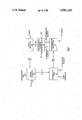
- FIG. one is a flowsheet showing the operations and streams in the process of the present invention.
- the process of the present invention can be used to treat virtually any sour liquid hydrocarbon feedstock requiring a reduced sulfur content.
- feedstocks include crude oil, residual oil, shale oil, and tar sands all having an unacceptably high sulfur content.
- the sour feedstock 1 is first fed to a hydrodesulfurizer 20.
- the desulfurizer catalytically reacts hydrogen gas (H 2 ) 12 with the sour feedstock to produce a useful low sulfur hydrocarbon product 2 and a hydrogen sulfide (H 2 S) by-product gas 3.
- the hydrodesulfurization step is a conventional process known in the art as described, for example, in B. J. Young and R. L. Richardson, "Resid desulfurizer a year later," Hydrocarbon Processing, September 1977, pp. 103-108.
- the H 2 S by-product gas is treated to produce useful compounds and environmentally acceptable by-products therefrom.
- the H 2 S is first fed to an anthraquinone absorption reactor 21 wherein the H 2 S is contacted with an anthraquinone, which is dissolved in a polar organic solvent.
- the H 2 S stream may also contain small amounts of carbon dioxide (CO 2 ) or other unreactive compounds, the solvent preferentially solubilizes only the H 2 S portion of the feed gas upon contact. This solution is maintained in the reactor at a temperature from about 30° to about 80° C.
- anthraquinone concentration in the reaction solution is not critical, although a higher concentration favors an increased reaction rate, which is preferred.
- the upper concentration limit of anthraquinone is its saturation point in the particular solvent at the reaction temperature.
- H 2 S-anthraquinone reaction a two step reaction.
- the H 2 S first contacts the solvent to form a quaternary ion complex which in turn reacts with the anthraquinone to yield elemental sulfur and the corresponding anthrahydroquinone.
- the second reaction is the sulfur polymerization reaction, which polymerizes elemental sulfur to polymerized sulfur. The polymerized sulfur then precipitates out of solution.
- a primary parameter controlling both the H 2 S-anthraquinone and sulfur polymerization reactions is the choice of solvent in the reaction solution. Increasing solvent polarity has two favorable effects on these reactions: (1) the extent of reaction increases; and (2) the total time for the H 2 S-anthraquinone and sulfur polymerization reactions decreases.
- Preferred solvents are organic compounds which have a high polarity, i.e., greater than about 3 Debye units, yet remain stable at dehydrogenation temperatures. These solvents include nitrobenzene, 2-pyrrolidone, n,n-dimethylacetamide, 1,3-dimethyl urea and n,n-dimethylformamide. The most preferred solvent is n-methyl-2-pyrrolidone (NMP).
- anthraquinone As well as the process temperature and pressure. Optimization of the process requires balancing competing factors. For example, each step of the H 2 S-anthraquinone reaction optimally proceeds within a different temperature range. Quaternary ion complex formation is favored at lower temperature and anthraquinone to anthrahydroquinone conversion is favored at higher temperature. An optimal temperature generally compromises these two factors. With respect to pressure, increased H 2 S partial pressure increases both quaternary ion complex formation and desirably higher anthraquinone conversion. However, a large quaternary ion complex concentration undesirably increases the sulfur polymerization time.
- a preferred anthraquinone maximizes H 2 S conversion to sulfur.
- Choice of the anthraquinone is based on such properties as the solubility of anthraquinone in the organic solvent and the electro-negativity of the anthraquinone. Solubility is a function of the groups substituted on the anthraquinone. For example, alkyl anthraquinones have much higher solubilities than sulfonated anthraquinones. Likewise, electronegativity is a function of the anthraquinone substituents.
- Useful anthraquinones are ethyl anthraquinone and t-butyl anthraquinone because they have relatively high electronegativities, enabling them to more effectively attract positive hydrogen ions from the quaternary ion complex and increase the conversion of the anthraquinone to the corresponding anthrahydroquinone.
- the reaction solution from absorption reactor 21 contains anthrahydroquinone, solvent, sulfur product, and any unreacted compounds from the feed gas.
- the sulfur product 4 is separated from the reaction solution as an insoluble sulfur precipitate, e.g., S 8 or other forms of polymerized sulfur, by filtration, centrifugation, or other means known in the art and dried or melted to a liquid form.
- the solution is then heated to a temperature of from about 200° to about 350° C. at a pressure from about atmospheric to about 1000 kPa to remove the unreacted compounds, if any, for recycle to the absorption reactor.
- the reaction solution is then fed to the regeneration reactor 22 where the anthrahydroquinone 6 is catalytically or thermally converted to anthraquinone 5 and hydrogen peroxide 9 upon contact with air 7.
- Typical operating conditions in reactor 22 are described in Lowenheim and Moran, Faith, Keyes and Clark's Industrial Chemicals, 4th Edition, John Wiley and Sons, 1975, pp. 489-491.
- the solution withdrawn from the reactor contains the anthraquinone 5 in its initial form dissolved in the polar organic solvent.
- the solution is recycled to the absorption reactor 21 and spent air consisting primarily of nitrogen gas (N 2 ) 8 is produced as a by-product.
- Hydrogen peroxide (H 2 O 2 ) 9 is produced in the anthrahydroquinone regeneration reactor 22. It is fed to the H 2 O 2 reduction reactor 23 wherein it is thermally or catalytically degraded to produce oxygen (O 2 ) 11 and water 10 as a by-product. Catalytic degradation is carried out at ambient atmospheric temperature and pressure by contacting the H 2 O 2 with a decomposition catalyst, including ferric oxide, manganese dioxide, silver or copper. Thermal degradation is carried out simply by heating the H 2 O 2 until O 2 evolves.
- a decomposition catalyst including ferric oxide, manganese dioxide, silver or copper.
- O 2 11 is fed to a partial oxidation reactor 24 where it is contacted with a hydrocarbon fuel 13 to produce H 2 12 and carbon dioxide (CO 2 ) 14 as a by-product.
- the hydrocarbon fuel 13 can be any hydrocarbon having a high H/C ratio such as methane gas or even a heavy residual fuel oil.
- the partial oxidation process is a conventional process such as that described in Shimizu, "Heavy Residual Oil Gasification Based on Texaco Partial Oxidation Process," Chemical Economy and Engineering Review, Volume 10, Number 7, July 1978.
- the H 2 thereby produced is fed into the desulfurization reactor 20, completing the process cycle.
- a gas oil containing 2.5 wt. % sulfur is contacted with hydrogen gas in the presence of a commercial cobalt catalyst at a temperature of 350°-400° C. and 4800 kPa of hydrogen pressure to obtain a treated gas oil and a hydrogen sulfide (H 2 S) by-product gas.
- the treated gas oil contains 0.25 wt. % sulfur.
- the H 2 S is contacted with t-butyl anthraquinone dissolved in n-methyl-2-pyrrolidone (NMP) at a temperature of 56°-59° C. and 980 kPa of H 2 S pressure to produce sulfur and t-butyl anthrahydroquinone in the NMP solution.
- NMP n-methyl-2-pyrrolidone
- the sulfur is removed from solution and the remaining NMP solution, containing the t-butyl anthrahydroquinone, is contacted with air at 30°-60° C. to regenerate the t-butyl anthraquinone and produce hydrogen peroxide.
- the hydrogen peroxide is contacted with a manganese dioxide-ferric oxide catalyst at a temperature of 25° C. and atmospheric pressure to produce oxygen.
- the oxygen is reacted with natural gas and water at 1200°-1500° C. 1500-3500 kPa and 1.0-1.2 moles O 2 /equivalent of carbon in the natural gas to produce a synthesis gas containing hydrogen, carbon dioxide and carbon monoxide.
- the hydrogen is used for additional gas oil desulfurization.
- Examples 2-7 describe selection of a solvent and an anthraquinone and optimization of H 2 S-anthraquinone reaction parameters.
- H 2 S and t-butyl anthraquinone are dissolved in several solvents. They are then reacted in the H 2 S reactor at optimum conditions to determine which combination of reactants and solvents yields the greatest conversion of anthraquinone to anthrahydroquinone.
- Table 1 The results are set forth in Table 1 below.
- Table 1 indicates that only solvents having a polarity above about 3 Debye units can be used for conversion of t-butyl anthraquinone to the corresponding anthrahydroquinone. The data also show that conversion increases as solvent polarity increases.
- reaction time is carried out at temperatures from 54° to 60° C. and at H 2 S partial pressures from 965 to 1117 kPa.
- the reaction time using pure NMP solvent, having a polarity of 4.1 Debye units is 2.5 hours while the reaction time using a solvent mixture comprised of 60 wt.% NMP and 40 wt.% 1,3 dimethyl urea, having a polarity of 4.4 Debye units, is only 0.5 hours. As solvent polarity increases, reaction time appears to decrease.
- Optimum temperature for maximum t-butyl anthraquinone conversion to t-butyl anthrahydroquinone in NMP solvent is about 56° to 59° C.
- Optimum H 2 S partial pressure for maximum t-butyl anthraquinone conversion to t-butyl anthrahydroquinone is about 980 kPa.
- H 2 S and ethyl anthraquinone are dissolved in n,n-dimethylformamide solvent and reacted at 52° C. and an H 2 S partial pressure of 83 kPa for 2.5 hours. About 34% of the ethyl anthraquinone is converted to ethyl anthrahydroquinone.
- H 2 S and t-butyl anthraquinone are dissolved in n,n-dimethylformamide solvent and reacted under the same conditions as Example 6.
- About 44% of the t-butyl anthraquinone is converted to t-butyl anthrahydroquinone.
- the higher conversion of the anthraquinone to anthrahydroquinone in Example 7 compared to Example 6 is attributed to the presence of the t-butyl group on the anthraquinone.
- the t-butyl group makes the anthraquinone more electronegative, enabling it to more effectively attract hydrogen ions from the quaternary ion complex formed between the H 2 S and the n,n-dimethylformamide solvent.
Landscapes
- Chemical & Material Sciences (AREA)
- Organic Chemistry (AREA)
- Inorganic Chemistry (AREA)
- Oil, Petroleum & Natural Gas (AREA)
- Engineering & Computer Science (AREA)
- Chemical Kinetics & Catalysis (AREA)
- General Chemical & Material Sciences (AREA)
- Production Of Liquid Hydrocarbon Mixture For Refining Petroleum (AREA)
Abstract
A sour liquid hydrocarbon feedstock is desulfurized upon contact with a hydrogen gas in the presence of a catalyst to obtain a low sulfur product and a hydrogen sulfide gas by-product. The hydrogen sulfide gas is treated with an anthraquinone which is dissolved in a solvent having a polarity which is greater than 3 Debye units, to produce sulfur and oxygen. The oxygen is used to oxidize a hydrocarbon fuel and produce the hydrogen gas used in the initial desulfurization step.
Description
1. Technical Field
The invention relates to a process for desulfurizing a sour hydrocarbon feedstock with hydrogen to produce a low sulfur hydrocarbon product, sulfur and by-products, from which hydrogen is regenerated for the desulfurization step.
2. Background Art
Many hydrocarbon feedstocks contain relatively high concentrations of sulfur, which limit the utility of the feedstock. In order to enhance the utility of the feedstock it is necessary to remove the sulfur contained therein.
A conventional process for the desulfurization of a sour feedstock includes contacting the feedstock with hydrogen gas in the presence of a catalyst to generate a hydrocarbon product having a relatively low sulfur concentration and a gaseous by-product consisting primarily of hydrogen sulfide. Conventional desulfurization of the sour feedstock has several inherent shortcomings. First of all, conventional desulfurization requires hydrogen gas which is usually obtained from the partial oxidization of a hydrocarbon fuel. This requires an oxygen feed in addition to the hydrocarbon fuel which is cryogenically extracted from air in a very expensive process. Handling of the hydrodesulfurization by-product, which is a gas consisting primarily of hydrogen sulfide, is also a significant problem.
The by-product gas is generally oxidized directly with air via the Claus process to produce sulfur and water. However, the Claus process has a number of inherent disadvantages. For example, it operates at high temperatures, it requires exacting process control over the ratio of oxygen to hydrogen sulfide in the feed, and the annual maintainence costs for the Claus Process are typically 20% of the initial capital investment. Finally the sulfur content of Claus process tail gas released to the atmosphere is generally too high to meet stringent environmental regulations. To comply with these regulations, it is necessary to have several Claus stages and to employ separate tail gas clean-up processes at great expense.
The art is rife with modified Claus processes and other hydrogen sulfide oxidization processes which attempt to overcome the deficiences of the basic Claus process. Hydrogen sulfide oxidization processes, which include U.S. Pat. No. 2,819,950 to Patton, U.S. Pat. No. 3,311,453 to Lusby and U.S. Pat. No. 3,923,966 to Vaughan, have not substantially overcome the deficiencies of the basic Claus process.
A process is needed for desulfurizing a sour hydrocarbon feedstock with hydrogen gas, which can provide an economic source of hydrogen gas and which also converts the by-product gases to useful, environmentally-acceptable products.
The present invention is a process for desulfurizing a hydrocarbon feedstock having a relatively high sulfur content by contacting the feedstock with hydrogen gas in the presence of a catalyst to obtain a hydrocarbon product having a relatively low sulfur content. The hydrogen sulfide gas by-product produced therewith is treated with a quinone to obtain a sulfur product and a hydroquinone. The hydroquinone is regenerated by contacting it with air in the presence of a catalyst. The resulting quinone is recycled back to the absorption reaction while hydrogen peroxide produced as a by-product is reduced to oxygen and water. The oxygen is used to partially oxidize a hydrocarbon fuel which generates hydrogen gas. The hydrogen gas is recycled to the initial desulfurization step.
The process provides an economical means for desulfurizing the sour feedstock, especially where a hydrocarbon fuel is readily available. Furthermore, the by-products of the desulfurization process are either utilized in subsequent process steps, converted to useful products or readily disposed in an environmentally compatible manner.
FIG. one is a flowsheet showing the operations and streams in the process of the present invention.
The process of the present invention can be used to treat virtually any sour liquid hydrocarbon feedstock requiring a reduced sulfur content. Exemplary feedstocks include crude oil, residual oil, shale oil, and tar sands all having an unacceptably high sulfur content. Referring to FIG. 1, the sour feedstock 1 is first fed to a hydrodesulfurizer 20. The desulfurizer catalytically reacts hydrogen gas (H2) 12 with the sour feedstock to produce a useful low sulfur hydrocarbon product 2 and a hydrogen sulfide (H2 S) by-product gas 3. The hydrodesulfurization step is a conventional process known in the art as described, for example, in B. J. Young and R. L. Richardson, "Resid desulfurizer a year later," Hydrocarbon Processing, September 1977, pp. 103-108.
The H2 S by-product gas is treated to produce useful compounds and environmentally acceptable by-products therefrom. The H2 S is first fed to an anthraquinone absorption reactor 21 wherein the H2 S is contacted with an anthraquinone, which is dissolved in a polar organic solvent. Although the H2 S stream may also contain small amounts of carbon dioxide (CO2) or other unreactive compounds, the solvent preferentially solubilizes only the H2 S portion of the feed gas upon contact. This solution is maintained in the reactor at a temperature from about 30° to about 80° C. and at an H2 S partial pressure from about 600 to about 1200 kPa for a time sufficient to convert the H2 S and anthraquinone to sulfur and anthrahydroquinone. This is generally from about 0.1 to 3 hours, depending on the polarity of the solvent. The anthraquinone concentration in the reaction solution is not critical, although a higher concentration favors an increased reaction rate, which is preferred. The upper concentration limit of anthraquinone is its saturation point in the particular solvent at the reaction temperature.
It is believed that the mechanism for conversion of H2 S to sulfur is by two chemical reactions. The first is an H2 S-anthraquinone reaction, a two step reaction. The H2 S first contacts the solvent to form a quaternary ion complex which in turn reacts with the anthraquinone to yield elemental sulfur and the corresponding anthrahydroquinone. The second reaction is the sulfur polymerization reaction, which polymerizes elemental sulfur to polymerized sulfur. The polymerized sulfur then precipitates out of solution.
A primary parameter controlling both the H2 S-anthraquinone and sulfur polymerization reactions is the choice of solvent in the reaction solution. Increasing solvent polarity has two favorable effects on these reactions: (1) the extent of reaction increases; and (2) the total time for the H2 S-anthraquinone and sulfur polymerization reactions decreases. Preferred solvents are organic compounds which have a high polarity, i.e., greater than about 3 Debye units, yet remain stable at dehydrogenation temperatures. These solvents include nitrobenzene, 2-pyrrolidone, n,n-dimethylacetamide, 1,3-dimethyl urea and n,n-dimethylformamide. The most preferred solvent is n-methyl-2-pyrrolidone (NMP).
Other important process parameters are the choice of anthraquinone as well as the process temperature and pressure. Optimization of the process requires balancing competing factors. For example, each step of the H2 S-anthraquinone reaction optimally proceeds within a different temperature range. Quaternary ion complex formation is favored at lower temperature and anthraquinone to anthrahydroquinone conversion is favored at higher temperature. An optimal temperature generally compromises these two factors. With respect to pressure, increased H2 S partial pressure increases both quaternary ion complex formation and desirably higher anthraquinone conversion. However, a large quaternary ion complex concentration undesirably increases the sulfur polymerization time.
In general, a preferred anthraquinone maximizes H2 S conversion to sulfur. Choice of the anthraquinone is based on such properties as the solubility of anthraquinone in the organic solvent and the electro-negativity of the anthraquinone. Solubility is a function of the groups substituted on the anthraquinone. For example, alkyl anthraquinones have much higher solubilities than sulfonated anthraquinones. Likewise, electronegativity is a function of the anthraquinone substituents. Useful anthraquinones are ethyl anthraquinone and t-butyl anthraquinone because they have relatively high electronegativities, enabling them to more effectively attract positive hydrogen ions from the quaternary ion complex and increase the conversion of the anthraquinone to the corresponding anthrahydroquinone.
The reaction solution from absorption reactor 21 contains anthrahydroquinone, solvent, sulfur product, and any unreacted compounds from the feed gas. The sulfur product 4 is separated from the reaction solution as an insoluble sulfur precipitate, e.g., S8 or other forms of polymerized sulfur, by filtration, centrifugation, or other means known in the art and dried or melted to a liquid form. The solution is then heated to a temperature of from about 200° to about 350° C. at a pressure from about atmospheric to about 1000 kPa to remove the unreacted compounds, if any, for recycle to the absorption reactor. The reaction solution is then fed to the regeneration reactor 22 where the anthrahydroquinone 6 is catalytically or thermally converted to anthraquinone 5 and hydrogen peroxide 9 upon contact with air 7. Typical operating conditions in reactor 22 are described in Lowenheim and Moran, Faith, Keyes and Clark's Industrial Chemicals, 4th Edition, John Wiley and Sons, 1975, pp. 489-491. The solution withdrawn from the reactor contains the anthraquinone 5 in its initial form dissolved in the polar organic solvent. The solution is recycled to the absorption reactor 21 and spent air consisting primarily of nitrogen gas (N2) 8 is produced as a by-product.
Hydrogen peroxide (H2 O2) 9 is produced in the anthrahydroquinone regeneration reactor 22. It is fed to the H2 O2 reduction reactor 23 wherein it is thermally or catalytically degraded to produce oxygen (O2) 11 and water 10 as a by-product. Catalytic degradation is carried out at ambient atmospheric temperature and pressure by contacting the H2 O2 with a decomposition catalyst, including ferric oxide, manganese dioxide, silver or copper. Thermal degradation is carried out simply by heating the H2 O2 until O2 evolves.
The preferred embodiment of the invention is set forth below by example but is not to be construed as limiting the scope of the invention.
A gas oil containing 2.5 wt. % sulfur is contacted with hydrogen gas in the presence of a commercial cobalt catalyst at a temperature of 350°-400° C. and 4800 kPa of hydrogen pressure to obtain a treated gas oil and a hydrogen sulfide (H2 S) by-product gas. The treated gas oil contains 0.25 wt. % sulfur.
The H2 S is contacted with t-butyl anthraquinone dissolved in n-methyl-2-pyrrolidone (NMP) at a temperature of 56°-59° C. and 980 kPa of H2 S pressure to produce sulfur and t-butyl anthrahydroquinone in the NMP solution. The sulfur is removed from solution and the remaining NMP solution, containing the t-butyl anthrahydroquinone, is contacted with air at 30°-60° C. to regenerate the t-butyl anthraquinone and produce hydrogen peroxide.
The hydrogen peroxide is contacted with a manganese dioxide-ferric oxide catalyst at a temperature of 25° C. and atmospheric pressure to produce oxygen. The oxygen is reacted with natural gas and water at 1200°-1500° C. 1500-3500 kPa and 1.0-1.2 moles O2 /equivalent of carbon in the natural gas to produce a synthesis gas containing hydrogen, carbon dioxide and carbon monoxide. The hydrogen is used for additional gas oil desulfurization.
Examples 2-7 describe selection of a solvent and an anthraquinone and optimization of H2 S-anthraquinone reaction parameters.
H2 S and t-butyl anthraquinone are dissolved in several solvents. They are then reacted in the H2 S reactor at optimum conditions to determine which combination of reactants and solvents yields the greatest conversion of anthraquinone to anthrahydroquinone. The results are set forth in Table 1 below.
              TABLE 1
______________________________________
                       H.sub.2 S        %
                       Partial   Polarity
                                        Con-
               Temp    Pressure  (Debye ver-
Solvent        (°C.)
                       (kPa)     units) sion
______________________________________
Diethylamine   37      83        1.1    0
Quinoline      44-55    83-1048  2.2    0
Acetophenone   43-56    83-1117  3.0    0
2-Pyrrolidone  54      83        3.6    7
n,n-Dimethylformamide
               52-63    83-1124  3.9    40
n-Methyl-2-Pyrrolidone
               57      1082      4.1    53
(NMP)
40% 1,3 Dimethyl Urea -
               58      979       4.4    65
60% NMP
Hexamethyl Phosphoric
               54      83        5.5    78
Triamide
______________________________________
Table 1 indicates that only solvents having a polarity above about 3 Debye units can be used for conversion of t-butyl anthraquinone to the corresponding anthrahydroquinone. The data also show that conversion increases as solvent polarity increases.
H2 S and t-butyl anthraquinone are dissolved in two different solvents to determine the relationship between reaction time and solvent polarity. The reactions are carried out at temperatures from 54° to 60° C. and at H2 S partial pressures from 965 to 1117 kPa. The reaction time using pure NMP solvent, having a polarity of 4.1 Debye units, is 2.5 hours while the reaction time using a solvent mixture comprised of 60 wt.% NMP and 40 wt.% 1,3 dimethyl urea, having a polarity of 4.4 Debye units, is only 0.5 hours. As solvent polarity increases, reaction time appears to decrease.
The conversion of t-butyl anthraquinone to t-butyl anthrahydroquinone is maximized as a function of temperature. The reactions are carried out at several temperatures for 2.5 hours at H2 S partial pressures between 965 to 1089 kPa in NMP solvent. The results are shown in Table 2 below.
              TABLE 2
______________________________________
Temperature (°C.)
                % Conversion
______________________________________
45              44
52              49
56              53
57              52
59              53
63              50
69              44
76              38
______________________________________
Optimum temperature for maximum t-butyl anthraquinone conversion to t-butyl anthrahydroquinone in NMP solvent is about 56° to 59° C.
The conversion of t-butyl anthraquinone to the corresponding anthrahydroquinone is maximized as a function of H2 S partial pressure. The reactions are carried out at several H2 S partial pressures for 2 to 2.75 hours at a temperature between 56° and 59° C. in NMP solvent. The results are listed in Table 3 below.
              TABLE 3
______________________________________
H.sub.2 S Partial Pressure (kPa)
                  % Conversion
______________________________________
 83               10
634               50
772               57
979               62
1048              57
1082              51
1102              48
______________________________________
Optimum H2 S partial pressure for maximum t-butyl anthraquinone conversion to t-butyl anthrahydroquinone is about 980 kPa.
H2 S and ethyl anthraquinone are dissolved in n,n-dimethylformamide solvent and reacted at 52° C. and an H2 S partial pressure of 83 kPa for 2.5 hours. About 34% of the ethyl anthraquinone is converted to ethyl anthrahydroquinone.
H2 S and t-butyl anthraquinone are dissolved in n,n-dimethylformamide solvent and reacted under the same conditions as Example 6. About 44% of the t-butyl anthraquinone is converted to t-butyl anthrahydroquinone. The higher conversion of the anthraquinone to anthrahydroquinone in Example 7 compared to Example 6 is attributed to the presence of the t-butyl group on the anthraquinone. The t-butyl group makes the anthraquinone more electronegative, enabling it to more effectively attract hydrogen ions from the quaternary ion complex formed between the H2 S and the n,n-dimethylformamide solvent.
While the foregoing preferred embodiment of the invention has been described and shown, it is understood that all alternatives and modifications, such as those suggested and others, may be made thereto and fall within the scope of the invention.
Claims (3)
1. A process for converting a sour hydrocarbon feedstock having a relatively high sulfur content to a hydrocarbon product having a relatively low sulfur content comprising the steps of:
(a) hydrodesulfurizing said feedstock having a relatively high sulfur content upon contact with hydrogen to produce said hydrocarbon product having a relatively low sulfur content and hydrogen sulfide gas;
(b) contacting said hydrogen sulfide gas with an anthraquinone dissolved in a polar organic solvent having a polarity greater than about 3 Debye units to produce sulfur and an anthrahydroquinone in said solvent;
(c) regenerating said anthraquinone from said anthrahydroquinone upon contact with air to produce said anthraquinone and hydrogen peroxide;
(d) recycling said anthraquinone to step (b);
(e) reducing said hydrogen peroxide to oxygen and water;
(f) partially oxidizing a hydrocarbon fuel with said oxygen to produce carbon dioxide and hydrogen; and
(g) recycling said hydrogen to step (a).
2. The process of claim 1 wherein said polar organic solvent is n-methyl-2-pyrrolidone.
3. The process of claim 1 wherein said anthraquinone is selected from the group consisting of t-butyl anthraquinone and ethyl anthraquinone.
Priority Applications (2)
| Application Number | Priority Date | Filing Date | Title |
|---|---|---|---|
| US06/691,233 US4581128A (en) | 1985-01-14 | 1985-01-14 | Hydrocarbon desulfurization process |
| CA000493068A CA1243623A (en) | 1985-01-14 | 1985-10-16 | Hydrocarbon desulfurization process |
Applications Claiming Priority (1)
| Application Number | Priority Date | Filing Date | Title |
|---|---|---|---|
| US06/691,233 US4581128A (en) | 1985-01-14 | 1985-01-14 | Hydrocarbon desulfurization process |
Publications (1)
| Publication Number | Publication Date |
|---|---|
| US4581128A true US4581128A (en) | 1986-04-08 |
Family
ID=24775681
Family Applications (1)
| Application Number | Title | Priority Date | Filing Date |
|---|---|---|---|
| US06/691,233 Expired - Lifetime US4581128A (en) | 1985-01-14 | 1985-01-14 | Hydrocarbon desulfurization process |
Country Status (2)
| Country | Link |
|---|---|
| US (1) | US4581128A (en) |
| CA (1) | CA1243623A (en) |
Cited By (9)
| Publication number | Priority date | Publication date | Assignee | Title |
|---|---|---|---|---|
| US4749656A (en) * | 1985-03-29 | 1988-06-07 | The Dow Chemical Company | Analytical method for determining essential components of a Stretford gas treating process solution |
| US5180572A (en) * | 1991-11-19 | 1993-01-19 | Marathon Oil Company | Conversion of hydrogen sulfide to sulfur and hydrogen |
| WO1994012431A1 (en) * | 1992-12-01 | 1994-06-09 | Marathon Oil Company | Process for recovering sulfur and hydrogen from hydrogen sulfide |
| US5545391A (en) * | 1991-07-27 | 1996-08-13 | Solvay Interox Limited | Removal of hydrogen sulphide |
| WO1996027425A1 (en) * | 1995-03-06 | 1996-09-12 | Marathon Oil Company | Hydrogen sulfide conversion process |
| WO1998000477A1 (en) * | 1996-06-28 | 1998-01-08 | Community Energy Alternatives, Inc. | Method and system for producing fuel from a heavy hydrocarbon feedstock |
| US6231755B1 (en) | 1998-01-30 | 2001-05-15 | E. I. Du Pont De Nemours And Company | Desulfurization of petroleum products |
| US20030092945A1 (en) * | 2001-07-19 | 2003-05-15 | Yoshio Seiki | Method of manufacturing methanol |
| CN108975280A (en) * | 2018-06-27 | 2018-12-11 | 天津大学 | A kind of nano-sulfur particles dispersion liquid and preparation method thereof, nano-sulfur particles and lithium-sulfur cell |
Citations (20)
| Publication number | Priority date | Publication date | Assignee | Title |
|---|---|---|---|---|
| US2693998A (en) * | 1951-02-02 | 1954-11-09 | Ici Ltd | Manufacture of hydrogen peroxide |
| US2819950A (en) * | 1952-03-27 | 1958-01-14 | Texas Gulf Sulphur Co | Conversion of hydrogen sulfide to sulfur with quinones |
| US2997439A (en) * | 1959-05-14 | 1961-08-22 | North Western Gas Board | Removal of hydrogen sulphide from hydrocarbons with anthraquinone disulfonic acids |
| US3004831A (en) * | 1958-08-07 | 1961-10-17 | Pittsburgh Plate Glass Co | Preparation of hydrogen peroxide |
| US3035889A (en) * | 1959-10-21 | 1962-05-22 | North Western Gas Board | Method of removing hydrogen sulphide from gases and producing sulphur therefrom |
| US3126257A (en) * | 1964-03-24 | Process for preparing hydrogen | ||
| US3311453A (en) * | 1962-10-27 | 1967-03-28 | Canadian Ind | Manufacture of hydrogen peroxide |
| US3372990A (en) * | 1964-04-16 | 1968-03-12 | Oxysynthese | Cyclic process for manufacturing hydrogen peroxide |
| US3752885A (en) * | 1970-01-26 | 1973-08-14 | Degussa | Process for the production of hydrogen peroxide |
| US3912766A (en) * | 1971-12-20 | 1975-10-14 | Laporte Industries Ltd | Regeneration of degraded quinones for the production of hydrogen peroxide |
| US3923966A (en) * | 1973-11-21 | 1975-12-02 | Du Pont | Direct manufacture of hydrogen peroxide from hydrogen sulfide |
| US3937795A (en) * | 1970-12-21 | 1976-02-10 | Nobuyasu Hasebe | Desulfurizing process for hydrogen sulfide-containing gases |
| US3972989A (en) * | 1974-08-14 | 1976-08-03 | Union Oil Company Of California | Reducing the consumption of anthraquinone disulfonate in Stretford solutions |
| US4002727A (en) * | 1973-12-18 | 1977-01-11 | Nippon Shokubai Kagaku Kogyo Co., Ltd | Desulfurization process for hydrogen sulfide-containing gases |
| US4041130A (en) * | 1975-12-29 | 1977-08-09 | The Ralph M. Parsons Company | Process for desulfurization of coke oven gas |
| US4060594A (en) * | 1975-05-21 | 1977-11-29 | Union Oil Company Of California | Reducing the consumption of anthraquinone disulfonate in stretford solutions |
| US4061721A (en) * | 1975-11-28 | 1977-12-06 | Ppg Industries, Inc. | Hydrogen peroxide stabilization with phenylphosphonic acids |
| US4243647A (en) * | 1976-06-28 | 1981-01-06 | Union Oil Company Of California | Process for removal of hydrogen sulfide from gas streams |
| US4304762A (en) * | 1978-09-27 | 1981-12-08 | Lever Brothers Company | Stabilization of hydrogen peroxide |
| US4432962A (en) * | 1979-06-20 | 1984-02-21 | Union Oil Company Of California | Method for removing hydrogen sulfide from gas streams |
-
1985
- 1985-01-14 US US06/691,233 patent/US4581128A/en not_active Expired - Lifetime
- 1985-10-16 CA CA000493068A patent/CA1243623A/en not_active Expired
Patent Citations (20)
| Publication number | Priority date | Publication date | Assignee | Title |
|---|---|---|---|---|
| US3126257A (en) * | 1964-03-24 | Process for preparing hydrogen | ||
| US2693998A (en) * | 1951-02-02 | 1954-11-09 | Ici Ltd | Manufacture of hydrogen peroxide |
| US2819950A (en) * | 1952-03-27 | 1958-01-14 | Texas Gulf Sulphur Co | Conversion of hydrogen sulfide to sulfur with quinones |
| US3004831A (en) * | 1958-08-07 | 1961-10-17 | Pittsburgh Plate Glass Co | Preparation of hydrogen peroxide |
| US2997439A (en) * | 1959-05-14 | 1961-08-22 | North Western Gas Board | Removal of hydrogen sulphide from hydrocarbons with anthraquinone disulfonic acids |
| US3035889A (en) * | 1959-10-21 | 1962-05-22 | North Western Gas Board | Method of removing hydrogen sulphide from gases and producing sulphur therefrom |
| US3311453A (en) * | 1962-10-27 | 1967-03-28 | Canadian Ind | Manufacture of hydrogen peroxide |
| US3372990A (en) * | 1964-04-16 | 1968-03-12 | Oxysynthese | Cyclic process for manufacturing hydrogen peroxide |
| US3752885A (en) * | 1970-01-26 | 1973-08-14 | Degussa | Process for the production of hydrogen peroxide |
| US3937795A (en) * | 1970-12-21 | 1976-02-10 | Nobuyasu Hasebe | Desulfurizing process for hydrogen sulfide-containing gases |
| US3912766A (en) * | 1971-12-20 | 1975-10-14 | Laporte Industries Ltd | Regeneration of degraded quinones for the production of hydrogen peroxide |
| US3923966A (en) * | 1973-11-21 | 1975-12-02 | Du Pont | Direct manufacture of hydrogen peroxide from hydrogen sulfide |
| US4002727A (en) * | 1973-12-18 | 1977-01-11 | Nippon Shokubai Kagaku Kogyo Co., Ltd | Desulfurization process for hydrogen sulfide-containing gases |
| US3972989A (en) * | 1974-08-14 | 1976-08-03 | Union Oil Company Of California | Reducing the consumption of anthraquinone disulfonate in Stretford solutions |
| US4060594A (en) * | 1975-05-21 | 1977-11-29 | Union Oil Company Of California | Reducing the consumption of anthraquinone disulfonate in stretford solutions |
| US4061721A (en) * | 1975-11-28 | 1977-12-06 | Ppg Industries, Inc. | Hydrogen peroxide stabilization with phenylphosphonic acids |
| US4041130A (en) * | 1975-12-29 | 1977-08-09 | The Ralph M. Parsons Company | Process for desulfurization of coke oven gas |
| US4243647A (en) * | 1976-06-28 | 1981-01-06 | Union Oil Company Of California | Process for removal of hydrogen sulfide from gas streams |
| US4304762A (en) * | 1978-09-27 | 1981-12-08 | Lever Brothers Company | Stabilization of hydrogen peroxide |
| US4432962A (en) * | 1979-06-20 | 1984-02-21 | Union Oil Company Of California | Method for removing hydrogen sulfide from gas streams |
Non-Patent Citations (6)
| Title |
|---|
| B. J. Young and R. L. Richardson, "Resid Desulfurizer a Year Later," Hydrocarbon Processing, Sep. 1977, pp. 103-108. |
| B. J. Young and R. L. Richardson, Resid Desulfurizer a Year Later, Hydrocarbon Processing, Sep. 1977, pp. 103 108. * |
| Lowenheim and Moran, Faith, Keyes and Clark s Industrial Chemicals , 4th Edition, John Wiley and Sons, 1975, pp. 489 491. * |
| Lowenheim and Moran, Faith, Keyes and Clark's Industrial Chemicals, 4th Edition, John Wiley and Sons, 1975, pp. 489-491. |
| Shimizu, "Heavy Residual Oil Gasification Based on Texaco Partial Oxidation Process," Chemical Economy and Engineering Review, vol. 10, No. 7, Jul. 1978. |
| Shimizu, Heavy Residual Oil Gasification Based on Texaco Partial Oxidation Process, Chemical Economy and Engineering Review , vol. 10, No. 7, Jul. 1978. * |
Cited By (10)
| Publication number | Priority date | Publication date | Assignee | Title |
|---|---|---|---|---|
| US4749656A (en) * | 1985-03-29 | 1988-06-07 | The Dow Chemical Company | Analytical method for determining essential components of a Stretford gas treating process solution |
| US5545391A (en) * | 1991-07-27 | 1996-08-13 | Solvay Interox Limited | Removal of hydrogen sulphide |
| US5180572A (en) * | 1991-11-19 | 1993-01-19 | Marathon Oil Company | Conversion of hydrogen sulfide to sulfur and hydrogen |
| WO1994012431A1 (en) * | 1992-12-01 | 1994-06-09 | Marathon Oil Company | Process for recovering sulfur and hydrogen from hydrogen sulfide |
| WO1996027425A1 (en) * | 1995-03-06 | 1996-09-12 | Marathon Oil Company | Hydrogen sulfide conversion process |
| WO1998000477A1 (en) * | 1996-06-28 | 1998-01-08 | Community Energy Alternatives, Inc. | Method and system for producing fuel from a heavy hydrocarbon feedstock |
| US6231755B1 (en) | 1998-01-30 | 2001-05-15 | E. I. Du Pont De Nemours And Company | Desulfurization of petroleum products |
| US20030092945A1 (en) * | 2001-07-19 | 2003-05-15 | Yoshio Seiki | Method of manufacturing methanol |
| US6875794B2 (en) * | 2001-07-19 | 2005-04-05 | Mitsubish Heavy Industries, Ltd. | Method of manufacturing methanol |
| CN108975280A (en) * | 2018-06-27 | 2018-12-11 | 天津大学 | A kind of nano-sulfur particles dispersion liquid and preparation method thereof, nano-sulfur particles and lithium-sulfur cell |
Also Published As
| Publication number | Publication date |
|---|---|
| CA1243623A (en) | 1988-10-25 |
Similar Documents
| Publication | Publication Date | Title |
|---|---|---|
| US4515764A (en) | Removal of H2 S from gaseous streams | |
| US3838191A (en) | Continuous process for scrubbing so2 from a gas stream containing so2 and o2 | |
| US5207927A (en) | Treatment of an aqueous stream containing water-soluble inorganic sulfide compounds | |
| US3878289A (en) | Process for the removal of hydrogen cyanide from gas streams | |
| NO962682L (en) | Process for catalytic partial oxidation of hydrocarbons | |
| KR870007842A (en) | Chlorine Production Method | |
| US4426369A (en) | Low temperature Claus process with water removal | |
| US4581128A (en) | Hydrocarbon desulfurization process | |
| US4592905A (en) | Conversion of hydrogen sulfide to sulfur and hydrogen | |
| US3972989A (en) | Reducing the consumption of anthraquinone disulfonate in Stretford solutions | |
| CA1282940C (en) | Process for the desulfurization of gas containing hydrogen sulfide | |
| US4632819A (en) | Process for removing hydrogen sulfide from exhaust gas and for producing sulfur by the Claus process | |
| US3686094A (en) | Process for oxidizing mercaptans to disulfides in the presence of solid catalytic masses | |
| US3728439A (en) | Treatment of a sulfite containing aqueous steam to selectively produce elemental sulfur | |
| EP0672019B1 (en) | Process for recovering sulfur and hydrogen from hydrogen sulfide | |
| US4798716A (en) | Sulfur recovery plant and process using oxygen | |
| US5366717A (en) | Method for producing elemental sulfur from sulfur-containing gases | |
| US3029202A (en) | Treating waste water | |
| JPH01165570A (en) | Production of disulfide | |
| US4481107A (en) | Oxidation of difficultly oxidizable mercaptans | |
| US3773662A (en) | Treatment of a thiosulfate solution with hydrogen sulfide | |
| US3728433A (en) | Continuous process for scrubbing sulfur dioxide from a gas stream | |
| JPH06510737A (en) | Conversion of hydrogen sulfide to sulfur and hydrogen | |
| US3579302A (en) | Method of forming sulfur from so2-containing gases | |
| US5262135A (en) | Process for producing elemental sulfur from an H2 S-containing gas |
Legal Events
| Date | Code | Title | Description |
|---|---|---|---|
| AS | Assignment |
Owner name: MARATHON OIL COMPANY, 539 SOUTH MAIN STREET, FINDL Free format text: ASSIGNMENT OF ASSIGNORS INTEREST.;ASSIGNORS:PLUMMER, MARK A.;ZIMMERMAN, CARLE C. JR.;REEL/FRAME:004503/0241;SIGNING DATES FROM 19850108 TO 19850109 |
|
| STCF | Information on status: patent grant |
Free format text: PATENTED CASE |
|
| FEPP | Fee payment procedure |
Free format text: PAYOR NUMBER ASSIGNED (ORIGINAL EVENT CODE: ASPN); ENTITY STATUS OF PATENT OWNER: LARGE ENTITY |
|
| FPAY | Fee payment |
Year of fee payment: 4 |
|
| FPAY | Fee payment |
Year of fee payment: 8 |
|
| FPAY | Fee payment |
Year of fee payment: 12 |